March 24 – Cover Reveal for ARLO

ARLO

Written by Sophia Gholz | Illustrated by MacKenzie Haley


ARLO works on the assembly line like the rest of the robots. But unlike the others, ARLO longs for something different. Then one day, a surprise changes everything. Follow this exciting adventure as ARLO discovers the unknown, learns home is where the metal heart is, and that “something different” can be created in many ways.

Meet Sophia Gholz
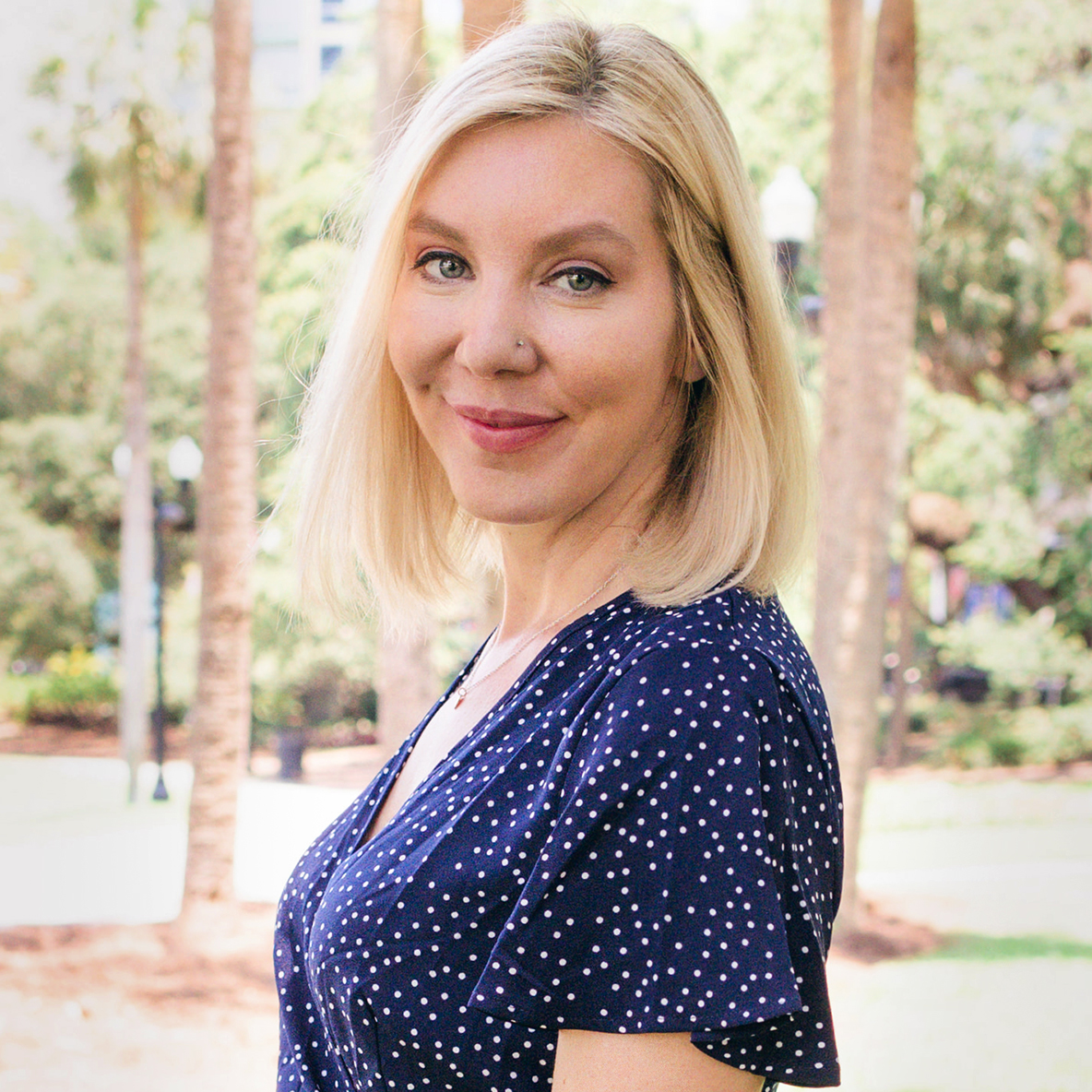
Sophia Gholz is an award-winning children’s book author, poet, magic seeker, and avid reader. Sophia enjoys writing fiction with humor and heart. When writing nonfiction, she pulls on her love of science and her strong family background in ecology. Since 2017, Sophia has helped oversee the Henry L. Gholz SEEDS National Field Trip Endowment for The Ecological Society of America, funding ecological field experiences for students. Sophia is the author of The Boy Who Grew a Forest: The True Story of Jadav PayengThis is Your World: The Story of Bob Ross, Bug on the RugA History of Toilet Paper (And Other Potty Tools), Bear at the Fair, and more. When she’s not writing from her home base in Florida, you can find Sophia reading, visiting schools, or exploring the great outdoors with her family. For more, visit Sophia at: www.sophiagholz.com.

Hi Sophia, I’m so excited to be sharing the cover for your adorable book! Just look at that face! ARLO melts your heart! I’m also happy to be talking to you about how ARLO came to be and so much more. I can’t wait to get started!

Robots are both timeless and timely—and, of course, always kid-favorites!  What was the inspiration behind ARLO?

ARLO actually began as a writing exercise a decade ago, in May of 2014. At the time, the buzzword in the picture book world was “character,” and agents and editors were hungry for “character-driven pictures books.”

Now, I know authors aren’t supposed to write for the market. Instead, you write the story that suits you and hope it fits into the market. However, at that time I was still fresh to the world of picture book writing. I wasn’t agented or published. I was still learning how to craft a story and hadn’t studied much on character building. So, I took the buzzword of the day and decided I wanted to explore that idea. In doing so, I created a metal bot that longed to swim, but couldn’t because—as the line when in my original manuscript said—“His boots sink like bricks, his gears rust, and oil and water don’t mix.”

Similar to the ARLO of today, this original bot worked on a factory assembly line and longed for something different. But unlike ARLO, that original bot had eight arms (like an octopus) and because he loved water, I called him Robotopus. It took me over a decade, 60+ drafts, and so many different variations to finally find ARLO at the heart of this story. And that is exactly why you don’t write for the market and instead write for yourself. It wasn’t until I let go of what I thought this story needed to be and allowed it to become what it was naturally that it clicked.

Growing up, did you have a favorite robot character in books, TV, or movies? What was it about that robot that you liked best?

I’ve always been a huge techy/sci-fi and fantasy fan! One of my favorite childhood movies was called Flight of the Navigator. I loved that film as a kid and it definitely sparked my interest in out-of-this-world robots at a young age. Flash forward, my daughter was on a competitive robotics team in school and that continued to fuel my love. But I’d be remiss if I didn’t shout out Disney’s WALL-E here. That little bot stole my heart from the get-go! In fact, I pitched ARLO’s story as “WALL-E meets The Wizard of Oz.”

Can you talk a little about the journey of this book from idea to publication?

Some books pour out in final form within a matter of hours. Other books take years. ARLO was one of the latter. The first draft was written in May of 2014. I’m one of those writers who likes to save all of their drafts as I revise in case I need to pull something from or revert back to a previous version of a story. So, it’s pretty easy for me to look back now and see exactly how this story changed and shifted over the years.

From the first draft, I fell in love with my little robot. I knew from the start he worked in an industrial factory, but needed nature and longed for something different. In those first drafts, my robot wanted to swim and he used his factory skills for building a suit to help him achieve that goal. That original story actually won an SCBWI Rising Kite Award in 2017. Still, I knew it was missing something. Like my little bot, the story longed for something more. I just couldn’t figure out what that was.

I eventually shelved this manuscript as I focused on other projects. But my bot lived on in my mind. Over the course of ten years, while I was in between other projects, I’d pull this manuscript out of the drawer and completely rework it again and again. Robotopus became Robbie, then Robotika, who morphed into Zigbee, then Ozzy, and ARO, who finally led me to ARLO.

It wasn’t until I let go of the idea of swimming (which I held onto for SOOOO long) and allowed ARLO to tell me what he wanted instead of me telling him, that his story finally poured out in late 2019. But in 2019, two things happened simultaneously: 1) my first book (a nonfiction book titled The Boy Who Grew a Forest) was released and 2) the pandemic struck. As a result, ARLO was shelved again, and it would be another two years before his story would be sent to editors for consideration.

When Sarah Rockett at Sleeping Bear Press made an offer, I jumped on it. I didn’t want the manuscript going anywhere else. Sleeping Bear makes such beautiful books and I knew Sarah really understood this character and the heart of ARLO’s journey.

Tell me about the first time you saw MacKenzie’s cover for ARLO.

I have loved MacKenzie’s art since I first saw it in The Scariest Kitten in the World. I was ecstatic when my editor, suggested MacKenzie as the artist to bring ARLO’s story to life. As soon as her name was floated, I couldn’t think of a better artist for this book.

When I first saw her cover sketch, I squealed in delight. I had no idea what to expect and Mackenzie completely nailed it. I mean, she really knew how to bring ARLO’s personality out and how to capture our little bot’s heart. I cannot wait for readers to immerse themselves in MacKezie’s art and ARLO’s world!

Since your first book The Boy Who Grew a Forest: The True Story of Jadev Payeng was published in 2019, you’ve written about a beloved artist, a famous paleontologist, a bug in a rug, a hangry bear, and even the evolution of toilet paper. These books have been recognized with multiple state and national awards. What do these honors mean to you?

When I began writing, I set out to complete one book. That was my only goal. I was a hopeful writer who wanted to know if I was even capable of crafting or sharing a story I loved. The fact that some of those stories actually became books that have been received in the way they have, is far beyond my wildest dreams. To say I am incredibly grateful, would be a vast understatement.

To this day, each time I sit at my desk, I question again if I’m capable. As an artist, you hope other people will love your art the way you do but that is far from guaranteed. I completely panic every time I release a new book. No matter how much time passes from that first story, I’m still just that girl, sitting behind a keyboard, hoping to complete a manuscript and praying someone out there might like it.

The last time we chatted, you were just getting started as a published author. Your career has really taken off since then. What do like best about being a children’s author? What have you found to be the most surprising?

I’m thankful you’ve been on this journey with me since the start! It feels so good to be back on the blog with you now.

As an author, there is nothing more gratifying than having a reader connect with your story or your character in some way. I absolutely love hearing from readers or seeing the spark in their eyes when I visit them in schools or events. Honestly, there’s nothing better than that.

The most surprising has been navigating book bans and political controversy. When I heard A History of Toilet Paper had been banned in some circles or when I got word from PEN America that Bug on the Rug had been flagged in Florida a while back, I was floored. I’m over here just trying to share stories I love. Call me naïve, but I had no idea how much people might pick them apart in search of negativity.

From the pictures of school, bookstores, and workshop appearances on your website, it’s clear you and the kids have a blast when you visit. Can you talk a little about what you do during a school visit? 

I love visiting schools and hosting author events. This past year, unfortunately, I had to cancel most of my appearances as my daughter went through some very scary health issues. Thankfully, we are on the other side of that now and I’m looking forward to reconnecting with everyone!

I’m not an educator by nature (shout out to all the amazing teachers out there!!!) and don’t know much about school curriculums. So, for me, I love to talk with people about the art of storytelling and finding inspiration in everyday life. One of my favorite things to do is work with an audience to create a story in real time during a visit.

What are you hoping kids will take away from this book?

ARLO is ultimately about finding yourself, learning to embrace differences, and stepping outside of your comfort zone. I hope readers of all ages will find inspiration in ARLO’s adventure.

When can readers look forward to seeing ARLO on bookstore shelves? Do you have tour or other plans you’d like to share?

 ARLO will be released August 1st, 2025 and is available now for preorder anywhere books are sold! Keep an eye out on my website for upcoming events and signings: sophiagholz.com.

Thanks, Sophia, for sharing so much about your journey with ARLO and your inspirations! It’s obvious that ARLO is very well loved!

Meet MacKenzie Haley
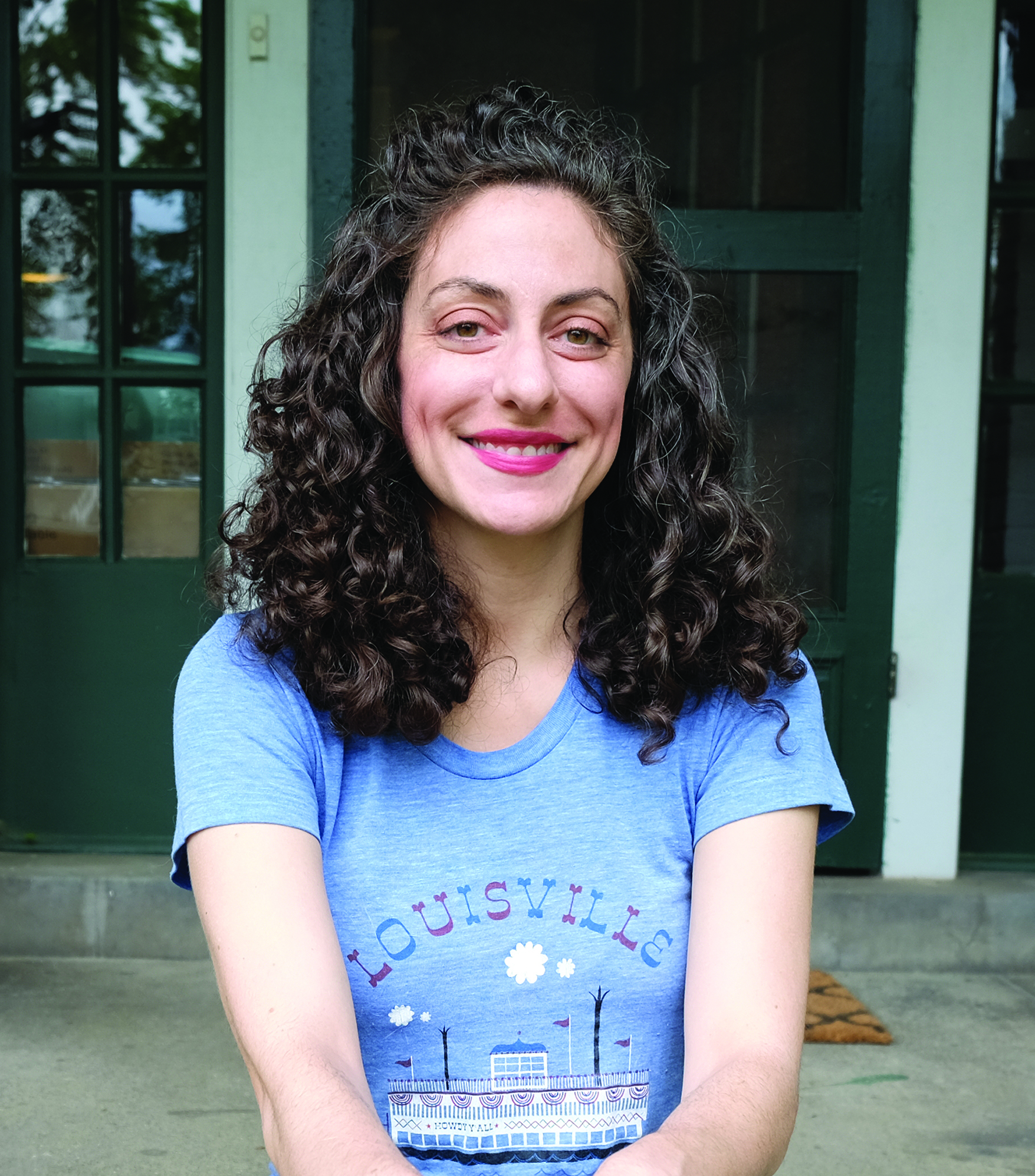
MacKenzie Haley is an award-winning illustrator born, raised, and living in Louisville, Kentucky with her two cats, Booger and Abby. She is the illustrator of Dolly Parton’s Billy the Kid series, as well as A Book for Bear, and The Scariest Kitten in the World. When she’s not drawing or playing with her cats, she can be found spending time with her friends and family, and learning what’s currently “cool” from her twelve-year-old niece, and eight-year-old nephew. To learn more about MacKenzie and view adorable “bits and bobs,” comics, and more, visit her at mackenziehaley.com

Hi Haley! I just fell in love with ARLO the moment I saw him, so I’m thrilled to get to talk to you about how you brought ARLO to life and all the considerations that go into creating illustrations for a picture book. I’ve also gotta know about the kitties you’ve fostered, but let’s start with ARLO.

What drew you to this project?

When I first got the ARLO manuscript, I immediately appreciated the idea of this little robot having the very human experience of daily mundanity. No matter how much we love our day job, our family, our friends, sometimes the day-to-day gets hard and we lose ourselves in that daily grind. The fact that ARLO is literally swept away into a whole new world, specifically into nature, was a reminder that as humans we can get stuck in our day-to-day existence, and begin to take things for granted, to let ourselves get run down. It reminded me that we need to go outside and appreciate the natural world around us. Take time to breathe and experience nature. When we do that, we bring some of that back into our daily lives, and it can change our daily experiences for the better, just like it does for ARLO.

Can you describe your process in creating and choosing this endearing cover image?

To start with, I’ve had good and not-so-good experiences in the past creating covers. I guess every illustrator has! In my earlier years I had publishers shut down my ideas for the cover and want me to just create their vision. When that would happen, the end result was usually not something I was happy with, or that I felt served the book very well. In more recent years I’ve been fortunate enough to work with some wonderful publishers and art directors who value my input and let me explore ideas and take the lead.

Creating the cover for ARLO was a really great example of the collaboration between myself and the publisher/art director/editor. Looking back, I can see I started the cover a bit more guarded than I realized. I can get too attached to my ideas, and sometimes feel like I’m losing my voice in how an image turns out when someone asks me to make certain changes that I’m not sure about at first.

Working with Sleeping Bear Press taught me that there is a good balance to be struck between having an idea you really like, and leaving room for creative feedback and space for positive changes. Not to be so precious with my ideas or images, so that when suggestions are made with a good team, I can step back and really hear what they are saying and work that into the cover vision. For example, I initially kept making ARLO too small in the cover sketches I was creating. So Jennifer took the time to talk with me on the phone and explain what they were looking for, and we were able to come up with an image that really showcases the main character, while hinting at the world he discovers in the story. I learned a lot throughout this process, and I’m really grateful for their endless patience with me.

Did you always want to be a children’s illustrator? How did your career begin?

Growing up, money was really tight. There was a time when my mom and dad didn’t buy themselves any new clothes for two years, but they made sure that I always had a full bookcase and a constantly growing little library of my own. I treasured those books and carry that love of books with me today. Each book was a little world I could explore and get lost in.

That being said, growing up I never realized you could make a living creating art. There was no one in my family’s sphere who did that, and I just didn’t know it was a possibility. I kept making art as I grew up though, and learned that there were jobs as artists. I got my BFA with an emphasis in illustration from The University of Dayton in 2002. While I always loved children’s books, I had no idea how to get into that field, so I cast my net wide and tried to get any and all illustration freelance jobs I could. I had a day job this whole time because my freelance income wasn’t paying my bills.

Around 2005 or 2006 I realized I needed to focus on one aspect of illustration. I had no idea how difficult the children’s book market was to break into, so I naively chose that, haha! I’ve heard it said that you don’t know what you can’t do if no one ever tells you. So I worked on my portfolio, submitted to agents, got rejected, worked on my portfolio some more, submitted again, and got rejected. I kept doing this, improving each round, until I finally got an agent in 2017. I was able to quit my day job in 2018 and have been illustrating children’s books full time ever since then!

What have you found to be the most rewarding aspect of being a children’s illustrator?

Seeing a book completed at the very end is such an incredible feeling and makes all the hard work worth every minute. To know that the author and I created this brand new thing where nothing existed before is an amazing feeling. The other most rewarding thing is hearing from parents or kids themselves about how much a book means to them, how much they like a book or what kind of impact it’s had on them. I remember being little and how important books were to me, how much I cherished them. I feel honored that I am able to be a part of children’s lives like that.

When you are given a manuscript for a picture book, what are your first considerations and how do you go about creating a detailed world for the story?

When I first get a manuscript, I read through it a number of times without trying to make any decisions, to just absorb the story. When I first started illustrating books, I didn’t really know what I was doing or have any kind of plan. That’s changed throughout the years, learning what works best for me and seeing what helps me create the best books I can.

For ARLO, I took a more holistic approach, considering characters, color palettes, emotional tones and shifts. The first thing a publisher usually wants are sketches for the main characters. This was the case with ARLO, but for this story I took it further. I listed all of the characters, distilled the main message of the story, and noted what the characters were feeling and when, along with the major emotional shifts in the book. The robots are characters in this story, but I also considered the two worlds or environments as characters as well—the factory and nature. I wanted a color shift to occur throughout the book. The factory was created using almost exclusively neutral colors, with a pop of bright blue here and there, hinting at the natural world ARLO would explore later (the bird he follows in the story is bright blue).

Illustration © 2025 by MacKenzie Haley, text © 2025 by Sophia Gholz. Courtesy of Sleeping Bear Press.

The shift from neutrals in the factory to an explosion of bright, bold colors in nature was really important. The neutrals portray the mundanity of ARLO’s daily life in the beginning of the story, and at the end when he has learned from his adventure, he brings the brightness from nature into the factory, and we see neutrals and bright colors together, indicating in a visual way how ARLO’s and the robots’ daily lives are more fulfilling and happy now. Colors carry such emotional weight, and my hope is that the reader feels this as they progress through the story.
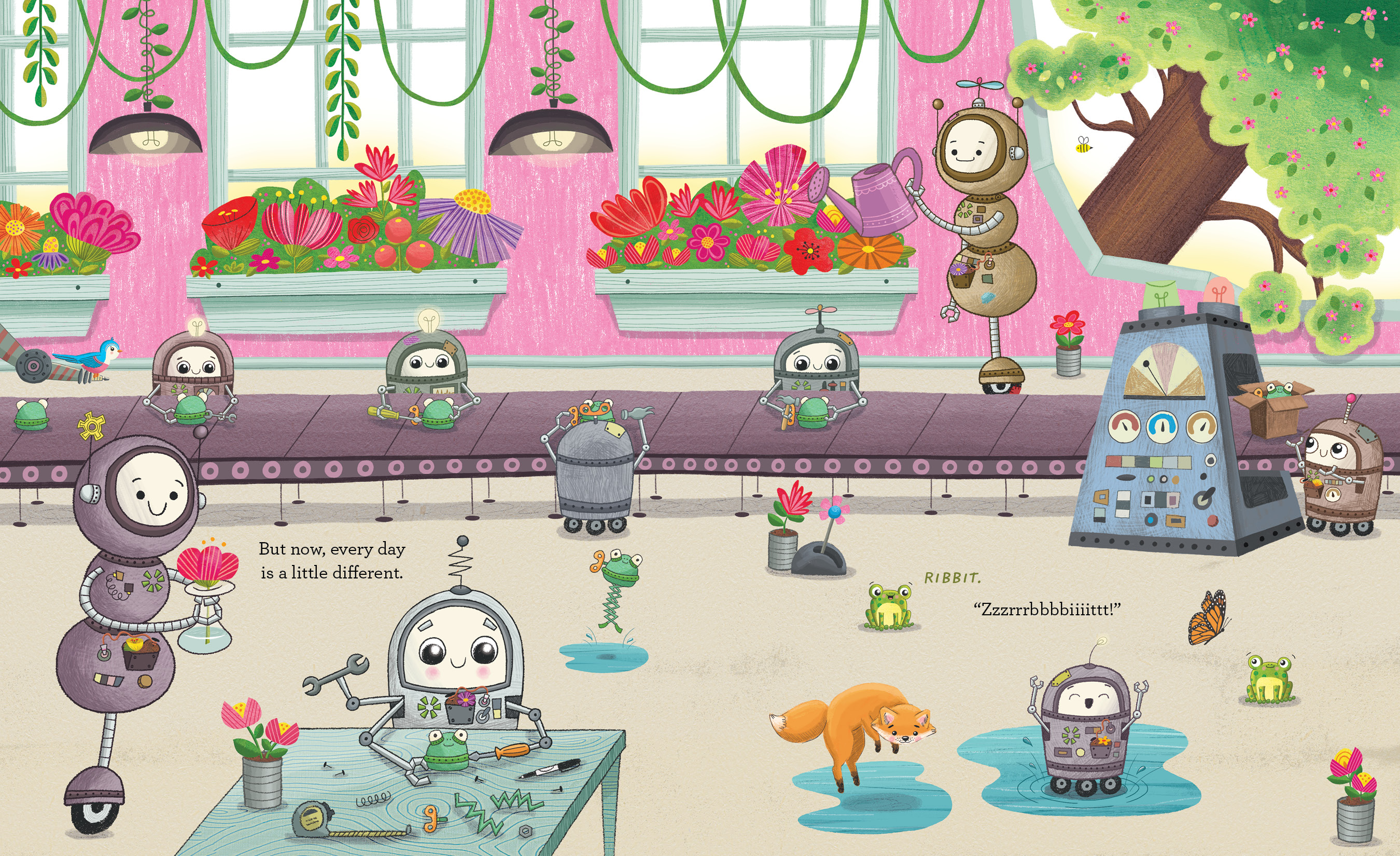
Illustration © 2025 by MacKenzie Haley, text © 2025 by Sophia Gholz. Courtesy of Sleeping Bear Press.

What was your favorite part of creating ARLO’s world?

My favorite part was creating ARLO himself. I had so much fun playing with basic shapes and forms and fun little details, such as the little compartments he has and what tools would pop out of them. But I also loved creating the outside world almost as much as ARLO. To make the flowers, I scanned in hand-painted swatches of watercolor, collaged shapes from them digitally in photoshop, and then drew on top of those shapes. I got to explore a lot and try several different things to see what worked best and what I was happiest with. It was a really fun process! I think the watercolor texture is a good contrast to the sleek metallics of the factory world.

Your bio on your website reveals that you’ve fostered around twelve cats and are a cat mom to two. How did you begin fostering cats? Your illustrations of cats are so adorable and true to cats’ goofy and sweet personalities. Do you use your own cats as inspiration? Will readers be meeting any kitties in ARLO?

I fostered my first kitties 13 or 14 years ago. At the time Louisville Metro’s animal shelter system had a really high kill rate. I didn’t have much money to donate, and they said the next best thing was to foster. They have food banks to cover that cost, and local vets who spay/neuter the cats for free, and take care of deworming, fleas, etc. I walked into the shelter that first day, having one cat at home, thinking to myself “okay, you get to foster one cat.” I ended up walking out of there with a huge crate holding a mom cat and her five one-day-old kittens. I obviously didn’t stick to my plan! I had asked them what their most immediate or urgent case was, expecting maybe a difficult or older cat. When they introduced me to mom cat and her kittens though, I couldn’t say no. I’m a sucker for kitties!

I definitely use my own cats for inspiration. The kitten in The Scariest Kitten in the World is basically my white cat, Booger. She’s so goofy and playful. She was one of the kittens in that first foster group I had, so I’ve known her since she was one day old. She would crawl up on my lap while I was working on an illustration and fall asleep, while the other kittens were playing with each other. I fell in love immediately. I think the situation is more that I’m her human, rather than that she is my cat. I adore her. There aren’t any kitties in ARLO. I should have tried to sneak one in! But there are some woodland creatures the readers will see along the way!

What would you like readers to take with them from your illustrations for ARLO?

I think I would like them to take away the idea of what an amazing wonder nature is, what a gift we have right in front of us, and what it can add to all of our lives. Just being outside for even five minutes a day, breathing in fresh air, feeling the sun on your skin, it all makes such a huge difference. I think it’s something humans crave and need to be whole and happy.

Thank you so much, MacKenzie, for this wonderful, in-depth look at your career in illustration and your process in creating ARLO’s world! I’m so looking forward to August 1, when readers everywhere will be able to bring ARLO home with them.

If you’re as eager to read ARLO as I am, you can preorder the book at these booksellers and from Sleeping Bear Press. ARLO will be released on August 1.

Sleeping Bear Press | Amazon | Barnes & Noble | Bookshop (to support your local independent bookstore)

Picture Book Review

January 2 – It’s Book Blitz Month & Interview with Author Lydia Lukidis

celebrate-picture-books-picture-book-review-deep-deep-down-cover

About the Holiday

If your motto is “So many books, so little time” then you’ll be happy to know that January is Book Blitz Month! During this month book lovers are given the green light to read as many books as possible! For kids, Book Blitz Month can be particularly exciting as they discover new fiction and nonfiction that captivates their imagination. To celebrate, take your kids to a local bookstore and the library to find new and favorite books to binge on all month long. If you don’t have a dedicated space for your children’s books, this month is also a great time to create a home library for your child so that they have a shelf, a crate, or even a whole bookcase of stories they can enjoy again and again!

I’d like to thank Lydia Lukidis for sharing a digital copy of Deep, Deep Down: The Secret Underwater Poetry of the Mariana Trench with me for review consideration. All opinions on the book are my own. You can read my interview with Lydia below.

Deep, Deep Down: The Secret Underwater Poetry of the Mariana Trench

Written by Lydia Lukidis | Illustrated by Juan Calle


Imagine being invited to visit a mysterious place where only a few have ever been; where only they have truly seen the creatures that inhabit it; and where it’s murky depths are accessible by only one type of vehicle. Would you dare to go? Lydia Lukidis and Juan Calle extend just such an invitation, but no notes for missing school, packing a suitcase, or plucking of courage need to be considered, for through their phenomenal book, readers find a seat in the incredible submersible that will transport them to “…the deepest underwater valley in the world”: the Mariana Trench.

celebrate-picture-books-picture-book-review-deep-deep-down-shark

Image copyright Juan Calle, 2022, text copyright Lydia Lukidis, 2022. Courtesy of Capstone Editions.

The submersible plunges deeper and deeper to where the sun doesn’t penetrate. Here, in the darkness, “food is scarce, and a bone-chilling cold blasts through the water. Earthquakes shake the ocean floor, and the water pressure, like a thick, heavy blanket with a thousand hands, presses down, / down, / down.” What flashes by the porthole window? A monster? No—a fish with a long and slender tail perfectly suited for its austere home, where it can survive for months without eating if necessary. “Diving deeper, a long, thin body slinks and sways, ever so slowly. The cutthroat eel is not fearsome, some rather, mesmerizing.”

The light beam of the submersible also reveals feathery crinoids “twirling and whirling like an underwater acrobat,” and a curious snailfish “dances, ghost-like, to the rhythms of the ocean” as it comes to take its own peek in the window from the other side. Snailfish aren’t affected by the heavy water pressure because “they can swim deeper than any other fish in the world. That’s because their bodies contain RMAO. This special substance protects the fish from high pressure, making sure their bodies aren’t crushed.”

celebrate-picture-books-picture-book-review-deep-deep-down-plunging-down

Image copyright Juan Calle, 2022, text copyright Lydia Lukidis, 2022. Courtesy of Capstone Editions.

It might seem impossible to sink still lower, but the submersible plummets into water populated by tiny creatures, almost insect-like with their multiple pairs of legs and long antennae that propel them and help them find food. But explorers are not at the very bottom of the Mariana Trench even yet. The submersible floats slowly down to the bottom—“the very deepest spot on Earth. Look out the window . . . and witness a world of surprises.” Extraordinary creatures, some small, soft, and translucent and others—neither plant nor animal—large and with protective shells, and all adapted to thrive in their formidable surroundings will amaze you.

At last it’s time for the submersible to return to the surface. Slowly, it makes its way through the darkness to lighter seas, where it passes by more familiar fish and other creatures on its way to “SPLASH!” surfacing once again and “leaving the marvels of the Mariana Trench far below” still waiting to be explored again.

Insets of scientific information on diet, anatomical adaptations, and other aspects that make them suited to their environment also accompany the introduction of each sea creature.

Back matter includes an illustrated cutaway of the ocean above and descending into the Mariana Trench with various sea creatures labeled and oriented to the level in which they are found; “Did You Know?” facts about the water pressure in the Trench, its creation, and how many people have visited; why the Mariana Trench matters; an author’s note; and a glossary.

celebrate-picture-books-picture-book-review-deep-deep-down-deepest-spot-on-earth

Image copyright Juan Calle, 2022, text copyright Lydia Lukidis, 2022. Courtesy of Capstone Editions.

When undertaking an excursion into unknown territory—especially through words and pictures—explorers need guides who can truly immerse them not only in the sights and sounds of an area but also the rhythms and almost intangible aura that makes it so uniquely compelling. Readers of all ages find that quality in Deep, Deep Down. Lydia Lukidis’s lithe and lyrical language is at once straightforward—answering questions any reader might have—and evocative—capturing the enigmatic and secret world at the bottom of the Earth as it flashes into view or slowly reveals itself and retreats again. Her vocabulary, rich with active verbs, ensures that readers appreciate the Mariana Trench as teeming with life and alive with wonders more amazing than we can even imagine.

Don’t be surprised if you find yourself forgetting that you’re looking at illustrations of a vampire squid, anglerfish, rattail fish, cutthroat eels, crinoids, and even the rocky and sandy ocean floor instead of photographs as you inspect Juan Calle’s magnificent pages. As the submersible—seen from many angles—plunges into darker and darker water, bioluminescent fish begin to appear alongside their grayer sea mates (children will enjoy pointing out the dark shapes that lurk in the shadows of the submersible and the stony outcroppings.)

As a rattail drifts into view, each rose-gold scale is visible, shimmering in the beam of light thrown from the submersible; it’s blue eye seemingly as curious about readers as they are about this unusual fish. Calle mesmerizes with careful details, shading, and perspective that portrays each creature in all of their weird and wonderful floating, creeping, or stock-still spectacle.

Deep, Deep Down: The Secret Underwater Poetry of the Mariana Trench will thrill ocean and nature lovers and will spur increased interest and research into this unique, nearly untouched habitat that we are only now beginning to discover. The book is a must for any environmental science enthusiast at home and for all classroom, school, and public library collections.

Ages 7 – 10

Capstone Editions, 2022 | ISBN 978-1684466153

About the Illustrator

Juan Calle is a former biologist turned science illustrator, trained on the Science Illustration program at UC Monterrey Bay. He worked early on his illustrator career for field guides of plants and animals of his country of origin, Colombia, and now owns and works in his art studio, LIBERUM DONUM in Bogota, Columbia, creating concept art, storyboarding and his passion: comic books. You can connect with Juan on Instagram.

Take a plunge into Deep, Deep Down with this book trailer!


Meet Lydia Lukidis

celebrate-picture-books-picture-book-review-Lydia-Lukidis-headshot

Lydia Lukidis is the author of 50+ trade and educational books for children. Her titles include DANCING THROUGH SPACE: Dr. Mae Jemison Soars to New Heights (Albert Whitman, 2024), DEEP, DEEP, DOWN: The Secret Underwater Poetry of the Mariana Trench (Capstone, 2023), THE BROKEN BEES’ NEST (Kane Press, 2019) which was nominated for a Cybils Award, and NO BEARS ALLOWED (Clear Fork Media, 2019). A science enthusiast from a young age, she now incorporates her studies in science and her everlasting curiosity into her books.

Lydia is an active member of SCBWI, CANSCAIP, 12 x 12, and The Authors Guild. She’s very involved in the kidlit community and also volunteers as a judge on Rate your Story. Another passion of hers is fostering love for children’s literacy through the writing workshops she regularly offers in elementary schools. Lydia is represented by literary agent Miranda Paul from the Erin Murphy Literary Agency.

You can visit her on her Website (with order links) | her Blog | Facebook | Twitter and you’ll also find her on Goodreads.

Hi Lydia! I’m really thrilled to have the chance to talk to you about this gorgeous book, how it all came together, and your other work as a writer.

You have degrees in Pure and Applied Science as well as English Literature. After graduating from college did you work in the science field? If so, can you talk about your work a little? How has your science background influenced your writing?

When I was younger, I was drawn to both science and the arts. I once saw them as mutually exclusive but then came to realize how connected these disciplines are. Upon graduating university, I did something completely out of left field but that satiated my artistic desires. I started my own jewelry line! After that, I became a puppeteer, writing plays for children. That brought me back to my love of writing, and here I am writing kidlit. I often focus on STEM topics so it’s full circle. I feel like this is truly where I belong.

What drew you to write about the Mariana Trench for children? What kind of research did you do in creating this book?

In 2019, I read an article about how scientists found a plastic bag floating in the Mariana Trench. They also discovered plastic in the belly of various marine animals. My heart sank. I wondered how we human beings managed to start damaging one of the most remote places on the planet.

At that point, I didn’t know that much about the Mariana Trench and my curiosity grew. I began my research on the internet and then came to realize most of that information was false. The book really came together once I interviewed a slew of experts (7 in total) who’ve devoted their lives to studying the deep sea, the hadal zone, and geology. They also helped me find the right books and articles to read for updated information.

What was the most surprising thing you learned during your research? Do you have a favorite creature or one that you’d like to learn more about?

The most surprising thing was that despite the hostile conditions in the trench (no sunlight, scarcity of food, and crushing pressure), life still thrives deep, deep down. Though, the creatures are not what you would expect. There aren’t any sharks, for example, or any large creatures for that matter. My favorite has to be the sea cucumber. I must have watched hours and hours of them oscillating and floating, like underwater ballet. I was love struck!

Your storytelling in Deep, Deep Down is so fluid and as mesmerizing as the Mariana Trench itself. Can you talk about your writing process for this book and how you achieved such a visceral experience for readers?

Wow, what a compliment! Writing this book was nothing short of magical. I’m normally very hard on myself and many books don’t even make it to my agent. Other books take years to figure out. With nonfiction, finding the right structure is crucial. But somehow, with DEEP, DEEP DOWN, I didn’t have my usual “tormented writing struggle.” The writing was fluid and literally flowed out, and never changed in structure. There was a lot of editing, to be sure, I had to rewrite the manuscripts over 55 times to get the facts right, but the vision never changed. Will that always be the case? No! The next book I tried to write crashed and burned (maybe to be resurrected one day), so I’m grateful for this experience.

As a biologist who turned to illustration and who studied at the University of California at Monterrey Bay, Juan Calle must have been a dream match for Deep, Deep Down. Can you talk about how was he paired with your manuscript? When during the publication process did you begin to see his work? What emotions did his interpretations of your words stir in you?

Yes! It was Capstone who wisely suggested Juan. When I saw the proofs, I think my jaw hit the floor. He did SUCH a great job at getting all the details right (and believe me, it was tough—I had made a 20-page document with reference photos and notes vetted by Dr. Gerringer, my main consultant.) Although we never met, spoke, or even corresponded via email, Juan was able to follow my direction and bring his own flavor to the table. I think I first started seeing artwork about 8 months ago, so it was a speedy process. His work was stunning and scientifically accurate, although we couldn’t always draw everything to scale. It was also infused with magic.

What do you hope children will take away from Deep, Deep Down?

My goal in writing this book was twofold: firstly, to educate children on the deepest ocean of our world and debunk the myth that “scary” creatures live within its depths, and, secondly, to talk about ocean conservation and the importance of this fascinating ecosystem.

Kids may think the Trench is so far removed from their lives and that their actions don’t matter, or that what happens in the Trench doesn’t affect them. But that’s simply not true. Everything is connected, and I’d like to remind them that our actions affect our planet, even in its deepest spots.

You’ve written over 50 books for children and are very active in the writing community. What do you love best about being an author? What do you find rewarding about helping other writers succeed?

Thank you for the sweet words! I got my start with work-for-hire and most of my published books are for the educational market. DEEP, DEEP DOWN is my first trade nonfiction book, so it feels like a big accomplishment.

What do I love about writing? Everything. That said, it’s also a tough profession and every year, I usually have a moment when I reassess why I keep choosing this craft.

I also love supporting the kidlit community; it comes deep from the heart. I know what it is to struggle as a writer, and I see so many others struggling, hustling, working so hard. I like to support and acknowledge their efforts. Every little achievement is a milestone and should be celebrated!

What’s up next for you?

I’m excited to have just announced my second trade nonfiction book, DANCING THROUGH SPACE: Dr. Mae Jemison Soars to New Heights (Albert Whitman, 2024). I actually wrote this in 2015, and it’s a very long and convoluted story about how it got acquired. I did think long and hard whether or not I should tell this story and I ultimately decided to follow my heart because I felt so connected to the hook of the story. I invested in a sensitivity reader and will do so again once we start the editing process at Albert Whitman. They also chose a fantastic illustrator, Sawyer Cloud.

Other than that, I’m knee deep in other WIPs, some of them fiction. I wanted to try to stay in one lane as an author but it’s just not happening—it seems there are different stories of different genres inside me that need to come out. I’m always following the flow of my inspiration, which is often not linear!

Thanks again, Lydia, for sharing so much about your writing life! I know readers are going to love Deep, Deep Down and will be looking forward to Dancing Through Space!

Book Blitz Month Activity

Screen Shot 2022-12-31 at 10.56.42 AM

Creatures of the Mariana Trench Word Search


The Mariana Trench is home to so many amazing creatures! Can you find the names of seventeen in this printable word search puzzle?

Creatures of the Mariana Trench Word Search Puzzle | Creatures of the Mariana Trench Word Search Solution

celebrate-picture-books-picture-book-review-deep-deep-down-cover

You can find Deep, Deep Down: The Secret Underwater Poetry of the Mariana Trench at these booksellers

Amazon | Barnes & Noble | Books-a-Million 

To support your local independent bookstore, order from

Bookshop | IndieBound

Picture Book Review
December 2 – It’s Buy a New Book Month

  • celebrate-picture-books-picture-book-review-leaves-to-my-knees-cover
  • celebrate-picture-books-picture-book-review-leaves-to-my-knees-spanish-english-cover

Picture Book Review
About the Holiday

For children, picture books provide one of the best ways to interact with facts and feelings. Stories that speak to their experiences, both common and new, alongside illustrations that bring the story to life let them discover the world around them. Today’s stunning nonfiction books are loaded with illustrations or photographs that let kids see exciting details about science, history, biographies, nature, and so much more. This month, take a look for fiction and nonfiction picture books about your child’s passions to add to your home library. And be sure to check out today’s book that incorporates both!

Thanks to Star Bright Books for sharing a digital copy of Leaves to My Knees with me for review consideration. All opinions on the book are my own.

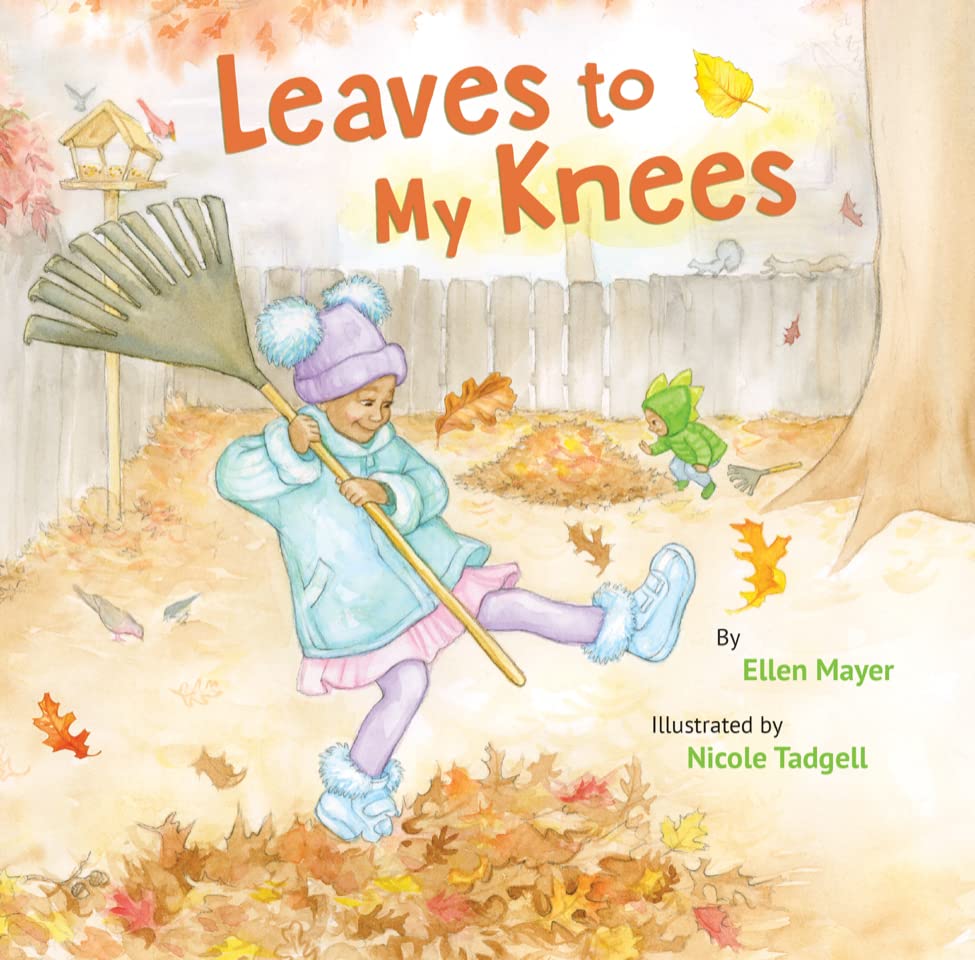
Leaves to My Knees

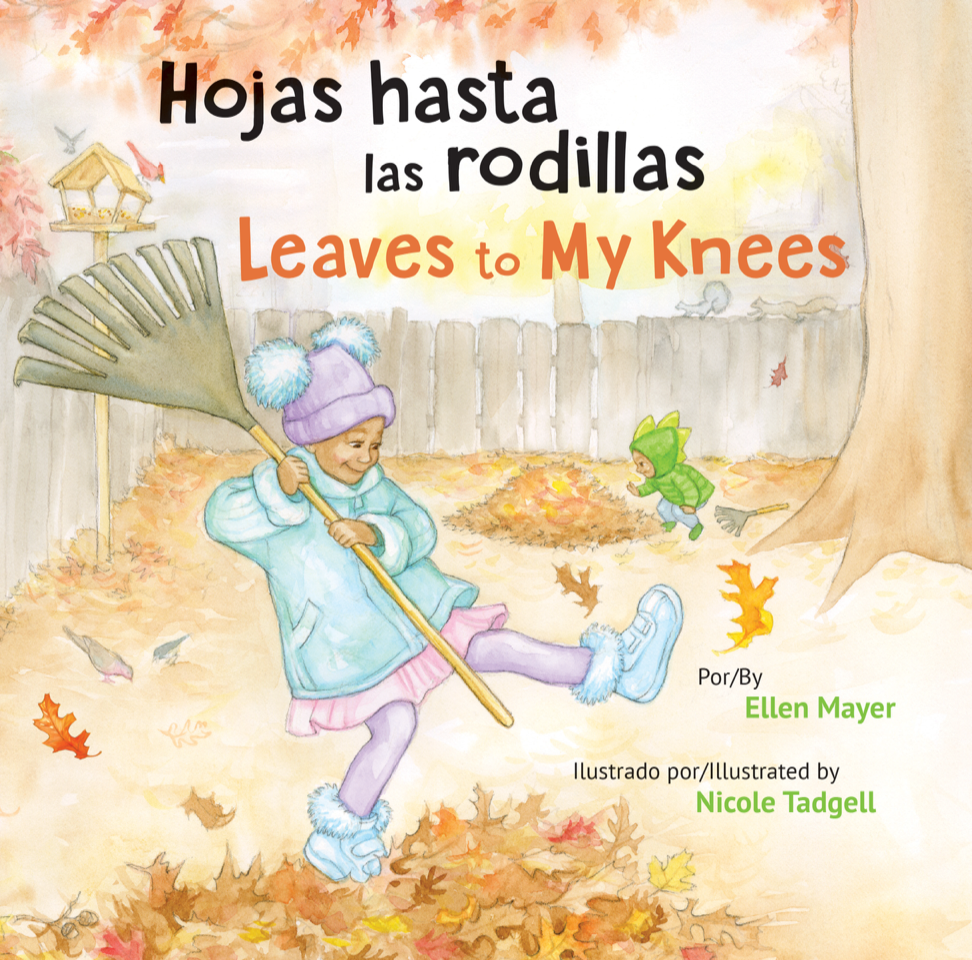
Hojas hasta las rodillas/Leaves to My Knees

Written by Ellen Mayer | Illustrated by Nicole Tadgell


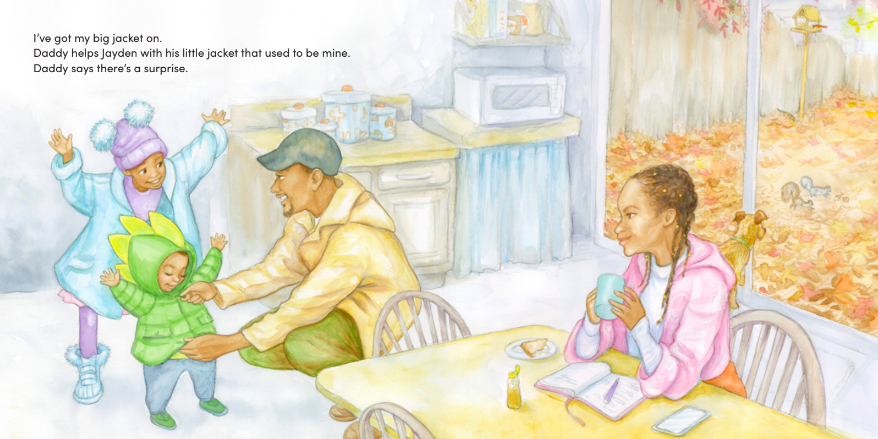
Daddy has a surprise for Camille and her little brother Jayden. They get dressed in their coats—big for Camille and little jacket with a stegosaurus hood for Jayden—and head into the backyard. There, Camille discovers her dad has gotten her a rake of her own. It’s not as big as Dad’s, but it’s bigger than Jayden’s little rake. It’s the perfect size for Camille.

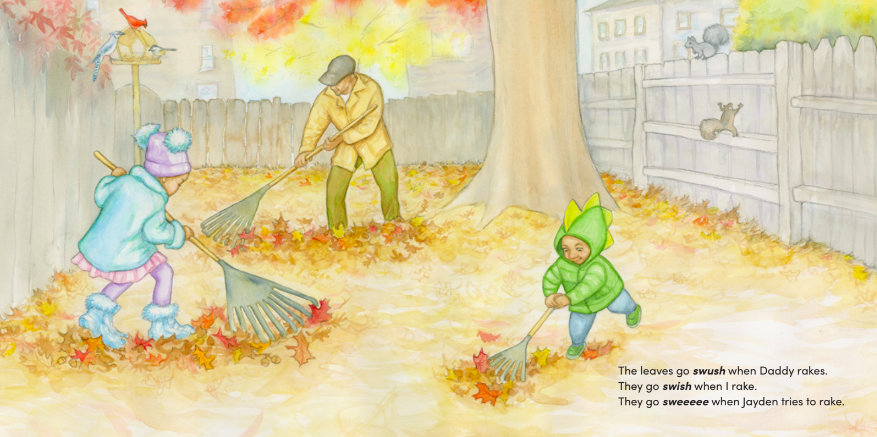
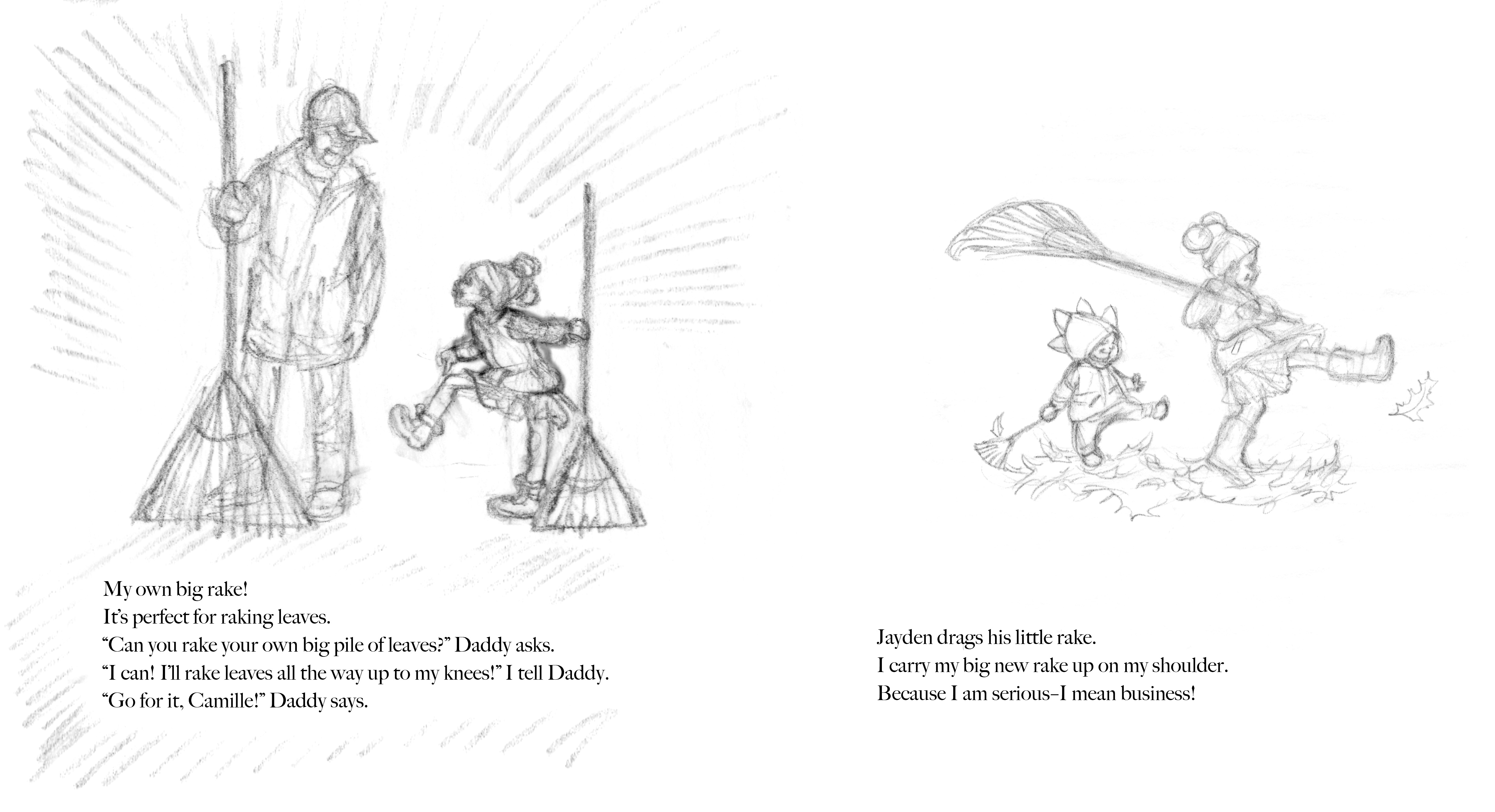
Camille marches right off to rake a pile of leaves. But not just any pile—she has a goal. “‘I’ll rake leave all the way up to my knees!’” she tells her dad. The three get working on the yard. Camille concentrates on gathering leaves, listening to the different sounds that the various sized rakes make: “The leaves go swush when Daddy rakes. They go swish when I rake. They go sweeeee when Jayden tries to rake.”

celebrate-picture-books-picture-book-review-leaves-to-my-knees-putting-on-jackets

Image copyright Nicole Tadgell, 2022, text copyright Ellen Mayer, 2022. Courtesy of Star Bright Books.

Lurking under the leaves are twigs and acorns that clog up Camille’s rake. She worries that she’ll never be able to rake leaves to her knees. She calls for Daddy’s help, and together they clear Camille’s rake. “‘You’re good to go now, Camille,’” Daddy tells her. Back at it, Camille rakes and rakes. Then she steps into the pile she’s accumulated to measure it. Her pile only comes up to her ankles. Camille grabs her rake harder and with determination she collects more leaves. But wait! Jayden is stealing leaves from her pile to add to his! Camille guards her pile with her rake, and sends her little brother over to Daddy’s bigger pile. Camille checks her measurements again. Her pile has grown, but only up to the top of her boots.

celebrate-picture-books-picture-book-review-leaves-to-my-knees-raking

Image copyright Nicole Tadgell, 2022, text copyright Ellen Mayer, 2022. Courtesy of Star Bright Books.

Camille rakes ‘bunches of leaves,” and her pile gets taller, until “‘Oh no! A BIG BREEZE!!’” sends lots and lots of leaves swirling “Whoosh!” into the air and scattered to the ground. “I will never rake leaves to my knees!” Camille thinks. And when she measures again, her pile is back to her ankles. Daddy encourages her to keep going, and Camille is committed to achieving her goal. She throws off her coat, grabs her rake, and works on gathering up all the leaves she had, plus more. At last, too tired to rake anymore, Camille wonders. Has she done it? “‘Time for measuring!’ says Daddy.”

celebrate-picture-books-picture-book-review-leaves-to-my-knees-pile-up-to-ankles

Image copyright Nicole Tadgell, 2022, text copyright Ellen Mayer, 2022. Courtesy of Star Bright Books.

Camille relinquishes her rake to her dad then, holding her breath, steps into her pile. “‘TA-DA!’” Camille raises her arms in victory. She steps out, positions herself a good ways away, and winds up for the run and jump. “‘GO!’ yells Daddy. ‘GO!’ Jayden yells too.” Camille flies through the air and lands, laughing, into her pile. Then Jayden jumps in. And Daddy? He gives Camille  “really big squeeze” for raking “leaves all the way up to [her] knees.”

A note for parents, teachers, and other caregivers written by Marlene Kliman, a mathematics learning expert and senior scientist at TERC, describes how the story incorporates the math of measurement and sizes and how adults can extend the lesson by pointing out elements in the book’s illustrations and while going about their day or doing common chores, such as cleaning up and sorting laundry.

celebrate-picture-books-picture-book-review-leaves-to-my-knees-jumping-in

Image copyright Nicole Tadgell, 2022, text copyright Ellen Mayer, 2022. Courtesy of Star Bright Books.

Ellen Mayer’s Leaves to My Knees has everything that makes a story a young reader’s favorite—a spunky main character that kids will identify with, an achievable goal, successes and setbacks, suspense, humor, and a child-propelled victory. And it all revolves around an early math concept that comes naturally to children and which invites playful learning not only during the fall, but any time of the year. Shoveling snow and making snowballs in winter, yard cleanup and gardening in spring, and building sandcastles and raking grass clippings in summer as well as in-home fun with laundry piles, toys, and other objects are all ways to extend the story.

Told from Camille’s point of view, the story also engages children’s emotions as they join in to cheer Camille on as her leaf pile grows and commiserate with her when it shrinks. The close relationships among Camille and her dad and little brother ring true with dialogue-rich storytelling that is always encouraging. Strong themes of determination and persistence will also appeal to parents and teachers, who can point to how many times Camille has to start over before accomplishing her goal and her positive, resolute attitude.

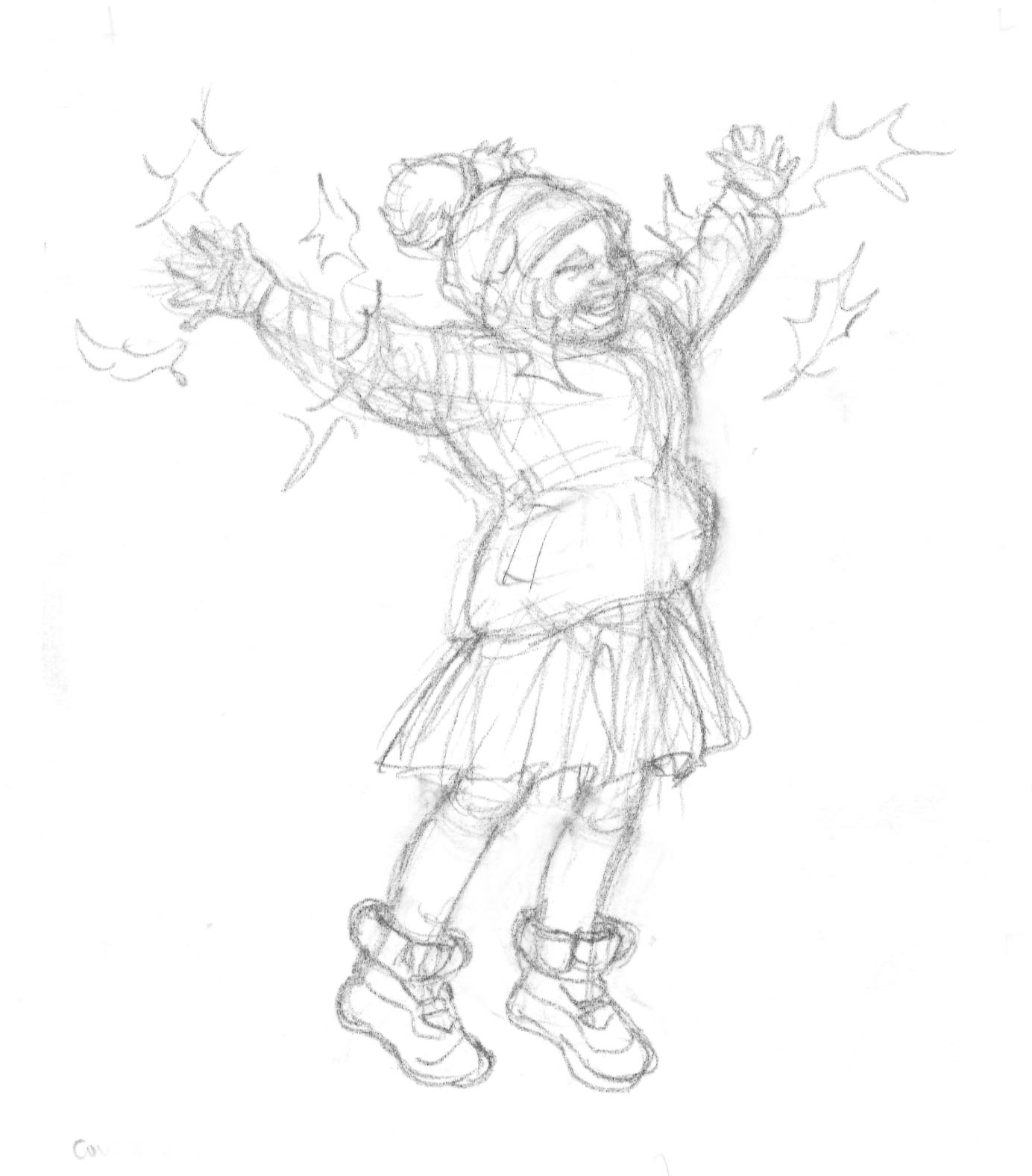
Nicole Tadgell’s exuberant illustrations shine with personality, and kids will immediately become invested in each character as Dad gets working on a big job that needs doing, Jayden runs, jumps, and copies his big sister, and Camille unwaveringly works on her pile of leaves. Camille’s setbacks are clearly depicted, along with her and her father’s facial expressions that give adults and kids an opportunity to talk about disappointment, frustration, perseverance, and feelings of accomplishment. Each image also demonstrates the math component of measurement and sizes in the story with various-sized rakes, the growing and diminishing leaf pile, big and little jackets, and other objects that invite comparison.

Tadgell’s soft-hued pages are infused with the feeling of fall and hum with activity as cardinals, blue jays, chickadees gather at the bird feeder, squirrels scamper up and along the fence, and leaves continue to float to the ground. Readers will love following little Jayden’s antics and be inspired by Camille’s wide smile as she enjoys the reward of all her hard work.

Leaves to My Knees is a multilayered read aloud infused with the enthusiasm and rhythms of childhood that kids will want to hear again and again. Its mathematics base and themes of determination and perseverance rewarded will appeal to parents, teachers, and other educators as a way to engage children in active, hands-on learning. The book is a must for home, classroom, school, and public library collections.

Ages 4 – 8

Star Bright Books, 2022 | ISBN 978-1595729590 (Leaves to My Knees) | ISBN 978-1595729613 (Hojas hasta las rodillas/Leaves to My Knees

Picture Book Month Activities

celebrate-picture-books-picture-book-review-leaves-to-my-knees-coloring-page


Coloring Pages and Teaching Guides


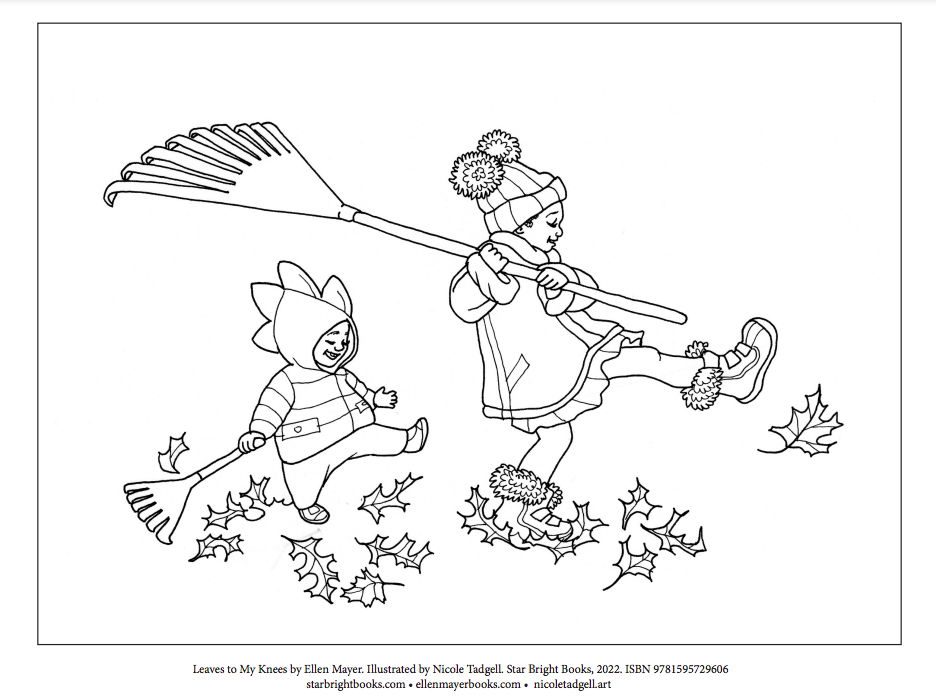
You can extend the fun and learning in Leaves to My Knees with these activities, which include three fun coloring pages from the story, a hands-on play-dough art and discovery activity, and a detailed educator’s guide for teachers, homeschoolers, parents, and other caregivers that offers multiple ways to use Leaves to My Knees to explore math, mathematical thinking, and reading comprehension through the story and beyond at home, school, and elsewhere.

Meet Ellen Mayer

celebrate-picture-books-picture-book-review-ellen-mayer-reading-headshot

You can find Leaves to My Knees on Amazon

Leaves to My Knees: Hardcover | Paperback

Hojas hasta las rodillas / Leaves to My Knees: Paperback

You can also order from Star Bright Books

Leaves to My Knees: Hardcover | Paperback

Hojas hasta las rodillas / Leaves to My Knees: Paperback

Picture Book Review
March 21 – International Day of Forests

celebrate-picture-books-picture-book-review-the-leaf-detective-cover

About the Holiday

International Day of Forests was instituted by the United Nations General Assembly in 2011 to raise awareness of the importance of trees in vast woodlands or in your neighborhood or yard. Trees contribute to the quality of the air we breathe, improve the local climate, reduce noise pollution, shelter wildlife, and provide food for people and animals. This year’s theme is “Forests and sustainable production and consumption.” So many aspects in our lives – from the materials for building homes, making tools, developing new household items, and more to the medicines we take, the water we drink, and the clothes we wear rely on healthy and sustainable forests. This year’s theme encourages people to think about the ways forests benefit not only human life but the wildlife and the earth as a whole. For more information visit the UN International Day of Forests website and The Geneva Environment Network.

Thanks to Boyds Mills for providing a digital copy of The Leaf Detective for review consideration. All opinions on the book are my own.

Reviewed by Dorothy Levine

The Leaf Detective: How Margaret Lowman Uncovered the Secrets in the Rainforest

Written by Heather Lang | Illustrated by Jana Christy


As a child, Meg was quite shy to make friends. She spent lots of time studying and playing with wildlife: “Meg wrapped herself in nature, like a soft blanket.” As she continued to grow, so did her passion for leaves, trees, and nature. Meg attended Sydney University in Australia. In 1979, she became the first person at her graduate school to study the rainforest. Through her studies Meg learned that people had been all the way to outer space to study, but nobody had ever ventured to the tippity top of a canopy tree. Instead, they studied trees from far away through binoculars. Oftentimes scientists would spray trees with chemicals so that the harmed leaves and animals would drop to the forest floor where people could study them up close. Meg sought to change this.

celebrate-picture-books-picture-book-review-the-leaf-detective-harness

Image copyright Jana Christy, 2021, text copyright Heather Lang, 2021. Courtesy of Calkins Creek.

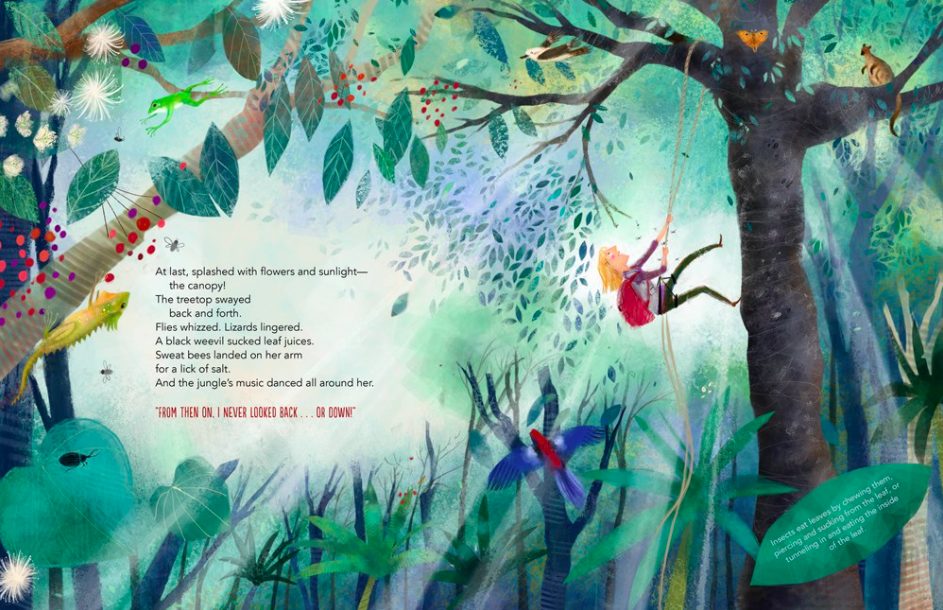
“In the dark, damp forest the trees rose up to distant rustling, squawks and screeches, shadows in the treetops. How could she get up there?” Meg Lowman created her own slingshot and harness and inched up a coachwood tree. When she reached the canopy, she knew she’d found the perfect place to study and explore. Meg is quoted saying, “From then on, I never looked back…or down!”

Meg continued to create new strategies to study the canopy, as a scientist does. And in doing so she made so many discoveries, such as: “We now believe the canopy is home to approximately half the plant and animal species on land.” Many people tried to stop Meg along her journey. They told her she couldn’t take science classes, climb trees, or make inventions because she was a woman. But Meg ignored them. She continued to investigate.

She knew that rainforests were (and are) in danger, and that so many creatures rely on the rainforest ecosystem. People all over the world were cutting down large parts of the rainforests for wood, rubber, paper, and farmland. This worried Meg; she wanted to find a way to protect rainforests before they all disappeared. “She wondered, How can one leaf detective make a difference? How can I save the trees?…Then an idea crawled into Meg’s thoughts—a way to speak for the trees.”

celebrate-picture-books-picture-book-review-the-leaf-detective-bugs

Image copyright Jana Christy, 2021, text copyright Heather Lang, 2021. Courtesy of Calkins Creek.

Meg traveled around the world. She spoke to people across many different countries; taught them how to climb trees, build canopy walkways—she showed people the many gifts rainforests have to offer. Meg educated communities on how they could share their rainforest with outsiders, showcase its beauty to create revenue rather than chopping them down for resources. By using her voice and creative mind, Meg helped implement systems that have saved many trees and creatures across the world.

Meg Lowman continues to study trees, save rainforests, and teach people how to shift their economies to center around ecotourism and sustainable crops rather than resource extraction. She has used her voice to save rainforests across the world, and yet she still says, “If only I could have achieved as much as the tree!… But I have not. I have whittled away at relatively small goals in comparison to the grander accomplishments of a tree.”

Backmatter includes an author’s note detailing Heather Lang’s visit to meet Margaret Lowman in the Amazon rainforest in Perú. The note includes more information on Dr. Lowman’s advocacy work and is followed by an illustrated educational spread on the layers of canopies, and species featured throughout the story are labeled in the final spread, for readers to learn more about specific animals that make their homes in the rainforest.

celebrate-picture-books-picture-book-review-the-leaf-detective-trampoline

Image copyright Jana Christy, 2021, text copyright Heather Lang, 2021. Courtesy of Calkins Creek.

Heather Lang’s lyrical writing matches the carefulness with which Meg studies leaves, trees, and the rainforest canopy. Her compelling storytelling is rich with facts and sensory imagery that immerse readers in the environment and Meg’s determination to understand and, later, save it. Scattered images of leaves drop fun facts and definitions for readers about the rainforest, canopies, transpiration, herbivores, and more. Quotes from Dr. Lowman are thoughtfully placed throughout the story in a manner that neatly flows. The Leaf Detective urges readers to understand that “a tree is not just a tree” but rather “a shelter for animals and people, / a recycler and provider of water, / a creator of food and oxygen, / an inventor of medicine/ a soldier against climate change.”

Jana Christy’s digital drawings contain stunning detail and show an accurate scale of one small person in comparison to the vastness of the rainforest. Her mesmerizing wildlife creatures and immersive watercolor blues and greens transport readers right into the rainforest with “Canopy Meg.” The lush greens of the rainforests contrast strikingly with the spread on deforestation, in which fallen trees lay scattered on the bare, brown ground. Readers will also be interested to see the innovations that have made the trees more accessible to people. One can read the book over and over and notice new details every time. It is a book to treasure, to study, to read and re-read again. 

Come unearth the secrets of the rainforest with Margaret Lowman in this book that’s budding with knowledge, empathy, and magic, and is a tale of how one person can make a difference. The intriguing facts, poignant quotes from Dr. Lowman herself, and beautiful poetic writing will leave readers of this book inspired with wonder and with a hunger for advocacy. The Leaf Detective: How Margaret Lowman Uncovered the Secrets of the Rainforest is an urgent must-read for all ages.

A portion of Heather Lang’s royalties for this book go to TREE Foundation—an organization that funds field trips for children to get into nature, canopy projects, and science book distribution for children with limited access to STEAM, girls especially. 

Ages 6 – 10

Calkins Creek, 2021 | ISBN 978-1684371778

Discover more about Heather Lang and her books on her website.

To learn more about Jana Christy, her books, and her art, visit her website.

Meet Heather Lang

celebrate-picture-books-picture-book-review-Heather-Lang-headshot

Heather Lang loves to write about real women who overcame extraordinary obstacles and never gave up on their dreams. Her research has taken her to the skies, the treetops of the Amazon, and the depths of the ocean. Her award-winning picture book biographies include, QUEEN OF THE TRACK: Alice Coachman, Olympic High-Jump Champion, THE ORIGINAL COWGIRL: The Wild Adventures of Lucille Mulhall, FEARLESS FLYER: Ruth Law and Her Flying Machine, SWIMMING WITH SHARKS: The Daring Discoveries of Eugenie Clark, and ANYBODY’S GAME: Kathryn Johnston, The First Girl to Play Little League Baseball. When she is not writing, she enjoys going on adventures with her husband and four children. Visit Heather at www.heatherlangbooks.com.

Today I am thrilled to be interviewing author Heather Lang about her new biographical picture book The Leaf Detective: How Margaret Lowman Uncovered the Secrets of the Rainforest. Heather provides some thoughtful notes for shy readers, riveting stories from the rainforest and insight into the importance of exploring and caring for nature.

Can you tell us a little bit about what made you decide to write The Leaf Detective?  

We’ve caused enormous harm to our planet over the last few centuries, and I’m especially concerned about our rainforests. I knew I wanted to write a biography that was also a science book about the rainforest. When I read about Meg’s pioneering work and deep passion for trees, I was hooked! I couldn’t wait to find out how this quiet, nature-loving child, who didn’t know women could be scientists, became a world-class scientist and conservationist.

In the story you talk about how Meg was shy to make playmates with other kids. Were you also a shy kid growing up? Do you have any advice for readers who may relate to this aspect of Meg’s childhood? 

Like Meg, I was very shy as a child and remember wishing I were more outgoing. But as I grew older, I began to recognize the many advantages to being shy! My shy nature led me to sit back and observe. And that led to deeper thinking and understanding, a strong imagination, and creativity. Shy people often think more before they speak. They make their words count, which coincidentally is an important part of writing picture books. This also makes shy people good listeners and thoughtful friends. 

I’m still shy in many ways, and my recommendation to readers who might identify with this is to embrace your shyness! At the same time, don’t let it stop you from doing things you want to do. Meg Lowman told me she used to get so nervous before presenting in graduate school that she’d get physically sick. But with practice, practice, practice, she’s become a captivating presenter and educator. If you watch a few of her FUN FACTS FROM THE FIELD videos on my website, you’ll see what I mean! 

How would you describe your connection to nature? Would you consider yourself a “detective” in any ways? 

I’m constantly in awe of nature and its countless gifts and surprises. Nothing sparks my curiosity more than our natural world, and my curiosity is probably my most important tool as a writer. Being open-minded and asking questions not only generates ideas, but also leads me to think more deeply about a topic and examine it closely from lots of different angles. And of course that generates more detective work and more learning about my topic and myself. Being a detective is one of my favorite parts of writing books.

Do you have a favorite rainforest tree or creature? If so, tell me about it a bit!

When I arrived in the Amazon rainforest, I couldn’t wait to see a sloth! But during my time there I became fascinated with ants. They are everywhere in the rainforest, even in the canopy. I think it’s amazing how such tiny creatures can be so hardworking and organized. Their teamwork is unbelievable. And they are invaluable to the health of our rainforests. Among other things, they’re in charge of waste management on the rainforest floor, and they disperse seeds and aerate the soil!

What was the most rewarding part of writing The Leaf Detective?

This writing project was filled with rewards every step of the way! I learned so much about our rainforests and trees and gained a true understanding of how interconnected we all are—plants, animals, and humans. Getting to really know Meg Lowman and learning from her firsthand was thrilling and strengthened my writing in many important ways. It was also really rewarding to stretch myself as a writer and find a way to effectively write a book that seemed ambitious at first—a biography and conservation book that wove in quotes and science facts. 

Are there any stories from your trip to meet Meg that you did not get the chance to include in your author’s note that you’d like to share?

While I was on my Amazon adventure with Meg, I had many exciting moments. I loved learning from the Indigenous people how to use a blow gun, make clay, and braid palm leaves to make thatched roofs. The local shaman taught me how he uses different plants in the rainforest to treat and prevent injuries and illnesses—from bronchitis to poisonous snake bites. He also helped me confront my fear of snakes by bringing one over for me to touch. I even let it gently coil around my neck! But my favorite moments were exploring with Meg, especially at night and early in the morning when there’s so much activity in the rainforest.

Thanks so much for chatting with me Heather! I had a lovely time hearing about your inspiration, stories, writing process and tips for shy readers. Looking forward to learning and reading more from you in the months and years to come.

International Day of Forests Activity

celebrate-picture-books-picture-book-review-Climb-a-Tree-Word-Search-Puzzle II

Climb a Tree! Word Search


There are so many kinds of trees that make our world beautiful. Can you find the names of twenty threes in this printable puzzle?

Climb a Tree! Word Search Puzzle | Climb a Tree! Word Search Solutio

celebrate-picture-books-picture-book-review-the-leaf-detective-cover

You can find The Leaf Detective at these booksellers

Amazon | Barnes & Noble | Books-a-Million

To support your local independent bookstore, order from

Bookshop | IndieBound

Picture Book Review
January 19 – Museum Selfie Day

celebrate-picture-books-picture-book-review-dakota-crumb-cover

About the Holiday

Can you picture yourself at a museum today? Then the holiday we’re celebrating is just for you! Mar Dixon, a museum enthusiast, created Museum Selfie Day in 2015 as a way to encourage museum visitors to be creative and have fun taking selfies while also emphasizing the importance of all types of museums to their community. This holiday is celebrated in museums around the world, with participants sharing their selfies on Twitter and Instagram. To celebrate, head out with your kids to a museum near you and make some memories. To participate share your pictures using the hashtag #museumselfieday.

Thank you to Candlewick Press for sharing a copy of Dakota Crumb: Tiny Treasure Hunter with me for review consideration. All opinions on the book are my own.

Dakota Crumb: Tiny Treasure Hunter

Written by Jamie Michalak | Illustrated by Kelly Murphy


“In the great, big city, in the great, big museum, a clock tick-tocks past midnight.” The guards are on the watch, but they don’t see the tiny mouse that “creeps out of the shadows” and zig-zags her way through the galleries under the peering eyes of the art hung on the walls. Who is this explorer that carries a sack over one shoulder and has her eyes riveted on a map? It’s Dakota Crumb, and “for endless nights, Dakota has searched for a famous priceless treasure.

celebrate-picture-books-picture-book-review-dakota-crumb-great-hall

Image copyright Kelly Murphy, 2021, text copyright Jamie Michalak, 2021. Courtesy of Candlewick Press.

The map reveals that it is in “the Deepest, Darkest Cave. But perils lie ahead. Scurrying past knights in armor, Dakota spies a tiny masterpiece across the room. Using her rope, she swings and picks it up. She places it into her sack and continues on. Into the hall of giants she roams. The only movement is the maintenance worker cleaning the floor. Dakota scans the room and—“aha!”—discovers a forgotten statue. Trying to collect it, she’s nearly swept away with the day’s refuse.

Dakota consults the map again and crawls away. Her journey takes her “to the land of Egypt,” where Dakota is on the hunt for “the famous Purple Jewel of Egypt.” Dakota summons all her courage when she comes eye to claw with “A GIANT… EVIL EYED… MOUSE-EATING… CAT!” She hurries past and into the deep, dark cave. She climbs up, up and “Pull. Pry. Oh, my!”  grabs the treasure she’s been seeking—the Purple Jewel of Egypt. “Oh! how it sparkles!” As dawn colors the glassed rotunda, Dakota tiptoes home, her sack full.

celebrate-picture-books-picture-book-review-dakota-crumb-map

Image copyright Kelly Murphy, 2021, text copyright Jamie Michalak, 2021. Courtesy of Candlewick Press.

The museum opens, but not only for people. Around the corner, a “teeny-tiny door” welcomes visitors of another sort. These city dwellers—insects and mice, raccoons and squirrels, worms and pigeons await the opening of a new museum—the Mousehole Museum, where Dakota Crumb proudly presides over her carefully curated exhibits. The visitors enter and roam the galleries, marveling over all of the wonderful treasures they see. You’re welcome to join them too!

Following the story, Dakota Crumb invites readers to return to the museums—both big and small—to scour their rooms for forty-five items that are cleverly concealed.

celebrate-picture-books-picture-book-review-dakota-crumb-mousehole-museum

Image copyright Kelly Murphy, 2021, text copyright Jamie Michalak, 2021. Courtesy of Candlewick Press.

Charming from beginning to (ingeniously extended) end, Jamie Michalak’s Dakota Crumb: Tiny Treasure Hunter is sure to become a favorite of any child. Michalak’s crafty uses of the types of exhibits seen in major museums not only add intrigue to the story but will thrill those kids who are already museum lovers and entice others to visit their local museums. The hushed sense of suspense that infuses the pages as Dakota Crumb creeps from room to room gathering items in her bag will have kids eagerly turning the pages to discover the provenance of the Purple Jewel of Egypt. What is she doing with all of the things she finds? Michalak’s perfect answer will enchant every collector, artist, scientist, history buff, and explorer.

Kelly Murphy’s wizardry begins on the title page, where the museum is just about to close and they city dwellers are heading home in the purple twilight. Taking in the lush urban landscape, alert readers may pick up on details that tell them the fun is just beginning. As kids follow Dakota through the quiet museum, finding themselves searching for treasure just as she does, they see paintings, ceramics, sculptures, animal exhibits, and finally the regal Egypt room.

Murphy ingeniously incorporates items from the scavenger hunt list kids find at the end of the story into each page spread while adding humorous hints, realistic portrayals of famous exhibits, and even a comical nod to a common cleaning occurrence. But like many museum goers, readers may find themselves catch their breath when they enter the Mousehole Museum. Murphy’s well-imagined exhibits turn everyday items into masterpieces—and who’s to say they’re not? From toys to fasteners to snacks, containers, and trinkets and even an overdeveloped polaroid photograph, the displays in Dakota Crumb’s museum invites readers to look at their surroundings in a brand-new way.

A smart, witty, fun, and thought-provoking book, Dakota Crumb: Tiny Treasure Hunter is a superb book for introducing the excitement of museums to children and engaging them in observation as well as ideas on art, historical value, community inclusion, and collecting. All this and an imaginative scavenger hunt that challenges readers to be as intrepid a treasure hunter as Dakota Crumb. Sure to spark plenty of ideas for teachers, homeschoolers, museum educators, and libraries, Dakota Crumb: Tiny Treasure Hunter is a must for home, school, and library bookshelves as well as for museum gift shops.

Ages 3 – 8 and up

Candlewick Press, 2021 | ISBN 978-1536203943

Discover more about Jamie Michalak and her books on her website.

To learn more about Kelly Murphy, her books, and her art, visit her website.

celebrate-picture-books-picture-book-review-dakota-crumb-activity-kit

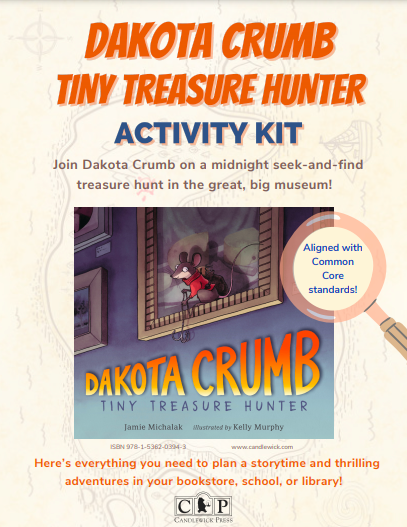
You can download a Dakota Crumb: Tiny Treasure Hunter Activity Kit for teachers, families, librarians, or any book lover here or on the Candlewick Press website.

A Chat with Jamie Michalak

celebrate-picture-books-picture-book-review-dakota-crumb-author-jamie-michalak-headshot

Jamie Michalak is the author of many children’s books, including Dakota Crumb: Tiny Treasure Hunter, illustrated by Kelly Murphy; Frank and Bean, illustrated by Bob Kolar; the highly praised Joe and Sparky early readers series, illustrated by Frank Remkiewicz; as well as the forthcoming picture book Niki Nakayama: A Chef’s Tale in 13 Bites, co-written with Debbi Michiko Florence and illustrated by Yuko Jones, and many more.

When not writing, she can often be found singing off-key, drinking too much coffee, or hanging out with her two sons. Jamie lives with her family in Barrington, Rhode Island.

You can connect with Jamie on her website | Instagram | Twitter

Welcome, Jamie! I’m so happy to be part of your book tour for Dakota Crumb: Tiny Treasure Hunter! Visiting museums is one of my and my family’s favorite activities, especially when we travel. They always provide us with wonderful memories. Do you have a favorite memory from a trip you took to research one of your books?

When I was writing Dakota Crumb: Tiny Treasure Hunter, in which a mouse searches for tiny objects in a museum, I wanted to scout out the best places to hide them. So I decided to visit an art museum in Manhattan, and I asked my eight-year-old son to come along as my research assistant.

Within fifteen minutes of our visit, he tugged on my sleeve. He was looking up at me with an expression of shock and horror.

“What’s the matter?” I asked.

“Mom,” he whispered, looking around. “They’re not wearing ANY PANTS!”

I had no idea he hadn’t seen nude Greek or Roman statues before.

In any case, he learned a lot about art, found some perfect hiding spots for mice treasures, and went home with lots to tell his friends.

That’s fabulous! Kids’ reactions to new experiences are such treasures in themselves.

In your school and library programs you share your writing process and give lots of advice for kids and teachers on how to create characters and stories as well as talking about your books. They sound like a blast! This past year, you probably held more virtual programs than usual. What was one funny thing that happened during one of these events this year?

I ended all of my virtual visits with a sing-along of the “Jelly Donut Hole Song” from my early reader Frank and Bean, illustrated by Bob Kolar. I’d play the audio and share the lyrics on my screen, so the class could join in. (Keep in mind I couldn’t see the faces of any of the kids.) During one visit, I’m playing the song, kind of half singing along because I can’t carry a tune AT ALL. Also, I’m clapping every now and then. Aaaand at the very end, the teacher says, “Um, Jamie? We couldn’t hear the audio on our end.” So basically the kids only saw my big head and heard me humming one note or mumbling every other three words. This went on for at least two minutes! Awkward.

Well, that sounds like a story Frank and Bean would love! Perhaps this funny oops! will find its way into one of your books. Thanks for sharing these two humorous events that show just what a varied tapestry being a picture book author is!

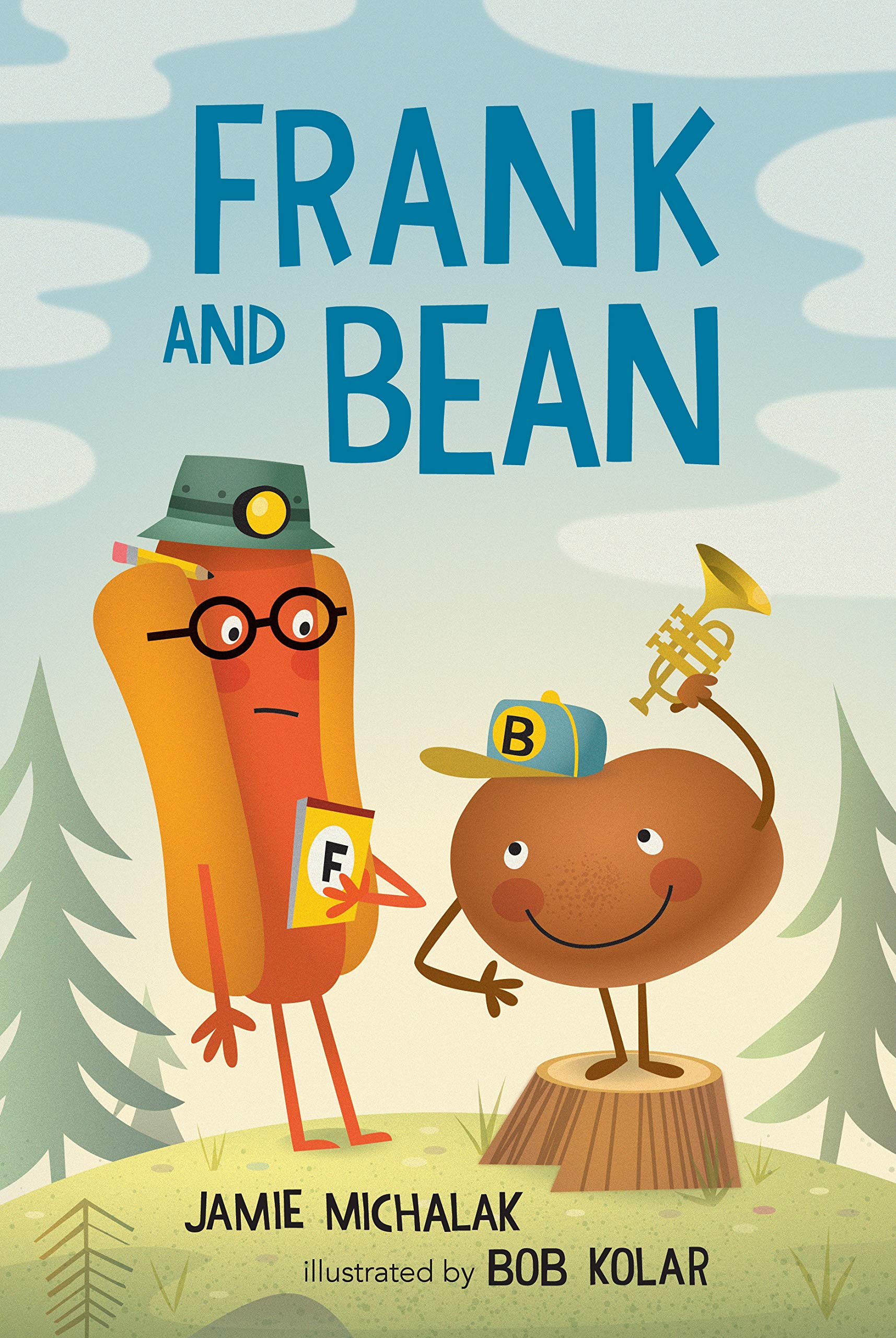
 Here’a a little more about Frank and Bean

celebrate-picture-books-picture-book-review-frank-and-bean-cover

Written by Jamie Michalak; Illustrated by Bob Kolar

When the introspective Frank meets the gregarious Bean, can they find a way to make beautiful music together? Dry wit and hilarious illustrations introduce a new unlikely pair.

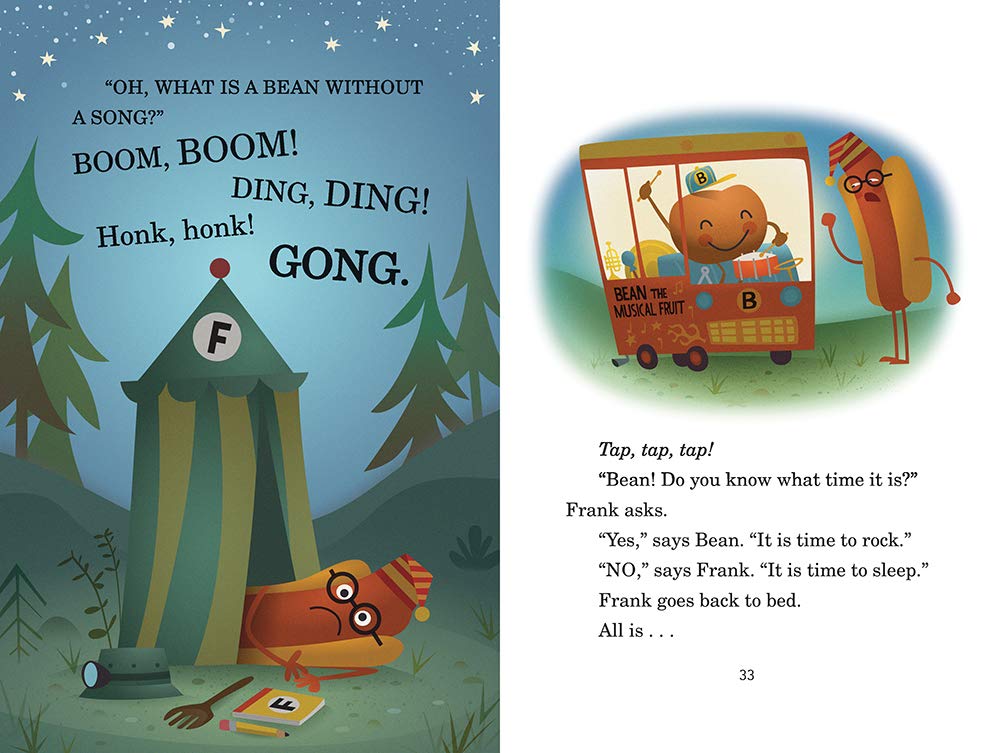
celebrate-picture-books-picture-book-review-frank-and-bean-tent

Image copyright Bob Kolar, 2019, text copyright Jamie Machalak, 2019. Courtesy of Candlewick.

Candlewick Press, 2019 | ISBN 978-0763695590

Early Reader; Ages 3-7

A 2019 Amazon Best Book of the Year

2019 Junior Library Guild Selection

Florida 2020-2021 SSYRA JR Award Nominee

Cybils Award finalist

Museum Selfie Day Activities

celebrate-picture-books-picture-book-review-dakota-crumb-tiny-treasure-hunt-game

Tiny Treasure Hunt


This treasure hunt from Jamie Machalak is just like Dakota Crumb’s, but with a twist! And it’s perfect for families to do together! Print and cut out this tiny treasure hunt checklist for your child, so they can gather the objects listed. Then ask them to share what they found, using three adjectives to describe each treasure. What does a button feel like? What does the tiny toy look like? (Magnifying glasses are optional!)

Tiny Treasure Hunt List

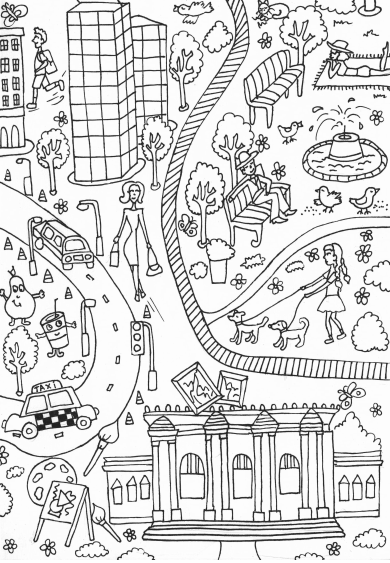
celebrate-picture-books-picture-book-review-museum-of-modern-art-coloring-page

Museum Coloring Pages


You may not be able to visit these famous museums today, but you’ll love these coloring pages that can take you around the world!

New York’s Metropolitan Museum of Art | London’s British Museum | The Louvre in Paris

celebrate-picture-books-picture-book-review-dakota-crumb-cover

You can find Dakota Crumb: Tiny Treasure Hunter at these booksellers

Amazon | Barnes & Noble | Books-a-MillionBookshop 

Picture Book Review
December 24 – Christmas Eve

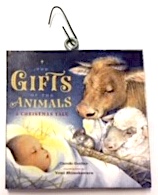
celebrate-picture-books-picture-book-review-the-gifts-of-the-animals-cover

About the Holiday

While Christmas Eve traditions vary around the world, children and adults everywhere look forward to this special night of giving with its wonder and magic. Today’s book tells the story of the first Christmas with gentle beauty. I also talk with author Carole Gerber about her inspiration and her own family traditions. 

Thanks go to Familius for sharing a copy of The Gifts of the Animals with me for review consideration. All opinions are my own. 

The Gifts of the Animals: A Christmas Tale

Written by Carole Gerber | Illustrated by Yumi Shimokawara


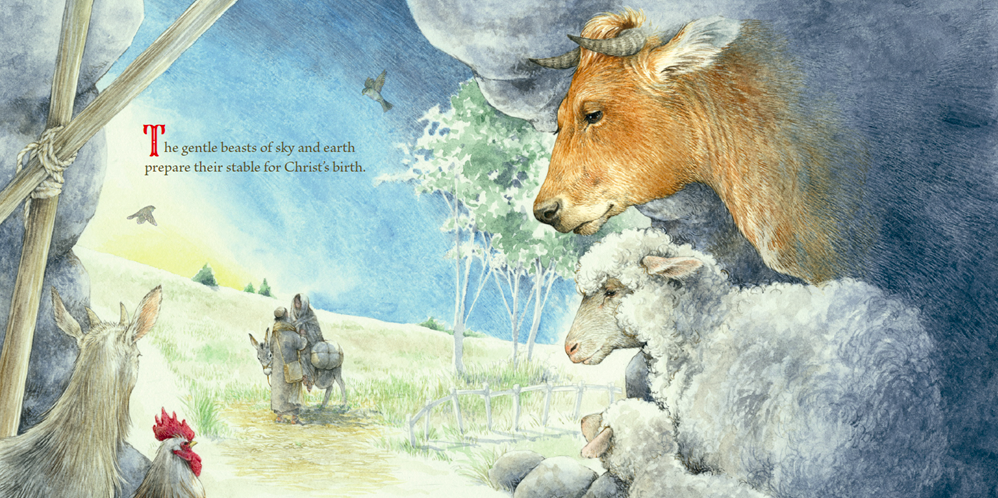
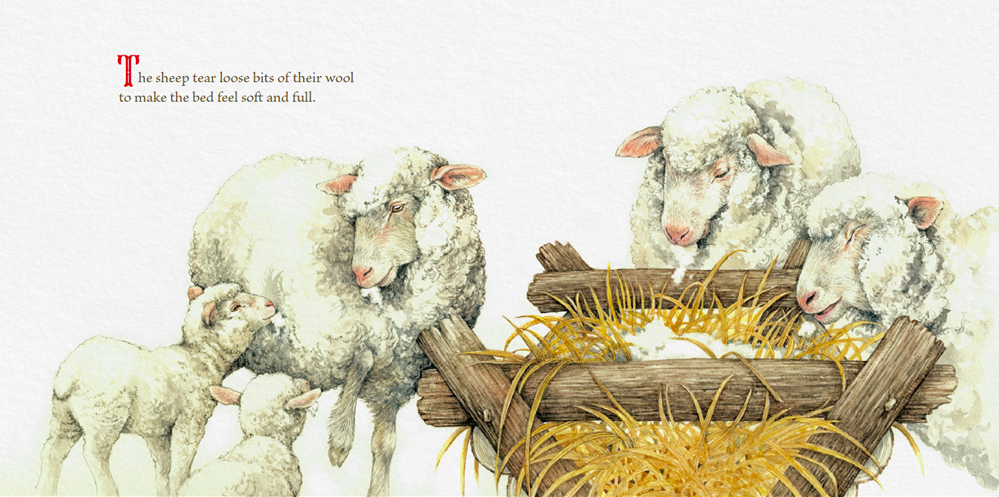
After the animals in a Bethlehem stable watch Joseph help Mary dismount from their donkey’s back, they go to work to prepare a place for the soon-to-be-born baby Jesus to sleep. “The ox that stands in the drafty shed / drops straw into a manger bed.” The sheep and lambs add bits of wool to make the bed “feel soft and full.”

celebrate-picture-books-picture-book-review-the-gifts-of-the-animals-mary-and-joseph

Image Yumi Shimokawara, 2019, text copyright Carole Gerber, 2019. Courtesy of Familius.

Using downy feathers from the sparrows, chickens, and little chicks, the mice make a plump pillow for Jesus’ head. The cow finds a blanket, and with the help of the ox they lay it over the manger. “Then in this place, humble and warm, Christ, the Prince of Peace, is born.” Mary wraps Him in swaddling clothes then Joseph lays Him in the manger to sleep.

celebrate-picture-books-picture-book-review-the-gifts-of-the-animals-sheep

Image Yumi Shimokawara, 2019, text copyright Carole Gerber, 2019. Courtesy of Familius.

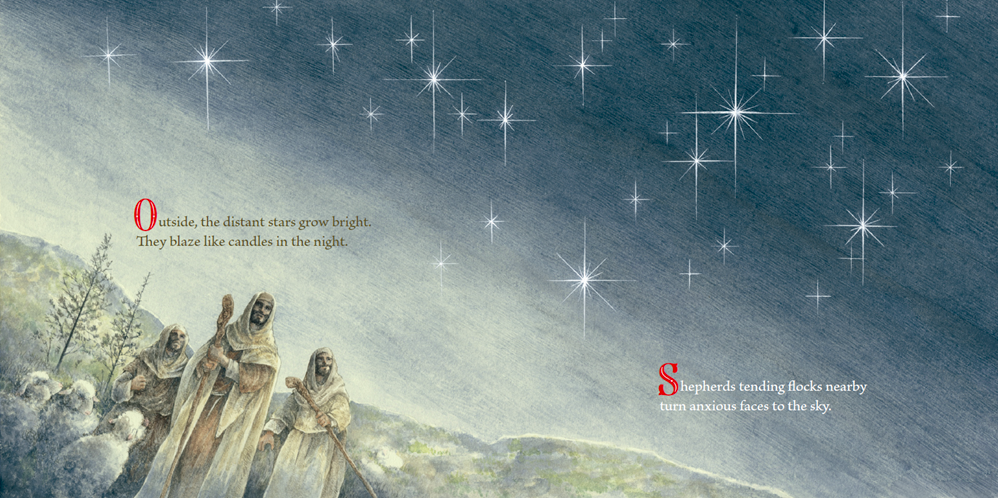
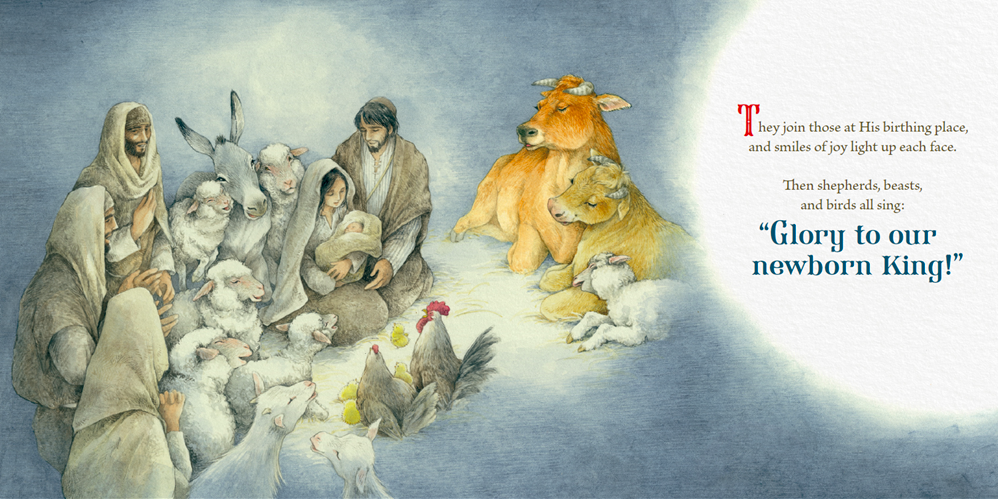
On a distant hillside, shepherds are startled by the brightening stars but listen to the angel who tells them of Jesus’ birth. Then the sky fills with a choir of angels singing “‘Peace on earth. Good will toward men. / Go now, shepherds, worship him.’” The shepherds hurry to Bethlehem to join in the joy of Mary, Joseph, and the gentle animals and to sing “‘Glory to our newborn king!’”

A condensed version of the Christmas story from the King James version of the book of Luke, chapter 2 follows the story.

celebrate-picture-books-picture-book-review-the-gifts-of-the-animals-shepherds

Image Yumi Shimokawara, 2019, text copyright Carole Gerber, 2019. Courtesy of Familius.

The wonder of that first Christmas night glows in Carole Gerber’s beautiful story that follows the animals in the stable as they make a warm and soft bed for Jesus to sleep in. Young readers will be mesmerized by the gentle generosity of the ox, cow, sheep, birds, and mice as they all work together to provide for the baby to come. As the shepherds are visited by the angels and go to worship Jesus, Gerber uses the lyrical language and flowing cadence of the King James version of the biblical story to create a tender and glorious read aloud for the whole family. 

Yumi Shimokawara’s gorgeous, soft-hued illustrations are breathtaking in their detail and inspiration. Pride, fellowship, and diligence shine on the animals’ faces as they create a manger bed worthy of the baby Jesus. Realistic and traditional images of the stone stable, the shepherds and their flock blend poignantly with the depiction of the singing angels that could come from any diverse modern choir. The final illustration in which the animals and the shepherds gather around Mary, Joseph, and baby Jesus in adoration reveals the promise and hope of the true meaning of Christmas.

Sure to become a favorite Christmas story to share year after year, The Gifts of the Animals would be a beloved addition to home bookshelves and a beautiful inclusion for library collections.

Ages 3 – 8

Familius, 2019 | ISBN 978-1641701594

Discover more about Carole Gerber and her books on her website.

You can find more books from Familius that joyfully reflect the habits of happy families, including reading, talking, laughing, eating, working, loving, healing, learning, and playing together as well as the Familius blog The Habit Hub here.

A Chat with Carole Gerber

IMG_1919-001(3)

Poet and author Carole Gerber has written sixteen picture books, three chapter books, and more than one hundred elementary science and reading texts for major publishers. Her picture book, A Band of Babies, was named a 2017 Best Book for Children by Amazon editors. She holds a BS in English education and an MA in journalism from Ohio State, and has taught middle school and high school English as well as college news writing and factual writing at OSU.

Hi Carole! I’m excited to be sharing Christmas Eve with you and your Christmas classic. I’m sure readers would love to know what inspired you to write The Gifts of the Animals.

In my random travels around the Internet, I came across a site called “The Hymns and Carols of Christmas.” One post contained the words to a song called “The Friendly Beasts.” The notes said “This song originally hails from a 12th century Latin song,” which was later known in England as “The Animal Carol.” It began: “Jesus our brother kind and good/was humbly born in a stable rude/and the friendly beasts around him stood/Jesus our brother, kind and good.” Here’s one more verse: “I,” said the cow all white and red / “I gave Him my manger for His bed;/I gave him my hay to pillow his head.”/ “I,” said the cow all white and red.

The song also mentions a dove cooing Jesus to sleep, the sheep giving him a blanket. It ends: “Thus every beast by some good spell/in the stable dark was glad to tell/of the gift he gave Emmanuel/The gift he gave Emmanuel.” What I wrote sounds nothing like the original, but it gave me the idea that sparked my story. I then developed my story into a 32-page picture book by including Mary and Joseph, other animals with useful gifts, the angels announcing the birth, and the arrival of the shepherds.

“The Animal Carol” sounds lovely. Do you know if it’s still performed?

After the book went to press, I found that the Mormon Tabernacle Choir had performed the exact words of the original song. There’s a YouTube video that lasts about six minutes. I had no idea that it was famous! A man named Brian Stokes Mitchell was the main singer. He and the choir actually tweet and baa, making some of the animal sounds.  

Such a feeling of peace and love flows through your book. How do you go about choosing words and phrasing and even the poetic form to create that mood?

I wrote and revised it many times, of course. But I never felt frustrated and truly did feel peaceful and loving as I wrote. The art director, David Miles, was great to work with. We brainstormed about other animals that would live in a stable and might contribute to preparing the manger. I came up with mice to carry the feathers from the birds perched on the rafters. Nothing appropriate rhymes with “manger” so I came up with “ox” to rhyme with “manger box.” A sweet result of involving more animals (besides getting enough pages to fill the book) was that they all worked cooperatively.

The Gifts of the Animals is absolutely gorgeous, from the glowing gold-embossed cover to the images of the gentle animals that are happily helping to the jubilant angels that mirror a modern choir. Can you tell me about Yumi Shimokawara and how she was chosen to illustrate your book?

David Miles met her at the Bologna Book Fair in 2017, and was absolutely blown away by her talent. She lives in Japan and had won many awards, including the grand prize at her art school. Yumi had written and illustrated several books published in Japan. My favorite title is Potsu, posu, potsu daijobu, which translates in English to Plip-plop, Plip-plop, Plip-plop, Are You All Right? The title makes me smile. Yumi is not fluent in English so she worked with a Japanese friend who helped her translate David’s emails containing art directions. She did the cover first and it is beautiful. But she had given the baby blond hair and pale skin. My comment was, “We can’t have Jesus looking Swedish!” David replied, “No worries. I will fix this with Photoshop.” He darkened the baby’s hair and skin a bit and directed Yumi as she worked on the interior pages, to make all the people more authentically Middle Eastern.

Each spread is so beautiful on its own, but do you have a favorite? What makes that illustration special to you?

I love how happy and expressive the animals are, especially in the last spread when the people and animals are gathered around the Holy Family. Jesus is not the only baby in that picture. Yumi put baby chicks in that spread, too, which makes it even more touching. I also smile at the inside cover page, which has at the bottom an adorable illustration of a small choir of mice and birds. One little mouse is clasping his paws as he sings his heart out.

celebrate-picture-books-picture-book-review-the-gifts-of-the-animals-gathered-around

Image Yumi Shimokawara, 2019, text copyright Carole Gerber, 2019. Courtesy of Familius.

At the end of your story you include a condensed version of Chapter 2 from the Biblical book of Luke in the King James Version. How did you choose which version of the story to include?

I earned a King James Bible when I was about eight years old as a reward for attending Sunday School for 10 Sundays straight. Ever since, I have loved the grandeur of the language in the King James Bible. Compare the words between the King James and The New International Version.

“And she brought forth her firstborn son, and wrapped him in swaddling clothes, and laid him in a manger because there was no room for them in the inn.”

The New International Version of the Bible states:

“and she gave birth to her firstborn, a son. She wrapped him in cloths and placed him in a manger, because there was no guest room available for them.”

No guest room available? It sounds like what a desk clerk in a motel would say. Bah!

What is one of your favorite family Christmas traditions?

Every time I get a new book published, my husband makes a Christmas tree ornament of the cover. This started years ago when my daughter Jess was in middle school. She secretly used my husband’s power tools – EEEK! – to cut to size a small piece of plywood on which she glued a small photocopied cover of one of my first published books. She put a doll house size clothes hanger on the back to attach it to the tree. After that, every Christmas, the last things we put on our tree are the miniature covers of my books.

celebrate-picture-books-picture-book-review-Carole-Gerber-ornament

What a sweet and supportive tradition! It’s such a nice idea to adapt with photos or drawings for any family wanting to celebrate achievements from the past year. Thanks so much for this chat, Carole! I wish you all the best with The Gifts of the Animals and a very Merry Christmas with your family.

Christmas Eve Activity

celebrate-picture-books-picture-book-review-christmas-word-search-puzzle-with-graphics

Tell the Good News! Word Search Puzzle


Find the sixteen words about the first Christmas in this printable puzzle.

Tell the Good News! Word Search Puzzle | Tell the Good News! Word Search Solution

celebrate-picture-books-picture-book-review-the-gifts-of-the-animals-cover

You can find The Gifts of the Animals: A Christmas Tale at these booksellers

Amazon | Barnes & Noble | Books-a-Million

To support your local independent bookstore, order from

Bookshop | IndieBound

Picture Book Review
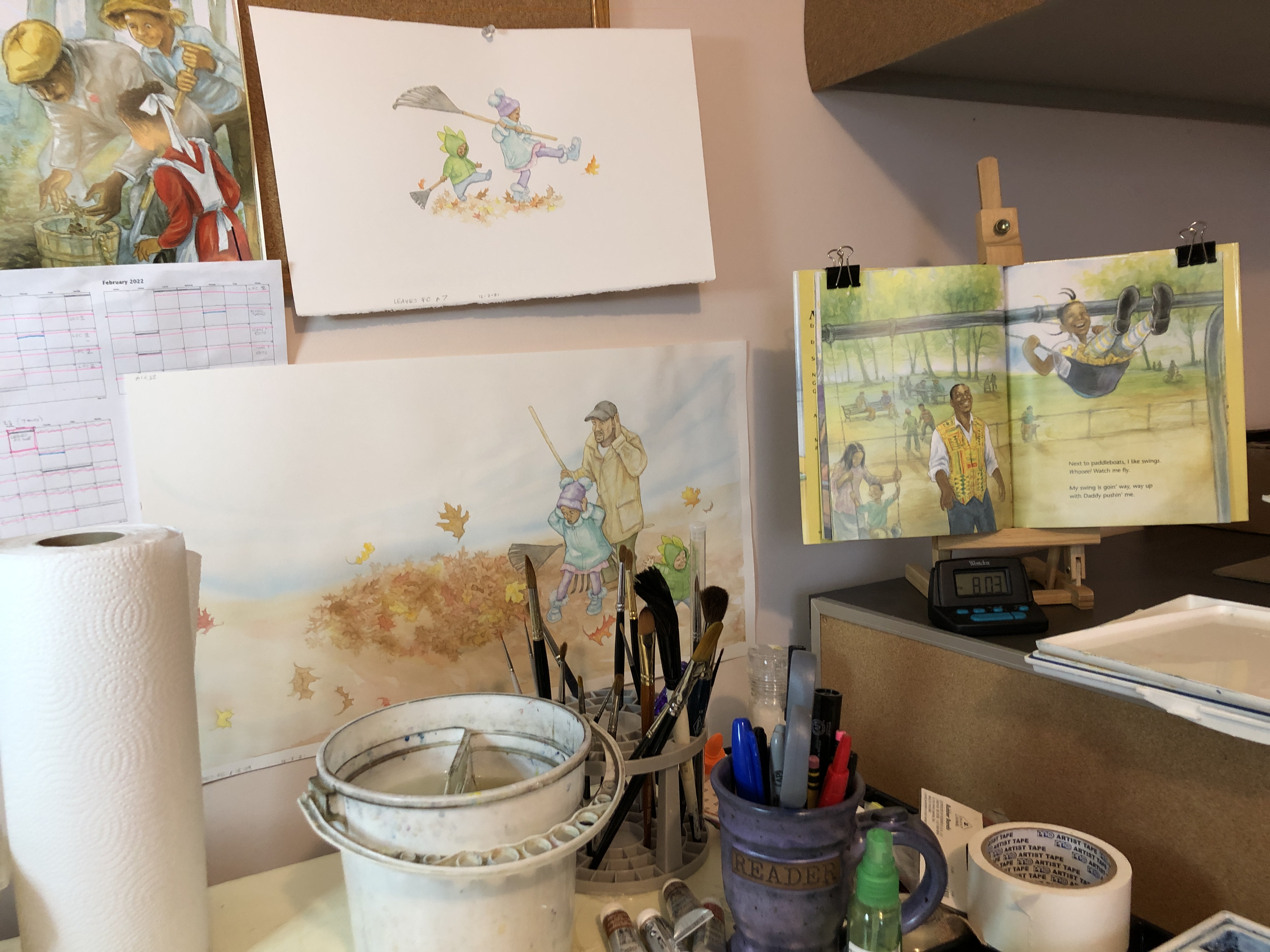
August 16 – Celebrating Back-to-School Month with Tammi Sauer

celebrate-picture-books-review-picture-book-review-tammi-sauer-headshot

Tammi Sauer, a former teacher and library media specialist, is the full-time author of many popular picture books, including Quiet Wyatt, illustrated by Arthur Howard, and Nugget and Fang and Nugget and Fang Go to School, both illustrated by Michael Slack. Getting kids excited about reading and writing is her passion. Her other passion is tropical tea. Tammi and her family live in Edmond, Oklahoma, with one dog, two geckos, and a tank full of random fish.

You can connect with Tammi on her website | Facebook | Twitter

Hi Tammi! I’m really happy you could help me celebrate kids going back to school with your best-of-friends, Nugget and Fang! This minnow and shark don’t seem like they’d be natural friends, but they make really supportive besties. Many of your books explore friendships and themes of being out of your comfort zone – and always with a liberal sprinkling of humor that really appeals to kids. How has a previous job or jobs influenced your writing and the kinds of books you write?

I am a former pre-k teacher and library media specialist. Both of those positions exposed me to hundreds of picture books. How lovely is it that the more you read, the better you write? Plus, being in the classroom and the library helped me to see what books really resonated with kids.

celebrate-picture-books-picture-book-review-mason-sauer-headshot

My role as Mom has also been a big benefit to me as a writer. I used to read stacks and stacks of picture books to my kids. My son, Mason, was a tough audience—especially when he was four. After every book I read, he would either give it a double thumbs up or say, “Wow, that’s a dud.” I always keep four-year-old Mason in mind as I write. I want to create something that little Mason would have readily endorsed.

How great is it for a picture book writer to have a seasoned and discerning critic in residence?! Thanks so much, Tammi for sharing your experience with readers—and for all of your double-thumbs-up books!

celebrate-picture-books-picture-book-review-nugget-and-fang-go-to-school-cover

Nugget & Fang Go to School

Written by Tammi Sauer | Illustrated by Michael Slack


When most fish and sea creature saw Fang, they swam or scuttled off in fear. But the mini minnows knew Fang was just a softie – and a vegetarian – because he once had saved them and his best friend Nugget from a fisherman’s net. In fact the mini minnows liked Fang so much, they thought he should go to school with them at Mini Minnows Elementary School. Nugget thought this was a great idea too.

celebrate-picture-books-picture-book-review-nugget-and-fang-go-to-school-panic

Image copyright Michael Slack, 2019, text copyright Tammi Sauer, 2019. Courtesy of Clarion Books.

Fang was excited until the first day of school arrived. He felt seasick and thought his skin was turning blue. “‘Your skin is always blue,’ said Nugget. ‘You’ll be fine.'” When the first bell rang, Nugget had to drag Fang in by the fin as Fang rattled off questions: “‘What if I lose a tooth? Or two? Or twenty? What if I sit on a jellyfish?'” He was afraid of swallowing someone while yawning, and getting swallowed by a whale himself. As the teacher, a hermit crab, introduced herself, Fang still worried. “‘She looks crabby,’ whispered Fang.'”

celebrate-picture-books-picture-book-review-nugget-and-fang-go-to-school-hero

Image copyright Michael Slack, 2019, text copyright Tammi Sauer, 2019. Courtesy of Clarion Books.

Nugget tried to reassure his friend. “‘You’ll be fine,'” he said, but things did not go well in reading, math, or science. Music, art and The Brief History of Minnows were also disasters. Fang thought the day couldn’t get any worse, but it did. At the end of the day, the teacher invited each student to the front of the class to share something special. After the horrible day he’d had, Fang did not want to do it. After students had shared their hobbies, talents, or special things from home, it was Fang’s turn. He stood in front of the class nervously trying to think of something to share. Then he noticed Nugget, who was smiling, nodding, and holding the lunchbox the mini minnows had given him that read “Fang, Our Hero!”

celebrate-picture-books-picture-book-review-nugget-and-fang-go-to-school-first-day

Image copyright Michael Slack, 2019, text copyright Tammi Sauer, 2019. Courtesy of Clarion Books.

Suddenly, Fang did feel fine. And he knew just what to say. With a big toothy grin, Fang announced, “‘I have the best friend in the whole underwater world!'” Everyone was so impressed that the teacher even gave Fang a gold star. Now Fang didn’t want to leave school, but Nugget grabbed him by the fin and led him home anyway.

celebrate-picture-books-picture-book-review-nugget-and-fang-go-to-school-teacher

Image copyright Michael Slack, 2019, text copyright Tammi Sauer, 2019. Courtesy of Clarion Books.

Tammi Sauer dives deep into the ways true friends help and support each other in her story that takes on first-day-of-school jitters and shows that even awkward days turn out fine with a bit of encouragement. Little readers will appreciate Sauer’s straightforward storytelling that focuses on children’s common fears when beginning school or any new extracurricular activity with a light touch and plenty of punny humor to get them giggling. To calm those fears, Sauer shows that reassurance and kindness come from many places, including best friends, new friends, and teachers. 

Fans of Nugget and Fang will be happy to reunite with Michael Slack’s rainbow-hued minnows and blue Fang. As Nugget and Fang approach the school, Fang’s fears swirl around him, replicating the way thoughts whirl through a worried mind. Slack’s uncluttered illustrations make it easy for kids to understand Fang’s predicaments as well as the comical touches. Slack uses the ocean environment for plenty of clever interpretations of a classroom setting. The science food chain poster in Nugget & Fang: Friends Forever—or Snack Time? gets a history update in this version, adding to Fang’s embarrassment. Just as in the first book of this series, readers will cheer on Fang and Nugget’s unusual but strong friendship. 

Nugget & Fang Go To School will quickly become a favorite for kids just beginning their school journey, starting a new grade, or going back to in-person learning after a virtual year. The book would be a welcome addition to home, classroom, and public library collections.

Ages 4 – 7

Clarion Books, 2019 | ISBN 978-1328548269

To learn more about Tammi Sauer and her books, visit her website!

View a gallery of work by Michael Slack on his website!

You can find Nugget & Fang: Go to School at these booksellers

Amazon | Barnes & Noble | Books-a-Million

To support your local independent bookstore, order from

Bookshop | IndieBound

celebrate-picture-books-picture-book-review-nugget-and-fang-cover

Nugget & Fang: Friends Forever—Or Snack Time?

Written by Tammi Sauer | Illustrated by Michael Slack


Deep in the ocean two friends do everything together and life is almost perfect as they swim over ship wrecks, under reefs, and all around. Nugget and Fang are as close as two friend can be—there’s just one thing: Nugget is a minnow while Fang is a shark. Neither of them consider their friendship unusual—until Nugget goes to school. There during Reading, Nugget hears the story of The Three Little Minnows and the Big, Bad Shark. “‘Ha!’” says Nugget. “‘Impossible!’”

celebrate-picture-books-picture-book-review-nugget-and-fang-jelly-new-year

Image copyright Michael Slack, 2013, text copyright Tammi Sauer, 2013. Courtesy of HMH Books for Young Readers.

During Math class the students solve a word problem: “What if there were ten minnows and a shark came along and ate four of them? How many minnows are left?” Nugget is scandalized. “‘A shark would never do that!’” he says. During Science period when Nugget learns the facts of the Marine Food Chain, he protests that sharks aren’t scary and announces that his best friend is a shark. “Have you lost your gills?” one classmate asks as another snarks, “Hello—sharks eat minnows!” Nugget can’t believe it.

celebrate-picture-books-picture-book-review-nugget-and-fang

Image copyright Michael Slack, Courtesy of HMH Books for Young Readers.

Back home Nugget gives Fang the bad news. “‘Sounds fishy to me,’” says Fang. Nugget assures him it’s true before swimming far away. “Fang’s heart sank.” As Nugget stayed away, Fang determined to get his best friend back. He tried dressing like a mermaid, inviting Nugget for dinner, and even performing a song and dance routine, but nothing could sway Nugget. Fang was so upset that he didn’t didn’t notice when a fishing net floated toward the sea floor, capturing Nugget and the other minnows.

celebrate-picture-books-picture-book-review-nugget-and-fang-jelly-fish

Image copyright Michael Slack, 2013, text copyright Tammi Sauer, 2013. Courtesy of HMH Books for Young Readers.

When Fang realizes what has happened, he doesn’t know what to do. Then he has an idea. With his big sharp teeth he chomps and chews and tears the net to pieces, allowing Nugget and the minnows to swim to safety. They all stare at Fang wide-eyed. He knows just what they’re going to say. But Nugget has a new math problem for him: “‘There were ten minnows, and a very special shark came along. How many friends are there altogether?’” Now eleven friends live happily deep in the ocean, and everyone—especially Fang—are all smiles.
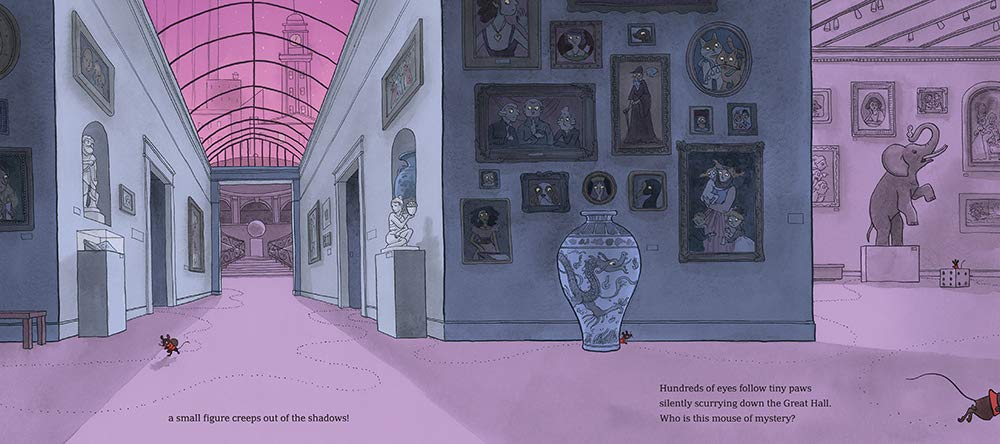
celebrate-picture-books-picture-book-review-nugget-and-fang-over-and-under

Image copyright Michael Slack, 2013, text copyright Tammi Sauer, 2013. Courtesy of HMH Books for Young Readers.

Tammi Sauer’s tribute to true friendship reveals the danger when “facts” take precedence over what you know in your heart to be true. Her reminder to listen to your inner voice is approached with humor and the honest types of doubts that can niggle and cloud judgement. Throughout the story, her language is accessible and kid-conversational, including puns that will elicit laughs. Sauer’s use of a math word problem to both highlight contrary thinking and provide a solution underscores the value of education as well as making new—and keeping old—friendships.

In Michael Slack’s vibrant illustrations, tiny Nugget and imposing Fang make a happy, nonchalant pair. They play together through vivid reefs unaware of marine animal stereotypes. When Nugget gets “schooled,” his astounded expressions and those of his classmates humorously depict their conundrum. The ocean setting gives Slack an opportunity for lots of visual jokes and innovation. Kids will laugh at Fang’s attempts at reconciliation with Nugget, and cheer when he becomes a hero.

Ages 4 – 9

Houghton Mifflin Harcourt, 2013 ISBN 978-0544481718 | Lap Board Book, 2018 ISBN 978-1328768391

To learn more about Tammi Sauer and her books, visit her website!

View a gallery of work by Michael Slack on his website!

You can find Nugget & Fang: Friends Forever – Or Snack Time? at these booksellers

Amazon | Barnes & Noble | Books-a-Million

To support your local independent bookstore, order from

Bookshop | IndieBound

Back to School Month Activity

celebrate-picture-books-picture-book-review-shark-jar-craft

Shark Organizer Jar


Are some of your favorite school supplies scattered here and there? Would you like to be able to get a good chomp on them? Then here’s a craft you can really sink your teeth into! This shark organizer jar is easy and fun to make and a fin-tastic way to keep your stuff tidy!

Supplies

  • Wide-mouth plastic jar, like a peanut-butter jar
  • Gray craft paint
  • White craft paint
  • Black craft paint
  • Paint brush

Directions

  1. Find a point in the middle of the jar on opposite sides of the jar
  2. Mid-way between these points on the other sides of the jar, find a point about 1 1/2 inches above the first points
  3. From the first point draw an angled line up to the higher point and down again to the lower point to make the shark’s upper jaw
  4. Repeat Direction Number 3 to make the shark’s lower jaw
  5. With the gray paint fill in the jar below these lines to make the shark’s head
  6. Along the jawline, paint jagged teeth with the white paint
  7. Add black dots for eyes on either side of the shark’s head
  8. Let dry

Picture Book Review