April 24 – Arbor Day

About the Holiday

Arbor Day, a national celebration of trees, began as a campaign by J. Morton Sterling and his wife after they moved from Michigan to Nebraska in 1854 and advocated for planting trees as windbreaks for crops, to keep soil from washing away, as building materials, and for shade. In 1872, Morton proposed that a tree-planting day be established in April. On the first Arbor Day nearly one million trees were planted in Nebraska. The idea was made official in 1874, and soon, other states joined in. In 1882 schools began taking part. Today, most states celebrate Arbor Day on the last Friday of April or day more suited for their growing season. To learn about events in your area, find activities to download, and more, visit the Arbor Day Foundation website.

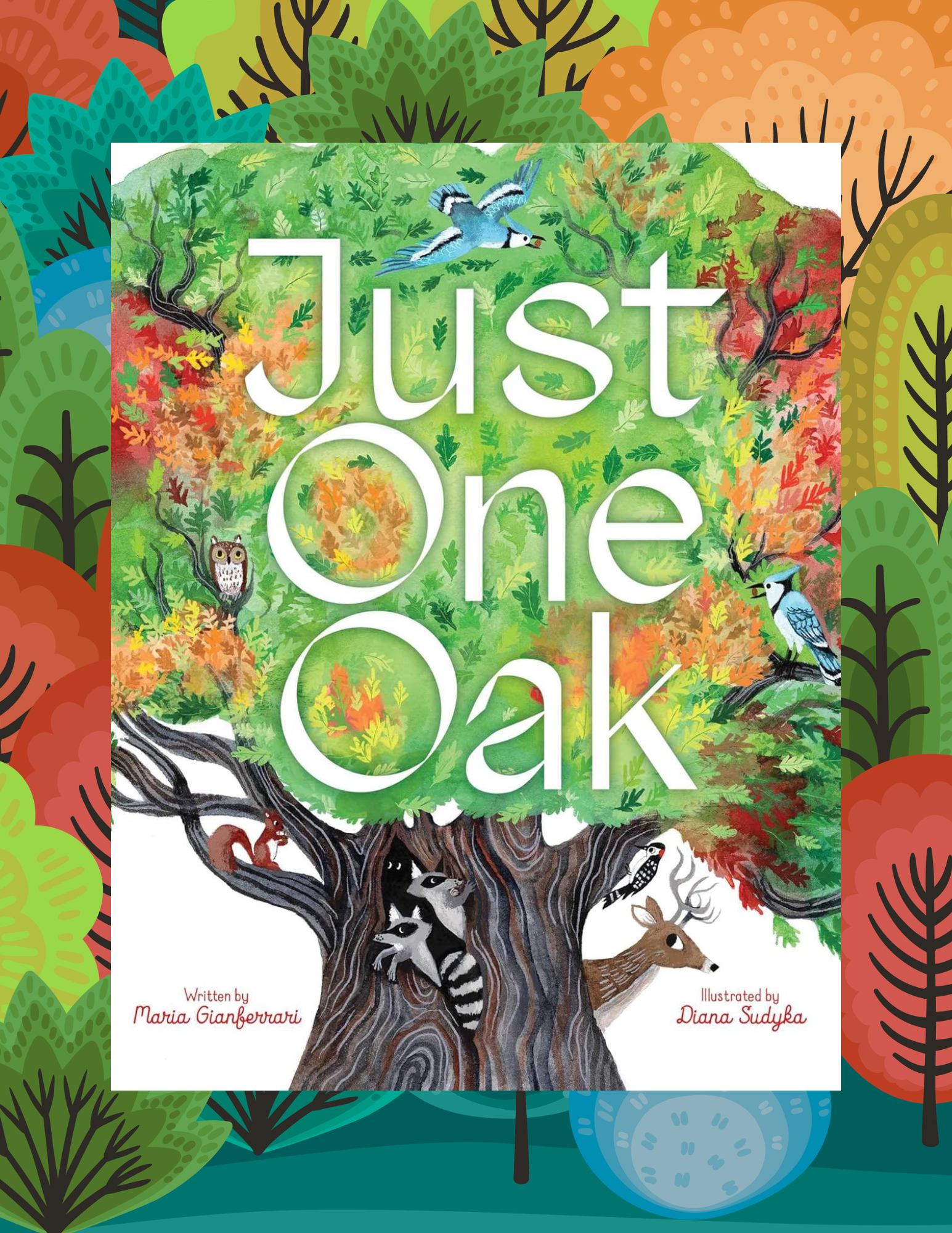
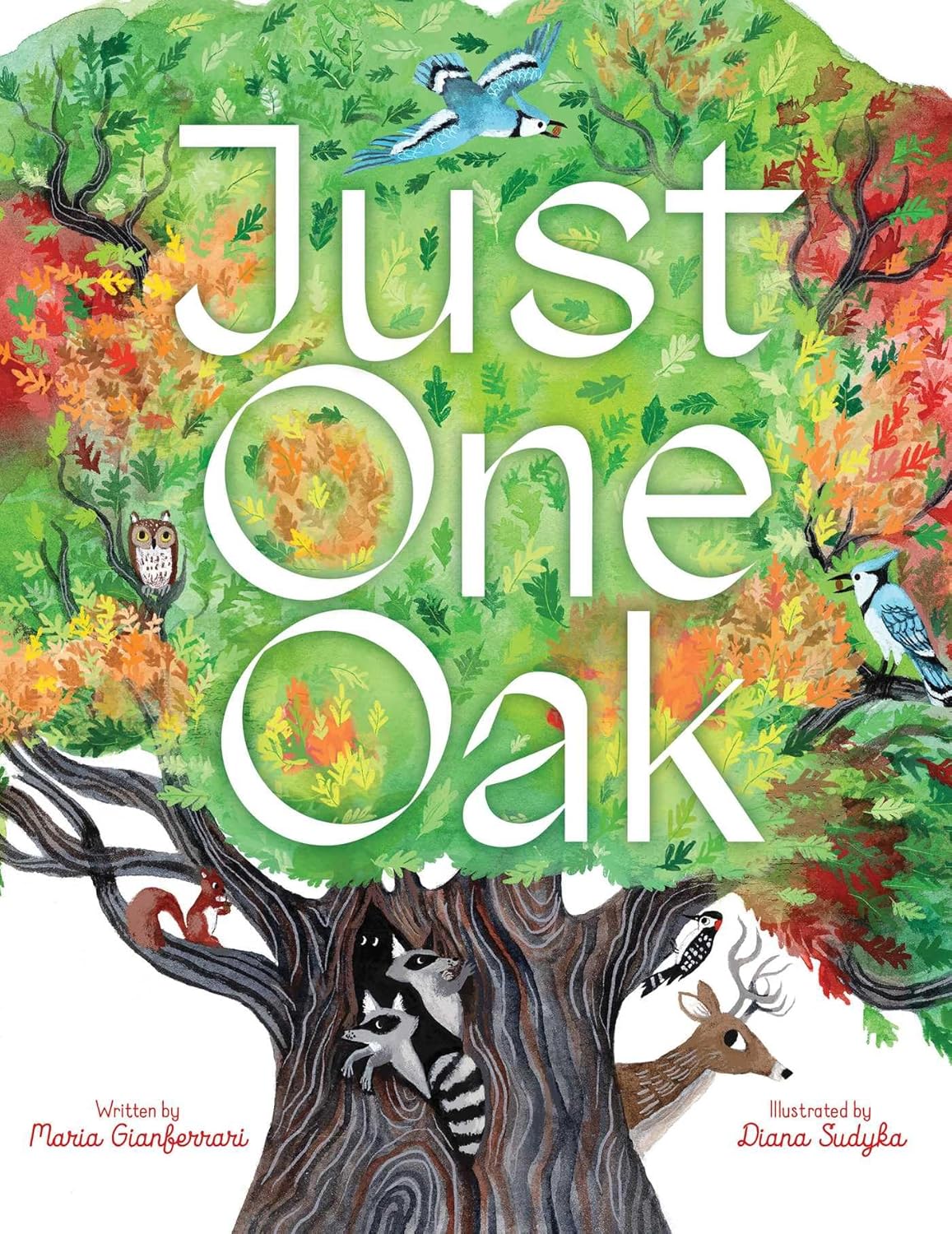
Just One Oak: What a Single Tree Can Be

Written by Maria Gianferrari | Illustrated by Diana Sudyka


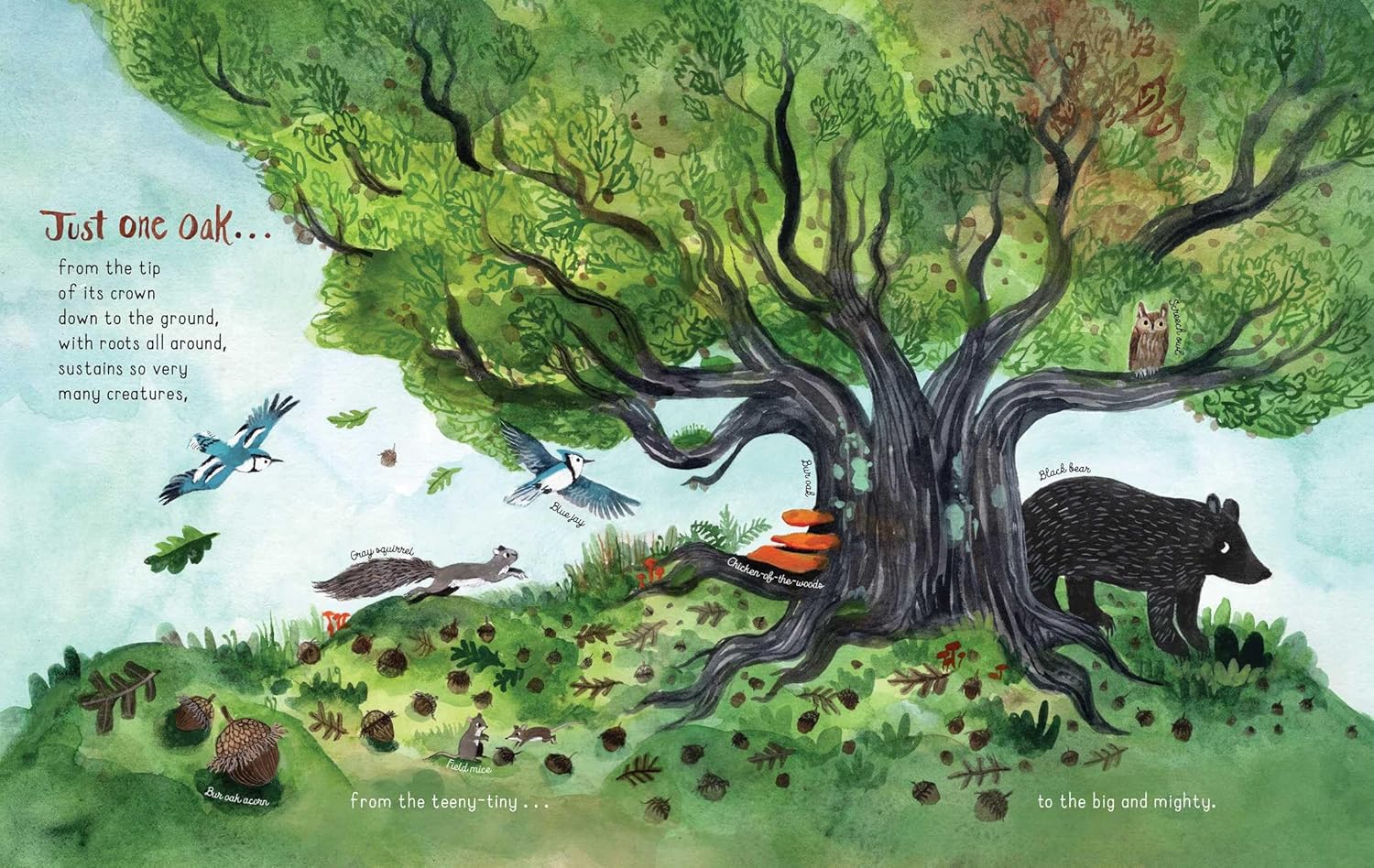
“Just one oak . . . from the tip of its crown down to the ground, with roots all around, sustains so very many creatures, from the teeny-tiny to the big and mighty.” So begins Maria Gianferrari’s fascinating exploration of all the ways oak trees contribute to and sustain the ecosystem where they live. From their distinctive leaves to their shaggy bark to their incredible acorns, oak trees are self-protecting while providing shelter and food for an amazing array of wildlife.

Illustration copyright © 2026 by Diana Sudyka. Text copyright © 2026 by Maria Gianferrari. Courtesy of Beach Lane Books.

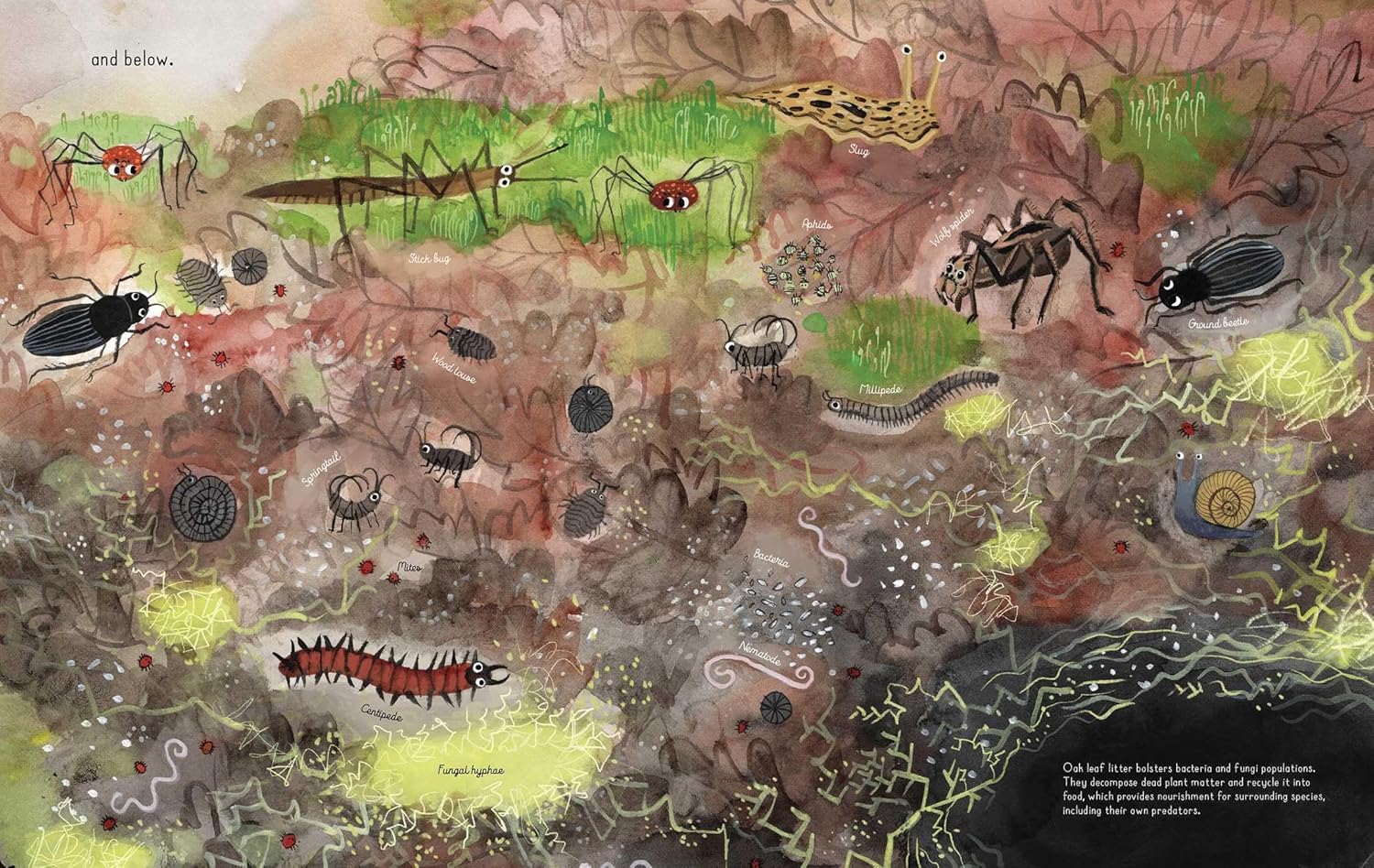
At ground level, Gianferrari shows how “leaf litter, the blanket beneath its boughs,” creates the perfect environment for snails, insects, amphibians, fungi, and more to hide, feed, and grow. And that little acorn nestled under the leaves? Gianferrari digs in to reveal how a mighty oak begins with just one taproot that branches and branches until its root system spreads “farther than the canopy is wide.”

Illustration copyright © 2026 by Diana Sudyka. Text copyright © 2026 by Maria Gianferrari. Courtesy of Beach Lane Books.

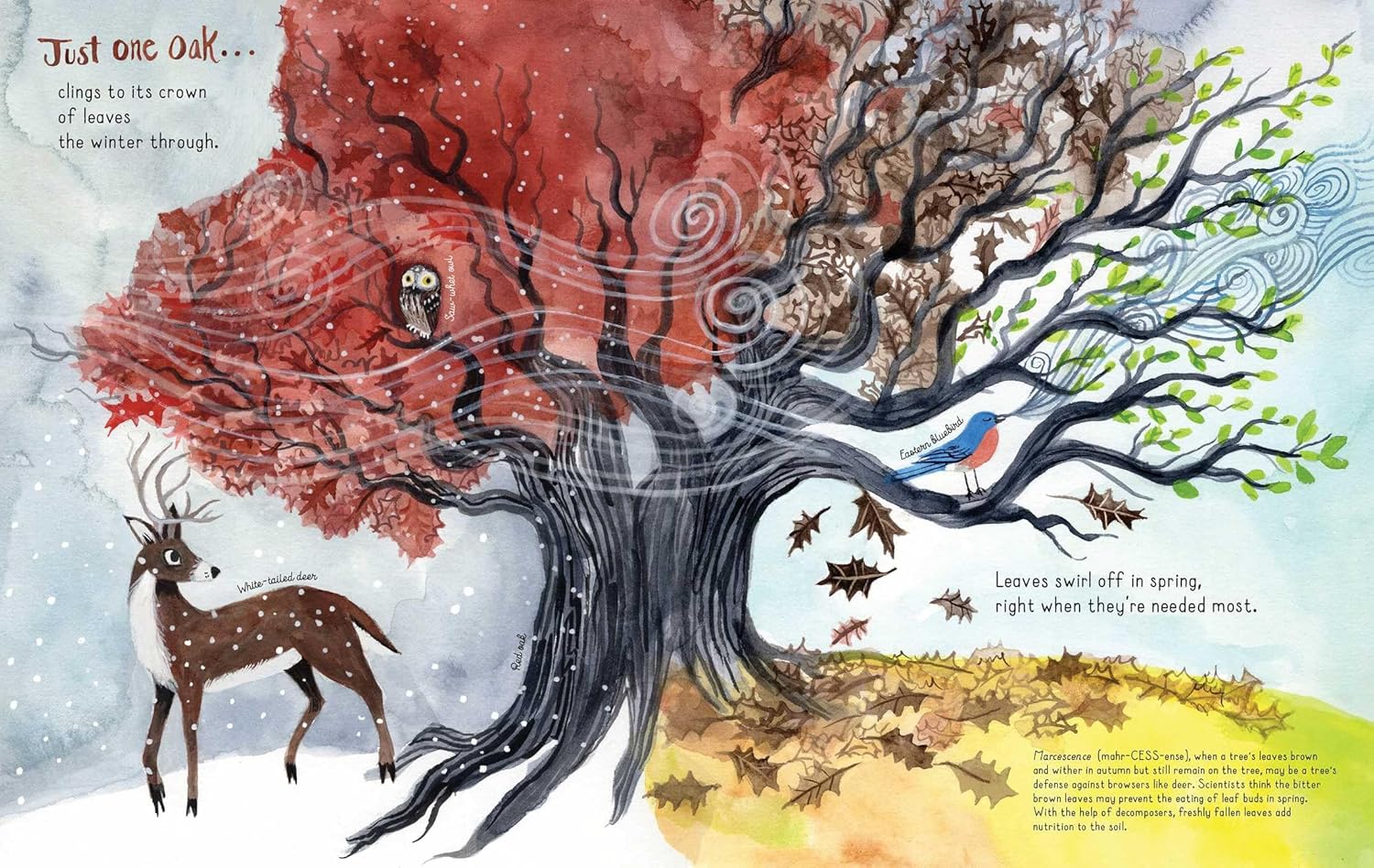
And oh those acorns! They’re so much more than their tiny size may lead you to believe. Just one acorn can house one creature or hundreds. They are a universal “superfood” as well as a tidy seed that can reproduce where it drops or be carried far afield. When it grows up, “just one oak creates a microclimate,” with its impressive canopy and prevents flooding, erosion, and drought with its far-reaching roots. Yes, “just one oak is beautiful and bountiful to all.”

Illustration copyright © 2026 by Diana Sudyka. Text copyright © 2026 by Maria Gianferrari. Courtesy of Beach Lane Books.

Maria Gianferrari takes readers outdoors to get a close-up view of one oak tree, and by extension an enlightened understanding of the reach of this keystone species. Her lyrical introductions, capped with a repeated “Just one oak . . .”—a phrase that reinforces the contributions of these trees, give way to paragraphs of factual information. Each of these paragraphs are packed with specific information about the types of creatures sustained by just one tree and the benefits they enjoy. The numbers here are simply astounding and could inspire many cross-curricular lessons in math, science, language arts, art, and more. 

Diana Sudyka’s nature illustrations are beautiful, exciting, and full of the kinds of small, impactful details readers love and that expand their understanding of the text (especially for visual learners). Animals scamper, birds feast, and an entire community of creepy-crawlies scurry through leaf litter and below in Sudyka’s action-filled pages. Each spread will have children lingering to discover all the wonders of an oak tree.

A glorious celebration of the oak tree and the species that rely on it, Just One Oak will spark curiosity and an appreciation for the interconnections among wildlife. The book will delight any nature lover and is a must for school and public libraries. 

 Ages 4 – 8+

Beach Lane Books, 2026 | ISBN 978-1665961042

About the Author

Maria Gianferrari is a picture book reader/writer, tea-drinker, dog-lover, and birdwatcher. Maria writes books that honor our bonds with creatures both domestic and wild and that celebrate the natural world around us, including Fungi Grow and Just One Oak, illustrated by Diana Sudyka; Ice Cycle: Poems about the Life of Ice, illustrated by Jieting Chen; Being a Dog: A Tail of Mindfulness, illustrated by Pete Oswald; Bobcat Prowling, illustrated by Bagram Ibatouilline; and Be a Tree!, illustrated by Felicita Sala. She lives with her family in Massachusetts in a house encircled by trees. To learn more about Maria, visit her website: MariaGianferrari.com.

About the Illustrator 

Diana Sudyka is a Chicago-based illustrator. Early on, she created screen-printed gig posters for musicians but currently her illustration work focuses on young adult, middle grade, and children’s books. She has illustrated several volumes of the award-winning book series, including The Mysterious Benedict Society by Trenton Lee Stewart and Circus Mirandus by Cassie Beasley, as well as the picture books Would You Come Too? by Liz Garton Scanlon, Sometimes Rain by Meg Fleming, What Miss Mitchell Saw by Hayley Barrett, How to Find a Bird by Jennifer Ward, and Fungi Grow and Just One Oak by Maria Gianferrari. Visit her at DianaSudyka.com.

Arbor Day Activities

celebrate-picture-books-picture-book-review-paper-plate-tree-craft-2


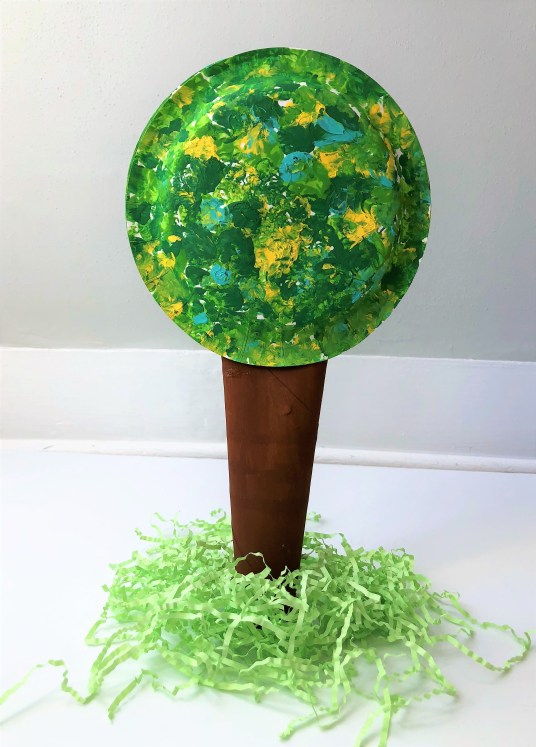
Paper Plate Tree


On Earth Day children love planting trees in their yard or as part of a community project. With this easy craft, they can also plant a tree on their wall or bulletin board.

Supplies

  • Two paper plates 
  • Paper towel tube
  • Brown craft paint
  • Green craft paint (using a variety of green paints adds interest)
  • Paintbrush, cork, or cut carrot can be used to apply paint
  • Glue or hot glue gun or stapler

Directions

  1. Paint the paper towel tube brown, let dry
  2. Paint the bottoms of the two paper plates with the green (or other color) paints, let dry
  3. Flatten about 4 inches of the paper towel tube 
  4. Glue or tape the flat part of the paper towel tube to the unpainted side of one paper plate
  5. Glue the edges of the two paper plates together, let dry.
  6. Straighten the tree so that it can stand up, or hang your tree on a wall, bulletin board, in a window

Just One Oak Activity Kit from Beach Lane Books


Teachers and other educators can find a comprehensive Activity Kit with discussion questions, hands-on activities, and more to accompany Just One Oak on Maria Gianferrari’s website.

You can purchase Just One Oak: What a Single Tree Can Be from these booksellers

Amazon | Barnes & Noble | Bookshop

Picture Book Review

April 22 – Earth Day

About the Holiday

First celebrated 56 years ago, Earth Day is the world’s largest civic-focused event. The initiative began on April 22, 1970, when 20 million Americans (10% of the population) demonstrated against the industrialization, pollution, and pesticides that were damaging people and the environment. In response, in July of 1970, Republican President Nixon and the US Congress created the Environmental Protections Agency and enacted laws such as the Clean Water Act and the Endangered Species Act among others.

This year’s theme is “Our Power, Our Planet.” From Saturday, April 18 to Earth Day on the 22nd and beyond, Earth Day and Earth Month will organize communities and individuals to take part in community cleanups, teach-ins, peaceful demonstrations, tree planting, voter registration, town hall meetings, community organizing and more. Every action strengthens the movement and what we can accomplish. To learn how you can participate or access resources in your area, visit the official Earth Day website.

Thanks to Greystone Books for sending me a copy of this book for review!

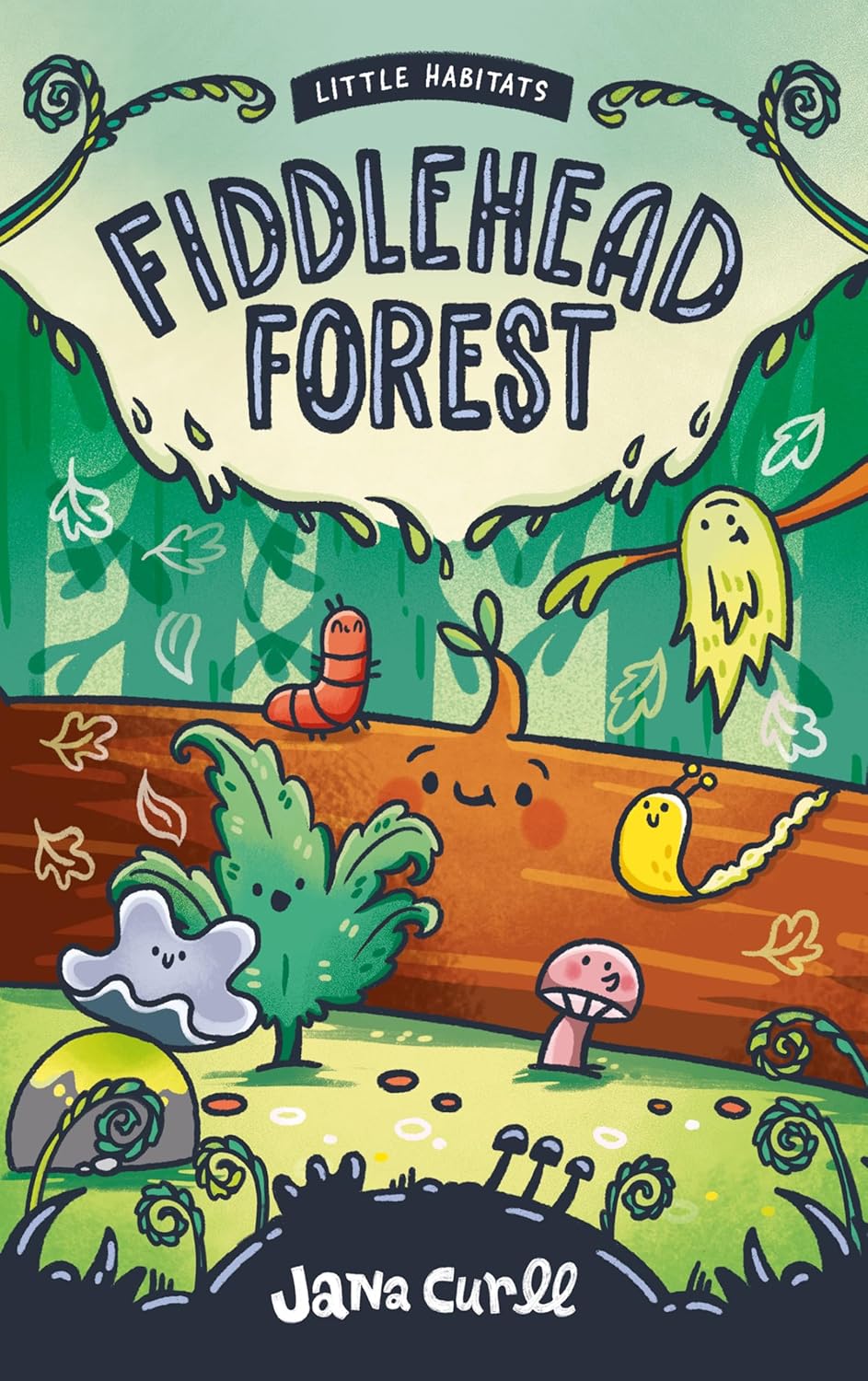
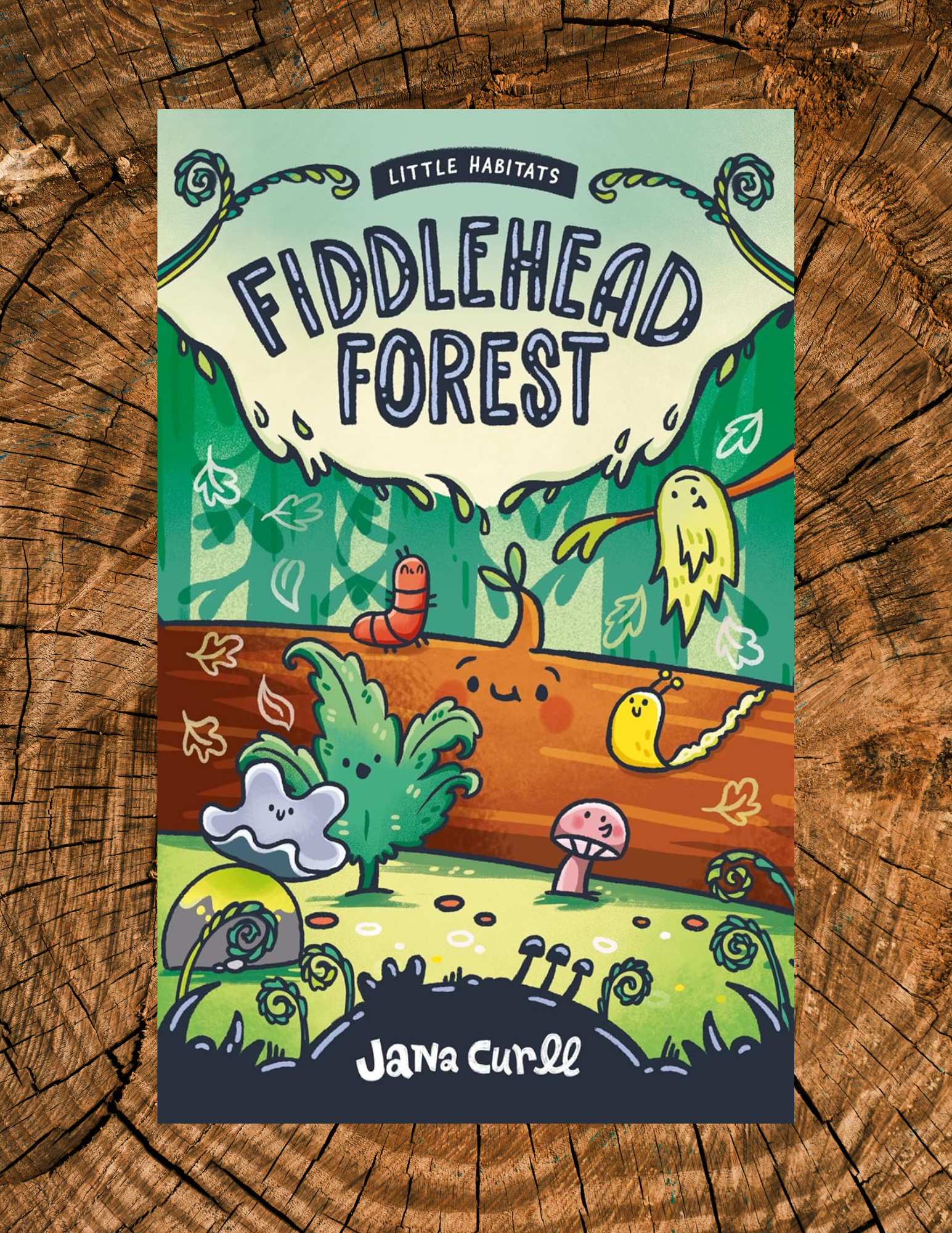
Fiddlehead Forest: Little Habitats 2

By Jana Curll


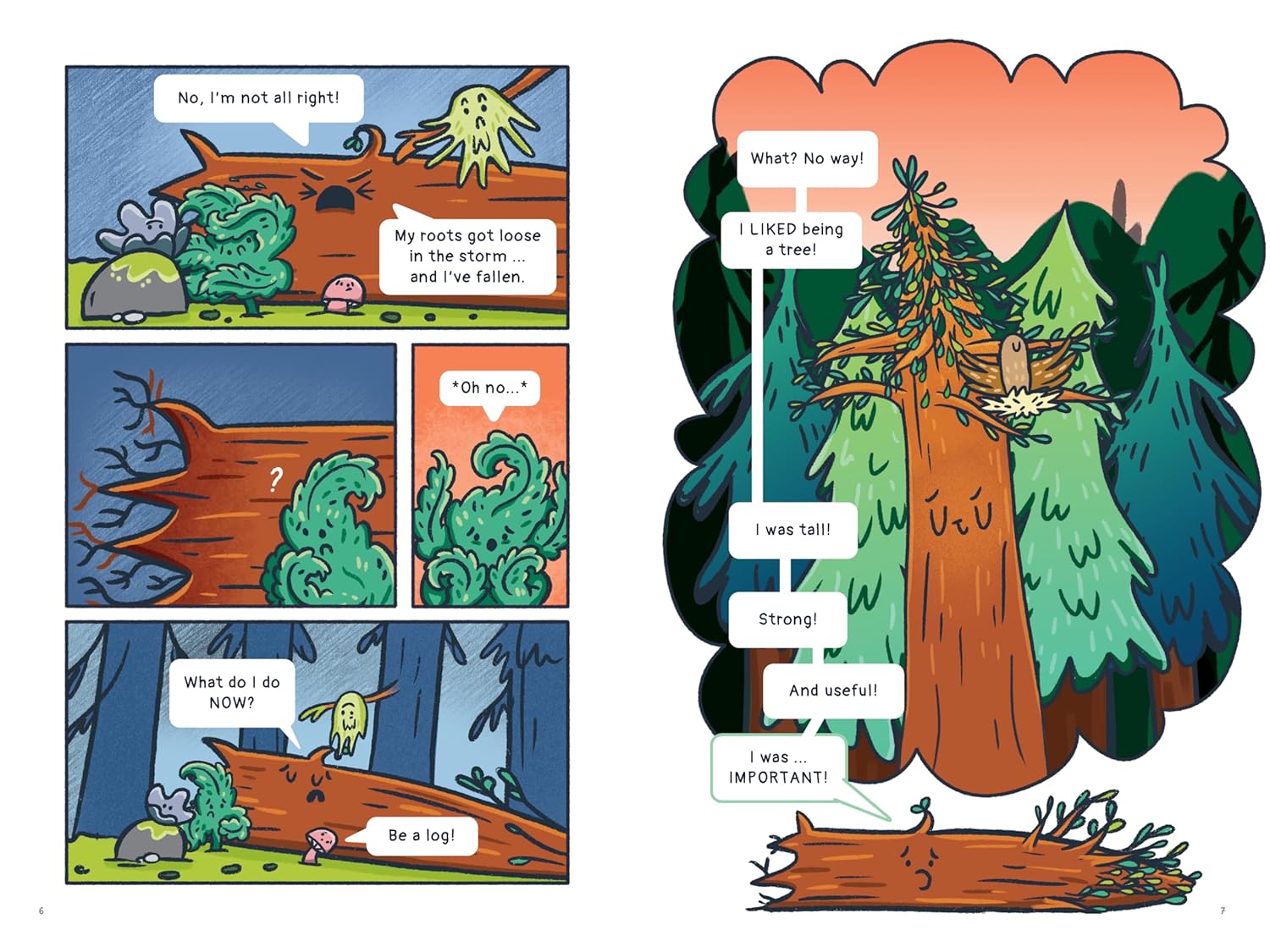
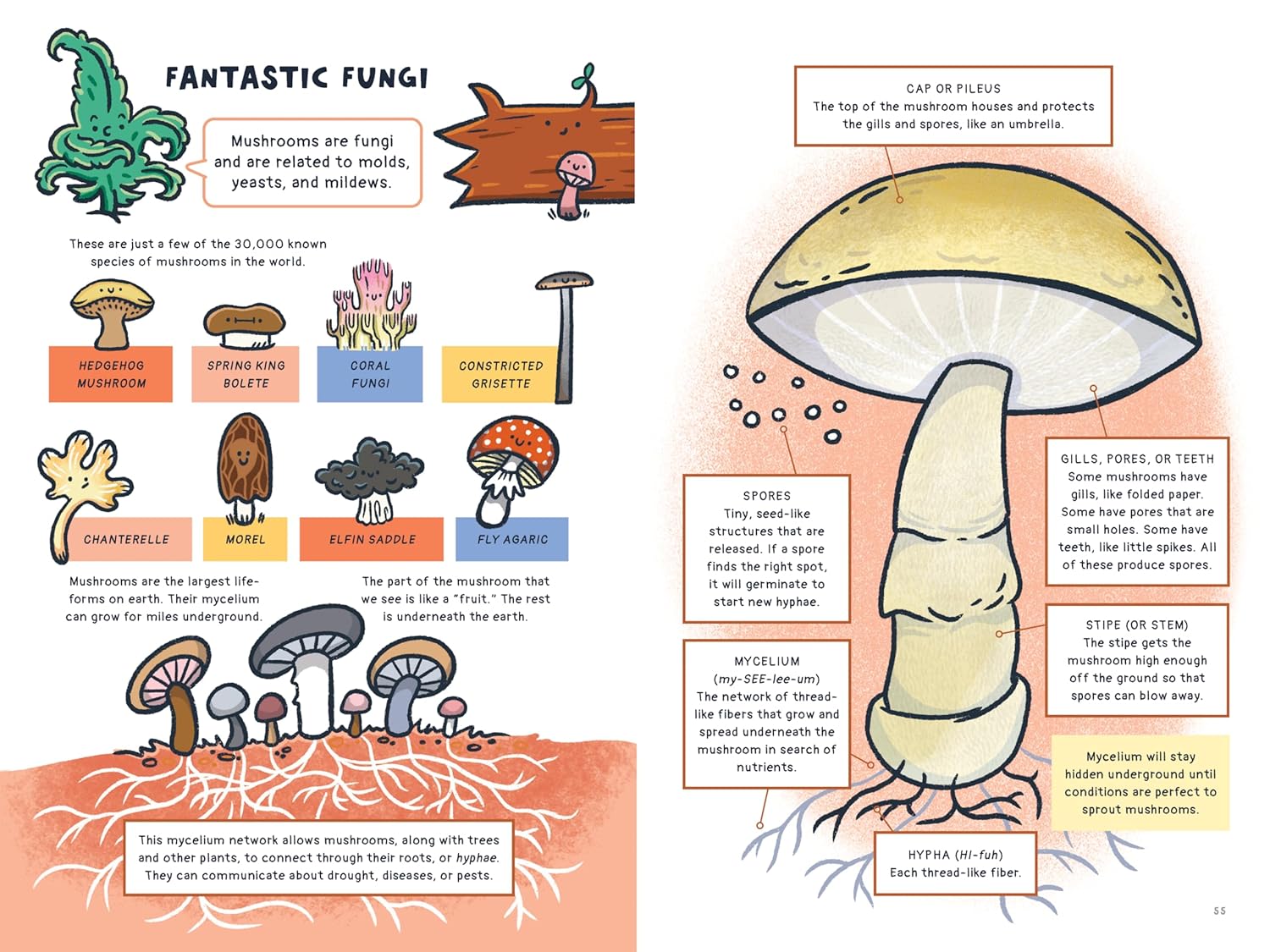
After a lightning storm, Fern and her fronds—Millipede, Slug, Moth, Mushroom, and the Lichens—discover a tree that’s fallen and can’t get up. Mushroom suggests the tree become a log, but the unhappy tree wants to return to its days of glory, of being “tall, strong, and useful—important!” Fern “guaran-trees” she will make it happen.

Text and Illustration copyright © 2026 by Jana Curll. Courtesy of Greystone Kids.

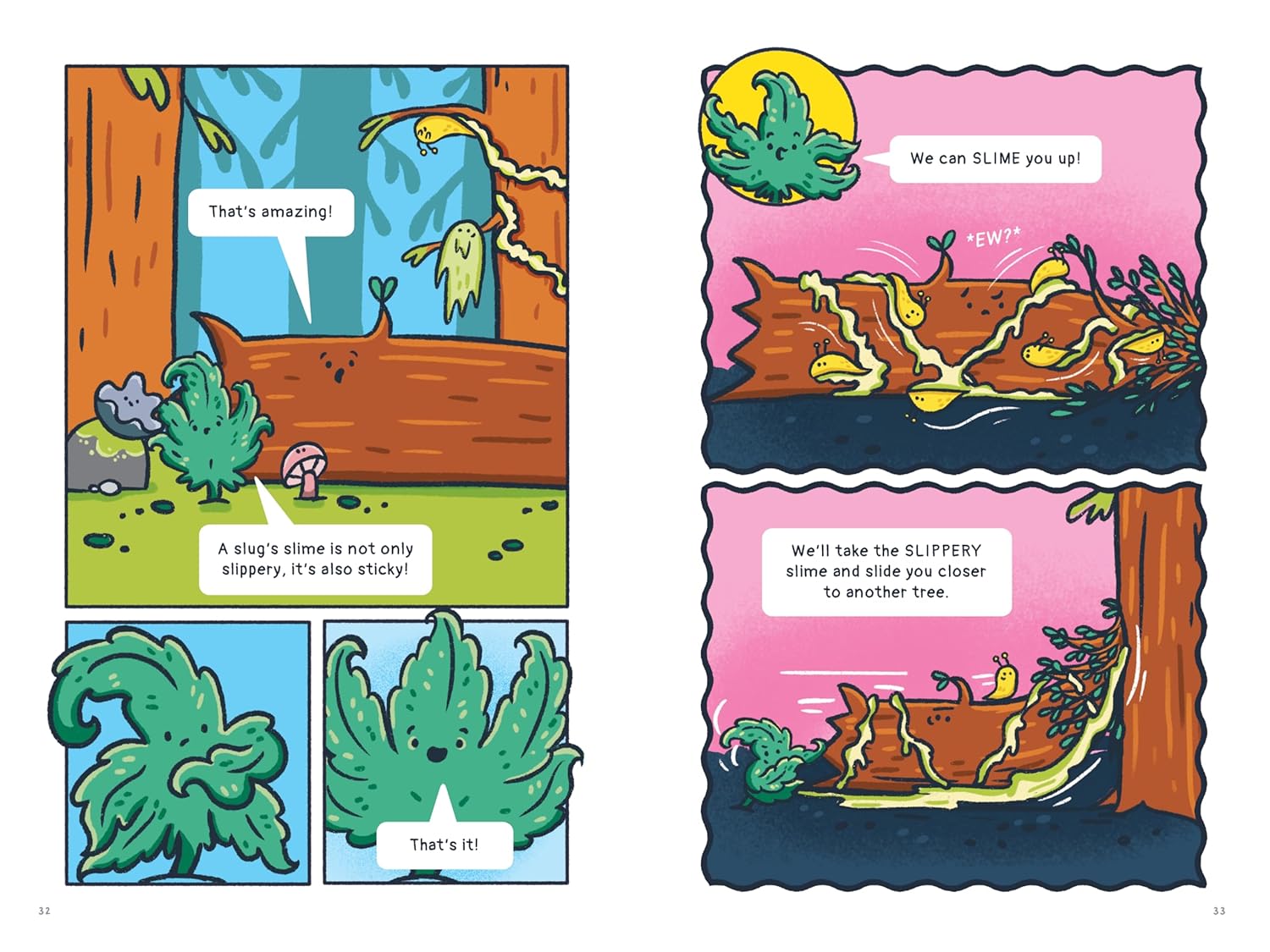
Tiny Millipede is first to volunteer his talents. It’ll be a cinch, he thinks. All he has to do is eat and eat and eat and molt and molt and molt until he’s grown enough segments and legs to push the tree back into position. It turns out, though, there’s only so much one millipede can eat before getting “in-dig-estion,” so Fern concocts another, kinda crazy plan involving Moth, dangerous animals, and “geome-TREE” (Beard Lichen thinks it’s “more like insani-TREE”). When that doesn’t fly, Fern enlists Slug in an even more convoluted idea that any slime lover could get behind. Unfortunately, it’s a no-goo too.

Text and Illustration copyright © 2026 by Jana Curll. Courtesy of Greystone Kids.

With the help of the Lichens’ and Mushroom’s insight, Tree accepts its fate and vows to “do my best with where I am now.” As night falls the friends stay close, keeping Log company. In the morning Fern has yet one more idea, but this one isn’t zany or complex. She invites everyone to stay, hang out, and just do their thing. “FERN-ally” Log discovers its new role—one in which it is long, strong, and useful—important!

In addition to the story, each chapter includes a two-page spread of fascinating facts about millipedes, moths, slugs, lichens, fungi, ferns, and nurse logs that describe their importance to Earth’s ecosystems.

Text and Illustration copyright © 2026 by Jana Curll. Courtesy of Greystone Kids.

Equal parts hilarious and educational, Jana Curll’s Fiddlehead Forest is a punsters paradise, where kids will be giggling so often they may not even realize how much they’re learning. Curll’s mix of witty banter, caring friendship, and scientific facts, all presented in her bright and adorable graphic novel format, will delight kids. Fiddlehead Forest has plenty of repeat readability, applications for classrooms and homeschoolers, and appeal for any library collection.

Ages 6 – 9

Greystone Books, 2026 | ISBN 978-1778401046

About the Author

Jana Curll is a children’s illustrator based on the rainy west coast of Canada and is grateful to live on the traditional lands of the shíshálh Nation with her family. She is inspired by the creatures and environment of the local rainforests and the ocean and spends her spare time wandering through winding trails and along rocky beaches. She likes doodling funny maps and sipping strong coffee while her large cat sleeps on her lap. She’s also the author-illustrator of Barnacle Bay, the first book in the Little Habitats series also published by Greystone Kids. Visit her at janacurrl.com.

Earth Day Activity

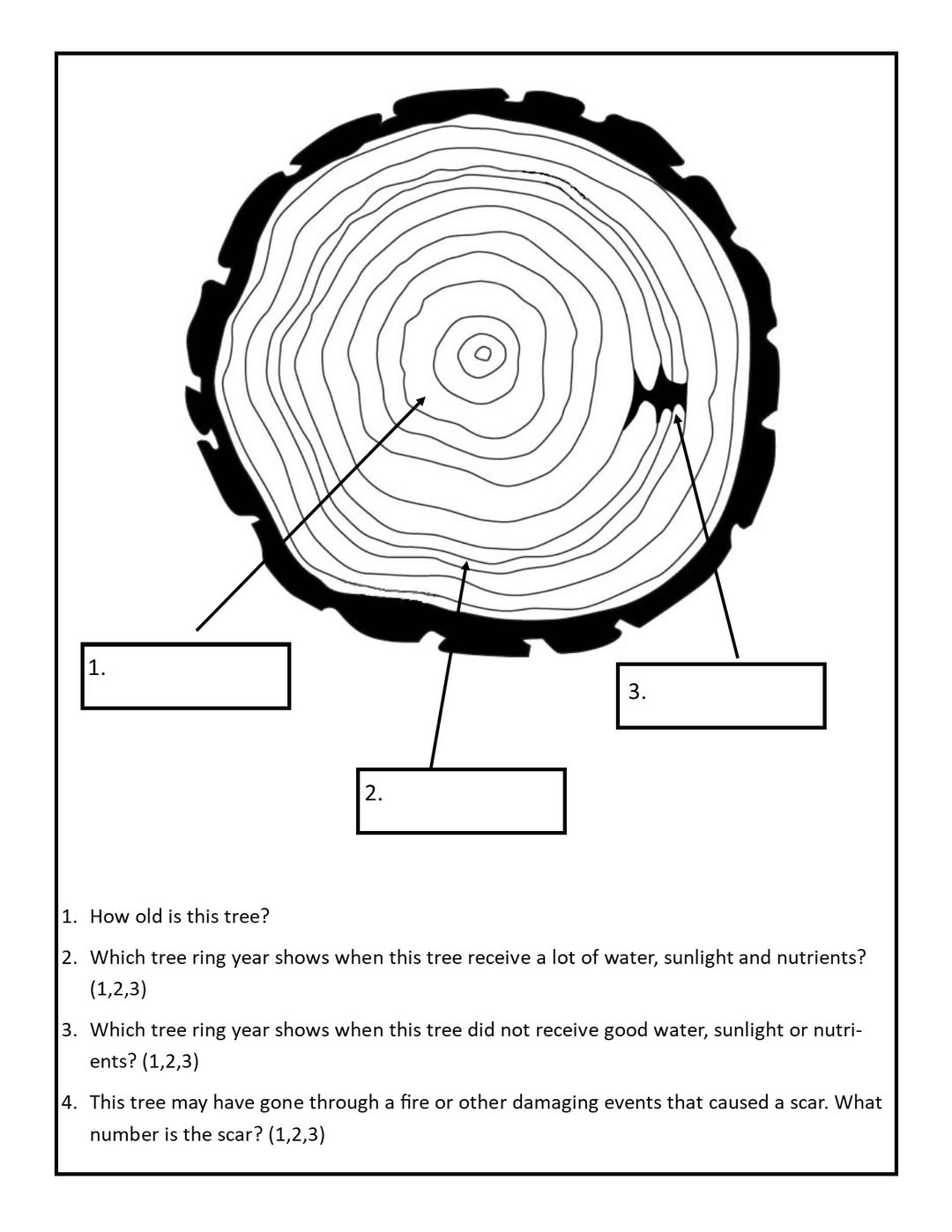
How Old Is This Tree? 

In this activity children learn what the rings on a cross section of a tree trunk mean and how to count them to determine the age of a tree is and discover events from its past. 

You can purchase Fiddlehead Forest (Little Habitats, 2) from these booksellers

Amazon | Barnes & Noble | Bookshop

Picture Book Review
December 1 – Celebrating the Book Birthday of Bright Winter Night

celebrate-picture-books-picture-book-review-bright-winter-night-cover

Thank you to Two Lions and Barbara Fisch at Blue Slip Media for sending me a copy of Bright Winter Night for review consideration. All opinions on the book are my own.

Bright Winter Night

Written by Alli Brydon | Illustrated by Ashling Lindsay

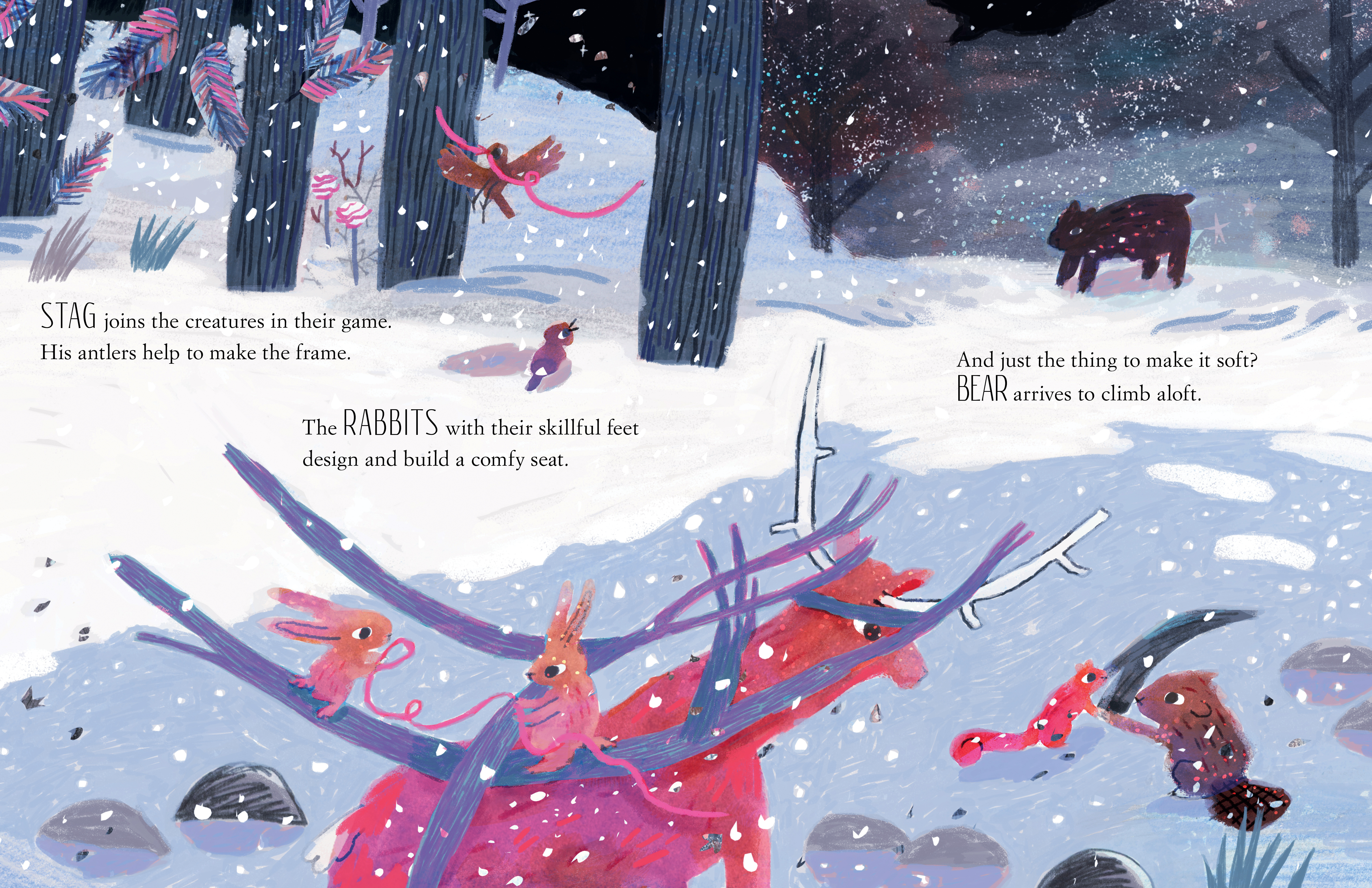
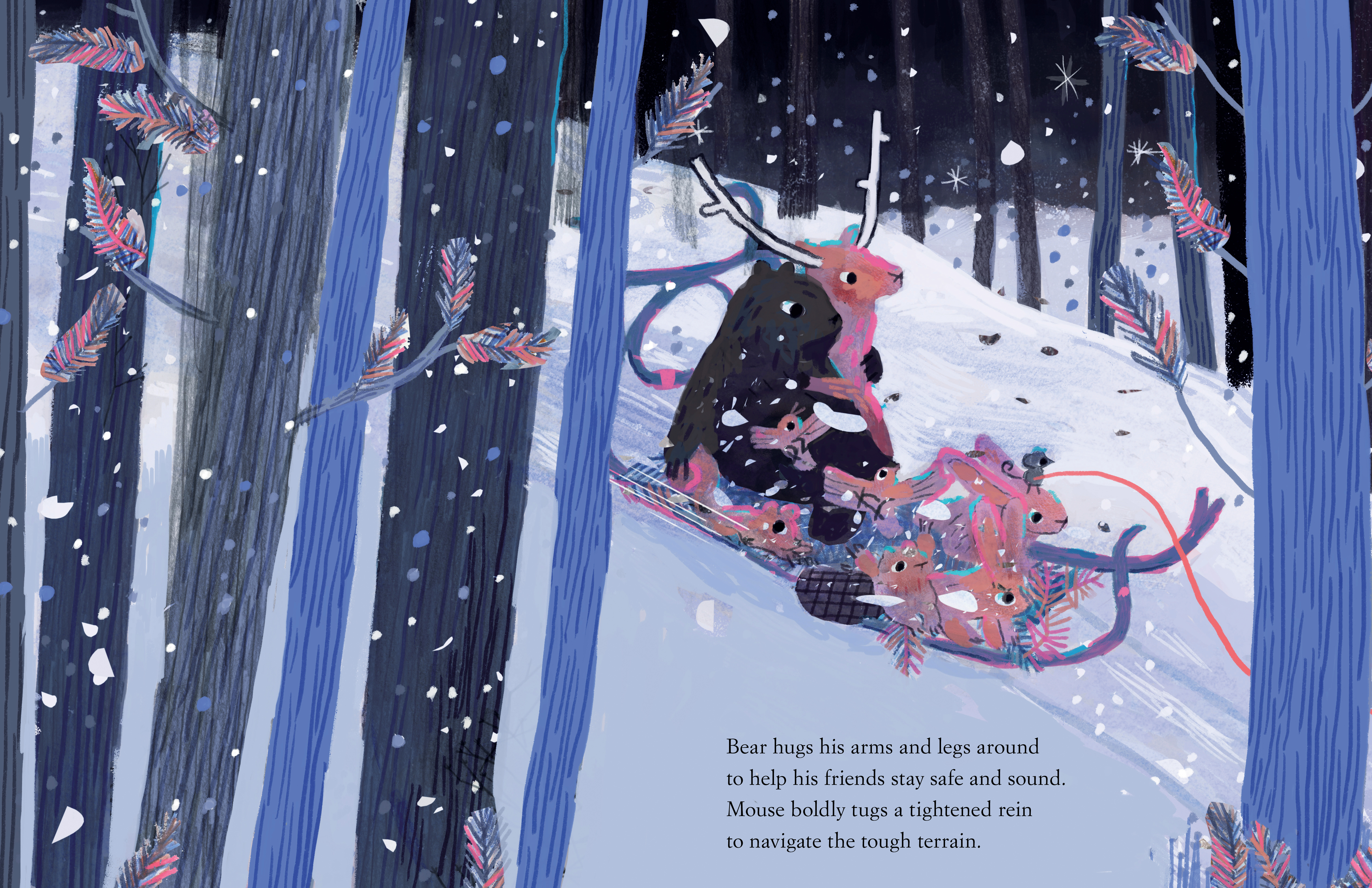
Something magical is happening as “the song of snow” begins, and all of the woodland animals are gathering to complete a special task. Falcon flies in “silken strings” as “Wren flutters while she chirps and jigs, determined as she lays down twigs.” Beaver’s brought more sturdy boughs, and Stag’s back and antlers provide a sturdy base as the Rabbits use the wood and ribbons to build a sleigh. Attaching the reins Mouse brings and with the Wolves “all clear,” Bear climbs aboard to provide a comfy seat. 

celebrate-picture-books-picture-book-review-bright-winter-night-building-sleigh

Image copyright Ashling Lindsay, 2022, text copyright Alli Brydon, 2022. Courtesy of Two Lions.

The Wolves take up the reins. “There’s just one goal. They must move fast— /  for soon the northern lights will pass!” The Wolves race over clearings and down hills, pulling the sleigh behind them. But the terrain is tough, and “the sleigh careens, the rabbits jump as all the rest go . . . BUMP, BUMP, BUMP!” But Stag is there to dig them out of the snowy drifts, and Beaver rights the sleigh and gets it back on track.

Suddenly through the bare and silent branches, “they spy a flash, and Squirrel says, ‘WHOA— / COME ON FRIENDS, LET’S GO, GO, GO!'” They hurry through the crystal night to a clearing, where, gazing upward, they’re enveloped in the grandeur of the northern lights. “The colors dazzle, glow, and blaze— / the flashes sizzle, shock, amaze!” In this moment, huddled together—”beak and muzzle, fur and feather”—this diverse group of animals are united in their awe of nature’s beauty, and a “peacefulness so warm and bright, / settles in their hearts tonight.”

celebrate-picture-books-picture-book-review-bright-winter-night-sledding

Image copyright Ashling Lindsay, 2022, text copyright Alli Brydon, 2022. Courtesy of Two Lions.

Alli Brydon’s brisk and lovely story is at once a lyrical call to appreciate and immerse yourself in the beauty of nature and a poignant appeal to put aside perceived differences and embrace what connects us. As the animals work together to build a sleigh that will transport them to view the northern lights, they each bring to the project their own talents to make it sturdy and comfortable for all. When the sleigh flips, they again pull together to set things right. Brydon’s deft rhymes and rhythms build step-by-step as the animals construct the sleigh then flow as smoothly and quickly as the runners over the snowy trail. Even the sled’s momentary mishap is palpably felt with Brydon’s well-paced “BUMP, BUMP, BUMP!” And when the friends finally reach the clearing, Brydon captures not only the breathtaking view but the tranquil contentment it brings.

Using lush blues and shades of grey, Ashling Lindsay draws readers into the snowy woods, where blushes of pink, purple, and auburn highlight scampering rabbits, squirrels, and beaver as well as fluttering birds and majestic stag. Stylized trees, their feathery leaves touched with pink lend a mysterious air to the silent forest. As snowflakes fall, readers watch as the animals bind the twigs and branches just so to create their sleigh. And then they’re off. A two-page spread lets kids run with the wolves as they race into the oncoming snow. Lindsay’s image of the animals all snuggled together on the sleigh, protected by Bear, is heartwarming, while their topsy-turvy tumble into the snow will make some kids say “oh no!” and others giggle with memories of their own spills. Her interpretation of the northern lights sparkles and shimmers and will have kids adding their own “OOOOH! AHHHH!” to those of the animals gazing skyward.

An inspiring story for snuggly bedtime or daytime read alouds, Bright Winter Nights swells the heart with it’s focus on the power and beauty of nature to spark friendship and peace. The book is sure to be asked for again and again and is highly recommended for home and public library collections as well as for teachers, homeschoolers, and other educators, who will find it a stirring addition to lessons on space, geography, and natural phenomenon.

Ages 3 – 7

Two Lions, 2022 | ISBN 978-1542022248

About the Author

Author Alli Brydon is inspired by natural wonders and what they can teach us, and she strives to bring that magic to the books she writes for children. Recent picture books include Lobstah Gahden, illustrated by EG Keller, and Love Around the World, illustrated by Wazza Pink. She also writes nonfiction about creatures, from insects to lemurs to humans. Alli holds an MFA in poetry from Sarah Lawrence College in New York and lives in England with her family. Learn more at www.allibrydon.com. You can also connect with Alli on Instagram: allibrydon and Twitter: Alli Brydon

About the Illustrator

Ashling Lindsay is an artist and writer from Belfast, Ireland. Her picture books are published in more than ten languages and have received various awards and accolades, including a nomination for the Kate Greenaway Medal; being shortlisted for the Waterstones Children’s Book Prize, the Klaus Flugge Prize, and the Children’s Books Ireland Book of the Year; and being longlisted for the UKLA Book Awards. In 2020 she was awarded the KPMG Children’s Books Ireland Honour Award for Illustration with her book The Tide, written by Clare Helen Welsh. Learn more at www.ashlinglindsay.co.uk. You’ll also find her on Instagram: ashling.lindsay

celebrate-picture-books-picture-book-review-bright-winter-night-cover

You can find Bright Winter Night at these booksellers

Amazon | Barnes & Noble | Books-a-Million

To support your local independent bookstore, order from

Bookshop | IndieBound

Picture Book Review

November 9 – It’s Picture Book Month

celebrate-picture-books-picture-book-review-sleepy-happy-capy-cuddles-cover

About the Holiday

If you love picture books, you know the thrill of holding a new or a new-to-you book in your hands and opening up to that very first page. The children’s sections of bookstores and libraries draw you in with humor, fairy tales, poetry, biographies, science, and so much more—a whole universe of creativity, thought, knowledge, and imagination—that enlightens and entertains. This month take time to indulge your passion for picture books!

I’d like to thank Page Street Kids for sending me a copy of Sleepy Happy Capy Cuddles for review consideration. All opinions on the book are my own.

Sleepy Happy Capy Cuddles

Written by Mike Allegra | Illustrated by Jaimie Whitbread


The air in the rainforest rang with “squeaks, squawks, grunts, growls, hisses, harrumphs, and frenetic feather-and-fur-flying fury. It was quite the rumpus.” But all of these sounds didn’t make the animals happy, in fact, they were miserable and, even worse, all the noise “made them feel very alone—even though they weren’t alone.” But then one day, a visitor emerged from the river with sounds of her own—sounds the other animals had never heard before, like a “fwippa fwip of flickering ears” and a “shookita shimmy of a shaking booty bottom.” 

celebrate-picture-books-picture-book-review-sleepy-happy-capy-cuddles-fwippa-fwip-ears

Image copyright Jaimie Whitbread, 2022, text copyright Mike Allegra, 2022. Courtesy of Page Street Books.

Suddenly, the rainforest was silent as the animals stared at this unusual interloper as she yawned and stretched. A river turtle was the first to approach and ask what, exactly, she was. The answer came quickly (a capybara)—and with an invitation to “join my Sleepy Happy Copy Cuddle.” The turtle rebuffed this invite, thinking it would in some way soften his shell. When the capy reassured the turtle that he would stay as tough as ever, he relented. 

So they cuddled next to each other, and the river turtle had to agree that he felt better. “‘That makes me happy,’ said the capy. So she floofed. Floof!” Hearing this FLOOF, an iguana came by to see what was happening. The iguana did not want to get so close, and the capy let the iguana know this was perfectly all right. So she had another happy cuddler and enjoed another happy FLOOF. All this FLOOFing started to attract more and more animals, each wanting to cuddle in their own way. The capy agreed that all these ways of cuddling were valid and just perfect.

celebrate-picture-books-picture-book-review-sleepy-happy-capy-cuddles-crocodile

Image copyright Jaimie Whitbread, 2022, text copyright Mike Allegra, 2022. Courtesy of Page Street Books.

At last, all the rainforest animals were content. Then a dark shape came slowly moving into view just below the surface of the river, and in a moment a crocodile splashed onto shore with a “ROOOOOOAR!” Undaunted, the capy asked if the crocodile would like a cuddle. The crocodile was baffled, bewildered, and even a bit alarmed. But then he was touched, if a little confused. “‘No one ever wants to cuddle me,’ the crocodile sniffled.” The capy assured the crocodile that she did. Now everyone was capy cuddle happy. 

But what was this? More dark shapes and burbling bubbles were swimming their way. Was it? It was! “‘More Sleepy Happy Capy Cuddlers!'” Lots of them! Now there were plenty of cuddles—and FLOOFS—to go around for everyone!

In a short note Mike Allegra tells a little more about capybaras and includes a photo of the adorable cuddlers.

celebrate-picture-books-picture-book-review-sleepy-happy-capy-cuddles-floof

Image copyright Jaimie Whitbread, 2022, text copyright Mike Allegra, 2022. Courtesy of Page Street Books.

Mike Allegra, a very funny writer well versed in the magical gymnastics of language, dazzles with sentences energized with alliteration, assonance, and delightfully gleeful onomatopoeia. Add to that his recurring “sleepy happy capy cuddles” and infectious “Floofs,” and this is one story that will have kids and adults smiling from page one and long after the story is over. (Of course, adults should be ready to close the cover just to open it again immediately for at least one “one more time!”) What’s even more ingenious, perhaps, is that along with this giddiness comes some thought-provoking truths about feeling alone among a crowd, the diversity of ways to feel comforted, comfortable, and happy, how the most prickly of personalities may need love the most, as well as an education on capybaras and their behaviors.

Jaimie Whitbread brings this transformed rainforest to life with her realistic depictions of a wide variety of animals in all their glorious color and raucous, curmudgeonly, chill, or playful personalities. Her bold imagery clearly shows the difference in the stressed-out tension that existed pre-floof and the relaxed contentedness bestowed by the capy cuddles. Animal lovers and kids eager to do more research on the rainforest will find Whitbread’s illustrations particularly fascinating while the final floof-a-rama super cuddle is sure to inspire group snuggles at home.

A masterful combination of comical and educational that’s sure to be a favorite for kids and adults alike, Sleepy Happy Capy Cuddles is a joyful read aloud and a must for any home, classroom, school, and public library collection. If you’re looking for a gift for any child, this book is a superb choice.

Ages 4 – 8

Page Street Kids, 2022 | ISBN 978-1645675594

Discover more about Mike Allegra and his books on his website.

To learn more about Jaimie Whitbread, her books, and her art, visit her website.

Picture Book Month Activity

celebrate-picture-books-picture-book-review-take-a-bookworm-trek-maze

Take a Bookworm Trek! Maze


These two friends love reading! Can you help them through the maze to meet the bookworm? 

Take a Bookworm Trek! Maze Puzzle | Take a Bookworm Trek! Maze Solution

celebrate-picture-books-picture-book-review-sleepy-happy-capy-cuddles-cover

You can find Sleepy Happy Capy Cuddles at these booksellers

Amazon | Barnes & Noble | Books-a-Million

To support your local independent bookstore, order from

Bookshop | IndieBound

Picture Book Review

October 20 – International Sloth Day

celebrate-picture-books-picture-book-review-sloth's-treehouse-inn-cover

About the Holiday

The AIUNAU, a non-profit dedicated to protecting all wildlife, established International Sloth Day in 2010 to raise awareness of the dangers facing these gentle animals who always seem to have a smile on their face. There are six species of sloth and two types—two-toed and three-toed. Each of the six species lives in its own unique habitat and has its own characteristics. While all species are seeing a population decline, the pygmy sloth is rated as “critically endangered” as there are fewer than 100 animals in existence. Sloths need protection from power lines, cars, and poachers who capture them to sell as pets as well as from other environmental issues that destroy their habitats. To learn more about the various species of sloths, visit AZ Animals.

Sloth’s Treehouse Inn

Written by Carrie Hasler | Illustrated by Christina Wald


Deep in the rainforest, a sloth named Santiago provided rest and comfort to animals from all over within the “gnarled branches that stretched to the sky” and “twisted roots that spread across the forest floor” of his Treehouse Inn. He was a caring innkeeper, always finding the perfect spot for each guest and their needs. One of his favorites was a blue morpho butterfly chrysalis that he gently checked on every day.

While there was usually plenty of room for everyone who visited, Santiago had noticed that his inn was getting crowded. When two toucans came looking for a place to spend the night, Santiago discovered why. The toucans told him that trees in large areas of the rainforest were being cut down, leaving the animals and birds nowhere to live. “The lush forest brimming with life was becoming nothing more than a swath of dirt and mud.” Hearing this made Santiago sad, and he found “he didn’t have the heart to turn anyone away,” so his Treehouse Inn was soon full.  

But Santiago continued watching out for each one of his guests. He served tea every afternoon, provided games, and was happy to play slooow games of checkers with anyone who was willing. Before bedtime, Santiago told stories to young guests, who “didn’t seem to mind that the sloth was always the first to fall asleep, long before the story was over.”

celebrate-picture-books-picture-book-review-sloth's-treehouse-inn-Santiago

Image copyright Christina Wald, 2022, text copyright Carrie Hasler, 2022. Courtesy of San Diego Zoo Wildlife Alliance Press.

The crowded conditions soon led to some squabbling among the guests. The howler monkeys complained loudly, and the tamarins hogged all the fruit. Santiago knew the animals needed more room; they needed homes. Most of all, he worried about where the butterfly would go when it finally emerged from its chrysalis.

One morning, Santiago awoke to see the beautiful butterfly looking back at him. “They both stayed still for a very long time, something the sloth happened to be very good at.” Then, in a flash, the butterfly took off and soared away. Wanting to see his friend one more time to say good-bye, Santiago climbed to the top of the tree. From there he saw how many trees had been cut down. But he also saw something else. 

In the distance, he saw people planting new trees—saplings and seeds. Young trees were already growing, and other plants that made up the forest floor were also sprouting. “Filled with hope, Santiago couldn’t wait to tell the others.” As the trees and plants reclaimed their place in the rainforest, the animals found new homes, leaving the Treehouse Inn quiet once again. and “even though business was slow, its very fine innkeeper was happy just the way it was.”

The front endpapers offer fun facts about animals of the rainforest and the back endpapers offer a key to the types of animals found in a vertical, double-page spread midway through Sloth’s Treehouse Inn. Frontmatter provides a map of South America that highlights the location of the Amazon Rainforest while backmatter includes photographs, information about the rainforest, the causes of deforestation, and what individuals, environmentalists, and governments are doing to save the Amazon. There’s also a guide to how kids can help protect animals and plants in their own community.

celebrate-picture-books-picture-book-review-sloth's-treehouse-inn-bedtime-stories

Image copyright Christina Wald, 2022, text copyright Carrie Hasler, 2022. Courtesy of San Diego Zoo Wildlife Alliance Press.

In her well-crafted story, Carrie Hasler takes readers into the Amazon Rainforest—and to one tree in particular—to show them the vast array of wildlife and plants that call this unique region home as well as a major cause of habitat destruction. Through Hasler’s engaging storytelling, full of lyrical descriptions of the Treehouse Inn and its surroundings, kids meet Santiago, the innkeeper, who embodies the actual attributes of sloths in the wild—gentleness, caring, respectfulness to other creatures, and, of course, a slow, sleepy manner. Whimsical elements, such as the afternoon tea and games Santiago provides, will delight kids while inviting them to empathize with the growing number of guest who have lost their homes. Readers will also like following the progress of the blue morpho butterfly, whose departure leads to Santiago’s discovery of people’s work to replant the rainforest.

Christina Wald realistic illustrations burst with the color, light, and lush vegetation of the Amazon Rainforest. Each page will have readers lingering to view and appreciate the beauty of the rainforest and its denizens. As Santiago settles a group of poison dart frogs in just the right place to give them (and a tadpole) a pool and leaves to climb, the frogs appear as if they could simply hop out of the book. Turning from these types of gorgeous images, the two-page spread of trucks, machinery, and people with large saws cutting through the forest comes as a heartbreaking shock.

Wald’s show-stopping vertical illustration of the Treehouse Inn full of guests—from anteaters and tapirs below to a kinkajou, emerald tree boa, and hoatzin in the middle to a howler monkey and harpy eagle at the top—will have kids trying to spot all the creatures here and later in the book, while her clever checkerboard woven from leaves may inspire creative kids to make their own. The image of people replanting the clearcut forest area is inspiring and will prompt readers to learn more about how they can help.

An inspiring mix of fiction and nonfiction that will engage kids, Sloth’s Treehouse Inn would be a welcome addition to home bookshelves and is highly recommended for school and public libraries.

Ages 4 – 8

San Diego Zoo Wildlife Alliance Press, 2022 | ISBN 978-1943198139

Discover more about Carrie Hasler and her books on her website.

To learn more about Christina Wald, her books, and her art, visit her website.

International Sloth Day Activity

celebrate-picture-books-picture-book-review-amazon-rainforest-wordsearch-puzzle

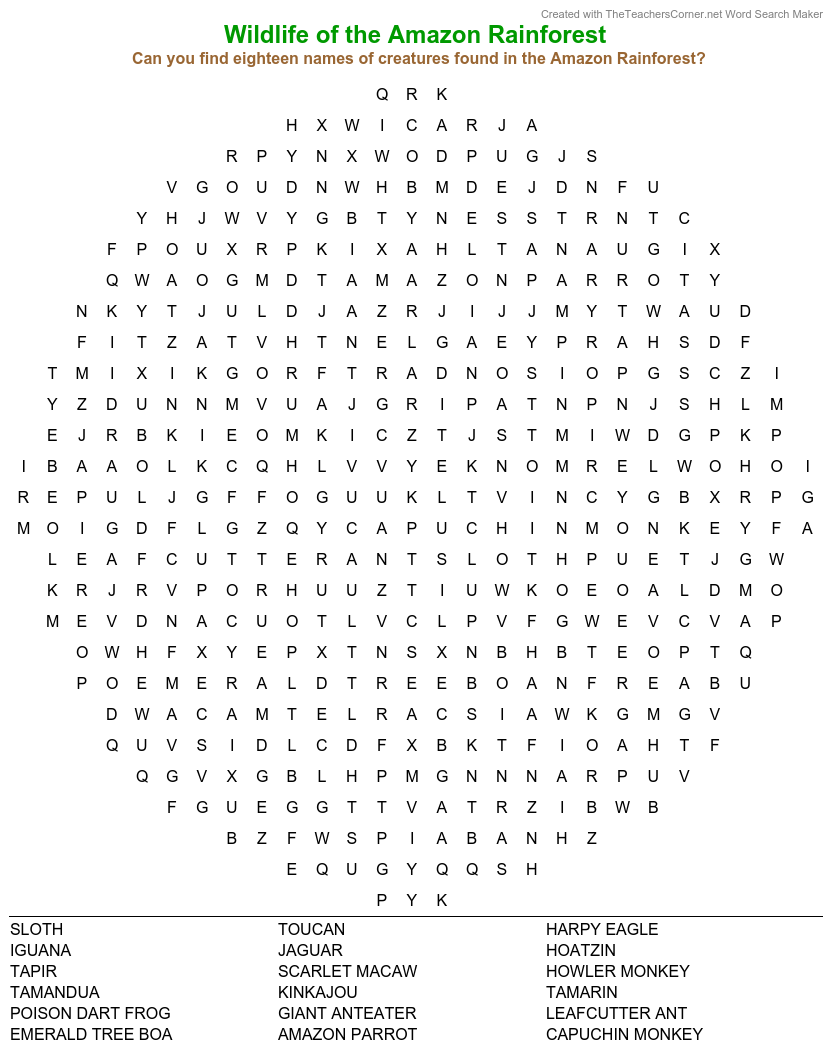
Wildlife of the Amazon Rainforest Word Search Puzzle


You’ll find eighteen names of creatures who call the Amazon Rainforest home in his printable puzzle

Wildlife of the Amazon Rainforest Word Search Puzzle | Wildlife of the Amazon Rainforest Word Search Solution

celebrate-picture-books-picture-book-review-sloth's-treehouse-inn-cover

You can find Sloth’s Treehouse Inn at these booksellers

Amazon | Barnes & Noble | Books-a-Million

To support your local independent bookstore, order from

Bookshop | IndieBound

Picture Book Review

September 30 – It’s National Mushroom Month

celebrate-pciture-books-picture-book-review-mushroom-rain-cover

About the Holiday

Whether you say “Yes, please!” to mushrooms on pizza, in salads, and in soups, stews, and other dishes or just like to stop and admire them in your yard or on a walk, National Mushroom Month is for you! The holiday was first created by the U.S. Mushroom Council as part of the Mushroom Promotion, Research & Consumer Information Act of 1990 that was instituted to raise awareness and an appreciation for mushrooms, both non-edible and nutritious edible varieties. President George H.W. Bush signed the Act into law on November 28, 1990, and the holiday was first celebrated in 1993. Celebrate your love of mushrooms today and all through the year with your favorite mushroom dish—and today’s book!

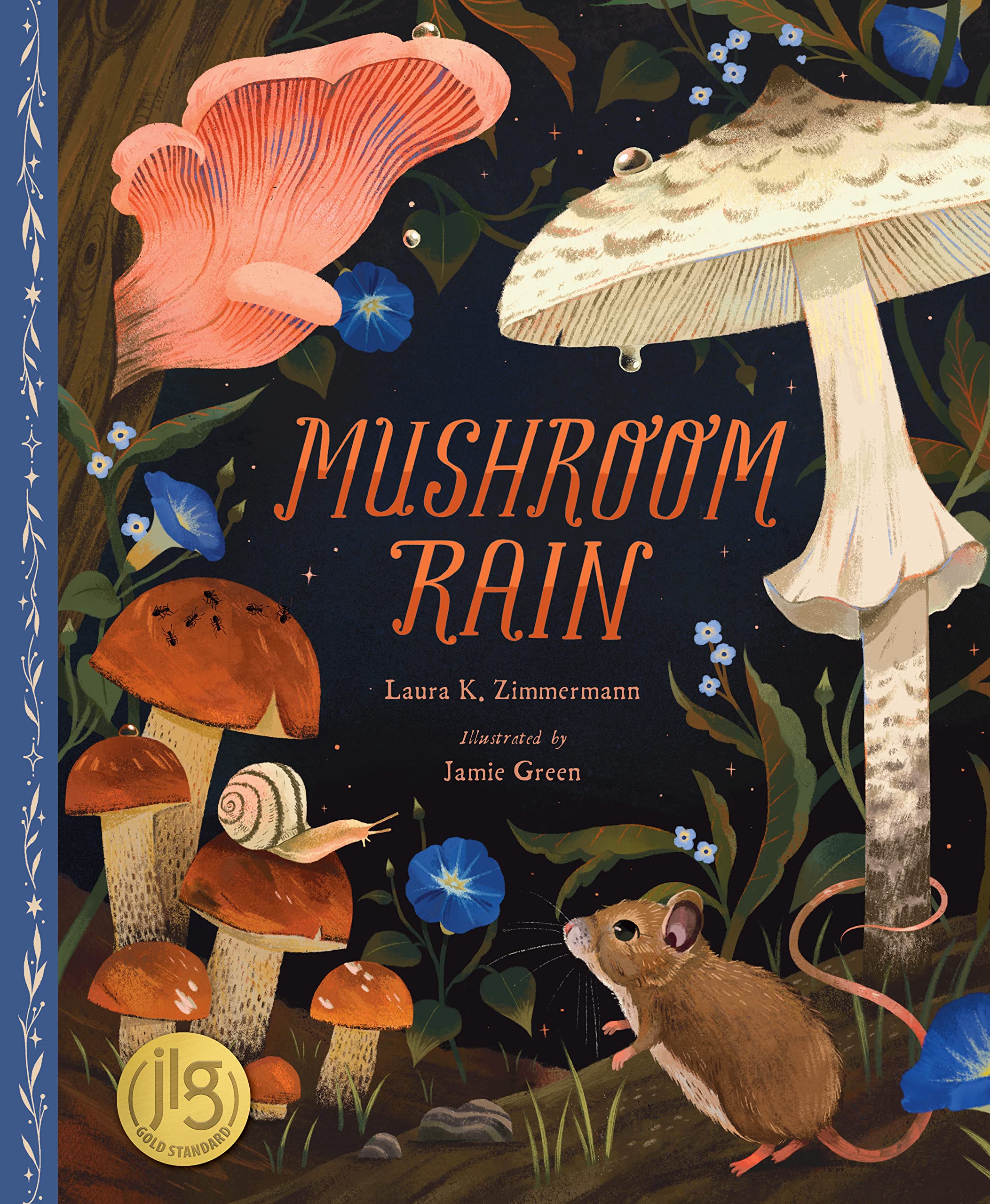
Mushroom Rain

Written by Laura K. Zimmermann | Illustrated by Jamie Green


You know how it is with mushrooms—they appear suddenly on the path you take every day, on trees, in the middle of lawns, and each with their own shape and color. Mushrooms are surprising, beautiful, and mysterious. In her evocative, lyrical text, Laura K. Zimmermann takes readers into the forests, meadows, and even up into sky to learn about these plants that can oftentimes seem otherworldly. 

celebrate-pciture-books-picture-book-review-mushroom-rain-bizarre-blooms

Image copyright Jamie Green, 2022, text copyright Laura K. Zimmermann, 2022. Courtesy of Sleeping Bear Press.

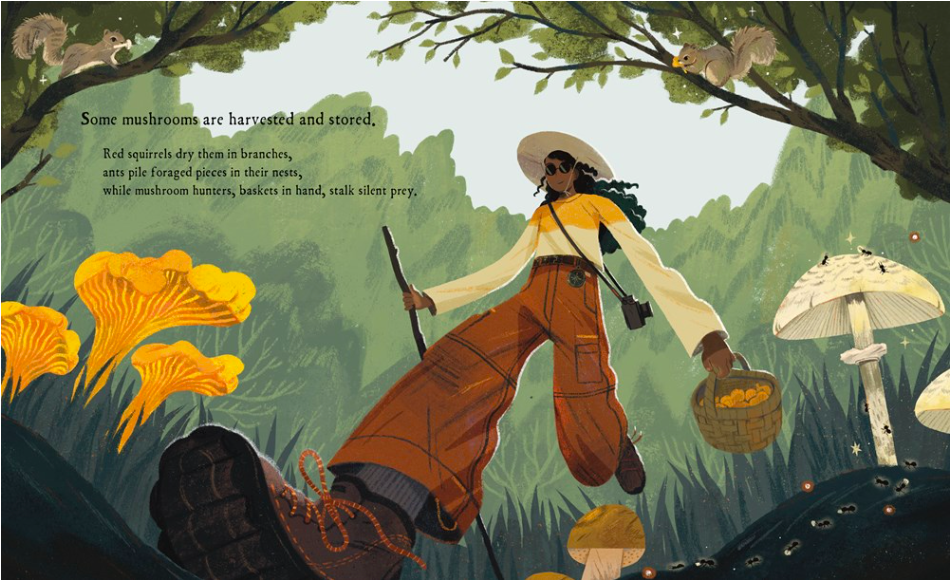
Under a starlit sky, Zimmermann gives children a peek into a darkened woods where “delicate umbrellas open, red octopus arms rise from the ground, cupped nests with eggs appear,” and another cluster of mushrooms glow “a spooky green.” These fungi don’t just look unusual, they are “bizarre blooms with strange scents,” and Zimmermann describes them—”some like bubble gum, coconut, maple syrup…”— so readers can imagine the aromas that mix in the night air. Can you smell them?

celebrate-pciture-books-picture-book-review-mushroom-rain-animals-eating

Image copyright Jamie Green, 2022, text copyright Laura K. Zimmermann, 2022. Courtesy of Sleeping Bear Press.

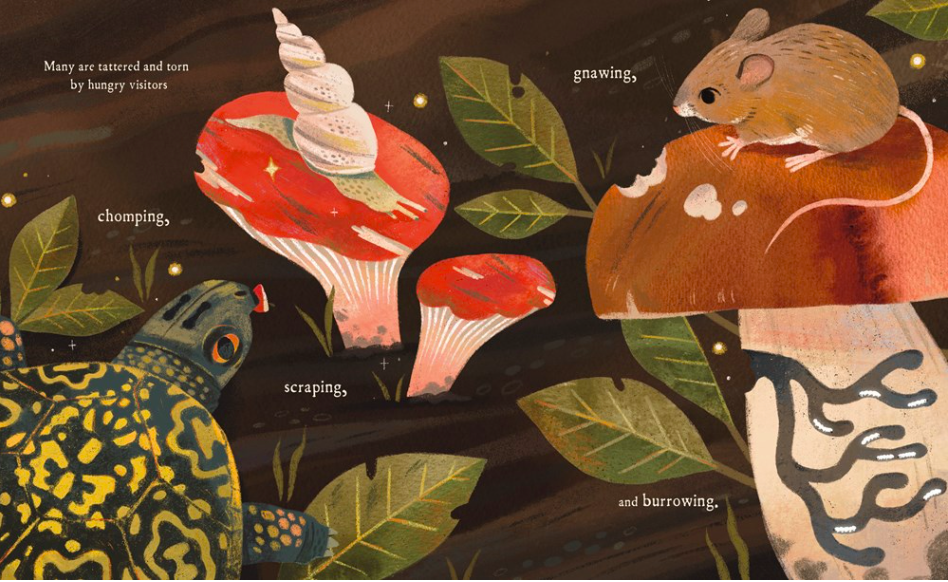
You’ve seen mushrooms with notches and nibbles, scratches and scars, and even meandering trails on their stems and tops. “Many are tattered and torn by hungry visitors chomping, scraping, gnawing, and burrowing” into the soft flesh. And while some are consumed where they grow, others are taken away by a variety of mushroom hunters—”harvested and stored” for another day.

celebrate-pciture-books-picture-book-review-mushroom-rain-mushroom-hunter

Image copyright Jamie Green, 2022, text copyright Laura K. Zimmermann, 2022. Courtesy of Sleeping Bear Press.

Then, just as suddenly as they appeared, mushrooms disappear. But are they gone completely? Zimmermann leads children underground to explore the vast network of roots beneath a forest floor. She floats them on breezes that send spores far and wide. And she sweeps them into the sky to soar with other spores into the clouds, where they’ll discover that an astonishing phenomenon occurs to begin mushrooms growing once again.

Following the text, extensive illustrated back matter reveals more about mushrooms: where they live, who eats them, how spores grow into mushrooms, how they help seed rainclouds, and how they are different from plants. Zimmermann also defines each part of a mushroom, describes the biggest mushroom-producing fungus and the largest living organism in the world, and shows kids how to use a mushroom to make a spore print.

celebrate-pciture-books-picture-book-review-mushroom-rain-disappeared

Image copyright Jamie Green, 2022, text copyright Laura K. Zimmermann, 2022. Courtesy of Sleeping Bear Press.

While Laura K. Zimmermann is taking children on a verbal sensory tour through the darkened world where mushrooms thrive, Jamie Green provides a feast for the eyes with her glorious illustrations of these odd colorful fungi jutting from the ground, posing, and  jockeying for position. Some stand close together, as endearing as a parent and child, or like a large family at a photo shoot while others reach upwards like roaring campfires. Turn the page and readers find themselves in the midst of a glowing alien landscape staring up into the dark night sky along mushrooms frilled and gilled while also aware of the small creatures on the forest floor having dinner or a snack. Green then takes kids underground and into the air, to show how spores find ingenious ways to grow and break the soil once again.

Arresting in both its beauty and enlightening facts that will excite readers’ curiosity, Mushroom Rain is a glowing invitation into the mysterious world of mushrooms and will spur readers to learn more about these delights of nature. The book, along with its extensive back matter and the materials found on Laura K. Zimmermann’s website (link below), would make a superb addition to any lessons on nature, the environment, and ecosystems for schools and homeschoolers, and is a must for school and public library collections.

Ages 5 – 8

Sleeping Bear Press, 2022 | ISBN 978-1534111509

Discover more about Laura K. Zimmermann, her book, and her other writing for children on her website. You’ll also find lots of mushroom-related activities, crafts, posters, puzzles, and more to enjoy with Mushroom Rain. There’s also a Teacher’s Guide for educators.

To learn more about Jamie Green, her books, and her art, visit her website.

celebrate-pciture-books-picture-book-review-mushroom-rain-cover

You can find Mushroom Rain at these booksellers

Amazon | Barnes & Noble | Books-a-Million

To support your local independent bookstore, order from

Bookshop | IndieBound

Picture Book Review

March 21 – International Day of Forests

celebrate-picture-books-picture-book-review-the-leaf-detective-cover

About the Holiday

International Day of Forests was instituted by the United Nations General Assembly in 2011 to raise awareness of the importance of trees in vast woodlands or in your neighborhood or yard. Trees contribute to the quality of the air we breathe, improve the local climate, reduce noise pollution, shelter wildlife, and provide food for people and animals. This year’s theme is “Forests and sustainable production and consumption.” So many aspects in our lives – from the materials for building homes, making tools, developing new household items, and more to the medicines we take, the water we drink, and the clothes we wear rely on healthy and sustainable forests. This year’s theme encourages people to think about the ways forests benefit not only human life but the wildlife and the earth as a whole. For more information visit the UN International Day of Forests website and The Geneva Environment Network.

Thanks to Boyds Mills for providing a digital copy of The Leaf Detective for review consideration. All opinions on the book are my own.

Reviewed by Dorothy Levine

The Leaf Detective: How Margaret Lowman Uncovered the Secrets in the Rainforest

Written by Heather Lang | Illustrated by Jana Christy


As a child, Meg was quite shy to make friends. She spent lots of time studying and playing with wildlife: “Meg wrapped herself in nature, like a soft blanket.” As she continued to grow, so did her passion for leaves, trees, and nature. Meg attended Sydney University in Australia. In 1979, she became the first person at her graduate school to study the rainforest. Through her studies Meg learned that people had been all the way to outer space to study, but nobody had ever ventured to the tippity top of a canopy tree. Instead, they studied trees from far away through binoculars. Oftentimes scientists would spray trees with chemicals so that the harmed leaves and animals would drop to the forest floor where people could study them up close. Meg sought to change this.

celebrate-picture-books-picture-book-review-the-leaf-detective-harness

Image copyright Jana Christy, 2021, text copyright Heather Lang, 2021. Courtesy of Calkins Creek.

“In the dark, damp forest the trees rose up to distant rustling, squawks and screeches, shadows in the treetops. How could she get up there?” Meg Lowman created her own slingshot and harness and inched up a coachwood tree. When she reached the canopy, she knew she’d found the perfect place to study and explore. Meg is quoted saying, “From then on, I never looked back…or down!”

Meg continued to create new strategies to study the canopy, as a scientist does. And in doing so she made so many discoveries, such as: “We now believe the canopy is home to approximately half the plant and animal species on land.” Many people tried to stop Meg along her journey. They told her she couldn’t take science classes, climb trees, or make inventions because she was a woman. But Meg ignored them. She continued to investigate.

She knew that rainforests were (and are) in danger, and that so many creatures rely on the rainforest ecosystem. People all over the world were cutting down large parts of the rainforests for wood, rubber, paper, and farmland. This worried Meg; she wanted to find a way to protect rainforests before they all disappeared. “She wondered, How can one leaf detective make a difference? How can I save the trees?…Then an idea crawled into Meg’s thoughts—a way to speak for the trees.”

celebrate-picture-books-picture-book-review-the-leaf-detective-bugs

Image copyright Jana Christy, 2021, text copyright Heather Lang, 2021. Courtesy of Calkins Creek.

Meg traveled around the world. She spoke to people across many different countries; taught them how to climb trees, build canopy walkways—she showed people the many gifts rainforests have to offer. Meg educated communities on how they could share their rainforest with outsiders, showcase its beauty to create revenue rather than chopping them down for resources. By using her voice and creative mind, Meg helped implement systems that have saved many trees and creatures across the world.

Meg Lowman continues to study trees, save rainforests, and teach people how to shift their economies to center around ecotourism and sustainable crops rather than resource extraction. She has used her voice to save rainforests across the world, and yet she still says, “If only I could have achieved as much as the tree!… But I have not. I have whittled away at relatively small goals in comparison to the grander accomplishments of a tree.”

Backmatter includes an author’s note detailing Heather Lang’s visit to meet Margaret Lowman in the Amazon rainforest in Perú. The note includes more information on Dr. Lowman’s advocacy work and is followed by an illustrated educational spread on the layers of canopies, and species featured throughout the story are labeled in the final spread, for readers to learn more about specific animals that make their homes in the rainforest.

celebrate-picture-books-picture-book-review-the-leaf-detective-trampoline

Image copyright Jana Christy, 2021, text copyright Heather Lang, 2021. Courtesy of Calkins Creek.

Heather Lang’s lyrical writing matches the carefulness with which Meg studies leaves, trees, and the rainforest canopy. Her compelling storytelling is rich with facts and sensory imagery that immerse readers in the environment and Meg’s determination to understand and, later, save it. Scattered images of leaves drop fun facts and definitions for readers about the rainforest, canopies, transpiration, herbivores, and more. Quotes from Dr. Lowman are thoughtfully placed throughout the story in a manner that neatly flows. The Leaf Detective urges readers to understand that “a tree is not just a tree” but rather “a shelter for animals and people, / a recycler and provider of water, / a creator of food and oxygen, / an inventor of medicine/ a soldier against climate change.”

Jana Christy’s digital drawings contain stunning detail and show an accurate scale of one small person in comparison to the vastness of the rainforest. Her mesmerizing wildlife creatures and immersive watercolor blues and greens transport readers right into the rainforest with “Canopy Meg.” The lush greens of the rainforests contrast strikingly with the spread on deforestation, in which fallen trees lay scattered on the bare, brown ground. Readers will also be interested to see the innovations that have made the trees more accessible to people. One can read the book over and over and notice new details every time. It is a book to treasure, to study, to read and re-read again. 

Come unearth the secrets of the rainforest with Margaret Lowman in this book that’s budding with knowledge, empathy, and magic, and is a tale of how one person can make a difference. The intriguing facts, poignant quotes from Dr. Lowman herself, and beautiful poetic writing will leave readers of this book inspired with wonder and with a hunger for advocacy. The Leaf Detective: How Margaret Lowman Uncovered the Secrets of the Rainforest is an urgent must-read for all ages.

A portion of Heather Lang’s royalties for this book go to TREE Foundation—an organization that funds field trips for children to get into nature, canopy projects, and science book distribution for children with limited access to STEAM, girls especially. 

Ages 6 – 10

Calkins Creek, 2021 | ISBN 978-1684371778

Discover more about Heather Lang and her books on her website.

To learn more about Jana Christy, her books, and her art, visit her website.

Meet Heather Lang

celebrate-picture-books-picture-book-review-Heather-Lang-headshot

Heather Lang loves to write about real women who overcame extraordinary obstacles and never gave up on their dreams. Her research has taken her to the skies, the treetops of the Amazon, and the depths of the ocean. Her award-winning picture book biographies include, QUEEN OF THE TRACK: Alice Coachman, Olympic High-Jump Champion, THE ORIGINAL COWGIRL: The Wild Adventures of Lucille Mulhall, FEARLESS FLYER: Ruth Law and Her Flying Machine, SWIMMING WITH SHARKS: The Daring Discoveries of Eugenie Clark, and ANYBODY’S GAME: Kathryn Johnston, The First Girl to Play Little League Baseball. When she is not writing, she enjoys going on adventures with her husband and four children. Visit Heather at www.heatherlangbooks.com.

Today I am thrilled to be interviewing author Heather Lang about her new biographical picture book The Leaf Detective: How Margaret Lowman Uncovered the Secrets of the Rainforest. Heather provides some thoughtful notes for shy readers, riveting stories from the rainforest and insight into the importance of exploring and caring for nature.

Can you tell us a little bit about what made you decide to write The Leaf Detective?  

We’ve caused enormous harm to our planet over the last few centuries, and I’m especially concerned about our rainforests. I knew I wanted to write a biography that was also a science book about the rainforest. When I read about Meg’s pioneering work and deep passion for trees, I was hooked! I couldn’t wait to find out how this quiet, nature-loving child, who didn’t know women could be scientists, became a world-class scientist and conservationist.

In the story you talk about how Meg was shy to make playmates with other kids. Were you also a shy kid growing up? Do you have any advice for readers who may relate to this aspect of Meg’s childhood? 

Like Meg, I was very shy as a child and remember wishing I were more outgoing. But as I grew older, I began to recognize the many advantages to being shy! My shy nature led me to sit back and observe. And that led to deeper thinking and understanding, a strong imagination, and creativity. Shy people often think more before they speak. They make their words count, which coincidentally is an important part of writing picture books. This also makes shy people good listeners and thoughtful friends. 

I’m still shy in many ways, and my recommendation to readers who might identify with this is to embrace your shyness! At the same time, don’t let it stop you from doing things you want to do. Meg Lowman told me she used to get so nervous before presenting in graduate school that she’d get physically sick. But with practice, practice, practice, she’s become a captivating presenter and educator. If you watch a few of her FUN FACTS FROM THE FIELD videos on my website, you’ll see what I mean! 

How would you describe your connection to nature? Would you consider yourself a “detective” in any ways? 

I’m constantly in awe of nature and its countless gifts and surprises. Nothing sparks my curiosity more than our natural world, and my curiosity is probably my most important tool as a writer. Being open-minded and asking questions not only generates ideas, but also leads me to think more deeply about a topic and examine it closely from lots of different angles. And of course that generates more detective work and more learning about my topic and myself. Being a detective is one of my favorite parts of writing books.

Do you have a favorite rainforest tree or creature? If so, tell me about it a bit!

When I arrived in the Amazon rainforest, I couldn’t wait to see a sloth! But during my time there I became fascinated with ants. They are everywhere in the rainforest, even in the canopy. I think it’s amazing how such tiny creatures can be so hardworking and organized. Their teamwork is unbelievable. And they are invaluable to the health of our rainforests. Among other things, they’re in charge of waste management on the rainforest floor, and they disperse seeds and aerate the soil!

What was the most rewarding part of writing The Leaf Detective?

This writing project was filled with rewards every step of the way! I learned so much about our rainforests and trees and gained a true understanding of how interconnected we all are—plants, animals, and humans. Getting to really know Meg Lowman and learning from her firsthand was thrilling and strengthened my writing in many important ways. It was also really rewarding to stretch myself as a writer and find a way to effectively write a book that seemed ambitious at first—a biography and conservation book that wove in quotes and science facts. 

Are there any stories from your trip to meet Meg that you did not get the chance to include in your author’s note that you’d like to share?

While I was on my Amazon adventure with Meg, I had many exciting moments. I loved learning from the Indigenous people how to use a blow gun, make clay, and braid palm leaves to make thatched roofs. The local shaman taught me how he uses different plants in the rainforest to treat and prevent injuries and illnesses—from bronchitis to poisonous snake bites. He also helped me confront my fear of snakes by bringing one over for me to touch. I even let it gently coil around my neck! But my favorite moments were exploring with Meg, especially at night and early in the morning when there’s so much activity in the rainforest.

Thanks so much for chatting with me Heather! I had a lovely time hearing about your inspiration, stories, writing process and tips for shy readers. Looking forward to learning and reading more from you in the months and years to come.

International Day of Forests Activity

celebrate-picture-books-picture-book-review-Climb-a-Tree-Word-Search-Puzzle II

Climb a Tree! Word Search


There are so many kinds of trees that make our world beautiful. Can you find the names of twenty threes in this printable puzzle?

Climb a Tree! Word Search Puzzle | Climb a Tree! Word Search Solutio

celebrate-picture-books-picture-book-review-the-leaf-detective-cover

You can find The Leaf Detective at these booksellers

Amazon | Barnes & Noble | Books-a-Million

To support your local independent bookstore, order from

Bookshop | IndieBound

Picture Book Review