November 9 – Dear Santa Letter Week

For kids who celebrate Christmas, writing a letter to Santa Claus is an exciting and hopeful activity. Their lists of things they’d like for themselves and often for family and friends, too, can include the practical, the impossible, and the poignant. Today’s holiday reminds children that to make sure their letter reaches Santa at the North Pole in time, it’s best to get started this week. Two programs sponsored by the United States Postal System also address the wishes of children at this time of year:

1) Operation Santa welcomes letters from children and individuals in need, which are adopted by generous people and organizations for fulfillment on their own or from an online gift catalog. Letters are currently being accepted with a deadline of December 5. Registration for becoming an adopter is open now, with letter adoption beginning November 16. For more information, visit the USPS Operation Santa website.

2) Parents who would like for their child to receive a reply to their letter to Santa postmarked from the North Pole can visit the USPS Greetings from the North Pole website to learn how parents, grandparents, or other adults can write “Santa’s” personalized reply letter, address an envelope, and send these, along with their child’s letter, to the North Pole Postmark program in Anchorage, Alaska. Letters are recommended to be sent between November 23 and December 1.

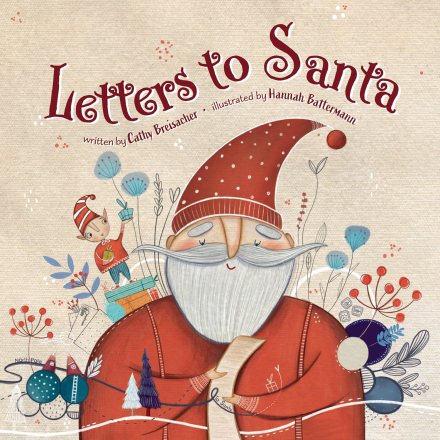
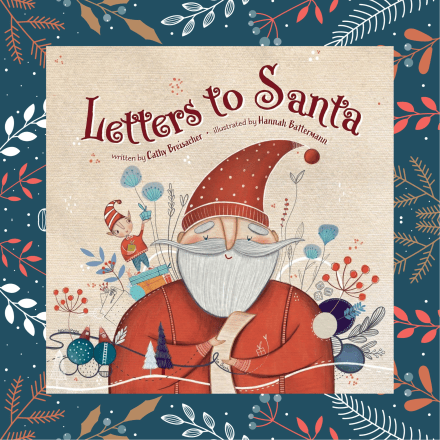
Letters to Santa

At this time of year, the North Pole is bustling as elves make toys and the reindeer are trained. While Santa loves all this excitement, his “favorite thing to do / Is read the mail delivered by / The Postal Office crew.” Amid Christmas carols, twinkling lights, and special holiday treats, kids around the world are dreaming big and writing to Santa to “share what’s in their hearts.” From Western Cape, South Africa Jabari writes to Father Christmas asking for a “‘model car or boat,'” while Marcelo from Brazil wishes Papai Noel and his elves well before asking for new books.
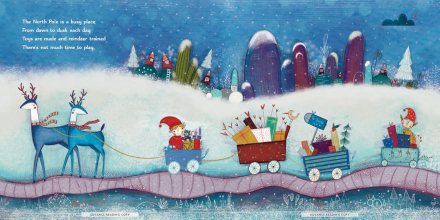
Illustration copyright © 2026 by Hannah Battermann. Text copyright © 2026 by Cathy Breisacher. Published by Reycraft Books copyright © 2026.

In Germany, Emma pens a wistful note to Weihnachtsmann: “‘I think I’m on your Good Kid list / I’ve helped my baby brother / So could I have a teddy bear / and perfume for my mother?'” Clayton, from Memphis, Tennessee, is also thinking of someone else during a lean Christmas, telling Santa Claus, “‘My dad is in the Army / He is stationed overseas. / My Gram may need a little help / With buying groceries.'” These kids are joined by children from Canada, Italy, Japan, and other countries in sending their wishes to the North Pole, where Postal elves wait at the train station to gather and sort the letters before taking them to Santa.
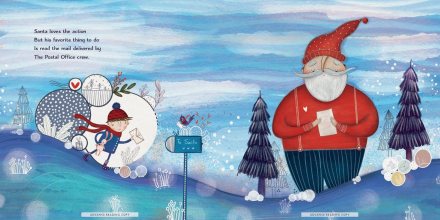
Illustration copyright © 2026 by Hannah Battermann. Text copyright © 2026 by Cathy Breisacher. Published by Reycraft Books copyright © 2026.

“‘Ho Ho Ho!'” Santa cheers as he reads each letter and loads the gifts onto his sleigh to deliver Christmas Eve. On Christmas morning, happy children “shout their thanks to dear St. Nick / For treating them so well.”

A glossary of words for “thank-you” in a variety of languages, including pronunciation, follows the story.
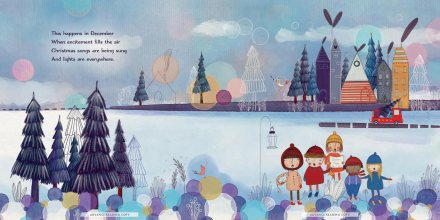
Illustration copyright © 2026 by Hannah Battermann. Text copyright © 2026 by Cathy Breisacher. Published by Reycraft Books copyright © 2026.

Cathy Breisacher’s jaunty Christmas story celebrates the hopeful excitement and generosity of the season as children from around the world ask Santa for gifts—both playful and practical— for themselves and for others that they love. Readers will be delighted to learn the different names Santa is known by in a variety of countries through Breisacher’s lovely rhymes. The warmth of each child’s request poignantly emphasizes the heart behind this beloved holiday tradition

Hannah Battermann’s enchanting folk-style illustrations will charm readers with their fresh wintery colors, whimsical landscapes, and an imaginative mix of solid and delicately outlined images. Her adorable children share expressions of hope and earnestness as they write to Santa Claus and invite readers to join them. Each page is sweetly decorated with details that will captivate young readers.

A beautiful ode to the spirit of Christmas around the world, Letters to Santa would be a charming addition to any library collection and home bookshelf to share the excitement of pre-Christmas preparations.

Ages 5 – 9

Reycraft Books, 2026 | ISBN 978-1478891888

About the Author

Cathy Breisacher is an elementary school librarian who believes stories help connect children around the world. She enjoys writing books that inspire, entertain, and capture children’s imagination. She lives in Pennsylvania with her husband, who worked as a mail carrier and handled many letters to Santa. Visit her at cathybreisacher.com.

About the Illustrator

Hannah Batterman is an illustrator and graphic designer from Düsseldorf, Germany. From her studio, she blends handcrafted paper collages with digital art to bring playful and heartfelt children’s stories to life. Each piece is filled with charming details—whether it’s the flutter of a leaf, a curious glance, or the hidden magic of a paper cutout—capturing the wonder of childhood. She has contributed to several books.

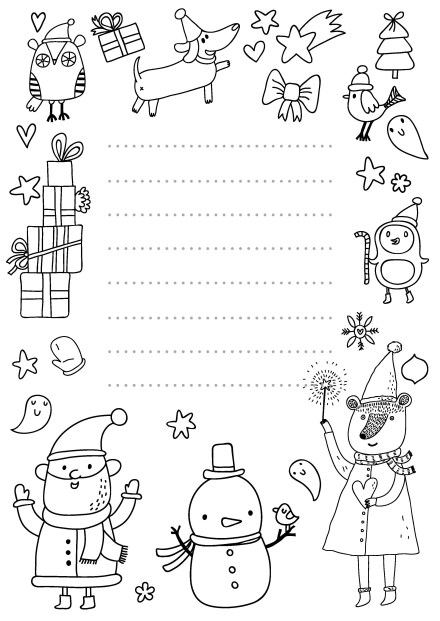
It’s time to write a letter to Santa! Have fun coloring this printable template then use it for your letter or wish list!
Santa Letter Page

You can purchase Letters to Santa from these booksellers

Amazon | Barnes & Noble | Bookshop

October 29 – Bat Appreciation Week & Month

It makes sense that October—with its focus on all things spooky and nocturnal—hosts Bat Appreciation Week and Bat Appreciation Month. We don’t celebrate bats this month just because they fit Halloween themes, though. Bats are cool every day of the year! Why? Scientists estimate there are 1,300 species of bats, most of which are beneficial for the areas where they live. Some bats are awesome at keeping the insect population under control. Fruit bats help distribute seeds, and other bats eat pollen, helping to pollinate foods, including bananas, guava, and agave. This month learn more about these fascinating creatures and enjoy a newest adventure of Bitsy Bat in this third book in the series!

Thank you to Beach Lane for sending me this book for review!

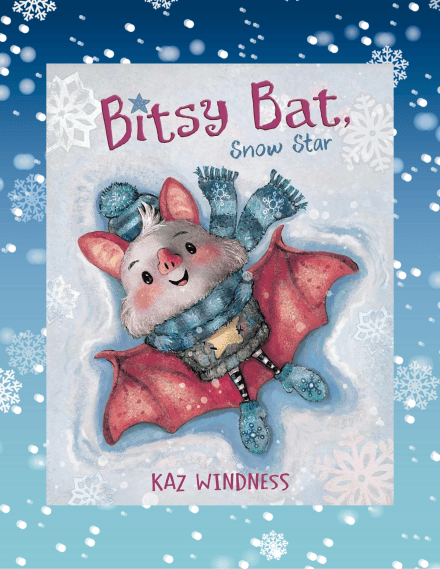
Bitsy Bat, Snow Star (The Bitsy Bat Series)

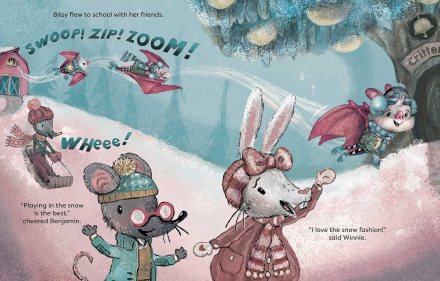
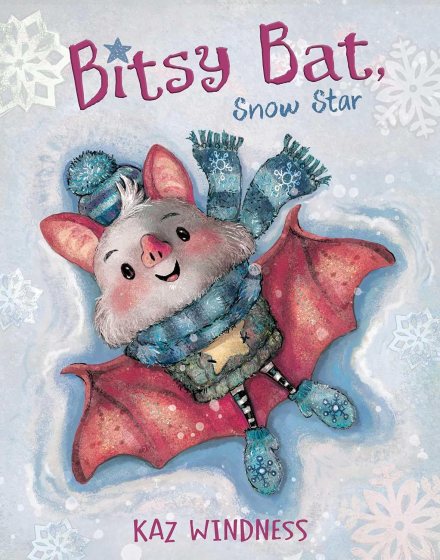
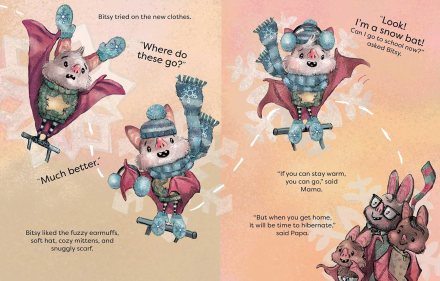
Bitsy Bat’s family woke up to an unusual surprise. Winter snow had come early—even before she, mama, papa, and baby bat could begin hibernating. Mama took this as a sign that the long winter snooze should begin, but Bitsy wanted to go to school. When Bitsy’s friends, Benjamin and Winnie, stopped by to pick her up (even bringing her a “cute snow outfit”), Mama relented.

Text and illustration copyright © 2026 by Kaz Windness. Published by Beach Lane copyright © 2026.

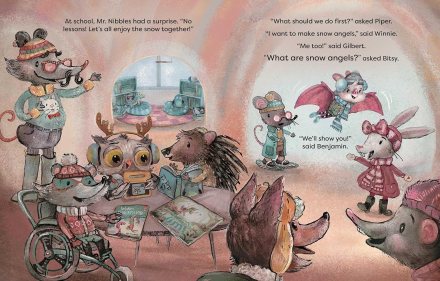
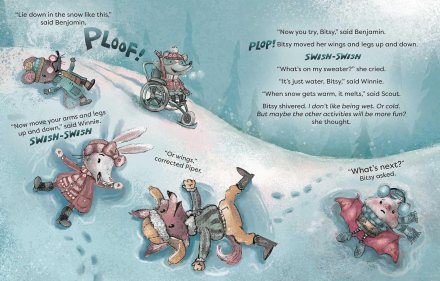
At school, to celebrate the early snow, Bitsy’s teacher Mr. Nibbles announced that instead of lessons, they’d “all enjoy the snow together.” Everyone wanted to make snow angels, and Bitsy was eager to learn how. But after she plopped into the snow and moved her wings up and down, she shivered and hoped the other activities would be more fun. But Bitsy didn’t enjoy sledding, making a snowman, or the snowball fight afterwards, either. She didn’t like being wet and cold. In fact, Bitsy decided she didn’t like snow at all. As he flew back to the classroom, she worried that she’d lose her friends if they found out.

Text and illustration copyright © 2026 by Kaz Windness. Published by Beach Lane copyright © 2026.

Noticing how miserable Bitsy seemed, Mr. Nibbles took her to the reading nook to warm up. There, she found Mo and Enzo. When Bitsy asked if they didn’t like snow either, they both said they loved the snow. Bitsy was confused. Then she discovered that Mo and Enzo liked watching the snow while being warm and cozy and reading inside. She understood then that it was okay to like different things, and when Mr. Nibbles offered hot chocolate, she politely declined while asking for a bugmallow treat instead.

Text and illustration copyright © 2026 by Kaz Windness. Published by Beach Lane copyright © 2026.

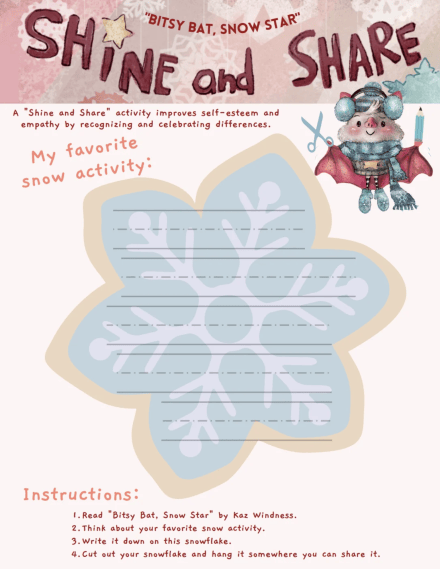
When the snow started falling, Bitsy had the idea to make paper snowflakes, and when the rest of the class came inside, they joined in too. When Mr. Nibbles suggested each student write their favorite snow activity on their flake, Bitsy bravely admitted that she hadn’t liked any of the outdoor activities, and was assured that that was okay. Back home, Bitsy hung her paper snowflakes then prepared with her family for their long winter hibernation.

Back matter includes a detailed discussion about autism that defines and explains important terms as well as an Author’s Note by Kaz Windness, who is herself autistic.

Text and illustration copyright © 2026 by Kaz Windness. Published by Beach Lane copyright © 2026.

It’s easy to see why Kas Windness’s Bitsy Bat series—including Bitsy Bat, School Star and Bitsy Bat, Team Star—is such a beloved part of any child’s library. Told from an autistic perspective, the stories celebrate each student’s differences, and welcome readers as a friend. In Bitsy Bat, Snow Star, Bitsy steps out of her comfort zone to try a new experience. Windness invites children along to witness Bitsy proudly becoming a “snow bat” in winter clothing but also discovering that her sensory differences make the outdoor activities uncomfortable. As Bitsy’s school day progresses, Windness incorporates responses such as stimming, fawning, and autistic masking into the story.

Once inside, Bitsy demonstrates her creativity and imagination by making paper snowflakes as an alternative to real snow. Through Enzo’s, Mo’s, and Bitsy’s preference to watch the snow from the window, Windness also emphasizes that people can enjoy the same activities in different ways. Readers will find Bitsy’s bravery, worries, disappointments, and empathy relatable and her undimmable spirit inspiring.

Windness’s dialogue-rich storytelling is accompanied by her adorable and expressive illustrations that envelope readers in Bitsy’s companionable classroom, where students accept and support each other and their teacher is understanding. Other students use a wheelchair (and snow wheelchair for sledding), noise-reducing headphones, light-filtering glasses, a communication tablet, and glasses.

Whether you’re already a fan of Bitsy Bat or just getting to know her, Bitsy Bat, Snow Star would be a favorite read aloud on any home bookshelf. The book is a must for any public and school library.

Ages 4 – 8

Beach Lane, 2026 | ISBN 978-1665963664

About the Author

Kaz Windness is the author-illustrator of picture books Swim, Jim!; Bitsy Bat, School Star; Bitsy Bat, Team Star; and Bitsy Bat, Snow Star. She created the Theodor Seuss Geisel Honor Level 1 Ready-to-Read Graphics book Worm and Caterpillar Are Friends, and its sequel, Worm and Butterfly Are Friends, Always; the Star Chapter Book Time Traveling Chickens series; and the Level 1 Ready-to-Reads Cat vs. Vac; Go! Go! Dino!; Squid in Pants; and Speeder Spider. Kaz is also the illustrator of Ollie, the Acorn, and the Mighty Idea by Andrew Hacket and the author of When You Love a Book, illustrated by Heather Brockman Lee. Kaz lives in Denver, Colorado with her husband, two children, and Boston terrier. Visit her at WindnessBooks.com.

You can find a wide range of materials for the Bitsy Bat Series for educators, parents, and other caregivers, from lesson plans to animated read-alouds, to detailed hands-on activities and instructions in Kaz Windness’s Bitsy Bat Media Kit on her website.

You can purchase Bitsy Bat, Snow Star from these booksellers

Amazon | Barnes & Noble | Bookshop

April 6 – National Poetry Month

About the Holiday

The Academy of American Poets established National Poetry Month in April 1996, making this year the 30th anniversary of this event that has become the largest literary celebration in the world. The holiday highlights  the achievements of poets, past and present; to promote the reading and writing of poetry in schools and by individuals; and to encourage people to discover the joys poetry can bring all year round. To celebrate, check for events at libraries, bookstores, schools, and other venues in your area and enjoy reading the work of your favorite—or a new—poet. You might even try writing your own poetry! Get inspired all year long with today’s book! To learn more visit the Academy of American Poets and American Writers Museum.

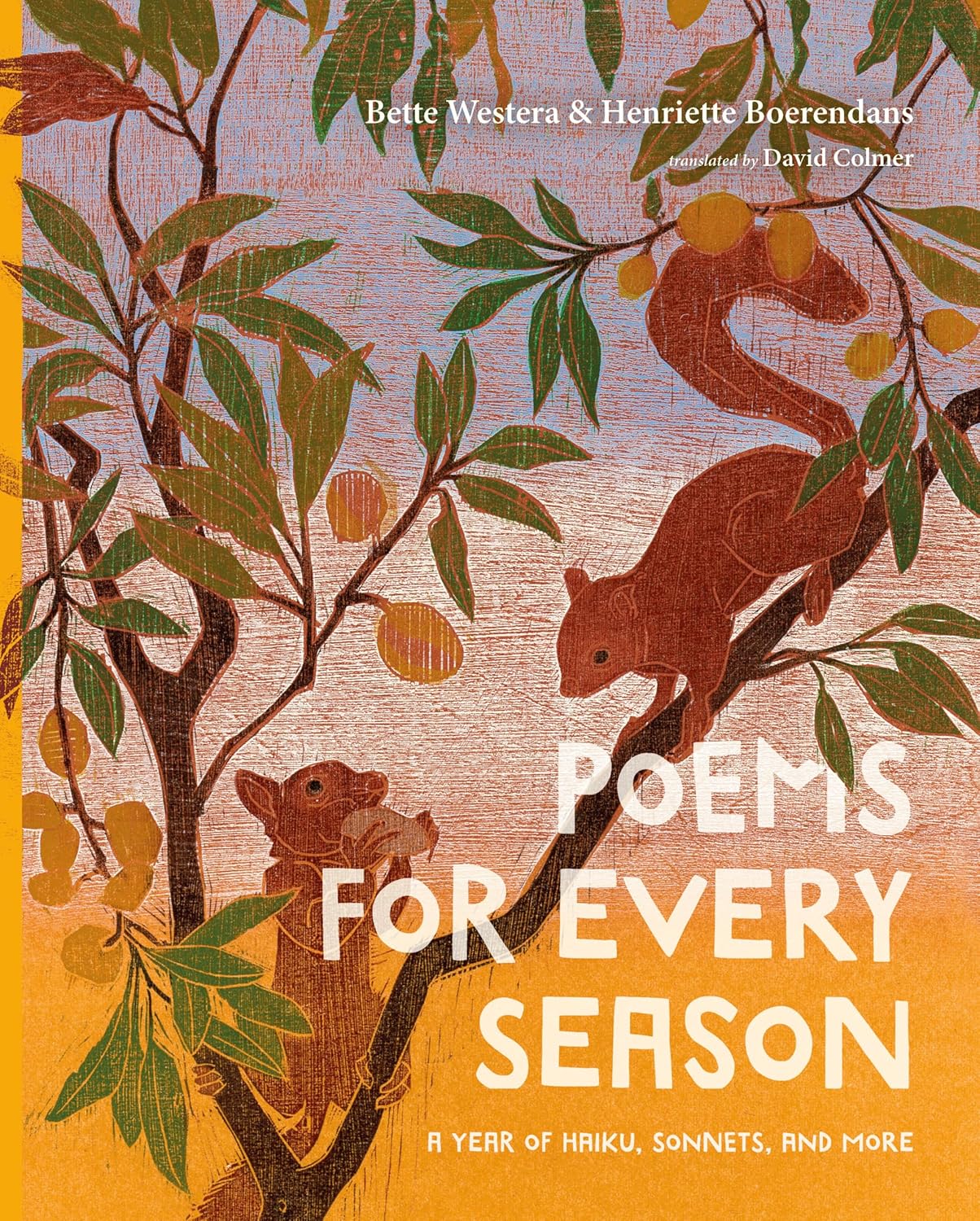
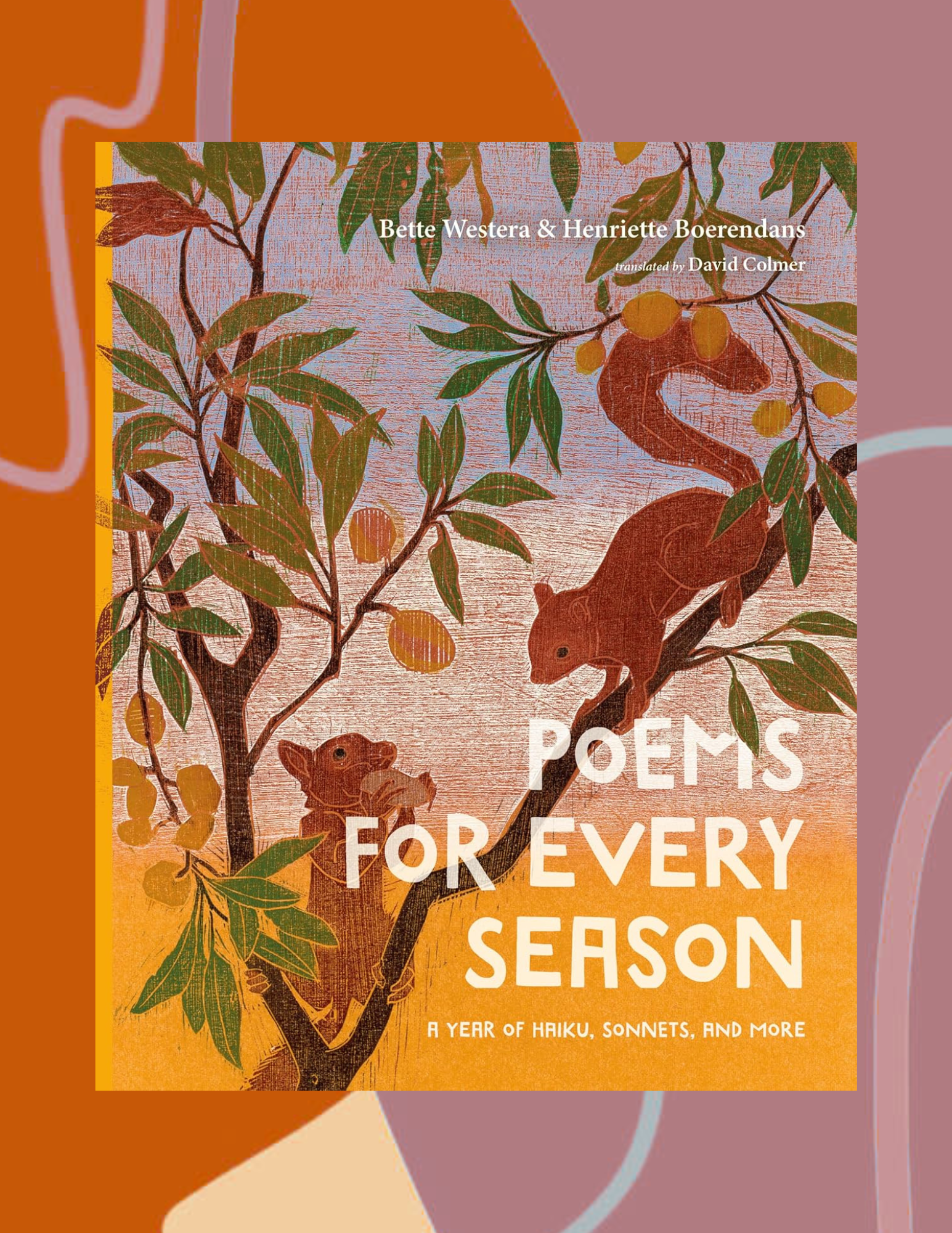
Poems for Every Season: A Year of Haiku, Sonnets, and More

Written by Bette Westera | Illustrated by Henriette Boerendans | Translated by David Colmer


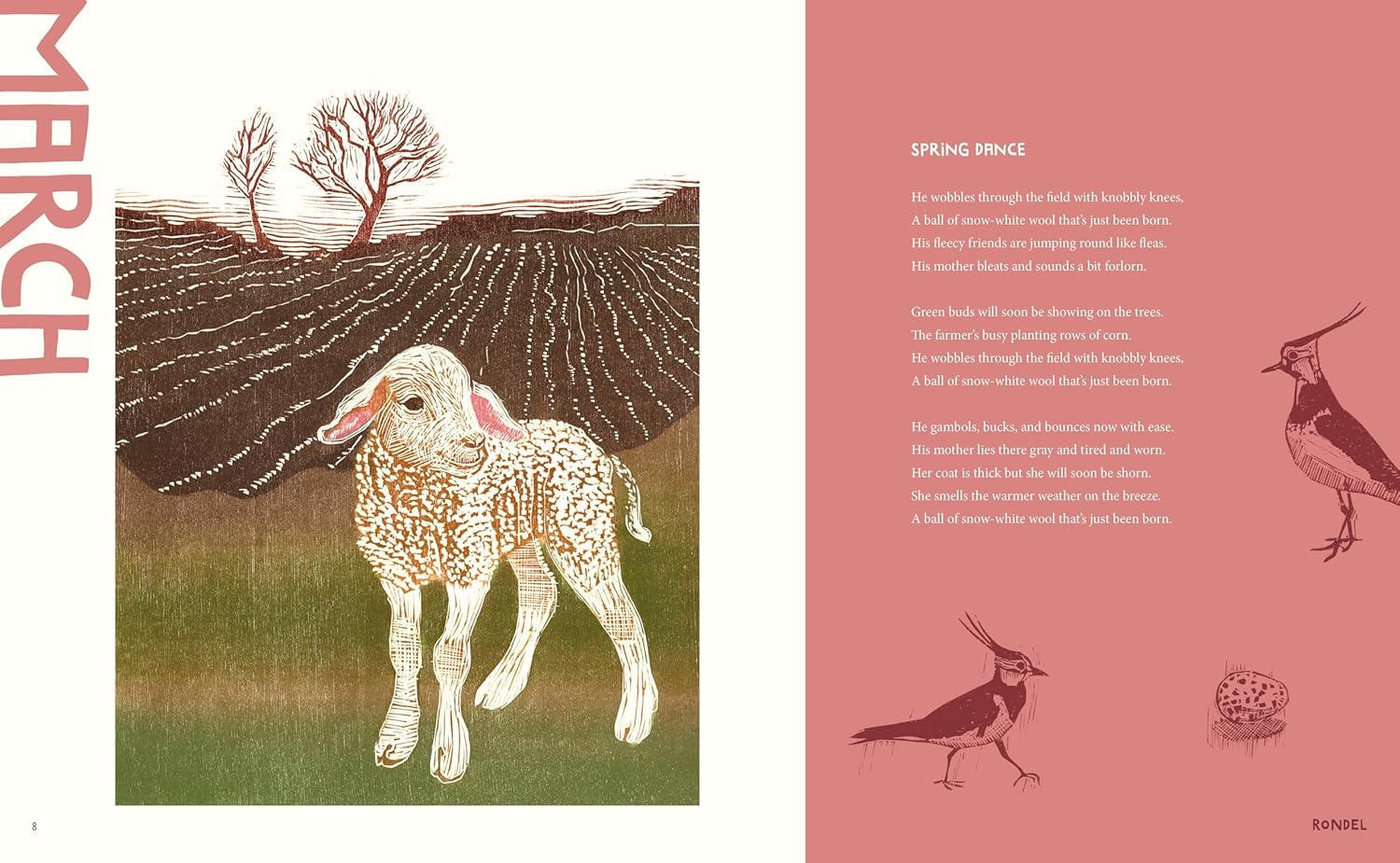
We may begin our year in January, but Poems for Every Season takes it’s cue from nature, which celebrates renewal in Spring. Bette Westera welcomes March and warming weather with her rondel “Spring Dance,” in which a newborn lamb “. . . wobbles through the field with knobbly knees” but soon “gambols, bucks, and bounces . . . with ease” as nearby the farmer plants corn and the mother sheep rests. By April we’re all feeling like gamboling, but Westera acknowledges such “Spring Fever” with the now busy bees and butterflies in her acrostic poem that is a homage to Vincent Van Gogh alongside Henriette Boerendans’ woodcut of almond branches—one of Van Gogh’s favorite subjects to paint.

Illustration copyright © 2026 by Henriette Boerendans. Text copyright © 2026 by Bette Westera. Courtesy of Eerdmans Books for Young Readers.

In her summer haiku, Westera opens the warmest season with the steady and reassuring resolve of bees: “Bumblebees buzz by / Golden sunlight fills the sky / It must be summer.” Her pantoum poem for June, “The Longest Day”, takes place on the summer solstice—that day when “the sun’s refusing to go down” and “there’s much too much to see”—as a mother deer cautions her newborn fawn to lie low in the grass and be quiet while she grazes and a fox waits for darkness that will not come. August rings with a request from sunflowers to stormy clouds before autumn is upon them.

Illustration copyright © 2026 by Henriette Boerendans. Text copyright © 2026 by Bette Westera. Courtesy of Eerdmans Books for Young Readers.

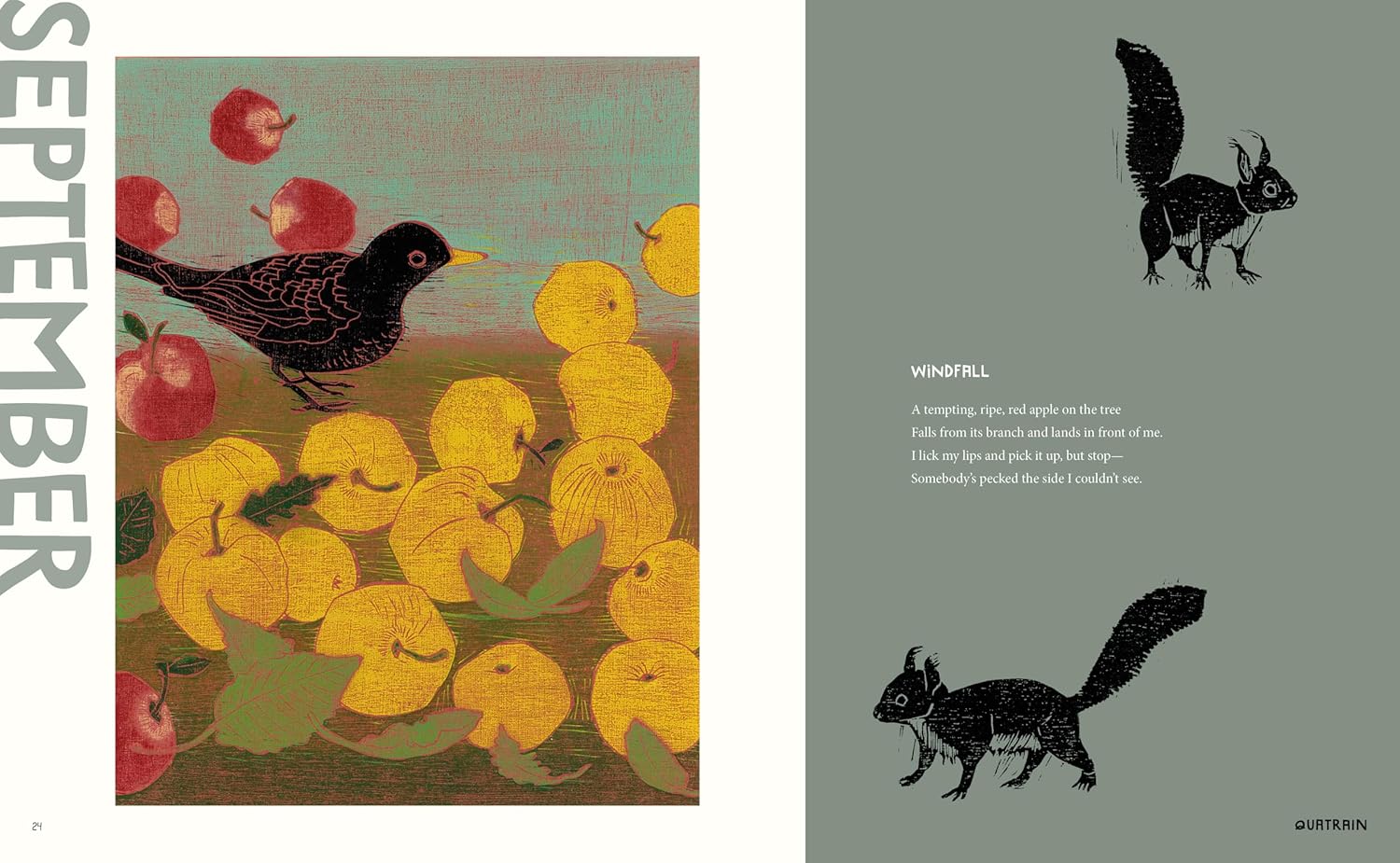
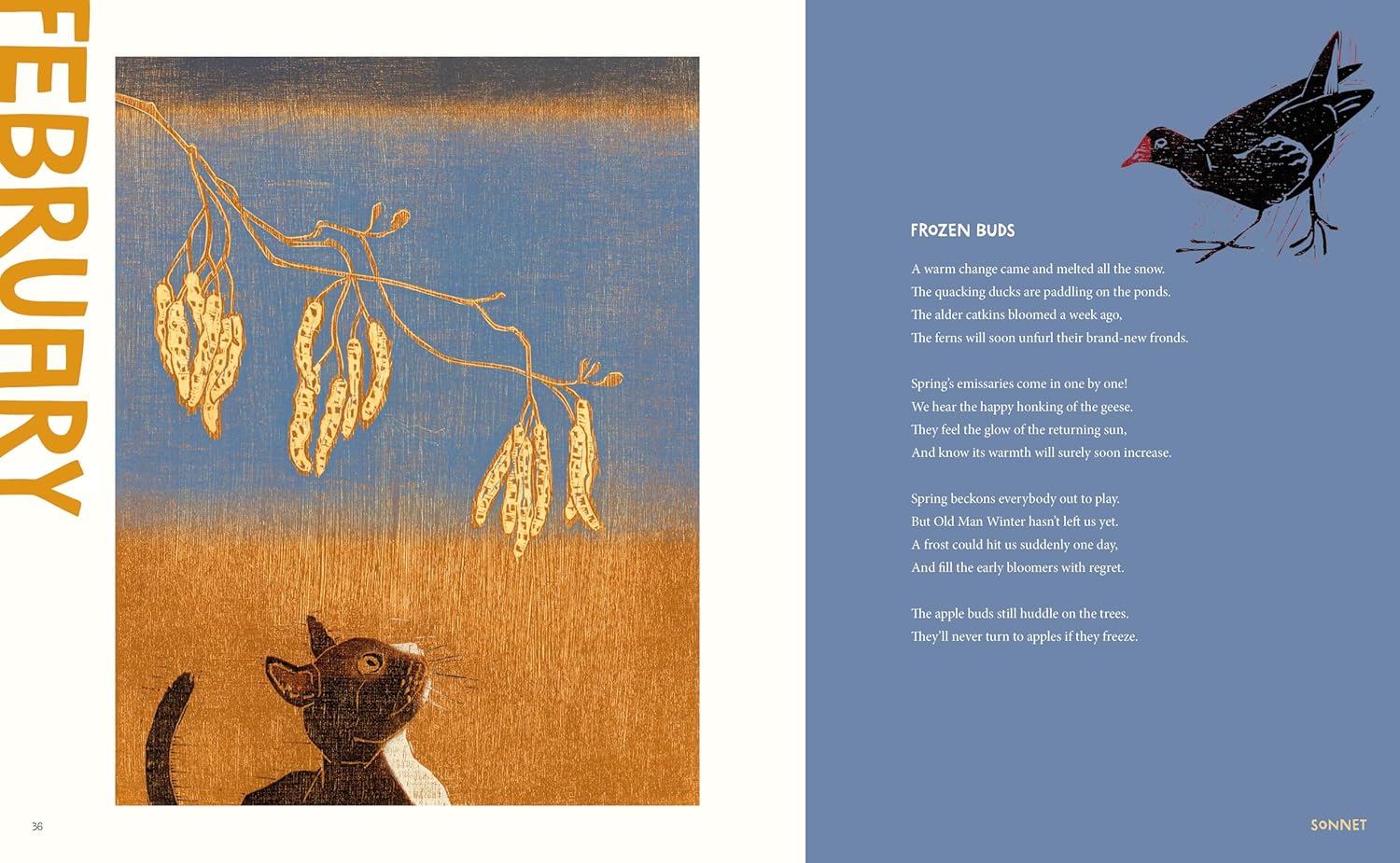
The cooling temperatures of Fall bring “Windfall” apples in September, and a diamond-shaped diamante verse for October pays tribute to animals and plants that bravely face the shivery days of mid-autumn. A repeating line in Westera’s charming rondelet for November celebrates the snuggly warmth of the season before winter comes with it’s ice and snow. A playful December limerick eavesdrops on the “Stay-at-homes”—those birds who know the benefits of a free buffet. And suddenly we’re in the deepest part of winter, with January’s defining colors eloquently found in the feathers of a goose. January, however, soon gives way to a hopeful thaw in February and the whispers of a beckoning spring in Westera’s sonnet that reminds us of the character of this mercurial month.

The poems are followed by conversational discussions about each poetic form that will enlighten readers and prove instructional for writers and teachers. The poems include haiku, rondel, acrostic, double dactyl, pantoum, elevenie, tanka, quatrain, diamante, rondelet, limerick, stacking poem (an invention by Bette Westera), and sonnet.

Illustration copyright © 2026 by Henriette Boerendans. Text copyright © 2026 by Bette Westera. Courtesy of Eerdmans Books for Young Readers.

Bette Westera opens a curtain on fleeting, heart-stirring moments in nature throughout the year with her poems that are as alluring as they are direct. Her lovely vignettes are layered with humorous similes, charming anthropomorphism, unexpected happenstance, and sometimes the hint of danger. Each varied verse offers a rich reading experience and beckons us to look closely and with appreciation at the world around us. 

Through her exquisite woodcut prints, Henriette Boerendansis allows young readers to join the lambs, deer, birds, and other wildlife on a farm as it hosts them and the changing seasons. Children will relish being within petting distance of a newborn lamb, concealed among buttercups with a fawn, curled up with a hedgehog preparing for hibernation, and the confidante of birds. Boerendansis’s breathtaking colors soothe with the tranquil greens and blues of spring, delight with the deep hues of summer, glow with autumn warmth, and shiver with winter’s icy cloak.

David Colmer’s translation is nimble and smart, illuminating Bette Westera’s combination of humor and insight with easy grace.

Poems for Every Season: A Year of Haiku, Sonnets, and More is a luminous poetry collection that grows more brilliant with every read. It is a book that will enhance any library collection, would make a wonderful gift, and which, at home, should be kept in a place of prominence to be enjoyed throughout the year.

Ages 5 – 9 

Eerdmans Books for Young Readers, 2026 | ISBN 978-0802856524

About the Author

Bette Westera has written over fifty books for children, including Fast Cheetah, Slow Tortoise and the Mildred L. Batchelder Honor Book Later, When I’m Big (both Eerdmans). She has also translated books by Dr. Seuss, Astrid Lindgren, and Julia Donaldson into the Dutch language. Bette lives in the Netherlands, where her books have received two Golden Pencil awards and six Silver Pencil honors. Visit her website at bettewestera.nl.

About the Illustrator

Henriette Boerendansis an Amsterdam-based printmaker and illustrator. Poems for All Seasons is her English-language debut. While walking in nature together one day, Bette and Henriette brainstormed new projects and came up with the idea for this book. Follow Henriette on Instagram @henriette.boerendans and visit her website at boerendans.com.

About the Translator

David Colmer is an Australian writer and translator of Dutch and Flemish literature. He has translated over eighty books throughout his career, including I’ll Root for You, A Pond Full of Ink, and Fast Cheetah, Slow Tortoise (all Eerdmans). His work has been honored with many awards, including the PEN Translation Prize and the Dutch Foundation for Literature’s James Brockway Prize, which recognizes a translator’s body of Dutch-language poetry. David lives in Amsterdam.

National Poetry Month Activity

CPB - Plant Poem

Grow a Poem Craft


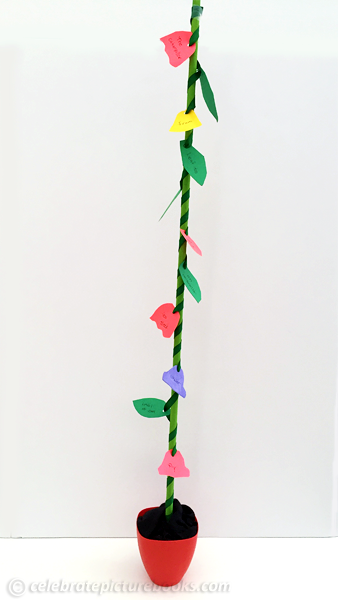
A poem often grows in your imagination like a beautiful plant—starting from the seed of an idea, breaking through your consciousness, and growing and blooming into full form. With this craft you can create a unique poem that is also an art piece!

Supplies

  • Printable Leaves Template, available here and on the blog post — or draw your own
  • Printable Flower Template, available here and on the blog post — or draw your own
  • Wooden dowel, ½-inch diameter, available in craft or hardware stores — or green bamboo or plastic garden plant stakes
  • Green ribbon
  • Green craft paint
  • Colored paper for leaves and flowers
  • Flower pot or box
  • Oasis or clay
  • Hole punch
  • Glue

Directions

  1. Paint the dowel green, let dry
  2. Print the leaves and flower templates — or draw your own
  3. Cut out the leaves and flowers
  4. Punch a hole in the bottom of the leaves or flowers
  5. Write full poems or lines of poems on the leaves and flowers 
  6. String the leaves and flowers onto the green ribbon in the order you want your poem to be read 
  7. Attach the ribbon to the bottom of the pole with glue or tape
  8. Wrap the ribbon around the pole, leaving spaces between the ribbon
  9. Gently arrange the leaves and flowers so they stick out from the pole 
  10. Put oasis or clay in the flower pot or box
  11. Stick your poem pole in the pot
  12. Display your poem!

You can purchase Poems for Every Season: A Year of Haiku, Sonnets, and More from these booksellers

Amazon | Barnes & Noble | Bookshop

Picture Book Review

January 9 – Welcome Winter

About the Holiday

For children who live in northern climates, winter brings dreams of snow and all the enjoyment that goes with this fluffy, malleable, cooold precipitation. Snow isn’t just for playing in (or shoveling) though. It provides plenty of opportunities to engage with science in a fun and fascinating way—as you’ll see in today’s book!

Flurry, Float, and Fly!: The Story of a Snowstorm

Written by Laura Purdie Salas | Illustrated by Chiara Fedele


As readers open Flurry, Float, and Fly! autumn is welcoming its first impromptu snowflakes. The golden hues of fall still carpet the hills as “clouds lie heavy, gray, and low,” animals watch, and two children, anticipation in their hearts, don coats and boots. The siblings emerge from their house and pull out their sled.

There’s movement in the atmosphere: “From the north, a polar freeze . . . from the south, a humid breeze. All winds advance. They mix and dance.” And yet the children wait; they watch, and sit. There is no snow for sledding. But the winds are just getting started—picking up dust, working together. At last, a “tiny drop turns into ice— / six small sides, / arranged. / precise.”

Illustration © 2025 Chiara Fedele. Text © 2025 Laura Purdie Salas. Courtesy of Bloomsbury Children’s Books.

The crystals grow and begin to drift. They’re all unique. How can that be? “Each cloud’s type— / how cold?— / how wet?— / shapes each crystal’s silhouette.” The kids are ready; the snow is falling! Mom tells them that dinner’s calling. All night long the flakes float down. In the morning the world’s transformed into a winter playscape for snowmen, snow forts, and finally . . . sledding “before it’s time to say goodbye to flakes that flurry . . . float . . . and fly!”

Illustration © 2025 Chiara Fedele. Text © 2025 Laura Purdie Salas. Courtesy of Bloomsbury Children’s Books.

In her back matter, Laura Purdie Salas describes in clear and easy-to-understand language the science behind the formation of snow. She addresses the ingredients of a snowstorm, the polar jet stream, how snowflakes form and fall, and even how long it takes for a snowflake to drift to Earth. Salas also describes six common shapes of snowflakes (along with photographs) and includes websites, videos, and books for further research.

Illustration © 2025 Chiara Fedele. Text © 2025 Laura Purdie Salas. Courtesy of Bloomsbury Children’s Books.

Mixing winter hopes with science, Laura Purdie Salas’s rhyming storytelling flows as smoothly and joyfully as a sled ride down a snowy hill. Young readers will be just as invested in the suspense of the changing weather as the two siblings and forest animals who watch and feel it coming. Salas’s lyrical descriptions of how snowflakes are created are as much a marvel as the real thing, sparking excitement for learning as well as for the wonders of the season.

Chiara Fedele’s gorgeous watercolor, gouache, and colored-pencil illustrations are sumptuous portrayals of a landscape in flux as clouds bearing snow form above hills sparsely populated with homes. As winds roil, readers join two children with their minds set on sledding. As Salas’s verses begin portraying the scientific creation of snowflakes, Fedele spatters a spread with hazy white dots that with just a page turn become clearly delineated, luminescent crystals children can marvel over. Cozy images of the children and their mother through the home’s windows glow with familial warmth as squirrels, a badger, and a fox curl up in their snug dens.

Both young and adult readers will enjoy spying the squirrel, fox, badger, and raven from page to page, as well as the sibling’s changing fortunes. As the snow and dusk begin to fall at the same time, Fedele masterfully gives children a bird’s eye view of the conversation between the siblings and their mother, entirely understood by the characters’ gestures. The final two spreads reward the sibling’s patience as their friends arrive for exuberant winter play—and that long-awaited sled ride.

An exquisite and spellbinding story, Flurry, Float, and Fly!: The Story of a Snowstorm is creative nonfiction at its finest. The book is one you’ll want to add to your home or library collection. Teachers, science and nature educators, and homeschools will find this book to be a valuable resource to engage all learners. See below for how to access activities and resources to accompany the book.

Ages 4 – 7

Bloomsbury Children’s Books, 2025 | ISBN 978-1547603503

About the Author

Former teacher Laura Purdie Salas is the author of more than 130 books for kids, including Lion of the Sky, We Belong, Water Can Be…, and BookSpeak! Laura grew up in Florida, but she has lived in Minnesota all her adult life. She loves thunderstorms, snowstorms, and brainstorms. She’s also a big fan of game nights, donuts, and getting up early in the morning. Visit her at laurasalas.com and on Instagram @laurapsalas.

About the Illustrator

Chiara Fedele was born in Milan and now lives in a nearby village. She took a degree in Illustration at La Scuola del Fumetto. Chiara works with Italian and international publishers. She has won a number of awards including the Premio Cento Illustrator Competition in 2008, Sydney Taylor Award Silver Medal in 2018 and 3×3 International Illustration Award Merit in 2019. You can visit her at chiarafedeleillustrator.it and on Insta: @chiaraillu.

Welcome Winter Activity

Flurry, Float and Fly! Coloring Pages and More!


Laura Purdie Salas welcomes children, readers, and educators to engage with Flurry, Float and Fly!: The Story of a Snowstorm through coloring pages, a winter trivia activity, and a teacher’s guide, plus so many more activity pages and ideas that will keep kids excited about words, writing, learning, and observing for home and classroom use. Just take a look through her dropdown menus to get started having fun!

Laura Purdie Salas Downloadables & Resources

You can purchase Flurry, Float, and Fly!: The Story of a Snowstorm from these booksellers

Amazon | Barnes & Noble | Bookshop

Picture Book Review
January 5 – National Skating Month

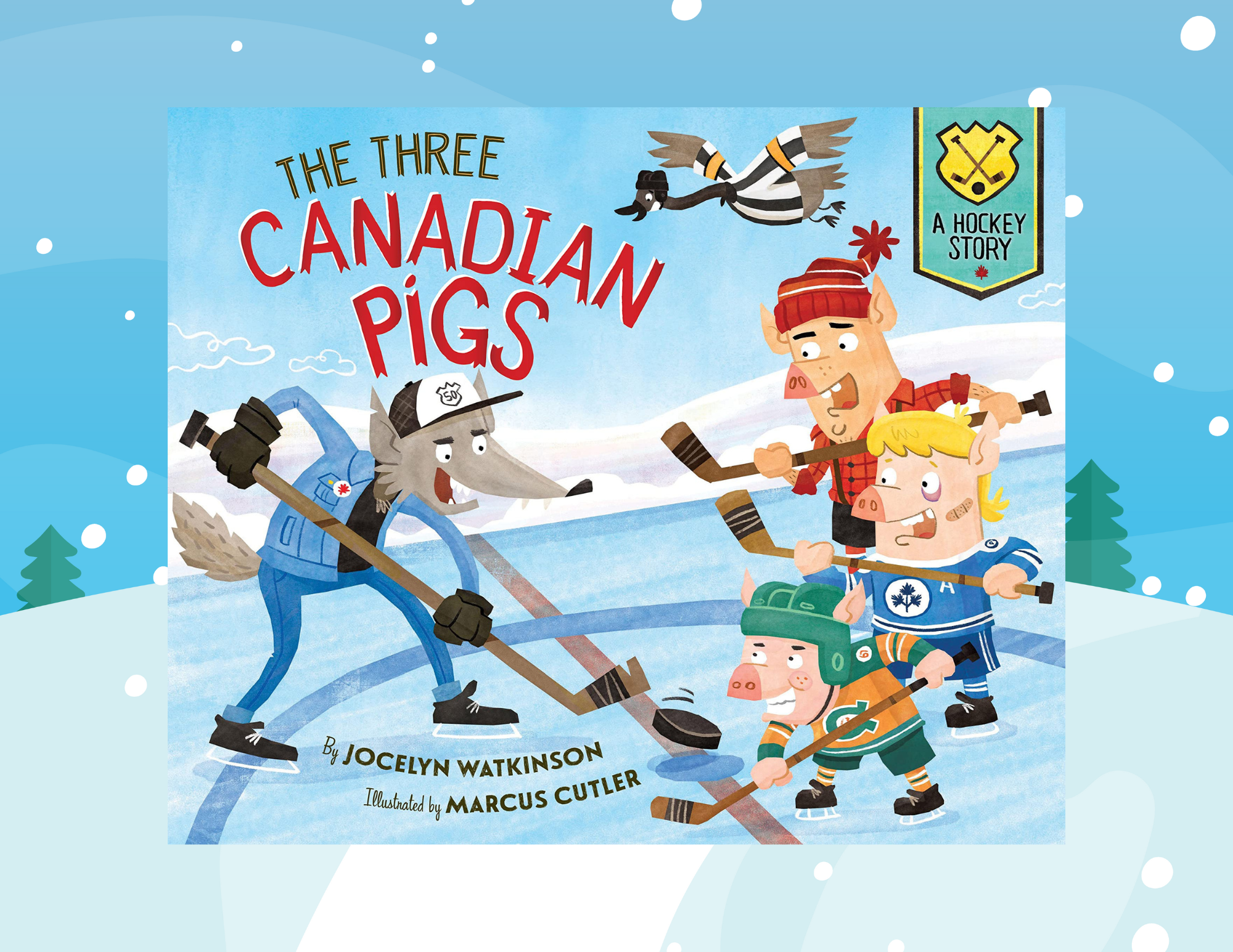
celebrate-picture-books-picture-book-review-the-three-canadian-pigs-cover

About the Holiday

National Skating Month is sponsored by U.S. Figure Skating and as a week-long celebration in March 2002 following the Olympic Winter Games in Salt Lake City. Now co-sponsored by Learn to Skate U.S.A. and celebrated during the entire month of January, the holiday gives ice-skating rinks, clubs, and programs an opportunity to invite new families to the ice by offering free lessons and skating demonstrations. If figure skating isn’t your thing, you might like to take your skills to the hockey rink or just to a local pond for some free-style skating. However you choose to enjoy the ice, skating is fun and for everyone! To learn more about ice-skating programs in your area, visit usfigureskating.org and learntoskateusa. 

The Three Canadian Pigs: A Hockey Story

Written by Jocelyn Watkinson | Illustrated by Marcus Cutler


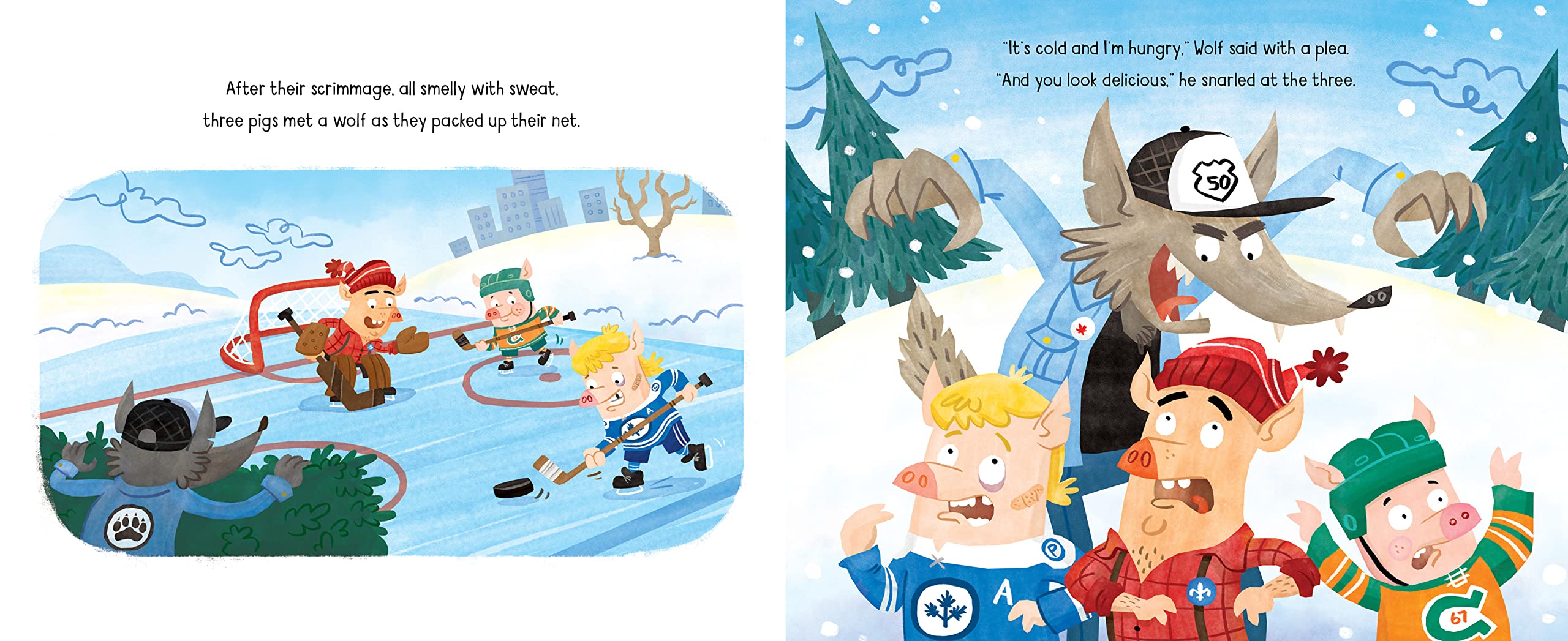
Three pigs were just finishing their hockey scrimmage when a wolf sprang from behind some bushes, fangs sharp and claws at the ready to satisfy his hunger since they looked so delicious. But as they quickly took off their skates and packed up their gear, they said, “‘I’m soorry there, Wolf, you are soorely mistaken—'” To which the wolf replied, “‘Oh no! But I’m not! You’re Canadian bacon!'” The pigs jumped on their snowmobile and hurried home to their snow fort in town. 

celebrate-picture-books-picture-book-review-the-three-canadian-pigs-fight-back

Image copyright Marcus Cutler, 2022, text copyright Jocelyn Watkinson, 2022. Courtesy of Sleeping Bear Press.

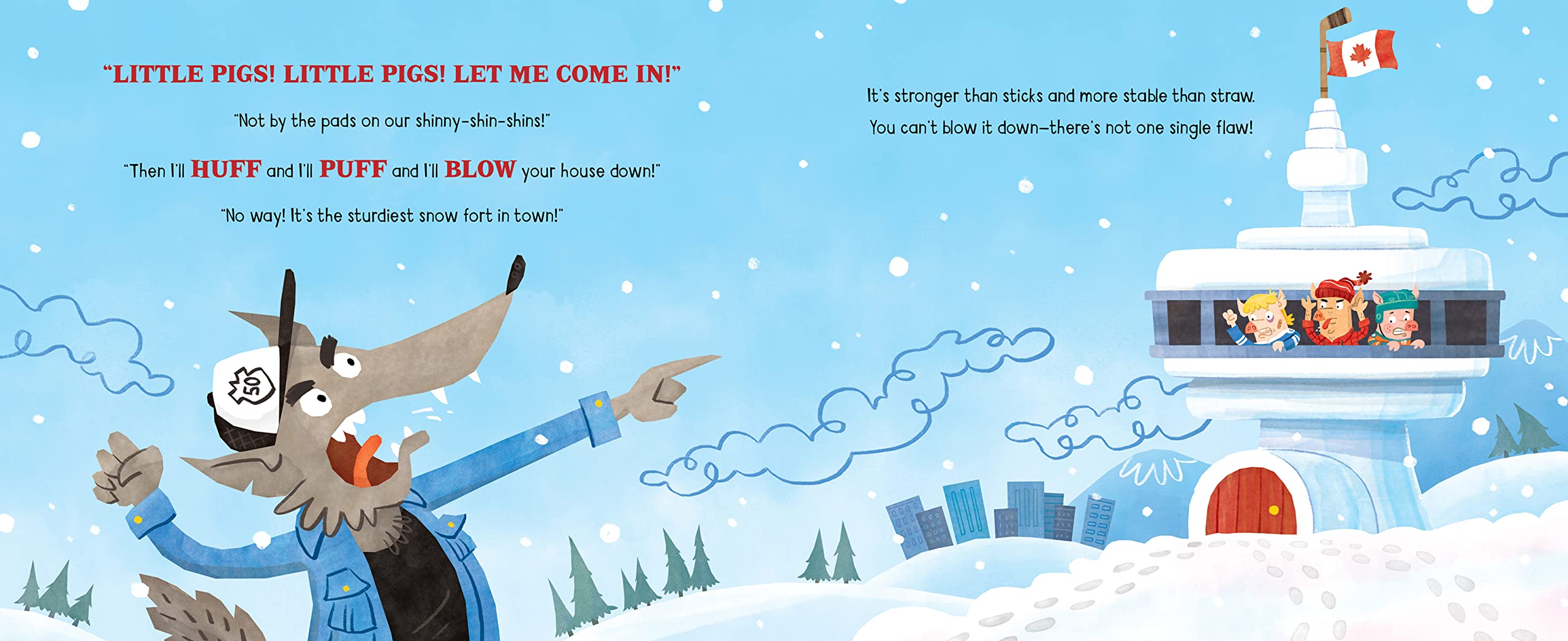
It didn’t take long for the wolf to catch up with them, and from outside their door, he shouted, “‘Little pigs! Little pigs! Let me come in!'” But they just replied, “‘Not by the pads on our shinny-shin-shins!'” The wolf threatened to blow the fort down, but this was no flimsy home built of sticks or straw. In fact, they told him, “‘there’s not one single flaw!'” The wolf wasn’t going to give up easily and he collected Moose and Bear to help him break in.

celebrate-picture-books-picture-book-review-the-three-canadian-pigs-snow-fort

Image copyright Marcus Cutler, 2022, text copyright Jocelyn Watkinson, 2022. Courtesy of Sleeping Bear Press.

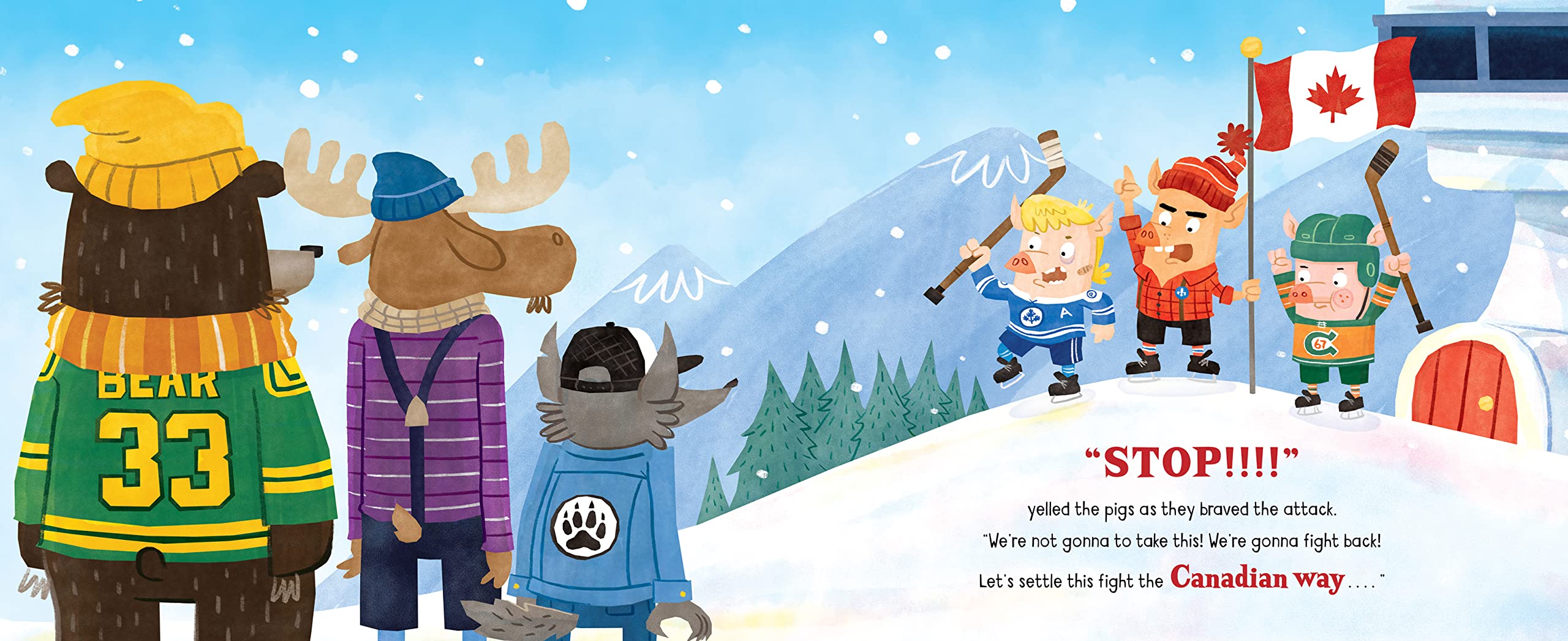
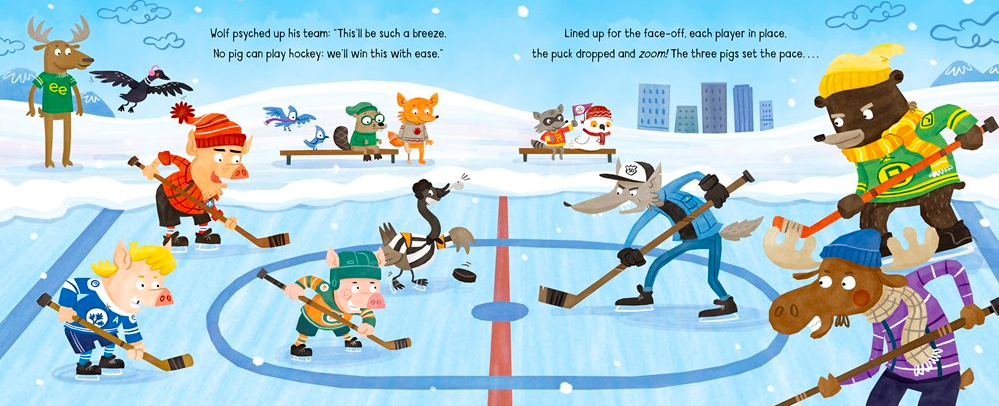
When the three pigs had just enough of the wolf’s team’s attack, they came out and challenged them to “‘settle this fight the Canadian way'” with “‘a hockey game showdown.'” With a Canada goose as a ref, they took to the ice, attracting a crowd of spectators. The wolf and his team thought they’d win with ease, but the pigs “deked and they cut: / the pigs couldn’t be caught,” and when they scored, the wolf took to underhanded measures to stop them. 

But the pigs were too quick and too nimble, and they ran up the score. When the ref blew her whistle ending the game, the pigs celebrated saving their home, but the wolf “… full of frustration and hunger and spite, / … threw down his gloves and dove in for a bite.” It looked like the pigs were goners for sure, but Bear and Moose called him out on his poor sportsmanship. Wolf dropped the three pigs, feeling ashamed but still hungry. 

celebrate-picture-books-picture-book-review-the-three-canadian-pigs-wolf

Image copyright Marcus Cutler, 2022, text copyright Jocelyn Watkinson, 2022. Courtesy of Sleeping Bear Press.

Dragging his stick and hanging his head, the wolf trudged off the ice, but one pig called out to him, inviting him to join them in a feast back at the fort. When the wolf saw their spread of poutine, tourtière, beaver tails, butter tarts, and so many other mouthwatering delicacies, he apologized: “‘Pigs, I’m so sorry that I was a brute.'” / “‘There’s nothing for you to be soorry a-boot.'” a pig graciously told him. The pigs, Wolf, Bear, and Moose all made amends and piled up their plates. Then they settled in to watch a game on TV. And as “they put up their feet,” the wolf had to agree that “‘being friends with Canadian bacon is sweet!'”

celebrate-picture-books-picture-book-review-the-three-canadian-pigs-hockey-game

Image copyright Marcus Cutler, 2022, text copyright Jocelyn Watkinson, 2022. Courtesy of Sleeping Bear Press.

Full of clever rhymes, puns, valuable lessons, and dialogue that winks at Canadian pronunciations, Jocelyn Watkinson’s story flows as smoothly as a hockey puck on ice. Her regional take on the traditional Three Little Pigs story is fast-paced and suspenseful while touching on themes of sportsmanship, remorse and forgiveness, and friendship all framed with high-energy hockey action and plenty of humor. Especially welcome is Watkinson’s depiction of Bear and Moose confronting Wolf when he reneges on his agreement to let the pigs go if they win the game. Standing up to a friend or for what’s right can be hard, but Watkinson shows readers that having the courage of your convictions is honorable, honest, and can often turn a negative situation into a positive experience.

Marcus Cutler scores with his funny, emotion-packed illustrations that will have kids laughing and cheering for the pigs from page to page. Winter sports fans will love all the hockey action and will want to linger over the pigs’ hard-won trophy, on which Cutler had fun hamming it up with the names of some of hockey’s greats, The spread of favorite Canadian foods is sure to inspire game-night treat feasts. Cutler also highlights the important role of Bear and Moose, who ultimately appeal to Wolf’s better nature.

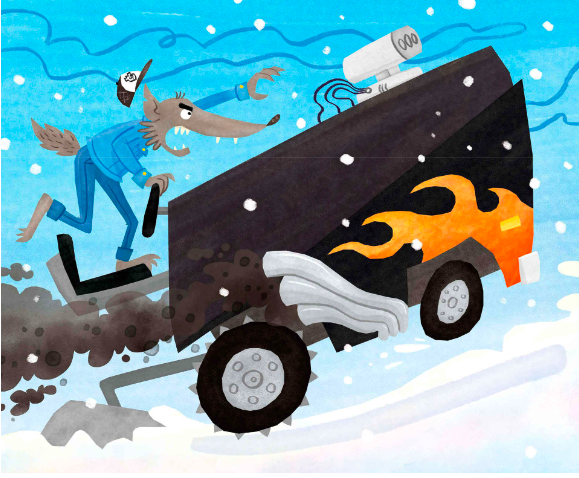
celebrate-picture-books-picture-book-review-the-three-canadian-pigs-snow-mobile

Image copyright Marcus Cutler, 2022. Courtesy of Sleeping Bear Press.

In a humorous and foreshadowing scene, Bear halfheartedly scratches at the pigs’ snow fort with one paw while holding a steaming mug in the other as Wolf exhorts his friends to “ram and claw and maul” their way inside. When Bear and Moose finally challenge Wolf to live up to his deal, their disapproval is clearly visible to readers. Wolf’s resulting feelings, as well as their cause, are also evident, giving kids and adults openings for meaningful discussions on behavior.

Whether your kids wait all year for hockey season, are fans of fractured fairy tales, or simply love a great story, The Three Canadian Pigs is a funny and impactful read aloud that’s sure to become a story time favorite all year long and a book you’ll be glad you added to your home, classroom, school, or public library.

Ages 4 – 7

Sleeping Bear Press, 2022  ISBN 978-1534111608

Jocelyn Watkinson is a children’s picture book author and ex-pat Canadian living in California, with her husband, son, and golden retriever. Visit her at jocelynwatkinson.com.

Marcus Cutler is the author/illustrator of I Do Not Eat Children and the illustrator of You Might Be Special!, The Three Canadian Pigs, and Travel Guide for Monsters Part Deux: A Canadian Adventure, among others. Visit him marcuscutler.com.

National Skating Month Activity

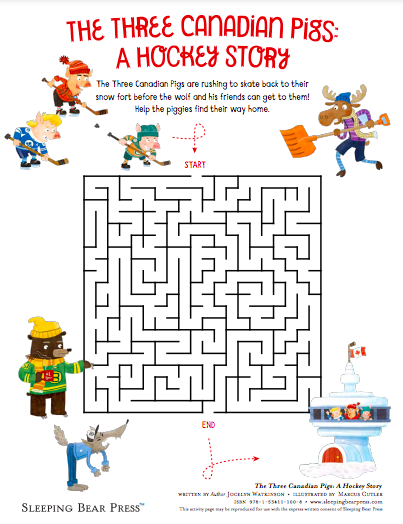
celebrate-picture-books-picture-book-review-the-three-canadian-pigs-maze

The Three Canadian Pigs Activity Kit


The game’s on with the two puzzles and two coloring pages inspired by today’s book! Just download and print them from the Sleeping Bear Press site here:

The Three Canadian Pigs Activity Kit

You can purchase The Three Canadian Pigs: A Hockey Story from these booksellers

Amazon | Barnes & Noble | Bookshop 

Picture Book Review
December 3 – Get Ready for Dōngzhì

About the Holiday

The Dōngzhì Festival, or Winter Solstice is considered to be one of the most important Chinese festivals of the year and is a time for families to get together, worship their ancestors, and enjoy traditional delicacies. Celebrated for over 2,000 years, the festival sees families come together to make and eat tāng yuán, which symbolizes reunion and prosperity. While the celebration of the winter solstice is only one day (this year on December 21), the Dōngzhì Festival lasts 15 days.

This Winter Solstice festival originates from the Chinese concept of yin and yang, an ancient symbol of harmony and balance. In Chinese culture, there is a belief that when the days are short, there is insufficient Yang energy, thus people consume foods that are more yang (warm) in nature to counteract the yin (cold) of winter, such as tāng yuán, as seen in today’s book. To learn more about the holiday, visit mandarianmatrix.org. 

Thank you to Bloomsbury Children’s Books for sharing a copy of this book with me for review!

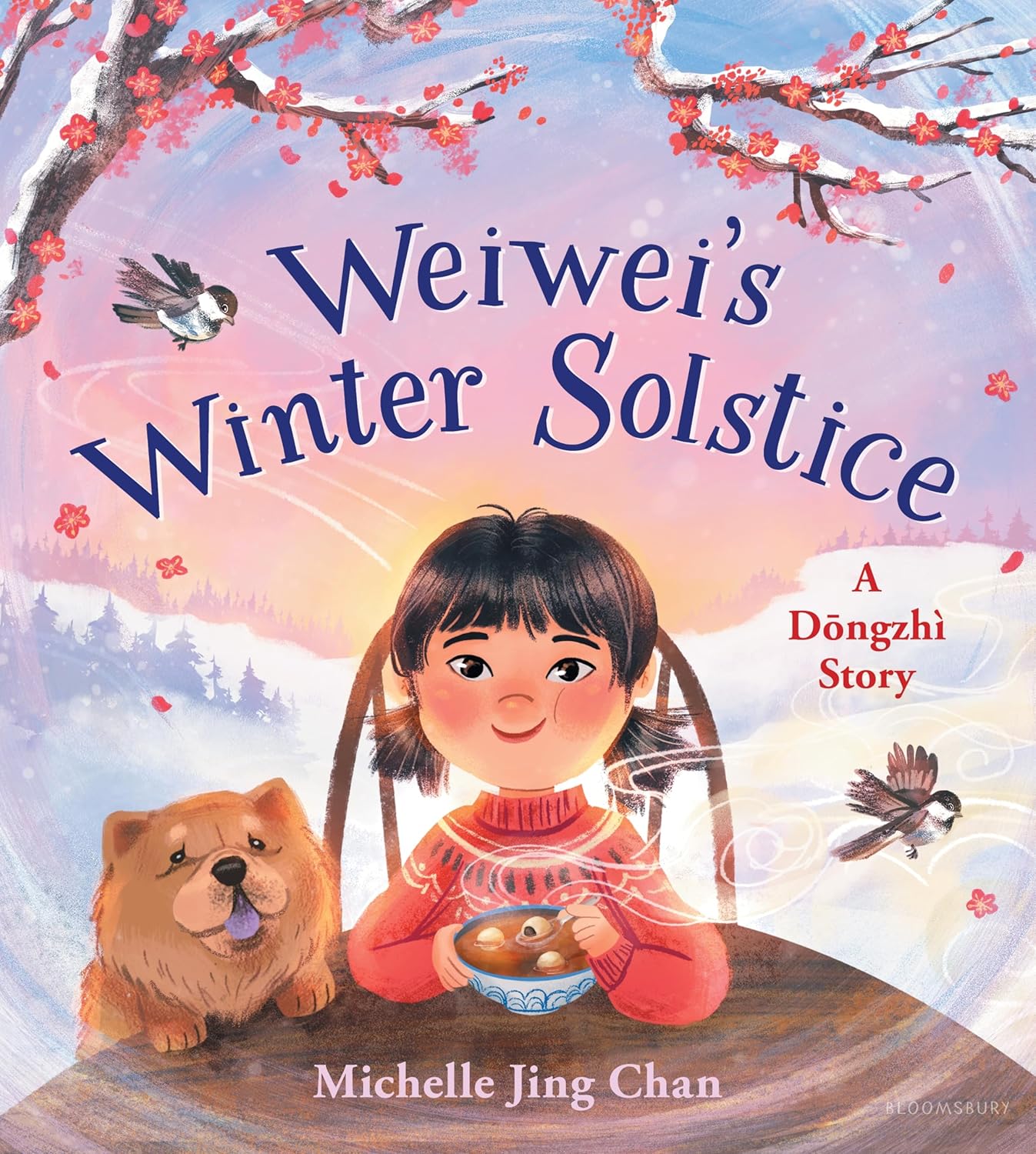
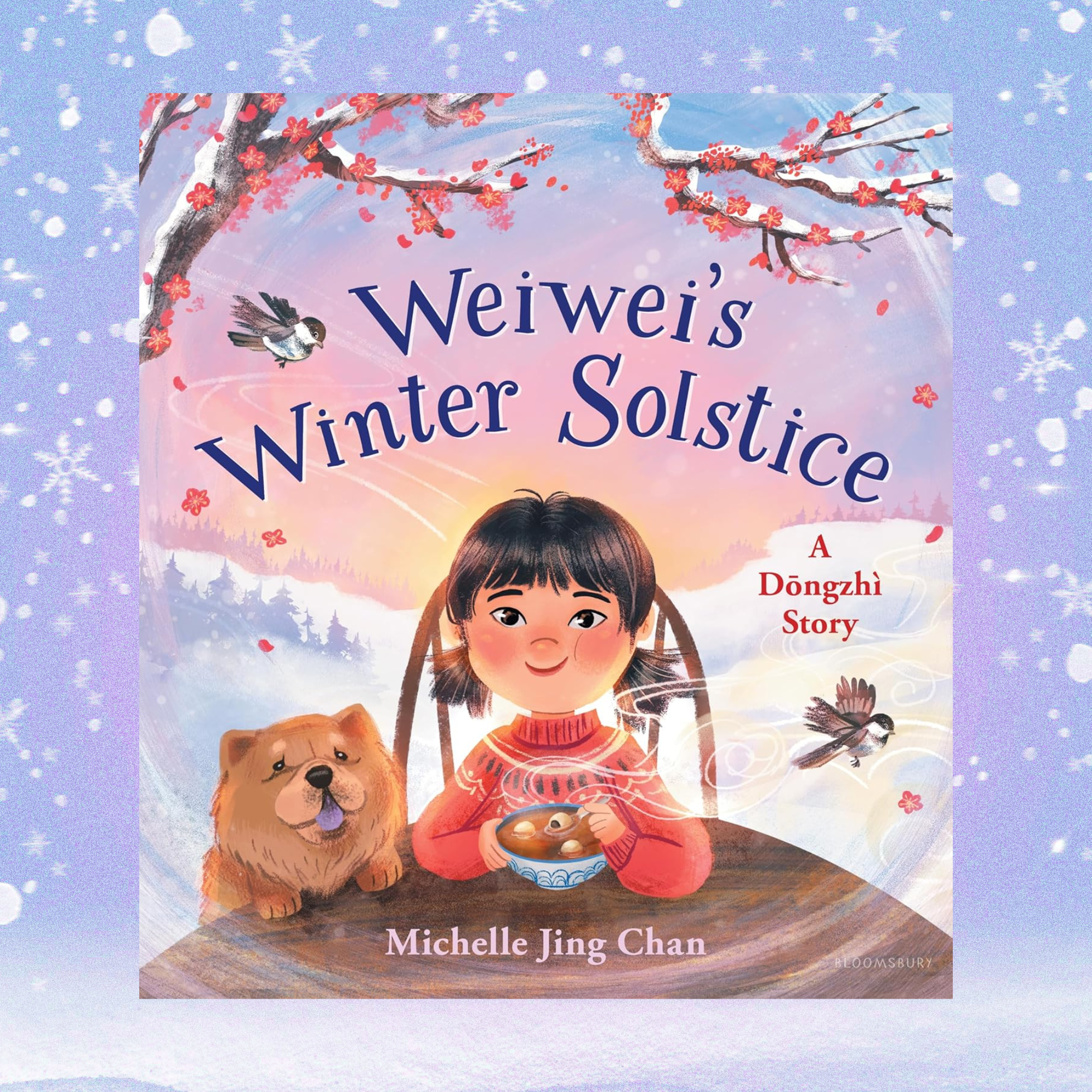
Weiwei’s Winter Solstice: A Dōngzhì Story

By Michelle Jing Chan


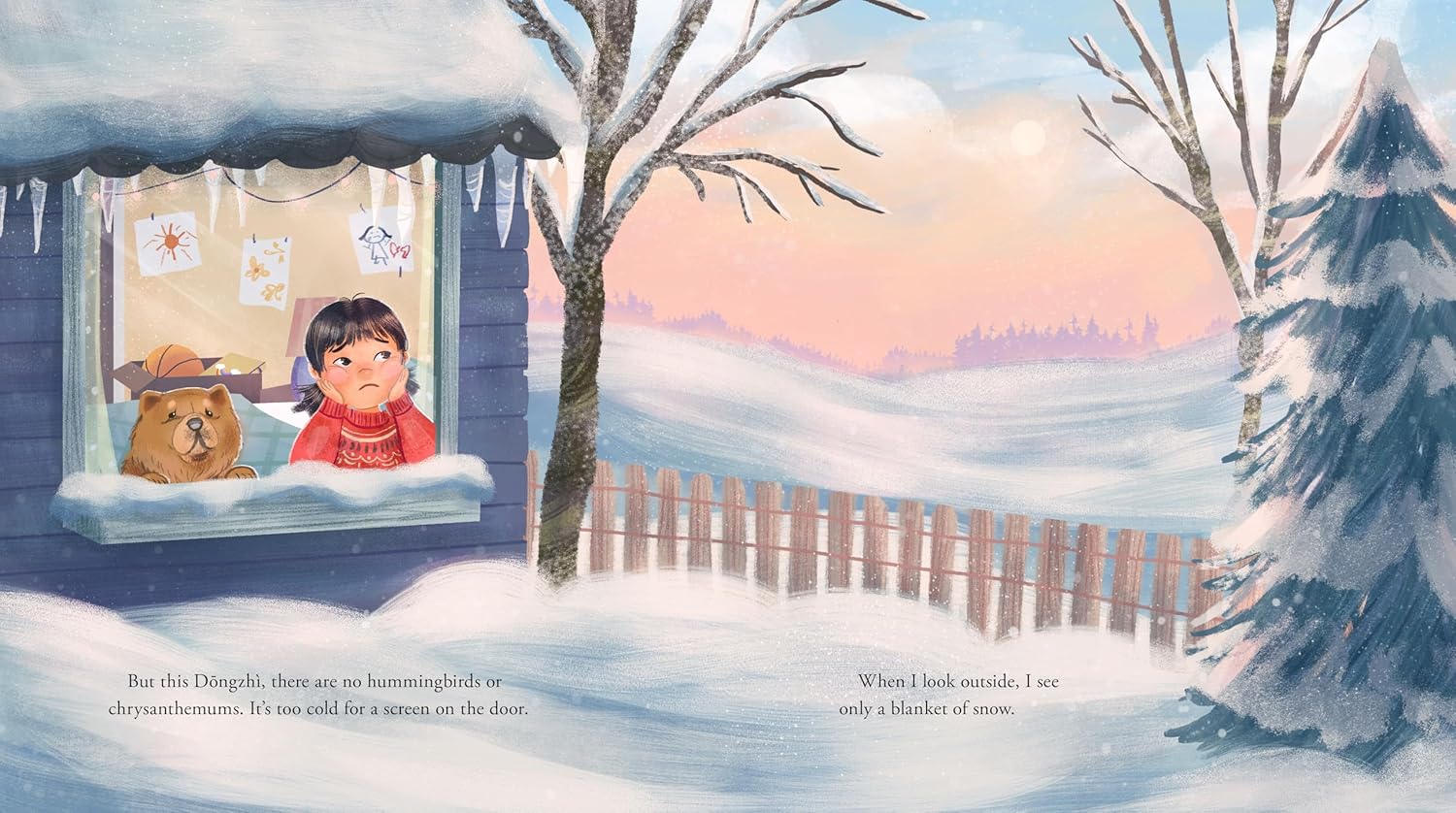
Today is Dōngzhì, the Chinese winter solstice—one of Weiwei’s favorite holidays. But instead of celebrating it by splashing in sprinklers amongst hummingbirds and palm trees at her former home, she’s bundled up in a sweater and blanket as snow covers the ground. For Weiwei Dōngzhì just doesn’t feel the same. Her family—Mama, Baba, her younger brother Didi, and Yeye, her grandfather—are ready for a walk and to play in the snow, but Weiwei can only scowl.

Text and image © 2025 by Michelle Jing Chan. Courtesy of Bloomsbury Children’s Books.

Yet once outside, Weiwei watches her breath cloud in the cold air, catches snowflakes on her tongue, and listens to the snow crunch as they walk. Then, suddenly, Weiwei gasps and points to a tree covered in red flowers. “‘Those are méihuā, plum blossoms!'” Yeye tells her. “. . . No matter how cold and dark it is, they still bloom.'” Weiwei begins to see other signs of life and beauty, but as the sun begins to set, it’s time for the family to go back home. Time for Weiwei’s favorite part of Dōngzhì.

Text and image © 2025 by Michelle Jing Chan. Courtesy of Bloomsbury Children’s Books.

Back home everyone chips in to make tāng yuán. Mama and Didi stir “ground black sesame, sugar, and softened butter into a paste” while Yeye and Weiwei make rice flour dough and Baba makes ginger broth. Then Didi and Weiwei pat the dough into small pancakes, add a bit of black sesame paste, and roll them into balls. The balls simmer in the ginger broth until they float to the top.

Text and image © 2025 by Michelle Jing Chan. Courtesy of Bloomsbury Children’s Books.

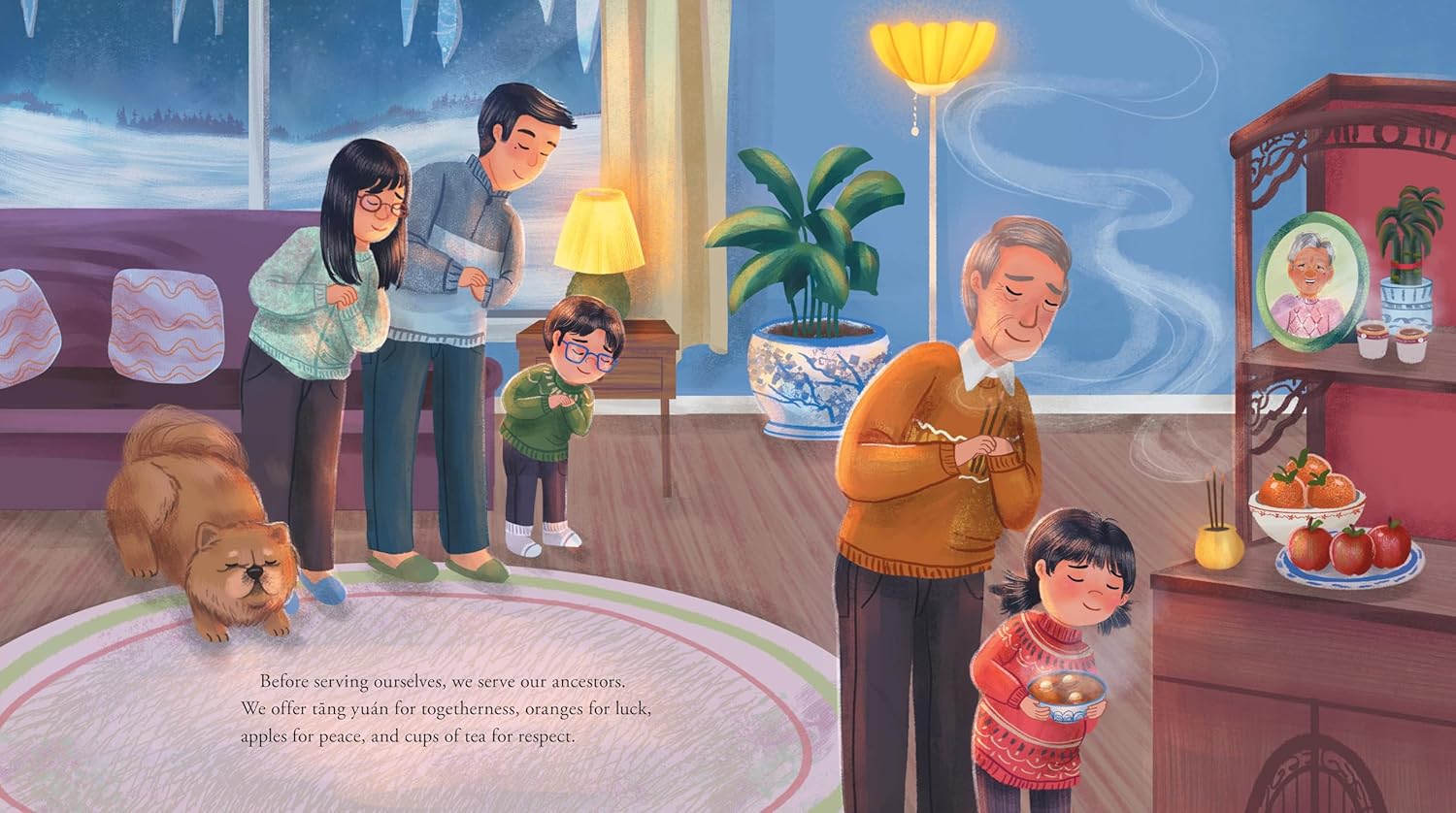
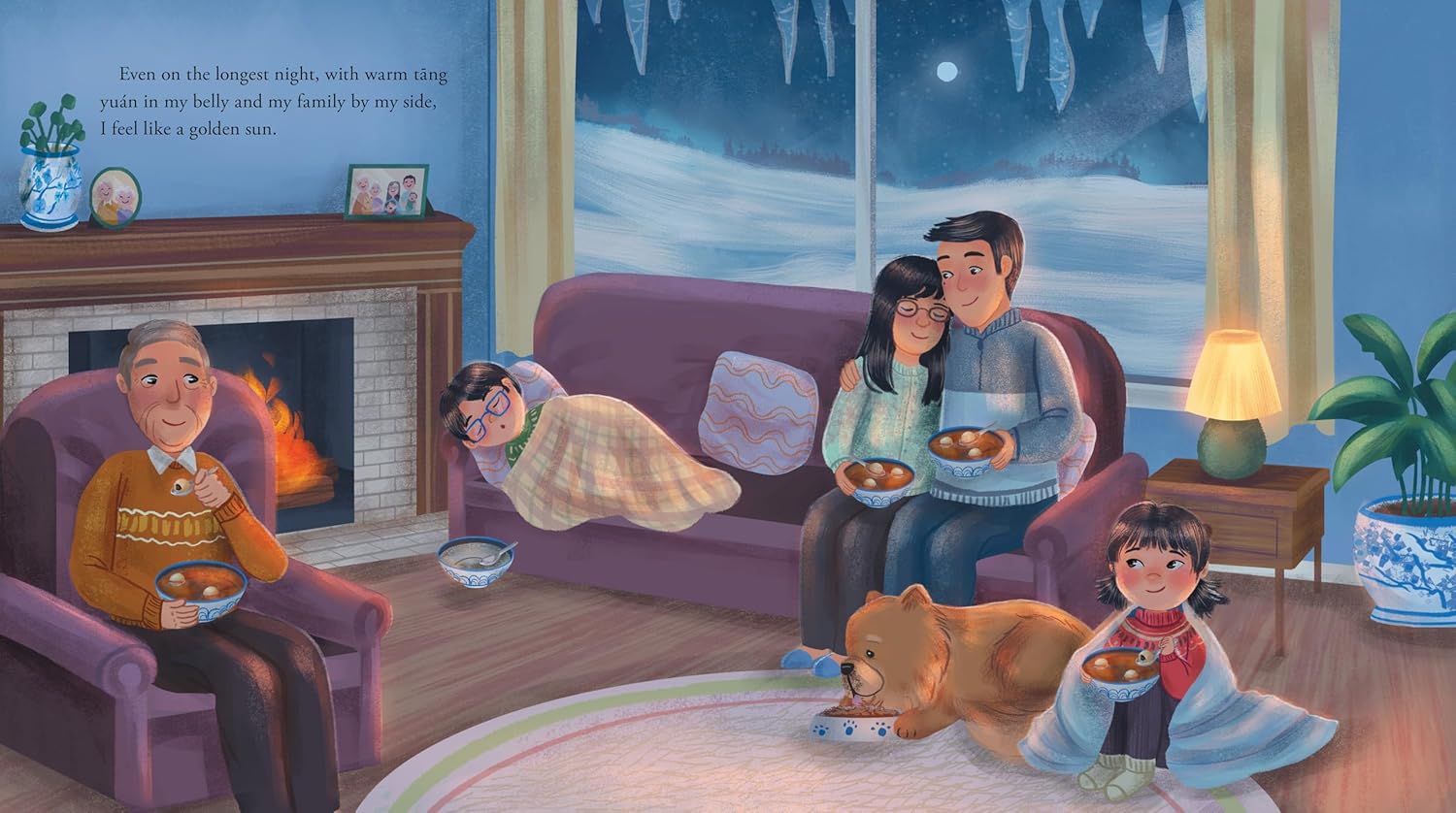
Before Weiwei and her family eat, they serve their ancestors. They “offer tāng yuán for togetherness, oranges for luck, apples for peace, and cups of tea for respect.” Then they eat! To Weiwei, the warm broth feels like a “sip of sunlight,” and Yeye reminds her that warmer days are coming. He tells her he knows it’s hard moving to a new home, “‘but anywhere can feel like home when we celebrate together.'” Weiwei listens to her grandfather and looks around at her cozy home and the people she loves. She knows spring is on its way with new memories to make, and decides that she will “bloom like the méihuā” and savor winter.

An Author’s Note describing the Dōngzhì holiday and how it is celebrated in various Asian countries as well as a recipe for Black Sesame Tāng Yuán follow the story.

Text and image © 2025 by Michelle Jing Chan. Courtesy of Bloomsbury Children’s Books.

Michelle Jing Chan’s warmhearted story of a young girl feeling adrift and disappointed when it comes time to celebrate Dōngzhì in a new home touches on feelings of loss, rediscovery, and the stabilizing comfort of traditions. As Weiwei and her family take a walk through snowy woods instead of the sunny backyard she’s known, she glimpses aspects of familiarity that are further strengthened as she helps prepare and enjoy their customary dish. She recognizes that the Dōngzhì celebration she cherishes as well as her family unit have not changed, allowing her to embrace her new home and look forward to the future.

Chan’s expressive illustrations glow with the togetherness that tāng yuán represents. Even her lovely snowy scenes are lit with peach and gold, as the sun breaks through the winter clouds. Inside, soothing colors highlight the family’s close ties and the comforting flavors of home.

Weiwei’s Winter Solstice: A Dōngzhì Story offers heartening inspiration for readers in the midst of change as well as the comfort of family love and traditions for all. Pair with making the included recipe as a group to create an eventful story time.

Ages 3 – 6

Bloomsbury Children’s Books, 2025 | ISBN 978-1547614844

Michelle Jing Chan is a queer Chinese American illustrator who grew up in Colorado and lives in the Pacific Northwest. Inspired by nature, cultural folklore, and fantasy, Michelle aspires to illustrate diverse, empowering stories her younger self would have loved. When she’s not drawing, she can be found attempting new recipes, reading, or watching spooky TV shows. You can visit her at michellejingchan.com.

Listen to Michelle Jing Chan talk about how her family traditions and a trip to Colorado inspired her to write Weiwei’s Winter Solstice: A Dōngzhì Story below!

You can purchase Weiwei’s Winter Solstice: A Dōngzhì Story from these booksellers

Amazon | Barnes & Noble | Bookshop (Discounted books and support for your local independent bookstore)

Picture Book Review

January 17 – It’s National Book Blitz Month

About the Holiday

Whenever you and your family visit the bookstore or library, do you look around, and think “if only I had the time for them all . . .. ” Are you always looking for more shelves for your collection? Is your library card the first one on your ring? If so, you’ll love Book Blitz Month! During this month book lovers are given the green light to read, read, read as many books as possible! Or if there’s a tome you’ve always wanted to tackle, crack the cover and let yourself become immersed in someone else’s story. For kids, Book Blitz Month can be particularly exciting. Sit down with your child or students and make a stack of books they’d like to read. Find time every day to read one, two, or a few of the books in the pile. Seeing the stack shrink gives kids a sense of accomplishment, and they might even want to build it up again! Mix reading with fun activities to encourage a new generation of avid readers!

Thanks to Simon & Schuster/Paula Wiseman Books and Barb Fisch at Blue Slip Media for sharing a copy of Snow Is . . . with me. All opinions on the book are my own.

Snow Is . . .

Written by Laura Gehl | Illustrated by Sonia Sánchez


The very fact of snow is a wonder. While rain nourishes, snow transforms. The world looks, feels, sounds, and even smells different with the advent of snow, and a playful giddiness bubbles up in both young and old, pushing off the task of shoveling out. Laura Gehl’s lovely poetry expresses those moment-to-moment changes snow brings both outside the window and in our hearts. 

Image copyright Sonia Sánchez, 2024, text copyright Laura Gehl, 2024. Courtesy of Simon & Schuster/Paula Wiseman Books

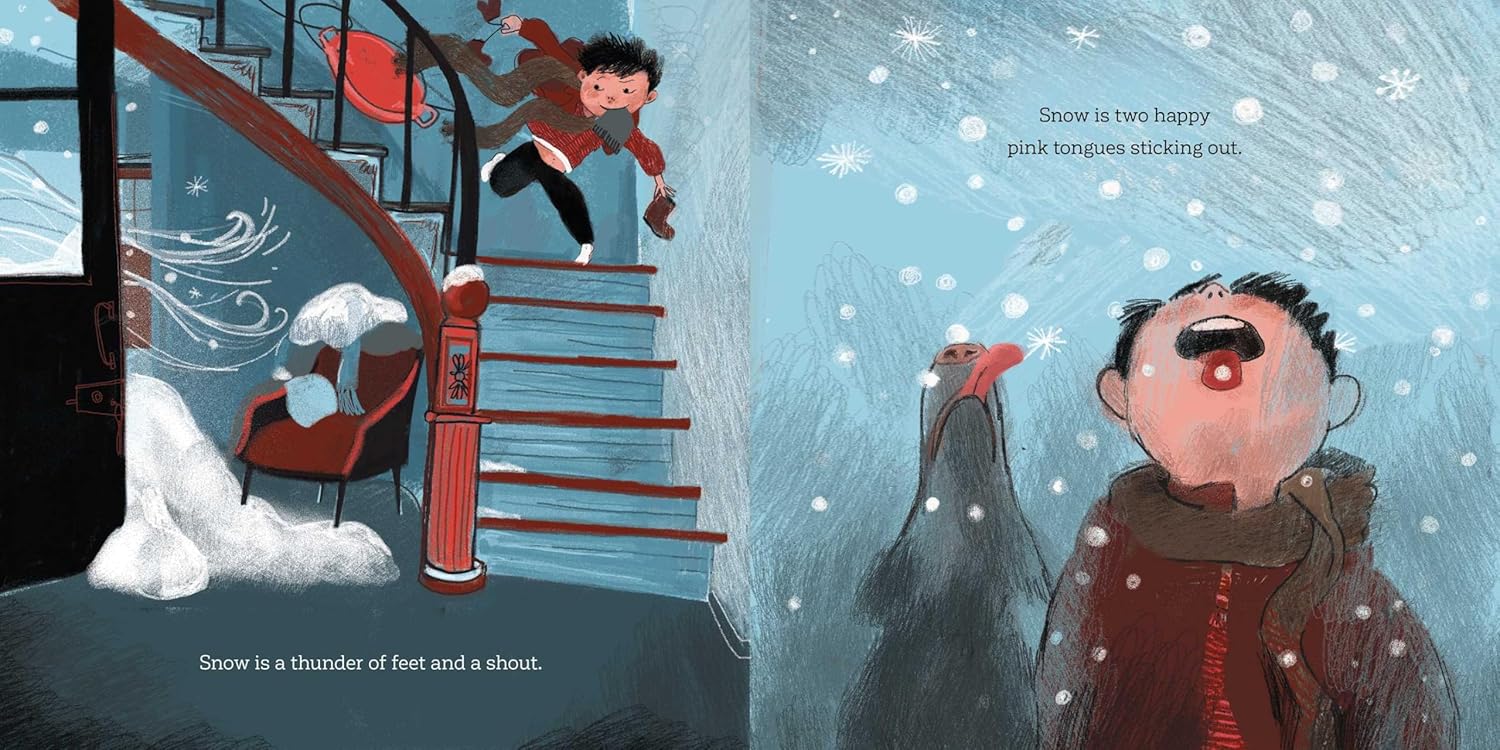
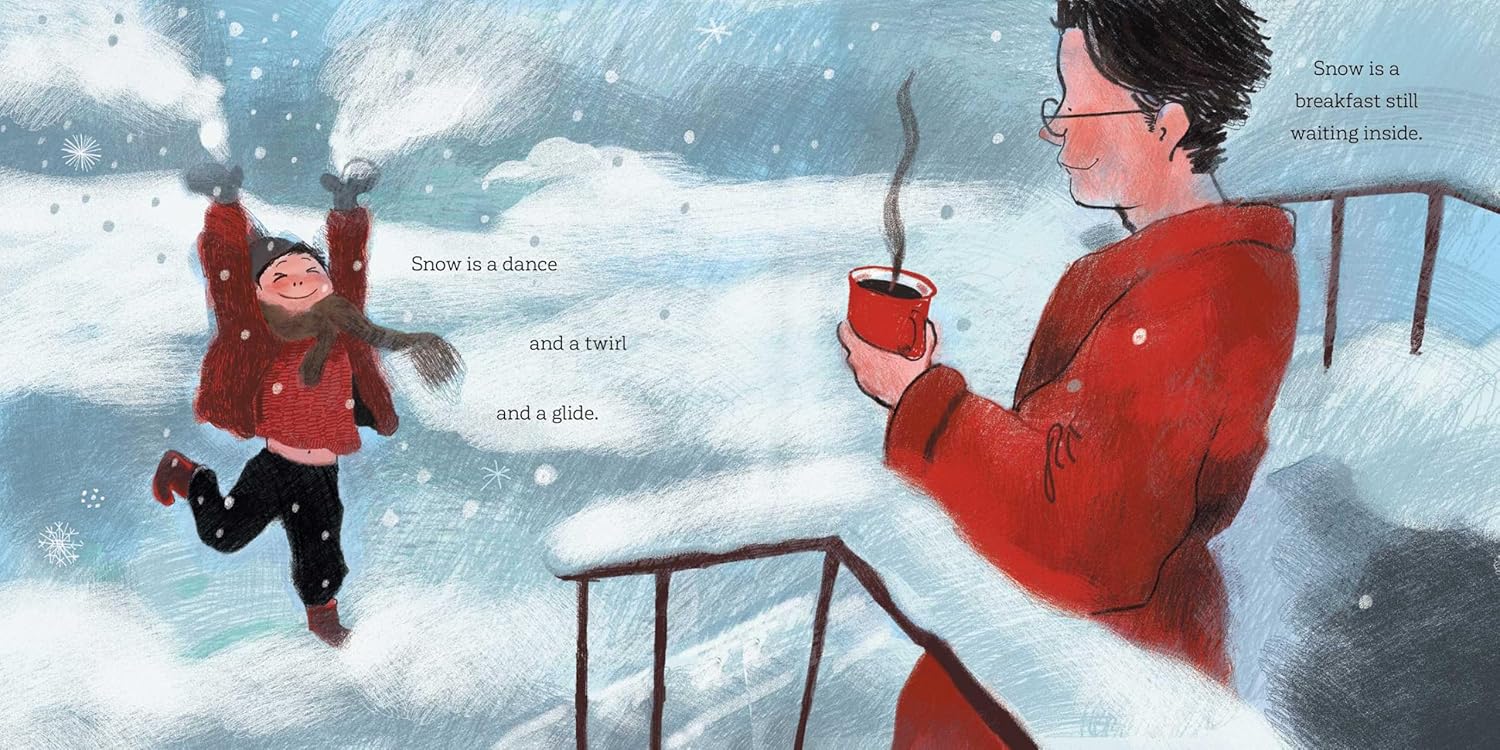
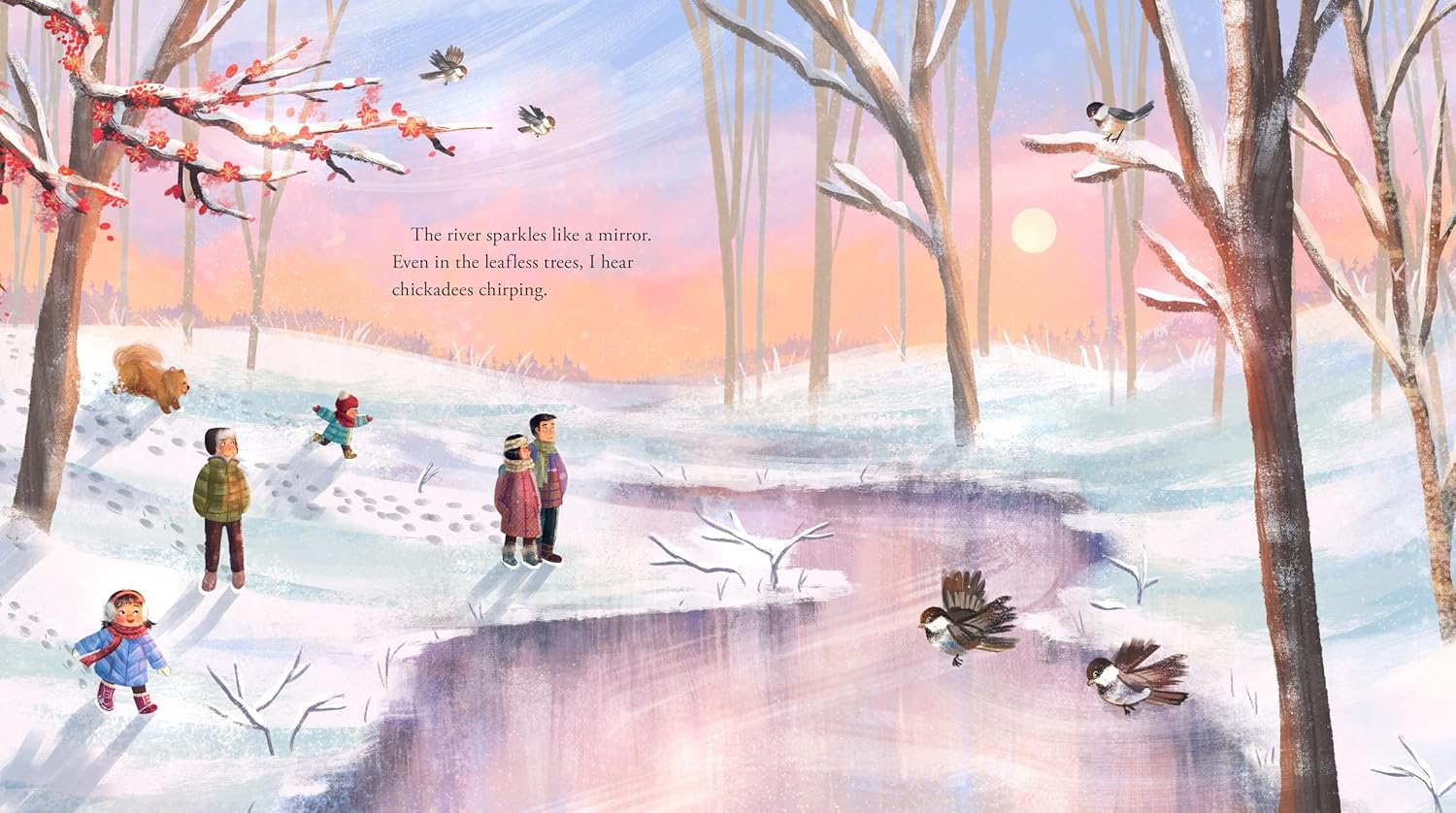
Gehl’s story begins as so often happens with a child waking to a surprise snow day. Drawn to the window, he gazes out, then suddenly “snow is a thunder of feet and a shout. / Snow is two happy pink tongues sticking out” as he grabs his scarf, boots, hat, mittens, and sled and tears downstairs, rushing outside with his dog. His dad, steaming coffee in hand, comes out to watch.

Image copyright Sonia Sánchez, 2024, text copyright Laura Gehl, 2024. Courtesy of Simon & Schuster/Paula Wiseman Books

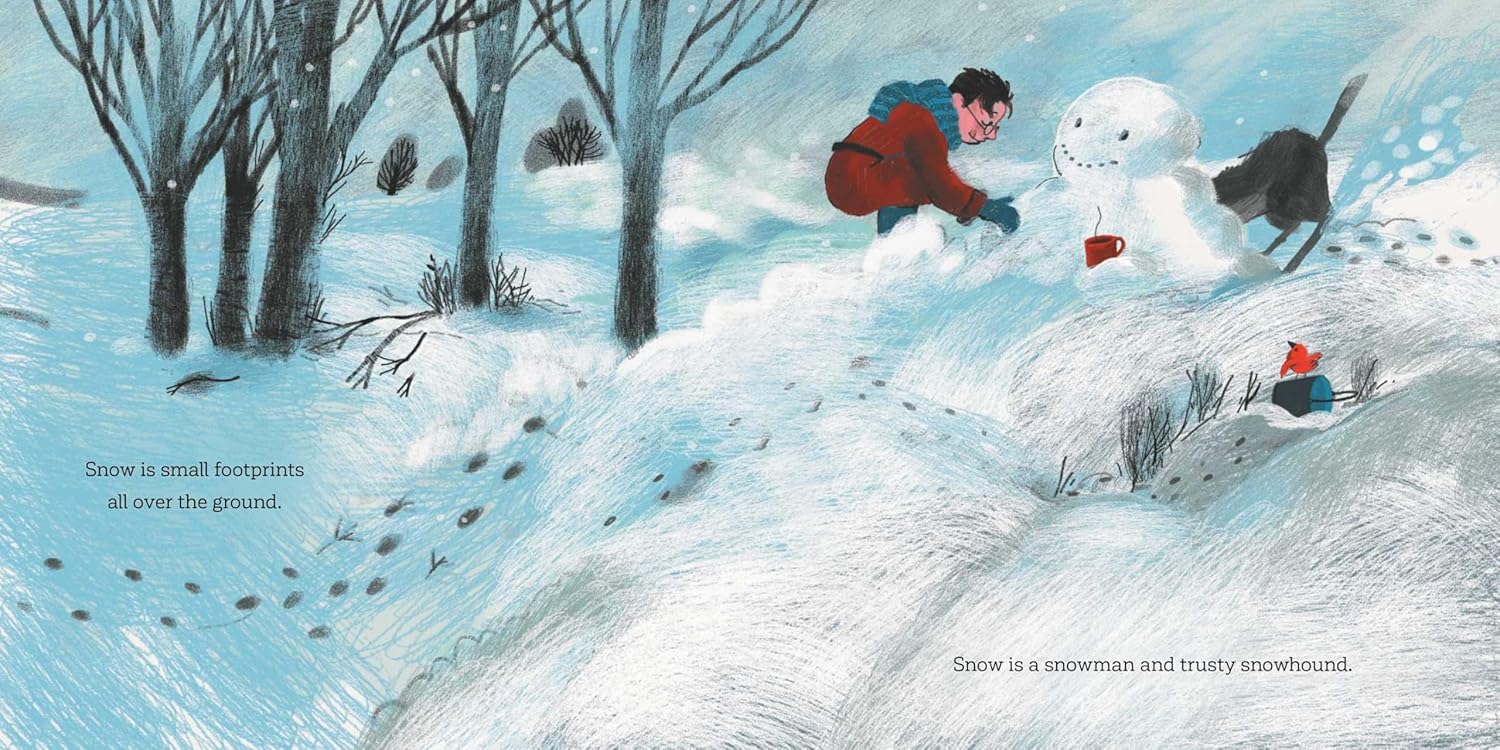
When the ground becomes blanketed and roofs frosted in white like a cake, for a mischievous child “snow is a hoard that is set for attack. / Snow is Dad’s face . . . when a snowball goes WHACK!” And when Mom brings the baby out, bundled up against the chill, “snow is bright eyes and small cheeks cold and rosy” while for big brother and Dad, who’ve been making snow bricks, “snow is a castle that’s roomy and cozy.”

But as the sun starts to set and it’s—so reluctantly—time to go inside, snow becomes “. . . warm cookies . . .” and “. . . a fire with snuggles and books.” And, at last, warm in pajamas and under “. . . blankets pulled tight,” snow is ‘I love you’ and snow is ‘Good night.'”

Image copyright Sonia Sánchez, 2024, text copyright Laura Gehl, 2024. Courtesy of Simon & Schuster/Paula Wiseman Books

Adults will adore sharing Snow Is . . . with their kids, and children will beg to hear the story again and again. In her smooth-as-a-sled-ride rhyming couplets, Laura Gehl captures not only the mercurial nature of snow itself but all the sights, sounds, and tiny details that make snow days so thrilling, cozy, and memory-making for kids and adults alike. Gehl’s descriptions and language are a delight and engage all the emotions with their humor, poignancy, sweetness, and awe.

Sonia Sánchez’s stunning illustrations take readers into the heart of a snowy day with action-filled scenes of swirling flakes, twirling feet, and packing of snow into a snowman, snowballs, and bricks. Readers can almost feel the pre-sliding suspense of the child standing at the edge of a long hill. As night falls and the family goes inside, Sánchez imbues her pages with quiet coziness, sibling and parental love, and that heartwarming tug of home.

Snow Is . . . will quickly become a family favorite read aloud for years to come. Teachers and librarians will find the book an exciting addition to their collections as well as for story times, with many applications for art, writing, and even science connections. 

Ages 4 – 8

Simon & Schuster/Paula Wiseman Books, 2024 | ISBN 978-1665915595

About the Author

Laura Gehl is the author of One Big Pair of Underwear, Cat Has a Plan, Goat Wants to Eat, Pig Makes Art, Dog Can Hide, Cat Sees Snow, Frog Can Hop, Snow Is…, You’re the Sprinkles on My Ice Cream, You’re the Pumpkin in My Pie, and The Elevator on 74th Street. She lives with her husband and their four kids in Chevy Chase, Maryland. Visit her online at LauraGehl.com.

About the Illustrator

Sonia Sánchez’s picture book, Here I Am, written by Patti Kim, received a starred review from Kirkus Reviews, who called her illustrations “beautiful, evocative” and raved, “Sánchez has captured a kaleidoscope of emotion and powerful sensations in a way children will grasp completely.” Her illustrations have been nominated for the prestigious Eisner Award in the category of Best Painter. Sonia lives with her husband and a cat in Barcelona, Spain.
National Book Blitz Month Activity

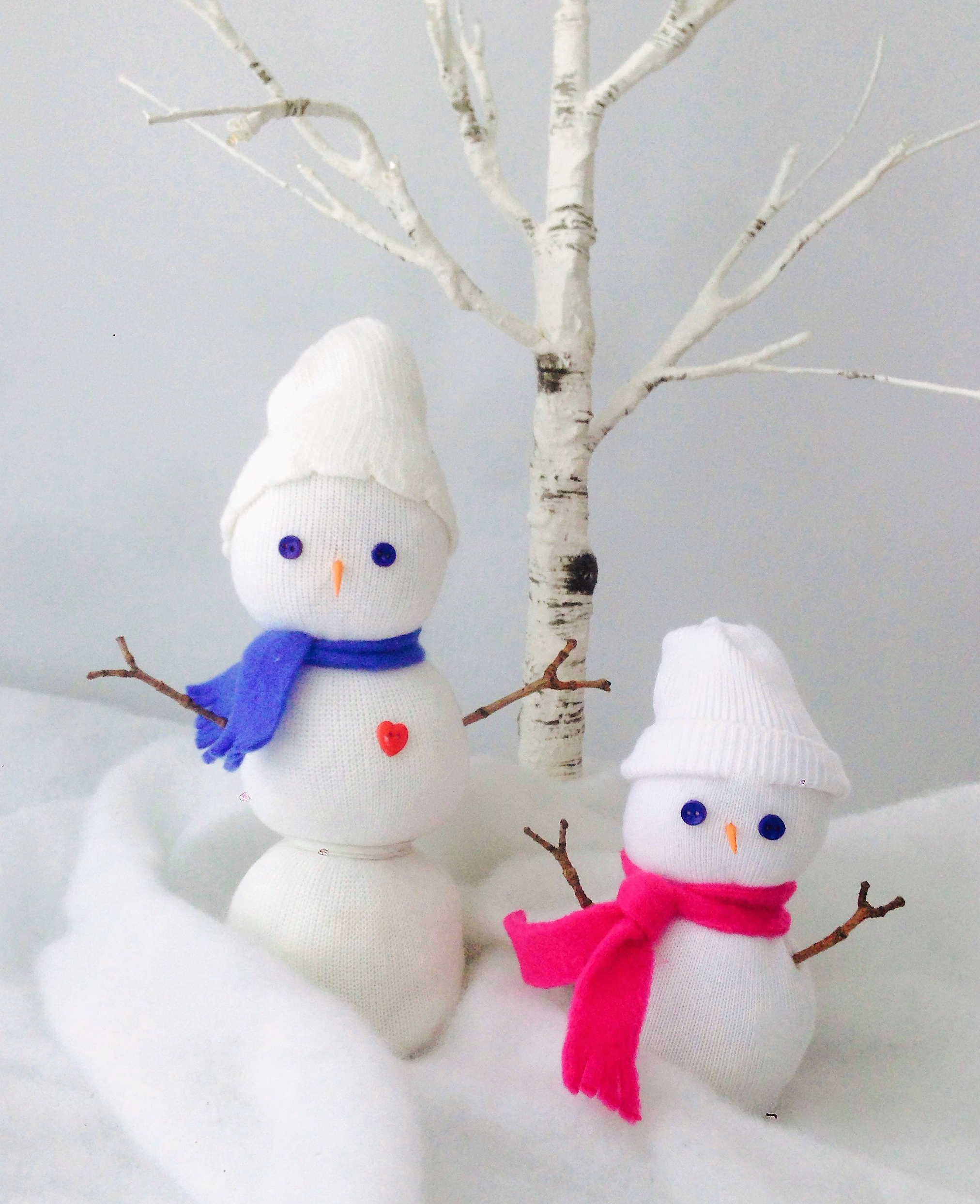
celebrate-picture-books-picture-book-review-sock-snowman-craft

Snow Buddies

This is a fun and easy craft for kids to make on a snowy day inside to share with a friend! 

Supplies

  • Child’s white dress ankle socks
  • Polyester Fiber Fill
  • Tiny buttons for eyes. I added a little heart button to the larger snowman too.
  • Fleece or ribbon, enough for a scarf
  • Toothpick
  • Twigs
  • Orange craft paint
  • Cardboard
  • String or white rubber bands
  • Fabric or craft glue

Directions

To Make the Snowman

  1. Cut a circle from the cardboard about 2 inches in diameter for the base
  2. Place the cardboard circle in the bottom of the sock
  3. Fill the sock with fiber fill about ¾ full or to where the ribbed ankle cuff begins. Pack tightly while making a sausage shape. 
  4. Stretch out the cuff of the sock and tie it off near the top of the fill with string.
  5. Fold the cuff down around the top of the filled sock to make the hat.
  6. Wrap a rubber band or string around the middle of the sock to make a two-snowball snowman. For a three-snowball snowman, use two rubber bands. Adjust the rubber bands to make the “snowballs” different sizes.

To Make the Scarf

  1. Cut a strip of fleece or ribbon 8 to 10 inches long by ½ inch wide
  2. Tie the fleece or ribbon around the neck of the snowman

To Make the Face

  1. Dip one end of the toothpick into orange paint, let dry
  2. Cut the toothpick in half
  3. Stick the toothpick into the head or top portion of the snowman
  4. Attach two mini-buttons to the face for eyes with the fabric or craft glue

To Make the Arms

  1. Insert small twigs into each side of the body of the snowman
  2. You can also use wire or cardboard to make the arms

You can purchase Snow Is . . . at these booksellers

Amazon | Barnes & Noble | Bookshop (to support your local independent bookstore)

Picture Book Review