
About the Holiday
The Academy of American Poets established National Poetry Month in April 1996, making this year the 30th anniversary of this event that has become the largest literary celebration in the world. The holiday highlights the achievements of poets, past and present; to promote the reading and writing of poetry in schools and by individuals; and to encourage people to discover the joys poetry can bring all year round. To celebrate, check for events at libraries, bookstores, schools, and other venues in your area and enjoy reading the work of your favorite—or a new—poet. You might even try writing your own poetry! Get inspired all year long with today’s book! To learn more visit the Academy of American Poets and American Writers Museum.
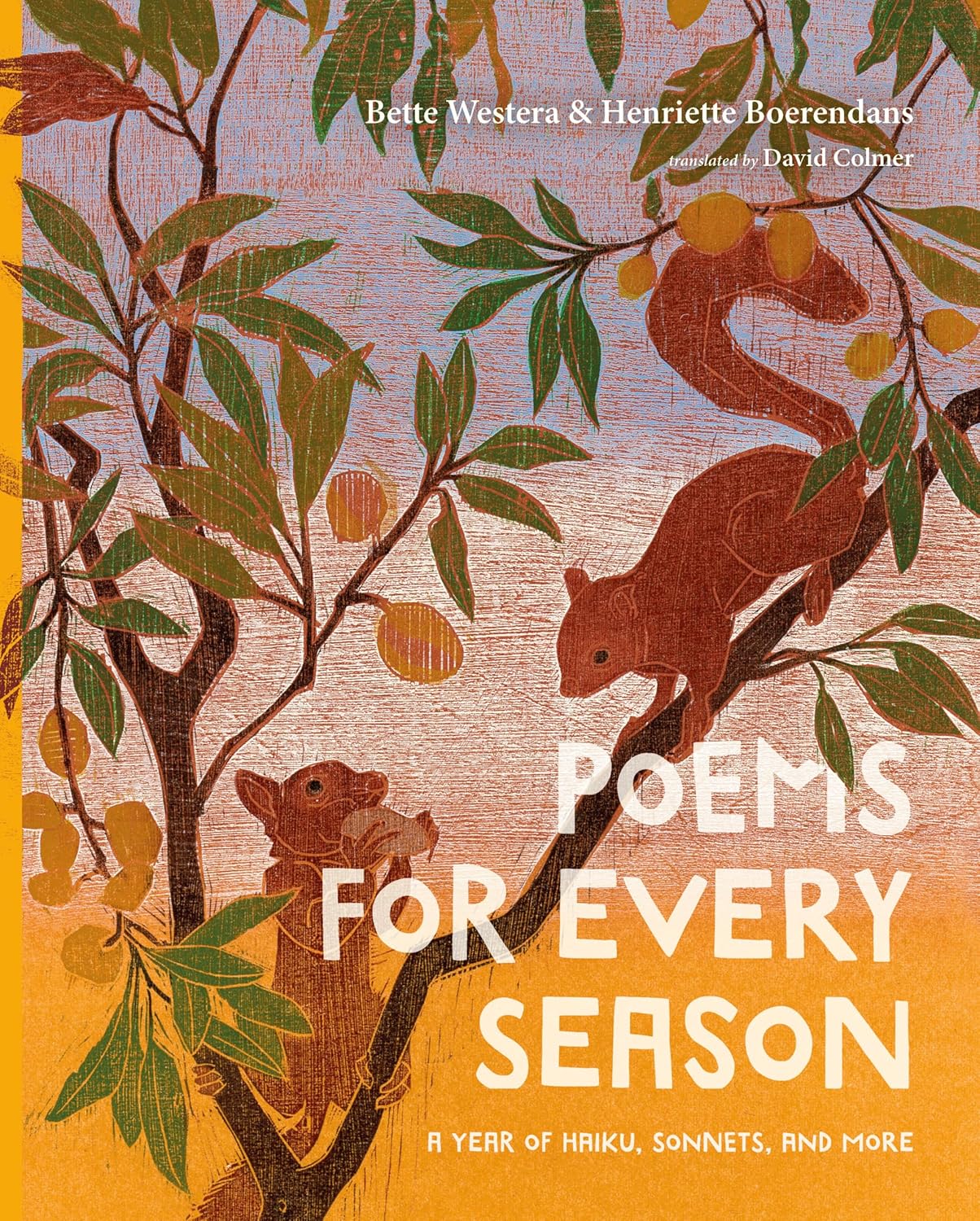
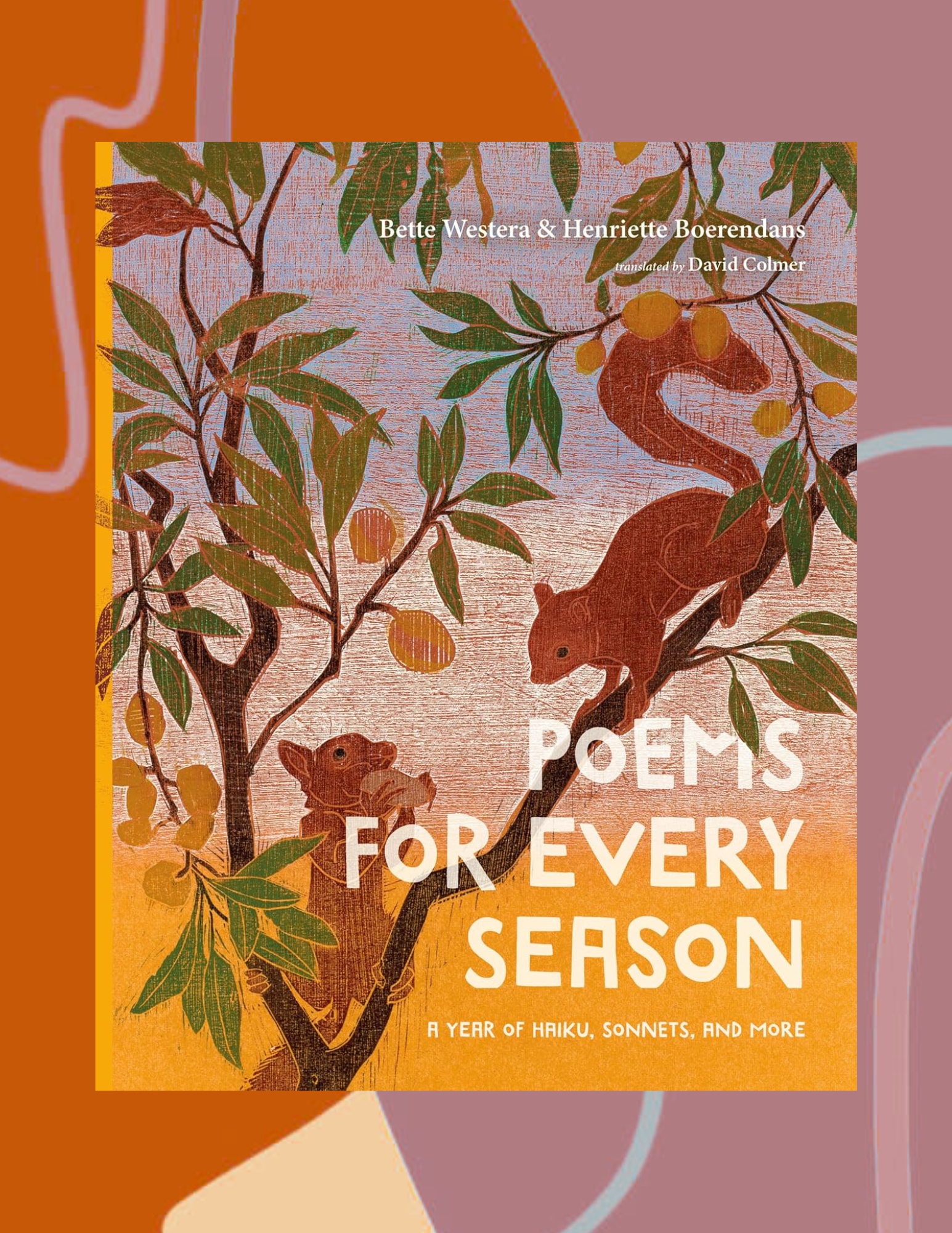
Poems for Every Season: A Year of Haiku, Sonnets, and More
Written by Bette Westera | Illustrated by Henriette Boerendans | Translated by David Colmer
We may begin our year in January, but Poems for Every Season takes it’s cue from nature, which celebrates renewal in Spring. Bette Westera welcomes March and warming weather with her rondel “Spring Dance,” in which a newborn lamb “. . . wobbles through the field with knobbly knees” but soon “gambols, bucks, and bounces . . . with ease” as nearby the farmer plants corn and the mother sheep rests. By April we’re all feeling like gamboling, but Westera acknowledges such “Spring Fever” with the now busy bees and butterflies in her acrostic poem that is a homage to Vincent Van Gogh alongside Henriette Boerendans’ woodcut of almond branches—one of Van Gogh’s favorite subjects to paint.
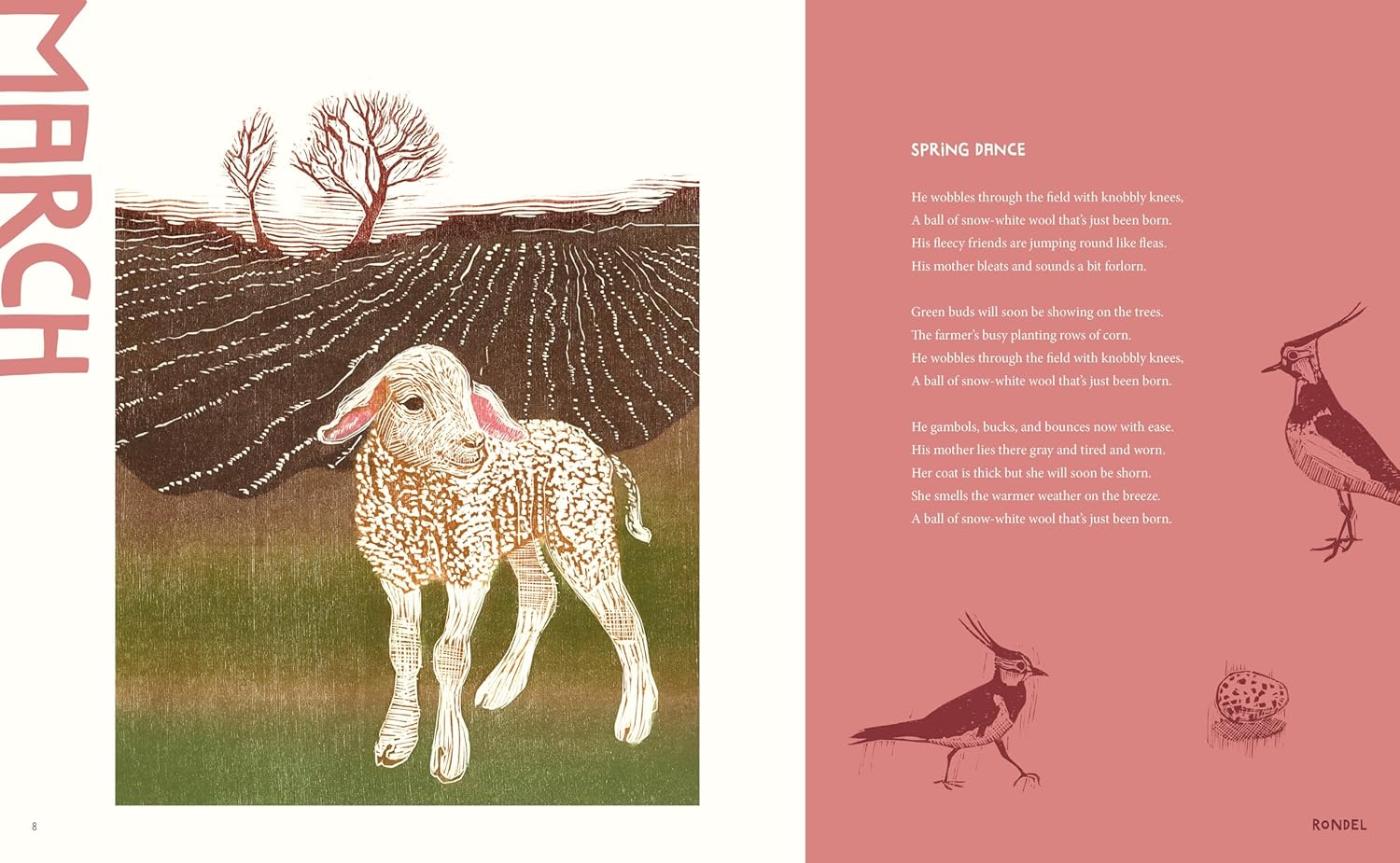
Illustration copyright © 2026 by Henriette Boerendans. Text copyright © 2026 by Bette Westera. Courtesy of Eerdmans Books for Young Readers.
In her summer haiku, Westera opens the warmest season with the steady and reassuring resolve of bees: “Bumblebees buzz by / Golden sunlight fills the sky / It must be summer.” Her pantoum poem for June, “The Longest Day”, takes place on the summer solstice—that day when “the sun’s refusing to go down” and “there’s much too much to see”—as a mother deer cautions her newborn fawn to lie low in the grass and be quiet while she grazes and a fox waits for darkness that will not come. August rings with a request from sunflowers to stormy clouds before autumn is upon them.
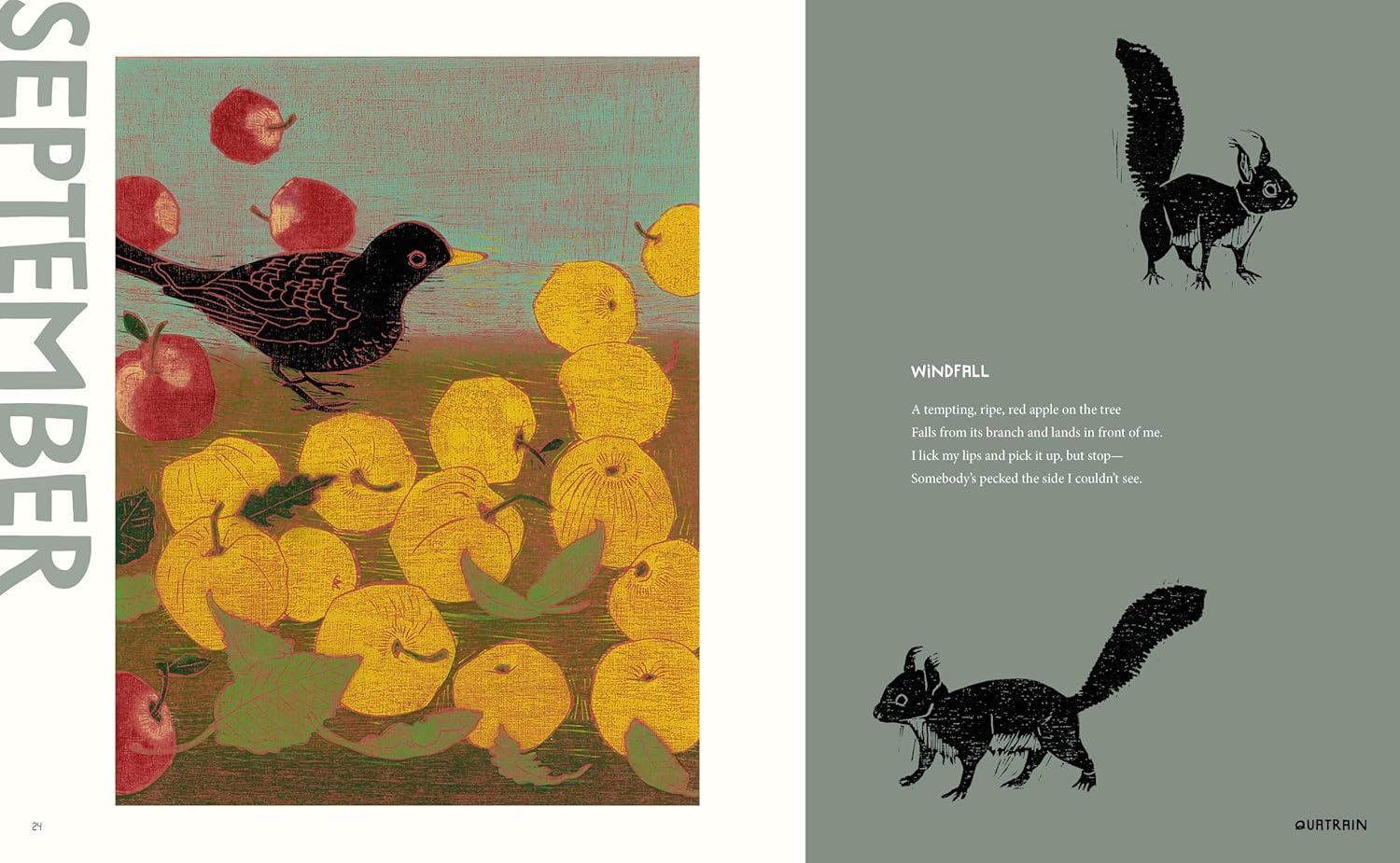
Illustration copyright © 2026 by Henriette Boerendans. Text copyright © 2026 by Bette Westera. Courtesy of Eerdmans Books for Young Readers.
The cooling temperatures of Fall bring “Windfall” apples in September, and a diamond-shaped diamante verse for October pays tribute to animals and plants that bravely face the shivery days of mid-autumn. A repeating line in Westera’s charming rondelet for November celebrates the snuggly warmth of the season before winter comes with it’s ice and snow. A playful December limerick eavesdrops on the “Stay-at-homes”—those birds who know the benefits of a free buffet. And suddenly we’re in the deepest part of winter, with January’s defining colors eloquently found in the feathers of a goose. January, however, soon gives way to a hopeful thaw in February and the whispers of a beckoning spring in Westera’s sonnet that reminds us of the character of this mercurial month.
The poems are followed by conversational discussions about each poetic form that will enlighten readers and prove instructional for writers and teachers. The poems include haiku, rondel, acrostic, double dactyl, pantoum, elevenie, tanka, quatrain, diamante, rondelet, limerick, stacking poem (an invention by Bette Westera), and sonnet.
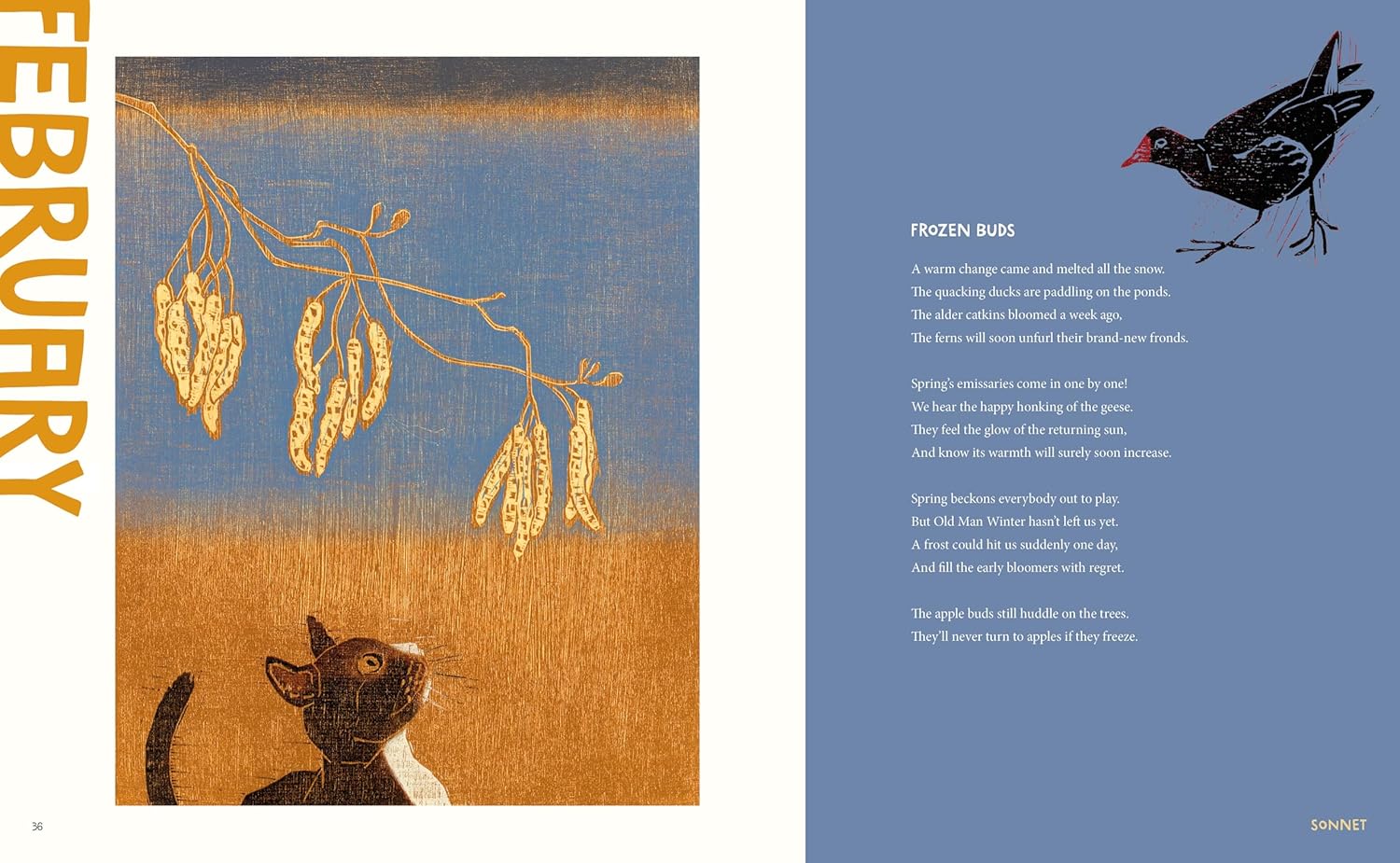
Illustration copyright © 2026 by Henriette Boerendans. Text copyright © 2026 by Bette Westera. Courtesy of Eerdmans Books for Young Readers.
Bette Westera opens a curtain on fleeting, heart-stirring moments in nature throughout the year with her poems that are as alluring as they are direct. Her lovely vignettes are layered with humorous similes, charming anthropomorphism, unexpected happenstance, and sometimes the hint of danger. Each varied verse offers a rich reading experience and beckons us to look closely and with appreciation at the world around us.
Through her exquisite woodcut prints, Henriette Boerendansis allows young readers to join the lambs, deer, birds, and other wildlife on a farm as it hosts them and the changing seasons. Children will relish being within petting distance of a newborn lamb, concealed among buttercups with a fawn, curled up with a hedgehog preparing for hibernation, and the confidante of birds. Boerendansis’s breathtaking colors soothe with the tranquil greens and blues of spring, delight with the deep hues of summer, glow with autumn warmth, and shiver with winter’s icy cloak.
David Colmer’s translation is nimble and smart, illuminating Bette Westera’s combination of humor and insight with easy grace.
Poems for Every Season: A Year of Haiku, Sonnets, and More is a luminous poetry collection that grows more brilliant with every read. It is a book that will enhance any library collection, would make a wonderful gift, and which, at home, should be kept in a place of prominence to be enjoyed throughout the year.
Ages 5 – 9
Eerdmans Books for Young Readers, 2026 | ISBN 978-0802856524
About the Author
Bette Westera has written over fifty books for children, including Fast Cheetah, Slow Tortoise and the Mildred L. Batchelder Honor Book Later, When I’m Big (both Eerdmans). She has also translated books by Dr. Seuss, Astrid Lindgren, and Julia Donaldson into the Dutch language. Bette lives in the Netherlands, where her books have received two Golden Pencil awards and six Silver Pencil honors. Visit her website at bettewestera.nl.
About the Illustrator
Henriette Boerendansis an Amsterdam-based printmaker and illustrator. Poems for All Seasons is her English-language debut. While walking in nature together one day, Bette and Henriette brainstormed new projects and came up with the idea for this book. Follow Henriette on Instagram @henriette.boerendans and visit her website at boerendans.com.
About the Translator
David Colmer is an Australian writer and translator of Dutch and Flemish literature. He has translated over eighty books throughout his career, including I’ll Root for You, A Pond Full of Ink, and Fast Cheetah, Slow Tortoise (all Eerdmans). His work has been honored with many awards, including the PEN Translation Prize and the Dutch Foundation for Literature’s James Brockway Prize, which recognizes a translator’s body of Dutch-language poetry. David lives in Amsterdam.
National Poetry Month Activity
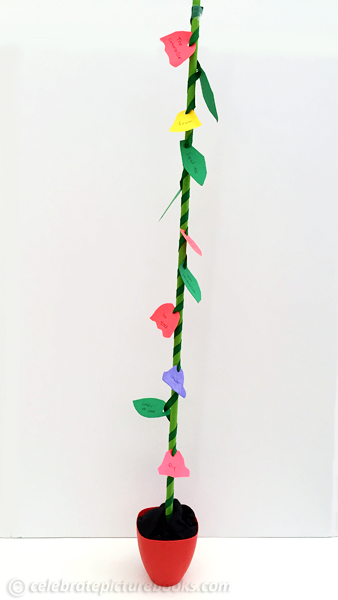
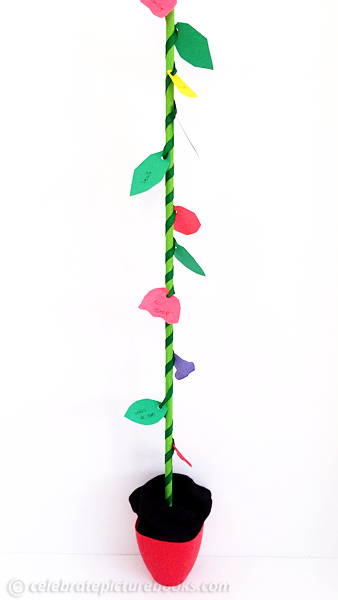
Grow a Poem Craft
A poem often grows in your imagination like a beautiful plant—starting from the seed of an idea, breaking through your consciousness, and growing and blooming into full form. With this craft you can create a unique poem that is also an art piece!
Supplies
- Printable Leaves Template, available here and on the blog post — or draw your own
- Printable Flower Template, available here and on the blog post — or draw your own
- Wooden dowel, ½-inch diameter, available in craft or hardware stores — or green bamboo or plastic garden plant stakes
- Green ribbon
- Green craft paint
- Colored paper for leaves and flowers
- Flower pot or box
- Oasis or clay
- Hole punch
- Glue
Directions
- Paint the dowel green, let dry
- Print the leaves and flower templates — or draw your own
- Cut out the leaves and flowers
- Punch a hole in the bottom of the leaves or flowers
- Write full poems or lines of poems on the leaves and flowers
- String the leaves and flowers onto the green ribbon in the order you want your poem to be read
- Attach the ribbon to the bottom of the pole with glue or tape
- Wrap the ribbon around the pole, leaving spaces between the ribbon
- Gently arrange the leaves and flowers so they stick out from the pole
- Put oasis or clay in the flower pot or box
- Stick your poem pole in the pot
- Display your poem!
You can purchase Poems for Every Season: A Year of Haiku, Sonnets, and More from these booksellers
Amazon | Barnes & Noble | Bookshop
Picture Book Review





 celebratepicturebooks.com