June 15 – Get Ready for Juneteenth

This week Juneteenth became America’s eleventh federal holiday when President Joe Biden signed the Juneteenth National Independence Day Act into law on June 17. Juneteenth commemorates the end of slavery and celebrates the historical date of June 19, 1865, when Union army general Gordon Granger came to Galveston, Texas to read “General Order #3,” which proclaimed the emancipation of the 250,000 slaves held in Texas. On the one-year anniversary of the proclamation, freedmen in Texas organized the first Jubilee Day, which became an annual event. Celebrations later spread across the south and then nationwide. The day includes parades, festivals, music, readings by prominent African American writers, educational events and barbecues, complete with refreshing strawberry soda. You can learn more about Juneteenth on the website for the Smithsonian Museum’s National Museum of African American History & Culture.

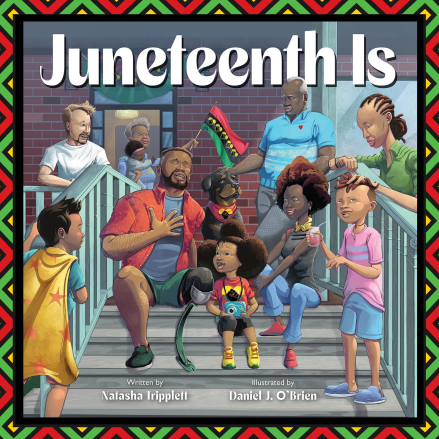
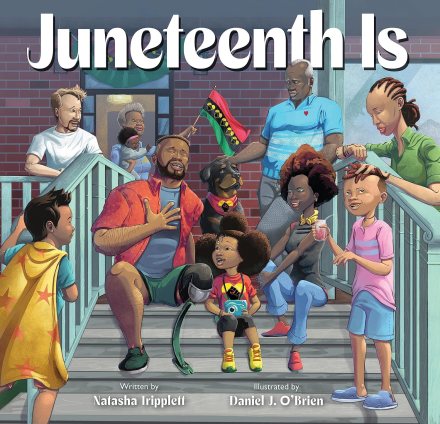
Juneteenth Is

Juneteenth starts early for one young girl who’s awakened by the tantalizing aroma of brisket in her father’s smoker. Before the sun is fully risen, she, her family, and the whole neighborhood are heading out to the center of town to find a spot and set their chairs to watch the parade. As a group of young dancers passes by, accompanied by a freedom song on the horns, the girl’s mama calls them a “hope for tomorrow.”

Illustration copyright © 2024 by Daniel O’Brien. Text copyright © 2024 by Natasha Tripplett. Courtesy of Chronicle Books.

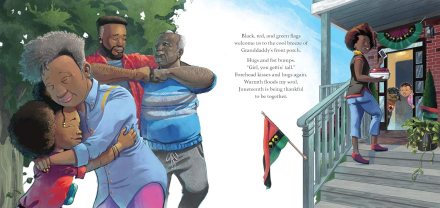
Following the parade the girl’s extended family gather at her grandaddy’s house, where black, red, and green flags join hugs, fist bumps, and forehead kisses in welcome. The girl says, “Warmth floods my soul. Juneteenth is being thankful to be together.” Soon the house is full of aunties and uncles, cousins, neighbors, and play-cousins. Music fills the air from the boombox. “Juneteenth is ladies singing in the kitchen.” After sweet watermelon and a pickup game, it’s time for dinner. Everyone circles the table, holding hands. “Juneteenth is prayer.”

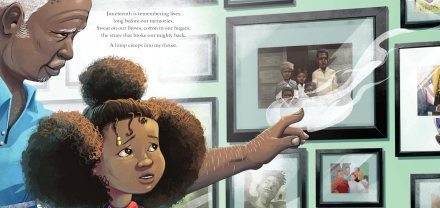
But this meal of old family recipes and reminiscences represents more—”Red in the sauce, red in the soda, red in the watermelon, red velvet cake. Red in the suffering.”—and the history of this holiday now takes center stage. As the girl and her young cousins look at the wall of family photographs, Grandaddy explains that Juneteenth is “about the door of opportunity no longer slamming in our faces” and “remembering lives long before our memories. Sweat on our brows. Cotton in our fingers. The straw that broke our mighty back.” The girl feels her history deep in her heart.

Illustration copyright © 2024 by Daniel O’Brien. Text copyright © 2024 by Natasha Tripplett. Courtesy of Chronicle Books.

Grandaddy then talks about June 19, 1865—The American Day of Freedom, when General Granger came to Galveston, Texas and read the Proclamation that freed slaves. The day two years after Abraham Lincoln signed the Emancipation Proclamation. It was a freedom that looked into a future forged by leaders like Rosa Parks, Martin Luther King, Jr., Barack Obama and demonstrated with the first Juneteenth parade in 1866 and fought for and defended with marches ever since.

As the day ends, the girl’s family congregates in the yard for a final photograph. “Juneteenth is all of us,” she says. “We are America.”

Illustration copyright © 2024 by Daniel O’Brien. Text copyright © 2024 by Natasha Tripplett. Courtesy of Chronicle Books.

Natasha Tripplett’s beautifully composed multigenerational story wraps readers in the camaraderie and loving support of one girl’s extended family and friends as they come together to celebrate Juneteenth. As Tripplett reveals the traditions of Juneteenth and the hope for the future the holiday is built on and continues to represent, her seamless transitions superbly echo the rhythms of such poignant family get togethers. Readers can smell the brisket, hear the joyful parade, and feel the tight hugs among family members. Likewise, children will experience a tug of sadness as Grandaddy explains the history of the holiday. Tripplett’s warmhearted storytelling will resonate with children, making this an excellent book to introduce Juneteenth to young readers as well as a springboard for further discussion or research.

Daniel O’Brien’s stunning illustrations dynamically depict the community and fellowship of this family’s Juneteenth celebration. The characters’ facial expressions and movements light up the parade and pre-dinner scenes, while the girl’s, cousins’, and grandfather’s somber looks during his recitation of history reveal the deep meaning of the holiday. A common bond between Granddaddy and the young narrator is reflected in the cameras both carry, a symbol, also, of history being passed down through the generations.

Encompassing the warmth of family as well as the historical and emotional significance of this important holiday, Juneteenth Is is a must for any library and school collection and a book that families will embrace.

Ages 5 – 8

Chronicle Books, 2024 | ISBN 978-1797216805

About the Author

Natasha Tripplett lives in Northern California, where she writes from a tree house perched in a sycamore. She is a Jamaican Jewish American author who is passionate about cultural representation in children’s literature. You can visit her at natashabooks.com.

About the Illustrator

Daniel J. O’Brien is a Trinidadian-born author and illustrator. He holds a BFA in illustration from the School of Visual Arts. He currently lives in New York with his fantastic partner and loyal dog. You can visit him at danielostudios.com.

You can purchase Juneteenth Is from these booksellers

Amazon | Barnes & Noble | Bookshop

December 3 – Get Ready for Dōngzhì

About the Holiday

The Dōngzhì Festival, or Winter Solstice is considered to be one of the most important Chinese festivals of the year and is a time for families to get together, worship their ancestors, and enjoy traditional delicacies. Celebrated for over 2,000 years, the festival sees families come together to make and eat tāng yuán, which symbolizes reunion and prosperity. While the celebration of the winter solstice is only one day (this year on December 21), the Dōngzhì Festival lasts 15 days.

This Winter Solstice festival originates from the Chinese concept of yin and yang, an ancient symbol of harmony and balance. In Chinese culture, there is a belief that when the days are short, there is insufficient Yang energy, thus people consume foods that are more yang (warm) in nature to counteract the yin (cold) of winter, such as tāng yuán, as seen in today’s book. To learn more about the holiday, visit mandarianmatrix.org

Thank you to Bloomsbury Children’s Books for sharing a copy of this book with me for review!

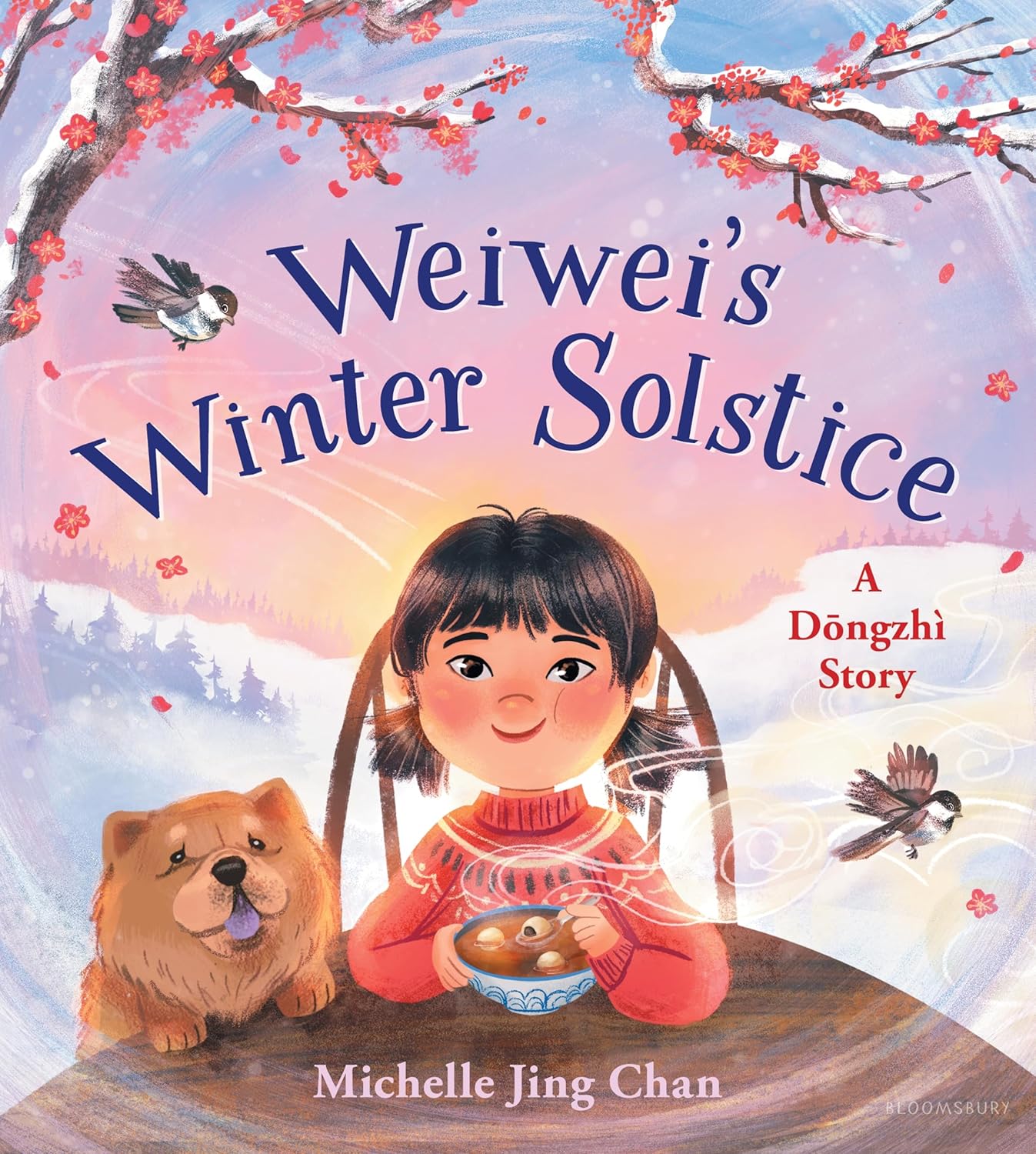
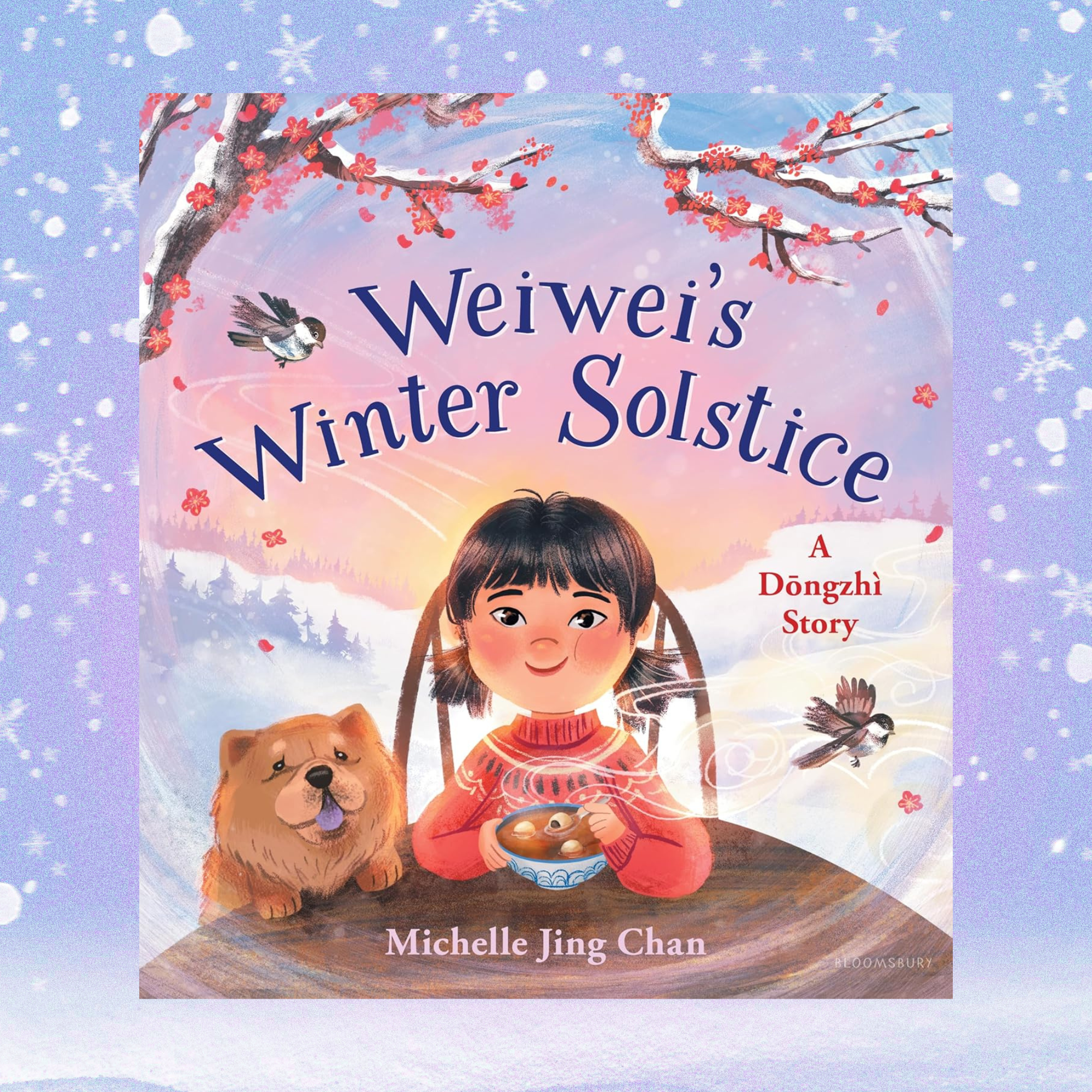
Weiwei’s Winter Solstice: A Dōngzhì Story

By Michelle Jing Chan


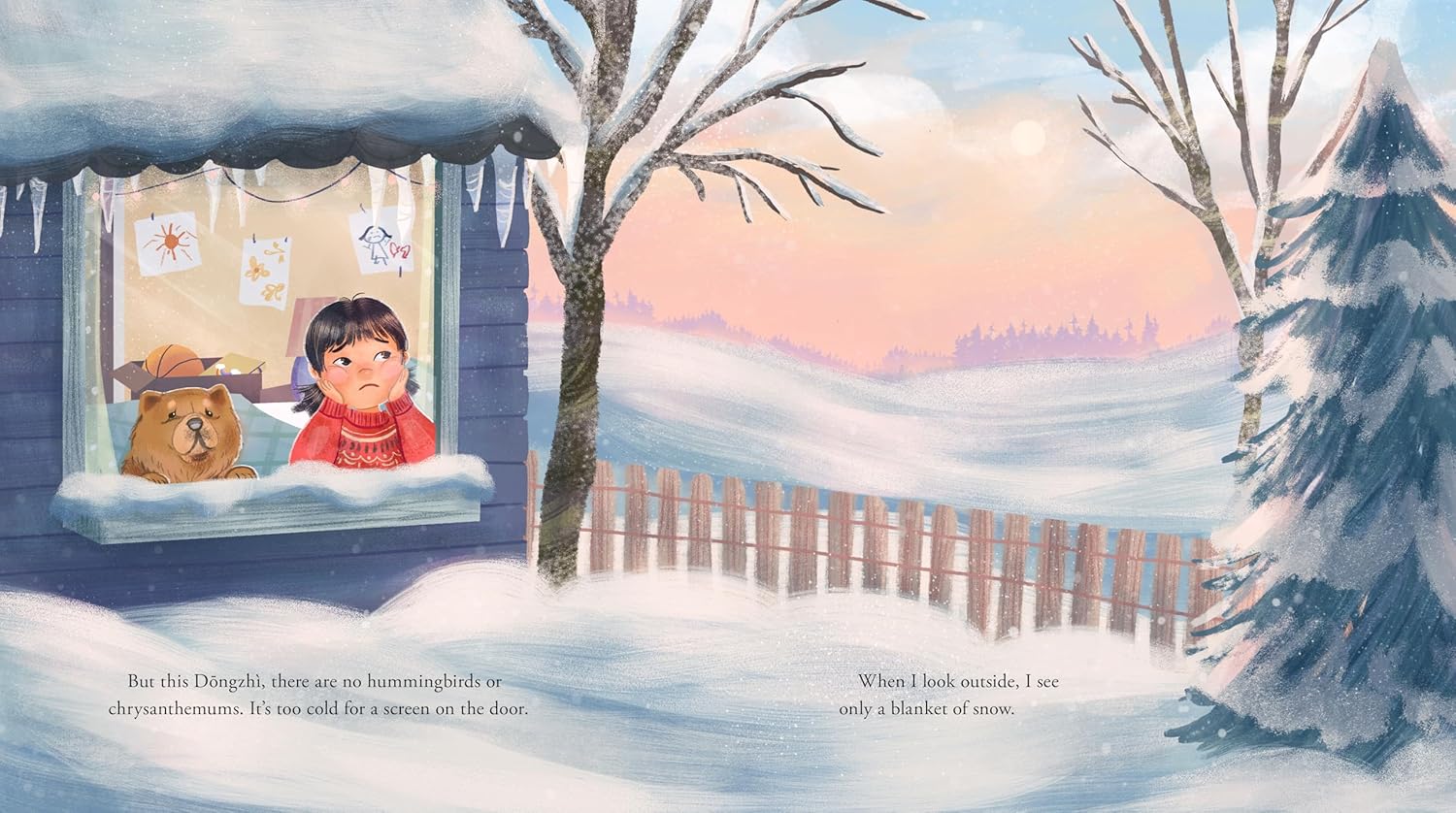
Today is Dōngzhì, the Chinese winter solstice—one of Weiwei’s favorite holidays. But instead of celebrating it by splashing in sprinklers amongst hummingbirds and palm trees at her former home, she’s bundled up in a sweater and blanket as snow covers the ground. For Weiwei Dōngzhì just doesn’t feel the same. Her family—Mama, Baba, her younger brother Didi, and Yeye, her grandfather—are ready for a walk and to play in the snow, but Weiwei can only scowl.

Text and image © 2025 by Michelle Jing Chan. Courtesy of Bloomsbury Children’s Books.

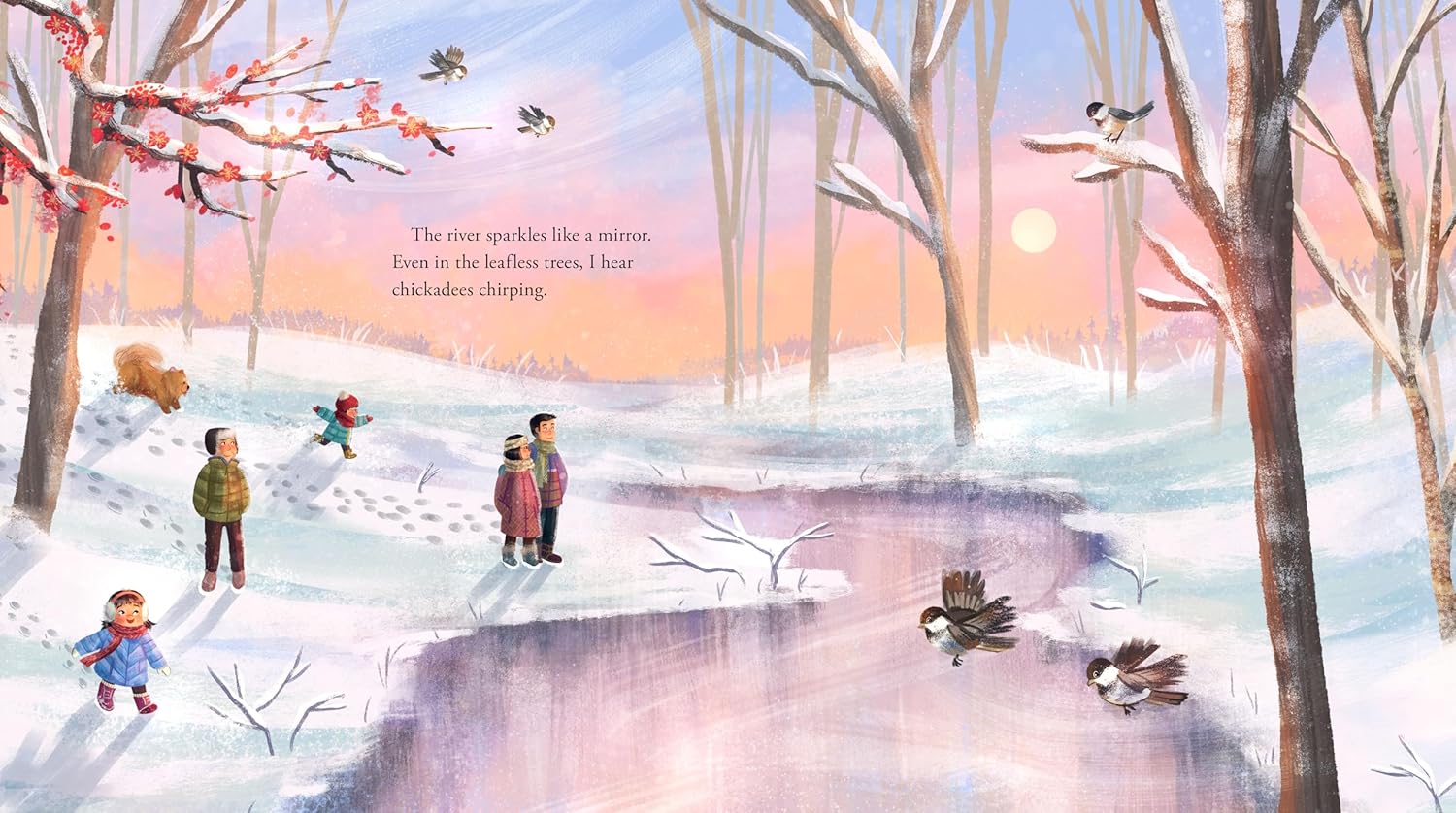
Yet once outside, Weiwei watches her breath cloud in the cold air, catches snowflakes on her tongue, and listens to the snow crunch as they walk. Then, suddenly, Weiwei gasps and points to a tree covered in red flowers. “‘Those are méihuā, plum blossoms!'” Yeye tells her. “. . . No matter how cold and dark it is, they still bloom.'” Weiwei begins to see other signs of life and beauty, but as the sun begins to set, it’s time for the family to go back home. Time for Weiwei’s favorite part of Dōngzhì.

Text and image © 2025 by Michelle Jing Chan. Courtesy of Bloomsbury Children’s Books.

Back home everyone chips in to make tāng yuán. Mama and Didi stir “ground black sesame, sugar, and softened butter into a paste” while Yeye and Weiwei make rice flour dough and Baba makes ginger broth. Then Didi and Weiwei pat the dough into small pancakes, add a bit of black sesame paste, and roll them into balls. The balls simmer in the ginger broth until they float to the top.

Text and image © 2025 by Michelle Jing Chan. Courtesy of Bloomsbury Children’s Books.

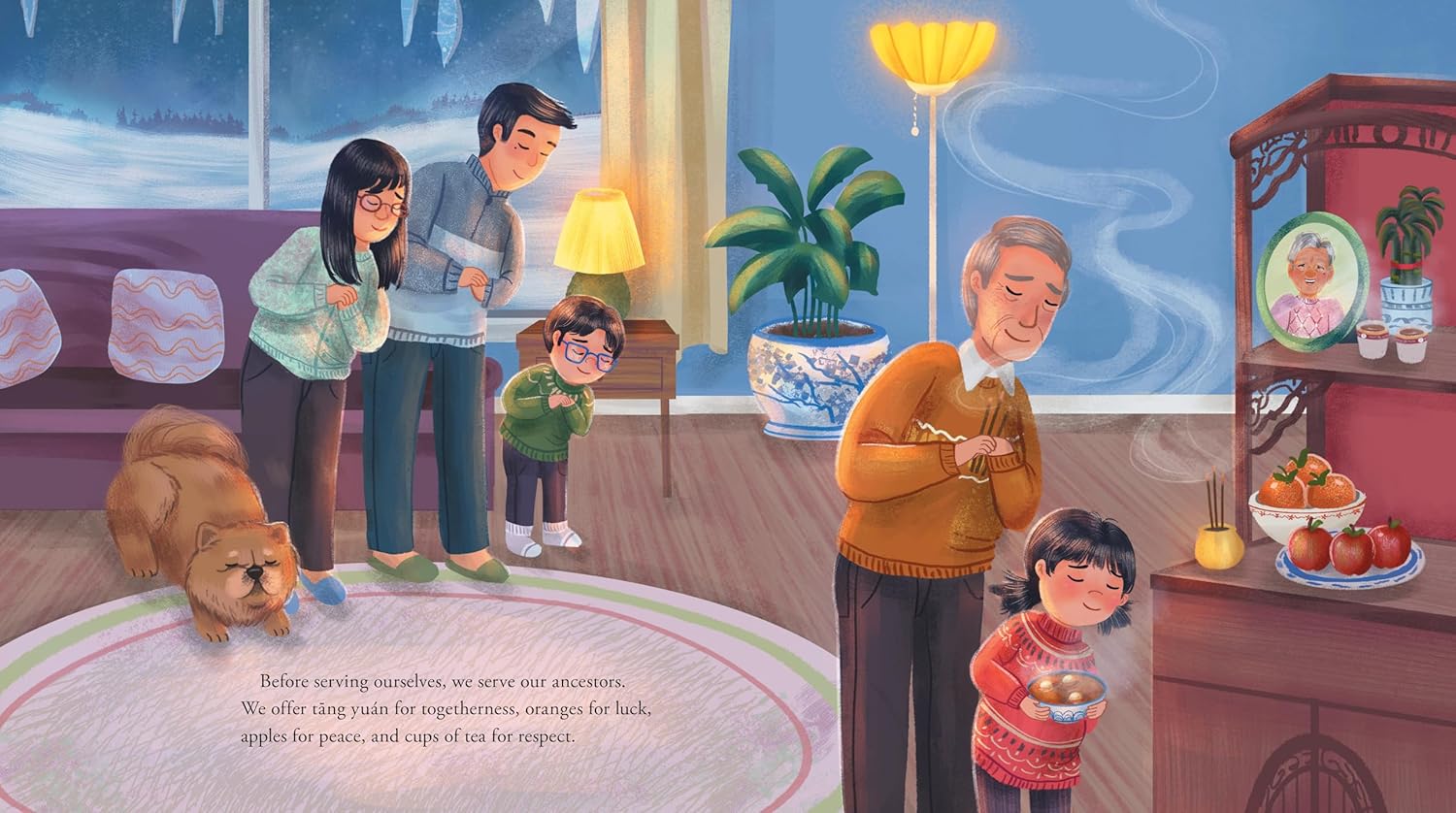
Before Weiwei and her family eat, they serve their ancestors. They “offer tāng yuán for togetherness, oranges for luck, apples for peace, and cups of tea for respect.” Then they eat! To Weiwei, the warm broth feels like a “sip of sunlight,” and Yeye reminds her that warmer days are coming. He tells her he knows it’s hard moving to a new home, “‘but anywhere can feel like home when we celebrate together.'” Weiwei listens to her grandfather and looks around at her cozy home and the people she loves. She knows spring is on its way with new memories to make, and decides that she will “bloom like the méihuā” and savor winter.

An Author’s Note describing the Dōngzhì holiday and how it is celebrated in various Asian countries as well as a recipe for Black Sesame Tāng Yuán follow the story.

Text and image © 2025 by Michelle Jing Chan. Courtesy of Bloomsbury Children’s Books.

Michelle Jing Chan’s warmhearted story of a young girl feeling adrift and disappointed when it comes time to celebrate Dōngzhì in a new home touches on feelings of loss, rediscovery, and the stabilizing comfort of traditions. As Weiwei and her family take a walk through snowy woods instead of the sunny backyard she’s known, she glimpses aspects of familiarity that are further strengthened as she helps prepare and enjoy their customary dish. She recognizes that the Dōngzhì celebration she cherishes as well as her family unit have not changed, allowing her to embrace her new home and look forward to the future.

Chan’s expressive illustrations glow with the togetherness that tāng yuán represents. Even her lovely snowy scenes are lit with peach and gold, as the sun breaks through the winter clouds. Inside, soothing colors highlight the family’s close ties and the comforting flavors of home.

Weiwei’s Winter Solstice: A Dōngzhì Story offers heartening inspiration for readers in the midst of change as well as the comfort of family love and traditions for all. Pair with making the included recipe as a group to create an eventful story time.

Ages 3 – 6

Bloomsbury Children’s Books, 2025 | ISBN 978-1547614844

Michelle Jing Chan is a queer Chinese American illustrator who grew up in Colorado and lives in the Pacific Northwest. Inspired by nature, cultural folklore, and fantasy, Michelle aspires to illustrate diverse, empowering stories her younger self would have loved. When she’s not drawing, she can be found attempting new recipes, reading, or watching spooky TV shows. You can visit her at michellejingchan.com.

Listen to Michelle Jing Chan talk about how her family traditions and a trip to Colorado inspired her to write Weiwei’s Winter Solstice: A Dōngzhì Story below!

You can purchase Weiwei’s Winter Solstice: A Dōngzhì Story from these booksellers

Amazon | Barnes & Noble | Bookshop (Discounted books and support for your local independent bookstore)
Picture Book Review

May 13 – Get Ready for International Museum Day on May 18

About the Holiday

International Museum day was created in 1977 by the International Council of Museums to raise awareness that “museums are an important means of cultural exchange, enrichment of cultures and development of mutual understanding, cooperation and peace among peoples.” The theme for this year is “The Future of Museums in Rapidly Changing Communities.” Museums are not just repositories of the past. They are vital and active members of the communities they serve and as such can be leaders in tackling some of society’s biggest issues. This year’s theme focuses on “how museums can navigate and contribute to a world undergoing profound social, technological, and environmental shifts” and addresses three main points:

  • Support for local economies by creating employment opportunities and offering educational programs 
  • Driving innovation and enhancing accessibility by fostering creativity and embracing technological advancements
  • Contributing to sustainable urban development by acting as cultural hubs that promote inclusion, resilience, and heritage preservation 

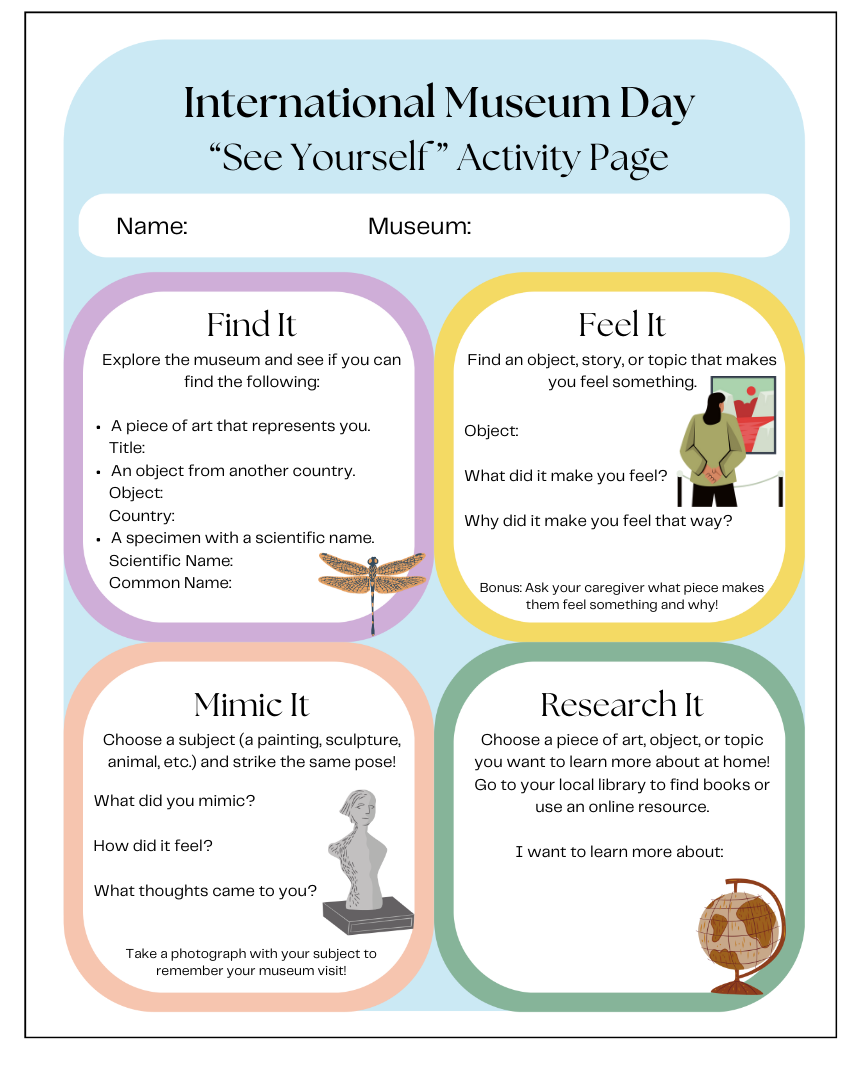
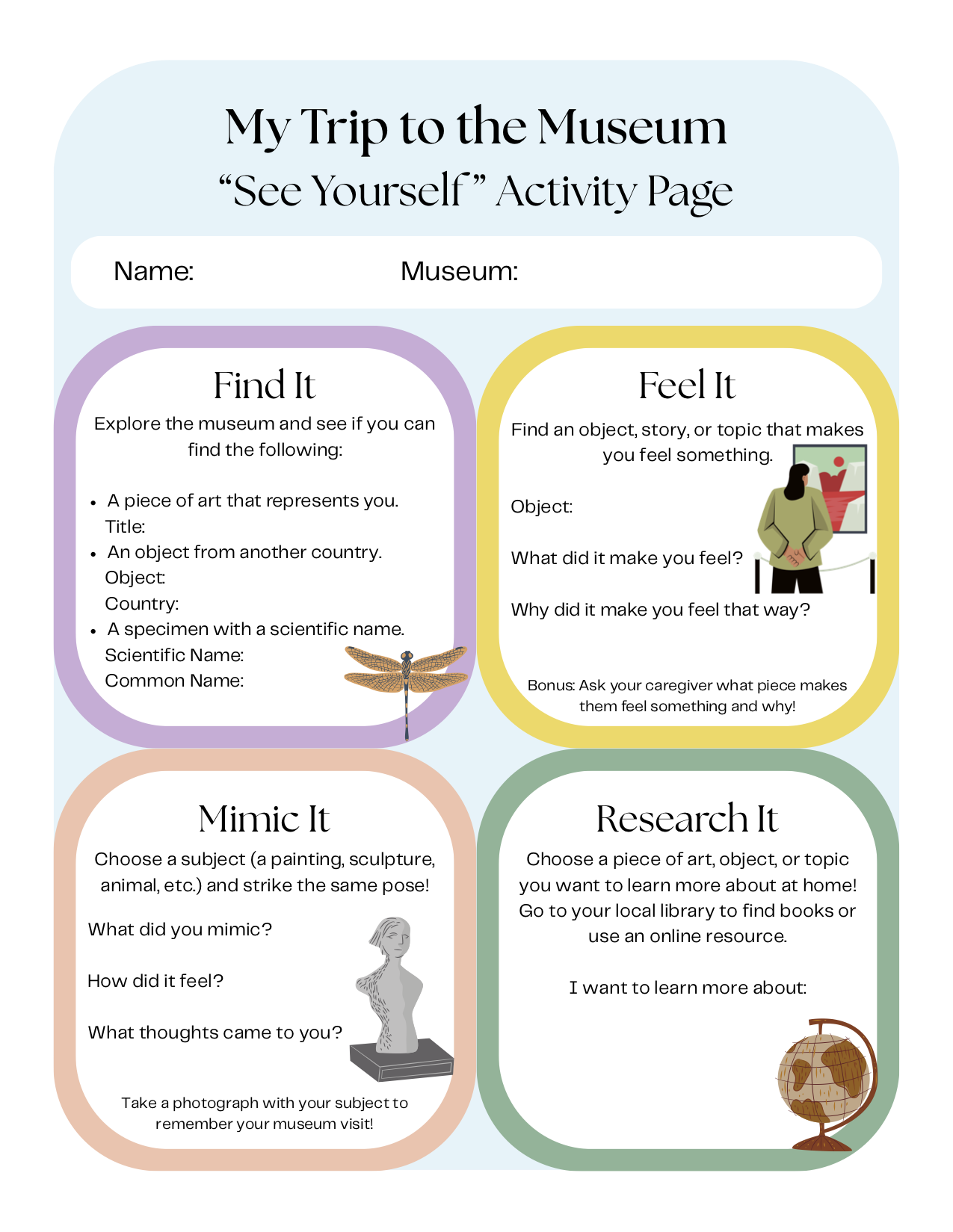
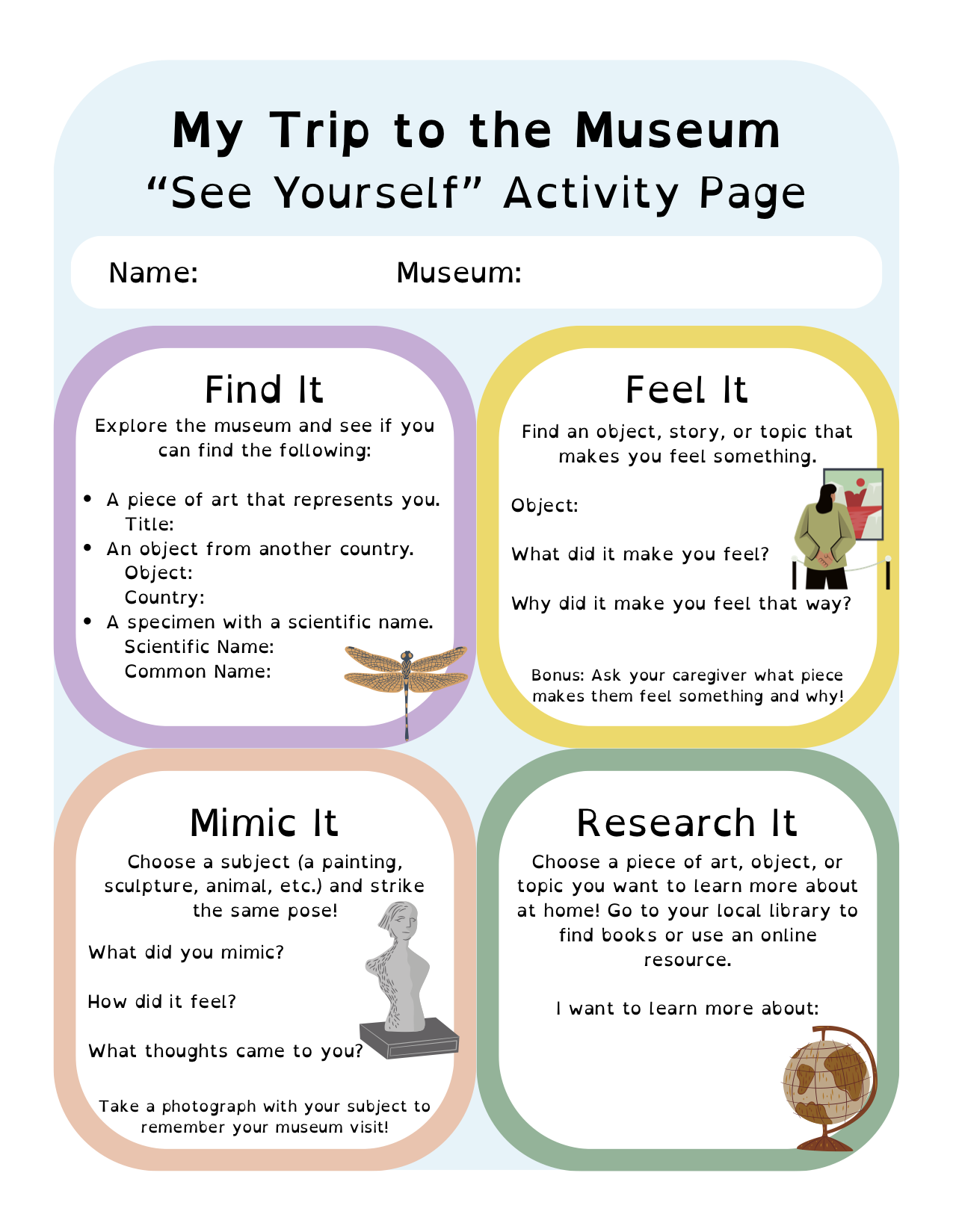
To celebrate International Museum Day, visit a museum near you—and don’t forget to print and take along the activity sheet found below!

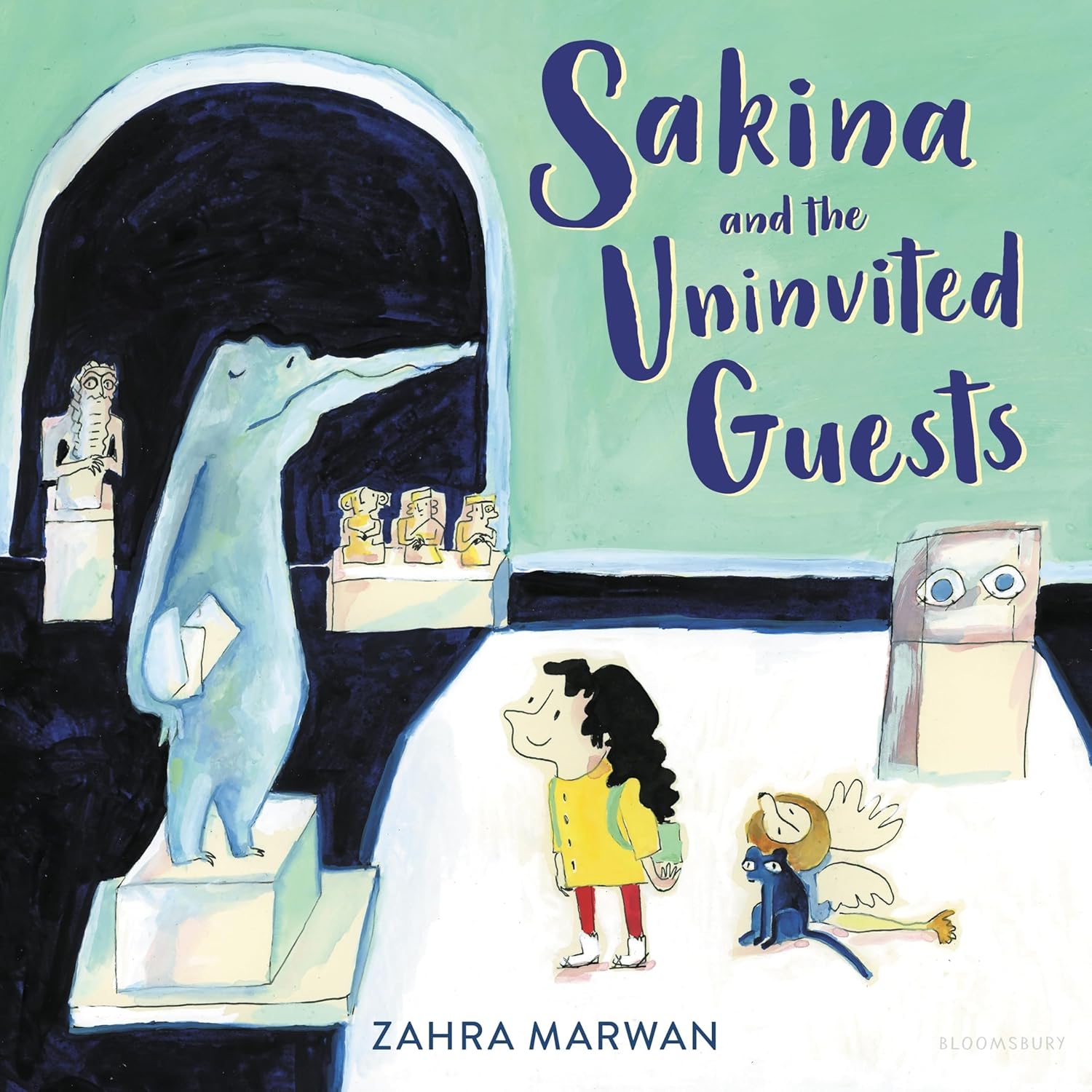
Thank you to Bloomsbury Children’s Books for sending me a copy of Sakina and the Uninvited Guests!

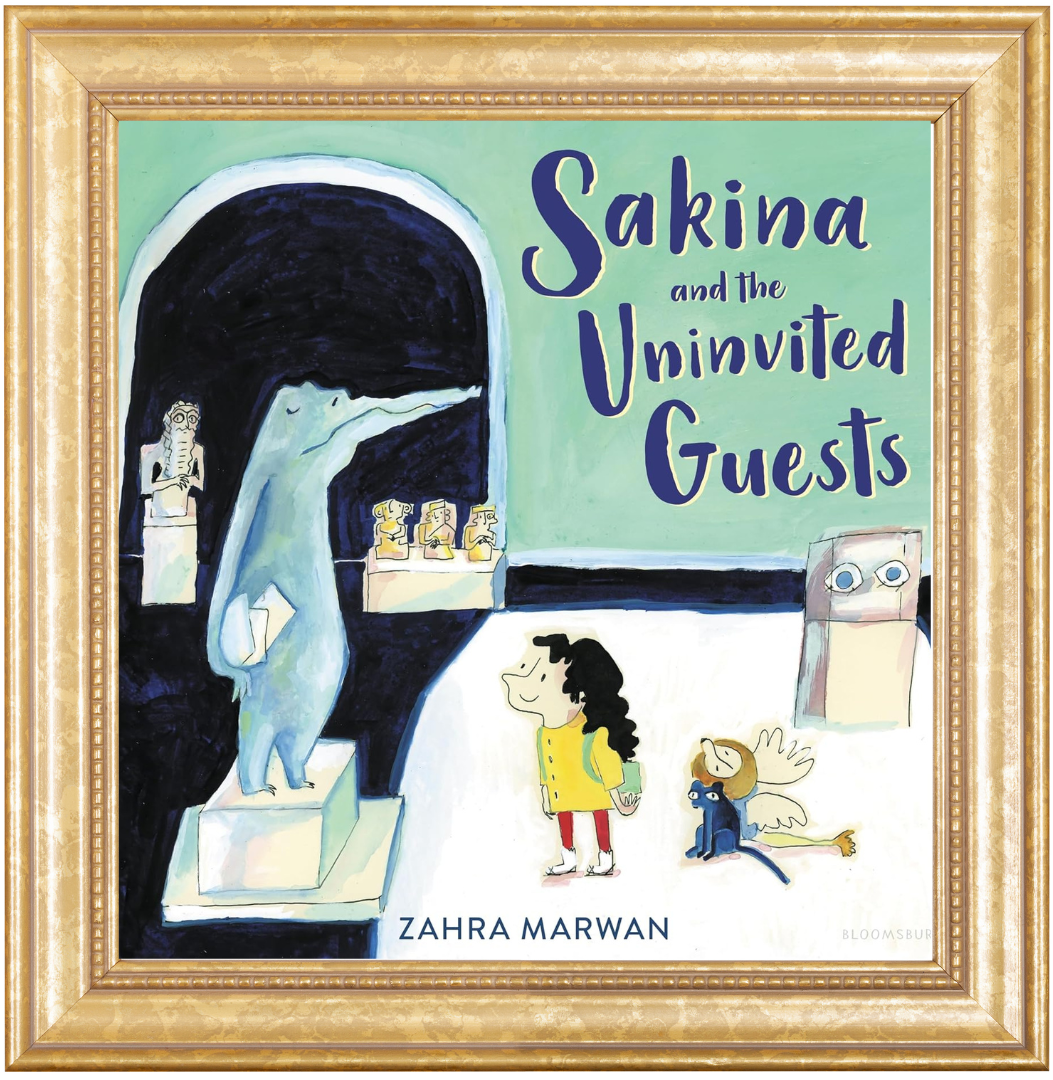
Sakina and the Uninvited Guests

By Zahra Marwan


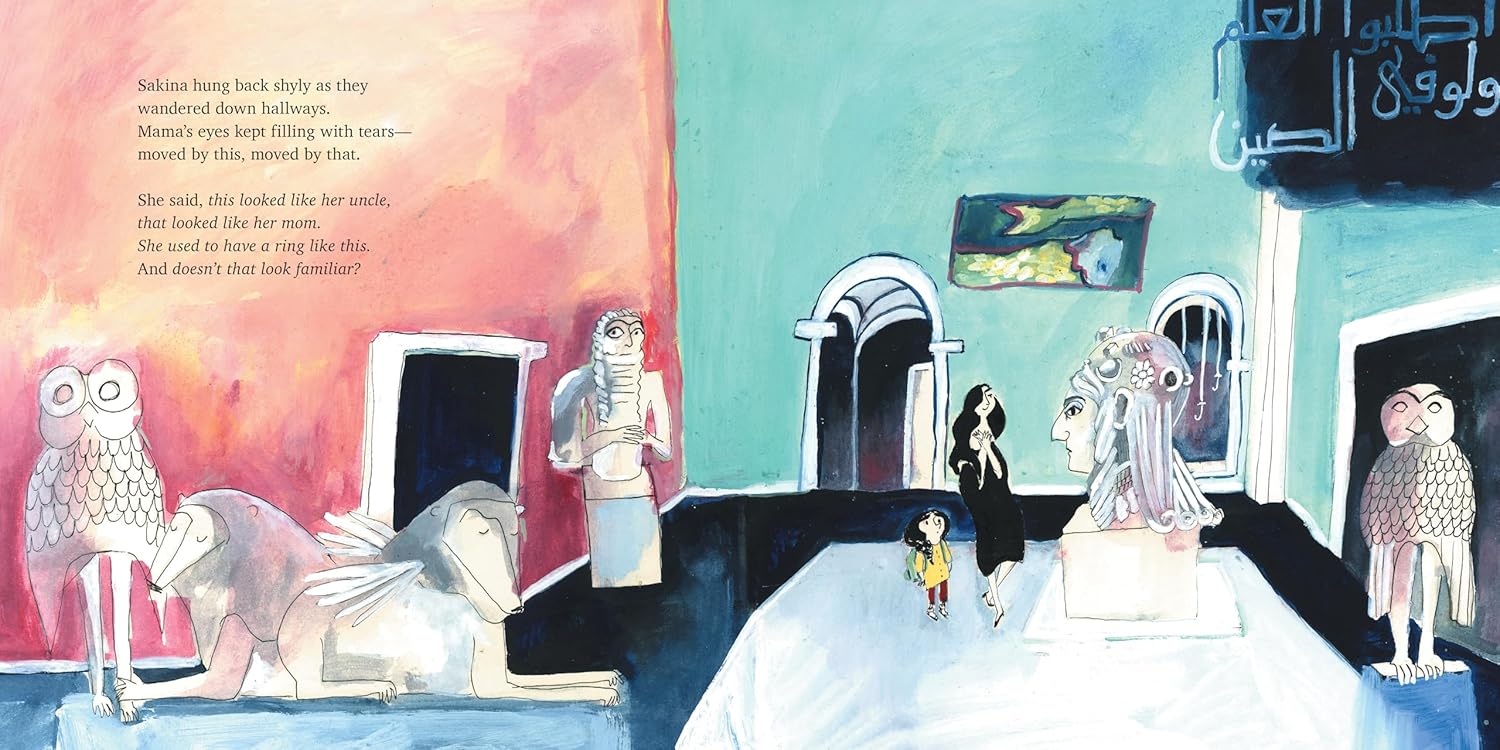
When a sandstorm turns “the city orange—the sun like a tangerine, the waves like clementine peels,” Sakina’s mother drives past the beach, where Sakina had hoped to spend the day, and goes to the museum. Inside, Sakina gazes with boredom at the statues of a crocodile holding papers and a blue jaguar guarding the first laws ever written. She nearly trips over one of the many, many winged lions. She can’t believe there had once been so many flying lions in her city. But as they move from exhibit to exhibit, Sakina sees that her mama’s eyes, keep “filling with tears” as they come upon likenesses of her mom and her uncle, a ring she used to have, and other familiarities. 

Sakina can’t understand her mother’s affection for “. . . all of these old, boring, boring things.” But then Sakina stumbles and another winged lion seems to be watching her. In fact . . . “Did he just . . . wink at her? Sakina was absolutely sure.” Suddenly, it’s time to leave, and while Sakina’s backpack feels heavier, she feels lighter, hopeful she will soon be playing by the sea.

Text and Illustration © 2025 by Zahra Marwan. Courtesy of Bloomsbury Children’s Books.

At home, it’s nap time, and while everyone else sleeps, Sakina cannot. Suddenly, she hears strange noises and follows them to find the crocodile, jaguar, and winking winged lion crawling from her backpack. Sakina is nonplussed and worried the noise will wake the household. Sakina tries to catch them, but they run through the house, toppling furniture and knick-knacks, knocking pictures off the walls.

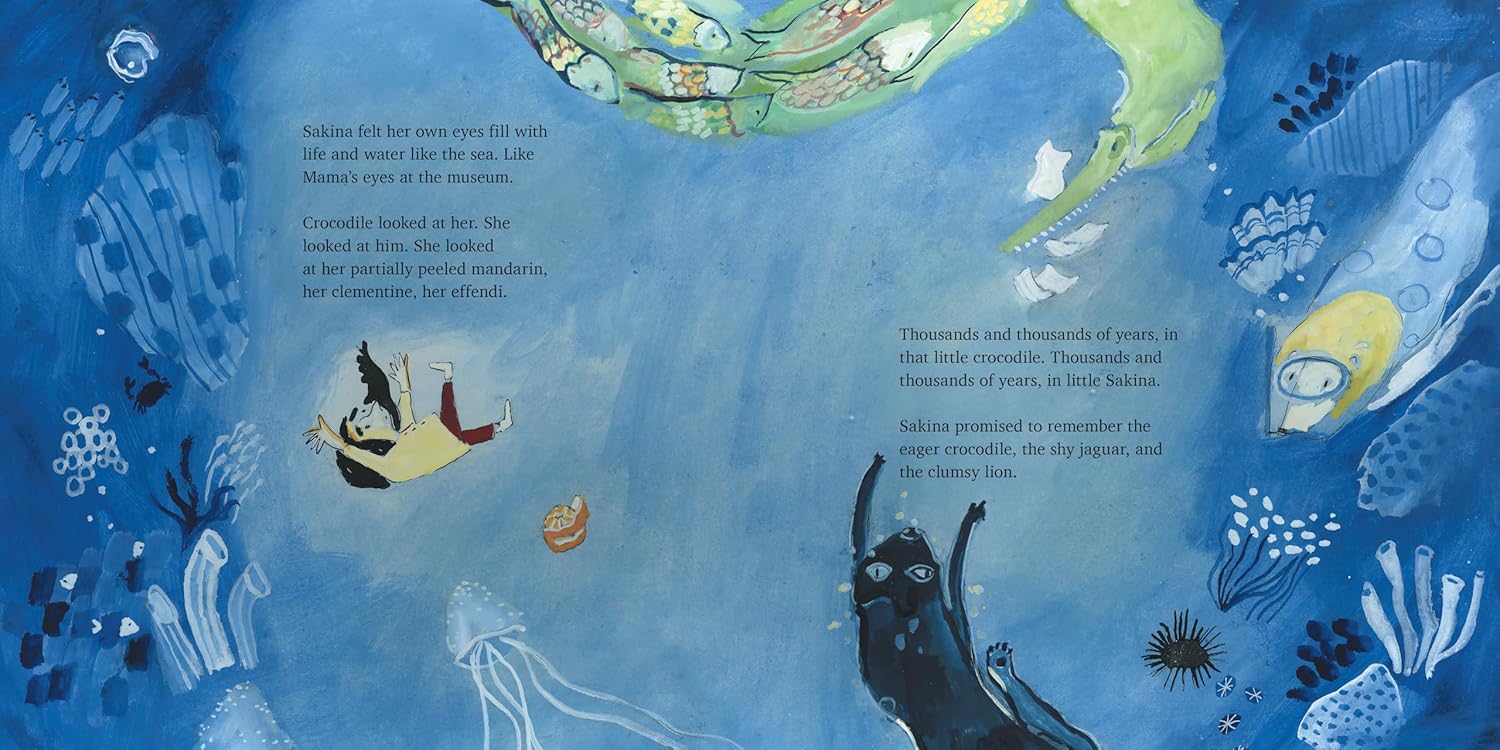
As she picks up a photograph of her grandmother, though, she notices how her eyes “were full of life and water, like the sea. Like the people in the museum.” Sakina then helps the crocodile pick up his scattered papers and realizes they are poems. She reads a line: “‘I hope they will remember me.'” Suddenly, Sakina understands. She feels the “thousands and thousands of years, in that little crocodile. Thousands and thousands of years, in little Sakina.” 

Text and Illustration © 2025 by Zahra Marwan. Courtesy of Bloomsbury Children’s Books.

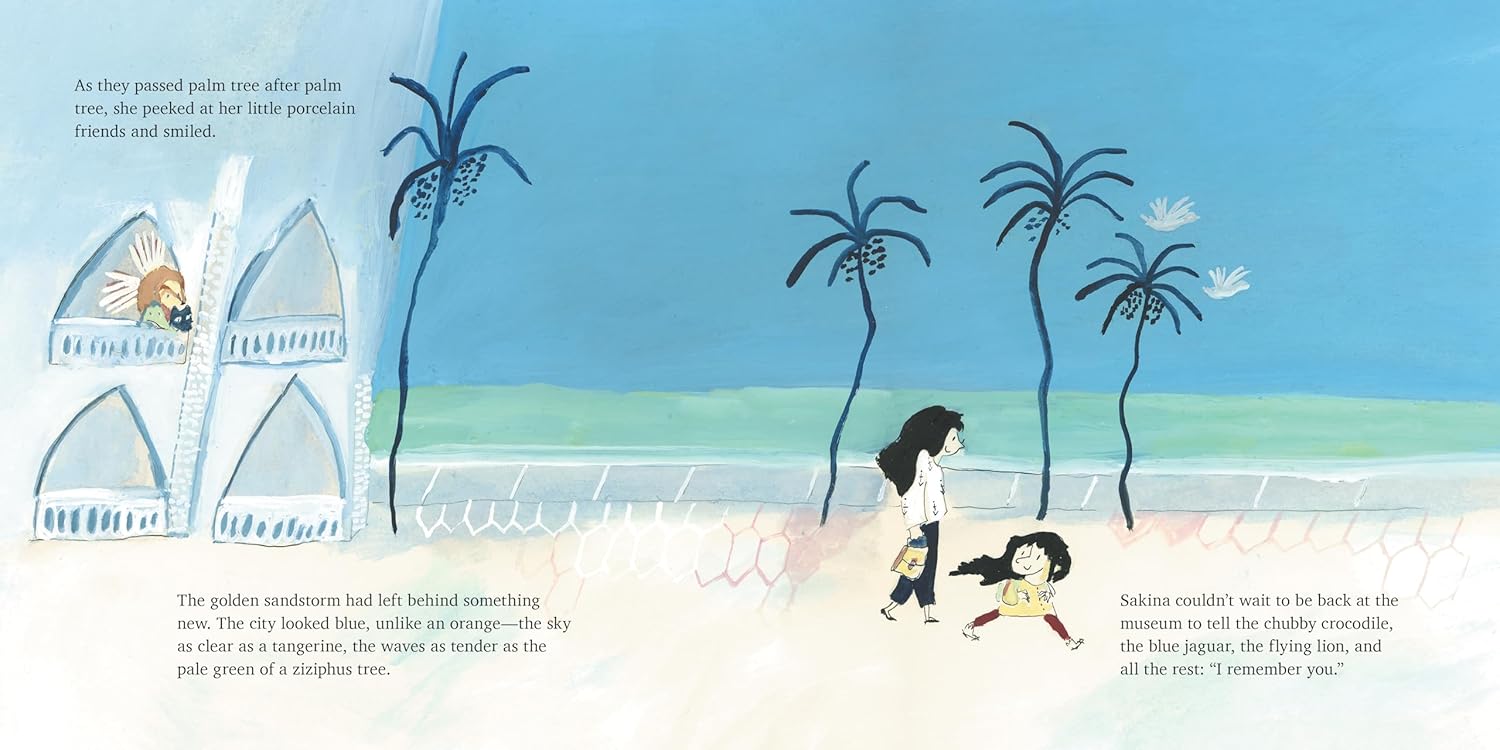
With the lifting of the sandstorm and her promise to remember them, Sakina’s guests depart just as her mother appears with a gift from the museum shop—a set of small familiar porcelain figurines. At last Sakina gets her wish, but as she and Mama walk to the sea, she can’t wait to return to the museum and tell its inhabitants “‘I remember you.'”

Back matter includes an Author’s Note in which Zahra Marwin explains the significance of the crocodile sculpture in her story and how people have had and will always have the same feelings—from the times of ancient history into the future. She also touches on the other sculptures she has depicted here and asks readers to consider what kind of art people were making thousands of years ago in the area where they live now as well as the kind of art their ancestors would have been familiar with. In another note, Marwan discusses several particular parts of the book, including the origins of distinct words and phrases, the value placed on education in the Middle East, and her inclusion of two recreated modern paintings.

Text and Illustration © 2025 by Zahra Marwan. Courtesy of Bloomsbury Children’s Books.

Whimsical and profound, Zahra Marwan’s story of a trip to a museum reaches deep into the heart and invites readers to join the collective memory of their own family as well as that of the world at large. Marwan reminds us that, just as the sea that Sakina longs to visit, museums and even history itself is always alive with the past, the present, and what’s to come.

Children will be charmed by Sakina who, despite her disappointment about not visiting the sea and some boredom, wanders the museum with an open mind and curiosity. Her alertness to her mother’s emotions shows empathy and a close bond. Sakina is also attuned to her mother’s eyes and the eyes of the paintings and sculptures. Children will notice that Marwan has also drawn Sakina with her “mother’s eyes” when the winged lion, crocodile, and jaguar hitch a ride in her backpack and again when they emerge from it at her house, spurring her to a deeper understanding of what she has seen. 

Marwan’s lyrical language, carried on gentle waves of consonance and assonance, beautifully adds texture and imagery to the pages, each of which are washed in gorgeous colors and exquisite recreations of paintings and sculptures that will intrigue readers and spark an interest in visiting museums in their own area.

Infused with depth and enchantment, Sakina and the Uninvited Guests is sure to become a favorite read aloud and a captivating spark for discussions about family heritage at home as well as for classroom genealogical projects. The book is highly recommended for home bookshelves and is a must for all school and library collections.

Ages 4 – 8

Bloomsbury Children’s Books, 2025 | ISBN 978-1547613427

Zahra Marwan grew up in two deserts: one close to the sea in Kuwait, the other close to the mountains in New Mexico. She is a fine artist who exhibits extensively and has won international awards and fellowships, including a New York Times/New York Public Library Best Illustrated Children’s Book, NPR Best Books of 2022, an Ezra Jack Keats Honor for Illustration, a Dilys Evans Founders Award from the Society of Illustrators, and more. She studied the visual arts in France and currently lives in Albuquerque, New Mexico, where she keeps a small studio at the Harwood Art Center. Visit her at zahramarwan.com.

International Museum Day Activity

Museum Visit Activity Sheets


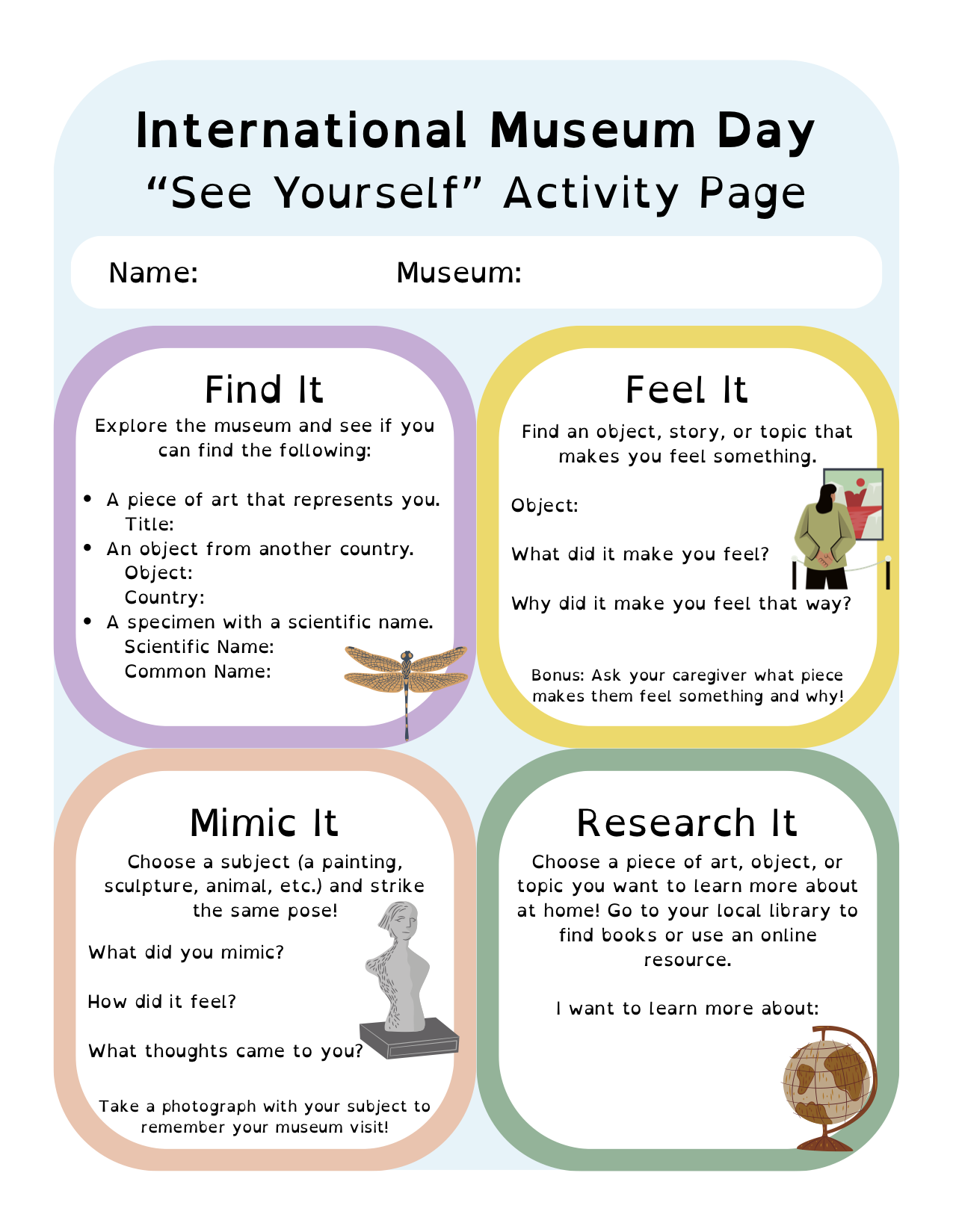
Interact with your museum visit on International Museum Day or any time you go with this activity sheet that gets you thinking, feeling, and remembering your favorite parts of your trip!

International Museum Day Activity Sheet

My Trip to the Museum Activity Sheet

Open Dyslexic Font International Museum Day Activity Sheet

Open Dyslexic Font My Trip to the Museum Activity Sheet 

You can purchase Sakina and the Uninvited Guests from these booksellers

Amazon | Barnes & Noble | Bookshop (discounted books and support for your local independent bookstore)
Picture Book Review