April 14 – Yom HaShoah/Holocaust Remembrance Day

About the Holiday

This year Yom HaShoah (Holocaust Remembrance Day) began on the evening of April 13 and continues until nightfall today. Yom HaShoah is an annual day of remembrance for Jewish communities around the world to commemorate the six million Jews who were killed in the Holocaust, also known as the Shoah. Yom HaShoah occurs on the anniversary of the Warsaw Ghetto Uprising, which was the largest act of Jewish resistance during the Holocaust and lasted for 29 days. To learn more, find research resources, and listen to or read Holocaust testimonies, visit the United States Holocaust Memorial Museum at ushmm.org.

Thank you to Abrams Young Readers for sending me this book for review.

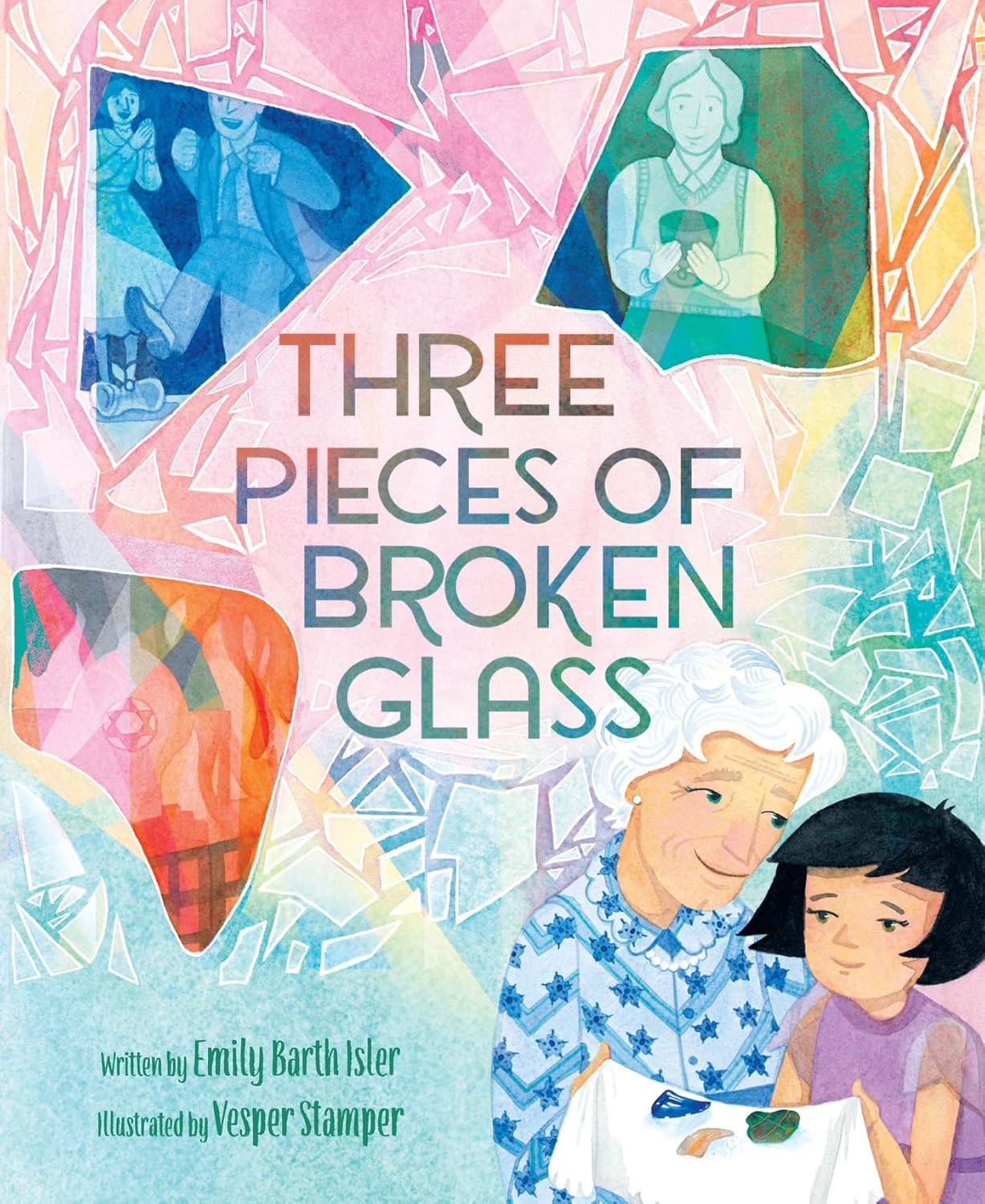
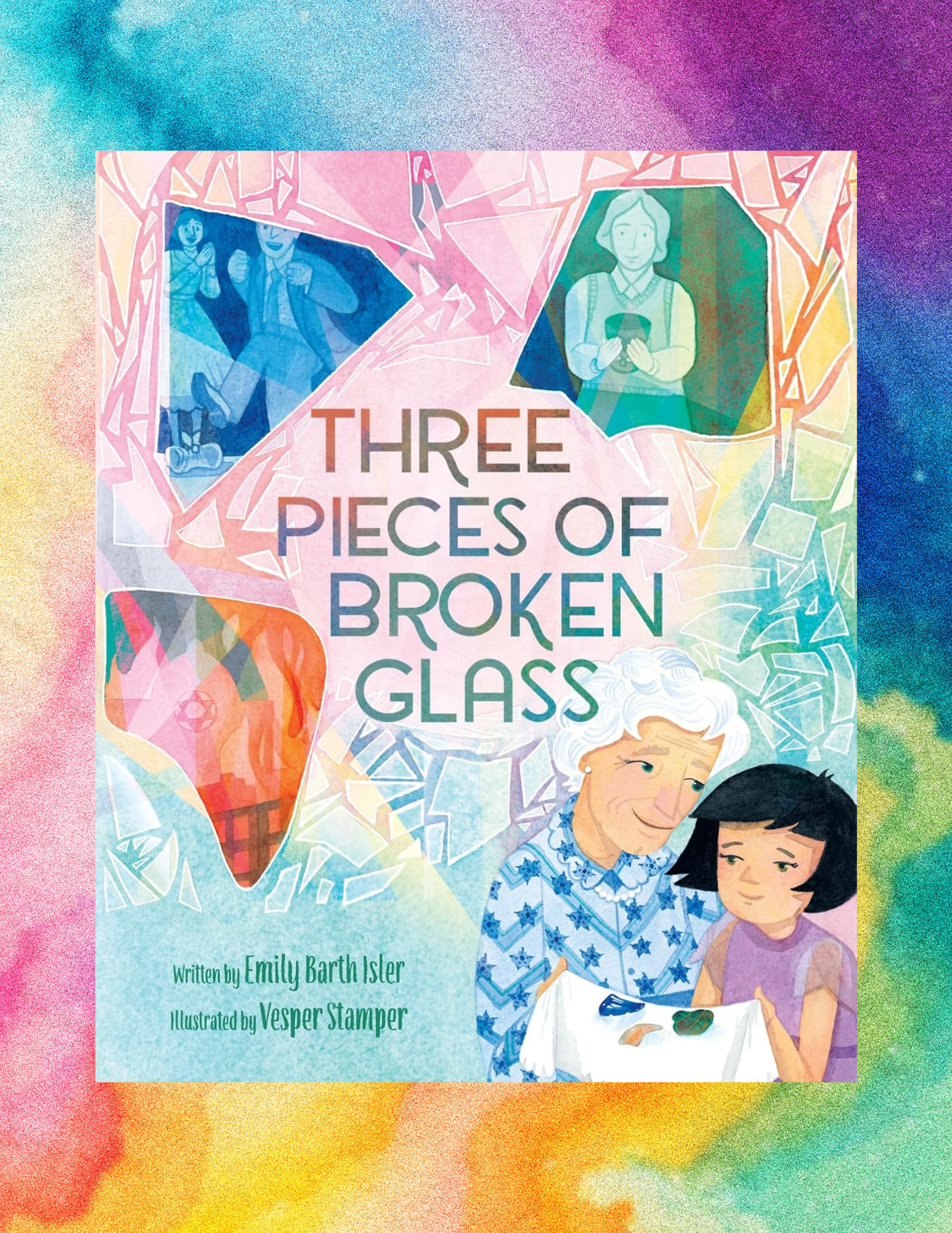
Three Pieces of Broken Glass

Written by Emily Barth Isler | Illustrated by Vesper Stamper


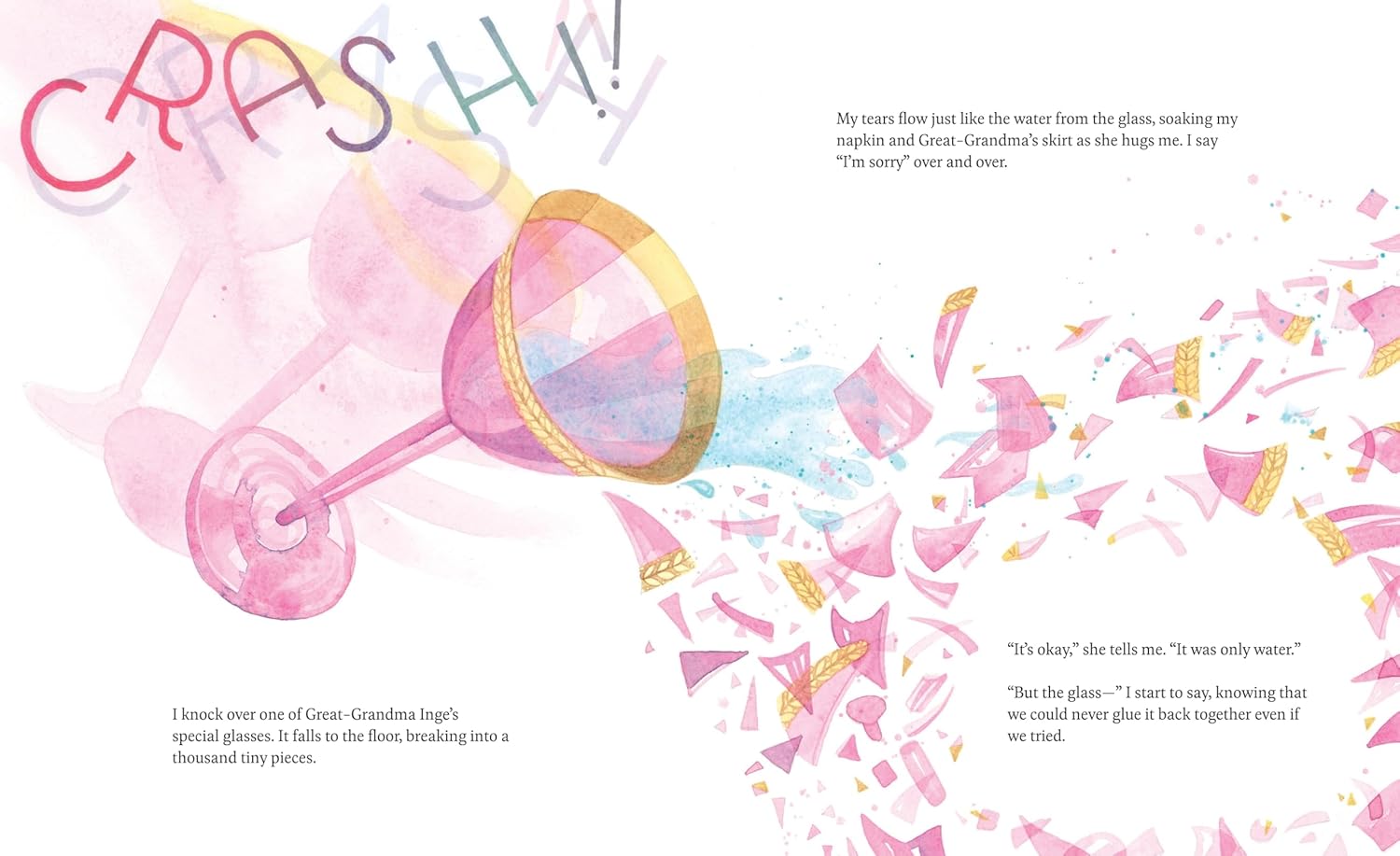
When the narrator visits her Great-Grandmother Inge, it’s always a special occasion with treats served on an elegantly set table. But one day the young girl knocks over one of the shimmering water glasses, sending it crashing to the floor. Great-Grandma Inge dries her granddaughter’s tears, telling her, “‘It’s not only good luck to break glass sometimes but also tradition.'” For the first time the girl notices three shards of glass on the windowsill and asks about them.

Illustration copyright © 2026 by Vesper Stamper. Text copyright © 2026 by Emily Barth Isler. Courtesy of Abrams Books for Young Readers.

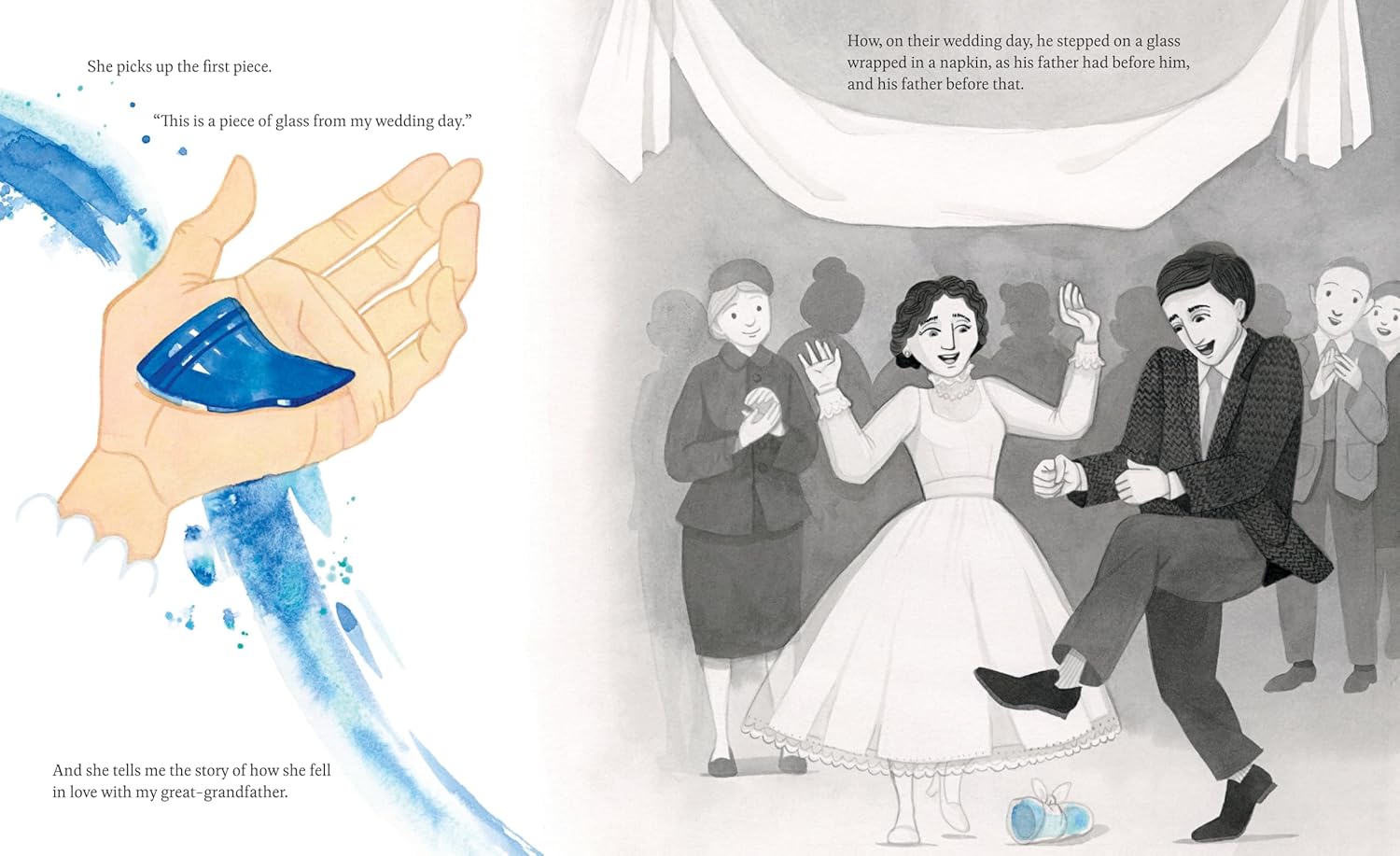
Picking up the first piece, a bit of glimmering blue, Grandma explains the Jewish wedding custom in which the new husband smashes a glass underfoot, the many shards symbolizing their infinite joy and love. The next piece—sharp and clear—holds the memory of Kristallnacht, the Night of Broken Glass, when “‘all the windows in all the Jewish homes and shops and synagogues in Germany. . . were smashed and broken.'” This piece reminds Grandma Inge that while sad, something broken can also “‘save your life.'” She then relates that her parents and others heeded the warning of the broken glass and knew it was time to flee.

Illustration copyright © 2026 by Vesper Stamper. Text copyright © 2026 by Emily Barth Isler. Courtesy of Abrams Books for Young Readers.

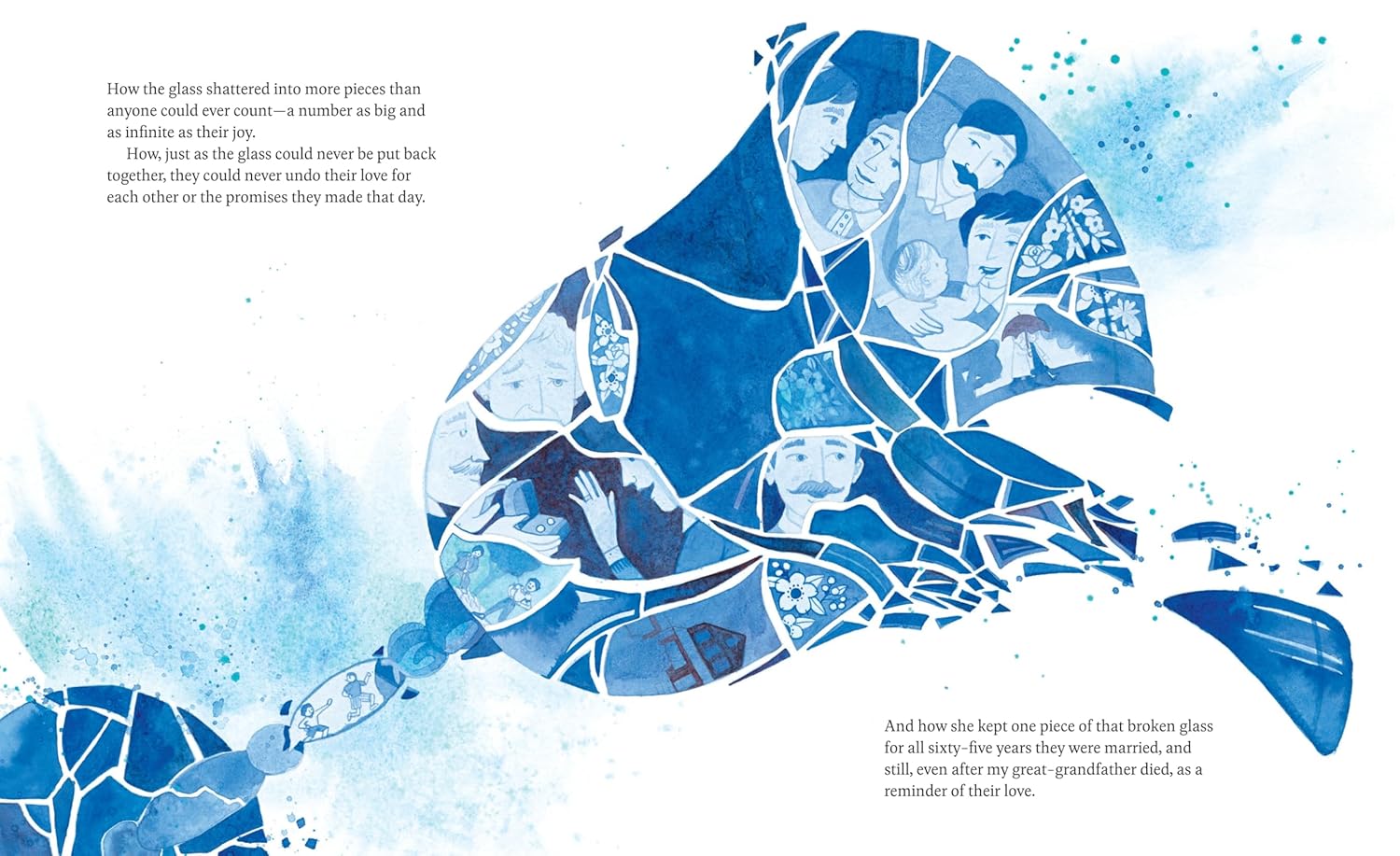
The third came from Inge’s mother’s favorite glass. Inge considers it lucky because on the day her mother dropped it, Inge—who had been separated from her family for a long time—was reunited with them. Inge says she has carried it with her for all her important events, including the days her sons and her great-grand daughter were born. Inge sweeps up the shards from the water glass and gives one piece to her great-grand daughter to remind her of all the stories she’s heard that day and hoping it will bring her luck. Thinking of all the history that had led to that moment, the girl knows that “‘it already has.'”

An Author’s Note, with photographs, reveals that the story is based on the life of her husband’s grandmother Inge as well as her own experiences listening to stories from her relatives and friends who survived the Holocaust.

Illustration copyright © 2026 by Vesper Stamper. Text copyright © 2026 by Emily Barth Isler. Courtesy of Abrams Books for Young Readers.

In her poignant intergenerational story, Emily Barth Isler inspires readers to embrace life, its good and hard times and the memories that remain, reminding them that strength, compassion, understanding, love, and our connections to one another are forged from our own and shared experiences. Her references to the Holocaust—Kristallnacht and the separation of Grandma Inge from her family—are sensitively addressed for children while providing the resonant history that unites Inge, her great-granddaughter, and their extended family. The affectionate relationship between Great-Grandmother Inge and her granddaughter is warm and trusting and will swell readers’ hearts.

Vesper Stamper’s watercolor and gouache illustrations radiate emotion and meaning. Her rich color palette reflects the depth of history each glass shard represents, and their lovely rainbow refractions glow as a metaphor for the significance each piece holds. Images of Great-Grandmother Inge and her granddaughter together are compassionate and supportive.

Tender and loving, Three Pieces of Broken Glass is an uplifting book that readers will take to heart. The book is a must for all library collections and would be a meaningful addition to home bookshelves.

Ages 4 – 8

Abrams Books for Young Readers, 2026 | ISBN 978-1419778728

About the Author

Emily Barth Isler is the award-winning author of the middle grade novels AfterMath and The Color of Sound. Her writing has appeared in AllureOprah DailyO QuarterlyKvellerPublisher’s Weekly, Today.com, and more. As the cofounder of the Burbank Book Festival in Southern California, Isler loves providing opportunities for all kinds of stories to be heard. She lives in Los Angeles with her husband and their two kids. Visit her at emilybarthisler.com.

About the Illustrator

Vesper Stamper writes and illustrates books that tell stories of broken things being put back together. Her debut novel, What the Night Sings, was a Sydney Taylor Book Award winner, a National Book Award nominee, and a National Jewish Book Award finalist. She and her husband, Ben Stamper, have all sorts of artistic escapades near New York City, where Vesper teaches illustration at the School of Visual Arts. Visit her at vesperillustration.com.

You can purchase Three Pieces of Broken Glass from these booksellers

Amazon | Barnes & Noble | Bookshop

Picture Book Review

May 13 – Get Ready for International Museum Day on May 18

About the Holiday

International Museum day was created in 1977 by the International Council of Museums to raise awareness that “museums are an important means of cultural exchange, enrichment of cultures and development of mutual understanding, cooperation and peace among peoples.” The theme for this year is “The Future of Museums in Rapidly Changing Communities.” Museums are not just repositories of the past. They are vital and active members of the communities they serve and as such can be leaders in tackling some of society’s biggest issues. This year’s theme focuses on “how museums can navigate and contribute to a world undergoing profound social, technological, and environmental shifts” and addresses three main points:

  • Support for local economies by creating employment opportunities and offering educational programs 
  • Driving innovation and enhancing accessibility by fostering creativity and embracing technological advancements
  • Contributing to sustainable urban development by acting as cultural hubs that promote inclusion, resilience, and heritage preservation 

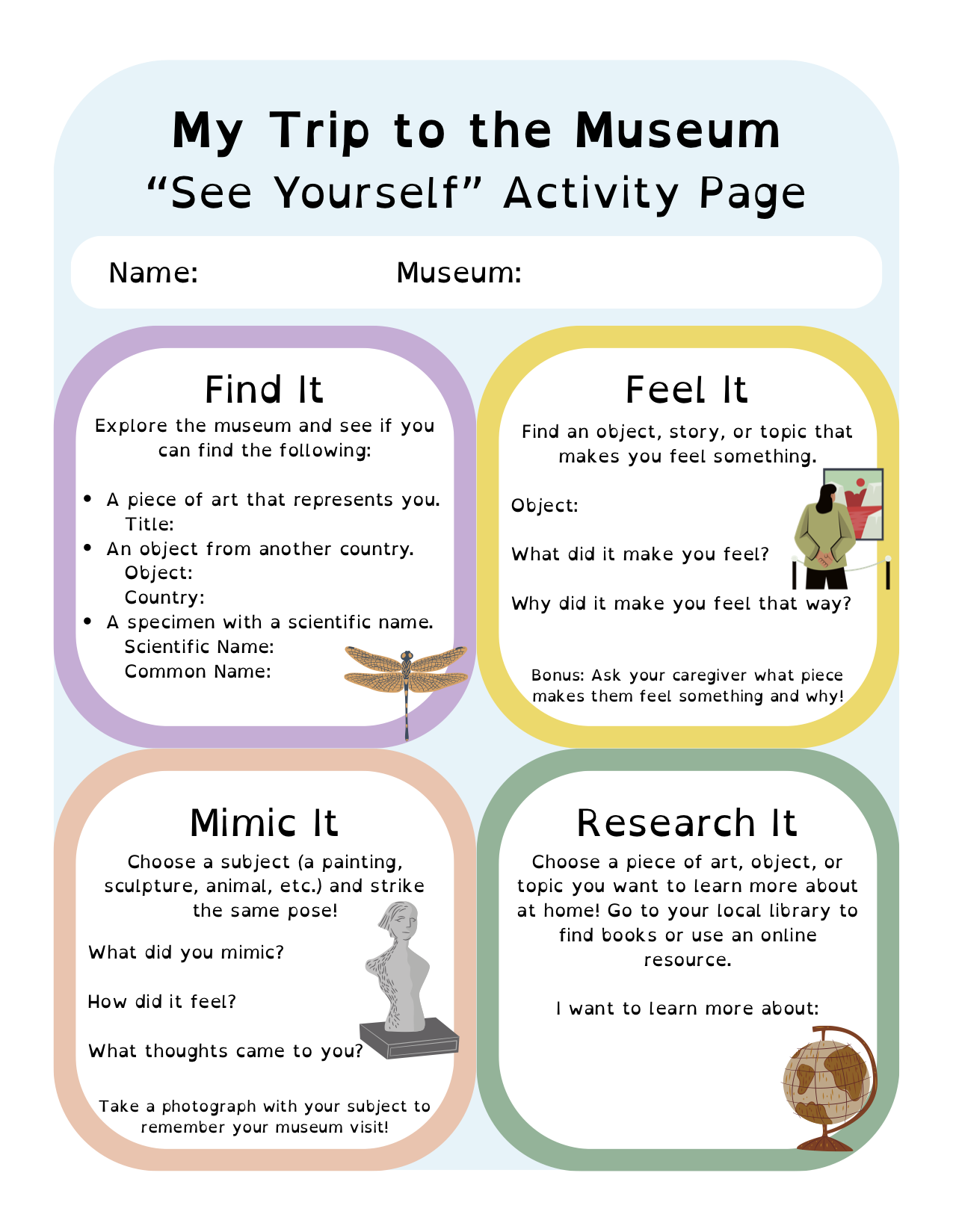
To celebrate International Museum Day, visit a museum near you—and don’t forget to print and take along the activity sheet found below!

Thank you to Bloomsbury Children’s Books for sending me a copy of Sakina and the Uninvited Guests!

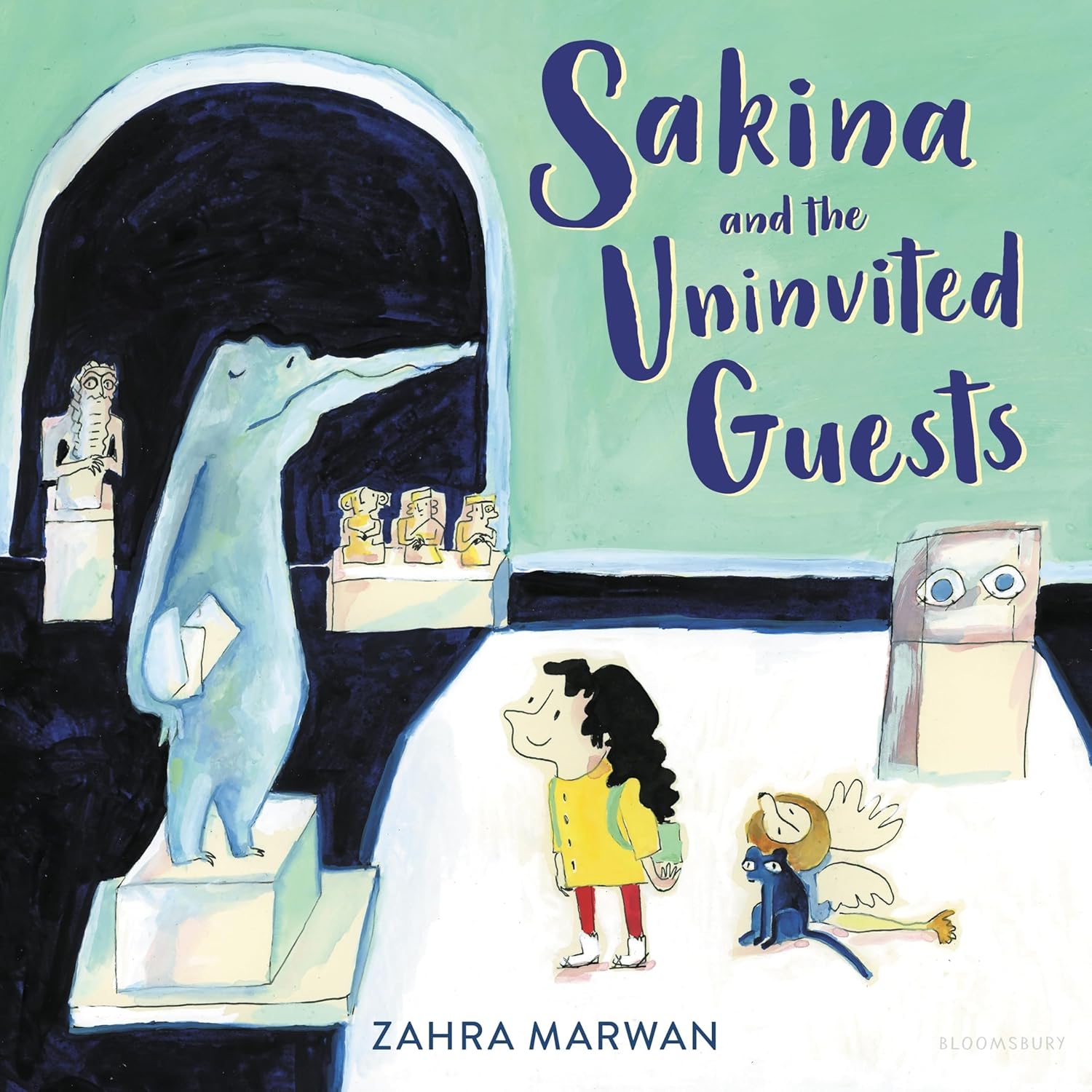
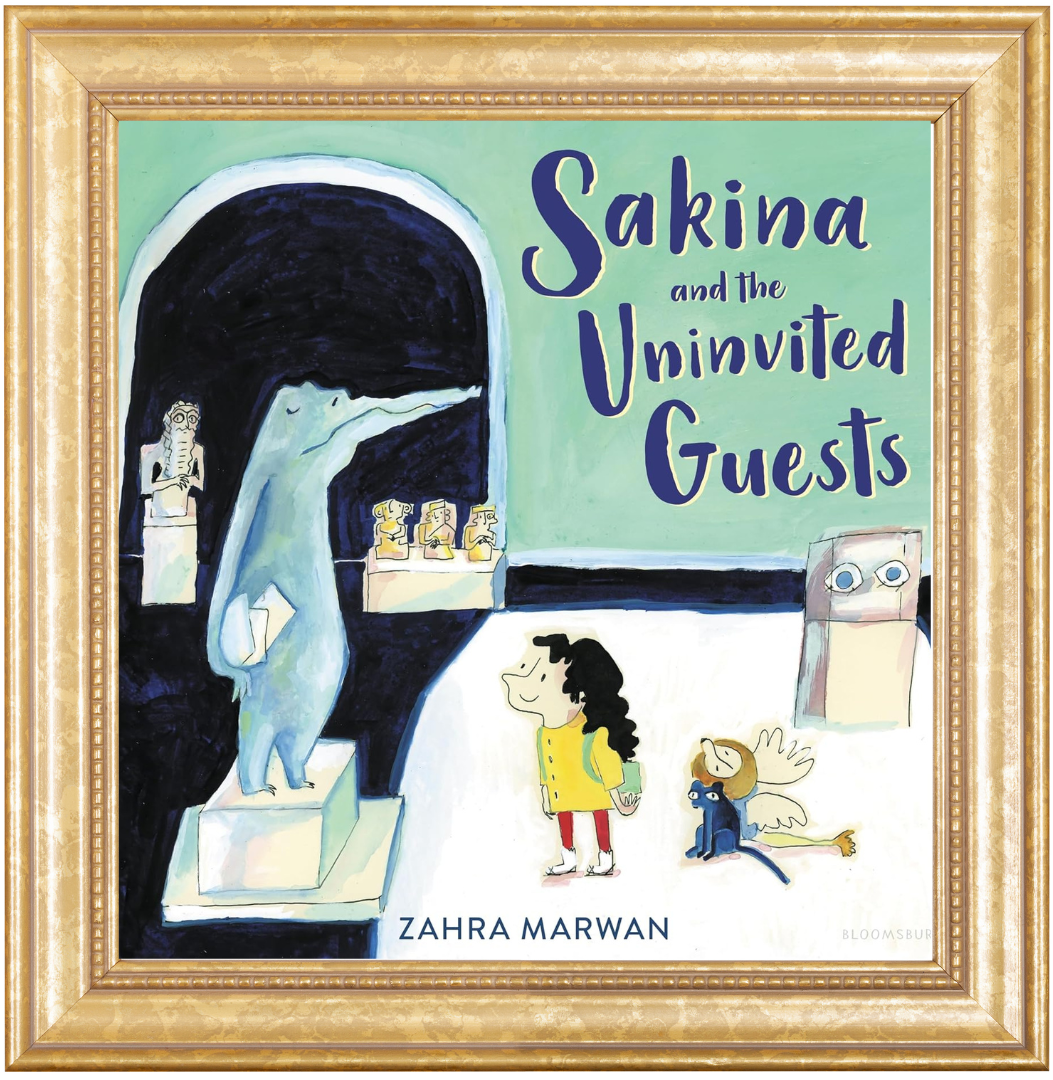
Sakina and the Uninvited Guests

By Zahra Marwan


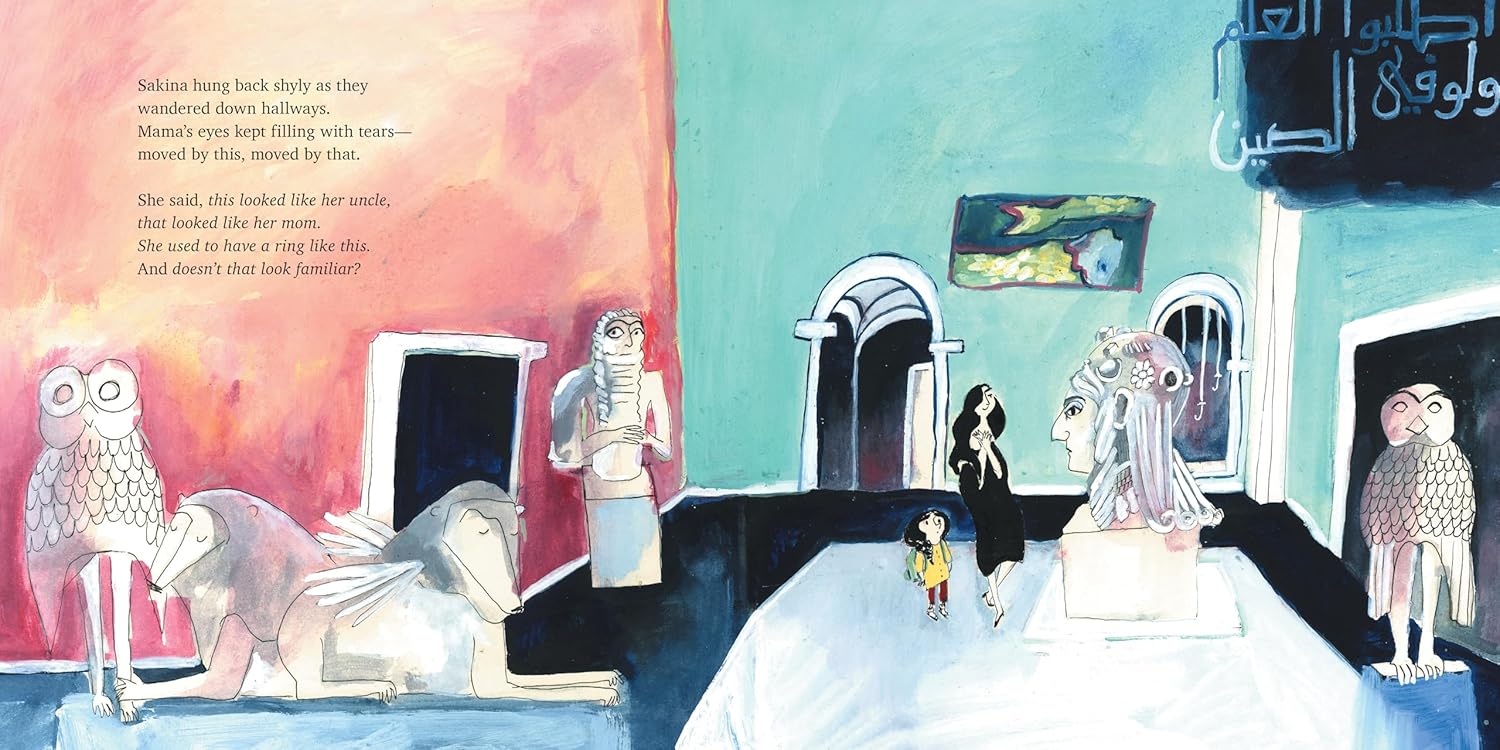
When a sandstorm turns “the city orange—the sun like a tangerine, the waves like clementine peels,” Sakina’s mother drives past the beach, where Sakina had hoped to spend the day, and goes to the museum. Inside, Sakina gazes with boredom at the statues of a crocodile holding papers and a blue jaguar guarding the first laws ever written. She nearly trips over one of the many, many winged lions. She can’t believe there had once been so many flying lions in her city. But as they move from exhibit to exhibit, Sakina sees that her mama’s eyes, keep “filling with tears” as they come upon likenesses of her mom and her uncle, a ring she used to have, and other familiarities. 

Sakina can’t understand her mother’s affection for “. . . all of these old, boring, boring things.” But then Sakina stumbles and another winged lion seems to be watching her. In fact . . . “Did he just . . . wink at her? Sakina was absolutely sure.” Suddenly, it’s time to leave, and while Sakina’s backpack feels heavier, she feels lighter, hopeful she will soon be playing by the sea.

Text and Illustration © 2025 by Zahra Marwan. Courtesy of Bloomsbury Children’s Books.

At home, it’s nap time, and while everyone else sleeps, Sakina cannot. Suddenly, she hears strange noises and follows them to find the crocodile, jaguar, and winking winged lion crawling from her backpack. Sakina is nonplussed and worried the noise will wake the household. Sakina tries to catch them, but they run through the house, toppling furniture and knick-knacks, knocking pictures off the walls.

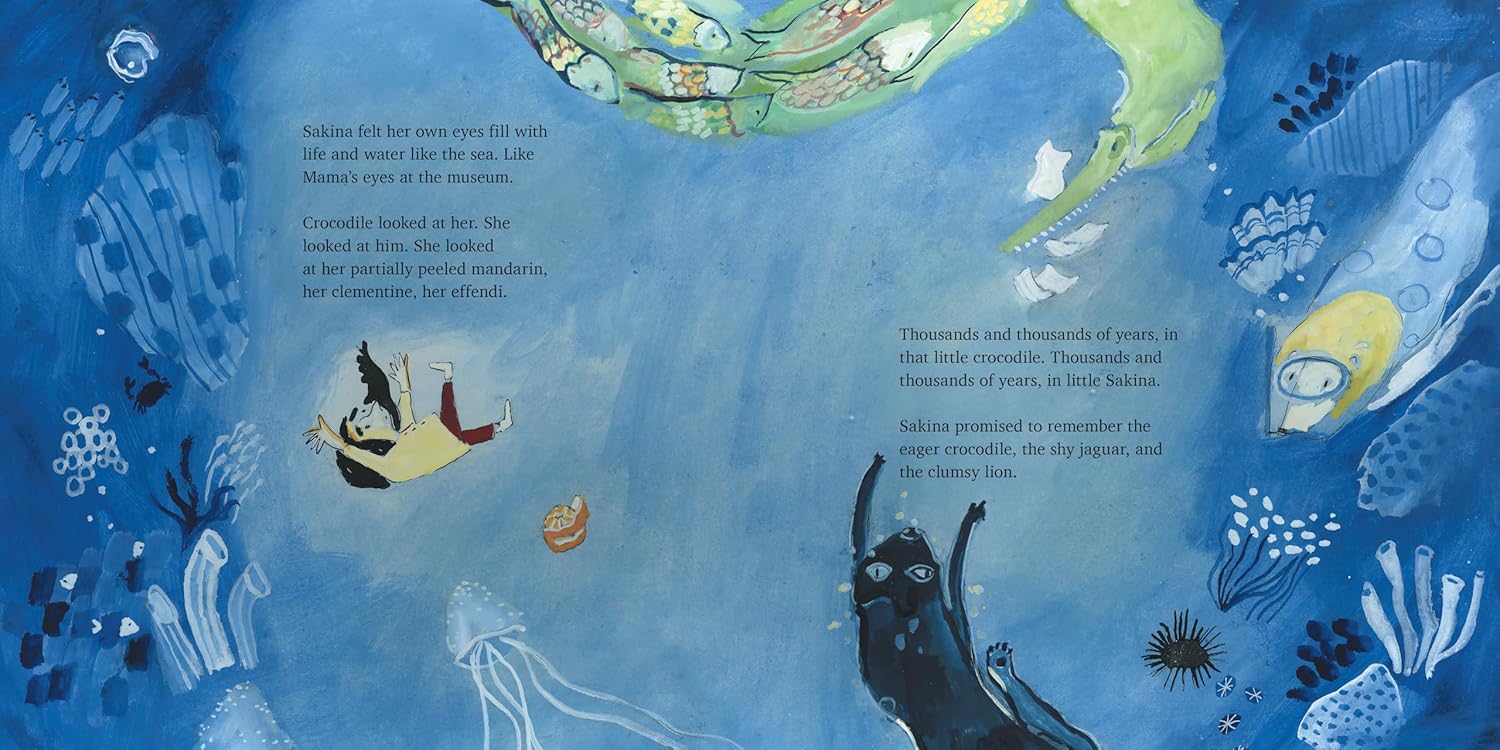
As she picks up a photograph of her grandmother, though, she notices how her eyes “were full of life and water, like the sea. Like the people in the museum.” Sakina then helps the crocodile pick up his scattered papers and realizes they are poems. She reads a line: “‘I hope they will remember me.'” Suddenly, Sakina understands. She feels the “thousands and thousands of years, in that little crocodile. Thousands and thousands of years, in little Sakina.” 

Text and Illustration © 2025 by Zahra Marwan. Courtesy of Bloomsbury Children’s Books.

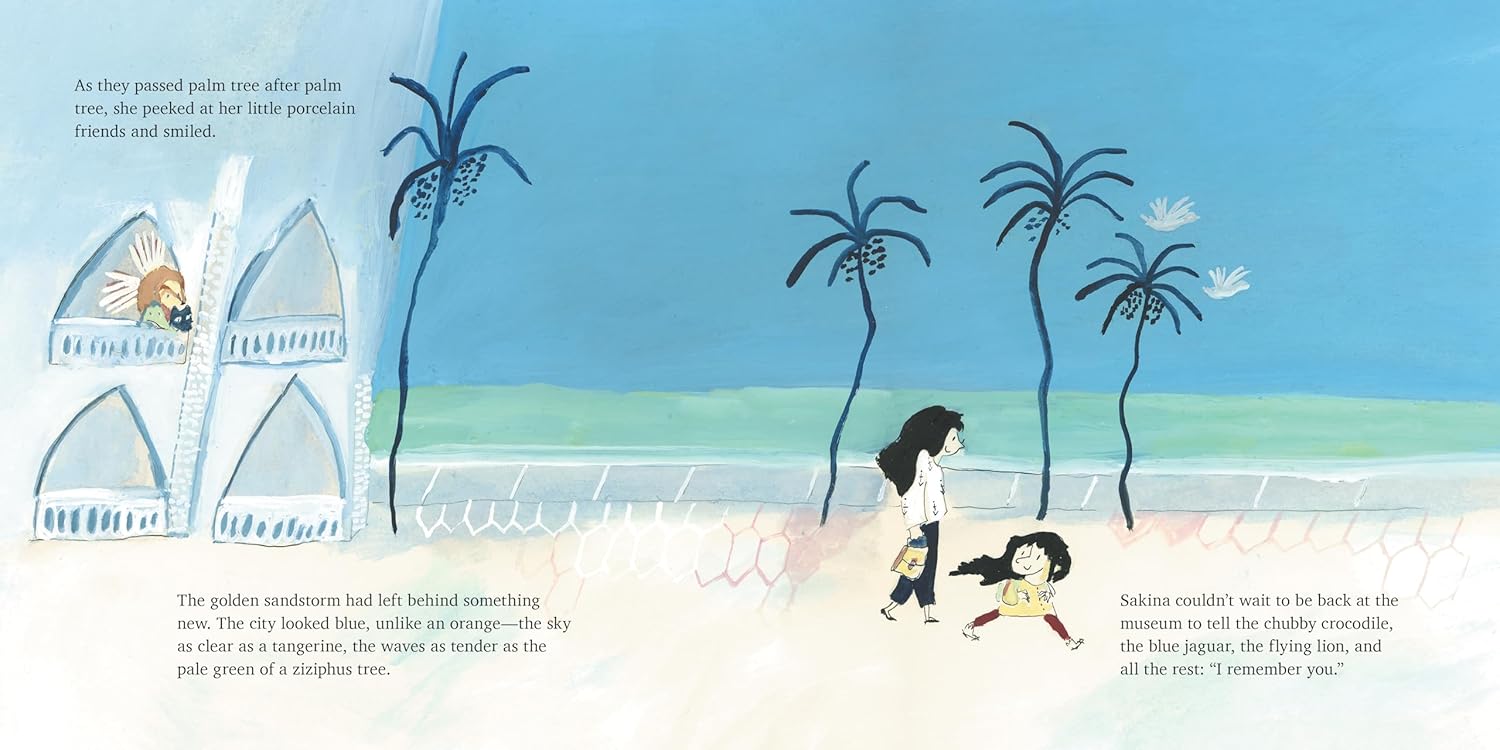
With the lifting of the sandstorm and her promise to remember them, Sakina’s guests depart just as her mother appears with a gift from the museum shop—a set of small familiar porcelain figurines. At last Sakina gets her wish, but as she and Mama walk to the sea, she can’t wait to return to the museum and tell its inhabitants “‘I remember you.'”

Back matter includes an Author’s Note in which Zahra Marwin explains the significance of the crocodile sculpture in her story and how people have had and will always have the same feelings—from the times of ancient history into the future. She also touches on the other sculptures she has depicted here and asks readers to consider what kind of art people were making thousands of years ago in the area where they live now as well as the kind of art their ancestors would have been familiar with. In another note, Marwan discusses several particular parts of the book, including the origins of distinct words and phrases, the value placed on education in the Middle East, and her inclusion of two recreated modern paintings.

Text and Illustration © 2025 by Zahra Marwan. Courtesy of Bloomsbury Children’s Books.

Whimsical and profound, Zahra Marwan’s story of a trip to a museum reaches deep into the heart and invites readers to join the collective memory of their own family as well as that of the world at large. Marwan reminds us that, just as the sea that Sakina longs to visit, museums and even history itself is always alive with the past, the present, and what’s to come.

Children will be charmed by Sakina who, despite her disappointment about not visiting the sea and some boredom, wanders the museum with an open mind and curiosity. Her alertness to her mother’s emotions shows empathy and a close bond. Sakina is also attuned to her mother’s eyes and the eyes of the paintings and sculptures. Children will notice that Marwan has also drawn Sakina with her “mother’s eyes” when the winged lion, crocodile, and jaguar hitch a ride in her backpack and again when they emerge from it at her house, spurring her to a deeper understanding of what she has seen. 

Marwan’s lyrical language, carried on gentle waves of consonance and assonance, beautifully adds texture and imagery to the pages, each of which are washed in gorgeous colors and exquisite recreations of paintings and sculptures that will intrigue readers and spark an interest in visiting museums in their own area.

Infused with depth and enchantment, Sakina and the Uninvited Guests is sure to become a favorite read aloud and a captivating spark for discussions about family heritage at home as well as for classroom genealogical projects. The book is highly recommended for home bookshelves and is a must for all school and library collections.

Ages 4 – 8

Bloomsbury Children’s Books, 2025 | ISBN 978-1547613427

Zahra Marwan grew up in two deserts: one close to the sea in Kuwait, the other close to the mountains in New Mexico. She is a fine artist who exhibits extensively and has won international awards and fellowships, including a New York Times/New York Public Library Best Illustrated Children’s Book, NPR Best Books of 2022, an Ezra Jack Keats Honor for Illustration, a Dilys Evans Founders Award from the Society of Illustrators, and more. She studied the visual arts in France and currently lives in Albuquerque, New Mexico, where she keeps a small studio at the Harwood Art Center. Visit her at zahramarwan.com.

International Museum Day Activity

Museum Visit Activity Sheets


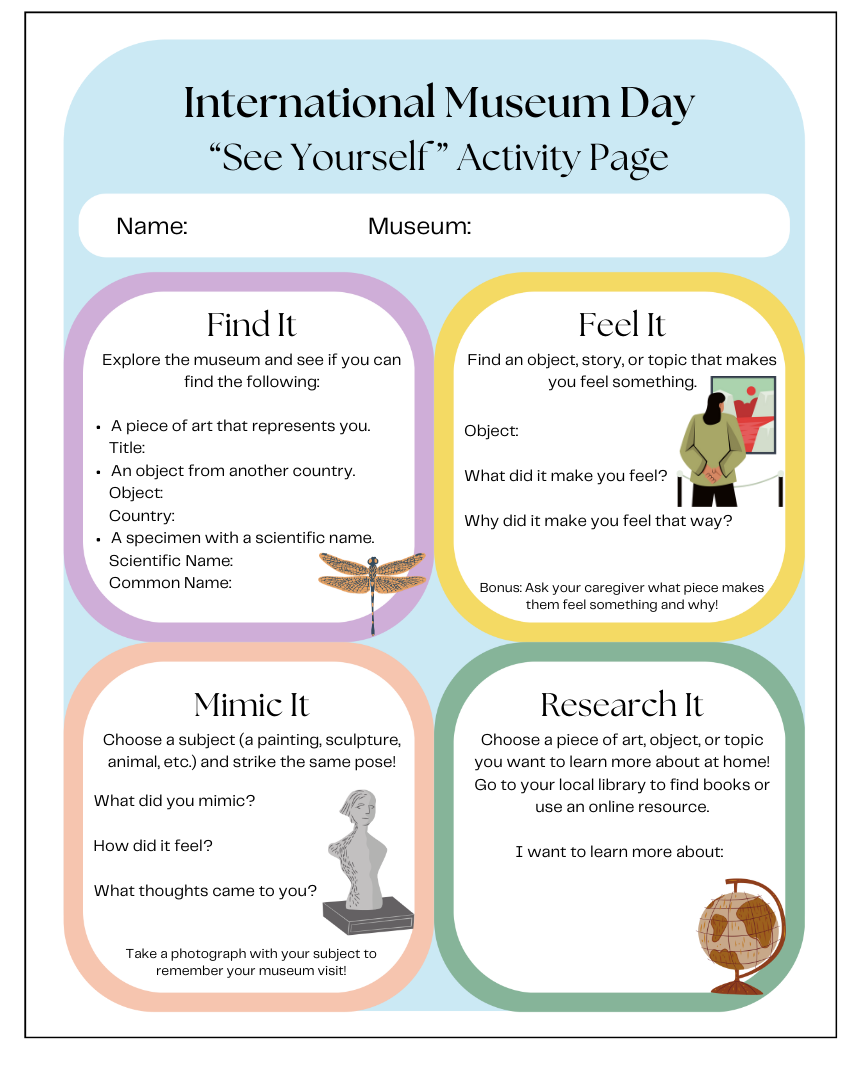
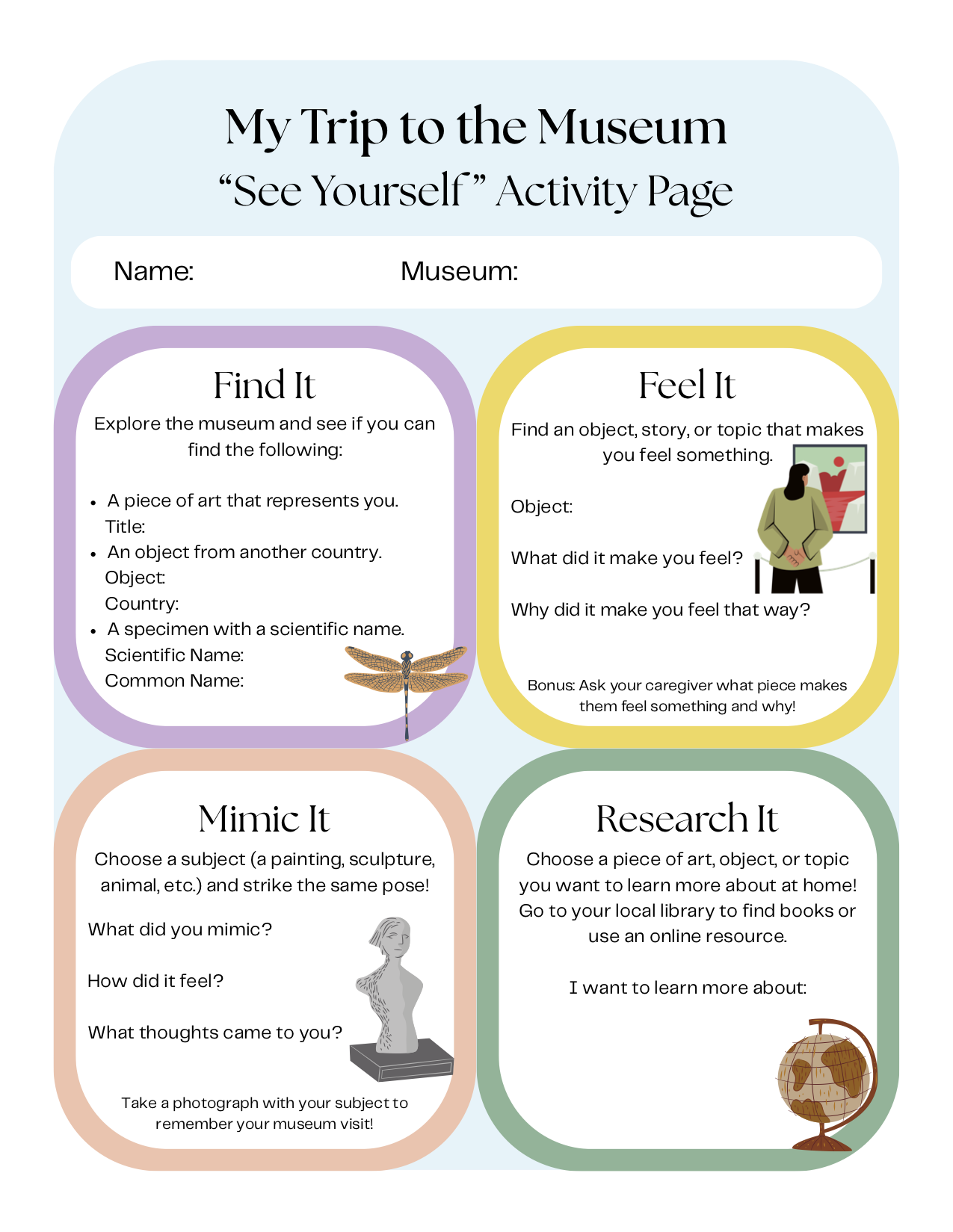
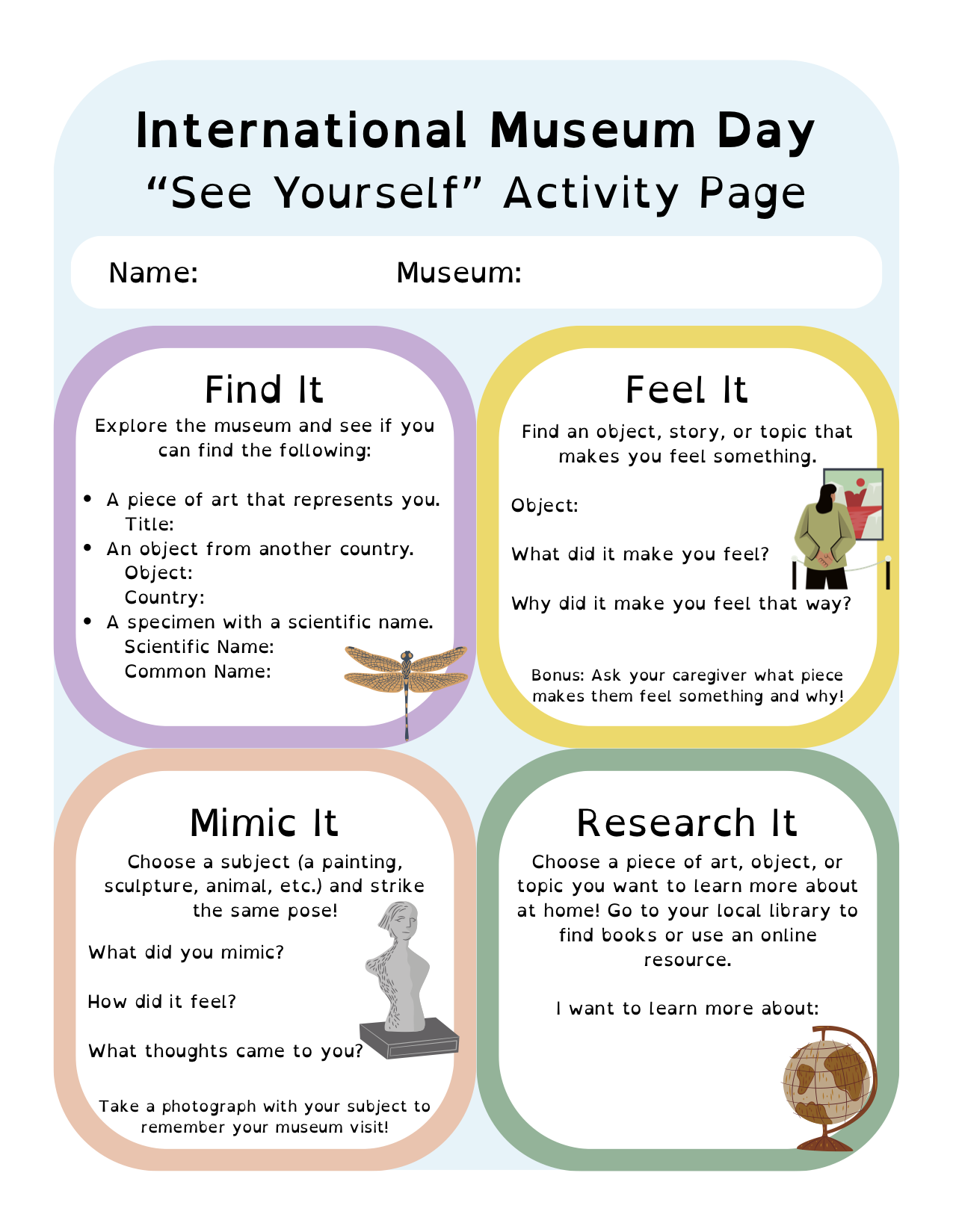
Interact with your museum visit on International Museum Day or any time you go with this activity sheet that gets you thinking, feeling, and remembering your favorite parts of your trip!

International Museum Day Activity Sheet

My Trip to the Museum Activity Sheet

Open Dyslexic Font International Museum Day Activity Sheet

Open Dyslexic Font My Trip to the Museum Activity Sheet 

You can purchase Sakina and the Uninvited Guests from these booksellers

Amazon | Barnes & Noble | Bookshop (discounted books and support for your local independent bookstore)

Picture Book Review
November 20 — It’s Family Stories Month

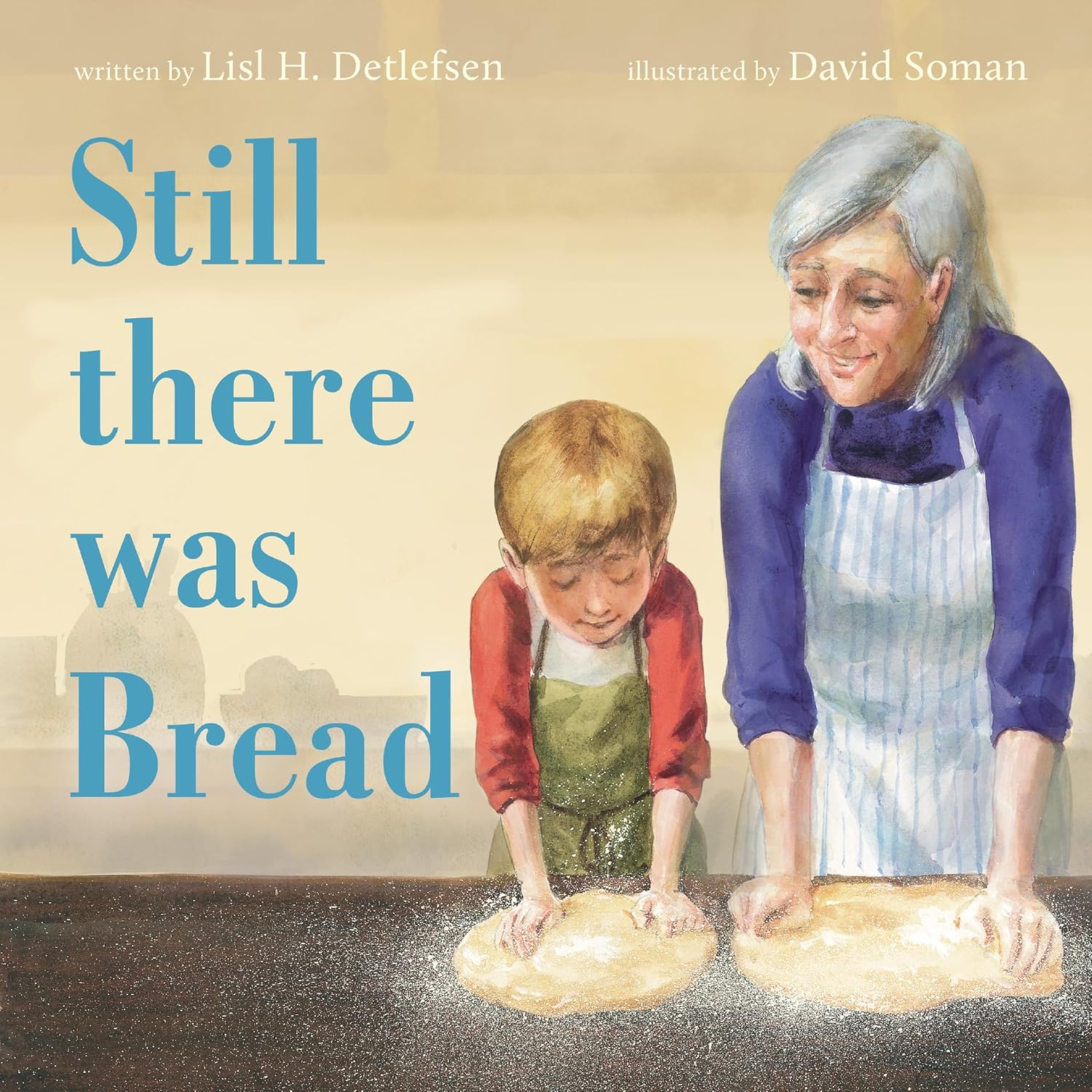
celebrate-picture-books-picture-book-review-still-there-was-bread-cover

About the Holiday

Do you have a favorite family story to tell or tradition to share? Then this month is for you! No matter if your stories are funny or poignant tales of a family member or they’re tied to a special recipe or heirloom, everyone—especially children—benefits by these reminiscences. Family Stories Month encourages people to gather together and engage in the tradition of oral storytelling, which has been part of people’s lives and cultures since ancient times. It’s a wonderful way to stay connected to your own family heritage and build bonds that last forever. 

Thank you to HarperCollins and Barbara Fisch at BlueSlip Media for sharing a copy of Still there was Bread with me for review consideration. All opinions on the book are my own.

Still there was Bread

Written by Lisl H. Detlefsen | Illustrated by David Soman


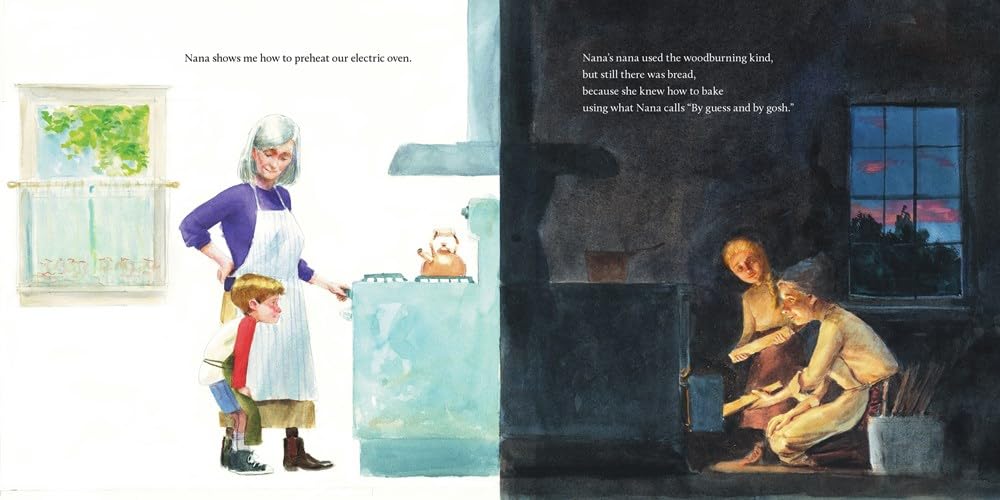
Nana comes to visit her daughter’s family and to teach her grandson—her “Little Pickle”—how to bake the family’s traditional pull-apart “Nana rolls.” Nana and Little Pickle gather the ingredients and turn on the oven while Nana talks about how “her nana had to collect eggs from the chicken coop and milk a cow to get what she needed” and stoke a woodburning stove to bake the rolls.

Nana and Little Pickle move on to combining the ingredients and easily mixing the dough in a stand mixer, a modern contrast to the child narrator’s great-great-grandmother using a wooden spoon. They knead the dough and put it in a bowl to rise in a sunny spot—no different from how it was done all those years ago.

celebrate-picture-books-picture-book-review-still-there-was-bread-stove-vs-woodburner

Image copyright David Soman, 2024, text copyright Lisl H. Detlefsen, 2024. Courtesy of HarperCollins.

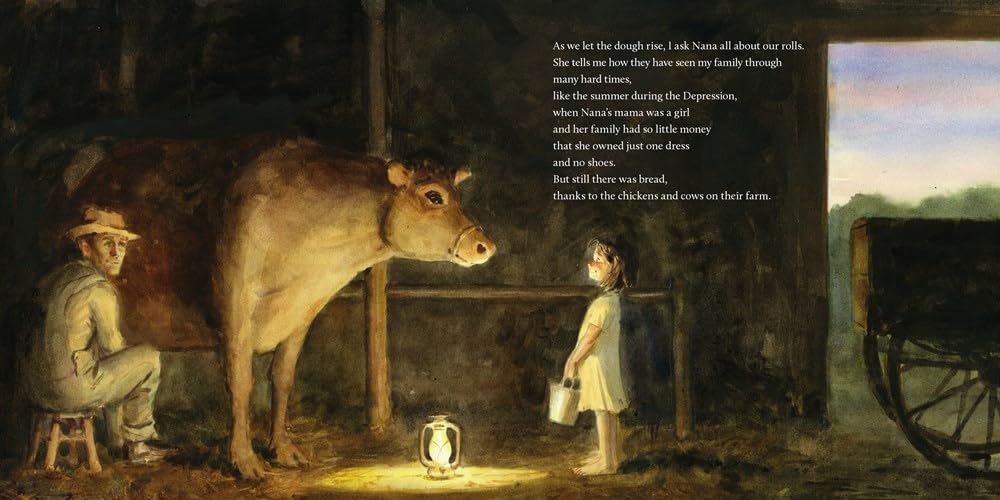
While they wait for the dough to rise, Little Pickle asks Nana to tell stories about the rolls they’re making, and she readily reveals how important their homemade bread was through lean times—like during the Great Depression, when “Nana’s mama was a girl and her family had so little money that she owned just one dress and no shoes. But still there was bread, thanks to the chickens and cows on their farm.” Or when Nana, herself, was a baby and “the whole house was quarantined because she and her daddy had something called polio,” but eggs and milk were delivered. This leads Nana to connect it to a recent quarantine, when people rediscovered the comforts of homemade bread.

celebrate-picture-books-picture-book-review-still-there-was-bread-barn-during-depression

Image copyright David Soman, 2024, text copyright Lisl H. Detlefsen, 2024. Courtesy of HarperCollins.

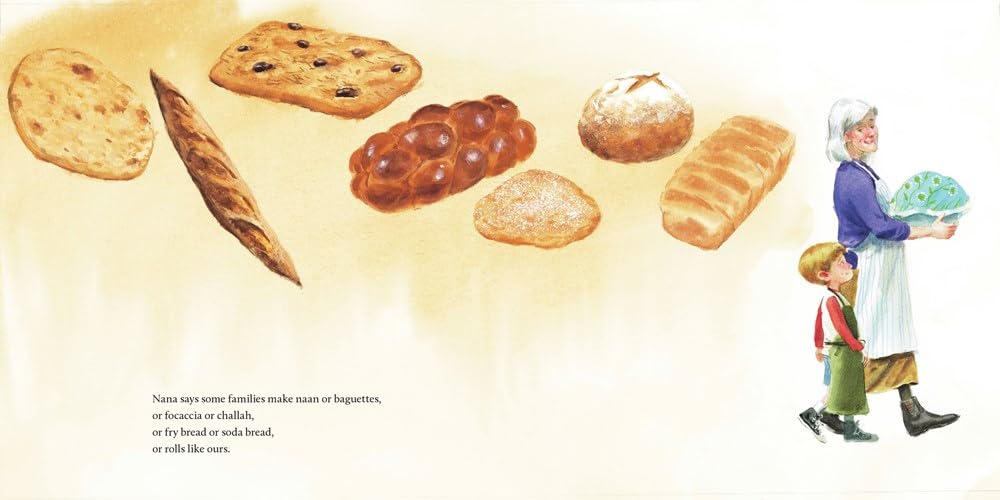
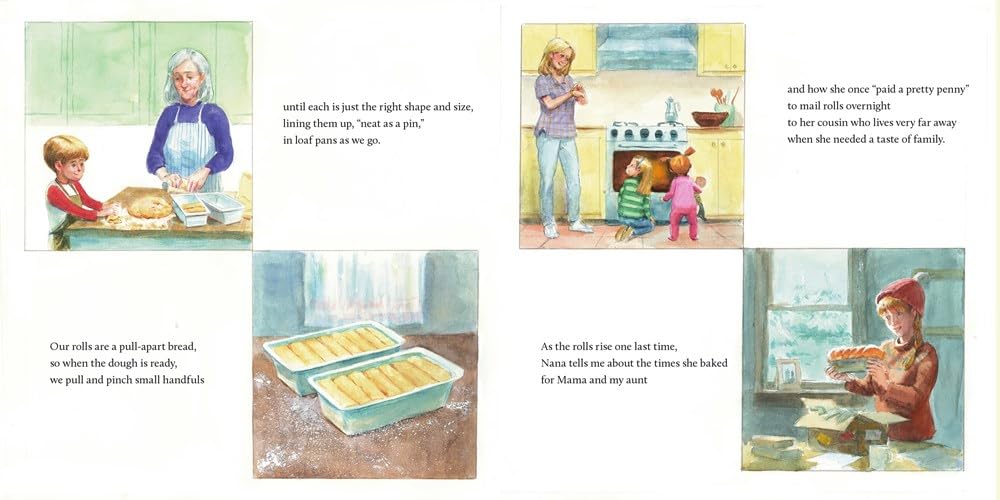
During the second rise of the dough, Nana and Little Pickle talk about the different kinds of bread people make with the “same simple ingredients” for “times they can be together, and times they can’t.” At last the dough is ready to pinch off and shape and put in pans. One more rising allows Nana to tell stories of how she baked bread for Little Pickle’s mom and aunt, and how she “‘paid a pretty penny'” to mail bread to a homesick cousin who was far away. 

celebrate-picture-books-picture-book-review-still-there-was-bread-different-kinds-of-bread

Image copyright David Soman, 2024, text copyright Lisl H. Detlefsen, 2024. Courtesy of HarperCollins.

Little Pickle asks Nana how many times she’s made the rolls, and she replies, “‘Who could say?'” She’s made them for sick neighbors and as gifts for a whole list of occasions. “‘All of them were kneaded. And needed,” she says. The rolls are finally ready to pop into the oven, and as they bake, their “toasty smell brings the rest of the family to the kitchen.” When the rolls are ready, everyone gathers around and “the kitchen becomes a blur of butter and honey and jam and laughter.” Little Pickle is happy and satisfied knowing that years from now “I will share our recipe and the stories that go with it with my kids or grandkids,” but for now whenever someone “needs a warm, fresh-baked hug, I’ll know just what to do.”

celebrate-picture-books-picture-book-review-still-there-was-bread-vignettes

Image copyright David Soman, 2024, text copyright Lisl H. Detlefsen, 2024. Courtesy of HarperCollins.

Filled with warmth, family love, and connectedness, Lisl H. Detlefsen’s Still there was Bread, is a heartening read aloud that will foster a child’s curiosity about the past as well as their own family history and long-held traditions while also being grounded in today. Deftly combining lyrical storytelling with the young narrator’s voice, Detlefsen has created a tale that appeals across generations. The rhythm and easy cadence of the text is as comforting as the homemade rolls depicted. 

David Soman’s pen-and-ink and watercolor illustrations shine for their realistic portrayals of home, the baking process, and especially the expressive faces and shared looks between family members, from Nana and Little Pickle to their ancestors. Soman’s soft textures and glowing lighting bring to life Nana’s stories about her grandmother, the Great Depression, and Nana’s early life. His use of vignettes coupled with full-page illustrations creates a rich tapestry from page to page, not unlike a family photo album. The final image of the family gathered around the dinner table, with Little Pickle, roll in hand and looking out from the page invites readers to join in on the “warm, fresh-baked hug” offered here. 

Still there was Bread would be a welcome addition to family gatherings, especially at holidays and family reunions, and is highly recommended for home, public library, and school library bookshelves.

Ages 4 – 8+

HarperCollins, 2024 | ISBN 978-0063216556

About the Author

Lisl H. Detlefsen is the author of a growing number of picture books, including Farm Boots, illustrated by Renée Kurilla, and At the End of the Day, illustrated by Lynnor Bontigao. She lives with her husband and two sons in a restored farmhouse on a family-owned cranberry marsh in Wisconsin. You can visit her online at lislhdbooks.com.

About the Illustrator

David Soman has illustrated many beautiful picture books, including The Impossible Mountain and the New York Times bestselling Ladybug Girl series, which he cocreated with his wife, Jacky Davis. He is an instructor at the School of Visual Arts in New York City and lives with his family in Upstate New York. Visit him at davidsoman.com.

Family Stories Month Activities

Celebrate Picture Books Family Story Starters 2

Family Story Starters


Getting together with family and/or friends over the holidays, for regular visits, or for other events? Have fun and get to know each other better with these story starters that can lead to fascinating memories and discoveries that build bonds. Use these Family Story Starters to prompt conversations or even play charades. Just print, cut, and place in a bowl or basket then have family members or friends randomly choose among them to get the fun going!

StoryCorps Logo

Connect with Others through Family Stories on StoryCorps

StoryCorps was established on the idea that everyone has an important story to tell and that listening to others’ stories helps us “believe in each other by illuminating the humanity and possibility in us all.” Since their founding in 2003, nearly 700,000 people across the country have recorded short recollections about their lives. Each story is accompanied by animation that helps listeners, and children especially, visualize the narrative. The stories are accessible on the StoryCorps website and in the U.S. Library of Congress. The StoryCorp online archive is “now the largest single collection of human voices ever gathered.”

A perfect way to celebrate Family Stories Month, to share our common bonds, and to introduce children to the wonders of storytelling, listen to some of the incredible stories on StoryCorps. You can also get involved in the project by recording your own family stories! Visit StoryCorps to learn more. 

celebrate-picture-books-picture-book-review-still-there-was-bread-cover

You can purchase Still there was Bread at these booksellers

Amazon | Barnes & Noble | Bookshop (to support your local independent bookstore)

Picture Book Review