April 14 – Yom HaShoah/Holocaust Remembrance Day

About the Holiday

This year Yom HaShoah (Holocaust Remembrance Day) began on the evening of April 13 and continues until nightfall today. Yom HaShoah is an annual day of remembrance for Jewish communities around the world to commemorate the six million Jews who were killed in the Holocaust, also known as the Shoah. Yom HaShoah occurs on the anniversary of the Warsaw Ghetto Uprising, which was the largest act of Jewish resistance during the Holocaust and lasted for 29 days. To learn more, find research resources, and listen to or read Holocaust testimonies, visit the United States Holocaust Memorial Museum at ushmm.org.

Thank you to Abrams Young Readers for sending me this book for review.

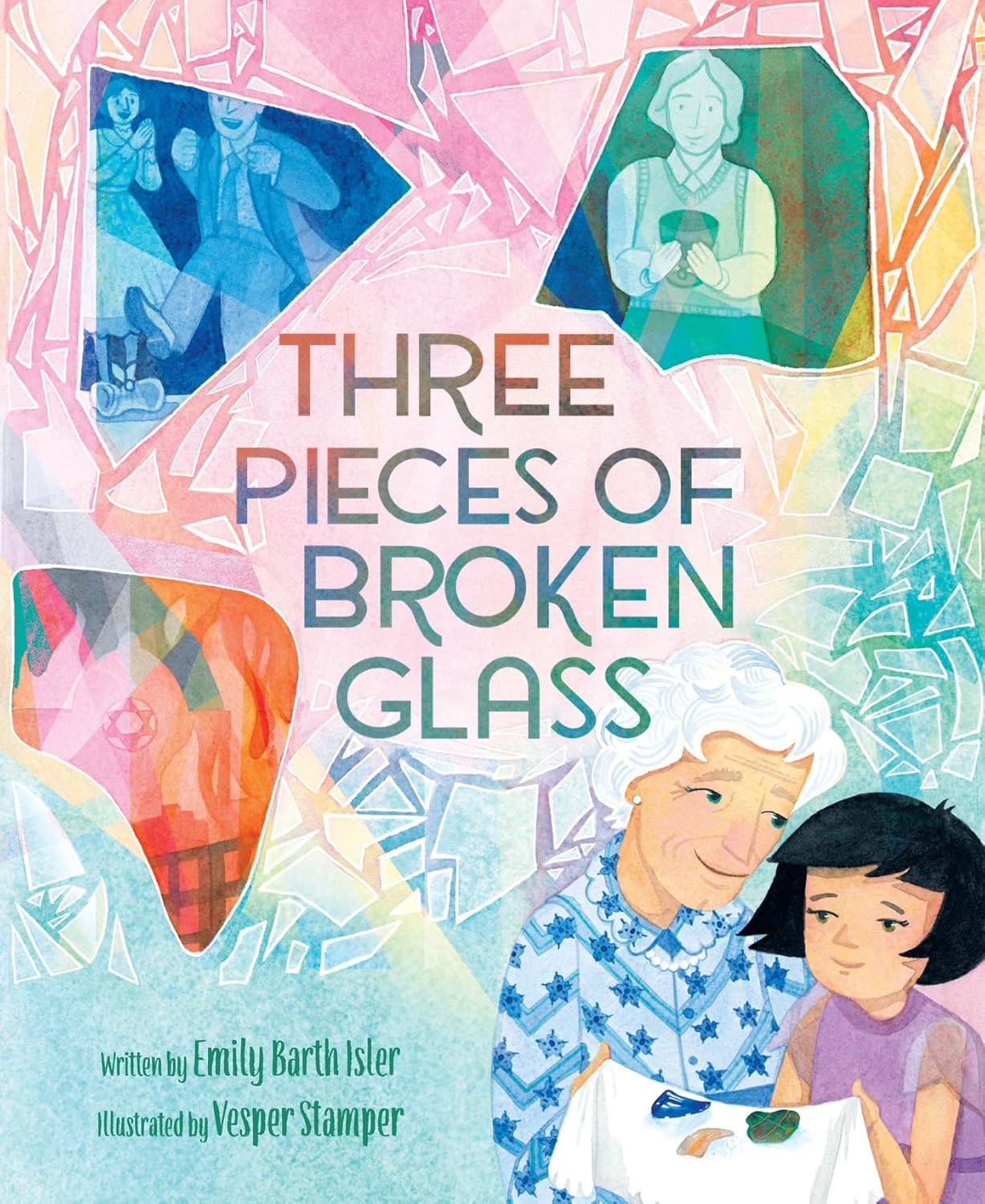
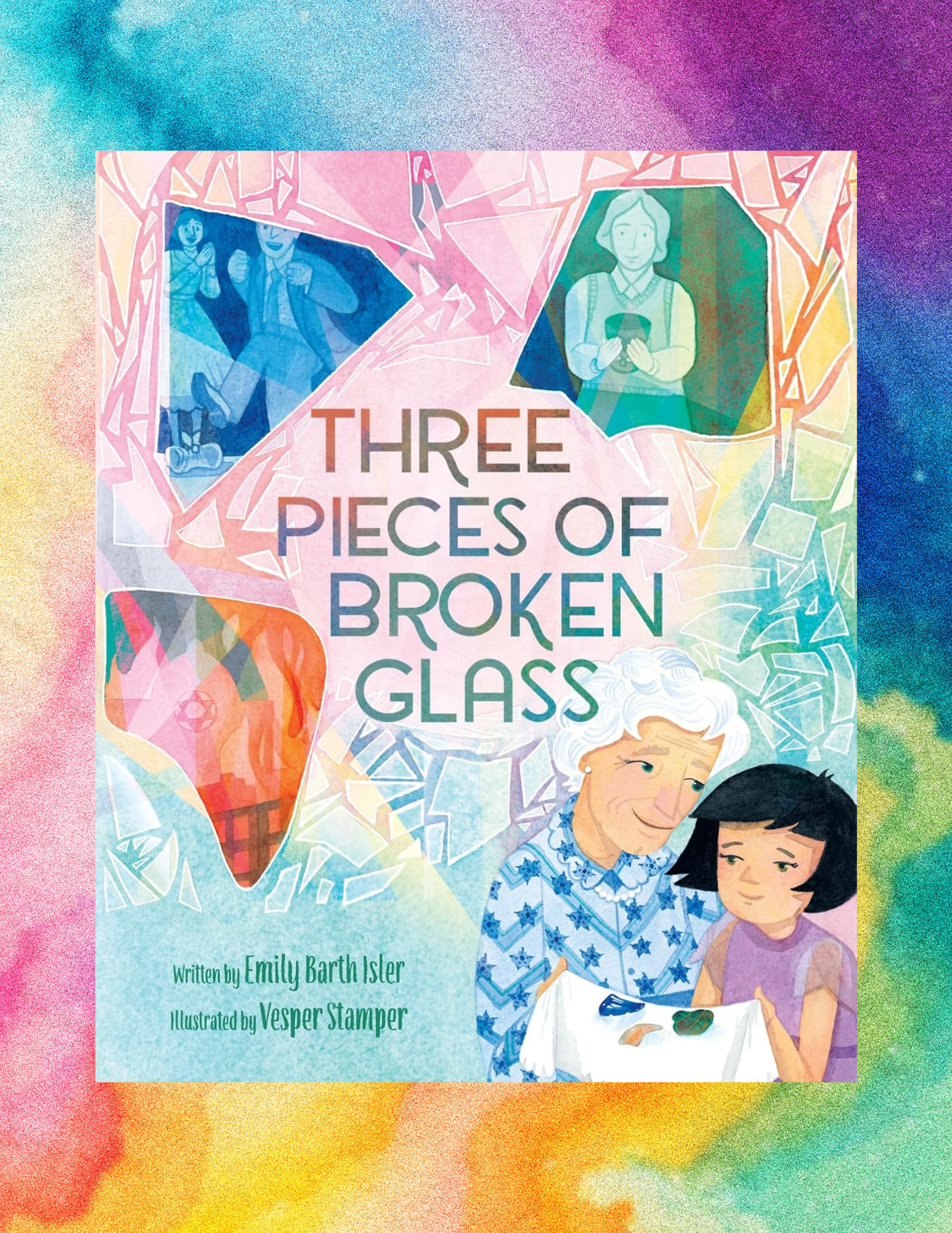
Three Pieces of Broken Glass

Written by Emily Barth Isler | Illustrated by Vesper Stamper


When the narrator visits her Great-Grandmother Inge, it’s always a special occasion with treats served on an elegantly set table. But one day the young girl knocks over one of the shimmering water glasses, sending it crashing to the floor. Great-Grandma Inge dries her granddaughter’s tears, telling her, “‘It’s not only good luck to break glass sometimes but also tradition.'” For the first time the girl notices three shards of glass on the windowsill and asks about them.
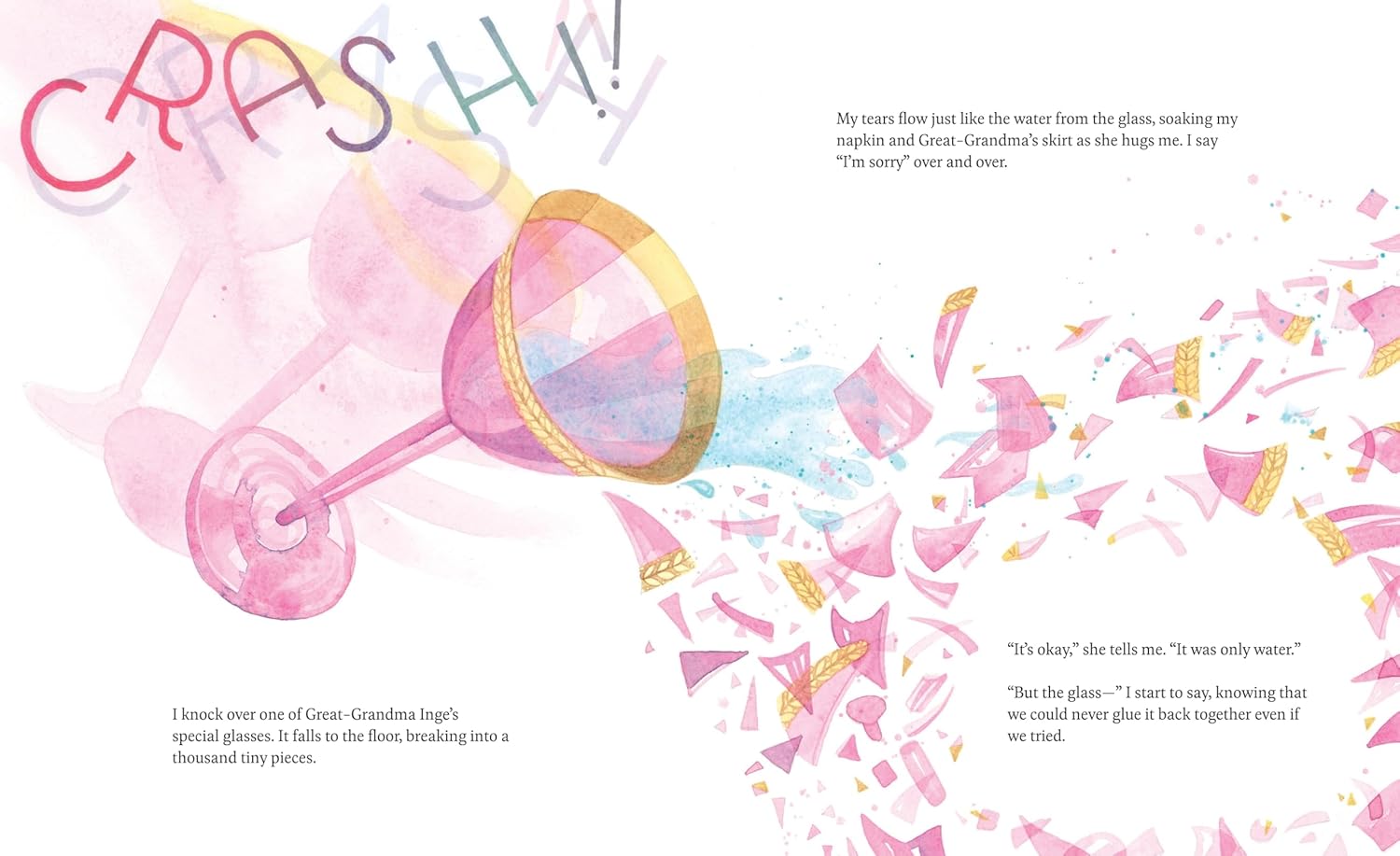
Illustration copyright © 2026 by Vesper Stamper. Text copyright © 2026 by Emily Barth Isler. Courtesy of Abrams Books for Young Readers.

Picking up the first piece, a bit of glimmering blue, Grandma explains the Jewish wedding custom in which the new husband smashes a glass underfoot, the many shards symbolizing their infinite joy and love. The next piece—sharp and clear—holds the memory of Kristallnacht, the Night of Broken Glass, when “‘all the windows in all the Jewish homes and shops and synagogues in Germany. . . were smashed and broken.'” This piece reminds Grandma Inge that while sad, something broken can also “‘save your life.'” She then relates that her parents and others heeded the warning of the broken glass and knew it was time to flee.
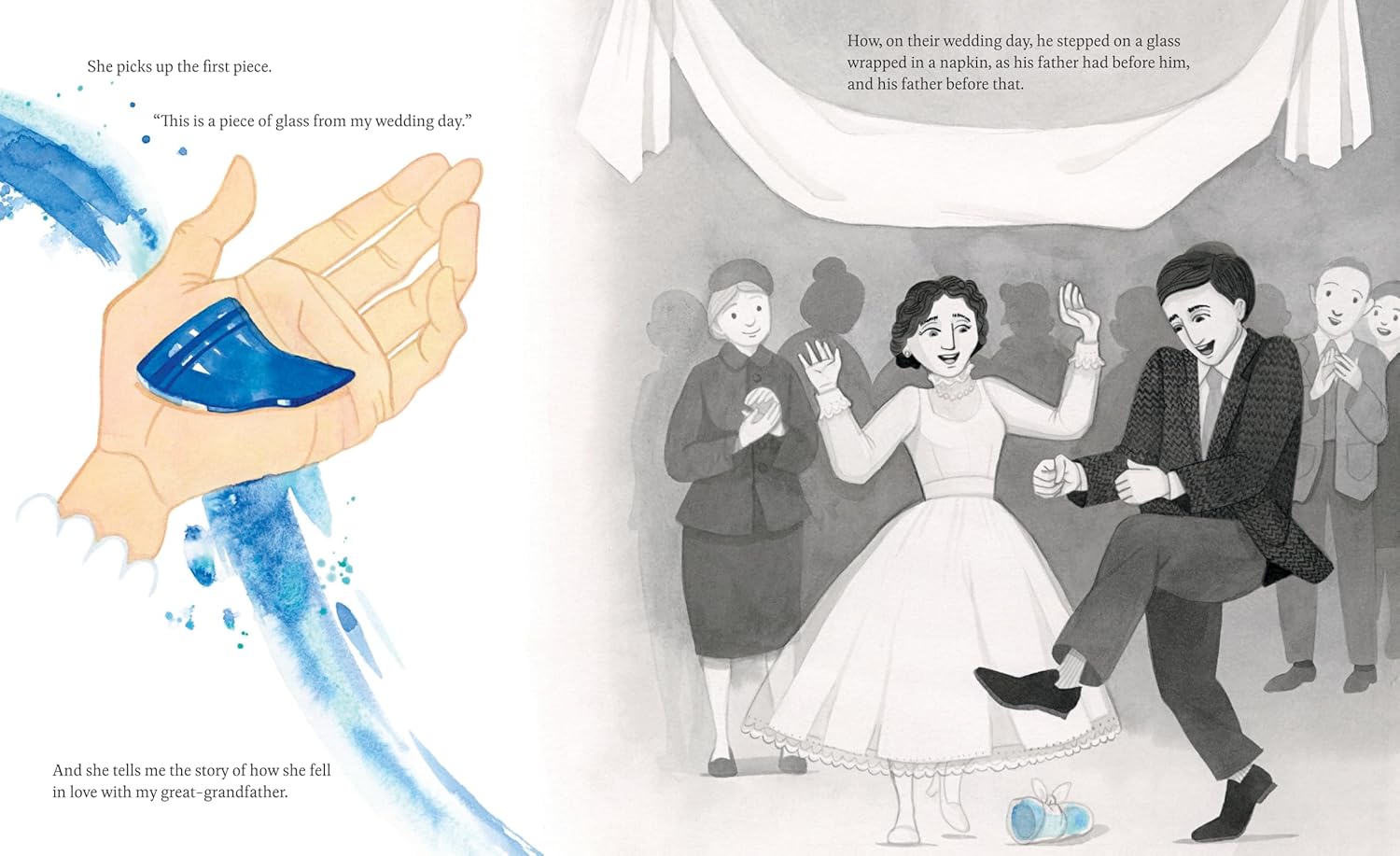
Illustration copyright © 2026 by Vesper Stamper. Text copyright © 2026 by Emily Barth Isler. Courtesy of Abrams Books for Young Readers.

The third came from Inge’s mother’s favorite glass. Inge considers it lucky because on the day her mother dropped it, Inge—who had been separated from her family for a long time—was reunited with them. Inge says she has carried it with her for all her important events, including the days her sons and her great-grand daughter were born. Inge sweeps up the shards from the water glass and gives one piece to her great-grand daughter to remind her of all the stories she’s heard that day and hoping it will bring her luck. Thinking of all the history that had led to that moment, the girl knows that “‘it already has.'”

An Author’s Note, with photographs, reveals that the story is based on the life of her husband’s grandmother Inge as well as her own experiences listening to stories from her relatives and friends who survived the Holocaust.
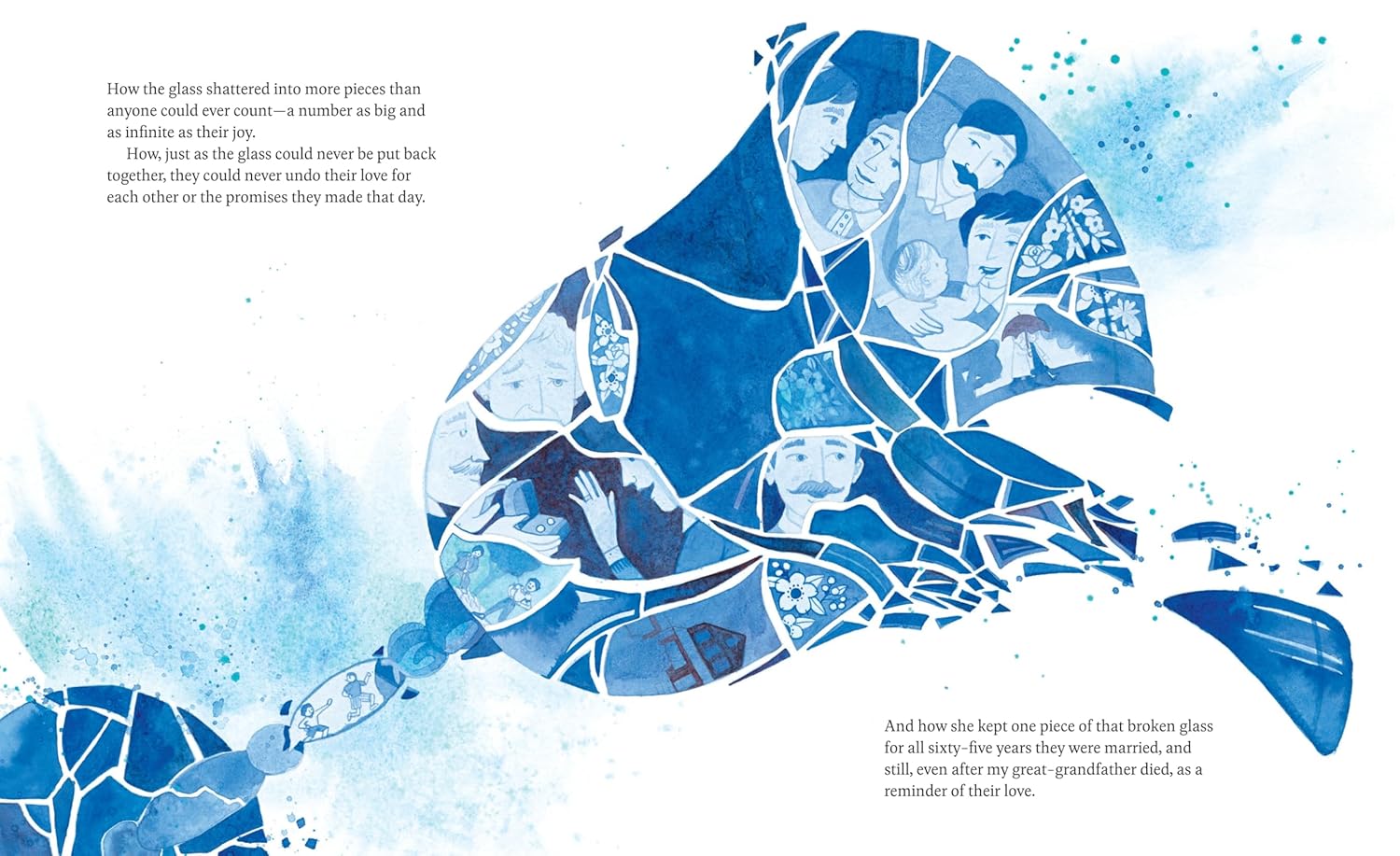
Illustration copyright © 2026 by Vesper Stamper. Text copyright © 2026 by Emily Barth Isler. Courtesy of Abrams Books for Young Readers.

In her poignant intergenerational story, Emily Barth Isler inspires readers to embrace life, its good and hard times and the memories that remain, reminding them that strength, compassion, understanding, love, and our connections to one another are forged from our own and shared experiences. Her references to the Holocaust—Kristallnacht and the separation of Grandma Inge from her family—are sensitively addressed for children while providing the resonant history that unites Inge, her great-granddaughter, and their extended family. The affectionate relationship between Great-Grandmother Inge and her granddaughter is warm and trusting and will swell readers’ hearts.

Vesper Stamper’s watercolor and gouache illustrations radiate emotion and meaning. Her rich color palette reflects the depth of history each glass shard represents, and their lovely rainbow refractions glow as a metaphor for the significance each piece holds. Images of Great-Grandmother Inge and her granddaughter together are compassionate and supportive.

Tender and loving, Three Pieces of Broken Glass is an uplifting book that readers will take to heart. The book is a must for all library collections and would be a meaningful addition to home bookshelves.

Ages 4 – 8

Abrams Books for Young Readers, 2026 | ISBN 978-1419778728

About the Author

Emily Barth Isler is the award-winning author of the middle grade novels AfterMath and The Color of Sound. Her writing has appeared in AllureOprah DailyO QuarterlyKvellerPublisher’s Weekly, Today.com, and more. As the cofounder of the Burbank Book Festival in Southern California, Isler loves providing opportunities for all kinds of stories to be heard. She lives in Los Angeles with her husband and their two kids. Visit her at emilybarthisler.com.

About the Illustrator

Vesper Stamper writes and illustrates books that tell stories of broken things being put back together. Her debut novel, What the Night Sings, was a Sydney Taylor Book Award winner, a National Book Award nominee, and a National Jewish Book Award finalist. She and her husband, Ben Stamper, have all sorts of artistic escapades near New York City, where Vesper teaches illustration at the School of Visual Arts. Visit her at vesperillustration.com.
You can purchase Three Pieces of Broken Glass from these booksellers

Amazon | Barnes & Noble | Bookshop

Picture Book Review

March 30 – It’s Women’s History Month

celebrate-picture-books-picture-book-review-a-most-clever-girl-cover

About the Holiday

National Women’s History Month is all about celebrating women who broke barriers with their intelligence, creativity, courage, persistence, and unwavering confidence in their abilities. In every discipline, women have brought and continue to bring new perspectives, experiences, and talents to make contributions toward a better world. Today’s book celebrates a writer who broadened readers’ understanding of women and their lives through her complex and compelling novels. 

A Most Clever Girl: How Jane Austen Discovered Her Voice

Written by Jasmine A. Stirling | Illustrated by Vesper Stamper


While Jane loved stories, there were some she couldn’t abide. These were stories about women who fainted at the slightest thing, stories about orphans with dark secrets, and stories about couples who fell in love at first sight. To Jane these books were boring, unbelievable, and predictable. But they were all the rage. Instead, Jane like the ridiculous, and she made up her own stories that “poked fun” at the popular literature of the day. When she read her “stories to her family,… they couldn’t stop laughing.”

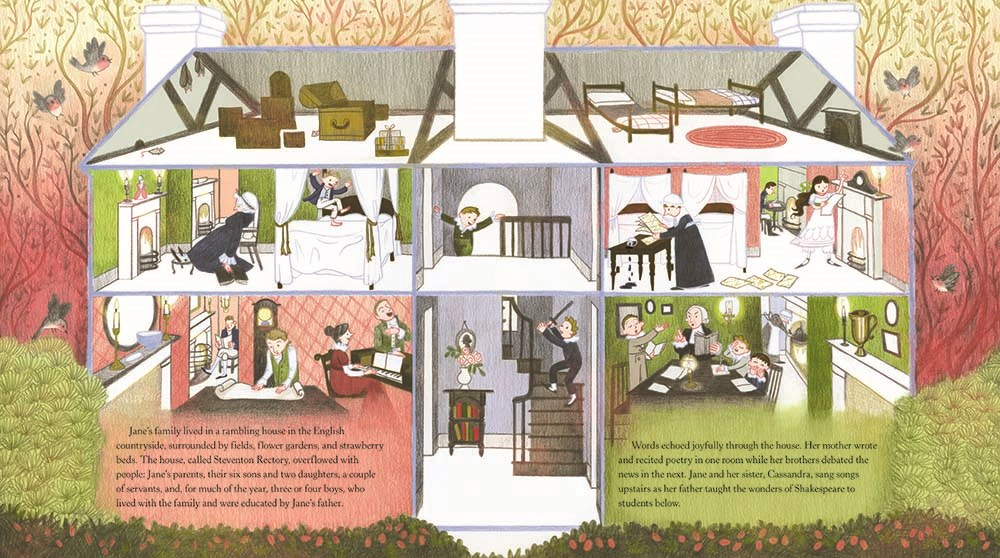
Jane lived in a large house in the English countryside. It was always full of people, fun, and learning. Jane’s father was the village rector of Steventon in Hampshire, England, and her mother wrote poetry. Sometimes Jane’s family (mother, father, six sons, and two daughters) staged plays in the barn. They made their own sets and costumes and played all the roles. When there was quiet time, Jane wrote and wrote in the study her father had created just for her and her sister.

celebrate-picture-books-picture-book-review-a-most-clever-girl-rectory

Image copyright Vesper Stamper, 2021, text copyright Jasmine A. Stirling, 2021. Courtesy of Bloomsbury Children’s Books.

Jane loved the satires she wrote, but “she stared to dream about writing stories that mattered to her. They would come from her own voice—a style that was uniquely hers.” She began to pay attention to tiny personal details, particular conversations, and the way her family, friends, and neighbors interacted. She found it all fascinating. Jane’s father encouraged her writing, saving up to buy her the best pens, blank books, and even a “portable mahogany writing desk.”

Jane had an idea about a story involving “three or four families in a country village,” and soon the characters came to life in her imagination, even when she wasn’t writing. She “wrote three novels before she turned twenty-four. Jane’s voice was clever and real… But something was still missing.”

Over the years as Jane’s brothers left home, the big house grew quiet. When her father stopped teaching, money grew short and Jane’s parents decided to move to a small house in another town, Bath. They sold their possessions, even the books in her father’s library, and left the neighbors and friends they’d known so well. Jane wondered if she would feel at home anywhere else. When they moved into their new home, Jane put away her writing things. Time passed, but “Jane persisted in a very determined, though very silent, disinclination for Bath.” Years passed and Jane spent her time in “busy nothings.”

celebrate-picture-books-picture-book-review-a-most-clever-girl-characters

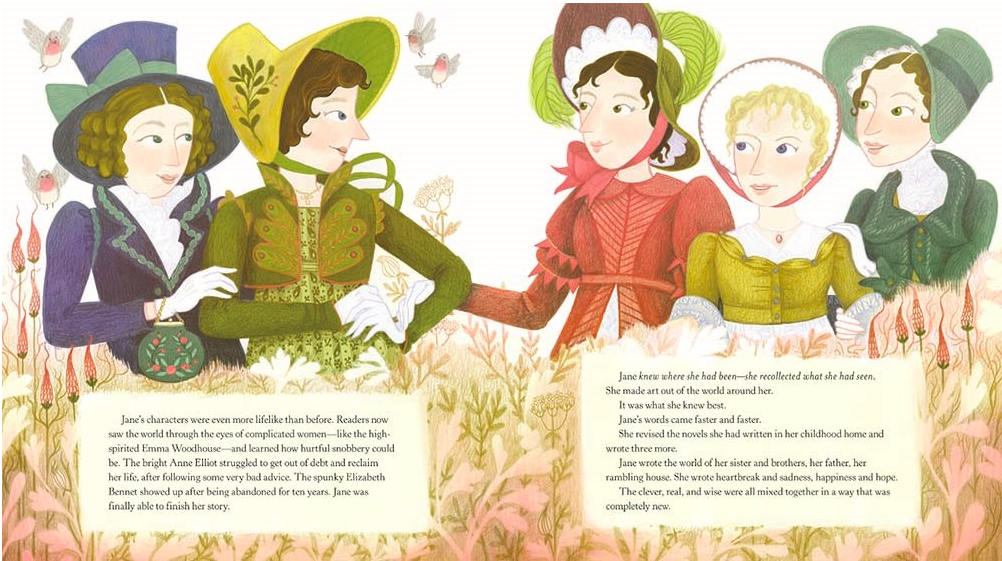
Image copyright Vesper Stamper, 2021, text copyright Jasmine A. Stirling, 2021. Courtesy of Bloomsbury Children’s Books.

When her father died, Jane, her sister, and their mother had to move into a cheap apartment, and then when they could no longer afford that, they moved in with her brother Frank in a rough-and-tumble town. “The weight of Jane’s losses threatened to drown her,” and she still couldn’t write. Four years later, her brother Edward gave her, her sister, and their mother a small cottage near their childhood home. Here she found her way to happiness.

At last she brought out her pens, paper, and writing desk and began to write. Her voice was still clever and “filled with real people, but grief and loss had added something new. Jane’s voice was wise.” Her characters were even more realistic and complicated. She wrote about happiness and wealth, but also about heartbreak and sadness “mixed together in a way that was completely new.”

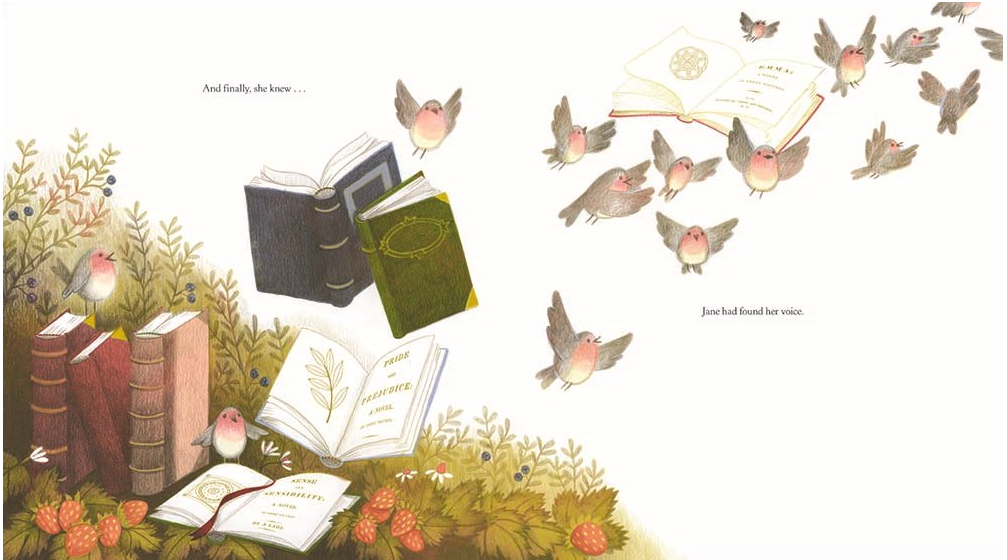
Jane’s novels were a hit—even with the future king of England. George IV loved them so much that his librarian wrote to Jane and asked her to write one of those “love-at-first-sight” stories she hated. Jane wrote back and told him that she could not unless her life depended on it, that she must remain true to her own style. At long last, “Jane had found her voice.”

Extensive backmatter includes a list of quotes from Jane Austen’s novels that are used in the story, more about Jane Austen’s life, Notes from the Author and Illustrator, a list of Austen’s novels, further resources for young readers, and a bibliography.

celebrate-picture-books-picture-book-review-a-most-clever-girl-novels

Image copyright Vesper Stamper, 2021, text copyright Jasmine A. Stirling, 2021. Courtesy of Bloomsbury Children’s Books.

Jasmine A. Stirling’s in-depth biography of Jane Austen shines with specific details about her and her family’s life, their happy times and tribulations that informed her writing and made it so distinctive for its time and beloved even now. Stirling’s engaging and lively storytelling invites children to share the joys and heartaches that molded Jane Austen’s personality and writing. Quotations from Austen’s novels sprinkled throughout the story give young readers a taste of Jane’s writing and the truths and understanding her novels embody.

Dazzlingly lovely, Vesper Stamper’s expressive illustrations draw readers into Jane Austen’s world and give them a glimpse into her childhood and adult experiences as well as the society of the time. Cleverly designed images allow kids to understand how much Jane loved to read, to laugh along with her as she reads the sentimental and gothic stories she satirized, and to see at a glance all the shenanigans, work, and entertaining that went on in her beloved home. The elegance of these surroundings and the dinner parties that enlightened Jane’s writing are realistically reproduced and her characters come to life on the page. A moving metaphorical image shows Jane riding away from the home she loved while pages of her novels fly out of the writing desk strapped to the back of the carriage. Jane’s sadness is depicted on pages sketched in gray, but her vibrancy returns with her brother’s generosity and the novels that finally take wing.

A superb biography of a beloved and influential writer that will spark enthusiasm for Jane Austen’s novels as well as literature and writing in general, A Most Clever Girl: How Jane Austen Discovered Her Voice is a must for students of all ages as well as for those who simply love reading and writing stories. The book would make an exceptional addition to lesson plans for readers from elementary school to high school and is highly recommended for home, school, and public library collections.

Ages 5 – 12 and up

Bloomsbury Children’s Books, 2021 | ISBN 978-1547601103

Discover more about Jasmine A. Stirling and her books on her website.

To learn more about Vesper Stamper, her books, and her art, visit her website.

Women’s History Month Activity

celebrate-picture-books-picture-book-review-jane-austen-coloring-page

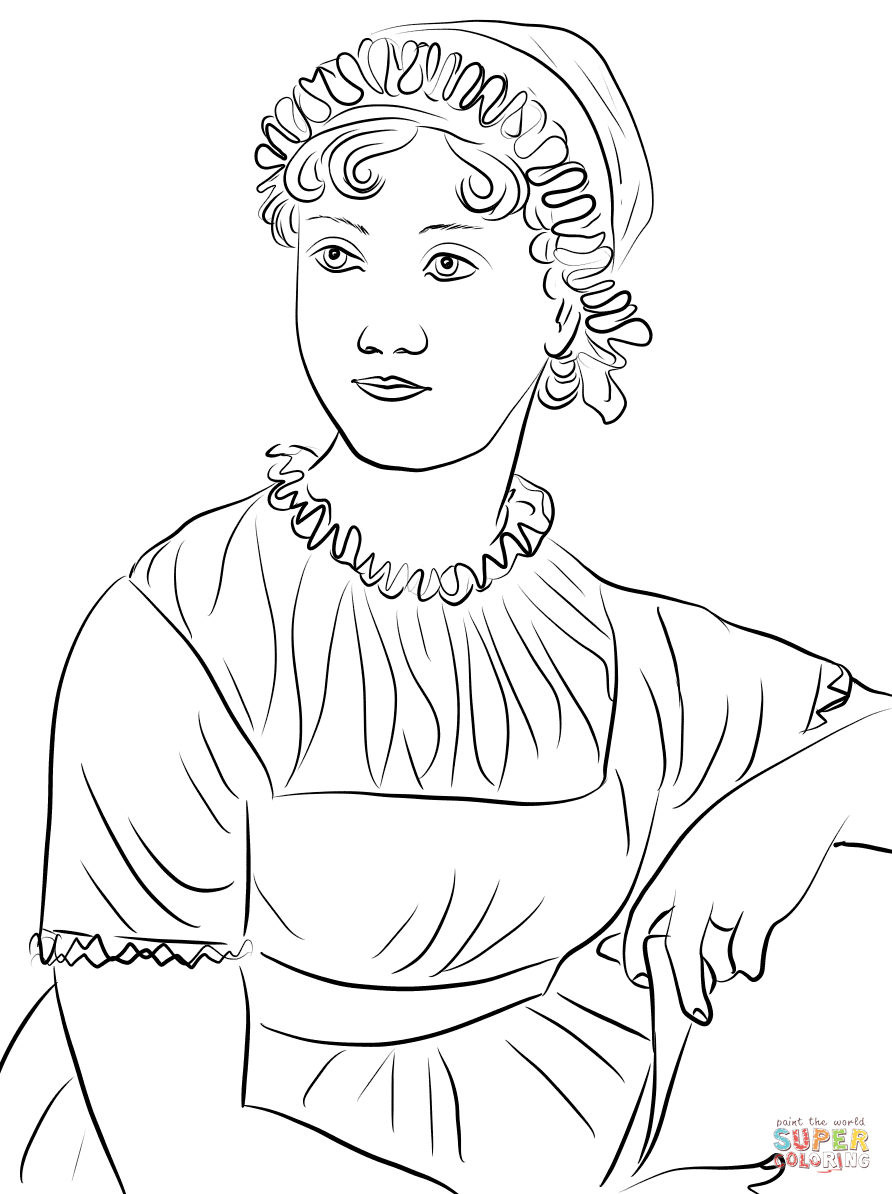
Jane Austen Coloring Page


Enjoy this printable coloring page of Jane Austen as you learn more about this clever writer.

Jane Austen Coloring Page

celebrate-picture-books-picture-book-review-a-most-clever-girl-cover

You can find A Most Clever Girl: How Jane Austen Discovered Her Voice at these booksellers

Amazon | Barnes & Noble | Books-a-Million

To support your local independent bookstore, order from

Bookshop | IndieBound

Picture Book Review