September 29 – Read a New Book Month

Even though we’re saying goodbye to Read a New Book Month, families don’t have to stop seeking out new books at their local bookstore or library. In fact, fall, with its lead-in to the holidays is one of the busiest times of the year for publishers as they release wonderful books that share traditions and take readers through the winter in thoughtful, funny, and always surprising ways. Maybe that’s why December is also often recognized as Read a New Book Month! Really, there’s never a time when you don’t want to celebrate new books—like today’s!

Thank you to Greystone Books for sending me this book for review!

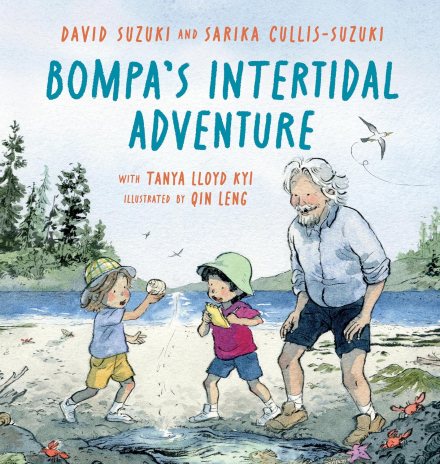
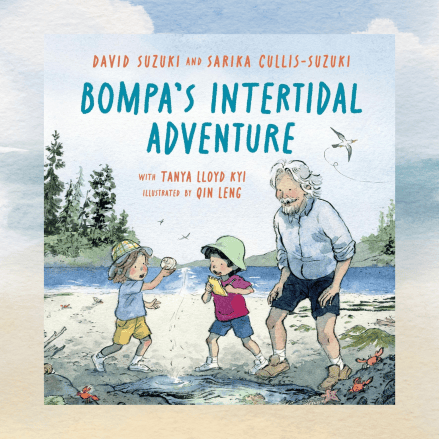
Bompa’s Intertidal Adventure (Nature Adventures with Bompa 2)

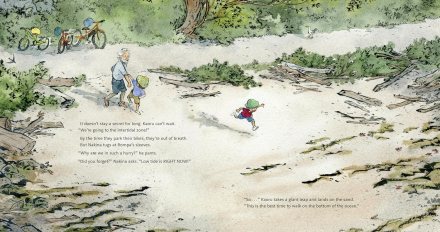
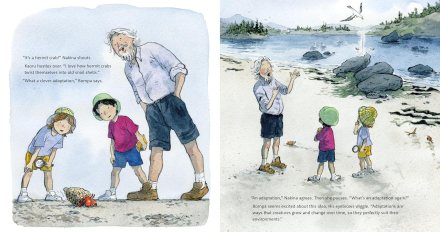
On the last day of summer, twins Nakina and Kaoru wait on the beach for Bompa, their grandfather, and one of his adventures. As soon as Bompa rides up on his new e-bike, Kaoru takes the lead to the intertidal zone, where low tide promises to reveal the secrets on “the bottom of the ocean.” He’s hoping to find some interesting animals to study with their scientist grandpa and extend summer, if only for just a bit. Kaoru and Nakina don’t have to wait long. Bompa is looking at a snail shell that suddenly “scuttles away.” The children hurry over to watch the hermit crab as Bompa explains about adaptations. The twins imagine themselves as hermit crabs, camping out or even carrying “fancy research labs inside [their] shells.”
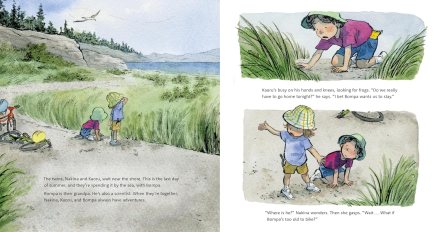
Text copyright © 2026 by David Suzuki and Sarika Cullis-Suzuki with Tanya Lloyd Kyi. Illustration copyright © 2026 by Qin Leng. Published by Greystone Books copyright © 2026.

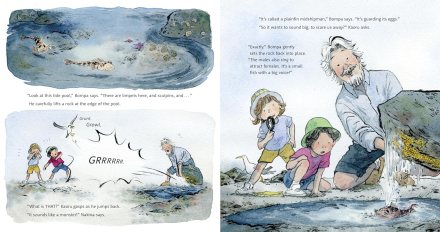
Soon they come to a tidal pool where they find limpets and sculpins and a very loud plainfin midshipman under a rock, protecting its eggs. They discover different types of seaweed, and Bompa explains how seaweeds have adapted to stay rooted to the ocean floor so they aren’t swept away by the current. Bompa talks about how many of the creatures in the intertidal zone must adapt to the cyclical wet and dry conditions. Nakina wishes they could breath underwater to “explore a kelp forest.”
Text copyright © 2026 by David Suzuki and Sarika Cullis-Suzuki with Tanya Lloyd Kyi. Illustration copyright © 2026 by Qin Leng. Published by Greystone Books copyright © 2026.

When Kaoru finds a discarded bottle in a tide pool, Bompa grows sad, thinking of what an amazing place the intertidal zone is. Nakina takes his hand and asks why. Bompa explains how “humans are changing the climate, and . . . putting more and more buildings along the shoreline and . . . polluting the oceans. Nakina worries that the animals won’t be able to adapt fast enough to the changes, and says, “‘We all need to learn how important [the intertidal zone] is.”
Text copyright © 2026 by David Suzuki and Sarika Cullis-Suzuki with Tanya Lloyd Kyi. Illustration copyright © 2026 by Qin Leng. Published by Greystone Books copyright © 2026.

Listening, while watching “tiny crabs scuttle back and forth,” Kaoru adds that maybe it is people who “need to adapt.” He suggests that when they get back to school, he and Nakina can talk to their friends about the intertidal zone and join the school’s annual shoreline cleanup. The two children imagine all the ways they can help as they grow older. They can’t wait to get back home to share with their classmates everything they’ve seen and that Bompa has taught them.

Back matter includes a list of ways people can protect the intertidal zone, a Shoreline Search and Find puzzle using illustrations from the story, Intertidal Facts, and a close-up look and fact about some creatures in the story.
Text copyright © 2026 by David Suzuki and Sarika Cullis-Suzuki with Tanya Lloyd Kyi. Illustration copyright © 2026 by Qin Leng. Published by Greystone Books copyright © 2026.

David Suzuki, Sarika Cullis-Suzuki, and Tanya Lloyd Kyi’s story reveals the wonder of intertidal zones, which are home to intriguing creatures who have adapted to take advantage of the best of their sometimes wet, sometimes dry home. As Kaoru and Nakina marvel over what they find, readers will share their excitement and interest. Bompa’s clear explanations of certain animals’ adaptations and behaviors will spur children at home and in the classroom to learn more about this special ocean zone and how they can protect it.

Qin Leng’s tranquil ink and watercolor illustrations beautifully covey the features of the intertidal zone along the edge of the ocean’s reach. Scattered driftwood, sea birds, crabs, shells, seaweed, and hidden creatures create a lovely true-to-life landscape for the children’s and Bompa’s explorations. As if peering into a mysterious treasure box, readers will be fascinated to discover what lies within the shallow tidal pools, under rocks, and hiding in crevices. Playful scenes at the beach as well as images of Kaoru and Nakina growing into advocates for ocean conservation give children an idea of how people can use all types of talents to help protect these vulnerable natural areas.

Bompa’s Intertidal Adventure is a gentle story with a profound impact, reminding readers of all ages of the uniqueness and importance of intertidal zones and the role they can play in preserving them. The book can spark lessons or projects for families, classrooms, and child-focused organizations and is a must for public and school libraries.

Ages 4 – 8

Greystone Kids, 2026 | ISBN 978-1778402531

About the Authors

David Suzuki is an internationally renowned scientist and environmentalist who has made it his life’s work to help humanity understand, appreciate, respect, and protect nature. He is the co-founder of the David Suzuki Foundation and the author of more than fifty books. He lives in Vancouver, BC, and is a father of five and grandfather to ten, including twins Nakina and Kaoru. Connect with him and the David Suzuki Foundation at davidsuzuki.org.

Sarika Cullis-Suzuki is co-host of The Nature of Things on CBC. Her life’s work is dedicated to science, communication, and oceans. Her research in marine biology has taken her from the high seas, to remote tropical islands, to the coastal intertidal zones of British Columbia for her PhD, where she studied the singing fish, the plainfin midshipman. Visit her at sarikacullissuzuki.com.

Tanya Lloyd Kyi is the award-winning author of more than thirty books for children and young adults. Tanya lives in Vancouver, BC, where she teaches for the University of British Columbia’s School of Creative Writing. Visit her at tanyalloydkyi.com.

About the Illustrator

Qin Leng is a visual development artist and an illustrator and author of children’s books. Throughout her career, she has illustrated picture books, magazines, and book covers with publishers around the world. She lives in Toronto with her husband and her son. You can visit her at qinillustrations.com.
You can purchase Bompa’s Intertidal Adventure from these booksellers

Amazon | Barnes & Noble | Bookshop

April 24 – Arbor Day

About the Holiday

Arbor Day, a national celebration of trees, began as a campaign by J. Morton Sterling and his wife after they moved from Michigan to Nebraska in 1854 and advocated for planting trees as windbreaks for crops, to keep soil from washing away, as building materials, and for shade. In 1872, Morton proposed that a tree-planting day be established in April. On the first Arbor Day nearly one million trees were planted in Nebraska. The idea was made official in 1874, and soon, other states joined in. In 1882 schools began taking part. Today, most states celebrate Arbor Day on the last Friday of April or day more suited for their growing season. To learn about events in your area, find activities to download, and more, visit the Arbor Day Foundation website.

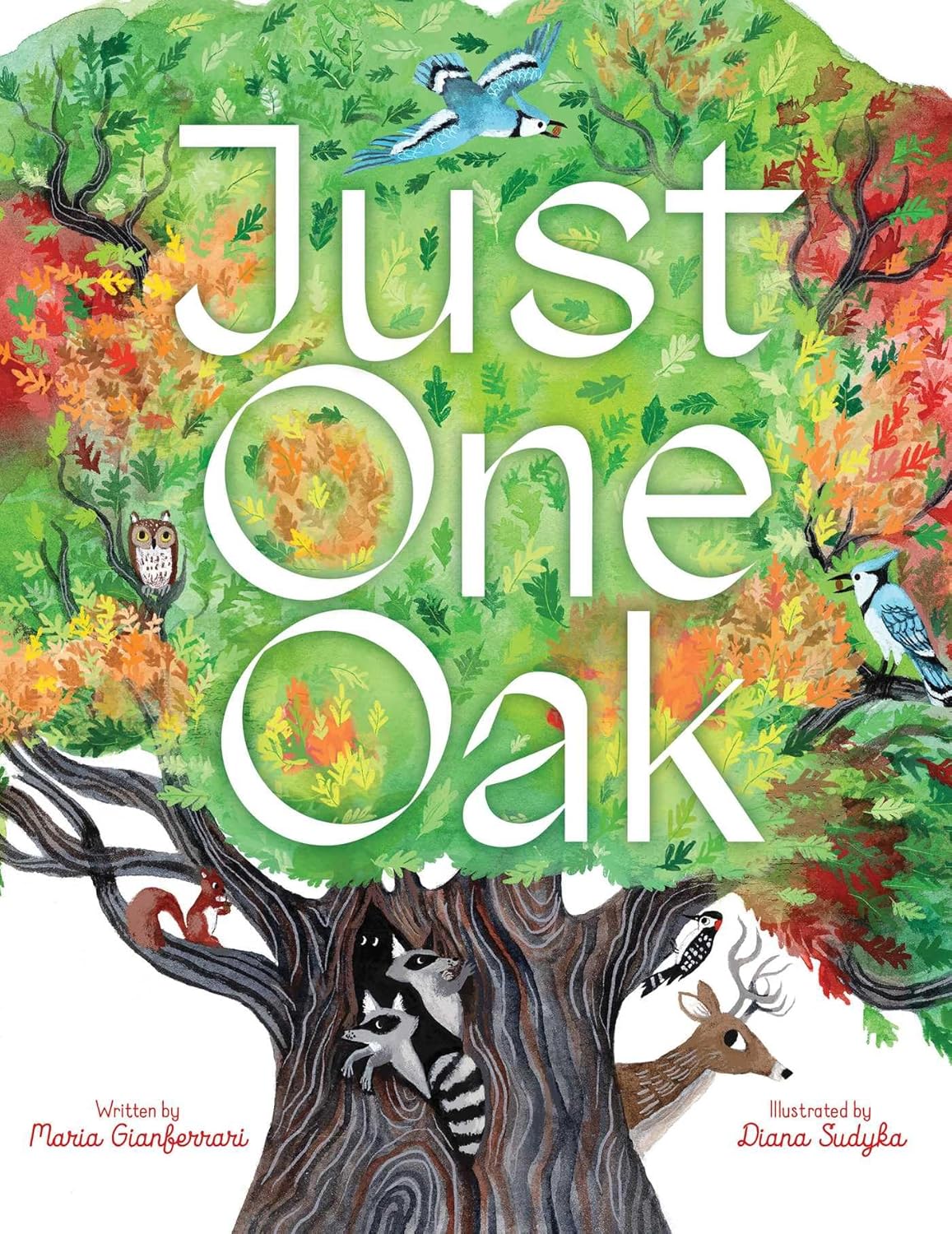
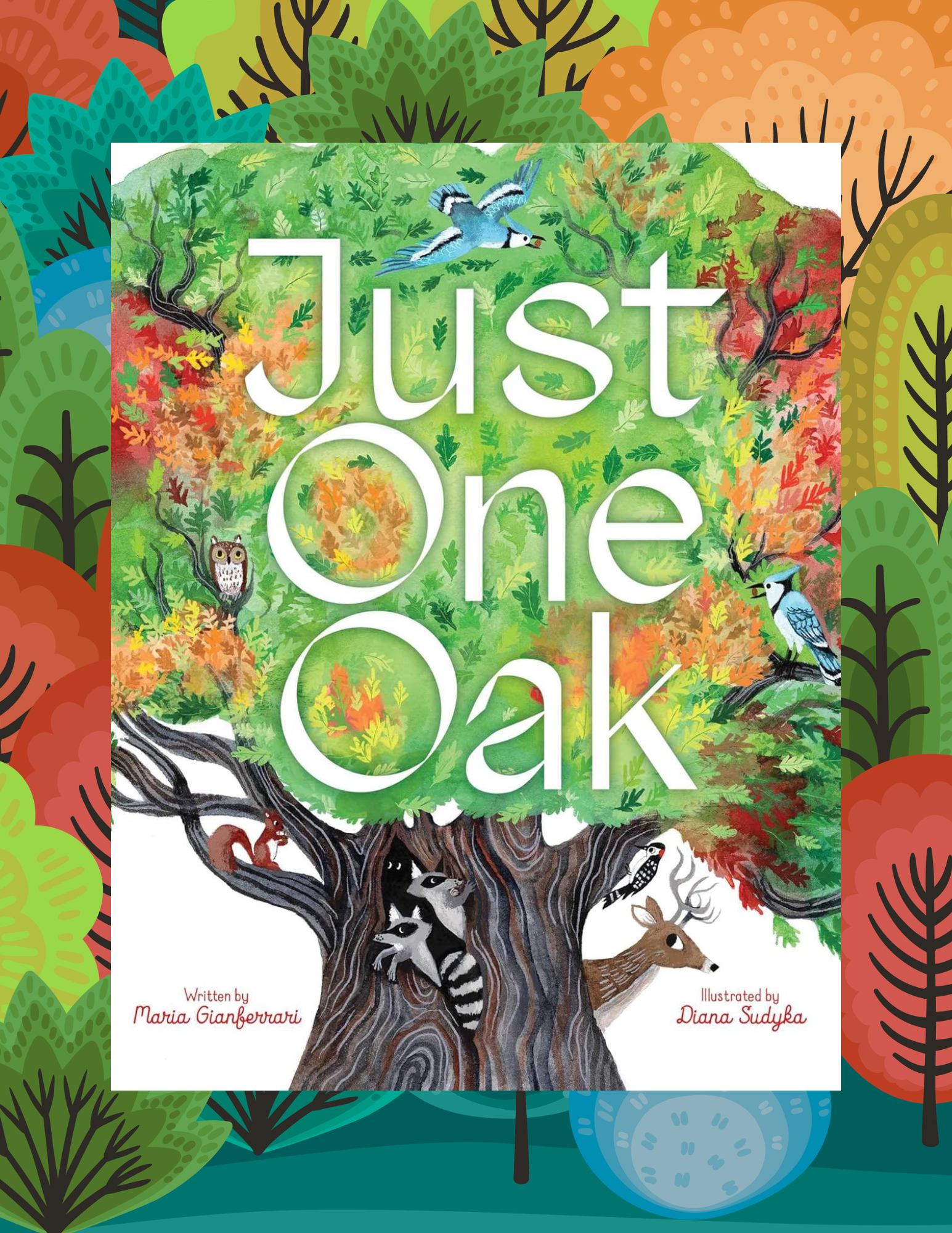
Just One Oak: What a Single Tree Can Be

Written by Maria Gianferrari | Illustrated by Diana Sudyka


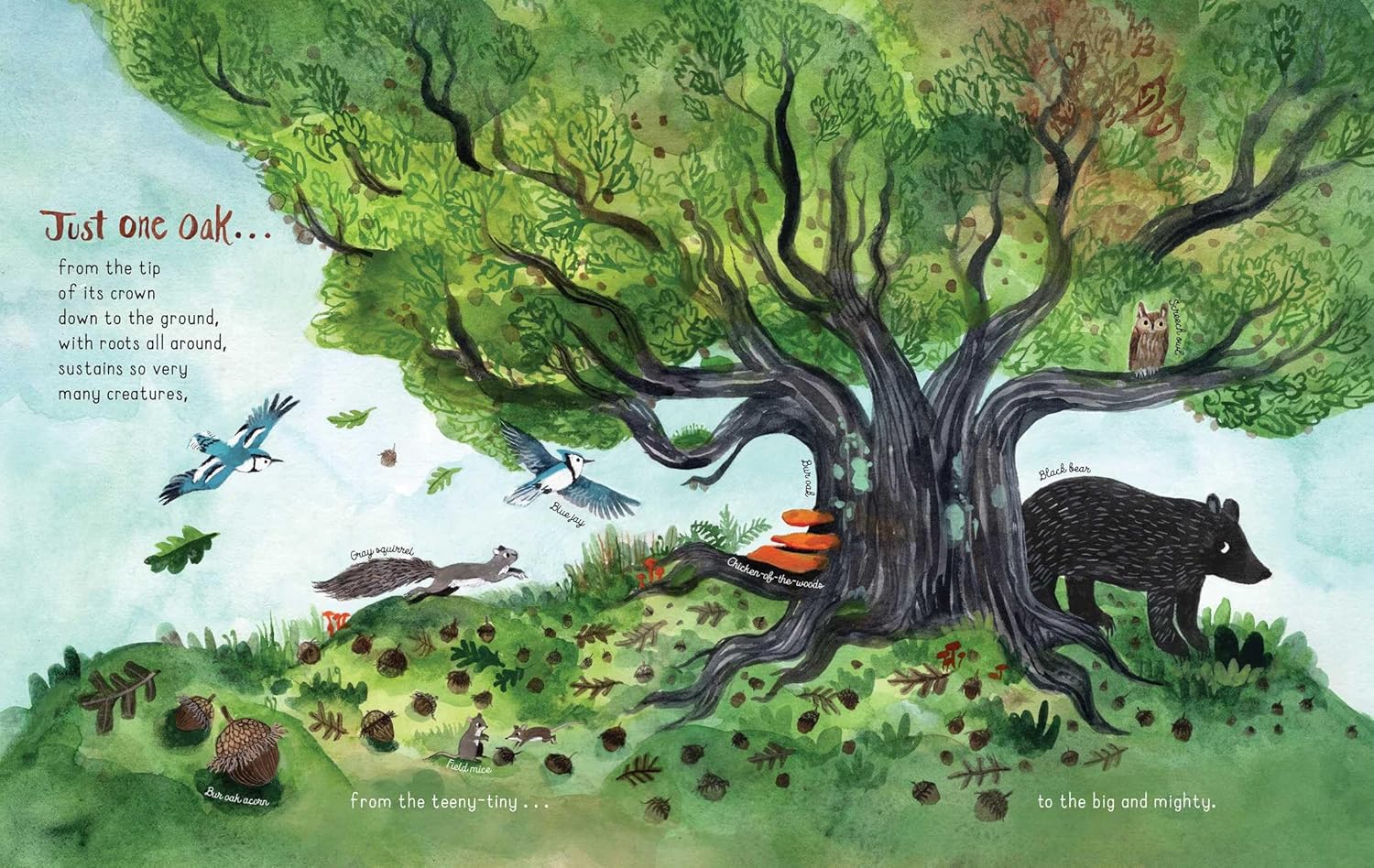
“Just one oak . . . from the tip of its crown down to the ground, with roots all around, sustains so very many creatures, from the teeny-tiny to the big and mighty.” So begins Maria Gianferrari’s fascinating exploration of all the ways oak trees contribute to and sustain the ecosystem where they live. From their distinctive leaves to their shaggy bark to their incredible acorns, oak trees are self-protecting while providing shelter and food for an amazing array of wildlife.

Illustration copyright © 2026 by Diana Sudyka. Text copyright © 2026 by Maria Gianferrari. Courtesy of Beach Lane Books.

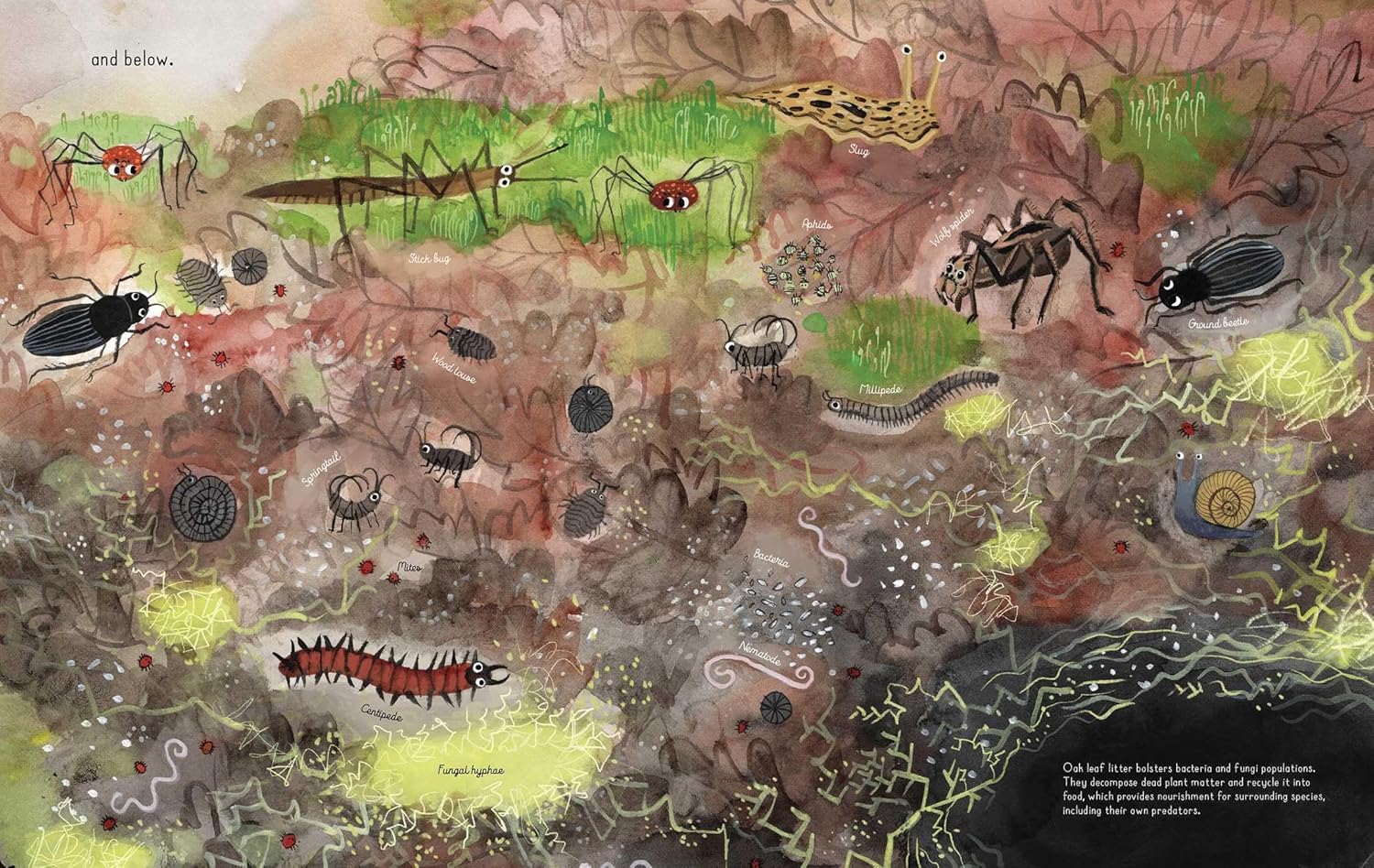
At ground level, Gianferrari shows how “leaf litter, the blanket beneath its boughs,” creates the perfect environment for snails, insects, amphibians, fungi, and more to hide, feed, and grow. And that little acorn nestled under the leaves? Gianferrari digs in to reveal how a mighty oak begins with just one taproot that branches and branches until its root system spreads “farther than the canopy is wide.”

Illustration copyright © 2026 by Diana Sudyka. Text copyright © 2026 by Maria Gianferrari. Courtesy of Beach Lane Books.

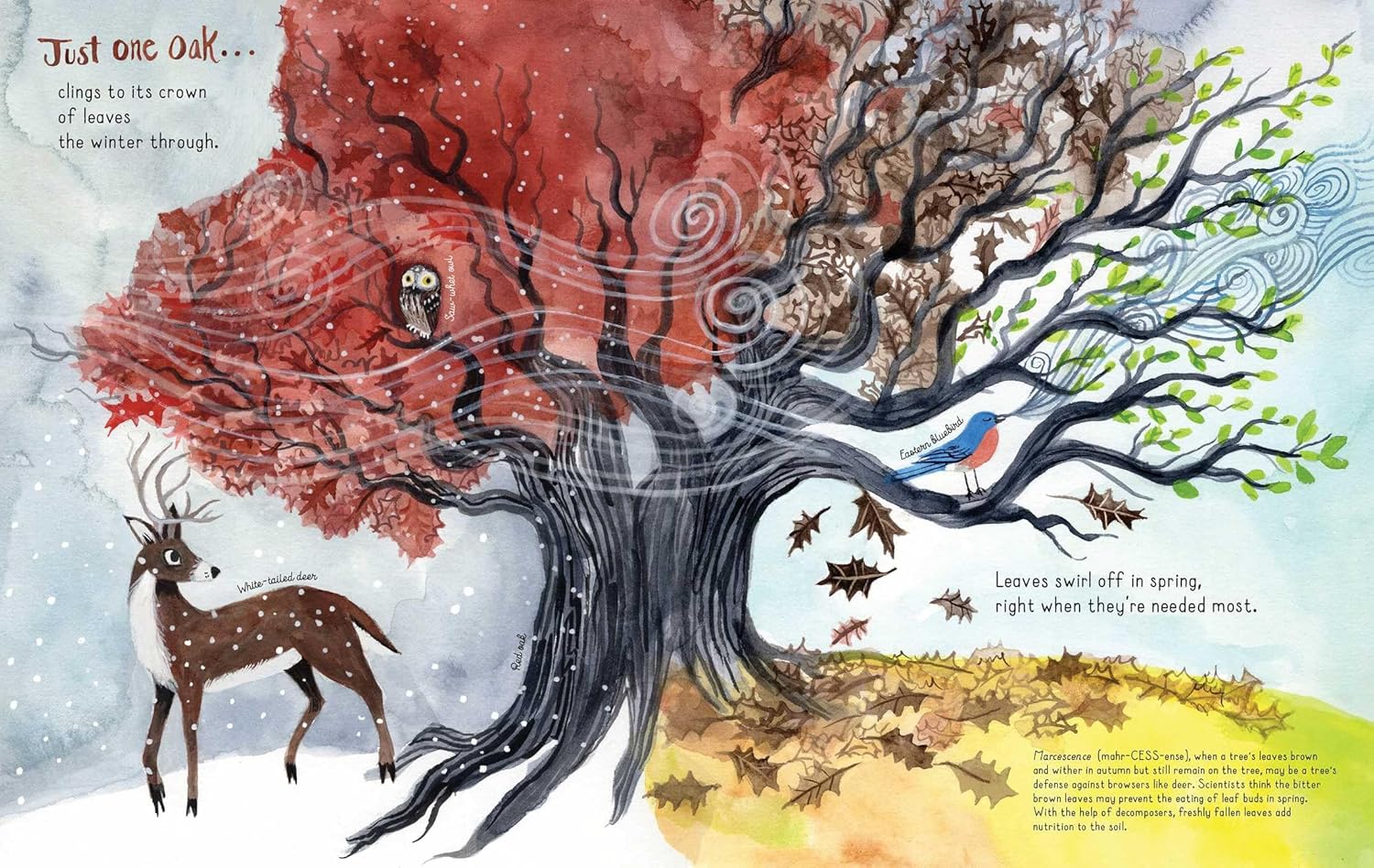
And oh those acorns! They’re so much more than their tiny size may lead you to believe. Just one acorn can house one creature or hundreds. They are a universal “superfood” as well as a tidy seed that can reproduce where it drops or be carried far afield. When it grows up, “just one oak creates a microclimate,” with its impressive canopy and prevents flooding, erosion, and drought with its far-reaching roots. Yes, “just one oak is beautiful and bountiful to all.”

Illustration copyright © 2026 by Diana Sudyka. Text copyright © 2026 by Maria Gianferrari. Courtesy of Beach Lane Books.

Maria Gianferrari takes readers outdoors to get a close-up view of one oak tree, and by extension an enlightened understanding of the reach of this keystone species. Her lyrical introductions, capped with a repeated “Just one oak . . .”—a phrase that reinforces the contributions of these trees, give way to paragraphs of factual information. Each of these paragraphs are packed with specific information about the types of creatures sustained by just one tree and the benefits they enjoy. The numbers here are simply astounding and could inspire many cross-curricular lessons in math, science, language arts, art, and more. 

Diana Sudyka’s nature illustrations are beautiful, exciting, and full of the kinds of small, impactful details readers love and that expand their understanding of the text (especially for visual learners). Animals scamper, birds feast, and an entire community of creepy-crawlies scurry through leaf litter and below in Sudyka’s action-filled pages. Each spread will have children lingering to discover all the wonders of an oak tree.

A glorious celebration of the oak tree and the species that rely on it, Just One Oak will spark curiosity and an appreciation for the interconnections among wildlife. The book will delight any nature lover and is a must for school and public libraries. 

 Ages 4 – 8+

Beach Lane Books, 2026 | ISBN 978-1665961042

About the Author

Maria Gianferrari is a picture book reader/writer, tea-drinker, dog-lover, and birdwatcher. Maria writes books that honor our bonds with creatures both domestic and wild and that celebrate the natural world around us, including Fungi Grow and Just One Oak, illustrated by Diana Sudyka; Ice Cycle: Poems about the Life of Ice, illustrated by Jieting Chen; Being a Dog: A Tail of Mindfulness, illustrated by Pete Oswald; Bobcat Prowling, illustrated by Bagram Ibatouilline; and Be a Tree!, illustrated by Felicita Sala. She lives with her family in Massachusetts in a house encircled by trees. To learn more about Maria, visit her website: MariaGianferrari.com.

About the Illustrator 

Diana Sudyka is a Chicago-based illustrator. Early on, she created screen-printed gig posters for musicians but currently her illustration work focuses on young adult, middle grade, and children’s books. She has illustrated several volumes of the award-winning book series, including The Mysterious Benedict Society by Trenton Lee Stewart and Circus Mirandus by Cassie Beasley, as well as the picture books Would You Come Too? by Liz Garton Scanlon, Sometimes Rain by Meg Fleming, What Miss Mitchell Saw by Hayley Barrett, How to Find a Bird by Jennifer Ward, and Fungi Grow and Just One Oak by Maria Gianferrari. Visit her at DianaSudyka.com.

Arbor Day Activities

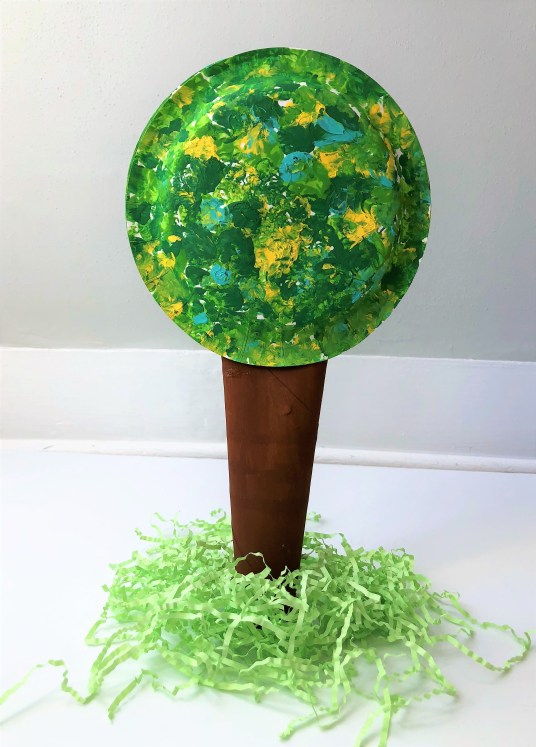
celebrate-picture-books-picture-book-review-paper-plate-tree-craft-2


Paper Plate Tree


On Earth Day children love planting trees in their yard or as part of a community project. With this easy craft, they can also plant a tree on their wall or bulletin board.

Supplies

  • Two paper plates 
  • Paper towel tube
  • Brown craft paint
  • Green craft paint (using a variety of green paints adds interest)
  • Paintbrush, cork, or cut carrot can be used to apply paint
  • Glue or hot glue gun or stapler

Directions

  1. Paint the paper towel tube brown, let dry
  2. Paint the bottoms of the two paper plates with the green (or other color) paints, let dry
  3. Flatten about 4 inches of the paper towel tube 
  4. Glue or tape the flat part of the paper towel tube to the unpainted side of one paper plate
  5. Glue the edges of the two paper plates together, let dry.
  6. Straighten the tree so that it can stand up, or hang your tree on a wall, bulletin board, in a window

Just One Oak Activity Kit from Beach Lane Books


Teachers and other educators can find a comprehensive Activity Kit with discussion questions, hands-on activities, and more to accompany Just One Oak on Maria Gianferrari’s website.

You can purchase Just One Oak: What a Single Tree Can Be from these booksellers

Amazon | Barnes & Noble | Bookshop

Picture Book Review