April 24 – Arbor Day

About the Holiday

Arbor Day, a national celebration of trees, began as a campaign by J. Morton Sterling and his wife after they moved from Michigan to Nebraska in 1854 and advocated for planting trees as windbreaks for crops, to keep soil from washing away, as building materials, and for shade. In 1872, Morton proposed that a tree-planting day be established in April. On the first Arbor Day nearly one million trees were planted in Nebraska. The idea was made official in 1874, and soon, other states joined in. In 1882 schools began taking part. Today, most states celebrate Arbor Day on the last Friday of April or day more suited for their growing season. To learn about events in your area, find activities to download, and more, visit the Arbor Day Foundation website.

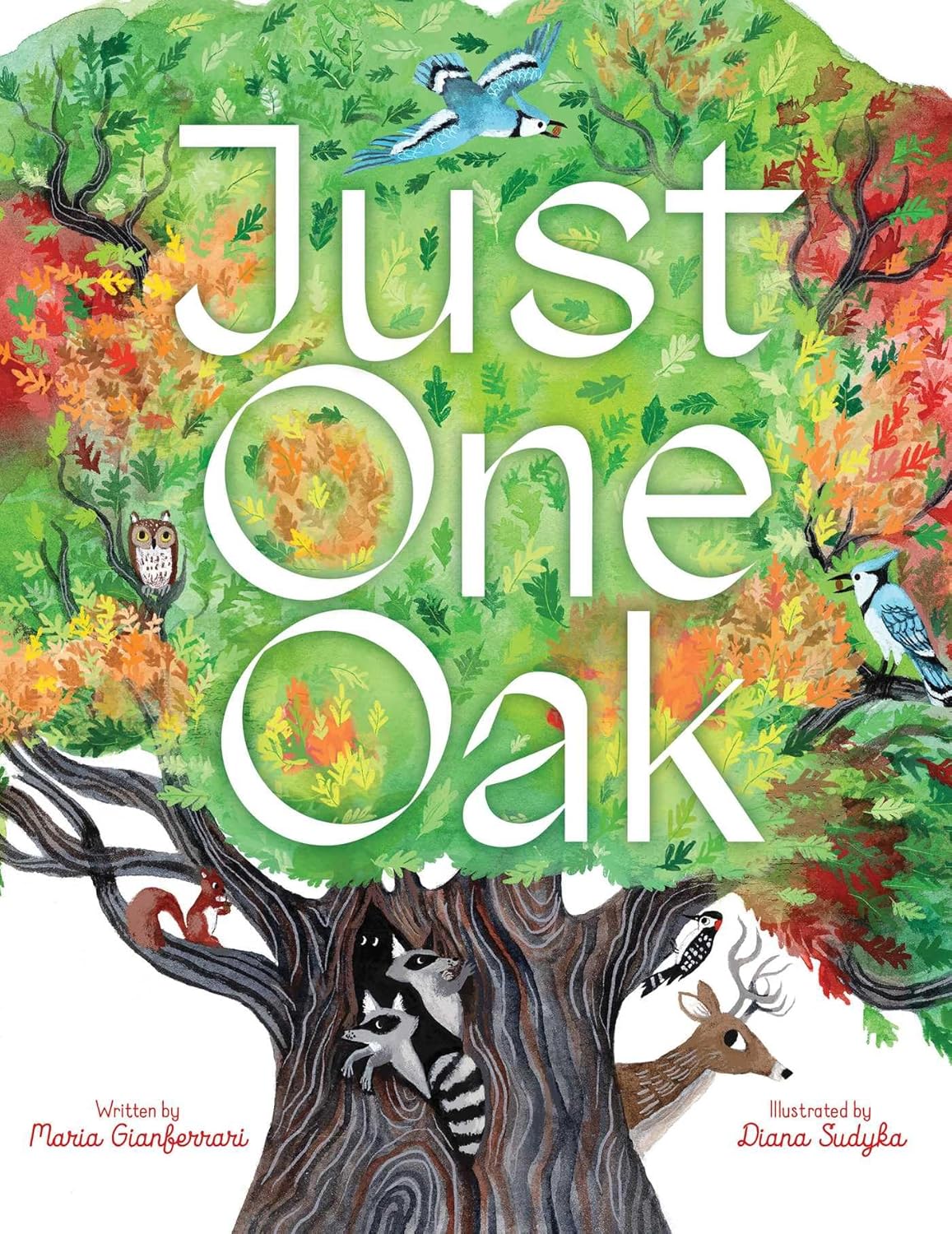
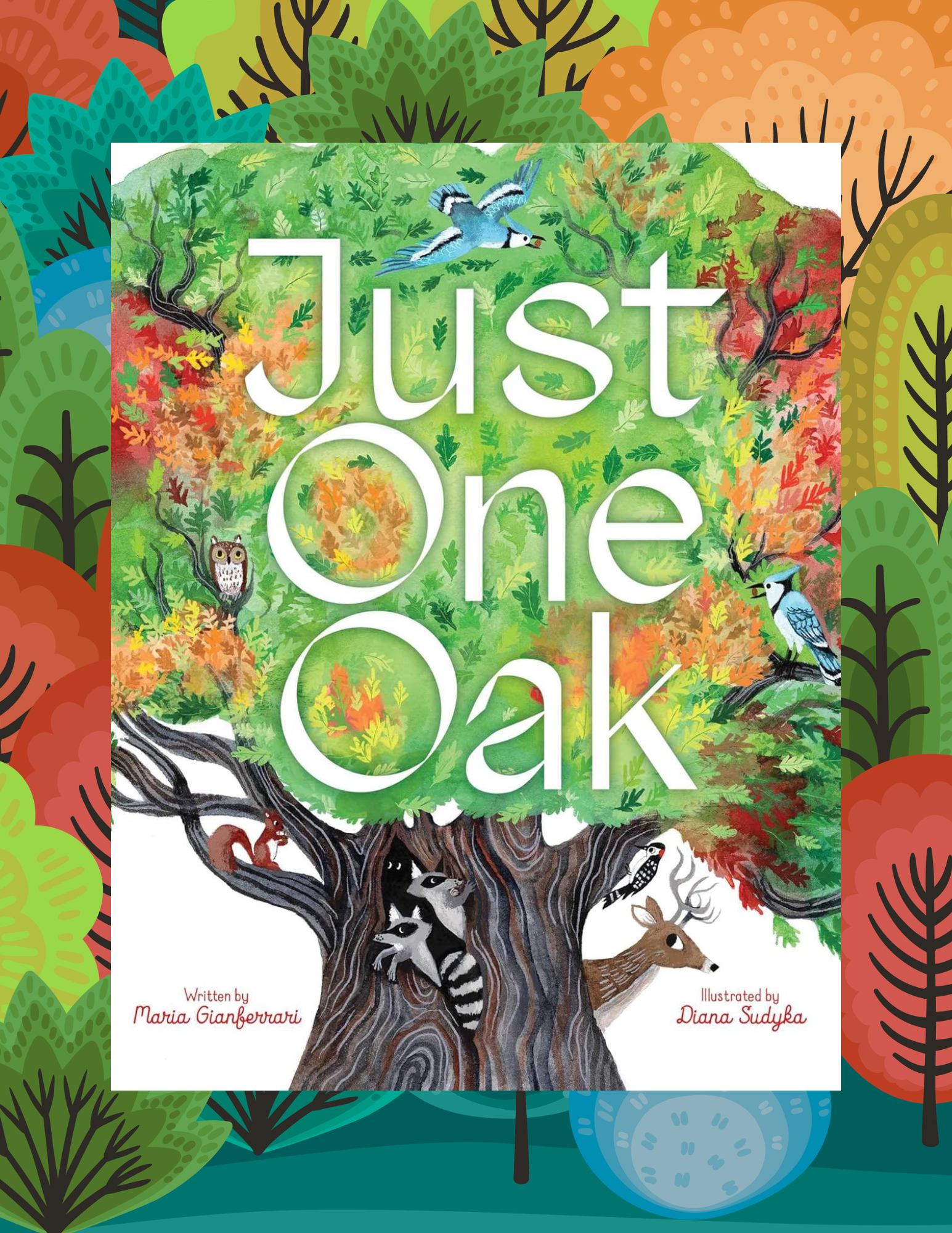
Just One Oak: What a Single Tree Can Be

Written by Maria Gianferrari | Illustrated by Diana Sudyka


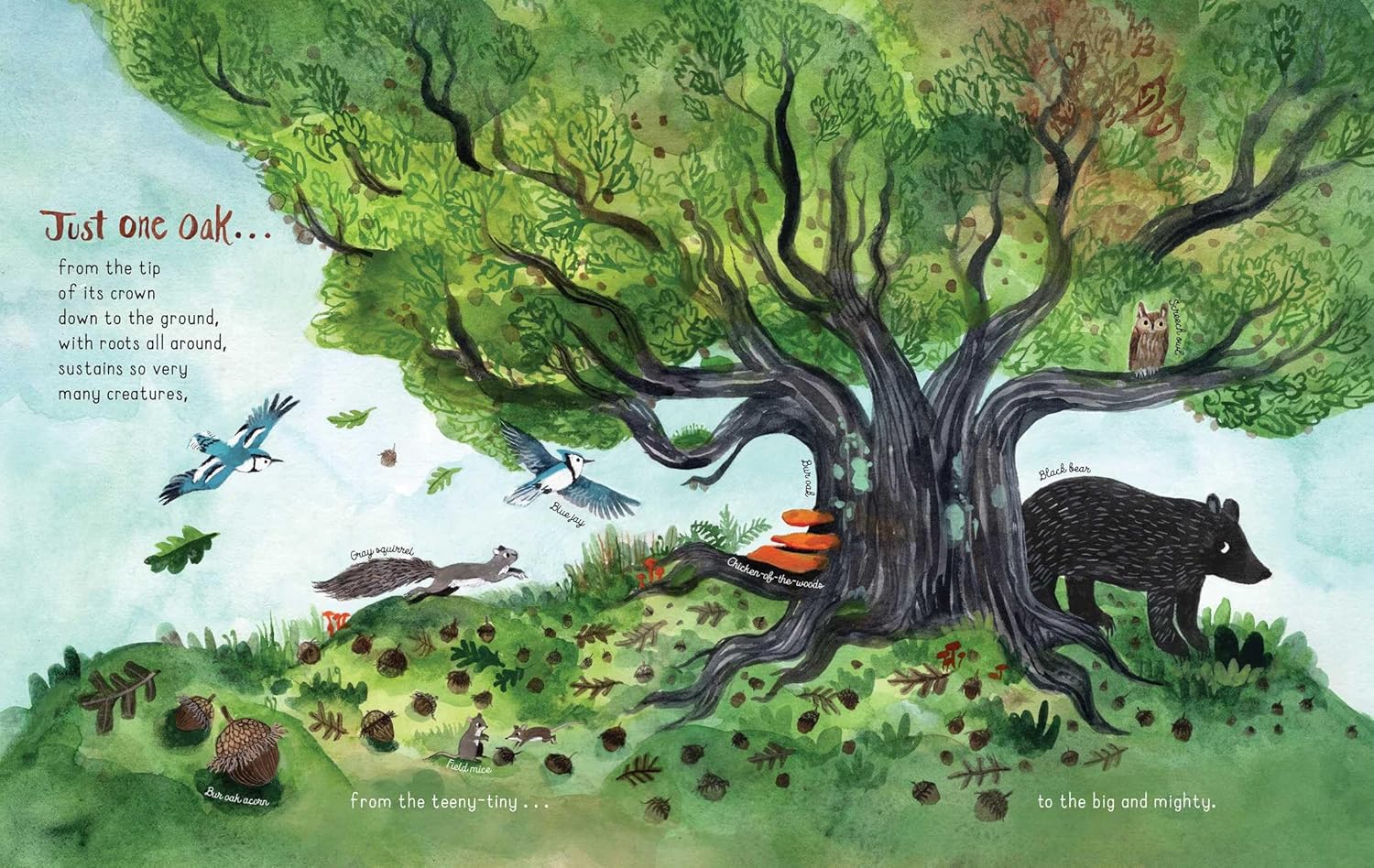
“Just one oak . . . from the tip of its crown down to the ground, with roots all around, sustains so very many creatures, from the teeny-tiny to the big and mighty.” So begins Maria Gianferrari’s fascinating exploration of all the ways oak trees contribute to and sustain the ecosystem where they live. From their distinctive leaves to their shaggy bark to their incredible acorns, oak trees are self-protecting while providing shelter and food for an amazing array of wildlife.

Illustration copyright © 2026 by Diana Sudyka. Text copyright © 2026 by Maria Gianferrari. Courtesy of Beach Lane Books.

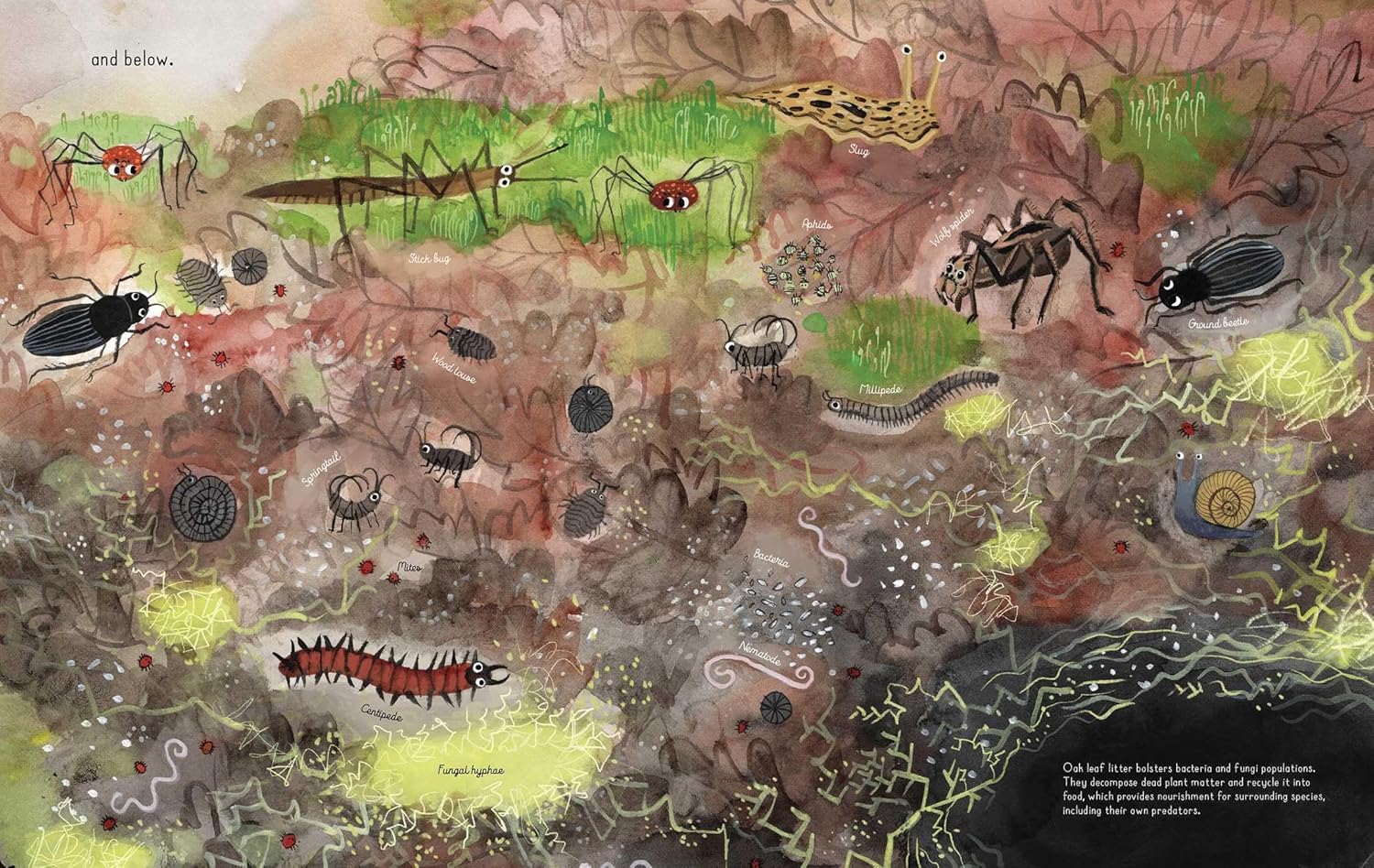
At ground level, Gianferrari shows how “leaf litter, the blanket beneath its boughs,” creates the perfect environment for snails, insects, amphibians, fungi, and more to hide, feed, and grow. And that little acorn nestled under the leaves? Gianferrari digs in to reveal how a mighty oak begins with just one taproot that branches and branches until its root system spreads “farther than the canopy is wide.”

Illustration copyright © 2026 by Diana Sudyka. Text copyright © 2026 by Maria Gianferrari. Courtesy of Beach Lane Books.

And oh those acorns! They’re so much more than their tiny size may lead you to believe. Just one acorn can house one creature or hundreds. They are a universal “superfood” as well as a tidy seed that can reproduce where it drops or be carried far afield. When it grows up, “just one oak creates a microclimate,” with its impressive canopy and prevents flooding, erosion, and drought with its far-reaching roots. Yes, “just one oak is beautiful and bountiful to all.”

Illustration copyright © 2026 by Diana Sudyka. Text copyright © 2026 by Maria Gianferrari. Courtesy of Beach Lane Books.

Maria Gianferrari takes readers outdoors to get a close-up view of one oak tree, and by extension an enlightened understanding of the reach of this keystone species. Her lyrical introductions, capped with a repeated “Just one oak . . .”—a phrase that reinforces the contributions of these trees, give way to paragraphs of factual information. Each of these paragraphs are packed with specific information about the types of creatures sustained by just one tree and the benefits they enjoy. The numbers here are simply astounding and could inspire many cross-curricular lessons in math, science, language arts, art, and more. 

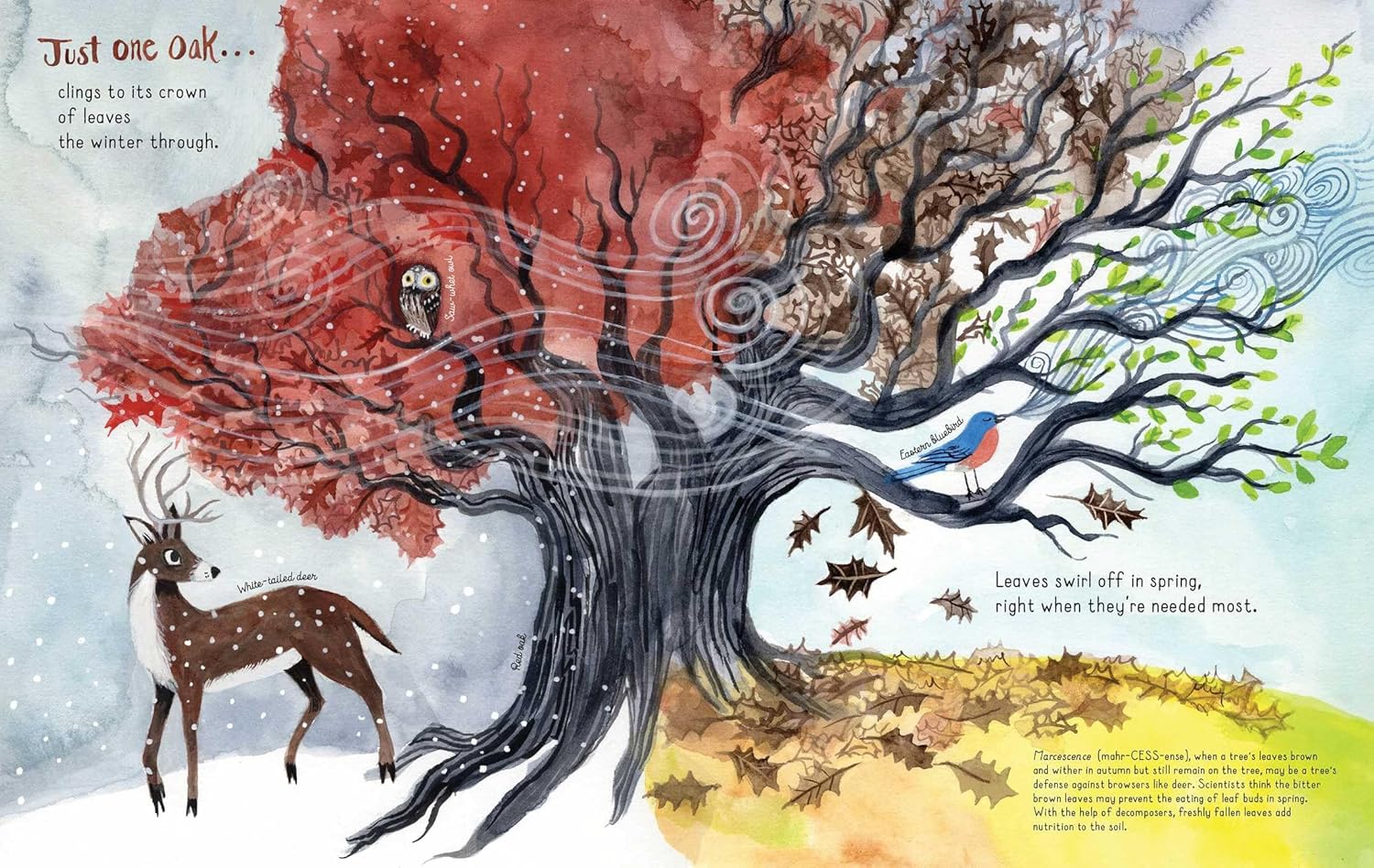
Diana Sudyka’s nature illustrations are beautiful, exciting, and full of the kinds of small, impactful details readers love and that expand their understanding of the text (especially for visual learners). Animals scamper, birds feast, and an entire community of creepy-crawlies scurry through leaf litter and below in Sudyka’s action-filled pages. Each spread will have children lingering to discover all the wonders of an oak tree.

A glorious celebration of the oak tree and the species that rely on it, Just One Oak will spark curiosity and an appreciation for the interconnections among wildlife. The book will delight any nature lover and is a must for school and public libraries. 

 Ages 4 – 8+

Beach Lane Books, 2026 | ISBN 978-1665961042

About the Author

Maria Gianferrari is a picture book reader/writer, tea-drinker, dog-lover, and birdwatcher. Maria writes books that honor our bonds with creatures both domestic and wild and that celebrate the natural world around us, including Fungi Grow and Just One Oak, illustrated by Diana Sudyka; Ice Cycle: Poems about the Life of Ice, illustrated by Jieting Chen; Being a Dog: A Tail of Mindfulness, illustrated by Pete Oswald; Bobcat Prowling, illustrated by Bagram Ibatouilline; and Be a Tree!, illustrated by Felicita Sala. She lives with her family in Massachusetts in a house encircled by trees. To learn more about Maria, visit her website: MariaGianferrari.com.

About the Illustrator 

Diana Sudyka is a Chicago-based illustrator. Early on, she created screen-printed gig posters for musicians but currently her illustration work focuses on young adult, middle grade, and children’s books. She has illustrated several volumes of the award-winning book series, including The Mysterious Benedict Society by Trenton Lee Stewart and Circus Mirandus by Cassie Beasley, as well as the picture books Would You Come Too? by Liz Garton Scanlon, Sometimes Rain by Meg Fleming, What Miss Mitchell Saw by Hayley Barrett, How to Find a Bird by Jennifer Ward, and Fungi Grow and Just One Oak by Maria Gianferrari. Visit her at DianaSudyka.com.

Arbor Day Activities

celebrate-picture-books-picture-book-review-paper-plate-tree-craft-2


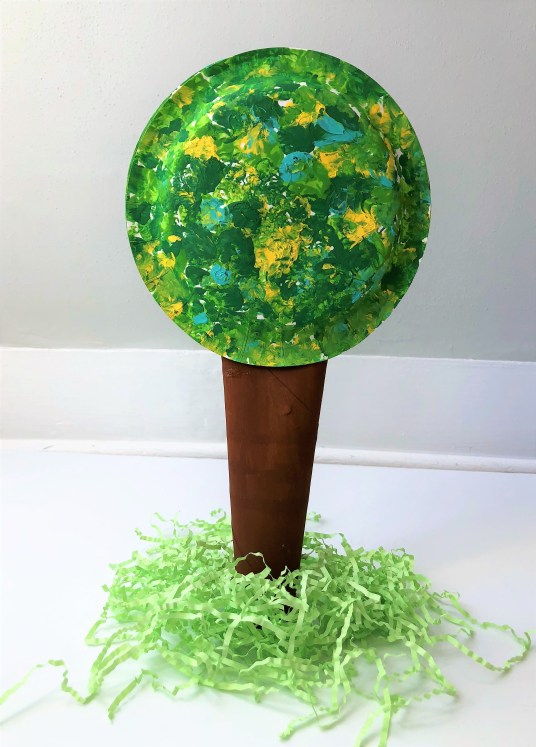
Paper Plate Tree


On Earth Day children love planting trees in their yard or as part of a community project. With this easy craft, they can also plant a tree on their wall or bulletin board.

Supplies

  • Two paper plates 
  • Paper towel tube
  • Brown craft paint
  • Green craft paint (using a variety of green paints adds interest)
  • Paintbrush, cork, or cut carrot can be used to apply paint
  • Glue or hot glue gun or stapler

Directions

  1. Paint the paper towel tube brown, let dry
  2. Paint the bottoms of the two paper plates with the green (or other color) paints, let dry
  3. Flatten about 4 inches of the paper towel tube 
  4. Glue or tape the flat part of the paper towel tube to the unpainted side of one paper plate
  5. Glue the edges of the two paper plates together, let dry.
  6. Straighten the tree so that it can stand up, or hang your tree on a wall, bulletin board, in a window

Just One Oak Activity Kit from Beach Lane Books


Teachers and other educators can find a comprehensive Activity Kit with discussion questions, hands-on activities, and more to accompany Just One Oak on Maria Gianferrari’s website.

You can purchase Just One Oak: What a Single Tree Can Be from these booksellers

Amazon | Barnes & Noble | Bookshop

Picture Book Review

April 23 – National Picnic Day

About the Holiday

It’s said that food always tastes better when eaten outdoors. If you’re having warm early spring weather today, why not test that theory, by packing a basket or cooler and heading out to your favorite outdoor spot! Whether simple or elegant, enjoyed alone or with family or friends, a picnic can be just the respite you need from the routine workweek. The word “picnic” probably gets its origins from the French language, specifically from the word pique-nique: (to pick) + (small thing or trifle). It’s thought that picnics became popular in France after the French Revolution in the mid 1800s and the idea then spread around the world. If you just can’t get away or the weather isn’t cooperating, International Picnic Day is celebrated on June 18, and the month of July hosts National Picnic Month.

Thank you to Tundra Books for sharing a copy of this book with me!

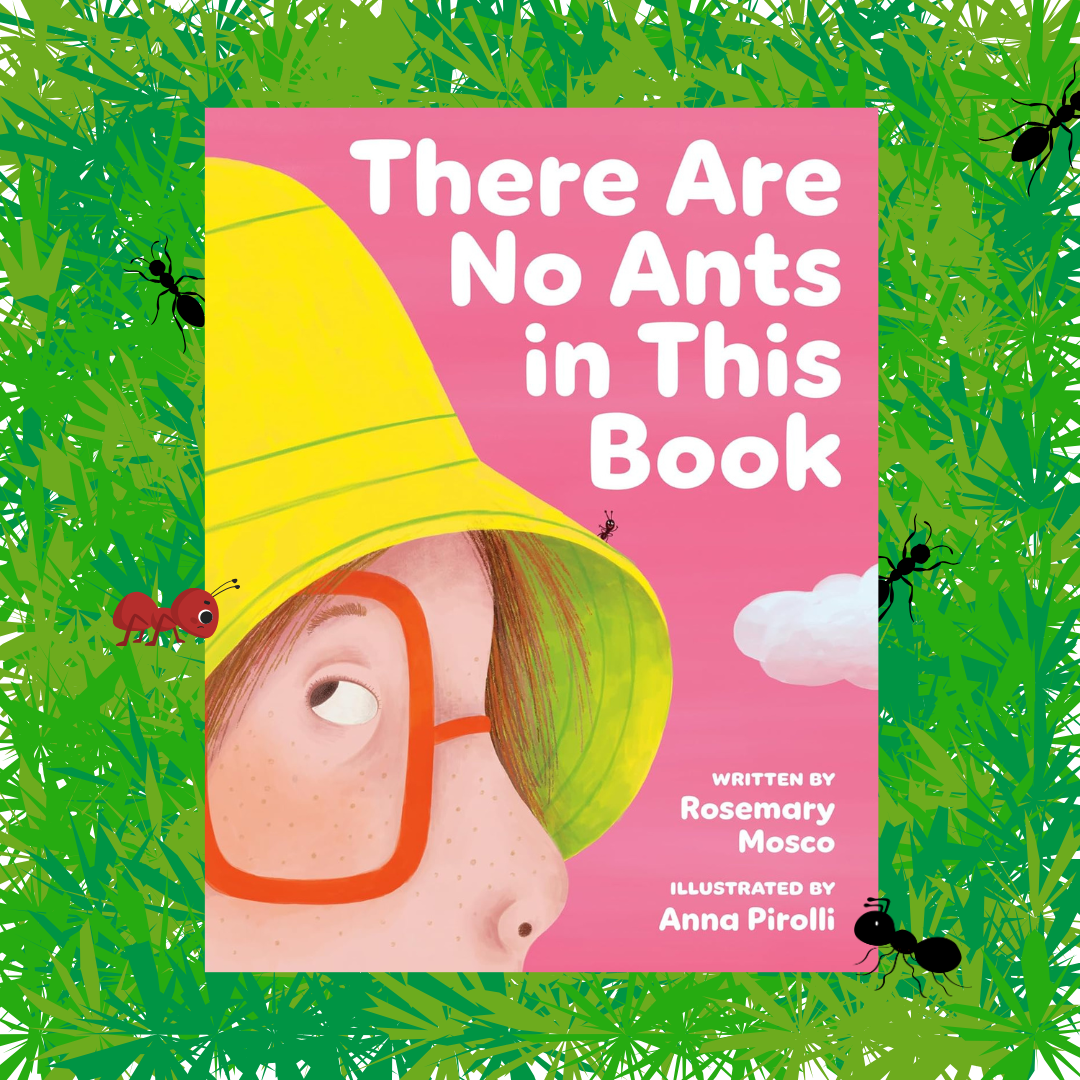
There Are No Ants in This Book

Written by Rosemary Mosco | Illustrated by Anna Pirolli


A child, picnic basket and tote in hand peeks in from the top-left corner of the first page to find a green field just perfect for a picnic. The child is pretty confident they won’t be disturbed by pesky pests purloining food because it says right on the cover that “there are no ants in this book.” But just as the cake is being placed on the blanket, word comes from nearby: “Wrong! There’s one!” Turns out that acorn lying only inches from the picnic cloth is actually the abode of an acorn ant.

Illustration © 2025 by Anna Pirolli, text © 2025 by Rosemary Mosco. Courtesy of Tundra Books.

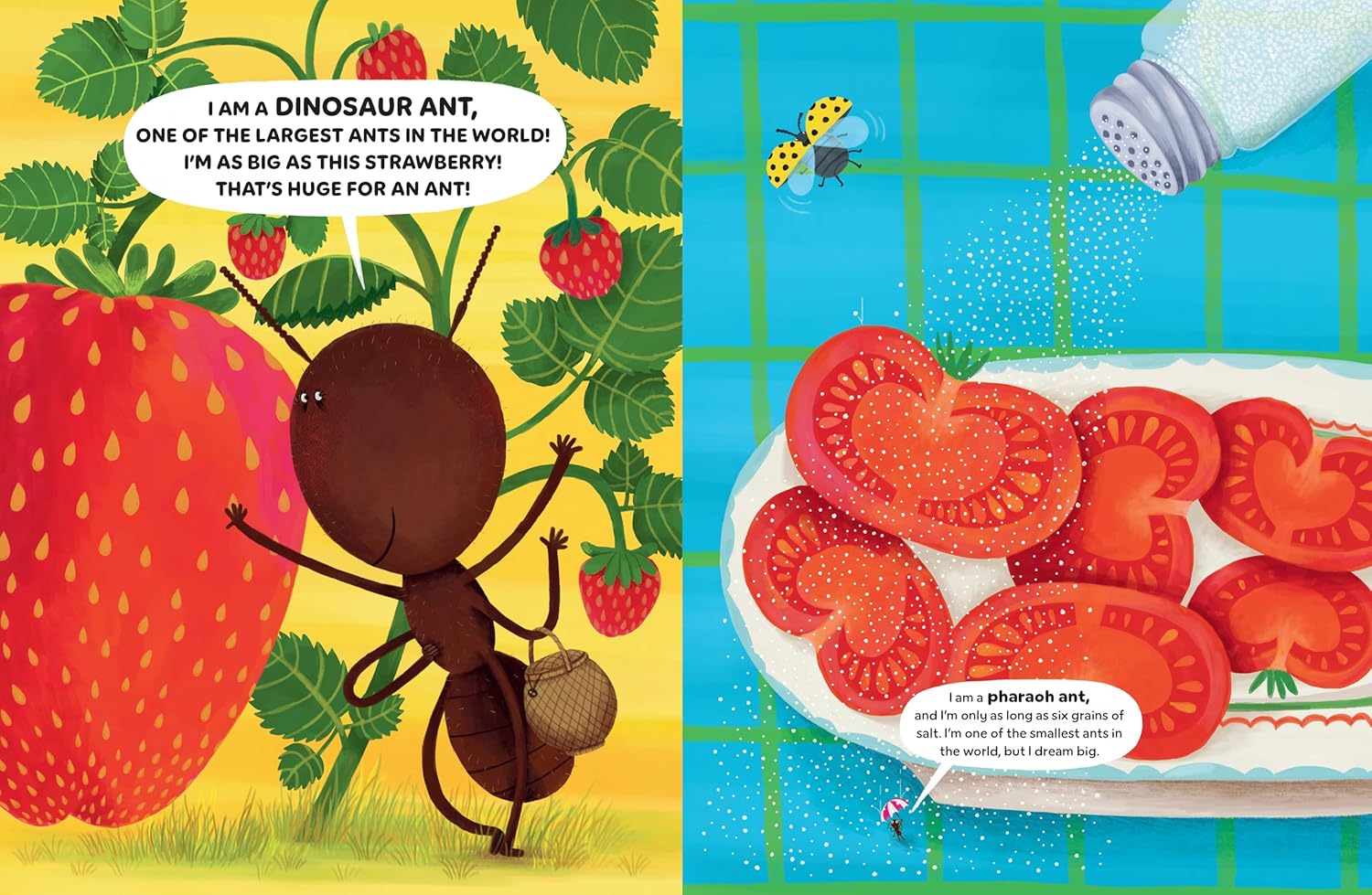
The child can make an exception for just one ant, but then, out of the clear blue sky, comes “Two!” and “Three!” These two reveal that they are opposites of a sort. Number “two” is “one of the largest ants in the world” and as big as a strawberry. Number “three” is the smallest—”as long as six grains of salt.”

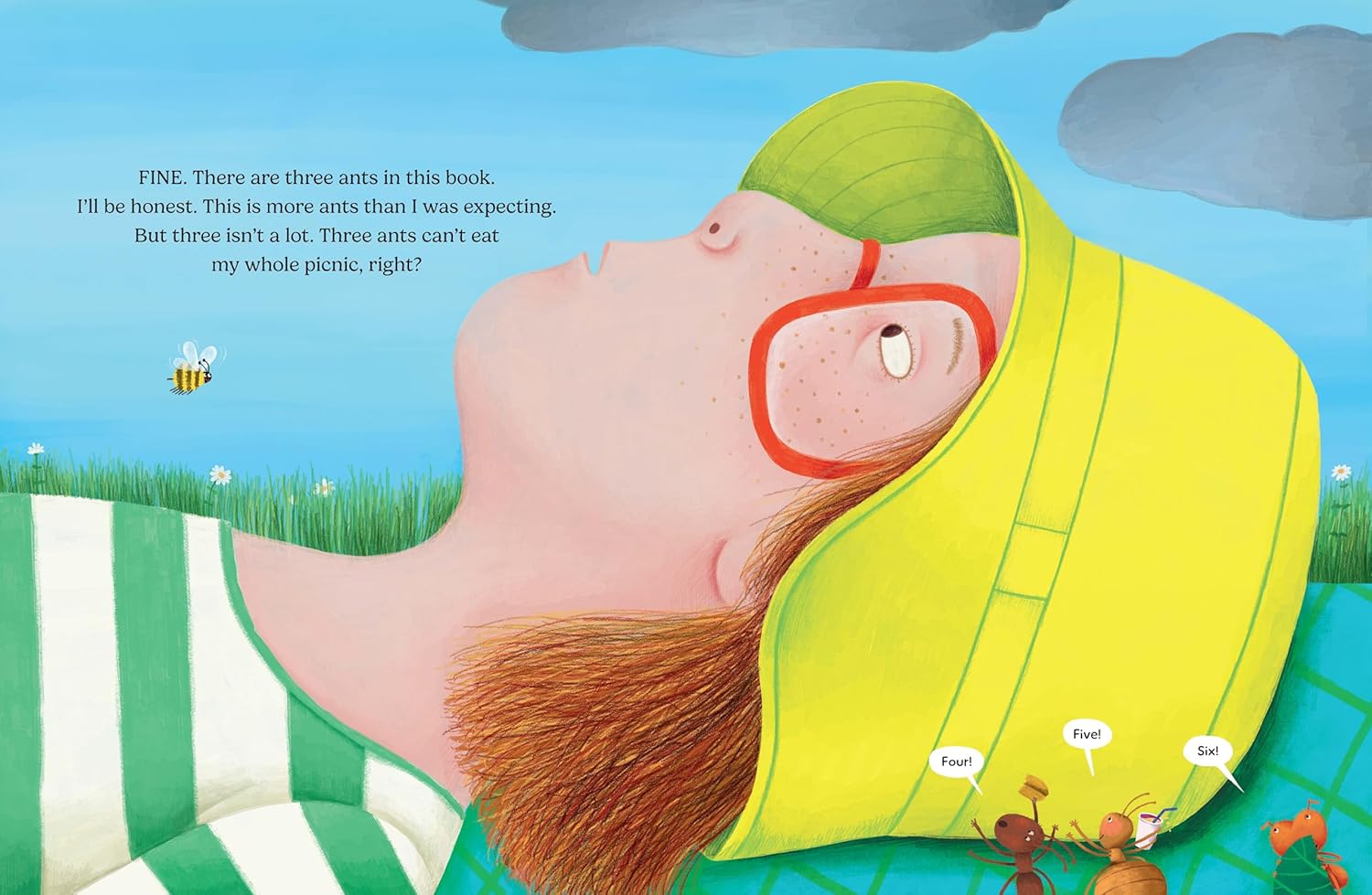
The child is just wrapping their head around this book having “. . . more ants than I was expecting” and figuring “three ants can’t eat my whole picnic, right?” when three more show up, including a honeypot ant that explains, “I fill my big round butt with sweet sugar water . . . in case my family gets hungry” then declares, “I am a walking refrigerator.

Illustration © 2025 by Anna Pirolli, text © 2025 by Rosemary Mosco. Courtesy of Tundra Books.

Kinda freaked out to meet these six interlopers, the child goes into full “ARRRGH!” mode when four more ants drop by. And who can blame them? The book had such promise at the beginning. But now . . . Yeah. Butt! Two of these new ants have positively particular posterior powers! One lives in trees and uses their butt as a kind of nature-made Siri to guide them home, and the other, an acrobat ant, explains “If someone scares me, I stick my butt high up in the air and wave it around.” The third is a clever crafter, and the fourth uses his head (literally) to defend his home.

The child is “shocked.” “Stunned.” Delighted! And invites these ants as well as their “humungous families” to the picnic. But all these tiny pounding feet attract the attention of an anteater. The child, though, does some quick thinking and then points out that the title of the book clearly states, “there are no ants in this book,” which sends the anteater packing. And now? It’s time for the perfect picnic!

Back matter presents realistic illustrations of each of the ten ants found in the book with a bite-sized paragraph revealing what part of the world the ant is native too as well as more about the feature that makes it unique.

Illustration © 2025 by Anna Pirolli, text © 2025 by Rosemary Mosco. Courtesy of Tundra Books.

In her funny and fast-paced tribute to ants, Rosemary Mosco proves that even the smallest creatures have enormous appeal. As each ant makes an appearance to proudly describe its distinct capability or feature, Mosco’s conversational, easy-to-digest writing style makes it simple for kids to remember the prominent details. Kids will also identify with the narrator, who humorously cycles from certainty in the promise of the title to disillusionment to acceptance to all-out appreciation for these tiny critters. 

Vibrant and loaded with personality, Anna Pirolli’s cartoon, graphic-style illustrations use perspective, natural surroundings, and emotive facial expressions to immerse kids in this rollicking educational experience.

If you like a dose of laughter with your science, There Are No Ants in This Book is the ant-idote you’ve been looking for. A perfect addition to any classroom, homeschool, or science educator’s collection, the book will also be an often-asked-for favorite for home story times.

Ages 4 – 8

Tundra Books, 2024 | ISBN 978-1774881163

About the Author

Rosemary Mosco makes books and cartoons that connect people with the natural world. Her nature comics won the National Cartoonist Society’s award for Best Online Short Form Comic and were the subject of an award-winning museum exhibit. She co-wrote the New York Times bestseller The Atlas Obscura Explorer’s Guide for the World’s Most Adventurous Kid, and is the author of the picture books Butterflies Are Pretty . . . Gross! and Flowers Are Pretty . . . Weird! illustrated by Jacob Souva, as well as five other science books. She speaks at birding festivals and looks for cool critters under every rock she can find. Rosemary lives in Massachusetts. Visit her at rosemarymosco.com.

About the Illustrator

Anna Pirolli was born in Genoa and moved to Milan to study illustration at the European Institute of Design. She has worked as a freelance illustrator and art director for companies such as Mondadori, Pearson, Vogue, MTV, Kinder Ferrero, Nickelodeon, Disney and others, following the creative process from concept to creation. She’s also a visiting professor at the Accademia di Brera, where she teaches design applied to the arts. Anna has illustrated the picture books I Hate My Cats: A Love Story by Davide Cali and Anonymouse by Vikki VanSickle, which won the Dilys Evans Founder’s Award at the 2021 Society of Illustrators Original Art Show. Follow her on Instagram.

National Picnic Day Activity

A Perfect Day for a Picnic! Maze


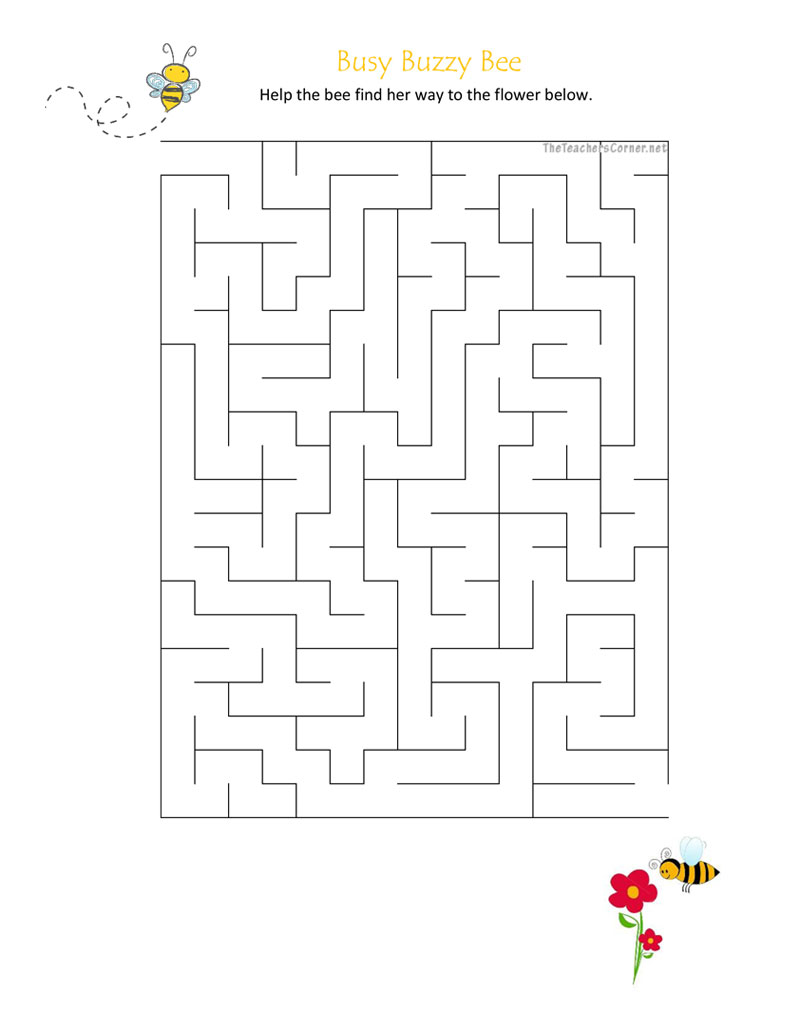
Can you lead the ants to the picnic in this printable A Perfect Day for a Picnic! maze?

You can purchase There Are No Ants in This Book from these booksellers

Amazon | Barnes & Noble | Bookshop (discounted books and support for your local independent bookstore)

April 22 – Earth Day

About the Holiday

First celebrated 56 years ago, Earth Day is the world’s largest civic-focused event. The initiative began on April 22, 1970, when 20 million Americans (10% of the population) demonstrated against the industrialization, pollution, and pesticides that were damaging people and the environment. In response, in July of 1970, Republican President Nixon and the US Congress created the Environmental Protections Agency and enacted laws such as the Clean Water Act and the Endangered Species Act among others.

This year’s theme is “Our Power, Our Planet.” From Saturday, April 18 to Earth Day on the 22nd and beyond, Earth Day and Earth Month will organize communities and individuals to take part in community cleanups, teach-ins, peaceful demonstrations, tree planting, voter registration, town hall meetings, community organizing and more. Every action strengthens the movement and what we can accomplish. To learn how you can participate or access resources in your area, visit the official Earth Day website.

Thanks to Greystone Books for sending me a copy of this book for review!

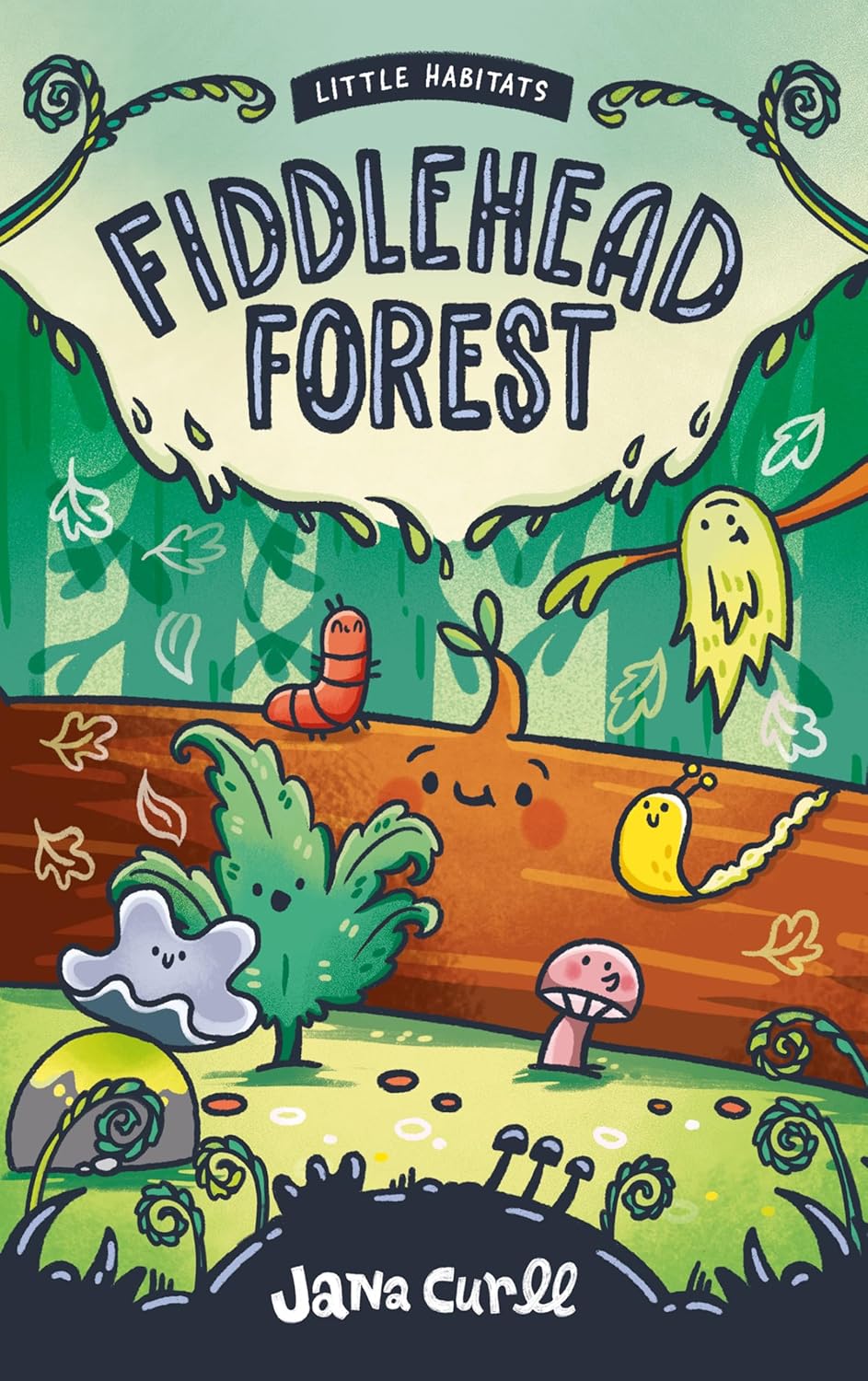
Fiddlehead Forest: Little Habitats 2

By Jana Curll


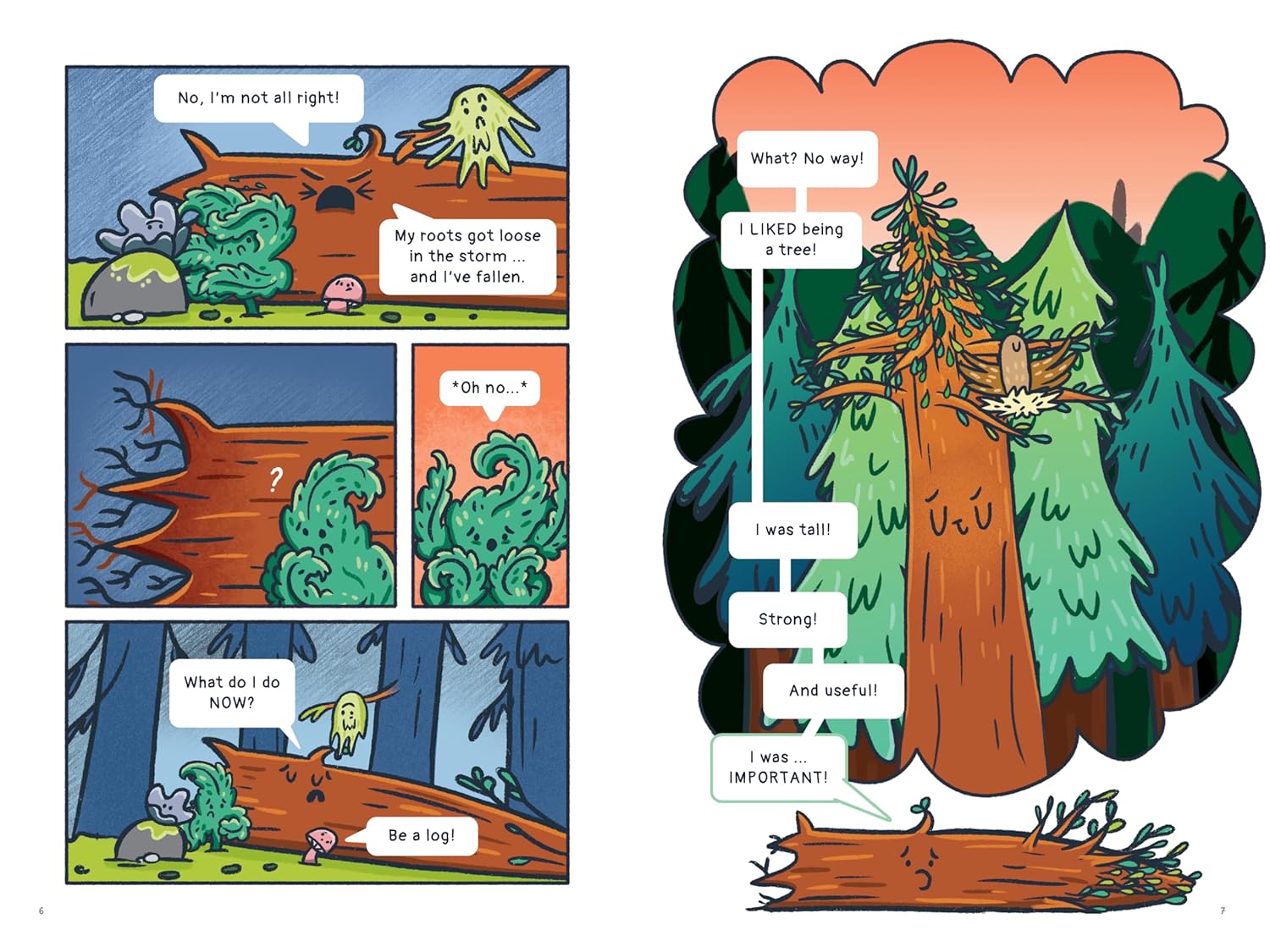
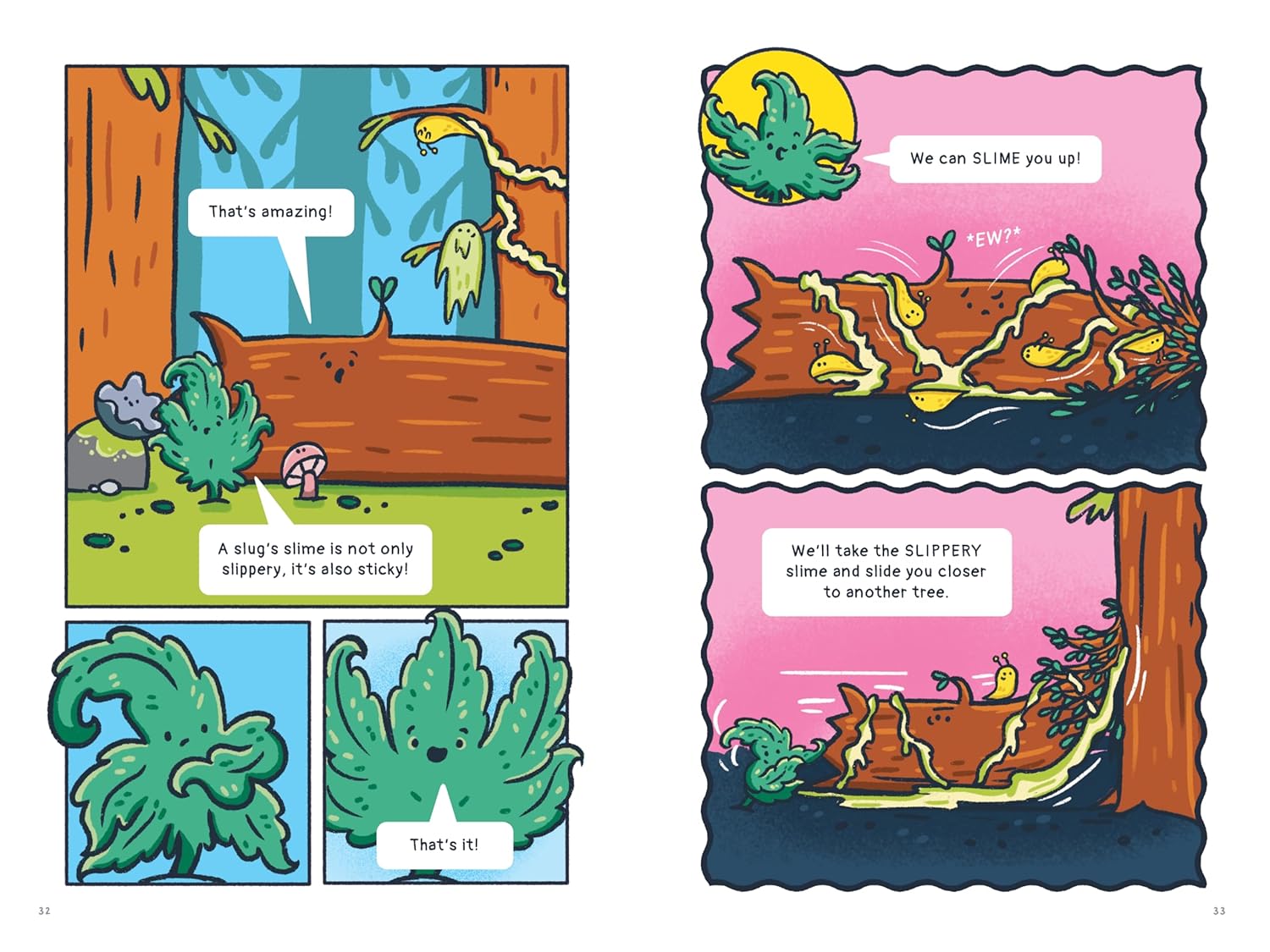
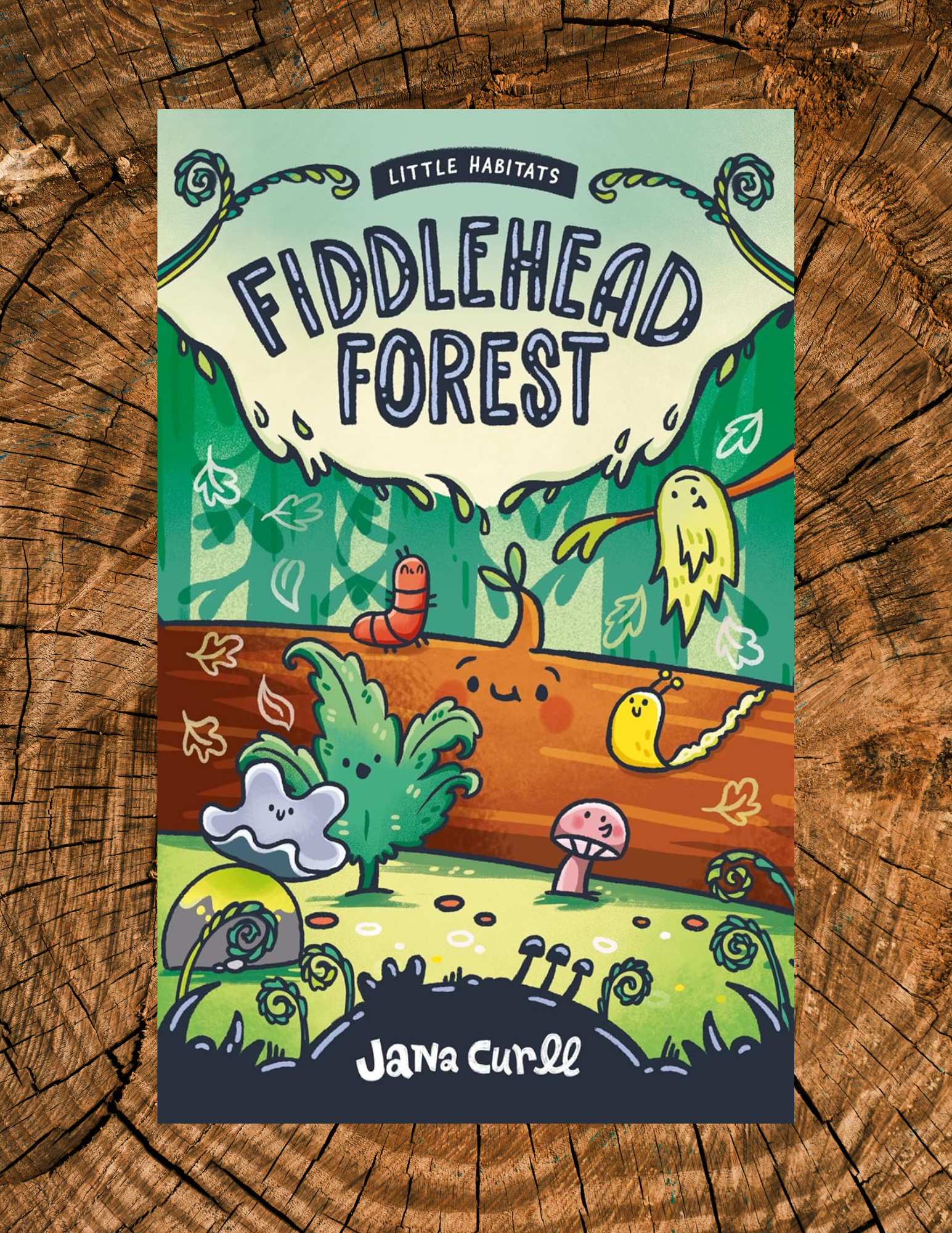
After a lightning storm, Fern and her fronds—Millipede, Slug, Moth, Mushroom, and the Lichens—discover a tree that’s fallen and can’t get up. Mushroom suggests the tree become a log, but the unhappy tree wants to return to its days of glory, of being “tall, strong, and useful—important!” Fern “guaran-trees” she will make it happen.

Text and Illustration copyright © 2026 by Jana Curll. Courtesy of Greystone Kids.

Tiny Millipede is first to volunteer his talents. It’ll be a cinch, he thinks. All he has to do is eat and eat and eat and molt and molt and molt until he’s grown enough segments and legs to push the tree back into position. It turns out, though, there’s only so much one millipede can eat before getting “in-dig-estion,” so Fern concocts another, kinda crazy plan involving Moth, dangerous animals, and “geome-TREE” (Beard Lichen thinks it’s “more like insani-TREE”). When that doesn’t fly, Fern enlists Slug in an even more convoluted idea that any slime lover could get behind. Unfortunately, it’s a no-goo too.

Text and Illustration copyright © 2026 by Jana Curll. Courtesy of Greystone Kids.

With the help of the Lichens’ and Mushroom’s insight, Tree accepts its fate and vows to “do my best with where I am now.” As night falls the friends stay close, keeping Log company. In the morning Fern has yet one more idea, but this one isn’t zany or complex. She invites everyone to stay, hang out, and just do their thing. “FERN-ally” Log discovers its new role—one in which it is long, strong, and useful—important!

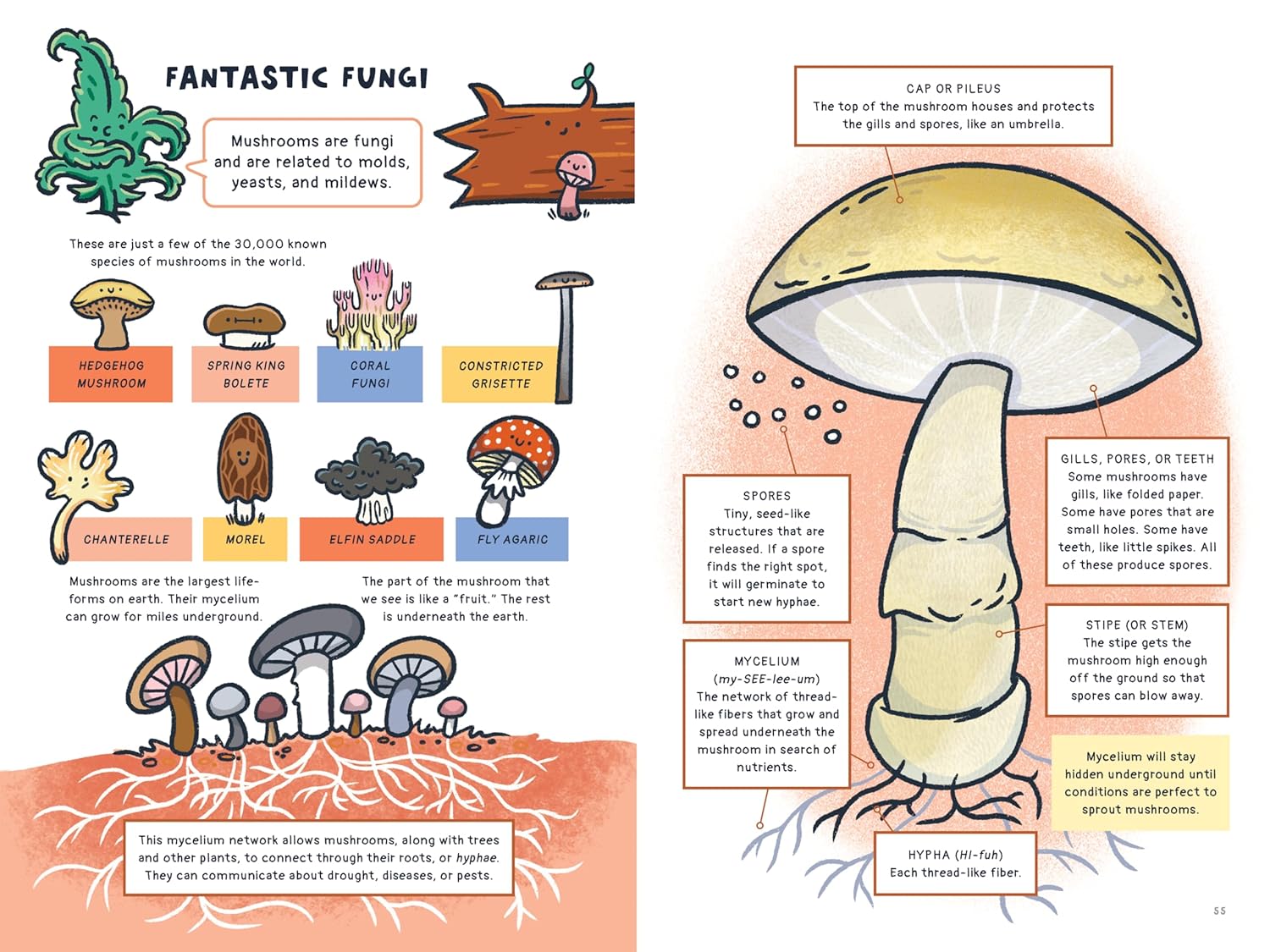
In addition to the story, each chapter includes a two-page spread of fascinating facts about millipedes, moths, slugs, lichens, fungi, ferns, and nurse logs that describe their importance to Earth’s ecosystems.

Text and Illustration copyright © 2026 by Jana Curll. Courtesy of Greystone Kids.

Equal parts hilarious and educational, Jana Curll’s Fiddlehead Forest is a punsters paradise, where kids will be giggling so often they may not even realize how much they’re learning. Curll’s mix of witty banter, caring friendship, and scientific facts, all presented in her bright and adorable graphic novel format, will delight kids. Fiddlehead Forest has plenty of repeat readability, applications for classrooms and homeschoolers, and appeal for any library collection.

Ages 6 – 9

Greystone Books, 2026 | ISBN 978-1778401046

About the Author

Jana Curll is a children’s illustrator based on the rainy west coast of Canada and is grateful to live on the traditional lands of the shíshálh Nation with her family. She is inspired by the creatures and environment of the local rainforests and the ocean and spends her spare time wandering through winding trails and along rocky beaches. She likes doodling funny maps and sipping strong coffee while her large cat sleeps on her lap. She’s also the author-illustrator of Barnacle Bay, the first book in the Little Habitats series also published by Greystone Kids. Visit her at janacurrl.com.

Earth Day Activity

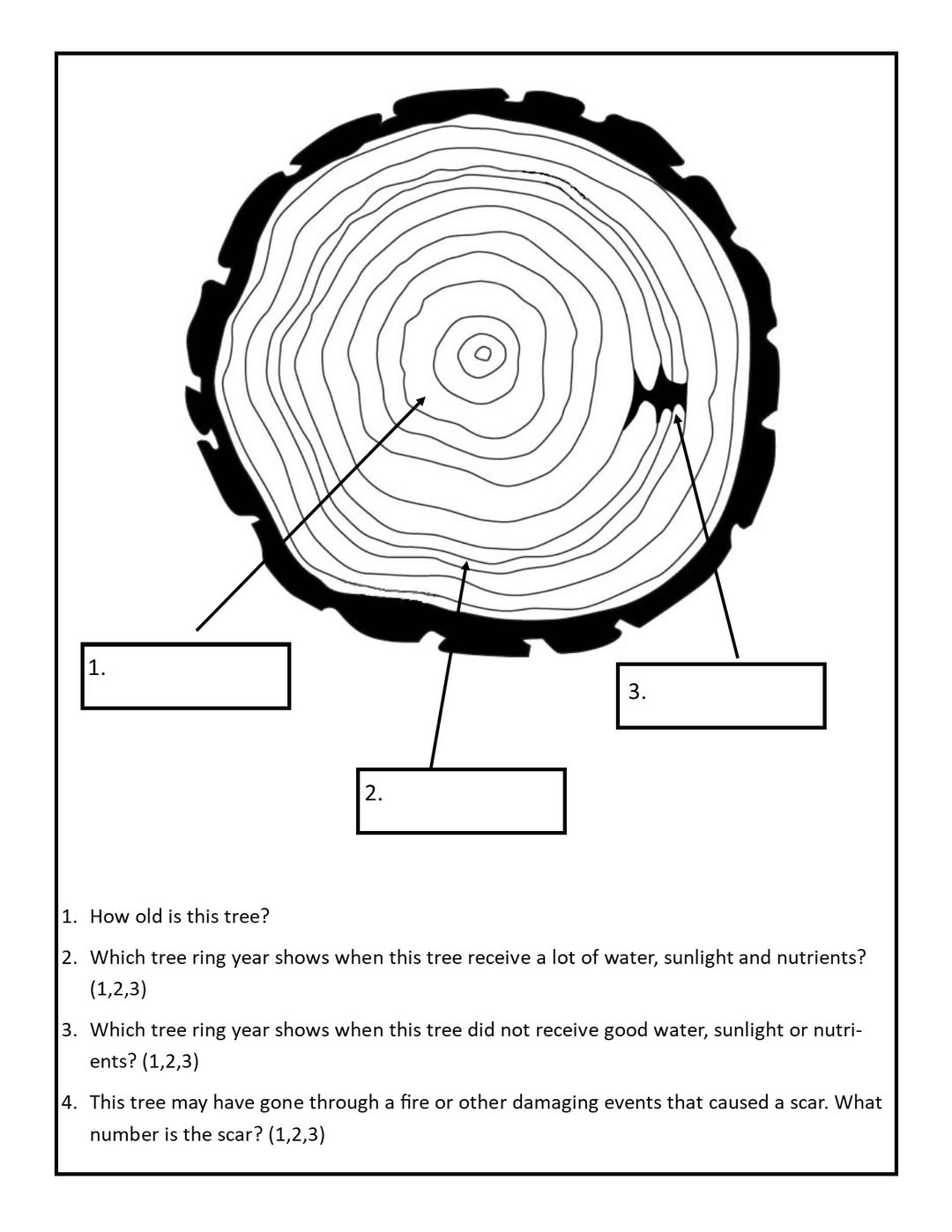
How Old Is This Tree? 

In this activity children learn what the rings on a cross section of a tree trunk mean and how to count them to determine the age of a tree is and discover events from its past. 

You can purchase Fiddlehead Forest (Little Habitats, 2) from these booksellers

Amazon | Barnes & Noble | Bookshop

Picture Book Review

July 15 – Wild about Wildlife Month

About the Holiday

Wild about Wildlife Month celebrates the wonderful diversity of our planet’s wildlife while reinforcing the importance of all animals to our ecosystem and even to our survival! The holiday also focuses on conservation, recycling, and education about how humans’ actions affect crucial habitats and the health of flora and fauna populations. While July is designated as Wild about Wildlife Month, the holiday’s significance is something to be mindful of all year around. To participate, explore the wildlife in your area while learning about the creatures on the other side of the world and everywhere in between. Today’s book will get you and your youngest nature-lovers started!

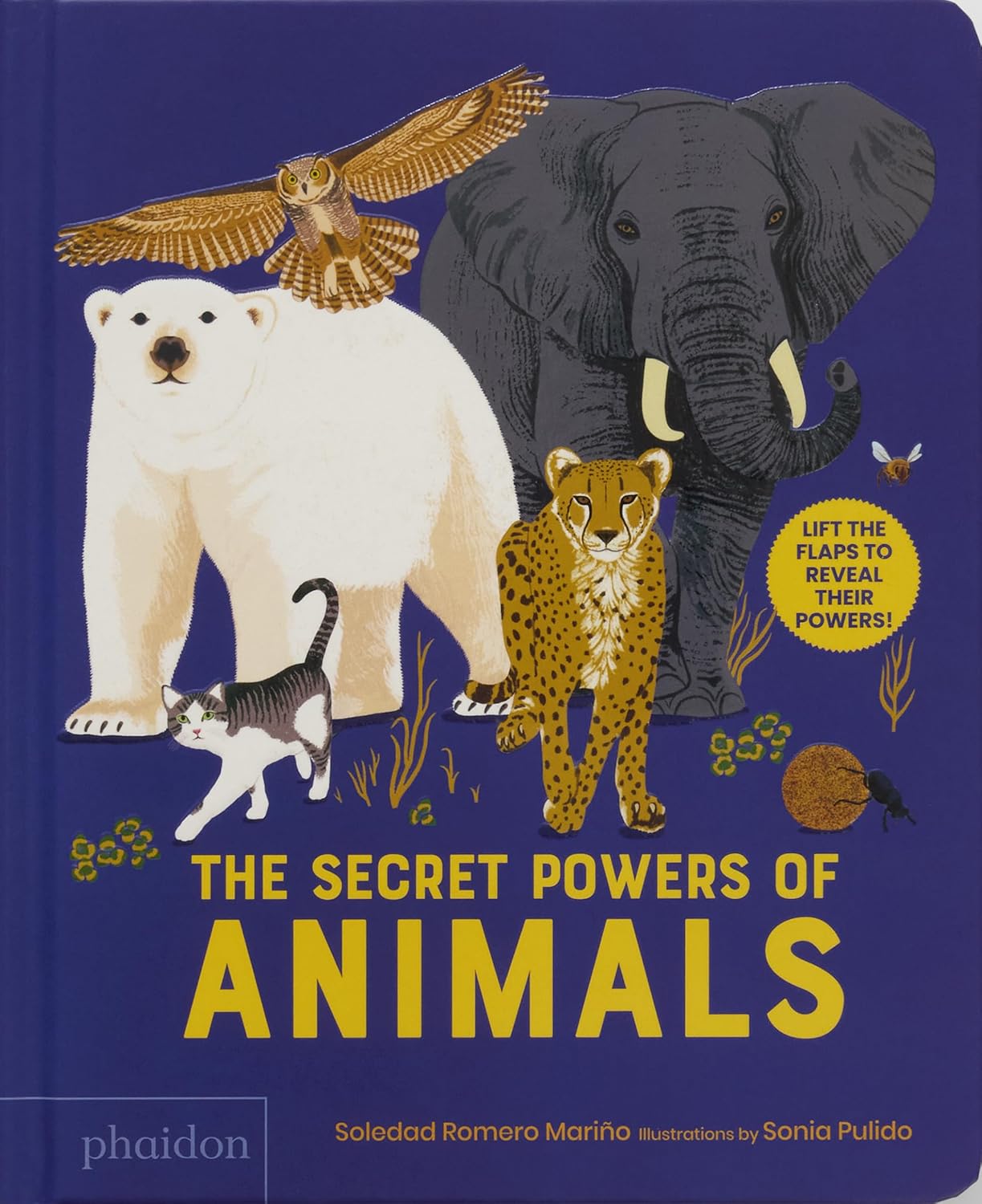
Thanks go to Phaidon Press for sending me a copy of The Secret Powers of Animals for review!

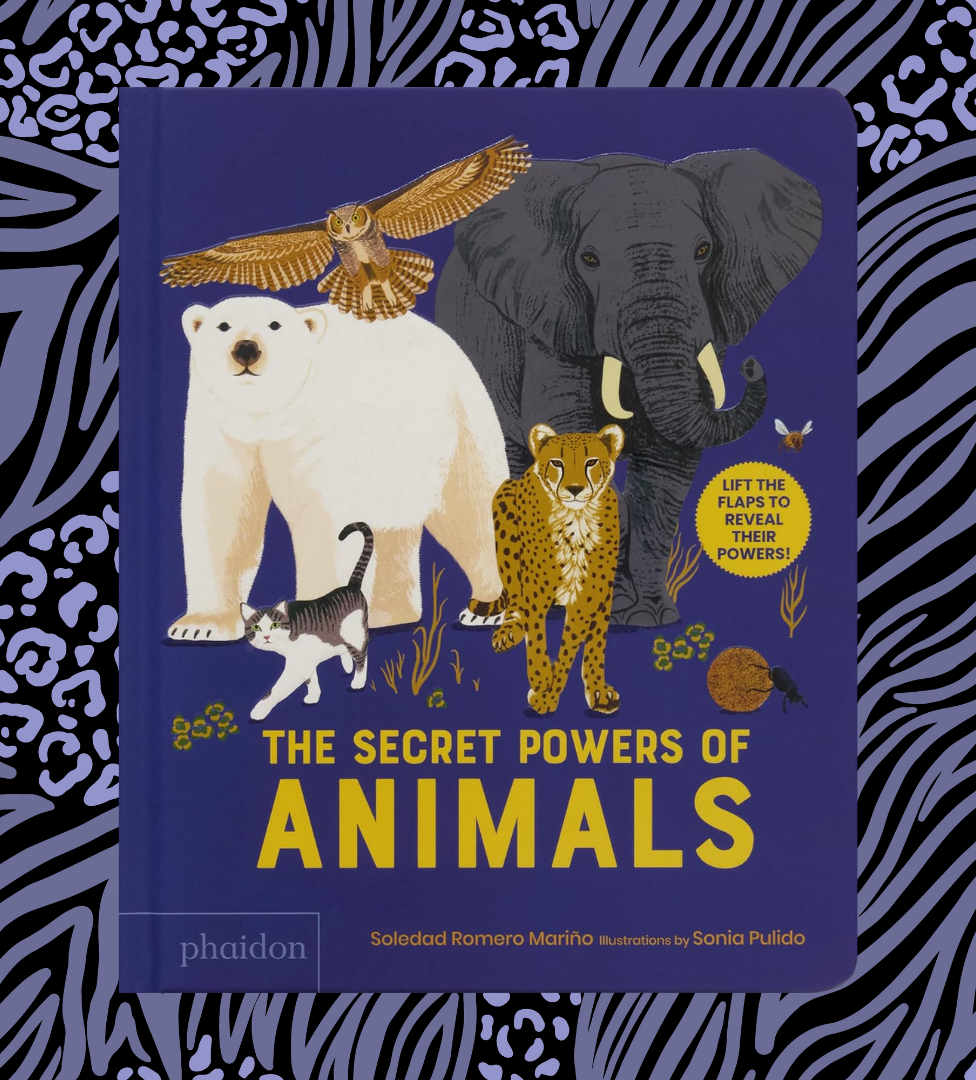
The Secret Powers of Animals

Written by Soledad Romero Mariño | Illustrated by Sonia Pulido


It’s no secret that kids of all ages are fascinated by animals. Little ones stand on tiptoe gazing up up up in awe at elephants and giraffes, fold themselves into pint-sized scientists to inspect bugs on the sidewalk, and are endlessly entertained by family pets. And when they learn interesting facts about their favorites, they love sharing their knowledge.

Illustration © 2025 by Sonia Pulido, text © 2025 by Solodad Romero Mariño. Courtesy of Phaidon Press.

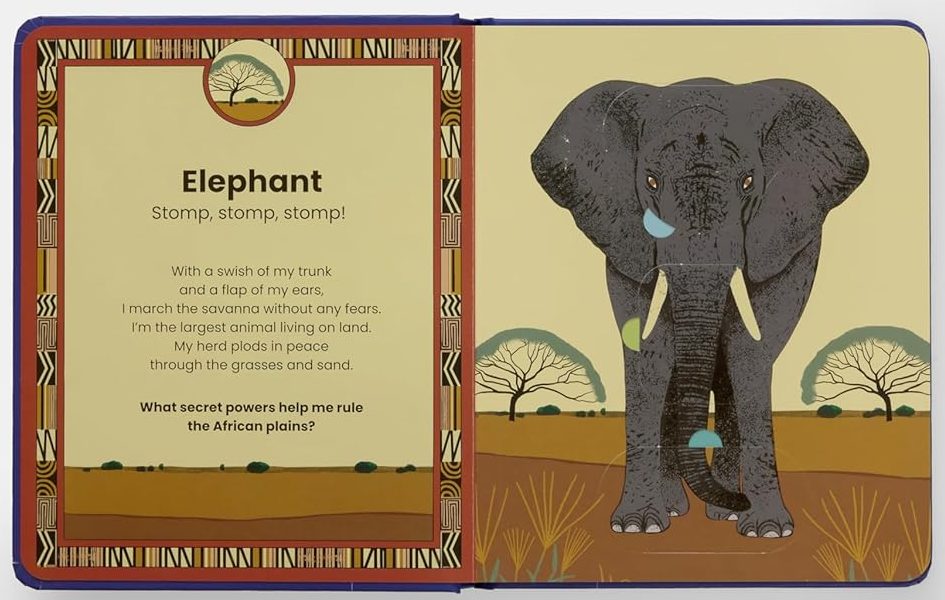
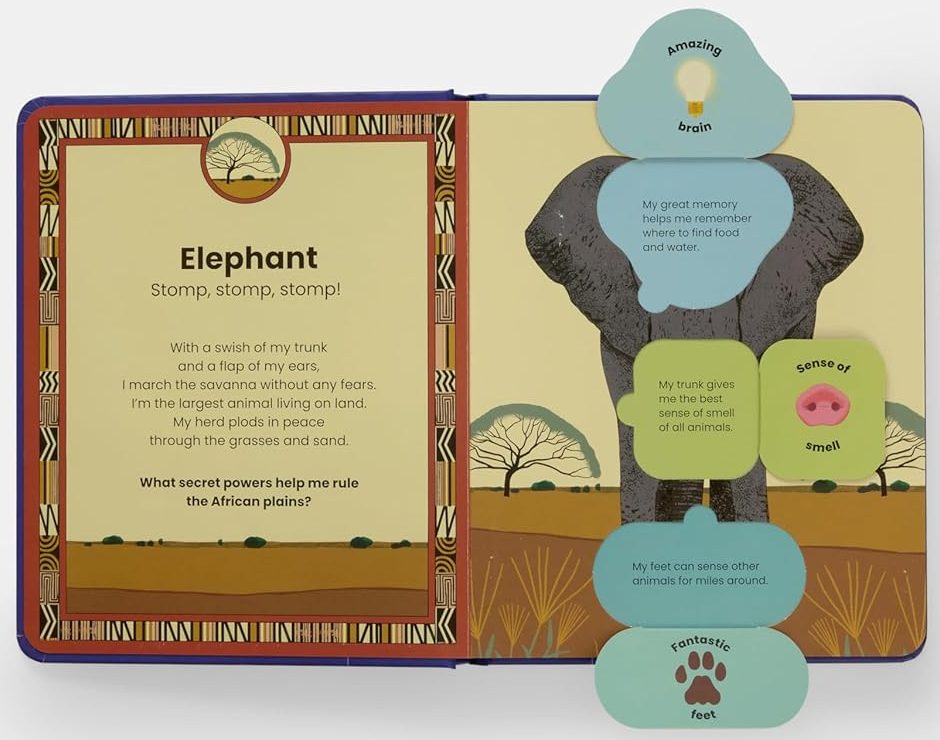
How do you replicate the excitement of witnessing an animal in person at home or in the classroom? With The Secret Powers of Animals, a lift-the-flap board book that combines jaunty introductory rhyming verses, three amazing secret powers, and the fun of interactive learning for 10 distinct creatures of the land, sea, and air.

Illustration © 2025 by Sonia Pulido, text © 2025 by Solodad Romero Mariño. Courtesy of Phaidon Press.

Among this menagerie, kids meet a brainy octopus, who tells them “I’m a master of disguise— / I’m cunning and I’m wise. / Through swirling seas I glide / with my many ways to hide.” Indeed, the octopus’s superpowers back this up! Just one of the three amazing talents this eight-armed beauty reveals to readers is the ability to change “my shape or skin tone to look like something else.” 

Little learners will love trying to guess each creature’s super powers as they discover which animal has the best sense of smell, who has a tusk that works like a thermometer, who can chomp harder than a shark, who can detach its tail to throw predators off its track, and so many more ingenious animal traits! 

Illustration © 2025 by Sonia Pulido, text © 2025 by Solodad Romero Mariño. Courtesy of Phaidon Press.

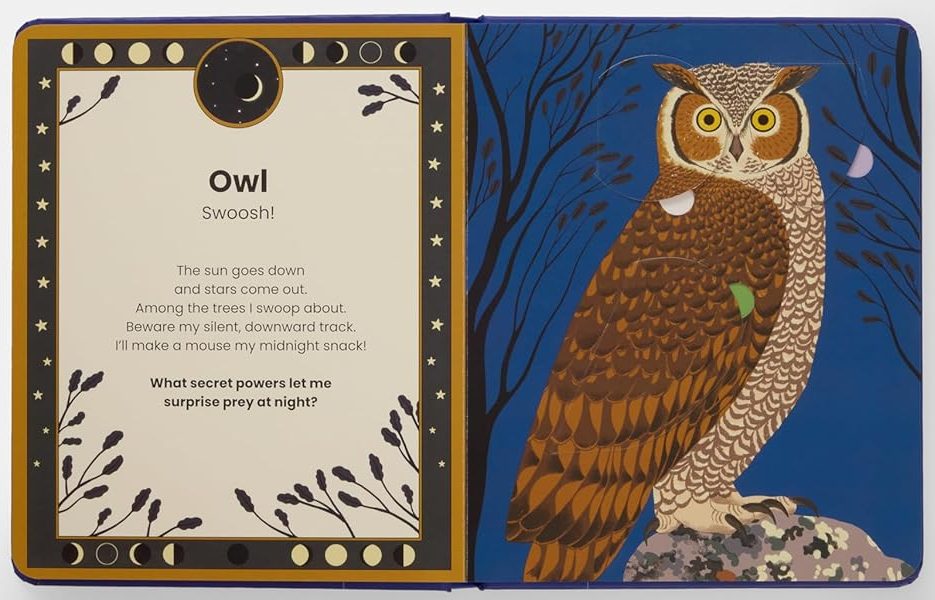
Soledad Romero Mariño brings each animal to life with witty and spirited vocabulary that not only describes the creature’s physical attributes but evokes a sense of their personality and place in the natural kingdom. The elephant “swishes” its tale and “flaps” its ears, the owl “swoops about,” the lizard “scuttles” and “darts,” and the cheetah “inches” and “creeps” before “. . . [giving] chase / in a big, bursting leap.” Romero Mariño explains each secret power in simple language that even the youngest reader will understand and remember. Her flowing verses are a joy to read aloud and are perfect sparks for pretend play at home, in preschool and kindergarten classrooms, and for library story times. 

Sonia Pulido’s realistic, museum-quality illustrations transport children to the savanna to meet an elephant face to face; under the sea, where a strikingly beautiful octopus levitates amid colorful coral and a family of narwals floats in the deep-blue water; to desert sands and rocky paths; and to sun-drenched grasslands among other locales. On the facing page, Romero Mariño’s text is bordered by lovely and thoughtful details that reflect the animal’s natural habitat. Both kids and adults enjoy lingering over each spread to talk about the animals. On each tab, Pulido includes an icon that depicts the secret power—for instance, the image of an eye with the words “Amazing eyes” for super vision—which becomes familiar to readers as it is repeated throughout the book. 

The Secret Powers of Animals, a stunning, sturdy board book that adults will be excited to share with young children, is a must for all nature-loving families, early educators, and library collections. The book also makes a terrific gift for any young animal lover.

Ages 2 – 5

Phaidon Press, 2025 | ISBN 978-1838669522

About the Author

Author Soledad Romero Mariño is an experienced children’s non-fiction author who specializes in ‘best of’ round-up style books. Her works include Superpowered Animals: Meet The World’s Strongest, Smartest, and Swiftest Creatures (also published by Phaidon), Awesome Accidents: 19 Discoveries that Changed the World and Famous Robberies: The World’s Most Spectacular Heists.

About the Illustrator

Sonia Pulido’s illustrations have appeared in publications globally, including The New Yorker and The New York Times. In 2020 Pulido won the Spanish National Illustration Award and she is the illustrator of Phaidon’s bestselling What a Shell Can Tell. Visit her at soniapulido.com.

You’ll find my review of the stunning Super Powered Plants for older readers here.

Wild about Wildlife Month Activity

celebrate-picture-books-picture-book-review-hand-print-elephants-craft

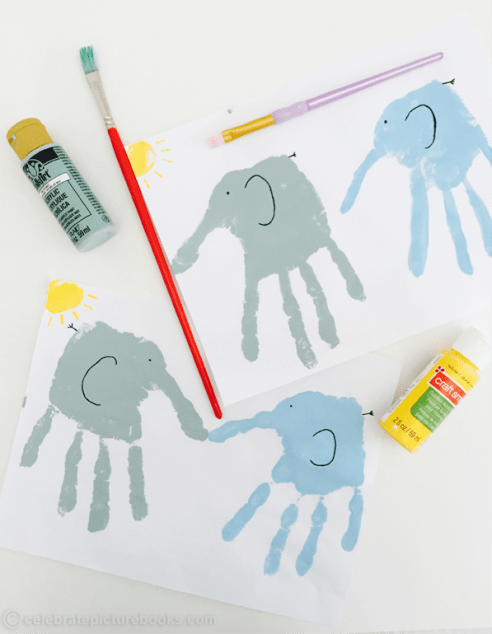
Handprint Elephants


This easy craft is fun for siblings to do together and can make a nice decoration for a child’s room or a gift for mom, dad, or other family members.

Supplies

  • Craft paint in two colors of the children’s choice
  • Yellow craft paint
  • Black fin-tip marker
  • Crayons, markers, or colored pencils to make a background
  • Paper
  • Paint brush

Directions

  1. Paint one child’s hand and press it on the paper. The thumb is the truck and the fingers the legs.
  2. Paint the second child’s hand and press it on the paper near the other “elephant.” A couple of examples are: the elephants standing trunk to trunk or trunk to tail 
  3. After the paint has dried, draw on ears and an eye
  4. Add a sun with the yellow paint
  5. Add grass, trees, or other background features

You can purchase The Secret Powers of Animals from these booksellers

Amazon | Barnes & Noble | Bookshop

Picture Book Review

June 5 – World Environment Day

About the Holiday

Sponsored by the United Nations, World Environment Day encourages worldwide awareness and action for the protection of the environment. Each year a different country hosts the day’s events. This year the Republic of Korea has been chosen as the host country, with a focus on ending plastic pollution globally. Ridding the planet of plastic pollution is an important contribution to achieving the Sustainable Development Goals adopted by the United Nations, including those on climate action, sustainable production and consumption, protection of seas and oceans and repairing ecosystems and retaining biodiversity. Everyone is needed to make a difference. You can learn more about World Environment Day, the 400 million tons of plastic produced each year (200 tons of which is single-use) and the dangers of microplastics throughout the environment, as well as the UN Decade on Ecosystem Restoration and how you can join the #GenerationRestoration movement on the UN World Environment Day website.

Thank you to Phaidon Press for sharing this book with me for review!

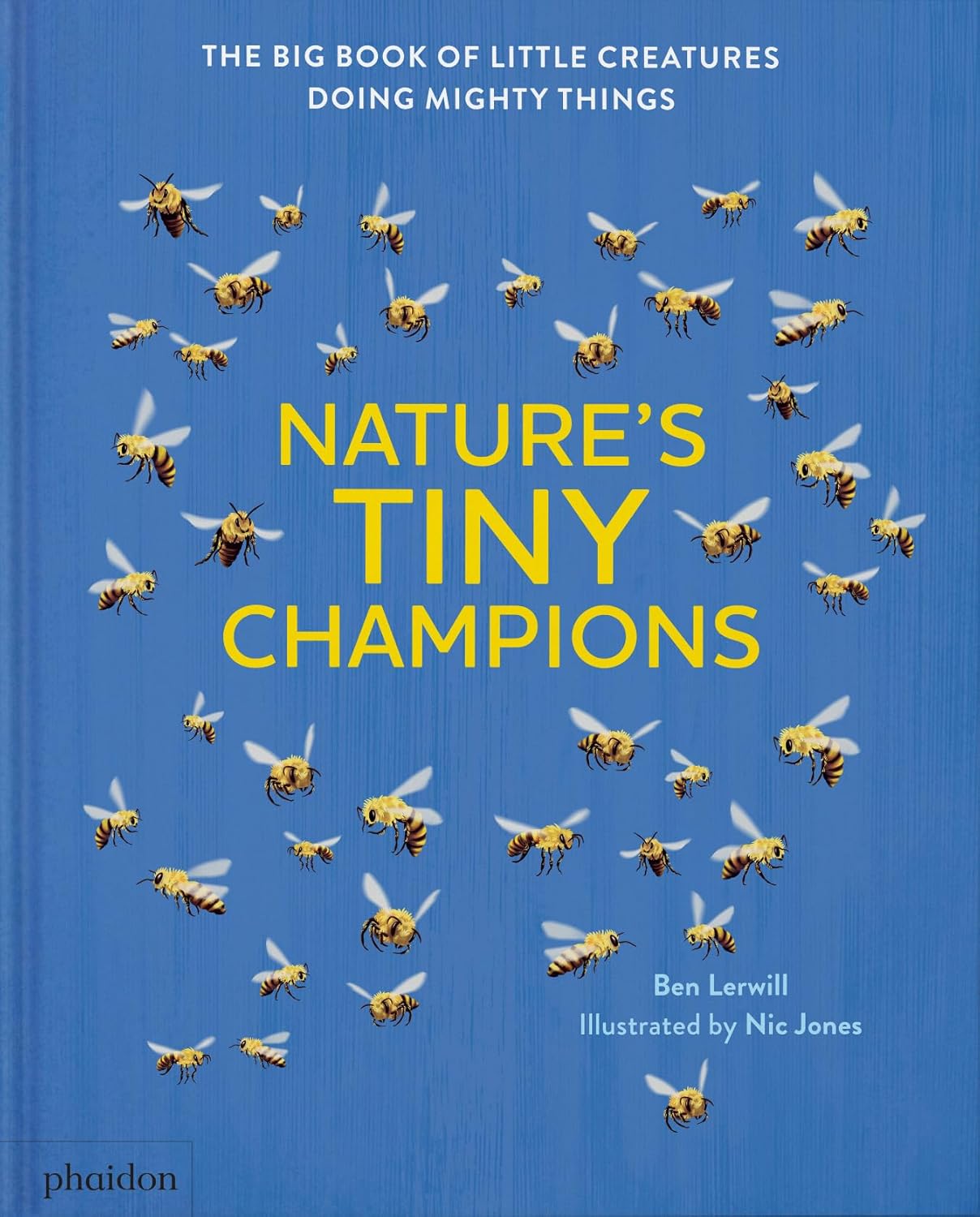
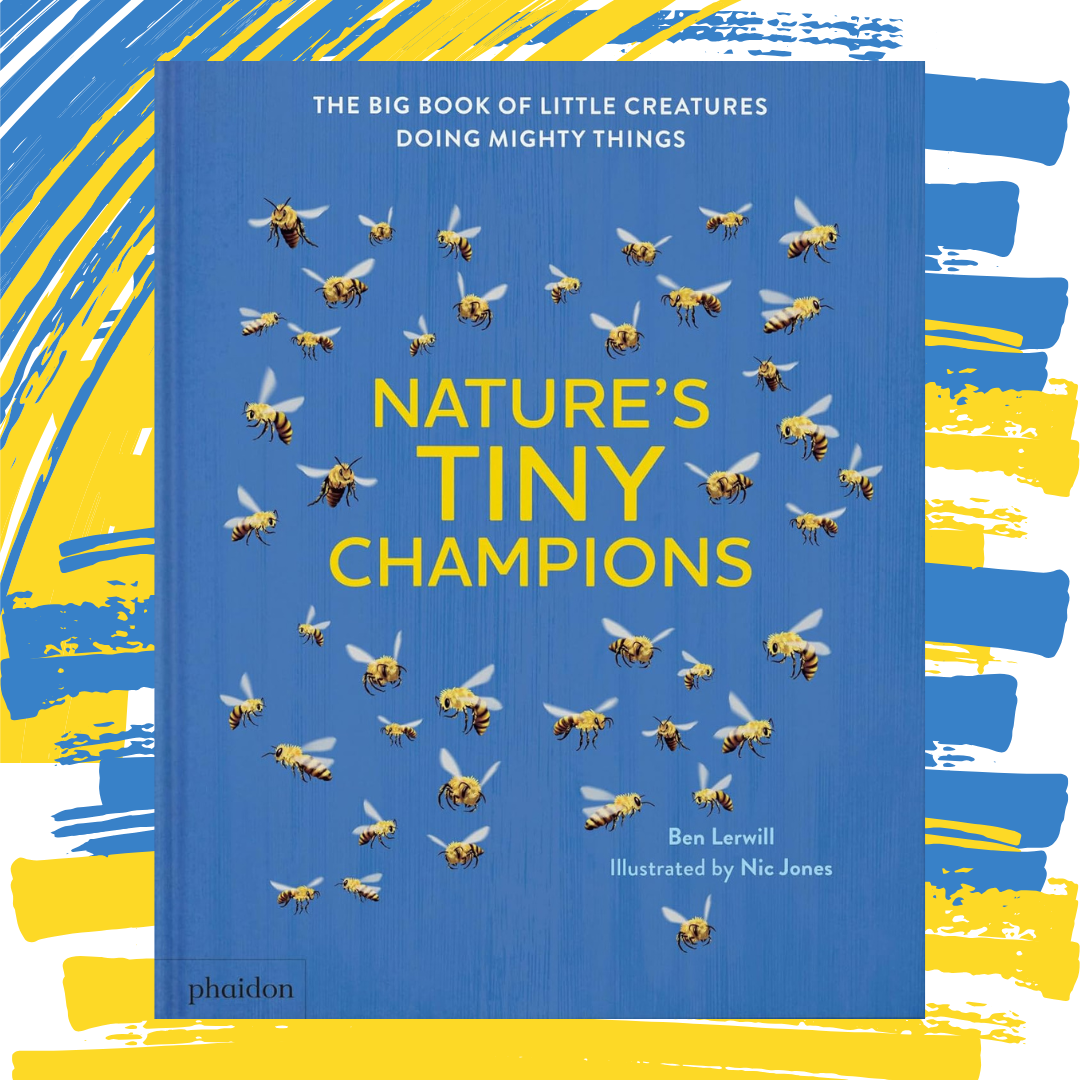
Nature’s Tiny Champions: The Big Book of Little Creatures Doing Mighty Things

Written by Ben Lerwill | Illustrated by Nic Jones


If you are awed by nature then you might know that “there are at least two million animal species on planet Earth.” But were you aware that some scientists believe the number might be more than eight million? So where are they? Well, all around—they’re just not easy to see. As Ben Lerwill reveals, “almost all of them are small enough to fit in the palm of your hand.” In fact, most could “sit on the tip of your little finger, and some are so impossibly minuscule that a whole herd of them could be hiding on the period at the end of this sentence.”

Illustration © 2025 by Nic Jones, text copyright © 2025 by Ben Lerwill.

So should we be thinking out of sight, out of mind? Absolutely not! And Nature’s Tiny Champions is here with detailed profiles of 20 phenomenal creatures to show you what an enormous impact itty-bitty animals make, plus back matter that presents short, illustrated entries on 21 more tiny champions of the air, land, and sea. Ready to dive in? Let’s go!

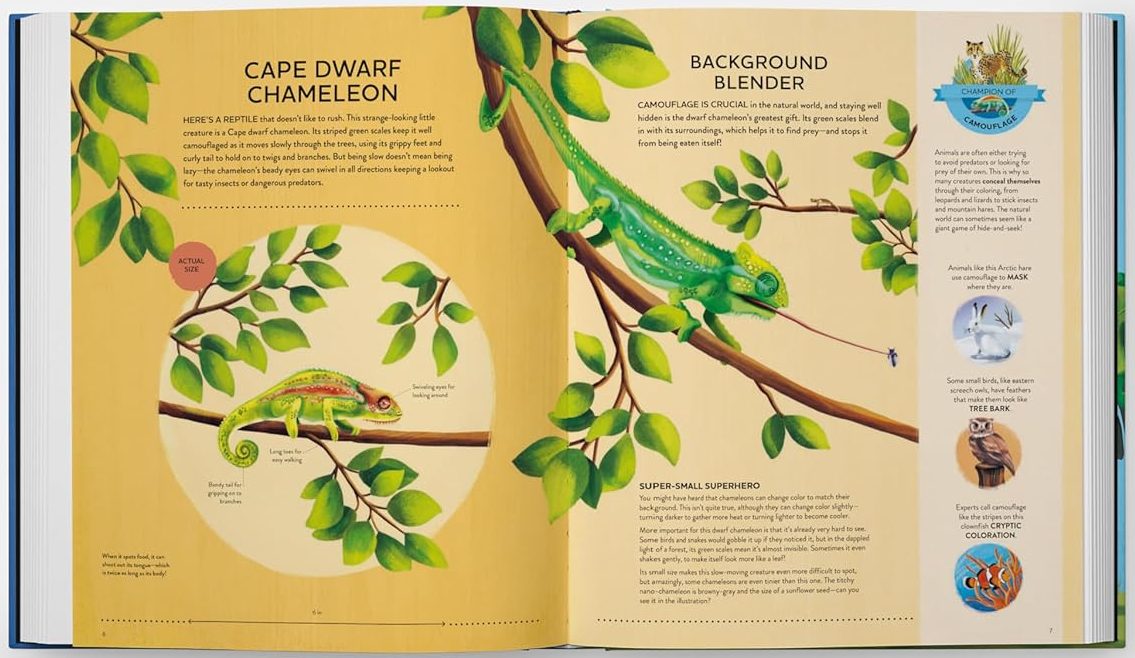
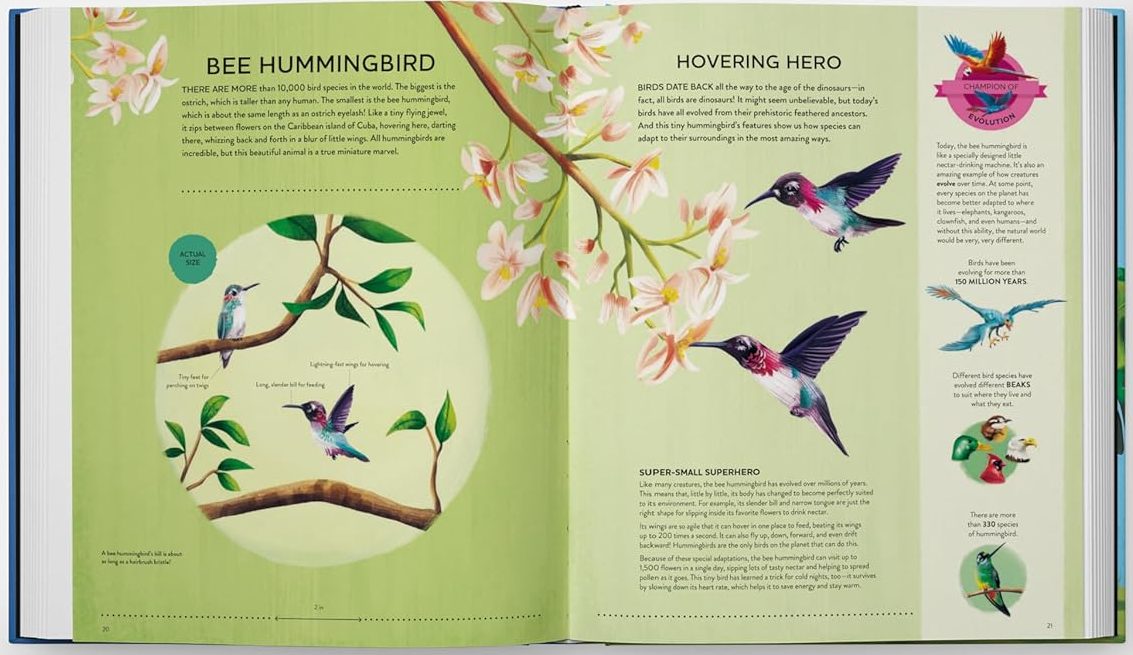
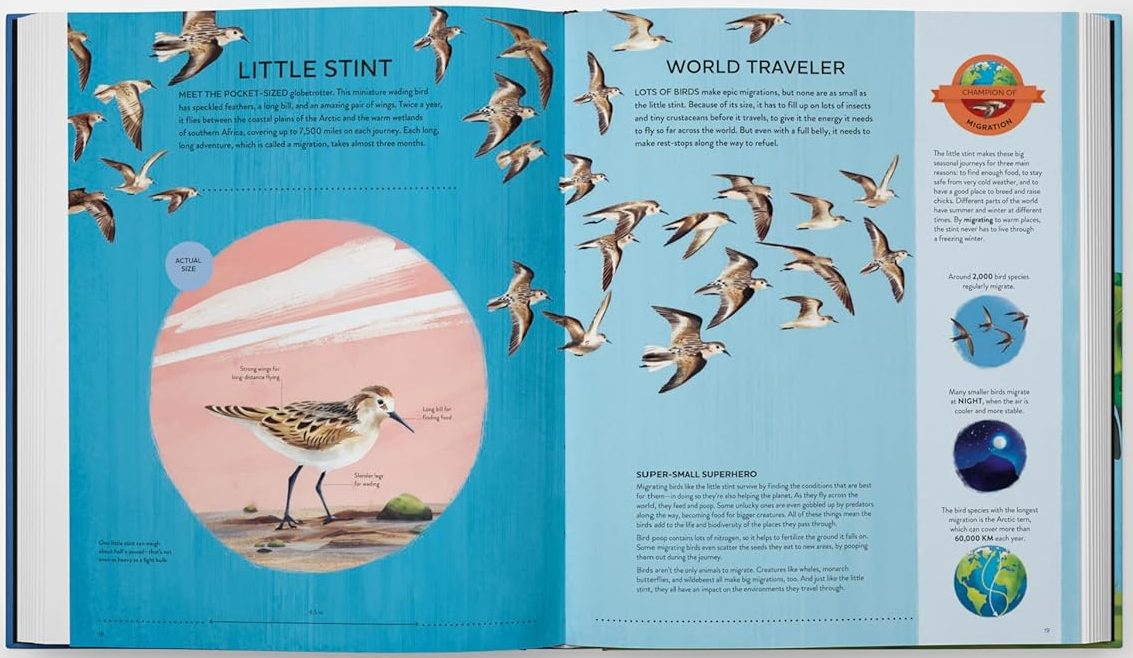
Each two-page spread in this cleverly designed oversized book introduces readers to an animal through Ben Lerwill’s easy-going, conversational description of the primary trait that makes it a champion, an often mind-boggling discussion of its crucial contribution to its ecosystem, and a sidebar containing even more memorable facts about natural phenomena such as camouflage, prey species, migration, metamorphosis, teamwork, survival, keystone species, indicator species, self-defense, and more.

Illustration © 2025 by Nic Jones, text copyright © 2025 by Ben Lerwill.

Each page spread stuns with Nic Jones’ vivid and gorgeously realistic illustrations that set each tiny creature in its natural habitat. Actual-size renderings of each animal is a highlight and are sure to spark plenty of “oh my gosh!” and “it’s so cute!” reactions. These images also allow kids to learn about how the animal is perfectly suited to its environment. Kids will enjoy comparing each animal to the size of their hand, finger, or even—in the case of the water bear—a grain of sugar. Where the animal is too small to see and be labeled clearly in its natural size, the image is expanded and labeled with the scale of magnification. 

Ready for a few examples of what readers will learn? Get this:

  • “The tiger piston shrimp is only the size of a french fry, but when it snaps its claw, the noise is louder than a gunshot!
  • “Leafcutter ants can carry 50 times their own weight. That’s like you carrying an RV—with your teeth!
  • A water bear “can go for 30 years without food or water,” it can survive temperatures as cold as -454ºF and as hot as 302ºF, and it has “even stayed alive after being blasted into outer space.”

Illustration © 2025 by Nic Jones, text copyright © 2025 by Ben Lerwill.

For budding zoologists, entomologists, and nature lovers at home and in the classroom, Nature’s Tiny Champions: The Big Book of Little Creatures Doing Mighty Things is a fascinating sure winner that will keep kids enthralled, watching out for the tiny creatures in their own area, and eager to learn more. The book’s impressive  would make a much-appreciated gift. It is highly recommended for home bookshelves and is a book librarians will be thrilled to display and recommend.  

Ages 6 – 9+

Phaidon Press, 2025 | ISBN 978-1838669973

About the Author

Ben Lerwill is a multi-award-winning children’s author and freelance writer who has written for over 50 publications, including National Geographic Traveller, The Sunday Times, and BBC Travel. Previous recognition for his books includes a Wainwright Prize for Children’s Nature Writing shortlist, a National Geographic Kids’ Magazine ‘Book of the Month’ and a Junior Library Guild Gold Standard Selection. Visit him at benlerwill.com.

About the Illustrator

Nic Jones has been a professional illustrator for nearly 5 years. Previous works include Earth Clock: The History of Our Planet in 24 Hours, and Above and Below: Dusk til Dawn.

World Environment Day Activity

Environment Word Search Puzzle


Find the words about our environment and protecting it’s resources in this puzzle! 

Environment Word Search Puzzle | Environment Word Search Puzzle Answer Key

You can purchase Nature’s Tiny Champions: The Big Book of Little Creatures Doing Mighty Things from these booksellers

Amazon | Barnes & Noble | Bookshop

Picture Book Review

April 23 – National Picnic Day

About the Holiday

It’s said that food always tastes better when eaten outdoors. If you’re having warm early spring weather today, why not test that theory, by packing a basket or cooler and heading out to your favorite outdoor spot! Whether simple or elegant, enjoyed alone or with family or friends, a picnic can be just the respite you need from the routine workweek. The word “picnic” probably gets its origins from the French language, specifically from the word pique-nique: (to pick) + (small thing or trifle). It’s thought that picnics became popular in France after the French Revolution in the mid 1800s and the idea then spread around the world. If you just can’t get away or the weather isn’t cooperating, International Picnic Day celebrated on June 18 and the month of July hosts National Picnic Month. 

Thank you to Tundra Books for sharing a copy of this book with me!

There Are No Ants in This Book

Written by Rosemary Mosco | Illustrated by Anna Pirolli

A child, picnic basket and tote in hand peeks in from the top-left corner of the first page to find a green field just perfect for a picnic. The child is pretty confident they won’t be disturbed by pesky pests purloining food because it says right on the cover that “there are no ants in this book.” But just as the cake is being placed on the blanket, word comes from nearby: “Wrong! There’s one!” Turns out that acorn lying only inches from the picnic cloth is actually the abode of an acorn ant.

Illustration © 2025 by Anna Pirolli, text © 2025 by Rosemary Mosco. Courtesy of Tundra Books.

The child can make an exception for just one ant, but then, out of the clear blue sky, comes “Two!” and “Three!” These two reveal that they are opposites of a sort. Number “two” is “one of the largest ants in the world” and as big as a strawberry. Number “three” is the smallest—”as long as six grains of salt.”

The child is just wrapping their head around this book having “. . . more ants than I was expecting” and figuring “three ants can’t eat my whole picnic, right?” when three more show up, including a honeypot ant that explains, “I fill my big round butt with sweet sugar water . . . in case my family gets hungry” then declares, “I am a walking refrigerator.

Illustration © 2025 by Anna Pirolli, text © 2025 by Rosemary Mosco. Courtesy of Tundra Books.

Kinda freaked out to meet these six interlopers, the child goes into full “ARRRGH!” mode when four more ants drop by. And who can blame them? The book had such promise at the beginning. But now . . . Yeah. Butt! Two of these new ants have positively particular posterior powers! One lives in trees and uses their butt as a kind of nature-made Siri to guide them home, and the other, an acrobat ant, explains “If someone scares me, I stick my butt high up in the air and wave it around.” The third is a clever crafter, and the fourth uses his head (literally) to defend his home.

The child is “shocked.” “Stunned.” Delighted! And invites these ants as well as their “humungous families” to the picnic. But all these tiny pounding feet attract the attention of an anteater. The child, though, does some quick thinking and then points out that the title of the book clearly states, “there are no ants in this book,” which sends the anteater packing. And now? It’s time for the perfect picnic!

Back matter presents realistic illustrations of each of the ten ants found in the book with a bite-sized paragraph revealing what part of the world the ant is native too as well as more about the feature that makes it unique.

Illustration © 2025 by Anna Pirolli, text © 2025 by Rosemary Mosco. Courtesy of Tundra Books.

In her funny and fast-paced tribute to ants, Rosemary Mosco proves that even the smallest creatures have enormous appeal. As each ant makes an appearance to proudly describe its distinct capability or feature, Mosco’s conversational, easy-to-digest writing style makes it simple for kids to remember the prominent details. Kids will also identify with the narrator, who humorously cycles from certainty in the promise of the title to disillusionment to acceptance to all-out appreciation for these tiny critters. 

Vibrant and loaded with personality, Anna Pirolli’s cartoon, graphic-style illustrations use perspective, natural surroundings, and emotive facial expressions to immerse kids in this rollicking educational experience.

If you like a dose of laughter with your science, There Are No Ants in This Book is the ant-idote you’ve been looking for. A perfect addition to any classroom, homeschool, or science educator’s collection, the book will also be an often-asked-for favorite for home story times.

Ages 4 – 8

Tundra Books, 2024 | ISBN 978-1774881163

About the Author

Rosemary Mosco makes books and cartoons that connect people with the natural world. Her nature comics won the National Cartoonist Society’s award for Best Online Short Form Comic and were the subject of an award-winning museum exhibit. She co-wrote the New York Times bestseller The Atlas Obscura Explorer’s Guide for the World’s Most Adventurous Kid, and is the author of the picture books Butterflies Are Pretty . . . Gross! and Flowers Are Pretty . . . Weird! illustrated by Jacob Souva, as well as five other science books. She speaks at birding festivals and looks for cool critters under every rock she can find. Rosemary lives in Massachusetts. Visit her at rosemarymosco.com.

About the Illustrator

Anna Pirolli was born in Genoa and moved to Milan to study illustration at the European Institute of Design. She has worked as a freelance illustrator and art director for companies such as Mondadori, Pearson, Vogue, MTV, Kinder Ferrero, Nickelodeon, Disney and others, following the creative process from concept to creation. She’s also a visiting professor at the Accademia di Brera, where she teaches design applied to the arts. Anna has illustrated the picture books I Hate My Cats: A Love Story by Davide Cali and Anonymouse by Vikki VanSickle, which won the Dilys Evans Founder’s Award at the 2021 Society of Illustrators Original Art Show. Follow her on Instagram.

National Picnic Day Activity

A Perfect Day for a Picnic! Maze

Can you lead the ants to the picnic in this printable A Perfect Day for a Picnic! maze?

You can purchase There Are No Ants in This Book from these booksellers

Amazon | Barnes & Noble | Bookshop (discounted books and support for your local independent bookstore)
Picture Book Review

March 14 – Celebrating the Book Birthday of Just a Worm

celebrate-picture-books-picture-book-review-just-a-worm-cover

Just a Worm

By Marie Boyd

Worm is inching along on a beautiful summer day singing a happy little ditty: “La la la la… Slop, slip, wiggle. / I’m taking a little twirl. / Dop, dip, squiggle. / I’m off to see the world.” And so he was! But on his way he passed two kids who just didn’t see worm the way he saw himself and made him wonder…. Worm bolstered his self-confidence, telling himself that there were a lot of things he could do. 

Just then he wiggled up to a row of brilliant purple flowers, where caterpillars, a chrysalis, and a butterfly were hanging out. Just out of curiosity, worm asked one of the caterpillars what she could do, and—Wow!—when he learned about making a chrysalis and metamorphosis, and becoming a butterfly, he was impressed. And maybe a bit intimidated.

celebrate-picture-books-picture-book-review-just-a-worm-ew-reaction

Copyright Marie Boyd, 2023, courtesy of Greenwillow Books.

Butterfly also seemed to have multiple talents as did Spider and Dragonfly, who informed worm that he’d never be able to fly because he was “‘just a worm.'” Worm seemed resigned to his fate when he came upon ladybug and asked what she could do. Ladybug said, “‘I protect plants by eating insects, like aphids.'” This reminded worm that he did have a talent. “‘I eat dead animals and plants and keep the garden clean,'” he said with growing confidence.

celebrate-picture-books-picture-book-review-just-a-worm-butterfly

Copyright Marie Boyd, 2023, courtesy of Greenwillow Books.

By the time worm meets bee, he’s ready to advocate for his own contribution to the garden. Then when snail crawls by and tells worm about the slime that protects him, worm realizes he’s found a friend he can relate to because worm makes slime too! Snail thinks that’s pretty cool, and worm agrees! In fact, worm understands that he can do a lot of things and that many of them benefit the garden. He even lists them all for snail, and as he looks around at the beautiful flowers and luscious berries, he takes some credit for growing “all of this” and proudly states “I’m a WORM!”

celebrate-picture-books-picture-book-review-just-a-worm-ladybug

Copyright Marie Boyd, 2023, courtesy of Greenwillow Books.

Marie Boyd’s clever story combines salient information about a variety of insects with worm’s confidence-boosting journey from feeling inferior to the other garden dwellers to realizing his own role and importance in the plants’ growth and vibrancy. From page to page, readers can sense worm’s developing appreciation for his talents, and when he shakes off his misgivings and gives ladybug a small list of his accomplishments, kids will be right there to cheer him on. Readers may be surprised to discover just how much worms do contribute to a healthy garden ecosystem even as they come to understand that there is no such thing as “just a worm” in nature. Worm’s personal growth will also resonate with children, who are trying out new things and beginning to find their place in the world. 

Boyd’s beautiful and original illustrations, created with intricate paper quilling are wonderfully detailed, textured, and expressive of the uniqueness and interconnectivity of nature. She also weaves in metaphorical clouds, which at worm’s lowest point, turn grey and black as they build overhead. But with his newfound confidence, they dissipate to be replaced with white, fluffy clouds that also blow away to reveal a clear, blue sky.

A multilayered story that delivers two important life lessons in a unique and charming way, Just a Worm will become a quick favorite for home, school, and public library story times. The book would be especially fun to pair with home gardening or planting activities for classrooms, libraries, and extracurricular organizations.

Ages 4 – 8

Greenwillow Books, 2023 | ISBN 978-0063212565

About Marie Boyd

Marie Boyd is a law professor, author, illustrator, and self-taught quilling artist. Her author and illustrator debut, Just a Worm (Greenwillow Books 2023), follows worm through the garden as he learns about his neighbors and how he helps keep the garden healthy. Originally from Salt Lake City, Marie lives in Columbia, South Carolina with her husband and two young children. You can find her at marieboyd.com and on Instagram.

Just a Worm Book Birthday Activity

celebrate-picture-books-picture-book-review-just-a-worm-quilled-snail-craft

Make a Quilled Snail

Author/illustrator Marie Boyd built worm’s gorgeous garden world with quilled paper, and now you can make worm’s friend snail for yourself with this tutorial on her website!

Quilled Snail Craft

celebrate-picture-books-picture-book-review-just-a-worm-cover

You can find Just a Worm at these booksellers

Amazon | Barnes & Noble | Books-a-Million

To support your local bookstore, order from

Bookshop | IndieBound
Picture Book Review