July 2 – National Pickle Month

July is made for picnics and picnics are made for pickles! If your sandwich or hot dog is just not the same without the tang of pickles or you love nothing more than biting into a crunchy gherkin, dill, or other variety, then this holiday is for you! Instituted in 1949 with encouragement by the Pickle Packers, this observance celebrates the popularity of pickles. An eye-popping 5,200,000 pounds of pickles are eaten in the US every year! Pickles have a storied history, going back thousands of years to 2030 BC, when pickling was used as a preservative. Even Cleopatra and Julius Caesar lauded the beauty and strengthening properties of pickles! So, if you relish pickles by themselves or incorporated into your favorite dish—enjoy!

Thanks to Tundra Books for sending me this book for review!

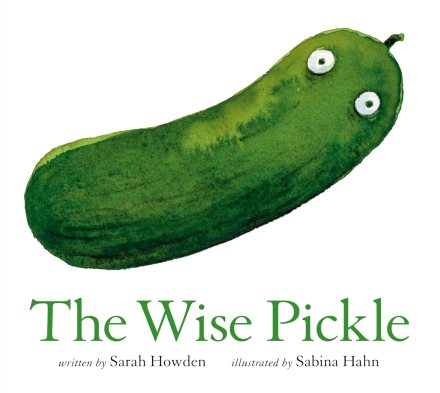
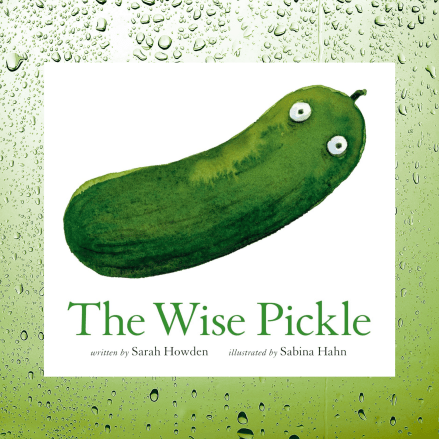
The Wise Pickle

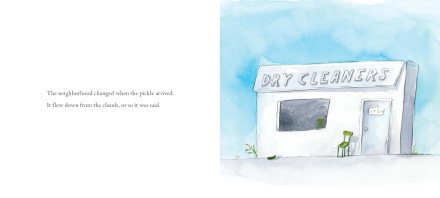
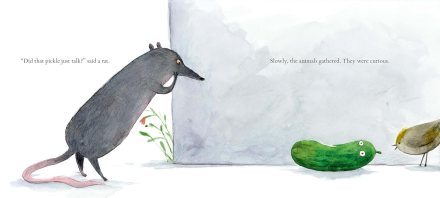
One day, a pickle appeared “on the side of the road, against the wall of a dry cleaners” and, speaking into the ether, took stock. “‘I am a pickle on the side of the road. . . I have lived a lot of life.'” Hearing this, animals began to gather and seek answers from the pickle’s seemingly vast store of knowledge. A rat propped the pickle upon a pillow, and from there it made pronouncements, both philosophical and mystical. When a mouse offered the pickle a crumb, the pickle said, “‘I’m here to feed others, not to eat.'”

Illustration copyright © 2026 by Sabina Hahn. Text copyright © 2026 by Sarah Howden. Courtesy of Tundra Books.

Over hours and days, this gherkin guru’s followers hung on its every word, even as their mentor shriveled in the hot sun. Their questions ranged from the proverbial “‘Why are we here?'” to the more pointed “‘How did you get here?'” The pickle was generous with its answers, revealing that it “‘used to live underwater . . . in a salty brine like the sea, but with more garlic,'” and sharing its inauspicious, yet shocking, past and its last wishes.

As the pickle’s prospects grew bleak, the animals accommodated its final desire and gathered to say goodbye. But this extraordinary pickle’s mission is not finished. In fact, its influence may just be taking off.

Illustration copyright © 2026 by Sabina Hahn. Text copyright © 2026 by Sarah Howden. Courtesy of Tundra Books.

Smart, funny, and steeped in the tart and tangy pleasures of absurdism, Sarah Howden’s ingenious story will keep kids and adults laughing at its melding of droll humor, parody, and endearing characters. Her deft touch with straightforward storytelling amplifies her beguiling descriptions and laugh-out-loud dialogue, leaving readers happily enlightened. Howden’s enigmatic hero is one readers will never forget.

From the moment the pickle bounces onto the scene, Sabina Hahn’s deadpan graphite pencil and watercolor illustrations hilariously trace the pickle’s elevation from sidewalk curiosity to enthroned guru. The pickle’s wide, staring eyes express subtle emotions as the animals gather, their paws clasped in reverence as they lean in to learn his story and absorb his wisdom. Infused with sincerity, Hahn’s simply composed images are as charming as they are farcical, a perfect match for Sarah Howden’s story.

The Wise Pickle is a hilarious, contemplative story that all ages will eat up and request again and again. It is a must for any library or home collection and would make a delectable gift for any child.

Ages 4 – 8

Tundra Books, 2026 | ISBN 978-1774886984

Sarah Howden is the author of several books for children, including Cone CatCone Dog and The Tunnel. Her poems have been published in Grain and Jones Av., and stories in Chirp and Chickadee magazines. Sarah is also an editor at Orca Book Publishers, where she enjoys helping other writers sculpt their stories. She works out writing conundrums on walks around her neighborhood or by distracting herself with snacks (she won’t say no to a crunchy pickle). Having grown up in the Niagara Region, she now lives in Toronto with her husband, daughter, and two mischievous cats. Follow her on Instagram.

Illustrator, animator and sculptor Sabina Hahn has been a voracious reader and an unstoppable doodler her whole life, which has led her into the world of children’s books. She loves stories, tall tales and most importantly, pickles. Sabina grew up in Riga, Latvia, and now lives in New York. Visit her at sabinahahn.com.

celebrate-picture-books-picture-book-review-pickle-maze

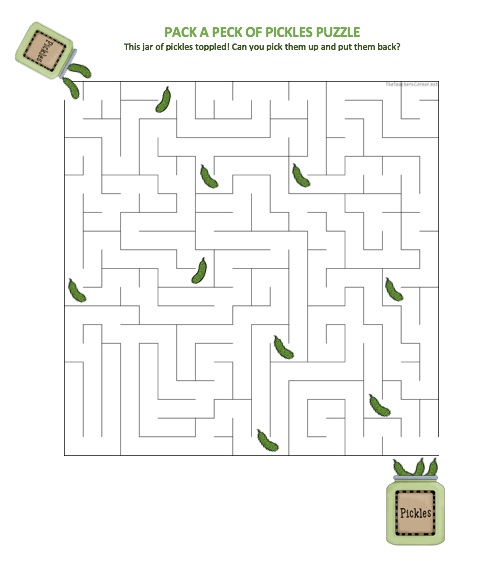
The pickle jar has toppled over! Can you pick up the pickles in the maze to pack them in the jar again?

Pack a Peck of Pickles Puzzle | Pack a Peck of Pickles Puzzle Solution

You can purchase The Wise Pickle from these booksellers

Amazon | Barnes & Noble | Bookshop

April 23 – National Picnic Day

About the Holiday

It’s said that food always tastes better when eaten outdoors. If you’re having warm early spring weather today, why not test that theory, by packing a basket or cooler and heading out to your favorite outdoor spot! Whether simple or elegant, enjoyed alone or with family or friends, a picnic can be just the respite you need from the routine workweek. The word “picnic” probably gets its origins from the French language, specifically from the word pique-nique: (to pick) + (small thing or trifle). It’s thought that picnics became popular in France after the French Revolution in the mid 1800s and the idea then spread around the world. If you just can’t get away or the weather isn’t cooperating, International Picnic Day is celebrated on June 18, and the month of July hosts National Picnic Month.

Thank you to Tundra Books for sharing a copy of this book with me!

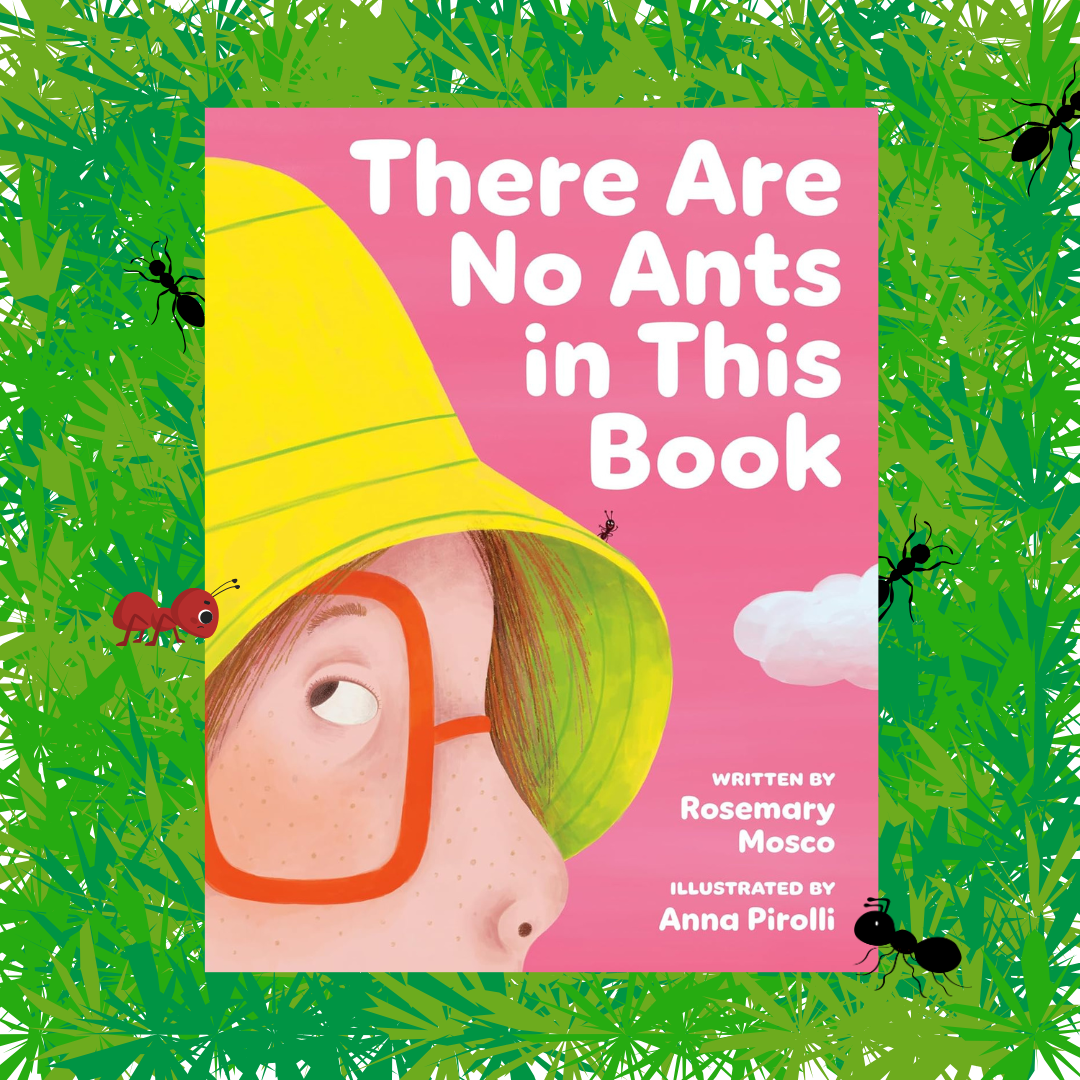
There Are No Ants in This Book

Written by Rosemary Mosco | Illustrated by Anna Pirolli


A child, picnic basket and tote in hand peeks in from the top-left corner of the first page to find a green field just perfect for a picnic. The child is pretty confident they won’t be disturbed by pesky pests purloining food because it says right on the cover that “there are no ants in this book.” But just as the cake is being placed on the blanket, word comes from nearby: “Wrong! There’s one!” Turns out that acorn lying only inches from the picnic cloth is actually the abode of an acorn ant.

Illustration © 2025 by Anna Pirolli, text © 2025 by Rosemary Mosco. Courtesy of Tundra Books.

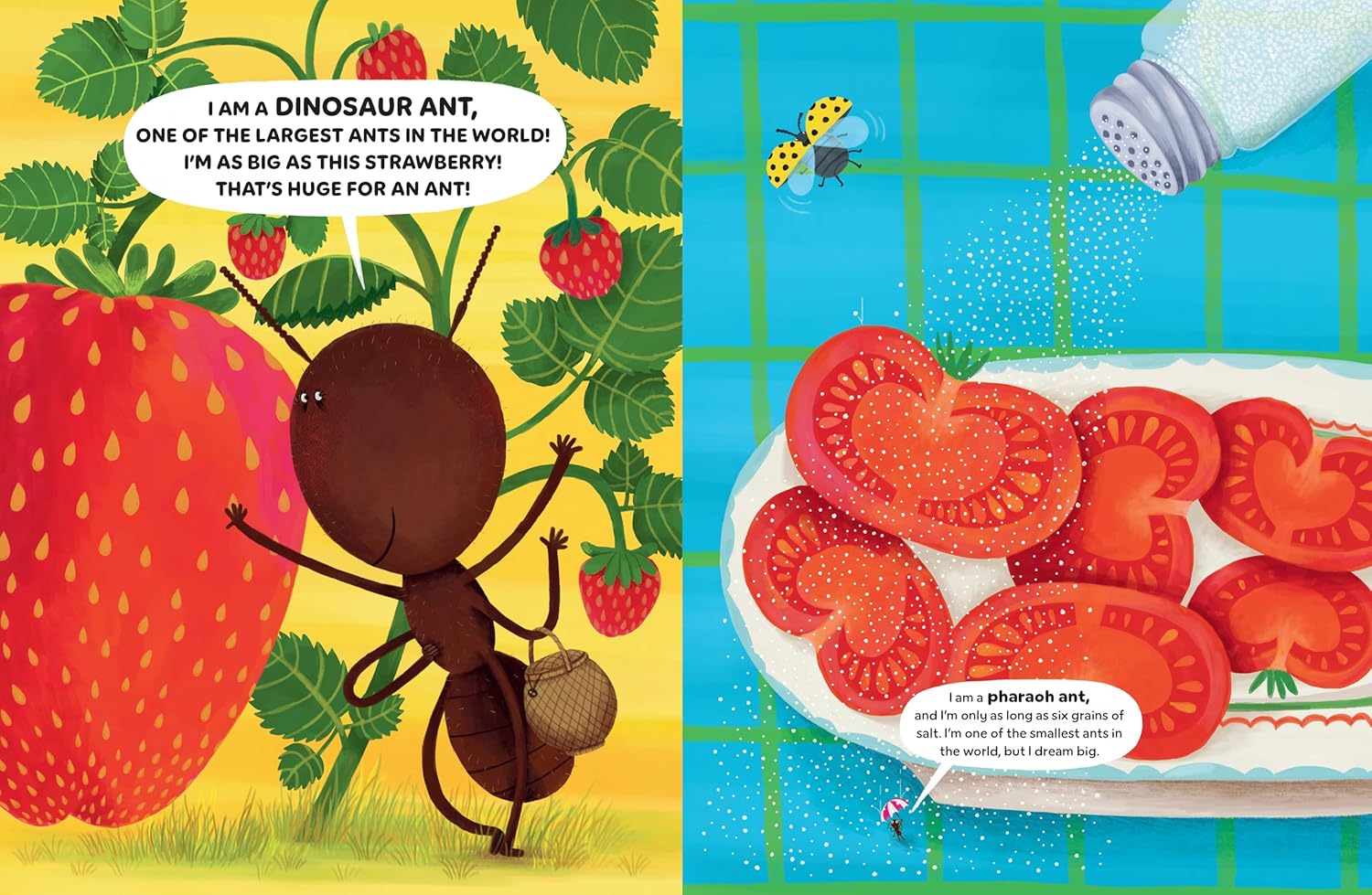
The child can make an exception for just one ant, but then, out of the clear blue sky, comes “Two!” and “Three!” These two reveal that they are opposites of a sort. Number “two” is “one of the largest ants in the world” and as big as a strawberry. Number “three” is the smallest—”as long as six grains of salt.”

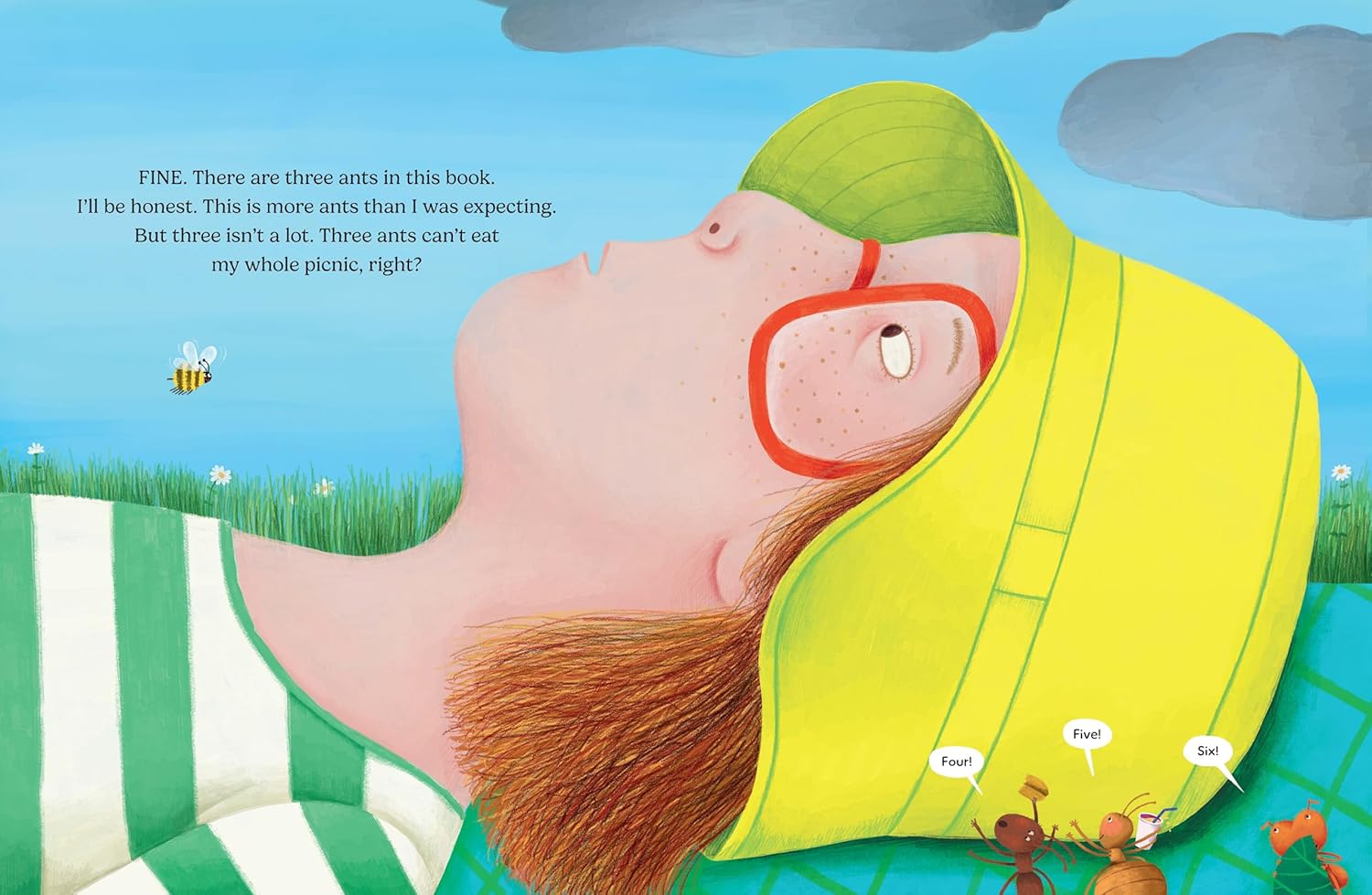
The child is just wrapping their head around this book having “. . . more ants than I was expecting” and figuring “three ants can’t eat my whole picnic, right?” when three more show up, including a honeypot ant that explains, “I fill my big round butt with sweet sugar water . . . in case my family gets hungry” then declares, “I am a walking refrigerator.

Illustration © 2025 by Anna Pirolli, text © 2025 by Rosemary Mosco. Courtesy of Tundra Books.

Kinda freaked out to meet these six interlopers, the child goes into full “ARRRGH!” mode when four more ants drop by. And who can blame them? The book had such promise at the beginning. But now . . . Yeah. Butt! Two of these new ants have positively particular posterior powers! One lives in trees and uses their butt as a kind of nature-made Siri to guide them home, and the other, an acrobat ant, explains “If someone scares me, I stick my butt high up in the air and wave it around.” The third is a clever crafter, and the fourth uses his head (literally) to defend his home.

The child is “shocked.” “Stunned.” Delighted! And invites these ants as well as their “humungous families” to the picnic. But all these tiny pounding feet attract the attention of an anteater. The child, though, does some quick thinking and then points out that the title of the book clearly states, “there are no ants in this book,” which sends the anteater packing. And now? It’s time for the perfect picnic!

Back matter presents realistic illustrations of each of the ten ants found in the book with a bite-sized paragraph revealing what part of the world the ant is native too as well as more about the feature that makes it unique.

Illustration © 2025 by Anna Pirolli, text © 2025 by Rosemary Mosco. Courtesy of Tundra Books.

In her funny and fast-paced tribute to ants, Rosemary Mosco proves that even the smallest creatures have enormous appeal. As each ant makes an appearance to proudly describe its distinct capability or feature, Mosco’s conversational, easy-to-digest writing style makes it simple for kids to remember the prominent details. Kids will also identify with the narrator, who humorously cycles from certainty in the promise of the title to disillusionment to acceptance to all-out appreciation for these tiny critters. 

Vibrant and loaded with personality, Anna Pirolli’s cartoon, graphic-style illustrations use perspective, natural surroundings, and emotive facial expressions to immerse kids in this rollicking educational experience.

If you like a dose of laughter with your science, There Are No Ants in This Book is the ant-idote you’ve been looking for. A perfect addition to any classroom, homeschool, or science educator’s collection, the book will also be an often-asked-for favorite for home story times.

Ages 4 – 8

Tundra Books, 2024 | ISBN 978-1774881163

About the Author

Rosemary Mosco makes books and cartoons that connect people with the natural world. Her nature comics won the National Cartoonist Society’s award for Best Online Short Form Comic and were the subject of an award-winning museum exhibit. She co-wrote the New York Times bestseller The Atlas Obscura Explorer’s Guide for the World’s Most Adventurous Kid, and is the author of the picture books Butterflies Are Pretty . . . Gross! and Flowers Are Pretty . . . Weird! illustrated by Jacob Souva, as well as five other science books. She speaks at birding festivals and looks for cool critters under every rock she can find. Rosemary lives in Massachusetts. Visit her at rosemarymosco.com.

About the Illustrator

Anna Pirolli was born in Genoa and moved to Milan to study illustration at the European Institute of Design. She has worked as a freelance illustrator and art director for companies such as Mondadori, Pearson, Vogue, MTV, Kinder Ferrero, Nickelodeon, Disney and others, following the creative process from concept to creation. She’s also a visiting professor at the Accademia di Brera, where she teaches design applied to the arts. Anna has illustrated the picture books I Hate My Cats: A Love Story by Davide Cali and Anonymouse by Vikki VanSickle, which won the Dilys Evans Founder’s Award at the 2021 Society of Illustrators Original Art Show. Follow her on Instagram.

National Picnic Day Activity

A Perfect Day for a Picnic! Maze


Can you lead the ants to the picnic in this printable A Perfect Day for a Picnic! maze?

You can purchase There Are No Ants in This Book from these booksellers

Amazon | Barnes & Noble | Bookshop (discounted books and support for your local independent bookstore)

April 23 – National Picnic Day

About the Holiday

It’s said that food always tastes better when eaten outdoors. If you’re having warm early spring weather today, why not test that theory, by packing a basket or cooler and heading out to your favorite outdoor spot! Whether simple or elegant, enjoyed alone or with family or friends, a picnic can be just the respite you need from the routine workweek. The word “picnic” probably gets its origins from the French language, specifically from the word pique-nique: (to pick) + (small thing or trifle). It’s thought that picnics became popular in France after the French Revolution in the mid 1800s and the idea then spread around the world. If you just can’t get away or the weather isn’t cooperating, International Picnic Day celebrated on June 18 and the month of July hosts National Picnic Month. 

Thank you to Tundra Books for sharing a copy of this book with me!

There Are No Ants in This Book

Written by Rosemary Mosco | Illustrated by Anna Pirolli

A child, picnic basket and tote in hand peeks in from the top-left corner of the first page to find a green field just perfect for a picnic. The child is pretty confident they won’t be disturbed by pesky pests purloining food because it says right on the cover that “there are no ants in this book.” But just as the cake is being placed on the blanket, word comes from nearby: “Wrong! There’s one!” Turns out that acorn lying only inches from the picnic cloth is actually the abode of an acorn ant.

Illustration © 2025 by Anna Pirolli, text © 2025 by Rosemary Mosco. Courtesy of Tundra Books.

The child can make an exception for just one ant, but then, out of the clear blue sky, comes “Two!” and “Three!” These two reveal that they are opposites of a sort. Number “two” is “one of the largest ants in the world” and as big as a strawberry. Number “three” is the smallest—”as long as six grains of salt.”

The child is just wrapping their head around this book having “. . . more ants than I was expecting” and figuring “three ants can’t eat my whole picnic, right?” when three more show up, including a honeypot ant that explains, “I fill my big round butt with sweet sugar water . . . in case my family gets hungry” then declares, “I am a walking refrigerator.

Illustration © 2025 by Anna Pirolli, text © 2025 by Rosemary Mosco. Courtesy of Tundra Books.

Kinda freaked out to meet these six interlopers, the child goes into full “ARRRGH!” mode when four more ants drop by. And who can blame them? The book had such promise at the beginning. But now . . . Yeah. Butt! Two of these new ants have positively particular posterior powers! One lives in trees and uses their butt as a kind of nature-made Siri to guide them home, and the other, an acrobat ant, explains “If someone scares me, I stick my butt high up in the air and wave it around.” The third is a clever crafter, and the fourth uses his head (literally) to defend his home.

The child is “shocked.” “Stunned.” Delighted! And invites these ants as well as their “humungous families” to the picnic. But all these tiny pounding feet attract the attention of an anteater. The child, though, does some quick thinking and then points out that the title of the book clearly states, “there are no ants in this book,” which sends the anteater packing. And now? It’s time for the perfect picnic!

Back matter presents realistic illustrations of each of the ten ants found in the book with a bite-sized paragraph revealing what part of the world the ant is native too as well as more about the feature that makes it unique.

Illustration © 2025 by Anna Pirolli, text © 2025 by Rosemary Mosco. Courtesy of Tundra Books.

In her funny and fast-paced tribute to ants, Rosemary Mosco proves that even the smallest creatures have enormous appeal. As each ant makes an appearance to proudly describe its distinct capability or feature, Mosco’s conversational, easy-to-digest writing style makes it simple for kids to remember the prominent details. Kids will also identify with the narrator, who humorously cycles from certainty in the promise of the title to disillusionment to acceptance to all-out appreciation for these tiny critters. 

Vibrant and loaded with personality, Anna Pirolli’s cartoon, graphic-style illustrations use perspective, natural surroundings, and emotive facial expressions to immerse kids in this rollicking educational experience.

If you like a dose of laughter with your science, There Are No Ants in This Book is the ant-idote you’ve been looking for. A perfect addition to any classroom, homeschool, or science educator’s collection, the book will also be an often-asked-for favorite for home story times.

Ages 4 – 8

Tundra Books, 2024 | ISBN 978-1774881163

About the Author

Rosemary Mosco makes books and cartoons that connect people with the natural world. Her nature comics won the National Cartoonist Society’s award for Best Online Short Form Comic and were the subject of an award-winning museum exhibit. She co-wrote the New York Times bestseller The Atlas Obscura Explorer’s Guide for the World’s Most Adventurous Kid, and is the author of the picture books Butterflies Are Pretty . . . Gross! and Flowers Are Pretty . . . Weird! illustrated by Jacob Souva, as well as five other science books. She speaks at birding festivals and looks for cool critters under every rock she can find. Rosemary lives in Massachusetts. Visit her at rosemarymosco.com.

About the Illustrator

Anna Pirolli was born in Genoa and moved to Milan to study illustration at the European Institute of Design. She has worked as a freelance illustrator and art director for companies such as Mondadori, Pearson, Vogue, MTV, Kinder Ferrero, Nickelodeon, Disney and others, following the creative process from concept to creation. She’s also a visiting professor at the Accademia di Brera, where she teaches design applied to the arts. Anna has illustrated the picture books I Hate My Cats: A Love Story by Davide Cali and Anonymouse by Vikki VanSickle, which won the Dilys Evans Founder’s Award at the 2021 Society of Illustrators Original Art Show. Follow her on Instagram.

National Picnic Day Activity

A Perfect Day for a Picnic! Maze

Can you lead the ants to the picnic in this printable A Perfect Day for a Picnic! maze?

You can purchase There Are No Ants in This Book from these booksellers

Amazon | Barnes & Noble | Bookshop (discounted books and support for your local independent bookstore)

Picture Book Review
January 31 – It’s National Mentoring Month

celebrate-picture-books-picture-book-review-professor-goose-debunks-the-three-little-pigs-cover

About the Holiday

Learning—and the success that comes with it—can be easier and more fun when it’s shared with a mentor. Teachers, instructors, coaches, crafters, family members, and other adults like passing on their knowledge to younger generations, and while kids gain valuable skills, they also benefit from the bonds that form between them and their mentor. If you’re interested in becoming a mentor check out the resources at mentoring.org. National Mentoring Month is also a terrific time to thank a mentor in your life and tell them what a difference they made. 

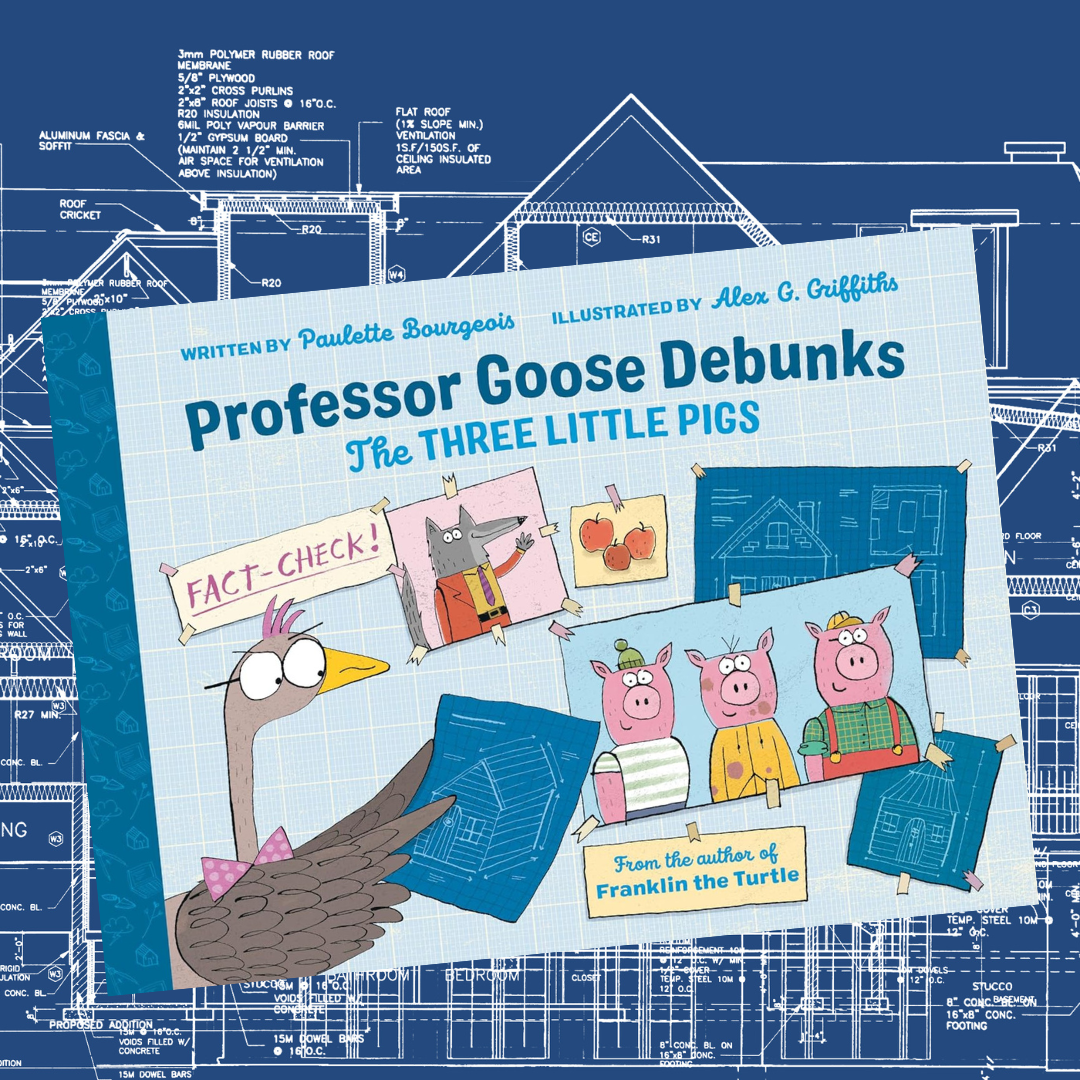
Thanks to Tundra Books for sharing a copy of Professor Goose Debunks the Three Little Pigs with me for review consideration. All opinions on the book are my own.

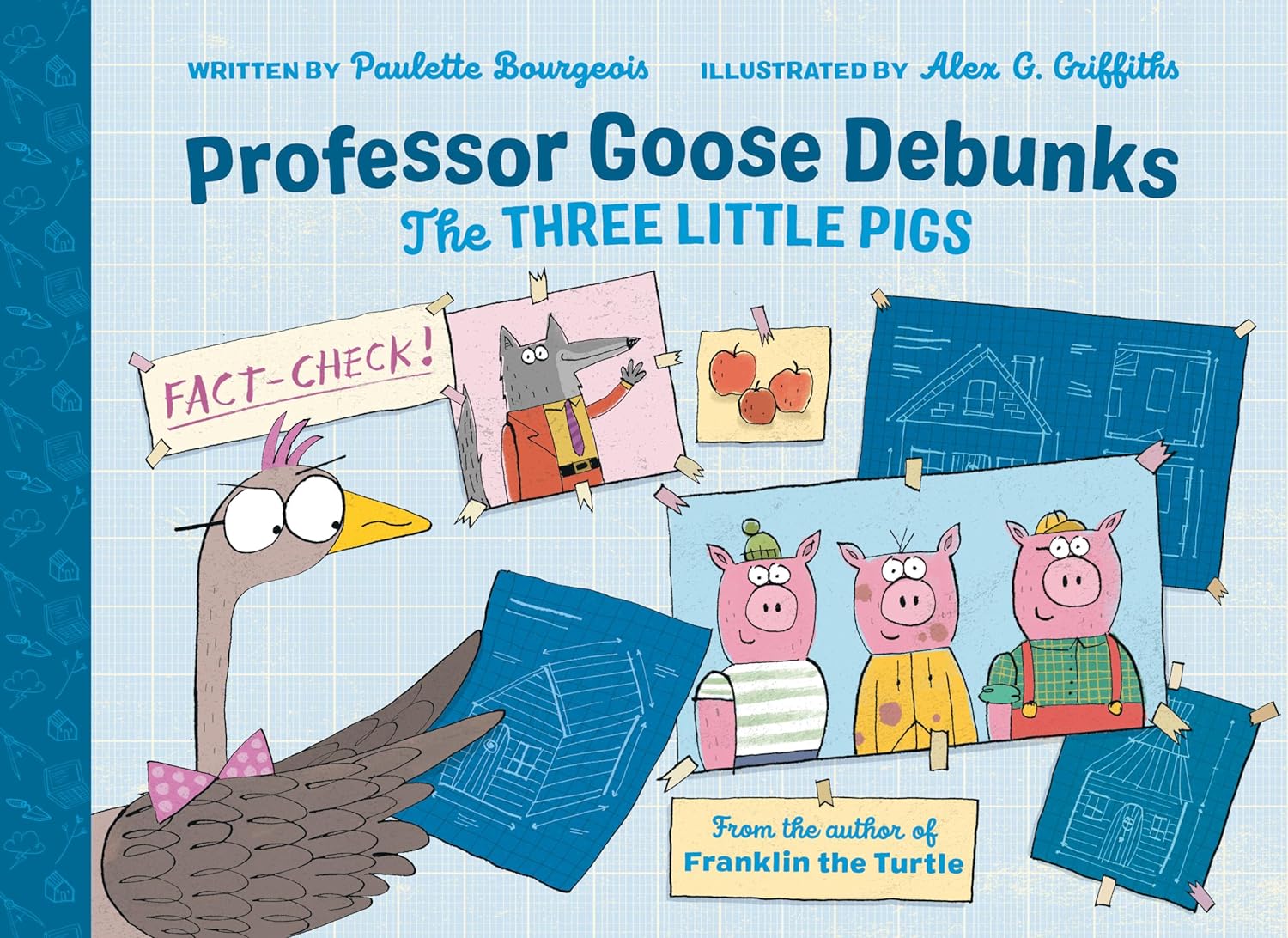
Professor Goose Debunks the Three Little Pigs

Written by Paulette Bourgeoise | Illustrated by Alex G. Griffiths 

Professor Marie Curious Goose—”renowned and distinguished scientist”—is on a mission to correct the science in her great-aunt Mother Goose’s stories. This time, she’s tackling The Three Little Pigs. The story starts off in the familiar way: “Once upon a time, there were three little pigs.” The first pig liked to eat and play. The second little pig liked to laze in the mud. And the third little pig worked hard and sweated every day. One day their mother sends them off into the world with the admonition to “‘Save your own bacon!'” Sounds about right, right?

Image copyright Alex G. Griffiths, 2024, text copyright Paulette Bourgeois, 2024. Courtesy of Tundra Books.

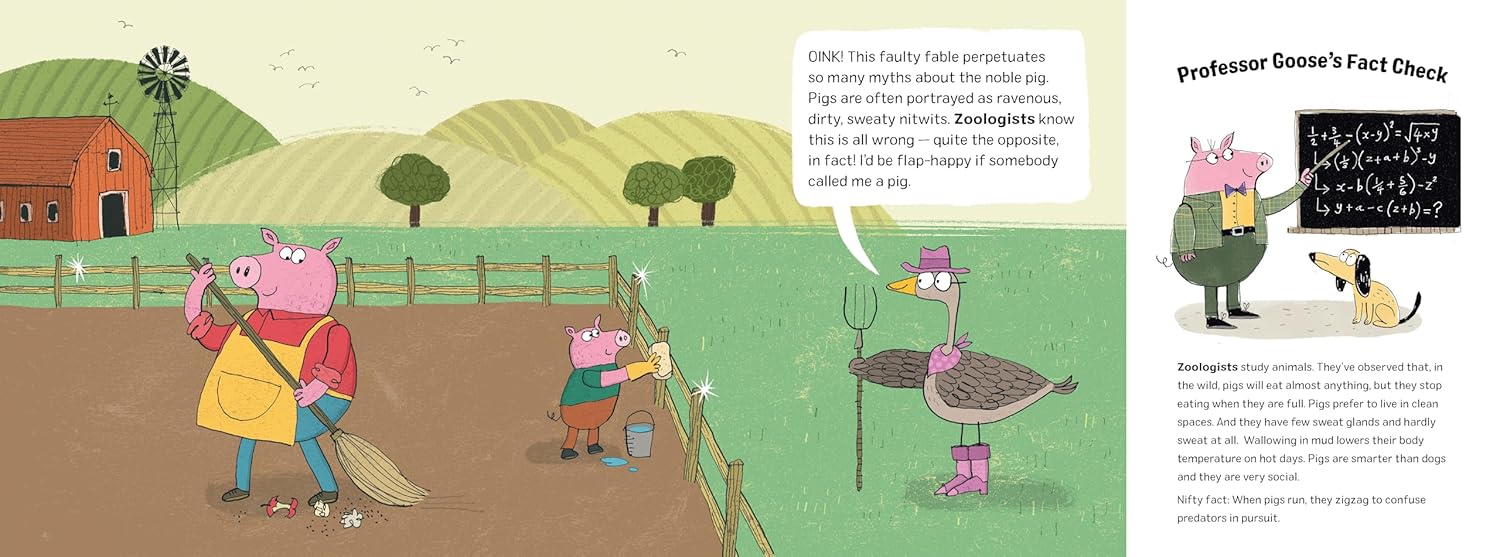
But wait! Before you move on in the story, Professor Goose reveals that even these brief profiles are full of erroneous myths! To clear things up, the professor imparts zoologist-approved information, including such facts as pigs don’t gorge themselves, they lay in mud to lower “their body temperature on hot days,” and, because pigs have few sweat glands, they always stay fresh and dry. 

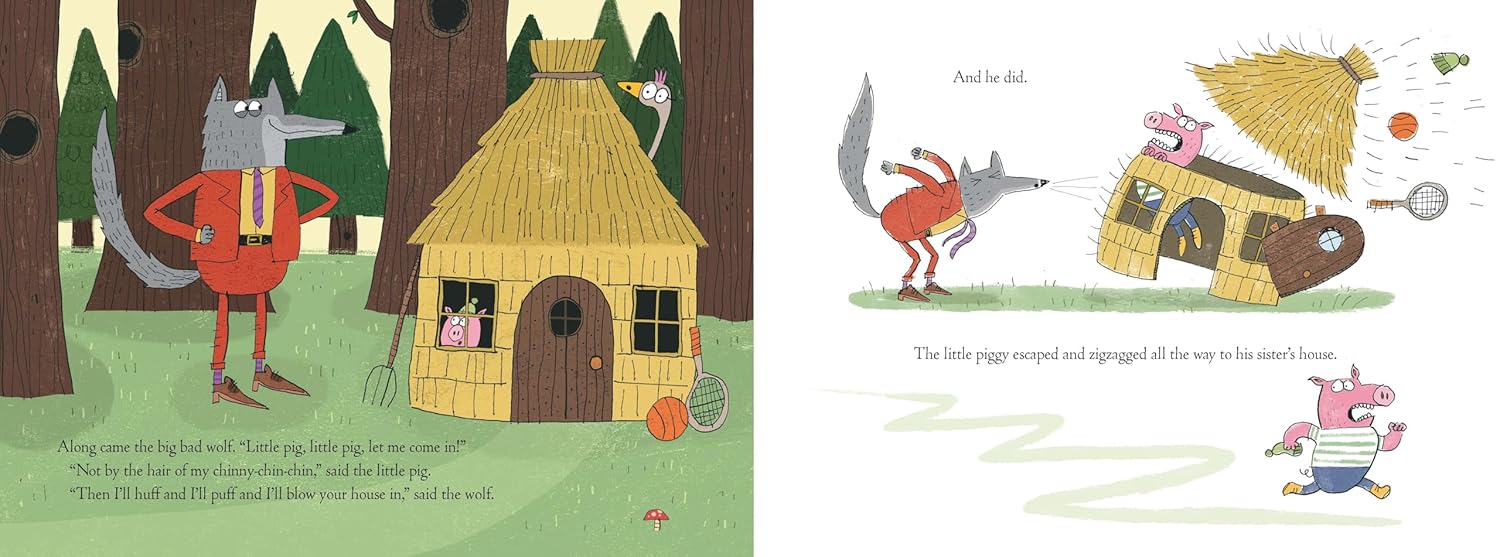
Finally on their own, the siblings get down to the business of living their best lives. The first little pig builds himself a house of straw then goes off to play basketball. Here, Professor Goose takes a moment to imaprt a lesson on the states of Matter and what Matter is made of. By now the wolf has caught up with the first little pig, who rebuffs him with the familiar “‘Not by the hair of my chinny-chin-chin.'” Despite this the wolf does his huffing and puffing—you know the drill—and the pig runs off to his sister’s house. But waaaiit . . .. The prof takes exception to a few tidbits here, too, such as the chinny-chin-chin line and the house destruction method.

Image copyright Alex G. Griffiths, 2024, text copyright Paulette Bourgeois, 2024. Courtesy of Tundra Books.

Soon, while the wolf is menacing the second little pig, Professor Goose works herself into a lather over the “lone wolf” attack and the story’s depiction of wolves in general. To calm herself down, she instructs readers in details about structures and construction. 

Undeterred, the wolf high tails it to the third little pig’s house of bricks, where she and her siblings are cozily ensconced. The wolf huffs and puffs, can’t blow the brick house down, and the pigs are triumphant. But is this where the story ends? No! The prof explains how many fairy tales—just like this one—use a pattern of three and that patterns are found in everything, including nature, music, and math. Finally, Professor Goose concludes with her own version of what became of these three pig siblings—and the story even turns out well for the wolf!

Image copyright Alex G. Griffiths, 2024, text copyright Paulette Bourgeois, 2024. Courtesy of Tundra Books.

Paulette Bourgeouis’s clever take on the familiar tale of The Three Little Pigs will have kids captivated and laughing from beginning to end as Professor Goose points out foibles in the story and connects the setting, the wolf’s powerful breath, the pigs’ houses, the pigs themselves, and the story’s structure to a wide range of scientific principles. Through Professor Goose’s Fact Checks, kids learn surprising and educational facts about zoology, matter, weather, architecture, patterns, and even coding. 

Alex G. Griffith’s engaging illustrations make for a fun and funny learning experience that will have kids in stitches and their eyes glued to every page. Griffith’s tiny details, facial expressions, and slap-stick humor give a fresh, comic-style look to this well-known story and enhance the science-based facts this fractured fairytale is built on for today’s kids.

A unique retelling of a favorite classic that takes superb advantage of all a fractured fairy tale can offer, Professor Goose Debunks The Three Little Pigs is sure to be asked for again and again…and again. The STEM-related connections make this book a terrific and educational introduction to a variety of units for science educators.

Ages 3 – 8 and up

Tundra Books, 2024 | ISBN 978-0735267329

About the Author

Paulette Bourgeouis is best known for creating Franklin the Turtle, the character who appears in the bestselling picture books illustrated by Brenda Clark. The series has been translated into thirty-eight languages and adapted into an animated television series, merchandise, and feature-length films. She is also the author of award-winning books for children including Oma’s Quilt, which was developed as a short film by the National Film Board of Canada, and more than two dozen non-fiction science books. She is a member of the Order of Canada, received an honorary doctorate degree from Western University, an award of merit from the Canadian Association of Occupational Therapists and most recently graduated with an M.F.A. in Creative Writing from the University of British Columbia. Paulette frequently teaches and she has been the writer-in-residence at UBC, Whistler, BC, and Terra Nova National Park, Newfoundland.

About the Illustrator

Alex G. Griffiths is a children’s book illustrator originally from London, UK. The majority of his work is done by hand, using a combination of pen and ink line work and brush textures in a messy way to create an unusual illustration style. He now lives in Canada with his wife and two children. Visit him at alexgfriffiths.com.

National Mentoring Month Activity

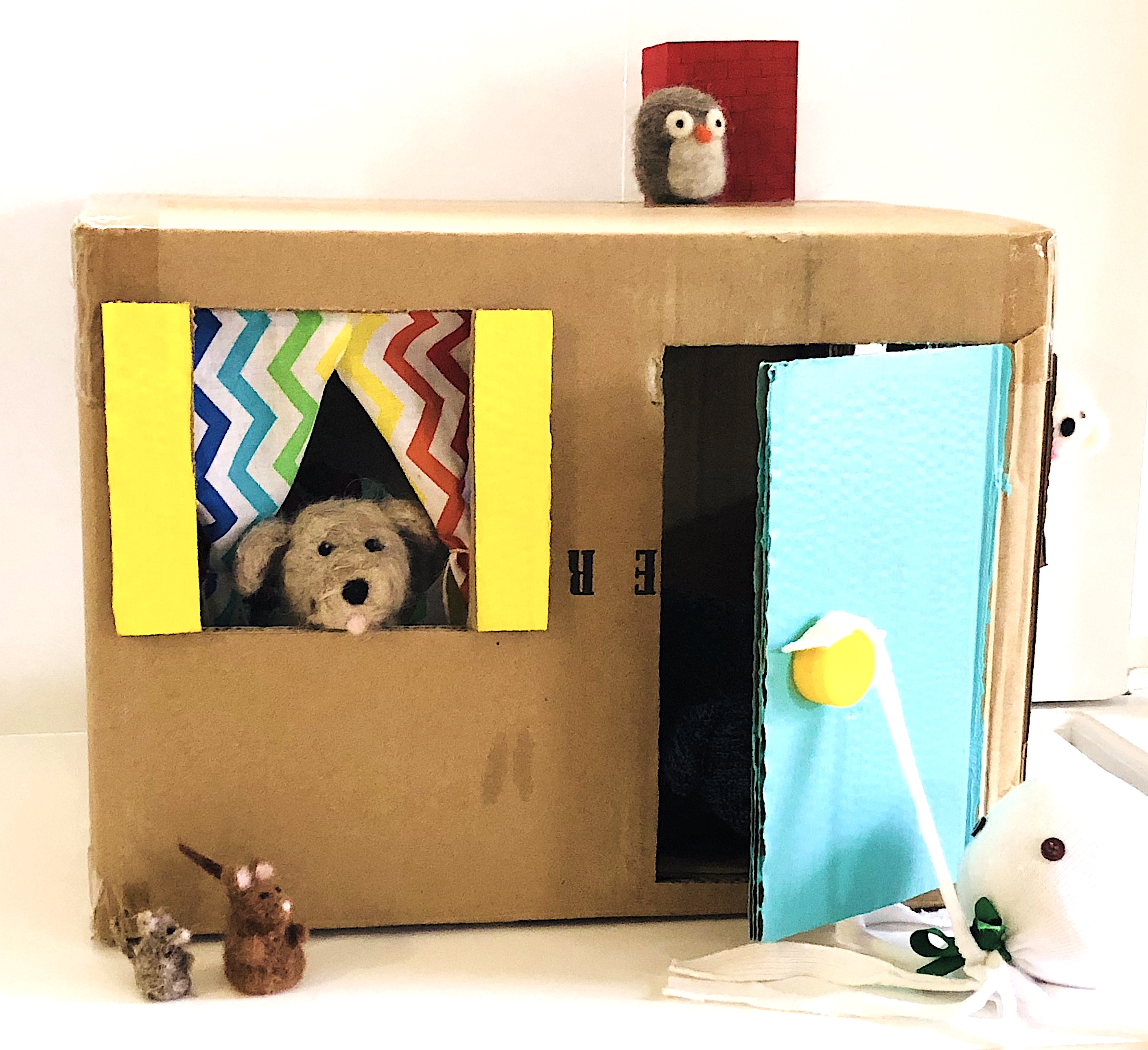
CPB - Playhouse craft

Cardboard Playhouse

Kids love pretending with their toys and playhouses. With this craft you and your child can make a playhouse with recycled items and lots of imagination. While you and your child make the house, talk about the building process and ask questions that get them thinking about how various parts of a house work. Once the house is finished, kids can make up their own stories with it—or create their own fractured tale of The Three Little Pigs

Supplies

  1. Cardboard box

     2. Recycled items, such as:

  • Bottle caps for door knobs,
  • Small boxes for a chimney
  • Use the cardboard cut from the windows to make shutters
  • Scraps of cloth for curtains

    3. Craft paint

    4. Markers

    5. Glue

You can purchase Professor Goose Debunks the Three Little Pigs at these booksellers

Amazon | Barnes & NobleBookshop (to support your local independent bookstore)

Picture Book Review
September 1 – It’s Read a New Book Month

celebrate-picture-books-picture-book-review-the-boy-and-the-mountain-cover

About the Holiday

The beginning of a new school year is a terrific time to celebrate Read a New Book Month—especially for kids. Whether their reading tastes have broadened, their reading level has changed, or they’ve discovered new and fascinating topics to explore over the summer months, there are new books just waiting for them! The books may be recently published—like today’s book—or just new to your child, there are countless fictional stories and nonfiction books ready to inspire learning, to laugh or cry with, and to share with friends. This month visit your local bookstore and library and stock up on books for your kids and everyone in the family! 

The Boy and the Mountain

Written by Mario Bellini | Illustrated by Marianna Coppo


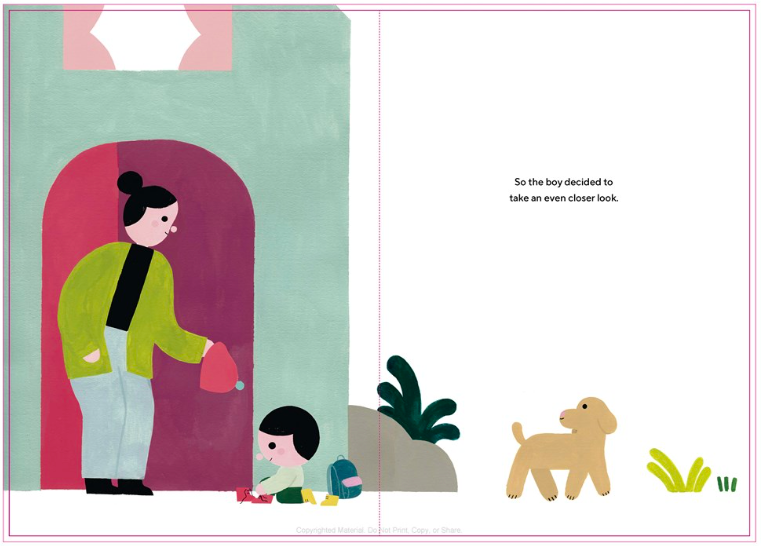
“There once was a boy who always looked at a mountain.” It was the first thing he looked at in the morning and the last thing he said good night to before going to bed. The boy loved to draw, and one day he “decided to draw the mountain.” His first attempt didn’t look anything like the mountain he saw out his window. When he looked closer, he realized “the mountain was covered with trees,” so he added trees. 

celebrate-picture-books-picture-book-review-the-boy-and-the-mountain-drawing

Image copyright Marianna Coppo, 2022, text copyright Mario Bellini, 2022. Courtesy of Tundra Books.

Still, his picture wasn’t quite right. Next, he noticed the sky and clouds around the mountain and drew those, but his picture “still didn’t look the same as the real thing.” He tried drawing the mountain at different times of day and in different weather, but “he was never happy with what he had drawn.” 

One day, the boy decided to get a closer look. He took his dog and headed out. One the way, he met a goat and drew a picture of it in his sketchbook. The goat decided to come along. When a flock of birds flew by, the boy drew those too. One bird left the flock to follow the boy and his dog and the goat. When they stopped at a stream for a drink of water, the boy drew that too.

celebrate-picture-books-picture-book-review-the-boy-and-the-mountain-trees

Image copyright Marianna Coppo, 2022, text copyright Mario Bellini, 2022. Courtesy of Tundra Books.

It was fall, and the ground was covered in leaves. The boy “wanted to draw them all,” but even though he drew many of them, there was no way they would all fit on the page. He continued on up and up into the forest and beyond. Along the way, he picked up other followers, including a frog, a bear, and a beaver. When he had left the trees behind, there was very little to draw “until he looked more closely” and saw a tiny white flower poking up between some rocks. He drew it.

celebrate-picture-books-picture-book-review-the-boy-and-the-mountain-hike

Image copyright Marianna Coppo, 2022, text copyright Mario Bellini, 2022. Courtesy of Tundra Books.

At last he came to the mountain’s peak. He sat down and flipped through his sketchbook, but he still wasn’t satisfied with his drawings. It was then that he became aware of the goat, the bear, the frog, the bird, the beaver, and a snail who had joined him. “‘Ohhh … hello!'” he said. They played until it was time to go home. The bear gave the boy a ride home on his shoulders. Once home, the boy promised that he would see them all again soon. That night before going to sleep, the boy drew the mountain again with his new perspective. This time his drawing was complete—and the boy was completely satisfied with it.

celebrate-picture-books-picture-book-review-the-boy-and-the-mountain-goat

Image copyright Marianna Coppo, 2022, text copyright Mario Bellini, 2022. Courtesy of Tundra Books.

Mario Bellini’s thoughtful and well-paced adventure gently guides readers to consider not only their perspective on big and small topics of life but where and how they fit into the wider world. Just as children observe the world from their vantage points of home, school, and activities, the boy in the story looks at the mountain and tries to make sense of it by drawing it. Then, like kids slowly adding bits of what the world has to offer to their lives, the boy includes trees, clouds, and different times of day to his drawing. But he thinks there must be something more, and, now braver and more knowledgeable, he ventures out to get a better look. 

Along the way he sees more of the world and interacts with what he encounters in the way that means the most to him. Some of these experiences turn out well, and others don’t, but he persists. When it appears that he’s finally come to the end of his journey, he sits down (alone, or so he thinks) and ponders his single-subject, disjointed pictures. When he finally notices all of the animals who have joined him on his trek and embraces them as friends, the boy discovers an interconnectedness that has been missing for him all along. At last, with his final drawing, the boy is able to be satisfied with his knowledge, understanding, and place in his world.

Marianna Coppo’s delightful rounded illustrations lend a quiet elegance to the story while allowing readers to view the boy’s drawings for themselves and then join him on his journey to see the mountain up close. Kids will enjoy noticing the animals that begin to populate the boy’s sphere, even while he is unaware that they are following him. The boy’s drawings of the river, the leaf-strewn forest floor, and the hidden mountain peak give kids and adults an opportunity to talk about times when things go wrong, when life seems overcrowded or overwhelming, and when goals seem elusive. Coppo also helps kids see that surprises can be found in the most unlikely of places as well as when you least expect them. 

A multi-layered story that invites thought, observation, conversation, and discovery (of both the self and the world), The Boy and the Mountain would be a favorite read for quiet story times or as a prelude to any new experience at home or in school. The book is highly recommended for home bookshelves as well as classroom, school, and public libraries.

Ages 3 – 7

Tundra Books, 2022 | ISBN 978-0735270251

You can connect with Marianna Coppo on Instagram and Twitter.

Read a New Book Month Activity

celebrate-picture-books-picture-book-review-take-a-bookworm-trek-maze

Take a Bookworm Trek! Maze


These two friends love reading! Can you help them through the maze to meet the bookworm? 

Take a Bookworm Trek! Maze Puzzle | Take a Bookworm Trek! Maze Solution

celebrate-picture-books-picture-book-review-the-boy-and-the-mountain-cover

You can find The Boy and the Mountain at these booksellers

Amazon | Barnes & Noble | Books-a-Million

To support your local independent bookstore, order from 

Bookshop | IndieBound

Picture Book Review

August 9 – National Book Lovers Day

celebrate-picture-books-picture-book-review-if-you-cry-like-a-fountain-cover

About the Holiday

If you love to read, then today is a day to celebrate! National Book Lovers Day has a simple goal: to provide a day for bibliophiles to indulge their passion. With so many incredible books available—both fiction and nonfiction—on every imaginable topic and for all ages, it’s easy to fill the day with old favorites and new finds (like today’s book, which is launching into the world today!) So, visit your local bookstore or library, grab some snacks, and settle in for a day of reading for yourself and with your kids!

Thanks go to Tundra Books for sending me a copy of If You Cry Like a Fountain to me for review consideration. All opinions on the book are my own.

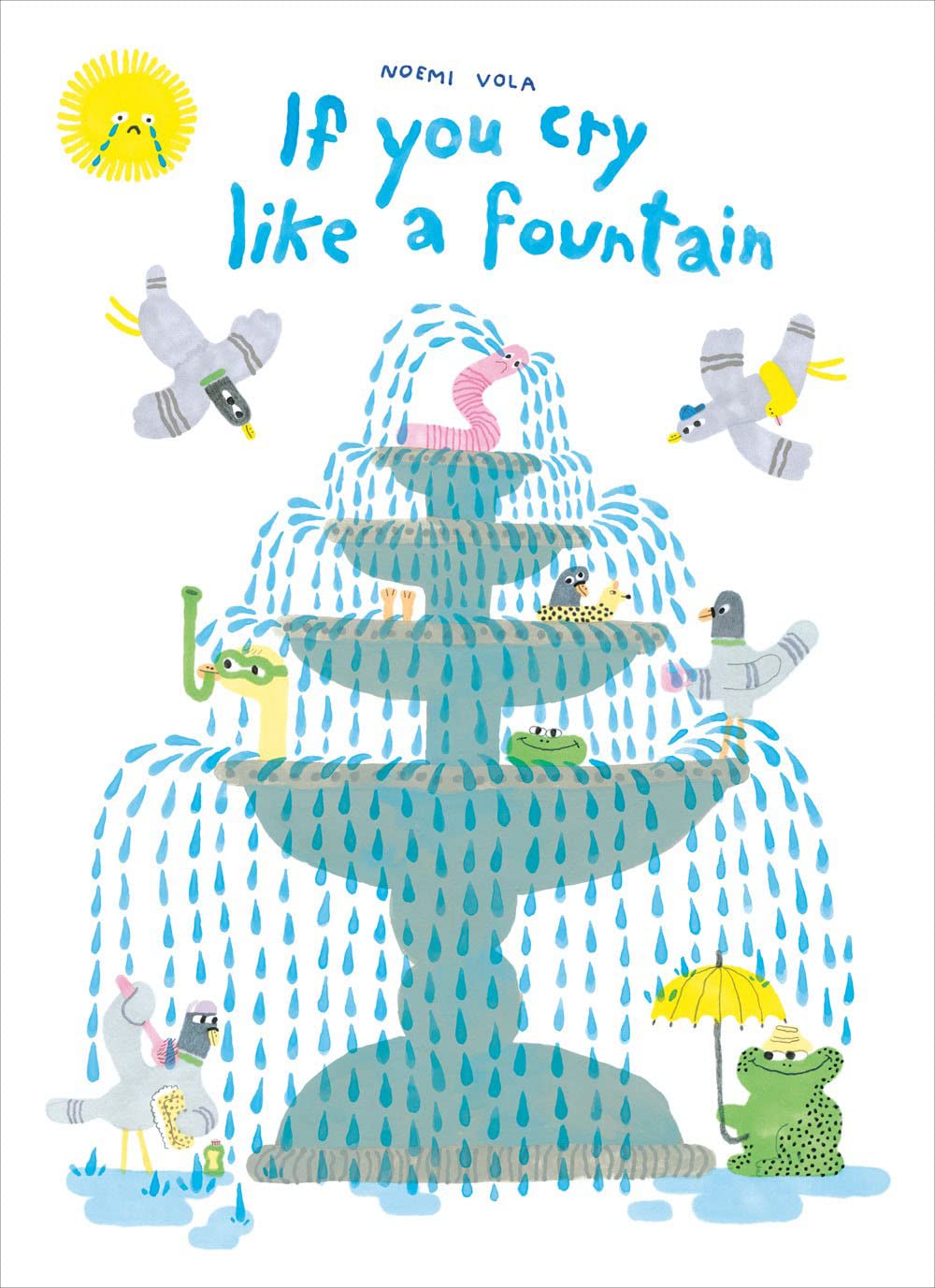
If You Cry Like a Fountain

By Noemi Vola


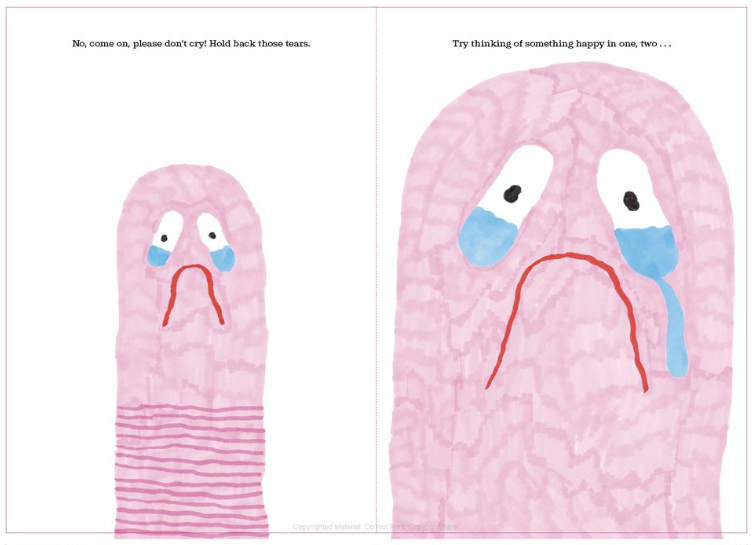
Upon opening this story to the first page, readers are met with a sad sight. A pink worm, having just seen his empty swimming pool, stares out at the reader with doleful eyes and a big frown. The narrator admonishes the worm that starting out the book this way will only make people worry. How about a little smile? But this doesn’t help—in fact, the frown turns deeper and tears well in the bottom of the worm’s eyes. The narrator tries to stop the coming tears, but a suggestion to “try thinking of something happy” just causes a small tear to break free and then… a full-on flood. 

celebrate-picture-books-picture-book-review-if-you-cry-like-a-fountain-worm-teary

Image copyright Noemi Vola, 2022, courtesy of Tundra Books.

Worried that the little worm might drown in its own tears, the narrator offers a couple of suggestions for staying afloat until the tears dry up. And they do begin to abate until the narrator tells the worm “there’s no use in crying,” which brings on—you guessed it. But wait! This isn’t a criticism. Instead it means to be a helpful (and hilarious) way to look at crying in a positive light. “For example, if you cry like a fountain, you’ll be surrounded by friends and make all the pigeons happy.” That’s a good thing, right?

celebrate-picture-books-picture-book-review-if-you-cry-like-a-fountain-worm-flooding

Image copyright Noemi Vola, 2022, courtesy of Tundra Books.

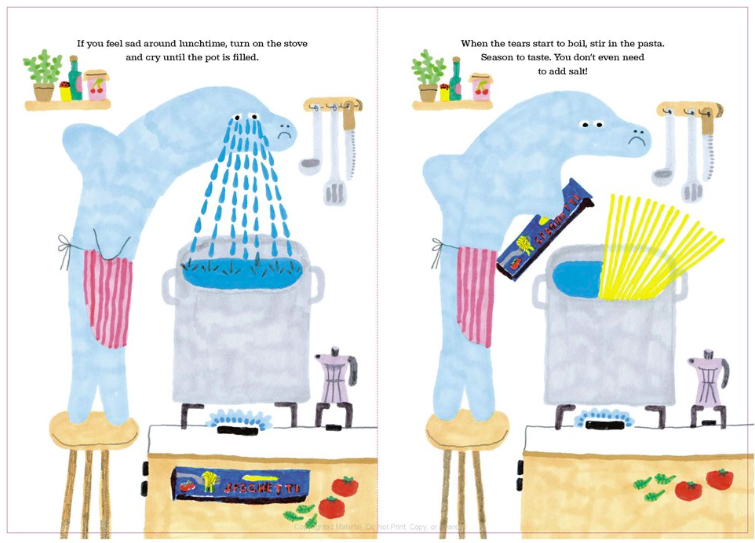
Let’s look at some other ways those tears could be channeled beneficially. If sadness overtakes you around mealtime, get out your biggest pot, “turn on the stove and cry until the pot is filled. When the tears start to boil, stir in the pasta. You won’t even need to add salt!” And why waste water to brush your teeth and fill the tub, when a good cry can prove advantageous here too?

Since tears can flow all year around, the narrator gives some tips on using them during the winter and when spring comes. There’s even a recipe for homemade playdough that can be done anytime and used “to make surprise presents for your friends.” Now that all is looking up, the narrator decides this might be a good time to remind readers that “everyone cries” even “…superheroes, kings, soccer players,… dogs, peas, and rocks” The worm doesn’t believe rocks cry, but then becomes apologetic when the narrator explains that rocks “are very good at hiding,” so no one has actually “ever seen a rock cry.”

celebrate-picture-books-picture-book-review-if-you-cry-like-a-fountain-cry-better

Image copyright Noemi Vola, 2022, courtesy of Tundra Books.

The narrator goes on to reassure will-be criers that tears are a “universal language,” understood everywhere in the…well…universe, and that shedding tears can eliminate an array of environmental disasters, such as exploding frogs and dried-up rivers. Our little worm friend is looking much happier now that all of this has been explained and there’s even tear-nurtured pears in the jar of jam it’s enjoying with caterpillar. But Oh no! The book—and the jam—are at an end, which are just the kinds of catastrophes that can… fill a swimming pool.

celebrate-picture-books-picture-book-review-if-you-cry-like-a-fountain-pasta

Image copyright Noemi Vola, 2022, courtesy of Tundra Books.

Whether your household (or classroom) is made up of easy criers or those who are made of more stoic stuff, Noemi Vola’s hilarious, thoughtful, and wonderfully silly story will have everyone laughing while also appreciating the true benefits of not bottling up your emotions, but letting them flow. Vola’s seemingly random examples replicate the cadence of a well-told joke or the rapid-fire delivery of a child with an endless imagination.

Vola whimsically plays with shapes, textures, and perspective in her vibrant illustrations, where the characters’ large and copious tears flow in profuse but perfectly aimed streams to accomplish a myriad of tasks. Alert readers will recognize a few famous faces from literature and entertainment among the criers. The sensitive worm is an adorable companion on this journey of discovery, and readers will be glad to see that in the end happiness reigns supreme—at least until the next waterworks.

If you and your kids like your humor quirky, your characters unforgettable, and your themes thought-provoking, If You Cry like a Fountain should be at the top of your To Be Read List. Perfect for story times or discussions about emotions, the book would be an excellent addition to all home, classroom, and public library collections.

Ages 3 – 7

Tundra Books, 2022 | ISBN 978-0735270503

To learn more about Noemi Vola, her books, and her art, visit her website. 

National Book Lovers Day Activity

CPB - Bookworm Book (2)

Bookworm Bookmark


For all you bookworms out there who love to read, here’s your very own Bookworm Bookmark to color and put between the pages of your favorite story!

Supplies

Directions

  1. Print out the Bookworm Bookmark template
  2. Color the bookworm
  3. Cut out the Bookworm
  4. (Optional) Cut the Bookworm’s mouth at the dotted line. The top part of the bookworm’s mouth hangs over the page and marks your place!

celebrate-picture-books-picture-book-review-if-you-cry-like-a-fountain-cover

You can find If You Cry Like a Fountain at these booksellers

Amazon | Barnes & Noble | Books-a-Million

To support your local independent bookstore, order from

Bookshop | IndieBound

Picture Book Review

July 18 – Global Hug Your Kids Day

celebrate-picture-books-picture-book-review-baby-squeaks-cover

About the Holiday

The purpose of today’s holiday is simple: show your child or children that you love them by giving them a hug. And why stop at just one? Such closeness builds strong family bonds and also helps with a child’s brain development and social and emotional learning. Give hugs throughout the day, and tell your kids how much and why you love them! 

Thanks to Tundra books for sending me a copy of Baby Squeaks for review consideration. All opinions on the book are my own.
Baby Squeaks

By Anne Hunter


In those early days when Mama Mouse held Baby Mouse, Baby was quiet. But then that long-awaited time came, and “Baby said Baby’s first word!” It was long before Baby said another. And then another and another and many, many, many more. In fact, Baby talked all the time. And to anything—even an acorn. Desiring a little peace and quiet, Mama put Baby right outside the door, where a mama bird was about to feed her little bird a nice, juicy dragonfly. 

celebrate-picture-books-picture-book-review-baby-squeaks-first-quiet

Copyright Anne Hunter, 2022, courtesy of Tundra Books.

Baby Mouse squeaked hello. Baby even climbed up to where Mama Bird and Baby Bird were sitting and “talked and talked … and talked.” When Mama Bird spied another dragonfly floating past, she and Baby Bird took off in pursuit. Lucky for Baby Mouse, a rabbit was now munching a small flower at the base of the tree. Baby Mouse squeak, squeak, squeak, squeak, squeak, squeak, squeaked. And squeaked some more until the rabbit hopped away.

celebrate-picture-books-picture-book-review-baby-squeaks-first-word

Copyright Anne Hunter, 2022, courtesy of Tundra Books.

Next, Baby Mouse found a porcupine family and then a fawn. Baby found a seat between the fawn’s ears and “talked and talked … and talked” until the fawn lay down to take a nap. Baby lay down on the fawn’s back and went on talking as the little deer fell asleep. Back at home, Mama Mouse was enjoying the silence until she realized it was “TOO quiet.” She went outside only to discover Baby missing. 

celebrate-picture-books-picture-book-review-baby-squeaks-talks-a-lot

Copyright Anne Hunter, 2022, courtesy of Tundra Books.

She climbed to the top of the tree to survey her surroundings and then “heard the sound of Baby Mouse talking.” Mama followed the squeak, squeak, squeaks and found her baby. She held Baby in a tight hug, and for a moment all was quiet. But on the way home, Baby “talked and talked … and talked.” But that’s okay, because Mama Mouse and Mama Bird found the perfect solution for when they both need a little quiet time.

celebrate-picture-books-picture-book-review-baby-squeaks-outside

Copyright Anne Hunter, 2022, courtesy of Tundra Books.

Anne Hunter’s endearing story, infused with love and humor, is made for snuggly story times with plenty of giggles—and maybe some shared memories too. The repeated phrasing is sure to have kids chiming in, and children who are beginning to read independently will enjoy demonstrating their skills. Hunter’s lovely illustrations invite kids into the heartwarming relationship between Mama Mouse and Baby Mouse as lap time, feeding time, play time, and even bed time are carried out to the sound track of Baby’s endless chatter.

Baby’s enthusiasm to meet new friends and discover new things is infectious and may prompt kids and adults to imagine what Baby might be saying in each speech bubble. Adults will no doubt smile in appreciation of Mama Mouse’s and the rabbit’s wide-eyed expressions as Baby Mouse’s squeak bubbles float around them. Looking out for images of Mama and Baby Bird (as well as a beetle) across the pages will reward readers as the story comes to it’s charming conclusion.

A story that parents, grandparents, and other caregivers will love sharing with their kids, Baby Squeaks will become a quick favorite. The book is highly recommended as a gift or addition to home, school, and public library collections.

Ages 3 – 7

Tundra Books, 2022 | ISBN 978-0735269095

Discover more about Anne Hunter, her books, and her art on her website.

National Hug Your Kids Day Activity

celebrate-picture-books-picture-book-review-hug-coupons

Free Hug Coupons
 

Everyone needs a hug now and then! With these printable Free Hug Coupons you can extend Global Hug Your Kid day to every day of the year! Why not fill a jar with these coupons and display it so that all your favorite people can get a sweet hug whenever they need it most.

celebrate-picture-books-picture-book-review-baby-squeaks-cover

You can find Baby Squeaks at these booksellers

Amazon | Barnes & Noble | Books-a-Million

To support your local independent bookstore, order from

Bookshop | IndieBound

Picture Book Review