April 24 – Arbor Day

About the Holiday

Arbor Day, a national celebration of trees, began as a campaign by J. Morton Sterling and his wife after they moved from Michigan to Nebraska in 1854 and advocated for planting trees as windbreaks for crops, to keep soil from washing away, as building materials, and for shade. In 1872, Morton proposed that a tree-planting day be established in April. On the first Arbor Day nearly one million trees were planted in Nebraska. The idea was made official in 1874, and soon, other states joined in. In 1882 schools began taking part. Today, most states celebrate Arbor Day on the last Friday of April or day more suited for their growing season. To learn about events in your area, find activities to download, and more, visit the Arbor Day Foundation website.

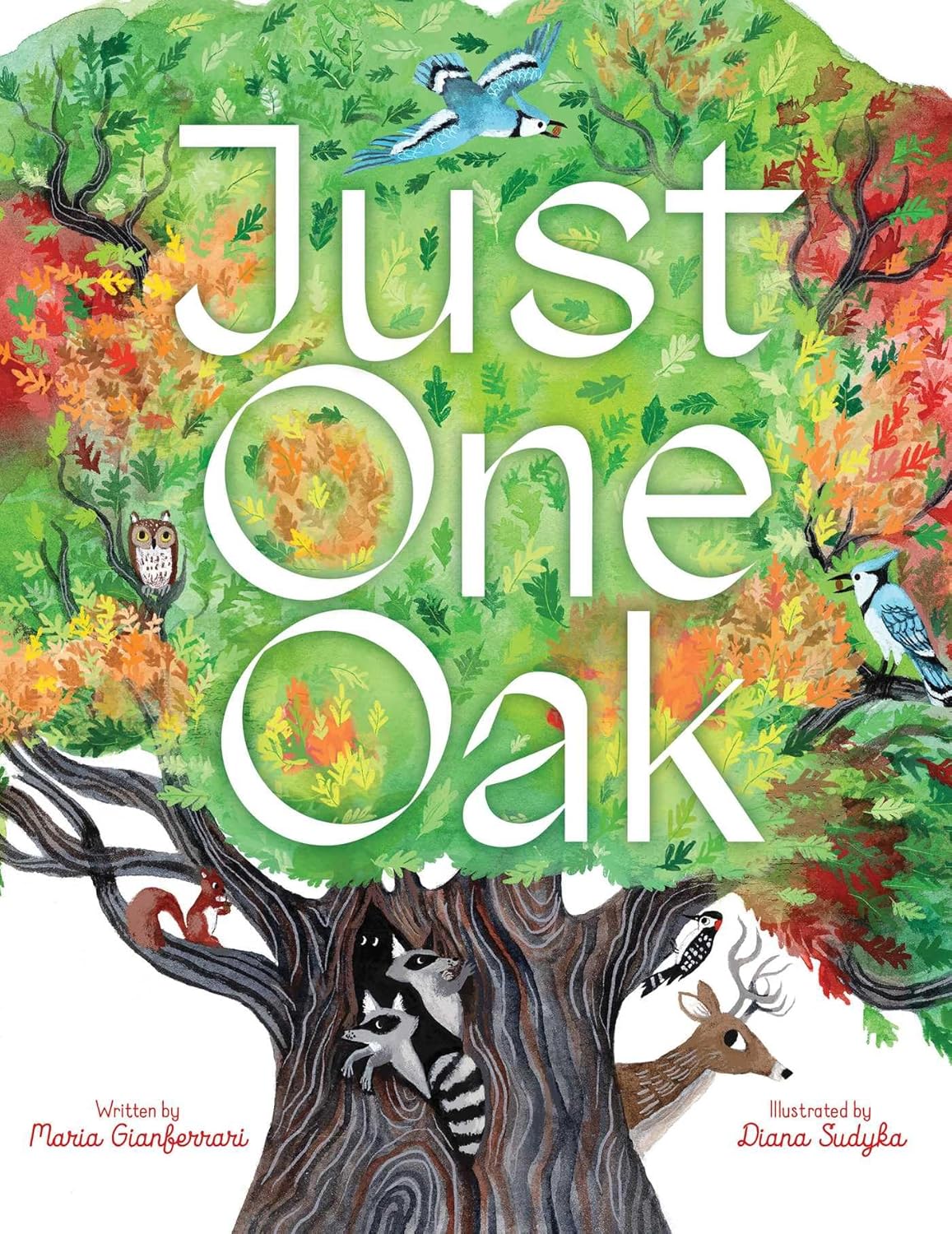
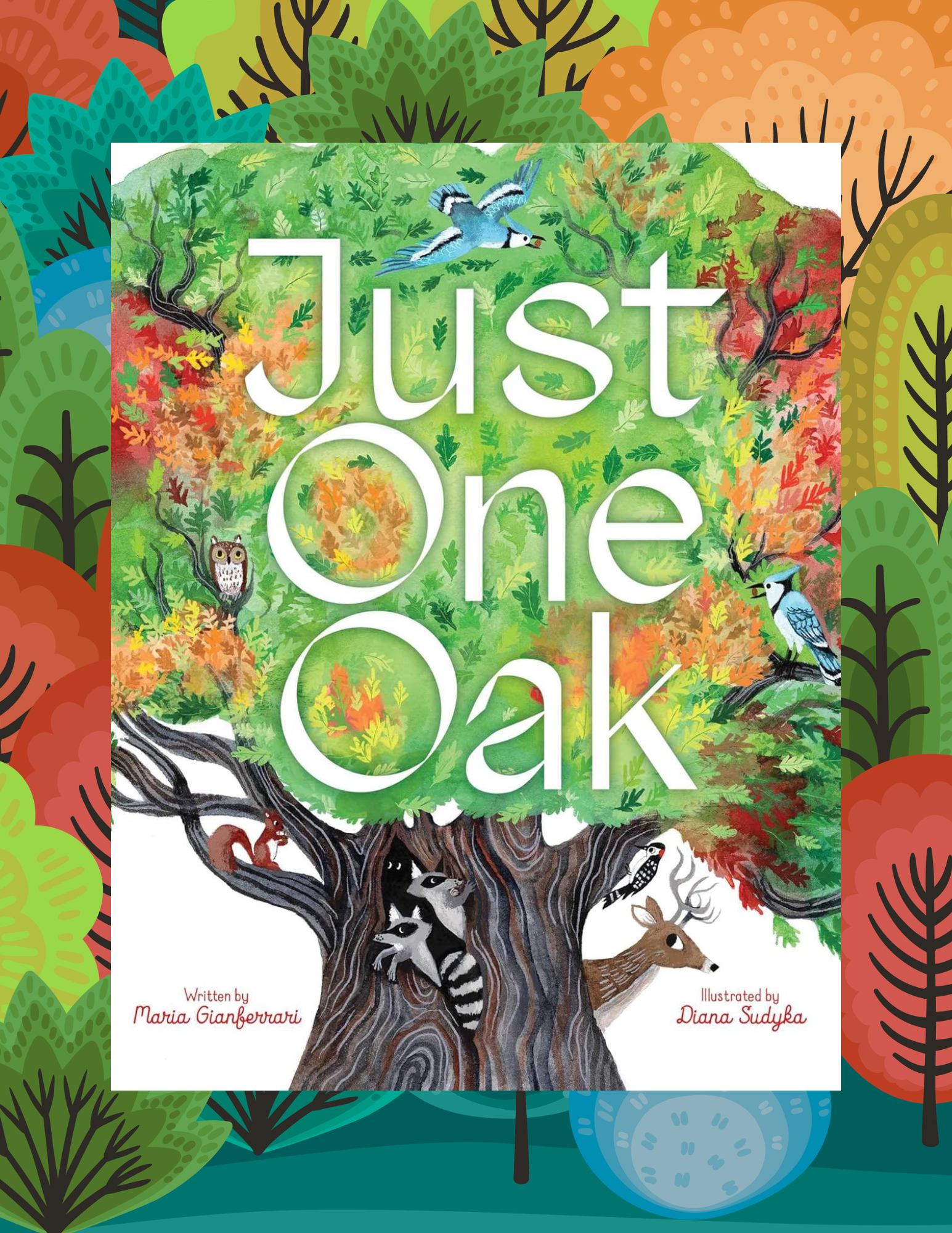
Just One Oak: What a Single Tree Can Be

Written by Maria Gianferrari | Illustrated by Diana Sudyka


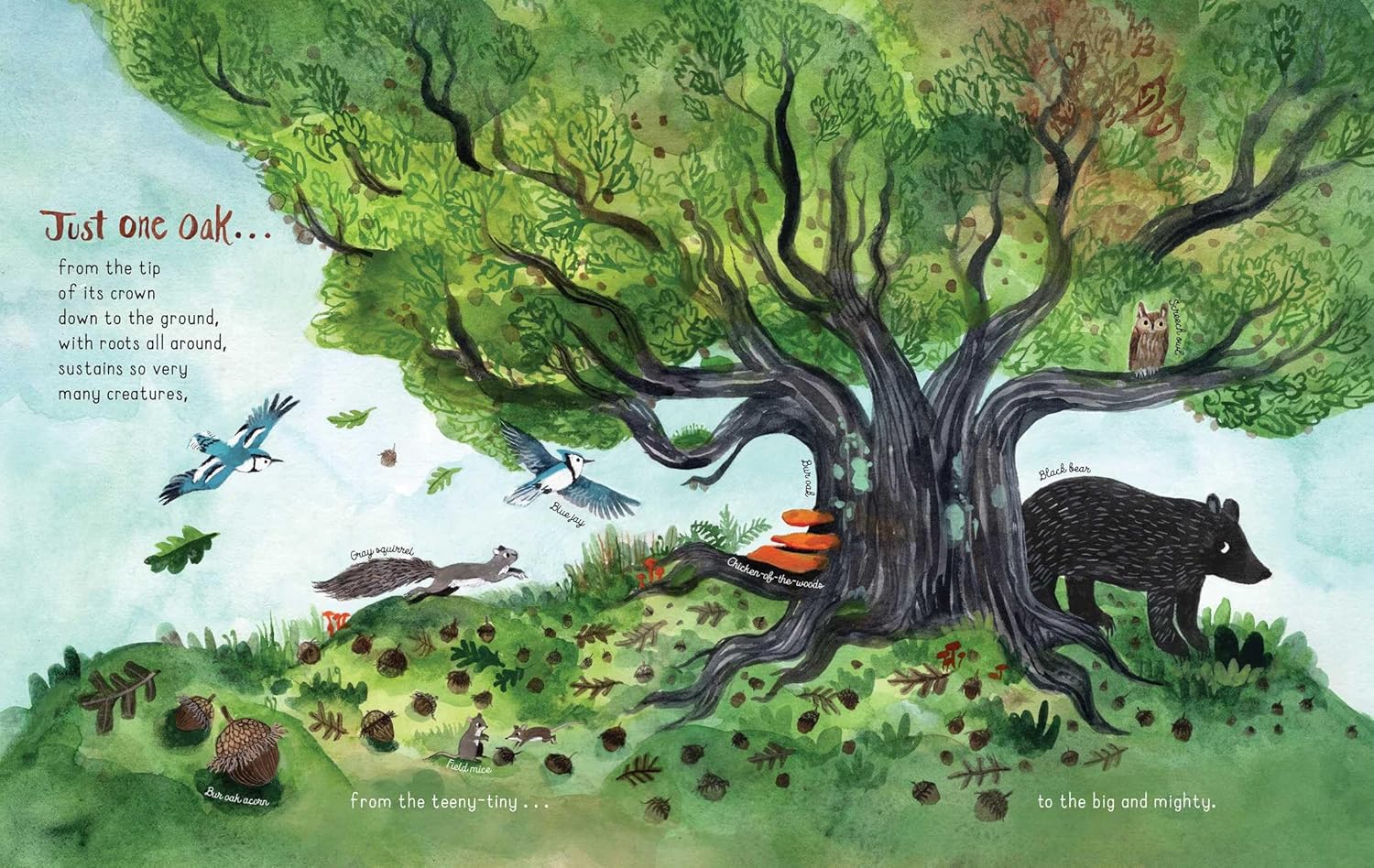
“Just one oak . . . from the tip of its crown down to the ground, with roots all around, sustains so very many creatures, from the teeny-tiny to the big and mighty.” So begins Maria Gianferrari’s fascinating exploration of all the ways oak trees contribute to and sustain the ecosystem where they live. From their distinctive leaves to their shaggy bark to their incredible acorns, oak trees are self-protecting while providing shelter and food for an amazing array of wildlife.

Illustration copyright © 2026 by Diana Sudyka. Text copyright © 2026 by Maria Gianferrari. Courtesy of Beach Lane Books.

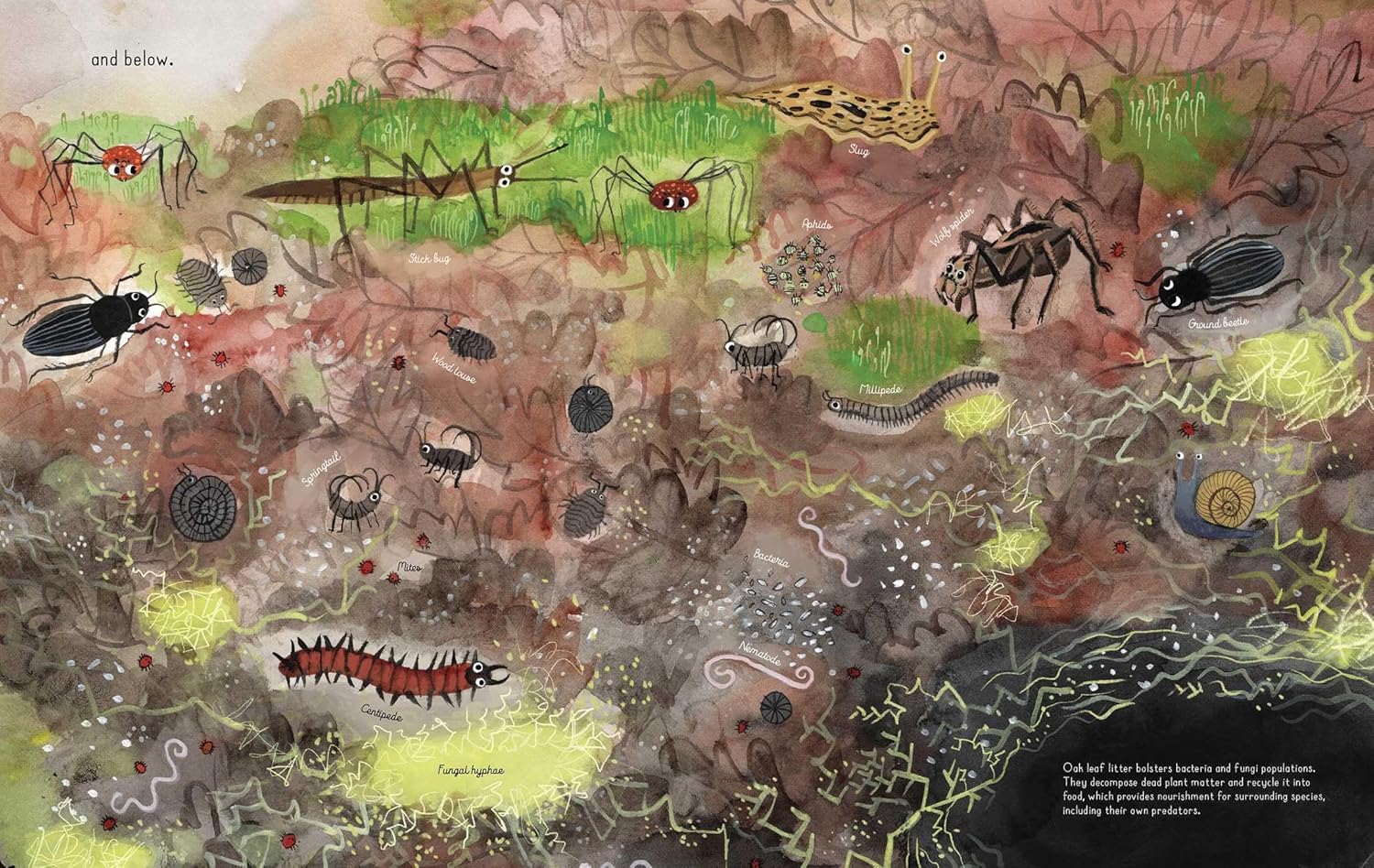
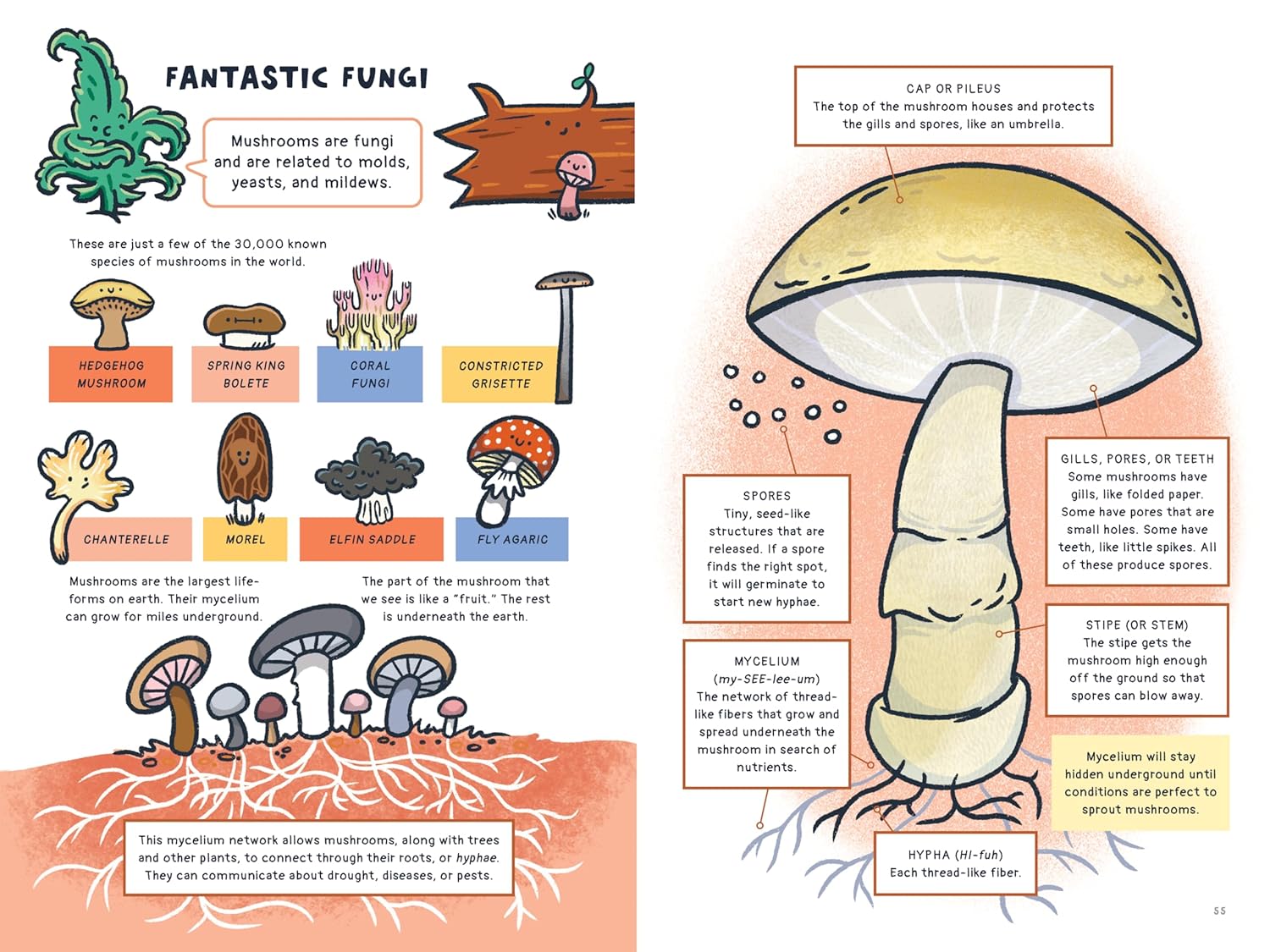
At ground level, Gianferrari shows how “leaf litter, the blanket beneath its boughs,” creates the perfect environment for snails, insects, amphibians, fungi, and more to hide, feed, and grow. And that little acorn nestled under the leaves? Gianferrari digs in to reveal how a mighty oak begins with just one taproot that branches and branches until its root system spreads “farther than the canopy is wide.”

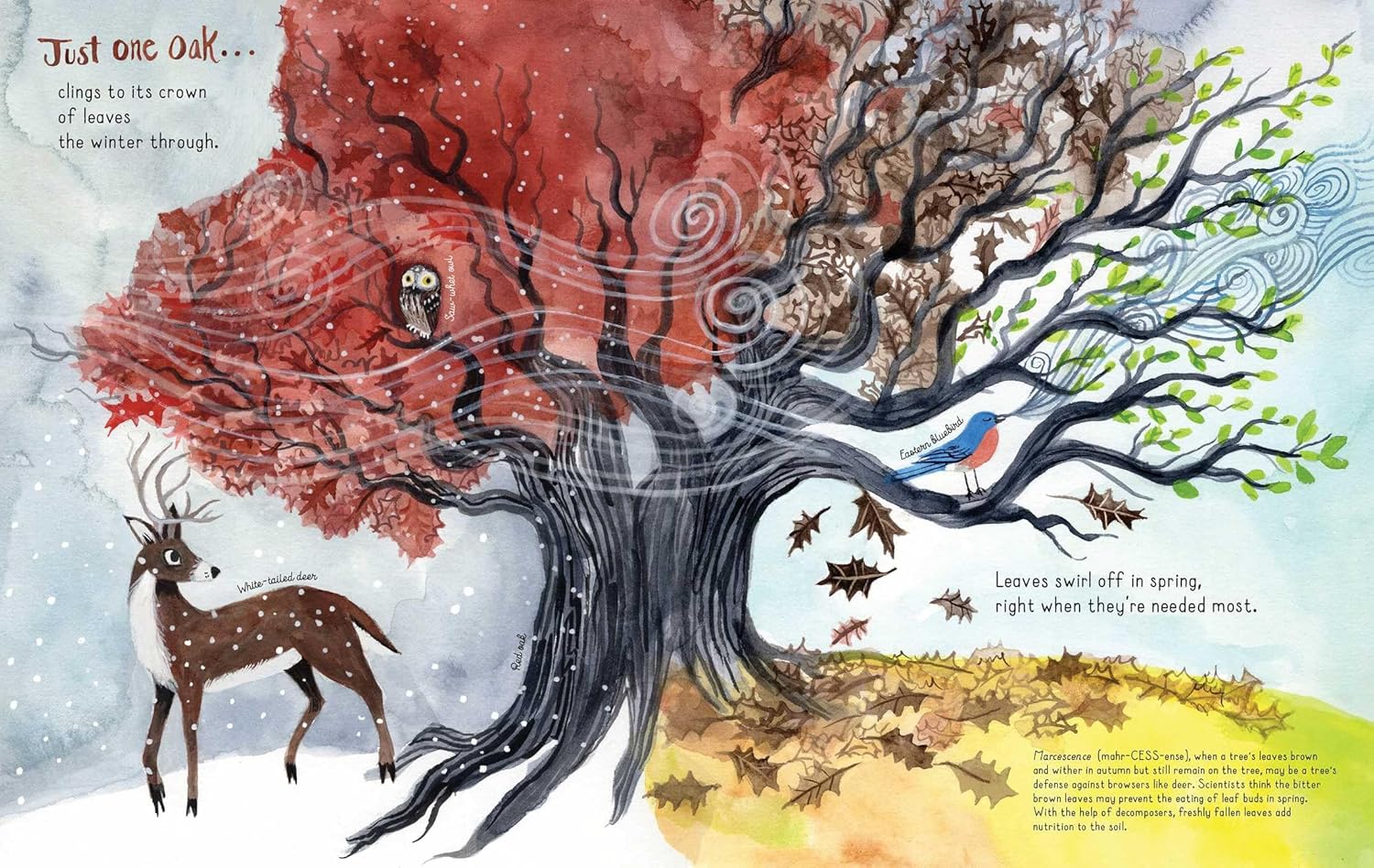
Illustration copyright © 2026 by Diana Sudyka. Text copyright © 2026 by Maria Gianferrari. Courtesy of Beach Lane Books.

And oh those acorns! They’re so much more than their tiny size may lead you to believe. Just one acorn can house one creature or hundreds. They are a universal “superfood” as well as a tidy seed that can reproduce where it drops or be carried far afield. When it grows up, “just one oak creates a microclimate,” with its impressive canopy and prevents flooding, erosion, and drought with its far-reaching roots. Yes, “just one oak is beautiful and bountiful to all.”

Illustration copyright © 2026 by Diana Sudyka. Text copyright © 2026 by Maria Gianferrari. Courtesy of Beach Lane Books.

Maria Gianferrari takes readers outdoors to get a close-up view of one oak tree, and by extension an enlightened understanding of the reach of this keystone species. Her lyrical introductions, capped with a repeated “Just one oak . . .”—a phrase that reinforces the contributions of these trees, give way to paragraphs of factual information. Each of these paragraphs are packed with specific information about the types of creatures sustained by just one tree and the benefits they enjoy. The numbers here are simply astounding and could inspire many cross-curricular lessons in math, science, language arts, art, and more. 

Diana Sudyka’s nature illustrations are beautiful, exciting, and full of the kinds of small, impactful details readers love and that expand their understanding of the text (especially for visual learners). Animals scamper, birds feast, and an entire community of creepy-crawlies scurry through leaf litter and below in Sudyka’s action-filled pages. Each spread will have children lingering to discover all the wonders of an oak tree.

A glorious celebration of the oak tree and the species that rely on it, Just One Oak will spark curiosity and an appreciation for the interconnections among wildlife. The book will delight any nature lover and is a must for school and public libraries. 

 Ages 4 – 8+

Beach Lane Books, 2026 | ISBN 978-1665961042

About the Author

Maria Gianferrari is a picture book reader/writer, tea-drinker, dog-lover, and birdwatcher. Maria writes books that honor our bonds with creatures both domestic and wild and that celebrate the natural world around us, including Fungi Grow and Just One Oak, illustrated by Diana Sudyka; Ice Cycle: Poems about the Life of Ice, illustrated by Jieting Chen; Being a Dog: A Tail of Mindfulness, illustrated by Pete Oswald; Bobcat Prowling, illustrated by Bagram Ibatouilline; and Be a Tree!, illustrated by Felicita Sala. She lives with her family in Massachusetts in a house encircled by trees. To learn more about Maria, visit her website: MariaGianferrari.com.

About the Illustrator 

Diana Sudyka is a Chicago-based illustrator. Early on, she created screen-printed gig posters for musicians but currently her illustration work focuses on young adult, middle grade, and children’s books. She has illustrated several volumes of the award-winning book series, including The Mysterious Benedict Society by Trenton Lee Stewart and Circus Mirandus by Cassie Beasley, as well as the picture books Would You Come Too? by Liz Garton Scanlon, Sometimes Rain by Meg Fleming, What Miss Mitchell Saw by Hayley Barrett, How to Find a Bird by Jennifer Ward, and Fungi Grow and Just One Oak by Maria Gianferrari. Visit her at DianaSudyka.com.

Arbor Day Activities

celebrate-picture-books-picture-book-review-paper-plate-tree-craft-2


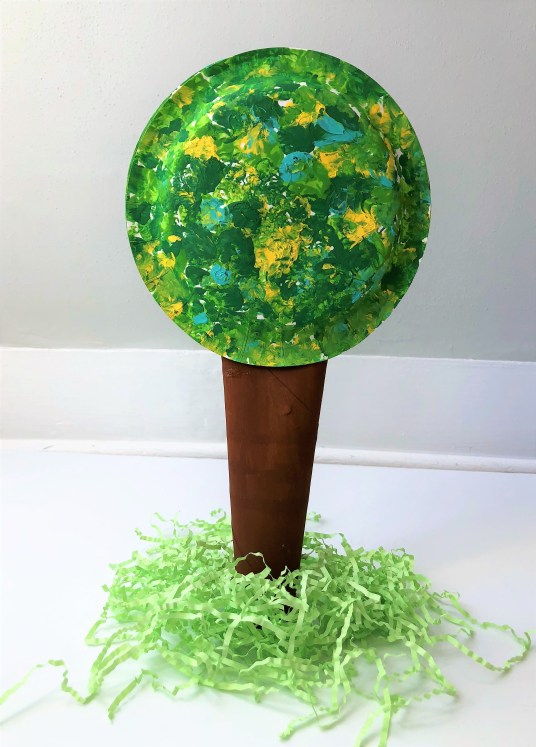
Paper Plate Tree


On Earth Day children love planting trees in their yard or as part of a community project. With this easy craft, they can also plant a tree on their wall or bulletin board.

Supplies

  • Two paper plates 
  • Paper towel tube
  • Brown craft paint
  • Green craft paint (using a variety of green paints adds interest)
  • Paintbrush, cork, or cut carrot can be used to apply paint
  • Glue or hot glue gun or stapler

Directions

  1. Paint the paper towel tube brown, let dry
  2. Paint the bottoms of the two paper plates with the green (or other color) paints, let dry
  3. Flatten about 4 inches of the paper towel tube 
  4. Glue or tape the flat part of the paper towel tube to the unpainted side of one paper plate
  5. Glue the edges of the two paper plates together, let dry.
  6. Straighten the tree so that it can stand up, or hang your tree on a wall, bulletin board, in a window

Just One Oak Activity Kit from Beach Lane Books


Teachers and other educators can find a comprehensive Activity Kit with discussion questions, hands-on activities, and more to accompany Just One Oak on Maria Gianferrari’s website.

You can purchase Just One Oak: What a Single Tree Can Be from these booksellers

Amazon | Barnes & Noble | Bookshop

Picture Book Review

April 22 – Earth Day

About the Holiday

First celebrated 56 years ago, Earth Day is the world’s largest civic-focused event. The initiative began on April 22, 1970, when 20 million Americans (10% of the population) demonstrated against the industrialization, pollution, and pesticides that were damaging people and the environment. In response, in July of 1970, Republican President Nixon and the US Congress created the Environmental Protections Agency and enacted laws such as the Clean Water Act and the Endangered Species Act among others.

This year’s theme is “Our Power, Our Planet.” From Saturday, April 18 to Earth Day on the 22nd and beyond, Earth Day and Earth Month will organize communities and individuals to take part in community cleanups, teach-ins, peaceful demonstrations, tree planting, voter registration, town hall meetings, community organizing and more. Every action strengthens the movement and what we can accomplish. To learn how you can participate or access resources in your area, visit the official Earth Day website.

Thanks to Greystone Books for sending me a copy of this book for review!

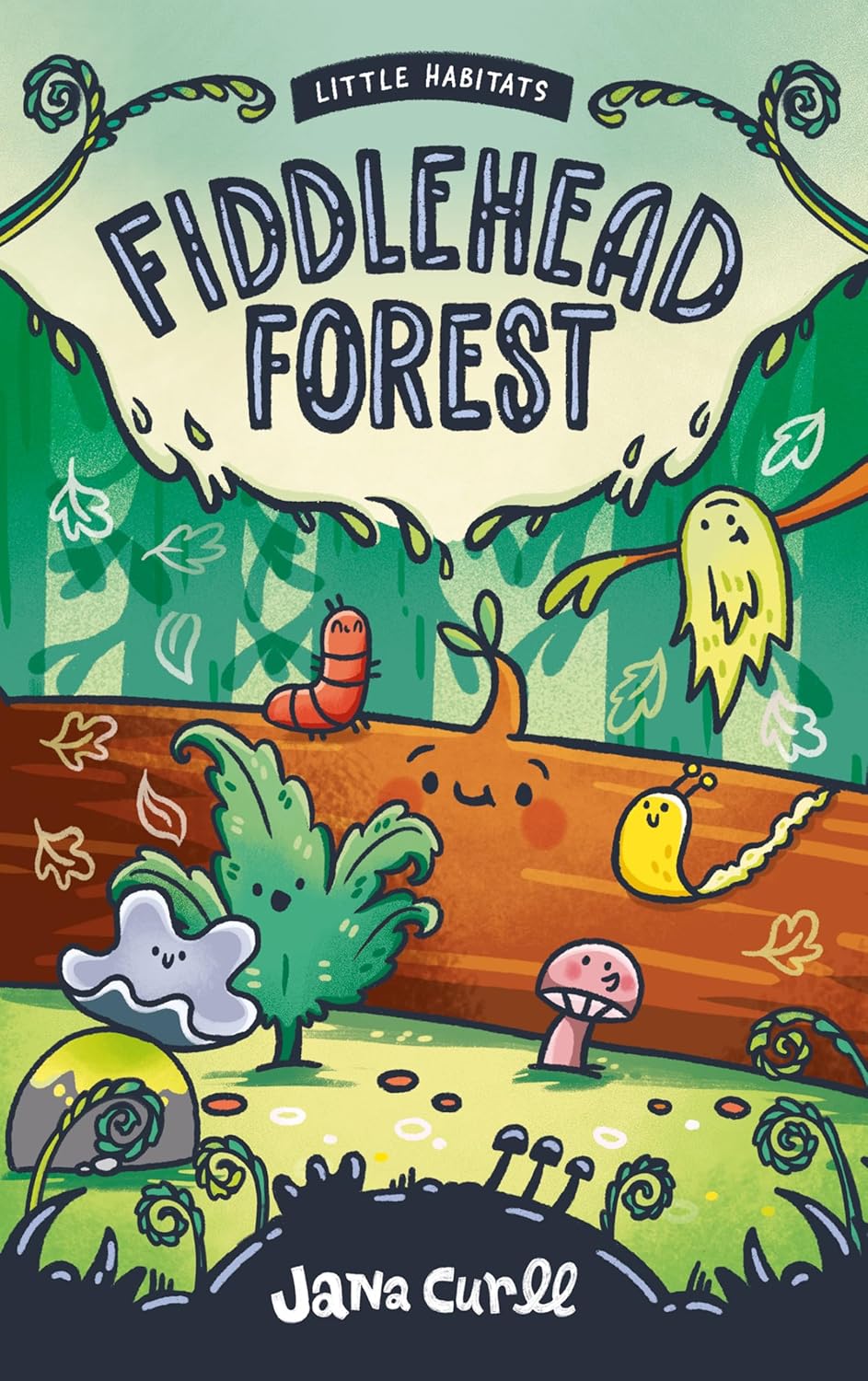
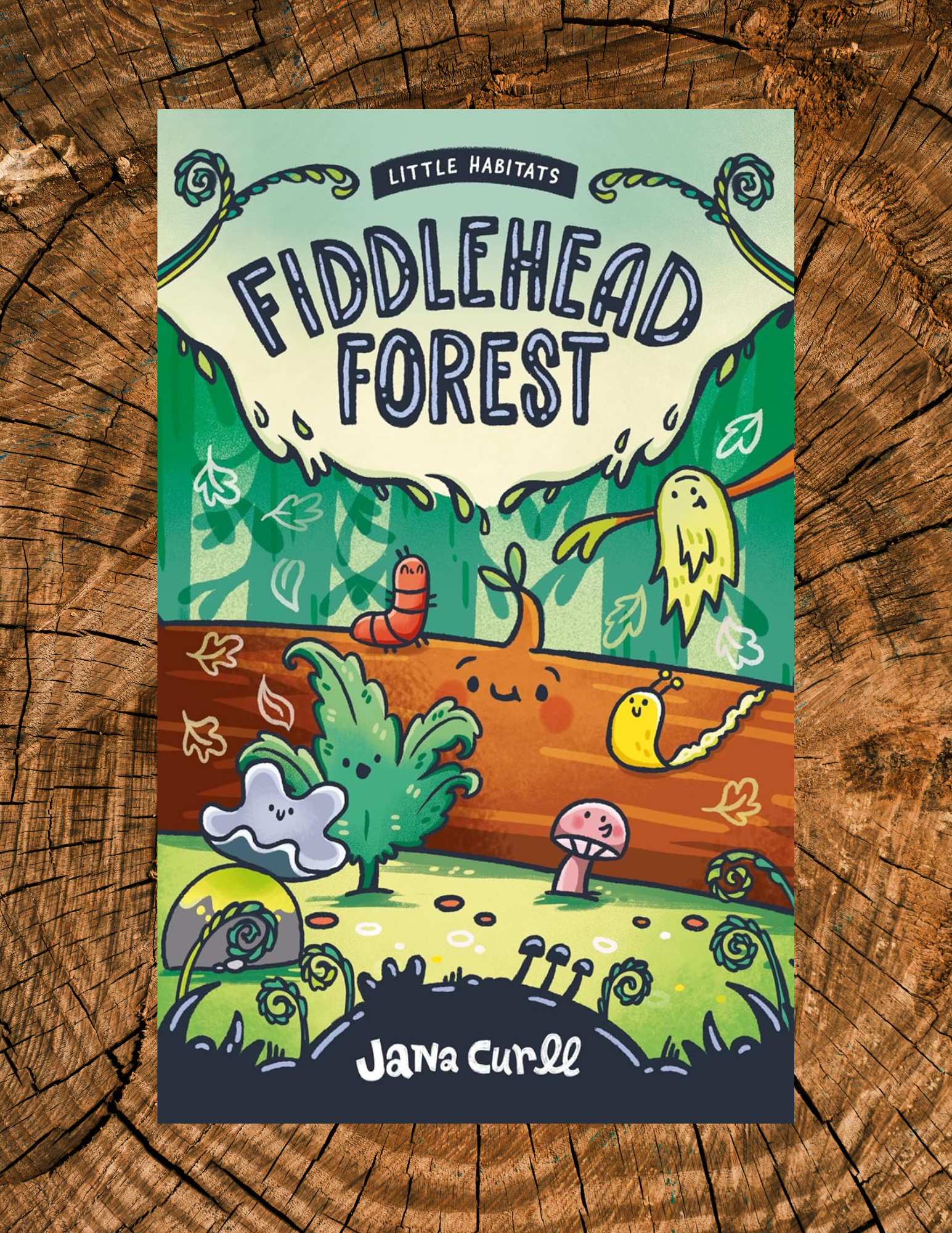
Fiddlehead Forest: Little Habitats 2

By Jana Curll


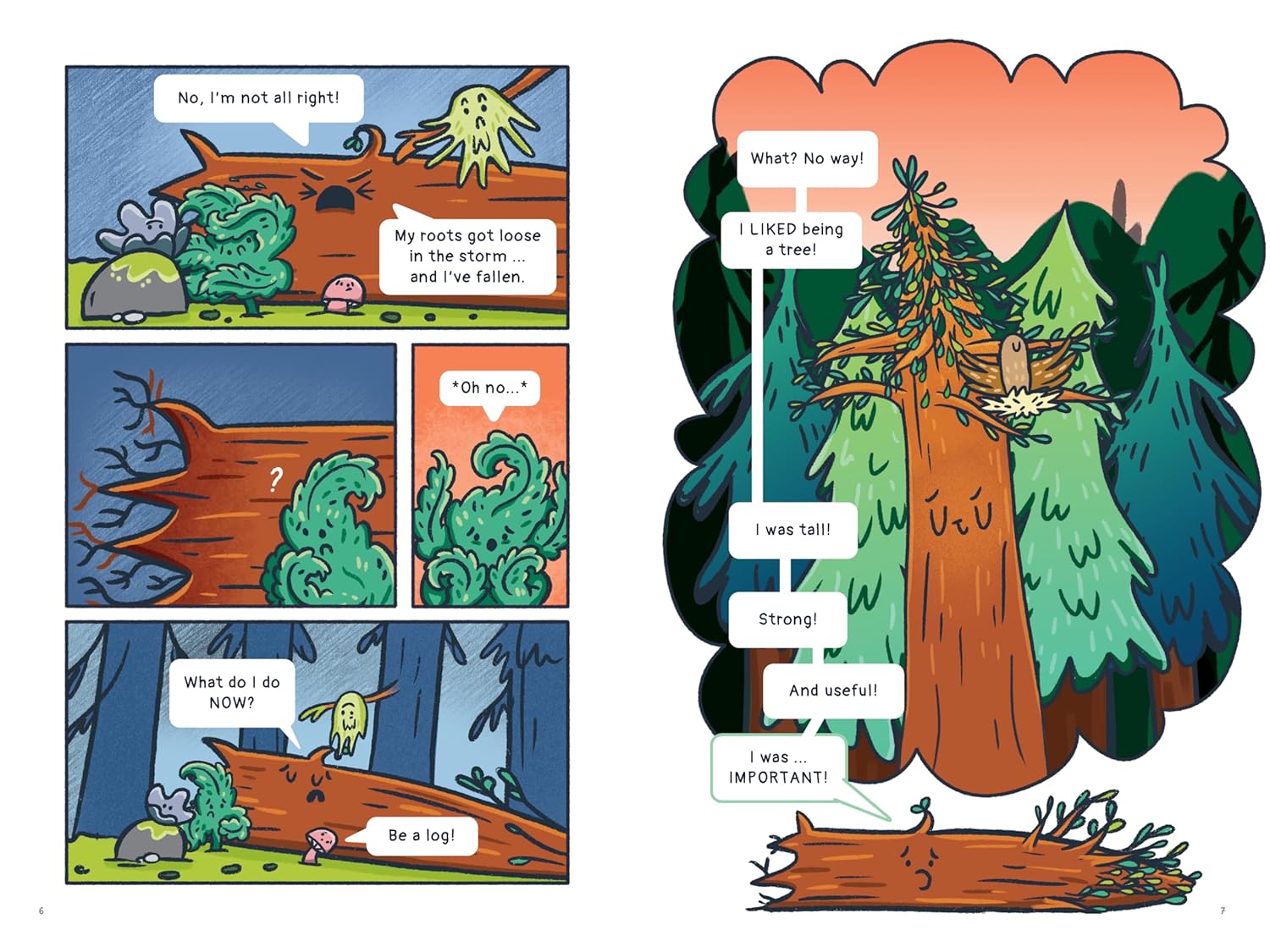
After a lightning storm, Fern and her fronds—Millipede, Slug, Moth, Mushroom, and the Lichens—discover a tree that’s fallen and can’t get up. Mushroom suggests the tree become a log, but the unhappy tree wants to return to its days of glory, of being “tall, strong, and useful—important!” Fern “guaran-trees” she will make it happen.

Text and Illustration copyright © 2026 by Jana Curll. Courtesy of Greystone Kids.

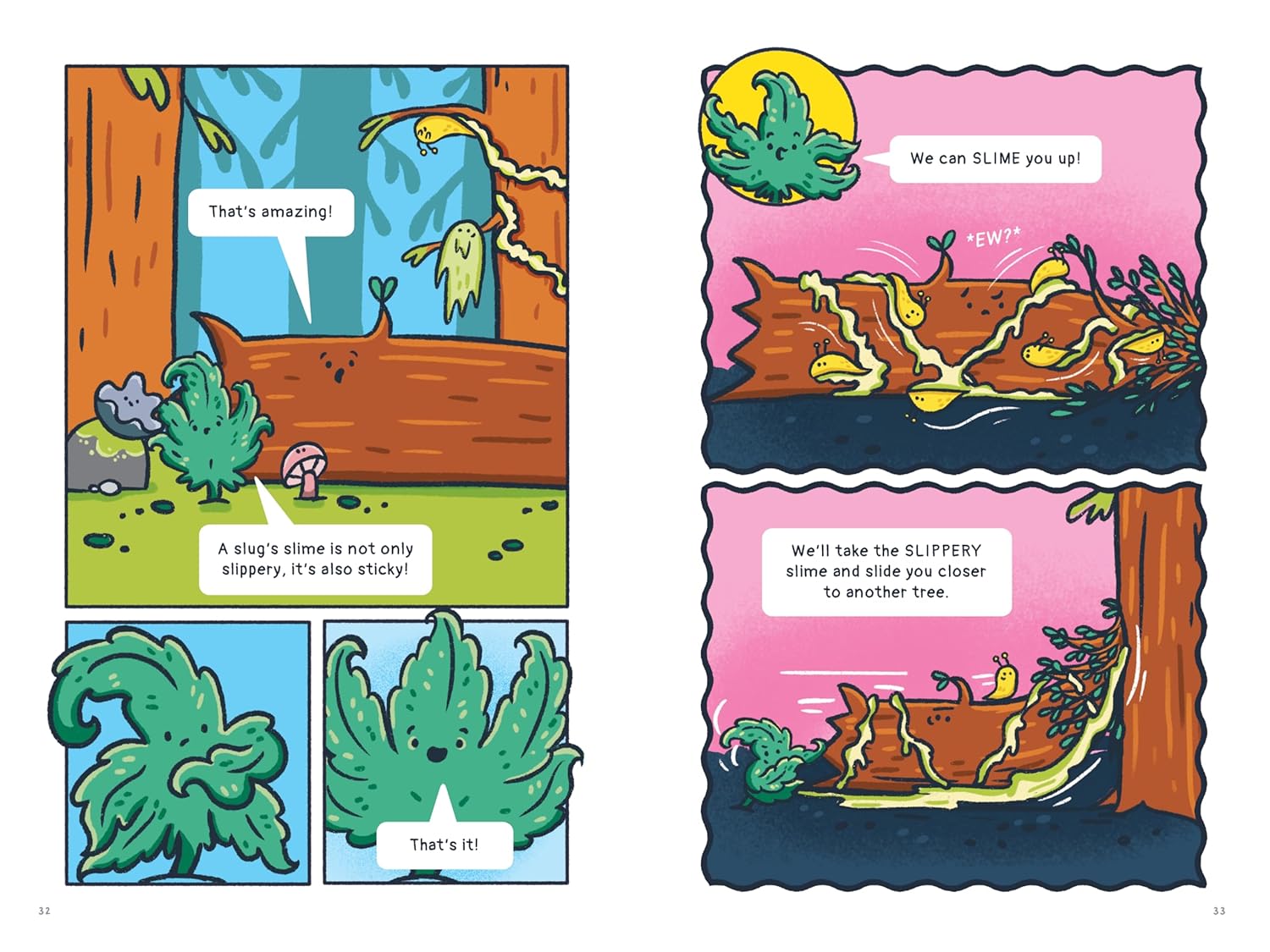
Tiny Millipede is first to volunteer his talents. It’ll be a cinch, he thinks. All he has to do is eat and eat and eat and molt and molt and molt until he’s grown enough segments and legs to push the tree back into position. It turns out, though, there’s only so much one millipede can eat before getting “in-dig-estion,” so Fern concocts another, kinda crazy plan involving Moth, dangerous animals, and “geome-TREE” (Beard Lichen thinks it’s “more like insani-TREE”). When that doesn’t fly, Fern enlists Slug in an even more convoluted idea that any slime lover could get behind. Unfortunately, it’s a no-goo too.

Text and Illustration copyright © 2026 by Jana Curll. Courtesy of Greystone Kids.

With the help of the Lichens’ and Mushroom’s insight, Tree accepts its fate and vows to “do my best with where I am now.” As night falls the friends stay close, keeping Log company. In the morning Fern has yet one more idea, but this one isn’t zany or complex. She invites everyone to stay, hang out, and just do their thing. “FERN-ally” Log discovers its new role—one in which it is long, strong, and useful—important!

In addition to the story, each chapter includes a two-page spread of fascinating facts about millipedes, moths, slugs, lichens, fungi, ferns, and nurse logs that describe their importance to Earth’s ecosystems.

Text and Illustration copyright © 2026 by Jana Curll. Courtesy of Greystone Kids.

Equal parts hilarious and educational, Jana Curll’s Fiddlehead Forest is a punsters paradise, where kids will be giggling so often they may not even realize how much they’re learning. Curll’s mix of witty banter, caring friendship, and scientific facts, all presented in her bright and adorable graphic novel format, will delight kids. Fiddlehead Forest has plenty of repeat readability, applications for classrooms and homeschoolers, and appeal for any library collection.

Ages 6 – 9

Greystone Books, 2026 | ISBN 978-1778401046

About the Author

Jana Curll is a children’s illustrator based on the rainy west coast of Canada and is grateful to live on the traditional lands of the shíshálh Nation with her family. She is inspired by the creatures and environment of the local rainforests and the ocean and spends her spare time wandering through winding trails and along rocky beaches. She likes doodling funny maps and sipping strong coffee while her large cat sleeps on her lap. She’s also the author-illustrator of Barnacle Bay, the first book in the Little Habitats series also published by Greystone Kids. Visit her at janacurrl.com.

Earth Day Activity

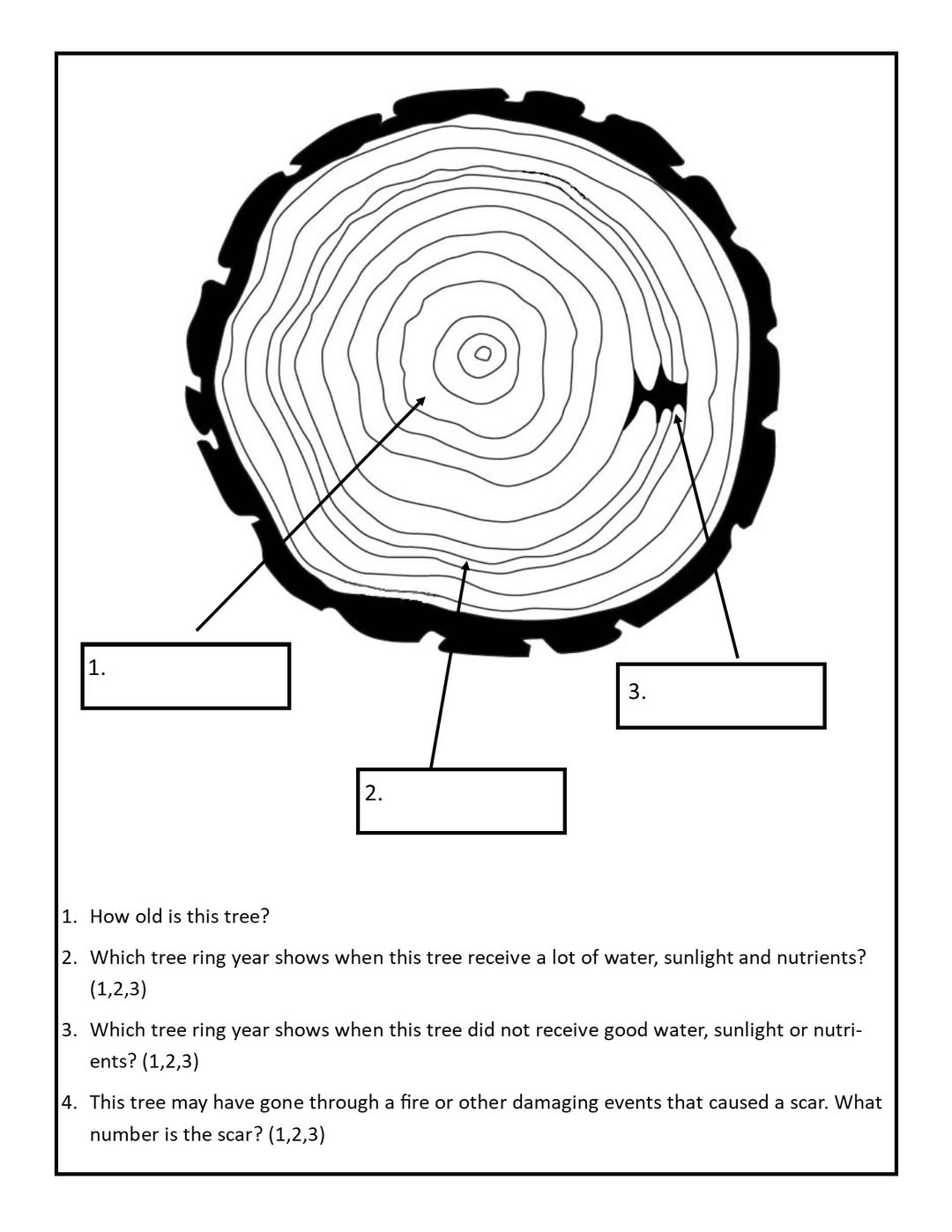
How Old Is This Tree? 

In this activity children learn what the rings on a cross section of a tree trunk mean and how to count them to determine the age of a tree is and discover events from its past. 

You can purchase Fiddlehead Forest (Little Habitats, 2) from these booksellers

Amazon | Barnes & Noble | Bookshop

Picture Book Review
March 13 – International Dark Sky Week

About the Holiday

International Dark Sky Week (IDSW) was founded in 2003 by high school student Jennifer Barlow, who wanted to raise awareness about the problems caused by light pollution and invite people to make beneficial changes. The initiative is now managed by DarkSky International, an association founded in the 1980s by astronomers with the hopes of restoring the nighttime environment from the damage created by the excessive use of light. To learn more about DarkSky International and how you can help, visit them at idsw.darksky.org. Make sure to check out their Activity Page for kids crafts, activity pages, virtual nighttime and NASA tours, and ways that you and your family can get involved in citizen-science projects, and more!

Thanks to Eerdmans Books for Young Readers for sending me this book for review!

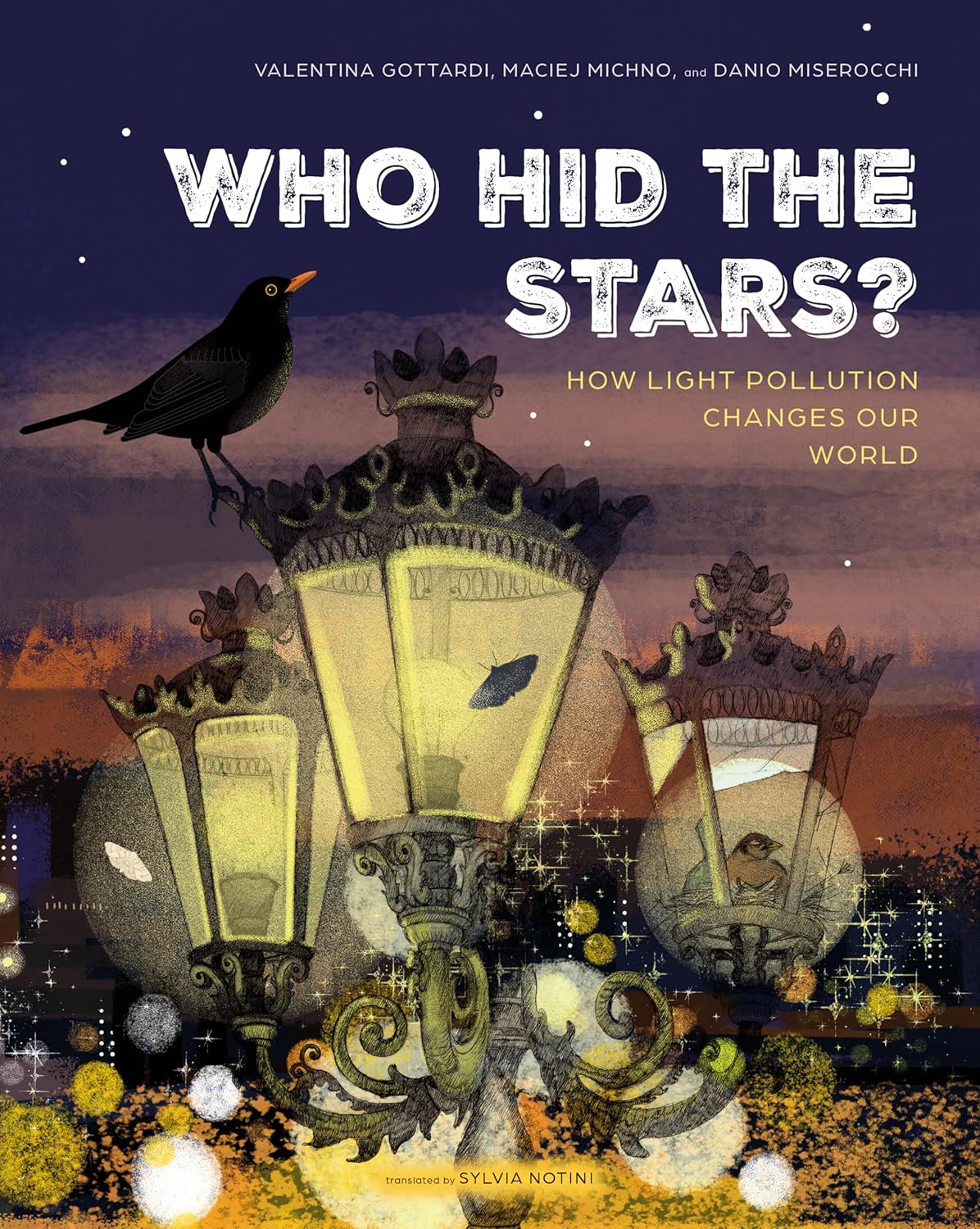
Who Hid the Stars?: How Light Pollution Changes Our World

Written by Danio Miserocchi and Maciej Michno | Illustrated by Valentina Gottardi | Translated by Sylvia Notini


Through their informative text, translated from Italian, Danio Miserocchi and Maciej Michno take readers on nighttime walks to see for themselves the types of artificial light that, while beneficial to humans are detrimental to many creatures. They begin with a short history of artificial light and define light pollution while Valentina Gottardi illustrates how outdoor light fixtures can be shielded for least-polluting effect.

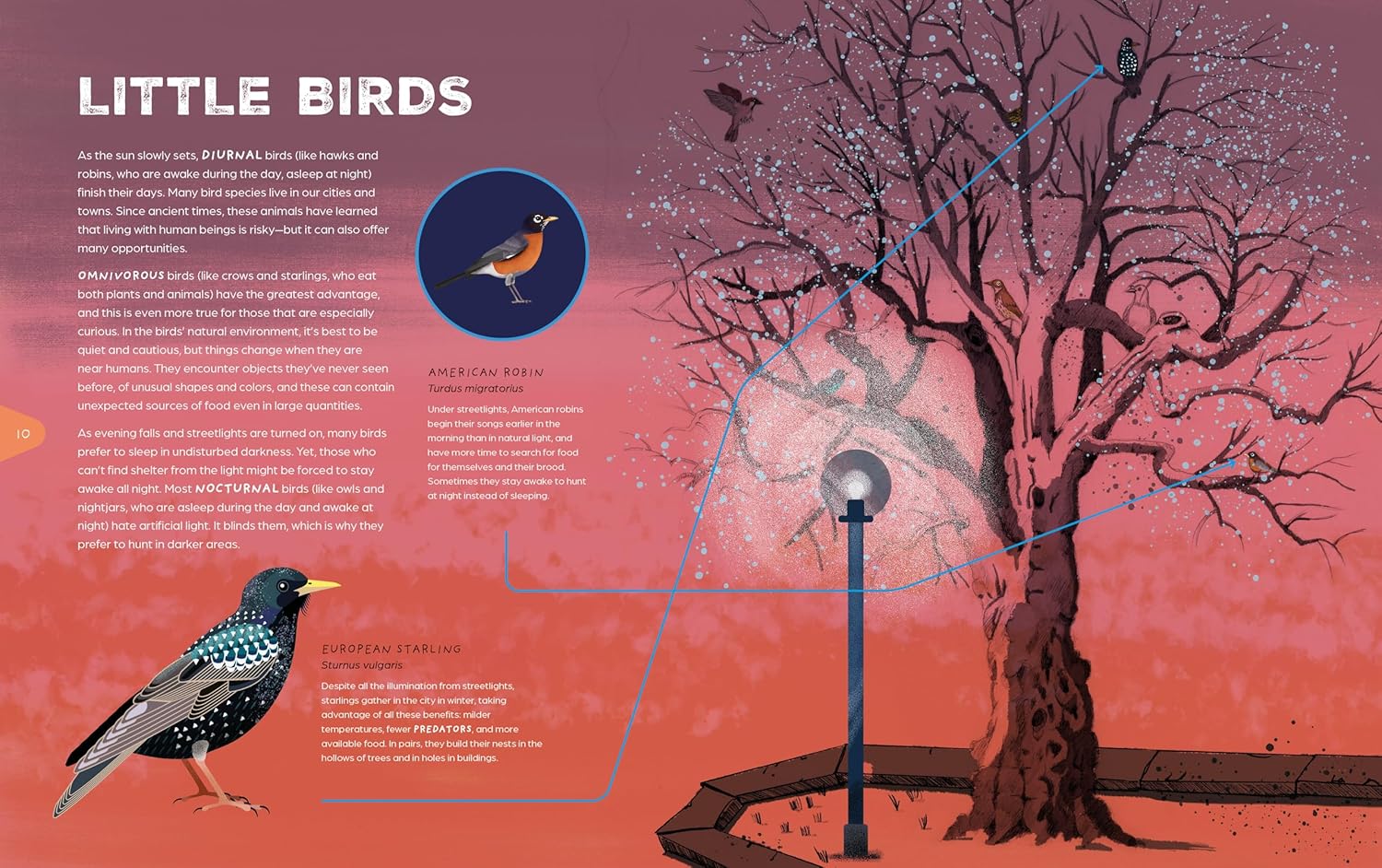
In their chapter on birds, Miserocchi and Michno discuss how artificial light creates unnatural and even dangerous conditions for diurnal birds, who sleep at night; nocturnal birds, who need darkness to hunt; and night-flying migratory birds, who can get lost or confused by lights along their routes. Gottardi’s map showing the world lit up at night will fascinate readers while demonstrating how pervasive, bright, and intrusive artificial light is for migrating birds. The authors also reveal how some birds have learned to use artificial lighting to their advantage.

Illustration copyright © 2026 by Valentina Gottardi. Text copyright © 2026 by Danio Miserocchi and Maciej Michno. Courtesy of Eerdmans Books for Young Readers.

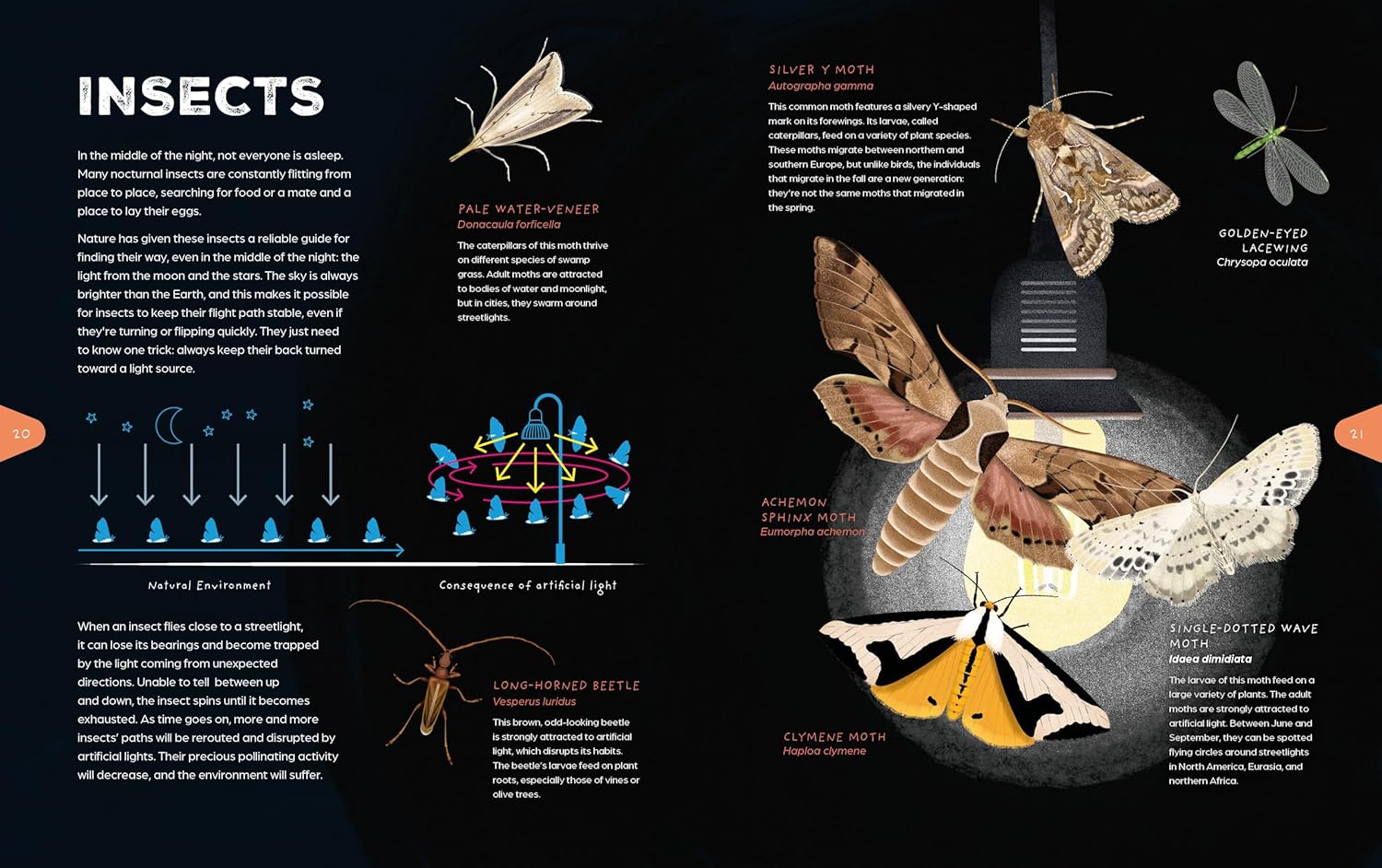
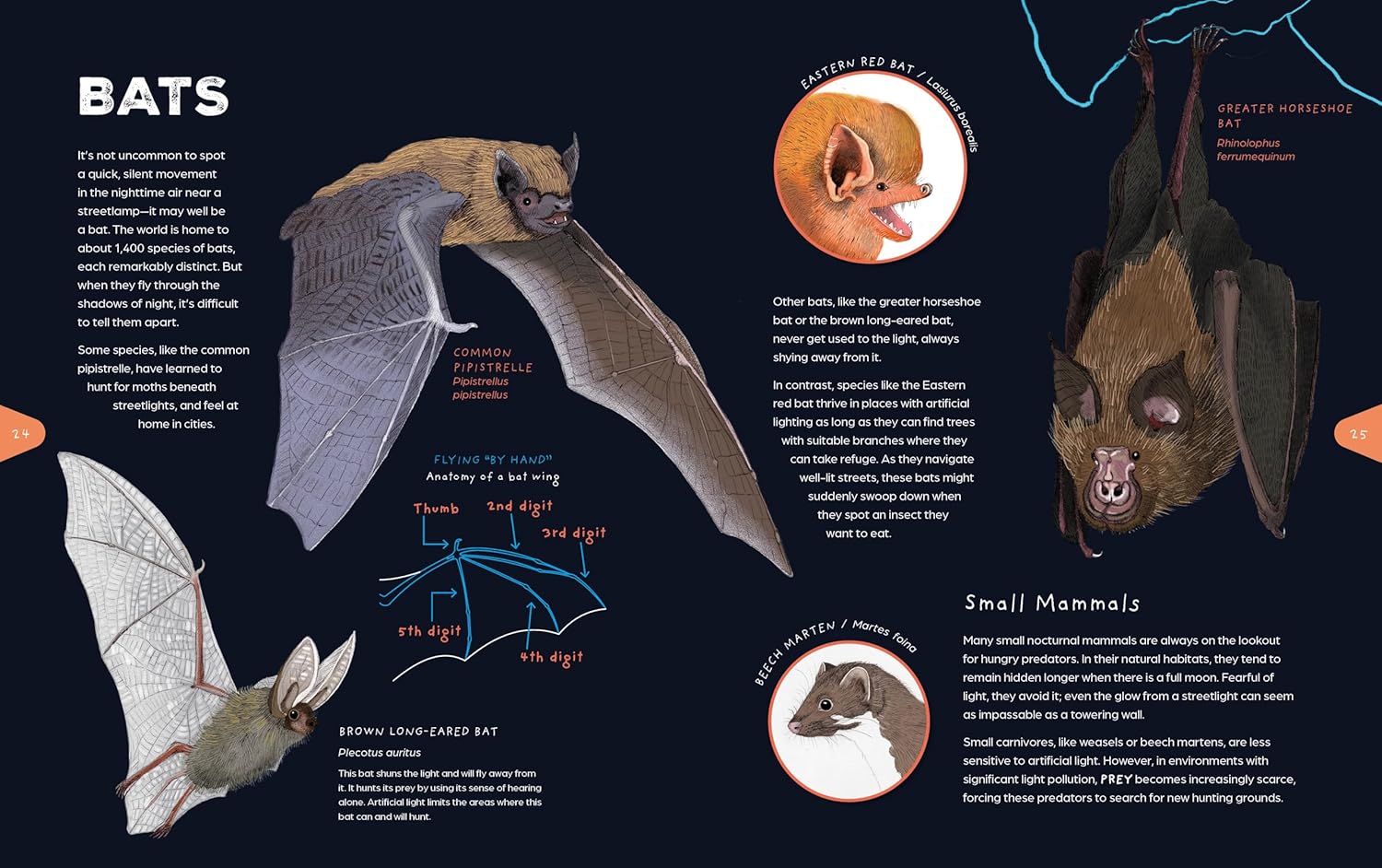
A chapter on insects clearly explains how artificial light not only attracts nocturnal insects but how it confuses their natural flight patterns and why we see moths swarming around streetlights, porch lights, and other outdoor fixtures. An interesting spread on fireflies goes in depth on how and why they light up, their blinking communication codes, and all the ways artificial disturbs them. Children also learn how light affects bats, small mammals, amphibians, spiders, and even underwater creatures.

Illustration copyright © 2026 by Valentina Gottardi. Text copyright © 2026 by Danio Miserocchi and Maciej Michno. Courtesy of Eerdmans Books for Young Readers.

It might surprise you that artificial light can even alter the growth and seasonal shifts of trees and plants. From plants’ blooming schedules to pollinator visits to vulnerability to disease and even to the impact on allergies, extended light exposure creates issues that affect us all. In closing, Miserocchi and Michno invite readers to look up at the nighttime sky and contemplate how many stars you can see. They then encourage us to take steps—even small steps—to reducing light pollution around our homes and neighborhoods.

Back matter includes a glossary, simple ideas anyone can do to reduce light pollution, and resources for learning more.

Illustration copyright © 2026 by Valentina Gottardi. Text copyright © 2026 by Danio Miserocchi and Maciej Michno. Courtesy of Eerdmans Books for Young Readers.

Danio Miserocchi’s and Maciej Michno’s straightforward text is as engaging as it is informative. Not only do readers discover the harmful effects of artificial light pollution in general, but they learn about specific species of insects, birds, and other creatures and the various ways their habits and habitats—altered by light pollution—begin chain reactions with wide-ranging adverse results. 

Valentina Gottardi’s luminescent mixed media illustrations transport readers to nighttime landscapes, where her beautiful, nearly photographic images of a wide array of birds, moths and fireflies, bats, geckos and toads, fish and sea turtles will captivate nature lovers. Between chapters, Gottardi’s two-page spreads beckon readers to explore a darkened park dotted with glowing lamps, a city courtyard where street lights and apartment windows glow, and a glitzy boulevard, where the neon glare never sleeps.

Eye-opening science wrapped in nature’s nighttime beauty, Who Hid the Stars?: How Light Pollution Changes Our World is an impactful addition for classrooms, school and public library collections, and for all children interested in the environment and nature.

Ages 8 – 14

Eerdmans Books for Young Readers, 2026 | ISBN 978-0802856517

About the Authors

Danio Miserocchi is a coauthor of The Tomorrow Tree (Phaidon) and Who Hid the Stars? (Eerdmans). He is an Italian naturalist and teacher who works with museums and community organizations on conservation and biodiversity initiatives. Follow her on Instagram @daniomiserocchi.

Maciej Michno is an editor at Cocai Books, which creates educational, scientifically verified books focused on often-overlooked natural subjects.  His titles include Who Hid the Stars? (Eerdmans) and The Tomorrow Tree (Phaidon).

About the Illustrator

Valentina Gottardi has pursued her dual passions of art and nature since childhood. At Cocai Books, she serves as artistic director and designer for all projects, including Who Hid the Stars? (Eerdmans), and The Tomorrow Tree (Phaidon). Visit her here.

About the Translator

Sylvia Notini has translated over 200 titles from Italian into English, including Who Hid the Stars? (Eerdmans) and Sea Wonders (Princeton Architectural). Her translation of Just a Girl (HarperCollins) won the 2023 Mildred L. Batchelder Award, and her translation of Chickenology (Princeton Architectural) was a finalist for the AAAS Prize for Excellence in Science Books. Sylvia lives in Castenaso, just outside of Bologna, Italy. Visit her at sylvianotini.com.

International Dark Sky Week Activity

Look deep into the naturally dark night sky over Bryce Canyon National Park as Astronomy Ranger Kelly Ricks talks about the stars, the Milky Way, and the excitement of children seeing it all for the first time!

You can purchase Who Hid the Stars? from these booksellers

Amazon | Barnes & Noble | Bookshop

Picture Book Review