Since 1967, April 2—Hans Christian Andersen’s birthday—has served as the date for International Children’s Book Day. The International Board on Books for Young People (IBBY), a non-profit organization founded in Zurich, sponsors the day to promote a love of reading and call attention to children’s books. National Sections of IBBY around the world alternate in hosting the event. The host for 2026 is Cyprus, and this year’s theme is “plant stories and the world will bloom.” Each year a prominent author and illustrator from the sponsoring country prepare materials for the event. This year’s poster was designed by Sandra Elephteriou. Elena Perikleous wrote this year’s message, and Giorgos Hatzipieris wrote this year’s official song, “The Little Gardener.” To learn more about the initiative and download digital materials, visit the IBBY website.
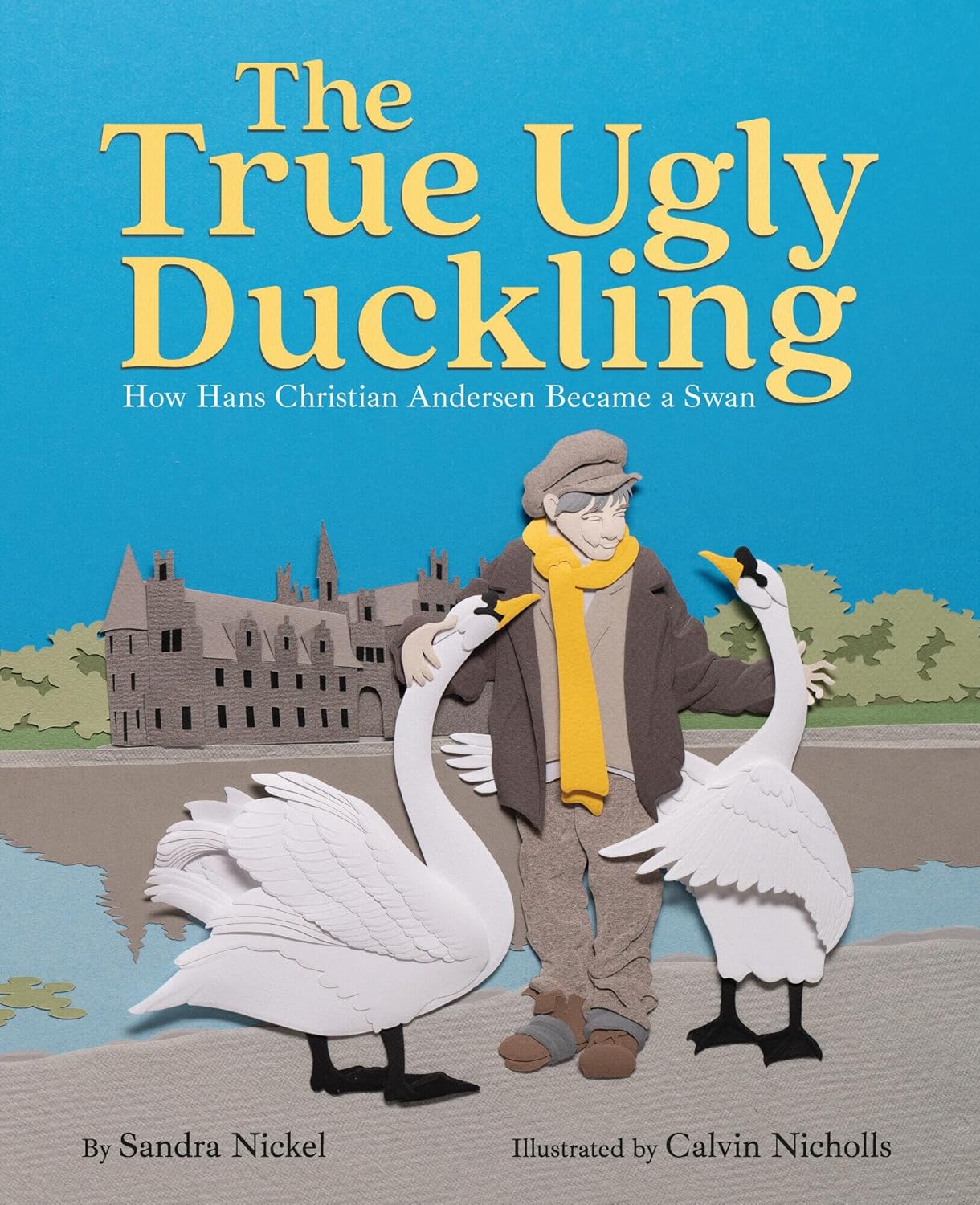
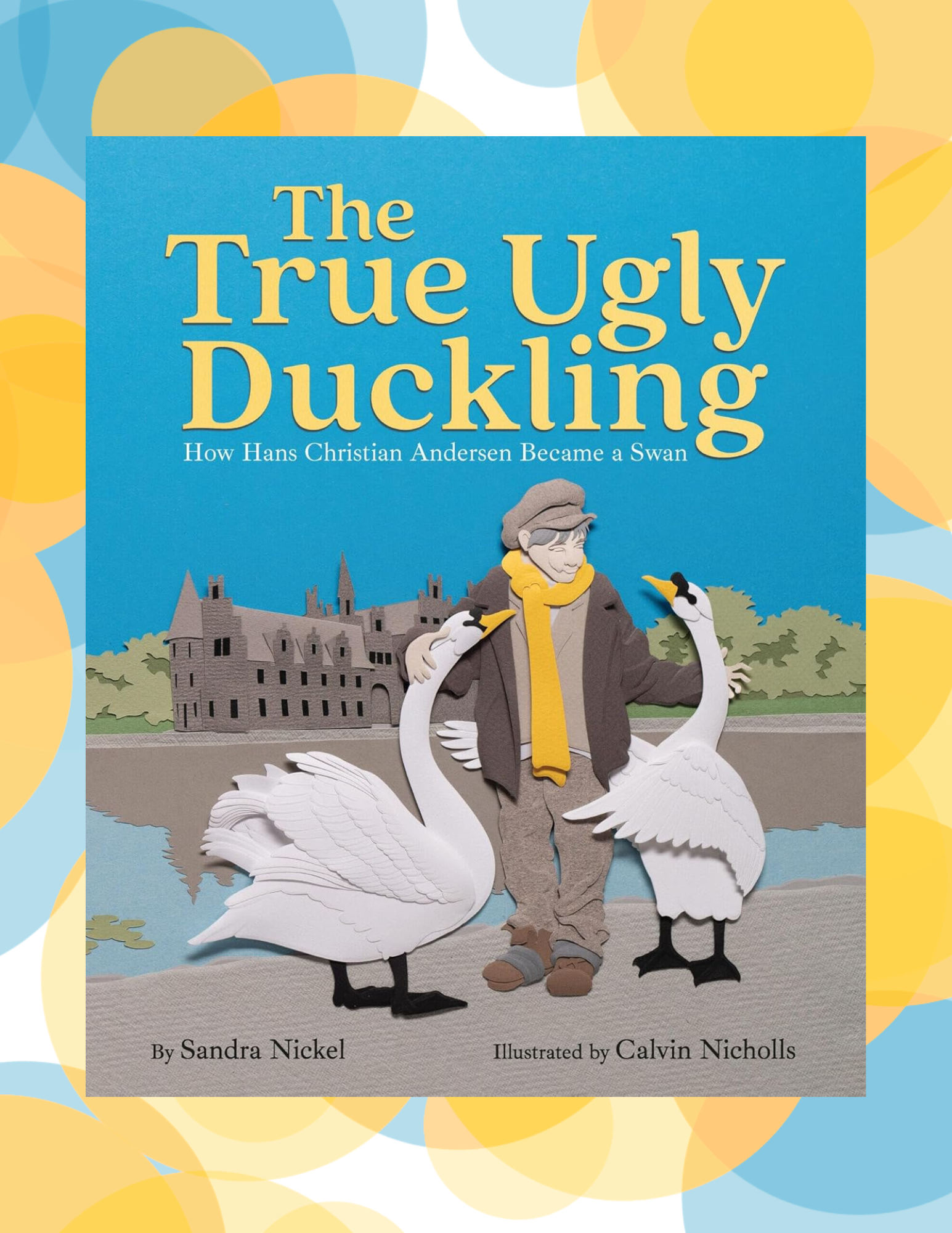
The True Ugly Duckling: How Hans Christian Andersen Became a Swan
Written by Sandra Nickel | Illustrated by Calvin Nicholls
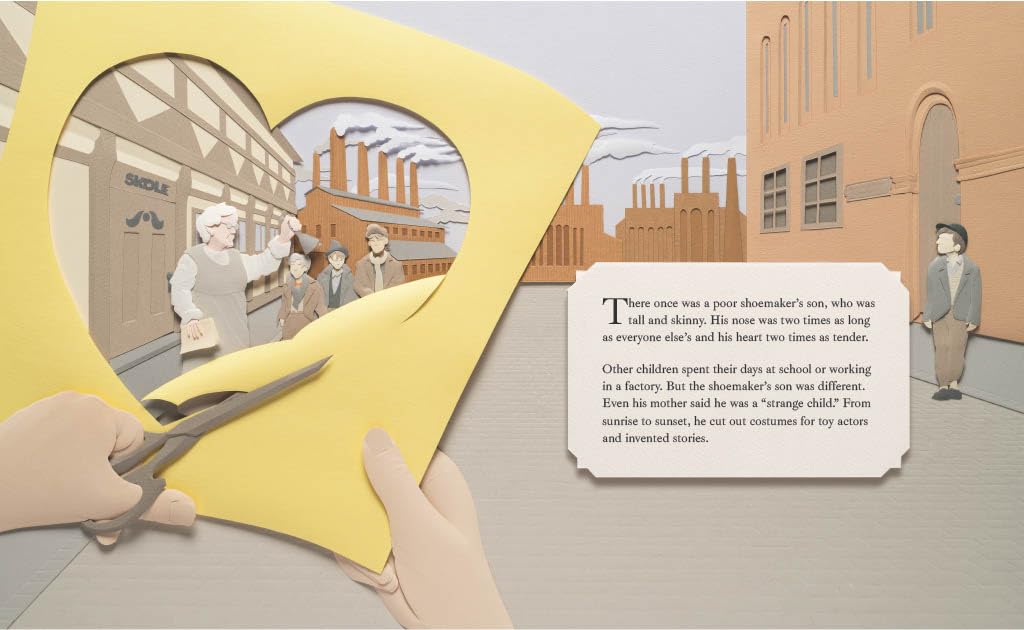
“There once was a poor shoemaker’s son, who was tall and skinny. His nose was two times as long as everyone else’s and his heart two times as tender.” Thus begins not a fairy tale, but Sandra Nickel’s real life story of Hans Christian Anderson.
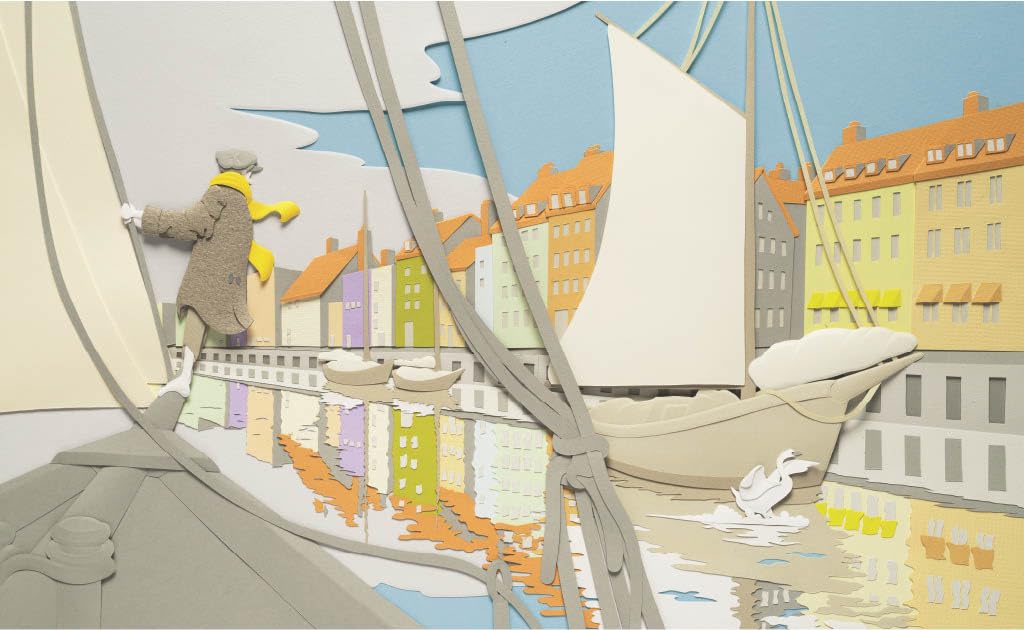
While most children spent their days working at the factory or going to school, Hans cut out costumes for his toys and invented stories that he performed for whomever would watch. Some neighbors gave him a few coins, but the factory workers and other children bullied and teased him. Hans “soothed his wounded heart by cutting out shapes from cloth.” At fourteen, knowing there was more for him in the world, Hans sailed alone for Copenhagen. There, he tried to find a place to express his talents, but each attempt ended in disappointment. Soon all his money was gone.
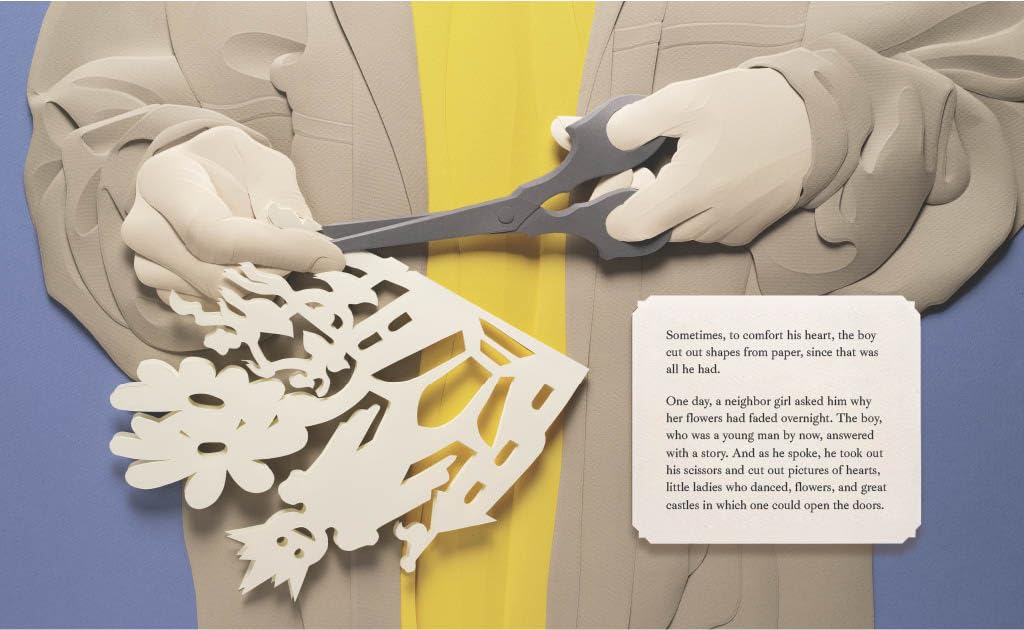
When he sent a play to the Royal Theater, one director rejected it brutally, but another found a “few jewels” in it and arranged for him to go to school. At 17 Hans was taking classes for the first time. The other students laughed at him, and the headmaster dashed his dreams of becoming a storyteller, forbidding him to write. For six years Hans obeyed. “To comfort his heart, the boy cut out shapes from paper.”
Then one day when a girl asked him why her flowers had faded, Hans—now a young man—answered her by telling a story while cutting a scene in paper of hearts, dancers, flowers, and castles with working doors. The girl loved the story so much that Hans wrote it down and had it printed into a book. “The children of Copenhagen adored every word.”
Soon, Hans was telling and publishing more and more stories. Adults began reading them, and even Copenhagen royalty invited him to their castles for dinners and afterward to entertain the other guests by weaving “magic with his words and scissors.”
Back matter includes an Author’s Note recounting that experts now believe Hans Christian Andersen was likely on the autism spectrum and may also have had Marfan syndrome. She also discusses her choice to follow the story arc of The Ugly Duckling to depict Andersen’s life.
Sandra Nickel’s mesmerizing and sensitive portrait of Hans Christian Andersen highlights his seemingly limitless creativity, imagination, and courage as he stays true to himself despite the treatment and rejections he endured. Her lyrical and moving biography is not only an inspiring tribute to this unique storyteller and artist, but a buoy for children struggling themselves and a reminder for all to embrace each person as a whole, recognizing and encouraging their talents, dreams, and contributions. Although his enduring popularity is already known to readers, her account of his ultimate triumph still has the power to astonish and prompt cheers.
Visually arresting, Calvin Nicholls’ extraordinary paper sculpture illustrations pop with action and emotion, immersing readers in the sights and sounds of Andersen’s factory hometown, his experiences in Copenhagen, and the joy of his long-dreamed-for success. The realism of Nicholls’ low-relief sculptures, assembled from various weight and textured papers then photographed, is astounding. Nicholls’ color scheme mirrors the theme of the “Ugly Duckling,” portraying Andersen in muted grays and browns until his full transformation when he dazzles Copenhagen royalty in a white tuxedo.
The True Ugly Duckling: How Hans Christian Andersen Became a Swan belongs in every classroom, school, and library collection to edify and inspire and would be an inspirational addition to home bookshelves, especially to pair with readings of his stories.
Ages 4 – 8
Levine Querido, 2026 | ISBN 978-1646146093
Hans Christian Andersen’s Birthday Activity
Easy Origami Swan
Kids can have fun on Hans Christian Andersen’s Birthday and International Children’s Book Day by making this easy origami swan to celebrate their unique personalities and talents! All you need is origami paper or you can cut your own 6-inch by 6-inch paper or any size square.
You can purchase The True Ugly Duckling: How Hans Christian Andersen Became a Swan from these booksellers
For children, picture books provide one of the best ways to interact with facts and feelings. Stories that speak to their experiences, both common and new, alongside illustrations that bring the story to life let them discover the world around them. Today’s stunning nonfiction books are loaded with illustrations or photographs that let kids see exciting details about science, history, biographies, nature, and so much more. This month, take a look for fiction and nonfiction picture books about your child’s passions to add to your home library. And be sure to check out today’s book that incorporates both!
Thanks to Star Bright Books for sharing a digital copy of Leaves to My Knees with me for review consideration. All opinions on the book are my own.
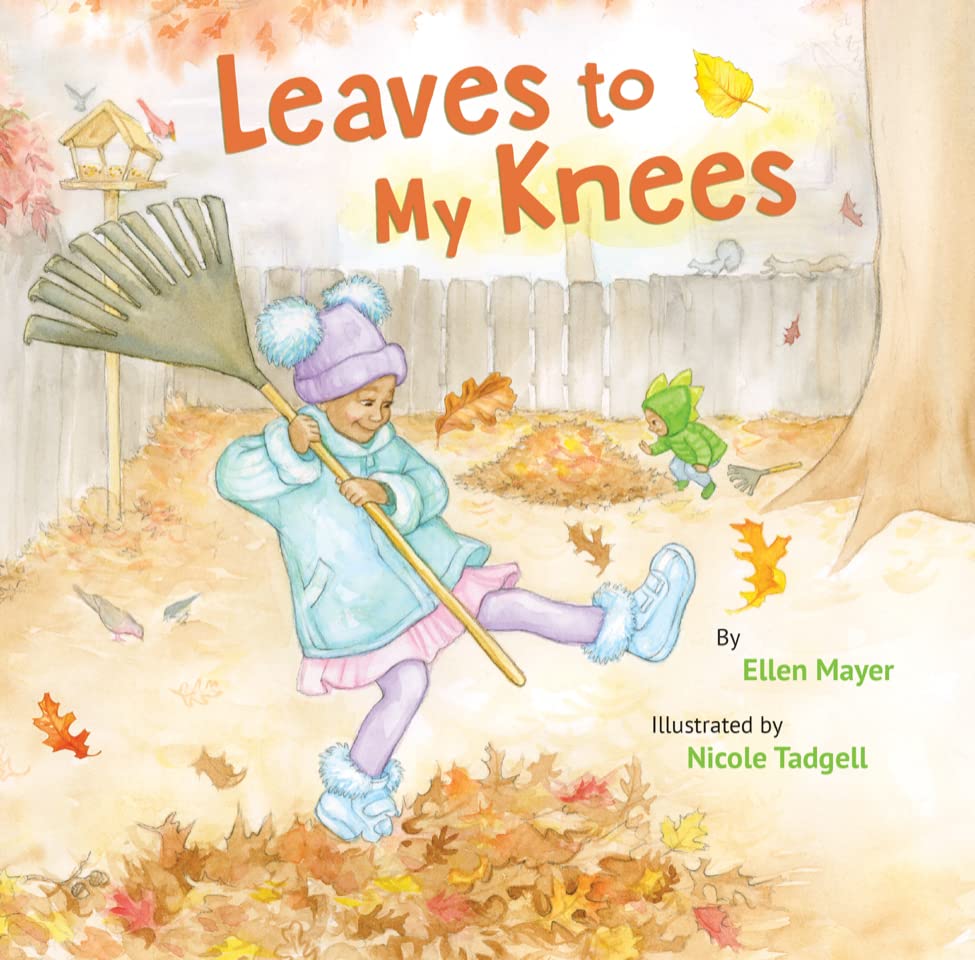
Leaves to My Knees
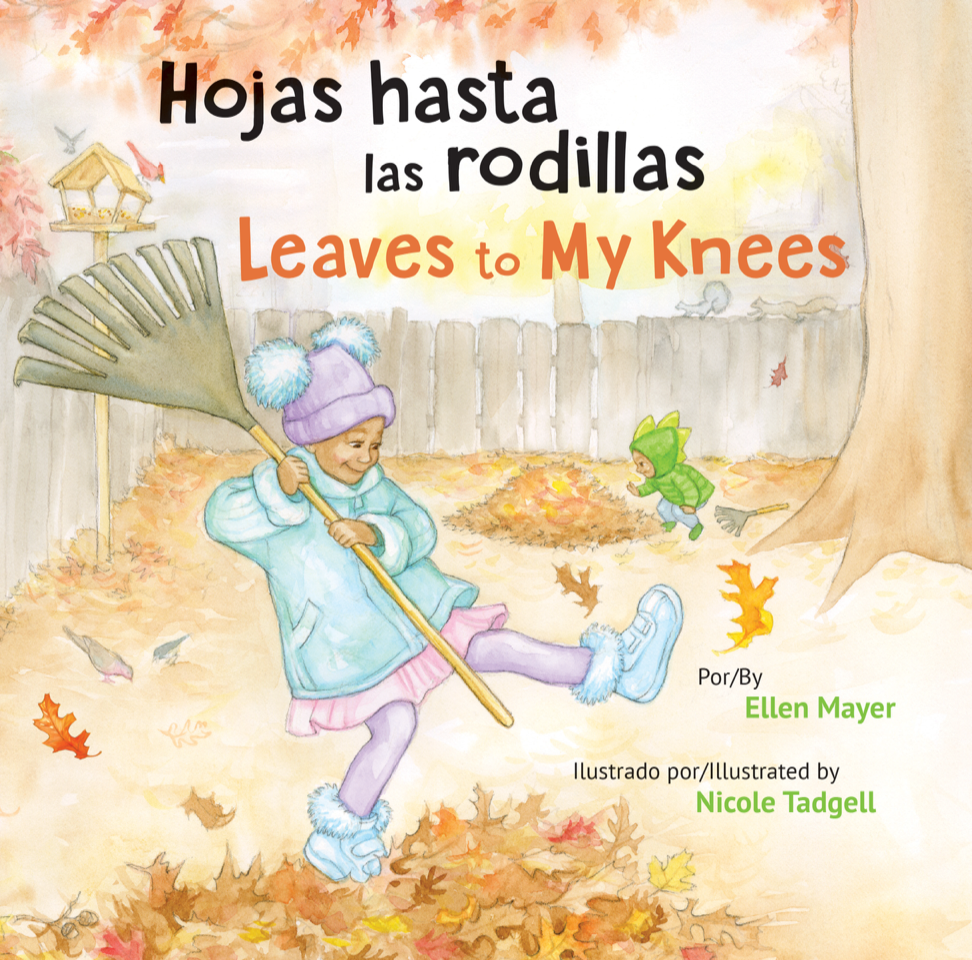
Hojas hasta las rodillas/Leaves to My Knees
Written by Ellen Mayer | Illustrated by Nicole Tadgell
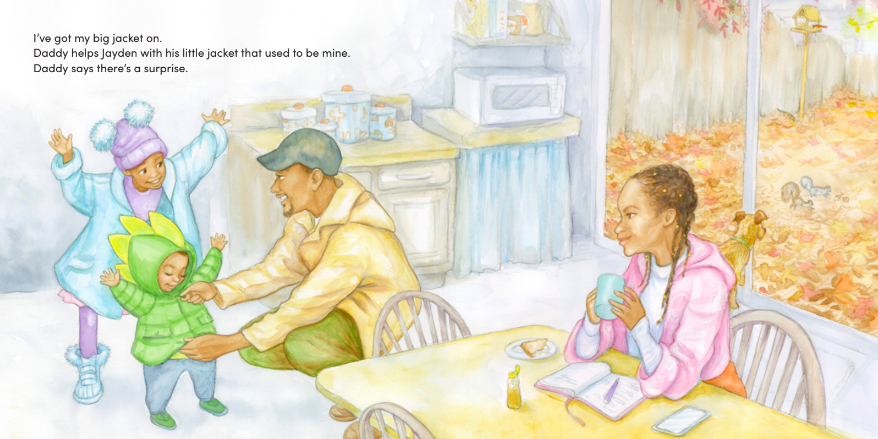
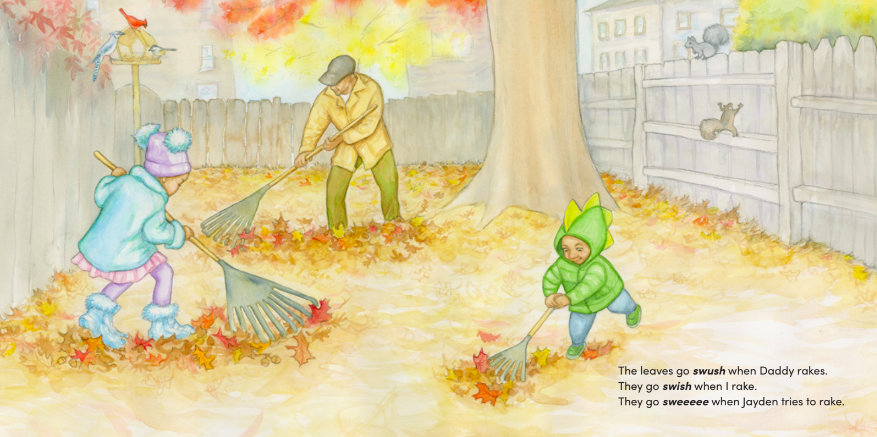
Daddy has a surprise for Camille and her little brother Jayden. They get dressed in their coats—big for Camille and little jacket with a stegosaurus hood for Jayden—and head into the backyard. There, Camille discovers her dad has gotten her a rake of her own. It’s not as big as Dad’s, but it’s bigger than Jayden’s little rake. It’s the perfect size for Camille.
Camille marches right off to rake a pile of leaves. But not just any pile—she has a goal. “‘I’ll rake leave all the way up to my knees!’” she tells her dad. The three get working on the yard. Camille concentrates on gathering leaves, listening to the different sounds that the various sized rakes make: “The leaves go swush when Daddy rakes. They go swish when I rake. They go sweeeee when Jayden tries to rake.”
Image copyright Nicole Tadgell, 2022, text copyright Ellen Mayer, 2022. Courtesy of Star Bright Books.
Lurking under the leaves are twigs and acorns that clog up Camille’s rake. She worries that she’ll never be able to rake leaves to her knees. She calls for Daddy’s help, and together they clear Camille’s rake. “‘You’re good to go now, Camille,’” Daddy tells her. Back at it, Camille rakes and rakes. Then she steps into the pile she’s accumulated to measure it. Her pile only comes up to her ankles. Camille grabs her rake harder and with determination she collects more leaves. But wait! Jayden is stealing leaves from her pile to add to his! Camille guards her pile with her rake, and sends her little brother over to Daddy’s bigger pile. Camille checks her measurements again. Her pile has grown, but only up to the top of her boots.
Image copyright Nicole Tadgell, 2022, text copyright Ellen Mayer, 2022. Courtesy of Star Bright Books.
Camille rakes ‘bunches of leaves,” and her pile gets taller, until “‘Oh no! A BIG BREEZE!!’” sends lots and lots of leaves swirling “Whoosh!” into the air and scattered to the ground. “I will never rake leaves to my knees!” Camille thinks. And when she measures again, her pile is back to her ankles. Daddy encourages her to keep going, and Camille is committed to achieving her goal. She throws off her coat, grabs her rake, and works on gathering up all the leaves she had, plus more. At last, too tired to rake anymore, Camille wonders. Has she done it? “‘Time for measuring!’ says Daddy.”
Image copyright Nicole Tadgell, 2022, text copyright Ellen Mayer, 2022. Courtesy of Star Bright Books.
Camille relinquishes her rake to her dad then, holding her breath, steps into her pile. “‘TA-DA!’” Camille raises her arms in victory. She steps out, positions herself a good ways away, and winds up for the run and jump. “‘GO!’ yells Daddy. ‘GO!’ Jayden yells too.” Camille flies through the air and lands, laughing, into her pile. Then Jayden jumps in. And Daddy? He gives Camille “really big squeeze” for raking “leaves all the way up to [her] knees.”
A note for parents, teachers, and other caregivers written by Marlene Kliman, a mathematics learning expert and senior scientist at TERC, describes how the story incorporates the math of measurement and sizes and how adults can extend the lesson by pointing out elements in the book’s illustrations and while going about their day or doing common chores, such as cleaning up and sorting laundry.
Image copyright Nicole Tadgell, 2022, text copyright Ellen Mayer, 2022. Courtesy of Star Bright Books.
Ellen Mayer’s Leaves to My Knees has everything that makes a story a young reader’s favorite—a spunky main character that kids will identify with, an achievable goal, successes and setbacks, suspense, humor, and a child-propelled victory. And it all revolves around an early math concept that comes naturally to children and which invites playful learning not only during the fall, but any time of the year. Shoveling snow and making snowballs in winter, yard cleanup and gardening in spring, and building sandcastles and raking grass clippings in summer as well as in-home fun with laundry piles, toys, and other objects are all ways to extend the story.
Told from Camille’s point of view, the story also engages children’s emotions as they join in to cheer Camille on as her leaf pile grows and commiserate with her when it shrinks. The close relationships among Camille and her dad and little brother ring true with dialogue-rich storytelling that is always encouraging. Strong themes of determination and persistence will also appeal to parents and teachers, who can point to how many times Camille has to start over before accomplishing her goal and her positive, resolute attitude.
Nicole Tadgell’s exuberant illustrations shine with personality, and kids will immediately become invested in each character as Dad gets working on a big job that needs doing, Jayden runs, jumps, and copies his big sister, and Camille unwaveringly works on her pile of leaves. Camille’s setbacks are clearly depicted, along with her and her father’s facial expressions that give adults and kids an opportunity to talk about disappointment, frustration, perseverance, and feelings of accomplishment. Each image also demonstrates the math component of measurement and sizes in the story with various-sized rakes, the growing and diminishing leaf pile, big and little jackets, and other objects that invite comparison.
Tadgell’s soft-hued pages are infused with the feeling of fall and hum with activity as cardinals, blue jays, chickadees gather at the bird feeder, squirrels scamper up and along the fence, and leaves continue to float to the ground. Readers will love following little Jayden’s antics and be inspired by Camille’s wide smile as she enjoys the reward of all her hard work.
Leaves to My Knees is a multilayered read aloud infused with the enthusiasm and rhythms of childhood that kids will want to hear again and again. Its mathematics base and themes of determination and perseverance rewarded will appeal to parents, teachers, and other educators as a way to engage children in active, hands-on learning. The book is a must for home, classroom, school, and public library collections.
Ages 4 – 8
Star Bright Books, 2022 | ISBN 978-1595729590 (Leaves to My Knees) | ISBN 978-1595729613 (Hojas hasta las rodillas/Leaves to My Knees
Picture Book Month Activities
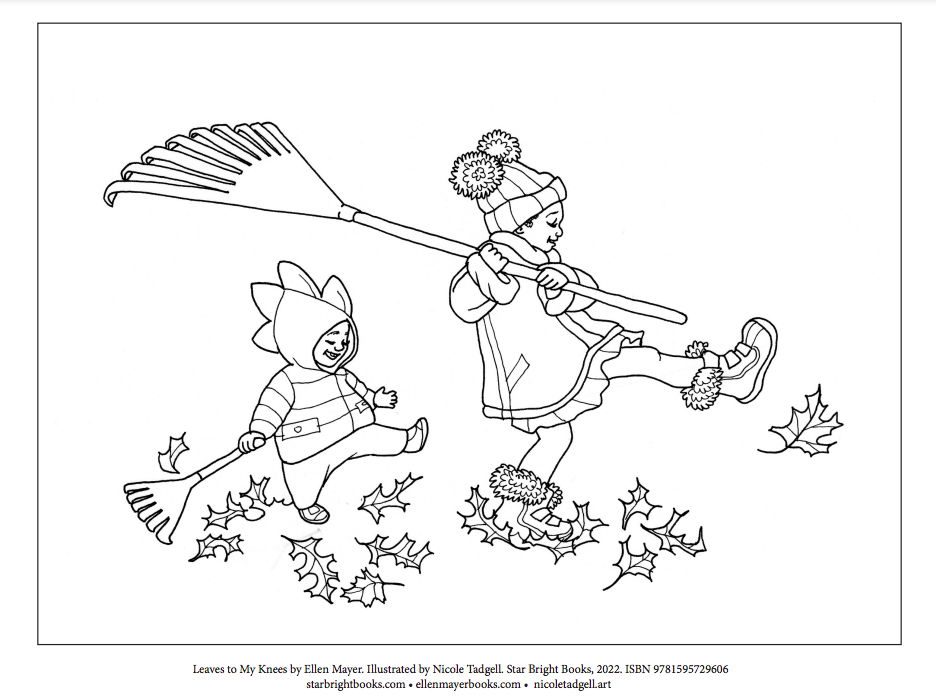
Coloring Pages and Teaching Guides
You can extend the fun and learning in Leaves to My Knees with these activities, which include three fun coloring pages from the story, a hands-on play-dough art and discovery activity, and a detailed educator’s guide for teachers, homeschoolers, parents, and other caregivers that offers multiple ways to use Leaves to My Knees to explore math, mathematical thinking, and reading comprehension through the story and beyond at home, school, and elsewhere.
Ellen Mayer is an award-winning author who writes picture books for babies and young children and the grown-ups who read to them. Leaves to My Knees is her ninth book for children. Her other math story books include Banana for Two and Clean Up, Up, Up!, two board books in her Small Talk Books® series with Star Bright Books.
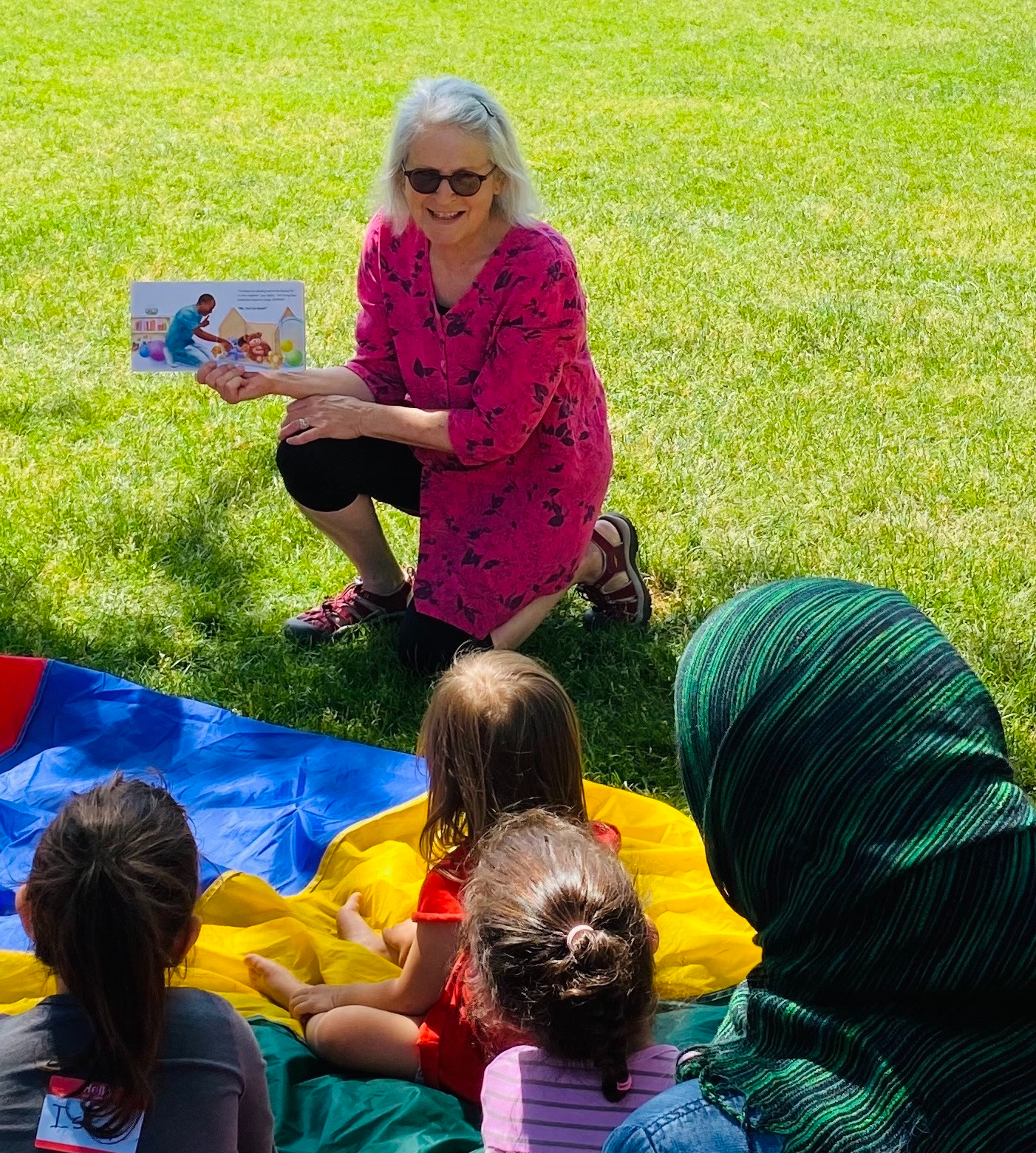
For many years Ellen was an education researcher at the Harvard Graduate School of Education, studying how families are engaged in their children’s learning. She also worked as an early literacy home visitor with young children and their parents in a local affiliate of the ParentChild+ program. Now, Ellen volunteers as a visiting children’s book author with public schools and city-run playgroups in her local Cambridge and Somerville, MA, communities. Long ago she earned an M.Phil. in Sociology from Columbia University.
Ellen often collaborates with her musician husband in “Books + Banjo” reading and sing-along programs for young children. Ellen loves to rake leaves in the fall—especially when she has help from her grandchildren.
I have so many great memories of raking leaves with my kids when they were small. You really capture the fun and challenges of this favorite fall activity in your story. Were you inspired by your own family’s experiences in any way while writing it?
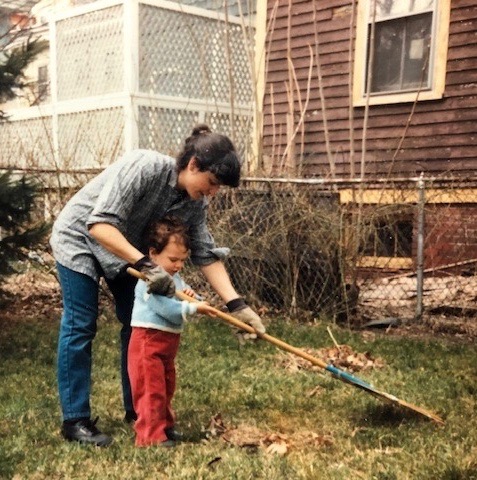
Very much so! Since the time our kids were very little they’ve joined us in the backyard for all sorts of yardwork. My daughter wanted to hold the rake from a young age, even as I did the less exciting early springtime rake of the lawn.
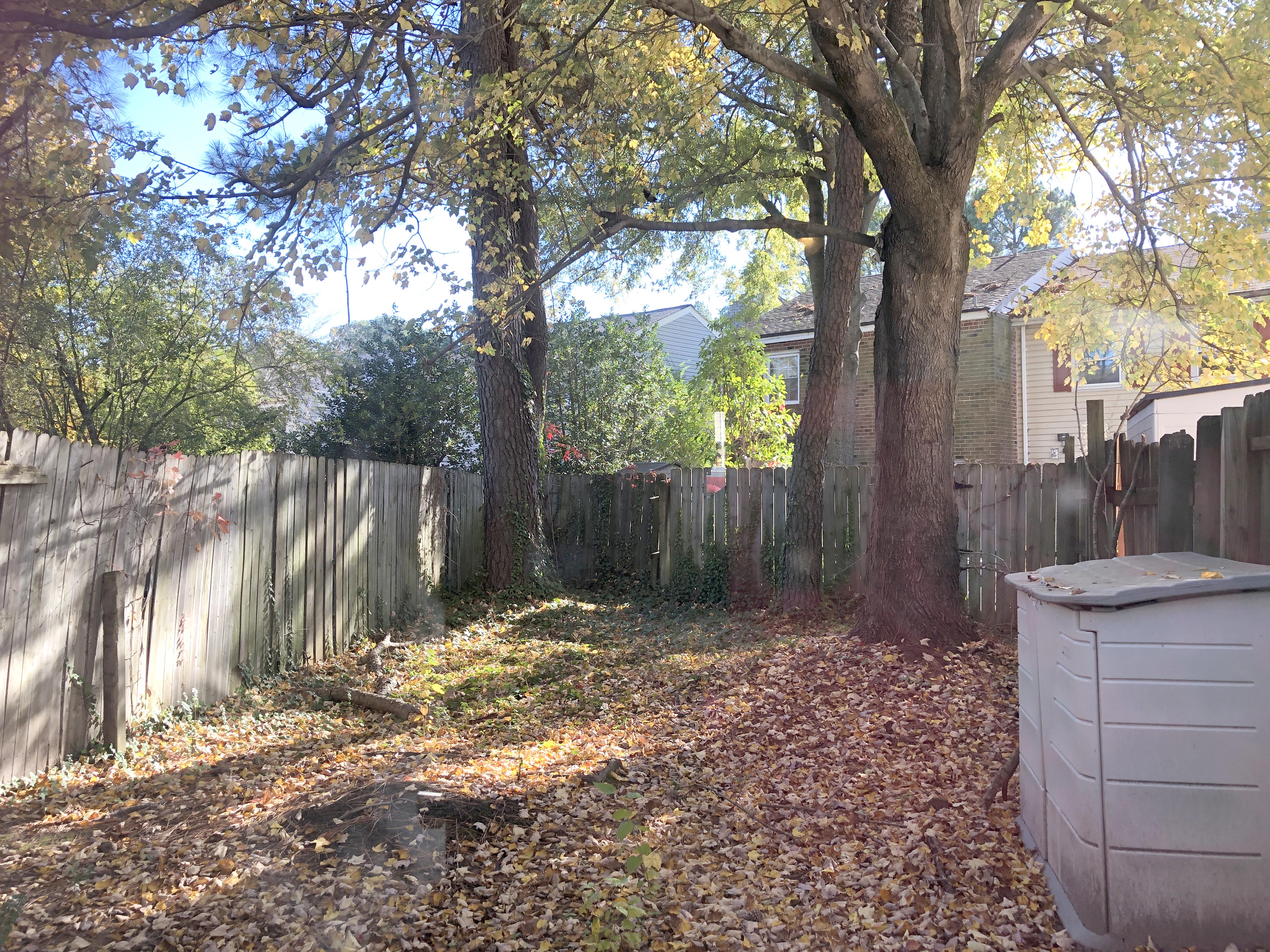
At first our trees didn’t yield much in the way of fall foliage, so we would haul a big bag of fallen leaves in from the tree out on the city sidewalk to have as leaves for play. The piles that resulted were often rather puny, only up to the ankles, as protagonist Camille would tell us.
But as the backyard trees matured, raking and jumping took off, much like in the story! I should add, too, that the sibling dynamic between our older daughter and younger son was also a source of story inspiration, influencing how I wrote the sister-brother characters here. Older sister was always the more determined and focused raker of the two, with younger brother taking it upon himself to annoy and distract her as much as possible, and generally try to steal the show, as was his lovable wont in those early years.
Marlene Kliman, an early math expert who is a Senior Scientist at nonprofit STEM education organization TERC in Cambridge, MA, has contributed a back matter note for parents and caregivers. In it she writes that Camille uses the math of measurement as she works at raking a knee-high pile of leaves and as she describes the sizes of things around her. Can you tell us how Camille and other young children approach measurement?
Preschoolers and toddlers, before they are ready to understand and engage in measuring with standardized units like inches and feet, try out measuring in their own ways. For instance, they compare the thing to be measured with an object or their body. Here, Camille measures the changing height of her leaf pile as it moves up her leg to her knees—first reaching up to her ankles, then up to her boots, but then back down to her ankles after a big breeze, then finally after some serious raking all the way up to her knees—where it’s the perfect size for jumping in. Young children naturally love to consider their world in terms of the different sizes of things. Throughout the story, Camille actively references the sizes of things all around her, whether it’s that big breeze or the size of her jacket, rake, and leaf pile in comparison with the smaller jacket, rake, and leaf pile that belong to her little brother, Jayden.
Today’s post celebrates this beautiful and exuberant cover! What was your first reaction to seeing the final cover art?
When I first saw the final cover I gasped! I love cover art that is inviting and also contains a little mystery to it. Here, Nicole created the most glorious, radiant, luminescent fall day, and I immediately wanted to join in the play. And what was that cute little dragon/dinosaur up to in the background? Definitely intriguing. Then, also, there are hints of the size-comparison math to come in the story in the form of the differently sized two rakes and three birds. The idea of “leaves to my knees” is there too, center stage. The joy and energy in this cover scene is palpable as the leaves float from the tree and Camille almost seems to be dancing in her leaf pile. Thank you so much for introducing this gorgeous cover into the world, Kathy!
Do you have another favorite spread in the book? Why is this one special to you?
Nicole creates this wonderful dance here in her art, from cover to close, with captivating facial expressions on each page. It’s hard to single out a favorite spread—there is something that takes my breath away on each page! But I keep returning to the one near the end where all is right with the leaf pile, the jump, and the siblings. Here, Camille and Jayden have flopped onto her pile and are luxuriating side-by-side on the big crackly bed of leaves, enormous matching grins on their faces. Maybe I was worried that Camille wouldn’t let the little mischief-maker into her pile? But she’s not shooing him anyway anymore—they are just celebrating together the joys of a fall leaf pile.
What would you like for kids and adults to take away from the story?
I hope they will come away with a warm feeling inside after spending time with this playful and loving family, a family that’s engaged in a fall chore, but one that is also enjoying a lot of fun and learning together. I hope they take away that math is everywhere around us, and that young children—all young children—love to measure and compare as they go about their day. I hope they take away the powerful image of a child of color, and a girl, as an active mathematician. There still aren’t nearly enough Camilles in the pages of picture books, and everyone—kids of all backgrounds listening to this story and all their reading adults too—need to see and normalize children of color and girls doing math.
Nicole Tadgell is an award-winning watercolor artist of more than 30 luminous picture books. Her books have received numerous honors, including the Christopher Award and the Children’s Africana Book Award. They have been included on the Smithsonian Notable Books for Children, the New York Public Library’s Best 100 Titles for Reading and Sharing, and many more notable lists. Born in Detroit, Michigan, frequent moves weren’t easy for Nicole, especially to new schools where she was the only Black kid in class. Art has always been both an escape and a labor of love for Nicole. Today, she brings stories to life while advocating for diversity in children’s literature. Nicole lives in Chesapeake, Virginia.
Can you share what attracted you to Ellen’s story from an illustrator’s point of view?
Because I often illustrate older children, I saw the opportunity to showcase two young children playing in autumn leaves. (My favorite season!)
Camille shows so much personality and determination on this cover image. Can you describe your process of designing and finalizing the cover?
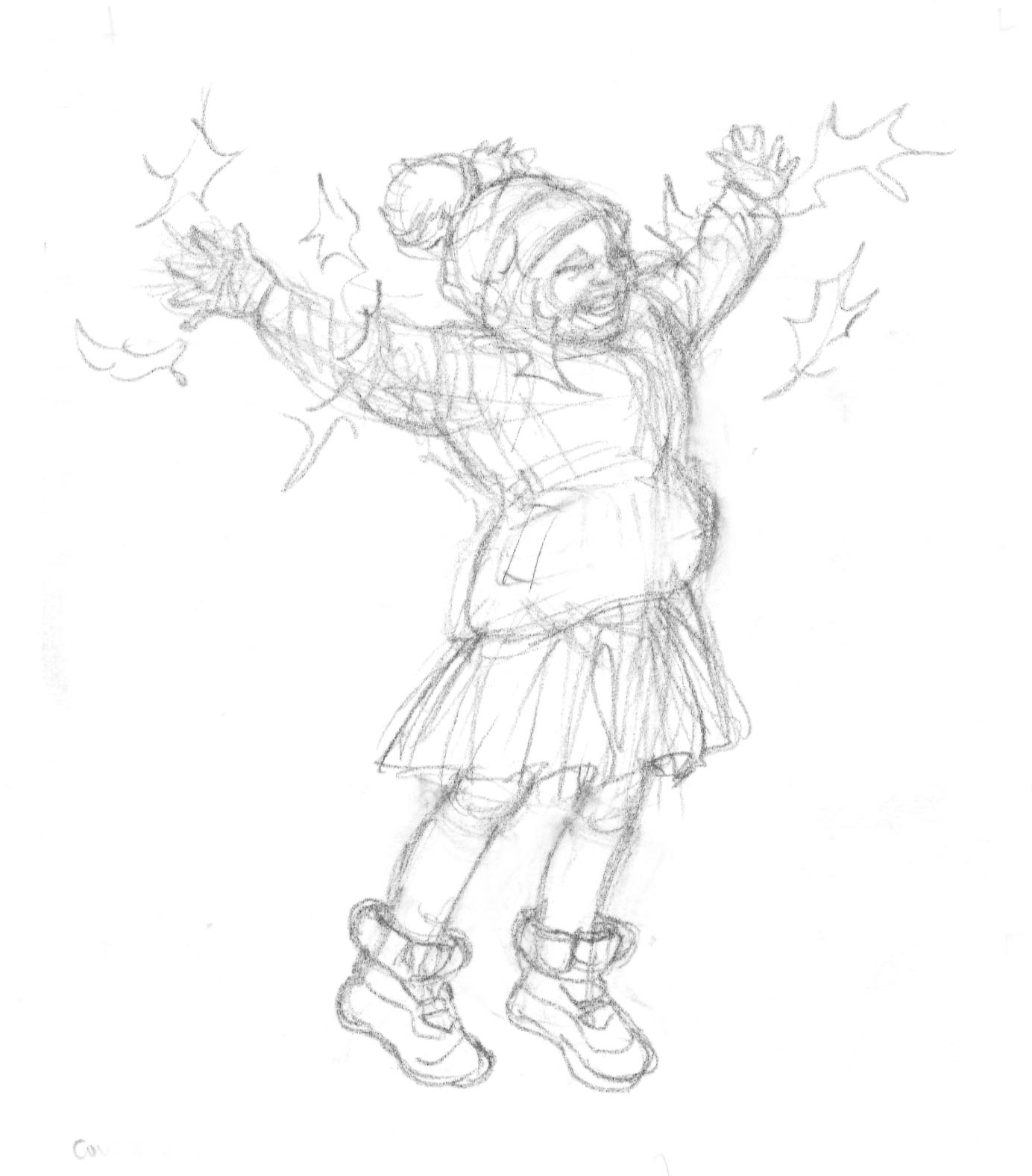
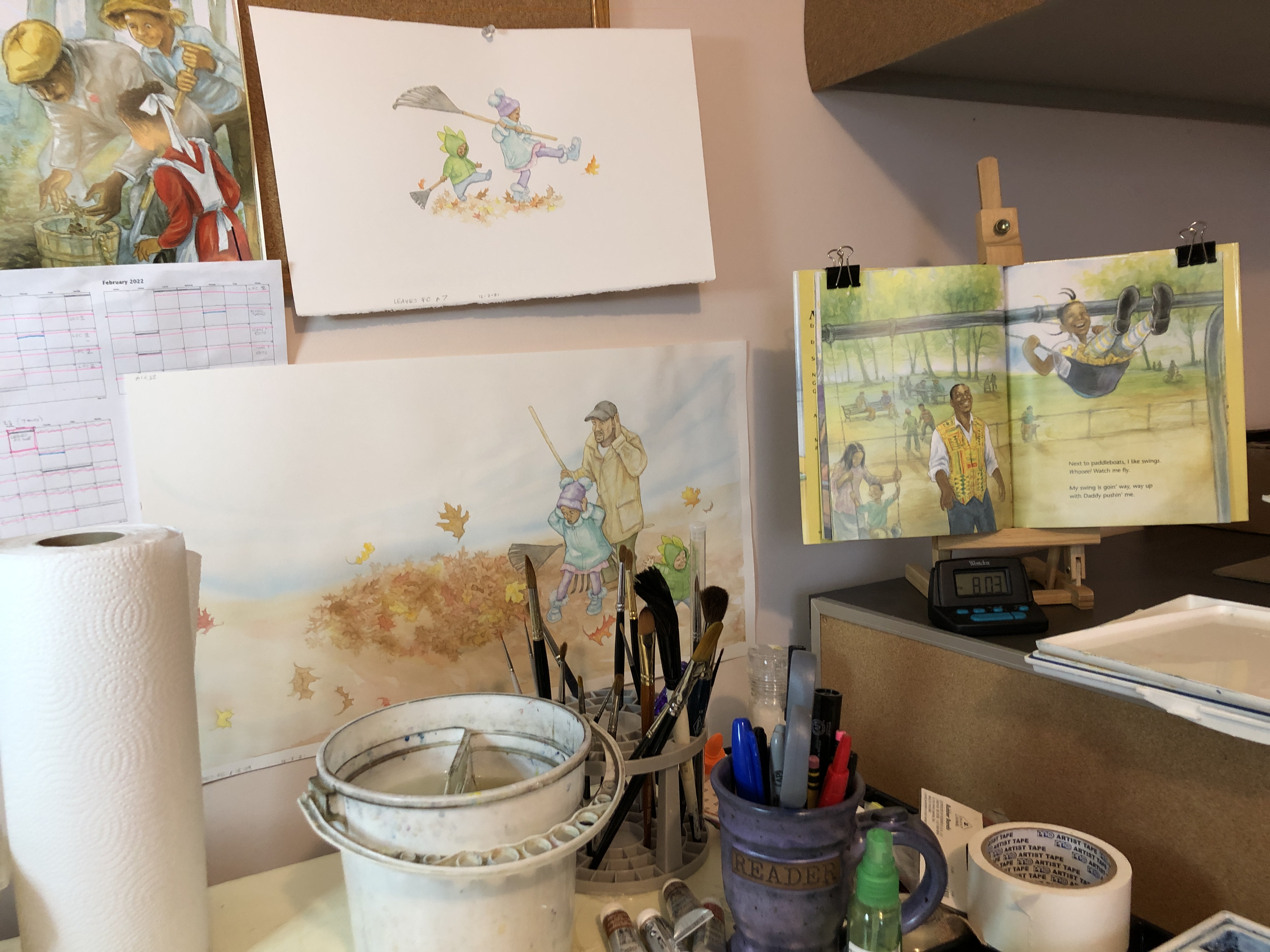
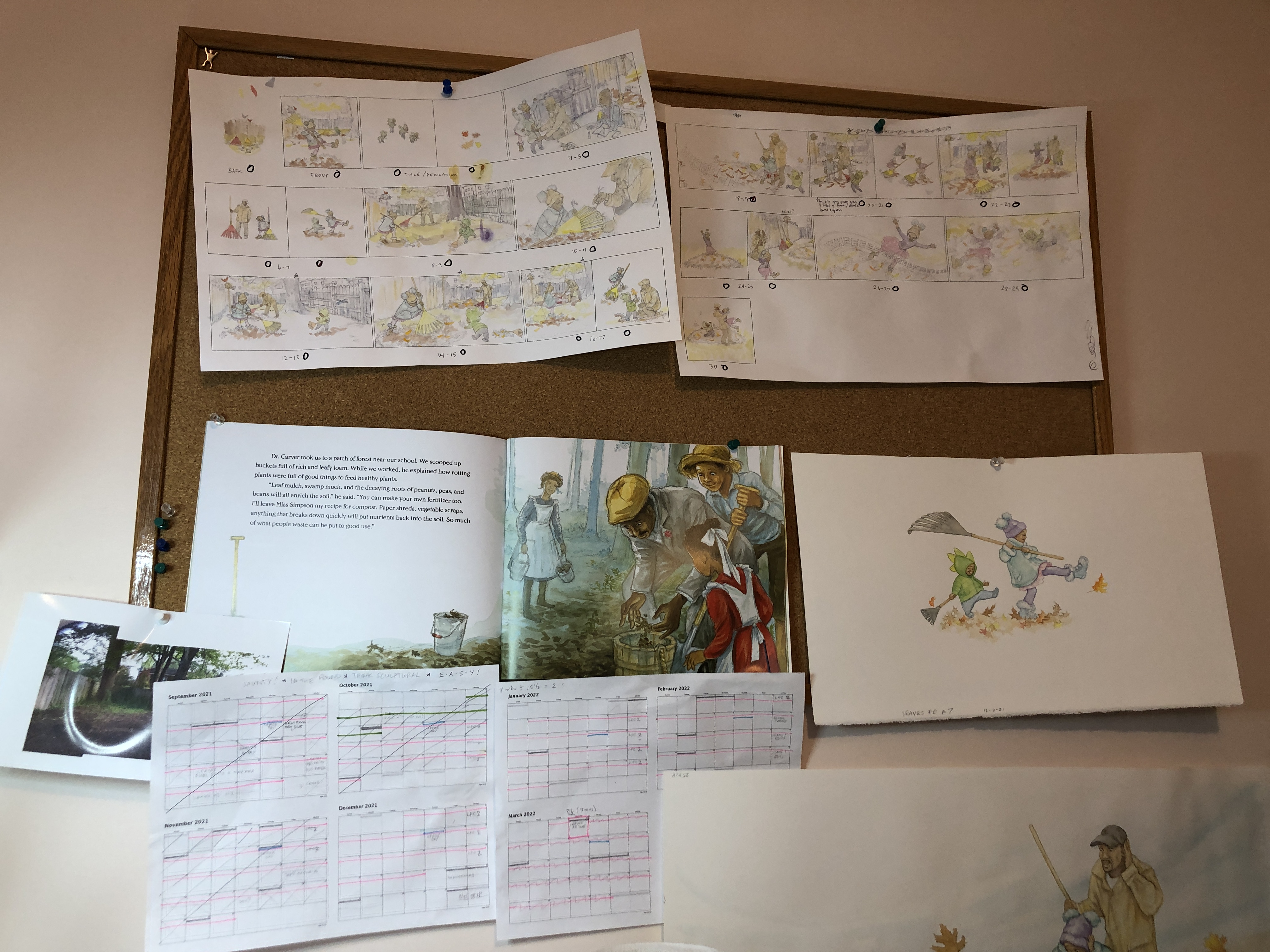
Covers can be a challenge, to be sure. There’s a compromise to paint what’s fun . . .
Image copyright Nicole Tadgell, 2022
. . . versus showing the audience what the book is about!
Image copyright Nicole Tadgell, 2022
Were you inspired by personal memories of raking leaves as you worked on this cover image and interior spreads? Do you have a story about raking leaves you’d like to share?
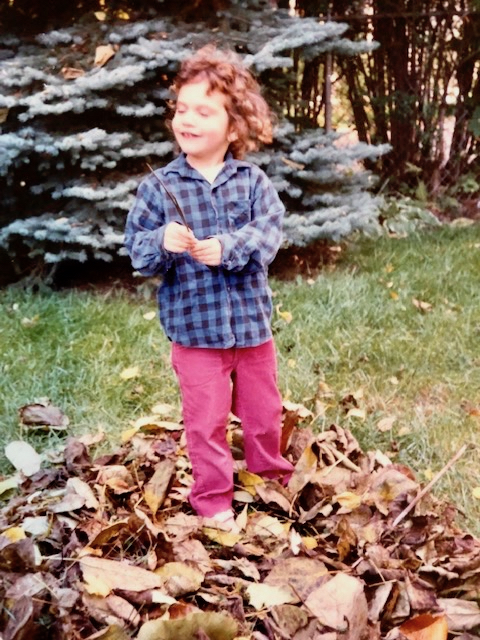
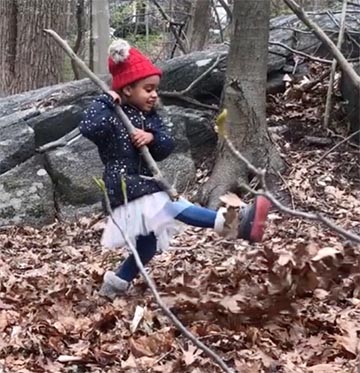
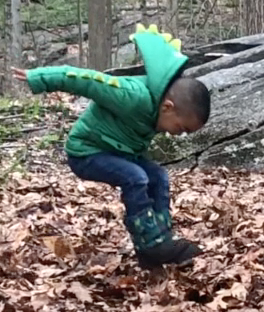
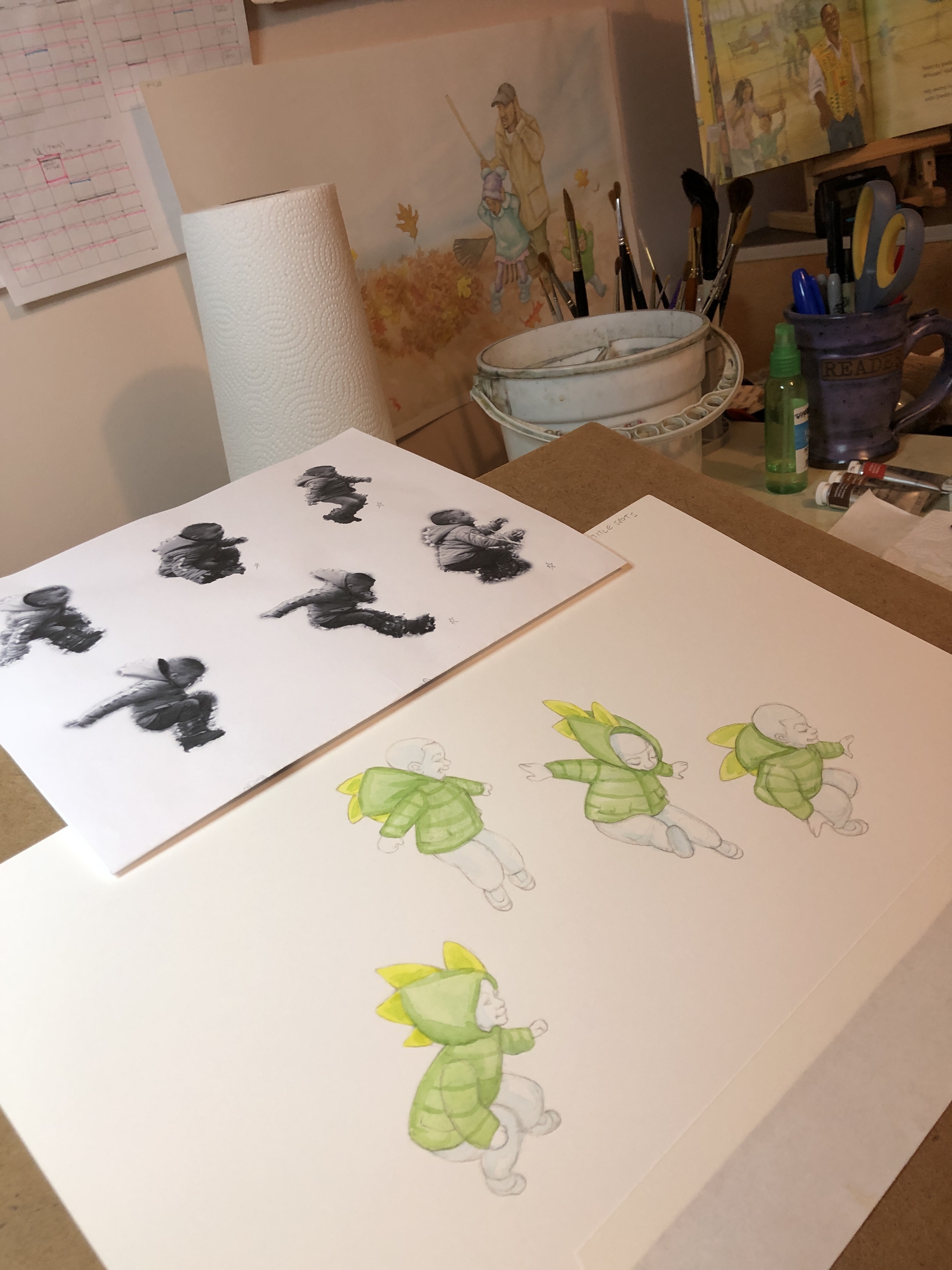
I admit I had grown-up thoughts about there being spiders in the leaves! I don’t have a clear childhood memory of that happening, but I’ve seen plenty of spiders in leaves as an adult. A fun story is about the models for this book! My sister’s friend has two kids the right age. Their Dad was wonderful—instead of taking pictures of the kids playing in leaves, he shot video so I could pause and sketch. They were perfect! Original down to Camille’s double pom-poms and Jayden’s dinosaur coat.
Image copyright Nicole Tadgell, 2022
The soft colors of your illustrations in Leaves to My Knees are really lovely. Can you talk about how you choose a color palette for your work in general and for this cover in particular?
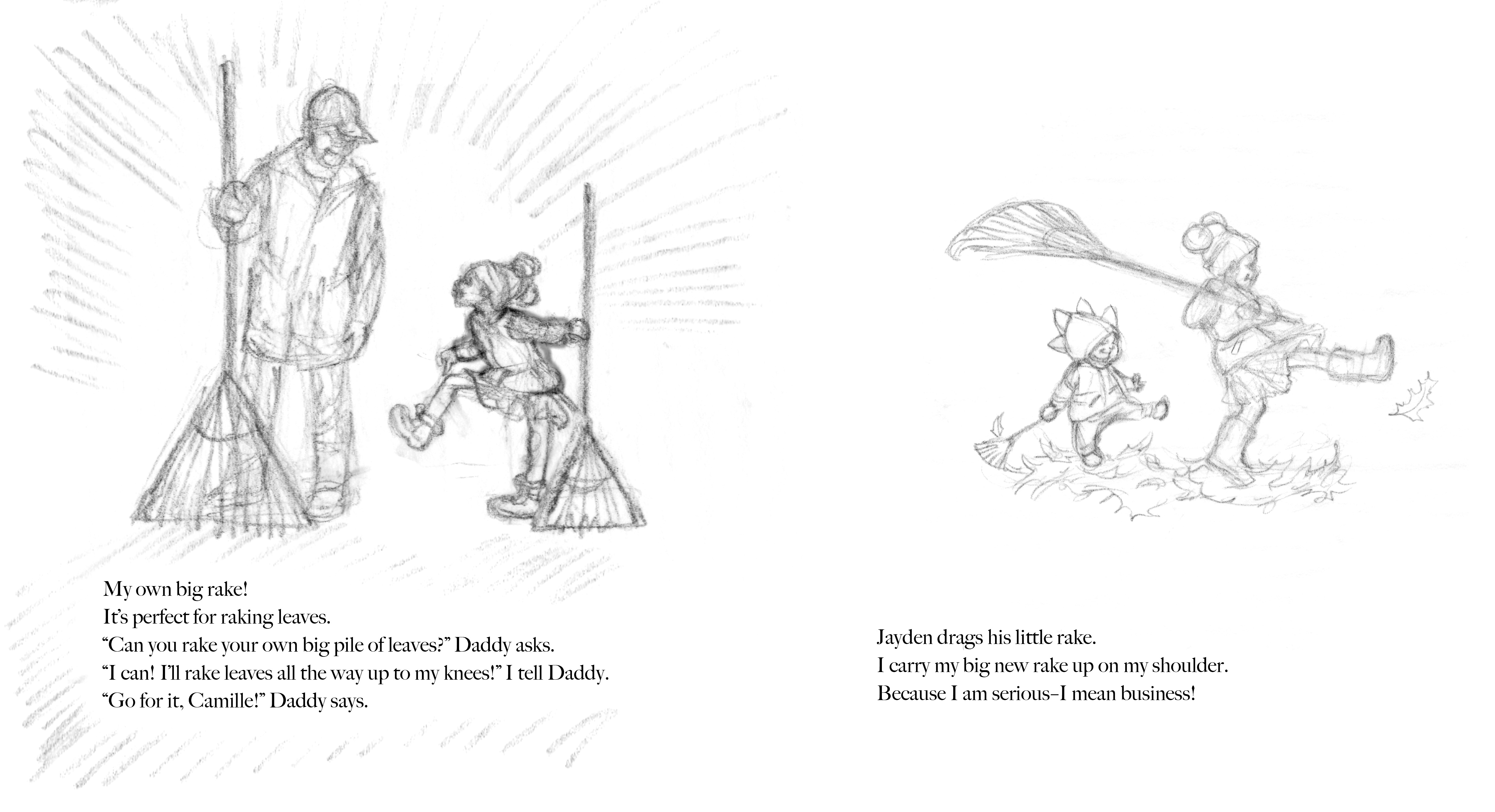
Endless choices! It’s hard to decide. Knowing the season, I began with fall colors: reds, oranges, yellows. I felt that contrast would help our family stand out, so I chose cool colors for Camille and Jayden. I chose earth tones for Dad to make the kids stand out even more.
Image copyright Nicole Tadgell, 2022
Image copyright Nicole Tadgell, 2022
Interestingly, in the images I used for reference the real leaves had lost their color, so I just painted them colorful. I did make our Jayden a bit younger than the model’s age. For the backyard fence, I found a place nearby that had an interesting fence and small leaf-filled yard. I watched as cardinals flit between branches and squirrels chased each other, and inspiration came for the animal antics in the background!
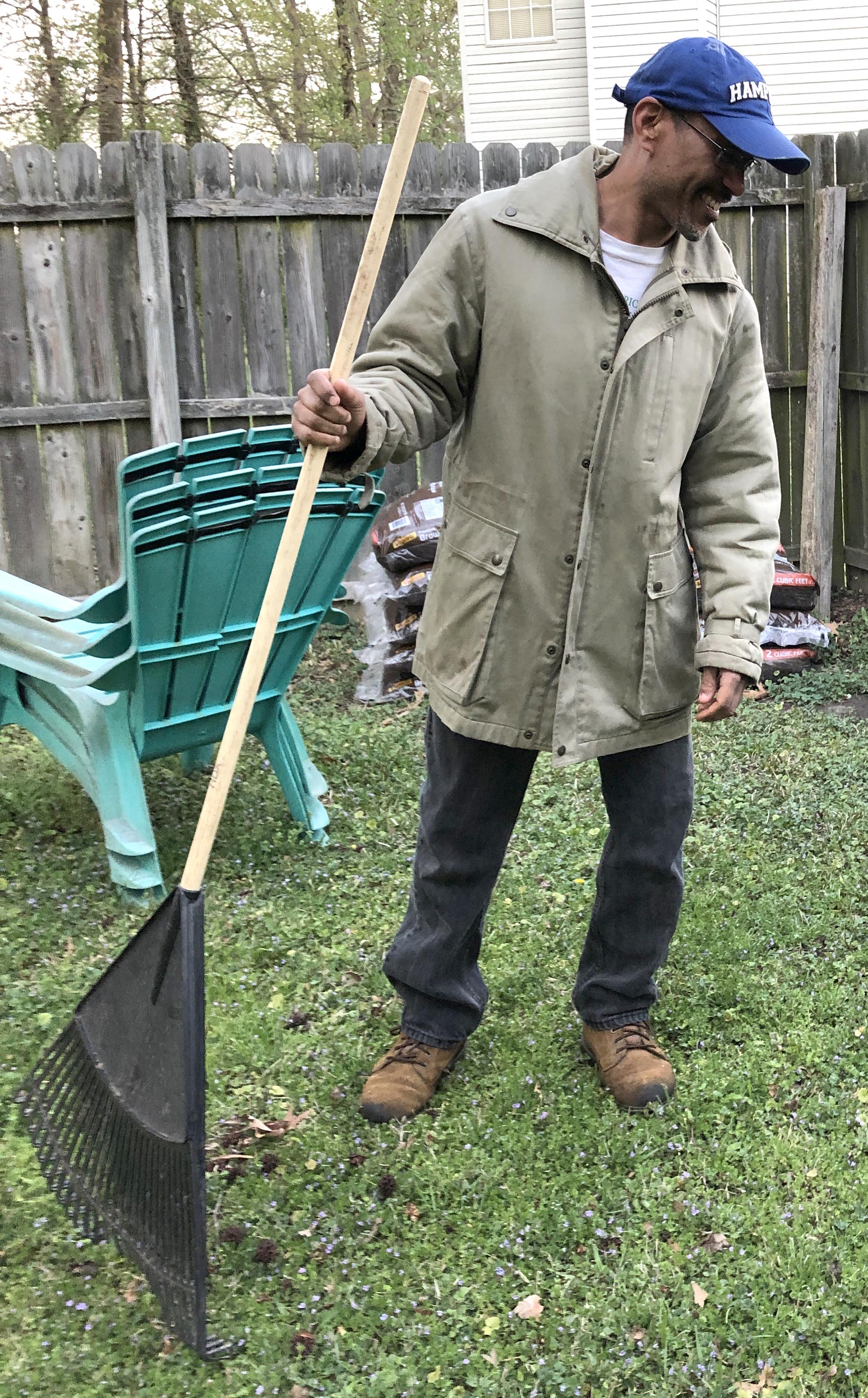
And finally, my partner Anthony was kind enough to pose as the dad in the book!
Now that picture book creators are more free to interact with readers, what are you most looking forward to in promoting Leaves to My Knees?
Fun! I love signing books for kids & personalizing.
In addition to celebrating a fun (and necessary) fall activity, Leaves to My Knees incorporates early math concepts of size and measurement. Can you give an example of how you depicted these ideas in your illustrations?
By using different sizes of the rakes and making sure the leaf piles matched the text (up to ankles, then knees).
I can almost feel the chill in the air and hear that crisp crunch of leaves underfoot that means it’s leaf-raking time!
The art of paper folding known as Origami is enjoyed around the world and has it’s roots in paper craft traditions of Europe, China, and Japan. Once primarily used at ceremonies and special events, origami is now enjoyed by people of all ages around the globe. World Origami Days are held from October 24—which commemorates the birthday of Lillian Oppenheimer, the founder of the first American origami group and instrumental in the founding of the British Origami Society and Origami USA—to November 11, which is Origami Day in Japan. To celebrate today’s holiday create some origami figures of your own. Visit OrigamiUSA for more information and lots of templates to download and follow.
More-igami
Written by Dori Kleber | Illustrated by G. Brian Karas
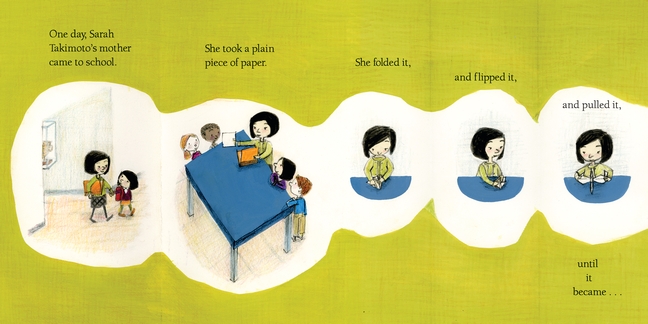
Joey was a little boy with a particular fascination. He was captivated by all things folded. At home he had a collection of “old road maps,” the bellows on an accordion made it his favorite instrument, and he even tucked himself into a foldaway bed at night. One day Joey witnessed the most amazing thing at school. Sarah Takimoto’s mother came to his class, and—right before the students’ eyes—folded, flipped, and pulled a plain white piece of paper “until it became…a crane.”
Image copyright G. Brian Karas, text copyright Dori Kleber. Courtesy of Candlewick Press
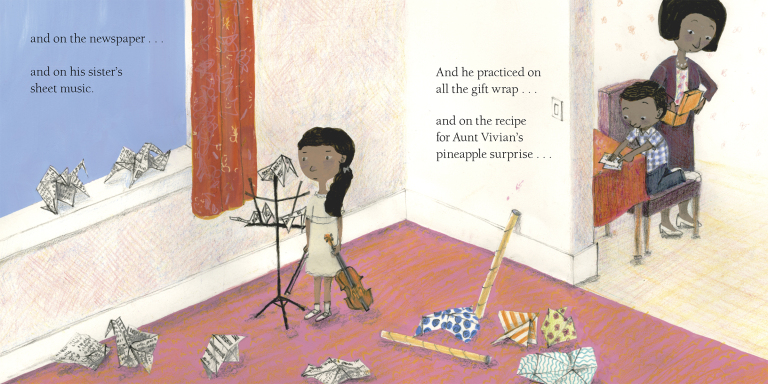
“Joey’s eyes popped. His jaw dropped. Mrs. Takimoto called it origami.” Joey was smitten. “‘I want to make origami,’” Joey told Sarah’s mother. “‘Will you teach me?’” Mrs. Takimoto answered that while she could teach him the right folds, it would take practice and patience to become an origami master. Joey raced home that afternoon and began folding. When he ran out of notebook paper and construction paper, he used his homework…the newspaper…his sister’s sheet music…gift wrap… even “Aunt Vivian’s pineapple surprise” recipe card. But when he folded up all thirty-eight dollars in his mom’s purse, she put her foot down.
“Joey drooped.” His cranes were still coming out wrinkled and crooked, and he’d never be able to become an origami master without practicing. To soothe his disappointment, he headed next door to Muy Mexicana for some fajitas. Right away Mr. Lopez noticed Joey’s disgruntlement. When Joey explained that everyone was losing patience with him, Mr. Lopez said, “‘Many artists are misunderstood, amigo.’ Especially when they are just learning.’” Mr. Lopez went into the kitchen, and when he came out with the sizzling fajitas, he was delighted to see a napkin pyramid sitting on the table.
Image copyright G. Brian Karas, text copyright Dori Kleber. Courtesy of Candlewick Press
Joey apologized, but Mr. Lopez thought it made the table look fancy. In fact, he liked it so much that he had Joey fold every napkin on every table. After that, Joey went to Muy Mexicana each day following school and folded the napkins into decorative shapes. One day he made fans, the next candlesticks, and the day after that, crowns. He patiently worked until each one was perfect.
Finally, he felt ready to attempt his original challenge. “He took a crisp napkin. He folded. He flipped. He pulled.” When he was finished, a perfect crane sat in front of him. Just then a girl with a paper fan walked in. Her eyes widened as they zeroed in on Joey’s crane. Joey offered to show her how to make it, but warned, “‘It takes practice—and lots of patience!’”
Image copyright G. Brian Karas, text copyright Dori Kleber. Courtesy of Candlewick Press
Dori Kleber’s unique multicultural story of a little boy who finds the perfect creative outlet for his singular interest will captivate kids who are just beginning to try their own hands at favorite hobbies, schoolwork, or other pursuits. With humor and honest depictions of Joey’s frustration and persistence, Kleber shows readers that practice and patience really do pay off. As Joey meets another folding enthusiast, kids will see that there are always others with whom to share favorite pastimes.
Opening More-igami to the first page where Joey sits gazing lovingly at a taco with a folded napkin next to his plate, readers will know they are in for something special. As always, G. Brian Karas’s characters are enthusiastic, encouraging, and adorable. Readers will empathize with Joey as they watch him folding and folding, and giggle at the many, many practice cranes that litter his home, even perching atop his sister’s music stand and appearing in his mom’s purse.
Karas makes full creative use of the origami theme in his clever page designs and illustrations, beginning with the square shape of the book itself and the origami paper-styled endpapers. Vivid, solid-color background pages are divided diagonally, vertically, or horizontally with subtle changes in hue or nearly invisible lines. In depictions of Joey’s school, home, and favorite restaurant, diagonals, angles, and sharp edges predominate: tables and floors create triangles on the page; windows, walls, and doors divide pages into shapes associated with the steps of origami’s folded creations; and floor tiles, the sidewalk, and even Joey’s shirt portray grid lines. The color schemes of each page, inspired by the patterns and shades of origami paper, are dazzling and unite the varied aspects of this special book.
For any child undertaking a new activity or venture, More-igami is a charming and encouraging companion on the way to proficiency—one that would make a wonderful home library and classroom addition.
Ages 4 – 8
Candlewick Press, 2016 | ISBN 978-0763668198
To learn more aboutDori Kleberand her writing, visit her website!
G. Brian Karashas a whole gallery of illustrations, books, information, and “what nots” on his website!
Origami Day Activity
Origami Pets
Origami is a fun hobby that can grow in complexity as you gain skill. Here are two templates to get you started! All you need is a square piece of paper and—if you’d like to decorate your piece—some markers or colored pencils.