October 29 – Bat Appreciation Week & Month

It makes sense that October—with its focus on all things spooky and nocturnal—hosts Bat Appreciation Week and Bat Appreciation Month. We don’t celebrate bats this month just because they fit Halloween themes, though. Bats are cool every day of the year! Why? Scientists estimate there are 1,300 species of bats, most of which are beneficial for the areas where they live. Some bats are awesome at keeping the insect population under control. Fruit bats help distribute seeds, and other bats eat pollen, helping to pollinate foods, including bananas, guava, and agave. This month learn more about these fascinating creatures and enjoy a newest adventure of Bitsy Bat in this third book in the series!

Thank you to Beach Lane for sending me this book for review!

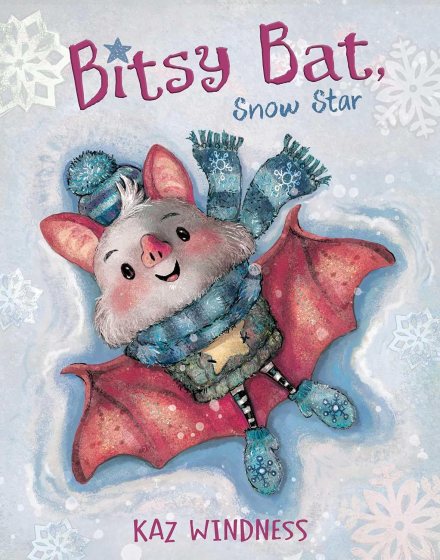
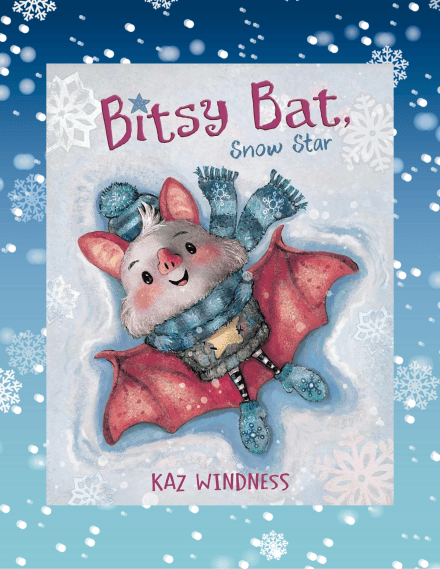
Bitsy Bat, Snow Star (The Bitsy Bat Series)

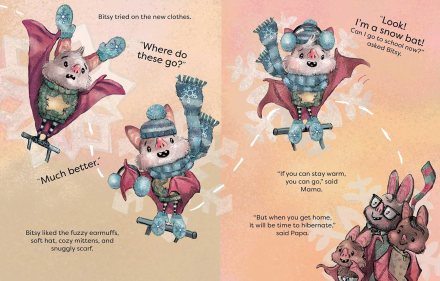
Bitsy Bat’s family woke up to an unusual surprise. Winter snow had come early—even before she, mama, papa, and baby bat could begin hibernating. Mama took this as a sign that the long winter snooze should begin, but Bitsy wanted to go to school. When Bitsy’s friends, Benjamin and Winnie, stopped by to pick her up (even bringing her a “cute snow outfit”), Mama relented.
Text and illustration copyright © 2026 by Kaz Windness. Published by Beach Lane copyright © 2026.

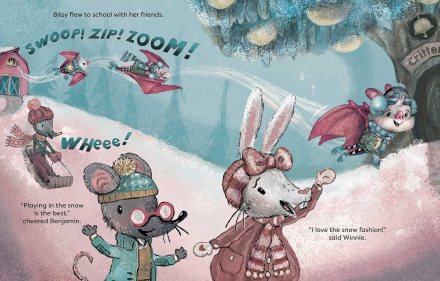
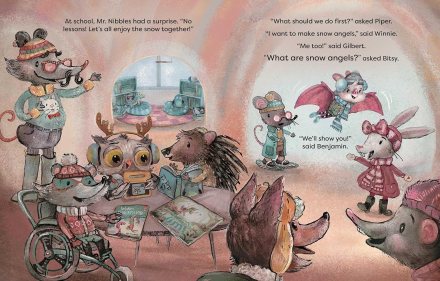
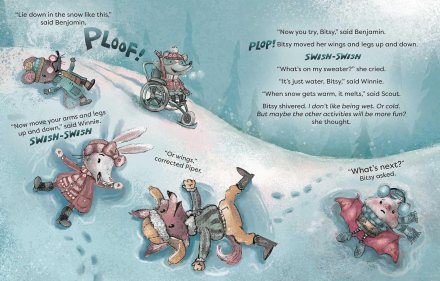
At school, to celebrate the early snow, Bitsy’s teacher Mr. Nibbles announced that instead of lessons, they’d “all enjoy the snow together.” Everyone wanted to make snow angels, and Bitsy was eager to learn how. But after she plopped into the snow and moved her wings up and down, she shivered and hoped the other activities would be more fun. But Bitsy didn’t enjoy sledding, making a snowman, or the snowball fight afterwards, either. She didn’t like being wet and cold. In fact, Bitsy decided she didn’t like snow at all. As he flew back to the classroom, she worried that she’d lose her friends if they found out.
Text and illustration copyright © 2026 by Kaz Windness. Published by Beach Lane copyright © 2026.

Noticing how miserable Bitsy seemed, Mr. Nibbles took her to the reading nook to warm up. There, she found Mo and Enzo. When Bitsy asked if they didn’t like snow either, they both said they loved the snow. Bitsy was confused. Then she discovered that Mo and Enzo liked watching the snow while being warm and cozy and reading inside. She understood then that it was okay to like different things, and when Mr. Nibbles offered hot chocolate, she politely declined while asking for a bugmallow treat instead.
Text and illustration copyright © 2026 by Kaz Windness. Published by Beach Lane copyright © 2026.

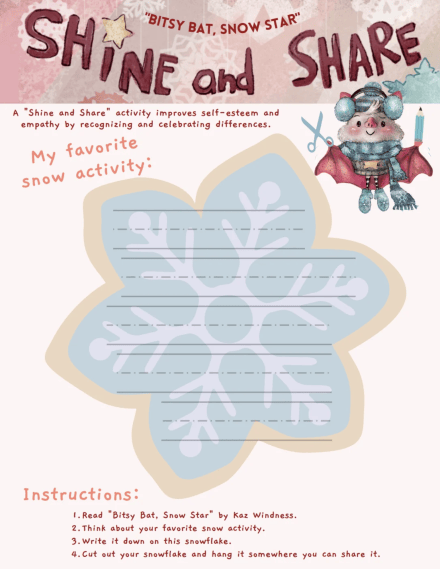
When the snow started falling, Bitsy had the idea to make paper snowflakes, and when the rest of the class came inside, they joined in too. When Mr. Nibbles suggested each student write their favorite snow activity on their flake, Bitsy bravely admitted that she hadn’t liked any of the outdoor activities, and was assured that that was okay. Back home, Bitsy hung her paper snowflakes then prepared with her family for their long winter hibernation.

Back matter includes a detailed discussion about autism that defines and explains important terms as well as an Author’s Note by Kaz Windness, who is herself autistic.
Text and illustration copyright © 2026 by Kaz Windness. Published by Beach Lane copyright © 2026.

It’s easy to see why Kas Windness’s Bitsy Bat series—including Bitsy Bat, School Star and Bitsy Bat, Team Star—is such a beloved part of any child’s library. Told from an autistic perspective, the stories celebrate each student’s differences, and welcome readers as a friend. In Bitsy Bat, Snow Star, Bitsy steps out of her comfort zone to try a new experience. Windness invites children along to witness Bitsy proudly becoming a “snow bat” in winter clothing but also discovering that her sensory differences make the outdoor activities uncomfortable. As Bitsy’s school day progresses, Windness incorporates responses such as stimming, fawning, and autistic masking into the story.

Once inside, Bitsy demonstrates her creativity and imagination by making paper snowflakes as an alternative to real snow. Through Enzo’s, Mo’s, and Bitsy’s preference to watch the snow from the window, Windness also emphasizes that people can enjoy the same activities in different ways. Readers will find Bitsy’s bravery, worries, disappointments, and empathy relatable and her undimmable spirit inspiring.

Windness’s dialogue-rich storytelling is accompanied by her adorable and expressive illustrations that envelope readers in Bitsy’s companionable classroom, where students accept and support each other and their teacher is understanding. Other students use a wheelchair (and snow wheelchair for sledding), noise-reducing headphones, light-filtering glasses, a communication tablet, and glasses.

Whether you’re already a fan of Bitsy Bat or just getting to know her, Bitsy Bat, Snow Star would be a favorite read aloud on any home bookshelf. The book is a must for any public and school library.

Ages 4 – 8

Beach Lane, 2026 | ISBN 978-1665963664

About the Author

Kaz Windness is the author-illustrator of picture books Swim, Jim!; Bitsy Bat, School Star; Bitsy Bat, Team Star; and Bitsy Bat, Snow Star. She created the Theodor Seuss Geisel Honor Level 1 Ready-to-Read Graphics book Worm and Caterpillar Are Friends, and its sequel, Worm and Butterfly Are Friends, Always; the Star Chapter Book Time Traveling Chickens series; and the Level 1 Ready-to-Reads Cat vs. Vac; Go! Go! Dino!; Squid in Pants; and Speeder Spider. Kaz is also the illustrator of Ollie, the Acorn, and the Mighty Idea by Andrew Hacket and the author of When You Love a Book, illustrated by Heather Brockman Lee. Kaz lives in Denver, Colorado with her husband, two children, and Boston terrier. Visit her at WindnessBooks.com.

You can find a wide range of materials for the Bitsy Bat Series for educators, parents, and other caregivers, from lesson plans to animated read-alouds, to detailed hands-on activities and instructions in Kaz Windness’s Bitsy Bat Media Kit on her website.
You can purchase Bitsy Bat, Snow Star from these booksellers

Amazon | Barnes & Noble | Bookshop

April 2 – Celebrating Hans Christian Andersen’s Birthday and International Children’s Book Day

About the Holiday

Since 1967, April 2—Hans Christian Andersen’s birthday—has served as the date for International Children’s Book Day. The International Board on Books for Young People (IBBY), a non-profit organization founded in Zurich, sponsors the day to promote a love of reading and call attention to children’s books. National Sections of IBBY around the world alternate in hosting the event. The host for 2026 is Cyprus, and this year’s theme is “plant stories and the world will bloom.” Each year a prominent author and illustrator from the sponsoring country prepare materials for the event. This year’s poster was designed by Sandra Elephteriou. Elena Perikleous wrote this year’s message, and Giorgos Hatzipieris wrote this year’s official song, “The Little Gardener.” To learn more about the initiative and download digital materials, visit the IBBY website. 

Thank you to Levine Querido and Barbara Fisch at Blue Slip Media for sending me this book for review!

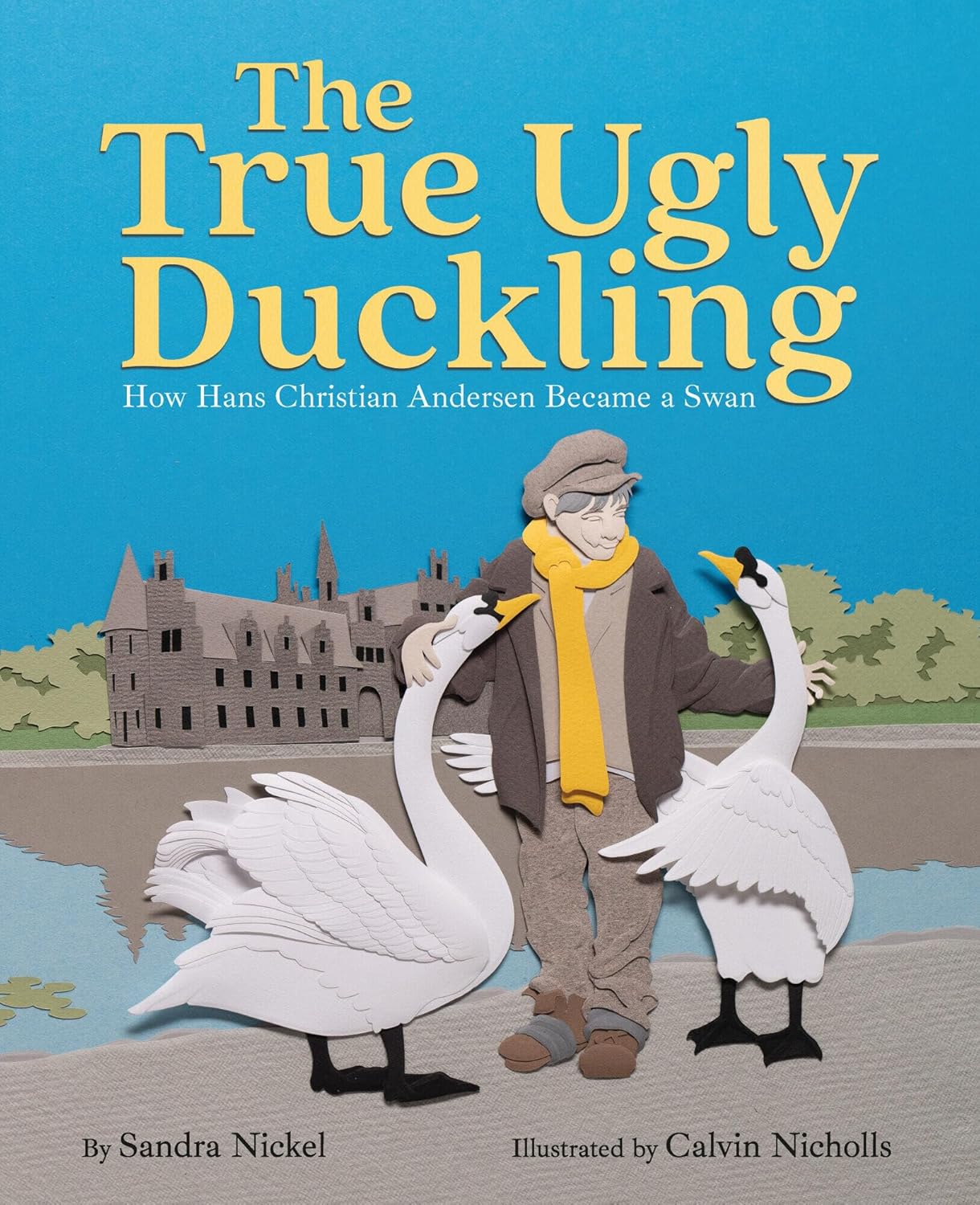
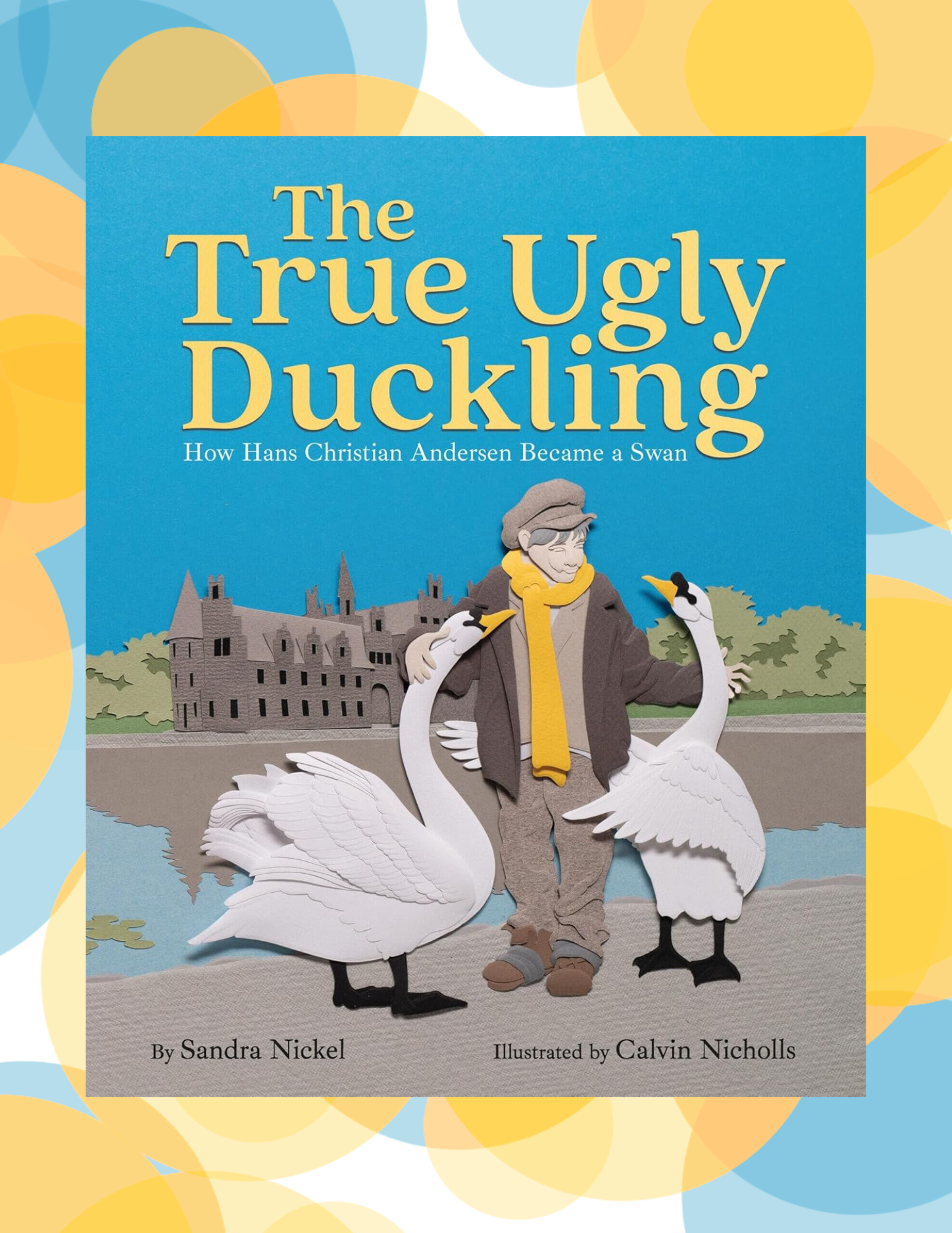
The True Ugly Duckling: How Hans Christian Andersen Became a Swan

Written by Sandra Nickel | Illustrated by Calvin Nicholls


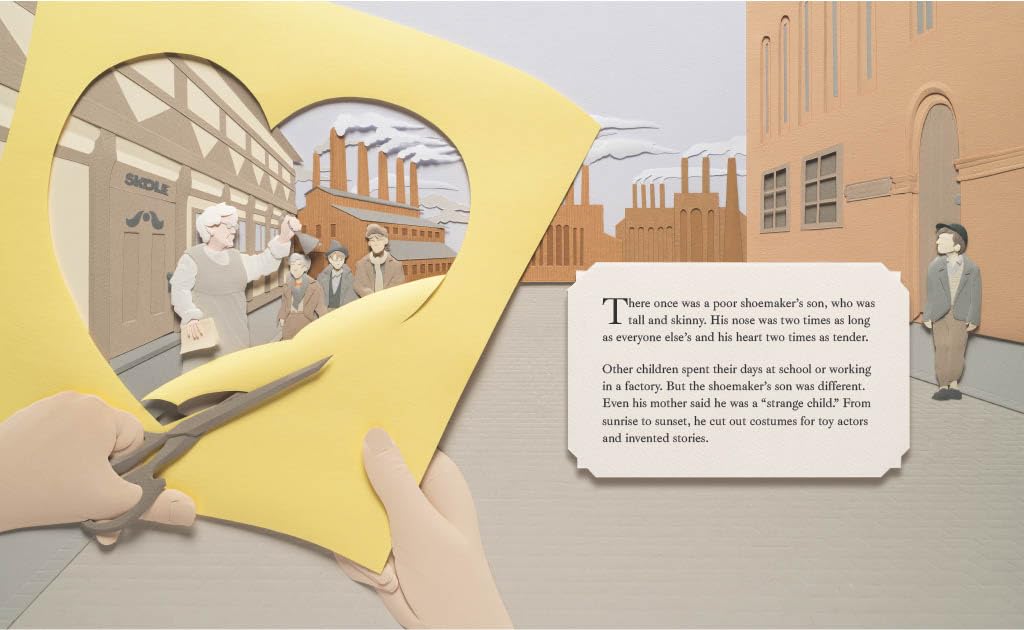
“There once was a poor shoemaker’s son, who was tall and skinny. His nose was two times as long as everyone else’s and his heart two times as tender.” Thus begins not a fairy tale, but Sandra Nickel’s real life story of Hans Christian Anderson.

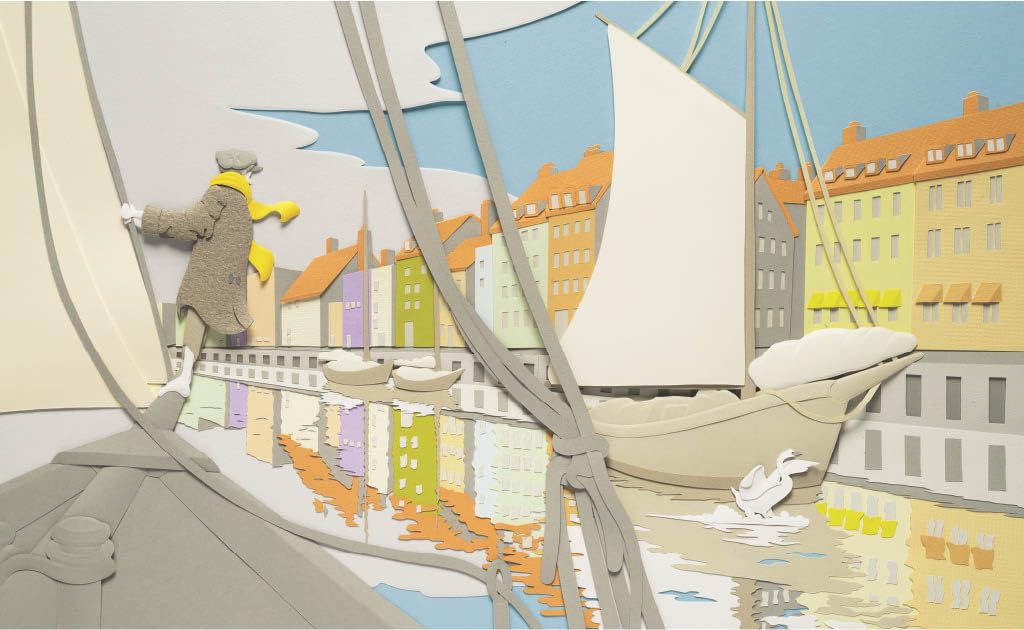
While most children spent their days working at the factory or going to school, Hans cut out costumes for his toys and invented stories that he performed for whomever would watch. Some neighbors gave him a few coins, but the factory workers and other children bullied and teased him. Hans “soothed his wounded heart by cutting out shapes from cloth.” At fourteen, knowing there was more for him in the world, Hans sailed alone for Copenhagen. There, he tried to find a place to express his talents, but each attempt ended in disappointment. Soon all his money was gone.

Illustration copyright © 2026 by Calvin Nicholls. Text copyright © 2026 by Sandra Nickel. Courtesy of Levine Querido.

When he sent a play to the Royal Theater, one director rejected it brutally, but another found a “few jewels” in it and arranged for him to go to school. At 17 Hans was taking classes for the first time. The other students laughed at him, and the headmaster dashed his dreams of becoming a storyteller, forbidding him to write. For six years Hans obeyed. “To comfort his heart, the boy cut out shapes from paper.”

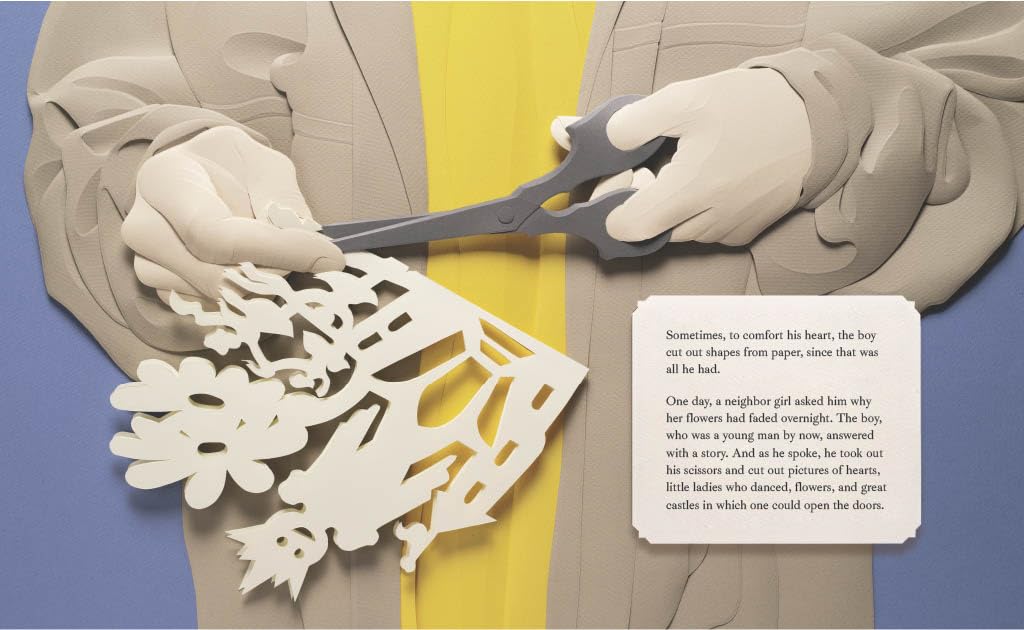
Then one day when a girl asked him why her flowers had faded, Hans—now a young man—answered her by telling a story while cutting a scene in paper of hearts, dancers, flowers, and castles with working doors. The girl loved the story so much that Hans wrote it down and had it printed into a book. “The children of Copenhagen adored every word.” 

Illustration copyright © 2026 by Calvin Nicholls. Text copyright © 2026 by Sandra Nickel. Courtesy of Levine Querido.

Soon, Hans was telling and publishing more and more stories. Adults began reading them, and even Copenhagen royalty invited him to their castles for dinners and afterward to entertain the other guests by weaving “magic with his words and scissors.”

Back matter includes an Author’s Note recounting that experts now believe Hans Christian Andersen was likely on the autism spectrum and may also have had Marfan syndrome. She also discusses her choice to follow the story arc of The Ugly Duckling to depict Andersen’s life.

Illustration copyright © 2026 by Calvin Nicholls. Text copyright © 2026 by Sandra Nickel. Courtesy of Levine Querido.

Sandra Nickel’s mesmerizing and sensitive portrait of Hans Christian Andersen highlights his seemingly limitless creativity, imagination, and courage as he stays true to himself despite the treatment and rejections he endured. Her lyrical and moving biography is not only an inspiring tribute to this unique storyteller and artist, but a buoy for children struggling themselves and a reminder for all to embrace each person as a whole, recognizing and encouraging their talents, dreams, and contributions. Although his enduring popularity is already known to readers, her account of his ultimate triumph still has the power to astonish and prompt cheers.

Visually arresting, Calvin Nicholls’ extraordinary paper sculpture illustrations pop with action and emotion, immersing readers in the sights and sounds of Andersen’s factory hometown, his experiences in Copenhagen, and the joy of his long-dreamed-for success. The realism of Nicholls’ low-relief sculptures, assembled from various weight and textured papers then photographed, is astounding. Nicholls’ color scheme mirrors the theme of the “Ugly Duckling,” portraying Andersen in muted grays and browns until his full transformation when he dazzles Copenhagen royalty in a white tuxedo.

The True Ugly Duckling: How Hans Christian Andersen Became a Swan belongs in every classroom, school, and library collection to edify and inspire and would be an inspirational addition to home bookshelves, especially to pair with readings of his stories.

Ages 4 – 8

Levine Querido, 2026 | ISBN 978-1646146093

Hans Christian Andersen’s Birthday Activity

Easy Origami Swan


Kids can have fun on Hans Christian Andersen’s Birthday and International Children’s Book Day by making this easy origami swan to celebrate their unique personalities and talents! All you need is origami paper or you can cut your own 6-inch by 6-inch paper or any size square.

You can purchase The True Ugly Duckling: How Hans Christian Andersen Became a Swan from these booksellers

Amazon | Barnes & Noble | Bookshop

Picture Book Review

November 3 – It’s Picture Book Month

celebrate-picture-books-picture-book-review-a-head-full-of-birds-cover

About the Holiday

November is all about picture books thanks to Picture Book Month founder author and storyteller Dianne de Las Casas and co-founders author/illustrators Katie Davis, Elizabeth O. Dulemba, Wendy Martin, and author Tara Lazar. This month-long international literacy initiative celebrates print picture books and all that they offer to young (and even older) readers. With gorgeous artwork and compelling stories, picture books open the world to children in surprising ways as they entertain, explain, excite, and help children learn empathy and understanding.

I’d like to thank Eerdman’s Books for Young Readers for sending me a copy of A Head Full of Birds for review consideration. All opinions on the book are my own.

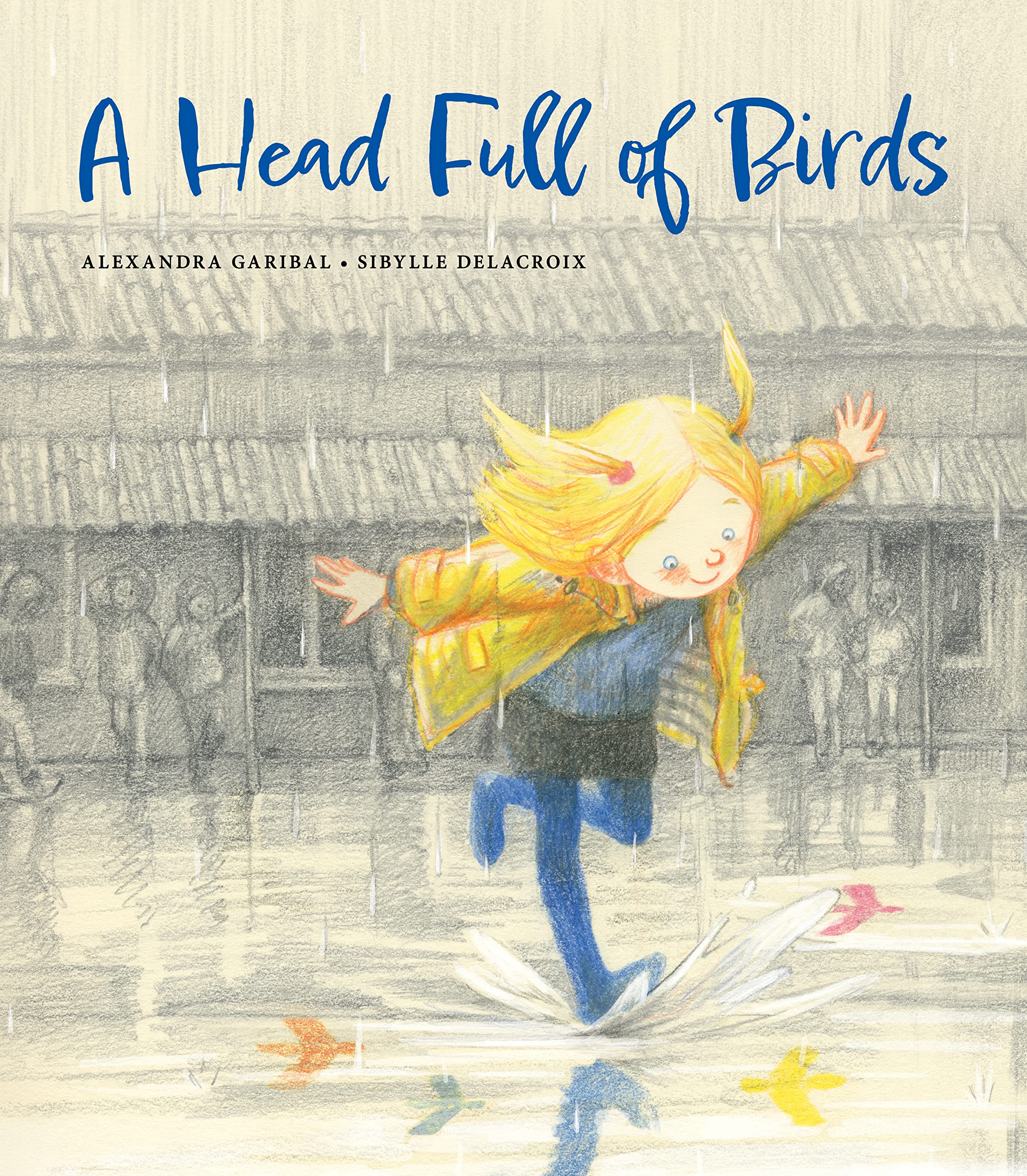
A Head Full of Birds

Written by Alexandra Garibal | Illustrated by Sibylle Delacroix | Translated from the French by Vineet Lal


Nanette is a little girl with “a head full of birds.” She mixed strange foods together, can spend hours looking at an empty spider’s web and “rocks back and forth, to and fro, fluttering her fingers like butterflies.” The kids at school taunt her, calling her “stupid” and treating her meanly. But Nanette doesn’t pay attention to them. One boy in her class, Noah, joins in. But one day while tossing paper airplanes during class, the teacher catches him and makes him sit up front.

celebrate-picture-books-picture-book-review-a-head-full-of-birds-butterflies

Image copyright Sibylle Delacroix, 2022, text copyright Alexandra Garibal, 2022. Courtesy of Eerdmans Books for Young Readers.

This means sharing a table with Nanette, which makes him angry. While pulling out his chair, “he pushes her out of irritation,” which causes her pencil to slide across her drawing of a bird. Nanette is disappointed, whispering “Oh. He won’t fly anymore.” Noah finds this ridiculous and tells her that drawings of birds can’t fly, but Nanette already knows. “‘The drawing doesn’t fly, the bird does,'” she answers.

That day after school, Noah watches as Nanette sets colorful little origami boats to sail down the rain-washed curb. He thinks it looks “so pretty.” The next day, it’s still raining, and during recess Noah sees Nanette standing in the middle of the school yard without her boots catching raindrops. His friends are calling him stupid, but he grabs her shoes and rushes out to bring her back in. But Nanette is happy. She takes her boots and fills them with water running off the roof. They both hide a boot in their coats and run back inside for class.

celebrate-picture-books-picture-book-review-a-head-full-of-birds-boats-on-curb

Image copyright Sibylle Delacroix, 2022, text copyright Alexandra Garibal, 2022. Courtesy of Eerdmans Books for Young Readers.

On the stairs, someone bumps into Noah, spilling his boot. Noah is angry that their plan is ruined, but Nanette tells him it’s okay, that one is enough. She passes him a tiny origami boat, and he drops it into her boot. “The boat twists and twirls, dancing merrily across the water. And it’s so pretty.” Now Noah and Nanette are friends, and “together, they look after the birds that nest in their heads.”

celebrate-picture-books-picture-book-review-a-head-full-of-birds-boot

Image copyright Sibylle Delacroix, 2022, text copyright Alexandra Garibal, 2022. Courtesy of Eerdmans Books for Young Readers.

While quietly straightforward, Alexandra Garibal’s story affects poignancy on multiple levels. Readers are first introduced to Nanette, a girl with neurodiversity who is happy in her observations and interactions with the world while also self-confident enough to ignore the comments of her classmates. Readers see Noah participating in the ridicule, but when he is moved to sit next to Nanette, readers begin to understand that it is he who needs to see the world differently, not Nanette. Children may feel that Noah already embodies this empathy as it doesn’t take long before he appreciates the beauty Nanette brings to their world. 

While he at first feels he must protect her, running out with her boots and aiming to take her back inside from the rain, he again learns that her actions have meaning, and when the boot he’s carrying spills on the way back to class, he now feels the same disappointment of a project ruined that Nanette felt with her bird drawing. With Nanette and Noah’s conspiratorial goofing off in class (and, bravely, in the front row!), Garibal brings the story full circle while infusing it with growth and joy for both characters as they go forward as friends.

celebrate-picture-books-picture-book-review-a-head-full-of-birds-filling-boot

Image copyright Sibylle Delacroix, 2022, text copyright Alexandra Garibal, 2022. Courtesy of Eerdmans Books for Young Readers.

Sibylle Delacroix’s lovely colored-pencil illustrations reveal Nanette as a shining light in the world and in her classroom. She is first shown gazing upward as if the sun is on her face, next with colorful butterflies, and then at school in a bright yellow raincoat, while the background is drawn in gray and the other kids in a single shade of red, all except Noah, who has brown hair and blue glasses, signifying to readers that perhaps he is a bit different as well. 

The two children’s growing friendship takes place against a gray-scale background, putting the focus on both their separation from their environment as well as their similarity to each other. Other visual clues in clothing and other elements also point to Nanette and Noah’s similarity, which can invite kids to find and talk about them. A particularly moving spread comes as the two children watch the little boat float in the boot, their two smiling faces reflected in the water. Turning the page, readers see the imagination Nanette and Noah share as they ride in an origami boat pointing out paper bird above.

This beautiful friendship story speaks not only to the acceptance and understanding of neurodiversity but of all the creative and different ways in which people see the world. A Head Full of Birds will fill your heart and resonate long after the story is over. The book invites multiple re-readings and will generate much thought and discussion. It is a must for all home, classroom, school, and public libraries.

Ages 4 – 8

Eerdmans Books for Young Readers, 2022 | ISBN 978-0802855961

About the Author

Alexandra Garibal is a French children’s author and editor. She has written over sixty picture books, novels, and magazine articles, and her titles have been translated for Chinese and Spanish readers. A Head Full of Birds is Alexandra’s English-language debut. Follow her on Instagram @alexandragaribal.

About the Illustrator

Sibylle Delacroix is the illustrator of Tears, Prickly Jenny, Grains of Sand, and Blanche Hates the Night (all Owlkids). She graduated from the ERG Saint-Luc School of Graphic Research in Brussels and worked for many years as a graphic designer before becoming a full-time illustrator. Sibylle lives in France. Follow Sibylle on Instagram @sibylledelacroix.

About the Translator

Vineet Lal is a literary translator of books from French to English, including A Perfect Spot (Eerdmans) and The Secret Life of Writers (Weidenfeld & Nicholson). He studied French at Princeton University and the University of Edinburgh. Vineet lives in Scotland. Follow him on Twitter @vineet_uk.

celebrate-picture-books-picture-book-review-a-head-full-of-birds-cover

You can find A Head Full of Birds at these booksellers

Amazon | Barnes & Noble | Books-a-Million

To support your local independent bookstore, order from

Bookshop | IndieBound

Picture Book Review