National Math Storytelling Day was established in 2009 by Maria Droujkova, founder of The Natural Math Community at Naturalmath.com, and her daughter to encourage people to share the joys of math with children through stories and games. Having fun with math is one of the best ways to get kids excited about learning and working with this most important subject. Celebrate today with math stories that involve patterns, spatial relations, quantities, logic, puzzles, and numbers. You can even sing math songs and tell math jokes! You’ll find lots of resources for Math Storytelling Day and every day on the Natural Math website. Today’s book comes from Charlesbridge, who early on embraced the power of picture books to get children involved with math in everyday life.
Thank you to Charlesbridge for sending me a copy of this book for review!
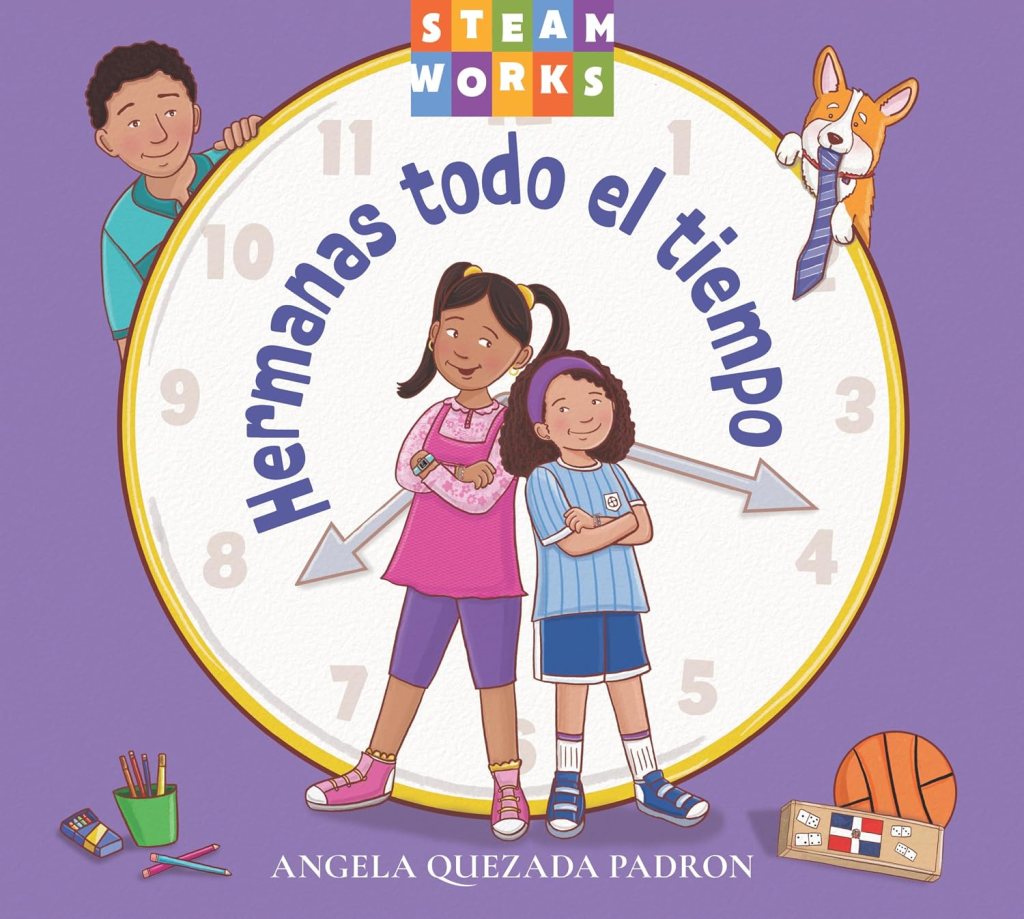
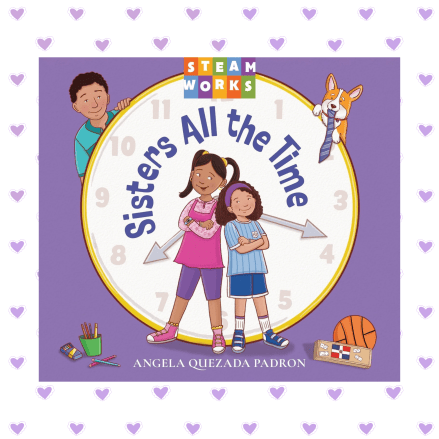
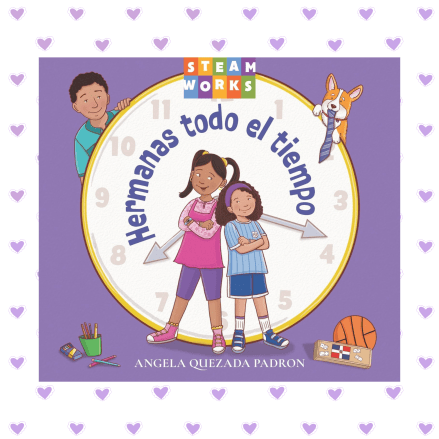
Sisters All the Time (Steamworks)
Hermanas todo el tiempo (Steamworks) (Spanish Edition)
By Angela Quezada Padron
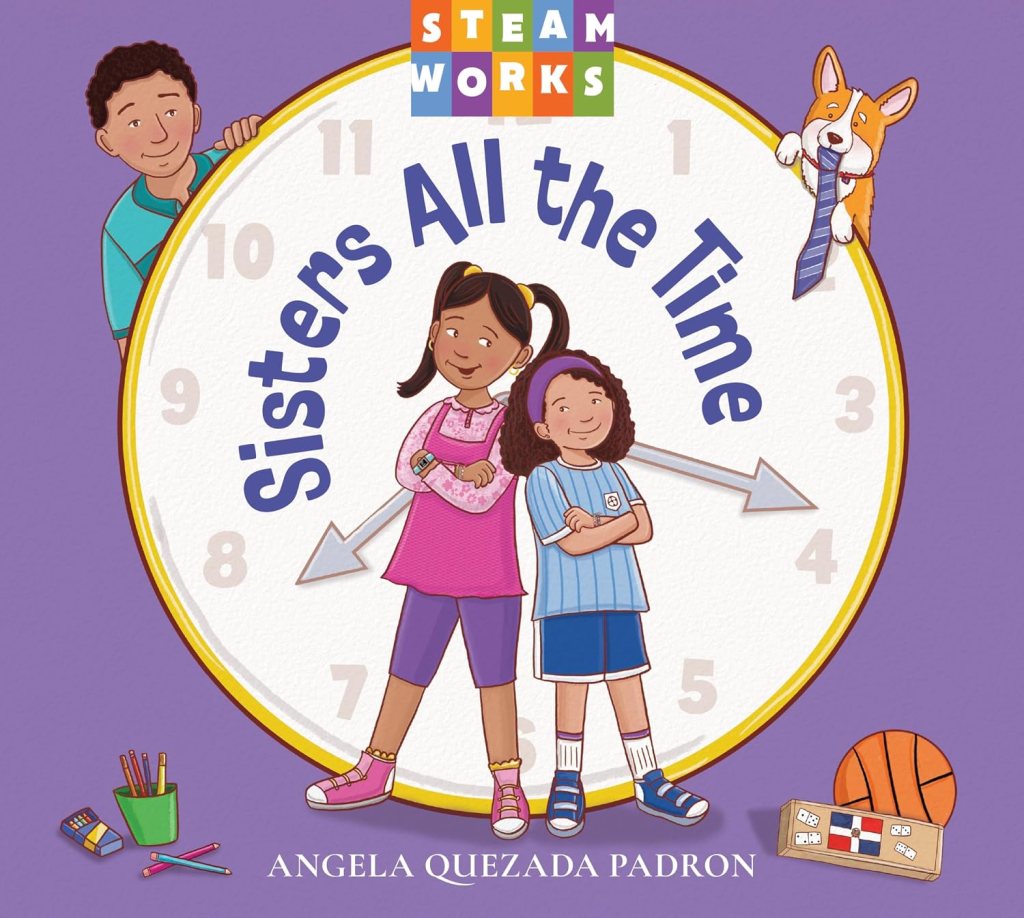
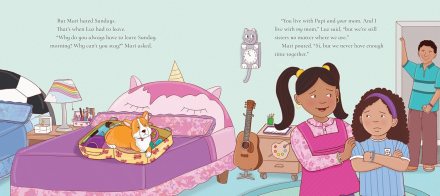
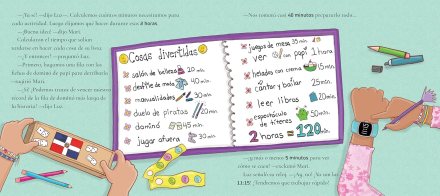
For Mari Saturday was the best day of the week because her half-sister Luz came over. “They laughed and played all day [and] giggled and acted silly all night.” But when Sunday came and Luz had to leave, Mari felt sad. She never seemed to have enough time with her big sister. On this Sunday, just five minutes before Luz’s mom was scheduled to pick Luz up, she called to say she’d be two hours late. Excited to have extra time together, Mari and Luz planned out which activities they wanted to do. Mari wanted to do all of them, but Luz knew they didn’t have time for that.
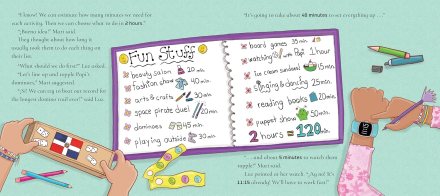
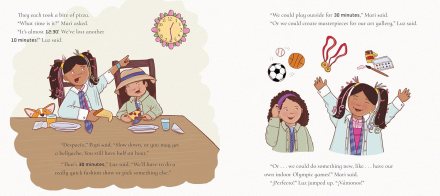
They decided to write down all of their favorite activities and estimate how long each took. First up, they wanted to “try to beat [their] record for the longest domino trail ever.” This would take about 40 minutes to set up . . . “and about 5 minutes to watch them all topple.” They had one hour and 45 minutes left to fill. With the trail built and a new world record accomplished, it was time to have a fashion show. Part way through their preps (including making up Papi and doing his hair), pizza arrived. After lunch, they only had 30 minutes left, so they decided to play indoor Olympics.
Luz and Mari had just gotten started when Papi reminded them that their lunch dishes needed cleaning. Then during their trampoline contest, he told them they needed to pick up the dominoes and hang up the fashion show clothes. All of these ate into the time the girls had left. With only five minutes before Luz’s mom was expected, they jumped into a sock race, but “Ding Dong!” time was up. Mari pleaded for more time. She thought that sisters should not “live together SOME of the time,” but ALL the time. Luz took her little sister’s hand and told her, “No matter where I am, you’ll always be my hermanita, 365 days a year.” Throughout the week, the sisters called and planned their “time to smile together, laugh together, and love together.”
Back matter includes an Author’s Note about her own half siblings and a spread titled “Picking Up STEAM” with English time-related words to know, Spanish words that appear in the story, concepts of time management, basic facts about time, hours from 1:00 to 12:00 shown on an analog and digital clock, and ideas for readers to play with and explore time on their own.
Angela Quezada Padron’s warmhearted story of half sisters who love spending time together provides a perfect frame for children learning about time management and tempering expectations of how much can be accomplished in measured amounts of time. The sisters’ enthusiasm and imagination will captivate readers, and the time spans for each activity on their list are realistic and may prompt kids to time themselves doing each one. Quezada Padron’s inclusion of clean-up time will be appreciated by parents and caregivers and is a good reminder about responsibility for children as well. Her vibrant, action-packed illustrations portray the close relationship between the sisters and eye-catching perspectives on the girls’ activities. There are plenty of scenes to make kids giggle too as they minutes tick down on a fun day.
Education wrapped in engaging fun, Sisters All the Time (Steamworks) and Hermanas todo el tiempo (Steamworks) offer an affectionate family story in which concepts of time unfold as naturally as they do at home, in a classroom, or other settings. The book will spark recognition of how time passes and a beginning to better time management of busy days and is a top pick for all libraries, classrooms, and home collections.
Ages 4 – 7
Charlesbridge, 2026 | ISBN 978-1623546779
About the Author
Angela Quezada Padron is a Latina author-illustrator who spent childhood days writing stories and doodling on garage walls of her New Jersey home while enjoying summers visiting family in the Dominican Republic. She writes fiction and nonfiction picture books and novels, and she creates colorful, textured illustrations with diverse characters & heartwarming scenes. Angela won first place in the Portfolio Showcase at the 2023 Florida SCBWI Conference and was chosen as a semi-finalist for the SCBWI Tomie dePaola Award in 2014. Visit her at angelapadron.com.
Hermanas todo el tiempo (Steamworks) (Spanish Edition)
Mari y Luz son un tipo de hermanas especial: ¡medias hermanas! Comparten el mismo papá, pero tienen mamás distintas, por lo que solo pasan los fines de semana juntas. Cuando la mamá de Luz se retrasa un día, las chicas deciden aprovechar su tiempo adicional al máximo, así que planifican sus actividades, estiman cuánto tiempo les llevará cada una y se lanzan a hacerlas. Pero el tiempo se les acaba demasiado rápido, y Mari se siente triste. Luz le recuerda que son hermanas TODO el tiempo, aunque solo puedan estar juntas una parte del tiempo.
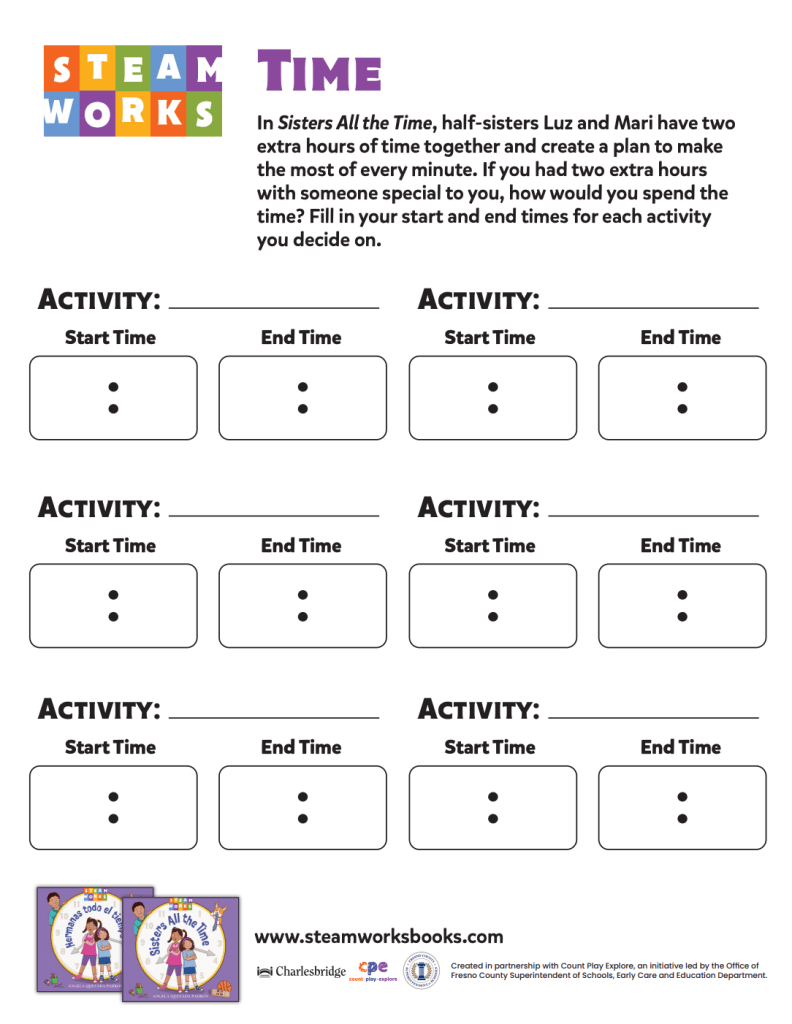
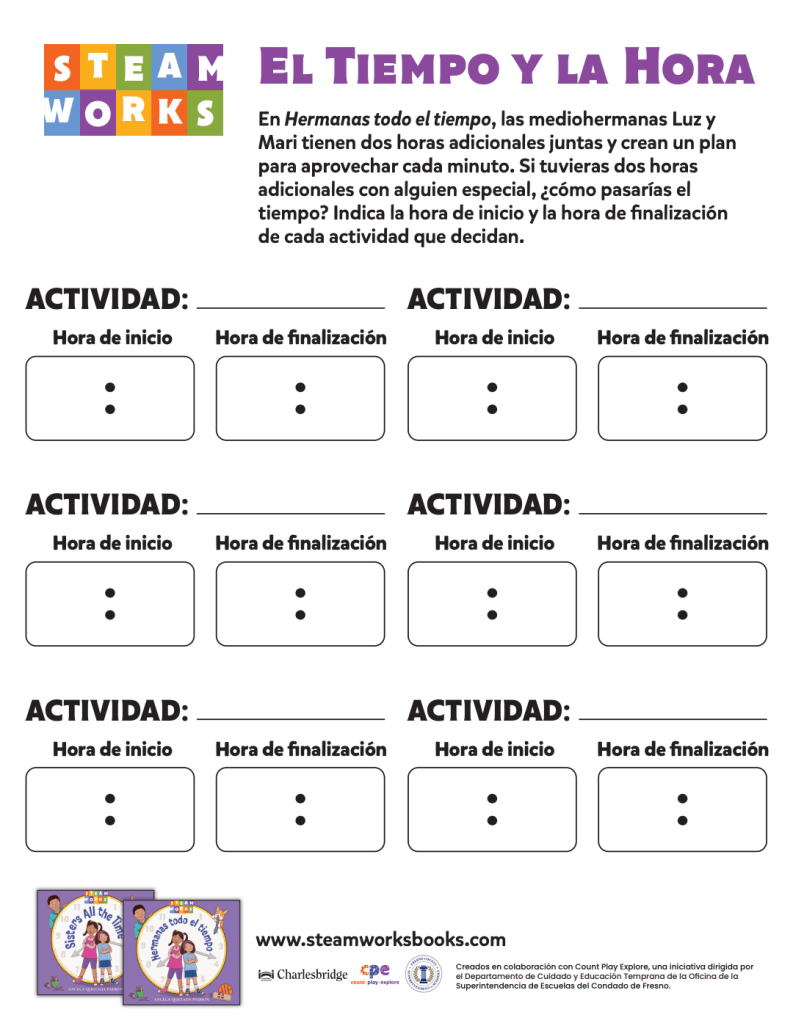
Kids can have eye-opening fun keeping track of their favorite activities, chores, mealtimes, or other events of the day with this Time and El tiempo y la hora pages from Charlesbridge!
You can purchase Sisters All the Time from these booksellers
Happiness Happens Month reminds us that happiness can happen anywhere and at any time. In fact paying attention to all of the little moments during each day, going on spontaneous outings with friends or family, or taking time to do a favorite activity may be all you need to feel happier every day! Spending time reading with your kids is one of those activities that’s sure to bring a smile and comforting a sense of “ahhhh!” With school starting again soon, it’s a great time to reflect on the fun you’ve had over the past months and as well as the memories and learning to come. Today’s book combines fun and learning in a way that’s sure to make happiness happen every time you read it!
Thank you to Abrams Appleseed for sending me this book for review!
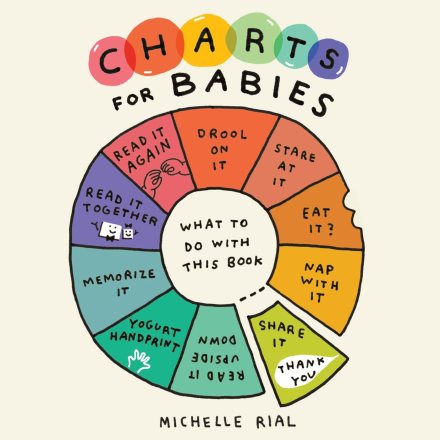
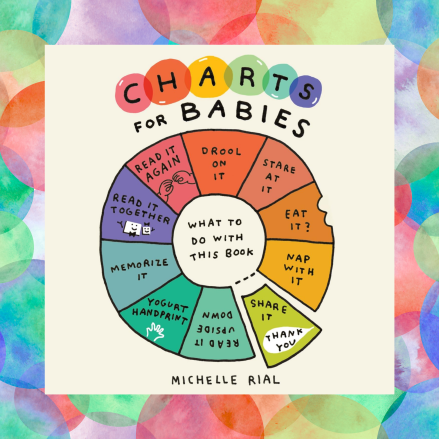
Charts for Babies
By Michelle Rial
Little ones may not know about all the visual tools people use to corral the data that that keeps the world working and connected, but knowing how to read these helpful graphics is a crucial skill as children climb higher and higher in math and science classes at school. So, is there a way for even the youngest children to begin learning these important concepts? Michelle Rial says wholeheartedly, “Yes!” But is there a way to make it relatable and exciting and—dare I ask?—fun? Like really fun?
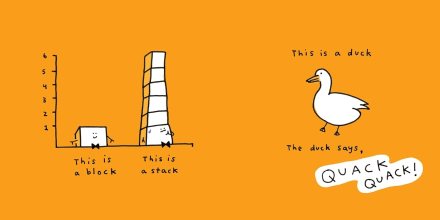
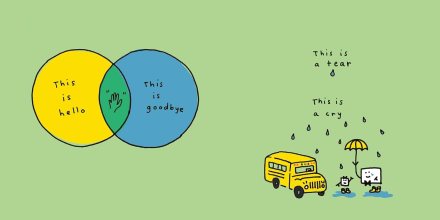
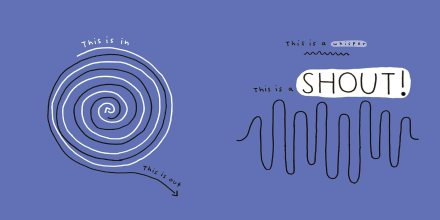
Michelle Rial has all that covered in Charts for Babies, a bright and bubbly jaunt through ideas big and small that encompass the building blocks of math and vocabulary (including visual representations of nouns, verbs, adjectives, those beguiling prepositions, and opposites) as well as cuddly emotions adults and kids love to share. And Rial does all of this with adorable graphics and rhymes that will make your heart sing.
With her trademark wit, Rial presents 16 types of charts and graphs—including a Venn diagram, column chart, scatter plot, timelines, bar chart, and decision tree. She also introduces kids to concepts such as “snug” and “loose,” the difference between a circle and a dot, a single object and a pair, how manipulating shapes can create new shapes, and many others. A few random visitors, like a duck and a sneeze, pull double duty—making little ones giggle while completing a rhyme.
Along the way, Rial also invites kids to count, name colors, find components of five kinds of charts in the midst of a “mess,” and discover other ways to connect with and talk about the text. I can guarantee that both adults and kids will embrace the book’s sweet ending.
A book that will immediately bring smiles to every reader, Charts for Babies is really a love letter to, yes, mathematical and scientific organization but also to sharing concepts, ideas, and humor that unite us all in a way that will have kids and adults excited for repeat reading. Older children will also enjoy the cleverness and cadence of this story and will eagerly chime in on read alouds or read it independently themselves. Charts for Babies is a must for any library or home collection and makes a wonderful gift.
Ages 2 – 5+
Harry N. Abrams, 2026 | ISBN 978-1419785184
About the Author
Michelle Rial is a graphic designer who makes charts. Named by Vulture as one of “9 of the Funniest Cartoonists and Illustrators on Instagram,” she is the author and illustrator of the books Am I Overthinking This? and Maybe This Will Help. Her work has been featured by The New Yorker, Oprah Daily, USA Today, Wired, and more. She lives in the redwoods of California with Lenny, Jude, and Einstein. You can visit her at michellerial.com. Follow her on Instagram.
Happiness Happens Month Activity
Happiness Is… Game
Happiness is all around you! Grab one or more friends to play this game that reveals what things make you happy.
Similar to the “Geography” game, the first player names something that makes them happy. The second player must think of something that makes them happy and starts with the last letter of the word the previous player said. The game continues with each player continuing the pattern. To finish the game, set a time limit or have players drop out if they can’t think of a word. The last player left is the winner!
You can purchase Charts for Babies from these booksellers
Established in 1956 and sponsored by the League of American Bicyclists, National Bike Month celebrates all the fun and benefits of cycling. Communities around the country celebrate with special events, tours, and safety lessons. The month also hosts Bike to School and Bike to Work days to encourage people to leave their cars at home, get fresh air and exercise, and have fun at the same time. Although the month of May is winding down, biking is always a fantastic way to enjoy family time! For more information visit the League of American Bicyclists.
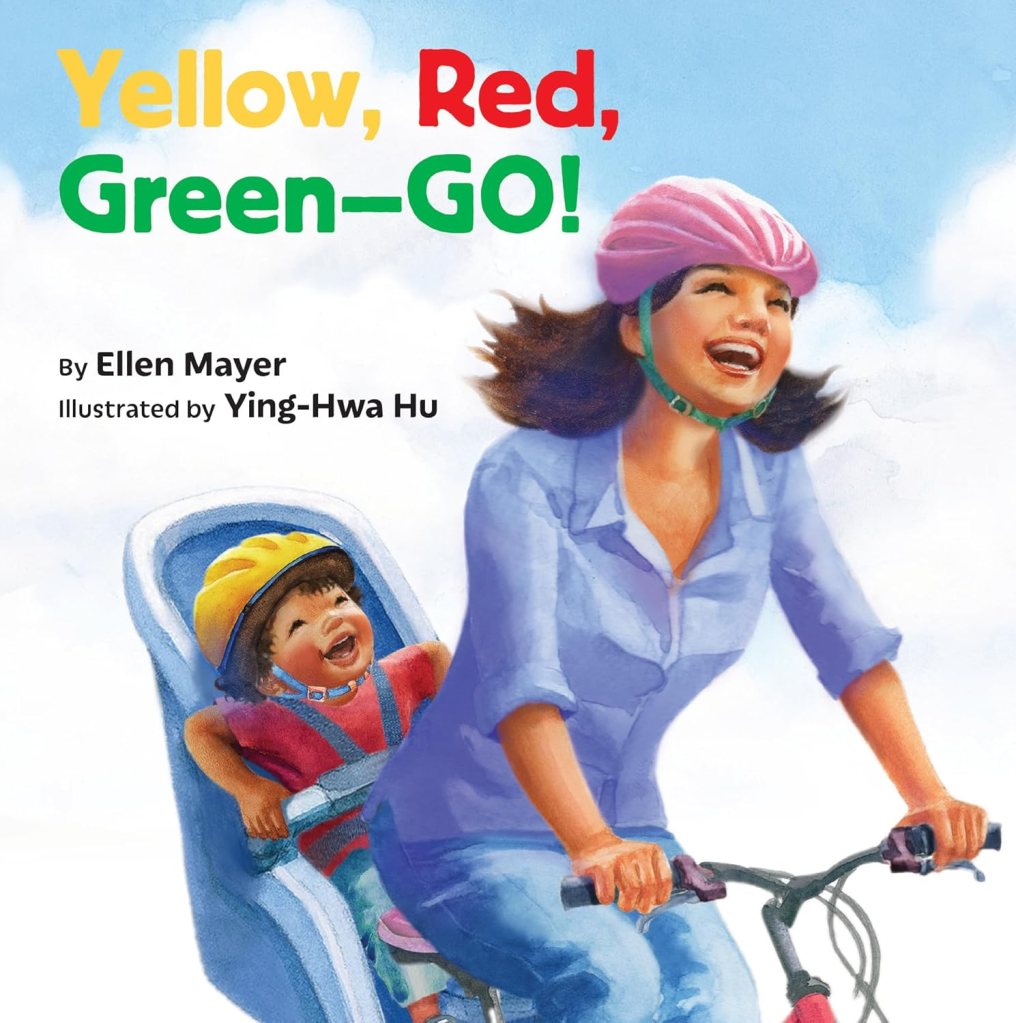
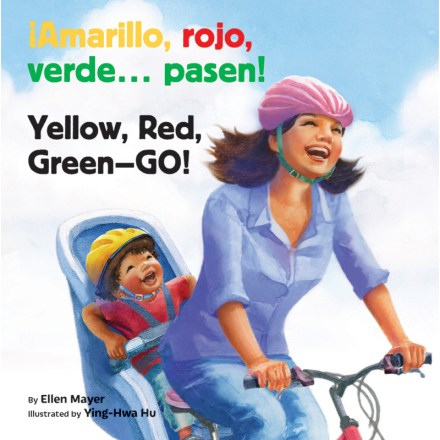
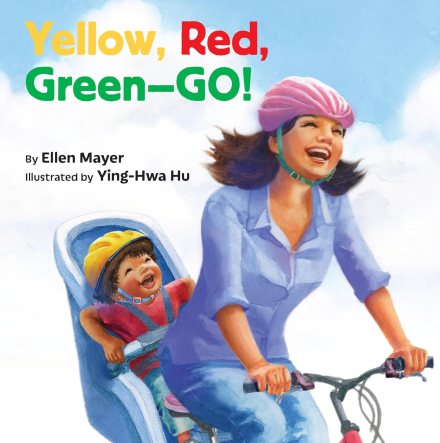
Yellow, Red, Green—Go!
Written by Ellen Mayer | Illustrated by Ying-Hwa Hu
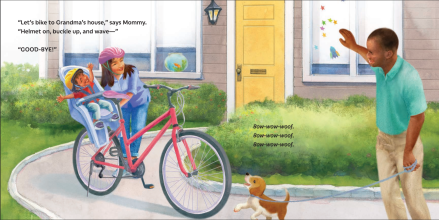
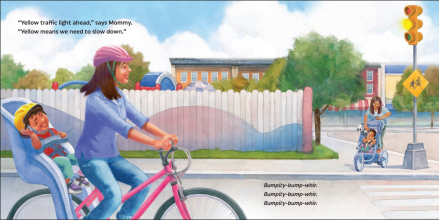
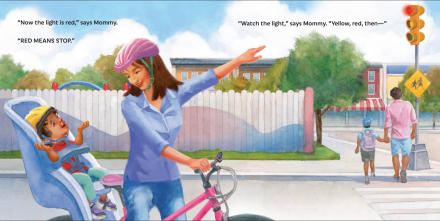
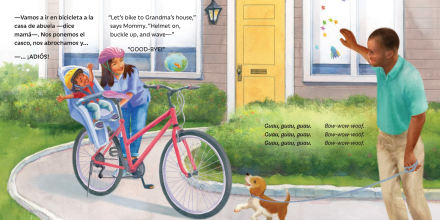
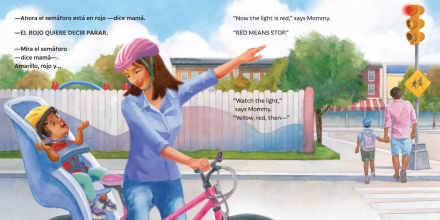
Mommy and her child are off on a bike ride to visit Grandma! On the way, Mommy points out the traffic lights they pass—and sometimes need to stop for. Mommy explains what each color means and the pattern the colors make. “‘Yellow means we have to slow down,’ says Mommy.” When the light changes, her little one is excited to explain “‘Red means stop.'” But in a minute, the eager tyke urges her on: “‘Green, Mommy! Go!'”
As they continue on, the pair continues to repeat the pattern, making a playful game of it. They pass a toy store and go inside, where they find more patterns in the toys and displays. It’s one more fun thing to tell Grandma! Back on their bike, they soon roll into Grandma’s neighborhood. Here the little one finds a pattern on the facade of her apartment block and points out, “‘Window, light, door. Window, light, door. Window, light . . . .'” Wait! there’s a surprise! “‘Window, light . . . Grandma!'”
The story includes a Note for Parents and Caregivers from Dr. Ashli-Ann Douglas, a Research Associate II at WestEd, whose research focuses on improving mathematics teaching and learning to support children’s development of strong math skills and positive math beliefs.
In her Note, Dr. Douglas discusses the benefits of talking to young children about recognizing patterns—one of the important building blocks to understanding many parts of math that children will encounter as they move through school. Dr. Douglas then invites adults to engage their children in pattern scavenger hunts within the story’s text as well as at home and away while encouraging them to find patterns in sounds, routines, and other areas of daily life.
Endearing parent-child interactions are at the heart of award-winning author Ellen Mayer’s Small Talk Books® that model rich conversations between a young child and an adult and enhance fun learning opportunities naturally present in many daily activities. In Yellow, Red, Green—GO! the child’s excitement to show an understanding of patterns is infectious, and youngest readers will eagerly want to join in around their own home and community. Readers will notice the strong back-and-forth patter between Mommy and child as they get on the bike and react to what they see on the way to Grandma’s—a stimulating dynamic that creates a fertile environment for language development and is a sweet way to build bonds.
Ying-Hwa Hu’s adorable illustrations glow with the child’s giggly enthusiasm for finding patterns and the close relationship between Mommy and her little one. Hu populates the community with other child-adult pairs and favorite objects and scenes that readers can talk about. She also includes plenty of opportunities to point out other patterns and to name colors, animals, toys, and other city features. As Mommy and the child interact, Hu demonstrates ways in which adults can engage their children through body language. Fans of other books in this series will be excited to see familiar objects and characters throughout the pages.
A delightful addition to the Small Talks Books® series, Yellow, Red, Green—GO! is a must for every library, daycare, or preschool board book collection and is highly recommended for any young child’s home bookshelf.
Yellow, Red, Green—GO! is also available in a Spanish/English edition
Star Bright Books, 2026 | ISBN 978-1595729798 | Bilingual Edition ISBN 978-1595729804
Ellen Mayer is an award-winning children’s author who has worked as an education researcher and early literacy home visitor. Her other math story books published by Star Bright Books include Banana for Two, Clean Up, Up, Up!, and Leaves to My Knees. She lives with her husband in Cambridge, Massachusetts. Visit her at ellenmayerbooks.com.
Ying-Hwa Hu is an award-winning illustrator. Her work has been exhibited at the Bologna Book Fair and The Society of Illustrators Original Art Show. Ying-Hwa has illustrated over 30 books, many of which she collaborated on with her husband Cornelius Van Wright, also an illustrator and author. They live in New York City. Visit her at yinghwahu.com.
National Bike Month Activity
Yellow, Red, Green–Go! Activities
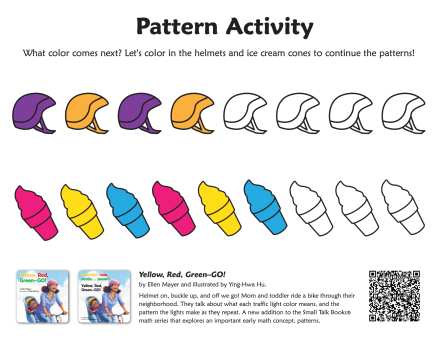
You can find lots of Yellow, Red, Green—GO! activities, including a pattern coloring page; a song sheet with lyrics for “The Wheels on the Bike,” a take off on “The Wheels on the Bus;” an original song that explores patterns, sung by Anna Adler; a Teaching Guide by California Early Math Project; and more to download on the Star Bright Books website.
For children, picture books provide one of the best ways to interact with facts and feelings. Stories that speak to their experiences, both common and new, alongside illustrations that bring the story to life let them discover the world around them. Today’s stunning nonfiction books are loaded with illustrations or photographs that let kids see exciting details about science, history, biographies, nature, and so much more. This month, take a look for fiction and nonfiction picture books about your child’s passions to add to your home library. And be sure to check out today’s book that incorporates both!
Thanks to Star Bright Books for sharing a digital copy of Leaves to My Knees with me for review consideration. All opinions on the book are my own.
Leaves to My Knees
Hojas hasta las rodillas/Leaves to My Knees
Written by Ellen Mayer | Illustrated by Nicole Tadgell
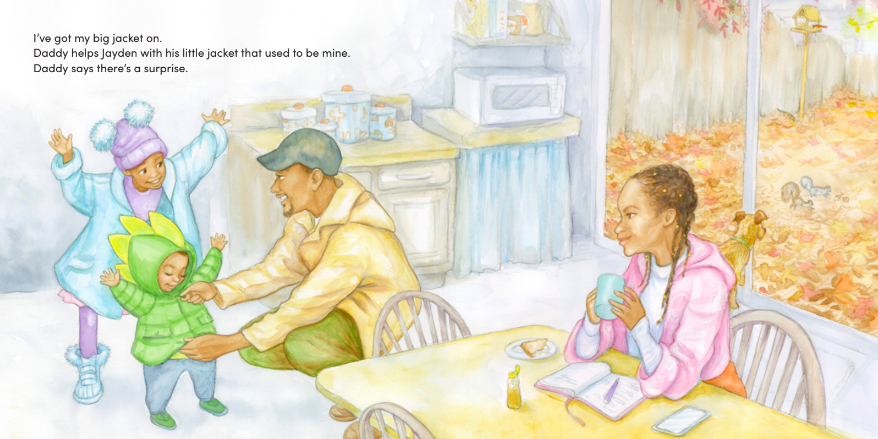
Daddy has a surprise for Camille and her little brother Jayden. They get dressed in their coats—big for Camille and little jacket with a stegosaurus hood for Jayden—and head into the backyard. There, Camille discovers her dad has gotten her a rake of her own. It’s not as big as Dad’s, but it’s bigger than Jayden’s little rake. It’s the perfect size for Camille.
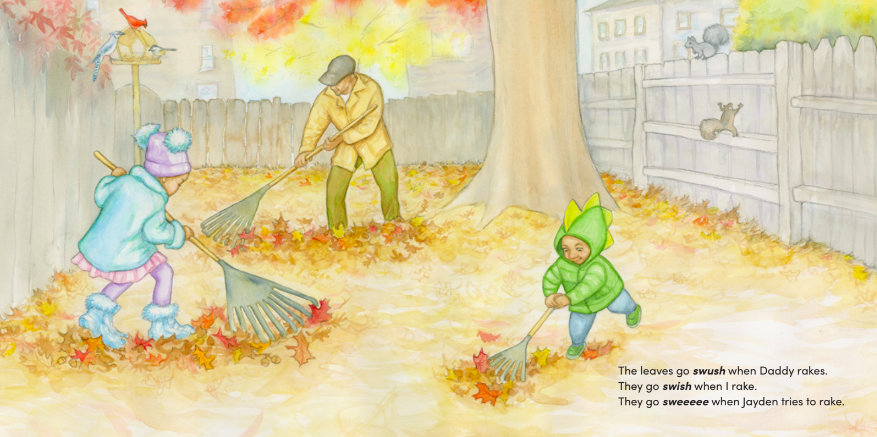
Camille marches right off to rake a pile of leaves. But not just any pile—she has a goal. “‘I’ll rake leave all the way up to my knees!’” she tells her dad. The three get working on the yard. Camille concentrates on gathering leaves, listening to the different sounds that the various sized rakes make: “The leaves go swush when Daddy rakes. They go swish when I rake. They go sweeeee when Jayden tries to rake.”
Image copyright Nicole Tadgell, 2022, text copyright Ellen Mayer, 2022. Courtesy of Star Bright Books.
Lurking under the leaves are twigs and acorns that clog up Camille’s rake. She worries that she’ll never be able to rake leaves to her knees. She calls for Daddy’s help, and together they clear Camille’s rake. “‘You’re good to go now, Camille,’” Daddy tells her. Back at it, Camille rakes and rakes. Then she steps into the pile she’s accumulated to measure it. Her pile only comes up to her ankles. Camille grabs her rake harder and with determination she collects more leaves. But wait! Jayden is stealing leaves from her pile to add to his! Camille guards her pile with her rake, and sends her little brother over to Daddy’s bigger pile. Camille checks her measurements again. Her pile has grown, but only up to the top of her boots.
Image copyright Nicole Tadgell, 2022, text copyright Ellen Mayer, 2022. Courtesy of Star Bright Books.
Camille rakes ‘bunches of leaves,” and her pile gets taller, until “‘Oh no! A BIG BREEZE!!’” sends lots and lots of leaves swirling “Whoosh!” into the air and scattered to the ground. “I will never rake leaves to my knees!” Camille thinks. And when she measures again, her pile is back to her ankles. Daddy encourages her to keep going, and Camille is committed to achieving her goal. She throws off her coat, grabs her rake, and works on gathering up all the leaves she had, plus more. At last, too tired to rake anymore, Camille wonders. Has she done it? “‘Time for measuring!’ says Daddy.”
Image copyright Nicole Tadgell, 2022, text copyright Ellen Mayer, 2022. Courtesy of Star Bright Books.
Camille relinquishes her rake to her dad then, holding her breath, steps into her pile. “‘TA-DA!’” Camille raises her arms in victory. She steps out, positions herself a good ways away, and winds up for the run and jump. “‘GO!’ yells Daddy. ‘GO!’ Jayden yells too.” Camille flies through the air and lands, laughing, into her pile. Then Jayden jumps in. And Daddy? He gives Camille “really big squeeze” for raking “leaves all the way up to [her] knees.”
A note for parents, teachers, and other caregivers written by Marlene Kliman, a mathematics learning expert and senior scientist at TERC, describes how the story incorporates the math of measurement and sizes and how adults can extend the lesson by pointing out elements in the book’s illustrations and while going about their day or doing common chores, such as cleaning up and sorting laundry.
Image copyright Nicole Tadgell, 2022, text copyright Ellen Mayer, 2022. Courtesy of Star Bright Books.
Ellen Mayer’s Leaves to My Knees has everything that makes a story a young reader’s favorite—a spunky main character that kids will identify with, an achievable goal, successes and setbacks, suspense, humor, and a child-propelled victory. And it all revolves around an early math concept that comes naturally to children and which invites playful learning not only during the fall, but any time of the year. Shoveling snow and making snowballs in winter, yard cleanup and gardening in spring, and building sandcastles and raking grass clippings in summer as well as in-home fun with laundry piles, toys, and other objects are all ways to extend the story.
Told from Camille’s point of view, the story also engages children’s emotions as they join in to cheer Camille on as her leaf pile grows and commiserate with her when it shrinks. The close relationships among Camille and her dad and little brother ring true with dialogue-rich storytelling that is always encouraging. Strong themes of determination and persistence will also appeal to parents and teachers, who can point to how many times Camille has to start over before accomplishing her goal and her positive, resolute attitude.
Nicole Tadgell’s exuberant illustrations shine with personality, and kids will immediately become invested in each character as Dad gets working on a big job that needs doing, Jayden runs, jumps, and copies his big sister, and Camille unwaveringly works on her pile of leaves. Camille’s setbacks are clearly depicted, along with her and her father’s facial expressions that give adults and kids an opportunity to talk about disappointment, frustration, perseverance, and feelings of accomplishment. Each image also demonstrates the math component of measurement and sizes in the story with various-sized rakes, the growing and diminishing leaf pile, big and little jackets, and other objects that invite comparison.
Tadgell’s soft-hued pages are infused with the feeling of fall and hum with activity as cardinals, blue jays, chickadees gather at the bird feeder, squirrels scamper up and along the fence, and leaves continue to float to the ground. Readers will love following little Jayden’s antics and be inspired by Camille’s wide smile as she enjoys the reward of all her hard work.
Leaves to My Knees is a multilayered read aloud infused with the enthusiasm and rhythms of childhood that kids will want to hear again and again. Its mathematics base and themes of determination and perseverance rewarded will appeal to parents, teachers, and other educators as a way to engage children in active, hands-on learning. The book is a must for home, classroom, school, and public library collections.
Ages 4 – 8
Star Bright Books, 2022 | ISBN 978-1595729590 (Leaves to My Knees) | ISBN 978-1595729613 (Hojas hasta las rodillas/Leaves to My Knees
Picture Book Month Activities
Coloring Pages and Teaching Guides
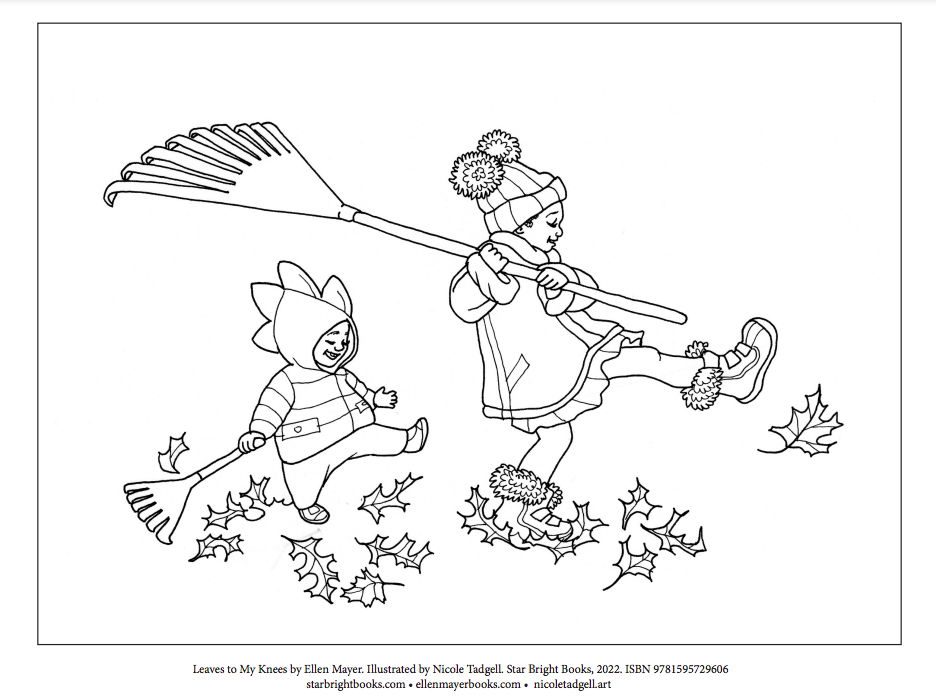
You can extend the fun and learning in Leaves to My Knees with these activities, which include three fun coloring pages from the story, a hands-on play-dough art and discovery activity, and a detailed educator’s guide for teachers, homeschoolers, parents, and other caregivers that offers multiple ways to use Leaves to My Knees to explore math, mathematical thinking, and reading comprehension through the story and beyond at home, school, and elsewhere.
Ellen Mayer is an award-winning author who writes picture books for babies and young children and the grown-ups who read to them. Leaves to My Knees is her ninth book for children. Her other math story books include Banana for Two and Clean Up, Up, Up!, two board books in her Small Talk Books® series with Star Bright Books.
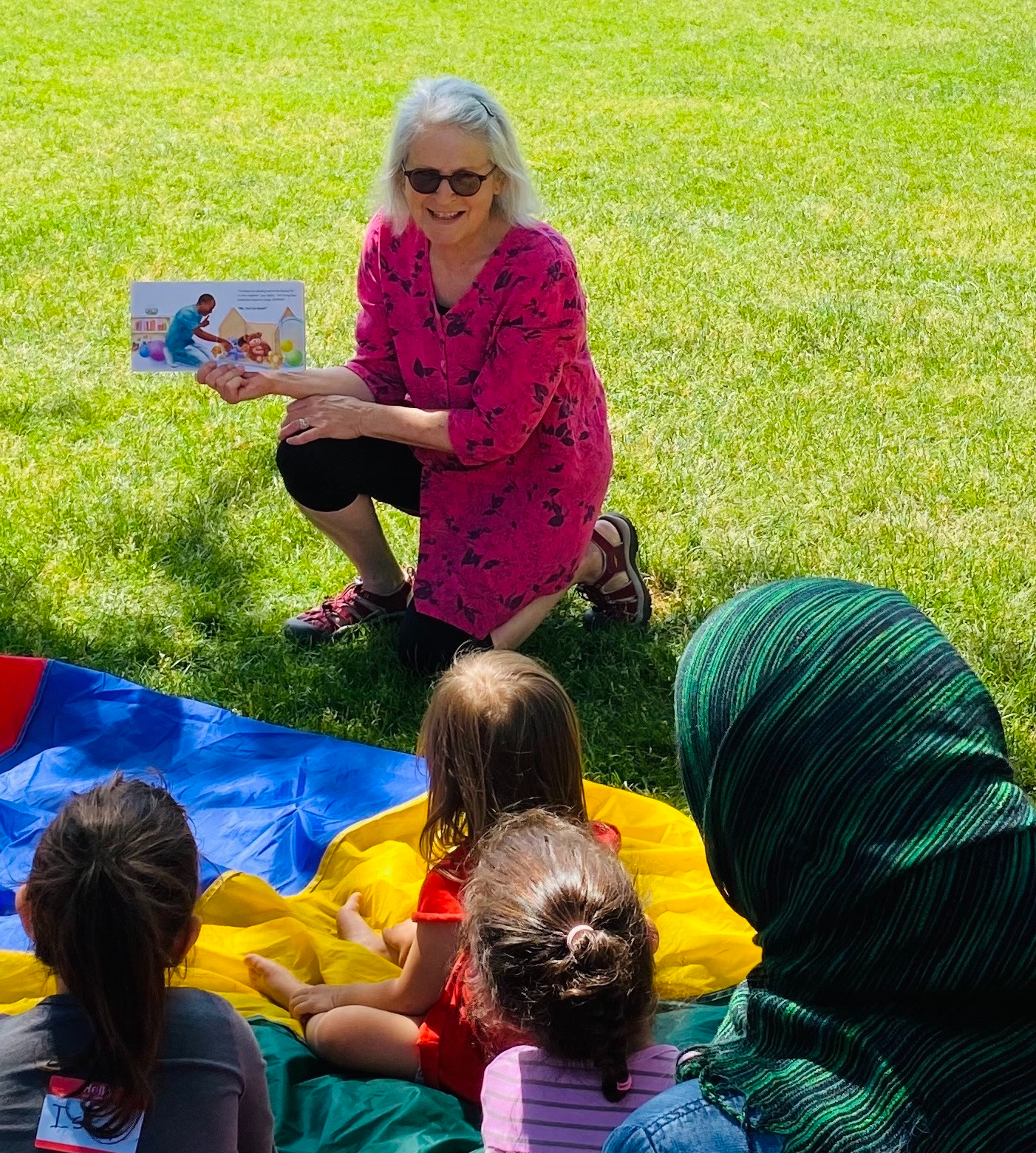
For many years Ellen was an education researcher at the Harvard Graduate School of Education, studying how families are engaged in their children’s learning. She also worked as an early literacy home visitor with young children and their parents in a local affiliate of the ParentChild+ program. Now, Ellen volunteers as a visiting children’s book author with public schools and city-run playgroups in her local Cambridge and Somerville, MA, communities. Long ago she earned an M.Phil. in Sociology from Columbia University.
Ellen often collaborates with her musician husband in “Books + Banjo” reading and sing-along programs for young children. Ellen loves to rake leaves in the fall—especially when she has help from her grandchildren.
I have so many great memories of raking leaves with my kids when they were small. You really capture the fun and challenges of this favorite fall activity in your story. Were you inspired by your own family’s experiences in any way while writing it?
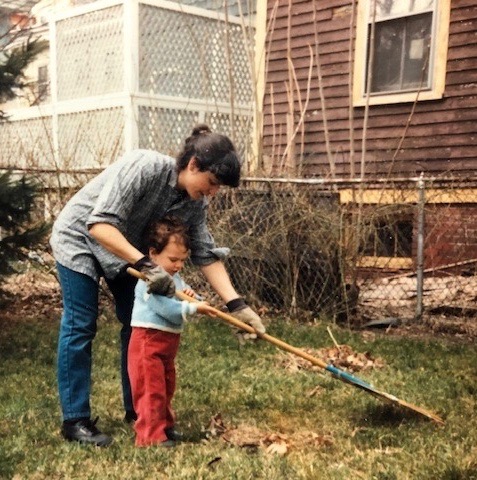
Very much so! Since the time our kids were very little they’ve joined us in the backyard for all sorts of yardwork. My daughter wanted to hold the rake from a young age, even as I did the less exciting early springtime rake of the lawn.
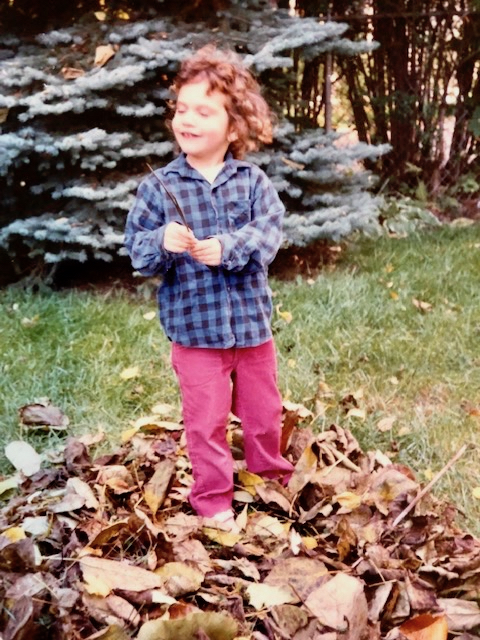
At first our trees didn’t yield much in the way of fall foliage, so we would haul a big bag of fallen leaves in from the tree out on the city sidewalk to have as leaves for play. The piles that resulted were often rather puny, only up to the ankles, as protagonist Camille would tell us.
But as the backyard trees matured, raking and jumping took off, much like in the story! I should add, too, that the sibling dynamic between our older daughter and younger son was also a source of story inspiration, influencing how I wrote the sister-brother characters here. Older sister was always the more determined and focused raker of the two, with younger brother taking it upon himself to annoy and distract her as much as possible, and generally try to steal the show, as was his lovable wont in those early years.
Marlene Kliman, an early math expert who is a Senior Scientist at nonprofit STEM education organization TERC in Cambridge, MA, has contributed a back matter note for parents and caregivers. In it she writes that Camille uses the math of measurement as she works at raking a knee-high pile of leaves and as she describes the sizes of things around her. Can you tell us how Camille and other young children approach measurement?
Preschoolers and toddlers, before they are ready to understand and engage in measuring with standardized units like inches and feet, try out measuring in their own ways. For instance, they compare the thing to be measured with an object or their body. Here, Camille measures the changing height of her leaf pile as it moves up her leg to her knees—first reaching up to her ankles, then up to her boots, but then back down to her ankles after a big breeze, then finally after some serious raking all the way up to her knees—where it’s the perfect size for jumping in. Young children naturally love to consider their world in terms of the different sizes of things. Throughout the story, Camille actively references the sizes of things all around her, whether it’s that big breeze or the size of her jacket, rake, and leaf pile in comparison with the smaller jacket, rake, and leaf pile that belong to her little brother, Jayden.
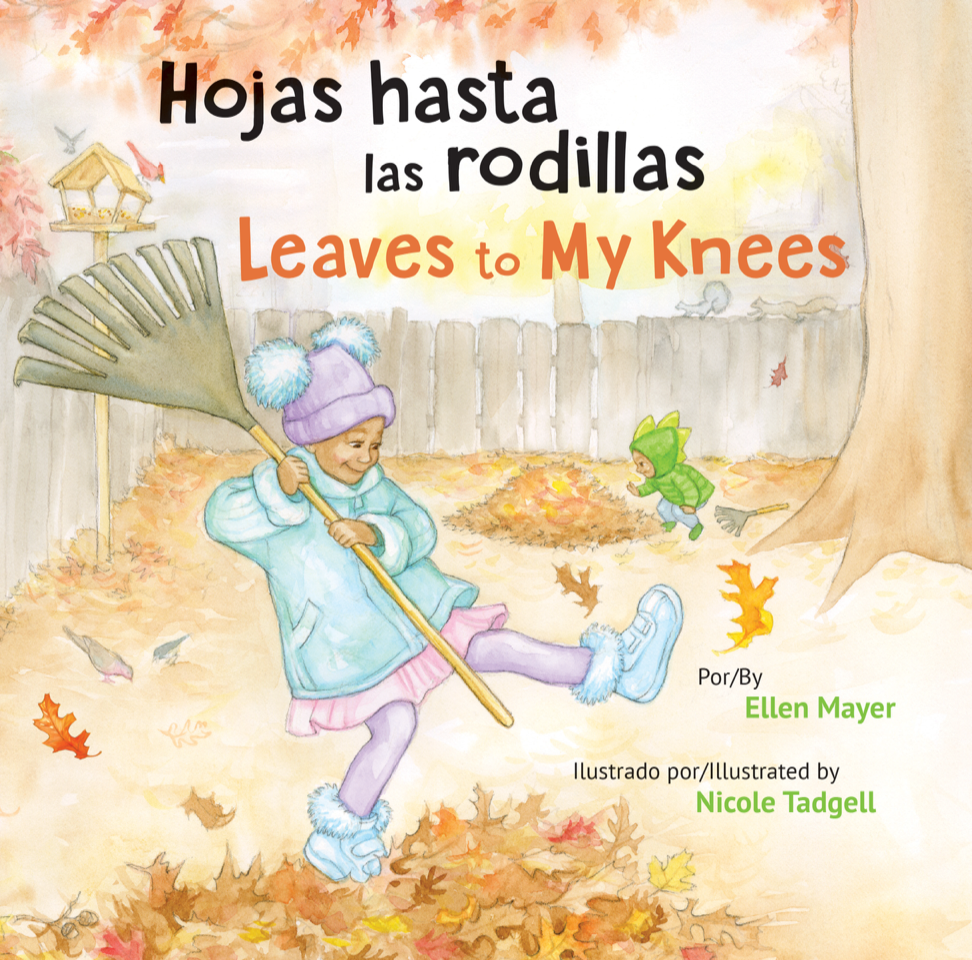
Today’s post celebrates this beautiful and exuberant cover! What was your first reaction to seeing the final cover art?
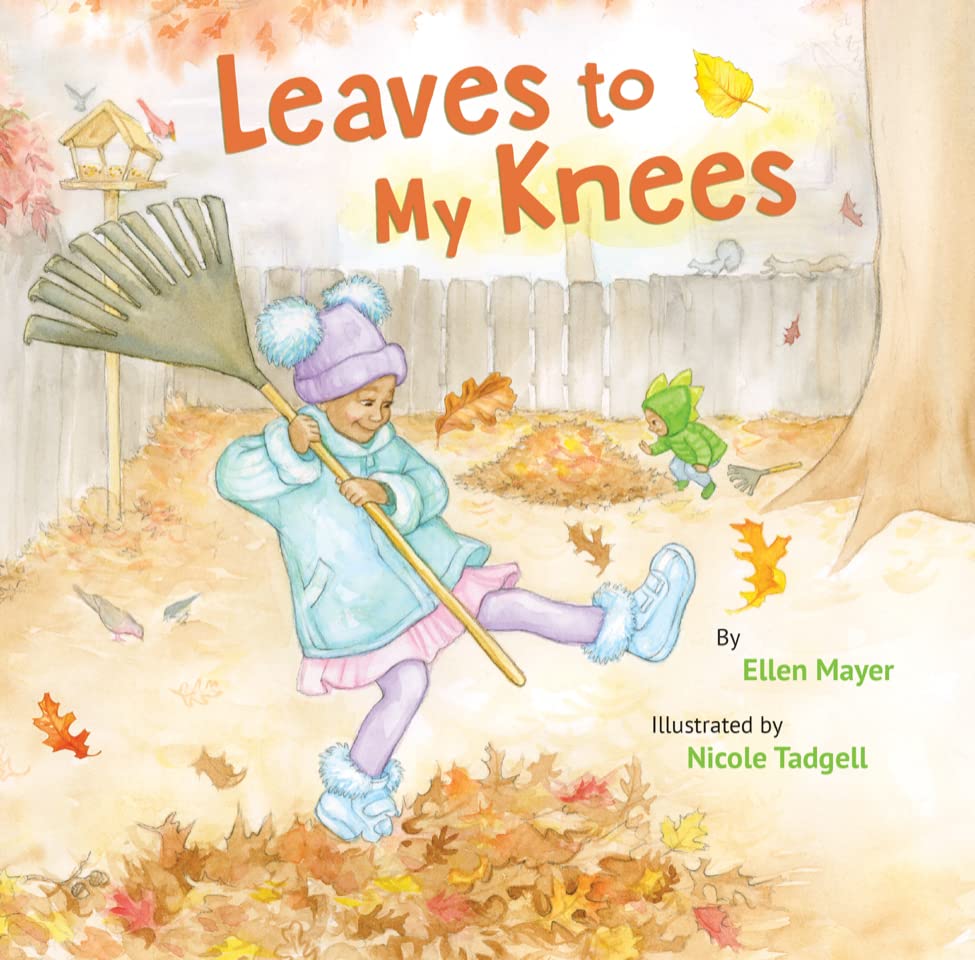
When I first saw the final cover I gasped! I love cover art that is inviting and also contains a little mystery to it. Here, Nicole created the most glorious, radiant, luminescent fall day, and I immediately wanted to join in the play. And what was that cute little dragon/dinosaur up to in the background? Definitely intriguing. Then, also, there are hints of the size-comparison math to come in the story in the form of the differently sized two rakes and three birds. The idea of “leaves to my knees” is there too, center stage. The joy and energy in this cover scene is palpable as the leaves float from the tree and Camille almost seems to be dancing in her leaf pile. Thank you so much for introducing this gorgeous cover into the world, Kathy!
Do you have another favorite spread in the book? Why is this one special to you?
Nicole creates this wonderful dance here in her art, from cover to close, with captivating facial expressions on each page. It’s hard to single out a favorite spread—there is something that takes my breath away on each page! But I keep returning to the one near the end where all is right with the leaf pile, the jump, and the siblings. Here, Camille and Jayden have flopped onto her pile and are luxuriating side-by-side on the big crackly bed of leaves, enormous matching grins on their faces. Maybe I was worried that Camille wouldn’t let the little mischief-maker into her pile? But she’s not shooing him anyway anymore—they are just celebrating together the joys of a fall leaf pile.
What would you like for kids and adults to take away from the story?
I hope they will come away with a warm feeling inside after spending time with this playful and loving family, a family that’s engaged in a fall chore, but one that is also enjoying a lot of fun and learning together. I hope they take away that math is everywhere around us, and that young children—all young children—love to measure and compare as they go about their day. I hope they take away the powerful image of a child of color, and a girl, as an active mathematician. There still aren’t nearly enough Camilles in the pages of picture books, and everyone—kids of all backgrounds listening to this story and all their reading adults too—need to see and normalize children of color and girls doing math.
Nicole Tadgell is an award-winning watercolor artist of more than 30 luminous picture books. Her books have received numerous honors, including the Christopher Award and the Children’s Africana Book Award. They have been included on the Smithsonian Notable Books for Children, the New York Public Library’s Best 100 Titles for Reading and Sharing, and many more notable lists. Born in Detroit, Michigan, frequent moves weren’t easy for Nicole, especially to new schools where she was the only Black kid in class. Art has always been both an escape and a labor of love for Nicole. Today, she brings stories to life while advocating for diversity in children’s literature. Nicole lives in Chesapeake, Virginia.
Can you share what attracted you to Ellen’s story from an illustrator’s point of view?
Because I often illustrate older children, I saw the opportunity to showcase two young children playing in autumn leaves. (My favorite season!)
Camille shows so much personality and determination on this cover image. Can you describe your process of designing and finalizing the cover?
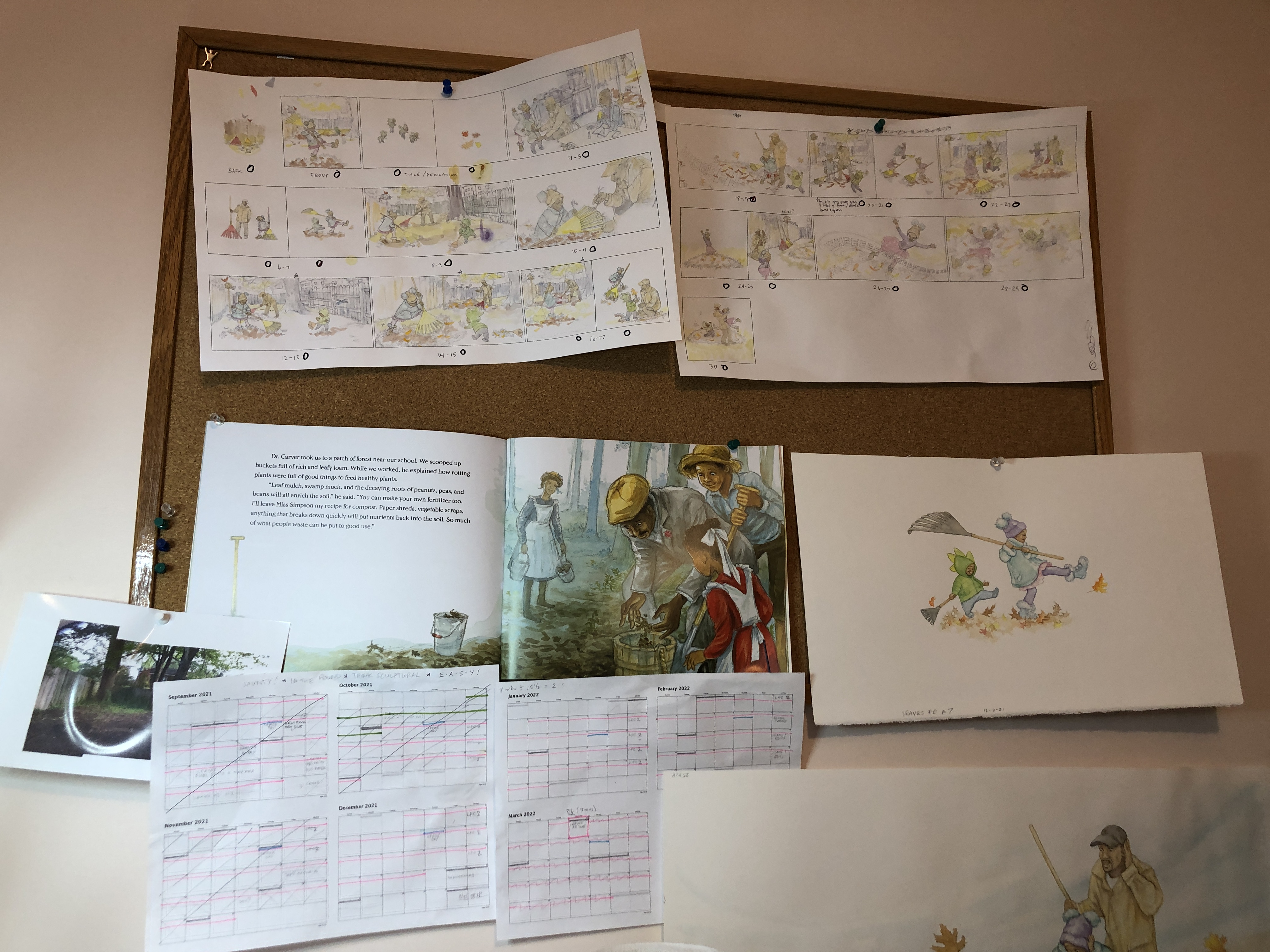
Covers can be a challenge, to be sure. There’s a compromise to paint what’s fun . . .
Image copyright Nicole Tadgell, 2022
. . . versus showing the audience what the book is about!
Image copyright Nicole Tadgell, 2022
Were you inspired by personal memories of raking leaves as you worked on this cover image and interior spreads? Do you have a story about raking leaves you’d like to share?
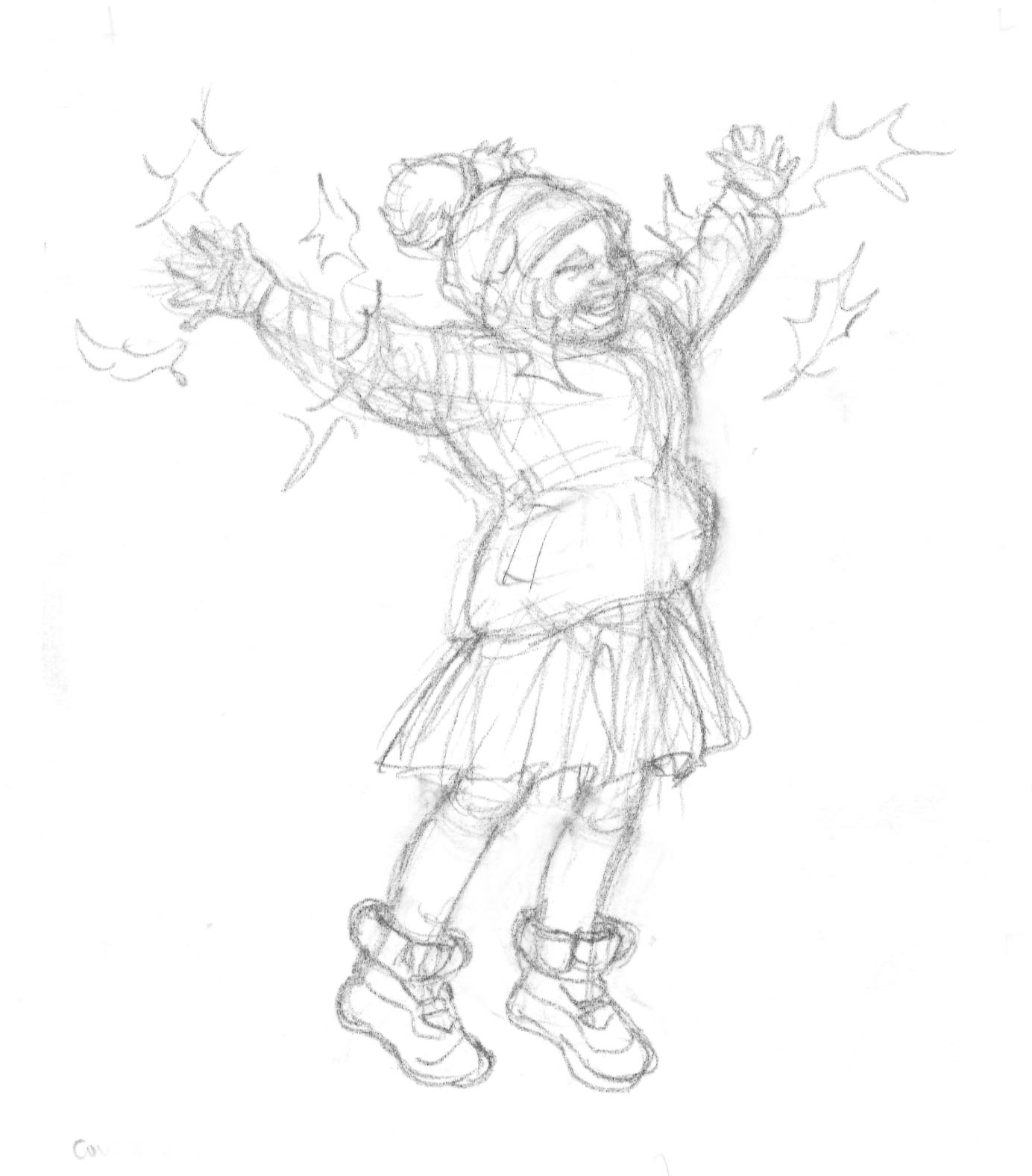
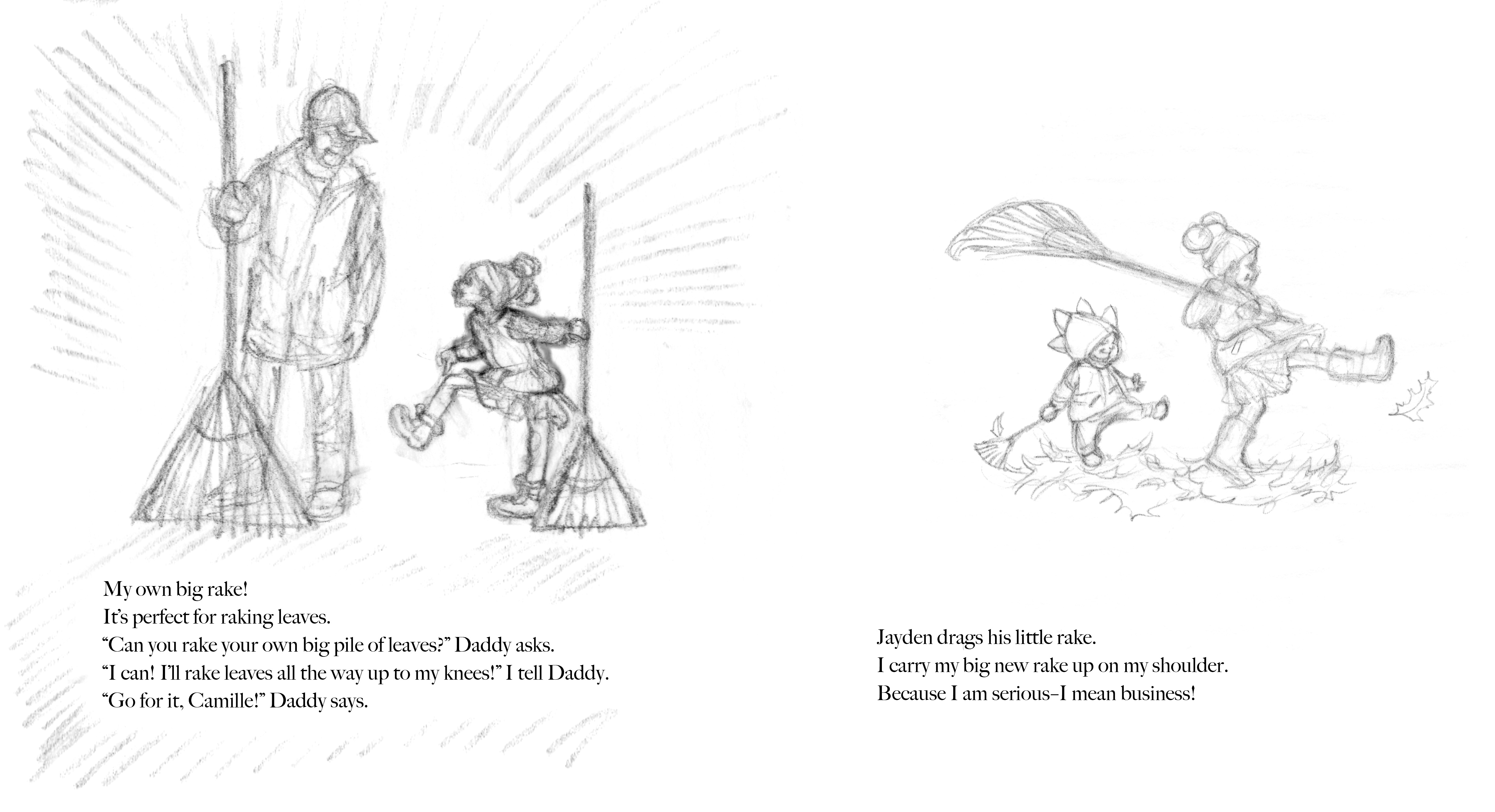
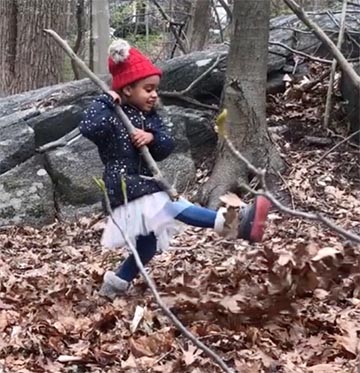
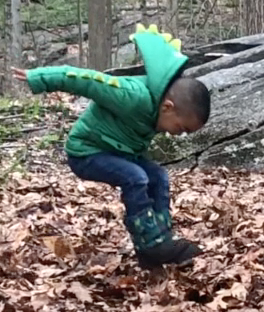
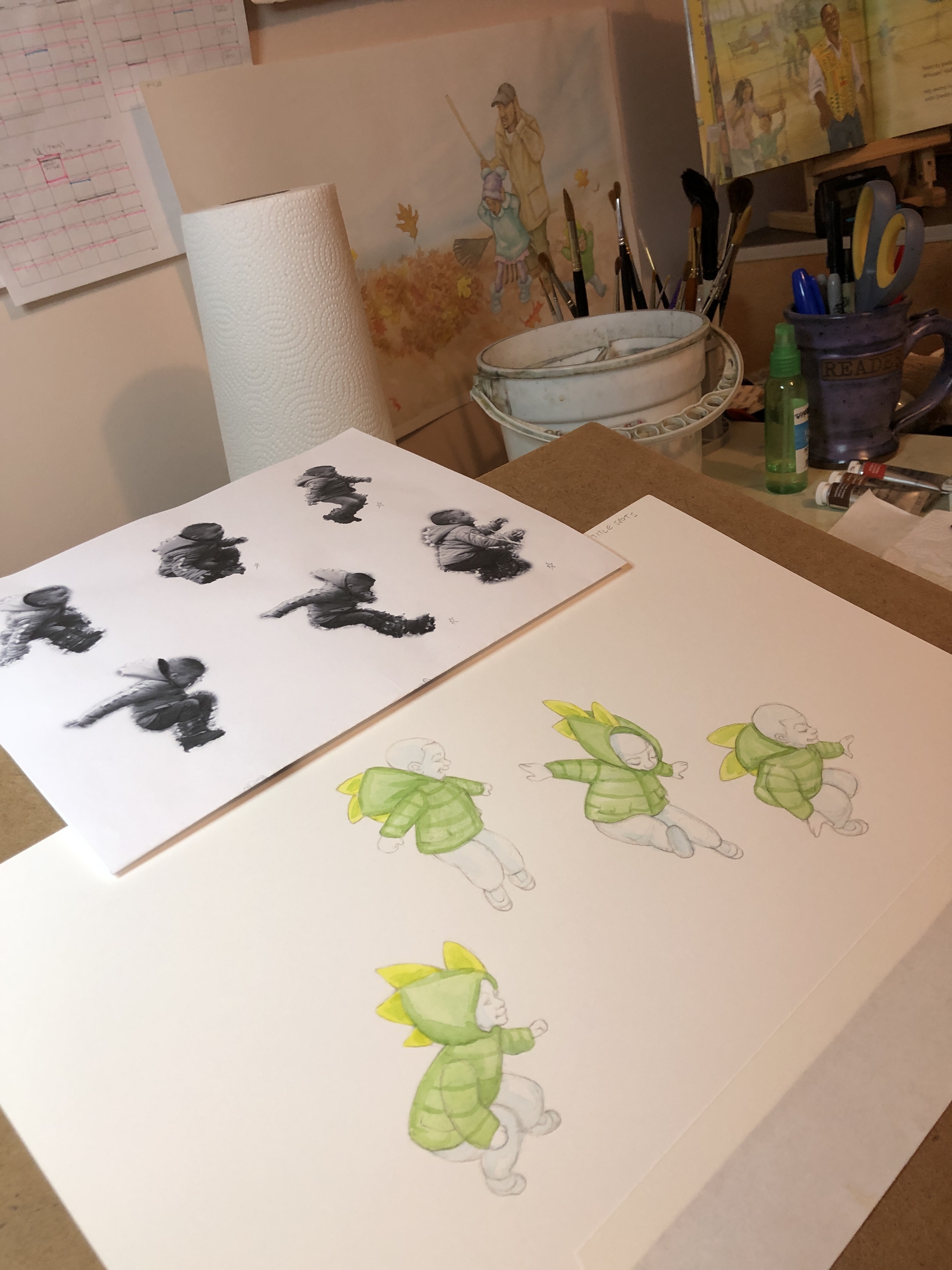
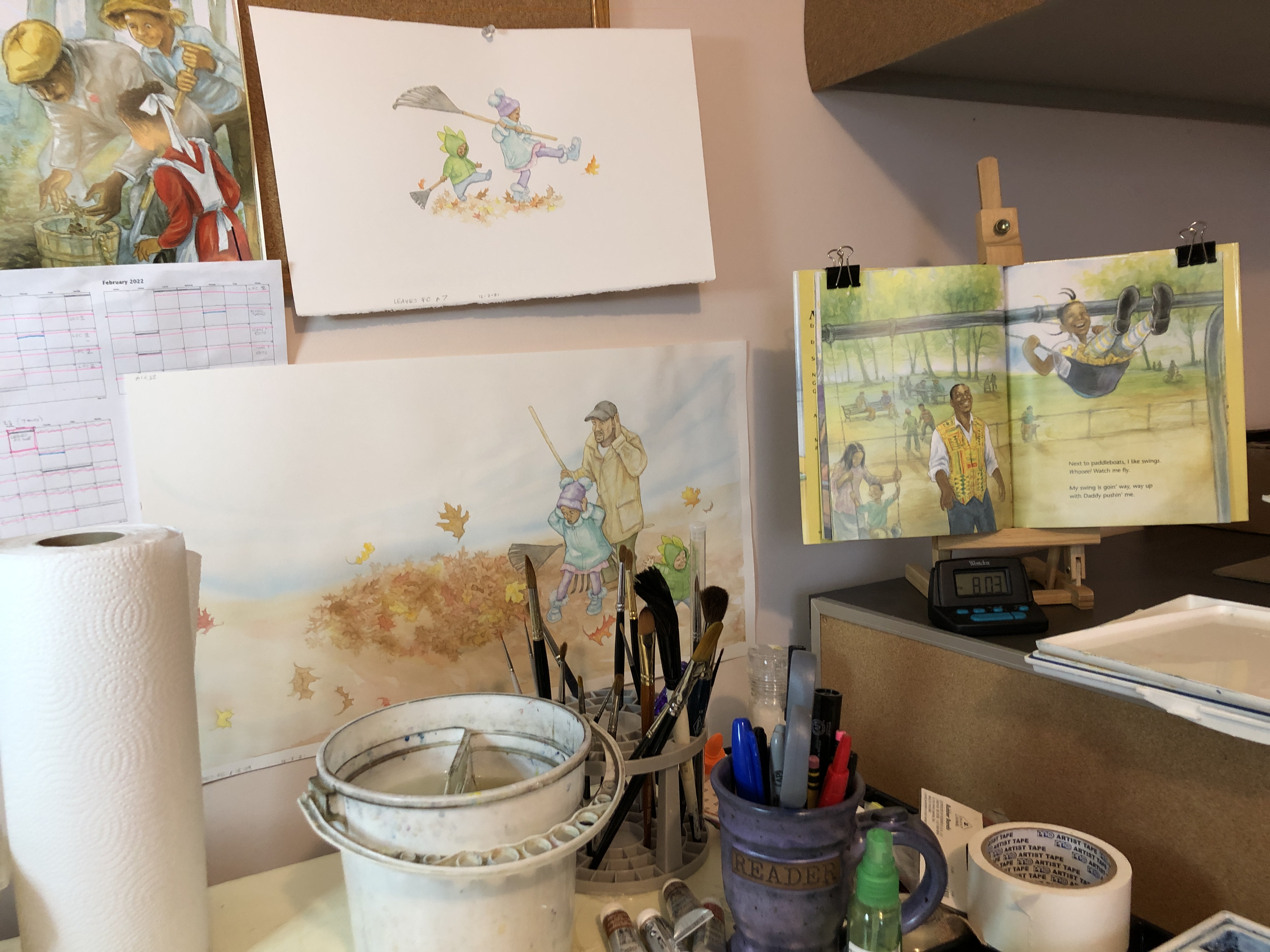
I admit I had grown-up thoughts about there being spiders in the leaves! I don’t have a clear childhood memory of that happening, but I’ve seen plenty of spiders in leaves as an adult. A fun story is about the models for this book! My sister’s friend has two kids the right age. Their Dad was wonderful—instead of taking pictures of the kids playing in leaves, he shot video so I could pause and sketch. They were perfect! Original down to Camille’s double pom-poms and Jayden’s dinosaur coat.
Image copyright Nicole Tadgell, 2022
The soft colors of your illustrations in Leaves to My Knees are really lovely. Can you talk about how you choose a color palette for your work in general and for this cover in particular?
Endless choices! It’s hard to decide. Knowing the season, I began with fall colors: reds, oranges, yellows. I felt that contrast would help our family stand out, so I chose cool colors for Camille and Jayden. I chose earth tones for Dad to make the kids stand out even more.
Image copyright Nicole Tadgell, 2022
Image copyright Nicole Tadgell, 2022
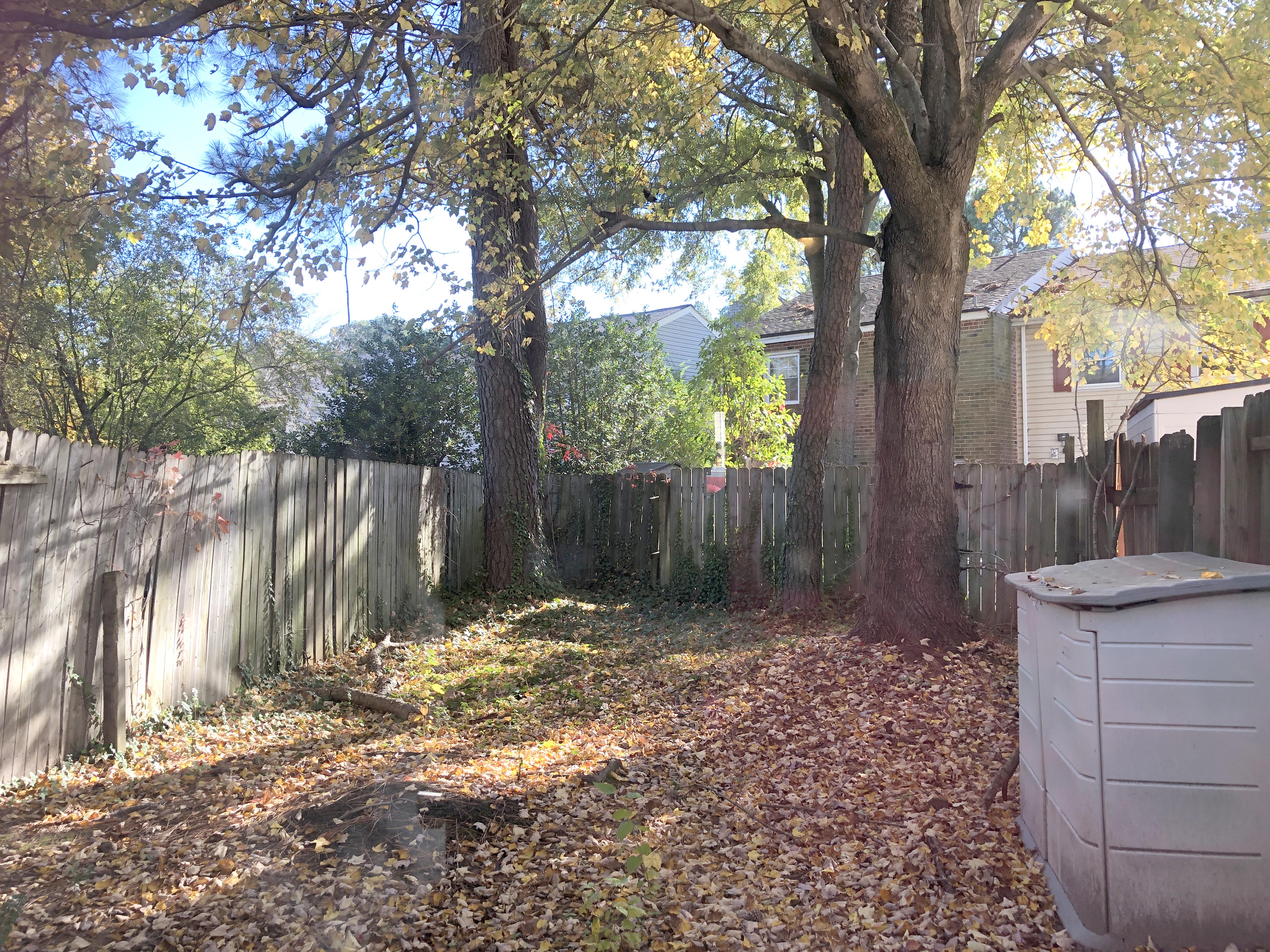
Interestingly, in the images I used for reference the real leaves had lost their color, so I just painted them colorful. I did make our Jayden a bit younger than the model’s age. For the backyard fence, I found a place nearby that had an interesting fence and small leaf-filled yard. I watched as cardinals flit between branches and squirrels chased each other, and inspiration came for the animal antics in the background!
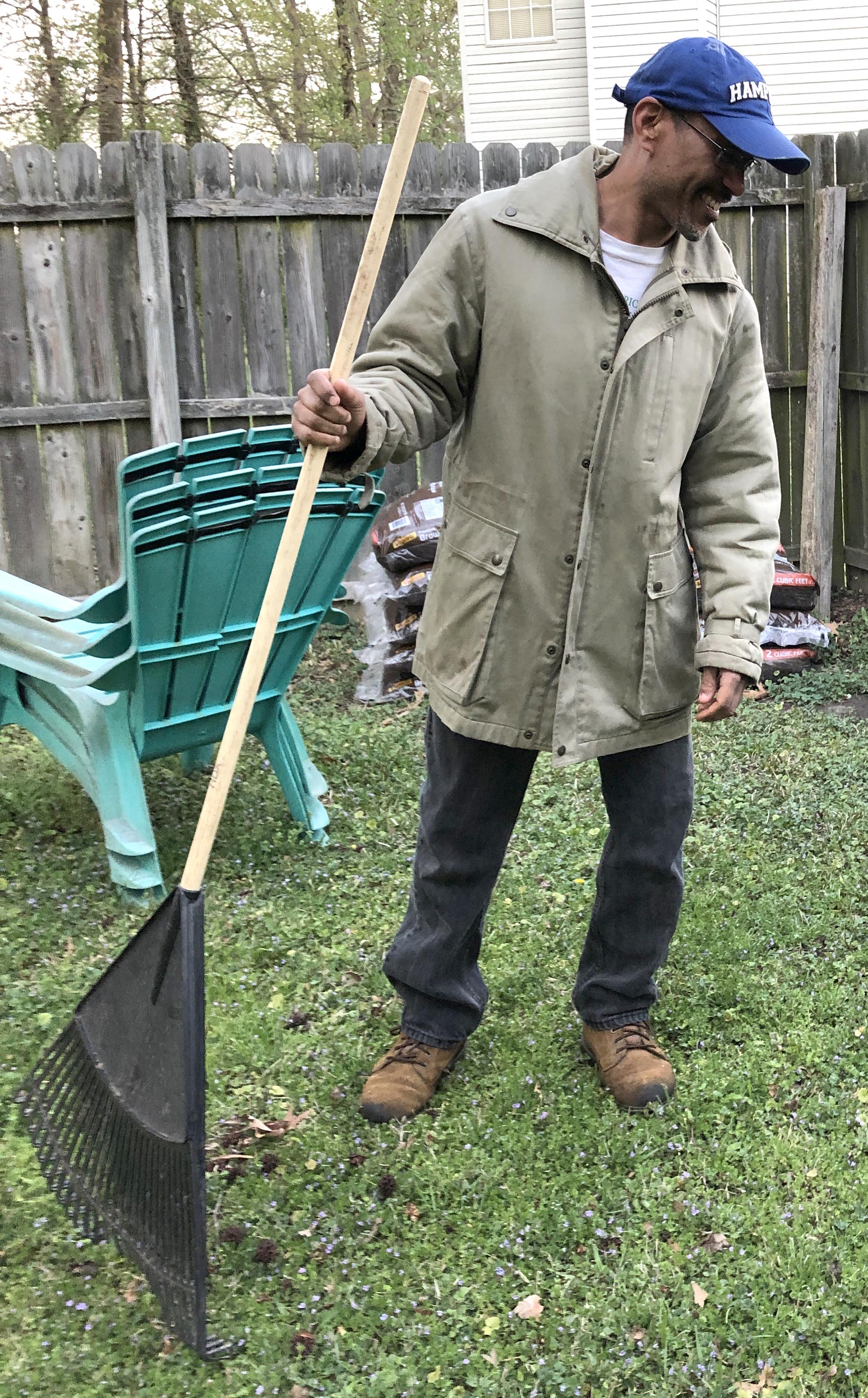
And finally, my partner Anthony was kind enough to pose as the dad in the book!
Now that picture book creators are more free to interact with readers, what are you most looking forward to in promoting Leaves to My Knees?
Fun! I love signing books for kids & personalizing.
In addition to celebrating a fun (and necessary) fall activity, Leaves to My Knees incorporates early math concepts of size and measurement. Can you give an example of how you depicted these ideas in your illustrations?
By using different sizes of the rakes and making sure the leaf piles matched the text (up to ankles, then knees).
I can almost feel the chill in the air and hear that crisp crunch of leaves underfoot that means it’s leaf-raking time!
Written by Ellen Mayer | Illustrated by Nicole Tadgell
Camille is determined to rake her own pile of leaves―all the way up to her knees! She swishes leaves to and fro, watching her pile grow bigger alongside the piles made by Daddy and her little brother, Jayden. WHOOSH! After raking leaves to the top of her boots, a giant breeze blows the pile back down to her ankles. But Camille won’t be stopped until she gets the job done––a knee-high pile, the perfect size for… jumping in!
Leaves to My Knees and Spanish/English bilingual Hojas hasta las rodillas/Leaves to My Knees are playful introductions to the early math concepts of size comparison and measurement. A note by researcher and mathematics learning expert Marlene Kliman explains how parents and caregivers can use the book to help young children explore different sizes and measurement in everyday environments.
I’m thrilled to be talking with Ellen Mayer and Nicole Tadgell today about this gorgeous cover and their adorable—and educational—book that will be available this fall, just in time for leaf-raking season!
Meet Ellen Mayer
Ellen Mayer is an award-winning author who writes picture books for babies and young children and the grown-ups who read to them. Leaves to My Knees is her ninth book for children. Her other math story books include Banana for Two and Clean Up, Up, Up!, two board books in her Small Talk Books® series with Star Bright Books.
For many years Ellen was an education researcher at the Harvard Graduate School of Education, studying how families are engaged in their children’s learning. She also worked as an early literacy home visitor with young children and their parents in a local affiliate of the ParentChild+ program. Now, Ellen volunteers as a visiting children’s book author with public schools and city-run playgroups in her local Cambridge and Somerville, MA, communities. Long ago she earned an M.Phil. in Sociology from Columbia University.
Ellen often collaborates with her musician husband in “Books + Banjo” reading and sing-along programs for young children. Ellen loves to rake leaves in the fall—especially when she has help from her grandchildren.
I have so many great memories of raking leaves with my kids when they were small. You really capture the fun and challenges of this favorite fall activity in your story. Were you inspired by your own family’s experiences in any way while writing it?
Very much so! Since the time our kids were very little they’ve joined us in the backyard for all sorts of yardwork. My daughter wanted to hold the rake from a young age, even as I did the less exciting early springtime rake of the lawn.
At first our trees didn’t yield much in the way of fall foliage, so we would haul a big bag of fallen leaves in from the tree out on the city sidewalk to have as leaves for play. The piles that resulted were often rather puny, only up to the ankles, as protagonist Camille would tell us.
But as the backyard trees matured, raking and jumping took off, much like in the story! I should add, too, that the sibling dynamic between our older daughter and younger son was also a source of story inspiration, influencing how I wrote the sister-brother characters here. Older sister was always the more determined and focused raker of the two, with younger brother taking it upon himself to annoy and distract her as much as possible, and generally try to steal the show, as was his lovable wont in those early years.
Marlene Kliman, an early math expert who is a Senior Scientist at nonprofit STEM education organization TERC in Cambridge, MA, has contributed a back matter note for parents and caregivers. In it she writes that Camille uses the math of measurement as she works at raking a knee-high pile of leaves and as she describes the sizes of things around her. Can you tell us how Camille and other young children approach measurement?
Preschoolers and toddlers, before they are ready to understand and engage in measuring with standardized units like inches and feet, try out measuring in their own ways. For instance, they compare the thing to be measured with an object or their body. Here, Camille measures the changing height of her leaf pile as it moves up her leg to her knees—first reaching up to her ankles, then up to her boots, but then back down to her ankles after a big breeze, then finally after some serious raking all the way up to her knees—where it’s the perfect size for jumping in. Young children naturally love to consider their world in terms of the different sizes of things. Throughout the story, Camille actively references the sizes of things all around her, whether it’s that big breeze or the size of her jacket, rake, and leaf pile in comparison with the smaller jacket, rake, and leaf pile that belong to her little brother, Jayden.
Today’s post celebrates this beautiful and exuberant cover! What was your first reaction to seeing the final cover art?
When I first saw the final cover I gasped! I love cover art that is inviting and also contains a little mystery to it. Here, Nicole created the most glorious, radiant, luminescent fall day, and I immediately wanted to join in the play. And what was that cute little dragon/dinosaur up to in the background? Definitely intriguing. Then, also, there are hints of the size-comparison math to come in the story in the form of the differently sized two rakes and three birds. The idea of “leaves to my knees” is there too, center stage. The joy and energy in this cover scene is palpable as the leaves float from the tree and Camille almost seems to be dancing in her leaf pile. Thank you so much for introducing this gorgeous cover into the world, Kathy!
Do you have another favorite spread in the book? Why is this one special to you?
Nicole creates this wonderful dance here in her art, from cover to close, with captivating facial expressions on each page. It’s hard to single out a favorite spread—there is something that takes my breath away on each page! But I keep returning to the one near the end where all is right with the leaf pile, the jump, and the siblings. Here, Camille and Jayden have flopped onto her pile and are luxuriating side-by-side on the big crackly bed of leaves, enormous matching grins on their faces. Maybe I was worried that Camille wouldn’t let the little mischief-maker into her pile? But she’s not shooing him anyway anymore—they are just celebrating together the joys of a fall leaf pile.
What would you like for kids and adults to take away from the story?
I hope they will come away with a warm feeling inside after spending time with this playful and loving family, a family that’s engaged in a fall chore, but one that is also enjoying a lot of fun and learning together. I hope they take away that math is everywhere around us, and that young children—all young children—love to measure and compare as they go about their day. I hope they take away the powerful image of a child of color, and a girl, as an active mathematician. There still aren’t nearly enough Camilles in the pages of picture books, and everyone—kids of all backgrounds listening to this story and all their reading adults too—need to see and normalize children of color and girls doing math.
Nicole Tadgell is an award-winning watercolor artist of more than 30 luminous picture books. Her books have received numerous honors, including the Christopher Award and the Children’s Africana Book Award. They have been included on the Smithsonian Notable Books for Children, the New York Public Library’s Best 100 Titles for Reading and Sharing, and many more notable lists. Born in Detroit, Michigan, frequent moves weren’t easy for Nicole, especially to new schools where she was the only Black kid in class. Art has always been both an escape and a labor of love for Nicole. Today, she brings stories to life while advocating for diversity in children’s literature. Nicole lives in Chesapeake, Virginia.
Can you share what attracted you to Ellen’s story from an illustrator’s point of view?
Because I often illustrate older children, I saw the opportunity to showcase two young children playing in autumn leaves. (My favorite season!)
Camille shows so much personality and determination on this cover image. Can you describe your process of designing and finalizing the cover?
Covers can be a challenge, to be sure. There’s a compromise to paint what’s fun . . .
Image copyright Nicole Tadgell, 2022
. . . versus showing the audience what the book is about!
Image copyright Nicole Tadgell, 2022
Were you inspired by personal memories of raking leaves as you worked on this cover image and interior spreads? Do you have a story about raking leaves you’d like to share?
I admit I had grown-up thoughts about there being spiders in the leaves! I don’t have a clear childhood memory of that happening, but I’ve seen plenty of spiders in leaves as an adult. A fun story is about the models for this book! My sister’s friend has two kids the right age. Their Dad was wonderful—instead of taking pictures of the kids playing in leaves, he shot video so I could pause and sketch. They were perfect! Original down to Camille’s double pom-poms and Jayden’s dinosaur coat.
Image copyright Nicole Tadgell, 2022
The soft colors of your illustrations in Leaves to My Knees are really lovely. Can you talk about how you choose a color palette for your work in general and for this cover in particular?
Endless choices! It’s hard to decide. Knowing the season, I began with fall colors: reds, oranges, yellows. I felt that contrast would help our family stand out, so I chose cool colors for Camille and Jayden. I chose earth tones for Dad to make the kids stand out even more.
Image copyright Nicole Tadgell, 2022
Image copyright Nicole Tadgell, 2022
Interestingly, in the images I used for reference the real leaves had lost their color, so I just painted them colorful. I did make our Jayden a bit younger than the model’s age. For the backyard fence, I found a place nearby that had an interesting fence and small leaf-filled yard. I watched as cardinals flit between branches and squirrels chased each other, and inspiration came for the animal antics in the background!
And finally, my partner Anthony was kind enough to pose as the dad in the book!
Now that picture book creators are more free to interact with readers, what are you most looking forward to in promoting Leaves to My Knees?
Fun! I love signing books for kids & personalizing.
In addition to celebrating a fun (and necessary) fall activity, Leaves to My Knees incorporates early math concepts of size and measurement. Can you give an example of how you depicted these ideas in your illustrations?
By using different sizes of the rakes and making sure the leaf piles matched the text (up to ankles, then knees).
I can almost feel the chill in the air and hear that crisp crunch of leaves underfoot that means it’s leaf-raking time!
Hug a Sheep Day was founded by a woman who rescued a sheep named Punkin from the Bluegrass Stockyards in 1992. When Punkin passed away 12 years later, the woman, known as “the Crazy Sheep Lady,” wanted to honor him and encourage people to appreciate the warmth and comfort these animals provide and show how much they love them. She chose Punkin’s birthday as the date of her new holiday, and over the years Hug a Sheep Day has grown to be celebrated around the world with many farms inviting visitors to open farm days and fun events where they can indeed hug a sheep. If you want to take full advantage of today’s celebration, look for a participating farm or petting zoo near you.
Thanks go to Beaming Books for sharing a copy of Little Ewe with me for review consideration. All opinions about the book are my own. I’m excited to be teaming with Beaming Books in a giveaway of the book. You’ll find the details below.
Little Ewe: The Story of One Lost Sheep
Written by Laura Sassi | Illustrated by Tommy Doyle
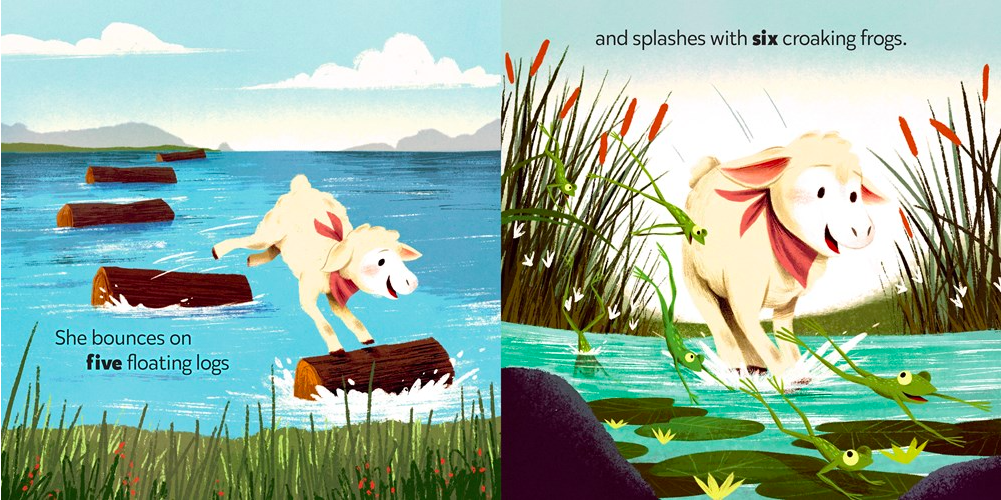
The flock gathers at the fence, where “one shepherd opens up the gate. / ‘It’s time to eat.’ / The sheep can’t wait!” The sheep file out of the pen and up the hill in pairs, but Little Ewe is more interested in exploring than nibbling. She chases three lizards and watches four spiders, and when Shepherd calls for her to come back, she promises to do so “but not until…/ She bounces on five floating logs / and splashes with six croaking frogs.”
Image copyright Tommy Doyle, 2021, text copyright Laura Sassi, 2021. Courtesy of Beaming Books.
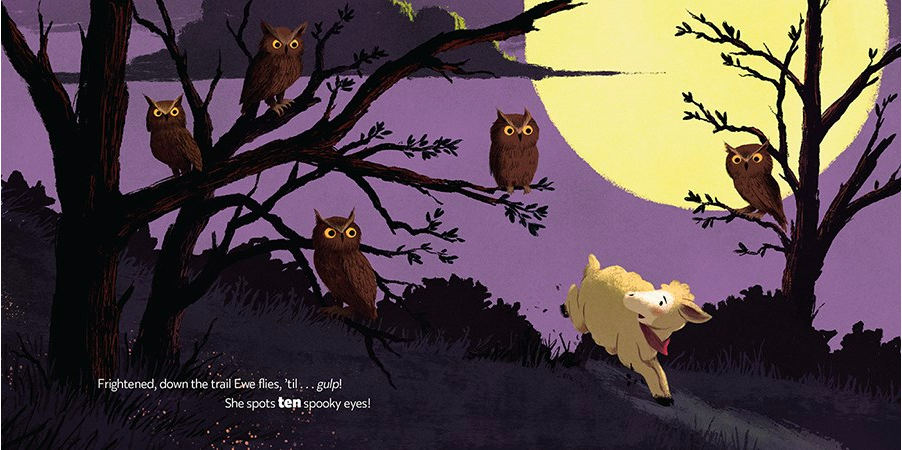
Shepherd whistles for Little Ewe to return to the flock, and she starts on her way but then she spies sparrows dining on figs and decides to join this different flock for a tasty treat. Suddenly, though, as the sun sets, nine badgers discover the figs and take them away from Little Ewe. In the dark, Little Ewe lopes down the path and is frightened by the “ten spooky eyes” of the owls in the trees.
Image copyright Tommy Doyle, 2021, text copyright Laura Sassi, 2021. Courtesy of Beaming Books.
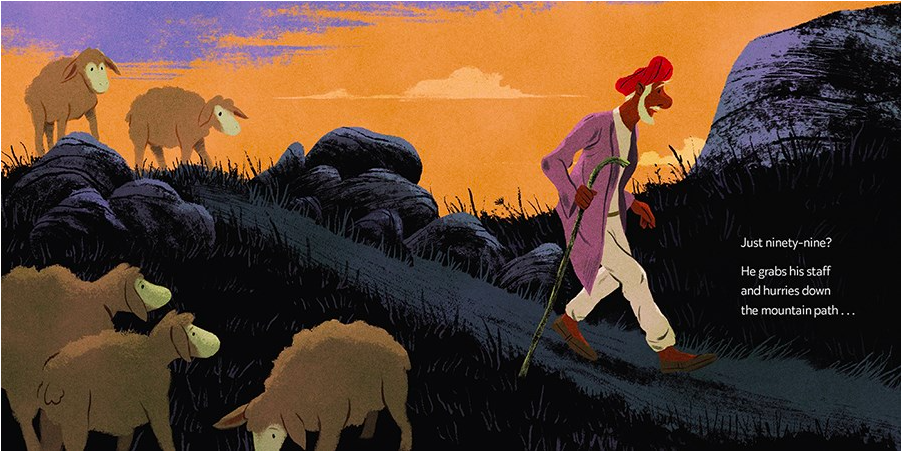
All alone, lost, and hungry, Little Ewe “wishes she’d listened when / Shepherd called her in the glen.” Screeching bats fly overhead, making her cry. At the same time, Shepherd is counting “his flock with love” and realizes one is missing. He jumps up and heads down the mountain path right to where Little Ewe waits, shivering and bleating. He lifts her into his arms and gives her a hug. He takes her home where the sheep “all gather round. / The shepherd’s lamb, / once lost . . . is found!”
Image copyright Tommy Doyle, 2021, text copyright Laura Sassi, 2021. Courtesy of Beaming Books.
Laura Sassi’s gentle and poignant story combines counting from one to twelve with the reassurance of constant love. Like the little ones reading the story, Little Ewe is curious and adventurous, but as she strays farther away and darkness falls, she longs to be home. Of course, the shepherd won’t leave his lamb behind and, knowing just where to look, he comes to find her. Sassi’s perfect rhymes and jaunty rhythm invite young children to join in counting and reading. The nighttime scenes are not too scary while they offer assurance that when little ones feel frightened, uncertain, or alone, they are still under a watchful eye. Little Ewe can be read as a retelling of the Biblical parable of the Good Shepherd and God’s ever-present love or as a story of the enduring love of a parent or caregiver.
Tommy Doyle’s warm and adorable images will delight little ones as they count from one to twelve with Little Ewe as she explores the meadow, stream, and hillside. Kids will love pointing out these easily discovered images again and again. Doyle’s Shepherd is kind and caring, and the look of love on his face as he cradles rescued Little Ewe will be familiar comfort to young readers. The joy depicted when Little Ewe reunites with her flock shows the happiness of any family when all its members are together.
A sweet and comforting story that young readers will want to hear again and again, Little Ewe: The Story of One Lost Sheep would make a tender addition to any child’s bookshelf as well as for school, church, and public library collections.
Ages 3 – 5
Beaming Books, 2021 | ISBN 978-1506464701
Discover more about Laura Sassi and her books on her website.
To learn more about Tommy Doyle, his books, and his art, visit his website.
Little Ewe: The Story of One Lost Sheep Giveaway
I’m thrilled to be teaming with Beaming Books in a giveaway of
One (1) copy of Little Ewe: The Story of One Lost Sheep, written by Laura Sassi and illustrated by Tommy Doyle
This giveaway is open from October 30 to November 4 and ends at 8:00 p.m. EST.
A winner will be chosen on November 5.
Prizing provided by Beaming Books
Giveaway open to U.S. addresses only | No Giveaway Accounts
Hug a Sheep Day Activity
Courtesy of Laura Sassi (laurasassitales.wordpress.com)
Make a Little Lamb Resting Box and Play a Game!
by Laura Sassi
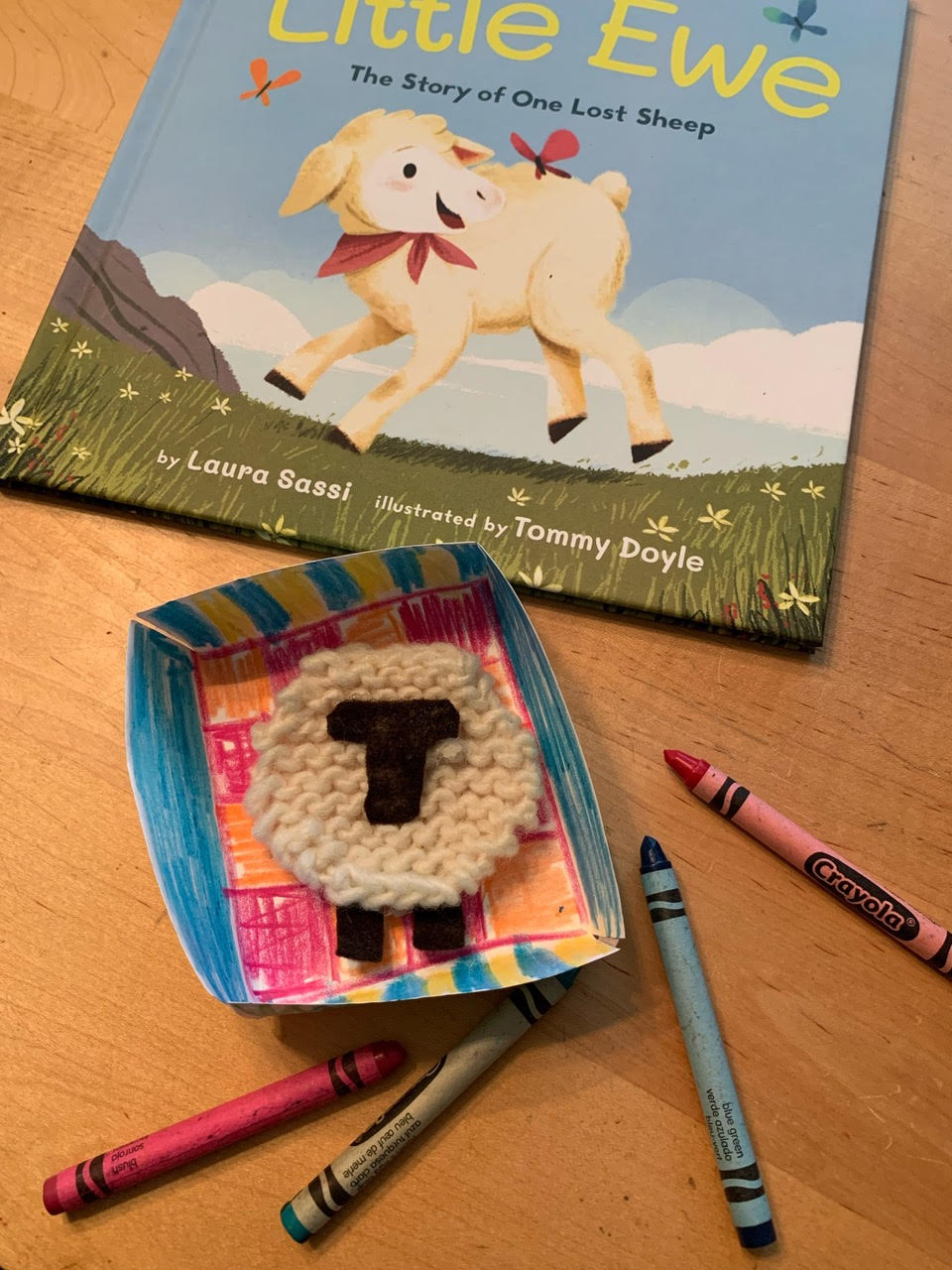
Read Little Ewe, thengrab a little lamb toy (or make your own from felt or fleece, by painting a rock, or by knitting one using this Little Ewe Pattern). Then play a game of hide and seek with your little lamb. When you are finished playing, give your little lamb a hug (since it is Hug A Sheep Day!), then let him/her rest in this cozy resting box.
To make a cozy resting box, you will need
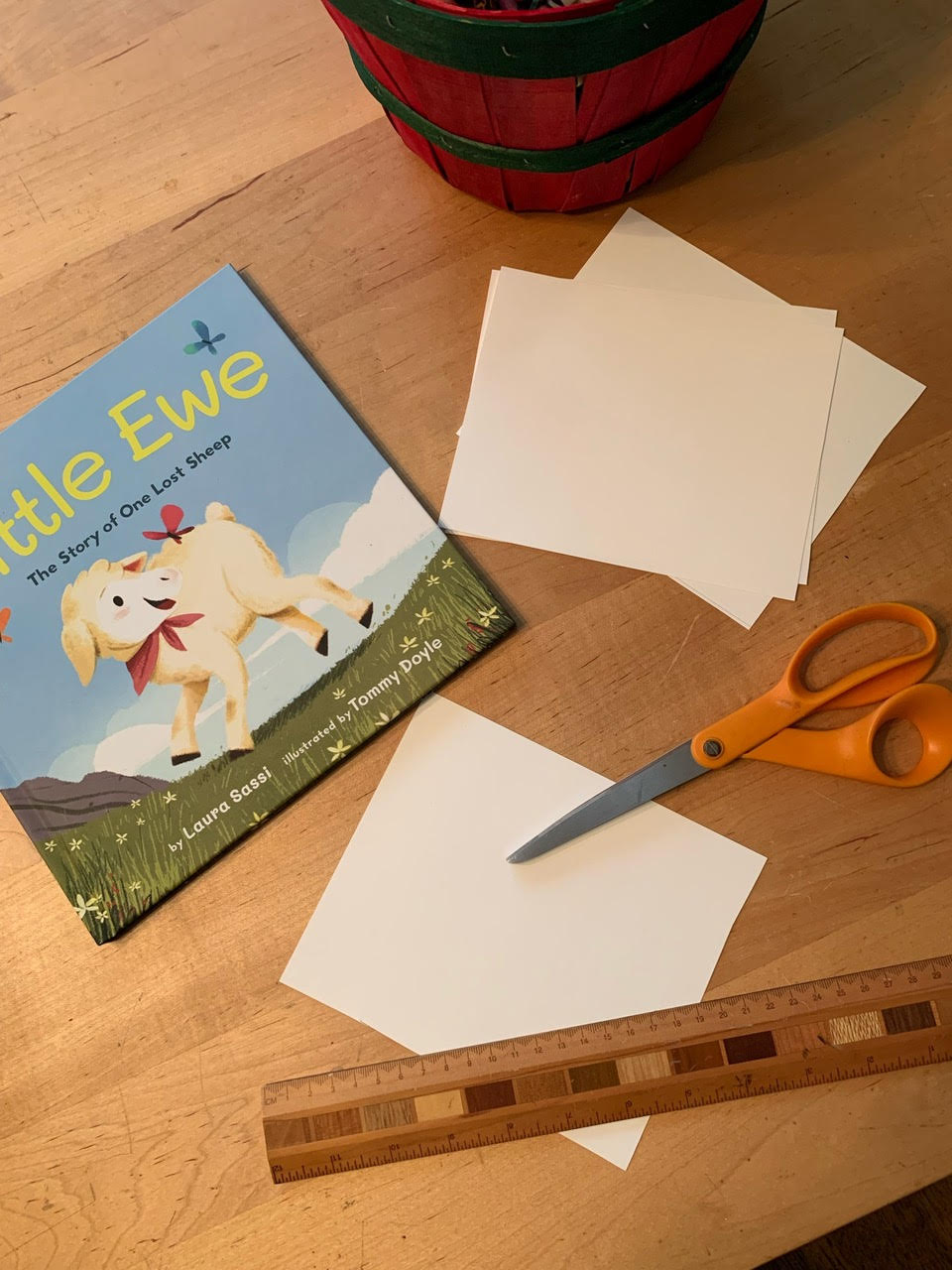
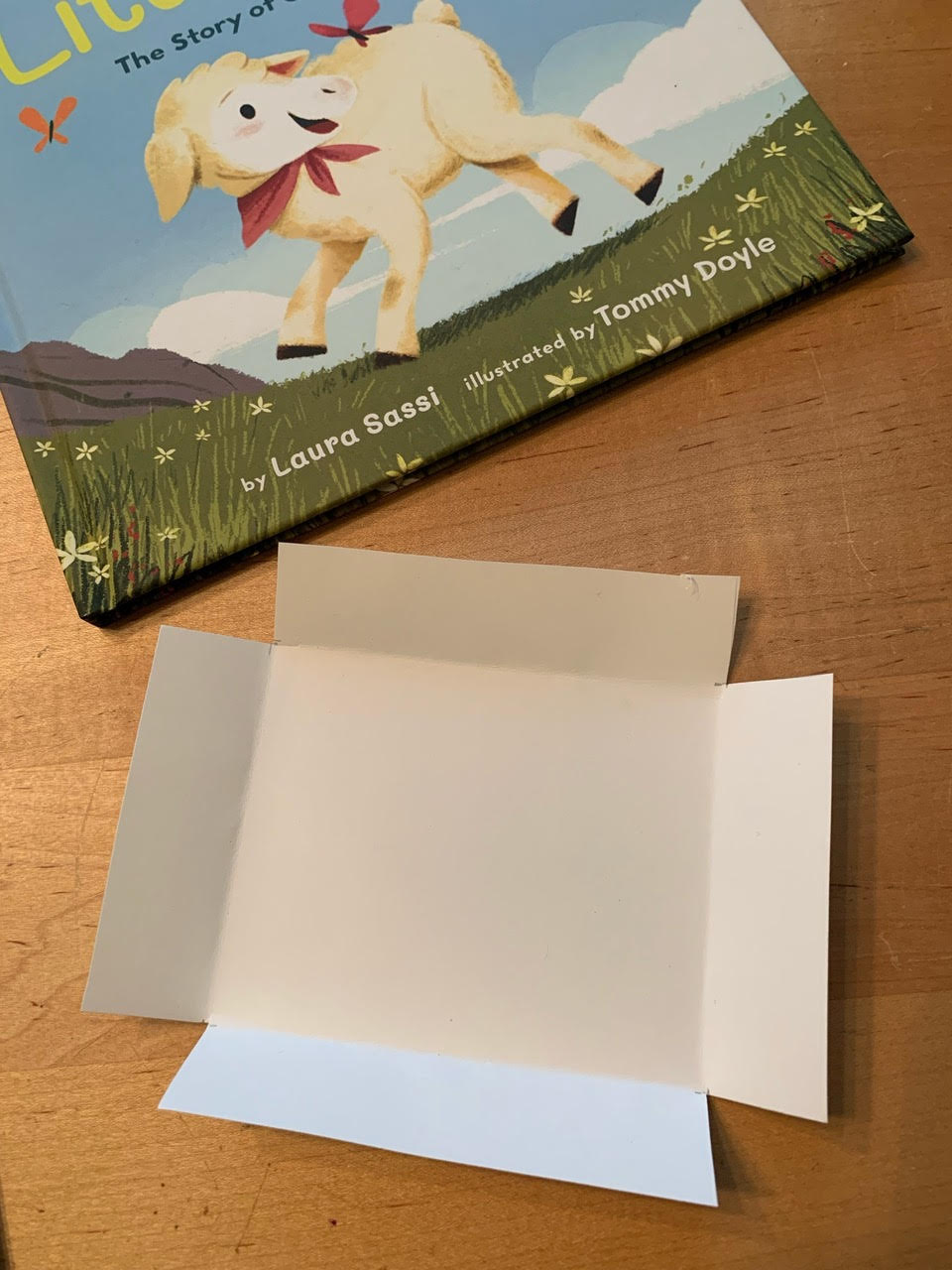
a precut piece heavy paper or light card board measuring approximately 5 1/2 inches by 6 1/2 inches with four 1-inch deep notches cut from each corner, as shown.
crayons or markers
clear tape
Directions
Fold the sides of the box so your child can see what the finished shape will be.
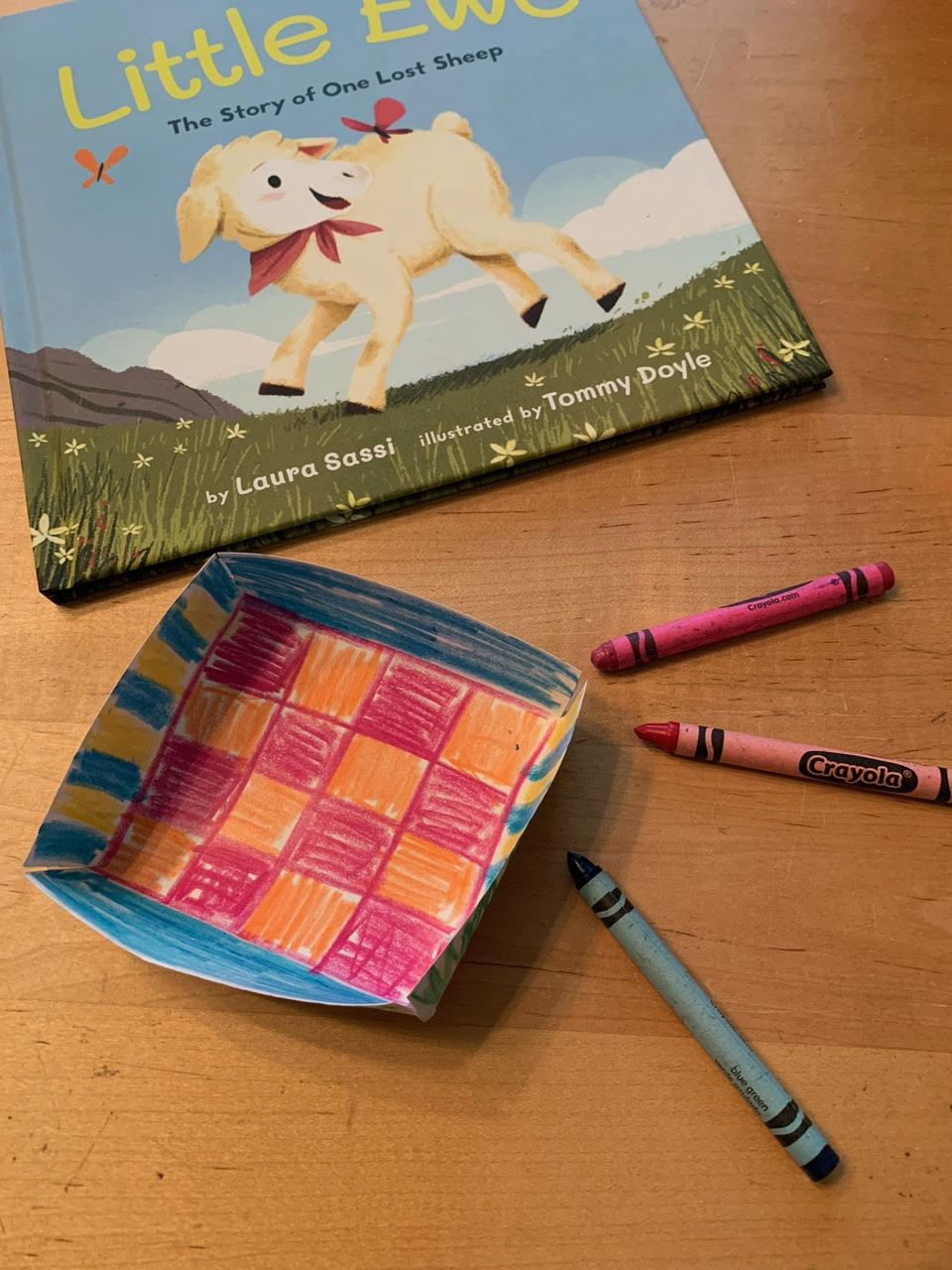
Have your child decorate the inside and outside of the box any way they want. (Ex.: I made my outside look like grass and my inside like a cozy quilt.)
Finish the box by taping the four corners up using clear tape.
To Play
Take turns hiding the little lamb. Play as many rounds of hide-and-seek as desired. After playing, let the lamb take a rest in the cozy resting box you have made. Then read your lamb a sheep-themed story like … Little Ewe!
You can find Little Ewe: The Story of One Lost Sheep at these booksellers
Ellen Mayer is a writer with a background in early childhood and parent education. She has worked as a researcher at Harvard’s Graduate School of Education, studying family engagement in children’s learning. She has also worked as an early literacy home visitor with a diverse community of families, supporting young children in early language development through book sharing and play. Ellen held a writing fellowship for Math Picture Book Authors, from the Heising-Simons Foundation, and is a visiting author with the Somerville Family Learning Collaborative of the Somerville, MA Public Schools. Her books include picture books Rosa’s Very Big Job and Cake Day as well as her Small Talk Books series, which includes A Fish to Feed, Red Socks, Clean Up, Up, Up, Banana for Two, and Twinkle, Twinkle Diaper You. Ellen writes her children’s books to entertain and educate both children and the adults who read to them. She holds an M.Phil. in Sociology from Columbia University.
You can discover more about Ellen Mayer and her books as well as activities for kids to accompany all of her books on her website. You can also connect with Ellen on Facebook and Twitter.
Hi Ellen! It’s so great to have you join in on my summer interviews, especially because this is a really exciting time for you! Your books for the youngest readers consistently make “Best of” lists and win awards. Your work before becoming an author centered around families and literacy and your books really show the kinds of caring connections that build strong bonds and learning skills. The two careers seem perfect for you, who I know as someone who is a wonderful friend and loves to bring people together. As summer winds down, I wonder if you’d share a special childhood memory with readers.
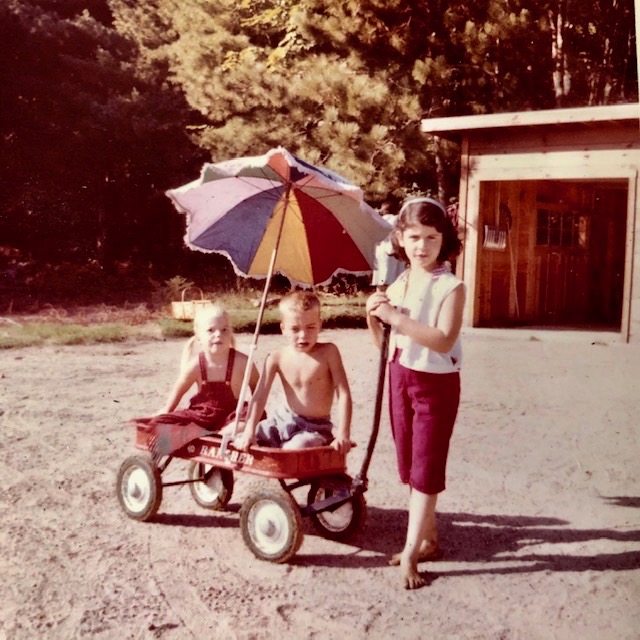
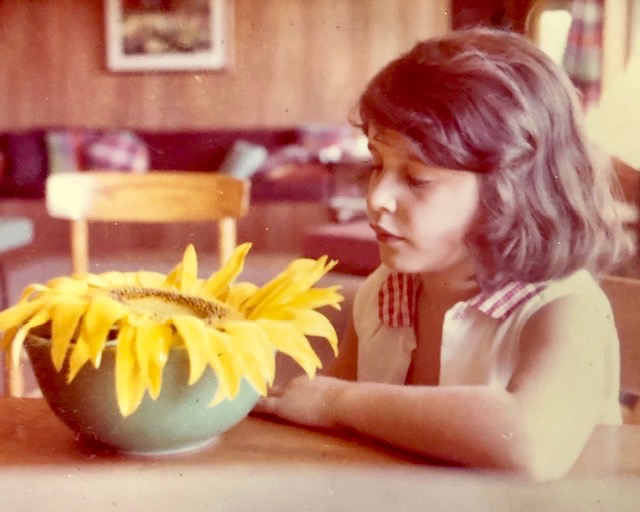
One of my favorite memories is pulling a wagon with real human cargo the length of a long dirt driveway through the deep woods, wearing no shoes, during a hot New Hampshire summer. That was one of the most gratifying summer things this seven-year-old did!
Each summer my family and another spent our vacation in New Hampshire in two houses on the same road. We were brought together because our mothers were friends from high school and our fathers were friends from college. Between our families there were five children ranging in age from one to seven, and I was the oldest. Halfway down the road, the woods broke to a clearing where my father grew sunflowers. I was in charge of managing and operating round-trip wagon rides to “Sunflower Stop.” When we reached Sun Flower Stop, my passengers invariably alighted to stop and look up in awe at the sunflowers, and I got a much-needed rest.
When it was time for my family to return home to New York City and our friends to Boston after three long summer vacation months, I pulled my wagon into the back of the garage until the next summer. I don’t remember whether I got to take this sunflower back with me, but I like to think that I did.
What a fun and fantastic story! Those must have been amazing summers. Thanks so much for sharing that special memory with us!
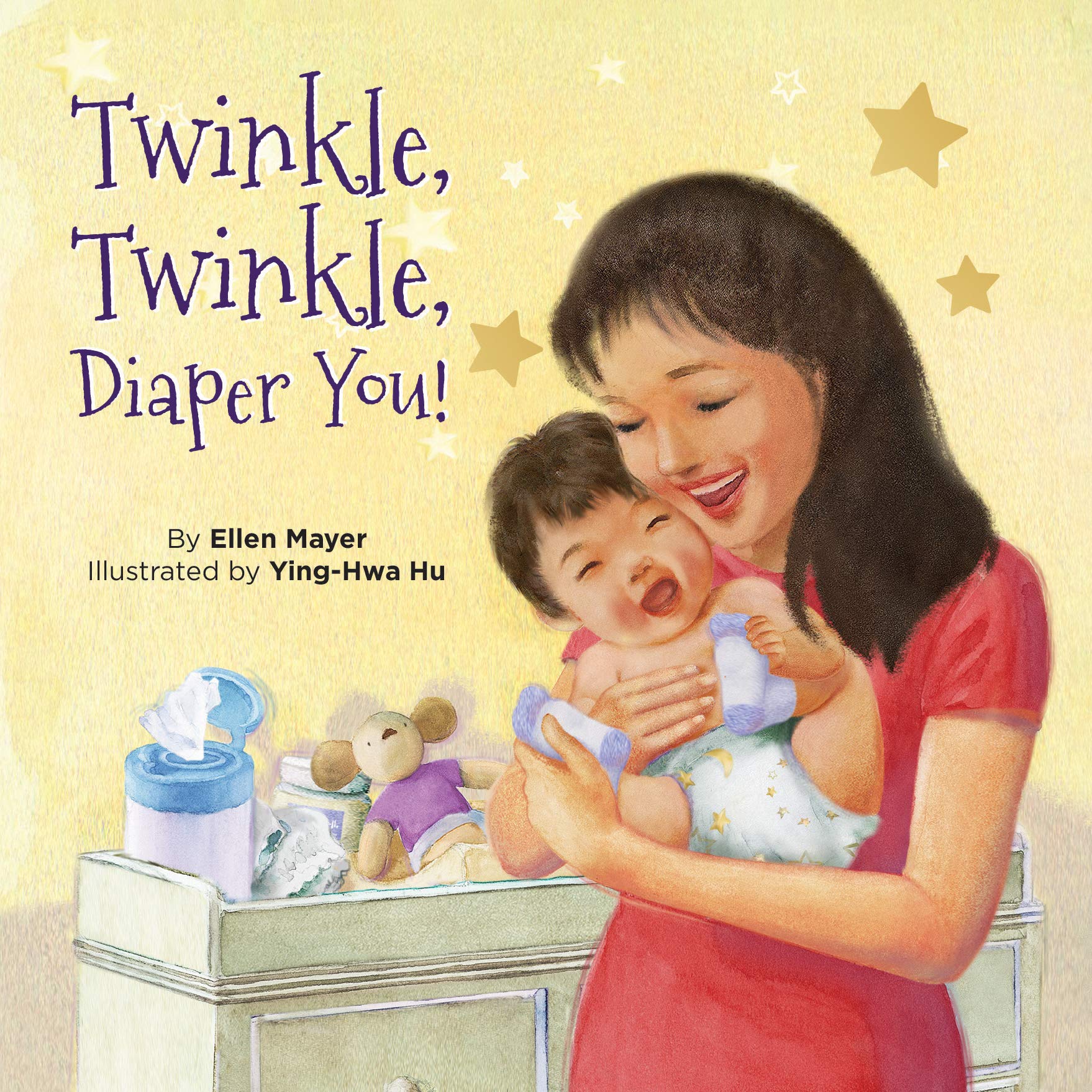
I’m excited to get to your books because your latest board book, Twinkle, Twinkle Diaper You!, recently received a national award from the Carnegie Library, which named it one of the Best Books for Babies for 2021! Carnegie Library chose the books on their list because the librarians “believe they offer something special to babies and their grown-ups and will delight and engage babies age birth through 18 months and the adults who care for them.” This is a great description of your Small Talk Books®, which always offer ways for adults and kids to play and learn together while looking forward to a bright future.
Written by Ellen Mayer | Illustrated by Ying-Hwa Hu
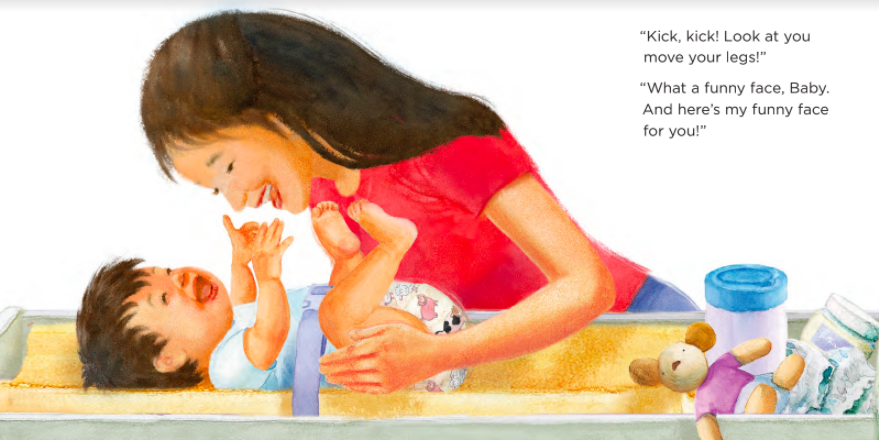
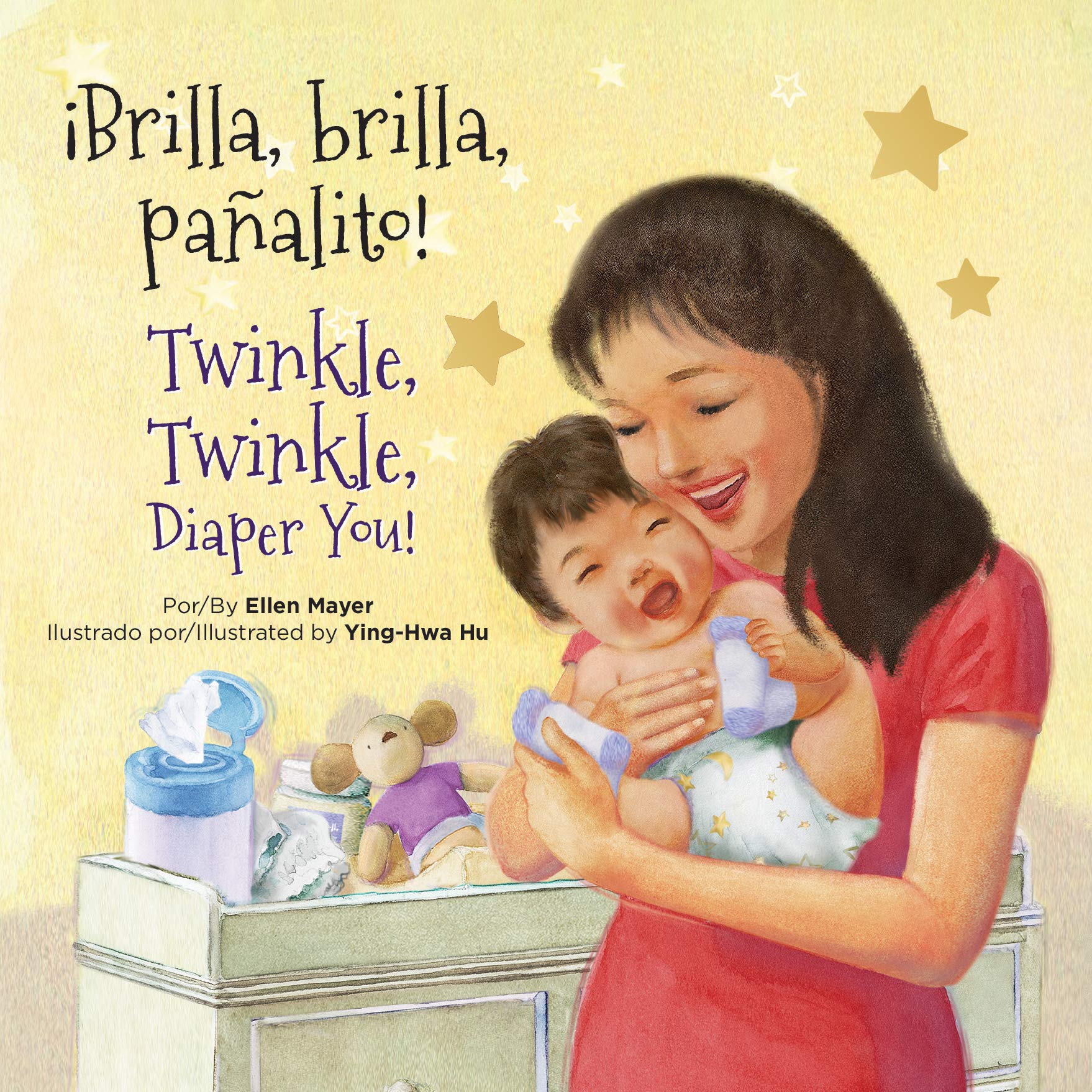
Ellen Mayer’s newest addition to her Small Talk Books® series is a charming story that little ones will eagerly respond to and which can help parents turn diaper time into a joyful experience full of opportunities for language and literacy development. Mayer’s clever take on the kid-favorite Twinkle, Twinkle, Little Star, is infectious and fun for adults to sing while reading with their baby and while diapering. Sweet endearments, playful words, and even a tummy kiss realistically reflect the loving relationship parents and caregivers share with their little ones.
Image copyright Ying-Hwa Hu, 2020, text copyright Ellen Mayer, 2020. Courtesy of Star Bright Books.
Children love and respond positively to routine, and the frequency of diaper changing makes this one of babies’ first familiar experiences. Adding parental conversation, songs, smiles, and mirroring of the child’s sounds, expressions, and motions to the dedicated time diapering takes creates a rich educational environment for baby to listen to caregivers and begin the basic foundations of language learning.
Image copyright Ying-Hwa Hu, 2020, text copyright Ellen Mayer, 2020. Courtesy of Star Bright Books.
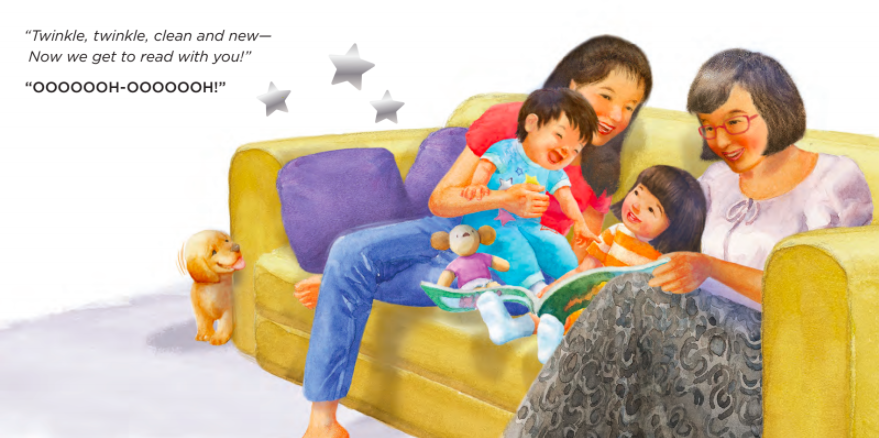
Ying-Hwa Hu’s bright illustrations, sprinkled with silver stars that glitter on the page, will delight little readers. Her clean lines and soothing color palette create a pleasing backdrop to familiar details that give adults plenty to point out and name while reading. The centerpiece of each page is the relationship between mother and child and reflects actions, such as making eye and physical contact, that enhance a child’s learning and self-confidence. Hu’s adorable baby giggles and belly laughs as Mama smiles and talks lovingly while changing and then cuddling her little one. The appearance of the baby’s big sister (perhaps still using diapers herself, or recently transitioned to underwear), makes this a book that will appeal to a wide range of ages. The final spread of the baby’s family reading and cuddling together is heartwarming.
In ¡Brilla, brilla, pañalito! / Twinkle, Twinkle, Diaper You! the story is charmingly translated into Spanish by Eida Del Risco. Spanish verses share two-page spreads with the English translation, providing a rich reading experience for native Spanish speakers, bilingual families, and those parents interested in teaching their children Spanish.
Image copyright Ying-Hwa Hu, 2020, text copyright Ellen Mayer, 2020. Courtesy of Star Bright Books.
A Note for Parents, Grandparents, and Caregivers by Dr. Betty Bardige, an expert on language and literacy development in young children, is also included in each book. The note reveals the important connection between talking, singing, and playing with babies and their language learning. Bardige goes on to provide tips for interacting with your child and following their cues as well as for how to share this book with little ones.
Ages Birth – 3
Star Bright Books, 2020 | ISBN 978-1595728937 (English edition) | ISBN 978-1595728944 (Spanish/English bilingual edition)
Read my full review of Twinkle, Twinkle, Diaper You!here.
You can find Twinkle, Twinkle, Diaper You! at these booksellers
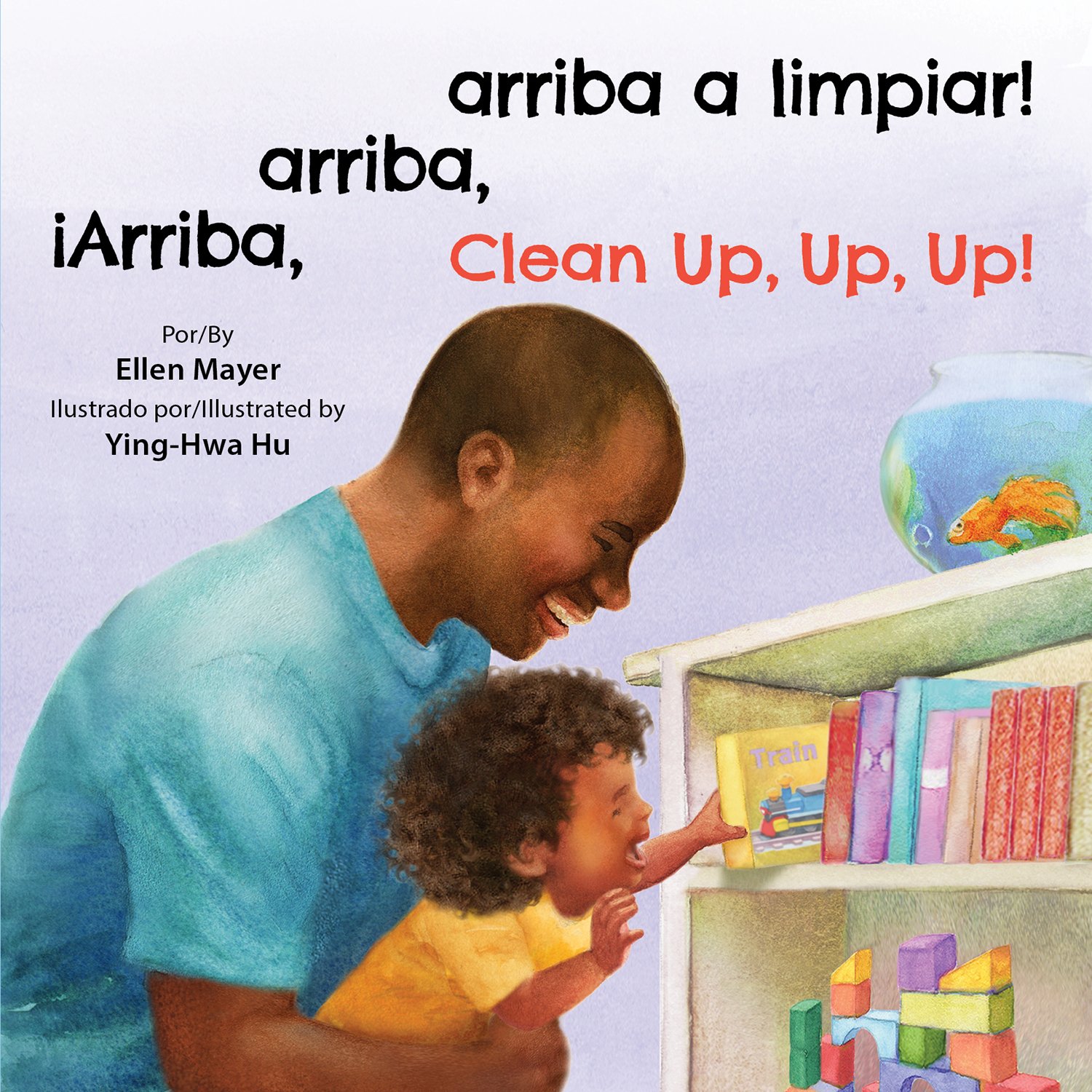
¡Arriba, arriba, arriba a limpiar!/Clean Up, Up, Up!
Written by Ellen Mayer | Illustrated by Ying-Hwa Hu
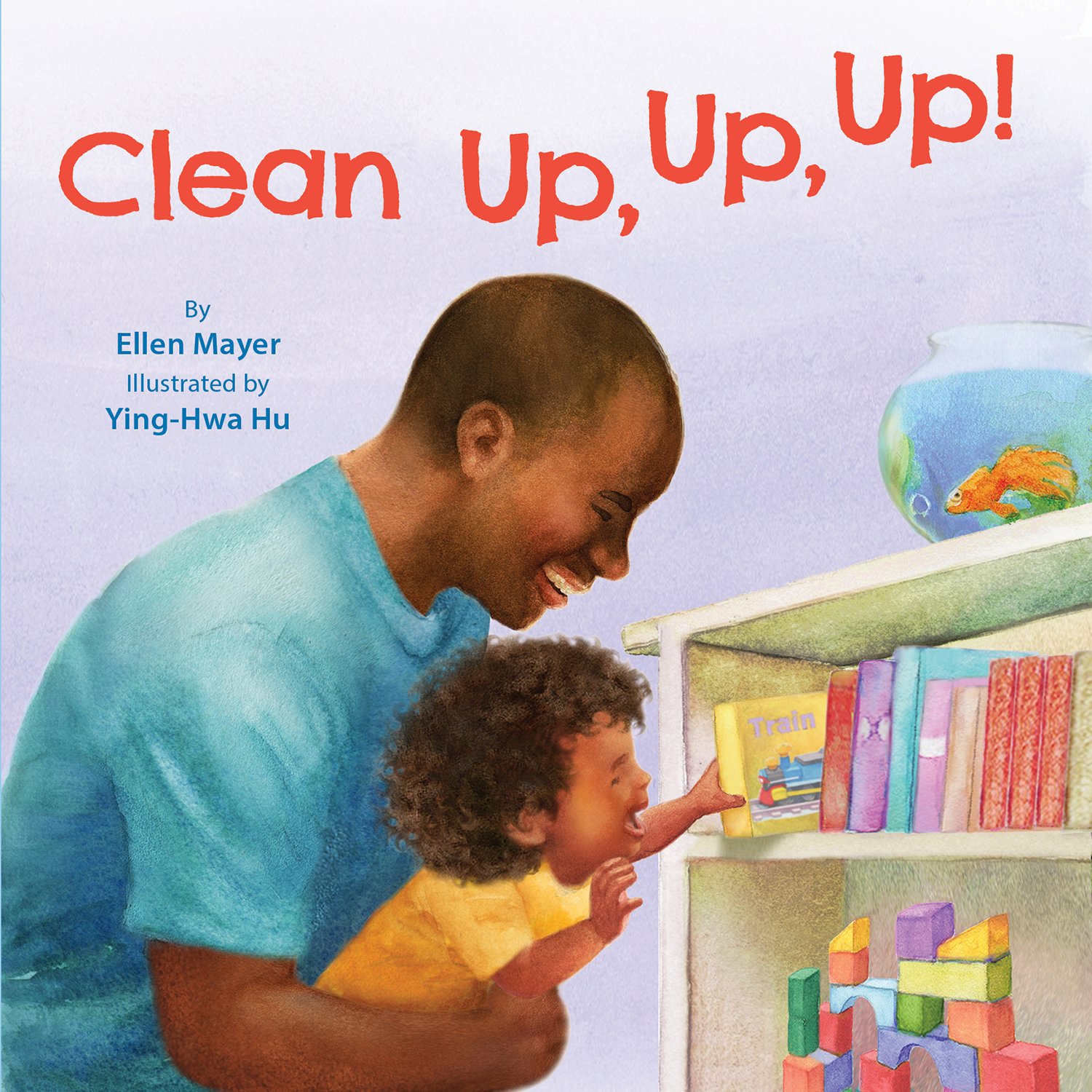
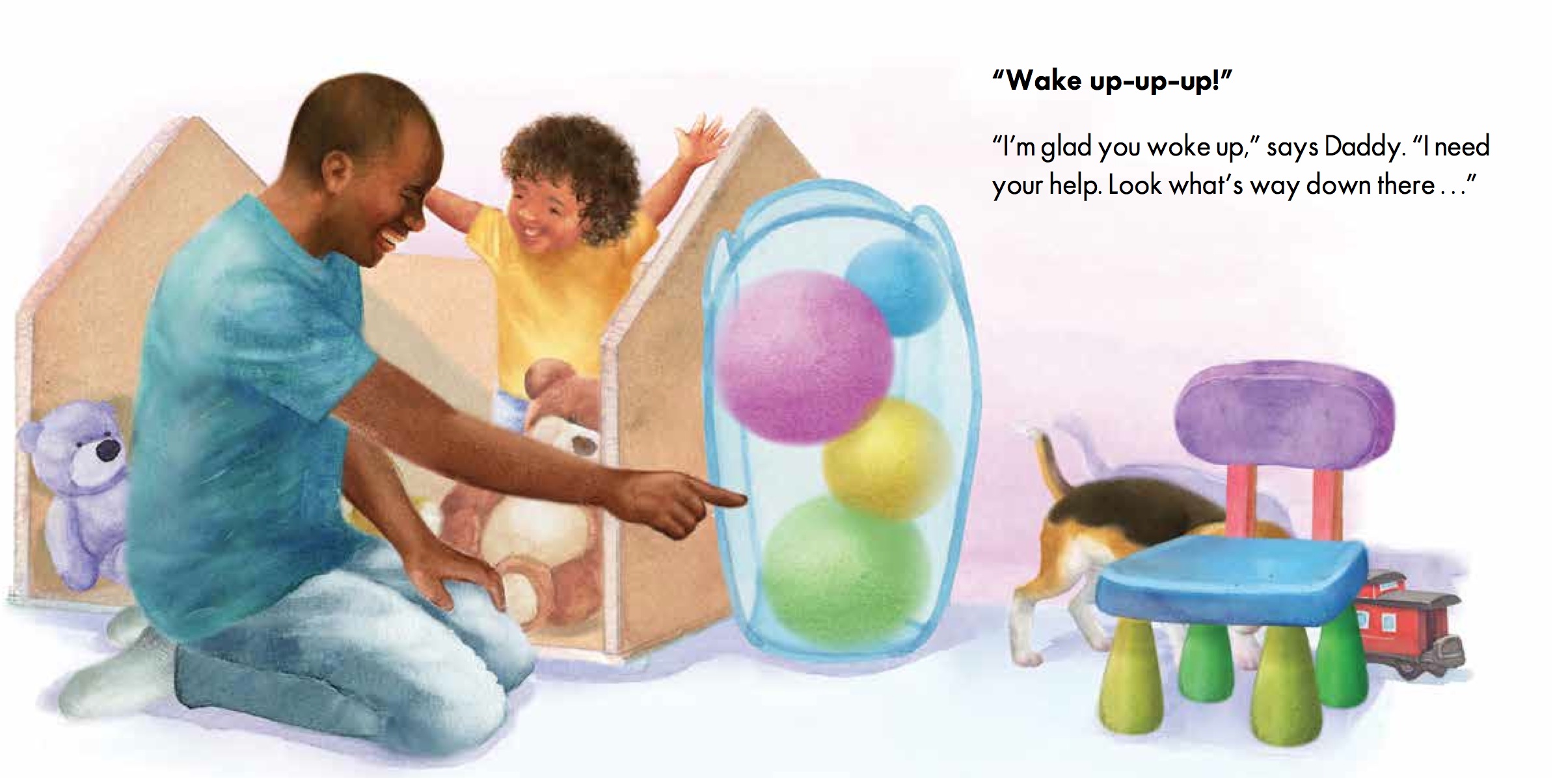
In Clean Up Up Up!, the concept of spatial relations is organically introduced to toddlers through the motions and words used while putting items in their proper place, stepping up on a stool to use something out of the child’s reach, and even when eating. Research shows that talking with children at all ages about math concepts such as positions and locations improves their understanding and leads to better success in school and beyond.
Image copyright Ying-Hwa Hu, 2018, text copyright Ellen Mayer, 2018. Courtesy of Star Bright Books.
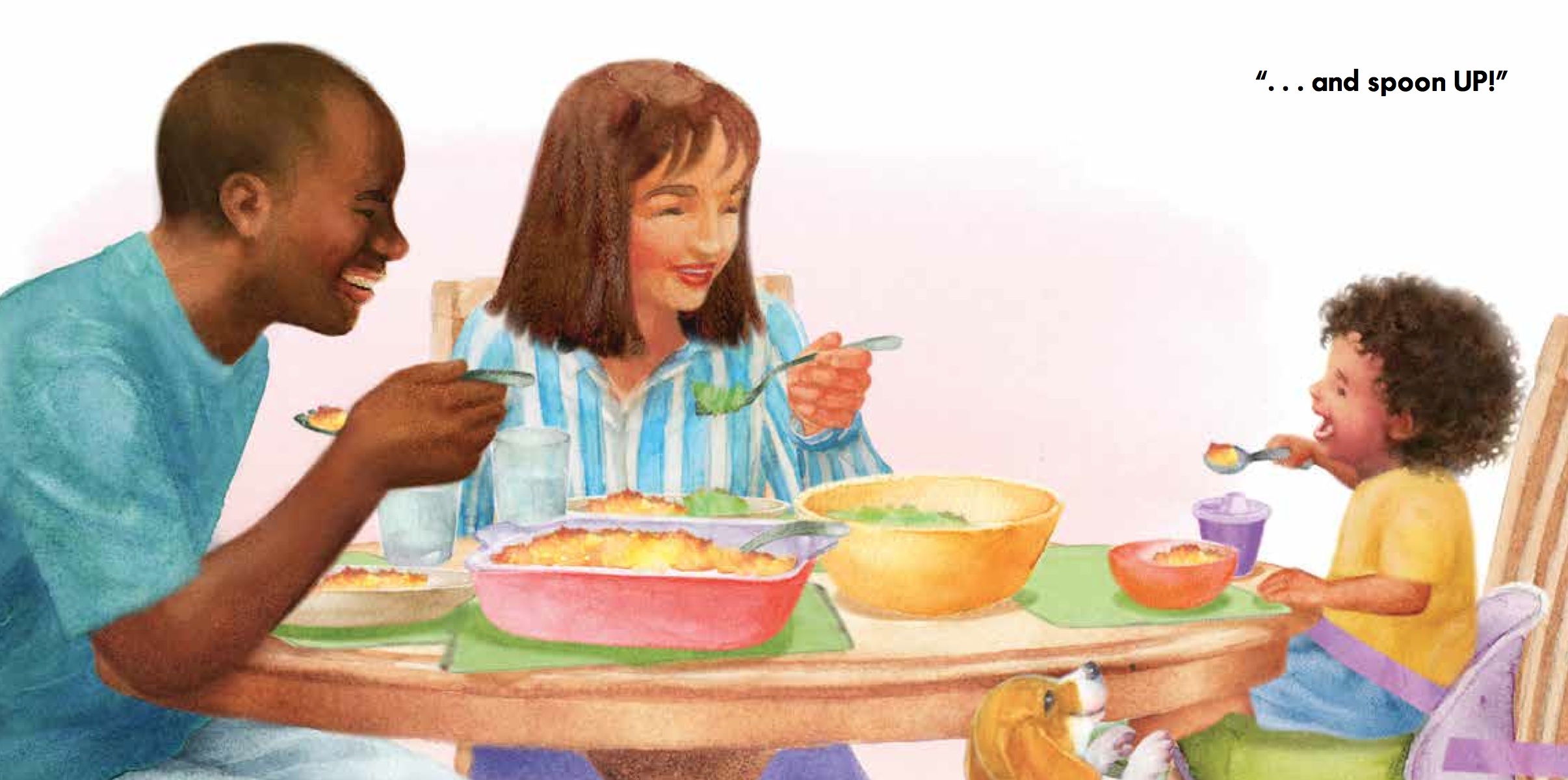
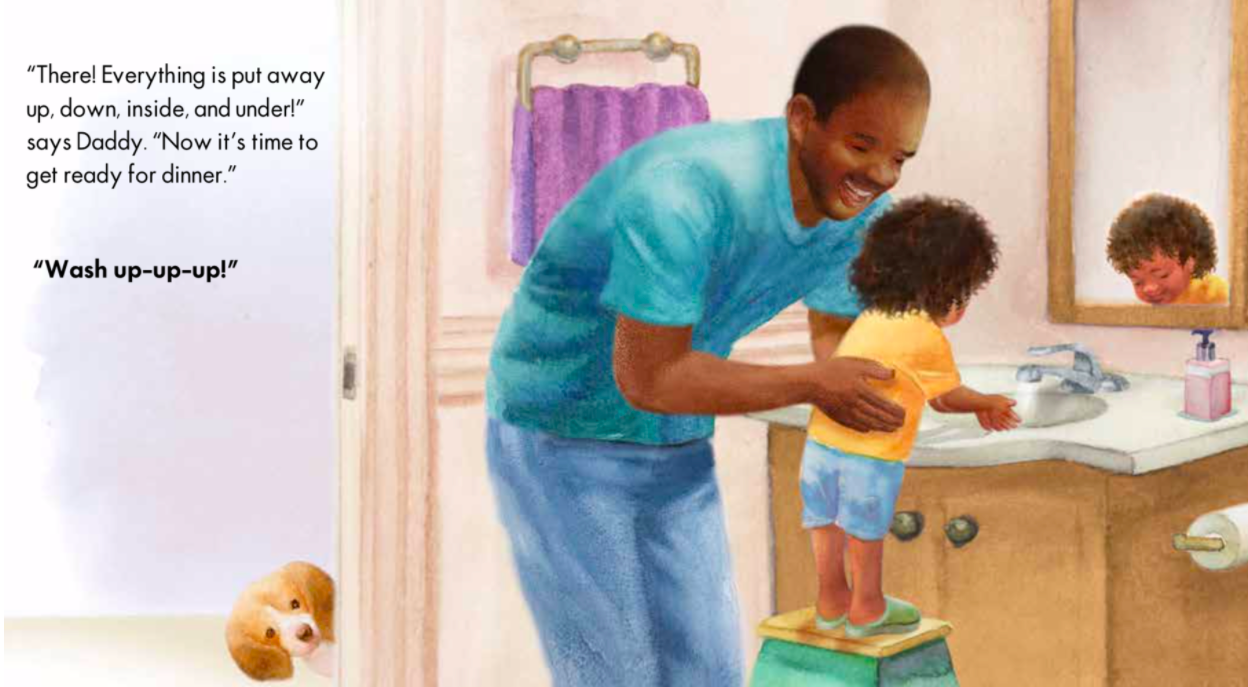
The loving relationship between father and child in Mayer’s early language development book A Fish to Feed, is expanded on here as the same interracial family enjoys clean-up and dinner time. The engaging dialogue between Daddy, Mommy, and their toddler will captivate young readers and inspire adults to continue the story in their own daily lives.
Image copyright Ying-Hwa Hu, 2018, text copyright Ellen Mayer, 2018. Courtesy of Star Bright Books.
Ying-Hwa Hu’s adorable toddler giggles and plays while soaking up the rich language of positions and locations that the father clearly points to while cleaning up. Little readers will be charmed by the enthusiastic child and the little puppy that follows along. Images of books, toys, washing up, and dinnertime all demonstrate the positions and locations referred to in the story, while other details provide an opportunity for adults and children to expand on the text (the fish from A Fish to Feed swims inside its bowl and balls sit inside a bin, for example). Hu’s vivid colors as well as the smiles and enthusiasm with which Daddy, Mommy, and their child interact make Clean Up, Up, Up! a feel-great educational read.
A note for parents, grandparents, and caregivers from childhood education expert Susan C. Levine on how they can find opportunities to talk about spatial relations during everyday activities is included. Gender neutral clothing and hairstyle as well as an absence of pronouns makes this a universal story.
Clean Up, Up, Up! is also available in a bilingual Spanish/English edition: ¡Arriba, arriba, arriba a limpiar!/Clean Up, Up, Up! translated byAudrey Martinez-Gudapakkam and Dr. Sabrina De Los Santos
Ages 1 – 3
Star Bright Books, 2018 | ISBN 978-1595728012 (English edition) | ISBN 978-1595727589 (Spanish/English edition)
Discover more aboutEllen Mayerand her books on her website.
To learn more about Ying-Hwa Hu, her books, and her art, visit her website.
Image copyright Ying-Hwa Hu, 2018, text copyright Ellen Mayer, 2018. Courtesy of Star Bright Books.
Sing Along!
Adults will have fun sharing “Wash Up, Up, Up!,” a song inspired by the story, with little ones as they wash their hands! The lyrics are also available for download and printing. Listen and sing along here:
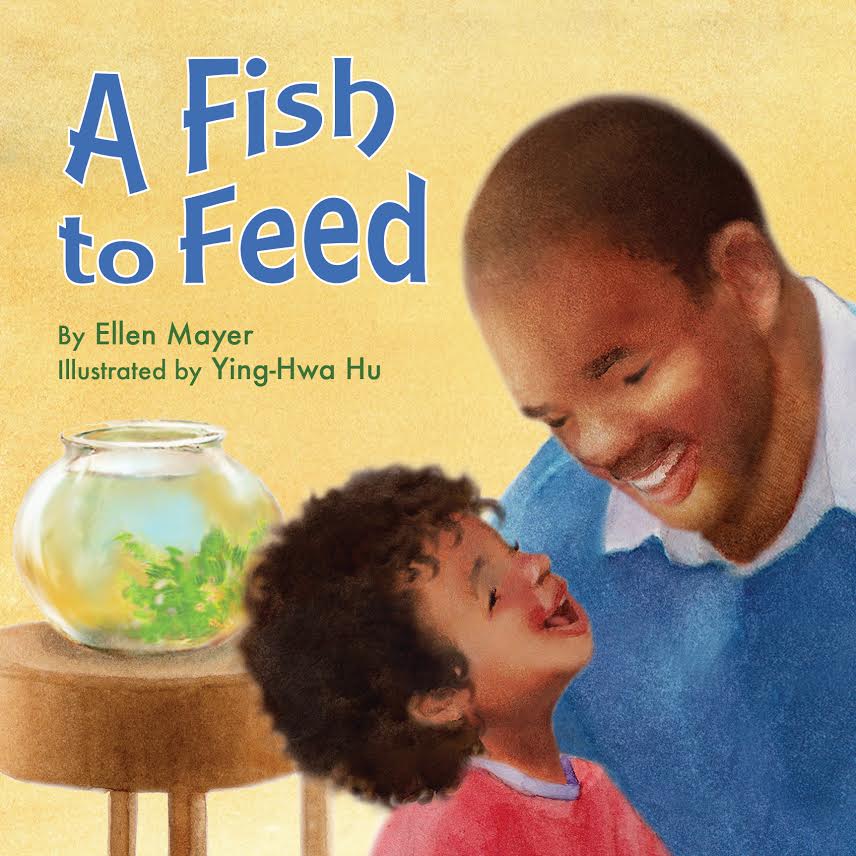
Written by Ellen Mayer | Illustrated by Ying-Hwa Hu
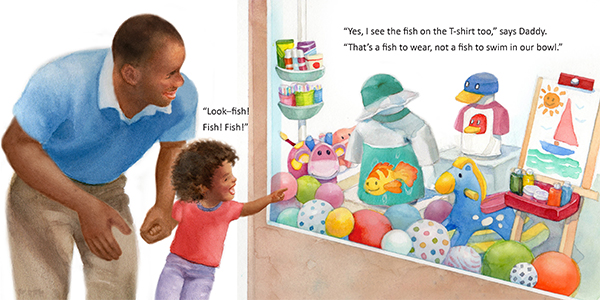
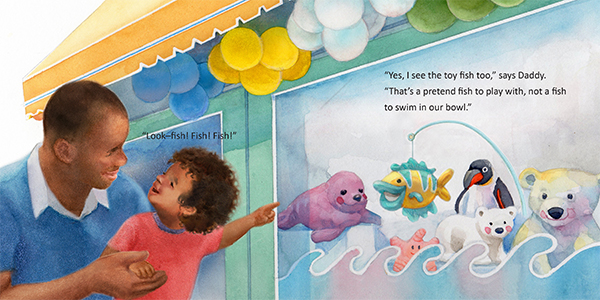
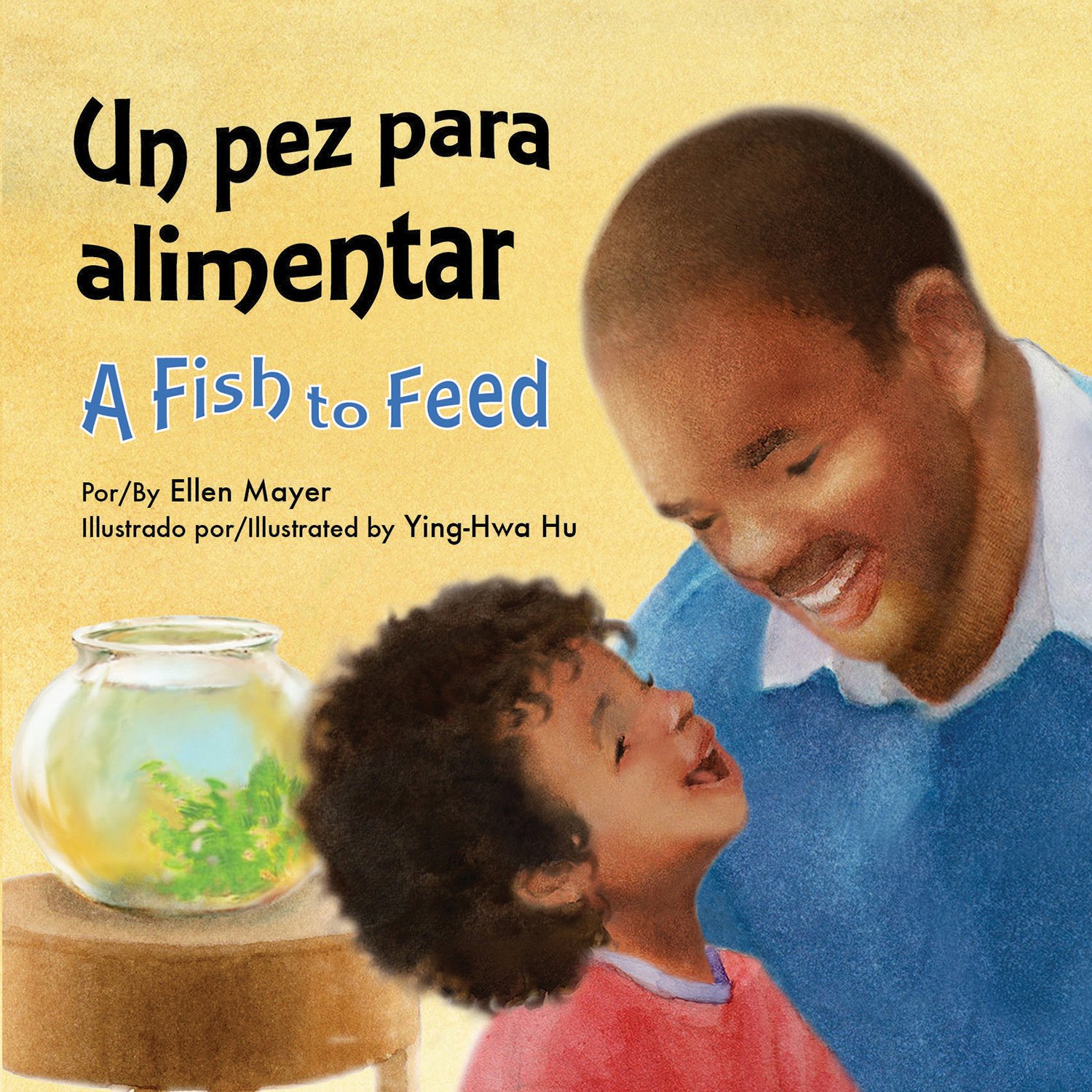
Dad plans a fun trip into town with his young child to buy a pet fish. He says, we will get “‘a fish to swim in our bowl. A fish we can look at and feed.’” The pair are excited to go together and have time to “‘walk…and talk.’” The two head out and soon pass a store. In the window the child sees a T-shirt with the picture of a fish on it and points. “‘Look—fish! Fish! Fish!’” Dad reinforces the observation using complete sentences that model conversation and increase his child’s vocabulary—“‘Yes, I see the fish on the T-shirt too.’” He further explains: “‘That’s a fish to wear, not a fish to swim in our bowl.’”
As Dad and his toddler visit other stores, the child finds more fish on a backpack, toys, and other items. When they get to the pet store, the child is excited to find a fish that swims. They take the goldfish home, where it swims happily in their bowl. They’ve found a pet they “‘can love and feed.’”
Image copyright Ying-Hwa Hu, text copyright Ellen Mayer. Courtesy of starbrightbooks.com
Ellen Mayer’s story of a dad and his child out for an afternoon together as they look for a pet to love offers adults and children a sweet way to spend time with one another. The story, set in the familiar environments of home and stores and revolving around a close parent-child relationship, will engage even the youngest readers. The back-and-forth conversation between Dad and his child as they shop models ways in which adults can follow a child’s lead while providing language and literacy development.
Image copyright Ying-Hwa Hu, text copyright Ellen Mayer. Courtesy of starbrightbooks.com
Ying-Hwa Hu’s illustrations are vibrant and joyful. When Dad bends down to be at eye-level with his toddler as they talk, the close bond between them is obvious in their smiling and laughing faces. The shops are full of colorful toys, clothes, backpacks, and other items that will capture kids’ attention. Spending time looking at each page allows adults and children to point at the various items, name them, and talk about them.
A Fish to Feed contains die-cut holes in the pages that kids will love peering through as they shop along on this adventure to find a special pet.
Ages Birth – 5
Star Bright Books, 2015 | ISBN 978-1595727077 (English edition) | ISBN 978-1595727589 (Spanish/English edition)
A Sneak Peek at the next Small Talk Books® Math Board Book, Yellow, Red, Green – GO!
The third book in the Small Talk Books® series (joining Banana for Two and Clean Up, Up, Up!) to focus on math talk, Yellow, Red, Green – GO! features the math of patterns for children ages 1-3 and welcomes back the interracial family from A Fish to Feed and Clean Up, Up, Up! In the story Mommy and her child bicycle through their neighborhood to Grandma’s house and, along the way, discover lots of patterns – from the traffic lights that each change from yellow, to red, and then to green – to the windows, lights, and doors on each of the row houses on Grandma’s block.
Yellow, Red, Green – GO!, illustrated by Ying-Hwa Hu, releases in Spring, 2022 in English as well as in a bilingual Spanish/English edition.
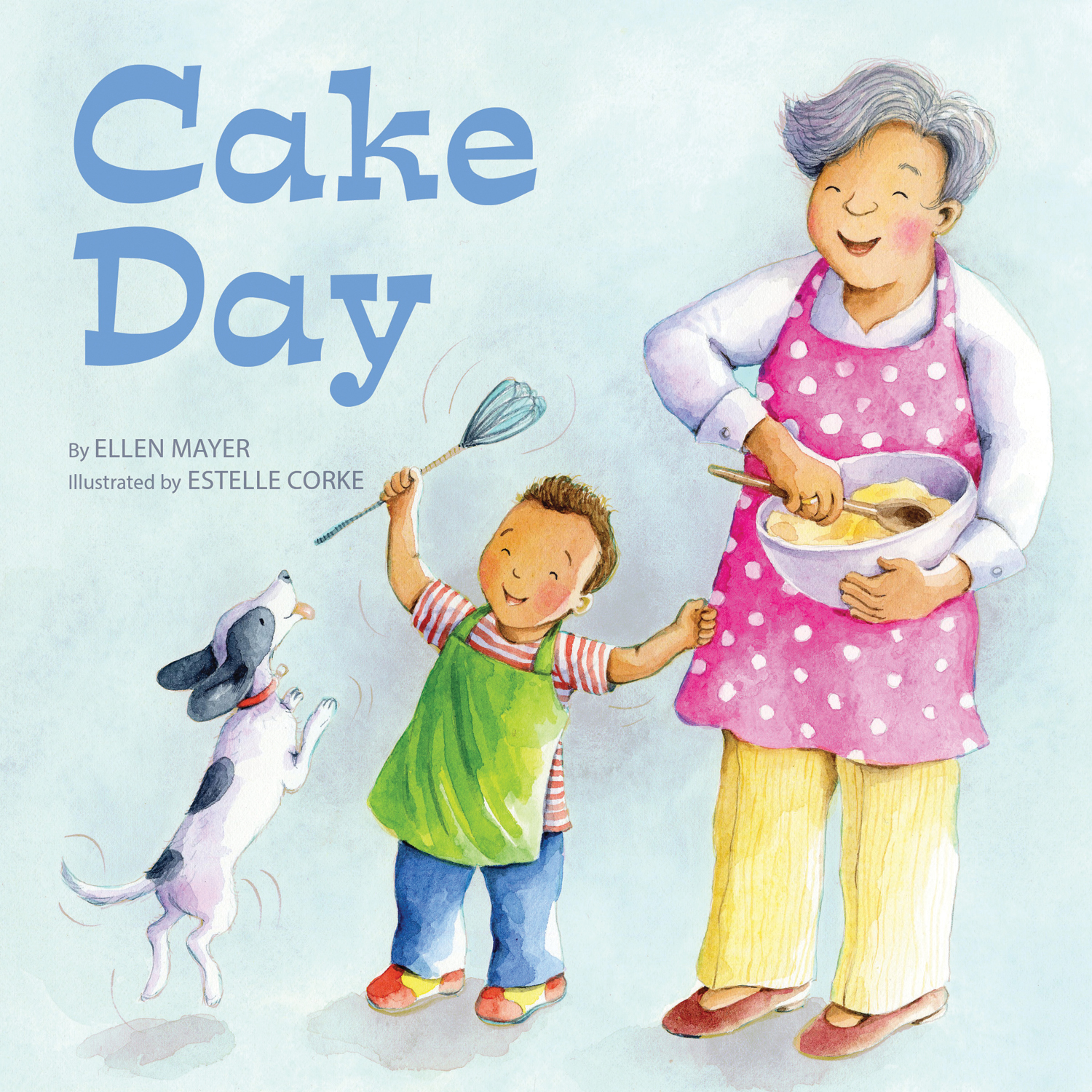
You can read a review of Cake Day and find a delicious recipe to make here.
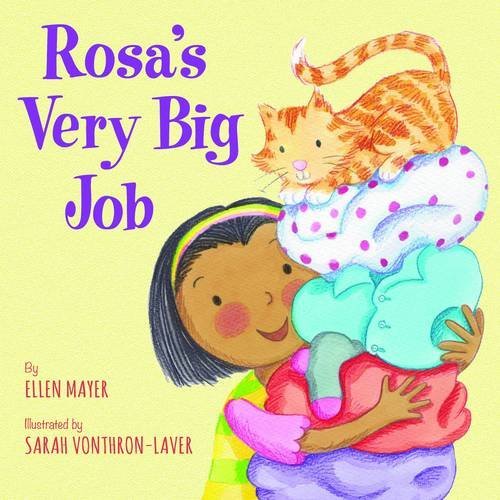
Find my review of Rosa’s Very Big Job and paper dolls of the characters plus clothes and accessories to download and print here.
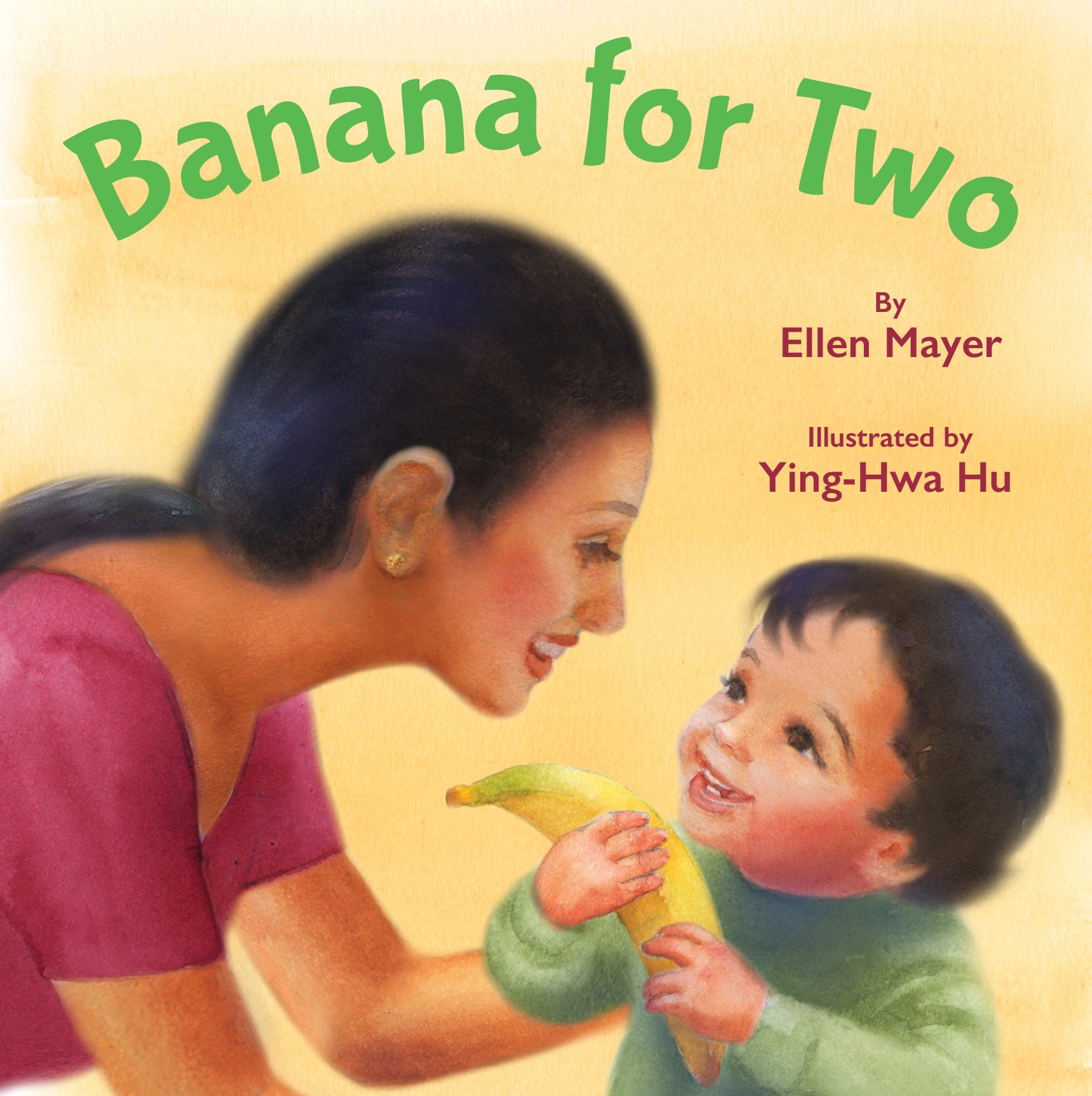
Read my full review of Banana for Two and find a fun shopping game to play with little ones here.
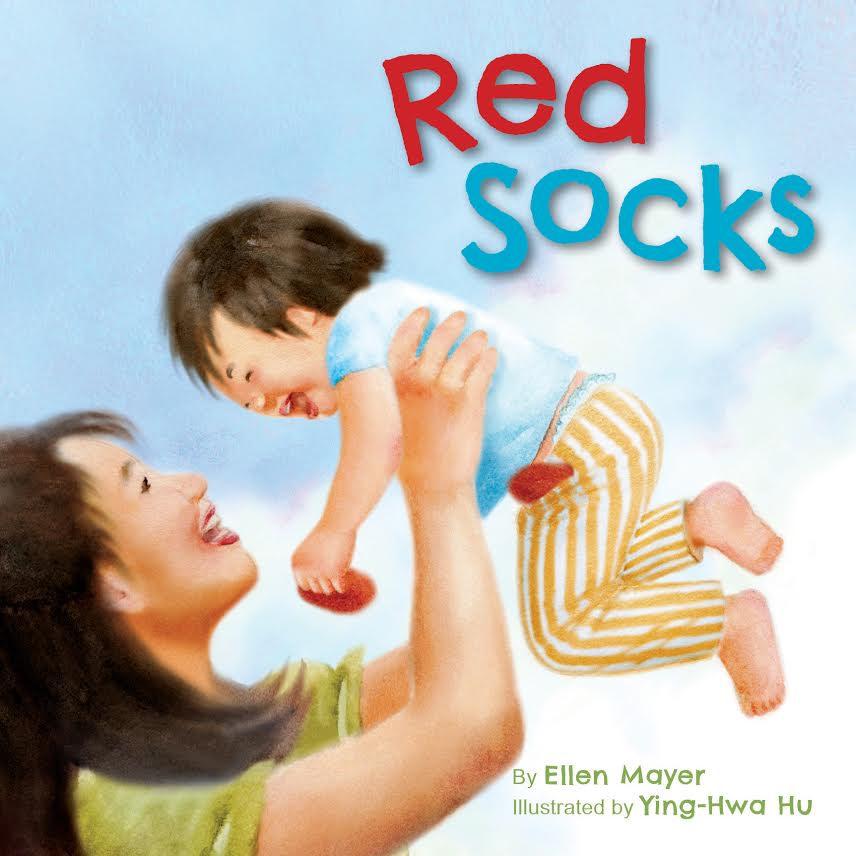
You’ll find my full review of Red Socks and a fun matching puzzle to do with little ones here.
Family Fun Month Activity
Come Inside! Playhouse
Kids love pretending with their toys in playhouses. With this craft you and your child can make a playhouse with recycled items and lots of imagination. While making the house, talk with your child about the building process using spatial relation words and ask for their ideas on what it should look like.
Once finished, you and your child can make up stories using words that use spatial relations as characters come in the house, go out of the house, peek in or out of a window, sit on the roof, wait under the window, sit next to a friend while having tea, and so much more!
Supplies
Cardboard box
Craft paint
Markers
Glue
Plus Recycled items, such as:
Bottle caps for door knobs,
Small boxes for a chimney
Use the cardboard cut from the windows to make shutters














 You can read a review of Cake Day and find a delicious recipe to make