November 4 – National Stress Awareness Day

celebrate-picture-books-picture-book-review-all-about-anxiety-cover

About the Holiday

National Stress Awareness Day was established by Carole Spiers, Chair of the International Stress Management Association, which provides employers with guidance on establishing company stress reduction programs and individuals with methods for looking after their health every day. The holiday aims to help people identify the stress factors in their life and learn how to reduce them. This year, of course, stress is high. Today’s holiday gives people an opportunity to assess how they and their family are handling stress and look for ways to manage it while adding positive changes to their life.

Thank you to Beaming Books for sending me copies of All About Anxiety and Crafting Calm: Art and Activities for Mindful Kids for review consideration. All opinions about the books are my own.

All About Anxiety

Written by Carrie Lewis | Illustrated by Sophia Touliatou


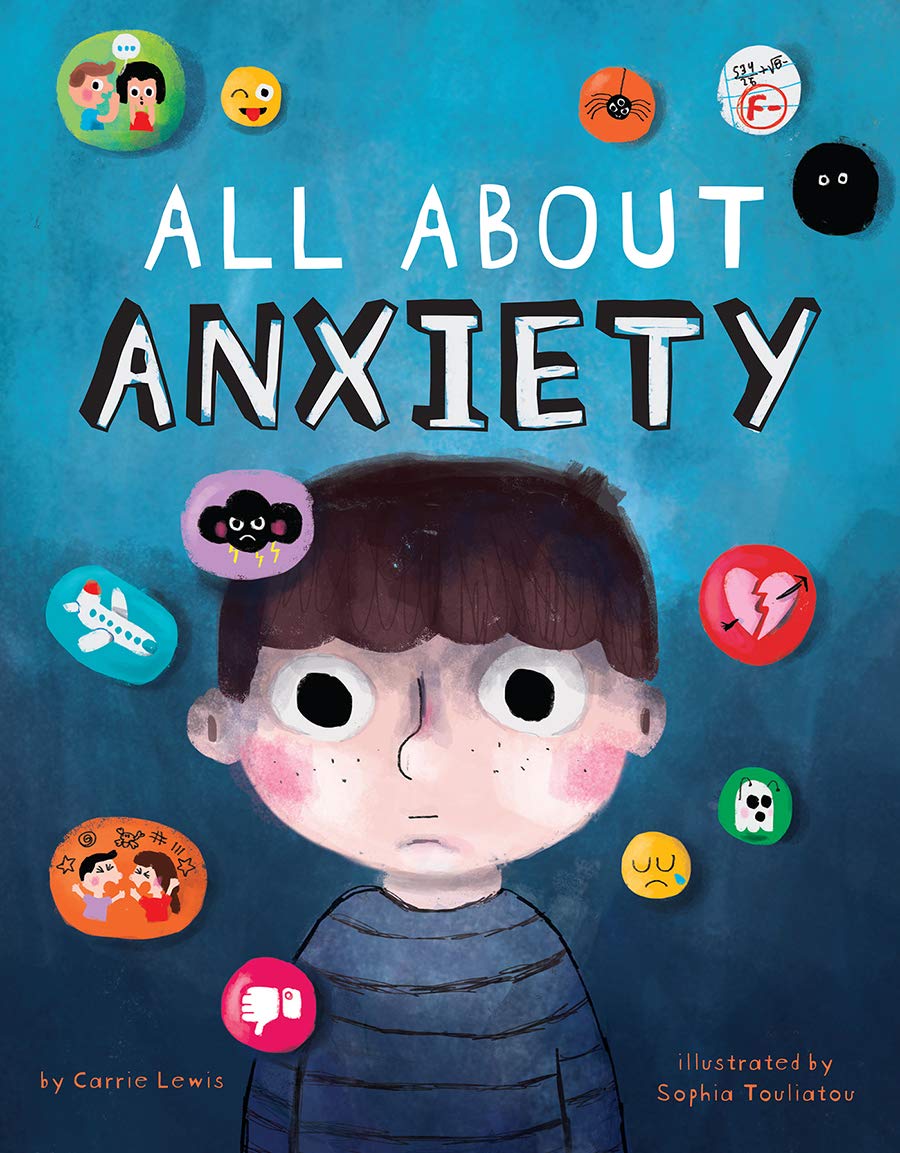
As you pick up this book, the first thing you notice is its comforting, velvety-soft cover. Upon opening it, the second thing young readers will see are illustrations of kids just like them engaged in familiar situations that can cause stress and anxiety and expressing their feelings in ways kids will recognize and understand. And then comes the third, most reassuring thing of all—discussions about anxiety: the different types, how it can manifest itself, and how it can be managed, written in kid-friendly, clear, and detailed ways by an author who really knows how to communicate with children.

In five chapters, this 89-page book covers a wide range of topics that answer the questions children may have about the feelings they experience every day or only in certain situations and give them encouragement and workable solutions to try. Chapter 1 introduces a definition of anxiety, describes six of the most commonly felt types of anxiety, and, through a relatable story of two sisters grappling with different anxieties, demonstrates how a fear can grow and how it can be lessened.

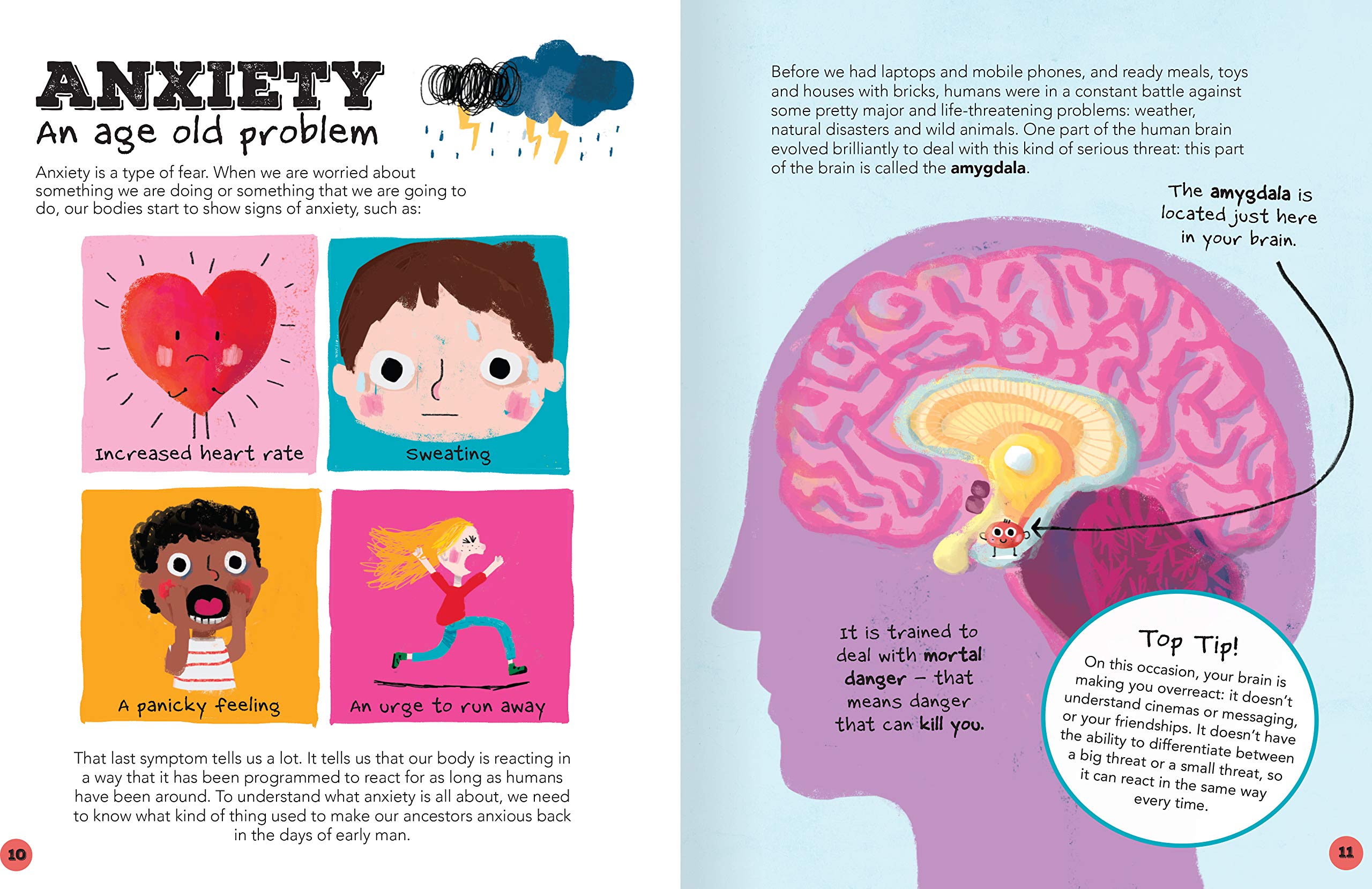
Chapter 2 talks about some of the things that can cause anxiety—from memories of frightening experiences and seeing others’ reactions to certain things to parents and brain chemical imbalances to growing up in difficult circumstances. Each of these, as well as a description of how the body reacts to anxiety, is treated with detailed and easy-to-understand paragraphs that contain examples kids will appreciate.

Chapter 3 likens anxiety to the various types of animals in a zoo and the child as the zookeeper. This chapter is especially effective in directly addressing some of the most common anxiety triggers and providing practical steps that will help. These include the news; stories, TV shows, and movies; hormones; changes within the family; money worries; moving; the pressure to succeed; comparing oneself to others; the way one looks; other people; peer pressure; and social media.
celebrate-picture-books-picture-book-review-all-about-anxiety-brain

Image copyright Sophia Touliatou, 2020, text copyright Carrie Lewis. Courtesy of Beaming Books.

In Chapter 4, children are encouraged to answer several questions that can determine if they actually have anxiety or not. In the next step, readers learn how anxiety can affect the quality of their life and relationships with family and friends. Here Carrie Lewis presents discussions on social anxiety, family relationships, school and studying, sports and hobbies, and overall health. Speaking directly to the reader, Lewis uses specific examples of ways anxiety may affect them. Moreover, with each topic, Lewis provides bulleted suggestions for activities that can boost self-esteem, release healthy endorphins, and change their focus.

Chapter 5 is a “taking-control toolkit” where Lewis explores “different ways to make life less anxious and to keep serious anxiety away.” These include deep breathing, visualization, body relaxation exercises, talking with a trusted adult or doctor, how to talk about anxiety, using mild anxiety as a superpower, and ways to stay positive. Lewis closes her book with six resources, complete with contact information, where young readers and adults can find help and more information.

Reading through this book by Carrie Lewis is like sitting down with a sympathetic, knowledgeable friend who can put you at ease and give you the help you’re looking for. That sense of being understood is just one of the many strengths of this book. Conversational text and an unflinching look at the real-world issues that can cause anxiety will resonate with children, tweens, and even teens and put them on the road to managing their feelings.

On every page the text wraps around Sophia Touliatou’s vibrant and evocative illustrations that let kids know they’re not alone. Images mirror feelings of fear and anxiety, depict brain activity related to feelings of anxiety, and show difficult situations all children deal with at one time or another. But Touliatou also includes many images of children finding ways to manage and overcome their anxiety that offer hope and happiness. In design, the book makes excellent use of typography and other elements to make topics easy to find and appeal to the targeted audience.

A superb book for helping children and tweens with anxiety or just navigating day-to-day feelings, All About Anxiety is a must for home, school, and public libraries.

Ages 8 – 13

Beaming Books, 2020 | ISBN 978-1506463209

You can find All About Anxiety at these booksellers

Amazon | Barnes & Noble | Books-a-Million

To support your local independent bookstore, order from
Bookshop | IndieBound

celebrate-picture-books-picture-book-review-crafting-calm-cover

Crafting Calm: Art and Activities for Mindful Kids

Written by Megan Borgert-Spaniol and Lauren Kukla | Illustrated by Aruna Rangarajan


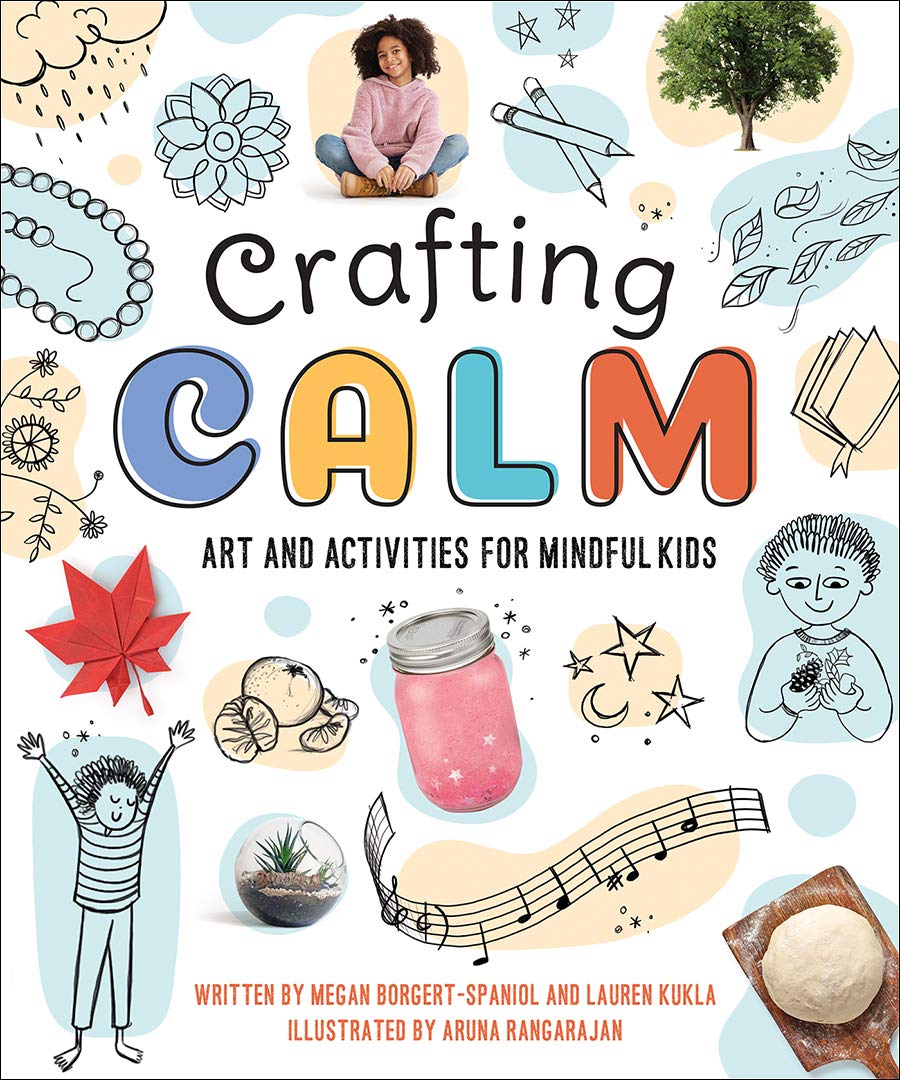
One way to take control of your feelings is by finding an activity that calms the mind, changes your focus, uses your talents, or helps you reach out to others. That’s what Crafting Calm is all about. Through five chapters Megan Borgert-Spaniol and Lauren Kukla show readers how they can use various arts, movement, breathing, their senses, and their sense of self to be calmer and happier.

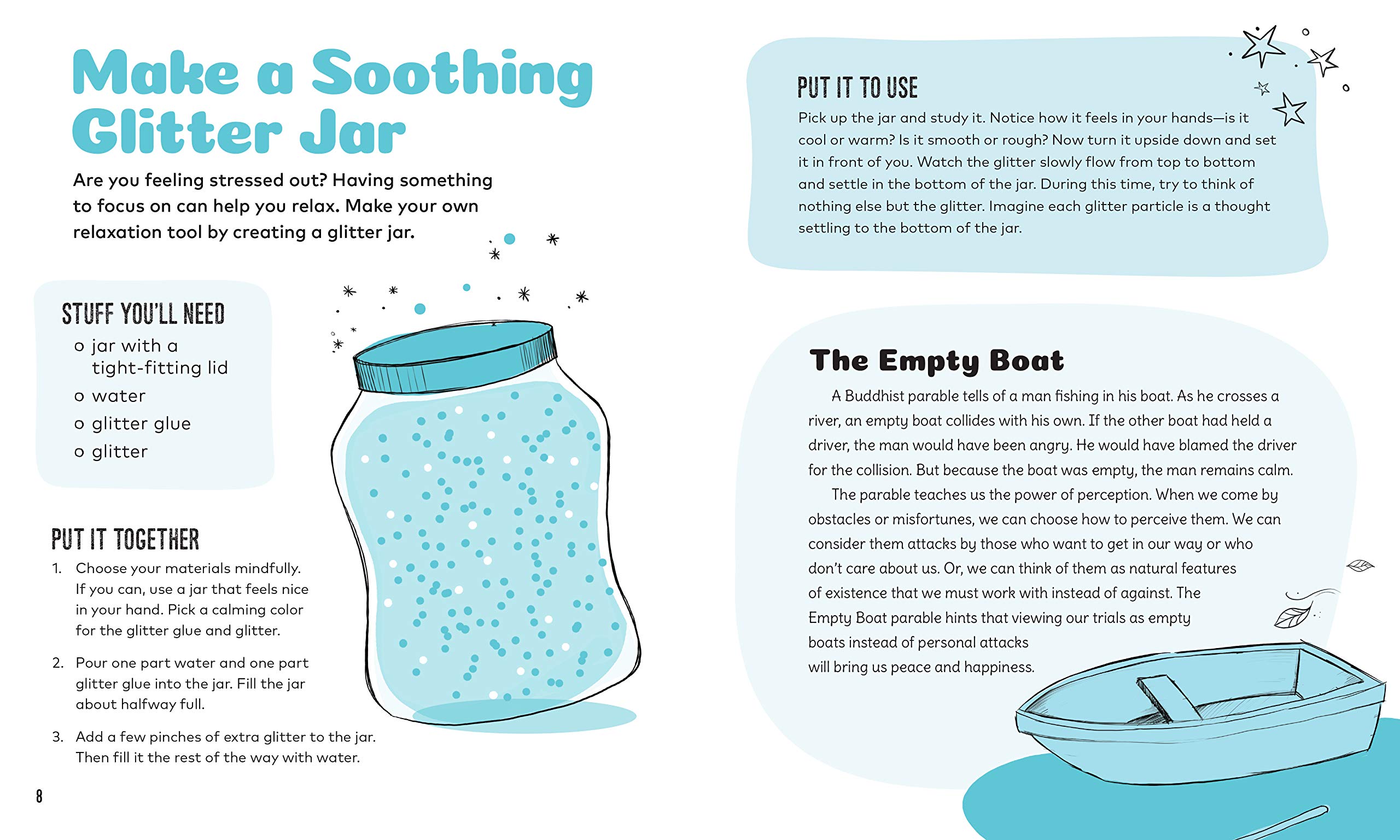
Each chapter focuses on a particular topic. Chapter 1: Catch Your Calm helps children gain control of their thoughts or behavior with crafts such as making a glitter jar and a Zen garden, kneading homemade bread, and doing an easy yoga exercise. A short parable demonstrates the power of perspective, and other activities give readers a variety of options. Chapter 2: Examining Emotions contains activities that allow a child to better understand their emotions and how they physically react to them. Doing a body scan, making mood art, learning to walk with confidence, and creating an emotional support plant are just a few of the activities presented.

Chapter 3: Being Here and Experiencing Now provides methods to support the important idea of staying present in every moment. Mindful walking, engaging all your senses, slowing down to fully enjoy a snack, making a terrarium, learning how to neutralize noise, are some of the activities described here. Chapter 4 is designed to help readers observe their thoughts and “gain skills to better control what goes on in your mind while still allowing space for it to wander and dream.” A “mind dump” can help you get your thoughts and emotions out of your head and onto paper without judgement. Daily affirmations can help readers to embrace their good qualities and become the person they want to be. These and the other provided activities can bring much-needed peace.
celebrate-picture-books-picture-book-review-crafting-calm-glitter-jar

Image copyright Aruna Rangarajan, 2020, text copyright Megan Borgert-Spaniol and Lauren Kukla, 2020. Courtesy of Beaming Books.

Chapter 5: Capturing Joy and Growing Gratitude gives readers the tools to find “inner joy during tough times and appreciate things [they] may have taken for granted.” These emotional resources can help readers “navigate life’s ups and downs with positivity.” Origami can help turn paper into a colorful gratitude garden of flowers that each represent something you’re thankful for. If you’re feeling alone, you can use the instructions here to create a Tree of Belonging to show you how many people love and care for you. Bringing joy and sharing gratitude with others takes the focus off of yourself and gives you purpose. Here you’ll find ideas for doing both of these things.

In a casual, light, and conversational style Megan Borgert-Spaniol and Lauren Kukla address many of the feelings and intrusive thoughts that can roil the mind and make inner peace hard to find. Readers will recognize and appreciate the straightforward examples and reassurance presented in the introduction to each chapter. Along with directions on how to complete the activities, Borgert-Spaniol and Kukla include how each activity can help bring about a more calm and positive attitude. The activities included are easy to do and don’t require special supplies, making them excellent go-tos for times when tranquility is needed.

Accompanying each activity are Aruna Rangarajan’s engaging illustrations, rendered in soothing colors, that demonstrate techniques and instructions while also adding whimsical touches that make every page inviting.

A wonderful, comprehensive guide not only to activities that can really make a difference in the life of any child, especially those disruptive feelings, but to the hows and whys inherent in them, Crafting Calm: Art and Activities for Mindful Kids is highly recommended for family, school, and public library bookshelves.

Ages 8 – 12

Beaming Books, 2020 | ISBN 978-1506465265

You can find Crafting Calm: Art and Activities for Mindful Kids at these booksellers

Amazon | Books-a-Million

To support your local independent bookstore, order from

Bookshop | IndieBound

National Stress Awareness Day Activity
celebrate-picture-books-picture-book-review-mind-jar

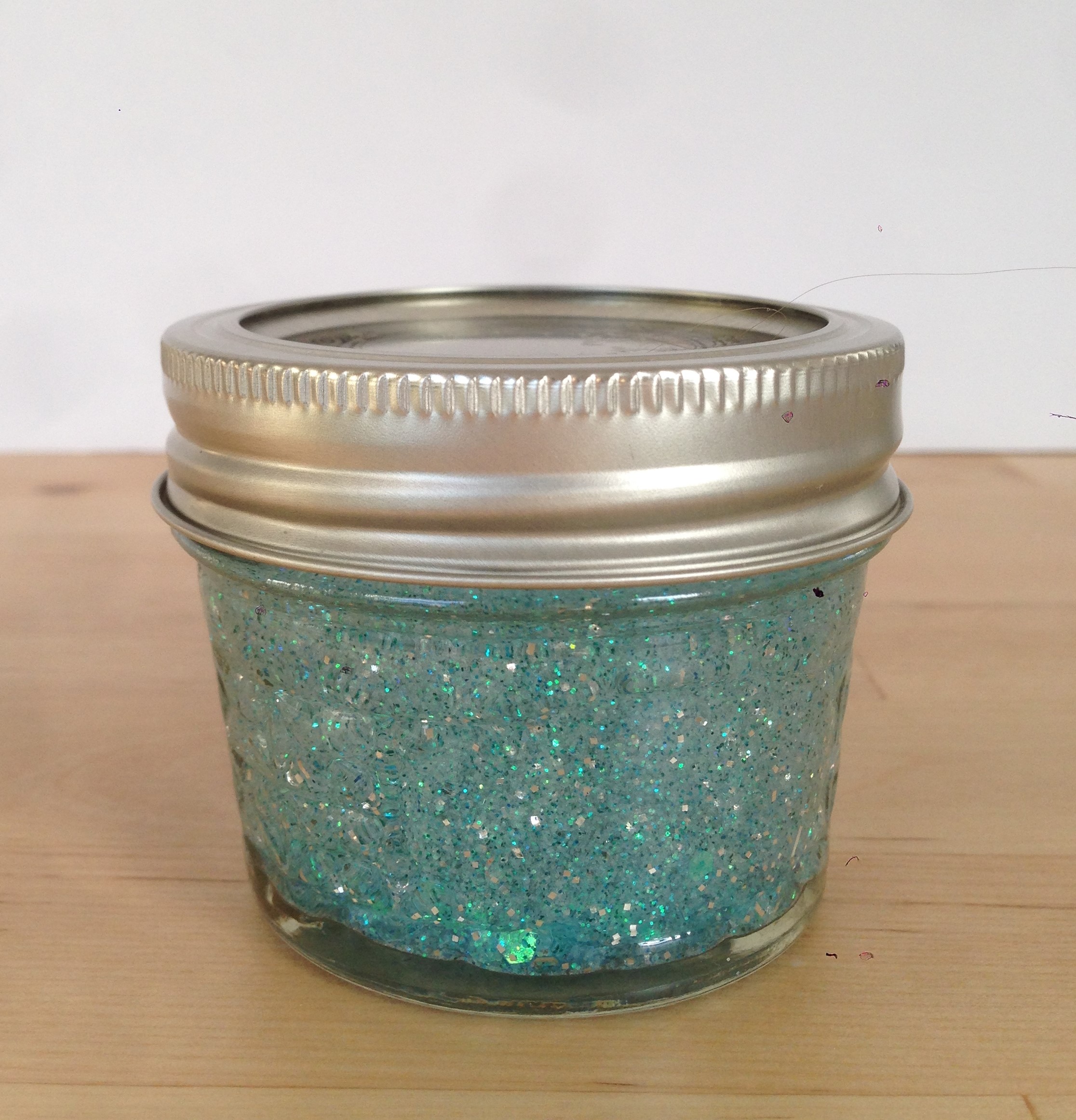
Snowy Day Mind Jar


You can capture the beauty of a glittering snowfall in this easy craft—that also makes a special gift for a friend!

Supplies

  • Small to medium mason jar or other decorative jar with a tight lid
  • White glitter glue,
  • Light blue glitter glue,
  • Fine white and/or blue glitter
  • Large white and/or blue glitter
  • Warm water

Directions

1.For every 1/2 cup of warm water add:

  • 1 1/2 teaspoons white glitter glue
  • 1/2 teaspoon blue glitter glue
  • 2 teaspoons fine glitter glue
  • 1/2 teaspoon large glitter

2. Close lid tight

3. Shake

4. As glue dissolves, the liquid will become clearer and the glitter will remain suspended in it
celebrate-picture-books-picture-book-review-all-about-anxiety-cover

November 2 – It’s Picture Book Month

celebrate-picture-books-picture-book-review-the-song-for-everyone-cover

About the Holiday

November is all about picture books thanks to Picture Book Month founder author and storyteller Dianne de Las Casas and co-founders author/illustrators Katie Davis, Elizabeth O. Dulemba, Wendy Martin, and author Tara Lazar. This month-long international literacy initiative celebrates print picture books and all that they offer to young (and even older) readers. With gorgeous artwork and compelling stories, picture books open the world to children in surprising ways. They entertain, explain, excite, and help children learn empathy and understanding. If you want to learn more about the holiday and read engaging daily posts about why picture books are important by your favorite authors, illustrators, and others in the children’s publishing industry, visit picturebookmonth.com

The Song for Everyone

By Lucy Morris


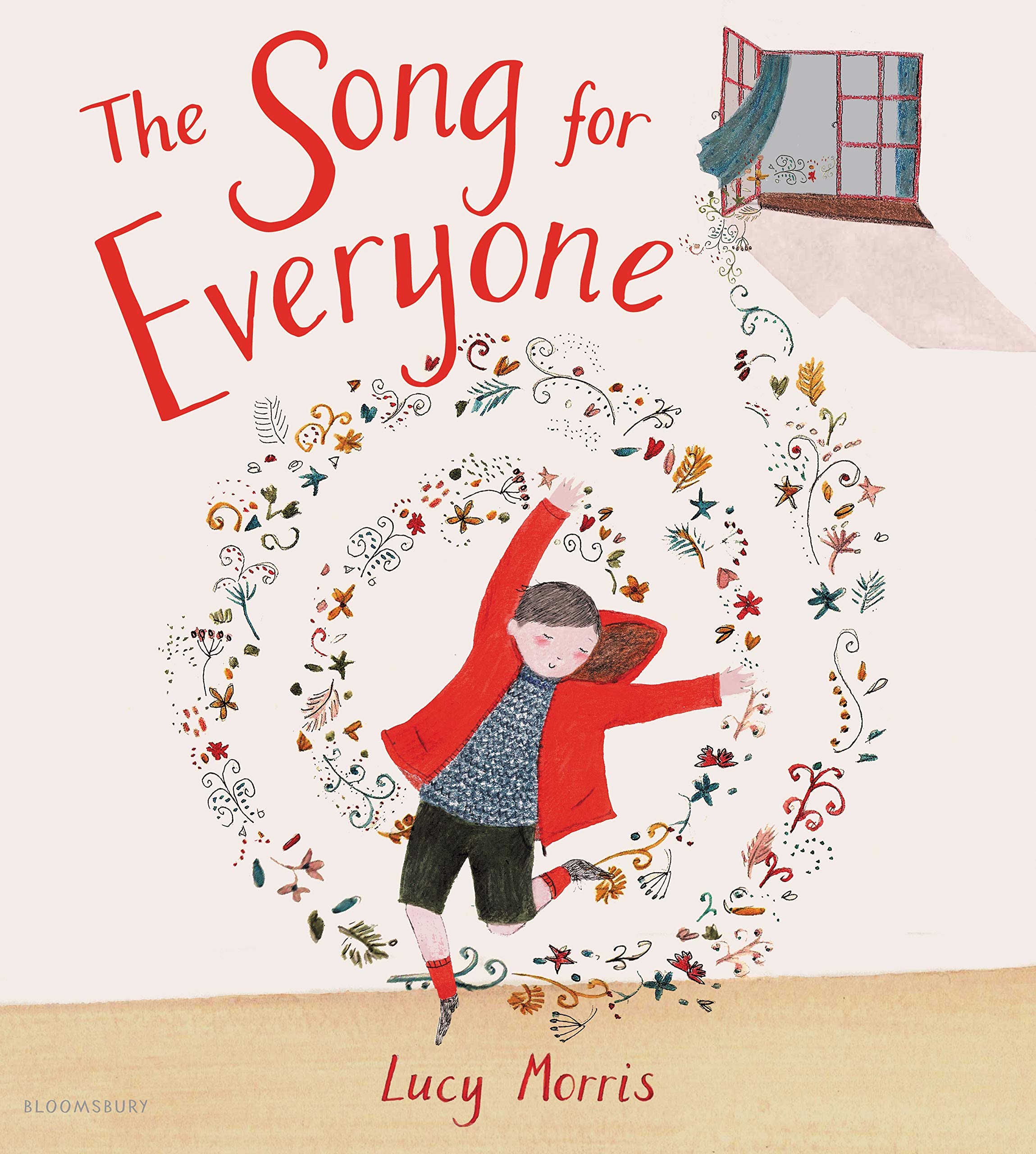
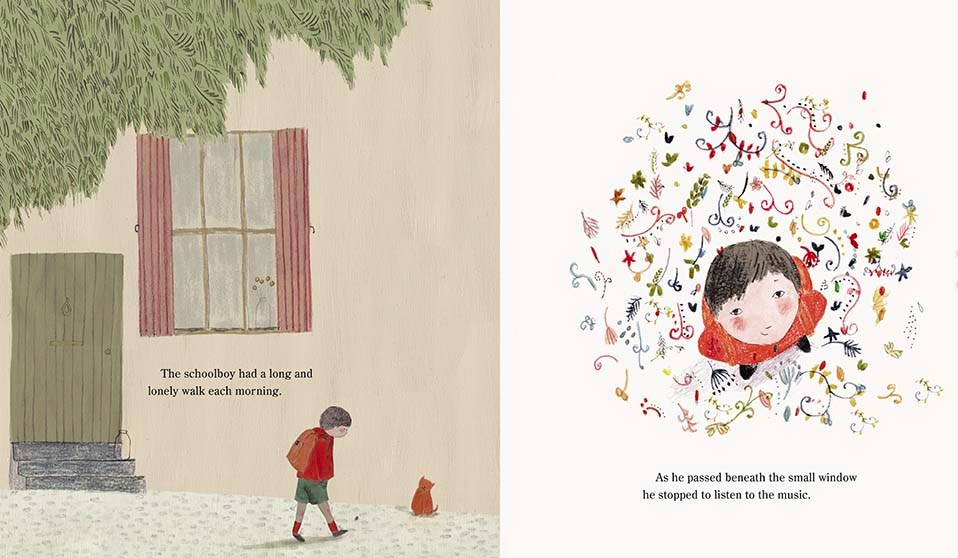
There was a tiny window “too high in the eaves to be noticed from below and too small to let in much daylight.” But one day a “delicate tune” wafted from it’s open panes and floated along the street. A boy trudging to school alone heard it and stopped to listen. As the music swirled around him, he felt happy and he skipped along on his way. Soon an old woman, slow and bent with age, walked by on her way to the market. As she passed under the window, “the sound flowed down and wrapped itself around her weary body.” Suddenly, she felt strong and joyful. A homeless cat followed stray notes from this tantalizing music and was led to two children “who longed for a cat of their own.”

celebrate-picture-books-picture-book-review-the-song-for-everyone-schoolboy

Copyright Lucy Morris, 2020, courtesy of Bloomsbury Children’s Books.

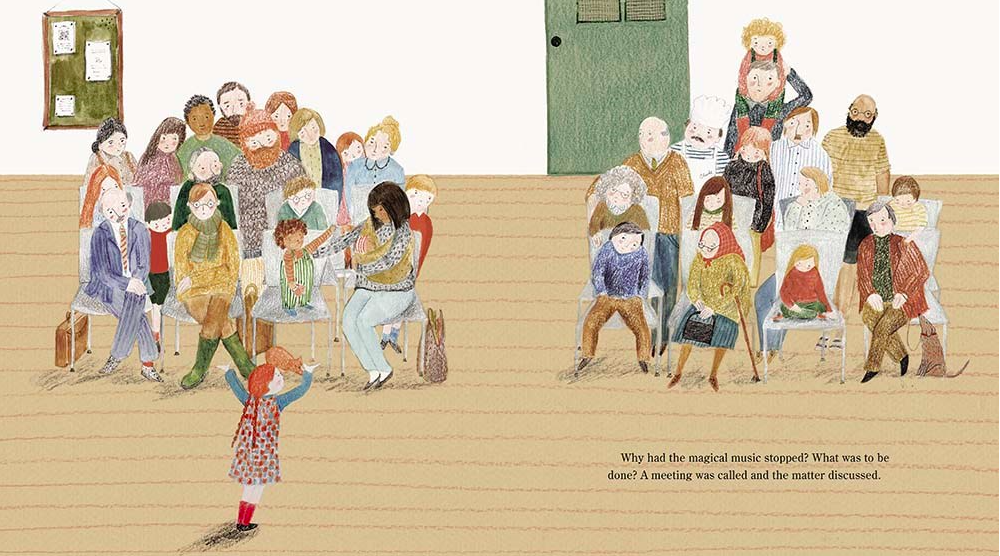
The music continued to float from the open window, always seeming to know who needed to hear it and making the townspeople begin to care for and connect with each other in new ways. The town grew content and peaceful. But then one morning, the music stopped. The town seemed gray and lifeless, and the people felt sad, lonely, and weary. The people held a meeting and decided to see what was behind the open window. The little boy who’d first heard the music climbed up the ladder of townspeople and clambered inside.

celebrate-picture-books-picture-book-review-the-song-for-everyone-happy

Copyright Lucy Morris, 2020, courtesy of Bloomsbury Children’s Books.

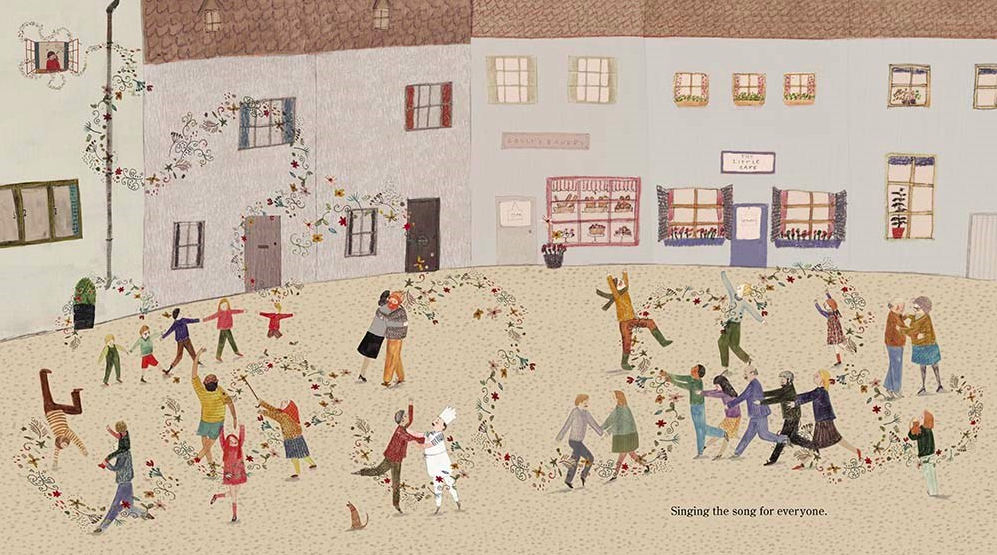
There he found a little wren. She was tired and hungry and her song had left her. The boy promised to help her and he yelled down to the people gathered below. They gathered food and provisions and sent them up to the window in a basket. Two days passed, but the wren stayed silent. But then early one morning…! “A melody, a song. A sound so sweet” once again floated into the air and through the streets. Everyone rushed from their homes and crowded together under the window. There they saw “the boy and the wren making music together. Singing the song for everyone.” A they listened, the central square came alive with dancing, twirling, and playing.

celebrate-picture-books-picture-book-review-the-song-for-everyone-meeting

Copyright Lucy Morris, 2020, courtesy of Bloomsbury Children’s Books.

Lucy Morris’s lovely story—in both words and pictures—reveals the power of one person’s voice and/or actions to transform lives. The wren, singing from a darkened window offers her song, a melody that brings happiness and makes passersby realize they are not alone. Readers can imagine the cheered schoolboy, old woman, and new cat owners sharing their new-found joy with classmates, store clerks, other shoppers, parents, and friends, who also pass their sudden optimism to others until this small community embraces each other as never before. But one wren (or person) cannot sustain it alone. As the townspeople in Morris’s story discovers, it takes a group effort, and it is that coming together that truly creates change.
Morris’s beautiful, lyrical language is as light and buoyant as the wren’s song. Her word choices evocatively describe both the angst, weariness, and world view of the townspeople before the wren’s appearance and the joy, peace, and hopefulness they acquire after accepting her song.

celebrate-picture-books-picture-book-review-the-song-for-everyone-dancing

Copyright Lucy Morris, 2020, courtesy of Bloomsbury Children’s Books.

Morris’s charming illustrations, rendered in a serene color palette portrays a town where, despite the close proximity of the homes and buildings, the people are apparently distanced from each other. The wren’s music is depicted as a garland of flowers that once released into the air do not scatter, but remain strongly together to fill the streets, wrap around the needy, lead the lost, shelter the cold, and lift up those who need a boost.

While the loss of the wren’s song brings sadness, readers will also see that the wren has already accomplished much. Instead of returning to their solitary lives, the townspeople now gather together to discuss a solution. As a little girl addresses the group, kids will understand that their voice is important too. Images of the townspeople each contributing to the wellbeing of the wren and then celebrating her recovery reinforces Morris’ message of community.

A moving and triumphant story that will touch all readers and encourage them to use their individual talents to benefit others, The Song for Everyone will become a thoughtful favorite and is highly recommended for home, school, and public library collections.

Ages 3 – 8

Bloomsbury Children’s Books, 2020 | ISBN 978-1547602865

To learn more about Lucy Morris, her books, and her art, visit her website

Picture Book Month Activity

celebrate-picture-books-picture-book-review-books-to-read-bag-empty

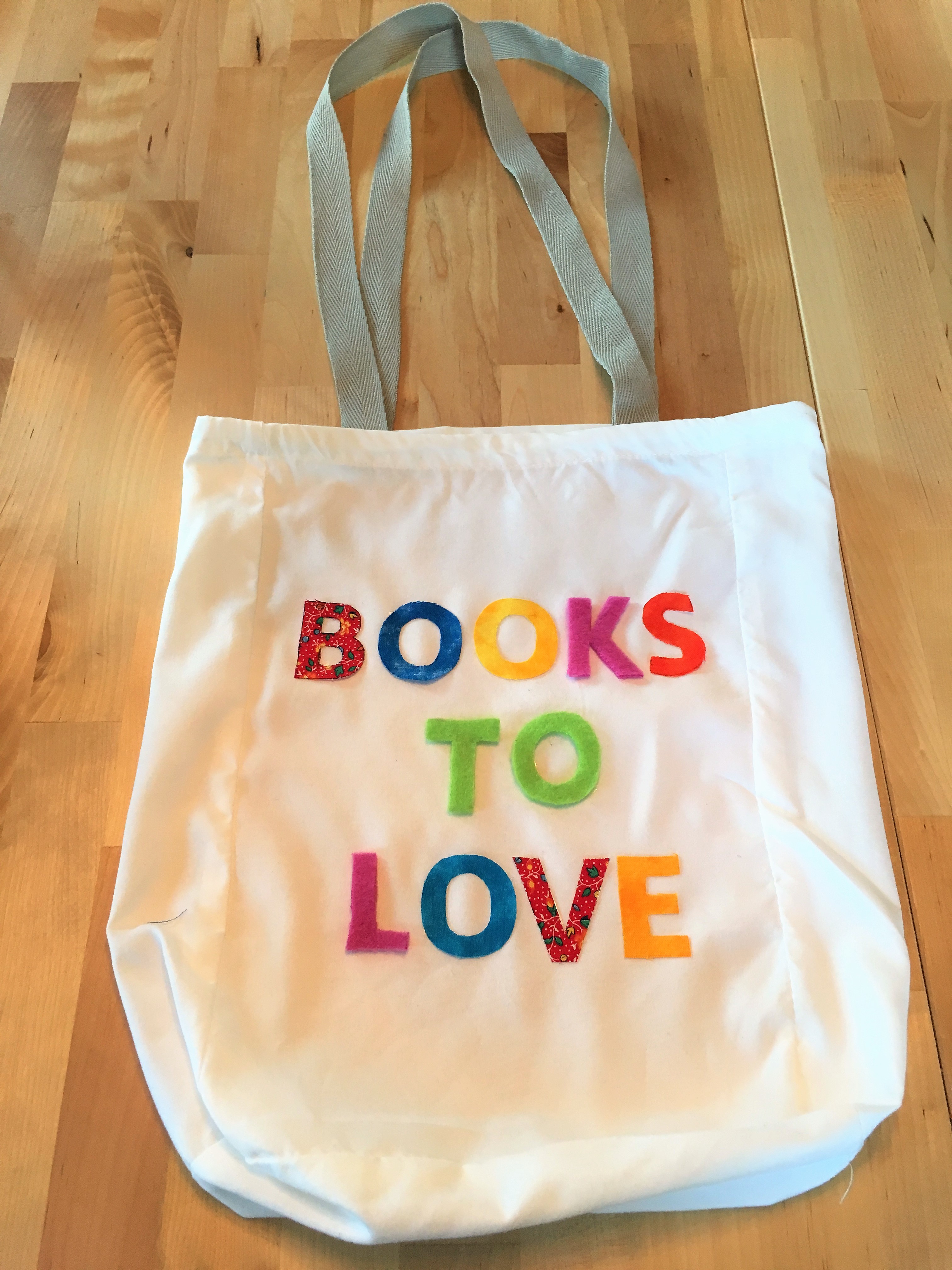
Books to Love, Books to Read Book Bag


True book lovers can’t go anywhere without a book (or two or three) to read along the way. With this easy craft you can turn a cloth bag into a kid-size book bag!


Supplies

  • Printable Templates: Books to Read Template | Books to Love Template
  • Small cloth bag, available from craft or sewing stores—Recyclable Idea: I used the bag that sheet sets now come in
  • Cloth trim or strong ribbon, available from craft or sewing stores—Recyclable Idea: I used the cloth handles from shopping bags provided from some clothing stores
  • Scraps of different colored and patterned cloth. Or use quilting squares, available at craft and sewing stores
  • Pen or pencil for tracing letters onto cloth
  • Scissors
  • Small sharp scissors (or cuticle scissors) for cutting out the center of the letters
  • Fabric glue
  • Thread (optional)
  • Needle (optional)

celebrate-picture-books-picture-book-review-books-to-love-bag-empty

Directions

  1. Print the sayings and cut out the letters
  2. Trace letters onto different kinds of cloth
  3. Cut out cloth letters
  4. Iron cloth bag if necessary
  5. Attach words “Books to Read” to one side of bag with fabric glue
  6. Attach words “Books to Love” to other side of bag with fabric glue
  7. Cut cloth trim or ribbon to desired length to create handles
  8. Glue (or sew) handles onto the inside edge of bag

celebrate-picture-books-picture-book-review-the-song-for-everyone-cover

You can find The Song for Everyone at these booksellers

Amazon | Barnes & Noble | Books-a-Million

To support your local independent bookstore, order from

Bookshop | IndieBound

Picture Book Review


November 1 – Zero Tasking Day

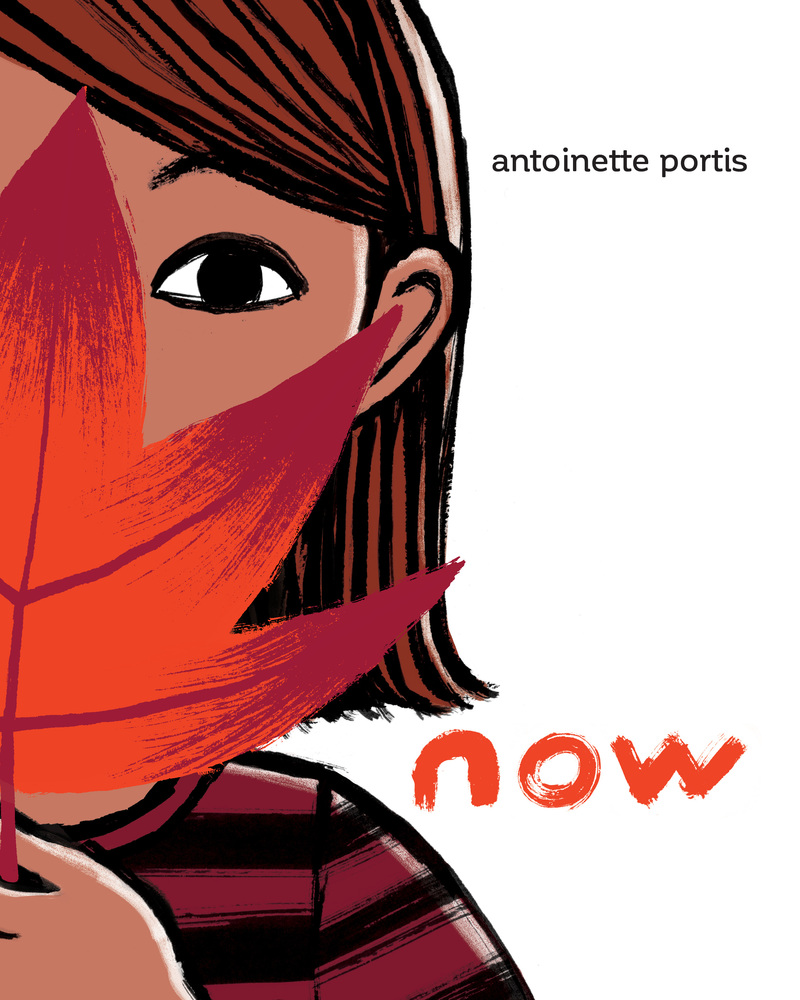
celebrate-picture-books-picture-book-review-now-antoinette-portis-cover

About the Holiday

It’s time to change the clocks, but this time it’s the good one – the one where we gain an extra hour of sleep. Does the extra time leave you restless, feeling like you should get more done during the day? Nancy Christie, a self-help coach and better-life blogger founded Zero Tasking Day to encourage people to relax, take care of themselves, and live their best life. So today take some time to really appreciate all the favorite things in your life—like the girl in today’s book. 

Now

By Antoinette Portis

A girl, barefoot and with her arms raised high, runs through a field, feeling the exhilaration of the wind on her face. “This is my favorite breeze,” she says. She finds an apple-red maple leaf, which, at this moment, is her favorite. At the beach, she has dug hole after hole, but her favorite is the one she is making right now.

celebrate-picture-books-picture-book-review-now-antoinette-portis-cloud

Copyright Antoinette Portis, 2017, courtesy of us.macmillan.com.

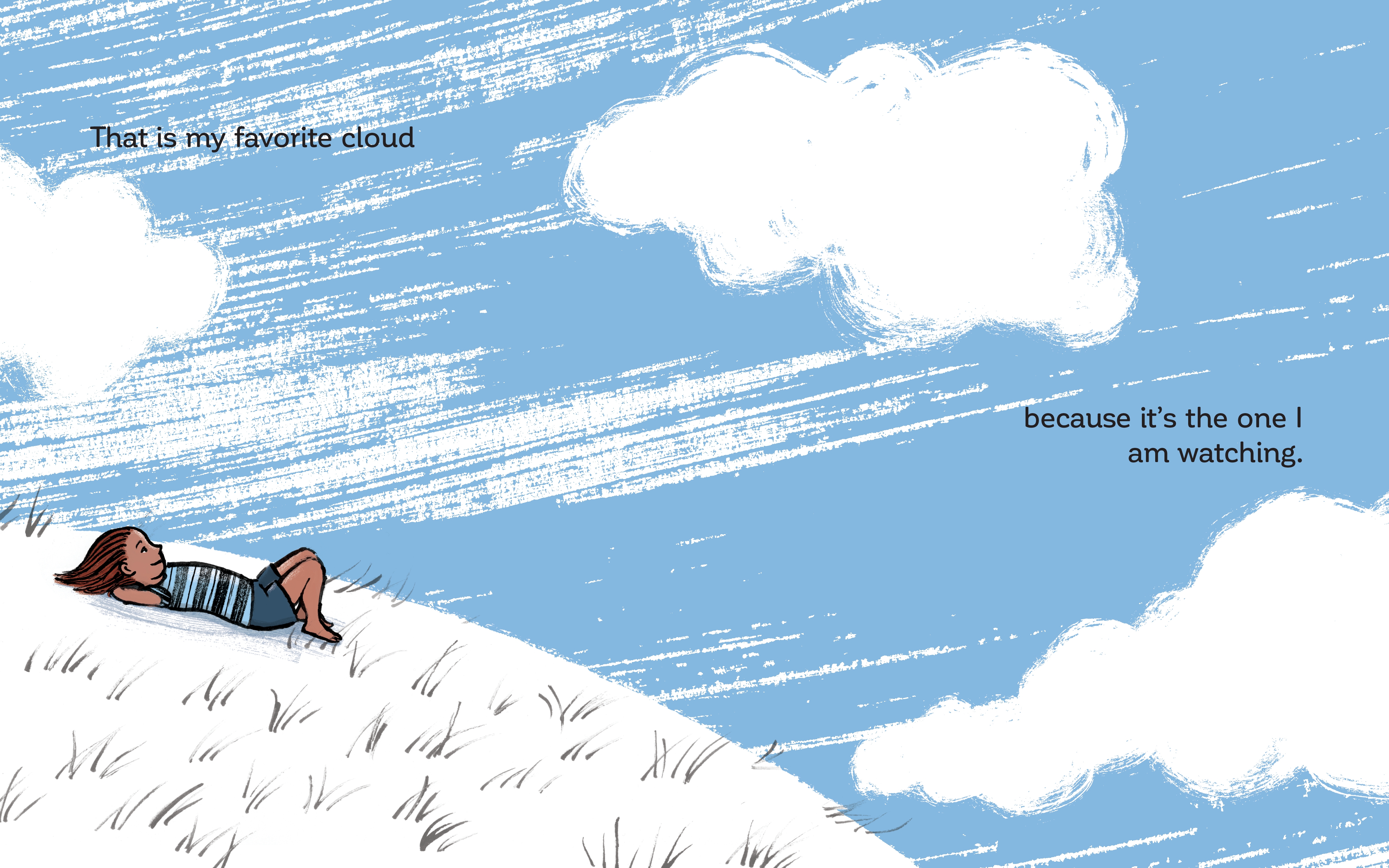
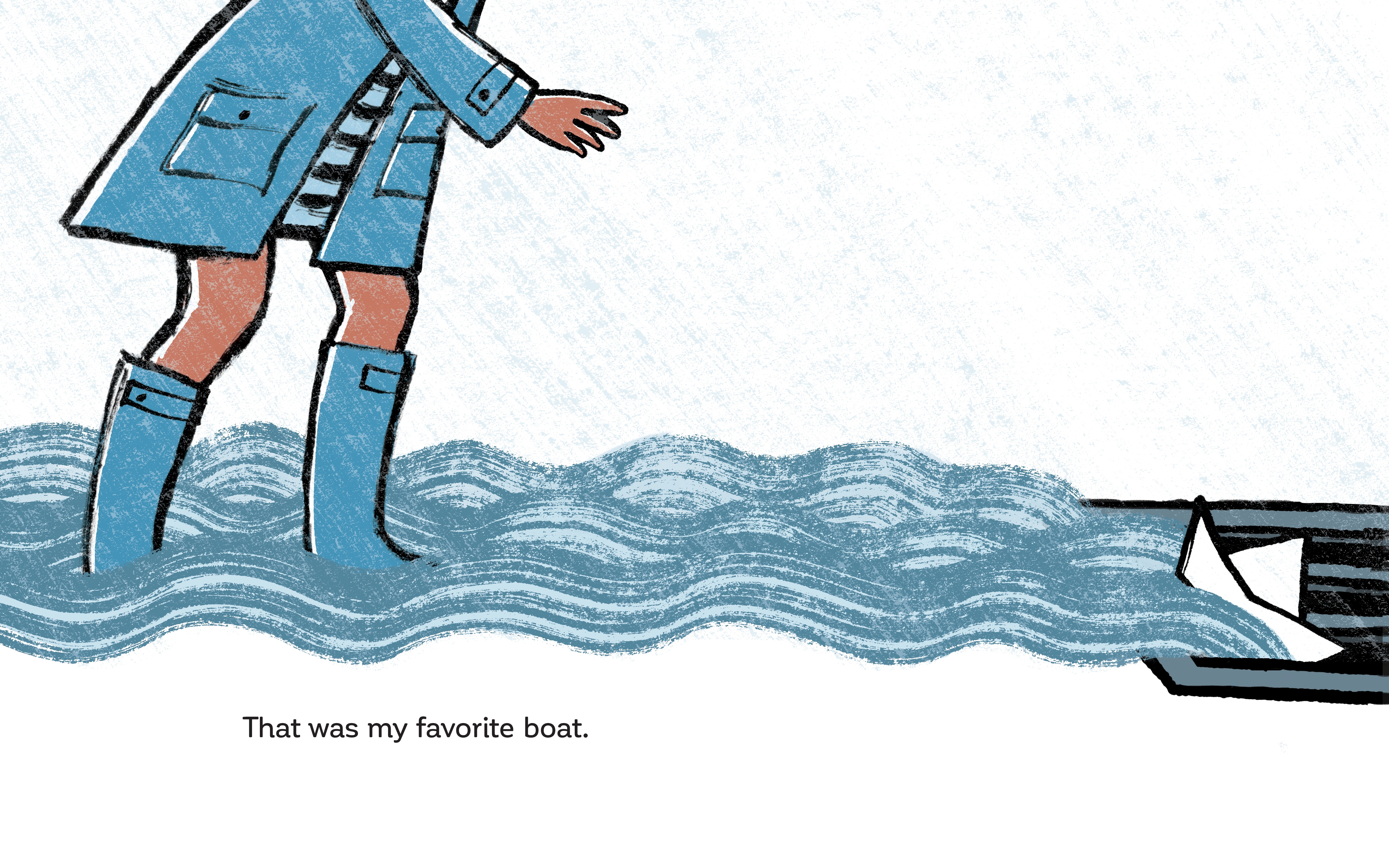
In the mud that has splattered her ankles, she finds a pink, wriggly worm that tickles her palms when she picks it up. As the girl stretches out on a hill to watch the clouds float by, she decides that her favorite is “the one I am watching.” The best rain is one that creates a river in the street for her paper boat—the one that was her favorite until it sailed into the grate

celebrate-picture-books-picture-book-review-now-antoinette-portis-tree

Copyright Antoinette Portis, 2017, courtesy of us.macmillan.com.

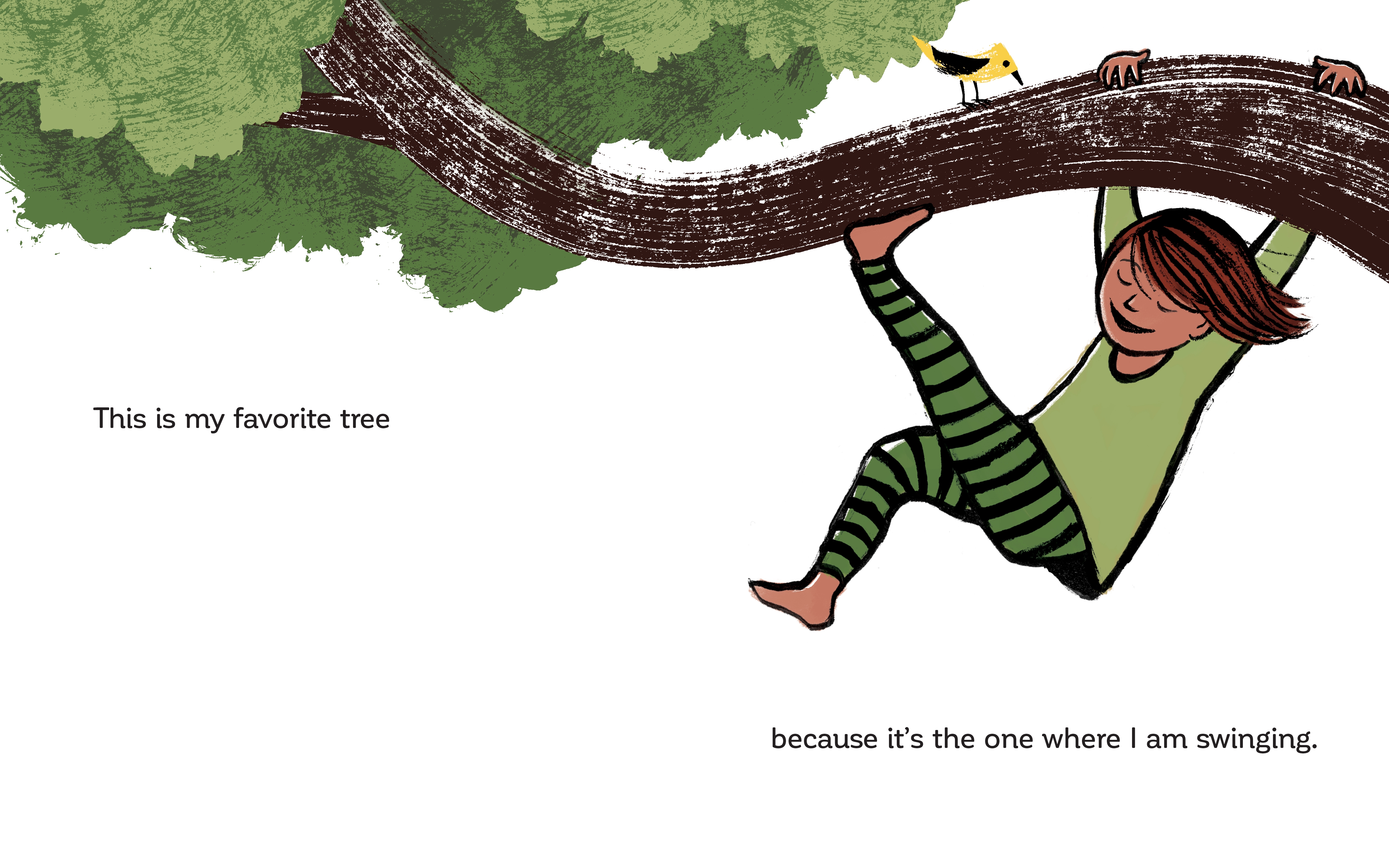
The most marvelous tree has sturdy branches for the girl to swing from, and a delicate, bell-shaped flower produces her “favorite smell.” There are many birds to feed at the park, but the one she likes the best is the one that comes close enough to eat out of her hand. Her favorite song is the one that swells inside her heart and bursts out with joy, and the most delicious gulp and bite are those that quench her thirst and calm her hunger.

Her favorite tooth leaves a gap in her smile “because it’s the one that is missing.” She and her squeezed-tight cat may differ on the best hug, but they probably agree that their favorite moon is the crescent outside the window tonight. But what is her favorite “Now?” It is this moment, because she is having it with you.”

celebrate-picture-books-picture-book-review-now-antoinette-portis-boat

Copyright Antoinette Portis, 2017, courtesy of us.macmillan.com.

Antoinette Portis lends her unique perspective to this uplifting book that encourages kids—and, as readers see in the final image, adults—to live in the moment and become fully conscious of the present object, feeling, experience, or sensation. As the little girl’s favorites build on each other, readers become aware of a growing appreciation for all the small joys that make up a day. The theme of the book is revealed on the first page as the girl welcomes the refreshing breeze. The simply drawn, unencumbered illustrations mirror the simple pleasures that she finds everywhere. But look closer and there is more profound meaning in each.

celebrate-picture-books-picture-book-review-now-antoinette-portis-elephants

Copyright Antoinette Portis, 2017, courtesy of us.macmillan.com.

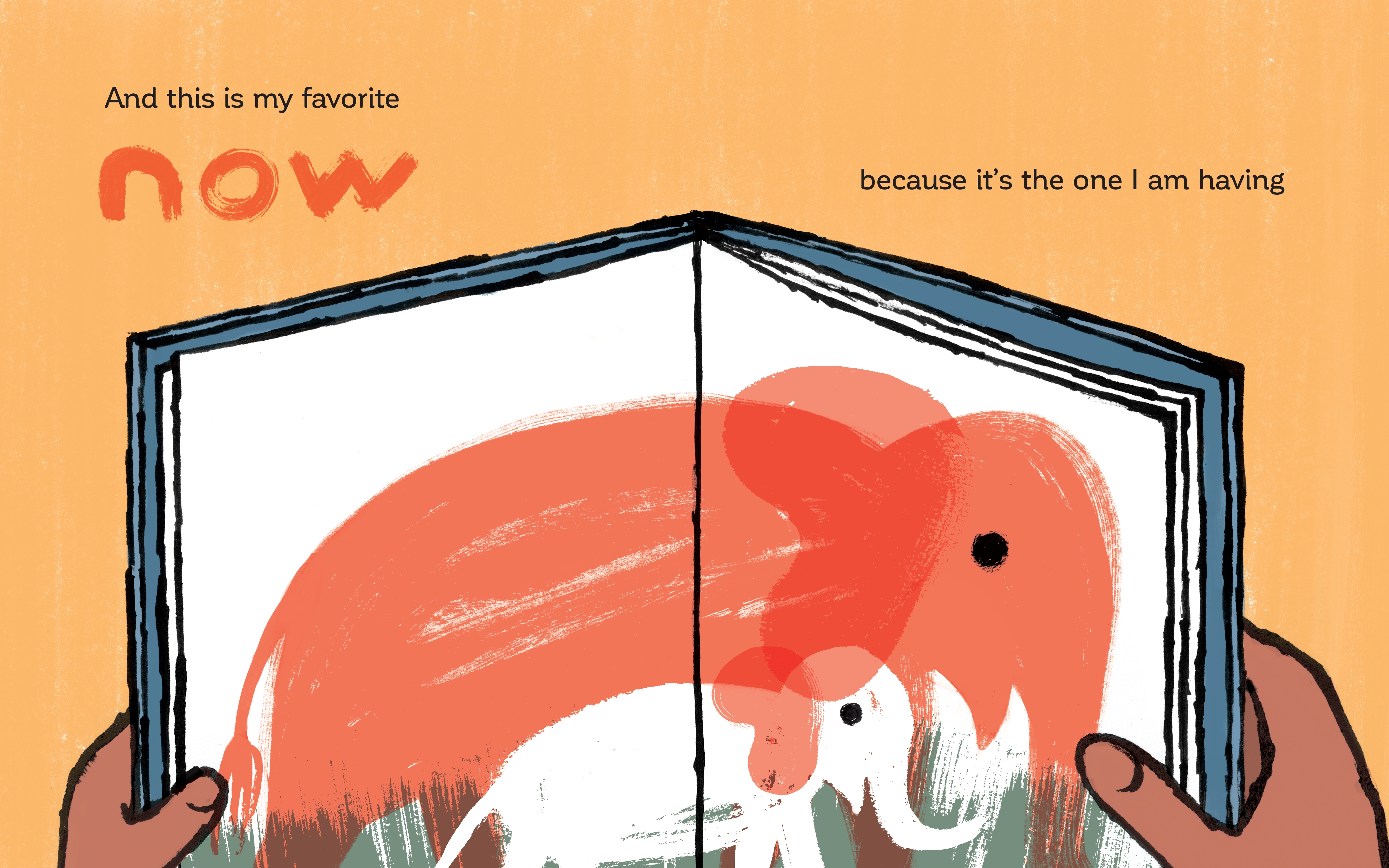
The veins in the maple leaf become the girl’s smile as she holds it to her face; her song radiates from her in a golden sun-shaped swirl; and the girl’s clothing changes through a year’s worth of experiences as it also matches the color of her feeling or activity, allowing her to become one with it. As readers reach the end of Now, they see two hands holding a book open to an image of an elephant and her calf, animals known for their strong family ties. This illustration leads into and strengthens the final page, where the girl and her mother sit reading that book together. The text and picture work in tandem to embrace the reader while letting both children and adults interpret the previous images in their own way.

Now is a beautiful, quiet book that reminds children and adults to slow down and truly enjoy the fleeting moments of life. It is a wonderful book to share and will open discussions of “favorite things” for home, classroom, and library story times.

Ages 3 – 6

Roaring Brook Press, 2017 | ISBN 978-1626721371

To learn more about Antoinette Portis and her books, visit her website.

Zero Tasking Day Activity

celebrate-picture-books-picture-book-review-sleepy-owls-maze

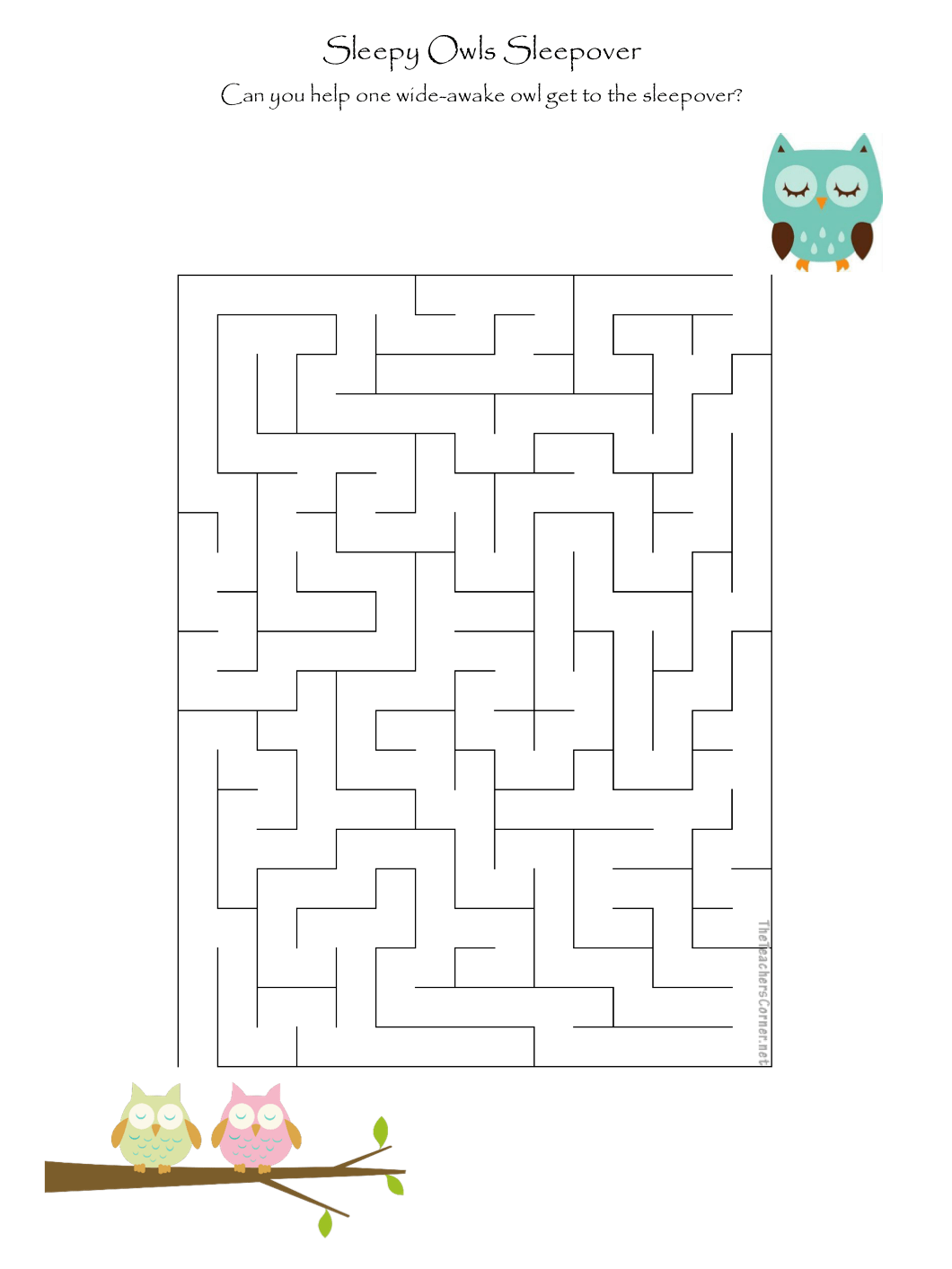
Sleepy Owls Sleepover Maze

One wide-awake owl wants to join friends as a sleepover. Can you help bring them together in this printable Sleepy Owls Sleepover Maze. Here’s the Solution!

celebrate-picture-books-picture-book-review-now-antoinette-portis-cover

You can find Now at these booksellers

Amazon | Barnes & Noble | Books-a-Million |

To support your local independent bookstore, order from

Bookshop IndieBound

October 31 – National Magic Day

celebrate-picture-books-picture-book-review-the-magician's-secret-cover

About the Holiday

Today, of course, is Halloween but October 31 is also National Magic Day! This holiday got it’s start in 1938 when a Chicago member of the Society of American Magicians sought official permission to honor the great Harry Houdini with a special day of recognition for his contributions to the world of magic. Houdini’s wife sanctioned the holiday and proclaimed October 31 – the date of his death in 1926 – as National Magic Day. No matter how you celebrate Halloween or National Magic Day today, the shivery thrills of surprise and imagination are always a joy.

Thanks to Tundra Books for sending me a copy of The Magician’s Secret for review consideration. All opinions are my own. 

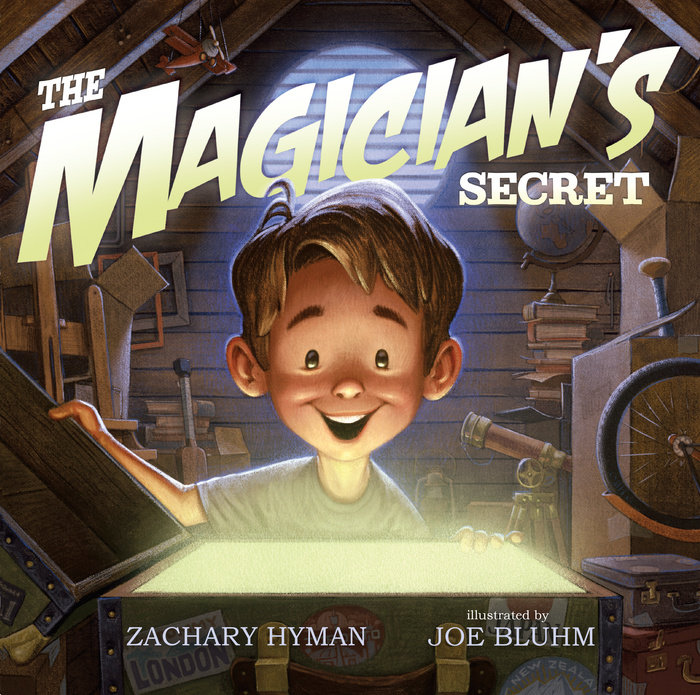
The Magician’s Secret

Written by Zachary Hyman | Illustrated by Joe Bluhm


When Mom and Dad dropped Charlie off at his grandfather’s for an overnight visit, they pleaded with him to make sure his grandson went to bed early. “‘No more hocus-pocus!’” his daughter said. That wasn’t just some phrase she conjured up, because her father had once been a magician and was still “like a big kid who never grew up.” He loved to play games with Charlie and “also knew the most amazing tricks.” But he never told Charlie his secrets.

celebrate-picture-books-picture-book-review-the-magician's-secret-attic

Copyright Joe Bluhm, 2018, courtesy of joebluhm.com.

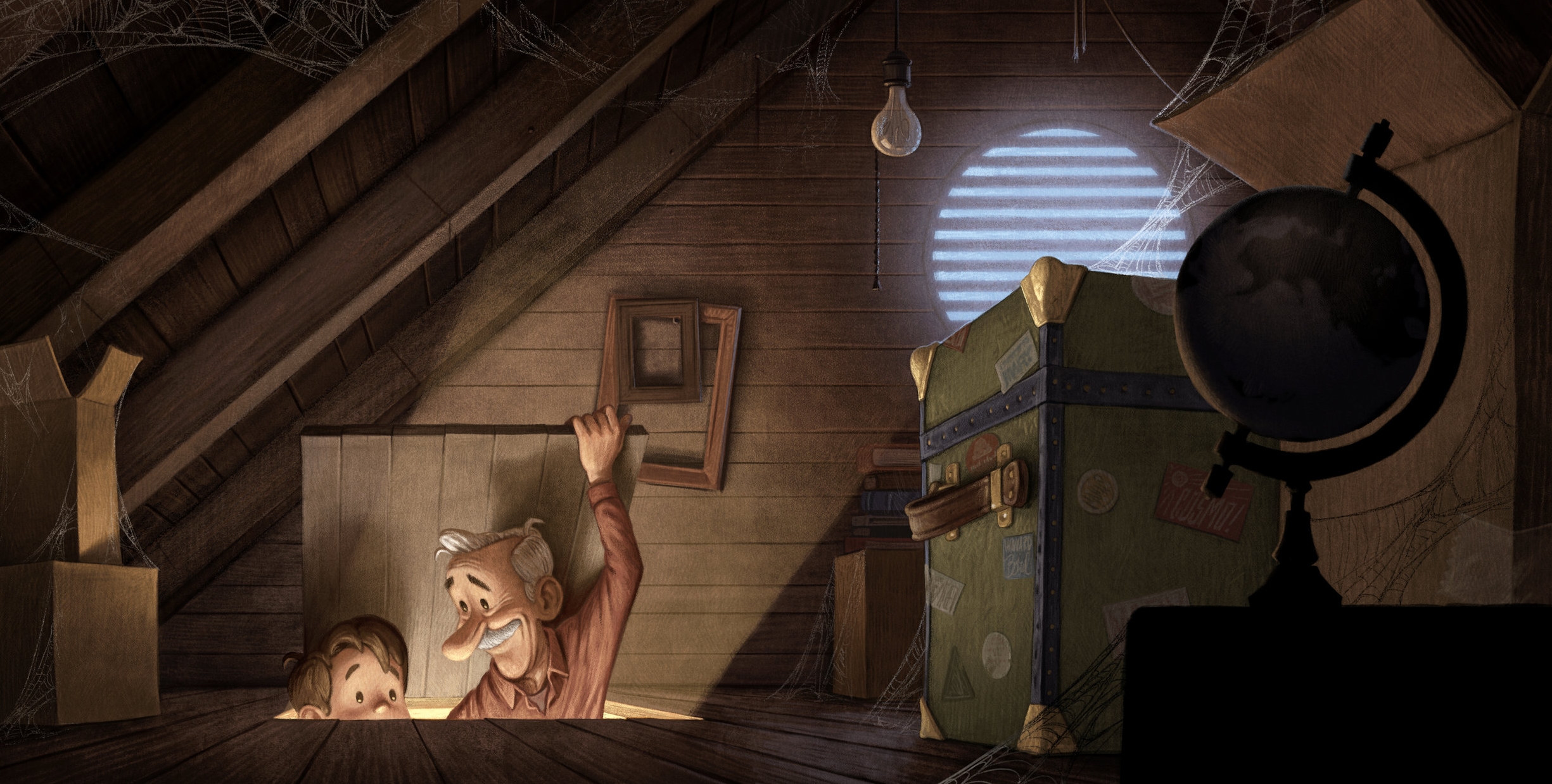
What Charlie loved best were Grandpa’s stories. Whenever Grandpa told a story, he and Charlie went up to the “most cobwebby corner of the attic” where a big green trunk full of special things from Grandpa’s adventures sat. Grandpa would pull out an item and begin to talk. This night he showed Charlie an hourglass filled with sand that Grandpa said came from the tomb of King Tut.

Another time, he pulled out a scarf that had belonged to the World War I Red Baron fighter pilot. Grandpa had plucked it from the Red Baron’s neck during a dogfight in which Grandpa left the Baron and his plane floating in a French sea. One summer evening the story revolved around a coconut shell that he found on a tropical beach. He had fallen asleep under a palm tree only to be awakened by a roaring T-Rex intent on eating him. Just in the nick of time, “dozens of rocks rained down through the air, scaring the nasty dinosaur away.” Who had saved him? Grandpa never told, saying that was for Charlie to figure out.

celebrate-picture-books-picture-book-review-the-magician's-secret-red-baron

Copyright Joe Bluhm, 2018, courtesy of joebluhm.com.

Charlie loved Grandpa’s stories, but his father said that they were just “things Grandpa’s made up.” Charlie couldn’t believe it. He felt like he “had lived every one of those adventures with Grandpa. How could they not be true?” When Charlie asked his grandfather about it, Grandpa sighed. He said the problem with grown-ups was that they didn’t “have faith in make-believe” but that if you “use your imagination, you can turn a dream into something real.”

celebrate-picture-books-picture-book-review-the-magician's-secret-twilight

Copyright Joe Bluhm, 2018, courtesy of joebluhm.com.

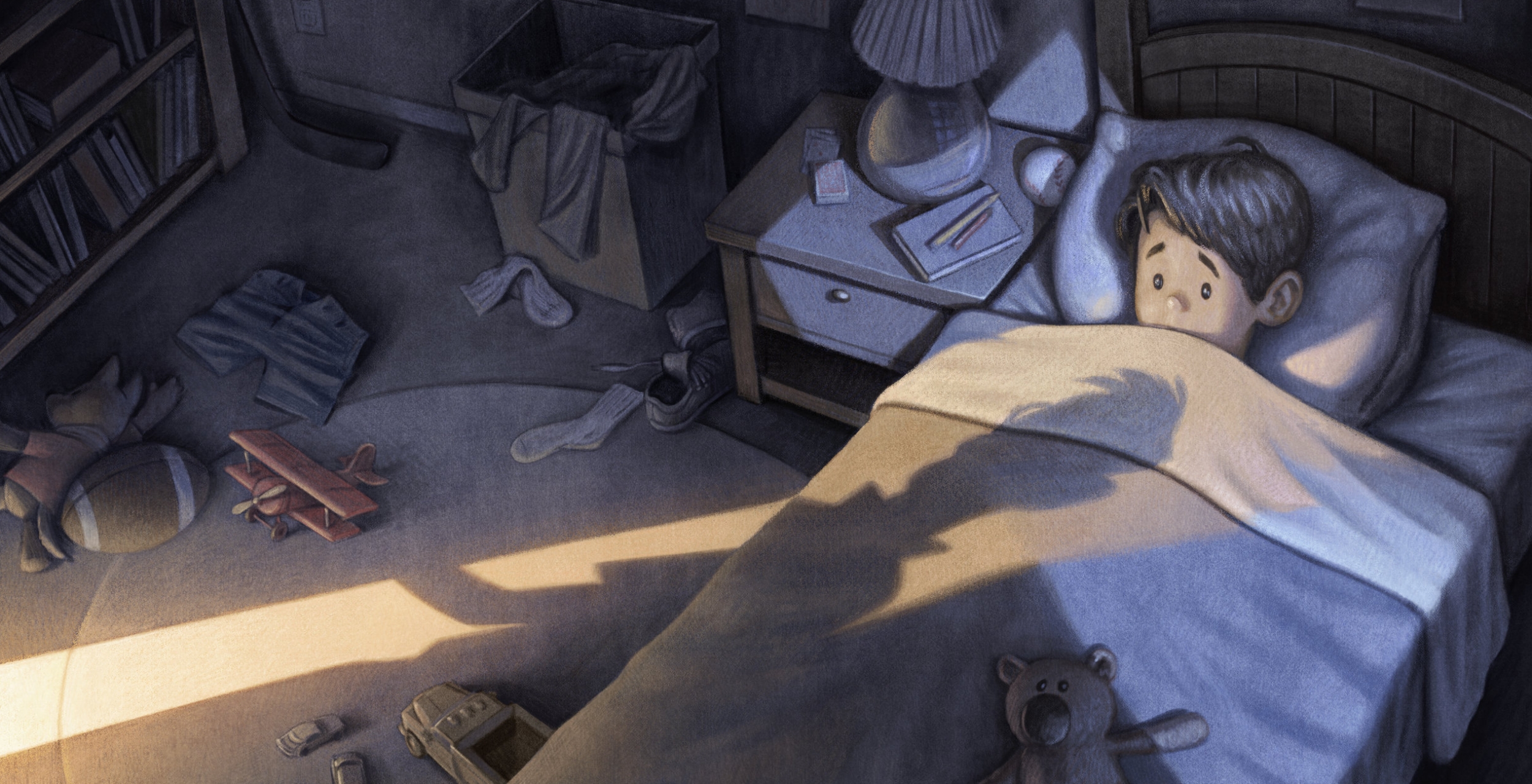
Charlie wasn’t so sure, but Grandpa assured him: “‘We’ve done it over and over again, with cameras and computers, automobiles and airplanes…. Magic is all around us, kiddo—in me and in you.’” Then Grandpa waved his hands in the air and produced a…rock. He said it was the philosopher’s stone that could do magical things, but the secret was that “‘You have to see it, you have to believe it.’” That night Charlie fell into a deep sleep with the rock under his pillow. When he woke up, he heard an earth-shattering roar. He looked and saw a T-Rex threatening his grandpa. He looked at the rock in his hand and knew what to do….

celebrate-picture-books-picture-book-review-the-magician's-secret-in-bed

Copyright Joe Bluhm, 2018, courtesy of joebluhm.com.

Zachary Hyman makes magic with traditional storytelling combined with the wonder of imagination and the encouragement to make dreams come true. As Grandpa talks about his daring feats, Charlie believes him, but more importantly, Charlie believes that he could do such marvelous things too. Hyman’s reminder that all great discoveries and achievements began as someone’s seemingly impossible idea is well aimed at his young audience whose boundless imaginations may just be our next realities. Hyman’s evocative language and conversational tone  will keep children enthralled until the surprise ending.

Joe Bluhm lends a mysterious enchantment to Hyman’s story with his atmospheric depictions of the cobwebby attic, darkened, creature-infested tomb, and twilit skies. Turning from the setup to the heart of Grandpa’s stories, readers are immersed in vibrant colors and dazzling light, representative of that flash of ingenuity or creativity in each of us. In a nice cyclical set of images, Charlie is first seen watching TV and playing aviator, spaceman, explorer, artists, and magician with Grandpa in sepia-toned snapshots. Near the end of the book when Grandpa talks about the power of imagination, these same scenes are presented in full color with Charlie as a pilot, astronaut, movie director, mountain climber, race car driver, and explorer.

Like the best magic trick, The Magician’s Secret will captivate readers but will also tell them what they really want to know: the answer to how they can do wondrous things themselves. The book would make a terrific addition to home, classroom, and school libraries.

Ages 5 – 8

Tundra Books, 2018 | ISBN 978-1770498945

To learn more about Joe Bluhm, his books, and his art, visit his website.

It’s no secret that you’ll love this The Magician’s Secret book trailer!

National Magic Day Activity

celebrate-picture-books-picture-book-review-it's-magic-maze

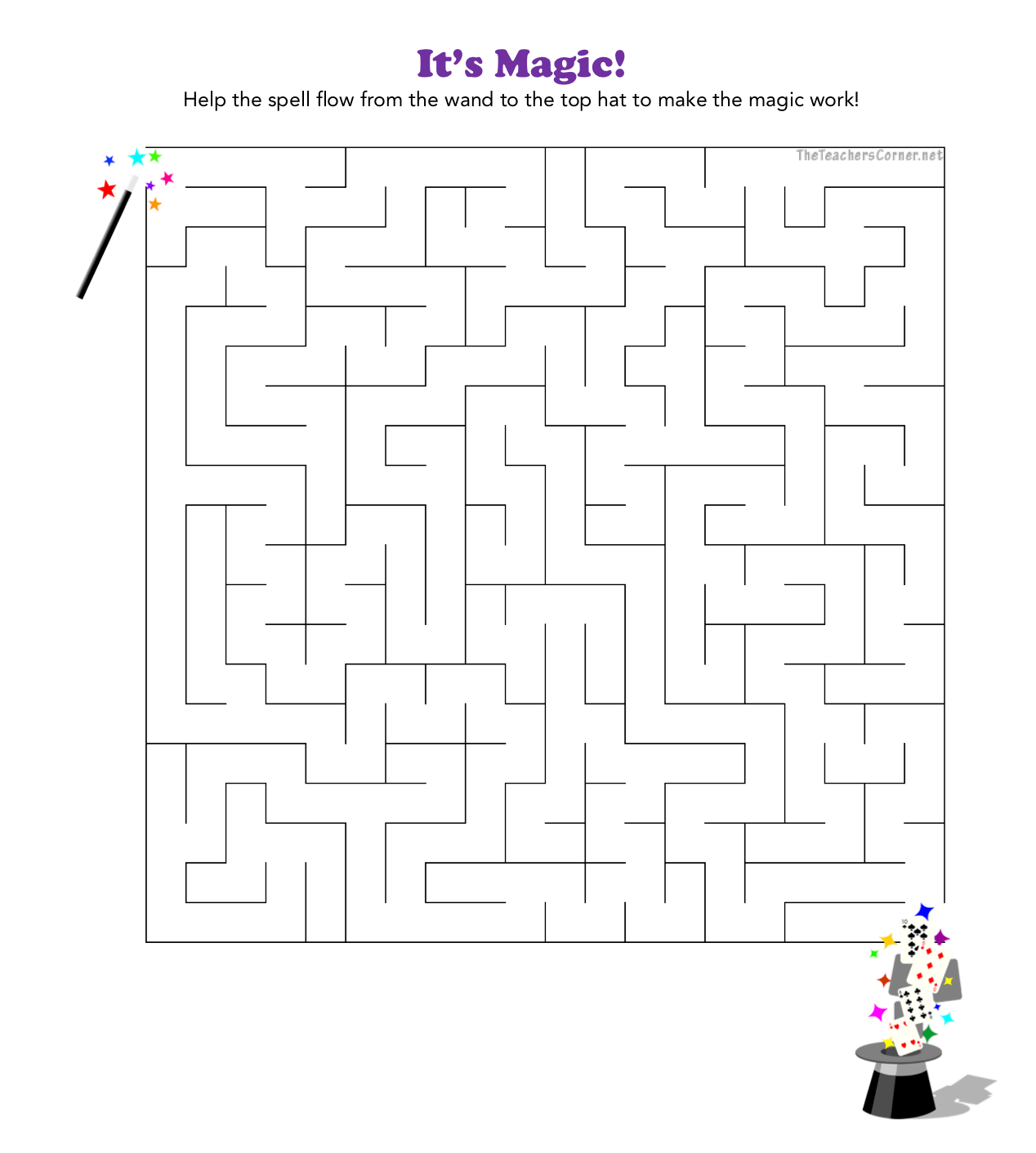
It’s Magic! Maze


Help the spell flow to the top hat to make the magic work in this printable maze!

It’s Magic! Maze | It’s Magic! Maze Solution

celebrate-picture-books-picture-book-review-the-magician's-secret-cover

You can find The Magician’s Secret at these booksellers

Amazon | Barnes & Noble | Books-a-Million

To support your local independent bookstore, order from

Bookshop | IndieBound


October 29 – It’s National Book Month

celebrate-picture-books-picture-book-review-the-animals-would-not-sleep-cover

About the Holiday

For readers every month is National Book Month, but October is especially set aside to highlight books and the love of reading. Fall is a book bonanza as publishers release new books in all categories and the holiday gift-giving season beckons. Books, of course, make superb gifts for all ages! So whether you’re looking for a new or new-to-you book to read right now, or new titles to give to all the family and friends who will be on your list, this month is a perfect time to check out your local bookstore to see what wonderful books are on the shelves! This month is also a perfect time to discover books that get kids excited about math and science in a whole new way – like today’s book!

Thank you to Charlesbridge for sending me a copy of  The Animals Would Not Sleep! for review consideration. All opinions about the books are my own.

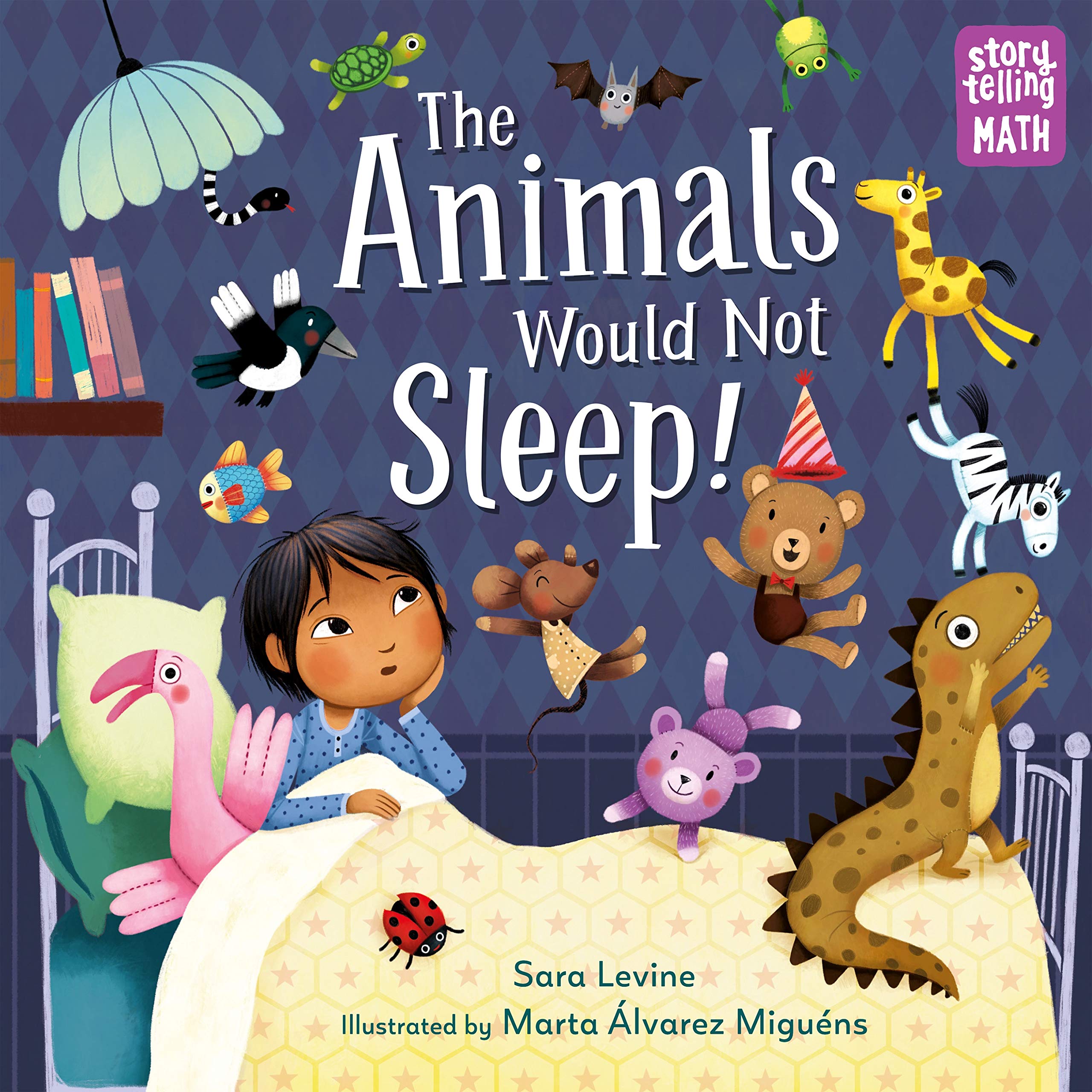
The Animals Would Not Sleep!

Written by Sara Levine | Illustrated by Marta Álvarez Miguéns


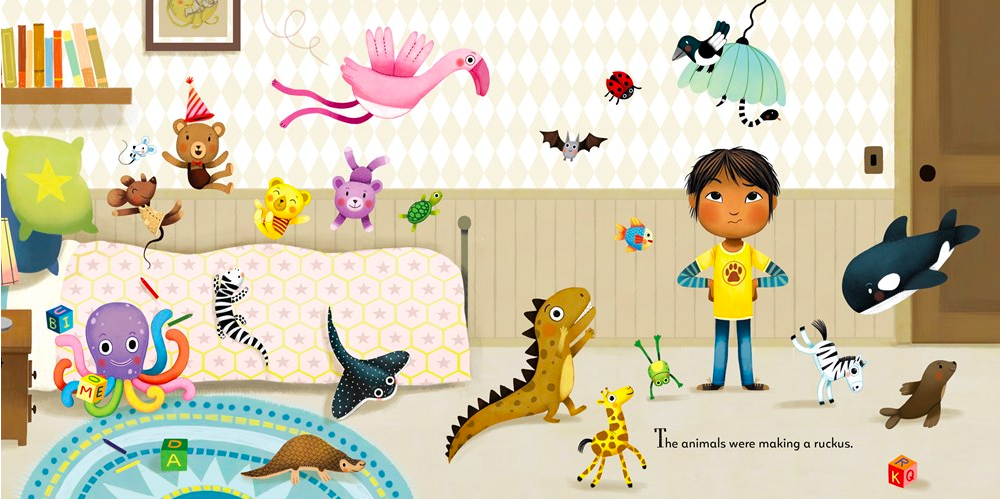
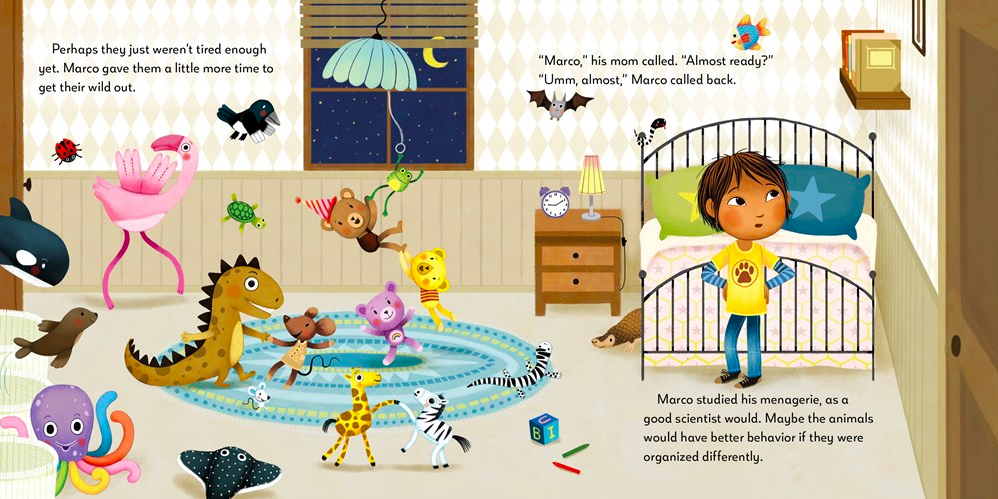
All of Marco’s stuffed “animals were making a ruckus” when his mom told him it was time to get cleaned up and ready for bed. She wanted to see all the toys put away, so Marco, who thought like a scientist, got to work. He wanted to sort his animals like a scientist would, so he got out three baskets and made signs for Flying Animals, Swimming Animals, and Animals That Move on Land. Then he picked up his dancing flamingo, bird, bat, and ladybug and put them in the first basket. He placed his octopus, stingray, frog, fish, whale, and seal in the second basket, and his dinosaur, giraffe, bears, snake, pangolin, gecko, mice, and zebra in the third basket.

But the animals were still wide awake, and “they egged one another on until not one remained in its container.” Marco thought they would settle down, but when his mom called the second time, he reconsidered his strategy. This time he made signs that sorted the animals by color, but zebra started to cry. He was afraid being in such close quarters with snake and stingray, plus he missed his friend giraffe.

celebrate-picture-books-picture-book-review-the-animals-would-not-sleep-ruckus

Image copyright Marta Álvarez Miguéns, 2020, text copyright Sara Levine, 2020. Courtesy of Charlesbridge.

Marco decided to try again. He took all of his animals out and made signs that read Small, Medium, and Large. Things seemed quiet and Marco began to put on his pajamas. But then he heard some kind of moaning or groaning coming from the Large basket. When he went to check, Dinosaur and Dancing Flamingo complained about being too cramped. Plus, Dancing Flamingo missed Rainbow Bear. Then he heard noises from the Small basket. Those animals weren’t happy either.

Marco’s mom gave him two minutes to get it all sorted out. Fortunately for Marco, “being a scientist, he was used to coming up with ideas and thinking outside the box.” The animals were getting tired and Yellow Bear had just burst into tears for no apparent reason. Like a good scientist, Marco cared about his animals and wanted them to be happy. He had one more sorting idea. With the large animals, medium-sized animals, and small animals all tucked in with plenty of room, friends nearby, and cozy warmth on Marco’s bed, Marco got under the covers and got a goodnight kiss from Mom. Then they all fell happily to sleep.

Back matter includes an illustrated Author’s Note about the way scientists sort, or classify, animals by characteristics and a discussion that explores the math in the story as well as Try This! tips for adults to engage children in sorting by Karen Economopoulos, co-director of the Investigations Center for Curriculum and Professional Development at TERC.

celebrate-picture-books-picture-book-review-the-animals-would-not-sleep-marco

Image copyright Marta Álvarez Miguéns, 2020, text copyright Sara Levine, 2020. Courtesy of Charlesbridge.

Perfectly capturing the way young children interact with their toys, Sara Levine combines imagination and scientific thinking in her inventive story, part of the Storytelling Math series from Charlesbridge. In Marco, who’s proud of his scientific thinking, Levine shows readers that they too already have this ability. Marco’s empathy for his animals’ when they are unhappy will engage children in thinking, along with Marco, about classification and the various ways the animals can be sorted, getting them excited about how math is used every day. Levine’s use of realistic dialogue that echoes bedtime routines in many homes and gives each character—human and animal—distinct personalities will draw kids in to this charming story that is organically infused with strong math lessons. Levine gives Marco a sweet final solution to his problem that will please kids and have them wanting to think like a scientist too.

Marta Álvarez Miguéns opens the story with an enchantingly wild two-page spread of Marco standing in the middle of his room as his toys bounce on the bed, climb blocks, juggle, fly, and cause a ruckus. Turn the page and, as Mom peeks into the room, these animals now lie motionless around the room. When Marco sorts his animals into the baskets, readers can clearly see which animals go where and why. Kids will knowingly giggle when the just-sorted animals spring from their resting places to prolong bedtime. Miguéns also plainly depicts Marco’s and the animals’ facial expressions from happy and playful to sad and crying to peaceful and satisfied. These images give adults and children an opportunity to discuss emotions and how to recognize various clues in faces, a skill important for social-emotional learning. Vivid colors, adorable animals, details such as alphabet blocks that stack or are turned to spell words, and kid-appealing décor will have kids wanting to come back again and again.

A book that’s sure to become a favorite at bedtime or to enhance classroom or homeschooling curriculum, The Animals Would Not Sleep! will spark mathematical and scientific thinking and recognition in all young learners. The book offers an irresistible invitation to experiment and interact with math and science and is a must for home, school, and public library collections.

Ages 3 – 6

Charlesbridge, 2020 | ISBN 978-1623541286 (Hardcover) | ISBN 978-1623541972 (Paperback) 

Discover more about Sara Levine and her books on her website.

To learn more about Marta Álvarez Miguéns, her books, and her art, visit her website.

About Storytelling Math

Storytelling Math offers books that celebrate children using math in their daily lives as they play, build, collaborate, compromise, and discover the world around them. Each story features characters of color who are empowered to solve problems, enjoy activities, and help out using their knowledge of and experimenting with math. Free downloadable hands-on activity kits are available for each book on the Charlesbridge website. Sharing these joyful stories with your littlest ones and older kids will make them eager to explore, use, and learn more about math every day. You can learn more about Storytelling Math on the Charlesbridge website

Storytelling Math: Math, Diversity, and the Power of Story was developed with Marlene Kliman at TERC—a nonprofit dedicated to STEM education—under a grant from the Heising-Simons Foundation.

Enjoy this The Animals Would Not Sleep! trailer with Author Sara Levine!

National Book Month Activity

celebrate-picture-books-picture-book-review-the-animals-would-not-sleep-activity-logo

The Animals Would Not Sleep! Activity Kit


You can have fun sorting and exploring math with your class or family with the Activity Kit for The Animals Would Not Sleep on the Charlesbridge website. Download it here!

The Animals Would Not Sleep Activity Kit

celebrate-picture-books-picture-book-review-the-animals-would-not-sleep-cover

You can find The Animals Would Not Sleep! at these booksellers

Amazon | Barnes & Noble | Books-a-Million

To support your local independent bookstore, order from

Bookshop | IndieBound

Picture Book Review

October 28 – It’s Eat Better, Eat Together Month

celebrate-picture-books-picture-book-review-let's-eat-mealtime-around-the-world-cover

About the Holiday

National Eat Better, Eat Together Month encourages families to gather for at least one meal a day. When families gather for a meal, they tend to make more balanced food choices. Uninterrupted time together also allows each member of the family share stories about their day and lets everyone laugh, commiserate, and build strong bonds. Spending more time together this year provides families the opportunity to get everyone involved in everything from choosing recipes and shopping to preparing and cooking the food to cleaning up. According to the Academy of Nutrition and Dietetics he benefits of eating together are wide ranging and can include better grades, better health, and fewer behavioral problems. To celebrate this holiday, make your own plans for family meals and discover how families from around the world enjoy their meals with today’s book!

Let’s Eat! Mealtime Around the World

Written by Lynne Marie | Illustrated by Parwinder Singh


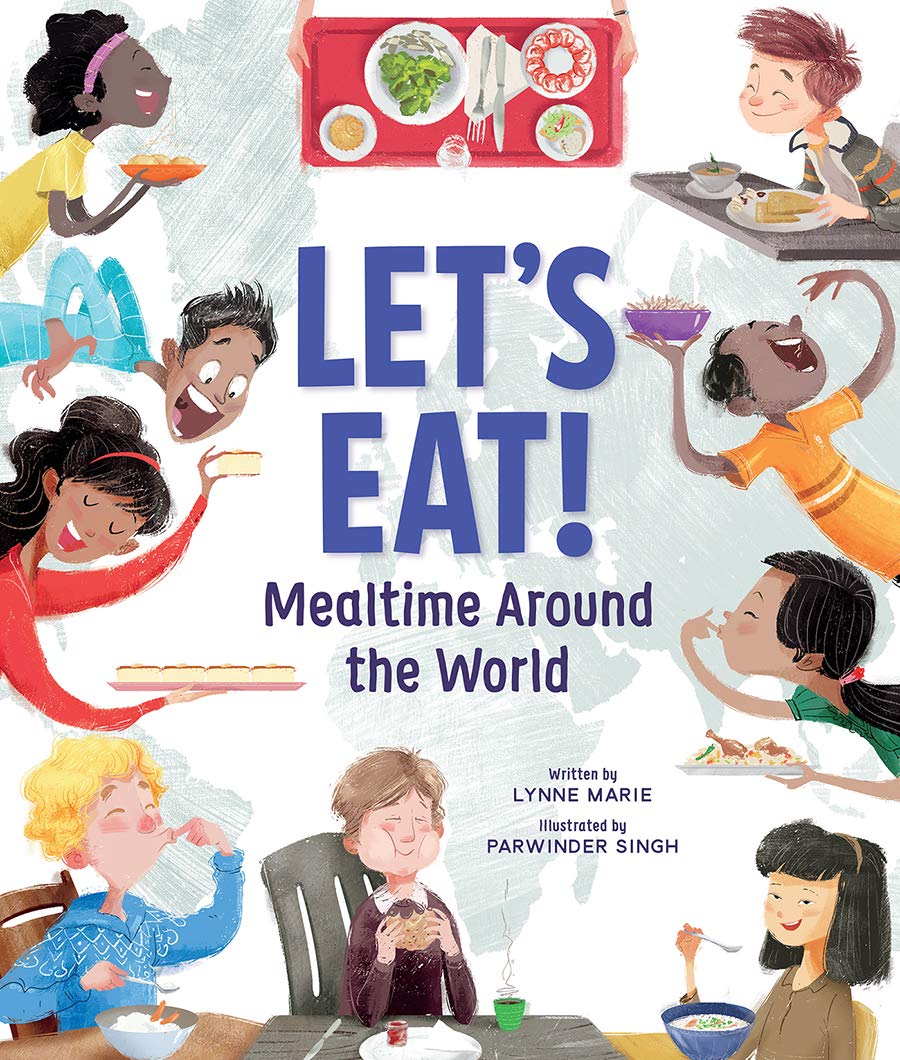
If you’re raising a culinary conscious and curious kid satisfies that gnawing hunger for more information on world cuisine. Visiting families around the globe at breakfast, lunch, and dinner time, Lynne Marie offers up tidbits about what kids eat plus other interesting food facts. The first stop is China, where Yu Yan is enjoying a bowl of congee—or rice porridge—before heading out to school. This morning, the congee includes squid that her father has caught. Yu Yan “slurps loudly to show how much she likes it.”

celebrate-picture-books-picture-book-review-let's-eat-mealtime-around-the-world-peru

Image copyright Parwinder Singh, 2019, text copyright Lynne Marie, 2019. Courtesy of Beaming Books.

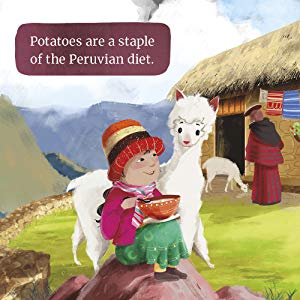
High in the mountains of Peru, Luz is bundled up in the early morning air as she gets ready to help out with her grandfather’s llamas. First, she warms up with chuño cola—a soup made from freeze-dried potatoes. For Luz, breakfast usually consists of leftovers from dinner the night before. Hospitality is so important to people in the Philippines that one of the most common greetings is “‘Kumain ka na?’ meaning ‘Have you eaten yet?’” If not, you may be invited to join in a breakfast of spamsilog—a dish of fried SPAM, fried eggs, and garlic rice.

celebrate-picture-books-picture-book-review-let's-eat-mealtime-around-the-world-philippines

Image copyright Parwinder Singh, 2019, text copyright Lynne Marie, 2019. Courtesy of Beaming Books.

In Jamaica, Zhade and her mother make savory pastries filled with spicy ground beef. These can be eaten on their own or wrapped in coco bread—a soft, sweet bread—to make sandwiches. For Camille, living in France, lunch is a four-course meal served at school. Today, Camille and her friends are having “a cucumber and tomato salad, then a main course of roast beef with cooked broccoli. Next, a small plate of cheese, finished with apple tart for dessert.” It must not be Wednesday, though. In France, there’s no school on Wednesday afternoons. “Instead, many attend on Saturday mornings.”

It’s dinnertime for Priya, who lives in India. She and her family are at their favorite restaurant, where Priya has ordered Tandoori chicken. “Tandoori chicken is marinated in yogurt and spices then roasted in a tandoor, a round clay oven.” After dinner, she and her family go home to watch cricket on TV.

celebrate-picture-books-picture-book-review-let's-eat-mealtime-around-the-world-jamaica

Image copyright Parwinder Singh, 2019, text copyright Lynne Marie, 2019. Courtesy of Beaming Books.

For many families in Sweden, Thursday dinners follow a tradition that goes back to the fifteenth century. Tonight, Hugo is having “pea soup and pancakes with lingonberry jam. Perfect for keeping warm on a cold winter night.” Lingonberry jam isn’t just for pancakes. It can be used in a variety of sweet and savory dishes.

At last! It’s time for dessert! In Egypt, Mandisa and her brother are enjoying basbousa—a coconut cake. They especially like it with a topping of rose-blossom or orange-blossom syrup that makes it taste extra sweet. In Nigeria, Chetachi can’t wait to dig into the bowl of tropical fruit sprinkled with coconut. It looks like his sister would like some too! All over the world, people sit down to meals with foods they love. Learning more about these dishes and trying them is a great way to feel a sense of community with other kids.

celebrate-picture-books-picture-book-review-let's-eat-mealtime-around-the-world-egypt

Image copyright Parwinder Singh, 2019, text copyright Lynne Marie, 2019. Courtesy of Beaming Books.

In her conversational tour around the world, Lynne Marie invites readers to sit down with their peers and enjoy a variety of meals and snacks while also learning a little about the history, culture, environment, and animals of each area. A question prompting readers to think about their own connection to food accompanies each two-page spread and offers an opportunity for classroom or home discussion and exploration.

Parwinder Singh populates his illustrations with enthusiastic kids dipping into soups, dishing up a plateful around the family dining table, helping out in the kitchen, and licking their fingers to enjoy every drop of a delicious treat. Singh’s colorful backdrops give kids a glimpse into the homes that nourish each child and the landscape that often influences the ingredients that make up their favorite foods.

Sure to spark children’s interest in tasting foods from around the world and learning more about the cultures of the thirteen countries represented here, Let’s Eat! Mealtime around the World makes for a deletable lead-in for social studies and geography lessons, events highlighting international foods, and multicultural explorations at home.

Ages 4 – 8

Beaming Books, 2019 | ISBN 978-1506451947

Discover more about Lynne Marie and her books on her website.

You can view a portfolio of artwork by Parwinder Singh on ArtStation.

Eat Better, Eat Together Month Activity

celebrate-picture-books-picture-book-review-pancake-game-four (2)

Pancake Flip-Out Game


A favorite family breakfast is pancakes! If you can’t get enough of pancakes at breakfast (or that other treat: breakfast for dinner), you can play this Pancake Flip-Out Game to fill your plate.

Supplies

You can play this game several ways:

  1. Print and cut out the pancakes and plate (or use your own paper plate or other dish) and glue them to the heavy paper, poster board, or foam sheet
  2. Place the plate on the floor
  3. Draw 3 concentric circles around the plate about 12 inches apart.  For younger children make the circles closer together.
  4. Give each player the same number of pancakes and choose someone to go first
  5. Each player takes turns tossing or flipping their pancakes, trying to get them onto the plate
  6. When a player has used all of their pancakes add up their score:
  • Hitting the target can earn you 20 points
  • Getting your pancake in the first circle around the plate earns you 15 point
  • Hitting the second circle is worth 10 points
  • Pancakes landing in the third circle are worth 5 points

Rotate through the players as many times as you like and add up the points at the end. The player with the most points wins!

Try this Option:

Instead of tossing the pancakes with your hands, try flipping them with a spatula!

Or: Make up your own rules—and have fun!

celebrate-picture-books-picture-book-review-let's-eat-mealtime-around-the-world-cover

You can find Let’s Eat! Mealtime Around the World at these booksellers

Amazon | Barnes & Noble | Books-a-Million

To support your local independent bookstore, order from

Bookshop | IndieBound

Picture Book Review

October 27 – Celebrating the Book Birthday of This Is a Flying Rat

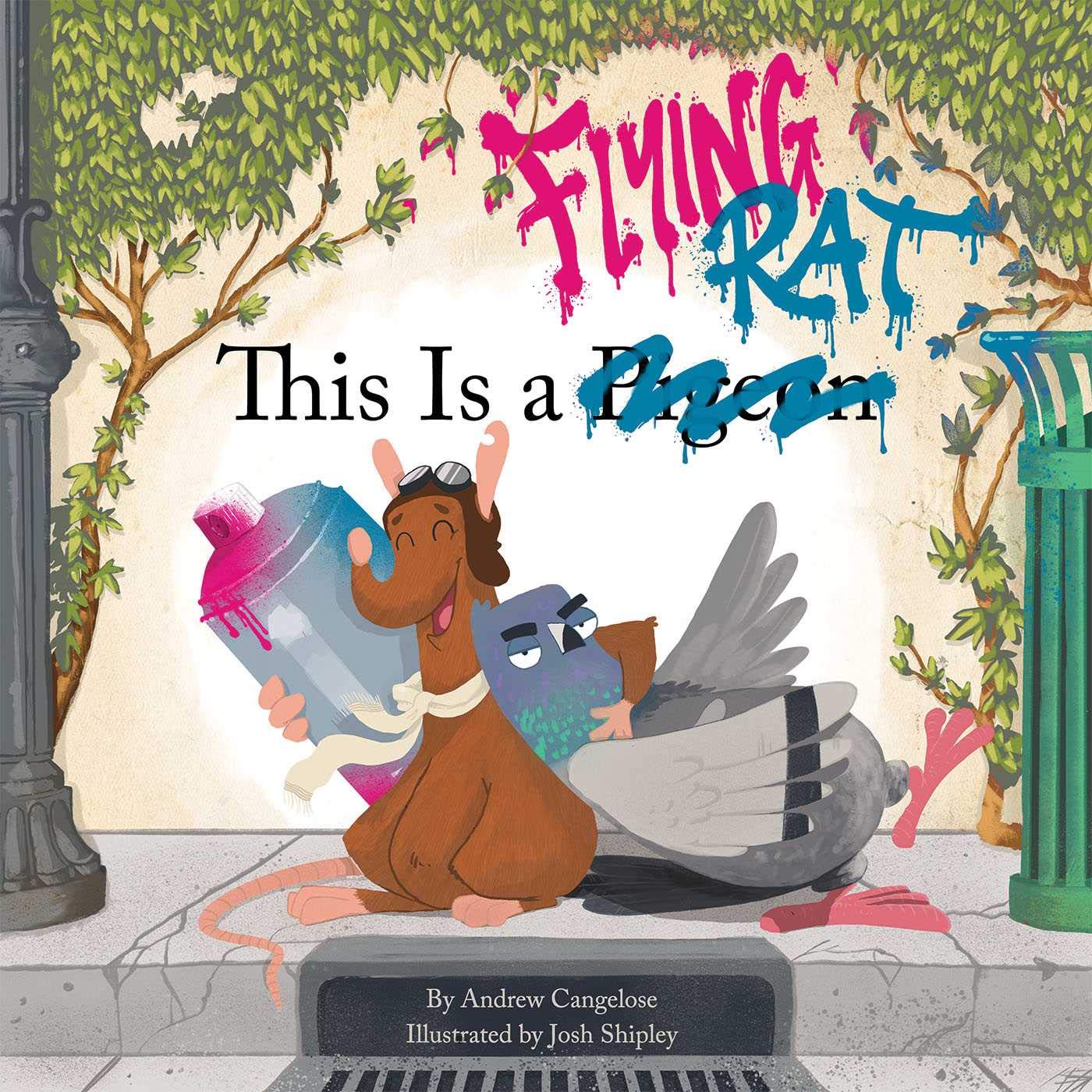
celebrate-picture-books-picture-book-review-this-is-a-flying-rat-cover

About the Holiday

Celebrating a new book on its birthday is always exciting. Just like the kids they’re written for, each book has its own personality and take on the world. Today’s book is funny, smart, clever, and educational. Take a look!

This Is a Flying Rat

Written by Andrew Cangelose | Illustrated by Josh Shipley


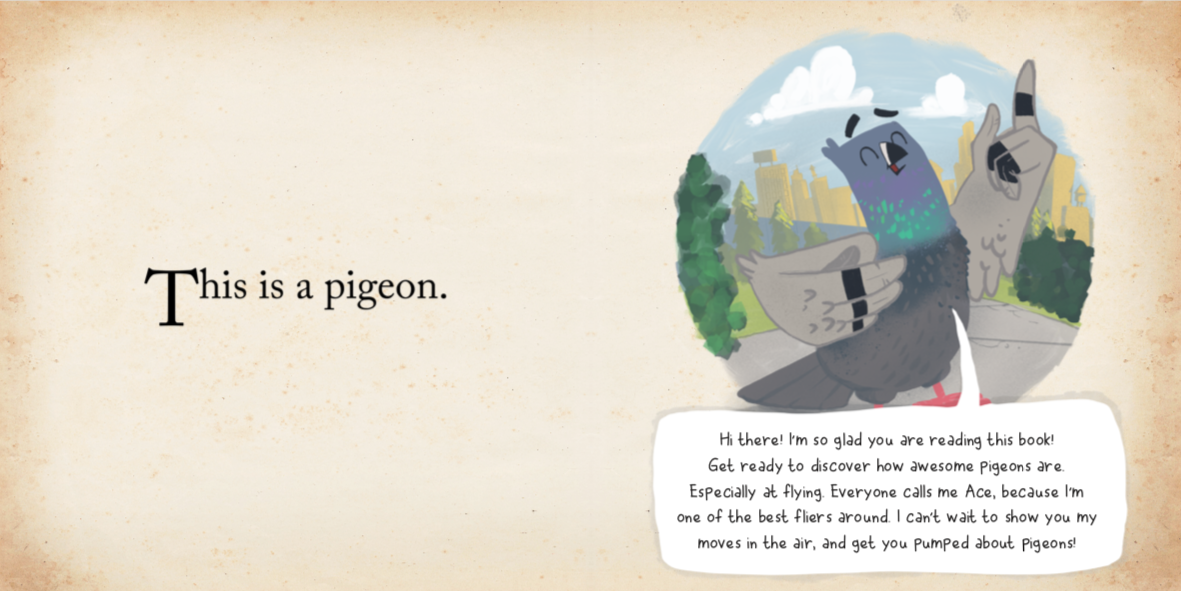
As a narrator begins a recitation on pigeons, a very vocal pigeon breaks in to extoll the awesomeness of his breed, especially their flying power. “Everyone calls me Ace,” he says, “because I’m one of the best fliers around.” He can’t wait to prove it. “Pigeons are a member of the same bird family as doves. In fact, they are sometimes called ‘rock doves,’” the narrator intones.

celebrate-picture-books-picture-book-review-this-is-a-flying-rat-awesome

Image copyright Josh Shipley, 2020, text copyright Andrew Cangelose, 2020. Courtesy of Oni Press.

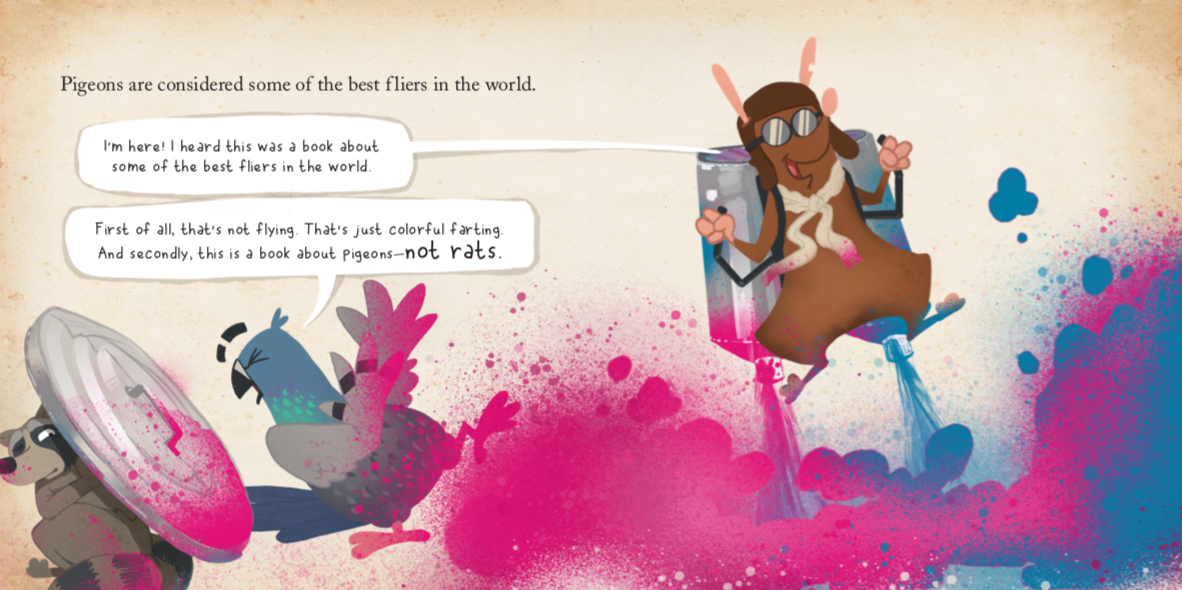
Ace is wholeheartedly agreeing that he does, indeed, rock when a raccoon interrupts to point out a flying rat. Ace is offended, but it turns out that the raccoon doesn’t mean him, but the rat with a jet pack spewing pink and blue ink coming their way. Just as the narrator is getting to the good part: “Pigeons are considered some of the best fliers in the world,” the rat crosses out “Pigeons” and writes “Flying rats” in pink ink.

celebrate-picture-books-picture-book-review-this-is-a-flying-rat-jet-pack

Image copyright Josh Shipley, 2020, text copyright Andrew Cangelose, 2020. Courtesy of Oni Press.

Again, Ace protests, so the rat decides he’ll just be a pigeon too. But Ace isn’t going to let him get away with that that easily. To be a pigeon, the rat has to do other pigeon stuff too. The narrator goes on to describe a pigeon’s eating habits, which can include garbage. The rat is happy to oblige this dietary quirk. Pigeons also have feathers and wings, the narrator reveals. Out of the trash come…you guessed it…check! and check!

celebrate-picture-books-picture-book-review-this-is-a-flying-rat-pigeon

Image copyright Josh Shipley, 2020, text copyright Andrew Cangelose, 2020. Courtesy of Oni Press.

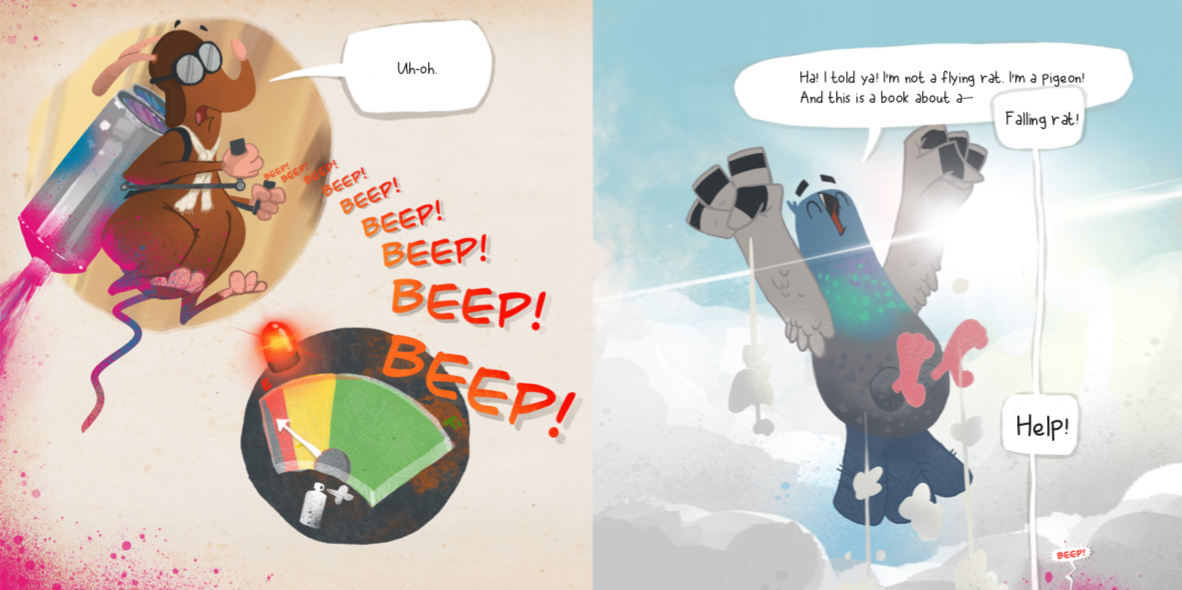
Finally, the narrator gets to flying. But thanks to the jet pack, the rat is just as agile and persevering as Ace. The two are just in a race to the top of a skyscraper when the rat’s fuel burns out. Now he’s not so much a flying rat as a falling rat. Down he plummets just as the narrator reveals that pigeons are social flyers—never found alone. Ace gets it and rockets toward the ground, rescuing the rat just before….

The rat is grateful and apologetic for trying to take over the book, and he acknowledges that Ace is the real pigeon. On Ace’s side, he’s warmed up to having a friend while the narrator’s next chilling fact about pigeon predators has Ace considering joining the other side.

celebrate-picture-books-picture-book-review-this-is-a-flying-rat-fuel-gone

Image copyright Josh Shipley, 2020, text copyright Andrew Cangelose, 2020. Courtesy of Oni Press.

Andrew Cangelose’s pitch-perfect mashup of sedate nature programming and laugh-out-loud interruptions is education at its ingenious best. As the rat challenges Ace’s claims to flying glory, kids are the winners, learning facts about pigeons they won’t soon forget. Cangelose has given Ace and the rat distinct personalities and plenty of attitude to keep the giggle’s going. The combination of straightforward narration and dialogue makes the story a joy to read and would even lend itself to turning the text into a classroom play. The resulting friendship between Ace and the rat is a natural outgrowth of pigeons’ flocking behavior and makes a case for pigeons being a bit like humans too.

Josh Shipley feathers the story with urban details as the rat attempts to prove he’s really a pigeon. Ace, with his squared-off head and familiar multihued sheen, is a portrait of pride, indignation, and knowing looks that will delight kids. The rat, clinging to his jet pack, is sure to win over converts with his ever-present smile and bold self-assurance. The appearance of a pompadour-wearing squirrel clutching an armful of garbage will draw lots of laughs. Shipley depicts Ace’s change of heart about the rat with a sweetness that will charm kids.

Humorous creative nonfiction that kids will really respond to, This Is a Flying Rat would be a fun addition to home bookshelves and a high-interest accompaniment to classroom nature and science lessons, making it a great choice for school and public libraries as well.

Ages 4 – 8

Oni Press, 2020 | ISBN 978-1620107751

celebrate-picture-books-picture-book-review-this-is-a-flying-rat-cover

You can find This Is a Flying Rat at these booksellers

Amazon | Barnes & Noble | Books-a-Million

To support your local independent bookstore, order from

Bookshop | IndieBound