June 21 – World Giraffe Day & Interview with Author Monica Bond, Illustrator Kayla Harren, and Educator David Brown

celebrate-picture-books-picture-book-review-juma-the-giraffe-cover

About the Holiday

Today’s holiday, established by the Giraffe Conservation Foundation, celebrates the animal with the longest neck on the longest day or night of the year, depending on which hemisphere you live in. The purpose of World Giraffe Day is to honor these majestic animals while also promote awareness of the dangers and threats they face. Events supporting these gentle giants are held around the world at zoos and conservation organizations as well as by governments, institutions, and companies involved in education about and protection of the giraffe. To celebrate today, learn more about these animals, visit a zoo or wildlife refuge, or consider donating to the cause of giraffe conservation. To learn more visit the Giraffe Conservation Foundation website.

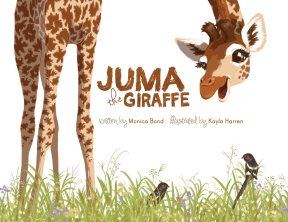
Juma the Giraffe

Written by Monica Bond | Illustrated by Kayla Harren


Juma, a baby giraffe, loved to play with his friends Upendo and Rafiki on the African safari while their mothers watched. “Upendo likes to explore new places” while “Rafiki jokes and makes everyone laugh with his silly faces. Juma is kind and generous.” With his long neck, he’s able to reach the sweet acacia leaves to share with the dik-diks. One day, though, while the giraffes were at the water hole, Juma caught a glimpse of his reflection.

celebrate-picture-books-picture-book-review-juma-the-giraffe-juma-and-dik-diks

Image copyright Kayla Harren, 2016, text copyright Monica Bond, 2016. Courtesy of Kayla Harren and Wild Nature Institute.

Looking at himself alongside all the other giraffes, he realized that they all looked the same. “And because they all looked alike, he felt he wasn’t special.” His mama noticed Juma standing alone and sad and asked him what was wrong. He told her that he wished he “looked different from everyone else.”

Juma’s mama gazed at her child lovingly and told him how special giraffes are. “‘There is no other animal in the whole world like us,’” she said. Then she gently reminded him how his long legs and neck help him get food, how his thick tongue and lips protect him from the thorns of the acacia trees, and how his “‘swishy tail sweep away the pesky flies that like to bite us.’” Their brown spots camouflaged them from lions and hyenas.
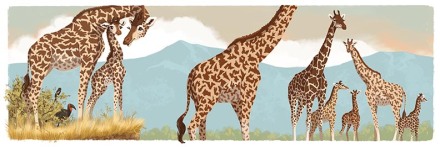
celebrate-picture-books-picture-book-review-juma-the-giraffe-herd

Image copyright Kayla Harren, 2016, text copyright Monica Bond, 2016. Courtesy of Kayla Harren and Wild Nature Institute.

Then Mama asked Juma to look closely at his spots and notice that “‘each spot is different from the others and every giraffe has a unique pattern of spots.’” Juma saw that Mama was right. He saw one spot “shaped like a star and another like a flower.” Mama’s spots were different too, and so were Upendo’s and Rafiki’s. Mama reassured Juma that each giraffe was unique outside and inside.

Juma was happy and continued to notice other ways that each giraffe was different, including their various personalities. Then Mama nuzzled her little one and told him that to her he was the “‘most special giraffe of all’” because he was her baby and she loved him.

Fascinating facts about the anatomy of giraffes, newborn giraffes, and where giraffes live follow the text.

celebrate-picture-books-picture-book-review-juma-the-giraffe-juma-and-panorama

Image copyright Kayla Harren, 2016, text copyright Monica Bond, 2016. Courtesy of Kayla Harren and Wild Nature Institute.

Young readers who are at that stage where they wonder about how they are different from other kids and how they fit into their community will find loving reassurance in Monica Bond’s touching story even as they learn about a giraffe’s distinctive features. The sweet relationship between Juma and Mama, depicted through tender dialogue, will charm little ones. A welcome exchange comes when Mama points out Juma’s unique features and the little giraffe enthusiastically adds more observations of his own. Just as Juma does, young readers will see that they too are special in their own way.

As readers open the cover, Kayla Harren’s stunning panoramic view of the verdant African savanna places them close to zebras, an ostrich, a greater kudu, a grey crowned crane, a stalwart warthog, a family of mongoose, and a herd of elephants. Smiling out from the page is little Juma. As the story progresses, Mama spotlights each of Juma’s attributes, and readers see how he uses them. A shimmering two-page spread of the giraffes lined up at the watering hole and the close-up on the next page will awe kids and adults. Images of smaller animals hiding in rock crevices and big cats and monkeys resting on tree limbs will entice readers to learn more about these creatures. As Mama nuzzles Juma on the book’s final page, adults and little ones are sure to find time to cuddle too.

A sweet story that gives parents, teachers, and other caregivers a way to show the children in their life how special they are, Juma the Giraffe would be an often-asked for addition to home, classroom, and public library bookshelves.

Ages 4 – 8

Wild Nature Institute, 2016 | ISBN 978-0989818292

Learn more about Juma the Giraffe and find videos and teachers resources here.

You can connect with Kayla Harren on

Her website | Facebook | Instagram

celebrate-picture-books-picture-book-review-helping-brother-rinoceros-cover

Helping Brother Rhinoceros

Written by Monica Bond | Illustrated by Kayla Harren


Brother Rhinoceros and his friend Father Oxpecker went to the waterhole to cool off on a blazing hot day. When they got there, they saw “that most of the water had dried up, leaving a big patch of gooey, sticky mud.” But Brother Rhinoceros lied down in the cool mud anyway and pronounced it “‘Perfect!’” Then Father Oxpecker nestled in behind Brother Rhinoceros’s ear, folded his wings, and the two drifted off to sleep.

celebrate-picture-books-picture-book-review-helping-brother-rhinoceros-rhino

Image copyright Kayla Harren, 2018, text copyright Monica Bond, 2018. Courtesy of Kayla Harren and Wild Nature Institute.

Brother Rhinoceros woke up hungry, but when he tried to leave the waterhole, he discovered that he was stuck in the mud. Father Oxpecker flew off to find help. First he brought back Sister Vervet Monkey, who was good at tying. “She ran around the mud patch looking for something to tie together that might help Brother Rhinoceros. But there was nothing.”

Next, Father Oxpecker brought Grandfather Giraffe, who thought his height could help, but he didn’t know exactly how. So, the bird flew off again in search of someone else. This time he came back with Grandmother Spider, who “produced a delicate thread of beautiful silk from her abdomen. It fluttered in the breeze, of no help whatsoever to Brother Rhinoceros.”

celebrate-picture-books-picture-book-review-helping-brother-rhinoceros-monkey

Image copyright Kayla Harren, 2018, text copyright Monica Bond, 2018. Courtesy of Kayla Harren and Wild Nature Institute.

Father Oxpecker left once again and returned with Mother Elephant. Although she was big and strong, she could only watch from the sidelines. Last, Father Oxpecker found Brother Weaverbird, who declared that he could “weave anything” if only there was something to weave. All of the animals sat nearby wondering what they could do. “They were all so proud of the things they could do, but none of them could help Brother Rhinoceros out of the mud.”

It was Grandmother Spider who suggested that they combine their talents and work as a team. She began by “spinning long streams of silk.” Brother Weaverbird braided “the silk into a long, strong rope.” Sister Vervet Monkey tied the rope around Brother Rhinoceros, using Grandfather Giraffe’s long neck as a bridge to reach him. Then it was Mother Elephant’s turn. She grabbed the rope, “took a deep breath and began to pull.”

celebrate-picture-books-picture-book-review-helping-brother-rhinoceros-oxpecker

Image copyright Kayla Harren, 2018, text copyright Monica Bond, 2018. Courtesy of Kayla Harren and Wild Nature Institute.

Brother Rhinoceros helped push. “Finally, with a big squishy sound, Brother Rhinoceros lifted his body up out of the mud.” He was free! His friends cheered. Brother Rhinoceros thanked each one individually for their special skills that helped to save him. “They certainly made a great team and the best friends a muddy rhinoceros could ever have.”

Back matter reveals facts about Africa’s black and white rhinoceros. A map of Africa shows the historical range and the much smaller current range for each type of rhino.

celebrate-picture-books-picture-book-review-helping-brother-rhinoceros-giraffe

Image copyright Kayla Harren, 2018, text copyright Monica Bond, 2018. Courtesy of Kayla Harren and Wild Nature Institute.

With the lyricism of a fable, Monica Bond weaves a story about individuality and teamwork and how every person has the ability to help others. As Father Oxpecker flies off again and again searching for just the right animal to help, readers will enjoy the suspense and learning each animal’s special ability. When Grandmother Spider suggests they all work together, kids will see that by combining their talents with friends and classmates, they can move mountains. The format of the story makes it a multi-layered choice for teaching the elements of a story, prediction, and comprehension.

Kayla Harren’s sun-drenched pages are bathed not only in the heat of a hot African day but in the warmth of friendship these animals share. Harren’s beautifully textured and realistic depictions of the animals and the surrounding savanna will inspire awe and an enthusiastic desire in kids to learn more about the animals, insects, and birds in the story.

A perfect book for social studies, science, and reading classes and for kids who love nature and animals, Helping Brother Rhinoceros makes an excellent choice for home, classroom, and public libraries.

Ages 5 – 10

Wild Nature Institute, 2018 | ISBN 978-1732323414
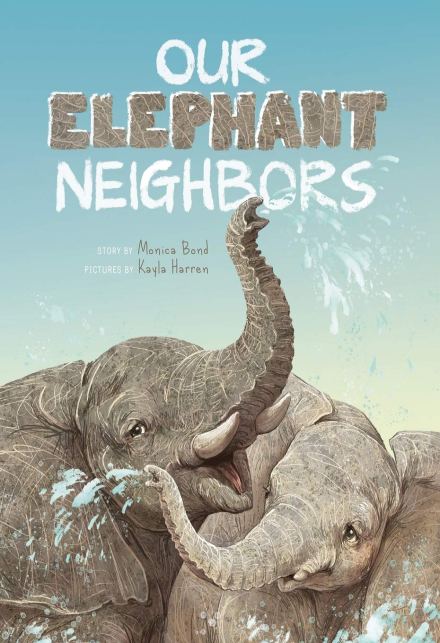
celebrate-picture-books-picture-book-review-our-elephant-neighbors-cover

Our Elephant Neighbors

Written by Monica Bond | Illustrated by Kayla Harren


Robert and his little sister Mary live on their family’s small farm in Tanzania. There are cattle and goats, which Robert helps watch while Mary helps her mother wash clothes and cook. Sometimes they went to the waterhole to get water. “They splash each other with cool water on hot days.” One day, when it was very hot, they saw something amazing at the waterhole. A family of elephants was enjoying the cool water too. “Robert and Mary climbed up a nearby tree to watch and wait for the elephants to leave.”
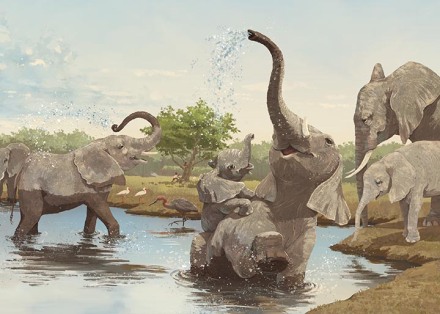
celebrate-picture-books-picture-book-review-our-elephant-neighbors-splashing

Image copyright Kayla Harren, 2017, text copyright Monica Bond, 2017. Courtesy of Kayla Harren and Wild Nature Institute.

Soon, two elephants came to stand in the shade of the tree, right under the branch where the two children sat. “The elephants looked up and saw Robert and Mary.” They had been taught to fear people. Nervous, they backed up a few steps. Robert and Mary had been taught to fear elephants, and Mary hid behind her brother. The bigger elephant, Tomas, introduced himself and his little sister, Teresa. Robert introduced himself and Mary.

“Robert looked thoughtfully at the elephants below. ‘You are an elephant, and elephants can hurt people,’ Robert pointed out.” Tomas replied, “‘Well, you are a human, and humans can hurt elephants too.’” Even though Mary knew she should be afraid, she liked the elephants. She reached down and touched Teresa’s upturned trunk. Mary said that she could pick things up with her fingers, and Teresa showed her how she could pick things up with her trunk.

celebrate-picture-books-picture-book-review-our-elephant-neighbors-meeting

Image copyright Kayla Harren, 2017, text copyright Monica Bond, 2017. Courtesy of Kayla Harren and Wild Nature Institute.

The elephants and the children talked back and forth about all of their similarities. They were even the same ages. They talked about how all the aunties help out when a baby person and a baby elephant are born, how the mothers, grandmothers, and aunts in both human and elephant families teach the children important lessons and protect them, and how all the members of a both families feel sad when another member dies.

When they talked about the food they liked, Robert said that his “‘father gets angry when elephants eat” the vegetables in their garden.’ Then Tomas told Robert and Mary a secret.” He said that “all elephants hate chili pepper powder” and if they hung chili pepper powder on their fences, it would keep the elephants away. One reason elephants were eating from people’s gardens, Tomas said, was because their habitat was getting smaller as people planted more and more farms. Also “more and more of their family members are being hurt by people, because the elephants have fewer places to go.”
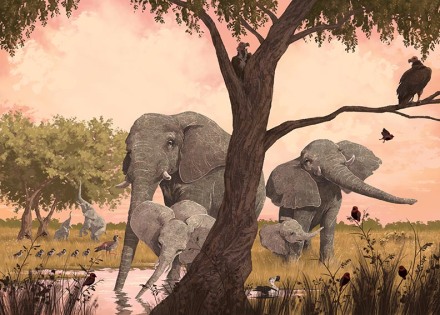
celebrate-picture-books-picture-book-review-our-elephant-neighbors-elephant-family

Image copyright Kayla Harren, 2017, text copyright Monica Bond, 2017. Courtesy of Kayla Harren and Wild Nature Institute.

Robert promised Tomas that when he grew up and had a farm of his own, he would build it where it would not disturb the elephants. He also promised to report anyone who tried to hurt the elephants. Soon it was time for Robert and Mary to get back home with the water, and Tomas and Teresa heard their mother calling for them. “They shook hands and trunks” and hoped they would see each other again. They knew “they would never forget their new friends from the waterhole.”

Interesting facts about African elephants follows the text.

celebrate-picture-books-picture-book-review-our-elephant-neighbors-fetching-water

Image copyright Kayla Harren, 2017, text copyright Monica Bond, 2017. Courtesy of Kayla Harren and Wild Nature Institute.

Through Monica Bond’s charming story of a sister-brother pair and their elephant counterparts, young readers learn surprising ways in which they and elephants are alike. With similar abilities, family units, and even feelings, people and elephants should be friends, but too often they come into conflict, and the result has been a decrease in the elephant population and at times danger for humans as well. As the adorable Robert and Mary talk with Tomas and Teresa, Bond’s enchanting storytelling and realistic dialogue, draw in children, giving them even more reasons to love these popular animals. A major take-away is how people can protect and care for these gentle and intelligent animals and their habitats now and in the future.

Against gorgeous backdrops of Tanzania and its savanna, forests, and mountains, Kayla Harren depicts one family’s simple farm and a family of elephants enjoying a day at the nearby waterhole. At nine and five years old, Robert and Mary will steal readers’ hearts with their infectious smiles, sweet sibling relationship, and enthusiastic interactions with elephants Tomas and Teresa. Harren juxtaposes illustrations of the elephants’ family with those of Robert and Mary’s family in similar situations, showing readers how alike we really are. The pages are washed in soft-blue skies and glowing peach-hued sunsets, as realistic portrayals of the elephants, birds, and other animals create detailed and awe-inspiring panoramas.

Our Elephant Neighbors is an excellent addition to home, classroom, and public libraries to further understanding of elephants, conservation, and nature.

Ages 4 – 8

Wild Nature Institute, 2017 | ISBN 978-1732323407

celebrate-picture-books-picture-book-review-natures-giants-magazine-cover

Nature’s Giants Magazine

In this new magazine from the Wild Nature Institute, an enthusiastic dung beetle named Doug invites kids to learn about animal and plant giants of the African savanna through articles, games, crafts, and other activities that will keep them busy having fun and learning for a long time. Let’s get rolling and see what’s inside! Kids love finding stuff and right on the first pages they’re prompted to spot five differences on two identical (?) giraffes and search the pages for five beetles to see which one will would win a beetle race.

Along the way kids will enjoy:

Comics:

  • Doug engages kids in funny and interesting banter about the dung beetle’s ecological importance, including facts on their very, very long family history, three different dung beetle lifestyles, how dung beetles roll their dung balls in a straight line, and various job sites where dung beetles do their work.

Articles:

  • Ele-Fence!: About new ways farmers are protecting their crops from elephant raiders without engaging in Human-Elephant Conflict
  • Lions vs. Giraffes: About ways scientists use scars found on giraffes to study predation
  • Black Mambas: about the women rangers who patrol the Balule Nature Preserve to stop poaching of black and white rhinoceros and who teach environmental education programs in local schools. Since the group was formed “poaching of all species has decreased by 79%.”
  • Barking up the Right Tree: about the beautiful, sprawling baobab trees.
  • Infographic: on elephants, giraffes, termites and a surprising fact about biomass

celebrate-picture-books-nature's-giants-inside-layout

Activities:

  • Ideas for backyard or neighborhood science exploration
  • A savanna word search puzzle
  • An illustrated search-and-find animal puzzle
  • Craft instructions for making an Insect Hotel and an African Savana Scene
  • Jokes
  • A maze
  • How to draw an elephant, a giraffe, and a rhinoceros
  • A Giant Birds coloring page

Meet the Team Behind the Books and Magazine

I’m excited to have an opportunity to talk with Kayla Harren, Monica Bond, and David Brown about the work of the Wild Nature Institute, their lovely books that combine nature science with enchanting writing, and their new magazine for children.

Meet Monica Bond

celebrate-picture-books-picture-book-review-Monica-Bond-headshot

Hi, Monica! It’s nice to be chatting with you today! The love you have for Tanzania comes through in your stories so clearly and touchingly. Can you talk a little about your work and what brought you to this area?

My partner Dr. Derek Lee—quantitative ecologist and population biologist—and I chose to live and work in Tanzania because this country has some of the best wildlife experiences on Earth. As wildlife scientists, the lure of the African savanna is very strong; it is truly a wildlife paradise. In Tanzania there is incredible biological diversity combined with an extremely high density of mammals and birds, and we still have the full suite of predators and scavengers which means that the food web is intact. Tanzania also holds some of the best habitat for the last remnants of our planet’s pleistocene megafauna — elephant, rhino, and giraffe.

Derek and I are studying giraffes in Tanzania using a computer program that matches each individual’s unique spot patterns from photographs. We are monitoring thousands of giraffes in northern Tanzania, and learning where they spend their time, which other giraffes they hang out with, and how they move around the ecosystem. Our goal is to understand the things that hurt or help giraffes so we can help to preserve these magnificent animals for the future.

What is it like to live so closely to these majestic animals?

Every time I go to the bush and interact with these creatures, I am awed anew. They are so very special. Every day I feel that I am living the dream and I cannot get enough of watching them in their beautiful savanna habitat. Although we work in the bush, we often go back out to the bush on our days off!

celebrate-picture-books-picture-book-review-Monica-At-Work

How did the Wild Nature Institute get its start? Can you talk a bit about the organization?

Formed in 2010, Wild Nature Institute conducts scientific research on endangered wildlife and inspires the public to protect wild nature. Next year we will celebrate a decade of work! The Institute was started as a platform for two dedicated wildlife scientists to realize our dream of doing interesting and bold science that protects the earth’s remaining bits of wild nature. The Wild Nature Institute is me and Derek at the core, but with lots of other partners and cooperators in our network (like David Brown and Kayla Harren) who are all critical to accomplishing our important work.

The giraffe is the national animal of Tanzania. As we celebrate World Giraffe Day today, could you talk about the giraffe—it’s importance to its ecosystem, the threats and pressures the animal faces from human and environmental factors, and how people can help protect them?

The gentle, iconic giraffe is popular around the world, but scientists know surprisingly little about them in the wild. We chose to work with giraffes because they are amazingly beautiful and peaceful animals, but they are vulnerable to extinction because people have taken so much of their wild natural habitat for human uses like farming and houses. Poaching is also a serious problem for giraffes. They need our help.
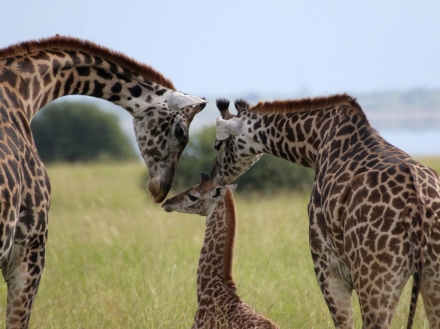
celebrate-picture-books-picture-book-review-Giraffe-Love

Tanzania in East Africa is a stronghold for giraffes, supporting more than any other country. Although the Masai giraffe is the national animal of Tanzania, populations have declined here since the 1980s—yet few people are aware of the plight of the beloved giraffe in the wild. It is our job as scientists to bring this problem to light.

How are can families and organizations around the world help in the mission?

What can you do to help save giraffes and wild nature? (1) You can donate money or time to conservation groups like Wild Nature Institute and others. People can use their skills by providing advice, services, or goods in their personal area of expertise that can help the cause. (2) You can raise awareness about the silent extinction of giraffes. Speak up within your social circles and encourage others to donate money or time to saving giraffes. You can raise awareness in your home communities by writing, speaking, and contributing to the global conversation about our planet’s climate and biodiversity crises. (3) You can plant native trees.

Giraffes, elephants, and many other species need native trees, but deforestation continues worldwide. Planting native trees helps fight the global climate crisis and helps biodiversity too! (4) You can support legal protections for wildlife. Laws like the Endangered Species Act and other environmental laws make the world safer for wildlife and people. Call and write to your congressperson, senator, governor, and president telling them you support strong law enforcement to protect wildlife. (5) You can commit to not buying body parts, and if you live in Africa you can commit to not eating bushmeat.

The programs that the Institute sponsors and supports—from education in schools and communities to environmental conservation of animals and land to publishing materials for children—is extensive. How has your work been received? What successes have been achieved and what benefits do you hope to see in the future?

To save wild nature, we must know it and love it, so Wild Nature Institute and our partners developed environmental educational materials for children and teachers. The materials teach biology, geography, science, math, and language skills using focal animals and fun, beautifully illustrated stories. Our first book, The Amazing Migration of Lucky the Wildebeest, was a tri-lingual children’s book about wildebeest migration, and the ecological and economic benefits of conservation. The book was so successful that we created our “Celebrating Africa’s Giants” program to use environmental education to build community support for conservation efforts that will ensure the long-term survival of Africa’s giants giraffes, elephants, and rhinos.

celebrate-picture-books-picture-book-review-Peace-for-Conservation

We now produce and distribute our four multi-lingual storybooks, two Swahili activity books, and seven posters, as well as learning activities to accompany the books and posters, to tens of thousands of children throughout Tanzania. These materials teach ecological and social lessons, build national pride in Tanzanian wildlife, and motivate children to read and learn about their natural world. The learning activities help Tanzanian teachers meet environmental education curricula requirements, and also meet Next Generation Science Standards for American schools.

To ensure the materials are used to their best advantage, we host workshops for teachers, led by our education consultant Lise Levy, a retired high school biology teacher with 32 years of experience in education. At the workshops, teachers have a wonderful time learning the stories and practicing the hands-on activities that they will use in the classroom to accompany the books and posters.

Can you talk a little about the impact that these books and the new Nature’s Giants Magazine have on the children and families in Tanzania?

Every year since we introduced our education program, we have expanded its reach and impact through word-of-mouth. Our books and posters are now recognized and requested by Tanzanian educators throughout Tanzania, from Ruaha and Ruvuma in the south to Serengeti in the west to Dar es Salaam in the east. We hired a Tanzanian education coordinator who regularly visits classrooms, orphanages, and community centers and brings “Giraffe in a Box,” “Elephant in a Box,” and “Rhino in a Box” with all of the materials needed to implement the activities. We made our storybooks into videobooks which are playing on Tanzanian television. We organize “fun days” at the schools to celebrate Africa’s giants where we do tree-planting, sports, drama and arts, and creative learning. 

celebrate-picture-books-picture-book-review-school

We are constantly dreaming up new and fun ways to spread the word about the fascinating animals of the African savanna. Our ultimate goal is to inspire the next generation to love and care for their wildlife and conserve the environment.

On your website you talk about the importance of zoos in supporting the environmental work in Tanzania. How do/can zoos help?

Zoos have an important role to play both in providing financial support for field conservation as well as promoting the conservation of giraffes, elephants, and rhinoceros through environmental education directed at visitors. Many zoos are using our Celebrating Africa’s Giants education program. Zoos also conduct their own scientific research. We couldn’t do our work without our zoo partnerships and we are really grateful for their support.

To learn more about Monica Bond and the work of the Wild Nature Institute, visit their website.

Meet Kayla Harren

celebrate-picture-books-picture-book-review-Kayla-Harren-headshot

Welcome back, Kayla! I’m thrilled to be talking with you about these three beautiful books and Nature’s Giants Magazine.

How did you get involved with the Wild Nature Institute and this project? What does it mean to you to be part of it?

In 2015 my husband, Peter, who is also an artist, was asked to illustrate a picture book about a baby giraffe that was written by a friend of a friend. He wanted to pursue a different path in his illustration career, so he passed the job to me. I fell immediately in love with the story of Juma. My passions have always been art and animals. Being able to combine those two loves feels incredible.

I feel so lucky to be involved with the Wild Nature Institute because I get to help wildlife in my own way even though I am not a scientist. I am grateful for this opportunity to contribute to wildlife education and hopefully spark a love for nature in other people. It feels like fate the way the first book found me through a friend of a friend of a friend and now it has turned into an amazing partnership.

Your artwork in Juma the Giraffe, Our Elephant Neighbors, and Helping Brother Rhinoceros is stunning and full of such wonderful detail and personality. What kind of research did you do to bring the characters to life? Do Juma—or any of the animals—depict real giraffes, elephants, or rhinos in the area?

Thank you! Monica was incredibly helpful with providing plenty of photographs that she and the other scientists had taken of the scenery and wildlife in Tanzania. It made my job so much easier to know that people who actually lived in Tanzania and knew the area were checking all the details of my work to make sure it was accurate. For each book I was able to look through images provided by Wild Nature Institute of people, landscapes, giraffes, elephants, rhinos, and plenty of birds and animals to add in the background of each illustration. I did study the spot patterns of many giraffes, but Juma is a made-up combination of many giraffes I studied.

celebrate-picture-books-picture-book-review-juma-the-giraffe-juma-and-mama

Readers of your many books know what realism and sensitivity you bring to your illustrations of animals. Do you have a special affinity for animals and nature? Where did that come from?

Absolutely! Animals are my favorite. It started with my love of stuffed animals when I was very young. I had a huge collection, and I would spread them all out on my bed so none were hidden and they all got equal attention from me. I was introduced to many animal species through my toys. I remember fondly a stuffed white Bengal tiger that was bigger than me and a plump little panda bear. I loved the zoo, nature shows, and all the pet cats and dogs my family had. I feel most comfortable and relaxed in nature. I love going for walks with my dog because she stops every few steps to sniff something and that makes me pause and look around at all the beautiful shapes and textures and colors of the plants surrounding me. Nature is infinitely inspiring.

Have you ever visited Tanzania?

Not yet. Visiting Tanzania is very high on my list of things I need to do. Seeing a giraffe in the wild would be an absolute dream come true.

I’m going to let David Brown answer the next few questions about “Nature’s Giants Magazine.” David is a biologist, wildlife conservationist, and environmental educator—and he’s the co-creator and major writer of “Nature’s Giants.”

Welcome, David! As a nature lover, puzzle doer, and crafter myself, I love “Nature’s Giant’s Magazine!” There’s so much for kids to fall in love with!

“Nature’s Giants” magazine is full of fascinating articles (I learned a lot!), fun crafts, science prompts, challenging puzzles, and even a funny dung beetle named Doug. Can you talk about how the magazine came to be, what your role in the magazine is. and about how it can be used in the classroom? 

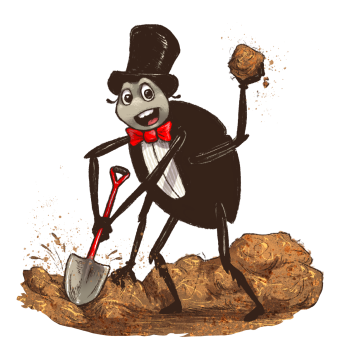
A group of conservationists and educators were meeting about how we could make Celebrating Africa’s Giants accessible and interesting to kids who love giraffes, elephants, and rhinos. We discussed how magazines like “Ranger Rick” and “National Geographic Kids” helped spark and sustain our love of nature when we were young, and we realized that there wasn’t really anything like that for even the most popular animals like giraffes and elephants. We decided to start our own nature magazine to fill that gap. We decided that our host of the magazine should be a dung beetle named Doug Beetle.  Doug Beetle helps show that there are many ways to be a giant in nature beyond physical size.
celebrate-picture-books-nature's-giants-Doug-Beetle-digging

My role is to help coordinate the creation of the magazine, develop story and activity ideas, and write the articles that bring those ideas to life. I also write the Doug Beetle comics. Megan Strauss, a wildlife biologist and illustrator, creates activities, crafts, and provides content for the magazine with her scientific expertise.  Kayla creates illustrations to accompany the articles and designs the layout of each page.

Accessible and interesting are perfect adjectives for Nature’s Giants! The magazine really promotes exploration and hands-on activities to engage kids in science learning. Can you describe some of the elements parents, teachers, and kids will find inside?

The magazine can be enjoyed casually for its art, stories, and activities. We also designed it for use in classrooms, zoo education programs, and other learning environments. In the first issue, we have a story about how scientific information can be visualized with infographics and how that helps us see the world in different ways.

celebrate-picture-books-nature's-giants-Magazine-Infographic

We also have a story about how a scientist makes an observation, asks questions about what she observed, and then solves a scientific mystery. Readers will learn how scientists study animals in the field, and hopefully get inspired to take part in citizen science themselves. 

celebrate-picture-books-nature's-giants-insect-hotel-craft

celebrate-picture-books-nature's-giants-diorama-craft

Environmental issues around the world are important to all of us. In what ways can children help from home or in their own communities?

The young people of the early 21st century are going to be the deciders of whether big animals like giraffes, elephants, and rhinos and their habitat survive this century and beyond. These animals are beloved around the world. They are the biological equivalent of the great works of art, architecture, and popular culture that are the common heritage of people around the world.

The young people in countries like Tanzania and Kenya, where these species and their habitats live, are the primary decision makers, but these animals need a global constituency of conservationists. They need people to help pay attention to them and keep their conservation needs visible in the world. Just as we pay constant attention to our favorite sports teams, celebrities, and technology products, we need to find ways to keep attention on giraffes, elephants, rhinos, and other animals.

If you love a species, then helping your local social network of family and friends be aware of the animal is a meaningful conservation action. Our goal for “Nature’s Giants” is to help connect young people with these animals and their conservation challenges and find ways to keep that connection growing.

What are the future plans for the magazine? How can teachers or other organizations order copies?

The first issue of “Nature’s Giants” is themed about African animals and plants. If the magazine finds an audience and there is an appetite for future issues, we would love to do a theme issue for each continent. We have also thought about doing an issue about the oceans. There are endless possibilities for issue themes. We would love to explore the future adventures of Doug Beetle.

To order copies of the magazine and all three storybooks, you can contact Monica Bond: monica@wildnatureinstitute.org

If you are interested in ordering Juma the Giraffe, Helping Brother Rhinoceros, and/or Our Elephant Neighbors for your classroom, organization, or yourself, contact Monica Bond monica@wildnatureinstitute.org. Individual copies of the books cost $12.00. Substantial discounts are offered when ordering multiple copies. All prices include shipping and handling.

Individuals, schools, and other organizations can also order single and/or multiple copies of “Nature’s Giants Magazine” for $4.25 each, plus shipping and handling.

You can also download printable posters with illustrations and information about giraffes, rhinos, and elephants from the Africa’s Giants website: www.africasgiants.org

To find the books with major online booksellers, see the information and links below.

celebrate-picture-books-picture-book-review-helping-brother-rinoceros-cover

You can find Helping Brother Rhinoceros at these booksellers

Amazon | Barnes & Noble | Books-a-Million | IndieBound

celebrate-picture-books-picture-book-review-our-elephant-neighbors-cover

You can find Our Elephant Neighbors at these booksellers

Amazon | Barnes & Noble | Books-a-Million | IndieBound
celebrate-picture-books-picture-book-review-juma-the-giraffe-cover

You can find Juma the Giraffe at these booksellers

Amazon | Barnes & Noble | Books-a-Million | IndieBound

Picture Book Review


May 21 – It’s National Family Month and Interview with Galia Bernstein

celebrate-picture-books-picture-book-review-leyla-cover

About the Holiday

In the weeks between Mother’s Day and Father’s Day we celebrate National Family Month. The holiday was established by KidsPeace to encourage families to spend more time together. It also gives us the opportunity to honor everything that makes a group of people a family. Common experiences, shared memories, and unconditional love create that unique feeling in the heart that defines family. To celebrate, gather your family together and plan some fun!

I received a copy of Leyla from Abrams Books for Young Readers for review consideration. All opinions are my own. 

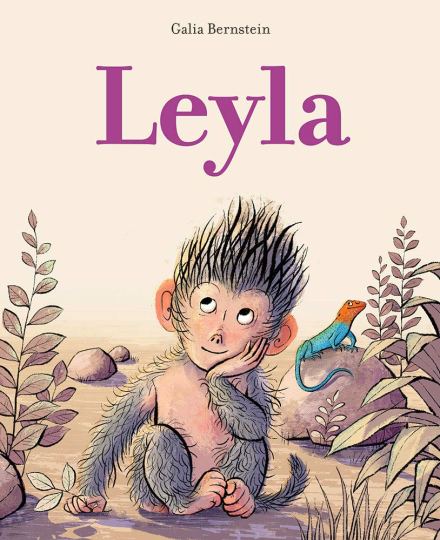
Leyla

By Galia Bernstein


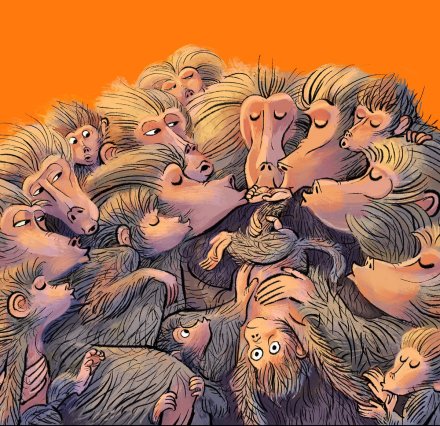
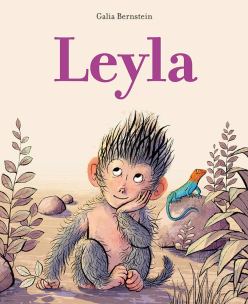
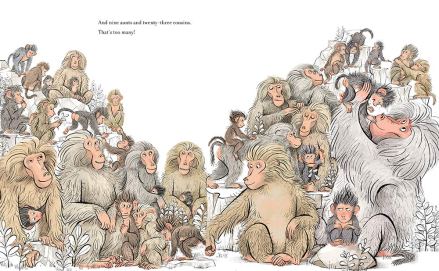
Leyla has a BIG family! Besides her and her mom and dad, there are “nine aunts and twenty-three cousins,” and…they all live together. There’s always someone who wants “to hug and kiss her. Yuck!” Her home is noisy and rowdy, and it’s often hard to get some peace—or a nap. So Leyla ran far away until she couldn’t see them, smell them, or hear them. On the way, she hurt her foot on a rock.

celebrate-picture-books-picture-book-review-leyla-family

Copyright Galia Bernstein, 2019, courtesy of Abrams Books for Young Readers.

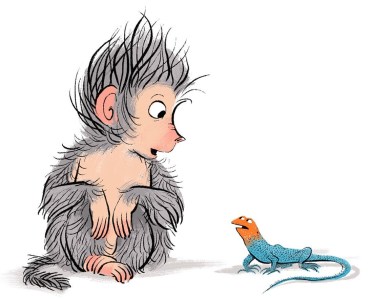
Out in the quiet wilderness, Leyla met a lizard. She tried to find out its name. She tried to get it to kiss her foot and make it better, but the lizard said nothing. Finally, the lizard opened one eye. “‘Shhh,’ he said. ‘I’m busy.’” It didn’t look like the lizard was busy to Leyla, but it told her he was “busy doing nothing.” Then he showed Lelya how to do nothing too.

celebrate-picture-books-picture-book-review-leyla-lizard

Copyright Galia Bernstein, 2019, courtesy of Abrams Books for Young Readers.

Leyla and the lizard sat side by side with their eyes closed. They felt the warmth of the sun and listened to the leaves and the insects and thought about nothing. When Leyla finally opened her eyes, it was evening. Leyla missed her family and knew it was time to go home. The lizard told her she could visit any time. Leyla ran until she smelled the familiar smell, heard the familiar noise, and saw her wonderful family. She told them all about her adventure and the lizard. “They thought she was very brave and wanted to know if she was all right.”

celebrate-picture-books-picture-book-review-leyla-stor

Copyright Galia Bernstein, 2019, courtesy of Abrams Books for Young Readers.

Well, there was that one thing—Leyla wanted to know if they wanted to kiss her foot better. And, of course, they did! “That night, in her mother’s arms, Leyla didn’t mind the noise.” She remembered her day with the lizard, and “whenever it all got a bit too much,” she went back to see him. “And the lizard was always there.”

An Author’s Note following the text tells a bit about the Hamadryas baboons, who live in large, noisy, and loving families like Leyla and the troop that inspired her story.

celebrate-picture-books-picture-book-review-leyla-kisses

Copyright Galia Bernstein, 2019, courtesy of Abrams Books for Young Readers.

Any child—whether they’re from a big family, part of a large class at school, a participant in a team or group activity, or a person who just likes a little quiet—will recognize themselves in Leyla. In her sweet and straightforward story, Galia Bernstein lets children know that when the pressures of a day squeeze in, rejuvenation is close at hand. The astute and chill lizard Leyla meets when she runs away from her large, loud, and loving family teaches her and readers methods of mindfulness and meditation, allowing them to shut out the noise and distractions and find peace within. Feeling refreshed, Leyla returns home with a new appreciation for what she has and a story to share.

celebrate-picture-books-picture-book-review-leyla-talking

Bernstein’s textured illustrations of a Hamadryas baboon troop, rendered in cool earth tones, is a joyful representation of family, with all the care, concern, and caresses that come with them. Kids will giggle when Leyla meets the lizard with a startled EEEEEEEEEP!, and you can bet they’ll close their eyes and meditate right along with Leyla and the lizard. Leyla is adorable and thoughtful, and her troop eyes her with understanding as she returns to the fold. The final two-page spread is warm and comforting.

In Leyla, Gaia Bernstein reminds readers that looking inward as well as outward toward new experiences and beyond their comfort zone brings new perspectives and happiness. The book would be a tender accompaniment to lessons on meditation or mindfulness as well as a reassuring read for home and classroom story times.

Ages 4 – 8

Abrams Books for Young Readers, 2019 | ISBN 978-1419735431

To learn more about Galia Bernstein, her books, and her art, visit her website

Meet Galia Bernstein

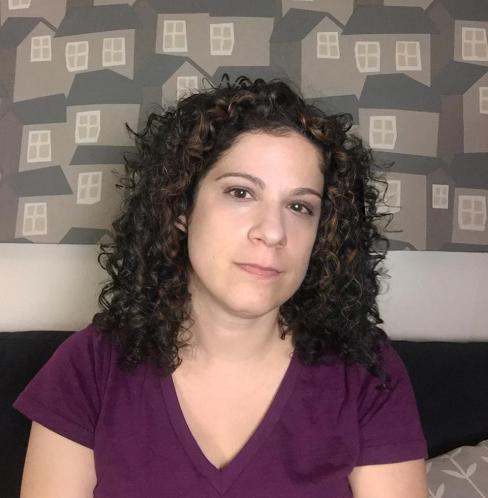
celebrate-picture-books-picture-book-review-galia-bernstein-headshot

Today, I’m really excited to be talking with Galia about her first paying job as an artist, how kids can find their own quiet place, and…a world of cats!

What was your inspiration for Leyla?

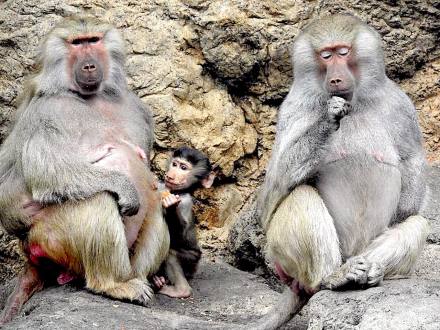
As a young child I was terrified of large family gatherings. So many people in the same room who wanted to hug and kiss me, and who wanted, it seemed,  to hear about every single thing that happened to me since we’d last met. It was overwhelming. Over the years, I found that if I took a short break, went to my room for a bit, or walked around the block, I was able to relax myself and was even able to enjoy myself. Years later, I was sitting in the Prospect Park Zoo in Brooklyn watching a small but energetic troop of, who had recently welcomed a new edition to the family—a baby boy. What if that baby, I thought, is a bit different from the other baboons? What if he couldn’t handle the constant attention? Who will teach it how to take a break? And the idea for Leyla was born.

celebrate-picture-books-picture-book-review-interview-with-Galia-Cornwall-baboons

Galia snapped this picture of 2 female Hamadryas Baboons and the baby that inspired Leyla.

In addition to gaining an appreciation for her big family, Leyla also learns about mindfulness and the benefits of getting some quiet time. Do you have any advice for kids on how they can carve out some time or a place just for themselves?

If you can, go outside. Of course, make sure that you’re safe and an adult knows where you are, but there is nothing like being outside on a beautiful day and breathing some fresh air. You will immediately feel better. Find a little private spot that’s yours—in the back yard, a near-by park, or even in the school yard—sit down and just breath. If you have time to read, bring a book, or listen to music if you prefer. Lying on a blanket under the old lemon tree in our yard on a summer afternoon with a book and a plate of grapes is a very happy childhood memory for me. Today, I listen to books on tape while I walk my dog and, for a while, clear my mind of everyday worries.

Before you moved to New York to study illustration, you were the art director for two children’s magazines in Israel. Were you always interested in working in publishing, and children’s publishing in particular, or how did that come about?

In Israel, military service is mandatory. When you turn 18, you join the army and serve 2 years if you’re a girl, and 3 if you’re a boy. During this time, many people get to learn a profession that they may be interested in as a civilian, and that’s how it was for me. I was lucky enough to join the Israeli Army’s weekly magazine as a graphic designer and an illustrator/cartoonist. It was my first paying job as an artist and I fell in love with publishing. It’s also really fun to say “artist” when people asked me what I did in the army. Since I was mostly interested in illustration, and a big reader as a child, I was naturally drawn to children’s publishing.

Your debut picture book, I Am a Cat, also published by Abrams, was very well received. I understand the spark of the idea goes back to when you were just thirteen years old. Can you talk a little about that? I’m curious if writing was always part of your repertoire and if not when you began to write as well as illustrate and design.

I Am a Cat started as a cartoon I drew for my father. It showed a little house cat looking very grumpy on one side and a bunch of big cats rolling on the floor laughing on the other. The caption underneath said “Yes, I call myself a cat!” That cartoon is hanging in my dad’s study to this day. I am an illustrator first, but I was always a writer as well. In middle school, I wrote and drew comic books starring all my friends and plays for us to perform in class. When I moved to the US, it took me a while to feel confident enough to write in a second language, a problem I didn’t have with the international language of illustration, so for a while, I was more of an illustrator than a writer.

A look through your portfolio reveals that much of your illustration work features animals. How have animals influenced your work?

I’ve loved animals since before I could walk. They always fascinated me and I always wanted to read about them and learn to draw them. My books are always based on real animal behavior, and I am always happy to teach and talk about the amazing creatures we share this world with.

In your bio you say that your art is heavily influenced by mid-20th century design and Eastern European and Scandinavian folk art. What do you love about these styles?

What I like about Scandinavian and folk art is the minimalism—saying so much with very few details and minimal color. My picture books tell a story through body language and facial expression, and the backgrounds are very simple. I work hard on the look of the entire page—not just the art, but the white spaces in between called the negative space. Sometimes what’s not there can tell a story as much as what’s there. In I Am a Cat, I played with the points of view, allowing the readers to see Simon the cat through the eyes of the big cats, and on other pages be Simon and feel what it’s like to be stared at by a lion, a tiger, a puma, a cheetah, and a panther. In Leyla, I used the colors of dusk and sunset to not only show the passage of time, but also the change in Leyla and the way she sees the world around her, before and after meeting the lizard.

What has been the best part about being a children’s author and illustrator? Do you have a story from any book event or classroom visit you’d like to share?

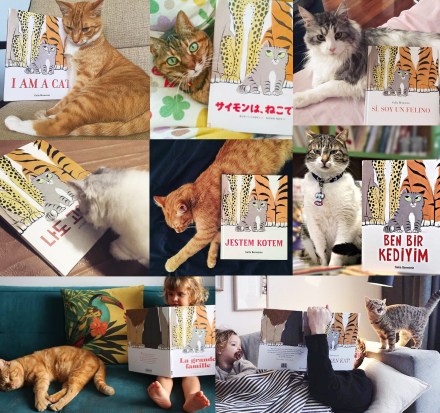
The best thing about writing for children is the children of course. I love to see how smart kids are and  how interested  they are to learn about animals. We always talk about the animals in the books, where they are from, and how their natural behavior inspired their behavior in the books. The most surprising reaction to I Am A Cat came from… cats! The book came out in 14 languages and I get pictures of actual cats “reading” my book from all over the world. It always makes my day!

celebrate-picture-books-picture-book-review-interview-with-Galia-Bernstein

Cats of the world, unite!

What’s up next for you?

I’m taking a little break from writing this year. I have 2 more picture books and one nonfiction book I am going to start working on soon, all as an illustrator only. Right now I am working on a very funny Hanukkah book called 8 Knights. It’s about, well.. 8 Knights. With a ‘K.’ The kind with armor and horses. It’s going to be a very fun book, I can’t wait!

What is your favorite holiday?

Now I feel like I should say Hanukkah… but it is a really fun holiday. Amazing food, open flames allowed indoors (!) and for a kid who, as you might remember from question one, is not a big fan of large family gatherings, a very intimate holiday, at home, with the immediate family.

Thanks so much for chatting with me, Galia! I wish you all the best with Leyla, and I can’t wait to see your upcoming books!

You can connect with Galia Bernstein on

Her website | Facebook | Instagram | Twitter

National Family Day Activity

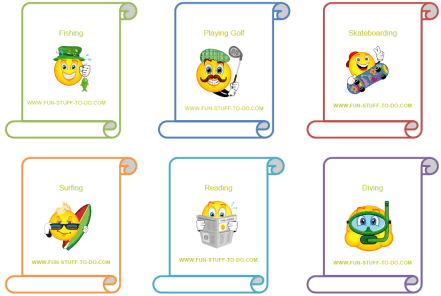
celebrate-picture-books-picture-book-review-charades-activities-cards

Family Charades


Getting together to play charades is a fun way to spend family time with a little bit of thought, a little bit of action, and lots of laughs. You can find lots of charades cards, ideas, and rules at funstufftodo.com.

celebrate-picture-books-picture-book-review-leyla-cover

You can find Leyla at these booksellers

Amazon | Barnes & Noble | Books-a-Million | IndieBound

Picture Book Review
 

May 14 – It’s Get Caught Reading Month and Interview with Author Cathy Breisacher

celebrate-picture-books-picture-book-review-chip-and-curly-cover

About the Holiday

Launched in 1999 by the Association of American Publishers and managed by Every Child a Reader, Get Caught Reading Month hopes to instill a love of reading in every child and encourages people of all ages to read more. Celebrities, authors, illustrators, and others participate by sharing pictures of themselves reading an old favorite or new book on social media. Special materials are available for and programs held in schools, libraries, bookstores, and community venues all month long. Why not join in by finding a new book to lovelike today’s book?! For more information and to find resources, visit the Get Caught Reading website.

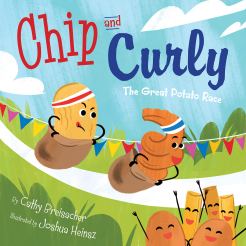
Chip and Curly, The Great Potato Race

Written by Cathy Breisacher | Illustrated by Joshua Heinsz


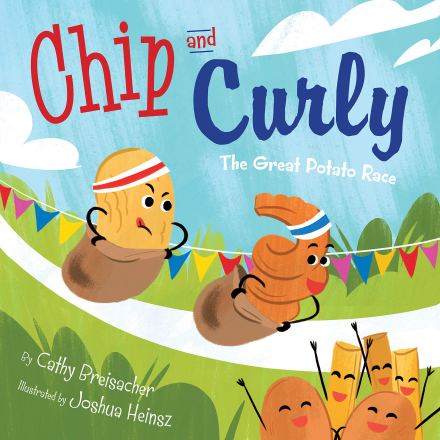
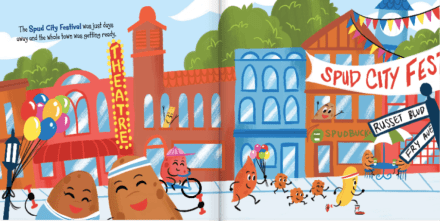
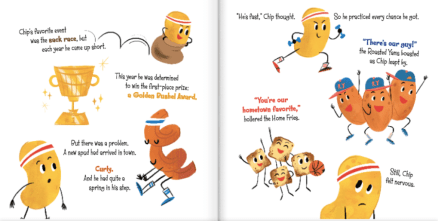
Spud City was about to hold its annual festival, and everyone was excited. Chip was practicing for the sack race. This year “he was determined to win the first-place prize: a Golden Bushel Award.” But a new spud in town—Curly—had a “spring in his step” and seemed to be real competition. Even though the other potatoes cheered him on, Chip was nervous.

On the day of the festival, the race route was lined with spectators. The couch potatoes lounged near the path while “the French Fries stood with their Tater Tots.” Even the sweet potato cheerleaders were waving pompoms and shouting. Just before the race began, Curly took a place next to Chip at the starting line.

celebrate-picture-books-picture-book-review-chip-and-curly-spud-city

Image copyright Joshua Heinsz, 2019, text copyright Cathy Breisacher, 2019. Courtesy of Sleeping Bear Press.

When the whistle blew, Chip took off. He was in the lead until he heard someone behind him. “‘Look out!’ the BBQ Chips shouted. ‘Here comes a hot potato!’” Chip raced on, but then Curly bounced in front of him and even though Chip gave it his all, he couldn’t catch up. A moment later, though, Curly tripped and fell, leaving the path—and the race—wide open for Chip.

Chip hopped past Curly and was in clear sight of the finish line when he realized “he felt rotten.” He glanced back and “hashed it over in his mind.” He decided the only right thing to do was to go back. He offered Curly a hand up, and together they bounded down the route and past the other racers. But Curly was too quick for Chip, and he broke through the tape first. “In an instant, Chip’s dreams of winning were mashed.” 

Chip was just about to leave when Curly asked him to be his partner in the relay race. Curly thought they made a great team. They practiced until they found their groove. Everything was looking good until a new team showed up….

celebrate-picture-books-picture-book-review-chip-and-curly-practicing

Image copyright Joshua Heinsz, 2019, text copyright Cathy Breisacher, 2019. Courtesy of Sleeping Bear Press.

Kids will devour Cathy Breisacher’s pun-filled romp that takes them to Spud City’s annual festival, where Chip and Curly face off to win a Golden Bushel Award in the sack race. While Chip pulls out to an early lead, Curly bounces back and threatens Chip’s years-long dream to win. A misstep by Curly gives Chip the opportunity to achieve his goal, but in his decision, Breisacher shows readers true sportsmanship and integrity. Curly also displays the qualities of a gracious winner, and as the two work together to perfect their relay skills, a friendship sprouts. The final scene offers a funny “oh, no!” moment while also reminding readers that winning can be fleeting, but friendship and staying true to oneself endure.

Joshua Heinsz populates Spud City with a wide array of taters—from tots to waffle fries, sweet potatoes to twice-bakeds, French fries to home fries, and more. Heinsz adds plenty of visual humor to the mix with clever street sign and shop names, and the couch potatoes are, ingeniously, those impossible-to-peel curved ones that lurk in many a 5-pound bag. Kids will love picking out their favorite kind of potato, and the expressive spuds will have readers captivated from the very first page.

For rollicking story times that also offer opportunities to discuss the nature of competition and friendship, Chip and Curly, The Great Potato Race is one to add to your home, classroom, or library shelf.

Ages 5 – 8

Sleeping Bear Press, 2019 | ISBN 978-1585364084

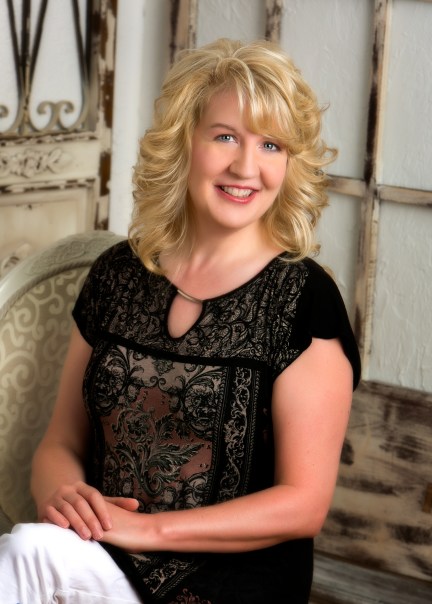
Learn more about Cathy Breisacher and her books on her website.

To learn more about Joshua Heinsz, his books, and his art on his website.

A Chat with Cathy Breisacher

011CB

It’s so great to be talking with you again! This must be a really exciting—and busy!—time for you, so I’m thrilled to have you stop by!

You’ve mentioned that the inspiration for this story was a local potato festival. Can you describe that event a bit and tell what sparked the idea for Chip and Curly?

Every year, on the last Saturday in September, a town not far from where I live holds a Potato Fest.  The county where it is located is the second-largest supplier of potatoes in the state. People come from all around and a good portion of the downtown area is closed off for the event. There are tons and tons of vendors selling a variety of crafts, and the food vendors whip up all kinds of potato treats: sweet potato fries, potato candy, baked potatoes, perogies, potato soup, French fries, potato bread, etc. There is live music as well as games for the kids. I love the fall season, and this is a great kick-off to the fall. I try to attend every year. So, in 2016 when I wrote this story, I thought about the potato festival and all of the kinds of potatoes that are sold at the event.  The names CHIP AND CURLY came to me and the idea for the story just flowed from there.

Of course, I have to ask—what’s your favorite kind of potato? Do you have a favorite recipe? Would you like to share it?

 I love twice baked potatoes. They are probably my favorite. But, there really isn’t a potato I don’t like. I also love perogies and sweet potato fries. Oh my goodness…it’s hard to choose just one. 

I’ll share a recipe for Cheesy Hash Brown potatoes that are gobbled up at many family events. They are so easy to make.

CHEESY HASH BROWN POTATOES

26 oz. Bag of frozen shredded hash brown potatoes (thawed)
2 cups Sharp cheddar cheese (shredded)
16 ounces sour cream
1 (10 1/2 ounce) can cream of mushroom soup
1 ½ sticks butter
3 cups Crushed corn flakes
1 teaspoon garlic salt and pepper to taste

Thaw the hash browns.  Melt 1 stick of butter and mix it with the hash browns.  Pour into 9 x13 pan.  Mix the sour cream, soup and cheese in a bowl. Spread over the potatoes. Melt ½ stick of butter and mix it with the crushed corn flakes.  Sprinkle over the potatoes. Bake at 350 degrees for an hour.

Being competitive can take so many forms. Do you consider yourself competitive? If so, in what way?

Yes, I’m definitely competitive. I always want to put 110% into things that I do. If there is a challenge of some sort, I am in it to win it. J In the past couple of years, I’ve been intrigued with Escape Rooms and trying to solve all of the clues before the time runs out. Recently, I heard of an Escape Room that no one has “broke out of” yet.  I want to be the first! J

Chip and Curly is loaded with puns and really clever word play! The story must have been a blast, but also challenging to write. Can you talk a little about how you put it all together?

Chip and Curly was definitely a fun story to write. I just pulled out my first version of this story, and it has so few puns in it. I didn’t initially write this story to be punny.  But, as I was doing my first set of revisions, a pun popped in my head.  More puns came to me as I continued to revise. It wasn’t long before I knew this had to be a story that centered on potato puns. I scoured the Internet to find words associated with potatoes. I must have looked at every list that exists online. The tricky part was to include those words and phrases that fit nicely with the story. I didn’t want to include something just to include it if the word or phrase really didn’t flow with the storyline. My amazing editor, Sarah Rockett, had excellent suggestions for tweaking the story a bit more after she acquired it. And I was delighted with the fun, playful, colorful art provided by the illustrator, Joshua Heinsz.

After practicing for a year to win a Golden Bushel Award for the sack race, Chip makes a surprising decision part way through the race. What would you like kids to take away from the story?

This is the crucial part of the story. I want kids to know that competing can be a lot of fun. And it can feel good to win at something, too. However, practicing good sportsmanship is important and helps build character. When we show respect toward our opponents, we can still have fun and compete, but it helps us to keep our focus on what’s most important—treating one another the way we want to be treated.

Since CaveKid Birthday was released in March, what’s been the best part of being a published author? The most surprising? As a librarian, how does it feel to see your own book on your library’s shelf?

Gosh, there is so much I am enjoying about being a published author. I love meeting new people (kids and adults) at book events and talking with them about stories. It has also been a treat to see friends and family who I haven’t seen for a while. Being a school librarian, I get an extra treat when kids ask to check out my book. That has truly meant the world to me. When my students tell me they love my books, my heart just completely melts.

During our first interview for CaveKid Birthday how did I miss that you’re from Hollidaysburg, Pennsylvania? Does the town live up to its celebratory name? Do you have a favorite town celebration or spot to write or visit?

Hmmm…very good question. The town where I live is a true community. People really get behind and support the schools, sports teams, agencies, fundraising events, etc. So I guess you can say that the people who live in Hollidaysburg celebrate one another’s aspirations and accomplishments. I am proud to live in this town. I do have a few favorite spots that I like to visit. There are a couple of parks that are so beautiful and serene. They are a great place to spend timejyeither alone or with family and friends. As for a favorite town celebration, I would have to say the Winterfest Light-Up Night that is held at the end of November each year. There are festivities in the downtown area and everything is decorated for Christmas. Local restaurants hold soup samplings and people vote on their favorite. Santa arrives and a giant tree is lit up that evening. There are ice carvings, too. It’s such a fun night and everyone is in the holiday spirit.

Thanks, Cathy! I can’t wait to try those delish-sounding potatoes! I know you’ll have lots of fun with Chip and Curly, and I wish you all the best with all of your books!

You can connect with Cathy Breisacher on

Her website | Facebook | Twitter

Chip and Curly, The Great Potato Race Giveaway

I’m excited to be teaming with Sleeping Bear Press in this giveaway of

  • One (1) copy of Chip and Curly, The Great Potato Race written by Cathy Breisacher | illustrated by Joshua Heinsz

To enter Follow me @CelebratePicBks on Twitter and Retweet a giveaway tweet.

BONUS: Reply with your favorite kind of potato or potato dish for an extra entry

This giveaway is open from May 14 through May 20 and ends at 8:00 p.m. EST.

A winner will be chosen on May 21.

Prizing provided by Sleeping Bear Press.

Giveaway open to U.S. addresses only. | No Giveaway Accounts. 

Get Caught Reading Month Activity

celebrate-picture-books-picture-book-review-appealing-potatoes-game-cards

Appealing Potatoes Game


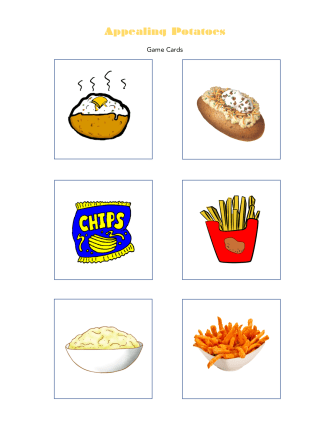
If you love potatoes, you can never get enough! Race to fill your plate with all six kinds of potatoes in this fun game!

Supplies

Directions

  1. Print a game board and set of game cards for each player.
  2. Choose a player to go first.
  3. Taking turns, each player rolls the paper die and places a game card matching the rolled potato to their plate
  4. Or: If using a regular playing die, use the corresponding number and kind of potato listed below
  5. The first player to add all six kinds of potatoes to their plate is the winner.

Corresponding Numbers and Potatoes:

  1. Mashed Potatoes
  2. French Fries
  3. Potato Chips
  4. Baked Potato
  5. Twice-baked Potato
  6. Sweet Potato Fries

celebrate-picture-books-picture-book-review-chip-and-curly-cover

You can find Chip and Curly, the Great Potato Race at these booksellers

Amazon | Barnes & Noble | Books-a-Million | IndieBound

Picture Book Review
 

May 7 – It’s Get Caught Reading Month and Interview with Author Cathy Ballou Mealey

celebrate-picture-books-picture-book-review-when-a-tree-grows-cover

About the Holiday

Reading is great all the time, but this month we celebrate actually being seen with a book in hand laughing at a funny line, shivering over a suspenseful scene or maybe even tearing up over an unexpected plot twist. Throughout the month, authors, illustrators, actors and actresses, athletes, business people, teachers, and students all upload pictures of themselves reading to encourage others to discover the joys of this fun and important pastime. To learn more about the holiday and find resources to download or order, visit the Get Caught Reading website.

I received a copy of When a Tree Grows from Sterling Children’s Books for review consideration. All opinions are my own.

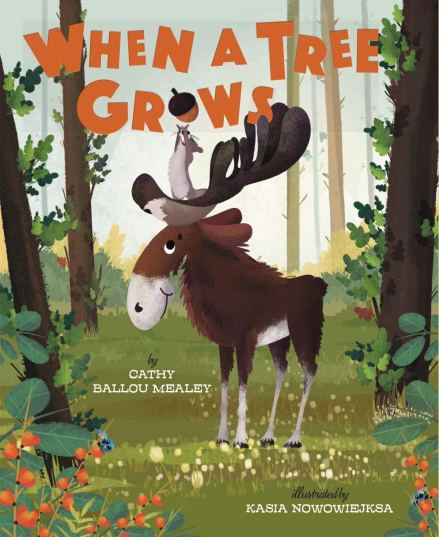
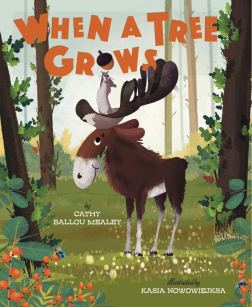
When a Tree Grows

Written by Cathy Ballou Mealey | Illustrated by Kasia Nowowiejska


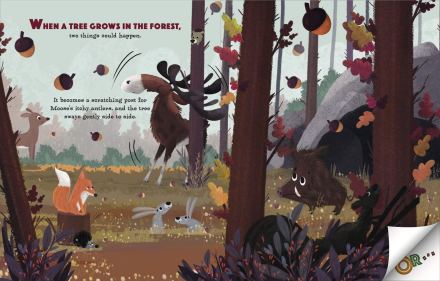
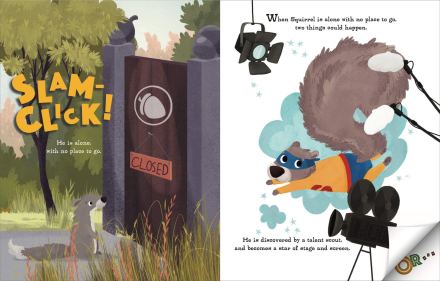
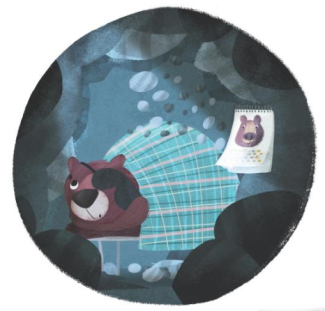
We all know that age-old question “When a tree falls in a forest does it make a sound?” Inexplicably, this riddle seems to forget all about the adorable woodland animals—many of which we meet in this hilarious book that poses many thought-provoking conundrums of its own. For instance: “When a tree grows in the forest, two things can happen. It becomes a scratching post for Moose’s itchy antlers, and the tree sways gently side to side. OR… CRASH-BOOM! Moose pushes a little too hard, the tree falls on a cave, and the bear inside wakes up.”

celebrate-picture-books-picture-book-review-when-a-tree-grows-scratchcelebrate-picture-books-picture-book-review-when-a-tree-grows-scratch

Image copyright Kasia Nowowiejska, 2019, text copyright Cathy Ballou Mealey, 2019. Courtesy of Sterling Children’s Books.

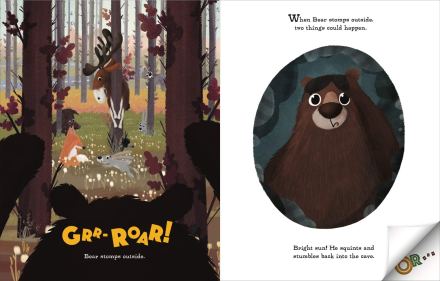
But how does Bear react? He can stay inside… OR come out to see what all the ruckus is about. And when he comes outside? Well, the domino effect could take over the forest… OR not. Alert readers will notice that Bear’s not the only one affected by the falling tree. Squirrel loses his home, but does he find the perfect replacement when a Nifty Nuts truck loaded with acorns gets entangled in this roller-coaster ride of a story… OR not?

celebrate-picture-books-picture-book-review-when-a-tree-grows-bear

Image copyright Kasia Nowowiejska, 2019, text copyright Cathy Ballou Mealey, 2019. Courtesy of Sterling Children’s Books.

As readers follow the action, they’ll wonder—will Squirrel discover a lifetime supply of nuts? Fame and fortune? An empty spot in his heart? And when (if?) “Scribble-Scratch! He writes a letter to Moose,” will Moose eat it or read it? The answers to these forest-related questions lead to a fantastic welcome-home feast with party hats and decorations and, of course, lots and lots of acorns that Squirrel will either gobble all up… OR….

celebrate-picture-books-picture-book-review-when-a-tree-grows-squirrel

Image copyright Kasia Nowowiejska, 2019, text copyright Cathy Ballou Mealey, 2019. Courtesy of Sterling Children’s Books.

Nuttiness abounds in this funny story that will have kids on the edge of their seats and excitedly chiming in as each situation plays out, leading to more and more consequences for Squirrel. Cathy Ballou Mealey’s action-packed storytelling, punctuated with onomatopoeia, makes each page a joy to read aloud. Underlying all of the shenanigans is a sweet friendship story that will tug at readers’ hearts as the gently suspenseful circumstances seem to take Squirrel farther and farther away from the forest. Kids will cheer along with Moose, Bear, and a bevy of other cute animals as they celebrate Squirrel’s homecoming and enthusiastically approve of what Squirrel does with his windfall to guarantee that all the friends can stick together forever.

celebrate-picture-books-picture-book-review-when-a-tree-grows-bear-awake

Kasia Nowowiejska populates this most friendly of forests with adorable, wide-eyed animals whose expressions perfectly reflect their dilemmas without giving away the secret answers. Kids will laugh out loud to see Moose nervously clinging half-way up a tree as Bear growls, applaud squirrel’s aim with a slingshot, and wish they could join in the party when Squirrel comes home. Nowowiejska’s beautiful earth-tone color palette provides depth and texture to the lush foliage while highlighting each animal’s choices in clever and original ways that kids will love. The onomatopoeic phrases are spotlighted with vibrant, bold lettering, ensuring that readers will add their own spin to this fun element of the story.

No “OR…”s about it, When a Tree Grows will be a hit for lively, animated story times and would be an often-requested addition to home, classroom, and public libraries.

Ages 3 and up 

Sterling Children’s Books, 2019 | ISBN 978-1454921202

Discover more about Cathy Ballou Mealey and her books on her website.

To learn more about Kasia Nowowiejska, her books, and her art, visit her website.

Meet Cathy Ballou Mealey

celebrate-picture-books-picture-book-review-Cathy-Mealey-headshot

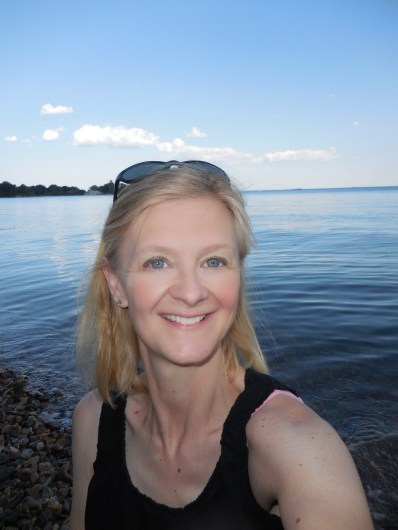
Cathy Ballou Mealey lives with her family north of Boston, where she delights in watching silly squirrel antics and is waiting patiently for a moose to appear. Her favorite nut is the hazelnut and her favorite cupcake is cardamom crème.

Thank you for inviting me to the fabulous Celebrate Picture Books! I am delighted to join your celebration of Get Caught Reading Week by talking about writing inspiration and what we might learn from our hobbies and jobs, and also sharing a story starter for a favorite fall holiday!

I’m delighted that we get to talk about all of these things—and more! So let’s get started at the beginning of your journey with When a Tree Grows!

What was the spark of inspiration that led to When a Tree Grows?

When A Tree Grows was inspired by a distant creaky Crash! that I heard in the woods while hiking with my family. Was it a falling tree? An animal? I wondered: What if that crash had scared a bear or frightened a deer?

Building on that “OR” question, I framed a wacky story with two different possible outcomes, one rather expected and one funny, unexpected outcome. Readers will find that “OR” spotlighted on the bottom corner of each recto page with a clever curled paper art effect.

You must have had fun coming up with the alternate scenarios in your book. Can you share any that didn’t make the cut?

An early draft had a sweet city scene between Squirrel and a pigeon, but it didn’t make the final cut. It was tender and poignant, but needed a funnier alternative outcome to move the storyline along. In the end, I am happy that only Squirrel, Moose and Bear share the spotlight!

I love Kasia Nowowiejska’s illustrations that combine adorable, expressive animals with silly antics. Do you have a favorite spread? Did anything in the illustrations surprise you? 

I agree! Kasia is from Poland, and I loved the European flair in her forest sketches. Seeing the warthog was a complete, delightful surprise. Warthogs are not animals we would typically see in a North American woodland, and that leads to great discussions with young readers.

You have degrees in psychobiology and classical civilization. Can you describe these a bit and how they are connected? Does your study of psychobiology help inform the character development in your stories?

Psychobiology is the study of the brain, behavior and cognitive processes. I found it fascinating to research why and how we think, feel and do the things we do! I learned how to be a good observer, listener, and follower of the empirical method. I also studied classical civilization because I loved Latin, and the professors were extremely gifted storytellers. They brought ancient texts to life through dramatic readings and captivating extemporaneous performances. Exactly how these field of study inform my present work is unclear, but a liberal arts education really does cultivate curious minds!

In your bio, you also say that you were a crossing guard, hash-slinger, gift-wrapper, and pet sitter. This sounds like perfect prep for becoming a picture book author! Have any of these jobs inspired a story? Do you have a funny or surprising experience you’d like to share?

Writers DO find a way to wring fictional purpose out of anything, don’t we? I have found that one common theme across many of my stories is work. In When A Tree Grows, Squirrel gets a job in the Nifty Nuts factory as a quality control inspector. That’s one job I have not done! But working as a department store gift-wrapper was a job where quality mattered. Customers could buy a specialty paper/ribbon combination or choose the free “store wrap” which was red with tiny white checkered squares. The squares had to line up perfectly, no matter how lumpy or bumpy the item was, or the boss would make us re-wrap it. Wrap a floor lamp? Rocking chair? I like to imagine one of my co-wrappers invented printed gift bags out of desperation.

In previous interviews, you’ve described how you wrote your first picture book to enter the Cheerios “spoonful of stories” contest. But did you always like to write? What kinds of writing did you do? What inspired you to try the picture book form?

As a kid I loved to write and illustrate greeting cards, so my earliest efforts were short and to the point, just like picture books. I also wrote scripts for Muppet-like puppet shows, assigning the best roles to myself, of course. When school assignments piled up and writing lost its luster, I stopped scribbling for pleasure. Decades later, having children led to reading many picture books and to many boxes of Cheerios. So those factors definitely helped re-ignite my passion for writing and picture books specifically.

When a Tree Grows was released on April 2. What have you found to be the best part of being a published author? If you’ve held any book events, can you describe the reactions of kids to your story?

Of course seeing Tree on bookstore shelves and in readers’ hands is delightful. Hearing people laugh at the funny spots is a thrill! I like to ask a helper to wave a big sign that says “OR” to dramatize the page turns during readings. And kids love to see Squirrel scooping coins out of the fountain to buy a bus ticket home – so naughty!

What’s up next for you?

Next up for me is a still-secret, super funny picture book with an amazing publisher in Canada. A sloth and a squirrel team up for a special mission. Look for an announcement soon, and a book sometime in 2021!

What’s your favorite holiday and why?

Halloween – because it is in the fall, my favorite season. It also happens to be my birthday! Costumes, candy, glowing pumpkins, being outside after dark – all these elements make magical memories for kids. And on top of all that I got a cake, candles, and presents too? Pretty great.

Has a holiday ever influenced your work?

What a great idea! Let’s imagine re-casting When A Tree Grows as a Halloween story.

When an Owl hoots in the forest on Halloween, two things could happen.

Warthog blows out the candle in her pumpkin. Trick or treat is over.

OR…

Eek! Warthog is startled and tosses her candy into the air.

When Warthog tosses her candy into the air, two things could happen.

What do YOU think should happen next?

Oh my! Let’s see…

Bat neatly snatches all the candy out of the air with her trick-or-treat bag.

OR…

A candy corn ricochets off a tree and bonks bat, sending her wildly off course.

Readers? What do YOU think? Add your ideas in the comments section below!

Well, this was tons of fun, Cathy! I’m so glad we had a chance to chat! I wish you all the best with When a Tree Grows!

You can connect with Cathy Ballou Mealey on

Her website | Facebook | Instagram | Twitter

Get Caught Reading Month Activity

celebrate-picture-books-picture-book-review-moose-headband-craft-when-a-tree-grows

Moose starts a whole string of events in today’s book! What will you get up to in your own moose antlers?

Supplies

  • Stiff brown paper
  • Brown hair band
  • Pencil
  • Scissors
  • Tape

Directions

  1. Trace your hands with fingers spread on the brown paper. Leave a 1 – 2 inch tab on the end of the wrist for wrapping around the head band
  2. Cut out the hand prints
  3. Place one hand print on the right side of the headband with the thumb of the hand pointing up.
  4. Wrap the tab around the headband and secure with tape
  5. Place the second hand print on the left side of the headband with the thumb pointing up.
  6. Wrap the tab around the headband and secure with tape.

celebrate-picture-books-picture-book-review-when-a-tree-grows-cover

You can find When a Tree Grows at these booksellers

Amazon | Barnes & Noble | Books-a-Million | IndieBound

Picture Book Review

May 1 – It’s Children’s Book Week & Interview with Jodi McKay

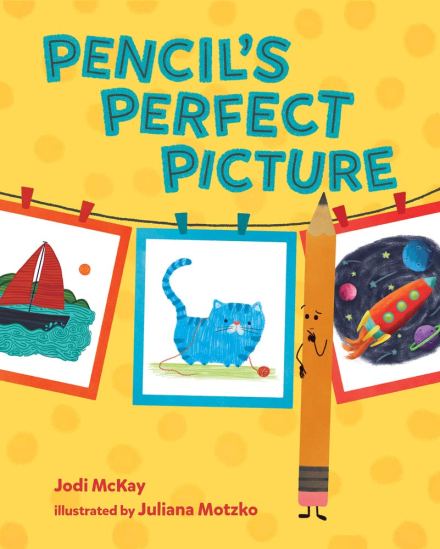
celebrate-picture-books-picture-book-review-pencil's-perfect-picture-cover

About the Holiday

Children’s Book Week, a celebration of reading and books, turns 100 this year! Founded in 1919, this longest-running literacy initiative in the US, was a collaborative effort by Franklin K. Matthiews, the librarian of the Boy Scouts of America, Frederic G. Melcher, the editor of Publishers Weekly, and Anne Carroll Moore, the Superintendent of Children’s Works at the New York Public Library. In 1916, the American Booksellers Association and the American Library Association, in conjunction with the Boy Scouts, sponsored the first Good Book Week.

When the Children’s Book Council was established in 1944, they assumed responsibility of running this important initiative. The holiday is celebrated with special events in schools, libraries, bookstores, and communities across the country with the participation of authors, illustrators, publishers, librarians, teachers, and booksellers. This year the theme of the week is Read Now, Read Forever. To find out more about the week as well as activities to download and locations of events in your area, visit Every Child a Reader.

I received a copy of Pencil’s Perfect Picture from Albert Whitman & Company for review consideration. All opinions are my own. I’m thrilled to be partnering with Albert Whitman & Company in a giveaway of the book. See details below.

Pencil’s Perfect Picture

Written by Jodi McKay | Illustrated by Juliana Motzko


Pencil loves his dad so much that he wants to do something special for him. He thinks about baking him a cupcake or giving him a bouquet of flowers, but then he hits on just the right thing. Pencil decides “I’ll draw him the greatest, the best, the most perfect picture he has ever seen!” But there’s a hitch, Pencil doesn’t really know what that is. He heads off to the Art School to find out.

celebrate-picture-books-picture-book-review-pencil's-perfect-picture-dad

Image copyright Juliana Motzko, 2019, text copyright Jodi McKay, 2019. Courtesy of Albert Whitman & Company.

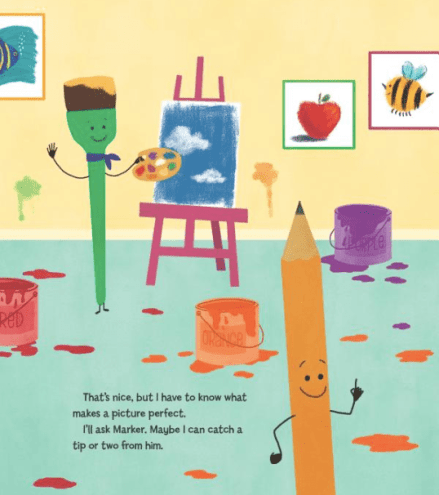
He finds Brush doing a headstand in a paint can, and after Brush adds a golden swoop to a sunset painting, Pencil asks if that’s what makes the picture perfect. “Perfection?” Brush answers. “Pah! I paint for pleasure.” This answer doesn’t really help, so Pencil goes in search of Marker.

Marker shows Pencil all the fancy moves he uses when drawing. Pencil loves the action in Marker’s work and wonders if that’s what makes it perfect. Marker’s not that interested in perfection though, just in doing his best. Pencil then thinks he’ll go ask Pastel for her opinion. He finds Pastel practicing yoga before she creates. Then she faces her blank paper and in a few minutes has a picture that makes Pencil “feel happy.” Could this be the secret to perfection? Pastel says peace is her aim, but Pencil counters, “I don’t think I’ll find peace until I know how to draw a perfect picture” and walks off to find the crayons.

celebrate-picture-books-picture-book-review-pencil's-perfect-picture-dipping

Image copyright Juliana Motzko, 2019, text copyright Jodi McKay, 2019. Courtesy of Albert Whitman & Company.

The little crayons have all been working hard on their drawings and are proud to show them off. Pencil thinks they’re all perfect and asks how they achieved it, but their teacher reveals that they just “draw because it’s fun.” Pencil’s still no wiser when he meets up with Chalk, but in describing his frustrations, Pencil has a brainstorm.

He hurries home to try a little bit of everything he’s learned. He stands back to take a look at his drawing just as his dad comes in. Pencil explains that he wanted to make a special drawing for him, but he’s just not sure it’s…. His dad studies the drawing and says, “Wow, this picture is PERFECT!” Pencil is excited and wants to know why. As they gaze at the drawing in which Pencil and his dad are smiling and have their arms around each other, Pencil’s dad says, “It’s perfect because YOU drew it for me.”

celebrate-picture-books-picture-book-review-pencil's-perfect-picture-paint-brush

Image copyright Juliana Motzko, 2019, text copyright Jodi McKay, 2019. Courtesy of Albert Whitman & Company.

Jodi McKay so sweetly taps into the desire of little ones to show their parents, grandparents, or other caregivers how much they love them while including that lump-in-the-throat moment adults experience when it happens. Through Pencil’s unwavering determination to find the answer, kids are introduced to all their favorite drawing tools and lots of ways to look at art or any pursuit. Pencil’s enthusiasm is infectious and charming, and readers will be happy to take the journey with him. When Pencil puts his own spin on what he’s learned and creates the drawing for his dad, little ones will see that they too have great creative ideas. The reaction of Pencil’s dad is reassuring and teaches an important lesson about anything children pursue—that “perfection” is personal and in the eye of the beholder.

celebrate-picture-books-picture-book-review-pencil's-perfect-picture-crayons

Opening the cover of Pencil’s Perfect Picture is like stepping into a classroom full of color and joyful kids eager for fun. Juliana Motzko’s adorable Pencil with his stick arms and legs and expressive smile and eyebrows is just the kind of friend readers would love to spend time with. Cleverly, Motzko depicts the other drawing tools as other influences that children meet along their way in life—teachers, coaches, and classmates. Readers will love seeing all of the drawings these artists create and may even want to try drawing some of them themselves (in their own style, of course!). Every page will make kids and adults smile, and the final spreads in which Pencil and his dad stand with their arms around in real life and in the portrait make for the perfect ending.

Sprinkled with humor, Pencil’s Perfect Picture is an adorable and endearing read that would quickly become a favorite on home, classroom, and public library bookshelves.

Ages 3 – 5

Albert Whitman & Company, 2019 | ISBN 978-0807564769

Discover more about Jodi McKay and her books on her website.

To learn more about Juliana Motzko, her books, and her art, visit her website.

Meet Jodi McKay

celebrate-picture-books-picture-book-review-jodi-mckay-headshot

Jodi McKay lives in Michigan with her husband, son, and two furry friends. She is the PAL coordinator for SCBWI-MI, and is active in several online writing groups. She has two books published by Albert Whitman & Co., WHERE ARE THE WORDS? (2016) and PENCIL’S PERFECT PICTURE (May, 2019). Jodi is represented by Linda Epstein of Emerald City Literary Agency.

Today, I’m excited to chat with Jodi McKay about Pencil’s origin, how adults can help kids develop and keep their own style, and some of the best parts of book events.

What inspired you to write Pencil’s Perfect Picture?

I actually wrote Pencil’s Perfect Picture thinking that it would be a companion book to my first book, Where Are The Words? That story ends with the characters asking Pencil to draw them pictures for the story they just wrote. I figured book number two would show Pencil trying to draw pictures for them, but not just any pictures, they had to be perfect. That idea came from watching my son struggle with drawing something “just right.” He had developed a sense of perfection when it came to his art and that broke my heart a little. I realize that kids start to compare themselves to their peers or others as they grow up, but I didn’t want that to affect how he approached his creativity. I had to make sure the story addressed that idea of perfection especially when it comes to art. My editor suggested that I change who Pencil draws his picture for to include more of a family theme which I loved. It adds a layer of heart that is relatable to kids as they often draw pictures for their parents or loved ones.

I love the message of Pencil’s Perfect Picture. As you say, children seem to learn so quickly to compare their work and themselves to others. What are a couple of ways that adults can help them appreciate and embrace their unique view of the world.

Yes, agreed! I know it has to do with some developmental stage where the self becomes less important and peer opinions more important, but it’s imperative not to lose that sense of self. We have to celebrate our individuality, explore what makes us unique, and find ways to express ourselves with our imaginations. Parents have a special job when it comes to fostering all of that, and for me it really comes down to creating a judgement-free zone not just with art, but with all aspects of life. For the sake of time let’s stick with art here.

  • Provide your child with different types of art supplies: markers, crayons, paint, fabrics, clay, etc. Let them pick what they want to use and how they want to use it (watch where those small pieces go!).
  • When your child is finished, talk to him or her about what they made, how it made them feel, what is their favorite part about their art project. Keep it positive.
  • Remember, art is never wrong. Emphasize that to your child. It is awesome because they imagined it and brought it to life. No one else can make that same picture.
  • Consider creating with your child. I think kids love to see their parents use their imaginations so grab a marker or a crayon and draw together! Need a fun idea? Try to draw a perfect picture together.

Here’s what you will need:

  • Paper
  • Pencil, crayon, marker, whatever is fun to draw with

Instructions:

One person starts by drawing something simple, a shape, a line, etc. Take turns adding elements to the picture until you both decide it’s perfect. Enjoy your masterpiece!

Another wonderful aspect of your book is that you include so many different personalities in Brush, Marker, Pastel, and the Crayons. Which do you identify with most and why?

I really like this question! It’s taken me a minute to think about it and the one I have chosen is not an obvious answer if you know me. I think I’m most like Marker. I’m not particularly sporty or a fan of sweat bands, but I am organized like him. He’s a “First, Next, Last” kind of guy which is how I can be when it comes to tackling a project. Also, his motto, “Do your best” resonates with me.

When my son was young, he and his friends took to sharpening old pencils down to the eraser to see how small they could get them. We loved those cute nubbins! Your first book, the very clever Where Are the Words? also has a pencil character. Do you have a special place in your heart for pencils, a favorite pencil or a special memory involving pencils or writing instruments?

I know, it must seem like I have a thing for pencils, but I’m sorry to say that I don’t. I used to draw a ton with pencils, color and plain. Lots of doodles in the margins of notebooks, drawing pads full of patterns, cartoons, likenesses. I never write with pencils though, I use pens for the most part which makes one wonder why I didn’t include a pen in the story, right? I do have a favorite pen—it has a sloth on it, which makes me very happy.

On your website you mention that The Story of Ferdinand was your favorite book as a child. Me too! In fact, I just found a boxed edition for $3.00 at my wonderful local used book store and snapped it up. I really identified with Ferdinand, but there’s also so much sage advice in that book. What is about that book that made it a favorite for you?

There is so much to love about that book—the sense of calm I feel when I read it, the way pacing is used to create both tension and ease, the words Leaf chose that paint beautiful pictures (smelling flowers under a cork tree), and how Ferdinand stayed true to himself. LOVE it!

One fun part of being a children’s author must be visiting schools and holding other events. What do you like best about meeting your readers? Do you have any anecdote you’d like to share?

Yes! I love meeting readers and chatting with them about books—what they like, what they don’t like, and listening to their story ideas. It’s such a great feeling to see kids get excited about writing and reading, it makes me think that I’ve done my job as an author.

Some of my favorite moments happen when I see a young reader connect with the humor in my books. I love the laughs and the, “aha!” moment of understanding the joke. Some of my funnier experiences have happened during school visits. There’s always the question, “How old are you?” and the follow up comment, “My mom is that old!” or the looks I receive when the kids walk into the room and say, “That’s her!” and “She’s the author!” I’ve never seen myself as that person and hearing their whispers is funny to me. Of course, there are also sweet moments filled with hugs and thank you’s from the students.

What’s up next for you?

At the moment I am busy preparing for upcoming book-signing events as well as a few future events for the Michigan SCBWI members. Otherwise, I am still writing, writing, and writing some more. I have a couple of stories ready to send to my agent, one ready for submission to editors (fingers crossed!), and a bunch waiting for revisions or reworking.

What’s your favorite holiday?

Christmas all the way. I love the joy of the holiday, the shared excitement, the smells and sounds, and the colorful, glittery décor. It’s all about family, love, and giving. There’s not much better than that!

Has a holiday ever influenced your work?

Christmas definitely has inspired some stories (surprise!), however I was informed that holiday, Christmas specifically, stories are really hard to sell. I’m not giving up hope though, I will just need to find the right spin on a holiday theme and maybe it will become one of those few that are chosen.

Thanks so much Jodi! This was fun! I wish you all the best with Pencil’s Perfect Picture, Where Are the Words, and all of your future projects!

You can connect with Jodi on

Her website | Facebook | Twitter | You can email her at Jodi@JodiMcKayBooks.com

Children’s Book Week Activities

celebrate-picture-books-picture-book-review-jodi-mckay-drawing-page

Pencil’s Draw Your Own Picture Page


Are you eager artist? Then Jodi McKay and Pencil have a treat for you—a page where you can create their own “perfect picture!” Download it here and get drawing!

Draw Your Own Picture Page

celebrate-picture-books-picture-book-review-fish-craft-whack

Surprise Ferocious Beings Paper Project


Today, Jodi’s also sharing one of her favorite craft ideas courtesy of Janette Nyberg’s Craft Whack website. If you love to draw—and add an element of surprise to your work—you’ll love this clever idea! After your kids do this one, they’ll want to take a look at all of the fun ideas on this fantastic site!

Surprise Ferocious Beings Paper Project

celebrate-picture-books-picture-book-review-pencil's-perfect-picture-cover

You can find Pencil’s Perfect Picture at these booksellers

Albert Whitman & Co. | Amazon | Barnes & Noble | Books-a-Million | IndieBound

Picture Book Review


April 30 – It’s Jazz Appreciation Month

celebrate-picture-books-picture-book-review-birth-of-the-cool-cover

About the Holiday

Jazz Appreciation Month got its start at the Smithsonian National Museum of American History in 2001. The aim was to celebrate and educate people on the history of and continuing love for jazz. The holiday encourages people of all ages to become familiar with jazz music and the musicians of the past who created this original sound and those today who keep innovating jazz for new audiences. This year’s theme is “jazz beyond borders” and looks at the “dynamic ways jazz can unite people across the culture and geography.” In connection with this initiative, the Smithsonian Masterworks Orchestra will travel to cities in North America, Europe, and Asia as a way to use music to open dialogue about “diversity, identity, diplomacy, and innovation.” To celebrate jazz not only this month but anytime, attend a concert, listen to recordings, and read up on your favorite musicians or a new one. And don’t forget to share your love of jazz with your kids! A great place to start is with today’s book!

Birth of the Cool: How Jazz Great Miles Davis Found His Sound

Written by Kathleen Cornell Berman | Illustrated by Keith Henry Brown


As a child, Miles Davis listens to the radio before school, clapping and swaying along to “Louis Armstrong’s soaring trumpet” and “Duke Ellington’s sensational big band.” The “swinging sounds of jazz / swirl together like / colors on a pinwheel.” When he’s older, Miles watches the riverboats on the Mississippi as they bring musicians from New Orleans to play in the East St. Louis clubs. At night he listens as “melodies drift down the street. / Some croon country, / some cry the blues. / Sassy saxophones wail / through the night.”

During the summer, Miles visits his grandfather’s farm in Arkansas. Here, he hears the music of horses’ hooves. On his walks through town, he listens to the sounds of guitars and singing, and at church he learns the notes of “soulful singing.” For his thirteenth birthday, Miles receives a trumpet. He takes lessons and practices again and again.

While he’s still in high school, Miles begins being paid to play at dance halls. His confidence grows and he begins to develop his own sound. A new form of jazz is attracting attention—Bebop: “far-out harmonies / with fast, flipping beats / that hop and bop.” He goes to clubsto listen to Charlie “Bird” Parker and Dizzy Gillespie play. He’s “blown away / by the energy of the music.”

Then one night, one of the band members doesn’t show up, and Miles—who always has his trumpet with him—is asked to fill the spot. In awe and a little intimidated in the presence of his idols, Miles’ playing “doesn’t shine.” But he knows that “jazz / is all he wants to play.” Miles moves to New York to go to school at Juilliard, but, really, to learn from Bird, Dizzy, and all of his idols. In the morning he goes to class, practicing between classes. At night he plays clubs throughout the city.

Soon, he leaves Juilliard to concentrate on playing and learning from the greats. His father advises him: “Don’t be like the mockingbird / that copies others. / Be your own man. / Be your own sound.” When Dizzy leaves Bird’s band, Miles takes his place. But he plays differently than Dizzy. “Some listeners put him down— / they want Dizzy’s rippling trumpet.” The criticism make Miles lose confidence and want to quit. But Bird encourages him.

With practice and patience, he discovers his own sound, holding and savoring perfect notes “just for the beauty of it.” He forms his own group with talented musicians who want to create new sounds. The nine musicians play “slowly and mysteriously…. Cool— / relaxed, / with a lighter, / lyrical feel.” Mile’s solos enchant audiences.

But the endless work takes its toll. He begins to lose gigs; his health declines. Miles doesn’t give up. “He climbs out / of his dark days / by playing his horn again.” Then in 1955 he takes the stage at the Newport Jazz Festival and begins to play. “…His mystical voice hangs / like a cloud, / leaving space / for each listener’s / imagination to wander.” The crowd cheers and applauds. Miles is back with his unmistakable sound and new ideas for the future of the music he loves.

Notes about Miles Davis from Wynton Marsalis, Kathleen Cornell Berman, and Keith Henry Brown as well as a selected discography and bibliography follow the text.

Kathleen Cornell Berman’s lyrical passages reveal a boy, a teenager, and a man who embodied music, listening to and absorbing the various sounds around him and incorporating them into his own, unique sound. Her evocative vocabulary (swirl, rollicking, croon, rumbling, far-out, rippling, blizzard of notes, itching to play) and phrasing that blends short staccato lines with longer sentences echoes the rhythm of jazz and will keep readers riveted to the story. Berman emphasizes the listening, practice, and experimentation that informed Miles Davis’s original sound, showing children that innovation is built on hard work, dedication, and even history. Her inclusion of Davis’s setbacks also demonstrates that perseverance is part of the success of any endeavor.

Keith Henry Brown’s gorgeous, detailed pen-and-ink and watercolor illustrations take readers from Miles Davis’s living room, where he listens to the radio as images of Louis Armstrong and Duke Ellington swirl through his imagination, to an overlook on the Mississippi River and its paddlewheel steam ships to the clubs and jam sessions of New York and finally, to the Newport Jazz Festival. Brown’s color palette of cool blues, greens, purples, and browns, punctuated with Davis’s ever-present gleaming brass trumpet, brings Davis’s country and city experiences to life while mirroring the tone and feel of his unique sound. Quotes from Miles Davis are sprinkled throughout the story and set apart with type that looks handwritten, giving his words a personal touch.

Sure to inspire readers to learn more about Miles Davis and listen to his music, Birth of the Cool: How Jazz Great Miles Davis Found His Sound would be an excellent accompaniment to school music programs, an inspiring book for biography lovers and young musicians of all types, and a beautiful addition to home, school, and public library collections.

Ages 8 – 12

Page Street Kids, 2019 | ISBN 978-1624146909

Discover more about Kathleen Cornell Berman and her books on her website.

To learn more about Keith Henry Brown, his books, and his art, visit his website.

Meet Kathleen Cornell Berman

celebrate-picture-books-picture-book-review-kathleen-cornell-berman-headshot

In your author’s bio you say that you fell in love with Mile’s Davis’ music when you were 10 years old. Was there a particular spark that made you love his music?

As a kid I loved all kinds of music. When I first heard Miles’ trumpet sound, I fell in love. His trumpet sound was different. It wasn’t flashy, it was slow, haunting and very beautiful. I longed to hear it again.

Can you take readers on your journey of writing Birth of the Cool and having it published? What kind of research did you do? What was the most surprising thing you learned about Miles Davis?

I was thrilled when I got the email from Charlotte Wenger from Page Street. It’s beyond exciting when you find someone who loves your story as much as you do. And Charlotte was a dream editor to work with.

I read Miles’ autobiography and many other books about him, as well as journal and magazine articles. I listened to countless interviews and researched players in his band. And I listened to his music a lot. He went through many changes in his musical career. I realized I had to keep my focus on his early career. 

I was surprised to learn he had slave ancestors who played music in the main house on a plantation. It was interesting to discover that Miles loved rural life (from his visits to his relatives’ farms). When he first moved to NYC, he visited the stables and asked to ride their horses. He had fond memories of riding them on his grandfather’s farm.

Keith Henry Brown’s pen-and-ink and watercolor illustrations are gorgeous and full of expression. Can you talk about your reaction to seeing the illustrations for the first time. Do you have a favorite spread?  

celebrate-picture-books-picture-book-review-kathleen-cornell-berman-and-keith-henry-brown

Kathleen Cornell Berman and Keith Henry Brown at the book launch for Birth of the Cool and the Jazz Gallery in New York City.

My first reaction to Keith’s illustrations was like an “out of the body” experience. To see my words come to life was a wonderful feeling. His art illuminated Miles’ journey in a jazz inspired way. I was very happy when he accepted the job. I already knew he was a jazz fan, so he was a good choice.

Keith’s goal was to create drawings that weren’t too tight or realistic. He wanted to create a loose, abstract feeling. I think Keith achieved that beautifully. Kudos to his courage in creating illustrations in watercolor, a very unpredictable medium. It’s difficult for me to pick a favorite illustration, I really love them all.

Your inspirational biography highlights the ups—and downs—of Miles Davis’ early career. What message would you like readers to take away from the story?

Miles is a great example of how hard work pays off. Some kids today think it’s easy to play an instrument. For some it might be, but inventing your own sound, is extremely difficult. It takes perseverance and dedication to create your own voice on the instrument. That goes for anything you attempt, whether you become an architect, a visual artist, writer, or a singer. Unfortunately, many jobs don’t allow individuality, but finding something, anything that you’re good at can boost happiness.

I hope this story inspires kids to reach for the stars, to find their own voice, and never give up. I also hope kids will take time to listen to jazz; it’s America’s classical music. Listening to music has so many benefits, intellectually as well as emotionally.

I saw on your website that you like to collect words. Can you tell me five of your favorites and what you love about them? Do you remember where they first caught your eye—or ear?

I’m usually attracted to words that tickle the tongue and have a unique sound, like mesmerizing, prickly, crumpled, nuzzle, etc. There are so many. I love alliteration. When words are paired with another, they sing and make the text come alive. I usually have my wordbook at my side as I read any kind of book. I also use my phone memo to jot words as I hear them in daily life.  

Besides writing, you paint, and create assemblages from found objects. Your sculptures are gorgeous and fun and have so much personality! Which came first—writing or art? When creating an assemblage, do you start with one object or do you see how several of the materials you have can fit together?

Thank you very much. Creating found art sculptures is like therapy. I’ve always been into creating something out of ordinary things. The art and writing coincided with a strong desire to break out of the box of being a teacher.

I collect a lot of wood as well as words. When I find a piece that inspires me, I visualize what it might become and I begin the search for a complimentary piece. It’s kind of like doing puzzles.

Is there a similarity for you in constructing a sculpture and creating text for a picture book?

Yes, there is. I look for a seed of an idea that touches my senses or emotions. And in art I choose a piece of wood that inspires me visually. Then it all comes down to layering and adding details that make the story or art shine in a new way. Finally, adding the “just right” color or details can be compared to the continual revisions to discover perfect words that fit my story.

Birth of the Cool is your debut picture book. What are you looking forward to most as a picture book author?

Reading the book to children and getting them to reflect about their feelings. And, of course, introducing them to jazz.

I love writing picture book biographies. I also enjoy writing books that will amuse kids, as well challenge their thoughts about nature.

What’s up next for you?

I have a new picture book bio about another musician that I just started submitting. And I’ve started research on another interesting, relatively unknown musician that had a big impact on many.                                  

What is your favorite holiday?

My favorite holiday is Thanksgiving. I love the traditions and the history. Holidays are so important in bringing busy families together. As a former teacher,             Thanksgiving gave me the opportunity to discuss the importance of the Native American people. They taught us so much. At the Thanksgiving table, we as a family celebrate the Native American contributions to our country. I wish more people did the same.

You can connect with Kathleen Cornell Berman on

Her website | Facebook | Instagram | Twitter

Jazz Appreciation Month Activity

celebrate-picture-books-picture-book-review-jazz-trumpet-word-search-puzzle

Cool Jazz! Word Search Puzzle


Jazz has a sound and vocabulary all it’s own! Can you find the twenty jazz-related words in this printable puzzle? Then have fun coloring it!

Cool Jazz! Word Search Puzzle | Cool Jazz! Word Search Solution

celebrate-picture-books-picture-book-review-birth-of-the-cool-cover

You can find Birth of the Cool: How Jazz Great Miles Davis Found His Sound at these booksellers

Amazon | Barnes & Noble | Books-a-Million | IndieBound

Picture Book Review


April 23 – It’s National Dance Week and Interview with Author/Illustrator Anne Lambelet

celebrate-picture-books-picture-book-review-maria-the-matador

About the Holiday

The National Dance Federation wants everyone to fall in love with dance, and National Dance Week is just the time to do it! With so many types of dance, there are ways to enjoy this activity throughout one’s life. This week has been established to introduce the fun and benefits of dance in schools, community centers, dance studios, and through special performances. If you—or your kids—feel your toes tapping or a desire to get up and move as soon as the music starts, why not check out the opportunities for learning your favorite dance styles in your community?

Thanks to Page Street Kids for sending me a copy of Maria the Matador for review consideration. All opinions about the book are my own.
Maria the Matador

By Anne Lambelet


Even more than “tea parties and dancing and wearing her hair in pigtails…Maria loved churros.” So when she saw that a lifetime supply of churros went to the matador who could remain in the arena with the bull the longest, she knew she had to enter the contest. But as “one of the smallest girls in all of Spain,” could Maria pull it off? She knew she couldn’t outrun the bull, intimidate him, or overpower him. So, what could she do?

celebrate-picture-books-picture-book-review-maria-the-matador-tea-party-with-churros

Copyright Anne Lambelet, 2019, courtesy of Page Street Kids.

Maria wandered through the streets of town, gazing at the posters on the walls advertising the brave matadors who would challenge the bull and the Feria de Mayo, with its beautiful dance performances, looking for inspiration. When the big day came and Maria walked into the room where the other matadors had gathered, they burst out laughing. “‘You should just give up now,’ they all agreed. ‘There is no way such a little girl could ever fight such an enormous bull.’”

celebrate-picture-books-picture-book-review-maria-the-matador-churro-contest

Copyright Anne Lambelet, 2019, courtesy of Page Street Kids.

Maria kept her mind on the grand prize even though she was growing worried. Soon the bullfight began. The fastest matador was quickly run out of the arena, the strongest matador was soon lying on the ground, and the biggest matador was nothing but a plaything for the big bull. At last it was Maria’s turn.

She entered the ring and saw “the most ferocious-looking bull she had ever seen, but she marched up to him anyway…and asked the bull to dance.” The bull was charmed by the little girl’s kind request and offered his hoof to her outstretched hand. The bull, it turned out, was a very good dancer. Around and around the ring they danced, and when the men carrying trays of churros entered the arena, “the crowd burst into thunderous applause.” And Maria and the bull? They enjoyed a churros tea party!

celebrate-picture-books-picture-book-review-maria-the-matador-dancing

Copyright Anne Lambelet, 2019, courtesy of Page Street Kids.

Anne Lambelet’s highly original story shows young readers that with motivation, confidence, and creative thinking they can accomplish their heart’s desires. With a pragmatic take on her situation, Maria realizes she’s not fast enough, strong enough, or big enough to best the bull the usual way, and lacking anyone to ask for advice, she comes up with her own solution. Lambelet’s storytelling is rich with examples of Maria’s courage in the face of adversity and her own misgivings, allowing kids to see that bravery comes in many forms. And Lambelet’s clever solution to Maria’s dilemma demonstrates that kindness wins out. The humorous frame of Maria’s churros obsession will resonate with kids, who all seem to have their own favorite motivators to rely on.

Lambelet’s stylized illustrations combine the texture of wood etchings with the colors and feeling of a small Spanish village. Her brown, maroon, and purple palette sprinkled with bits of blue is striking and lends depth, light, and shadow to the tale. Kids will love the expressive crowd as they “ooh,” “ahh,” and gasp at the formidable bull. (One mother even shields her son’s eyes with her hand.) When tiny Maria marches out into the ring the crowd’s disbelief brings finger pointing and shocked faces, but cheers and celebration erupt as Maria and the bull take their bows.

Maria the Matador is a story that kids will embrace as it sparks ideas for creative problem solving with more than a dash of kindness thrown in. The book will be asked for again and again and would be a welcome addition to home, classroom, and public library bookshelves.

Ages 4 – 8

Page Street Kids, 2019 | ISBN 978-1624146565

To learn more about Anne Lambelet, her books, and her art, visit her website.

Meet Anne Lambelet

celebrate-picture-books-picture-book-review-anne-lambelet-headshot

I’m excited to be chatting with Anne Lambelet about art, influences, inspiration and what she might do to get her favorite treat!

What was the inspiration behind Maria the Matador?

Maria the Matador, as crazy as it might sound, actually started out as a dream I had about having to fight a bull! I woke up and instantly felt like that was the sort of silly idea that could, just possibly, be perfect for a children’s book. From there, though, it had to go through a lot of development. I had to return to my roots and really examine my original picture book influences…The Story of Ferdinand, World Famous Muriel, Madeline, etc. Using those as inspiration, I figured out what it was that had made me love them as a child (silliness, whimsy, problem-solving, getting paid in food), and tried to combine that with what made them stick with me now that I’m an adult (peaceful, fun solutions in situations where it seems like violence is the only answer, indictments of toxic masculinity, female empowerment, culturally immersive settings). Maria the Matador was a long road of editing and re-writing to try and get my favorite elements to co-exist in the same story.

You’ve enjoyed success as an illustrator since your college days. Can you talk a little about how you developed your style and how it’s changed over the years?

In high school I’d say my artistic style leaned more towards photo-realism. Like most high school students, I accepted a sort of un-original, generic idea of what it means to make a “good drawing,” and, although I wasn’t terrible at hitting that mark, I wasn’t making anything very special either. Without a real sense of artistic individuality and purpose, I shied away from going to college for art and instead chose to major in computer science after graduating. I was, perhaps unsurprisingly, miserable during most of those four years, and I ended up pouring all my free time into discovering new artistic outlets to assuage that misery. What I discovered (online t-shirt design competitions, lowbrow pop surrealism, street art, artists like Gris Grimly, Brandi Milne, Lori Early, Mark Ryden, etc.) gave me a new, darkly humorous, and whimsical artistic voice as well as newfound confidence in my skills. 

So, I put together a portfolio of monsters and creepy, big-eyed women and returned to college to give illustration an honest shot. The classes I took at the University of the Arts exposed me to so many new influences. Each one opened my mind to new, fascinating approaches to illustration, and my style fluctuated dramatically in relation to whatever artist was my latest craze. As a result, most of my sophomore/junior work just looks like one bad rip-off after another. The more influences I accumulated though, the more I began to figure out what about each “rip-off” had worked with my own identity and what didn’t. I started cherry-picking little bits of each style I’d loved and mushing them together into an amalgam of aesthetics and techniques that could begin to be called a “unique style.” Instead of stealing everything from one artist I liked, I stole one thing from every artist I liked, and, by the end of my senior year, that resulted in basically what you see now!  Style takes a lot of failing and soul-searching and figuring yourself out. I feel like I’m still evolving and changing to this day, but the increments of change get smaller and smaller every time. 

What were your favorite books growing up? Who were your artistic influences when you were a child and now?

Oh wow, picking favorite books is so hard. There are so many to love, and it’s a struggle to narrow them down! I’ll try though! For picture books some favorites were World Famous Muriel by Sue Alexander, The Jolly Postman by Janet and Allan Ahlberg, Cloudy with a Chance of Meatballs by Judi Barrett, Santa Calls by William Joyce, and The Eleventh Hour by Graeme Base.  I also adored almost all Dr. Seuss books, but especially McElligot’s Pool and Happy Birthday to You. I liked picture books that were whimsical and imaginative while being infused with a sense of humor as well as emotional poignancy. Interactive elements like the letters in The Jolly Postman or the hidden picture puzzles in The Eleventh Hour were always great too.  

Then, as I grew out of picture books, I began a love affair with middle grade fantasy that has persisted to this day. Favorites then became Harry Potter, Brian Jacque’s Redwall series, Dinotopia by James Gurney, The Phantom Tollbooth by Norton Juster and The Lioness Quartet by Tamora Pierce.  Also, although it’s not fantasy per se, I think Holes by Louis Sachar is one of the greatest kid’s books of all time. 

Because of my love for fantasy, I spent most of my childhood drawing dragons and fairies and other mythical creatures. As such, major artistic influences back then were Brian Froud, John Howe, Jan Brett and James C. Christensen. I also loved looking at my older brother’s Magic: The Gathering cards and watching Jim Henson movies like Labyrinth and The Dark Crystal. Unfortunately, as previously mentioned, I lost sight of that important self-defining nerdy-ness in my high school art. I guess I was trying to be “too cool” or something, haha.  I re-discovered them again later, though, and incorporated them into new influences I’d found that also dealt with whimsy and nostalgia. My current greatest influences are Eyvind Earl, Carson Ellis, Julia Sarda, Rankin/Bass’s The Last Unicorn and Cartoon Saloon’s Song of the Sea

In Maria the Matador, Maria will do anything—even get in the ring with a bull—for a lifetime supply of churros. What’s your favorite treat and what would you do for an endless supply?

I’ve given this a lot of thought, and I think my greatest food weakness is doughnuts. If a doughnut enters my field of vision, I just can’t not be immediately hungry for doughnuts. I don’t know what I would do for them. Right now, I feel like the struggle is to stop myself from eating them, not to get more. I do really dislike public speaking and cleaning the toilet, but I think I’d probably clean the toilet while reciting the Gettysburg Address in front of a very large audience if I was promised a bunch of doughnuts afterwards! 

When did you become interested in writing and illustrating picture books? Can you describe your journey to publication?

Since before I can remember, I’ve always been making up stories and characters and illustrating them, but, like I said, I didn’t always believe in my ability to leverage those skills into a viable career. I think what really changed my mind was being introduced to online t-shirt design competitions where I got hooked on having to design around certain prompts and parameters, meet deadlines, and then sometimes (miraculously) even get paid for my work! I realized the potential to build a career on doing that professionally and that’s when I officially decided to go back to school for illustration.  

Then, throughout all that soul-searching for style I previously mentioned, I discovered that a key, defining aspect of my art is nostalgia. I realized that, all along, every drawing had been an attempt to re-open the floodgates of imagination that had flown so freely in my childhood games of pretend. At some point in my time at the University of the Arts, I figured that if childhood was where my heart was, then the people that I should make illustrations for were children!

After that I joined SCBWI which provided me with a ton of essential resources for embarking on the journey to publication. I got an agent through a local SCBWI pitch day and we workshopped Maria a little bit but ultimately made the mutual decision to go our separate ways. I regrouped after that setback, used the SCBWI handbook to create a small list of dream agents, and sent my portfolio out to all of them. A little while later, I got an email from Stephanie Fretwell-Hill at Red Fox Literary and immediately felt like she was a great fit. Stephanie helped me re-visit Maria and while we were polishing that up together, I attended the SCBWI winter conference in New York, where I went to a breakout session hosted by Kristen Nobles of Page Street Kids.  She said she was on the hunt for new manuscripts so almost as soon as I got back, Stephanie and I made sure to get Maria in front of her. Luckily, she liked it, and within a few months, we’d signed a contract for my very first author-illustrated picture book!

You have another book coming soon from Page Street called Dogs and Their People. Can you give readers a sneak peek? In your bio you mention that you have a dog Eevee (that’s such a cute name!). What kind of dog is she, and is she like you or anyone in your family? If so, how?

Dogs and Their People is basically an anthology of different types of people-dog relationships tied together by who the narrator sees on her walk home from school. There are small people with tall dogs, people and dogs who share ice cream, and even pairs with matching mustachios. Some people are just like their dogs and some are very different, but no matter what, each person and each dog is clearly with their very best friend. When the girl finally makes it home, the best friend that she has waiting for her provides a surprising comedic twist to the story’s end.

My dog, Eevee is a chowbrador (a mix between a labrador and a chow-chow). I definitely think she and I have a lot in common. She’s a little aloof for a dog, and it takes her a little while to warm up to new places and new people. However, once you’re “in” her enthusiasm to hang out with you will verge on embarrassing. She’s completely comfortable spending time alone, but she’s still very excited when she gets to have all her favorite people in one place. And lastly, like me (and Maria for that matter), she is highly food-motivated and loves her snacks!

What advice would you give a young person who would like to pursue art as a career?

Never be ashamed of what you love even if—actually especially if—it’s something that you feel like no one else loves. Your personal combination of unique interests is going to be what makes your artistic style something the world has never seen before. Also, understanding why you love that thing that no one else loves will be a big clue to figuring out your ultimate purpose as an illustrator and/or author and the types of messages you want to convey. 

What’s up next for you?

After Dogs and their People, I illustrated another picture book called The Traveler’s Gift by Danielle Davison. That’s set to hit shelves in October of this year. I’ve also just begun work on two new picture books, How to Build an Insect by Roberta Gibson for Millbrook Press and The Poisoned Apple, my third author/illustrated book with Page Street Kids. Both of those are set to come out fall of 2020. I’m super excited about both of them!

What’s your favorite holiday

Oh boy…another hard choice to make.  It might be cliché, but I’ve always loved Christmas. I love the decorations and the lights and the food, and I love spending time with my family and re-visiting all the good memories and traditions we’ve built since I was small. I also consider myself a champion gift-giver and getting to see other people open gifts from me is way more fun (in my opinion), than getting to open my own.

A close second, though, would be Halloween. Once I’ve thought of a costume idea I really like, I feel giddy anticipation about it for weeks to months in advance. 

Do you have any anecdote from a holiday that you’d like to share? Has a holiday ever influenced your work?

I remember one Christmas Eve when I was very little, my mom was reading me a bedtime story. Meanwhile, my dad went outside, stood under my bedroom window and shook a set of sleigh bells. My mom convinced me that it was the sound of Santa’s sleigh flying by overhead.  It was probably one of the most magical moments of my life, and I love that my parents were so enthusiastic about making the magic of Christmas seem real for me. One of my favorite things about both Christmas and Halloween is that, as a kid, they made me feel like there was actually magic tucked away in the unseen corners of the world…whether that be toy-making elves at the North Pole or a ghost in an old, abandoned house or just the promise that if you put on a mask, you can become whoever you want. I think the best children’s books bring that same promise of magic to the world, and that will always be something that motivates what I create.

Thanks, Anne, for this amazing talk and the reminder that people should always embrace their uniqueness and be true to themselves. I wish you all the best with Maria the Matador and all of your upcoming projects!

National Dance Week Activity

celebrate-picture-books-picture-book-review-dance-word-search-puzzle-with-art

Get up and Dance! Word Search Puzzle


There are so many different kinds of dances to learn and enjoy! Can you find the sixteen styles in this printable puzzle?

Get up and Dance! Word Search Puzzle | Get up and Dance! Word Search Solution

celebrate-picture-books-picture-book-review-maria-the-matador

You can find Maria the Matador at these booksellers

Amazon | Barnes & Noble | Books-a-Million

To support your local independent bookstore, order from

Bookshop | IndieBound

Picture Book Review