March 3 – World Wildlife Day and Interview with Author Heather Lang

celebrate-picture-books-picture-book-review-the-leaf-detective-cover

About the Holiday

A vast number of plant and animal species are facing endangerment or extinction due to human caused climate change. World Wildlife Day was created in 1973 as an effort to protect the many endangered species of the world. It is an international holiday with a new theme each year to celebrate the biodiversity of our earth while also promoting awareness and advocacy. The theme for this year’s observance is “Forests and Livelihoods: Sustaining People and Planet.” There are many wonderful ways to celebrate this holiday; spend some time in nature, pick up litter around your block, find out about activities going on in your hometown, and read books to educate yourself and others on the livelihood of forests, wildlife and the environment.  To learn more about World Wildlife Day, and the virtual events happening today, visit this webpage: https://www.wildlifeday.org/. If you are searching for books to celebrate, The Leaf Detective is a perfect fit!

Thanks to Boyds Mills for providing a digital copy of The Leaf Detective for review consideration. All opinions on the book are my own.

Reviewed by Dorothy Levine

The Leaf Detective: How Margaret Lowman Uncovered the Secrets in the Rainforest

Written by Heather Lang | Illustrated by Jana Christy


As a child, Meg was quite shy to make friends. She spent lots of time studying and playing with wildlife: “Meg wrapped herself in nature, like a soft blanket.” As she continued to grow, so did her passion for leaves, trees, and nature. Meg attended Sydney University in Australia. In 1979, she became the first person at her graduate school to study the rainforest. Through her studies Meg learned that people had been all the way to outer space to study, but nobody had ever ventured to the tippity top of a canopy tree. Instead, they studied trees from far away through binoculars. Oftentimes scientists would spray trees with chemicals so that the harmed leaves and animals would drop to the forest floor where people could study them up close. Meg sought to change this.

celebrate-picture-books-picture-book-review-the-leaf-detective-harness

Image copyright Jana Christy, 2021, text copyright Heather Lang, 2021. Courtesy of Calkins Creek.

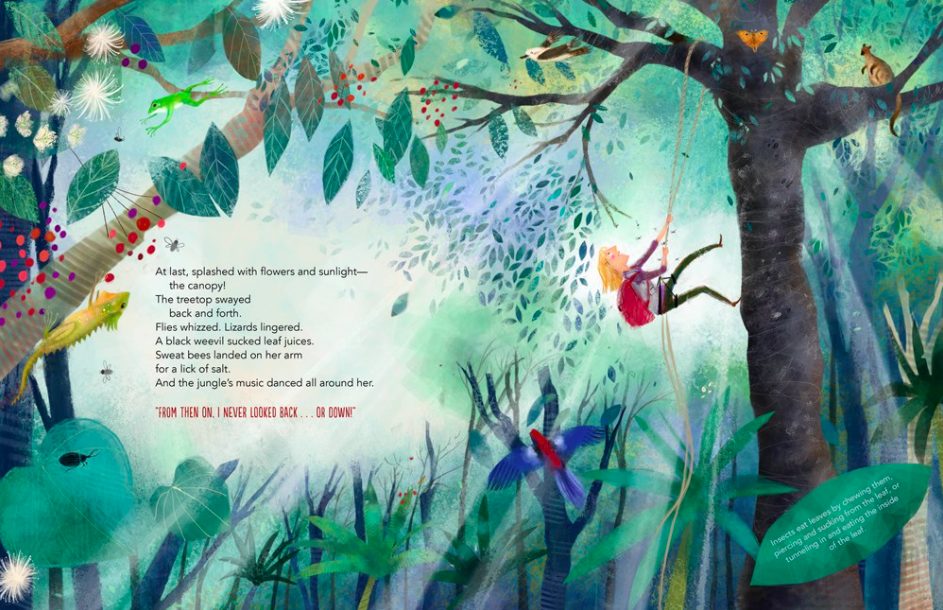
“In the dark, damp forest the trees rose up to distant rustling, squawks and screeches, shadows in the treetops. How could she get up there?” Meg Lowman created her own slingshot and harness and inched up a coachwood tree. When she reached the canopy, she knew she’d found the perfect place to study and explore. Meg is quoted saying, “From then on, I never looked back…or down!”

Meg continued to create new strategies to study the canopy, as a scientist does. And in doing so she made so many discoveries, such as: “We now believe the canopy is home to approximately half the plant and animal species on land.” Many people tried to stop Meg along her journey. They told her she couldn’t take science classes, climb trees, or make inventions because she was a woman. But Meg ignored them. She continued to investigate.

She knew that rainforests were (and are) in danger, and that so many creatures rely on the rainforest ecosystem. People all over the world were cutting down large parts of the rainforests for wood, rubber, paper, and farmland. This worried Meg; she wanted to find a way to protect rainforests before they all disappeared. “She wondered, How can one leaf detective make a difference? How can I save the trees?…Then an idea crawled into Meg’s thoughts—a way to speak for the trees.”

celebrate-picture-books-picture-book-review-the-leaf-detective-bugs

Image copyright Jana Christy, 2021, text copyright Heather Lang, 2021. Courtesy of Calkins Creek.

Meg traveled around the world. She spoke to people across many different countries; taught them how to climb trees, build canopy walkways—she showed people the many gifts rainforests have to offer. Meg educated communities on how they could share their rainforest with outsiders, showcase its beauty to create revenue rather than chopping them down for resources. By using her voice and creative mind, Meg helped implement systems that have saved many trees and creatures across the world.

Meg Lowman continues to study trees, save rainforests, and teach people how to shift their economies to center around ecotourism and sustainable crops rather than resource extraction. She has used her voice to save rainforests across the world, and yet she still says, “If only I could have achieved as much as the tree!… But I have not. I have whittled away at relatively small goals in comparison to the grander accomplishments of a tree.”

Backmatter includes an author’s note detailing Heather Lang’s visit to meet Margaret Lowman in the Amazon rainforest in Perú. The note includes more information on Dr. Lowman’s advocacy work and is followed by an illustrated educational spread on the layers of canopies, and species featured throughout the story are labeled in the final spread, for readers to learn more about specific animals that make their homes in the rainforest.

celebrate-picture-books-picture-book-review-the-leaf-detective-trampoline

Image copyright Jana Christy, 2021, text copyright Heather Lang, 2021. Courtesy of Calkins Creek.

Heather Lang’s lyrical writing matches the carefulness with which Meg studies leaves, trees, and the rainforest canopy. Her compelling storytelling is rich with facts and sensory imagery that immerse readers in the environment and Meg’s determination to understand and, later, save it. Scattered images of leaves drop fun facts and definitions for readers about the rainforest, canopies, transpiration, herbivores, and more. Quotes from Dr. Lowman are thoughtfully placed throughout the story in a manner that neatly flows. The Leaf Detective urges readers to understand that “a tree is not just a tree” but rather “a shelter for animals and people, / a recycler and provider of water, / a creator of food and oxygen, / an inventor of medicine/ a soldier against climate change.”

Jana Christy’s digital drawings contain stunning detail and show an accurate scale of one small person in comparison to the vastness of the rainforest. Her mesmerizing wildlife creatures and immersive watercolor blues and greens transport readers right into the rainforest with “Canopy Meg.” The lush greens of the rainforests contrast strikingly with the spread on deforestation, in which fallen trees lay scattered on the bare, brown ground. Readers will also be interested to see the innovations that have made the trees more accessible to people. One can read the book over and over and notice new details every time. It is a book to treasure, to study, to read and re-read again. 

Come unearth the secrets of the rainforest with Margaret Lowman in this book that’s budding with knowledge, empathy, and magic, and is a tale of how one person can make a difference. The intriguing facts, poignant quotes from Dr. Lowman herself, and beautiful poetic writing will leave readers of this book inspired with wonder and with a hunger for advocacy. The Leaf Detective: How Margaret Lowman Uncovered the Secrets of the Rainforest is an urgent must-read for all ages.

A portion of Heather Lang’s royalties for this book go to TREE Foundation—an organization that funds field trips for children to get into nature, canopy projects, and science book distribution for children with limited access to STEAM, girls especially. 

Ages 6 – 10

Calkins Creek, 2021 | ISBN 978-1684371778

Discover more about Heather Lang and her books on her website.

To learn more about Jana Christy, her books, and her art, visit her website.

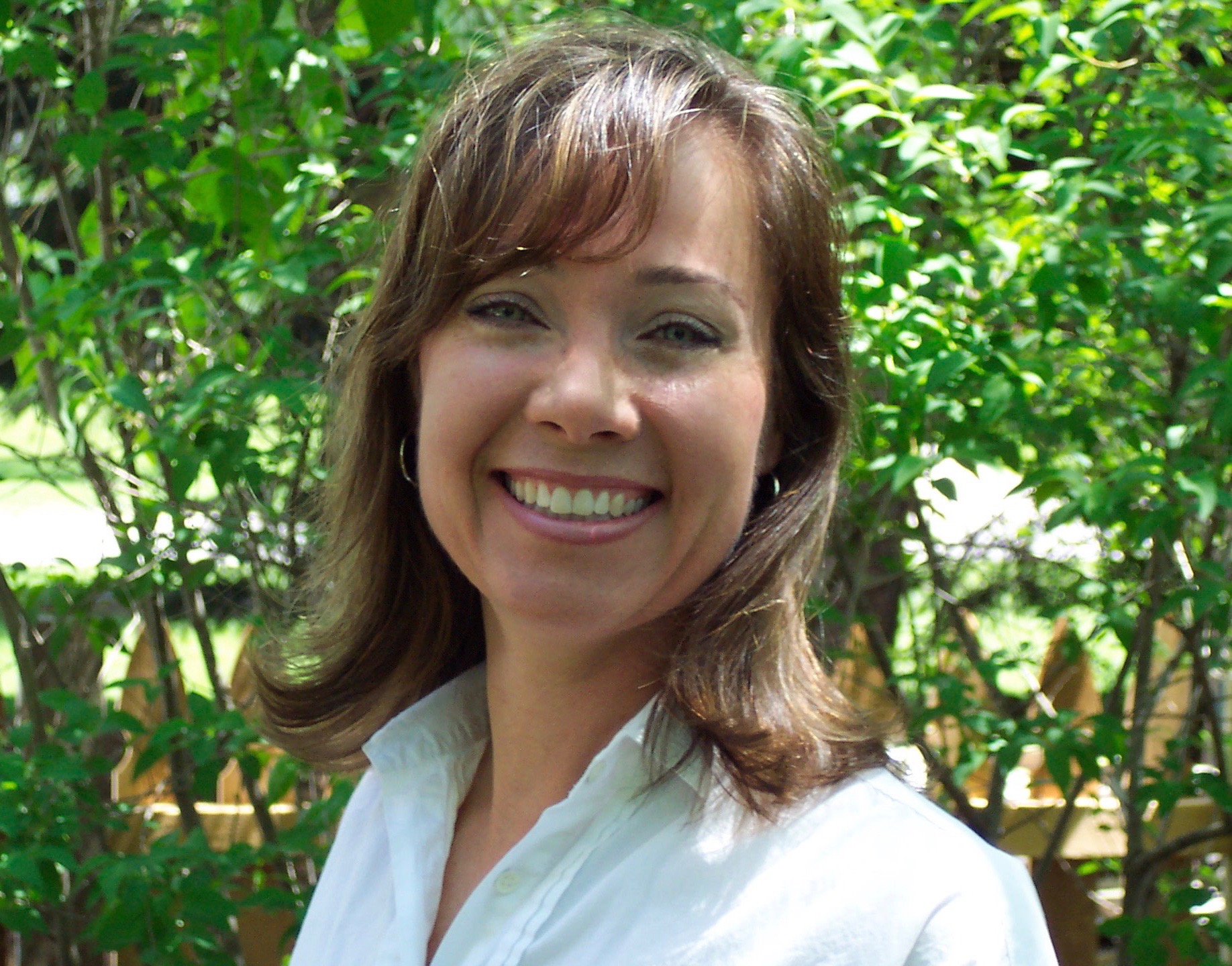
Meet Heather Lang

celebrate-picture-books-picture-book-review-Heather-Lang-headshot

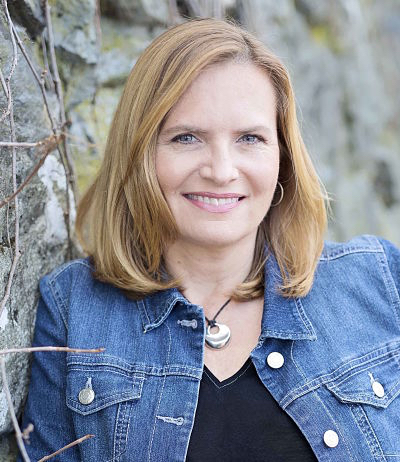
Heather Lang loves to write about real women who overcame extraordinary obstacles and never gave up on their dreams. Her research has taken her to the skies, the treetops of the Amazon, and the depths of the ocean. Her award-winning picture book biographies include, QUEEN OF THE TRACK: Alice Coachman, Olympic High-Jump Champion, THE ORIGINAL COWGIRL: The Wild Adventures of Lucille Mulhall, FEARLESS FLYER: Ruth Law and Her Flying Machine, SWIMMING WITH SHARKS: The Daring Discoveries of Eugenie Clark, and ANYBODY’S GAME: Kathryn Johnston, The First Girl to Play Little League Baseball. When she is not writing, she enjoys going on adventures with her husband and four children. Visit Heather at www.heatherlangbooks.com.

Today I am thrilled to be interviewing author Heather Lang about her new biographical picture book The Leaf Detective: How Margaret Lowman Uncovered the Secrets of the Rainforest. Heather provides some thoughtful notes for shy readers, riveting stories from the rainforest and insight into the importance of exploring and caring for nature.

Can you tell us a little bit about what made you decide to write The Leaf Detective?  

We’ve caused enormous harm to our planet over the last few centuries, and I’m especially concerned about our rainforests. I knew I wanted to write a biography that was also a science book about the rainforest. When I read about Meg’s pioneering work and deep passion for trees, I was hooked! I couldn’t wait to find out how this quiet, nature-loving child, who didn’t know women could be scientists, became a world-class scientist and conservationist.

In the story you talk about how Meg was shy to make playmates with other kids. Were you also a shy kid growing up? Do you have any advice for readers who may relate to this aspect of Meg’s childhood? 

Like Meg, I was very shy as a child and remember wishing I were more outgoing. But as I grew older, I began to recognize the many advantages to being shy! My shy nature led me to sit back and observe. And that led to deeper thinking and understanding, a strong imagination, and creativity. Shy people often think more before they speak. They make their words count, which coincidentally is an important part of writing picture books. This also makes shy people good listeners and thoughtful friends. 

I’m still shy in many ways, and my recommendation to readers who might identify with this is to embrace your shyness! At the same time, don’t let it stop you from doing things you want to do. Meg Lowman told me she used to get so nervous before presenting in graduate school that she’d get physically sick. But with practice, practice, practice, she’s become a captivating presenter and educator. If you watch a few of her FUN FACTS FROM THE FIELD videos on my website, you’ll see what I mean! 

How would you describe your connection to nature? Would you consider yourself a “detective” in any ways? 

I’m constantly in awe of nature and its countless gifts and surprises. Nothing sparks my curiosity more than our natural world, and my curiosity is probably my most important tool as a writer. Being open-minded and asking questions not only generates ideas, but also leads me to think more deeply about a topic and examine it closely from lots of different angles. And of course that generates more detective work and more learning about my topic and myself. Being a detective is one of my favorite parts of writing books.

Do you have a favorite rainforest tree or creature? If so, tell me about it a bit!

When I arrived in the Amazon rainforest, I couldn’t wait to see a sloth! But during my time there I became fascinated with ants. They are everywhere in the rainforest, even in the canopy. I think it’s amazing how such tiny creatures can be so hardworking and organized. Their teamwork is unbelievable. And they are invaluable to the health of our rainforests. Among other things, they’re in charge of waste management on the rainforest floor, and they disperse seeds and aerate the soil!

What was the most rewarding part of writing The Leaf Detective?

This writing project was filled with rewards every step of the way! I learned so much about our rainforests and trees and gained a true understanding of how interconnected we all are—plants, animals, and humans. Getting to really know Meg Lowman and learning from her firsthand was thrilling and strengthened my writing in many important ways. It was also really rewarding to stretch myself as a writer and find a way to effectively write a book that seemed ambitious at first—a biography and conservation book that wove in quotes and science facts. 

Are there any stories from your trip to meet Meg that you did not get the chance to include in your author’s note that you’d like to share?

While I was on my Amazon adventure with Meg, I had many exciting moments. I loved learning from the Indigenous people how to use a blow gun, make clay, and braid palm leaves to make thatched roofs. The local shaman taught me how he uses different plants in the rainforest to treat and prevent injuries and illnesses—from bronchitis to poisonous snake bites. He also helped me confront my fear of snakes by bringing one over for me to touch. I even let it gently coil around my neck! But my favorite moments were exploring with Meg, especially at night and early in the morning when there’s so much activity in the rainforest.

What are you working on next?

I’m having a blast working on a new informational picture book series about extraordinary animals for Candlewick Press with my co-author/illustrator and close friend Jamie Harper. The first book, Supermoms!, features cool nonfiction facts about 18 amazing animal moms in a graphic format with humorous callouts. 

I’m also working on a collective biography for readers in grades 3 – 7. More to come on that soon!

Thanks so much for chatting with me Heather! I had a lovely time hearing about your inspiration, stories, writing process and tips for shy readers. Looking forward to learning and reading more from you in the months and years to come.

World Wildlife Day Activity

Screen Shot 2021-03-02 at 9.24.20 PM

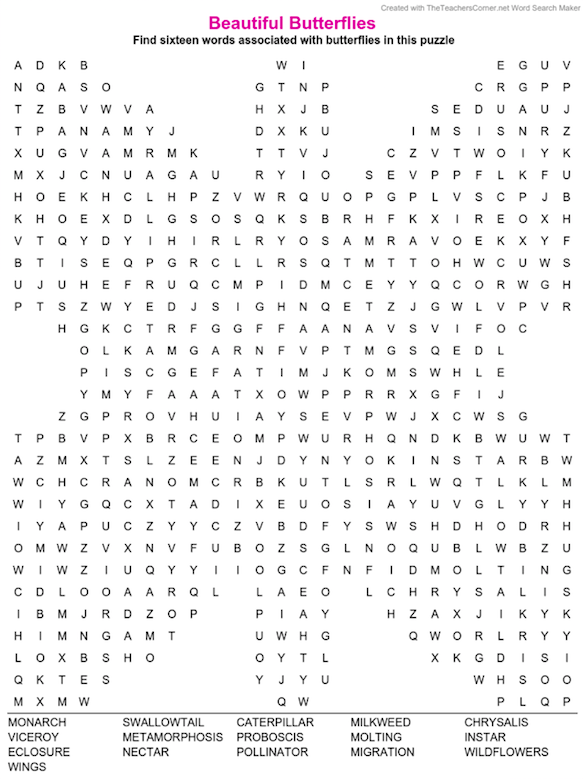
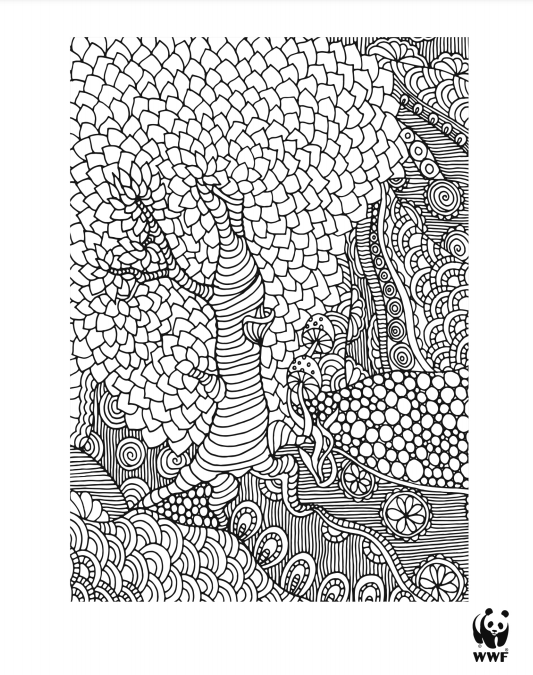
You can create your own rainforest with this coloring page. Use the blank space around the picture to label the layers as shown on the last page of The Leaf Detective!

Rainforest Coloring Page

celebrate-picture-books-picture-book-review-world-wildlife-day-poster-2021

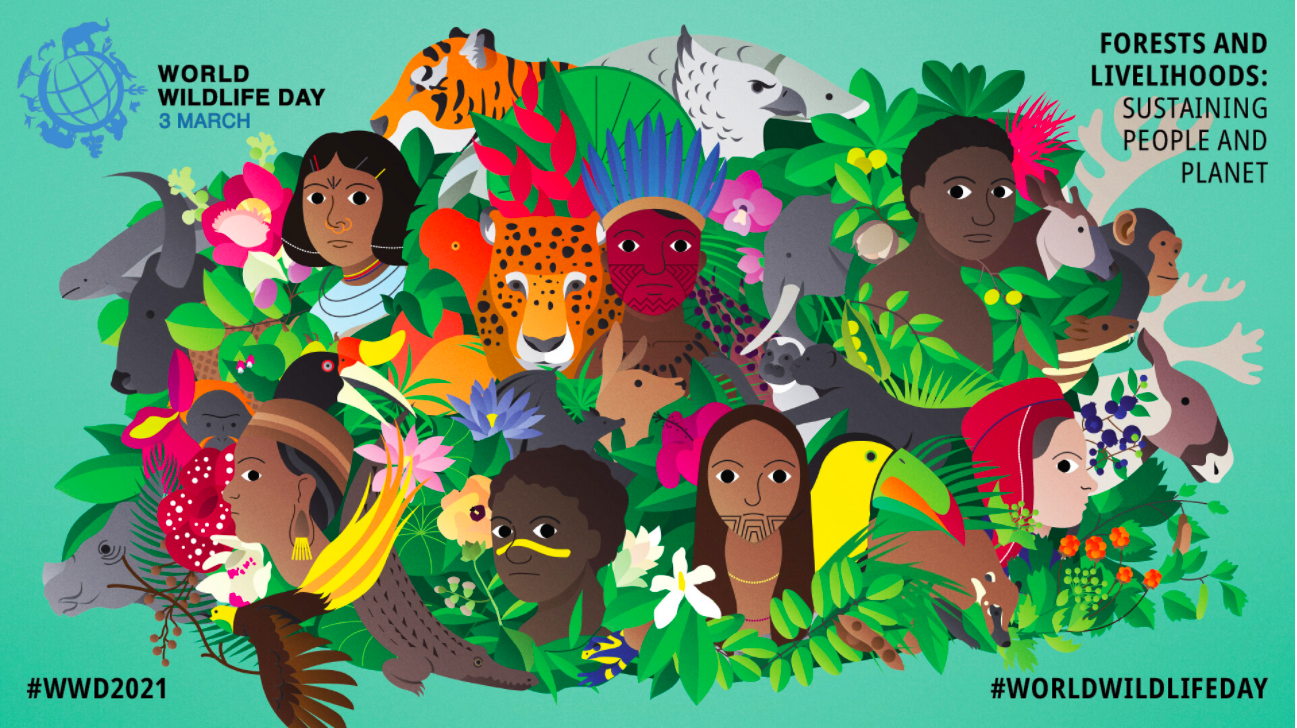
Three different beautiful World Wildlife Day 2021 posters in six languages are available for download here.

You can find The Leaf Detective at these booksellers

Amazon | Barnes & Noble | Books-a-Million

To support your local independent bookstore, order from

Bookshop | IndieBound

Picture Book Review

February 16 – Innovation Day

celebrate-picture-books-picture-book-review-maxine-and-the-greatest-garden-ever-cover

About the Holiday

Today we celebrate all those people who look at a problem and design a solution, or who just ask, “What if…?” and search for answers. The holiday was established by the Science History Institute in conjunction with the Society of Chemical Industry to help bring attention to those people who were not only producing technology, but were also pushing the envelope on what was possible. Each year, these two organizations coordinate to host Innovation Day. This year, restrictions and life-changing alterations needed to combat COVID-19, have sparked innovations both large and small at home, for business, at schools, and for medical researchers. Creative individuals have kept us entertained, given us hope, and kept things going even in the most difficult of times. To celebrate today, put on your thinking cap, look around you, and do something new, novel, and completely unexpected. Who knows…you may be the next great inventor!

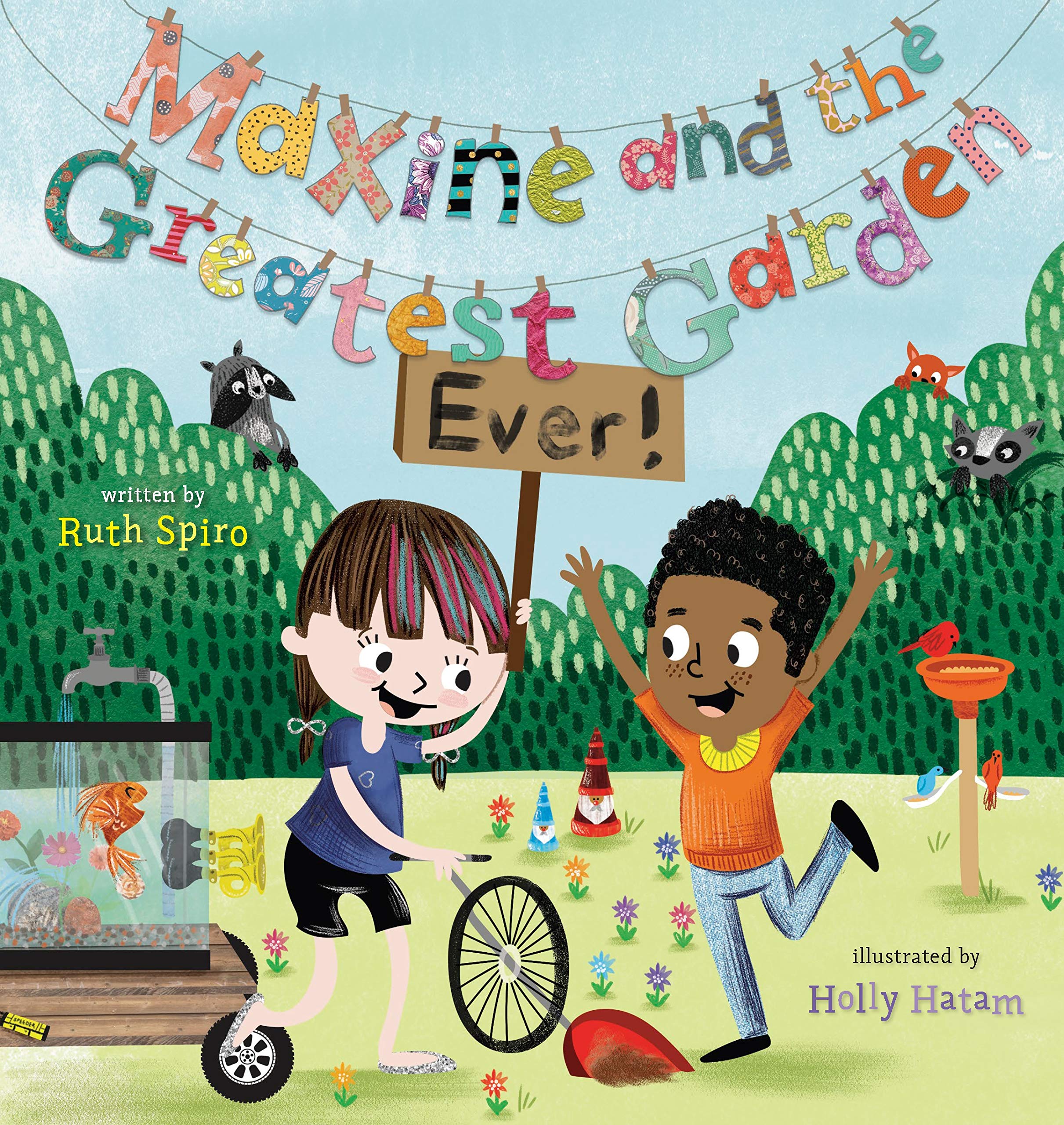
Maxine and the Greatest Garden Ever!

Written by Ruth Spiro | Illustrated by Holly Hatam


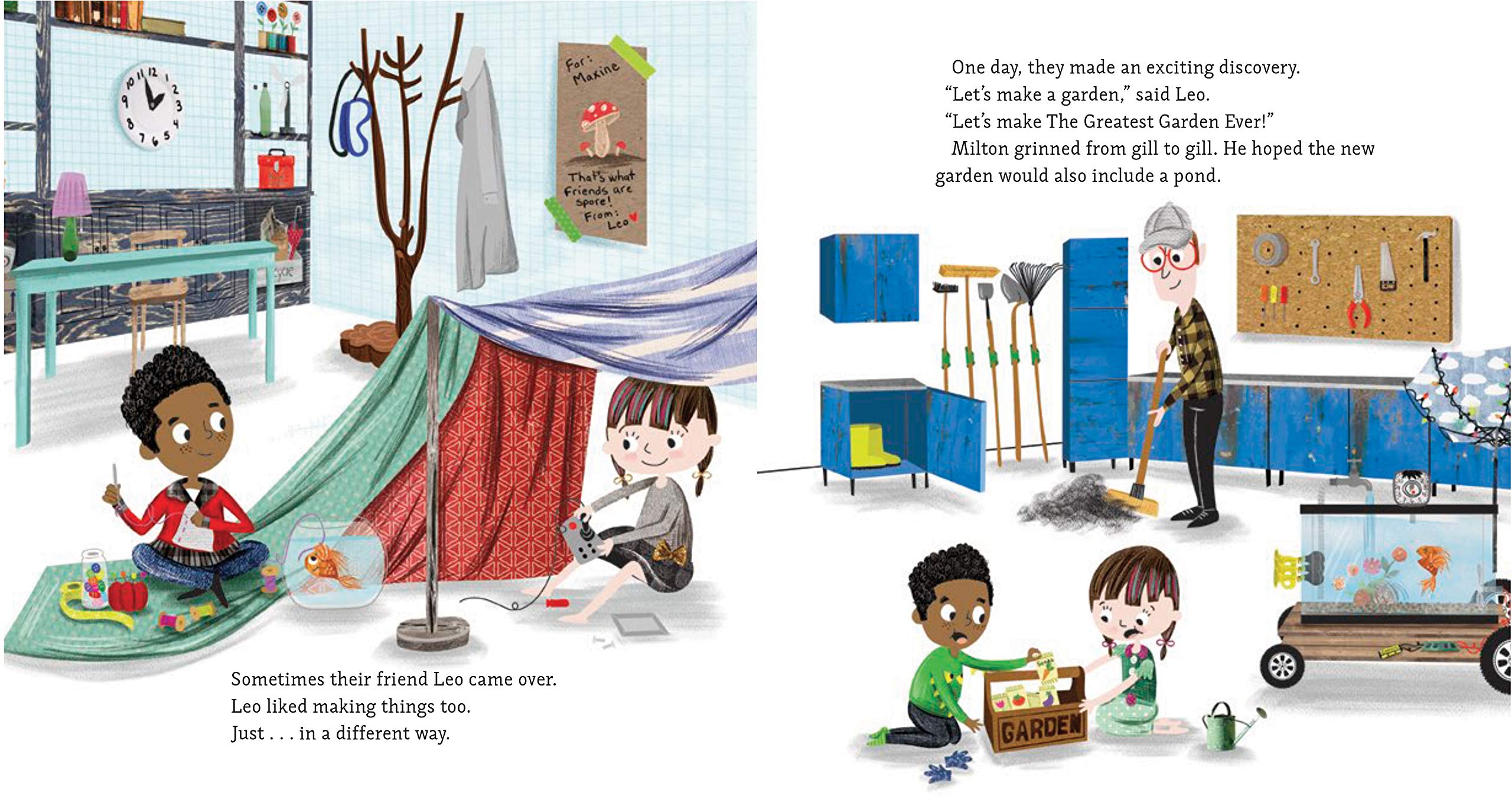
Maxine and her goldfish, Milton, were best friends, and Maxine loved thinking up creative scientific or technical ways to keep him fed, safe, and happy. “Maxine liked making things, and she especially liked making things for Milton. ‘If I can dream it, I can build it!’ she said.” Maxine’s other friend Leo also liked making things, but his creations were more arty.

celebrate-picture-books-picture-book-review-maxine-and-the-greatest-garden-ever-seeds

Image copyright Holly Hatam, 2021, text copyright Ruth Spiro, 2021. Courtesy of Dial Books.

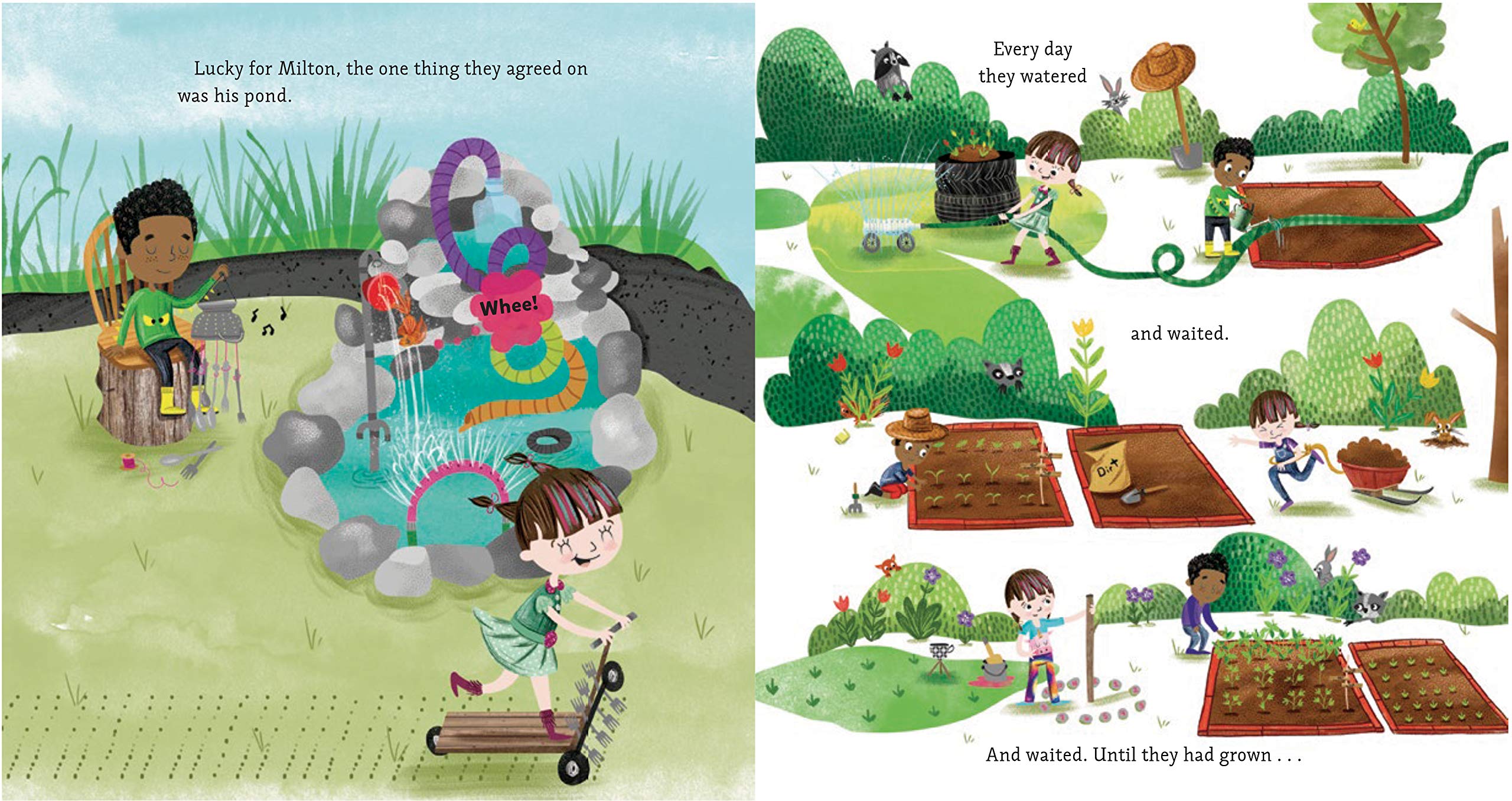
One day when Leo was visiting Maxine, they found packets of seeds and decided to build “‘The Greatest Garden Ever!’” Milton hoped the garden would have a pond just for him. Leo and Maxine drew up their plans. “Leo’s was pretty. Maxine’s was practical.” When they planted the seeds, Leo planted them far apart in large beds of soil. Maxine’s seeds were packed close together in pots made from old tires, barrels, toys, and even a chandelier. They both looked askance at the other’s seeds. They did, however, agree on Milton’s pond.

Every day they watered, weeded, and waited. At last, they truly did have “The Greatest Garden Ever!” There were vegetables and flowers, birdfeeders and a gazebo. The wild animals thought the garden was great too. One day, Maxine and Leo came to the garden to find nibbled carrots, radishes, and eggplants; pots were knocked over and little footprints were everywhere. Maxine wanted to make something to keep the animals away. “‘Something that looks nice?’ asked Leo. ‘Something that works.,’” said Maxine.

celebrate-picture-books-picture-book-review-maxine-and-the-greatest-garden-ever-pond

Image copyright Holly Hatam, 2021, text copyright Ruth Spiro, 2021. Courtesy of Dial Books.

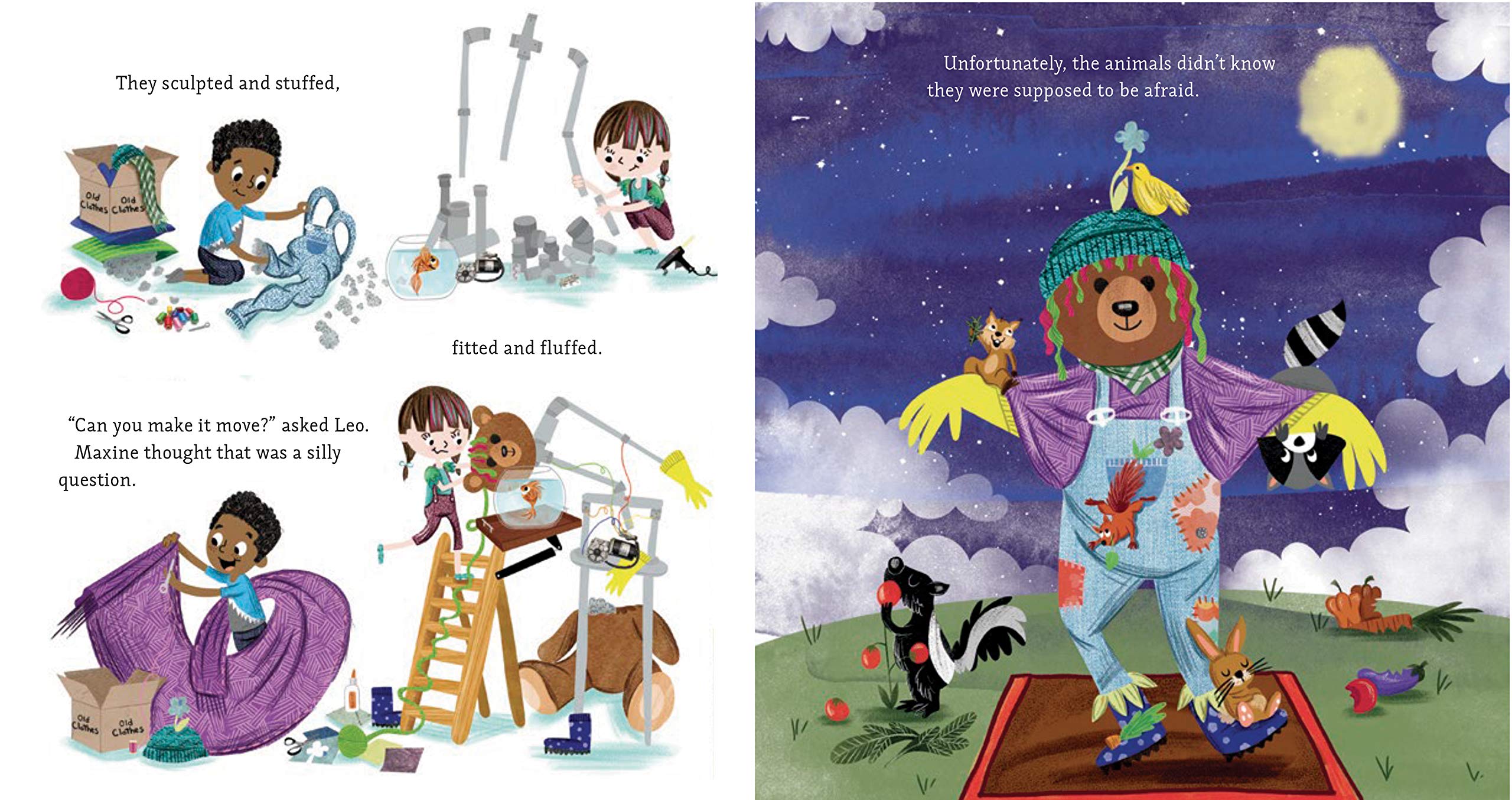
They decided to make a scarecrow. While Leo stuffed overalls and made a shirt, Maxine built a mechanical body for the big teddy bear that would wear them. But the animals didn’t think the scarecrow was very scary. While Leo thought the bear had done nothing, Maxine said that it had helped them know what didn’t work. They gathered new supplies and “then while Leo sewed, Maxine wrote some code.” This time the bear had laser eyes, moving parts, loud sounds, a shiny helmet, and a scary black dress. That night, though, the scarecrow was so scary that it made babies cry, dogs howl, and kept neighbors awake.

celebrate-picture-books-picture-book-review-maxine-and-the-greatest-garden-ever-scarecrow

Image copyright Holly Hatam, 2021, text copyright Ruth Spiro, 2021. Courtesy of Dial Books.

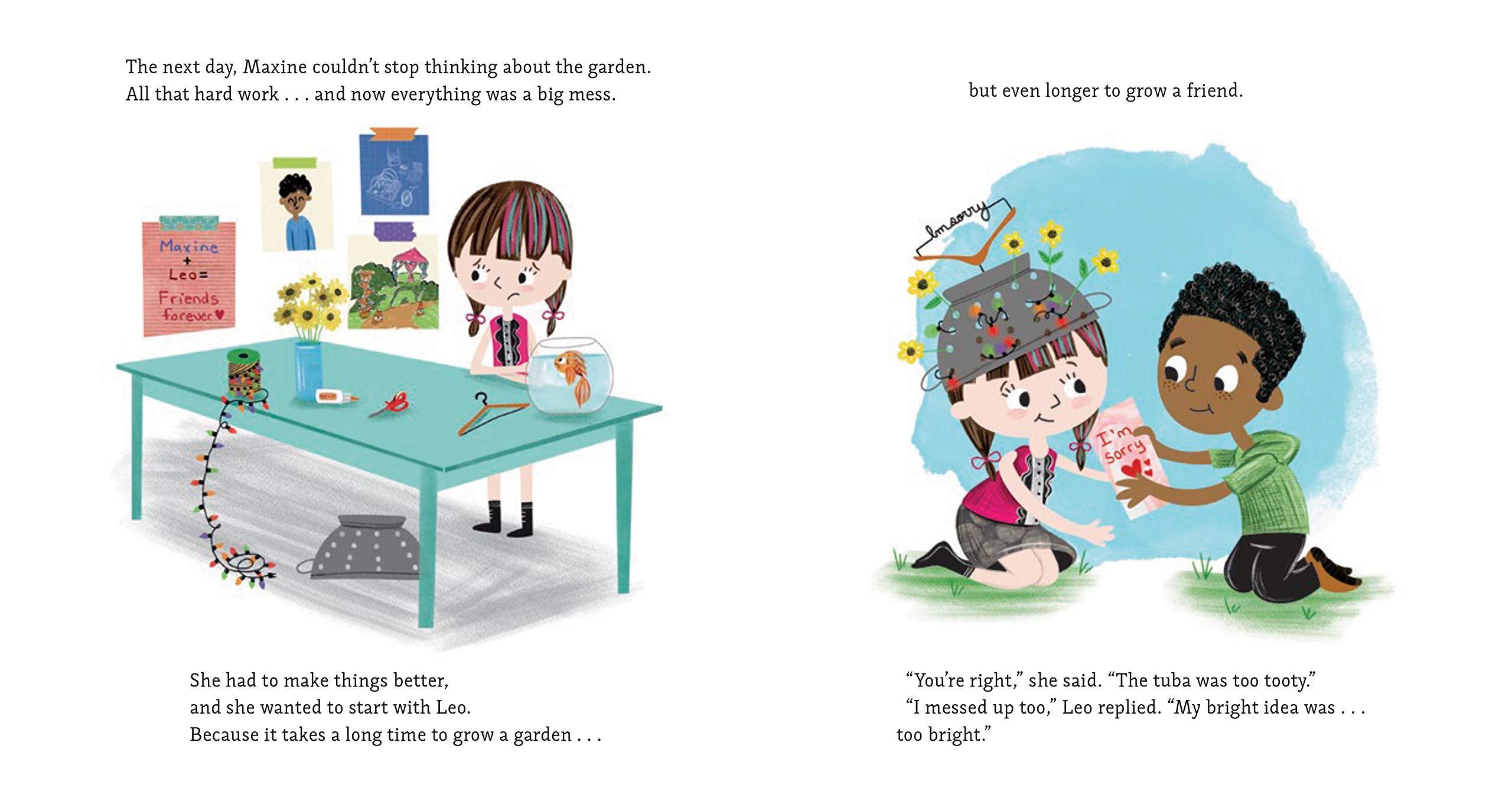
Leo blamed Maxine, and Maxine blamed Leo. At home, Maxine and Leo thought about the garden and what they’d said. Maxine wanted “to make things better, and she wanted to start with Leo. Because it takes a long time to grow a garden… but even longer to grow a friend.” When they met the next day, they both apologized. As they cleaned up the garden and shared the last of the lettuce, Maxine had an idea. She and Leo repaired, repainted, and replanted, and when they were finished, they invited their new animals friends to enjoy the garden with them.

celebrate-picture-books-picture-book-review-maxine-and-the-greatest-garden-ever-apology

Image copyright Holly Hatam, 2021, text copyright Ruth Spiro, 2021. Courtesy of Dial Books.

Ruth Spiro’s celebration of creativity, gardening, and friendship will enchant kids and show them that sometimes projects lead to try and try again cooperation before the original vision or a new idea is perfected. Through Maxine’s talent for engineering, coding, and inventing and Leo’s artistic abilities, Spiro shows readers that whatever their skills are, they can contribute to the success of any endeavor. When Maxine and Leo’s frustrations over the garden spill out into their relationship and an argument ensues, Spiro reminds kids that people and enduring friendships are more important than plans, projects, or events and that apologies and understanding keep relationships strong. Her charming narration, realistic dialogue, and periodic rhymes create a story that’s a joy to read aloud.

Holly Hatam’s vivid illustrations will keep kids lingering over the pages to catch all of her puns, Maxine’s inventions, and Leo’s crafts—many of which enterprising kids may want to try to replicate. Cheery Maxine with her red-and-blue streaked hair, bright eyes, and quick imagination is enthusiastic and confident, and Leo, wearing a dragon shirt any kid would love, is equally as confident and passionate about his talents. The garden is a visual treat, from its first planting to its early stages to its full-grown glory. Hatam’s vision for both of Maxine and Leo’s scarecrows is original and gleefully kid-centric. The final image of the shared garden at night is a spectacular celebration for all.

Both fans of Maxine and Milton’s first adventure in Made by Maxine and new readers of this little series will ask to hear Maxine and the Greatest Garden Ever! again and again. A rousing friendship story to engage kids in STEAM-related activities or to jumpstart ideas for those times when they’re are looking for something to do at home, Maxine and the Greatest Garden Ever! Is highly recommended for home, school, and public library collections.

Ages 4 – 8

Dial Books, 2021 | ISBN 978-0399186301

Discover more about Ruth Spiro and her books on her website.

To learn more about Holly Hatam, her books, and her art, visit her website.

Innovation Day Activity

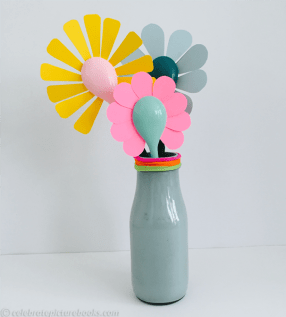
celebrate-picture-books-picture-book-spoon-flowers

Spoon Flowers Craft


It may not be time for gardening, but that doesn’t mean you can’t “grow” some flowers. With a little innovation, you can give anyone a bouquet with this easy craft!

Supplies

  • Colorful plastic spoons
  • Heavy stock paper or construction paper in various colors, including green for leaves
  • Multi-surface glue or hot glue gun

Directions

  1. Cut petals from the heavy stock paper or construction paper
  2. Glue the petals to the bowl of the spoon
  3. Cut leaves from the green paper (optional)
  4. Glue leaves to the handle of the spoon (optional)

celebrate-picture-books-picture-book-review-maxine-and-the-greatest-garden-ever-cover

You can find Maxine and the Greatest Garden Ever! at these booksellers

Amazon | Barnes & Noble | Books-a-Million

To support your local independent bookstore, order from

Bookshop | IndieBound

Picture Book Review

February 11 – Celebrating International Day of Women and Girls in Science with the Book Trailer Reveal for June Almeida, Virus Detective!

About the Holiday

Gender equality has always been a core issue for the United Nations. As such, on December 22, 2015 the United Nations General Assembly established an International Day to recognize the critical role women and girls play in science and technology. The outbreak of the COVID-19 pandemic has clearly demonstrated the critical role of women researchers in different stages of the fight against COVID-19, from advancing the knowledge on the virus, to developing techniques for testing, and finally to creating the vaccine against the virus.

Against this backdrop, this year’s celebration of the Day will address the themeWomen Scientists at the forefront of the fight against COVID-19” and will gather together experts working in fields related to the pandemic from different parts of the world. For more information, visit the UN website.

That this year’s International Day of Women and Girls in Science celebrates women researchers, and especially those involved in COVID-19, makes it all the more exciting to reveal the trailer for a book highlighting the achievements of the pioneer in the field.

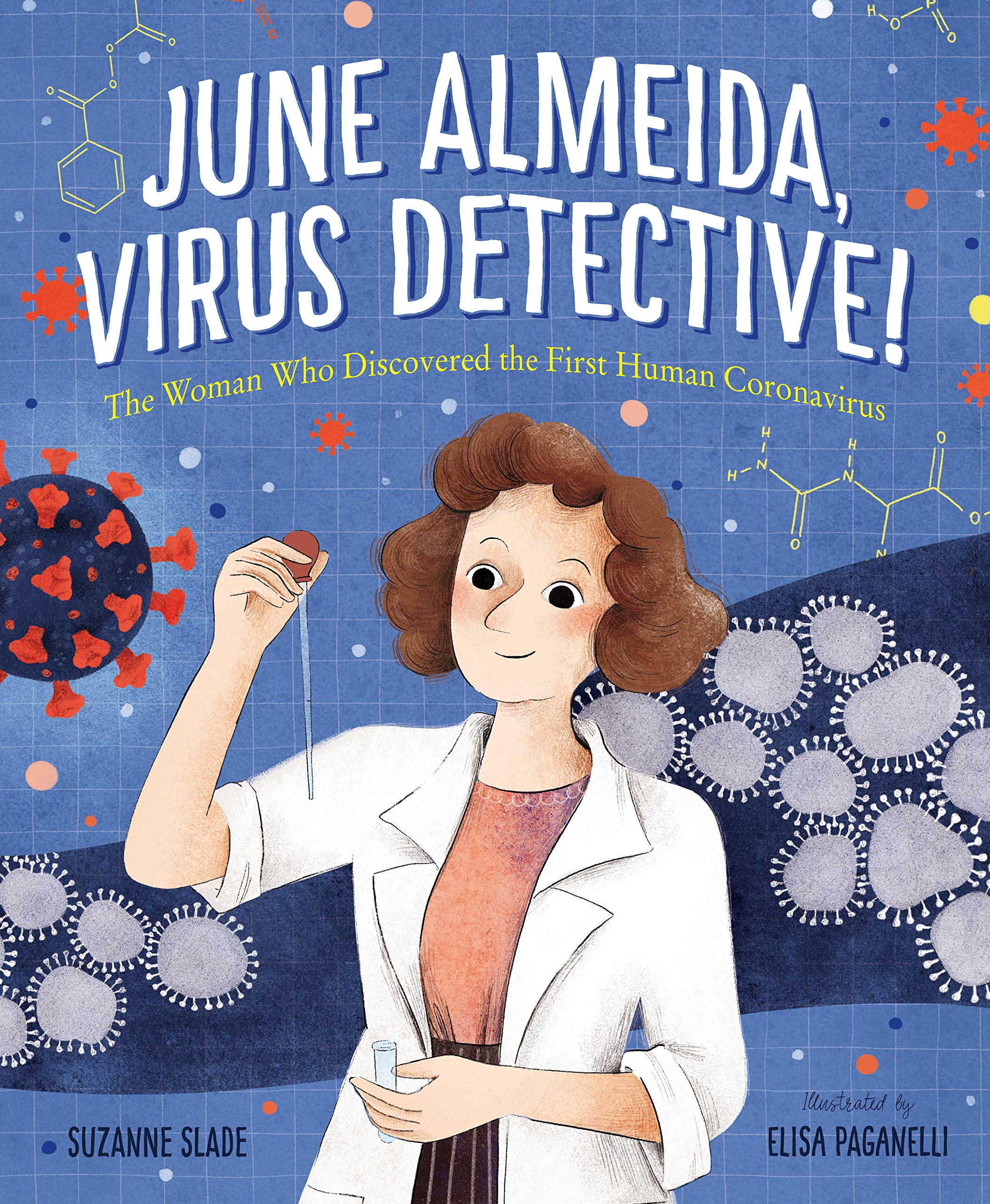
June Almeida, Virus Detective! The Woman Who Discovered the First Human Coronavirus 

Written by Suzanne Slade | Illustrated by Elisa Paganelli


With the rise of the global COVID-19 coronavirus pandemic and its life-changing effects for everyone around the world, scientists, adults, and children began looking for information and answers on how we can defeat the virus so that life can return to normal. In June Almeida, Virus Detective! The Woman Who Discovered the First Human Coronavirus, readers learn the incredible story of the scientist who discovered, photographed, and even named the first human coronavirus.

Growing up in Glasgow, Scotland, June Almeida loved learning about science and nature. A good student, she was especially interested in biology and won the top science prize at her school. Creative and observant, June noticed details that others often missed. She dreamed of going to college but economic hardships caused her to leave school at age 16. Still, June was determined to pursue her passion for science. She was hired by a local hospital to work in its lab, using a microscope to magnify and examine cells. Her work helped doctors treat patients. June later worked in labs in London and in Toronto. Her skill in using the electron microscope to examine cells and help identify viruses earned her promotions and respect in the science community. In the late 1960s, when June was 34 years old, she discovered the first human coronavirus. Her groundbreaking work continues to help researchers today in the fight against illnesses caused by viruses, including COVID-19.

While researching and writing June Almeida, Virus Detective!, award-winning science author Suzanne Slade worked closely with June’s daughter, Joyce, to capture the personality and intelligence of this unsung hero in the fight against the coronavirus. Backmatter includes photographs of June working with various microscopes, more about her career, and a timeline.

Ages 6 – 9

Sleeping Bear Press, 2021 | ISBN 978-1534111325

celebrate-picture-books-picture-book-review-suzanne-slade-headshot

Suzanne Slade holds a B.S. degree in science and worked for many years in a STEM career. She is now the award-winning author of more than 100 books, including Out of School and Into Nature: The Anna Comstock Story. She lives in Libertyville, Illinois. Learn more about Suzanne at suzanneslade.com.

celebrate-picture-books-picture-book-review-Elisa-Paganelli-headshot
Elisa Paganelli’s work includes The Highland Falcon Thief, named a Waterstones Book of the Month. She lives in High Wycombe, United Kingdom. Learn more about Elisa at elisapaganelli.com

June Almeida, Virus Detective! is available March 15, 2021

celebrate-picture-books-picture-book-review-june-almeida-virus-detective-cover

You can preorder June Almeida, Virus Detective! at these booksellers

Anderson’s Bookshops | Amazon | Barnes & Noble | Books-a-Million 

To support your local independent bookstore, order from

Bookshop | IndieBound

Picture Book Review

February 4 – Sadie Sprocket Builds a Rocket Blog Tour Stop

celebrate-picture-books-picture-book-review-sadie-sprocket-builds-a-rocket-cover

About the Holiday

I always love celebrating kids’ creativity, imagination, and smarts and today’s book has all three! If you never want to say goodbye to January’s “Creativity Month” and am looking forward to Expanding Girls’ Horizons in Science and Engineering Month and National Ideas Month in March, then you’ll want to add Sadie Sprocket to your reading list.

Thank you goes to Two Lions and Blue Slip Media for sending me a copy of Sadie Sprocket Builds a Rocket for review consideration. All opinions on the book are my own. I’m also excited to be teaming with them for a giveaway of the book. See details below.

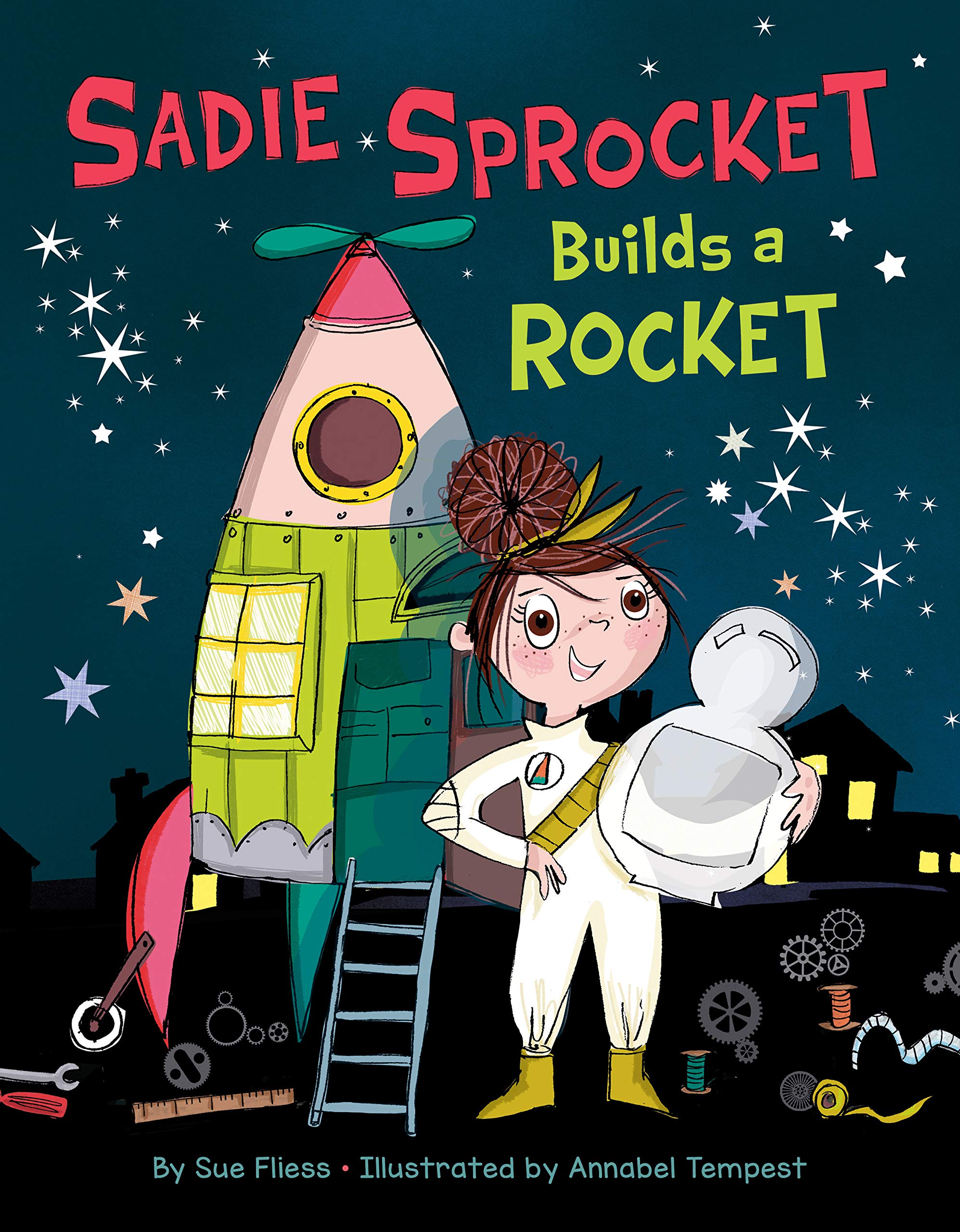
Sadie Sprocket Builds a Rocket

Written by Sue Fliess | Illustrated by Annabel Tempest


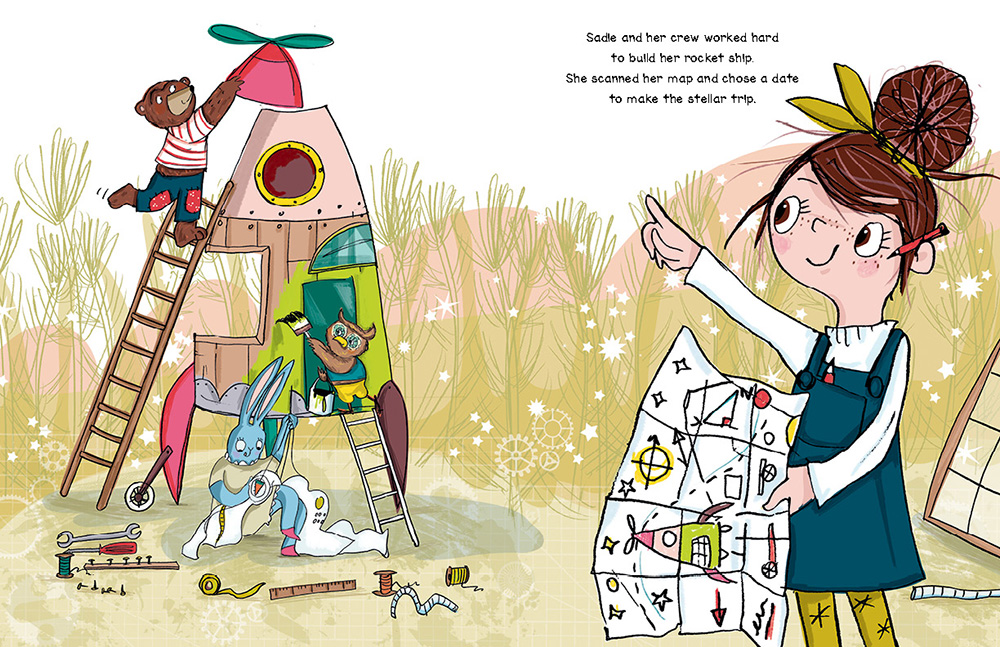
Sadie Sprocket wanted to travel. Not your regular vacation kind of travel but the kind that would take her across the galaxy. “So one day Sadie drew a map / to navigate the stars. / ‘It’s time to leave the Earth,’ she said, ‘and travel straight to Mars!’” She chose her crew—a bunny, bear, and owl—and began building her rocket ship with parts she got from the junkyard.

When the rocket was finished, Sadie and her crew were ready to blast off. Her family, friends, and even reporters gathered to see “this space-bound girl with smarts and skill / would soon make history.” They basted off on their journey that would take one hundred days. To pass the time the crew of four tried playing cards, and checkers and chess, but the pieces just floated away, so they read and cooked instead.

celebrate-picture-books-picture-book-review-sadie-sprocket-builds-a-rocket-bedroom

Image copyright Annabel Tempest, 2021, text copyright, Sue Fliess, 2021. Courtesy of Two Lions.

Soon, when Sadie looked out the window, Earth was no more than a dot while Mars came into view. When it was time to land, Sadie directed her crew to land on level ground. On the surface of the red planet, they gathered samples and put them into bags and then when they were done, they planted yellow flags. After a few selfies, Sadie knew it was time to go, but a storm blew up and “the rocket wouldn’t budge.”

Sadie, Bear, Bunny, and Owl got out and dug the landing gear free, but when they tried to leave Mars again, the sand swirling in the air was so thick, they couldn’t see. When the storm abated, they thought flying would be a snap, but the rocket didn’t work. Sadie grabbed her tools and they went to work sweeping sand from the circuit board and repairing the wires. Finally, Sadie said, it is “‘time to Blast!’” / They zoomed by stars and asteroids / and made it home at last.” When she landed back on Earth, Sadie learned she “had rocketed to fame,” but one trip was not enough. She now had Neptune in her sights, but clever Sadie Sprocket new she’d “need a bigger rocket.”

Following the text is “Sadie’s Notebook,” which contains facts about Mars and short bios on seven pioneering women in space.

celebrate-picture-books-picture-book-review-sadie-sprocket-builds-a-rocket-building

Image copyright Annabel Tempest, 2021, text copyright, Sue Fliess, 2021. Courtesy of Two Lions.

Sue Fliess’s jaunty story about Sadie Sprocket, a young go-getter who doesn’t let things like gravity or obstacles get in the way of her dreams of discovery offers inspirational motivation for children who have big (or smaller) aspirations. Sadie’s confidence in herself and in science jumps off the page as she talks to the press and her supporters at her launch, gathers samples from the surface of Mars, and documents her finds. When the sand storm disrupts her return to Earth, she doesn’t give up the mission, but rallies her crew and fixes the problem. And does Sadie rest on her laurels? Nope! Like any inventive kid, she has her sights set on the next big adventure. Fliess’s pitch-perfect rhymes and quickly paced rhythm make the story an entertaining read aloud.

In her bright, active-packed illustrations, Annabel Tempest gives Sadie a cheery, self-assured look as she studies, makes plans, and builds her rocket. Kids will eagerly follow her steps as she gathers her supplies and gets to work. As Sadie, schematic in hand, directs her crew, kids will have fun seeing how she makes clever use of a wheelbarrow and appreciate the spacesuits and fitted helmets for each crew member. Images of the circuit board will appeal to tech-loving kids, and pictures of the rocket shooting across the galaxy will thrill readers. Any kids looking for inspiration to decorate their rooms will find plenty of ideas here too.

A lively story to encourage creative and science-loving kids, Sadie Sprocket Builds a Rocket is a terrific book for exciting story times and to enhance STEM lessons in school and at home. It is highly recommended for home, school, and public library collections.

Ages 3 – 7

Two Lions, 2021 | ISBN 978-1542018036

Sue Fliess is the author of more than thirty children’s books, including Mrs. Claus Takes the Reins, illustrated by Mark Chambers; Shoes for Me!, A Dress for Me!, and Books for Me!, all illustrated by Mike Laughead; and Let’s Build, illustrated by Miki Sakamoto. She lives with her family and their two dogs in northern Virginia, where they admire the moon, stars, and sometimes even planets from their backyard. You can connect with Sue on www.suefliess.com | Twitter | FacebookPinterest

Annabel Tempest is the illustrator of a number of picture books and board books. She holds a degree in fashion and textiles and has worked as a freelance illustrator on everything from maps and packaging to greeting cards and children’s books. She lives in the beautiful Somerset countryside in the UK with her husband and a houseful of muddy boys and dogs. You can connect with Annabel on annabeltempest.comInstagram | Twitter

Sadie Sprocket Builds a Rocket Giveaway

I’m happy to be teaming with Two Lions and Blue Slip Media in a giveaway of:

  • One (1) copy of Sadie Sprocket Builds a Rocket by Sue Fliess | illustrated by Annabel Tempest

To enter:

This giveaway is open from February 4 to January 10 and ends at 8:00 p.m. EST.

A winner will be chosen on January 11. 

Prizing provided by Two Lions and Blue Slip Media

Giveaway open to U.S. addresses only. | No Giveaway Accounts 

Sadie Sprocket Builds a Rocket Book Tour Activity

celebrate-picture-books-picture-book-review-blast-off-to-mars-maze

Blast off to Mars! Maze


Can you help the rocket navigate its way to Mars in this printable puzzle?

Blast off to Mars! Maze | Blast off to Mars! Solution

celebrate-picture-books-picture-book-review-sadie-sprocket-builds-a-rocket-cover

You can find Sadie Sprocket Builds a Rocket at these booksellers

Amazon | Barnes & Noble | Books-a-Million

To support your local independent bookstore, order from

Bookshop | IndieBound

Picture Book Review

January 19 – National Popcorn Day Cover Reveal of Let’s Pop, Pop, Popcorn!

celebrate-picture-books-picture-book-review-let's-pop-pop-popcorn-cover

Let’s Pop, Pop, Popcorn!

Written by Cynthia Schumerth | Illustrated by Mary Reaves Uhles


Have you ever wondered what happens to your popcorn before it lands in the bowl? Kernel-by-kernel, step-by-step, this story takes readers through the process of growing, harvesting, and finally popping delicious popcorn! However you take it – salted, buttered, or caramelized, every variation of America’s favorite snack begins in the same place. 

Backmatter includes STEM-related discussions about corn kernels and why these kinds of kernels pop when heated, a science activity, and an art project.

With Cynthia Schumerth’s exuberant and educational rhymes that bounce like bursting popcorn and Mary Reaves Uhles’s vibrant, action-packed illustrations of a group of kids planting, harvesting, shucking, cooking (KABOOM!), and eating this favorite snack, Let’s Pop, Pop, Popcorn! makes the perfect reading treat for any movie night or story time! 

I’m excited to be talking with Cynthia Schumerth and Mary Reaves Uhles to discover how they turned America’s favorite snack into a book so deliciously fun!

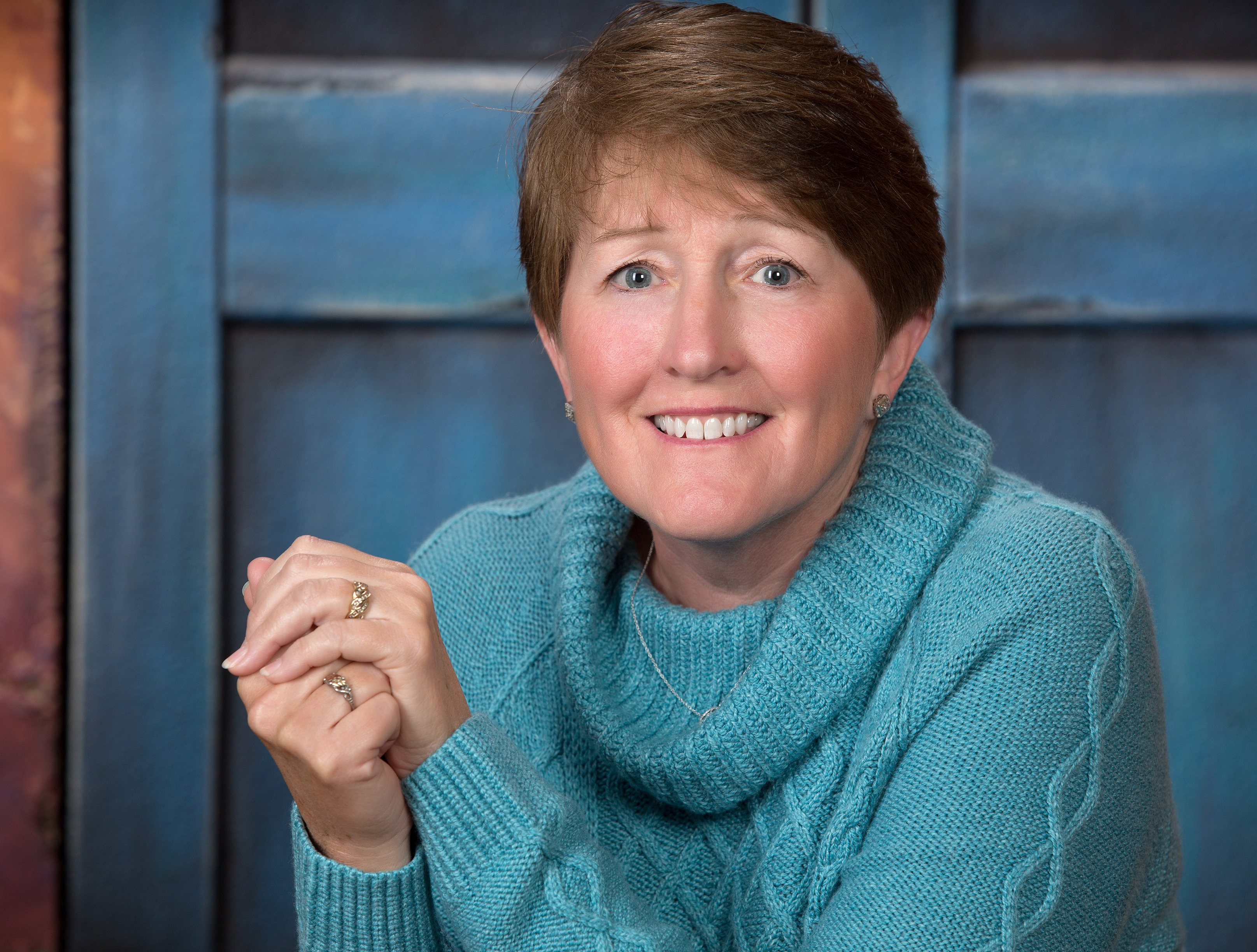
Meet Cynthia Schumerth
celebrate-picture-books-picture-book-review-Cindy-Schumerth-headshot

Cindy grew up in a small town in Wisconsin where kids played outside from sun-up to sun-down. Much of her writing reflects her love of nature, animals, and family. Cindy believes the power of words is magical and if even one child can find something they can relate to in a story, then that story just might change their world. Cindy lives with her husband and their rescue dog Chance in the same small town she grew up in. Together they raised two amazing children. You can connect with Cynthia on Twitter.

I’m really looking forward to learning more about popcorn when your book’s released! What inspired you to write Let’s Pop, Pop, Popcorn!?
 

My love of popcorn! Growing up, popcorn was a special treat. It was something that got our entire family sitting together, sharing stories, and having a lot of laughs. This is something I’ve shared with my own children as they grew up. The truth is that I’d been having a bit of writer’s block before I came up with the idea for Let’s Pop, Pop, Popcorn! I knew I needed something new, something fresh, but I was drawing a blank.

Then I got to thinking… at writing conferences and workshops there is one comment that you hear over and over—write what you love. Well, I love popcorn, so I thought why not write about that? Thoughts about popcorn floated around my head for a few days (maybe weeks).  I considered different ideas about how to use popcorn in a book before I came up with the idea of a farm-to-table story. I grew up in a gardening family and it seemed like a great idea to share the entire process—from seed to the end product of a fluffy, tasty treat—with young readers in a fun way.  

From planting to popping, so much goes into creating the popcorn we love to munch. Can you talk a little about how you decided on the structure of your book—which combines nonfiction with lyrical storytelling?

Initially, I wrote it as a basic farm-to-table story. I wanted it to be fun while still having an interesting takeaway for kids. During a critique, it was suggested that I bring more of the specific popcorn terms into the story instead of having them only in the backmatter. I really liked that idea, but I had worked very hard to get the rhyme and rhythm just right. I had a tough decision to make—keep the story written in rhyme and somehow figure out how to incorporate words like: germ, endosperm, and pericarp into it, or rewrite the story an entirely different way.

I don’t usually write in rhyme. Rhyme is hard because it has to be perfect, but I decided to stick with it because I really liked the flow of the story. I knew I had to make sure the rhyme worked perfectly while still keeping the story factually accurate, and that was a bit of a hurdle. However, I think it’s true that if you write what you love, things work out. When the final manuscript was accepted, my editor surprised me by saying, “Don’t change a thing. I think it’s perfect just the way it is!  In the end, we did change three words, but having to change only three words in the entire manuscript is something I am very proud of!

Did you learn anything surprising about popcorn while writing this book?
 

I was surprised by how simple the process of going from popcorn seed to popped popcorn actually is. It’s both fascinating and something that kids (and adults) can easily understand. How cool is it that after reading Let’s Pop, Pop, Popcorn!, the reader will be able to impress their friends with scientific knowledge about popcorn and how it pops?! It’s surprising how many people don’t know how the hard, little popcorn seeds turn into puffs of white yumminess.

Another thing that I found surprising is that some folks will pour milk over a bowl of popcorn with a little sugar and have popcorn as a breakfast cereal. I haven’t tried that myself, and to be honest, I’m not sure I will.

Mary’s cover is so enticing. What were your first thoughts when you saw the art for the cover and the interior illustrations.

When our editor told me Mary had been chosen as the illustrator, of course I searched out her work. I was so excited because I think she does great work and she was already an accomplished picture book illustrator! I had to wait over two years before I got to see the cover art, and then longer to see the inside pages, but it was well worth the wait. I think her drawings and her choice of color palette for Let’s Pop, Pop, Popcorn! are vibrant and inviting. And those kids in the story—I want to be friends with all of them!

I feel very lucky to share this book with Mary. I think this cover will stand out on the shelvesI know it would catch my own eye and I’d pick it up. I think kids will really like it, too.

Have you ever tried to grow popcorn?
 

Actually, one summer my kids and I did try growing popcorn!  Not all the plants made it and the ones that did, didn’t produce as much as we had hoped. After we harvested, dried, and shucked the ears, we were able to get enough kernels to make one pot of popcorn. You know what? It was the best popcorn we ever had! Growing something with your own hands is so satisfying. I hope after reading Let’s Pop, Pop, Popcorn!, kids will want to give growing their own popcorn a try.

Of course, I can’t let you go without asking—what is your favorite type or flavor of popcorn?
 

I like caramel corn, kettle corn, and I’ve sprinkled parmesan cheese on my popcorn, but if I have to choose a favorite, I’m a salt-only popcorn girl. There are yellow and white types of popping corn, and I prefer white. I think it has more crunch to it. I like my popcorn cooked the good old-fashioned way, in a pot on top of the stove. I have my grandmothers popcorn pan from when I was growing up—it’s over 75 years old! That pan has probably popped thousands of bowls of popcorn. Recently, I’ve started using coconut oil when I pop my corn, and I really like the flavor you get. If you’re worried about the taste, don’t be! It doesn’t taste like coconut; it’s just healthier than using other oils.

Meet Mary Reaves Uhles

celebrate-picture-books-picture-book-review-Mary-Reaves-Uhles-headshot

Mary Reaves Uhles has illustrated several children’s books, including The Little Kids’ Table, by Mary Ann McCabe Riehle; The Twelve Days of Christmas in Tennessee, by Alice Faye Duncan; and the poetry collection Kooky Crumbs, by Children’s Poet Laureate J. Patrick Lewis. Before illustrating books for children, Mary worked as an animator on projects for Warner Brothers and Fisher-Price Interactive. A graduate of Ringling College of Art and Design, Mary lives with her family in Nashville, Tennessee. Find her online at maryuhles.com.

What were your first thoughts when you received the manuscript for Let’s Pop Pop Popcorn!?

My first thoughts werewell this is great, I LOVE popcorn! I truly don’t think I could have done as good a job with the book if I didn’t love EATING popcorn and even tried growing it myself when I was about 9 or 10. I was excited about the concept of the cutaway pages where we see the seeds in the dirt, I always loved that kind of thing in illustrations when I was a kid.

celebrate-picture-books-picture-book-review-let's-pop-pop-popcorn-worms

Image copyright Mary Reaves Uhles, 2021, text copyright Cynthia Schumerth, 2021. Courtesy of Sleeping Bear Press.

And finally, I wanted to have a page or two to draw an environment that looked like where I grew uphuge fields dotted with trailers or houses. Kids and animals of all kinds would spill across the fields as if we owned them! While I didn’t have that many interiors to show in the book, the details of the inside of the blue trailer, such as the green fern curtains, are taken directly from memories of my friends’ houses.

Your cover illustration is so much fun! Did you go through many iterations and revisions before deciding on this final image? Could you take readers through the cover’s journey?

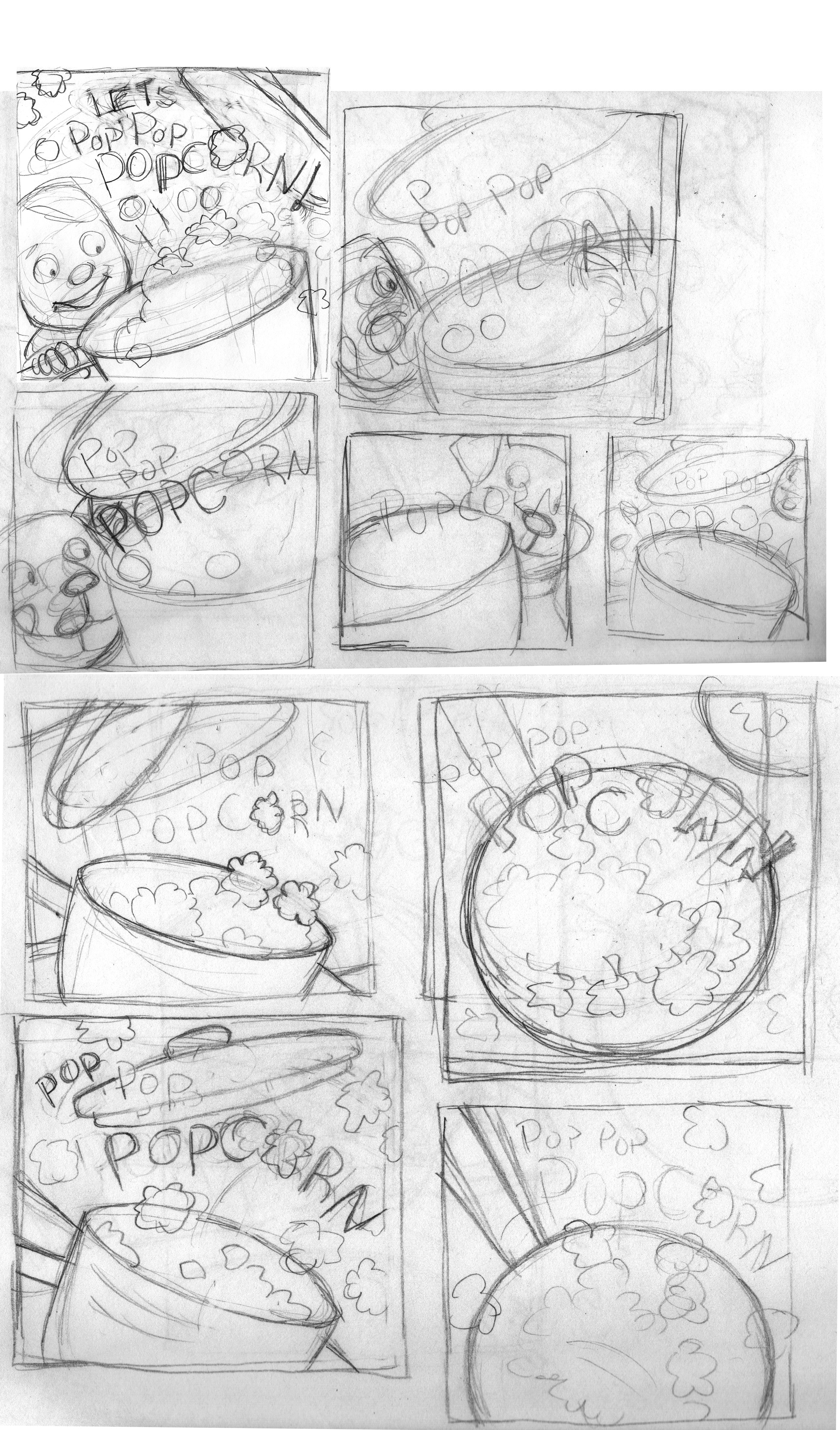
Thank you! I’m really happy with how it turned out. I knew I wanted the cover to have a lot of energy, with popcorn popping everywhere but how to get there? I went through several different thumbnails, some with characters on the cover, some with just popcorn.
celebrate-picture-books-picture-book-review-let's-pop-pop-popcorn-thumbnails-1

Image copyright Mary Uhles, 2021

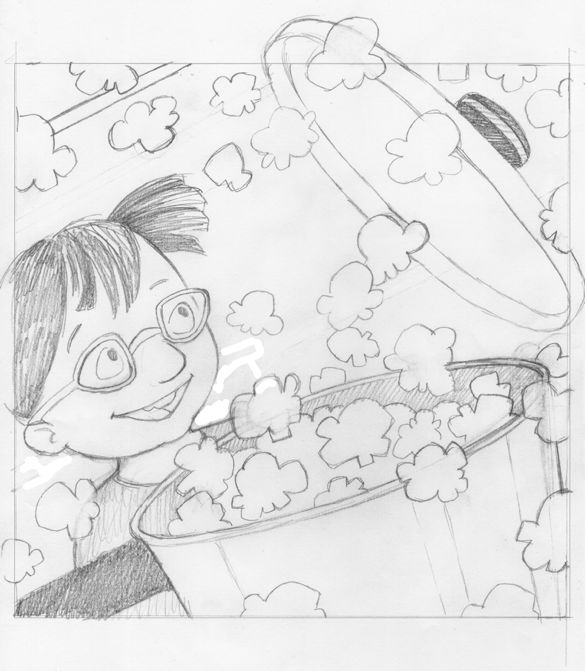
Finally I decided on having just one of the child characters. I picked the little girl with glasses because, well, I liked her glasses! Then it was a matter of getting her close to the pot but not so close it might feel a bit dangerous to have all that popcorn (and the lid) flying at her face.
celebrate-picture-books-picture-book-review-let's-pop-pop-popcorn-thumbnails-2

Image copyright Mary Uhles, 2021

I did popcorn kernels on lots of different Photoshop layers so that, in the final design, the art director could move them to work around the final type. Since there was a lot of action with the popcorn I wanted the background behind the character to be a fairly flat color. I liked the idea of using the blue from the kitchen juxtaposed with the copper pot.

celebrate-picture-books-picture-book-review-let's-pop-pop-popcorn-cover-image

Image copyright Mary Reaves Uhles, 2021, courtesy of Sleeping Bear Press.

Now, I’m sure readers would love a little sneak peek into the interior. I’ve been lucky enough to see that they can certainly look forward to lots of action and different perspectives! Can you talk a little about how you translated Cynthia’s story into such dynamic illustrations?

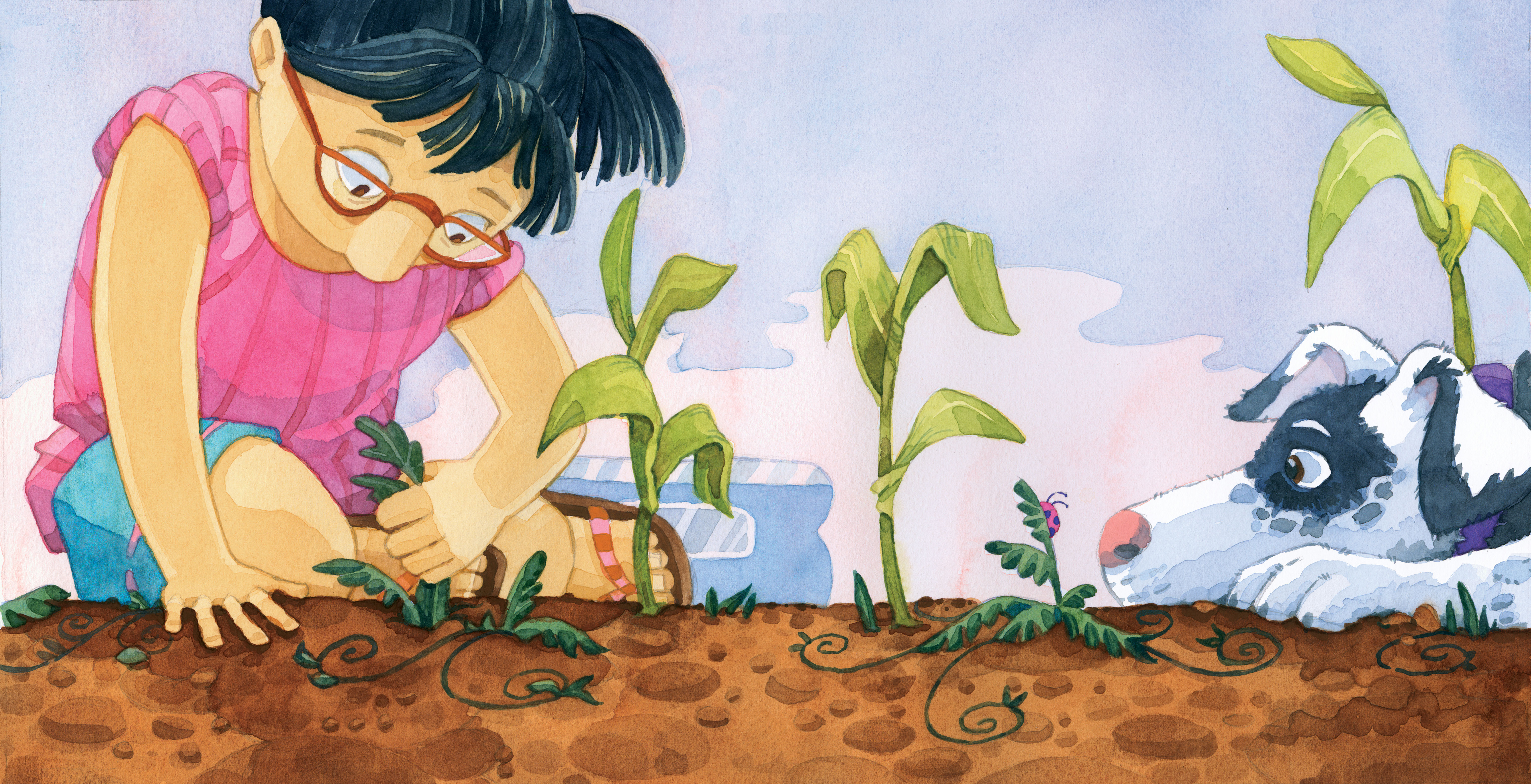
Well I used to be an animator so when I begin laying out a book I do it like a film storyboard, with each page turn being a new camera angle. I really think so much of our emotional journey in a book (or movie or TV show) happens with how the camera makes us feel in proximity to the subject. As the plants start to grow I wanted to bring readers close to the tiny stalks and then move them farther and farther back as the plants get bigger and bigger.
celebrate-picture-books-picture-book-review-let's-pop-pop-popcorn-weeds

Image copyright Mary Reaves Uhles, 2021, text copyright Cynthia Schumerth, 2021. Courtesy of Sleeping Bear Press.

 I did the same thing with the kernels in the pot.. I wanted to actually bring the camera down inside the pot so the readers were right next to the POP when it happened.

celebrate-picture-books-picture-book-review-let's-pop-pop-popcorn-kernels

Image copyright Mary Reaves Uhles, 2021, text copyright Cynthia Schumerth, 2021. Courtesy of Sleeping Bear Press.

In some of the illustrationslike the image of the kernels being pluckedI wanted the reader to feel like they were doing it… so the perspective is from over the bowl. Art director Felicia Macheske and I discussed having lots of different kids doing different tasks throughout the book but waiting until the very end to show all the kids together on a spread. I really liked that idea as it feels very celebratory but it was also a lot to keep track ofwhich kids were appearing on which pages so it stayed balanced. I actually had a visual spreadsheet at one point so I could keep track. I had to laugh that this is now my third book to have a big crowd at the end! In The Little Kids’ Table a huge family gathers around the table and in A Tuba Christmas we see the whole tuba orchestra.

Did you learn anything new about popcorn while working on this book?

Well I actually did not know there were only two kinds of popcorn! Also I looked at lots of different pictures of popcorn to get the details correct and I found it interesting how much smaller popcorn kernels are than ‘corn on the cob’ kernels. A friend of mine gave me a couple of popcorn cobs with the kernels still on when I started sketches and I kept them in my studio the whole time for reference.

In your dedication, I noticed that you give a shout out to Jackson (Team Popcorn) and Grace (Team Chex Mix). Is there a competition for favorite snack in your family?

Ha ha! I don’t know that there is a competition, but I knew from the beginning that this book’s dedication would have to say something about my son’s love of popcorn. Any time there’s family movie night he’s so excited because I’ll make popcorn. For the record I make it the stovetop way, just like in the book. But my daughter is not a fan of popcorn! So I always have to come up with alternate snacks. Her favorite is Chex Mix.

Now that we know Cynthia’s favorite popcorn, I know readers would love to hear what your type or flavor of popcorn is.

I do love just good, old-fashioned stovetop popcorn with a dash of butter and a few more dashes of salt. But I also love kettle corn! It’s my favorite ‘fair food’ as in, getting it at the state fair in giant greasy bags.

Thanks so much! You two have made me hungry! While readers check out where they can preorder Let’s Pop, Pop, Popcorn!, I’m going to go cook up some nice buttery, salty popcorn for myself! But first, I’d like to invite everyone to enter my giveaway of the book! You’ll find the details right here!

celebrate-picture-books-picture-book-review-let's-pop-pop-popcorn-cover

You can preorder Let’s Pop, Pop, Popcorn! at these booksellers

Amazon | Barnes & Noble | Books-a-Million

To support your local independent bookstore, order from

Bookshop | IndieBound

Picture Book Review

January 14 – World Logic Day

celebrate-picture-books-picture-book-review-lia-&-luís-who-has-more-cover

About the Holiday

World Logic Day, sponsored by UNESCO in association with the International Council for Philosophy and Human Sciences aims to raise awareness and appreciation of the intellectual history, significance, and practical uses of logic to the broad community of scientists as well as the public. Celebrations of the holiday center on promoting international cooperation, supporting the development and activities of logic within universities, research facilities, and schools, and enhancing the understanding of logic and its implications for science, technology, and innovation.

Lia & Luís: Who Has More? (Storytelling Math)

Written by Ana Crespo | Illustrated by Giovana Medeiros


When Luís and his sister Lia were playing together, Luís worked quickly and bragged about the rickety tower he’d built. Lia didn’t really mind because she liked to take her time. Lia’s tower may have been shorter, but it stayed up longer. After playing, they ran “downstairs to their family’s store [to] pick their favorite Brazilian snacks.” Luís told his father, “I want biscoito de polvilho, Papai!” while Lia said, “Coxinhas de galinha, please!”

celebrate-picture-books-picture-book-review-lia-&-luís-who-has-more-bragging

Image copyright Giovana Medeiros, 2020, text copyright Ana Crespo, 2020. Courtesy of Charlesbridge.

Papai handed Luís a bag of little nuggets and put two pear-shaped treats in a bag for Lia. Again, Luís began bragging, showing his sister that he had more than she did. This time Lia didn’t like it. But was Luís right? His bag was bigger than Lia’s. It was four blocks high and Lia’s bag was only two blocks high. Luís’s bag was also wider and deeper than Lia’s.

But Lia noticed something else. “Can’t you count?” she says then points out that she has two croquettes while her brother has only one bag. Could she be right about having more? Luís can’t leave this challenge unanswered, so he opens his bag and spills out the contents on the table. Lia looks at all of the tiny nuggets but is still unconvinced. She picks up a biscuit and a croquette. They are definitely different sizes and weights.

celebrate-picture-books-picture-book-review-lia-&-luís-who-has-more-biscuit-bag-taller

Image copyright Giovana Medeiros, 2020, text copyright Ana Crespo, 2020. Courtesy of Charlesbridge.

Luís begins to put a biscuit in his mouth, but Lia wants him to wait. “Para!” she tells him. Lia takes some time thinking about the problem. Finally, she has an idea. She gets the scale from the family store and puts her croquettes on one side and Luís’s biscuits on the other. The scale dips toward Lia; “she wins.” Lia doesn’t like seeing her brother so sad. She thinks again and has another idea. She breaks off a bit of a croquette and adds it to Luís’s biscuits. The scale balances! They eat up all their snacks. Will Papai give them mais?

Following the text readers will find a Glossary of Portuguese words used in the story and an Exploring the Math page, which describes the math concepts contained in the story as well as activities kids and adults can do to reinforce the math learning.

celebrate-picture-books-picture-book-review-lia-&-luís-who-has-more-one-hundred-biscuits

Image copyright Giovana Medeiros, 2020, text copyright Ana Crespo, 2020. Courtesy of Charlesbridge.

In her charming Storytelling Math book, Ana Crespo effectively uses siblings’ natural competitive spirit to explore concepts of comparing and measurement. These include size (and the comparatives taller, wider, deeper), quantity, and weight. As the story opens, Luís has built a taller tower than his sister, the image of which is later used to compare Lia’s snack to Luís’s. Crespo combines an engaged narrator plus dialogue sprinkled with Portuguese words that are organically defined to create a lesson in math that will keep readers turning the pages to see who actually does have more. As Lia and Luís try various methods to find an answer, kids can take time too to think about how they would solve the problem and discuss the idea of “more” and how they would define it. Lia and Luís may be competitive, but they’re also cooperative, making this a sweet sibling story as well.

Giovana Medeiros’s bright, crisp illustrations of these enthusiastic twins clearly depicts the math concepts discussed while also portraying the distinct personalities of Lia and Luís, inviting readers to root for one or the other or to just wait and see who wins. Medeiros includes lots of other opportunities to interact with math through counting the twins’ blocks, items on the shelves and in the display case of the family’s store, and the biscuits poured out on the table. Images of the balance scale allows kids to see how Lia’s croquettes weigh more and how adding a bit of one gives Luís the same amount by weight that Lia has. Speech bubbles and the characters’ actions help readers translate the Portuguese words themselves.

Sure to inspire kids to explore the cabinet, fridge, or classroom and engage with the math of comparing and measuring for themselves, Lia & Luís: Who Has More? would be a fun book to add to home, classroom, and public library collections to spark observations and experimentation that lead to deeper STEM learning.

Ages 3 – 6

Charlesbridge, 2020 | ISBN 978-1623541279 (Hardcover) | ISBN 978-1623541859 (Paperback)

Discover more about Ana Crespo and her books on her website.

To learn more about Giovana Medeiros, her books, and her art, visit her website.

World Logic Day Activity

Screen Shot 2021-01-13 at 4.21.02 PMcelebrate-picture-books-picture-book-review-lia-&-luís-who-has-more-activity-guide

Lia & Luís: Who Has More? Activity Kit


You can have fun experimenting with math using your toys, snacks, and other household items with the downloadable Activity Kit available on the Charlesbridge website!

celebrate-picture-books-picture-book-review-lia-&-luís-who-has-more-cover

You can find Lia & Luís: Who Has More? at these booksellers

Amazon | Barnes & Noble | Books-a-Million

To support your local independent bookseller, order from

Bookshop | IndieBound

Picture Book Review

December 29 – National Tick Tock Day

celebrate-picture-books-picture-book-review-ticktock-banneker's-clock-cover

About the Holiday

As the year winds down Tick Tock Day reminds us of the passage of time and encourages us to examine our life and find opportunities to accomplish the things we really want to. While a day only has 24 hours, a little creative scheduling, letting go of those tasks that aren’t so important, and even saying “no,” can help us achieve the things that matter.

Ticktock Banneker’s Clock

Written by Shana Keller | Illustrated by David C. Gardner


With winter approaching Benjamin Banneker has finished up his autumn chores and is looking forward to time to indulge his creative dreams. He finds his favorite spot under the chestnut tree—the place where during the summer he plays his violin and flute, “blending his soft music with the bird’s songs”—and pulls out a pocket watch he has borrowed from a gentleman. Benjamin is fascinated by the ticking and the movement of the small hands. He carefully opens the back of the watch and discovers “a world of wonderful whirls. There were gears of all shapes and sizes. Such a tiny maze!”

celebrate-picture-books-picture-book-review-ticktock-banneker's-clock-studying-pocket-watch

Image copyright David C. Gardner, courtesy of flyingdogstudio.com

The miniature timepiece is mesmerizing, but Benjamin’s mind holds a challenge—a big challenge. He envisions a large clock, one that chimes to tell the time. Remembering his math skills, Benjamin mulls over the scale needed to turn “something small into something big.” As the snow falls, Benjamin goes to work. First, he dismantles the pocket watch and draws careful diagrams of the gears and workings. Then he begins transposing these into larger drawings.

celebrate-picture-books-picture-book-review-ticktock-banneker's-clock-flute

Image copyright David C. Gardner, courtesy of flyingdogstudio.com

With the coming of spring and his drawings finished, Benjamin plans how he will build his clock. While the little pocket watch is made of metal, that material is much too expensive for a large version. As he ponders the problem under his favorite tree, Benjamin looks around him. Suddenly he knows! The answer is “right in front of him, even in his hands! The very instrument he played was made of wood!” There is a forest of trees on his farm, and this material is free.

During the summer between farm chores, Benjamin uses “every spare moment he had to find the perfect pieces of wood.” Once he has enough he begins to convert his drawings into carvings, whittling the gears and other pieces he will need. Soon, however, he becomes discouraged. The wood begins to split and come apart. Benjamin thinks about how his family cures tobacco leaves—drying them out until all the moisture evaporates. Perhaps, he thinks, he can do the same with wood to make it stronger. The process would take months, but Benjamin is patient.

celebrate-picture-books-picture-book-review-ticktock-banneker's-clock-carving

Image copyright David C. Gardner, courtesy of flyingdogstudio.com

Winter has come around again, and the wood is finally ready. In his warm house Benjamin sets about carving again. During the day he carves near the sunny window, and at night he works by candlelight. At last he has all the parts he needs to build his clock. Gears, wheels, tiny pins, and the boards that will become the case are scattered across Benjamin’s work table. There is only one piece missing. A piece that cannot be made of wood—the bell!

Benjamin buys a bell from a metalsmith, and back home begins to build his clock. With his drawings to guide him, he fits the gears together and then sets the hands to “match up perfectly with the second, minute, and hour of each day. It took more than one try, but Benjamin had learned to be patient.” Using the sun to determine the correct time, Benjamin positions the hands and steps back. His clock works! “The little iron bell chimed every hour, on the dot, for the next forty years.” Benjamin becomes famous, and neighbors from near and far come “to see his amazing invention.”  

An Author’s Note expanding on Benjamin Banneker’s life and work follows the text.

celebrate-picture-books-picture-book-review-ticktock-banneker's-clock-winter

Image copyright David C. Gardner, courtesy of flyingdogstudio.com

With lyrical language that glides as smoothly as a well-oiled timepiece, Shana Keller reveals the remarkable story of Benjamin Banneker, born free during the time of slavery, who possessed exceptional math and scientific skills and used them to help his friends and neighbors and to make real his vision of a striking clock. Keller’s detailed and descriptive storytelling animates this life story, allowing readers to take the journey with Banneker as he experiences excitement, setbacks, and ultimately success. Banneker, embodying determination, persistence, and creativity, is an excellent role model for kids with big dreams of their own.

celebrate-picture-books-picture-book-review-ticktock-banneker's-clock-studying-fall-chores

Image copyright David C. Gardner, courtesy of flyingdogstudio.com

David C. Gardner’s lovely full-page and two-page-spread illustrations gloriously portray Benjamin Banneker’s farm and home as well as his dedicated commitment to building a striking clock despite—or perhaps spurred on by—the challenges he faced. Gardner’s detailed images set the biography firmly in its time period, letting children experience farm and home life in the 1750s. Banneker carries wooden buckets to feed the animals, tobacco leaves hang in a dry shed, a fire blazes in a large, open fireplace, and a candle flickers as Banneker whittles wheels and gears with his pocket knife. The realistic paintings that depict Banneker’s emotions as he imagines creating a large clock, overcomes obstacles, and studiously works on his drawings and carvings will inspire readers to attempt their own inventions—whatever they may be.

For any would-be inventors, history lovers, tinkerers, and science buffs, Ticktock Banneker’s Clock is a stirring biography that would make an inspirational addition to home, school and public libraries.

Ages 6 – 10

Sleeping Bear Press, 2016 | ISBN 978-1585369560

Learn more about Shana Keller and her work on her website!

Discover a portfolio of picture book art, fine art, animation, and videos by David C. Gardner on his website!

Tick Tock Day Activity

celebrate-picture-books-picture-book-review-cuckoo-clock-coloring-page

Cuckoo Clock Coloring Page


The chirp of a cuckoo clock keeps you on time—or at least aware of the passing of time! If you like coloring, you’ll enjoy spending time with this printable Cuckoo Clock Coloring Page!

celebrate-picture-books-picture-book-review-ticktock-banneker's-clock-cover

You can find Ticktock Banneker’s Clock at these booksellers

Amazon | Barnes & Noble | Books-a-Million

To support your local independent bookstore, order from

Bookshop | IndieBound

Picture Book Review