October 21 – My Name Is Not Ed Tug Book Tour Stop

celebrate-picture-books-picture-book-review-my-name-is-not-ed-tug-cover

I’d like to thank The Children’s Book Review and Amy Nielander for sharing a digital copy of My Name Is Not Ed Tug with me. 

My Name Is Not Ed Tug

By Amy Nielander


Edimorwhitimormiligimmus Tug knew where he came from and just where he fit into his family. After all, “he was named after his Grandpa Edimor,” who helped him learn how to spell his name with a tall tower of blocks; “his Great Uncle Whitimor,” who taught him how to play the accordion; his Aunt Mili,” who ran a butterfly farm; “and his Granny Gimmus,” who filled his tummy with warm, homemade soup.” Anyone hearing his name might think it was gibberish, but Edimorwhitimormiligimmus thought “it was perfect.”

celebrate-picture-books-picture-book-review-my-name-is-not-ed-tug-edimor

Copyright Amy Nielander, 2022, courtesy of West Margin Press.

School, of course, was a challenge since the other kids had a hard time spelling or even remembering his name. And his teacher, Ms. Mell, found that her mouth grew “quite tired” just trying to pronounce it. But one Monday, Ms. Mell announced that a new student, Ty, would be joining their class. Mrs. Mell had made name tags for each student to make it easier for Ty to remember their names, and she slapped one on Edimorwhitimormiligimmus’s shirt. When he looked, Edimorwhitimormiligimmus saw that the tag simply read “Ed.” He gazed at the tag with sadness. “Edimorwhitimormiligimmus Tug was shocked. He was perplexed. He felt like his heart had been stung by a giant bee. Twice.”

celebrate-picture-books-picture-book-review-my-name-is-not-ed-tug-Granny-Gimmas

Copyright Amy Nielander, 2022, courtesy of West Margin Press.

After school, Edimorwhitimormiligimmus went straight to his room and stayed there, thinking. When he emerged, he had a plan (and a very perfectly sized name tag taped to his sweater). The next day, he approached Ty, who was playing with puzzle blocks. He stood proudly, displaying his sweater, and introduced himself—his whole self. He slowly said each part of his name and, miraculously, Ty repeated it. Edimorwhitimormiligimmus “was so happy his curls bounced.” Then as he and Ty constructed a tall bridge with the blocks, he explained how he and his Grandpa Edimor “love to build things together”—and had even invented those blocks.

celebrate-picture-books-picture-book-review-my-name-is-not-ed-ty

Copyright Amy Nielander, 2022, courtesy of West Margin Press.

At lunch he did the same thing with the kids at his table, and they also repeated his name. To explain how important his Uncle Whitimor was to him, Edimorwhitimormiligimmus, he played his uncle’s favorite song on the accordion. When the class went out for recess, he told more kids about his Aunt Mili and pointed out, and they too learned his name.

On Tuesday, Mrs. Mell was out sick, and Edimorwhitimormiligimmus saw an opportunity to be kind and explain about his name. He and Ty delivered a steaming pot of Granny Gimmus’s soup to her doorstep and told her all about cooking with his granny. “The delicious soup warmed her heart.” Edimorwhitimormiligimmus’s plan worked. Now everyone, including Ms. Mell, knew—and used—Edimorwhitimormiligimmus’s full name.

celebrate-picture-books-picture-book-review-my-name-is-not-ed-soup-for-ms-mell

Copyright Amy Nielander, 2022, courtesy of West Margin Press.

The experience prompted Edimorwhitimormiligimmus to come up with a new plan, a project to ensure all of his friends knew their names were just as perfect for them as Edimorwhitimormiligimmus was for him. And he and his classmates got started with the gift they made for Tyvantennyson to give him at his birthday party.
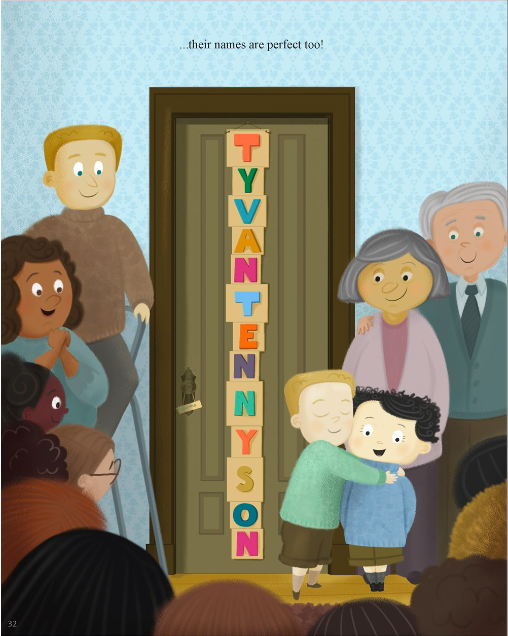
celebrate-picture-books-picture-book-review-my-name-is-not-ed-tyvantennyson-sign

Copyright Amy Nielander, 2022, courtesy of West Margin Press.

Amy Nielander’s heartwarming and affirming story will captivate kids from the first recitation of “Edimorwhitimormiligimmus Tug”—a name that initially elicits giggles but soon rolls smoothly off the tongue. As they learn how each piece of Edimorwhitimormiligimmus’s name reflects not only the family member he’s named for but also the special things they do together, readers will empathize with the pride he feels in his name and his disappointment when they can’t get it right.

While Nielander’s clever story revolves around one child’s name, there are many other important lessons for both kids and adults woven throughout. Children will understand that their names, personalities, heritage, talents, and dreams are perfect for them just the way they are. For adults, Ms. Mell’s dismissive mangling and shortening of Edimorwhitimormiligimmus’s name to “make it easier for all of us” reminds us that every child deserves to be really seen and accepted for who and everything they are.

Nielander’s illustrations are full of warmth and love, charm and humor as she introduces the unique talents of each member of Edimorwhitimormiligimmus’s inclusive and close-knit family. As Edimorwhitimormiligimmus puts his plan to teach each classmate and Ms. Mell his name into action, the children’s sweet faces and palpable excitement are infectious and will draw readers into this universal hug of a story. The surprise reveal of Ty’s full name and the collective gift the class makes him—with the promise of the same for each child—will delight readers and is sure to spur them to create name signs for themselves.

An engaging, multi-layered story about acceptance, self-esteem, family, and friendship, My Name is Not Ed Tug is a story kids will want to hear again and again. The book is highly recommended for home bookshelves and is a must for classroom, school, and public libraries.

Ages 4 – 8

West Margin Press, 2022 | ISBN 978-1513134871

Discover more about Amy Nielander, her books, and her art on her website.

Take a peek at the book trailer for My Name Is Not Ed Tug!


celebrate-picture-books-picture-book-review-my-name-is-not-ed-tug-cover

You can purchase My Name Is Not Ed Tug at these booksellers

Amazon | Barnes & NobleBookshop 

Picture Book Review
 

May 3 – Celebrating National Lumpy Rug Day with Author Sophia Gholz

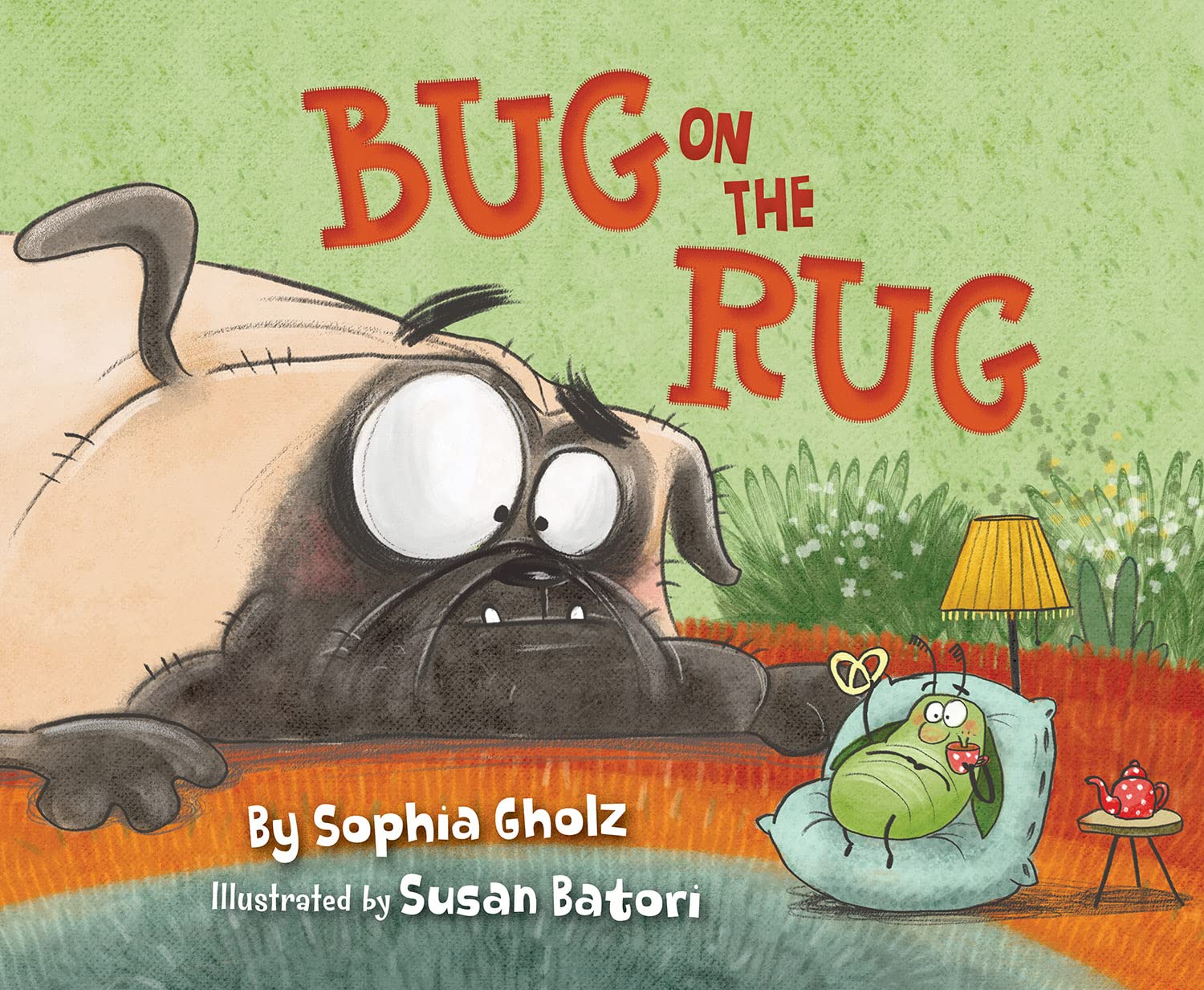
celebrate-picture-books-picture-book-review-bug-on-the-rug-coverAbout the Holiday

Today’s holiday, in addition to having a humorous and whimsical bent to it, promotes some thoughtful consideration of two rug-related ideas. The onset of spring often inspires people to do some deep cleaning around the house, and that, according to the holiday, should include rugs – that cushy decor that can define a room or provide an impromptu place for pets to nap. As they age, though, rugs and carpets can develop lumps and bulges that compromise the safety and appearance of your home or office. If that’s the case at your house, a steam clean, day in the sun, or re-rolling may restore your rug to its original beauty. But National Lumpy Rug day isn’t all about outward appearance. The holiday also touches on that common practice of “brushing things under the rug” and encourages people to air any complaints, feelings, or topics that they have been avoiding. Making a full sweep of any problems underfoot is a great way to start the spring season, and sharing today’s book with your kids is a hilarious way to celebrate.

Hi Sophia! I’m thrilled to have you visit to talk about your latest book, Bug on the Rug, its endearing characters, inspirational message, and how the story changed from its initial idea. I also love your tips on how adults can use your book to foster discussion and awareness of those misunderstandings that can adversely affect friendships.

Sophia Gholz - headshot

Sophia Gholz is an award-winning children’s book author, magic seeker and avid reader. Sophia enjoys writing fiction with humor and heart. When writing nonfiction, she pulls on her love of science and her strong family background in ecology. When she’s not writing, you can find Sophia reading a book, visiting schools or exploring the great outdoors with her family.

Sophia’s debut book, The Boy Who Grew a Forest: The True Story of Jadav Payeng, was a NCSS Notable Social Studies Trade Book, a Florida State Book Award Gold Medalist, Eureka! Nonfiction Honor Book and a 2020 Green Earth Honor Book. She is also the author of Jack Horner, Dinosaur Hunter! You can connect with Sophia on her Website | Facebook | Instagram | Twitter | YouTube

Bug on the Rug

Written by Sophia Gholz | Illustrated by Susan Batori


Picture books are entire worlds and stories wrapped in a few hundred words. They share a mood, a lesson, a hug, a friend, a culture, an adventure. I’ve said it before, and I’ll say it again now: picture books are magic. That is why I am so excited to be here at one of my favorite blogs, Celebrate Picture Books, to share my newest book, Bug on the Rug. And today is the perfect day because it also happens to be National Lumpy Rug Day! Hooray! Did I mention that Bug on the Rug features a verrrry cozy rug? So cozy, in fact, it causes quite a stir.

celebrate-picture-books-picture-book-review-bug-on-the-rug-pug

Image copyright Susan Batori, 2022, text copyright Sophia Gholz, 2022. Courtesy of Sleeping Bear Press.

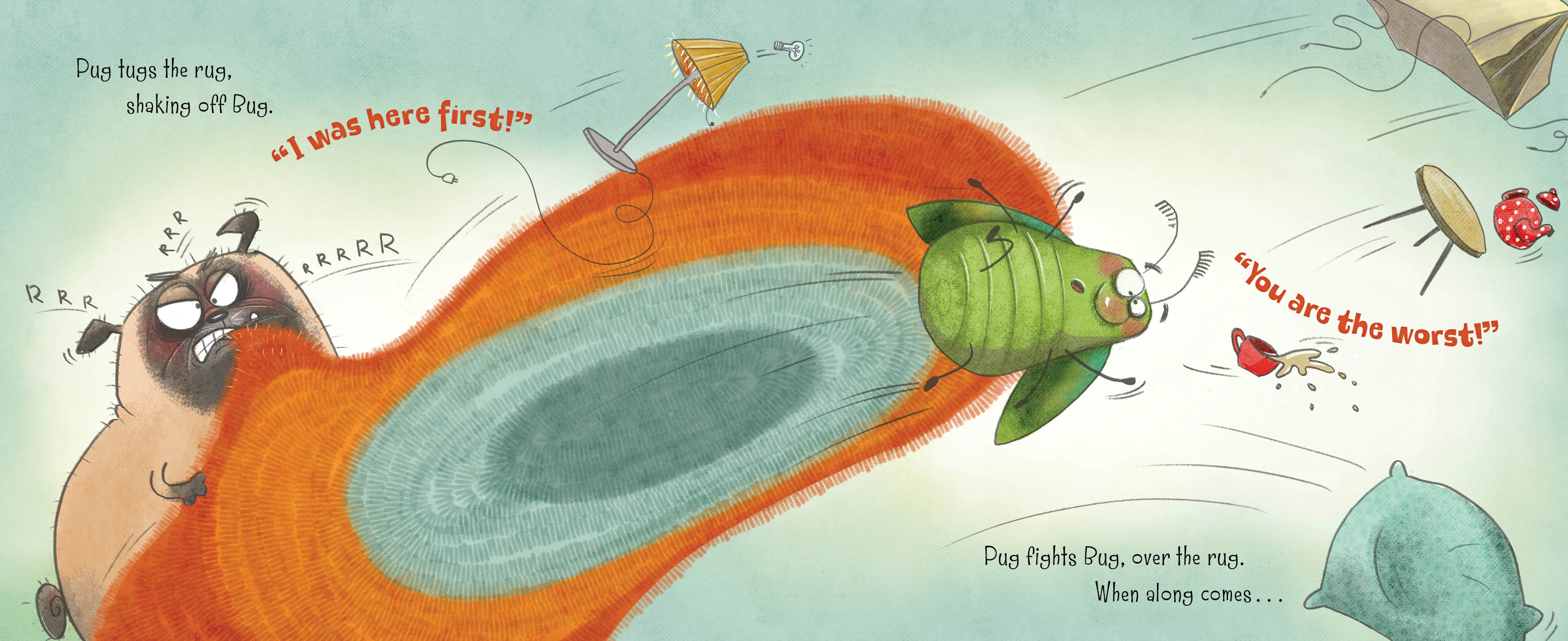
In Bug on the Rug a rug-loving Pug and a rug-stealing Bug battle over a lone rug. These two over-the-top characters both believe they’re right and their claim to the rug takes priority. That is, until Slug comes along and helps open their eyes to the truth of each of their actions. Through empathy, both Pug and Bug learn to take ownership of their mistakes and discover that, in this case, forgiveness and friendship go hand-in-hand.

celebrate-picture-books-picture-book-review-bug-on-the-rug-shaking

Image copyright Susan Batori, 2022, text copyright Sophia Gholz, 2022. Courtesy of Sleeping Bear Press.

I began writing this book with the idea of creating a light story that everyone can have fun with. But as I wrote and these characters took on a life of their own, the story grew. At first glance, Bug on the Rug is silly and filled with word play. But truthfully, this is a friendship book that we can all relate to. Sharing is hard. Making new friends is harder. And admitting to our mistakes? Oof. That is the hardest. But we all make mistakes. It’s natural and if we allow it, we can grow from those mistakes. So, with that in mind and remembering it’s National Lumpy Rug Day, let’s take a moment today to pull out what we may have swept under the rug. Let it go. Shake it out. Smooth out those lumps and enjoy a fresh start!

celebrate-picture-books-picture-book-review-bug-on-the-rug-tears

Image copyright Susan Batori, 2022, text copyright Sophia Gholz, 2022. Courtesy of Sleeping Bear Press.

Thanks, Sophia! I really laughed my way through Bug on the Rug and cheered at the end for these three new friends. I love your rollicking storytelling and know kids and adults will too!

For all you readers out there, Bug on the Rug is a hilarious rhyming romp with a rhythm made for dramatic readings that kids will want to hear again and again. The book will make a favorite addition to home, school, and public libraries for lively and meaningful story times. 

Ages 4 – 7

Sleeping Bear Press, 2022 | ISBN 978-1534111479

Susan Batori - Headshot

Susan Batori’s books include Don’t Call Me Fuzzybutt and
Letters from Space. She worked in advertising before switching to
children’s book illustration. Susan lives in Budapest, Hungary. To learn more about Susan Batori, her books, and her art, you can view a portfolio of her work here and connect with her on Bēhance | Instagram | Twitter

National Lumpy Rug Day Activity

celebrate-picture-books-picture-book-review-kids-on-rug-clip-art

Bug on the Rug-themed Social Emotional Learning (SEL) Activities 


  1. Use Bug on the Rug to start discussions on empathy and growth. Pull up a rug and ask readers to recall instances in their life when they have made a mistake or when they thought they were right when they were wrong. You can ask questions like: How did that moment make you feel? and How did you change in that instance? Readers can also discuss different instances when putting themselves in the shoes of others – empathizing with others – helped them change their point of view in some way.
  2. Ask readers to take a look at Bug and Pug and list how the characters changed from the start of the book to the end. This can be used to start a discussion about how we grow and develop emotionally through challenging experiences.

celebrate-picture-books-picture-book-review-bug-on-the-rug-cover

You can find Bug on the Rug at these booksellers

Amazon | Barnes & Noble | Books-a-Million

To support your local independent bookstore, order from

Bookshop | IndieBound

January 18 – World Day of the Snowman

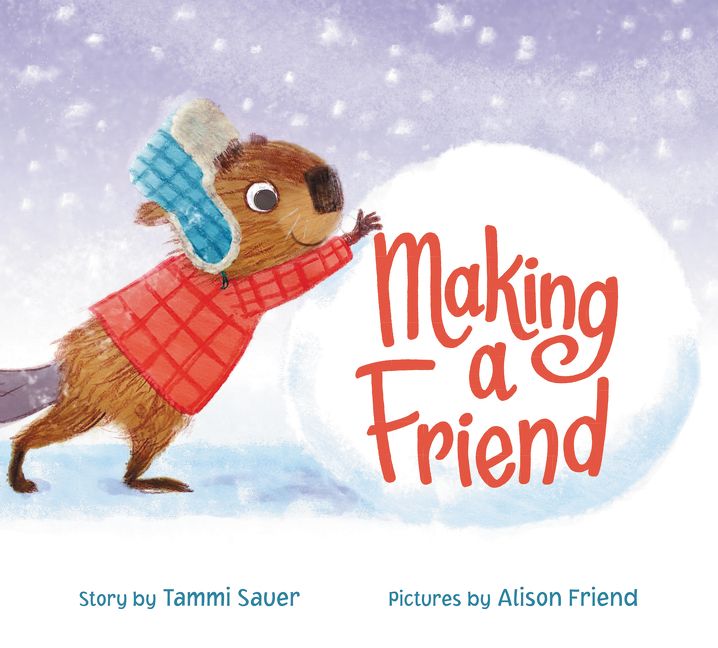
celebrate-picture-books-picture-book-review-making-a-friend-cover

About the Holiday

Today we celebrate snowmen, those winter sculptures that roll to a stop on front lawns, welcome customers to friendly business, and enjoy a day or two (or more if the weather cooperates) in parks and town greens wherever snow falls. Why today? Because the clever founder of the holiday looked at the 18 and decided it looked enough like the rounded body of a snowman and requisite handle of a broomstick to honor our winter friends. Speaking of friends, did you know that tomorrow is one of the three times during the year that we celebrate New Friends Day? The other two dates are October 19 and July 19! If you’re looking for a story to share for both World Day of the Snowman and New Friends Day, you’ll want to pick up today’s book!

Making a Friend

Written by Tammi Sauer | Illustrated by Alison Friend


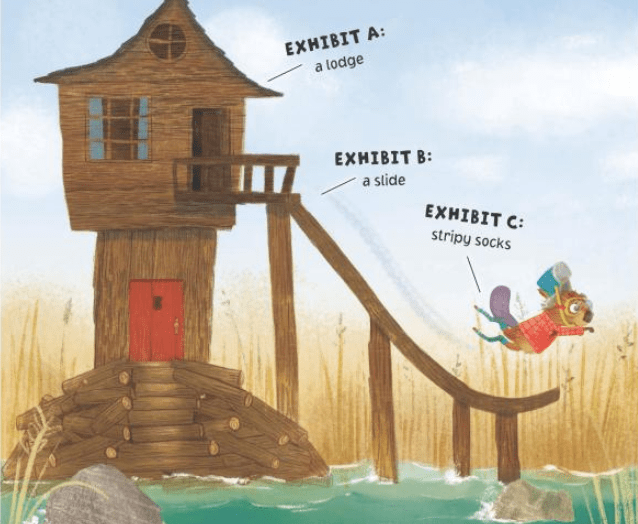
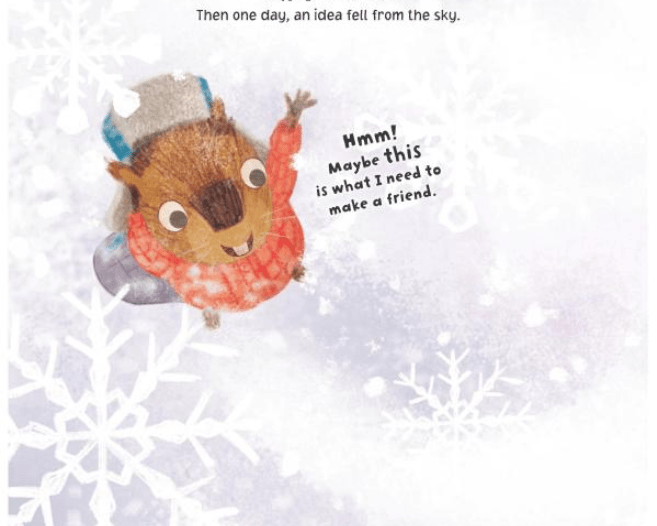
“Beaver was good at making lots of things.” He could build, he could knit, and he knew a bit about engineering. But he was not so good at making friends. He tried hard to do nice things, but something always seemed to go wrong. Then, one day, the snowflakes falling from the sky gave Beaver an idea. “Hmm! Maybe this is what I need to make a friend,” he thought.

celebrate-picture-books-picture-book-review-making-a-friend-water-slide

Image copyright Alison Friend, 2018, text copyright Tammi Sauer, 2018. Courtesy of HarperCollins.

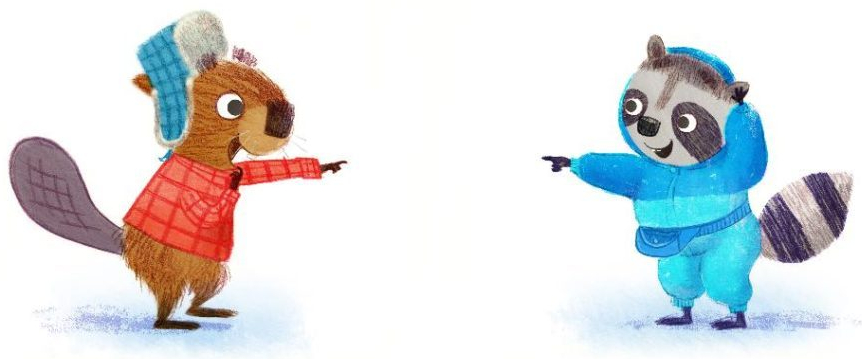
He began rolling a huge snowball. While he was working, Raccoon came by to watch. When Beaver told him that he was making a friend, Raccoon said that it “takes two to make a friend.” Beaver was a bit disappointed until Raccoon did some math and showed him that Raccoon plus Beaver made two.

Working together Beaver and Raccoon made a cute snow friend. They added eyes, a nose, a smile, and two stick arms. But something was still missing. Raccoon said that thing was “pizzazz.” So they added a hat, a boa, some socks, and even a swim mask until their friend looked just right. But their friend just stared back at them. “This friend was not much of a friend at all. In fact, he seemed rather cold.”

celebrate-picture-books-picture-book-review-making-a-friend-water-snow

Image copyright Alison Friend, 2018, text copyright Tammi Sauer, 2018. Courtesy of HarperCollins.

Then Beaver and Raccoon looked at each other. They talked about what fun they’d had building the snow friend together. And they realized that they had become friends. Now they make lots of things to share, but they agree—“the best thing they made was a friend.”

celebrate-picture-books-picture-book-review-making-a-friend-friends

Image copyright Alison Friend, 2018, courtesy of HarperCollins

Tammi Sauer unlocks the secret to friendship in her clever story in which making a friend leads to making a true friend. While Beaver tries to extend the hand of friendship and do nice things for others in the forest, his efforts miss the mark. But when he meets Raccoon, their personalities, talents, and ideas of fun click and they build a real friendship. Young readers will understand Beaver’s feelings of disappointment and confusion when his overtures of friendship are not reciprocated and see that collaborating with someone—either in play or toward a common goal—often brings friends together naturally.

celebrate-picture-books-picture-book-review-making-a-friend-pointing

Image copyright Alison Friend, 2018, courtesy of HarperCollins.

Little readers will fall in love with Alison Friend’s adorable Beaver who’s so good at creating a playhouse complete with water slide but has trouble making friends. Cheerful and enthusiastic, Beaver is a sweetheart as he begins rolling the snow into a ball. When Raccoon comes by, Beaver quickly shares the fun. Kids will enjoy seeing and learn from the images of companionship and give-and-take as Beaver learns a little math and a new word from Raccoon and Raccoon discovers that he likes the raisons Beaver offers him on their way to creating their snowman.  Full of color, smiles, and endearing moments, Friend’s pages are sure to delight kids.

Making a Friend is a charming read aloud, a celebration of creativity, and a gentle lesson on friendship all rolled into one. To share with children learning to navigate new friendships and those who love doing everything with their best buddy, the book makes a sweet addition to home, classroom, and public library bookshelves.

Ages 4 – 8

HarperCollins, 2018 | ISBN 978-0062278937

Discover more about Tammi Sauer and her books on her website.

You can connect with Alison Friend on Instagram.

World Day of the Snowman Activity

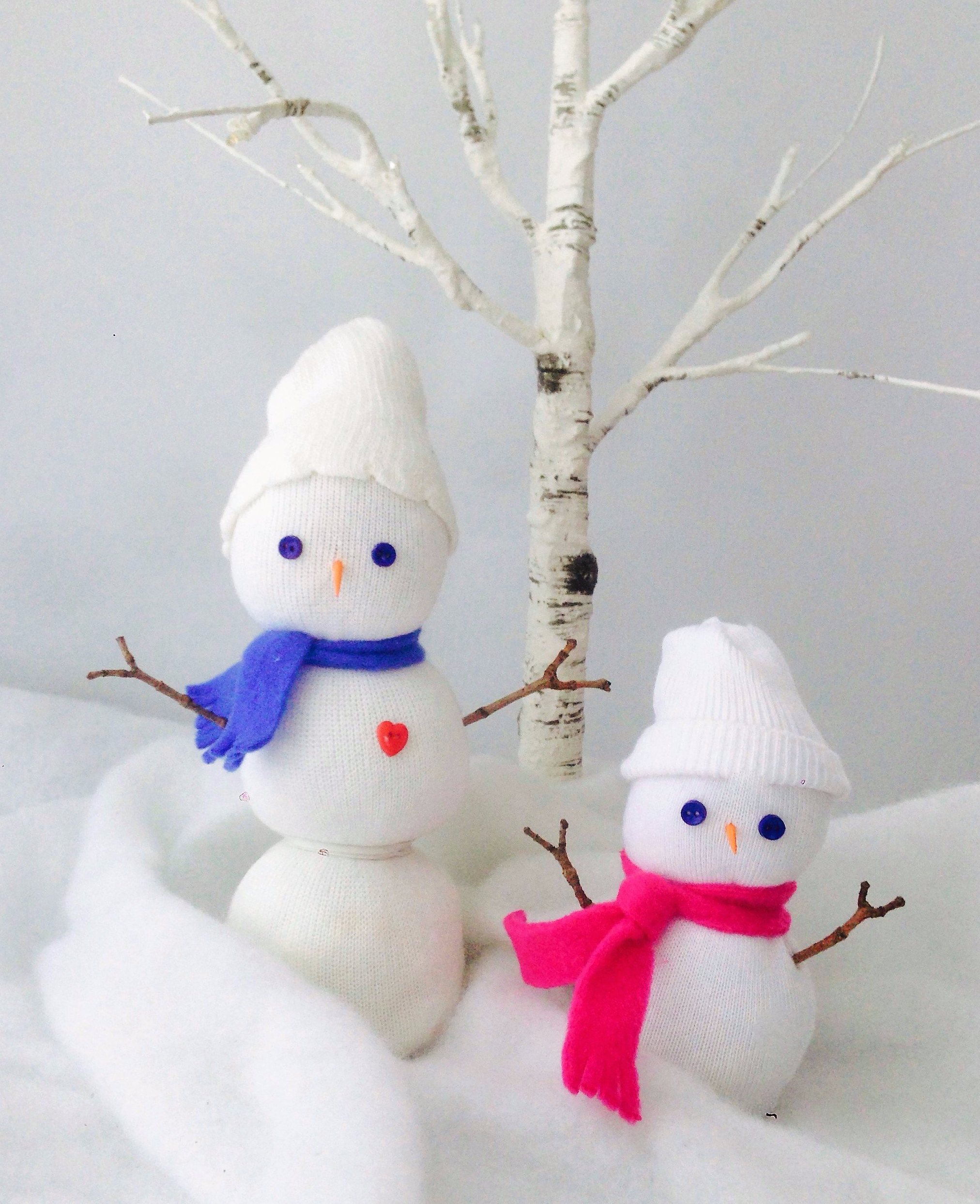
celebrate-picture-books-picture-book-review-sock-snowman-craft

Snow Buddies


This is a great craft for kids to share with a friend. Grab a pair of socks and have fun making these snow buddies! 

Supplies

  • White dress ankle socks
  • Polyester Fiber Fill
  • Tiny buttons
  • Fleece or ribbon, enough for a little scarf
  • Toothpicks
  • Twigs
  • Orange craft paint
  • Cardboard
  • White rubber bands, one or two depending on the size of the snowman
  • Fabric or craft glue
  • Small hair band (optional)

Directions

To Make the Snowman

  1. Cut a circle from the cardboard about 2 inches in diameter for the base
  2. Place the cardboard circle in the bottom of the sock
  3. Fill the sock with fiber fill about ¾ full or to where the ribbed ankle cuff begins. Pack tightly while making a sausage shape. You can make your snowman different shapes with the amount of fill you use.
  4. Stretch out the cuff of the sock and tie it off near the top of the fill either with a loop knot or with the hairband.
  5. Fold the cuff down around the top of the filled sock to make the hat.
  6. Wrap a rubber band around the middle of the sock to make a two-snowball snowman. For a three-snowball snowman, use two rubber bands. Adjust the rubber bands to make the “snowballs” different sizes.

To Make the Scarf

  1. Cut a strip of fleece or ribbon 8 to 10 inches long by ½ inch wide
  2. Tie the fleece or ribbon around the neck of the snowman
  3. To Make the Nose
  4. Dip one end of the toothpick into orange paint, let dry
  5. Cut the toothpick in half
  6. Stick the toothpick into the head or top portion of the snowman

To Make the Arms

  1. Insert small twigs into each side of the body of the snowman
  2. You can also use wire or cardboard to make the arms
  3. Attach two mini-buttons to the face for eyes with the fabric or craft glue
  4. Display your Snow Buddy

celebrate-picture-books-picture-book-review-making-a-friend-cover

You can find Making a Friend at these booksellers

Amazon | Barnes & Noble | Books-a-Million

To support your local independent bookstore, order from

Bookshop | IndieBound

Picture Book Review
October 5 – National Do Something Nice Day

celebrate-picture-books-picture-book-review-it's-hard-to-be-nice-cover

About the Holiday

Similar to Random Acts of Kindness Day, National Do Something Nice Day encourages people to think of others and do nice things for them. These don’t have to be big or expensive; in fact, small gestures or thoughtful actions can make all the difference in the way a friend, family member, or stranger feels. These acts of kindness will make you feel good too! To celebrate today, keep an eye out for ways you can lend a hand, times you can share a smile or a conversation, or ways you can make a new friend. Kids may enjoy sharing the encouraging cards found below with friends, siblings, and teachers or by leaving them at school, the library, shops or anywhere that someone may find them.

Sometimes It’s Hard to Be Nice

Written by Maggie C. Rudd | Illustrated by Kelly O’Neill


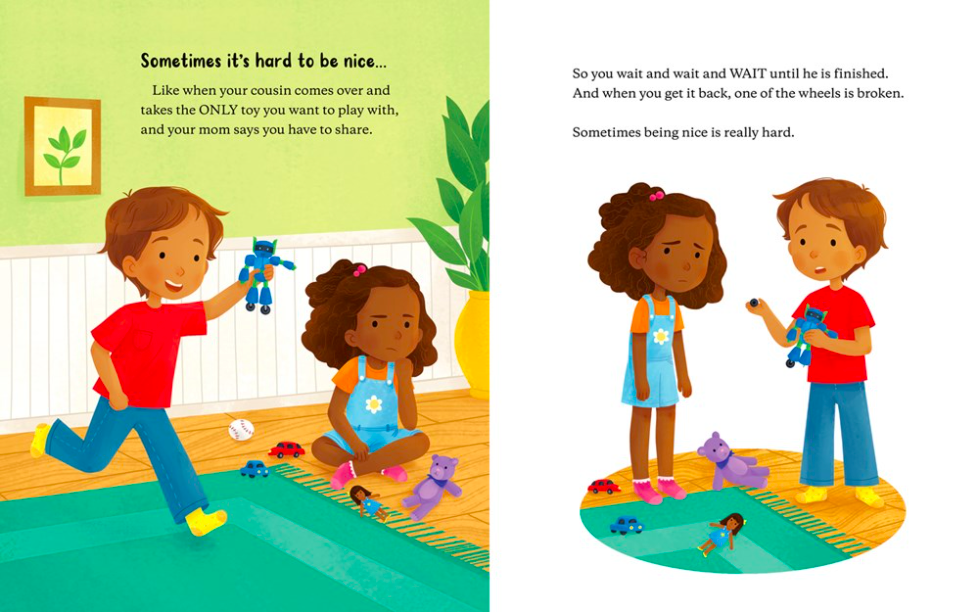
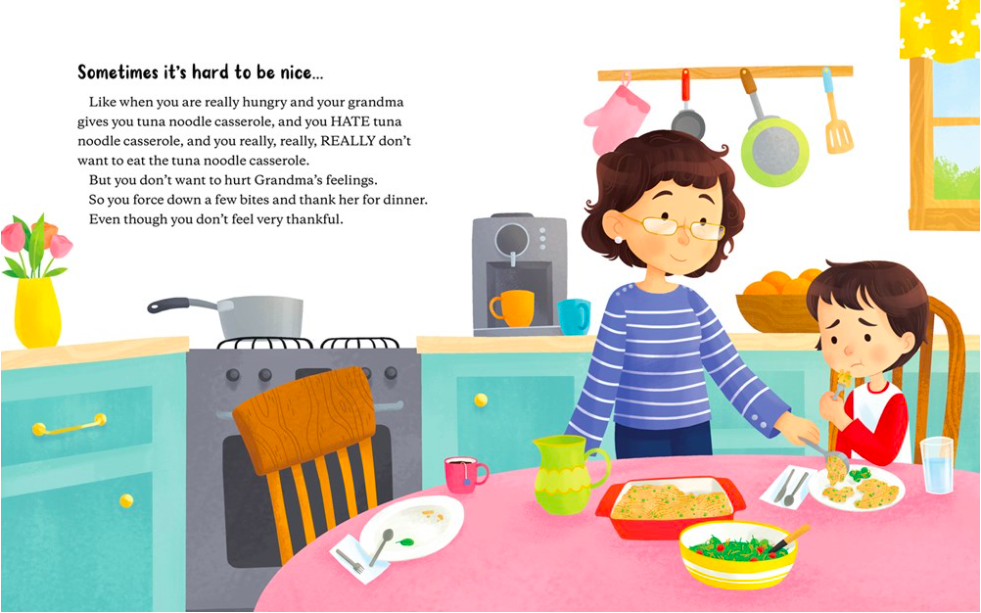
It seems like being nice should be easy, but there are so many emotions that often surround that one little word that sometimes doing the considerate thing is really hard. How hard? Like smiling and saying “that’s okay” when “your mom says you have to share” your favorite toy with a friend, sibling, or cousin and they break it. Like sitting through your brother or sister’s boring performance, game, or recital when you’d rather be somewhere else—anywhere else. Or like eating your least favorite food and thanking the cook for the meal because you don’t want to hurt their feelings.

celebrate-picture-books-picture-book-review-it's-hard-to-be-nice-cousin

Image copyright Kelly O’Neill, 2021, text copyright Maggie C. Rudd, 2021. Courtesy of Albert Whitman & Company.

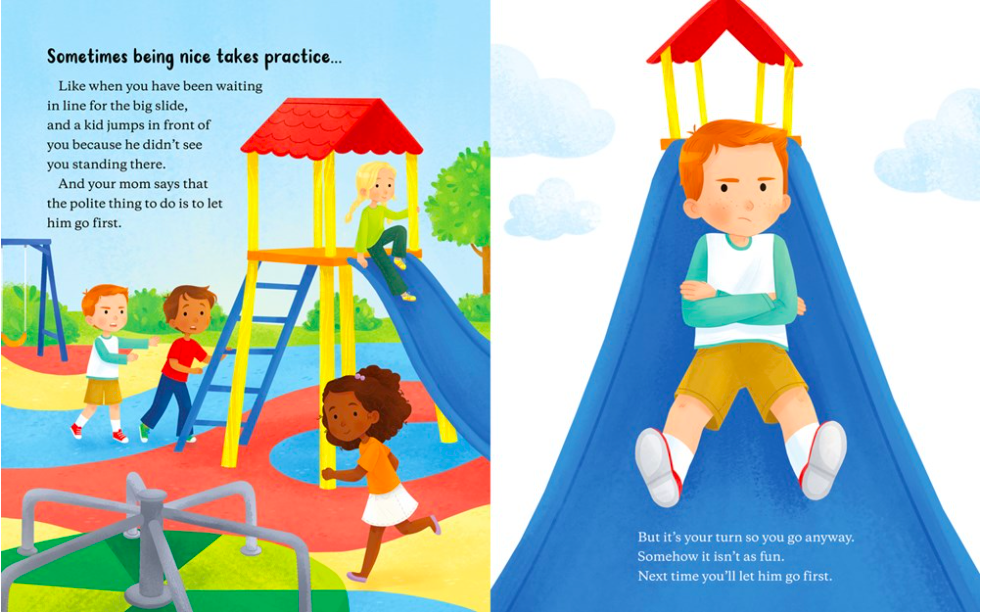
In fact, “sometimes being nice takes practice” like when a little brother or sister destroys your stuff and you yell at them, but then later you realize they didn’t really understand what they were doing. Or like when visiting someone you love in a nursing home or new place is scary and you hang back, not wanting to see them but then decide you won’t be scared next time you visit. And then there are times like these on the playground “when you have been waiting in line for the big slide, and a kid jumps in front of you because he didn’t see you standing there. And your mom says that the polite thing to do is to let him go first. But it’s your turn so you go anyway. Somehow it isn’t as fun. Next time you’ll let him go first.”

celebrate-picture-books-picture-book-review-it's-hard-to-be-nice-great-grandma

Image copyright Kelly O’Neill, 2021, text copyright Maggie C. Rudd, 2021. Courtesy of Albert Whitman & Company.

So what does all that practice lead to? The good feeling you get when you are nice. Like when you let your baby brother sit with you as you play a video game, “and he claps for you the whole time.” There’s also the great feeling you get when you’ve cleaned up after playing and your parents really appreciate it, or “when you’re late for soccer practice and your mom can’t find her keys, so you help her look for them . . . and find them in the doorknob! And your mom says she doesn’t know what she would do without you!”

While these examples may be hard because you feel slighted or tired or rushed or scared, there are times when being nice takes all your courage—like when you befriend the new kid or the kid everyone picks on and find out you have lots in common. Or when the bullies come around and you stand up for your new friend even though it’s scary and you end up in the principal’s office. So why would you want to be nice? Because “it’s worth it.”

celebrate-picture-books-picture-book-review-it's-hard-to-be-nice-playground

Image copyright Kelly O’Neill, 2021, text copyright Maggie C. Rudd, 2021. Courtesy of Albert Whitman & Company.

Maggie C. Rudd’s excellent primer to the emotions and circumstances around being nice presents children with realistic scenarios involving family members and friends, favorite toys and activities, and common situations at school that often require extra effort to respond to in a positive way. Rudd’s conversational writing style directly engages the reader, and while every example may not be an exact match to the reader’s experience, many will be spot on and the others easily recognized and adaptable.

Rudd’s four-step progression acknowledges that showing kindness or even just good manners can be difficult, but that it can become easier—especially when a situation seems unfair or is disappointing—with practice and perspective. Rudd’s examples of when being nice feels good are sprinkled with humor and warm family feelings that will bring smiles that support her point. A thread involving a favorite Galactic Star Crusher action figure ties several of the vignettes together, adding a sense of relationship and connectedness among the characters.

Kelly O’Neill illustrates each example for readers with clearly depicted scenes involving kids like them playing video games, visiting with grandparents, playing on the playground, helping their parents, and standing up for another child. In every instance, the children’s emotions are easily understood, which opens up many opportunities for adults and kids to discuss the feelings and issues surrounding how one treats others from both a child’s and adult’s perspective and experience. O’Neill’s bright colors, familiar settings, and uncluttered, well-conceived pages put the focus on her engaging children and elegantly complement Rudd’s important message.

Sometimes It’s Hard to Be Nice is a superb read aloud for honestly addressing the complexities and rewards of showing kindness and being nice. It is a book that families, teachers, and caregivers will find themselves turning to again and again in helping children navigate and learn this important social skill. The book is a must addition to home, classroom, school, and public library collections.

Ages 4 – 8

Albert Whitman & Company | ISBN 978-0807575734

Discover more about Maggie C. Rudd and her books as well as an Activity Kit for educators and parents on her website.

To learn more about Kelly O’Neill, her books, and her art, visit her website.

National Do Something Nice Day Activity

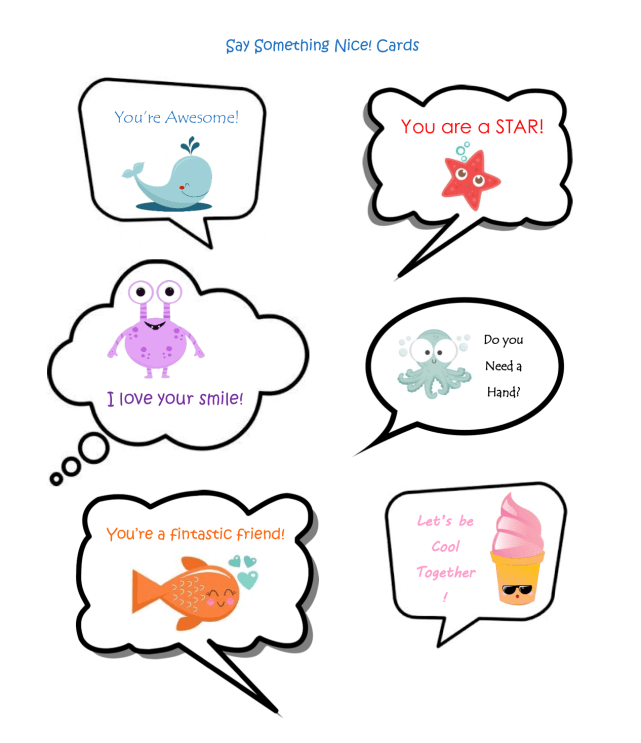
celebrate-picture-books-picture-book-review-say-something-nice-cards

Say Something Nice! Cards


Do you want to give someone a nice surprise? Print out these cards and give one to a friend, to someone you’d like to know, or to anyone who looks like they need a pick-me-up! If you’d like to make your own cards, print out the blank template and write and/or draw your own message! You can also print these on adhesive paper and make your own stickers.

Say Something Nice! Cards | Say Something Nice! Cards Blank Template

celebrate-picture-books-picture-book-review-it's-hard-to-be-nice-cover

You can find Sometimes It’s Hard to Be Nice at these booksellers

Amazon | Barnes & Noble | Books-a-Million

To support your local independent bookstore, order from 

Bookshop | IndieBound

Picture Book Review
September 10 – It’s Children’s Good Manners Month

celebrate-picture-books-picture-book-review-sonny-says-mine-cover

About the Holiday

As kids go back to school and will be interacting with other students, teachers, coaches, group leaders, and others, this month is dedicated to the kinds of manners that promote good relationships and cohesive gatherings. Thinking about how one’s actions will affect others is part of being a great friend, teammate, or participant in any activity. Family life with parents and siblings is also better when everyone treats each other with good manners and respect.

Sonny Says Mine!

Written by Caryl Hart | Illustrated by Zachariah OHora


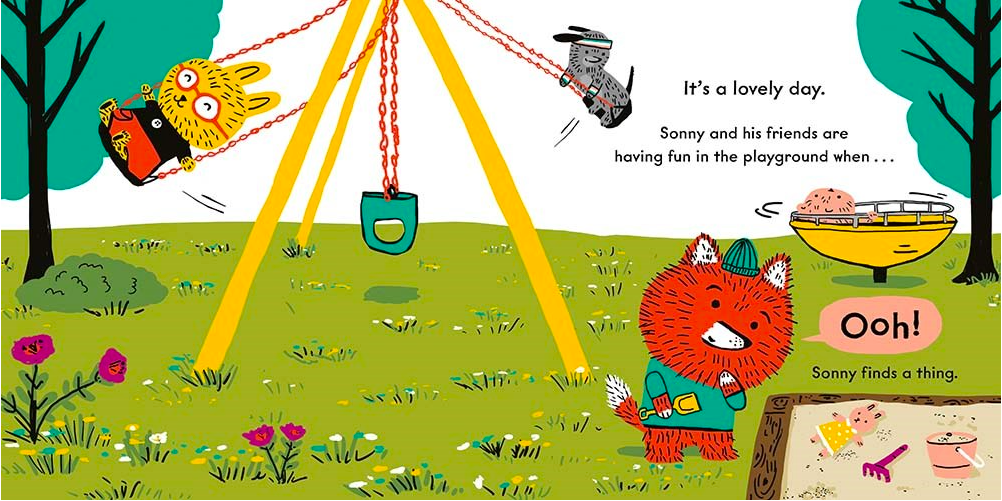
Sonny and his friends are playing on the playground when he spies a stuffed pink bunny in the sandbox. “Ooh! SO soft. SO cute. SO cuddly. I’ll call you Bun-Bun!’ he says.” But Meemo runs up to Sonny, interested in the bunny too, but Sonny pulls Bun-Bun away with a determined, “Mine!” Sonny plays with Bun-Bun, feeding her, dancing with her, reading her a story, and finally putting her to bed under a sand blanket.

celebrate-picture-books-picture-book-review-sonny-says-mine-Bun-Bun

Image copyright Zachariah OHora, 2021, text copyright Caryl Hart, 2021. Courtesy of Bloomsbury Children’s Books.

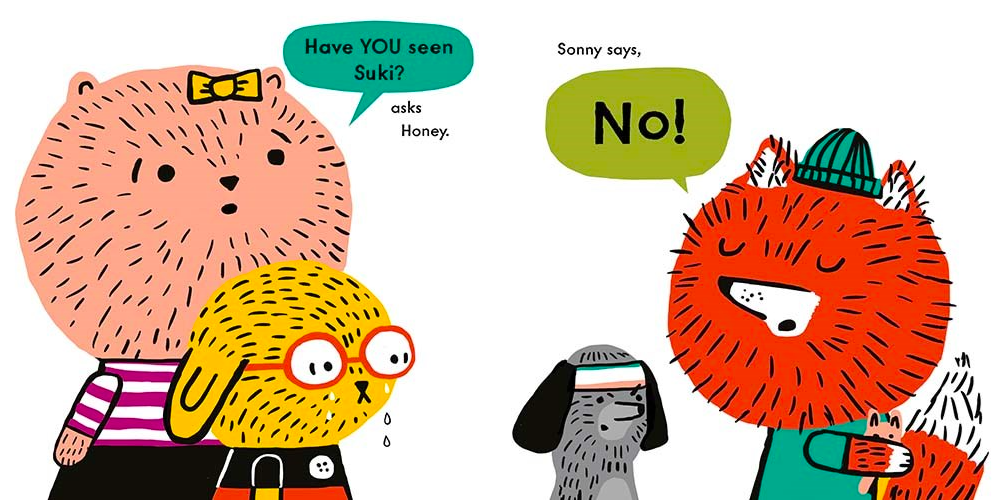
But then Honey and Boo come over and Boo is crying because she’s lost her bunny doll Suki. While Boo sits sadly on the bench, Honey looks all over for Suki. Sonny says nothing and tells Meemo to stop barking. Then Honey directly asks Sonny if he’s seen Suki. “No!” he says, hiding the doll behind his back. Honey and Boo go back to their search. Sonny is so happy with Bun-Bun. “He LOVES Bun-Bun SO much.”

celebrate-picture-books-picture-book-review-sonny-says-mine-Suki

Image copyright Zachariah OHora, 2021, text copyright Caryl Hart, 2021. Courtesy of Bloomsbury Children’s Books.

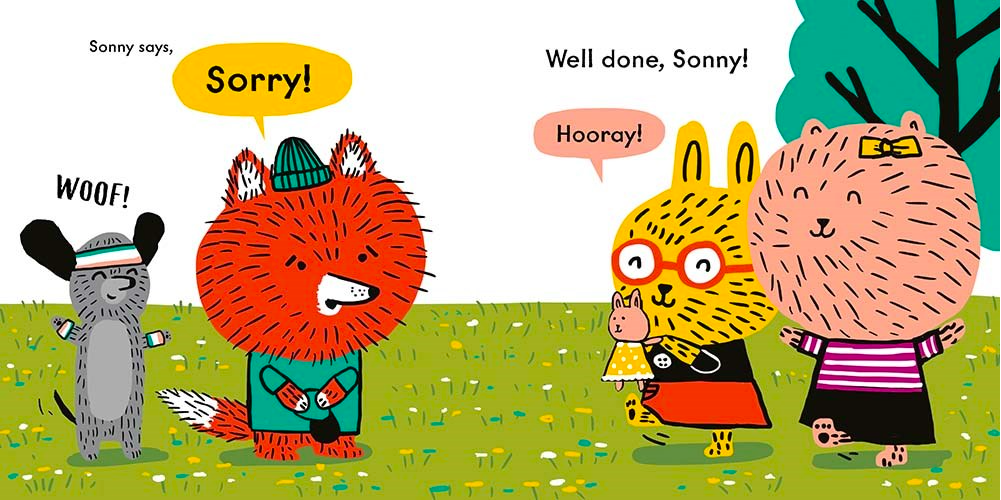
But Meemo scolds Sonny and tries to take Suki. Sonny hides Bun-Bun and goes to play with Boo and Honey. But Boo is too sad to play pirates or to eat chocolate cake. “Now Sonny feels sad too.” What will he do? He goes to his hiding place and retrieves Bun-Bun. He hides Bun-Bun behind his back as he walks near Honey and Boo. Then he gives Bun-Bun to Boo and apologizes. Now everyone is happy! “Woof!” says Meemo. “Hooray!” says Boo. And what does Sonny say? He wants you to “Come back soon!”

celebrate-picture-books-picture-book-review-sonny-says-mine-apology

Image copyright Zachariah OHora, 2021, text copyright Caryl Hart, 2021. Courtesy of Bloomsbury Children’s Books.

Sharing something can be hard. Giving back something you’ve found and LOVE to its rightful owner can be even harder. Caryl Hart understands these strong tugs on the heart and in her tender and realistic tale shows little ones the other side of the story—the sadness a friend experiences over losing a beloved toy or other object. Each of the characters demonstrate different actions and emotions providing adults and kids opportunities to discuss feelings and various roles of friendship. With their natural empathy, kids will identify with both Sonny and Boo and learn how in this type of situation real happiness and peace of mind are found.

Zachariah OHora’s instantly recognizable illustrations bring a cute, comforting, and completely relatable vibe to the story. Sonny’s instant love for Bun-Bun is palpable and little ones will know exactly what’s at stake when he’s asked to give the bunny up. On the other side, Boo’s grief is also evident as tears stream from her eyes and the usual fun of playtime and snacks offer no cheer. Meemo and Honey have their own reactions too, which give kids more perspectives to consider. As Sonny contemplates what to do, children will empathize with both Sonny and Boo as they know one of them will be left unhappy. But Through OHora’s touching illustrations, they’ll see that Sonny makes the right choice—and how it really makes him feel.

The first in the new Sonny Says series, which introduces preschoolers and kindergarteners to universal experiences, Sonny Says Mine! is a multilayered story that is as adorable as it is encouraging and educational. The book will captivate young readers just beginning to venture out into the world and make friends and is highly recommended for home, classroom, and library shelves.

Ages 3 – 6

Bloomsbury Children’s Books, 2021 | ISBN 978-1547605804

Discover more about Caryl Hart and her books on her website.

To learn more about Zachariah OHora, his books, and his art, visit his website.

celebrate-picture-books-picture-book-review-sonny-says-mine-cover

You can find Sonny Says Mine! at these booksellers

Amazon | Barnes & Noble | Books-a-Million

To support your local independent bookstore, order from

Bookshop | IndieBound

Picture Book Review

September 2 – It’s National Friendship Month

celebrate-picture-books-picture-book-review-aven-green-baking-machine-cover

About the Holiday

Friendship Month was instituted about ten years ago by the Oddfellows – or, as they are officially called, The Grand Order of Oddfellows Friendly Society (GUOOFS) – an international organization dedicated to philanthropy and charity believed to have established in England in the 1730s. The holiday encourages people to spend more time with their friends, get in touch with those they haven’t seen or talked to in a while, and to reach out to others who are alone or need a friend. As school gets underway, there are plenty of opportunities for kids to meet new people and form friendships – some of which may last a lifetime.

Thanks to Sterling Children’s Books for sharing a copy of Aven Green Baking Machine with me for review consideration. All opinions about the book are my own.

Aven Green Baking Machine

By Dusti Bowling | Illustrated by Gina Perry


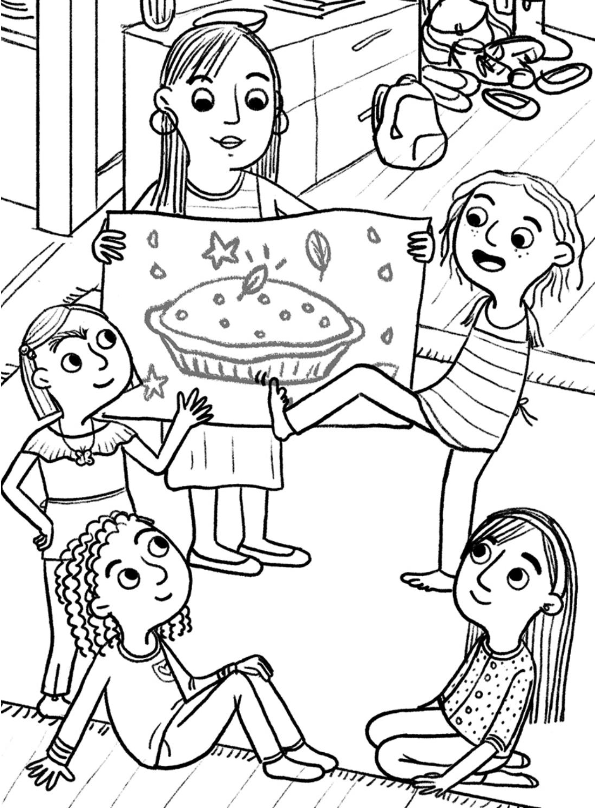
Hot off her stint as a sleuth, Aven Green has discovered another activity to conquer—baking! When she learns of a baking competition at the county fair the next weekend, Aven determines not only to enter, but to win the blue ribbon. She’s sure she will win because one, she’s an expert baker, having made a carrot cake last week; two, she’s a supertaster; and three, she has an excellent sense of smell. Now, as a pro, she calls her friends Kayla, Emily, and Sujata to come to her house prepared to each make a recipe of their choice. They will then choose which one to enter in the contest.

celebrate-picture-books-picture-book-review-aven-green-baking-machine-mixing

Image copyright Gina Perry, 2021, courtesy of Sterling Children’s Books.

With the girls all assembled at Aven’s house, they turn their attention to whose recipe to make first and focus on the ingredients Sujata brought to make her favorite Indian dessert, milk barfi. The other girls make fun of the dessert’s name, and Sujata retreats, crying, to Aven’s room. Aven’s mom appears to find out what happened. She asks the girls some pointed questions about whether they’d ever tried milk barfi before and if they had asked Sujata “what it tastes like or why it’s important to her.” She sends them in to Aven’s room to apologize. The friends make up and return to the kitchen to whip up the recipe, which Aven says smells like “spicy heaven.”

Next, they make Aven’s mint chocolate chip pie and then Emily’s peachy fluff, which Aven renames “peachy floof.” With these desserts all in the fridge, Kayla realizes they haven’t actually baked anything yet. And while the contest rules only call for an original dessert, Kayla thinks they should bake something. Aven suggests chocolate chip cookies until she discovers that the bag she thought held chocolate chips actually holds raisins for the raisin clafouti Kayla wants to make.

Aven has an unwavering loathing for raisins and tells Kayla, “‘Yeah, we’re totally not making that.’” The other girls defend Kayla’s choice. Hearing the shouting, Mom reappears and Kayla tells her how Aven won’t let her make clafouti—“‘raisin toefooty,’” Aven says, interrupting. Aven’s mom looks at her and tells her that she’s so disappointed in her behavior. Aven doubles down on her opinion and stomps off to her room to sulk. After the clafouti is in the oven, the girls all play together until it’s time to sample the desserts.

celebrate-picture-books-picture-book-review-aven-green-baking-machine-pie

Image copyright Gina Perry, 2021, courtesy of Sterling Children’s Books.

They love the Sujata’s milk barfi, and Emily’s peachy fluff turned out to be soupy—delicious, but more of a drink. Aven’s chocolate chip mint pie was deemed too minty, and Kayla’s raisin clafouti was declared the winner. Still, Aven wouldn’t try it. After everyone left, Aven’s mom sits down with her and explains that “‘the Aven I know would try something, even if she didn’t want to, so as not to hurt her friends’ feelings…. You did not act like a good friend.’”

When Aven goes to apologize the next day at school, the other girls tell her they don’t want to enter the contest with her because she is “too difficult. ‘It’s your way or nothing,’” Emily tells her. As Aven sits alone on the playground, Ren comes over to see if she’s all right. Aven tells him about the contest and he tells her about his favorite dessert, manju—sweet bean paste steamed cakes. Aven makes a “yuck face” and Ren, sad, walks away. At home, Aven decides she’ll make something for the contest by herself and bakes a chocolate cake with mint frosting. But when the cake comes out of the oven, it is less than perfect. Aven cries because she knows she can’t win with that cake and her friends are all mad at her.

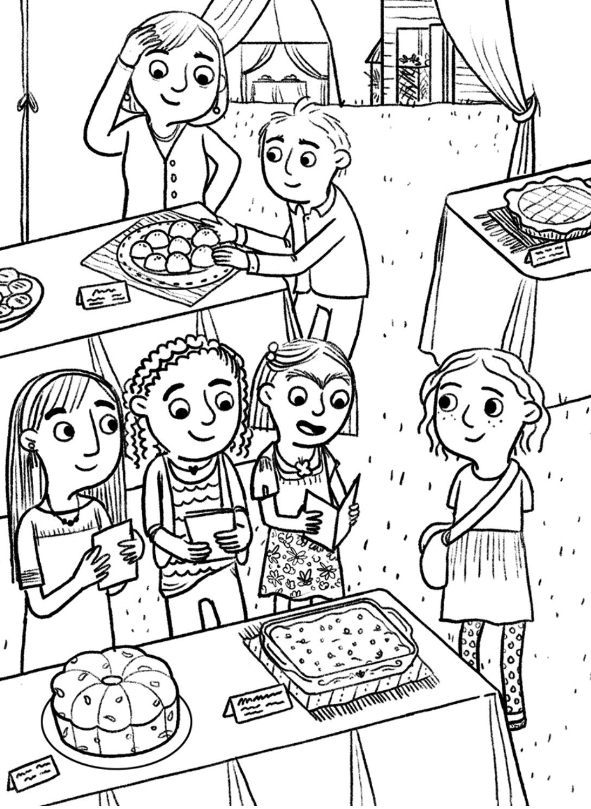
celebrate-picture-books-picture-book-review-aven-green-baking-machine-fair

Image copyright Gina Perry, 2021, courtesy of Sterling Children’s Books.

She goes to visit her great-grandmother, who gives Aven some perspective while making another unusual cake that Aven thinks she’s not going to like but ends up loving. The next day, Aven asks Ren to be her partner in the contest, telling his she wants to make manju. At first Aven is reluctant to try the steamed cakes they make, but one nibble later, she’s ready for more. She even decides that “from this moment in history until the end of time, I would forever be Aven Green, trier of new things, even the weirdest things anyone ever heard of.” The night before the contest, Aven made I’m sorry cards for Kayla, Sujata, and Emily, using all of her best stickers and glitter glue.

The day of the contest finally arrives. Aven and Ren make a fresh batch of manju and take it to the fair. Aven gives out her cards and wishes her friends good luck. They all wait to hear the judges’ decisions and… First place went to an apple caramel cake. Second prize went to a chocolate cream pie. And Third Place went to… Sujata, Emily, and Kayla for their raisin clafouti. Aven cheered and cheered for them, and when they left the stage, they offered Aven one of the yellow ribbons. She thought it would look lovely hanging on her wall, but she declined, telling her friends, “‘I didn’t win it. Not only that, but I had a bad attitude about the raisin clafouti, which did win.’”

Besides, Aven says, “‘I didn’t lose…. I won a whole new friend! And now I have my old friends back, too. Best day ever!’” Then she tasted the raisin clafouti, and even though she didn’t like it, she praised it for being an award-winner. Then the friends took in the fair and the bluegrass music, and Aven discovered another activity to conquer. “‘Watch out, world!’” she cried. “‘Here comes Aven Green, Music Machine!’”

A glossary of baking words found in the story as well as recipes for milk barfi, mint chocolate chip pie, peachy floof, raisin clafouti, tomato soup cake, and manju follow the text.

celebrate-picture-books-picture-book-review-aven-green-baking-machine-dancing

Image copyright Gina Perry, 2021, courtesy of Sterling Children’s Books.

Dusti Bowling’s second Aven Green story for young readers is infused with her protagonist’s distinct personality, infectious enthusiasm, and big heart. Realistic dialogue, situations, and emotions make it a book that will easily resonate with kids. While it’s easy to focus on the humor in Bowling’s story—which is delivered with snappy, rapid-fire dialogue and observations—the story also packs a punch in its message about the injustice of preconceived notions, the effects of thoughtless comments, ultra-competitiveness, and the true meaning of acceptance.

Just one of the joys of Bowling’s series is how Aven Green smashes wrong assumptions while being fearless and self-confident. Here, Aven discovers that while she promotes acceptance for herself, she must also extend the same appreciation to others. All of Bowling’s characters possess strong opinions, enough self-assurance to reject behavior that hurts, and the ability to recognize when they’ve been wrong and make amends. These qualities make them excellent role models for readers. As the girls separate into different teams for the baking contest and, ultimately, make a new friend, readers learn important lessons on standing up for oneself, making informed opinions instead of snap judgements, and what true friendship is all about.

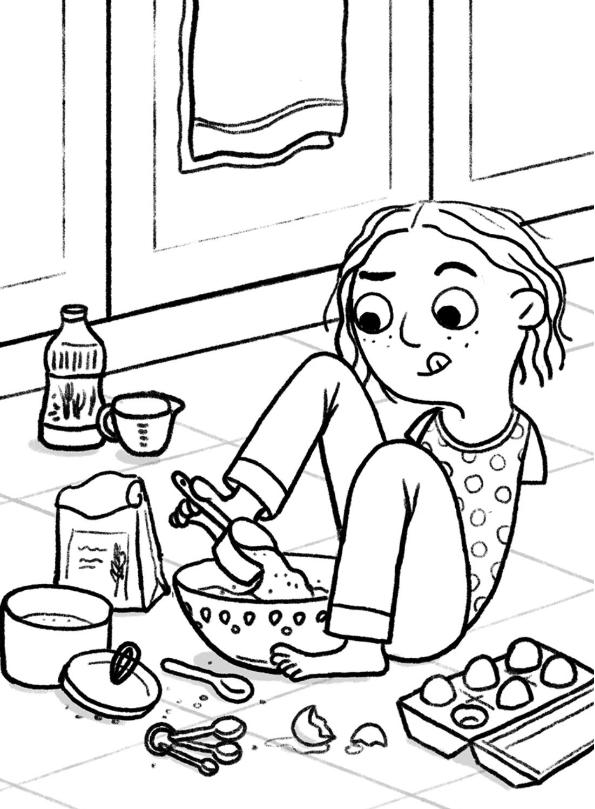
Gina Perry’s engaging illustrations bring the story to life as readers see Aven cooking, eating, and creating cards for her friends with her feet as well as participating in all the other activities at school and the county fair. Her line drawings also capture the emotions of the characters as they argue, make up, and cheer each other on. Cameos by Aven’s mom and great-grandmother portray a steadying and caring influence.

Aven Green Baking Machine is a multi-layered story that will make kids think as they enjoy the humor, close relationships, and invitation to discover and bake recipes from around the world. This book is a good choice for kids and adults to read together while discussing the issues presented. Fans of the series will want to catch up on what Aven is conquering next and new readers will be happy to discover this empowering series.

Ages 6 – 8

Sterling Children’s Books, 2021 | ISBN 978-1454942207

Discover more about Dusti Bowling and her books on her website.

To learn more about Gina Perry, her books, and her art, visit her website.

celebrate-picture-books-picture-book-review-aven-green-baking-machine-cover

You can find Aven Green, Baking Machine at these booksellers

Amazon | Barnes & Noble | Books-a-Million

To support your local independent bookstore, order from

Bookshop | IndieBound

Picture Book Review
June 11 – Making Life Beautiful Day

celebrate-picture-books-picture-book-review-the-color-collector-cover

About the Holiday

Today’s holiday was established by Apriori Beauty in 2015 to recognize all those people who make life more fun, meaningful, joyful—more beautiful—for someone else. This can be done in so many ways. Spending more time talking with someone lets them know you care. Sharing your talent for baking, art, music, gardening, home repair, or any skill with a friend, family member, or coworker brings joy to them and you. Even just giving a smile to those you meet can brighten someone’s day. Making someone else feel good will make life more beautiful for you too!

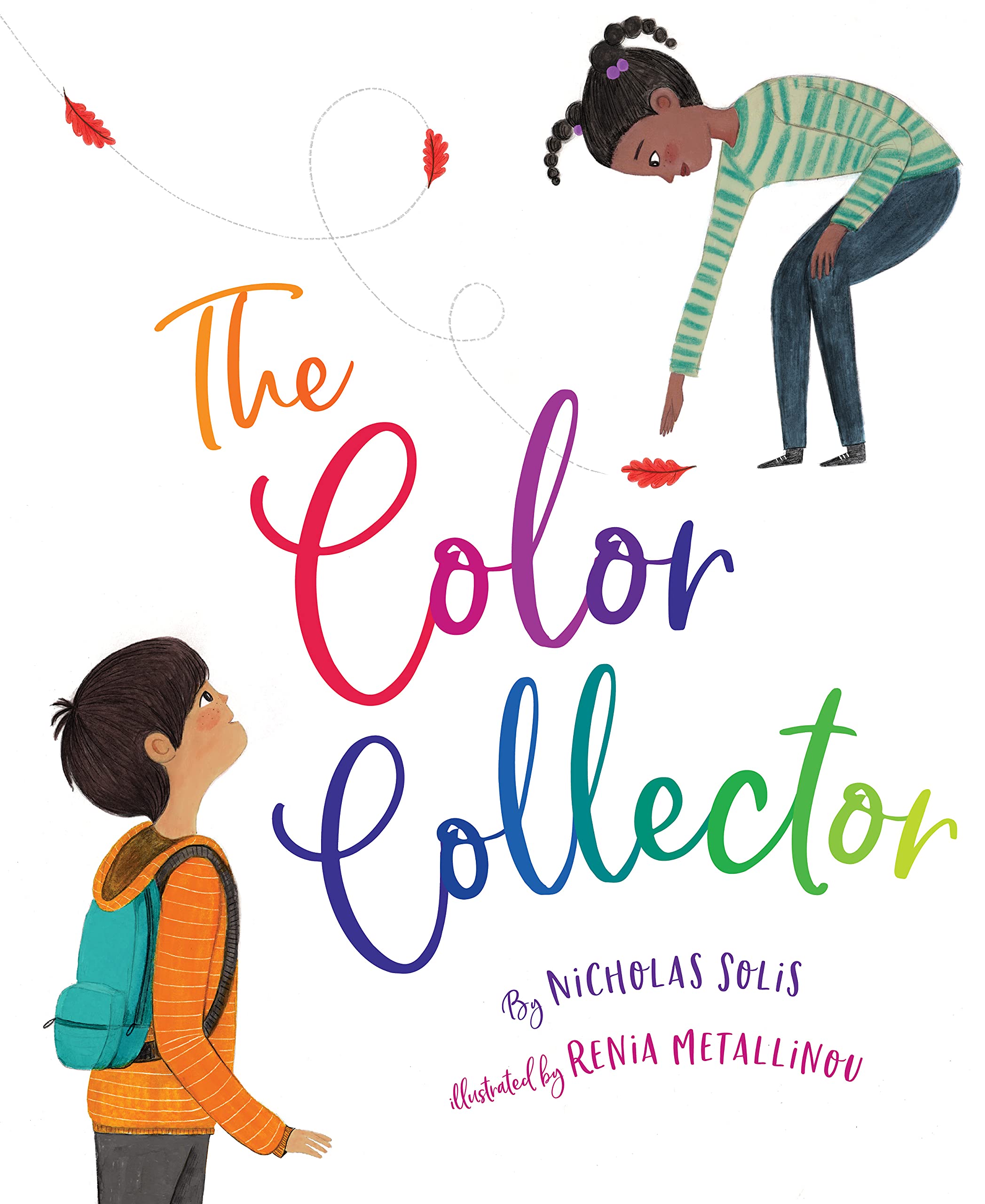
The Color Collector

Written by Nicholas Solis | Illustrated by Renia Metallinou


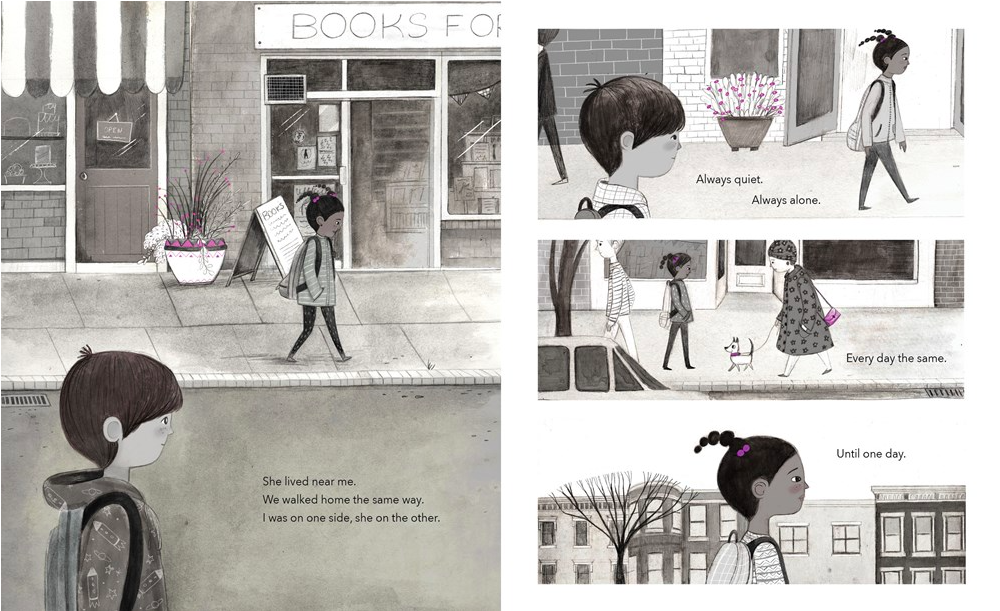
A boy notices a new girl, Violet, at school. He knows what it’s like to be the new kid, so he waves to her as she sits on a bench alone, reading. She gives him a small smile—he thinks—but doesn’t say anything. He knew that Violet lived near him because they always “walked home the same way,” although he “was on one side, she on the other.” She was “always quiet. Always alone.”

celebrate-picture-books-picture-book-review-the-color-collector-walking

Image copyright Renia Metallinou, 2021, text copyright Nicholas Solis, 2021. Courtesy of Sleeping Bear Press.

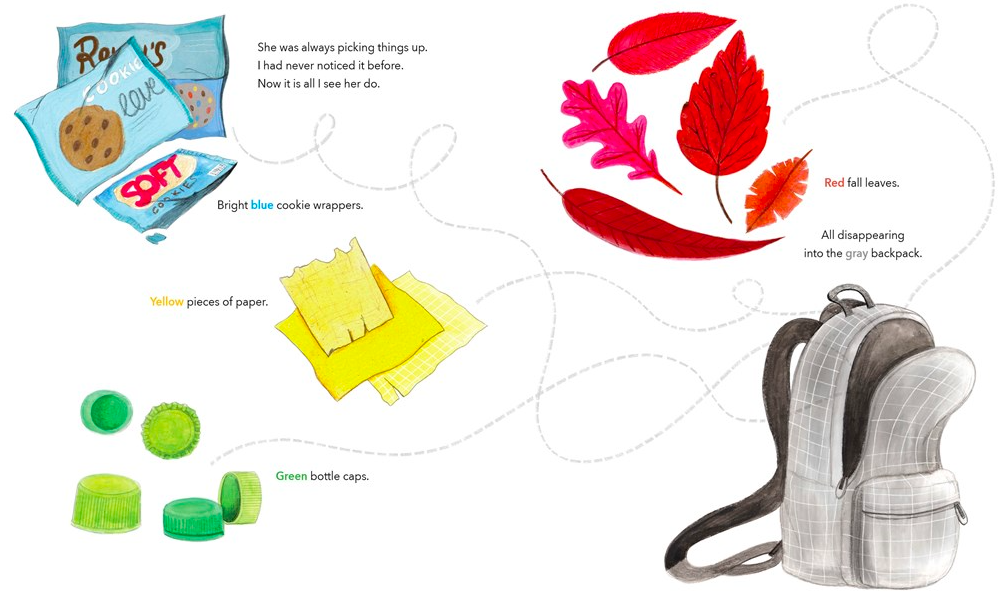
It was always the same until one day when the wind blew a red candy wrapper Violet’s way and the boy watched her pick it up and put it in her backpack. When she looked up, Violet saw the boy watching. “She looked at me,” he says. “She waved. Then her eyes went down and she turned the corner.” Now, the boy noticed how many things Violet picked up along the way home. “Bright blue cookie wrappers. Yellow pieces of paper. Green bottle caps. Red fall leaves. All disappearing into the gray backpack.”

celebrate-picture-books-picture-book-review-the-color-collector-paper

Image copyright Renia Metallinou, 2021, text copyright Nicholas Solis, 2021. Courtesy of Sleeping Bear Press.

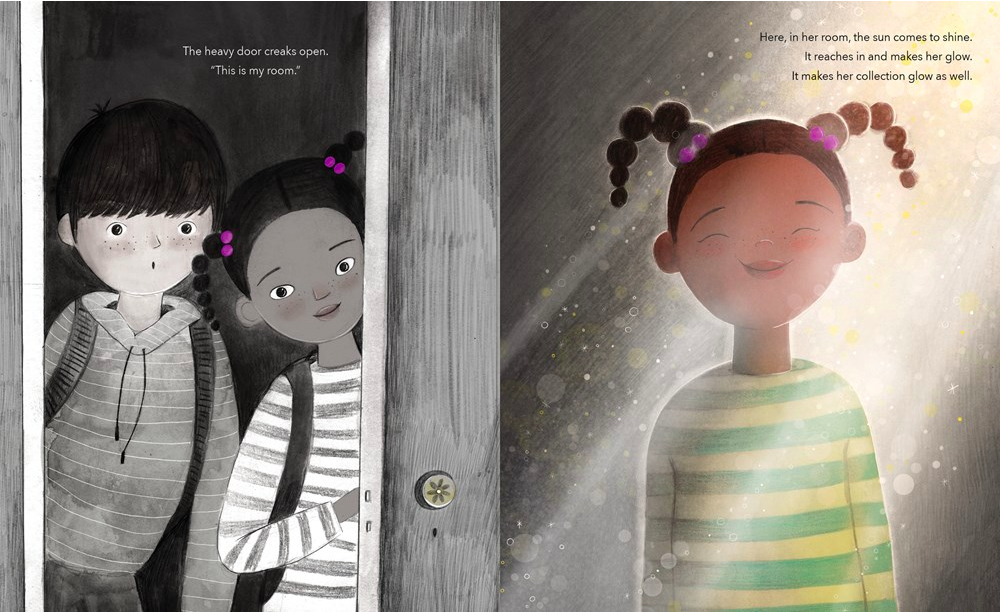
One day the boy crosses the street and asks Violet what she does with the things she picks up. Violet invites him to come see. They come to a brownstone and up a few flights of stairs, Violet takes him inside her home and opens the door to her room. “Here in her room, the sun comes to shine,” the boy says. “It reaches in and makes her glow. It makes her collection glow as well.”

celebrate-picture-books-picture-book-review-the-color-collector-colorful-items

Image copyright Renia Metallinou, 2021, text copyright Nicholas Solis, 2021. Courtesy of Sleeping Bear Press.

What the boy sees—on the walls, the ceiling, the door—is “her sky, her beach, her village” recreated from the wrappers, paper, leaves, caps, and other bits she’s found. “We came here for a better life,” Violet tells the boy. “I miss home, though. I miss the sounds and smells. And I miss the colors.” The boy tells her the mural is beautiful. Then Violet tells him stories about her village, the people there, and the ocean. The boy and Violet “sit and talk. Then laugh. Then talk some more.” The boy sees that Violet is not so sad or alone anymore, and he’s glad to be her friend. When he leaves, he and Violet wave goodbye and “smile the same.” One the way home, the wind blows a red leaf his way. He picks it up and puts it in his backpack.

celebrate-picture-books-picture-book-review-the-color-collector-light

Image copyright Renia Metallinou, 2021, text copyright Nicholas Solis, 2021. Courtesy of Sleeping Bear Press.

Poignant and honest, Nicholas Solis’s multilayered story touches on friendship, loneliness, new experiences, immigration, creativity, and how acts of welcome, empathy, and kindness can change perspectives and bring joy to life. Told from the boy’s point of view in short, straightforward observations, the story captures readers’ emotions and curiosity as they walk with him and Violet, waiting to see why the reason for her collection. As days and maybe weeks or months pass before the boy speaks to Violet, readers on “both sides of the street” (those who are hesitant to talk and share as well as those who would like to get to know someone better) learn that friendship takes time, patience, trust, and sincere interest. 
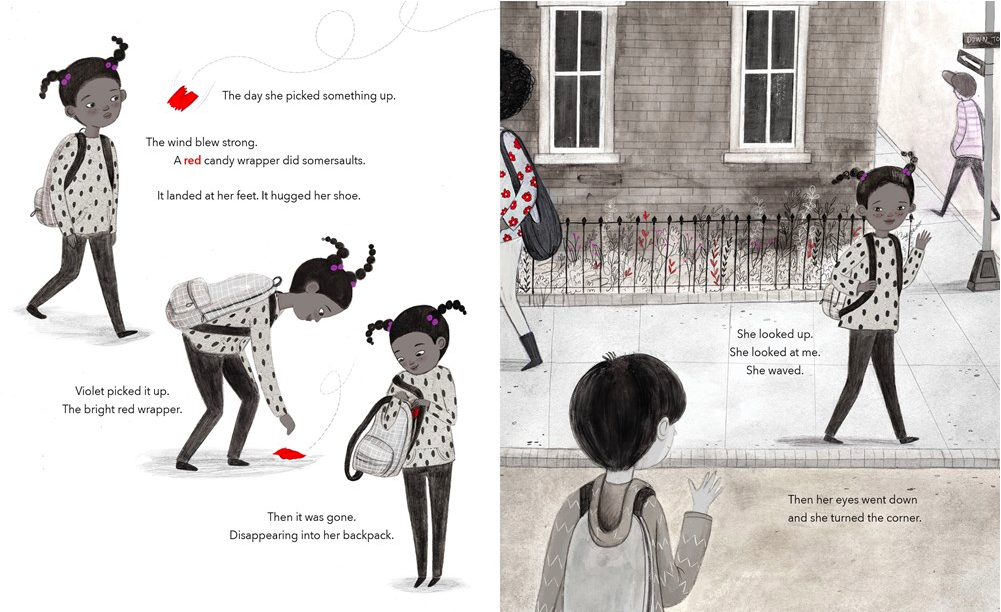
Renia Metallinou adds visual eloquence to the story with his gray- and dun-hued illustrations, which pick up increasing hints of color as Violet and the boy grow closer to Violet’s house and finally explode with vibrancy when she opens the door to her room. The first clue of the importance of color to the “new girl” is in her name, and to punctuate this fact, Metallinou gives Violet purple hairbands for her braids. As Violet walks home on a parallel track to the boy, purple tints the pots and flowers decorating the sidewalk, a woman’s purse, and her dog’s collar as if to show that Violet is already assimilating and contributing to her new community.
After she picks up the red wrapper, red flowers, and accents dot the next page, and after the boy describes the blue, yellow, and green items she finds, the trees gain red and yellow leaves, container gardens overflow with greenery, an orange cat watches a trio of red-bellied birds, and blue curtains hang in a downstairs room. But it’s when Violet opens her bedroom door that the real magic happens.

Readers are treated to one more two-page spread of suspense, heightened by the boy’s look of wonder and Violet’s proud gaze. Surrounded by light, Violet smiles. Her gray-and-white-striped shirt turns green and yellow, her brown skin glows with joy. Then readers turn the page and, like the boy, step into a sun-drenched coastal village with candy-colored buildings, lush foliage, a sparkling sea, and a woman – perhaps Violet’s grandmother – looking toward the horizon, maybe looking for Violet herself. Metallinou has made Violet’s mural a masterpiece of art, life, longing, and love. As Violet’s stories pour forth, she and the boy discover how to let their true colors show.

A beautiful and evocative story about the power of friendship, empathy, and kindness, The Color Collector provides a unique and highly effective way for kids and adults to talk about feelings of loneliness, homesickness, making new friends, opening up to others, and many other feelings kids experience. The book could spark meaningful art projects for classrooms and homeschoolers and would be an excellent addition to home, school, and public libraries.

Ages 6 – 9 

Sleeping Bear Press, 2021 | ISBN 978-1534111059

Discover more about Nicholas Solis and his books on his website.

To learn more about Renia Metallinou, her books, and her art, visit her website.

National Making Life Beautiful Day Activity

celebrate-picture-books-picture-book-review-initial-bookend

Initial Bookend or Decoration


Today’s holiday is all about making someone feel special. With this easy craft, kids can make a gift for a family member, friend, or teacher that shows them why they think the person makes the world more beautiful. And don’t forget to make one for yourself too!

Supplies

  • Wooden letter block of the recipient’s first initial or both initials
  • Chalkboard paint
  • Chalk
  • Paint brush

Directions

  1. Paint the wooden letter with the chalkboard paint, let dry
  2. With the chalk, write words on the letter that you think best describe the person you’re giving it to
  3. Wrap and give your letter!

celebrate-picture-books-picture-book-review-the-color-collector-cover

You can find The Color Collector at these booksellers

Amazon | Barnes & Noble | Books-a-Million

To support your local independent bookstore, order from

Bookshop | IndieBound

Picture Book Review