November 9 – It’s National Aviation History Month

celebrate-picture-books-picture-book-review-fearless-flyer-cover

About the Holiday

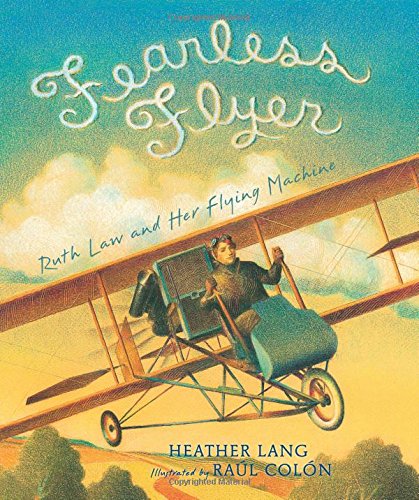
National Aviation History Month and is dedicated to exploring, recognizing and celebrating America’s great contributions and achievements in the development of aviation. Human-powered flight has come a long way from its earliest roots in kites and gliders. Hot-air balloons and biplanes gave way long ago to more and more sophisticated airplanes, jets, and rockets that blast into space. To celebrate the month, visit a local museum or read up on some of the pioneers of early flight—like the courageous woman in today’s book.

Fearless Flyer: Ruth Law and Her Flying Machine

Written by Heather Lang | Illustrated by Raúl Colón


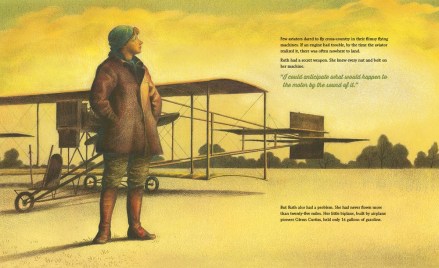
Entertained crowds knew Ruth Law for the loops, the spiral dives, and even the dip of death that she performed in her airshow. But for Ruth these stunts were like standing still. She “longed to fly to get somewhere…somewhere far away.” She decided to make a trip from Chicago to New York City. There weren’t too many aviators brave enough to attempt such a long flight in the type of biplane Ruth flew. They feared that if something went wrong with the engine, they’d never realize it in time to land. But Ruth knew her plane inside and out and figured she “could anticipate what would happen to the motor by the sound of it.”

A trip like the one Ruth envisioned posed another problem, though. Her small biplane held only 16 gallons of gasoline—not enough to make the journey. She asked Glenn Curtis, who built her plane, if she could buy his latest model. This much bigger plane held 205 gallons of gas and had already proven itself for long-distance flight. But Curtis refused. He didn’t believe Ruth could handle the “powerful machine on such a long flight.”
celebrate-picture-books-picture-book-review-fearless-flyer-ruth's-plane

Image copyright Raúl Colón, text copyright Heather Lang. Courtesy of Calkins Creek.

Ruth was not to be deterred. She added three more gas tanks to her plane so that it could hold 53 gallons, installed a cover to protect her legs, and created a scrolling map of the route. Aviation experts said she would fail, but Ruth disagreed. “‘What those men can do a woman can do. I can do,’” she said. On a windy November 19, 1916, Ruth took to the cockpit to begin her nonstop flight. Although she was a little afraid of what lay ahead, she took off, believing that “the scare is part of the thrill” of any experience.

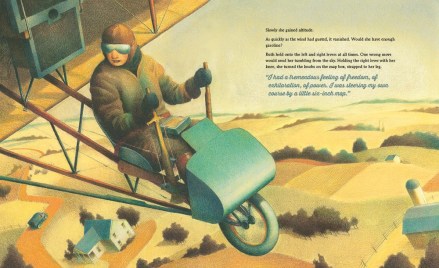
Ruth had counted on the strong wind to help push her farther faster, but just as quickly as it had blown up, the wind stopped. Ruth wondered if she would have enough gasoline after all. Flying over one landmark after another, Ruth felt exhilarated. As she passed over Cleveland, Ohio, though, “the oil gauge registered zero pressure. Something was wrong!” The sounds of her plane’s motors told Ruth a different story. She kept flying.

Soon she was passing over Erie, Pennsylvania—the site of the record-breaking flight by Victor Carlstrom. Even the icy stings of the frigid air couldn’t diminish her excitement. In a moment she was east of Erie and had broken Carlstrom’s record. The thrill of her achievement was tempered, however, by the sputtering of her engine. While there was still a little gas in the plane, it was “too low to feed into the engine.” Ruth tipped the plane forward to give it more gas. Two miles from Hornell, New York, the nearest landing spot, “the engine grumbled its last roar, leaving her with nothing but the silence of the wind.”
celebrate-picture-books-picture-book-review-fearless-flyer-arial-view

Image copyright Raúl Colón, text copyright Heather Lang. Courtesy of Calkins Creek.

Ruth steered the plane as it glided into Hornell—512 miles from Chicago. She was the new American nonstop flight record holder. Ruth’s original plan had been to fly to New York City, so after refueling and grabbing a bite to eat, she took off once again. Weighed down by the full gas tank, the plane barely made it over a hill and tall trees in her path. This was as close to crashing as Ruth ever came—or ever wanted to be.

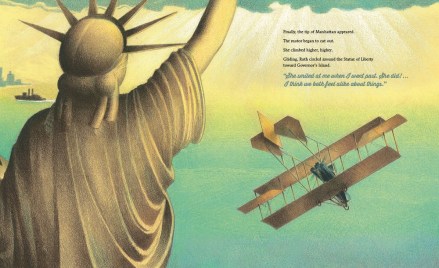
People along the route had already heard about Ruth Law, and they came out to watch and wave. With darkness closing in, Ruth decided that she would have to land short of New York City. She touched down in Binghamton, New York and took up the rest of the flight the next morning. As a thick blanket of fog obscured her view, Ruth flew lower and lower to get her bearings. When she finally spied the tip of Manhattan, she glided in and “circled around the Statue of Liberty toward Governor’s Island.” Of Lady Liberty, Ruth said, “‘She smiled at me when I went past. She did!…I think we both feel alike about things.’”
celebrate-picture-books-picture-book-review-fearless-flyer-statue-of-liberty

Image copyright Raúl Colón, text copyright Heather Lang. Courtesy of Calkins Creek.

Cheered by a celebratory crowd and brass band, Ruth landed on the welcoming earth. Despite the icicles that hung from her hair and the numbing cold, Ruth smiled and waved. She realized then that not only had she broken an aviation record, she had made a point for all women. She later put her thoughts into words: “The sky was my limit and the horizon my sphere. It’s any woman’s sphere if she has nerve and courage and faith in herself.”

An Author’s Note about Ruth Law and her life, complete with photographs, follows the text.

Heather Lang’s thrilling account of Ruth Law’s record-breaking flight from Chicago to New York will have young aviators on the edge of their seat. Law’s flight was filled with suspense from its inception as an idea in a young woman’s mind to its final touchdown, and Lang deftly incorporates the facts as well as Law’s feelings into her well-rounded story. Along the way, readers learn about Ruth and also about early aviation. Ruth Law’s own words, included throughout the story, will inspire children as they see that even though she lived long ago, her thoughts and ideas still ring true today.

Young readers will be fascinated by Raúl Colón’s glowing illustrations of Ruth Law and her flying machine. His detailed drawings of Law’s biplane give children an excellent view of the open-air craft, fostering a true understanding of the courage it took for her to undertake such a flight. Images from Law’s viewpoint in the cockpit allow readers to vicariously travel her path to self-realization and a record-breaking flight.

Ages 5 – 8

Calkins Creek, 2016 | ISBN 978-1620916506

Check out Heather Lang’s website for more about her and her books. You’ll also find links to a video and photos about Ruth Law, a map of her route, and information about her plane as well as a Teacher’s Guide.

Fly along with Ruth in this Fearless Flyer book trailer!

National Aviation History Month Activity
celebrate-picture-books-picture-book-review-biplane-craft

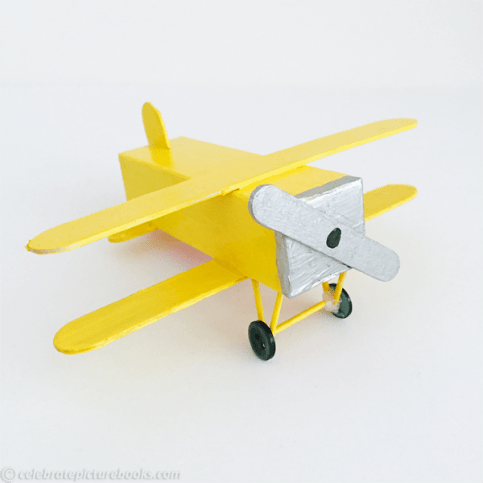
Head in the Clouds Biplane


If you love airplanes and flying, you’ll have fun making your own plane from recycled materials! Use your creativity to decorate your plane while you imagine yourself flying through the clouds on a beautiful day. Younger children will have fun sharing this activity with an adult or older sibling too!

Supplies

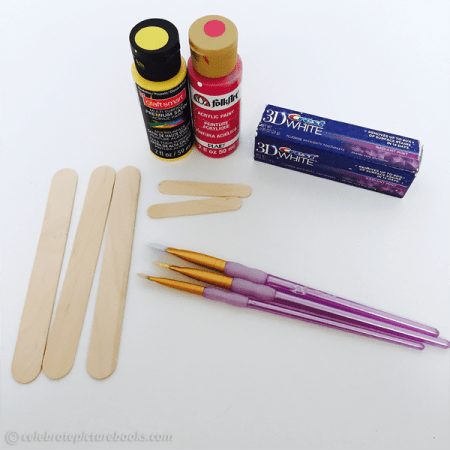
  • Travel-size toothpaste box
  • 3 6-inch x 1/2-inch craft sticks
  • 2  2 1/2-inch x 7/8-inch mini craft sticks
  • 5 Round toothpicks, with points cut off
  • Paint in whatever colors you like for your design
  • 4 small buttons
  • 2 mini buttons
  • Paint brushes
  • Strong glue or glue gun

Directions

  1. Empty toothpaste box
  2. Paint toothpaste box and decorate it
  3. Paint the craft sticks and 5 toothpicks
  4. Paint one small craft stick to be the propeller
  5. Let all objects dry

To assemble the biplane

  1. For the Bottom Wing – Glue one 6-inch-long craft stick to the bottom of the plane about 1 inch from the end of the box that is the front of the plane
  2. For the Top Wing – Glue the other 6-inch-long craft stick to the top of the plane about 1 inch from the front of the plane
  3. For the Tail – Glue one mini craft stick to the bottom of the box about ¾ inches from the end that is the back of the plane
  4. For the Vertical Rudder – Cut the end from one of the painted 6-inch-long craft sticks, glue this to the back of the box, placing it perpendicular against the edge and half-way between each side

To assemble the front wheels

  1. Cut 4 painted toothpicks to a length of ¾-inches long
  2. Cut one painted toothpick to a length of 1-inch long
  3. Glue 2 of the 3/4-inch toothpicks to the back of 1 button, the ends of the toothpicks on the button should be touching and the other end apart so the toothpicks form a V
  4. Repeat the above step for the other wheel
  5. Let the glue dry
  6. Glue the 1-inch long toothpick between the wheels at the center of each wheel to keep them together and give them stability. Let dry

To make the back wheel

  1. Cut two ¼-inch lengths of painted toothpick and glue them together. Let dry
  2. Glue two mini buttons together to form the back wheel. Let dry
  3. Glue the ¼-inch toothpicks to the mini buttons. Let dry
  4. Glue these to the bottom of the plane in the center of the box directly in front of and touching the tail

Display your biplane!

Picture Book Review

November 8 – Cook Something Bold and Pungent Day

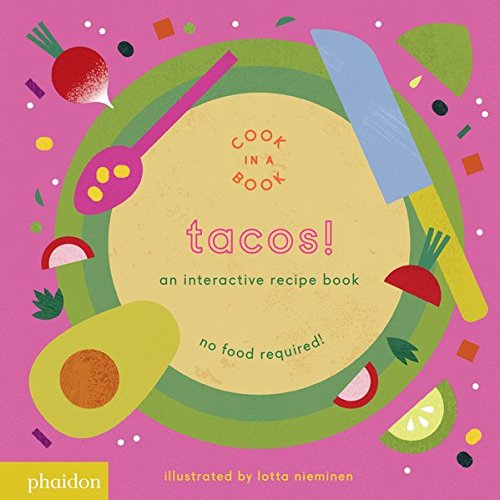
celebrate-picture-books-picture-book-review-tacos!-cover

About the Holiday

Hmm-mmm! Nothing satisfies quite as much as tangy, spicy dishes. Garlic, red pepper, ginger, mustard, cumin, and many other spices and flavors bring a tantalizing tingle to taste buds. Today’s holiday was established to encourage people to explore all the savory sensations of bold cuisine. You know how to celebrate! Visit your favorite restaurant or cook up your own zesty meal.

Tacos! An Interactive Recipe Book

Illustrated by Lotta Nieminen


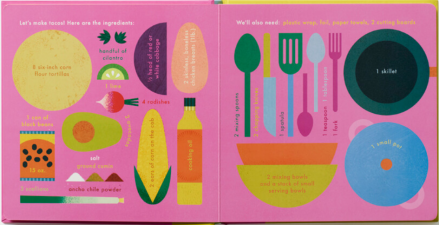
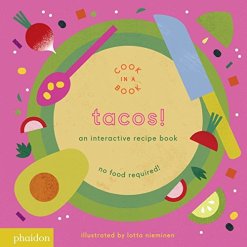
Do you have all your ingredients? The tortillas, black beans, chicken, avocados, ears of corn, cabbage, radishes, lime, scallions, cilantro, cumin, ancho chili powder, and salt? How about mixing bowls, cutting boards, a pot, a skillet, and an array of utensils? Get ‘em! Got ‘em? Good! Now… “use the first cutting board and knife to cut the chicken into cubes and toss them in a bowl with the spices.” Cover and refrigerate for 20 minutes to one hour.

celebrate-picture-books-picture-book-review-tacos!-ingredients

Copyright Lotta Nieminen, 2017, courtesy of Phaidon.

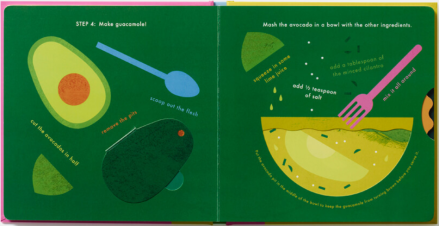
Next, cook the chicken in the skillet “until the pink color disappears.” While you’re waiting for the chicken to finish, grab the big knife and cut the vegetables. Now it’s time to use that avocado—plus the lime, salt, and a bit of cilantro—to make guacamole. Mash and stir all the ingredients until you’ve made a smooth, green paste.

celebrate-picture-books-picture-book-review-tacos!-guacamole

Copyright Lotta Nieminen, 2017, courtesy of Phaidon.

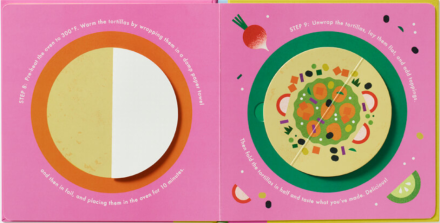
You can set the guacamole aside while you heat up the black beans in a pot and slice the corn kernels off the cob—zip! zip! zip! Now comes the building part! Gather all of your ingredients, plus any others you may like to add, like sour cream, cotija cheese, or pico de gallo and set to work! Warm your tortillas by “wrapping them in a damp paper towel and then in foil, and placing them in the oven for 10 minutes.”

Ahhh! Lay the warm tortillas on a plate and add the chicken, beans, corn, guacamole, and your favorite toppings. All that’s left is to fold your tortilla in half and take a bite. Hmm-mmm!

celebrate-picture-books-picture-book-review-tacos!-heating-tortilla

Copyright Lotta Nieminen, 2017, courtesy of Phaidon.

Lotta Nieminen’s Cook in a Book series of interactive cookbooks for kids (and fun-loving adults) are smart, refreshing, and addictively playful. Nieminen’s sophisticated art and color palette invite kids (and did I mention adults?) to play around with cooking through clever tabs flaps, wheels, and pull outs. In Tacos! readers sizzle up chicken through a pull tab that turns pink cubes to golden brown. On the next page, children can remove the cardboard knife and pretend to chop as the pull tab creates slices and dices of scallions, cabbage, and radishes.

Kids can put the knife back in its slot or use it on the next page to divide the avocado, which opens like a little book. By turning the wheel, children mix the guacamole ingredients from a light green to a rich green texture. The same wheel allows readers to stir the black beans on the stove when they turn the page. The mechanics at work between the thick board book pages make removing the corn kernels a joy. Slide the top of the ear down and kernels “fly” to each side accompanied by a rippling feel and sound.

celebrate-picture-books-picture-book-review-tacos!-guacamole-mixing

Copyright Lotta Nieminen, 2017, courtesy of Phaidon.

With all the ingredients prepared, children come to Step 8, where a round of foil awaits. On the facing page a tortilla is ready. With just a pop of the finger hole, kids can lift the tortilla from its place, turn it to the plain side, and lay it on the foil. After a bit of waiting for it to “warm,” children (or adults!) can turn it over to where all the delicious toppings mingle, fold it in half, and…enjoy!

The text consists entirely of the recipe, with the directions described in easy-to-follow steps that are sprinkled across the pages, adding a jaunty energy to each spread.

Tacos!—as well as the other books in the series, Pancakes! and Pizza!—would make a fantastic gift for foodie kids and for children who love playing with toy kitchens or in the real thing. Tor the HGTV crowd, the book would be a happy surprise as a housewarming or holiday gift.

Ages 4 – 8 and up

To learn more about Lotta Nieminen and view a gallery of her graphic design and illustration work, visit her website.

Phaidon, 2017 | ISBN 978-0714875057

Cook Something Bold and Pungent Day Activity


celebrate-picture-books-picture-book-review-spice-bottle-penguins

Spice Bottle Penguins


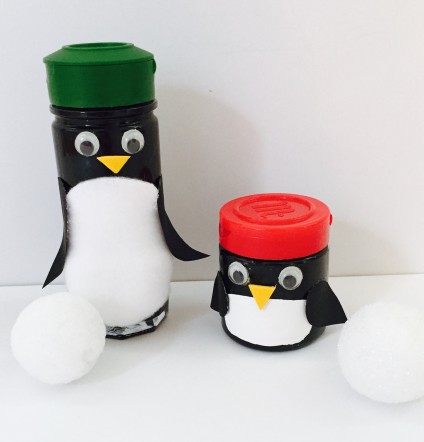
After you’ve used all the spicy goodness, make some cold-weather friends from those little bottles with this fun craft!

Supplies

  • Empty glass or plastic spice bottle with cap
  • Black paint
  • White paint OR White fleece or felt
  • Black paper
  • Yellow foam or heavy paper
  • Googly eyes
  • Styrofoam ball (optional)
  • Glue
  • Paint brush
  • Scissors

Directions

  1. Paint the inside of the glass or plastic bottle with the black paint, let dry
  2. From the white fleece, cut an oval for the penguin’s belly and glue it on. Alternatively, paint a white oval on the jar to make a belly. Fleece may be a better option for younger children, as the paint can scratch off glass and plastic surfaces.
  3. Glue googly eyes near the top of the jar, but below the cap
  4. Cut a triangle of yellow foam or paper for the beak and glue it on
  5. Cut two tear shapes for the wings from the black paper. Glue the top of the shape to the body of the penguin, overlapping the belly a little. Fold the tips up
  6. Give your penguins Styrofoam ball snowballs to play with!

celebrate-picture-books-picture-book-review-tacos!-cover

You can find Tacos! An Interactive Recipe Book at these booksellers

Amazon | Barnes & Noble | Books-a-Million | IndieBound


Picture Book Review

November 7 – It’s Picture Book Month

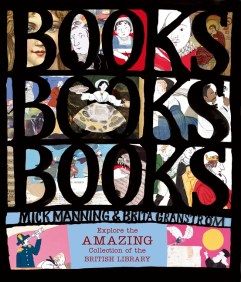
celebrate-picture-books-picture-book-review-books-books-books-cover

About the Holiday

If you love picture books, you know the thrill of holding a new or a new-to-you book in your hands and opening up to that very first page. The children’s sections of bookstores and libraries draw you in with humor, fairy tales, poetry, biographies, science, and so much more—a whole universe of creativity, thought, knowledge, and imagination—that enlightens and entertains. This month take time to indulge your passion for picture books!

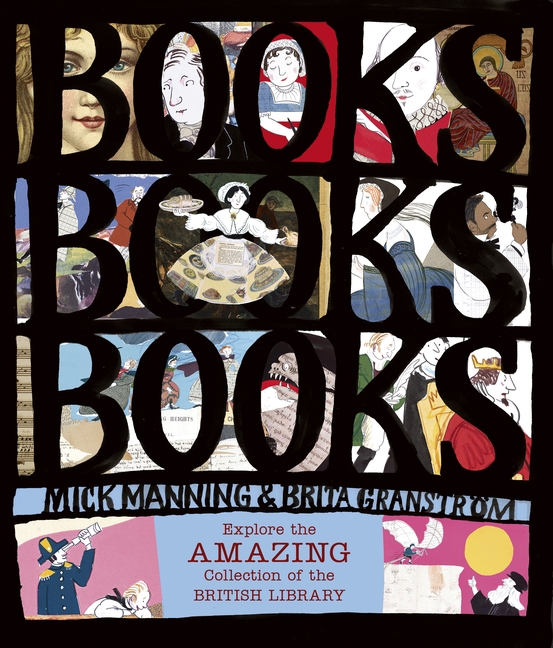
Books! Books! Books! Explore the Amazing Collection of the British Library

By Mick Manning and Britta Granström


Everyone knows you can fit a book into a library, but how do you fit a library into a book? Mick Manning and Britta Granström have very tidily discovered a way to translate the content and atmosphere of the incredible British Library into their visually stunning and packed-full-of-knowledge picture book. Opening with a brief history of the library building and its holdings, the authors then invite readers inside to take a look.

celebrate-picture-books-picture-book-review-books!-books!-books!-da-vinci

Copyright Mick Manning and Britta Granström, 2017, courtesy of Candlewick Press.

First on display are “ancient handmade books like the St. Cuthbert Gospel, found in a coffin!” this little book is the oldest surviving book to have been produced in Europe that still has its original covers and binding, dating to before 687 CE. After being trekked around England in the coffin—just one step ahead of invading Vikings—it was removed from its hiding place, kept by a private collector, and finally bought by the British Library for nine million pounds in 2011.

celebrate-picture-books-picture-book-review-books!-books!-books!-shakespeare

Copyright Mick Manning and Britta Granström, 2017, courtesy of Candlewick Press.

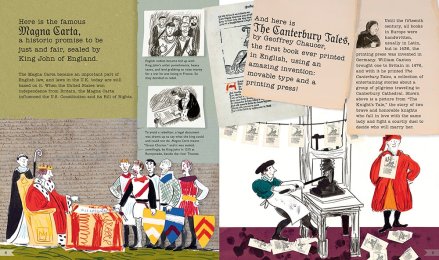
Any English major knows all about the thrilling Scandinavian story of Beowulf—“the oldest surviving long poem in Old English.” The copy found in the British Library is “three thousand lines long” and “was hand-written in the eleventh century.” Here too is the Magna Carta—one of the most influential legal documents in the world. And the Canterbury Tales may just be something assigned in high school to some people, to others it is a technological marvel—“the first book ever printed in English using an amazing invention: moveable type and a printing press.”

celebrate-picture-books-picture-book-review-books-books-books-magna-carta

Copyright Mick Manning and Britta Granström, 2017, courtesy of Candlewick Press.

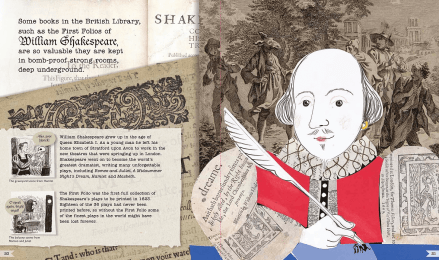
“Big book” doesn’t begin to describe the Klencke Atlas which was made for England’s King Charles the Second. It is so “ginormous” at 7 feet x 5 feet 10 inches (2,1 x 1.78 meters) that “it takes six people to lift it!” What’s the smallest book, you ask? That would be Lady Jane Grey’s Prayer Book. Measuring just 2 ¾ x 3 3/8 inches (70 x 85 millimeters), it accompanied her to her execution after she ruled England for only nine days. Then there are books of all sizes that “are so valuable that they are kept in bombproof strong rooms, deep underground.”

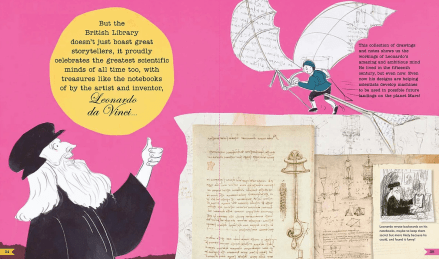
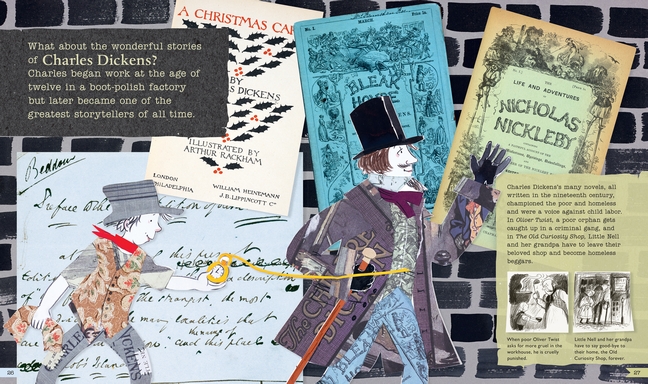
Britain has produced many of the greatest writers of all time, and their books can also be found here. Authors such as Jane Austin; Emily, Charlotte, and Anne Brontë; and Charles Dickens. Any good library offers books of all types—not just fiction—and the British Library is no exception. You’ll find cookbooks, medical books, and scientific books, like writings by Leonardo da Vinci, Oliver Goldsmith, and Charles Darwin.

celebrate-picture-books-picture-book-review-books!-books!-books!-alice-in-wonder-land

Copyright Mick Manning and Britta Granström, 2017, courtesy of Candlewick Press.

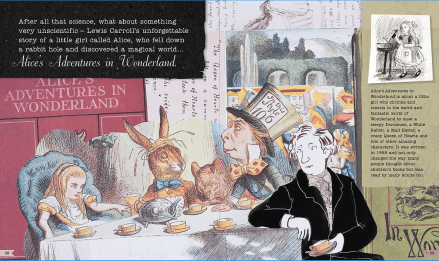
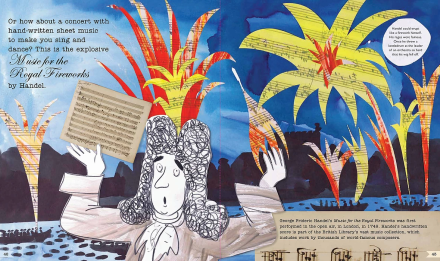
There’s the fantastic—like Lewis Carroll’s Alice’s Adventures in Wonderland—and the mysterious—like the cases of Sherlock Holmes by Arthur Conan Doyle. Some writings don’t come in a book, but they move people all the same. That’s why the British Library also has collections of sheet music from the world’s greatest composers and “a copy of every newspaper published every day in Britain and Ireland since 1869, as well as many more going back to the seventeenth century.”

How does one library hold so many books? Well, many of them are contained in vaults, and if you were to order one for viewing or to check out, it would come on “an automatic conveyor system, like a little railway.” That’s the way one library can hold so many books, and now you know how one book can hold an entire library!

celebrate-picture-books-picture-book-review-books!-books!-books!-music

Copyright Mick Manning and Britta Granström, 2017, courtesy of Candlewick Press.

Mick Manning and Britta Granström’s text-and-illustration collaboration creates a masterful tour of one of the world’s most treasured institutions. Choosing which books and authors to highlight, must have been an awesome task (in both senses of the word), and Manning and Granström more than succeed with their collection of the fascinating, familiar, and fantastic. Leading off with a book preserved in a coffin is a combination of comic and creepy genius that kids will eat up, and ending with perennial favorite, Sherlock Holmes, who is known to all ages, is elementary brilliance. Each book or type of book is presented on a two-page spread that includes a brief history and description of the work or collection, a bit about the author, and, where appropriate, a snippet from the story.

celebrate-picture-books-picture-book-review-books-books-books-dickens

Copyright Mick Manning and Britta Granström, 2017, courtesy of Candlewick Press.

Dynamic collage-style illustrations employ era-appropriate colors, typefaces, and images for each book introduced, allowing readers to clearly see the authors, subjects, characters, and themes each work encompasses. A skeleton lies in a dark casket, his bony hand holding the St. Cuthbert Gospel; Beowulf rips the arm off a Grendel created from pages written in Old English; Lady Jane Grey’s shadow portrays her executioner; old-style anatomical drawings inform the discussion of medical books; as Charles Dickens walks past a wall plastered in broadsides of his book covers, could that be little Oliver Twist pickpocketing his pocket watch?; and Lewis Carroll sits at the table with Alice, a Dormouse, the White Rabbit, and the Mad Hatter.

More information about the works and their authors as well as a glossary follows the text.

For book lovers, every page of Books! Books! Books! brings a smile. It would be a welcome addition to home bookshelves and a fantastic resource for school or classroom libraries.

Ages 8 – 12

Candlewick Press, 2017 | ISBN 978-0763697570

Discover more about the books produced by Mick Manning and Britta Granström on their website.

Picture Book Month Activity

celebrate-picture-books-picture-book-review-bookmark-craft

Book Jacket Bookmark


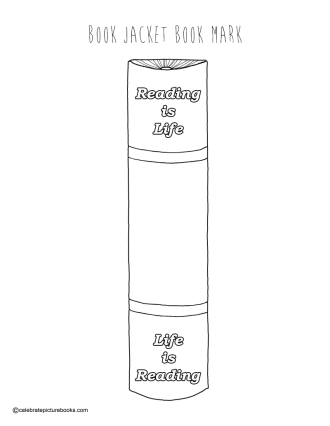
If you can’t get enough of reading, print out one—or more!—of this printable Book Jacket Bookmark. Why not add the title of a story you would write to the spine then color it before slipping it between the pages of your book?

celebrate-picture-books-picture-book-review-books-books-books-cover

You can find Books! Books! Books! at these booksellers

Amazon |Barnes & Noble | Books-a-Million | IndieBound

Picture Book Review

Picture Book Review

November 6 – National Pet Awareness Month

celebrate-picture-books-picture-book-review-pirate's-perfect-pet-cover

About the Holiday

Let’s give a shout-out to our best friends! Who are they? Our pets, of course! Small (or large) and fury (or feathered or scaled or finned), our pets give us unconditional love and loads of happiness. Just watching them navigate their day is entertaining and educational. National Pet Awareness Month was established to celebrate these in-home pals and remind pet owners to ensure that their pets have everything they need to live a long and healthy life. This month take extra time to have fun with your pet!

Pirate’s Perfect Pet

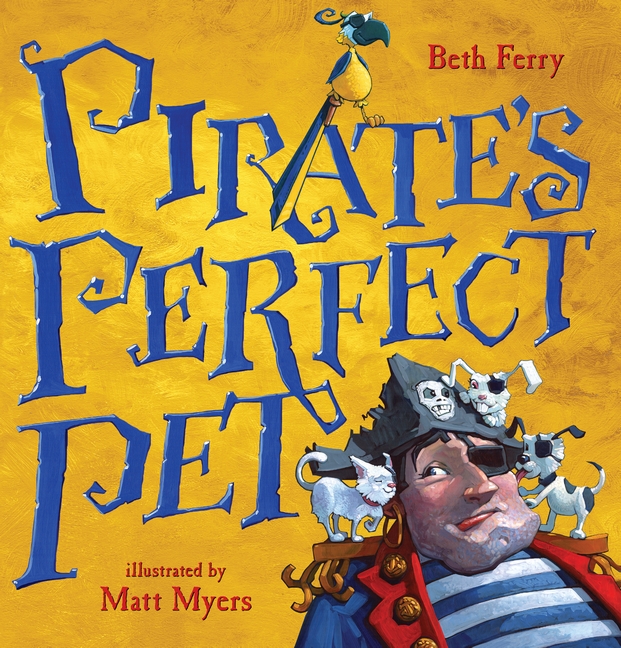
Written by Beth Ferry | Illustrated by Matt Myers


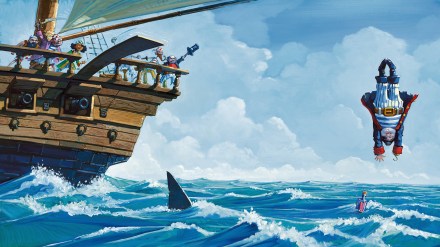
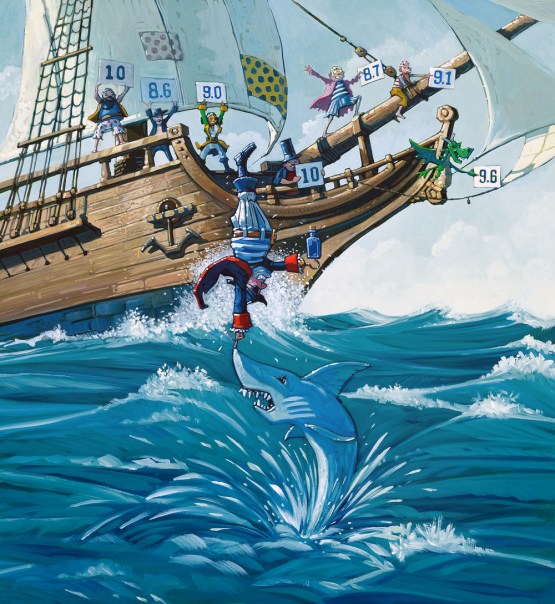
In the vast ocean teeming with sharks, Captain Crave noticed a small bottle bobbing just off the port side of his ship. With a bound from the plank, he dove into the sea and retrieved it. As he balanced himself on the tip of a shark’s nose and the bottle on the tip of his hook, the captain’s crew cheered and held up scores of 8.6 to 10 for his performance.

celebrate-picture-books-picture-book-review-pirate's-perfect-pet-dive

Image copyright Matt Myers, 2017, courtesy of Myerspaints.com.

Back on deck, Captain Crave uncorked the bottle and unrolled the message. It was a letter from his mum. She had found a “lovely list” in Be Your Best Buccaneer magazine and was sending it on along with a doubloon for his treasure chest. He passed the list on to his first mate, who read aloud: “‘Think you’re the Perfect Pirate Captain? Use our handy checklist to be sure.’”

celebrate-picture-books-picture-book-review-pirate's-perfect-pet-retrieving-bottle

Image copyright Matt Myers, 2017, courtesy of Myerspaints.com.

On the list was “Ship?” “‘Check,’ replied the captain.” He could also check off courage and daring, treasure, eye patch, and hook; he was still working on peg leg. But then the first mate got to “pet.” Captain Crave was surprised, but he wanted to be the best buccaneer he could. “‘Well, shuck me an oyster and set sail for land. We needs to find me a pet,’” he said.

celebrate-picture-books-picture-book-review-pirate's-perfect-pet-first-mate

Image copyright Matt Myers, 2017, courtesy of Myerspaints.com.

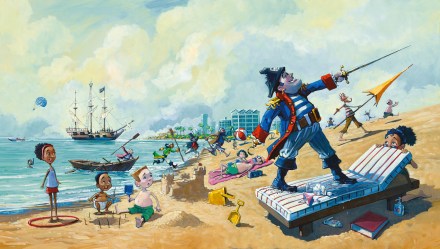
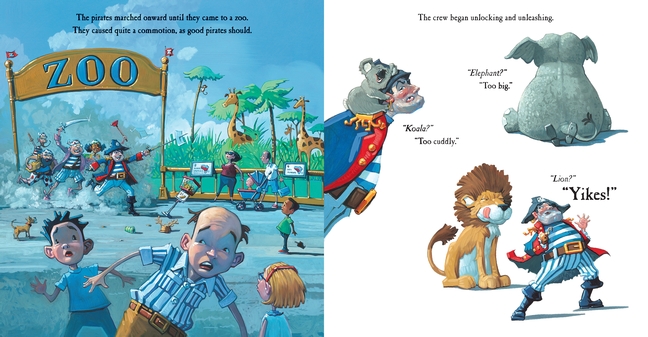
When they landed on the beach, they were happy to see that “they caused quite a commotion, as good pirates should.” They immediately began searching for a pet. The crab was “‘too cranky,’” the octopus was “‘too clingy,’” and the clam was “‘too quiet.’” They left the beach and headed to a farm, where again they caused a commotion. They checked out a goat, a donkey, and  a goose, but none of them seemed perfect either.

celebrate-picture-books-picture-book-review-pirate's-perfect-pet-beach

Image copyright Matt Myers, 2017, courtesy of Myerspaints.com.

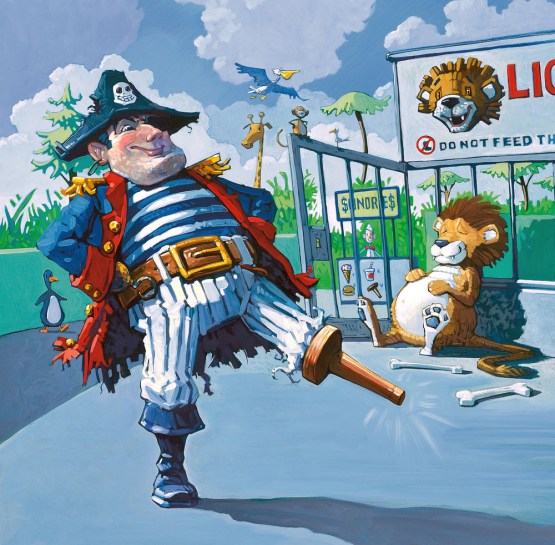
When they entered the zoo, you can imagine the commotion they caused. Here, they tried out an elephant that was “‘too big,’” a koala that was “‘too cuddly,’” and a lion that was just “‘Yikes!’” But the trip wasn’t a total loss. By the end of it, Captain Crave was able to check “peg leg” off the Best Buccaneer list. The zookeeper had an idea on where the pirates could look and drove them straight to the Pet Emporium.

celebrate-picture-books-picture-book-review-pirate's-perfect-pet-peg-leg

Image copyright Matt Myers, 2017, courtesy of Myerspaints.com.

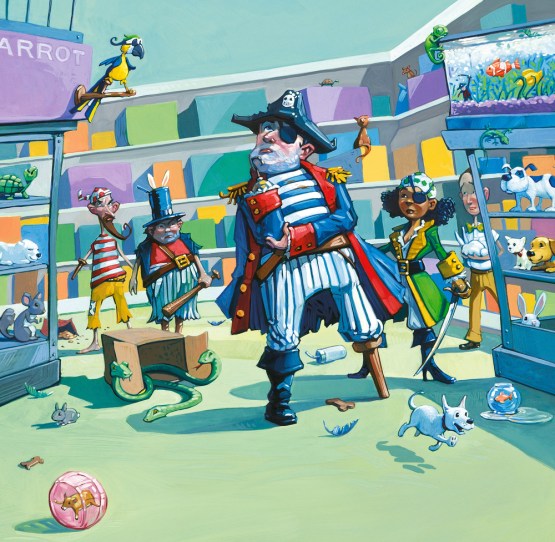
The pirates couldn’t believe how many pets there were to choose from. Captain Crave took a stroll around the shop and then heard a squawk. Just as he gazed upward, he was bombarded by a splat. “‘I’ve been poop-decked,’ he yelled.” His crew were incensed and chased the parrot around the store. They even wondered if they should eat it.

But Captain Crave took a good long look at the parrot, who had landed on his hook. He could see that the parrot was brave, he knew that it had “caused quite a commotion,” and when he asked the parrot, “‘Do ye happen to know—in land, sea, or sky—any pirate-worthy pets?’” The parrot had an answer. Giving up his mum’s shiny doubloon, Captain Crave left the Pet Emporium with the perfect pet on his shoulder.

celebrate-picture-books-picture-book-review-pirate's-perfect-pet-pet-emporium

Image copyright Matt Myers, 2017, courtesy of Myerspaints.com.

Readers will love Beth Ferry’s raucous and riotously funny pirate adventure where the treasure sought isn’t gold or jewels but something more valuable—a beloved pet. Along the way, kids will adore Ferry’s dialogue-rich storytelling that includes plenty of clever “pirate speak” and a brilliant bit on how the Captain attains his desired peg leg. With a nod toward a bird’s talent for target shooting, Ferry taps into her audience’s sense of humor, and as the captain finds his perfect pet, kids will also giggle at the parrot’s puns.

celebrate-picture-books-picture-book-review-pirate's-perfect-pet-zoo

Image copyright Matt Myers, 2017, text copyright, Beth Ferry, 2017. Courtesy of Candlewick Press.

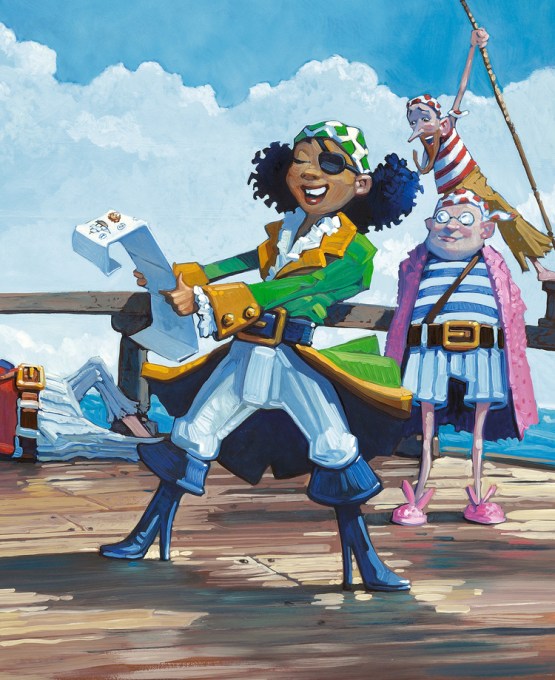
Matt Myers’ pirate crew is one wild bunch of scallywags—or are they? With a love for mum, pink bunny slippers, and a treasure chest that includes candy and a teddy bear, this mob seems closer to their readers in personality than to historical swashbuckling swaggerers. Kids will laugh out loud as Captain Crave and his pirates run amok at the beach, farm and zoo; “try on” possible pets, and discover the perfect companion.

Amid the commotion, Myers’ vibrant and detailed illustrations ramp up (plank up?) the humor: the ship’s figure head joins in the judging of the captain’s daring-do, a goat nibbles the captain’s pants, exposing his polka-dotted boxers, the no-feeding warning above the lion’s cage includes a picture of a boot with a slash across it, and even the skull on Captain Crave’s hat demonstrates its opinion of the new crew member.

For pirate—and pet—lovers Pirate’s Perfect Pet is a treasure to be added to home, school, and library bookshelves.

Ages 4 – 8

Candlewick Press, 2017 | ISBN 978-0763672881

Discover more about Beth Ferry and her books—available now and upcoming—on her website.

Step into the galleries of Matt Myers to view an incredible array of artwork on his website.

National Pet Awareness Month Activity

celebrate-picture-books-picture-book-review-pet-maze

Find the Pet Maze


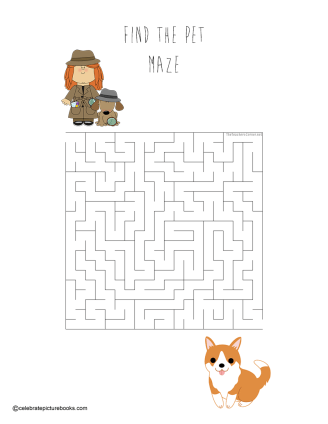
Finding the perfect pet can take time! In this printable Find the Pet Maze, a young detective is on the case! Can you help? Here’s the Solution!

Picture Book Review

November 5 – Zero Tasking Day

celebrate-picture-books-picture-book-review-lets-do-nothing-cover

About the Holiday

So that time of year has come around again—the time change, but the good one, the one where we gain an extra hour of sleep. But what to do with that extra hour? Should we really spend it sleeping when there are so many other things we can or should do? The people who instituted Zero Tasking Day says “Yes!” Or at least they think we should take it easy and relax. In the spirit of the holiday, why don’t we stretch that one hour into…say…twenty-four? A full day of Zero Tasking soundsszzzzzzzzzzzzz…

Let’s Do Nothing!

By Tony Fucile


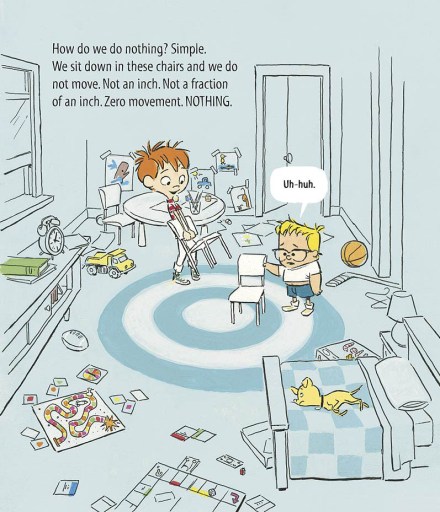
Frankie and Sal have run out of things to do. They’ve already “played every sport invented, painted more pictures in a day than van Gogh did in a lifetime, and baked enough cookies to feed a small country.” They’ve even played all their board games and read all their comic books. All they need is ten seconds of nothing and they’ll be ready to go again.

celebrate-picture-books-picture-book-review-lets-do-nothing-statues

Copyright tony Fucile, 2012, courtesy of Candlewick Press.

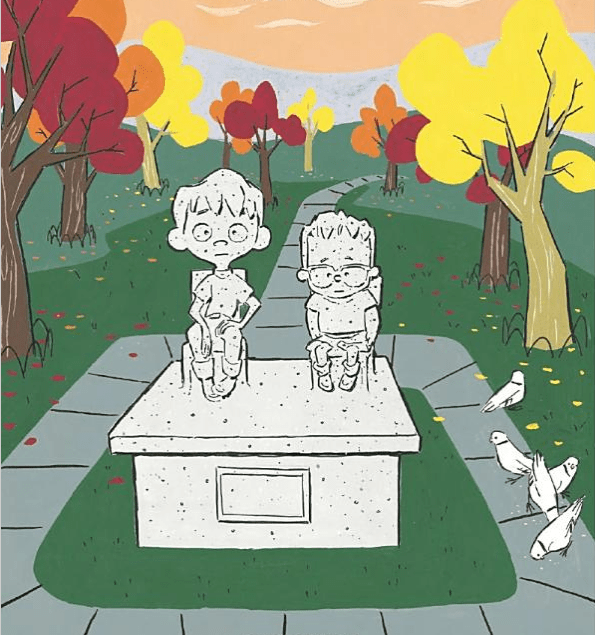
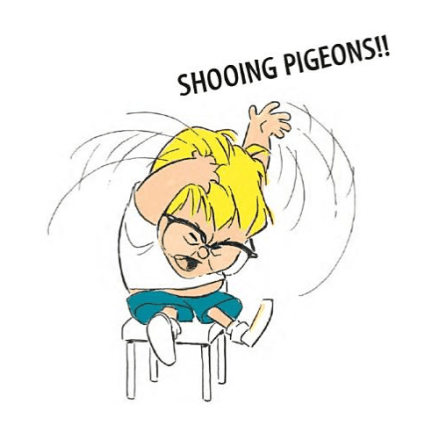
Hey! That’s a great idea! But how do they do it? Simple Sal says. They just sit in their chairs without moving an inch. They can pretend to be statues like the ones in the park. Frankie’s up for it, but it’s not long before he’s covered in pigeons that need vigorous shooing. Shooing is definitely doing something, so Sal decides they’ll be two giant redwood trees in the middle of a grove.

celebrate-picture-books-picture-book-review-let's-do-nothing-in-park

Copyright tony Fucile, 2012, courtesy of Candlewick Press.

Things are going well until a little dog comes along and relieves himself on Frankie’s…um…trumk. Sal wonders where Frankie dreamed that one up. He looks around and spies his little dog curled up on the bed asleep. Well, Sal has an even taller idea. He thinks Frankie would make a great Empire State Building. “No silly pigeons or puny dog could rattle the likes of you, oh majestic one!” Sal states. “Can you do it, sir?” “Yeah!” Frankie exclaims.

celebrate-picture-books-picture-book-review-let's-do-nothing-shooing-pigeons

Copyright tony Fucile, 2012, courtesy of Candlewick Press.

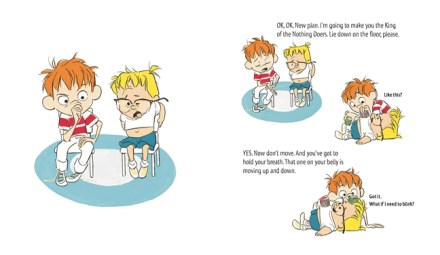
But within seconds Frankie feels the creeping hands and feet of King Kong climbing up his side. “HELP!!!” he wails. If it’s a king Frankie wants, it’s a king he’ll get with Sal’s next plan. Sal makes Frankie lie on the floor and places a block on his tummy and one on his forehead. Frankie is now the king of the nothing doers, and he must keep the blocks still. No moving. No breathing. No blinking. Frankie’s eyes begin to burn.

“Close them,” suggests Sal, but Frankie reminds him that closing his eyes isn’t doing nothing either. Then Sal has a revelation: It’s impossible to do nothing. This changes everything! “You know what we have to do now, don’t ya?” Sal says….“LET’S DO SOMETHING!”

celebrate-picture-books-picture-book-review-lets-do-nothing-king

Copyright tony Fucile, 2012, courtesy of Candlewick Press.

Tony Fucile’s laugh-out-loud romp through an afternoon where even boredom isn’t boring will have kids itching to do nothing with Frankie and Sal. Readers will relate as Frankie’s imagination gets the better of him during his few moments of inactivity. Wise-cracking, garrulous Sal and fidgety, reticent Frankie are perfect foils for this buddy picture book with a universal theme that’s resolved in a most kid-friendly way. Fucile’s cartoon-style illustrations enhance the humor as Frankie is beset by imaginary problems even when sitting still, and Sal patiently thinks up new scenarios.

For exuberant read-aloud story times, adding Let’s Do Nothing! to home or classroom libraries is certainly the thing to do.

Ages 4 – 8

Candlewick Press, 2012 | ISBN 978-0763652692

Let’s watch this Let’s Do Nothing! book trailer!

Zero Tasking Day Activity

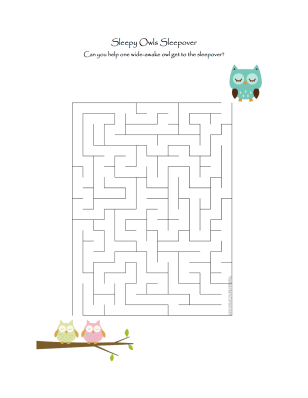
celebrate-picture-books-picture-book-review-sleepy-owls-maze

Sleepy Owls Sleepover Maze


One wide-awake owl wants to join friends as a sleepover. Can you help bring them together in this printable Sleepy Owls Sleepover Maze. Here’s the Solution!

Picture Book Review

November 4 – It’s Historic Bridge Awareness Month

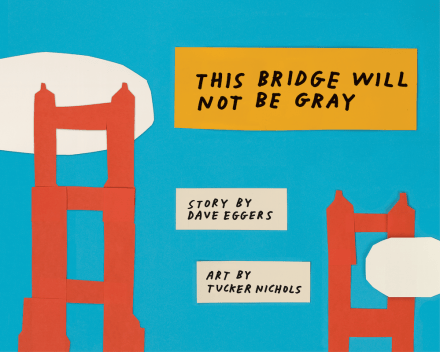
celebrate-picture-books-picture-book-review-this-bridge-will-not-be-gray-cover

About the Holiday

Bridges can do so much more than just take vehicles and people over waterways or highways. Many are beautiful structures that enhance the skyline or environment in which they’re found. Covered bridges, stone bridges, and soaring steel and cable bridges all inspire awe in their own way. Unfortunately, many older bridges are slated for destruction or replacement. To honor this month’s holiday, visit a historic bridge in your area or research famous bridges of the past and present.

This Bridge Will Not Be Gray

Written by Dave Eggers | Illustrated by Tucker Nichols


“In the beginning there was a bridge.” Well, to back up a bit there was a bay that led to the Pacific Ocean. The opening between the two shores that enclosed the bay was called the Golden Gate. “On one side of the Golden Gate was the Presidio, a military base at the top of the city of San Francisco. On the other side there were only hills, green and yellow, rising high above the sea.” Beyond these hills towns dotted the coastline.

People traveled between these shores by boat or by driving way out of their way. Many times people had thought about building a bridge across the bay, but they were afraid it would ruin the beauty of the land. At last it was decided that a bridge should be built. The year was 1928 and Joseph Strauss, an expert on bridges, was hired to design it. What he came up with looked more like the skeleton of a roller coaster, and while it would be strong, it would also be ugly.

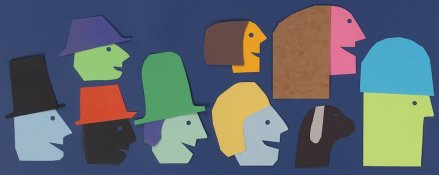
celebrate-picture-books-picture-book-review-this-bridge-will-not-be-gray-people

Image copyright Tucker Nichols, courtesy of mcsweeneys.net

People agreed that for such a beautiful spot, a beautiful bridge was needed. Joseph Strauss then asked for help in developing a plan for the bridge. Leon Moisseiff, known for designing the Manhattan Bridge in New York, came on board. Leon’s idea was for “a suspension bridge, one with swooping lines and tall towers.” The drawings were light and airy and…beautiful. People liked it very much.

“But still the bridge appeared a bit stern in style. So Joseph and Leon asked another person, named Irving Morrow, to help out.” Irving and his wife Gertrude had a different idea about what the bridge could be. With vertical fluting, “art deco flourishes,” pedestrian walkways, and curved lamps lighting the way, “the bridge could be both a bridge and something like art.”

Steelworkers in Maryland, Pennsylvania, and New Jersey built the pieces of the bridge. They were shipped to California by train and by boat. Finally, it was time to construct the bridge. Men had to dive deep into the icy waters of the Pacific Ocean and climb high into the sky while constructing it. It was estimated that it would take 4 years and thousands of workers to finish it.

celebrate-picture-books-picture-book-review-this-bridge-will-not-be-gray-irving-morrow

Image copyright Tucker Nichols, courtesy of mcsweeneys.net

First the tall towers were constructed. The day they were finished was one of “jubilation” and awe as“sometimes the things humans make baffle even the humans who make them. One aspect of the bridge that had not been decided was the color, and many people had opinions on that. “The Navy thought it should be yellow and black so that ships and planes could easily see it.”

“The Army wanted it to look like a candy cane for the same reason the Navy wanted it to look like a tiger with jaundice: so that it would be easily seen by planes and ships.” Most people, though, thought the bridge should be painted black, white, or gray like most other monuments, towers, and buildings. Right now, the bridge was orange—coated with a special anti-rust paint. As Irving Morrow watched the bridge go up, he thought this orange was a beautiful color.

He suggested that the bridge be allowed to stay this color. Others thought he was “nuts.” Never had there been an orange bridge before, “and for a good portion of the human race, because something has not already been, that is a good reason to fear it coming to be.” But the people of San Francisco began to see things Irving’s way. Still, gray seemed to be the safe choice.

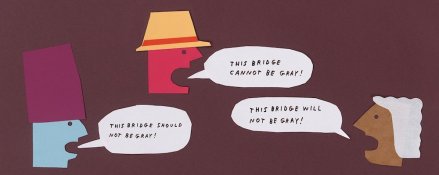
celebrate-picture-books-picture-book-review-this-bridge-will-not-be-gray-people-talking

Image copyright Tucker Nichols, courtesy of mcsweeneys.net

Irving, who was usually a shy and quiet sort, began to get vocal about his color preference as the completion date of the bridge came closer. Other’s began to echo his thoughts and arguments. “This bridge will not be gray!” they said. At last “the powers that be” agreed with Irving. The bridge remained orange: International Orange, in fact.

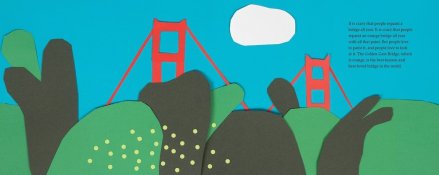
But because the wind, rain, and sun are harsh on the orange bridge, it needs to be repainted every year. Every day some part of it is being painted by dedicated workers. Is that crazy? Maybe, “But people love to paint it, and people love to look at it. The Golden Gate Bridge, which is orange, is the best-known and best-loved bridge in the world” because it is “bold and courageous and unusual and even strange.”

celebrate-picture-books-picture-book-review-this-bridge-will-not-be-gray-golden-gate-bridge

Image copyright Tucker Nichols, courtesy of mcsweeneys.net

San Francisco resident Dave Eggers has written a loving tribute not only about the very distinctive Golden Gate Bridge but to the equally distinctive, quirky, and even courageous Irving Morrow, other architects, and people of the Bay area who saw and championed art where others may only have seen function. Passages of straightforward narration are joined by rivets of whimsically inserted dialogue, soaring description, and moving insight to construct a lyrical story of vision and inspiration that both kids and adults will find fascinating.  

Tucker Nichols’ paper cut illustrations are as playful and full of imagination as a kindergarten classroom. Using simple shapes and a gorgeous palette Nichols crafts portraits, collages, and landscapes that are movingly effective in depicting the San Francisco Bay area, the rising Golden Gate Bridge, and the personalities involved in this fun history of a beloved monument.

This Bridge Will Not Be Gray is a must for school and public libraries, a wonderfully inspiring addition to children’s bookshelves, and a colorful coffee table book for any home.

Ages 4 – 10 and up

McSweeney’s, 2015 | ISBN 978-1940450476

Click here to learn more about Tucker Nichols and his work.

Historic Bridge Awareness Month Activity

celebrate-picture-books-picture-book-review-golden-gate-bridge-coloring-page

Golden Gate Bridge Coloring Page


Get out your markers, colored pencils, or crayons and color this printable Golden Gate Bridge Coloring Page!

Picture Book Review
November 3 – World Jellyfish Day

celebrate-picture-books-picture-book-review-peanut-butter-and-jellyfish-cover-2

About the Holiday

Jellyfish may be some of the most fascinating creatures in the sea, and they are certainly among the most beautiful. Often seen in groups—called swarms, blooms, or smacks—these ancient ocean invertebrates can be transparent, yellow, red, blue, and even effervescent. Jellyfish capture prey and defend themselves by emitting toxins through painful stings. To celebrate today’s holiday, visit a local aquarium or—if you live in a climate where jellyfish are present at this time of year, head to the beach to watch them in their natural habitat.

Peanut Butter and Jellyfish

By Jarrett J. Krosoczka


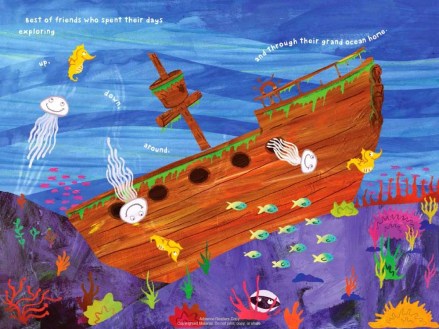
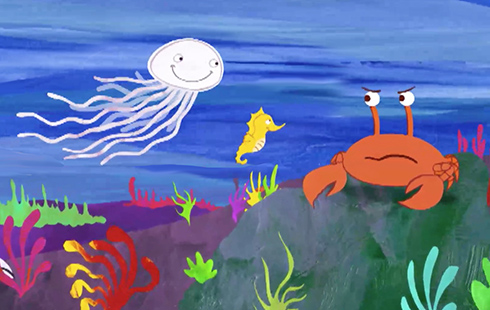
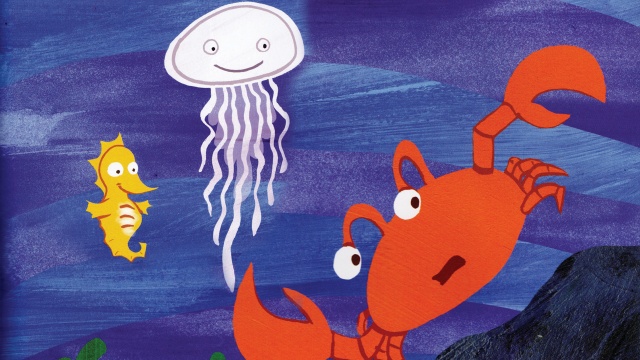
Peanut Butter, a little seahorse, and Jellyfish were best friends who loved to explore the ocean and all its treasures together. Unfortunately, their adventures always seemed to take them past Crabby, “who would taunt as they slipped by, ‘You guys swim like humans.’” Jellyfish and Peanut Butter tried to ignore him, pretending they didn’t hear his hurtful jibes, but “Crabby was relentless. ‘You guys smell like rotten barnacles! Pee-yew!’” He compared them unflatteringly to sea slugs and his grandmother’s “run-walk shoes,” and ended with “what a bunch of bubbleheads!”

celebrate-picture-books-picture-book-review-peanut-butter-and-jellyfish-shipwreck

Copyright Jarrett J. Krosoczka, 2014, courtesy of Knopf Books for Young Readers.

Jellyfish bravely stood up to Crabby, saying, “‘driftwood and sea stones may break our bones, but names will never hurt us.’” Of course, Crabby had a retort to that which involved the fact that Jellyfish was an invertebrate. One day, as Peanut Butter and Jellyfish passed Crabby’s house on their way to the big reef, they steeled themselves for the insults to come. But all they heard was quiet – until the sounds of sobbing reached their ears.

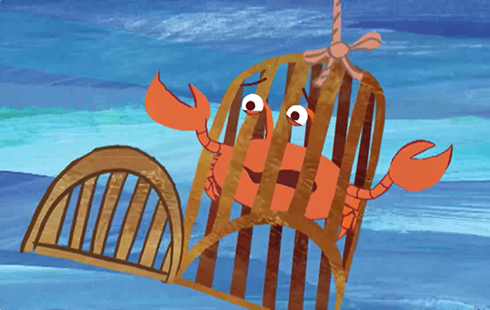
They swam on and found Crabby trapped in a lobster pot that was being pulled to the surface of the water. He called out to them that he was scared. Jellyfish and Peanut Butter looked at each other. Was it their responsibility to help Crabby? Peanut Butter thought that his situation looked pretty serious. And Jellyfish agreed. He even had a plan.

celebrate-picture-books-picture-book-review-peanut-butter-and-jellyfish-crabby

Copyright Jarrett J. Krosoczka, 2014, courtesy of Knopf Books for Young Readers.

The two friends swam up to the lobster trap, and Peanut Butter wrapped his tail around a slat in the door. When he pulled it open, however, Crabby didn’t move. Peanut Butter wanted him to hurry, but Crabby had a confession to make. He couldn’t swim, and he was afraid of heights. Now, Jellyfish had an idea.

He swam to the top of the lobster trap and with all his tentacles working feverishly, he tried to untie the knot in the rope. The trap was coming closer and closer to the fisherman’s boat. Just in the nick of time, the knot loosened, but then Crabby was hurtling to the bottom of the ocean. Peanut Butter and Jellyfish raced to catch it. “They grabbed ahold and lowered it to safety.”

celebrate-picture-books-picture-book-review-peanut-butter-and-jellyfish-taunts

Copyright Jarrett J. Krosoczka, 2014, courtesy of Knopf Books for Young Readers.

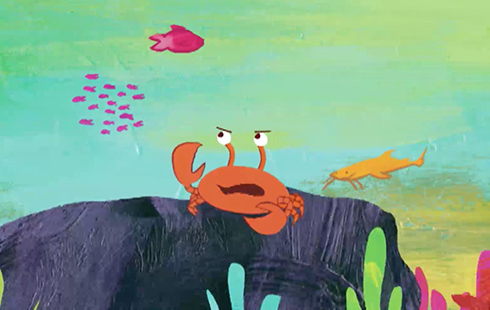
Crabby felt weak as he returned to his rock, but he stuttered out a thank you to Jellyfish and Peanut Butter. Then he told them that he was sorry for all the things he had said. “Crabby may have been afraid of heights, but he was brave enough to apologize.” Crabby admitted that he may have felt jealous of all the fun Peanut Butter and Jellyfish had “exploring the open waters.” Jellyfish told Crabby that there was “plenty to explore close to the ocean floor” too. In fact, that’s where “they found their greatest treasure.”

celebrate-picture-books-picture-book-review-peanut-butter-and-jellyfish-lobster-trap

Copyright Jarrett J. Krosoczka, 2014, courtesy of Knopf Books for Young Readers.

Jarrett J. Krosoczka’s seafaring friendship story for little ones uses humor and a generosity of spirit to teach kids a lesson about empathy. Readers may giggle over Crabby’s taunts, but they will also understand the hurt they cause Peanut Butter and Jellyfish. Following this, the kindness showed by Peanut Butter and Jellyfish toward Crabby when he is in trouble then comes as a powerfully surprising message on compassion. Crabby’s willingness to admit his fears, own up to his jealousy, and apologize, as well as the trio’s growing friendship, provides many thought-provoking topics for children to consider.

celebrate-picture-books-picture-book-review-peanut-butter-and-jellyfish-wobbly

Copyright Jarrett J. Krosoczka, 2014, courtesy of Knopf Books for Young Readers.

Krosoczka’s illustrations of the undersea world give readers plenty of details to enjoy while adorable Peanut Butter and Jellyfish take center stage. When their sweet smiles give way to wary looks, kids will know trouble is on its way. Each scene during Crabby’s entrapment and escape provide gentle suspense while demonstrating the story’s themes of understanding and acceptance. As the three explore a chest overflowing with gold in the final spread, readers can debate what the “greatest treasure” is.

Ages 3 – 7

Knopf Books for Young Readers, 2014 | ISBN 978-0375870361

Discover more about Jarrett J. Krosoczka, his books, and his art on his website.

World Jellyfish Day Activity

celebrate-picture-books-picture-book-review--jellyfish-coloring-page

Jellyfish Coloring Page


Watching a jellyfish float on the ocean current can be mesmerizing! Grab your colored pencils, markers, or crayons—and maybe some glitter too—and enjoy this printable Jellyfish Coloring Page!

Picture Book Review