September 3 – National Food Bank Day

celebrate-picture-books-picture-book-review-saturday-at-the-food-pantry-cover

About the Holiday

National Food Bank Day was established by St. Mary’s Food Bank, the world’s first food bank, which was founded by John van Hengel in Phoenix, Arizona in 1967. The idea spread throughout the country, and now St. Mary’s Food Bank distributes 250,000 meals daily with the help of staff, volunteers, and partner agencies, making it one of the largest food banks in the United States. Food banks across the country help millions of men, women, and children who live with food insecurity due to job loss, illness, and other circumstances. Many food banks offer educational opportunities that help people change their situation and begin anew. Often, those who have benefited from the programs return to volunteer and contribute to the very food bank that staved off hunger to do the same for others. To learn more about St. Mary’s Food Bank, visit their website. To find a food pantry in your area to get help for yourself, to donate, or to volunteer, visit the Ample Harvest website.

I’d like to thank Albert Whitman & Company for sharing a copy of Saturday at the Food Bank with me for review consideration. All opinions on the book are my own.

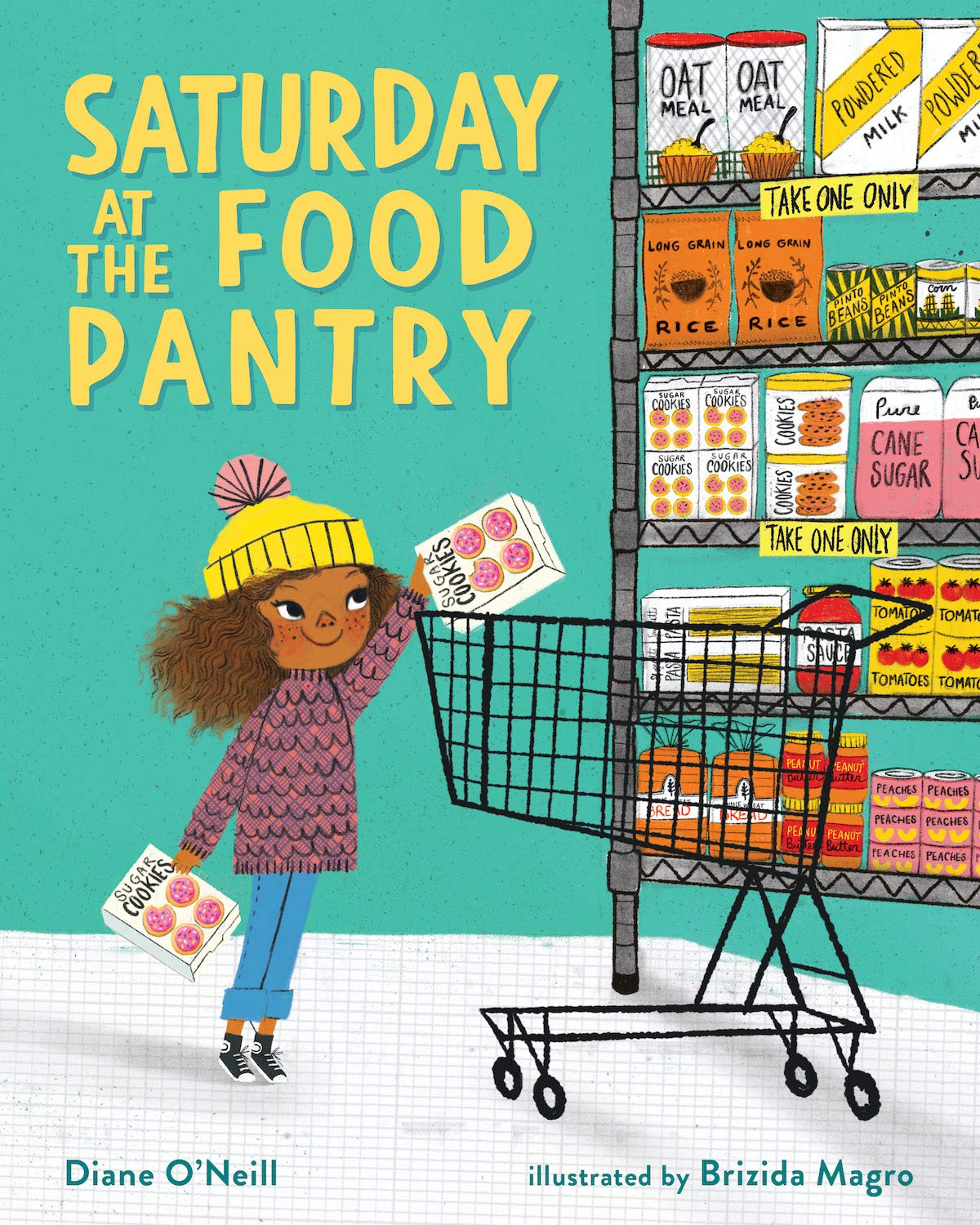
Saturday at the Food Pantry

Written by Diane O’Neill | Illustrated by Brizida Magro


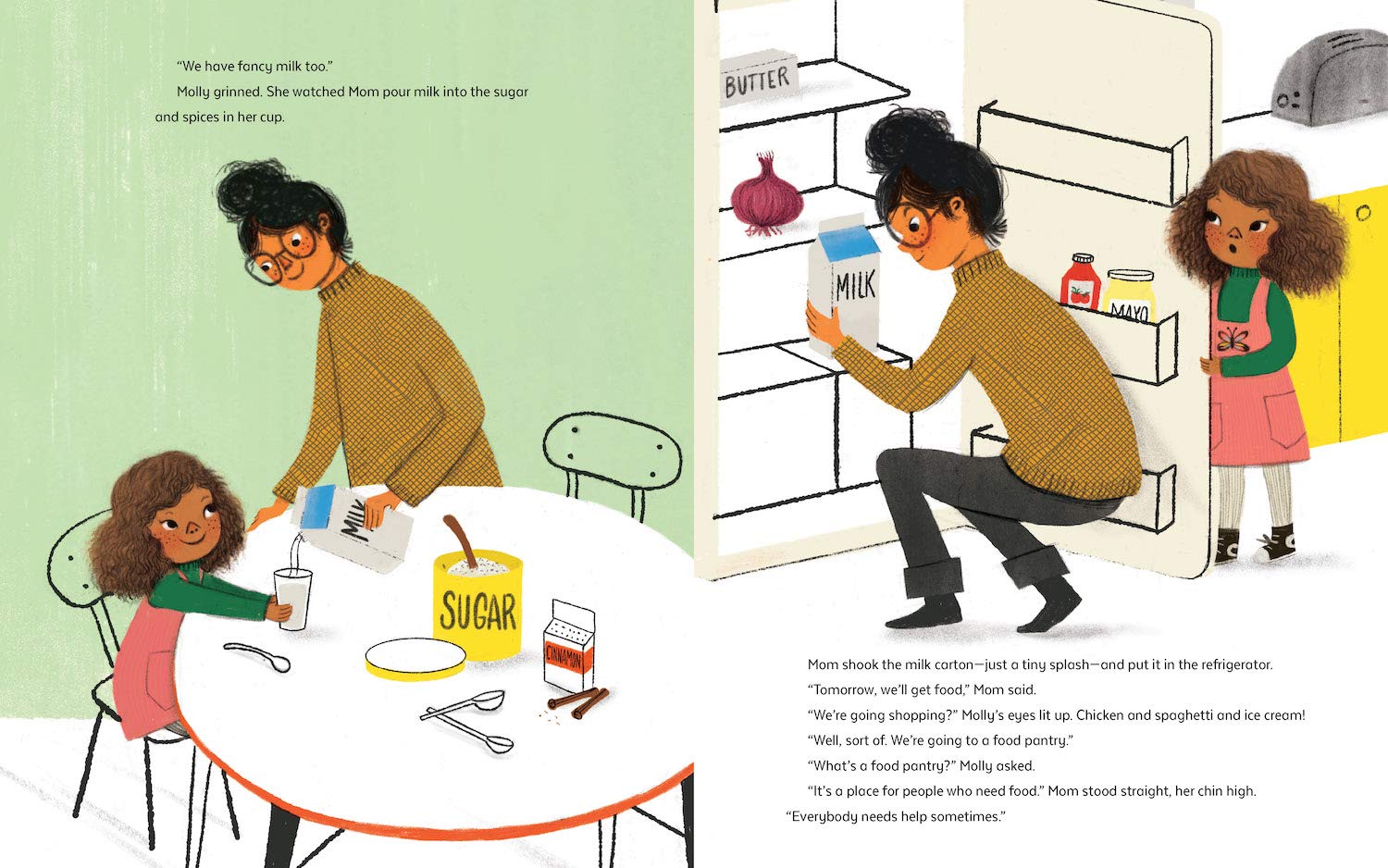
When Molly came to the table for dinner, she saw that they were having chili—again. She and her mom had eaten chili for two weeks straight. But there was “fancy milk too.” Molly smiled as her mom measured sugar and cinnamon into her glass and added milk.” There was only a splash of milk left when Mom put it back into the almost-empty refrigerator.

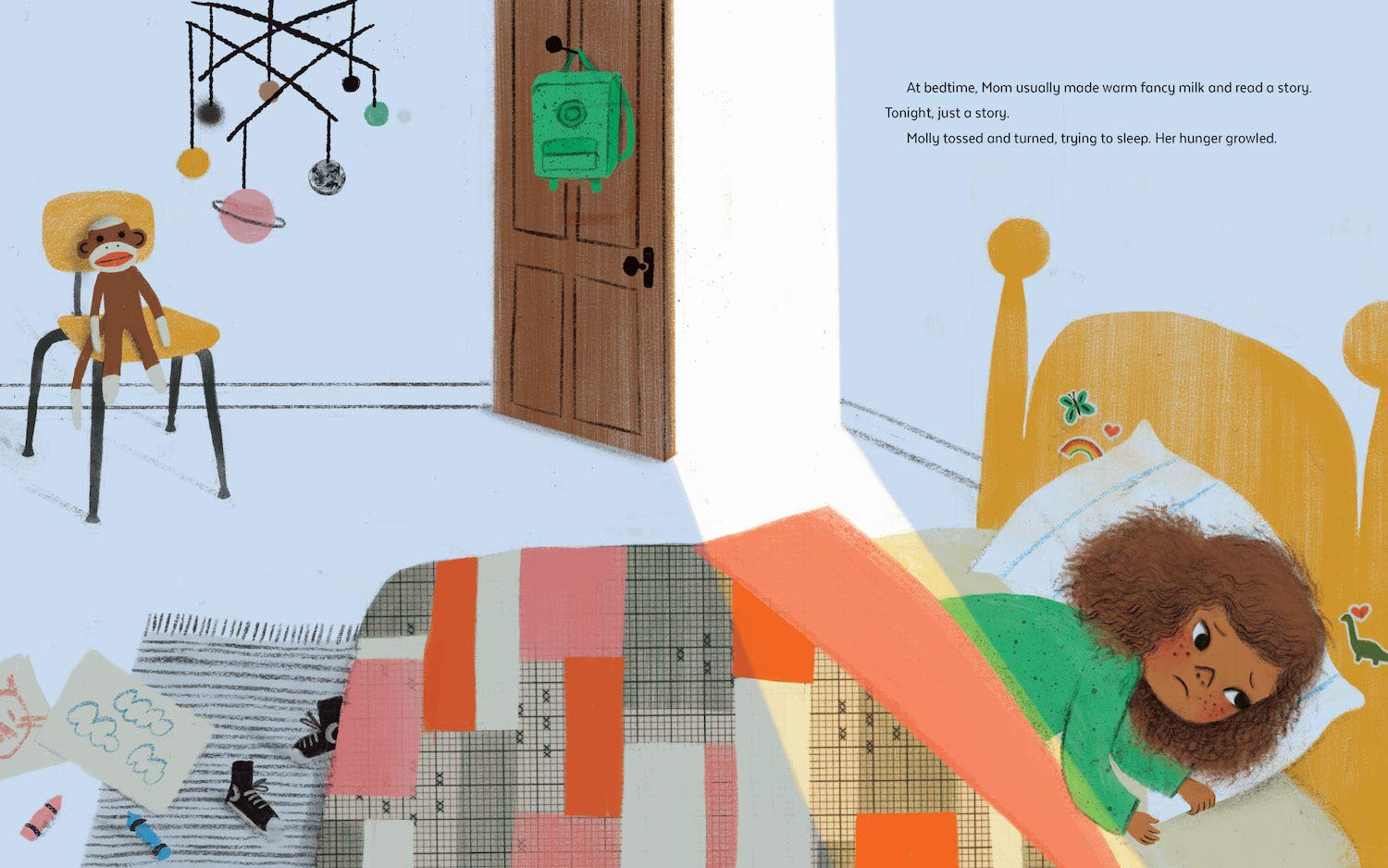
Tomorrow, Mom said, they’d go shopping. “Molly’s eyes lit up” as she imagined “chicken and spaghetti and ice cream.” But Molly’s mom tempered her expectations, saying that they’d be going to a food pantry. A food pantry, she explained, is “‘a place for people who need food…. Everybody needs help sometimes,’” she added. That night there was no warm milk before Molly went to bed and her stomach growled.
celebrate-picture-books-picture-book-review-saturday-at-the-food-pantry-milk

Image copyright Brizida Magro, 2021, text copyright Diane O’Neill. Courtesy of Albert Whitman & Company.

In the morning when Molly and her mom got to the food pantry there was already a line waiting for it to open. Molly had brought paper and crayons and sat down to draw. Then she saw a girl who was in her class at school. She called out hi, but “Caitlin looked away.” When Molly ran over, Caitlin told her she didn’t want anyone to know that she and her grandmother needed help.

Molly went back to her mom, wondering if there was “something wrong with needing help.” She wanted to go home, but she was also hungry. Molly’s mom suggested she draw a picture, and the woman in front of them asked if she’d draw one for her too. Then everyone in line seemed to want a picture. Molly ran back to Caitlin to ask for help. Caitlin sat down and began to draw too.
celebrate-picture-books-picture-book-review-saturday-at-the-food-pantry-hungry

Image copyright Brizida Magro, 2021, text copyright Diane O’Neill. Courtesy of Albert Whitman & Company.

When the door opened, Molly and Caitlin each had a picture for the woman who welcomed them in too. Molly noticed that her mom had to sign in before she got a cart and they could begin shopping. They didn’t do that at the grocery store. The shelves at the food pantry were stocked with items she recognized from the store they usually shopped with. She ran over and took a box of sugar cookies off the shelf, but her mom told her “‘They—the people in charge—they’ll want us to take sensible stuff.’” Molly felt embarrassed and couldn’t understand why the cookies were there if they couldn’t take them. She sadly returned them to the shelf. As they went to look for food, Molly thought her mom didn’t want to be seen there, either—just like Caitlin. In a whisper, Molly reminded her that everyone needs help sometimes.

They went through the store taking one can, bag, or box of the food they needed. Then Molly’s mom reached for a box of powdered milk. They could have fancy milk that night. When they got to the checkout desk, Molly and Caitlin found their drawings hanging on the wall. The man at the counter bagged their groceries and then handed Molly’s mom a box of sugar cookies. “‘Saw your little girl looking at these. She can have them, if that’s okay with you, ma’am,’” he said. Molly noticed that her mom looked like she might cry.

celebrate-picture-books-picture-book-review-saturday-at-the-food-pantry-line

Image copyright Brizida Magro, 2021, text copyright Diane O’Neill. Courtesy of Albert Whitman & Company.

As they were walking home, Molly saw Caitlin and her grandmother coming the same way. They were all happy to discover that they were neighbors. Molly’s mom explained that she’d been looking for work since the factory closed, and Caitlin’s grandma said she’d been sick. Caitlin understood, but wished they didn’t have to shop at a food pantry. But then Molly told her that “everybody needs help sometimes” and reminded her that they had helped make the man at the checkout counter feel happy with their drawings. Caitlin hadn’t thought about it that way. She smiled. Then Molly invited her and her grandmother to have lunch with them—with sugar cookies for dessert.

Following the text, a note for parents, teachers, and other caregivers from Kate Maehr, the Executive Director and CEO of the Greater Chicago Food Depository, reveals more information about food insecurity, including recent statistics and a resource where people can find help and more information.

celebrate-picture-books-picture-book-review-saturday-at-the-food-pantry-shopping

Image copyright Brizida Magro, 2021, text copyright Diane O’Neill. Courtesy of Albert Whitman & Company.

Diane O’Neill’s well-executed story about two families who need the help of a food pantry is a poignant reminder of the many people—perhaps even readers’ classmates—who face food insecurity every day. Through the experiences of Molly and her mother and Caitlin and her grandmother, readers discover what it’s like to go to bed hungry, miss out on treats, and feel ashamed to ask for help. As this is Molly and her mother’s first trip to a food pantry, Molly’s questions and observations well reflect children’s own or reassures those who are familiar with these important resources.

O’Neill’s straightforward storytelling emphasizes the fact that at one time or another everyone needs help and demonstrates simple ways that children make things better through their generosity, optimism, and acceptance. Molly and Caitlin’s budding friendship makes for an uplifting and hopeful ending and may spur readers to recognize need in their midst and extend kindness.

Through her realistic illustrations of two families in need of assistance from a food bank, Brizida Magro helps children see and understand what food insecurity and food pantries look like. At home, Molly and her mom eat small portions of leftover chili and the last full glass of milk. When Molly’s mom puts the carton in the refrigerator, the shelves are nearly empty, and Molly lies awake in bed, too hungry to fall asleep.

The line outside the food pantry is made up of people from all walks of life, and inside the displays of food replicate a grocery store with the exception of signs asking shoppers to take one item only. These images can lead to meaningful discussions on the enormity of the issue. When Molly and Caitlin draw pictures that cheer up everyone in line as well as the food pantry workers, kids will recognize not only different ways of helping but their own role in making the world a kinder place.

Empathy shines on every page of O’Neill’s necessary and welcome story. Saturday at the Food Pantry is timely, heartfelt, enlightening and a must-buy addition to home, classroom, and school and public library collections.

Ages 4 – 7

Albert Whitman & Company, 2021 | ISBN 978-0807572368

Discover more about Diane O’Neill and her work on her website.

You can connect with Brizida Magro on Instagram.

celebrate-picture-books-picture-book-review-saturday-at-the-food-pantry-cover

You can find Saturday at the Food Pantry at these booksellers

Amazon | Barnes & Noble | Books-a-Million

To support your local independent bookstore, order from

Bookshop | IndieBound

Picture Book Review

July 8 – Math 2.0 Day

celebrate-picture-books-picture-book-review-the-animals-would-not-sleep-cover

About the Holiday

Established in 2009, Math 2.0 Day celebrates math and technology and how these two disciplines complement each other. The day was conceived to bring together mathematicians, programmers, engineers, educators, and managers to raise awareness of the importance of math literacy at all levels of education. For kids a love of math and technology begins early as they experiment and explore every day during playtime, family time and even, as today’s book shows, at bedtime.

Thank you to Charlesbridge for sending me a copy of  The Animals Would Not Sleep! for review consideration. All opinions about the books are my own.

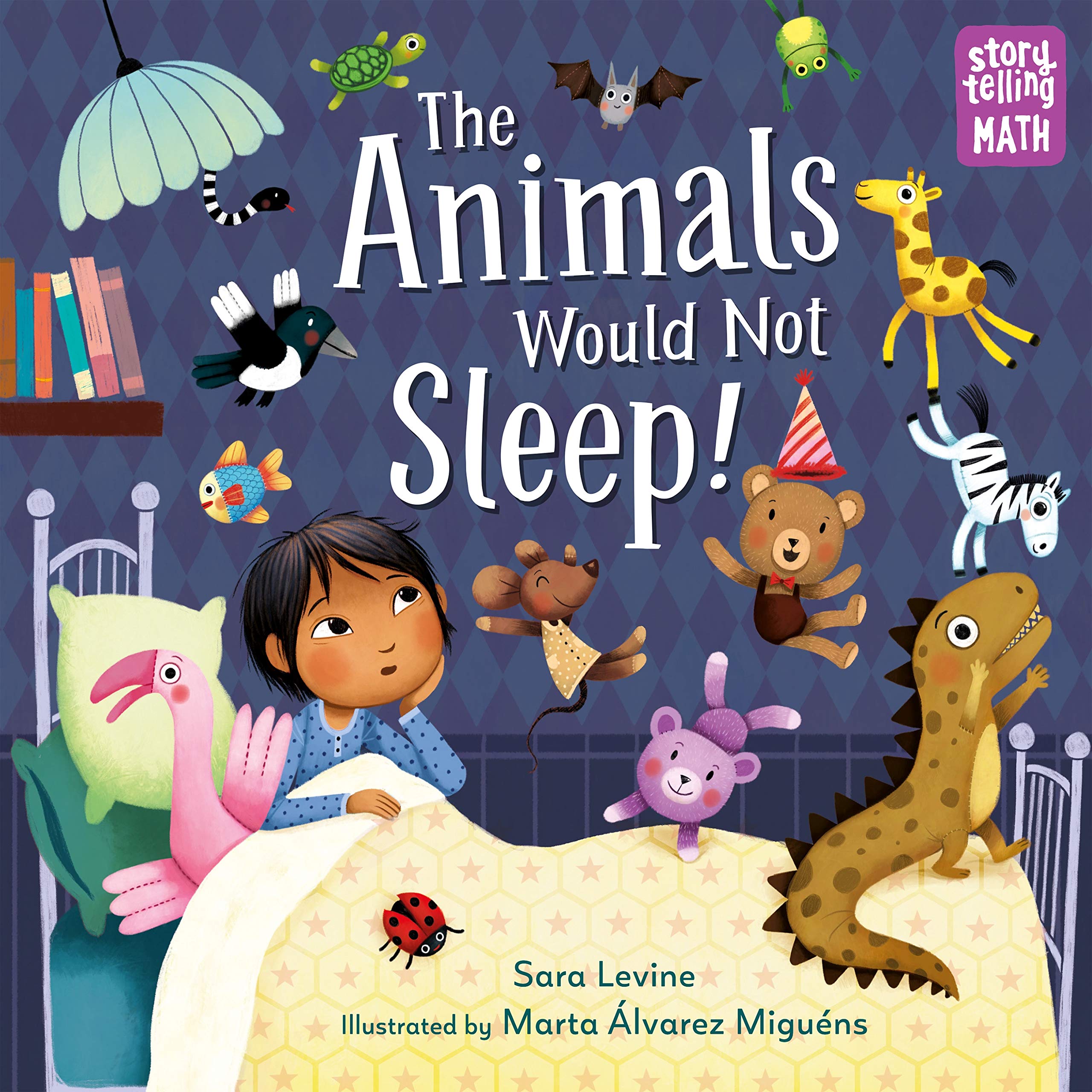
The Animals Would Not Sleep!

Written by Sara Levine | Illustrated by Marta Álvarez Miguéns


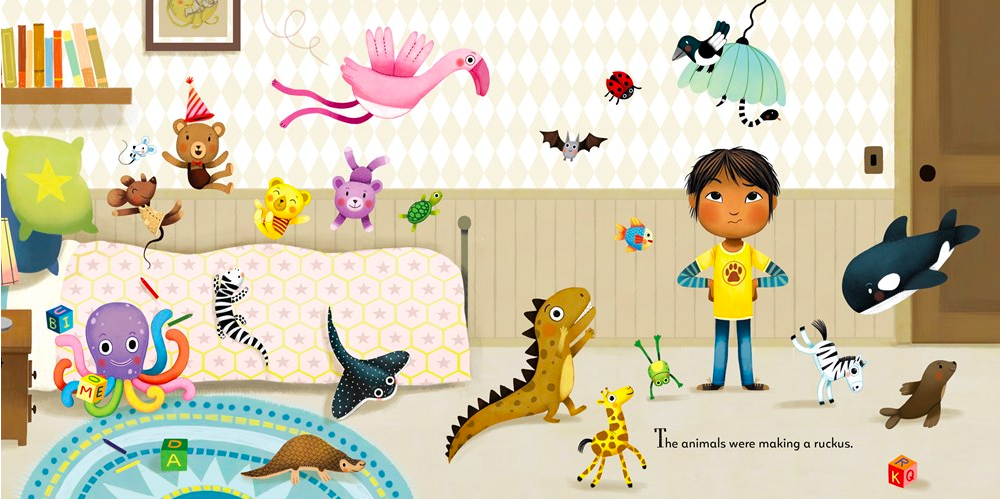
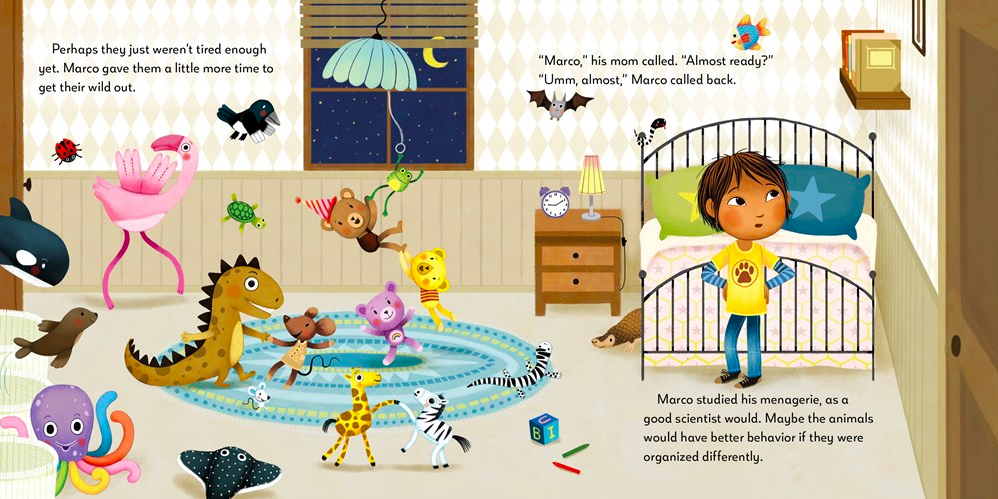
All of Marco’s stuffed “animals were making a ruckus” when his mom told him it was time to get cleaned up and ready for bed. She wanted to see all the toys put away, so Marco, who thought like a scientist, got to work. He wanted to sort his animals like a scientist would, so he got out three baskets and made signs for Flying Animals, Swimming Animals, and Animals That Move on Land. Then he picked up his dancing flamingo, bird, bat, and ladybug and put them in the first basket. He placed his octopus, stingray, frog, fish, whale, and seal in the second basket, and his dinosaur, giraffe, bears, snake, pangolin, gecko, mice, and zebra in the third basket.

But the animals were still wide awake, and “they egged one another on until not one remained in its container.” Marco thought they would settle down, but when his mom called the second time, he reconsidered his strategy. This time he made signs that sorted the animals by color, but zebra started to cry. He was afraid being in such close quarters with black-and-white snake and stingray, plus he missed his friend giraffe.

celebrate-picture-books-picture-book-review-the-animals-would-not-sleep-ruckus

Image copyright Marta Álvarez Miguéns, 2020, text copyright Sara Levine, 2020. Courtesy of Charlesbridge.

Marco decided to try again. He took all of his animals out and made signs that read Small, Medium, and Large. Things seemed to quiet down, so Marco began to put on his pajamas. But then he heard moaning and groaning coming from the Large basket. When he went to check, Dinosaur and Dancing Flamingo complained about being too cramped. Plus, Dancing Flamingo missed Rainbow Bear. Then he heard noises from the Small basket. Those animals weren’t happy either.

Marco’s mom gave him two minutes to get it all sorted out. Fortunately for Marco, being a scientist meant “he was used to coming up with ideas and thinking outside the box.” The animals were getting tired, and Yellow Bear had just burst into tears for no apparent reason. Like a good scientist, Marco cared about his animals and wanted them to be happy. He had one more sorting idea. With the large animals, medium-sized animals, and small animals all tucked in with plenty of room and their friends nearby on Marco’s bed, Marco got under the cozy covers. He got a goodnight kiss from Mom and then they all fell happily to sleep.

Back matter includes an illustrated Author’s Note about the way scientists sort, or classify, animals by their characteristics as well as a discussion that explores the math in the story. “Try This!” tips provided by Karen Economopoulos, co-director of the Investigations Center for Curriculum and Professional Development at TERC, give adults ideas for various ways to engage children in sorting.

celebrate-picture-books-picture-book-review-the-animals-would-not-sleep-marco

Image copyright Marta Álvarez Miguéns, 2020, text copyright Sara Levine, 2020. Courtesy of Charlesbridge.

Perfectly capturing the way young children interact with their toys, Sara Levine combines imagination and scientific thinking in her inventive story, part of the Storytelling Math series from Charlesbridge. In Marco, who’s proud of his scientific thinking, Levine shows readers that they, too, already think like a scientist. Marco’s empathy for his animals’ complaints will get kids thinking about classification and the various ways they might sort the animals. Levine’s use of realistic dialogue that echoes bedtime routines in many homes and gives each character—human and animal—distinct personalities will draw kids in to this charming story that is organically infused with strong math lessons. Levine gives Marco a sweet final solution to his problem that will please kids and have them wanting to extend the lessons in the story to their own toys and/or household objects while they think like a scientist too.

Marta Álvarez Miguéns opens the story with an enchantingly wild two-page spread where Marco stands in the middle of his room as his toys bounce on the bed, climb blocks, juggle, fly, and cause a ruckus. Turn the page, though, and these animals now lie motionless around the room as Mom peeks in to check on Marco. When Marco sorts his animals into the baskets, readers can clearly see which animals go where and why. Kids will knowingly giggle when the just-sorted animals spring from their resting places to prolong bedtime. Miguéns also plainly depicts Marco’s and the animals’ facial expressions from happy and playful to sad and crying to peaceful and satisfied. These images give adults and children an opportunity to discuss emotions and how to recognize various clues in faces, a skill important for social-emotional learning. Vivid colors, adorable animals, details such as alphabet blocks that stack or are turned to spell words, and kid-appealing décor will have kids wanting to come back again and again.

A book that’s sure to become a favorite at bedtime or to enhance classroom or homeschooling curriculum, The Animals Would Not Sleep! will spark mathematical and scientific thinking and recognition in all young learners. The book offers an irresistible invitation to experiment and interact with math and science and is a must for home, school, and public library collections.

Ages 3 – 6

Charlesbridge, 2020 | ISBN 978-1623541286 (Hardcover) | ISBN 978-1623541972 (Paperback) 

Discover more about Sara Levine and her books on her website.

To learn more about Marta Álvarez Miguéns, her books, and her art, visit her website.

About Storytelling Math

Storytelling Math offers books that celebrate children using math in their daily lives as they play, build, collaborate, compromise, and discover the world around them. Each story features characters of color who are empowered to solve problems, enjoy activities, and help out using their knowledge of and experimenting with math. Free downloadable hands-on activity kits are available for each book on the Charlesbridge website. Sharing these joyful stories with your littlest ones and older kids will make them eager to explore, use, and learn more about math every day. You can learn more about Storytelling Math on the Charlesbridge website

Storytelling Math: Math, Diversity, and the Power of Story was developed with Marlene Kliman at TERC—a nonprofit dedicated to STEM education—under a grant from the Heising-Simons Foundation.

Enjoy this The Animals Would Not Sleep! trailer with Author Sara Levine!

National Book Month Activity

celebrate-picture-books-picture-book-review-the-animals-would-not-sleep-activity-logo

The Animals Would Not Sleep! Activity Kit


You can have fun sorting and exploring math with your class or family with the Activity Kit for The Animals Would Not Sleep on the Charlesbridge website. Download it here!

The Animals Would Not Sleep Activity Kit

celebrate-picture-books-picture-book-review-the-animals-would-not-sleep-cover

You can find The Animals Would Not Sleep! at these booksellers

Amazon | Barnes & Noble | Books-a-Million

To support your local independent bookstore, order from

Bookshop | IndieBound

Picture Book Review
June 11 – Making Life Beautiful Day

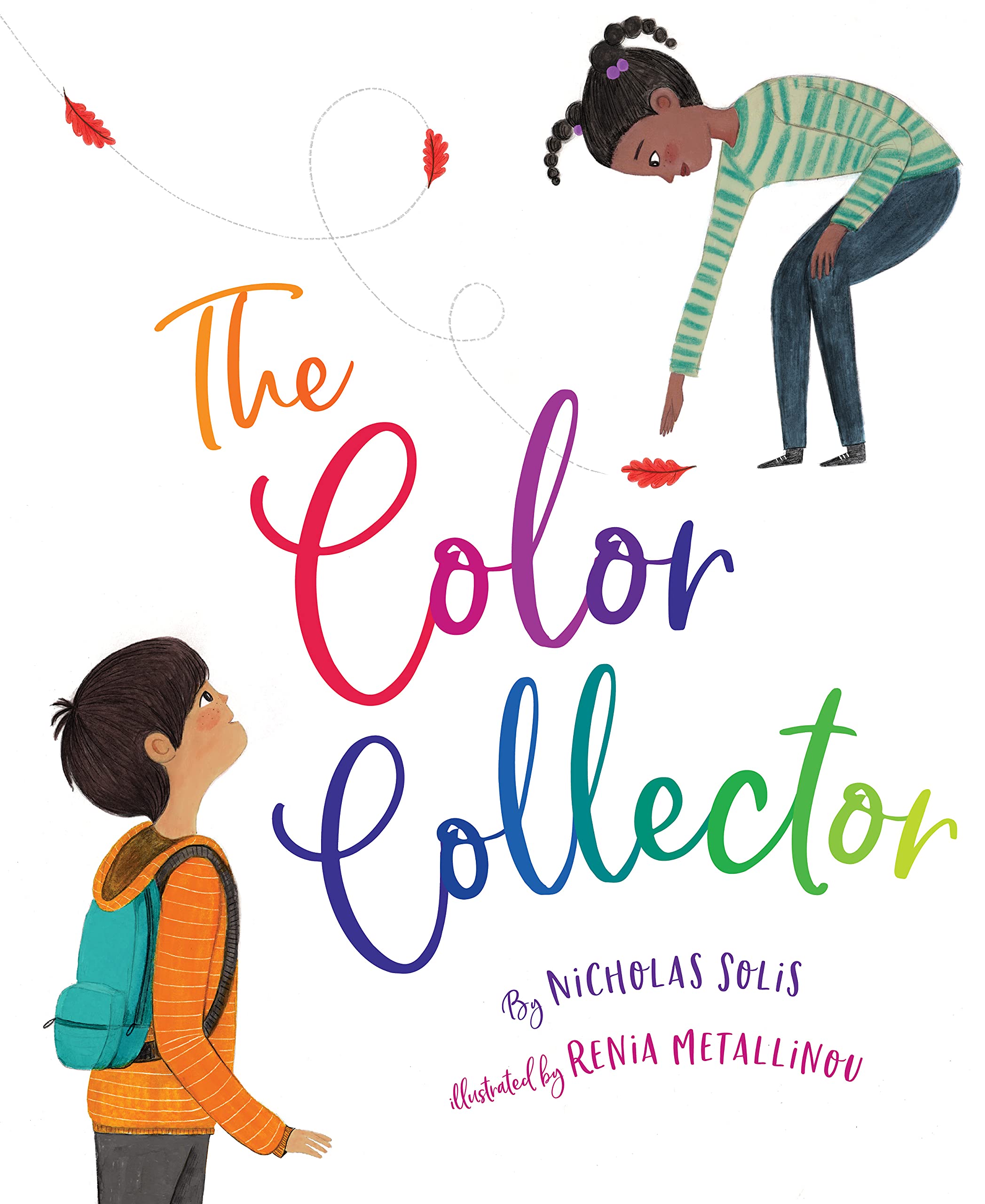
celebrate-picture-books-picture-book-review-the-color-collector-cover

About the Holiday

Today’s holiday was established by Apriori Beauty in 2015 to recognize all those people who make life more fun, meaningful, joyful—more beautiful—for someone else. This can be done in so many ways. Spending more time talking with someone lets them know you care. Sharing your talent for baking, art, music, gardening, home repair, or any skill with a friend, family member, or coworker brings joy to them and you. Even just giving a smile to those you meet can brighten someone’s day. Making someone else feel good will make life more beautiful for you too!

The Color Collector

Written by Nicholas Solis | Illustrated by Renia Metallinou


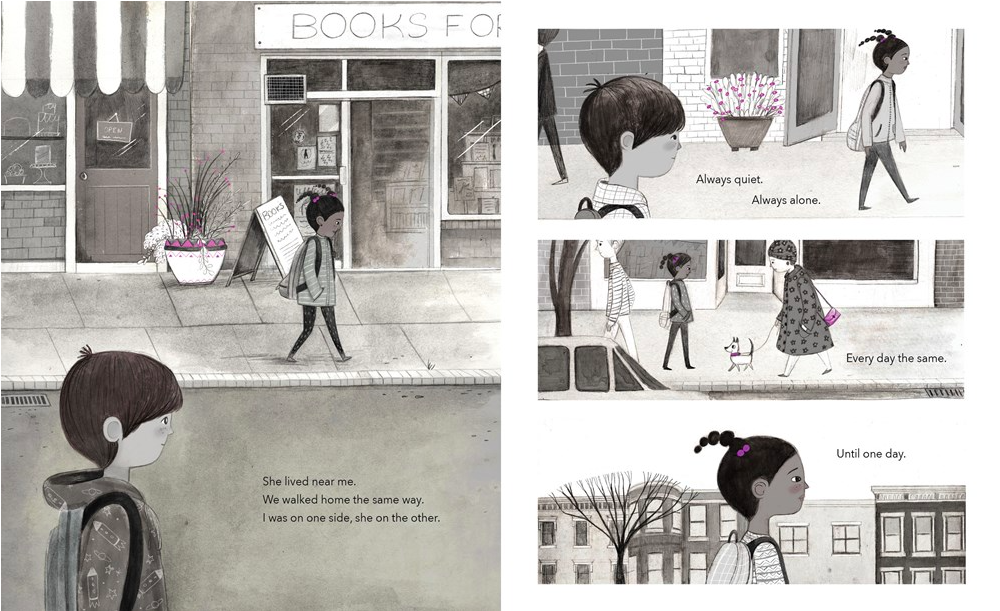
A boy notices a new girl, Violet, at school. He knows what it’s like to be the new kid, so he waves to her as she sits on a bench alone, reading. She gives him a small smile—he thinks—but doesn’t say anything. He knew that Violet lived near him because they always “walked home the same way,” although he “was on one side, she on the other.” She was “always quiet. Always alone.”

celebrate-picture-books-picture-book-review-the-color-collector-walking

Image copyright Renia Metallinou, 2021, text copyright Nicholas Solis, 2021. Courtesy of Sleeping Bear Press.

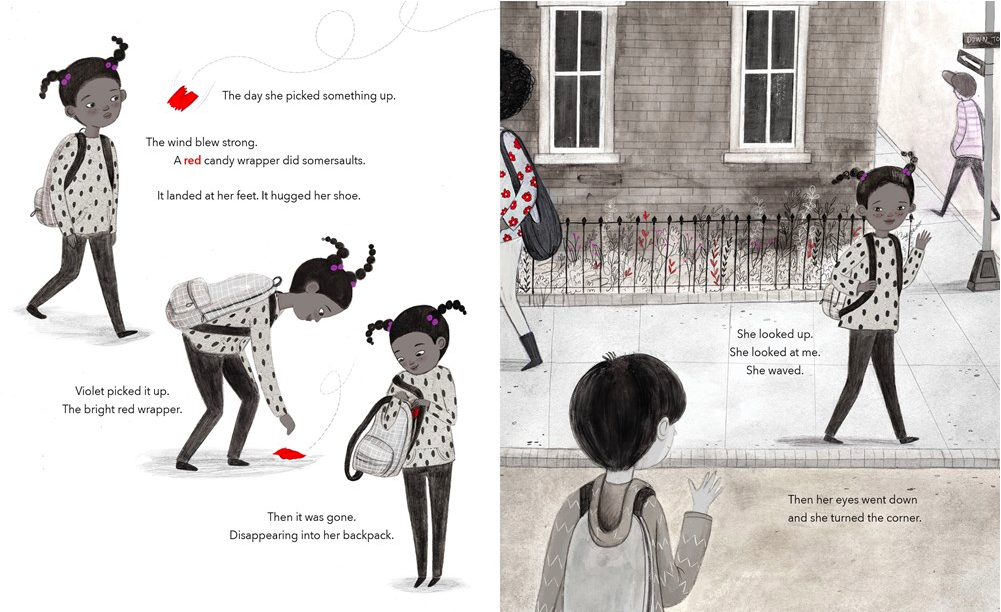
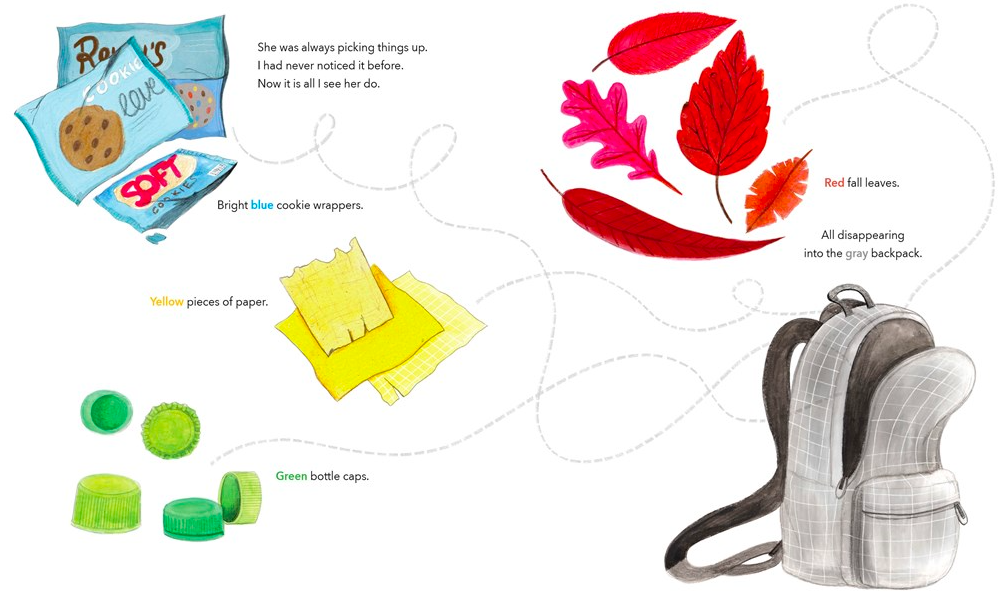
It was always the same until one day when the wind blew a red candy wrapper Violet’s way and the boy watched her pick it up and put it in her backpack. When she looked up, Violet saw the boy watching. “She looked at me,” he says. “She waved. Then her eyes went down and she turned the corner.” Now, the boy noticed how many things Violet picked up along the way home. “Bright blue cookie wrappers. Yellow pieces of paper. Green bottle caps. Red fall leaves. All disappearing into the gray backpack.”

celebrate-picture-books-picture-book-review-the-color-collector-paper

Image copyright Renia Metallinou, 2021, text copyright Nicholas Solis, 2021. Courtesy of Sleeping Bear Press.

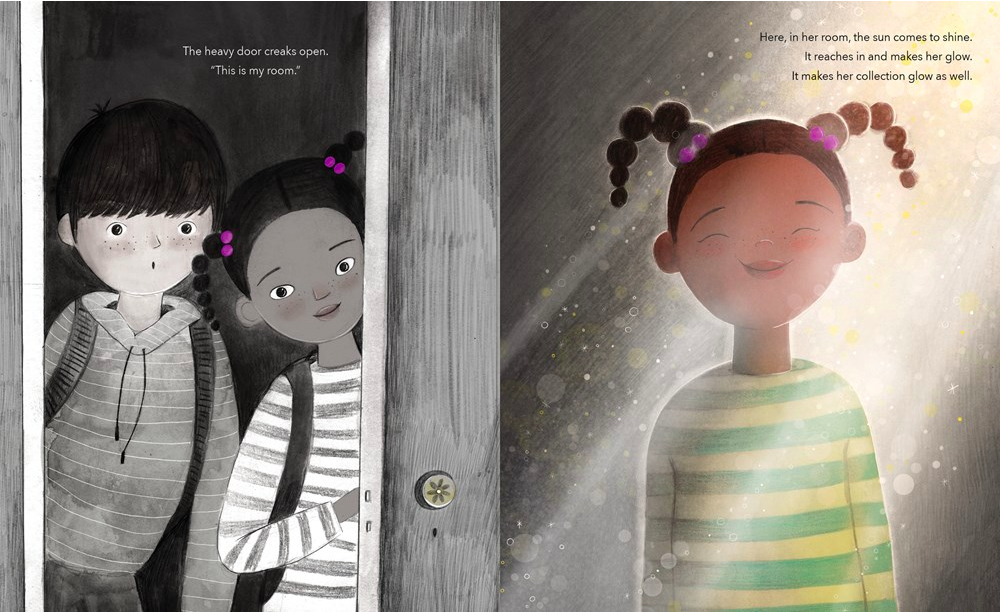
One day the boy crosses the street and asks Violet what she does with the things she picks up. Violet invites him to come see. They come to a brownstone and up a few flights of stairs, Violet takes him inside her home and opens the door to her room. “Here in her room, the sun comes to shine,” the boy says. “It reaches in and makes her glow. It makes her collection glow as well.”

celebrate-picture-books-picture-book-review-the-color-collector-colorful-items

Image copyright Renia Metallinou, 2021, text copyright Nicholas Solis, 2021. Courtesy of Sleeping Bear Press.

What the boy sees—on the walls, the ceiling, the door—is “her sky, her beach, her village” recreated from the wrappers, paper, leaves, caps, and other bits she’s found. “We came here for a better life,” Violet tells the boy. “I miss home, though. I miss the sounds and smells. And I miss the colors.” The boy tells her the mural is beautiful. Then Violet tells him stories about her village, the people there, and the ocean. The boy and Violet “sit and talk. Then laugh. Then talk some more.” The boy sees that Violet is not so sad or alone anymore, and he’s glad to be her friend. When he leaves, he and Violet wave goodbye and “smile the same.” One the way home, the wind blows a red leaf his way. He picks it up and puts it in his backpack.

celebrate-picture-books-picture-book-review-the-color-collector-light

Image copyright Renia Metallinou, 2021, text copyright Nicholas Solis, 2021. Courtesy of Sleeping Bear Press.

Poignant and honest, Nicholas Solis’s multilayered story touches on friendship, loneliness, new experiences, immigration, creativity, and how acts of welcome, empathy, and kindness can change perspectives and bring joy to life. Told from the boy’s point of view in short, straightforward observations, the story captures readers’ emotions and curiosity as they walk with him and Violet, waiting to see why the reason for her collection. As days and maybe weeks or months pass before the boy speaks to Violet, readers on “both sides of the street” (those who are hesitant to talk and share as well as those who would like to get to know someone better) learn that friendship takes time, patience, trust, and sincere interest. 

Renia Metallinou adds visual eloquence to the story with his gray- and dun-hued illustrations, which pick up increasing hints of color as Violet and the boy grow closer to Violet’s house and finally explode with vibrancy when she opens the door to her room. The first clue of the importance of color to the “new girl” is in her name, and to punctuate this fact, Metallinou gives Violet purple hairbands for her braids. As Violet walks home on a parallel track to the boy, purple tints the pots and flowers decorating the sidewalk, a woman’s purse, and her dog’s collar as if to show that Violet is already assimilating and contributing to her new community.

After she picks up the red wrapper, red flowers, and accents dot the next page, and after the boy describes the blue, yellow, and green items she finds, the trees gain red and yellow leaves, container gardens overflow with greenery, an orange cat watches a trio of red-bellied birds, and blue curtains hang in a downstairs room. But it’s when Violet opens her bedroom door that the real magic happens.

Readers are treated to one more two-page spread of suspense, heightened by the boy’s look of wonder and Violet’s proud gaze. Surrounded by light, Violet smiles. Her gray-and-white-striped shirt turns green and yellow, her brown skin glows with joy. Then readers turn the page and, like the boy, step into a sun-drenched coastal village with candy-colored buildings, lush foliage, a sparkling sea, and a woman – perhaps Violet’s grandmother – looking toward the horizon, maybe looking for Violet herself. Metallinou has made Violet’s mural a masterpiece of art, life, longing, and love. As Violet’s stories pour forth, she and the boy discover how to let their true colors show.

A beautiful and evocative story about the power of friendship, empathy, and kindness, The Color Collector provides a unique and highly effective way for kids and adults to talk about feelings of loneliness, homesickness, making new friends, opening up to others, and many other feelings kids experience. The book could spark meaningful art projects for classrooms and homeschoolers and would be an excellent addition to home, school, and public libraries.

Ages 6 – 9 

Sleeping Bear Press, 2021 | ISBN 978-1534111059

Discover more about Nicholas Solis and his books on his website.

To learn more about Renia Metallinou, her books, and her art, visit her website.

National Making Life Beautiful Day Activity

celebrate-picture-books-picture-book-review-initial-bookend

Initial Bookend or Decoration


Today’s holiday is all about making someone feel special. With this easy craft, kids can make a gift for a family member, friend, or teacher that shows them why they think the person makes the world more beautiful. And don’t forget to make one for yourself too!

Supplies

  • Wooden letter block of the recipient’s first initial or both initials
  • Chalkboard paint
  • Chalk
  • Paint brush

Directions

  1. Paint the wooden letter with the chalkboard paint, let dry
  2. With the chalk, write words on the letter that you think best describe the person you’re giving it to
  3. Wrap and give your letter!

celebrate-picture-books-picture-book-review-the-color-collector-cover

You can find The Color Collector at these booksellers

Amazon | Barnes & Noble | Books-a-Million

To support your local independent bookstore, order from

Bookshop | IndieBound

Picture Book Review
May 4 – National Teacher Day

celebrate-picture-books-picture-book-review-i-wish-you-knew-cover

About the Holiday

This school year has been like no other – for students and teachers. Switching from in-person, in-the-classroom learning to virtual learning and zoom classes to hybrid models has been a head-spinning experience for all. Yet our teachers have adapted, designing new lesson plans and devising creative ways to engage their students online. This week (National Teacher Appreciation Week) and today in particular, we honor and thank the teachers that make a difference in our and our children’s lives. Teachers open the world to their students by instilling a love of learning through their enthusiasm, caring, and creativity. Before you move on to a new class next year, don’t forget to tell your teacher or teachers how much they’ve meant to you. You can find 51 ways to thank your teacher on Waterford.org and a Teacher Appreciation Week toolkit, complete with virtual and printable thank-you cards and certificates and other ideas to download on the National PTA website.

I Wish You Knew/Ojalá Supieras

Written by Jackie Azúa Kramer | Illustrated by Magdalena Mora


As a little girl approaches her school building, she tells the reader, “Our school wraps around a hundred-year-old oak tree.” The students mark the passage of time by the changes in the leaves. The school has a garden with cabbages, tomatoes, and sunflowers that the girl’s father helped her class plant. “One day,” the girl says, her father told her “that because he wasn’t born here like me, he must return to his native country.”

celebrate-picture-books-picture-book-review-i-wish-you-knew-school

Image copyright Magdalena Mora, 2021, text copyright Jackie Azúa Kramer, 2021. Courtesy of Roaring Brook Press.

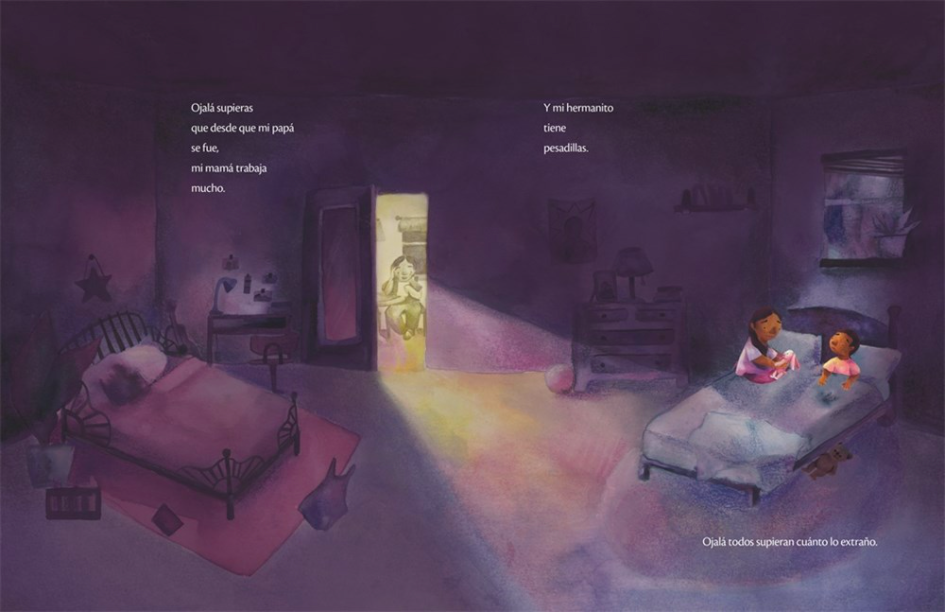
Before he left he hugged her and said, “Te quiero mucho, Estrella…my little star.” He promises to come back one day “to see the sunflowers bloom. Until then, Estrella skips between the tall flowers and “think[s] of his smile.” In her thoughts she addresses her teacher: “I wish you knew that when I forget my homework or sit alone at lunch or cry over little things, it’s because I miss him.” And it is not only these things that have changed. Everything at home, for her mother and her brother, too, is different.

celebrate-picture-books-picture-book-review-i-wish-you-knew-garden

Image copyright Magdalena Mora, 2021, text copyright Jackie Azúa Kramer, 2021. Courtesy of Roaring Brook Press.

As Estrella’s teacher enters the classroom one day, she says she is also proud that her school surrounds the old oak tree. Her favorite place is in her classroom, where her students are busy and curious. She also loves to watch them play on the playground. The students may not realize it, but the teacher sees when they are sad and understands when they are without their homework. She wishes they knew that “they are not alone.”

celebrate-picture-books-picture-book-review-i-wish-you-knew-home

Image from Ojalá Supieras, copyright Magdalena Mora, 2021, text copyright Jackie Azúa Kramer, 2021. Courtesy of Roaring Brook Press.

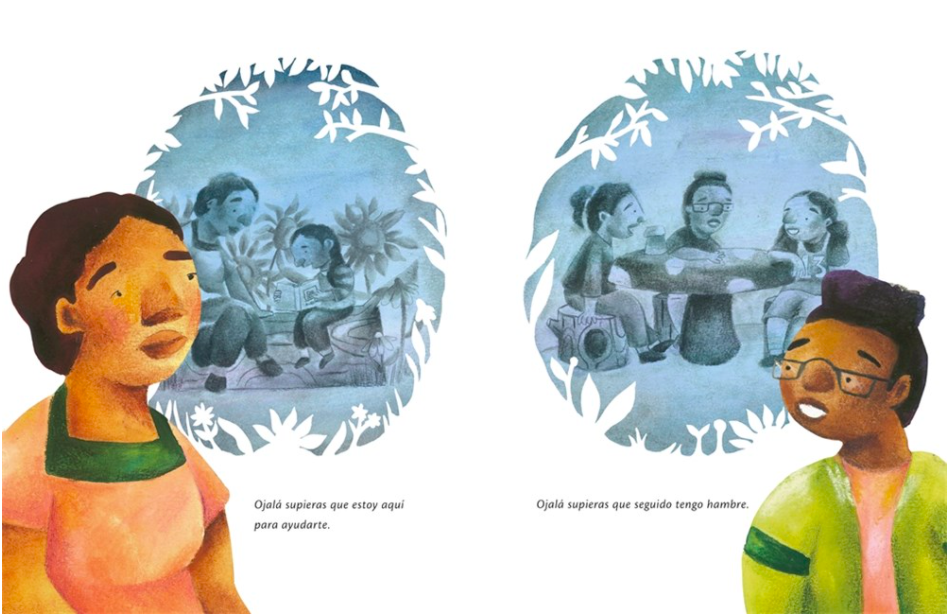
The teacher starts a new tradition, a “sharing circle called I Wish You Knew.” There the kids can tell their classmates how they are feeling, what they’re thinking about, and other “secrets” they are ready to share. Estrella’s teacher lets her students know she’s there if they need help. One student reveals that they are “hungry a lot.” Another student’s mom is in the military and another explains that he lives in a shelter.

But not all of the children’s sharing is sad. Estrella likes to talk about all the things her dad taught her and what they did together. And while she waits to be together with her father again, she and her friends plant more sunflower seeds and “wait for them to bloom.”

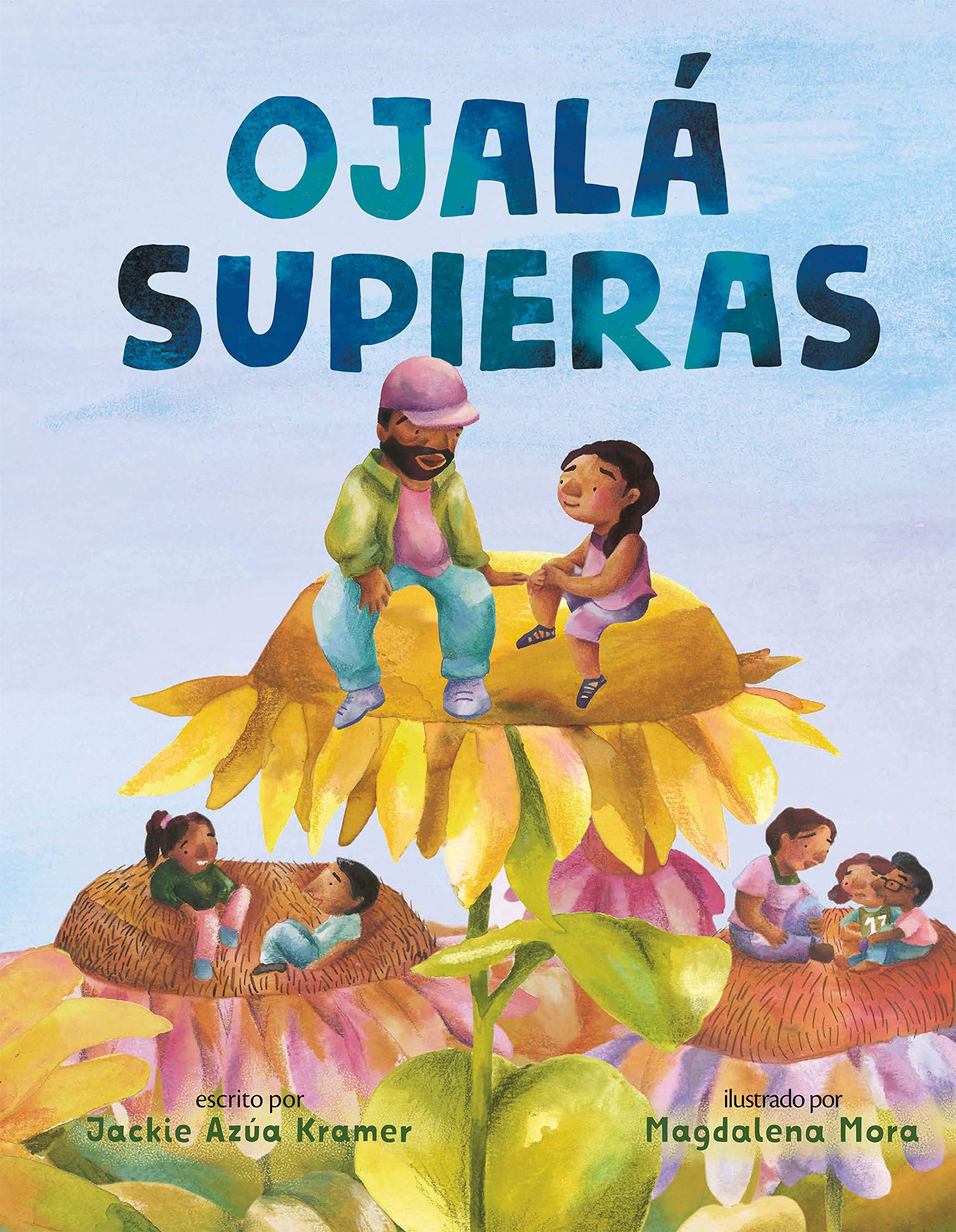
I Wish You Knew is also available in a Spanish Version with the title Ojalá Supieras.

celebrate-picture-books-picture-book-review-i-wish-you-knew-spanish-version-hungry

Image copyright Ojalá Supieras, Magdalena Mora, 2021, text copyright Jackie Azúa Kramer, 2021. Courtesy of Roaring Brook Press.

In her moving story Jackie Azúa Kramer embraces the many children affected by hardships, whose parents are absent for a variety of reasons, or who live with difficult family situations. Through Estrella, whose father has been deported, Kramer dives deep into the hearts of children grappling with strong feelings, hunger, homelessness, and otherwise disrupted home lives while still trying to succeed in school. Using “I wish you knew” from a variety of points of view, Kramer first draws children into Estrella’s confession as she directly addresses the reader. With the tenor of a confidant, Estella gives readers a tour of the favorite parts of her school. It is here, among the sunflowers that she feels comfortable talking about her father. During lunch, Estrella wishes her teacher knew what had happened at home.

The perspective then shifts to the teacher who shows her favorite parts of the school while revealing that, while she may not know the exact situation, she does recognize when something is wrong and hopes her students understand she is there to empathize and help. These two storylines merge when the teacher establishes the sharing circle and three students share their wishes straightforwardly, addressing the reader as much as their teacher and creating a poignant reading experience for all. Echoing the resilience of children, Kramer ends her story with a message of hope.

Magdalena Mora uses warm earth tones in her evocative mixed-media illustrations, mirroring the ideas of growth and renewal found in Kramer’s story. Estrella’s school building is a green-and-glass structure that looks out on the old oak tree, a symbol of steadfastness and strength for the students and teachers alike. The events and situations the children share are rendered in gray, giving them a feeling of distance from the children’s school day. Mora’s stylized sunflowers grow in profusion, framing the students and teacher on various pages and appearing in the background on others, an ever-present reminder that friendship and understanding are nearby and that better days lie ahead.

A moving story of empathy, sharing, and kindness, I Wish You Knew is a must for classrooms and is highly recommended for home and public library collections to help children and adults initiate difficult discussions about emotions and events or experiences affecting their lives.

Ages 4 – 7 

Roaring Brook Press | ISBN 978-1250226303 (I Wish You Knew) | ISBN 978-1250814784 (Ojalá Supieras)

Discover more about Jackie Azúa Kramer and her books on her website.

To learn more about Magdalena Mora, her books, and her art on her website.

I Wish You Knew Giveaway

I’m happy to be teaming with Jackie Azúa Kramer in a giveaway of:

  • One (1) copy of I Wish You Knew written by Jackie Azúa Kramer | illustrated by Magdalena Mora

To enter:

This giveaway is open from May 4 to May 10 and ends at 8:00 p.m. EST.

A winner will be chosen on May 11. 

Prizing provided by Jackie Azúa Kramer.

Giveaway open to U.S. addresses only. | No Giveaway Accounts 

celebrate-picture-books-picture-book-review-i-wish-you-knew-cover      celebrate-picture-books-picture-book-review-ojalá-supieras-cover

You can find I Wish You Knew at these booksellers

Amazon | Barnes & Noble | Books-a-Million

You can find Ojalá Supieras here

Amazon | Barnes & Noble | Books-a-Million

To support your local independent bookstore, order I Wish You Knew from

Bookshop | IndieBound

Order Ojalá Supieras here

Bookshop | IndieBound

Picture Book Review
March 23 – Celebrating the Book Birthday of I Miss Your Sunny Smile and Interview with Deb Adamson

celebrate-picture-books-picture-book-review-I-miss-your-sunny-smile-cover

About the Holiday

It’s National Reading Month, the perfect time to celebrate a book birthday! Today I’m excited to be featuring a sweet board book for the littlest readers that parents and caregivers will love sharing to make every day better. 

Thanks to Blue Manatee Press for sharing a digital copy of I Miss Your Sunny Smile for review consideration. All opinions on the book are my own. I’m happy to be partnering with Deb Adamson in a giveaway of the book. See details below.

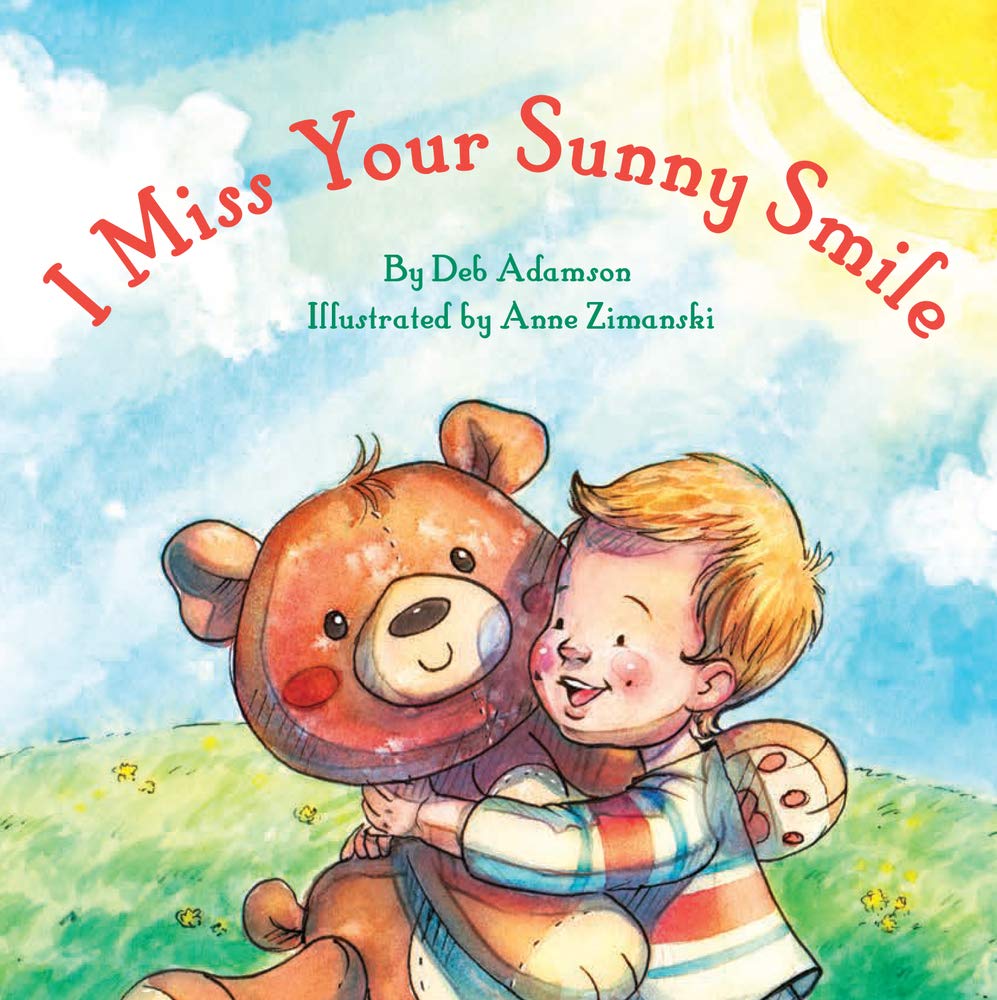
I Miss Your Sunny Smile

Written by Deb Adamson | Illustrated by Anne Zimanski


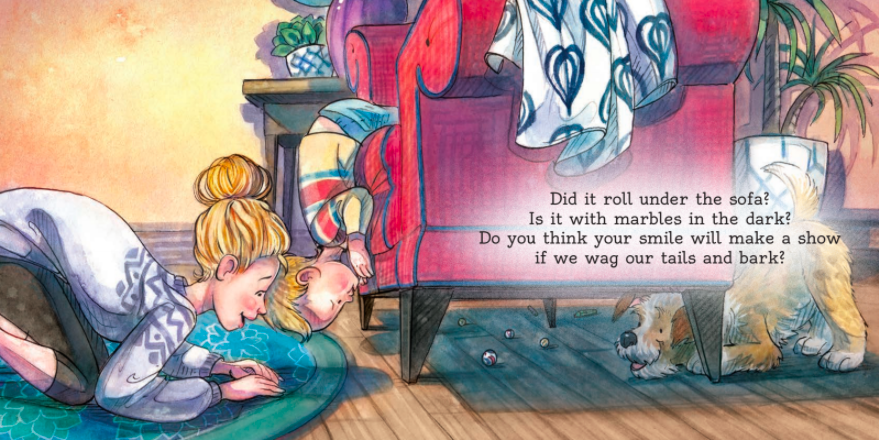
On a rainy day a mom sits with her son watching out the window. The little boy is sad, and Mom is trying to cheer him up. She suggests going in search of his smile. They head to the living room and Mom makes a game of it—and even their dog joins in. “Did it roll under the sofa? / Is it with marbles in the dark? / Do you think your smile will make a show / if we wag our tails and bark?”

celebrate-picture-books-picture-book-review-I-miss-your-sunny-smile-chair

Image copyright Anne Zimanski, 2021, text copyright Deb Adamson, 2021. Courtesy of Blue Manatee Press.

They look in the cookie jar and play dress up, but still the little boy wears a frown. Maybe dancing or playing peek-a-boo will help him find his smile. Even while he’s playing, though, something else is on his mind. He and his mom continue the search. At the boy’s bedroom door, they spy two fuzzy ears peeking out of the blanket. “Wait!” says Mom. “Is that your smile napping? / All cozy in your bed?”

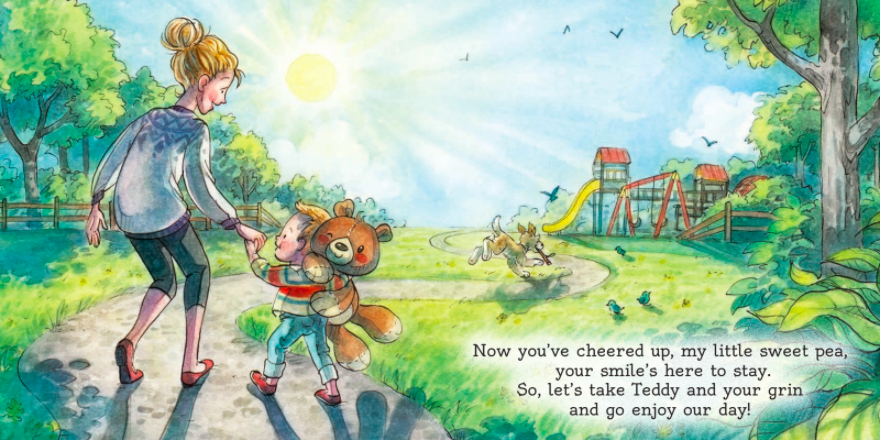
They tiptoe in and lift the covers. There is Teddy—and the boy’s smile. The little boy hugs his teddy bear and grins from ear to ear. Outside the rain has stopped and the sun has come out. The boy, Teddy, and Mom take a walk to the park, ready to enjoy their day.

celebrate-picture-books-picture-book-review-I-miss-your-sunny-smile-park

Image copyright Anne Zimanski, 2021, text copyright Deb Adamson, 2021. Courtesy of Blue Manatee Press.

All little ones have moments when things aren’t going right or they feel afraid or worried. Deb Adamson’s sweet story lets parents and caregivers show their little ones that feeling sad can be temporary and that adults are there to help them by talking about what’s bothering them or trying to find out in other ways. When children aren’t old enough or don’t know how to express their feelings yet, playing with them, having a snack, or just spending time together can lead to happiness. Kids will be charmed by Adamson’s tender rhyming storytelling that reveals a loving mother and son bond and will be reassured when the boy finds his teddy bear—and his smile.

Anne Zimanski’s lovely illustrations show a mother fully engaged with helping her son feel happy again. Children will love her detailed images of home that create a cozy atmosphere as well as the enthusiastic dog that joins in on the search, snack time, and playtime. The characters’ facial expressions clearly show the mother’s love and patience and the little boy’s sadness, discontent, and worry. When the teddy bear is found, the boy’s smile is infectious. This scene is made even more endearing as Teddy’s floppy arms wrap around the boy as he hugs his favorite friend.

An enchanting story for families to share during those times when a little encouragement and understanding are needed as well as for quiet story times full of love and reassurance.

Ages Baby – 4

Blue Manatee Press, 2021 | ISBN 978-1936669875

Discover more about Deb Adamson and her books on her website.

To learn more about Anne Zimanski, her books, and her art, visit her website.

Meet Deb Adamson

celebrate-picture-books-picture-book-review-Deb-Adamson-headshot

Deb Adamson’s children’s books can be silly, sweet and sometimes even a little bit quirky. Her goal is to always bring on a sunny smile! She lives in Connecticut with her husband, son, and orange cat extraordinaire, Lumpy.

You can connect with Deb Adamson on her website | Facebook | Twitter 

Hi Deb! It’s wonderful to be talking with you about your latest book! You’ve had such a varied career in all types of communications jobs—from being a broadcast news journalist and syndicated columnist to working as a public relations spokesperson for a major aquarium to becoming a published picture book author. Do you feel like your previous jobs have led you to writing for children? What do you like most about this genre?

I do feel that my previous careers have influenced my children’s books. As a writer, I feel like everything we do colors our work. And the varied career I’ve had definitely shows up in my  books. Writing can be such a magical pursuit. We draw from all aspects of experience. The subconscious is tapped and what we didn’t even know was a focus or deep impression makes an appearance on the page. I love the saying, “What a boring world it would be if we were all the same.” That goes for writing. I guess for me, once a journalist, always a journalist because  a few of my story ideas came from news stories that sparked an interest. And animals, whether marine or not, seem to more often than not, make a cameo in most of my books. I have to add though, that even through all those careers, I was reading children’s books and writing and querying children’s manuscripts. My first book was published while I was working at the Aquarium. Even before I had my son, there was something about writing for children that called to me. So, this has actually been my preferred career choice for many years now. I consider myself really lucky to finally call this my current vocation!

Have you always loved to write? Who were you influenced by while growing up?

I’ve always loved to read and to write. I was most influenced by my mother. She was a voracious reader. She wrote herself and believed in the power of story. Even though I was barely six years old, I still have vivid memories of the newest branch of our city library opening a half mile from my house. I recall frequently skipping along the sidewalk with her to that library and carrying home stacks of books. Such happy memories.

What inspired you to write I Miss Your Sunny Smile? Can you tell readers a little about your process in writing it?

I am big believer at cultivating emotional intelligence. (I have a shelf lined with self-improvement books!) As adults we come to learn that bad days come and go. So, we focus on what is good in our lives and hopefully are able to put most things in perspective. Little ones have yet to acquire those skills, therefore it is up to us to model a healthy approach. This little book is my attempt at helping parents guide young children ages one through four, through a bad day. The mom in the book is attempting to lighten the situation with distraction and humor, which is a great tool for redirecting feelings in young children. It is my hope that parents will remember the message of distraction and recall it whenever they need it. Even though it has been over 16 years, I certainly remember needing a book like this when my own son was a toddler!

Anne Zaminski’s warm illustrations show such a sweet relationship between the mother and her child. What were your first thoughts when you saw them? Do you have a favorite spread?

I cannot gush enough about Anne Zimanski’s art for this book! The illustrations are somewhat retro. The color is vivid. The emotion she captured is spot-on. We picture book authors are lucky to be paired with such talent. Anne really brought the characters to life, just as I had imagined. I could not be more pleased. If I had to pick a favorite spread it’s the one where the mom, child, and dog are looking under the sofa barking and wagging tails searching for a smile! I imagine that one generating giggles.

Your Twitter followers have been introduced to your cat whom you affectionately call Fatty Lumpkin, or Lumpy for short. Can you tell us a little about him?

Lumpy, like most author cats, is my constant companion.He is usually somewhere in the room, contentedly snoozing, just glad to have me nearby.  And yes! He has been my muse. I was not always a cat person. I grew up with dogs and just never knew a cat until as a young adult. I moved away and decided to adopt one. Then I learned about cats’ many charms. I actually wrote a manuscript inspired by that fact, that many people label themselves one or the other—cat or dog person, but usually not both. That’s often because they just don’t take the time to familiarize themselves with the great differences in cat and dog behavior. The manuscript is  super silly! My agent and I are hoping that one finds a home.

What’s the best part about being a children’s writer?

The best part of being a children’s book writer is losing myself in story and then ultimately sharing what I cultivated with children and families. I think most writers enjoy finding some universal truth that will ultimately reach out and touch the reader. And when that reader is a child it takes on that much more meaning and pleasure. But of course, not all children’s book writing has to have such depth. Like I said, books for kids should also just be written to encourage the pure pleasure of reading. I really enjoy knowing that my books generate laughs!

What’s up next for you?

I have three children’s books coming out in 2021 and one in 2022. I cannot even believe that, myself! I Miss Your Sunny Smile board book in March, Bing Bang Pling, Now We Swing, a picture book this summer, and A Christmas Eve Wish For Santa, a picture book in the fall. Needless to say, I will be especially busy with marketing. And then in 2022, Scott Joplin’s Maple Leaf Rag, a nonfiction picture book is next.

Thanks, Deb! It’s been great chatting with you! I wish you all the best with I Miss Your Sunny Smile and all of your upcoming books!

I Miss Your Sunny Smile Giveaway

I’m happy to be partnering with Deb Adamson in a giveaway of:

  • One (1) copy of I Miss Your Sunny Smile written by Deb Adamson | Illustrated by Anne Zimanski

Here’s how to enter:

This giveaway is open from March 23 through March 30 and ends at 8:00 p.m. EST.

A winner will be chosen on March 31

Giveaway open to U.S. addresses only. | Prizing provided by Deb Adamson.

If you would like a signed copy of I Miss Your Sunny Smile, you can order from Bank Square Books.

I Miss Your Sunny Smile Activity

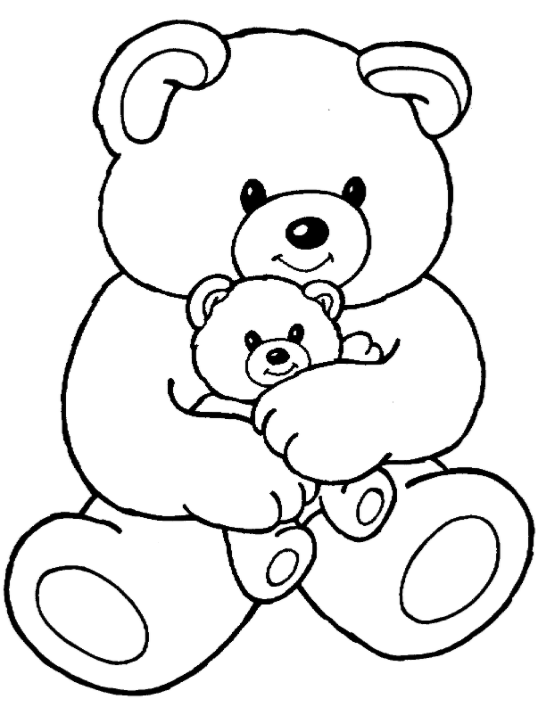
celebrate-picture-book-picture-book-teddy-bear-coloring-page

Teddy Bear Coloring Page


Enjoy some teddy bear love with this printable coloring page!

Teddy Bear Coloring Page

celebrate-picture-books-picture-book-review-I-miss-your-sunny-smile-cover

You can also find I Miss Your Sunny Smile at these booksellers

Amazon | Barnes & Noble | Books-a-Million

To support your local independent bookstore, order from

Bookshop | IndieBound

Picture Book Review

February 23 – International Dog Biscuit Appreciation Day

celebrate-picture-books-picture-book-review-madeline-finn-and-the-therapy-dog-cover

About the Holiday

People have holidays celebrating their favorite treats—like Popcorn Day, Cherry Pie Day, and Chocolate Chip Cookie Day—so dogs should have a food holiday of their own, right? Well, today is it! Today we remember that our best furry friends like to be rewarded with a special treat or just shown a little extra love with a tasty morsel. Before anyone thought about what dogs ate, dog “treats” included some pretty awful stuff—moldy bread and rotten leftovers included—but an American manufacturer named James Spratt was struck by an idea when he saw stray, hungry dogs gobbling up ship’s biscuits on one of his travels in Liverpool, England in the 1800s. While in London, he created the first dog biscuit, which was soft and made of fresh ingredients like meat and vegetables. The first commercial dog biscuit was developed in 1908 by the F. H. Bennett Biscuit Co. It was hard and made with meat products, milk, and important minerals.

Madeline Finn and the Therapy Dog

By Lisa Papp


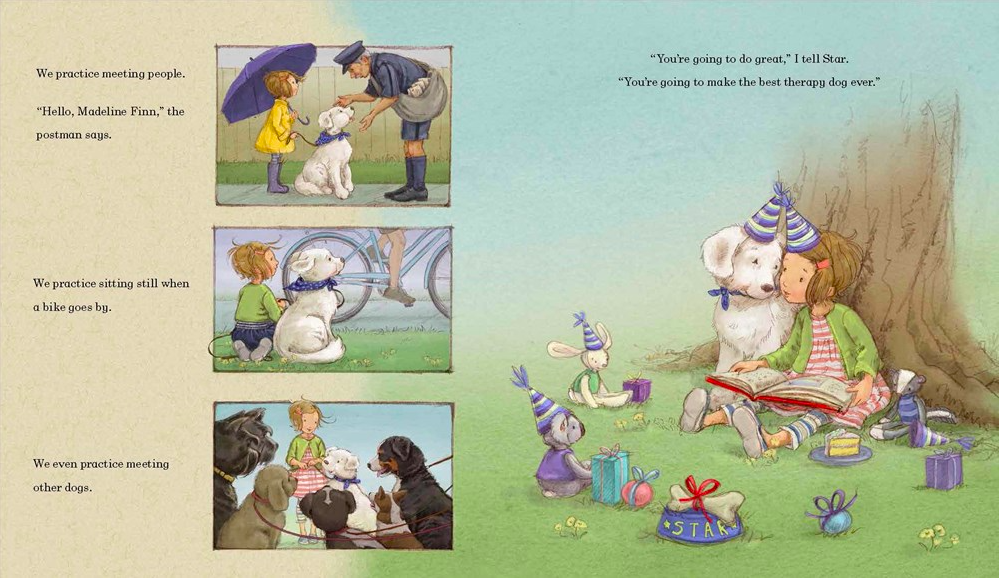
Madeline gives her dog, Star, a hug at his first birthday party. While they have cake, Madeline’s mom asks if Star is ready for his test the next day. Madeline assures her he is because they have been practicing meeting people, like the postman, “sitting still when a bike goes by,” and even “meeting other dogs.” Madeline tells Star that he’s “going to make the best therapy dog ever.” The next day Madeline takes Star to the Walker Oaks Retirement Village, where he’ll meet three people. Mrs. Dimple greets them with her therapy dog, Bonnie, who helped Madeline when she was learning to read.

celebrate-picture-books-picture-book-review-madeline-finn-and-the-therapy-dog-practicing

Copyright Lisa Papp, 2020, courtesy of Peachtree Publishing.

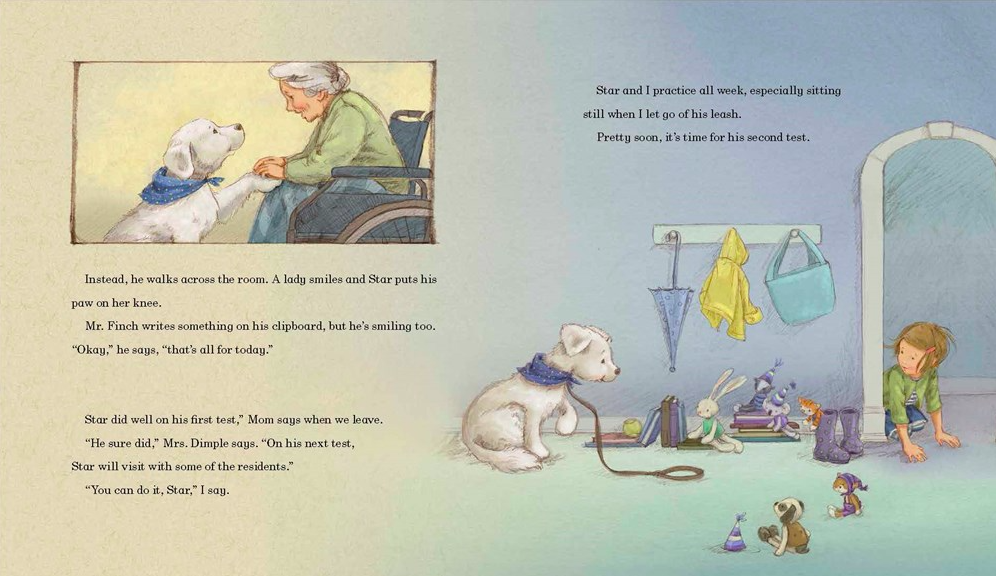
Inside, Mr. Finch tells Madeline that he’ll be grading Star on his visits. First, Mr. Finch watches Star walk around the room, stop, and begin walking again on command. Even when Star sees other therapy dogs, he doesn’t stop to play. “Next, Mr. Finch pets Star, especially touching his ears and tail. Star doesn’t mind.” Star also sits still when a wheelchair rolls by. Finally, Star is supposed to stay where he is when Madeline and her mom walk away, but instead he walks across the room to a woman in a wheelchair and lays his paw on her knee. Mr. Finch writes something down, but he is smiling.

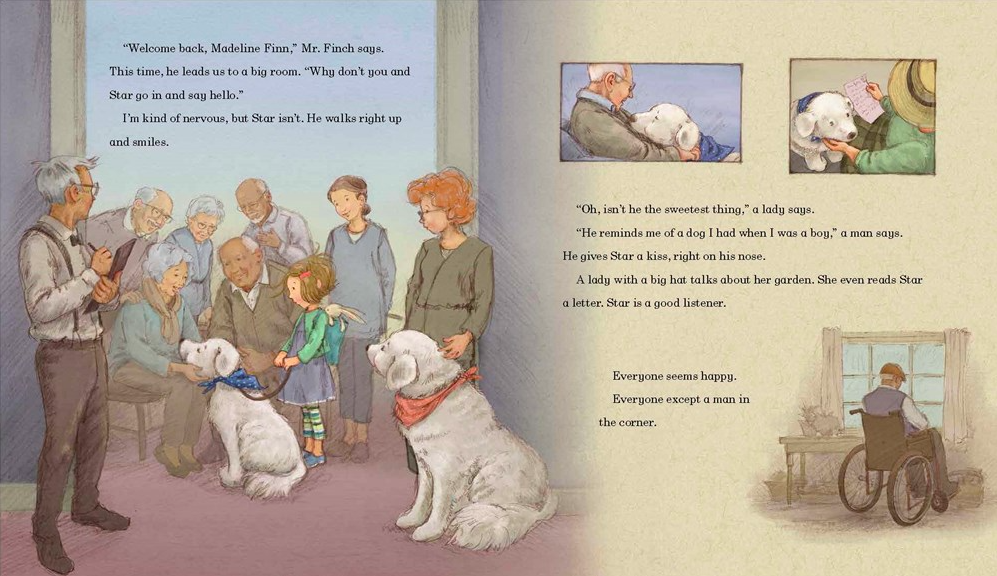
For Star’s next test, he’s taken into a room with a group of people. While Madeline is nervous, Star “walks right up and smiles.” One woman calls Star sweet, a man kisses Star right on his nose because he reminds the man of a dog he had when he was young, and another woman tells Star about her garden and reads him a letter. “Everyone seems happy,” but there’s one man sitting alone near the window.

celebrate-picture-books-picture-book-review-madeline-finn-and-the-therapy-dog-first-test

Copyright Lisa Papp, 2020, courtesy of Peachtree Publishing

A nurse introduces him as Mr. Humphrey, and Madeline asks him if he’d like to pet Star. Mr. Humphrey says nothing. Mr. Finch writes something down. Then Madeline, her mom, and Star leave. Madeline’s mom says that Star did well on his second test, but Madeline wonders about Mr. Humphrey. “‘Some people need time,’ Mom says” and reminds Madeline of how patient Bonnie was with her. At home, Madeline thinks about things that Mr. Humphrey might like. That night, Madeline practiced reading with Star before bedtime.

The next time they visit Walker Oaks, they have to ride the elevator. At first Star doesn’t want to get in, but Bonnie nudges him and they walk in. When they get out, they see that someone has dropped a plate of cookies, but Star doesn’t react. Mr. Finch takes notes. When they see Mr. Humphrey, Madeline approaches him and introduces Star and asks if he’d like to pet him, but he stays silent. A little later Madeline asks if he’d like to look at her magic cards, but he still says nothing. Then Mrs. Dimple called her over and talked to her.

celebrate-picture-books-picture-book-review-madeline-finn-and-the-therapy-dog-mr-finch

Copyright Lisa Papp, 2020, courtesy of Peachtree Publishing

 Afterward, Madeline thought that maybe Mr. Humphrey wasn’t ready to smile. She asked Mr. Finch if she and Star could see Mr. Humphrey again. This time, Madeline sat in a chair next to Mr. Humphrey with Star close by. In a little while, she took a book from her bag and whispers to Mr. Humphrey that she didn’t always like to read. Seeing Madeline with a book, Bonnie loped over and sat next to Star. Madeline began to softly read her book out loud.

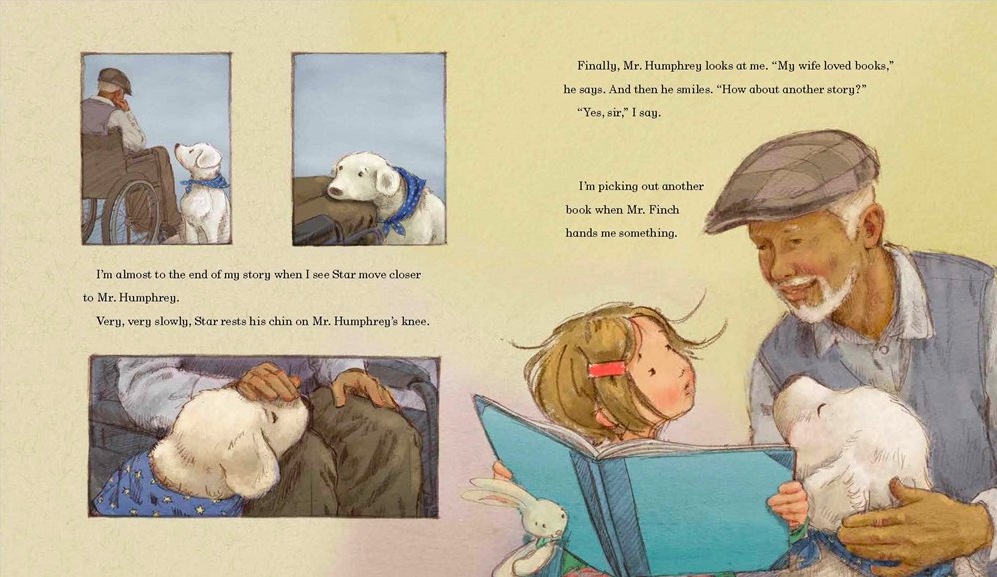
Near the end of the story, Madeline saw Star move close to Mr. Humphrey and rest his chin on his knee. Mr. Humphrey put his hand on Star’s nose. Finally, Mr. Humphrey looked at Madeline. “‘My wife loved books,’” he said. “‘How about another story?’” While Madeline was choosing another book, Mr. Finch came over and handed her “a tag for Star. I AM A THERAPY DOG, it says.” Madeline “fastened his new tag onto his collar, right above his heart.”

celebrate-picture-books-picture-book-review-madeline-finn-and-the-therapy-dog-mr-humphrey

Copyright Lisa Papp, 2020, courtesy of Peachtree Publishing

Lisa Papp’s immersive storytelling will delight children as they follow Madeline through her practice sessions with Star and see her grow in confidence as she visits the retirement home and devises her own solution to engaging Mr. Humphrey. Kids will empathize with Madeline’s kindness as well as her nervousness over Star’s performance and will cheer each time he does well. Young readers will be fascinated to learn about all of the practice and testing a dog undergoes to become a recognized therapy dog.

Papp’s beautiful pencil, watercolor, and digital illustrations, rendered in soft hues invite kids to Star’s first birthday party and into the Walker Oaks Retirement Village, where the surroundings, the residents, and the staff are depicted in sensitive and realistic scenes. Madeline’s thoughtfulness and consideration for Star and the residents—and especially her concern for Mr. Humphrey—are clearly visible and mirror the natural empathy of children. 

Infused with love, empathy, and heart, Madeline Finn and the Therapy Dog will charm readers as a stand-alone story or to spark additional research into therapy dogs and other animals. The book will quickly become a favorite read aloud and is highly recommended for home, school, and public library collections.

Ages 4 – 8

Peachtree Publishing, 2020 | ISBN 978-1682631492

Discover more about Lisa Papp, her books, and her art on her website.

You can find an extensive Activity Kit to download on the Peachtree Publishing website.

International Dog Biscuit Appreciation Day Activity

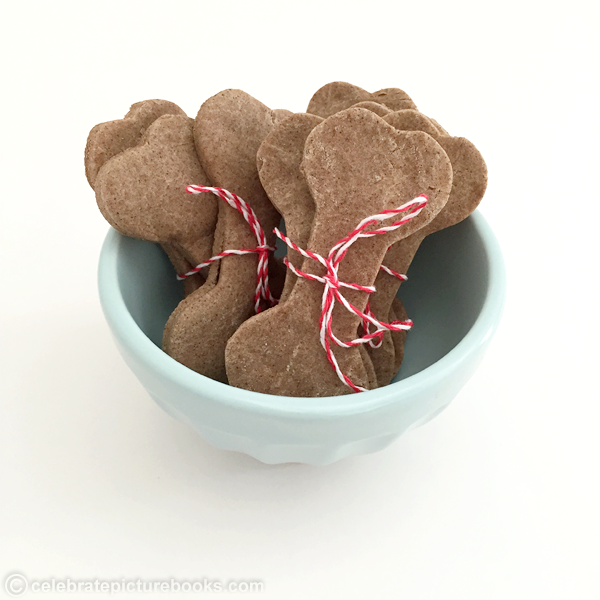
CPB - Dog Biscuits

Homemade Dog Biscuits


These homemade dog biscuits are fun to make and a special treat for your dog at home, a neighbor’s pet, or dogs waiting for forever homes at your local shelter. 

*Children should have adult supervision when using the oven.

Supplies

  • 1 large bowl
  • Large spoon or whisk
  • Cookie cutters – shaped like traditional dog bones or any favorite shape

Ingredients

  • 3 cups Buckwheat flour
  • ½ cup powdered milk
  • 1 teaspoon salt
  • ¾ cup water
  • 1/3 cup margarine or butter, melted
  • 1 egg beaten

Directions

  1. Preheat oven to 325 degrees
  2. Add buckwheat flour to bowl
  3. Add powdered milk to bowl
  4. Add salt to bowl
  5. Stir to mix dry ingredients
  6. Add water
  7. Add melted margarine or butter
  8. Add egg
  9. Stir until liquid is absorbed
  10. Knead for a few minutes to form a dough
  11. If the dough is too dry, add a little more water, one Tablespoon at a time
  12. Place the dough on a board
  13. Roll dough to ½ inch thickness
  14. Cut into shapes with cookie cutters
  15. Bake at 325 degrees for 35 minutes
  16. Biscuits will be hard when cool.

Makes about 40 biscuits.

celebrate-picture-books-picture-book-review-madeline-finn-and-the-therapy-dog-cover

You can find Madeline Finn and the Therapy Dog at these booksellers

Amazon | Barnes & Noble | Books-a-Million

To support your local independent bookstore, order from

Bookshop | IndieBound

Picture Book Review
 

December 25 – Christmas Day

CPB - I Got the Christmas Spirit Cover

About the Holiday

Christmas is anticipated all year round for the joy of giving, the fun of receiving, and the message of hope the holiday gives. There are as many ways to celebrate as there are families, but today’s book shows that the inspiration of the season can live in every person all year round.

Thanks to Bloomsbury Children’s Books for sending me a copy of I Got the Christmas Spirit for review consideration. All opinions on the book are my own.
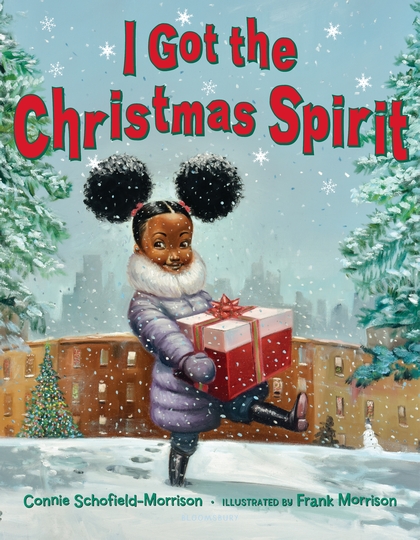
I Got the Christmas Spirit

Written by Connie Schofield-Morrison | Illustrated by Frank Morrison


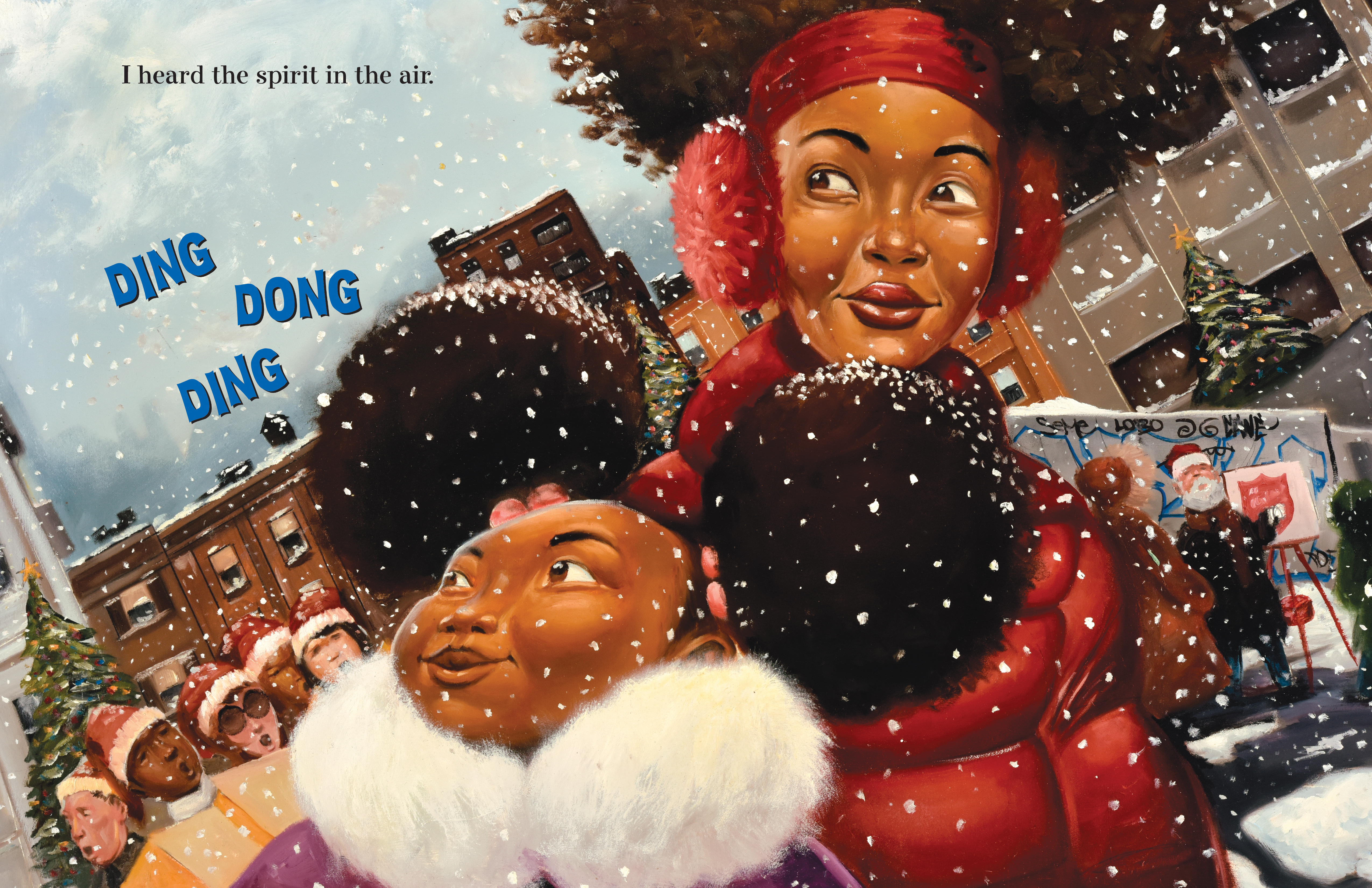
A little girl wakes up with a smile on her face and “the spirit of the season” in her heart. As she and her mother head out into the snowy city, she hears “the spirit in the air” as carolers sing and a corner Santa rings a bell. She’s been saving her money to add to the familiar red pot and happily drops it in the slot. The choir is now singing “Deck the Halls,” and the little girl sings along with all her heart.

celebrate-picture-books-picture-book-review-I-Got-The-Christmas-Spirit-spirit-in-air

Image copyright Frank Morrison, 2018, text copyright Connie Schofield-Morrison, 2018. Courtesy of Bloomsbury Children’s Books.

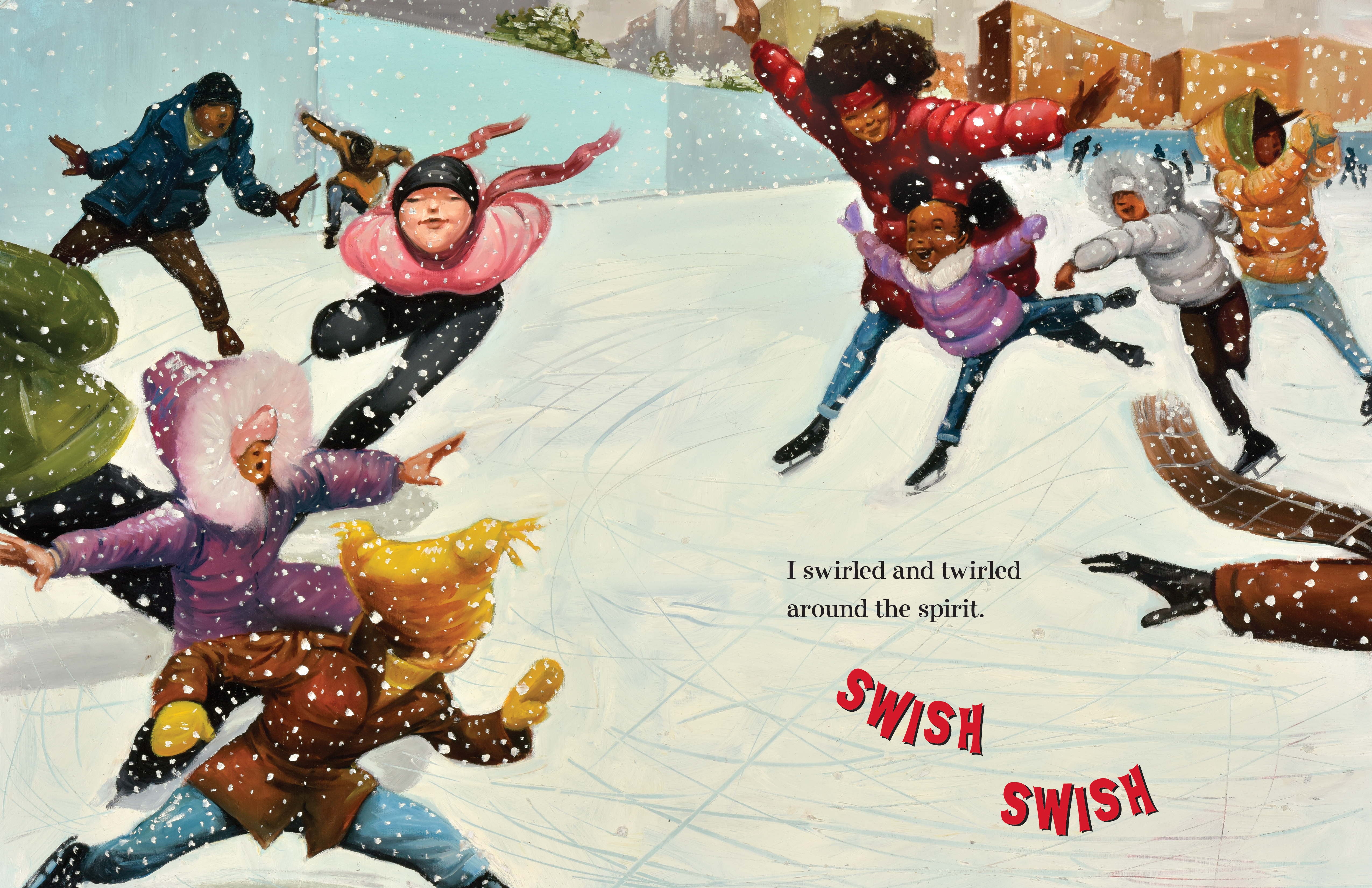
Then it’s time for a yummy roasted treat to warm her up in the shivery air. On the ice-skating rink, the girl and her mom “swirled and twirled around the spirit” with other kids and adults enjoying some frozen fun. Afterward, a tour of the store windows decorated with lights and glitter makes her feel sparkly inside. But when they come upon a mother and her two children huddled against the wind with a “Help Please” sign, the girl says, “I felt the spirit deep down in my soul.”

celebrate-picture-books-picture-book-review-I-Got-The-Christmas-Spirit-skating

Image copyright Frank Morrison, 2018, text copyright Connie Schofield-Morrison, 2018. Courtesy of Bloomsbury Children’s Books.

In a crowded store nearby, the little girl looks wide-eyed at all the toys then whispers to a tired Santa her wish “for the spirit everywhere.” As she, her mom, Santa, and a host of other people leave the store carrying wrapped packages, they feel the spirit spread by the girl’s smile. Outside, the little girl and the other shoppers give the presents to the needy family. The little boy grins from ear to ear as his mom stands by happily and the baby rests in Santa’s arms.

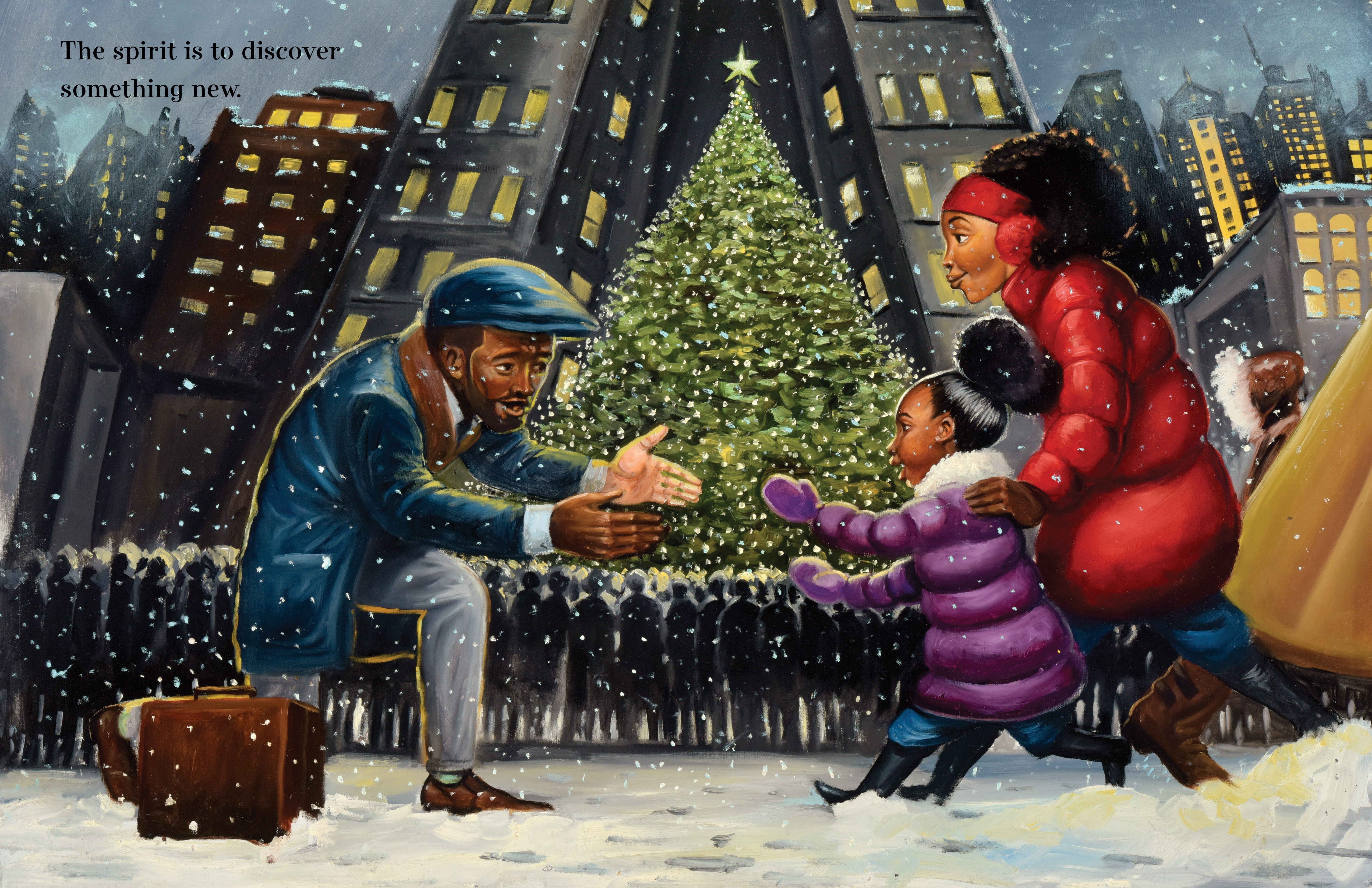
The Christmas spirit is not just a thing or a place or a person, the girl understands, “The spirit is you!” Then the girl gets her own surprise when she spies her dad coming home. She runs to him and he lifts her into a hug. Here is what she wants for Christmas—“Peace for all, good tidings, and cheer—let’s live the spirit every day of the year.”

celebrate-picture-books-picture-book-review-I-Got-The-Christmas-Spirit-coming-home

Image copyright Frank Morrison, 2018, text copyright Connie Schofield-Morrison, 2018. Courtesy of Bloomsbury Children’s Books.

As the sights and sounds of Christmas begin to light up towns, stores, and homes, Connie Schofield-Morrison’s story fills young readers with the joy and deeper meaning of the holiday. Little ones wanting to share their bubbly excitement for Christmas as well as their innate empathy will fall in love with the little girl who eagerly joins in on all of the city’s festivities while also embracing those in need. Her big heart and buoyant spirit will inspire kids to find the spirit of the holiday in everything they do too. Kids are invited to join in reading with exuberant alliterative words like “Ding Dong Ding, that call out to the little girl

Readers can almost hear the bells and singers, feel the soft snow, and smell the roasting nuts as he takes readers on a tour of the city decked out for the holidays. In his gorgeous, realistic paintings, the emotions and actions of the little girl cheer young readers as they see her belting out a Christmas carol, gliding on ice rink, and walking side-by-side with Santa to deliver her surprise gifts to the needy family. Images of the girl dropping money that she has saved into the Salvation Army pot and frowning sadly as she comes upon the destitute woman and her family mirror the compassion many children feel for those less fortunate.

Like its predecessor I Got the Rhythm, I Got the Christmas Spirit is an uplifting and beautiful book to add to any child’s collection—not only at Christmas, but any time of the year. A top choice for public libraries too.

Ages 3 – 7

Bloomsbury Children’s Books, 2018 | ISBN 978-1681195285

To learn more about Frank Morrison and view a gallery of his art, visit his website.
Christmas Day Activity

celebrate-picture-books-picture-book-review-santa's-sack-maze-puzzle

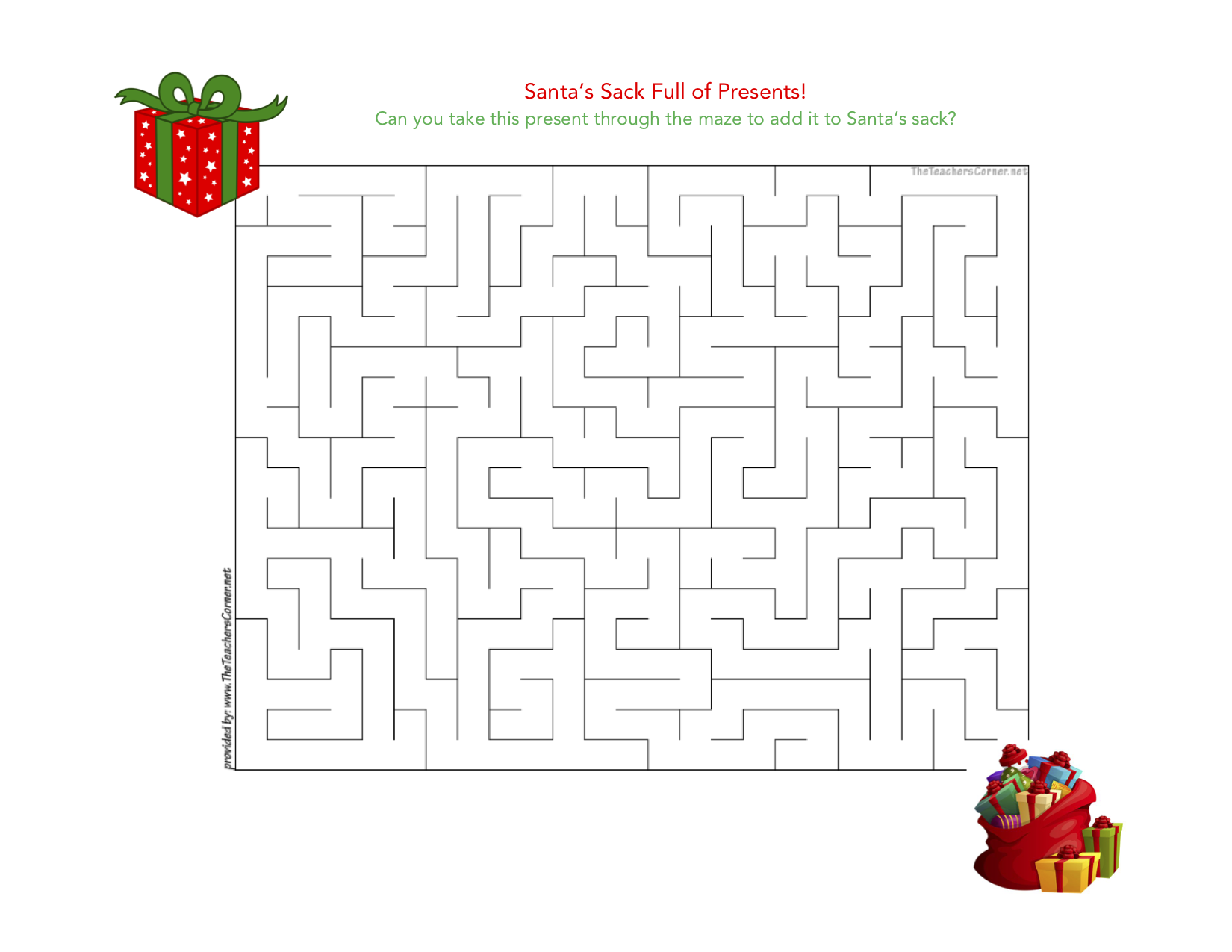
Santa’s Sack Maze


Santa has one more present to put into his sack. Can you help him take the gift through the maze in this printable puzzle?

Santa’s Sack Full of Presents Puzzle | Santa’s Sack Full of Presents Solution

CPB - I Got the Christmas Spirit Cover

You can find I Got the Christmas Spirit at these booksellers

Amazon | Barnes & Noble | Books-a-Million

To support your local independent bookstore, order from

Bookshop | IndieBound

Picture Book Review