September 5 – National Be Late for Something Day

celebrate-picture-books-picture-book-review-sunny's-tow-truck-saves-the-day-cover

About the Holiday

Established by the Procrastinator’s Club, this holiday encourages people to slow down and even allow themselves to be a little late to that meeting, class, lunch date, or whatever event is on your calendar. Got nothing scheduled for today? Then just take the opportunity to relax. Of course some causes of being late are due to unforeseen circumstances. Still, there’s no reason you can’t enjoy the delay—as the family in today’s book shows!

I received a copy of Sunny’s Tow Truck Saves the Day! from Abrams Appleseed to check out. All opinions are my own. 

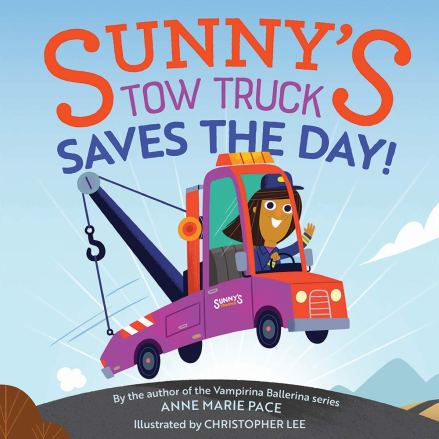
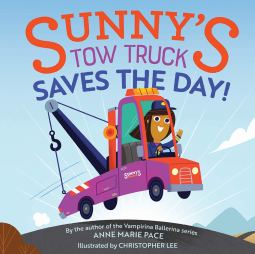
Sunny’s Tow Truck Saves the Day!

Written by Anne Marie Pace | Illustrated by Christopher Lee


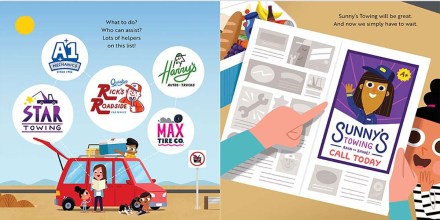
It’s nine o’clock in the morning and a family’s packed up a picnic lunch, clambered into their minivan, and headed out on the open road. “But halfway there…THUMP-BUMPTY…SPLAT! / What’s going on? Our tire’s flat!” No worries, they think—there’s always the spare. But when they look, they discover that tire’s flat too. They check a list of roadside helpers and pick Sunny’s Towing. They make the call and begin to wait.

celebrate-picture-books-picture-book-review-sunny's-tow-truck-saves-the-day-tow-truck-operators

Image copyright Christopher Lee, 2019, text copyright Anne Marie Pace, 2019. Courtesy of Abrams Appleseed.

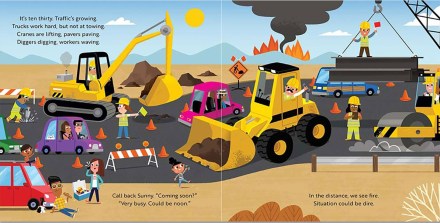
At nine thirty the little boy hears a truck approaching. Is it Sunny? No—it’s a hauler carrying lumber. At ten o’clock the little girl spots another vehicle while her brother munches his sandwich. “Is that her truck? / Just a pickup. Out of luck.” By ten thirty the road is getting busy with construction workers making repairs and other cars traveling here and there. Over the hills black smoke from a fire billows into the sky while Dad enjoys a bite of his lunch.

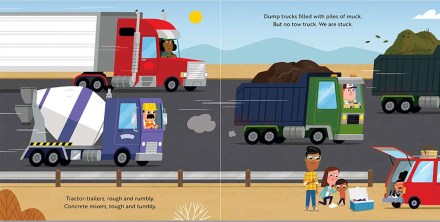
Mom calls Sunny, who says that she’s so busy it might be noon before she gets to them. In a moment firetrucks and police cars with their sirens blaring speed by. As time passes, they see more trucks—“Tractor trailers, rough and rumbly. / Concrete mixers, tough and tumbly. / Dump trucks filled with piles of muck. But no tow truck. We are stuck.” It’s a good time to have a snack the girl thinks.

celebrate-picture-books-picture-book-review-sunny's-tow-truck-saves-the-day-construction-vehicles

Image copyright Christopher Lee, 2019, text copyright Anne Marie Pace, 2019. Courtesy of Abrams Appleseed.

It’s getting close to noon and the family counts down the minutes. Suddenly, they see Sunny approaching. She tows them to her garage, where the tire is changed lickity-split. Finally, the family is ready to enjoy their picnic, but when they look in the cooler all the food has disappeared! Sunny has an idea. She shows the family where the best ice cream is sold, and, with cones in hand, they enjoy a perfect picnic in the park.

celebrate-picture-books-picture-book-review-sunny's-tow-truck-saves-the-day-trucks

Image copyright Christopher Lee, 2019, text copyright Anne Marie Pace, 2019. Courtesy of Abrams Appleseed.

With perky rhymes, Anne Marie Pace takes readers on a picnic that doesn’t quite come off as planned. As the family waits by the side of the road for the tow truck to arrive, the little girl and boy enthusiastically point out other vehicles passing by and take in the excitement of the construction work going on beside them. Pace’s verses shine with cleverly paired words, realistic dialog, names of various kinds of cars and trucks, and dynamic verbs that will captivate kids. Readers will love the humor sprinkled throughout that leads to the “Oh, no!” moment when the family discovers they’ve already eaten their picnic. Sunny—with an appropriately sunny personality—saves the day with her delightful dessert idea.

Christopher Lee lends a charming retro feel to his vivid illustrations with funky home decor, old-fashioned ads, and stylized cars and trucks. The family’s emotions are clearly evident—from their smiles as they pack their picnic to the shock of having a flat tire and finding the spare flat as well to their cheerful patience. Images of the various trucks, emergency vehicles, and other cars will thrill vehicle enthusiasts, and the two-page spread of Sunny’s garage, loaded with action and tools, will spark discussion. Humor and details abound on each page, prompting kids to linger, laugh, and learn.

A sweet story that incorporates a love for vehicles, a family outing, and a fresh lesson on patience, Sunny’s Tow Truck Saves the Day! will be a favorite story time read and a fun addition to home, classroom, and public library collections.

Ages 3 – 6

Abrams Appleseed, 2019 | ISBN 978-1419731914

Discover more about Anne Marie Pace and her books on her website.

To learn more about Christopher Lee, his books, and his art, visit his website.

Nationa Be Late for Something Activity

celebrate-picture-books-picture-book-review-tow-truck-puzzle-2

Tow Truck to the Rescue! Matching Puzzle


These four cars are going to be late! Can you show the tow truck drivers the way to the right cars in this printable puzzle?

Tow Truck to the Rescue! Matching Puzzle

celebrate-picture-books-picture-book-review-sunny's-tow-truck-saves-the-day-cover

You can find Sunny’s Tow Truck Saves the Day! at these booksellers

Amazon | Barnes & Noble | Books-a-Million | IndieBound

Picture Book Review


September 4 – National Wildlife Day

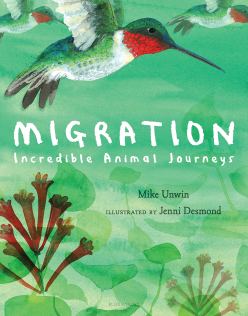
celebrate-picture-books-picture-book-review-migration-incredible-animal-journeys-cover

About the Holiday

National Wildlife Day was established in 2005 by author and pet lifestyle expert Colleen Paige in memory of conservationist Steve Irwin. The day promotes awareness of the importance of conservation of animals, habitats, and the environment worldwide and offers education on the number of endangered and threatened species across the globe. To honor today’s holiday, visit a local zoo, aquarium, or other nature preserve and take some time to learn about what you can do to help protect the environment.

I received a copy of Migration: Incredible Animal Journeys from Bloomsbury Children’s Books for review consideration. All opinions are my own.

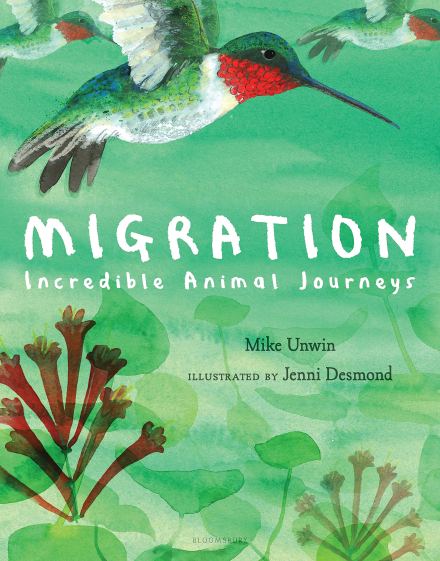
Migration: Incredible Animal Journeys

Written by Mike Unwin | Illustrated by Jenni Desmond


In their stunning book, Mike Unwin and Jenni Desmond take readers along as twenty diverse animals complete their annual travels to safer, warmer, or more fertile feeding grounds guided by inborn instincts. With compelling and conversational storytelling, Unwin introduces each creature, divulging fascinating and endearing facts about the adults and babies that undertake these epic trips—the shortest, 60 miles; the longest, a breathtaking 60,000 miles!

celebrate-picture-books-picture-book-review-migration-incredible-animal-journeys-whales

Image copyright Jenni Desmond, 2019, text copyright Mike Unwin, 2019. Courtesy of Bloomsbury Books.

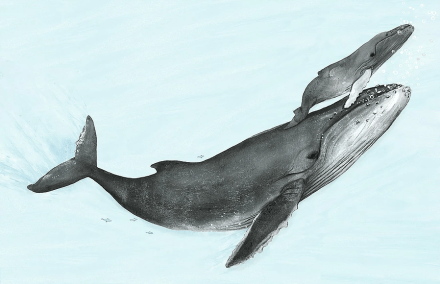
Readers will meet a humpback whale and her baby who stick together for more than 15,000 miles—“the longest swim of any animal on Earth”—as they head from the Pacific Ocean off the coast of Australia to the Antarctic and back in search of krill. As the baby eats, it “will start building up the thick layer of blubber that it needs to keep out the cold.” When it is ten years old, this baby will be fully grown and can look forward to many migrations to come.

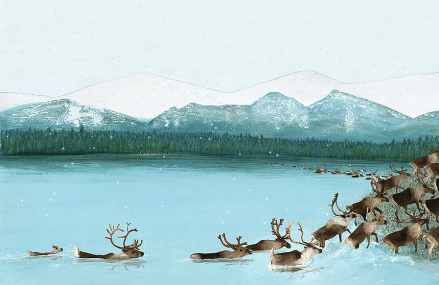
If you were stuck waiting at a caribou crossing, you’d want a good, long book on hand. More than 100,000 adults and their young swim across icy rivers and trek over grasslands of the frosty Arctic “inland toward the forests [where] the trees will help protect them when winter comes” and delicious moss and lichen await under snowy blankets.

celebrate-picture-books-picture-book-review-migration-incredible-animal-journeys-caribou

Image copyright Jenni Desmond, 2019, text copyright Mike Unwin, 2019. Courtesy of Bloomsbury Books.

Meanwhile in a warmer part of the world, a passenger cries, “Stop the car quick! There’s a red river flowing right across the road…. But look closer. It’s not water: it’s crabs. Big red ones. There are thousands of them. They pour across the road in an army of pincers, then scuttle down the bank on the other side, heading for the sea.” Where does this awesome sight take place? On Christmas Island in the Indian Ocean northwest of Australia as millions of red crabs move from the forests to the sea, en masse.

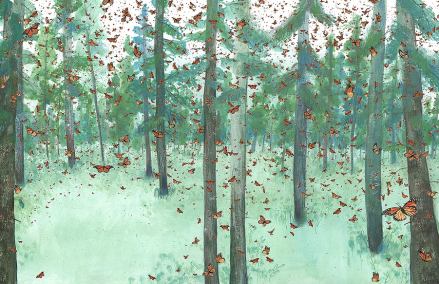
One of the most mysterious and intricately sequenced migrations is that of the monarch butterfly. Each year it takes four generations and four stops to lay eggs and breed along the way for these stained-glass-gorgeous insects “that can weigh less than a paperclip” to complete their journey from the northern United States and Canada to Mexico.

celebrate-picture-books-picture-book-review-migration-incredible-animal-journeys-butterflies

Image copyright Jenni Desmond, 2019, text copyright Mike Unwin, 2019. Courtesy of Bloomsbury Books.

And which creature has the stamina for that 60,000-mile voyage? That honor goes to the appropriately named wandering albatross, who “five to ten years ago…left the small rocky island where it was born. Ever since then it has been wandering, covering more than 60,000 miles a year—over a quarter of the distance from the Earth to the Moon. Never once has it touched land, though the birds often roost on the surface of the water.” In one or two years, this solitary traveler will return to land to breed and become a stay-at-home parent until its only child is ready to depart.

celebrate-picture-books-picture-book-review-migration-incredible-animal-journeys-wildebeasts

Image copyright Jenni Desmond, 2019, text copyright Mike Unwin, 2019. Courtesy of Bloomsbury Books.

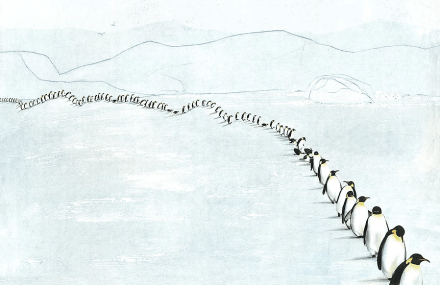
Other creatures presented include the emperor penguin, arctic tern, whooping crane, barn swallow, globe skimmer dragonfly, southern African pilchard, ruby-throated hummingbird, bar-headed goose, great white shark, African elephant, pacific salmon, osprey, blue wildebeest, straw-colored fruit bat, and green turtle.

A map of the world—with each animal’s migratory journey outlined—orients children to the geographic locations and distances involved as well as a few more facts on migration and how pollution and habitat destruction affect migratory patterns follows the text.

celebrate-picture-books-picture-book-review-migration-incredible-animal-journeys-penguins

Image copyright Jenni Desmond, 2019, text copyright Mike Unwin, 2019. Courtesy of Bloomsbury Books.

Mike Unwin’s accessible, descriptive, and sensory snapshots turn this science-based book into an enthralling page-turner. As one astounding true story leads to another, readers will be eager to see which animal comes next and continue learning about this wildlife phenomenon. Well-known for his nature books for children and adults, Unwin captures the spirit of each animal as they take on the formidable challenges of their annual migration and in the process teaches a love and respect for nature.

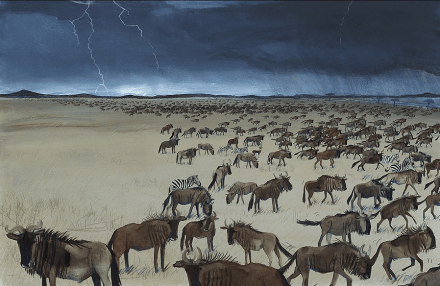
Accompanying Unwin’s text are Jenni Desmond’s gorgeous mixed-media illustrations, made all the more impressive by the book’s large format. The textured pages dazzle with the movement and grandeur of nature, transporting readers to far-flung parts of the world and showing them the beauty of each animal up close. Icy blues and greens lend images of the Arctic a frosty feel, while vibrant greens set off the brilliant oranges of the monarch butterflies and jeweled feathers of the ruby-throated hummingbird. Wildebeest are menaced by storm clouds and elephants parade along a brown, dusty road. The book concludes with first a dusky and then a moonlit night that welcome bats and turtles to begin their travels.

An excellent choice for home, classroom, homeschool, and public library collections, Migration: Incredible Animal Journeys will be a favorite of both kids and adults for lessons and more casual reading.

Ages 5 – 8 and up

Bloomsbury Children’s Books, 2019 | ISBN 978-1408889916

To learn more about Jenni Desmond, her books, and her art, visit her website.

National Wildlife Day Activity

celebrate-picture-books-picture-book-review-wonderful-wildlife-board-game

Wonderful Wildlife Board Game


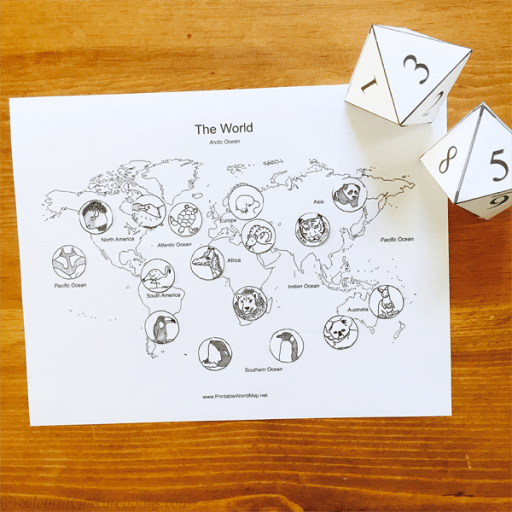
Fascinating animals are found in every part of the world. Play this fun printable Wonderful Wildlife Board Game to match each animal to the area where it lives.

Supplies

Directions

  1. Print a World Map for each player
  2. Print one set of 16 Wildlife Tokens for each player
  3. Print two copies of the 8-sided die, fold, and tape together
  4. If you would like, color the map and tokens
  5. Choose a player to go first
  6. Each player rolls both dice and places an animal on their map according to these corresponding sums of the dice below
  7. The first player to fill their map is the winner!
  • 1 = Flamingo – South America
  • 2 = Emperor Penguin – Antarctica (Southern Ocean)
  • 3 = Giraffe – Africa
  • 4 = Bald Eagle – North America
  • 5 = Ibex – Europe
  • 6 = Kangaroo – Australia
  • 7 = Panda – Asia
  • 8 = Orca – Antarctica (Southern Ocean)
  • 9 = Toucan – South America
  • 10 = Buffalo – North America
  • 11 = Koala – Australia
  • 12 = Lion – Africa
  • 13 = Etruscan Shrew – Europe
  • 14 = Manta Ray – Pacific Ocean
  • 15 = Sea Turtle – Atlantic Ocean
  • 16 = Tiger – Asia

celebrate-picture-books-picture-book-review-migration-incredible-animal-journeys-cover

You can find Migration: Incredible Animal Journeys at these booksellers

Amazon | Barnes & Noble | Books-a-Million | IndieBound

Picture Book Review

September 2 – It’s National Chicken Month

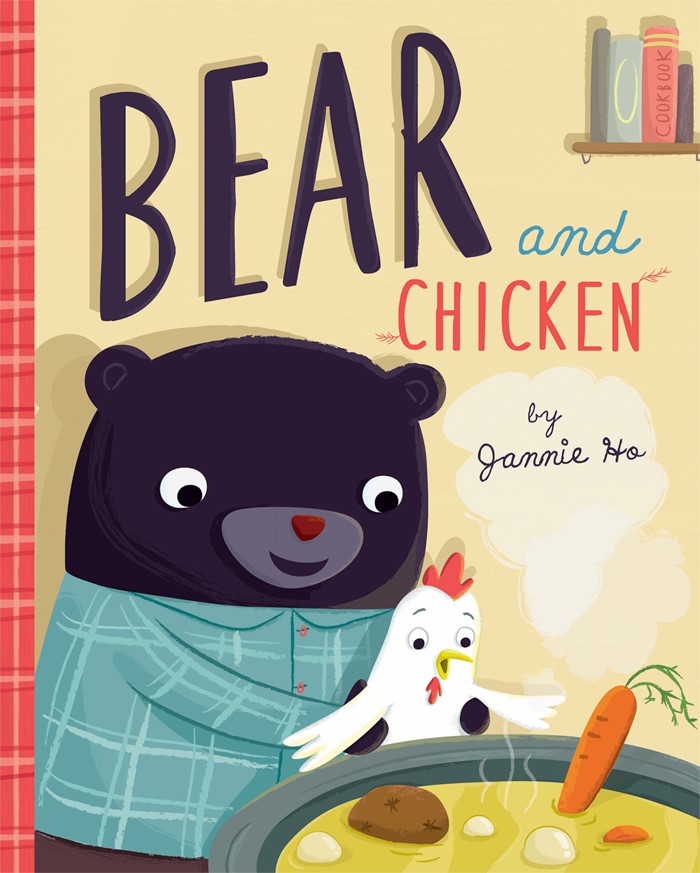
celebrate-picture-books-picture-book-review-Bear-and-Chicken-cover-II

About the Holiday

For over twenty years, the National Chicken Council has used the month of September to promote chicken sales as the summer grilling season winds down. The endeavor has been so successful that September is now known as National Chicken Month! While chicken on the dinner plate or in a sandwich is delicious, chickens also make good pets and—as today’s book proves—great friends!

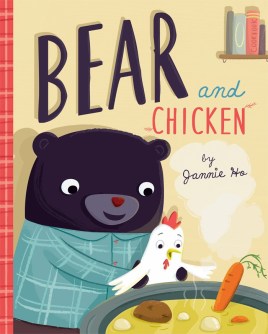
Bear and Chicken

By Jannie Ho


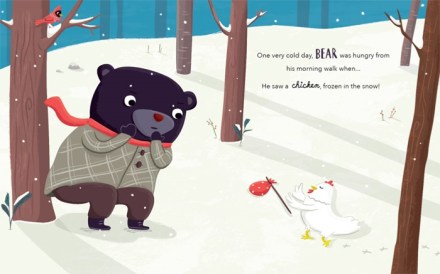
On a cold winter day, Bear was coming home from his morning walk when “he saw a chicken, frozen in the snow!” He picked her and her knapsack up and brought them inside, where a warm fire crackled in the fireplace. “How does one defrost a chicken? thought Bear.” Bear took a blanket and wrapped the chicken like a burrito and held her tight until her eyes opened. When that happened, Bear smiled and Chicken found herself staring into two rows of very sharp teeth.

celebrate-picture-books-picture-book-review-Interview-with-Jannie-Ho-bear-finds-chicken

Copyright Jannie Ho, 2017, courtesy of Running Press Kids.

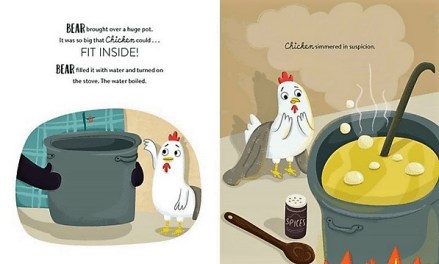
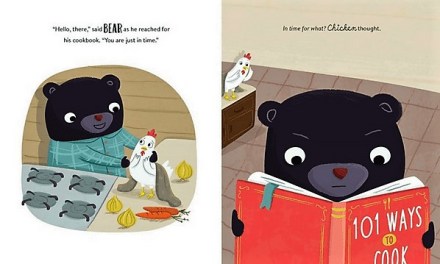
Bear took Chicken into the kitchen, where carrots and onions sat on the counter. Bear picked up his cookbook and began to read. “‘You are just in time,’” he said to Chicken. Chicken looked on worriedly as Bear filled a huge, chicken-sized pot with water and put it on the stove to boil. When Chicken inadvertently knocked over a pot of basil, Bear decided it was a perfect addition to his recipe.

With a newly sharpened knife, Bear chopped up carrots, celery, and onions. “‘Hmmm…what else is missing?’ said Bear,” looking right at Chicken. Bear lifted Chicken up to the pot of hot, bubbling broth. Imagining what would happen next, Chicken wriggled out of Bear’s grasp and ran away as fast as she could and out the front door.

celebrate-picture-books-picture-book-review-bear-and-chicken-double-spread

Copyright Jannie Ho, 2017, courtesy of Running Press Kids.

Bear chased after her, and even though Chicken “zig-zagged through the trees,” Bear caught up with her. She glanced at the big stick Bear had raised over her head, and thought it was the end for her. But Bear, his feelings hurt, was just holding out Chicken’s knapsack. “‘You forgot this,’” he said. Surprised, Chicken blurted out, ‘”You’re not going to eat me?’” Now it was Bear’s turn to be surprised, and he explained that he was making lunch for both of them.

Still wary, Chicken protested that she wasn’t hungry, but her grumbling tummy gave her away. The two laughed, and after Bear promised to help Chicken find her way home, they went inside to enjoy delicious bowls of vegetable soup.

An adorably illustrated recipe for Bear’s Vegetable Soup and a note about the diet of Black Bears follow the text.

celebrate-picture-books-picture-book-review-bear-and-chicken-double-spread

Copyright Jannie Ho, 2017, courtesy of Running Press Kids.

Kids will love the suspense and humor of Jannie Ho’s mistaken purposes story. Her clever culinary puns set the action directly in the kitchen and put young readers in the same mindset as poor Chicken when she wakes up to a very suspicious smile. As Chicken stews about her predicament, little ones will empathize with her while older readers may have fun predicting Bear’s intent. The chase through the woods provides gentle suspense while the sweet reconciliation will have readers giggling along with Chicken and Bear.

Ho brings her distinctively cute artwork to her debut as an author/illustrator with great effect as Bear and Chicken exchange meaningful looks—but is Bear serious about cooking Chicken or just serious about his cooking? Kids will fall in love with little chicken from the moment she’s found in the snow and snugged into a warm blanket. Her worried expression will further endear her to readers, and who can blame them for a bit of worry of their own when Bear’s décor includes such things as a picture of bacon and eggs and the prominently displayed Chicken Cookbook?

A cozy Cozy for the youngest mystery lovers, Bear and Chicken would be a welcome guest on any home, classroom, or public library bookshelf.

Ages 3 – 6

Running Press Kids, 2017 | ISBN 978-0762462667

Discover more about Jannie Ho, her books, and her artwork on her website.

National Chicken Month Activity

celebrate-picture-books-picture-book-review-chicken-craft

A Chicken to Crow About


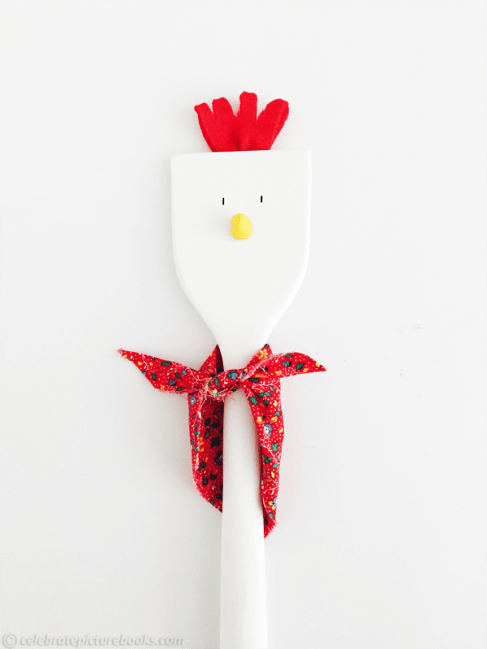
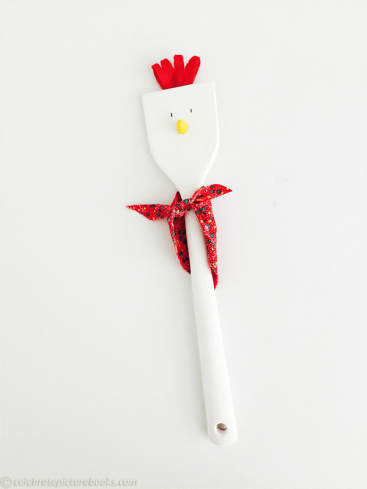
A long-handled wooden turner makes a plucky decoration for your room or kitchen—and a great reminder to bring your passions to every job! In a few simple steps, you’ll have a cute companion you’ll want to crow about!

Supplies

  • Printable Comb and Scarf Template
  • Long-handled wooden turner, available in kitchen supply stores
  • Red felt
  • Yellow bakable clay
  • Fabric, 12 inches square
  • A small piece of white felt or fleece (optional)
  • White paint (or any color you would like)
  • Black marker
  • Fabric glue
  • Glue gun
  • Paint brush

celebrate-picture-books-picture-book-review-chicken-craft

Directions

  1. Paint the wooden turner, let dry
  2. Cut the scarf from the piece of fabric
  3. Make a beak from the yellow clay and bake it according to package directions

To make the comb

  1. Cut out the comb from the red felt
  2. Fold the felt in half and glue the end together with the fabric glue
  3. Cut short strips from the folded top of the felt, about ½-inch to ¾ -inch in length
  4. Round the corners of the strips slightly

To make the scarf

  1. Fold the fabric in half
  2. With the long, straight edge of the scarf template along the fold, cut out the scarf
  3. With the fabric glue, glue the two sides of the scarf together so that you have two “right” sides
  4. Let dry

To assemble the chicken

  1. Pinch the bottom of the comb together so that the strips open and the felt pleats a little
  2. With the glue gun attach the comb to the back of the painted turner, keeping the bottom pinched together
  3. Attach the beak to the front of the turner
  4. Draw eyes on the chicken with the black marker
  5. Tie the scarf around the neck of the handle, hold in place with a drop of glue in the back if necessary
  6. To make tail feathers in a turner with a hole in the handle, pinch together a small folded piece of white felt or fleece and push it through the hole in the handle of the turner.
  7. Cut or arrange to look like feathers

celebrate-picture-books-picture-book-review-Bear-and-Chicken-cover-II

You can find Bear and Chicken at these booksellers

Amazon | Barnes & Noble | Books-a-Million | IndieBound

August 30 – National Frankenstein Day

celebrate-picture-books-picture-book-review-mary-who-wrote-frankenstein-cover

About the Holiday

Today’s holiday celebrates the birth of Mary Wollstonecraft Shelley, who in 1818 at the age of 18, penned one of the most influential books of all time. Considered the first modern science fiction novel, Frankenstein; or, The Modern Prometheus incorporates elements of horror, psychology, love, abandonment, and acceptance. These themes and Shelley’s enthralling storytelling created a book that is always current. During this 200th anniversary year of the publishing of classic novel, discover (or rediscover) the spellbinding thrill of reading Frankenstein.

Mary Who Wrote Frankenstein

Written by Linda Bailey | Illustrated by Júlia Sardà


Mary was a dreamer. She liked to spend time alone, thinking and imagining “things that never were.” Mary called these daydreams “‘castles in the air.’” Mary loved to write stories too, but her daydreams were even more thrilling. When Mary wanted to read and dream, she went to the graveyard and sat next to her mother’s grave. Mary’s mother had died when Mary was only 11 days old.

While Mary loved her father, she didn’t like the way he punished her. Mary didn’t like his new wife, either. Mary’s father is friends with many famous people, and he invites them to visit. One night “a writer named Samuel Taylor Coleridge recites a strange, eerie poem—The Rhyme of the Ancient Mariner. Mary loves such poems.” Even though she was supposed to be in bed, she hid and listened, shivering “with fear at the spine-tingling tale of a ship full of ghosts.” Forever after, Mary remembered that night and that poem.

celebrate-picture-books-picture-book-review-mary-who-wrote-frankenstein-town

Image copyright Júlia Sardà, 2018, text copyright Linda Bailey, 2018. Courtesy of Tundra Books.

By the time Mary was fourteen, she was unhappy at home and causing trouble. One night, when she was sixteen, she and her stepsister, Claire, ran away with a “brilliant, young poet” named Percy Bysshe Shelley. They traveled through Europe, one day finding themselves outside a “ruined castle. It’s called Castle Frankenstein. Such an interesting name! Does it stick in Mary’s mind?”

Eighteen months later, the three traveled to Switzerland, where they became friends with Lord Byron—the most famous poet in the world. One night as torrential storms crashed around Lord Byron’s house, he read ghost stories from Fantasmagoriana. After reading, Byron challenged his friends, who also included a doctor named John Polidori, to write a ghost story. Eighteen-year-old Mary, Percy Bysshe Shelley, and John Polidori accepted the challenge. But Mary could not think of a good story idea.

celebrate-picture-books-picture-book-review-mary-who-wrote-frankenstein-friends

Image copyright Júlia Sardà, 2018, text copyright Linda Bailey, 2018. Courtesy of Tundra Books.

Soon, Shelley and Polidori gave up on their ghost stories, but their talk of new scientific experiments excited Mary. “Electricity can make the muscles of a dead frog twitch. Could it bring a dead creature to life? The idea is both thrilling and frightening.” The idea captured Mary, but instead of a frog, she imagined “a hideous monster, made of dead body parts, stretched out—and coming to life!” Mary suddenly realized she had the idea for her ghost story.

It took nine months for Mary to finish her story. When it was published, some people thought it had been written by Percy Bysshe Shelley—they didn’t “believe young Mary could have done it! How could a girl like her come up with such a story?” But she was a writer, assembling bits and pieces, ideas, and scientific changes in her imagination until they turned into the book Frankenstein. In the two-hundred years since the novel was first published, the story has become a classic. It has sparked movies, inspired other writers, and become a favorite all around the world.

An extensive Author’s Note about Mary Shelley, her life, and inspiration as well as Linda Bailey’s thoughts on the story behind Frankenstein follows the text. A full-page portrait of Mary Wollstonecraft Shelley and a list of sources rounds out the informative backmatter.

celebrate-picture-books-picture-book-review-mary-who-wrote-frankenstein-graveyard

Image copyright Júlia Sardà, 2018, text copyright Linda Bailey, 2018. Courtesy of Tundra Books.

With atmospheric and riveting details, Linda Bailey captures the life of Mary Wollstonecraft Shelley and the influences on her imagination that resulted in Frankenstein. Bailey’s use of the present tense is inspired as it reflects the continued currency of the novel while encouraging today’s readers to embrace their “castles in the air.” Facts about Mary’s travels, new scientific discoveries, and favorite books sprinkled throughout the story inform readers on how the imagination combines experiences to create art.

One look at Júlia Sardà’s spellbinding cover tells readers that they are in for an extraordinary reading experience. Muted tones of red, green, gold, blue, and plum cloaked in black create a thrilling backdrop to Bailey’s story. Ghostly winged creatures fly over Lord Byron’s home on a stormy night, smoky monsters emerge from Fantasmagoriana, a frog sits up in its coffin, and the spectre of the monster leans over Mary and sleeps at her feet as she writes her novel. At once spine-tingling and cozy, Júlia Sardà’s illustrations will draw children into this superb story of a ghost story.

Mary Who Wrote Frankenstein is sure to spark the imagination of children who love literature, art, and writing. The book would be a thrilling addition to classroom libraries for literature and writing classes as well as an inspiring favorite on home bookshelves.

Ages 5 – 8

Tundra Books, 2018 | ISBN 978-1770495593

Discover more about Linda Bailey and her books on her website.

To learn more about Júlia Sardà, her books, and her art, visit her website.

Frankenstein Day Activity

celebrate-picture-books-picture-book-review-frankenstein-puzzle

Monstrously Good Puzzle


See if you’re a Frankenstein scholar by filling in this printable puzzle full of words and phrases about the novel!

Monstrously Good Puzzle | Monstrously Good Puzzle Word ListMonstrously Good Puzzle Solution

celebrate-picture-books-picture-book-review-mary-who-wrote-frankenstein-cover

You can find Mary Who Wrote Frankenstein at these booksellers

Amazon | Barnes & Noble | Books-a-Million | IndieBound

Picture Book Review


August 29 – It’s National Fishing Month

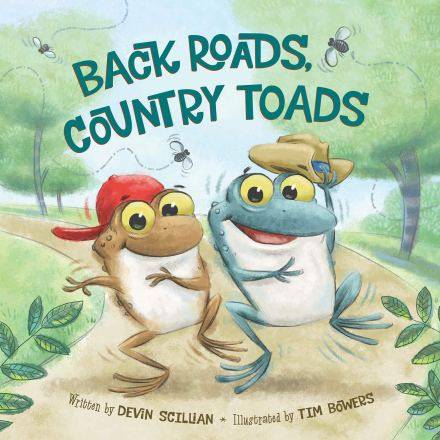
celebrate-picture-books-picture-book-review-back-roads-country-toads-cover

About the Holiday

Is fishing your thing? Do you like nothing better than heading down to the lake or stream and spending a relaxing day with a fishing pole, some bait, and the possibility of reeling in a “big one?” Perhaps you like fly fishing better, challenging yourself to flick that hook in just the right place. Then again, maybe taking a boat out to deep water and pitting yourself against the truly big fish is more your style. However you like to fish, make some time to enjoy your hobby this month!

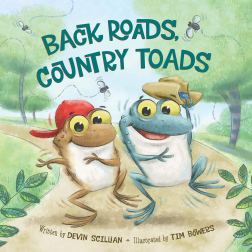
Back Roads, Country Toads

Written by Devin Scillian | Illustrated by Tim Bowers


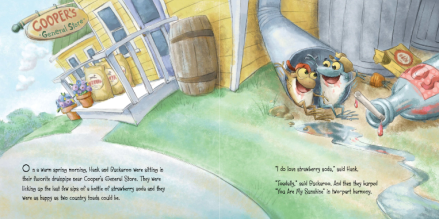
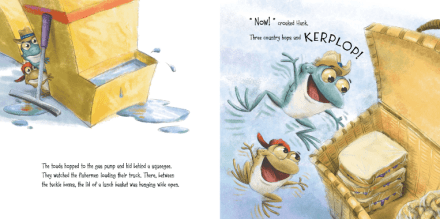
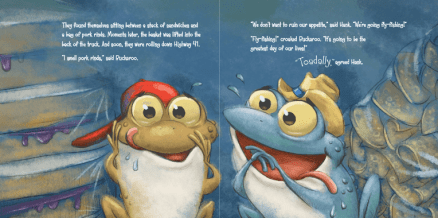
Best toady friends, Hank and Buckaroo, were just hanging out in “their favorite drainpipe near Cooper’s General Store” sipping the last drops from a discarded bottle of strawberry soda when they overheard Mr. Cooper and his friends talking about going fly-fishing. Hank and Buckaroo thought FLY-fishing sounded awesome and wanted to go along. They spied the perfect place to catch a ride: the fishermen’s open lunch basket. With a KERPLOP! they jumped in.

celebrate-picture-books-picture-book-review-back-roads-country-toads-drain-pipe

Image copyright Tim Bowers, 2019, text copyright Devin Scillian, 2019. Courtesy of Sleeping Bear Press.

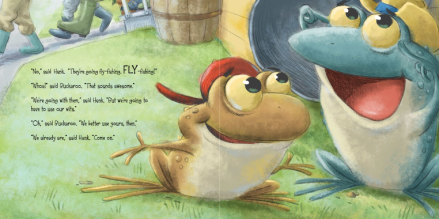
Soon they were on their way to what Buckaroo said would be “‘the greatest day of their lives.’” “‘Toadally,’” agreed Hank. While they rode to the fishing stream, Hank and Buckaroo sang “When You Fish Upon a Star,” and as soon as the truck stopped they jumped out and hid in a nearby bush. But Emmitt the raccoon was already there. Hank and Buckaroo were reveling in the glory that was going to be that day’s “‘fly cafeteria’” and “‘down-home big-time fly barbecue’” when Emmitt gave them the bad news. Hank didn’t believe it. He thought “‘fishing WITH flies’” instead of “‘fishing FOR flies’” sounded ridiculous.

celebrate-picture-books-picture-book-review-back-roads-country-toads-fly-fishing

Image copyright Tim Bowers, 2019, text copyright Devin Scillian, 2019. Courtesy of Sleeping Bear Press.

And just then a nice juicy fly sailed by. Hank leaped and released his long tongue, but Emmitt pulled him back just before he grabbed onto the fake fly. The three watched as the fishermen caught fish after fish with the imitation flies. Hank and Buckaroo couldn’t imagine what Mr. Cooper and the rest of the fishermen would want with “‘those smelly fish.’” Emmitt disagreed—he loved smelly fish. To prove his point, he ran up and snatched one from the fishermen’s bucket.

celebrate-picture-books-picture-book-review-back-roads-country-toads-picnic-basket

Image copyright Tim Bowers, 2019, text copyright Devin Scillian, 2019. Courtesy of Sleeping Bear Press.

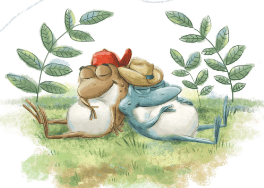
Seeing the fish, Hank had a brainstorm and asked to “‘borrow’” Emmitt’s fish. He placed it on a rock in the sun and went back to their hiding place in the bushes. Emmitt and Buckaroo were confused. But “before long, a swarm of flies hovered over the fish.” When there was a large cloud of flies, “Hank croaked, ‘Let’s go fishing!’” Their tongues snapped in the air, reeling in dozens of flies. When they were filled to the brim, they gave the fish back to Emmitt and happily made plans to go fly-fishing again the next Saturday.

celebrate-picture-books-picture-book-review-back-roads-country-toads-pork-rinds

Image copyright Tim Bowers, 2019, text copyright Devin Scillian, 2019. Courtesy of Sleeping Bear Press.

Devin Scillian’s clever, pun-filled fish story has everything needed to hook young readers and deliver a funny story time. With the lure of all the flies they can eat, Hank and Buckaroo take action to have the best day of their lives and discover a new hobby. When they meet up with Emmitt the raccoon and learn that their initial idea was a bit off the mark, Hank shows persistence and innovative thinking to make their fishing dreams come true. Demonstrating acceptance of each other’s different tastes and some creative cooperation, the camaraderie among Hank, Buckaroo, and Emmitt serves as a good example for readers. The close bond between Hank and Buckaroo—and their hilarious dialog—will endear them to kids, leaving them wanting more from this “toadally” charming duo.

Screen Shot 2019-08-28 at 3.36.36 PM

Tim Bowers’ energetic toads, with their wide smiles, eager eyes, and spirited personalities are obvious best friends from the first page. Bowers’ vibrant, action-packed illustrations are laugh-out-loud funny as Buckaroo and Hank grow giddy at the thought of all those flies they’re going to catch, flick their loooong tongues, and hobble down the road with overstuffed bellies. Emmitt may chuckle at the toads’ misinterpretation of “fly-fishing,” but he’s a true and trusting friend to rescue Hank from a fisherman’s line and lend his filched treat to attract their lunch. In the background, images of the two fishermen and their young protégés casting their lines and reeling in bucket-loads of fish add depth, interest, and visual clues for readers.

A comical, well-developed tale that will captivate kids, Back Roads, Country Toads is a winner for group story times or one-on-one fun at home, in the classroom, or for public libraries.

Ages 5 – 8

Sleeping Bear Press, 2019 | ISBN 978-153411039

Discover more about Devin Scillian, his books, music, and journalism on his website.

To learn more about Tim Bowers, his books, and his art, visit his website.

National Fishing Month Activity

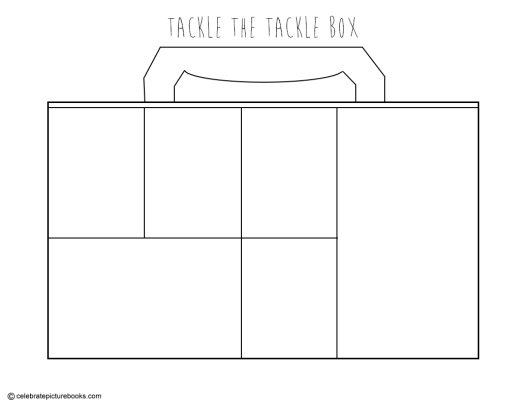
celebrate-picture-books-picture-book-review-tackle-the-tackle-box-game

Tackle the Tackle Box Board Game


A good fisherman always needs a well-stocked tackle box. Play the Tackle the Tackle Box Game to earn lures, bobbers, hooks and more to fill your box. The first player to complete their set is the winner! For more fun, you can color the tackle box items any way you like. There are even three extra cards for you to draw your own tackle box items!

Supplies

celebrate-picture-books-picture-book-review-tackle-the-tackle-box-game-cards

Directions

  1. On card stock, heavy paper, or regular paper, print one Tackle the Tackle Box Game Board for every player
  2. On card stock, heavy paper, or regular paper, print one set of Tackle the Tackle Box Game Cards for every player
  3. Each player can color their set of playing cards (optional)
  4. Three spaces are left blank for kids to design their own lures, bait, and flies too (optional)
  5. Cut the cards apart
  6. Gather all the cards and set in separate piles
  7. Roll the die to determine who goes first, highest roll goes first
  8. The first player rolls the die, and adds the item that corresponds to the number on the die. The list is below.
  9. Play continues with each player rolling the die and collecting cards
  10. If the player rolls a number for a card that he or she already has, the die passes to the next player
  11. The first player to fix their tackle box is the winner!

Each number of dots on the die corresponds to these cards:

1: FISH LURES

2: HOOKS

3: WORMS

4: FISHING LINE

5: FLIES

6: BOBBERS

celebrate-picture-books-picture-book-review-back-roads-country-toads-cover

You can find Back Roads, Country Toads at these booksellers

Amazon | Barnes & Noble | Books-a-Million | IndieBound

Picture Book Review


August 28 – It’s Family Fun Month and Interview with Author Robie H. Harris

celebrate-picture-books-picture-book-review-look-babies-head-to-toe-coverAbout the Holiday

This month-long holiday encourages families to spend time together having fun, learning, and getting to know each other on an all-new level. Having a baby in the family means there are plenty of joyous moments and new experiences to enjoy as the little one learns about the world and their place in it. For children any moment—whether while playing, shopping, or doing chores—can become an exciting and enjoyable opportunity for discovery. Reading together is one of the best ways to nurture a baby’s development—as you’ll see in today’s book!

I received a copy of LOOK! Babies Head to Toe from Abrams Appleseed for review consideration. All opinions are my own. I’m happy to be teaming with Abrams Appleseed in a giveaway of the book. See details below.

LOOK! Babies Head to Toe

Written by Robie H. Harris | Illustrated by Anoosha Syed


With a baby on your lap or cuddled up beside you, you can open the world of self-awareness for your child as you open the cover of this engagingly written and adorably illustrated board book. Little readers will be immediately entranced by the baby who smiles out at them from the first pages as adults exclaim, “Look! A baby!,” show them the baby “Head to toe! Toe to head!” and share a greeting: “Hi, baby!”

celebrate-picture-books-picture-book-review-look-babies-head-to-toe-hi-baby

Image copyright Anoosha Syed, 2019, text copyright Robie Harris, 2019. Courtesy of Abrams Appleseed, Abrams Books for Young Readers.

What baby doesn’t love playing peek-a-boo? Here, babies learn about eyes by playing along with the enthusiastic baby in the book who hides his eyes and then reveals them with a happy smile. What are ears for? Listening, of course! And as the sweet baby on the page listens to her mom play the ukulele, your baby hears “Look! Baby’s ears!” and can be encouraged to repeat “La-la-la!”

Noses are for smelling, but sometimes they’re for sneezing too—“Ah-choo!” Turn the page again and “Look! A baby! Look! Baby’s mouth” is puckered up for a kiss. Moving on, babies “clap-clap-clap” with their hands, discover their tummy, try out their strong legs, and, for a last bit of fun, wiggle their toes.

celebrate-picture-books-picture-book-review-look-babies-head-to-toe-achoo

Image copyright Anoosha Syed, 2019, text copyright Robie Harris, 2019. Courtesy of Abrams Appleseed, Abrams Books for Young Readers.

With her delightful, lively text, Robie H. Harris provides parents and caregivers a dynamic way to not only introduce little ones to parts of their body but to help with the development of  language and motor skills. The repeated phrases “Look!,” “A baby!” and mention of particular parts of the body, accompanied with pointing to the baby on the page as well the little reader, orient children to these often-heard words and give them concrete meaning. Active words that echo familiar sounds and motions offer opportunities for little ones to vocalize and play.

celebrate-picture-books-picture-book-review-look-babies-head-to-toe-babies

Image copyright Anoosha Syed, 2019, text copyright Robie Harris, 2019. Courtesy of Abrams Appleseed, Abrams Books for Young Readers.

Anoosha Syed’s charming babies are bright-eyed and smiley, sweet friends who are ready to play. Their enthusiasm is infectious as they make direct eye contact with young readers—an important aspect of communicating with children. Each of the ten diverse babies are highlighted on two-page spreads with plenty of white space that allows readers to focus attention on the child and the part of the body being introduced. In each image the children demonstrate a different expression—from welcome and surprise to love and joy to contemplation and uncertainty. Adding this range of emotions reflects studies which have found that looking at pictures such as these can help children form feelings of empathy and understanding.

A cheerful, enchanting book for sharing fun and quality time with babies and toddlers, LOOK! Babies Head to Toe makes a wonderful new baby or shower gift, an engaging take along for outings or times when waiting is expected, and a go-to read at home, in preschool classrooms, and for public library collections.

Ages Birth to 3

Abrams Appleseed, 2019 | ISBN 978-1419732034

Discover more about Robie H. Harris and her books on her website.

To learn more about Anoosha Syed, her books, and her art, visit her website.

Meet Robie H. Harris

celebrate-picture-books-picture-book-review-Robie-Harris-headshot

Today, I’m thrilled to be talking with Robie H. Harris about her board books for youngest readers and the importance of reading with babies and toddlers.

You’re well known for your books about growth and development for children and teens. Your recent books with Abrams Appleseed, Who? A Celebration of Babies and LOOK! Babies Head to Toe highlight the development of babies and very young children.

I have always been fascinated by babies and toddlers and how amazing and interesting they are. I have always wanted to write board books for them, especially books with which they could connect and that would engage them. Thanks to Abrams Appleseed, LOOK! and WHO? are out in the world. The words I wrote for each of these books are my way of talking with babies and toddlers and having a conversation with them and, hopefully, drawing them into the book.

Here’s what a mother of an 11-month-old baby emailed me this morning about her infant’s reaction when she shared LOOK! with her baby: “My baby giggled as soon as I opened the first page (a rare reaction, typically he’s either serious or squirmy for story time these days) and giggled right through ‘til the end.” Another parent of a six-month-old infant emailed me: “My baby looked and listened the whole time I read the book to her. She also gurgled and cooed and at times reached and gently touched some of the drawings of the babies that are in LOOK! After I read it to her, she grabbed the book and hugged it and gave it a kiss.” This kind of engagement these infants had with LOOK! was what I was hoping for as I was writing WHO? and LOOK!

Do you feel that there is now more attention being paid to these important early years?

Yes, there is a lot more attention to the early years, and that’s wonderful and can be helpful to authors writing for our youngest children. Thank goodness, the notion that a baby is not a person yet or is just a “blob” has been discarded by most. The abundance of infant and toddler research that is now available and that is continuing to gallop forward has fueled my board books and tells us how powerful babies’ thinking and emotions and brains are. When I am writing, I need to understand what is going on emotionally with an infant or toddler. From my own observations of infants and toddlers and also from research, I try to create words and/or a story that will strike a responsive chord in them. When I finish writing, an artist, such as Anoosha Syed, the illustrator of LOOK!, can find even more ways through art to connect our book with the babies and toddlers for whom I was writing.

What research has contributed to our deeper understanding of babies’ learning?

I will cite one of many studies that deals with shared reading as an example of the type of research that informs my thinking when writing a board book. The principal researcher of this recent study is Alan Mendelsohn, MD, pediatrician, New York University School of Medicine. “The study identifies pathways by which parent-child interactions in shared reading and play can improve child behavioral outcomes.” In addition, as a children’s book author, I continue to have the good fortune of consulting with pediatricians, child development and infancy specialists, child psychologists and analysts about what I am writing to make sure that it will ring true for an infant, toddler, or young child.  

Why is it important for parents and other caregivers to read books to babies, even before they can talk? How can age-appropriate books, like these from Appleseed, help?

This statement from the American Academy of Pediatrics site says it all: “​In 2014, the American Academy of Pediatrics (AAP) issued a policy statement recommending parent-child home reading beginning at birth and continuing at least through kindergarten. Behavioral evidence has shown that children who are read to, especially before school entry, experience stronger parent-child relationships and learn valuable language and literacy skills.” I would add the following statement of my own: Board books are one way our very youngest children begin to understand not only themselves, but also the people and the world around them. It is also a way for our youngest children and a significant adult in their lives, be it a parent or caregiver, to have a moment together away from the bustle of their everyday lives.

Story time is a time to build a loving relationship with each other and, yes, have some fun together while sharing a book. Additionally, make sure you read to your child once a day, every single day. Find a quiet time to do so, if possible, and don’t be interrupted by a call on your phone or anything else. Just enjoy your special time together. Start early and keep on reading books to them. Have a basket of board books on the floor with just board books in it—nothing else. And it’s okay if your infant or toddler sits on a book, chews on it, puts it on top of their head, drools on it, or opens it and is looking at the book upside down. This is one of the ways books become part of their lives and will continue to be part of their lives as they grow up and grow older. 

Look! Babies Head to Toe includes repetitive phrases and onomatopoeia such as “La-la-la” and “Achoo!” How do these aspects of the story benefit a baby’s developing language skills? How can adults expand on that type of learning?

I purposely use repetitive phrases such as “La-la-la, Achoo!, Kiss-kiss. Clap-clap-clap” and others in LOOK! because they are sounds that infants have heard and may have uttered out loud. While writing LOOK!, I believed infants and toddlers would mimic these sounds and words and have fun doing it while at the same time expanding the words they learned and could eventually use to communicate with others. I felt it could also be a way of engaging infants and toddlers in the  book. I purposely use repetitive sounds and words in WHO? for the very same reasons. Adults can expand on that type of learning by continuing to share a book with a child each and every day.

What are the long-term benefits of engaging babies in language and activities?

There are many. Here are two: Sharing a board book such as LOOK! is early literacy in the making and helps to create a love of language, art, and books for years to come. Reading a book with an infant or toddler also gives that child and their parent or caregiver the chance to spend time together, which can help to build a loving and caring bond between them and with others in the years ahead.

Anoosha Syed’s illustrations of babies are adorable while also being realistic. She also includes actions and gestures, such as crawling, hiding and revealing eyes, and smiling. Can you talk a little about how babies and toddlers react to seeing photographs or illustrations of children and how that helps their physical and emotional development?

Anoosha’s pitch-perfect drawings of babies do draw infants and toddlers into the book. Parents and caregivers have told me that while reading LOOK! babies gurgle and coo and often touch the drawings of babies in the book. They’ve also said that their toddlers sometimes kiss the drawings or pat their tummies or clap their hands just as the babies in the book do. The fact that this happens delights me as an author and as a person who feels that infants, toddlers, and young children are true learners.

You love to meet your readers of all ages! Have you held readings or events for parents and caregivers of babies and toddlers? What do these consist of? Do you have an anecdote from any event that you’d like to share?

I have held some readings for parents and have given talks at conferences for infant and toddler professionals. These revolve around the benefits of sharing board books such as WHO? and LOOK! with infants and toddlers as well as the benefits of sharing picture books with young children. I show a video of a parent reading WHO? to a six-month-old infant, who is responding to the book in many ways both verbally and physically. The response from the parents and professionals who watched that video surprised me. Here’s why: Many parents and professionals were amazed to find out that sharing a board book with a baby does engage the infant at such an early time in their life. Many told me that they would now start sharing board books with babies.   

Do you have any other books for this age group in the works?

Yes. I can’t seem to keep myself from coming up with yet more ideas for another board book. One is almost fully written. I am just fiddling with the end of the book and need some more time to work on that. I read it out loud to myself this morning. This is something I do often to hear whether the words or the story I wrote work. Work for whom? Work for the age-range of the children who would be the audience for that particular book. I also have extensive notes on another board book idea. I have written only a few words for that book and am just at the beginning of my process of writing it. A lot more work is needed to move this book along. But I’m too busy with other books under contract to spend much time on it now.

Thanks, Robie, for this fascinating talk! I wish you the best with Look! and Who? and all of your books!

LOOK! Babies Head to Toe Giveaway

I’m excited to partner with Abrams Appleseed in a Twitter giveaway of:

One (1) copy of LOOK! Babies Head to Toe, written by Robie H. Harris | illustrated by Anoosha Syed

To enter Follow me @CelebratePicBks on Twitter and Retweet a giveaway tweet.

This giveaway is open from August 28 through September 3 and ends at 8:00 p.m. EST.

A winner will be chosen on September 4.

Prizing provided by Abrams Appleseed

Giveaway open to U.S. addresses only. | No Giveaway Accounts 

Family Fun Month Activity

celebrate-picture-books-picture-book-review-sensory-board

Child’s Sensory Board


Toys or objects that provide many opportunities for sensory experimentation and observation stimulate a baby and young child to learn while having fun. You can make a sensory board for your own child using household items and that have a variety of textures, sizes, shapes, and movement. When you create your own sensory board, you can personalize it for your child by adding their name, pictures of family members, and other special items. While you play with your child, take time to talk about all of the objects on the board, what they do, and how they work. Count the objects. If you include words or your child’s name, spell them outloud and say them. There are so many ways to use a sensory board. Even if children can’t yet talk, they are listening and soaking in the rich language learning you are providing!

**When making your board always ensure that you use items that are not a choking hazard or can catch tiny fingers. Make sure that items are firmly attached to the board. Never leave a baby unattended while playing.**

Supplies

  • A board large enough to hold the items you want to attach. Boards that can be used include: those found at hardware stores or craft stores; large cutting boards; shelves; old table tops; etc.

Sample items for your sensory board can be age appropriate and include:

  • Large swatches of various textured material. (I used fur, a scrubbing sheet, and a piece of carpeting)
  • Wooden or thick cardboard letters and numbers, painted in a variety of colors. Letters can be used to add a child’s name to the board.
  • Figures cut from sheets of foam or wooden figures found at craft stores in a variety of numbers that you can count with your child (I used sets of 1, 2, and 3 fish cut from foam to go along with the numbers 1, 2, and 3)
  • Mirror
  • Push button light
  • Chalk board to write on
  • Castor or other wheel
  • Door latches
  • Door knockers
  • Mop heads
  • Paint rollers
  • Cranks
  • Drawer handles
  • Hinges (I attached a tennis ball to a hinge that children can push back and forth)
  • Pulleys
  • Paint in various bright colors
  • Paint brushes
  • Scissors
  • Screws
  • Nuts and bolts
  • Velcro
  • Super glue

Directions

  1. Assemble your items
  2. Paint wooden or cardboard items
  3. Arrange item on the board so that your baby or child can easily reach or manipulate each one
  4. Attach items with screws, nuts and bolts, or super glue
  5. Push button lights or other objects that take batteries can be attached with strong Velcro. Ensure items attached with Velcro are large and not a choking hazard.
  6. Set up board where you and your baby or child can enjoy playing with it together

celebrate-picture-books-picture-book-review-look-babies-head-to-toe-cover

You can find LOOK! Babies Head to Toe at these booksellers

Amazon | Barnes & Noble | Books-a-Million | IndieBound

Picture Book Review


August 27 – It’s Happiness Happens Month

celebrate-picture-books-picture-review-twins-cover

About the Holiday

It’s all up to you to make his month-long holiday happen. It offers an opportunity for each person to ask: What makes me happy? As the summer comes to a close and the hustle-bustle of school and extracurricular activities starts up again, be sure to include those things that truly bring you and your children joy. Spending more time with siblings and friends may be at the top of the list—just like in today’s book!

Twins

By Mike Ciccotello

A little boy and a giraffe love being twins. In fact, they are so alike, the boy says, that “sometimes our friends can’t tell us apart.” Having a twin means there’s always someone to play games—“and piano duets”—with. While it’s true that twins like many of the same things, the way they do activities is way different. Take the little boy and his giraffe twin, for instance. The boy’s tricycle is short, while his twin’s is looong, and the snowman the boy makes has three sections while the giraffe’s snowman has six—and antlers.

celebrate-picture-books-picture-review-twins-bowtie

Copyright Mike Ciccotello, 2019, courtesy of Farrar Straus Giroux.

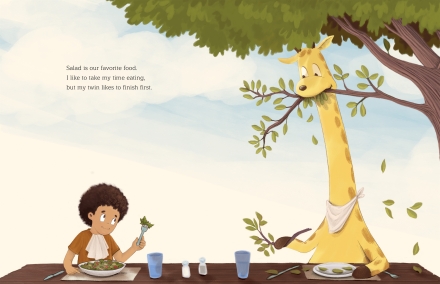
As you might imagine, salad is high on the list of favorite foods. Other faves include dancing, reading, and drawing. But who does these best? That question sometimes causes squabbles. And when there’s, say, only one tool to share or a big issue like “who is stronger,” sometimes that “disagreement…might last all afternoon, and turn into a big, rotten fight.”

celebrate-picture-books-picture-review-twins-salad

Copyright Mike Ciccotello, 2019, courtesy of Farrar Straus Giroux.

But after a little alone time, the boy and his twin and the giraffe and his twin “can never stay mad for very long.” Then they end up compromising because they know that they “work best together.” Yes, “it’s great being a twin, knowing there’s someone who’s just like you.”
celebrate-picture-books-picture-review-twins-activities

Copyright Mike Ciccotello, 2019, courtesy of Farrar Straus Giroux.

Mike Ciccotello’s sweet tribute to twins, whether they’re siblings, best friends, or even pet-and-people pairs will have kids giggling at the juxtapositions of the little boy and his extra-tall twin as they play and work together. The two are exuberant partners, smiling, laughing, and making knowing eye contact, as they dress the same, share the same activities, and talk in their bunk beds before going to sleep. When the inevitable quarrels come, readers will recognize the mixed emotions that ultimately bring these two best friends back together. Ciccotello’s emphasis on resolving disputes, compromise, and staying mindful of all the benefits to having a twin or “near twin” gives the story deeper resonance for building bonds between siblings and friends.

Ciccotello’s vibrant illustrations are clever and cheerful, touching on kid-favorite year-round events and everyday routines. They also give a sly wink to the idea that twins are always identical and highlight the individuality of not only these twins but each reader too. The wide-open pages and spotlighted vignettes allow the youngest readers to focus on the relationship between the boy and the giraffe and offer opportunities for adults and kids to talk about that special bond.

A funny book with a lot of heart, Twins would be an endearing addition to home, classroom, and public library bookshelves.

Ages 2 – 6

Farrar Straus Giroux Books for Young Readers, 2019 | ISBN 978-0374312121

To learn more about Mike Ciccotello and his work, visit his website.

Happiness Happens Month Activity

CPB - Happiness typography

Happiness Is…Game


Happiness is all around you! Grab one or more friends to play a game that reveals what things make you happy. Here are two ways to play:

  1. Like the “Geography” game: the first player names something that makes them happy, the next player must think of something that starts with the last letter of the word the previous player said. The game continues with each player continuing the pattern. Players drop out as they cannot think of a word. The last player left is the winner.
  2. Using a time limit (depending on age): players must think of something that makes them happy. Players drop out if they cannot think of a word within the time limit. The last player left is the winner.

celebrate-picture-books-picture-review-twins-cover

You can find Twins at these booksellers

Amazon | Barnes & Noble | Books-a-Million | IndieBound

Picture Book Review