July 9 – Cow Appreciation Day

celebrate-picture-books-picture-book-review-cows-can't-jump-cover

About the Holiday

While today’s holiday started out as a clever ruse to entice people to eat more chicken, it also gives us an opportunity to think about the world’s bovine citizens. These gentle animals deserve healthy and humane treatment as they provide our diets with needed protein as well as delicious treats. Cows appear in untold numbers of stories and songs for little ones, making them a favorite of young readers everywhere!

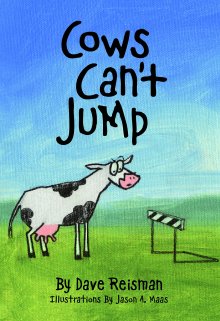
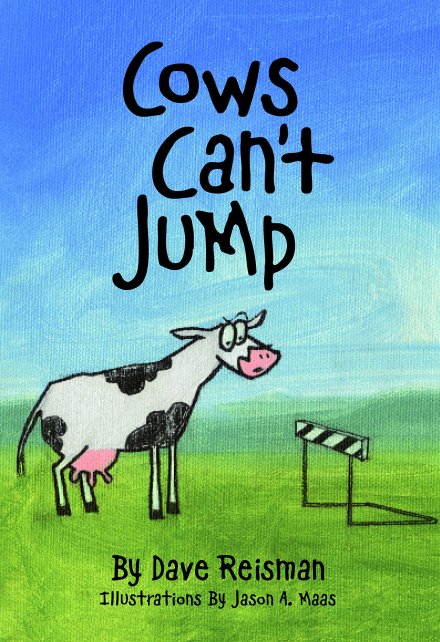
Cows Can’t Jump

Written by Dave Reisman | Illustrated by Jason A. Maas


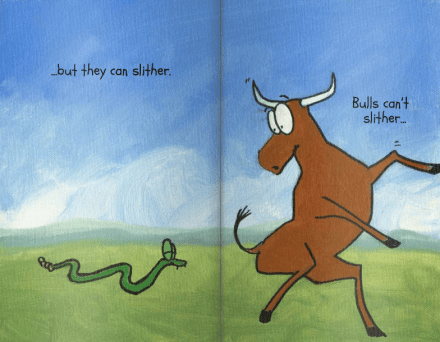
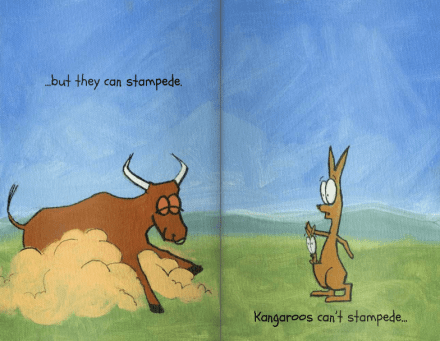
In this early literacy/beginning reader picture book, Dave Reisman introduces kids to nineteen animals and the way they can move. The repeated refrain, which begins with “cows can’t jump, but they can swim,” leads to young readers meeting a gorilla who can’t swim but who can swing, a galloping giraffe, a slithering snake, a stampeding bull, and many other favorite animals reacting to the previous interloper in humorous ways. Reisman presents active, evocative, and high-interest verbs that will capture the attention and imagination of young readers and help with their vocabulary development.
celebrate-picture-books-picture-book-review-cows-can't-jump-slither

Copyright 2019, Jumping Cow Press.

The short, simple sentences will have even the youngest child joining in on the repeated phrases, and with repeat readings, they’ll begin to remember how each animal moves and be able to happily read along. The underlying theme of the story—that each animal is unique—will resonate with adult readers and their little ones.

Jason A. Maas’s bright, textured paintings put the focus on each animal and their movements. Page turns are cleverly designed so that the animals meet under startling and funny circumstances. The cartoon-inspired drawings will delight kids and elicit plenty of giggles as each animal responds to the newcomer with wide eyes and quick getaways, until…the lizard leaps onto a branch that is already occupied and discovers that “sloths can’t leap…but they can sleep.”
celebrate-picture-books-picture-book-review-cows-can't-jump-stampede

Copyright 2019, Jumping Cow Press.

Cows Can’t Jump will be released in a bilingual English/Spanish edition: Las vacas no pueden saltar in August, 2019.

Ages 2 – 7

Jumping Cow Press, 2018 | ISBN 978-0980143300 (Paperback) | ISBN 978-0998001005 (Stubby and Stout Board Book)
celebrate-picture-books-picture-book-review-cows-can't-quack-cover

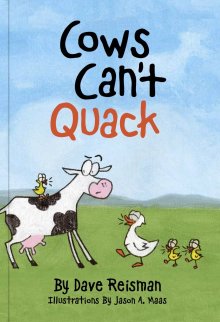
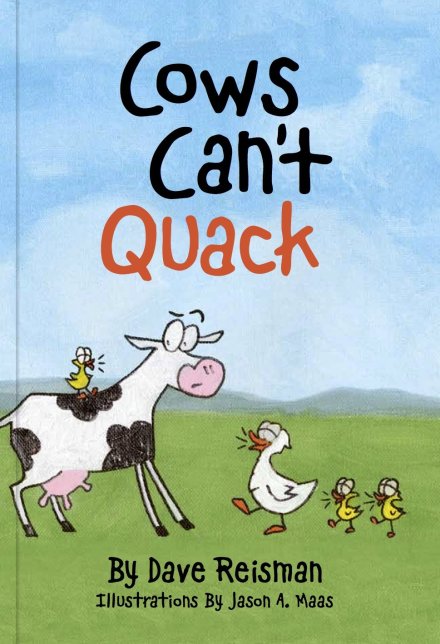
Cows Can’t Quack

Written by Dave Reisman | Illustrated by Jason A. Maas


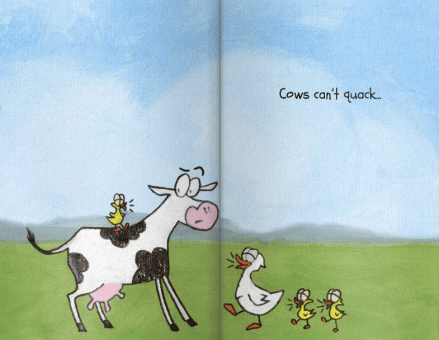
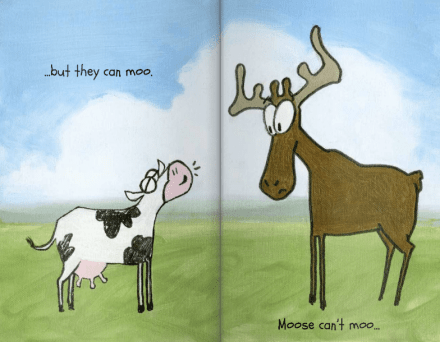
Following the same format as Cows Can’t Jump, Dave Reisman brings together a gaggle of animals all making their own unique sounds. Here twenty-two animals from the farm, forest, ocean, and air show off their vocal stylings with funny results. As the moose grunts, the donkey hee-haws, the hippo brays, the goose cackles, and the day ends with a puppy snoring, little ones will be eager to learn more about these creatures.
celebrate-picture-books-picture-book-review-cows-can't-spin-silk-quack

Copyright 2019, Jumping Cow Press.

Just as in Cows Can’t Jump, Reisman enchants with verbs that invite kids to participate in the reading with their own interpretations of the sounds. Children will also enthusiastically read along on the repeated phrasing. While each animal speaks in its own language, children are reminded of the diversity and richness of the world’s languages.
celebrate-picture-books-picture-book-review-cows-can't-spin-silk-moo

Copyright 2019, Jumping Cow Press.

Once again Jason A. Maas’s animals, with their rakish charm and humorous responses that cause feathers to fly, a baby penguin to hatch, and a donkey to kick up his heels, will have little ones laughing along with their language learning.

Ages 3 – 7

Jumping Cow Press, 2016 | ISBN 978-0980143348 | ISBN 978-0998001012 (Stubby and Stout Board Book)

celebrate-picture-books-picture-book-review-cows-can't-spin-silk-cover

Cows Can’t Spin Silk

Written by Dave Reisman | Illustrated by Jason A. Maas


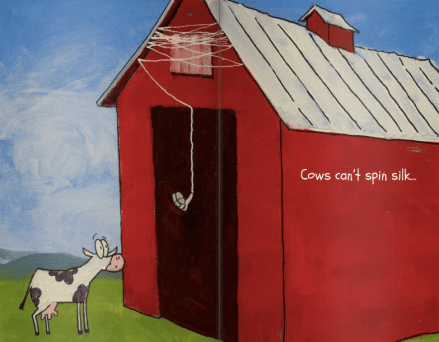
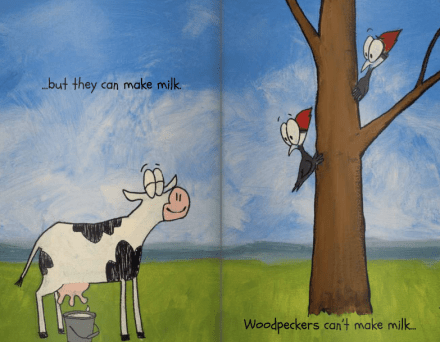
Little ones will be happy to see their cow friend from Cows Can’t Jump and Cows Can’t Quack in this third book in the Cows Can’t… Series. This time, she looks on astonished as a silk worm drops down into the barn doorway on a long, silky thread. Cows may not be able to “spin silk…but they can make milk.” The woodpeckers in the nearby tree look astonished at this talent, but in the next moment they return to what they do best: “hammer holes.” The surprised alligator can’t do that, but he “can dig gator-ponds.”
celebrate-picture-books-picture-book-review-cows-can't-spin-silk-silk

Copyright 2019, Jumping Cow Press.

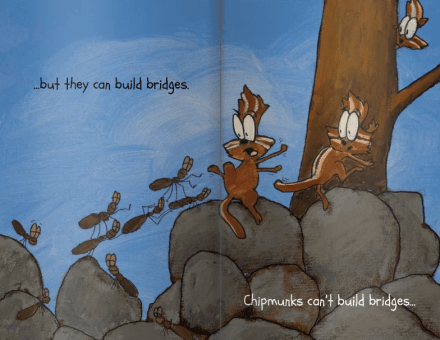
The alligator in their midst sends the rest of the animals scurrying—from the spider that weaves a web to the chickens that “lay eggs” to the ants that “build bridges.” Joining the animals are some other talented insects—caterpillars that “construct cocoons, wasps that “craft paper,” and bees that create honey”—and a few sea creatures like squid that “can squirt ink,” oysters that “can produce pearls,” and octopuses that “can erect barricades.”
celebrate-picture-books-picture-book-review-cows-can't-spin-silk-milk

Copyright 2019, Jumping Cow Press.

The inclusion of some more unusual animals and their impressive talents in Cows Can’t Spin Silk offer adults and kids an opportunity to discover more about the animal kingdom and what each animal can do. In addition to presenting new vocabulary, and a read aloud treat, the book can encourage families to get outdoors to see if they can find evidence of any of the animal creations mentioned in the story.
celebrate-picture-books-picture-book-review-cows-can't-spin-silk-bridges

Copyright 2019, Jumping Cow Press.

Readers familiar with Jason A. Maas’s illustrations for the series will be delighted with the gentle suspense that carries the story as the alligators, skunks, chipmunks, beavers, bears and fourteen other animals use their smarts to create homes, defend themselves, make tools, and display other skills.

Connecting this story to the idea that each person has their own special talent or talents extends the educational language and literacy learning of the book to personal discussions and explorations adults can share with their kids.

Ages 3 – 7

Jumping Cow Press, 2018 | ISBN 978-0998001029 (Paperback ) | ISBN 978-0998001036 (Stubby and Stout Board Book)

Recommended by early literacy organizations, such as the Parent-Child Home program, the Cows Can’t Series offers little learners and beginning readers familiar, reassuring, and fun encouragement as they begin learning the structures of language and developing confidence in their own skills. The books would be welcome additions to home, classroom, and public library collections for read aloud story times or for beginning readers.

To learn more about Jumping Cow Press and find  printable activities, visit their website. And watch for the newest title in the Cows Can’t… Series: Cows Can’t Blow Bubbles, coming in August 2019.

Discover more about Jason A. Maas, his books, and his art, visit his website.

Cow Appreciation Day Activity
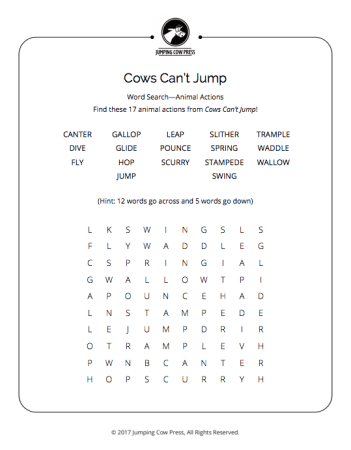
Screen Shot 2019-07-08 at 5.06.04 PM

Cows Can’t Jump Word Search


Each animal in Cows Can’t Jump has a special way of moving. Can you find seventeen words that describe how different animals get around in this printable puzzle?

Cows Can’t Jump Word Search Puzzle | Cows Can’t Jump Word Search Solution

You can find the Cows Can’t Series at these booksellers

celebrate-picture-books-picture-book-review-cows-can't-spin-silk-cover

Cows Can’t Spin Silk

Amazon 

celebrate-picture-books-picture-book-review-cows-can't-quack-cover

Cows Can’t Quack

Amazon | Barnes & Noble 

celebrate-picture-books-picture-book-review-cows-can't-jump-cover

Cows Can’t Jump

Amazon | Barnes & Noble 

Picture Book Review
 

July 8 – Math 2.0 Day

celebrate-picture-books-picture-book-review-a-million-dots-cover

About the Holiday

Today’s holiday celebrates the merging of math and technology together as the foundation of most of the things we use every day, such as computers, phones, tablets and other electronics. Math and technology are also employed by architects, scientists, researchers, and manufacturers. Math 2.0 Day was established to bring together mathematicians, programmers, engineers, educators, and managers to raise awareness of the importance of math literacy at all levels of education.

A Million Dots

By Sven Völker


With one green dot (and one brown rectangle) you can make a tree. Add one plus one and you can make two trees. Two plus two? Well, four trees might get a little boring. Why not put two apples on each tree? Then four people can enjoy a snack. In the autumn, those apples fall. There are four plus four dots on the ground—how many does that make? Eight!

celebrate-picture-books-picture-book-review-a-million-dots-four

Copyright Sven Völker, 2019, courtesy of Cicada Books and svenvolker.com.

Eight plus eight? A nice number of dots for a ladybug’s wings. Won’t you count them? How about  adding those sixteen to another sixteen? Those thirty-two dots are still contained in a box. But thirty-two plus thirty-two? At sixty-four the dots spill out, colorful and free! Sixty-four plus sixty-four dots make one hundred and twenty-eight bubbles in a fizzy drink. Add one hundred and twenty-eight to itself and what do you get? A face full of freckles! What happens if you keep adding and adding? What can you make? Two thousand and forty-eight plus two thousand and forty-eight makes a night sky of stars, their reflections on the sea and the lights on the ship that sails it.

celebrate-picture-books-picture-book-review-a-million-dots-sixty-four

Copyright Sven Völker, 2019, courtesy of Cicada Books and svenvolker.com.

Thirty-two thousand, seven hundred and sixty-eight plus thirty-two thousand seven hundred and sixty-eight makes sixty-five thousand, five hundred and thirty-six—enough dots for a soccer field to mow. Twice that is a desert of sand to scoop. Moving on to two hundred and sixty-two thousand, one hundred and forty-four plus the same, a blanket of steam streams out of a train stack five hundred and twenty-four thousand, two hundred and eighty-eight dots long, past the coal car and the long tanker car.

But what can be made when these half-a-million dots and a little are added together? One million and forty-eight thousand, five hundred and seventy-six dots filling apartment buildings, office towers, and inspiring skyscrapers in a fabulous city—maybe it’s yours!

celebrate-picture-books-picture-book-review-a-million-dots-one-hundred-twenty-eight

Copyright Sven Völker, 2019, courtesy of Cicada Books and svenvolker.com.

One, two, ten, even one hundred—you can see that number of people or items in your mind. It’s hard, though, especially for children, to visualize a thousand, a hundred thousand, a half a million, even a million. In his stylish book, Sven Völker translates these numbers into dots and uses them to create images that are both humorous and awe-inspiring. One dot nearly fills the page, but by the time the numbers have been doubled and doubled multiple times, half-a-million and then a million minuscule dots require pages that fold out and out and out and out…and out! Each number is presented in words and numbers allowing children to see and learn each interpretation. Kids who love numbers and counting and visual proofs will have a blast connecting these dots.

An entertaining and educational way to relay the idea of number to kids at home or in the classroom, A Million Dots will elicit multiple exclamations of “Wow!” as the numbers add up. 

A Million Dots is a New York Times/New York Public Library Best Illustrated Children’s Books Award winner for 2019.

Ages 4 – 12

Cicada Books, 2019 | ISBN 978-1908714664

To learn more about Sven Völker, his books, and his art, visit his website.

Math 2.0 Day Activity

celebrate-picture-books-picture-book-review-totally-cool-mystery-phrase-puzzle

Totally Cool Mystery Phrase Math Puzzle


There’s no mystery to how fun math can be! Use the numerical clues in this printable Totally Cool Mystery Phrase Math Puzzle to discover a hidden message! Add the numbers under each line then use that number to find the corresponding letter of the alphabet. Write that letter in the space. Continue until the entire phrase is completed.


July 7 -World Chocolate Day

celebrate-picture-books-picture-book-review-grandpa-cacao-cover

About the Holiday

The purpose of World Chocolate Day is simple! Most likely instituted to celebrate the introduction of chocolate to Europe on July 7, 1550, the day gives people everywhere the perfect excuse to indulge in this favorite flavor sensation. You know what to do! Bake some brownies, order a double scoop of your favorite chocolate-based ice cream, make a chocolate cake (with chocolate frosting, of course), or whip up a batch of chocolate chocolate chip cookies, and enjoy!

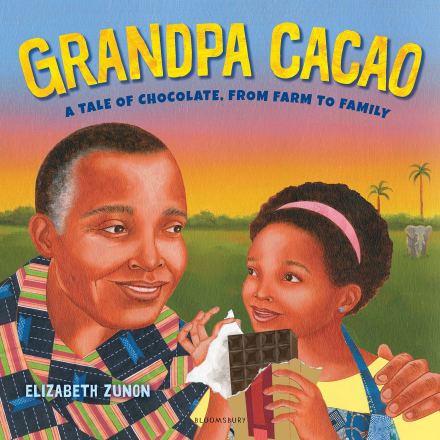
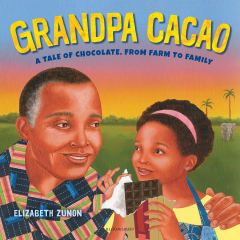
Grandpa Cocoa: A Tale of Chocolate, from Farm to Family

By Elizabeth Zunon


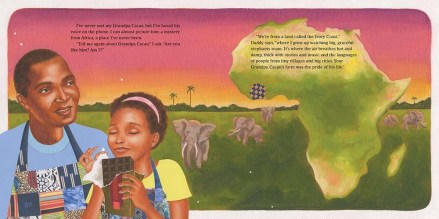
It’s a little girl’s birthday, and she and her daddy are making her “family’s special celebration cake” while her mom “goes to pick up another treat.” While they bake, the girl’s father reminds her that “‘chocolate is a gift to you from Grandpa Cacao.” The girl has never met her grandfather since he lives in Africa and she wonders if she is like him. Her father begins to tell her the story of his growing up on her Grandpa Cacao’s Ivory Coast farm.

celebrate-picture-books-picture-book-review-grandpa-cacao-africa

Copyright Elizabeth Zunon, 2019, courtesy of Bloomsbury Children’s Books.

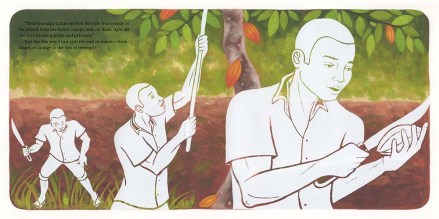
As they add flour to the bowl, Daddy explains how her grandfather knew just when the fruit was ripe for picking. “Just like the way I can spot the end of summer from tinges of orange at the tips of treetops,” the girl thinks. Then, her father goes on, Grandpa Cacao expertly sliced the pods without damaging any of the beans inside. “‘Did you ever help?’” the girl asks as they melt the chocolate and butter for the cake. Her daddy says that everyone in the village worked together and that when he turned seven, he was allowed to help but only after he’d finished his homework and chores.

The white beans were put into pits lined with banana leaves and stirred periodically until they became light brown. Then they were moved to a cement floor to dry in the sun. The beans had to be taken in each night, and when storms came the beans had to be covered. The girl imagines her grandpa could smell the rain coming the way she could “smell a cold day.”

celebrate-picture-books-picture-book-review-grandpa-cacao-ripe-fruit

Copyright Elizabeth Zunon, 2019, courtesy of Bloomsbury Children’s Books.

While they crack and add the eggs, the girl’s father tells her how the beans sounded and tasted when they were ready to sell. The story is making her hungry, and she wonders what Mommy could be bringing home. When he was older, Daddy says, he helped bag the beans to sell to the cacao buyers, who would send them to factories to be made into chocolate. With the money from the cacao beans, they bought “food, school supplies, uniforms, books, and fabric to have out special occasion clothes made.”

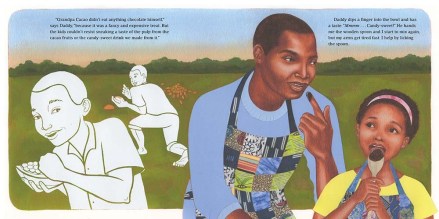
The cake batter is ready to pour into the pan, and she carries the big bowl to her daddy. She reminds him of Grandpa Cacao carrying a big basket of cacao pods. The thought makes them both smile. Then the girl’s thoughts return to what her mother is bringing home. Perhaps it’s a new dress or the puppy she wants. Daddy dips his finger in the chocolate batter and the girls licks the spoon. It makes him think of how he and the other kids snuck tastes “of the pulp from the cacao fruits or the candy-sweet drink” they made.

celebrate-picture-books-picture-book-review-grandpa-cacao-chocolate

Copyright Elizabeth Zunon, 2019, courtesy of Bloomsbury Children’s Books.

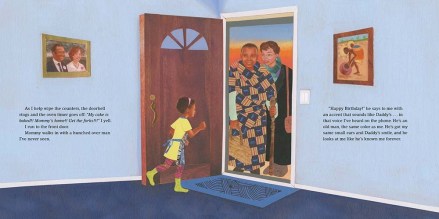
Baking in the oven, the cake smells delicious. Just as the timer rings, the doorbell chimes. When the girl opens it, she sees her mommy with an older man she’s never seen before. “‘Happy Birthday!’” he says, and the girl recognizes his voice from their phone calls. He hugs her and then gives her a big orange pod. It’s her birthday present, he tells her. But being with her Grandpa Cacao is “the best birthday present ever in the world.”

An Author’s Note following the text describes Elizabeth Zunon’s childhood in Abidjan, the realities of the cacao trade and Fair Trade products and a bit about how the illustrations were created. There are also brief discussions on the science and history of chocolate as well as a page on how cacao goes from bean to treat. Bakers will also be pleased to see the recipe for the special Chocolate Celebration Cake made in the story.

celebrate-picture-books-picture-book-review-grandpa-cacao-birthday

Copyright Elizabeth Zunon, 2019, courtesy of Bloomsbury Children’s Books.

Elizabeth Zunon’s celebration of family and pride in one’s heritage is a compelling read that shines with a strong father – daughter relationship, shared memories, and the joys of working together. The warmth shared by the girl and her daddy is evident as she revels in hearing the story of Grandpa Cacao and identifying with him even though he lives far away. Zunon’s smooth delivery of Grandpa Cacao and Daddy’s story imparts fascinating details of how cacao is grown, harvested, and prepared for sale. While the little girl may wish for a new dress or a puppy, she is happier with the surprise of meeting her grandfather at last.

Zunon’s mixed-media, collage style illustrations beautifully meld the world inside the family kitchen with the girl’s imagining of life in Africa on Grandpa Cacao’s farm. The opaque screen-printed images of Grandpa Cacao, the girl’s father as a child and young man, and the other villagers, are powerful reminders to readers that their family and family history is always with them and supporting them.

A unique book to share during family story time, in the classroom, or during a library program, Grandpa Cacao: A Tale of Chocolate, from Farm to Family would be a much-loved addition to home, school, and public library collections. And don’t forget to include cake!

Ages 3 – 8

Bloomsbury Children’s Books, 2019 | ISBN 978-1681196404

Discover more about Elizabeth Zunon, her books, and her art on her website.

World Chocolate Day Activity

cookies-and-cups-my-kids-favorite-brownies-recipe-picture

My Kids’ Favorite Brownies from Cookies & Cups, copyright Shelly Jaronsky, January 29, 2019. Courtesy of cookies&cups.com.

Cookies & Cups My Kids’ Favorite Brownies


If you’re looking for a scrumptious chocolatey brownie that melts in your mouth, look no further than Shelly Jaronsky’s My Kids’ Favorite Brownies recipe on Cookies & Cups. While you’re there, you’ll want to look around at all of Shelly’s delicious recipes! 

celebrate-picture-books-picture-book-review-grandpa-cacao-cover

You can find Grandpa Cocoa: A Tale of Chocolate, from Farm to Family at these booksellers

Amazon | Barnes & Noble | Books-a-Million | IndieBound

Picture Book Review

July 5 – Mechanical Pencil Day

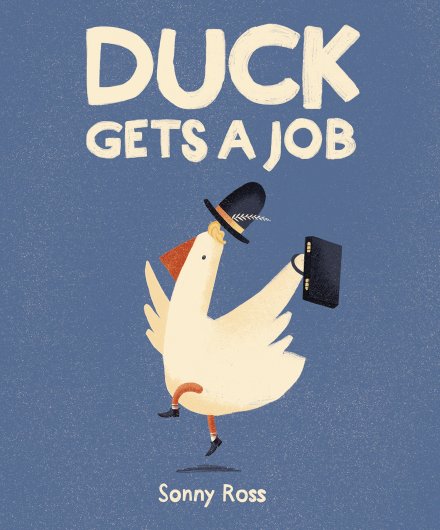
celebrate-picture-books-picture-book-review-duck-gets-a-job-cover

About the Holiday

The first pencil was created in Switzerland Inn 1565 Conrad Gesner created the first pencil when he wrapped a graphite stick in string. Later, the graphite would be encased in wood to make it easier to sharpen. Fast forward to 1822 when Sampson Mordan and John Isaac Hawkins of Britain patented the mechanical pencil that could advance the lead to keep it always sharp. Today, mechanical pencils work in one of three ways: ratchet-based, clutch-based, or screw-based. The various widths of lead now let writers, artists, designers, engineers, and others create to their specific needs. To celebrate today, why not explore how a mechanical pencil works with your child, and then have fun drawing or writing together! There’s even a printable page below to get you started!


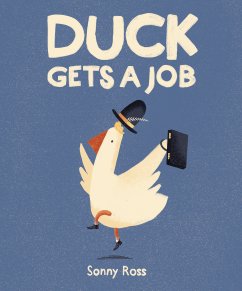
Duck Gets a Job

By Sonny Ross


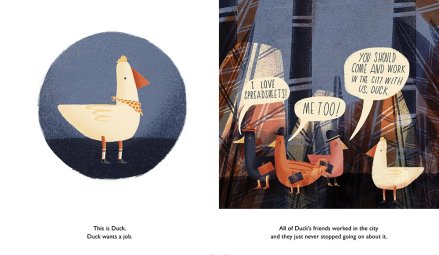
Duck needed a job. All of his friends talked about their super office jobs in the city and encouraged him to get one too. Duck scoured the want ads in the newspaper. There were lots of jobs in tech, finance, and business. He imagined himself working with spreadsheets like his friends did. The jobs “seemed boring, but he applied anyway. And he got an interview!”

celebrate-picture-books-picture-book-review-duck-gets-a-job-friends

Copyright Sonny Ross, 2018, courtesy of Templar Books.

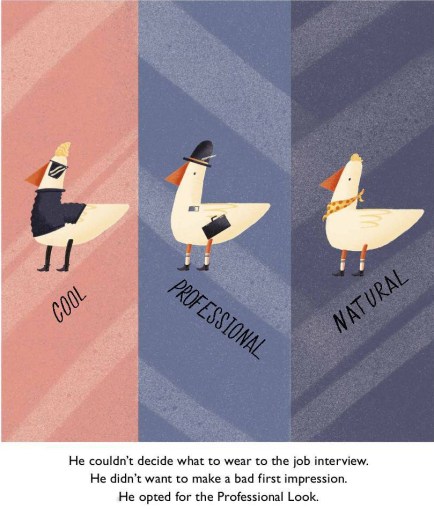
Duck agonized over what he’d wear. He tried on an outfit that made him look cool, one that was very professional, and one that was his natural, casual look. He decided to go with the professional style. Next, Duck thought about how he would get to the office. “Flying would make him tired and sweaty, but public transportation is tricky for ducks.” In the end he walked… and he got lost. Once in the city, he hailed a taxi, and while he rode to the interview “he gave himself a pep talk.”

celebrate-picture-books-picture-book-review-duck-gets-a-job-taxi

Copyright Sonny Ross, 2018, courtesy of Templar Books.

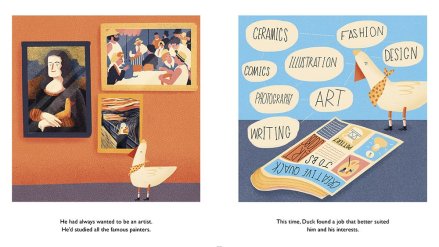
Talking to the interviewer made Duck very nervous, but, still, he was offered a job. Sitting in his little cubicle with “spreadsheets full of facts and figures” in front of him, Duck realized that this job “did not interest him at all.” Duck decided to quit. Duck had always dreamed of being an artist, so he looked at job ads for the Creative Quack Magazine and found one he thought he’d like. “For his interview, he dressed in his natural look and put samples of his best work in a portfolio.”

He prepared for his trip into the city, and when he got to the office he didn’t feel at all nervous. He showed the art director his portfolio feeling confident about his work. The art director loved his work and offered him a job. Now Duck loves his job, and he’s especially glad “that he had decided to follow his dreams.”

celebrate-picture-books-picture-book-review-duck-gets-a-job-creative-job

Copyright Sonny Ross, 2018, courtesy of Templar Books.

The strength of Sonny Ross’s affirming story comes in its straightforward approach to recognizing when an action is not right for you and feeling free to change course. While Duck is looking for the perfect job, the story is appropriate for any activity that children embark on as they find their place in the world. Ross peppers his story with clues that will alert readers to Duck’s true feelings about the two jobs—internal thoughts, clothing styles, and confidence level to name a few—feelings that they too can rely on to guide them in the choices they make.

celebrate-picture-books-picture-book-review-duck-gets-a-job-style

Copyright Sonny Ross, 2018, courtesy of Templar Books.

Ross’s matte mixed-media illustrations are fresh and stylish in a palette of blues, reds, and golds. Kids experimenting with their own look will appreciate Duck’s dilemma in choosing between cool, professional, and natural clothing styles. They’ll also empathize with his previous attempts at using public transportation and his travails in getting to the first interview on time. When Duck decides that a “spreadsheet job” isn’t for him, the page backgrounds lighten, his road to the interview is smooth, and his happiness is evident. A clever contrasting juxtaposition comes in the depictions of Duck’s two very different interviews. While the businessman sits at his desk peering down on tiny Duck who can barely see over the desk and is nearly swallowed up in his chair, the art director kneels down to Duck’s level to shake his wing in congratulations on getting the job.

Both an entertaining story and a lesson for kids on trusting their gut and staying true to themselves, Duck Gets a Job is a confidence-boosting tale for any home or classroom bookshelf.

Ages 3 – 7

Templar Books, 2018 | ISBN 978-0763698966

Discover more about Sonny Ross, his books, and his art on his website.

Mechanical Pencil Day Activity

celebrate-picture-books-picture-book-review-mechanical-pencil-page

Click…Click…Create! Page


Grab your mechanical pencil and get clicking or twisting! Then create a design, a picture, a poem, a story, or whatever you imagine on this printable page!

Click…Click…Create! Page

celebrate-picture-books-picture-book-review-duck-gets-a-job-cover

Duck Gets a Job is available at these booksellers

Amazon | Barnes & Noble | Books-a-Million | IndieBound

Picture Book Review
 

July 4 – Independence Day

celebrate-picture-books-picture-book-review-mountain-chef-cover

About the Holiday

Today, the United States commemorates the signing of the Declaration of Independence on July 4, 1776 by delegates of the original 13 colonies, which asserted that the colonies considered themselves a new nation and no longer part of the British Empire. The day is traditionally celebrated with parades, picnics, and grand fireworks in cities and towns across the country or in one of our beautiful national parks. The holiday also provides the opportunity to remember and honor all the people who have come to America’s shores and have helped to build our nation. 

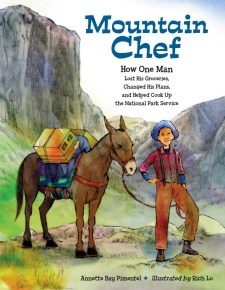
Mountain Chef: How One Man Lost His Groceries, Changed His Plans, and Helped Cook Up the National Park Service

Written by Annette Bay Pimentel | Illustrated by Rich Lo


Tie Sing, born in Virginia City, Nevada, grew up during a time when “America was a tough place to be Chinese.” Most worked in restaurants or laundries and were paid less than white employees. Tie Sing had big plans, though. “He got a job cooking for mapmakers as they tramped through the mountains, naming peaks. With sky for his ceiling and sequoias for his walls, he stirred silky sauces, broiled succulent steaks, and tossed crisp salads.” He quickly became known as the best trail cook in California.

celebrate-picture-books-picture-book-review-mountain-chef-Tie-Sing

Image copyright Rich Lo, 2016, text copyright Annette Bay Pimentel, 2016. Courtesy of Rich Lo at greatsketch.com.

In 1915 Steven Mather was trying to convince politicians to create a national park system even though many business people were against it. Mather invited journalists, tycoons, congressmen, and others to go camping for ten days to show them the wonder of America. He knew that the trip had to be perfect, so he hired Tie Sing as his chef. Tie Sing planned gourmet menus for breakfast, lunch, and dinner that would satisfy the 30 campers. Each day he rose before dawn, cooked eggs and sizzling steaks, and packed box lunches.

As the group hiked across beautiful scenery to the next site, Tie Sing and his assistant washed the dishes, put out the fires, packed the mules, and started the dinner’s sourdough bread. By the time Tie Sing arrived at the new campsite, it was time to begin cooking dinner. “He assembled sardine hors d’oeuvres, sliced juicy cantaloupe, and squeezed lemons to make tart-sweet lemonade. He grilled steaks and venison, fried fish and chicken, and baked sourdough rolls” as good as any fine restaurant. One morning Tie Sing was able to pack the mule early before he served breakfast. When he went back to the mule, however, he discovered it had wandered away—taking all of the best food with it.

celebrate-picture-books-picture-book-review-mountain-chef-setting-the-table

Image copyright Rich Lo, 2016, text copyright Annette Bay Pimentel, 2016. Courtesy of Rich Lo at greatsketch.com.

Steven Mather shrugged it off as he left for the day’s hike, but Tie Sing was upset. All of his planning was ruined. That night the dinner wasn’t as fancy, but it was delicious and topped off with “all-American apple pie.” The campers, happily satisfied, talked late into the night about the possibilities of a national park service. The next day, Tie Sing carefully led the mules along a narrow ridge. As the stones crumbled underneath their feet, one mule strayed too close to the edge. He tumbled backward and down the cliff. Bags, boxes, and food went flying. The mule got up and shook itself off, but much of the food, utensils, and equipment was lost.

Hours later Tie Sing limped into camp with “the battered boxes and bent knives and bruised apples he’d salvaged.” The men were ravenous; Tie Sing had to think quickly. He knew just how to use those apples, and under the glow of paper lanterns, the crew enjoyed the most delicious applesauce they’d ever had. Tie Sing knew his job was to fill the party with delicious meals, but “Steven Mather wasn’t the only one who loved the mountains; Tie Sing had the Sierra singing in his blood. He too planned to fill the campers with memories.”

celebrate-picture-books-picture-book-review-mountain-chef-mule-falls

Image copyright Rich Lo, 2016, text copyright Annette Bay Pimentel, 2016. Courtesy of Rich Lo at greatsketch.com

As the pots bubbled on the camp stove, Tie Sing “bent over tiny slips of paper and wrote in English and Chinese.” Following dinner he handed out fortune cookies, each one holding a handwritten message: “Long may you search the mountains.” “Long may you build the paths through the mountains.” “Where but in the mountains would such a man become a spirit with the mountains?”

In the months following the trip, the members of the group “wrote magazine articles, published books, and made movies about America’s national parks.” Steven Mather’s and Tie Sing’s efforts worked. On August 25, 1916 Congress created the National Park Service. “Today, if you visit Yosemite National Park, you can hike to Sing Peak. It was named for Tie Sing, a mountain-loving American who knew how to plan.”

Three pages of back matter, complete with photographs of Steven Mather’s and Tie Sing’s actual 1915 trip, answer readers’ questions about Tie Sing, how he kept food fresh in the mountains, details of the trip, and short bios on the members of the mountain party.

celebrate-picture-books-picture-book-review-mountain-chef-bent-silverware

Image copyright Rich Lo, 2016, text copyright Annette Bay Pimentel., 2016. Courtesy of Rich Lo at greatsketch.com

Annette Bay Pimentel’s fascinating and timely story of the establishment of the National Park Service highlights the contributions of a Chinese American dreamer who had big plans for himself and the country he loved. Her detailed storytelling enhanced by lyrical phrasing (a linen tablecloth is washed in an icy snowmelt stream and spread “brighter than white-water foam” over a table) reveals the marvel of Tie Sing’s art. Readers will be awed by the dedication and careful planning it took for the gourmet meals and elegant table settings to come together in such rough surroundings. As food and supplies are lost along the way, children will be held in suspense, wondering if Steven Mather’s and Tie Sing’s strategy worked.

Rich Lo’s beautiful detailed and realistic watercolors transport readers to the mountains and trails of early 1900s California. With vivid imagery Lo lets children see the day-to-day preparations that went into Sing’s meals as well as the dangerous conditions he faced. Lo captures the hazy purple majesty of the mountain peaks, the glow of the campfire in the dark of night, and the vastness of the California environment. Kids may well wonder how Sing managed to create a five-star restaurant atmosphere and menu in the wild, and Lo shows them how it was accomplished.

Mountain Chef gives a unique perspective on an important historical moment—one that still resonates today—and is a compelling book for any classroom as well as for kids interested in history, culinary arts, and the environment and for those who just love a good story.

Ages 6 – 9

Charlesbridge, 2016 | ISBN 978-1580897112 (Hardcover) | ISBN 978-1580899857 (Paperback, 2019) 

Discover more about Annette Bay Pimentel and her books on her website. You’ll also find a Teacher’s Guide for Mountain Chef.

Learn more about Rich Lo and view a portfolio of his artwork on his website!

Independence Day Activity

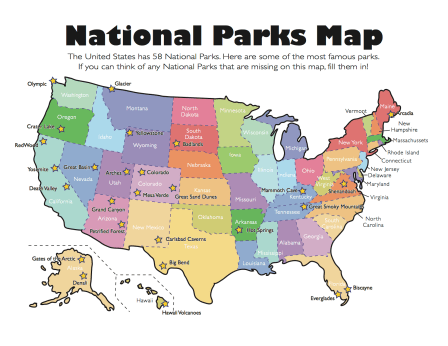
celebrate-picture-books-picture-book-review-National-Parks-Map

Majestic Parks Coloring Pages


The national parks are home to some of the most beautiful scenery in the country. You may not be able to visit all of these parks, but you can still enjoy their beauty while you learn a little about them with these printable coloring pages! Then check the map and see if there’s a park near you!

Mesa Verde National Park | Gates of the Arctic National Park | Hawaii Volcanoes National Park | Biscayne National Park | Acadia National Park | Everglades National Park | Rocky Mountains National Park | National Parks Map

celebrate-picture-books-picture-book-review-mountain-chef-cover

You can find Mountain Chef at these booksellers

Amazon | Barnes & Noble | Books-a-Million | IndieBound

Picture Book Review

July 3 – Apollo 11 Moon Landing Anniversary Month

celebrate-picture-books-picture-book-review-marty's-mission-cover

About the Holiday

On July 20, 1969 Neil Armstrong, watched by millions of people around the world, became the first person to step foot on the moon. This month we celebrate the fiftieth anniversary of that monumental moment. Since then we have developed a deeper understanding of our universe, but there is still so much more to discover. Who knows how far today’s children will go in exploring the great unknowns of the cosmos.

I received a copy of Marty’s Mission: An Apollo 11 Story from Sleeping Bear Press for review consideration. All opinions are my own. I’m delighted to be teaming with Sleeping Bear Press in a giveaway of the book. See details below.

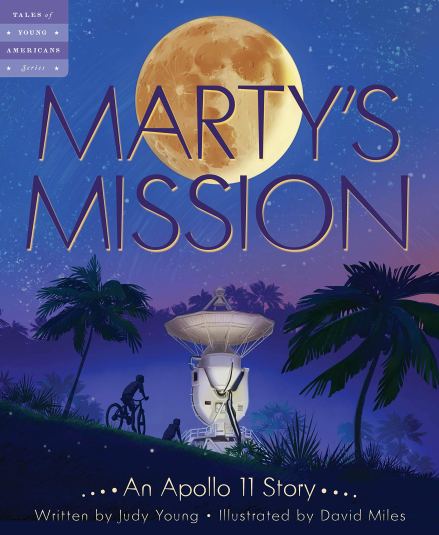
Marty’s Mission: An Apollo 11 Story  (Tales of Young Americans Series) 

Written by Judy Young | Illustrated by David Miles


Ten-year-old Marty and his friend Tomás listened eagerly to the radio broadcast of the Apollo spacecraft liftoff from Marty’s home near NASA’s Tracking Station in Guam. The boys wished they could watch the historic flight, but there was no television reception. Marty and his family had moved to Guam a year ago when Marty’s dad took a job at the tracking station. Although Marty was excited to hear the announcer’s voice counting down to liftoff and then “‘Neil Armstrong talking from inside the spacecraft,’” he wished he could share the experience with his dad. But Marty’s father was busy at the tracking station and would be there for eight days.

celebrate-picture-books-picture-book-review-marty's-mission-home

Image copyright David Miles, 2019, text copyright Judy Young, 2019. Courtesy of Sleeping Bear Press.

The tracking station, with its huge antenna facing skyward, fascinated Marty. “‘That,’” his dad had told him, “‘is what will pick up communication signals from the spacecraft. And inside the operations building is equipment to rely the signals back and forth between the astronauts and Mission Control in Houston, Texas.’” Marty thought it was awesome that his dad would get to hear everything the astronauts said. Marty wished he could visit the tracking station to hear them too, but he understood that his dad would be too busy and that there was “‘a lot at stake. If communications go down, the astronauts might not make it home,’” his dad had explained.

When Apollo 11 finally entered the moon’s orbit, Marty and Tomás were glued to the radio waiting for the Eagle to land. Then they got a call that the tracking station had set up a TV and was sending a bus to collect family members so they could watch the landing. Marty and Tomás rushed to board the bus. Marty, Tomás, and the rest of the families watched the Eagle touch down on the moon and Neil Armstrong descend the ladder to become the first person to set foot on the moon. They watched as the Armstrong and Buzz Aldrin “bounced around on the moon, taking photos and collecting lunar rocks.”

celebrate-picture-books-picture-book-review-marty's-mission-tracking-station

Image copyright David Miles, 2019, text copyright Judy Young, 2019. Courtesy of Sleeping Bear Press.

The next day the Eagle connected with the Columbia and began the trip back to Earth. “On the last night of the mission,” Marty was suddenly woken up by his mother. She said that his father needed him. Something was wrong. He was driven to the tracking station and met up with his dad and other men outside the huge antenna. “‘The antenna is stuck,’ Dad told Marty,” If they couldn’t get it moving again, Mission Control would lose contact with Apollo 11. It was vital that the antenna work, and time was running out.

But why did they need him? Marty wondered. His dad explained that they thought the problem was in a bearing—”‘a ring with metal balls encased inside it…. The balls have to roll for the antenna to move, but they’re stuck.’” The men thought that if the bearing could be packed with grease, it might move again. But their arms were too big to reach into the tight space. “‘Do you think you can do it?’” Marty’s dad asked. “‘You bet!’ Marty exclaimed.”

celebrate-picture-books-picture-book-review-marty's-mission-antenna

Image copyright David Miles, 2019, text copyright Judy Young, 2019. Courtesy of Sleeping Bear Press.

Marty learned what they wanted him to do and crawled into the space where the motor was. He took a glob of grease in one hand and reached in, “but even his arm was too big.” Marty knew he had to find a way to do it. The lives of the three astronauts depended on it. He thought a while and then smiled. “Quickly, Marty smeared grease all over his arm.” Although the space was still tight, his arm slipped in. Marty filled the bearing with grease. When he was finished, his dad called out to try starting the antenna again.

Slowly, it creaked back to life. “Instantly a voice called out from the building. ‘Communications with Apollo 11 intact. All systems working!’” The men cheered and congratulated Marty. Marty joined them in the operations building and listened as a voice from Houston announced, “‘Successful splashdown—task accomplished! Welcome back to Earth, Apollo 11.’” Marty’s father gave him a hug and said, “‘The world wouldn’t have heard those words if it weren’t for you, son.’”

celebrate-picture-books-picture-book-review-marty's-mission-Marty

Image copyright David Miles, 2019, text copyright Judy Young, 2019. Courtesy of Sleeping Bear Press.

Based on true events, Judy Young’s compelling story of a child who played a crucial role in one of history’s most astounding accomplishments will thrill young readers. As the first moon landing, the Apollo 11 mission was fraught with danger, excitement, and a level of uncertainty that had people glued to their televisions and radios for the length of the mission. Communication with the astronauts was paramount, and when the link was lost many feared for the three men. Young’s straightforward storytelling  realistically portrays the excitement and fascination of a child for a favorite subject while also demonstrating their pride in and understanding of their parents’ jobs. Through dialogue that always rings true, Young builds the strong relationship and trust Marty and his dad enjoy. Marty’s confidence and quick thinking also mirror the serious nature of the book’s target audience.

celebrate-picture-books-picture-book-review-marty's-mission

In his realistic and atmospheric paintings, David Miles offers readers a glimpse at a unique part of the Apollo 11 mission: NASA’s tracking station in Guam. As Marty and Tomás hang on every word from the radio, the moon hangs low in the twilight sky and serves as a backdrop to the waving palm trees. Kids interested in engineering, science, and communications will want to linger over the views of the huge antenna that provided the connection between Earth and the astronauts. Period details include images of radios, cars, televisions, and even the grainy broadcast seen by millions. As Marty’s father explains the problem to his son, readers can clearly see what a bearing looked like and where in the antenna Marty had to work. As the men in the operations building celebrate a successful mission, today’s children can feel a sense of kinship with the boy who made a difference in 1969.

Part of the Tales of Young American Series from Sleeping Bear Press, Marty’s Mission: An Apollo 11 Story is an absorbing true story that has impact for young readers today. For children interested in space, science, STEM, history, biographies, news, communications, and a well-told story, Marty’s Mission makes an inspirational addition to home, school, classroom, and public libraries.

Ages 6 – 10

Sleeping Bear Press, 2019 | ISBN 978-1534110144

Discover more about Judy Young and her books on her website.

To learn more about David Miles, his books, and his art, visit his website.

Marty’s Mission Giveaway

I’m excited to be teaming with Sleeping Bear Press in a giveaway of

One (1) copy of Marty’s Mission: An Apollo 11 Story written by Judy Young | illustrated by David Miles

To enter Follow me @CelebratePicBks and Retweet a giveaway tweet.

This giveaway is open from July 3 through July 7 and ends at 8:00 p.m. EST.

A winner for each prize will be chosen on July 8.

Prizing provided by Sleeping Bear Press.

Giveaway open to U.S. addresses only. | No Giveaway Accounts. 

Apollo 11 Moon Landing Anniversary Activity

celebrate-picture-books-picture-book-review-apollo-11-coloring-page-astronauts

Apollo 11 Moon Landing Coloring Pages


With these printable coloring pages you can follow some of the steps of the historic moon landing and the astronauts’ return home..

Blast Off! | Landing! | Astronauts on the Moon | Module Separates | Fiery Reentry

celebrate-picture-books-picture-book-review-marty's-mission-cover

You can find Marty’s Mission: An Apollo 11 Story at these booksellers

Amazon | Barnes & Noble | Books-a-Million | IndieBound

Picture Book Review


July 2 – I Forgot Day

celebrate-picture-books-picture-book-review-you-forgot-your-skirt-amelia-bloomer-cover

About the Holiday

Does summer make you feel forgetful? The hot, hazy weather and more relaxed schedule can loosen up that school-time vigilance and well… make you forget things. But that’s okay! I Forgot Day was established to give people an opportunity to make up for lapses in memory. If you’ve forgotten a special event, birthday, or anniversary, it’s not too late to apologize and let the person know you haven’t forgotten them—just that particular date. Of course, there are also things that may have slipped your mind that bear remembering or lessons from the past that should not entirely be forgotten. Today’s holiday is a good time to embrace those memories—just like today’s book shows!

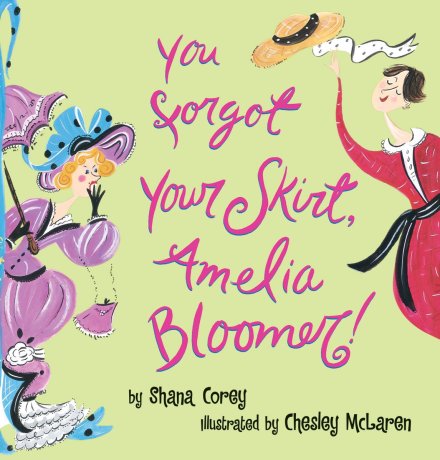
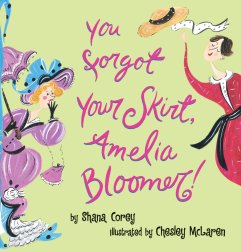
You Forgot Your Skirt, Amelia Bloomer!

Written by Shana Corey | Illustrated by Chesley McLaren

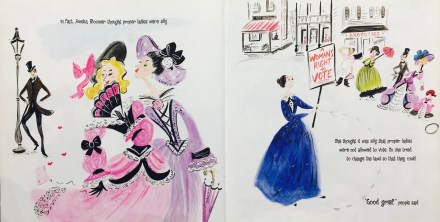
“Amelia Bloomer was not a proper lady.” But that was all right with her because she “thought proper ladies were silly.” Amelia found it silly that proper ladies couldn’t vote and were not supposed to work. In response, she protested as a suffragette and began her own newspaper called The Lily which only published news about women. Amelia hired other women to work there.

celebrate-picture-books-picture-book-review-you-forgot-your-skirt-amelia-bloomer-votes

Image copyright Chesley McLaren, 2000, text copyright Shana Corey, 2000. Courtesy of Scholastic.

But to Amelia, the silliest thing of all was women’s long dresses. They “were so heavy, wearing them was like carting around a dozen bricks.” She thought women looked like “walking broomsticks. They acted like broomsticks too because their skirts swept up all the mud and trash from the street.” And the corsets they wore choked off their breathing and made them faint. To keep those long skirts standing out, they also wore wire frames that got squashed and squeezed in doorway after doorway. “Even little girls had to wear proper dresses. So they couldn’t run and jump and play.”

celebrate-picture-books-picture-book-review-you-forgot-your-skirt-amelia-bloomer-bricks

Image copyright Chesley McLaren, 2000, text copyright Shana Corey, 2000. Courtesy of Scholastic.

Amelia Bloomer was determined to do something about it. Then one day, Amelia’s friend Elizabeth Cady Stanton came to visit and brought her cousin Libby. “Libby looked remarkable” because “she was not wearing a dress!” Libby thought proper dresses were silly too. Libby’s dress was shorter and not so poofy, and underneath Libby was wearing a kind of pants. Amelia immediately sewed herself such an outfit.

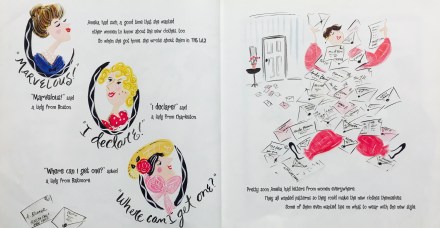
When people saw Amelia in her new outfit, they gasped. “‘You forgot your skirt, Amelia Bloomer!’ called a little boy.” But Amelia didn’t listen to them. She felt so free that she “ran and jumped and twirled.” She wanted all women to know about these wonderful clothes, so she wrote about them in The Lily. Women all over the country loved them and wanted to know where they could get them.

celebrate-picture-books-picture-book-review-you-forgot-your-skirt-amelia-bloomer-letters

Image copyright Chesley McLaren, 2000, text copyright Shana Corey, 2000. Courtesy of Scholastic.

Amelia was flooded with letters from women asking for the pattern so they could make an outfit for themselves and for advice on how to accessorize. “Some people called the new style of clothes the American Costume. Most people just called them Bloomers.” Of course, there were many proper gentlemen who disliked the bloomers. Some thought they would just “lead to more rights for women.”

After some time, bloomers went out of style. “Proper ladies and gentlemen everywhere breathed a sigh of relief.” They were sure women’s clothing would go back to “normal,” and that everyone would forget about Amelia Bloomer and her improper ideas. “Well… what do you think?”

An Authors Note filling in details of Amelia Bloomer’s life, the restrictive clothing women wore, and the early women’s rights movement follows the text.

celebrate-picture-books-picture-book-review-you-forgo

Image copyright Chesley McLaren, 2000, text copyright Shana Corey, 2000. Courtesy of Scholastic.

These days it does seem ridiculous that women once had to live in such restrictive, and even dangerous, clothing. Although children may see pictures of Victorian dress, they might not be able to fully appreciate all that was going on under those voluminous skirts. It’s with a sly wink to those times and people’s attitudes that Shana Corey presents her biography of Amelia Bloomer. Through her light touch, Corey highlights not only the early women’s rights movement but nudges children to keep vigilant to see that freedom and rights continue to come to all.

Chesley McLaren’s bright, delicate illustrations bring a Victorian vibe while reveling in fresh colors and offbeat perspectives. Kids may grow wide-eyed to see a woman holding onto a bedpost as her corset is drawn tight and other women fainting as a result of this necessary item. McLaren also exposes the “dirty” truth as a woman’s hem sweeps along apple cores, bones, bottles, and paper as she walks. An image of a hoop framework festooned with bricks, gives kids an idea of how much these dresses weighed. Proper ladies and gentlemen in their stuffy clothes may point, stare, and harrumph at Amelia in her comfortable bloomers, but Amelia gets the last laugh as she floats, twirls, and moves freely in her trendsetting pants. The influence Amelia Bloomer had on future fashions and the rights of women is delightfully shown in postcard-type snapshots of styles from the 1920s,1960s, 1980s, and in a two-page spread of a park today.

Awarded many accolades as one of the best books of 2000, You Forgot Your Skirt, Amelia Bloomer! can be found at public libraries and from used booksellers. The book makes for an entertaining yet educational way for kids to learn about history.

Ages 4 – 8

Scholastic, Inc, 2000 | ISBN 978-0439078191

Discover more about Shana Corey and her books on her website

To learn more about Chesley McLaren, her books, and her art, visit her website.

I Forgot Day Activity

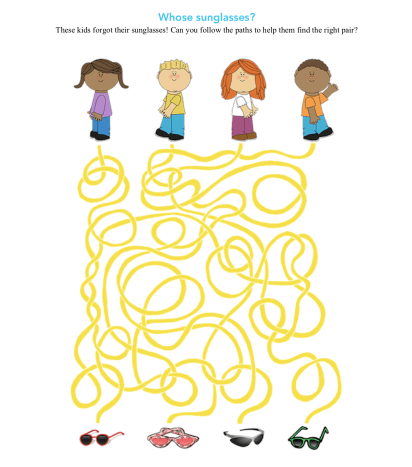
CPB - Sunglasses Matching Puzzle

Whose Sunglasses? Matching Puzzle

Four kids have forgotten their sunglasses! Can you follow the paths to match each child with the right pair in this printable puzzle?

Whose Sunglasses? Matching Puzzle

celebrate-picture-books-picture-book-review-you-forgot-your-skirt-amelia-bloomer-cover

You can find You Forgot Your Skirt, Amelia Bloomer! at these booksellers

Amazon | Barnes & Noble | Books-a-Million | IndieBound

Picture Book Review