May 24 – National Brother’s Day

celebrate-picture-books-picture-book-review-brothers-at-bat-book

About the Holiday

Today we take time to celebrate brothers! Whether you grew up with a brother (or a few) or have a friend you love like a brother, today’s holiday gives you a terrific reason to get in touch, relive some old memories, and make new ones! This year, as we’re spending more time working and playing with family, today’s book is certainly a home run!

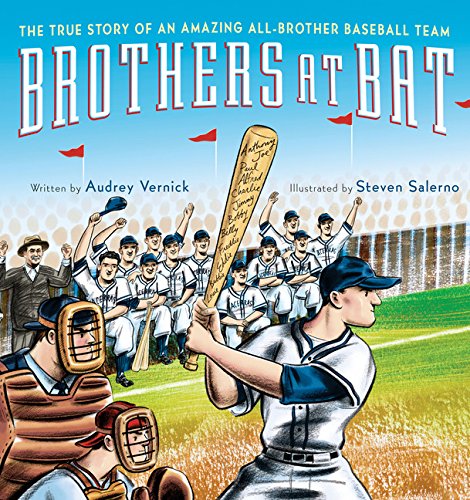
Brothers at Bat: The True Story of an Amazing All-Brother Baseball Team

Written by Audrey Vernick | Illustrated by Steven Salerno

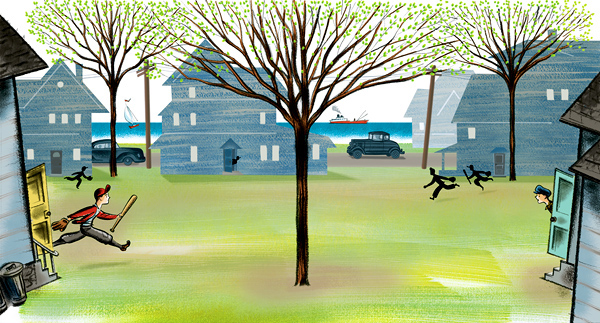
When the weather warms and kids’ thoughts turn to sports, the afternoon air rings with the sounds of slamming doors as players race from home to the baseball diamond. Back in the 1920s and ‘30s, the same door slammed not once or twice, not three or four times, not even eight or nine! The door shut behind 12 brothers! Anthony, Joe, Paul, Alfred, Charlie, Jimmy, Bobby, Billy, Freddie, Eddie, Bubbie, and Louie Acerra. These 12 boys also had 4 sisters—but this is a story about baseball, and back then girls didn’t play ball.

celebrate-picture-books-picture-book-review-brothers-at-bat-sliding-into-neighborhood
Copyright Steven Salerno, 2012, courtesy of stevensalerno.com.

It could be said that “baseball set the rhythm of their lives.” Neighbors couldn’t remember a time when Acerra boys weren’t throwing or hitting a ball or running the bases at the local park. And there was an Acerra on the high school baseball team for 22 years in a row!

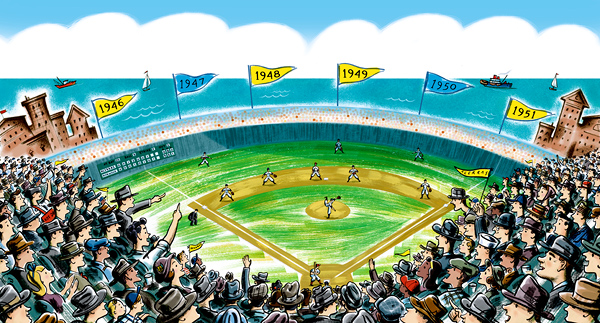
In 1938 the nine oldest brothers formed a semi-pro team and competed against other New Jersey teams and teams from New York and Connecticut. Their dad was their coach. The brothers all had different skills—Anthony could hit homeruns, and even hit a couple into the Atlantic Ocean from a seaside park; Charlie was a slow runner; and Jimmy had a knuckleball that was unhittable and uncatchable.

celebrate-picture-books-picture-book-review-brothers-at-bat-stadium
Copyright Steven Salerno, 2012, courtesy of stevensalerno.com.

But playing had its dangers too. In one game Alfred was going to bunt, but the ball bounced badly off the bat and hit him in the face. He was rushed to the hospital, but the accident caused him to lose an eye. Everyone thought he would never play again. But after he healed, his brothers helped him recover his skills and his courage.

celebrate-picture-books-picture-book-review-brothers-at-bat-sliding-into-home
Copyright Steven Salerno, 2012, courtesy of stevensalerno.com.

During World War II six of the brothers joined the war effort and spent years apart. Far from home they dreamed of the days when they played together on warm afternoons. When the war ended all the Acerra boys came home to their very happy mother. The brothers got back to what they loved doing best. Now Anthony was their coach, and from 1946 to 1952 they won the Long Branch City Twilight Baseball League championship four times—much to the pleasure of the crowds that came out to watch the Acerras play.

celebrate-picture-books-picture-book-review-brothers-at-bat-brothers-last-at-bat
Copyright Steven Salerno, 2012, courtesy of stevensalerno.com.

As time went on the Acerras got jobs, married, and had families of their own. In 1952 the brothers played their last game as a team, having made history as the longest-playing, all-brother baseball team ever. Even though the Acerras played many, years ago, people have not forgotten them. In 1997 they were honored by the Baseball Hall of Fame. The surviving seven brothers made the trip along with one sister and more than a hundred relatives. Now Jimmy Acerra’s uniform and glove are on display alongside exhibits about Babe Ruth, Ty Cobb, and Willie Mays. If you visit the Baseball Hall of Fame, you can see them too!

Interesting and personal author’s and artist’s notes follow the text.

celebrate-picture-books-picture-book-review-brothers-at-bat-brothers
Copyright Steven Salerno, 2012, courtesy of stevensalerno.com.

Baseball fans will love Audrey Vernick’s exciting, true story of this most unusual team. Her focus on the close relationship of the Acerra brothers elevates the tale from merely a sports story to one that reveals deep affection and support during difficult times. The different personalities of the brothers shine through in Vernick’s easy, conversational tone, and the inclusion of the Acerra brothers’ induction into the Baseball Hall of Fame shows that this story lives on for all generations.

Steven Salerno’s evocative illustrations will transport readers into a past where neighborhood leagues enjoyed the same level of loyalty as the majors. Capturing the brushed style, colors, and portraiture of pictures of the period, Salerno shows kids not only what it meant to be a baseball player in the 1930s and 40s, but what it meant to be a family.

Ages 4 – 9

Clarion Books, 2012 | ISBN 978-0547385570

Discover more about Audrey Vernick and her book on her website.

To learn more about Steven Salerno, his books, and his art, visit his website.

National Brother’s Day Activity

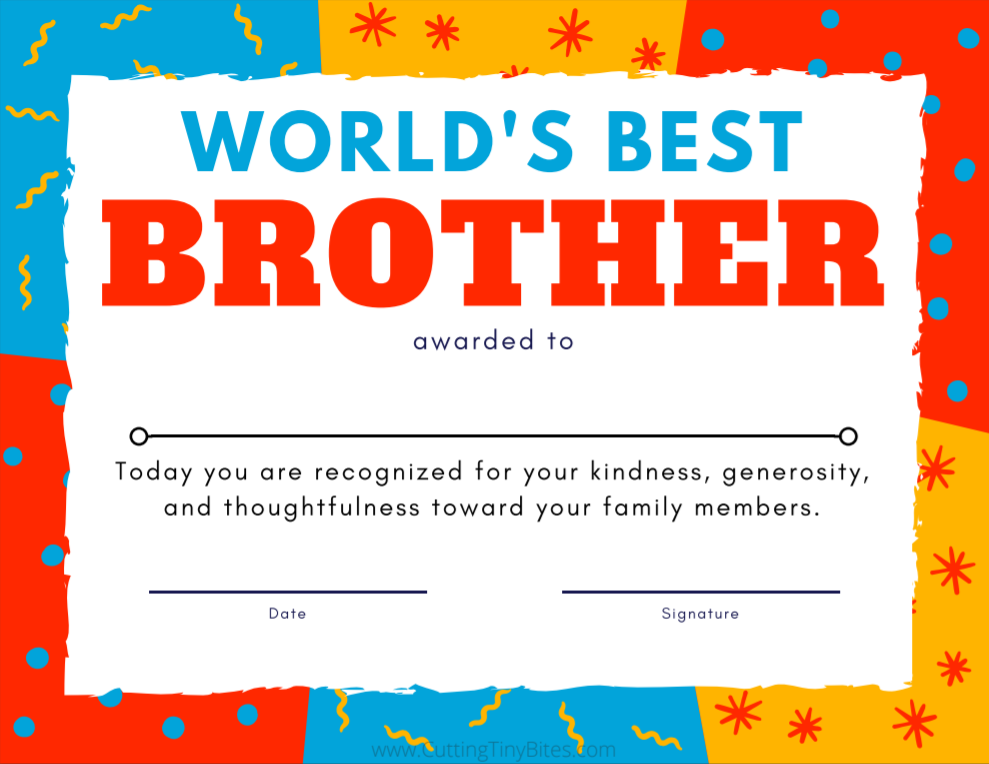
celebrate-picture-books-picture-book-review-best-brother-certificate

Best Brother Award Certificate

Today is all about your brother and how great you think he is! Print and fill out this Best Brother Award Certificate and give it to your brother—or brothers!

You can find Brothers at Bat at these booksellers

Amazon | Barnes & Noble | Books-a-Million

To support your local independent bookstore, order from

Bookshop | IndieBound

Picture Book Review

May 23 – It’s National Tennis Month

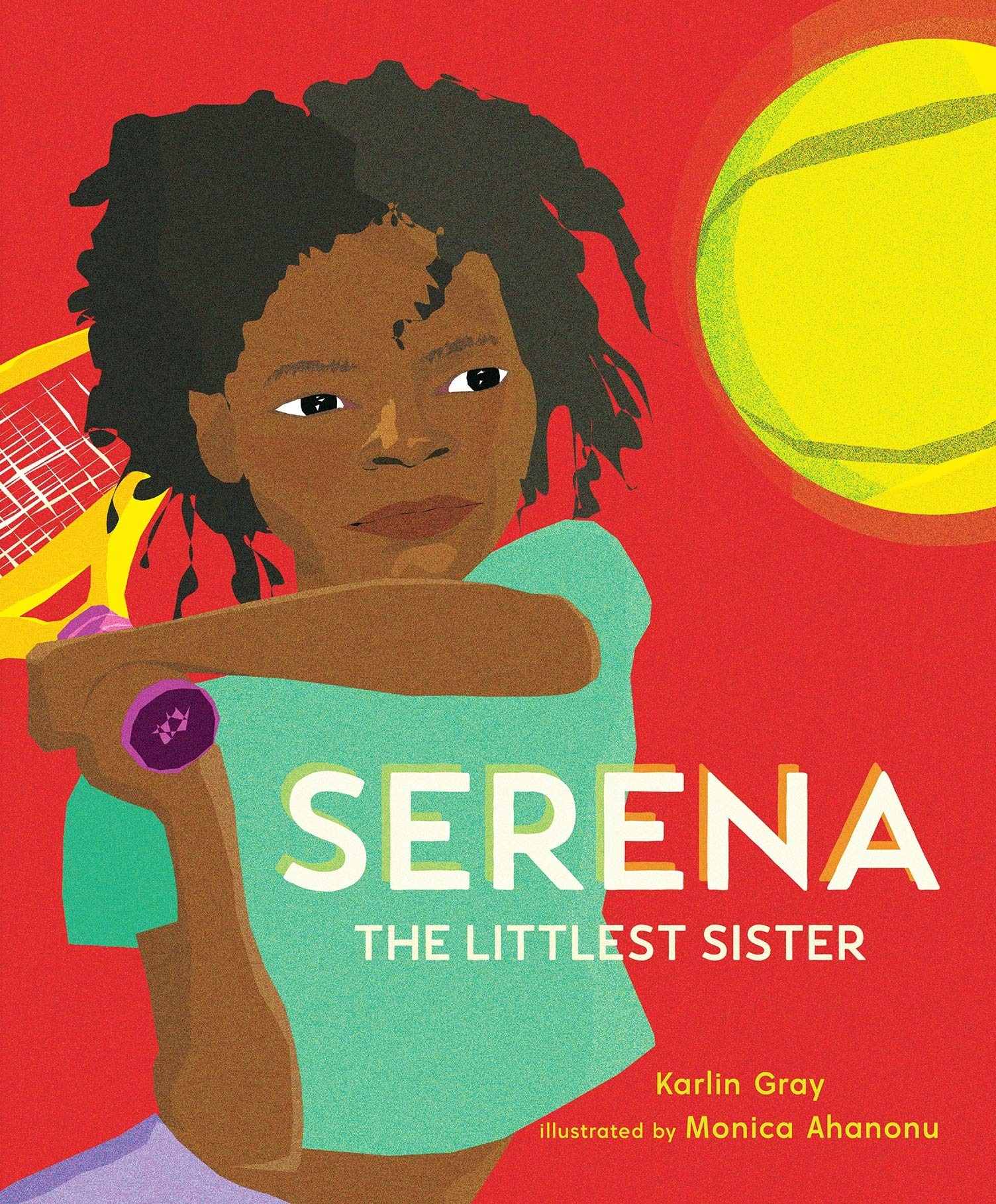
celebrate-picture-books-picture-book-review-serena-the-littlest-sister-cover

About the Holiday

When the weather turns warm, thoughts turn to love. Not romantic love, but tennis! Tennis can’t be matched for thrilling one-on-one competition, exercise, and fun. While this year the world’s great tennis tournaments may be cancelled, outdoor tennis courts may be open, allowing you to reap the benefits of this favorite sport. Even though tournament viewing is limited this summer, you can always immerse yourself in a stirring biography of the game’s great players––starting with today’s book that’s all about love––of tennis and family!

Thanks to Page Street Kids for sending me a copy of Serena: The Littlest Sister for review consideration. All opinions about the book are my own.

Serena: The Littlest Sister

Written by Karlin Gray | Illustrated by Monica Ahanonu


On that day when “Serena stood in Arthur Ashe Stadium and kissed the trophy,” her fans, sisters, and parents cheered. How had that day come about? It started thirteen years earlier when Serena, then four years old, joined her older sisters on the tennis court where their dad coached them. As he showed Serena how to swing, her sisters celebrated when she hit one and ran after the ones she didn’t. Mostly, the equipment they used was old and donated. Sometimes the balls had even lost their bounce, but “their father explained that it was good practice for Wimbledon—a Grand Slam tournament where the balls bounced lower because the tennis court was made of grass.”

celebrate-picture-books-picture-book-review-serena-the-littlest-sister-grand-Venus

Image copyright Monica Ahanonu, 2019, text copyright Karlin Gray, 2019. Courtesy of Page Street Kids.

When they weren’t on a real tennis court, the girls played a pretend game of tennis on the sidewalk. Serena loved when she won these games “because, well, Serena loved being the star.” As they grew older, their father never allowed them “to use the word can’t.” Their mom told them, “‘Whatever you become, you become in your head first.’ So the girls dreamed of what they could become.” While the other sisters became a nurse, a lawyer, and a singer, Venus and Serena became top tennis players.

Venus was taking the tennis world by storm with her hard hitting, speed, and 100-miles-per-hour serve. Serena wanted to play in tournaments too, but her father said she wasn’t ready. But one day, Serena noticed an application for a tournament Venus was playing in. Serena filled it out and sent it in. At the tournament, Serena snuck off to play on one court while her parents watched Venus on another. Serena ran her opponent ragged and won the match.

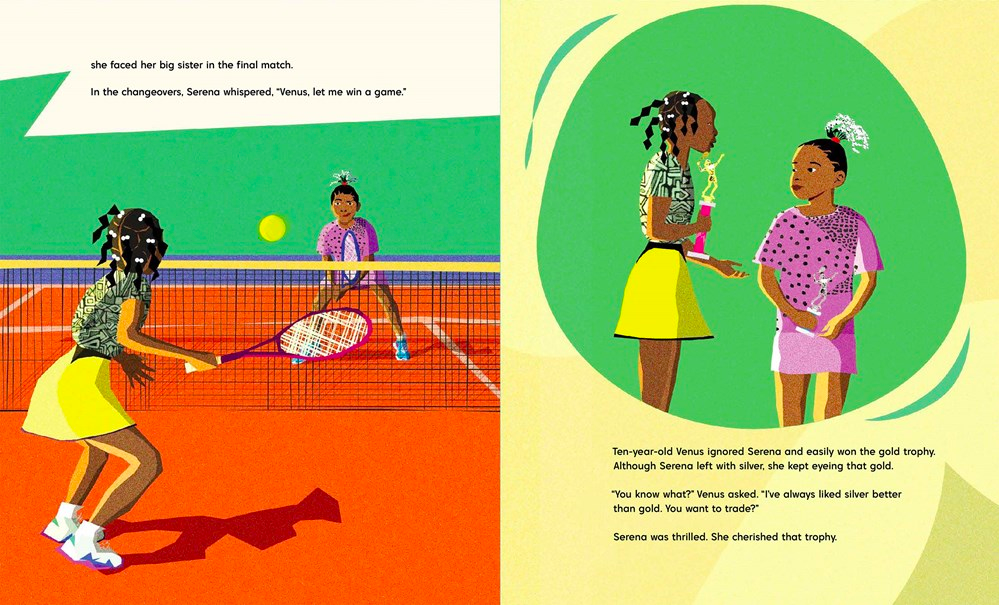
Serena thought her father might be angry, but instead he was proud and began teaching her how to play against her next opponent. “Serena won all her matches, moving up and up until…she faced her big sister in the final match.” During the match, Serena asked Venus to let her win one game, but Venus ignored her plea. Later at home, though, Venus traded her gold trophy for Serena’s silver one. “Serena cherished that trophy.” Serena idolized Venus and did everything she did until her father reminded her that she was her own person. Some people didn’t think Serena would have the success Venus did, but her oldest sister told her, “‘You’ll have your day. And it’s gonna be even bigger.’”

celebrate-picture-books-picture-book-review-serena-the-littlest-sister-grand-sixteen

Image copyright Monica Ahanonu, 2019, text copyright Karlin Gray, 2019. Courtesy of Page Street Kids.

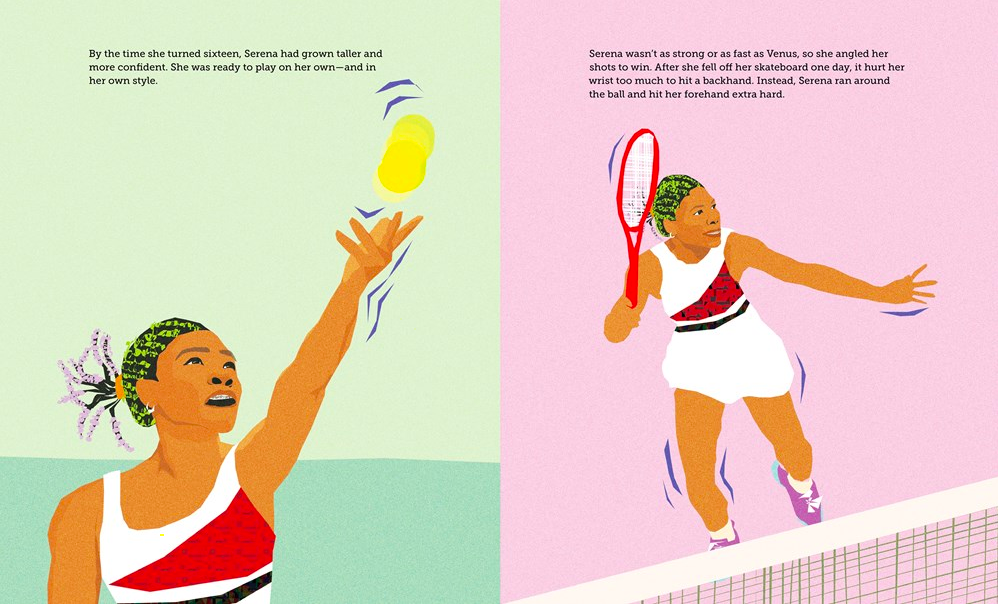
After several years of winning, Serena, Venus, and her family moved to Florida for training. On those courts the girls stood out for their skin color, their beaded braids—and “their powerful strokes.” When Venus was fourteen, she was allowed to enter professional tournaments. She won her first match. When Serena turned pro, she didn’t win. The two teamed up as doubles partners, and by the time she was sixteen, Serena had grown in both height and confidence. She had her own style of play too.

The sisters continued to play as a doubles team, and in 1999 they won the French Open Doubles competition. Venus was eighteen and Serena was seventeen. That same year, the sisters entered the US Open, the tournament Serena had long dreamed of winning. Surprisingly, Venus was knocked out early, but Serena kept winning her matches. In the finals she met the player who had beaten Venus. Serena served eight aces and “her fierce forehand earned her point after point.” Serena won the match and became “the first black woman to win a Grand Slam singles tournament in more than forty years.” At the awards ceremony, Serena thanked her dad, her mom, and her sisters for all of their support. The crowd cheered as cameras flashed. “And one of the many headlines of the day read, Little Sister, BIG HIT!”

An Afterword highlights other victories Serena and Venus have enjoyed during their careers, follow-ups on their sisters, and quotes from each of the five sisters.

celebrate-picture-books-picture-book-review-serena-the-littlest-sister-grand-slam

Image copyright Monica Ahanonu, 2019, text copyright Karlin Gray, 2019. Courtesy of Page Street Kids.

Karlin Gray’s masterful biography of Serena Williams shows young readers the determination, confidence, and strong familial bond that followed Serena throughout her life and made her one of tennis’s most influential women players. The family’s remarkable life and focus on what one can achieve will inspire all kids, no matter what their dream is. Choosing seminal events in Serena’s and Venus’s life, Gray follows Serena’s reputation on the court as she loses and wins matches, building suspense until that day when she accomplishes her goal and wins the US Open. Her inclusion of articles and comments that cast doubt on Serena’s future success demonstrates that even the greats face opposition and naysaying, and Serena’s sister’s advice to ignore it is sound.

Monica Ahanonu’s textured, collage-style illustrations leap off the page with vibrant images full of action and the girls’ personalities. As the girls race onto a court for practice, their eager expressions show their love of the game and being together. Even as a four-year-old Serena has the steely-eyed gaze of a champion as she watches the bouncing ball and lines up for her swing. Ahanonu’s use of various perspectives and shadowing create dynamic scenes on the court, and tennis lovers will be thrilled at the many illustrations of Venus and Serena playing their sport. The bond between the sisters is evident in images of Serena interacting with one or more of her sisters. Those who remember Serena’s win at the 1999 US Open will recognize her joy.

Perfectly aimed at young readers who are the same age as Serena and Venus when they began developing their skills and sport, Serena: The Littlest Sister is an inspirational biography of a present-day role model that is sure to spark an “I can” attitude. Adults who have followed the Williams sisters’ rise to tennis stardom will be equally enthralled with this beautiful biography. The book would make a stirring addition to home, classroom, and library collections.

Ages 8 – 11

Page Street Kids, 2019 | ISBN 978-1624146947

Discover more about Karlin Gray and her books on her website.

To learn more about Monica Ahanonu and her work, visit her website.

National Tennis Month Activity

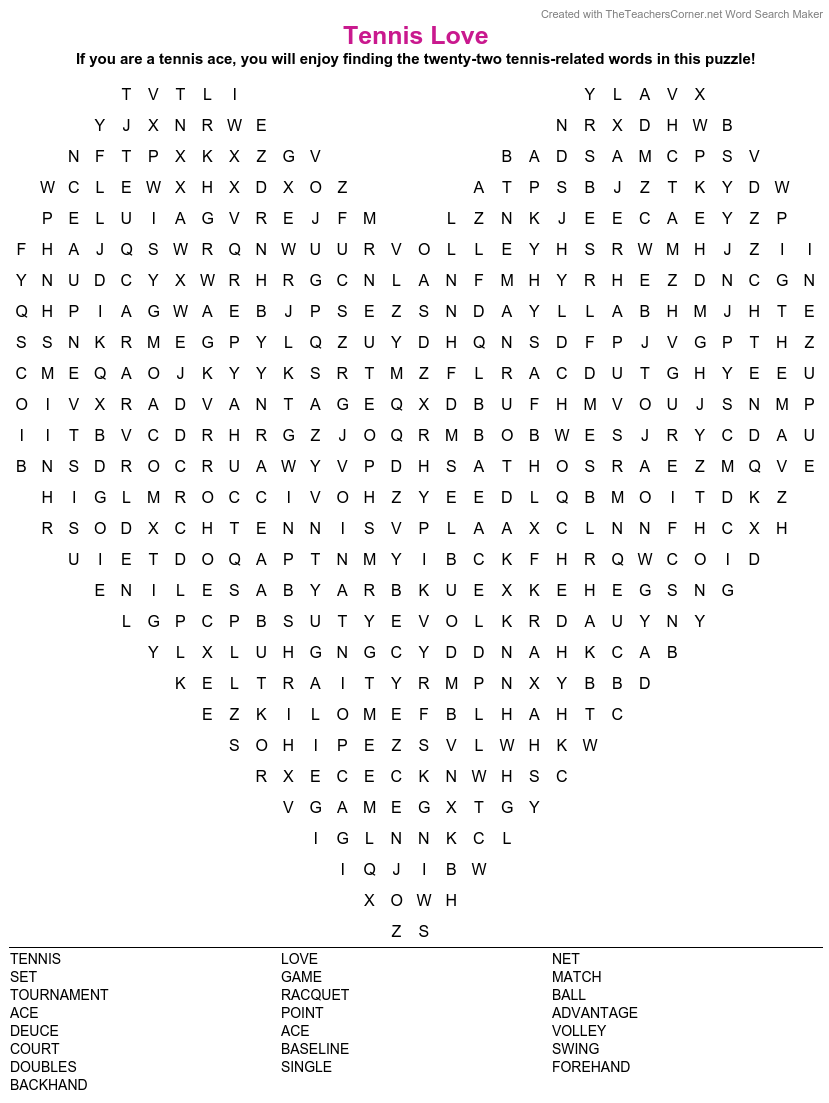
celebrate-picture-books-picture-book-review-tennis-word-search-puzzle

Tennis Love Word Search Puzzle


If you’re a tennis ace, you’ll enjoy finding the tennis-related words in this printable word search puzzle.

Tennis Love Word Search Puzzle | Tennis Love Word Search Solution

celebrate-picture-books-picture-book-review-serena-the-littlest-sister-cover

You can find Serena: The Littlest Sister at these booksellers

Amazon | Barnes & Noble | Books-a-Million 

To support your local independent bookstore, order from

Bookshop | IndieBound

Picture Book Review

May 22 – It’s National Family Month

celebrate-picture-books-picture-book-review-otis-p-oliver-protests-cover

About the Holiday

In the weeks between Mother’s Day and Father’s Day we celebrate National Family Month. The holiday was established by KidsPeace to encourage families to spend more time together. It also gives us the opportunity to honor everything that makes a group of people a family. Common experiences, shared memories, and unconditional love create that unique feeling in the heart that defines family. This year, the bonds of family have taken on a whole new meaning. To celebrate, gather your family together, talk about some things you’ve learned about each other, what you love about each family member, and, of course, have some fun!

I received a copy of Otis P. Oliver Protests for review consideration. All opinions about the book are my own.

Otis P. Oliver Protests

by Keri Claiborne Boyle and Illustrated by Daniel Duncan

By Jakki Licare

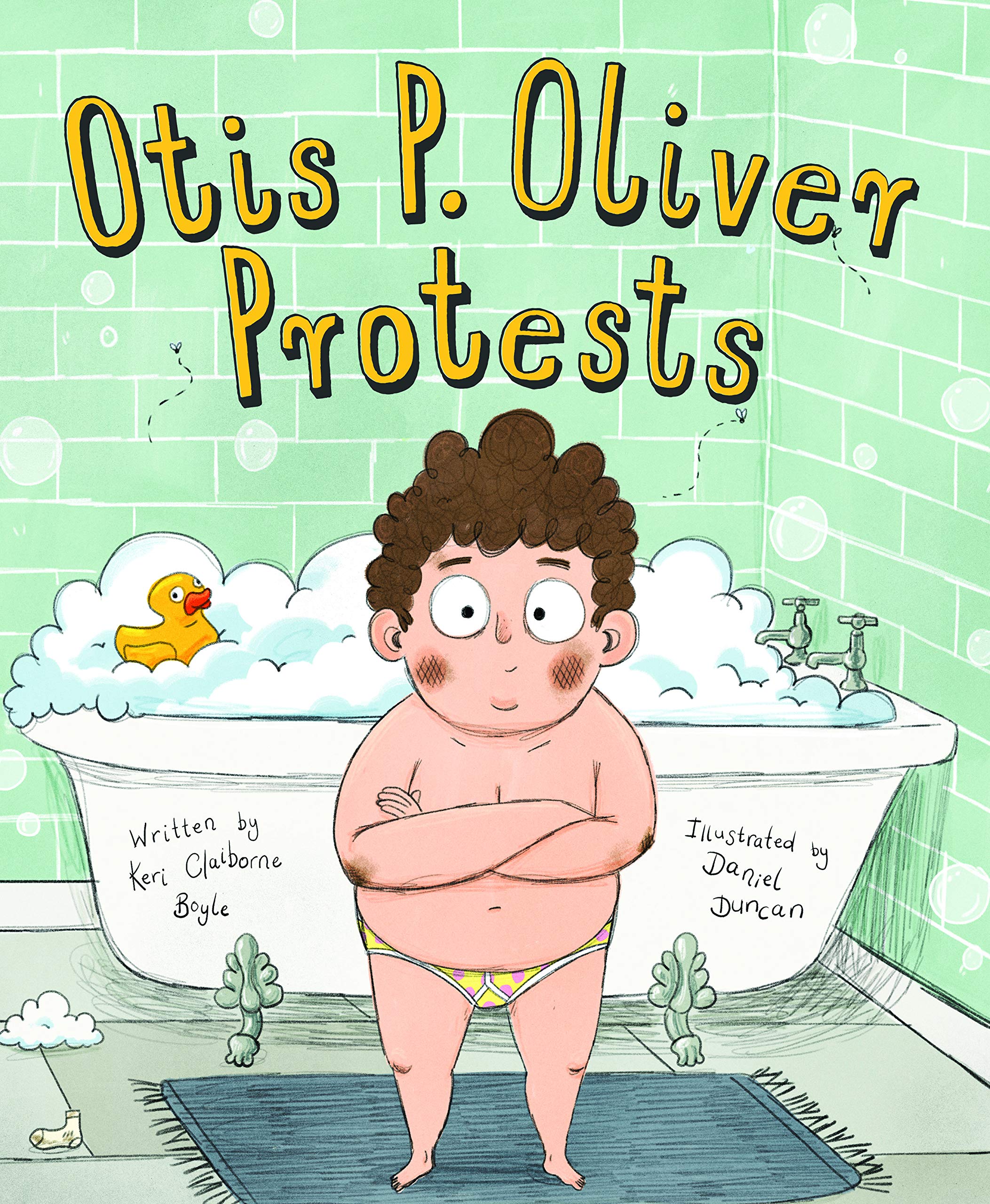
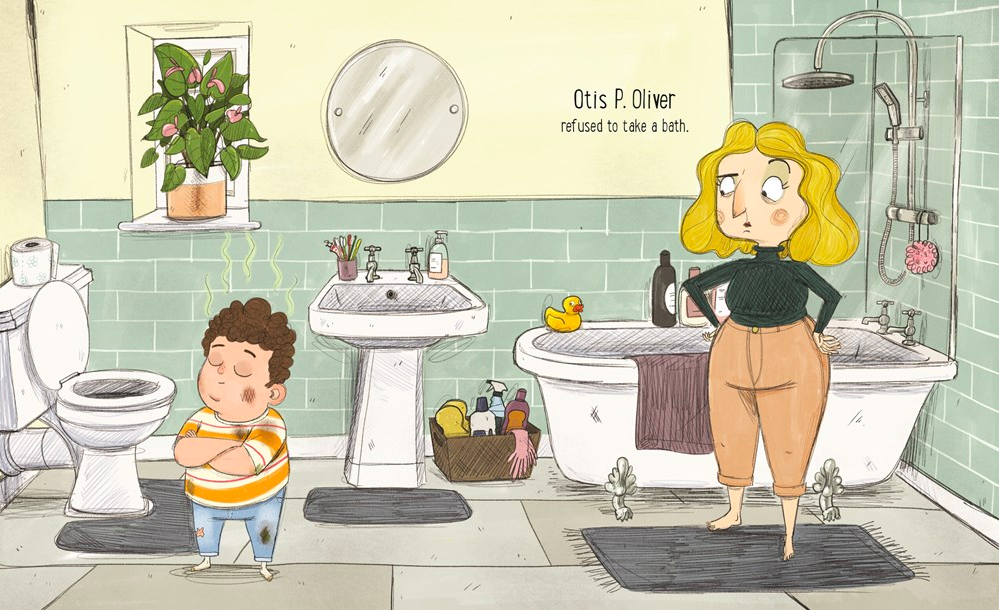
Otis has no interest in taking a bath now or anytime in the future. In fact, he believes no one should have to take a bath, but with three big sisters no one really listens to him. Otis has to take four baths every single week,  “…especially when he’s excessively grubby. And since worm farms aren’t going to build themselves, Otis is usually excessively grubby.”

celebrate-picture-books-picture-book-review-otis-p-oliver-protests-refuses

Image copyright Daniel Duncan, 2020, text copyright Keri Claiborne Boyle, 2020. Courtesy of Sleeping Bear Press.

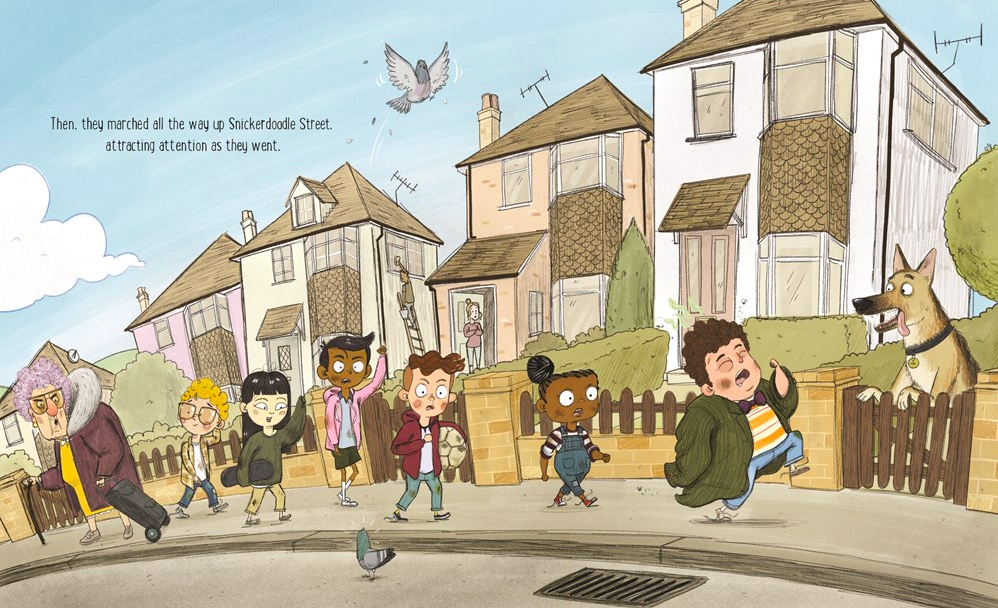
Otis’s family insists he should take a bath. So Otis decides that if he wants people to listen to him, he needs the right look and the right speech. At the playground Otis calls out to his friends that they must unite together for “bath-time rights.” Together they march through the streets until they all plop down on Otis’s front lawn. They will not move until they have been heard. 

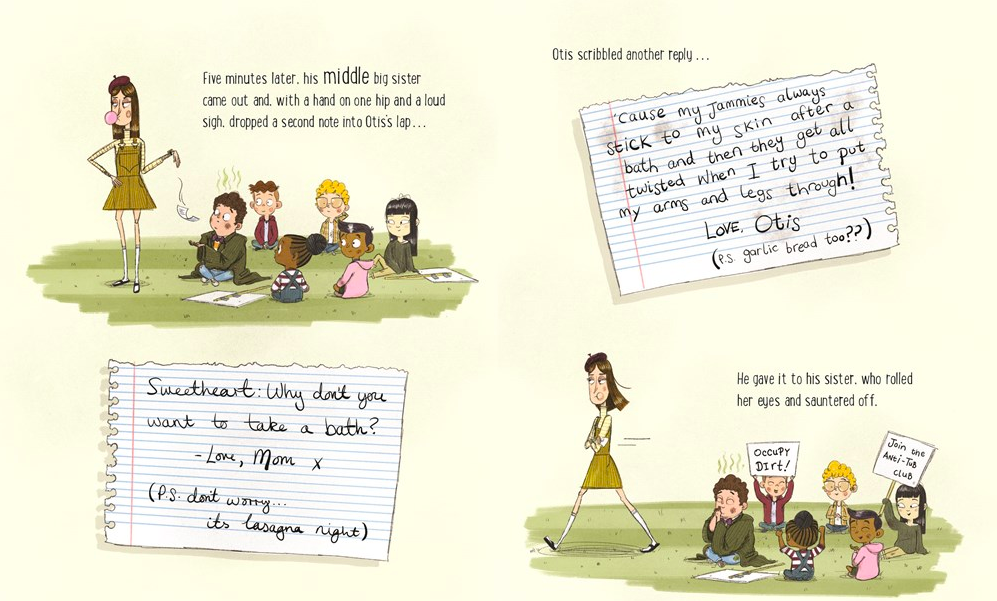
Otis’s oldest sister passes him a note from their mom who is wondering what is going on. Otis responds: “No More Baths! Love Otis (P.S. What’s for dinner? I don’t like mystery meatloaf.)” Otis’s middle older sister brings out another note from their mom who doesn’t understand why he doesn’t want to take a bath. She also reassures him that it is lasagna night. Otis explains that he hates how his pajamas cling to him after his bath. Otis’s youngest older sister delivers a new note. Their mother tells him he doesn’t have to wear pajamas if he doesn’t want to. After consulting his group he finally agrees to his mother’s terms.

celebrate-picture-books-picture-book-review-otis-p-oliver-protests-kids

Image copyright Daniel Duncan, 2020, text copyright Keri Claiborne Boyle, 2020. Courtesy of Sleeping Bear Press.

After Otis’s friends head home, the family dog brings Otis another note. “My lil grub worm, So glad we reached a compromise. Now get in the tub before you’re grounded for life! Hugs and kisses, Mom. (P.S. No dessert on school nights.)” Otis hurries in to take his bath, but before he jumps in he writes his mom one last note. He tells her that he is all set to take his bath, but he won’t be using soap. But if he was allowed to have dessert tonight, then he would be happy to negotiate.

celebrate-picture-books-picture-book-review-otis-p-oliver-protests-notes

Image copyright Daniel Duncan, 2020, text copyright Keri Claiborne Boyle, 2020. Courtesy of Sleeping Bear Press.

Otis P. Oliver is a smart, charismatic little boy who will walk right off the page and demand admission into your heart. Children will sympathize with his problem of not wanting to take a bath and will cheer him on as he takes on the parental establishment. The notes passed between mother and son through Otis’s sisters add to the hilarity. Each note has a post script discussing what’s for dinner which will make young readers giggle.

Keri Claiborne Boyle’s detailed attention to her characters makes each page a pleasure to read. Each sister’s distinct personality comes through as she stomps or rolls her eyes or pirouettes off the page. Boyle uses the rule of three to trick the readers into thinking that the negotiations are over after the third sister delivers her note. However, Boyle then sends a fourth note out with the dog, proving that Otis’s mom is a master negotiator. Otis still has one trick up his sleeve, though, as he points out the loophole that he never agreed to use soap.

Daniel Duncan’s colorful pencil-lined characters are amplified by his detailed attention to each character’s personality. Otis P. is charming as he wears his father’s oversized coat with dirt patches on his cheeks and knees and wavy stink lines steaming off of him. The illustrated details of fishnet stockings for the oldest sister, bubble gum blowing for the middle older sister, and ipod-carrying and tutu-wearing youngest sister perfectly compliment Boyle’s text and make each sister’s personality pop. Children and adults will giggle at the  hilarious signs that Duncan adds to Otis’s sit in: “I feel bath wrath” & “Occupy Dirt.”  The entire family dynamic is perfectly illustrated through a simple picture of the family’s stairway. The three sisters each have their pictures hung perfectly in descending order while Otis’s picture is propped on the second step at the same level as the family dog.

Ages  6 – 9 years old

Sleeping Bear Press, 2020 | ISBN 978-1534110434

Discover more about Keri Claiborne Boyle and her books on her website

To learn more about Daniel Duncan, his books, and his art, visit him on The Drawn Chorus Collective website.

Budding politicians, bath-averse children, and everyone in between should have this book on their shelves. Otis P. Oliver Protests is the perfect book for kids and adults to share giggles and talks about compromises either at home or in the classroom. A top pick for public libraries too.

National Family Month Activity 

celebrate-picture-books-picture-book-review-bathtub-catapult-craft

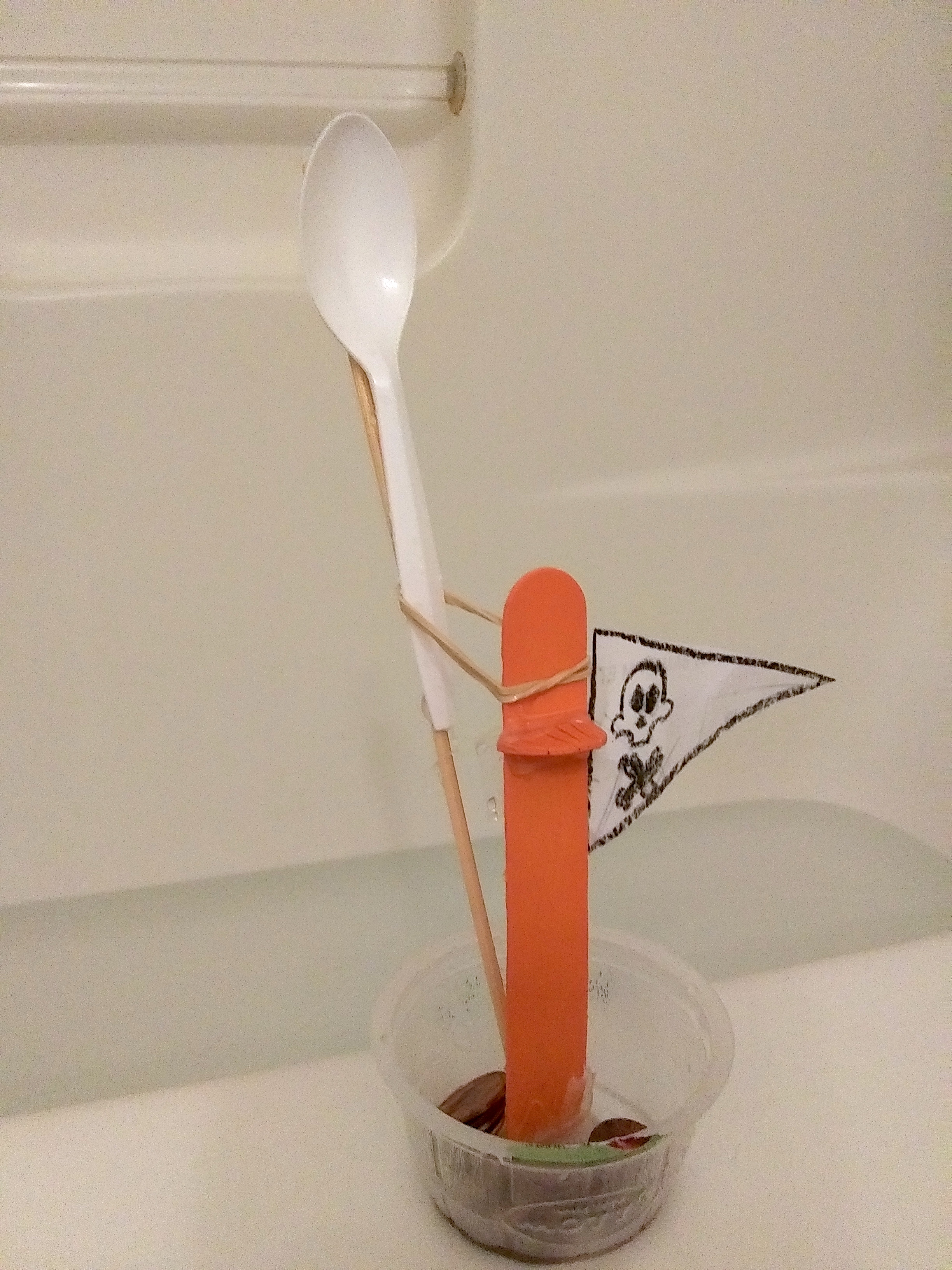
Recycled  Bathtub Catapult Battleship 

If your kiddo isn’t interested in taking a bath like Otis P. Oliver then you should give this craft a try! Blast the bubbles away as you sail your battleship in the tub.

Supplies

  • Applesauce or yogurt cup
  • Skewer
  • Plastic spoon
  • Popsicle stick
  • 10-15 pennies
  • Rubber band
  • Hot glue gun
  • Scissors
  • Paper
  • Crayons (are best since they are waterproof)
  • Tape

These supplies are just suggestions. Play around with different recycled materials and see what works!

Directions

To Make the Mast

  1. Cut the bottom of the popsicle stick off so the end is flat
  2. Take the cut-off part of the popsicle stick and hot glue the flat side to the popsicle stick, one inch down from the top. This will help hold the rubber band in place
  3. Hot glue the popsicle stick to the center of your yogurt or applesauce cup.

To Make the Catapult

  1. Cut off the pointy ends of skewer
  2. Hot glue the handle of the plastic spoon to the skewer
  3. Hold the catapult at an angle and hot glue the skewer next to the popsicle stick

To Make the Flag

  1. On paper draw a triangle and color in.
  2. Cut out triangle and tape to popsicle stick as a flag

To Finish

  1. Place pennies in front of popsicle stick to balance it out for floating (mine needed 12 pennies to keep it from tipping over backwards)
  2. Attach rubber band around popsicle stick and skewer
  3. Float in bathtub and attack those bubbles!

celebrate-picture-books-picture-book-review-otis-p-oliver-protests-cover

You can find Otis P. Oliver Protests at these bookstores

Amazon | Barnes & Noble | Books-a-Million 

To support your local independent bookstore, order from

Bookshop | IndieBound

Picture Book Review

Picture Book Review

May 20 – It’s Get Caught Reading Month

celebrate-picture-books-picture-book-review-what-about-worms-cover

About the Holiday

When you love to read, you want to share the excitement that books hold. Get Caught Reading Month encourages people to pass along their love of all things written by asking folks to take pictures of themselves reading their favorite book and uploading those images to social media. Movie and TV celebrities, sports figures, authors, illustrators, teachers, mom, dads, grandmas and grandpas, and kids of all ages take part in this favorite annual event. Why don’t you?!

I received a copy of What About Worms!? from Hyperion Books for Children for review consideration. All opinions on the book are my own.

What About Worms!? (Elephant & Piggie Like Reading!)

By Ryan T. Higgins and Mo Willems


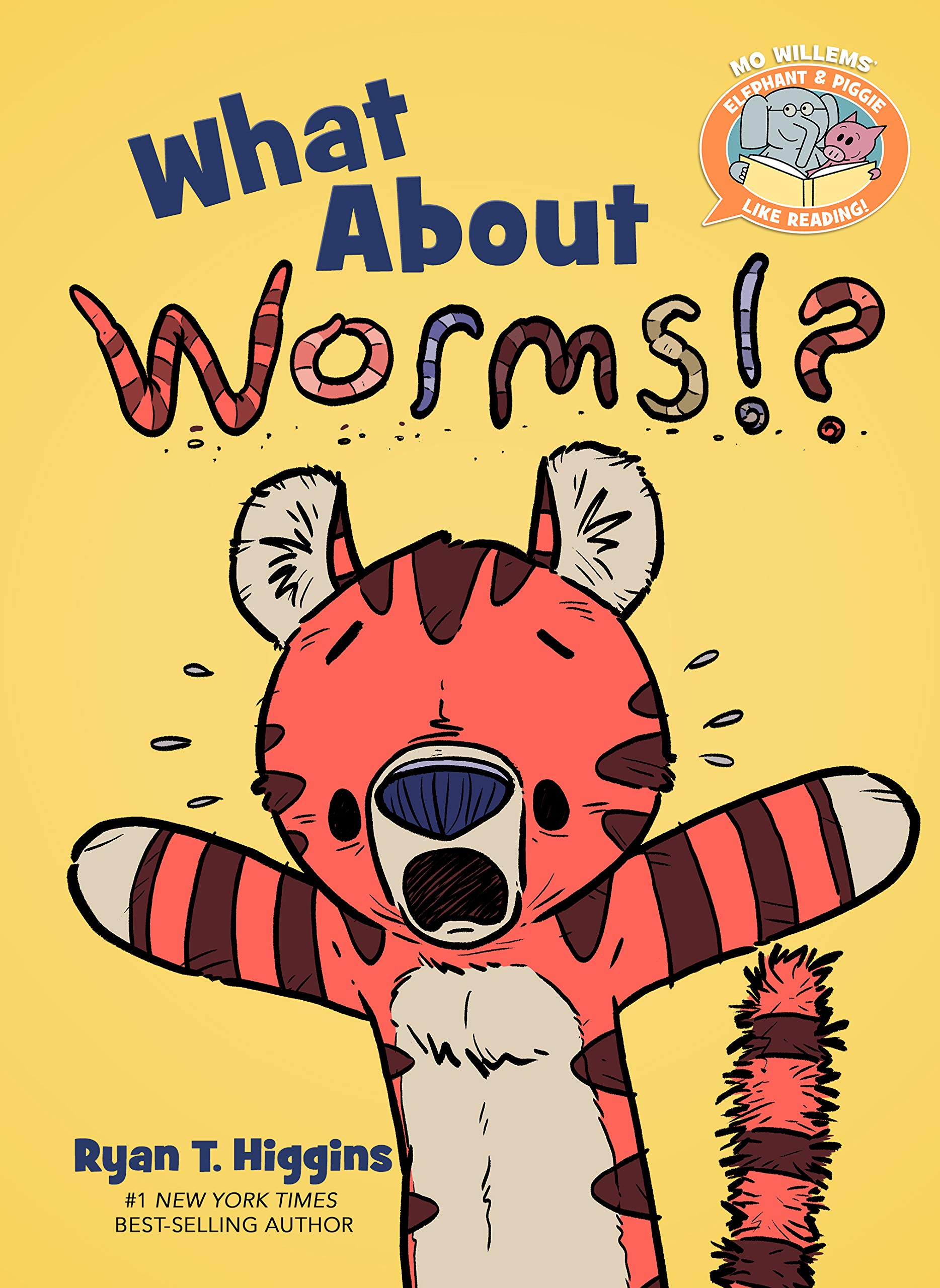
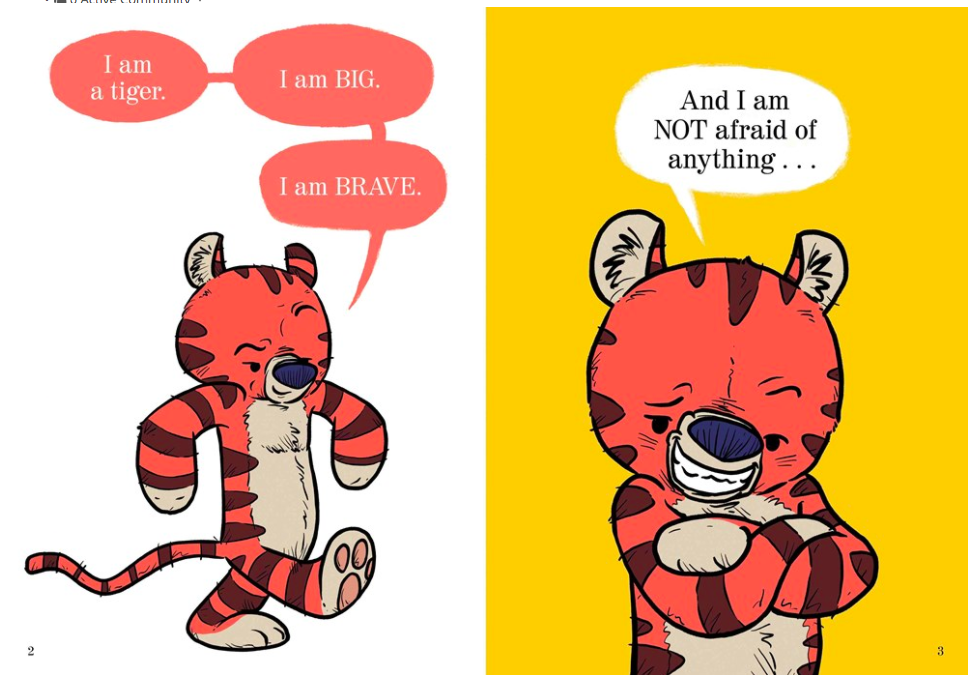
Piggie comes to Gerald with a new book that he’s having trouble reading. In fact, he “cannot make heads or tails of it.” “Why not?” Gerald asks. “Because,” Piggie says with great mirth, “it is about WORMS!” And so, Piggie and Gerald and readers are off…! The story revolves around a little tiger, who believes he is big and brave and “NOT afraid of anything…except worms.”

celebrate-picture-books-picture-book-review-what-about-worms-tiger

Copyright Ryan T. Higgins and Mo Willems, 2020, courtesy of Hyperion Books for Children.

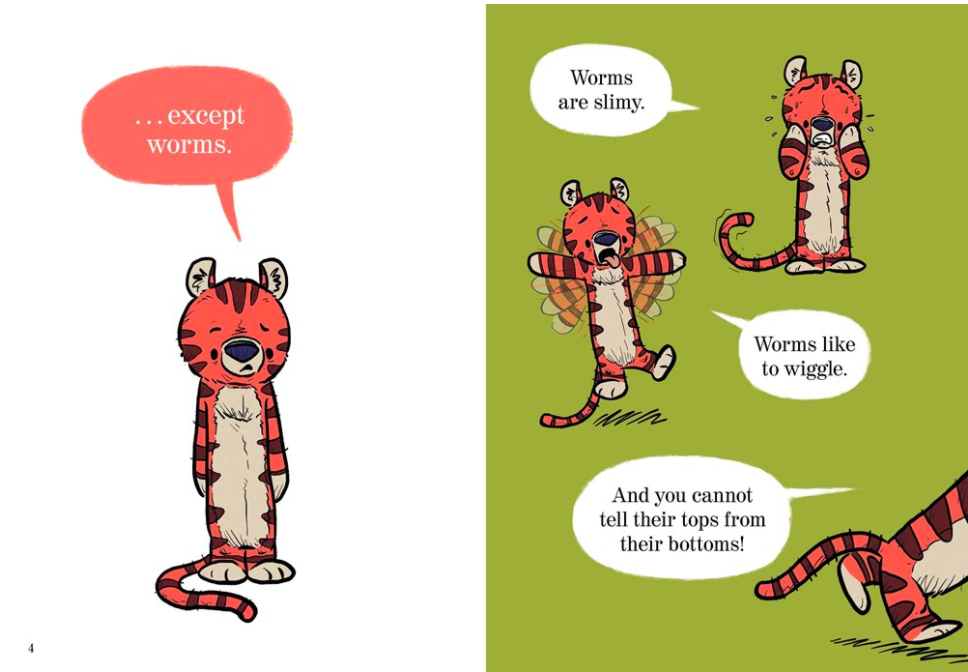
Tiger’s wary of how they feel and how they squirm; plus, it’s hard to know which end is their head and which is their tail. Tiger forgets his fears when he spies a lovely pot of flowers. He picks it up and takes a deep breath of the sweet aroma. But then he remembers…. There’s dirt and where there’s dirt, there’s bound to be WORMS. The pot flies from his hands and smashes into pieces on the ground. In the spilled dirt, Tiger sees…no worms.

To take his mind off breaking the pot, Tiger picks a shiny, red apple from a tree and takes a big bite. Oh, how delicious apples are! But… “GULP!” Tiger tosses his apple away and it lands “SPLAT!” at his feet. In the bits of apple, he sees…no worms. He looks sadly at his lost pot and apple. Those worms, he shouts, they “ruin everything.”

celebrate-picture-books-picture-book-review-what-about-worms-slimy

Copyright Ryan T. Higgins and Mo Willems, 2020, courtesy of Hyperion Books for Children.

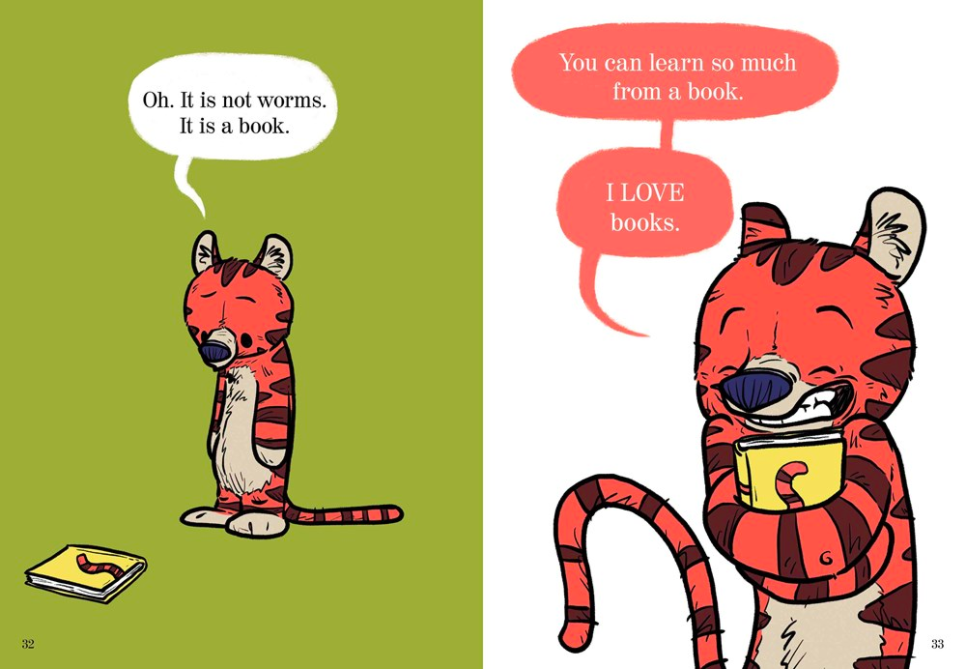
And now there’s another wriggly, striped worm right near him. But when Tiger takes another look, he realizes that it’s only the cover of a book. Reading is just what he needs right now. But what if… “it is a book about WOOOOOOOORMS!!!” Tiger throws the book and runs away as fast as he can. All of this commotion attracts none other than a group of worms who, seeing the retreating figure, discuss how they are afraid of tigers.

celebrate-picture-books-picture-book-review-what-about-worms-book

Copyright Ryan T. Higgins and Mo Willems, 2020, courtesy of Hyperion Books for Children.

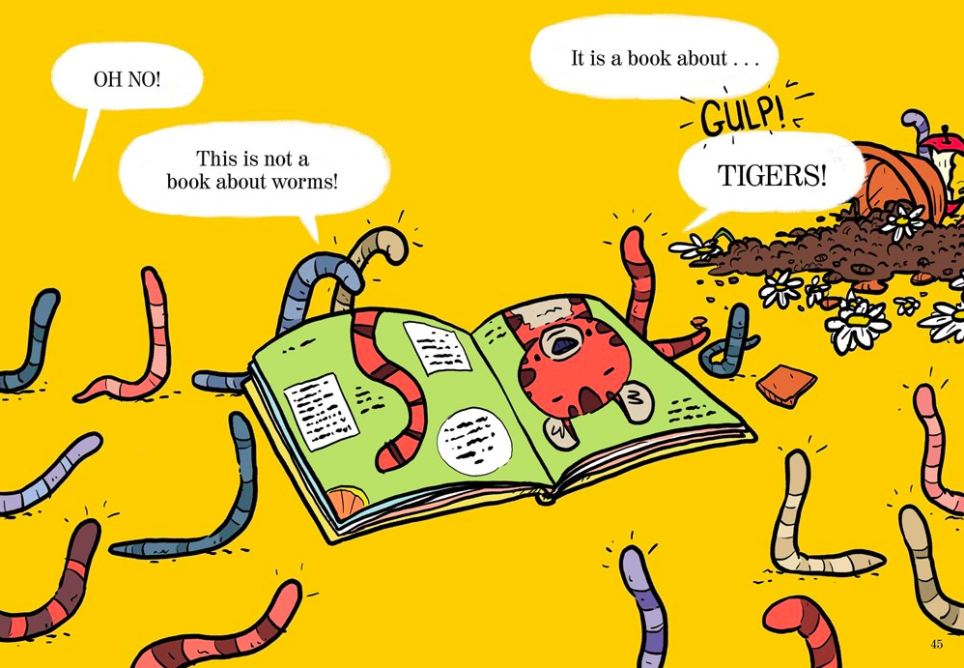
Just then they find the gifts that Tiger has left behind. They frolic in the dirt, munch the apple, and are excited about the book—especially since they can see from the cover that it’s a book about worms. But when they open it up, they discover it’s not about worms at all—but about tigers. With trepidation they begin reading, and by the end of the book these worms have learned so much about tigers that they’ve had a change of heart. So much so that when they catch a glimpse of Tiger, they each want to give him a big “worm hug!”

Piggie closes the book and wonders if Gerald liked it. He did! Especially its surprising ending. And Piggie? He says, “I love a book that worms its way into your heart.”

celebrate-picture-books-picture-book-review-what-about-worms-worms-reading

Copyright Ryan T. Higgins and Mo Willems, 2020, courtesy of Hyperion Books for Children.

Ryan T. Higgins is a master of laugh-out-loud storylines that lead up to a gem of a plot twist, and in What About Worms!? slapstick meets worry with smashing results. Kids will crack up at Tiger’s over-the-top reactions as they devour this well-paced story that’s also loaded with vocabulary they’ll be excited to recognize or learn. Repeated words and phrases flow naturally in this dialogue-driven story, increasing the enjoyment of the reading and learning process. Not only does Higgins address fears, friendship, regret, and a love of books, he also reminds kids of the truth of that important adage: You can’t tell a book by its cover.

As always, Higgins’ bold illustrations carry the story with actions and emotions that are humorous, identifiable, and relatable. Children familiar with Higgins’ Mother Bruce books will recognize beloved facial expressions on Tiger, and a cameo appearance from Mo Willems’ Pigeon will delight them. Speech bubbles contain one sentence only, making them easy to follow for beginning readers.

Sure to be a favorite and reached for often, What About Worms!? is a must whether you’re adding to your collection of Elephant & Piggie Like Reading! books or just starting out with the series.

Ages 4 – 8

Hyperion Books for Children, 2020 | ISBN 978-1368045735

To learn more about Ryan T. Higgins, his books, and his art, visit his website. Ryan’s site is under construction, but he and all your favorite characters will be back!

Discover more Elephant & Piggie Books as well as all of Mo Willems’ books on Pigeon Presents.

Get Caught Reading Month Activity

celebrate-picture-books-picture-book-review-cup-of-dirt-finished

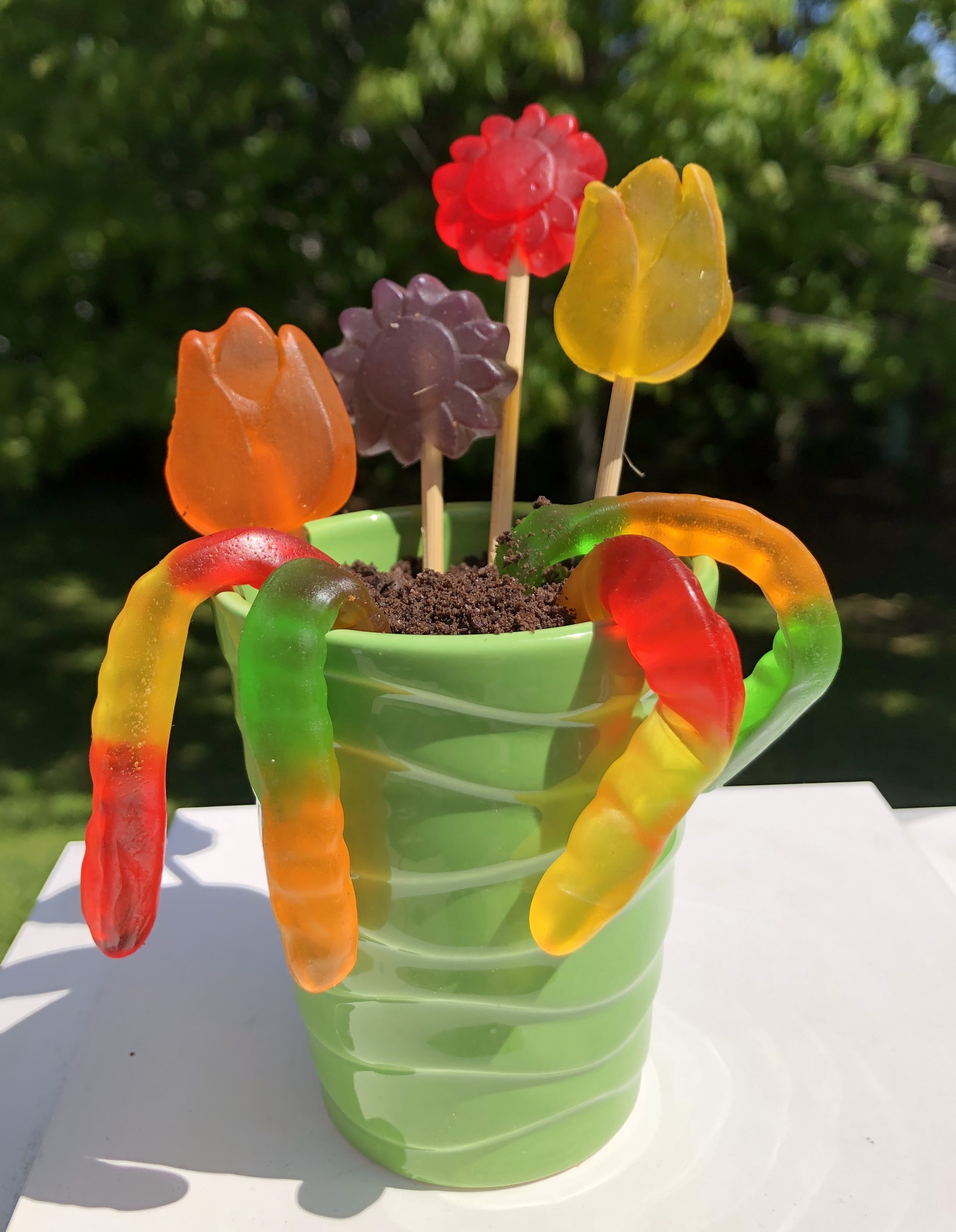
Cup of Dirt (and Worms!)


This classic favorite is frightfully good––especially while reading!

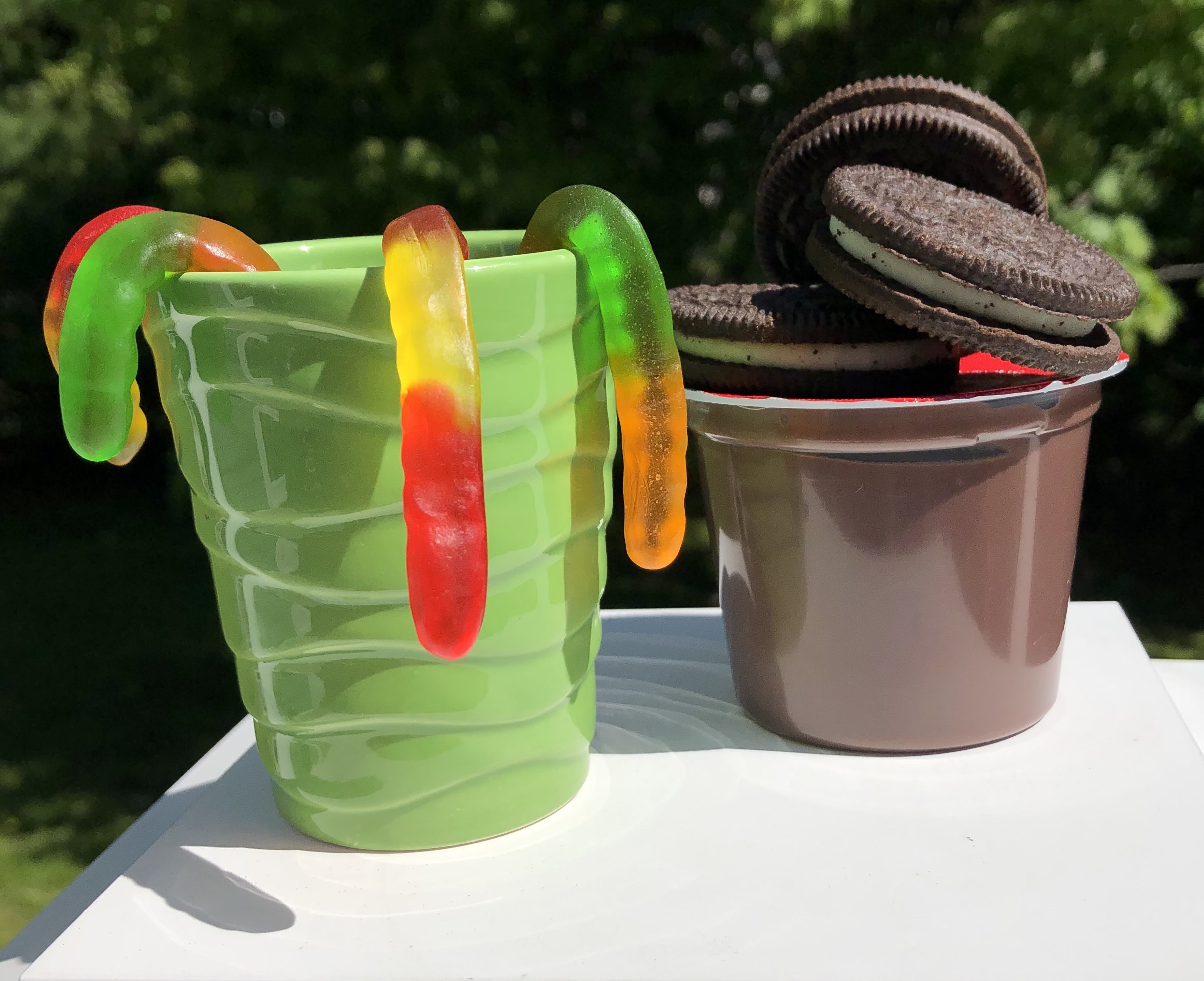
Ingredients

  • 1 4-ounce package of instant chocolate pudding
  • 2 cups milk
  • 1 8-ounce container of whipped topping
  • 16-oz package of chocolate sandwich cookies
  • Gummy worms

celebrate-picture-books-picture-book-review-dirt-cups-ingredients

Directions

  1. Beat milk and pudding mix together in a bowl until well blended and slightly thickened; let stand to thicken, about 5 minutes.
  2. Stir whipped topping and 1/2 of the crushed cookies into pudding.
  3. Spoon 1 tablespoon crushed cookies into each serving cup.
  4. Fill each cup 3/4-full with pudding mixture and top with remaining crushed cookies.
  5. Refrigerate for 1 hour.
  6. Top with gummy worms before serving

celebrate-picture-books-picture-book-review-what-about-worms-cover

You can find What About Worms!? at these booksellers

Amazon | Barnes & Noble | Books-a-Million

To support your local independent bookstore, order from

Bookshop | IndieBound

Picture Book Review


May 20 – World Bee Day

celebrate-picture-books-picture-book-review-bee-a-peek-through-picture-book-cover

About the Holiday

World Bee Day was instituted by Slovenian beekeeper and president of the Slovenian Beekeeper’s Association, Bostjan Noc, in 2014. The date commemorates the birthday of Slovenian Anton Janša, the pioneer of beekeeping, in 1734. Beekeeping is such an important part of Slovenia’s identity that it’s known as the “Land of the Good Beekeepers.” The purpose of this United Nations sponsored holiday is to raise awareness of the importance of pollinators and the threats they face. This year, being mindful of the plight of bees is more important than ever.

The COVID-19 pandemic has affected the production of and market for honey and, thus, the livelihood of beekeepers as well. Today’s holiday will be celebrated with a virtual event themed “Bee Engaged” and will focus on bee production, traditional beekeeping knowledge, the use of bee-derived products, and the delivery of good-quality goods. To help, support beekeepers in your area by buying locally made honey.

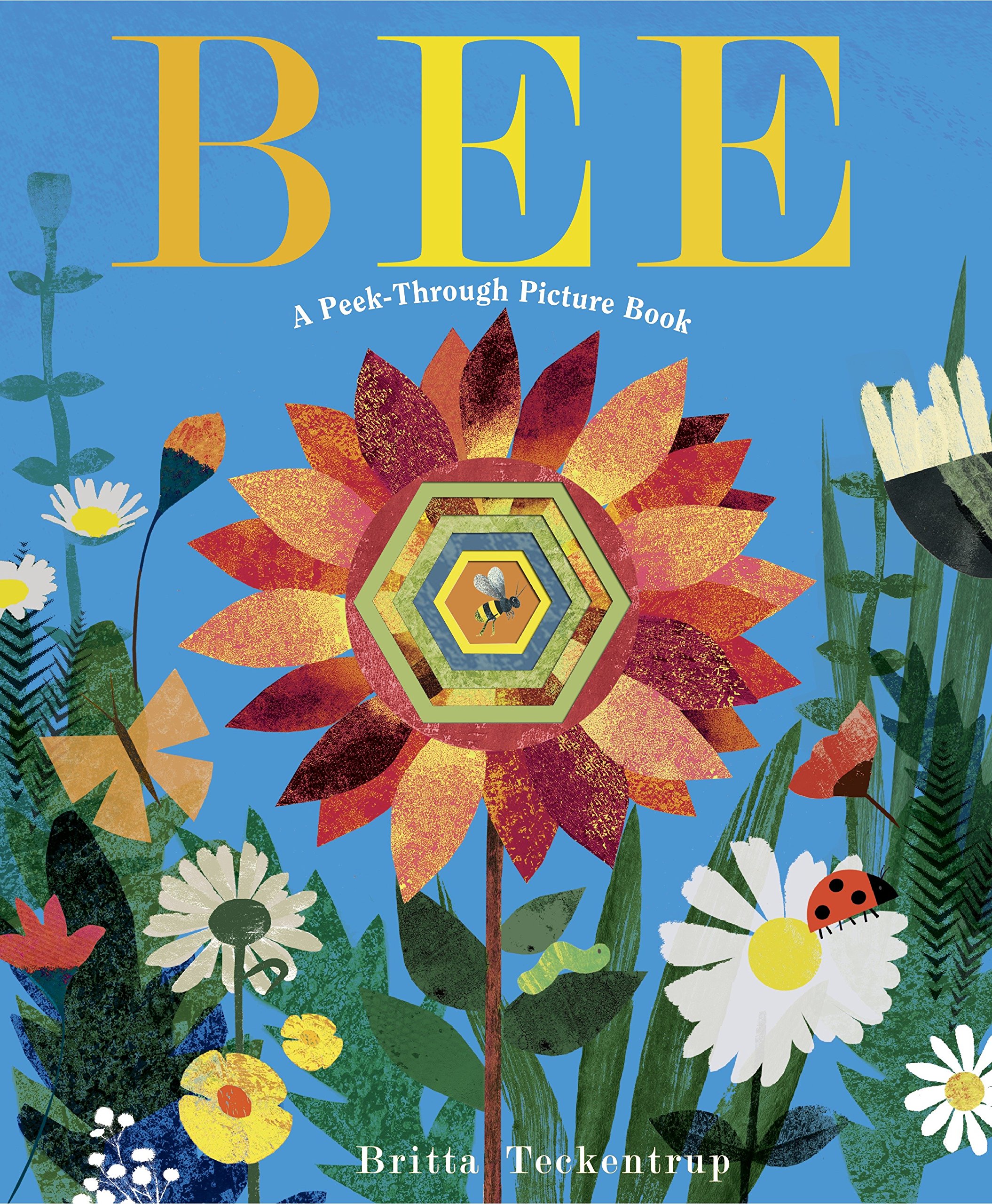
Bee: A Peek-Through Picture Book

By Britta Teckentrup


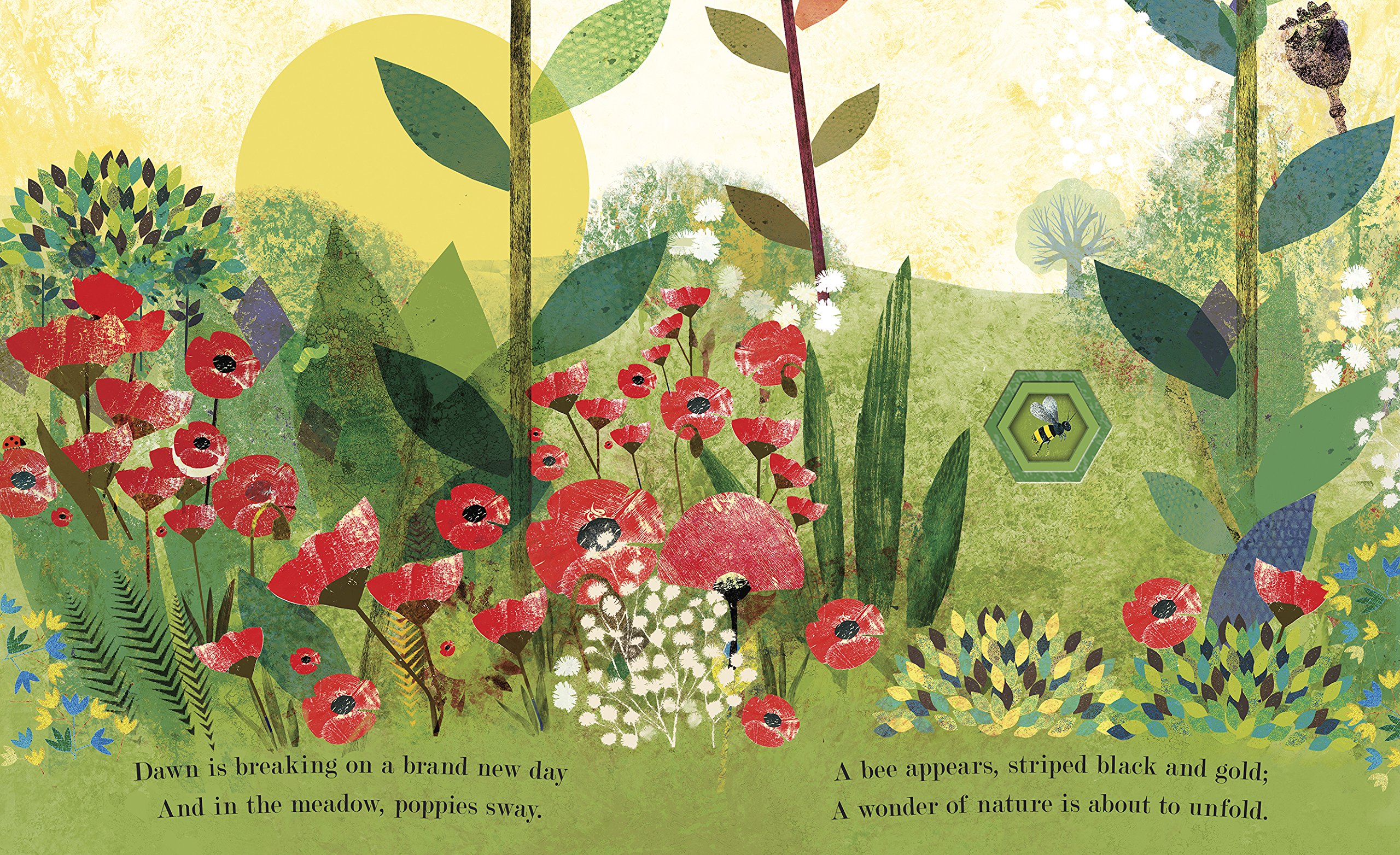
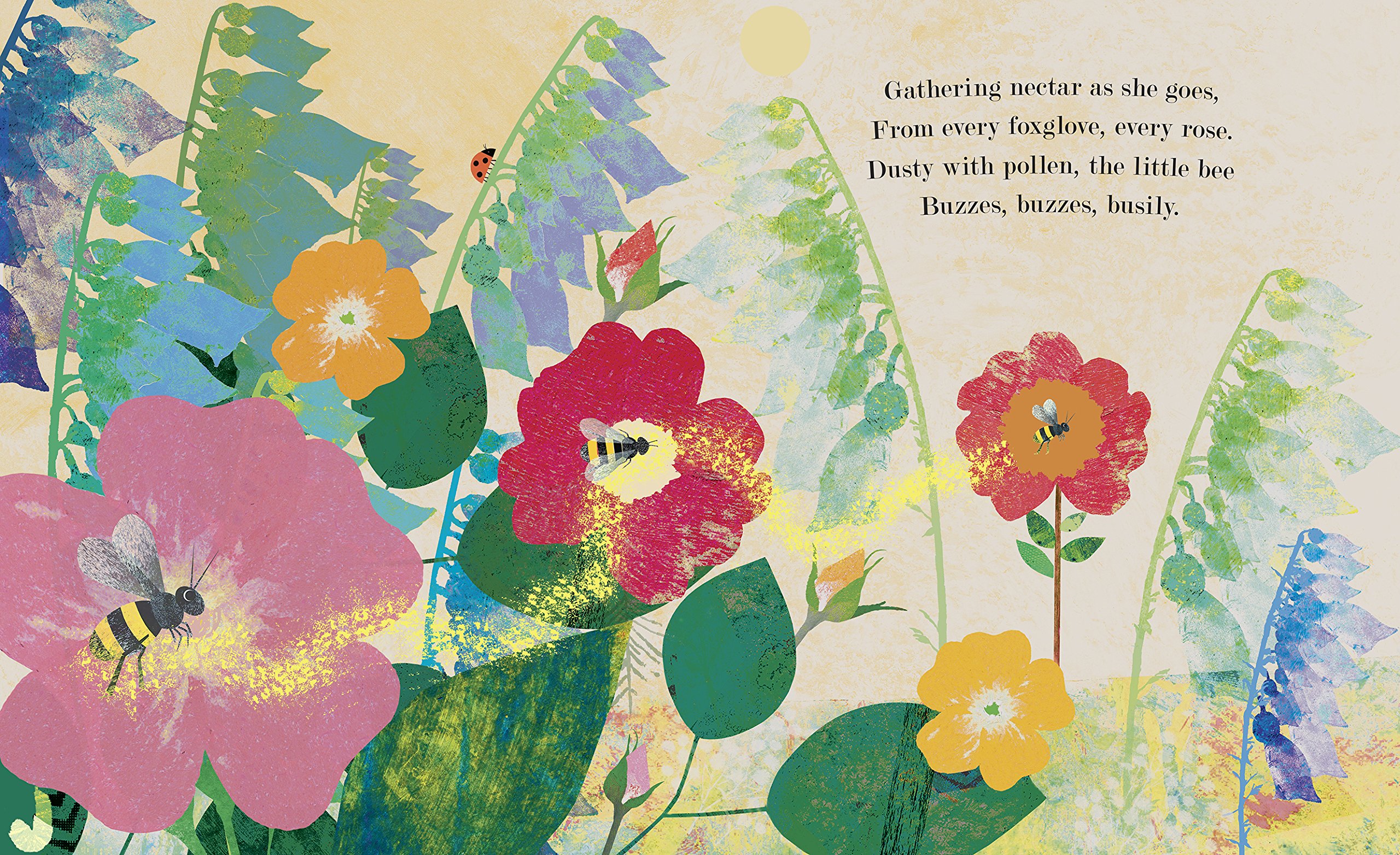
As the sun comes up over the meadow of poppies, a bee gets ready for her day. She flits through the forest, blending her quiet buzz with the songs of the birds in the trees. “As she travels here and there, / A gentle humming fills the air.” With no map to guide her, the bee knows exactly what route to take to visit each colorful flower. “Gathering nectar as she goes, / From every foxglove, every rose, / Dusty with pollen, the little bee / Buzzes, buzzes, busily.”

celebrate-picture-books-picture-book-review-bee-a-peek-through-picture-book-dawn

Copyright Britta Teckentrup, 2017, courtesy of Random House Books for Young Readers.

The flowers attract the little bee with their sweet perfume, and with the sun as her compass, she finds them all. As she flies from flower to flower, tree to tree, she picks up and leaves bits of pollen that will create more blossoms.  But when she looks out over the field, the bee sees more flowers than she could ever hope to visit. The bee hurries back to her hive to tell the others about the smorgasbord waiting for them.

celebrate-picture-books-picture-book-review-bee-a-peek-through-picture-book-stream

Copyright Britta Teckentrup, 2017, courtesy of Random House Books for Young Readers.

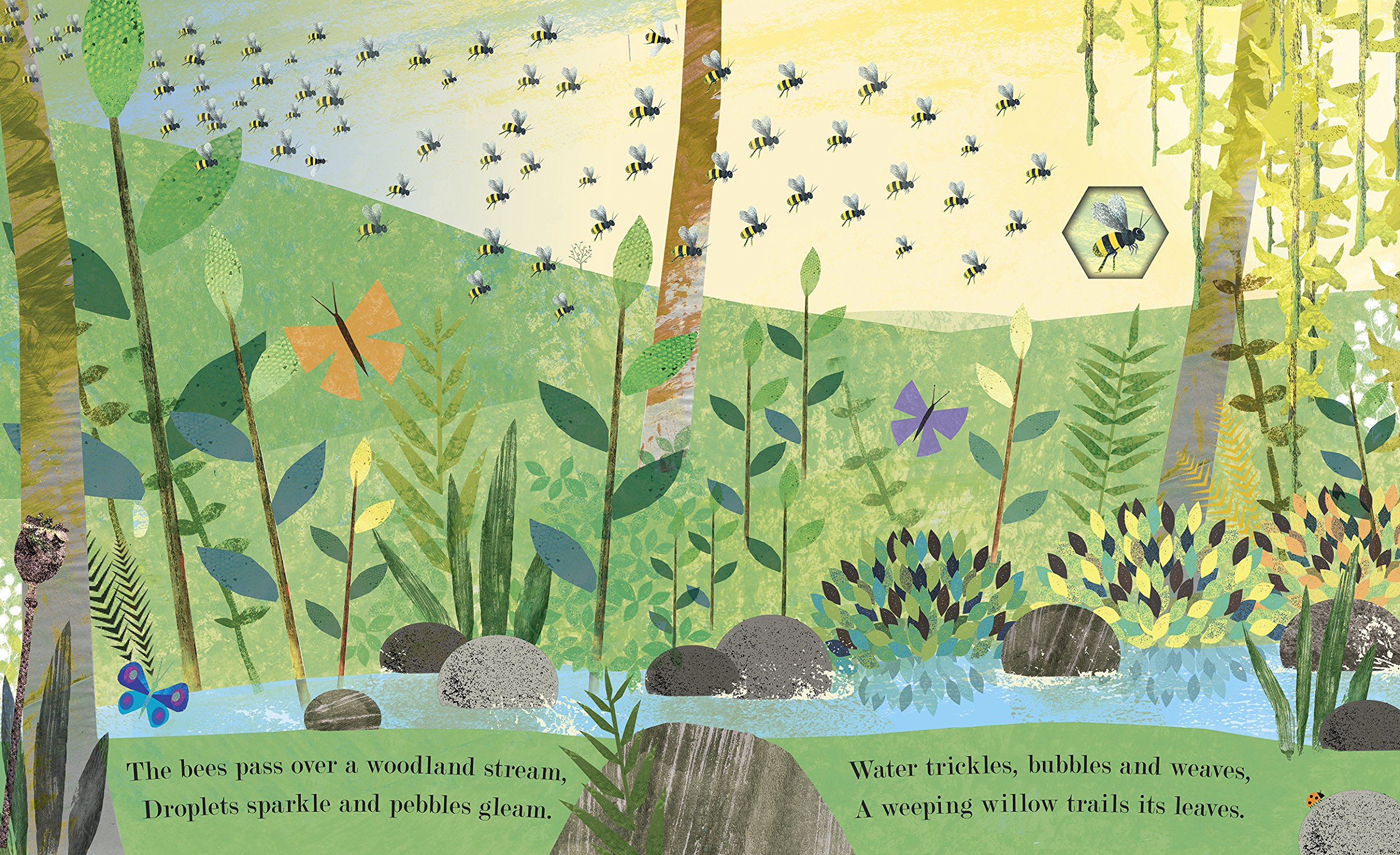
In droves they leave the hive, gliding over a pond, navigating an orchard, and continuing on. “The bees pass over a woodland stream. / Droplets sparkle and pebbles gleam. / Water trickles, bubbles, and weaves. / A weeping willow trails its leaves.” As the bees stop here and there along the way, they give life to new flowers and plants, expanding the wildflower meadow that is home to so many creatures.

celebrate-picture-books-picture-book-review-bee-a-peek-through-picture-book-nectar

Copyright Britta Teckentrup, 2017, courtesy of Random House Books for Young Readers.

Readers can see that Britta Teckentrup’s beautiful tribute to bees is something special before they even open the book. On the cover, a sunset-hued flower stretches into the blue sky. Through its die-cut center, children can see the complexity of the flower and, in its very middle, a honey bee harvesting nectar. Teckentrup’s lyrical story of a bee’s day is complemented by gorgeous illustrations of the vibrant wildflowers that call to the little bee. Each page is rendered in a breathtaking palette that surrounds young readers with the mysteries of the natural world—and in the center is the bee, going about her job as squirrels scamper, deer silently look on, and butterflies flutter nearby.

Children will adore following the bee—and later, more and more bees—through open windows to the final two-page spread of a meadow in full bloom. All along the journey, the bee has made friends with woodland, pond, and orchard creatures, and young readers will delight in finding each of them hidden in this glorious field.

Ages 3 – 7

Doubleday Books for Young Readers, 2017 | ISBN 978-1524715267

Discover more about Britta Techentrup, her books, and artwork on her website!

World Bee Day Activity

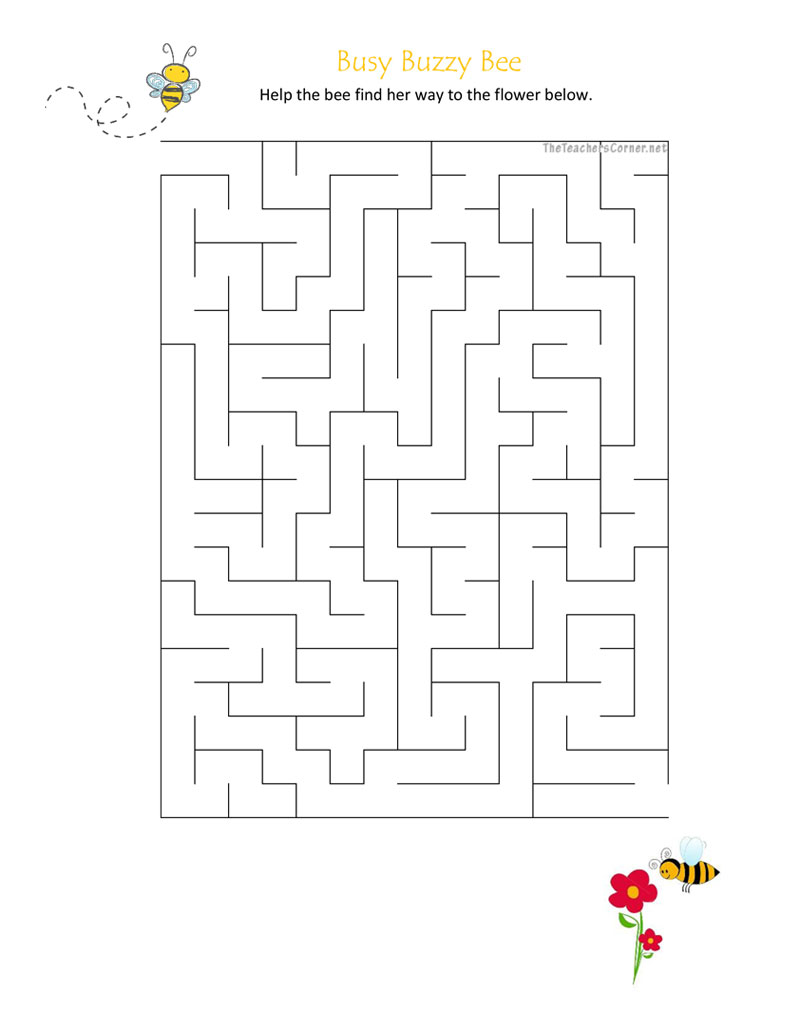
CPB---Busy-Buzzy-Bee-Maze

Busy Buzzy Bee Maze


Can you help the little bee find her way to the flower and her friend in this printable maze?

Busy Buzzy Bee Maze Puzzle | Busy Buzzy Bee Maze Solution!

celebrate-picture-books-picture-book-review-bee-a-peek-through-picture-book-cover

You can find Bee: A Peek-Through Picture Book at these booksellers

Amazon | Barnes & Noble | Books-a-Million

To support your local independent bookstore, order from

Bookshop | IndieBound

Picture Book Review


May 19 – It’s National Pet Month and Interview with Sarah Kurpiel

celebrate-picture-books-picture-book-review-lone-wolf-cover

About the Holiday

Pets give us unconditional love, provide companionship, and add entertainment and fun to our lives. This month is set aside to focus on our pets. To celebrate spend extra time with your furry friend, make sure they have everything they need to stay healthy, and give them a little extra treat now and then. This year, our pets may be feeling stressed from stay-at-home restrictions. To help, try to keep your pet’s routines as normal as possible. Dogs may benefit from extra walks––just like Maple in today’s story!

I received a copy of Lone Wolf from Greenwillow Books for review consideration. All opinions are my own. 

Lone Wolf

By Sarah Kurpiel


Maple, a Siberian husky, loved living with the Parkers. He loved playing tug-of-war with Jax, reading with Avery, extra treats from Mom, and especially long walks with everyone. “But on her walks, people would say… ‘Dude, that dog looks like a wolf.’” Some little kids clung to their mom’s leg when they saw her, some older people asked if maybe she wasn’t just a little bit wolf, and even babies shouted “‘WOLF! WOLF! WOLF!’”

The Parkers tried to explain the differences between Maple and a wolf, but eventually, “even Maple had her doubts.” After all, when she compared herself to other dogs, she saw that so many had floppy ears or lots of fluff or handsome spots. She wasn’t like them at all. Plus, she was good at digging, howling, and hunting just like a wolf.

celebrate-picture-books-picture-book-review-lone-wolf-Maple

Copyright Sarah Kurpiel, 2020, courtesy of Greenwillow Books.

She began to think that she belonged in the wild, and one day when the gate was left open, she bounded out into the woods. But here the ground was hard, not soft like the Parker’s garden; squirrels were faster and harder to catch than Avery’s shoes; and sticks were pretty boring without Jax. Being a wolf was not as much fun as it seemed. As nighttime came and the sky darkened, Maple decided to head home.

On the way, she saw a flashlight and behind it familiar faces. Someone was looking for her. It was the Parkers—her pack! Now when people call Maple a wolf, she doesn’t have doubts. She knows just who she is and exactly where she belongs.

Sarah Kurpiel’s multilayered story about a husky who is often mistaken for a wolf will delight dog and pet lovers as it gently introduces the ideas of identity, self-doubt, and self-discovery. Her charming storytelling provides an excellent opportunity for adults and kids to discuss these important topics of individual growth with the backdrop of a supportive family. Children, familiar with being peppered by questions about what they’re doing and who they want to be (as opposed to who they are) as well as by comparisons to others, will relate to Maple. Maple’s exploration of what she considers her wolf-like abilities is humorous and models a positive self-analysis that is honest and non-judgmental while also embracing one’s unique qualities.

Kurpiel’s lovely color palette and rounded shapes are fresh and welcoming while her use of directional lines allows readers to dash along with Maple from one enchanting detail to another. Her use of various perspectives puts kids in Maple’s point of view while providing depth to this enthusiastic pup’s experience. Maple is adorable, and his wondering nature is clearly visible in his expressive face. Kurpiel’s images of family love begin on the copyright page with sweet framed family pictures, many of which include Maple. Avery, who is shown using a power wheelchair, is a welcome portrayal of a child with a disability. The final snapshot of the Parker family and Maple snuggling together is heartwarming and reminds readers that individual attributes are what make each person so special.

Touching and uplifting, Lone Wolf will charm children and adults anew with every reading. The book would make a favorite addition to home, school, and public library collections.

Ages 4 – 8

Greenwillow Books, 2020 | ISBN 978-0062943828

Discover more about Sarah Kurpiel and her art on her website.

You can download a Lone Wolf Activity Kit from HarperCollins here.

Meet Sarah Kurpiel

celebrate-picture-books-picture-book-Sarah-Kurpiel

Sarah Kurpiel is a librarian and artist inspired by nature and animals. She grew up in the Midwest with a Siberian husky named Mikayla. Consequently, most of her childhood was spent removing dog fur from her clothes. Lone Wolf is her first book. Sarah Kurpiel lives with her family (which includes her wonderfully goofy dog, Roxie) in Downers Grove, Illinois.

I was really excited to have a chance to talk with Sarah Kurpiel about her debut picture book, how it came to be, her illustration work, and more! Jack and Steve, who are also dog lovers, are back with lots of questions for Sarah too.

After reading––and loving––Lone Wolf, they wondered:

Do you have a dog?

Yes! My family has a dog named Roxie. We adopted her from a local animal shelter. We think she’s part Border Collie and part Retriever. She loves herding us around and rolling in the grass.

We have a miniature poodle. What breed of dog is your favorite?

Miniature Poodles are adorable! My favorite breed of dog is giant by comparison: the Borzoi. Borzois look a bit like extra-large, extra-furry greyhounds.

 Have you ever seen or heard a wolf?

I’ve never seen or heard a wolf in the wild, but I have seen Mexican Gray Wolves in a zoo. The Mexican Gray Wolf is one of the most endangered wolf subspecies in the world. Thankfully, there are recovery programs working to change that.

We’ve been taking our dog on lots of walks (just like the Parker family!) during this quarantine. What have you’ve been doing to keep busy?

I’ve been hanging out with my family and our pets, reading, catching up on Star Trek, and drawing lots and lots of cats for my next picture book.

Hi Sarah! Jack and Steve had so many terrific questions! Maple, the star of Lone Wolf, really connects with readers on so many levels. Through your story you introduce a wonderful way for kids and adults to talk about identity and belonging. This issue is really important, especially as children are developing their self-confidence and self-esteem. What was the spark for this story? What do you hope readers will take away from your book?

The main character in Lone Wolf, Maple, is inspired by my childhood dog, Mikayla, a Siberian husky who had loads of personality. As anyone with a husky would probably attest, huskies often get compared to wolves. My dog was no exception. When translating this idea into a picture book, I asked myself, “What would a dog think about people comparing her to a wolf again and again?” I found I could relate to her feelings of self-doubt, as I think many people can. Lone Wolf is a cute, funny story, but like you mentioned, identity and belonging are at its heart. I hope readers will take away self-confidence to stay true to themselves despite assumptions others might make about them.

celebrate-picture-books-picture-book-review-lone-wolf-Mikayla

celebrate-picture-books-picture-book-review-lone-wolf-Mikayla

Lone Wolf is your debut picture book. Can you take readers on the book’s journey from idea to being published? Have you always wanted to illustrate and write children’s books?

When I was a kid, I loved to draw, but I don’t remember dreaming about becoming an illustrator. I don’t think I even knew it was a job! Throughout my life, drawing has always been a relaxing hobby. Years ago, I made a few comic strips about my family’s husky just for fun. Then, in 2018, while brainstorming picture book ideas, I reflected back on those comic strips. The one about wolf comparisons had potential for layers, but it wasn’t a story. So, over the course of a few weeks, I built out the idea, created a dummy, and sent it off to the agents who were considering representing me (and who later became my co-agents).

They sent me a few rounds of feedback, which pushed me to develop the story further. The point-of-view moved from first-person to third-person and the story arc evolved. I revised on and off for about three months. Then the story went out on submission, and I (very happily!) accepted Greenwillow’s publication offer. In the weeks that followed, I revised the dummy based on the editor’s helpful feedback before getting the go-ahead to start the final art. I learned a lot during this process that I expect will help me navigate future projects.

Just as you do, the little girl in this story uses a wheelchair. Can you discuss what it means to disabled children to see themselves in the books they read? Can you discuss the impact that having disabled characters in books for all ages has on society as a whole?

celebrate-picture-books-picture-book-review-lone-wolf-Avery

I’m glad you noticed this connection! When I was 11, I was diagnosed with Muscular Dystrophy, and by 18, I had transitioned to a power wheelchair. The character Avery in Lone Wolf also uses a power wheelchair. She isn’t the main character. She’s just a girl who’s part of a family that has an awesome dog. Her presence is only notable because we don’t usually see kids in power wheelchairs in picture books. In fact, I can’t think of a single fiction picture book that includes a kid who uses a power wheelchair. I’m not saying there aren’t any out there, but if there are, I haven’t come across them yet. Kids who use manual wheelchairs are represented more often, but they’re still few and far between. And despite good intentions, some representations of disability are problematic. I think it’s important for kids with mobility disabilities to see themselves in happy stories where they are neither problems to solve nor sources of inspiration. For society as a whole, it helps normalize disability.

I love your illustration style that often mixes lovely rounded shapes with equally lovely lines, as a self-taught illustrator how did you develop your style?

I learned to draw when I was younger by sketching everything around me and from books I checked out from my public library. In 2016, I started drawing digitally. It opened up so many new possibilities. I started drawing every day, following illustrators on Instagram, thinking consciously about what made me like one illustrator’s work more than another, and taking part in a few fun, informal art challenges on Instagram. In 2017, one such challenge (a Harry Potter 20th Anniversary challenge, to be precise!) led me to draw a hippogriff. I tried some digital brushes I hadn’t used before and very desaturated colors. In that moment, I had never liked something I drew as much as that simple, imperfect hippogriff. It felt right. So I continued in that direction, drawing animals using digital dry media brushes, desaturated colors, flowy shapes, weathered edges, and sketchy, wobbly lines until, after a while, it was my style—and still is, at least for now!

As I looked at the portfolio of your art, I was moved by how uplifting the scenes are. In so many of them, the animals are looking into the sky or tenderly interacting with another animal or a person. Can you talk a little about the themes of your art and the colors you choose? What about nature inspires you the most?

It’s true! I love drawing animals looking up at the sky. It’s my go-to subject these days! Like many people, I’m drawn to the vastness of nature: the night sky, the ocean, mountains, wide open fields. A few years ago, I visited the Grand Canyon and was not prepared for how awe-inspiring it was. The vastness of nature stirs up all kinds of emotions and memories, and also a sense of interconnectedness. I like placing people and animals in those environments. For those drawings, I tend to use quiet, desaturated colors, which I’m naturally drawn to. But there’s this other side to me that’s enamored with cute, funny, whimsical characters. Lately, I’ve been trying to use vibrant colors when I draw them. So I feel like there’s these two separate sides to my work. I like both, so do both.

When you’re not drawing or writing, you can also be found working as a librarian. What are your favorite parts of your job? How exciting will it be to see your own book on the shelf and share it with patrons?

I’m an academic librarian focused in digital services, so what I enjoy most is simplifying processes and improving access (which might sound pretty dull!). My first library job was a cataloger, so I was weirdly excited to see Lone Wolf’s Library of Congress MARC record and my Cutter number at the end of the call number for the first time. It’ll be gratifying to see my book on library shelves one day when the pandemic subsides. I’ll probably pull out my phone and snap a picture!

What are you most looking forward to in sharing your book with readers? Although you’re just getting started, what has been the best part of becoming a published children’s author?

I’d love to show kids how to draw the main character, Maple, themselves. When I was in 2nd grade, my teacher demonstrated on the chalkboard a simple way to draw a face. I still remember exactly how she did it. After that, I became obsessed with drawing stylized faces and that never really went away for me. I’d love to spark a little creativity like my teacher did for me.

So far, the best part of becoming a published author/illustrator is feeling empowered to talk more openly about my interests. Few people outside of my immediate family knew I draw. It’s also been wonderful to make connections with people I never would have met otherwise.

What’s up next for you?

My next picture book will be about another popular pet: cats! I’m busily working on the final art right now.

Thanks, Sarah, for sharing so much about your life and work! I wish you all the best with Lone Wolf and can’t wait to see your next book.

You can connect with Sarah Kurpiel on

Her website | Instagram | Twitter

celebrate-picture-books-picture-book-review-lone-wolf-cover

You can find Lone Wolf at these booksellers

Amazon | Barnes & Noble | Books-a-Million

To support your local independent bookstore, order from

Anderson’s Bookshop (Sarah’s local indie) | Bookshop | IndieBound

Picture Book Review


May 18 – International Museum Day

celebrate-picture-books-picture-book-review-rocks-in-his-head-cover

About the Holiday

On today’s date, museums around the world typically hold special exhibits, events, and activities with visitors in their buildings and other venues. This year, however, the COVID-19 pandemic means that the 40th anniversary of International Museum Day will be celebrated online through digital activities. The theme for this year’s remembrance is “Museums for Equality: Diversity and Inclusion.” The International Council of Museums––a global network of more than 44,000 museum professionals at 20,000 museums in 138 countries––”hopes that this special day will ‘become a rallying point to both celebrate the diversity of perspectives that make up the communities and personnel of museums and champion tools for identifying and overcoming bias in what they display and the stories they tell.'” To take part, visit the website of your local museums or a favorite museum elsewhere in the world and see what treasures they have to share.

Rocks in His Head

Written by Carol Otis Hurst | Illustrated by James Stevenson


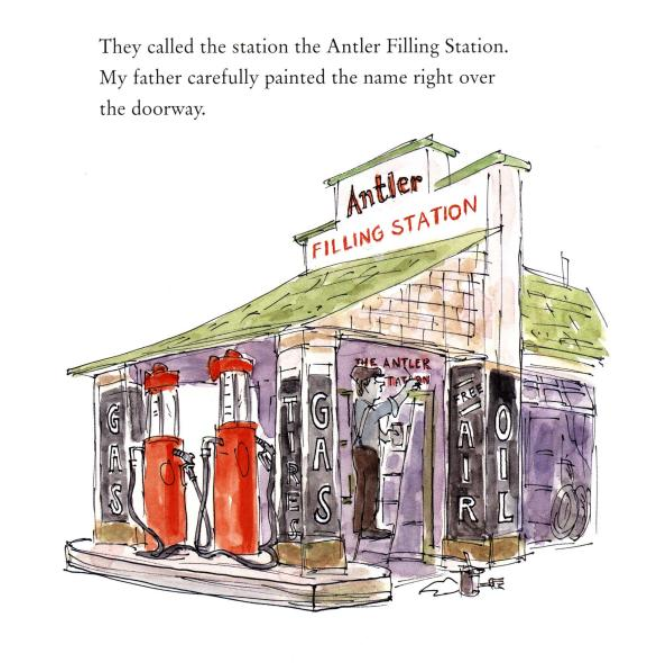
Carol Otis Hurst tells the story of her father, who—even when he was a boy—loved everything to do with rocks. He collected them and in his spare time walked “along stone walls and around old quarries, looking for rocks.” Everyone said “he had rocks in his pockets and rocks in his head,” and he had to agree. When he thought about what he wanted to do when he grew up, he imagined it would have something to do with rocks, and when he was told “‘There’s no money in rocks,’” he was okay with that. In the end, though, he opened a gas station in Springfield, Massachusetts with his father’s help. He called it the Antler Filling Station.
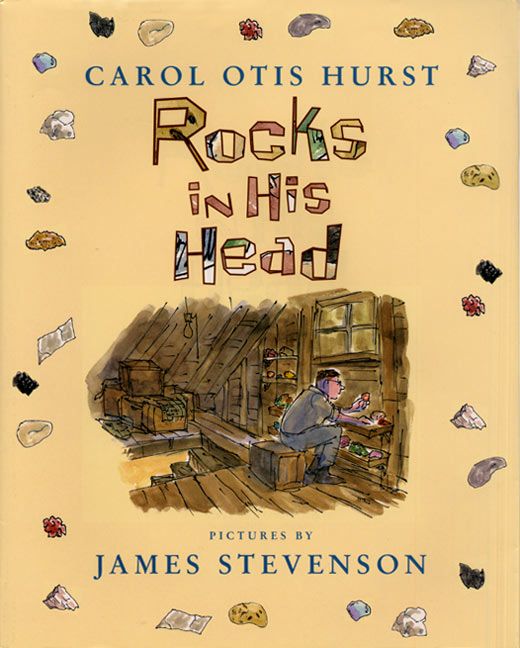
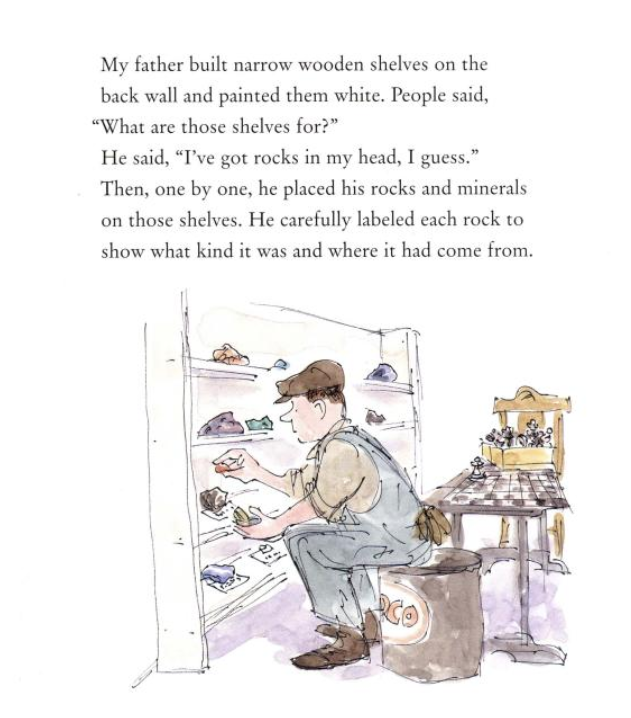
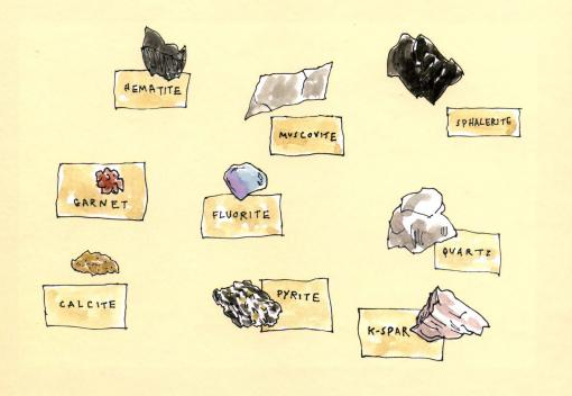
In the back of the filling station, Carol’s father displayed his rock and mineral collection. “He carefully labeled each rock to show what kind it was and where it had come from.” When the Model T automobile came out, more people could afford to buy a car. Carol’s father learned every inch of the Model T by taking it apart and reassembling it many times. He thought that someone who could repair the car and sell spare parts would have a good business, so he began collecting parts for the Model T—so many that “the pile of parts was bigger than the filling station.”

celebrate-picture-books-picture-book-review-rocks-in-his-head-stone-wall

Image copyright James Stevenson, 2001, text copyright Carol Otis Hurst, 2001. Courtesy of Greenwillow Books.

Most people in town said he “had rocks in his head” if he thought he would sell all those parts, but pretty soon drivers were flocking to the Antler Filling Station for gas and fixes to their cars. They also came inside to see the rocks, ask questions, and hear the stories of each rock and gemstone. Then the stock market crashed and people didn’t have the money for gas or to fix their cars. Things slowed down at the Antler, and when things were really slow, Carol, her father, and her friends would pile into their Model T and go searching for more rocks.

But while the collection at the filling station grew, people stopped coming because they were all out looking for jobs. Soon the Antler Filling Station closed and the family had to move to a new house. The house was falling apart, but Carol’s father began repairing it—after building shelves in the attic for his rock collection. When he wasn’t repairing the house, he was studying more about rocks. Along the way, he looked for work, taking any job he could even if they only lasted a day or two.

celebrate-picture-books-picture-book-review-rocks-in-his-head-antler-filling-station

Image copyright James Stevenson, 2001, text copyright Carol Otis Hurst, 2001. Courtesy of Greenwillow Books.

On days when he had no work, Carol’s father went to the Springfield Science Museum, where “they had a whole room full of glass cases containing many rocks. Sometimes he’d spend the whole day in that room.” One day, he met a woman who asked him what he was looking for. He answered “‘I’m looking for rocks that are better than mine.’” Out of the hundreds of rocks in that room, he told her, he’d only found ten, “‘maybe eleven,’” that were better. They smiled at each other.

Then the lady introduced herself as Grace Johnson, the director of the museum. “‘These rocks have come from all over the world,’” she told him, and he said that his had too. She wanted to see his collection, and so they drove out in her big car. Carol’s father showed her up to the attic. After looking around, she told him that while the board of directors wouldn’t allow her to hire him as a mineralogist because he lacked a college degree, she did need a night janitor. When he heard that the job sometimes included cleaning rocks, he took it.

One day, Mrs. Johnson discovered him correcting a label on one of the rocks. She smiled and told him that she had told the board of directors that she needed “‘somebody with rocks in his head and rocks in his pockets.’” Then she asked, “‘Are you it?’ Maybe I am,’” Carol’s father answered. “‘Maybe I am.’” And he was!

celebrate-picture-books-picture-book-review-rocks-in-his-head-antler-filling-station-shelves

Image copyright James Stevenson, 2001, text copyright Carol Otis Hurst, 2001. Courtesy of Greenwillow Books.

Carol Otis Hurst’s lovely and affectionate memoir of her father offers young readers a snapshot of history while introducing them to a man who stayed true to himself and his life-long love of rocks despite obstacles and good-natured jibes by those around him. Hurst’s easy-going, conversational storytelling represents her father well, allowing children to get a feel for his personality and steady outlook on life. His acceptance as a mineralogist (and ultimate position as director of the Springfield Science Museum as told in the author’s bio on the jacket flap) will satisfy readers.

celebrate-picture-books-picture-book-review-rocks-in-his-head-rock-samples

James Stevenson’s familiar watercolor-and-ink illustrations are infused with charm, taking children beside an old stone wall that meanders through the woods, back to old-style filling stations and Model-T cars, and into the heart of a true collector. Images of the author’s father attentively setting up his collection in the filling station and later in the attic will resonate with any young collectors reading the book, and the full-page illustration of Grace Johnson and the author’s father talking and smiling together is happy validation that kindred spirits do cross paths in life.

For children who love collecting, history, museums, and biographies, Rocks in His Head is a delightful choice for home libraries and would make am appealing lead in to science lessons or museum field trips for elementary classrooms.

Ages 4 – 8

Greenwillow Books, 2001 | ISBN 978-0060294038

International Museum Day Activity

CPB - Cookie Jar Museum (2)

Create a Museum Exhibit


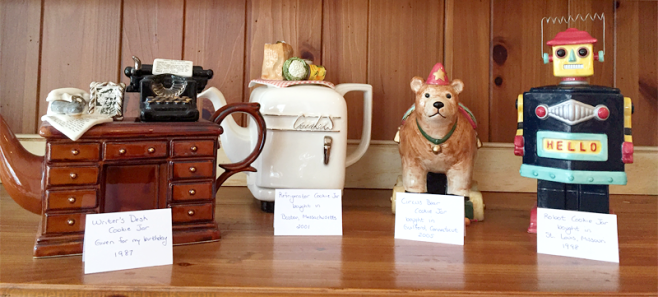
Every item has a story. A fun and educational way for kids to learn family stories and interact with their own history is to create a museum exhibit of objects in your home. Maybe there’s a funny anecdote behind a knick-knack on the shelf. Perhaps the family’s favorite serving dish holds sentimental value. How about your child’s best-loved toys or  drawings or crafts they’ve made? This can be a fun way to spend some time while staying at home and let everyone see common objects in a whole new light.

Supplies

  • A number of household 
  • Paper or index cards
  • Marker, pen, or pencil
  • A table, shelf, or other area for display

Directions

  1. To get started help children gather a number of items from around the house to be the subjects of their exhibit. An exhibit can have a theme, such as Travel Souvenirs, or it can contain random items of your child’s choice, like toys, plants, tools, or artwork.
  2. Using the paper or cards, children can create labels for their exhibit items. Older children can write the labels themselves; younger children may need adult help.
  3. Spend a little time relating the story behind each object: where it came from, how long you’ve had it, and when and how it was used in the past. Include any funny or touching memories attached to the item. Or let your child’s imagination run free, and let them create histories for the objects.
  4. When the labels are finished, arrange the items on a table, shelf, or in a room, and let your child lead family members on a tour. You can even share the exhibit with family and friends on FaceTime, Skype, Zoom, or other app.

Museum Coloring Pages

celebrate-picture-books-picture-book-review-museum-of-modern-art-coloring-page

Museum Coloring Pages


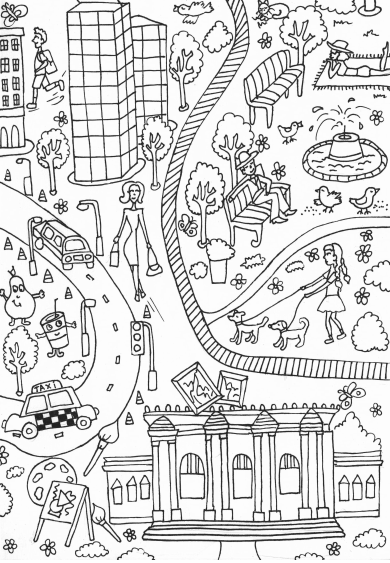
You may not be able to visit a museum in person right now, but you can enjoy three of the most amazing museums in the world with these coloring pages. 

New York’s Metropolitan Museum of Art | London’s British Museum | The Louvre in Paris

celebrate-picture-books-picture-book-review-rocks-in-his-head-cover

You can find Rocks in His Head at these booksellers

Amazon | Barnes & Noble | Books-a-Million

To support your local independent bookstore, order from 

Bookshop | IndieBound

Picture Book Review