July 23 – Gorgeous Grandma Day

celebrate-picture-books-picture-book-review-with-love-grandma-cover

About the Holiday

Today we celebrate grandmothers and give them the praise they deserve! Besides loving and always being there for their grandkids, grandmas are out there working, having fun, exploring new adventures, and sharing it all with family and friends. They’re also the source to go to for family memories and stories of generations past. In short, grandmas are gorgeous inside and out! Children benefit in many ways from having a close relationship with their grandparents. To celebrate today’s holiday, plan an outing or a visit between children and their grandmother. If that isn’t possible, call or write, and it’s always fun to read a book about grandmas—like today’s sweet book!

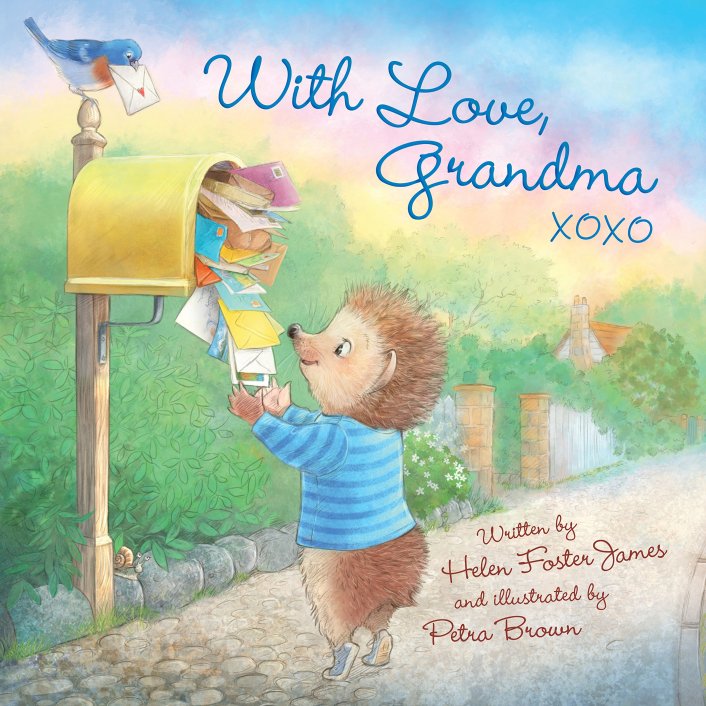
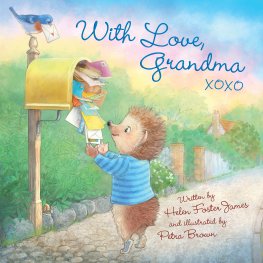
With Love, Grandma

Written by Helen Foster James | Illustrated by Petra Brown


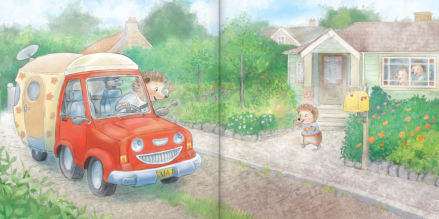
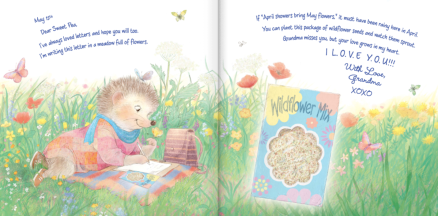
Little Hedgehog waves goodbye to Grandma, who’s off on an adventure. Along the way Grandma writes letters to her grandchild about all the fun she is having and how her experiences remind her of her dearest love. Grandma’s first letter is dated May 15th and addressed Dear Sweat Pea…. She is writing from a meadow of wildflowers and says “Grandma misses you, but your love grows in my heart. She also sends along a packet of wildflowers for her grandchild to plant.

celebrate-picture-books-picture-book-review-with-love-grandma-waving-goodbye

Image copyright Petra Brown, 2018, text copyright Helen Foster James, 2018. Courtesy of Sleeping Bear Press.

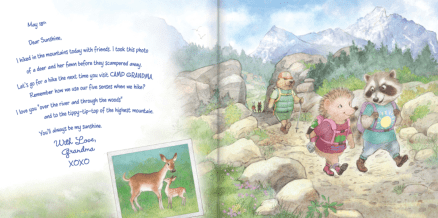
May 18th finds Grandma describing a mountain hike she took with friends, and she includes a picture of a deer and fawn she saw. She suggests that she and her “Sunshine” “go for a hike the next time you visit CAMP GRANDMA. She closes saying, “I love you ‘over the river and through the woods’ and to the tippy-tip-top of the highest mountain.”

It’s June 3rd and Grandma’s writes “Ahoy, Matey!” to tell her little one about her “full-of-fun day” kayaking. She even made a pirate hat complete with feathers to send along with her letter and promises to make one together at CAMP GRANDMA. She signs off, “I’ll always love you to the stars and back. With Love, Grandma XOXO. PS Explore more!”

celebrate-picture-books-picture-book-review-with-love-grandma-meadow

Image copyright Petra Brown, 2018, text copyright Helen Foster James, 2018. Courtesy of Sleeping Bear Press.

“Dear Snickerdoodle,” Grandma writes on June 10, “I was at the beach today.” Making s’mores with her friends reminded her of the time she made them with little Hedgehog. She’s ready to do that again at CAMP GRANDMA and sends a “funny saying, but it’s true. ‘Every day, I LOVE you s’more!’” On June 15th Grandma’s travels are over and she’s back home ready to have her “Dear Cupcake” come to visit. She’s whipping up a batch of cupcakes they can share at CAMP GRANDMA because she and her grandchild “go together like fronting on a cupcake.”  She ends her letter “With Love, Grandma XOXO. PS Grandma loves you!”

As quick as a wink, Little Hedgehog is packed and running up the walkway to CAMP GRANDMA with arms stretched wide to receive Grandma’s loving hug.

Free of personal pronouns and illustrated with gender-neutral clothing, With Love, Grandma XOXO will be embraced by all children. Beautiful, easy-to-follow illustrated directions for making s’mores and a paper pirate hat follow the text.

celebrate-picture-books-picture-book-review-with-love-grandma-hiking

Image copyright Petra Brown, 2018, text copyright Helen Foster James, 2018. Courtesy of Sleeping Bear Press.

Helen Foster James’ story in letters is so adorably charming that young readers will snuggle in to learn about Grandma’s next adventure and her endearing reminders to her grandchild. James’ grandma is energetic, creative, and accomplished, and her independence and zest for life mirrors today’s grandparents. Each page is filled with tons of love and the knowledge that little ones are always in a grandparent’s heart even if or when distance separates them. While sharing encouragement, teachable moments, gentle advice, inside jokes, and favorite activities, Grandma reveals her pride in and devotion to her grandchild. Little listeners will be reminded of their own grandmas and the special bond they have.

Petra Brown’s stunning two-page spreads gorgeously depict Grandma’s adventures—from a wildflower meadow, mountain pass, plein air painting class, and Memorial Day parade to a rambling river, bookstore, and rainy day. Playful snapshots of Grandma and Little Hedgehog laughing and enjoying each other’s company at home are also interspersed among the lovely illustrations. Images of the flower seed packet, photo, postcard, and pirate hat Grandma sends with some letters adds depth and interest to the story.

This tender, warm-hearted book is like a big hug from Grandma on the bookshelf that can be shared again and again. With Love, Grandma makes a joyful gift to or from Grandma—one that will be cherished.

Ages 5 – 7

Sleeping Bear Press, 2018 | ISBN 978-1585369423

Discover more about Helen Foster James and her books on her website.

To learn more about Petra Brown, her books, and her art, visit her website.

Gorgeous Grandma Day Activity

celebrate-picture-books-picture-book-review-world's-best-grandma-certificate

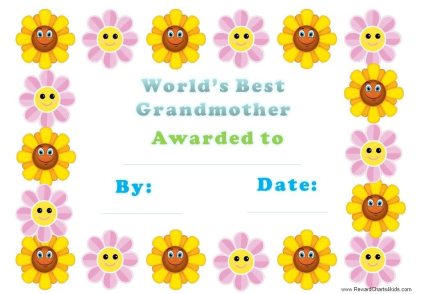
World’s Best Grandmother Certificate

Do you have the world’s best grandmother? Of course you do! Show her how much you love her by giving her this printable certificate!

World’s Best Grandmother Certificate

celebrate-picture-books-picture-book-review-with-love-grandma-cover

You can find With Love, Grandma at these booksellers

Amazon | Barnes & Noble | Books-a-Million | IndieBound

Picture Book Review

July 22 – National Hammock Day

celebrate-picture-books-picture-book-review-tomorrow-most-likely-cover

About the Holiday

Even during the summer when days are supposed to be a bit more leisurely, it’s good to have a reminder to relax. That’s what today’s holiday is all about. While the origination of the hammock is up for debate—some believe it was invented by the Ancient Greeks, while others look to Christoper Columbus’s journals as evidence that it was created by people in South America—there’s no denying that hammocks are the epitome of relaxation. As summer hits its middle stride, why not kick back a little and lounge—and if you don’t have a hammock, a towel at the beach, a lawn chair, or even your most comfy chair indoors will work just fine too! 

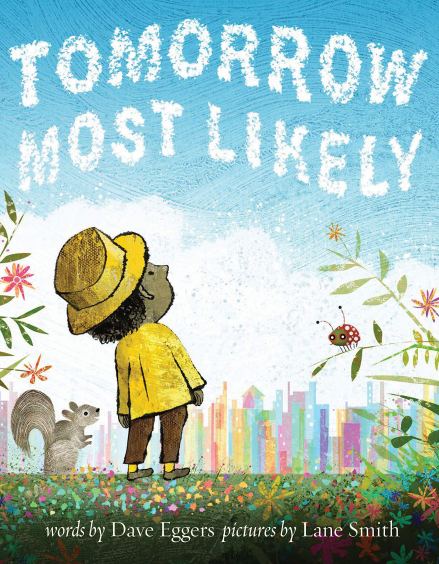
Tomorrow Most Likely

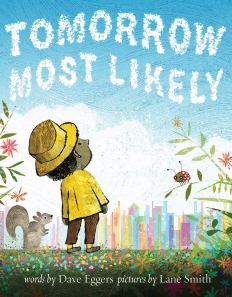
Written by Dave Eggers | Illustrated by Lane Smith


Warm, long summer days lend themselves to quiet contemplation about life right now, what tomorrow might bring, and even how the future will play out. Often thoughts turn to the new and the different and how things will change. But the comfortable routines of each day can anchor kids (and adults) in familiarity and a welcome reassurance, while allowing for a liberating whimsy and imagination that makes all the difference and makes each person unique.

celebrate-picture-books-picture-book-review-tomorrow-most-likely-taxi

Image copyright Lane Smith, 2019, text copyright Dave Eggers, 2019. Courtesy of Chronicle Books.

While it may seem that everything around us is in flux, Eggers reminds us that “Tomorrow most likely / there will be a sky. / And chances are it will be blue.” There aren’t too many days when you won’t see that squirrel, “and chances are his name is Stu.” Tomorrow you will have breakfast or lunch or dinner and then go out “where people are found.”

celebrate-picture-books-picture-book-review-tomorrow-most-likely-whale

Image copyright Lane Smith, 2019, text copyright Dave Eggers, 2019. Courtesy of Chronicle Books.

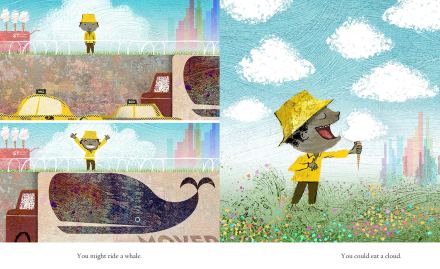
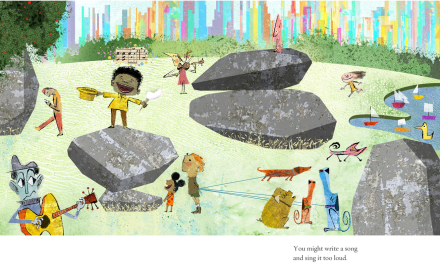
When you are out there, you’ll hear familiar sounds and see awesome sights you’ve seen before. But among these usual things, keep your eyes out for the surprises and your heart open to feelings. The more you do, the more you’ll notice and the more experiences you’ll have. “You might ride a whale. / You could eat a cloud. You might write a song / and sing it too loud.”

So as you are dreaming of what will come next, always remember: “Tomorrow most likely / will be a great day / because you are in it, / and Stu is okay.”

celebrate-picture-books-picture-book-review-tomorrow-most-likely-sing

Image copyright Lane Smith, 2019, text copyright Dave Eggers, 2019. Courtesy of Chronicle Books.

With his exceptional talent for capturing the wonder of the world and giving it a home within the covers of a book, Dave Eggers both reassures and nudges kids to soak up the familiar and the unusual and realize their place in the middle of it all. The specific examples Eggers presents will have readers looking more closely at the small details they come across each day, while the quirkiness of others will spark their imagination.

Echoing Eggers’ text, Lane Smith’s beautifully mottled and textured mixed media, collage-style illustrations are anchored in a city atmosphere while soaring with colorful skyscrapers, active kids, and—especially—the unexpected. Readers will appreciate the clever perspectives and juxtapositions that put the little boy into just the right place to let his unique contributions shine. Sprinkled with musical notes, shop signs, traffic signs, words in various languages, and a few fanciful animals, the pages are a joy to linger over and talk about.

A book that is sure to spur inspired discovery and mindfulness while offering a boost of self-esteem, Tomorrow Most Likely is a sparkling gem of positivity and would be a favorite on home, classroom, and library shelves.

Ages 3 – 7

Chronicle Books, 2019 | ISBN 978-1452172781

Discover more about Dave Eggers and his books for kids and adults on his website.

To learn more about Lane Smith, his books, and his art, visit his website.

National Hammock Day Activity

celebrate-picture-books-picture-book-review-hammock-coloring-page

Just Hanging Around! Coloring Page


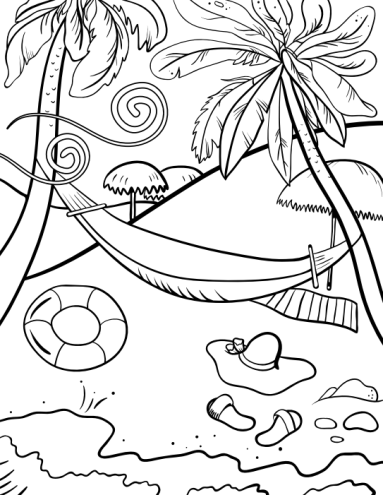
Some days are just for relaxing! Draw yourself in the hammock and then color this printable coloring page.

Just Hanging Around! Coloring Page

celebrate-picture-books-picture-book-review-tomorrow-most-likely-cover

You can find Tomorrow Most Likely at these booksellers

Amazon | Barnes & Noble | Books-a-Million | IndieBound

Picture Book Review


July 17 – National Tattoo Day

celebrate-picture-books-picture-book-review-tell-me-a-tattoo-story-cover

About the Holiday

Celebrating its third anniversary, National Tattoo Day gives us an opportunity to learn about and appreciate this very personal art form. It is believed that tattoos—dating back as far as Ancient Egypt—may have been designed for therapeutic reasons similar to acupuncture. Body art has long been associated with soldiers and sailors and saw a surge in popularity during the American Civil War and during World War II. Today people of all ages and cultures embrace body art as a way of self-expression. As today’s book shows, each tattoo tells its own story.

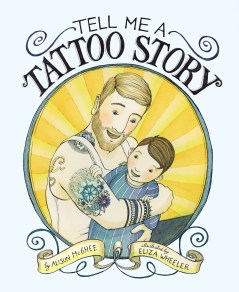
Tell Me a Tattoo Story

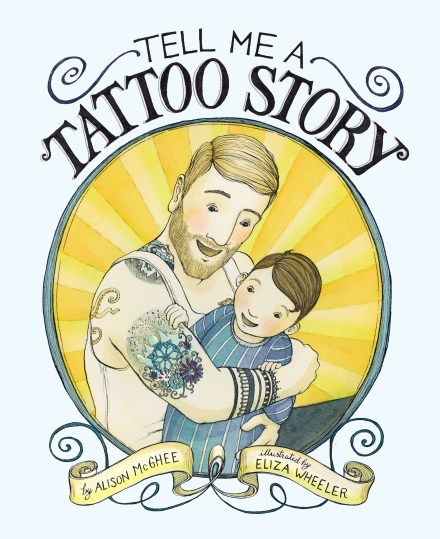
Written by Alison McGhee | Illustrated by Eliza Wheeler


A little boy tugs on his dad’s T-shirt, wanting to see his tattoos—again. His dad sits down with his son and patiently goes through them, like the pages of a favorite book. In fact, the tattoo on his shoulder—a dragon flying above mountain peaks—is from the book his mom read to him in childhood. “Did she read it to him over and over and over? She sure did,” he says.

celebrate-picture-books-picture-book-review-tell-me-a-tattoo-story-interior-art-at-home

Image copyright Eliza Wheeler, 2016, text copyright Alison McGhee, 2016. Courtesy of abramsandchronicle.co.uk.

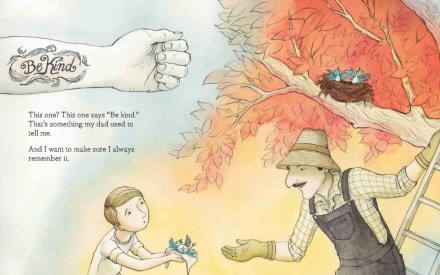
The elaborate design on the dad’s wrist reads “Be Kind,” advice his father used to give him. An intricate depiction of a carnival, complete with a Ferris wheel, fireworks, and flowers reminds him “of the day I met a pretty girl.” His son asks what made the girl so pretty, and his dad responds, “That’s a good question, little man. I’d have to say it was her smile.” In answer to his son’s wondering if he has ever met this girl, Dad looks at his wife and says, “You sure have.”

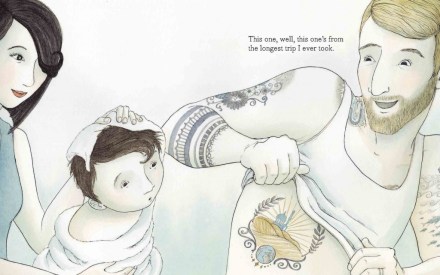
The tattoo picturing a globe and monument that covers the dad’s right side is from “the longest trip I ever took.” He reminisces—“Did I miss home while I was there?”—and confesses, “I sure did.”  The last tattoo the little boy asks about is a small heart festooned with a banner that reads “7● 22 Two Thousand Twelve.” Father and son engage in banter that is most likely familiar to them both, with the boy asking the questions he already knows the answers to but loves to hear again and again: “Those numbers inside it? Just somebody’s birthday, I guess. Whose birthday? / Oh some little man I know, is all. / What do you mean, this one’s your favorite? This dinky little heart?” Then leaning in to learn a secret, the boy rediscovers that that particular tattoo is his dad’s favorite too.

celebrate-picture-books-picture-book-review-tell-me-a-tattoo-story-interior-art-be-kind

Image copyright Eliza Wheeler, 2016, text copyright Alison McGhee, 2016. Courtesy of abramsandchronicle.co.uk.

Alison McGhee’s Tell Me a Tattoo Story is such a sweet, original homage to the love between father and son. The use of body art to reveal not only seminal events in the dad’s life but the trajectory of his child’s birth is inspired. The minimal text highlights the deep emotion, giving the boy in the story as well as young readers the information they are really looking for. The soft-spoken dad is such an appealing character—emotionally available, honest, and offering just the right tone of humorous repartee—for today’s family dynamic.

Beautifully rendering McGhee’s text into art, Eliza Wheeler creates a homey atmosphere that emphasizes the theme of the book while creating tattoos that are immediately accessible to children. The dragon tattoo could come from The Hobbit or Harry Potter, kids will recognize the fun and excitement represented by the Ferris wheel, and the little heart is simplicity at its finest. While the pages depicting the dad’s tattoos are minimally hued, the father’s reminiscences burst with color and details—providing an overall feeling of warmth and affection. The image of the dad in his military uniform over the hot, golden sands on “the longest trip he ever took” will bring a tear to your eye.

celebrate-picture-books-picture-book-review-tell-me-a-tattoo-story-interior-art-longest-trip

Image copyright Eliza Wheeler, 2016, text copyright Aliso McGhee, 2016. Courtesy of abramsandchronicle.co.uk.

The originality of the story and gorgeous illustrations make Tell Me a Tattoo Story a must for children’s bookshelves and will become an often-asked-for read during quiet story times or for bedtime.

Ages Birth – 6

Chronicle Books, 2016 | ISBN 978-1452119373

To discover more books for children and adults by Alison McGhee, visit her website.

To learn more about Eliza Wheeler, her books, and her art, visit her website.

National Tattoo Day Activity

celebrate-picture-books-picture-book-review-design-your-own-tattoo-template

Design Your Own Tattoo


Tattoos can be simple or elaborate, but they are always personal. They tell a story, commemorate an event, or reveal an emotion. What would your tattoo look like? Design your own body art on this printable Design Your Own Tattoo Template!

celebrate-picture-books-picture-book-review-tell-me-a-tattoo-story-cover

You can find Tell Me a Tattoo Story at these booksellers

Amazon | Barnes & Noble | Books-a-Million | IndieBound

July 12 – National Simplicity Day

celebrate-picture-books-picture-book-review-welcome-to-morningtown-cover

About the Holiday

Today’s holiday honors transcendentalist Henry David Thoreau, who was born on this date in 1817 and along with his many other talents and interests advocated for a simplified life. As summer heats up with a full calendar of camps, activities, vacations, work, day trips, and more, take today “off” and just enjoy the simple pleasures around you.

I received a copy of Welcome to Morningtown from Bloomsbury Children’s Books for review consideration. All opinions are my own. I’m also excited to be partnering with Bloomsbury in a giveaway of the book. See details below.

Welcome to Morningtown

Written by Blake Liliane Hellman | Illustrated by Steven Henry


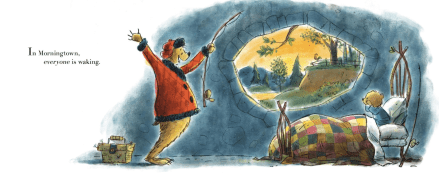
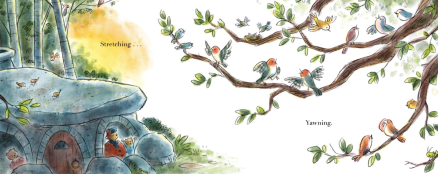
It’s the crack of dawn in Morningtown and “everyone is waking.” A little cub rubs his eyes and sees his dad standing at the foot of his bed, fishing pole in hand, tackle box at the ready. The little tyke yawns and stretches along with the birds in the tree outside his room. Down at the pond, the frogs are “hopping, flopping, splashing awake while the turtles and a beaver enjoying the first cup of the day look on. All over Morningtown the animals, the insects, and even the fish are leaving their beds, brushing their teeth, washing up, and getting dressed.

celebrate-picture-books-picture-book-review-welcome-to-morningtown-waking-up

Image copyright Steven Henry, 2019, text copyright Blake Liliane Hellman, 2019. Courtesy of Bloomsbury Children’s Books.

Next comes breakfast! “Some crunch, some nibble, some sip their morning feast.” Then in houses all around town the windows are opened and the shutters thrown wide. What will the day bring? Perhaps a banjo lesson, a new friend, and chance to help out. The cub dries the breakfast dishes while his mom washes. “Every day’s a surprise, and as the sun rises… busy bees buzz, fun bunnies bounce, and eager beavers slide into the day.” Yes, it’s a busy day in Morningtown. “Everyone is up…except one.” It’s a good thing Mom likes to go fishing too.

celebrate-picture-books-picture-book-review-welcome-to-morningtown-stretching

Image copyright Steven Henry, 2019, text copyright Blake Liliane Hellman, 2019. Courtesy of Bloomsbury Children’s Books.

Blake Liliane Hellman’s lyrical look at morning and all the promise it holds is an enchanting, cheerful way to start the day for little ones—and their adults. As the bear family wakes up in their stone home, the rest of Morningtown’s residents are also rising and greeting the day with all of those little details that go into getting ready to meet the world. Hellman’s evocative verbs, jaunty rhythms, and humorous ending make Welcome to Morningtown a joy to read aloud.

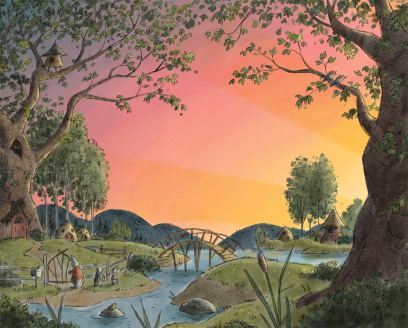
celebrate-picture-books-picture-book-review-welcome-to-morningtown-dawn

Accompanying Hellman’s story are Steven Henry’s beyond adorable forest creatures who populate this peaceful hamlet. The sky glows golden and then softens into a clear, light blue as the animals leave their beds. One snoozing butterfly catches a few more winks on her soft dandelion bed, a tiny turtle enjoys another minute on Mom’s back, and Mr. Mole climbs emerges from his “secret” bed underground while three chirping birds wake a little mountain goat on his snowy ledge. Smiles abound, and readers will find themselves smiling too as they follow the little cub as he gets ready to go fishing with Dad. Henry’s clever details and charming perspectives create a rich and, as the title invites, welcoming community that little ones will want to visit again and again.

To start a little one’s day with enthusiasm for what lies ahead, put them to bed looking forward to tomorrow, or share cuddly down time, the charming Welcome to Morningtown is as sweet as it gets and would be an often-asked-for addition to home, classroom, and public library bookshelves.

Ages 3 – 5

Bloomsbury Children’s Books, 2019 | ISBN 978-1681198736

To learn more about Steven Henry, his books, and his art, visit his website.

National Simplicity Day Activity

celebrate-picture-books-picture-book-review-pancake-game-four-edited

Pancake Flip-Out


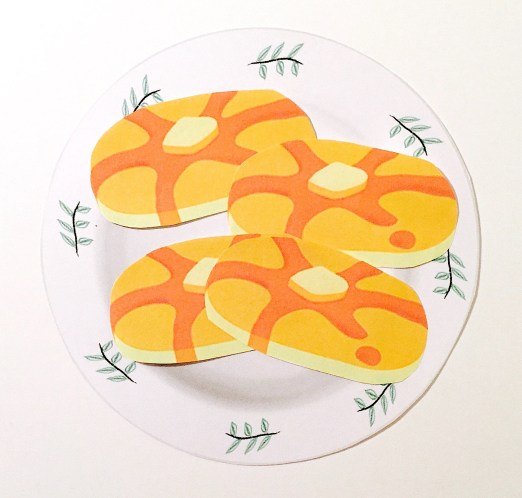
Pancakes are served in a stack because they’re so delicious each one doesn’t last long! This game gives you the chance to see how many pancakes you can flip onto a plate! You can play this game several ways:

To Play Pancake Toss

  1. Give each player the same number of pancakes and see how many they can toss onto the plate during their turn
  2. Make a target with the plate in the middle and draw 3 concentric circles around it. Hitting the target can earn you 20 points. Getting your pancake in the first circle around the plate earns you 15 point, the second circle is worth 10 points, and the third is worth 5 points. Rotate through the players as many times as you like and add up the points at the end. The player with the most points wins!
  3. Instead of tossing the pancakes with your hands, try throwing them with a spatula!
  4. Make up your own rules—and have fun!

To Play With Dice

  1. Choose a number of pancakes that each player must add to their plate—say, maybe, a baker’s dozen.
  2. Take turns rolling the dice and adding the number of pancakes rolled to the plate. The first player to reach the agreed-upon number is the winner.

Supplies

Directions

  1. Print enough copies of the Pancakes and Breakfast Plates for the game you choose and cut them out. Playing pieces can be printed on card stock or on paper. 
  2. If printing on paper, you can glue the pancakes and plate to poster board, cardboard, or foam to give the pancakes more weight for throwing and the plate more support
  3. Once dry, the game pieces are ready for fun!

celebrate-picture-books-picture-book-review-welcome-to-morningtown-cover

You can find Welcome to Morningtown at these booksellers

Amazon | Barnes & Noble | Books-a-Million | IndieBound

Picture Book Review


July 7 -World Chocolate Day

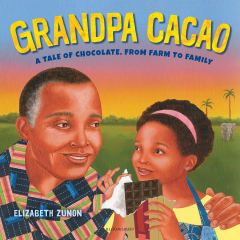
celebrate-picture-books-picture-book-review-grandpa-cacao-cover

About the Holiday

The purpose of World Chocolate Day is simple! Most likely instituted to celebrate the introduction of chocolate to Europe on July 7, 1550, the day gives people everywhere the perfect excuse to indulge in this favorite flavor sensation. You know what to do! Bake some brownies, order a double scoop of your favorite chocolate-based ice cream, make a chocolate cake (with chocolate frosting, of course), or whip up a batch of chocolate chocolate chip cookies, and enjoy!

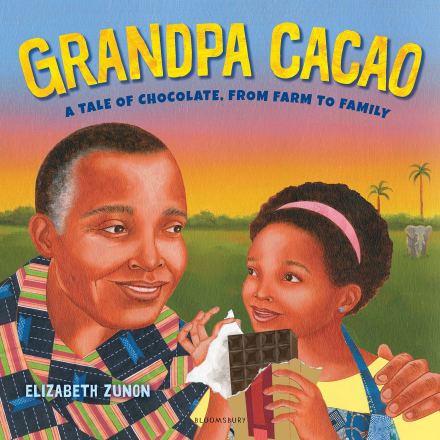
Grandpa Cocoa: A Tale of Chocolate, from Farm to Family

By Elizabeth Zunon


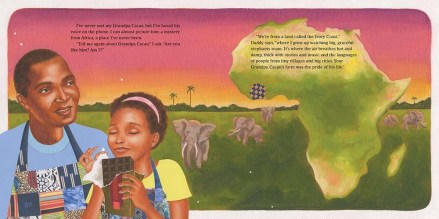
It’s a little girl’s birthday, and she and her daddy are making her “family’s special celebration cake” while her mom “goes to pick up another treat.” While they bake, the girl’s father reminds her that “‘chocolate is a gift to you from Grandpa Cacao.” The girl has never met her grandfather since he lives in Africa and she wonders if she is like him. Her father begins to tell her the story of his growing up on her Grandpa Cacao’s Ivory Coast farm.

celebrate-picture-books-picture-book-review-grandpa-cacao-africa

Copyright Elizabeth Zunon, 2019, courtesy of Bloomsbury Children’s Books.

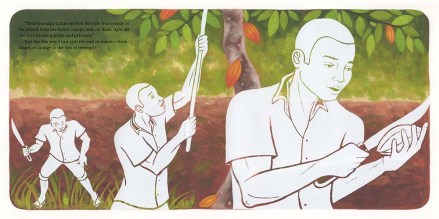
As they add flour to the bowl, Daddy explains how her grandfather knew just when the fruit was ripe for picking. “Just like the way I can spot the end of summer from tinges of orange at the tips of treetops,” the girl thinks. Then, her father goes on, Grandpa Cacao expertly sliced the pods without damaging any of the beans inside. “‘Did you ever help?’” the girl asks as they melt the chocolate and butter for the cake. Her daddy says that everyone in the village worked together and that when he turned seven, he was allowed to help but only after he’d finished his homework and chores.

The white beans were put into pits lined with banana leaves and stirred periodically until they became light brown. Then they were moved to a cement floor to dry in the sun. The beans had to be taken in each night, and when storms came the beans had to be covered. The girl imagines her grandpa could smell the rain coming the way she could “smell a cold day.”

celebrate-picture-books-picture-book-review-grandpa-cacao-ripe-fruit

Copyright Elizabeth Zunon, 2019, courtesy of Bloomsbury Children’s Books.

While they crack and add the eggs, the girl’s father tells her how the beans sounded and tasted when they were ready to sell. The story is making her hungry, and she wonders what Mommy could be bringing home. When he was older, Daddy says, he helped bag the beans to sell to the cacao buyers, who would send them to factories to be made into chocolate. With the money from the cacao beans, they bought “food, school supplies, uniforms, books, and fabric to have out special occasion clothes made.”

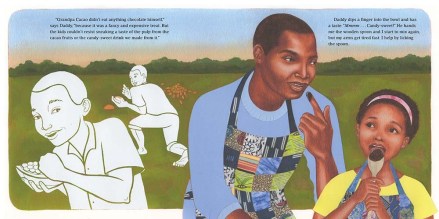
The cake batter is ready to pour into the pan, and she carries the big bowl to her daddy. She reminds him of Grandpa Cacao carrying a big basket of cacao pods. The thought makes them both smile. Then the girl’s thoughts return to what her mother is bringing home. Perhaps it’s a new dress or the puppy she wants. Daddy dips his finger in the chocolate batter and the girls licks the spoon. It makes him think of how he and the other kids snuck tastes “of the pulp from the cacao fruits or the candy-sweet drink” they made.

celebrate-picture-books-picture-book-review-grandpa-cacao-chocolate

Copyright Elizabeth Zunon, 2019, courtesy of Bloomsbury Children’s Books.

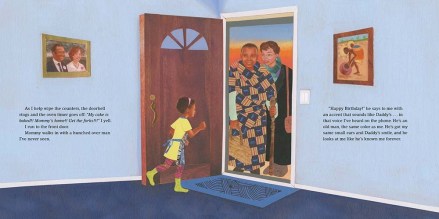
Baking in the oven, the cake smells delicious. Just as the timer rings, the doorbell chimes. When the girl opens it, she sees her mommy with an older man she’s never seen before. “‘Happy Birthday!’” he says, and the girl recognizes his voice from their phone calls. He hugs her and then gives her a big orange pod. It’s her birthday present, he tells her. But being with her Grandpa Cacao is “the best birthday present ever in the world.”

An Author’s Note following the text describes Elizabeth Zunon’s childhood in Abidjan, the realities of the cacao trade and Fair Trade products and a bit about how the illustrations were created. There are also brief discussions on the science and history of chocolate as well as a page on how cacao goes from bean to treat. Bakers will also be pleased to see the recipe for the special Chocolate Celebration Cake made in the story.

celebrate-picture-books-picture-book-review-grandpa-cacao-birthday

Copyright Elizabeth Zunon, 2019, courtesy of Bloomsbury Children’s Books.

Elizabeth Zunon’s celebration of family and pride in one’s heritage is a compelling read that shines with a strong father – daughter relationship, shared memories, and the joys of working together. The warmth shared by the girl and her daddy is evident as she revels in hearing the story of Grandpa Cacao and identifying with him even though he lives far away. Zunon’s smooth delivery of Grandpa Cacao and Daddy’s story imparts fascinating details of how cacao is grown, harvested, and prepared for sale. While the little girl may wish for a new dress or a puppy, she is happier with the surprise of meeting her grandfather at last.

Zunon’s mixed-media, collage style illustrations beautifully meld the world inside the family kitchen with the girl’s imagining of life in Africa on Grandpa Cacao’s farm. The opaque screen-printed images of Grandpa Cacao, the girl’s father as a child and young man, and the other villagers, are powerful reminders to readers that their family and family history is always with them and supporting them.

A unique book to share during family story time, in the classroom, or during a library program, Grandpa Cacao: A Tale of Chocolate, from Farm to Family would be a much-loved addition to home, school, and public library collections. And don’t forget to include cake!

Ages 3 – 8

Bloomsbury Children’s Books, 2019 | ISBN 978-1681196404

Discover more about Elizabeth Zunon, her books, and her art on her website.

World Chocolate Day Activity

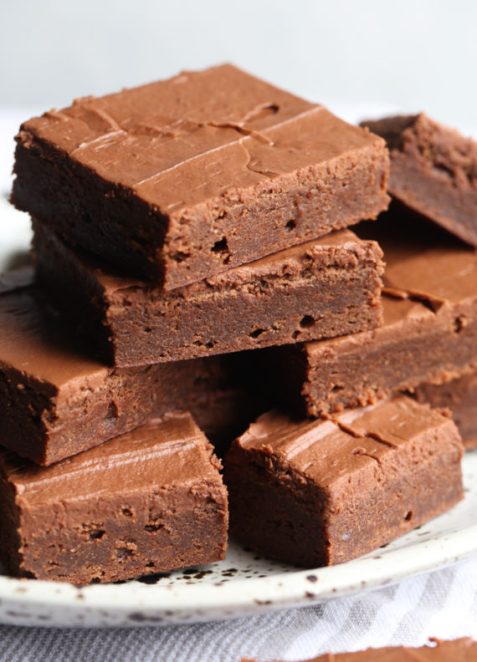
cookies-and-cups-my-kids-favorite-brownies-recipe-picture

My Kids’ Favorite Brownies from Cookies & Cups, copyright Shelly Jaronsky, January 29, 2019. Courtesy of cookies&cups.com.

Cookies & Cups My Kids’ Favorite Brownies


If you’re looking for a scrumptious chocolatey brownie that melts in your mouth, look no further than Shelly Jaronsky’s My Kids’ Favorite Brownies recipe on Cookies & Cups. While you’re there, you’ll want to look around at all of Shelly’s delicious recipes! 

celebrate-picture-books-picture-book-review-grandpa-cacao-cover

You can find Grandpa Cocoa: A Tale of Chocolate, from Farm to Family at these booksellers

Amazon | Barnes & Noble | Books-a-Million | IndieBound

Picture Book Review

June 25 – It’s National Oceans Month

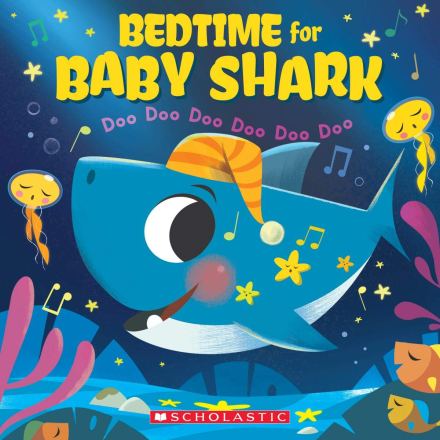
celebrate-picture-books-picture-book-review-bedtime-for-baby-shark-cover

About the Holiday

The world’s oceans offer beauty, resources, and mystery. This month we celebrate these vast wonders while committing ourselves to their preservation. We also remember the communities that rely on the oceans for economic stability as well as the men and women who work to protect the oceans and their unique creatures.

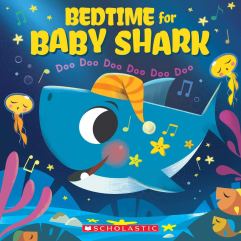
Bedtime for Baby Shark: Doo Doo Doo Doo Doo Doo

Illustrated by John John Bajet


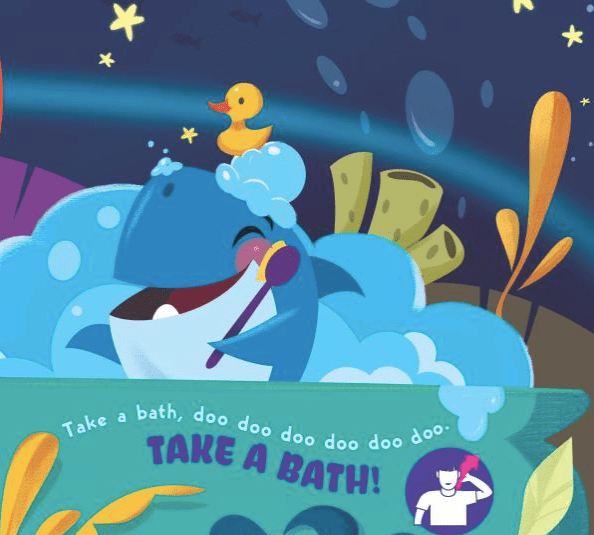
Who doesn’t love Baby Shark with his big smile, bright eyes, and vivacious personality? Baby Shark could play all day—and night—long, and so could his many friends. But everyone needs a good night’s sleep! Just how do you get a little one off to bed? Fortunately, Mama Shark’s there to show him how to brush his teeth…well…tooth, and Daddy Shark helps him “take a bath, doo doo doo doo doo doo. / take a bath, doo doo doo doo doo doo. / take a bath, doo doo doo doo doo doo. / Take a bath!”

celebrate-picture-books-picture-book-review-bedtime-for-baby-shark-bath

Image copyright John John Bajet, 2019. Courtesy of Scholastic, Inc.

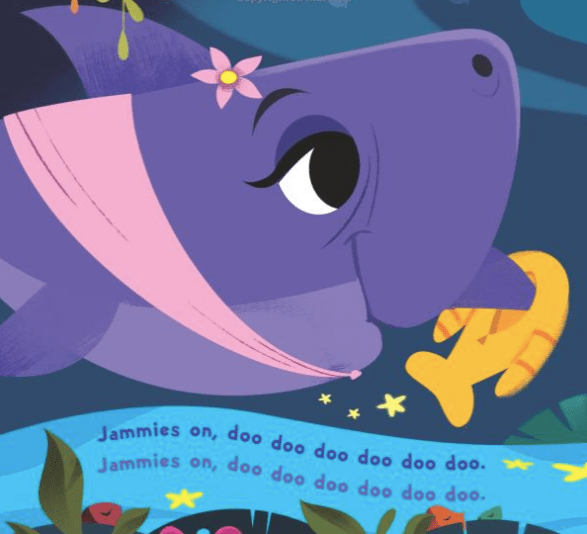
When Baby Shark is all clean and wet Grandma Shark hands him his cozy jammies, and then it’s time for Grandpa Shark to “read a book doo doo doo doo doo doo. / read a book doo doo doo doo doo doo. / read a book doo doo doo doo doo doo. / Read a book!” When Grandpa closes the book, he turns out the nightlight and the family swims quietly out of his room.

But Baby Shark isn’t tired. He tosses and turns and finally swims out of bed to “run and hide.” Who shows up to stop him? It’s Great White Shark! He waggles his fin and tells Baby Shark, “No more tricks, doo doo doo doo doo doo. / No more tricks, doo doo doo doo doo doo. / No more tricks, doo doo doo doo doo doo. / No more tricks!” Obediently, Baby Shark climbs back into bed. Then with a kiss from Mama Shark, he’s “all tucked in,” and he drifts “off to sleep.”

celebrate-picture-books-picture-book-review-bedtime-for-baby-shark-grandma-shark

Image copyright John John Bajet, 2019. Courtesy of Scholastic, Inc.

Each verse of the story is accompanied by hand motions that make this book a perfect interactive story time favorite.

Little ones who can’t get enough of Baby Shark and his humorous antics will love going to bed (or delaying it a bit) with Baby Shark, his family, and even Great White Shark who shows up just in time to add a giggle or two to this extended story line of the favorite song. Illustrated in vibrant color by John John Bajet, the pages will capture young readers’ attention with up-close encounters with these beloved characters. Touches of humor highlight the action as Baby Shark brushes his one nubby tooth, Daddy Shark sports a shower cap while giving his baby a bath, and Baby Shark pretends to be asleep with one eye open. Befitting his place in the underwater world, Great White Shark spans two pages and will awe kids. As the whole family gathers to say a final goodnight to Baby Shark, little readers should be ready for sweet dreams too.

A sweet sequel to Baby Shark, Bedtime for Baby Shark: Doo Doo Doo Doo Doo Doo is sure to spark giggle-filled fun for kids and adults be a much-asked-for addition to home bookshelves.

Ages 3 – 5

Cartwheel Books, 2019 | ISBN 978-1338588989

To learn more about John John Bajet, his books, and his art, visit his website.

You can find printable activity sheets and a guide to the Baby Shark Bedtime Dance on the Scholastic website.

National Oceans Month Activity

celebrate-picture-books-picture-book-review-bedtime-for-baby-shark-scholastic-coloring-page-activity

Baby Shark Activity Pages


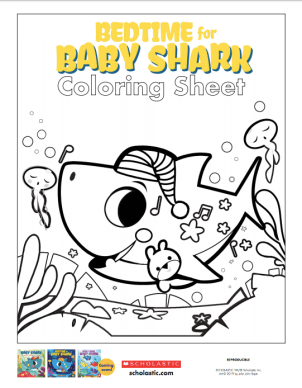
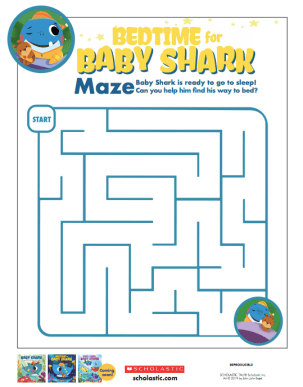
Baby Shark loves to play! He even has two printable activity pages for kids to enjoy! Download the Baby Shark Coloring Sheet and Maze from Scholastic and have some fun!

celebrate-picture-books-picture-book-review-bedtime-for-baby-shark-scholastic-coloring-page-activity

Baby Shark in His Jammies Coloring Page 

celebrate-picture-books-picture-book-review-bedtime-for-baby-shark-maze-activity

 Baby Shark Bedtime Maze

celebrate-picture-books-picture-book-review-bedtime-for-baby-shark-cover

You can find Bedtime for Baby Shark: Doo Doo Doo Doo Doo Doo at these booksellers

Amazon | Barnes & Noble | Books-a-Million | IndieBound

Picture Book Review


June 21 – World Giraffe Day & Interview with Author Monica Bond, Illustrator Kayla Harren, and Educator David Brown

celebrate-picture-books-picture-book-review-juma-the-giraffe-cover

About the Holiday

Today’s holiday, established by the Giraffe Conservation Foundation, celebrates the animal with the longest neck on the longest day or night of the year, depending on which hemisphere you live in. The purpose of World Giraffe Day is to honor these majestic animals while also promote awareness of the dangers and threats they face. Events supporting these gentle giants are held around the world at zoos and conservation organizations as well as by governments, institutions, and companies involved in education about and protection of the giraffe. To celebrate today, learn more about these animals, visit a zoo or wildlife refuge, or consider donating to the cause of giraffe conservation. To learn more visit the Giraffe Conservation Foundation website.

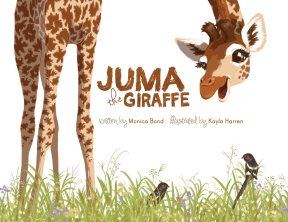
Juma the Giraffe

Written by Monica Bond | Illustrated by Kayla Harren


Juma, a baby giraffe, loved to play with his friends Upendo and Rafiki on the African safari while their mothers watched. “Upendo likes to explore new places” while “Rafiki jokes and makes everyone laugh with his silly faces. Juma is kind and generous.” With his long neck, he’s able to reach the sweet acacia leaves to share with the dik-diks. One day, though, while the giraffes were at the water hole, Juma caught a glimpse of his reflection.

celebrate-picture-books-picture-book-review-juma-the-giraffe-juma-and-dik-diks

Image copyright Kayla Harren, 2016, text copyright Monica Bond, 2016. Courtesy of Kayla Harren and Wild Nature Institute.

Looking at himself alongside all the other giraffes, he realized that they all looked the same. “And because they all looked alike, he felt he wasn’t special.” His mama noticed Juma standing alone and sad and asked him what was wrong. He told her that he wished he “looked different from everyone else.”

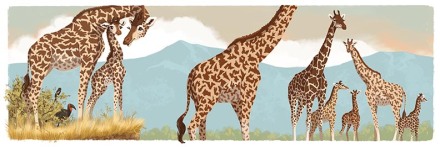
Juma’s mama gazed at her child lovingly and told him how special giraffes are. “‘There is no other animal in the whole world like us,’” she said. Then she gently reminded him how his long legs and neck help him get food, how his thick tongue and lips protect him from the thorns of the acacia trees, and how his “‘swishy tail sweep away the pesky flies that like to bite us.’” Their brown spots camouflaged them from lions and hyenas.
celebrate-picture-books-picture-book-review-juma-the-giraffe-herd

Image copyright Kayla Harren, 2016, text copyright Monica Bond, 2016. Courtesy of Kayla Harren and Wild Nature Institute.

Then Mama asked Juma to look closely at his spots and notice that “‘each spot is different from the others and every giraffe has a unique pattern of spots.’” Juma saw that Mama was right. He saw one spot “shaped like a star and another like a flower.” Mama’s spots were different too, and so were Upendo’s and Rafiki’s. Mama reassured Juma that each giraffe was unique outside and inside.

Juma was happy and continued to notice other ways that each giraffe was different, including their various personalities. Then Mama nuzzled her little one and told him that to her he was the “‘most special giraffe of all’” because he was her baby and she loved him.

Fascinating facts about the anatomy of giraffes, newborn giraffes, and where giraffes live follow the text.

celebrate-picture-books-picture-book-review-juma-the-giraffe-juma-and-panorama

Image copyright Kayla Harren, 2016, text copyright Monica Bond, 2016. Courtesy of Kayla Harren and Wild Nature Institute.

Young readers who are at that stage where they wonder about how they are different from other kids and how they fit into their community will find loving reassurance in Monica Bond’s touching story even as they learn about a giraffe’s distinctive features. The sweet relationship between Juma and Mama, depicted through tender dialogue, will charm little ones. A welcome exchange comes when Mama points out Juma’s unique features and the little giraffe enthusiastically adds more observations of his own. Just as Juma does, young readers will see that they too are special in their own way.

As readers open the cover, Kayla Harren’s stunning panoramic view of the verdant African savanna places them close to zebras, an ostrich, a greater kudu, a grey crowned crane, a stalwart warthog, a family of mongoose, and a herd of elephants. Smiling out from the page is little Juma. As the story progresses, Mama spotlights each of Juma’s attributes, and readers see how he uses them. A shimmering two-page spread of the giraffes lined up at the watering hole and the close-up on the next page will awe kids and adults. Images of smaller animals hiding in rock crevices and big cats and monkeys resting on tree limbs will entice readers to learn more about these creatures. As Mama nuzzles Juma on the book’s final page, adults and little ones are sure to find time to cuddle too.

A sweet story that gives parents, teachers, and other caregivers a way to show the children in their life how special they are, Juma the Giraffe would be an often-asked for addition to home, classroom, and public library bookshelves.

Ages 4 – 8

Wild Nature Institute, 2016 | ISBN 978-0989818292

Learn more about Juma the Giraffe and find videos and teachers resources here.

You can connect with Kayla Harren on

Her website | Facebook | Instagram

celebrate-picture-books-picture-book-review-helping-brother-rinoceros-cover

Helping Brother Rhinoceros

Written by Monica Bond | Illustrated by Kayla Harren


Brother Rhinoceros and his friend Father Oxpecker went to the waterhole to cool off on a blazing hot day. When they got there, they saw “that most of the water had dried up, leaving a big patch of gooey, sticky mud.” But Brother Rhinoceros lied down in the cool mud anyway and pronounced it “‘Perfect!’” Then Father Oxpecker nestled in behind Brother Rhinoceros’s ear, folded his wings, and the two drifted off to sleep.

celebrate-picture-books-picture-book-review-helping-brother-rhinoceros-rhino

Image copyright Kayla Harren, 2018, text copyright Monica Bond, 2018. Courtesy of Kayla Harren and Wild Nature Institute.

Brother Rhinoceros woke up hungry, but when he tried to leave the waterhole, he discovered that he was stuck in the mud. Father Oxpecker flew off to find help. First he brought back Sister Vervet Monkey, who was good at tying. “She ran around the mud patch looking for something to tie together that might help Brother Rhinoceros. But there was nothing.”

Next, Father Oxpecker brought Grandfather Giraffe, who thought his height could help, but he didn’t know exactly how. So, the bird flew off again in search of someone else. This time he came back with Grandmother Spider, who “produced a delicate thread of beautiful silk from her abdomen. It fluttered in the breeze, of no help whatsoever to Brother Rhinoceros.”

celebrate-picture-books-picture-book-review-helping-brother-rhinoceros-monkey

Image copyright Kayla Harren, 2018, text copyright Monica Bond, 2018. Courtesy of Kayla Harren and Wild Nature Institute.

Father Oxpecker left once again and returned with Mother Elephant. Although she was big and strong, she could only watch from the sidelines. Last, Father Oxpecker found Brother Weaverbird, who declared that he could “weave anything” if only there was something to weave. All of the animals sat nearby wondering what they could do. “They were all so proud of the things they could do, but none of them could help Brother Rhinoceros out of the mud.”

It was Grandmother Spider who suggested that they combine their talents and work as a team. She began by “spinning long streams of silk.” Brother Weaverbird braided “the silk into a long, strong rope.” Sister Vervet Monkey tied the rope around Brother Rhinoceros, using Grandfather Giraffe’s long neck as a bridge to reach him. Then it was Mother Elephant’s turn. She grabbed the rope, “took a deep breath and began to pull.”

celebrate-picture-books-picture-book-review-helping-brother-rhinoceros-oxpecker

Image copyright Kayla Harren, 2018, text copyright Monica Bond, 2018. Courtesy of Kayla Harren and Wild Nature Institute.

Brother Rhinoceros helped push. “Finally, with a big squishy sound, Brother Rhinoceros lifted his body up out of the mud.” He was free! His friends cheered. Brother Rhinoceros thanked each one individually for their special skills that helped to save him. “They certainly made a great team and the best friends a muddy rhinoceros could ever have.”

Back matter reveals facts about Africa’s black and white rhinoceros. A map of Africa shows the historical range and the much smaller current range for each type of rhino.

celebrate-picture-books-picture-book-review-helping-brother-rhinoceros-giraffe

Image copyright Kayla Harren, 2018, text copyright Monica Bond, 2018. Courtesy of Kayla Harren and Wild Nature Institute.

With the lyricism of a fable, Monica Bond weaves a story about individuality and teamwork and how every person has the ability to help others. As Father Oxpecker flies off again and again searching for just the right animal to help, readers will enjoy the suspense and learning each animal’s special ability. When Grandmother Spider suggests they all work together, kids will see that by combining their talents with friends and classmates, they can move mountains. The format of the story makes it a multi-layered choice for teaching the elements of a story, prediction, and comprehension.

Kayla Harren’s sun-drenched pages are bathed not only in the heat of a hot African day but in the warmth of friendship these animals share. Harren’s beautifully textured and realistic depictions of the animals and the surrounding savanna will inspire awe and an enthusiastic desire in kids to learn more about the animals, insects, and birds in the story.

A perfect book for social studies, science, and reading classes and for kids who love nature and animals, Helping Brother Rhinoceros makes an excellent choice for home, classroom, and public libraries.

Ages 5 – 10

Wild Nature Institute, 2018 | ISBN 978-1732323414
celebrate-picture-books-picture-book-review-our-elephant-neighbors-cover

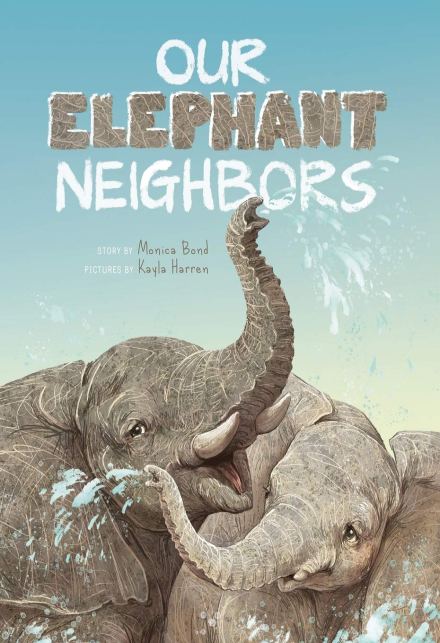
Our Elephant Neighbors

Written by Monica Bond | Illustrated by Kayla Harren


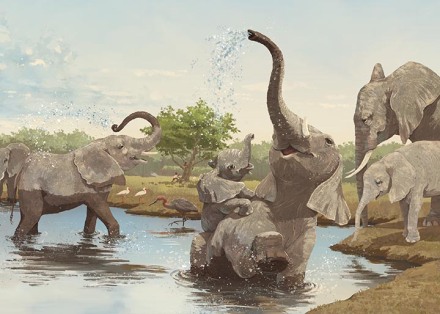
Robert and his little sister Mary live on their family’s small farm in Tanzania. There are cattle and goats, which Robert helps watch while Mary helps her mother wash clothes and cook. Sometimes they went to the waterhole to get water. “They splash each other with cool water on hot days.” One day, when it was very hot, they saw something amazing at the waterhole. A family of elephants was enjoying the cool water too. “Robert and Mary climbed up a nearby tree to watch and wait for the elephants to leave.”
celebrate-picture-books-picture-book-review-our-elephant-neighbors-splashing

Image copyright Kayla Harren, 2017, text copyright Monica Bond, 2017. Courtesy of Kayla Harren and Wild Nature Institute.

Soon, two elephants came to stand in the shade of the tree, right under the branch where the two children sat. “The elephants looked up and saw Robert and Mary.” They had been taught to fear people. Nervous, they backed up a few steps. Robert and Mary had been taught to fear elephants, and Mary hid behind her brother. The bigger elephant, Tomas, introduced himself and his little sister, Teresa. Robert introduced himself and Mary.

“Robert looked thoughtfully at the elephants below. ‘You are an elephant, and elephants can hurt people,’ Robert pointed out.” Tomas replied, “‘Well, you are a human, and humans can hurt elephants too.’” Even though Mary knew she should be afraid, she liked the elephants. She reached down and touched Teresa’s upturned trunk. Mary said that she could pick things up with her fingers, and Teresa showed her how she could pick things up with her trunk.

celebrate-picture-books-picture-book-review-our-elephant-neighbors-meeting

Image copyright Kayla Harren, 2017, text copyright Monica Bond, 2017. Courtesy of Kayla Harren and Wild Nature Institute.

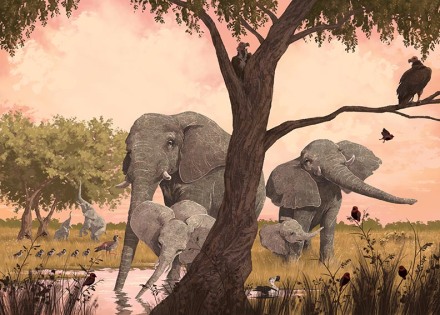
The elephants and the children talked back and forth about all of their similarities. They were even the same ages. They talked about how all the aunties help out when a baby person and a baby elephant are born, how the mothers, grandmothers, and aunts in both human and elephant families teach the children important lessons and protect them, and how all the members of a both families feel sad when another member dies.

When they talked about the food they liked, Robert said that his “‘father gets angry when elephants eat” the vegetables in their garden.’ Then Tomas told Robert and Mary a secret.” He said that “all elephants hate chili pepper powder” and if they hung chili pepper powder on their fences, it would keep the elephants away. One reason elephants were eating from people’s gardens, Tomas said, was because their habitat was getting smaller as people planted more and more farms. Also “more and more of their family members are being hurt by people, because the elephants have fewer places to go.”
celebrate-picture-books-picture-book-review-our-elephant-neighbors-elephant-family

Image copyright Kayla Harren, 2017, text copyright Monica Bond, 2017. Courtesy of Kayla Harren and Wild Nature Institute.

Robert promised Tomas that when he grew up and had a farm of his own, he would build it where it would not disturb the elephants. He also promised to report anyone who tried to hurt the elephants. Soon it was time for Robert and Mary to get back home with the water, and Tomas and Teresa heard their mother calling for them. “They shook hands and trunks” and hoped they would see each other again. They knew “they would never forget their new friends from the waterhole.”

Interesting facts about African elephants follows the text.

celebrate-picture-books-picture-book-review-our-elephant-neighbors-fetching-water

Image copyright Kayla Harren, 2017, text copyright Monica Bond, 2017. Courtesy of Kayla Harren and Wild Nature Institute.

Through Monica Bond’s charming story of a sister-brother pair and their elephant counterparts, young readers learn surprising ways in which they and elephants are alike. With similar abilities, family units, and even feelings, people and elephants should be friends, but too often they come into conflict, and the result has been a decrease in the elephant population and at times danger for humans as well. As the adorable Robert and Mary talk with Tomas and Teresa, Bond’s enchanting storytelling and realistic dialogue, draw in children, giving them even more reasons to love these popular animals. A major take-away is how people can protect and care for these gentle and intelligent animals and their habitats now and in the future.

Against gorgeous backdrops of Tanzania and its savanna, forests, and mountains, Kayla Harren depicts one family’s simple farm and a family of elephants enjoying a day at the nearby waterhole. At nine and five years old, Robert and Mary will steal readers’ hearts with their infectious smiles, sweet sibling relationship, and enthusiastic interactions with elephants Tomas and Teresa. Harren juxtaposes illustrations of the elephants’ family with those of Robert and Mary’s family in similar situations, showing readers how alike we really are. The pages are washed in soft-blue skies and glowing peach-hued sunsets, as realistic portrayals of the elephants, birds, and other animals create detailed and awe-inspiring panoramas.

Our Elephant Neighbors is an excellent addition to home, classroom, and public libraries to further understanding of elephants, conservation, and nature.

Ages 4 – 8

Wild Nature Institute, 2017 | ISBN 978-1732323407

celebrate-picture-books-picture-book-review-natures-giants-magazine-cover

Nature’s Giants Magazine

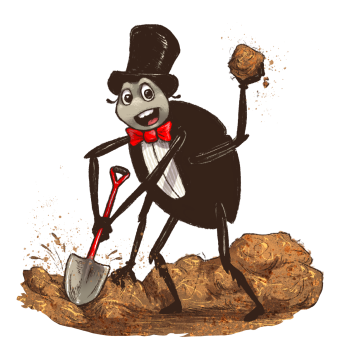
In this new magazine from the Wild Nature Institute, an enthusiastic dung beetle named Doug invites kids to learn about animal and plant giants of the African savanna through articles, games, crafts, and other activities that will keep them busy having fun and learning for a long time. Let’s get rolling and see what’s inside! Kids love finding stuff and right on the first pages they’re prompted to spot five differences on two identical (?) giraffes and search the pages for five beetles to see which one will would win a beetle race.

Along the way kids will enjoy:

Comics:

  • Doug engages kids in funny and interesting banter about the dung beetle’s ecological importance, including facts on their very, very long family history, three different dung beetle lifestyles, how dung beetles roll their dung balls in a straight line, and various job sites where dung beetles do their work.

Articles:

  • Ele-Fence!: About new ways farmers are protecting their crops from elephant raiders without engaging in Human-Elephant Conflict
  • Lions vs. Giraffes: About ways scientists use scars found on giraffes to study predation
  • Black Mambas: about the women rangers who patrol the Balule Nature Preserve to stop poaching of black and white rhinoceros and who teach environmental education programs in local schools. Since the group was formed “poaching of all species has decreased by 79%.”
  • Barking up the Right Tree: about the beautiful, sprawling baobab trees.
  • Infographic: on elephants, giraffes, termites and a surprising fact about biomass

celebrate-picture-books-nature's-giants-inside-layout

Activities:

  • Ideas for backyard or neighborhood science exploration
  • A savanna word search puzzle
  • An illustrated search-and-find animal puzzle
  • Craft instructions for making an Insect Hotel and an African Savana Scene
  • Jokes
  • A maze
  • How to draw an elephant, a giraffe, and a rhinoceros
  • A Giant Birds coloring page

Meet the Team Behind the Books and Magazine

I’m excited to have an opportunity to talk with Kayla Harren, Monica Bond, and David Brown about the work of the Wild Nature Institute, their lovely books that combine nature science with enchanting writing, and their new magazine for children.

Meet Monica Bond

celebrate-picture-books-picture-book-review-Monica-Bond-headshot

Hi, Monica! It’s nice to be chatting with you today! The love you have for Tanzania comes through in your stories so clearly and touchingly. Can you talk a little about your work and what brought you to this area?

My partner Dr. Derek Lee—quantitative ecologist and population biologist—and I chose to live and work in Tanzania because this country has some of the best wildlife experiences on Earth. As wildlife scientists, the lure of the African savanna is very strong; it is truly a wildlife paradise. In Tanzania there is incredible biological diversity combined with an extremely high density of mammals and birds, and we still have the full suite of predators and scavengers which means that the food web is intact. Tanzania also holds some of the best habitat for the last remnants of our planet’s pleistocene megafauna — elephant, rhino, and giraffe.

Derek and I are studying giraffes in Tanzania using a computer program that matches each individual’s unique spot patterns from photographs. We are monitoring thousands of giraffes in northern Tanzania, and learning where they spend their time, which other giraffes they hang out with, and how they move around the ecosystem. Our goal is to understand the things that hurt or help giraffes so we can help to preserve these magnificent animals for the future.

What is it like to live so closely to these majestic animals?

Every time I go to the bush and interact with these creatures, I am awed anew. They are so very special. Every day I feel that I am living the dream and I cannot get enough of watching them in their beautiful savanna habitat. Although we work in the bush, we often go back out to the bush on our days off!

celebrate-picture-books-picture-book-review-Monica-At-Work

How did the Wild Nature Institute get its start? Can you talk a bit about the organization?

Formed in 2010, Wild Nature Institute conducts scientific research on endangered wildlife and inspires the public to protect wild nature. Next year we will celebrate a decade of work! The Institute was started as a platform for two dedicated wildlife scientists to realize our dream of doing interesting and bold science that protects the earth’s remaining bits of wild nature. The Wild Nature Institute is me and Derek at the core, but with lots of other partners and cooperators in our network (like David Brown and Kayla Harren) who are all critical to accomplishing our important work.

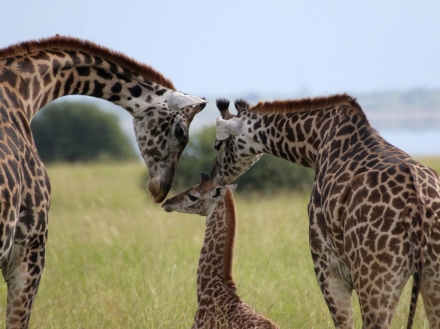
The giraffe is the national animal of Tanzania. As we celebrate World Giraffe Day today, could you talk about the giraffe—it’s importance to its ecosystem, the threats and pressures the animal faces from human and environmental factors, and how people can help protect them?

The gentle, iconic giraffe is popular around the world, but scientists know surprisingly little about them in the wild. We chose to work with giraffes because they are amazingly beautiful and peaceful animals, but they are vulnerable to extinction because people have taken so much of their wild natural habitat for human uses like farming and houses. Poaching is also a serious problem for giraffes. They need our help.
celebrate-picture-books-picture-book-review-Giraffe-Love

Tanzania in East Africa is a stronghold for giraffes, supporting more than any other country. Although the Masai giraffe is the national animal of Tanzania, populations have declined here since the 1980s—yet few people are aware of the plight of the beloved giraffe in the wild. It is our job as scientists to bring this problem to light.

How are can families and organizations around the world help in the mission?

What can you do to help save giraffes and wild nature? (1) You can donate money or time to conservation groups like Wild Nature Institute and others. People can use their skills by providing advice, services, or goods in their personal area of expertise that can help the cause. (2) You can raise awareness about the silent extinction of giraffes. Speak up within your social circles and encourage others to donate money or time to saving giraffes. You can raise awareness in your home communities by writing, speaking, and contributing to the global conversation about our planet’s climate and biodiversity crises. (3) You can plant native trees.

Giraffes, elephants, and many other species need native trees, but deforestation continues worldwide. Planting native trees helps fight the global climate crisis and helps biodiversity too! (4) You can support legal protections for wildlife. Laws like the Endangered Species Act and other environmental laws make the world safer for wildlife and people. Call and write to your congressperson, senator, governor, and president telling them you support strong law enforcement to protect wildlife. (5) You can commit to not buying body parts, and if you live in Africa you can commit to not eating bushmeat.

The programs that the Institute sponsors and supports—from education in schools and communities to environmental conservation of animals and land to publishing materials for children—is extensive. How has your work been received? What successes have been achieved and what benefits do you hope to see in the future?

To save wild nature, we must know it and love it, so Wild Nature Institute and our partners developed environmental educational materials for children and teachers. The materials teach biology, geography, science, math, and language skills using focal animals and fun, beautifully illustrated stories. Our first book, The Amazing Migration of Lucky the Wildebeest, was a tri-lingual children’s book about wildebeest migration, and the ecological and economic benefits of conservation. The book was so successful that we created our “Celebrating Africa’s Giants” program to use environmental education to build community support for conservation efforts that will ensure the long-term survival of Africa’s giants giraffes, elephants, and rhinos.

celebrate-picture-books-picture-book-review-Peace-for-Conservation

We now produce and distribute our four multi-lingual storybooks, two Swahili activity books, and seven posters, as well as learning activities to accompany the books and posters, to tens of thousands of children throughout Tanzania. These materials teach ecological and social lessons, build national pride in Tanzanian wildlife, and motivate children to read and learn about their natural world. The learning activities help Tanzanian teachers meet environmental education curricula requirements, and also meet Next Generation Science Standards for American schools.

To ensure the materials are used to their best advantage, we host workshops for teachers, led by our education consultant Lise Levy, a retired high school biology teacher with 32 years of experience in education. At the workshops, teachers have a wonderful time learning the stories and practicing the hands-on activities that they will use in the classroom to accompany the books and posters.

Can you talk a little about the impact that these books and the new Nature’s Giants Magazine have on the children and families in Tanzania?

Every year since we introduced our education program, we have expanded its reach and impact through word-of-mouth. Our books and posters are now recognized and requested by Tanzanian educators throughout Tanzania, from Ruaha and Ruvuma in the south to Serengeti in the west to Dar es Salaam in the east. We hired a Tanzanian education coordinator who regularly visits classrooms, orphanages, and community centers and brings “Giraffe in a Box,” “Elephant in a Box,” and “Rhino in a Box” with all of the materials needed to implement the activities. We made our storybooks into videobooks which are playing on Tanzanian television. We organize “fun days” at the schools to celebrate Africa’s giants where we do tree-planting, sports, drama and arts, and creative learning. 

celebrate-picture-books-picture-book-review-school

We are constantly dreaming up new and fun ways to spread the word about the fascinating animals of the African savanna. Our ultimate goal is to inspire the next generation to love and care for their wildlife and conserve the environment.

On your website you talk about the importance of zoos in supporting the environmental work in Tanzania. How do/can zoos help?

Zoos have an important role to play both in providing financial support for field conservation as well as promoting the conservation of giraffes, elephants, and rhinoceros through environmental education directed at visitors. Many zoos are using our Celebrating Africa’s Giants education program. Zoos also conduct their own scientific research. We couldn’t do our work without our zoo partnerships and we are really grateful for their support.

To learn more about Monica Bond and the work of the Wild Nature Institute, visit their website.

Meet Kayla Harren

celebrate-picture-books-picture-book-review-Kayla-Harren-headshot

Welcome back, Kayla! I’m thrilled to be talking with you about these three beautiful books and Nature’s Giants Magazine.

How did you get involved with the Wild Nature Institute and this project? What does it mean to you to be part of it?

In 2015 my husband, Peter, who is also an artist, was asked to illustrate a picture book about a baby giraffe that was written by a friend of a friend. He wanted to pursue a different path in his illustration career, so he passed the job to me. I fell immediately in love with the story of Juma. My passions have always been art and animals. Being able to combine those two loves feels incredible.

I feel so lucky to be involved with the Wild Nature Institute because I get to help wildlife in my own way even though I am not a scientist. I am grateful for this opportunity to contribute to wildlife education and hopefully spark a love for nature in other people. It feels like fate the way the first book found me through a friend of a friend of a friend and now it has turned into an amazing partnership.

Your artwork in Juma the Giraffe, Our Elephant Neighbors, and Helping Brother Rhinoceros is stunning and full of such wonderful detail and personality. What kind of research did you do to bring the characters to life? Do Juma—or any of the animals—depict real giraffes, elephants, or rhinos in the area?

Thank you! Monica was incredibly helpful with providing plenty of photographs that she and the other scientists had taken of the scenery and wildlife in Tanzania. It made my job so much easier to know that people who actually lived in Tanzania and knew the area were checking all the details of my work to make sure it was accurate. For each book I was able to look through images provided by Wild Nature Institute of people, landscapes, giraffes, elephants, rhinos, and plenty of birds and animals to add in the background of each illustration. I did study the spot patterns of many giraffes, but Juma is a made-up combination of many giraffes I studied.

celebrate-picture-books-picture-book-review-juma-the-giraffe-juma-and-mama

Readers of your many books know what realism and sensitivity you bring to your illustrations of animals. Do you have a special affinity for animals and nature? Where did that come from?

Absolutely! Animals are my favorite. It started with my love of stuffed animals when I was very young. I had a huge collection, and I would spread them all out on my bed so none were hidden and they all got equal attention from me. I was introduced to many animal species through my toys. I remember fondly a stuffed white Bengal tiger that was bigger than me and a plump little panda bear. I loved the zoo, nature shows, and all the pet cats and dogs my family had. I feel most comfortable and relaxed in nature. I love going for walks with my dog because she stops every few steps to sniff something and that makes me pause and look around at all the beautiful shapes and textures and colors of the plants surrounding me. Nature is infinitely inspiring.

Have you ever visited Tanzania?

Not yet. Visiting Tanzania is very high on my list of things I need to do. Seeing a giraffe in the wild would be an absolute dream come true.

I’m going to let David Brown answer the next few questions about “Nature’s Giants Magazine.” David is a biologist, wildlife conservationist, and environmental educator—and he’s the co-creator and major writer of “Nature’s Giants.”

Welcome, David! As a nature lover, puzzle doer, and crafter myself, I love “Nature’s Giant’s Magazine!” There’s so much for kids to fall in love with!

“Nature’s Giants” magazine is full of fascinating articles (I learned a lot!), fun crafts, science prompts, challenging puzzles, and even a funny dung beetle named Doug. Can you talk about how the magazine came to be, what your role in the magazine is. and about how it can be used in the classroom? 

A group of conservationists and educators were meeting about how we could make Celebrating Africa’s Giants accessible and interesting to kids who love giraffes, elephants, and rhinos. We discussed how magazines like “Ranger Rick” and “National Geographic Kids” helped spark and sustain our love of nature when we were young, and we realized that there wasn’t really anything like that for even the most popular animals like giraffes and elephants. We decided to start our own nature magazine to fill that gap. We decided that our host of the magazine should be a dung beetle named Doug Beetle.  Doug Beetle helps show that there are many ways to be a giant in nature beyond physical size.
celebrate-picture-books-nature's-giants-Doug-Beetle-digging

My role is to help coordinate the creation of the magazine, develop story and activity ideas, and write the articles that bring those ideas to life. I also write the Doug Beetle comics. Megan Strauss, a wildlife biologist and illustrator, creates activities, crafts, and provides content for the magazine with her scientific expertise.  Kayla creates illustrations to accompany the articles and designs the layout of each page.

Accessible and interesting are perfect adjectives for Nature’s Giants! The magazine really promotes exploration and hands-on activities to engage kids in science learning. Can you describe some of the elements parents, teachers, and kids will find inside?

The magazine can be enjoyed casually for its art, stories, and activities. We also designed it for use in classrooms, zoo education programs, and other learning environments. In the first issue, we have a story about how scientific information can be visualized with infographics and how that helps us see the world in different ways.

celebrate-picture-books-nature's-giants-Magazine-Infographic

We also have a story about how a scientist makes an observation, asks questions about what she observed, and then solves a scientific mystery. Readers will learn how scientists study animals in the field, and hopefully get inspired to take part in citizen science themselves. 

celebrate-picture-books-nature's-giants-insect-hotel-craft

celebrate-picture-books-nature's-giants-diorama-craft

Environmental issues around the world are important to all of us. In what ways can children help from home or in their own communities?

The young people of the early 21st century are going to be the deciders of whether big animals like giraffes, elephants, and rhinos and their habitat survive this century and beyond. These animals are beloved around the world. They are the biological equivalent of the great works of art, architecture, and popular culture that are the common heritage of people around the world.

The young people in countries like Tanzania and Kenya, where these species and their habitats live, are the primary decision makers, but these animals need a global constituency of conservationists. They need people to help pay attention to them and keep their conservation needs visible in the world. Just as we pay constant attention to our favorite sports teams, celebrities, and technology products, we need to find ways to keep attention on giraffes, elephants, rhinos, and other animals.

If you love a species, then helping your local social network of family and friends be aware of the animal is a meaningful conservation action. Our goal for “Nature’s Giants” is to help connect young people with these animals and their conservation challenges and find ways to keep that connection growing.

What are the future plans for the magazine? How can teachers or other organizations order copies?

The first issue of “Nature’s Giants” is themed about African animals and plants. If the magazine finds an audience and there is an appetite for future issues, we would love to do a theme issue for each continent. We have also thought about doing an issue about the oceans. There are endless possibilities for issue themes. We would love to explore the future adventures of Doug Beetle.

To order copies of the magazine and all three storybooks, you can contact Monica Bond: monica@wildnatureinstitute.org

If you are interested in ordering Juma the Giraffe, Helping Brother Rhinoceros, and/or Our Elephant Neighbors for your classroom, organization, or yourself, contact Monica Bond monica@wildnatureinstitute.org. Individual copies of the books cost $12.00. Substantial discounts are offered when ordering multiple copies. All prices include shipping and handling.

Individuals, schools, and other organizations can also order single and/or multiple copies of “Nature’s Giants Magazine” for $4.25 each, plus shipping and handling.

You can also download printable posters with illustrations and information about giraffes, rhinos, and elephants from the Africa’s Giants website: www.africasgiants.org

To find the books with major online booksellers, see the information and links below.

celebrate-picture-books-picture-book-review-helping-brother-rinoceros-cover

You can find Helping Brother Rhinoceros at these booksellers

Amazon | Barnes & Noble | Books-a-Million | IndieBound

celebrate-picture-books-picture-book-review-our-elephant-neighbors-cover

You can find Our Elephant Neighbors at these booksellers

Amazon | Barnes & Noble | Books-a-Million | IndieBound
celebrate-picture-books-picture-book-review-juma-the-giraffe-cover

You can find Juma the Giraffe at these booksellers

Amazon | Barnes & Noble | Books-a-Million | IndieBound

Picture Book Review