July 7 -World Chocolate Day

celebrate-picture-books-picture-book-review-grandpa-cacao-cover

About the Holiday

The purpose of World Chocolate Day is simple! Most likely instituted to celebrate the introduction of chocolate to Europe on July 7, 1550, the day gives people everywhere the perfect excuse to indulge in this favorite flavor sensation. You know what to do! Bake some brownies, order a double scoop of your favorite chocolate-based ice cream, make a chocolate cake (with chocolate frosting, of course), or whip up a batch of chocolate chocolate chip cookies, and enjoy!

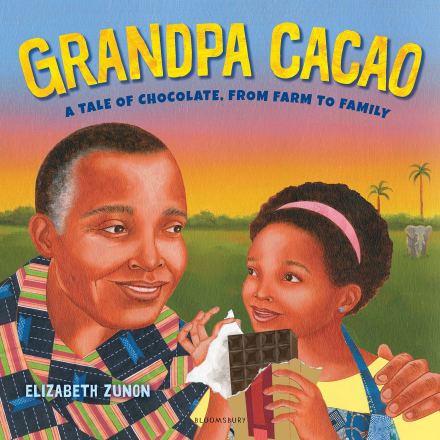
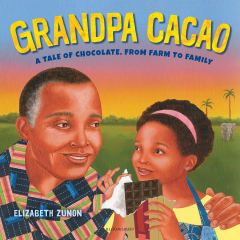
Grandpa Cocoa: A Tale of Chocolate, from Farm to Family

By Elizabeth Zunon


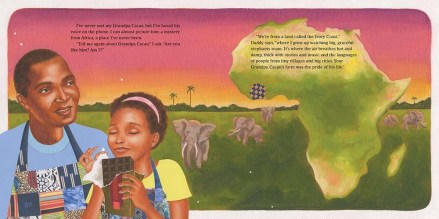
It’s a little girl’s birthday, and she and her daddy are making her “family’s special celebration cake” while her mom “goes to pick up another treat.” While they bake, the girl’s father reminds her that “‘chocolate is a gift to you from Grandpa Cacao.” The girl has never met her grandfather since he lives in Africa and she wonders if she is like him. Her father begins to tell her the story of his growing up on her Grandpa Cacao’s Ivory Coast farm.

celebrate-picture-books-picture-book-review-grandpa-cacao-africa

Copyright Elizabeth Zunon, 2019, courtesy of Bloomsbury Children’s Books.

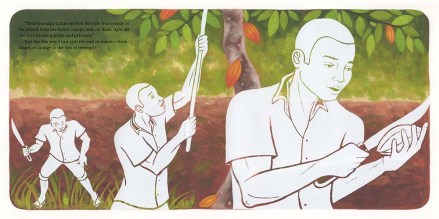
As they add flour to the bowl, Daddy explains how her grandfather knew just when the fruit was ripe for picking. “Just like the way I can spot the end of summer from tinges of orange at the tips of treetops,” the girl thinks. Then, her father goes on, Grandpa Cacao expertly sliced the pods without damaging any of the beans inside. “‘Did you ever help?’” the girl asks as they melt the chocolate and butter for the cake. Her daddy says that everyone in the village worked together and that when he turned seven, he was allowed to help but only after he’d finished his homework and chores.

The white beans were put into pits lined with banana leaves and stirred periodically until they became light brown. Then they were moved to a cement floor to dry in the sun. The beans had to be taken in each night, and when storms came the beans had to be covered. The girl imagines her grandpa could smell the rain coming the way she could “smell a cold day.”

celebrate-picture-books-picture-book-review-grandpa-cacao-ripe-fruit

Copyright Elizabeth Zunon, 2019, courtesy of Bloomsbury Children’s Books.

While they crack and add the eggs, the girl’s father tells her how the beans sounded and tasted when they were ready to sell. The story is making her hungry, and she wonders what Mommy could be bringing home. When he was older, Daddy says, he helped bag the beans to sell to the cacao buyers, who would send them to factories to be made into chocolate. With the money from the cacao beans, they bought “food, school supplies, uniforms, books, and fabric to have out special occasion clothes made.”

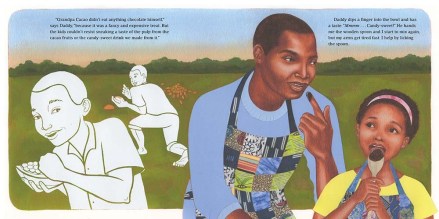
The cake batter is ready to pour into the pan, and she carries the big bowl to her daddy. She reminds him of Grandpa Cacao carrying a big basket of cacao pods. The thought makes them both smile. Then the girl’s thoughts return to what her mother is bringing home. Perhaps it’s a new dress or the puppy she wants. Daddy dips his finger in the chocolate batter and the girls licks the spoon. It makes him think of how he and the other kids snuck tastes “of the pulp from the cacao fruits or the candy-sweet drink” they made.

celebrate-picture-books-picture-book-review-grandpa-cacao-chocolate

Copyright Elizabeth Zunon, 2019, courtesy of Bloomsbury Children’s Books.

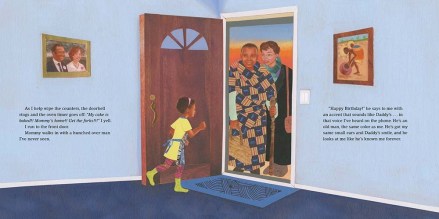
Baking in the oven, the cake smells delicious. Just as the timer rings, the doorbell chimes. When the girl opens it, she sees her mommy with an older man she’s never seen before. “‘Happy Birthday!’” he says, and the girl recognizes his voice from their phone calls. He hugs her and then gives her a big orange pod. It’s her birthday present, he tells her. But being with her Grandpa Cacao is “the best birthday present ever in the world.”

An Author’s Note following the text describes Elizabeth Zunon’s childhood in Abidjan, the realities of the cacao trade and Fair Trade products and a bit about how the illustrations were created. There are also brief discussions on the science and history of chocolate as well as a page on how cacao goes from bean to treat. Bakers will also be pleased to see the recipe for the special Chocolate Celebration Cake made in the story.

celebrate-picture-books-picture-book-review-grandpa-cacao-birthday

Copyright Elizabeth Zunon, 2019, courtesy of Bloomsbury Children’s Books.

Elizabeth Zunon’s celebration of family and pride in one’s heritage is a compelling read that shines with a strong father – daughter relationship, shared memories, and the joys of working together. The warmth shared by the girl and her daddy is evident as she revels in hearing the story of Grandpa Cacao and identifying with him even though he lives far away. Zunon’s smooth delivery of Grandpa Cacao and Daddy’s story imparts fascinating details of how cacao is grown, harvested, and prepared for sale. While the little girl may wish for a new dress or a puppy, she is happier with the surprise of meeting her grandfather at last.

Zunon’s mixed-media, collage style illustrations beautifully meld the world inside the family kitchen with the girl’s imagining of life in Africa on Grandpa Cacao’s farm. The opaque screen-printed images of Grandpa Cacao, the girl’s father as a child and young man, and the other villagers, are powerful reminders to readers that their family and family history is always with them and supporting them.

A unique book to share during family story time, in the classroom, or during a library program, Grandpa Cacao: A Tale of Chocolate, from Farm to Family would be a much-loved addition to home, school, and public library collections. And don’t forget to include cake!

Ages 3 – 8

Bloomsbury Children’s Books, 2019 | ISBN 978-1681196404

Discover more about Elizabeth Zunon, her books, and her art on her website.

World Chocolate Day Activity

cookies-and-cups-my-kids-favorite-brownies-recipe-picture

My Kids’ Favorite Brownies from Cookies & Cups, copyright Shelly Jaronsky, January 29, 2019. Courtesy of cookies&cups.com.

Cookies & Cups My Kids’ Favorite Brownies


If you’re looking for a scrumptious chocolatey brownie that melts in your mouth, look no further than Shelly Jaronsky’s My Kids’ Favorite Brownies recipe on Cookies & Cups. While you’re there, you’ll want to look around at all of Shelly’s delicious recipes! 

celebrate-picture-books-picture-book-review-grandpa-cacao-cover

You can find Grandpa Cocoa: A Tale of Chocolate, from Farm to Family at these booksellers

Amazon | Barnes & Noble | Books-a-Million | IndieBound

Picture Book Review

June 28 – It’s Great Outdoor Month

celebrate-picture-books-picture-book-review-the-chestnut-challenge-cover

About the Holiday

The warmer weather begs to be enjoyed—whether you’re playing, working, or just lounging around. Established in 1998 as Great Outdoors Week, the holiday expanded to a month-long celebration in 2004. There’s so much to see and do outside as the wonders of nature are always changing and challenging you in new and surprising ways.

The Nocturnals Series

The Nocturnals series of books—early readers and middle grade novels—brings together a trio of friends for adventures and learning. The three main characters are Dawn, a gentle, kind, and wise red fox; Tobin, a shy, hesitant, and loyal pangolin; and Bismark, a chatty, romantic, impetuous sugar glider. Their distinct personalities serve them well as they meet up with various other woodland animals in mysterious, dangerous, and surprising ways. No matter what challenges they face, however, Dawn, Bismark, and Tobin support each other as best friends should.

Whether children meet the Nocturnal Brigade as an beginning reader or as an established reader, they will love following the friends’ adventures and be charmed by their close relationship, even when squabbles arise. As with any favorite series, kids will look forward to catching up with what this unique group of nighttime animals are doing next.

Grow & Read Early Reader Level 2 Books
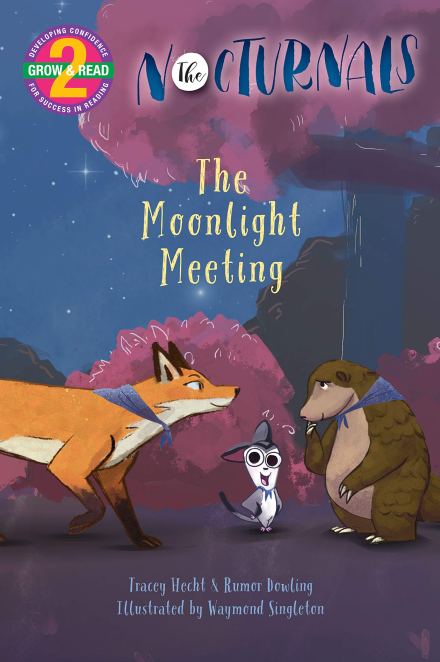
celebrate-picture-books-picture-book-review-the-moonlight-meeting-cover

The Moonlight Meeting

Written by Tracey Hecht and Rumur Dowling | Illustrated by Waymond Singleton


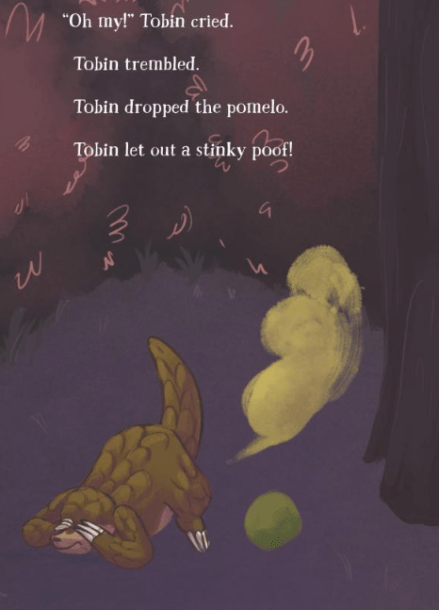
As the twinkling stars began to appear in the sky, a sweet pangolin by the name of Tobin woke up. “‘Oh my, Tobin said. ‘I smell something delicious!’” He yawned and stretched and went in search of that wonderful smell. It didn’t take long before he bumped into a pomelo—the perfect thing for breakfast. But before he could dig in, he heard a screech from the tree above. “‘Thief!’ it cried.” Tobin was so frightened that he “let out a stinky poof!”
celebrate-picture-books-picture-book-review-the-moonlight-meeting-tobin

Image copyright Waymond Singleton, 2017, text copyright Tracey Hecht, 2017. Courtesy of Fabled Films Press.

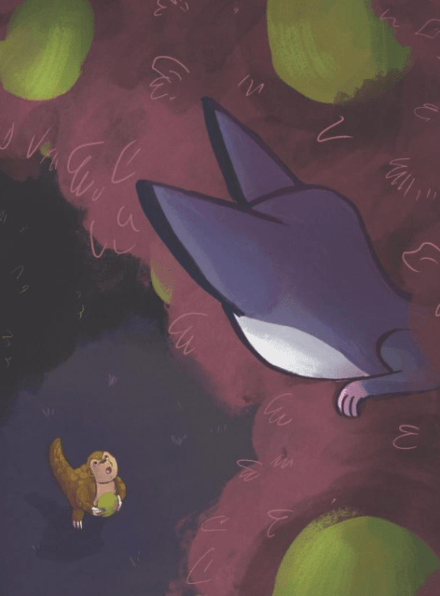
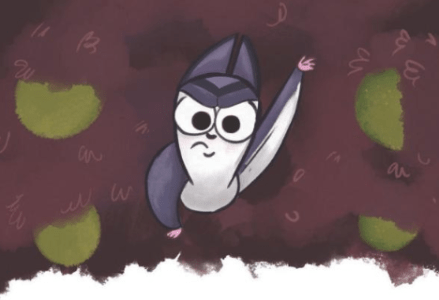
The small creature in the tree covered his nose. “‘That stench! That odor! That tang!’” he exclaimed. “‘This calls for the flaps!’” In a moment the animal leaped out of the tree and glided to the ground. Although a little scared, Tobin was curious. He wondered if perhaps this creature could become a friend. But it didn’t seem he was interested in anything but the pomelo. As he grabbed the green fruit, he introduced himself. “‘I am Bismark! Sugar glider spec-tac-u-lar! And the owner of this pomelo.’” But before Tobin could reply, a red fox emerged from the bushes.

She had smelled Tobin’s spray of fear and wondered if help was needed. The fox had “kind eyes” and “a warm smile.” Bismark spoke up and told the fox about Tobin and the pomelo and the thievery. The fox asked if all of this was true. “Tobin was shy, but the fox made him feel brave.” He answered that he was not stealing the fruit, but Bismark said he had seen it first.
celebrate-picture-books-picture-book-review-the-moonlight-meeting-pomelo

Image copyright Waymond Singleton, 2017, text copyright Tracey Hecht, 2017. Courtesy of Fabled Films Press.

The fox thought over the problem and…sliced the pomelo into three pieces. She gave a piece to Tobin and Bismark and kept one for herself. “‘Mmm,’ Tobin said. The pomelo was sweet! ‘Burp,’ Bismark belched. The pomelo was juicy. ‘Perfect,’ the fox declared. The pomelo was delicious!” It seemed the little sugar glider liked more than just the pomelo. After smoothing his hair and giving a deep bow, he introduced Tobin and himself. The fox smiled and told them her name was Dawn. Tobin was smitten.

Suddenly, they all realized that each of them slept during the day and were awake at night. Bismark exclaimed that they would be “a moonlight trio… a nocturnal brigade”… a…. Dawn broke in. “‘We will be friends,’” she said. Tobin and Bismark were happy. They were friends.

Facts about the nocturnal animals in the book and their favorite food, the pomelo, follows the story.
celebrate-picture-books-picture-book-review-the-moonlight-meeting-bismark

Image copyright Waymond Singleton, 2017, text copyright Tracey Hecht, 2017. Courtesy of Fabled Films Press.

Tracey Hecht introduces her unique band of friends in this story that brings a diverse group of animals together over the disputed ownership of a pomelo. The strong personalities of the characters lend humor and intrigue to their quarrel over this favorite fruit, and as Dawn raises her sharp claws to decide the issue, readers may join Tobin and Bismark in a moment of wide-eyed suspense. The fox’s solution, however, is one of inclusion and sharing and sets the tone for the rest of the series. Hecht’s short sentences are composed of active, high-interest vocabulary, and the story moves along at a quick pace, carried by realistic and funny dialogue.

Screen Shot 2019-06-27 at 7.56.43 PM


Kids will love meeting Dawn, Bismark, and Tobin through the illustrations on each page that convey their personalities and the storyline clearly. Tiny Bismark, with his big eyes, dramatic expressions, and energetic attitude is always ready for action. Tobin, the scaly pangolin with long claws, an anxious demeanor, and an inherent sweetness, is devoted and trustworthy. And Dawn, with her sleek red coat and gentle eyes, is caring, intelligent, and the glue that holds the three together. As readers get to know each character better, they’ll look forward to each one’s individual reactions to whatever adventure they encounter.

Ages 5 – 7 

Fabled Films Press, 2017 | ISBN 978-1944020149

You can find The Moonlight Meeting at these booksellers

Amazon | Barnes & Noble | Books-a-Million | IndieBound
celebrate-picture-books-picture-book-review-the-slithery-shakedown-cover

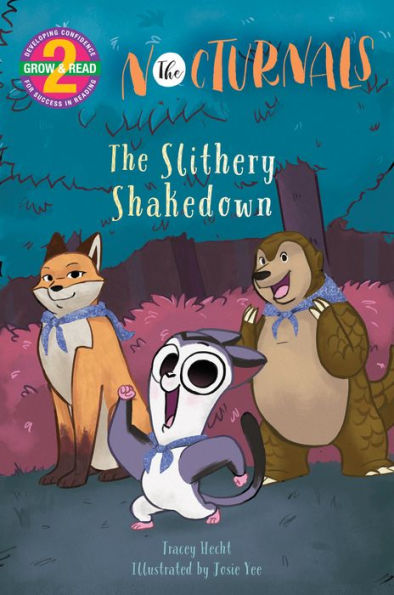
The Slithery Shakedown

Written by Tracey Hecht | Illustrated by Josie Yee


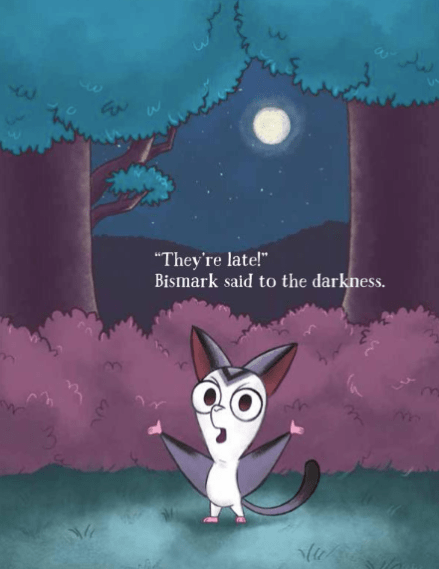
Although nighttime had come, Bismark was still waiting for his friends to arrive. “Bismark tapped his foot. Bismark put his fists to his hips. Bismark scrunched his tiny pink nose. This sugar glider was peeved!” Still, he was more relieved than angry when Tobin, the pangolin, came through the reeds. It wasn’t long before Dawn, a red fox, joined them. Bismark jumped on top of a rock and declared that he was going to take them on an adventure. After all he was “‘Bismark the Brave.’” Tobin and Dawn giggled at their tiny friend.
celebrate-picture-books-picture-book-review-the-slithery-shakedown-late

Image copyright Josie Yee, 2018, text copyright Tracey Hecht, 2018. Courtesy of Fabled Films Press.

Before they could get started, though, Dawn noticed something lurking in the bushes. It was a snake—a snake who seemed to have designs on eating Bismark for breakfast. “The snake slithered closer. ‘Sss-scrumptious!’ the snake said. ‘A sss-scrawny, little sss-sugar glider.’” Bismark ran and hit behind Dawn’s legs. Dawn stepped forward and confronted the snake. “Tobin summoned his courage” and joined her.

The snake prepared to attack. “Dawn snarled…. Tobin raised a sharp, taloned claw.” The snake took a look at the stalwart friends and decided it was time to “‘sss-skedaddle.’” Biskmark was trembling as he watched the snake slither away, but he would not admit that he had been scared. Dawn and Tobin reassured him that “‘You can be scared and brave, too.’” In fact, they told him, they had also been afraid of the snake.

celebrate-picture-books-picture-book-review-the-slithery-shakedown-peeved

Image copyright Josie Yee, 2018, text copyright Tracey Hecht, 2018. Courtesy of Fabled Films Press.

Just then something blue and shiny in the bushes caught Bismark’s eye. He went closer. The thing was long and thin, but it did not slither. “‘By the moon!’ Bismark said. ‘Look here! That snake slithered right out of its skin.’” He picked it up and tore it into three pieces. He gave a piece to Tobin and Dawn. They each tied the piece of snakeskin around their neck like a cape and admired themselves. Dawn thought it was the perfect symbol for their brigade. “‘The Nocturnal Brigade!’ Tobin cheered, and Bismark added, “‘Bold in adventure. And best of all, brave!’”

Information about the nocturnal animals in the book and their favorite food, the pomelo, follows the story.

When the three are threatened by a snake, will they be brave enough to send him packing? Even though Bismark considers himself the bravest of the brave, he turns out to be the one most frightened by the slithery bully. With his new friends behind him, Biskmark learns that fear and bravery often go hand in hand. Here, the three solidify their friendship with a physical symbol of the brigade, and their blue snakeskin capes become a regular feature of the series. Using lots of alliteration, dialogue and some sss-snakey onomatopoeia, Tracey Hecht weaves a fast-moving story that shows that sticking together and standing up for others is the best way to defeat a bully.

Josie Yee further develops her characters in this story that sees the usually uber-confident Bismark experience fear that he can’t hide. Tobin demonstrates another level of self-assurance by swallowing his usual shyness to confront the snake, and Dawn, true to her nature, serves as strong example to her friends and readers.

Ages 5 – 7 

Fabled Films Press, 2018 | ISBN 978-1944020170

You can find The Slithery Shakedown at these booksellers

Amazon | Barnes & Noble | Books-a-Million | IndieBound
celebrate-picture-books-picture-book-review-the-peculiar-possum-cover

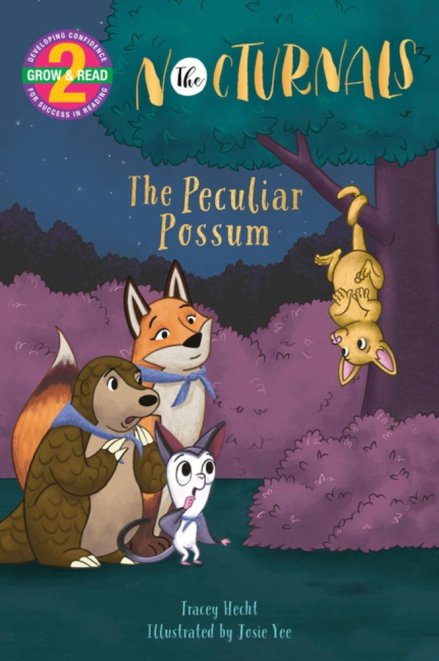
The Peculiar Possum

Written by Tracey Hecht | Illustrated by Josie Yee


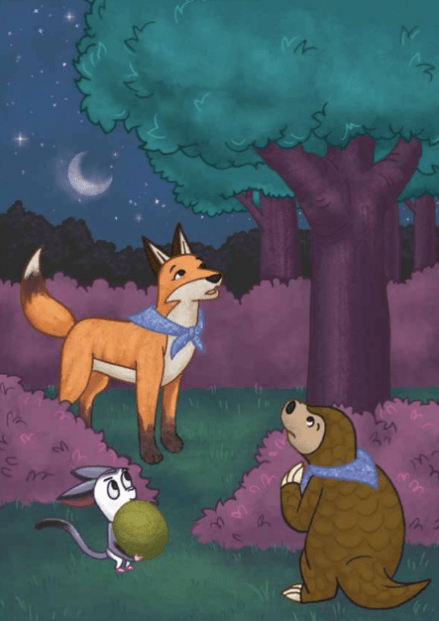
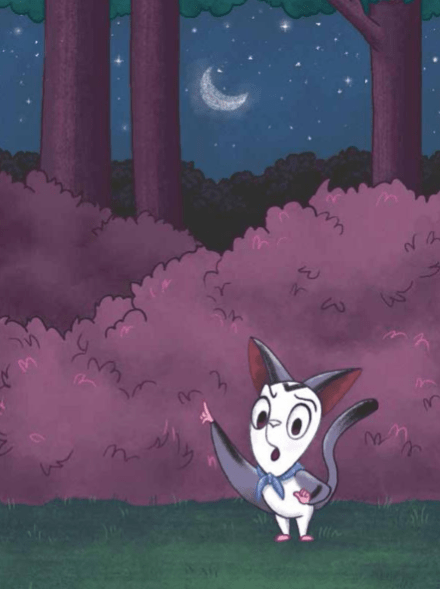
It was a bright, beautiful night when Dawn, a fox; Bismark, a sugar glider, and Tobin, a pangolin met under the pomelo tree. Bismark was dismayed because while the tree was usually full of fruit, tonight he could only find one. Just then they heard a strange “cluck cluck clatter! Chit chit chatter!” Bismark was sure it was a prowler who’d come for his pomelos. “Suddenly, the wind blew. The shadows shifted. A strange smell filled the air.”

Dawn looked up into the tree and saw “two shiny, brown eyes. And a paw, holding a pomelo! ‘Popping peepers!’ Bismark bellowed. ‘There is a prowler! And it has one of my precious pomelos!’” Quickly, the eyes disappeared and the pomelo came soaring out of the swaying branches. With a few more clucks and clatter, chits and chatter, the prowler plunked down in front of them. The three friends recognized the interloper as a possum. They gathered around it, but it lay motionless on the ground.
celebrate-picture-books-picture-book-review-the-peculiar-possum-brigade

Image copyright Josie Yee, 2018, text copyright Tracey Hecht, 2018. Courtesy of Fabled Films Press.

Dawn prodded it with her paw. “‘Perhaps this possum is feeling a bit peaky,’” she said. But the possum opened one eye and told them it was just playing possum. The possum got up and introduced herself as Penny. “‘Pleased to meet you,’” she said, sticking out her paw. But Bismark was not pleased to meet her. He did not like that she “prowls and pillages.” As evidence he pointed to the wayward pomelo.

Dawn gazed at her friend and said, “‘Bismark, these pomelos belong to everyone.’” Well, what about the way Penny chits and chatters? Bismark asked. He thought her way of speaking was strange. Dawn reminded him that he too had a unique way of speaking. Then Bismark pointed out the unusual hairless patch on Penny’s tail. “Dawn smiled gently. She looked down at Bismark’s bald spot. ‘Bismark, Penny is not the only one with a hairless patch.’” Still, Bismark wasn’t keen on Penny’s smell or the way she played possum.
celebrate-picture-books-picture-book-review-the-peculiar-possum-bismark

Image copyright Josie Yee, 2018, text copyright Tracey Hecht, 2018. Courtesy of Fabled Films Press.

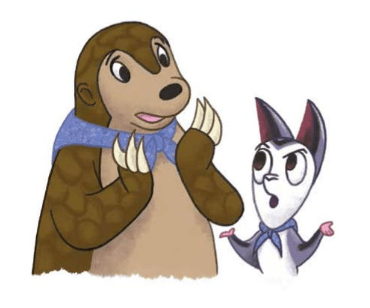
Tobin hurried to Penny’s side to defend her. “‘Penny, I spray a terrible odor when I get scared,’” he reassured her, reaching for her paws. Dawn told Bismark that no one is exactly like someone else. That everyone is unique. Then Penny told Bismark that she was proud of who she is. Bismark looked at Penny, and even though it was hard to admit he’d been wrong, he apologized to her and proclaimed, “‘You are your own possum. And that makes you perfect.’” Then Bismark split the pomelo into four sections and they all had a pomelo picnic.

Fun facts about pangolins, red foxes, sugar gliders, brushtail possums, and pomelos follow the text. Back matter also includes a Language Glossary showing forms of five words in the story as well as the translations of these words into Spanish, Portuguese, Mandarin, French, and Arabic.
celebrate-picture-books-picture-book-review-the-peculiar-possum-tobin

Image copyright Josie Yee, 2018, text copyright Tracey Hecht, 2018. Courtesy of Fabled Films Press.

When Bismark encounters Penny, a possum and an animal he’s never seen before, his adverse reaction to her disappoints Dawn and Tobin, who show him the errors in his thinking. Through her story, Tracey Hecht demonstrates that everyone has more similarities than differences and that what makes one person distinctive should be celebrated. Along the way, readers learn how to welcome a new friend.

Ages 5 – 7 

Fabled Films Press, 2018 | ISBN 978-1944020194

You can find The Peculiar Possum at these booksellers

Amazon | Barnes & Noble | Books-a-Million | IndieBound

Grow & Read Early Reader Level 3 Book

celebrate-picture-books-picture-book-review-the-chestnut-challenge-cover

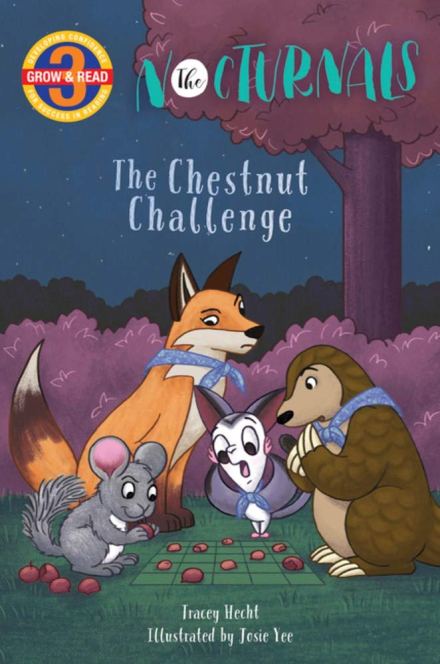
The Chestnut Challenge

Written by Tracey Hecht | Illustrated by Josie Yee


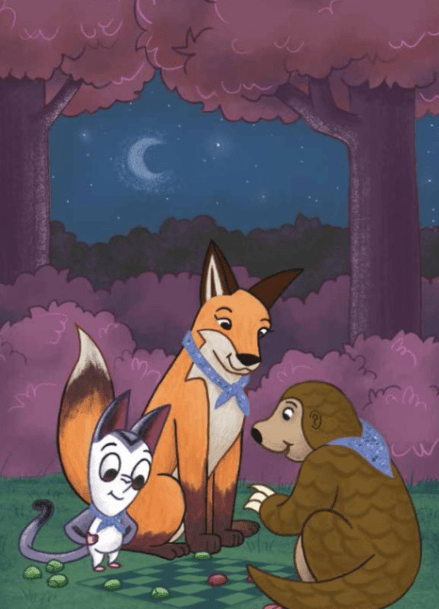
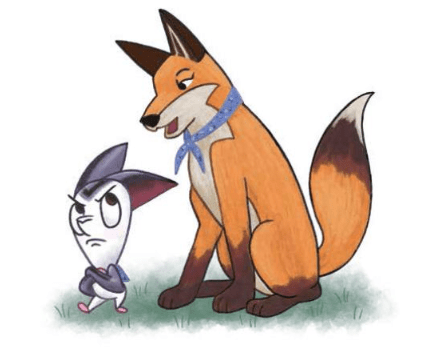
After sundown, while other animals slept, Dawn, a red fox; Bismark, a sugar glider; and Tobin, a pangolin “were playing a game of chestnut checkers.” Bismark thought Tobin was taking too long to move his chestnut. He snapped his fingers, tapped his foot, and finally said, “‘Hurry up!’” But Dawn chided Bismark and said Tobin should take the time he needed. At last Tobin moved his piece. Bismark was delighted. Tobin, it seemed, had set him up to win. Bismark moved one of his chestnuts. Now it was Tobin’s turn to be delighted. “Tobin jumped a chestnut across the board—and captured all of Bismark’s chestnuts.” Bismark was crushed. Tobin chuckled and said that it was only a game.
celebrate-picture-books-picture-book-review-the-chestnut-challenge-playing

Image copyright Josie Yee, 2019, text copyright Tracey Hecht, 2019. Courtesy of Fabled Films Press.

Suddenly, a voice called out and Chandler, a chinchilla, popped out from a nearby bush. He said that he was “‘the real chestnut champion.’” Bismark warned his friends against playing chestnuts with Chandler. He seemed to boastful to the little sugar glider, but Dawn wanted to give him a chance. Chandler chose Tobin to play first. Tobin didn’t like playing competitively; he just liked to have fun.

Bismark was all for Tobin taking up Chandler’s challenge, while Dawn said it was up to him to play or not. Chandler wanted an answer. Tobin decided to play—but just for fun. “Chandler and Tobin started to play. Chandler’s brow wrinkled. Tobin’s jaw tightened. No one seemed to be having fun.” Just then, Chandler shouted and pointed to the bushes. Tobin, Bismark, and Dawn all turned to look. “That’s when Chandler reached forward—and moved one of Tobin’s chestnuts!” When the three friends turned back, Chandler took his turn and Tobin’s chestnut that he had moved.
celebrate-picture-books-picture-book-review-the-chestnut-challenge-bismark

Image copyright Josie Yee, 2019, text copyright Tracey Hecht, 2019. Courtesy of Fabled Films Press.

Dawn thought something looked suspicious. Bismark begged Tobin to win against the “cheeky challenger.” Tobin was nervous. Suddenly, Chandler sneezed right in their faces. While their eyes were closed, he moved two chestnuts. He laughed when he saw that no one had seen him. Chandler only grew bolder. When Tobin closed his eyes for a moment, the chinchilla stole one of his pieces. This time Bismark caught him. He called on Dawn and Tobin, but Chandler denied it. Dawn, however, had also seen him steal the piece. She looked directly into his eyes and asked if he had stolen Tobin’s chestnut.

Now it was Chandler’s turn to be nervous. His cheeks reddened, his teeth chattered, “and then from Chandler’s paw, out dropped the chestnut.” With tears in his eyes, he admitted that he was a cheater. Dawn told him that champions don’t use tricks, and Tobin told him no one wins all the time and practice helps. Then they offered Chandler a second chance. So with Tobin cheering him along and Bismark keeping an eye on the board, “the four friends settled into a cheerful game of chestnut checkers.”

Fun facts about pangolins, red foxes, sugar gliders, chinchillas, and chestnuts follow the story.

celebrate-picture-books-picture-book-review-the-chestnut-challenge-game

Image copyright Josie Yee, 2019, text copyright Tracey Hecht, 2019. Courtesy of Fabled Films Press.

As the three friends meet a chinchilla with competitive streak, Tracey Hecht shows readers that cheating to win deprives all participants—even the champion—of the fun and pleasure of playing a game. In today’s super-charged world of competition at all levels, Hecht’s reminder that good sportsmanship wins out is welcome, and Tobin, Bismark, and Dawn, with their various personalities and generous offer to give him Chandler a second chance, make good companions as developing readers increase their skills while learning to play fair and for fun.

Josie Yee’s nighttime illustrations, rendered in dark blues, plums, and deep greens, take kids to the heart of a heated chestnut checkers match where they watch as Chandler concocts false alarms to cheat his way to victory. When Chandler is caught red-handed, readers see the positive effect his confession and the brigade’s offer of another chance have on him.

Ages 6 – 8 

Fabled Films Press, 2019 | ISBN 978-1944020231

You can find The Chestnut Challenge at these booksellers

Amazon | Barnes & Noble | Books-a-Million | IndieBound

You can learn more about The Nocturnals series; watch videos of games, face painting, and other activities; find educational language arts and science guides; download activity kits; and even join the Brigade by visiting The Nocturnals website.

You can find information about the Grow & Read program, Educator’s Guides, and The Nocturnals Book Club Kits with printable coloring pages and masks at Grow & Read.

Picture Book Review

June 11 – National Making Life Beautiful Day

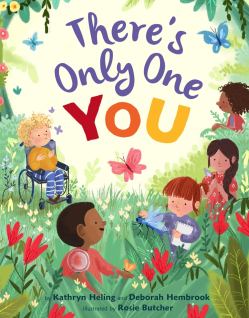
celebrate-picture-books-picture-book-review-there's-only-one-you-cover

About the Holiday

Today’s holiday was established to celebrate all of those people who make life more fun, meaningful, joyful—more beautiful—for someone else. This can be done in so many ways, from spending more time talking with someone to using your talents to make something you know a friend, family member, or coworker would love, to just giving a smile to those you meet during the day. Making someone else feel good will make life more beautiful for you too!

I received a copy of There’s Only One You from Sterling Children’s Books for review consideration. All opinions are my own. I’m happy to be teaming with Sterling in a giveaway of the book. See details below.

There’s Only One You

Written by Kathryn Heling and Deborah Hembrook | Illustrated by Rosie Butcher

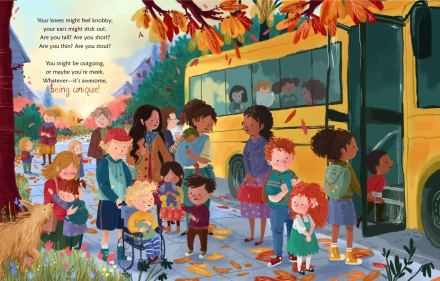
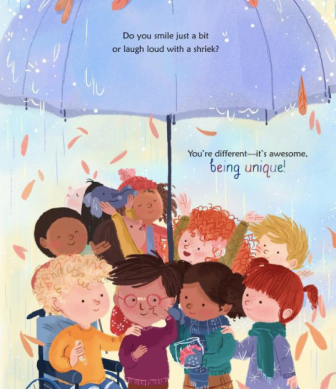
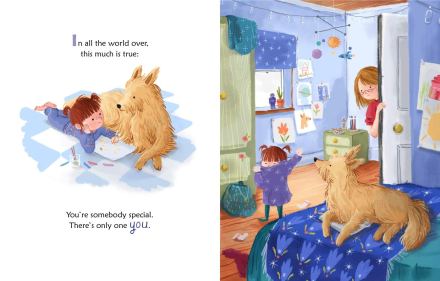
Parents, teachers, and other adults with children in their lives know how special each and every one of them are. But do the kids know that? They can wonder—what makes me one-of-a-kind? Or worry—about their “knobby” knees or their “ears that stick out, that they only “smile just a bit / or laugh loud with a shriek.” You want to reassure them that “you’re different—it’s awesome, / being unique.” But sometimes the words are hard to find.

celebrate-picture-books-picture-book-review-there's-only-one-you-girl

Image copyright Rosie Butcher, 2019, text copyright Kathryn Heling and Deborah Hembrook, 2019. Courtesy of Sterling Children’s Books.

That’s where There’s Only One You comes in. Through four-line rhyming stanzas, kids discover that everything about themselves from the way they feel and display their emotions to their skin color and hair to their talents and work styles is what makes them unique. Even the way they communicate is special: “When there’s something to say, / do you talk with your hands? / Do you speak with an accent / from faraway lands? / Some voices are booming, / and some, just a squeak. / Your way is the best way / of being unique.”

celebrate-picture-books-picture-book-review-there's-only-one-you-bus

Image copyright Rosie Butcher, 2019, text copyright Kathryn Heling and Deborah Hembrook, 2019. Courtesy of Sterling Children’s Books.

Another pair of verses express the very welcome inclusion of different abilities: “You might have cool glasses / that help you to see. / A wheelchair or walker / gives mobility! / A hearing aid helps you / to hear people speak. / Listen! It’s glorious / being unique!” An individual preference that embraces both extroverts and introverts is the way kids play together—in a big group or with only one friend, often or just every now and then. The inclusiveness of the story extends to families too and expresses that each family is unique and would not be complete without their very special child or children.

celebrate-picture-books-picture-book-review-there's-only-one-you-emotions

Image copyright Rosie Butcher, 2019, text copyright Kathryn Heling and Deborah Hembrook, 2019. Courtesy of Sterling Children’s Books.

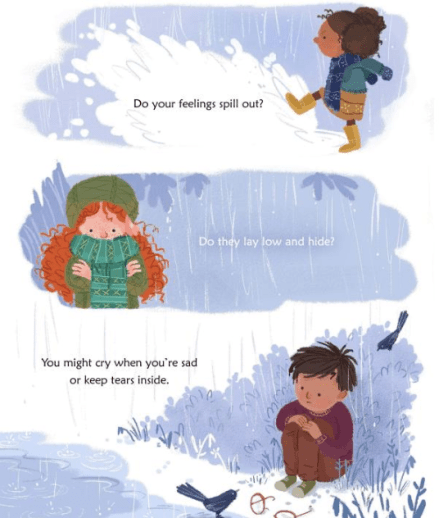
Kathryn Heling and Deborah Hembrook celebrate individuality in their joyous affirmation that the attributes that make someone different are the very things that should be applauded. The breadth of diversity, which includes outward appearance as well as inner emotions, personality, abilities, and family, makes this a book that any child can find themselves in and reveals how each person fits into the community as a whole. Heling and Hembrook’s sprightly rhymes and jaunty descriptions (hair can be “poofy,” “sleek,” or a “long, thick cascade”; feelings “spill out” and “lay low”) make the story a delight to read aloud.

celebrate-picture-books-picture-book-review-there's-only-one-you-umbrella

Rosie Butcher’s richly colored and engaging illustrations teem with action and exuberance as first one little girl is introduced as she gets ready for school and then joins a group of children and adults at the bus stop. In this two-page spread, a boy and his mother converse through sign language, an older brother holds the handles of his sibling’s wheelchair, and another sibling pair—this brother and sister red-haired and freckled—wait behind a boy with forearm crutches to board the bus. The other children that readers will follow through the story—some shy, some gregarious, some alone, and some with a friend—also congregate on the sidewalk with their parents.

Throughout the year as the kids have a party, go to the zoo, attend a play, frolic in the snow, play on the playground and more, readers see how the children, each with their unique personalities and abilities, interact together. In the final two spreads, readers meet the kids’ families, which include two dads, two moms, moms and dads, and single parents.

A beautiful way for adults to share the wonderful uniqueness of their own child or children while also instilling in them an appreciation for the uniqueness of every person, There’s Only One You would be an inspirational addition to home, classroom, and public library collections.

Ages 3 – 8

Sterling Children’s Books, 2019 | ISBN 978-1454922926

Discover more about Kathryn Heling and Deborah Hembrook and their books on their website.

National Making Life Beautiful Day Activity

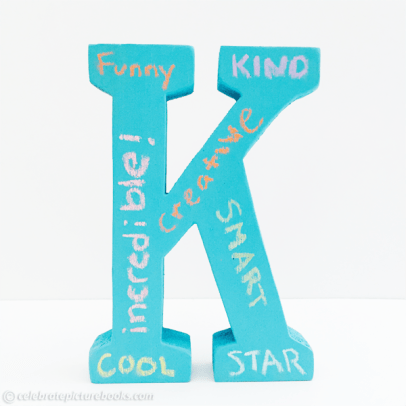
celebrate-picture-books-picture-book-review-initial-bookend

Initial Bookend

Kids can show all of their unique qualities with this easy-to-make initial decoration or bookend!

Supplies

  • Wooden letter block in the child’s first initial or both initials
  • Chalkboard paint
  • Chalk
  • Paint brush

Directions

  1. Paint the wooden letter with the chalkboard paint, let dry
  2. With the chalk, write words that your think best describe you on the letter
  3. Display your letter on your bookshelf!

celebrate-picture-books-picture-book-review-there's-only-one-you-cover

You can find There’s Only One You at these booksellers

Amazon | Barnes & Noble | Books-a-Million | IndieBound

Picture Book Review

June 3 – It’s National Rose Month

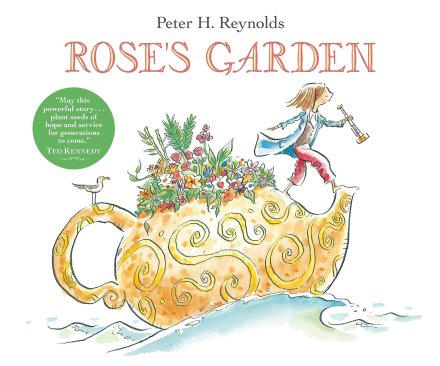
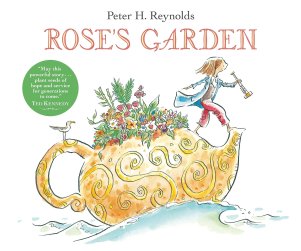
celebrate-picture-books-picture-book-review-rose's-garden-cover

About the Holiday

Pop quiz! Do you know what the national flower is? If you took a clue from today’s holiday and said the rose, you’re right! The first National Rose Month was observed in 1959, but the rose was not named the national flower until 1986. Five states—Georgia, Iowa, New York, North Dakota, and Oklahoma—claim the rose as their state flower, although four of the more than 150 species are represented among them. To celebrate this month, visit a local botanical garden to enjoy the beautiful blossoms and aroma or add a rose bush to your landscaping. And of course, a gift of roses is always appreciated.

Rose’s Garden

By Peter H. Reynolds


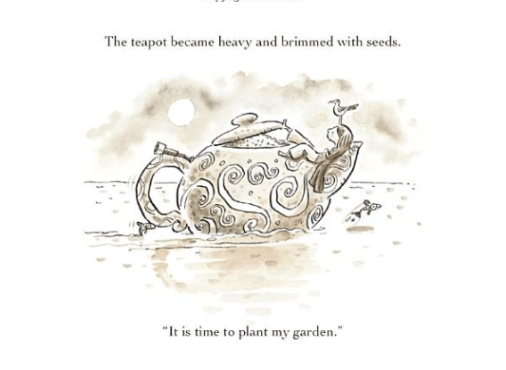
Rose was no ordinary adventurer. “She explored the world in her fantastic teapot,” and took home seeds from each place as souvenirs. When the teapot was overflowing with seeds, Rose knew it was time to plant her garden. Floating along in her teapot, Rose noticed a city on the horizon. When she got close the harbormaster told her about a lovely spot upriver, but Rose wanted to explore the city first.

celebrate-picture-books-picture-book-review-rose's-garden-gathering-seeds

Copyright Peter H. Reynolds, 2009, courtesy of Candlewick.

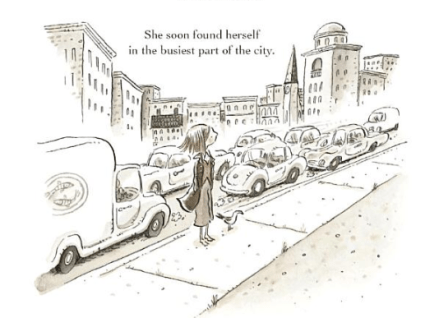
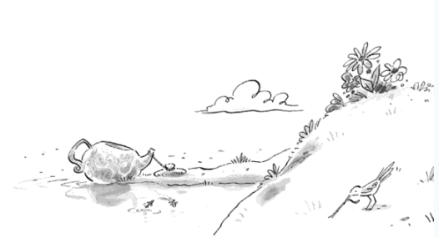
Rose wandered through the city and, in the midst of the busiest part, “she spotted a dusty, forgotten stretch of earth. Hmmm, Rose pondered. This little patch needs some color.” Rose cleaned it up and raked the soil, thinking of how wonderful this little spot could be. When she went back to her teapot to get her seeds, however, she discovered that a flock of birds had eaten them all.

te-picture-books-picture-book-review-rose's-garden-sailing

Copyright Peter H. Reynolds, 2009, courtesy of Candlewick.

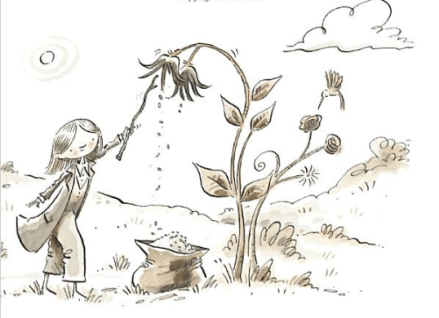
There were only a few seeds remaining in the bottom of the teapot. Rose placed them in her pocket, returned to her patch, and planted them. She watched over them and waited…and waited. “But nothing seemed to happen.” The soil was either too wet or too dry. Then cold weather came too soon. Rose “waited through the snowy winter.”

When spring came, Rose was still there waiting. “Word spread of Rose’s faith in her garden.” One day, a girl stopped by with a gift for Rose. “It was a paper flower” that she had made for Rose’s garden. The next day, a boy came by with a paper flower he had made. Rose happily accepted it. “‘This well be in good company when my own flowers bloom!’” she told him.

celebrate-picture-books-picture-book-review-rose's-garden-gathering-city

Copyright Peter H. Reynolds, 2009, courtesy of Candlewick.

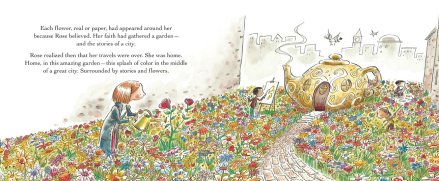
Every day, it seemed, children came with paper flowers they’d made for Rose’s garden. Each one told Rose a story about how they had come to live in the city, journeying “from all over the world, like seeds carried on a breeze.” Soon, Rose’s garden was filled edge to edge with colorful paper flowers. As Rose “waded among them, she heard a sound. A buzzing.” In front of her a bee landed on a flower—but this was no paper flower. Then Rose gazed across her garden and noticed real flowers all around her.

Rose’s “faith had gathered a garden—and the stories of a city.” Rose realized that this little patch was home. Her amazing teapot now sits in the middle, and everyone is invited to enjoy the quiet, colorful garden.

celebrate-picture-books-picture-book-review-rose's-garden-teapot

Copyright Peter H. Reynolds, 2009, courtesy of Candlewick.

With his well-known touch for turning the commonplace into magic, Peter Reynolds takes a teapot, seeds, and a forgotten city lot and creates a metaphorical microcosm of a more-perfect inclusive world. What could more welcoming than a cup of tea or more universal than a seed? As child after child offers Rose a flower of their own making and their stories, Reynolds reveals the openness of children to transform their world with hope, belief, and action. The blending of the paper flowers and the real ones (and perhaps they are the same?) show that roots develop in all sorts of ways and that we should not just find a home, but nurture one as well.

celebrate-picture-books-picture-book-review-rose's-garden-anchored

As Rose sails the world alone in her teapot, Reynolds washes the world with a soft mottled brown, suggesting that Rose lives in a perpetual autumn in which seeds are plentiful but the colors of spring and summer are past. It’s only when her teapot is full that Rose decides to plant her garden. As often happens with stored-up, unused potential, the seeds are lost to more mundane purposes when the seabirds eat them, leaving only a trace to fulfill Rose’s dreams. The strength of those dreams—and the help available to make them reality—however, is beautifully depicted as one bright flower and then another and another is planted, soon multiplying into a vibrant field of color.

Rose’s Garden makes a touching read aloud for story times about inclusiveness, belief in oneself and one’s convictions, hope, and the meaning of home. Pair it with a packet of wildflowers for a thought-provoking book extension.

Ages 5 and up

Candlewick, 2009 | ISBN 978-0763646417

Discover more about Peter H. Reynolds, his books, and his art on his website.

National Rose Month Activity

CPB - Paper Flowers

Paper Flower Bouquet


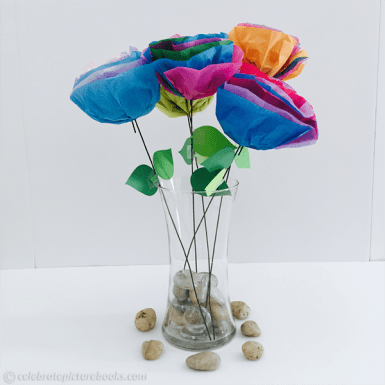
Just like the children in Rose’s Garden, your kids can make these paper flowers that will brighten anyone’s day. With all of the beautiful colors of tissue paper, they can create a whole bouquet or garden of flowers to share with friends or family. 

Supplies

  • Tissue paper in many colors
  • Green paper
  • Green wire for stems
  • Scissors
  • Tape or glue
  • Pliers

CPB - Paper Flowers II

Directions

To make the stem

  1. Bend a 1 ½ -inch loop in the top of the wire
  2. Squeeze the wire together so it will fit tightly over the tissue paper

To make a flower

  1. Cut 6 or more 7-inch squares from tissue paper, mixing colors (you can make various sizes of flowers by making the squares larger or smaller and adding more squares)
  2. Gather all the squares together and fold them together accordion-style in 1-inch folds
  3. Slide the folded tissue paper under the wire loop, and tighten the wire
  4. Gently fan the tissue paper out on each side
  5. Beginning on one side, gently pull each sheet of tissue paper up toward the center
  6. Repeat step 5 on the other side

To make leaves

  1. Cut leaves from green paper, leaving a stem to wrap around the wire flower stem
  2. Fold the leaf stem around the wire and tape or glue

celebrate-picture-books-picture-book-review-rose's-garden-cover

You can find Rose’s Garden at these booksellers

Amazon | Barnes & Noble | Blue Bunny BooksBooks-a-Million | IndieBound

Picture Book Review
April 2 – International Children’s Book Day

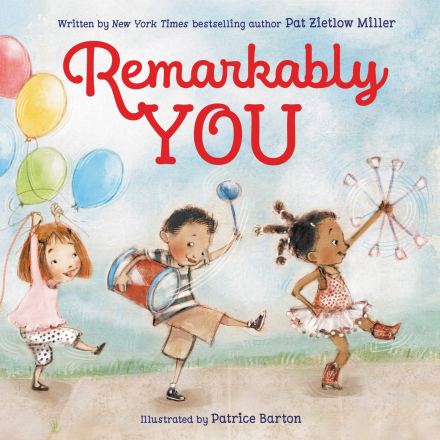
celebrate-picture-books-picture-book-review-remarkably-you-cover

About the Holiday

Since 1962, International Children’s Book Day (ICBD) has been held on April 2 to commemorate the birthday of Hans Christian Andersen. Part of the International Board on Books for Young People, which promotes understanding through children’s books, works to ensure that children everywhere have access to books, and helps to protect the rights of children worldwide in accordance to the UN Convention on the Rights of the Child, ICBD is sponsored each year by a different member country. This year Lithuania is the sponsor and encourages readers to slow down and enjoy a good book. You can learn more on the IBBY website.

Remarkably You

Written by Pat Zeitlow Miller | Illustrated by Patrice Barton


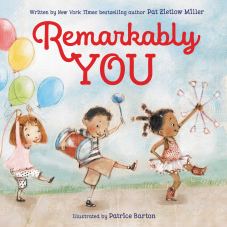
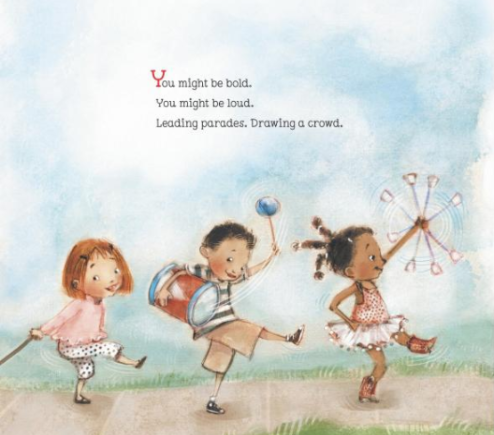
In her stirring Remarkably You, Pat Zeitlow Miller celebrates each child’s individuality and gifts. She talks directly to the reader assuring them that they are exceptional, whether they’re bold, timid, small or “practically grown.” She then fills them with confidence, telling them that they are smart, have power, and can change the world.

celebrate-picture-books-picture-book-review-remarkably-you-parade

Image copyright Patrice Barton, 2019, text copyright Pat Zeitlow Miller, 2019. Courtesy of HarperCollins.

With encouragement Miller beckons each child to find their place in the world and do what they can; and when that is done to “choose a new problem and do it again.” How do kids know where they fit in? “Just look for the moments that let you be you.” Miller goes on to validate each child, saying, “You have your own spirit, unparalleled flair. / So rock what you’ve got—every day everywhere.”

She then channels how every parent or caregiver feels about their child—“You are a blessing, / a promise, a prize. / You’re capable, caring, courageous, and wise.”—and emboldens kids to embrace who they are and get out there and enjoy life—their own, remarkable life.

celebrate-picture-books-picture-book-review-remarkably-you-timid

Image copyright Patrice Barton, 2019, text copyright Pat Zeitlow Miller, 2019. Courtesy of HarperCollins.

You will absolutely love reading this book to your child, grandchild, students, or any child who captures your heart. In her lovely and imaginative rhymes, Pat Zeitlow Miller celebrates each child as a special individual with unique traits that are valuable and an asset to the world. She reveals that the secret to happiness is staying true to yourself and using those traits to forge your own path. A glorious story, Remarkably You is an instant boost for any child—and no one could blame an adult for peeking inside for a little lift from time to time too.

Screen Shot 2019-04-01 at 6.08.40 PM

Patrice Barton’s rakish, enthusiastic, thoughtful, and freewheeling kids will melt your heart as they dip a toe into the sprinkler, wobble on skates, create a funny face with post-it notes, and gather to help each other and their neighborhood. Her softly hued pencil and mixed-media illustrations rejoice in diversity of all kinds, and each page shines with the acceptance and freedom all kids should feel while growing up and discovering themselves.

Remarkably You is a book you’ll love giving to new parents, caregivers, and the children in your life (even if they’re not so young any more). It would be a favorite go-to book to add to home, classroom, and public library shelves.

Ages 4 – 8

HarperCollins, 2019 | ISBN 978-0062427588

Discover more about Pat Zeitlow Miller and her books on her website.

To learn more about Patrice Barton, her books, and her art, visit her website

Children’s Book Day Activity

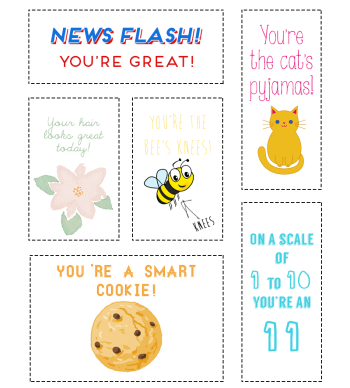
celebrate-picture-books-picture-book-review-you're-great-cards

You’re Amazing Magnets


You can remind your kids about how special they are with these complimentary sayings. Print them out and attach adhesive magnet strips to create decorations for a child’s room, their locker, the fridge or anywhere they’ll see them and take the message to heart. You can also use heavy paper or poster board, markers, and stickers to create your own encouraging magnets.

You’re Amazing Magnet Templates

celebrate-picture-books-picture-book-review-remarkably-you-cover

You can find Remarkably You at these booksellers

Amazon | Barnes & Noble | Books-a-Million | IndieBound


February 21 – World Anthropology Day

celebrate-picture-books-picture-book-review-this-is-how-we-do-it-cover-2

About the Holiday

World Anthropology Day was established as a day when anthropologists around the globe can celebrate and share their discipline with students and others interested in the world around us. What is anthropology? The short answer would be: the study of what makes us human. And what does this entail? That answer is much longer and includes the things people do, what we eat, what we wear, the way we communicate, and even such subjects as economics, health, education, law, and genetics. It studies the past but also looks to the future. The field of Anthropology and one of its subsets archaeology are endlessly fascinating. To learn more about Anthropology and careers in the field, find podcasts, and learn about resources, visit the American Archaeological Association Website

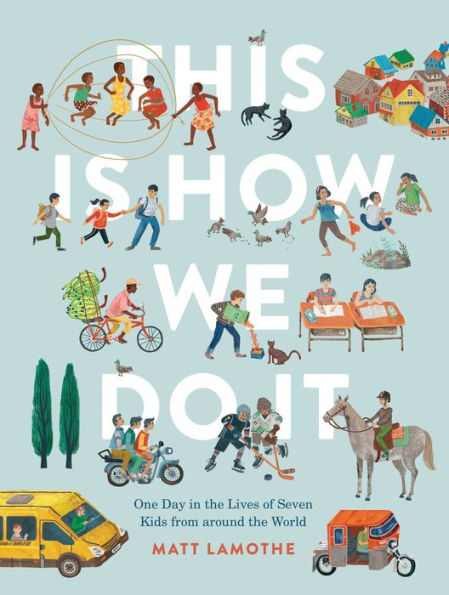
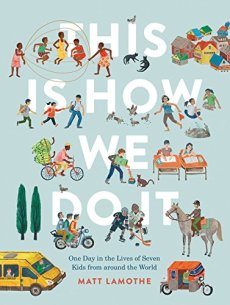
This Is How We Do It: One Day in the Lives of Seven Kids from around the World

By Matt Lamothe


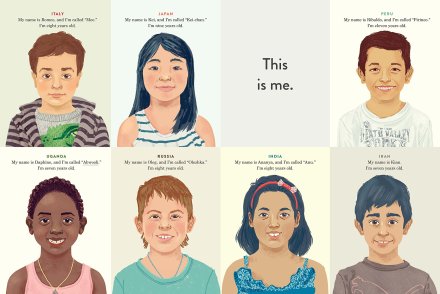
Opening the book, readers are introduced to the seven children they will learn more about. From Codrignano, Italy comes eight-year-old Romeo who lives in a house with a vineyard in the back. Nine-year-old Kei is from Japan, and she lives in a house in Tokyo. Daphine is seven and lives in Uganda in a “house made of wood and mud in the village of Kanyawara. Eight-year-old Oleg lives in an apartment in Uchaly, Russia, “a mining town near the Ural mountains.” From Los Naranjos, Peru comes Ribaldo, who’s eleven and lives in a house his father built. Ananaya is eight and lives in an apartment in Haridwar, India, which is near the Ganges River. And from Gorgan, Iran comes Kian, who’s seven and who also lives in an apartment.

celebrate-picture-books-picture-book-review-this-is-how-we-do-it-kids

Copyright Matt Lamothe, 2017, courtesy of Chronicle Books.

Each child lives with their mom and dad and various siblings. The largest family is Ribaldo’s; he has two younger brothers and a younger sister who still live at home. He also has four older siblings who don’t live at home anymore. When they go to school, four of the children wear uniforms and three choose their own outfits. Breakfast may be different for each child—with foods such as cheese, fried rice, plantains, eggs, bread and fish on the menus—but every morning starts out delicious.

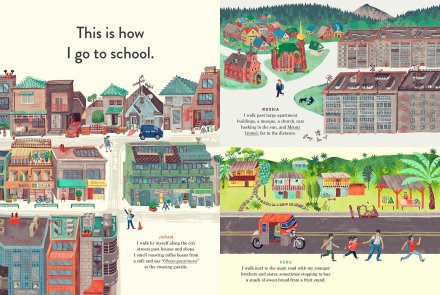
After breakfast, it’s time to go to school. Kei walks along neighborhood streets in Tokyo, while Ribaldo and his sister and brothers walk along the main road, “sometimes stopping to buy a snack of sweet bread from a fruit stand.” Kian rides with his mother or father through the city, and Ananaya is driven to school through busy streets “past hotels, shops, and cows that freely roam the roads.” Romeo takes a school bus, and Daphine must walk a half-hour on a path that meanders past “groves of eucalyptus and banana trees.”

celebrate-picture-books-picture-book-review-this-is-how-we-do-it-breakfast

Copyright Matt Lamothe, 2017, courtesy of Chronicle Books.

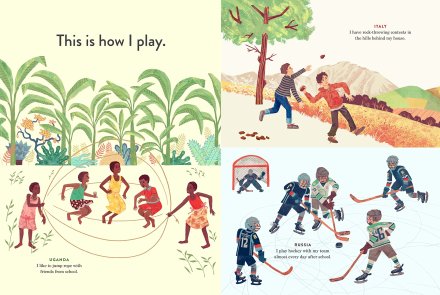
Each child enjoys learning different subjects with their friends. Ribaldo’s school in Peru is small, so the fifth and sixth graders study together in the same room, and in Russia Oleg has the same teacher and classmates from first through fourth grades. There’s time for lunch and then, after school, it’s time to play. Daphine likes to jump rope, Romeo and his friends have stone-throwing contests, and Ananaya plays “Rumaal Chor or ‘Hanky Thief’” in the part with her friends. Kei gets together with her friends at the neighborhood playground and plays “Koori Oni, or ‘Freeze Tag.’” Oleg is on a hockey team and practices almost every day.

celebrate-picture-books-picture-book-review-this-is-how-we-do-it-going-to-school

Copyright Matt Lamothe, 2017, courtesy of Chronicle Books.

Each child also helps around the house doing chores, tending the garden, feeding pets, and other jobs. Dinner is eaten with siblings and parents. Some families eat around 6:00 or 7:00, while others don’t eat until 9:00 or 10:00. After dinner, the kids engage in various activities: Oleg plays chess with his dad, Ananaya plays the board game Carrom with her sister, Kei reads mysteries with her mom, and Romeo and his dad build model cars. Then it’s time to go to sleep in their own comfortable bed underneath the same night sky.

Back matter includes photographs of the families that Matt Lamothe followed in writing this book as well as a glossary of words found throughout the text. The endpapers contain a world map that shows where each child lives. Author’s notes provide insight into the text and his own experiences in researching the book.

celebrate-picture-books-picture-book-review-this-is-how-we-do-it-play

Copyright Matt Lamothe, 2017, courtesy of Chronicle Books.

Matt Lamothe’s fascinating look at the lives of seven children from diverse countries of the world will captivate young readers. The snapshots of the children’s lives from breakfast to bedtime spotlight the subjects that kids are most interested in as they wonder what other children eat, what they wear, how they get to school and what they study, how they play, and what their bedtime routines are. In his straightforward text, Lamothe shows that children around the world are more similar than different with traditions that the readers themselves may share.

celebrate-picture-books-picture-book-review-this-is-how-we-do-it-map

Copyright Matt Lamothe, 2017, courtesy of Chronicle Books.

Lamothe’s colorful illustrations clearly depict food and clothing, neighborhoods and landscapes, classrooms and playtime, families and homes. Children will want to linger over the pages to take in all the details. His portrayals of kids in action at school, at home, and at play will have readers excitedly pointing out, “I do that!” “We eat that!” and wanting to try some of the things that are new as well.

A thought-provoking book to spark stimulating conversations among kids about their world, This Is the Way We Do It is a book to dip into again and again at home and in the classroom.

Ages 5 – 12

Chronicle Books, 2017 | ISBN 978-1452150185

To learn more about Matt Lamothe, his books, and his art, visit his website.

World Anthropology Day Activity

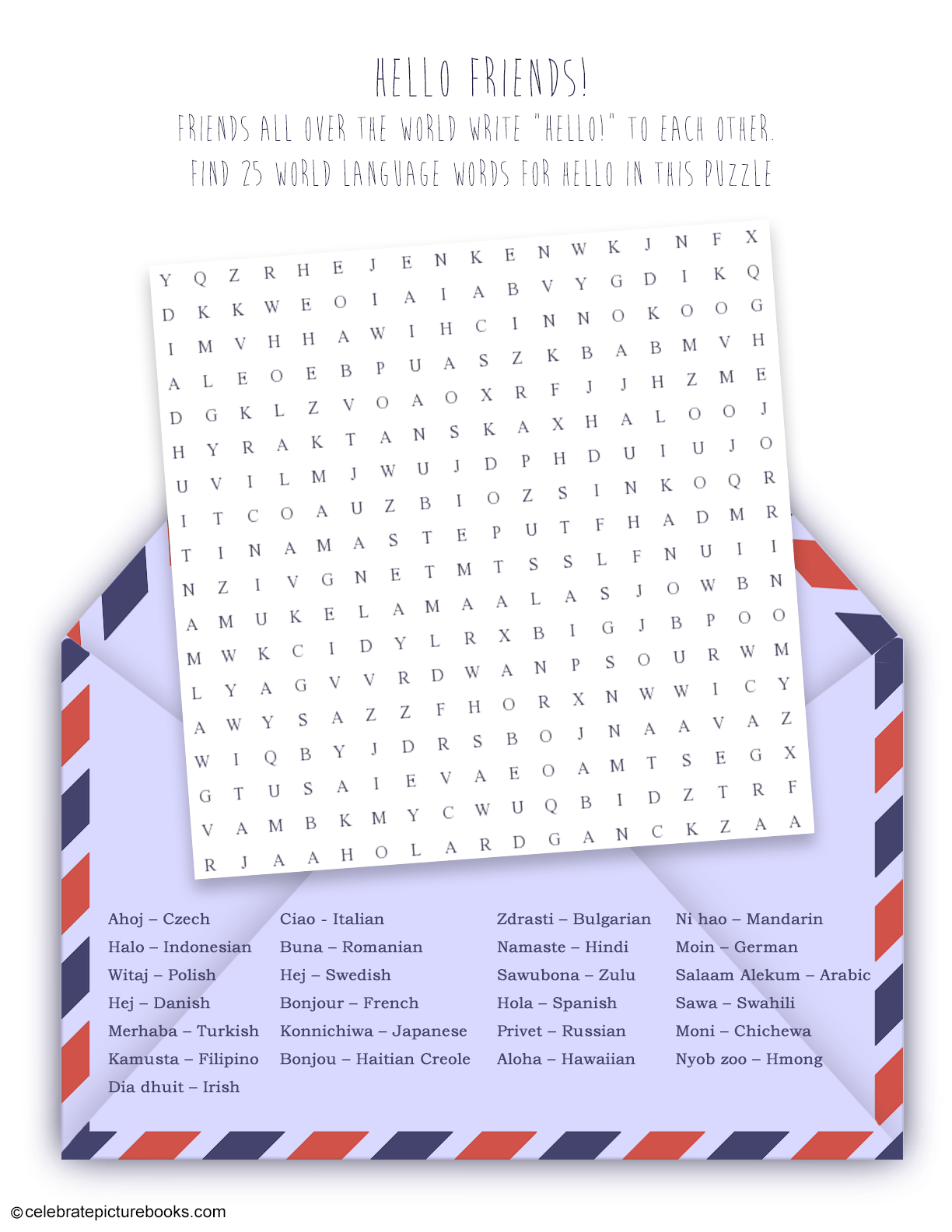
Hello, Friends! Word Search Puzzle


Saying “hello” to our friends and those we meet is something people do all around the world. Find the word for “Friend” in twenty-five languages in this printable puzzle.

Hello, Friends! Word Search Puzzle | Hello, Friends! Word Search Solution

celebrate-picture-books-picture-book-review-this-is-how-we-do-it-cover

You can find This Is How We Do It: One Day in the Lives of Seven Kids from Around the World at these booksellers

Amazon | Barnes & Noble | Books-a-Million | IndieBound

Picture Books


February 6 – It’s Black History Month

celebrate-picture-books-picture-book-review-a-song-for-gwendolyn-brooks-cover

About the Holiday

Black History Month, also known as National African American History Month, celebrates the achievements and contributions of African Americans in United States History. Originally a week-long observance commemorating the birthdays of Abraham Lincoln on February 12 and Frederick Douglass on February 14,  Black History Month was officially established in 1976 by then president Gerald Ford. The holiday is now celebrated across the country with special events and commemorations in schools, churches, and community centers.

I received a copy of A Song for Gwendolyn Brooks from Sterling Children’s Books for review consideration. All opinions are my own. I’m excited to be partnering with Sterling in a giveaway of the book. See details below.
A Song for Gwendolyn Brooks

Written by Alice Faye Duncan | Illustrated by Xia Gordon


“SING a song for Gwendolyn Brooks. / Sing it loud—a Chicago blues.” This remarkable biography of the Pulitzer Prize-winning poet opens with these soaring lines which introduce eight-year-old Gwendolyn who, seeing a flower in the midst of the city, wonders how it will grow. Already she was observing the world with insight and originality.  “Her head is filled with snappy rhymes. / She writes her poems in dime store journals.” Even something as “simple” as a clock does not escape Gwendolyn’s consideration. In The Busy Clock she writes, in part: “Clock, clock tell the time, / Tell the time to me. / Magic, patient instrument, / That is never free.”
celebrate-picture-books-picture-book-review-a-song-for-gwendolyn-brooks-flower

Image copyright Xia Gordon, 2019, text copyright Alice Faye Duncan, 2019. Courtesy of Sterling Children’s Books.

Out in the neighborhood, she stands quietly and watches the other kids laughing and playing—girls jumping rope and boys playing basketball. Gwendolyn’s father is a janitor and her mother stays at home with her and her brother, who is also her best friend. Gwen spends her time sitting on her porch, looking and listening to the sounds and the conversations of the neighborhood women and men. The “children call Gwen—‘ol’ stuck-up heifer!’”

celebrate-picture-books-picture-book-review-a-song-for-gwendolyn-brooks-jump-rope

Image copyright Xia Gordon, 2019, text copyright Alice Faye Duncan, 2019. Courtesy of Sterling Children’s Books.

“SING a song for Gwendolyn Brooks. / Her mother believes. / Her father believes. / But sometimes—Gwendolyn doubts her radiance, / When jarring, crashing, discordant words, / Splotch and splatter her notebook paper.” And what does Gwen do with these poems that just don’t work? She buries them under the snowball bush in the backyard. Once, unbelieving, a teacher accuses Gwendolyn of plagiarism. Her mother takes her daughter back to school, and there on the spot, she composes a poetic answer to the charges: Forgive and Forget. It makes Gwen feel proud, she believes in herself and feels the sun shining on her.

celebrate-picture-books-picture-book-review-a-song-for-gwendolyn-brooks-parents

Image copyright Xia Gordon, 2019, text copyright Alice Faye Duncan, 2019. Courtesy of Sterling Children’s Books.

During the Great Depression, when jobs and money are scarce, Gwendolyn’s “parents are wise and see her light.” They give her time to write and she hones her words and her craft through draft after draft. With each completed poem, Gwen’s confidence grows. The Chicago Defender publishes some of Gwendolyn’s poems, and now she has an audience. Her parents believe that one day their daughter will be a famous poet.

Soon, Gwendolyn finds her way to a group of poets who meet in a South Side community center. She studies under Inez Stark and meets Henry Blakely, who will become her husband. She enters her poems in contests and wins first place over and over. When she and Henry move into their own two-room apartment, Henry goes to work, leaving Gwendolyn to translate the neighborhood into poetry that she types “in a crowded corner.”

celebrate-picture-books-picture-book-review-a-song-for-gwendolyn-brooks-typing

Image copyright Xia Gordon, 2019, text copyright Alice Faye Duncan, 2019. Courtesy of Sterling Children’s Books.

Readers swarm to buy her books. “Gwen paints poems with paintbrush words, / And Gwen takes home a Pulitzer Prize.” Henry and their son celebrate, and Gwen’s parents “…cry tears of joy. / They praise her shine.” For they had always known and had “…Planted love and watered it. / Gwendolyn believed. / She found her light. / And— / A furious flower / GREW!”

An extensive Author’s Note detailing more about the life of Gwendolyn Brooks and her work as well as a timeline and suggested readings follow the text.

celebrate-picture-books-picture-book-review-a-song-for-gwendolyn-brooks-pulitzer

Image copyright Xia Gordon, 2019, text copyright Alice Faye Duncan, 2019. Courtesy of Sterling Children’s Books.

With her own sterling verses, Alice Faye Duncan celebrates the life of Gwendolyn Brooks—the first African American to win the Pulitzer Prize for Literature—taking readers to the Chicago neighborhoods that informed and inspired Brooks’ ideas and the words and rhythms with which she defined them. Along an arc that takes Gwendolyn from a child contemplating the potential of a flower to becoming that blossom herself, Duncan pays tribute to those who recognized Gwen’s genius and helped her fulfill her talent. For readers who themselves may be poets, writers, or other types of artists, Duncan’s beautifully crafted phrases about the artistic process of revision are inspirational and welcome. Standing side-by-side with Duncan’s storytelling are four of Brooks’ poems—The Busy Clock, Forgive and Forget, Ambition, and the children of the poor—Sonnet #2. From cover to cover, Duncan’s book sings with Gwendolyn Brooks’ positivity, confidence, uniqueness, and love for life that made her a unique voice for her time and always.

celebrate-picture-books-picture-book-review-a-song-for-gwendolyn-brooks-portrait

From the portrait of Gwendolyn Brooks that graces the title page and throughout the book, Xia Gordon’s distinctive artwork creates a masterpiece of motion and stillness that mirrors Brooks’ penchant for watching and listening to the sounds and sights that filled her mind and ultimately her notebooks. Downy swoops of violets, pinks, browns, and grays provide backdrops to images of Gwendolyn as a young girl and an adult rendered in lines that show her as down to earth but soaring in her thoughts. Her intelligence and spark shine through on every page. Gwendolyn’s parents appear often, always watchful and supportive. Her friends, her husband, her son, and her readers also populate the pages, giving the book an embracing warmth.

A Song for Gwendolyn Brooks is a must for school, classroom, and public library collections, and for children who are discovering their talents and the parents who nurture them, the book would be an inspirational and invaluable addition to home bookshelves.

Ages 4 and up

Sterling Children’s Books, 2019 | ISBN 978-1454930884

Discover more about Alice Faye Duncan and her books on her website.

To learn more about Xia Gordon, her books, and her art, visit her website.

A Song for Gwendolyn Brooks Giveaway

I’m excited to partner with Sterling Children’s Books in this Instagram giveaway of:

  • One (1) copy of A Song for Gwendolyn Brooks written by Alice Faye Duncan | illustrated by Xia Gordon

It takes just these two steps to enter:

A winner will be chosen on February 12.

Giveaway open to US addresses only. | No Giveaway Accounts 

Prizing provided by Sterling Children’s Books.

Black History Month Activity

celebrate-picture-books-picture-book-review-writing-journal-craft-1

My Writing Journal


With this easy craft, kids can make a journal that will reflect their personality and inspire them to jot down ideas for poems or stories. 

Supplies

  • Two 9-inch by 6-inch pieces of foam or heavy paper
  • Plain or lined 8½ by 11 paper, as many pieces as you’d like
  • Twine or ribbon
  • Foam letters and objects, stickers, play jewels, or other decorations
  • Small scissor, paper hole puncher, or other instrument to make a hole through the foam and paper

Directions

  1. Fold the plain or lined 8½ by 11 paper in half
  2. Place the paper between the sheets of foam
  3. Make a hole through the foam covers and paper near the top and bottom for the twine to tie the journal together
  4. Slip the twine or ribbon through the holes and tie the journal together
  5. Decorate the cover
  6. Start writing!

celebrate-picture-books-picture-book-review-a-song-for-gwendolyn-brooks-cover

You can find A Song for Gwendolyn Brooks at these booksellers

Amazon | Barnes & Noble | Books-a-Million | Indiebound

Picture Book Review