March 3 – World Wildlife Day

celebrate-picture-books-picture-book-review-galapagos-girl-cover

About the Holiday

In December of 2013 the United Nations General Assembly proclaimed March 3rd as World Wildlife Day to promote awareness of our environment and the dangers to it. Every year a different theme is chosen to spotlight an area of the world, a particular species, or a group of activists. This year’s theme is “life below water for people and planet” and focuses on marine species, the importance of marine wildlife, and the issues affecting the health and survival of the ocean and ocean creatures. The day also celebrates successful conservation and sustainability initiatives. To learn more about the day, special events, and how you and your kids can get involved today and throughout the year, visit the World Wildlife Day website.

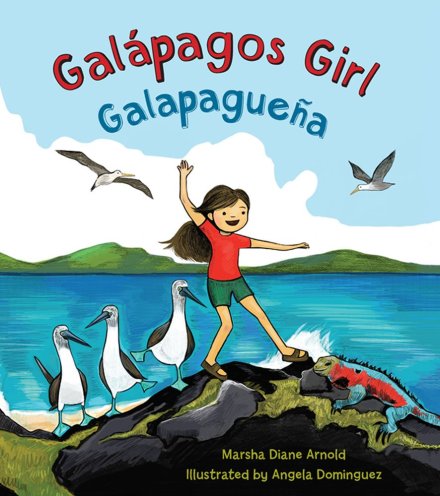
Galápagos Girl / Galapagueña

Written by Marsha Diane Arnold | Illustrated by Angela Dominguez | Translated by Adriana Dominguez


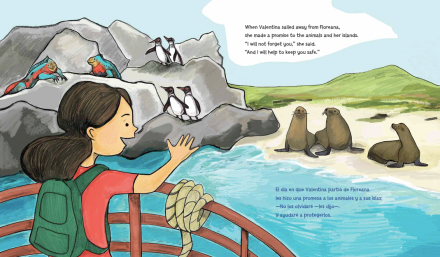
On the day when baby Valentina joined Mamá, Papá, and eleven brothers and sisters, even the sea lions, blue-footed boobies, and iguanas seemed to welcome her to the “island formed by fire.” Valentina loved growing up on the Galápagos Island of Floreana. She explored the lava rocks, where Sally Lightfoot crabs scuttled back and forth. She swam with dolphins and manta rays, and even played with penguins.

celebrate-picture-books-picture-book-review-Galápagos-Girl-crabscelebrate-picture-books-picture-book-review-Galápagos-Girl-crabs

Image copyright Angela Dominguez, 2018, text copyright Marsha Diane Arnold, 2018. Courtesy of Lee & Low Books.

“Valentina watched pink flamingoes wading near mangroves. Blue butterflies fluttering on the breeze. Red-and-green iguanas sneezing salt like tiny geysers.” The crashing waves, albatross, and finches created a symphony as Valentina stopped to rest on a grassy cliff overlooking the ocean. The lava lizards, blue-footed boobies, and twirling sea lions provided young Valentina with a variety of dance partners.

celebrate-picture-books-picture-book-review-Galápagos-Girl-iguana

Image copyright Angela Dominguez, 2018, text copyright Marsha Diane Arnold, 2018. Courtesy of Lee & Low Books.

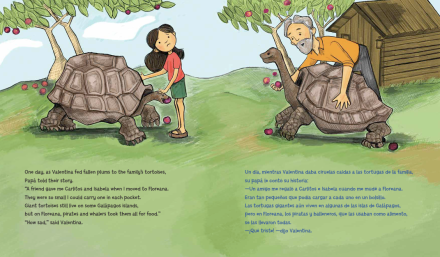
At home, Valentina’s family shared their home with two giant tortoises—Carlitos and Isabella. One day Papá told Valentina their story as they fed the tortoises plums that had fallen from their backyard trees. Papá had gotten Carlitos and Isabella from a friend when he first moved to Floreana. Although it was nearly impossible to imagine now that the tortoises were grown, at the time they were so small that they fit into Papá’s pockets.

celebrate-picture-books-picture-book-review-Galápagos-Girl-tortoises

Image copyright Angela Dominguez, 2018, text copyright Marsha Diane Arnold, 2018. Courtesy of Lee & Low Books.

There was also a sad note to Papá’s story. He said that while giant tortoises still lived on other Galápagos islands, pirates and whalers had wiped out the population on Floreana. Papá went on to tell Valentina that many Galápagos animals were in danger. They were “threatened by other animals that don’t belong here. Threatened by people who don’t understand how to care for our islands.” Valentina promised that she would always protect them.

When she was older, Valentina left the island to go to school. She didn’t want to leave her beautiful home, but Mamá told her that she was “ready to learn about the world beyond.” And Papá reminded her that “like our islands, you have a heart full of fire.” On school vacations, Valentina always came back to study the wildlife on the Galápagos islands. She had not forgotten her promise to keep them safe.

celebrate-picture-books-picture-book-review-Galápagos-Girl-going-to-school

Image copyright Angela Dominguez, 2018, text copyright Marsha Diane Arnold, 2018. Courtesy of Lee & Low Books.

After she graduated with a degree in biology, Valentina returned to the islands as a nature guide to teach visitors about the beauty and uniqueness of the Galápagos. Some visitors were even lucky enough to meet Carlitos and Isabella when the plums dropped from the trees and the two old tortoises returned from exploring Floreana to eat them. Because of Valentina’s commitment to the Galápagos, her visitors also made a promise to always remember and protect them.

Extensive backmatter includes an Author’s Note about Valentina Cruz, the tortoises Carlitos and Isabella, and the history of tortoises on Floreana. There is also information on the Galápagos as well as fun facts about all of the animals in the story. A bibliography of sources invites readers to learn more.

Each two-page spread presents the text in English and translated into Spanish by Adriana Dominguez.

celebrate-picture-books-picture-book-review-Galápagos-Girl-guiding-visitors

Image copyright Angela Dominguez, 2018, text copyright Marsha Diane Arnold, 2018. Courtesy of Lee & Low Books.

Marsha Diane Arnold’s lyrical and buoyant passages sing with the carefree joy Valentina felt as a girl exploring her beloved Galápagos and which brought her back home as a biologist to protect them. After seeing Valentina playing and swimming with the native animals and feeding Carlitos and Isabella, readers will also feel Valentina’s sadness at the dangers they face and want to make a positive difference to the environment and the world around them. Arnold’s dialogue-rich storytelling highlights the personal nature of the subject and will draw children into Valentina’s world.celebrate-picture-books-picture-book-review-Galápagos-Girl-blue-footed-booby

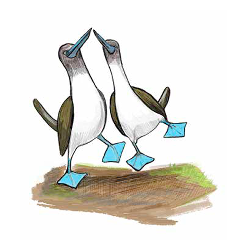
Saturated with glorious color, each of Angela Dominguez’s illustrations is a celebration of the splendor of the Galápagos. Playful sea lions, high-stepping blue-footed boobies, scampering crabs, and even a sneezing iguana will captivate young readers and inspire them to learn more about these creatures and the islands. Images of Valentina camping out to study the animals during school breaks will excite environmentally conscious kids, and pictures of Carlitos and Isabella happily munching on plums will generate smiles and “awwws.”

Galápagos Girl / Galapagueña will excite kids to learn more not only about the Galápagos region but about their own local environment, and the call to action will spark an enthusiasm for protecting the earth’s animals. The book would make an inspiring addition to home bookshelves and an excellent way to begin classroom discussions on environmental issues and science lessons. The engaging Spanish translation will delight Spanish-speaking and bilingual families.

Ages 4 – 8

Lee & Low Books, 2018 | ISBN 978-0892394135

Discover more about Marsha Diane Arnold and her books on her website.

Read an interview with Marsha Diane Arnold here.

To learn more about Angela Dominguez, her books, and her art, visit her website.

World Wildlife Day Activity

celebrate-picture-books-picture-book-review-animals-of-the-galapagos-match-up-puzzle

Animals of the Galápagos Match Up Puzzle


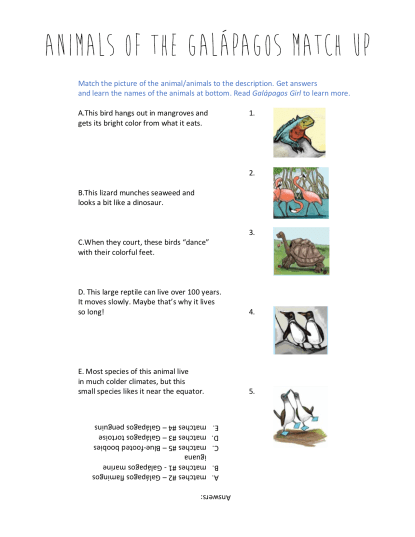
There are so many fascinating animals that live in the Galápagos! Can you match the picture of each animal to its description in this printable Animals of the Galápagos Match Up Puzzle? You can find and download the activity sheet from the Lee & Low Books website:

Animals of the Galápagos Match Up Puzzle

celebrate-picture-books-picture-book-review-galapagos-girl-cover

You can find Galápagos Girl / Galapagueña at these booksellers

Amazon | Barnes & Noble | Books-a-Million | IndieBound

Picture Book Review


February 28 – Digital Learning Day

celebrate-picture-books-picture-book-review-grace-hopper-queen-of-computer-code-cover

About the Holiday

Established in 2012, today’s holiday raises awareness of the advances in educational technology for classrooms and teachers and to spread opportunities to schools and communities across the country for all youth to use. Digital Learning Day also highlights innovative educators who are using technology to enhance their lessons and bring the latest information and learning tools to students from kindergarten through high school. For more information on today’s holiday and to find resources for using technology in the classroom visit the Digital Learning Day website.

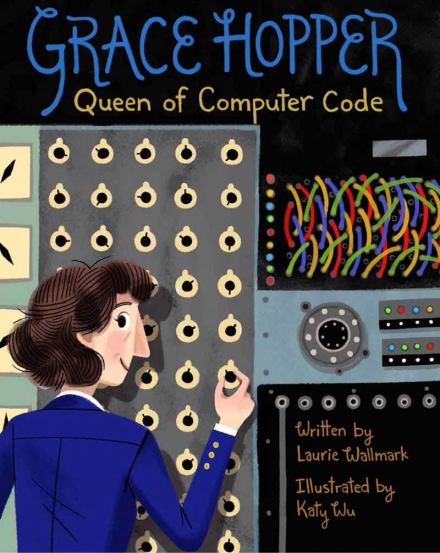
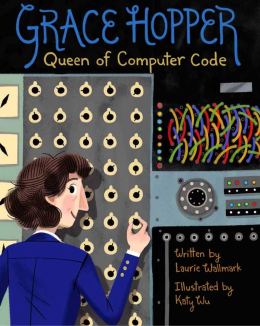
Grace Hopper: Queen of Computer Code

Written by Laurie Wallmark | Illustrated by Katy Wu


As Grace Hopper finished writing a computer code to guide Navy missiles, she noticed that there was a certain string of code that she had repeated many times. “Grace snorted. What a colossal waste of time! There had to be a better way. Why not make the computer do the work?” Grace figured out a way for the computer to store pieces of a program and then find them again to create another program. Grace was the first computer programmer to do this.

celebrate-picture-books-picture-book-review-grace-hopper-queen-of-computer-code-desk

Image copyright Katy Wu, 2017, text copyright Laurie Wallmark, 2017. Courtesy of Sterling Children’s Books.

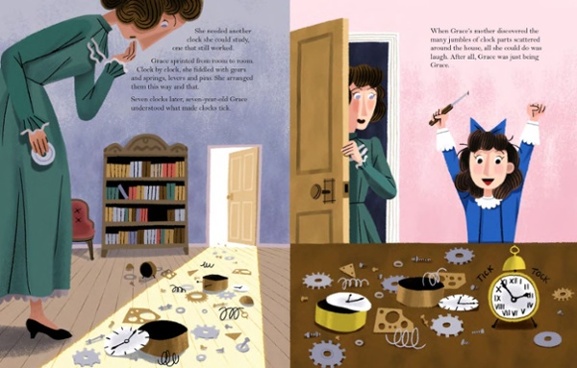
Even as a child Grace loved to tinker with mechanical things. She once opened all the clocks in the house to figure out how they worked. What did her mother say when she saw that? “…all she could do was laugh. After all, Grace was just being Grace.” Later, she built an electric elevator for her dollhouse. She reveled in difficult problems, and while the girls in her class “wore frilly dresses and learned to be young ladies, Grace studies math and science.”

Studying hard, Grace finished high school two years early, and while she had the grades in math and science to go to college, she failed Latin. Without passing Latin, she couldn’t go to college. Grace buckled down and the next year she was off to Vassar College. Grace passed up taking classes such as “Husbands and Wives” and “Motherhood” to take math and physics. But Grace did a lot more than just study. “Her personal motto was ‘Dare and Do,’ and she took it to heart. She flew in a barnstormer airplane.

celebrate-picture-books-picture-book-review-grace-hopper-queen-of-computer-code-clock

Image copyright Katy Wu, 2017, text copyright Laurie Wallmark, 2017. Courtesy of Sterling Children’s Books.

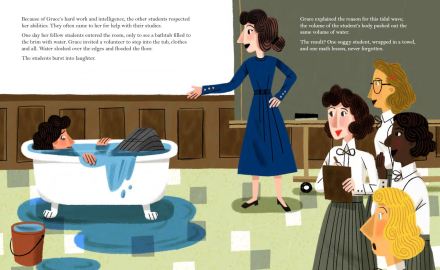
Grace went on to graduate school at Yale and then took a job teaching at Vassar. She knew how to make her classes fun and informative. At this time America was at war and needed mathematicians. She tried to join the Navy, but they told her she was too old and too thin. She kept asking, however, and after a year, the Navy agreed to let her join. She “was assigned to write programs for one of the first computers ever built, the Mark I. Only a few people had ever programmed before, so she had to learn how to do it on her own.”

celebrate-picture-books-picture-book-review-grace-hopper-queen-of-computer-code-bath

Image copyright Katy Wu, 2017, text copyright Laurie Wallmark, 2017. Courtesy of Sterling Children’s Books.

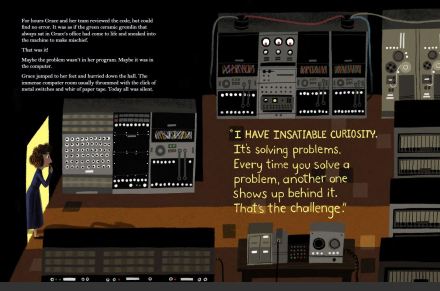
Then one day Grace learned that “the new computer, the Mark II, had stopped working.” Grace and her coworkers searched and searched for an error in the code, but they found none. Then Grace thought that maybe the problem wasn’t in the code but in the computer itself. They looked inside the huge machine for loose wires or electrical shorts. Nothing. Then they saw it—a moth had gotten inside and was blocking a switch.

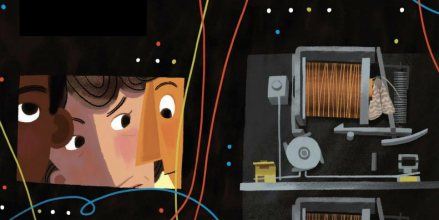
celebrate-picture-books-picture-book-review-grace-hopper-queen-of-computer-code-computer

Image copyright Katy Wu, 2017, text copyright Laurie Wallmark, 2017. Courtesy of Sterling Children’s Books.

With a tweezer, a worker removed the moth and the computer started up again. Grace taped the moth into the log book and wrote, “‘First actual case of [a computer] bug being found,’” and the term “computer bug” was born. Grace also revolutionized programming when she “invented a program that let people use words to tell the computer what to do” instead of pages and pages of 1s and 0s.

When Grace turned sixty, the Navy made her retire. Within six months, they asked her to return and she worked for them for another twenty years. She retired again at the age of eighty as the Queen of Computer Code. As many people called her, she really was “Amazing Grace.”

A timeline of Grace Hopper’s life as well as a list of honors awarded her and resources for further reading about Grace and other women in STEM.

celebrate-picture-books-picture-book-review-grace-hopper-queen-of-computer-code-coil

Image copyright Katy Wu, 2017, text copyright Laurie Wallmark, 2017. Courtesy of Sterling Children’s Books.

Laurie Wallmark’s engaging biography of Grace Hopper will delight kids as they see her grow from a precocious and innovative child to a woman who used her intelligence and imagination to lead the computer revolution. Specific examples of Grace’s successes and the support she received at home will encourage other engineering-minded kids, and the inclusion of her failure in Latin demonstrates that everyone has areas of weakness that can be overcome with hard work. Grace’s perseverance in getting the Navy to accept her is also a good lesson for children on not giving up on their dreams. The provenance of the term “computer bug” will surprise and amuse readers.

Katy Wu’s charming illustrations of events in Grace Hopper’s life take readers back to time when computers were new. Children will marvel over the size and design of early computers. Grace’s sense of adventure and humor are on display is colorful and action-packed images. Uplifting and encouraging sayings by Grace Hopper that will inspire children are sprinkled throughout the pages.

A book to motivate children to reach for their dreams and spark pride in individual accomplishment, Grace Hopper: Queen of Computer Code would be an influential book to add to home, school, and public libraries.

Ages 5 and up

Sterling Children’s Books, 2017 | ISBN 978-1454920007

Discover more about Laurie Wallmark and her books on her website.

To learn more about Katy Wu, her books, and her art on Tumblr.

Digital Learning Day Activity

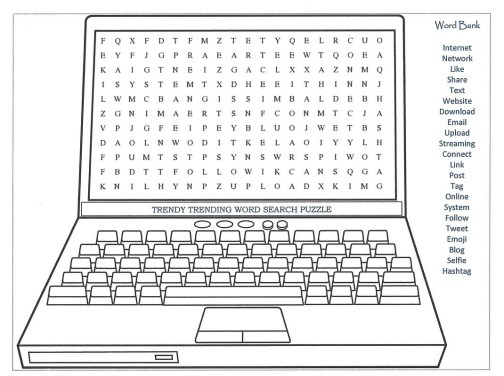
celebrate-picture-books-picture-book-review-trendy-trending-word-search-puzzle

Trendy Trending Word Search Puzzle


Digital communication has a language all its own! Open this laptop and find the twenty-two Internet-based words in this printable word search puzzle.

Trendy Trending Word Search Puzzle and Solution

celebrate-picture-books-picture-book-review-grace-hopper-queen-of-computer-code-cover

You can find Grace Hopper: Queen of Computer Code at these booksellers

Amazon | Barnes & Noble | Books-a-Million | IndieBound

Picture Book Review
February 7 – National Periodic Table Day

celebrate-picture-books-picture-book-review-Marie-Curie-little-people-big-dreams-cover

About the Holiday

Today’s holiday was established in 2016 by David T. Steineker, an author, inventor, and – as you might imagine – chemistry teacher at Jefferson County Public Schools in Kentucky. He devised the holiday to honor the work of categorizing the elements begun by John Newlands, who published the first periodic table on February 7, 1863, and continued into the early 20th century as new elements were discovered. While the modern periodic table has undergone few changes since then, new discoveries and different ways of approaching the table may bring fresh changes in the years to come.

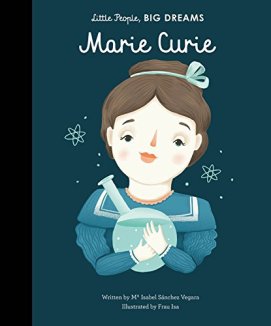
Marie Curie (Little People, Big Dreams)

Marie: My First Marie Curie (Board Book)

Written by Isabel Sánchez Vegara | Illustrated by Frau Isa


From the time when Marie was a little girl, she knew she wanted to be a scientist. Marie was very smart. “At school, she won a gold medal for her studies, which she kept in her drawer like a treasure.” Because women were not allowed to go to college in her country, she moved to France to go to the university there. Even though French was not her first language, Marie was soon the top math and science student in Paris.

celebrate-picture-books-picture-book-review-Marie-Curie-little-people-big-dreams-dreaming

Copyright Frau Isa, 2018, courtesy of Frances Lincoln Children’s Books.

One day Marie met Pierre, who loved science as much as she did. They got married and worked together in their own laboratory, where they discovered radium and polonium. “It was such a thrilling moment for science!” Marie and Pierre even won the Nobel Prize. Marie was the first woman ever to be awarded this honor. When Pierre later had an accident, Marie was left alone to continue their work.

celebrate-picture-books-picture-book-review-Marie-Curie-little-people-big-dreams-marie-and-pierre

Copyright Frau Isa, 2018, courtesy of Frances Lincoln Children’s Books.

All her research and experiments paid off when she was awarded her second Nobel Prize. When war broke out, “Marie’s discoveries were used by doctors to help injured soldiers.” Marie inspired many girls who studied science at her own institute in Paris. Besides science, Marie taught her students that there was nothing to fear, “many things to learn, and many ways to help those in need.”

A timeline and brief, yet detailed biography of her life follows the story.

celebrate-picture-books-picture-book-review-Marie-Curie-little-people-big-dreams-marie-with-noble-prize

Copyright Frau Isa, 2018, courtesy of Frances Lincoln Children’s Books.

With thrilling recognition that even in the youngest hearts beat future writers, artists, adventurers, designers, and scientists, the Little People, Big Dreams series introduces preschoolers to inspiring women role models. In Marie Curie: Little People, Big Dreams, Isabel Sánchez Vegara reveals the life and work of Marie Curie with straightforward storytelling that illuminates while affirming the intelligence of her young audience. Uplifting, life-determining personality traits that carried Marie over obstacles and to the top of her profession—such as not taking no for an answer, treasuring your accomplishments, working hard, and helping others—are highlighted for little ones to learn from.

Frau Isa’s stylish illustrations in a striking, subdued color palette will entice the youngest readers to listen and learn. While the spotlight is always on Marie, each page also focuses on one or two main images, such as Marie and Pierre’s lab table, a wounded soldier’s X-ray, and Marie holding her Nobel Prize, that help little ones see and understand the important aspects of the story.

Encapsulating both history and the timeless persistence that drives people to achieve their full potential, Marie Curie—available in both picture book and board book editions—is a must for preschool classrooms and would be a rousing addition to home bookshelves.

Ages 3 – 5

Frances Lincoln Children’s Books, 2018 | ISBN 978-1847809629 (Picture Book); 978-1786032539 (Board Book)

You can check out more about Isabel Sánchez Vegara on Instagram.

Discover more about Frau Isa and her art on her website.

National Periodic Table Day Activity

celebrate-picture-books-picture-book-review-green=pennies-experiment

Green Pennies Chemistry Experiment


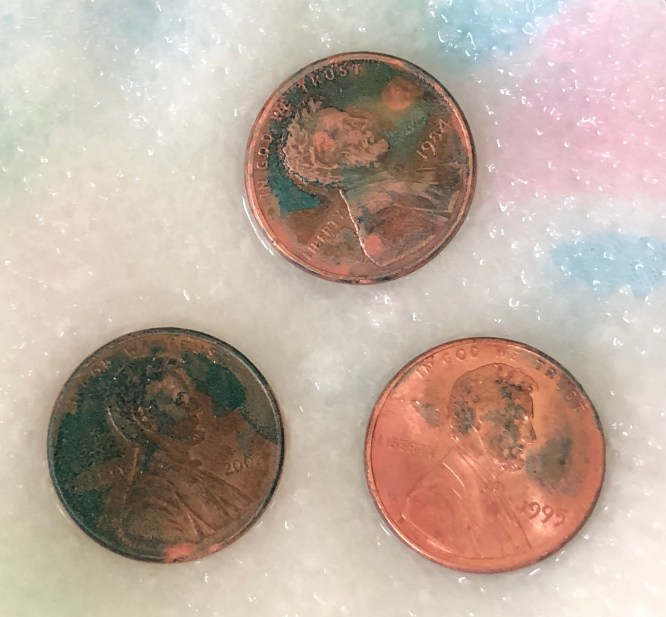
You know what color pennies are! They’re those brownish coins amid all the silver. But what if you could turn those pennies green—like dollar bills? You can with this easy and way cool chemistry experiment!

Supplies

  • 10 – 12 dull pennies
  • Vinegar
  • Lemon juice
  • Salt
  • 2 small bowls
  • ¼ cup measuring cup
  • 1 teaspoon
  • Paper towels

Directions

IMG_6569

Experiment 1

  1. Pour ¼ cup vinegar into a bowl
  2. Add 1 teaspoon salt
  3. Mix thoroughly until salt has dissolved
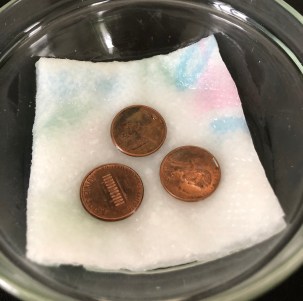
  4. Place a few pennies in the bowl and leave for five minutes.
  5. Take the pennies out and place them on the paper towel.
  6. Let the pennies dry and watch what happens. The reaction becomes more dramatic over time, so check on your pennies at different times throughout the day

Extra Observation:

  1. To see the chemical reaction at work, dip one penny half way into the vinegar/salt solution and wait a minute
  2. Lift the penny out of the solution and see the result

IMG_6588

Experiment 2

  1. Fold a paper towel to several thicknesses and place in bowl
  2. Place a few pennies on top of the paper towel
  3. Pour enough vinegar over the pennies to saturate the paper towel
  4. Wait two to three hours and see what happens
  5. You can leave the pennies in the bowl and continue to add vinegar as the paper towel dries. Flip the pennies over to create a chemical reaction on both sides

IMG_6590

Experiment with other acids, such as the lemon juice.

Why do the pennies turn green?

Pennies are made of copper. The vinegar and salt solution helps the copper react with oxygen in the air to form the blue-green patina of malachite on the surface of the penny. This chemical reaction is called oxidation. You can see the same green color on other things made of copper like plumbing pipes and many statues—even the Statue of Liberty!

If you’d like to record your observations of your pennies like a chemist does, download and print this lab sheet.

celebrate-picture-books-picture-book-review-Marie-Curie-little-people-big-dreams-cover

You can find Marie Curie (Little People, Big Dreams) at these booksellers

Amazon | Barnes & Noble | Books-a-Million | IndieBound

You can find the board book edition, Marie: My First Marie Curie here

Amazon | Barnes & Noble | Books-a-Million | IndieBound

YouPicture Book Review

February 6 – It’s Black History Month

celebrate-picture-books-picture-book-review-a-song-for-gwendolyn-brooks-cover

About the Holiday

Black History Month, also known as National African American History Month, celebrates the achievements and contributions of African Americans in United States History. Originally a week-long observance commemorating the birthdays of Abraham Lincoln on February 12 and Frederick Douglass on February 14,  Black History Month was officially established in 1976 by then president Gerald Ford. The holiday is now celebrated across the country with special events and commemorations in schools, churches, and community centers.

I received a copy of A Song for Gwendolyn Brooks from Sterling Children’s Books for review consideration. All opinions are my own. I’m excited to be partnering with Sterling in a giveaway of the book. See details below.

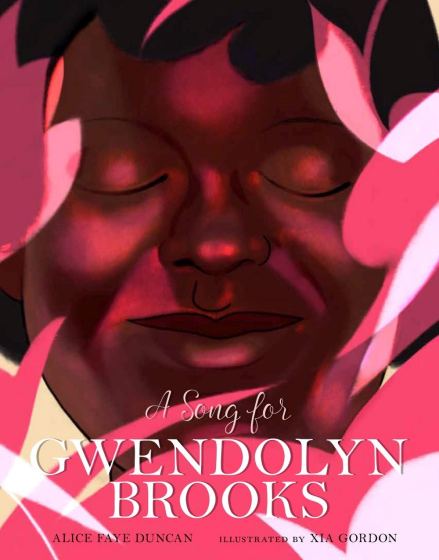
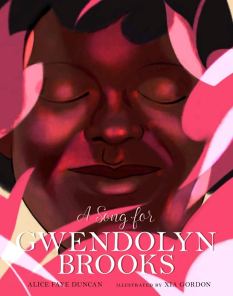
A Song for Gwendolyn Brooks

Written by Alice Faye Duncan | Illustrated by Xia Gordon


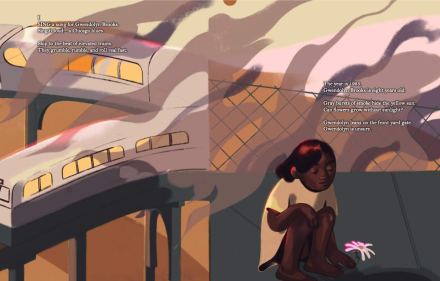
“SING a song for Gwendolyn Brooks. / Sing it loud—a Chicago blues.” This remarkable biography of the Pulitzer Prize-winning poet opens with these soaring lines which introduce eight-year-old Gwendolyn who, seeing a flower in the midst of the city, wonders how it will grow. Already she was observing the world with insight and originality.  “Her head is filled with snappy rhymes. / She writes her poems in dime store journals.” Even something as “simple” as a clock does not escape Gwendolyn’s consideration. In The Busy Clock she writes, in part: “Clock, clock tell the time, / Tell the time to me. / Magic, patient instrument, / That is never free.”

celebrate-picture-books-picture-book-review-a-song-for-gwendolyn-brooks-flower

Image copyright Xia Gordon, 2019, text copyright Alice Faye Duncan, 2019. Courtesy of Sterling Children’s Books.

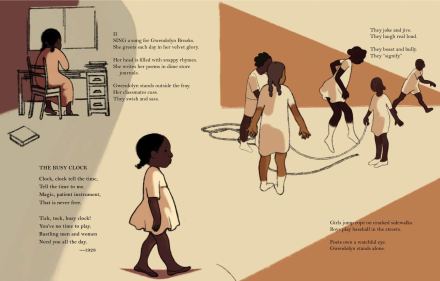
Out in the neighborhood, she stands quietly and watches the other kids laughing and playing—girls jumping rope and boys playing basketball. Gwendolyn’s father is a janitor and her mother stays at home with her and her brother, who is also her best friend. Gwen spends her time sitting on her porch, looking and listening to the sounds and the conversations of the neighborhood women and men. The “children call Gwen—‘ol’ stuck-up heifer!’”

celebrate-picture-books-picture-book-review-a-song-for-gwendolyn-brooks-jump-rope

Image copyright Xia Gordon, 2019, text copyright Alice Faye Duncan, 2019. Courtesy of Sterling Children’s Books.

“SING a song for Gwendolyn Brooks. / Her mother believes. / Her father believes. / But sometimes—Gwendolyn doubts her radiance, / When jarring, crashing, discordant words, / Splotch and splatter her notebook paper.” And what does Gwen do with these poems that just don’t work? She buries them under the snowball bush in the backyard. Once, unbelieving, a teacher accuses Gwendolyn of plagiarism. Her mother takes her daughter back to school, and there on the spot, she composes a poetic answer to the charges: Forgive and Forget. It makes Gwen feel proud, she believes in herself and feels the sun shining on her.

celebrate-picture-books-picture-book-review-a-song-for-gwendolyn-brooks-parents

Image copyright Xia Gordon, 2019, text copyright Alice Faye Duncan, 2019. Courtesy of Sterling Children’s Books.

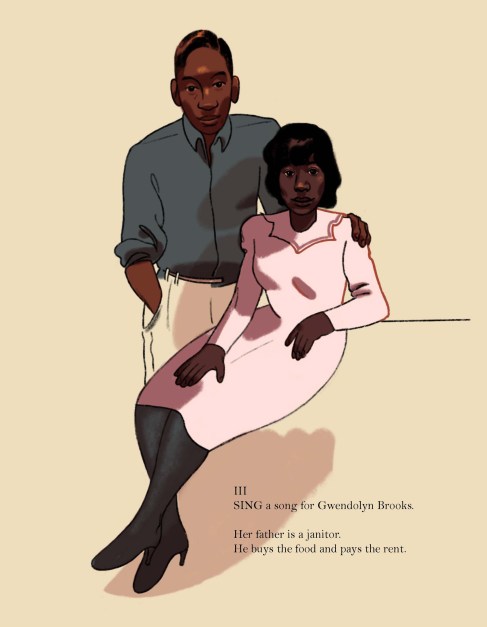
During the Great Depression, when jobs and money are scarce, Gwendolyn’s “parents are wise and see her light.” They give her time to write and she hones her words and her craft through draft after draft. With each completed poem, Gwen’s confidence grows. The Chicago Defender publishes some of Gwendolyn’s poems, and now she has an audience. Her parents believe that one day their daughter will be a famous poet.

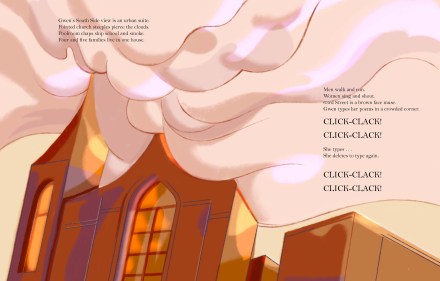
Soon, Gwendolyn finds her way to a group of poets who meet in a South Side community center. She studies under Inez Stark and meets Henry Blakely, who will become her husband. She enters her poems in contests and wins first place over and over. When she and Henry move into their own two-room apartment, Henry goes to work, leaving Gwendolyn to translate the neighborhood into poetry that she types “in a crowded corner.”

celebrate-picture-books-picture-book-review-a-song-for-gwendolyn-brooks-typing

Image copyright Xia Gordon, 2019, text copyright Alice Faye Duncan, 2019. Courtesy of Sterling Children’s Books.

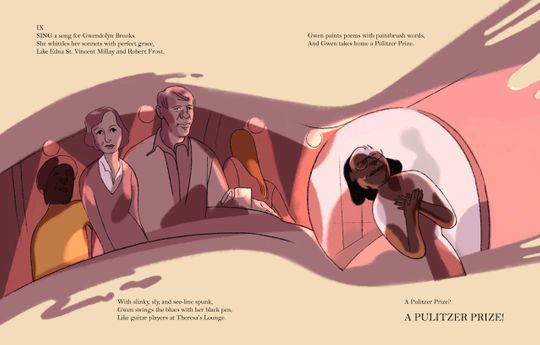
Readers swarm to buy her books. “Gwen paints poems with paintbrush words, / And Gwen takes home a Pulitzer Prize.” Henry and their son celebrate, and Gwen’s parents “…cry tears of joy. / They praise her shine.” For they had always known and had “…Planted love and watered it. / Gwendolyn believed. / She found her light. / And— / A furious flower / GREW!”

An extensive Author’s Note detailing more about the life of Gwendolyn Brooks and her work as well as a timeline and suggested readings follow the text.

celebrate-picture-books-picture-book-review-a-song-for-gwendolyn-brooks-pulitzer

Image copyright Xia Gordon, 2019, text copyright Alice Faye Duncan, 2019. Courtesy of Sterling Children’s Books.

With her own sterling verses, Alice Faye Duncan celebrates the life of Gwendolyn Brooks—the first African American to win the Pulitzer Prize for Literature—taking readers to the Chicago neighborhoods that informed and inspired Brooks’ ideas and the words and rhythms with which she defined them. Along an arc that takes Gwendolyn from a child contemplating the potential of a flower to becoming that blossom herself, Duncan pays tribute to those who recognized Gwen’s genius and helped her fulfill her talent. For readers who themselves may be poets, writers, or other types of artists, Duncan’s beautifully crafted phrases about the artistic process of revision are inspirational and welcome. Standing side-by-side with Duncan’s storytelling are four of Brooks’ poems—The Busy Clock, Forgive and Forget, Ambition, and the children of the poor—Sonnet #2. From cover to cover, Duncan’s book sings with Gwendolyn Brooks’ positivity, confidence, uniqueness, and love for life that made her a unique voice for her time and always.

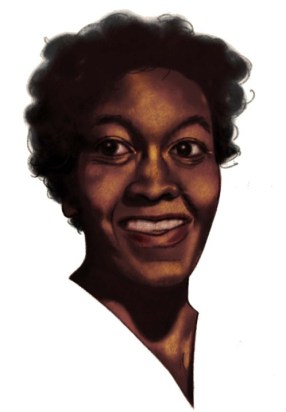
celebrate-picture-books-picture-book-review-a-song-for-gwendolyn-brooks-portrait

From the portrait of Gwendolyn Brooks that graces the title page and throughout the book, Xia Gordon’s distinctive artwork creates a masterpiece of motion and stillness that mirrors Brooks’ penchant for watching and listening to the sounds and sights that filled her mind and ultimately her notebooks. Downy swoops of violets, pinks, browns, and grays provide backdrops to images of Gwendolyn as a young girl and an adult rendered in lines that show her as down to earth but soaring in her thoughts. Her intelligence and spark shine through on every page. Gwendolyn’s parents appear often, always watchful and supportive. Her friends, her husband, her son, and her readers also populate the pages, giving the book an embracing warmth.

A Song for Gwendolyn Brooks is a must for school, classroom, and public library collections, and for children who are discovering their talents and the parents who nurture them, the book would be an inspirational and invaluable addition to home bookshelves.

Ages 4 and up

Sterling Children’s Books, 2019 | ISBN 978-1454930884

Discover more about Alice Faye Duncan and her books on her website.

To learn more about Xia Gordon, her books, and her art, visit her website.

A Song for Gwendolyn Brooks Giveaway

I’m excited to partner with Sterling Children’s Books in this Instagram giveaway of:

  • One (1) copy of A Song for Gwendolyn Brooks written by Alice Faye Duncan | illustrated by Xia Gordon

It takes just these two steps to enter:

A winner will be chosen on February 12.

Giveaway open to US addresses only. | No Giveaway Accounts 

Prizing provided by Sterling Children’s Books.

Black History Month Activity

celebrate-picture-books-picture-book-review-writing-journal-craft-1

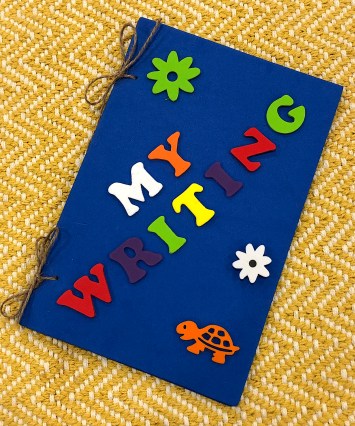
My Writing Journal


With this easy craft, kids can make a journal that will reflect their personality and inspire them to jot down ideas for poems or stories. 

Supplies

  • Two 9-inch by 6-inch pieces of foam or heavy paper
  • Plain or lined 8½ by 11 paper, as many pieces as you’d like
  • Twine or ribbon
  • Foam letters and objects, stickers, play jewels, or other decorations
  • Small scissor, paper hole puncher, or other instrument to make a hole through the foam and paper

Directions

  1. Fold the plain or lined 8½ by 11 paper in half
  2. Place the paper between the sheets of foam
  3. Make a hole through the foam covers and paper near the top and bottom for the twine to tie the journal together
  4. Slip the twine or ribbon through the holes and tie the journal together
  5. Decorate the cover
  6. Start writing!

celebrate-picture-books-picture-book-review-a-song-for-gwendolyn-brooks-cover

You can find A Song for Gwendolyn Brooks at these booksellers

Amazon | Barnes & Noble | Books-a-Million | Indiebound

Picture Book Review

February 3 – National Women Physicians Day

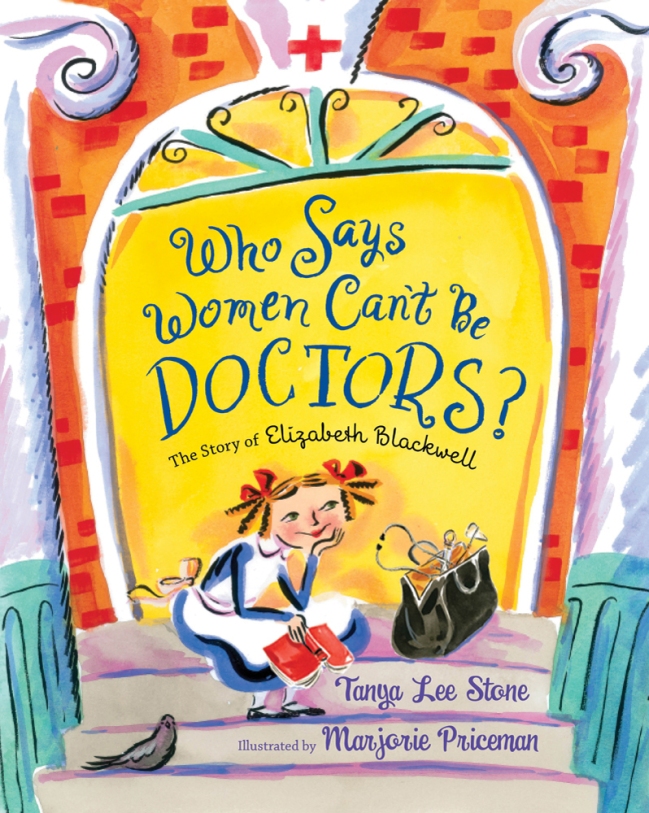
Who Says Women Can't Be Doctors by Tanya Lee Stone and Marjorie Priceman picture book review

About the Holiday

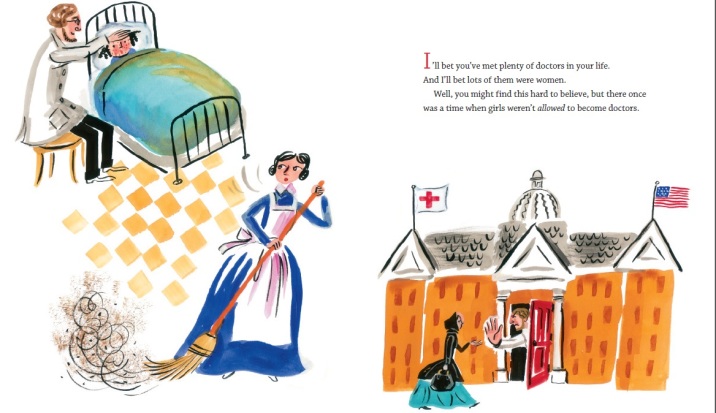
Today, we celebrate the birthday of Elizabeth Blackwell, who in 1849 became the first woman to earn a medical degree in the United States. Her courage in the face of much opposition paved the way for other women to pursue careers in the medical field. National Women Physicians Day also honors the achievements and contributions of all women physicians around the world. 

Who Says Women Can’t be Doctors? The Story of Elizabeth Blackwell

Written by Tanya Lee Stone | Illustrated by Marjorie Priceman


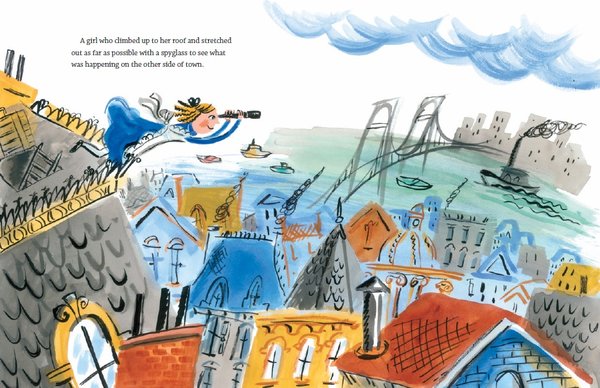
Once upon a time there were no women doctors. Women weren’t even allowed to be doctors. Sounds like a fairy tale, doesn’t it? But it was the truth. Then Elizabeth Blackwell, came along. Elizabeth was not like other girls of the 1830s. She loved to explore and take on challenges. She could lift her brother over her head, and to toughen herself up she slept on the hard wood floor. To get a better look at the world she once climbed to the roof of her house and leaned waaaaay out with a spyglass. What did she see? Maybe she saw her future. But it wasn’t what she imagined at the time. Blood made her queasy, dissection was disgusting, and being sick just made her want to hide from all the fussing.

celebrate-picture-books-picture-book-review-who-says-women-can't-be-doctors-elizabeth-brave

Image copyright Marjorie Priceman, 2013, text copyright Tanya Lee Stone, 2013. Courtesy of Henry Holt and Company.

A comment by a sick friend, however, puts a bee in Elizabeth’s bonnet. Mary Donaldson tells Elizabeth that she would much rather have been examined by a woman than her male doctor, and then says, “You should be a doctor, Elizabeth.” What a crazy notion, right? Well… Elizabeth can’t stop thinking about it. She asks around. Some people think it’s a good idea, but impossible; others simply think it’s impossible. They believe women aren’t strong enough or smart enough and they laugh at her. By this time, though, Elizabeth is determined.

celebrate-picture-books-picture-book-review-who-says-women-can't-be-doctors-no-women-doctors

Image copyright Marjorie Priceman, 2013, text copyright Tanya Lee Stone, 2013. Courtesy of Henry Holt and Company.

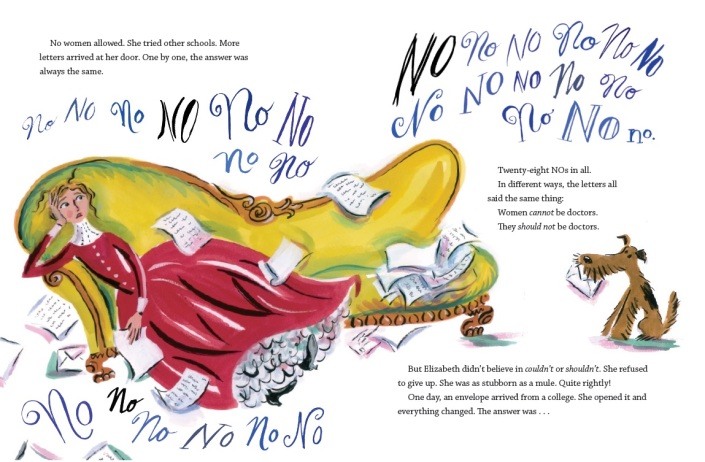
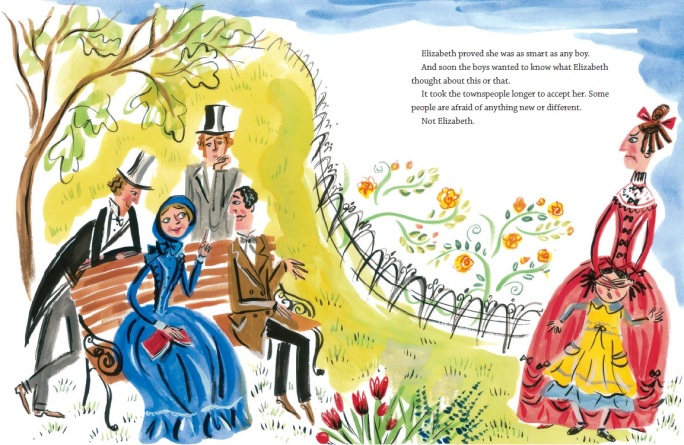
She applies to 28 medical schools, and they all say, “No.” But one day a “Yes” arrives in the mail. Elizabeth packs her bags. As she nears the school, Elizabeth sees that the townspeople have all come out to see her. They aren’t there to welcome their new medical student, though; they just want to whisper and point and stare. Surely, Elizabeth thinks, her classmates will be happy to see her. 

celebrate-picture-books-picture-book-review-who-says-women-can't-be-doctors-everyone-says-no

Image copyright Marjorie Priceman, 2013, text copyright Tanya Lee Stone, 2013. Courtesy of Henry Holt and Company.

But she receives the same reception on the college campus. In fact, she learns that the only reason she was accepted was because the men voted to let her in as a joke! Elizabeth knows how to handle it. She studies hard and gives her opinions, and soon she wins the respect of her fellow students—even if the townspeople still don’t accept her.

On January 23, 1849 Elizabeth Blackwell graduates from medical school with the highest grades in the class. She has become the first woman doctor in America! Many people hope that she will be the last. But as we know…she was Not!

celebrate-picture-books-picture-book-review-who-says-women-can't-be-doctors-elizabeth-does-well-in-school

Image copyright Marjorie Priceman, 2013, text copyright Tanya Lee Stone, 2013. Courtesy of Henry Holt and Company.

Tanya Lee Stone magnificently imbues this short biography of Elizabeth Blackwell with enough mystery, conflict, and history for even the youngest readers to understand the type of girl and woman Elizabeth was as well as the challenges she faced. Stone has deftly included details of Blackwell’s life that  make her instantly recognizable and relatable to children. This biography is not only historical nonfiction, but a universal story for all generations. Blackwell may have started out as a reluctant dreamer, but once she dared to believe she accomplished more than she or anyone could have imagined. It is what we want for all our children.

Marjorie Priceman’s illustrations that swirl with words, are angled on the page, and float in white space are as topsy-turvy as the world Elizabeth Blackwell created with her courage and life’s work. Blackwell’s boldness is echoed in the rich colors and strong lines of Priceman’s gouache and India-ink paintings, and the emotions she stirred in others—from derision to horror to admiration—are cleverly and exceptionally drawn in a minimal style on the characters’ faces.

Ages 5 – 9

Henry Holt and Company, 2013 | ISBN 978-0805090482 (Hardcover) | ISNB 978-1250183392 (Paperback)

Learn more about Tanya Lee Stone and her work—both fiction and nonfiction—for children and teens on her website!

You can connect with Marjorie Priceman on Facebook!

National Women Physicians Day Activity

CPB - Doctors Clothespins

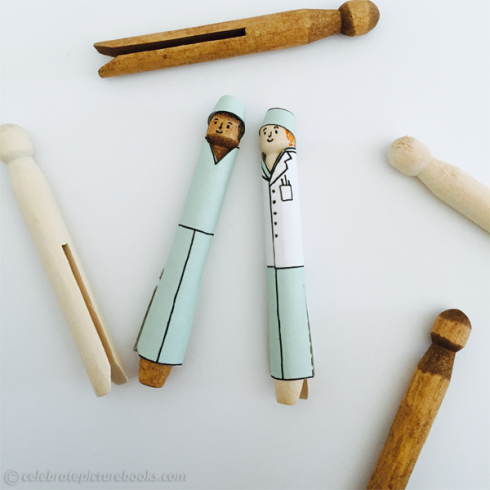
Doctor Clothespin Figures


Elizabeth Blackwell believed in herself and became the doctor she wanted to be. With this craft you can make a doctor figure or color your own clothes to make your figure any profession you are dreaming of!

Supplies

CPB - Doctors Clothespins on box

Directions

  1. Draw a face and hair on the clothespin
  2. Cut out the outfit you want your doctor to wear (color pants on your clothespin if you choose the lab coat)
  3. Wrap the coat or scrubs around the clothespin. The slit in the clothespin should be on the side.
  4. Tape the clothes together
  5. Wrap the cap around the head and tape it
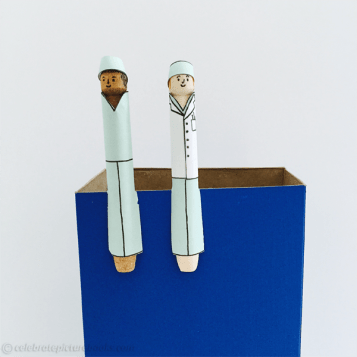
  6. If you’d like to display your clothespin doctor on a wire, string, or the edge of a box or other container, cut along the dotted lines of the clothes template

Who Says Women Can't Be Doctors by Tanya Lee Stone and Marjorie Priceman picture book review

You can find Who Says Women Can’t be Doctors? at these booksellers

Amazon | Barnes & Noble | Books-a-Million | IndieBound

Picture Book Review


January 31 – Inspire Your Heart with Art Day

celebrate-picture-books-picture-book-review-the-hiding-game-cover

About the Holiday

Celebrating art is always a great thing! Today we champion that feeling you get inside when you create or experience art—no matter what kind is your favorite. Paintings, books, music, sculpture, quilts, photography, and other arts show you a bit of the world in a new way—a way, perhaps, you’ve never thought of before. Art can inspire, gladden, sadden, anger, teach, and compel action. It can also provide joy and inspiration when you need it most—as you’ll see in today’s book. Celebrate today’s holiday by visiting a museum, bookstore, library, concert, or gallery.

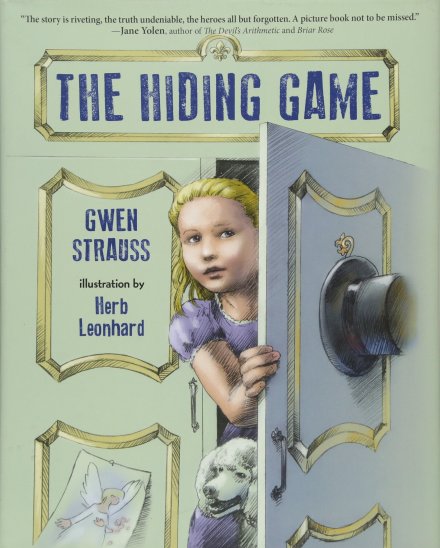
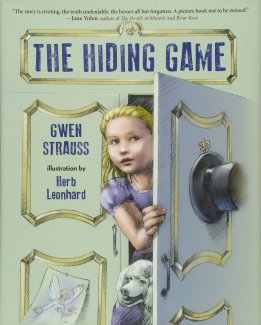
The Hiding Game

Written by Gwen Strauss | Illustrated by Herb Leonhard

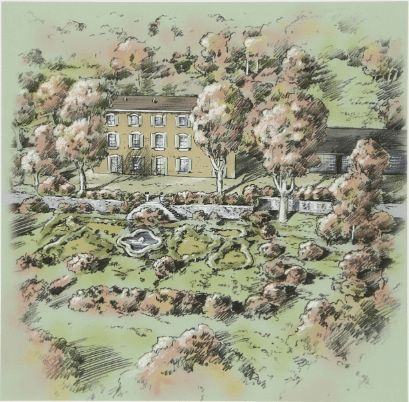
It was October of 1940, and after moving from place to place to stay “one step ahead of the German soldiers,” Aube and her family had found a home where they could “live together until it was their turn to flee to safety. The Villa Air-Bel was rented by Varian Fry—a magician—and his assistant Danny Bénédite and served as a place to hide those looking to escape the war-torn country. On Sundays, the house was full of “thinkers, artists and writers who had to hide from the German soldiers because of their ideas of freedom and liberty” like Aube’s parents.

On those days, everyone played games, danced and made collages. One of Aube’s favorite games was Cadavre Exquis, in which a piece of paper was folded and each participant drew a design on one fold. When the whole paper was unfolded, amazing, artistic pictures emerged. These games and entertainment, Aube’s father told her, were their ways of fighting against fear. Because of the danger, many things had to be hidden at the Villa, including the radio and the cow that provided milk. Many ingredients for cooking were scarce. But even then Aube’s father used art to lighten the mood, leaving a drawing of a roast beef in the pantry where a real roast should have been.

Because the authorities were reading Varian and Danny’s mail and were listening to their phone calls, they had devised a way of hiding messages in toothpaste tubes that escaped the guard’s searches. The messages went to other people helping along the escape route to tell them who to expect next. Everyone in the house also had to have a special hiding place in case the police came. Aube chose the an old cabinet in the kitchen.

celebrate-picture-books-picture-book-review-the-hiding-game-tree

Image copyright Herb Leonhard, 2017, text copyright Gwen Strauss, 2017. Courtesy of Pelican Publishing Company.

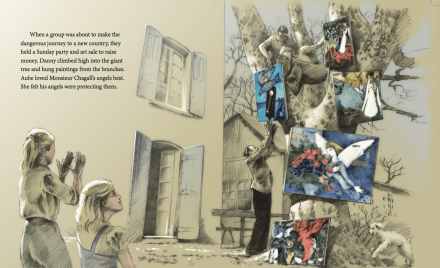
Whenever a new group of people were scheduled to “make the dangerous journey to a new country, they held a Sunday party and art sale to raise money.” Canvases painted by famous artists were hung among the branches of a large tree on the Villa grounds. When winter came, the Villa was so cold everyone had to wear all of their clothes to stay warm. They kept their spirits warm, too, by singing their favorite songs.

During the winter Danny visited camps where people were being held under terrible conditions. “Aube understood now that the danger was that they would be sent to the camps,” where people were dying of starvation and disease. They had little clothes and no blankets even though it was snowing. The people, Danny said, were going to freeze. Aube thought of the game freeze tag and worried about all of those “people freezing, waiting for someone to set them free.”

One day in December, the police raided the Villa. They took away all the men, including Danny, Varian, and Aube’s papa. Aube cowered in the kitchen cabinet with their dog in fear. The next week, the men were released, but they knew that the police would be back. Danny and Varian began to plan their escape. Before they all left, Aube’s father devised one more game. Each artist would paint their own version of a playing card to create a collective work of art. “The cards would remind them that they had laughed together and stayed free in their hearts even during the darkest times.”

Aube’s family were placed on a ship sailing to South America, and on February 18, 1941 they left the Villa and Danny and Varian behind and made the one-month-long journey to freedom. Several months later, Varian was “forced to leave France and return to America.” Danny went underground and “helped another 300 people escape France.” In 1943, however, Danny was “arrested by the Nazis and sentenced to death.” Just as he was facing the firing squad, soldiers fighting the Nazis burst through the gates of the camp and freed him and the other inmates.

celebrate-picture-books-picture-book-review-the-hiding-game-villa-air-bel

Image copyright Herb Leonhard, 2017, courtesy of Pelican Publishing Company.

Gwen Strauss includes extensive backmatter on this true-life story about her great-uncle Danny Bénédite. A detailed account of the work by Varian Fry, Danny Bénédite, and the American Rescue Committee, complete with photographs, as well as short biographies of some of the artists who visited the Villa (and a compelling list of others) plus resources for further study round out this compelling book.

Clearly written and with details from a child’s point of view that will resonate with readers, The Hiding Game is an absorbing tribute not only to two men involved in the Nazi resistance movement but to the resilience that uplifts people during the darkest times. This fascinating true story also offers a glimpse into the important role that artists and writers play in shining a light on history, interpreting it, and fighting against forces that destroy. Rich with the atmosphere of intrigue, suspense, and simple pleasures enjoyed, Strauss’s dynamic storytelling will thrill children. The Hiding Game will prompt them to learn more about this time period and will inspire in them their own acts of heroism.

Herb Leonhard’s realistic drawings of the Villa Air-Bel, the families who stopped there on their way to freedom, the moments of joy that sustained them, and the secret measures necessary for people’s safety take readers into the heart of the story and allow them to witness the danger and the creativity that swirled side-by-side within the Villa and the people living there. Largely depicted in somber tones of gray and green, the pages brighten with glowing yellows during times of laughter, games, and creativity. An illustration of the mammoth tree hung with canvases by famous artists will impress children, and the final image will leave an indelible and thought-provoking impression on young readers and adults.

An excellent book for facilitating discussions about World War II and the Holocaust with children at home and in the classroom as well as offering opportunities for cross-curricular learning in history, art, reading, and more, The Hiding Game is a superb choice to add to home, school, and public libraries.

Ages 7 – 12

Pelican Publishing Company, 2017 | ISBN 978-1455622658

Discover more about Gwen Strauss and her books on her website.

To learn more about Herb Leonhard, his books, and his art, visit his website.

Inspire Your Heart with Art Day Activity

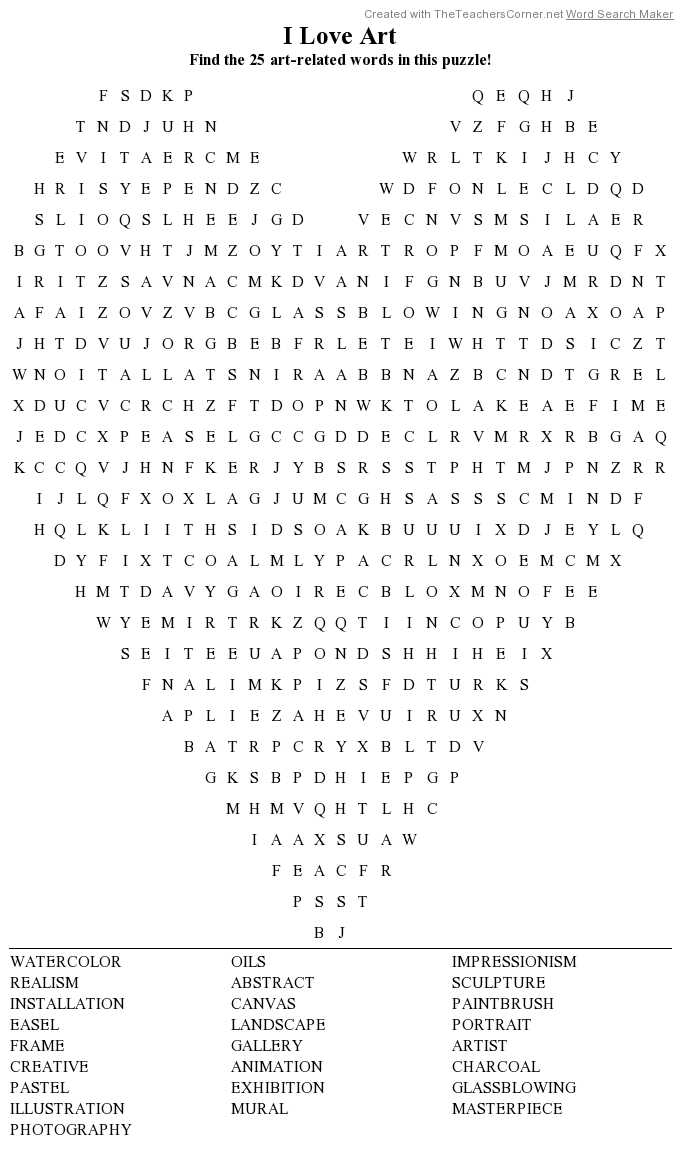
I Love Art! Word Search Puzzle

Art has a language all its own! Have fun finding the twenty-five art-related words in this printable puzzle.

I Love Art! Word Search Puzzle and I Love Art! Word Search Solution

celebrate-picture-books-picture-book-review-the-hiding-game-cover

You can find The Hiding Game at these booksellers

Amazon | Barnes & Noble | Books-a-Million | IndieBound

Picture Book Review

January 17 – Kid Inventors’ Day

celebrate-picture-books-picture-book-review-the-girl-who-thought-in-pictures-cover

About the Holiday

Today’s holiday celebrates all those ingenious kids who have improved the world with their inventions. This date was chosen to commemorate another child inventor—Benjamin Franklin—who designed the first swim fins when he was just 12 years old! (Seriously, is there nothing this man didn’t or couldn’t do?). With their supple minds and can-do attitudes, kids have changed the ways things are done in the fields of medicine, technology, communications, and even food—as today’s book shows! To learn more about the day and find lots of resources, including a list of books, contests, tips, and teachers’ guides, visit the K.I.D website.

The Girl Who Thought in Pictures: The Story of Dr. Temple Grandin

Written by Julia Finley Mosca | Illustrated by Daniel Rieley


If you feel different and sometimes discouraged, the story of Temple Grandin may help you see that everyone has a talent and their own place in the world. Temple was born in Boston and “unique from the start, / an unusual girl, / she loved spinning in circles / and watching things twirl.” Loud sounds, big crowds, bright lights, and scratchy clothes disturbed her. And she did not like to get a “big squeezy hug.”

celebrate-picture-books-picture-book-review-the-girl-who-thought-in-pictures-too-loud

Image copyright Daniel Rieley, 2017, text copyright Julia Finley Mosca, 2017. Courtesy of The Innovation Press.

When she became overloaded with stress and frustration, Temple was known to “kick, holler, bang, shrieeeeek! Yet, still, by age three, not one word did she speak.” People told Temple’s parents that she’d never be normal and to send her away, but her mother would not hear of it. With a lot of work, special teachers helped Temple learn to talk. “And that thing with her brain… / it was AUTISM, see? / She was ‘different not less,’ / they all finally agreed.”

celebrate-picture-books-picture-book-review-the-girl-who-thought-in-pictures-doctor

Image copyright Daniel Rieley, 2017, text copyright Julia Finley Mosca, 2017. Courtesy of The Innovation Press.

While Temple was like her peers in many ways, she interacted with words differently. “If something was mentioned, / for instance, a fly, / in her mind, she’d see dozens / of PHOTOS buzz by.” Her different view point made it hard for her at school. The other kids chased her and teased her for the way that she acted and for “…saying things / over and over. / and over… / and over… / AND over.” When she had finally had enough, “she threw a book at a kid / and was kicked out of school!” No one understood Temple and Temple couldn’t understand them.
celebrate-picture-books-picture-book-review-the-girl-who-thought-in-pictures-fly

Image copyright Daniel Rieley, 2017, text copyright Julia Finley Mosca, 2017. Courtesy of The Innovation Press.

Her mother then sent her to visit her aunt, who lived on a ranch out west. Here, among the animals, Temple felt better. Her favorites were the cows, so silent and sweet. “At a NEW school that fall, / Temple found more support / said a teacher who taught her: / ‘You’ll never fall short.” That teacher was right, and at engineering and science she felt right at home.

Her first invention—made from memory—was “a machine / like she’d seen on some farms, / an INVENTION that hugged her / with boards, and not arms.” In this device she felt snug and calm, just like the cows. As she began to succeed, Temple came to see that her attention to detail was a benefit, and she began to feel special. Then she learned about farms where the cows were not treated kindly and resolved to change that.

celebrate-picture-books-picture-book-review-the-girl-who-thought-in-pictures-cows

Image copyright Daniel Rieley, 2017, text copyright Julia Finley Mosca, 2017. Courtesy of The Innovation Press.

She went on to college and became an expert on farms, earning three degrees. Telling people about her ideas for farming improvements was sometimes scary because they ignored her and, well…weren’t very sweet. But she didn’t give up. She learned more about cattle, like why they circle and moo. “To build better farms / was her goal—she would do it. / ‘Be KIND to our creatures. / They have FEELINGS!’ She knew it.”

It took time, but people began to see that Temple was right, and farm after farm implemented her ideas. She won awards for this work and other ideas, a movie was made about her life, and she now travels the world telling her story and teaching: “‘Each person is special– / so UNIQUE are our minds. / This world needs YOUR ideas. / It takes brains of ALL kinds!”

celebrate-picture-books-picture-book-review-the-girl-who-thought-in-pictures-letter

Image copyright Daniel Rieley, 2017, text copyright Julia Finley Mosca, 2017. Courtesy of The Innovation Press.

A letter from Temple Grandin to young readers, extensive information about Temple and tidbits from her interview with the author, a timeline of her life, and resources follow the text.
Julia Finley Mosca’s insightful biography of Temple Grandin offers inspiration and encouragement to children at those times when life seems difficult or if they feel misunderstood. Childhood can be filled with moments—both small and large, short or long—when comfort and reassurance are needed. Mosca’s rhyming verses make Temple’s story accessible to a wide age range of readers while providing an inclusive way to show how autism creates a different way of experiencing the world. Temple’s supportive teachers are role models for all educators. Temple Grandin’s fascinating life demonstrates that there is a niche for everyone and that through understanding, perseverance, and acceptance, all children can go far.

celebrate-picture-books-picture-book-review-the-girl-who-thought-in-pictures-cows-in-field

Image copyright Daniel Rieley, 2017, text copyright Julia Finley Mosca, 2017. Courtesy of The Innovation Press.

Daniel Rieley’s cartoon-style illustrations will resonate with readers as Temple takes in everything she sees with wide-open eyes and interprets it in her own way—even before she can speak. The separation between Temple and the other students at her first school is poignantly communicated in a two-page spread in which pointing hands and a lobbed ball of paper appear from the left-hand margin and Temple reads alone on the far side of the right-hand page. Temple’s ability to think in pictures is demonstrated throughout the book with inset images. Readers see some of the farming practices Temple wanted to change, her original drawings, and the resulting equipment now used on farms to improve the conditions of the animals raised there.

The Girl Who Thought in Pictures: The Story of Dr. Temple Grandin is a moving and motivational story for all children and is a must for school and public libraries.

Ages 5 – 10

The Innovation Press, 2017 | ISBN  978-1943147304 (Hardcover) | ISBN 978-1943147618 (Paperback), 2018

Discover more about Julia Finley Mosca and her Amazing Scientists series on the Amazing Scientists website.

Learn more about Daniel Rieley, his books, and his art on his website.

Kid Inventors’ Day Activity

celebrate-picture-books-picture-book-review-kid-inventors-coloring-page

Inventing Is Fun! Coloring Page


If you love to invent as much as these kids do, grab your crayons, markers, or pencils and give their lab a bit more color in this printable Inventing Is Fun! Coloring Page!

celebrate-picture-books-picture-book-review-the-girl-who-thought-in-pictures-cover

You can find The Girl Who Thought in Pictures: The Story of Dr. Temple Grandin at these booksellers

Amazon | Barnes & Noble | Books-a-Million | IndieBound

Picture Book Review