April 20 – It’s National Humor Month

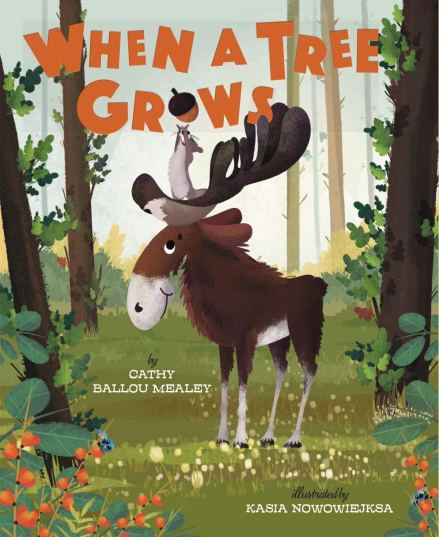
celebrate-picture-books-picture-book-review-when-a-tree-grows-cover

About the Holiday

National Humor Month was established in 1976 by comedian and author Larry Wilde, who is also the director of the Carmel Institute of Humor, to promote all things funny and raise awareness of the benefits of laughter and joy. The health benefits of an optimistic outlook are well documented. Lightheartedness also improves communication skills and boosts morale. Reading funny books is a fantastic way to share a laugh—for kids and adults—and to encourage a love of literature. In fact, there’s even a Funny Literacy Program that offers lots of resources and activities to fill your days with humor! Click here to learn more. This year, perhaps more than any, a little laughter helps us and our kids get through difficult times. Get started with today’s book and enjoy a laugh not only during April but every day! 

I received a copy of When a Tree Grows from Sterling Children’s Books for review consideration. All opinions are my own.

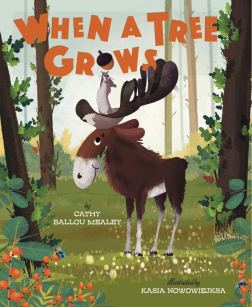
When a Tree Grows

Written by Cathy Ballou Mealey | Illustrated by Kasia Nowowiejska


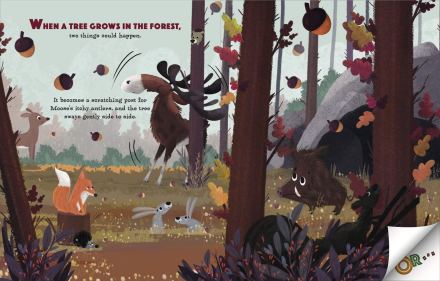
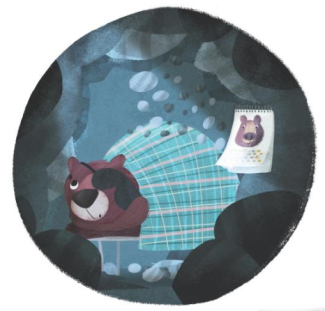
We all know that age-old question “When a tree falls in a forest does it make a sound?” Inexplicably, this riddle seems to forget all about the adorable woodland animals—many of which we meet in this hilarious book that poses many thought-provoking conundrums of its own. For instance: “When a tree grows in the forest, two things can happen. It becomes a scratching post for Moose’s itchy antlers, and the tree sways gently side to side. OR… CRASH-BOOM! Moose pushes a little too hard, the tree falls on a cave, and the bear inside wakes up.”
celebrate-picture-books-picture-book-review-when-a-tree-grows-scratchcelebrate-picture-books-picture-book-review-when-a-tree-grows-scratch

Image copyright Kasia Nowowiejska, 2019, text copyright Cathy Ballou Mealey, 2019. Courtesy of Sterling Children’s Books.

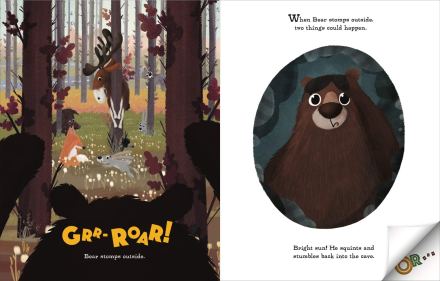
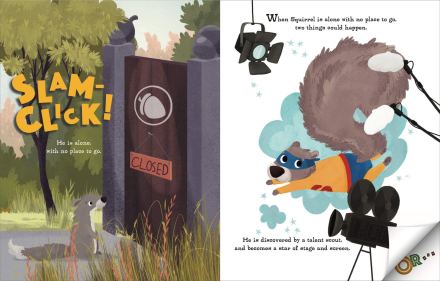
But how does Bear react? He can stay inside… OR come out to see what all the ruckus is about. And when he comes outside? Well, the domino effect could take over the forest… OR not. Alert readers will notice that Bear’s not the only one affected by the falling tree. Squirrel loses his home, but does he find the perfect replacement when a Nifty Nuts truck loaded with acorns gets entangled in this roller-coaster ride of a story… OR not?
celebrate-picture-books-picture-book-review-when-a-tree-grows-bear

Image copyright Kasia Nowowiejska, 2019, text copyright Cathy Ballou Mealey, 2019. Courtesy of Sterling Children’s Books.

As readers follow the action, they’ll wonder—will Squirrel discover a lifetime supply of nuts? Fame and fortune? An empty spot in his heart? And when (if?) “Scribble-Scratch! He writes a letter to Moose,” will Moose eat it or read it? The answers to these forest-related questions lead to a fantastic welcome-home feast with party hats and decorations and, of course, lots and lots of acorns that Squirrel will either gobble all up… OR….
celebrate-picture-books-picture-book-review-when-a-tree-grows-squirrel

Image copyright Kasia Nowowiejska, 2019, text copyright Cathy Ballou Mealey, 2019. Courtesy of Sterling Children’s Books.

Nuttiness abounds in this funny story that will have kids on the edge of their seats and excitedly chiming in as each situation plays out, leading to more and more consequences for Squirrel. Cathy Ballou Mealey’s action-packed storytelling, punctuated with onomatopoeia, makes each page a joy to read aloud. Underlying all of the shenanigans is a sweet friendship story that will tug at readers’ hearts as the gently suspenseful circumstances seem to take Squirrel farther and farther away from the forest. Kids will cheer along with Moose, Bear, and a bevy of other cute animals as they celebrate Squirrel’s homecoming and enthusiastically approve of what Squirrel does with his windfall to guarantee that all the friends can stick together forever.
celebrate-picture-books-picture-book-review-when-a-tree-grows-bear-awake

Kasia Nowowiejska populates this most friendly of forests with adorable, wide-eyed animals whose expressions perfectly reflect their dilemmas without giving away the secret answers. Kids will laugh out loud to see Moose nervously clinging half-way up a tree as Bear growls, applaud squirrel’s aim with a slingshot, and wish they could join in the party when Squirrel comes home. Nowowiejska’s beautiful earth-tone color palette provides depth and texture to the lush foliage while highlighting each animal’s choices in clever and original ways that kids will love. The onomatopoeic phrases are spotlighted with vibrant, bold lettering, ensuring that readers will add their own spin to this fun element of the story.

No “OR…”s about it, When a Tree Grows will be a hit for lively, animated story times and would be an often-requested addition to home, classroom, and public libraries.

Ages 3 and up 

Sterling Children’s Books, 2019 | ISBN 978-1454921202

Discover more about Cathy Ballou Mealey and her books on her website.

To learn more about Kasia Nowowiejska, her books, and her art, visit her website.

Meet Cathy Ballou Mealey
celebrate-picture-books-picture-book-review-Cathy-Mealey-headshot

Cathy Ballou Mealey lives with her family north of Boston, where she delights in watching silly squirrel antics and is waiting patiently for a moose to appear. Her favorite nut is the hazelnut and her favorite cupcake is cardamom crème.

Thank you for inviting me to the fabulous Celebrate Picture Books! I am delighted to join your celebration of Get Caught Reading Week by talking about writing inspiration and what we might learn from our hobbies and jobs, and also sharing a story starter for a favorite fall holiday!

I’m delighted that we get to talk about all of these things—and more! So let’s get started at the beginning of your journey with When a Tree Grows!

What was the spark of inspiration that led to When a Tree Grows?

When A Tree Grows was inspired by a distant creaky Crash! that I heard in the woods while hiking with my family. Was it a falling tree? An animal? I wondered: What if that crash had scared a bear or frightened a deer?

Building on that “OR” question, I framed a wacky story with two different possible outcomes, one rather expected and one funny, unexpected outcome. Readers will find that “OR” spotlighted on the bottom corner of each recto page with a clever curled paper art effect.

You must have had fun coming up with the alternate scenarios in your book. Can you share any that didn’t make the cut?

An early draft had a sweet city scene between Squirrel and a pigeon, but it didn’t make the final cut. It was tender and poignant, but needed a funnier alternative outcome to move the storyline along. In the end, I am happy that only Squirrel, Moose and Bear share the spotlight!

I love Kasia Nowowiejska’s illustrations that combine adorable, expressive animals with silly antics. Do you have a favorite spread? Did anything in the illustrations surprise you? 

I agree! Kasia is from Poland, and I loved the European flair in her forest sketches. Seeing the warthog was a complete, delightful surprise. Warthogs are not animals we would typically see in a North American woodland, and that leads to great discussions with young readers.

You have degrees in psychobiology and classical civilization. Can you describe these a bit and how they are connected? Does your study of psychobiology help inform the character development in your stories?

Psychobiology is the study of the brain, behavior and cognitive processes. I found it fascinating to research why and how we think, feel and do the things we do! I learned how to be a good observer, listener, and follower of the empirical method. I also studied classical civilization because I loved Latin, and the professors were extremely gifted storytellers. They brought ancient texts to life through dramatic readings and captivating extemporaneous performances. Exactly how these field of study inform my present work is unclear, but a liberal arts education really does cultivate curious minds!

In your bio, you also say that you were a crossing guard, hash-slinger, gift-wrapper, and pet sitter. This sounds like perfect prep for becoming a picture book author! Have any of these jobs inspired a story? Do you have a funny or surprising experience you’d like to share?

Writers DO find a way to wring fictional purpose out of anything, don’t we? I have found that one common theme across many of my stories is work. In When A Tree Grows, Squirrel gets a job in the Nifty Nuts factory as a quality control inspector. That’s one job I have not done! But working as a department store gift-wrapper was a job where quality mattered. Customers could buy a specialty paper/ribbon combination or choose the free “store wrap” which was red with tiny white checkered squares. The squares had to line up perfectly, no matter how lumpy or bumpy the item was, or the boss would make us re-wrap it. Wrap a floor lamp? Rocking chair? I like to imagine one of my co-wrappers invented printed gift bags out of desperation.

In previous interviews, you’ve described how you wrote your first picture book to enter the Cheerios “spoonful of stories” contest. But did you always like to write? What kinds of writing did you do? What inspired you to try the picture book form?

As a kid I loved to write and illustrate greeting cards, so my earliest efforts were short and to the point, just like picture books. I also wrote scripts for Muppet-like puppet shows, assigning the best roles to myself, of course. When school assignments piled up and writing lost its luster, I stopped scribbling for pleasure. Decades later, having children led to reading many picture books and to many boxes of Cheerios. So those factors definitely helped re-ignite my passion for writing and picture books specifically.

When a Tree Grows was released on April 2. What have you found to be the best part of being a published author? If you’ve held any book events, can you describe the reactions of kids to your story?

Of course seeing Tree on bookstore shelves and in readers’ hands is delightful. Hearing people laugh at the funny spots is a thrill! I like to ask a helper to wave a big sign that says “OR” to dramatize the page turns during readings. And kids love to see Squirrel scooping coins out of the fountain to buy a bus ticket home – so naughty!

What’s up next for you?

Next up for me is a still-secret, super funny picture book with an amazing publisher in Canada. A sloth and a squirrel team up for a special mission. Look for an announcement soon, and a book sometime in 2021!

What’s your favorite holiday and why?

Halloween – because it is in the fall, my favorite season. It also happens to be my birthday! Costumes, candy, glowing pumpkins, being outside after dark – all these elements make magical memories for kids. And on top of all that I got a cake, candles, and presents too? Pretty great.

Has a holiday ever influenced your work?

What a great idea! Let’s imagine re-casting When A Tree Grows as a Halloween story.

When an Owl hoots in the forest on Halloween, two things could happen.

Warthog blows out the candle in her pumpkin. Trick or treat is over.

OR…

Eek! Warthog is startled and tosses her candy into the air.

When Warthog tosses her candy into the air, two things could happen.

What do YOU think should happen next?

Oh my! Let’s see…

Bat neatly snatches all the candy out of the air with her trick-or-treat bag.

OR…

A candy corn ricochets off a tree and bonks bat, sending her wildly off course.

Readers? What do YOU think? Add your ideas in the comments section below!

Well, this was tons of fun, Cathy! I’m so glad we had a chance to chat! I wish you all the best with When a Tree Grows!

You can connect with Cathy Ballou Mealey on

Her website | Facebook | Instagram | Twitter

Get Caught Reading Month Activity

celebrate-picture-books-picture-book-review-moose-headband-craft-when-a-tree-grows

Moose starts a whole string of events in today’s book! What will you get up to in your own moose antlers?

Supplies

  • Stiff brown paper
  • Brown hair band
  • Pencil
  • Scissors
  • Tape

Directions

  1. Trace your hands with fingers spread on the brown paper. Leave a 1 – 2 inch tab on the end of the wrist for wrapping around the head band
  2. Cut out the hand prints
  3. Place one hand print on the right side of the headband with the thumb of the hand pointing up.
  4. Wrap the tab around the headband and secure with tape
  5. Place the second hand print on the left side of the headband with the thumb pointing up.
  6. Wrap the tab around the headband and secure with tape.
celebrate-picture-books-picture-book-review-when-a-tree-grows-cover

You can find When a Tree Grows at these booksellers

Amazon | Barnes & Noble | Books-a-Million | IndieBound

Picture Book Review

April 17 – International Haiku Poetry Day

celebrate-picture-books-picture-book-review-h-is-for-haiku-cover

About the Holiday

Small things are amazing—and surprising! We all know good things come in small packages, and just look at the wisdom, humor, and capacity for love of children. The same goes for haiku—the smallest form of poetry in size but never in impact. During National Poetry Month, today is set aside to especially celebrate the haiku. The simple 5-7-5 rule that we all learn in school doesn’t begin to define the complexity of these three-line beauties that distill the world into little nuggets that make readers see life in amazing and surprising ways.

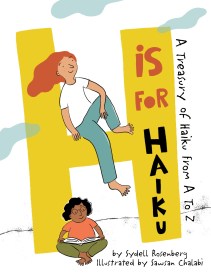
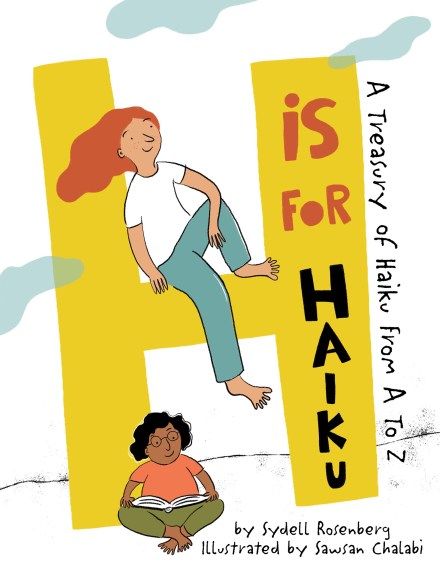
H is for Haiku: A Treasury of Haiku from A to Z

Written by Sydell Rosenberg | Illustrated by Sawsan Chalabi


In her lovely and delightfully whimsical poems, Sydell Rosenberg holds moments in the palms of her hands, letting readers immerse themselves in the tender, humorous, and wistful flashes of a day before they shift, evolve, or fade away. H is for Haiku begins, appropriately, with Adventure and its dreamy memory for a worn-out kitten as he slumbers.

celebrate-picture-books-picture-book-review-h-is-for-haiku-blue-jay

Image copyright Sawsan Chalabi, 2018, text copyright Sydell Rosenberg, 2018. Courtesy of Penny Candy Books.

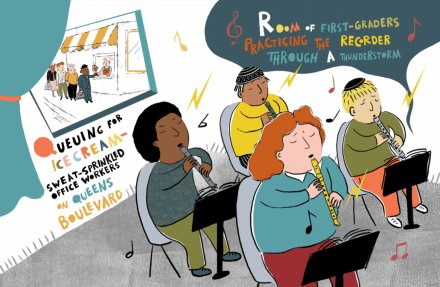
The journey continues as readers meander along a city sidewalk and see a “Boy on a mailbox / perched like a solitary bird / watching the sunset.” Walking on, readers peek into car backseats, queue for ice-cream on a sweaty summer day, and visit a barbershop where you always ask for Xavier. Down country lanes, you’ll spy a pale moon, turn the heads of sunflowers, share bike rides and car rides, and watch as “Munching on acorns / a squirrel sweeps up sunbeams / with her transparent tail.”

celebrate-picture-books-picture-book-review-h-is-for-haiku-flamingo

Image copyright Sawsan Chalabi, 2018, text copyright Sydell Rosenberg, 2018. Courtesy of Penny Candy Books.

Rosenberg’s studied eye for connections makes her poems especially enchanting. Leaves and flowers, birds and insects, rain and thunder interact with those in their midst, adorning hair, scurrying away, playing musical backup, meeting danger, and creating transformations like the one at Y: “Yesterday’s cool rain / left this flat puddle smoothing / the wrinkled leaves.” A trip to the fish market is infused with humor, and an optical illusion makes you look twice at the flamingos in a pond.

Even in her observations of the routine, Rosenberg reminds readers that there is music and poetry in common actions. For example, at U we hear: “Up and down the block / homeowners mate the covers / of gusted trash cans.” As a teacher sits grading papers to close out the book, readers can’t be faulted for wishing our alphabet had a few more letters.

celebrate-picture-books-picture-book-review-h-is-for-haiku-recorders

Image copyright Sawsan Chalabi, 2018, text copyright Sydell Rosenberg, 2018. Courtesy of Penny Candy Books.

As a teacher Sydell Rosenberg was attuned to the spirit of children, and her sophisticated and fun haiku are particularly accessible for young readers. Touching on a wide range of subjects, Rosenberg invites kids to look and look again. Her keen observations and lilting imagery will inspire them to do just that. 

Sawsan Chalabi’s charmingly quirky illustrations and stylized lettering present each poem with dash and personality that will enchant kids. Her delicately lined drawings are infused with vibrancy from a gorgeous color palette. Just like Rosenberg’s haiku, Chalabi’s pages are animated with a love for life that will resonate with kids—and adults.

H is for Haiku will spark a love for this special form of poetry and inspire kids to write their own. A terrific gift for poetry lovers and an imagination-boosting addition to homeschool lessons, the book makes a wonderful addition to home, school, and public library collections.

Ages 5 – 11 (and up)

Penny Candy Books, 2018 | ISBN 978-0998799971

Discover more about Sawsan Chalabi and view a portfolio of her work on her website.

 Amy Losak talks about her mom, Sydell Rosenberg

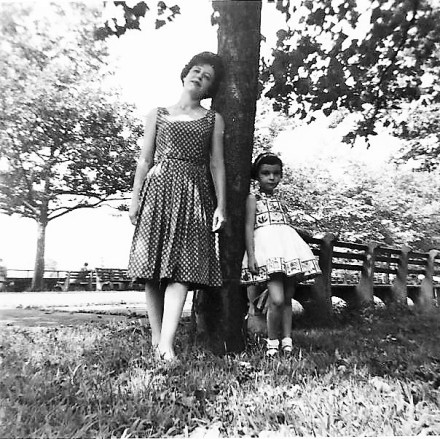
celebrate-picture-books-picture-book-review-h-is-for-haiku-sydell-rosenberg-and-amy

Sydell Rosenberg and her daughter Amy enjoying the park n 1961.

SYDELL ROSENBERG (1929-1996) lived, wrote and taught in New York City. Syd was a charter member of the Haiku Society of America in 1968 and served as HSA’s Secretary in 1975. Her short poems – notably haiku and senryu – as well as other poetry, were published in various magazines and anthologies. Syd received her M.A. in English as a Second Language from Hunter College in 1972. It was Syd’s dream to publish a book of haiku for children.

Compiled by her daughter, Amy Losak, H is for Haiku is the fulfilment of the late poet Sydell Rosenberg’s dream to write a book of poetry for children. I was excited to talk with Amy about her mother, her journey with H is for Haiku, and her own poetry.

Can you talk a little about your mother and her love for haiku and senryu?

Sydell Rosenberg was a New York City teacher (various grades; substitute, English, literacy; and also adult ESL). I think Syd Rosenberg “discovered” haiku and senryu in the early-to-mid 1960s. How she may have stumbled upon these poetic forms, I wish I knew. Mom always was a writer – short stories, poetry, literary and word puzzles, and more. Syd wrote in English and in Spanish and translated literature from and into Spanish too. In her early 20s, she published a racy novel, “Strange Circle,” under a male pseudonym, Gale Sydney (a reversal of the initials of her maiden name, Sydell Gasnick). This was in the early 1950s! This potboiler sold a respectable number of copies. In fact, “Strange Circle” is still floating around online.

In the 1960s, as a still-young wife and mother, perhaps she was restless and searching for a challenging format to test her talents and reflect, or give credence to, her singular way of viewing the world around her. Syd was a native New Yorker who loved nature and found marvels in mundane moments. Perhaps the lucid qualities of haiku and senryu, with their concise yet intense focus on such things, gave her—paradoxically—the amplitude she wanted to express her vision and ideas.

What is the difference between the two forms?

I’m no expert on haiku and senryu. Poets spend years studying and they labor over their work. These are difficult forms to write well. Like any creative art, it takes practice. It seems as though the definitions can get “in the weeds”—and then there are some poets who don’t get too “hung up” on the distinctions. Here are topline definitions from the Haiku Society of America, and readers can go to this Haiku Society of America page for more details:

The Haiku Foundation also is a great source of information, and there are many other fine resources in books, online and in social media.

HAIKU: A haiku is a short poem that uses imagistic language to convey the essence of an experience of nature or the season intuitively linked to the human condition.

SENRYU: A senryu is a poem, structurally similar to haiku, that highlights the foibles of human nature, usually in a humorous or satiric way.

Were the poems in H is for Haiku originally written as an alphabet-inspired collection?

Yes, some of the poems in H Is for Haiku were in one (or more, possibly) alphabet-themed manuscripts I located among mom’s many materials. And some were previously published in journals decades ago.

It was Syd’s lifelong dream to publish a book of haiku for children. Can you talk about the journey you’ve taken with H Is for Haiku?

Mom was submitting at least one of her kids’ poetry manuscripts (I’m not sure how many she created, and I don’t think they were all haiku) to publishers since the 1980s. My fuzzy memory tells me she may have submitted as far back as the 1970s. This has been a long and zigzagging timeline, by any measure.

Mom’s poetry was well-anthologized in a variety of media over several decades (including classic texts such as The Haiku Anthology, The Haiku Handbook, The Teachers & Writers Handbook of Poetic Forms, among others). Syd was a teacher, and she had this desire to publish a poetry picture book, preferably a haiku A-B-C reader. I think she wanted kids to illustrate it, although she also had illustrators she liked in mind (in one old cover letter I found, she mentions Arnold Lobel).

After her sudden death in October of 1996, her family promised to try and publish her dream book. But it wasn’t until around 2011 that I knuckled down—and even then, the process of collecting and organizing some of her work was, to be frank, tortuous. But I managed to curate a good compilation.

In the meantime, I spearheaded other projects to revive some of her work for today’s audiences, especially children. For example, I’ve been in a partnership for several years with a terrific nonprofit arts education organization in NY, Arts for All which brings a variety of arts programs into public schools. Teaching artists have used mom’s “word-picture” haiku to convey the basics of painting, drawing and collage; music; and theater to young students.

In 2015, I finally started to send out her manuscript to publishers that didn’t require agents. In 2016, I connected with the wonderful Penny Candy Books, thanks to a poet and teacher, Aubrie Cox Warner. Penny Candy’s Chad Reynolds and Alexis Orgera have been such a joy; and Sawsan Chalabi’s dynamic illustrations vividly augment the gentle playfulness in mom’s poems.

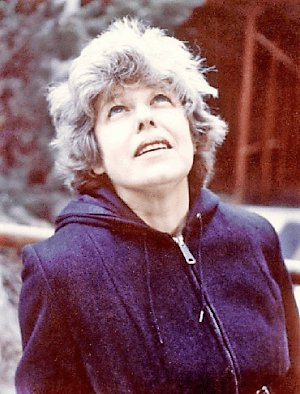
celebrate-picture-books-picture-book-review-h-is-for-haiku-sydell-rosenberg

Syd was a charter member of the Haiku Society of America. Can you talk about her work with the HSA?

 HSA celebrates its 50th anniversary this year. Syd attended the founding meeting in October of 1968. She also served as HSA secretary in 1975 and twice on committees for HSA’s Merit Book Awards “for excellence in published haiku, translation and criticism.” Of course, mom’s work was published in HSA’s beautiful journal, Frogpond, and a good number of other journals and publications, including (but not limited to) Modern Haiku, Wind Chimes, and Haiku West. HSA memorialized Syd by reading some of her work shortly after her death in 1996. In addition, Frogpond published a lovely memorial page in its December 1996 issue. It also published one of her posthumous haiku in a 1997 issue. Her first published haiku in a journal was in 1967 in American Haiku (although I believe she may have published haiku even earlier, in the poetry column of a now-defunct newspaper).

HSA and all things haiku—and writing overall—were important, even essential, components of her life. Creative expression was aa important to her as breathing.

The haiku in H Is for Haiku have such a wonderful sense of active observation and eye for personality and fun. Do you remember this as a quality of your mom while you were growing up?

Yes! Mom had a playful, offbeat, and I think an innate optimistic spirit. Mom was a “knowledge-adventurer.” Her intellect sometimes had an almost childlike quality. She tried to instill this expansive sense of curiosity in my brother Nathan and me. I have come to realize that mom looked forward to each new day as jam-packed with the possibilities for new experiences. And she sought them out for herself and her family.

I read that you also write poetry. Can you share a little about your work?

I’m a beginner as a poet. I think I always will be, and I’m fine with this. There’s a lot to learn.

I especially enjoy the process of trying to write haiku and senryu. It allows me to “be in the moment” and dial down distracting “chatter” that can bombard and dull my senses. Some of my work has been published. I’m slowly improving.

Thanks to social media, I find inspiration in the work of other poets today, especially haiku and senryu poets (and others, as well). There’s so much great poetry out there! I also have learned to find “bits” of inspiration in my daily life. Our pixilated cats, for example, were a wellspring of inspiration! And New York City, of course, offers an inexhaustible supply of both small and big moments. Even something as routine as my bus commute can sometimes trigger “slices” of awareness that lead to a short poem. Or I will be walking to the bagel shop for an iced coffee, and something out of nowhere—the peep of a sparrow in a forsythia bush, a squashed pine cone on the pavement—will draw my attention. Maybe this “haiku moment” will result in a poem. Or maybe not, but I’m still richer because of these “slivers” of experience.

And mom, it turns out, has had more of an influence on me that either one of us could have imagined. Syd’s spirit resonates today. I like to think she would be pleased with this book. And of course, kids and their parents!

The poetry and kidlit communities are caring and supportive. I’m grateful for all their encouragement over the years. And I’m grateful to my husband, Cliff, brother, Nathan; sister-in-law, Debbie; other loving family members; friends; colleagues, etc. So many terrific people! They’ve kept me going, and I can’t thank them enough.

Thanks, Amy, for sharing so much about your mom. I wish you all the best with H is for Haiku and your own work.

International Haiku Poetry Day Activity

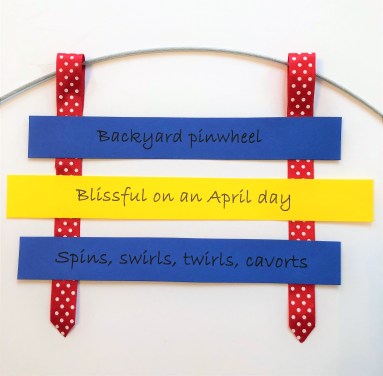
celebrate-picture-books-picture-book-review-haiku-art-craft-2

Haiku Wall Art


The haiku you write deserves to be shared with others! With this easy craft you can display your poem in style.

Supplies

  • Colorful heavy stock paper, 2 or three colors
  • Ribbon
  • Glue or glue dots, or double-sided tape
  • Dowel or wire for hanging
  • Paint to paint the dowel (optional)

Directions

  1. Write a haiku and print the lines on colored paper
  2. Cut the lines apart, making the first and third line shorter than the second line
  3. Glue or tape the lines to the ribbon, leaving about a half inch between them
  4. To make the hangers, fold the tops of the ribbon over and glue or tape it closed
  5. If using a dowel to hold the poem, you can paint it to match or contrast with the paper
  6. Hang the poem from a dowel or wire

celebrate-picture-books-picture-book-review-h-is-for-haiku-cover

You can find H is for Haiku at these booksellers:

Amazon | Barnes & Noble | Books-a-Million | IndieBound | Penny Candy Books

Picture Book Review


view

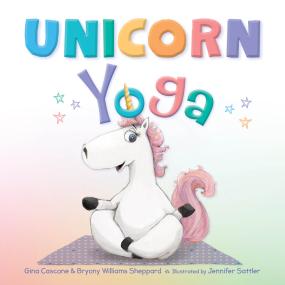
April 9 – International Unicorn Day COVER REVEAL of Unicorn Yoga

celebrate-picture-books-picture-book-review-unicorn-yoga-cover

About the Holiday

If you ask a child—maybe even an adult—to name a magical creature, chances are they’ll say, “a unicorn!” Unicorns have been part of legend since ancient times, undergoing changes from an image of fierceness and power to a representation of strength and true love to today’s more glittery superstar. To celebrate today, I’m thrilled to be hosting the cover reveal for a book about a very special—and nimble!—trio of unicorns that kids will fall in love with!

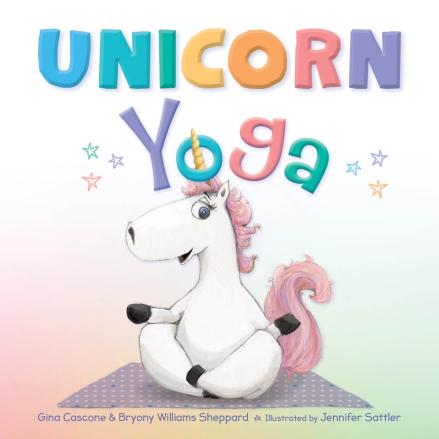
Unicorn Yoga

Written by Gina Cascone and Bryony Williams Sheppard | Illustrated by Jennifer Sattler


The healing, restorative power of yoga has been known for centuries, and more people than ever are active practitioners. Now even the youngest of readers can learn this mind and body exercise, helping them set up a lifetime of healthy habits. Through clear, easy-to-follow instructions, a unicorn yogi, along with two energetic students, leads children through a ten-pose class. Kid-friendly back matter provides additional information on yoga, as well as tips on mindfulness, encouraging readers to develop their own daily practice.

Children reap tremendous benefits from learning the mindfulness that yoga has to offer—from stress reduction to better concentration in school. The adorable unicorns in Unicorn Yoga make giggly and supportive companions for kids learning this health-boosting exercise.

Ages 5 – 7

Sleeping Bear Press, 2020 | ISBN 978-1534111066

Unicorn Yoga will be released on July 15. The book is available for preorder with these booksellers

Amazon | Barnes & Noble | Books-a-Million | IndieBound

I was delighted to talk with authors Gina Cascone and Bryony Williams Sheppard and illustrator Jennifer Sattler about Unicorn Yoga, their inspirations, the best part of writing for children, and so much more!

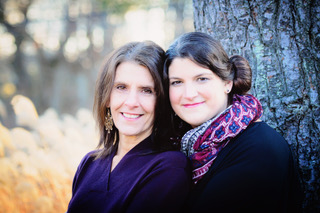
Meet Gina Cascone and Bryony Williams Sheppard

celebrate-picture-books-picture-book-review-gina-cascone-and-bryony-williams-sheppard-headshot

Photograph by Cari Ellen Hermann

Gina Cascone is the author of 30 books in several different genres, and has written for screen and television. Around the World Right Now is her first picture book, a joyful collaboration with her daughter inspired by her granddaughter’s unrelenting curiosity. She lives with her husband in central New Jersey. They have two grown children, two grandchildren, and three cats.

Bryony Williams Sheppard holds a degree in Theater Education from Emerson College in Boston, Massachusetts and a master’s degree in educational psychology. She has been teaching since the age of 17 and loves bringing different stories to life with her students. She is also a teacher near Princeton, New Jersey, where her favorite part of lesson planning is choosing the best book for each class. When not working, Bryony enjoys spending time in her noisy house with her husband, two children, two cats, and a dog.

Welcome, Gina and Bryony! I’m really happy to be talking with you about your book! Before we jump into questions about Unicorn Yoga, let’s let readers get to know you both a little better.

Gina, When did you become interested in being a children’s writer?

My first published book was actually a memoir, Pagan Babies and Other Catholic Memories, a humorous, child’s eye view of parochial education. Then I wrote fiction for adults, until an editor asked if I could write thrillers for teens. So, I did that for a while and enjoyed it very much. Until yet another editor asked for scary chiller stories for middle-grade readers. That was great fun and a great fit for me since Bree insists that I have the soul of an eight-year-old boy – which is probably why I am so happy and comfortable in the company of children.

You’re known for your middle-grade Deadtime Stories series and young adult thrillers.  What have you found to be the challenges and rewards of writing picture books?

For me, the greatest challenge of writing picture books is the economy of the medium.  To convey an idea that could fill many pages in just a few, well-chosen words to teach, entertain, and inspire is hard work. The reward is the great joy of being able to read an entire book in one sitting to the best audience in the world – children.

Bree, You have a degree in theater education as well as a Master’s degree in educational psychology and work as an elementary school teacher. How does your theater background influence your teaching style? Does it have an impact on your writing?

I often say that teaching preschool is a lot like being in theater. You always have to be on and ready to entertain your crowd because the moment you lose them, they turn on you! Many of the skills that you gain from being involved in theater can develop academic abilities and are general skills. Reading comprehension, public speaking, confidence, team building, creativity, and so much more, are developed through theater. I often use lessons and games I’ve learned in theater over the years in my class to help challenge my students both socially and academically.

Since your mom is a writer, have you also always been interested in writing?

Honestly, no.  It never really crossed my mind until she asked me – well, told me actually – to write Around the World Right Now with her. It was such a wonderful experience!

Thanks so much! It’s wonderful to see how in sync you two are and what fun you have together. Now I just have to ask: unicorns and yoga make an intriguing pair!  What was the spark for this adorable concept?

Because yoga provides so many benefits, it seems only logical to introduce the practice to children as early as possible.  So, we approached our editor with a picture book to do just that. She shared it with the wonderfully creative team at Sleeping Bear Press and came back to us with the idea that unicorns might encourage children to become engaged.

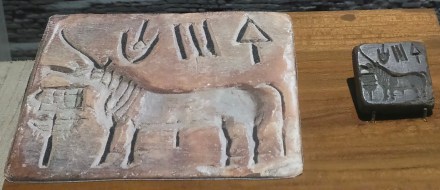
The concept was not as far-fetched as our editor feared we might find it. After all, both yogis and unicorns are joyful, playful, and magical. There is an even more concrete correlation. In the Indus River Valley, in India, five-thousand-year-old bronze seals have been found; some depicting yogis and some depicting unicorns.

Indus_civilisation_seal_unicorn_at_Indian_Museum,_Kolkata

Unicorn Yoga is the second picture book, after Around the World Right Now (Sleeping Bear Press) that you’ve collaborated on. What inspired you to begin writing picture books?

When I first started writing children’s books, Bree was a child herself.  She was my perfect little creative consultant. When she’d come home from school, after we’d chatted about her day, I’d ask her to read what I’d written and tell me what she thought. Her feedback always pointed me in the right direction.

When Bree became a teacher, she was sometimes frustrated that she couldn’t find just the right book for her lessons. So, she decided that we should write picture books.

But it was Bree’s daughter, my Sydney Rose, who brought the idea to fruition. When Syd was about six years old, she became obsessed with time zones. “What time is it in China?” “What time is it in Italy?”  “What time is it … What time is it?” Her questions were driving Bree crazy. She told me that she was going to put up a big map covered with clocks set to the correct times so she wouldn’t have to keep doing the math to figure it out. Around the World Right Now is the result of three generations of girl brain power.

As a mother/daughter team, Gina, what’s the best part of working with Bree?

The laughter. We always find ourselves giggling about something. And learning and creating together gives a wonderful sense of continuity to my life.  Seeing my daughter as my equal and even my better is an incredibly rewarding experience.

Bree, what do you love best about working with your mom?

I have spent my life watching her write and create. Being a part of the process with her has been so much fun because I get to see her excitement over an idea take shape and grow.

Can you each talk a little about your process in writing Unicorn Yoga together? Gina, would you like to take the lead?

I have been practicing yoga for ten years, taking classes at least five times a week with truly amazing teachers who are very generous with their knowledge. So, we had a wealth of resources. Bree’s teaching experience tailored my practices to a kid-and-unicorn-friendly experience. I do think, however, that her constant demands for demonstrations of poses, requiring me to get on the floor, were more for her amusements than edification.

What was your first impression when you saw Jennifer Sattler’s amazing cover?

We were absolutely charmed.  And we are so excited to be working with such a celebrated and talented artist.

What’s your favorite part about the cover and Jennifer’s illustrations of your story?

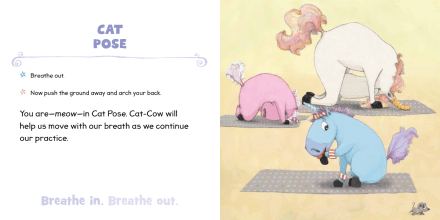
The softness and playfulness of Jennifer’s illustrations set exactly the right tone for a children’s practice.  And we love that while the unicorn students provide comic relief, the teacher’s poses are spot-on.  Namaste to Jennifer!

celebrate-picture-books-picture-book-review-unicorn-yoga-cat-pose

Image copyright Jennifer Sattler, 2020, text copyright Gina Cascone and Bryony Williams Sheppard, 2020. Courtesy of Sleeping Bear Press.

You also team up to give presentations at schools.  What do your visits entail?

We usually visit a school for a full day, spending about forty-five minutes with each grade, level K-5.  We discuss developing an idea, doing research, writing and rewriting. We like to spend most of our time answering students’ questions, to relate to their experiences and encourage their interests and creativity. The goal is always to engage and inspire children.

Do you have an anecdote from a school presentation or other event you could share?

One of the most touching things about school visits is that students treat us like rock stars.  The little ones all want hugs.  And the older students bombard us with questions.

When I was writing Deadtime Stories, the schedule was challenging – a book a month and there were seventeen in all. It was hard to keep track of every plot line. At a school visit, one very careful reader asked a specific question about one of the earlier books – his favorite. I couldn’t remember the character. I couldn’t remember the plot. I could barely remember the title. I took a deep breath and asked him what he thought about it and if he would have done anything differently. The conversation changed immediately to the process of storytelling and how writers make creative choices.

I learned then what Bree knows all too well, in the classroom you’ve always got to be fast on your feet.

It’s National Unicorn Day.  How do you think your Unicorn would spend the holiday?

Enjoying all the magic this world has to offer in deepest gratitude. And eating ice cream.

What a sweet way to end our chat! Thanks, Gina and Bryony! I can’t wait until Unicorn Yoga hits bookstores on July 15!

You can connect with Gina and Bree on their Website | Facebook | Twitter

Meet Jennifer Sattler

celebrate-picture-books-picture-book-review-jennifer-sattler-headshot

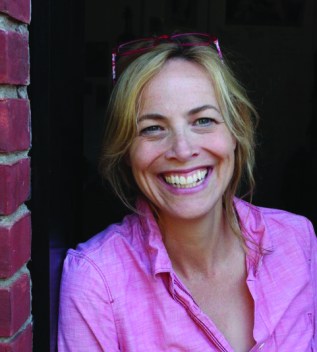
Jennifer Sattler is the award-winning author and illustrator of numerous children’s books, including the new board books Dirty Birdies and Jungle Gym, the picture book Sylvie, and the Pig Kahuna and the Chick ’n’ Pug series. She lives in upstate New York, where she delights in embarrassing her children and having meaningful conversations with her dog, Henry.

Hi Jennifer! I’m excited to be talking with you today about this special book. When I first saw the cover, I was immediately drawn to the unicorn’s eyes. I love how they promise lots of fun while also inviting kids to join in practicing yoga.

Thanks! I’m glad you see that in her eyes. Because this is the teacher, she had to be doing a pose “correctly,” but I also wanted to hint at the fun and silly ways that the other unicorns do these poses. It’s not all serious business.

Did you need to do any special research for drawing yoga poses or did you rely on your own knowledge?

I’ve done yoga for years. But, having a UNICORN do yoga is a whole different thing! I don’t know if you’ve noticed, but their bodies are slightly different than ours…plus there’s the issue of the horn. It tends to get in the way in certain poses. I had a lot of different solutions to that, but we settled on the horn being “bendy.” The younger ones have shorter horns, so they don’t get in the way as much.

You’re also the author/illustrator of many books that are sweet and funny and make kids laugh—which you say is your passion. Has humor always been a big part of your life?

I have always loved the earnest try that ends up in laughs. It cracks me up every time, whether it’s a “grown up” or a kid…or a unicorn. Laughter is the most important part of my life, it makes me happy when nothing else can. I hope I can share some of it.

On your website, you mention that part of your school presentations includes talking to kids about the mistakes and changes that are made along the way to finishing a book and how fun—and funny—those can be. Were there any mistakes or surprising changes that occurred while you created the illustrations for Unicorn Yoga? Can you share a bit about it?

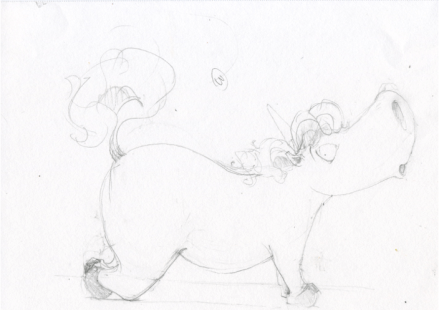
celebrate-picture-books-picture-book-review-early-unicorn-yoga-drawing

As I always do when starting a new book, I went through tons of sketches to try to get the look of my characters. I assumed I knew what a unicorn looked like, but it took a LOT of drawings to realize, “wait a minute, they just look like horses with party hats on. That’s not right!”  I look back at those early drawings and they crack me up. It’s best for me not to take myself too seriously!

What’s the best part of being a children’s author and illustrator for you?

Kids,kids,kids! I was a painter for years, making big oil paintings to hang on the wall, teaching college students. I was trying to be taken very seriously! But it wasn’t much fun. As soon as I started doing children’s books I thought, “YES! This is what I should’ve been doing the whole time!”

Thanks for talking with me, Jennifer! I’m sure readers—both young and young at heart—are looking forward to doing yoga with your charming unicorns. I know I am!

You can learn more about Jennifer Sattler, her books, and her art on her website.

celebrate-picture-books-picture-book-review-unicorn-yoga-cover

You can preorder Unicorn Yoga with these booksellers

Amazon | Barnes & Noble | Books-a-Million | IndieBound

Picture Book Review
April 6 – 19th Amendment Centennial Interview with Author Elisa Boxer & “The Voice that Won the Vote” Review

celebrate-picture-books-picture-book-review-Elisa-Boxer-headshot

Elisa Boxer is an Emmy-winning journalist and columnist whose work has appeared in publications including The New York Times, Inc., and Fast Company. She has always been passionate about children’s literature, and finds herself especially drawn to stories of unsung heroes like Febb and Harry Burn. The Voice That Won the Vote is her first book, and she hopes it inspires children to give voice to what matters to them. Elisa lives in Maine with her family.

Today, I’m excited to chat with Elisa Boxer about her timely The Voice Who Won the Vote, her work as a journalist, and the themes woven through all of her stories. Elisa also gives kids an intriguing writing prompt. And my blogging partner Jakki’s sons, Steve and Jack, are back with their questions too!

 Steve asked: How did you find the letter Febb Burn wrote to her son?

Hi Steve! So glad you liked the book. The story of how I found the letter goes back to a couple of years ago when my agent, Steven Chudney, let me know that 2020 would be the 100th Anniversary of women getting the right to vote. He asked if I could come up with a picture book about it. I’ve always been drawn to stories of unsung heroes, so I scoured the internet for little-known figures in the suffrage movement. When I stumbled across the story of Febb Burn and learned that she was the mom who saved suffrage, I knew this was a story I wanted to tell! More digging led me to the online archives at the Knox County Library in Tennessee. These archives included the letter.

By the way, in case you haven’t seen it, here’s a photo of the actual letter: http://cmdc.knoxlib.org/cdm/ref/collection/p265301coll8/id/699

I think it’s so cool to see the original papers that Harry received and read that day in the legislature back in 1920.  And to see Febb’s actual handwriting! Aaah! I tend to geek out over historical documents like this.

Jack wondered: How much research did you have to do?

Hi Jack! The short answer is: Lots. After I found Febb’s story on the internet, I read as many articles online as I could find. I also read several books about the women’s suffrage movement. I wanted more background information to put the story in context, and I also wanted to know more about the legislative session in Tennessee that led to Harry Burn tipping the scales and giving women the right to vote. I also enlisted the help of the Special Collections department at the University of Tennessee Libraries. One of the most exciting things they shared with me was a scanned version of Harry Burn’s personal scrapbook from 1920, containing newspaper clippings and headlines from his historic vote!

Jack and Steve would like to know: Is voting important to you?

Definitely. I started the book with the line: “A vote is a voice,” because I believe that voting is one of the most powerful ways we can have our say in society.

Hi Elisa! I read in your bio that even as a child you loved to write. In fact, if readers look on your website they’ll see a picture of quite a large group of books with covers written in crayon. I’m sure kids would love to know what some of those stories were about. Can you share a few of the ideas you wrote about as a child?

Sure! It’s fun to look back on those and see some common themes, like defying authority (You Can’t Catch Me, for example, about a girl outrunning her parents) and grief (I wrote The Kitten and the Puppy after losing my beloved dog). And then, there was a book about a dinosaur making friends with a little girl and moving into her house, which I think I wrote because I had just learned how to draw dinosaurs ;).

With your early interest in writing books, did you ever consider becoming a children’s writer or novelist before going into journalism? What was it about journalism that attracted you?

Even though I’ve loved reading and writing children’s books for as long as I can remember, I never really considered making a career of it. I wish I had followed that passion earlier. I’m 49 and my first book was just published. So if you have any interest in creating children’s books, don’t wait as long as I did! Although, having said that, I really do love print and broadcast journalism. My specialty has always been long-form journalism, which involves in-depth research, multiple interviews, and spending time crafting a story. A lot like writing nonfiction picture books, actually. A couple of years ago, I got sidelined with a severe case of Lyme disease. It hurt to move and breathe and I was basically housebound. So that’s when I decided to re-visit my childhood passion. I began dusting off old picture book manuscripts, revising them, and querying agents.

Your stories in print for newspapers and for television news have garnered many awards. What aspects of story do you infuse into each of your pieces? What do you like best about each medium?

(Blushing). I am always looking for the soul of the story. Even with straight news pieces, I want to find people and circumstances to bring those stories to life in a way that readers or viewers can relate to. The thing I like best is the same for each medium, and that is finding the point of emotional resonance, the subtext, the theme that will stick with the audience long after they put down the paper or the magazine or turn off the TV. In fact, that’s one of the reasons I love books so much: people pick them up again and again. Sure, you can save a newspaper or magazine article that resonates with you. But it’s not the same as that feeling of finishing a book, internalizing its message, holding it in your hands and knowing it’s yours to return to whenever you want.

It seems very fitting that your first published book is a picture book. What is it about Febb Burn’s story that you think is most important for kids to know?

I really want kids to know how much their voices matter. It’s so easy to feel powerless, especially given the state of the world right now. But I hope kids come away from the book realizing that one small act of courage, in the form of giving voice to what matters to them, really can change the world.

Vivien Mildenberger’s illustrations are so evocative of 1920. What was your first reaction to seeing your story illustrated? Do you have a favorite spread?

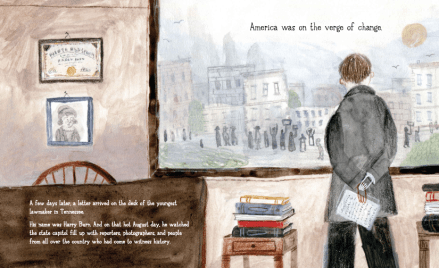
Aren’t Vivien’s illustrations amazing? I’m still blown away by them every time I see the book. When I first saw her work on her website, even before I saw her illustrations for the book, I knew that her old-world style would be a perfect fit for this story. And then when I first saw her preliminary sketches, I thought, WHOA, this is going to be even better than I could have imagined. Hmmm, it’s tough to pick a favorite spread. But I’d have to say the one where Harry Burn is looking out the window of the state capitol, watching the throngs of people arrive to witness history. She really captures the mood here. “America was on the verge of change,” the text reads. You can’t even see Harry’s face, but Vivien somehow managed to convey so much tension and anticipation in this spread. You can feel his inner struggle to do what’s right and follow his heart in the face of opposition.

What’s up next for you?

I’m super excited to say that I have several more picture books on the way during the next couple of years, all nonfiction. I’m also working on a chapter book and two middle grade books, one nonfiction and the other historical fiction.

As kids stay home and are schooled at home, it’s wonderful to see them interacting with the kidlit community. Would you like to give readers a writing prompt?

It really is so wonderful to be interacting with kids, their parents and their teachers. As for a prompt, I’d ask kids: With the world the way it is, what are the words, the scenes, the images, and the messages that would touch your heart? In other words, what is the book you need right now? Take one small step to start creating it. And then another…

Thanks, Elisa! It’s been wonderful talking with you! I wish you all the best with The Voice Who Won the Vote, and I can’t wait to read your upcoming books. I hope we’ll have a chance to chat again!

You can connect with Elisa on

Her website | Facebook | Twitter 

To order a signed, personalized copy of The Voice that Won the Vote, visit Print: A Bookstore.

19th Amendment Centennial Review

celebrate-picture-books-picture-book-review-the-vote-that-won-the-vote-cover

About the Holiday

This year we celebrate the ratification of the 19th Amendment, which guaranteed a woman’s right to vote. The victory was long fought and hard won and still informs issues of democracy and equal rights today. For more information on the history of suffrage and to learn more about the brave women on the front lines of progress, visit the 2020 Women’s Vote Centennial Initiative website and Women’s Vote Centennial. You’ll find extensive resources, curriculum for middle school and high school students, as well as online exhibits, videos, and so much more.

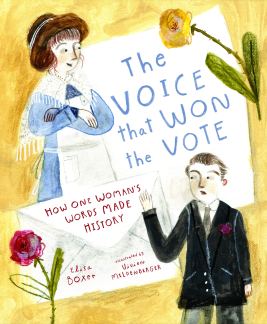
The Voice that Won the Vote: How One Woman’s Words Made History

Written by Elisa Boxer | Illustrated by Vivien Mildenberger

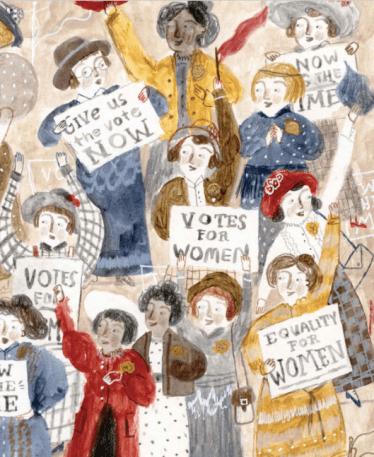
The year was 1920 and women were demanding the right to vote, just as they had been for the last seventy-five years. But all of their meetings, shouting, and signs were silenced. Men called the women “troublemakers” and “uncivilized.” Some men said it would “cause chaos” if women could vote, and others said “‘the only vote a woman needs is the vote to choose her husband.” There were even other women who thought women shouldn’t vote.

celebrate-picture-books-picture-book-review-the-vote-that-won-the-vote-silenced

Image copyright Vivien Mildenberger, 2020, text copyright Elisa Boxer, 2020. Courtesy of Sleeping Bear Press.

But then there was Febb Burn from East Tennessee who had gone to college, become a teacher, and loved to keep learning. She was especially interested in laws and how they were made, and every year as she watched her farmhands head off to vote on election day, she wanted to be able to go too. Finally, she grew so tired of being “shut out of the process” that she wrote a letter to her son.

Who was her son? His name was Harry Burn, and he was the “youngest lawmaker in Tennessee.” As he read his mother’s letter, he watched out his window as people from across the country gathered to decide the fate of women’s suffrage. One round of voting had already taken place, and it had resulted in a tie. Thirty-five states had voted yes on the issue, but thirty-six were needed to make it a law. Harry Burn for Tennessee had been one of the “no” votes in the first round. Now in the second round, Harry Burn would be the deciding vote. A “no” would deny women the vote, while a “yes” would change elections forever.

celebrate-picture-books-picture-book-review-the-vote-that-won-the-vote-letter

Image copyright Vivien Mildenberger, 2020, text copyright Elisa Boxer, 2020. Courtesy of Sleeping Bear Press.

“He knew that most of the people who had elected him hated the idea of women voting.” Many of them were even in the audience and were counting on him. He was, after all, wearing a red rose—”the symbol of keeping women in the home, and out of the voting booth”—in his pocket. When it came time for Harry to vote, all eyes were on him as he said “‘Yes.’” The officials thought he’d “made a mistake” or “gotten confused,” but he hadn’t. The suffragettes cheered and hugged.

Everyone wanted to know why Harry Burn had changed his mind. In answer, he pulled from his pocket the letter his mother had written urging him to vote for suffrage. Harry constituents were shocked and angry. They vowed to vote against him in the next election. The headlines in the newspapers said that Harry had ruined his career. But Harry already knew that. He knew that his vote would mean “giving up his seat in the Tennessee House of Representatives.”

celebrate-picture-books-picture-book-review-the-vote-that-won-the-vote-Harry

Image copyright Vivien Mildenberger, 2020, text copyright Elisa Boxer, 2020. Courtesy of Sleeping Bear Press.

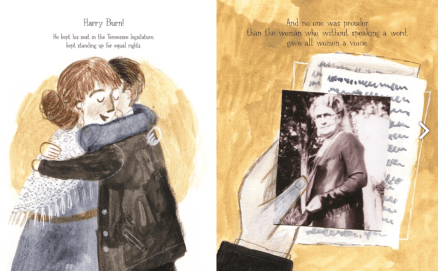
When interviewed for newspaper articles, Harry said that he had followed his conscience that all people should have the right to vote. At last the election was held, and Harry awaited his fate as all the votes were counted. Who would be the next Tennessee Representative? Harry Burn! “And no one was prouder than the woman who, without speaking a word, gave all women a vote.”

In an Author’s Note, Elisa Boxer talks more about the women’s suffrage movement, the courage to stand up for what you believe in, and the power of using the vote to voice your opinion. A timeline of significant events in the women’s suffrage movement is also included.

celebrate-picture-books-picture-book-review-the-vote-that-won-the-vote-Harry-Burn

Image copyright Vivien Mildenberger, 2020, text copyright Elisa Boxer, 2020. Courtesy of Sleeping Bear Press.

For anyone wondering about the power of one vote, Elisa Boxer puts all doubts to rest with her engaging recounting of this little-known true story. While Harry Burn’s vote took place 100 years ago, the courage he showed in standing up for his own conscience and in opposition to what was expected of him reverberates today. Boxer opens the story with a clear and meaningful definition of how a vote equals one’s voice, instilling in children who are learning to speak up for themselves in classrooms, on social media, and elsewhere the importance of voting when they come of age.

Her inclusion of quotes revealing the reasons behind opposition to women’s suffrage will be eye-opening. Her well-paced building of suspense going into the second vote and the aftermath will have kids on the edge of their seat and offers many opportunities to discuss the mechanisms of politics, expectations, and courage. Through her straightforward yet multilayered storytelling, Boxer presents two heroes for children to look up to: Harry, who put the good of the country and women ahead of his own career and Febb, who used her voice to make lasting change.

celebrate-picture-books-picture-book-review-the-vote-that-won-the-vote-suffragettes

Image copyright Vivien Mildenberger, 2020. Courtesy of Sleeping Bear Press.

Vivien Mildenberger’s lovely, textured illustrations take readers back to the pivotal year of 1920, when vocal suffragettes faced their equally vocal opposition and Febb Burn, sitting on her front porch decided to write her life-changing letter. Images of politicians sporting yellow and red roses reveal the long tradition of color as an identifying symbol. An especially powerful spread comes after Harry’s vote as he walks among his angry constituents, all of whom shun him behind newspapers full of articles about the historic vote. The inclusion of the actual Febb Burn’s letter to Harry and a photograph of Febb give readers see and hear from this influential woman.

A stirring true story about the power of one person to make a difference, The Voice that Won the Vote is highly recommended for home, school, and public library collections.

Ages 7 – 10

Sleeping Bear Press, 2020 | ISBN 978-1534110496

You can download a The Voice that Won the Vote Teaching Guide from Sleeping Bear Press here.

Discover more about Elisa Boxer, her book, journalism, and other work on her website.

To learn more about Vivien Mildenberger, her books, and her art on her website.

Women’s History Month Activity

celebrate-picture-books-picture-book-review-get-out-and-vote-maze

Get Out and Vote! Maze

Help the girl find her way through the maze to the ballot box so she can cast her vote in this printable maze.

Get Out and Vote! Maze | Get Out and Vote! Maze Solution

celebrate-picture-books-picture-book-review-the-vote-that-won-the-vote-cover

You can find The Voice the Won the Vote at these booksellers

Amazon | Barnes & Noble | Books-a-Million | IndieBound | Print: A Bookstore

Picture Book Review

April 1 – Reading is Funny Day and Interview with Author Lori Degman

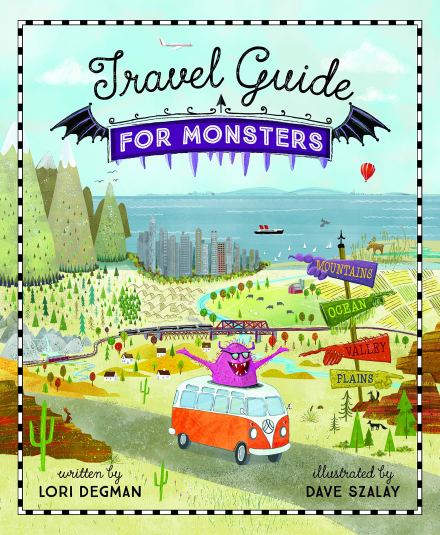
celebrate-picture-books-picture-book-review-travel-guide-for-monsters-cover

About the Holiday

Nothing’s better than hearing the giggles of a child reading a funny book! And thanks to today’s holiday, that sound can echo through your home all day long. It’s easy to celebrate too. Just grab your favorite funny books or find read alouds by your favorite authors and illustrators and settle in for a day of laughs. Or do a bit of both! And if you’re looking for a new book to add to your shelf, check into ordering today’s book for a fun trip around the country!

Travel Guide for Monsters

Written by Lori Degman | Illustrated by Dave Szalay


If you’ve ever wondered what it would be like to travel with monsters from coast to coast across America, then pack your bags and let’s get started! First stop is San Fransisco, California, where we hop a trolley for sightseeing. But maybe before we go on you should know: “While riding on a cable car, / Your monster should be cautious. / The ups and downs of Frisco hills / can make a monster nauseuous!” After taking in all the grandeur of the Bay Area, head down to Hollywood, where you and your monster can do some stargazing.

celebrate-picture-books-picture-book-review-travel-guide-for-monsters-geysers

Image copyright Dave Szalay, 2020, text copyright Lori Degman, 2020. Courtesy of Sleeping Bear Press.

Traveling east, you can visit the Grand Canyon in Arizona and  take a tour of Wyoming. While there… “You’re likely to get thirsty when you / hike up in the mountains. / Make sure to warn your monster / that those geysers are not fountains.” South Dakota and Mount Rushmore are next on the itinerary then it’s on to Chicago for some “face time” at the ballpark. In Nashville, Tennessee, your monster will love to kick up his (cowboy booted) heels to some down-home fiddle music.

A swing through the south just isn’t complete without enjoying Florida’s amusement parks or a wild adventure: “Down south among the everglades, / your monster should wear waders / when playing ‘Marco Polo’ / with the crocodiles and gators.” If your monster likes swimming, he’ll love the beaches in Massachusetts—just watch his choice of snacks!

While on the East Coast, don’t forget to visit our nation’s capital in Washington DC and New York State, where your monster can get a bird’s eye view from the crown of Lady Liberty and make a splash at Niagara Falls. And when you finally get back home, you may have just one lingering question about your trip: “How will you explain your monster’s crazy souvenirs?”

celebrate-picture-books-picture-book-review-travel-guide-for-monsters-statue-of-liberty

Image copyright Dave Szalay, 2020, text copyright Lori Degman, 2020. Courtesy of Sleeping Bear Press.

Clever and funny, Lori Degman’s rhymed verses follow a high-interest itinerary across the country and will delight kids, who will very much wish they could join in the ultra-fun, little-bit-risky, and larger-than-life activities in each of the landmarks visited. These snapshots of America take in transportation, celebrity, grandeur, sports, music, and history and will spark an interest in learning more about each city and attraction.

Accompanying Degman’s story are Dave Szalay’s vivid depictions of each landmark, where some of the cutest—I mean most fearsome—monsters sightsee their way to hilarious result. Each image is framed with site-appropriate wallpaper, sporting a shield with the state’s name, a compass showing the state’s direction, and a little mode of transportation—from retro cars to trains to buses to airplanes. Szalay’s realistic portraits of each landmark will entice kids to look up the actual destination, and they’ll love picking out their favorite from among their whimsical travel buddies.

A laugh-out-loud and captivating travelogue for monster fans and monster fans of travel alike, Travel Guide for Monsters would be an often-asked-for addition to home, school, and public library bookshelves.

Ages 5 – 8

Sleeping Bear Press, 2020 | ISBN 978-1534110373

Discover more about Lori Degman on her website.

To learn more about Dave Szalay, his books, and his art, visit his website.

Meet Lori Degman

celebrate-picture-books-picture-book-review-Lori Degman Headshot

Today, I’m monstrously exited to be talking with Lori Degman about her book, traveling, and her special musical talent! My blog partner Jakki’s two sons also get in on the fun with a few questions of their own!

Thanks so much for having me on your blog, Kathy!

Jack would like to know: How did you get the idea for travel guide for monsters? 

Hi Jack! I actually got the original idea from another Jack – Colin Jack, the illustrator of my first book, 1 Zany Zoo. About eight years ago, Colin asked me if I could write a picture book about teaching monsters manners when traveling on public transportation. I tried, but I just couldn’t come up with anything I liked. About a year later I tried again and, instead of focusing on the type of transportation, I focused on location. I wrote the first stanza, “When traveling with monsters on a trip across the nation/this guide will give you tips to have a marvelous vacation”, then followed the same rhyme scheme and wrote couplets about different locations around the country.                                                 

Steve asks: Did you travel to places in your book? 

Hi Steve! I didn’t travel to any of the places to research them, but I’ve been to most of them on vacations in the past. I would love to go to each of them and talk to kids about the book at each place – maybe one of these days!                            

Steve and Jack were wondering: We really like the monsters. Do you know how Dave Szalay came up with them? Do you have a favorite monster?

I love the monsters too! I don’t know how Dave came up with them, so I went straight to the source and here is Dave’s answer: “I looked at the word history of monsters, mythology, legends, and folktales.  I read about the characteristics of monsters throughout history and then invented each monster based on what I learned.” 

celebrate-picture-books-picture-book-review-Dave-Szalay-Headshot

Dave Szalay chats about his monsters with Jack and Steve from his studio.

Me again – It’s really hard to pick a favorite monster because they’re all so great!  But, probably the monster in the Everglades is my favorite.  I especially love his waders. 

celebrate-picture-books-picture-book-review-travel-guide-for-monsters-everglades

Image copyright Dave Szalay, 2020, text copyright Lori Degman, 2020. Courtesy of Sleeping Bear Press.

Hi Lori! Jack and Steve had some awesome questions, and I love your and Dave’s (thanks, Dave!) answers. I really enjoyed your clever rhymes and the monsters’ experiences. Could you take readers through a little bit of your process of writing this book?

Thanks so much, Kathy!  Once I established the rhyme scheme I was going to use and my plan to include different travel locations (as mentioned in question #1), I started listing places I’d been, like Mt. Rushmore, Statue of Liberty, Washington DC, and some places I’ve never been but want to visit in the future, like Niagara Falls and Cape Cod. Then I came up with ideas of some fun and silly things you’d tell your monster to do – or not to do – at these locations. Some of the locations went through several revisions with different tourist attractions. I think my hometown of Chicago had the most changes. First, I wrote about the elevated trains, then about the museums, and finally I wrote about Wrigley field – home of the Chicago Cubs. After writing the thirteen couplets, it was just a matter of getting the meter and rhyme just right.

You grew up and still live in Chicago. If you were going to take a trip, would you head north, south, east, or west? Why?

Within the United States, I’d like to take a road trip to all the states in the northeast. I’ve only spent time in New York City, Boston, and Washington DC, so I’d love to see all the other states up there. I’d probably go in the fall to see the changing leaves!

In your bio, you say that you love to write song parodies. How did you start doing them? Do you get to share these anywhere? Can you give readers a verse or two?

I wrote song parodies now and then, just for fun. But I started doing it a lot when I decided to write a musical for my long-time college friends and me. I wrote The Sound of MacMurray (our college) using the songs from The Sound of Music. Then I wrote a Christmas songbook for us, rewriting popular Christmas carols. When my friends and I turned 50, I wrote a song for each of them – and they wrote one for me. There are a lot of inside jokes in those songs, so I don’t think they’d be very funny to you. I did write a short song when my friend was diagnosed with Hashimoto Thyroiditis. It wasn’t serious or life threatening, otherwise I wouldn’t joke about it. But, when she told me the name of it, I knew I had to write a song about it! The song, Supercalifragilisticexpialidocious from Mary Poppins fit perfectly. Here’s the song:                                                                                      “Hashimoto Thyroiditis, that’s her diagnosis / just a goiter on her neck so it’s a good prognosis / if she takes her medicine, that’s all the risk it poses / Hashimoto Thyroiditis, that’s her diagnosis.”

Just from reading your extensive 2020 event schedule, it looks like you love to meet with your readers. What do you like best about meeting with fans of your books?

As I’m writing this, I’m in my house for the 10th day in a row because of the Coronavirus! Because of that, my bookstore and school visits will most likely be canceled, which makes me really sad. I’m going to try to reschedule them for next school year. I was a teacher for 32 years and I’ve always loved children, so school visits are so much fun for me! I love motivating kids to read and write and use their imaginations.                                                                                               

Did your family take trips when you were a child? Do you remember one that made a special impression? Would you like to share a memory from a trip with your own kids?

Growing up, I had two sisters and one brother and my mom raised us by herself. She had to work a lot and we didn’t have much money, so we didn’t go on many trips. Sometimes we’d drive to our aunt and uncle’s cottage on a lake or to the Wisconsin Dells. The one big trip we took, when I was 9, was a driving trip to Washington DC and then down to Nashville to visit our cousins. That was before they had seat belts, so my three siblings and I squeezed into the back seat of our car the whole way. That was before cars had air-conditioning too, which made it a really long, hot drive.

The most exciting trip we took with my own kids was to London, England. Luckily for me, I won a trip for two there, including airfare and hotel, so we only had to buy the airplane tickets for our kids! Speaking of winning trips – I’ve also won trips to San Francisco and Hawaii! I’m pretty lucky I guess.

Traveling is always fun, but staycations are fun too. What’s one of your favorite tourist attractions in Chicago? What’s a favorite not-so-well-known spot?

I love the Art Institute of Chicago! It’s so huge, there’s always something new to see when you go there.  Plus, they have special exhibits all the time. All of the Chicago museums are really cool!

A fun not-so-well-known thing to do in Chicago is take an architectural boat tour. There are a couple of companies that will take you down the Chicago River and a guide will tell the history of the different buildings and their architects. It’s fun – but make sure to do it on a warm day!

What’s up next for you?

I don’t have any picture books under contract right now but I have several manuscripts out on submission, so hopefully that will change soon. In the meantime, I’m enjoying writing, doing school visits (once they’re open again) and spending time with family and friends!

Thanks, Lori! It’s been so fun chatting with you! Kids will have a blast traveling vicariously with your and Dave’s monsters!

You can connect with Lori on Facebook | Instagram | Twitter

Reading is Funny Day Activity

celebrate-picture-books-picture-book-review-suitcase-board-game-playing-cards

Pack Your Bags for Fun! Board Game


If you love to travel, you know the first thing you have to do is pack your suitcase. With this printable game you can stuff your bag full of everything you’ll need for an awesome trip!

Supplies

celebrate-picture-books-picture-book-review-pack-your-bag-game-board

Directions

  1. Print one game board and set of playing cards for each player
  2. Print one playing die
  3. Players can color their suitcase game board if they’d like
  4. Cut out individual game cards and give a set to each player
  5. Cut out and assemble playing die, taping edges together
  6. Choose a player to go first. Play continues to the right.
  7. Players roll the die to place items on their backpack
  8. The first player to get all six items is the winner

celebrate-picture-books-picture-book-review-travel-guide-for-monsters-cover

You can find Travel Guide for Monsters at these booksellers

Anderson’s Bookshop | Barbara’s Bookstore | Between the Lynes | Booked | The Book Stall | Amazon | IndieBound 

Picture Book Review


February 6 – It’s Children’s Authors and Illustrators Week and Interview with Author Sally Nicholls

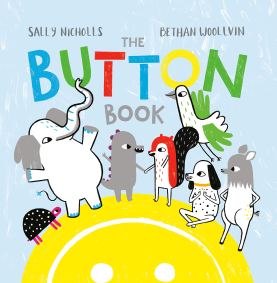
celebrate-picture-books-picture-book-review-the-button-book-cover

About the Holiday

If you’re a fan of children’s authors and illustrators, then this week is one you’ll want to celebrate. All week long, authors and illustrators visit bookstores, schools, and other venues to share their love of children’s literature and get kids and adults excited about reading and writing. Some of these events include storytelling, writing workshops, readings, and presentations. To find out more about the Children’s Authors Network and discover classroom resources to use throughout the year, visit the Children’s Authors Network website.

The Button Book

Written by Sally Nicholls | Illustrated by Bethan Woollvin


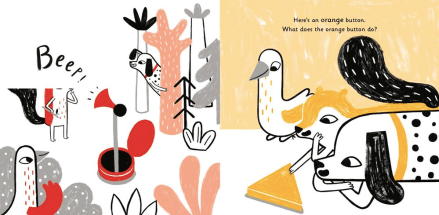
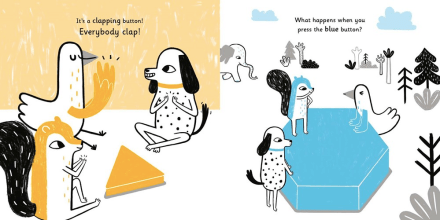
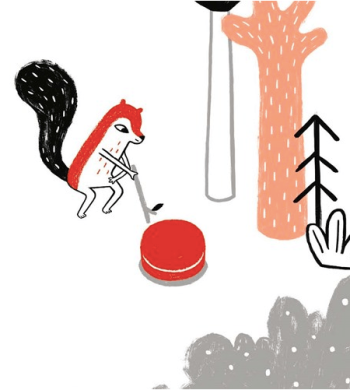
A squirrel comes across a red button on the forest floor. He nudges it with a stick and then gives it a good press just to see what will happen. Ha! The button’s lid opens and a little horn rises on a pole. “Beep!” it says. A dog and a bird appear from behind a tree and a bush to find out what the noise is all about. Now the three of them find an orange button. The squirrel gives it a push. “It’s a clapping button! Everybody clap!”

celebrate-picture-books-picture-book-review-the-button-book-beep

Image copyright Bethan Woollvin, 2020, text copyright Sally Nicholls, 2020. Courtesy of Tundra Books.

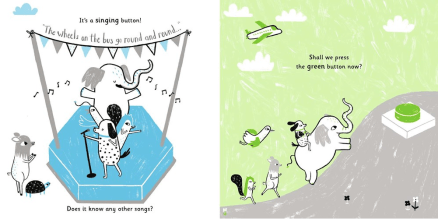
When the dog, the bird, and the squirrel find a blue button in the forest, they wonder how they’ll ever press it. This button is so big all three could stand on it and there would still be room. Luckily, an elephant is passing by. This blue button is “a singing button!” Two more animals wander by to listen to the trio sing. Down the road, the five friends find a green button that makes everyone giggle—well, almost everyone.

celebrate-picture-books-picture-book-review-the-button-book-blue

Image copyright Bethan Woollvin, 2020, text copyright Sally Nicholls, 2020. Courtesy of Tundra Books.

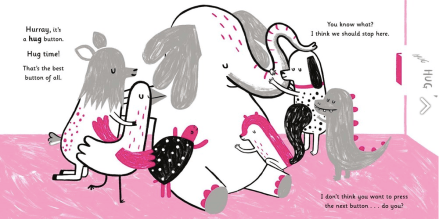
But the yellow button is one everyone likes. “It’s a bouncing button!” Wow! Everyone’s bouncing and tumbling—right off the page. Time to settle down to some cuddles with the pink button. Ahhh. Maybe this would be a good time to stop pressing buttons. Well…there is a purple button right over there. Everyone’s a little unsure—should they press it or not?

celebrate-picture-books-picture-book-review-the-button-book-singing

Image copyright Bethan Woollvin, 2020, text copyright Sally Nicholls, 2020. Courtesy of Tundra Books.

No! Stop! “Ha ha! Hee hee! That tickles! “Please, press the pink button, quick!” Oh no! Not the green button again! “Have you learned any manners yet?” Oh, good. This is more like it––the blue button! Yay! Let’s sing and play some instruments. The red button wants a little attention again too! Hey, look! There’s a new white button on the wall. What does that one do? Wait! It’s dark now. What are we supposed to…. Oh! “Goodnight, everyone.”

celebrate-picture-books-picture-book-review-the-button-book-hugs

Image copyright Bethan Woollvin, 2020, text copyright Sally Nicholls, 2020. Courtesy of Tundra Books.

Sally Nicholls’ fresh take on interactive picture books will have kids in stitches as they beep and clap, sing and dance, jump and hug, and do all the moves while eagerly wanting to see which button they get to press next. Nicholls’ prompts are irresistibly enticing and become funnier and more personal with every page turn. Her cyclical storyline gives readers the chance to revisit their favorite buttons while leading to the surprising, but just-right ending (or is it really the end?). Along with all of this fun, kids are also introduced to various colors, shapes, sizes and spatial relationships. There are plenty of opportunities for kids to count and talk about different types of buttons as well.

celebrate-picture-books-picture-book-review-the-button-book-red

Image copyright Bethan Woollvin, 2020, text copyright Sally Nicholls, 2020. Courtesy of Tundra Books.

Young readers will be enchanted with Bethan Woollvin’s curious, bubbly, talented, fun-loving kids…I mean…characters as they discover button after button on pages that mirror each button’s color. As if by magic, the squirrel, dog, bird, and other friends also change color as they press and respond to every button, inviting readers to follow along. While kids will egg on the animals to press all the other buttons, when they come to the white switch on the wall, children may very well let out a plaintive Noooooo…! But Woollvin has them covered here too. A little exploration of the nighttime bedroom will reward readers with a “Wake Up!” button so they can start all over again.

If you’re looking for a lively read aloud to spark interactive story times that will be asked for again and again, you’ll want to add The Button Book to your home, classroom, or public library collection.

Ages 3 – 7

Tundra Books, 2020 | ISBN 978-0735267152

Discover more about Sally Nicholls and her books on her website.

To learn more about Bethan Woollvin, her books, and her art, visit her website.

Meet Sally Nicholls

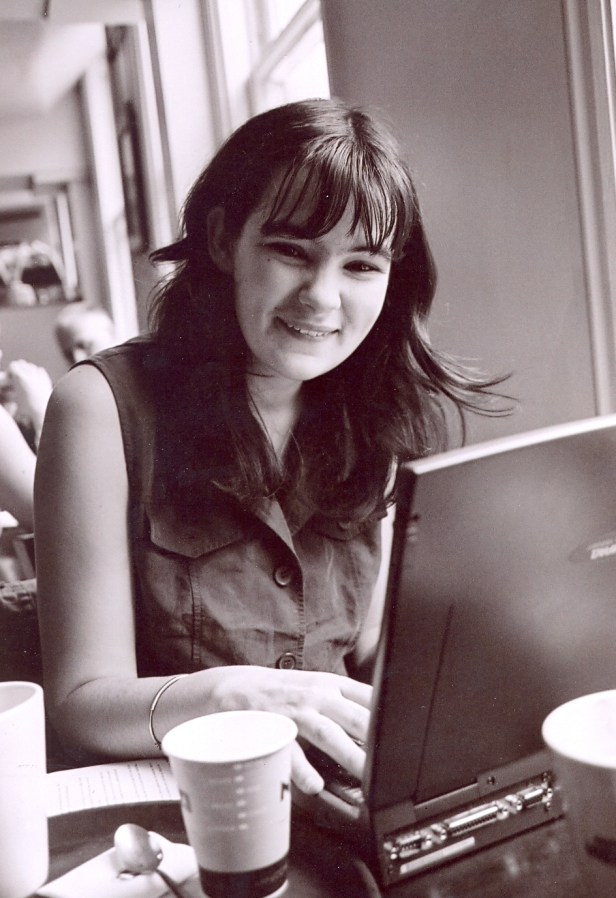
celebrate-picture-books-picture-book-review-sally-nicholls-headshot-black-and-white

I’m thrilled to have this chance to talk to Sally Nicholls today about her adorable and fun picture book, its journey, and what she’s looking forward to in sharing it with readers.

You burst into the book world with your debut middle grade novel Ways to Live Forever, which won the Waterstones Children’s Book Prize and was made into a movie in 2010. Since then you’ve published many more novels, including your latest middle-grade, A Chase in Time. The Button Book is your first picture book. What inspired you to write this story?

Reading to my baby! He loved books, but until he was about eighteen months, he didn’t like any that were just story. He wanted books he could interact with. I used to go to the library and look for anything with a button or a flap or touchy-feely bits. We read a lot of picture books, and I was fascinated by which ones worked and which ones didn’t – why exactly were Fox’s Socks and Where’s Spot? so successful but other books weren’t?

I decided I’d like to have a go at writing one myself. I know paper engineering and fur and so forth is expensive for publishers, and realistically that wasn’t my area of expertise anyway. So I set myself the challenge to write a book a baby would enjoy in the same interactive way, but only using words.

I love how active and funny The Button Book is! Kids are definitely going to be giggling, up on their feet, and playing along. It also has a wonderful cyclical storyline. How did you choose what the buttons do and infuse your story with so much reader interaction?

The Button Book is basically all the things my baby loved the most. If I wanted to make him laugh, I would pretty much just blow raspberries at him or tickle him or get him to clap. So that part was very easy.

The cyclical storyline came from watching programmes like The Teletubbies which really play on repetition. And also having my own baby who liked to say “Again!” Of course, the joy of The Button Book, which I hadn’t really realised until I read it with my second child, is that the child can have as much ‘again’ as they want just by pressing the button.

Bethan Woollvin’s adorable illustrations really invite camaraderie and play. What was your reaction to seeing her illustrations? Do you have a favorite spread and if so, what do you love about it?

I love Bethan’s work. My British publisher asked if I’d like to work with her and it was an instant yes. I’m not a very visual thinker, so I didn’t really have any expectations for how the book would look when it was illustrated. It’s been so exciting to see it take shape.

I think my favourite spread is probably the cover. It looks so colourful and inviting and unusual.

How has the experience of publishing a picture book differed from publishing your novels? Was there any part of the process that surprised you?

How long it took! I was sent finished artwork about eighteen months before the book was published. Printing picture books is so expensive that publishers need to get as many co-editions as possible to reduce the cost. So there’s a very long lead time.

What’s the best part about being an author for children? What are you most looking forward to as you promote The Button Book and share it with readers?

Books matter so much to young children. I’ve seen how much they matter to my family, and one of the most joyful things about The Button Book is how much my second baby loves it. (My eldest likes it too, but he’s a bit old for it now. Also, my baby has no idea that his mum wrote the book, which makes his love even more special.) So that, and also hearing from readers who have been touched by my books in particular ways, perhaps if the storyline resonates with them, or helps them through a difficult time, or just helps them learn to read!

Do you have any anecdote from a book event that you’d like to share?

I took The Button Book in to share with my eldest son’s class, and I got the children to help me make up a story. It was Halloween, so the children said they wanted a story about a vampire who likes flowers. One little boy objected (I think because he wanted his own idea to be picked) which my son took as a misogynistic slight. “Boys can like flowers!” he told him. I felt very proud.

What’s up next for you?

I’m currently finishing off a YA novel about a teen mother whose baby is being raised as her youngest brother. It’s a romance and a family story, and it’s set in a Yorkshire village in Christmas 1919, so there’s a ball, and a young man in an army greatcoat, and lots of chilblains. I don’t know if that’s going to find an American publisher though.

My next picture book is called Who Makes a Forest? It’s an ecological story about the power of small things to come together to make great changes.

What is your favorite holiday? Why is it your favorite?

This sounds weird, but I love the dead days between Christmas and New Year. All the stress of Christmas is over, everyone is off work and school, families are together, and it’s understood that your job is just to snuggle up by the fire and eat leftover turkey and Christmas cake and mince pies.

Thanks, Sally! It’s been wonderful chatting with you! I wish you all the best with The Button Book and all of your books and am looking forward to seeing Who Makes a Forest? when it’s released.

celebrate-picture-books-picture-book-review-the-button-book-cover

You can find The Button Book at these booksellers

Amazon |Barnes & Noble | Books-a-Million | IndieBound

Picture Book Review
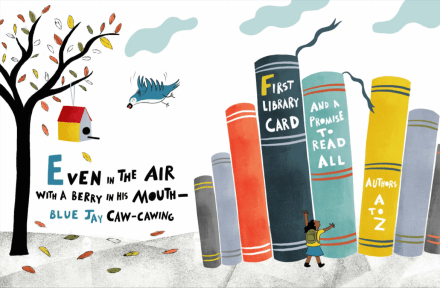
 

February 3 – It’s Children’s Authors and Illustrators Week

celebrate-picture-books-picture-book-review-what's-up-maloo-cover

About the Holiday

This week was established to raise awareness and promote literacy and the joys and benefits of reading. During the week, children’s authors and illustrators attend special events at schools, bookstores, libraries, and other community centers to share their books and get kids excited about reading. To learn more about how you can instill a lifelong love of learning in your children, visit ChildrensAuthorsNetwork!

I received a copy of What’s Up, Maloo? from Tundra Books for review consideration. All opinions are my own. I’m excited to partner with Tundra in a giveaway of the book. See details below.
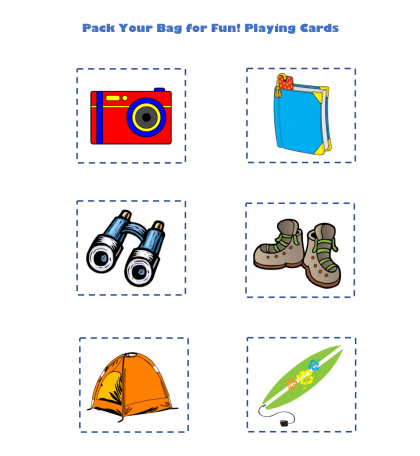
What’s Up, Maloo?

By Geneviève Godbout


Maloo is a little kangaroo with an especially hoppy spring in his step. But one day he feels grounded. Instead of hop, hop, hopping to see his friend, he takes “One step. Two steps, Three steps.” Wombat immediately notices that something’s amiss and asks, “What’s up, Maloo?” She brings him inside her cozy den and gives him a slice of pie. While she slides another treat into the oven, Maloo sits forlornly at the table, not touching his pie.

celebrate-picture-books-picture-book-review-what's-up-maloo-one-sad

Copyright by Geneviève Godbout, 2020, courtesy of Tundra Books.

They go down to the river—“Four steps. Five steps. Six steps”—where Crocodile sees it too and asks Maloo what’s wrong. Perhaps a swim will cheer Maloo up, but he sits dejectedly atop his ball and floats with the current. The three go to see Koala. They all want to help Maloo feel better. They try giving him a lift with an electric fan, but the wind just knocks Maloo head over heels.

celebrate-picture-books-picture-book-review-what's-up-maloo-den

Copyright by Geneviève Godbout, 2020, courtesy of Tundra Books.

Maloo’s friends stay with him, though––“ten steps…one hundred steps…one thousand steps.” They stretch out a blanket and fling Maloo into the air, giving him encouragement. Can he hop? Maloo falls…but springs up again. “Hop!” He floats down, but this time instead of feeling dejected, he’s looking up. Back into the air he goes. He descends, but something is rising up in him. Maloo jumps with a gigantic “Hop!” He smiles. Koala climbs on Maloo’s back while Wombat and Crocodile balance on pogo sticks, and they all “hop like Maloo!’”

celebrate-picture-books-picture-book-review-what's-up-maloo-one-hop

Copyright by Geneviève Godbout, 2020, courtesy of Tundra Books.

With her powerfully emotional images and spare text, Geneviève Godbout allows readers to identify with Maloo as he experiences a time of sadness and recovers happiness with the help of his friends. In her soft, earth-toned illustrations, Godbout provides many perspectives and good examples for children and adults to discuss. Having lost his hop, Maloo seeks out one friend, who engages another friend and yet another, showing children the reassurance and help available by reaching out and having a supportive network. Maloo’s friends are also sensitive to Maloo’s mood, encouraging readers to pay attention to and acknowledge changes they may see in their friends and family. As readers count Maloo’s steps, they’ll see that sometimes the road back to feeling happy can be long, but that good friends stick with you no matter what or how long it takes. They also learn that asking for help starts with one step.
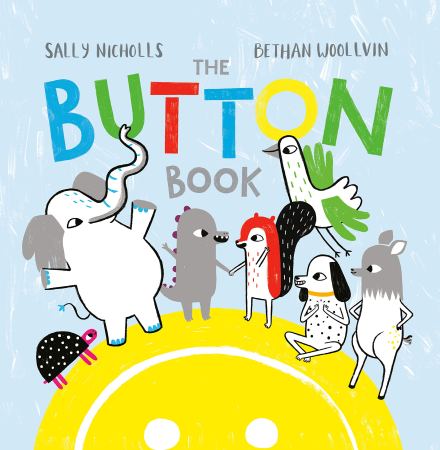
A moving and accessible resource for parents and caregivers to talk with their children about the ups and downs of life and the emotions of sadness and depression, What’s Up, Maloo? is a valuable addition to home, school, and public library collections.

Ages 3 – 7

Tundra Books, 2020 | ISBN 978-0735266643

To learn more about Geneviève Godbout, her books, and her art, visit her website.

Meet Geneviève Godbout

Born and raised in Quebec, Geneviève Godbout studied traditional animation in Montreal and at the prestigious Gobelins school in Paris. She is the illustrator of a number of books for children, including The Pink Umbrella, When Santa Was a Baby, Kindergarten Luck (Chronicle), and Joseph Fipps (Enchanted Lion). Some of her clients include The Walt Disney Company, Chronicle, HMH, Flammarion, Bayard, Les éditions Milan and La Pastèque. She also works for clothing designers like Nadinoo and Mrs. Pomeranz, creating illustrations and prints for their collections. Connect with Geneviève on her website.

Congratulations on What’s Up, Maloo, your debut picture book as both author and illustrator! Can you talk a little about the journey you’ve taken with this book?

Thank you! I never expected to be an author, but one day I woke up with the feeling I should write my own story about depression. I pictured this little kangaroo that lost his hop and told my French publisher (La Pastèque) about it. The whole creative process was natural, yet I felt incredibly insecure about my own capacities. But once published, we had such a fantastic response that I’m now working on a sequel with the little crocodile! 

What was your inspiration for this story and why this subject is important to you? What do you hope children will take away from your story?

I was inspired by my own experience of depression. I wanted to say that it’s ok to go through tough times and emphasize the importance of being surrounded without judgement. We should feel safe to confess our feelings to a friend. We don’t have to go through this alone. 

Your illustrations of Maloo feeling sad and losing the spring in his step are touching and instantly recognizable for children. How can adults use the book to talk with their children about the strong feelings of sadness and depression from multiple viewpoints, including the sufferer themselves and their friends?

I chose not to mention why Maloo lost his hop so that kids and adults can fill the gap in the text with their own experience. Maloo’s friends are sweet and full of empathy. I pictured this book as a comforter rather than a sad story. 

You’ve brought iconic characters Anne of Green Gables and Mary Poppins to books for the youngest readers. What are the challenges and joys of working with these beloved characters?
It was quite an intimidating challenge. These characters are so loved by readers (and myself!) that everyone has their own expectations of what they should look like. For instance, Mary Poppins is dramatically different in the original books by P.L. Travers from the Disney movie. But when we think about Mary Poppins, most people picture Julie Andrews, not a severe looking lady with very tall feet. With that in mind, I tried to find my own way of drawing both Mary Poppins and Anne Shirley. It was such an exciting opportunity, I reminded myself to have fun during the creative process without anticipating the public response too much. 

From characters’ round, expressive eyes, rosy cheeks, and sweet grins to animated action punctuated with humor to your gorgeous colors, your picture book illustrations are truly distinctive. How did you develop your signature style?

A style is the expression of one’s sensitivity and creativity. Mine evolved throughout the years as I gained experience and technique. And for some reason, I chose the most time-consuming medium: color pencils! I have always loved them. They’re delicate and precise. My background in traditional animation also has a huge part in the way I draw today. Everything is about movement and expressive posing. 

What do you love best about creating books for children?

I love the idea of touching people and offering them a safe bubble where they can smile and relax. There is nothing better than hearing a child or an adult say they love to curl up in bed with one of my books. 

You went to school in Paris, you’ve worked in London, and now you live in Montreal. Could you name one of your favorite places in each city and tell why you love it?

I was lucky to live in such fabulous and inspiring cities. I loved to get lost in Paris and walk by the Thames river near Hammersmith in London. Each time I go back, it feels a bit like home. As for Montreal, I think it’s the best place in terms of quality of life and I love the contrast between the seasons!

What’s up next for you?

I’m working on a couple of exciting projects including a sequel for What’s up, Maloo? and a third book in the Anne series. I’m kind of booked for the next year or so with Harper Collins, Random House, Comme des Géants, and perhaps Houghton Mifflin Harcourt, but I’m not sure what I’m allowed to say at this stage! 

Thanks, Geneviève! It was wonderful chatting with you. I’m really looking forward to seeing the sequel to What’s Up, Maloo? and all of your upcoming books!

celebrate-picture-books-picture-book-review-what's-up-maloo-cover

You can find What’s Up, Maloo? at these booksellers

Amazon | Barnes & Noble | Books-a-Million | IndieBound

Picture Book Review