May 11 – National Eat What You Want Day

celebrate-picture-books-picture-book-review-chip-and-curly-cover

About the Holiday

Feel like your diet is out the window what with staying home or ordering take out? Has good nutrition taken a hit because ingredients are at a premium? Don’t stress! Today’s holiday gives you permission to eat that doughnut or cupcake or pizza or whatever you want without feeling guilty. Besides, sometimes indulging a little jumpstarts your metabolism and provides motivation for the long haul. Lately, I’ve been craving French fries, so in honor of that, I’m celebrating two best spuds that are fry-tfully good sports.

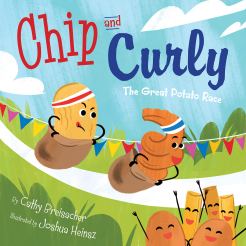
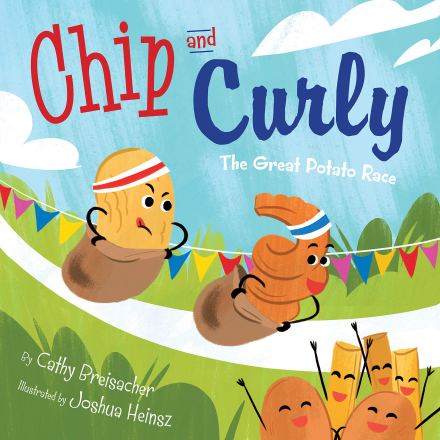
Chip and Curly, The Great Potato Race

Written by Cathy Breisacher | Illustrated by Joshua Heinsz


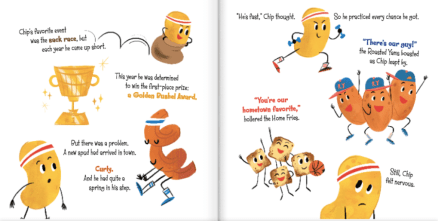
Spud City was about to hold its annual festival, and everyone was excited. Chip was practicing for the sack race. This year “he was determined to win the first-place prize: a Golden Bushel Award.” But a new spud in town—Curly—had a “spring in his step” and seemed to be real competition. Even though the other potatoes cheered him on, Chip was nervous.

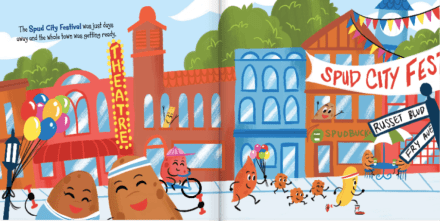
On the day of the festival, the race route was lined with spectators. The couch potatoes lounged near the path while “the French Fries stood with their Tater Tots.” Even the sweet potato cheerleaders were waving pompoms and shouting. Just before the race began, Curly took a place next to Chip at the starting line.
celebrate-picture-books-picture-book-review-chip-and-curly-spud-city

Image copyright Joshua Heinsz, 2019, text copyright Cathy Breisacher, 2019. Courtesy of Sleeping Bear Press.

When the whistle blew, Chip took off. He was in the lead until he heard someone behind him. “‘Look out!’ the BBQ Chips shouted. ‘Here comes a hot potato!’” Chip raced on, but then Curly bounced in front of him and even though Chip gave it his all, he couldn’t catch up. A moment later, though, Curly tripped and fell, leaving the path—and the race—wide open for Chip.

Chip hopped past Curly and was in clear sight of the finish line when he realized “he felt rotten.” He glanced back and “hashed it over in his mind.” He decided the only right thing to do was to go back. He offered Curly a hand up, and together they bounded down the route and past the other racers. But Curly was too quick for Chip, and he broke through the tape first. “In an instant, Chip’s dreams of winning were mashed.” 

Chip was just about to leave when Curly asked him to be his partner in the relay race. Curly thought they made a great team. They practiced until they found their groove. Everything was looking good until a new team showed up….
celebrate-picture-books-picture-book-review-chip-and-curly-practicing

Image copyright Joshua Heinsz, 2019, text copyright Cathy Breisacher, 2019. Courtesy of Sleeping Bear Press.

Kids will devour Cathy Breisacher’s pun-filled romp that takes them to Spud City’s annual festival, where Chip and Curly face off to win a Golden Bushel Award in the sack race. While Chip pulls out to an early lead, Curly bounces back and threatens Chip’s years-long dream to win. A misstep by Curly gives Chip the opportunity to achieve his goal, but in his decision, Breisacher shows readers true sportsmanship and integrity. Curly also displays the qualities of a gracious winner, and as the two work together to perfect their relay skills, a friendship sprouts. The final scene offers a funny “oh, no!” moment while also reminding readers that winning can be fleeting, but friendship and staying true to oneself endure.

Joshua Heinsz populates Spud City with a wide array of taters—from tots to waffle fries, sweet potatoes to twice-bakeds, French fries to home fries, and more. Heinsz adds plenty of visual humor to the mix with clever street sign and shop names, and the couch potatoes are, ingeniously, those impossible-to-peel curved ones that lurk in many a 5-pound bag. Kids will love picking out their favorite kind of potato, and the expressive spuds will have readers captivated from the very first page.

For rollicking story times that also offer opportunities to discuss the nature of competition and friendship, Chip and Curly, The Great Potato Race is one to add to your home, classroom, or library shelf.

Ages 5 – 8

Sleeping Bear Press, 2019 | ISBN 978-1585364084

Learn more about Cathy Breisacher and her books on her website.

To learn more about Joshua Heinsz, his books, and his art on his website.

A Chat with Cathy Breisacher
011CB

It’s so great to be talking with you again! This must be a really exciting—and busy!—time for you, so I’m thrilled to have you stop by!

You’ve mentioned that the inspiration for this story was a local potato festival. Can you describe that event a bit and tell what sparked the idea for Chip and Curly?

Every year, on the last Saturday in September, a town not far from where I live holds a Potato Fest.  The county where it is located is the second-largest supplier of potatoes in the state. People come from all around and a good portion of the downtown area is closed off for the event. There are tons and tons of vendors selling a variety of crafts, and the food vendors whip up all kinds of potato treats: sweet potato fries, potato candy, baked potatoes, pierogi, potato soup, French fries, potato bread, etc. There is live music as well as games for the kids. I love the fall season, and this is a great kick-off to the fall. I try to attend every year. So, in 2016 when I wrote this story, I thought about the potato festival and all of the kinds of potatoes that are sold at the event.  The names CHIP AND CURLY came to me and the idea for the story just flowed from there.

Of course, I have to ask—what’s your favorite kind of potato? Do you have a favorite recipe? Would you like to share it?

 I love twice baked potatoes. They are probably my favorite. But, there really isn’t a potato I don’t like. I also love perogies and sweet potato fries. Oh my goodness…it’s hard to choose just one. 

I’ll share a recipe for Cheesy Hash Brown potatoes that are gobbled up at many family events. They are so easy to make.

CHEESY HASH BROWN POTATOES

26 oz. Bag of frozen shredded hash brown potatoes (thawed)
2 cups Sharp cheddar cheese (shredded)
16 ounces sour cream
1 (10 1/2 ounce) can cream of mushroom soup
1 ½ sticks butter
3 cups Crushed corn flakes
1 teaspoon garlic salt and pepper to taste

Thaw the hash browns.  Melt 1 stick of butter and mix it with the hash browns.  Pour into 9 x13 pan.  Mix the sour cream, soup and cheese in a bowl. Spread over the potatoes. Melt ½ stick of butter and mix it with the crushed corn flakes.  Sprinkle over the potatoes. Bake at 350 degrees for an hour.

Being competitive can take so many forms. Do you consider yourself competitive? If so, in what way?

Yes, I’m definitely competitive. I always want to put 110% into things that I do. If there is a challenge of some sort, I am in it to win it. J In the past couple of years, I’ve been intrigued with Escape Rooms and trying to solve all of the clues before the time runs out. Recently, I heard of an Escape Room that no one has “broke out of” yet.  I want to be the first! J

Chip and Curly is loaded with puns and really clever word play! The story must have been a blast, but also challenging to write. Can you talk a little about how you put it all together?

Chip and Curly was definitely a fun story to write. I just pulled out my first version of this story, and it has so few puns in it. I didn’t initially write this story to be punny.  But, as I was doing my first set of revisions, a pun popped in my head.  More puns came to me as I continued to revise. It wasn’t long before I knew this had to be a story that centered on potato puns. I scoured the Internet to find words associated with potatoes. I must have looked at every list that exists online. The tricky part was to include those words and phrases that fit nicely with the story. I didn’t want to include something just to include it if the word or phrase really didn’t flow with the storyline. My amazing editor, Sarah Rockett, had excellent suggestions for tweaking the story a bit more after she acquired it. And I was delighted with the fun, playful, colorful art provided by the illustrator, Joshua Heinsz.

After practicing for a year to win a Golden Bushel Award for the sack race, Chip makes a surprising decision part way through the race. What would you like kids to take away from the story?

This is the crucial part of the story. I want kids to know that competing can be a lot of fun. And it can feel good to win at something, too. However, practicing good sportsmanship is important and helps build character. When we show respect toward our opponents, we can still have fun and compete, but it helps us to keep our focus on what’s most important—treating one another the way we want to be treated.

Since CaveKid Birthday was released in March, what’s been the best part of being a published author? The most surprising? As a librarian, how does it feel to see your own book on your library’s shelf?

Gosh, there is so much I am enjoying about being a published author. I love meeting new people (kids and adults) at book events and talking with them about stories. It has also been a treat to see friends and family who I haven’t seen for a while. Being a school librarian, I get an extra treat when kids ask to check out my book. That has truly meant the world to me. When my students tell me they love my books, my heart just completely melts.

During our first interview for CaveKid Birthday how did I miss that you’re from Hollidaysburg, Pennsylvania? Does the town live up to its celebratory name? Do you have a favorite town celebration or spot to write or visit?

Hmmm…very good question. The town where I live is a true community. People really get behind and support the schools, sports teams, agencies, fundraising events, etc. So I guess you can say that the people who live in Hollidaysburg celebrate one another’s aspirations and accomplishments. I am proud to live in this town. I do have a few favorite spots that I like to visit. There are a couple of parks that are so beautiful and serene. They are a great place to spend timejyeither alone or with family and friends. As for a favorite town celebration, I would have to say the Winterfest Light-Up Night that is held at the end of November each year. There are festivities in the downtown area and everything is decorated for Christmas. Local restaurants hold soup samplings and people vote on their favorite. Santa arrives and a giant tree is lit up that evening. There are ice carvings, too. It’s such a fun night and everyone is in the holiday spirit.

Thanks, Cathy! I can’t wait to try those delish-sounding potatoes! I know you’ll have lots of fun with Chip and Curly, and I wish you all the best with all of your books!

You can connect with Cathy Breisacher on

Her website | Facebook | Twitter

National Eat What You Want Day Activity
celebrate-picture-books-picture-book-review-appealing-potatoes-game-cards

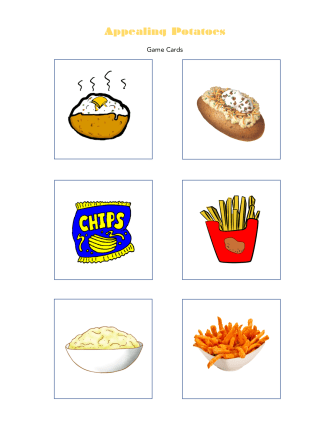
Appealing Potatoes Game


If you love potatoes, you can never get enough! Race to fill your plate with all six kinds of potatoes in this fun game!

Supplies

Directions

  1. Print a game board and set of game cards for each player.
  2. Choose a player to go first.
  3. Taking turns, each player rolls the paper die and places a game card matching the rolled potato to their plate
  4. Or: If using a regular playing die, use the corresponding number and kind of potato listed below
  5. The first player to add all six kinds of potatoes to their plate is the winner.

Corresponding Numbers and Potatoes:

  1. Mashed Potatoes
  2. French Fries
  3. Potato Chips
  4. Baked Potato
  5. Twice-baked Potato
  6. Sweet Potato Fries

celebrate-picture-books-picture-book-review-chip-and-curly-cover

You can find Chip and Curly, the Great Potato Race at these booksellers

Amazon | Barnes & Noble | Books-a-Million | Bookshop | IndieBound

Picture Book Review


May 1 – May Day and Interview with Author Denise Brennan-Nelson

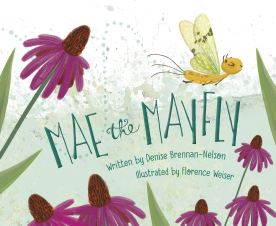
celebrate-picture-books-picture-book-review-mae-the-mayfly-cover

About the Holiday

May Day has for centuries celebrated the coming of spring. In ancient calendars May 1 heralded the first day of summer. Often celebrated with flowers and dancing, May Day has ushered in many traditions, such as dancing around a Maypole and May Day baskets, which are cone-shaped baskets filled with flowers. A May Day basket is usually given in secret as the giver hangs it on a friend’s doorknob and then rings the doorbell and runs away. (Which sounds like a perfect way to celebrate the holiday in these days of social distancing.) Whether nature is blooming in full or just starting to bud where you live, May Day offers the promise of brighter days ahead. Today’s book—and its adorable character Mae—shows us how to celebrate that feeling every day.

I received a copy of Mae the Mayfly from Sleeping Bear Press for review consideration. All opinions of the book are my own.

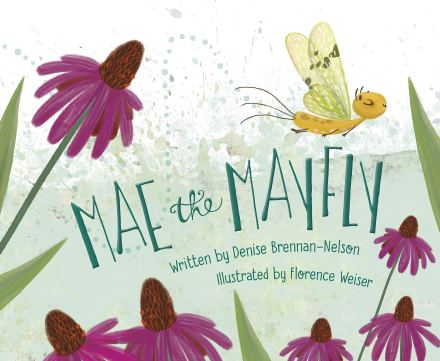
Mae the Mayfly

Written by Denise Brennan-Nelson | Illustrated by Florence Weiser


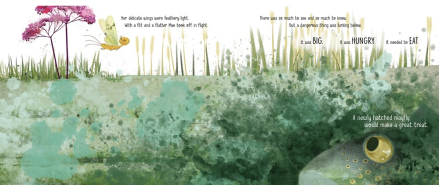
“Near the bank of the river one warm spring day / a new life began, and her name was Mae.” Before her mama said goodbye, she hugged her daughter and told her that she had her “whole life—a day, perhaps more” to explore her world. As Mae flitted along the river, a large, hungry trout waited for just the right moment to lure her in. It smiled deceitfully and beckoned to her, and, even though her inner voice told her not to, Mae flew down closer to take a look.

celebrate-picture-books-picture-book-review-mae-the-mayfly-fish

Image by Florence Weiser, 2020, text copyright Denise Brennan-Nelson, 2020. Courtesy of Sleeping Bear Press.

That’s when the trout leapt from the water to snatch Mae from the air. But she darted and dodged and got away. Shaking with fear, Mae found a hole in a hollow tree and flew in. “I’ll stay here forever! I’m not coming out!” she told herself.  But once her heart stopped beating so loud, she heard a happy tweet and peeked out of the tree. She saw a mother robin feeding her chicks and a spider web glittered in the sun. “The mist on the river was a fine, pink cloak. / A bullfrog bellowed his morning croak.” 

Mae remembered what her Mama had said and “launched herself from the dark, hollow place.” She followed the river, where she saw flowers and birds, a deer and a bear and one “stubby toad.” Then, she came to a clearing where she found “a singing, dancing jamboree… a wild mayfly jubilee! / Joining in, Mae danced with glee!”

celebrate-picture-books-picture-book-review-mae-the-mayfly-bird

Image by Florence Weiser, 2020, text copyright Denise Brennan-Nelson, 2020. Courtesy of Sleeping Bear Press.

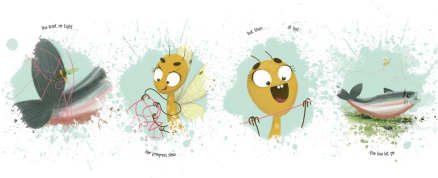
As morning turned to afternoon, Mae was floating on the breeze when she heard a call for help. She went in search of who it was and found Trout lying motionless and barely breathing. Fearful that he might leap at her again, she carefully went closer to inspect. “But Trout was weak, no flip or flail. / Tangled line had caught his tail.” Then Mae noticed something else—his shimmering “rainbow stripes in every hue, silver, pink, and shades of blue.” And in his eyes she saw his fear and realized that she and Trout were alike.

Mae went to work to try to free him. The knot was tight, but Mae worked patiently until the line slipped free and Trout swam away with the current. Mae hoped that he would be okay. Just then she saw a flash as Trout returned and with a flip of his tail said, “Thank you.” As nighttime settled over the river and the moon rose high, Mae settled on a cattail leaf. She listened to the bullfrogs and watched the fireflies glow. “The stars came out early for  sweet, little Mae. / She counted each one… then called it a day.”

Back matter includes a message about mindfulness, an exercise to try and facts about mayflies.

celebrate-picture-books-picture-book-review-mae-the-mayfly-fishing-line

Image by Florence Weiser, 2020, text copyright Denise Brennan-Nelson, 2020. Courtesy of Sleeping Bear Press.

Soaring and uplifting, Denise Brennan-Nelson’s unique story reminds children and adults alike to live each day to the fullest and reveals where the treasures that make life so fulfilling can be found. The short lifespan of a mayfly gives Brennan-Nelson a perfect canvas for compressing the lessons of a lifetime into one day, and her superlative storytelling incorporates parental love, fear, appreciation for our surroundings, courage, selflessness, and friendship. Her language is triumphant, carried breezily on rhyming couplets that are a joy to read aloud. The pitch-perfect ending may bring a tear to the eye but spur readers to find the beauty in every day.

Through Florence Weiser’s lovely textured illustrations, readers can almost feel the breeze ruffling the tall grasses, the spray of river water, and the warmth of the sun as they follow Mae on her adventure. Mae is a cutie with lacy wings and a sweet, expressive face. A powerful image of empathy comes in a close-up, two-page spread in which Mae, looking into Trout’s frightened eye, sees her own reflection. Whereas up to now Mae has been an observer of life, she now becomes an active participant by helping a fellow creature. Working in perfect tandem with Brennan-Nelson’s text, Weiser’s pages take readers on a journey of growth and discovery they’ll take to heart. Calming shades of green dotted with subtle pinks, purples blues, and browns reflect Mae’s mindful approach to life, making this a delightful book to share for quiet story times.

Beautiful and resonant, Mae the Mayfly is highly recommended and would be an often-asked-for addition to home, school, and public library collections.

Ages 5 – 8

Sleeping Bear Press, 2020 | ISBN 978-1534110519

Discover more about Denise Brennan-Nelson and her books on her website.

To learn more about Florence Weiser, her books, and her art, visit her website.

Meet Denise Brennan-Nelson

celebrate-picture-books-picture-book-review-Denise-Brennan-Nelson-headshot

Denise Brennan-Nelson has written a number of books for children, including Tallulah: Mermaid of the Great Lakes, Leopold the Lion, Someday Is Not a Day of the Week, My Momma Likes to Say, Santa’s Secret, and the popular Willow series. As a national speaker, Denise encourages adults and children to tap into their imaginations to create richer, fuller lives. She travels the country, sharing her reading and writing enthusiasm with schoolchildren and teachers. Denise lives in Howell, Michigan with her husband, Bob. She strives to spend each day teaching and learning with a creative spirit. Find out more about Denise at www.denisebrennannelson.com.

Today, I’m really thrilled to be talking with Denise Brennan-Nelson about her inspiring story, her journey in writing it, and how we can all appreciate the life around us. My blog partner Jakki’s sons, Jack and Steve, also loves Mae the Mayfly and had a few questions of their own. 

Jack wonders: What inspired you to write about a mayfly? 

The inspiration to write about a mayfly came when I discovered that they live, on an average, only one day. I started digging and discovered that while mayflies have many interesting qualities, it was their life cycle that reeled me in and set the basis for the story: a mayfly begins as an egg, then hatches into a nymph. It then lives as a nymph for one to three years before emerging from the water as an adult. Once they have molted––the only insect known to molt twice!––they only have about a day to live. ONE DAY? How do you live your entire life in ONE day? Where would you go? What would you do? I had so many questions. And so, the journey began!

Steve would like to know: Where is your favorite place to go and enjoy nature?

Our backyard has many trees and a few paths to meander on. One of those paths leads to a playhouse that my husband built years ago for our children, Rebecca and Rachel. I love to sit on the steps and take it all in––especially the forever-changing trees and the way the light filters through them. It’s quiet and I watch the birds and the chipmunks, squirrels, and occasionally deer show up. It’s far enough away from our house that I can forget about my “to-do” list and relax.

There are also a couple of parks nearby that have trails and lakes and offer a beautiful place to enjoy nature.

Jack and Steve asked if you spent a lot of time at a pond while creating the story.

No, I didn’t spend a lot of time at a pond, but I did a lot of research to help me visualize the setting.

In early drafts, I pictured Mae’s life beginning on a pond but as the story emerged it turned into a river. Unlike a pond, a river “flows.” It seemed to fit with the ebb and flow of Mae’s life.

The river became integral to the story; Mae’s life began there, she experiences a harrowing ordeal with Trout, which causes her to flee the river out of fear, but ultimately, Mae returns “home” to the river and completes her life. (This was in keeping with a mayfly’s lifecycle.)  

Hi Denise! I love your answers to Jack and Steve’s questions! What an amazing character a mayfly makes. You’ve published many, many books for kids. What inspired you to become a children’s writer? What’s the best part about your job?

I had been happily writing for myself – journals and poetry mostly – when inspiration came knocking at my door in the form of a documented study about bumblebees. According to scientists, bumblebees are not “equipped” to fly. Aeronautically, their wings are too small for their bodies. Upon hearing that, I was compelled to write what was in my head and my heart. I wanted to answer the questions I had: What would happen if bumblebees found out about their small wings? Would fear and doubt stop them from doing what they love to do? Once it was written, I felt I had written something that I wanted to share with others. Four years and many rejection letters later, my first book, Buzzy the Bumblebee was published.

The best part about my job is creating something – taking an idea and turning it into something new that entertains and inspires children and adults. I also love the freedom to work when and where I want to, often in my pajamas in the wee hours of the morning.

Mae the Mayfly is a gorgeous, poignant reminder for both kids and adults to look around and appreciate the beauty all around us. Not only the mayfly, but all of the sights that Mae sees are ephemeral parts of nature. How did you choose each of these?

I felt they had to be simple, yet remarkable acts of nature that would draw Mae out from the hollow of a tree. You know that awe-inspiring feeling you get when you discover a bird’s nest or a spider’s web? That was the basis for the sights and sounds Mae encountered.

I also drew from a trip to Yellowstone where the vivid images of rivers, flowers, bear cubs, and other magnificent acts of nature are forever embedded in my mind.

The rhymes of Mae the Mayfly are as light as she is, and your rhythm is as jaunty as a mayfly’s flight. Could you describe your journey in writing this story?

After learning of a mayfly’s short lifespan, the mulling-over period ensued. A lot of thinking and dialogue in my head takes place before taking pen to paper. Often, I share my initial thoughts with family and friends which helps the pieces come together.

I did more research, too. I watched a video showing how some mayfly nymphs resist the pull to come to the surface when it is time to shed their outer covering and expose their wings. After spending years at the bottom of the dark river, why would they resist? I wondered. Why would they want to stay at the bottom of the river when they could break through the surface into the light, and fly––if only for a day?

Ah, fear.

It was starting to come together – I would write about a mayfly and how beautiful and meaningful one day could be, if she can overcome her fears.

Initially, the story was written in prose and then I wrote it in verse. At one point, I even wrote a funny version for my kids about Mae being stubborn and not listening to her mama. That version didn’t end well for Mae, because, well, she didn’t listen to her mama! My kids got a kick out of it.

Before she was Mae, she was Martha. From Martha to Marvin. Then I changed it to May. And then May became Mae.

My first submission was declined. So, I gave it a rest. The idea was there but I needed to start over. I believed in this story with my whole being and I wasn’t giving up. In June 2018, I resubmitted it and in August I learned that Sleeping Bear Press wanted to move forward with it. I signed the contract in September and it was released in March of 2020 amid a pandemic. It wasn’t the launch I envisioned, but the story is about appreciating the simple things and living life to the fullest. It is also about empathy, fear, and gratitude. Perhaps the timing was just right.

Florence Weiser’s illustrations are adorable while truly highlighting the beauty of what Mae sees. Do you have a favorite spread? Why do you love it?

I love the cover and the end sheets, and the illustration of Mama saying good-bye to Mae tugs at my heart. But my favorite is the spread where Mae encounters Trout tangled in fishing line and Mae sees herself – literally and figuratively – in Trout’s eyes. Mae is confronted with a difficult decision between fear, or courage and compassion. This was a pivotal part of the story and Florence did a remarkable job capturing the emotion of both Mae and Trout.

You encourage people to be aware of and open to inspiration and those small moments in life that make them the best version of themselves they can be. How can kids and adults practice this kind of mindfulness while at home during this time of self-isolating and social distancing?

In a robust and enthusiastic voice my dad often proclaims, “This is living!” He says it with such conviction that you might think he won the lottery. On the contrary, he says it to express his delight over life’s simple/small pleasures; a sunset, eating a fresh-picked tomato from the vine, watching the birds, the daffodils sprouting, a delectable meal, a rainstorm . . .

I am by no means an expert on mindfulness, but I have learned a few things that help me enjoy life a little bit more:

  • Be aware/pay attention – the list of things to delight over is endless when we notice what is going on around us
  • Make room for quiet time and stillness every day
  • Focus on one thing at a time and do it with intention and purpose
  • Write down 3-5 things daily that you are grateful for. Do it as a family with a “family journal” or get a notebook for every member and make it a nightly ritual

Lately I’ve been asking people, “What do you like most about the shelter-in-place order that we are being asked to follow?” Over and over, I’ve heard, “It feels good to slow down . . . less hectic . . .” I hope we emerge from this unique experience with the realization that life is not a race, it’s a gift.

What’s up next for you?

My publisher is currently reviewing two stories that I have submitted. Fingers crossed that they accept both of them!

What inspires you each time you start a new story?

When I have an idea that interests me I feel invigorated and purposeful. What can I do with it? Where will it take me? What can I learn from it?

In Bird by Bird, Anne Lamott writes, “If you are writing the clearest, truest words you can find and doing the best you can to understand and communicate, this will shine on paper like its only little lighthouse.”

Each time I begin a story I am hopeful that what I write “will shine on paper like its own little lighthouse.”

Thanks so much, Denise! This has been such a wonderful talk! I wish you all the best with Mae, the Mayfly and can’t wait to see more from you in the future.

You can connect with Denise Brennan-Nelson on 

Her website | Facebook | Twitter

May Day Activity

celebrate-picture-books-picture-book-review-mae-the-mayfly-activity-page

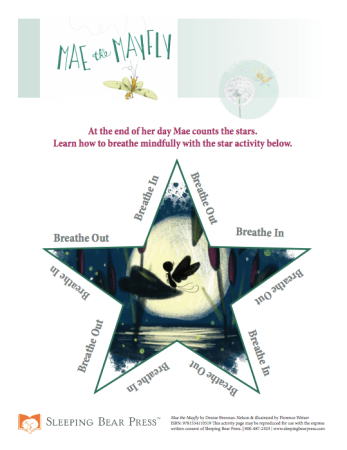
Mae the Mayfly Mindfulness Activity


Like Mae, you can calm your mind and be present in the moment as you enjoy your surroundings. Use this printable activity to get into that peaceful state of mind. Just look at the picture inside the star and follow the breathing directions as you trace each arm. You can download it from the Sleeping Bear Press Website under Teachers Guides here:

Mae the Mayfly Mindfulness Activity

celebrate-picture-books-picture-book-review-mae-the-mayfly-cover

You can find Mae the Mayfly at these booksellers

Amazon | Barnes & Noble | Books-a-Million | IndieBound | Sleeping Bear Press

Picture Book Review

April 22 – Earth Day and Interview with Author Shana Keller

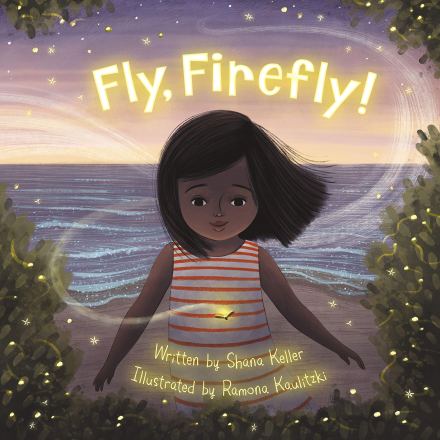
celebrate-picture-books-picture-book-review-fly-firefly-cover

About the Holiday

Celebrating 50 years of raising awareness of threats to the environment and spurring global action to combat them, Earth Day is the world’s largest civic-focused event. The initiative began on April 22, 1970, when 20 million Americans (10% of the population) demonstrated against the industrialization, pollution, and pesticides that were damaging people and the environment. In response, in July President Nixon and the US Congress created the Environmental Protections Agency and enacted laws such as the Clean Water Act and the Endangered Species Act among others. This year’s theme is Climate Action, and the day will be commemorated with a global digital mobilization encompassing conversations, video teach-ins, special performances, calls to action, and more. To learn how you can participate or access resources in your area, visit the official Earth Day website.

I received a copy of Fly, Firefly! from Sleeping Bear Press for review consideration. All opinions about the book are my own.

Fly, Firefly!

Written by Shana Keller | Illustrated by Ramona Kaulitzki


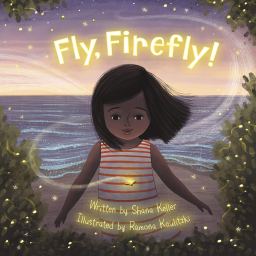
As the wind curled through the forest on a breezy night, a little firefly was blown out to sea. “WHOOSH! Now he was farther than he meant to be.” Floating on the current, “he saw the sparkles that flashed and glowed.” He dove in search of the twinkling lights, but deep water was not the place for him.

celebrate-picture-books-picture-book-review-fly-firefly-whoosh

Image copyright Ramona Kaulitzki, 2020, text copyright Shana Keller, 2020. Courtesy of Sleeping Bear Press.

A woman and her niece, strolling along the beach, saw him sinking. The woman scooped him up and gently placed him in her niece’s hand. “‘Little firefly,’ Marjie said. / ‘It’s not flies that you see! / That’s bioluminescence swirling / and twirling through the great sea!’” Marjie carried her treasure up the beach to the edge of the woods, where hundreds of glittering friends and family were waiting to welcome him back, and she set him free.

Following the story, Shana Keller includes a discussion about Rachel Carson—scientist and author of Silent Spring and other books whose experience inspired this story­­—and a description of fireflies and bioluminescence.

celebrate-picture-books-picture-book-review-fly-firefly-marjie

Image copyright Ramona Kaulitzki, 2020, text copyright Shana Keller, 2020. Courtesy of Sleeping Bear Press.

Shana Keller’s glowing and lyrical story about one misdirected firefly that sparks an act of compassion and discovery will inspire children to learn more about both fireflies and the bioluminescent sea creatures that attracted him. The fact that the story is based on an actual event in the life of Rachel Carson will also appeal to readers, who may enjoy sharing one of their favorite marvels of summer with this influential environmentalist and author. Told in the first person, the story directly invites children to observe nature around them and lend a hand in protecting it.

celebrate-picture-books-picture-book-review-fly-firefly-sparkles

Image copyright Ramona Kaulitzki, 2020, text copyright Shana Keller, 2020. Courtesy of Sleeping Bear Press.

Ramona Kaulitzki’s illustrations are as beautiful as a summer sunset. Under the pink and lavender sky, dots of light flit among the bushes and low-standing trees. Children first meet the firefly at the center of the story as he’s tumbling head over tail in the wind toward the rippling ocean. As the firefly mistakenly dives into the waves, kids will empathize with his plight and be cheered when Marjie and her aunt rescue him. Kaulitzki’s gorgeous underwater images highlight the diversity of marine creatures found close to shore as well as those that glitter with bioluminescence. The brilliant glow of the firefly on the dusky pages glimmers like a precious jewel and serves as a beacon of the hope and promise of nature.

A unique book for kids who love nature and to inspire studies of bioluminescence, Fly, Firefly! would be a shining addition to home, school, and public library collections.

Ages 5 – 7

Sleeping Bear Press, 2020 | ISBN 978-1534110335

Discover more about Shana Keller and her books as well as extensive teacher and homeschool resources and readalouds of her books on her website.

To learn more about Ramona Kaulitzki, her books, and her art and find free coloring pages to download in her shop, visit her website.

Meet Shana Keller

celebrate-picture-books-picture-book-review-shana-keller-headshot

Shana Keller grew up a middle child in Middle America wondering exactly how clouds stayed in the air. She’s traveled all over the country and some parts of Europe with her family and moved too many times to count. She’s settled in Pittsburgh for now, a city built just for kids and one that she finds secretly inspiring. One of her favorite quotes is from Benjamin Banneker. “Every day is an adventure in learning.” That said, she graduated from the University of Miami, Florida, with a degree in Communications, from UCLA’s screenwriting program, and took a course in songwriting from Berklee College of Music. Her goal is to never stop learning.

I’m excited to talk with Shana today about her books, her inspirations, and her extensive travels. My writing partner Jakki’s sons Steve and Jack also loved Fly, Firefly! and had some questions for Shana.

Steve asked: We like to capture fireflies. Did you capture fireflies as a kid?

I did! My brother and sister and I would compete to see if we could get one of them to land on us.

Jack wondered: Did you watch real fireflies to write your story?

I was so lucky and grateful to live close to where Rachel Carson lived in Pennsylvania while I wrote this story, and to have a pond in our yard. We had frogs, fish, birds, and a good number of fireflies. I watched them every night in the summer when the weather was warm. There was so much wildlife in our backyard! We had chipmunks, groundhogs, wild turkeys, voles, and woodpeckers.

celebrate-picture-books-picture-book-review-shana-keller's-backyard

Our back yard in Pittsburgh. On the bottom right is the pond. Our cat loved to sleep on the picnic table up the small hill. Can you see it behind the little tree? Back there is where the groundhog moseyed around.

celebrate-picture-books-picture-book-review-Shana-Keller-Koi-Image

One of the koi fish in our pond surrounded (and protected) by lily pads.

celebrate-picture-books-picture-book-review-Shana-Keller-groundhog-Image

A groundhog just past the picnic table in our (former) backyard.

CBP Shana Keller Toad Image

A picture of our frog in the same pond as the koi. Lots of critters lived in it and used it for water.

We don’t live in Pittsburgh anymore and I really miss that yard. Sadly, I haven’t seen any fireflies in my new neighborhood in North Carolina.

Jack and Steve said: We’ve brought frogs back to a pond. Have you ever rescued an animal?

Yes! In the traditional sense, our last dog Abby, was a pound puppy. (Though she has passed, I included a photo.) She always stayed up with me while I wrote, no matter how late it was. I still miss her, so it was the neatest surprise for me to see a beagle in the illustrations for Ticktock Banneker’s Clock. Abby was part beagle.

celebrate-picture-books-picture-book-review-Shana-Keller-Dog-Image

Abby running in the snow. She always looked like a deer or rabbit the way she bounded and jumped!

celebrate-picture-books-picture-book-review-Shana-Keller-cat-Image

Jazzy standing outside on our deck.

Today, one of our cats is also a rescue. Her name is Jasmine, but we call her Jazzy. And yes, in the literal sense I have rescued a handful of animals! My most memorable one was when I was about ten or eleven years old and I rescued a squirrel from my aunt’s swimming pool.

The little squirrel had tried to jump from one tall tree to the next and missed. He fell into their round pool. The water was too low, and the ledge was too high for him to climb out. I didn’t want him to drown, so I looked around the yard and grabbed a tree branch to see if he would climb onto it. He didn’t. Then, I ran into the shed and grabbed the biggest (which was also the heaviest) shovel I could find. The squirrel swam away from me even faster than before! I chased after him wielding the long shovel and tried not to rip the lining of the pool. Round and round we went until he finally slowed down long enough, I was able to scoop him out.

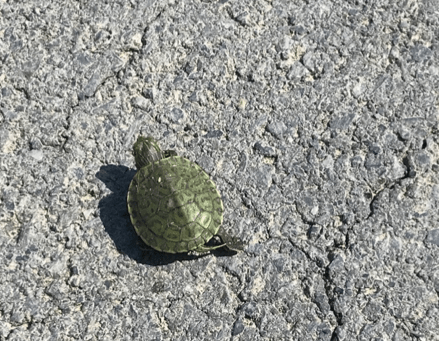
I’ve also stopped to scoot turtles along if I see them in the middle of the street. This one (photos are of the same turtle) was the littlest and also brightest green turtle I have ever seen in nature.  

celebrate-picture-books-picture-book-review-Shana-Keller-turtle-pavement-Image

A little turtle crossing the street.

celebrate-picture-books-picture-book-review-Shana-Keller-turtle-grass-Image

A picture of the same little green turtle after I moved him. It looked like he was headed toward a pond. I helped him cross the street so he could get there.

Hi, Shana! What fantastic stories about your love of nature and your pets! Thanks so much for sharing all of these beautiful pictures with us. I can see that nature has really been a life-long inspiration. What sparked your idea to write this particular story?

A few years ago, I read a letter Rachel Carson wrote to her friend Dorothy Freeman in a book called Always, Rachel. In her letter, Rachel and her niece, Marjorie (nicknamed Marjie), came across a firefly while at her summer home in Southport, Maine. Around midnight, Rachel and Marjie headed down to the shore to secure Marjie’s son’s raft.

On the shore, they turned their flashlights off and saw a sea filled with “diamonds and emeralds.” The sparkling was bioluminescence, a (likely) form of marine plankton called Dinoflagellates. Rachel joked with her niece how one gem “took to the air!” Of course, it was a firefly! Well, further in the letter, Rachel tells her friend that she had already thought of a children’s story based on her experience. That sentence is what sparked the idea! 

What kind of research did you do in writing Fly, Firefly! and the back matter about bioluminescence that follows the story? What was the most surprising thing you learned about fireflies?

With this story, I headed to the library first to learn as much about the area Rachel was located in (Maine), and the insects and bioluminescence there. Once I sorted through all of my facts, I reached out to an entomologist here in North Carolina, the director of the Rachel Carson Homestead in Springdale, Pennsylvania, and a marine biologist who studied at the very same Marine Biology Lab Rachel did.

I also read Rachel’s books to get a sense of her voice and style. It filters through in her letters, but her books definitely have a poetic aura about them.

The most inspiring thing I learned was the importance and prominence bugs have in our world. We take them for granted. We call many of them pests. But the truth is, they are an important part of our ecological system. As I discovered with fireflies, when you have them, it is a good indication that your ecosystem is in great health.

What inspired you to write Fly, Firefly! in verse?

While I was researching, I discovered Rachel Carson had a love of poetry. Though this is not pertaining (that I know of) to the children’s story she discusses; in another letter written to her, she was quoted by her friend Dorothy (regarding Rachel’s poetic aims), as having said, “I just want it to be simple and clean and strong and sharp as a sword—for it has work to do!”

I did my best to honor her vision in that way, so I kept it lyrical, simple, and clean!

In your bio, you describe how you’ve traveled and lived all over the country and in parts of Europe. What took you to all of these places? Can you name a favorite place in the US? In Europe? Why are those places special to you?

People always assume I was a military brat when I’m asked about the places I’ve lived. Family and school took me/us to Oklahoma (my birth state), Kansas, Florida, Pennsylvania and Texas. Adventure and jobs took me/us to Colorado, New Mexico, Virginia, Germany, & North Carolina.

My mom simply said she had wanderlust and gypsy blood. I definitely got my love of travel from her. Although now, with my kids in school we have settled down. At least until they graduate. J

My absolute favorite place in the United States is Big Bend national park. My mom and I camped there the year before I left for college. It’s right on the border of Texas and Mexico in a NO-FLY zone which means zero light pollution. Seeing the vast Milky Way at night is something I will carry with me forever. I wish every kid could see the sky that I saw.

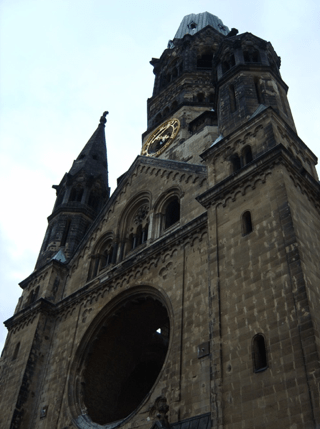
My favorite place in Europe was in Berlin. It was the bombed Kaiser Wilhelm Memorial Church left as it was after the war and converted into a museum. When I first saw this monument of destruction but also of hope, it impacted me in a strong way. My photo from over ten years ago is on the left and does not do it justice. The photo on the right is what it originally looked like. It is definitely worth a Google search to see more pictures of it and compare the before and after.

celebrate-picture-books-picture-book-review-Shana Keller-Kaiser-William-Memorial-Church-after-Image

My photo of the Kaiser Wilhelm Memorial Church. Notice the top tower is broken.

celebrate-picture-books-picture-book-review-Shana Keller-Kaiser-William-Memorial-Church-Before-Image

An online photo of the Kaiser Wilhelm Memorial Church. See how big it was before the bombing?

You’ve also recently released Bread for Words: A Frederick Douglass Story from Sleeping Bear Press that relates how Douglass, born into slavery, taught himself to read and write despite overwhelming challenges. Your powerful telling of this story is written in first person. Why was writing Douglass’s story in first person important to you?

I was first introduced to Douglass’s autobiographies in college. I thought this was way too long of a wait to learn about someone who was the most photographed person in 19th century America and considered one of the greatest orators in our nation.

Frederick struggled for years in a hostile environment while he learned to read and write. To honor his accomplishment, one he was clearly proud of, I wanted to present this story in the same format he had and give children direct access to his own words.


celebrate-picture-books-picture-book-review-bread-for-words-cover

Can you describe a little about your process in writing Bread for Words?

I read Douglass’s autobiographies of course, but I also studied his speeches. I was able to take a trip to Baltimore and meet with Urban Ranger and docent, Bradley Alston thanks to the folks at Baltimore National Heritage Area. His insight and knowledge not just of Frederick Douglass but of the Baltimore Douglass grew up in was incredible. Touring the Frederick Douglass–Isaac Myers Maritime Park and museum (a place I highly recommend) with Bradley Alston rounded out my research. I’ve included a few photos from that trip!

celebrate-picture-books-picture-book-review-Shana-Keller-Frederick-Douglass-Museum-Image-1

A recreation of Frederick Douglass arriving in Baltimore. (Photo taken at the Frederick Douglass-Isaac Myers Maritime Park and Museum.)

celebrate-picture-books-picture-book-review-Shana-Keller-Frederick-Douglass-Museum-Image-2

A recreation of the letters Frederick Douglass saw carved into the wood. (Photo taken at the Frederick Douglass-Isaac Myers Maritime Park and Museum.)

celebrate-picture-books-picture-book-review-Shana-Keller-Frederick-Douglass-Museum-Image-3

This is me learning what it was like to caulk a ship, a job Douglass had. They took long rope, dipped it into tar and used the hammer and tool to wedge it in for a watertight seal. (Photo taken by Bradley at the Frederick Douglass-Isaac Myers Maritime Park and Museum.)

celebrate-picture-books-picture-book-review-Shana-Keller-Frederick-Douglass-Museum-Image-4

What Baltimore Harbor looks like today.

Did you always want to write for children? How did you get started?

I didn’t expect to, not at first. I always thought I would write screenplays. I got started when my oldest daughter came home with a small paragraph from school about a man named Benjamin Banneker. It was during Black History Month, and I was amazed that I had never heard of this scientist and astronomer. Curious, I began to research him. When I discovered he built a strike clock using only a pocket watch and a pocketknife, that was the story I shared with my daughter, and that’s when the idea to put it in picture book format took place. I haven’t stopped writing picture books since.

You’re really enthusiastic about connecting with readers. What’s your favorite part of book events and meeting kids? Do you have an anecdote from any event you’d like to share?

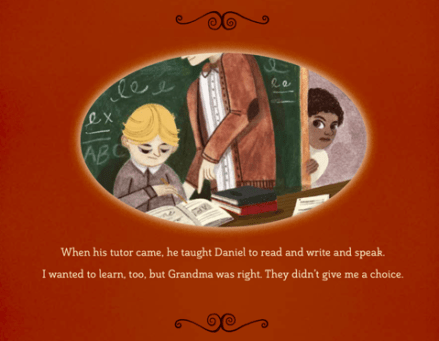
Yes! In fact, before all the quarantines, I had such a special moment with a group of fourth graders on the day I shared Bread for Words with them. A student referred to the picture that’s on the back of the cover and said, “See how Frederick wants to be with his friend?” The kids interpreted that image as Frederick waiting for his friend to finish with his tutoring so that they could play and hunt and eat together. But also waiting, so that his friend could teach him.

It seems so obvious now that they mentioned it, but my original interpretation was one of exclusion, not simply waiting. To them, all Fred had to do (which Fred actually did) was ask his friend for help. One of the 4th grade boys even said, “I’m glad he had a friend that could help him.” I agreed and said, “It’s amazing how all the kid’s helped each other, isn’t it?!” And there was the real ‘lesson’ which another student pointed out and said, “We have to help each other if we can.” That kind of interaction is my favorite part about school and library visits!

It does make me wonder how other students will interpret this image.

celebrate-picture-books-picture-book-review-Shana Keller Bread for Words Back Cover Image

Bread for Words – back cover. Courtesy of Sleeping Bear Press.

What’s up next for you?

Hopefully more picture books! I’m working on a WWI story, as well as a picture book that highlights the effects of light pollution on migratory birds. I also just finished a very cool Coast Guard story that I can’t wait to share with my editor.

Thank you, so much, Shana for this wonderful talk and your generous pictures! I wish you all the best with all of your books and am really looking forward to reading them as I’m sure kids are too!

You can connect with Shana Keller on

Her website | Twitter | Instagram

Earth Day Activity

celebrate-picture-books-picture-book-review-firefly-maze

Firefly Flight Maze


This little firefly wants to join her friends in the forest. Can you help her through the maze to find them in this printable maze?

Firefly Flight Maze Puzzle| Firefly Flight Mage Solution

celebrate-picture-books-picture-book-review-fly-firefly-cover

You can find Fly, Firefly! at these booksellers

Amazon | Barnes & Noble | Books-a-Million | IndieBound

April 21 – National Kindergarten Day

celebrate-picture-books-picture-book-review-kindergarrrten-bus-cover

About the Holiday

National Kindergarten Day honors the birthday of Friedrich Wilhelm August Frobel who was born April 21, 1782 and is credited with starting the very first Kindergarten in Germany in 1837. Recognizing that children learn through play and experience, Frobel established a foundation for modern education. The first kindergarten in America was opened by Margarethe Schurtz in 1856 in Watertown, Wisconsin. Kindergarten became part of some public school systems in 1873. Even though kids aren’t in their regular classes right now, we still celebrate all of their achievements, creativity, and love of fun. Little ones’ enthusiasm and natural empathy can make them great teachers too—as today’s book shows.

Sleeping Bear Press sent me a copy of Kindergarrrten Bus to check out. All opinions are my own.

Kindergarrrten Bus

Written by Mike Ornstein | Illustrated by Kevin M. Barry


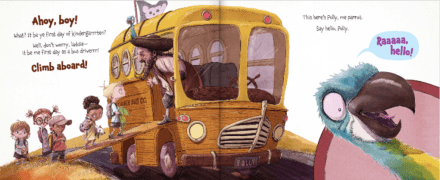
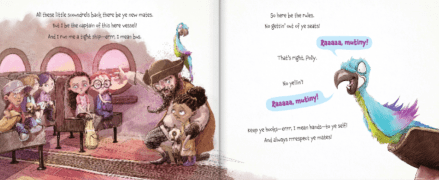
As the little tykes climb the plank into the kindergarten school bus, they’re met by a most unusual driver. He has a hook hand, a peg leg, a curly beard, a broad-brimmed hat with a parrot perched on the edge, and he greets the first little boy like this: “Ahoy, boy! What? It be ye first day of kindergarrrten? Well, don’t worry, laddie—it be me first day as a bus driverrr!” The pirate shows the kids to their seats and lays down the rules. Any infractions…. Well, Polly will tell ya: “Raaaaa, mutiny!”

celebrate-picture-books-picture-book-review-kindergarrrten-bus-scared-plank

Image copyright Kevin M. Barry, 2018, text copyright Mike Ornstein, 2018. Courtesy of Sleeping Bear Press.

The kids don’t seem too sure of this turn of events. They each talk about how they miss their family, their pets, their toys, and how it’s all a little scary. But the pirate will have “no blubberin’ on me bus! Pirates don’t get scared! We eat bones for supperrr!” he tells them. And as far as them missing their moms and dads? “We ain’t got time for that fluffy stuff!” he says. So the bus takes off, and the driver sings a ditty about brave these little buccaneers are as they go.

But the route turns as bumpy as a churning sea with potholes that rattle Polly so much she flies out the window…I mean “winderrr.” The pirate wails after his parrot, “Waaaa arrrgh waaaa arrrgh!” Then the bus comes to a screeching halt amid a pirate melt-down. “I can’t drive me bus without me sweet snuggly Polly! I can’t do it, I tells ya! I can’t! I can’t I can’t!”

celebrate-picture-books-picture-book-review-kindergarrrten-bus-scared-mutiny

Image copyright Kevin M. Barry, 2018, text copyright Mike Ornstein, 2018. Courtesy of Sleeping Bear Press.

Everyone piles out, and the kids try to reassure the poor driver, reminding him of all the things he told them. Turns out that ol’ pirate “was only hornswogglin’” and that he considers himself “nothin’ but a scared, blubberin’ boob of a buccaneer.” The kids are empathetic and reassuring, and pretty soon the pirate is feeling better about things.

Back on the bus, the little ditty is less bravado and more true bravery. As they pull up at the X, where “the treasure of all treasures” awaits the kids, the pirate gives one more lesson before letting all those little “scoundrels walk the plank—errr, I mean, exit the bus.” But why is a pirate driving a school bus? one little boy wants to know. Well, that answer may surprise you and it be somethin’ ye just have to see for yourself!

An afterword from the author discussing tips for talking with kids about fears and worries follows the story.

celebrate-picture-books-picture-book-review-kindergarrrten-bus-scared-kids

Image copyright Kevin M. Barry, 2018, text copyright Mike Ornstein, 2018. Courtesy of Sleeping Bear Press.

Could Mike Ornstein actually be a pirate? I’m thinking yes! His ease with Pirate-ese makes this dialogue-rich story a comical treasure that will have kids “Harrr, harrr, harrr-ing” at every twist and turn in the book—and lucky for them, there’s a whole loot of those. Scrumptious words like “blubberin’, hornswogglin’, landlubbers,” and “blue-footed booby bird” as well as a liberal sprinkling of rrrrs make this book a joyful read-aloud that kids will clamor to participate in. Nuggets of reassurance about “rrrespect,” admitting fears and worries, and enjoying school are pure gold.

celebrate-picture-books-picture-book-review-kindergarrrten-bus-scared-map

Image copyright Kevin M. Barry, 2018, text copyright Mike Ornstein, 2018. Courtesy of Sleeping Bear Press.

Kevin M. Barry’s wide-eyed, rakish kids and scallywag of a bus driver are the perfect companions on this hilarious journey to the first day of kindergarten. The school bus—a wooden jalopy with porthole windows, a ship’s wheel steering wheel, and a teddy bear jolly roger—comes to a tipping point when the pirate’s beloved Polly flies the coop. As the pirate dramatically looks to the skies and admits his false bravado, the kids—skeptical, astonished, and empathetic—look on. While one curly-haired little girl reassures the pirate, the other kids channel their own bravery and get ready to have a fun day at school. Readers will love the expressive faces, small details (a fish-skeleton belt buckle, a girl’s “I Got This” t-shirt), and, of course, ruffled Polly.

Kindergarrrten Bus is a rip-roarin’ yarn with a heart of gold that will get kids and grown-ups laughing and talking about feelings, fears, and the fact that everyone gets scared sometimes. A go-to book for fun story times and moments when a little more encouragement is needed, Kindergarrrten Bus would be a favorite on home and classroom bookshelves.

Ages 5 – 8

Sleeping Bear Press, 2018 | ISBN 978-1585363988

To learn more about Kevin M. Barry, his books, and his art on his website.

National Kindergarten Day Activity

celebrate-picture-books-picture-book-review-pirate-maze

Sail for Pirate Treasure Maze


Join the crew of scallywags to pick up supplies on your way to finding a treasure chest full of gold in this printable maze.

Sail for Pirate Treasure Maze Puzzle | Sail for Pirate Treasure Maze Solution

celebrate-picture-books-picture-book-review-kindergarrrten-bus-cover

You can find Kindergarrrten Bus at these booksellers

Amazon | Barnes & Noble | Books-a-Million | IndieBound

Picture Book Review
 

April 11 – National Submarine Day

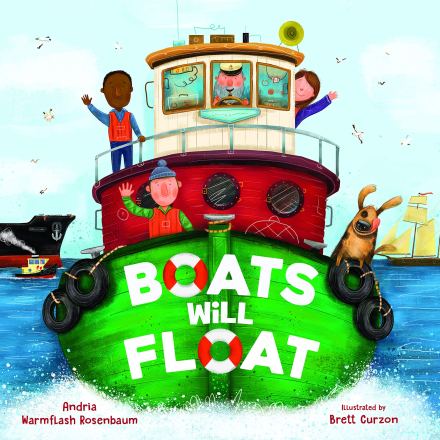
celebrate-picture-books-picture-book-review-boats-will-float-cover

About the Holiday

Today we commemorate the day in 1900 when the United States Navy acquired its first modern commissioned submarine, the Holland VI. The vessel was designed in 1896 by John Phillip Holland, an Irish-American inventor, and launched in 1897 in Elizabeth, New Jersey. It was later purchased by the U.S. Navy and commissioned on October 12 with Lieutenant Harry H. Caldwell commanding. It was renamed the USS Holland (SS-1). Submarines are now employed not only for military purposes but for scientific research as well. To celebrate, learn more about the history and service of these vessels. You can even take a virtual tour of the USS Torsk – part of the fleet of Historic Boats in Baltimore, Maryland.

Boats Will Float

Written by Andria Warmflash Rosenbaum | Illustrated by Brett Curzon


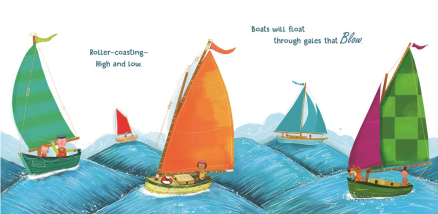
As the sun rises, “boats are bobbing in the bay, / waiting to be on their way. / Longing for the reaching tide. / Needing to explore and glide.” The day is clear and the sun shines brightly on fishing boats, where fishermen pull up their nets and drop their lines, and dragon boats, where rowers steer the boat to the rhythm of the drum. Captains hail each other as their boats pass on the way out to the open ocean. Seagulls swoop and call out too.

celebrate-picture-books-picture-book-review-boats-will-float-sailboats

Image copyright Brett Curzon, 2020, text copyright Andria Warmflash Rosenbaum, 2020. Courtesy of Sleeping Bear Press.

At a family picnic, the “speedboat launches human kite.” Is that Grandma taking flight? The ocean’s busy on this day with tugboats, a tanker, and an old-fashioned schooner. A fireboat’s needed to put some smoldering out. The coast guard is keeping the water safe while cruise ship passengers spy “passing pods of spouting whales.”

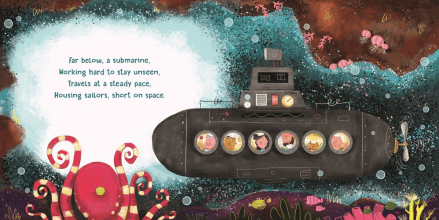
A research vessel way out to sea launches scientists and divers to learn more about what lies beneath. While “far below, a submarine, / working hard to stay unseen, / travels at a steady pace, housing sailors, short on space.” A trawler rounds a rocky shore where a lighthouse warns of dangers below. Nighttime brings a starlit sail and a houseboat rocks its family to sleep. “Safely moored in dreams all night– / Boats will float…toward morning’s light.”

An illustrated glossary telling more about each of the sixteen boats in the story follows the text.

celebrate-picture-books-picture-book-review-boats-will-float-submarine

Image copyright Brett Curzon, 2020, text copyright Andria Warmflash Rosenbaum, 2020. Courtesy of Sleeping Bear Press.

A day on the water has never felt so inviting as in Andria Warmflash Rosenbaum’s engaging tale of boats big and small sailing the ocean for work and pleasure. Rosenbaum introduces young readers to a community of boats all enjoyed by industrious and enthusiastic skippers, sailors, paddlers, and even a dog or two. Her lyrical storytelling brings the sights, sounds, and flowing rhythms of the sea inside for rousing and educational story times while the cozy nightly routine of the family who lives in a houseboat makes for snuggly bedtime reading.

celebrate-picture-books-picture-book-review-boats-will-float-houseboat

Image copyright Brett Curzon, 2020, text copyright Andria Warmflash Rosenbaum, 2020. Courtesy of Sleeping Bear Press.

You can almost feel the salty breeze in Brett Curzon’s bright and charming illustrations that place the boats in tranquil waters and amid roiling waves. Whitecaps and frothy spray, leaping dolphins and whales, and circling seagulls looking for a treat create a vivid experience for readers. Curzon faithfully recreates each vessel with clear details that will enthrall kids. The fun of the dragon boats, drama of the fireboat, and porthole view from the submarine will enchant readers. The nighttime sail by a child and father is gorgeously lit by an explosion of stars, a vibrant moon, and the stalwart lighthouse and buoy that guides them.

A captivating introduction to boats, work, and life on the sea for vehicle lovers and any child, Boats Will Float, will be a favorite for story times and as a take along on ocean, lake, river, and other outings.

Ages 5 – 7

Sleeping Bear Press, 2020 | ISBN 978-1534110410

Discover more about Andria Warmflash Rosenbaum and her books on her website.

National Submarine Day Activity

Sleeping-Bear-Press-Boats-Will-Float-Activity-Page

Boats Will Float Activity Page

Set sail with this Boats Will Float Activity Page available to download from Sleeping Bear Press.

celebrate-picture-books-picture-book-review-boats-will-float-cover

You can find Boats Will Float at these booksellers

Amazon | Barnes & Noble | Books-a-Million | IndieBound | Sleeping Bear Press

  |Picture Book Review


April 9 – International Unicorn Day COVER REVEAL of Unicorn Yoga

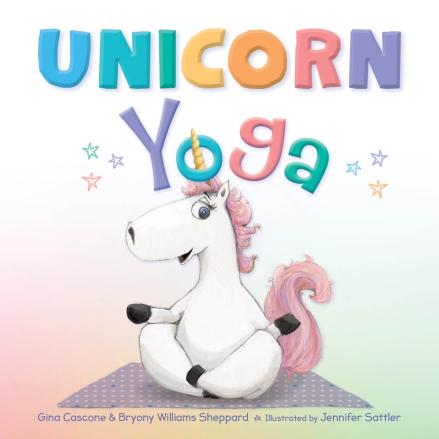
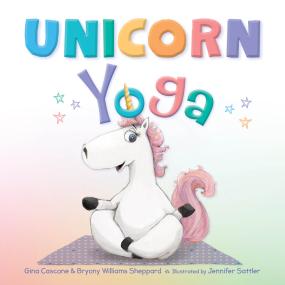
celebrate-picture-books-picture-book-review-unicorn-yoga-cover

About the Holiday

If you ask a child—maybe even an adult—to name a magical creature, chances are they’ll say, “a unicorn!” Unicorns have been part of legend since ancient times, undergoing changes from an image of fierceness and power to a representation of strength and true love to today’s more glittery superstar. To celebrate today, I’m thrilled to be hosting the cover reveal for a book about a very special—and nimble!—trio of unicorns that kids will fall in love with!

Unicorn Yoga

Written by Gina Cascone and Bryony Williams Sheppard | Illustrated by Jennifer Sattler


The healing, restorative power of yoga has been known for centuries, and more people than ever are active practitioners. Now even the youngest of readers can learn this mind and body exercise, helping them set up a lifetime of healthy habits. Through clear, easy-to-follow instructions, a unicorn yogi, along with two energetic students, leads children through a ten-pose class. Kid-friendly back matter provides additional information on yoga, as well as tips on mindfulness, encouraging readers to develop their own daily practice.

Children reap tremendous benefits from learning the mindfulness that yoga has to offer—from stress reduction to better concentration in school. The adorable unicorns in Unicorn Yoga make giggly and supportive companions for kids learning this health-boosting exercise.

Ages 5 – 7

Sleeping Bear Press, 2020 | ISBN 978-1534111066

Unicorn Yoga will be released on July 15. The book is available for preorder with these booksellers

Amazon | Barnes & Noble | Books-a-Million | IndieBound

I was delighted to talk with authors Gina Cascone and Bryony Williams Sheppard and illustrator Jennifer Sattler about Unicorn Yoga, their inspirations, the best part of writing for children, and so much more!

Meet Gina Cascone and Bryony Williams Sheppard

celebrate-picture-books-picture-book-review-gina-cascone-and-bryony-williams-sheppard-headshot

Photograph by Cari Ellen Hermann

Gina Cascone is the author of 30 books in several different genres, and has written for screen and television. Around the World Right Now is her first picture book, a joyful collaboration with her daughter inspired by her granddaughter’s unrelenting curiosity. She lives with her husband in central New Jersey. They have two grown children, two grandchildren, and three cats.

Bryony Williams Sheppard holds a degree in Theater Education from Emerson College in Boston, Massachusetts and a master’s degree in educational psychology. She has been teaching since the age of 17 and loves bringing different stories to life with her students. She is also a teacher near Princeton, New Jersey, where her favorite part of lesson planning is choosing the best book for each class. When not working, Bryony enjoys spending time in her noisy house with her husband, two children, two cats, and a dog.

Welcome, Gina and Bryony! I’m really happy to be talking with you about your book! Before we jump into questions about Unicorn Yoga, let’s let readers get to know you both a little better.

Gina, When did you become interested in being a children’s writer?

My first published book was actually a memoir, Pagan Babies and Other Catholic Memories, a humorous, child’s eye view of parochial education. Then I wrote fiction for adults, until an editor asked if I could write thrillers for teens. So, I did that for a while and enjoyed it very much. Until yet another editor asked for scary chiller stories for middle-grade readers. That was great fun and a great fit for me since Bree insists that I have the soul of an eight-year-old boy – which is probably why I am so happy and comfortable in the company of children.

You’re known for your middle-grade Deadtime Stories series and young adult thrillers.  What have you found to be the challenges and rewards of writing picture books?

For me, the greatest challenge of writing picture books is the economy of the medium.  To convey an idea that could fill many pages in just a few, well-chosen words to teach, entertain, and inspire is hard work. The reward is the great joy of being able to read an entire book in one sitting to the best audience in the world – children.

Bree, You have a degree in theater education as well as a Master’s degree in educational psychology and work as an elementary school teacher. How does your theater background influence your teaching style? Does it have an impact on your writing?

I often say that teaching preschool is a lot like being in theater. You always have to be on and ready to entertain your crowd because the moment you lose them, they turn on you! Many of the skills that you gain from being involved in theater can develop academic abilities and are general skills. Reading comprehension, public speaking, confidence, team building, creativity, and so much more, are developed through theater. I often use lessons and games I’ve learned in theater over the years in my class to help challenge my students both socially and academically.

Since your mom is a writer, have you also always been interested in writing?

Honestly, no.  It never really crossed my mind until she asked me – well, told me actually – to write Around the World Right Now with her. It was such a wonderful experience!

Thanks so much! It’s wonderful to see how in sync you two are and what fun you have together. Now I just have to ask: unicorns and yoga make an intriguing pair!  What was the spark for this adorable concept?

Because yoga provides so many benefits, it seems only logical to introduce the practice to children as early as possible.  So, we approached our editor with a picture book to do just that. She shared it with the wonderfully creative team at Sleeping Bear Press and came back to us with the idea that unicorns might encourage children to become engaged.

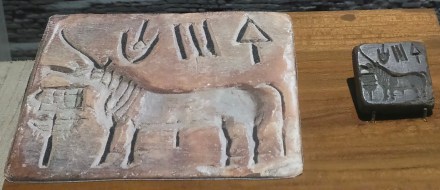
The concept was not as far-fetched as our editor feared we might find it. After all, both yogis and unicorns are joyful, playful, and magical. There is an even more concrete correlation. In the Indus River Valley, in India, five-thousand-year-old bronze seals have been found; some depicting yogis and some depicting unicorns.

Indus_civilisation_seal_unicorn_at_Indian_Museum,_Kolkata

Unicorn Yoga is the second picture book, after Around the World Right Now (Sleeping Bear Press) that you’ve collaborated on. What inspired you to begin writing picture books?

When I first started writing children’s books, Bree was a child herself.  She was my perfect little creative consultant. When she’d come home from school, after we’d chatted about her day, I’d ask her to read what I’d written and tell me what she thought. Her feedback always pointed me in the right direction.

When Bree became a teacher, she was sometimes frustrated that she couldn’t find just the right book for her lessons. So, she decided that we should write picture books.

But it was Bree’s daughter, my Sydney Rose, who brought the idea to fruition. When Syd was about six years old, she became obsessed with time zones. “What time is it in China?” “What time is it in Italy?”  “What time is it … What time is it?” Her questions were driving Bree crazy. She told me that she was going to put up a big map covered with clocks set to the correct times so she wouldn’t have to keep doing the math to figure it out. Around the World Right Now is the result of three generations of girl brain power.

As a mother/daughter team, Gina, what’s the best part of working with Bree?

The laughter. We always find ourselves giggling about something. And learning and creating together gives a wonderful sense of continuity to my life.  Seeing my daughter as my equal and even my better is an incredibly rewarding experience.

Bree, what do you love best about working with your mom?

I have spent my life watching her write and create. Being a part of the process with her has been so much fun because I get to see her excitement over an idea take shape and grow.

Can you each talk a little about your process in writing Unicorn Yoga together? Gina, would you like to take the lead?

I have been practicing yoga for ten years, taking classes at least five times a week with truly amazing teachers who are very generous with their knowledge. So, we had a wealth of resources. Bree’s teaching experience tailored my practices to a kid-and-unicorn-friendly experience. I do think, however, that her constant demands for demonstrations of poses, requiring me to get on the floor, were more for her amusements than edification.

What was your first impression when you saw Jennifer Sattler’s amazing cover?

We were absolutely charmed.  And we are so excited to be working with such a celebrated and talented artist.

What’s your favorite part about the cover and Jennifer’s illustrations of your story?

The softness and playfulness of Jennifer’s illustrations set exactly the right tone for a children’s practice.  And we love that while the unicorn students provide comic relief, the teacher’s poses are spot-on.  Namaste to Jennifer!

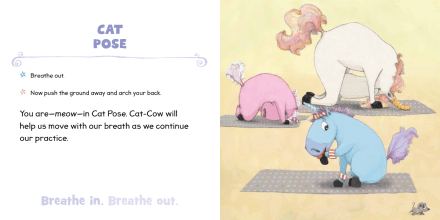
celebrate-picture-books-picture-book-review-unicorn-yoga-cat-pose

Image copyright Jennifer Sattler, 2020, text copyright Gina Cascone and Bryony Williams Sheppard, 2020. Courtesy of Sleeping Bear Press.

You also team up to give presentations at schools.  What do your visits entail?

We usually visit a school for a full day, spending about forty-five minutes with each grade, level K-5.  We discuss developing an idea, doing research, writing and rewriting. We like to spend most of our time answering students’ questions, to relate to their experiences and encourage their interests and creativity. The goal is always to engage and inspire children.

Do you have an anecdote from a school presentation or other event you could share?

One of the most touching things about school visits is that students treat us like rock stars.  The little ones all want hugs.  And the older students bombard us with questions.

When I was writing Deadtime Stories, the schedule was challenging – a book a month and there were seventeen in all. It was hard to keep track of every plot line. At a school visit, one very careful reader asked a specific question about one of the earlier books – his favorite. I couldn’t remember the character. I couldn’t remember the plot. I could barely remember the title. I took a deep breath and asked him what he thought about it and if he would have done anything differently. The conversation changed immediately to the process of storytelling and how writers make creative choices.

I learned then what Bree knows all too well, in the classroom you’ve always got to be fast on your feet.

It’s National Unicorn Day.  How do you think your Unicorn would spend the holiday?

Enjoying all the magic this world has to offer in deepest gratitude. And eating ice cream.

What a sweet way to end our chat! Thanks, Gina and Bryony! I can’t wait until Unicorn Yoga hits bookstores on July 15!

You can connect with Gina and Bree on their Website | Facebook | Twitter

Meet Jennifer Sattler

celebrate-picture-books-picture-book-review-jennifer-sattler-headshot

Jennifer Sattler is the award-winning author and illustrator of numerous children’s books, including the new board books Dirty Birdies and Jungle Gym, the picture book Sylvie, and the Pig Kahuna and the Chick ’n’ Pug series. She lives in upstate New York, where she delights in embarrassing her children and having meaningful conversations with her dog, Henry.

Hi Jennifer! I’m excited to be talking with you today about this special book. When I first saw the cover, I was immediately drawn to the unicorn’s eyes. I love how they promise lots of fun while also inviting kids to join in practicing yoga.

Thanks! I’m glad you see that in her eyes. Because this is the teacher, she had to be doing a pose “correctly,” but I also wanted to hint at the fun and silly ways that the other unicorns do these poses. It’s not all serious business.

Did you need to do any special research for drawing yoga poses or did you rely on your own knowledge?

I’ve done yoga for years. But, having a UNICORN do yoga is a whole different thing! I don’t know if you’ve noticed, but their bodies are slightly different than ours…plus there’s the issue of the horn. It tends to get in the way in certain poses. I had a lot of different solutions to that, but we settled on the horn being “bendy.” The younger ones have shorter horns, so they don’t get in the way as much.

You’re also the author/illustrator of many books that are sweet and funny and make kids laugh—which you say is your passion. Has humor always been a big part of your life?

I have always loved the earnest try that ends up in laughs. It cracks me up every time, whether it’s a “grown up” or a kid…or a unicorn. Laughter is the most important part of my life, it makes me happy when nothing else can. I hope I can share some of it.

On your website, you mention that part of your school presentations includes talking to kids about the mistakes and changes that are made along the way to finishing a book and how fun—and funny—those can be. Were there any mistakes or surprising changes that occurred while you created the illustrations for Unicorn Yoga? Can you share a bit about it?

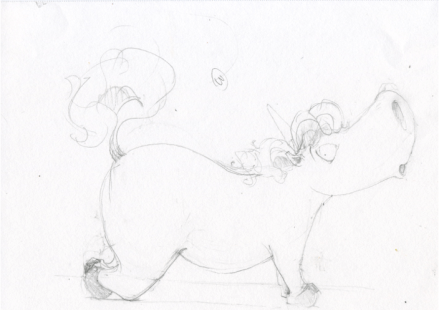
celebrate-picture-books-picture-book-review-early-unicorn-yoga-drawing

As I always do when starting a new book, I went through tons of sketches to try to get the look of my characters. I assumed I knew what a unicorn looked like, but it took a LOT of drawings to realize, “wait a minute, they just look like horses with party hats on. That’s not right!”  I look back at those early drawings and they crack me up. It’s best for me not to take myself too seriously!

What’s the best part of being a children’s author and illustrator for you?

Kids,kids,kids! I was a painter for years, making big oil paintings to hang on the wall, teaching college students. I was trying to be taken very seriously! But it wasn’t much fun. As soon as I started doing children’s books I thought, “YES! This is what I should’ve been doing the whole time!”

Thanks for talking with me, Jennifer! I’m sure readers—both young and young at heart—are looking forward to doing yoga with your charming unicorns. I know I am!

You can learn more about Jennifer Sattler, her books, and her art on her website.

celebrate-picture-books-picture-book-review-unicorn-yoga-cover

You can preorder Unicorn Yoga with these booksellers

Amazon | Barnes & Noble | Books-a-Million | IndieBound

Picture Book Review
April 6 – 19th Amendment Centennial Interview with Author Elisa Boxer & “The Voice that Won the Vote” Review

celebrate-picture-books-picture-book-review-Elisa-Boxer-headshot

Elisa Boxer is an Emmy-winning journalist and columnist whose work has appeared in publications including The New York Times, Inc., and Fast Company. She has always been passionate about children’s literature, and finds herself especially drawn to stories of unsung heroes like Febb and Harry Burn. The Voice That Won the Vote is her first book, and she hopes it inspires children to give voice to what matters to them. Elisa lives in Maine with her family.

Today, I’m excited to chat with Elisa Boxer about her timely The Voice Who Won the Vote, her work as a journalist, and the themes woven through all of her stories. Elisa also gives kids an intriguing writing prompt. And my blogging partner Jakki’s sons, Steve and Jack, are back with their questions too!

 Steve asked: How did you find the letter Febb Burn wrote to her son?

Hi Steve! So glad you liked the book. The story of how I found the letter goes back to a couple of years ago when my agent, Steven Chudney, let me know that 2020 would be the 100th Anniversary of women getting the right to vote. He asked if I could come up with a picture book about it. I’ve always been drawn to stories of unsung heroes, so I scoured the internet for little-known figures in the suffrage movement. When I stumbled across the story of Febb Burn and learned that she was the mom who saved suffrage, I knew this was a story I wanted to tell! More digging led me to the online archives at the Knox County Library in Tennessee. These archives included the letter.

By the way, in case you haven’t seen it, here’s a photo of the actual letter: http://cmdc.knoxlib.org/cdm/ref/collection/p265301coll8/id/699

I think it’s so cool to see the original papers that Harry received and read that day in the legislature back in 1920.  And to see Febb’s actual handwriting! Aaah! I tend to geek out over historical documents like this.

Jack wondered: How much research did you have to do?

Hi Jack! The short answer is: Lots. After I found Febb’s story on the internet, I read as many articles online as I could find. I also read several books about the women’s suffrage movement. I wanted more background information to put the story in context, and I also wanted to know more about the legislative session in Tennessee that led to Harry Burn tipping the scales and giving women the right to vote. I also enlisted the help of the Special Collections department at the University of Tennessee Libraries. One of the most exciting things they shared with me was a scanned version of Harry Burn’s personal scrapbook from 1920, containing newspaper clippings and headlines from his historic vote!

Jack and Steve would like to know: Is voting important to you?

Definitely. I started the book with the line: “A vote is a voice,” because I believe that voting is one of the most powerful ways we can have our say in society.

Hi Elisa! I read in your bio that even as a child you loved to write. In fact, if readers look on your website they’ll see a picture of quite a large group of books with covers written in crayon. I’m sure kids would love to know what some of those stories were about. Can you share a few of the ideas you wrote about as a child?

Sure! It’s fun to look back on those and see some common themes, like defying authority (You Can’t Catch Me, for example, about a girl outrunning her parents) and grief (I wrote The Kitten and the Puppy after losing my beloved dog). And then, there was a book about a dinosaur making friends with a little girl and moving into her house, which I think I wrote because I had just learned how to draw dinosaurs ;).

With your early interest in writing books, did you ever consider becoming a children’s writer or novelist before going into journalism? What was it about journalism that attracted you?

Even though I’ve loved reading and writing children’s books for as long as I can remember, I never really considered making a career of it. I wish I had followed that passion earlier. I’m 49 and my first book was just published. So if you have any interest in creating children’s books, don’t wait as long as I did! Although, having said that, I really do love print and broadcast journalism. My specialty has always been long-form journalism, which involves in-depth research, multiple interviews, and spending time crafting a story. A lot like writing nonfiction picture books, actually. A couple of years ago, I got sidelined with a severe case of Lyme disease. It hurt to move and breathe and I was basically housebound. So that’s when I decided to re-visit my childhood passion. I began dusting off old picture book manuscripts, revising them, and querying agents.

Your stories in print for newspapers and for television news have garnered many awards. What aspects of story do you infuse into each of your pieces? What do you like best about each medium?

(Blushing). I am always looking for the soul of the story. Even with straight news pieces, I want to find people and circumstances to bring those stories to life in a way that readers or viewers can relate to. The thing I like best is the same for each medium, and that is finding the point of emotional resonance, the subtext, the theme that will stick with the audience long after they put down the paper or the magazine or turn off the TV. In fact, that’s one of the reasons I love books so much: people pick them up again and again. Sure, you can save a newspaper or magazine article that resonates with you. But it’s not the same as that feeling of finishing a book, internalizing its message, holding it in your hands and knowing it’s yours to return to whenever you want.

It seems very fitting that your first published book is a picture book. What is it about Febb Burn’s story that you think is most important for kids to know?

I really want kids to know how much their voices matter. It’s so easy to feel powerless, especially given the state of the world right now. But I hope kids come away from the book realizing that one small act of courage, in the form of giving voice to what matters to them, really can change the world.

Vivien Mildenberger’s illustrations are so evocative of 1920. What was your first reaction to seeing your story illustrated? Do you have a favorite spread?

Aren’t Vivien’s illustrations amazing? I’m still blown away by them every time I see the book. When I first saw her work on her website, even before I saw her illustrations for the book, I knew that her old-world style would be a perfect fit for this story. And then when I first saw her preliminary sketches, I thought, WHOA, this is going to be even better than I could have imagined. Hmmm, it’s tough to pick a favorite spread. But I’d have to say the one where Harry Burn is looking out the window of the state capitol, watching the throngs of people arrive to witness history. She really captures the mood here. “America was on the verge of change,” the text reads. You can’t even see Harry’s face, but Vivien somehow managed to convey so much tension and anticipation in this spread. You can feel his inner struggle to do what’s right and follow his heart in the face of opposition.

What’s up next for you?

I’m super excited to say that I have several more picture books on the way during the next couple of years, all nonfiction. I’m also working on a chapter book and two middle grade books, one nonfiction and the other historical fiction.

As kids stay home and are schooled at home, it’s wonderful to see them interacting with the kidlit community. Would you like to give readers a writing prompt?

It really is so wonderful to be interacting with kids, their parents and their teachers. As for a prompt, I’d ask kids: With the world the way it is, what are the words, the scenes, the images, and the messages that would touch your heart? In other words, what is the book you need right now? Take one small step to start creating it. And then another…

Thanks, Elisa! It’s been wonderful talking with you! I wish you all the best with The Voice Who Won the Vote, and I can’t wait to read your upcoming books. I hope we’ll have a chance to chat again!

You can connect with Elisa on

Her website | Facebook | Twitter 

To order a signed, personalized copy of The Voice that Won the Vote, visit Print: A Bookstore.

19th Amendment Centennial Review
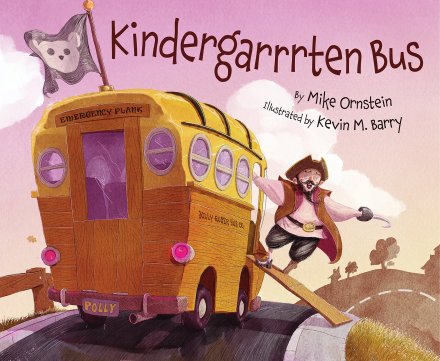
celebrate-picture-books-picture-book-review-the-vote-that-won-the-vote-cover

About the Holiday

This year we celebrate the ratification of the 19th Amendment, which guaranteed a woman’s right to vote. The victory was long fought and hard won and still informs issues of democracy and equal rights today. For more information on the history of suffrage and to learn more about the brave women on the front lines of progress, visit the 2020 Women’s Vote Centennial Initiative website and Women’s Vote Centennial. You’ll find extensive resources, curriculum for middle school and high school students, as well as online exhibits, videos, and so much more.

The Voice that Won the Vote: How One Woman’s Words Made History

Written by Elisa Boxer | Illustrated by Vivien Mildenberger

The year was 1920 and women were demanding the right to vote, just as they had been for the last seventy-five years. But all of their meetings, shouting, and signs were silenced. Men called the women “troublemakers” and “uncivilized.” Some men said it would “cause chaos” if women could vote, and others said “‘the only vote a woman needs is the vote to choose her husband.” There were even other women who thought women shouldn’t vote.

celebrate-picture-books-picture-book-review-the-vote-that-won-the-vote-silenced

Image copyright Vivien Mildenberger, 2020, text copyright Elisa Boxer, 2020. Courtesy of Sleeping Bear Press.

But then there was Febb Burn from East Tennessee who had gone to college, become a teacher, and loved to keep learning. She was especially interested in laws and how they were made, and every year as she watched her farmhands head off to vote on election day, she wanted to be able to go too. Finally, she grew so tired of being “shut out of the process” that she wrote a letter to her son.
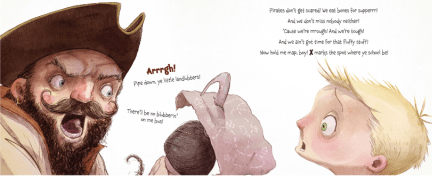
Who was her son? His name was Harry Burn, and he was the “youngest lawmaker in Tennessee.” As he read his mother’s letter, he watched out his window as people from across the country gathered to decide the fate of women’s suffrage. One round of voting had already taken place, and it had resulted in a tie. Thirty-five states had voted yes on the issue, but thirty-six were needed to make it a law. Harry Burn for Tennessee had been one of the “no” votes in the first round. Now in the second round, Harry Burn would be the deciding vote. A “no” would deny women the vote, while a “yes” would change elections forever.
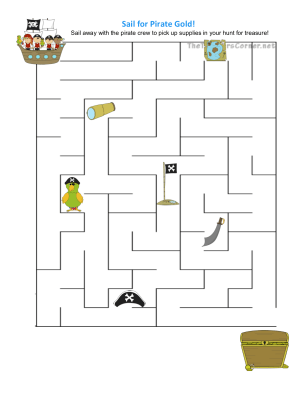
celebrate-picture-books-picture-book-review-the-vote-that-won-the-vote-letter

Image copyright Vivien Mildenberger, 2020, text copyright Elisa Boxer, 2020. Courtesy of Sleeping Bear Press.

“He knew that most of the people who had elected him hated the idea of women voting.” Many of them were even in the audience and were counting on him. He was, after all, wearing a red rose—”the symbol of keeping women in the home, and out of the voting booth”—in his pocket. When it came time for Harry to vote, all eyes were on him as he said “‘Yes.’” The officials thought he’d “made a mistake” or “gotten confused,” but he hadn’t. The suffragettes cheered and hugged.

Everyone wanted to know why Harry Burn had changed his mind. In answer, he pulled from his pocket the letter his mother had written urging him to vote for suffrage. Harry constituents were shocked and angry. They vowed to vote against him in the next election. The headlines in the newspapers said that Harry had ruined his career. But Harry already knew that. He knew that his vote would mean “giving up his seat in the Tennessee House of Representatives.”

celebrate-picture-books-picture-book-review-the-vote-that-won-the-vote-Harry

Image copyright Vivien Mildenberger, 2020, text copyright Elisa Boxer, 2020. Courtesy of Sleeping Bear Press.

When interviewed for newspaper articles, Harry said that he had followed his conscience that all people should have the right to vote. At last the election was held, and Harry awaited his fate as all the votes were counted. Who would be the next Tennessee Representative? Harry Burn! “And no one was prouder than the woman who, without speaking a word, gave all women a vote.”

In an Author’s Note, Elisa Boxer talks more about the women’s suffrage movement, the courage to stand up for what you believe in, and the power of using the vote to voice your opinion. A timeline of significant events in the women’s suffrage movement is also included.

celebrate-picture-books-picture-book-review-the-vote-that-won-the-vote-Harry-Burn

Image copyright Vivien Mildenberger, 2020, text copyright Elisa Boxer, 2020. Courtesy of Sleeping Bear Press.

For anyone wondering about the power of one vote, Elisa Boxer puts all doubts to rest with her engaging recounting of this little-known true story. While Harry Burn’s vote took place 100 years ago, the courage he showed in standing up for his own conscience and in opposition to what was expected of him reverberates today. Boxer opens the story with a clear and meaningful definition of how a vote equals one’s voice, instilling in children who are learning to speak up for themselves in classrooms, on social media, and elsewhere the importance of voting when they come of age.

Her inclusion of quotes revealing the reasons behind opposition to women’s suffrage will be eye-opening. Her well-paced building of suspense going into the second vote and the aftermath will have kids on the edge of their seat and offers many opportunities to discuss the mechanisms of politics, expectations, and courage. Through her straightforward yet multilayered storytelling, Boxer presents two heroes for children to look up to: Harry, who put the good of the country and women ahead of his own career and Febb, who used her voice to make lasting change.

celebrate-picture-books-picture-book-review-the-vote-that-won-the-vote-suffragettes

Image copyright Vivien Mildenberger, 2020. Courtesy of Sleeping Bear Press.

Vivien Mildenberger’s lovely, textured illustrations take readers back to the pivotal year of 1920, when vocal suffragettes faced their equally vocal opposition and Febb Burn, sitting on her front porch decided to write her life-changing letter. Images of politicians sporting yellow and red roses reveal the long tradition of color as an identifying symbol. An especially powerful spread comes after Harry’s vote as he walks among his angry constituents, all of whom shun him behind newspapers full of articles about the historic vote. The inclusion of the actual Febb Burn’s letter to Harry and a photograph of Febb give readers see and hear from this influential woman.

A stirring true story about the power of one person to make a difference, The Voice that Won the Vote is highly recommended for home, school, and public library collections.

Ages 7 – 10

Sleeping Bear Press, 2020 | ISBN 978-1534110496

You can download a The Voice that Won the Vote Teaching Guide from Sleeping Bear Press here.

Discover more about Elisa Boxer, her book, journalism, and other work on her website.

To learn more about Vivien Mildenberger, her books, and her art on her website.

Women’s History Month Activity

celebrate-picture-books-picture-book-review-get-out-and-vote-maze

Get Out and Vote! Maze

Help the girl find her way through the maze to the ballot box so she can cast her vote in this printable maze.

Get Out and Vote! Maze | Get Out and Vote! Maze Solution

celebrate-picture-books-picture-book-review-the-vote-that-won-the-vote-cover

You can find The Voice the Won the Vote at these booksellers

Amazon | Barnes & Noble | Books-a-Million | IndieBound | Print: A Bookstore

Picture Book Review