October 3 – It’s National Photographer Appreciation Month

celebrate-picture-books-picture-book-review-operation-photobomb-cover

About the Holiday

National Photographer Appreciation Month is for all photographers, professional and amateur. The month-long holiday gives people an opportunity to really look at the photographs they see in newspapers, books, online, and even in their own home and truly appreciate the artistry that goes into capturing a moment, a place, or a personality to tell a bigger story. October is also a great month to go through your own family photographs and relive or rediscover favorite memories. To celebrate, consider having a professional portrait taken of yourself, your kids, or your whole family to decorate your home, give as gifts, or send as a holiday card. There are also many galleries displaying photographic work to explore. 

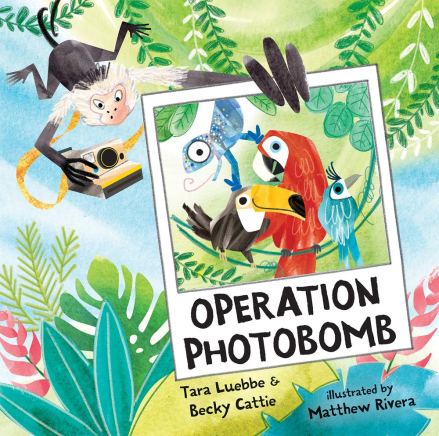
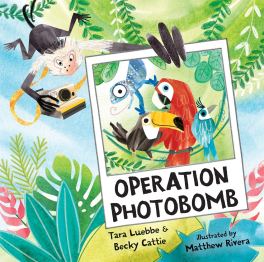
Operation Photobomb

Written by Tara Luebbe and Becky Cattie | Illustrated by Matthew Rivera


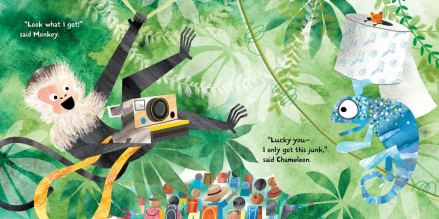
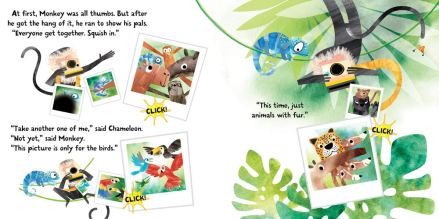
Monkey and Chameleon loved scavenging stuff from tours that came through their neck of the jungle. One lucky day when they raided a backpack, Monkey discovered a polaroid camera while Chameleon came away with a roll of toilet paper. Monkey had a bit of a learning curve to get the hang of taking great shots, but soon he was snapping stylish pics of all his friends.

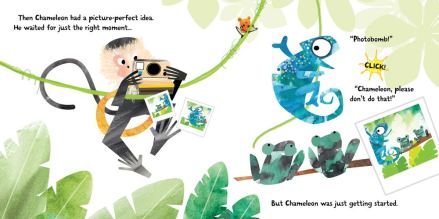
Monkey got so good that he started taking themed pictures. He took some that were “only for the birds” and others of “just animals with fur.” Chameleon was beginning to feel left out, so just as Monkey was going to click the button on a cute-as-a-button shot of two frogs on a branch, Chameleon swung in on a vine, shouting, “‘Photobomb!’”

celebrate-picture-books-picture-book-review-operation-photobomb-camera

Image copyright Matthew Rivera, 2019, text copyright Tara Luebbe and Becky Cattie, 2019. Courtesy of Albert Whitman & Company.

“‘Chameleon, please don’t do that!’” Monkey said. “But Chameleon was just getting started.” The Capybara family suddenly had a new member in their portrait; Sloth’s new baby was joined by a chameleon-y brother; and as Monkey was about to capture Grandma Macaw blowing out her 76th birthday candles, Chameleon photobombed in, sending the cake splat all over her and her guests.

“‘Help me stop him from wrecking all the pictures!’ Monkey howled.” Toucan did a song and dance routine to distract him, Jaguar tried to fling him away, and the tapirs attempted to form an impenetrable line, but he was always able to sneak in. Monkey shrieked at him, and the other animals complained that he had ruined their once-in-a lifetime pictures. Chameleon blushed pink and red and said, “‘Fine. You won’t see me in any more pictures.’”

celebrate-picture-books-picture-book-review-operation-photobomb-pictures

Image copyright Matthew Rivera, 2019, text copyright Tara Luebbe and Becky Cattie, 2019. Courtesy of Albert Whitman & Company.

So Monkey went back to work. But the animals took a close look at their shots and noticed a phantom-like Chameleon blending in with them or their surroundings. “CHAMELEON!” they shouted. The animals huddled together to find a solution. Monkey had an idea, and they whispered and plotted until they had the perfect plan. “Operation Photobomb was a go.” Monkey called Chameleon over and arranged him in a perfect pose. Then he aimed his camera and counted down. When he reached “three” the Macaws yelled “‘Bombs away!’” and pelted him with juicy fruit. “Click!” Monkey took the shot.

Chameleon was covered in sticky pulp and juice. The animals laughed. But Chameleon didn’t think it was so funny. “‘You ruined my pic…Ohhhhh!’” he said. Monkey handed him the roll of toilet tissue and offered a truce. Chameleon agreed to both. Although it was hard, Chameleon stayed out of Monkey’s pictures from then on. But then he had an idea that was “picture-perfect.” He knew just the people who “loved a good photobomb.”

celebrate-picture-books-picture-book-review-operation-photobomb-chameleon

Image copyright Matthew Rivera, 2019, text copyright Tara Luebbe and Becky Cattie, 2019. Courtesy of Albert Whitman & Company.

Tara Luebbe and Becky Cattie’s funny take on the photobomb phenomenon will have kids laughing and joining in with shouts of “photobomb!” as Chameleon inserts himself into all of the animals’ precious shots. When Chameleon ignores the animals’ complaints and requests to stop and instead uses his camouflage to trick them (a shrewdly worded hints at this), Monkey’s idea to give him a bit of his own medicine teaches him a valuable lesson. Chameleon also discovers a clever, more productive, and welcome way to enjoy his favorite activity. Through their fast-paced and humorous storytelling sprinkled with puns, Luebbe and Cattie reveal several truths about friendship, respect for others, and appropriate timing. Their surprise ending will satisfy and delight kids. It offers opportunities for discussion on social skills, putting others first, and finding the right time and place to engage in certain activities and behaviors.

Matthew Rivera’s tropical, sun-kissed illustrations will enchant readers. Chameleon, a mottled vibrant blue in most spreads, shows his enthusiastic prankster side popping up at the last moment to join the animals’ photos. Readers will love pointing him out in the polaroid squares scattered throughout the book. They’ll especially enjoy finding him when he camouflages himself against various backdrops. As he discovers his “picture-perfect” audience, kids will see that here he can show all his colors.

Operation Photobomb is a lively and original way to introduce children to ideas of respect for others and proper conduct. The humor and familiar activity will resonate with kids and makes this a book that will be a favorite for thoughtful as well as spirited story times at home, in the classroom, and for public libraries.

Ages 3 – 5

Albert Whitman & Company, 2019 | ISBN 978-0807561300

Discover more about Tara Luebbe and Becky Cattie and their books on their website, BeckyTaraBooks.

To view a portfolio of work by Matthew Rivera and learn more about him, visit his website.

Photographer Appreciation Month Activity

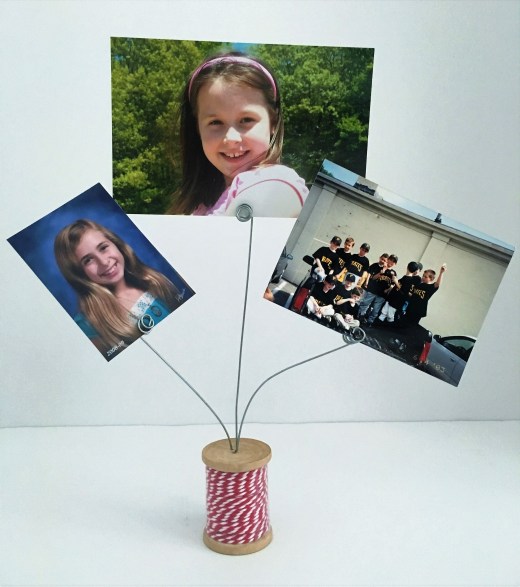
celebrate-picture-books-picture-book-review-threads-of-friendship-photo-holder

Spool Photo Holder


With this easy craft you can make a personalized photo holder for your favorite pictures of friends and family!

Supplies

  • Wooden spool with hole through the middle, top to bottom. (A spool without a hole also works if you make a hole in the top with a hammer and nail), 1 ½ -inch or larger, available at craft stores
  • Colorful twine or light-gauge yarn, 3 to 4 yards
  • Alternatively: you can buy a wooden spool of colorful twine at some discount stores
  • 3 pieces of light-gauge wire 12 to 15-inches long
  • Clay or play dough
  • Needle-nose pliers
  • Glue

Directions

  1. Fill hole in spool with clay or play dough, pushing it well in to provide a base for the wire
  2. Wrap the twine or yarn around the spool to desired thickness
  3. Glue down the end of the twine to keep it from unraveling
  4. With the needle-nose pliers, roll down one end of the wire to create a small coil
  5. Repeat with two other lengths of wire
  6. Cut the three wires to different lengths to provide room for all three photographs
  7. Fit the three wires into the center hole on the top of the spool
  8. Push the wires into the clay until they are held securely
  9. Clip photographs into the coils
  10. Display your pictures!

celebrate-picture-books-picture-book-review-operation-photobomb-cover

You can find Operation Photobomb at these booksellers

Amazon | Barnes & Noble | Books-a-Million | IndieBound

Picture Book Review

October 2 – It’s Family History Month

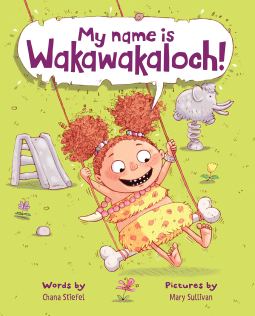
celebrate-picture-books-picture-book-review-my-name-is-wakawakaloch-cover

About the Holiday

Family History Month has been celebrated in October since 2001. Coming before the family holidays of fall and winter, it’s a fantastic time to explore your family history. Knowing the people who you came from can be enlightening in so many ways. Not only can you find out where your ancestors came from geographically, you can learn what traits have been passed down from generation to generation—traits that have made you who are. This month take time to dig into your genealogy. Online databases and other research methods make it easier than ever to learn more about your family history!

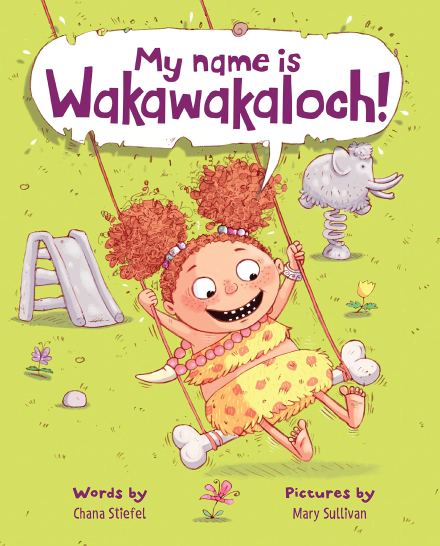
My Name is Wakawakaloch!

Written by Chana Stiefel | Pictures by Mary Sullivan


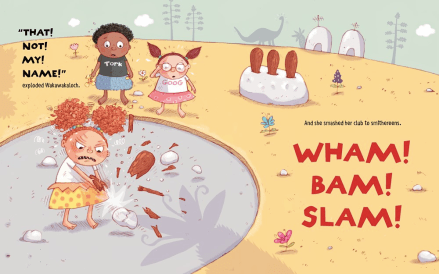
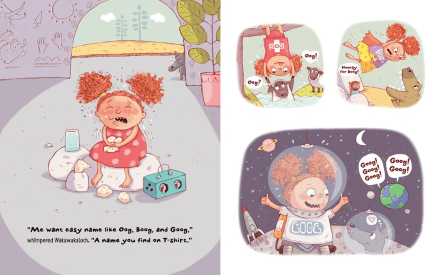
Wakawakaloch had a problem. Well, it wasn’t really her problem; none of the kids at school could pronounce or even remember her name. After another day in which her name was mangled (Oog called her “‘Walawala,’” Boog shouted “‘Look out, Wammabammaslamma!’” and Goog cheered her on during Club Club with “‘Swing, Lokamokatok!’”), Wakawakaloch was as angry as an erupting volcano.

celebrate-picture-books-picture-book-review-my-name-is-wakawakaloch-easy-club-club

Image copyright Mary Sullivan, 2019, text copyright Chana Stiefel, 2019. Courtesy of HMH Books for Young Readers.

When her parents asked what was wrong, Wakawakaloch said she wanted to change her name to Gloop. Pa thought Gloop was a good name, but reminded his daughter that her name had been “‘in family many, many moons.’” But Wakawakaloch was inconsolable. Not only could no one say her name right, but she never found it on any T-shirts. Ma and Pa thought there was only one thing to do—take her to see Elder Mooch.

Despite his leathery skin and aroma of “rotting mammoth poop,” Elder Mooch was an insightful Neanderthal. He started off with an ill-considered joke that set Wakawakaloch reaching for tissues from the nearby dispenser rock. But she poured out her heart and the fact that she wanted an easy name, one found on T-shirts. She could just imagine all of the heroic and adventurous things she could do with a name and T-shirt like that.

celebrate-picture-books-picture-book-review-my-name-is-wakawakaloch-easy-name

Image copyright Mary Sullivan, 2019, text copyright Chana Stiefel, 2019. Courtesy of HMH Books for Young Readers.

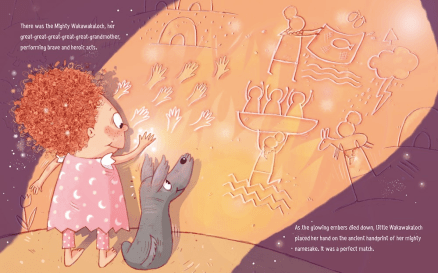
Elder Mooch looked at her and then bestowed his wisdom. He told her she was a “‘forward thinker’” but “‘must be a backward seer too.’” This bit of knowledge cost her two pigeons and left her smoldering. What did he mean by that? Later that night as she tossed and turned in bed, she caught a glimpse of the paintings on her wall. They showed her great-great-great-great-great grandmother Wakawakaloch “performing brave and heroic acts…. Little Wakawakaloch placed her hand on the ancient handprint of her mighty namesake. It was a perfect match.”

celebrate-picture-books-picture-book-review-my-name-is-wakawakaloch-cave-drawing

Image copyright Mary Sullivan, 2019, text copyright Chana Stiefel, 2019. Courtesy of HMH Books for Young Readers.

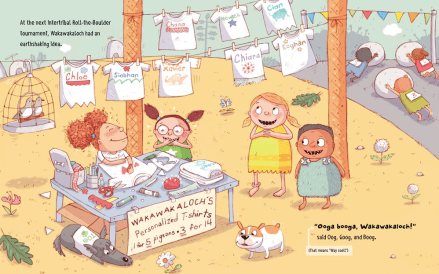
In the morning, Wakawakaloch was smiling. She no longer wanted to be called Gloop, and she told her parents that she was ready to help others. When the Roll-the-Boulder tournament came round, Wakawakaloch had her personalized T-shirt stand all set. Oog, Boog, and Goog thought her shirts for Chana, Sioban, Xavier, Eoghan were “‘Ooga booga’ (way cool).” Wakawakaloch had even made one for herself. Elder Mooch wanted to buy three, and when little Hoopaloopie came by, Wakawakaloch got to work on another shirt.

celebrate-picture-books-picture-book-review-my-name-is-wakawakaloch-tee-shirts

Image copyright Mary Sullivan, 2019, text copyright Chana Stiefel, 2019. Courtesy of HMH Books for Young Readers.

For all those kids who never find their names on shirts, mugs, necklaces, keychains, or other personalized items and who frequently hear the question, “How do you pronounce that?,” Chana Stiefel’s book is for you! This fresh tale will also resonate with any child who feels different for any reason. Wakawakaloch, with her strong personality, thoughtful introspection, and creative solution, is a character that readers will love and want to emulate. Stiefel deftly navigates this sensitive landscape with a combination of honest feelings and hilarious mispronunciations, prehistorical details, and descriptions. Readers will laugh all the way through but will also be absorbing the lesson that everyone should embrace their own “mighty” personality and be celebrated and recognized for their unique qualities.

In her vibrant illustrations, Mary Sullivan creates a comically anachronistic ancient world, where safety cones made of stone mark the playground, a stone telescope is aimed out the window, mail is delivered (this part may be accurate, I’d have to check), and cupcakes are eaten with forks. Kids will want to linger over each page to point out all of the funny elements that add depth and glee to this story. Wakawakaloch shows the feelings bubbling up inside her with furrowed brows, livid gestures, and ready tears, while the other kids cluelessly continue to distort her name even after being told the right pronunciation multiple times. Wakawakaloch’s visit to Elder Mooch is a funny take on therapy sessions, but his advice leads to a welcome image of contemplation and realization that makes Wakawakaloch appreciate her family history and also want to contribute to its—and society’s—advancement. Wakawakaloch’s T-shirt booth is sure to inspire kids to make their own shirt too.

A delightfully inventive story with many applications and prompts for further discussion as well as activities celebrating individuality, My Name is Wakawakaloch! will be a much-asked-for favorite on home, classroom, and public library shelves.

Ages 4 – 7

HMH Books for Young Readers, 2019 | ISBN 978-1328732095

Discover more about Chana Stiefel and her books on her website.

To learn more about Mary Sullivan, her books, and her art, visit her website.

Check out My Name is Wakawakaloch! “ooga booga” book trailer!

Family History Month Activity

celebrate-picture-books-picture-book-review-family-tree-coloring-page

I Love My Family Tree! Coloring Page


Family trees are often filled with the names of grandparents, aunts, uncles, cousins, and where your family came from. But you can also fill the spaces with family traits that have made you who you are. Print this I Love My Family Tree! Coloring Page then write the names or draw pictures of your family members or family qualities that you admire in the hearts. Afterwards, grab your crayons, color the picture, and hang it where you can see!

celebrate-picture-books-picture-book-review-my-name-is-wakawakaloch-cover

You can find My Name is Wakawakaloch! at these booksellers

Amazon | Barnes & Noble | Books-a-Million | IndieBound

Picture Book Review


October 1 – It’s National Book Month

celebrate-picture-books-picture-book-review-can-u-save-the-day-cover

About the Holiday

This month-long holiday was established to get families excited about reading. As the weather turns cooler and activities turn indoors, reading together is a wonderful way to spend time having fun and making memories. Small children love being read to—and so do older kids! Sharing board books, picture books and chapter books that can be read at one sitting is always fun. Taking the journey of a novel together with tweens and teens can provide inspiring, emotional, funny, and bonding moments that last a lifetime. And to think, it all starts with putting a few letters together…

Can U Save the Day?

Written by Shannon Stocker | Illustrated by Tom Disbury


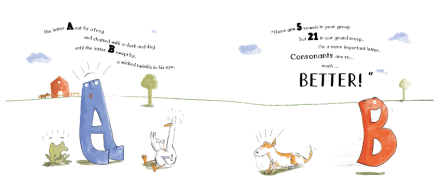
The letter A was chatting with a frog, a duck, and a dog when the letter B ambled by with a boastful claim: “‘There are 5 vowels in your group / but 21 in our grand troop. / I’m a more important letter. / Consonants are so…much…better!’” As B continued to brag, A countered with “‘…You’ll regret / when all the vowels are gone, I bet!’” Then just like that A vanished, and the dog? He could only “‘brk.’” The duck said “‘quck,’” and the frog could only “‘crok.’”

celebrate-picture-books-picture-book-review-can-u-save-the-day-B-brags

Image copyright Tom Disbury, 2019, text copyright Shannon Stocker, 2019. Courtesy of Sleeping Bear Press.

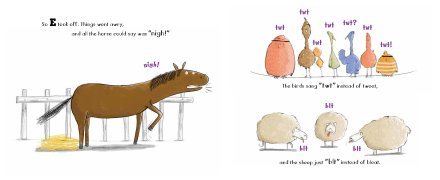
The horse was not very sympathetic since his neigh didn’t need an A. But then the E decided to go, and the horse said “‘nigh’” the “birds sang ‘twt,’ and the sheep could only “‘blt,’” “‘blt,’” “‘blt.’” The consonants thought this was lots of laughs. “Insulted, young I spun her dot / and soared off like an astronaut.” The pig was stuck as was the horse, but the cow and bunny joined the laughter until O rolled away. Then the cow, the pigeons, and the rooster struggled too.

celebrate-picture-books-picture-book-review-can-u-save-the-day-poof

Image copyright Tom Disbury, 2019, text copyright Shannon Stocker, 2019. Courtesy of Sleeping Bear Press.

The consonants were laughing still when B and U saw the tractor plowing toward them in its sleep. B tried to scream and shout but could only burble. He bounced into the tractor’s seat and “pushed the horn! The horn went…hnk.” He tried to make U understand, but without the vowels his words made no sense. But clever U had watched it all and she knew just what to do. “She bent her arms above her head / and turned into an O instead.”

celebrate-picture-books-picture-book-review-can-u-save-the-day-horse

Image copyright Tom Disbury, 2019, text copyright Shannon Stocker, 2019. Courtesy of Sleeping Bear Press.

In that moment the tractor’s horn went Honk! The runaway tractor woke up and stopped just in the nick of time. Then off U went to bring back A, E, I, and O. When they returned, the animals resumed their talk, the consonants and vowels hugged it out, and B, who had started it all, now realized that “‘the alphabet’s a family.’” Then Y—that sometimes this and sometimes that letter—decided this was a good time to speak up and help them all “‘say goodbye.’”

celebrate-picture-books-picture-book-review-can-u-save-the-day-nigh

Image copyright Tom Disbury, 2019, text copyright Shannon Stocker, 2019. Courtesy of Sleeping Bear Press.

Shannon Stocker gives kids just learning the alphabet, discovering how to read, and picking up some of the finer points of grammar a reason to celebrate in her funny story about the day the vowels flew the coop. Her peppy rhythm and brainy rhymes will keep readers riveted and laughing as one by one the animals’ talk turns into garbled goosh. When the sleeping tractor barrels toward the letters unaware because of his measly “hnk,” kids will be on the edge of their seats. When wily U uses her ingenuity and semi-circular shape to save the day, they’ll cheer. The sweet ending teaches gentle lessons about reconciliation, apologies, inclusion, and teamwork, and Y’s admission offers one more grammar-related giggle.

Tom Disbury’s cartoon characters will have kids in stitches as the animals gaze at each other with gritted teeth, furrowed brows, or tongues sticking out when their vowel-less utterances are less than robust. With their smiling eyes and winsome smiles, the colorful letters are oblivious to the mayhem that losing just four of their family members can cause. The shortened words sprinkled throughout the text as well as spreads of contented consonants will give readers plenty of opportunities to play word games and talk about letter combinations, letter sounds, and spelling.

A funny and entertaining way to talk about the alphabet and grammar, creative problem solving, and teamwork, as well as a fun story to share any time, Can U Save the Day? would be an entertaining addition to home, classroom, and public library bookshelves.

Ages 5 – 7

Sleeping Bear Press, 2019 | ISBN 978-1585364046

Discover more about Shannon Stocker and her books on her website.

To learn more about Tom Disbury, his books, and his art, visit his website.

National Book Month Activity

celebrate-picture-books-picture-book-review-reading-is-super-maze

Reading is Super! Maze


This super reader wants to bring books to his friends so they can all read together. Can you help him get through this printable Reading is Super Maze to reach his friends?

celebrate-picture-books-picture-book-review-can-u-save-the-day-cover

You can find Can U Save the Day? at these booksellers

Amazon | Barnes & Noble | Books-a-Million | IndieBound

September 28 – National Ghost Hunting Day

celebrate-picture-books-picture-book-review-how-to-make-friends-with-a-ghost-cover

About the Holiday

On the last Saturday in September, The ScareFest in Lexington, Kentucky kicks off a coast-to-coast simultaneous ghost hunt by teams investigating paranormal phenomenon in various venues. They collecting supporting evidence with EMF meters, digital thermometers, handheld and static digital video cameras, audio recorders and computers. The hunt ushers in a month of mysteries, haunted attractions, and other autumn festivals.

How to Make Friends with a Ghost

By Rebecca Green


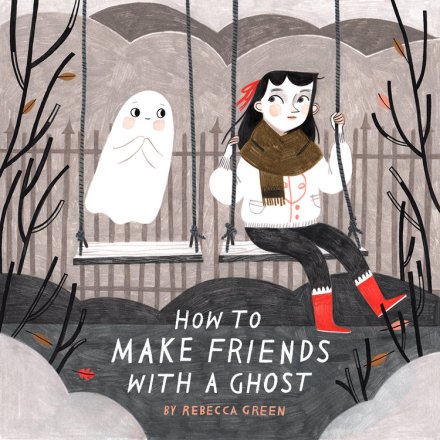
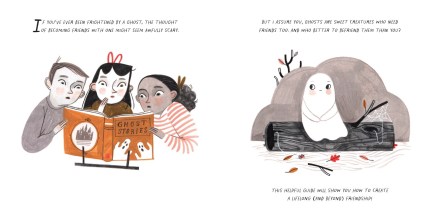
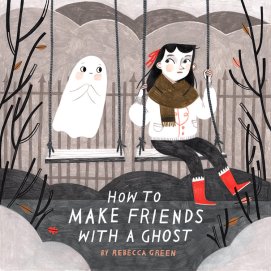
Have you ever thought of ghosts and felt a shiver? Ever been glad you don’t know any ghosts? Well, the little girl narrating this ghostly guide says you should dispel those notions. Ghosts, she assures, “are sweet creatures who need friends too. And who better to befriend them than you?” She even goes on to show potential ghost pals everything they need to know.

celebrate-picture-books-picture-book-review-how-to-make-friends-with-a-ghost-on-log

Copyright Rebecca Green, 2017, courtesy of Tundra Books.

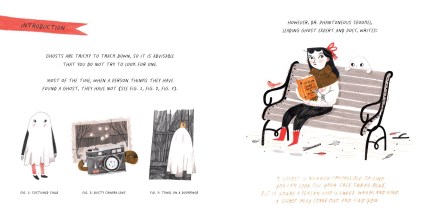
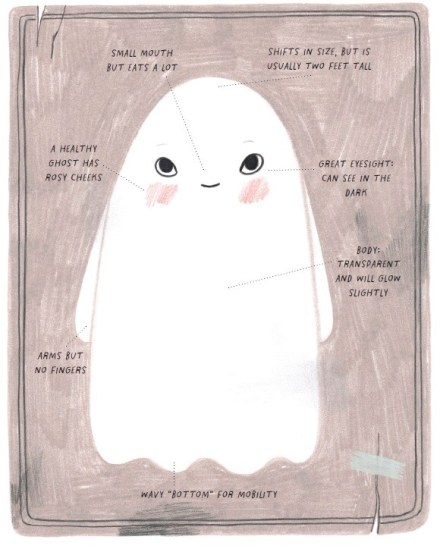
First, you must learn to recognize a ghost when you see one. There are many false sightings, like kids in costumes, impressions made by a “dusty camera lens,” and “a towel on a doorknob.” But the leading expert on such matters, Dr. Phantoneous Spookel reveals that instead of searching for ghosts, it’s best to let them find you. To help you recognize them, the little girl provides an easy-to-follow classification guide that can help.

celebrate-picture-books-picture-book-review-how-to-make-friends-with-a-ghost-false-sightings

Copyright Rebecca Green, 2017, courtesy of Tundra Books.

If you’ve been approached by a figure that has rosy cheeks, arms but no fingers, a glowing body, and a “wavy bottom for mobility,” you can be pretty sure you’ve seen a ghost. Here are some dos and don’ts for how to proceed. Your first instinct may be to flee, but “do not run! Ghosts are very sensitive creatures.” Just be friendly and “tell the ghost your name.” Invite the ghost into your home, but “never ever put you hand through a ghost. It can cause a serious tummy ache.”

celebrate-picture-books-picture-book-review-how-to-make-friends-with-a-ghost-classification-guide

Copyright Rebecca Green, 2017, courtesy of Tundra Books.

Ghosts require special care and enjoy snacks like “moldy toast, earwax truffles, pickled boogers, mud tarts, and cinnamon-dusted insects.” For a main course, “Floating Spaghetti and Mudballs hits the spot. Wonder how to keep your ghost friend happily occupied? A walk through the woods in search of “leaves, acorns, and worms” is always nice. Ghosts also love scary stories like the ones found in “Tales of the Living by Mort L. Bings.” And they like to laugh at funny jokes and dance to “creepy music.” Of course, a ghost friend fits right in on Halloween.

celebrate-picture-books-picture-book-review-how-to-make-friends-with-a-ghost-dancing

Copyright Rebecca Green, 2017, courtesy of myblankpaper.com.

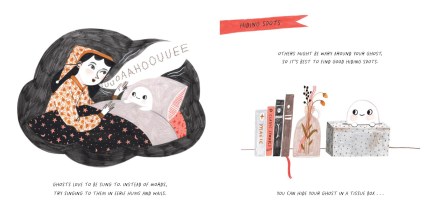
When a ghost gets tired, it’s a perfect time for a long soak in a warm caldron bath. Then off to the dankest corner of the attic for a little snooze and sweet nightmares on some soft moss. If your ghost has trouble falling to sleep, you can sing a lullaby of “eerie hums and wails.” Sometimes your ghost might like to hide when you have company, Good spots include the “tissue box…a sock drawer…or the refrigerator” next to the milk.

Even though ghosts are quick, their soft, white shapelessness can get them into trouble. “Do not let your ghost be used as a tissue!” Getting mixed up with the laundry can cause problems of the soggy or fluffy kind, and ghost should be especially careful in the kitchen, where they can be mistaken for “eggs, whipped cream, sour cream, and marshmallows.”

celebrate-picture-books-picture-book-review-how-to-make-friends-with-a-ghost-tissue-box

Copyright Rebecca Green, 2017, courtesy of Tundra Books.

Perhaps the best part about having a ghost as a friend is that they will be your buddy for life—and even beyond. As you grow up there are certain things you can do to maintain your friendship. When you leave home and find your own place, make sure it’s comfortable and isn’t haunted. “Ghosts do not like competition.” Make time every day to spend with your ghost, and if you start a family, you should know that “your ghost will love mini versions of you too.” When you grow old, your ghost will still be there to help out and make life better. Yes, “the best part about making friends with a ghost is that you’ll have the sweetest friend…forever.”

celebrate-picture-books-picture-book-review-how-to-make-friends-with-a-ghost-say-hi

Copyright Rebecca Green, 2017, courtesy of myblankpaper.com.

Rebecca Green’s spirited tribute to true friendship is sweet and funny and applicable to all pals—ghostly or not. Who wouldn’t like the kind of friendship that lasts forever? Through her ghostly guide, Green reveals that a new friend may be of an unexpected sort and might even be someone who has been invisible to you. Her tips show that embracing a new friend is as easy as saying hi and making them feel important with special treatment, understanding, and sharing favorite activities. Friendships can suffer when two people grow up and grow apart because of distance, work, or family, but Green suggests that with careful attention, a friendship can last forever.

celebrate-picture-books-picture-book-review-how-to-make-friends-with-a-ghost-snacks

Copyright Rebecca Green, 2017, courtesy of myblankpaper.com.

Green’s adorable gouache and colored-pencil illustrations have a timeless feel rendered in soft beiges and grays punctuated with red accents. Green’s clever text is enhanced by images of the false ghost sightings, classification guide, ghost snacks, hiding places and hazards, and the expressive little ghost as it laughs, plays, sleeps, and smiles. As the girl grows older, the ghost takes the lead in activities the two enjoy, leaving readers with a satisfying and comforting feeling.

Readers will giggle and “aww” and fall in love with the little ghost and the idea of such a wonderful friendship. How to Make Friends with a Ghost is rich in charm and sage advice and would make a welcome presence on any child’s or classroom bookshelf.

Ages 4 – 8

Tundra Books, 2017 | ISBN 978-1101919019

Learn more about Rebecca Green and find a gallery of her illustration work on her website.

Don’t be frightened! It’s just the adorable How to Make Friends with a Ghost book trailer!

National Ghost Hunting Day Activity

 celebrate-picture-books-picture-book-review-ghost-coloring-page

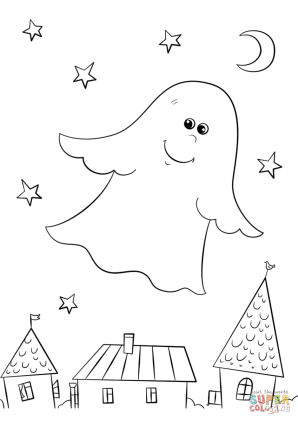
Cute Ghost Coloring Page


If all ghosts were this adorable, who would be afraid of them? Color this printable Cute Ghost Coloring Page then let it hang around your room.

celebrate-picture-books-picture-book-review-how-to-make-friends-with-a-ghost-cover

You can find How to Make Friends with a Ghost at these booksellers

Amazon | Barnes & Noble | Books-a-Million | IndieBound

Picture Book Review


September 18 – It’s Friendship Month

celebrate-picture-books-picture-book-review-superbuns-cover

About the Holiday

Do you have friends you haven’t seen or talked to in a while? Is there someone new at work or school who could use a friend to show them the ropes or grab lunch with? If so, this month’s holiday gives you the opportunity to reach out and say hi. Instituted a decade ago by the Oddfellows organization in the UK, Friendship Month is a super time to show kindness to those you know and those you don’t—yet!  

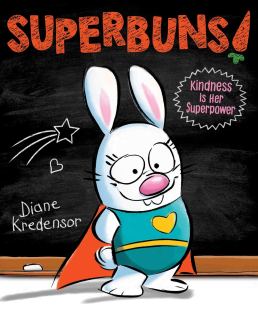
Superbuns! Kindness Is Her Superpower

By Diane Kredensor


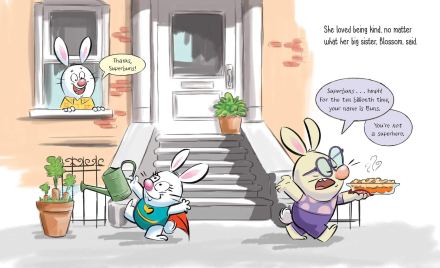
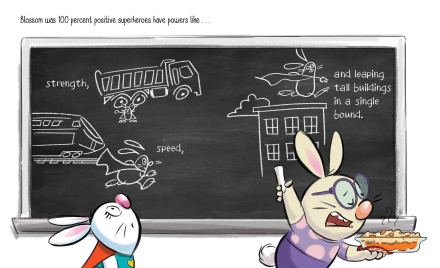
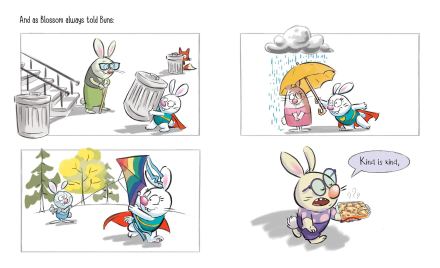
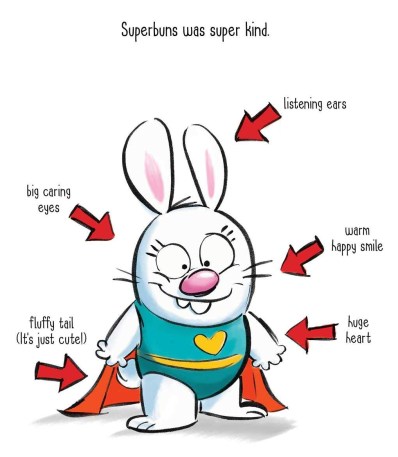
Superbuns had everything she needed to be super kind: “listening ears, big caring eyes, [a] warm happy smile,” and a “huge heart.” While other people appreciated her kindness, her big sister Blossom was dismissive. To her, her little sister was just “Buns.” She didn’t possess any “real” superpowers like super strength, super speed, or the ability to leap over tall buildings. Still, Superbuns went around the neighborhood putting out the trash cans for an elderly lady, helping a younger bunny fly his kite, and offering an umbrella to someone just in the nick of time.

celebrate-picture-books-picture-book-review-superbuns-watering-carrots

Copyright Diane Kredensor, 2019, courtesy of Aladdin.

Blossom was a self-proclaimed know-it-all. She knew lots of facts, which she was happy to spout while she and Buns walked over to Grammy’s house with a freshly baked carrot cobbler. On the way, Superbuns complimented a little bunny’s smile, fed a fish who was enjoying a little sun on a windowsill, and helped a busy rabbit flip pancakes through an open window. She even made balloon animals for two bunnies. “Blossom thought all this kindness was slowing them down” and she didn’t want to deliver a cold cobbler to Grammy.

celebrate-picture-books-picture-book-review-superbuns-real-superpowers

Copyright Diane Kredensor, 2019, courtesy of Aladdin.

But Superbuns just couldn’t help herself. When Blossom (and the cobbler) was about to be splashed by a biker riding through a puddle, and when she needed help opening the grocery store door (because everyone knows you can’t eat cobbler without cold milk), Superbuns was there. In fact, Miss Fox was also entering the store, and Superbuns held the door for her too. Seeing this, Blossom had a tizzy. She screamed, slipped, and lost control of the cobbler.

Flat on her back, Blossom shouted for Buns to run. She knew “all about foxes. First she’ll gobble up the cobbler. Then she’ll gobble up us,” she cried. Miss Fox gazed at the dish of cobbler that had fallen into her hands and then at Superbuns who was cheerfully waving at her. “Here you go,” Miss Fox said, handing the cobbler to Buns.

celebrate-picture-books-picture-book-review-superbuns-kind-acts

Copyright Diane Kredensor, 2019, courtesy of Aladdin.

Turned out little Miss Fox wasn’t interested in gobbling up the cobbler or the bunnies. She just needed directions home because she was lost. Blossom couldn’t believe it. “Lost?” she asked. She grabbed Miss Fox by the hand and pulled her down the sidewalk with Superbuns and the cobbler in tow. Blossom, it seemed, knew “EVERYTHING about being lost.” She knew the most commonly lost items, where Bun’s lost homework had eventually been found, about the city of Atlantis and the colony of Roanoke, grammar and spelling facts about the word lost, and, of course, just how to get to Foxtrot Trail where Miss Fox lived.

When they finally stood outside Miss Fox’s house, Miss Fox gave Blossom a big hug and said, “Thanks for helping me not be lost, Superblossom.” Blossom smiled. “And just like that, Blossom learned she didn’t know everything about everything.” She even decided that kindness “was kind of… super.”

celebrate-picture-books-picture-book-review-superbuns-blossom

Copyright Diane Kredensor, 2019, courtesy of Aladdin.

Diane Kredensor’s bouncy story of an irrepressible spirit will have readers convinced that kindness is indeed a superpower in a hop, skip, and a jump. As big sister Blossom leads the way through town nattering on about all the facts she knows and her opinion on kindness, Buns trails in her wake with her red cape fluttering and her eyes open for ways she can help. Kids will laugh at Blossom’s know-it-all persona and breathless recitations from her vast store of knowledge, but they’ll smile and “aww” as Superbuns springs into action all along their route. When they encounter Miss Fox, Blossom slips up in more ways than one and learns that you can’t always read a book by its cover or know everything about everything. As Blossom accepts a grateful hug from Miss Fox, kids will join Blossom in understanding that while knowing facts may be useful, knowing love is super.

celebrate-picture-books-picture-book-review-superbuns-description

With her buck teeth, wide eyes, slightly goofy-but-always-ready grin, and superhero outfit, Superbuns is an endearing friend that kids will fall in love with. Kredensor, an Emmy award-winning director and producer of, creator of, and contributor to children’s programming across the network spectrum, fills her pages with all the charm of a favorite cartoon combined with the immersive details of animation. Her well-paced storytelling leading to the pratfall that changes Blossom’s perspective will keep readers rapt until the sweet ending.

Sure to be a hit during any story time, Superbuns! Kindness Is Her Superpower would be an often-asked-for addition to home, classroom, and public libraries.

Ages 4 – 8

Aladdin, 2019 | ISBN 978-1481490689

To learn more about Diane Kredensor, her books, her animation work, and more, visit her website

Friendship Month Activity

celebrate-picture-books-picture-book-review-give-me-your-hand-puzzle-cutout-no-copyright

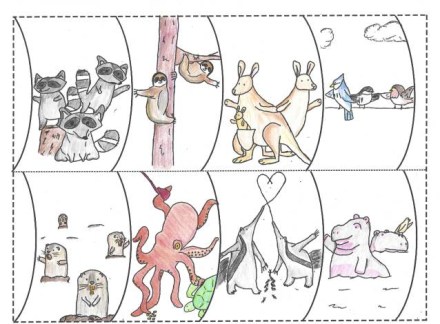
Give Me Your Hand! Interchangeable Puzzle


In this printable Give Me Your Hand! Puzzle, everyone is welcomed with a handshake. The interchangeable pieces can be mixed and matched as the animals become friends with one another. 

Supplies

celebrate-picture-books-picture-book-review-welcome-puzzle-scattered-2

Directions

  1. Print the puzzle: to make the puzzle sturdier: Print on heavy stock paper or glue the page to poster board
  2. Color the pictures with colored pencils or crayons
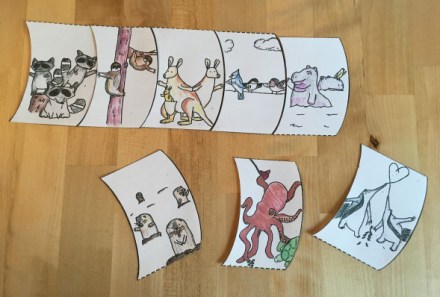
  3. Cut the pieces apart
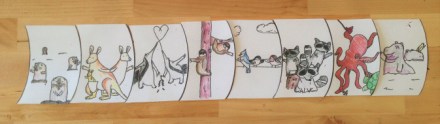
  4. Switch the pieces around to make many alternate pictures

celebrate-picture-books-picture-book-review-welcome-puzzle-in-a-line-white-no-copyright

celebrate-picture-books-picture-book-review-superbuns-cover

You can find Superbuns! Kindness Is Her Superpower at these booksellers

Amazon | Barnes & Noble | Books-a-Million | IndieBound

Picture Book Review

September 11 – National Quiet Day

celebrate-picture-books-picture-book-review-albert's-quiet-quest-cover

About the Holiday

We’re surrounded by noise every day. Cars whoosh by on the street, TVs drone on, and voices fill the air in the office and at school. Sometimes it seems as if you don’t hear the constant din, but you do. Quiet Day was established to give people an opportunity to experience the benefits found in silence. Not only did the founders envision a day in which you sought out quiet places, but they suggest that you don’t speak at all for the entire day. Reconnecting with yourself and your thoughts can make you feel more relaxed and give you new perspectives that can stimulate creativity and better communications.

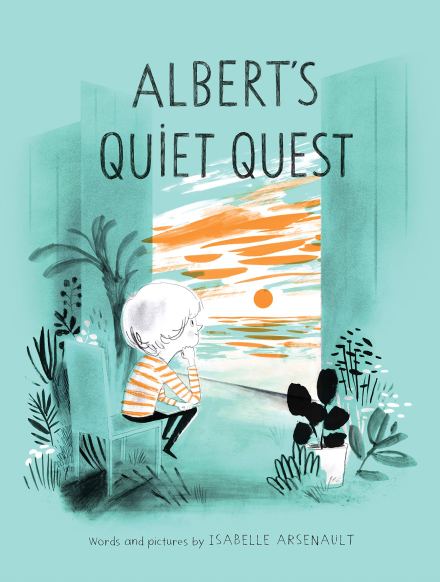
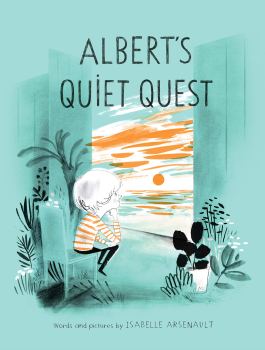
Albert’s Quiet Quest

By Isabelle Arsenault


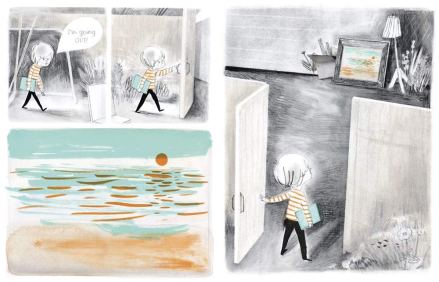
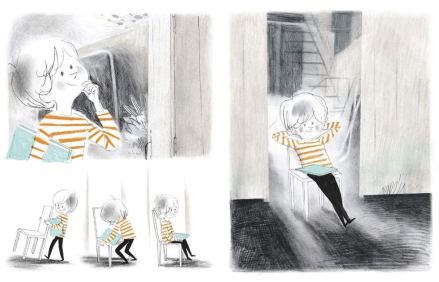
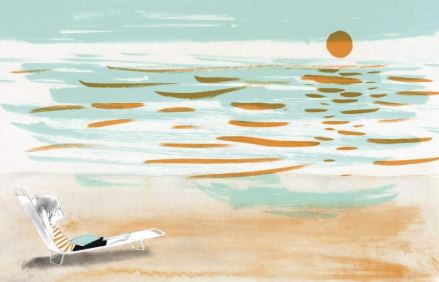
With an “Ugh!” Albert heads out to his backyard to escape all the noise inside. He opens the gate to the alley, and there he sees, tossed away with an old lamp and some other trash, a painting of the setting sun shimmering on a calm ocean. Albert has an idea. He retrieves a chair and sits back, relaxing in front of the painting. In Albert’s imagination the hard, straight back chair becomes a beach lounger and the stony asphalt turns to soft sand.

Soon, two girls enter the alley. They’re repotting a green, leafy plant and ask Albert if he’d like to join them. “No, thanks, I’m reading. I’m fine,” Albert answers. Albert picks up the book on his lap and while he reads, the girl’s flowerpot turns into a beach pail, their coats become summer dresses, and the crown one girls is wearing softens into a wreath of flowers. Instead of potting a flower, they are building a sandcastle.

celebrate-picture-books-picture-book-review-albert's-quiet-quest-going-out

Copyright Isabelle Arsenault, 2019, courtesy of Random House Books for Young Readers.

In a few more minutes Albert’s brother Tom comes out with badminton racquets clutched in his arms. He’s been looking for Albert to play with, but Albert tells him he’s reading. It doesn’t look like he’s reading to Tom since Albert is just sitting in a chair with a book on his lap, but then one of the girls says she’ll play with Tom. The sandcastle grows as one girl pats sand into turrets and stairs while Tom and the other girl bat around an enormous birdie with oversized racquets.

Suddenly, another girl appears, strolling her doll in a green carriage. She wants Albert to watch her doll while she goes back to get her cat. Albert starts to object, but the girl is already gone. When she returns with her cat, she proclaims Albert “so sweet.” But the beach is now quite crowded and the baby doll is crying and crying. The sandcastle has sprouted taller towers and a grand entrance. Albert tries to shut it all out by putting his nose in his book.

celebrate-picture-books-picture-book-review-albert's-quiet-quest-sitting

Copyright Isabelle Arsenault, 2019, courtesy of Random House Books for Young Readers.

Just then a boy from down the block shows up with his radio. The music blares through the alley, calming the baby, inviting dancing, and attracting another child to join in. Albert sits on his beach chair with his head on his fist scowling at the huge boom box, the caterwauling baby, the dancing kids, and that enormous birdie. And you should see the castle! It’s now big enough to stand on.

Then Jimmy comes rolling in on his skateboard. He scares the cat, tips over the potted plant, causes the birdie to “thunk!” into the painting, and in Albert’s imagination causes everything to go kerflooey. Albert slams his book shut, steps onto his chair, and lets loose about how all he wants to do is read. All the kids in the alley stare sadly at him as they gather up their stuff and head back home. Albert climbs down from his chair and sits, a bit forlornly. Then he hears the “KRRRRRR!” of a scraping chair. Tom is back with his own seat and book. Soon, there’s a “Clomp! Clomp,” a “Tap Tap Tap,” a “Zzoooom,” a “tip tap,” and a “TTRRRRR,” and all of the kids are back with their own books.

Albert looks around at all of his friends sitting nearby quietly reading and smiles. He says, “Hey, guys… I’m sorry, I didn’t mean to—.” The kids all turn to him and say, “SHHH! SHHH!” Albert gazes at them and they gaze at Albert. Then they all erupt in laughter and enjoy the last moments of the sunset on the beach.

celebrate-picture-books-picture-book-review-albert's-quiet-quest-beach

Copyright Isabelle Arsenault, 2019, courtesy of Random House Books for Young Readers.

Isabelle Arsenault’s clever story nimbly switches back and forth between Albert’s imagined day at the beach and the reality in the alley, which little-by-little overtakes Albert’s quiet interlude. Each child, intent on their own activity, is not aware of or not bothered by the collective noise, but for Albert the din takes him to the breaking point. When Albert loses his cool, these children—first met in Arsenault’s Colette’s Lost Pet—flee, but not away from Albert. They empathize, and soon return with books of their own to fulfill Albert’s quest for quiet and show true friendship.

Arsenault’s buoyant cartoon-inspired line drawings alternate between the gray-scale background of the alley and the beach scenes rendered in tranquil tones of aqua and orange—the same colors that define Albert and his book. Details like the crying “baby” and the growing badminton set and radio as well as Albert’s meltdown provide opportunities for kids and adults to talk about how noise is perceived by people who thrive in a quieter atmosphere.

A charming mix of imagination, humor, and friendship, Albert’s Quiet Quest would be a delightful addition to home and public library bookshelves and a conversation starter for elementary school classrooms.

Ages 3 – 7

Random House Books for Young Readers, 2019 | ISBN 978-0553536560

To learn more about Isabelle Arsenault, her books, and her art, visit her website.

National Quiet Day Activity

celebrate-picture-books-picture-book-review-kinetic-sand-craft

Make Your Own Sensory Sand


You can have quiet fun with this sensory sand that you can mold or just let slip through your fingers.

Supplies

  • 1 cup sand
  • ½ tablespoon cornstarch
  • 1 teaspoon dish soap
  • Water as needed – about ¾ cup
  • Bin or bowl for mixing dry ingredients
  • Bowl for mixing dish soap and water

Directions

  1. In the bin combine the sand and cornstarch and mix well
  2. In the bowl combine the dish soap and water until the water is bubbly
  3. Slowly add the water mixture to the dry ingredients, mixing and adding water little-by-little until the desired consistency is reached. The grain of the sand will determine how much water is needed.
  4. The sand can be formed with cookie cutters, molds, hands, etc. and is strong enough to stack.

celebrate-picture-books-picture-book-review-albert's-quiet-quest-cover

You can find Albert’s Quiet Quest at these booksellers

Amazon | Barnes & Noble | Books-a-Million | IndieBound

Picture Book Review


September 6 – National Read a Book Day and Interview with Blake Liliane Hellman & Steven Henry

celebrate-picture-books-picture-book-review-Blake-and-Steve-in-Garden

About the Holiday

Avid readers, rejoice! Today is your day! Just as its name implies, National Read a Book Day celebrates one of the best ways to spend our spare time: reading! If there’s a book you’ve been wanting to read, find some quiet time during lunch, after dinner, or before turning out the light to snuggle in with a cup of tea and that great book. Kids will enjoy some extra reading time as well. Make it a family event! Not only is reading together fun, it’s an important way to help children develop skills that will benefit them far into the future. 

Get to Know Blake Liliane Hellman and Steven Henry

Today, I’m celebrating National Read a Book Day by talking with Welcome to Morningtown author Blake Liliane Hellman and illustrator Steven Henry. This husband-and-wife team combine their talents for art and writing to create adorable picture books with characters and storylines kids love.  

First up, I’m chatting with Blake about how Welcome to Morningtown came to be and how her visual arts background influences her storytelling. 

Welcome to Morningtown is composed of only 119 words and yet readers get the feeling of a joyful day bursting with possibility and promise while the story also reflects the common routines of a morning for little ones. The story includes a wonderful feeling of camaraderie and inclusion, plus it ends on a humorous note. That’s a masterful use of words and rhythm! Can you describe how you approached the story, chose your words, and structured the cadence of the story? Did the story start out this short or was there a whittling process involved?

This book started out as a phrase Steve would use to wake up his little one in the morning. We knew we wanted to make it into a children’s book but we weren’t sure what it was going to be about. We had long discussions on the world of Morningtown—the setting, the season, the homes, and the creatures who lived there. We even designed maps for fun. There were many iterations. The text was much wordier at first, but I always knew it was going to be a prosaic style of book rather than a classical narrative. I’m a fan of Mary Lyn Ray (STARS, A LUCKY AUTHOR HAS A DOG) who uses words in a lyrical and economical way, without depending on rhyme. Similarly, I curated my word choices so Steve’s illustrations could shine.

celebrate-picture-books-picture-book-review-friends-to-make

Image copyright Steven Henry, 2019, text copyright Blake Liliane Hellman, 2019. Courtesy of Bloomsbury Children’s Books.

Your background is in journalism, English, and filmmaking. You’re also an abstract painter. How did you become interested in writing picture books? How does your experience in all of these disciplines help you write your stories?

My background in filmmaking helped me learn how to tell stories visually. Years of crafting song lyrics taught me to express myself concisely and poetically. Journalism gave me a great foundation in writing, and painting abstractly taught me to get used to making mistakes—that mistakes are just the path to success. As a writer, you’re going to make a lot of bad stuff. If you accept that, you won’t give up. If you don’t give up, you get better.

celebrate-picture-books-picture-book-review-BlakeLH-painting-1

Diamond (acrylic on canvas) by Blake Liliane Hellman, 2015

celebrate-picture-books-picture-book-review-BlakeLH-painting-2

Iris (acrylic and mixed media on canvas) by Blake Liliane Hellman, 2015

As an artist, do you have a vision for your stories’ illustrations? In addition to working with Steven on Welcome to Morningtown  and the forthcoming GoodnightSleepyville (Bloomsbury Children’s Books, 2020) and Something Smells! (Atheneum, 2018), you have a third picture book, Cuddle Monkey, coming out from Atheneum in 2020, illustrated by Chad Otis. Were you able to work closely with Chad on the adorable illustrations for this book?

As a filmmaker and visual designer, I absolutely have a vision for my stories when I’m writing them. It might be unusual for the writer to have a say in the illustrations, but I’ve been lucky in this. Both Steven Henry, my husband, and our good friend Chad Otis, (CUDDLE MONKEY, OLIVER THE CURIOUS OWL) have design agency backgrounds and are used to collaborating, so designing picture books with them is a no brainer—and a delight. I don’t think I would have been able to sell my earlier manuscripts without the artwork because to my mind, in a picture book manuscript, half of the story just isn’t there! But as I establish myself as a writer, I’m learning that a professional picture book manuscript should be precise and uncluttered. It should speak for itself without relying on illustration notes.

What do you find to be the best part of being a children’s author?

I get to create fantastical, funny, heartfelt worlds and share them with kids and parents. When you see someone enjoying your work, it validates your imagination.

Steven, you also bring a varied background in design and illustration to your picture book career. Early on you worked as a window display artist for Tower Records and Macy’s Department Store. What are the challenges of this kind of work? What elements are important for capturing the attention of passersby and enticing them into the store? Is there a correlation to creating a book’s cover?

In both retail display and illustration, I’ve always tried to set up a visual hierarchy that leads the eye and gives the viewer the most important information first. To do this, first I figure out my visual storytelling goal (or goals). Once I understand what I’m trying to “say”, then I’ll ask myself what the reader should see first. Are any other elements distracting from this? Whenever possible I try to keep things simple in an engaging way. 

celebrate-picture-books-picture-book-review-welcome-to-morningtown-cover

What drew you to focus on illustrating picture books?

I started drawing superheroes and dinosaurs in grade school. My first-grade teacher noticed my doodles in class and, rather than scolding me for not working on my lessons, asked me if I’d like to draw dinosaurs on the chalkboard for the class at the end of the day. I don’t remember how I got the nerve up to do it, but I got up in front of the room and drew a big Tyrannosaurus, explaining how tall he was and who he fought with. I became a minor classroom celebrity for a couple of days, but that, along with encouragement from my parents, was enough to keep me inspired to draw. 

My parents got rid of our TV in the 70’s, so we spent many hours at the library and brought stacks of books home. Seuss, Sendak, and Scarry were—and still are—big heroes. As a teenager I became more interested in drawing comic book art, but I eventually returned to my picture book roots in 2004 with Ella The Elegant Elephant.  

The characters in Welcome to Morningtown are cuter than cute, and the whole book is like a warm hug. How do you achieve this look and feeling? Why do you think such sweet illustrations are important for little readers? I’m also thinking in particular of the final spread of the busy town that glows with friendship and happiness. Can you talk a bit about some of the elements adults can point out as they share the book with their kids?

When I’m designing characters, I try to make combinations of pen marks on paper that remind me of the kinds of books I loved as a kid and continue to resonate with me emotionally. In order to get to a point where I can communicate certain feelings visually, the boring secret has been practice. I really do believe the adage that, if you spend 10,000 hours doing something, you’ll become an expert. 

celebrate-picture-books-picture-book-review-Ladybug-Concept-WTMT

Ladybug concept for Welcome to Morningtown by Steven Henry.

I still use a simple mechanical pencil to do most of my line work. I also try to stay well within my skill set when I’m working on a book. I try to save things like experimentation and pushing boundaries for the concept work that precedes actual book production. Usually, but I’m not always successful—haha.
celebrate-picture-books-picture-book-review-dad-sleeping

Image copyright Steven Henry, 2019, courtesy of Bloomsbury Children’s Books.

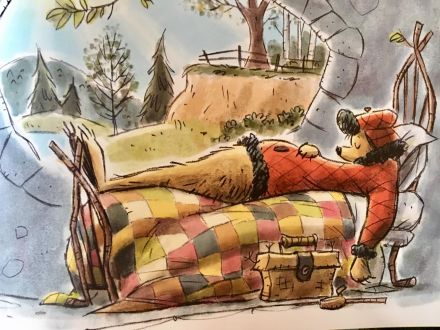
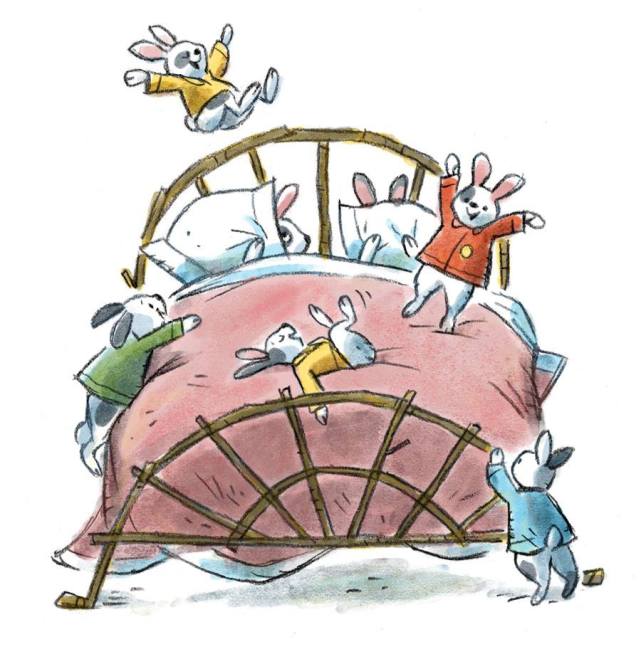
As I mentioned earlier, I pay close attention to the visual hierarchy of an illustration to make sure the most important things stand out. But I also like to include little details that the reader may not catch the first time around, or I include a visual storyline that’s not necessarily a part of the text. In Welcome to Morningtown, there’s no mention of a bear family, for instance; but the illustrated exploits of the little bear and his family provide a gently funny counterpoint to the text. Whenever I can, I like to tell a parallel or separate story with the pictures, so parents and young readers should definitely keep their eyes open—and maybe even check the pictures more than once!
celebrate-picture-books-picture-book-review-bunnies

Image copyright Steven Henry, 2019, courtesy of Bloomsbury Children’s Books.

Multiple readings of Welcome to Morningtown are definitely a must! As a husband and wife team collaborating on picture books, could you both tell readers about your process for completing a book that inspires such enthusiasm? Does the story come first and then the illustrations or do you work on the whole project together?

We’re always thinking of new ideas for books, usually they start with a title or concept, a funny thing we see while on a walk or overhear on the street. There’s a lot of silly wordplay at our house.

celebrate-picture-books-picture-book-review-Steve-Dining-Room-Table

Steve working on the picture book dummy for Welcome to Morningtown.

I throw a lot of ideas at Steve and not all of them stick. He’s particular. And for good reason. It takes a lot of work and commitment to illustrate a book. When we decide, we roll up our sleeves and get to work. Part of our process is to make a ‘dummy,’ which is a roughly laid out version of the book that we create with a program called InDesign. It has the text laid out alongside rough sketches. This step helps clarify the pacing and can validate or invalidate the story structure. It provides opportunities for improvement. We do a lot of iterating before giving it to our agent.

Blake, you work as an interactive and user experience designer and, Steven, you used to work for Smashing Ideas, which also provides these kinds of serves to clients. Can you briefly describe this work for readers? Can you talk a bit about your work for kids in this area? How do these techniques influence your work with picture books?

I’m a UX Designer and Steve is a Design Manager and we use user experience design principles, including white boarding, prototyping, and wire framing to make picture books! It sounds funny, but it’s actually a great way to work. The only thing we don’t do is user testing because it’s hard to find people who are willing to be honest with you about your picture book. (Unless it’s my mom, she’s very honest.)

Conversely, we’ve found that the process of making picture books helps us in our office environments. Making a picture book forces one to be very organized. There’s a lot to cover in just thirty-two pages! If you can master this kind of efficiency, you can apply it most anywhere.

I’ve had several comments from adults wishing they could live in Morningtown. What can readers look forward to in your upcoming companion book Sleepyville (Bloomsbury Children’s Books, date)?

In the companion book to this one, Sleepyville is a cozy seaside village just a hop, skip and jump from Morningtown. It’s bustling with animals who are getting ready for bedtime. Keep your eye out for a library in a giant tree, a candy shop, and camping worms.

 What’s up next for both of you?

We have a few book ideas we’re developing—one of which Steve has written. I’m currently shopping a manuscript on my own about a rambunctious river.

Since my blog is holiday themed, can’t let you get away without asking what your favorite holiday is and why?

My favorite is the Fourth of July. There’s a current of excitement that runs through the air on the Fourth of July. All the explosions, smoke, and fire—the bursts of colors in the night sky—break the routine of other days. But I’d be happy with just black snakes and sparklers. I especially love the smell of fireworks, which conjures hot summer pavement, watermelon picnics, and swimming pools.

I love the sensory details in this last sentence, Blake! I can almost feel my bare feet sizzling and taste that cool watermelon!

celebrate-picture-books-picture-book-review-Blake-and-Steve_BW

BLAKE LILIANE HELLMAN is a picture book author and senior UX designer. She and her husband Steven Henry live in Seattle and collaborate on books such as Welcome to Morningtown, Goodnight, Sleepyville, and Something Smells!, which was nominated for the Washington State Book Award. Take a peek into their world by viewing her Instagram page and Facebook page.

STEVEN HENRY (né D’Amico) is the illustrator of many picture books, including the award-winning Ella the Elegant Elephant Series, It’s Raining Bats & Frogs, and Herbert’s First Halloween. He currently serves as an art director at Committee for Children, a nonprofit organization promoting social and emotional learning.

You can take a peek into Blake and Steven Henry’s world on

Instagram | Facebook

You can connect with Steve on

His Website | Twitter

National Read a Book Day Review

celebrate-picture-books-picture-book-review-welcome-to-morningtown-cover

Welcome to Morningtown

Written by Blake Liliane Hellman | Illustrated by Steven Henry


It’s the crack of dawn in Morningtown and “everyone is waking.” A little cub rubs his eyes and sees his dad standing at the foot of his bed, fishing pole in hand, tackle box at the ready. The little tyke yawns and stretches along with the birds in the tree outside his room. Down at the pond, the frogs are “hopping, flopping, splashing awake while the turtles and a beaver enjoying the first cup of the day look on. All over Morningtown the animals, the insects, and even the fish are leaving their beds, brushing their teeth, washing up, and getting dressed.
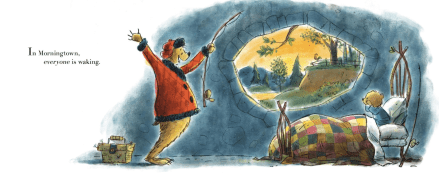
celebrate-picture-books-picture-book-review-welcome-to-morningtown-waking-up

Image copyright Steven Henry, 2019, text copyright Blake Liliane Hellman, 2019. Courtesy of Bloomsbury Children’s Books.

Next comes breakfast! “Some crunch, some nibble, some sip their morning feast.” Then in houses all around town the windows are opened and the shutters thrown wide. What will the day bring? Perhaps a banjo lesson, a new friend, and chance to help out. The cub dries the breakfast dishes while his mom washes. “Every day’s a surprise, and as the sun rises… busy bees buzz, fun bunnies bounce, and eager beavers slide into the day.” Yes, it’s a busy day in Morningtown. “Everyone is up…except one.” It’s a good thing Mom likes to go fishing too.
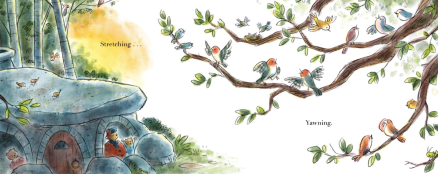
celebrate-picture-books-picture-book-review-welcome-to-morningtown-stretching

Image copyright Steven Henry, 2019, text copyright Blake Liliane Hellman, 2019. Courtesy of Bloomsbury Children’s Books.

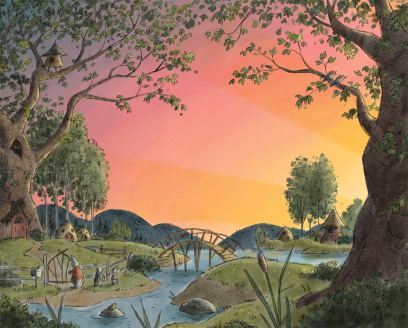
Blake Liliane Hellman’s lyrical look at morning and all the promise it holds is an enchanting, cheerful way to start the day for little ones—and their adults. As the bear family wakes up in their stone home, the rest of Morningtown’s residents are also rising and greeting the day with all of those little details that go into getting ready to meet the world. Hellman’s evocative verbs, jaunty rhythms, and humorous ending make Welcome to Morningtown a joy to read aloud.
celebrate-picture-books-picture-book-review-welcome-to-morningtown-dawn

Accompanying Hellman’s story are Steven Henry’s beyond adorable forest creatures who populate this peaceful hamlet. The sky glows golden and then softens into a clear, light blue as the animals leave their beds. One snoozing butterfly catches a few more winks on her soft dandelion bed, a tiny turtle enjoys another minute on Mom’s back, and Mr. Mole climbs emerges from his “secret” bed underground while three chirping birds wake a little mountain goat on his snowy ledge. Smiles abound, and readers will find themselves smiling too as they follow the little cub as he gets ready to go fishing with Dad. Henry’s clever details and charming perspectives create a rich and, as the title invites, welcoming community that little ones will want to visit again and again.

To start a little one’s day with enthusiasm for what lies ahead, put them to bed looking forward to tomorrow, or share cuddly down time, the charming Welcome to Morningtown is as sweet as it gets and would be an often-asked-for addition to home, classroom, and public library bookshelves.

Ages 3 – 5

Bloomsbury Children’s Books, 2019 | ISBN 978-1681198736

celebrate-picture-books-picture-book-review-welcome-to-morningtown-cover

You can find Welcome to Morningtown at these booksellers

Amazon | Barnes & Noble | Books-a-Million | IndieBound

Picture Book Review