October 14 – World Egg Day

celebrate-picture-books-picture-book-review-what's-up-with-this-chicken-cover

About the Holiday

Marking its 21st birthday, World Egg Day celebrates the health benefits of the humble egg—which offers the highest quality of protein available. An important dietary component for fulfilling the nutritional requirements of people living in both developed and developing communities, the egg is a versatile food, able to be eaten on its own or as a necessary ingredient in many recipes. Eggs are essential for fetal development, healthy brain development, maintaining concentration, aiding the immune system, and more. Today, enjoy eggs your favorite way!

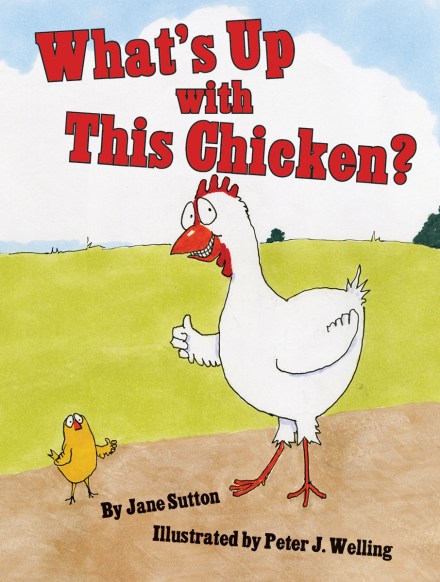
What’s Up with This Chicken?

Written by Jane Sutton | Illustrated by Peter J. Welling


When Sylvia goes out to the barn to collect the chicken’s eggs, something’s up with Trudy. She squawks and screeches when Sylvia tries to reach under her, but Sylvia takes it in stride and with humor: “‘Don’t get so egg-cited!’” she says “‘I’ll get your egg tomorrow.’” But the next day Sylvia is met with the same reaction. Trudy isn’t acting like the other chickens in Grandma’s backyard; if fact, she isn’t even acting like Trudy! “‘What’s up with this chicken?’” Sylvia wonders.

While she and Grandma enjoy “omelets with eggs from Sue, Clara, Doris, and Olga,” Sylvia tells her about “stubborn Trudy.” Grandma doesn’t know what’s wrong either. The next morning Trudy is even more obstinate. Not only does she make a racket, she tries to peck Sylvia, and she puffs “herself up to twice her size.” Sylvia also notices “that Trudy left her roost just once a day to eat, drink, and poop. She was getting skinny.”

Sylvia decides Trudy must be hungry and tries to lure her off her nest by offering chicken feed, but while all the other hens “wolfed it down like chocolate,” Trudy remains firmly on her roost. Sylvia tries everything she can think of to move Trudy, but nothing works. That night she and Grandma consult The Big Book About Chickens. Here they discover that “‘Trudy is broody!’” Grandma reads on: “‘Broody hens stay on their eggs so they will hatch into chicks.’” But Sylvia and Grandma know that Trudy’s eggs are not the kind that hatch.

Sylvia realizes that Trudy just wants to be a mother, and she wishes there were some way to help her. She thinks and thinks and finally comes up with an idea. She runs to Grandma who thinks Sylvia’s plan is “an egg-cellent idea.” A few days later a box arrives with four eggs that would hatch. With thick rubber gloves, a dose of determination, and two tries, Grandma is able to lift Trudy off her nest. Sylvia makes a quick switch of the eggs, and “Broody Trudy settled down on the new eggs.”

Trudy grows thinner every day but she stays on her roost, rolling the eggs to keep them uniformly warm and even blanketing them with her own feathers. One day Sylvia hears peeping! Grandma and she are even in time to watch the fourth little chick peck its way out of its shell. They name the new “little yellow fluff balls Sophie, Danielle, Mildred, and Judy.”

Trudy is a proud and protective mother, shielding them with her wings “like a feathery beach umbrella” and teaching them how to find food and water. Trudy goes back to her regular routine and begins gaining weight. As the chicks grow they get their own nests in Grandma’s coop. But one day Judy squawks and screeches. This time Sylvia knows exactly what’s up with this chicken!”

An Author’s Note about the real-life “Broody Trudy” that inspired the story follows the text.

With a deft and delightful understanding of the puns and humor that set kids to giggling, Jane Sutton has written a fun—and informative—story for animal lovers and anyone who loves a good, natural mystery. Through the well-paced plot and action-packed description, readers learn about a particular behavioral aspect of some chickens and the clever and sensitive way that Sylvia solves the problem. The close relationship between Sylvia and her grandmother adds charm and depth to the story, and their dialogue is spontaneous and playful.

Peter J. Welling’s bright, homey illustrations are the perfect accompaniment to the story. Animated Trudy shoos Sylvia away while the other chickens take dust baths, scratch for bugs, and look just as perplexed as Sylvia and Grandma. Humorous touches abound in Grandma’s choice of home décor and Sylvia’s printed T-shirts as well as in the facial expressions of the human and feathered characters. Trudy’s chicks are adorable, and readers will cheer to see Trudy fulfill her heart’s desire.

What’s Up with This Chicken is a wonderful read-aloud for younger kids’ story times and a fun romp that will keep older, independent readers guessing and wondering how it all comes out right up to the end. The likeable characters—both human and chicken—make this a book kids will like to hear again and again!

Ages 3 – 8

Pelican Publishing, 2015 | ISBN 978-1455620852

Discover more about Jane Sutton and her books on her website!

To view a gallery of artwork plus more books for readers of all ages by Peter J. Welling, visit his website!

World Egg Day Activity
celebrate-picture-books-picture-book-review-egg-carton-chicken-double-chickens

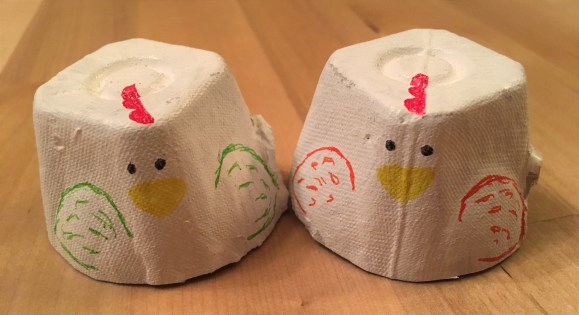
Egg Carton Chickens and a Basket Full of Games


With twelve little chickens you can come up with lots of games to play! This fun craft and game activity is eggs-actly what you need to start hatching some real fun!

Supplies

  • Cardboard egg carton
  • White craft paint
  • Markers: red, yellow, black for the face; any colors you’d like for wings and eggs
  • Paint brush
  • Scissors
  • Glue
  • Construction or craft paper in white and a color of your choice

Directions

  1. Cut the notched flap off the egg carton and set aside
  2. Cut the top off the egg carton
  3. Cut apart all the egg cups and trim slightly so they sit flat
  4. Paint the egg cups with the white paint, let dry
  5. Add the face, comb and wings to the chicken with the markers. Make six chickens with one color wings and six chickens with another color wings.
  6. From the egg carton flap cut thirteen small egg-shaped playing pieces
  7. With the markers, decorate twelve of the eggs in pairs—each egg in the pair with the same design
  8. Color one egg yellow and add a beak, eyes, and wings to make it a chick

Games to Play

Tic-Tac-Toe (2 players)

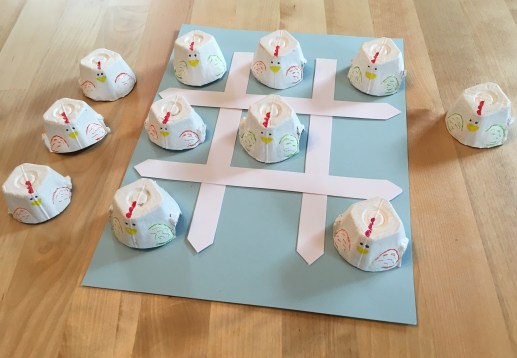
  1. On a 8 ½” x 11” piece of paper draw a regular tic-tac-toe board or make it fancy – like the picket fence-inspired board in the picture
  2. To make the fence-inspired board on a colored background, cut 2 9-inch-long x 3/4-inch wide strips of white paper, cutting a pointed tip at one or both ends. Cut 2 white  8-inch x 3/4-inch strips of paper with a pointed tip at one or both ends. Glue the strips to the background.
  3. Each player chooses a set of chickens with the same colored wings
  4. Play the game as you usually do

celebrate-picture-books-picture-book-review-egg-carton-chicken-tic-tac-toe

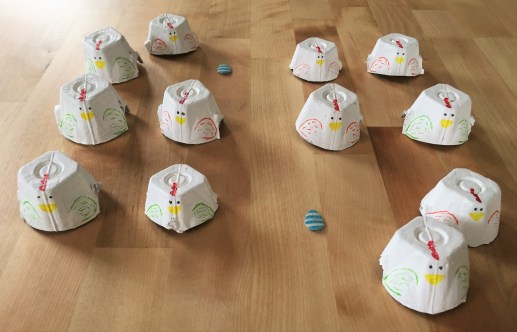
Find the Matching Eggs (2 or more players)

  1. Have one player hide one egg under each chicken
  2. Shuffle the eggs around and form them into three lines of 4 chickens each
  3. Another player lifts one chicken at a time to find matching eggs. If the eggs don’t match, put both chickens back and start again
celebrate-picture-books-picture-book-review-egg-carton-chicken-matching

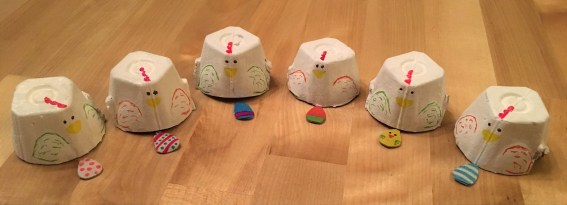
Where’s the Chick?

  1. Use as many chickens and eggs as you want (fewer for younger children, more for older)
  2. One player hides the chick under one of the chickens and eggs under the others.
  3. Another player has three chances to find the chick
celebrate-picture-books-picture-book-review-egg-carton-chicken-where's-the-chick

I’m sure you can also design your own games for your adorable chickens to play! With more chickens you can even make a checkers set or replicate another of your favorite board games!

Q & A with Author Jane Sutton

JanePhoto2013email.JPG

Today, I’m pleased to talk to Jane Sutton about her books, her journey as a writer, her family, and the joys and inspiration of being a new grandmother! 

As someone who loves humor and was voted class comedienne in high school, what were some of the books you most enjoyed as a child and young adult?

 Two of my childhood favorites were Dr. Seuss’s Horton Hatches an Egg and Robert Louis Stevenson’s A Child’s Garden of Verses. As a young adult, I was drawn to Virginia Woolf novels (I know–not exactly humorous, but most comedians are prone to depression).

You write both picture books and books for older children. What inspires or influences your stories?

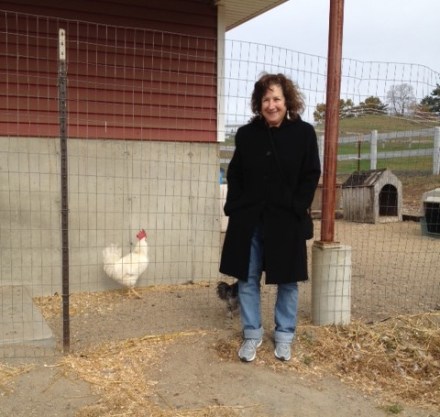
My childhood memories have been the basis of many of my books—experiences and feelings. What’s Up with This Chicken? was inspired by a true story my friend-since-we-were-11 Fay told me about one of her backyard hens who refused to get off her eggs. I said, “This has to be a children’s book!” So I invented characters, had the child protagonist solve the problem, and snuck in a subtle message about the importance of empathy.
celebrate-picture-books-picture-book-review-jane-sutton-and-chicken

As someone who always wanted to write and who achieved the goal of becoming a published author, can you briefly describe your journey?

At a young age, I was encouraged by my teachers. They would be impressed by something I wrote and send me to show it to another teacher, which really pumped me up. I was an editor of my high school newspaper and after graduating from college had a job writing for a newspaper, wrote ads and press releases, and sold some stories for reading comprehension tests. My first book, What Should a Hippo Wear? was published when I was 29. I’ve had periods where everything I wrote was selling, and periods when nothing I wrote was selling. It’s a tough market!

What’s the best part about writing books for kids?

Well, I never wanted to grow up, and when I realized it was happening whether I liked it or not, I vowed to always remember what it felt like to be a child. Writing for kids helps me do that.

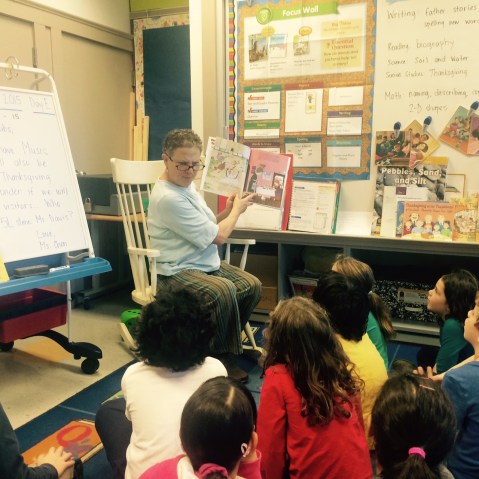
You conduct school presentations and workshops for kids from kindergarten age through grade 5, can you describe a funny or poignant anecdote from one of your events? 

One school had a wonderful program that paired parents and their children as writing partners. The culminating event was a presentation by me about how to make writing come alive. Then the parent-children pairs displayed their books, and it was so lovely to see how much the experience meant to the adults and the children. They also loved showing me—the big famous author—what they’d written and I could sincerely point out parts of their writing that were especially effective. The whole thing made me ferklempt.celebrate-picture-books-picture-book-review-jane-sutton-reading-to-kids
I read that you love elephants and collect elephant-inspired items. Can you tell me about one of your favorites?

One of my favorite elephants is gray and plastic (about the size of a toaster) and lives outside, in view of our kitchen window. My mother, who died in 2004, gave him to me and named him “Sabu.” He has survived about 18 New England winters so far, sometimes getting totally buried by snow and then poking out the tip of his trunk as the snow starts to melt. My mom asked me once if the elephant made me think of her, and yes, he surely does.

Talking about your mom makes me think of the strong relationship between Sylvia and her grandmother in What’s Up with This Chicken. Can you tell me about your own family?

My husband, Alan, taught a variety of grade levels spanning grades 1-6. He served as a science coordinator, curriculum developer, and teacher mentor. He’s written and co-authored six books for educators, four focused on science instruction and two about systems thinking. Currently, he coordinates the systems thinking program at a grades 5-12 public school and also presents workshops at meetings and conferences. We met in college and have been married for 41 years!

My son, Charlie, works for a coalition made up of organizations pushing for a better transportation system in Massachusetts. He’s worked in Massachusetts public policy since graduating from college in 2007. He married the wonderful Amberly, a nurse, in 2014, and they recently had a baby!

My daughter Becky is the director of an SAT tutoring program. Her company tries to make SAT tutoring as fun and effective as possible, so they try to match the kids with tutors who have the right personality for the student’s learning style. The SAT has completely changed in the last year, so they have had to retrain all of their tutors and rewrite all their curricula. For any tutoring program, building students’ confidence is key. So much of standardized testing is psychological.

I understand Becky also writes a blog for all of us grammarians who like a laugh once in awhile called Apostrophe Catastrophes: The Worlds’ Worst. Punctuation. Can you tell me a little about how she got started?

Yes, Becky does a great job with that blog. I love the examples she posts, and her comments are hilarious! She started Apostrophe Catastrophes almost 10 years ago after seeing an errant apostrophe on a giant cake at Governor Deval Patrick’s Inauguration. She pointed it out to the catering staff, and they had no idea what she was talking about, and then she started to notice misused apostrophes everywhere! Friends and family started taking pictures and sending them to her, and eventually, strangers from all over the world started sending in pictures! The Facebook group has almost 4,000 members now! Becky says, “I guess a lot of people share my love for proper punctuation.”

You’re a new grandmother! Can you tell me a little about your grandson?

That’s a dangerous question! How much time do you have? Caleb is an adorable, cuddly little person. And he’s now a month old!
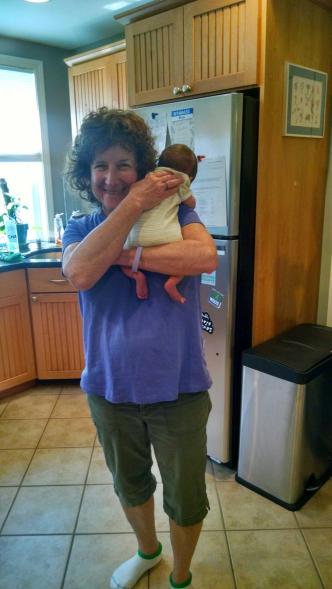
celebrate-picture-books-picture-book-review-jane-sutton-and-grandson

What is the best part about being a grandmother? 

 As a new mother, I was very anxious and questioned all my decisions. But as a grandma, there’s none of that anxiety. Being with my grandson is pure joy. And seeing how loving, confident, and tender my son and daughter-in-law are with the baby fills me even more love. And seeing him in my husband’s arms as he gazes down at him…I’m getting ferklempt again!

Have you thought about how being a grandmother might influence or inspire your future work? 

You betcha! Stay tuned.

What’s up next for you?

My next book, a Passover-themed picture book, is scheduled for publication by Kar-Ben in the spring of 2018.

Since Celebrate Picture Books is a holiday-themed blog, I can’t let you get away without asking you a few holiday-related questions! So…

 What is your favorite holiday?

I love Mother’s Day and Father’s Day because they are occasions for my husband and me to get together with our children. And there’s good eating involved.

Do you have an anecdote from any holiday that you’d like to share?

The first time I hosted Thanksgiving, rather than attending one at my parents’ house, my mother gave me very, very specific instructions about what to buy. For example, there had to be 2 Butterball frozen turkeys, both between 11 and 13 pounds. The reason for 2 is so that each of the 4 grandchildren could have a drumstick. My daughter and I were rummaging through the supermarket frozen case trying to find the exact acceptable weight for exacting Grandma. Our fingers were half frozen, and I admit that I kind of dropped a turkey on my daughter’s finger. The turkeys, by the way, were quite delicious.

How has a holiday influenced your work?

The festive, joyous celebration of Chanukah shows up in my 2 Chanukah picture books: Esther’s Hanukkah Disaster (Kar-Ben) and Aiden’s Magical Hanukkah (Hallmark).
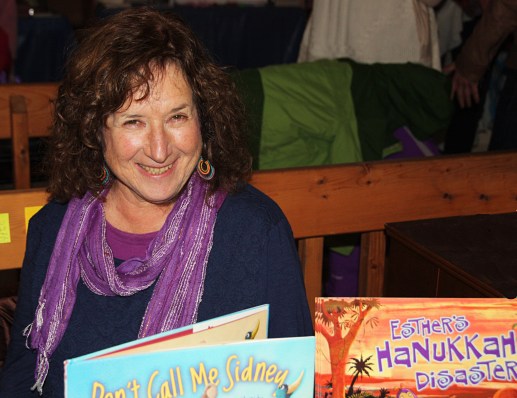
celebrate-picture-books-picture-book-review-jane-sutton-and-her books

Thanks so much for chatting, Jane! It’s been wonderful getting to know you. I wish you all the best with all of your books, and am looking forward to seeing your next book!

Connect with Jane Sutton on her website and catch up with her events and other fun activities on her blog!

What’s Up with This Chicken can be found at these booksellers:

Amazon | Barnes & Noble | Books-a-Million | IndieBound | Pelican Publishing Company

Picture Book Review

October 4 – World Animal Day and Q&A with Author Jess Keating

celebrate-picture-books-picture-book-review-pink-is-for-blobfish-cover

About the Holiday

We love animals, but do we take care of them the way we should? Today’s holiday was established in 1931 to promote global awareness of animals and the issues surrounding their welfare. From pets to domesticated animals to wild creatures, humans must protect and advocate for their companions and fellow travelers on this earth. Issues such as pollution, habitat destruction, and poaching threaten the world’s wide variety of species, while closer to home spaying and neutering controls the population of feral animals that often suffer from a lack of resources.

The wildlife kingdom is majestic and awe-inspiring. Today celebrate the world’s animals by taking a trip to a zoo, aquarium, or animal preserve, consider adopting a shelter animal, or donating your time or talents to your favorite animal cause.

Pink is for Blob Fish: Discovering the World’s Perfectly Pink Animals

Written by Jess Keating | Illustrated by David DeGrand


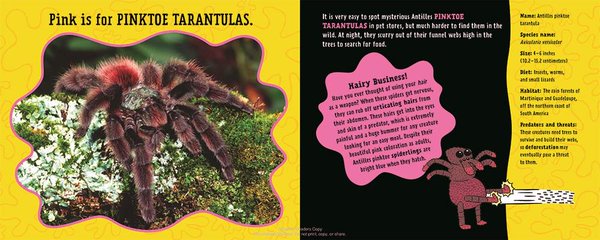
Pink is sweet like cotton candy, right? Pink is pretty like a rose, isn’t it? Pink is quiet like twightlight, don’t cha think? Well…yes, and…maybe not so much. You’d be pardoned for squirming in the presence of a pinktoe tarantula which is found in the rain forests of Matinique and Guadeloupe and can defeat predators with their spiky hairs, and if you can’t make heads or tails of the Pink Fairy Armadillo, which looks like a cross between a lobster tail and a shag rug, no one will blame you.

celebrate-picture-books-picture-book-review-pink-is-for-blobfish-pinktoe-tarantula

Text copyright Jess Keating, illustration copyright David DeGrand, courtesy of Penguin Random House

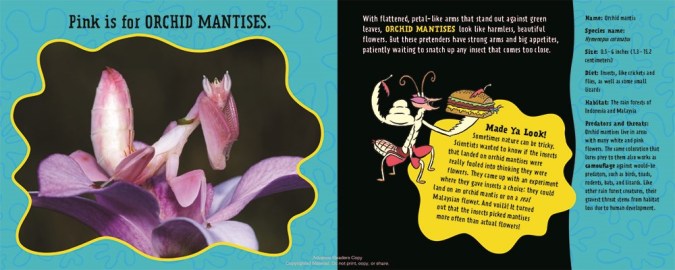
But the world is full of pink, and for each of these grimace-inducing bubble-gum-hued creatures there are plenty who simply take your breath away with their beauty. Imagine watching a duo-toned light-and-dark-pink Roseate Spoonbill take off and soar over marshland along America’s Gulf Coast or a river in South America or the West Indies like a valentine on the wind. You will likewise marvel when you see the delicate form of the Orchid Mantis. This variety of praying mantis found in the rain forests of Indonesia and Malaysia is so identical to real orchids that other insects can’t tell the difference and often land in the grasp of their tricky predator.

celebrate-picture-books-picture-book-review-pink-is-for-blobfish-orchid-mantis

Text copyright Jess Keating, illustration copyright David DeGrand, courtesy of Penguin Random House

Seas and rivers also teem with pink wildlife. Pygmy Seahorses swimming in the waters of the South Pacific blend in to their coral surroundings like a spiky ball among hedgehogs. With white-and-pinkish bodies dotted with strawberry-colored knobs, these seahorses are perfectly camouflaged against predators. The rose-colored Amazon River Dolphin hunts for piranhas, crustaceans and bottom dwelling fish with its long snout in the freshwater rivers of South America. The rivers, lakes, and swamps of sub-Sahara Africa are home to Hippopotamuses, which “ooze thick pink oil all over their skin. This pink ‘sweat’ acts like an antibiotic sunscreen, so hippos can stay out in the sun all day without getting burned.” Imagine if you could do that!

Of course, there is also the Blobfish, recently voted as the world’s ugliest animal. But isn’t this little glob of gelatinous goo really so ugly it’s cute? Found in deep waters off the coasts of Australia and New Zealand, this fish survives where others cannot by simply opening its mouth and gobbling down whatever floats by.

With many more examples of pink wildlife in this captivating book, it’s guaranteed that after flipping through the pages of Pink is for Blobfish you will never look at pink the same way again! 

celebrate-picture-books-picture-book-review-pink-is-for-blobfish-blobfish

Text copyright Jess Keating, illustration copyright David DeGrand, courtesy of Penguin Random House

Jess Keating highlights a host of fascinating pink animals in this volume that is sure to delight kids and get them excited about the world less seen. The first in the World of Weird Animals series, Pink is for Blobfish is loaded with scientific facts, remarkable trivia, and humorous asides to pique the interest of readers’ inner zoologist. Each two-page spread provides a spectacular up-close photograph of the animal, insect, or fish described as well as its common name, species name, size, diet, habitat, and predators or threats. Keating also taps into her audience’s love of the unique and even the bizarre with conversational paragraphs that reveal unusual habits, traits, survival mechanisms, and more for each creature featured.

David DeGrand lends his unique illustration style to the pages with funny cartoon portrayals of the creatures and one of their signature traits. These humorous depictions will not only make kids and adults laugh but will promote better understanding of each unique animal.

Pink is for Blobfish is a perfect addition to personal libraries for budding environmental scientists or anyone interested in the wider, wilder animal world and is an exciting title for school libraries and classrooms, where it could inspire scientific study.

Ages 5 – 10

Knopf Books for Young Readers, Penguin/Random House, 2016 | ISBN 978-0553512274

You’ll discover books, videos, creature features, resources, and lots more on Jess Keating’s website!

You will find the world of David DeGrand‘s art and comics on his website!

Pink is for book trailers—at least this one!

World Animal Day Activity

celebrate-picture-books-picture-book-review-wonderful-wildlife-board-game

Play the Wonderful Wildlife Board Game! Animal tokens images copyright Conor Carroll

Wonderful Wildlife Board Game


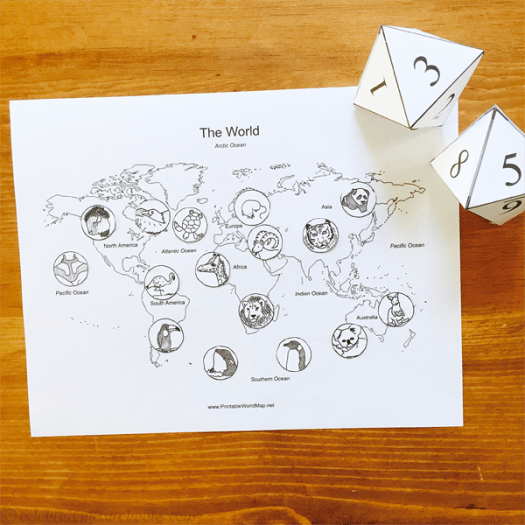
Fascinating animals are found in every part of the world. Play this fun printable Wonderful Wildlife Board Game to match each animal to the area where it lives.

Supplies

Directions

  1. Print a World Map for each player
  2. Print one set of 16 Wildlife Tokens for each player
  3. Print two copies of the 8-sided die, fold, and tape together
  4. If you would like, color the map and tokens
  5. Choose a player to go first
  6. Each player rolls both dice and places an animal on their map according to these corresponding sums of the dice below
  7. The first player to fill their map is the winner!
  • 1 = Flamingo – South America
  • 2 = Emperor Penguin – Antarctica (Southern Ocean)
  • 3 = Giraffe – Africa
  • 4 = Bald Eagle – North America
  • 5 = Ibex – Europe
  • 6 = Kangaroo – Australia
  • 7 = Panda – Asia
  • 8 = Orca – Antarctica (Southern Ocean)
  • 9 = Toucan – South America
  • 10 = Buffalo – North America
  • 11 = Koala – Australia
  • 12 = Lion – Africa
  • 13 = Etruscan Shrew – Europe
  • 14 = Manta Ray – Pacific Ocean
  • 15 = Sea Turtle – Atlantic Ocean
  • 16 = Tiger – Asia

Q&A with Author Jess Keating

celebrate-picture-books-picture-book-review-interview-with-jess-keating

Today I’m tickled pink to talk to Jess Keating about her work as a zoologist and an author, her favorite animals, and a very cool holiday tradition.

In your work, your books, and your online presence, you bring kids and adults closer to the animal kingdom. What in your early years inspired you to become a zoologist?

I wish there was one poignant answer to this question! The truth is, all my life I’ve been enamored with animals. A physicist I admire once said this: The world is beautiful to look at, but it’s even more beautiful to understand. To me, that sums it all up perfectly.

As a kid, animals sparked my curiosity, my imagination, and even my creativity. The diversity they represent is so amazing to me—they all live their lives so differently, with different senses, abilities, and environments, yet it works perfectly for them. I instantly felt a kinship with them, and as a kid, I wanted to know everything about them.

As I got older and was able to really get into zoology, my goal shifted. The world of animals is so endlessly fascinating, and I now I want to take every opportunity to share it with others, especially young readers.  

All animals are amazing, but do you have a soft spot for one particular animal or species? If so, why?

Now this is such a hard question! My favorite animal has always been the wolf. I was lucky enough to see one in the wild once, and it’s pretty hard to come away from that experience without believing in magic!

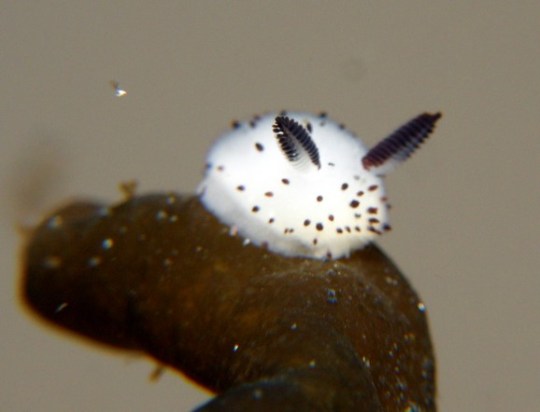
Lately, I also have a soft spot for nudibranchs! I included one (the Hopkins’ rose nudibranch) in my last book, but there are so many other species that we know so little about! As I mentioned above, it’s the diversity that takes my breath away. Some of them look like bunnies:

celebrate-picture-books-review-interview-with-jess-keating-nudibranch

Image courtesy of crawl_ray on flickr.com

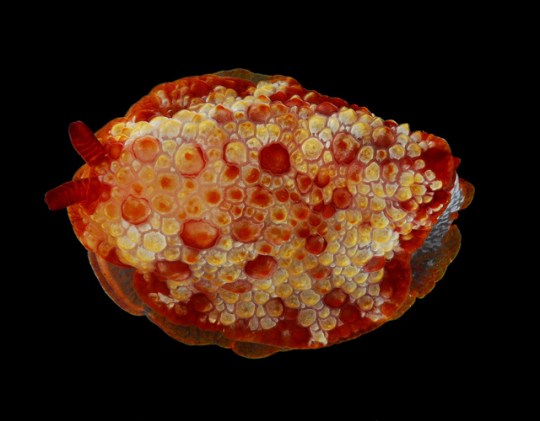
Some even look like pizzas!

celebrate-picture-books-picture-book-review-jess-keeting-interview-nudibranch

Image courtesy of Arthur Anker on flickr.com

You do such a great job of reaching out to kids through videos, KeatingCreature on Twitter, your YouTube Channel: Animals for Smart People, personal appearances, and Skype visits. Can you describe a funny or favorite anecdote from one of your events?

Thank you for the Youtube shout out! I really hope teachers find my videos useful! As for a favorite event, when you mix animals and kids, the results are often hilarious. Usually, my visits involve a lot of dead things. I bring a collection of skulls, animal bones, and animal track castings with me. Every so often, we get lucky with some live specimens.

One of my favorite events was a library visit that involved a 10+ foot python. I had her resting on my shoulders (as you do), and I remember laughing because almost all of the adults in the room were skittish, backing off toward the door.

When I asked who else wanted to hold this lovely python, every adult shook their head. There was no way they were going near it! But then, a tiny six year old girl rushed up to the front, with a massive smile on her face. She wasn’t afraid at all as she held that snake—and I’m pretty sure that her big moment meant as much to me as it did to her!   

What inspired you to write Pink is for Blobfish?

 Pink is for Blobfish is a book so close to my heart! I know that sounds strange, because it’s essentially a book filled with weirdos!

As you can probably guess, I’ve been reading animal books my whole life. I loved them all, but what I really wanted was to write something that says as much about us as it does about the wild animals on each page. A book that not only shares amazing animals with kids, but also gets them thinking critically about how they view the world, especially regarding their assumptions and judgments. Pink is for Blobfish is my way of getting readers to look at gender expectations, while (hopefully) instilling them with a little wonder about the natural world.

There’s so much humor in your writing and videos. How does your love of comedy help you connect to readers?

The short answer is, I’m just a big ham and love making people laugh. There’s also the added bonus with nonfiction: we’re much more likely to remember something if we connect with it emotionally. My way of accomplishing that is to be funny and get kids laughing. Fiction or nonfiction, one of the easiest ways for me to reach readers is through a well-timed joke.

But, you can also get a little deeper with it. I once heard that Jim Carrey doesn’t think of his job as “making people laugh.” Instead, he views it as “freeing people from concern.” The minute I heard that, it resonated with me. For those few moments, when you’ve got a reader laughing, they’re free from any concern in their lives. It’s a reprieve, a bright moment. It’s true for us as adults too—it’s pretty much impossible to be stressed out when you’re reading about a pigeon that wants to drive a bus!

Now, when I approach my writing, I look for those moments. If I can make myself laugh, that’s half the battle.

What’s the best part about writing books for kids?

For both fiction and nonfiction, my favorite part is seeing the look on a kid’s face when you open a door for them into a whole new world. Sometimes, it’s the ridiculously colorful world of nudibranchs. And sometimes, it’s helping them to the realization that they aren’t alone, no matter how weird they feel.

What’s up next for you?

I’m so glad you asked! I just received F&Gs of the second book in the World of Weird Animals series! I can’t give away the title just yet, but I can say we are going to look at MONSTERS. This isn’t just going to be a book of creepy creatures. We’re going to dig into why we see certain animals as monsters, and how those judgments and assumptions affect how we think of them. I was blown away with the discussions that Pink is for Blobfish prompted with kids, and I can’t wait to see how they respond to this book!

I also have my first picture book biography, SHARK LADY, coming out next year! I’ve always been a fan of sharks, and I was thrilled to tell the story of Eugenie Clark, one of the world’s first female shark scientists. Eugenie is one of those incredible women that changed the world just by being her fearless self, and I am so eager to share this book with everyone. Look for it around June!

I can’t let you get away without asking you a few holiday-themed questions, so…

You told me that World Animal Day is one of your favorite holidays. Can you talk a little about that?

What could be better than a day devoted to animals!? World Animal Day is a day to chat about animals all over the world, and how we can best protect them and their futures. A funny thing happens when you start talking about animals in the global sense—you can’t help them without also helping us. Education and awareness can accomplish so much!

Do you have an anecdote from any holiday that you’d like to share?

I have one that ties in really well here! When I was a teen, I had a really cool Christmas tradition that I highly recommend to parents of animal lovers. On Christmas morning (or any special holiday morning for you!) I would go to my local humane society, bring treats, and walk the dogs. Usually, these centers have lots of volunteers, but busy holidays are often pretty slow for them and there’s not a lot of help. I guarantee the dogs will love the company, and you’ll get to spend an hour surrounded by wagging tails! You can’t lose.

Has a holiday ever influenced your work?

Yes! A very savvy bookstore (DDG Books!) organized a “Valentine for Blobfish” event when Pink is for Blobfish came out. So many young readers felt bad that the blobfish was voted the world’s “Ugliest Animal” (true story!) and they wanted to send him valentine cards to make him feel better!

You can see more about it here in this video:


And read some blobfish poetry here. Or, you can see some of the adorable cards on my blog.

Thank you so much for chatting with me today!

Thank you, Jess! It’s been so much fun! I wish you all the best with all of your books and your other ventures!

Learn more about Jess Keating!

As a zoologist turned middle grade and picture book author, Jess Keating has been sprayed by skunks, bitten by crocodiles, and been a victim to the dreaded paper cut. Her MY LIFE IS A ZOO series earned two Kirkus stars, a Red Maple nomination, a Rocky Mountain Book Award nomination, and a spot on the LA Times Summer Book Pick List. 

Her quirky nonfiction picture book series kicked off with PINK IS FOR BLOBFISH, with a sequel to follow in 2017. Her first picture book biography, SHARK LADY, will also be published in 2017. 

Jess is also the creator, writer and host of Animals for Smart People, a Youtube series about animals, science, and nature. Subscribe today and bring Jess into your classroom!

Connect with Jess Keating:

You can  find Jess on Twitter @Jess_Keating and on Facebook @JessKeatingBooks!

Pink is for Blobfish can be found at these booksellers

Amazon | Barnes & Noble | Books-a-Million | IndigoIndieBound | PenguinRandom House

Picture Book Review
 

September 30 – International Translation Day

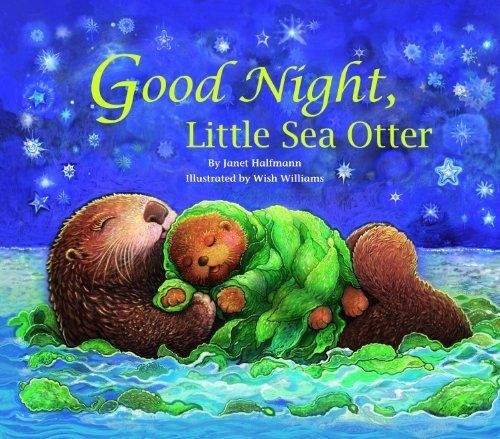
celebrate-picture-books-picture-book-review-good-night-little-sea-otter-cover

About the Holiday

Established in 1953 by the International Federation of Translators, today’s holiday celebrates the translators in every language who work to break down barriers and bring great literature to all people across the globe. Everyone’s story matters, and it is through access to a wide range of books that readers acquire deeper understanding of the commonalities and unique experiences that make us all citizens of the world. For children in bilingual and multicultural homes the ability to read and hear books in their native tongue as well as their adopted language is especially comforting and promotes greater literacy and language learning. With eight bilingual editions available, today’s book is a great example of the importance of translators’ work!

Good Night, Little Sea Otter

Written by Janet Halfmann | Illustrated by Wish Williams


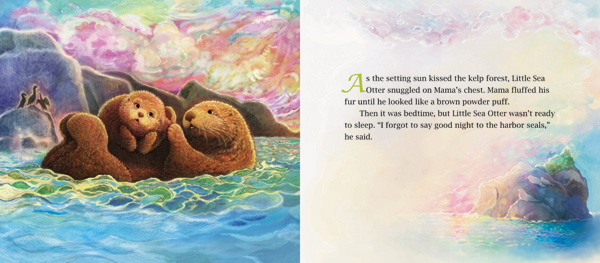
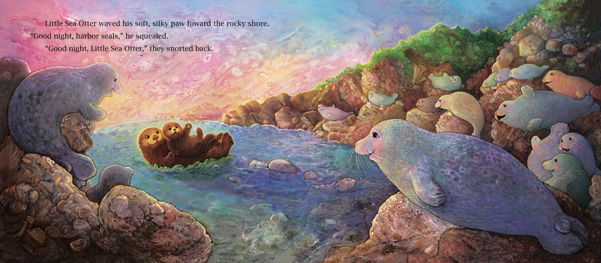
As twilight paints the sky pink, purple, and gold, Little Sea Otter gets ready to sleep in her kelp forest bed. Mama Otter fluffs her baby’s fur and snuggles with her, but Little Otter is still wide awake. “‘I forgot to say goodnight to the harbor seals,’” she tells Mama. The baby waves her “soft, silky paw toward the rocky shore” and says goodnight. The harbor seals all along the craggy cliffs wish the little otter goodnight in return.

celebrate-picture-books-picture-book-review-good-night-little-sea-otter-mama-fluffing-pup's-fur

Image copyright Wish Williams, text copyright Janet Halfmann, courtesy of starbrightbooks.org

Hearing the seals’ goodnight song, the sea lions join in, their loud barks echoing in the air. “‘Good night, father sea lions. Good night, mother sea lions and baby sea lions,’” Little Otter calls. Curious about all the commotion, a seagull swoops down and learns that it’s bedtime for Little Otter. The two say “Good night” to each other, and as the seagull flies away to find his own place to sleep, Mama Otter tries to tuck in her little pup.

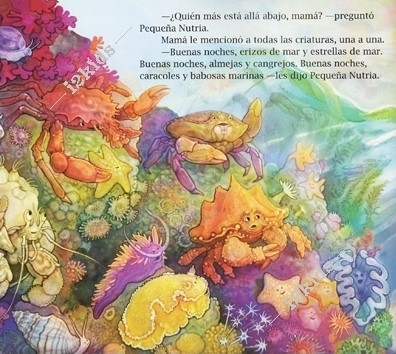
“But before she could say another word, Little Sea Otter dipped her furry face into the chilly water.” There she sees a whole ocean full of fish to greet. She says “Good night” to the yellow fish, the orange fish, and the purple fish. Of course she can’t forget the long fish or the short fish, the striped fish or the spotted fish either. All these fish are happy to wish the tiny pup sweet dreams too. Mama Otter points out other sea creatures getting ready for bed—different types of crabs, snails, sea stars, anemones, clams, and more. Little Otter says “Good night” to each in turn.

celebrate-picture-books-picture-book-review-good-night-little-sea-otter-harbor-seals

Image copyright Wish Williams, text copyright Janet Halfmann, courtesy of starbrightbooks.org

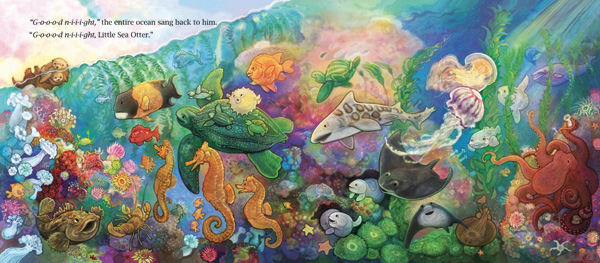
From every part of the ocean sea turtles, lobsters, octopi, rays, jelly fish, sea horses, eels and others bubble a chorus of “Good night” to Little Otter. She listens and responds to each one and then asks Mama if she has forgotten anyone. “‘Yes, you did,’” Mama says, “scooping her up in her paws. ‘You missed ME!’” Little Otter giggles and says “Good night.” Mama Otter hugs her tight and rolls over and over in the kelp, wrapping them both “in ribbons of seaweed” that will keep them secure on the ocean currents as they sleep.

Little Otter gazes up into the night sky and says “Good night” to the moon and the stars. As Little Otter’s eyes finally close and she drifts into sleep, Mama kisses her gently on the head and the sea whispers “‘rock-a-bye.’”

celebrate-picture-books-picture-book-review-good-night-little-sea-otter-all-ocean-creatures

Image copyright Wish Williams, text copyright Janet Halfmann, courtesy of starbrightbooks.org

Janet Halfmann’s gentle bedtime story is a sweet reminder for children of all the people in their life who love them and are thinking of them every day. As Little Sea Otter puts off sleep with just one more “Good night” and then another and another, Halfmann reveals with lyrical language the wide world of the sea and the creatures in it. The readiness of the ocean creatures to respond with their own heartfelt wishes for the little pup suggest that this is a nightly and eagerly anticipated ending to each day by all.

One might imagine that in addition to “Good night” Little Otter’s nightly repertoire includes the request to be told all the names of the fish and sea animals, just as children love to look through pictures of family and friends and learn their names. Mama’s patient support of her pup’s curiosity and connections to her world provide tender moments between mother and child, as do their final bedtime rituals before drifting off to sleep.

celebrate-picture-books-picture-book-review-good-night-little-sea-otter-spanish-translation

Image copyright Wish Williams, text copyright Janet Halfmann, courtesy of starbrightbooks.org

Wish Williams’ beautiful, vivid illustrations are stunning and detailed, offering a magical realism that is perfect for this book’s wide-eyed audience. Little Otter and her sea creature friends are adorable, their smiling faces glowing with their happiness to see each other and finish the day together. While the fish and other sea creatures are colorful, the hues are true to their natural counterparts. The blue-green ocean swirls and foams along the rocky shore at twilight while whitecaps glitter in starlight when the sun goes down.

Little Otter’s repeated phrase of “Good night” gives children plenty of opportunities to read along. Kids and adults who enjoy the beach and marine environments will also be delighted in the scientific facts about sea otters organically sprinkled into the text. The lovely nature of the mother/child relationship, opportunities for child participation, and gorgeous art make Good Night, Little Sea Otter a welcome addition to home bookshelves for quiet story times and bedtime.

Translations

Star Bright Books also publishes Good Night, Little Sea Otter in eight bilingual editions. For information on each click on the links below:

Arabic/English | Burmese/English | Burmese Karen/English | French/English | Hmong/EnglishNavajo/English | Portuguese/English | Spanish/English

Ages 2 – 6

Star Bright Books, 2010 | ISBN 978-1595722546 (English Edition)

Learn more about Janet Halfmann and her other books on her website!

International Translation Day Activity

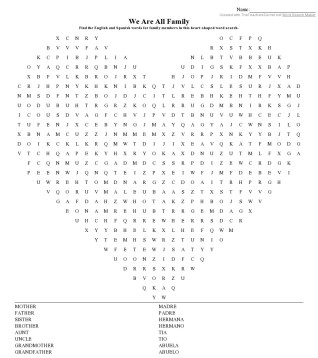
We Are All Family English/Spanish Word Search

celebrate-picture-books-picture-book-review-we-are-all-family-word-search

Find the names of family members in both English and Spanish in this printable heart- shaped We Are All Family Word Search! Here’s the Solution!


Sleepy Sea Otters Coloring Page

celebrate-picture-books-picture-book-review-sleep-sea-otters-coloring-page

Say “Good night” to these sweet sea otters before going to bed by coloring this printable Sleepy Sea Otters Coloring Page.

Picture Book Review
September 24 – International Rabbit Day

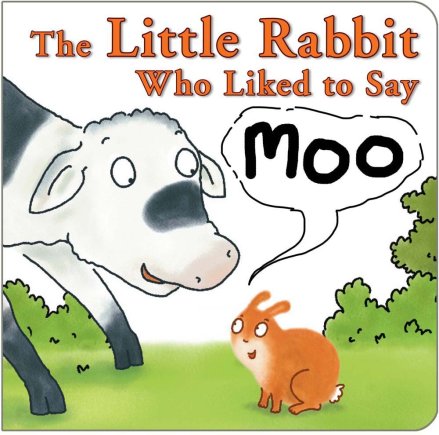
celebrate-picture-books-picture-book-review-the-little-rabbit-who-liked-to-say-moo-cover

About the Holiday

Established in 1999 by UNESCO, Mother Language Day celebrates cultural diversity and promotes the protection of endangered languages. Events include multicultural festivals where all voices are heard and social cohesion, cultural awareness, and tolerance are honored.

The Little Rabbit Who Liked to Say Moo

By Jonathan Allen


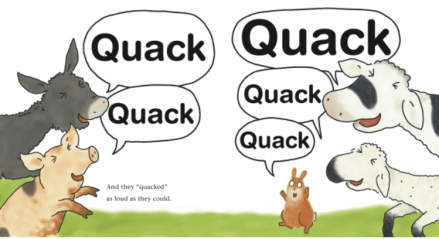
Little Rabbit sits in the farmer’s field listening to the animals talk and learning their languages. “Moo,” Little Rabbit repeats, “Moo.” A calf responds and questions Little Rabbit. It turns out that Little Rabbit knows and likes many languages. Calf joins Rabbit in the fun. “Baa,” they say together, which summons Lamb. The three friends decide to try “Oink.” With each new noise, the group expands and enthusiastically continues their linguistic experiment.

celebrate-picture-books-picture-book-review-the-little-rabbit-who-liked-to-say-moo-quack

Copyright Jonathan Allen, 2008, courtesy of Boxer Books Ltd.

Finally, after a rousing chorus of “Quack,” Duckling asks , “Why are you all saying quack? You’re not ducks.” Baby Donkey is the first to answer. “I like Quack.” “So do I…Me too,” the other young animals pipe up. “Is quack your favorite animal sound?” Duckling asks. Each animal then reveals with pride that, while they like other noises, they prefer their own. But what about Little Rabbit, who doesn’t “have a big noise?” Will Rabbit’s answer begin the game again?

The wide-eyed, smiling animals in this adorable picture book by author-illustrator Jonathan Allen perfectly captures the joyous camaraderie of good friends discovering the world together. The book is a wonderful introduction for young children to the ideas of inclusiveness and self-esteem. Kids will love the repetition as each new animal joins the group, and will have as much fun saying each sound as Little Rabbit and the other farmyard friends.

Ages 2 – 5

Boxer Books Limited, 2015 (Board Book) | ISBN 978-1910126257

International Rabbit Day Activity

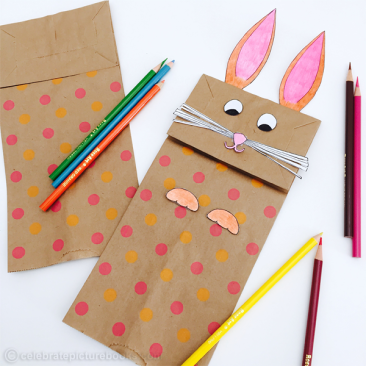
CPB - Rabbit Puppet made

Paper Bag Rabbit Puppet


With this easy and fun craft you can make your own little rabbit who likes to play with you and talk in other languages! Make up stories of your own – what does your little rabbit like to do?

Supplies

  • Rabbit Puppet Template
  • A paper lunch bag
  • Markers, crayons, or colored pencils
  • Cotton Ball
  • Scissors
  • Glue or tape

Directions

  1. Print the Rabbit Puppet template.
  2. Color the parts of the rabbit and cut them out.
  3. Place the flat paper bag on a table with the bottom flap facing you. Glue or tape the eyes, and the nose and whiskers to the bottom flap. Attach the ears, placing the tabs behind the top of the bottom flap. Attach the paws to the body below the bottom flap. Attach the cotton ball tail to the opposite side of the bag.  
  4. When it’s dry, use your puppet to read The Little Rabbit Who Liked to Say Moo again and play along, making the other animals’ sounds.
  5. Then let your Little Rabbit try saying “Hi” in the languages below.

Learn to Say “Hello” in Other Languages

  • Spanish: Hola (oh-la)
  • French: Bonjour (bon zhur)
  • German: Hallo (hă-lo)
  • Chinese: Nin Hao (nee hah)
  • Filipino: Kamusta (ka-muh-stah)
  • Italian: Ciao (chi-ow)
  • Japanese: Kon’nichiwa (ko-nee-chee-wah)
  • Turkish: Merhaba (mĕr-hah-bah)

celebrate-picture-books-picture-book-review-the-little-rabbit-who-liked-to-say-moo-cover

You can find The Little Rabbit Who Liked to Say Moo at these booksellers

Amazon | Barnes & Noble | Books-a-Million | IndieBound

Picture Book Review
 

September 15 – Make a Hat Day

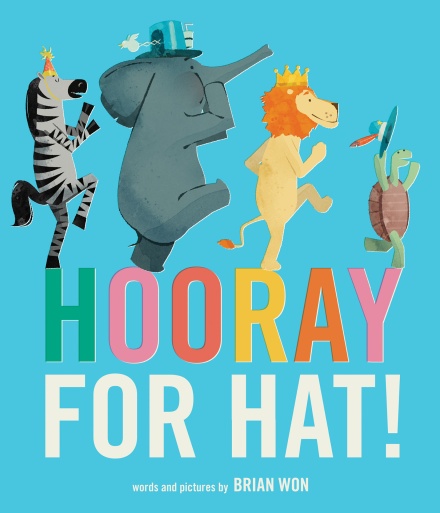
celebrate-picture-books-picture-book-review-hooray-for-hat!-cover

About the Holiday

Hats are great for cold days, days when you want to dress up or express a certain fashion statement, or to cover up a bad do or bedhead. Today’s holiday may spur you to learn how to knit a hat or inspire you to invite your friends to a crazy hat-designing party! Make a Hat Day also shares the spotlight with Felt Hat Day, which exhorts people to rediscover an old and cherished fashion accessory.

Hooray for Hat!

By Brian Won


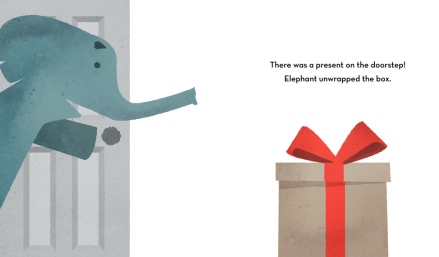
Elephant wakes up on the wrong side of the bed. He’s hardly had a chance to fully shake off sleep when the doorbell rings. He clomps down the stairs yelling, “‘Go away! I’m grumpy!’” But there’s no one at the door. Instead Elephant finds a prettily wrapped present on his doorstep. Unwrapping it Elephant finds the grandest hat he’s ever seen. It has everything – A pompom, a star, a feather, a mortar board with a tassel, a crown, a coo-coo clock bird, and even a cup holder! Elephant puts it on. How can he be grumpy with such a hat on his head? He can’t! “‘Hooray for Hat!’” he cheers and goes off to show Zebra.

celebrate-picture-books-picture-book-review-hooray-for-hat!-gift-for-elephant

Image copyright Brian Won, courtesy of brianwon.com

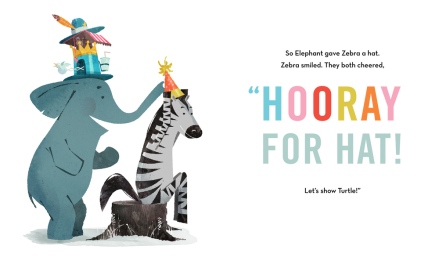
Elephant finds Zebra sitting alone on a tree stump. She doesn’t even turn around when her friend approaches. “‘Go away! I’m grumpy!’” she states. Elephant removes the top hat from his own new chapeau—a party hat with the pompom—and gently places it on Zebra’s head. Zebra can’t help but smile. “‘Hooray for Hat!’” they both cheer and head out for Turtle’s house.

celebrate-picture-books-picture-book-review-hooray-for-hat!-hat-for-zebra

Image copyright Brian Won, courtesy of brianwon.com

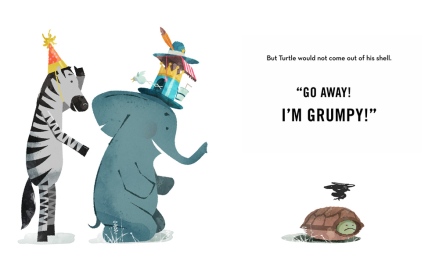
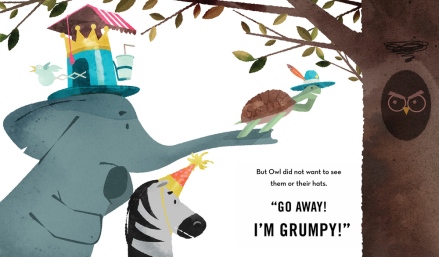
Oh, but Turtle is so grumpy that they won’t even come out of their shell. Elephant lifts down the cowboy hat with the star and feather from his own towering hat and gives it to his pal. Out pops Turtle who proudly joins the parade. “‘Hooray for Hat!’” they all cheer and march off to show Owl. “But Owl did not want to see them or their hats. “‘Go Away! I’m grumpy!’” she hoots from her tree trunk hole.

celebrate-picture-books-picture-book-review-hooray-for-hat!-hat-for-turtle

Image copyright Brian Won, courtesy of brianwon.com

But Elephant is as wise as Owl, and thinks the striped mortar board is just the thing to change her mood. “‘Hoo-Hoo-Hooray for Hat!’” Owl says, leading the way to find Lion. But Lion’s frowning face peers out at them from his den, and he shoos the group away with the familiar “‘Go Away! I’m Grumpy!’” Down comes the golden crown from Elephant’s hat and while Lion loves it, he’s more concerned with their friend Giraffe who isn’t feeling well. “‘What can we do?’” Lion asks the group.

They all know exactly what to do. They pack up the very special hat and take it to Giraffe, who is standing with her head hidden in a treetop. “Do Not Disturb” reads the sign hanging on the trunk. But as soon as Giraffe dons that hat, a toothy smile breaks out, and the six best buddies cheer, “‘Hooray for Friends!’”

celebrate-picture-books-picture-book-review-hooray-for-hat!-hat-for-owl

Image copyright Brian Won, courtesy of brianwon.com

Brian Won’s joyful celebration of the power of surprise, friendship, and a great hat is a day brightener for anyone, whether they wake up grumpy or feeling fine. His adorable animal friends don’t mind a little grumpiness—they’ve experienced it themselves—but only want to make each other happier. The repeated phrasing throughout the story invites kids to read along, and the absence of pronouns offers open interpretation and inclusiveness. The confetti-colored hats will make kids smile and the tribute to friendship will have them cheering along with this fun picture book.

A cheer-ful book, Hooray for Hat! would make a happy addition to children’s libraries for those days when they need a little more encouragement or inspiration. Kids will want to get together with Elephant, Zebra, Turtle, Owl, Lion, and Giraffe again and again and will no doubt love to create a magnificent hat of their own!

Ages 3 – 7

Houghton Mifflin Harcourt Publishers, 2014 | ISBN 978-0544159037

Visit the world of Brian Won on his website

Hooray for this book trailer!

 Make a Hat Day Activity

celebrate-picture-book-picture-book-review-hat-match-game

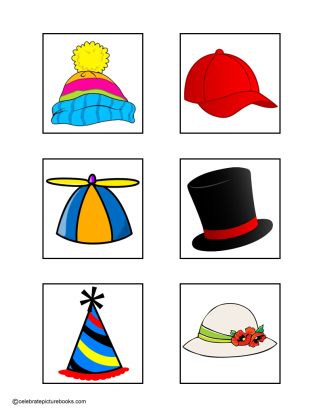
Hats Off to You! Matching Game


Can you match the pairs of identical hats? Of course you can!

Supplies

Directions

  1. Print 2 pages of the Hats Off to You! game cards (or more to make the game harder)
  2. Cut the cards apart
  3. Shuffle the cards
  4. Lay the cards face down on a table
  5. By turning one card over at a time, find all the matching pairs

September 3 – International Vulture Awareness Day

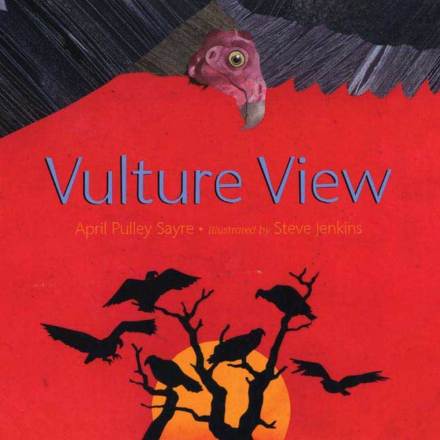
celebrate-picture-books-picture-book-review-vulture-view-cover

About the Holiday

With their bald pink heads and dusty brown feathers vultures and turkey vultures may not be the peacocks of the bird kingdom, but they play a crucial role in the environmental cycle. These scavengers live on carrion, clearing away and “recycling” the carcasses of dead animals. Because of the vulture’s appearance and stereotypical depictions, their plight as an endangered species goes largely unnoticed. Environmental groups in South Africa and England established today’s holiday (also known as International Turkey Vulture Day) to promote awareness f the declining number of vultures, a cause that has been picked up by zoos and other conservation groups around the world.

Vulture View

Written by April Pulley Sayre | Illustrated by Steve Jenkins


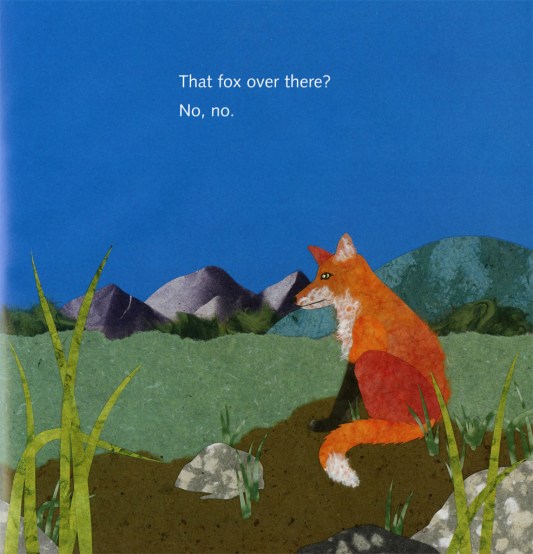
In the clear blue morning sky the vultures soar. “Wings stretch wide / to catch a ride / on warming air / Going where?” One turkey vulture scans the ground, dipping and tilting as it searches for its breakfast. A snake rattles and hisses in the rocks. The vulture passes it by. A golden fox gazes silently into the distance, but the vulture flies away. A bear half-way up a tree would be easy prey, but the vulture lets him continue his climb.

celebrate-picture-books-picture-book-review-vulture-view-fox

Image copyright Steve Jenkins, courtesy of us.macmillan.com

The turkey vultures are searching for a particular meal. They “smell the air. / They sniff, search, seek / for foods that… / REEK! The aromas of the landscape rise to the vultures. Are they attracted by the “fragrant flowers? / No, no.” “That spicy smoke? No, no.” Maybe “that stinky dead deer? Yes, yes!”

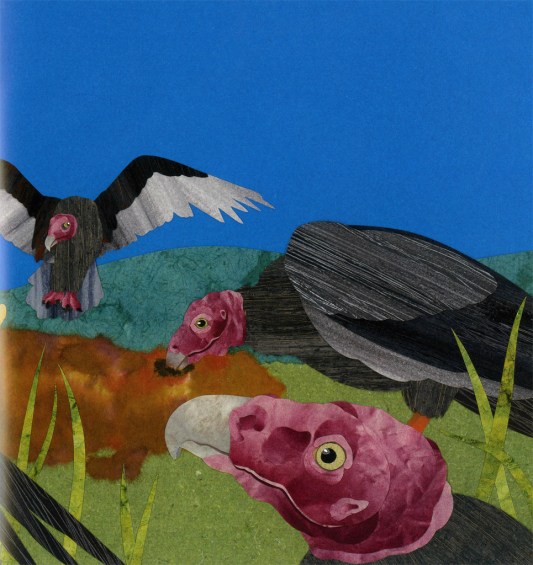
The vultures descend to dine on their “rotten” meal. Afterward they clean themselves in the nearby water and preen their feathers. Still hungry, “they hop, flap, soar / to look for more.” As the sun sets the vultures’ “wings glide, wings ride / through cooling air.” They come from all over to vulture trees—beautiful, bare silhouettes on the sky—to “settle and sleep, like families.”

celebrate-picture-books-picture-book-review-vulture-view-vultures-eating

Image copyright Steve Jenkins, courtesy of us.macmillan.com

With the rising sun and the warmer air, the vultures take to the sky again in search of their singular meal.

Intriguing facts about how vultures fly, the seven species of vultures, why and how vultures feed on carrion, nesting behaviors, and vulture festivals around the United States follow the text.

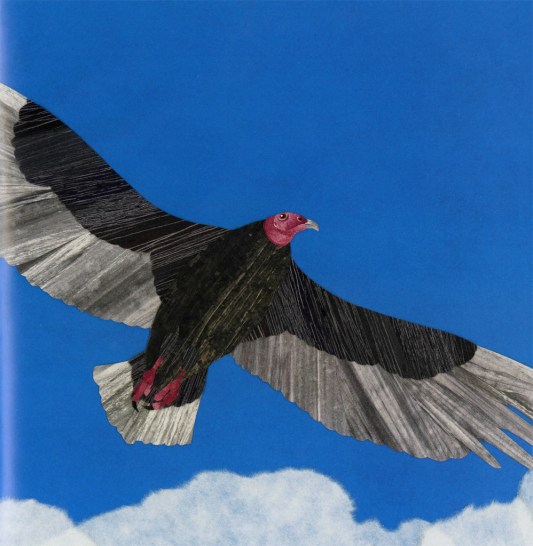
In this Theodor Seuss Geisel Honor Book, April Pulley Sayre brings a poet’s sensibility to the misunderstood vulture. In her lyrical lines the sights and smells of the vulture’s terrain and the vulture’s flight patterns are elevated to educate young readers of the actual beauty of this distinctive species. The benefits vultures provide to the environment as well as their familial attachments make these birds some of the most fascinating animals in the wild kingdom. Who among us doesn’t look up at the circling majesty of birds of prey? Sayre’s text gives readers the bird’s eye Vulture View.

celebrate-picture-books-picture-book-review-vulture-view-soaring-vulture

Image copyright Steve Jenkins, courtesy of us.macmillan.com

With his signature cut-paper collage illustrations, Steve Jenkins gives shape to the vulture’s world. The mottled dark body and the wings and tail fringed with white meet layers of pink that form the vulture’s wrinkled head. The rattlesnake is a smooth combination of greens and browns while the fox is brilliantly orange and soft. Hills and mountains jut from the bottom of pages, and a bony carcass lays amid tall grass, decaying and attracting a vulture. As the birds streak through wispy fiber clouds to descend upon the vulture tree in the shadowy evening, readers will come to appreciate the life and role of the vulture.

Ages 4 – 8

Henry Holt and Company, 2007 | ISBN 978-0805075571

Wow! You will find a wealth of information on April Pulley Sayre‘s website which includes her many books, educators’ resources, and much more information on natural history topics.

Even just hovering over the icon links on Steve Jenkins‘ website is fun—and there’s so much more to discover once you click on them!

International Vulture Awareness Day Activity

celebrate-picture-books-picture-book-review-vultures-coloring-page

Valuable Vultures Coloring Page


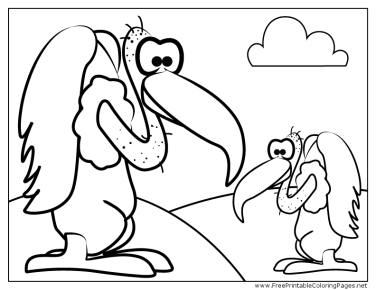
Vultures are a valuable part of our ecosystem. Here’s a printable Valuable Vultures Coloring Page for you to enjoy. Why not try your hand at using cut or torn paper like Steve Jenkins does in Vulture View to fill in the design?

Picture Book Review

August 8 – Happiness Happens Day

celebrate-picture-books-picture-book-review-there's-a-giraffe-in-my-soup-cover

About the Holiday

The aim of today’s holiday is to give you a chance to “admit you’re happy.” A smile or laugh at some of the absurdities of life as well as a true appreciation for the good things all around us makes each day better. So find your “happy place” and giggle along with today’s book!

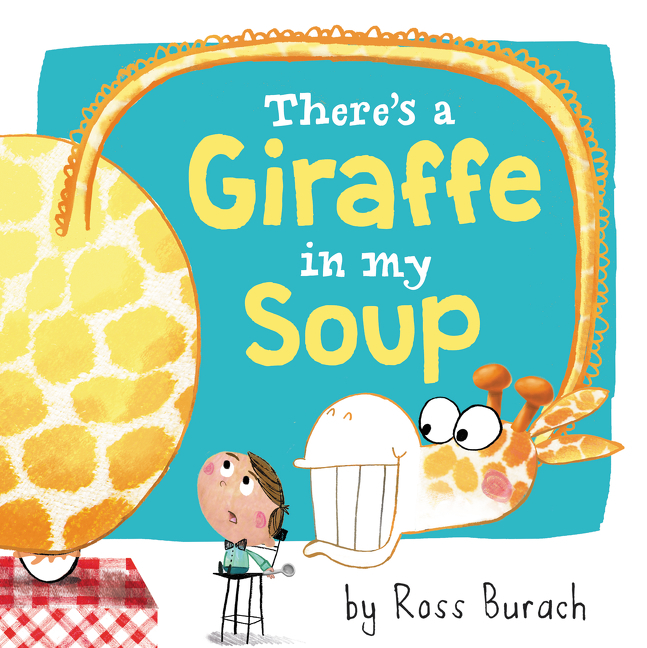
There’s a Giraffe in My Soup

By Ross Burach


It seems that in such a fine establishment ordering the Special of the Day—Sonia’s Tomato Soup—would be easy, but for one little boy it is anything but. “Excuse me, waiter?” The boy politely summons the red-tuxedoed attendant, who is polishing crystal to a diamond sheen. “There’s a giraffe in my soup!” Offended, the waiter pokes his verrrry long nose in the air and says, “That simply cannot be.” But when he comes nose to teeth with said errant ingredient, he speeds with the giraffe on his tray through the kitchen door.

celebrate-picture-books-picture-book-review-there's-a-giraffe-in-my-soup-waiter-and-giraffe

Image copyright Ross Burach, courtesy of rossburach.com

Ah, a new bowl of soup is delivered post haste! But as soon as the bowl is set on the table, a little frog pokes its bulging eyes over the rim. Only it’s not a frog, but an alligator with its chompers ready to reverse the dining experience. It’s even seasoning the poor boy with pepper! Once again the waiter comes to the rescue.

Before the waiter even lifts the cover from the next bowl of soup, a suspicious blue trunk emerges. The elephant flails in the small bowl of soup as the boy yells for help. “Save her! Save her! Please hurry!” Before the elephant drowns, the waiter is on the scene. The next bowl fares no better. “Yak! Yak! Yak!” the boy shouts. “Yuck? Yuck? Yuck?” the waiter thinks, insulted by the young food critic. But no, indeed a hairy, horned yak has invaded the soup.

celebrate-picture-books-picture-book-review-there's-a-giraffe-in-my-soup-waiter-feeding-giraffe

Image copyright Ross Burach, courtesy of rossburach.com

Bowl after bowl is delivered and with bowl after bowl the boy encounters a walrus (that balances the chair and the boy on his nose), an ostrich (with its head in the soup), a koala bear (shhh…it’s sleeping), a snake (burp…it swallowed the boy!), and a whale (well…you can imagine). The bruised and sweating waiter slumps on the table with his last offering. “Here, huff at last. Your soup, huff roaring with flavor.”  “Lying? Lying? Lying?” the waiter has had enough and loses his cool. “Sure, I made a minor gaffe with the giraffe. Maybe I overlooked a whale. But when it comes to taste, I am a professional. Do not dare accuse me of…LION!! Why didn’t you say something!”

Trying to tame the lion with his platter and a fork, the waiter runs for the kitchen. He returns to the boy bandaged and on crutches to reveal that there has been a mix up. It seems the zoo was sent the restaurant’s food and the restaurant was sent the zoo’s animals. The little boy is magnanimous and ready to let bygones be bygones. “Let’s skip the soup. Maybe dessert?” The waiter agrees.

He wheels out the dessert cart to present “one mousse…with a cherry on top!” And while the whipped cream and sprinkles look appetizing, the hooves and antlers? Not so much. “Never mind!” says the boy. “I’m eating somewhere else!” He quickly hops on his Big Wheel tricycle to follow the parade of animals on their way back to the zoo.

celebrate-picture-books-picture-book-review-there's-a-giraffe-in-my-soup-lion-and-alligator-eating

Image copyright Ross Burach, courtesy of rossburach.com

Just as it’s impossible not to laugh at the perennial favorite restaurant joke—“Waiter, there’s a fly in my soup!” / “What’s a fly doing in your soup?” / “The backstroke”—There’s a Giraffe in My Soup creates giggles on every page. Ross Burach creates a great comedy team in the little boy who only wants a bowl of soup and the snooty waiter who aims to please. Their dialogue crackles with puns, misunderstandings, and witty banter. Mixed in to the recipe are the creatures—some clueless, some dangerous, and some just out of their element—that act as the catalyst for the animated facial expressions and frenetic action that propel the story. Vivid colors, a variety of typography, and some of the cutest zoo animals ever complete the entertaining effect.

There’s a Giraffe in My Soup is sure to be asked for again and again and would be a very welcome addition to any child’s library.

Ages 4 – 8

HarperCollins, 2016 | ISBN 978-0062360144

Learn more about Ross Burach and view his illustrations on his website!

Reader! There’s a book trailer in this blog post!

Happiness Happens Day

celebrate-picture-books-picture-book-review-animal-soup-game

In the Soup! Game


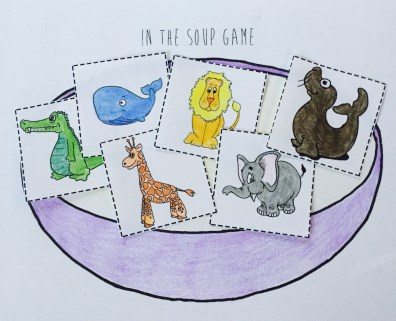
Play this fun and easy game to fill your bowl with a variety of animals!

Supplies

Directions

  1. Print out the bowl and playing card templates, one of each for every player
  2. Color the cards and bowl if you would like to
  3. Roll the die to see who goes first
  4. Each player takes turn rolling the die to collect animals to fill their bowl:
  • 1 = Elephant
  • 2 = Giraffe
  • 3 = Seal
  • 4 = Lion
  • 5 = Alligator
  • 6 = Whale

The first player to fill their bowl with all six animals is the winner