September 6 – National Read a Book Day and Interview with Blake Liliane Hellman & Steven Henry

celebrate-picture-books-picture-book-review-Blake-and-Steve-in-Garden

About the Holiday

Avid readers, rejoice! Today is your day! Just as its name implies, National Read a Book Day celebrates one of the best ways to spend our spare time: reading! If there’s a book you’ve been wanting to read, find some quiet time during lunch, after dinner, or before turning out the light to snuggle in with a cup of tea and that great book. Kids will enjoy some extra reading time as well. Make it a family event! Not only is reading together fun, it’s an important way to help children develop skills that will benefit them far into the future. 

Get to Know Blake Liliane Hellman and Steven Henry

Today, I’m celebrating National Read a Book Day by talking with Welcome to Morningtown author Blake Liliane Hellman and illustrator Steven Henry. This husband-and-wife team combine their talents for art and writing to create adorable picture books with characters and storylines kids love.  

First up, I’m chatting with Blake about how Welcome to Morningtown came to be and how her visual arts background influences her storytelling. 

Welcome to Morningtown is composed of only 119 words and yet readers get the feeling of a joyful day bursting with possibility and promise while the story also reflects the common routines of a morning for little ones. The story includes a wonderful feeling of camaraderie and inclusion, plus it ends on a humorous note. That’s a masterful use of words and rhythm! Can you describe how you approached the story, chose your words, and structured the cadence of the story? Did the story start out this short or was there a whittling process involved?

This book started out as a phrase Steve would use to wake up his little one in the morning. We knew we wanted to make it into a children’s book but we weren’t sure what it was going to be about. We had long discussions on the world of Morningtown—the setting, the season, the homes, and the creatures who lived there. We even designed maps for fun. There were many iterations. The text was much wordier at first, but I always knew it was going to be a prosaic style of book rather than a classical narrative. I’m a fan of Mary Lyn Ray (STARS, A LUCKY AUTHOR HAS A DOG) who uses words in a lyrical and economical way, without depending on rhyme. Similarly, I curated my word choices so Steve’s illustrations could shine.

celebrate-picture-books-picture-book-review-friends-to-make

Image copyright Steven Henry, 2019, text copyright Blake Liliane Hellman, 2019. Courtesy of Bloomsbury Children’s Books.

Your background is in journalism, English, and filmmaking. You’re also an abstract painter. How did you become interested in writing picture books? How does your experience in all of these disciplines help you write your stories?

My background in filmmaking helped me learn how to tell stories visually. Years of crafting song lyrics taught me to express myself concisely and poetically. Journalism gave me a great foundation in writing, and painting abstractly taught me to get used to making mistakes—that mistakes are just the path to success. As a writer, you’re going to make a lot of bad stuff. If you accept that, you won’t give up. If you don’t give up, you get better.

celebrate-picture-books-picture-book-review-BlakeLH-painting-1

Diamond (acrylic on canvas) by Blake Liliane Hellman, 2015
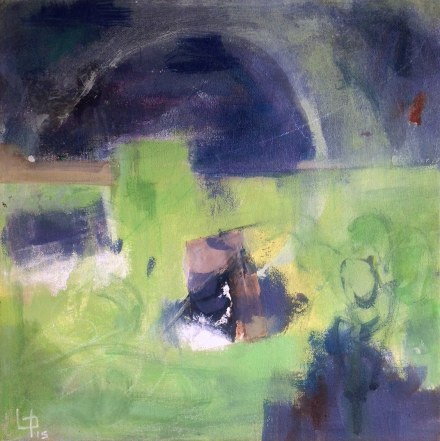
celebrate-picture-books-picture-book-review-BlakeLH-painting-2

Iris (acrylic and mixed media on canvas) by Blake Liliane Hellman, 2015

As an artist, do you have a vision for your stories’ illustrations? In addition to working with Steven on Welcome to Morningtown  and the forthcoming GoodnightSleepyville (Bloomsbury Children’s Books, 2020) and Something Smells! (Atheneum, 2018), you have a third picture book, Cuddle Monkey, coming out from Atheneum in 2020, illustrated by Chad Otis. Were you able to work closely with Chad on the adorable illustrations for this book?

As a filmmaker and visual designer, I absolutely have a vision for my stories when I’m writing them. It might be unusual for the writer to have a say in the illustrations, but I’ve been lucky in this. Both Steven Henry, my husband, and our good friend Chad Otis, (CUDDLE MONKEY, OLIVER THE CURIOUS OWL) have design agency backgrounds and are used to collaborating, so designing picture books with them is a no brainer—and a delight. I don’t think I would have been able to sell my earlier manuscripts without the artwork because to my mind, in a picture book manuscript, half of the story just isn’t there! But as I establish myself as a writer, I’m learning that a professional picture book manuscript should be precise and uncluttered. It should speak for itself without relying on illustration notes.

What do you find to be the best part of being a children’s author?

I get to create fantastical, funny, heartfelt worlds and share them with kids and parents. When you see someone enjoying your work, it validates your imagination.

Steven, you also bring a varied background in design and illustration to your picture book career. Early on you worked as a window display artist for Tower Records and Macy’s Department Store. What are the challenges of this kind of work? What elements are important for capturing the attention of passersby and enticing them into the store? Is there a correlation to creating a book’s cover?

In both retail display and illustration, I’ve always tried to set up a visual hierarchy that leads the eye and gives the viewer the most important information first. To do this, first I figure out my visual storytelling goal (or goals). Once I understand what I’m trying to “say”, then I’ll ask myself what the reader should see first. Are any other elements distracting from this? Whenever possible I try to keep things simple in an engaging way. 

celebrate-picture-books-picture-book-review-welcome-to-morningtown-cover

What drew you to focus on illustrating picture books?

I started drawing superheroes and dinosaurs in grade school. My first-grade teacher noticed my doodles in class and, rather than scolding me for not working on my lessons, asked me if I’d like to draw dinosaurs on the chalkboard for the class at the end of the day. I don’t remember how I got the nerve up to do it, but I got up in front of the room and drew a big Tyrannosaurus, explaining how tall he was and who he fought with. I became a minor classroom celebrity for a couple of days, but that, along with encouragement from my parents, was enough to keep me inspired to draw. 

My parents got rid of our TV in the 70’s, so we spent many hours at the library and brought stacks of books home. Seuss, Sendak, and Scarry were—and still are—big heroes. As a teenager I became more interested in drawing comic book art, but I eventually returned to my picture book roots in 2004 with Ella The Elegant Elephant.  

The characters in Welcome to Morningtown are cuter than cute, and the whole book is like a warm hug. How do you achieve this look and feeling? Why do you think such sweet illustrations are important for little readers? I’m also thinking in particular of the final spread of the busy town that glows with friendship and happiness. Can you talk a bit about some of the elements adults can point out as they share the book with their kids?

When I’m designing characters, I try to make combinations of pen marks on paper that remind me of the kinds of books I loved as a kid and continue to resonate with me emotionally. In order to get to a point where I can communicate certain feelings visually, the boring secret has been practice. I really do believe the adage that, if you spend 10,000 hours doing something, you’ll become an expert. 

celebrate-picture-books-picture-book-review-Ladybug-Concept-WTMT

Ladybug concept for Welcome to Morningtown by Steven Henry.

I still use a simple mechanical pencil to do most of my line work. I also try to stay well within my skill set when I’m working on a book. I try to save things like experimentation and pushing boundaries for the concept work that precedes actual book production. Usually, but I’m not always successful—haha.
celebrate-picture-books-picture-book-review-dad-sleeping

Image copyright Steven Henry, 2019, courtesy of Bloomsbury Children’s Books.

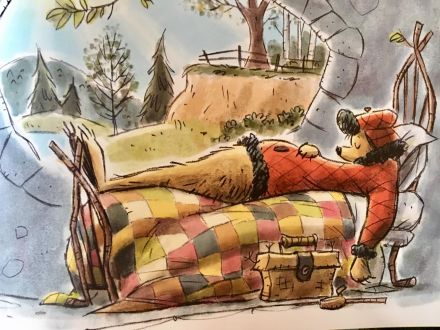
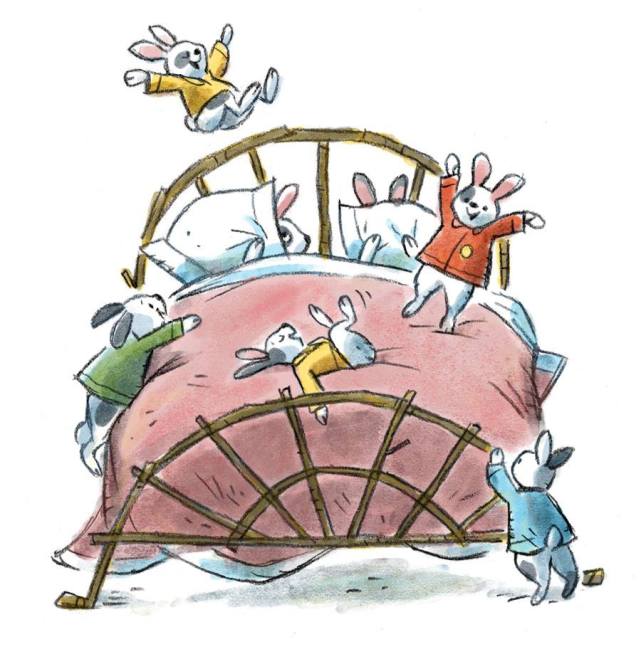
As I mentioned earlier, I pay close attention to the visual hierarchy of an illustration to make sure the most important things stand out. But I also like to include little details that the reader may not catch the first time around, or I include a visual storyline that’s not necessarily a part of the text. In Welcome to Morningtown, there’s no mention of a bear family, for instance; but the illustrated exploits of the little bear and his family provide a gently funny counterpoint to the text. Whenever I can, I like to tell a parallel or separate story with the pictures, so parents and young readers should definitely keep their eyes open—and maybe even check the pictures more than once!
celebrate-picture-books-picture-book-review-bunnies

Image copyright Steven Henry, 2019, courtesy of Bloomsbury Children’s Books.

Multiple readings of Welcome to Morningtown are definitely a must! As a husband and wife team collaborating on picture books, could you both tell readers about your process for completing a book that inspires such enthusiasm? Does the story come first and then the illustrations or do you work on the whole project together?

We’re always thinking of new ideas for books, usually they start with a title or concept, a funny thing we see while on a walk or overhear on the street. There’s a lot of silly wordplay at our house.

celebrate-picture-books-picture-book-review-Steve-Dining-Room-Table

Steve working on the picture book dummy for Welcome to Morningtown.

I throw a lot of ideas at Steve and not all of them stick. He’s particular. And for good reason. It takes a lot of work and commitment to illustrate a book. When we decide, we roll up our sleeves and get to work. Part of our process is to make a ‘dummy,’ which is a roughly laid out version of the book that we create with a program called InDesign. It has the text laid out alongside rough sketches. This step helps clarify the pacing and can validate or invalidate the story structure. It provides opportunities for improvement. We do a lot of iterating before giving it to our agent.

Blake, you work as an interactive and user experience designer and, Steven, you used to work for Smashing Ideas, which also provides these kinds of serves to clients. Can you briefly describe this work for readers? Can you talk a bit about your work for kids in this area? How do these techniques influence your work with picture books?

I’m a UX Designer and Steve is a Design Manager and we use user experience design principles, including white boarding, prototyping, and wire framing to make picture books! It sounds funny, but it’s actually a great way to work. The only thing we don’t do is user testing because it’s hard to find people who are willing to be honest with you about your picture book. (Unless it’s my mom, she’s very honest.)

Conversely, we’ve found that the process of making picture books helps us in our office environments. Making a picture book forces one to be very organized. There’s a lot to cover in just thirty-two pages! If you can master this kind of efficiency, you can apply it most anywhere.

I’ve had several comments from adults wishing they could live in Morningtown. What can readers look forward to in your upcoming companion book Sleepyville (Bloomsbury Children’s Books, date)?

In the companion book to this one, Sleepyville is a cozy seaside village just a hop, skip and jump from Morningtown. It’s bustling with animals who are getting ready for bedtime. Keep your eye out for a library in a giant tree, a candy shop, and camping worms.

 What’s up next for both of you?

We have a few book ideas we’re developing—one of which Steve has written. I’m currently shopping a manuscript on my own about a rambunctious river.

Since my blog is holiday themed, can’t let you get away without asking what your favorite holiday is and why?

My favorite is the Fourth of July. There’s a current of excitement that runs through the air on the Fourth of July. All the explosions, smoke, and fire—the bursts of colors in the night sky—break the routine of other days. But I’d be happy with just black snakes and sparklers. I especially love the smell of fireworks, which conjures hot summer pavement, watermelon picnics, and swimming pools.

I love the sensory details in this last sentence, Blake! I can almost feel my bare feet sizzling and taste that cool watermelon!

celebrate-picture-books-picture-book-review-Blake-and-Steve_BW

BLAKE LILIANE HELLMAN is a picture book author and senior UX designer. She and her husband Steven Henry live in Seattle and collaborate on books such as Welcome to Morningtown, Goodnight, Sleepyville, and Something Smells!, which was nominated for the Washington State Book Award. Take a peek into their world by viewing her Instagram page and Facebook page.

STEVEN HENRY (né D’Amico) is the illustrator of many picture books, including the award-winning Ella the Elegant Elephant Series, It’s Raining Bats & Frogs, and Herbert’s First Halloween. He currently serves as an art director at Committee for Children, a nonprofit organization promoting social and emotional learning.

You can take a peek into Blake and Steven Henry’s world on

Instagram | Facebook

You can connect with Steve on

His Website | Twitter

National Read a Book Day Review

celebrate-picture-books-picture-book-review-welcome-to-morningtown-cover

Welcome to Morningtown

Written by Blake Liliane Hellman | Illustrated by Steven Henry


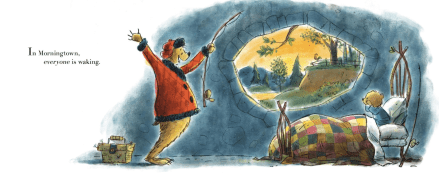
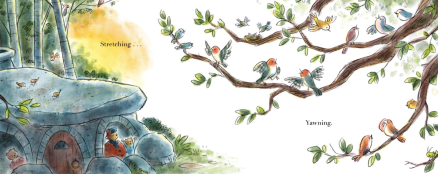
It’s the crack of dawn in Morningtown and “everyone is waking.” A little cub rubs his eyes and sees his dad standing at the foot of his bed, fishing pole in hand, tackle box at the ready. The little tyke yawns and stretches along with the birds in the tree outside his room. Down at the pond, the frogs are “hopping, flopping, splashing awake while the turtles and a beaver enjoying the first cup of the day look on. All over Morningtown the animals, the insects, and even the fish are leaving their beds, brushing their teeth, washing up, and getting dressed.
celebrate-picture-books-picture-book-review-welcome-to-morningtown-waking-up

Image copyright Steven Henry, 2019, text copyright Blake Liliane Hellman, 2019. Courtesy of Bloomsbury Children’s Books.

Next comes breakfast! “Some crunch, some nibble, some sip their morning feast.” Then in houses all around town the windows are opened and the shutters thrown wide. What will the day bring? Perhaps a banjo lesson, a new friend, and chance to help out. The cub dries the breakfast dishes while his mom washes. “Every day’s a surprise, and as the sun rises… busy bees buzz, fun bunnies bounce, and eager beavers slide into the day.” Yes, it’s a busy day in Morningtown. “Everyone is up…except one.” It’s a good thing Mom likes to go fishing too.
celebrate-picture-books-picture-book-review-welcome-to-morningtown-stretching

Image copyright Steven Henry, 2019, text copyright Blake Liliane Hellman, 2019. Courtesy of Bloomsbury Children’s Books.

Blake Liliane Hellman’s lyrical look at morning and all the promise it holds is an enchanting, cheerful way to start the day for little ones—and their adults. As the bear family wakes up in their stone home, the rest of Morningtown’s residents are also rising and greeting the day with all of those little details that go into getting ready to meet the world. Hellman’s evocative verbs, jaunty rhythms, and humorous ending make Welcome to Morningtown a joy to read aloud.
celebrate-picture-books-picture-book-review-welcome-to-morningtown-dawn

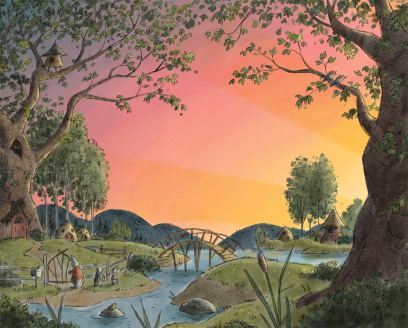
Accompanying Hellman’s story are Steven Henry’s beyond adorable forest creatures who populate this peaceful hamlet. The sky glows golden and then softens into a clear, light blue as the animals leave their beds. One snoozing butterfly catches a few more winks on her soft dandelion bed, a tiny turtle enjoys another minute on Mom’s back, and Mr. Mole climbs emerges from his “secret” bed underground while three chirping birds wake a little mountain goat on his snowy ledge. Smiles abound, and readers will find themselves smiling too as they follow the little cub as he gets ready to go fishing with Dad. Henry’s clever details and charming perspectives create a rich and, as the title invites, welcoming community that little ones will want to visit again and again.

To start a little one’s day with enthusiasm for what lies ahead, put them to bed looking forward to tomorrow, or share cuddly down time, the charming Welcome to Morningtown is as sweet as it gets and would be an often-asked-for addition to home, classroom, and public library bookshelves.

Ages 3 – 5

Bloomsbury Children’s Books, 2019 | ISBN 978-1681198736

celebrate-picture-books-picture-book-review-welcome-to-morningtown-cover

You can find Welcome to Morningtown at these booksellers

Amazon | Barnes & Noble | Books-a-Million | IndieBound

Picture Book Review


September 2 – It’s National Chicken Month

celebrate-picture-books-picture-book-review-Bear-and-Chicken-cover-II

About the Holiday

For over twenty years, the National Chicken Council has used the month of September to promote chicken sales as the summer grilling season winds down. The endeavor has been so successful that September is now known as National Chicken Month! While chicken on the dinner plate or in a sandwich is delicious, chickens also make good pets and—as today’s book proves—great friends!

Bear and Chicken

By Jannie Ho


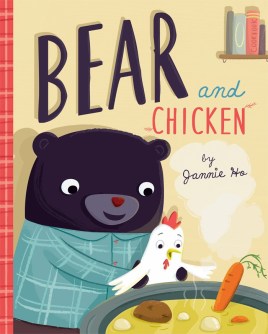
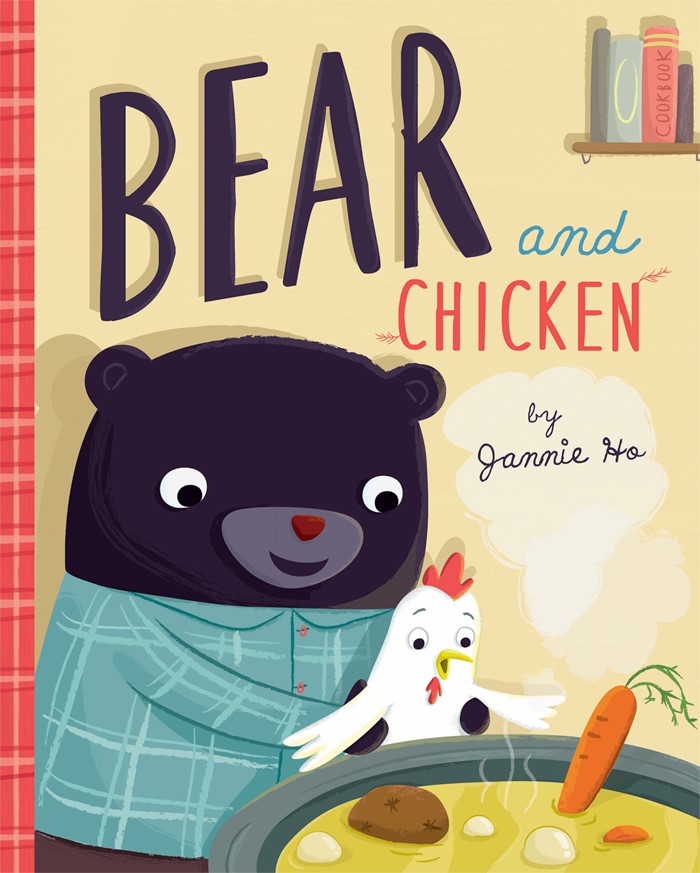
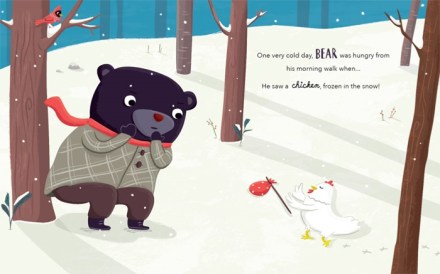
On a cold winter day, Bear was coming home from his morning walk when “he saw a chicken, frozen in the snow!” He picked her and her knapsack up and brought them inside, where a warm fire crackled in the fireplace. “How does one defrost a chicken? thought Bear.” Bear took a blanket and wrapped the chicken like a burrito and held her tight until her eyes opened. When that happened, Bear smiled and Chicken found herself staring into two rows of very sharp teeth.

celebrate-picture-books-picture-book-review-Interview-with-Jannie-Ho-bear-finds-chicken

Copyright Jannie Ho, 2017, courtesy of Running Press Kids.

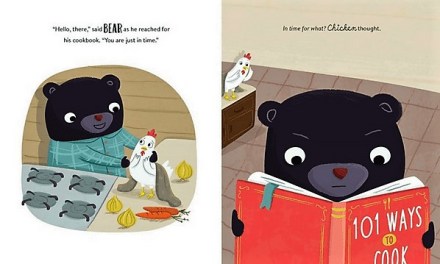
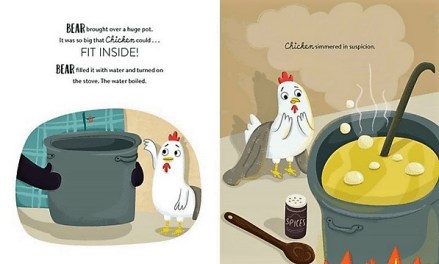
Bear took Chicken into the kitchen, where carrots and onions sat on the counter. Bear picked up his cookbook and began to read. “‘You are just in time,’” he said to Chicken. Chicken looked on worriedly as Bear filled a huge, chicken-sized pot with water and put it on the stove to boil. When Chicken inadvertently knocked over a pot of basil, Bear decided it was a perfect addition to his recipe.

With a newly sharpened knife, Bear chopped up carrots, celery, and onions. “‘Hmmm…what else is missing?’ said Bear,” looking right at Chicken. Bear lifted Chicken up to the pot of hot, bubbling broth. Imagining what would happen next, Chicken wriggled out of Bear’s grasp and ran away as fast as she could and out the front door.

celebrate-picture-books-picture-book-review-bear-and-chicken-double-spread

Copyright Jannie Ho, 2017, courtesy of Running Press Kids.

Bear chased after her, and even though Chicken “zig-zagged through the trees,” Bear caught up with her. She glanced at the big stick Bear had raised over her head, and thought it was the end for her. But Bear, his feelings hurt, was just holding out Chicken’s knapsack. “‘You forgot this,’” he said. Surprised, Chicken blurted out, ‘”You’re not going to eat me?’” Now it was Bear’s turn to be surprised, and he explained that he was making lunch for both of them.

Still wary, Chicken protested that she wasn’t hungry, but her grumbling tummy gave her away. The two laughed, and after Bear promised to help Chicken find her way home, they went inside to enjoy delicious bowls of vegetable soup.

An adorably illustrated recipe for Bear’s Vegetable Soup and a note about the diet of Black Bears follow the text.

celebrate-picture-books-picture-book-review-bear-and-chicken-double-spread

Copyright Jannie Ho, 2017, courtesy of Running Press Kids.

Kids will love the suspense and humor of Jannie Ho’s mistaken purposes story. Her clever culinary puns set the action directly in the kitchen and put young readers in the same mindset as poor Chicken when she wakes up to a very suspicious smile. As Chicken stews about her predicament, little ones will empathize with her while older readers may have fun predicting Bear’s intent. The chase through the woods provides gentle suspense while the sweet reconciliation will have readers giggling along with Chicken and Bear.

Ho brings her distinctively cute artwork to her debut as an author/illustrator with great effect as Bear and Chicken exchange meaningful looks—but is Bear serious about cooking Chicken or just serious about his cooking? Kids will fall in love with little chicken from the moment she’s found in the snow and snugged into a warm blanket. Her worried expression will further endear her to readers, and who can blame them for a bit of worry of their own when Bear’s décor includes such things as a picture of bacon and eggs and the prominently displayed Chicken Cookbook?

A cozy Cozy for the youngest mystery lovers, Bear and Chicken would be a welcome guest on any home, classroom, or public library bookshelf.

Ages 3 – 6

Running Press Kids, 2017 | ISBN 978-0762462667

Discover more about Jannie Ho, her books, and her artwork on her website.

National Chicken Month Activity

celebrate-picture-books-picture-book-review-chicken-craft

A Chicken to Crow About


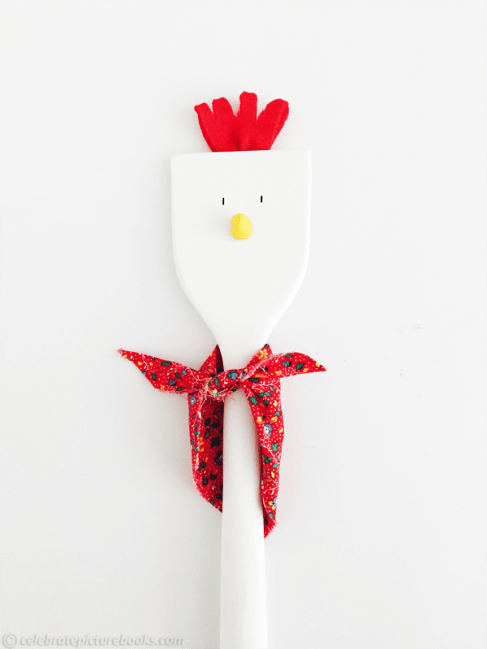
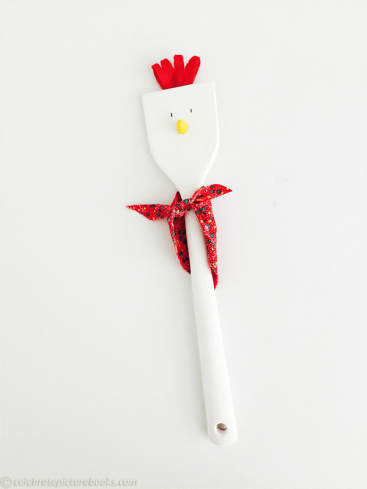
A long-handled wooden turner makes a plucky decoration for your room or kitchen—and a great reminder to bring your passions to every job! In a few simple steps, you’ll have a cute companion you’ll want to crow about!

Supplies

  • Printable Comb and Scarf Template
  • Long-handled wooden turner, available in kitchen supply stores
  • Red felt
  • Yellow bakable clay
  • Fabric, 12 inches square
  • A small piece of white felt or fleece (optional)
  • White paint (or any color you would like)
  • Black marker
  • Fabric glue
  • Glue gun
  • Paint brush

celebrate-picture-books-picture-book-review-chicken-craft

Directions

  1. Paint the wooden turner, let dry
  2. Cut the scarf from the piece of fabric
  3. Make a beak from the yellow clay and bake it according to package directions

To make the comb

  1. Cut out the comb from the red felt
  2. Fold the felt in half and glue the end together with the fabric glue
  3. Cut short strips from the folded top of the felt, about ½-inch to ¾ -inch in length
  4. Round the corners of the strips slightly

To make the scarf

  1. Fold the fabric in half
  2. With the long, straight edge of the scarf template along the fold, cut out the scarf
  3. With the fabric glue, glue the two sides of the scarf together so that you have two “right” sides
  4. Let dry

To assemble the chicken

  1. Pinch the bottom of the comb together so that the strips open and the felt pleats a little
  2. With the glue gun attach the comb to the back of the painted turner, keeping the bottom pinched together
  3. Attach the beak to the front of the turner
  4. Draw eyes on the chicken with the black marker
  5. Tie the scarf around the neck of the handle, hold in place with a drop of glue in the back if necessary
  6. To make tail feathers in a turner with a hole in the handle, pinch together a small folded piece of white felt or fleece and push it through the hole in the handle of the turner.
  7. Cut or arrange to look like feathers

celebrate-picture-books-picture-book-review-Bear-and-Chicken-cover-II

You can find Bear and Chicken at these booksellers

Amazon | Barnes & Noble | Books-a-Million | IndieBound

August 29 – It’s National Fishing Month

celebrate-picture-books-picture-book-review-back-roads-country-toads-cover

About the Holiday

Is fishing your thing? Do you like nothing better than heading down to the lake or stream and spending a relaxing day with a fishing pole, some bait, and the possibility of reeling in a “big one?” Perhaps you like fly fishing better, challenging yourself to flick that hook in just the right place. Then again, maybe taking a boat out to deep water and pitting yourself against the truly big fish is more your style. However you like to fish, make some time to enjoy your hobby this month!

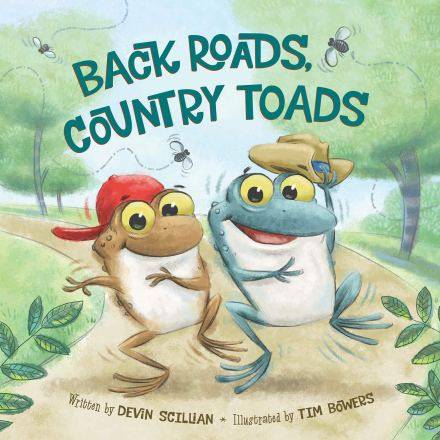
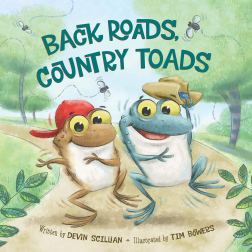
Back Roads, Country Toads

Written by Devin Scillian | Illustrated by Tim Bowers


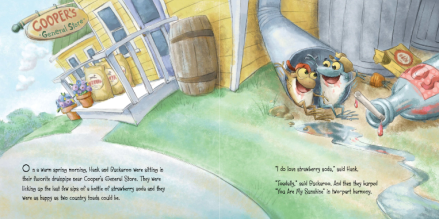
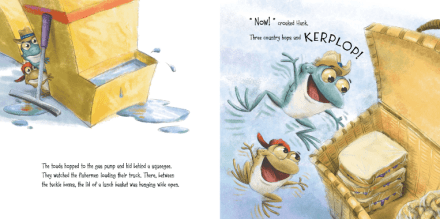
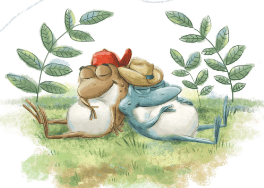
Best toady friends, Hank and Buckaroo, were just hanging out in “their favorite drainpipe near Cooper’s General Store” sipping the last drops from a discarded bottle of strawberry soda when they overheard Mr. Cooper and his friends talking about going fly-fishing. Hank and Buckaroo thought FLY-fishing sounded awesome and wanted to go along. They spied the perfect place to catch a ride: the fishermen’s open lunch basket. With a KERPLOP! they jumped in.

celebrate-picture-books-picture-book-review-back-roads-country-toads-drain-pipe

Image copyright Tim Bowers, 2019, text copyright Devin Scillian, 2019. Courtesy of Sleeping Bear Press.

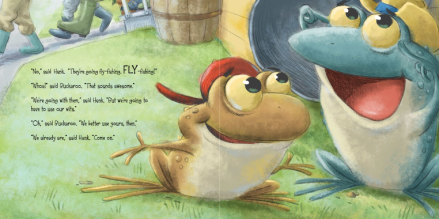
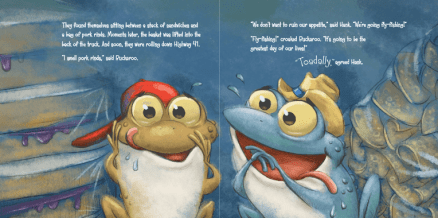
Soon they were on their way to what Buckaroo said would be “‘the greatest day of their lives.’” “‘Toadally,’” agreed Hank. While they rode to the fishing stream, Hank and Buckaroo sang “When You Fish Upon a Star,” and as soon as the truck stopped they jumped out and hid in a nearby bush. But Emmitt the raccoon was already there. Hank and Buckaroo were reveling in the glory that was going to be that day’s “‘fly cafeteria’” and “‘down-home big-time fly barbecue’” when Emmitt gave them the bad news. Hank didn’t believe it. He thought “‘fishing WITH flies’” instead of “‘fishing FOR flies’” sounded ridiculous.

celebrate-picture-books-picture-book-review-back-roads-country-toads-fly-fishing

Image copyright Tim Bowers, 2019, text copyright Devin Scillian, 2019. Courtesy of Sleeping Bear Press.

And just then a nice juicy fly sailed by. Hank leaped and released his long tongue, but Emmitt pulled him back just before he grabbed onto the fake fly. The three watched as the fishermen caught fish after fish with the imitation flies. Hank and Buckaroo couldn’t imagine what Mr. Cooper and the rest of the fishermen would want with “‘those smelly fish.’” Emmitt disagreed—he loved smelly fish. To prove his point, he ran up and snatched one from the fishermen’s bucket.

celebrate-picture-books-picture-book-review-back-roads-country-toads-picnic-basket

Image copyright Tim Bowers, 2019, text copyright Devin Scillian, 2019. Courtesy of Sleeping Bear Press.

Seeing the fish, Hank had a brainstorm and asked to “‘borrow’” Emmitt’s fish. He placed it on a rock in the sun and went back to their hiding place in the bushes. Emmitt and Buckaroo were confused. But “before long, a swarm of flies hovered over the fish.” When there was a large cloud of flies, “Hank croaked, ‘Let’s go fishing!’” Their tongues snapped in the air, reeling in dozens of flies. When they were filled to the brim, they gave the fish back to Emmitt and happily made plans to go fly-fishing again the next Saturday.

celebrate-picture-books-picture-book-review-back-roads-country-toads-pork-rinds

Image copyright Tim Bowers, 2019, text copyright Devin Scillian, 2019. Courtesy of Sleeping Bear Press.

Devin Scillian’s clever, pun-filled fish story has everything needed to hook young readers and deliver a funny story time. With the lure of all the flies they can eat, Hank and Buckaroo take action to have the best day of their lives and discover a new hobby. When they meet up with Emmitt the raccoon and learn that their initial idea was a bit off the mark, Hank shows persistence and innovative thinking to make their fishing dreams come true. Demonstrating acceptance of each other’s different tastes and some creative cooperation, the camaraderie among Hank, Buckaroo, and Emmitt serves as a good example for readers. The close bond between Hank and Buckaroo—and their hilarious dialog—will endear them to kids, leaving them wanting more from this “toadally” charming duo.

Screen Shot 2019-08-28 at 3.36.36 PM

Tim Bowers’ energetic toads, with their wide smiles, eager eyes, and spirited personalities are obvious best friends from the first page. Bowers’ vibrant, action-packed illustrations are laugh-out-loud funny as Buckaroo and Hank grow giddy at the thought of all those flies they’re going to catch, flick their loooong tongues, and hobble down the road with overstuffed bellies. Emmitt may chuckle at the toads’ misinterpretation of “fly-fishing,” but he’s a true and trusting friend to rescue Hank from a fisherman’s line and lend his filched treat to attract their lunch. In the background, images of the two fishermen and their young protégés casting their lines and reeling in bucket-loads of fish add depth, interest, and visual clues for readers.

A comical, well-developed tale that will captivate kids, Back Roads, Country Toads is a winner for group story times or one-on-one fun at home, in the classroom, or for public libraries.

Ages 5 – 8

Sleeping Bear Press, 2019 | ISBN 978-153411039

Discover more about Devin Scillian, his books, music, and journalism on his website.

To learn more about Tim Bowers, his books, and his art, visit his website.

National Fishing Month Activity

celebrate-picture-books-picture-book-review-tackle-the-tackle-box-game

Tackle the Tackle Box Board Game


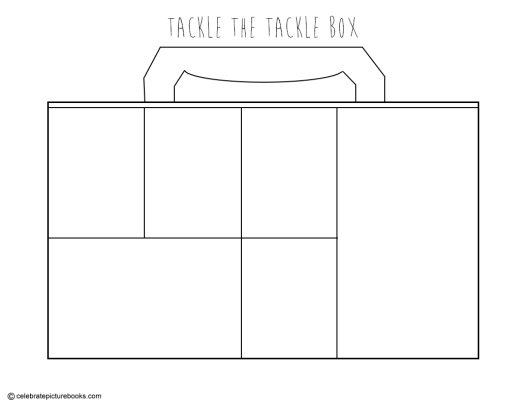
A good fisherman always needs a well-stocked tackle box. Play the Tackle the Tackle Box Game to earn lures, bobbers, hooks and more to fill your box. The first player to complete their set is the winner! For more fun, you can color the tackle box items any way you like. There are even three extra cards for you to draw your own tackle box items!

Supplies

celebrate-picture-books-picture-book-review-tackle-the-tackle-box-game-cards

Directions

  1. On card stock, heavy paper, or regular paper, print one Tackle the Tackle Box Game Board for every player
  2. On card stock, heavy paper, or regular paper, print one set of Tackle the Tackle Box Game Cards for every player
  3. Each player can color their set of playing cards (optional)
  4. Three spaces are left blank for kids to design their own lures, bait, and flies too (optional)
  5. Cut the cards apart
  6. Gather all the cards and set in separate piles
  7. Roll the die to determine who goes first, highest roll goes first
  8. The first player rolls the die, and adds the item that corresponds to the number on the die. The list is below.
  9. Play continues with each player rolling the die and collecting cards
  10. If the player rolls a number for a card that he or she already has, the die passes to the next player
  11. The first player to fix their tackle box is the winner!

Each number of dots on the die corresponds to these cards:

1: FISH LURES

2: HOOKS

3: WORMS

4: FISHING LINE

5: FLIES

6: BOBBERS

celebrate-picture-books-picture-book-review-back-roads-country-toads-cover

You can find Back Roads, Country Toads at these booksellers

Amazon | Barnes & Noble | Books-a-Million | IndieBound

Picture Book Review
 

August 27 – It’s Happiness Happens Month

celebrate-picture-books-picture-review-twins-cover

About the Holiday

It’s all up to you to make his month-long holiday happen. It offers an opportunity for each person to ask: What makes me happy? As the summer comes to a close and the hustle-bustle of school and extracurricular activities starts up again, be sure to include those things that truly bring you and your children joy. Spending more time with siblings and friends may be at the top of the list—just like in today’s book!

Twins

By Mike Ciccotello

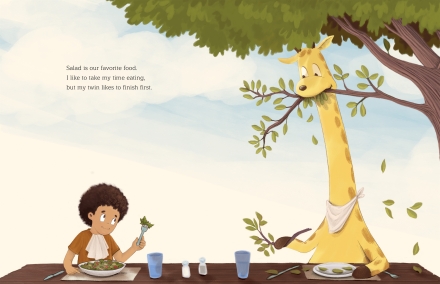
A little boy and a giraffe love being twins. In fact, they are so alike, the boy says, that “sometimes our friends can’t tell us apart.” Having a twin means there’s always someone to play games—“and piano duets”—with. While it’s true that twins like many of the same things, the way they do activities is way different. Take the little boy and his giraffe twin, for instance. The boy’s tricycle is short, while his twin’s is looong, and the snowman the boy makes has three sections while the giraffe’s snowman has six—and antlers.

celebrate-picture-books-picture-review-twins-bowtie

Copyright Mike Ciccotello, 2019, courtesy of Farrar Straus Giroux.

As you might imagine, salad is high on the list of favorite foods. Other faves include dancing, reading, and drawing. But who does these best? That question sometimes causes squabbles. And when there’s, say, only one tool to share or a big issue like “who is stronger,” sometimes that “disagreement…might last all afternoon, and turn into a big, rotten fight.”

celebrate-picture-books-picture-review-twins-salad

Copyright Mike Ciccotello, 2019, courtesy of Farrar Straus Giroux.

But after a little alone time, the boy and his twin and the giraffe and his twin “can never stay mad for very long.” Then they end up compromising because they know that they “work best together.” Yes, “it’s great being a twin, knowing there’s someone who’s just like you.”

celebrate-picture-books-picture-review-twins-activities

Copyright Mike Ciccotello, 2019, courtesy of Farrar Straus Giroux.

Mike Ciccotello’s sweet tribute to twins, whether they’re siblings, best friends, or even pet-and-people pairs will have kids giggling at the juxtapositions of the little boy and his extra-tall twin as they play and work together. The two are exuberant partners, smiling, laughing, and making knowing eye contact, as they dress the same, share the same activities, and talk in their bunk beds before going to sleep. When the inevitable quarrels come, readers will recognize the mixed emotions that ultimately bring these two best friends back together. Ciccotello’s emphasis on resolving disputes, compromise, and staying mindful of all the benefits to having a twin or “near twin” gives the story deeper resonance for building bonds between siblings and friends.

Ciccotello’s vibrant illustrations are clever and cheerful, touching on kid-favorite year-round events and everyday routines. They also give a sly wink to the idea that twins are always identical and highlight the individuality of not only these twins but each reader too. The wide-open pages and spotlighted vignettes allow the youngest readers to focus on the relationship between the boy and the giraffe and offer opportunities for adults and kids to talk about that special bond.

A funny book with a lot of heart, Twins would be an endearing addition to home, classroom, and public library bookshelves.

Ages 2 – 6

Farrar Straus Giroux Books for Young Readers, 2019 | ISBN 978-0374312121

To learn more about Mike Ciccotello and his work, visit his website.

Happiness Happens Month Activity

CPB - Happiness typography

Happiness Is…Game


Happiness is all around you! Grab one or more friends to play a game that reveals what things make you happy. Here are two ways to play:

  1. Like the “Geography” game: the first player names something that makes them happy, the next player must think of something that starts with the last letter of the word the previous player said. The game continues with each player continuing the pattern. Players drop out as they cannot think of a word. The last player left is the winner.
  2. Using a time limit (depending on age): players must think of something that makes them happy. Players drop out if they cannot think of a word within the time limit. The last player left is the winner.

celebrate-picture-books-picture-review-twins-cover

You can find Twins at these booksellers

Amazon | Barnes & Noble | Books-a-Million | IndieBound

Picture Book Review

August 21 – It’s Back to School Month

celebrate-picture-books-picture-book-review-truman-cover

About the Holiday

For many children across the country August is the month for going back to school—or just starting on that journey. Some children eagerly look forward to spending the day in a classroom with other kids and learning new things from their teacher or teachers. For others the transition from home to school is a little more daunting. Finding ways to reassure hesitant students can go a long way toward happiness and success in school. Books can help! Through the experiences and feeling of all types of children and characters in picture books, chapter books, and middle grade and young adult novels, kids can share their feelings, whether they are excited or more uncertain about the school year ahead.

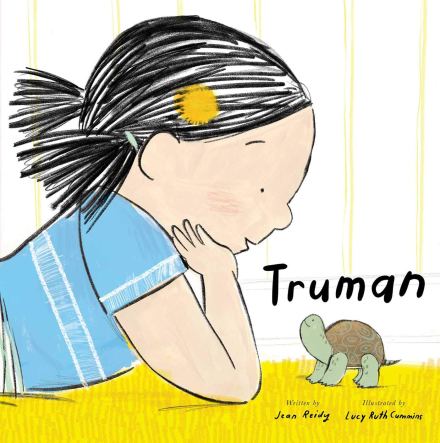
Truman

Written by Jean Reidy | Illustrated by Lucy Ruth Cummins


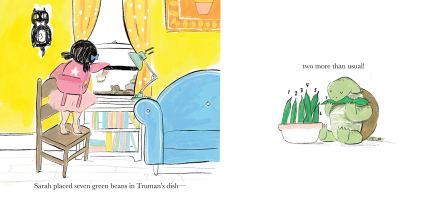
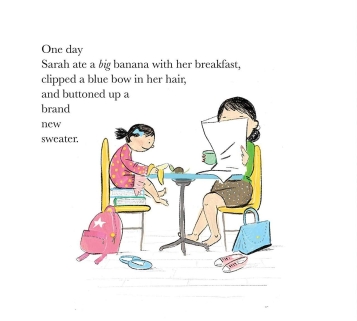
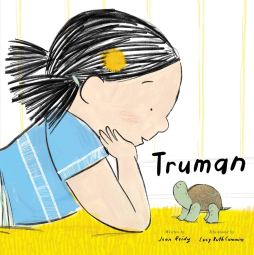
Truman was a little round tortoise “the size of a donut—a small donut—and every bit as sweet.” He lived with “his Sarah,” who was just as quiet and thoughtful as he was, in an apartment above a busy street. One day, Sarah ate an extra-big banana, wore a new sweater, and strapped on an enormous backpack. She even gave Truman extra green beans for breakfast. Then before she left, “she kissed her finger and touched it to his shell and whispered, ‘Be brave.’”

celebrate-picture-books-picture-book-review-truman-coloring

Image copyright Lucy Ruth Cummins, 2019, text copyright Jean Reidy, 2019. Courtesy of Atheneum Books for Young Readers.

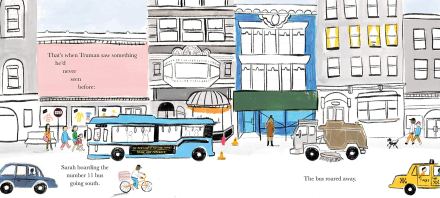
Truman got to thinking about all the new things he’d seen that morning. He looked out the window and saw Sarah getting on the number 11 southbound bus. She had never done that before. Truman waited and waited and waited for Sarah to return. At last, we could wait no longer and decided he would go after her, even if it meant catching the bus “amid the honking and the growling and the shrieking” of the street below. Of course, his tank might be a problem, but there was that nice rock pile….

celebrate-picture-books-picture-book-review-truman-green-beans

Image copyright Lucy Ruth Cummins, 2019, text copyright Jean Reidy, 2019. Courtesy of Atheneum Books for Young Readers.

In a moment he was out and traversing the soft pillows and rubber boots, wooden floor and “endless rug. Without Sarah, their home seemed vast and uncharted and unsettling.” But as Truman reached the window, he realized that he couldn’t see the street at all and that he didn’t even know which way was south. Truman was beginning to lose heart. Then he heard, amid all the other sounds, the number 11 bus and Truman felt brave.

celebrate-picture-books-picture-book-review-truman-kiss

Image copyright Lucy Ruth Cummins, 2019, text copyright Jean Reidy, 2019. Courtesy of Atheneum Books for Young Readers.

“He was just about to slip under the door” when it opened and Sarah walked in. She saw him immediately and was so full of wonder at his amazing feat. She gently put him back in his tank. Truman felt proud. Later, Sarah read him a story she’d written and he couldn’t wait for that day when Sarah would take him with her south where they would “see new sights and hear new sounds and think new thoughts…together.”

celebrate-picture-books-picture-book-review-truman-bus

Image copyright Lucy Ruth Cummins, 2019, text copyright Jean Reidy, 2019. Courtesy of Atheneum Books for Young Readers.

Jean Reidy’s sweet and surprising tale of a tiny tortoise with a big heart has everything you’d want in a story of friendship and new experiences. This adorable pair are two of a kind, ready to explore and meet new challenges. Truman’s trek from his tank to the front door is as daring as any grand adventure, and Sarah’s recognition of her pet’s bravery is reassuring and affirming for all those facing journeys of their own. Reidy’s gentle storytelling sparkles with evocative vocabulary and the kinds of perfect little details that draw kids in. As Sarah tells Truman to “be brave,” she could be encouraging herself as well, and their day, each successful in its own way, is something both can take pride in. Readers will relate to Reidy’s touches of humor and Truman’s indefatigable spirit.

celebrate-picture-books-picture-book-review-truman-backpack

Lucy Ruth Cummins’ stylish illustrations, rendered in a bright yet soothing color palette have a wonderful welcoming feeling as readers are introduces to Sarah, who has a delightful affinity for tutu-like skirts, and Truman, who likes nothing better than being close to “his Sarah.” Kids will fall in love with this tiny, adorable tortoise as he nibbles green beans, contemplates the differences in the morning routine, and makes his way across the rug and past scary toys to the front door. Kids will enjoy keeping an eye on the Sarah’s little yellow flower from page to page. The moment when Sarah finds Truman at the front door shines with their mutual love for each other, and their tender story time will captivate any child.

Endearing from beginning to end, Truman will be an often-asked-for addition to home, classroom, and public library collections.

Ages 4 – 8

Atheneum Books for Young Readers, 2019 | ISBN 978-1534416642

Discover more about Jean Reidy and her books on her website.

To learn more about Lucy Ruth Cummins, her books, and her art, visit her website.

Back to School Month Activity

celebrate-picture-books-picture-book-turtle-shell-game

Follow the Turtles! Game


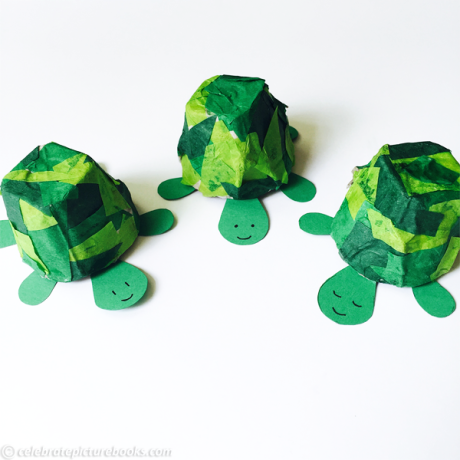
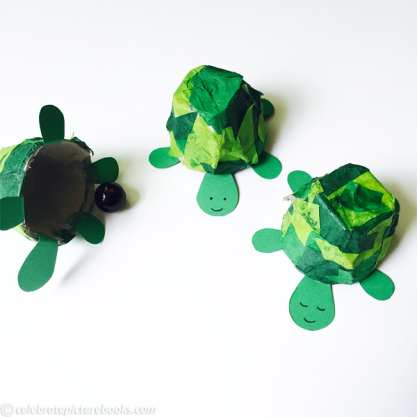
You can make this fun game from recycled materials and a little creativity! When you’re finished making the turtle shells, have fun guessing where the marble, bead or bean is hiding!

Supplies

  • Cardboard egg carton
  • Green tissue paper in different hues
  • Green construction or craft paper
  • A marble, bead, or bean
  • Glue
  • Scissors

celebrate-picture-books-picture-book-turtle-game

Directions

  1. Cut the egg carton apart into individual cups. You will need 3 cups for each game made.
  2. Cut the rims of the cups so they sit flat on a table.
  3. If the cups have open sides, fit two cups inside one another to fill the gaps
  4. Cut the tissue paper into small shapes
  5. Brush glue on a cup (I used a paper towel to apply glue)
  6. Cover the egg cup with pieces of tissue paper. Repeat with other cups.
  7. Let dry
  8. Cut a head and feet from the green craft paper
  9. Tape or glue the edges of head and feet to the inside of the cups
  10. Add a face to the head

To play the game:

  1. Line up the cups on a table
  2. Put a bead, bean, or marble under one of the cups
  3. Show the other player which cup the object is under
  4. Quickly move the cups around each other several times
  5. Ask the other player which cup they think the object is under
  6. Take turns playing

Extra Game: Make three more and play turtle tic-tac-toe! 

celebrate-picture-books-picture-book-review-truman-cover

You can find Truman at these booksellers

Amazon | Barnes & Noble | Books-a-Million | IndieBound

Picture Book Review
August 16 – National Tell a Joke Day

celebrate-picture-books-knock-knock-cover

About the Holiday

Is there anything better than a big belly laugh? Hearing or seeing something that tickles your funny bone can be one of the best parts of a day. Did you know that the first recorded joke dates back to 1900 BC? It seems those early Sumerians were a pretty rowdy bunch. And not only them, humor has been a part of every culture from their earliest days. And why not? Laughter makes us feel better psychologically and even has the power to heal. Celebrate today by sharing your favorite jokes!

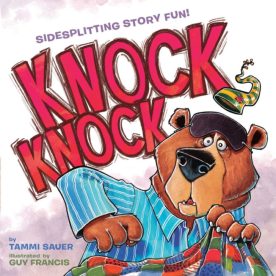
Knock Knock

Written by Tammi Sauer | Illustrated by Guy Francis


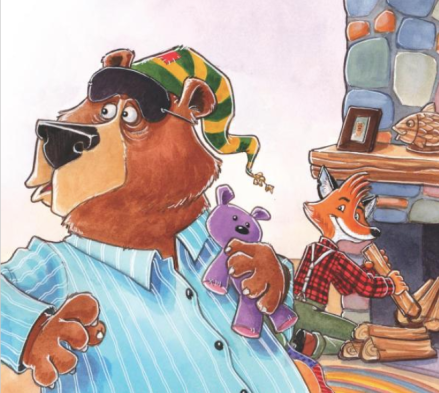
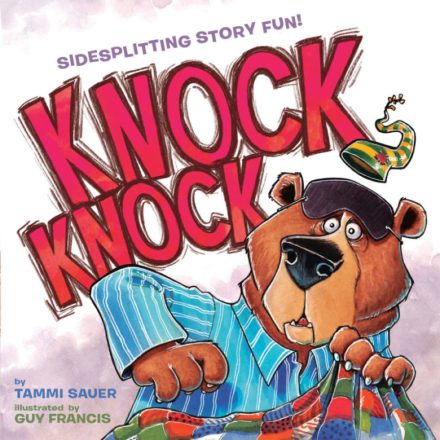
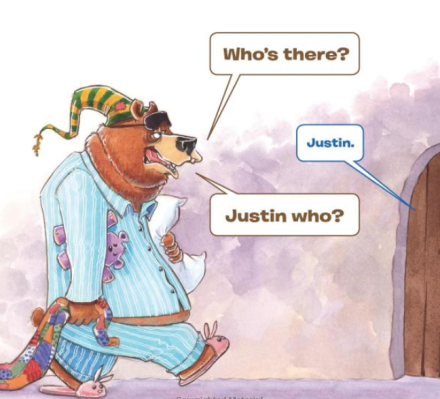
Bear’s eyes are droopy, and he’s all tucked in under his puffy quilt. With his teddy bear clasped in his hand, he’s just about to turn out the light when: “KNOCK KNOCK.” Dutifully, Bear rouses himself and goes to answer it. “Who’s there?” he says. The answer comes back: “Justin.” “Justin who?” Bear opens the door and Fox rushes in with an armload of firewood. “Justin the neighborhood and thought I’d stop by!”

celebrate-picture-books-picture-book-review-knock-knock-Justin

Image copyright Guy Francis, 2018, text copyright Tammi Sauer, 2018. Courtesy of Scholastic Press.

Fox is just piling the logs in the fireplace when there’s another “KNOCK KNOCK” at the door. Startled, Bear asks the requisite question and learns that Ken has also come calling. But as soon as the door is opened a crack, three wisecracking blue jays fly in carrying streamers. While Fox seems happy to see them, Bear is not so keen.

A moment later another “KNOCK KNOCK” brings one more visitor, who’s lugging a huge pot of stew in his two oven-mitted paws. Bear can hardly keep his eyes open, but when he hears a raucous “KNOCK KNOCK,” he can’t help but ask yet again, “Who’s there?” It’s “Olive.” “Olive who?” The door bursts open to a chorus of “Olive us!” Waiting to enter is a whole gang of friends who are carrying balloons, hot chocolate, cupcakes, and even some knitting. But there’s still room for more, and another “KNOCK KNOCK” brings a “Good grief” from Bear and a familiar face at the window with a playful take on an old wolfish ultimatum.

celebrate-picture-books-picture-book-review-knock-knock-Firewood

Image copyright Guy Francis, 2018, text copyright Tammi Sauer, 2018. Courtesy of Scholastic Press.

The party’s going full swing, but all Bear can do is “yawwwwnnn” from the comfort of his armchair and remind his guests that he really needs some…. “KNOCK KNOCK, KNOCK KNOCK, KNOCK KNOCK.” “WHO’S THERE?” Bear roars. He swings the door wide and finds Al, who has a very special message for this very special party given just for Bear. Then the animals tuck Bear in tight, whisper sweet goodnights, and leave him to his winter slumber. And when he wakes up? Harry is ready to play! KNOCK KNOCK!

celebrate-picture-books-picture-book-review-knock-knock-Fox

Image copyright Guy Francis, 2018, text copyright Tammi Sauer, 2018. Courtesy of Scholastic Press.

Tammi Sauer’s clever story told through knock-knock jokes will have young readers rolling with laughter as poor bear grows wearier and wearier but continues to answer the KNOCK KNOCK summons. Each knock-knock joke ingeniously moves the story along while introducing a crew of Bear’s friends, who, it turns out, has planned a special send-off for their pal’s hibernation. Kids will love chiming in on the famous line the big bad wolf used on the three little pigs and noticing that the little chipmunk is reading Goldilocks and the Three Bears to tuck his friend in. Over- tired Bear’s tirade quickly melts into a warm embrace for all his friends when he realizes why they’ve come. The revelation of Bear’s name when springtime rolls around offers one more laugh at the end of the story and allows Bear to get in on the fun.

Screen Shot 2018-08-15 at 9.18.26 PM

With each knock on the door, Guy Francis ramps up the hilarity as Bear reacts with startled, wide-eyed surprise to each guest, who enters with a twinkle of sly acknowledgment of his or her joke. The animals seem right at home as they build a fire in the fireplace, cook on the stove, decorate the living room—and even Bear himself. Kids will laugh out loud at Bear’s flustered expressions and his cavernous yawn as the party preparations continue around him. When Bear is finally ready to put his big paw down, only to realize that all the commotion is really for him, his toothy grin says it all. The sweet looks and big hugs all around as well as a brand-new, comfy quilt float Bear off to dreamland for the winter. When spring comes, a refreshed Harry, looking not quite so grizzled comes knocking on the woodland animals’ Hobbit-style homes to repay the visit.

Knock Knock will knock kids’ socks off, and you can bet the book will go into much-loved rotation and begin a love of this funny joke form. The book would make a terrific gift and addition to home bookshelves as well as a lighthearted choice for funny classroom story times.

Ages 3 – 6

Scholastic Press, 2018 | ISBN 978-1338116946

Discover more about Tammi Sauer and her books on her website.

To learn more about Guy Francis, his books, and his art, visit his website.

National Tell a Joke Day Activity

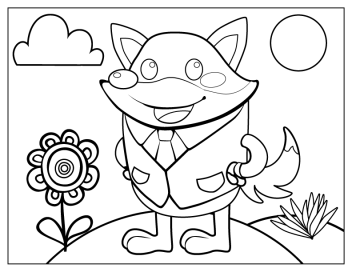
Fox_in_Suit

Animated Animals Coloring Pages


These animals have heard some funny jokes, but they need a bit of color! Grab your crayons, markers, or pencils and have fun!

Happy Hedgehog | Laughing Fox | Smiling Sheep

celebrate-picture-books-knock-knock-cover

You can find Knock Knock at these booksellers

Amazon | Barnes & Noble | Books-a-Million | IndieBound

Picture Book Review
August 15 – It’s Back to School Month and Interview with Authors Ann Ingalls & Sue Lowell Gallion

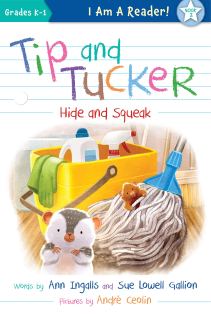
celebrate-picture-books-picture-book-review-tip-and-tucker-hide-and-squeak-cover

About the Holiday

It may seem like summer vacation just began, but it’s already time to start thinking about the new school year. The stores are stocked with clothes, supplies, and plenty of gear to make the new school year the best ever. But the “stuff” of going to school is just part of getting ready. Kids are looking forward—eagerly or maybe with a little trepidation—to meeting new friends, having new teachers, and exploring new subjects and ideas. Making the transition to a different grade easier and exciting is what National Back to School Month is all about.

I received a copy of Tip and Tucker, Hide and Squeak from Sleeping Bear Press for review consideration. All opinions are my own. I’m excited to be teaming with Sleeping Bear Press in a giveaway prize package. See details below.
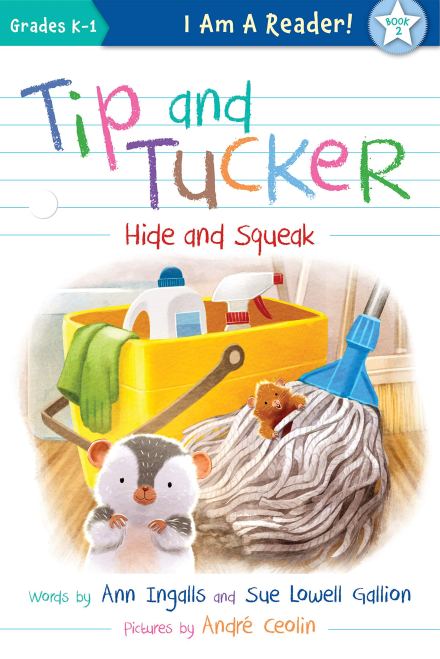
Tip and Tucker, Hide and Squeak

Written by Ann Ingalls and Sue Lowell Gallion | Illustrated by André Ceolin


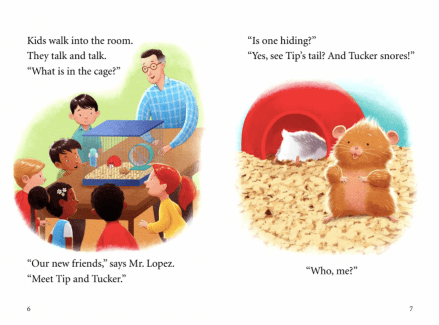
It’s the first day of school and Tucker is up and at ‘em as soon as the bell rings, but “the bell scares Tip. He hides” in his little red igloo. As the kids enter the classroom, they immediately notice Tip and Tucker’s cage and come over to take a peek. Their teacher, Mr. Lopez, introduces adventurous Tucker and shy Tip. He even reveals a funny fact about Tucker: he snores!

celebrate-picture-books-picture-book-review-tip-and-tucker-hide-and-squeak-new-friends

Image copyright André Ceolin, 2019, text copyright Ann Ingalls and Sue Lowell Gallion, 2019. Courtesy of Sleeping Bear Press.

Mr. Lopez asks Pim to read the five rules pertaining to their classroom hamsters. As he does, Tucker and Tip both listen along. “‘I like the treats rule,’ says Tucker” as he imagines all the apples, carrots, and seeds that await them. “‘I like the quiet rule,’ says Tip.” The last rule is to always make sure the cage door is closed by listening for the click. Mr. Lopez gives Pim a cardboard tube to add to the cage. Then it’s time for music class. As the kids line up, Mr. Lopez gives the hamsters a carrot and closes the door, but there is “no click.”

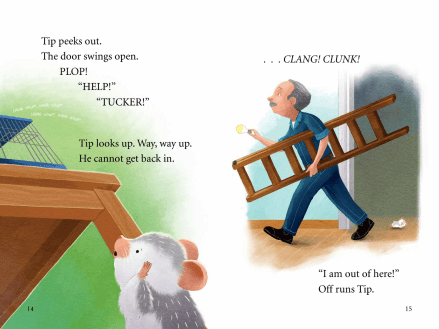
“‘Hasta luego, chicos,’ says Mr. Lopez” to Tip and Tucker. While everyone is gone, Tucker and Tip talk about school. Tip thinks it’s too noisy, but Tucker likes noise—and naps. He falls asleep on the carrot and begins to snore. Tip goes to the door of the cage. “Tip peeks out. The door opens. PLOP!” The cage is so high up now.

celebrate-picture-books-picture-book-review-tip-and-tucker-hide-and-squeak-lost

Image copyright André Ceolin, 2019, text copyright Ann Ingalls and Sue Lowell Gallion, 2019. Courtesy of Sleeping Bear Press.

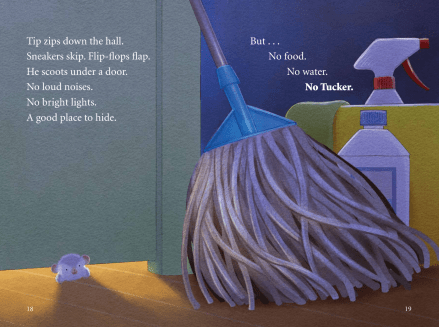
Tip calls for Tucker to help him. Just then Mr. Finch, comes in to change a lightbulb, and Tip runs out the door. Meanwhile, Tucker wakes up. He can’t find Tip. He “zips to the igloo. No Tip there. No Tip anywhere! ‘Where are you, Tip?’” he calls. Tip has zipped down the hall and into the supply closet. It’s quiet and dark, but there’s no Tucker.

Tucker is determined to find his friend. He leaps from the cage and runs down the hall and into a bathroom. One girl thinks he’s a rat, so “Tucker zips down the hall” until he bumps into Mr. Finch. Mr. Finch picks Tucker up and puts him in his shirt pocket. Tucker worries that he’ll never find Tip. In the closet, Tip has gotten hungry and tried chomping on the strings of the mop, but it crashes to the ground. “‘SQUEAK!’” says Tip. Tucker hears him. “‘SQUEAK!’” he answers. Mr. Finch also hears and opens the closet door. He lowers his hand down to Tip. “The hand smells like Tucker.” Tip climbs in and is plopped into Mr. Finch’s shirt pocket with Tucker.

celebrate-picture-books-picture-book-review-tip-and-tucker-hide-and-squeak-supply-closet

Image copyright André Ceolin, 2019, text copyright Ann Ingalls and Sue Lowell Gallion, 2019. Courtesy of Sleeping Bear Press.

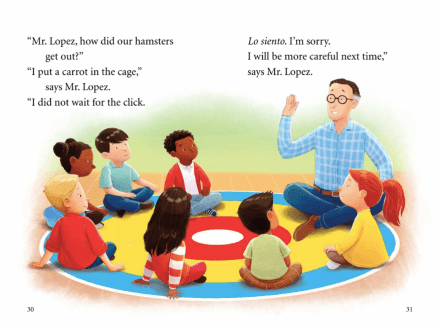
Back in the classroom, Mr. Lopez and the kids are worried and searching for Tip and Tucker. Then “Mr. Finch peeks in.” The kids are happy to see Tip and Tucker. With their pets safely back in their cage, the class circles up on the rug. One child asks how they escaped. “‘Lo siento. I’m sorry,’” Mr. Lopez says and explains how he forgot to listen for the click and will be more careful next time. Tip and Tucker are happy to be back home with extra seeds to munch. In fact, Tip has decided that he “‘might like school…. This is a good home after all,’” he says.

celebrate-picture-books-picture-book-review-tip-and-tucker-hide-and-squeak-apology

Image copyright André Ceolin, 2019, text copyright Ann Ingalls and Sue Lowell Gallion, 2019. Courtesy of Sleeping Bear Press.

Tip and Tucker are back with their second adventure, following Tip and Tucker, Road Trip in which Mr. Lopez chose them from a pet store and brought them to their new home. As Mr. Lopez’s students are introduced to their classroom pets, new readers get to know this darling duo too. With repeated words and phrases, onomatopoeia, gentle suspense, and humor, Ingalls and Gallion weave a story that will captivate kids while boosting their confidence in their reading ability. When Mr. Lopez discovers that he left the cage door unlocked, he gathers his students and apologizes, demonstrating a good lesson in accepting responsibility and the idea that everyone makes mistakes. Through his unexpected adventure, Tip learns with pride that he has untapped bravery, providing another good example for kids who may be more hesitant or wary of new experiences.

celebrate-picture-books-picture-book-review-tip-and-tucker-hide-and-squeak-home

André Ceolin’s bright and welcoming illustrations invite kids to school, where Mr. Lopez’s diverse class is excited about their new pets and people watch out for each other—and their tiny charges. Ceolin’s pages are packed with action and detailed scenes that help emerging and new readers connect the text to what they see. Tip and Tucker are as cute as can be as they settle into their classroom home. During their separation they display emotions of happiness, wariness, trust, and finally joy in being reunited. 

A delightful entry in this series for early, developing, and newly independent readers, Tip and Tucker, Hide and Squeak will enchant fans, who will eagerly look forward to these friends’ next adventure. The book is a charming addition to home, classroom, and library collections.

Ages 5 – 7

Sleeping Bear Press, 2019 | ISBN 978-1534110083 (Hardcover) | ISBN 978-1534110090 (Paperback) 

Discover more about Ann Ingalls and her books on her website.

To learn more about Sue Lowell Gallion and her books, visit her website.

To view a portfolio of work by André Ceolin and learn more about him and his work, visit his website.

Interview with Ann Ingalls and Sue Lowell Gallion
celebrate-picture-books-picture-book-review-ann-ingalls-and-sue-gallion

Today, I’m thrilled to be talking with Ann and Sue about their writing partnership, their inspirations for their Tip and Tucker series, and what it’s like living in the same city but two different states.

celebrate-picture-books-picture-book-review-ann-ingalls-headshot

Meet Ann Ingalls


How did you and Sue team up to write the Tip and Tucker series of early readers?

Lucky for me, I met Sue at a local writers’ group. We hit it off right away and realized that we have the same sort of sensibility about writing for children. We write to engage children, to entertain them, and to teach them. With this group of emergent readers for Sleeping Bear, our aim is to teach them to read.

What inspired you to adopt hamsters as the main characters for the series? Are any real incidents from your years as a teacher reflected in the stories?

I had many, many classroom pets—mice, guinea pigs, rabbits, canaries, finches, turtles, fire-bellied toads, loads of fish, salamanders, and the list goes on. My students especially loved having hamsters. Salamanders were the stinkiest. We kept them in a small wading pool and returned them to the ponds they came from after a period of time, usually about 2 weeks.

Your list of countries visited is quite extensive—Australia, the West Indies, Germany, China, Hungary, Peru, Belgium, Guatemala, and so many more! How did you become such a globe-trotter? Can you share any anecdote from one or more of your trips?

I have always loved to travel, beginning with family trips to northern Michigan as a child and a trip to Mexico as an exchange student in college.

One time during a visit to Denmark, I visited an elementary school. I loved seeing that each classroom had its own fruit bowl, and that children go outside for recess even when it rains because they need the exercise and their clothes will dry in the classroom anyway. That same school was attached to a senior care center and the children and adults ate together, read together, and went to recess together.

I’m intrigued by some of your nonfiction titles—Fairy Floss about the invention of cotton candy, J is for Jazz, an alphabetic romp about jazz, and Trails to California about some of the state’s founders. What sparked your interest in these topics, and what do you like best about writing nonfiction?

I am a research nutcase. So often my own curiosity about a particular topic and the reading I do to satisfy that leads me to write a book. That is so very true about the jazz books, a book on piranhas, and even the 8 books on manners I wrote. I now know that if you are walking down the street during a rainstorm with an umbrella and someone else is coming from the opposite direction with an umbrella, the person with the taller or higher umbrella holds it above the lower umbrella as the people pass one another. Who would have thunk it?

The variety of your school presentations sound fantastic! What’s your favorite part of school or other events? Do you have an anecdote from an event that you’d like to share?

I know what I like best is reading to the children in the group. I like watching their expressions and answering any questions they might have. I also love to play silent Hokey Pokey with them. I came up with the idea for that during a time my students had to wait in long lines to have their pictures taken. It’s still a pretty big hit.

One time during a presentation at a local school, a child in the front row was so attentive. I thought he was really interested in my presentation. When it came time for questions, he asked me if I knew that I had hair in my nose. I thought his teacher would die of embarrassment. We all had a good laugh about it, and I told him that he had hair in his nose, too.
What’s up next for you?

I have a few new manuscripts that are out on submission. I’ve got my fingers and toes crossed but have no expectations. If they sell, I’ll celebrate. If they don’t, I’ll keep on writing and revising.

You can connect with Ann Ingalls on

Her website | Twitter

celebrate-picture-books-picture-book-review-sue-lowell-gallion-headshot

Meet Sue Lowell Gallion


It must have been fun collaborating with a friend on this series. What was your process for working together with Ann and crafting the story? Where did Tip and Tucker’s adorable names come from?

Ann and I became critique partners and friends a long time ago. One day, having coffee at a local bagel shop, we started brainstorming characters and story ideas to try writing something together. Einstein Bros. Bagels became our Tip and Tucker headquarters. We do get some funny looks from other customers!

We came up with the personalities of the characters first. Tip’s name emerged early on as we pictured a hamster hiding with just the tip of its tail showing. Ann is very fond of my beloved black lab mix, Tucker, and she suggested that we name our adventurous hamster after my curious pup. I’m not sure how the real Tucker feels about that.

As far as process, we work on a draft together, then head home and start emailing revisions back and forth. I tend to be a procrastinator and Ann’s energetic and prolific. She speeds me up and I slow her down.  All I can say is that it works, thanks to Barb McNally, our wonderful editor at Sleeping Bear Press, and the team there. André Ceolin, who illustrates the series, is the one who brings these two characters and their stories to life. We are enchanted with his work and feel so lucky to be part of this series.

Besides telling a great story, early reader books encourage kids to fall in love with reading while also introducing new vocabulary and sentence structure and giving them a sense of pride and accomplishment at the end. That’s a lot to think about while writing! Where do you start and how do you draft the structure needed?

It’s a challenging form. It’s difficult to work with such a limited vocabulary, plus just a few high-interest words in each book. We also want kids to relate to the animal and human characters and their feelings and experiences. At the same time, we want a lively story arc with humor and great illustration possibilities. The art helps the students in decoding the words. We draft the story first, and then go back and edit, edit, edit. Ann’s deep education background is a huge resource for me. I’ve learned a lot working on these.

Can you talk a little about the Lead to Read program that you’re involved in? What kind of mentoring do you do with students? What kinds of changes and successes do you see in the kids that you mentor?

I’m such a fan of this program. Lead to Read KC organizes community volunteers to read for 30 minutes one-on-one with kids in first, second, and third grade classrooms every week. The goal is to improve third-grade literacy.

I go to my school on Tuesdays at lunchtime along with other volunteers. You work with the same child all year, so you get the opportunity to get to know that student. I love bringing picture books and early readers that might interest them or make them laugh. The student picks out some books from the classroom or from my book bag, and the fun begins.

It’s an absolute thrill to see a student who is struggling with reading experience success. Kudos to all the teachers and librarians who do this critical work every day!

I’d love to see the Lead to Read model replicated all over. There are more than 1,100 volunteers reading every week in Kansas City now. Check it out at leadtoreadkc.org.

You seem to have been born into the writing and publishing business! Can you talk a little about your family’s business, a favorite memory from your childhood, and how it influenced your becoming a writer?

My family had a commercial printing business, so I grew up playing at the plant on Saturday mornings with my sister. We loved to roam around the skids of paper and create things with scraps and rubber cement. We went to work in the bindery and as proofreaders there in the summers when we were teenagers. My sister ended up a writer, too.

Readers know you for your adorable and critically acclaimed Pug Meets Pig and Pug and Pig: Trick or Treat, illustrated by Joyce Wan. Can you share where the idea for this cuddly cute pair came from and the inspiration behind the characters? Can readers look forward to more from Pug and Pig?

Thank you! Joyce Wan is a fabulous book partner along with the whole Beach Lane Books team. The idea for Pug and Pig came from a story a friend told me in a water aerobics class about a family with a pet pug that adopted a pig. I loved the way the words “pug” and “pig” sounded together, and the illustration potential of two round, curly-tailed creatures. I can’t share any details yet, but yes, there’s more to come from Pug and Pig!

What’s up next for you?

Ann and I are at work on book 3 of the Tip and Tucker series, which will come out in 2020. I’ve got several projects in the works that haven’t been announced yet that will come out in the next few years. And I’m looking forward to some solid writing time in the months ahead, as well as lots of school visits in the upcoming year.

And one last question for the two of you!

Ann and Sue share a pretty cool fact! They both live in Kansas City, but the city is divided between Missouri and Kansas. Ann lives on the Missouri side and Sue lives on the Kansas side. In a bit of friendly rivalry, can you each tell me your favorite place in Kansas City and your favorite thing about your state?

ANN: Maybe my favorite place in Kansas City is the Nelson-Atkins Museum of Art. I have been there so many times with so many different people. I loved taking my children there when they were small and everything and every space looked large and amazing. They still love to go there. We actually went there to study how to make my son, Kevin’s, Halloween costume as a knight.

celebrate-picture-books-picture-book-review-nelson-atkins-art-museum

Nelson-Atkins Museum of Art, Kansas City, Missouri.

SUE: State Line Road actually is just a few blocks from my house. One of my favorite things about Kansas City on both sides of the state line is all of our parks and fountains. Visitors often are surprised that there are so many trees and gardens. We do have hills also!

celebrate-picture-books-picture-book-review-children's-fountain

Kansas City, Kansas Children’s Fountain

celebrate-picture-books-picture-book-review-carl-j-dicappo-fountain-kansas-city

Carl J Dicapo Fountain in Kansas City, Kansas.

ANN AND SUE: For our friendly rivalry, anyone from Kansas City has a favorite barbecue place. Ann loves Q39 on the Missouri side. My favorite is Brobeck’s on the Kansas side!

celebrate-picture-books-picture-book-review-Q39-BBQ-kansas-city

celebrate-picture-books-picture-book-review-Brobecks-BBQ-kansas-city

Thanks, Ann and Sue for this fun chat! You’ve definitely made me want to visit Kansas City! I wish you both all the best with all of your books and your upcoming projects!

You can connect with Sue Lowell Gallion on

Her website | Goodreads | Pinterest | Twitter

Back to School Month Activity

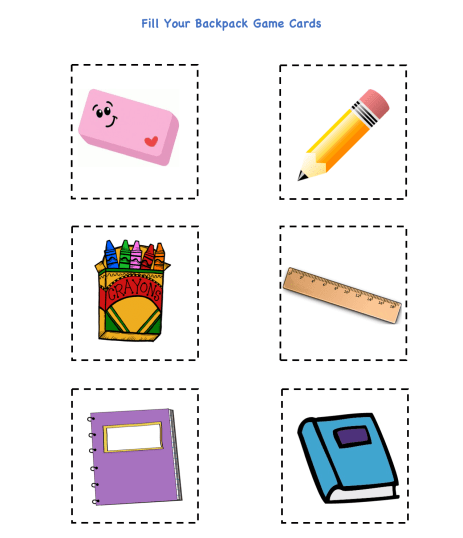
celebrate-picture-books-picture-book-review-fill-your-backpack-game-cards

Fill Your Backpack Game


Make sure you’re ready for school with this fun, printable board game! As players take turns rolling the die to acquire supplies for their backpack, they get closer and closer to being prepared. The first player to fill their backpack with all six supplies is the winner!

Supplies

Directions

  1. Print one game board and set of playing pieces for each player
  2. Print one playing die
  3. Players can color their backpack game board if they’d like
  4. Cut out individual game cards and give a set to each player
  5. Cut out and assemble playing die
  6. Players roll the die to place items on their backpack
  7. The first player to get all six items is the winner

celebrate-picture-books-picture-book-review-tip-and-tucker-hide-and-squeak-cover

You can find Tip and Tucker, Hide and Squeak at these booksellers

Amazon | Barnes & Noble | Books-a-Million | IndieBound

Picture Book Review