March 19 – National Let’s Laugh Day

celebrate-picture-books-picture-book-review-george-the-hero-hoiund-cover

About the Holiday

This world-wide holiday encourages laughter—that spontaneous emotion that makes things better. Humor is universally embraced, bringing together people from all walks of life to enjoy a bit of fun or craziness together. To celebrate today, think back to some times when you had a really good laugh, when something or someone surprised you with the unexpected, or to your favorite funny childhood TV show, movie, or book. Then enjoy the day with your friends, your kids, your pets… or all three with today’s book!

George the Hero Hound

By Jeffrey Ebbeler


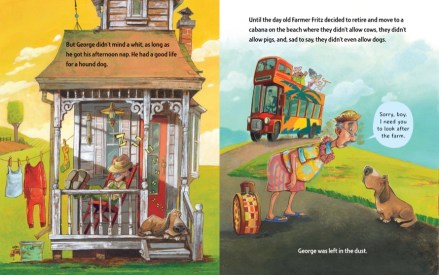
“George was a good old hound dog” and the best kind of farm dog. Even before the rooster crowed, he was helping Farmer Fritz with his chores. Farmer Fritz needed a lot of help because there were always slop buckets to carry, the old rusty tractor was always breaking down, and the cows were always “plotting to get out and feast on the cornfield.” But it wasn’t so bad because there was always an afternoon nap on the porch waiting for him. In fact, “he had a good life for a hound dog.”

celebrate-picture-books-picture-book-review-george-the-hero-hound-cover-house

Copyright Jeffrey Ebbeler, 2018, courtesy of jefferyebberley.com.

But one day Farmer Fritz packed up his belonging, put on a Hawaiian shirt and caught the bus to a retirement cabana on the beach where cows, pigs, and, sadly, even dogs weren’t allowed. But George wasn’t alone for long. Soon the Gladstone family moved in with all of their city apartment things and two kids, Owen and Olive. The Gladstones were happy to see the old hound dog. The little boy wanted to be the one to name him.

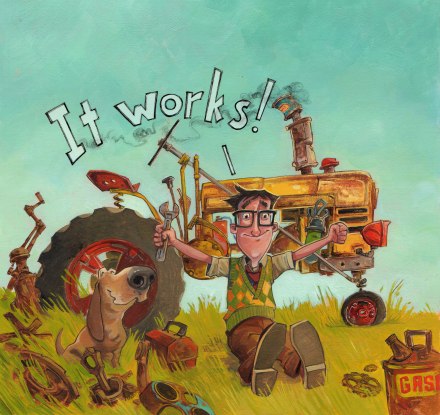
“George could tell right away that the Gladstone family would need a whole heap of help. There’d be no afternoon naps on the porch for a while.” When Mr. Gladstone tried to fix the tractor, it was George who found the missing part that made it work. When Mr. Gladstone saw that the old dog camouflaged among the rusty tractor parts, he said, “Maybe we should call you Rusty.” But before that name could take hold, the tractor took off on its own. When the tractor smashed through the cows’ fence, George went to work rounding them up and herding “those sneaky cows back into their pen, where they belonged.”

celebrate-picture-books-picture-book-review-george-the-hero-hound-tractor

Copyright Jeffrey Ebbeler, 2018, courtesy of jefferyebberley.com.

George toddled into the house for a drink of water, but Mrs. Gladstone swept him right back out again, saying, “You are the dustiest dog! I ought to call you Dusty.” George loped off to his dog house when something blue fluttering from a tree caught his attention. Owen came running. It was Olive’s blue scarf, but where was Olive? “George took a good sniff of Olive’s ribbon—he was a hound dog, after all—and off they went.” George followed the scent through the corn field, across a stream, and over a hill. There they found Olive having a tea party with a chicken.

celebrate-picture-books-picture-book-review-george-the-hero-hound-cover-tractor-works

Copyright Jeffrey Ebbeler, 2018, courtesy of jefferyebberley.com.

Owen thought George was such a good tracker that they should call him Rover. Happy to have helped find Olive, George figured he’d certainly get his nap now. But they reached the farm just in time to see the tractor crash into the barn and Mrs. Gladstone, who was up a ladder, drop her can of red paint. It landed on George’s head, turning him…”Red!” It was Olive’s first word. Maybe, thought Owen, Red would be a good name for the old hound.

celebrate-picture-books-picture-book-review-george-the-hero-hound-cover-tfixing-ractor

Copyright Jeffrey Ebbeler, 2018, courtesy of jefferyebberley.com.

After that day George didn’t get too many naps. But that was okay. Turned out “that he liked herding Olive a lot more than he liked herding cows.” He also taught the Gladstones everything he knew about running the farm and dealing “with those crafty cows.” George was so clever he even devised a plan to “drum up business” on Farmer Fritz’s beach, where the retirees loved the Gladstone’s sweet corn. “Now, if only George could teach his new family one last thing…his name!”

celebrate-picture-books-picture-book-review-george-the-hero-hound-red-paint

Copyright Jeffrey Ebbeler, 2018, courtesy of jefferyebberley.com.

Jeffrey Ebbeler’s sweet hound dog George will capture readers’ hearts as he manages the farm, the wily cows, and the clueless Gladstones with good humor and aplomb. With such a good nature and so many talents, it’s no surprise that George is special to each family member. Ebbeler’s vibrant illustrations are full of humor that will keep kids laughing as the cows plan their escapes, Farmer Fritz and Mr. Gladstone tinker with the tractor on the fritz, and a goggle-eyed chicken becomes Olive’s playmate. Kids will especially like hunting for all the cows hiding, showering, camping, hot-air ballooning, and getting into other shenanigans throughout the book.

A fun and funny read aloud, George the Hero Hound is a day-brightener for any story time at home or in the classroom.

Ages 4 – 8

Two Lions, 2018 | ISBN 978-1503941762

Discover more about Jeffrey Ebbeler, his books, and his art on his website.

National Let’s Laugh Day Activity

celebrate-picture-books-picture-book-review-silly-balloons

Silly Balloons


You can have lots of silly fun with balloons! Try some of these ideas—they’re sure to make you laugh!

Goofy Faces

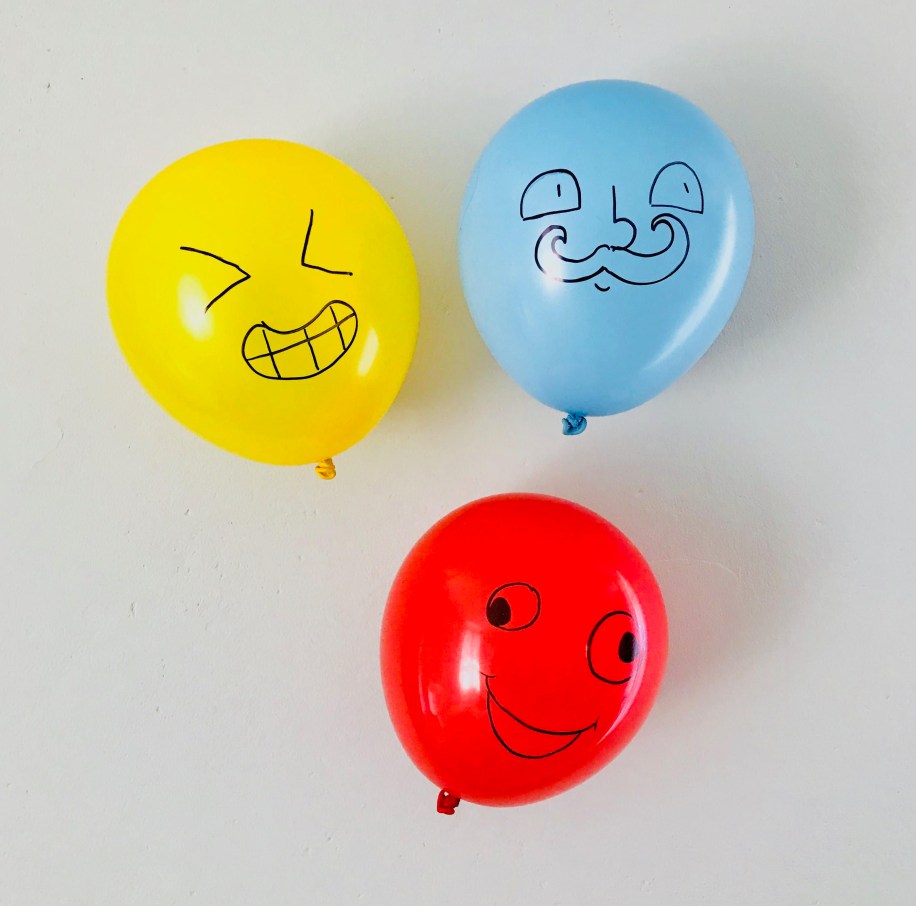
Blow up a balloon and draw a funny face on it. Rub the balloon on your shirt or a blanket and stick it to the wall, your shirt, or even your mom or dad!

Crazy Hair

Rub a blown-up balloon on your shirt or a blanket (fleece works well) then hold it near your hair and watch it go a little crazy!

Bend Water

This bit of balloon magic will amaze you! Rub a blown-up balloon on a blanket (fleece works well). Turn on a faucet to a thin stream of water. Hold the balloon near the stream of water and watch it bend toward the balloon. 

Volleyballoon

This is a fun game for two or more people played like volleyball—but with balloons! All you need is a balloon and a line on the floor. Players form teams and bat the balloon back and forth over the line, keeping it in the air.as long as possible. A team wins a point when the opposing team can’t return the balloon.

Picture Book Review

March 14 – Moth-er Day and Interview with Author Karlin Gray

celebrate-picture-books-picture-book-review-an-extraordinary-ordinary-moth-cover

About the Holiday

Did you know that some moths are even more beautiful than butterflies? It’s true! Adorned in vibrant oranges, greens, blues, and reds and with patterns more intricate than the finest fabrics, moths are some of nature’s loveliest creatures. With spring right around the corner, moths will once again be emerging in woods, fields, and gardens, so today take a little time to celebrate these often overlooked insects and learn more about them and their habitats.

Sleeping Bear Press sent me a copy of An Extraordinary Ordinary Moth to check out. All opinions are my own. 

An Extraordinary Ordinary Moth

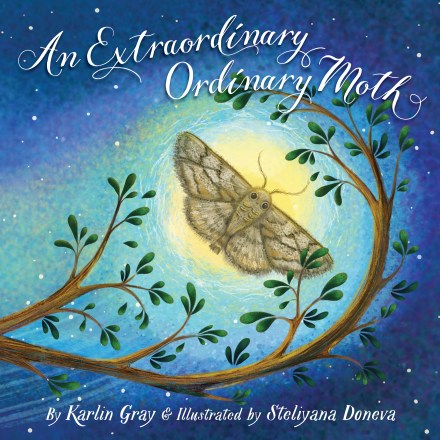
Written by Karlin Gray | Illustrated by Steliyana Doneva


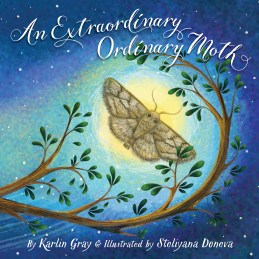
As a grayish-brown moth flits among the leaves framed by the full moon, he says, “I’m an ordinary moth, / as you can plainly see. / A dusty, grayish, dull insect— / nothing-special me.”  He compares himself to the Luna Moth “who floats in graceful green” and to the Spider Moth who’s “so cool at Halloween!” He’s nothing like the Hummingbird Moth who mimics its namesake bird, and he can’t hide like the Wood Nymph Moth that looks like “birdy dung.” He’s much smaller than the Atlas Moth and not as pretty as a butterfly. While all of these are special—extraordinary even—this little guy thinks he is just “a dusty, grayish moth— / very ordinary.”
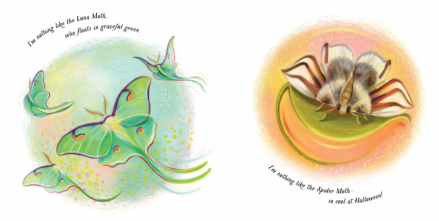
celebrate-picture-books-picture-book-review-an-extraordinary-ordinary-moth-luna

Image copyright Steliyana Doneva, 2018, text copyright Karlin Gray, 2018. Courtesy of Sleeping Bear Press.

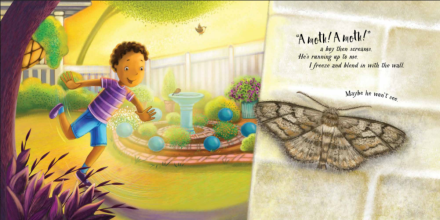
But then a little boy runs through the yard shouting “‘A moth! A moth!’” The moth freezes against a wall, afraid and unsure and hoping to hide. But when the moth sees the excitement in the boy’s eyes, he moves “toward his joyful light.” He lands in the boy’s hands, uncertain still if he’ll be shooed away. And sure enough, the boy’s sister screams, “‘Ew, a bug!’” When she knocks her brother’s hand away, the moth flies off.
celebrate-picture-books-picture-book-review-an-extraordinary-ordinary-moth-hiding

Image copyright Steliyana Doneva, 2018, text copyright Karlin Gray, 2018. Courtesy of Sleeping Bear Press.

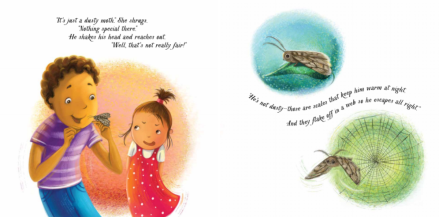
The moth hears the boy tell his sister, “‘Hey, it’s an insect—not a bug— / and my favorite kind!’” then he sees the boy trailing him “all through the yard. / with her two steps behind.” She thinks the moth is nothing special, but her brother disagrees. And as the moth alights on his finger, he shows her why. What looks like dust are really “‘scales that keep him warm at night. / And they flake off in a web so he escapes all right.’”
celebrate-picture-books-picture-book-review-an-extraordinary-ordinary-moth-web

Image copyright Steliyana Doneva, 2018, text copyright Karlin Gray, 2018. Courtesy of Sleeping Bear Press.

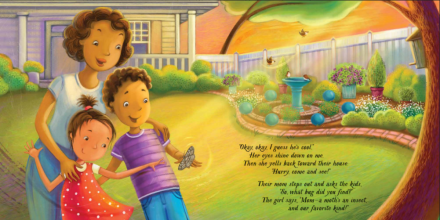
The little girl’s a bit more interested but thinks his color is “kind of blah.” The boy explains that the moth is the color of tree bark and can camouflage himself during the day while he sleeps. Then at night he’s ready to fly, guided by moonlight and the scents he smells through his antennae. Now the little girl thinks the moth is pretty cool. She calls their mom to come and see, and when Mom wants to know what bug they found, “the girl says, ‘Mom—a moth’s an insect, / and out favorite kind!’”

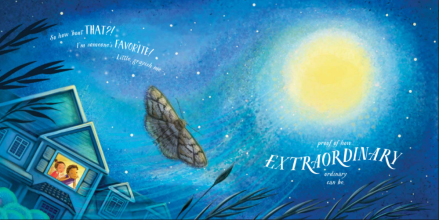
Hearing that, the moth soars in the moonlight with a new self image—“So how ‘bout THAT?! / I’m someone’s FAVORITE! / Little grayish me— / proof of how / EXTRAORDINARY / ordinary can be.”
celebrate-picture-books-picture-book-review-an-extraordinary-ordinary-moth-mom

Image copyright Steliyana Doneva, 2018, text copyright Karlin Gray, 2018. Courtesy of Sleeping Bear Press.

Ten Extraordinary Facts about Moths, as well as an activity for constructing a moth observation box follow the text.

Through her vivacious rhymes, Karlin Gray elevates the “ordinary” back-porch moth to star status with fascinating facts that will lure kids to discover more. The conversational verses echo a sweet sibling relationship while the moth, overhearing them, begins to appreciate himself. The bookending of the children’s story with the moth’s thoughts—first comparing himself to other moths and later realizing his own merits—will encourage readers to think about the nature of nature and about the importance of positive interactions with others. Told from the moth’s point of view, the story also has a deeper meaning, reminding readers that, like this moth, people also have special talents  that make them exceptional. Taking extra time to really learn about another’s unique qualities and to get to know them is exciting and has benefits for all.  
celebrate-picture-books-picture-book-review-an-extraordinary-ordinary-moth-moonlight

Image copyright Steliyana Doneva, 2018, text copyright Karlin Gray, 2018. Courtesy of Sleeping Bear Press.

Steliyana Doneva’s gorgeous illustrations of moths and butterflies will dazzle insect-loving kids and convert the more squeamish. Doneva captures each delicate marking and texture of the little grayish moth as it flits in the light and camouflages itself on the wall and tree. The moth is also well spotlighted against Doneva’s vibrant backyard oasis where the little boy and his sister discover him. Nighttime scenes sparkle with starlight, and the full moon brings out the rich blues of an evening sky. The boy’s enthusiasm for moths and nature is infectious and will captivate young readers, enticing them to look closer at the world around them.

An Extraordinary Ordinary Moth is a beautiful, eye-opening book that would spur further discovery for nature and science lovers at home and in science or STEM classrooms.

Ages 4 – 8

Sleeping Bear Press, 2018 | ISBN 978-1-58536-372-8

Discover more about Karlin Gray and her books on her website.

View a portfolio of work by Steliyana Doneva and learn more about her on her website.

Download and have fun with these An Extraordinary Ordinary Moth Activity Sheets!

An Extraordinary Ordinary Moth Matching | An Extraordinary Ordinary Moth Fill in the Blank

Moth-er Day Activity
celebrate-picture-books-picture-book-review-tree-branch-with-white-cocoons

Beautiful Moths Game


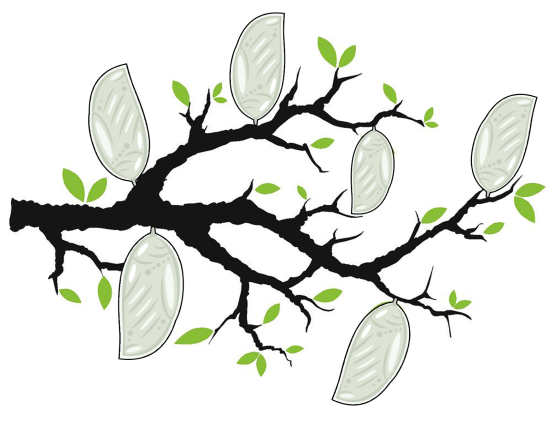
Moths go through many stages of metamorphosis—from egg to caterpillar to cocoon— before they finally emerge as a moth. In this game, help six moths emerge from their cocoons to win!

Supplies

celebrate-picture-books-picture-book-review-moth-cards

Directions

  1. Print a Tree Branch Game Board and set of Moth Cards for each player
  2. Print one Moth Playing Die
  3. Choose a player to go first
  4. The first player rolls the die and places the matching moth card on one of the cocoons on the Tree Branch Game Board
  5. Play then moves to the player on the left
  6. Players continue to roll the die and place moths on each cocoon
  7. If a player rolls a moth that they already have placed on their game board, they pass the die to the next player and wait for their next turn.
  8. The player who fills their Tree Branch with moths first is the winner

Meet Karlin Gray

celebrate-picture-books-picture-book-review-interview-with-karlin-gray-headshot

Today I’m excited to talk with Karlin Gray about how moths became extraordinary in her eyes, what types of characters she’s drawn to, and what might be the best holiday in the world

Did you like to write as a child? How did you get started writing books for children?

Yes, I did like to write as a child. When I was little, I would retell stories like Alice in Wonderland, changing the names and some details. Someone must have explained ‘plagiarism’ to me and, eventually, I learned to write my own stories.

I started writing picture books when my son was a toddler (about seven years ago). I joined a local writing center where I workshopped all three of my contracted books, including AN EXTRAORDINARY ORDINARY MOTH.

Before you began working in the publishing field and writing for children, you worked for newspapers. Can you talk a little about that experience? What did you like most about it? Has it influenced your work for children?

After college, my first two jobs were graphic design positions at weekly newspapers in Northern Virginia and D.C. I loved learning about the publishing process—how words and images were selected, designed, printed, and distributed. It’s a fast-paced, exhausting business. But those jobs taught me to work on a deadline which helps me as a children’s book writer, for sure!

What inspired you to write about moths?

My son. When he was three, he announced that the moth was his favorite insect. I imagined that moth was having a bad day—comparing himself to “cooler” moths like the Luna moth or Spider moth—and then overheard my son’s statement. It’s a nice reminder that sometimes it takes just one kind comment to improve someone’s day.

What do you think makes the “ordinary” extraordinary?

Perspective. My son saw something special in a creature that I never really considered. But his interest piqued my interest, so I did some research. That led me to learning several amazing things about moths. Now, instead of shooing them away, I celebrate moths in An Extraordinary Ordinary Moth.

What was your process in writing An Extraordinary Ordinary Moth?

Once the first line popped into my head—“I’m an ordinary moth, as you can plainly see…”—the story was set in rhyme. Usually, I research then write a story. But here, I did my research as I wrote the manuscript. The first draft took a couple days and was MESSY. I workshopped the manuscript on and off for two years, tightening the story, rhyme, and meter. I eliminated a whole stanza where the ordinary moth compares itself to other moths like the poodle moth. Trust me, it wasn’t easy cutting out the poodle moth! But, like they say, sometimes you have to kill your darlings.

Do you have a favorite place to write? If so, can you describe it a little? Do you have a favorite thing on your desk or in your writing space?

In my house I have an office but I don’t do much writing there. I usually move from the dining table to the kitchen table to the outside table when it’s warm.

In an earlier interview, you mentioned that you had “stories about presidents, magicians, explorers, athletes, mermaids, monsters, scarecrows, cats, mice, and one sad moth” in your desk drawer. What types of characters—or personalities—attract your creative interest? Do you have a preference for nonfiction? If so, why?

Oh yeah, I guess I’ll have to change that since the “sad moth” is out of the drawer and on the cover of a book. I’m a sucker for characters whose “flaws” are really their strengths, and I love a good finding-your-tribe story. Both nonfiction and fiction stories appeal to me but I enjoy the challenge of taking a true story and translating it into a picture book—selecting a character and timeframe, finding dialogue and active details, setting the tone and style, and staying true to the facts as well as the heart of the story.

In your website biography you have links to “things you like.” These are amazing and range from The American Mural Project to Storyline Online to the Landfill Harmonic. Can you talk about what draws you to these types of projects? Why do you think they are important not only for those directly involved in them, but for all kids—and adults?

Those two projects have a lot of heart. I met Ellen—she is a tiny person who has a big personality and a HUGE dream. The fact that one person had a goal to make the biggest indoor art installation is worthy of a book right there! And the Landfill Harmonic group—kids making music with trash!—was made into a book, Ada’s Violin by Susan Hood. I think both of those stories appeal to kids because it shows them that there are no limitations in art.

What’s the best part about writing for kids?

So many things…but probably the best is when kids tell me that they want to be a writer when they grow up. My response is always: “If I could do it, you can do it.”

You share your books at school and bookstore events. Do you have any anecdote from an event you’d like to share?

Twice a month I volunteer at a nearby school where I read books selected by the teacher. When I read my first book NADIA to the kids, the first graders had a hard time believing that I was the author. They knew me as someone who visited every other week and read a book from their shelves. They didn’t know me as a writer so that was a fun surprise for them.

What’s up next for you?

My next picture book is a biography of Serena Williams—SERENA: THE LITTLEST SISTER—and will be published in early 2019.

What is your favorite holiday and why?

Probably New Year’s Eve. We can see the town fireworks from our back deck so we invite a few families over for a casual get-together. It’s a nice way to end the year and the kids love staying up past midnight.

And, until your email, I didn’t know there was a Moth-er Day. (Not to be confused with Mother’s Day.) Very cool. The moth is also celebrated during National Moth Week in July: http://nationalmothweek.org

Do you have any anecdote from a holiday that you’d like to share?

When I was 10-14 years old, I lived in Japan because my dad worked with the military. I remember feeling sorry for Japanese kids because they didn’t celebrate holidays like Christmas or Halloween. But once I discovered that they had an even better holiday—Children’s Day!!—then I just felt sorry for myself.

Thanks so much for this great chat, Karlin! I wish you all the best with An Extraordinary Ordinary Moth and all of your books!
celebrate-picture-books-picture-book-review-an-extraordinary-ordinary-moth-cover

You can find An Extraordinary Ordinary Moth at these booksellers:

Amazon | Barnes & Noble | Books-a-Million | IndieBound | Sleeping Bear Press

You can connect with Karlin Gray on

Facebook | Pinterest | Twitter

Picture Book Review

March 6 – It’s Irish-American Heritage Month

celebrate-picture-books-picture-book-review-fionas-lace-cover

About the Holiday

First celebrated in 1991, Irish-American Heritage Month commemorates the many contributions of Irish immigrants in America’s early days and the continuing influence Irish-Americans have on the arts, politics, sports, business, education, and all areas of American culture. The month of March was chosen to coincide with St. Patrick’s Day, one of the most enthusiastically honored holidays, with parades, parties, and ceremonies held in cities and town all across the country.

Fiona’s Lace

By Patricia Polacco


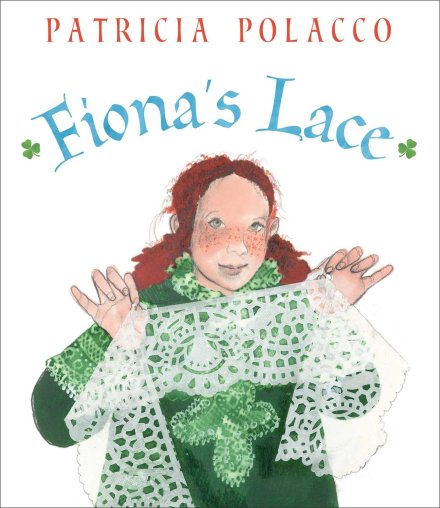
In Fiona’s Lace author-illustrator Patricia Polacco weaves a tale of family love and America’s early immigrant heritage that is as intricate and lovely as the lace the family makes. The story begins in Ireland, where Fiona and her sister Ailish live with their muther and da. They live happily in Glen Kerry, where their father works in the textile mill and their mother teaches Fiona her art of lace making.

celebrate-picture-books-picture-book-review-fiona's-lace-ma-teaches-lacemaking

Copyright Patricia Polacco, 2014, courtesy of simonandschuster.com

In the evenings the girls are entertained by family stories, especially their favorite about how, when their parents first met, their mother left a trail of lace from the factory to her house for her young suitor to follow.

When the textile mill closes, Fiona’s family signs a contract indenturing themselves to a family in Chicago. The voyage to America is long and arduous, but when they arrive in Chicago they marvel at the grand houses and elegant clothes, imagining that this awaits them too in their new home. The reality, however, is much different. Their two-room apartment is ramshackle, and only by working two jobs can their parents make enough money to live on.

celebrate-picture-books-picture-book-review-fiona's-lace-fiona-gets-job

Copyright Patricia Polacco, 2014, courtesy of simonandschuster.com

Fiona wants to help and soon finds that dressmakers will pay handsomely for the lace she makes. The family’s money tin begins to fill up and they are prospering. One night while Muther and Da are away working, a fire rages through Chicago. Fiona and Ailish escape with only the money tin and Fiona’s lace. They run far from home, but worry—how will their parents find them?

Remembering their favorite story, Fiona cuts her lace into strips and ties bits of it along their route to their hiding place. The girls cower in fear until they hear the familiar voices of their parents. Happily reunited, the family lets go of what they have lost, but Ailish cries over the now sooty, torn lace. Ma reassures her and brings comfort, revealing that far from being ruined, this scorched lace is the most valuable and cherished of all because it saved the family.

celebrate-picture-books-picture-book-review-fiona's-lace-trail-of-lace-story

Copyright Patricia Polacco, 2014, courtesy of simonandschuster.com

Patricia Polacco’s heartwarming and harrowing story of an Irish immigrant family is a beautiful reminder of the unique talents and strong bonds that built America and continue to help her prosper today. Readers will be enthralled by Polacco’s realistic dialogue and detailed storytelling in this compelling and suspenseful tale and will cheer as Fiona cleverly uses her ma and pa’s trick and her own skills to save her family.

Polacco’s gorgeous illustrations bring the time period alive for young readers, portraying the intricate art of lacemaking and the clothing styles that made use of this delicate trimming. Her depictions of tenement living are realistic, yet reveal the love and close family ties within through a warm color palette and the inclusion of cozy comforts brought from Ireland.

Fiona’s Lace is a heartfelt and thoughtful family and immigration story and would be a wonderful addition to classroom and home libraries.

Ages: 4 – 8

Simon & Schuster Books for Young People, 2014 | ISBN 978-1442487246

Discover more about Patricia Polacco and her many, many books on her website!

Irish-American Heritage Month Activity

 celebrate-picture-books-picture-book-review-lace

Follow the Lace Game


While Fiona and her sister used a lace trail to lead their parents to their hiding place, you can have fun making a hide-and-seek game for your friends. This game can be played inside or outside

Supplies

  • 1 or 2 yards of lace, cut into sections about 6-inches each. You can use lace to celebrate Lace Day or use string, ribbon, or other kinds of material
  • Choose something to hide – this can be a toy, a secret letter, a snack, or anything

Directions

  1. Hide the item you choose in a secret place
  2. Determine the starting place for your hide-and-seek game
  3. Along the route from the starting point to the hidden item, tie the sections of lace onto things like lamps, furniture, stair banisters, door knobs, etc. if  you’re playing inside. If you are playing outside, tie it onto trees, bushes, bird feeders, swing sets, etc.
  4. For very young children the trail of lace can be straightforward; for older children the trail can be longer and more difficult

February 24 – It’s National Haiku Writing Month

celebrate-picture-books-picture-book-review-guess-who-haiku-cover

About the Holiday

Great things come in small packages, right? Just look at the amazing kiddos in your family! It’s the same with poetry! The haiku may be the smallest form of poetry, but it packs in huge heart and emotion. Traditionally written to express awe at the natural world, haiku now touches on every subject with its poignancy. Poets the world over have designated this month to create new haiku, improve their art, and share their work. To celebrate this month, try your hand at writing haiku and introduce your littlest readers to these little verses.

Guess Who, Haiku

Written by Deanna Caswell | Illustrated by Bob Shea


Down on the farm the animals are playing games and they invite readers to join in the fun! Combining poetry with a guessing game, this cute book introduces younger children to haiku. On each page an animal presents a riddle about another animal in the form of a haiku. When readers turn the page, they discover the answer to the riddle as well as another one to solve.

celebrate-picture-books-picture-book-review-guess-who-haiku-cow-haiku

Image copyright Bob Shea, text copyright Deanna Caswell. Courtesy of Harry N. Abrams Books

As morning dawns the first haiku reveals: “new day on the farm / muffled mooing announces / a fresh pail of milk.” Then kids are asked, “Can you guess who from this haiku?” Flipping the page, kids see a smiling cow who in turn has a haiku for them: “flower visitors / busy buzzing in the field / black and yellow stripes.”

Other animals familiar to kids—a horse, bird, fish, mouse, cat, dog, and this guy: “from a lily pad / keen eyes spy a careless fly / a sticky tongue—SNAP!”— also puzzle over each other from page to page. The final haiku describes an animal like no other: “two hands hold a book / guessing animals’ puzzles / written in haiku.” Who can it be? Kids will giggle and beam when they discover that they too are in the book!

celebrate-picture-books-picture-book-review-guess-who-haiku-cow-haiku

Image copyright Bob Shea, text copyright Deanna Caswell. Courtesy of Harry N. Abrams Books

Deanna Caswell’s Guess Who, Haiku is a fun way to get kids interacting with poetry and the very accessible haiku form. Her clever riddles contain lovely images and lyrical alliteration that make these poems as enjoyable to read as they are to hear.

Bob Shea’s animals are adorably illustrated on vibrant solid-colored backgrounds, and each haiku is accompanied by an image that helps kids guess the answer to the riddle. The text and illustrations work together to make Guess Who, Haiku a wonderful way to spend time with kids—who, after reading, may want to make up some poems of their own!

Ages 3 – 6

 Harry N. Abrams, 2016 | ISBN 978-1419718892

Check out a gallery of work by Bob Shea on his website!

National Haiku Writing Month Activity

CPB - Animal Matching Cards

Animal Pairs Matching Game


You can have fun testing your powers of guessing with this cute Animal Pairs Matching Game!

Supplies

Directions

  1. Print the Animal Pairs Cards, print two pages to have double cards. To make the game more difficult print 3 or more pages to find 3 or more groups of matching animals
  2. Color the cards
  3. Cut out the cards
  4. Lay the cards face down on a table in random order
  5. Turn over cards to look for matching pairs
  6. When you find a matching pair leave the cards face up
  7. Continue playing until you find all the matching animal pairs or groups

Picture Book Review

January 30 – It’s Creativity Month

celebrate-picture-books-picture-book-review-it's-great-being-a-dad

About the Holiday

Kids are born creative, that’s for sure! With their huge imaginations and love for pretending, almost anything goes! Parents trying to keep up with their little charges need to stay on their toes and be inventive too. Answering all the “what,” “why,” and “how” questions takes some ingenuity, managing sibling rivalry takes finesse, and introducing new foods, getting a room cleaned, or making sure homework’s done? Well, “innovative” doesn’t begin to describe the brainstorms that (sometimes) lead to success. But at the end of the day (literally and figuratively) adults are inspired by their kids and wouldn’t trade their role for a minute. Yes, it’s great being a mom, grandmother, grandfather, teacher, dad—as you’ll see in today’s book!

It’s Great Being a Dad

Written by Dan Bar-el | Illustrated by Gina Perry


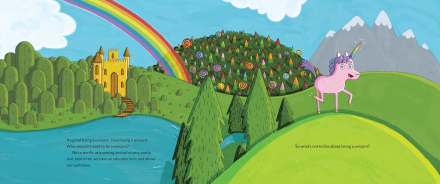
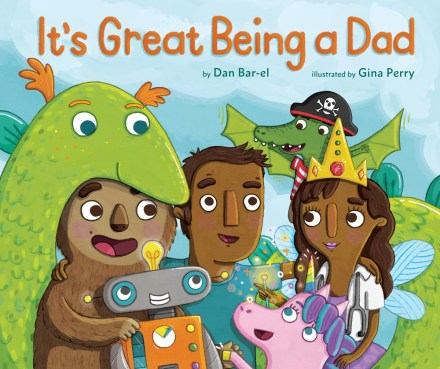
A lovely pink unicorn with a sparkling rainbow horn clip-clops over a grassy hill, a golden castle and a candy forest in the background. The playful animal believes it’s “great being a unicorn. Who wouldn’t want to be a unicorn?” What makes them so special? Well…as she says, “We’re terrific at prancing and we’re very pretty and, best of all, we have an adorable horn just above our eyebrows.” It’s hard to argue with those reasons!

celebrate-picture-books-picture-book-review-it's-great-being-a-dad

Image copyright Gina Perry, 2017, text copyright Dan Bar-el, 2017. Courtesy of Tundra Books.

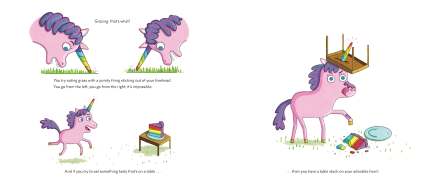
But it seems there are some downsides to this whole unicorn thing. Grazing might be at the top of the list. That shiny horn just always seems to get in the way. There’s no way for teeth to touch the ground, and trying to grab a snack off a table just results in the table being stuck on the “adorable horn.”

celebrate-picture-books-picture-book-review-it's-great-being-a-dad

Image copyright Gina Perry, 2017, text copyright Dan Bar-el, 2017. Courtesy of Tundra Books.

How about Bigfoot? What’s it like for him? Let’s ask—here comes Bigfoot now! “It’s great being Bigfoot. I love being Bigfoot. Who wouldn’t want to be Bigfoot?” What’s so great about being…you know…? Well…he’s warm in his furry coat, he’s well camouflaged among the trees, and his super strength “can help unicorns get tables off their heads.” Sounds great! What could go wrong? Hmmm…. It seems those big feet get themselves into some sticky situations—like ending up with a tree trunk lodged around your leg.

celebrate-picture-books-picture-book-review-it's-great-being-a-dad

Image copyright Gina Perry, 2017, text copyright Dan Bar-el, 2017. Courtesy of Tundra Books.

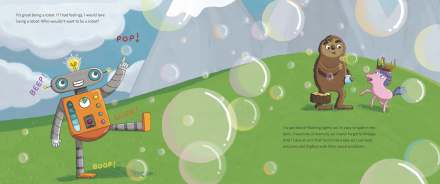
Maybe being a Robot is better. Indeed! In fact, Robot says, “If I had feelings, I would love being a robot.” Pretty compelling stuff there. Robot is very flashy and has lots of memory and has an arm that can convert into a saw just in time to help “unicorns and Bigfoot with their wood problems.” So what’s not to like? Rain can really mess with the mo(tor)-jo.

Poor Loch Ness Monster! She’s not even going to try being positive. It kind of stinks being a monster—especially when you don’t feel like one. But maybe things aren’t all bad. Unicorn, Bigfoot, and Robot hitch a ride on Nessie’s back across the lake to the hospital. There they meet a “fairy queen ballerina doctor” who loves being a fairy queen ballerina doctor. Who wouldn’t?

celebrate-picture-books-picture-book-review-it's-great-being-a-dad

Image copyright Gina Perry, 2017, text copyright Dan Bar-el, 2017. Courtesy of Tundra Books.

This Jill-of-all-trades can prescribe medicine for the sick, “perform a happy dance” for the sad, and wave her magic wand “if you have trouble with your saw arm…or your head horn or your big foot.” Sounds perfect…until a “sneaky flying alligator pirate” swoops in and swipes the magic wand just as the fairy queen ballerina doctor is about the save the day. “Dad!”

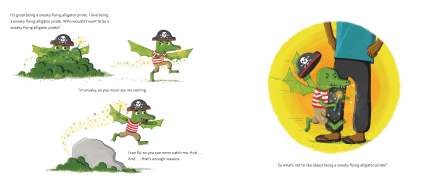
Ha! Ha! Here’s a little guy who’s super excited to be a sneaky flying alligator pirate. “I’m sneaky, so you never see me coming. I can fly, so you can never catch me. And… And…that’s enough reasons. So what’s not to like about being a sneaky flying alligator pirate?” Ooof! “Dads, that’s what!”

celebrate-picture-books-picture-book-review-it's-great-being-a-dad

Image copyright Gina Perry, 2017, text copyright Dan Bar-el, 2017. Courtesy of Tundra Books.

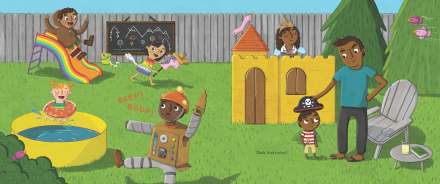
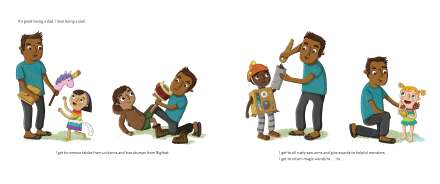
But how does Dad feel about being a dad? Let’s see: “It’s great being a dad. I love being a dad.” It does look pretty fun! Dad gets to remove pizza box “tables” from hobby horse unicorns; remove stepped-on drums from a brown-fuzzy-hoodied-and-hiking-booted Bigfoot; fix cardboard-saw arms; give medals to super swimmers; and “return magic wands to… to… ‘Fairy queen ballerina doctors. I told you a million times already.’ Right. What she said.” Plus Dad can help little brothers play nicely.

So you must be wondering… “what’s not to like about being a dad? Sudden makeovers, that’s what.”

celebrate-picture-books-picture-book-review-it's-great-being-a-dad

Image copyright Gina Perry, 2017, text copyright Dan Bar-el, 2017. Courtesy of Tundra Books.

Dan Bar-el’s laugh-out-loud romp through an afternoon of play hits the perfect tone to entertain kids and adults as well. Bar-el’s wry delivery and repetition of the appealing—and not-so—traits of each fantasy character will have readers giggling and eagerly anticipating the next page. The revelation that the characters are kids with big imaginations offers multiple payouts in creativity, personalities, friendship, and family.

Gina Perry’s vibrant, whimsical illustrations riff on all the fantasy clichés to ramp up the humor in this vivacious story. When happily-ever-after turns into happily-never-after for each character, Perry amusingly depicts their dismay, but the next page finds them cheerfully adjusted to their new circumstance and weaving it into a revised storyline. As the story wraps up, readers will enjoy pointing out aspects of the kids’ interests and the parts of the backyard that spurred their imagination in earlier pages. The diverse group of friends is welcome, and good-natured Dad doesn’t really seem to mind his impromptu makeover.

It’s Great Being a Dad is a fantastically fun read-aloud that would be an often-asked-for addition to home and school bookshelves.

Ages 4 – 8

Tundra Books, 2017 | ISBN 978-1770496057

Discover more about Dan Bar-el and his books on his website!

You find a gallery of illustration work and books by Gina Perry on her website!

Creativity Month Activity

celebrate-picture-books-picture-book-review-charades-activities-cards

Family Charades


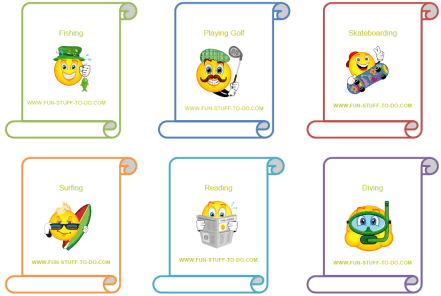
Getting together to play charades is a fun way to spend family time with a little bit of thought, a little bit of action, and lots of laughs. You can find lots of charades cards, ideas, and rules at funstufftodo.com.

Picture Book Review

December 20 – It’s Tomato and Winter Squash Month

celebrate-picture-books-picture-book-review-rabbit-stew-cover

About the Holiday

The cold months of the year call for warm, hearty meals, and what better way to satisfy the desire for comfort food than to incorporate some of the most flavorful vegetables around? Tomatoes are a staple in many dishes, while the many varieties of winter squash (including acorn, butternut, spaghetti, kabocha, and delicate) are versatile and can add new taste sensations to any dinner. So as the temperature dips, scout out these vegetables and savor their rich flavors!

Rabbit Stew

By Wendy Wahman


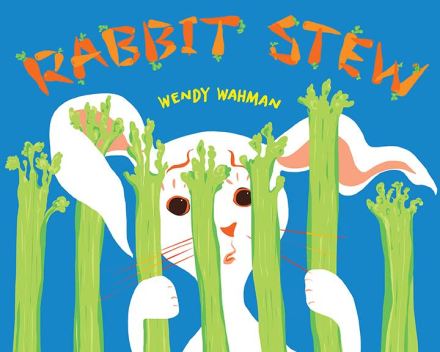
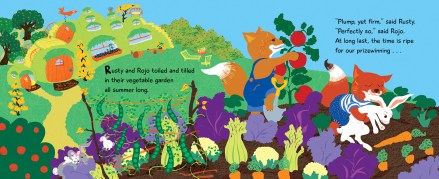
“Rusty and Rojo toiled and tilled in their vegetable garden all summer long.” But now the crops have ripened, and the two foxes are ready to enjoy the bounty of their hard work—so are their neighbors, the Rabbits. As Mommy Rabbit and the bunnies nibble away in a corner of the garden, Rusty gently squeezes the tomatoes and finds them “plump, yet firm.” “Perfectly so,” Rojo agrees as he lifts Daddy Rabbit from the carrot patch. “At last,” Rusty and Rojo exclaim, “the time is ripe for our prizewinning Rabbit Stew!”

celebrate-picture-books-picture-book-review-rabbit-stew-picking-veggies

Image copyright Wendy Wahman, 2017. Courtesy of wendywahman.com.

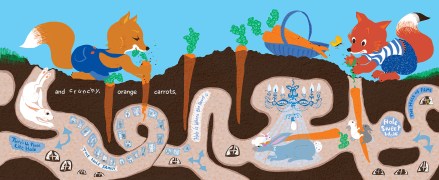
While Rojo picks “lean, green runner beans,” the Rabbits look on worriedly. Daddy tries to hide, but Rusty spies him in the wheelbarrow full of purple kale. Then, when the family dives back into their cozy “hole sweet hole,” they find that their convenient carrot snacks are being abruptly snatched away—only to be added to the pot of “splendid Rabbit Stew.”

celebrate-picture-books-picture-book-review-rabbit-stew-in-the-burrow

Image copyright Wendy Wahman, 2017. Courtesy of wendywahman.com.

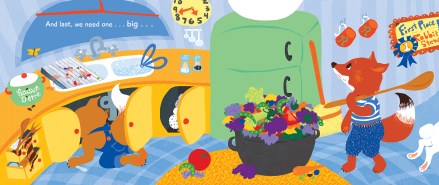
Next come raisins and celery “and roly-poly blueberries.” But what about those white and gray bits of fluff? Will they end up in the foxes’ buckets too? Of course “juicy red tomatoes, fresh sprigs of parsley, and sweet yellow peppers” are also musts for the foxes’ “finest-ever Rabbit Stew.” With the pot overflowing with colorful veggies, only one more thing is needed—“one…big…round…white…bowl…for our favorite Rabbit, Stew—and his family too!”

celebrate-picture-books-picture-book-review-rabbit-stew-kitchen

Image copyright Wendy Wahman, 2017. Courtesy of wendywahman.com.

With her fertile imagination and a clever play on words, Wendy Wahman offers up a delightful story that will have readers guessing until the very end. Along with the mystery and the yummy descriptions of each ingredient, Wahman presents a counting game for readers. As Rusty and Rojo pick their vegetables, children can count the ten runner beans on the trellis, nine purple kale leaves in the wheelbarrow, eight carrots from the burrow, and all of the other ingredients on down to one. But do Rusty and Rojo need one big white rabbit or something else? Kids will love the twist at the end and cheer to see Daddy Stew, Mommy Strudel, and their little bunnies—Dumpling, Biscuit, and Ragu—dining on the special meal grown and created just for them.

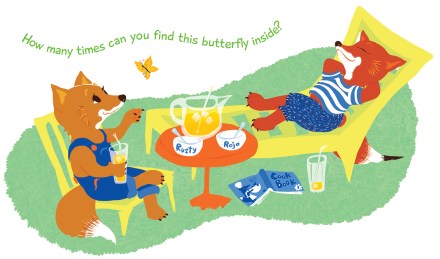
Everyone’s garden should look as deliciously vibrant as Wahman’s riotous patch of vegetables! The vivid colors jump off the page while providing texture and nuance to the illustrations. They also give kids another concept to learn and talk about. Little details, such as the tiny caterpillar and the yellow butterfly that follow the bunnies from page to page, as well as the fancy burrow lined with photos of friends and family will enchant readers. 

celebrate-picture-books-picture-book-review-wendy-wahman-interview-Fox-Lemonade

Image copyright Wendy Wahman, 2017, courtesy o f Wendy Wahman.

Welcome themes of friendship, diversity, and inclusiveness can also be found within the illustrations and the story.

Rabbit Stew is a bright, humorously sly story that would be a wonderful addition to any child’s library. The book also makes a perfect companion for trips to the farmers market, on picnics, or to spur interest in home gardening. The attention to the details of what rabbits can safely eat, as well as the number and color concepts provided in the illustrations, makes Rabbit Stew a great choice for school story times and spring lessons.

Ages 3 – 7

Boyds Mills Press, 2017 | ISBN 978-1629795836

You can download a fun Rabbit Stew Activity Sheets from Boyds Mills Press!

Discover more about Wendy Wahman, her art, and her books on her website!

You’ll dig this Rabbit Stew book trailer!

National Garden Month Activity

celebrate-picture-books-picture-book-review-garden-board-game

Grow a Vegetable Garden Board Game, copyright Celebrate Picture Books, 2017

Grow a Vegetable Garden Board Game


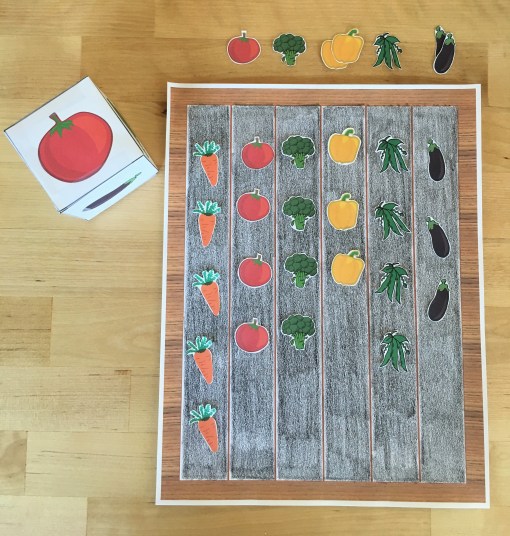
With this fun game you and your family and friends can grow gardens inside! Roll the dice to see whose garden will fully ripen first!

Supplies

Directions

Object: The object of the game is for each player to fill their garden rows with vegetables. Depending on the ages of the players, the required winning number of rows to fill and the number of vegetables to “plant” in each row can be adjusted.

  1. Print one Game Board for each player
  2. Print one set of Playing Cards for each player (for sturdier playing items, print on card stock)
  3. Print one Vegetable Playing Die and assemble it (for a sturdier die, print on card stock)
  4. Cut the vegetables into their individual playing cards
  5. Color the “dirt” on the Garden Plot with the crayon (optional)
  6. Choose a player to go first
  7. The player rolls the die and then “plants” the facing vegetable in a row on the game board
  8. Play moves to the person on the right
  9. Players continue rolling the die and “planting” vegetables until each of the number of determined rows have been filled with the determined number of vegetables.
  10. The first person to “grow” all of their veggies wins!

Meet Author/Illustrator Wendy Wahman

celebrate-picture-books-picture-book-review-Wendy-Wahman-head-shot

Today, I’m really happy to be chatting with Wendy Wahman about her art, her books, her inspirations, and a really sweet school visit she had recently.

Your bio mentions that you worked for the Seattle Post-Intelligencer until 2009. Can you describe your work there?

I worked in the art department doing maps, graphics, info-graphics and illustrations for every section of the newspaper. Ninety percent of the work was on deadline, so I learned to think and draw fast.

Our poor beloved P-I. It was 146 years old when Hearst closed it down. About 150 of us went down with the ship. Best job I ever had. I miss the variety and culture and importance — and honesty — of journalism. I miss my P-I family, very much.

How did you get started illustrating and writing books for children?

I was really just snooping around for illustration work. I had an idea for a book on dog body language I wanted to do, but imagined ‘a real writer’ should write it. I sent out some of the dog body-language art samples and heard back from four major publishers. Laura Godwin at Henry Holt called me, and was so passionate about dogs and kids—and my art. She asked to see a dummy. What dummy, right? I had no dummy, just an idea and some art samples. I took two weeks off from the P-I and put together a dummy. Laura helped me tremendously, as did my brilliant writer husband, Joe Wahman.    

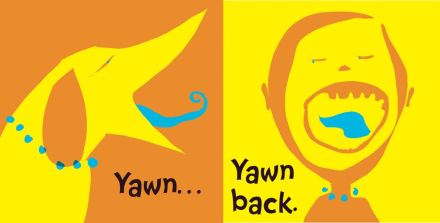
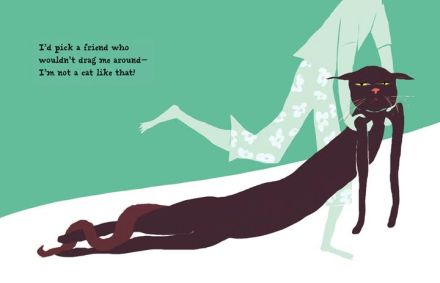
Don’t Lick the Dog is a how-to primer on being safe with dogs. We followed with the companion book, A Cat Like That. We never did do my dog body-language book. It’s sitting here patient as can be. “Good dog, book.”

celebrate-picture-books-picture-book-review-interview-with-wendy-wahman-yawn-back

Image copyright Wendy Wahman, Don’t Lick the Dog. Courtesy of Wendy Wahman.


celebrate-picture-books-picture-book-review-interview-with-wendy-wahman-cat-like-that

Image copyright Wendy Wahman, A Cat Like That. Courtesy of Wendy Wahman.

Your art is so varied—from humorous to infographics to striking, serious editorial work. You also work with crisp, clean lines and beautiful textures. Can you talk about your process and inspirations?

Thank you so much, Kathy. Well. I sit and think and read a lot. Mostly I just look and try to distract myself from thinking too hard. I like to thumb through my Thesaurus. When I’m stuck, I try to remember to move away. This can be physically—exercise or a walk; mentally—read or look through books; or emotionally—play with my dogs or call somebody. I say, try, because too often I sit rooted, thinking, thinking. Better to get up and move.

What was the inspiration for Rabbit Stew?

I feed my dogs a homemade stew of meat & veggies. Long ago, I was stirring up an enormous batch of dog food, when “rabbit stew” fluttered to mind. Rabbit Stew is also a counting book, counting down veggies from ten to one. It’s also a color book. It was a challenge to find ingredients safe for rabbits, in different colors and not give it away. Like, rabbits love dandelions and they’re very good for them, but I only know a couple of people who would knowingly toss dandelions into the pot. No potatoes; they are toxic to bunnies, and cabbage isn’t good for them either. 

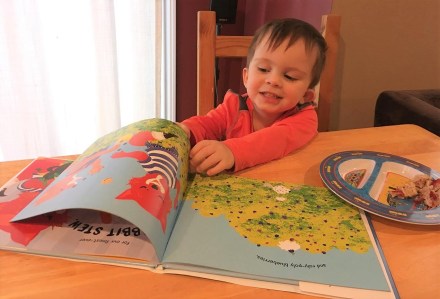
celebrate-picture-books-picture-book-review-rabbit-stew-fan

A happy fan enjoys reading “Rabbit Stew” with lunch! Photo courtesy of Wendy Wahman.

You give presentations at schools and libraries. Do you have an anecdote you’d like to share?

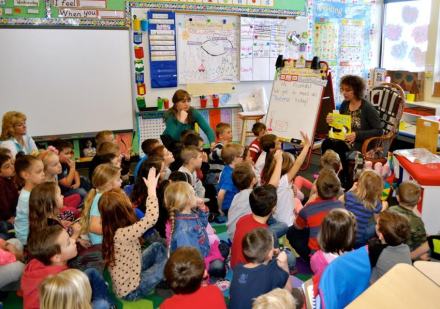
I did a school visit recently in southern California and got to take my mom to a presentation for 4th graders. I introduced her to the students, and they gave her a loud round of applause! Even more tender, when I was signing books (and the other stuff kids want signed), they asked if my mother would also give them an autograph. Is that the sweetest or what? Children can be so inspiring, healing, and wise. 

celebrate-picture-books-picture-book-review-interview-with-wendy-wahman-wendy-talking-to-a-class

Wendy reads “Don’t Lick the Dog” to enthusiastic kindergarteners in Kennewick, WA. Photograph courtesy of Wendy Wahman

You also teach bookmaking to kids. That sounds fun and fascinating! Can you tell me a little bit about these classes?

I’m so glad you asked about these little books, Kathy. I love making them and sharing the process. Anyone can make one. I’ve taught them to kindergarteners through seniors. I call them “Insight Books,” because what comes out can be surprising, revealing, and often cathartic. Random lines inspire images and ideas. Some people write, others write and draw. Sometimes we collage. Even if you do nothing at all put look, the lines may stimulate ideas. These book are fun to make with a partner too. 

What’s up next for you?

I’m very excited about my next book, Pony in the City (Sterling Publishers). Kevan Atteberry’s book, Swamp Gas, releases the same day, Sept. 9th, and we’re talking about having a co- launch party.

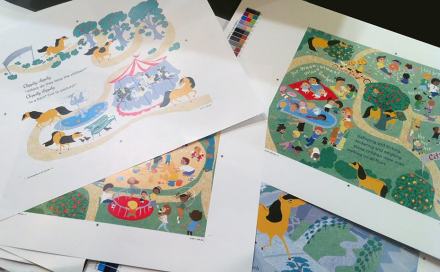
celebrate-picture-books-picture-book-review-interview-with-wendy-wahman-pony-in-the-city-proofs

Image copyright Wendy Wahman. Proofs of “Pony in the City” (Sterling, releasing Sept. 9 this year) courtesy of Wendy Wahman.

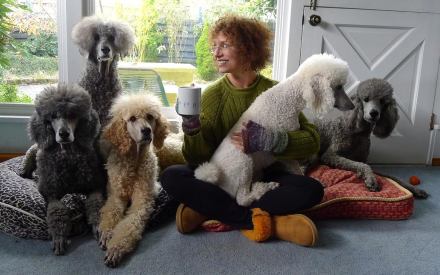
I’m working on Nanny Paws (Two Lions), a book inspired by my little white poodle, LaRoo, and the children next door. Here’s a picture of LaRoo and my other dog Jody with my friend Vikki Kaufman‘s poodles. Vikki is a breeder of beautiful silver and blue standard poodles. Vikki took the picture, can you tell?  Her dogs are staring straight at her. Poor LaRoo. She is a shy girl and just wants to get away from the masses.

celebrate-picture-books-picture-book-review-interview-with-wendy-wahman-poodles

Wendy with LeRoo and Jody and Vikki’s TinTin, Nickel and Eureka.

I’m also working on a dummy for a beautiful story written by Joe, “One Bird” (www.joewahman.com). I’m doing the art for both Nanny Paws and Joe’s story in a new/old style for me: pencil and watercolor.

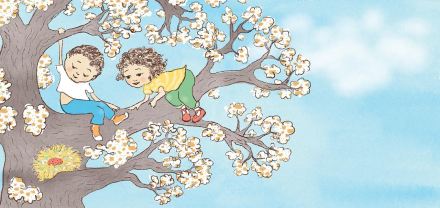
celebrate-picture-books-picture-book-review-interview-with-wendy-wahman-one-bird

Image from “One Bird,” written by Joe Wahman, illustrated by Wendy Wahman. Courtesy of Wendy Wahman

Do you have a favorite holiday?

Thanksgiving.

Do you have an anecdote from a holiday you would like to share

If you come over for Thanksgiving, prepare yourself for a vegetarian feast. We don’t eat animals here — but we do make them big, round, splendid bowls of stew.

Thanks so much, Wendy! It’s been a lot of fun! I wish you all the best with all of your books!

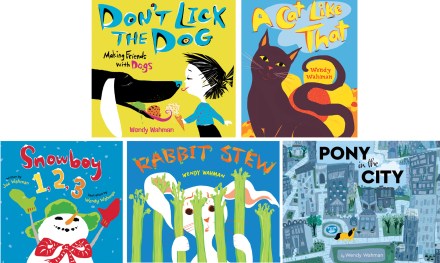
celebrate-picture-books-picture-book-review-wendy-wahman-interview-all-covers

You can find Wendy’s books at these booksellers:

Amazon | Barnes & Noble | IndieBound | Boyds Mills Press

You can connect with Wendy on:

BēhanceFacebook | LinkedIn | PinterestTwitter

Visit Wendy’s shops:

Cafe Press: http://www.cafepress.com/profile/109591016

RedBubble:  http://www.redbubble.com/people/wendywahman/portfolio

Zazzle: http://www.zazzle.com/wendoodles/products

Wendoodles coloring book: http://www.amazon.ca/Wendoodles-Wendy-E-Wahman/dp/1517403456

Picture Book Review
December 17 – Maple Syrup Day

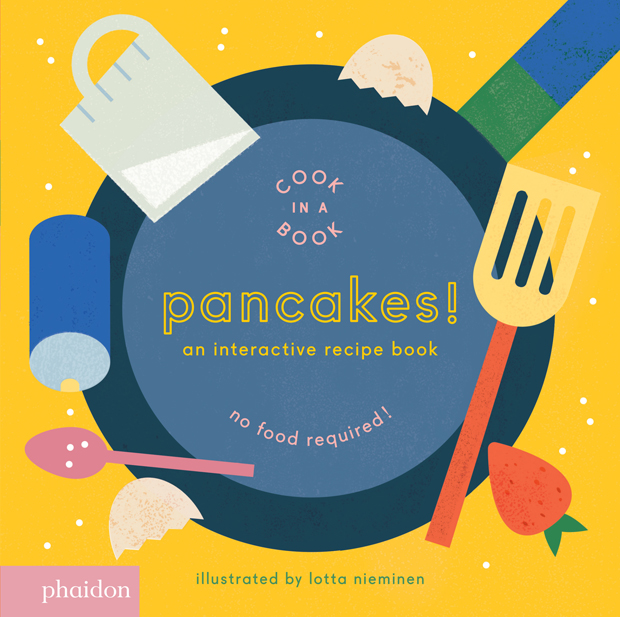
celebrate-picture-books-picture-book-review-pancakes-cover

About the Holiday

Pancakes and waffles are great, but they’re even more delicious with maple syrup! That sweet, golden slooow-pouring topping that makes for a perfect breakfast (and breakfast-for-dinner meal) deserves its own holiday! Before you get out into the hustle and bustle of the weekend, why not celebrate a little with a tall stack and lots of maple syrup?!

Pancakes! An Interactive Recipe Book

Illustrated by Lotta Nieminen


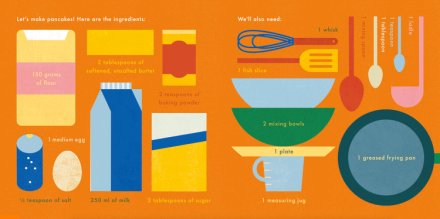
Sometimes a novelty book comes along that transcends the “kid” category and provides fun and “Ooooh!’ moments for readers of all ages. Pancakes! An Interactive Recipe Book offers just this kind of delicious excitement. Opening the cover is like walking into a cozy kitchen, finding your favorite recipe and gathering all the necessary ingredients. The first two-page spread presents in visuals and words the recipe and the utensils and other cooking items needed to make pancakes.

celebrate-picture-books-picture-book-review-pancakes-an-interactive-recipe-book-ingredients

Image copyright Lotta Neiminen, 2016, courtesy of phaidon.com

With the second two-page spread, cooking begins! A scoop of baking powder, two tablespoons of sugar, and half a teaspoon of salt are added to the bowl. But what about the cup of flour? Readers get to add that themselves with a pull tab that simulates the flour joining the other ingredients in the green mixing bowl. The clever cut of the opening and the mottled and powdery appearance of the illustrated flour gives the sensation of actual pouring.

celebrate-picture-books-picture-book-review-pancakes-an-interactive-recipe-book-measuring-milk

Image copyright Lotta Neiminen, 2016, courtesy of phaidon.com

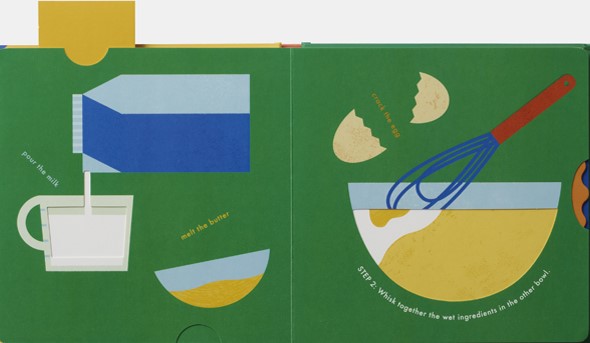
Next readers get to measure out the cup of milk with the help of a pull tab that gives kids control over the amount being served. Four marks on the side of the measuring cup provide an opportunity to talk about fractions and the ¼, ½, and ¾ lines that are also incorporated into real glass measuring cups or the separate cups that come as part of a set. Once the milk is ready, it goes into the mixing bowl with the melted butter and the egg.

Grab your whisk and get stirring! A wheel on the side of the page lets kids “combine” these wet ingredients from their individual parts into a cohesive yellow batter. Now that the batter is ready, it’s time for “STEP 4: Ladle the batter into separate circles in the hot, buttered frying pan.” Readers will love pulling the tab that releases the batter into the pan—leaving just a drop of batter to sizzle on its own (and you know how good those crispy drops can be!)

celebrate-picture-books-picture-book-review-pancakes-an-interactive-recipe-book-flipping-pancakes

Image copyright Lotta Neiminen, 2016, courtesy of phaidon.com

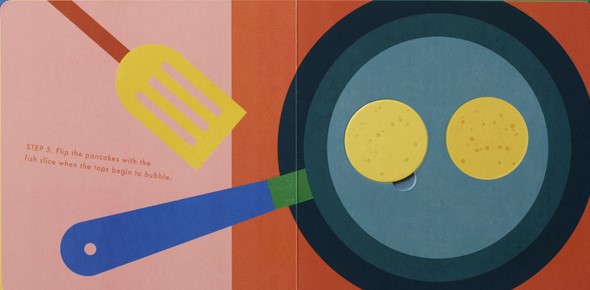
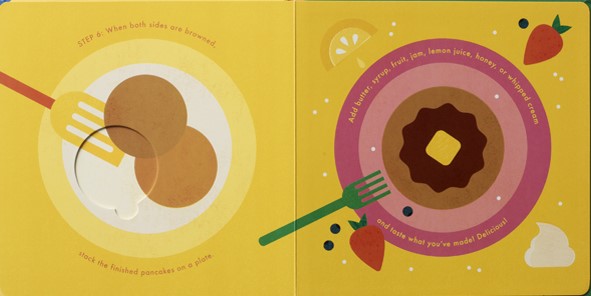
The batter is bubbling—which means it’s time to flip the flap jacks! As the spatula appears from the top of the page, kids can lift one of the little round yellow pancakes from the fry pan and turn it over. Ingeniously, the reverse side is delectably browned. A turn of the page invites by-now-hungry readers to follow “STEP 6: When both sides are browned, stack the finished pancakes on a plate.”

celebrate-picture-books-picture-book-review-pancakes-an-interactive-recipe-book-on-plate

Image copyright Lotta Neiminen, 2016, courtesy of phaidon.com

A pancake-sized round indentation on the plate just begs to be filled with the browned pancake from the previous page. Adding the pancake to the sunny plate, kids will feel as if they are holding the spatula and carefully slipping it atop a stack ready to be eaten. The last page encourages readers to “add butter, syrup, fruit, jam, lemon juice, honey, or whipped cream and taste what you’ve made! Delicious!”

Lotta Nieminen’s Pancakes! is so wonderfully conceived in its bold vibrant images and simple recitation of a pancake recipe. The crisp lines and absence of labels on the ingredients packages, puts the focus on the shapes, providing a chance for discussion of concepts such as rectangle, circle, half-circle, cylinder, oval, and triangle; flat and round; and bigger and smaller. Ideas such as hot and cold, measuring, pouring, mixing, stacking and others can also be introduced. The brilliant interactive elements invite kids and adults alike to play with this book over and over.

The sturdy board pages and convenient size make this a perfect take-along for trips to the market, picnics, appointments, siblings’ activities, or other outings where waiting is required. For kids and adults who like to help out in the kitchen, love to cook, or are attracted by all things culinary, Pancakes! An Interactive Recipe Book makes a terrific gift and must have for home bookshelves. 

Ages 2 and up

Phaidon Press, 2016 | ISBN 978-0714872834

To view a gallery of graphic design and illustration work by Lotta Nieminen, visit her website!
Maple Syrup Day Activity

celebrate-picture-books-picture-book-review-pancake-game

Pancake Flip-Out


Pancakes are served in a stack because they’re so delicious each one doesn’t last long! This game gives you the chance to see how many pancakes you can flip onto a plate! You can play this game several ways:
To Play Pancake Toss

  1. Give each player the same number of pancakes and see how many they can toss onto the plate during their turn
  2. Make a target with the plate in the middle and draw 3 concentric circles around it. Hitting the target can earn you 20 points. Getting your pancake in the first circle around the plate earns you 15 point, the second circle is worth 10 points, and the third is worth 5 points. Rotate through the players as many times as you like and add up the points at the end. The player with the most points wins!
  3. Instead of tossing the pancakes with your hands, try throwing them with a spatula!
  4. Make up your own rules—and have fun!

To Play With Dice

  1. Choose a number of pancakes that each player must add to their plate—say, maybe, a baker’s dozen.
  2. Take turns rolling the dice and adding the number of pancakes rolled to the plate. The first player to reach the agreed-upon number is the winner.

Supplies

Directions

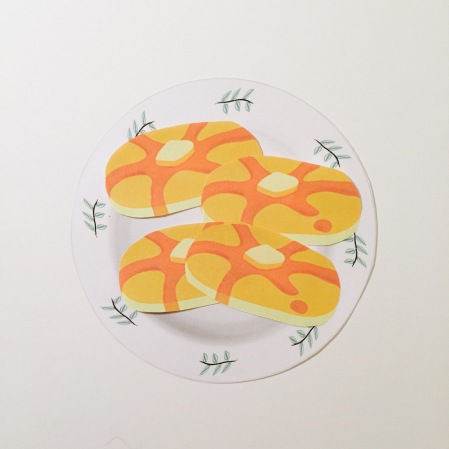
  1. Print enough copies of the Pancakes and Breakfast Plates for the game you choose and cut them out. Playing pieces can be printed on card stock or on paper. 
  2. If printing on paper, you can glue the pancakes and plate to poster board, cardboard, or foam to give the pancakes more weight for throwing and the plate more support
  3. Once dry, the game pieces are ready for fun!

Picture Book Review