November 11 – Origami Day

celebrate-picture-books-picture-book-review-more-igami-cover

About the Holiday

The art of paper folding known as Origami is enjoyed around the world and has it’s roots in paper craft traditions of Europe, China, and Japan. Once primarily used at ceremonies and special events, origami is now enjoyed by people of all ages around the globe. World Origami Days are held from October 24—which commemorates the birthday of Lillian Oppenheimer, the founder of the first American origami group and instrumental in the founding of the British Origami Society and Origami USA—to November 11, which is Origami Day in Japan. To celebrate today’s holiday create some origami figures of your own. Visit OrigamiUSA for more information and lots of templates to download and follow.

More-igami

Written by Dori Kleber | Illustrated by G. Brian Karas


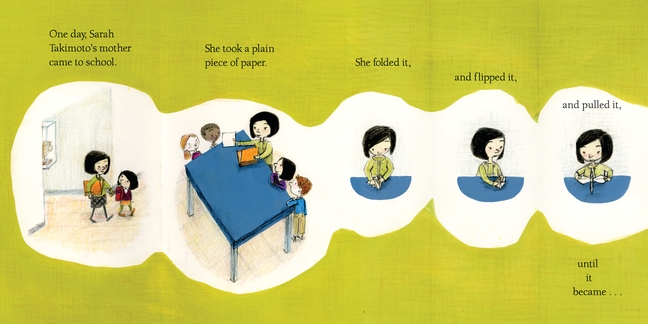
Joey was a little boy with a particular fascination. He was captivated by all things folded. At home he had a collection of “old road maps,” the bellows on an accordion made it his favorite instrument, and he even tucked himself into a foldaway bed at night. One day Joey witnessed the most amazing thing at school. Sarah Takimoto’s mother came to his class, and—right before the students’ eyes—folded, flipped, and pulled a plain white piece of paper “until it became…a crane.”

celebrate-picture-books-picture-book-review-more-igami-mrs-takimoto

Image copyright G. Brian Karas, text copyright Dori Kleber. Courtesy of Candlewick Press

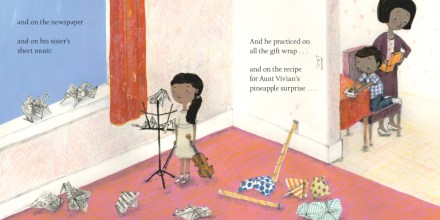
“Joey’s eyes popped. His jaw dropped. Mrs. Takimoto called it origami.” Joey was smitten. “‘I want to make origami,’” Joey told Sarah’s mother. “‘Will you teach me?’” Mrs. Takimoto  answered that while she could teach him the right folds, it would take practice and patience to become an origami master. Joey raced home that afternoon and began folding. When he ran out of notebook paper and construction paper, he used his homework…the newspaper…his sister’s sheet music…gift wrap… even “Aunt Vivian’s pineapple surprise” recipe card. But when he folded up all thirty-eight dollars in his mom’s purse, she put her foot down.

“Joey drooped.” His cranes were still coming out wrinkled and crooked, and he’d never be able to become an origami master without practicing. To soothe his disappointment, he headed next door to Muy Mexicana for some fajitas. Right away Mr. Lopez noticed Joey’s disgruntlement. When Joey explained that everyone was losing patience with him, Mr. Lopez said, “‘Many artists are misunderstood, amigo.’ Especially when they are just learning.’” Mr. Lopez went into the kitchen, and when he came out with the sizzling fajitas, he was delighted to see a napkin pyramid sitting on the table.

celebrate-picture-books-picture-book-review-more-igami-folding-sheet-music

Image copyright G. Brian Karas, text copyright Dori Kleber. Courtesy of Candlewick Press

Joey apologized, but Mr. Lopez thought it made the table look fancy. In fact, he liked it so much that he had Joey fold every napkin on every table. After that, Joey went to Muy Mexicana each day following school and folded the napkins into decorative shapes. One day he made fans, the next candlesticks, and the day after that, crowns. He patiently worked until each one was perfect.

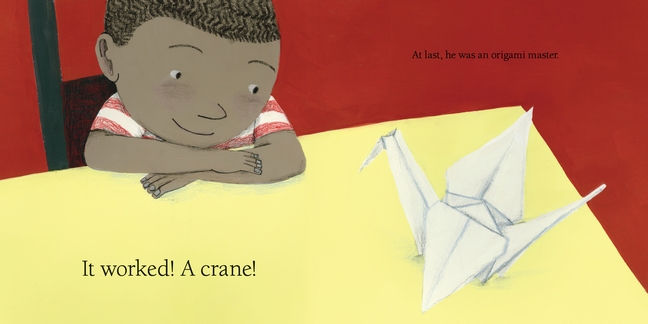
Finally, he felt ready to attempt his original challenge. “He took a crisp napkin. He folded. He flipped. He pulled.” When he was finished, a perfect crane sat in front of him. Just then a girl with a paper fan walked in. Her eyes widened as they zeroed in on Joey’s crane. Joey offered to show her how to make it, but warned, “‘It takes practice—and lots of patience!’”

celebrate-picture-books-picture-book-review-more-igami-crane

Image copyright G. Brian Karas, text copyright Dori Kleber. Courtesy of Candlewick Press

Dori Kleber’s unique multicultural story of a little boy who finds the perfect creative outlet for his singular interest will captivate kids who are just beginning to try their own hands at favorite hobbies, schoolwork, or other pursuits. With humor and honest depictions of Joey’s frustration and persistence, Kleber shows readers that practice and patience really do pay off. As Joey meets another folding enthusiast, kids will see that there are always others with whom to share favorite pastimes.

Opening More-igami to the first page where Joey sits gazing lovingly at a taco with a folded napkin next to his plate, readers will know they are in for something special. As always, G. Brian Karas’s characters are enthusiastic, encouraging, and adorable. Readers will empathize with Joey as they watch him folding and folding, and giggle at the many, many practice cranes that litter his home, even perching atop his sister’s music stand and appearing in his mom’s purse.

Karas makes full creative use of the origami theme in his clever page designs and illustrations, beginning with the square shape of the book itself and the origami paper-styled endpapers. Vivid, solid-color background pages are divided diagonally, vertically, or horizontally with subtle changes in hue or nearly invisible lines. In depictions of Joey’s school, home, and favorite restaurant, diagonals, angles, and sharp edges predominate: tables and floors create triangles on the page; windows, walls, and doors divide pages into shapes associated with the steps of origami’s folded creations; and floor tiles, the sidewalk, and even Joey’s shirt portray grid lines. The color schemes of each page, inspired by the patterns and shades of origami paper, are dazzling and unite the varied aspects of this special book.

For any child undertaking a new activity or venture, More-igami is a charming and encouraging companion on the way to proficiency—one that would make a wonderful home library and classroom addition.

Ages 4 – 8

Candlewick Press, 2016 | ISBN 978-0763668198

To learn more about Dori Kleber and her writing, visit her website!

G. Brian Karas has a whole gallery of illustrations, books, information, and “what nots” on his website!

Origami Day Activity

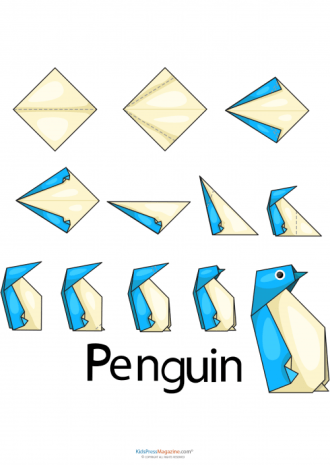
celebrate-picture-books-picture-book-review-origami-penguin-template

Origami Pets


Origami is a fun hobby that can grow in complexity as you gain skill. Here are two templates to get you started! All you need is a square piece of paper and—if you’d like to decorate your piece—some markers or colored pencils.

Puppy Template | Penguin Template

Picture Book Review

November 10 – It’s Picture Book Month

celebrate-picture-books-picture-book-review-how-to-make-friends-with-a-ghost-cover

About the Holiday

November is all about picture books thanks to Picture Book Month founder author and storyteller Dianne de Las Casas and co-founders author/illustrators Katie Davis, Elizabeth O. Dulemba, Wendy Matrin, and author Tara Lazar. This month-long international literacy initiative celebrates print picture books and all that they offer to young (and even older) readers. With gorgeous artwork and compelling stories, picture books open the world to children in surprising ways. They entertain, explain, excite, and help children learn empathy and understanding. If you want to learn more about the holiday and read engaging daily posts about why picture books are important by your favorite authors, illustrators, and others in the children’s publishing industry, visit picturebookmonth.com.

How to Make Friends with a Ghost

By Rebecca Green


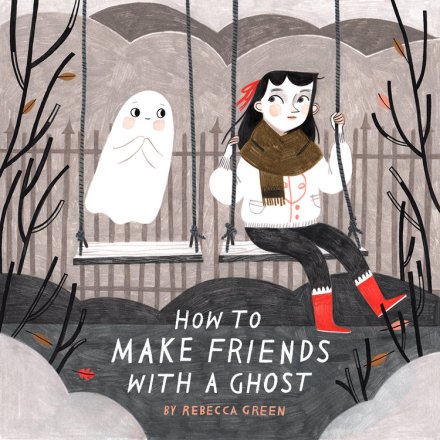
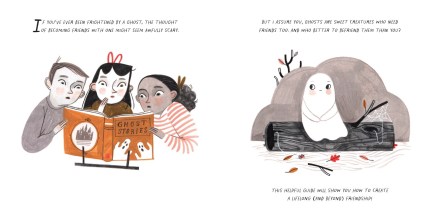
Have you ever thought of ghosts and felt a shiver? Ever been glad you don’t know any ghosts? Well, the little girl narrating this ghostly guide says you should dispel those notions. Ghosts, she assures, “are sweet creatures who need friends too. And who better to befriend them than you?” She even goes on to show potential ghost pals everything they need to know.

celebrate-picture-books-picture-book-review-how-to-make-friends-with-a-ghost-on-log

Copyright Rebecca Green, 2017, courtesy of Tundra Books.

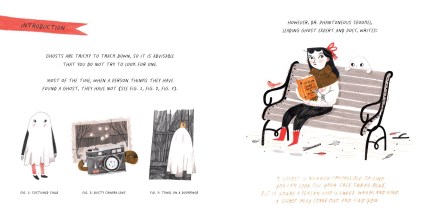
First, you must learn to recognize a ghost when you see one. There are many false sightings, like kids in costumes, impressions made by a “dusty camera lens,” and “a towel on a doorknob.” But the leading expert on such matters, Dr. Phantoneous Spookel reveals that instead of searching for ghosts, it’s best to let them find you. To help you recognize them, the little girl provides an easy-to-follow classification guide that can help.

celebrate-picture-books-picture-book-review-how-to-make-friends-with-a-ghost-false-sightings

Copyright Rebecca Green, 2017, courtesy of Tundra Books.

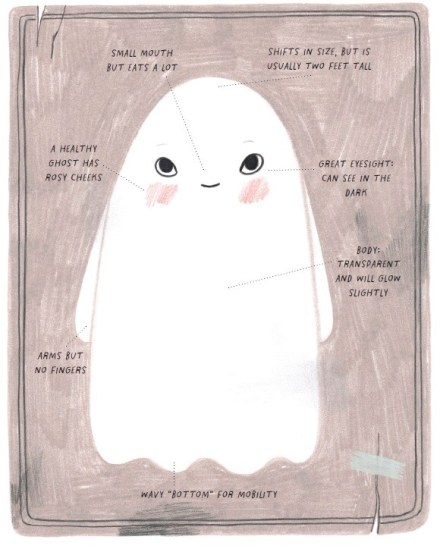
If you’ve been approached by a figure that has rosy cheeks, arms but no fingers, a glowing body, and a “wavy bottom for mobility,” you can be pretty sure you’ve seen a ghost. Here are some dos and don’ts for how to proceed. Your first instinct may be to flee, but “do not run! Ghosts are very sensitive creatures.” Just be friendly and “tell the ghost your name.” Invite the ghost into your home, but “never ever put you hand through a ghost. It can cause a serious tummy ache.”

celebrate-picture-books-picture-book-review-how-to-make-friends-with-a-ghost-classification-guide

Copyright Rebecca Green, 2017, courtesy of Tundra Books.

Ghosts require special care and enjoy snacks like “moldy toast, earwax truffles, pickled boogers, mud tarts, and cinnamon-dusted insects.” For a main course, “Floating Spaghetti and Mudballs hits the spot. Wonder how to keep your ghost friend happily occupied? A walk through the woods in search of “leaves, acorns, and worms” is always nice. Ghosts also love scary stories like the ones found in “Tales of the Living by Mort L. Bings.” And they like to laugh at funny jokes and dance to “creepy music.” Of course, a ghost friend fits right in on Halloween.

celebrate-picture-books-picture-book-review-how-to-make-friends-with-a-ghost-dancing

Copyright Rebecca Green, 2017, courtesy of myblankpaper.com.

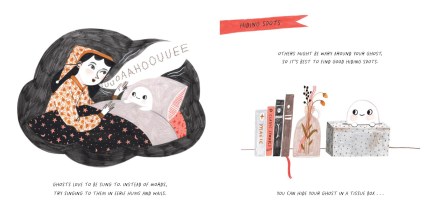
When a ghost gets tired, it’s a perfect time for a long soak in a warm caldron bath. Then off to the dankest corner of the attic for a little snooze and sweet nightmares on some soft moss. If your ghost has trouble falling to sleep, you can sing a lullaby of “eerie hums and wails.” Sometimes your ghost might like to hide when you have company, Good spots include the “tissue box…a sock drawer…or the refrigerator” next to the milk.

Even though ghosts are quick, their soft, white shapelessness can get them into trouble. “Do not let your ghost be used as a tissue!” Getting mixed up with the laundry can cause problems of the soggy or fluffy kind, and ghost should be especially careful in the kitchen, where they can be mistaken for “eggs, whipped cream, sour cream, and marshmallows.”

celebrate-picture-books-picture-book-review-how-to-make-friends-with-a-ghost-tissue-box

Copyright Rebecca Green, 2017, courtesy of Tundra Books.

Perhaps the best part about having a ghost as a friend is that they will be your buddy for life—and even beyond. As you grow up there are certain things you can do to maintain your friendship. When you leave home and find your own place, make sure it’s comfortable and isn’t haunted. “Ghosts do not like competition.” Make time every day to spend with your ghost, and if you start a family, you should know that “your ghost will love mini versions of you too.” When you grow old, your ghost will still be there to help out and make life better. Yes, “the best part about making friends with a ghost is that you’ll have the sweetest friend…forever.”

celebrate-picture-books-picture-book-review-how-to-make-friends-with-a-ghost-say-hi

Copyright Rebecca Green, 2017, courtesy of myblankpaper.com.

Rebecca Green’s spirited tribute to true friendship is sweet and funny and applicable to all pals—ghostly or not. Who wouldn’t like the kind of friendship that lasts forever? Through her ghostly guide, Green reveals that a new friend may be of an unexpected sort and might even be someone who has been invisible to you. Her tips show that embracing a new friend is as easy as saying hi and making them feel important with special treatment, understanding, and sharing favorite activities. Friendships can suffer when two people grow up and grow apart because of distance, work, or family, but Green suggests that with careful attention, a friendship can last forever.

celebrate-picture-books-picture-book-review-how-to-make-friends-with-a-ghost-snacks

Copyright Rebecca Green, 2017, courtesy of myblankpaper.com.

Green’s adorable gouache and colored-pencil illustrations have a timeless feel rendered in soft beiges and grays punctuated with red accents. Green’s clever text is enhanced by images of the false ghost sightings, classification guide, ghost snacks, hiding places and hazards, and the expressive little ghost as it laughs, plays, sleeps, and smiles. As the girl grows older, the ghost takes the lead in activities the two enjoy, leaving readers with a satisfying and comforting feeling.

Readers will giggle and “aww” and fall in love with the little ghost and the idea of such a wonderful friendship. How to Make Friends with a Ghost is rich in charm and sage advice and would make a welcome presence on any child’s or classroom bookshelf.

Ages 4 – 8

Tundra Books, 2017 | ISBN 978-1101919019

Learn more about Rebecca Green and find a gallery of her illustration work on her website.

Don’t be frightened! It’s just the adorable How to Make Friends with a Ghost book trailer!

Picture Book Month Activity

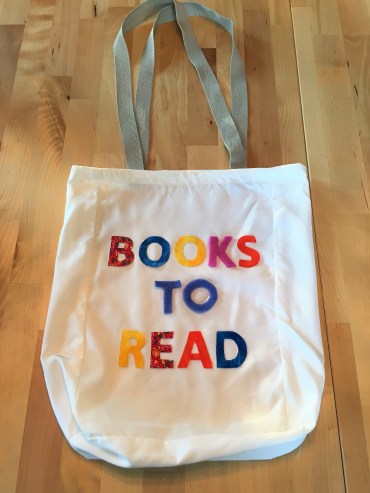
celebrate-picture-books-picture-book-review-books-to-read-bag-empty

Books to Love, Books to Read Book Bag


True book lovers can’t go anywhere without a book (or two or three) to read along the way. With this easy craft you can turn a cloth bag into a kid-size book bag!


Supplies

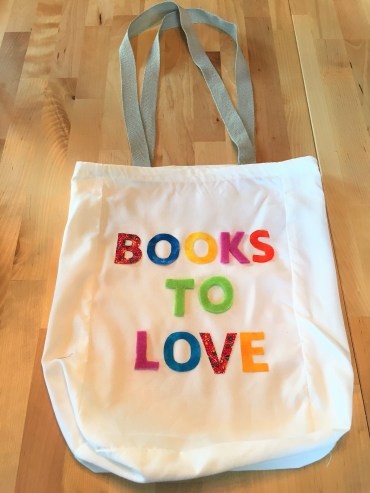
  • Printable Templates: Books to Read Template | Books to Love Template
  • Small cloth bag, available from craft or sewing stores—Recyclable Idea: I used the bag that sheet sets now come in
  • Cloth trim or strong ribbon, available from craft or sewing stores—Recyclable Idea: I used the cloth handles from shopping bags provided from some clothing stores
  • Scraps of different colored and patterned cloth. Or use quilting squares, available at craft and sewing stores
  • Pen or pencil for tracing letters onto cloth
  • Scissors
  • Small sharp scissors (or cuticle scissors) for cutting out the center of the letters
  • Fabric glue
  • Thread (optional)
  • Needle (optional)

celebrate-picture-books-picture-book-review-books-to-love-bag-empty

Directions

  1. Print the sayings and cut out the letters
  2. Trace letters onto different kinds of cloth
  3. Cut out cloth letters
  4. Iron cloth bag if necessary
  5. Attach words “Books to Read” to one side of bag with fabric glue
  6. Attach words “Books to Love” to other side of bag with fabric glue
  7. Cut cloth trim or ribbon to desired length to create handles
  8. Glue (or sew) handles onto the inside edge of bag

November 9 – It’s National Aviation History Month

celebrate-picture-books-picture-book-review-fearless-flyer-cover

About the Holiday

National Aviation History Month and is dedicated to exploring, recognizing and celebrating America’s great contributions and achievements in the development of aviation. Human-powered flight has come a long way from its earliest roots in kites and gliders. Hot-air balloons and biplanes gave way long ago to more and more sophisticated airplanes, jets, and rockets that blast into space. To celebrate the month, visit a local museum or read up on some of the pioneers of early flight—like the courageous woman in today’s book.

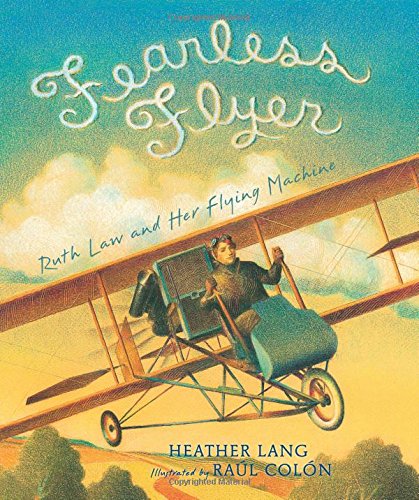
Fearless Flyer: Ruth Law and Her Flying Machine

Written by Heather Lang | Illustrated by Raúl Colón


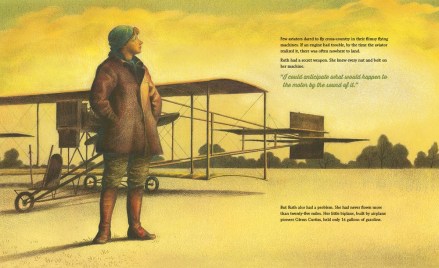
Entertained crowds knew Ruth Law for the loops, the spiral dives, and even the dip of death that she performed in her airshow. But for Ruth these stunts were like standing still. She “longed to fly to get somewhere…somewhere far away.” She decided to make a trip from Chicago to New York City. There weren’t too many aviators brave enough to attempt such a long flight in the type of biplane Ruth flew. They feared that if something went wrong with the engine, they’d never realize it in time to land. But Ruth knew her plane inside and out and figured she “could anticipate what would happen to the motor by the sound of it.”

A trip like the one Ruth envisioned posed another problem, though. Her small biplane held only 16 gallons of gasoline—not enough to make the journey. She asked Glenn Curtis, who built her plane, if she could buy his latest model. This much bigger plane held 205 gallons of gas and had already proven itself for long-distance flight. But Curtis refused. He didn’t believe Ruth could handle the “powerful machine on such a long flight.”

celebrate-picture-books-picture-book-review-fearless-flyer-ruth's-plane

Image copyright Raúl Colón, text copyright Heather Lang. Courtesy of Calkins Creek.

Ruth was not to be deterred. She added three more gas tanks to her plane so that it could hold 53 gallons, installed a cover to protect her legs, and created a scrolling map of the route. Aviation experts said she would fail, but Ruth disagreed. “‘What those men can do a woman can do. I can do,’” she said. On a windy November 19, 1916, Ruth took to the cockpit to begin her nonstop flight. Although she was a little afraid of what lay ahead, she took off, believing that “the scare is part of the thrill” of any experience.

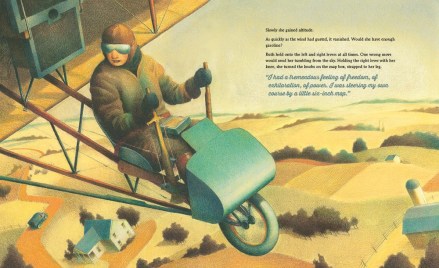
Ruth had counted on the strong wind to help push her farther faster, but just as quickly as it had blown up, the wind stopped. Ruth wondered if she would have enough gasoline after all. Flying over one landmark after another, Ruth felt exhilarated. As she passed over Cleveland, Ohio, though, “the oil gauge registered zero pressure. Something was wrong!” The sounds of her plane’s motors told Ruth a different story. She kept flying.

Soon she was passing over Erie, Pennsylvania—the site of the record-breaking flight by Victor Carlstrom. Even the icy stings of the frigid air couldn’t diminish her excitement. In a moment she was east of Erie and had broken Carlstrom’s record. The thrill of her achievement was tempered, however, by the sputtering of her engine. While there was still a little gas in the plane, it was “too low to feed into the engine.” Ruth tipped the plane forward to give it more gas. Two miles from Hornell, New York, the nearest landing spot, “the engine grumbled its last roar, leaving her with nothing but the silence of the wind.”

celebrate-picture-books-picture-book-review-fearless-flyer-arial-view

Image copyright Raúl Colón, text copyright Heather Lang. Courtesy of Calkins Creek.

Ruth steered the plane as it glided into Hornell—512 miles from Chicago. She was the new American nonstop flight record holder. Ruth’s original plan had been to fly to New York City, so after refueling and grabbing a bite to eat, she took off once again. Weighed down by the full gas tank, the plane barely made it over a hill and tall trees in her path. This was as close to crashing as Ruth ever came—or ever wanted to be.

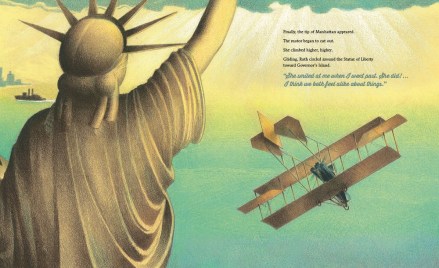
People along the route had already heard about Ruth Law, and they came out to watch and wave. With darkness closing in, Ruth decided that she would have to land short of New York City. She touched down in Binghamton, New York and took up the rest of the flight the next morning. As a thick blanket of fog obscured her view, Ruth flew lower and lower to get her bearings. When she finally spied the tip of Manhattan, she glided in and “circled around the Statue of Liberty toward Governor’s Island.” Of Lady Liberty, Ruth said, “‘She smiled at me when I went past. She did!…I think we both feel alike about things.’”

celebrate-picture-books-picture-book-review-fearless-flyer-statue-of-liberty

Image copyright Raúl Colón, text copyright Heather Lang. Courtesy of Calkins Creek.

Cheered by a celebratory crowd and brass band, Ruth landed on the welcoming earth. Despite the icicles that hung from her hair and the numbing cold, Ruth smiled and waved. She realized then that not only had she broken an aviation record, she had made a point for all women. She later put her thoughts into words: “The sky was my limit and the horizon my sphere. It’s any woman’s sphere if she has nerve and courage and faith in herself.”

An Author’s Note about Ruth Law and her life, complete with photographs, follows the text.

Heather Lang’s thrilling account of Ruth Law’s record-breaking flight from Chicago to New York will have young aviators on the edge of their seat. Law’s flight was filled with suspense from its inception as an idea in a young woman’s mind to its final touchdown, and Lang deftly incorporates the facts as well as Law’s feelings into her well-rounded story. Along the way, readers learn about Ruth and also about early aviation. Ruth Law’s own words, included throughout the story, will inspire children as they see that even though she lived long ago, her thoughts and ideas still ring true today.

Young readers will be fascinated by Raúl Colón’s glowing illustrations of Ruth Law and her flying machine. His detailed drawings of Law’s biplane give children an excellent view of the open-air craft, fostering a true understanding of the courage it took for her to undertake such a flight. Images from Law’s viewpoint in the cockpit allow readers to vicariously travel her path to self-realization and a record-breaking flight.

Ages 5 – 8

Calkins Creek, 2016 | ISBN 978-1620916506

Check out Heather Lang’s website for more about her and her books. You’ll also find links to a video and photos about Ruth Law, a map of her route, and information about her plane as well as a Teacher’s Guide.

Fly along with Ruth in this Fearless Flyer book trailer!

National Aviation History Month Activity

celebrate-picture-books-picture-book-review-biplane-craft

Head in the Clouds Biplane


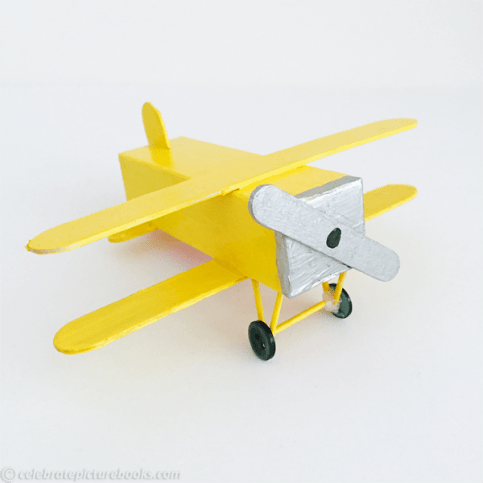
If you love airplanes and flying, you’ll have fun making your own plane from recycled materials! Use your creativity to decorate your plane while you imagine yourself flying through the clouds on a beautiful day. Younger children will have fun sharing this activity with an adult or older sibling too!

Supplies

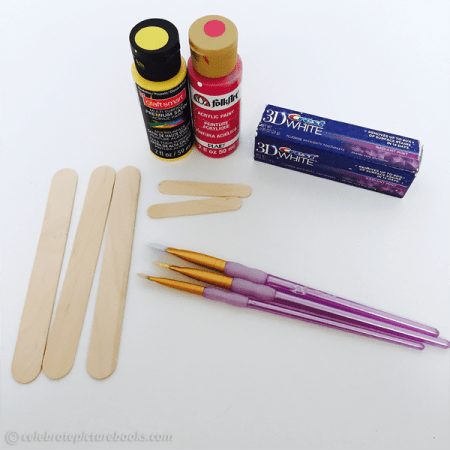
  • Travel-size toothpaste box
  • 3 6-inch x 1/2-inch craft sticks
  • 2  2 1/2-inch x 7/8-inch mini craft sticks
  • 5 Round toothpicks, with points cut off
  • Paint in whatever colors you like for your design
  • 4 small buttons
  • 2 mini buttons
  • Paint brushes
  • Strong glue or glue gun

Directions

  1. Empty toothpaste box
  2. Paint toothpaste box and decorate it
  3. Paint the craft sticks and 5 toothpicks
  4. Paint one small craft stick to be the propeller
  5. Let all objects dry

To assemble the biplane

  1. For the Bottom Wing – Glue one 6-inch-long craft stick to the bottom of the plane about 1 inch from the end of the box that is the front of the plane
  2. For the Top Wing – Glue the other 6-inch-long craft stick to the top of the plane about 1 inch from the front of the plane
  3. For the Tail – Glue one mini craft stick to the bottom of the box about ¾ inches from the end that is the back of the plane
  4. For the Vertical Rudder – Cut the end from one of the painted 6-inch-long craft sticks, glue this to the back of the box, placing it perpendicular against the edge and half-way between each side

To assemble the front wheels

  1. Cut 4 painted toothpicks to a length of ¾-inches long
  2. Cut one painted toothpick to a length of 1-inch long
  3. Glue 2 of the 3/4-inch toothpicks to the back of 1 button, the ends of the toothpicks on the button should be touching and the other end apart so the toothpicks form a V
  4. Repeat the above step for the other wheel
  5. Let the glue dry
  6. Glue the 1-inch long toothpick between the wheels at the center of each wheel to keep them together and give them stability. Let dry

To make the back wheel

  1. Cut two ¼-inch lengths of painted toothpick and glue them together. Let dry
  2. Glue two mini buttons together to form the back wheel. Let dry
  3. Glue the ¼-inch toothpicks to the mini buttons. Let dry
  4. Glue these to the bottom of the plane in the center of the box directly in front of and touching the tail

Display your biplane!

Picture Book Review

November 8 – Cook Something Bold and Pungent Day

celebrate-picture-books-picture-book-review-tacos!-cover

About the Holiday

Hmm-mmm! Nothing satisfies quite as much as tangy, spicy dishes. Garlic, red pepper, ginger, mustard, cumin, and many other spices and flavors bring a tantalizing tingle to taste buds. Today’s holiday was established to encourage people to explore all the savory sensations of bold cuisine. You know how to celebrate! Visit your favorite restaurant or cook up your own zesty meal.

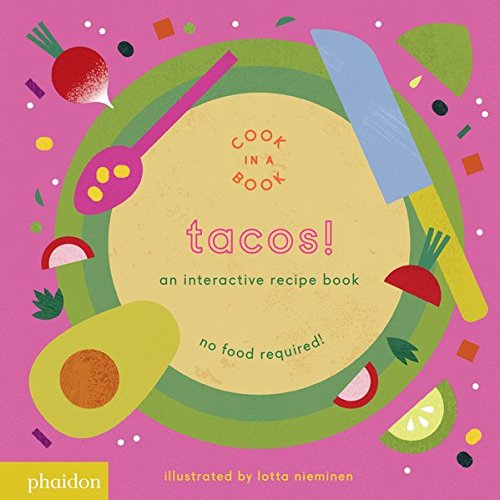
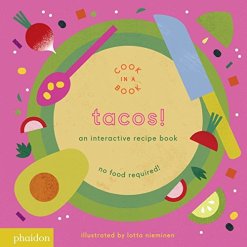
Tacos! An Interactive Recipe Book

Illustrated by Lotta Nieminen


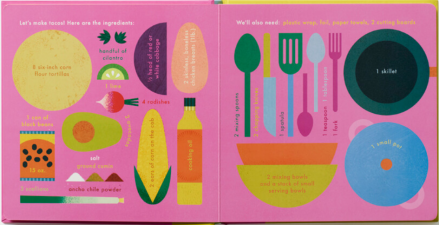
Do you have all your ingredients? The tortillas, black beans, chicken, avocados, ears of corn, cabbage, radishes, lime, scallions, cilantro, cumin, ancho chili powder, and salt? How about mixing bowls, cutting boards, a pot, a skillet, and an array of utensils? Get ‘em! Got ‘em? Good! Now… “use the first cutting board and knife to cut the chicken into cubes and toss them in a bowl with the spices.” Cover and refrigerate for 20 minutes to one hour.

celebrate-picture-books-picture-book-review-tacos!-ingredients

Copyright Lotta Nieminen, 2017, courtesy of Phaidon.

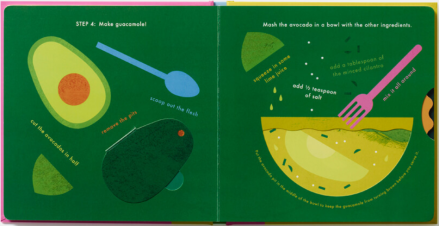
Next, cook the chicken in the skillet “until the pink color disappears.” While you’re waiting for the chicken to finish, grab the big knife and cut the vegetables. Now it’s time to use that avocado—plus the lime, salt, and a bit of cilantro—to make guacamole. Mash and stir all the ingredients until you’ve made a smooth, green paste.

celebrate-picture-books-picture-book-review-tacos!-guacamole

Copyright Lotta Nieminen, 2017, courtesy of Phaidon.

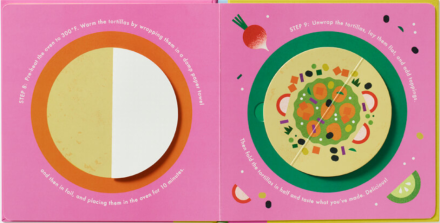
You can set the guacamole aside while you heat up the black beans in a pot and slice the corn kernels off the cob—zip! zip! zip! Now comes the building part! Gather all of your ingredients, plus any others you may like to add, like sour cream, cotija cheese, or pico de gallo and set to work! Warm your tortillas by “wrapping them in a damp paper towel and then in foil, and placing them in the oven for 10 minutes.”

Ahhh! Lay the warm tortillas on a plate and add the chicken, beans, corn, guacamole, and your favorite toppings. All that’s left is to fold your tortilla in half and take a bite. Hmm-mmm!

celebrate-picture-books-picture-book-review-tacos!-heating-tortilla

Copyright Lotta Nieminen, 2017, courtesy of Phaidon.

Lotta Nieminen’s Cook in a Book series of interactive cookbooks for kids (and fun-loving adults) are smart, refreshing, and addictively playful. Nieminen’s sophisticated art and color palette invite kids (and did I mention adults?) to play around with cooking through clever tabs flaps, wheels, and pull outs. In Tacos! readers sizzle up chicken through a pull tab that turns pink cubes to golden brown. On the next page, children can remove the cardboard knife and pretend to chop as the pull tab creates slices and dices of scallions, cabbage, and radishes.

Kids can put the knife back in its slot or use it on the next page to divide the avocado, which opens like a little book. By turning the wheel, children mix the guacamole ingredients from a light green to a rich green texture. The same wheel allows readers to stir the black beans on the stove when they turn the page. The mechanics at work between the thick board book pages make removing the corn kernels a joy. Slide the top of the ear down and kernels “fly” to each side accompanied by a rippling feel and sound.

celebrate-picture-books-picture-book-review-tacos!-guacamole-mixing

Copyright Lotta Nieminen, 2017, courtesy of Phaidon.

With all the ingredients prepared, children come to Step 8, where a round of foil awaits. On the facing page a tortilla is ready. With just a pop of the finger hole, kids can lift the tortilla from its place, turn it to the plain side, and lay it on the foil. After a bit of waiting for it to “warm,” children (or adults!) can turn it over to where all the delicious toppings mingle, fold it in half, and…enjoy!

The text consists entirely of the recipe, with the directions described in easy-to-follow steps that are sprinkled across the pages, adding a jaunty energy to each spread.

Tacos!—as well as the other books in the series, Pancakes! and Pizza!—would make a fantastic gift for foodie kids and for children who love playing with toy kitchens or in the real thing. Tor the HGTV crowd, the book would be a happy surprise as a housewarming or holiday gift.

Ages 4 – 8 and up

To learn more about Lotta Nieminen and view a gallery of her graphic design and illustration work, visit her website.

Phaidon, 2017 | ISBN 978-0714875057

Cook Something Bold and Pungent Day Activity


celebrate-picture-books-picture-book-review-spice-bottle-penguins

Spice Bottle Penguins


After you’ve used all the spicy goodness, make some cold-weather friends from those little bottles with this fun craft!

Supplies

  • Empty glass or plastic spice bottle with cap
  • Black paint
  • White paint OR White fleece or felt
  • Black paper
  • Yellow foam or heavy paper
  • Googly eyes
  • Styrofoam ball (optional)
  • Glue
  • Paint brush
  • Scissors

Directions

  1. Paint the inside of the glass or plastic bottle with the black paint, let dry
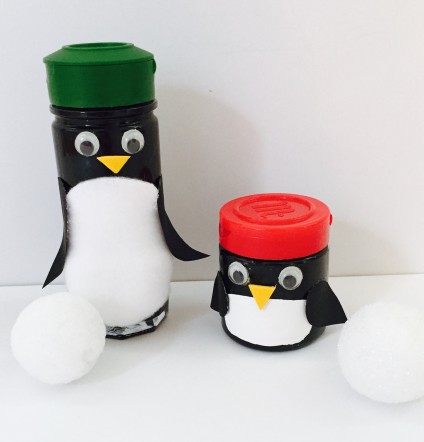
  2. From the white fleece, cut an oval for the penguin’s belly and glue it on. Alternatively, paint a white oval on the jar to make a belly. Fleece may be a better option for younger children, as the paint can scratch off glass and plastic surfaces.
  3. Glue googly eyes near the top of the jar, but below the cap
  4. Cut a triangle of yellow foam or paper for the beak and glue it on
  5. Cut two tear shapes for the wings from the black paper. Glue the top of the shape to the body of the penguin, overlapping the belly a little. Fold the tips up
  6. Give your penguins Styrofoam ball snowballs to play with!

celebrate-picture-books-picture-book-review-tacos!-cover

You can find Tacos! An Interactive Recipe Book at these booksellers

Amazon | Barnes & Noble | Books-a-Million | IndieBound


Picture Book Review

November 7 – It’s Picture Book Month

celebrate-picture-books-picture-book-review-books-books-books-cover

About the Holiday

If you love picture books, you know the thrill of holding a new or a new-to-you book in your hands and opening up to that very first page. The children’s sections of bookstores and libraries draw you in with humor, fairy tales, poetry, biographies, science, and so much more—a whole universe of creativity, thought, knowledge, and imagination—that enlightens and entertains. This month take time to indulge your passion for picture books!

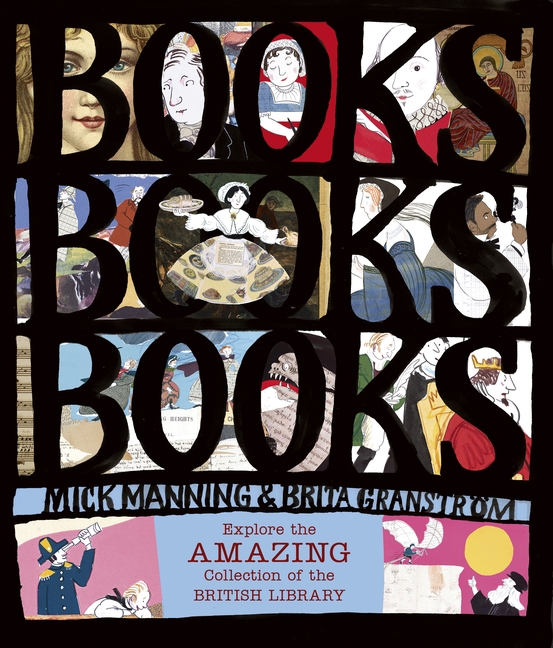
Books! Books! Books! Explore the Amazing Collection of the British Library

By Mick Manning and Britta Granström


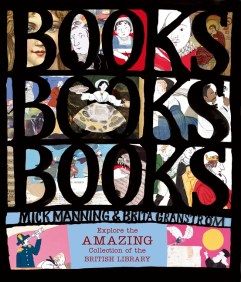
Everyone knows you can fit a book into a library, but how do you fit a library into a book? Mick Manning and Britta Granström have very tidily discovered a way to translate the content and atmosphere of the incredible British Library into their visually stunning and packed-full-of-knowledge picture book. Opening with a brief history of the library building and its holdings, the authors then invite readers inside to take a look.

celebrate-picture-books-picture-book-review-books!-books!-books!-da-vinci

Copyright Mick Manning and Britta Granström, 2017, courtesy of Candlewick Press.

First on display are “ancient handmade books like the St. Cuthbert Gospel, found in a coffin!” this little book is the oldest surviving book to have been produced in Europe that still has its original covers and binding, dating to before 687 CE. After being trekked around England in the coffin—just one step ahead of invading Vikings—it was removed from its hiding place, kept by a private collector, and finally bought by the British Library for nine million pounds in 2011.

celebrate-picture-books-picture-book-review-books!-books!-books!-shakespeare

Copyright Mick Manning and Britta Granström, 2017, courtesy of Candlewick Press.

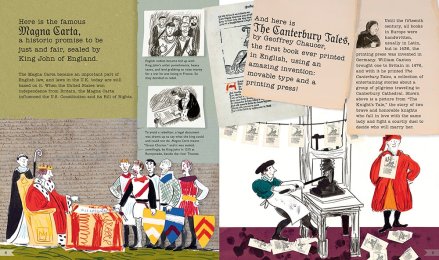
Any English major knows all about the thrilling Scandinavian story of Beowulf—“the oldest surviving long poem in Old English.” The copy found in the British Library is “three thousand lines long” and “was hand-written in the eleventh century.” Here too is the Magna Carta—one of the most influential legal documents in the world. And the Canterbury Tales may just be something assigned in high school to some people, to others it is a technological marvel—“the first book ever printed in English using an amazing invention: moveable type and a printing press.”

celebrate-picture-books-picture-book-review-books-books-books-magna-carta

Copyright Mick Manning and Britta Granström, 2017, courtesy of Candlewick Press.

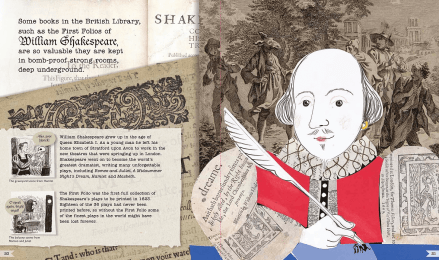
“Big book” doesn’t begin to describe the Klencke Atlas which was made for England’s King Charles the Second. It is so “ginormous” at 7 feet x 5 feet 10 inches (2,1 x 1.78 meters) that “it takes six people to lift it!” What’s the smallest book, you ask? That would be Lady Jane Grey’s Prayer Book. Measuring just 2 ¾ x 3 3/8 inches (70 x 85 millimeters), it accompanied her to her execution after she ruled England for only nine days. Then there are books of all sizes that “are so valuable that they are kept in bombproof strong rooms, deep underground.”

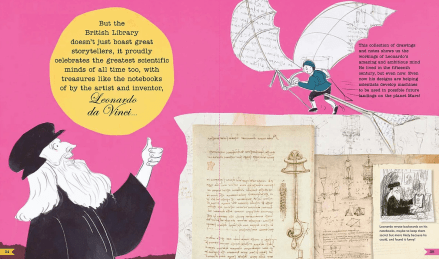
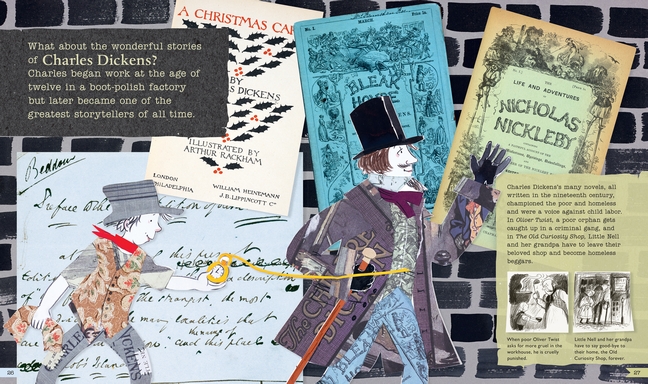
Britain has produced many of the greatest writers of all time, and their books can also be found here. Authors such as Jane Austin; Emily, Charlotte, and Anne Brontë; and Charles Dickens. Any good library offers books of all types—not just fiction—and the British Library is no exception. You’ll find cookbooks, medical books, and scientific books, like writings by Leonardo da Vinci, Oliver Goldsmith, and Charles Darwin.

celebrate-picture-books-picture-book-review-books!-books!-books!-alice-in-wonder-land

Copyright Mick Manning and Britta Granström, 2017, courtesy of Candlewick Press.

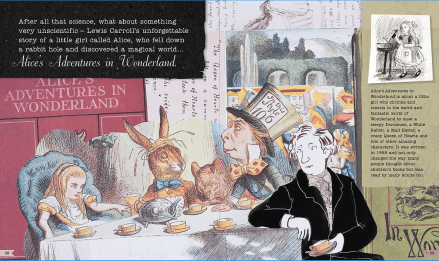
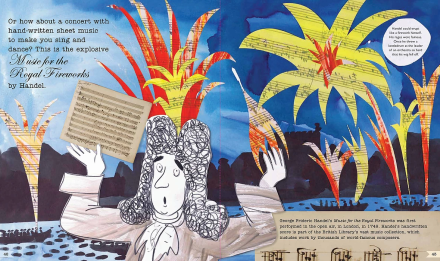
There’s the fantastic—like Lewis Carroll’s Alice’s Adventures in Wonderland—and the mysterious—like the cases of Sherlock Holmes by Arthur Conan Doyle. Some writings don’t come in a book, but they move people all the same. That’s why the British Library also has collections of sheet music from the world’s greatest composers and “a copy of every newspaper published every day in Britain and Ireland since 1869, as well as many more going back to the seventeenth century.”

How does one library hold so many books? Well, many of them are contained in vaults, and if you were to order one for viewing or to check out, it would come on “an automatic conveyor system, like a little railway.” That’s the way one library can hold so many books, and now you know how one book can hold an entire library!

celebrate-picture-books-picture-book-review-books!-books!-books!-music

Copyright Mick Manning and Britta Granström, 2017, courtesy of Candlewick Press.

Mick Manning and Britta Granström’s text-and-illustration collaboration creates a masterful tour of one of the world’s most treasured institutions. Choosing which books and authors to highlight, must have been an awesome task (in both senses of the word), and Manning and Granström more than succeed with their collection of the fascinating, familiar, and fantastic. Leading off with a book preserved in a coffin is a combination of comic and creepy genius that kids will eat up, and ending with perennial favorite, Sherlock Holmes, who is known to all ages, is elementary brilliance. Each book or type of book is presented on a two-page spread that includes a brief history and description of the work or collection, a bit about the author, and, where appropriate, a snippet from the story.

celebrate-picture-books-picture-book-review-books-books-books-dickens

Copyright Mick Manning and Britta Granström, 2017, courtesy of Candlewick Press.

Dynamic collage-style illustrations employ era-appropriate colors, typefaces, and images for each book introduced, allowing readers to clearly see the authors, subjects, characters, and themes each work encompasses. A skeleton lies in a dark casket, his bony hand holding the St. Cuthbert Gospel; Beowulf rips the arm off a Grendel created from pages written in Old English; Lady Jane Grey’s shadow portrays her executioner; old-style anatomical drawings inform the discussion of medical books; as Charles Dickens walks past a wall plastered in broadsides of his book covers, could that be little Oliver Twist pickpocketing his pocket watch?; and Lewis Carroll sits at the table with Alice, a Dormouse, the White Rabbit, and the Mad Hatter.

More information about the works and their authors as well as a glossary follows the text.

For book lovers, every page of Books! Books! Books! brings a smile. It would be a welcome addition to home bookshelves and a fantastic resource for school or classroom libraries.

Ages 8 – 12

Candlewick Press, 2017 | ISBN 978-0763697570

Discover more about the books produced by Mick Manning and Britta Granström on their website.

Picture Book Month Activity

celebrate-picture-books-picture-book-review-bookmark-craft

Book Jacket Bookmark


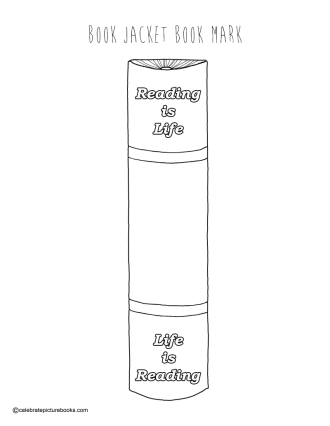
If you can’t get enough of reading, print out one—or more!—of this printable Book Jacket Bookmark. Why not add the title of a story you would write to the spine then color it before slipping it between the pages of your book?

celebrate-picture-books-picture-book-review-books-books-books-cover

You can find Books! Books! Books! at these booksellers

Amazon |Barnes & Noble | Books-a-Million | IndieBound

Picture Book Review

Picture Book Review

November 1 – National Author’s Day & Interview with Author Linda Booth Sweeney

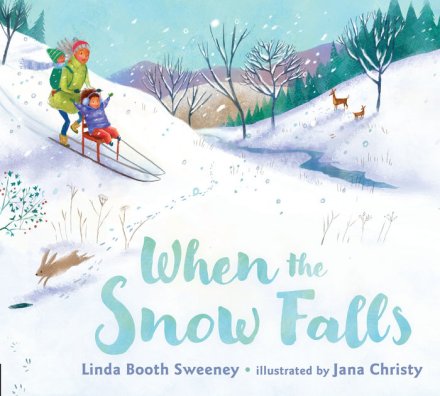
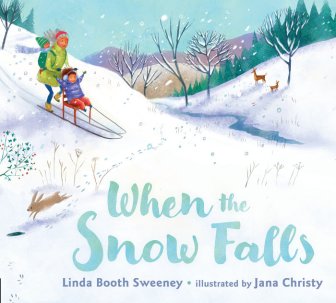
celebrate-picture-books-picture-book-review-when-the-snow-falls-cover

About the Holiday

There may be no better month to celebrate Author’s Day than in November. Not only is it Picture Book Month, but thousands of people set aside their usual routine to take part in NaNoWriMo or National Novel Writing Month, when writers try to complete at least a first draft of a novel in one month. To kick off all of this literary love today, we remember and honor American authors past and present. The holiday was instituted in 1928 by Nellie Verne Burt McPherson, president of the Bement, Illinois Women’s Club. An avid reader, she established Author’s Day to thank writer Irving Bacheller who sent her an autographed story in response to her fan letter. The day was officially recognized in 1949 by the United States Department of Commerce. McPherson’s granddaughter, Sue Cole, has promoted the holiday since her Nellie’s death in 1968 and encourages people to spend a bit of the day writing a note of appreciation to their favorite author.

When the Snow Falls

Written by Linda Booth Sweeney | Illustrated by Jana Christy


A little curly-haired girl and her younger brother wake up from a sleepover with Grandma to a magical sight. As they gaze out the big picture window in the little girl’s room, they’re dazzled to see “When the snow falls…Frost paints. / Skies gray. / Windows sparkle/ Snow? Yay!” There’s no school today, so Mommy and Daddy and Grandma bundle up and get the kids ready to head outdoors to take care of the farm animals.
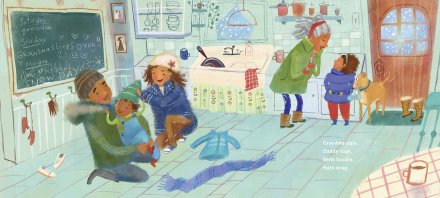
celebrate-picture-books-picture-book-review-when-the-snow-falls-kitchen

Image copyright Jana Christy, 2017, text copyright Linda Booth Sweeney, 2017. Courtesy of G. P. Putnam’s Sons for Young Readers.

Soft flakes flutter down, piling into deep drifts and providing a little extra after-breakfast treat as “Boot sink. / Lashes flick. / Tongues tickle. / We lick.” In the barn the horses, puppies, and chickens are just as excited about the snowy day. Riding an old chair sled, Grandma and her grandchildren glide down the hill, following tracks left by lively rabbits and now-dozing foxes.

Deep in the forest the three take in the beauty: “Woods hush. / Fields glisten. / Wren sings. / We listen.” On the other side of the woods, people continue their daily routine but at a slower pace as “plows push” and “mountains grow.” Grandma and the kids slide into town, where people are hard at work keeping up with the storm: “Wheels crunch. / Shovels scoop. / Ice cracks! / Awnings droop.”
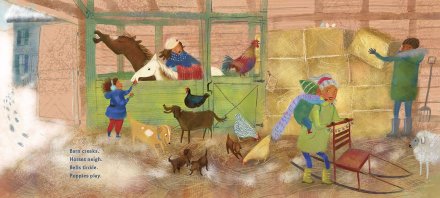
celebrate-picture-books-picture-book-review-when-the-snow-falls-barn

Image copyright Jana Christy, 2017, text copyright Linda Booth Sweeney, 2017. Courtesy of G. P. Putnam’s Sons for Young Readers.

The trio has reached Grandma and Grandpa’s house. They all grab shovels and help clear the walk. Now it’s Grandpa’s turn to have some fun. He takes his granddaughter by the hand, seats her little brother on a sled, and walk to the park. There, kids are making snowmen, building snow forts, and zipping down hills on their snow saucers. At the bottom of the hill everyone plops into the fluff and make snow angels.

It’s been an exhilarating, adventurous day, but twilight is on the horizon and now “toes tingle. / Lips quiver. / Cheeks glow. / We shiver.” As grandma calls from her front porch, the little girl and Grandpa, carrying his grandson, race toward home amid the swirling snowflakes. Inside, the light, warmth, and cozy comforts of warm soup, popcorn, and a crackling fire await. Later, the two kids enjoy quiet time with Grandma and Grandpa when “Cocoa warms. / Mittens puddle. / Day dawdles. / We cuddle.”
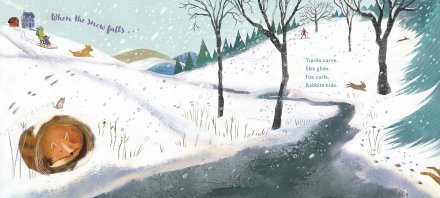
celebrate-picture-books-picture-book-review-when-the-snow-falls-fox

Image copyright Jana Christy, 2017, text copyright Linda Booth Sweeney, 2017. Courtesy of G. P. Putnam’s Sons for Young Readers.

With her brilliantly expressive staccato sentences—each only two words long—Linda Booth Sweeney evokes the sights, sounds, and joy of a care-free, snowy day. Each four-line, rhyming verse abounds with melodic verbs that spark readers’ imaginations and concrete nouns that in many places form delightful alliterative pairs that softly trip off the tongue. Readers will love the story line that takes them from a rustic farmhouse to Grandma and Grandpa’s cozy home through woods, over hills, past the highway, and into downtown all with the help of an old-style sled. Several verses full of snow day fun play out like a long afternoon spent with friends, leading naturally into the slower pace and loving comfort of the night spent with Grandma and Grandpa.
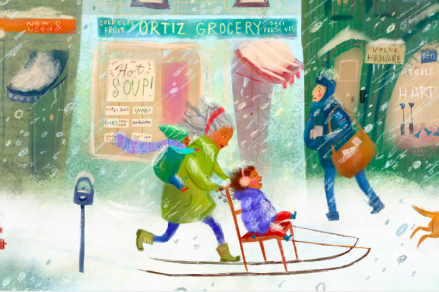
celebrate-picture-books-picture-book-review-when-the-snow-falls-sledding-with-grandma

Image copyright Jana Christy, 2017, text copyright Linda Booth Sweeney, 2017. Courtesy of G. P. Putnam’s Sons for Young Readers.

In glorious two-page spreads, the wind-swept snow swirls, spatters, and blankets the world in downy white fluff. Jana Christy takes children into the family’s large farmhouse kitchen where a blackboard announces Grandma’s Sunday sleepover as well as Monday’s snow day in place of the crossed-out piano lesson. The family steps out into the sparkling countryside where purple mountains form a backdrop for the barn and sheep pen. As Grandma and the kids start their journey, the forest, a quiet enclave of teal and greens, welcomes them. By the time they reach town, cars are stuck in snowdrifts, snow shovels scrape against the sidewalk, and kids are heading to the park.
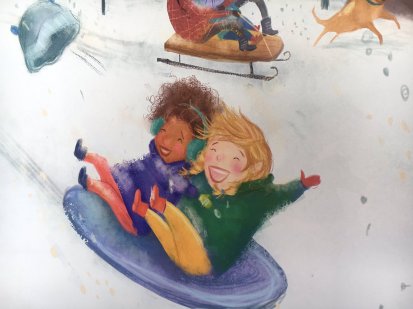
celebrate-picture-books-picture-book-review-when-the-snow-falls-sledding

Image copyright Jana Christy, 2017. Courtesy of G. P. Putnam’s Sons for Young Readers.

The thrill of playing in the snow is palpable as saucers zoom down hills, hats fly off, and hair blows in the wind. The final spreads of Grandma and Grandpa’s tidy home glow with love and laughter as the kids pull off their snow gear, their dog shakes off the snow, and they settle on the couch for cocoa and cuddles. The busy townspeople, happy playmates, and close-knit mixed-race family make When the Snow Falls a cheerful celebration of diversity.

When the Snow Falls is a joyous book to add to winter collections and would be often asked for during home, classroom, and library story times.

Ages 3 – 7

G. P. Putnam’s Sons Books for Young Readers, 2017 | ISBN 978-0399547201

Discover more about Linda Booth Sweeney, her books and her systems work, visit her website.

To learn more about Jana Christy, her art, and her books, visit her website.

National Author’s Day Activity
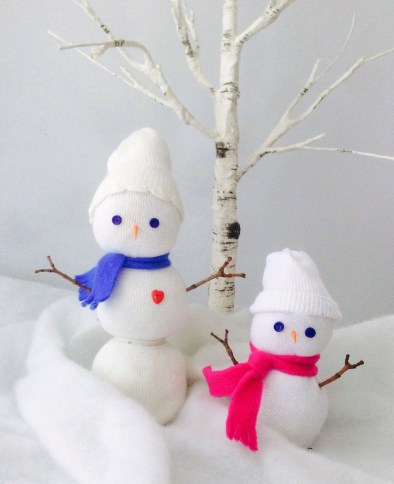
celebrate-picture-books-picture-book-review-sock-snowman-craft

Snow Buddies

Even when there’s no snow, you can make yourself a snow buddy with this fun and easy craft!

Supplies

  • White dress ankle socks
  • Polyester Fiber Fill
  • Tiny buttons
  • Fleece or ribbon, enough for a little scarf
  • Toothpicks
  • Twigs
  • Orange craft paint
  • Cardboard
  • White rubber bands, one or two depending on the size of the snowman
  • Fabric or craft glue
  • Small hair band (optional)

Directions

To Make the Snowman

  1. Cut a circle from the cardboard about 2 inches in diameter for the base
  2. Place the cardboard circle in the bottom of the sock
  3. Fill the sock with fiber fill about ¾ full or to where the ribbed ankle cuff begins. Pack tightly while making a sausage shape. You can make your snowman different shapes with the amount of fill you use.
  4. Stretch out the cuff of the sock and tie it off near the top of the fill either with a loop knot or with the hairband.
  5. Fold the cuff down around the top of the filled sock to make the hat.
  6. Wrap a rubber band around the middle of the sock to make a two-snowball snowman. For a three-snowball snowman, use two rubber bands. Adjust the rubber bands to make the “snowballs” different sizes.

To Make the Scarf

  1. Cut a strip of fleece or ribbon 8 to 10 inches long by ½ inch wide
  2. Tie the fleece or ribbon around the neck of the snowman
  3. To Make the Nose
  4. Dip one end of the toothpick into orange paint, let dry
  5. Cut the toothpick in half
  6. Stick the toothpick into the head or top portion of the snowman

To Make the Arms

  1. Insert small twigs into each side of the body of the snowman
  2. You can also use wire or cardboard to make the arms
  3. Attach two mini-buttons to the face for eyes with the fabric or craft glue
  4. Display your Snow Buddy

Interview with Linda Booth Sweeney

celebrate-picture-books-picture-book-review-linda-booth-sweeney

As the weather turns cooler, I’m happy to talk with Linda Booth Sweeney about the event that inspired her first book for children, a favorite wintertime activity, and how we can learn to see and benefit from systems.

How did you get started writing for children?

It seems like I’ve always been writing though it has taken me a long time to call myself a writer. During our last move, I discovered an old cardboard box from my parents’ attic.  After moving it literally for years, I finally opened it this summer. Inside there must have been 15 diaries and journals. When I looked at the dates, I realized that I started writing in those when I was about twelve and I really haven’t stopped. 
celebrate-picture-books-picture-book-review-when-the-wind-blows

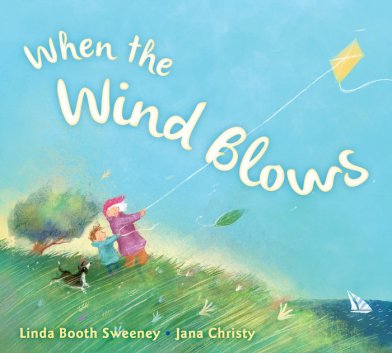
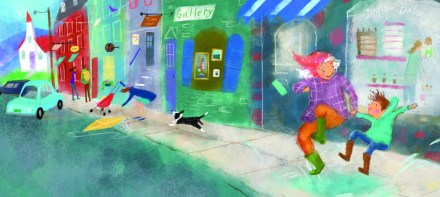
I actually remember the exact day I began writing for children! Jack, my oldest son (now 19), was three. I was pushing him around Cambridge in one of those $20 pop-up strollers. We were a good fifteen minutes from home when a gale force wind blew in. The little canopy on this stroller snapped off and I remember feeling like the stroller lifted up off the ground. This was before cell phones so there was no calling for a ride. I put my head down and ran for home. Well, Jack loved that, and the wind blowing! He was bouncing up and down, pointing to everything he saw: signs rattling, balls rolling, hats flying.
celebrate-picture-books-picture-book-review-when-the-wind-blows-city

Image copyright Jana Christy, 2017, text copyright Linda Booth Sweeney, 2017. Courtesy of G. P. Putnam’s Sons for Young Readers.

During his nap that afternoon, I flopped down at my desk, grateful we made it home in one piece. Jack’s excitement was contagious and his words were swimming around my head so I wrote them down. That was the beginning of my first children’s book, When the Wind Blows.

Using short, two-word phrases, your picture books are so evocative of actions outdoors and indoors as well as internal emotions. Can you describe your writing process?

I was mimicking the voice of a three-year old so the two words. Balls roll. Object and action. Noun and verb. It just made sense. In my other books like the one I’m working on now about the sculptor of the Lincoln Memorial, I am writing for older readers (ages 7-12). My sentences are longer. The book is inspired by big themes like being true to oneself, equality, social justice, and love for country so I find myself writing punchy sentences in the scenes and more lyrically the bridges, or the transitions, between scenes.

Do you remember your favorite picture book when you were a child?

As a little kid, I always loved Dr. Seuss books. My imagination was going full tilt as a kid. Dr. Seuss made me feel like the other worlds I created were not just okay but to be celebrated! As a nine-year-old, I devoured Encyclopedia Brown and anything by James Herriot.

Your first book for children, When the Wind Blows, takes readers on a jaunt through town on a blustery day. When the Snow Falls is a joyful romp through a winter day. What is it about weather that inspires you and your writing?

It’s the immediacy that weather brings. When the rain is pouring down or the snow is falling, that grabs my attention. Of course my attention is also on how to keep my fingers warm or my feet dry. But I can’t think of much else. I love that. I have to be in the moment. My favorite poet, Mary Oliver, captures this idea well in her “Instructions for living a life:
Pay attention.
Be astonished.
Tell about it.”

If you’re outside stomping in puddles or making snow angels, who needs to be on a phone? There’s a lot of research coming out that equates nature to a “vitamin” we all need. Richard Louv, the author of Last Child in the Woods: Saving Our Children from Nature-Deficit Disorder, says it well: “Just as children need good nutrition and adequate sleep, they may very well need contact with nature.” 
celebrate-picture-books-picture-book-review-linda-booth-sweeney

You mentioned in one of your blog posts that When the Snow Falls first took shape during “found time” during the winter of 2015 with its four nearly back-to-back snow storms. Do you have any advice for recognizing and taking advantage of found time not only for writers, but for anyone?

I think the biggest opportunity to enjoy found time comes when we’re willing to put down technology. Sure the photos we can take on our iPhone may be lovely but what if sometimes we are just there, fully present, open and even willing to be a little bored.  Maybe then we can be dazzled by the red Cardinal that lands on the white snowman or the hush that creeps in when no can one drive.

What is your favorite wintertime activity?

I love looking for snow art and especially love seeing it through the eyes of little ones. I’m always amazed by the “art” that forms during snow storms – polka-dotted fields, top hats on fence caps, intricate patterns on round porch tables, delicate animal tracks that look like instructions for some kind of dance move. 

And then of course there is cross country skiing with my family and my crazy friends.

Your other work involves Systems Thinking. Can you describe systems thinking and talk about your systems thinking work with children and schools?

Sure. Like a spider’s web, what happens on one part of the web affects every other part. The same is true of living systems. A pond, our family, our school, a city, the climate—these are all systems. They have two or more parts that interact over time. What’s really interesting is that these different kinds of systems share some similarities, and they can act in surprisingly similar ways. (You can learn more about my systems work here).

How does considering systems thinking and living systems benefit children and their education?

Systems thinking, or “Thinking about systems,” means paying attention to the interrelationships and patterns that surround us. My experience, and that of systems educators around the globe, shows that children are naturally attuned to this. They can read If You Give a Mouse a Cookie by Laura Numeroff and then recognize that same closed loop of cause and effect in their everyday lives.  

A few years back I wrote When a Butterfly SneezesA Guide for Helping Kids Explore Connections in our World as a resource for anyone who wants to help children think about interconnections in our world. Each chapter focuses on a favorite children’s picture book—like If You Give a Mouse a Cookie and The Sneetches by Dr. Seuss—and shows how to use the story to engage children in systems thinking. I just finished updating that book and the new version should be up and ready by next week!

To answer your question about how systems thinking benefits children, learning about systems, and about living systems in particular, can help children to make better decisions and avoid unintended consequences. It can also help them to develop a more compassionate and sustainable sensibility about what is beautiful and what is essential.

I always come back to the Joseph Campbell quote—“People who don’t have a concept of the whole, can do very unfortunate things.…”—and flip it: People—and especially children—who have a concept of the whole can do very fortunate things. If we encourage young people to look for the “whole” and not just focus on the parts, they will be geared toward seeing connections and will not see things in isolation. So much in our culture forces us into compartments. But just as we teach kids not to be victims of advertising, we can teach them to see beyond the obvious, to see the systems all around us.  

What’s up next for you? 

My next children’s book is a richly illustrated biography about Daniel Chester French, the sculptor of the Lincoln Memorial.  I am thrilled to be working with Shawn Fields a representational artist on this book.  The working title of the book is Monument Man, and that subject is very much a part of our public conversation at this point in our history. 

Thanks, Linda! Your books inspire us to look closure and pay attention to the moment, and I wish you all the best with them!
celebrate-picture-books-picture-book-review-when-the-snow-falls-cover

You can connect with Linda Booth Sweeney on:

Her Website | Twitter | Facebook | Linked in

You can find When the Snow Falls with these booksellers:

Amazon | Barnes & Noble | Books-a-Million | IndieBound | Penguin Random House

Picture Book Review

October 30 – Checklist Day

celebrate-picture-books-picture-book-review-shivery-shades-of-Halloween-cover

About the Holiday

The origins of Checklist Day may be found in early aviation history when pilots devised a system to ensure that all procedures and safety measures had been completed before takeoff. With so many dials, buttons, and measurements to attend to, a checklist made it easier to keep track of what had been done. The idea was applicable to almost every endeavor, and people quickly adopted it for all types of business and personal uses. As Halloween approaches, use today’s holiday to make sure you have everything you need to celebrate. Got a costume? Check! Got candy? Check! Got a Jack-O’-Lantern? Check! And make sure you have all the colors of Halloween represented with today’s book!

Shivery Shades of Halloween: A Spooky Book of Colors

Written by Mary McKenna Siddals | Illustrated by Jimmy Pickering


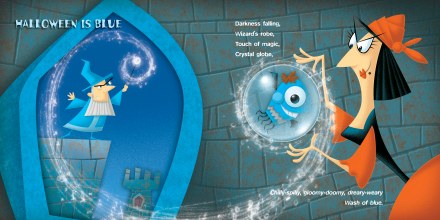
Have you ever thought, “What color is Halloween?” Sure, we all know it’s orange and black—but what about the rest of the color wheel? Tell me—what’s your favorite color? Purple? Let me look through Shivery Shades of Halloween…Yes! Halloween is purple—“Twilight, / Shadows, / Monsters lurking, / Secret potion— / Poof! It’s working! / Dusky-musky, bruisy-oozy, cruelish-ghoulish / Blotch of purple.”

Hey! This is fun! Give me another one! Gray, you say? Hang on…. Yes! Halloween is Gray! “Tombstone, gargoyle, / Dungeon wall, / Rats and rubble, / Haunted hall, / Dusty-fusty, dimly-grimly, shady-fraidy / Shroud of gray.”

celebrate-picture-books-picture-book-review-shivery-shades-of-halloween-blue

Image copyright Jimmy Pickering, text copyright Mary McKenna Siddals. Courtesy of Random House Books for Young Readers

Okay, now it’s my turn. I’m choosing…Red. Yep! Halloween is also Red: “Tip of fang, / Flash of cape, / Horns and tail, / A gash, a gape, / Bloody-ruddy, burning-churning, blushing-gushing / Stain of red.”

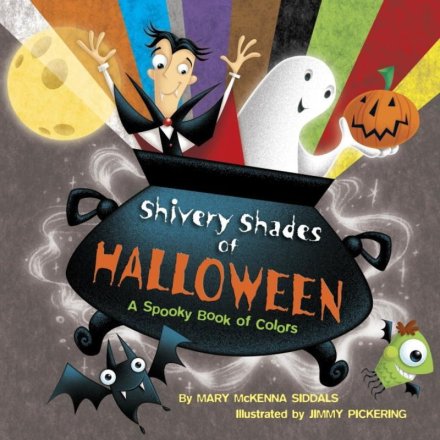
Wild! And that’s just the beginning! There are also spirited, spooky rhymes about brown, yellow, blue, white, green, and, of course, orange and black.

celebrate-picture-books-picture-book-review-shivery-shades-of-halloween-black

Image copyright Jimmy Pickering, text copyright Mary McKenna Siddals. Courtesy of Random House Books for Young Readers

Mary McKenna Siddals brings joy and a love of words—their sounds and their effects—to her verses that transport kids to the throbbing heart of Halloween on the broomsticks of color. In Shivery Shades of Halloween, Siddals presents all the spine-tingling  places, characters, and objects that make this holiday—and any mystery—so much chilling, thrilling fun. With giggles, eewwws, and a few shivers, kids will delight in the original and imaginative phrasing in this clever concept book.

Jimmy Pickering’s vibrant, full-bleed illustrations ooze, flash, and swirl with the colors of Halloween. For Green, a “queasy-peasy” web-eared reptile slurps a “vile brew” from a test tube as an evil scientist looks on and the walls seep with a thick green sludge. Purple zaps and sparks as the reptile is transformed into a smiling goblin with bats’ wings and five legs. This goblin then leads readers from page to page where they meet a tricky ghost, a haunted graveyard, a spell-casting wizard and crystal-ball-reading witch, a floating candlestick in a haunted house, a howling werewolf, a dancing caldron, a clumsy demon, and a trio of trick-or-treaters. Each painting incorporates touches of the other colors introduced, creating eye-catching and suspense-building pages.

Shivery Shades of Halloween is a book that kids will want to hear and you will want to read over and over. For teachers, the book makes a wonderful resource for writing lessons and the power of evocative words not only around Halloween, but at any time of the year. Shivery Shades of Halloween is one concept book that transcends its holiday theme and would be a welcome addition to home bookshelves as well as classroom and other libraries.

Ages 2 – 7

Random House Books for Young Readers, 2014 | ISBN 978-0385369992

Take a peek at Victoria scaring up some fun by reading Shivery Shades of Halloween!

To learn more about Mary McKenna Siddals and her other books, visit her website! You’ll also find lots of activities as well as activity sheets to extend your enjoyment of Shivery Shades of Halloween: A Spooky Book of Colors as well as her other books.

Here’s a link to Shivery Shades of Halloween Activity Sheets.

You can also connect with Mary McKenna Siddals on her Shivery Shades of Halloween Facebook Page, where you’ll find more fun and a whole community of readers.

Discover more about Jimmy Pickering and view a gallery of his illustrations, paintings, sculpture and more on his website. You can also find him on Facebook!
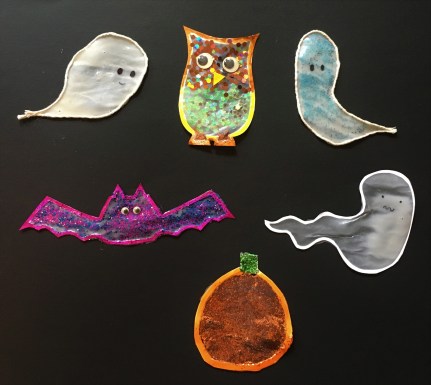
Checklist Day Activitycelebrate-picture-books-picture-book-review-halloween-hanging-figures-black-background

Spooky Halloween Mobile


With glue, glitter, and your imagination you can make your love of Halloween and its ghosts, ghouls, pumpkins, and more colorfully transparent to all!

Supplies

  • Printable Halloween figure templates | Template 1 | Template 2
  • Poster board or other heavy stock paper or cardboard
  • White glue
  • Glitter in a variety of colors
  • Googly eyes (optional)
  • Scissors
  • Wax paper
  • Popsicle or craft sticks
  • Needle
  • White thread (or any color)
  • Fine-tip permanent marker
  • Hot glue gun or regular glue


Directions

  1. Print the Halloween Figures templates
  2. Cut out the figures
  3. Trace the figures onto the poster board
  4. Cut out the figures around the outside edge and also along the inside edge
  5. Lay out the figure templates on the wax paper
  6. Gently pour some white glue into the center of the figure template
  7. Smooth the glue completely to the edges of the figure template, adding glue if needed
  8. Sprinkle glitter on the glue, as much or as little as you’d like

To dry the glue

  1. Let the figures sit overnight OR:
  2. Place the figures on the wax paper in a warm oven. Turn the oven on to 200 – 250 degrees and let it come up to heat. Then turn the oven off and place the figures inside. Check after 15 minutes and check frequently until dry.

After the glue is dry

  1. Add faces to the ghosts with a permanent marker
  2. Add googly eyes with the hot glue or regular glue
  3. If desired, color the edge of the template to match the color of the glitter

To hang figures

  1. Thread a needle with the desired length of thread and gently push the needle through the glue near the top of the figure.
  2. Tie the thread around a chandelier, curtain rod, or any other place you would like to decorate

Picture Book Review