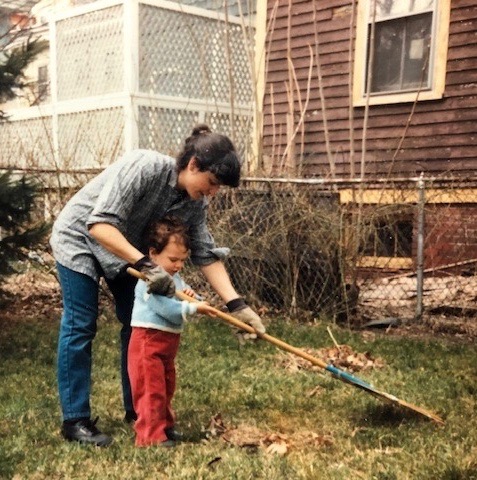
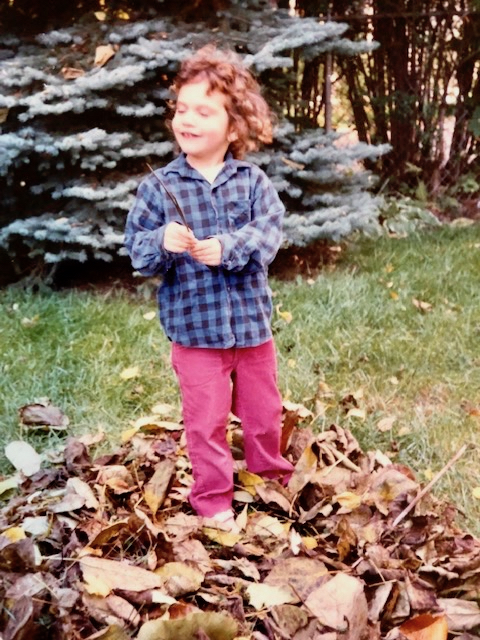
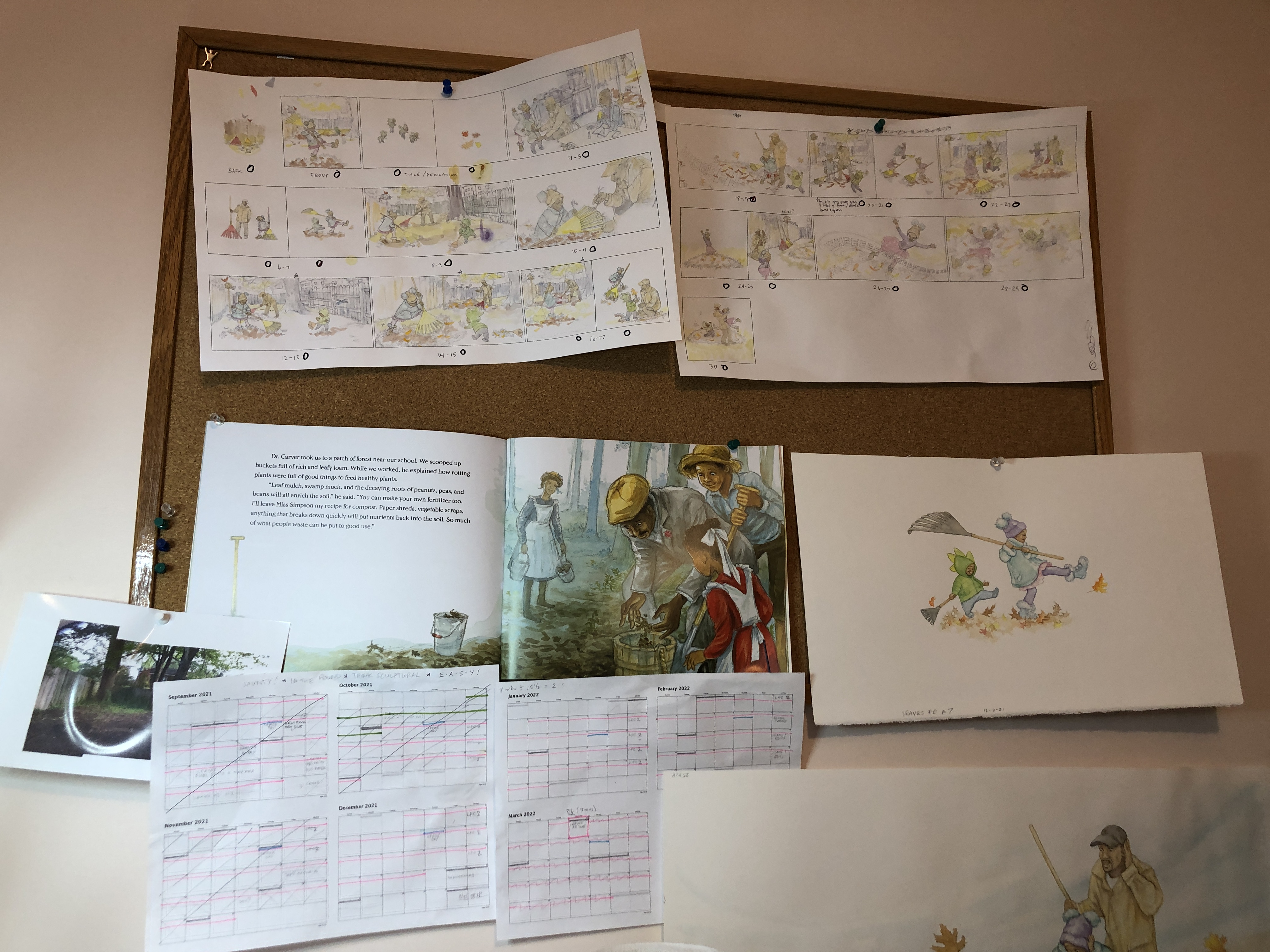
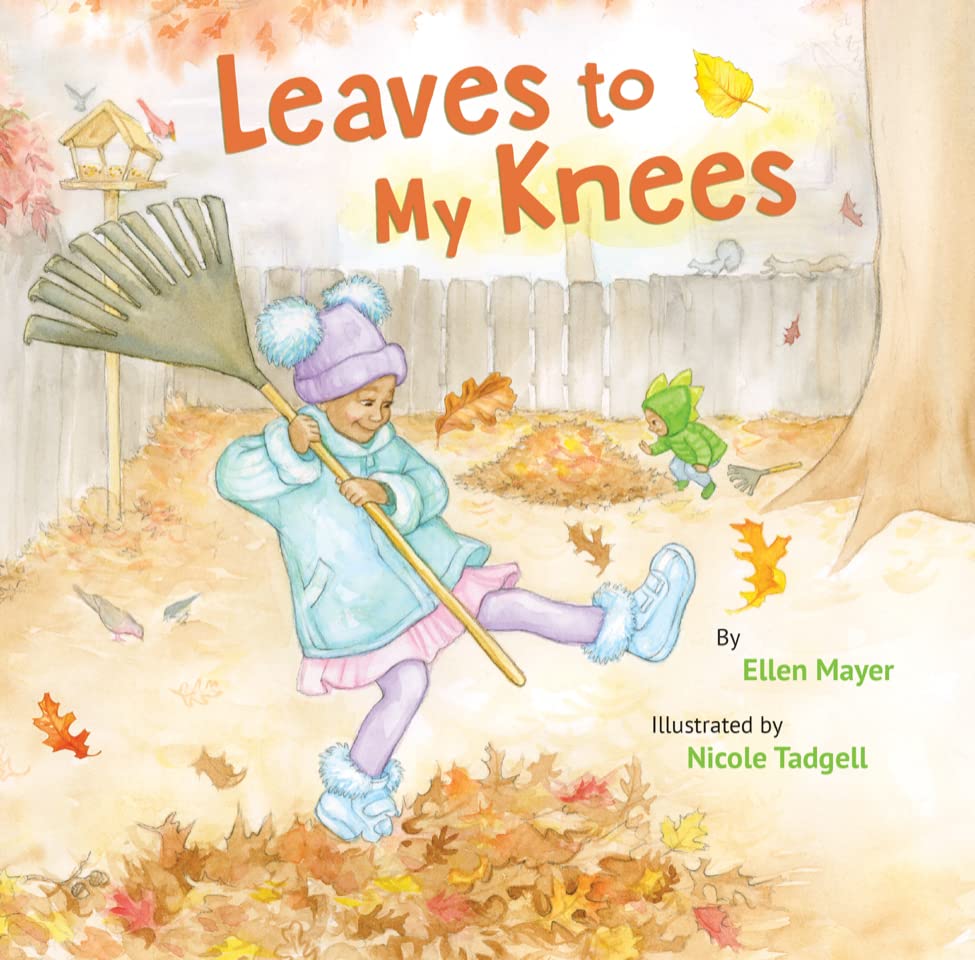
August 12 – Cover Reveal of Leaves to My Knees plus Interview with Ellen Mayer and Nicole Tadgell

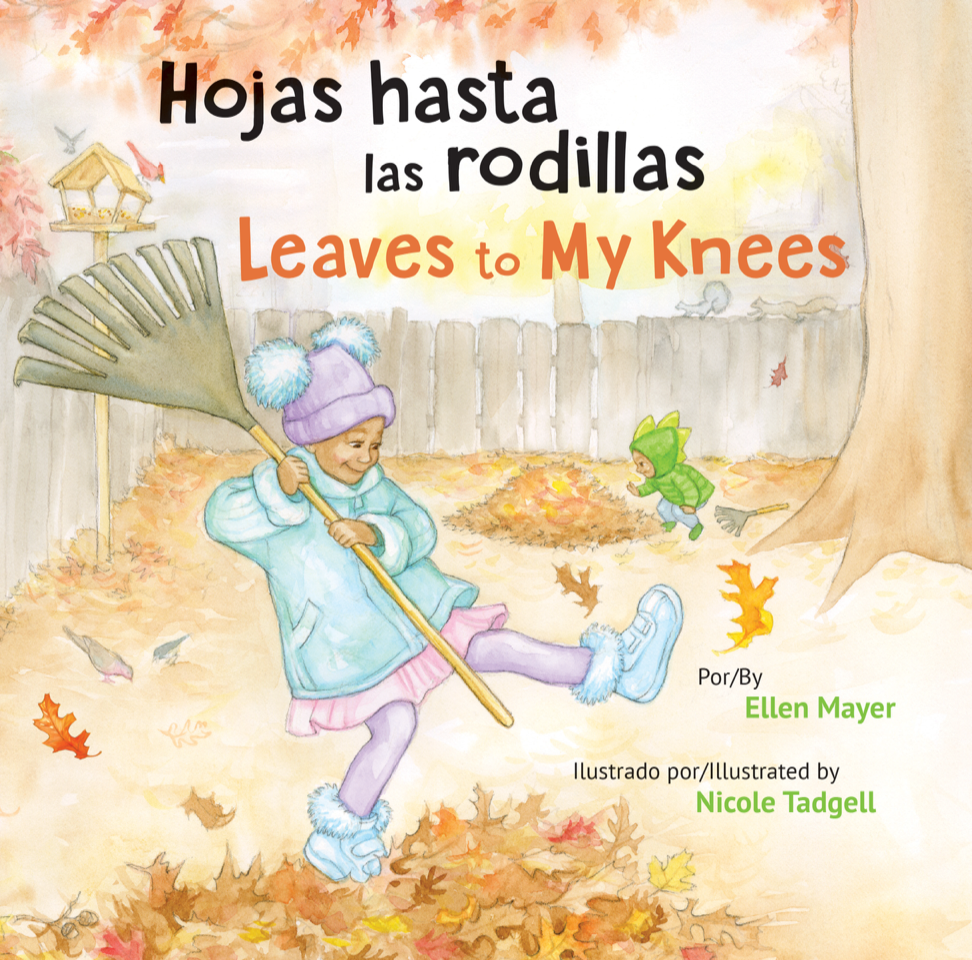
  • celebrate-picture-books-picture-book-review-leaves-to-my-knees-cover
  • celebrate-picture-books-picture-book-review-leaves-to-my-knees-spanish-english-cover

Leaves to My Knees 

Hojas hasta las rodillas/Leaves to My Knees

Written by Ellen Mayer | Illustrated by Nicole Tadgell


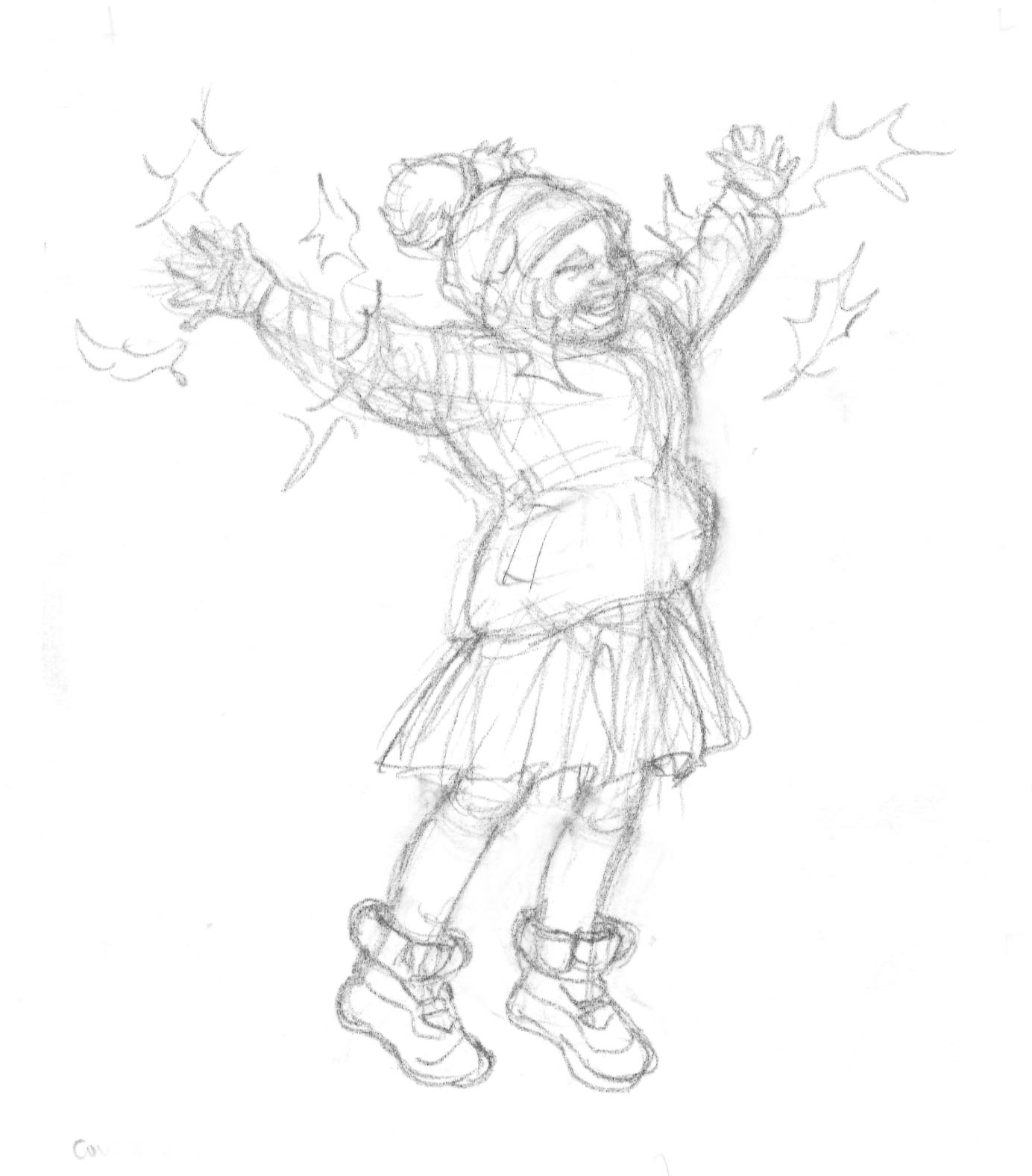
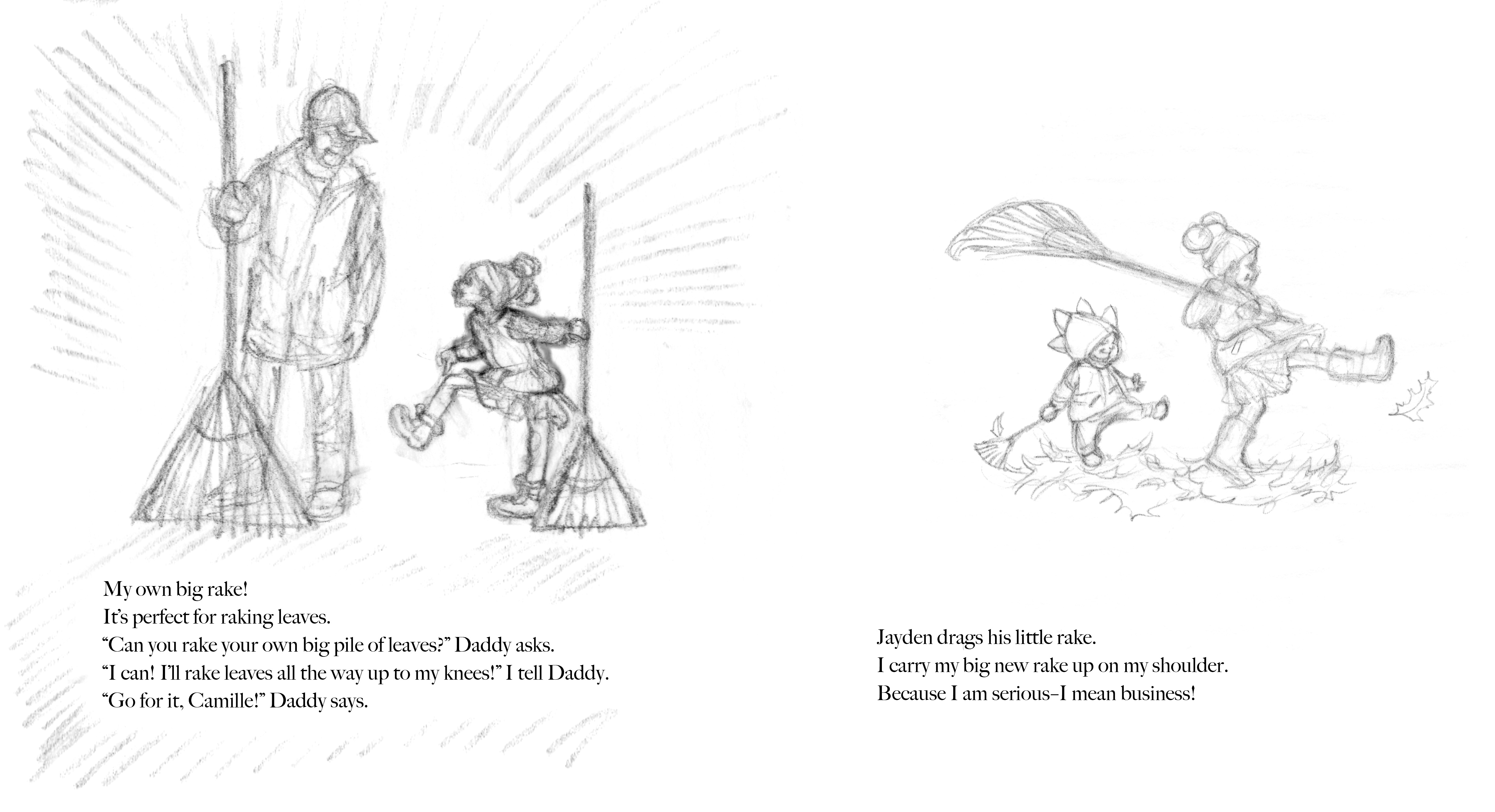
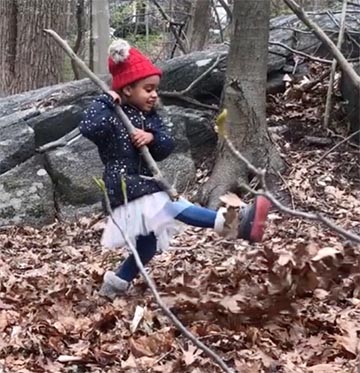
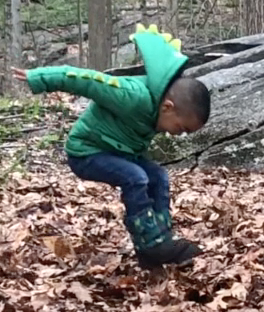
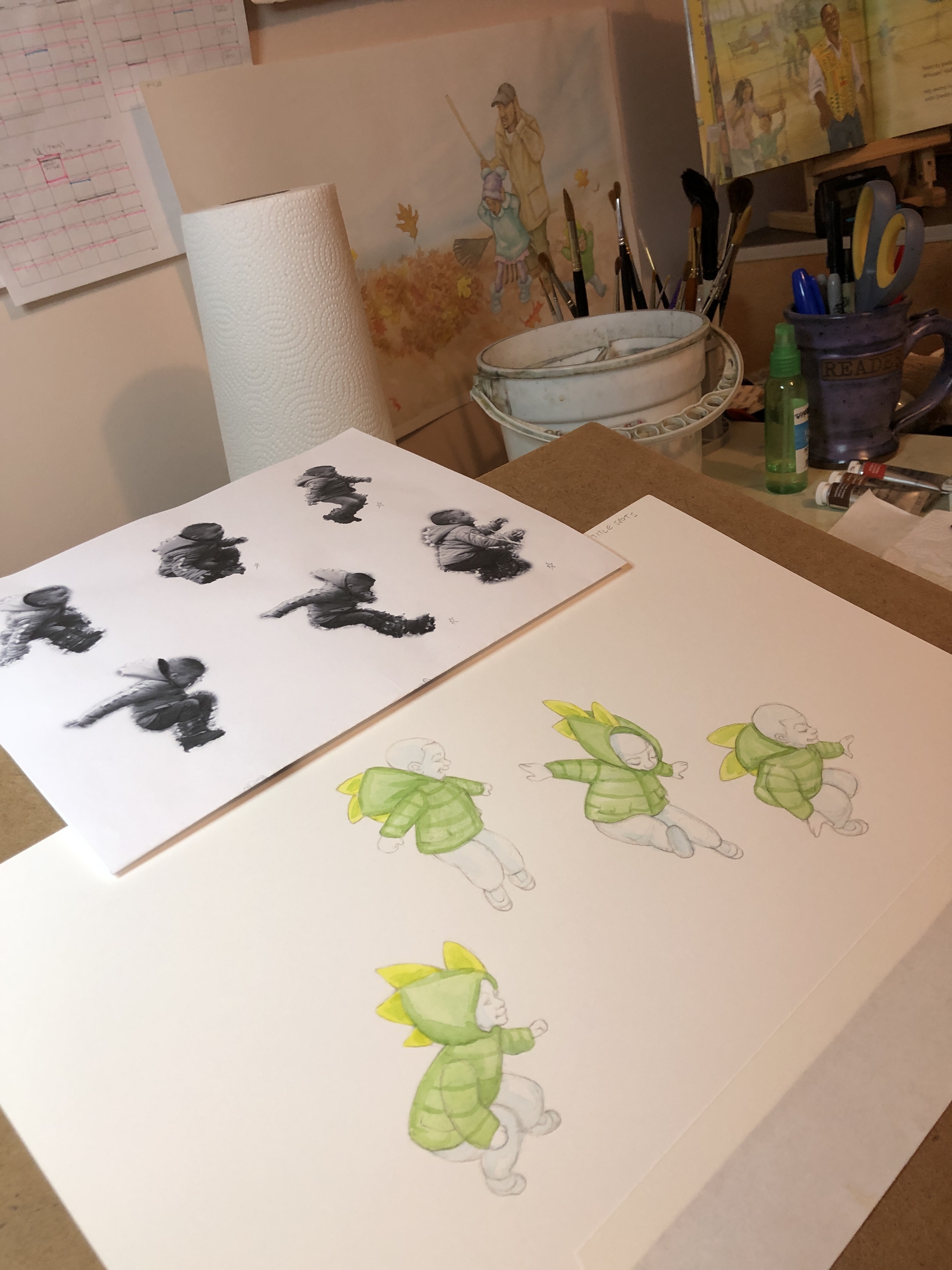
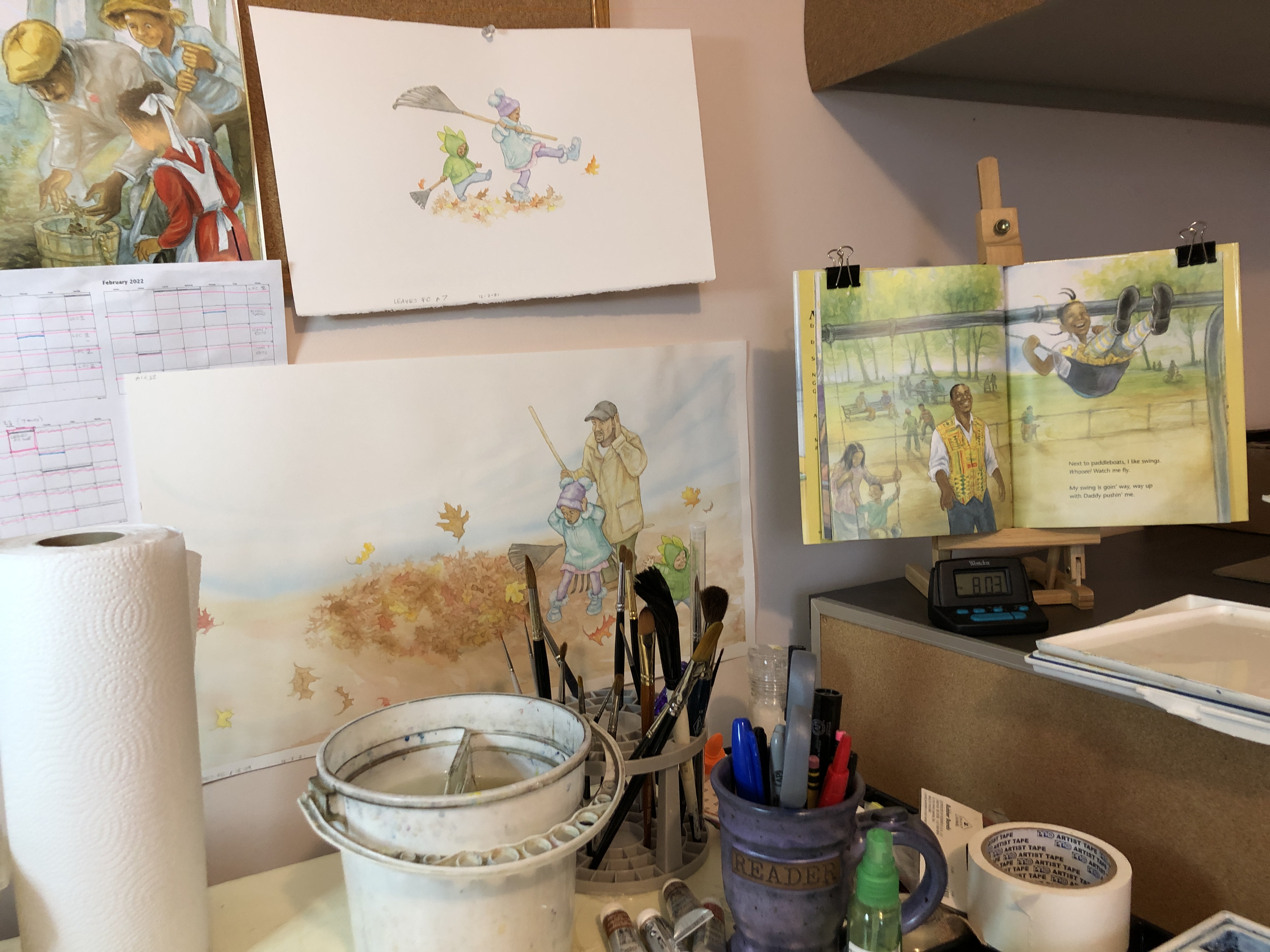
Camille is determined to rake her own pile of leaves―all the way up to her knees! She swishes leaves to and fro, watching her pile grow bigger alongside the piles made by Daddy and her little brother, Jayden. WHOOSH! After raking leaves to the top of her boots, a giant breeze blows the pile back down to her ankles. But Camille won’t be stopped until she gets the job done––a knee-high pile, the perfect size for… jumping in!

Leaves to My Knees and Spanish/English bilingual Hojas hasta las rodillas/Leaves to My Knees are playful introductions to the early math concepts of size comparison and measurement. A note by researcher and mathematics learning expert Marlene Kliman explains how parents and caregivers can use the book to help young children explore different sizes and measurement in everyday environments.

I’m thrilled to be talking with Ellen Mayer and Nicole Tadgell today about this gorgeous cover and their adorable—and educational—book that will be available this fall, just in time for leaf-raking season!

Meet Ellen Mayer
celebrate-picture-books-picture-book-review-ellen-mayer-reading-headshot

To preorder from Amazon

Leaves to My Knees: Hardcover | Paperback

 Hojas hasta las rodillas/Leaves to My Knees

To order from Star Bright Books and be notified when the books become available click here: 

Leaves to My Knees: Hardcover | Paperback

Hojas hasta las rodillas/Leaves to My Knees 

Picture Book Review

January 7 – Old Rock Day

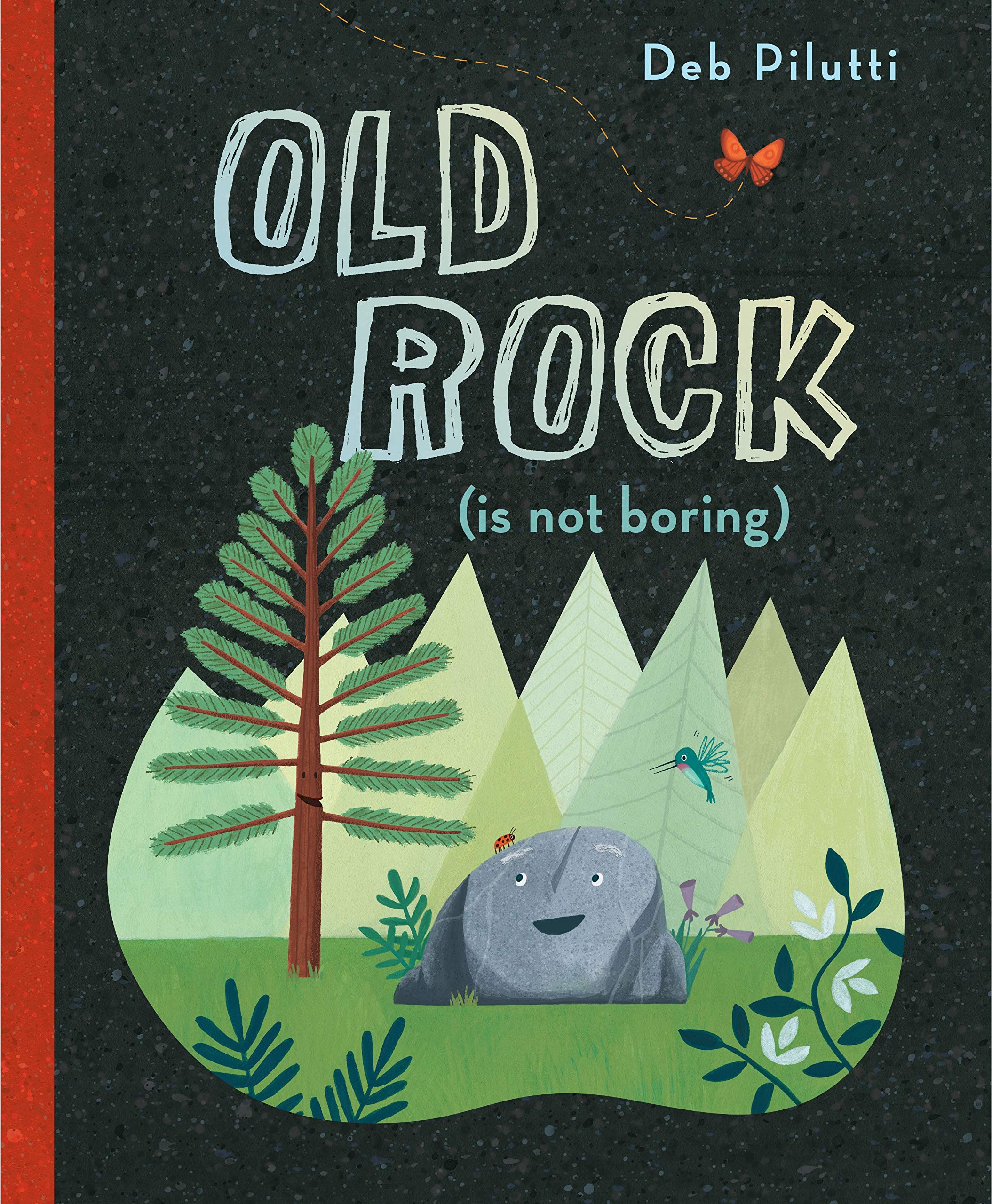
celebrate-picture-books-picture-book-review-old-rock-is-not-boring-cover

About the Holiday

Do you love rocks—the history they tell, their versatility, intricate patterns, and glorious colors? Today’s holiday celebrates these wonders of nature and encourages geologists—both professionals and amateurs—to indulge their passion. You can learn a bit more about the history of the study of rocks, the first use of the term “geology,” and on to more modern times at NationalToday. To celebrate today’s holiday, take a walk in your backyard or neighborhood, pick up a few rocks, and research a little more about them. Then have fun with today’s craft.

Thank you to G. P. Putnam’s Sons for sharing a copy of Old Rock (is not boring) with me for review consideration. All opinions on the book are my own.

Old Rock (is not boring)

By Deb Pilutti


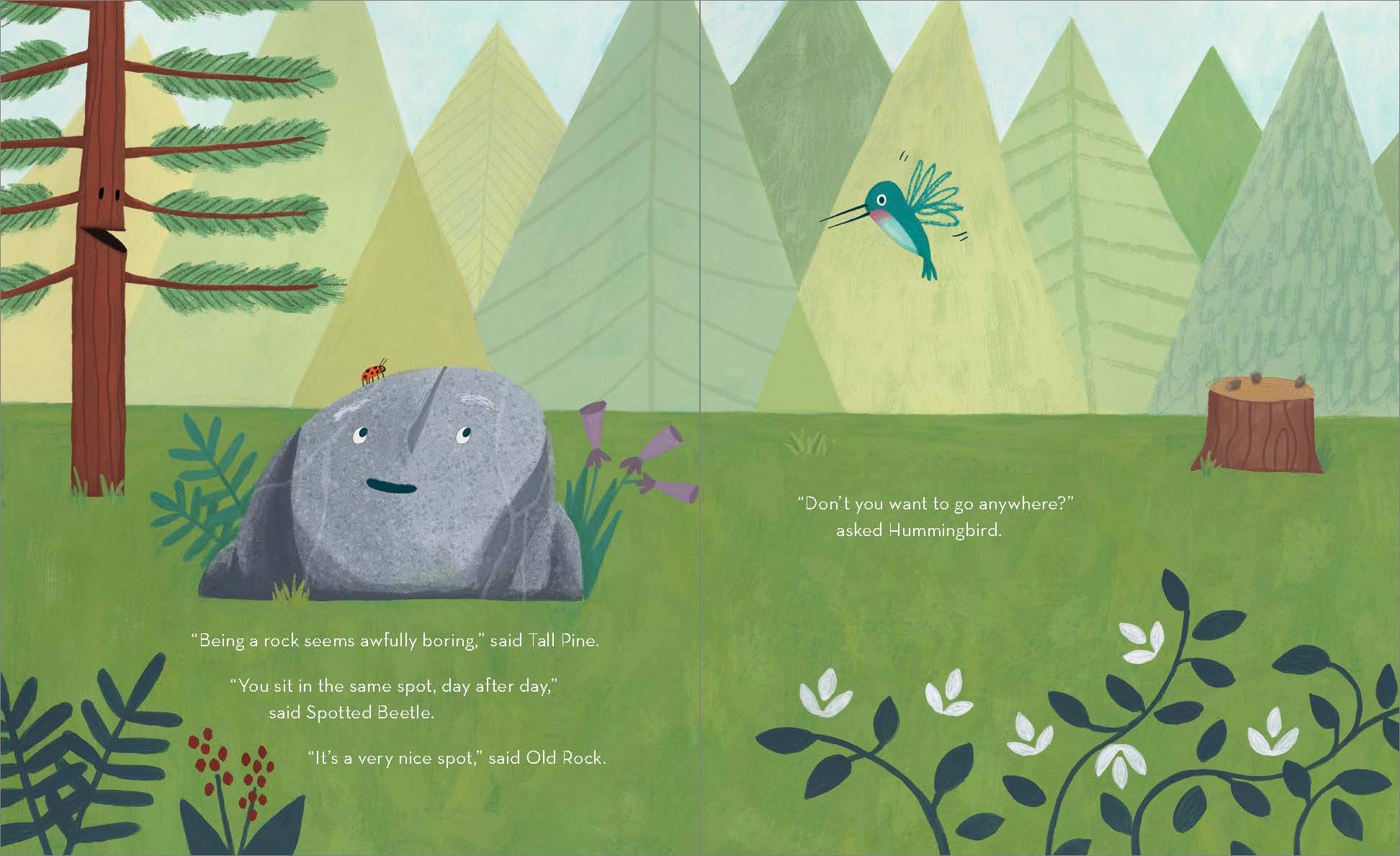
It seemed that Old Rock had been sitting in the same spot forever. Tall Pine and Spotted Beetle thought being a rock must be pretty boring. Hummingbird wondered, “‘Don’t you ever want to go anywhere?’” She knew she would be if she couldn’t fly all over the world and taste exotic nectars. But Old Rock had flown once, and he began to tell his story.

celebrate-picture-books-picture-book-review-old-rock-is-not-boring-hummingbird

Copyright Deb Pilutti, 2020, courtesy of G. P. Putnam’s Sons Books for Young Readers.

It was during the time when he was surrounded by darkness, but then the volcano erupted and Old Rock “‘soared through a fiery sky into the bright light of a new world.’” Tall Pine, Spotted Beetle, and Hummingbird weren’t very impressed. They still thought Old Rock must be bored. Spotted Beetle told him how much he might see if he climbed to Tall Pine’s very highest branch.

celebrate-picture-books-picture-book-review-old-rock-is-not-boring-volcano

Copyright Deb Pilutti, 2020, courtesy of G. P. Putnam’s Sons Books for Young Readers.

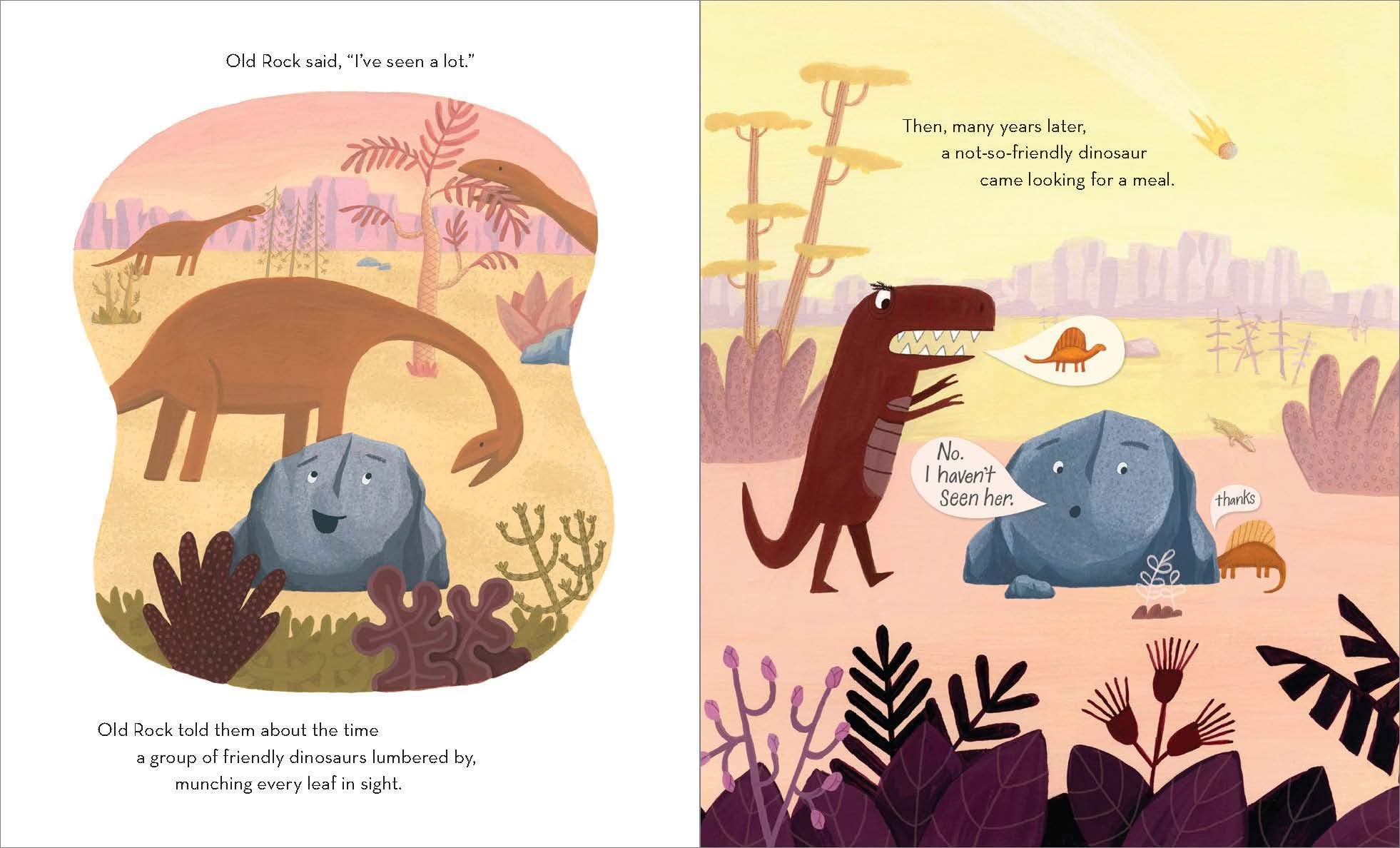
Old Rock countered that he had seen a lot. He’d watched dinosaurs pass by and had even hidden a spinosaurus from a hungry T. rex. He’d traveled in a glacier and been left teetering on a ridge overlooking a vast desert, where he “could see the place where the sky touches the earth.” Spotted Beetle and Hummingbird were intrigued, but Tall Pine dismissed these experiences as “ages ago.” He wanted to know about now. Didn’t Old Rock feel like moving? Tall Pine showed Old Rock how his limbs could dance in the wind.

celebrate-picture-books-picture-book-review-old-rock-is-not-boring-dinosaurs

Copyright Deb Pilutti, 2020, courtesy of G. P. Putnam’s Sons Books for Young Readers.

While Old Rock couldn’t dance, he did recall how he’d turned somersaults off the ridge, landing in a prairie where mastodons grazed near a lake. Tall Pine, Spotted Beetle, and Hummingbird were mesmerized by Old Rock’s story and wanted to know what had happened next. Out of the prairie, sprang a pine forest, Old Rock revealed. And from one of the pine trees a pinecone fell and a seed was released. That seed grew “to be the tall pine who dances in the wind and keeps me company.” Sometimes, he continued, a spotted beetle and a hummingbird meander by. Old Rock was very pleased with his spot, and the others had to agree that it was “very nice” and “not boring at all.”

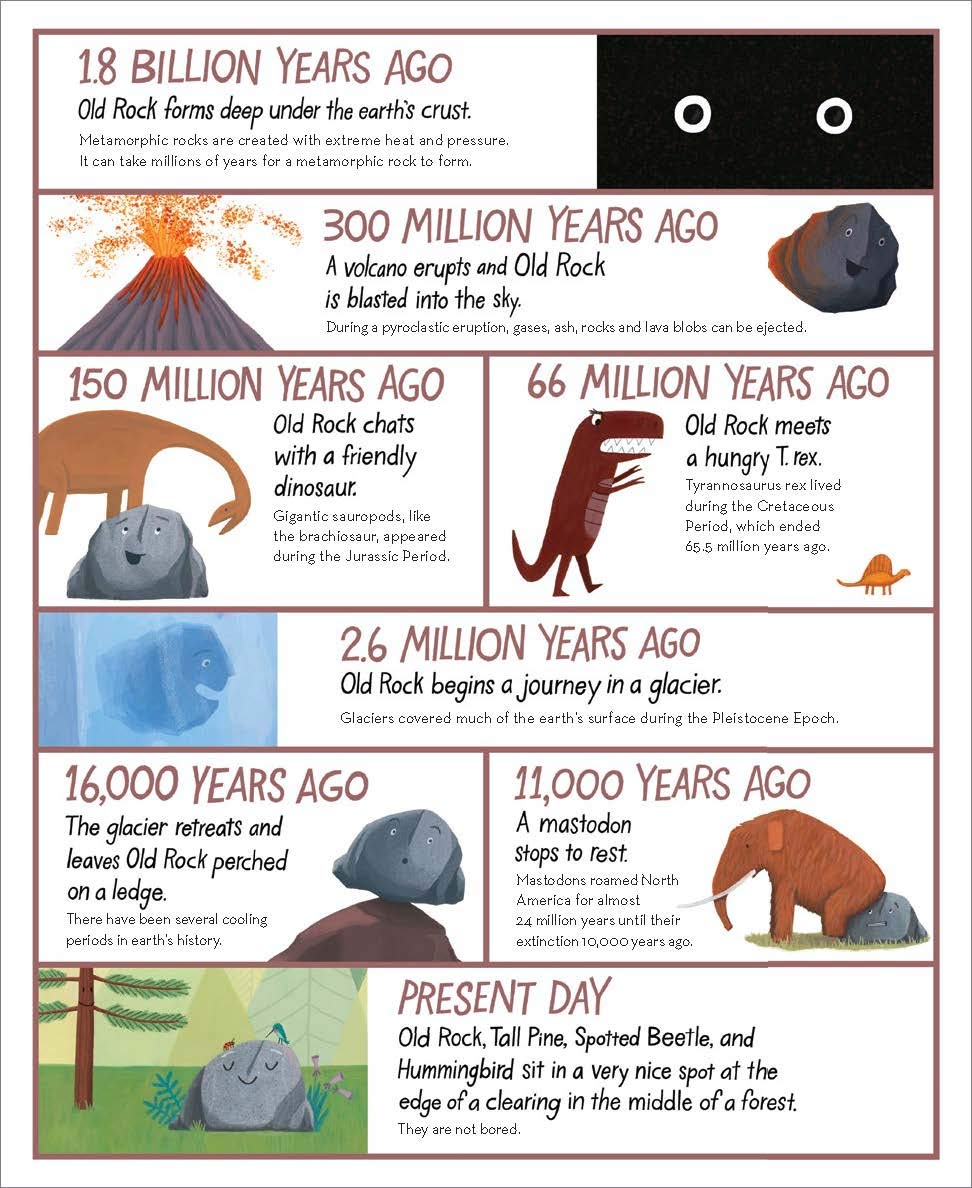
An illustrated timeline of Old Rock’s life from 18 billion years ago to the present day follows the text.

celebrate-picture-books-picture-book-review-old-rock-is-not-boring-time-line

Copyright Deb Pilutti, 2020, courtesy of G. P. Putnam’s Sons Books for Young Readers.

So much clever thought went into Deb Pilutti’s Old Rock as she reveals to kids what a fascinating and active life the rocks and boulders we see every day have had. Tall Pine, Spotted Beetle, and Hummingbird’s skepticism keeps the suspense building as Old Rock rolls out stories of his various travels and talents. Once he has them hooked, they—like young readers—want to hear more, leading to the just-right ending that sweetly encompasses shared history, happiness with one’s place in life, and friendship. The trio’s questions to Old Rock and their related experiences also engage children to think about issues and opinions from a variety of perspectives.

Pilutti’s mixed-media illustrations are nicely textured to bring out Old Rock’s grainy surface while highlighting nature’s vivid colors. Her vignettes from the dinosaur eras, the ice age (where the skeletons of dinosaurs are also swept up and away in the same glacier as Old Rock), and beyond impress upon readers the long time-frame involved, how the earth has changed, and even the fascinating science of the fossil record.

A multi-layered story, perfect for general story times or as a lead in to science lessons and to promote discussion and research in the classroom, Old Rock (is not boring) would be an original and exciting addition to home, classroom, and public library collections.

Ages 4 – 8

G. P. Putnam’s Sons Books for Young Readers, 2020 | ISBN 978-0525518181

To learn more about Deb Pilutti, her books, and her art, visit her website.

Old Rock Day Activity

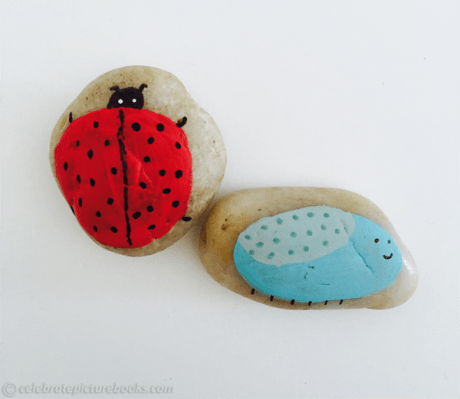
CPB - Nasty Bugs magnet II (2)

Rock This Craft!


Smooth stones can give you a natural canvas for your creativity! With a little bit of paint, pins or magnets, and some imagination, you can make refrigerator magnets, jewelry, paper weights, and more!

Supplies

  • Smooth stones in various sizes
  • Paint or markers
  • Small magnets, available at craft stores
  • Jewelry pins, available at craft stores
  • Paint brush
  • Strong glue

Directions

To make magnets

  1. Design and paint an image on a light-weight stone
  2. Attach a magnet to the back with strong glue, let dry
  3. Use to hang pictures, notes, or other bits of important stuff on your refrigerator or magnetic board

To make jewelry

  1. Using a smaller, flatter stone, design and paint an image on the stone
  2. Attach a jewelry pin to the back with the strong glue, let dry
  3. Wear your pin proudly

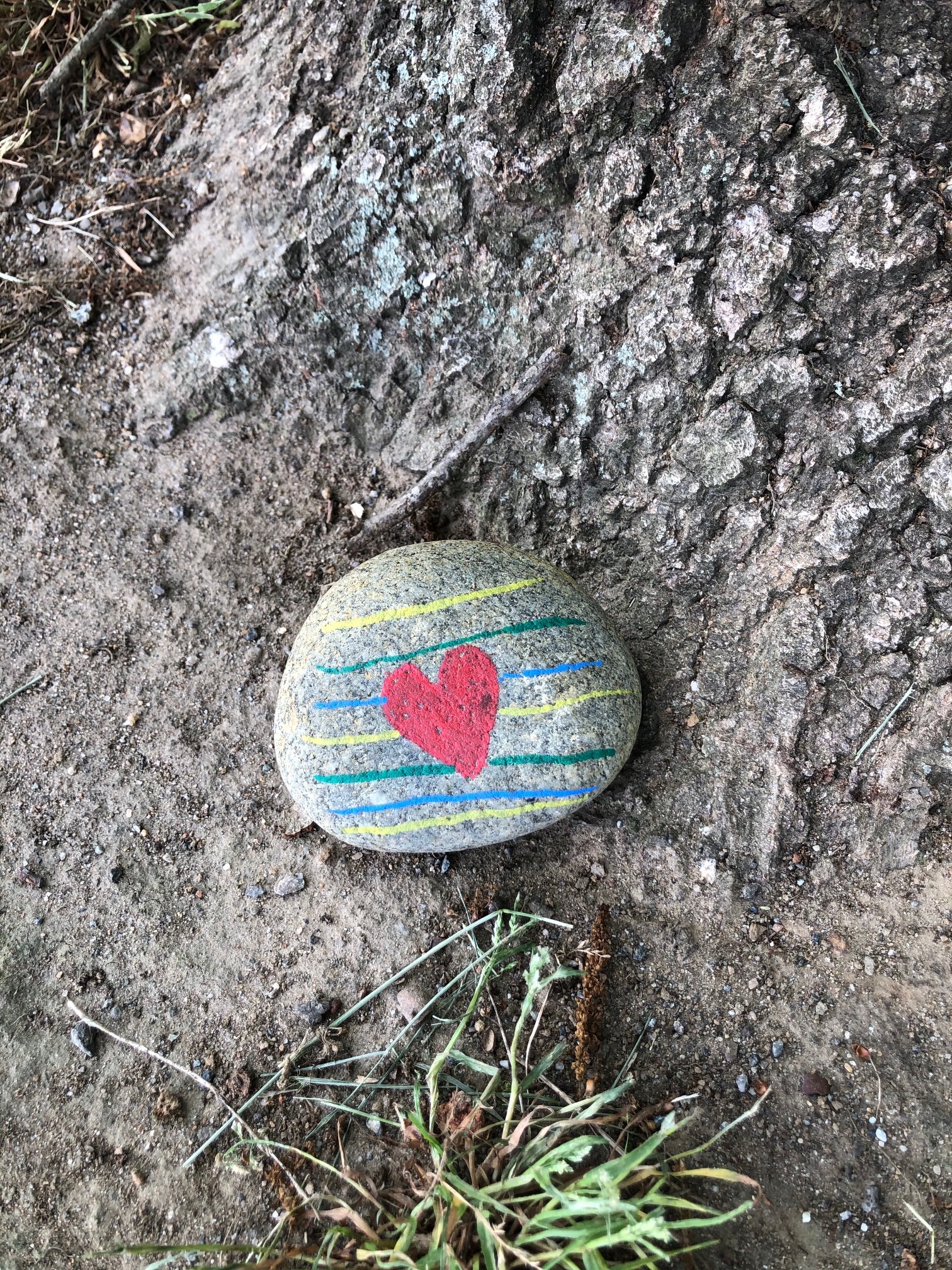
CPB - rock painting craft

To make a paper weight or kindness stone

  1. Using a large stone, design and paint an image on the stone, let dry
  2. Display and use on your desk to keep those papers in place or find a spot around town to leave your rock for someone to find and enjoy

celebrate-picture-books-picture-book-review-old-rock-is-not-boring-cover

You can find Old Rock (is not boring) at these booksellers

Amazon | Barnes & Noble | Books-a-Million

To support your local independent bookstore, order from

Bookshop |  IndieBound

Picture Book Review


October 13 – National Fossil Day

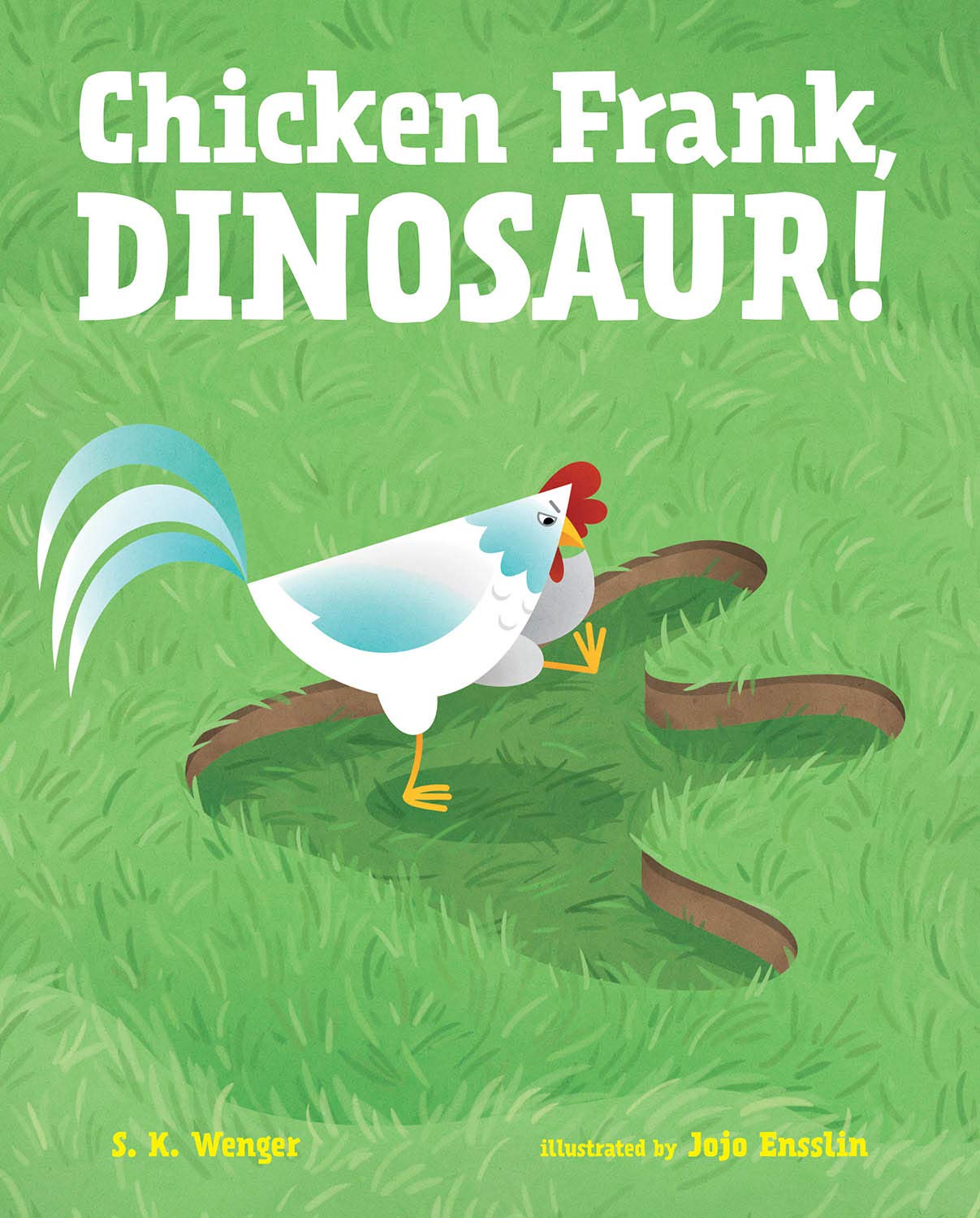
celebrate-picture-books-picture-book-review-chicken-frank-dinosaur-cover

About the Holiday

Did you know that some fossils date back to 4.1 BILLION years ago? Just think of that the next time you’re feeling a little bit old (or so recommends the website National Today). Today we celebrate National Fossil Day to recognize the importance (and, well, awesomeness) of paleontologists, geologists, and fossils in providing us with information on the history of our earth and those who have inhabited it before us. ​National Today provides some further information, with a timeline of fossil history, and fun facts like this one: The highest amount ever paid for a dinosaur fossil was $8.3 million (they named it “Sue”).

To celebrate National Fossil Day, check out National parks near you, learn more about fossils, do something to help protect the earth, read some books about evolution—like Chicken Frank, Dinosaur!—or visit the National Parks page for more information and resources on how to celebrate our geologic heritage.

Thanks to Albert Whitman & Company for sharing a copy of Chicken Frank, Dinosaur! with me for review consideration. All opinions on the book are my own.

Review by Dorothy Levine

Chicken Frank, Dinosaur!

Written by S.K. Wenger | Illustrated by Jojo Ensslin


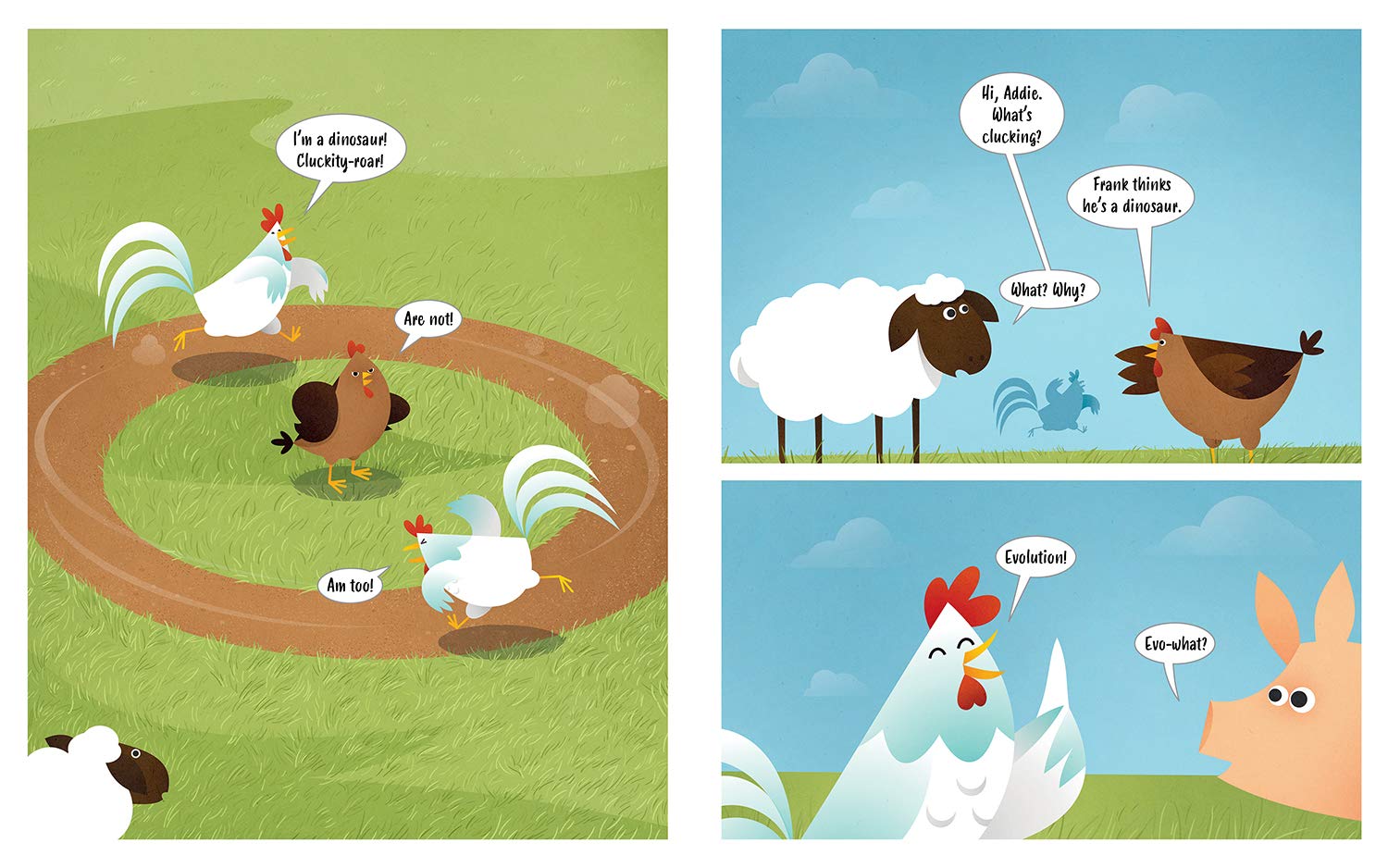
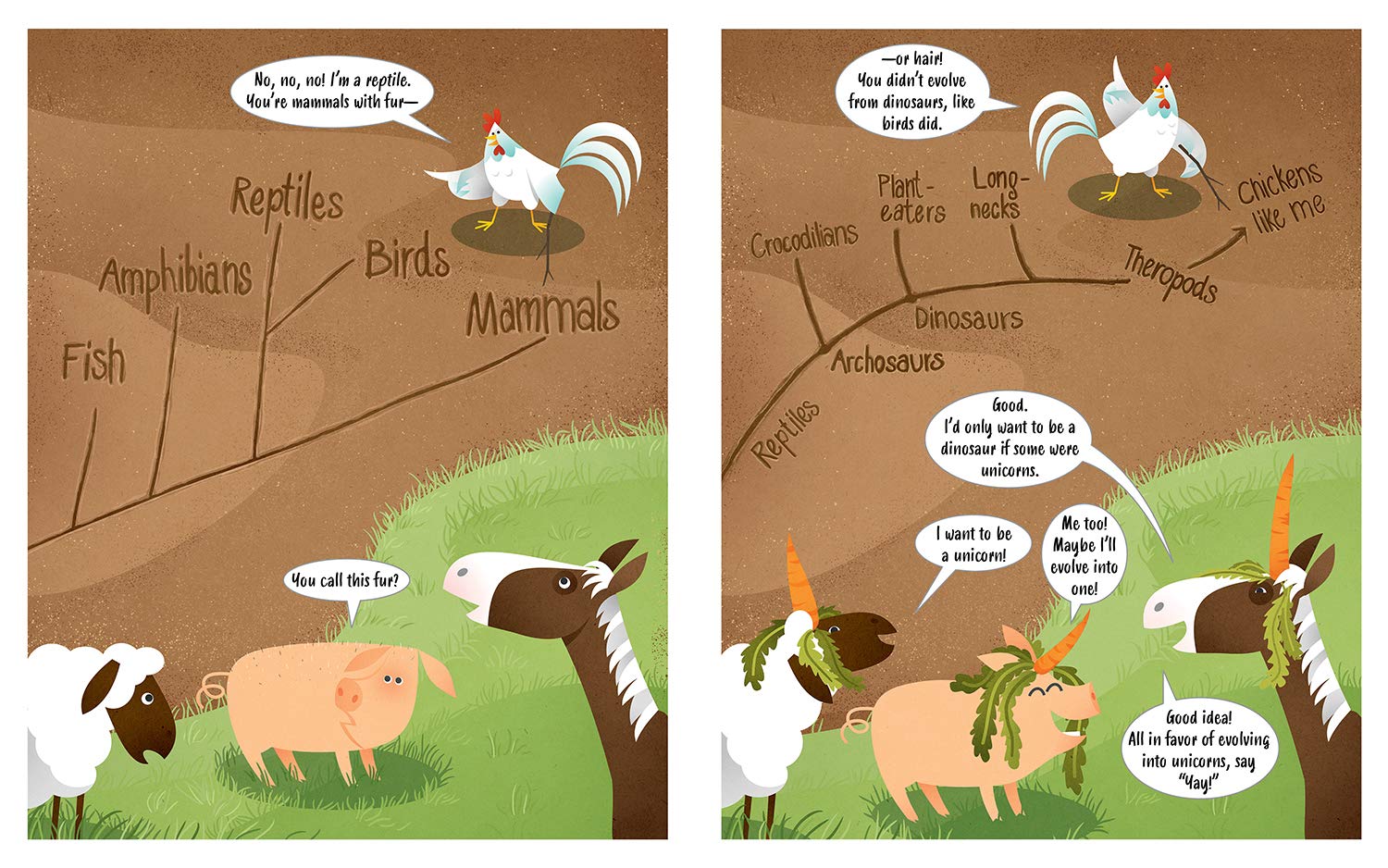
If you ask Chicken Frank he’ll tell you, “I’m a dinosaur! Cluckity-roar!” But the other barnyard animals aren’t so sure. Everyone is puzzled by this evolution thing Frank keeps talking about (“Evo-what?”). Chicken Frank tries to explain, “Evolution! Change! Change happens over time so we can survive.” He takes a stick and draws lines of lineage, connecting crocodiles to plant-eating dinosaurs and eventually birds. “From a dinosaur. See?” But the other animals don’t see it: “I see a chicken who was a chicken five minutes ago,” a sheep says. “I see a chicken who’s been a chicken since he hatched,” a pig chimes in.

celebrate-picture-books-picture-book-review-chicken-frank-dinosaur-evolution

Image copyright Jojo Ensslin, 2021, text copyright S. K. Wenger, 2021. Courtesy of Albert Whitman & Company.

Chicken Frank then presents different types of evidence to try to convince the farm that birds evolved from dinosaurs. He points out his feet look like those of T. rexes, to which another chicken looks at the readers and says, “More like T. crazy.” Frank explains that feathers evolved from dinosaur scales, and that both dinos and chickens had little tails when they were embryos. Other animals start wondering if they come from dinosaurs, since they have tails too. So, in a last straw attempt, Chicken Frank returns to his mud lineage map once more.

He shows how fish, amphibians, reptiles and mammals come from different branches in the evolutionary tree. Birds, however, branch off from reptiles. Nobody is convinced, and pig, sheep, and horse turn their attention to pretending to be unicorns with carrot horns instead. But then, the results from Frank’s DNA test arrive. The data shows Chicken Frank has a reptilian cousin: Crocodile Ike.

celebrate-picture-books-picture-book-review-chicken-frank-dinosaur-timeline

Image copyright Jojo Ensslin, 2021, text copyright S. K. Wenger, 2021. Courtesy of Albert Whitman & Company.

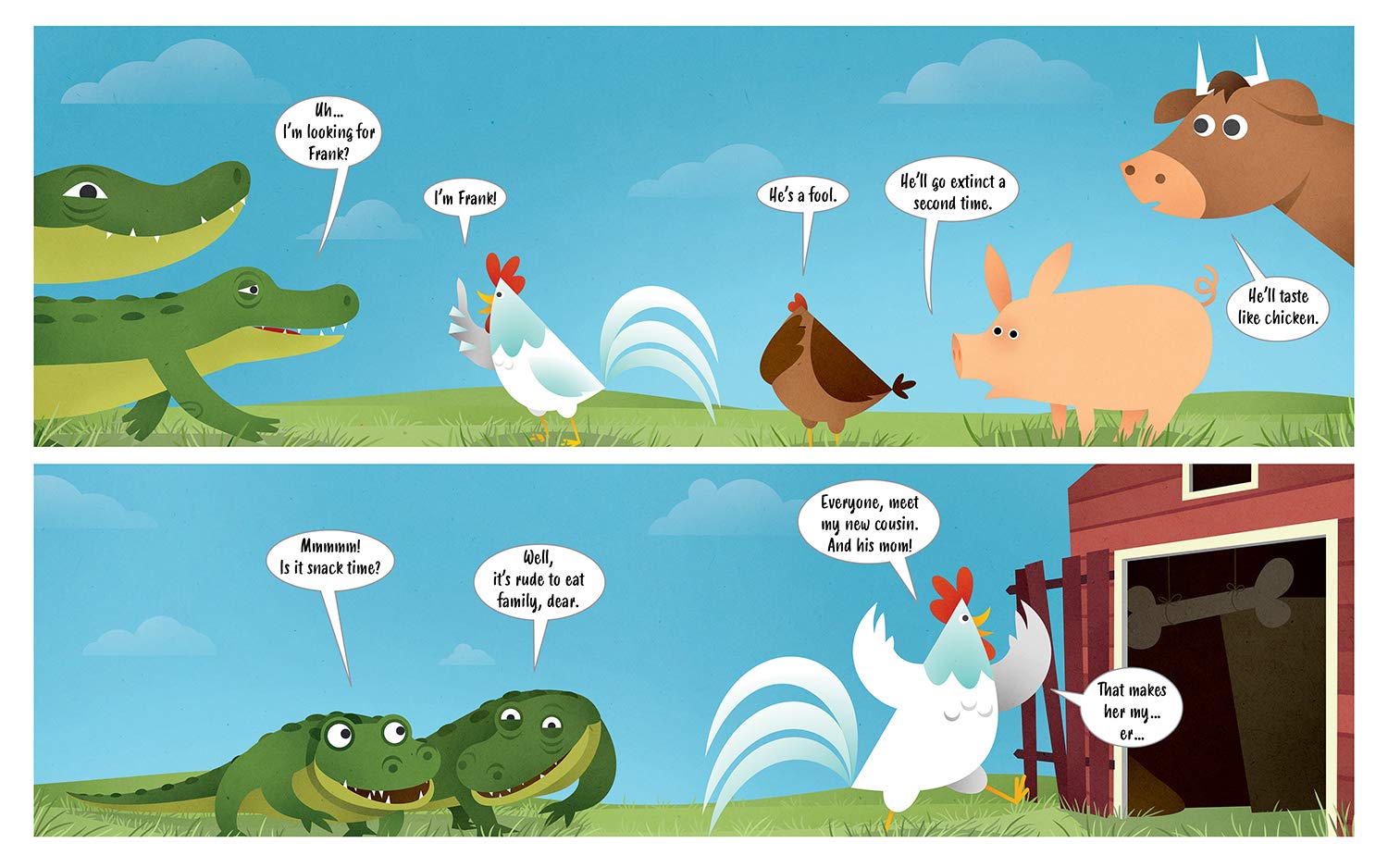
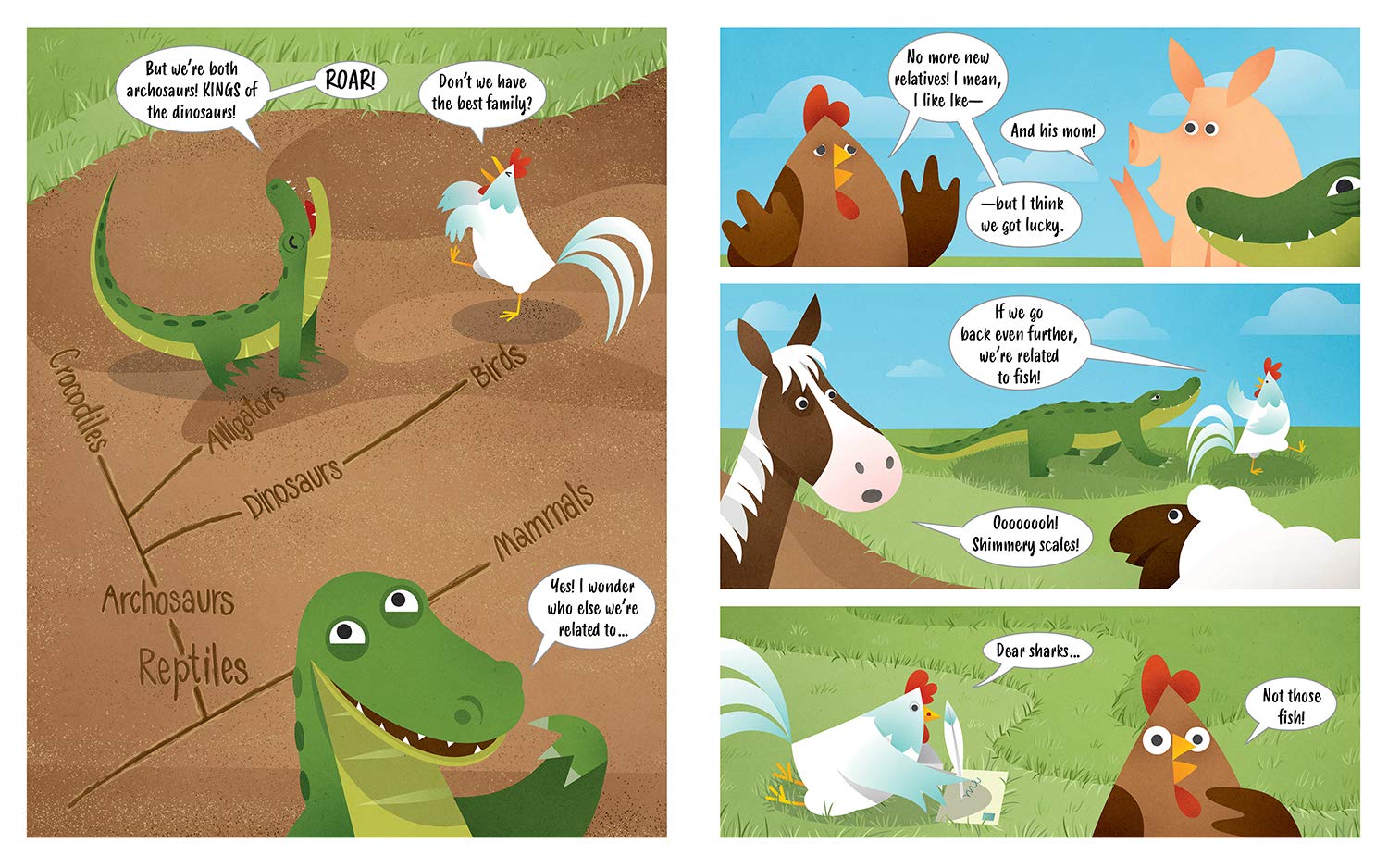
Chicken Frank decides to send a post card to his cousin Ike inviting him to come for a family reunion, much to the dismay of everyone. A crocodile and a chicken in the same place? Seems like a recipe for disaster…and maybe some chicken franks too. And while Crocodile Ike and his mom are first tempted to gobble Frank up, they take some time and study his charts. And, to everyone’s surprise, they get it! “One of us isn’t a dinosaur… But we’re both Archosaurs! KINGS of the dinosaurs! Roar!” Ike tells Frank. Ike’s mom wonders who else they may be related to, so Frank starts a letter to an even further distant cousin—the sharks!

celebrate-picture-books-picture-book-review-chicken-frank-dinosaur-ike

Image copyright Jojo Ensslin, 2021, text copyright S. K. Wenger, 2021. Courtesy of Albert Whitman & Company.

They all decide to take a trip to the aquarium, where the pig, sheep, and horse are delighted to find “a swimming unicorn!” (a narwhal), and Crocodile Ike exclaims, “family!” Chicken Frank happily agrees and adds, “Ours is the very best.”

The story is followed by five informational sections: “What Is DNA?”, “What Is Evolution?”, “Is Chicken Frank Really Related to T. rex?” “Similarities Between Dinosaurs, Chickens, and Alligators”, and “Frank’s Glossary of Favorite Animal Groups” Each of these sections provide in-depth scientific explanations for those who want to know a bit more about how it all works. S. K. Wenger masterfully explains each of these concepts at an advanced level that is clear to read and understand for readers of a wide range of age and abilities.

celebrate-picture-books-picture-book-review-chicken-frank-dinosaur-archosaurs

Image copyright Jojo Ensslin, 2021, text copyright S. K. Wenger, 2021. Courtesy of Albert Whitman & Company.

A joyous read, with important concepts about evolution scattered in with the fun. This comic-style picture book will have kids laughing out loud at the farm animals’ speech bubble puns and jokes. S. K. Wenger (and Chicken Frank) explain concepts of evolution in easily digestible terms for readers of all ages. The story is quick-paced and intriguing, with distinct characters and a quirky humor. A must-read for all kids, especially those with a fondness for dinosaurs.

The story would not be nearly as fun or educational without Jojo Ensslin’s colorful, cartoon-like drawings. As Chicken Frank explains his evolutionary reasoning, Ensslin depicts the ideas clearly and closely juxtaposed. For example, when Frank talks about how his feet match those of a T. rex, kids see both feet on the same page. Likewise, a scaled dinosaur and an ancient bird are portrayed on the same blackboard.

Later, when Ike receives the postcard from Frank in a muddy swamp, swarming with crocodiles, and calls out, “Does anyone know a cousin named Frank?” little speech bubbles with “Nope!” scatter the swamp, prompting kids to join in. In a carved-out corner, a close-up view of Ike and his mom show their evil plans to crash the reunion with some chompers. The facial expressions of each of the animals add to their characters and the humor of the story. Many carefully placed illustrative details add to the plot in meaningful and silly ways, such as, the DNA Test Kit shown the page before the story begins and the large bone Chicken Frank stores in his coop; the illustrations and text come together to create a read-aloud that is enjoyable to all.

Creative nonfiction at its best, Chicken Frank, Dinosaur! is both a hilarious story and a highly engaging way to explain evolutionary science in a way kids will respond to and remember. Sure to spark an interest in further science learning, the book is highly recommended for home bookshelves and a must for school and public library collections.

Ages 4 – 7

Albert Whitman & Company, 2021 | ISBN 978-0807511411

Discover more about S. K. Wenger and her books on her website.

To learn more about Jojo Ensslin and view a portfolio of his illustration, animation, and woodcout work, visit his website.

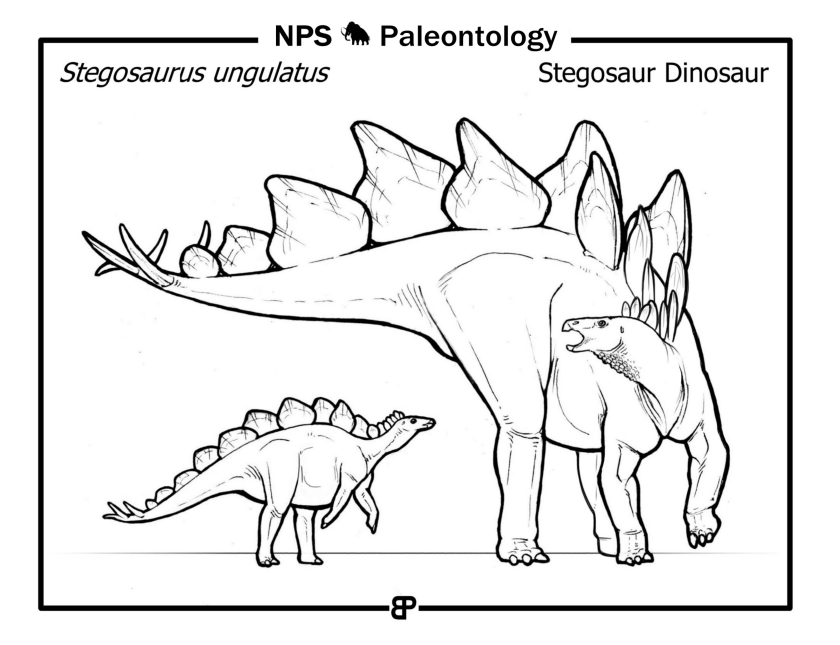
National Fossil Day Activitycelebrate-picture-books-picture-book-review-chicken-frank-dinosaur-national-park-service-dinosaur-coloring-pageDinosaur Coloring Pages


Enjoy these four dinosaur coloring pages from the National Park Service’s free prehistoric coloring book in honor of National Fossil Day!

Dinosaur Coloring Pages

For more, you can download the whole coloring book from the National Park Service here.

celebrate-picture-books-picture-book-review-chicken-frank-dinosaur-cover

You can find Chicken Frank, Dinosaur! at these booksellers

Amazon | Barnes & Noble | Books-a-Million

To support your local independent bookstore, order from

Bookshop | IndieBound

Picture Book Review
August 31 – It’s National Inventor’s Month

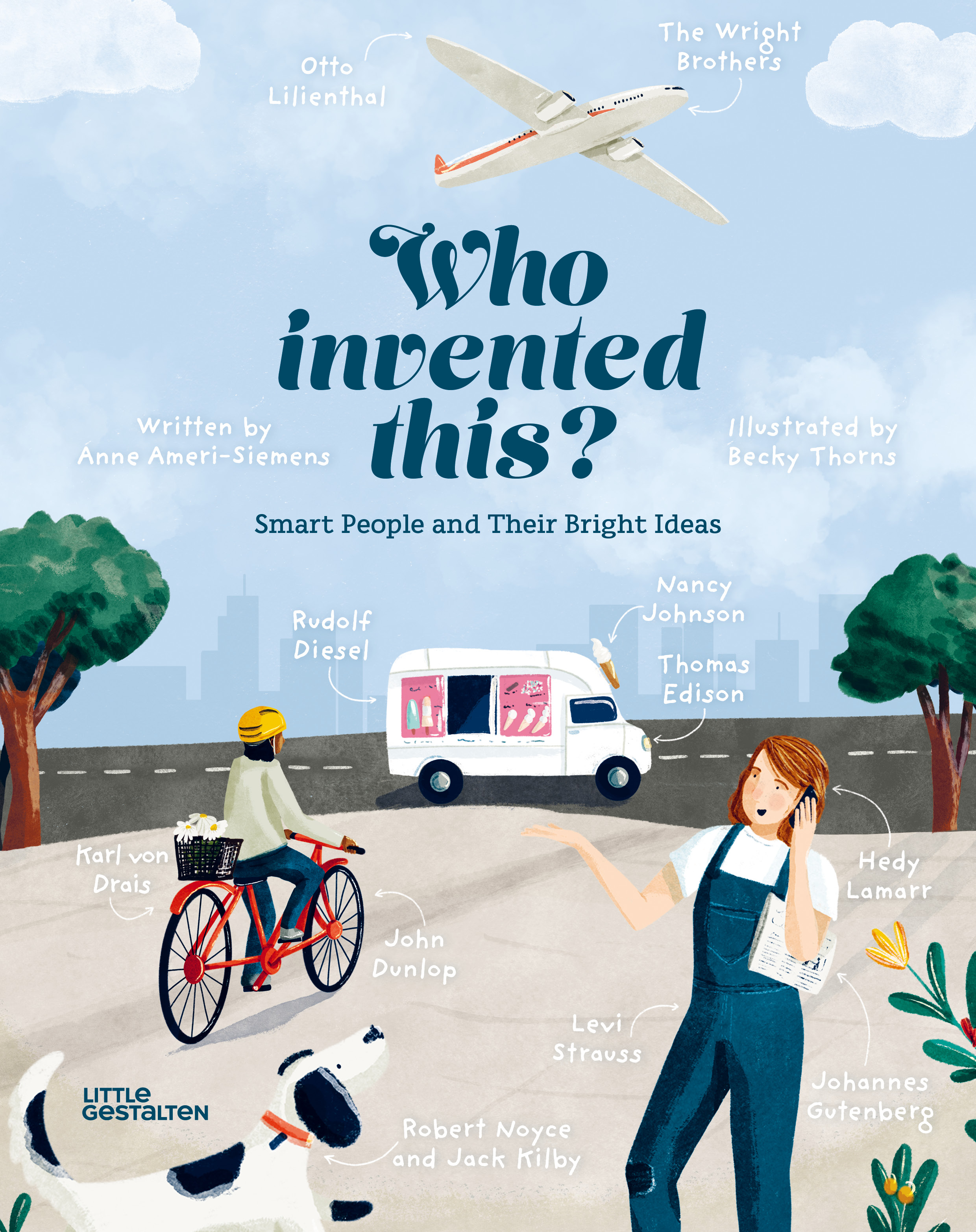
celebrate-picture-books-picture-book-review-who-invented-this-cover

About the Holiday

Established in 1998 by the United Inventors Association of the USA, the Academy of Applied Science, and Inventors’ Digest magazine, this month-long holiday celebrates the imagination and talent of individuals who dare to think differently and create new products, services, and ways of doing things that make a positive contribution to the world. To join in, enjoy your favorite new inventions, and if you harbor dreams of being an inventor—on a large or small scale—look for opportunities to share your ideas.

Who Invented This? Smart People and Their Bright Ideas

Written by Anne Ameri-Siemens | Illustrated by Becky Thorns


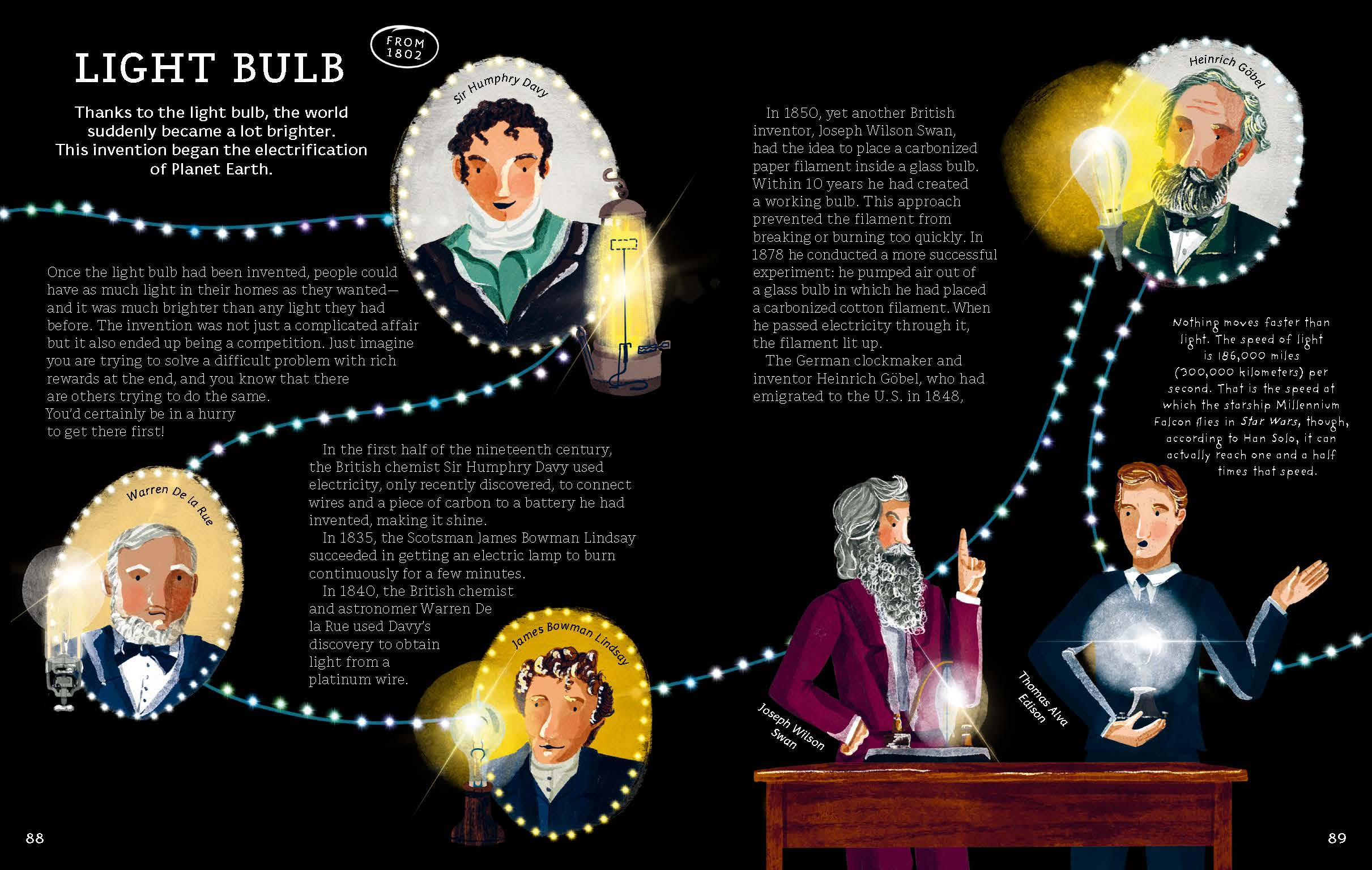
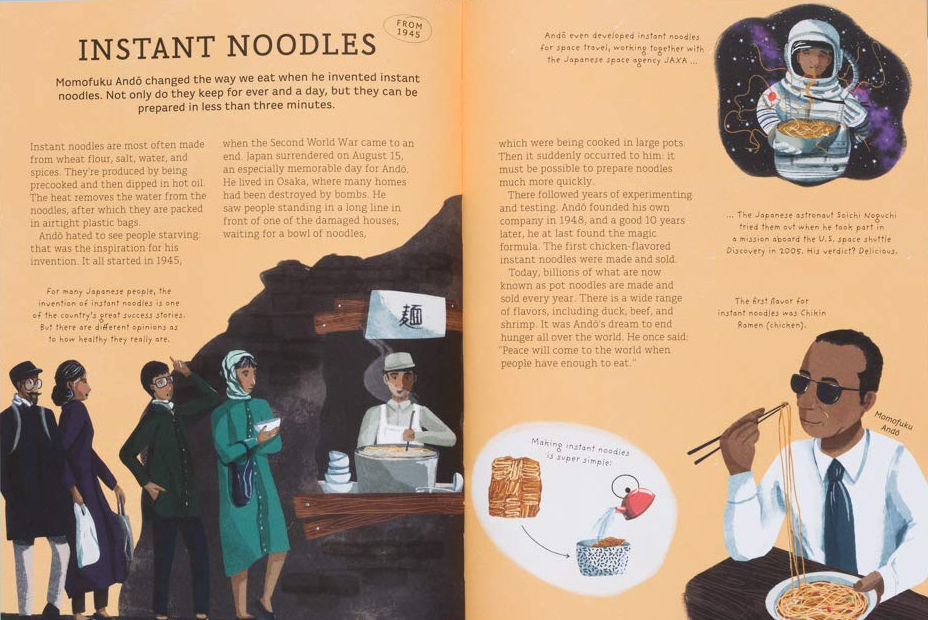
When you jump in the car or turn on a lamp, the idea that these were someone’s inventions (and even the names Henry Ford and Thomas Edison) may flash through your mind. But what about when you slurp up delicious Raman noodles, watch your pet fish through the aquarium glass, or squeeze out the last bit of toothpaste in the tube? In Who Invented This? Anne Ameri-Siemens introduces young readers to the brilliant minds behind some of the things we use every day.

celebrate-picture-books-picture-book-review-who-invented-this-light-bulb

Image copyright Becky Thorns, 2021, text copyright Anne Ameri-Siemans, 2021. Courtesy of Little Gestalten.

Take bicycles, for instance. You’ve probably seen pictures of those old bikes with a huge front wheel and a tiny back wheel. Was this the first bike? Not at all! Ameri-Siemens reveals that the first bicycle—called a “running machine”—had two wheels but didn’t have pedals. Invented by Karl von Drais in 1817, it had a steering bar in the front and was powered by the rider sitting on the seat and “running along the ground.” It may seem comical, but this invention led to more and more improvements until Pierre Michaux designed the first bike with pedals in the 1860s. You can read about all of the advancements in bikes and the other products it inspired too.

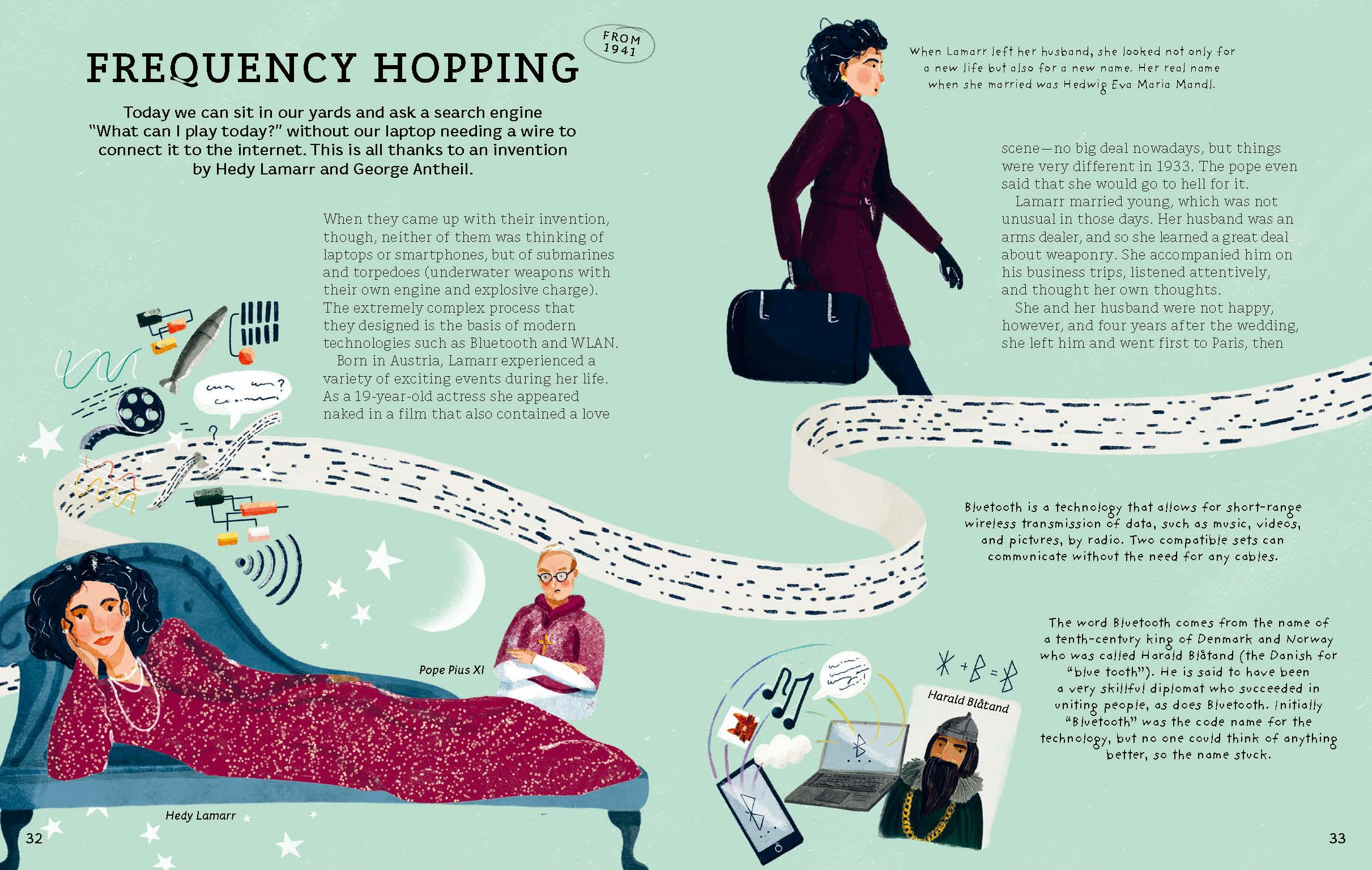
celebrate-picture-books-picture-book-review-who-invented-this-frequency-hopping

Image copyright Becky Thorns, 2021, text copyright Anne Ameri-Siemans, 2021. Courtesy of Little Gestalten.

As long as we’re talking about things that transport people here and there, have you ever thought about what drivers did before there were modern traffic lights? While the idea of indicating “stop” and “go” in red and green is universal across the world, the use of yellow for the transition came later from American policeman William Potts. “The first traffic lights in the world were built in London in 1868.” But they weren’t automatic. A policeman standing in the road had to move arms up and down to regulate the flow of traffic. “At night the arms were lit up in red and green.” Readers will find out more about how traffic lights progressed as well as how the timing of stop and go is controlled.

celebrate-picture-books-picture-book-review-who-invented-this-fizz

Image copyright Becky Thorns, 2021, text copyright Anne Ameri-Siemans, 2021. Courtesy of Little Gestalten.

Sometimes inventors get their ideas from nature—this is called bionics—and kids will learn how George de Mestral was ingeniously inspired by those sticky burrs that cling to socks to create a product most of them use all the time. There are other everyday products that are so important that they were invented long, long, long ago. One of these? Toothpaste! While Washington Sheffield invented the first smooth paste in 1850 by adding glycerin to the powder then used—“a mixture of pumice stone, powdered marble, grated oyster shells, ashes, peppermint oil or sage, and some soap power”—and his son realized the toothpaste could be packed in tubes like artists’ paints instead of sold in foil bags, prehistoric humans also brushed their teeth. Kids will be fascinated to learn more about the history of this morning and nighttime routine and even examples from the animal kingdom.

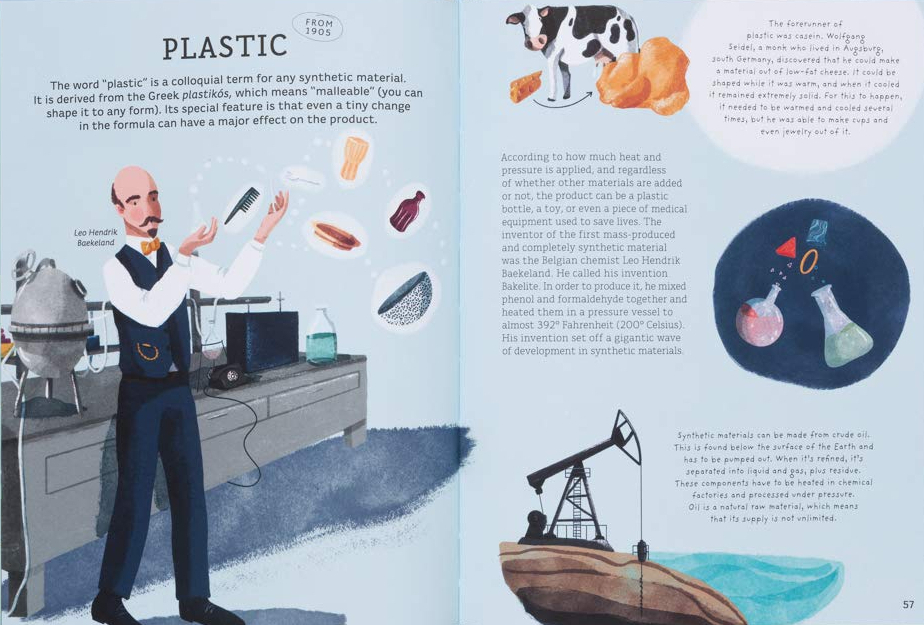
celebrate-picture-books-picture-book-review-who-invented-this-plastic

Image copyright Becky Thorns, 2021, text copyright Anne Ameri-Siemans, 2021. Courtesy of Little Gestalten.

Readers will be excited to learn about these inventions and many more that make up the fabric of our everyday lives and were conceived by talented inventors, scientists, and engineers. Some are the result of teamwork while some are the product of many years spent alone in a laboratory or even simply chance. In all, kids learn about 34 inventions that fall into diverse categories from transportation to communications, clothing to food, music to science and high-tech marvels.

celebrate-picture-books-picture-book-review-who-invented-this-instant-noodles

Image copyright Becky Thorns, 2021, text copyright Anne Ameri-Siemans, 2021. Courtesy of Little Gestalten.

Anne Ameri-Siemens’ conversational and engaging text will captivate readers interested in learning about how the world they know came to be. Ameri-Siemen’s storytelling beautifully balances the scientific and personal details of each invention to deliver compelling profiles. Interesting asides on each page reveal more about the inventions and the people who created them.

Accompanying each subject are Becky Thorns’ eye-catching illustrations that depict not only the invention but its creator or creators as well as how it is used or where it can be found. Thorns also employs clever ways to connect images on a page-spread that reinforcing their purpose and history. Each page spread offers plenty of ideas to spur research projects or extended lessons for classrooms and homeschoolers.

Packed with information on products, ideas, world-changing inventions, and the brilliant minds behind them, Who Invented This? Smart People and Their Bright Ideas will fascinate kids and spark an interest in further research, science, engineering, and technical studies. The book is highly recommended for young inventors, history buffs, and other creative thinkers as well as for classrooms and school and public library collections.

Ages 9 – 12 and up

Little Gestalten, 2021 | ISBN 978-3899551334

To learn more about Becky Thorns, her books, and her art, visit her website.

National Inventor’s Month Activity

celebrate-picture-books-picture-book-review-share-your-bright-idea-activity

Share Your Bright Idea! Page


Do you sometimes have a lightbulb moment when an idea seems just right? Use this printable Share Your Bright Idea! Page to write about or draw your idea!

celebrate-picture-books-picture-book-review-who-invented-this-cover

You can find Who Invented This? Smart People and Their Bright Ideas at these booksellers

Amazon | Barnes & Noble | Books-a-Million

To support your local independent bookstore, order from

Bookshop | IndieBound

Picture Book Review
April 14 – It’s Global Astronomy Month

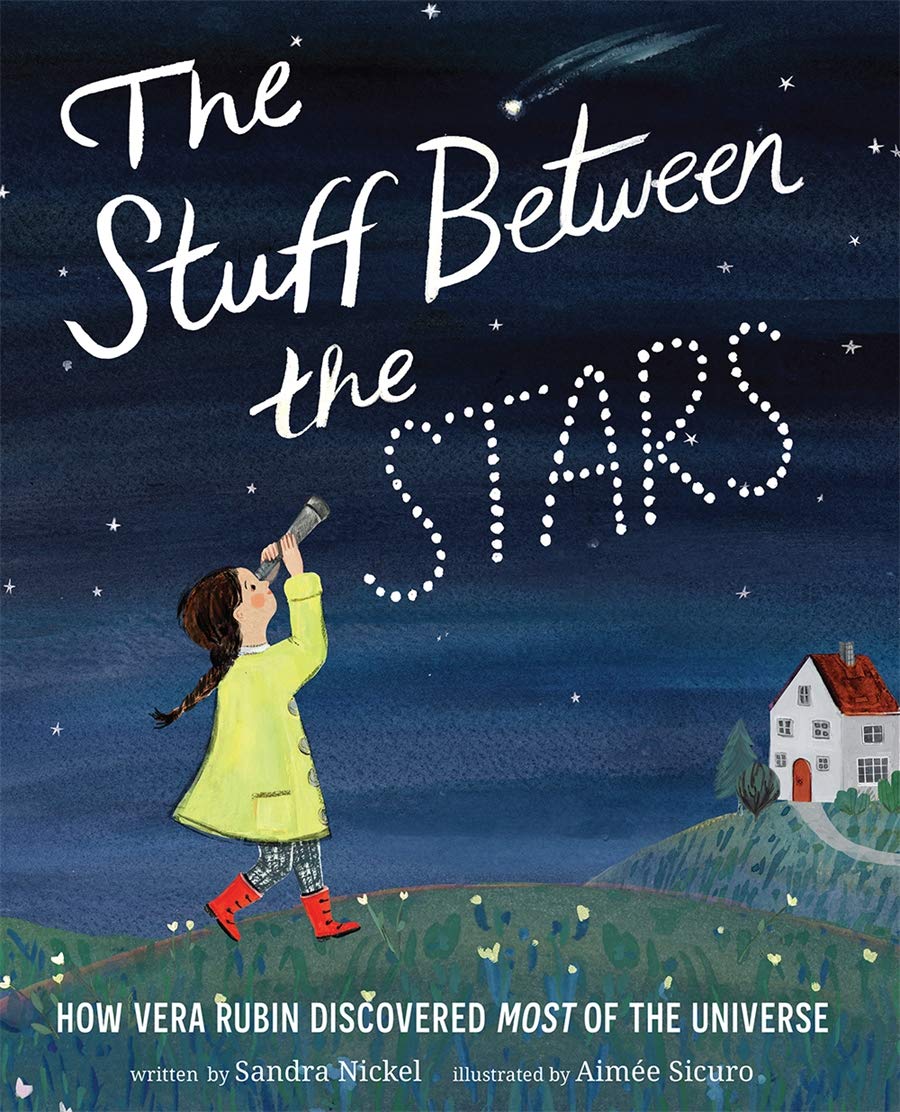
celebrate-picture-books-picture-book-review-the-stuff-between-the-stars-cover

About the Holiday

Instituted by Astronomers Without Borders, a group who sees in our shared sky an opportunity to create “a global community that appreciates, studies, and shares the wonders of the universe, to broaden perspective, transcend borders, and improve lives,” Global Astronomy Month brings people together with arts events, parties, and special events. To find resources, such as April sky maps in English and Spanish, and more information on how you can participate, visit the Astronomers Without Borders website.

Thanks to Abrams Books and Blue Slip Media for sending me a copy of The Stuff Between the Stars for review consideration. All opinions on the book are my own. I’m excited to be hosting a giveaway of the book. See details below.

The Stuff Between the Stars: How Vera Rubin Discovered Most of the Universe

Written by Sandra Nickel | Illustrated by Aimée Sicuro


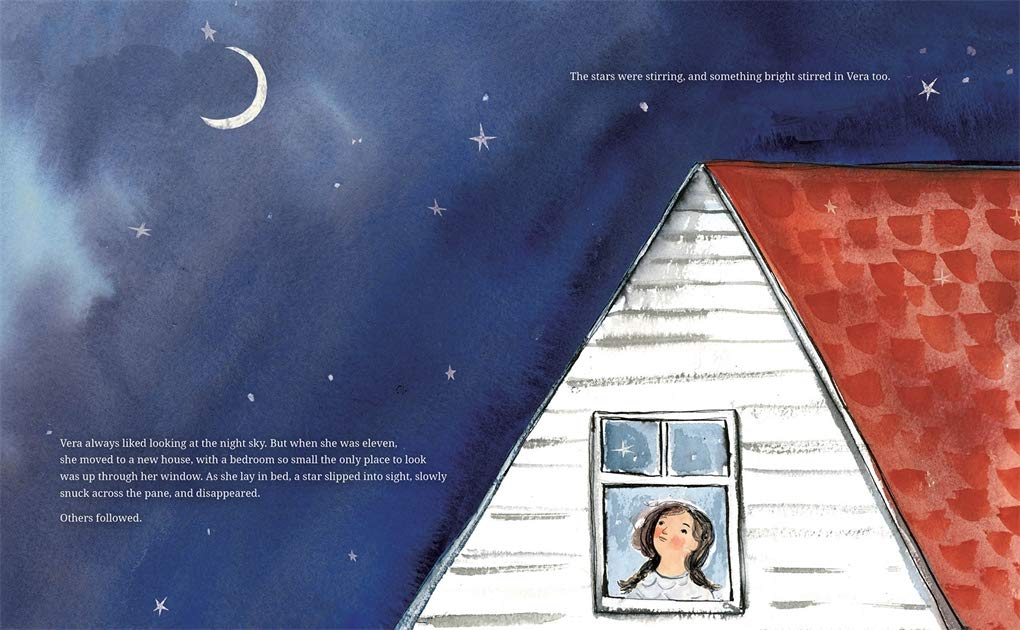
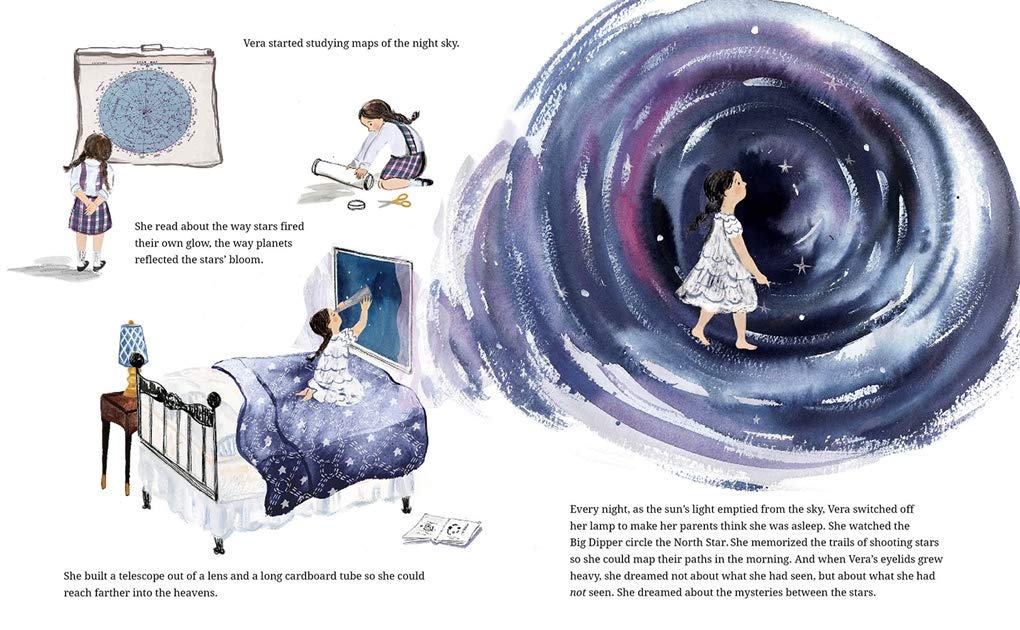
Vera had always been fascinated with the night sky. As she gazed up through her bedroom window, she saw when “the stars were stirring, and something bright stirred in Vera too.” She began studying everything she could about the stars, planets, and how they interacted in the night sky. She even made her own telescope from a cardboard tube and a lens. At seventeen Vera began attending Vassar College as the only astronomy major in her class. Here, she could use the school’s telescope whenever she wanted.

celebrate-picture-books-picture-book-review-the-stuff-between-the-stars-window

Image copyright Aimée Sicuro, text copyright Sandra Nickel. Courtesy of Abrams Books for Young Readers.

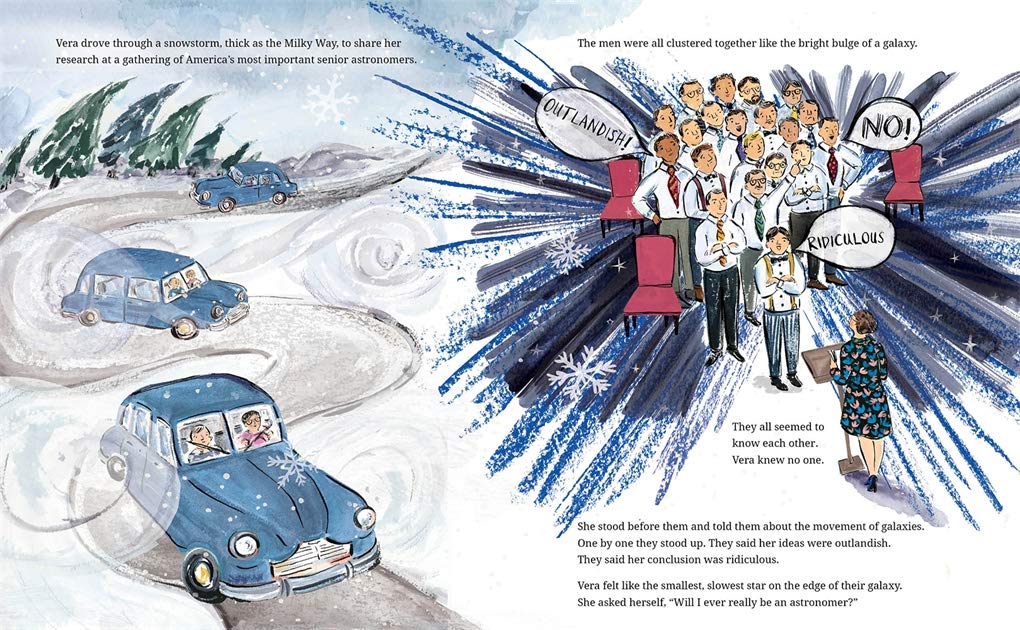
While at Vassar, she fell in love with Robert Rubin, a mathematician. They married and soon Vera was going to have a baby. During her pregnancy, she explored an idea she had: “was it possible that galaxies rotated around a center in the universe like the Big Dipper circled the North Star?” By the time her son was born, Vera decided she was right. Vera presented her conclusions at a meeting of America’s top astronomers. They thought her ideas were “outlandish” and “ridiculous” and told her so. “Vera felt like the smallest, slowest star on the edge of their galaxy” and wondered if she’d “ever really be an astronomer.”

celebrate-picture-books-picture-book-review-the-stuff-between-the-stars-young

Image copyright Aimée Sicuro, text copyright Sandra Nickel. Courtesy of Abrams Books for Young Readers.

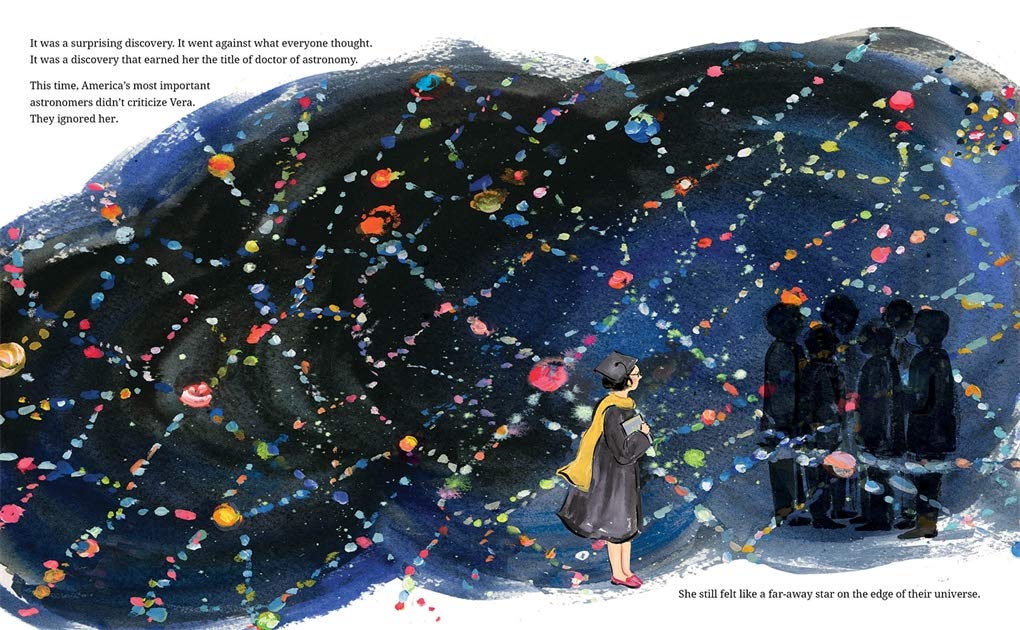
After Vera had a baby girl, she decided to concentrate on a new question that she thought would be fun. She wondered if galaxies were scattered haphazardly or whether there was “a pattern to where they spun.” After many months of staying up late into the night doing calculations, Vera determined that galaxies were “clumped together like dew drops on a spider’s web.” This was a major discovery; one that earned her a doctorate in astronomy. Instead of criticizing her, America’s top astronomers ignored her.

celebrate-picture-books-picture-book-review-the-stuff-between-the-stars-outlandish

Image copyright Aimée Sicuro, text copyright Sandra Nickel. Courtesy of Abrams Books for Young Readers.

Vera had two more children, and as her family grew she dreamed of observing galaxies from a mountaintop like the senior astronomers and watch gravity work within galaxies. She began teaching astronomy at colleges in Washington D.C., and other astronomers began hearing about her and wanting to know more about her ideas that had been dismissed in the past. More than ever Vera wanted to view the sky from an observatory in the mountains—one like the Carnegie Institution had in the California mountains.

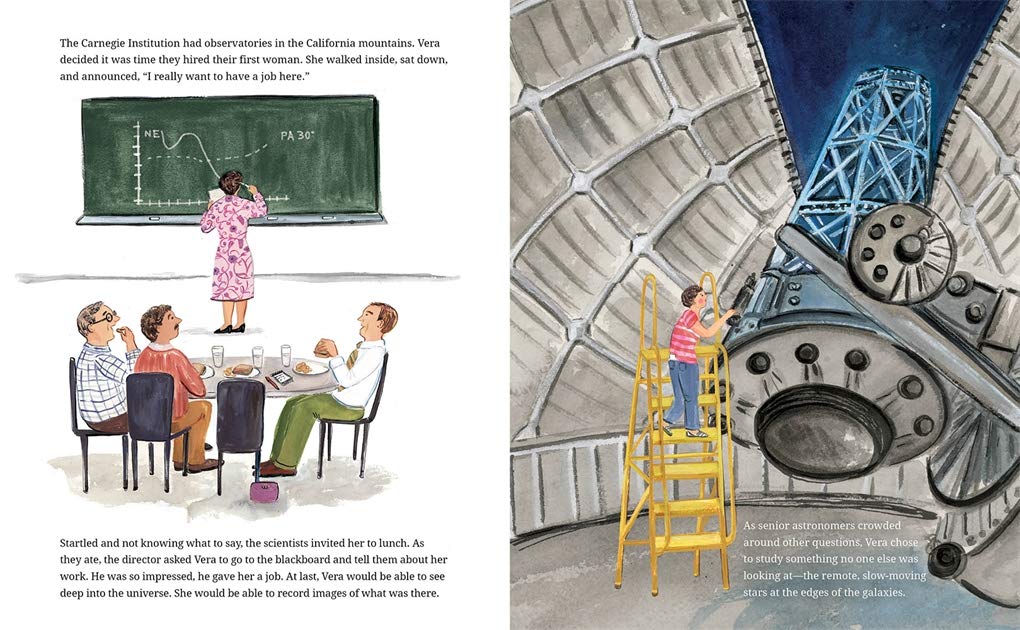
One day she went to the Carnegie Institution and announced that she would like a job there. When the director and other scientists learned about her work and theories, they were so impressed that she landed a job. While the other senior astronomers worked on other questions, Vera studied the “slow-moving stars at the edges of the galaxies.”

celebrate-picture-books-picture-book-review-the-stuff-between-the-stars-galaxies

Image copyright Aimée Sicuro, text copyright Sandra Nickel. Courtesy of Abrams Books for Young Readers.

In Arizona Vera studied the Andromeda Galaxy and the stars on its outside spiral. What Vera found was astounding. Instead of moving slower at the edges of the galaxy because of waning gravity from the center, these stars moved at the same speed. She remembered that earlier astronomers had theorized about a mysterious, unseen “dark matter” with its own gravity that “might be at work in the universe.”

Vera believed dark matter “could fill the space between the stars.” In fact, she was sure it was there by the way the stars moved. Once again, when Vera revealed her findings, most astronomers didn’t want to believe it. They didn’t want to believe that all this time they’d only been studying a small fraction of the universe. After Vera studied two hundred more galaxies, the astronomers had to agree that she was correct. At last “Vera was no longer at the edge of astronomy, she was at it’s very center.”

Backmatter includes an Author’s Note detailing more about Vera Rubin’s work, a timeline of Rubin’s life, resources on quotes found in the text, and a selected bibliography.

celebrate-picture-books-picture-book-review-the-stuff-between-the-stars-observatory

Image copyright Aimée Sicuro, text copyright Sandra Nickel. Courtesy of Abrams Books for Young Readers.

Sandra Nickel’s straightforward and comprehensive storytelling gives kids a well-rounded view of Vera Rubin’s life as she doggedly pursued a career in astronomy despite all the naysayers and snubs along the way and made an astounding discovery that still baffles scientists today. Rubin’s inspirational example will resonate with young readers and give them a pathway to accomplishing their own goals. Nickel does an excellent job of explaining the complex ideas Rubin studied, theorized on, and wrote about, allowing readers to fully understand her impact on the field of astronomy and our understanding of the universe. Nickel’s lyrical prose is also sprinkled with metaphors that link Rubin’s feeling and life changes to the night sky she loved to observe.

Through Aimée Sicuro’s mixed-media illustrations, readers follow Vera Rubin as she matures from a curious child who loves watching the night sky to a college student to a mother to an astronomer making discoveries that changed the way scientists understood the universe. Her detailed images give kids visual representations of Rubin’s work and ideas, including a complex mathematical calculation she works on while her family sleeps and her idea that galaxies were clumped together. Depictions of the Palomar Observatory will thrill space buffs and show readers why Rubin so wanted to study the sky from a mountain top. The final image of a group of children gazing up at the night sky as a shooting star flashes by offers an inspirational quote from Vera Rubin.

A superb biography that will inspire and nurture young minds, The Stuff Between the Stars is highly recommended for home, school, and public library collections.

Ages 6 – 9

Abrams Books for Young Readers, 2021 | ISBN 978-1419736261

Discover more about Sandra Nickel and her books on her website. You can also find curriculum guides and activity sheets to download on her site.

You can connect with Aimée Sicuro on Instagram.

Watch the book trailer for The Stuff Between the Stars!

Global Astronomy Month Activity

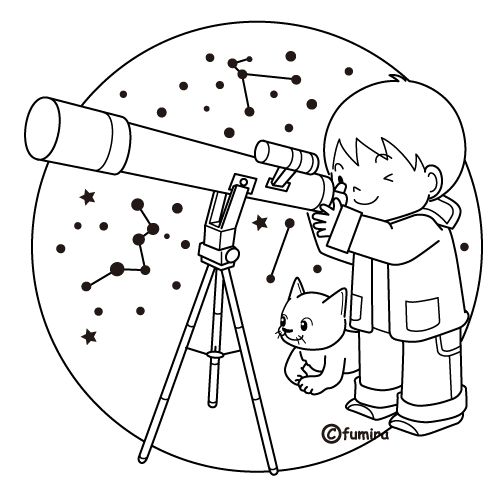
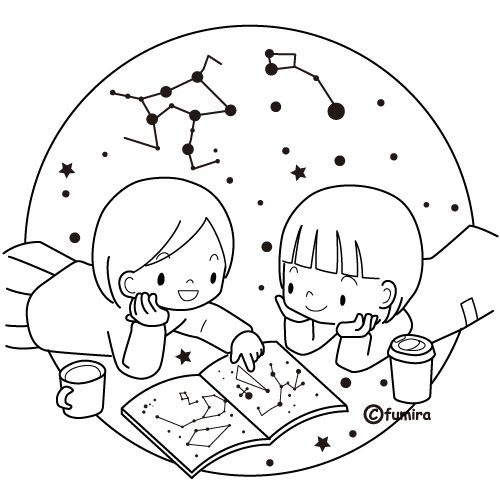
celebrate-picture-books-picture-book-review-astronomy-coloring-page-telescope    celebrate-picture-books-picture-book-review-astronomy-coloring-page-kids

Explore the Galaxies Coloring Pages


Indulge your love of star stuff with these printable coloring pages!

Looking through the Telescope | Studying the Stars | Milky Way Dot-to-Dot

celebrate-picture-books-picture-book-review-the-stuff-between-the-stars-cover

You can find The Stuff Between the Stars at these booksellers

Amazon | Barnes & Noble | Books-a-Million

To support your local independent bookstore, order from

Bookshop | IndieBound

Picture Book Review

 

April 5 – National Dandelion Day

celebrate-picture-books-picture-book-review-little-dandelion-seeds-the-world-cover

About the Holiday

As warm weather and spring rains begin preparing the ground for grass, flowers, and gardens, there’s another distinctive sprout that appears early – and often. Of course, it’s the dandelion! With its sunny flowers and fly-away seeds, this little plant is part of spring and summer landscapes around the world. The dandelion is far from just a weed, however. In fact, the dandelion is technically an herb and has many health benefits. Dandelion leaves can be used in salads, soups, and teas, and they provide aid with regulating blood sugar, wound healing, gastrointestinal problems, and even vision. Known for its healthy properties since 659 BCE, the dandelion is a staple for many global cultures. To celebrate, check in your favorite grocery store or farmers market for dandelion leaves and try a new recipe! Here are ten delicious-looking dishes from Kitchn!

Thanks to Sleeping Bear Press for sharing a copy of Little Dandelion Seeds the World for review consideration. All opinions on the book are my own.

Little Dandelion Seeds the World

Written by Julia Richardson | Illustrated by Kristen Howdeshell  and Kevin Howdeshell


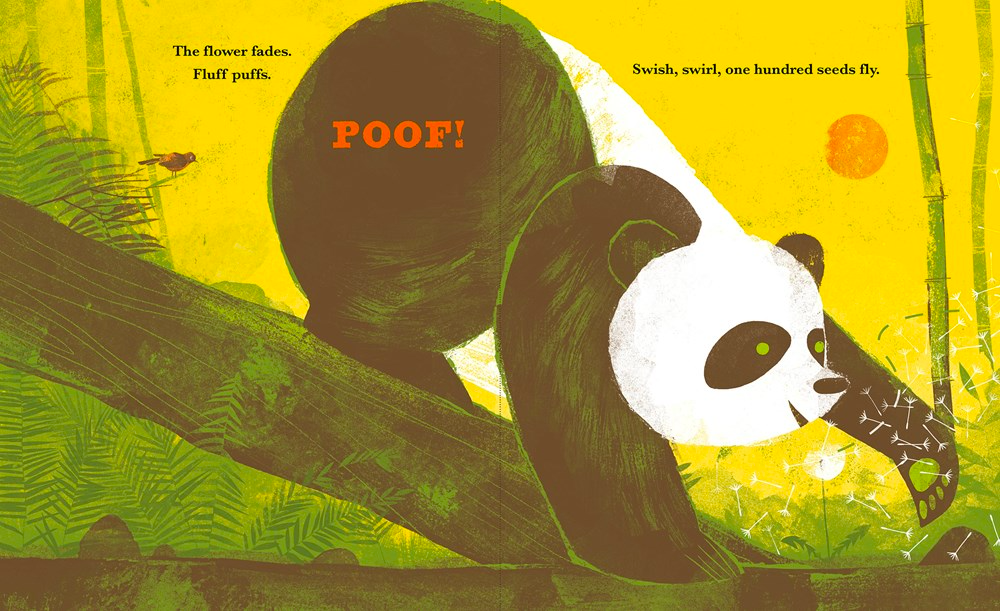
A little girl in a South African city finds a dandelion growing in a crack in the sidewalk. She blows on the fluffy head and “swish, swirl, one hundred seeds fly.” One seed flies to an African plain, where it drops into the grass, roots, and grows. “The flower fades. Fluff puffs. POOF!” and a breeze carries one hundred seeds into the air past an elephant and her baby.

celebrate-picture-books-picture-book-review-little-dandelion-seeds-the-world-panda

Image copyright Kristen Howdeshell and Kevin Howdeshell, 2021, text copyright Julia Richardson. Courtesy of Sleeping Bear Press.

One seed takes a ride on a cheetah’s ear until it is caught by the wind again and finds itself in Asia. Here it roots and grows. When the flower turns to fluff, a curious panda gives it a swat and “swish, swirl, one hundred seeds fly.” One of the seeds gets lifted up in a cyclone and deposited “far, far away…in Australia.”

Here a kangaroo, hopping along, jumps on the plant, now just a fuzzy ball. Seeds take to the air, dancing on the breeze. One seed circles over a sailboat and latches onto the pantleg of a boy standing on the bow. When he disembarks, he takes the seed with him up, up into the hills. The seed jumps off and “a little dandelion blooms in North America.”

celebrate-picture-books-picture-book-review-little-dandelion-seeds-the-world-europe

Image copyright Kristen Howdeshell and Kevin Howdeshell, 2021, text copyright Julia Richardson. Courtesy of Sleeping Bear Press.

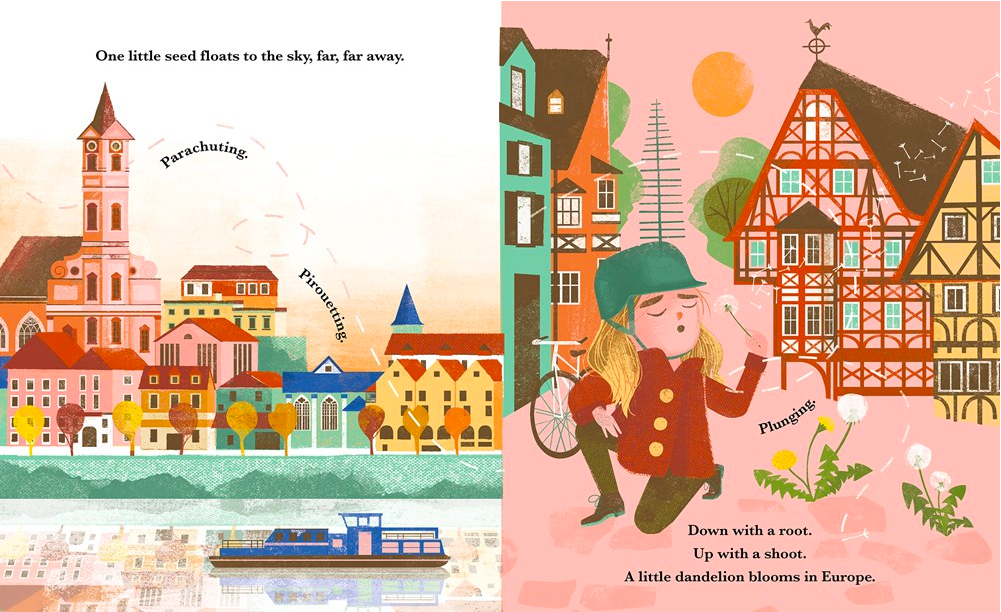
This little plant meets up with a skunk and a bird, and a seed wings its way to South America. Disturbed by a snake slithering by, the puff explodes, sending its seeds every which way. “One little seed slips into the sea, far, far away.” Riding on the current it finds a rock to cling too. “Down with a root. Up with a shoot. A little dandelion blooms in Antarctica.” Another dandelion’s life begins. Finally, with the flick of a seal’s tail, the seeds scatter, one “parachuting. Pirouetting” into Europe, where the familiar, graceful dance continues.

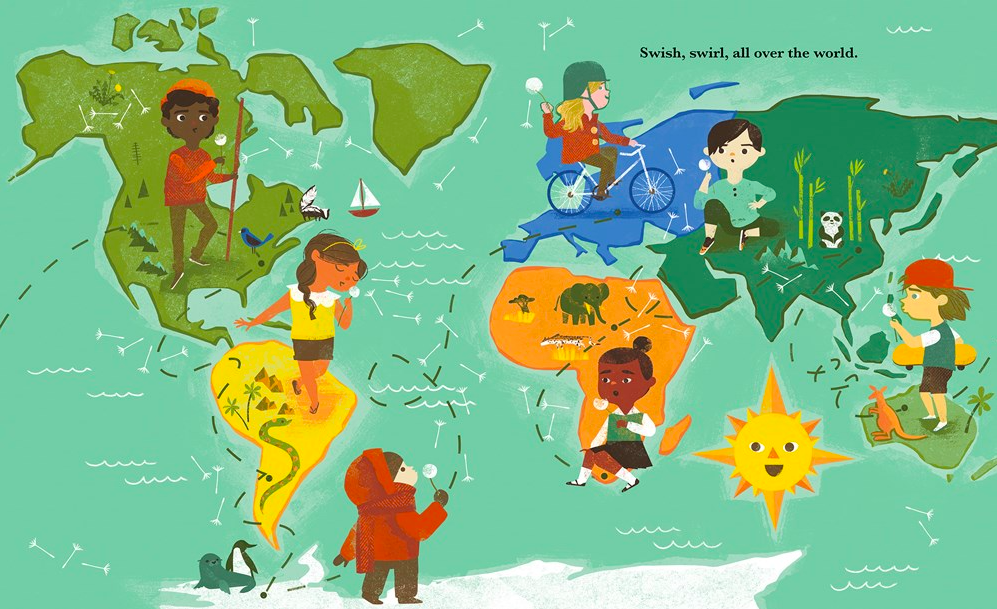
Backmatter includes an illustrated world map that shows the route of the dandelion seeds and approximate landing sites on each continent and an Author’s Note about how dandelions grow and reseed themselves as well as a question to spark discussion.

celebrate-picture-books-picture-book-review-little-dandelion-seeds-the-world-map

Image copyright Kristen Howdeshell and Kevin Howdeshell, 2021, text copyright Julia Richardson. Courtesy of Sleeping Bear Press.

Julia Richardson’s lyrical descriptions and repeated phrases invite kids to follow dandelion seeds as they travel the world. Richardson’s engaging storytelling will keep kids guessing as to where the seeds will travel next while teaching them about the ingenuity and resilience of nature. The global aspect of the story reminds readers that we are all connected through common experiences, the plants and animals with whom we share our planet, and our responsibilities for conservation.

Through Kristen and Kevin Howdeshell’s bold textured illustrations, readers travel the world with tiny dandelion seeds from the sunbaked African savanna, where cheetahs and elephants roam to a verdant bamboo forest, where a panda almost walks off the page to play with the dandelion, to the lush hills of a coastal town and beyond. In each place local children interact with their environment, giving readers a feeling of inclusion too.

An eye-catching and lyrical introduction to nature science that will spark enthusiasm for learning not only about dandelions but about how all plants grow and thrive, Little Dandelion Seeds the World would be a high-interest addition to science, geography, and social studies lessons for classrooms and homeschoolers as well as to public library collections.

Ages 5 – 8 

Sleeping Bear Press, 2021 | ISBN 978-1534110533

Discover more about Julia Richardson and her books on her website.

To learn more about Kristen Howdeshell and Kevin Howdeshell, their books, and their art, visit their website, The Brave Union.

National Dandelion Day Activity

celebrate-picture-books-picture-book-review-little-dandelion-seeds-the-world-coloring-page

Little Dandelion Seeds the World Activity Pages


Grab your crayons and pencils and have fun with this printable coloring page and word search puzzle from Sleeping Bear Press!

Little Dandelion Seeds the World Activity Pages

celebrate-picture-books-picture-book-review-little-dandelion-seeds-the-world-cover

You can find Little Dandelion Seeds the World at these booksellers

Amazon | Barnes & Noble | Books-a-Million

To support your local independent bookstore, order from

Bookshop | IndieBound

Picture Book Review

February 16 – Innovation Day

celebrate-picture-books-picture-book-review-maxine-and-the-greatest-garden-ever-cover

About the Holiday

Today we celebrate all those people who look at a problem and design a solution, or who just ask, “What if…?” and search for answers. The holiday was established by the Science History Institute in conjunction with the Society of Chemical Industry to help bring attention to those people who were not only producing technology, but were also pushing the envelope on what was possible. Each year, these two organizations coordinate to host Innovation Day. This year, restrictions and life-changing alterations needed to combat COVID-19, have sparked innovations both large and small at home, for business, at schools, and for medical researchers. Creative individuals have kept us entertained, given us hope, and kept things going even in the most difficult of times. To celebrate today, put on your thinking cap, look around you, and do something new, novel, and completely unexpected. Who knows…you may be the next great inventor!

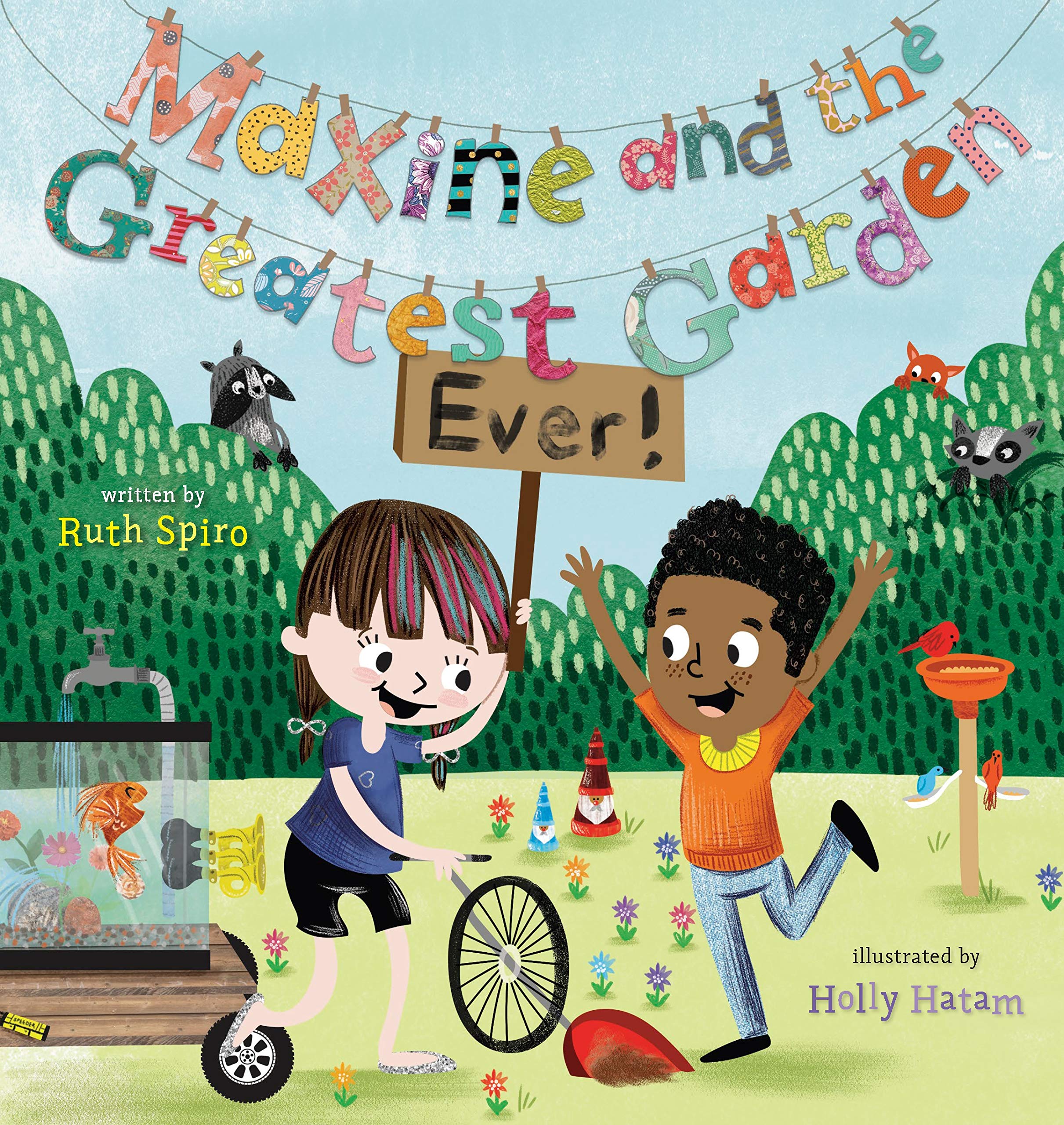
Maxine and the Greatest Garden Ever!

Written by Ruth Spiro | Illustrated by Holly Hatam


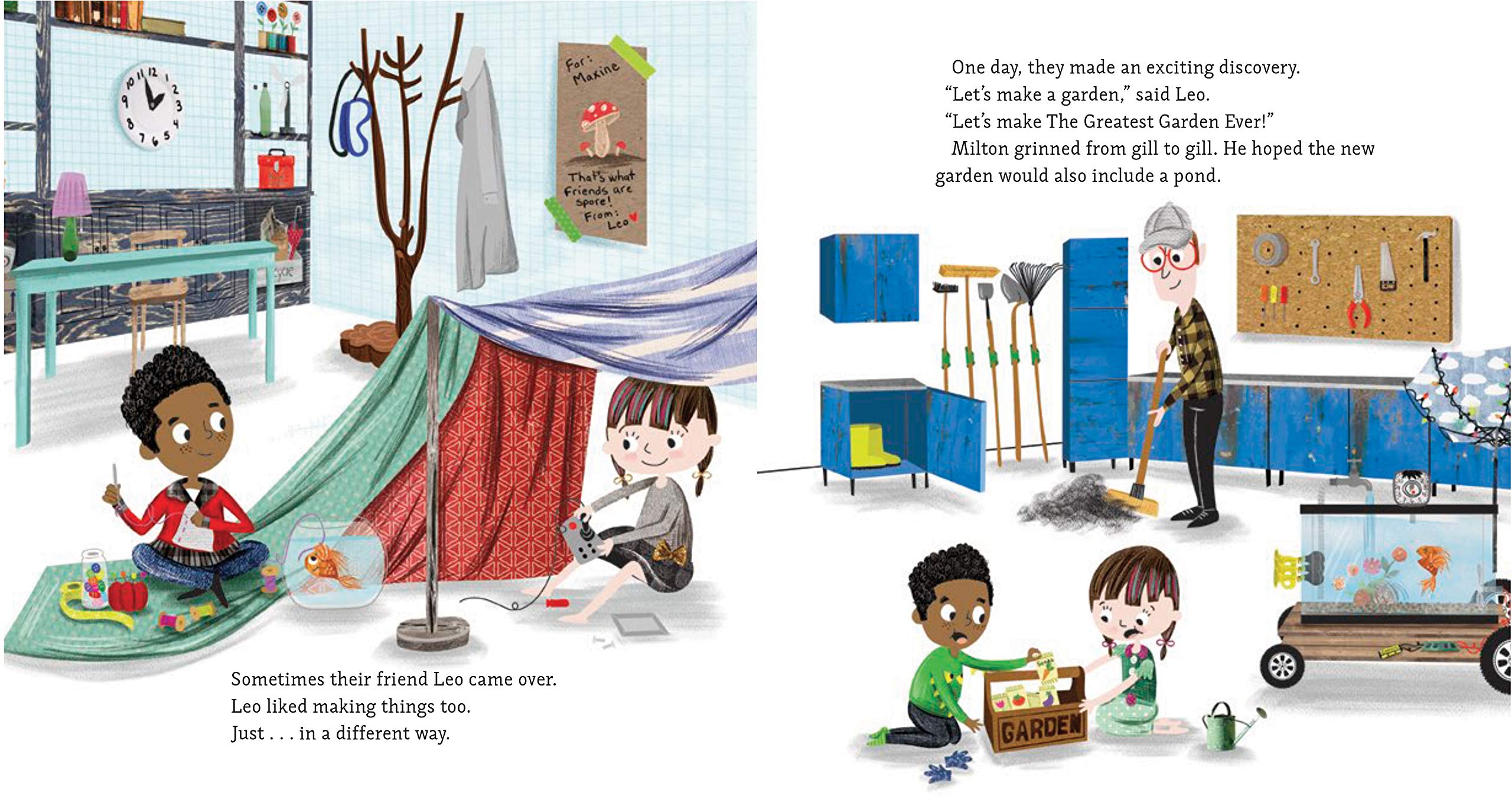
Maxine and her goldfish, Milton, were best friends, and Maxine loved thinking up creative scientific or technical ways to keep him fed, safe, and happy. “Maxine liked making things, and she especially liked making things for Milton. ‘If I can dream it, I can build it!’ she said.” Maxine’s other friend Leo also liked making things, but his creations were more arty.

celebrate-picture-books-picture-book-review-maxine-and-the-greatest-garden-ever-seeds

Image copyright Holly Hatam, 2021, text copyright Ruth Spiro, 2021. Courtesy of Dial Books.

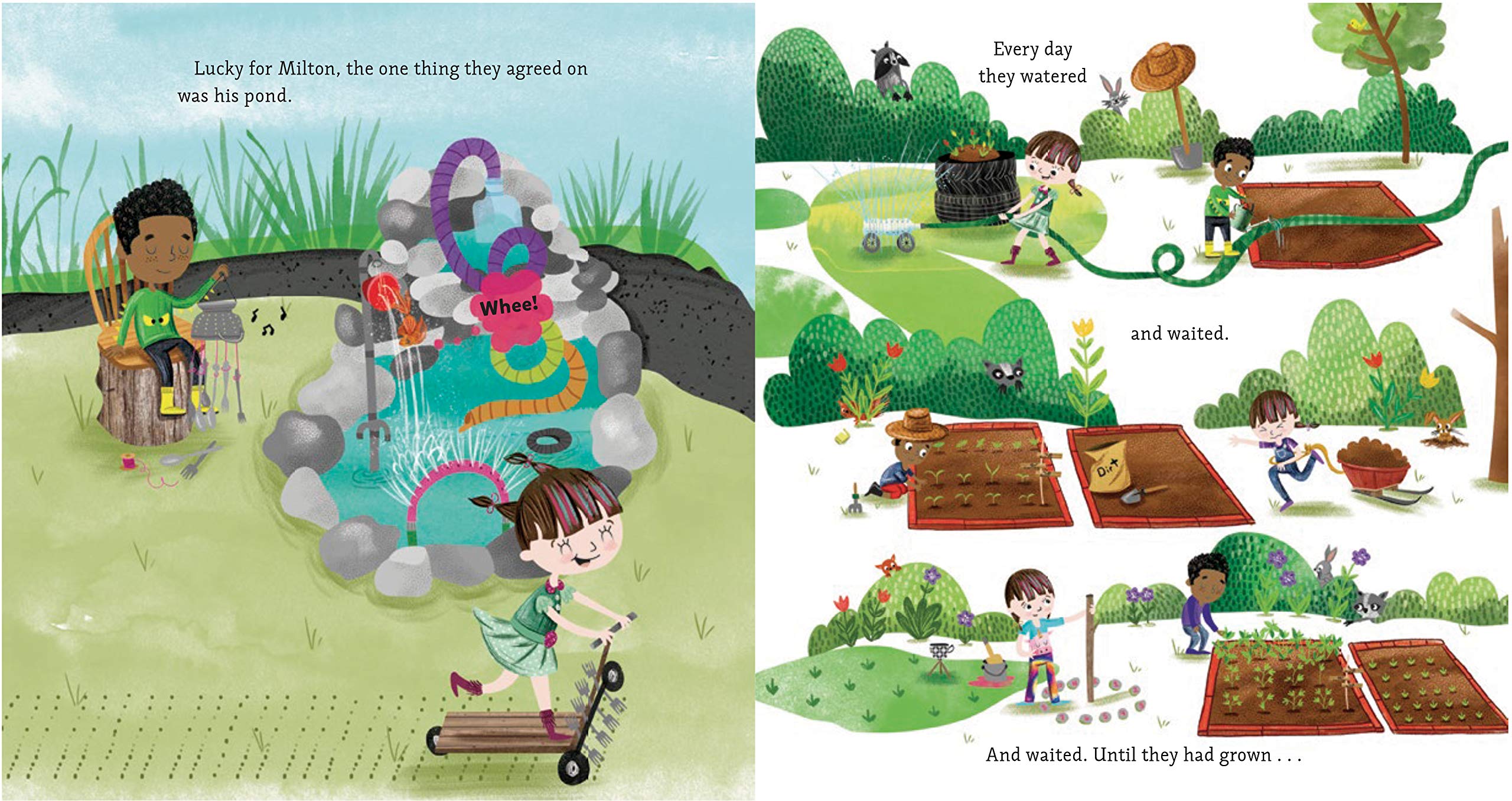
One day when Leo was visiting Maxine, they found packets of seeds and decided to build “‘The Greatest Garden Ever!’” Milton hoped the garden would have a pond just for him. Leo and Maxine drew up their plans. “Leo’s was pretty. Maxine’s was practical.” When they planted the seeds, Leo planted them far apart in large beds of soil. Maxine’s seeds were packed close together in pots made from old tires, barrels, toys, and even a chandelier. They both looked askance at the other’s seeds. They did, however, agree on Milton’s pond.

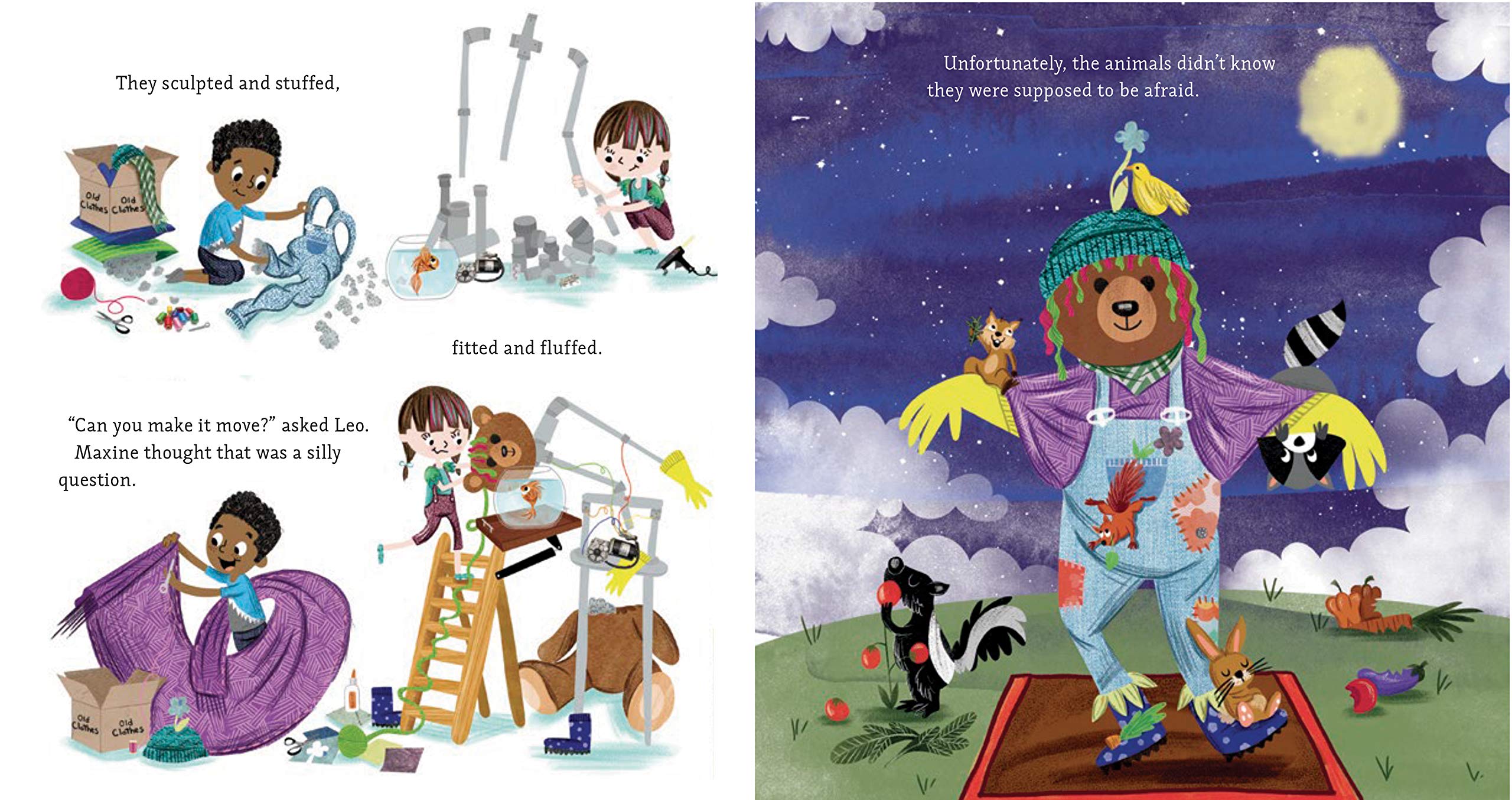
Every day they watered, weeded, and waited. At last, they truly did have “The Greatest Garden Ever!” There were vegetables and flowers, birdfeeders and a gazebo. The wild animals thought the garden was great too. One day, Maxine and Leo came to the garden to find nibbled carrots, radishes, and eggplants; pots were knocked over and little footprints were everywhere. Maxine wanted to make something to keep the animals away. “‘Something that looks nice?’ asked Leo. ‘Something that works.,’” said Maxine.

celebrate-picture-books-picture-book-review-maxine-and-the-greatest-garden-ever-pond

Image copyright Holly Hatam, 2021, text copyright Ruth Spiro, 2021. Courtesy of Dial Books.

They decided to make a scarecrow. While Leo stuffed overalls and made a shirt, Maxine built a mechanical body for the big teddy bear that would wear them. But the animals didn’t think the scarecrow was very scary. While Leo thought the bear had done nothing, Maxine said that it had helped them know what didn’t work. They gathered new supplies and “then while Leo sewed, Maxine wrote some code.” This time the bear had laser eyes, moving parts, loud sounds, a shiny helmet, and a scary black dress. That night, though, the scarecrow was so scary that it made babies cry, dogs howl, and kept neighbors awake.

celebrate-picture-books-picture-book-review-maxine-and-the-greatest-garden-ever-scarecrow

Image copyright Holly Hatam, 2021, text copyright Ruth Spiro, 2021. Courtesy of Dial Books.

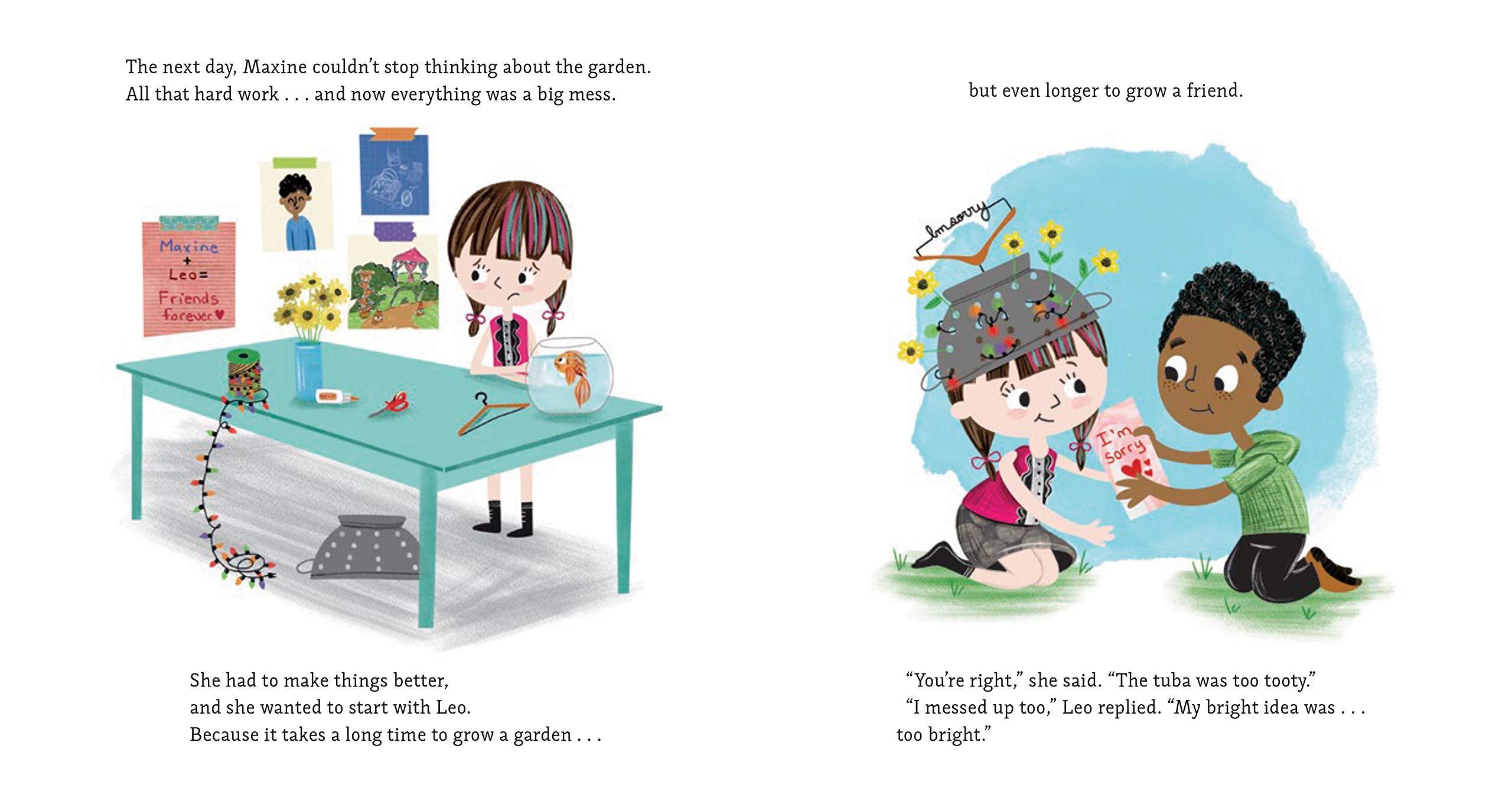
Leo blamed Maxine, and Maxine blamed Leo. At home, Maxine and Leo thought about the garden and what they’d said. Maxine wanted “to make things better, and she wanted to start with Leo. Because it takes a long time to grow a garden… but even longer to grow a friend.” When they met the next day, they both apologized. As they cleaned up the garden and shared the last of the lettuce, Maxine had an idea. She and Leo repaired, repainted, and replanted, and when they were finished, they invited their new animals friends to enjoy the garden with them.

celebrate-picture-books-picture-book-review-maxine-and-the-greatest-garden-ever-apology

Image copyright Holly Hatam, 2021, text copyright Ruth Spiro, 2021. Courtesy of Dial Books.

Ruth Spiro’s celebration of creativity, gardening, and friendship will enchant kids and show them that sometimes projects lead to try and try again cooperation before the original vision or a new idea is perfected. Through Maxine’s talent for engineering, coding, and inventing and Leo’s artistic abilities, Spiro shows readers that whatever their skills are, they can contribute to the success of any endeavor. When Maxine and Leo’s frustrations over the garden spill out into their relationship and an argument ensues, Spiro reminds kids that people and enduring friendships are more important than plans, projects, or events and that apologies and understanding keep relationships strong. Her charming narration, realistic dialogue, and periodic rhymes create a story that’s a joy to read aloud.

Holly Hatam’s vivid illustrations will keep kids lingering over the pages to catch all of her puns, Maxine’s inventions, and Leo’s crafts—many of which enterprising kids may want to try to replicate. Cheery Maxine with her red-and-blue streaked hair, bright eyes, and quick imagination is enthusiastic and confident, and Leo, wearing a dragon shirt any kid would love, is equally as confident and passionate about his talents. The garden is a visual treat, from its first planting to its early stages to its full-grown glory. Hatam’s vision for both of Maxine and Leo’s scarecrows is original and gleefully kid-centric. The final image of the shared garden at night is a spectacular celebration for all.

Both fans of Maxine and Milton’s first adventure in Made by Maxine and new readers of this little series will ask to hear Maxine and the Greatest Garden Ever! again and again. A rousing friendship story to engage kids in STEAM-related activities or to jumpstart ideas for those times when they’re are looking for something to do at home, Maxine and the Greatest Garden Ever! Is highly recommended for home, school, and public library collections.

Ages 4 – 8

Dial Books, 2021 | ISBN 978-0399186301

Discover more about Ruth Spiro and her books on her website.

To learn more about Holly Hatam, her books, and her art, visit her website.

Innovation Day Activity

celebrate-picture-books-picture-book-spoon-flowers

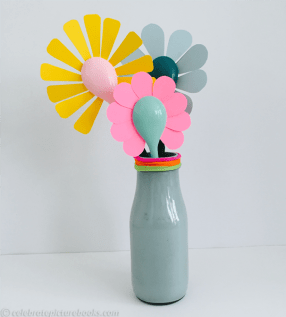
Spoon Flowers Craft


It may not be time for gardening, but that doesn’t mean you can’t “grow” some flowers. With a little innovation, you can give anyone a bouquet with this easy craft!

Supplies

  • Colorful plastic spoons
  • Heavy stock paper or construction paper in various colors, including green for leaves
  • Multi-surface glue or hot glue gun

Directions

  1. Cut petals from the heavy stock paper or construction paper
  2. Glue the petals to the bowl of the spoon
  3. Cut leaves from the green paper (optional)
  4. Glue leaves to the handle of the spoon (optional)

celebrate-picture-books-picture-book-review-maxine-and-the-greatest-garden-ever-cover

You can find Maxine and the Greatest Garden Ever! at these booksellers

Amazon | Barnes & Noble | Books-a-Million

To support your local independent bookstore, order from

Bookshop | IndieBound

Picture Book Review