I’d like to thank The Children’s Book Review and Amy Nielander for sharing a digital copy of My Name Is Not Ed Tug with me.
My Name Is Not Ed Tug
By Amy Nielander
Edimorwhitimormiligimmus Tug knew where he came from and just where he fit into his family. After all, “he was named after his Grandpa Edimor,” who helped him learn how to spell his name with a tall tower of blocks; “his Great Uncle Whitimor,” who taught him how to play the accordion; his Aunt Mili,” who ran a butterfly farm; “and his Granny Gimmus,” who filled his tummy with warm, homemade soup.” Anyone hearing his name might think it was gibberish, but Edimorwhitimormiligimmus thought “it was perfect.”
Copyright Amy Nielander, 2022, courtesy of West Margin Press.
School, of course, was a challenge since the other kids had a hard time spelling or even remembering his name. And his teacher, Ms. Mell, found that her mouth grew “quite tired” just trying to pronounce it. But one Monday, Ms. Mell announced that a new student, Ty, would be joining their class. Mrs. Mell had made name tags for each student to make it easier for Ty to remember their names, and she slapped one on Edimorwhitimormiligimmus’s shirt. When he looked, Edimorwhitimormiligimmus saw that the tag simply read “Ed.” He gazed at the tag with sadness. “Edimorwhitimormiligimmus Tug was shocked. He was perplexed. He felt like his heart had been stung by a giant bee. Twice.”
Copyright Amy Nielander, 2022, courtesy of West Margin Press.
After school, Edimorwhitimormiligimmus went straight to his room and stayed there, thinking. When he emerged, he had a plan (and a very perfectly sized name tag taped to his sweater). The next day, he approached Ty, who was playing with puzzle blocks. He stood proudly, displaying his sweater, and introduced himself—his whole self. He slowly said each part of his name and, miraculously, Ty repeated it. Edimorwhitimormiligimmus “was so happy his curls bounced.” Then as he and Ty constructed a tall bridge with the blocks, he explained how he and his Grandpa Edimor “love to build things together”—and had even invented those blocks.
Copyright Amy Nielander, 2022, courtesy of West Margin Press.
At lunch he did the same thing with the kids at his table, and they also repeated his name. To explain how important his Uncle Whitimor was to him, Edimorwhitimormiligimmus, he played his uncle’s favorite song on the accordion. When the class went out for recess, he told more kids about his Aunt Mili and pointed out, and they too learned his name.
On Tuesday, Mrs. Mell was out sick, and Edimorwhitimormiligimmus saw an opportunity to be kind and explain about his name. He and Ty delivered a steaming pot of Granny Gimmus’s soup to her doorstep and told her all about cooking with his granny. “The delicious soup warmed her heart.” Edimorwhitimormiligimmus’s plan worked. Now everyone, including Ms. Mell, knew—and used—Edimorwhitimormiligimmus’s full name.
Copyright Amy Nielander, 2022, courtesy of West Margin Press.
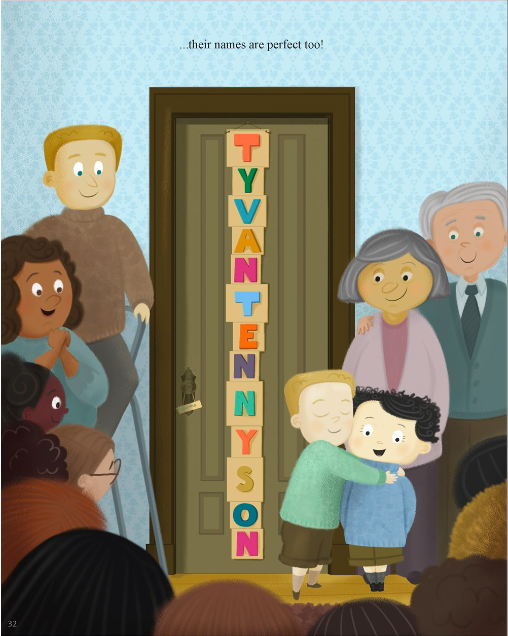
The experience prompted Edimorwhitimormiligimmus to come up with a new plan, a project to ensure all of his friends knew their names were just as perfect for them as Edimorwhitimormiligimmus was for him. And he and his classmates got started with the gift they made for Tyvantennyson to give him at his birthday party.
Copyright Amy Nielander, 2022, courtesy of West Margin Press.
Amy Nielander’s heartwarming and affirming story will captivate kids from the first recitation of “Edimorwhitimormiligimmus Tug”—a name that initially elicits giggles but soon rolls smoothly off the tongue. As they learn how each piece of Edimorwhitimormiligimmus’s name reflects not only the family member he’s named for but also the special things they do together, readers will empathize with the pride he feels in his name and his disappointment when they can’t get it right.
While Nielander’s clever story revolves around one child’s name, there are many other important lessons for both kids and adults woven throughout. Children will understand that their names, personalities, heritage, talents, and dreams are perfect for them just the way they are. For adults, Ms. Mell’s dismissive mangling and shortening of Edimorwhitimormiligimmus’s name to “make it easier for all of us” reminds us that every child deserves to be really seen and accepted for who and everything they are.
Nielander’s illustrations are full of warmth and love, charm and humor as she introduces the unique talents of each member of Edimorwhitimormiligimmus’s inclusive and close-knit family. As Edimorwhitimormiligimmus puts his plan to teach each classmate and Ms. Mell his name into action, the children’s sweet faces and palpable excitement are infectious and will draw readers into this universal hug of a story. The surprise reveal of Ty’s full name and the collective gift the class makes him—with the promise of the same for each child—will delight readers and is sure to spur them to create name signs for themselves.
An engaging, multi-layered story about acceptance, self-esteem, family, and friendship, My Name is Not Ed Tug is a story kids will want to hear again and again. The book is highly recommended for home bookshelves and is a must for classroom, school, and public libraries.
Ages 4 – 8
West Margin Press, 2022 | ISBN 978-1513134871
Discover more about Amy Nielander, her books, and her art on her website.
Take a peek at the book trailer for My Name Is Not Ed Tug!
You can purchase My Name Is Not Ed Tug at these booksellers
Readers might say that every month is National Book Month, but October is especially set aside to highlight books and the love of reading. Fall is a book bonanza as publishers release new books in all categories, and the holiday gift-giving season beckons. Books, of course, make superb gifts for all ages! So whether you’re looking for a new or new-to-you book to read right now or new titles to give to the family and friends who will be on your list, this month is a perfect time to check out your local bookstore to see what wonderful books are on the shelves! This month is also a great time to discover books that get kids excited about history, science, and technology in a whole new way – like today’s book!
Thanks to Cicada Books for sharing a digital copy of Professor Wooford McPaw’s History of Astonomy with me for review consideration. All opinions on the book are my own.
Professor Wooford McPaw’s History of Astronomy
By Elliot Kruszynski
The study of astronomy harkens back to the earliest days of scientific discovery, when “civilizations in Mesopotamia, Persia, China, India and Greece all examined the night sky. With only the naked eye, they mapped out the stars and used the information they gathered to create calendars, navigate great distances and keep time.” So begins this comprehensive, detailed, and even humorous compendium of our skies, scientists and thinkers, equipment, and a look to the future.
Professor Wooford McPaw and his telescope sidekick, Teley, takes kids back to 3000 BC, when religious leaders determined the longest day of the year by tracking the sun’s progress through the arches and columns erected at Stonehenge, and speeds forward to 1000 BC, when people connected the stars, creating the constellations and stories about them.
Copyright Elliot Kruszynski, 2022, courtesy of Cicada Books.
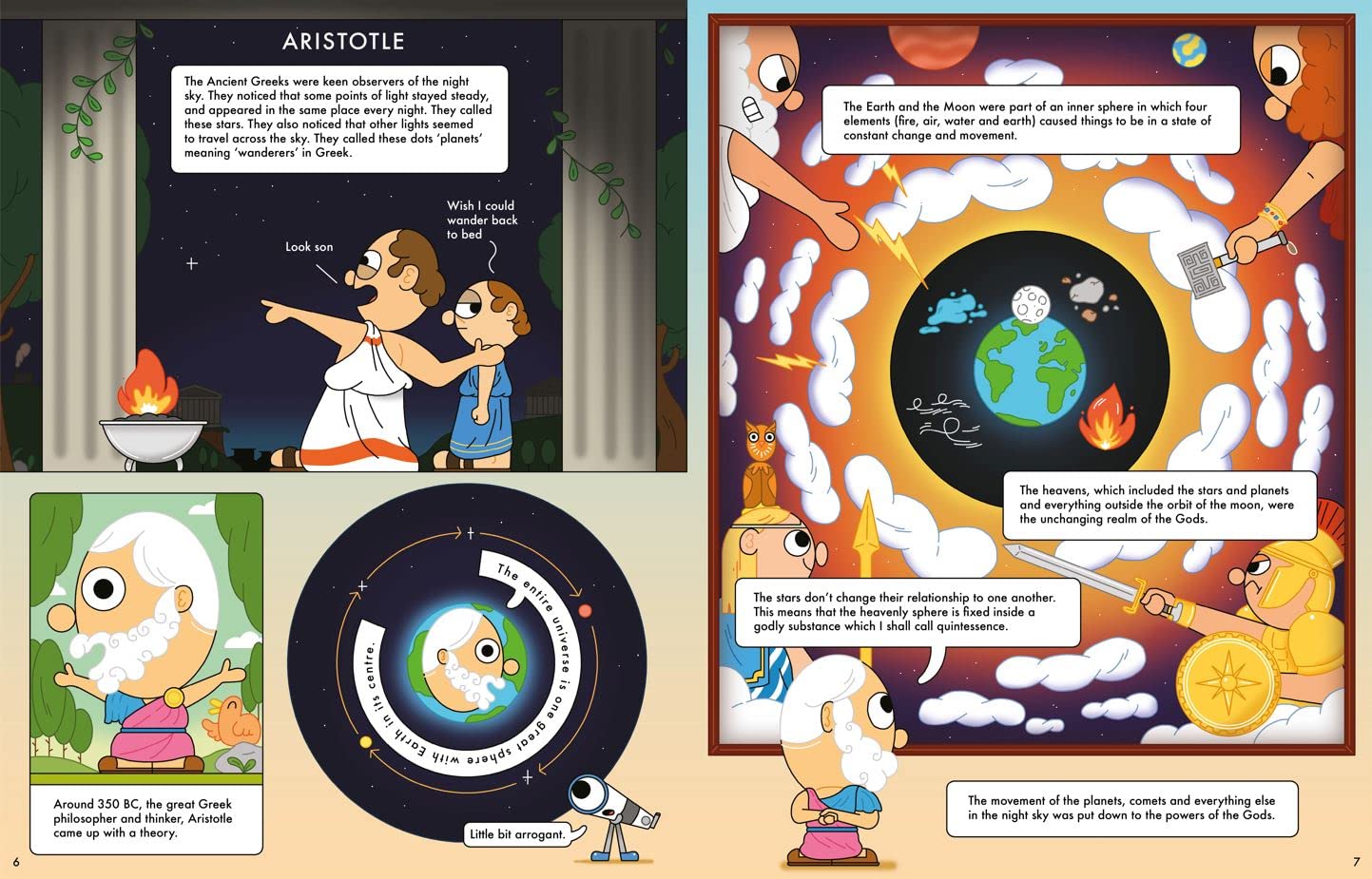
Kids then meet Aristotle and learn about his theories on the placement of the earth, the four elements, and the role of the gods in the universe. Then they discover the conflict between the teachings of Claudius Ptolemy around 140 AD and the discoveries of Nicolaus Copernicus in the 16th century, who left it to future scientists to explore his theory that that the earth revolved around the sun (and not the other way around). And what happened to those scientists? Well, children learn about Galileo Galilei, who, in addition to inventing the telescope, spent a good part of his life under house arrest for saying the earth and the planets did indeed revolve around the sun.
Copyright Elliot Kruszynski, 2022, courtesy of Cicada Books.
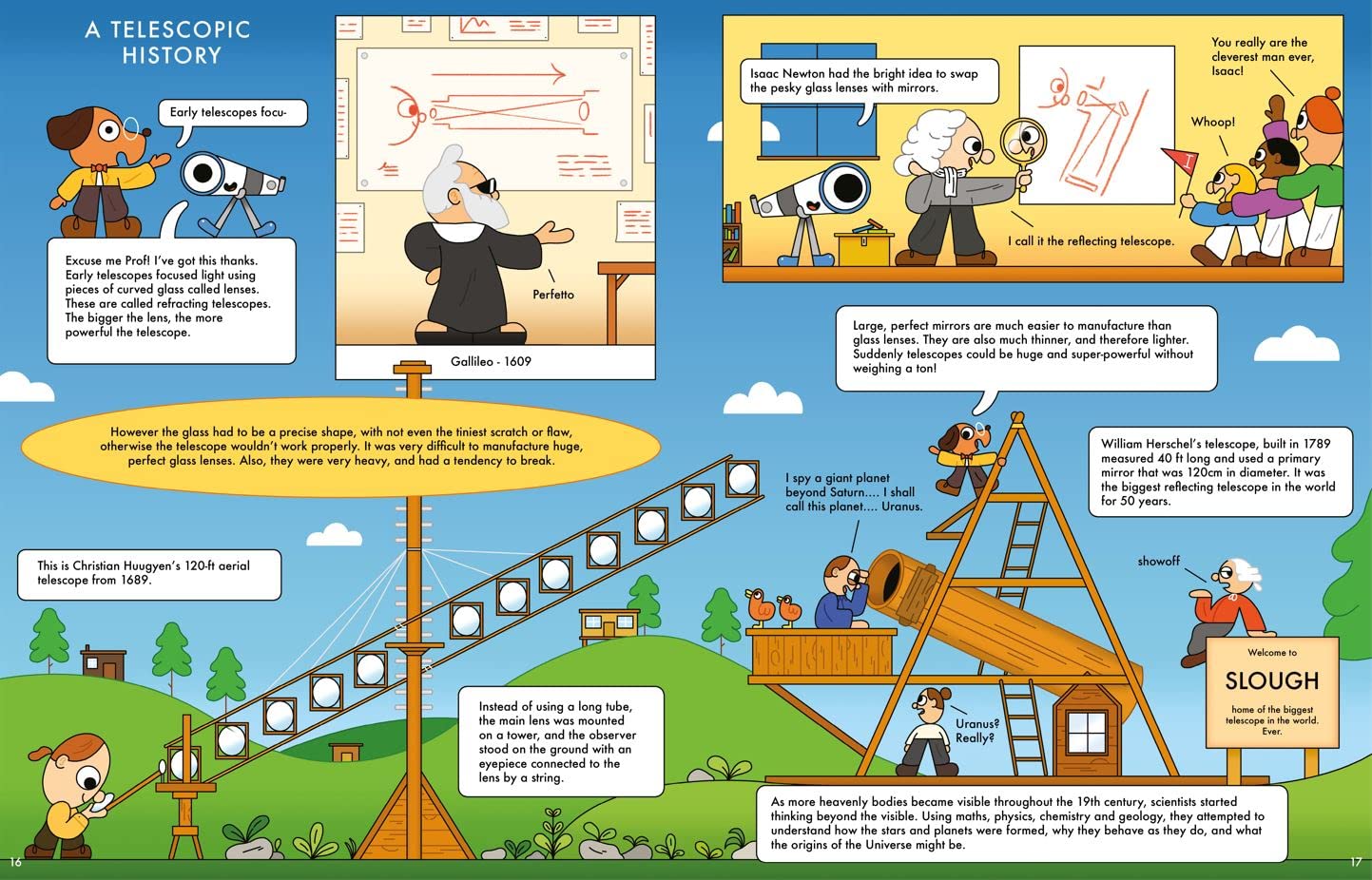
Professor Wooford introduces readers to Isaac Newton, whose “findings, along with the improvement of telescope technology, changed the way that humans (and for some dogs) looked at our planet.” What kind of telescope technology is the Prof talking about? He gives kids a run down from Galileo’s invention in 1609 to a switch from glass lenses to mirrors in the 1700s to today’s Hubble Space Telescope and James Webb Space Telescope. Here’s Teley explaining about lenses:
“Early telescopes, like the one Galileo invented, focused light using pieces of curved glass called lenses. The bigger the lens, the more powerful the telescope. They were called refracting telescopes. However the glass had to be a precise shape, with not even the tiniest scratch or flaw, otherwise the telescope wouldn’t work properly. It was very difficult to manufacture huge, perfect glass lenses. Also, they were very heavy and had a tendency to break.” Teley goes on to explain that it was Isaac Newton who “had the bright idea to swap the pesky glass lenses with mirrors,” which are much easier to make and are thinner and lighter, allowing telescopes to “be huge and super-powerful without weighing a ton.”
Copyright Elliot Kruszynski, 2022, courtesy of Cicada Books.
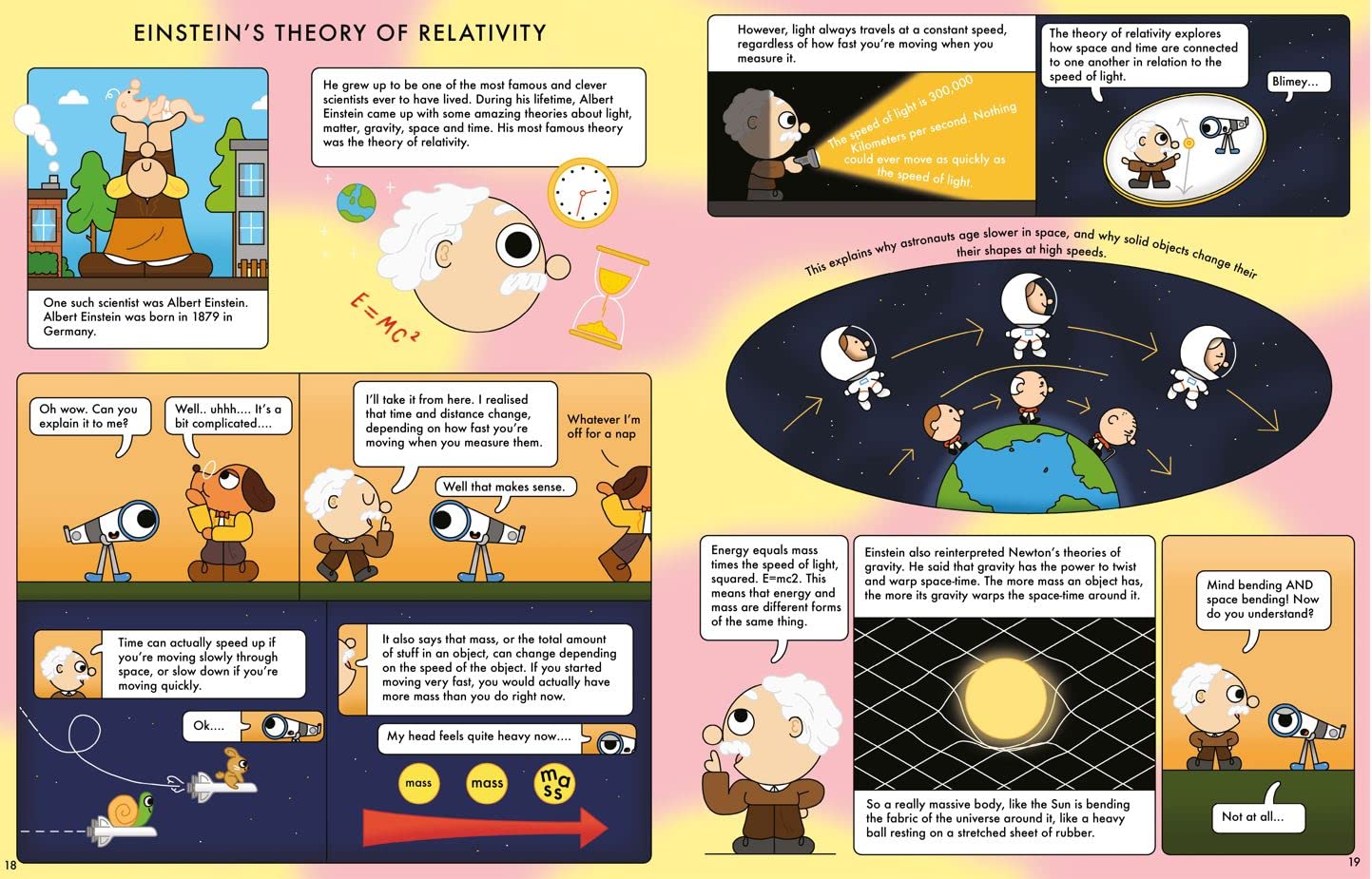
Albert Einstein travels back through time to explain his “mind bending and space bending” Theory of Relativity in terms that readers can understand. Then kids are launched into space—the space race, that is—where they learn about the advancements and setbacks of the Russian and American from 1957 to 1969, when the first moon walk occurred, as well as a weely … I mean … really unusual tradition among space-going astronauts.
Copyright Elliot Kruszynski, 2022, courtesy of Cicada Books.
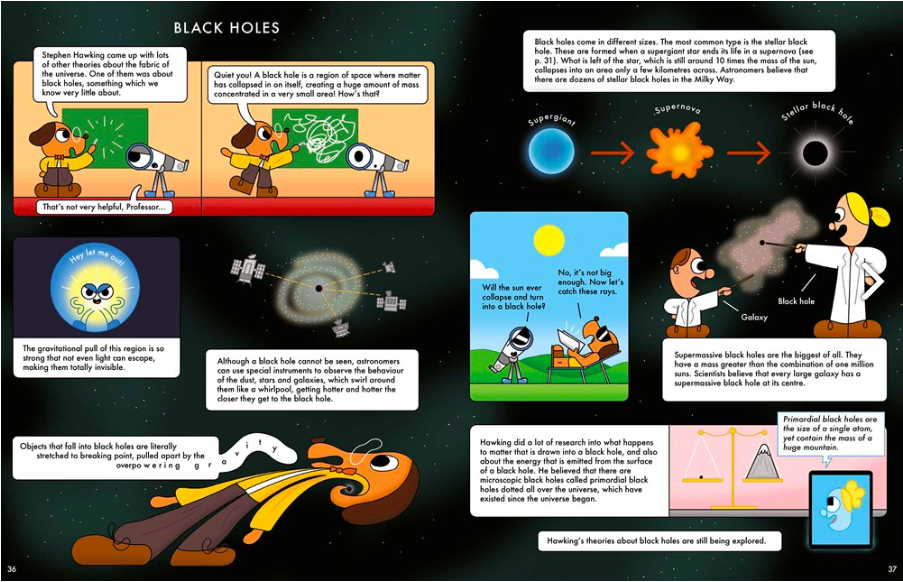
Children get info on different kinds of space probes from rovers to orbiters to interplanetary probes before blasting off into our solar system to find out about the planets (even little Pluto gets a cameo. But where is Earth and all of our other planets located? Professor McPaw explains: “Earth is located in a galaxy called the Milky Way. At its center is a supermassive black hole called Sagittarius A*, which contains as much mass as four million suns.” The prof goes on to teach kids about the three different shapes of galaxies, what dwarf galaxies are, how bigger galaxies cannibalize smaller galaxies, and where the term galaxy comes from.
Copyright Elliot Kruszynski, 2022, courtesy of Cicada Books.
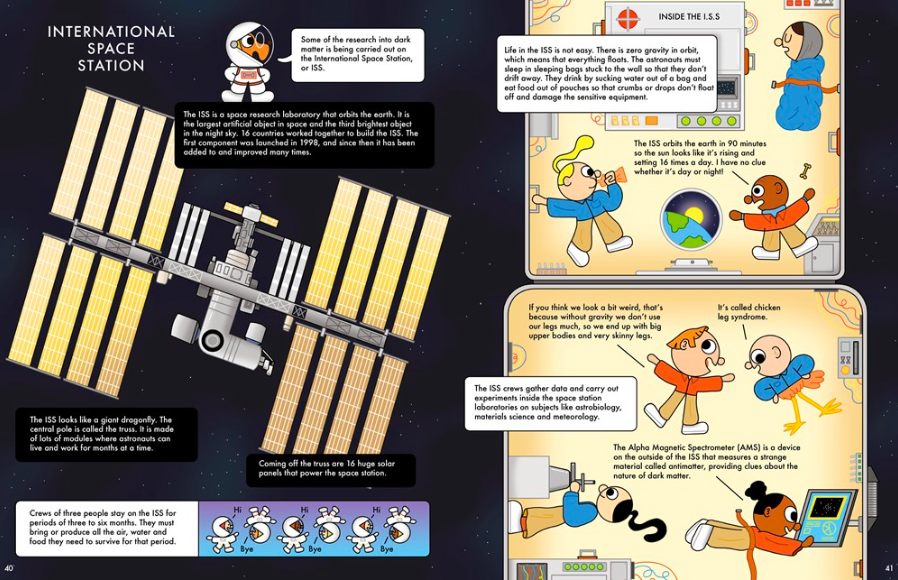
Professor Wooford McPaw and Teley also impart the same fascinating in-depth facts about stars, black holes, and dark matter. And what’s a trip into space without a ride on the International Space Station? Well, readers won’t find out because they get to explore the ISS and learn how the astronauts experience 16 sunrises and sunsets a day, sleep strapped to a wall, and develop “chicken leg syndrome” from not using their legs as much as their upper body in the no-gravity conditions.
By this time, kids are probably wondering about whether there’s life in other parts of the solar system or beyond as well as what the future might hold for astronomers, astrophysicists, other scientists, and even themselves. But are readers going to be abandoned in space? Not at all! Professor Wooford has thoughtfully included a Race to Earth “board game” on the last two-page spread that will get all astronauts … I mean readers … back home in time for dinner.
Copyright Elliot Kruszynski, 2022, courtesy of Cicada Books.
Elliot Kruszynski’s Professor Wooford McPaw’s History of Astonomy is just the kind of book that both kids who already love space and those who don’t yet know they do will devour, either bit-by-bit or all in one sitting. With affable hosts who give excellent easy-to-understand explanations, historical characters who add funny asides, and a quick-paced graphic-novel format, (title) will spark readers’ interest in learning all about the past, present, and future of astronomy. The book would make a perfect gift and very welcome addition to any home library. Educators and homeschoolers will find it a go-to text for introducing many scientific topics and an engaging way to heighten student’s eagerness for further research. School and public library librarians will find Professor Wooford McPaw’s History of Astonomy to be a favorite to recommend and to have on their shelves.
Ages 6 – 10 and up
Cicada Books, 2022 | ISBN 978-1800660236
To view a portfolio of work by Elliot Kruszynski and connect with him on Instagram, visit his website.
National Book Month Activity
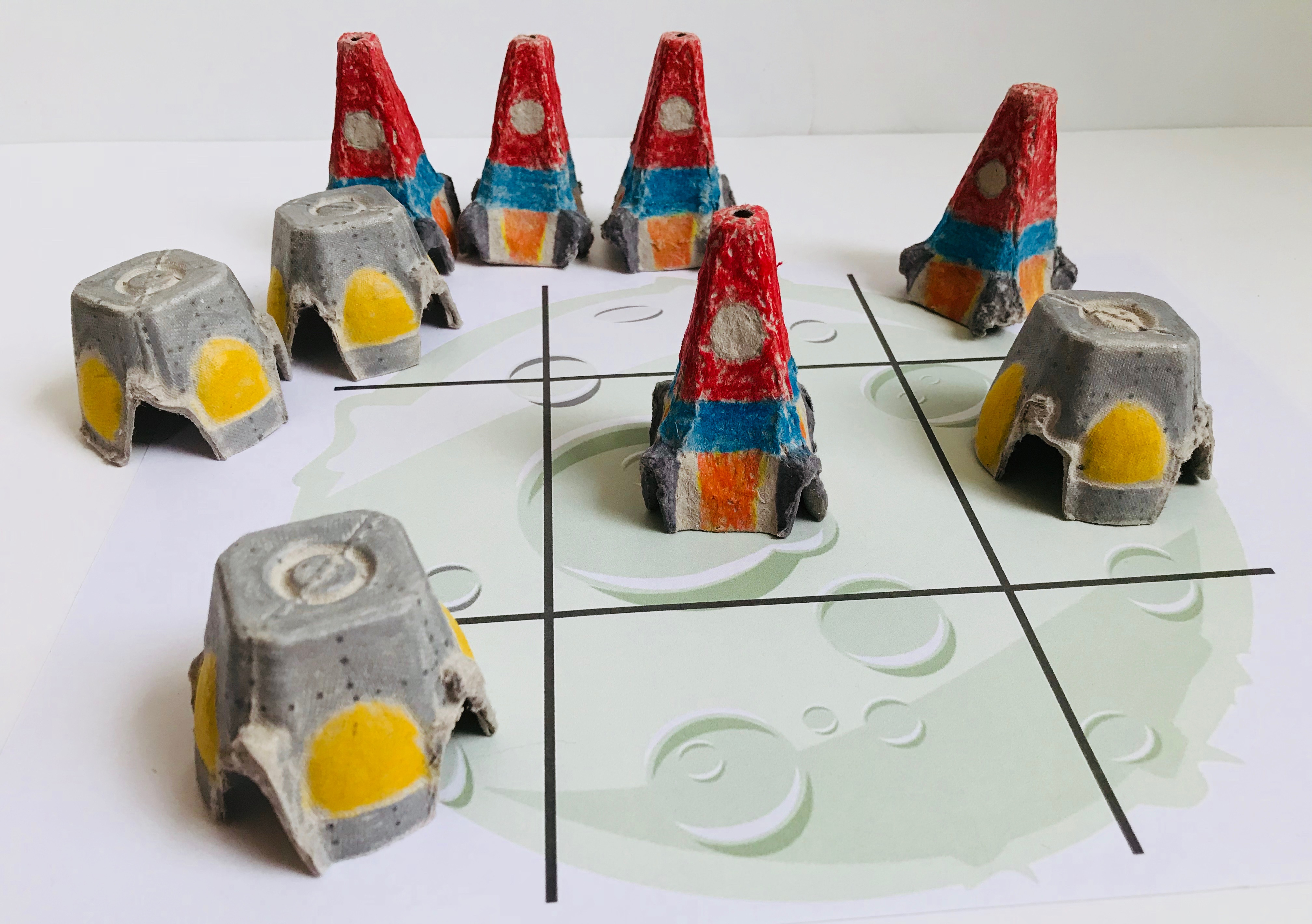
Out of This World Tic-Tac-Toe Game
You can launch your own Tic-Tac-Toe Game with this set you make yourself! With just a couple of egg cartons, some crayons, and a printable game board, you’ll be off to the moon for some space-age fun! Opposing players can be designated by rockets and capsules. Each player will need 5 playing pieces.
Trim the bottoms of each form so they stand steadily, leaving the arched corners intact
Pencil in a circular window on one side near the top of the cone
Color the rocket body any colors you like, going around the window and stopping where the arched corners begin
With the marker color the arched corners of the form to make legs
On the cardboard between the legs, color flames for blast off
To Make the Capsule
Cut the egg cups from an egg carton
Color the sides silver, leaving the curved section uncolored. (If your egg cup has no pre-pressed curve on the sides of the cup, draw one on each side.)
Color the curved section yellow to make windows
With the marker, dot “rivets” across the capsule
Print the Moon Game Board and play!
You can find Professor Wooford McPaw’s History of Astronomy at these booksellers
Thank you to Hippo Park and Deborah Sloan for sharing a copy of How to Draw a Happy Cat with me for review consideration. All opinions on the book are my own.
How to Draw a Happy Cat
Written by Ethan T. Berlin | Illustrated by Jimbo Matison
As the book opens, an unseen art teacher enthusiastically instructs kids in creating a cat. And not just any cat, but one that will be smiling at the end: “Learning how to draw a happy cat is fun and easy!” The narrator lays out clear instructions and gives an example of how the initial shape and each new addition should look. By the end of the first page spread, kids have a striped yellow cat with eyes, nose, and violet ears but no…mouth. On the page turn, the narrator prompts kids to add a smile. But wait! That smile doesn’t last long. On the next page she’s frowning. “What do you think she wants?” the instructor asks.
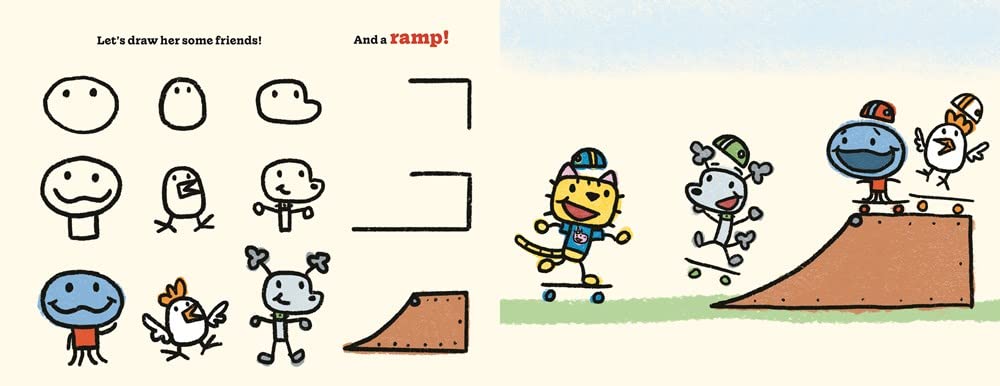
Image copyright Jimbo Matison, 2022, text copyright Ethan T. Berlin, 2022. Courtesy of Hippo Park.
The narrator makes some suggestions: “…a cool T-shirt, …a stuffy,” and “Oh, I know—a skateboard!” These items too are sketched out as examples. And, yeah! The cat is “totally happy now!” This happy cat has some moves on the skateboard too. Her wide smile just shows how happy she is. Even the unicorn on her T-shirt is grinning. But the stuffy? He’s looking a little glum and it brings down the whole vibe. Happy Cat is no longer happy.
Image copyright Jimbo Matison, 2022, text copyright Ethan T. Berlin, 2022. Courtesy of Hippo Park.
The instructor seems to know what’s needed and suggests readers “draw her some friends! And a ramp!” Now that’s more like it! A four-legged alien-type guy, a chicken, and a dog make very happy friends. So they’re soaring into the air off the ramp on their skateboards and… Oh no! You know—what goes up must come down. Suddenly, Cat is afraid. Down, down they begin to fall. What can readers do?
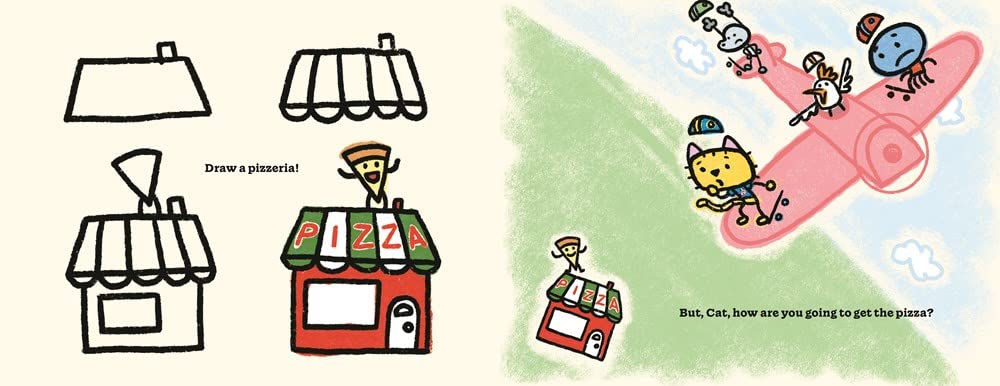
Quick as you can say “airplane,” readers can help a winged and propellered rescue appear. Phew! Now they’re all happy again. Turns out, though, that skateboarding on a plane whips up quite an appetite, and now Cat is hungry. How can readers help? Well, wouldn’t a slice of pizza taste delicious? Kids learn how to draw a pizzeria and a cheesy slice, but delivery? That could be a problem.
Image copyright Jimbo Matison, 2022, text copyright Ethan T. Berlin, 2022. Courtesy of Hippo Park.
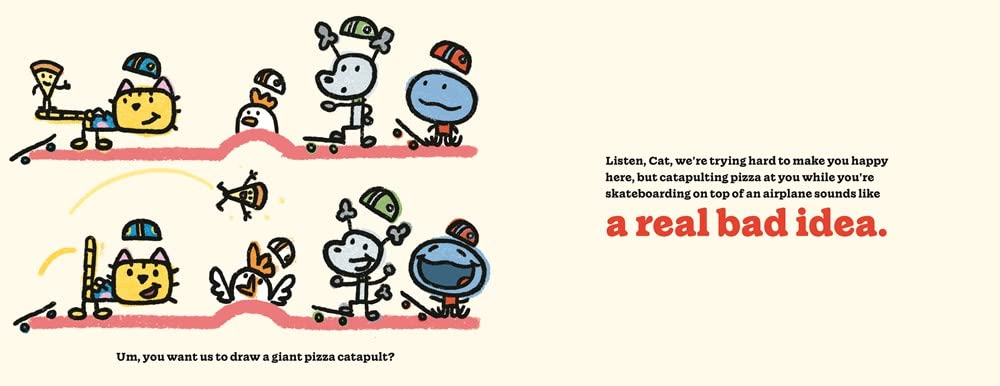
Cat has an idea, and while it works… it kinda, also…doesn’t. Now Cat and her friends are falling once again. Luckily readers are right there to remedy the situation, and all turns out great. So great that Cat and her friends want to celebrate. They can’t do it without decorations, music, entertainment, and some really cool hats, though, so it’s up to readers to create the most awesome party ever to “draw a happy cat!”
Image copyright Jimbo Matison, 2022, text copyright Ethan T. Berlin, 2022. Courtesy of Hippo Park.
Starting out with a straightforward drawing lesson, Ethan T. Berlin and Jimbo Matison soon raise the stakes for readers by putting them in charge of pleasing this mercurial cat. Berlin’s enthusiastic narrator makes helpful suggestions throughout the story that prompt kids to use their natural creativity to make Cat happy while Matison actually teaches them how an artist or cartoonist puts together shapes to draw a vast array of characters, objects, moods, and action.
On top of this, Berlin’s rollercoaster story will have kids giggling on every page, and well-placed questions get them thinking about how happiness can turn to sadness or dissatisfaction (for Cat as well as themselves) in the blink of an eye (or the turn of a page) and how those moments can be turned around or amended. The story’s last line gives readers an opportunity to start all over again—or, now that they’ve got the skills, even come up with their own story to write and illustrate.
Matison’s cartoon characters (sometimes charmingly colored outside the lines) are energetic and optimistic, reveling in new playthings, friends, and experiences. Kids will love watching for Chicken’s reactions, one funny placement of a pizza slice, and a few mishaps that foreshadow the book’s cyclical ending. Colorful type highlights strong emotions, especially when Cat is happy.
Sure to make kids laugh and get excited about writing and drawing as well as providing an organic way to talk about emotions and ways to create your own happiness, How to Draw a Happy Cat makes a terrific addition to home bookshelves as a favorite story time read and go-to book for impromptu drawing fun. The book is highly recommended for school and public library collections, where it will certainly enjoy frequent rotation and its multiple layers inspire participatory programs.
Ages 4 – 8
Hippo Park, 2022 | ISBN 978-1662640049
Discover more about Ethan T. Berlin and his books, TV shows, and other funny stuff on his website.
To learn more about Jimbo Matison, his books, design work, and TV shows, visit his website.
Laugh—or commiserate—along with this How to Draw a Happy Cat book trailer!
How to Draw a Happy Cat Book Birthday Activity
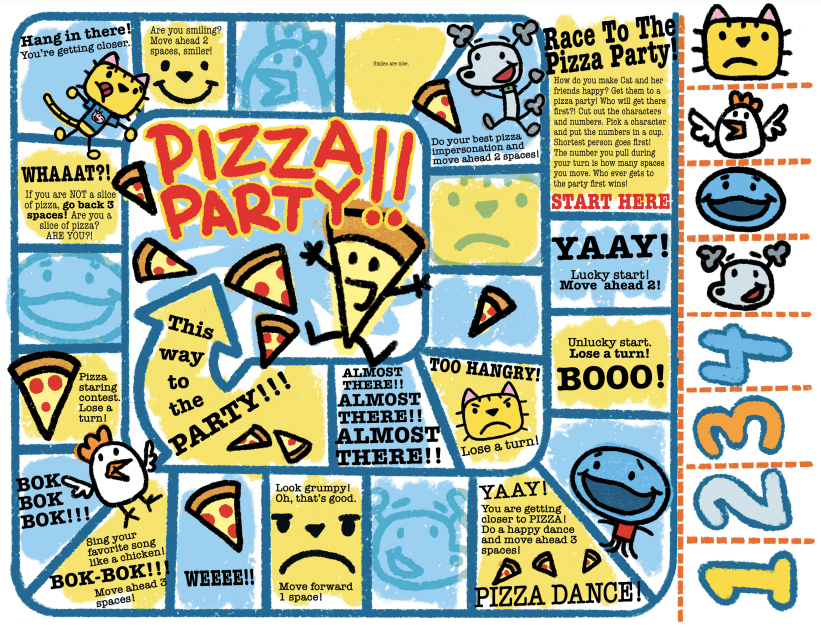
Pizza Party Board Game and Drawing Kit
Can you make Cat and her friends happy by getting them to the pizza party? Just pick your character, draw numbers to move around the board—and have some fun on the way! Play the game with your friends and then learn how to draw a happy chicken by downloading the How to Draw a Happy Cat Activity Kit from Hippo Park!
Today, I’m celebrating the book birthday of Come On In: There’s a Party in this Book! with two holidays – Read a New Book Month and Friendship Month. I also have amazing interviews with author Jamie Michalak and illustrator Sabine Timm that really dive into the creation of this unique book. So, come on in!
Thanks go to Hippo Park and Deborah Sloan for sharing a copy of Come On In: There’s a Party in this Book! with me for review consideration. All opinions on the book are my own.
Come On In: There’s a Party in this Book!
Written by Jamie Michalak | Illustrated by Sabine Timm
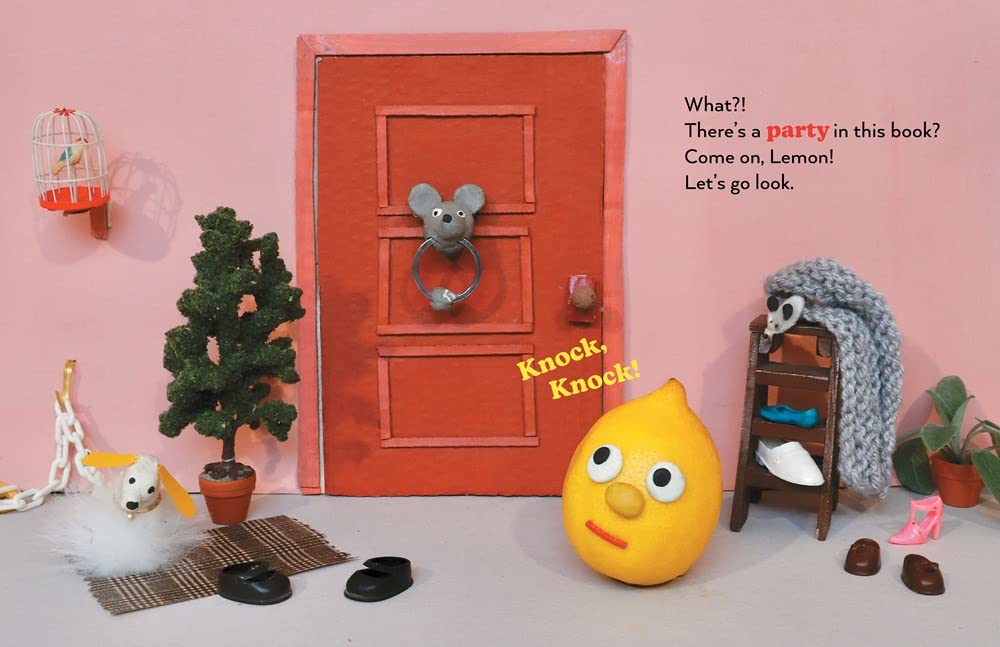
Kids first meet the sweet lemon (yes, an adorably sweet lemon) at the center of this story peeking out from a cutout in the cover. The narrator, having revealed that “there’ a party in this book,” now invites Lemon to find it: “Come on, Lemon! Let’s go look.” So, a little uncertainly, Lemon knocks at a red door with a mouse door knocker. Once inside, Lemon, readers, and the narrator meet a jaunty cast of characters—suspender shorts atop three pillows, a paint-tube mouse on a bed, a curious sock on the top of a bunkbed, and a little pink-and-green house on more pillows.
image copyright Sabine Timm, 2022, text copyright Jamie Malachek, 2022. Courtesy of Hippo Park.
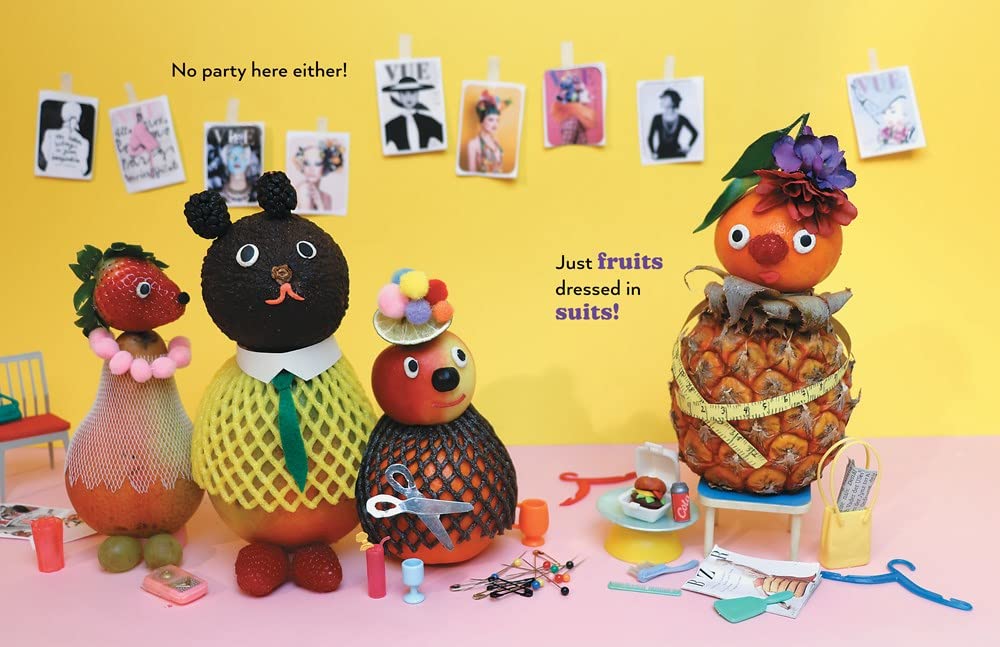
The scene sets Lemon and crew wondering… “Is this a mouse party? A pants, sock, and house party?” And the answer? “No! This is a game where we can’t touch the floor.” Ah! So the narrator says, “Lemon, keep looking. Try the next door.” Lemon tries another house, but there’s no party there either—just some fashionable cats and fruit.
image copyright Sabine Timm, 2022, text copyright Jamie Malachek, 2022. Courtesy of Hippo Park.
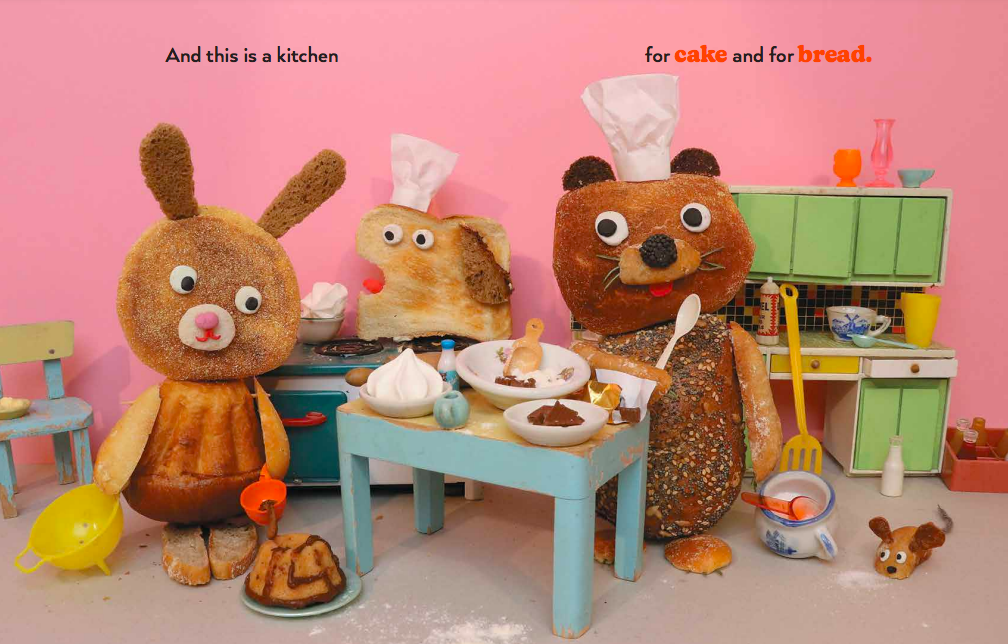
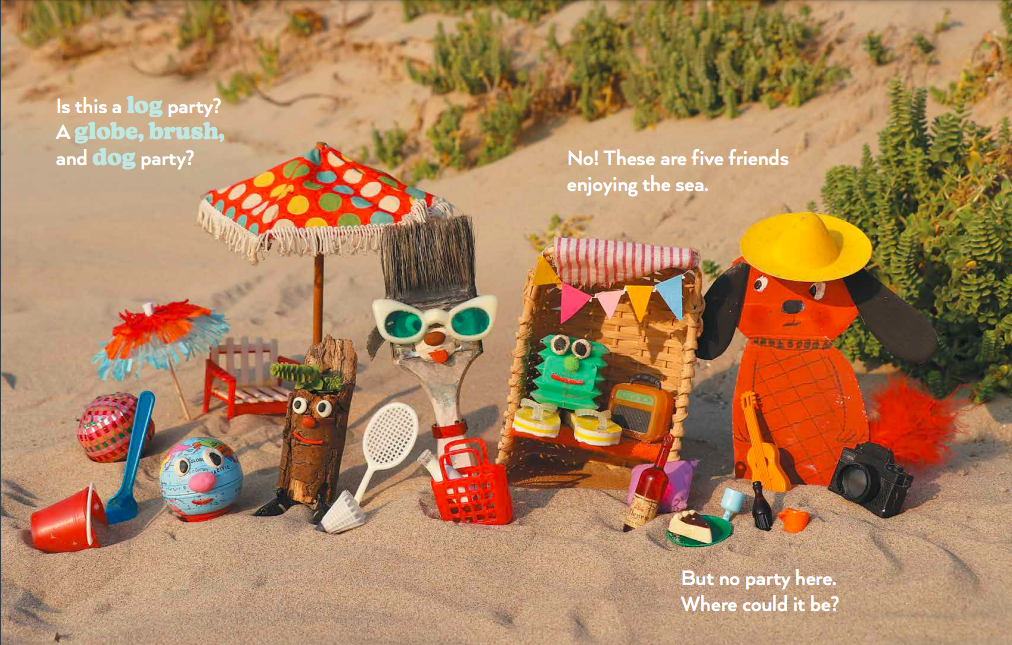
Hmmm… Lemon is getting a little discouraged. But the narrator gives Lemon a nudge, saying “This book is not done.” Although Lemon meets a group of friends at the beach, they’re not partying, just hanging out together. Lemon meets some pigeons and enters a kitchen, where a bear, a bunny, and a little toast dog made of bread are baking up treats. But there’s no party! Finally, “…Lemon’s back home. Does the book end right here, with her sad and alone?”
image copyright Sabine Timm, 2022, text copyright Jamie Malachek, 2022. Courtesy of Hippo Park.
But then Lemon has an idea! An idea that needs readers’ help to succeed! Lemon (and readers) are going to host the party for everyone they’ve met! There’s going to be cake and candy, decorations and games. “This is a big and a small, / have a ball party. / Hooray for new friends at the / come one and all party!” And what about readers? Everyone shouts, “Come on in!”
image copyright Sabine Timm, 2022, text copyright Jamie Malachek, 2022. Courtesy of Hippo Park.
Kids can’t help but get excited about joining Lemon in searching for the party promised on the cover. Jamie Michalak’s enthusiastic, inclusive storytelling speaks directly to them from the very first words as she exclaims “What?! There’s a party in this book?” As Lemon goes from door to door and page to page, readers follow, carried along on Michalak’s buoyant rhythm and rhymes that surprise—coming at the ends of lines but also sometimes in the middle, which keeps each page fresh and fun.
When Lemon returns home after not finding the party and hits upon the idea of being the one to host it, the promise that “there’s a party inside” is fulfilled in an unexpected way. An interactive page gets readers involved in the party preparations and will make them feel both included and empowered to invite others to their own party—or just to make new friends.
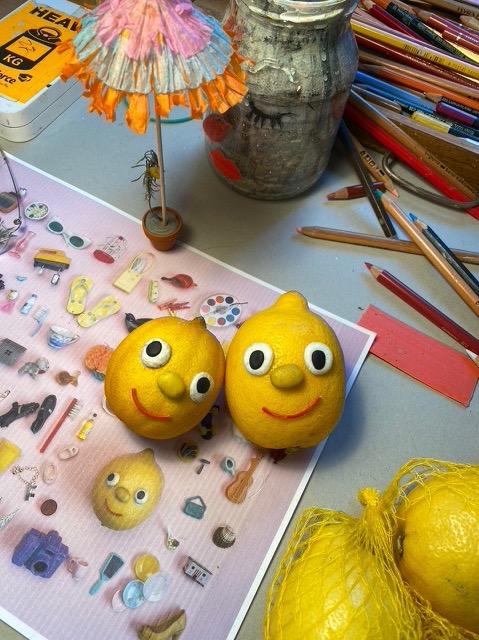
Sabine Timm’s illustrations, created with found objects, burst with childlike imagination and endearing personalities. Each page is a showstopper that kids and adults will want to explore together to soak up all the details. And you don’t have to stop there! Each character—from Lemon to the yarn cat and clothespin rabbit to the paintbrush dog and soccer-loving log boy (see Sabine’s answer to question 2 in her interview below)—offers up an opportunity for readers to have fun creating their backstories, imagining what they’re doing when Lemon first encounters them, and guessing what their favorite part of the party is. But wait! The party isn’t over yet! The front and back endpapers, full of tiny objects from the story, give families a super search-and-find game to do together.
Full of humor, whimsy, imagination, and the joys of inclusive friendship. Come On In: There’s a Party in this Book! will quickly become a family favorite to read again and again. The book would make a terrific gift and one you’ll want in your home, school, or public library collection.
Ages 4 – 8
Hippo Park, 2022 | ISBN 978-1662640001
Meet Jamie Michalak
Jamie Michalak is a children’s book writer, who loves toast, dogs, and toast shaped like dogs. She is the author of Come On In: There’s a Party in this Book! illustrated by Sabine Timm. Jamie’s other titles include the multiple starred reviewed Niki Nakayama: A Chef’s Tale in 13 Bites, co-written with Debbi Michiko Florence and illustrated by Yuko Kato-Jones; Dakota Crumb: Tiny Treasure Hunter, illustrated by Kelly Murphy; the Frank and Bean early reader series, illustrated by Bob Kolar, and the Joe and Sparky early readers series, illustrated by Frank Remkiewicz. She lives with her family in Rhode Island.
This story feels so fresh—whimsical, comical, and surprising. I’d love to have you talk about how your story came to be and your writing process for it.
Thank you! Long ago, I jotted down the title and idea for this story—an interactive picture book with a different party on every page that the reader was invited to join. But I never wrote it. Several years later, my agent, Victoria Wells Arms, told me that editor Jill Davis was looking for a manuscript for artist Sabine Timm. So I checked out Sabine’s irresistible art on Instagram.
I instantly fell in love with her characters and wanted to write a story that included as many of them as possible. That’s when my old idea for COME ON IN; THERE’S A PARTY IN THIS BOOK! came to mind. I wrote the story and threw a party for Sabine’s characters—cats wearing boots and fruits dressed in suits, pigeons named Fred, and dogs made of bread. As it turns out, this party was just waiting for the right guests to get it started!
The idea of anthropomorphizing everyday objects is so interesting, especially as it’s a practice universal to adults and kids. As a storyteller, do you think this is just part of human nature or do we learn it in childhood?
That’s a fascinating question! I’m not sure. But I do love how children and children book creators are always turning inanimate objects into characters. A hot dog and baked bean can be new friends who form a band called The Chili Dogs. Or the salt and pepper shakers might face off in a talent competition before dinner arrives. Life is more interesting when you use your imagination.
The story lends itself so well to the “search and find” fun of Sabine’s illustrations. Was this also part of your intention as you crafted the story?
It wasn’t, but you’re right! I discovered all of the seek-and-find elements, just like readers will, when I first saw Sabine’s illustrations. There are so many whimsical details that I spot new ones with every read.
Every page is so creatively put together, but do you have a favorite spread in the book?
The cats wearing boots spread is one of my favorites from any picture book ever. How did Sabine create a cat from a small ball of yarn and sassy plastic doll boots? I mean … the BEST!
What would you like kids to take away from the story?
Everyone is invited to this book’s party—and that’s what makes the last spreads, starring all of the characters, the most joyful of all. I hope that readers take away that parties are more fun when no one is left out.
Do you have any special events or other marketing planned that you’d like to tell readers about?
Here’s a video “Welcome to Sabine Timm’s Studio” that introduces readers to Sabine Timm and Lemon. Then Sabine gives a tutorial on how they can make a character of their own. a link to a video “Welcome to Sabine Timm’s Studio – the illustrator of COME ON IN.”
And here’s a short bit of animation showing closeups of the objects that make up the book cover.
I’m excited about several books coming out next year. The first is a picture book about a tiny treasure hunt set in a Parisian bookshop: DAKOTA CRUMB AND THE SECRET BOOKSHOP illustrated by Kelly Murphy (Candlewick Press). It’s the follow-up to DAKOTA CRUMB: TINY TREASURE HUNTER about an Indiana Jones-ish mouse. The third Frank and Bean early reader, FRANK AND BEAN: THE STINKY FEET MONSTER, illustrated by Bob Kolar (Candlewick Press), is a hilarious take on Bigfoot. And two Chicken Soup for the Soul for Kids books—THE SUNSHINE GARDEN, illustrated by Jenna Nahyun Chung, and PLAYDATE (WITH BEAR TOO?), illustrated by Katie Mazeika—will be released from Charlesbridge.
Thanks, Jamie, for taking time to chat with me todat! Finding new book of yours is always a reason to celebrate!
Meet Sabine Timm
Sabine Timm calls herself an artist, creator, beach-trash collector, flea-market lover, and photographer. She draws, paints, assembles and shares her work nonstop on Instagram. She lives in Dusseldorf Germany, but has fans from around the globe.
Hi Sabine! I’m so thrilled to have a chance to talk with you about your incredible illustrations! As your 168K Instagram followers would, I’m sure, agree, your adorable creations are not only awe-inspiring but always bring a smile.Can you tell readers how you got started doing this kind of art?
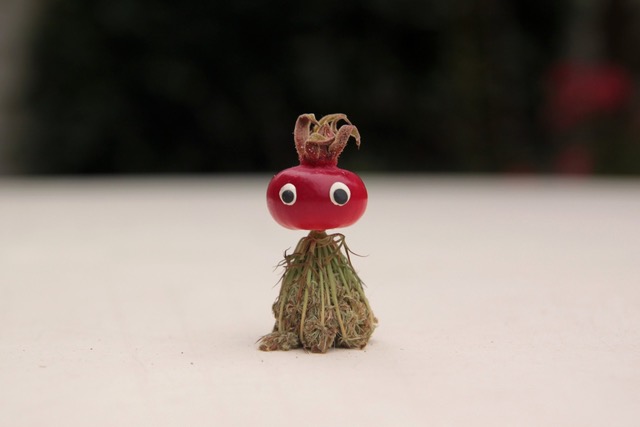
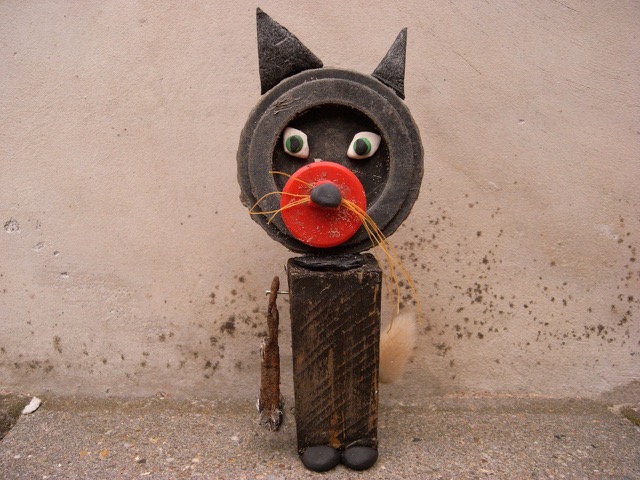
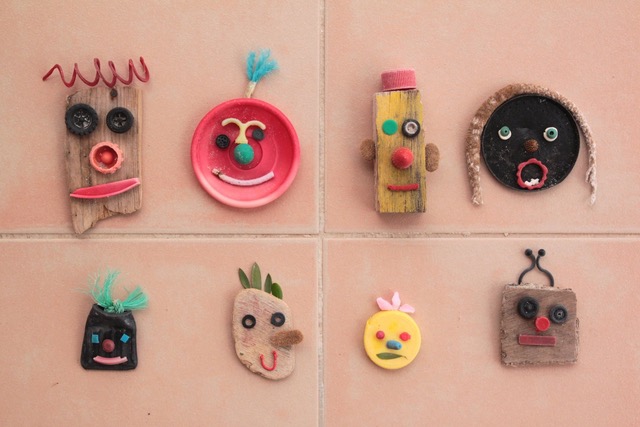
It’s hard to say when I started making art like this. I always had a big interest in playing with found objects. When I was a child, I collected various things from nature. Shreds, sticks, seeds, buttons I’ve found on the streets etc.
I always loved the fairytales of Hans Christian Andersen and I was very much inspired by the hidden life of things in his stories. Many years later when I became a mother myself we had holidays at the sea and me and my son made a beach walk. We found a lot of funny things…a broken flip-flop, a red-checked French-fries bag, sandblasted wood sticks, small rope pieces, bottle caps, shells, feathers, and stuff like this.
Together we started playing, and we made characters from this found trash. We transformed trash to treasures…through our eyes and visions the things got a second life. I was deeply fascinated by these experiences, and I continued in arranging and photographing characters like this.
Image courtesy of Sabine Timm
Image courtesy of Sabine Timm
Image courtesy of Sabine Timm
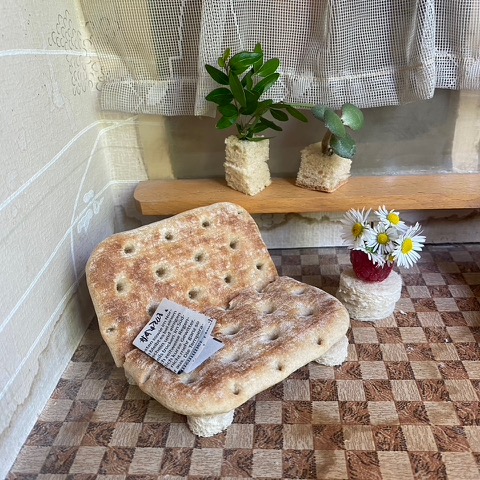
When you look at an object, do you immediately see its potential to become something else? I’m thinking of the sofa you made from crackers that appeared on your Instagram page recently.
When I work with found or everyday objects there two options. Sometimes the objects themselves are attractive (colour, shape, size) and while looking at these things I get an inspiration. For example, the Swedish bread that became an upholstered sofa.
Image courtesy of Sabine Timm
The other option is that I have the plan of creating a special character and I go around in my home or in my studio and look around for something that works.
I always try to look at the things around me with the eyes of a child. Forgetting about function and use, I enjoy playing and arranging.
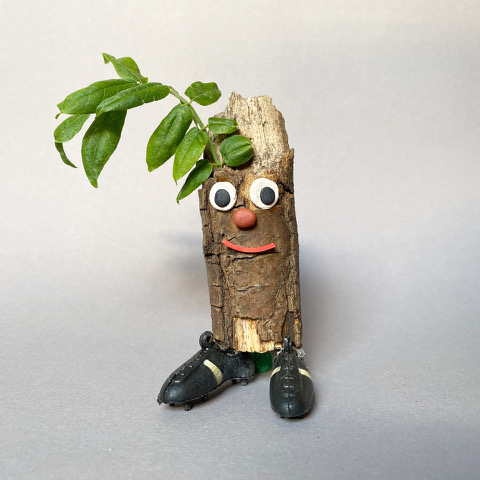
For example the little tree trunk character from the book….I found the miniature soccer shoes at the flea market and I came back to my studio where I had a box with collected objects from nature. I immediately had the idea of a little tree trunk boy who loves playing soccer!
Image courtesy of Sabine Timm
Come On In! is your debut picture book. What were your first impressions when you read Jamie’s manuscript?
I was totally thrilled!!! All my characters united in such a wonderful story! When I read the lovely text for the first time I could hardly believe that Jamie has never been in my studio.
She pictured everything so detailed and gripping. Jamie wrote a charming story of cohesion and team spirit. I love the rhymes and the imaginative language.
I’m so happy to have in Jamie an author who empathizes so much with my characters. Come on In! invites everyone to have a great time together, and I was inspired from the first moment!
Your scenes in Come On In! are beyond adorable. Can you share a little bit about your process in creating them?
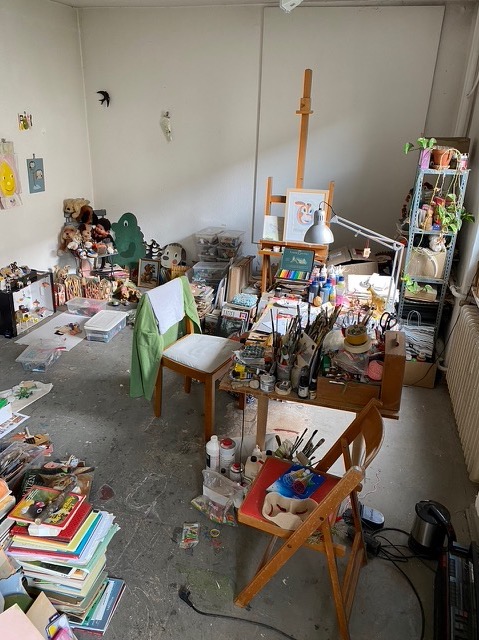
So let’s go into my studio . . .
Image courtesy of Sabine Timm
Here I will show you something about my working process. In the very first beginnings of this book, I started with sketches and scribbles to get an idea of the story and the characters.
When I want to build and arrange a scene, I usually start with the characters! When they “come to life“ I start playing and letting them interact with each other. I take a lot of test photos to see how it works.
Next step is building the background or finding the location. In the case of a cardboard background I recycle used boxes and cut them into the right size. I cut out windows and build doors and in the end I paint.
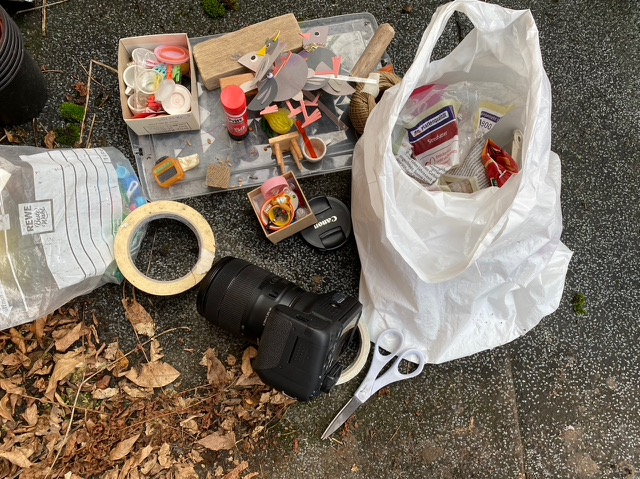
When I just have to find a nice location, I pack all my utensils and my camera. I never go out before checking the weather forecast (no rain and wind, please)!
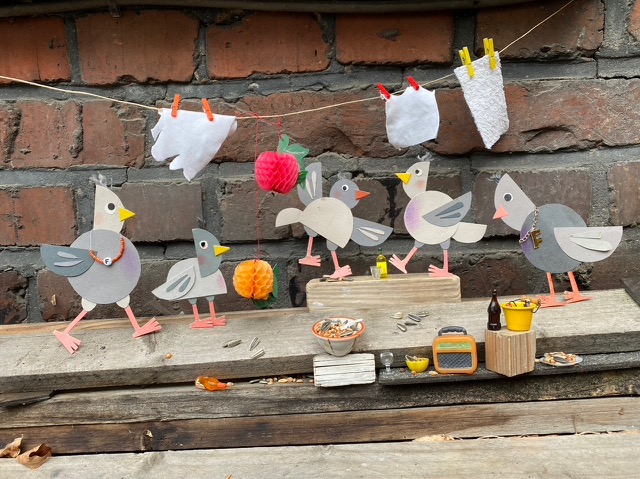
For example, the scenery with the pigeons is arranged on my studio rooftop even though I had built a nice cardboard roof, but it didn’t work as I imagined. I changed my plans and placed all the pigeons on the real rooftop…this was an authentic and perfect place for a crazy party with sunflower seed snacks and drinks and music! Adding these kind of items is like the icing on the cake!
Image courtesy of Sabine Timm
Image courtesy of Sabine Timm
Image courtesy of Sabine Timm
Did you have a favorite part of the story to create an assemblage for? What made it stand out for you?
It’s hard to make a decision…each assemblage is unique and special.
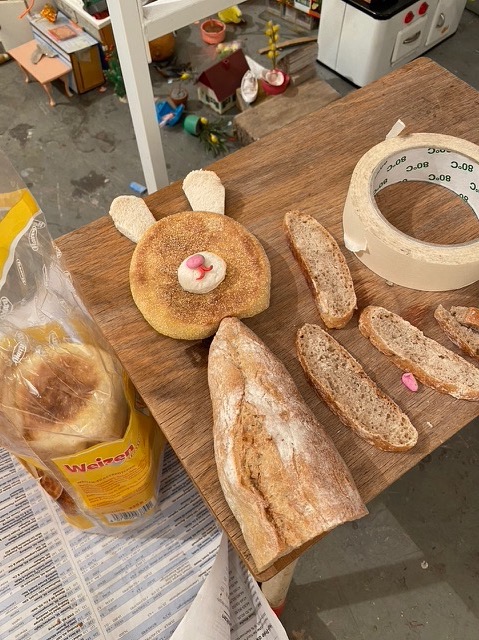
Creating the characters of fruits and bread was a great fun. Working with edible materials is particularly appealing to me—it is easy to get and you can eat it up when the work is done. (I have to say…sometimes I can’t eat them when they are looking at me so sweetly.)
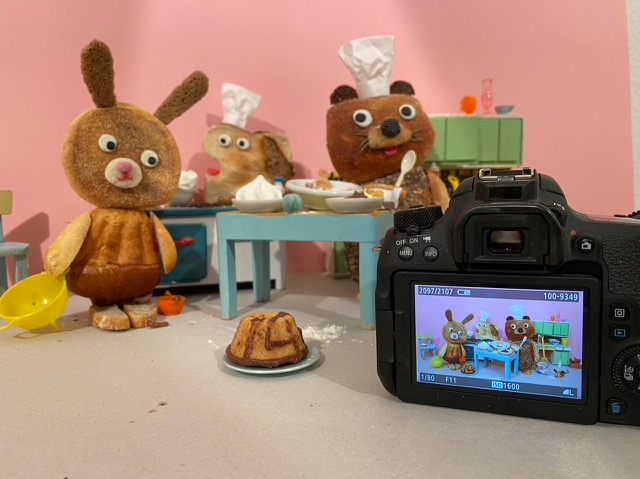
For the kitchen scene, I was so happy that I could use my lovely vintage furnishings I’d collected for my photo arrangements years before.
I found the perfect buns and cakes to assemble the characters—Mr. Bear looked like a fantastic pastry chef and little bunny girl in her crunchy dress was so photogenic! Very same with the fruits-in-suits scene—in the beginning there is just a bag with fruits and vegetables, and after a few hours you have a gallery of fruity friends!
Image courtesy of Sabine Timm
Image courtesy of Sabine Timm
What are you hoping to inspire in readers with your illustrations?
I hope I can inspire the readers to realise that the best thing in life is coming together, having a good time, respecting each other, and celebrating the uniqueness of each being.
Lemon takes the initiative, and I hope she will empower the readers to do the same.
What would you like for children to take away from your illustrations in this book?
Children are so creative, and I would like for my illustrations to encourage them to play with anything they find around at home, in nature. or wherever. They don’t need to buy new and expensive Playmobil or Lego figures…just a lemon can become a friend.
Image courtesy of Sabine Timm
Thanks, Sabine, for sharing so much of your creative process and all of these images! I’m sure readers are excited to read the book—and to stretch their creativity! I wish you all the best with Come On In: There’s a Party in this Book!
You can find Come On In: There’s a Party in this Book! at these booksellers
Sure, this month-long holiday is called Read a New Book Month, but what if you’re just itching to draw in a book? Sometimes those empty margins and chapter-opening pages seem to call out for embellishment. That’s where today’s book comes in! Every page (yes, every page!) invites kids to get out their colored pencils, markers, and crayons to add their own creative flair to make it truly their own.
Thanks to Cicada Books for sharing a digital copy of Wowee Zowee: a flight of imagination with me for review consideration. All opinions on the book are my own.
Wowee Zowee: a flight of imagination
By Jurg Lindenberger
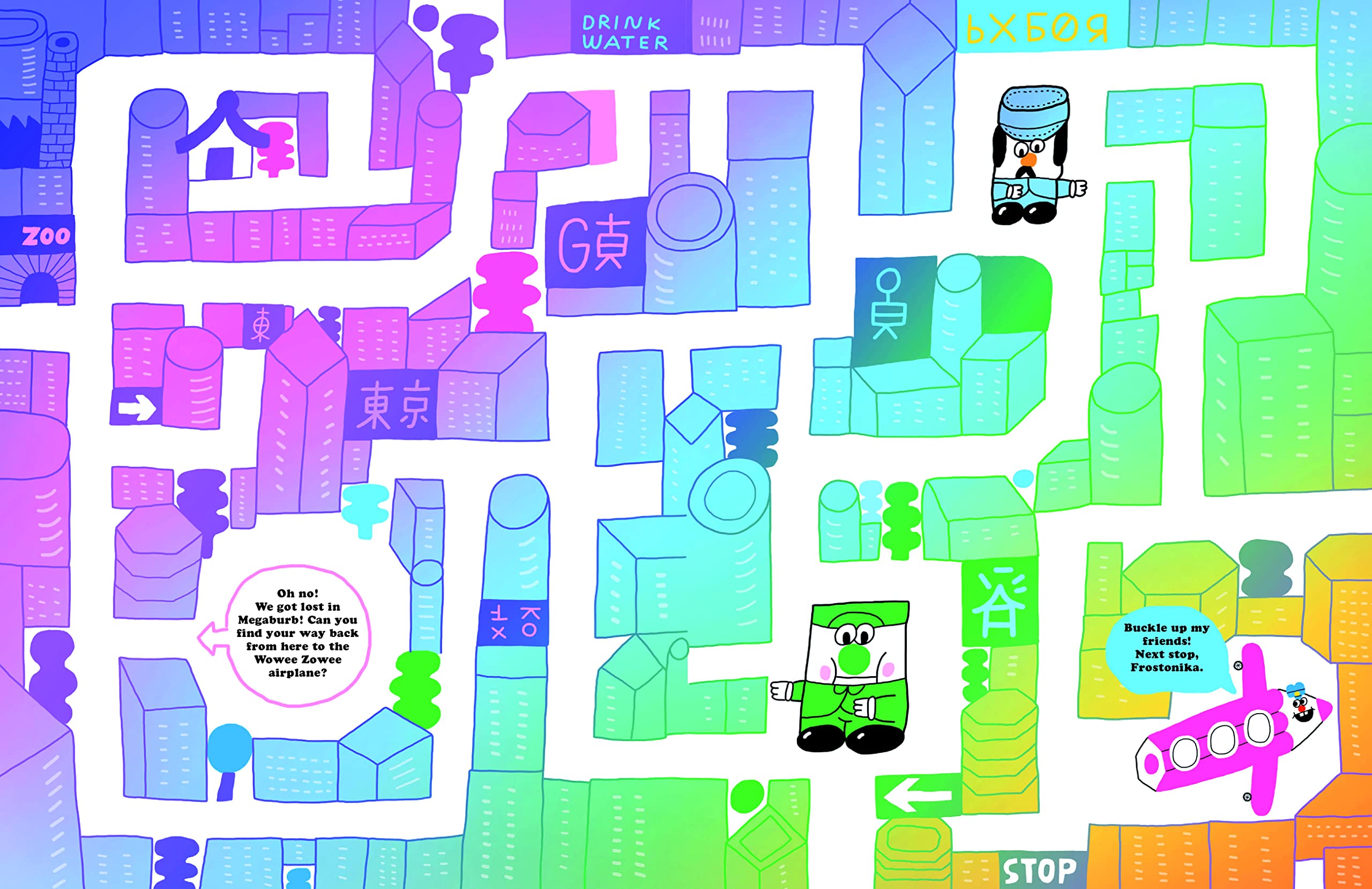
A child’s imagination is boundless – and so is their desire to find lots of different ways to express it. In Wowee Zowee: a flight of imagination, Jurg Lindenberger gives kids a ticket to travel to wacky worlds where they get to do all sorts of things, like stock the shelves of silly stores, wind their way through the maze that is Megaburb, design cozy outfits for staying warm while skiing in Frostonika, and create delicious drinks to sip while lounging on the beach of LazyIsle.
Copyright Jurg Lindenberger, 2022, courtesy of Cicada Books.
All along the way, from packing a suitcase and navigating Catwick Airport to getting onboard the pencil plane and touching down in Vectoland, Fruitnveg Megaburb, Frostonika, LazyIsle, Olde-Forest, and Crystal Castles, whimsical friends greet readers with enthusiastic smiles and humorous comments.
Copyright Jurg Lindenberger, 2022, courtesy of Cicada Books.
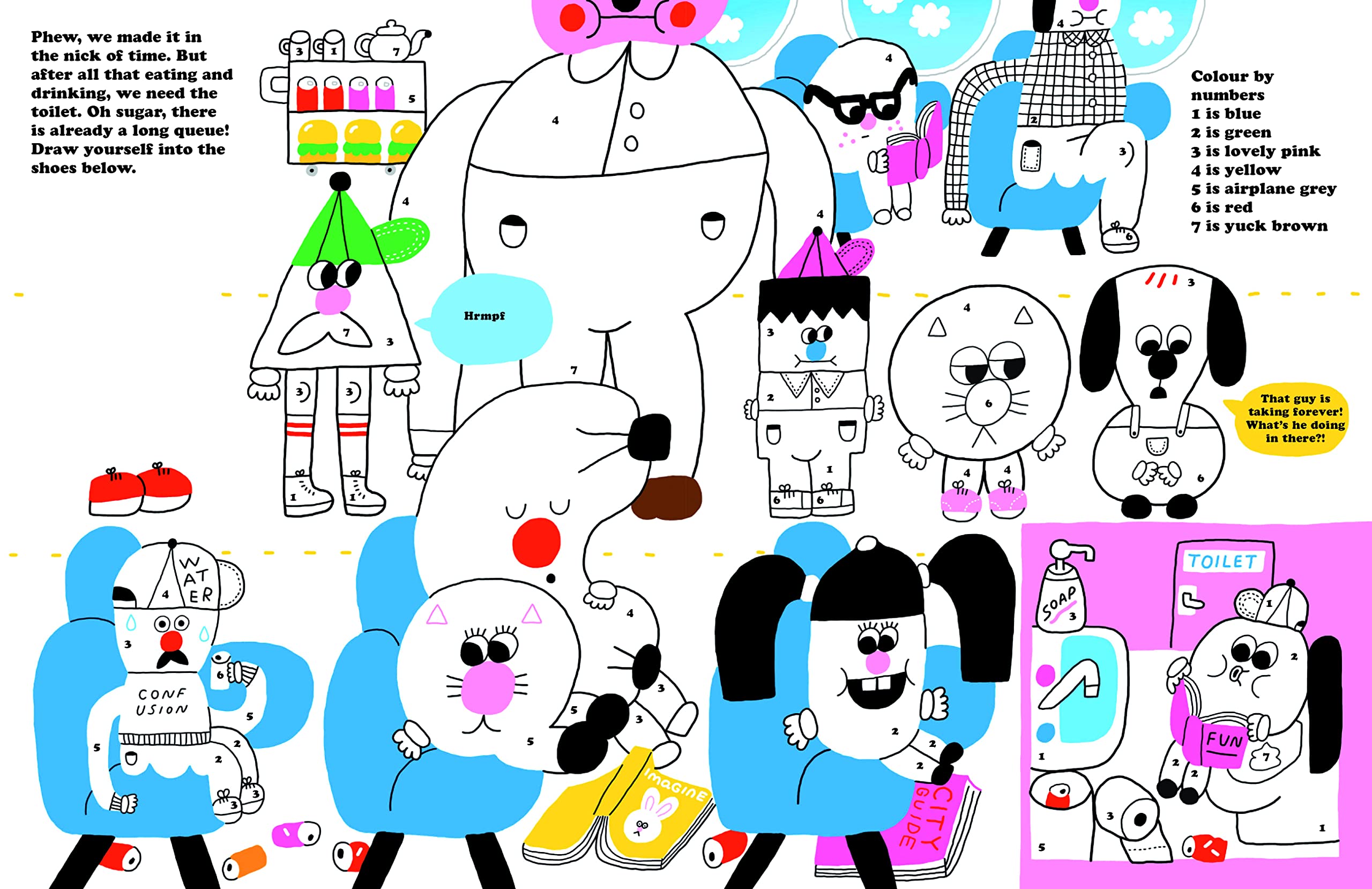
A friendly narrator also keeps up a running conversation with kids that prompts them to add people, things, and even themselves to the pages. There are mazes, search-and-find and find-the-differences puzzles, a color-by-number scene, and many other ways for kids to stretch their creativity while being entertained to boot.
Copyright Jurg Lindenberger, 2022, courtesy of Cicada Books.
Jurg Lindenberger knows what will get kids giggling and drawing, and his easy comical flair makes every page fun (with even a little geometry thrown in). Wowee Zowee: a flight of imagination is a perfect stowaway for trips by train, plane, or automobile to make those miles fly by as well as an engaging way to keep kids busy on rainy days or at the kitchen table and family room during relaxing time.
Ages 4 – 11
Cicada Books, 2022 | ISBN 978-1800660106
Read a New Book Month Activity
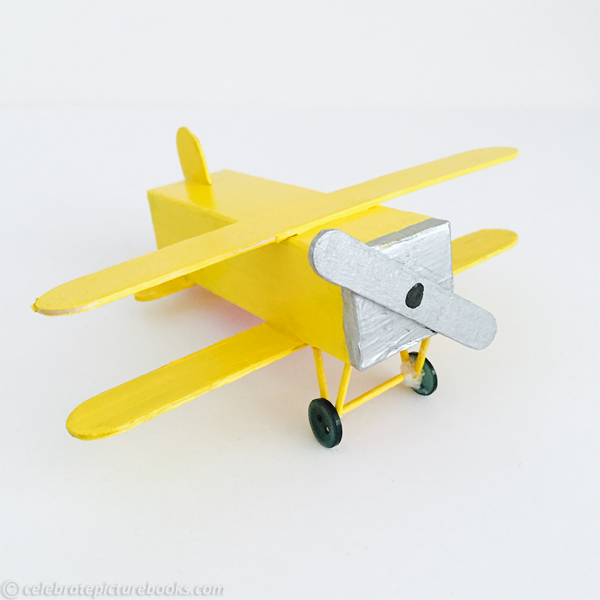
Head in the Clouds Biplane
If you love airplanes and flying, you’ll have fun making your own plane from recycled materials! Use your creativity to decorate your plane while you imagine yourself flying through the clouds on a beautiful day. Younger children will have fun sharing this activity with an adult or older sibling too!
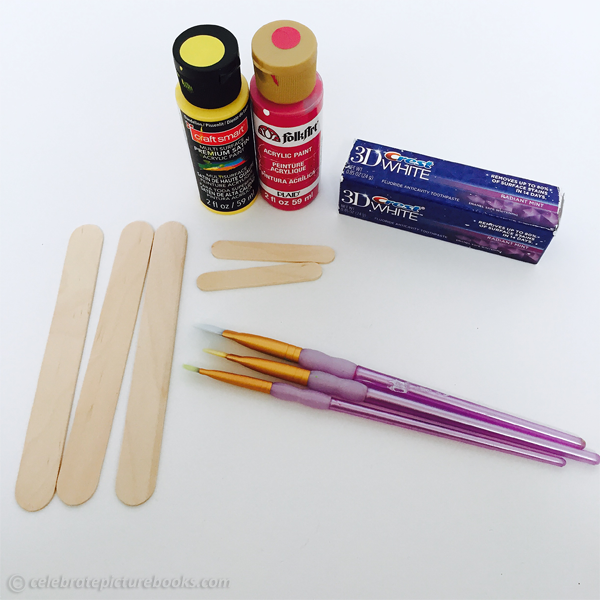
Supplies
Travel-size toothpaste box
3 6-inch x 1/2-inch craft sticks
2 2 1/2-inch x 7/8-inch mini craft sticks
5 Round toothpicks, with points cut off
Paint in whatever colors you like for your design
4 small buttons
2 mini buttons
Paint brushes
Strong glue or glue gun
Directions
Empty toothpaste box
Paint toothpaste box and decorate it
Paint the craft sticks and 5 toothpicks
Paint one small craft stick to be the propeller
Let all objects dry
To assemble the biplane
For the Bottom Wing – Glue one 6-inch-long craft stick to the bottom of the plane about 1 inch from the end of the box that is the front of the plane
For the Top Wing – Glue the other 6-inch-long craft stick to the top of the plane about 1 inch from the front of the plane
For the Tail – Glue one mini craft stick to the bottom of the box about ¾ inches from the end that is the back of the plane
For the Vertical Rudder – Cut the end from one of the painted 6-inch-long craft sticks, glue this to the back of the box, placing it perpendicular against the edge and half-way between each side
To assemble the front wheels
Cut 4 painted toothpicks to a length of ¾-inches long
Cut one painted toothpick to a length of 1-inch long
Glue 2 of the 3/4-inch toothpicks to the back of 1 button, the ends of the toothpicks on the button should be touching and the other end apart so the toothpicks form a V
Repeat the above step for the other wheel
Let the glue dry
Glue the 1-inch long toothpick between the wheels at the center of each wheel to keep them together and give them stability. Let dry
To make the back wheel
Cut two ¼-inch lengths of painted toothpick and glue them together. Let dry
Glue two mini buttons together to form the back wheel. Let dry
Glue the ¼-inch toothpicks to the mini buttons. Let dry
Glue these to the bottom of the plane in the center of the box directly in front of and touching the tail
Display your biplane!
You can find Wowee Zowee: a flight of imagination at these booksellers
Today we celebrate those lowercase letters that make up a predominance of our sentences (and nearly all of our texting). The lowercase letter has a proud history, dating back to the earliest development of script and writing. The terms “lowercase” and “uppercase” come from the era of the printing press, when individual letters were inserted by hand into plates that were then inked and pressed onto paper. The tiles etched with each letter were kept in trays conveniently located for the printer to set them into the plates with capital letters found in the upper case and small letters arranged in the lower case. To learn more about the history of our script was developed, visit My Modern Met. You’ll find rules on using lowercase and uppercase letters at Gammerly. And to discover the fun you can have with the letters of the alphabet, read about today’s book below and meet its creators!
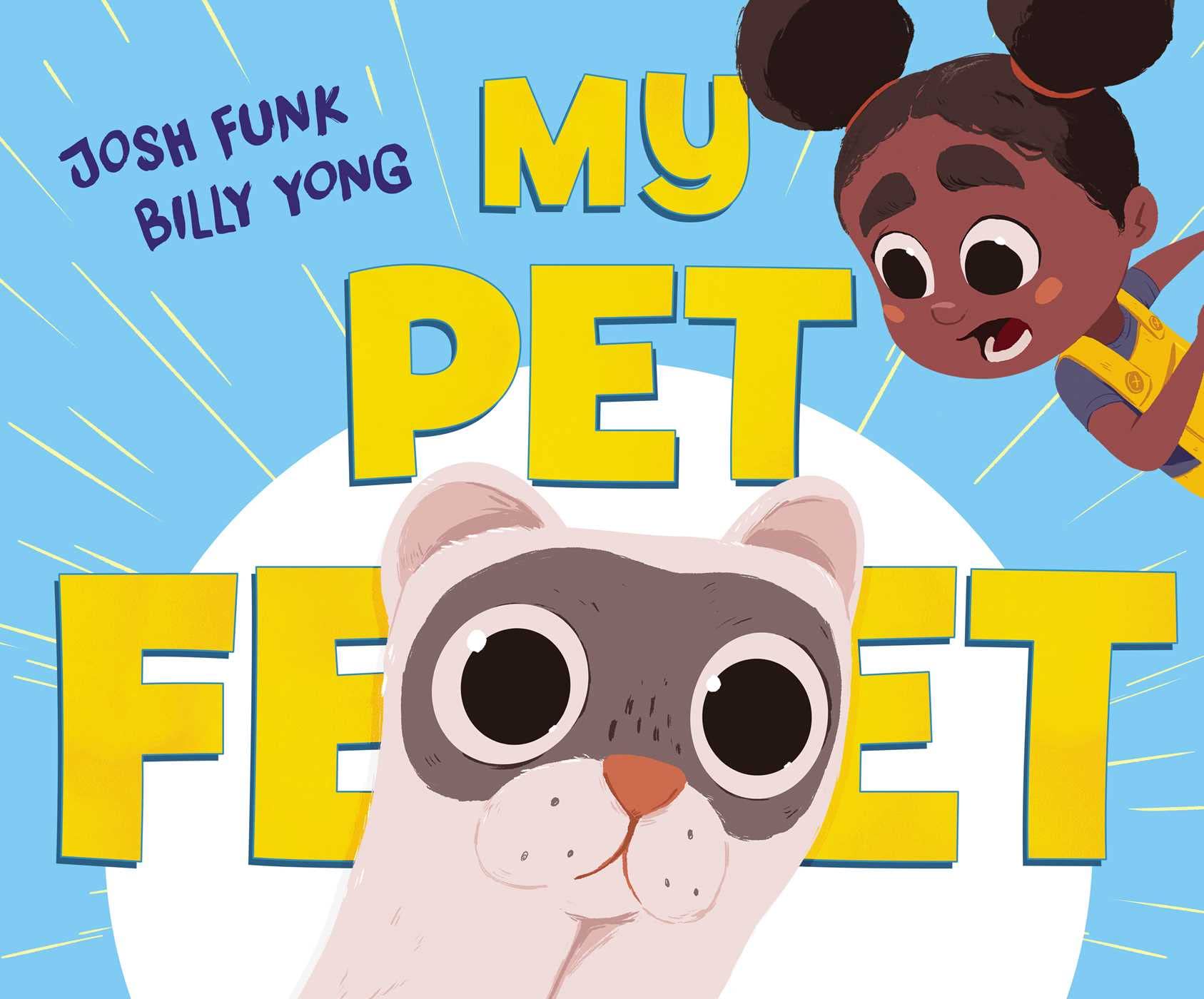
My Pet Feet
Written by Josh Funk | Illustrated by Billy Yong
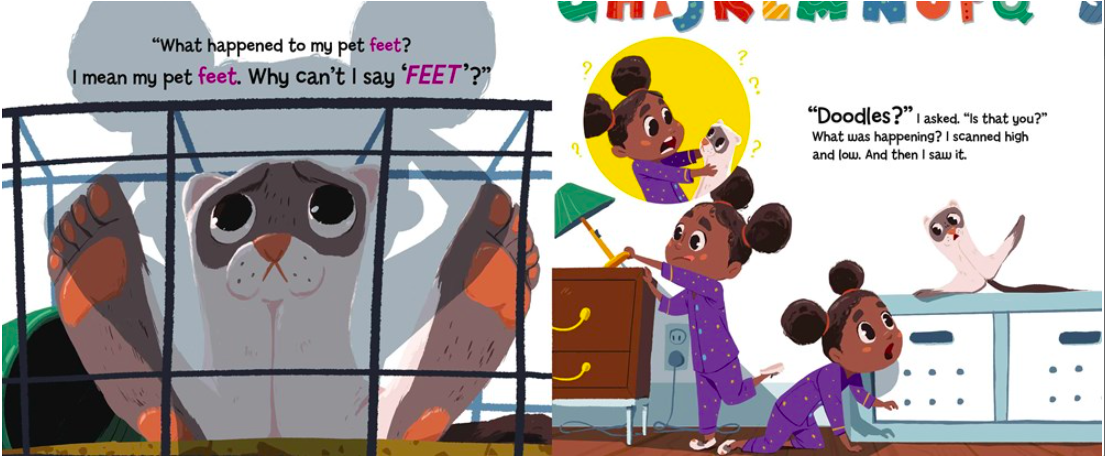
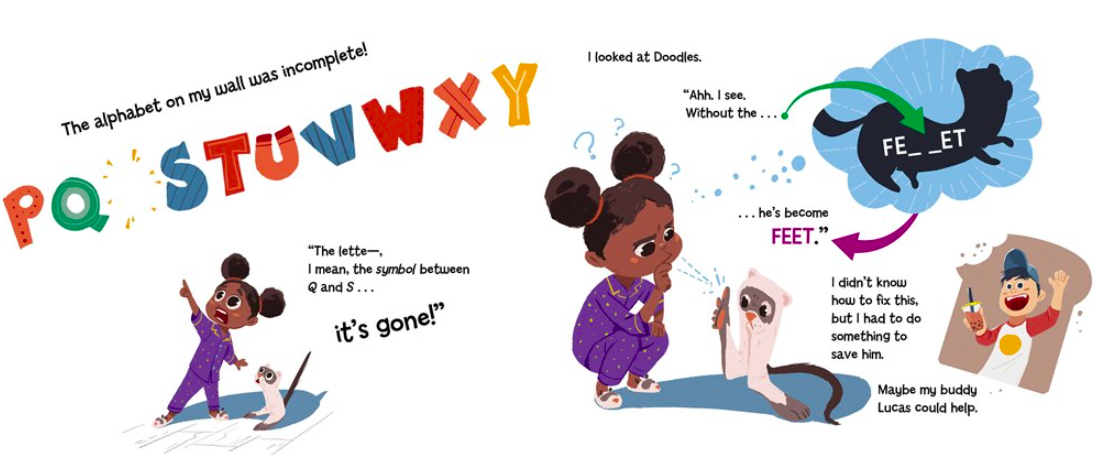
A little girl wakes up on a glorious morning. The bees are buzzing and the palm tees (no, it’s not a typo, you’ll see…) outside her window are standing tall. First job of the day is to feed her pet ferret, Doodles. She goes to his cage only to find two very long feet and a very sad face looking up at her. “‘What happened to my pet feet?’” she cries. “‘I mean my pet feet. Why can’t I say ‘FEET’?’” She looks all over her room for an answer and then spies something suspicious. Her alphabet banner is missing the ‘R.’ She quickly assesses the situation and realizes that without the letter R, her beloved pet has become simply FEET. Immediately, she decides she must do something and calls her best friend Lucas to help her.
Image copyright Billy Yong, 2022, text copyright Josh Funk, 2022. Courtesy of Simon & Schuster Books for Young Readers.
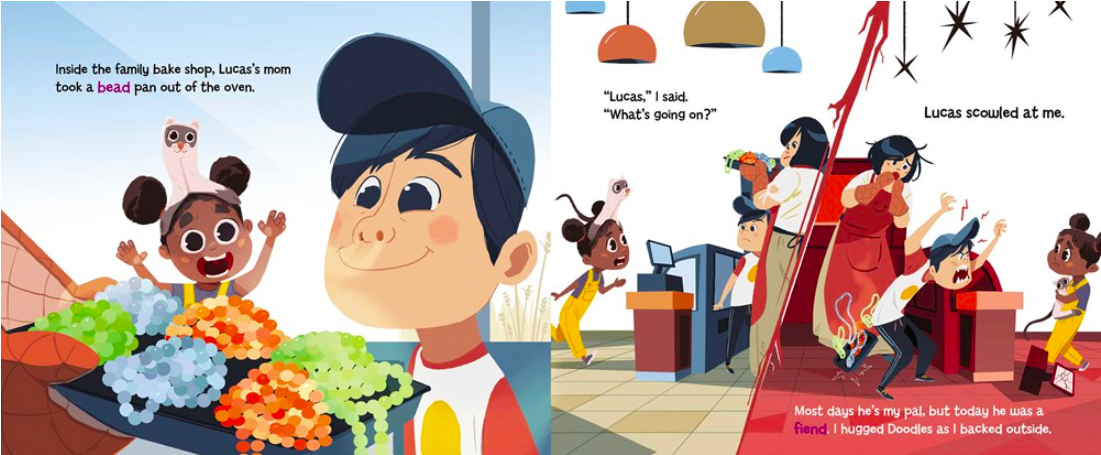
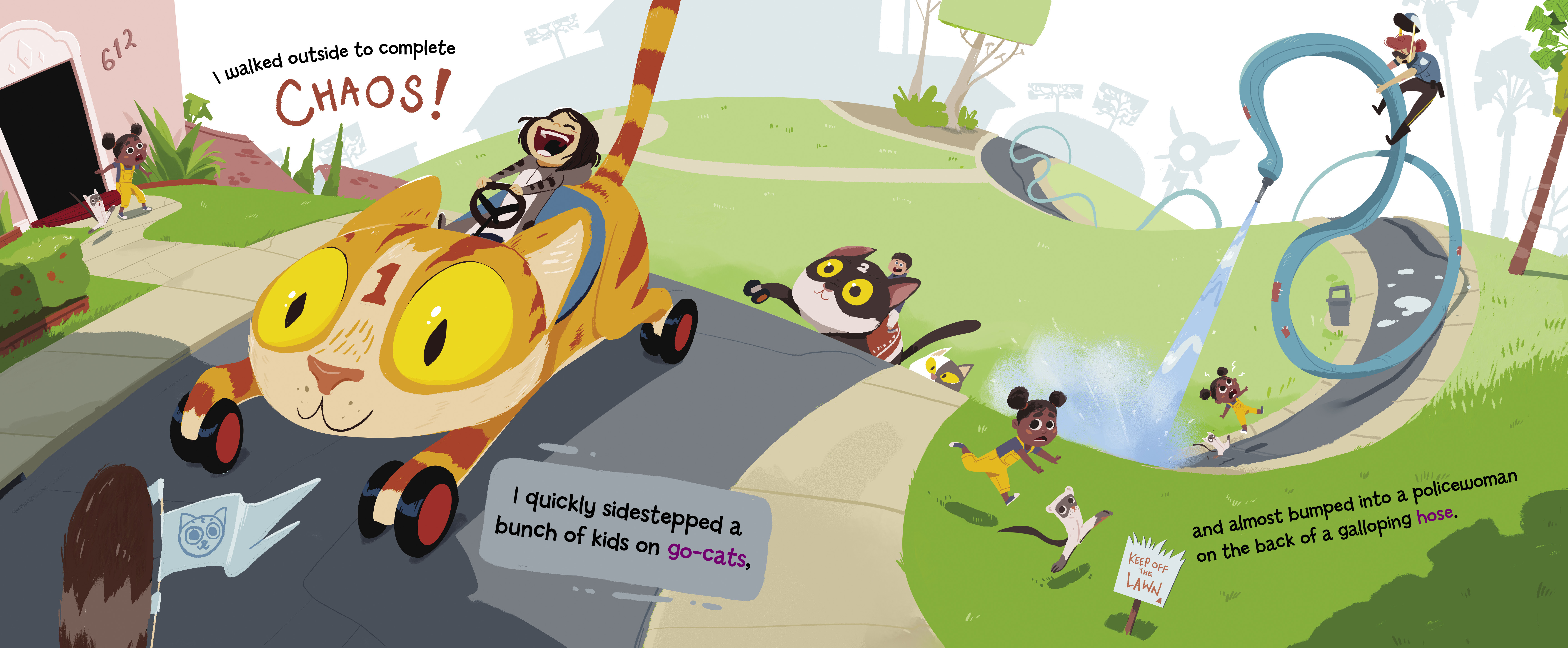
But when she left the house, she discovered that the missing R wasn’t just affecting Doodles, but the whole town. On the way to find Lucas at his mom’s bake shop, she had to avoid “a bunch of kids on go-cats” and a policewoman on the back of a galloping hose.” Then when she found Lucas, her bestie had turned into a fiend. What was worse is that no one acted like anything was wrong.
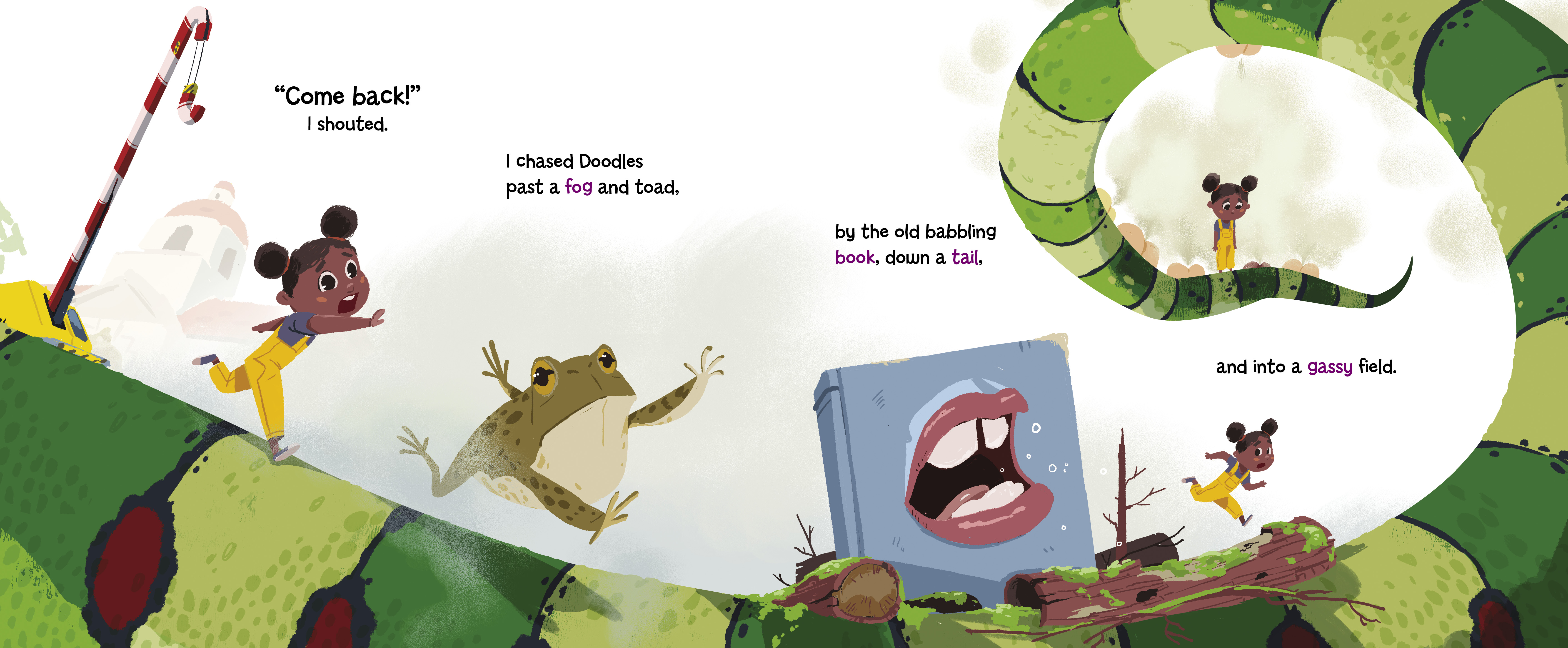
Everywhere she went there was pandemonium, strange hybrid creatures, and weird machines. The girl wanted to find out “what happened to the eighteenth symbol of the alphabet. Could someone have taken it? “But who? And why? …I don’t want to have pet feet until the end of time!” Distressed to hear this, Doodles ran away, and even though she chased him “by the old babbling book, down a tail, and into a gassy field, the girl couldn’t find him.
Image copyright Billy Yong, 2022, text copyright Josh Funk, 2022. Courtesy of Simon & Schuster Books for Young Readers.
But then, faintly in the distance, she heard familiar footsteps and followed the sound until she found him at the seashoe …ummm…at the beach, which was not quite the way it used to be. Still, she found Doodles and apologized for hurting his feelings. He gave her a big hug, but then was off again—this time into the sea. The girl dove in too. Could Doodles be leading them to the answer for the missing R’s? Could life eally etun to nomal … ummm … Could life actually go back to the usual? To find out, jump in and paddle along! You don’t want to miss the supising esolution … I mean the astounding ending!
Image copyright Billy Yong, 2022, text copyright Josh Funk, 2022. Courtesy of Simon & Schuster Books for Young Readers.
In My Pet Feet, Josh Funk has carefully crafted a grammatical mystery that will keep readers (both kids and adults) marveling over the cleverness of each word transformation and how they add to the richness of the story. As the little girl races to restore Doodles to his normal cuddly state, readers become totally immersed in the laugh-out-loud, fantastical R-less world even as they empathize with her dilemma. The pitch-perfect ending comes as a real surprise, one that is sure to please readers of all ages.
Perfectly matched to Funk’s comedic talents is new picture book bright light Billy Yong, who brings a fresh, vibrant, and hilarious sense of humor to this story. Readers will want to linger over every page as Yong infuses each spread with a wealth of astoundingly clever details in depicting not only the R-less words provided in the story but in creating a whole town and outlying regions in which every element is flawless. Yong’s illustrations set up an irresistible game of search-and-find for all the visual puns, and the before and after images of the town make for an engaging find-the-differences puzzle.
A joy from beginning to end, My Pet Feet charms on many levels. The book is laugh-out-loud fun for the whole family as well as a way to engage kids in lessons on the alphabet, sound recognition, spelling, and grammar for teachers. Both avid and reluctant readers will love the silliness that makes this a must-have addition to all home, classroom, school, and public library collections
Ages 4 – 8
Simon & Schuster Books for Young Readers, 2022 | ISBN 978-1534486003
I’m thrilled to be talking with Josh Funk and Billy Yong today about My Pet Feet. So put up your feet and get ready to learn about the amazing journey this story took from an initial idea to an instant classic!
Meet Josh Funk
Credit Carter Hasegawa
Josh Funk writes silly stories such as the Lady Pancake & Sir French Toast series (including the forthcoming The Great Caper Caper, November 15, 2022); the It’s Not a Fairy Tale series (including the forthcoming It’s Not the Three Little Pigs, October 1, 2022); the How to Code with Pearl and Pascal series (including How to Code a Sandcastle and How to Code a Rollercoaster); the A Story of Patience & Fortitude series in conjuction with the New York Public Library (including Where Is Our Library? and Lost in the Library); Dear Dragon, Albie Newton, Pirasaurs!, A Night at the Bookstore: A Barnsie & Noble Adventure, and Dear Unicorn, coming in the fall of 2023!
Since the fall of 2015, Josh has visited (or virtually visited) over 500 schools, classrooms, and libraries and he is a board member of The Writers’ Loft in Hudson, MA. Josh grew up in New England and studied Computer Science in school. Today, he still lives in New England and when not writing Java code or Python scripts, he drinks Java coffee and writes manuscripts.
Hi Josh! I’m so excited to be a part of your book tour for this comedic tour de force! Thanks for taking time to chat with me about My Pet Feet and how the story came to be!I’m sure readers would love to know a little about how you wrote this story. How much fun was it to find all of the convertible words? How long did your writing process take?
It started with a typo on my phone (or possibly an autocorrect). I meant to write the word ‘friend’ but it came out ‘fiend’ which led me to wonder … what happened to the R? Why would a friend become a fiend? Did other words also lose their R’s? Did ALL words lose their R’s? Why? And what would the world look like if there were no R’s? What silly illustratable shenanigans would occur in a book written without the letter R?
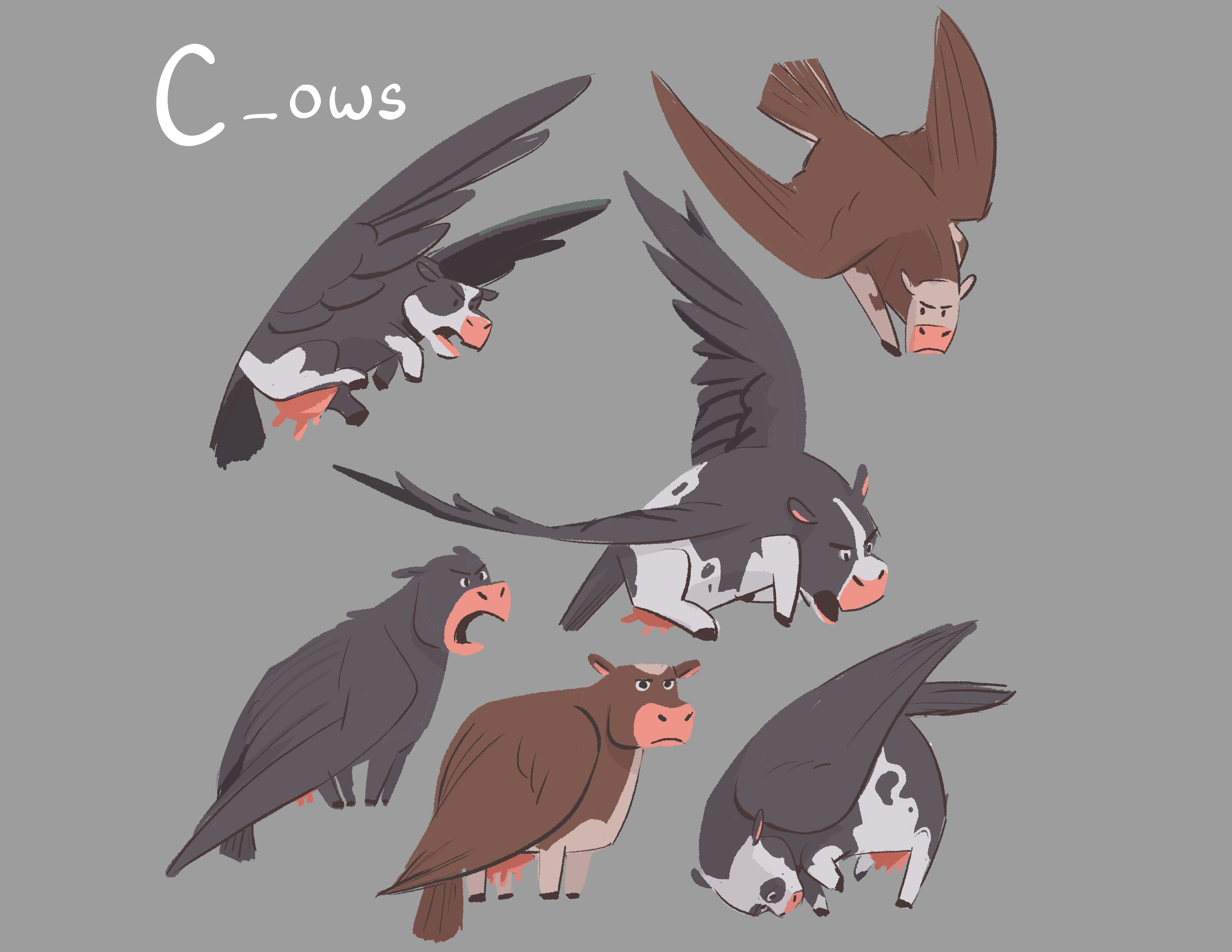
This led me to start searching for words where if you took away an R, it would become another word—especially word pairs that made for funny illustrations. Crows becoming cows. Babbling brooks becoming babbling books. The seashore becoming the seashoe.
But I still also needed a story. I needed a reason, an important reason, that someone needed to investigate the missing R’s … and needed to get them back. And rescuing a pet who had been transformed into something else was the perfect reason.
Once I had the list of words to play with along with the main character’s motivation, everything easily fell into place. JUST KIDDING! I wrote many, many, MANY revisions of this story both before and after it was acquired to get things in the shape they finally ended up in. And truly, nothing really came together until Billy Yong joined the team.
Speaking of Billy, what were your thoughts when you saw his illustrations? Do you have a favorite spread?
As an author of picture books, I think I benefit from not thinking too visually, at least in specifics. By that, I mean, I had no idea what ‘pet feet’ would look like. Would they be human feet (with human toes? Ew.)? Would it be like a rabbit’s foot? Would the foot have a face? I honestly didn’t even bother thinking about these things—I left that for someone else to tackle.
And unsurprisingly, I think Billy’s visual creation of pet feet is amazing! I have no idea how he made ‘pet feet’ look cute. The concept is just so ridiculous, but he managed to pull it off.
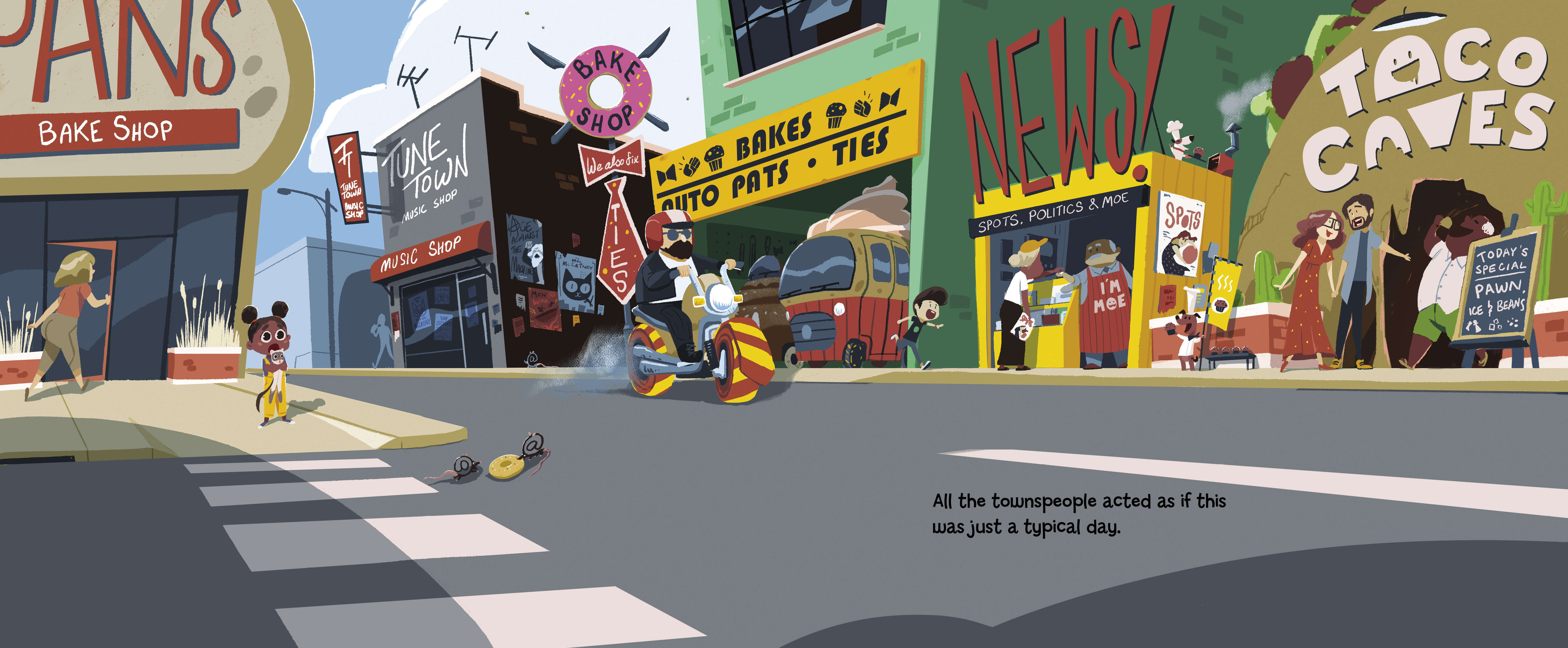
As far as favorite spreads and images, I love the spreads with all the visual gags in the background, like the one in town with everyone acting like it’s just a typical day. But the best, without a doubt, is the gassy field. I had no idea Billy was going to illustrate a bunch of butts farting—but I totally approve. Like I said, I don’t think too visually—I just wrote ‘gassy field’ and assumed someone else would take care of it. And there are no buts about it—Billy did.
Meet Billy Yong
Billy Yong is an illustrator and character designer. Since starting out he has drawn storyboards, engaged in visual development, and has even voice acted for animation, games, and children’s books. When he’s not creating his professional doodlings, he can be found in a cafe drawing or painting in his sketchbook, in his studio developing his personal projects, or in the dojo teaching Japanese swordsmanship. Billy currently lives in sunny Singapore.
To learn more about Billy Yong and view a portfolio of his work, visit his website. You can connect with Billy on Instagram and Twitter.
Hi Billy! I’ve been looking forward to chatting with you since the moment I saw my review copy of this book. First, I want to Congratulate you on your debut picture book! Can you talk about your previous work and how you came to illustrate Josh’s story?
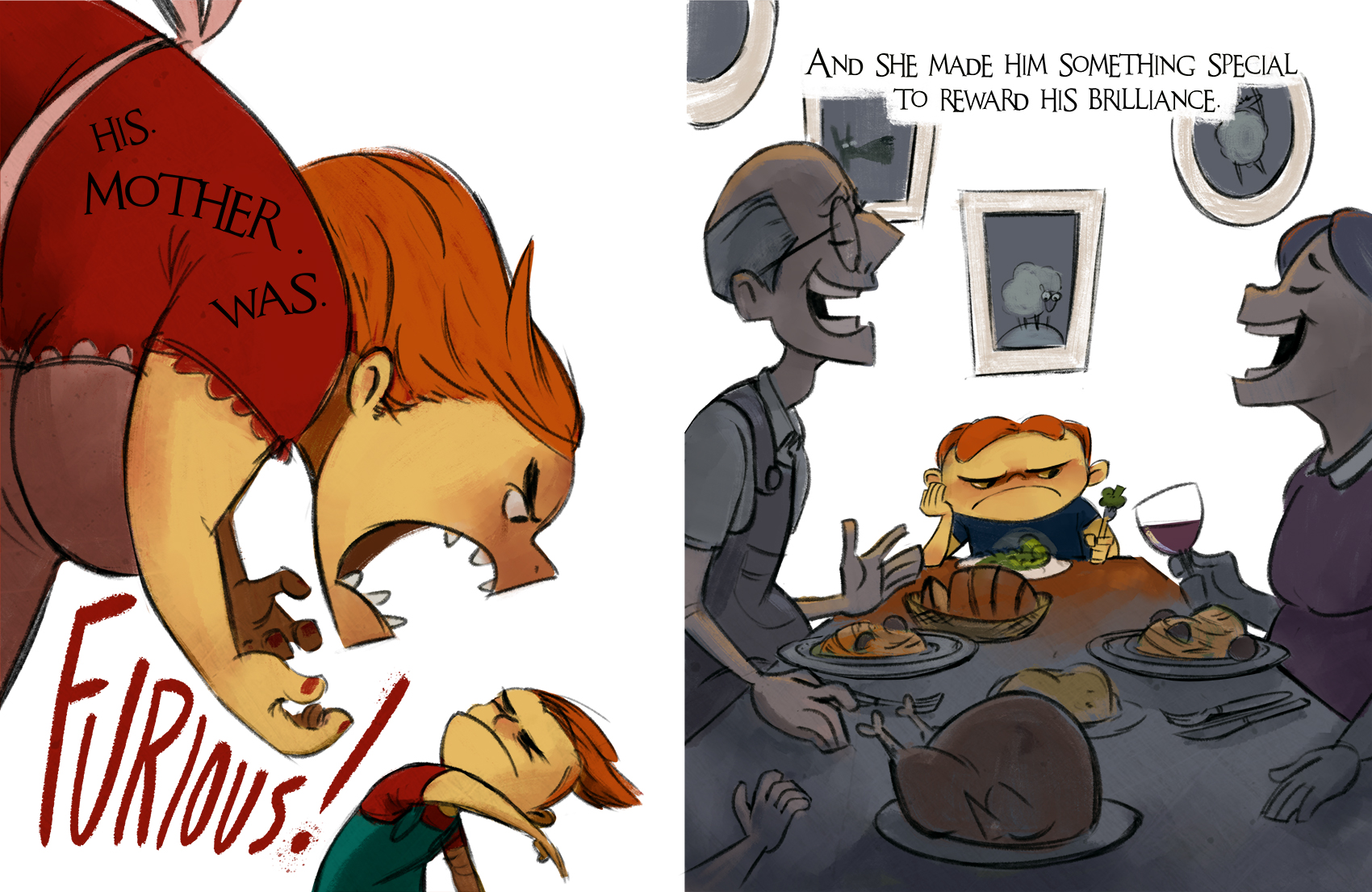
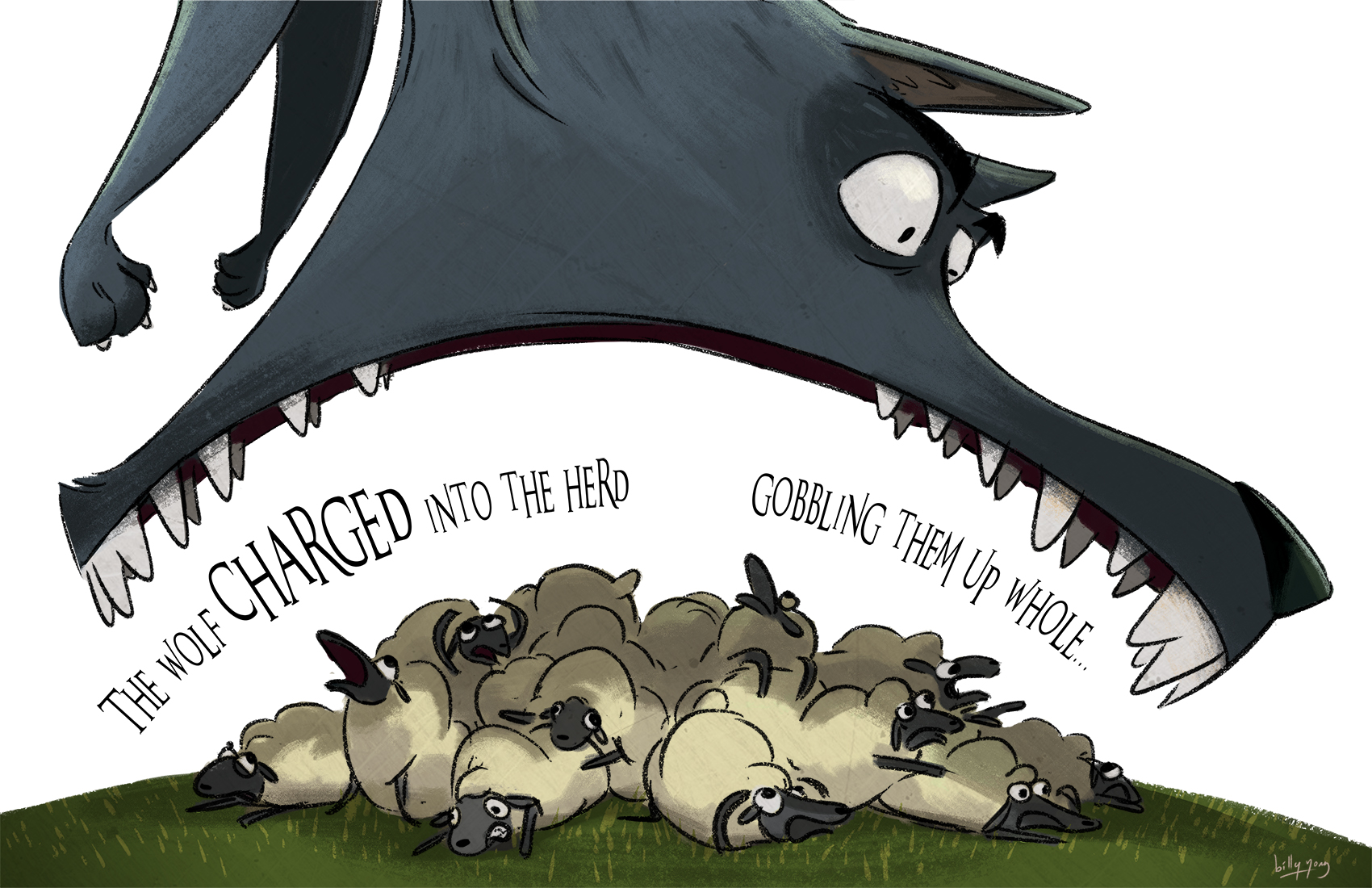
Thanks Kathy! It is such a privilege to be debuting through Josh’s hilarious story. Up till then, most of my illustrative works centered around the Young Adults range. Now that I think about it, one of my most enjoyable school projects that brought me into the kid lit scene was TheBoy Who Cried Wolf.
Copyright Billy Yong
When I was first approached about the project, Josh, Kendra and Chloe (editor and art director respectively) said my sense of humor was what got me the role. At that time, I honestly struggled to understand what they meant, but never say no to great opportunities eh?
What were your first impressions when you read Josh’s manuscript?
Dude, I loved it. Probably not a good thing that I first read it just as I was about to turn in for bed (it was 02:32 in the morning since I live in Singapore). I couldn’t sleep for the next two hours because I was drawing scenes in my head haha.
Your illustrations are so ingenious, even including foreshadowing and visual puns that go beyond or riff on the “r-less” words in the text. I’m sure readers would love to learn a little about your process in creating them.
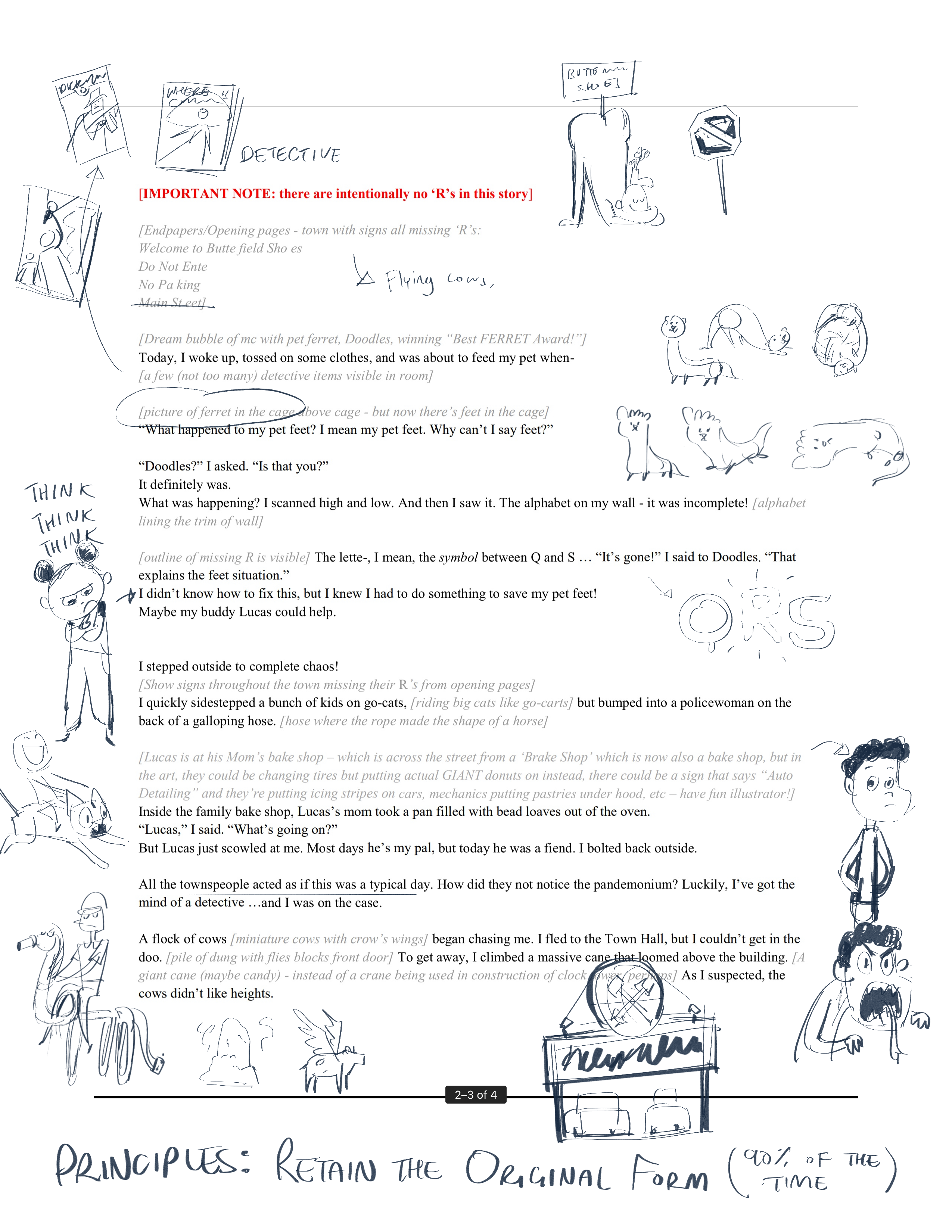
You’re too kind! First off, for anyone wanting to get into illustration, particularly with larger projects like these, understand that the process is more often a back-and-forth than a straight journey. I typically like to doodle on the script when I first read it, it helps to just spill out any ideas onto paper without restraint at the earliest phase.
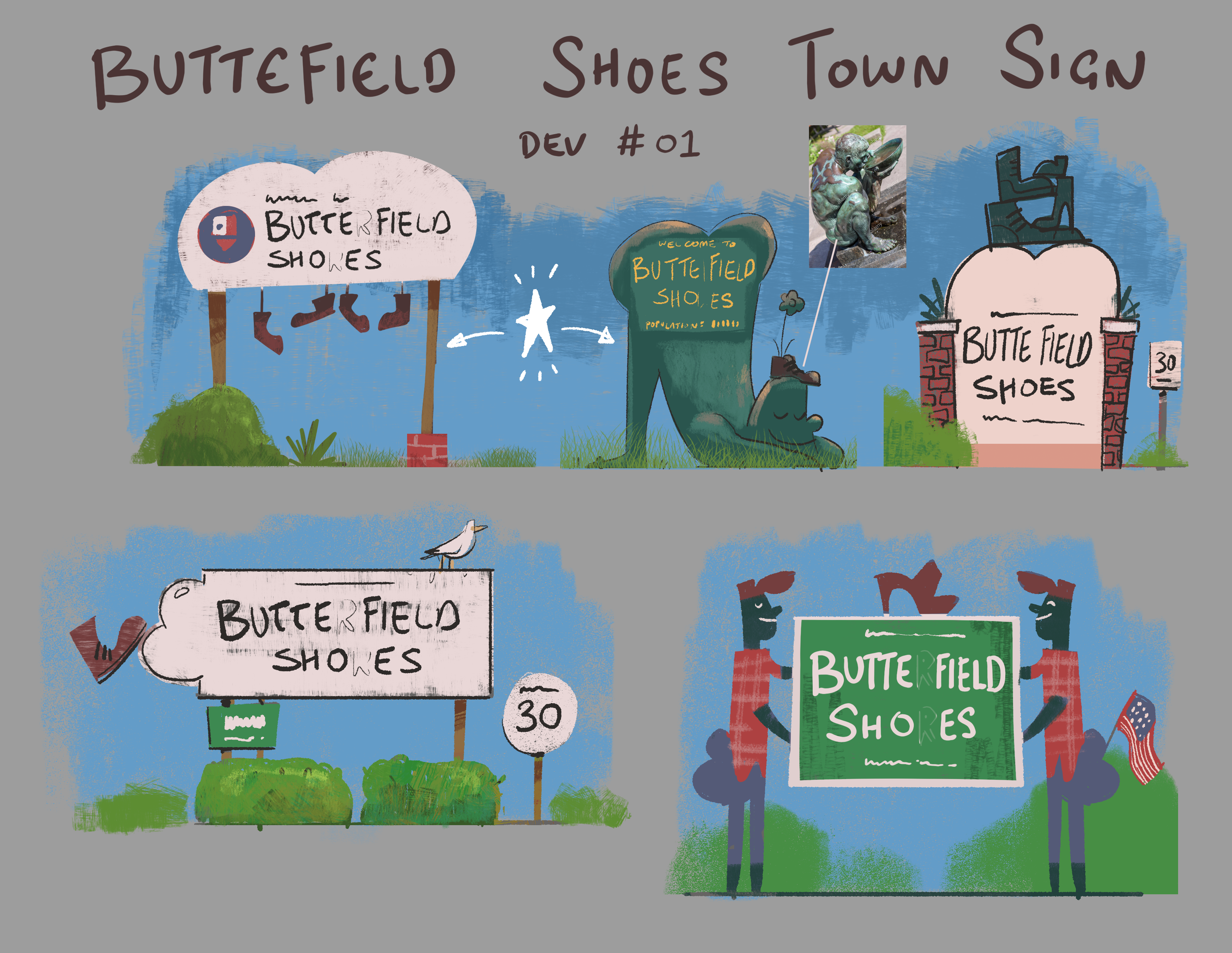
Some of the earliest ideas featured the town name: Butterfield Shores -> Buttefield Shoes. Me being the adult that I am, figured why not a bronze statue, butt resplendent for all to see, with a sign sticking out his bum, and a shoe on his head, with a little flower growing from it.
Image copyright Billy Yong, 2022
Developments of bums are always a joy.
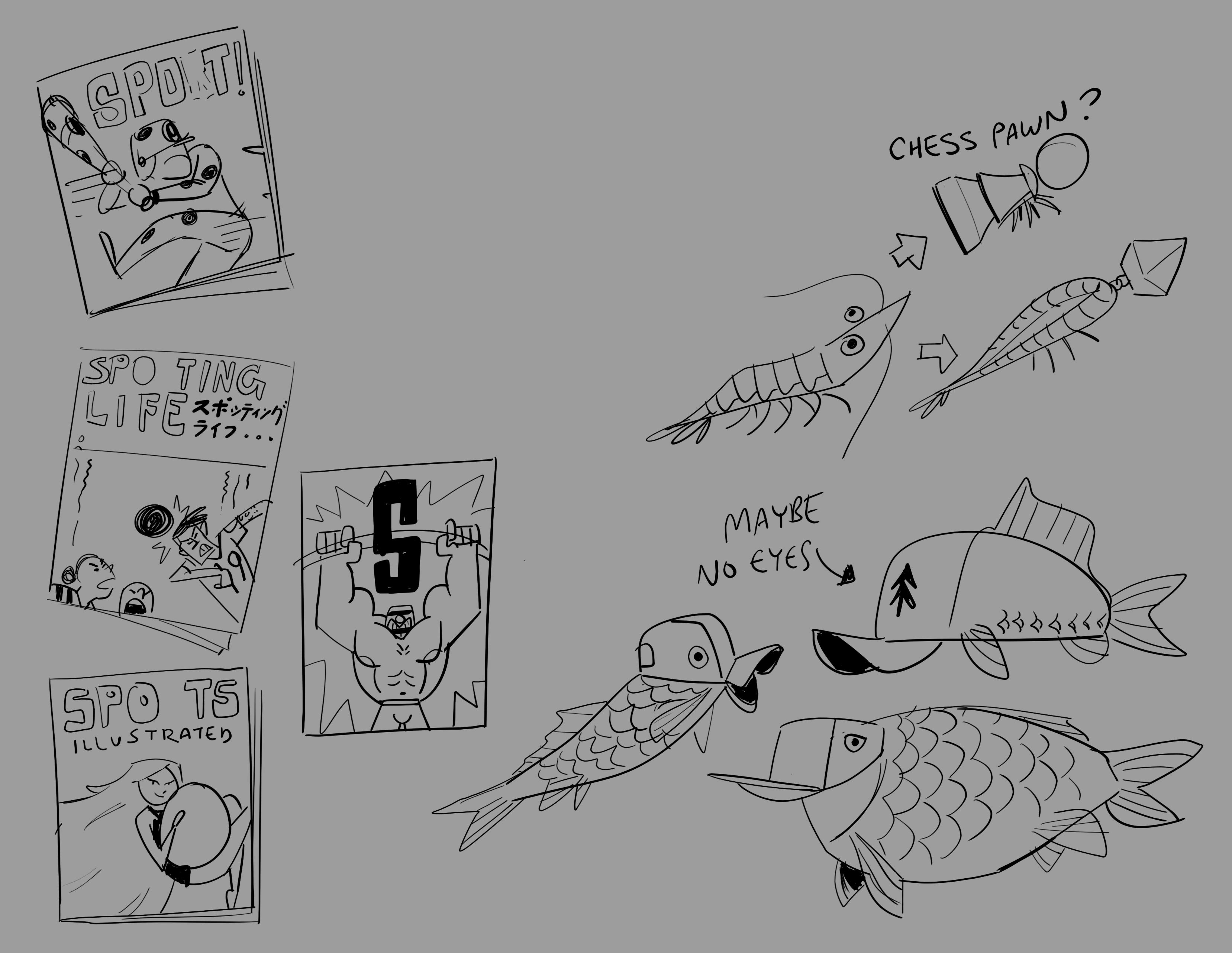
Another was around miscellaneous things we would encounter.
Image copyright Billy Yong, 2022
Even though they were never used, it helped kick off the vibe of this crazy world our heroes lived in.
Back on the main subjects, I’m usually drawn most towards characters, so that’s usually what I like to start off with after doodling on the script.
Image copyright Billy Yong, 2022
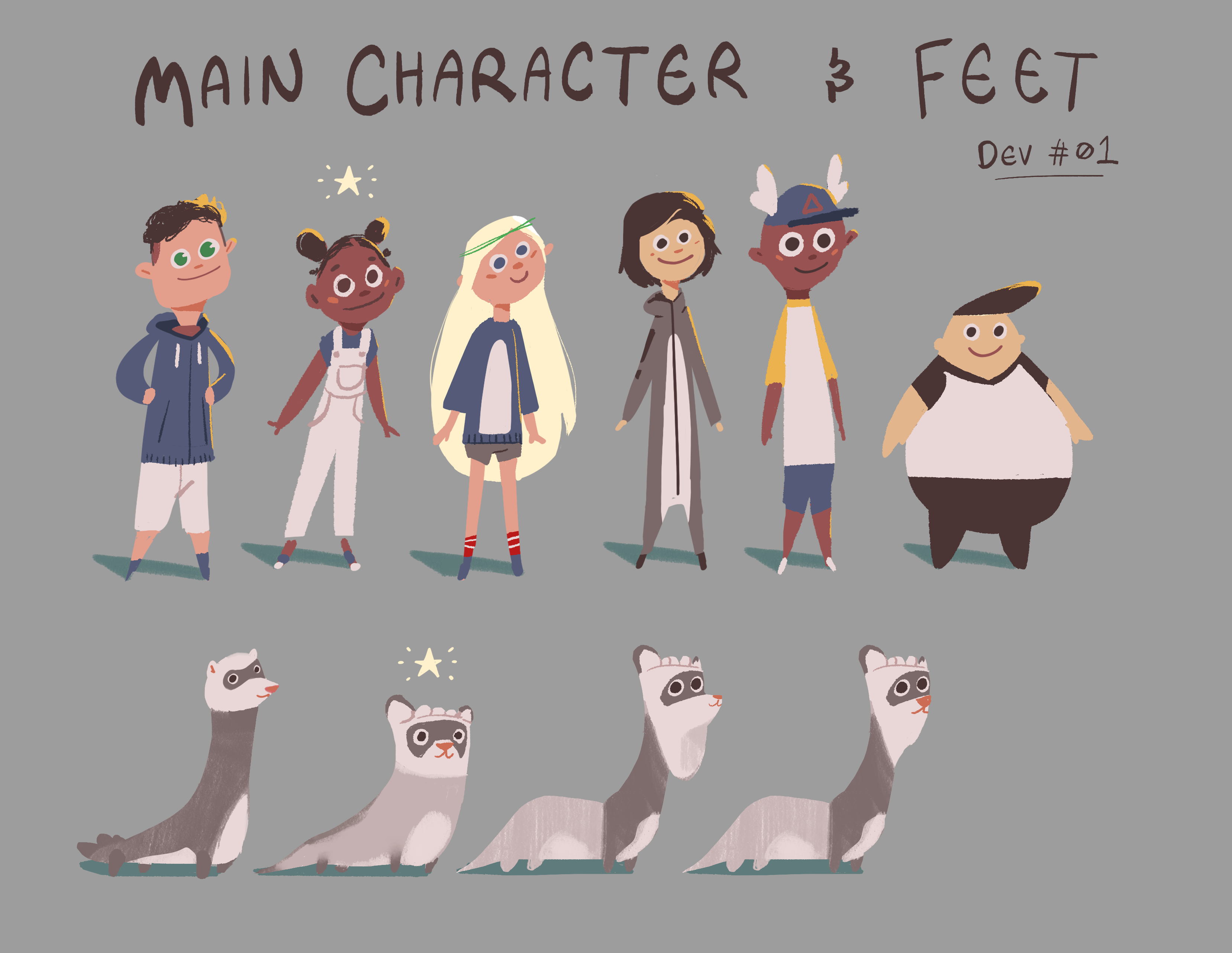
I loved that our main human was pretty nondescript, so that left a lot of room to create a cast of characters. I eventually settled on no.2, since her shapes felt quite a lot like our fe(rr)et, Doodles. Below are some other characters I drew during the development process:
Image copyright Billy Yong, 2022
Image copyright Billy Yong, 2022
When it came to laying out the pages however, my usual methods of working digitally lacked the grand overview and the bravery to push past mistakes. Ironic since the digital medium allows me to undo to my heart’s content, but that also means I don’t see my mistakes and move past them.
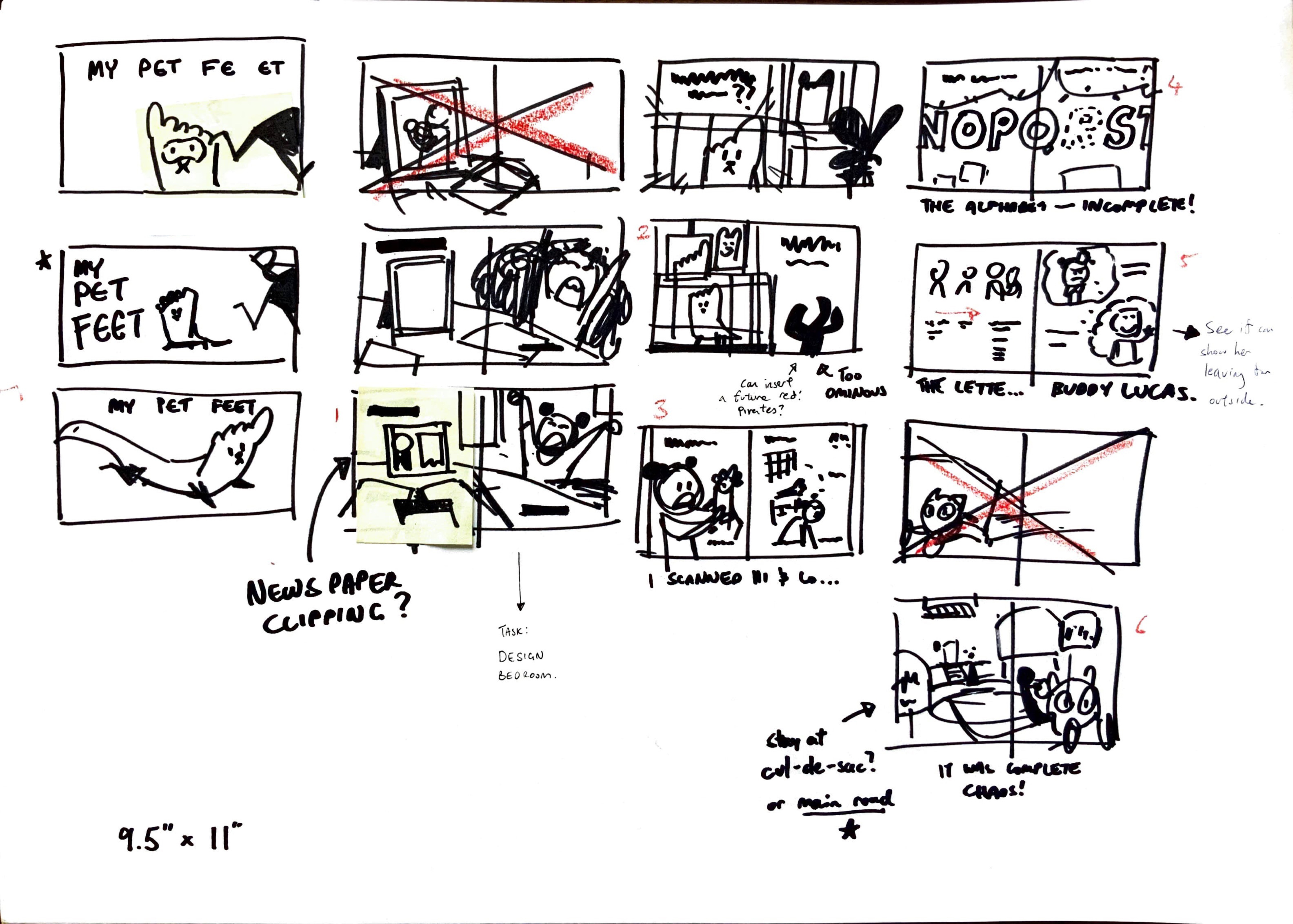
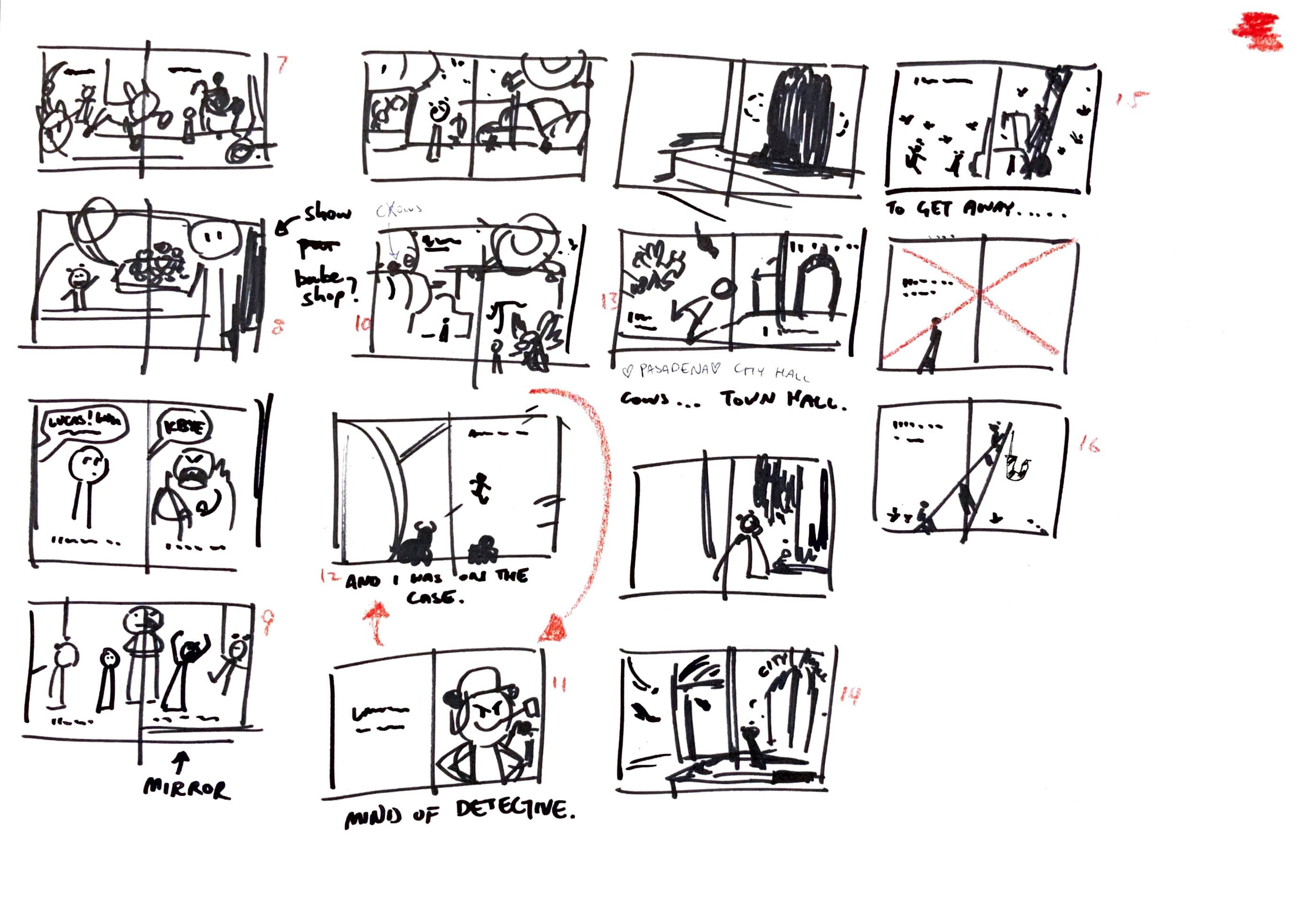
So, feeling stuck, I whipped out a giant A3 sketchpad with a sharpie and just went ham at it. No distractions, not even music in the background, just drawing at the dining table figuring out the flow and composition for Josh’s story. I think I managed to churn out the entire layout in 2 days because of this, haha.
Image copyright Billy Yong, 2022, text copyright Josh Funk, 2022.
Image copyright Billy Yong, 2022
(Initial doodles of the first couple of pages. When I liked a composition but didn’t like parts of it, I would paste a sticky note on top and just draw over it. It feels a lot more intuitive ideating like this compared to a digital drawing.)
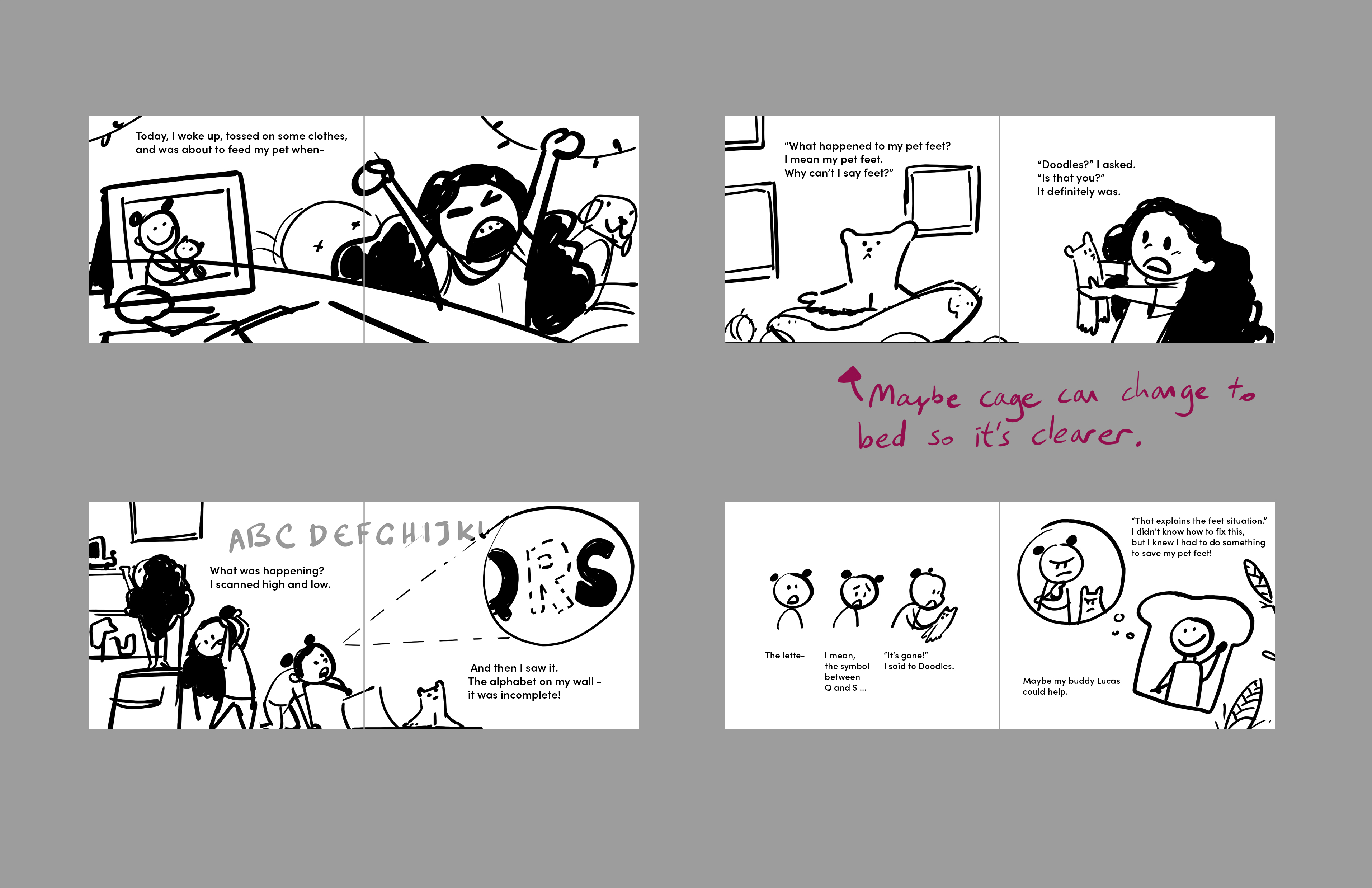
This wouldn’t quite make sense to Josh, Chloe (art director) and Kendra (editor) though, so the next step was tidying up.
Image copyright Billy Yong, 2022, text copyright Josh Funk, 2022.
Image copyright Billy Yong, 2022, text copyright Josh Funk, 2022.
Image copyright Billy Yong, 2022, text copyright Josh Funk, 2022.
(I think the most important part about this sketch cleanup phase was not to be too married to the original sketches, so if it doesn’t work on cleanup, then it helps to go back to the sketchpad or just move on and revisit the spread.)
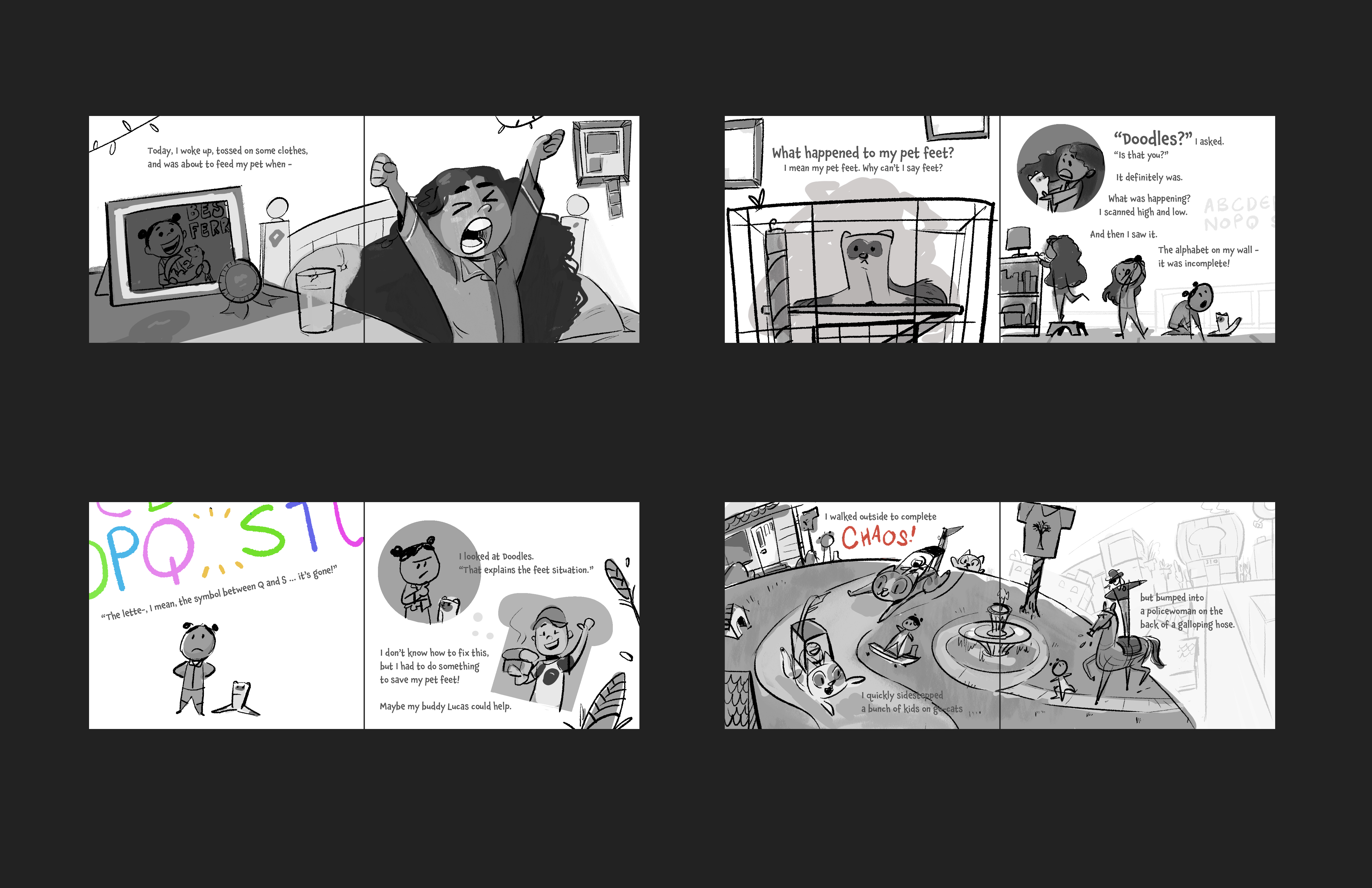
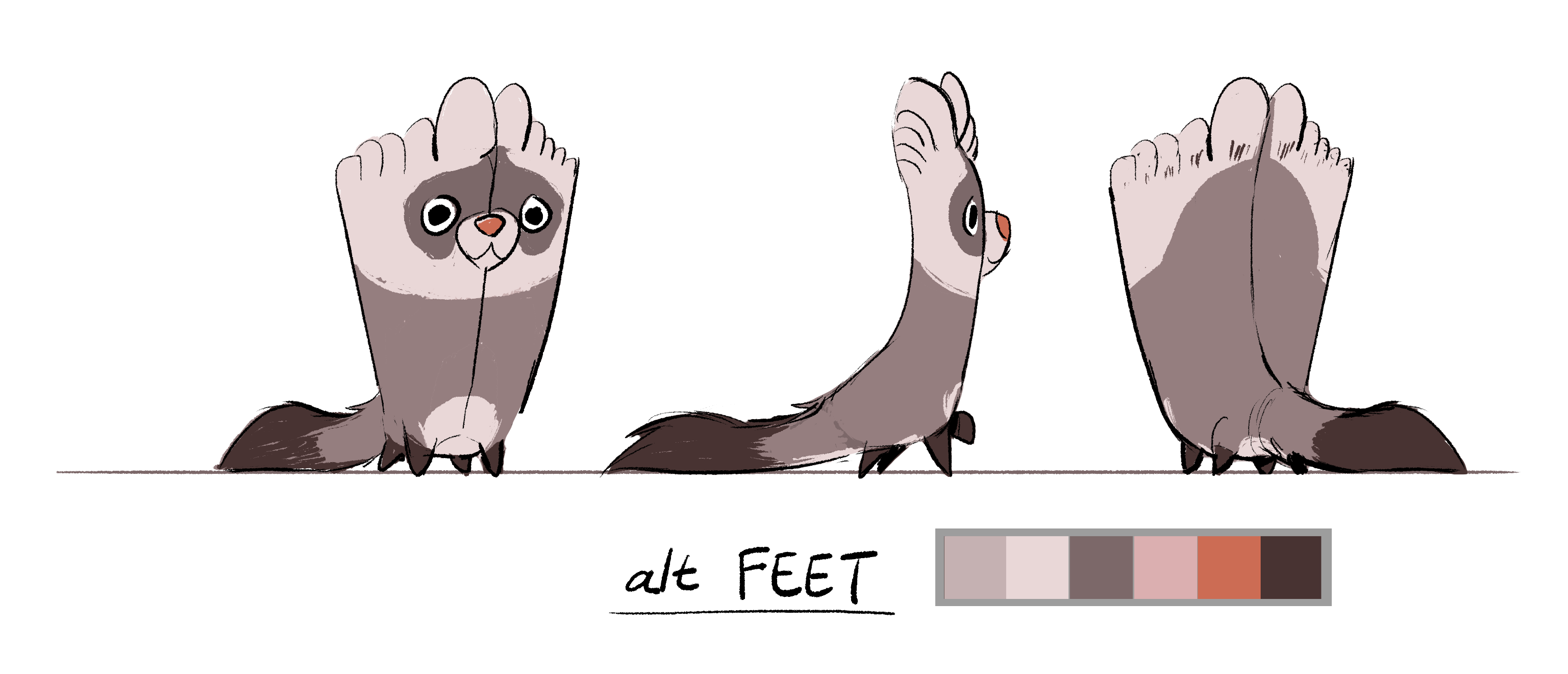
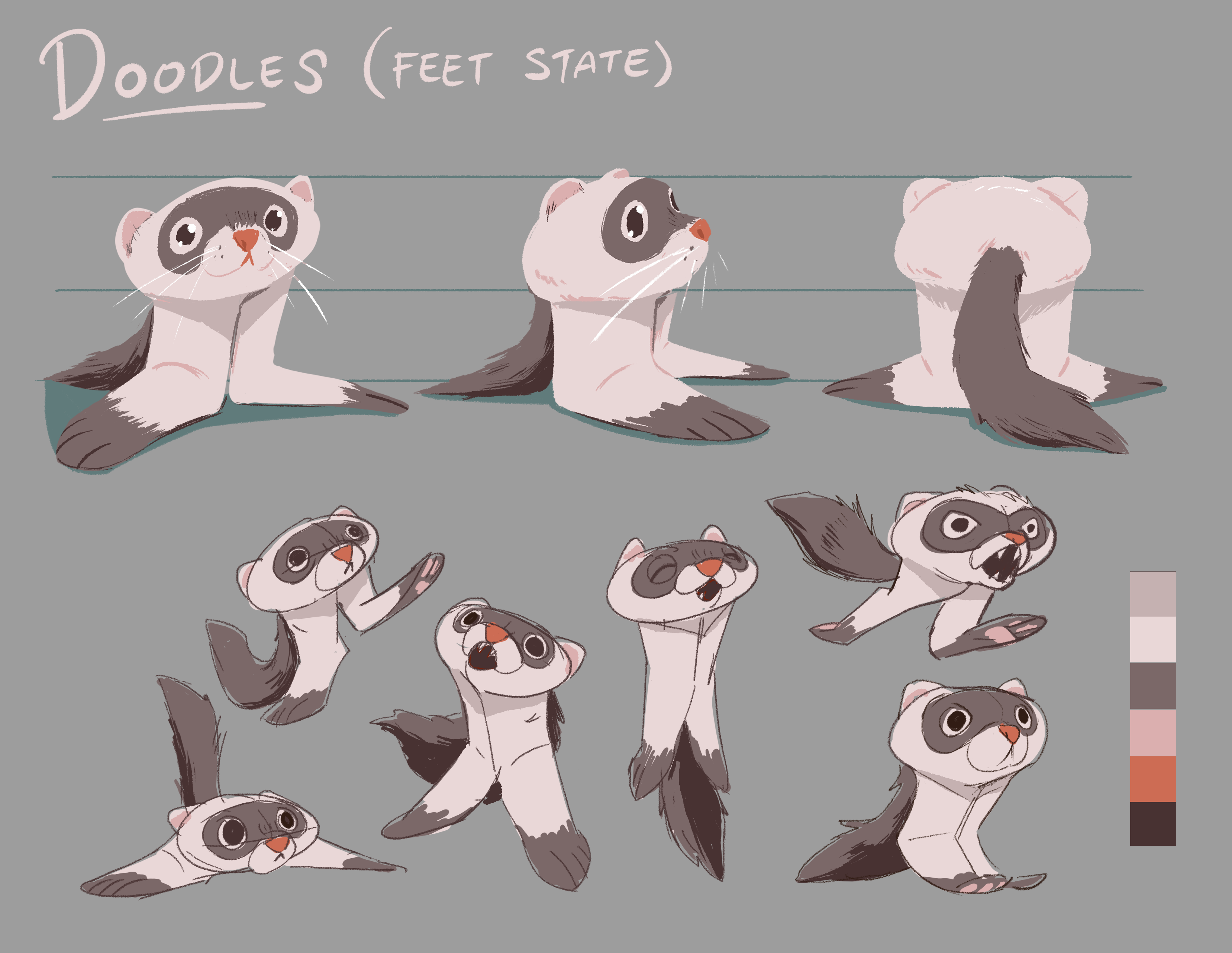
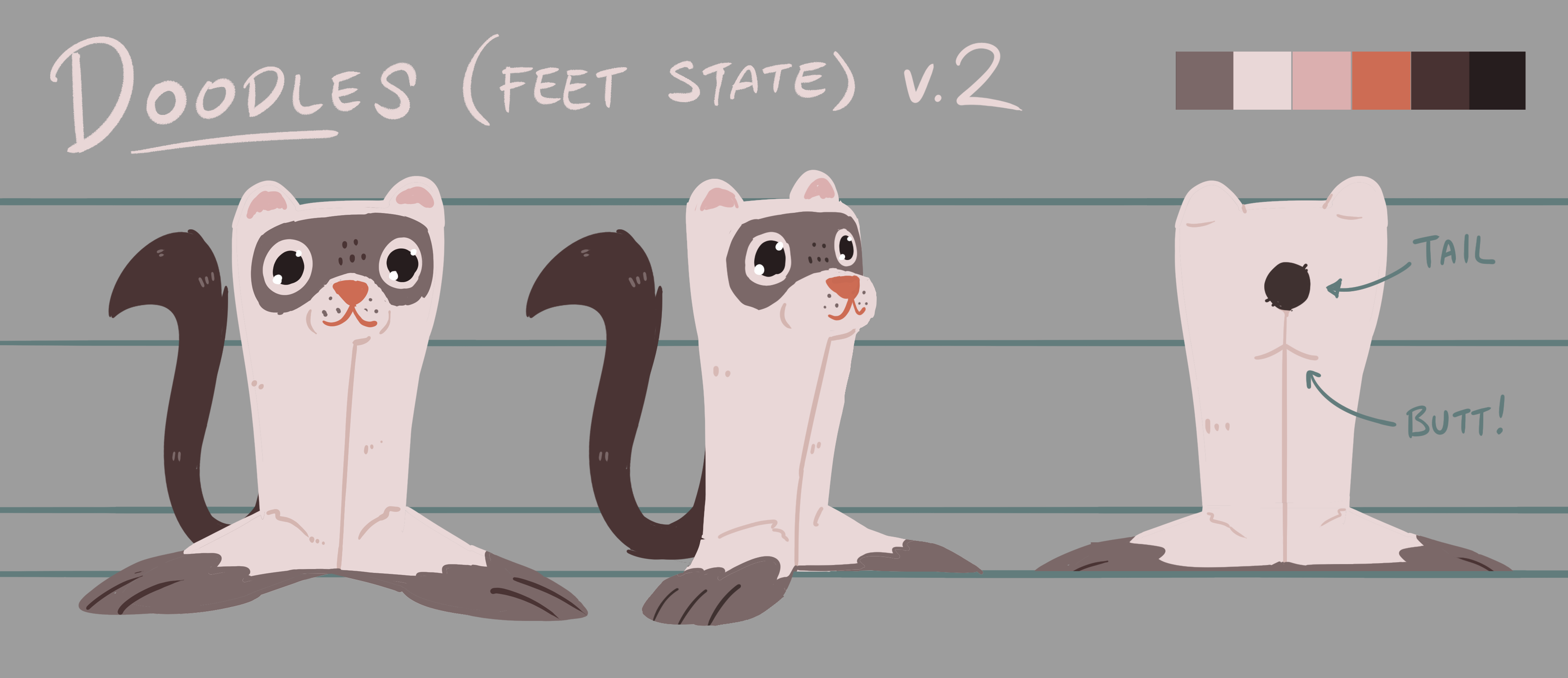
Once layouts were done, it was back to designing the characters. Doodles (or Feet) had the most rounds of back and forth. Ranging from foot-face, to a head on feet, ultimately to feet with a face, every interpretation brought us closer to what you see before you.
Image copyright Billy Yong, 2022
Image copyright Billy Yong, 2022
Image copyright Billy Yong, 2022
Doodles (Feet State) v.2 was what we settled on in the end.
Was there a spread that was particularly fun to illustrate? What made it so?
Haha, they were all a joy to do, but my favorites would be these three:
Image copyright Billy Yong, 2022, text copyright Josh Funk, 2022.
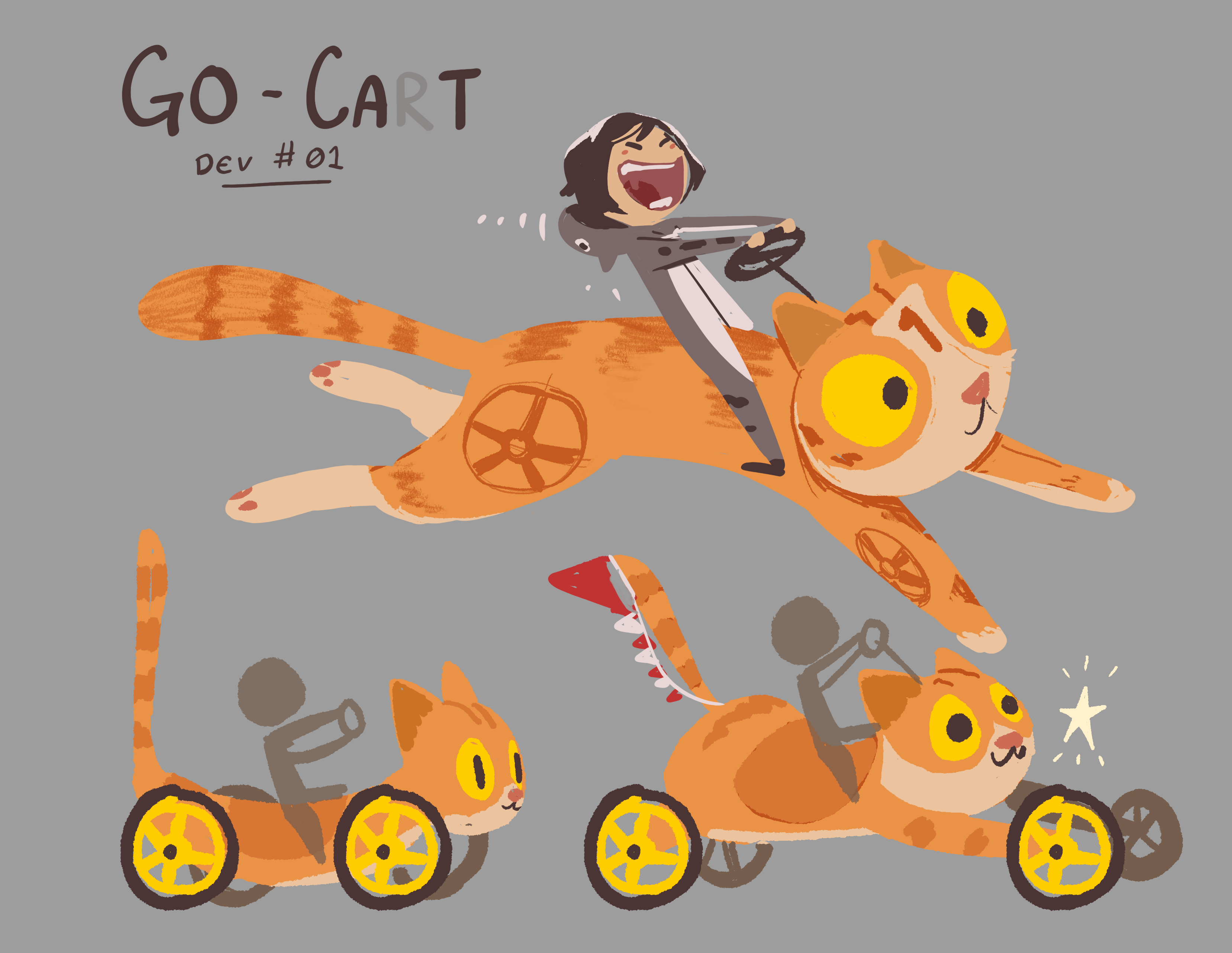
While the layout changed quite a fair bit from the original sketch, my goal of showcasing the go-cats and the topsy-turvy-ness of it all culminated in a winding road, with a subtle line at the top to lead the eyes back to the cat’s tail, ultimately to rest at the water splashing of the police ho(r)se.
Image copyright Billy Yong, 2022, text copyright Josh Funk, 2022.
While this was less dynamic than the previous one, it was really fun laying out the look and feel of the town. I think the biggest challenge was to make it feel populated without overloading the senses, and allowing the eyes pockets of rest in a spread so full of colors and information. I also sneakily snuck in my friends, who are getting married at the end of 2022, so even though I couldn’t be there, it’s my little wedding present to them.
The @-rats were also a suggestion of my wife (I think). Honestly in the thick of things I’ve confused ideas I’ve received from Josh, Kendra (our editor), Chloe (art director), my wife Rachel and myself. It really has been a team effort to bring this book to life.
Image copyright Billy Yong, 2022, text copyright Josh Funk, 2022.
Again with the swirly composition. (I’m starting to think I have a thing for these…) Also relatively simple, but I’m happy turning the tail into a device for our readers to traverse from left to right. Of course the gassy fields had to be a field of bums farting into the wind.
What do you like best about illustrating children’s books?
I enjoy the freedom of expression. It’s very daunting whenever you start a project like this, because said freedom means you often start on a very blank canvas, with only the story to guide you. You have to give yourself permission to be as wild as your skill and imagination can allow, and avoid listening to the doubts you have with certain decisions you make. When those doubts do manifest, I’ve found it useful to remind myself that this is a team process, and if the author, editor or art director don’t quite approve, they’ll let you know. Until then, go ham.
What’s up next for you?
Haha, I don’t think I’m allowed to say, but perhaps I could hint that it’s about a boy, his friends and a hammer. It’s quite the wild ride, and I hope when it’s released readers will enjoy it. I certainly have. Apart from that, just raising a baby girl with my wife. It’s an exercise in patience and endurance. I cannot wait to start drawing with her and learning from her. Perhaps I will become a better artist from that.
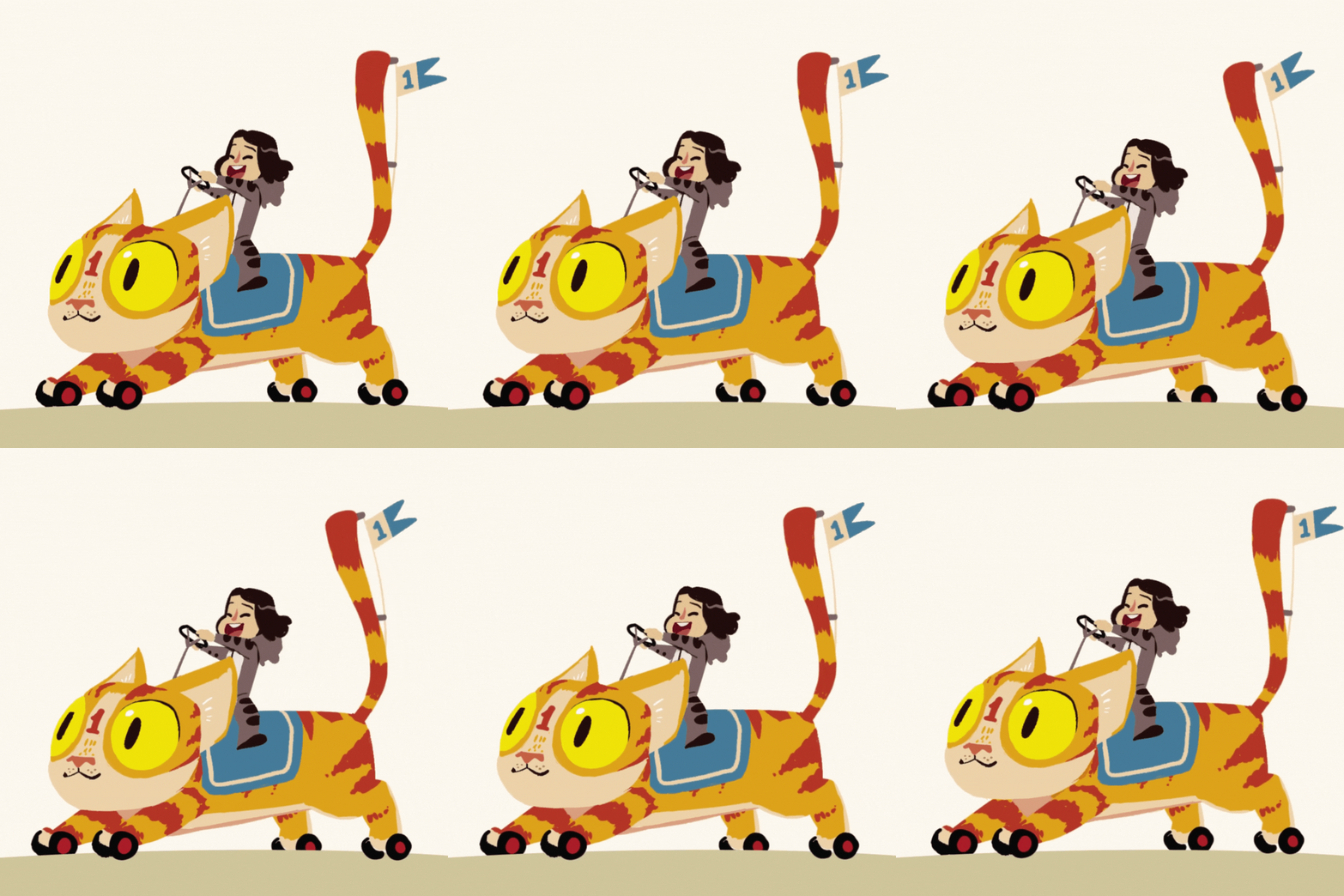
Wow! Thank you for sharing so much about how you brought My Pet Feet to life! Your awesome illustrations and sense of humor are going to keep kids searching for all the visual puns and laughing from beginning to end – and over and over again! I wish you all the best with this book and am really looking forward to seeing more of your work. And, since we’re talking about bringing the story to life, I think we have time for one more image ….
Copyright Billy Yong, 2022
So, Everybody, jump on your Go-Cat and head to your local bookstore to pick up My Pet Feet to celebrate New Book Month in hilarious style!
My Pet Feet Virtual Book Tour Activity
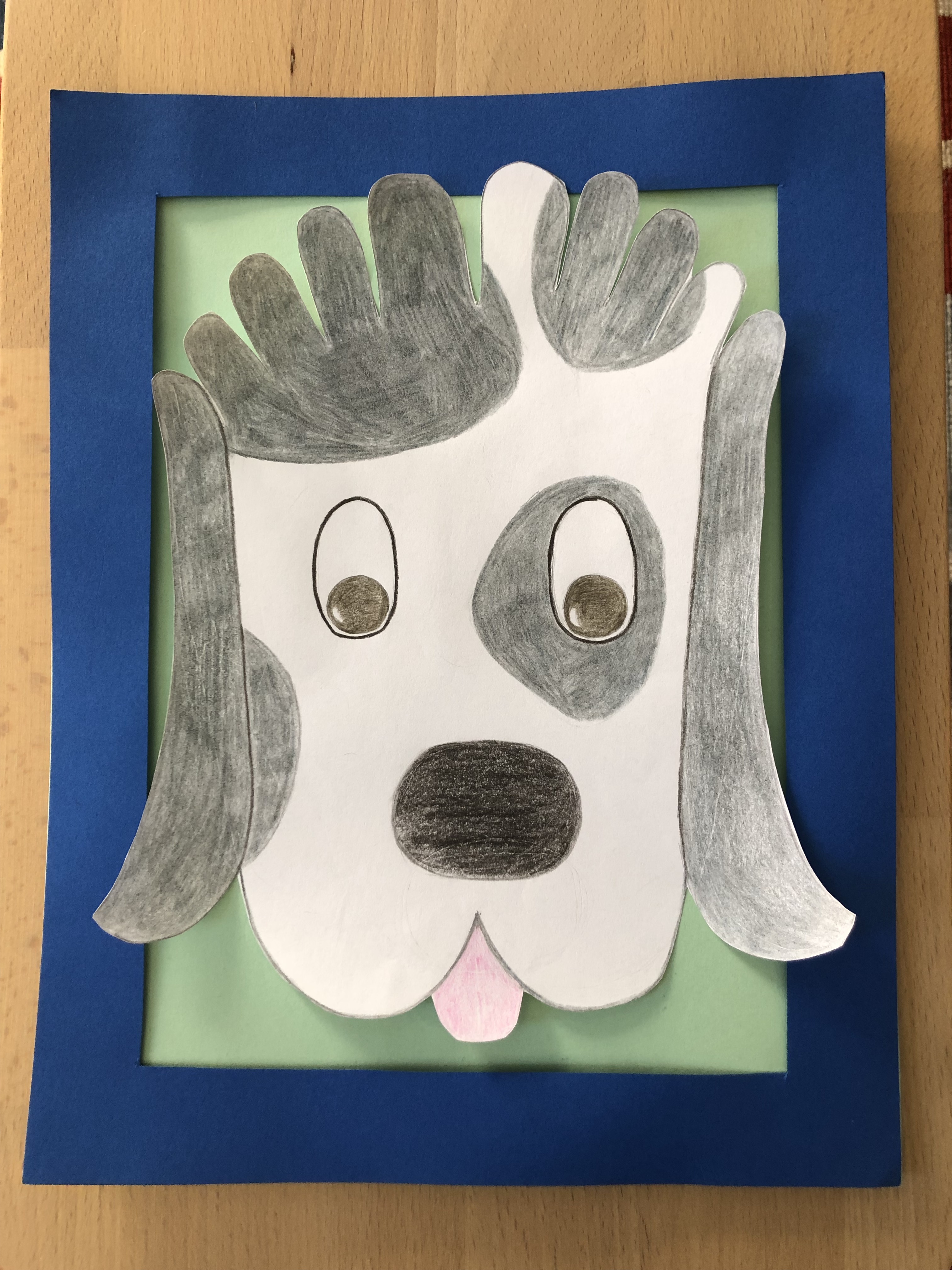
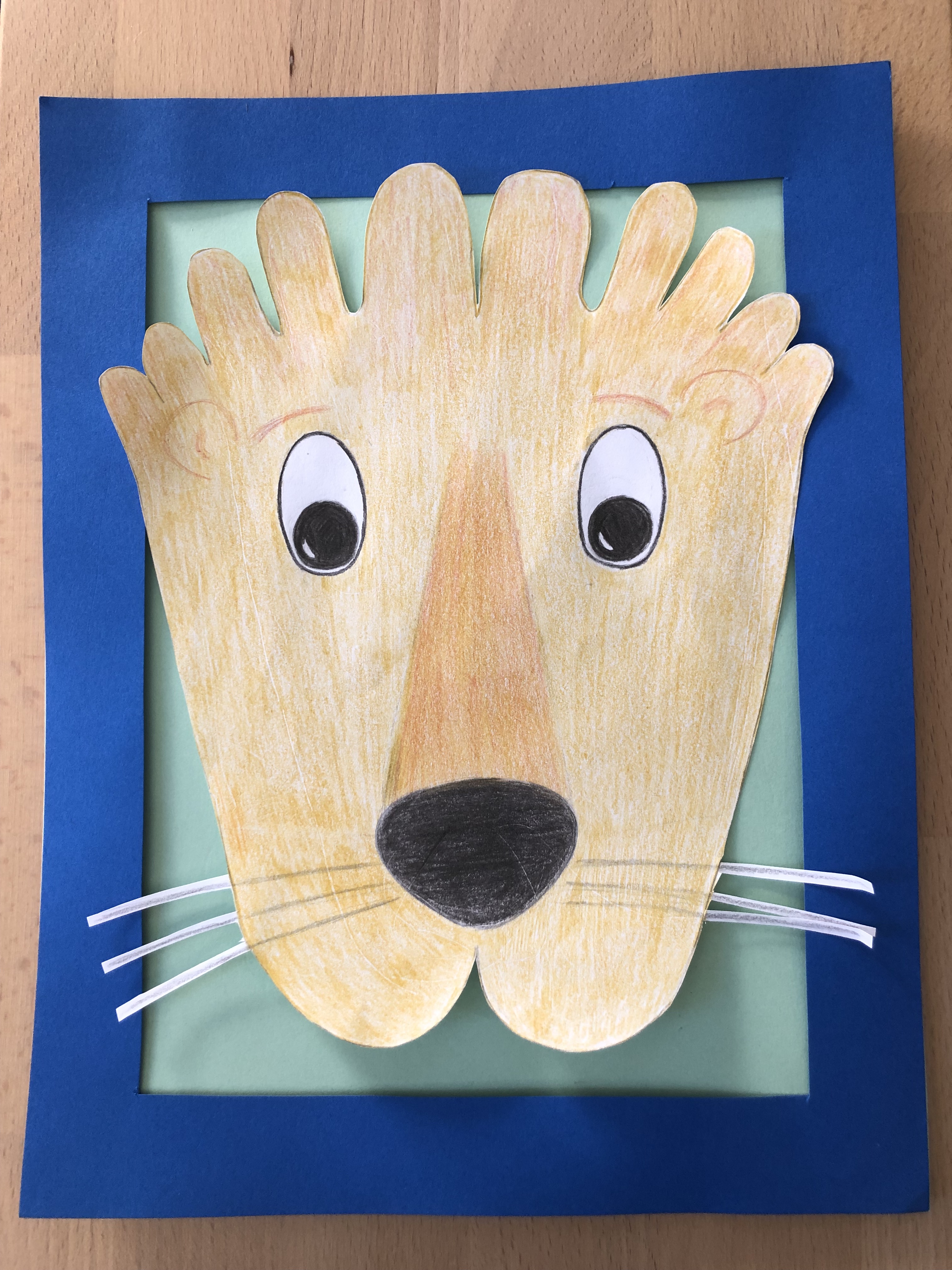
Feet Pet Portraits
Feet don’t have to be just for walking, running, or dancing. As today’s story shows, they can make pretty awesome pets (even when it’s just a mistake). With this craft you can use your own feet to make a pet portrait to decorate your room!
Supplies
1 Sheet of regular printer paper or heavy stock paper for the portrait
1 Sheet of colored heavy stock paper for the frame’s backing
1 Sheet of heavy stock paper in a contrasting color from the backing to make the frame
Crayons or colored pencils
Scissors
Glue or glue dots
Directions
Stand on the white paper with your feet together and trace your feet
Now it’s time to get creative! Turn the paper toes up, toes down, or toes to the side and design your pet.
After you’re finished drawing, color your picture in
Cut your pet out
To Make the Frame and Frame Your Portrait
Measure one inch around each side of one piece of heavy stock paper
Cut out the middle
Use glue or glue dots to adhere the frame to the backing
Use glue or glue dots to adhere your feet pet portrait to the backing of the frame
If you love to read, then today is a day to celebrate! National Book Lovers Day has a simple goal: to provide a day for bibliophiles to indulge their passion. With so many incredible books available—both fiction and nonfiction—on every imaginable topic and for all ages, it’s easy to fill the day with old favorites and new finds (like today’s book, which is launching into the world today!) So, visit your local bookstore or library, grab some snacks, and settle in for a day of reading for yourself and with your kids!
Thanks go to Tundra Books for sending me a copy of If You Cry Like a Fountain to me for review consideration. All opinions on the book are my own.
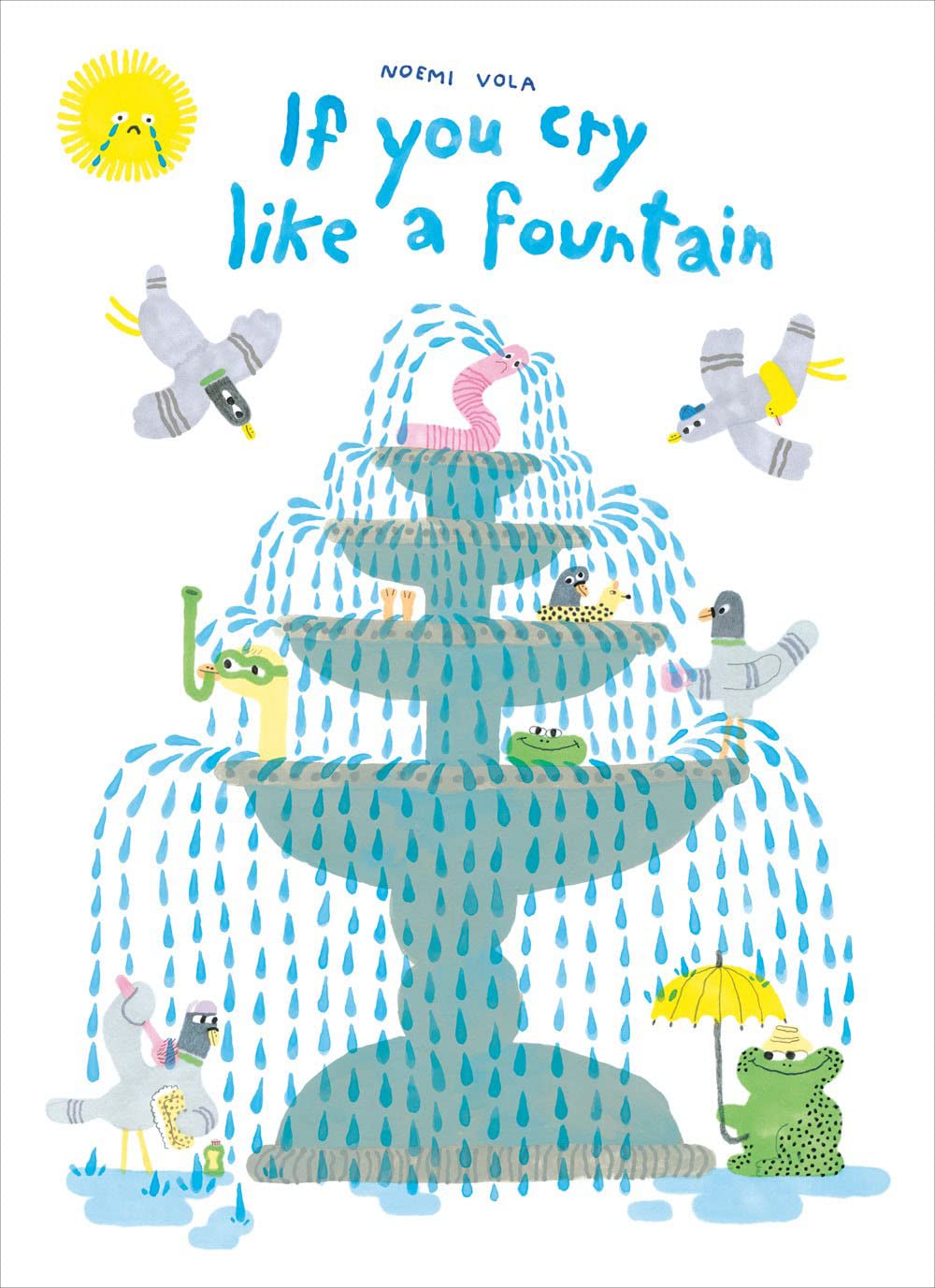
If You Cry Like a Fountain
By Noemi Vola
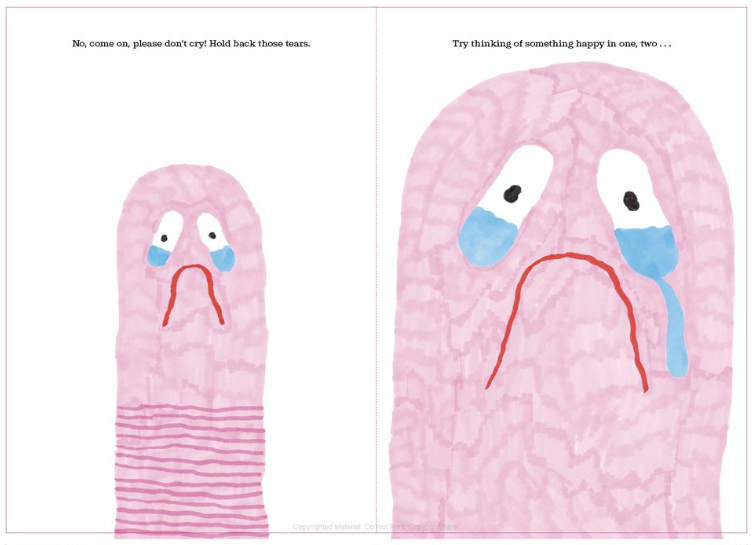
Upon opening this story to the first page, readers are met with a sad sight. A pink worm, having just seen his empty swimming pool, stares out at the reader with doleful eyes and a big frown. The narrator admonishes the worm that starting out the book this way will only make people worry. How about a little smile? But this doesn’t help—in fact, the frown turns deeper and tears well in the bottom of the worm’s eyes. The narrator tries to stop the coming tears, but a suggestion to “try thinking of something happy” just causes a small tear to break free and then… a full-on flood.
Image copyright Noemi Vola, 2022, courtesy of Tundra Books.
Worried that the little worm might drown in its own tears, the narrator offers a couple of suggestions for staying afloat until the tears dry up. And they do begin to abate until the narrator tells the worm “there’s no use in crying,” which brings on—you guessed it. But wait! This isn’t a criticism. Instead it means to be a helpful (and hilarious) way to look at crying in a positive light. “For example, if you cry like a fountain, you’ll be surrounded by friends and make all the pigeons happy.” That’s a good thing, right?
Image copyright Noemi Vola, 2022, courtesy of Tundra Books.
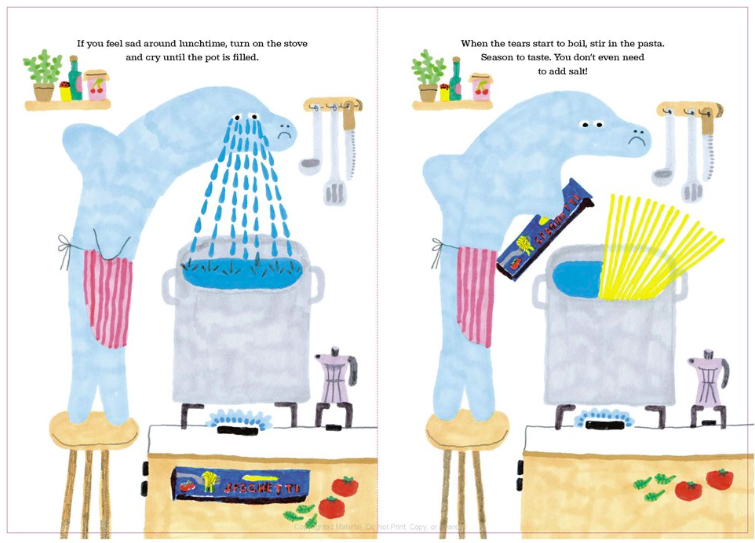
Let’s look at some other ways those tears could be channeled beneficially. If sadness overtakes you around mealtime, get out your biggest pot, “turn on the stove and cry until the pot is filled. When the tears start to boil, stir in the pasta. You won’t even need to add salt!” And why waste water to brush your teeth and fill the tub, when a good cry can prove advantageous here too?
Since tears can flow all year around, the narrator gives some tips on using them during the winter and when spring comes. There’s even a recipe for homemade playdough that can be done anytime and used “to make surprise presents for your friends.” Now that all is looking up, the narrator decides this might be a good time to remind readers that “everyone cries” even “…superheroes, kings, soccer players,… dogs, peas, and rocks” The worm doesn’t believe rocks cry, but then becomes apologetic when the narrator explains that rocks “are very good at hiding,” so no one has actually “ever seen a rock cry.”
Image copyright Noemi Vola, 2022, courtesy of Tundra Books.
The narrator goes on to reassure will-be criers that tears are a “universal language,” understood everywhere in the…well…universe, and that shedding tears can eliminate an array of environmental disasters, such as exploding frogs and dried-up rivers. Our little worm friend is looking much happier now that all of this has been explained and there’s even tear-nurtured pears in the jar of jam it’s enjoying with caterpillar. But Oh no! The book—and the jam—are at an end, which are just the kinds of catastrophes that can… fill a swimming pool.
Image copyright Noemi Vola, 2022, courtesy of Tundra Books.
Whether your household (or classroom) is made up of easy criers or those who are made of more stoic stuff, Noemi Vola’s hilarious, thoughtful, and wonderfully silly story will have everyone laughing while also appreciating the true benefits of not bottling up your emotions, but letting them flow. Vola’s seemingly random examples replicate the cadence of a well-told joke or the rapid-fire delivery of a child with an endless imagination.
Vola whimsically plays with shapes, textures, and perspective in her vibrant illustrations, where the characters’ large and copious tears flow in profuse but perfectly aimed streams to accomplish a myriad of tasks. Alert readers will recognize a few famous faces from literature and entertainment among the criers. The sensitive worm is an adorable companion on this journey of discovery, and readers will be glad to see that in the end happiness reigns supreme—at least until the next waterworks.
If you and your kids like your humor quirky, your characters unforgettable, and your themes thought-provoking, If You Cry like a Fountain should be at the top of your To Be Read List. Perfect for story times or discussions about emotions, the book would be an excellent addition to all home, classroom, and public library collections.
Ages 3 – 7
Tundra Books, 2022 | ISBN 978-0735270503
To learn more about Noemi Vola, her books, and her art, visit her website.
National Book Lovers Day Activity
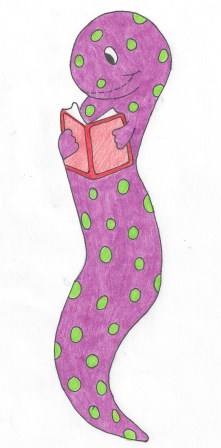
Bookworm Bookmark
For all you bookworms out there who love to read, here’s your very own Bookworm Bookmark to color and put between the pages of your favorite story!





















 celebratepicturebooks.com