December 13 – Celebrating Read a New Book Month with STEM

celebrate-picture-books-picture-book-the-book-of-flying-machines-cover

About the Holiday

Today I’m featuring two books that bring the world of big machines down to size for little readers. Being introduced to the various parts of favorite machines and what they do can spark a life-long interest in engineering and its many applications!

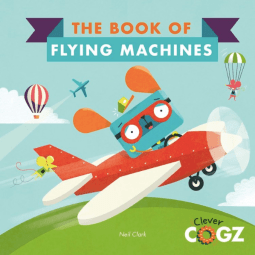
The Book of Flying Machines

By Neil Clark

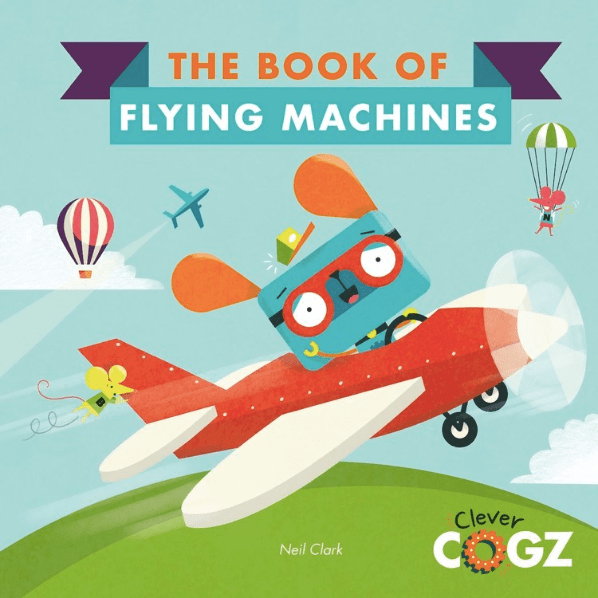
Readers join Clever Cogz and his sidekicks, Nutty and Bolt, as they get up-close to airplanes, hot air balloons, helicopters, supersonic jets, and the latest technological advances to fill the skies. Little ones who love air travel or just watching planes soar through the clouds learn all about the “clever parts” that allow these machines to ascend, fly, descend, and land.

After defining the engine, cockpit, fuselage, tail, rudder, wheels, and fins, Clark presents a closer look at the wings, with all of their moving parts “that work together to control the speed and direction of the plane.” But how does a plane stay in the air? Kids discover that a wing’s special shape allows air to travel “faster over the top than it does underneath,” and that “the slow-moving air under the wing creates a force called lift.”  Clever Cogz reveals that “lift is the force that keeps an aircraft in the air.”
celebrate-picture-books-picture-book-the-book-of-flying-machines-helicopter

Copyright Neil Clark, 2019, courtesy of QEB Publishing.

Now that the plane is in the air, how does it move forward? Working together, the engine and the propeller use air to create thrust, and budding engineers get to see just how this works. Next, children get to join Nutty and Bolt in a hot air balloon ride and discover how pilots use the science of hot air to make the balloon rise. They also learn the names of the various parts of these beautiful machines that make them work—and allow them to come back down.

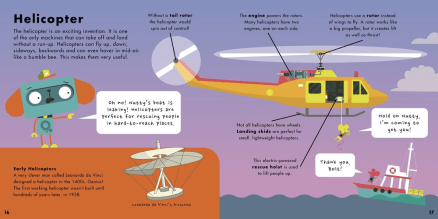
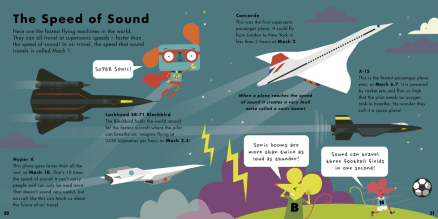
No one can resist watching a helicopter hover overhead, and its ability to “take off and land without a run-up” makes it very useful in emergency situations. Readers get to learn about the engine, the landing skids, the rescue hoist, and the two rotors that provide the power for this unique machine while Bolt comes to Nutty’s aid on his sinking boat. Kids fascinated by speed will love learning about the various types of jets that “travel at supersonic speeds—faster than the speed of sound” and the definition of Mach 1, against which they can compare the speed of jets that fly at Mach 3.3, 6.7, and even 9.6.
celebrate-picture-books-picture-book-the-book-of-flying-machines-supersonic

Copyright Neil Clark, 2019, courtesy of QEB Publishing.

Of course, kids are familiar with drones, so they’ll be eager to discover how three different types—one that can even predict storms. Finally, flying here and there powered by a jet pack may seem like science fiction, but “real ones have been built for the army, for astronauts, and for spectacular stunt shows,” including the Bell Rocket Belt, which can fly up to 60 mph (95 kmph) and the Jetman, invented by Yves Rossy, that can fly at 100 mph (160 kmph). Along the way, bits of trivia about the history and facts of air flight give kids even more information. A short quiz on the last page lets readers show off what they’ve learned.

Ages 5 – 7

QEB Publishing, 2019 | ISBN 978-0711243446
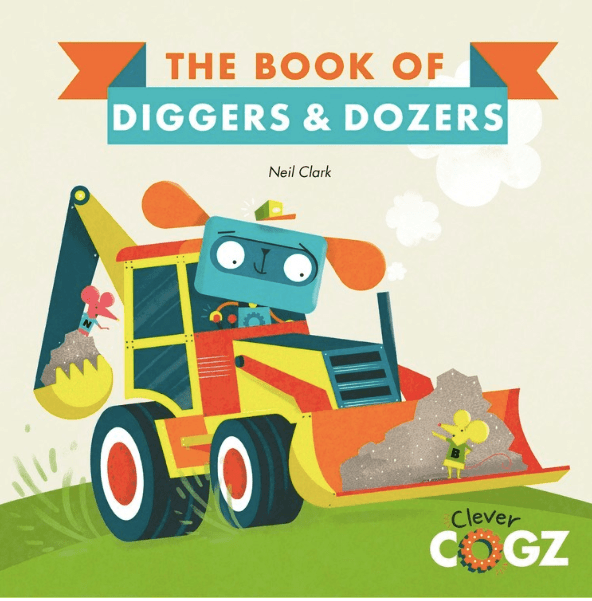
celebrate-picture-books-picture-book-the-book-of-diggers-and-dozers-cover

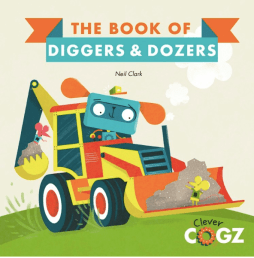
The Book of Diggers & Dozers

By Neil Clark


Clever Cogz, Nutty, and Bolt are back in this book all about working machines. From backhoe loaders to excavators to bulldozers to the giants and the latest tech wonders, Neil Clark takes readers above and below ground to see how these machines work. Take a moment to get to know the intricate parts of a backhoe, which can lift the weight of three cars with its front loader and dig deep holes with its hydraulic-powered bucket in the back. The spinning seat in the cab makes it easy for the operator to do both jobs! What are hydraulics? Dog Clever Cogz, Nutty, and Bolt demonstrate the concepts on a backhoe and with a water gun.
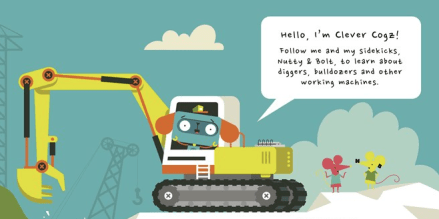
celebrate-picture-books-picture-book-the-book-of-diggers-and-dozers-clever-cogz

Copyright Neil Clark, 2019, courtesy of QEB Publishing.

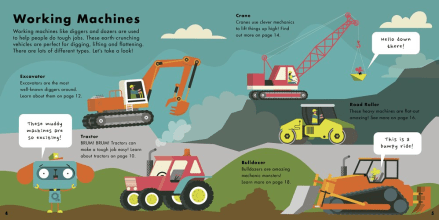
Little ones know tractors belong on farms, but they’ll be surprised at how many jobs they can do using different attachments. There’s even a hole digger that makes planting trees much easier. The excavator may be best known for the tracks that wrap around sprockets and allow it to move over bumpy ground, but its bucket deserves some attention too. It has “an extra part called a thumb” that “turns the bucket into a giant claw, perfect for grabbing things.” Did you know that there are “new, electric powered excavators that will help keep our planet clean?”

The tallest machines are cranes—and “the biggest mobile crane is over 800 feet (245 m) high.” Nutty tells kids “that’s as tall as 50 giraffes standing on top of each other!” A crane’s height and power help it move objects too heavy to move any other way. When roads need fixing and repaving, it’s time to break out the road roller. These useful machines have been around since 1800, when horses pulled them. The steamroller was invented in 1865, and the diesel-powered version came along in 1950. The new road rollers are electric and better for the environment.
celebrate-picture-books-picture-book-the-book-of-diggers-and-dozers-working-machines

Copyright Neil Clark, 2019, courtesy of QEB Publishing.

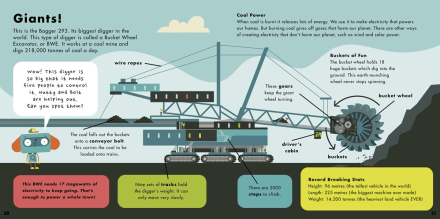
Fans of the bulldozer will see what a powerhouse this machine really is. With high tracks to allow it to travel through muddy ground, a ripper that claws at the ground and breaks up big lumps of earth, and a blade that can push piles of rock or sand or even knock down a building, the bulldozer is multi-functional. Whoa! Have you seen the Bagger 293? “It’s the biggest digger in the world” and its bucket wheel can dig “240,000 tons of coal a day.” It’s so big that it requires as much electricity as a whole town and needs 5 people to control it. Today, robot diggers controlled remotely, such as sensors, demolition bots, and the XE15R, are also taking on tasks in dangerous, tight, or other situations. A final quiz lets children review what they’ve learned.
celebrate-picture-books-picture-book-the-book-of-diggers-and-dozers-bagger-293

Copyright Neil Clark, 2019, courtesy of QEB Publishing.

Neil Clark’s fascinating looks at aircraft and the biggest machines will delight vehicle lovers of all types. His straightforward text is accessible for all ages while introducing children to vocabulary and concepts that empower them to understand the workings of not only these big machines but smaller, everyday machines as well. Loaded with information and hosted by charming characters who lend a bit of humor to the pages, Clark’s books are wonderful for dipping into again and again.

Clark’s vivid illustrations clearly mark and define the parts of each machine and demonstrate how these work together to power the machine and allow it to perform its job. Nutty and Bolt are there to translate some of the concepts into ideas kids are already familiar with (for example, Nutty wears big shoes to demonstrate the function of a backhoe’s stabilizers). Similarly, Clark incorporates easy-to-understand graphics to explain scientific concepts like air flow and the clustering of hot and cold air molecules. Boxed information and speech bubbles add interest to the pages. One even invites kids to a “where’s Waldo” type of hunt for Nutty and Bolt near a jumbo jet.

Terrific books for introducing all children to machines, how they work, and the science behind them, The Book of Flying Machines and The Book of Diggers & Dozers would be valuable additions to home, classroom, and public library collections. Check out the other books in the series: The Book of Cars and Trucks and The Book of Space Rockets.

Ages 5 – 7

QEB Publishing, 2019 | ISBN 978-071124341

Read a New Book Month with STEM Activity
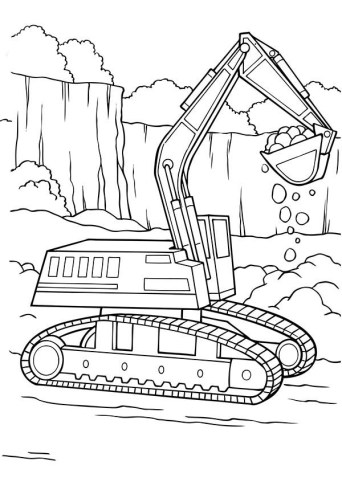
celebrate-picture-books-picture-book-review-digger-coloring-page

Big Machines Coloring Pages


Children can have fun coloring and adding their own touches to these printable pages.

Airplane | Hot Air Balloon | Digger | Crane
celebrate-picture-books-picture-book-the-book-of-flying-machines-cover

You can find The Book of Flying Machines at these booksellers

Amazon | Barnes & Noble | Books-a-Million | IndieBound
celebrate-picture-books-picture-book-the-book-of-diggers-and-dozers-cover

You can find The Book of Diggers & Dozers at these booksellers

Amazon | Barnes & Noble | Books-a-Million | IndieBound

Picture Book Review

December 12 – Celebrating Read a New Book Month with STEM

celebrate-picture-books-picture-book-review-phyics-animated-cover

About the Holiday

Today and tomorrow I will be celebrating Read a New Book Month with books that present the excitement and wonder of science through familiar activities and objects. Introducing young children to the way things work in nature and through engineering helps them make sense of what they see and experience in their everyday life. Books like these make great gifts not only for science buffs but for all kids!

Physics Animated

Written by Tyler Jorden | Illustrated by Elsa Martins


From that moment when Isaac Newton was hit on the head by a falling apple, people have been fascinated with physics. In this clever and interactive board book, young readers can learn about Newton’s three laws of physics through wheels to spin, tabs to pull, and elements to push that introduce “big words” and other vocabulary that budding scientists will be proud to learn. Examples for each law come straight from a child’s day of play or experience to make them easily understood. Children will also be able to apply the knowledge they gain within these pages to other activities they perform every day.

Readers meet Isaac Newton as “a man who liked to watch the world around him. He noticed that everything could be explained by three simple laws.” While Newton ponders, he gazes out of a window where children can move a wheel to make birds fly in the air and fish swim in a lake. Newton’s first law—inertia—is introduced with a simple sentence that “an object will stay still unless something pushes or pulls on it.” Accompanying this explanation is an image of a boy kicking a ball to his dog. A wheel allows children to move the ball from the boy to the dog.

celebrate-picture-books-picture-book-review-physics-animated-centrifugal-force

Image copyright Elsa Martins, 2019, text copyright Tyler Jorden, 2019. Courtesy of Familius.

The second part of the law of inertia, which states that an object in motion will keep moving until something stops it, is demonstrated through a tab that moves a sliding sled with two little girls aboard into a fluffy snowbank. For Newton’s second law—force = mass x acceleration—kids help out a bicycle rider, and the force of gravity is accomplished as kids pull a dropped ice-cream scoop toward the ground.

How can we stand firmly on the floor or ground? That question is answered by Newton’s third law that states “when you push on something, it pushes back just as much.” So when we stand on the floor, “our feet push on the floor, and the floor pushes back on us.” Examples of this law are buoyancy, centrifugal force (for which readers push the wheel to send two roller coaster riders around the loop-de-loop), centripetal force (demonstrated with a swing that kids can push back and forth), lift, and thrust. Thrust is depicted with a rocket ship blasting off into space. As readers pull up on the tab to launch the rocket, they’re sure to feel their own scientific understanding soar.

celebrate-picture-books-picture-book-review-physics-animated-centripetal-force

Image copyright Elsa Martins, 2019, text copyright Tyler Jorden, 2019. Courtesy of Familius.

Tyler Jorden’s easy-to-understand definitions of Newton’s laws are just right for readers learning vocabulary that will help them to recognize their own activities as they play and work around the house as well as to comprehend these scientific concepts when they get to school. When terms and ideas like these are introduced at an early age, they can become as familiar as actions, such as push, pull, drop, and slide, that they describe. Jorden’s pages give adults excellent examples to begin discussions and of these concepts that can lead to fun, hands-on learning.

Elsa Martins’ colorful interactive illustrations take kids out to the park, a snow-covered hill, a bike trail, a schoolyard, a lake, an amusement park, and into the sky where they can make the natural forces and Newton’s laws work for themselves. Martins’ choices of images allow for in-depth discussions as readers pull and push the wheels and tabs. For instance, the biker who accompanies Newton’s second law can “pedal” faster or slower depending on how quickly the tab is pulled, letting kids and adults talk about things such as the rate of pedaling, if the rider was carrying a heavy backpack, and if the biker was going up or down a hill. The adorable children on each page make for fun friends to join on this scientific exploration.

As enjoyable and entertaining as it is educational, Physics Animated will get young readers excited about learning and make them proud to know about such “grown-up” topics. (They even get to drop that apple on Isaac Newton’s head!) Sure to spark lots of experiments, the book would be a wonderful addition to home, classroom, and public library collections. 

Ages 4 – 7

Familius, 2019 | ISBN 978-1641701327

To learn more about Elsa Martins and view a portfolio of her art, visit her website.

Read a New Book Month with STEM Activity

celebrate-picture-books-picture-book-review-newton's-laws-word-search-puzzle

Get Moving with Newton’s Laws! Word Search Puzzle


Find the seventeen words associated with Isaac Newton’s Three Laws of Motion in this printable word search puzzle.

Get Moving with Newton’s Laws! Puzzle | Get Moving with Newton’s Laws! Solution

celebrate-picture-books-picture-book-review-phyics-animated-cover

You can find Physics Animated at these booksellers

Amazon | Barnes & Noble | Books-a-Million | IndieBound

Picture Book Review

October 24 – National Food Day

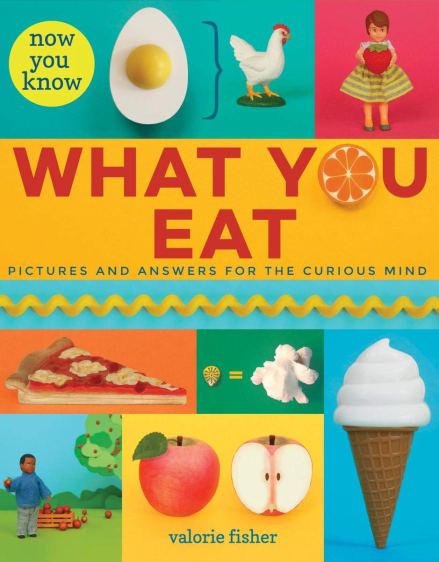
celebrate-picture-books-picture-book-review-now-you-know-what-you-eat-cover

About the Holiday

Established in 2011 by the Center for Science in the Public Interest, National Food Day aims to raise awareness of nutrition issues and encourage people to “Eat Real.” Eating real means “cutting back on sugary drinks, overly salted packaged foods and fatty, factory-farmed meats in favor of vegetables, fruit, whole grains, and sustainably raised protein.” Prominent food activists help people discover where they can find food that is healthy and affordable. Another goal is to promote food production that is mindful of the environment, farm animals, and farmers. The efforts of National Food Day continue year round and culminate on October 24 with special events.

I received a copy of Now You Know What You Eat from Orchard Books for review consideration. All opinions are my own. I’m excited to be teaming with Orchard Books in a giveaway of the book. See details below.

Now You Know What You Eat: Pictures and Answers for the Curious Mind

By Valorie Fisher

As you lick an ice cream cone, dip your spoon into a bowl of macaroni and cheese, or crunch on a pickle, do you ever think about all of the ingredients that go into it or where those ingredients come from? That’s the fascinating premise behind Now You Know What You Eat. Valorie Fisher presents this information in bright graphic form with an inviting vintage touch. Her clearly marked pages make connections that even the youngest readers can follow.

celebrate-picture-books-picture-book-review-now-you-know-what-you-eat-milk

Copyright Valorie Fisher, 2019, courtesy of Orchard Books.

First up is that delicious summer treat—the ice cream cone. For kids this may look like cone + vanilla ice cream, but that pointy (or flat bottom) cup is made up of “flour + sugar + eggs + butter.” And the scoop? That’s made from “cream + milk + sugar + eggs + vanilla extract.” But where does all that stuff come from, a curious kid may wonder. Fisher has that covered too. Running along the bottom of the page is a pictorial which shows that eggs come from a chicken, flour comes from wheat, milk, cream, and butter come from a cow, sugar comes from sugarcane, and vanilla extract comes from the vanilla orchid.

celebrate-picture-books-picture-book-review-now-you-know-what-you-eat-maple-syrup

Copyright Valorie Fisher, 2019, courtesy of Orchard Books.

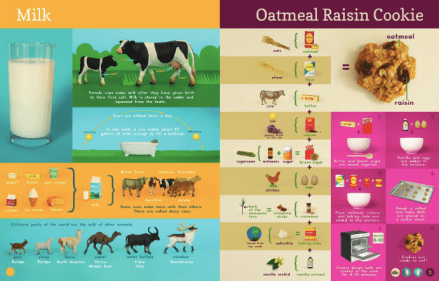
Children will be amazed to see what a collage the Oatmeal Raisin Cookie is and where the ground cinnamon that gives them their spice and the baking soda that helps the dough rise come from. There’s even a little tutorial on how the cookies are made once the dough is mixed. That seemingly simple peanut butter sandwich is another work of art. Among other things, kids learn how jelly is thickened, the difference between whole wheat bread and white bread, and the role of yeast in bread making. They may also find it interesting that the peanut, despite its name, is not a nut at all, but a legume.

celebrate-picture-books-picture-book-review-now-you-know-what-you-eat-macaroni-and-cheese

Copyright Valorie Fisher, 2019, courtesy of Orchard Books.

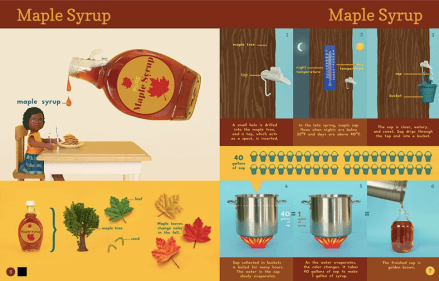
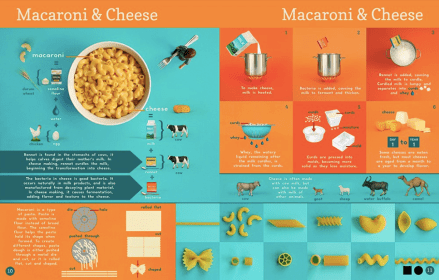
We all know mac ‘n’ cheese is scrumptious comfort food, but there’s a lot more to it than that—and readers will discover some surprising ingredients that go into the making of cheese. A short primer on macaroni dishes up some favorite shapes. Want to know how chocolate’s made? There’s a two-page spread for that too. From the cacao pod to the oven to the mold and every step in between, children discover how this favorite comes to be as well as the fact that “dark chocolate = milk chocolate – milk” and “white chocolate = milk chocolate – cocoa mass. The makings of maple syrup, dill pickles, lemonade, yogurt, vegetable soup, pizza, honey, and potato chips are also explored. A few ingredients, like milk, eggs, corn, and apples, are given an entire page to explain how it is grown or produced.

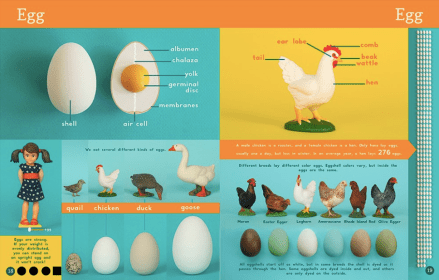
celebrate-picture-books-picture-book-review-now-you-know-what-you-eat-egg

Copyright Valorie Fisher, 2019, courtesy of Orchard Books.

Valorie Fisher combines symbols, such as addition and subtraction signs, brackets, and equal signs to show how separate ingredients are combined to become a favorite food. She also includes easy-to-understand text that explains more about each ingredient or finished dish and where base ingredients come from and/or how they are grown. Fisher also talks about the variety of milk-producing animals, kinds of corn, and types of apples and citrus fruits around the world. Noteworthy facts, such as how much milk one cow produces each week and that a person could stand on an egg without cracking it, will captivate kids.

Graphics-loving kids will immediately gravitate toward Fisher’s pages that use readily recognizable, but generic, images to deconstruct food into its individual parts. Presented on alternating colored squares, strips and blocks, the steps are easy to follow. Her vibrant choices highlight the food and draw readers in to linger over each page and its absorbing content. Illustrated pages also contain a guide to the makeup of a healthy plate; a chart outlining the minerals and vitamins in the foods presented and how they help the body; and a glossary.

Now You Know What You Eat: Pictures and Answers for the Curious Mind will entice readers of all ages to dig deeper into learning what goes into the food they eat and is an excellent accompaniment to cookbooks and nutrition guides at home and in school and public library collections.

Ages 4 – 8

Orchard Books, 2019 | ISBN 978-1338215465

To learn more about Valorie Fisher, her books, and her art, visit her website.

National Food Day Activity

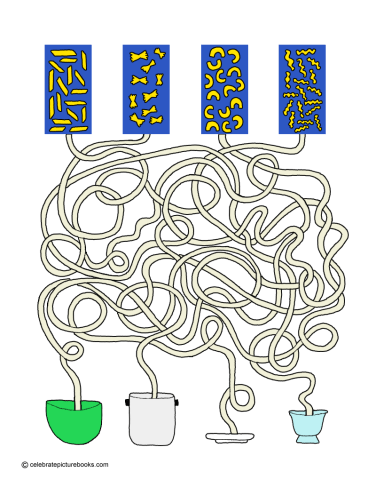
CPB - Noodle Puzzle

Noodle on This! Puzzle

Pasta is a perennial favorite! Help these noodles get to the right plate, bowl, or pot in this printable Noodle on This puzzle that’s as wiggly as a wet noodle!

celebrate-picture-books-picture-book-review-now-you-know-what-you-eat-cover

You can find Now You Know What You Eat: Pictures and Answers for the Curious Mind at these booksellers

Amazon | Barnes & Noble | Books-a-Million | IndieBound

Picture Book Review

October 16 – National Fossil Day

celebrate-picture-books-picture-book-review-everything-awesome-about-dinosaurs-cover

About the Holiday

Welcome to the 10th anniversary of National Fossil Day! Today’s holiday puts a spotlight on paleontology and its value in the scientific community and for education. The day raises awareness of the importance of preserving fossils for future generations. This year also marks the 100th anniversary of the establishment of Grand Canyon National Park, a treasure for scientists and nature-loving visitors alike. To celebrate today and Earth Science Week all this week, visit a natural history museum, learn more about the prehistory of your area, or read up on fossils and prehistoric creatures. You can learn more about today’s holiday and find resources, including Junior Paleontology Activity Books to download, on the National Park Service Website.

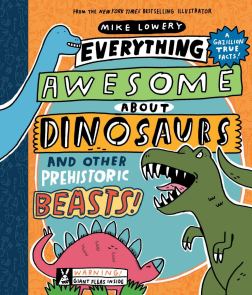
Everything Awesome about Dinosaurs and Other Prehistoric Beasts!

By Mike Lowery


If there’s one thing kids can’t get enough of, it’s dinosaurs. And if there’s one thing Mike Lowery knows, it’s how to wow kids. The mash-up of the two has resulted in a wild and wacky book “that’s totally loaded with info, weird facts, and jokes that you will dig!” There are even dinos at the ready to point out these awesome puns. And these facts aren’t just presented like some old, dried-up report, the whole book—every page—is full of eye-popping illustrations and cool typography that will keep kids reading and reading and learning (and, oh yeah, having T-rex size fun).

celebrate-picture-books-picture-book-review-everything-awesome-about-dinosaurs-mammoth

Copyright Mike Lowery, 2019, courtesy of Orchard Books.

What kinds of things will kids learn? First, there’s a completely captivating prehistoric timeline that lays out the different eras and depicts some of the creatures and vegetation that existed in each. Like jellyfish during the Paleozoic Era, horsetails plants and dicynodonts during the Triassic, stegosaurus and cycads in the Jurassic; bees, birds, and flowering plants along with velociraptors in the Cretaceous; and finally, woolly mammoths and us during the Age of Mammals. Along the way there were also several extinction events. And this all comes even before the Table of Contents!

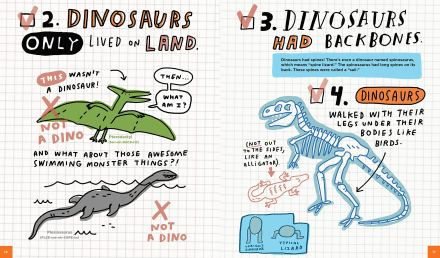
While kids chew on the fact that “some giant dinos ate up to 12,000 pounds a day,” they can dip into Part One—What Is a Dinosaur? Here, they’ll learn stuff like where the word “dinosaur” came, who coined it, what “prehistoric” means, and who “were some of the first people to keep written records.” They’ll also get to know some animals that weren’t dinosaurs and how dinosaurs are defined. Of course, there are some dino jokes to keep kids chuckling while they read.

celebrate-picture-books-picture-book-review-everything-awesome-about-dinosaurs-backbones

Copyright Mike Lowery, 2019, courtesy of Orchard Books.

Part Two reveals a short history of the earth as well as lots and lots about each era and representative creatures. After learning just how old Earth is, kids will be interested in a Quick Fact about one Jeremy Harper who counted to one million live on the internet. How long did it take him? Longer than you might think. Have you ever tried smooshing the whole history of the earth into just 24 hours? Mike Lowery did and it’s fascinating! Kids will also discover how Earth formed and about early signs of life.

What was going on in the Paleozoic Era? The haikouichthys (one of the first animals to have a skull), tiktaalik (a land and sea creature), and the meganeura (a giant dragonfly) can tell them. It was also the time of the Permian Period, when some pretty weird reptiles roamed the earth and some way-unusual marine life swam the seas. Then came “the Great Permian Extinction” that led into the Mesozoic Era, “aka the age of reptiles.”

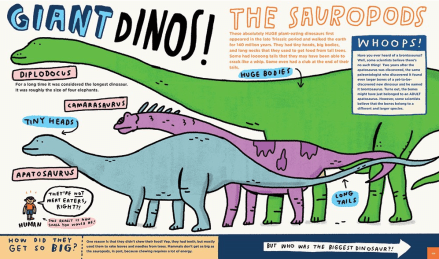
celebrate-picture-books-picture-book-review-everything-awesome-about-dinosaurs-sauropods

Copyright Mike Lowery, 2019, courtesy of Orchard Books.

Here, kids learn about the development of dinosaurs, non-dino animals, and bugs. If you think a few stormy days are bad, imagine living during the Triassic Period, when “it once rained for two million years.” What do you wear in weather like that? A “Jurassic parka,” of course. Next up is the Jurassic and then the Cretaceous periods and their gigantic creatures of the land, ocean, and sky.

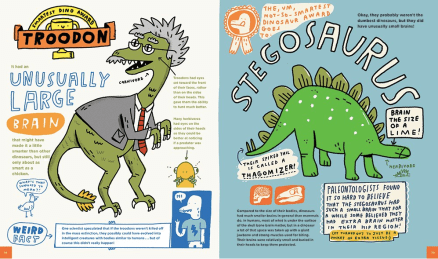
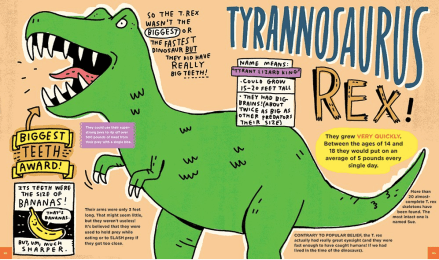
In Part Three readers get to meet the dinosaurs up close and personal (well, not too close). They’ll learn what dinos really ate, how they really sounded, and this delectable fact: “More time passed between stegosaurus and T. rex than the time between velociraptor and microwavable pizza!” And while kids are digesting that, they’ll want to watch out for the gigantic sauropods (who grew that big partly because “they didn’t chew their food…. Mammals don’t get as big as the sauropods, in part, because chewing requires a lot of energy.” Kids will see who won the “smartest dino award” and who was unfortunate enough to win “the, um, not-so-smartest dinosaur award.” They’ll also learn about horned dinos, armored dinos, fast dinos, and “the weirdest lookin’ dino.”

celebrate-picture-books-picture-book-review-everything-awesome-about-dinosaurs-troodon

Copyright Mike Lowery, 2019, courtesy of Orchard Books.

Part Four talks about the Cretaceous-Paleogene extinction event and various theories that have been floated throughout the years. Part Five takes kids on a hunt for bones and other fossils and reveals how paleontologists study them. Part Six offers a tour of post-dinosaur beasts, and Part Seven invites kids to learn how to draw dinosaurs. That’s followed up by a Dino Field Guide, an illustrated list of dinos organized by time periods, and to round it all up, Lowery includes a few more irresistible dinosaur jokes.

celebrate-picture-books-picture-book-review-everything-awesome-about-dinosaurs-t-rex

Copyright Mike Lowery, 2019, courtesy of Orchard Books.

Mike Lowery’s free-wheeling sense of humor, on exhibit in both his text and illustrations, will have kids laughing and learning billions of years’ worth of scientific facts. Funny asides by dinosaurs who just want in on the action put a spotlight on major events and conditions on Earth. Boxed and highlighted facts reveal the science of paleontology and provide explanations of dinosaur and prehistoric animal behavior and comparisons on size that will resonate with kids. Lowery imbues each of his creatures with personality while staying true to their nature and body type. Simply said, if there’s something you want to know about prehistoric creatures, dinosaurs, and the times they lived in, it’s in this book.

A must for home, classroom, and public library collections, you’ll want to put Everything Awesome about Dinosaurs and Other Prehistoric Beasts! on your shopping list for kids, teachers, and anyone who loves science, dinosaurs, and entertaining ways to learn or teach.

Ages 7 – 10 and up

Orchard Books, 2019 | ISBN 978-1338359725

Discover more about Mike Lowery, his books, and his art on his website.

National Fossil Day Activity

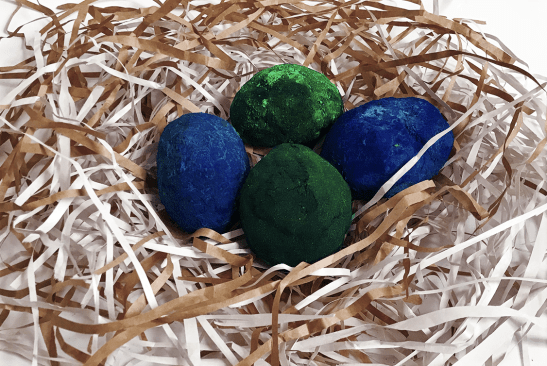
celebrate-picture-books-picture-book-review-dinosaur-eggs-craft-nest

Hatch Your Own Dinosaur Eggs


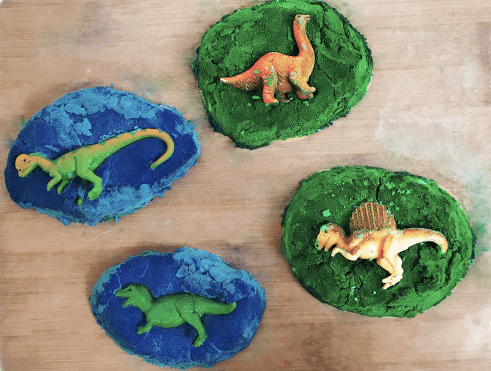
Think there are no more dinosaur eggs to be found? Think again! You can make your own with this easy craft that will have you hatching some T.-rex-size fun! All you need are a few simple ingredients!

celebrate-picture-books-picture-book-review-dinosaur-eggs-craft-open-eggs

Supplies

  • Old clothes or apron
  • Large box of baking soda (makes between 6 and 8 eggs)
  • Food coloring
  • Water
  • Plastic dinosaur toys
  • Bowl
  • Fork
  • Spoon
  • Wax paper
  • Baking sheet
  • Foil
  • Vinegar
  • Spray bottle (optional)
  • Plastic or metal spoon, stick, popsicle stick, or other implement to chisel with
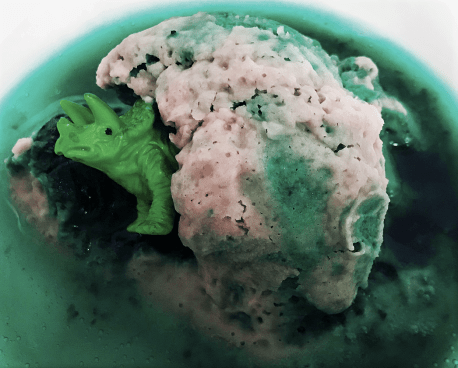
celebrate-picture-books-picture-book-review-dinosaur-eggs-craft-vinegar-egg-open-darker

Spray the egg with vinegar to hatch your dinosaur

Directions

  1. Wear old clothes or an apron
  2. Cover work surface with wax paper, parchment paper, newspaper, or other protection. Food coloring can stain some surfaces
  3. Pour baking soda into the bowl
  4. Add drops of food coloring in whatever color you’d like your eggs to be. The eggs will darken when baked.
  5. Mix in the food coloring with the fork. You may want to use your hands, too
  6. When the baking soda is the color you want it, begin adding water a little at a time
  7. Add water until the baking soda holds together when you squeeze it in your hand
  8. When the baking soda is the right consistency, spoon some out into your hand or onto wax paper
  9. Push one plastic dinosaur into the middle
  10. Cover the dinosaur with more of the baking soda mixture
  11. Carefully form it into an egg shape
  12. Repeat with other dinosaurs
celebrate-picture-books-picture-book-review-dinosaur-eggs-craft-chiseled -darker

Chisel the egg open to hatch your dinosaur

To Bake the Eggs

  1. Set the oven or toaster oven to 200 to 225 degrees
  2. Set the eggs on a baking sheet lined with foil
  3. Bake the eggs for 15 minutes, check
  4. Turn the eggs over and bake for 10 to 15 more minutes
  5. Remove from oven and let cool

To Hatch the Eggs

  1. Eggs can be hatched by chiseling them with a spoon, stick, or other implement
  2. Eggs can also be hatched by spraying or sprinkling them with vinegar

celebrate-picture-books-picture-book-review-everything-awesome-about-dinosaurs-cover

You can find Everything Awesome about Dinosaurs and Other Prehistoric Beasts! at these booksellers

Amazon | Barnes & Noble | Books-a-Million | IndieBound

Picture Book Review

September 25 – National Math Storytelling Day

celebrate-picture-books-picture-book-review-how-to-code-a-rollercoaster-cover

About the Holiday

National Math Storytelling Day was established in 2009 by Maria Droujkova, founder of The Natural Math Community at Naturalmath.com, and her daughter to encourage people to share the joys of math with children through stories and games. Having fun with math is one of the best ways to get kids excited about learning and working with this most important subject. Celebrate today with math stories that involve patterns, spatial relations, quantities, logic, puzzles, and numbers. You can even sing math songs and tell math jokes! You’ll find lots of resources for Math Storytelling Day and every day on the Natural Math website.

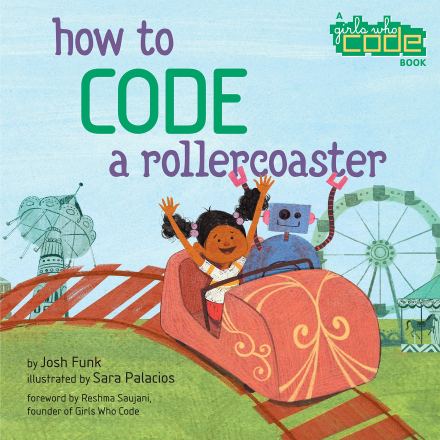
How to Code a Rollercoaster

Written by Josh Funk | Illustrated by Sara Palacios


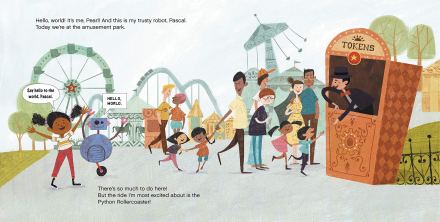
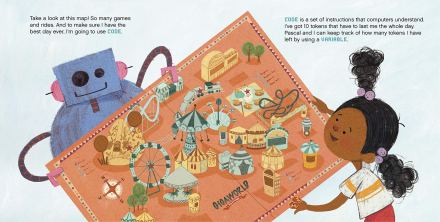
Pearl and her robot Pascal are ready to enjoy a day at the amusement park. Pearl can’t wait to ride the Python Rollercoaster, and after she buys her tokens she decides to map out the perfect day at the park. With so many games and rides to line up for, Pearl thinks using code—“a set of instructions that computers understand”—will be the best way to go about it. She has ten tokens for the day, and can keep track of how many uses and has left “by using a variable,” which is like a “container…that holds information.” Pearl names her variable MyTokens, and they’re off and running. (Lucky for Pascal, robots ride for free!)

celebrate-picture-books-picture-book-review-how-to-code-a-rollercoaster-tokens

Image copyright Sara Palacios, 2019, text copyright Josh Funk, 2019. Courtesy of Viking.

When they get to the Python Rollercoaster, the line snakes far into the park, so they head for the Ferris wheel. Pearl loves Ferris wheels and thinks once around isn’t enough. Each trip around costs one token, so Pearl codes a LOOP to “subtract 1 token from MyTokens” each time they “start a new ride.” After three times around, they get off and consider checking out the line for the Python Coaster again. But what will they do if it’s still too long? Another variable can solve that problem.

This one Pearl names ShortLine. She gives it a value of true or false and uses “an if-then-else to decide what to do next.” So, “IF ShortLine is True THEN we’ll ride the Python Coaster ELSE we’ll do something fun on the map,” she explains to Pascal. When they get to the rollercoaster, ShortLine is False and the line is still long, so they ride the log flume. Pascal reminds Pearl that they have six tokens left. They check the IF-THEN-ELSE again and again and again and take a trip on the train, play a target game, and twirl in the teacups.

celebrate-picture-books-picture-book-review-how-to-code-a-rollercoaster-map

Image copyright Sara Palacios, 2019, text copyright Josh Funk, 2019. Courtesy of Viking.

After a stop at Reshma’s ice cream stand and a delicious treat, Pearl and Pascal check the Python again. Finally, ShortLine is True. But it takes two tokens to ride and Pascal tells Pearl she has only one token left. Just then Pearl sees a sign offering a way to win a free token. All they need to do is find special stars around the park and figure out a secret password. Pearl knows she can use another variable to solve the puzzle.

celebrate-picture-books-picture-book-review-how-to-code-a-rollercoaster-long-line

Image copyright Sara Palacios, 2019, text copyright Josh Funk, 2019. Courtesy of Viking.

Pearl and Pascal retrace their steps and find the stars along the way. But the letters don’t spell anything. Suddenly, Pearl understands that they need to put the “letters into the correct sequence to figure out the secret password…just like how code needs to be in the proper sequence to work correctly.” Once they know the password, they’re psyched for the thrills and chills of the Python Coaster.

Back matter includes Pearl and Pascal’s Guide to Coding, which gives more information on the terms found in the story. A foreword written by Reshma Saujani, the founder of Girls Who Code, invites readers to learn more about the organization and welcomes children to the world of coding.

celebrate-picture-books-picture-book-review-how-to-code-a-rollercoaster-using-tokens

Image copyright Sara Palacios, 2019, text copyright Josh Funk, 2019. Courtesy of Viking.

To kids’ delight Josh Funk’s Pearl and Pascal are back in another coding adventure—this time at the Gigaworld Amusement Park. They’re excited to ride the Python rollercoaster, but the super long line gives them a chance to code a day of fun in the rest of the park. Young coders and would-be coders will love joining these two best friends on favorite rides as they learn procedures that make programs run smoother and help determine various outcomes. Pascal is as literal as ever, leading to some funny moments of misunderstanding. Funk also includes some nods to his computer programmer day job for eagle-eyed readers. Pearl’s enthusiasm for using code to navigate the park is infectious and will entice kids to explore the world of coding either just for fun or as a future career.

You can almost smell the popcorn and hear the squeals of joy emanating from Sara Palacios’ pages as Pearl and Pascal run through their day at the amusement park. From the Ferris wheel to the log flume to the teacups and the midway, Palacios’ colorful and action-packed illustrations put readers in the center of the fun. Through Pascal’s display function, Palacios clearly labels the variables, values, and loops used during the day as well as the token countdown that leads to the secret code scavenger hunt. Readers will definitely want to return to the first page and read the book again to find all of the lettered stars themselves.

Pearl’s passion for coding and Pascal’s responsiveness is sure to inspire children to explore the wonders of coding and computer science. As part of the Girls Who Code program, the book is especially designed to encourage girls to get involved in computer programming and STEM. How to Code a Rollercoaster is a rousing choice for home, classroom, and public library bookshelves.

Ages 4 – 8

Viking Books for Young Readers, 2019 | ISBN 978-0425292037

Discover more about Josh Funk and his books and find a treasure trove of resources on his website.

To learn more about Sara Palacios, her books, and her art, visit her website.

Math Storytelling Day Activity

celebrate-picture-books-picture-book-review-totally-cool-mystery-phrase-puzzle

Totally Cool Mystery Phrase Math Puzzle


There’s no mystery to how fun math can be! Use the numerical clues in this printable Totally Cool Mystery Phrase Math Puzzle to discover a hidden message! Add the numbers under each line then use that number to find the corresponding letter of the alphabet. Write that letter in the space. Continue until the entire phrase is completed.

celebrate-picture-books-picture-book-review-how-to-code-a-rollercoaster-cover

You can find How to Code a Rollercoaster at these booksellers

Amazon | Barnes & Noble | Books-a-Million | IndieBound

Picture Book Review

September 4 – National Wildlife Day

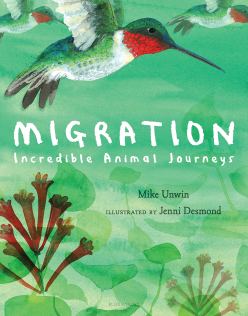
celebrate-picture-books-picture-book-review-migration-incredible-animal-journeys-cover

About the Holiday

National Wildlife Day was established in 2005 by author and pet lifestyle expert Colleen Paige in memory of conservationist Steve Irwin. The day promotes awareness of the importance of conservation of animals, habitats, and the environment worldwide and offers education on the number of endangered and threatened species across the globe. To honor today’s holiday, visit a local zoo, aquarium, or other nature preserve and take some time to learn about what you can do to help protect the environment.

I received a copy of Migration: Incredible Animal Journeys from Bloomsbury Children’s Books for review consideration. All opinions are my own.

Migration: Incredible Animal Journeys

Written by Mike Unwin | Illustrated by Jenni Desmond


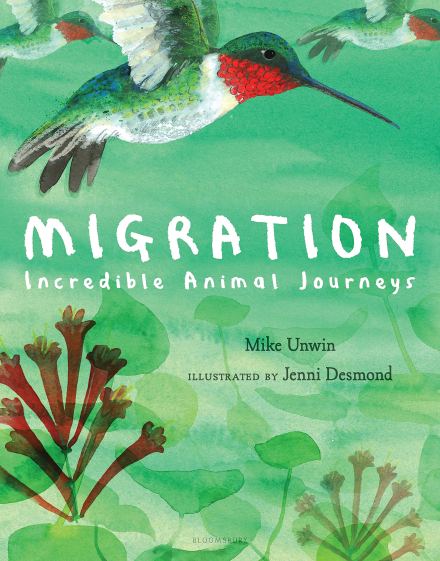
In their stunning book, Mike Unwin and Jenni Desmond take readers along as twenty diverse animals complete their annual travels to safer, warmer, or more fertile feeding grounds guided by inborn instincts. With compelling and conversational storytelling, Unwin introduces each creature, divulging fascinating and endearing facts about the adults and babies that undertake these epic trips—the shortest, 60 miles; the longest, a breathtaking 60,000 miles!

celebrate-picture-books-picture-book-review-migration-incredible-animal-journeys-whales

Image copyright Jenni Desmond, 2019, text copyright Mike Unwin, 2019. Courtesy of Bloomsbury Books.

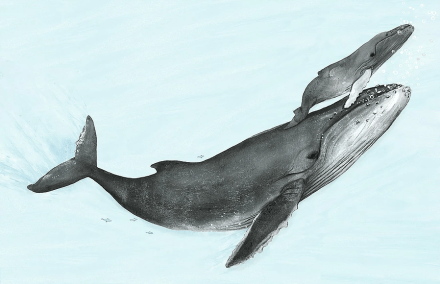
Readers will meet a humpback whale and her baby who stick together for more than 15,000 miles—“the longest swim of any animal on Earth”—as they head from the Pacific Ocean off the coast of Australia to the Antarctic and back in search of krill. As the baby eats, it “will start building up the thick layer of blubber that it needs to keep out the cold.” When it is ten years old, this baby will be fully grown and can look forward to many migrations to come.

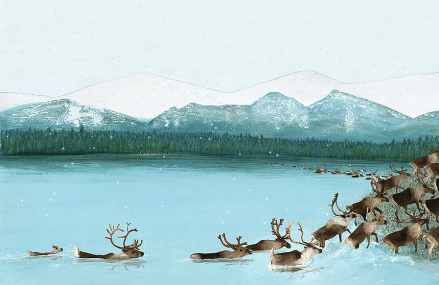
If you were stuck waiting at a caribou crossing, you’d want a good, long book on hand. More than 100,000 adults and their young swim across icy rivers and trek over grasslands of the frosty Arctic “inland toward the forests [where] the trees will help protect them when winter comes” and delicious moss and lichen await under snowy blankets.

celebrate-picture-books-picture-book-review-migration-incredible-animal-journeys-caribou

Image copyright Jenni Desmond, 2019, text copyright Mike Unwin, 2019. Courtesy of Bloomsbury Books.

Meanwhile in a warmer part of the world, a passenger cries, “Stop the car quick! There’s a red river flowing right across the road…. But look closer. It’s not water: it’s crabs. Big red ones. There are thousands of them. They pour across the road in an army of pincers, then scuttle down the bank on the other side, heading for the sea.” Where does this awesome sight take place? On Christmas Island in the Indian Ocean northwest of Australia as millions of red crabs move from the forests to the sea, en masse.

One of the most mysterious and intricately sequenced migrations is that of the monarch butterfly. Each year it takes four generations and four stops to lay eggs and breed along the way for these stained-glass-gorgeous insects “that can weigh less than a paperclip” to complete their journey from the northern United States and Canada to Mexico.

celebrate-picture-books-picture-book-review-migration-incredible-animal-journeys-butterflies

Image copyright Jenni Desmond, 2019, text copyright Mike Unwin, 2019. Courtesy of Bloomsbury Books.

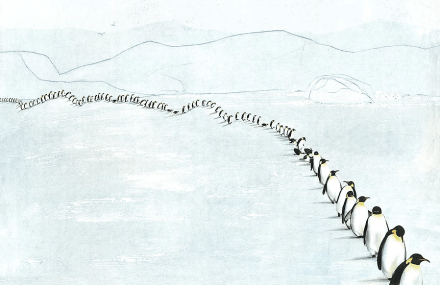
And which creature has the stamina for that 60,000-mile voyage? That honor goes to the appropriately named wandering albatross, who “five to ten years ago…left the small rocky island where it was born. Ever since then it has been wandering, covering more than 60,000 miles a year—over a quarter of the distance from the Earth to the Moon. Never once has it touched land, though the birds often roost on the surface of the water.” In one or two years, this solitary traveler will return to land to breed and become a stay-at-home parent until its only child is ready to depart.

celebrate-picture-books-picture-book-review-migration-incredible-animal-journeys-wildebeasts

Image copyright Jenni Desmond, 2019, text copyright Mike Unwin, 2019. Courtesy of Bloomsbury Books.

Other creatures presented include the emperor penguin, arctic tern, whooping crane, barn swallow, globe skimmer dragonfly, southern African pilchard, ruby-throated hummingbird, bar-headed goose, great white shark, African elephant, pacific salmon, osprey, blue wildebeest, straw-colored fruit bat, and green turtle.

A map of the world—with each animal’s migratory journey outlined—orients children to the geographic locations and distances involved as well as a few more facts on migration and how pollution and habitat destruction affect migratory patterns follows the text.

celebrate-picture-books-picture-book-review-migration-incredible-animal-journeys-penguins

Image copyright Jenni Desmond, 2019, text copyright Mike Unwin, 2019. Courtesy of Bloomsbury Books.

Mike Unwin’s accessible, descriptive, and sensory snapshots turn this science-based book into an enthralling page-turner. As one astounding true story leads to another, readers will be eager to see which animal comes next and continue learning about this wildlife phenomenon. Well-known for his nature books for children and adults, Unwin captures the spirit of each animal as they take on the formidable challenges of their annual migration and in the process teaches a love and respect for nature.

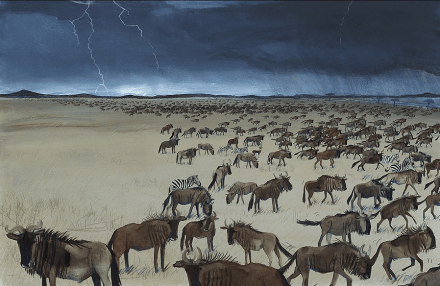
Accompanying Unwin’s text are Jenni Desmond’s gorgeous mixed-media illustrations, made all the more impressive by the book’s large format. The textured pages dazzle with the movement and grandeur of nature, transporting readers to far-flung parts of the world and showing them the beauty of each animal up close. Icy blues and greens lend images of the Arctic a frosty feel, while vibrant greens set off the brilliant oranges of the monarch butterflies and jeweled feathers of the ruby-throated hummingbird. Wildebeest are menaced by storm clouds and elephants parade along a brown, dusty road. The book concludes with first a dusky and then a moonlit night that welcome bats and turtles to begin their travels.

An excellent choice for home, classroom, homeschool, and public library collections, Migration: Incredible Animal Journeys will be a favorite of both kids and adults for lessons and more casual reading.

Ages 5 – 8 and up

Bloomsbury Children’s Books, 2019 | ISBN 978-1408889916

To learn more about Jenni Desmond, her books, and her art, visit her website.

National Wildlife Day Activity

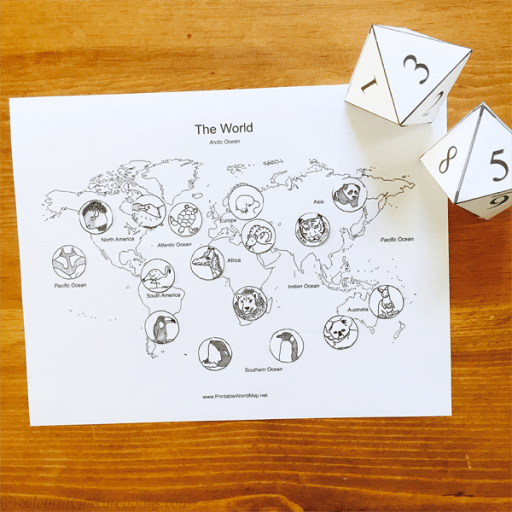
celebrate-picture-books-picture-book-review-wonderful-wildlife-board-game

Wonderful Wildlife Board Game


Fascinating animals are found in every part of the world. Play this fun printable Wonderful Wildlife Board Game to match each animal to the area where it lives.

Supplies

Directions

  1. Print a World Map for each player
  2. Print one set of 16 Wildlife Tokens for each player
  3. Print two copies of the 8-sided die, fold, and tape together
  4. If you would like, color the map and tokens
  5. Choose a player to go first
  6. Each player rolls both dice and places an animal on their map according to these corresponding sums of the dice below
  7. The first player to fill their map is the winner!
  • 1 = Flamingo – South America
  • 2 = Emperor Penguin – Antarctica (Southern Ocean)
  • 3 = Giraffe – Africa
  • 4 = Bald Eagle – North America
  • 5 = Ibex – Europe
  • 6 = Kangaroo – Australia
  • 7 = Panda – Asia
  • 8 = Orca – Antarctica (Southern Ocean)
  • 9 = Toucan – South America
  • 10 = Buffalo – North America
  • 11 = Koala – Australia
  • 12 = Lion – Africa
  • 13 = Etruscan Shrew – Europe
  • 14 = Manta Ray – Pacific Ocean
  • 15 = Sea Turtle – Atlantic Ocean
  • 16 = Tiger – Asia

celebrate-picture-books-picture-book-review-migration-incredible-animal-journeys-cover

You can find Migration: Incredible Animal Journeys at these booksellers

Amazon | Barnes & Noble | Books-a-Million | IndieBound

Picture Book Review

July 29 – Rain Day

celebrate-picture-books-picture-book-review-I-am-the-rain-cover

About the Holiday

Here we are in the middle of the hot, hot summer. In many places the grass is turning brown and the plants are wishing for a little relief.  Are you wishing for rain to cool things off too? Well, today may be your lucky day, and if you live in Waynesburg, Pennsylvania the odds are with you! The holiday got its start back in 1874, when a local resident remarked to William Allison, the pharmacist at JT Rogers & Co drug store that it always rained on his birthday—July 29. Allison began keeping an annual record. Since that time all eyes have been on Waynesburg to see if the remarkable run—115 years out of 144—continues. The people of Waynesburg celebrate their notoriety with a festival that includes live entertainment, arts and crafts and food booths, kids’ games, and, of course, an umbrella decorating contest. So, watch the skies—and get your umbrella ready!

I Am the Rain

By John Paterson


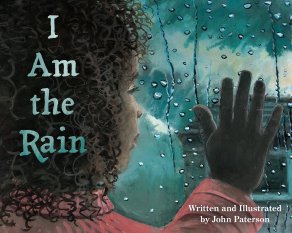
“Sometimes I’m the rain cloud and sometimes I’m the rain.” So starts John Paterson’s lyrical and thoughtful tribute to the water cycle paired with beautiful illustrations that invite readers along to discover all the ways that water changes and affects our lives. From the flowing aftermath of a storm as “a roadside rapid roaring down a drain” to the creator of a rainbow “in mist or morning dew.” Water takes on various colors, shapes, and forms as the weather changes throughout the year.
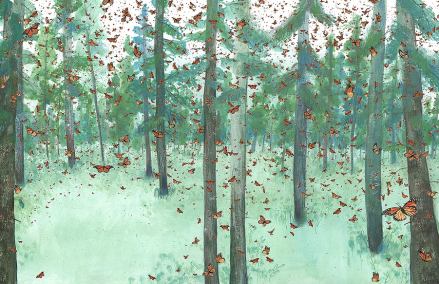
celebrate-picture-books-picture-book-review-I-am-the-rain-rapid

Copyright John Paterson, 2018, courtesy of Dawn Publications.

Paterson’s short, yet compelling verses reflect the interconnectedness of the world’s water systems in poetic language that reveals the living, driving force of nature. In spring, water narrates: “Waiting, I’m the ocean bay that searching rivers seek.” He also recognizes the imagination that water inspires when, in summer, water rises “in rumbling thunderheads like castles in the haze.”

celebrate-picture-books-picture-book-review-I-am-the-rain-pool

Copyright John Paterson, 2018, courtesy of Dawn Publications.

But water is not just an Earthly phenomenon. Turning the book vertical to peer through a narrow canyon where a glowing object soars across the night sky, readers learn that water is found “in the comet high circling the stars. / I’m also carving canyons deep on Earth and cousin Mars.” And, finally, the most personal link with water is revealed: “All of life depends on me. I’m even part of you.”

Five detailed and illustrated pages of back matter explain the water cycle; the science behind Paterson’s poetry, including explanations of the three forms of water, why water flows downhill, the science of rainbows, the color of water, and more; STEM experiments for teachers to perform with students; and how people can preserve and protect the world’s water. A list of other books on water published by Dawn Publications rounds out this educational content.

celebrate-picture-books-picture-book-review-I-am-the-rain-waterfall

Copyright John Paterson, 2018, courtesy of Dawn Publications.

Paterson’s lovely, textured illustrations expose the power and splendor of water rushing in swirling streams, muddy slides, and roaring waterfalls; decorating the sky with colorful arcs and a spider’s web with crystal pearls; and resting in a rock pool and on a snowy bank. In a particularly atmospheric spread, low rolling fog creeps across a pumpkin patch on a frosty autumn morning.

A striking resource for classrooms, homeschoolers, and families, I Am the Rain makes a charming read aloud for story times as well as a captivating supporting text for science lessons. The book would be a welcome addition to any home, school, or library collection.

Ages 3 – 7

Dawn Publications, 2018 | ISBN 978-1584696155

Rain Day Activity

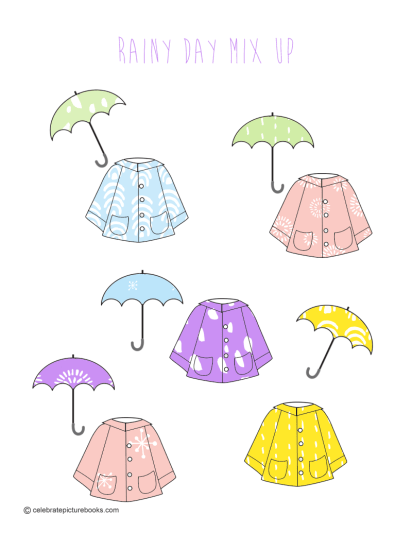
celebrate-picture-books-picture-book-review-rainy-day-match-up-puzzle

Rainy Day Match-Up Puzzle


On a rainy day you need just the right raincoat and umbrella to stay dry! These matching umbrellas and raincoats have gotten separated. Can you find the matching pairs? There may be more than one way to do it. How do you match them up? 

Rainy Day Match-Up Puzzle

celebrate-picture-books-picture-book-review-I-am-the-rain-cover

You can find I Am the Rain at these booksellers

Amazon | Barnes & Noble | Books-a-Million | Dawn PublicationsIndieBound

Picture Book Review