April 18 – It’s Celebrate Diversity Month

celebrate-picture-books-picture-book-review-W-is-for-welcome-cover

About the Holiday

Established in 2004, Celebrate Diversity Month encourages people to learn more about the world’s cultures and religions. Learning more about our global family and celebrating our differences and our similarities can lead to better relationships between people, more inclusion, and a happier future for the world’s children.

W is for Welcome: A Celebration of America’s Diversity

Written by Brad Herzog | Illustrated by nationally acclaimed artists


A journey around America impresses with its natural grandeur of rocky shores, majestic mountains, quilts of fertile fields, and wide-open prairies. More inspiring than these, however, is our diverse population that lends a wealth of knowledge, traditions, language, celebrations, food, music, and experiences to our country, making it a vibrant place to live and work.

celebrate-picture-books-picture-book-review-W-is-for-welcome-Bering-Strait

Image copyright Michael Glenn Monroe, 2018, text copyright Brad Herzog. Courtesy of Sleeping Bear Press.

Brad Herzog has collected twenty-six words to describe the United States and has used them to create lyrical verses and a full compendium of information about the immigrants and their experiences that have molded America from her earliest days and continue to do so today. Starting off, A is for America—that “dreamer’s destination,” and readers learn a bit about the millions of people who have come to our shores.

At C for Culture and D for Diversity, children learn about food, clothing, musical instruments, and even sports that have come to be favorites and were brought here or invented by people from other countries as well as “‘the most diverse square mile’” in America. Because of our country’s innovative spirit, “K is for Knowledge. “From all over the globe, / in a quest to know much more, / brilliant thinkers come here / and continue to explore.” Want to know more? Just check out Y for how immigrants continue to advance our knowledge.

celebrate-picture-books-picture-book-review-W-is-for-welcome-cultures

Image copyright Laura Knorr, 2018, text copyright Brad Herzog. Courtesy of Sleeping Bear Press.

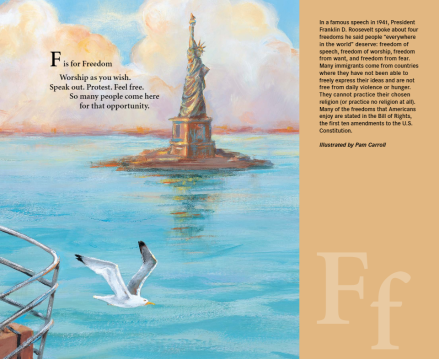
When immigrants want to make the United States their new home, they learn about N, Naturalization, and O, the Oath they take. And P is for the Poem by Emma Lazarus that has “come to define America’s long tradition of welcoming immigrants”: “A ‘world-wide welcome’ states, / ‘Give me your tired, your poor.’ / And then it adds, ‘I lift my lamp / beside the golden door!’”

All those who have taken comfort from that poem make up the narrative of our land, which is why V is for Voices: “Each immigrant has a tale to tell / about how and why they came / to live in the United States. / No two stories are the same.”

Along the way from A to Z young readers learn more about the people, ideas, and places that define America in verses and fascinating information that expands on the history and future of the United States in letter-perfect fashion.
celebrate-picture-books-picture-book-review-W-is-for-welcome-Ellis-Island

Image copyright Pam Carroll, 2018, text copyright Brad Herzog. Courtesy of Sleeping Bear Press.

Brad Herzog has created a compelling look at immigration, its history, and all the ways America has benefited from her philosophy of welcome. His fascinating informative passages and inspiring verses enlighten readers about past and present contributions by immigrants and also educate children about the law and processes involved in adopting America as a new home.

Thirteen illustrators lend their talents to interpreting Herzog’s verses with images full of color and vitality that are as diverse as America itself. Beautiful scenery from around the country reminds readers of the beauty of this vast land. It is the happy, hopeful, and expressive faces of those who have come and continue to journey here looking for a better life that most inspire and reveal that we are all neighbors.

W is for Welcome is an excellent book to use for leading discussions about American history and immigration at home or in the classroom.

Ages 6 – 9

Sleeping Bear Press, 2018 | ISBN 978-1585364022

Discover more about Brad Herzog and his books on his website.

You can learn about these illustrators of W is for Welcome on their websites:

Doug BowlesMaureen K. BrookfieldPat CarrollDavid C. Gardner | Barbara Gibson  | Renée GraefSusan GuyVictor JuhaszLaura KnorrMichael Glenn MonroeGijsbert van Frankenhuyzen | Ross B. Young 

Celebrate Diversity Month Activity 
friendwordsearch

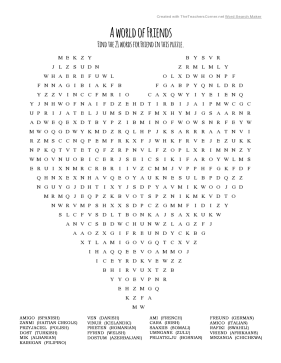
A World of Friends! Word Search


There are people all over the world just waiting to be friends! Learn how to say “friend” in twenty-one languages with this printable word search.

A World of Friends! Word Search Puzzle | A World of Friends! Word Search Solution

Picture Book Review

April 13 – National Make Lunch Count Day

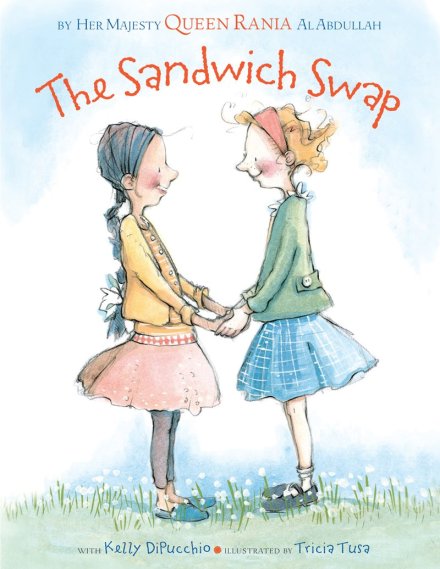
celebrate-picture-books-picture-book-review-the-sandwich-swap-cover

About the Holiday

Today’s holiday was established to encourage American workers to get away from their desk and eat lunch out with friends and coworkers. Taking a break from the office and spending lunchtime having a little fun or over a stimulating conversation can rejuvenate you for the rest of the day. Many people have also embraced the holiday as a way to remind themselves and others to eat healthy and make what they make (or order) nutritious and beneficial. To celebrate, make lunch an adventure today. You might even decide to try something new—like the little girls in today’s book!

The Sandwich Swap

Written by Queen Rania Al Abdullah of Jordan and Kelly DiPucchio | Illustrated by Tricia Tusa 


Salma and Lily were best friends. At school they did everything together in the classroom and on the playground. They also ate lunch together every day. They loved all the same things—until it came to what was packed in their lunchboxes. Lily always had a peanut butter and jelly sandwich, and Salma always had a hummus and pita sandwich.

While Lily never said so, she thought Salma’s sandwich looked yucky, and Salma kept quiet about her opinion that Lily’s sandwich seemed gross. But one day, Lily did say what she’d been thinking. Salma couldn’t believe her ears. She frowned and “looked down at the thin, soft bread. She thought of her beautiful smiling mother as she carefully cut Salma’s sandwich into two neat halves that morning.” First she felt hurt; then she felt mad.

celebrate-picture-books-picture-book-review-the-sandwich-swap-argument

Image copyright Tricia Tusa, 2010, text copyright Queen Rania Al Abdullah of Jordan and Kelly DiPucchio. Courtesy of Disney-Hyperion.

Salma let Lily know just how gross and icky-smelling she thought Lily’s sandwich was. “Lily looked surprised. She sniffed the thick, squishy bread, and she thought of her dad in his silly apron whistling” as he cut her sandwich into triangles. After that the two girls did not play or draw together. And the next day, they ate at separate tables. The story of Salma and Lily’s argument had spread, and the other kids chose sides. In the cafeteria, they lobbed insults, calling each other “jelly heads” and “chick pea brains.”

Pretty soon there were shouts of “you’re weird” and “you dress dumb.” It wasn’t long before someone yelled “Food Fight!” and peanut butter, hummus, and all types of sandwiches flew through the air. “They stuck to the walls. They stuck to the ceiling. They stuck to the lunch lady.” Before anyone knew it, pudding cups and applesauce and carrot sticks were soaring through the air.

Lily and Salma gazed at each other across the mess and “felt ashamed by what they saw.” After they helped clean it all up and were sent to the principal’s office, they felt even worse. The next day, Lily and Salma once again sat across from each other during lunch. At last Lily said, “‘Would you like to try a bite of my peanut butter and jelly?” Salma said that she would and offered Lily a nibble of her hummus sandwich. Lily agreed.

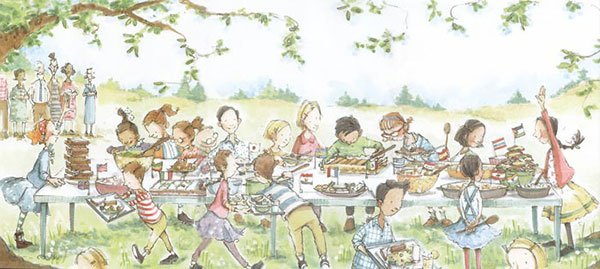
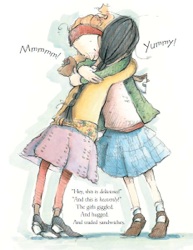
On the count of three, Lily and Salma tried each other’s sandwiches. “Yummy! Mmmmm!” they both said, and then they traded sandwiches. After lunch they met with the principal again to tell her an idea they’d had. And on a sunny day, the school held a picnic where everyone shared their favorite lunch from their native country.

celebrate-picture-books-picture-book-review-the-sandwich-swap-picnic

Image copyright Tricia Tusa, 2010, text copyright Queen Rania Al Abdullah of Jordan and Kelly DiPucchio. Courtesy of Disney-Hyperion.

The school lunchroom with its unique dynamics is a perfect setting for Queen Rania Al Abdullah and Kelly DiPuccio’s story that highlights the kinds of prejudice children can encounter whether for food choices or other differences. The inclusion of Salma’s and Lily’s thoughts about their parents is a poignant reminder of how profound and complex children’s emotions are. The humor and honesty in the girls’ relationship, thoughts, and argument as well as the food fight will resonate with readers. Salma’s and Lily’s decision to renew their friendship and try each other’s lunches and to share their revelation with their classmates leads to the kind of growth we all want for our kids.

celebrate-picture-books-picture-book-review-the-sandwich-swap-hug

Tricia Tusa’s delicate and soft-hued mixed-media illustrations portray the joys of being best friends as Lily and Salma draw, swing, jump rope, and eat lunch together in beautiful two-page spreads. When their true feelings about each other’s sandwiches comes out, the girls are clearly reflective and then hurt and angry as they scowl nose to nose. The food fight is a double-spread free-for-all that will make kids laugh as the lunch lady seems to take the brunt of the flying food. The final gate-fold scene of the multicultural picnic is heartwarming.

The Sandwich Swap is a terrific read at home and in the classroom, especially near the beginning of the school year. The book is also a wonderful prelude to a classroom or school-wide multicultural day or food fair.

Ages 3 – 7

Disney-Hyperion, 2010 | ISBN 978-1423124849

Learn more about Queen Rania Al Abdulla of Jordan and her global advocacy on her website.

Discover more about Kelly DiPucchio and her books on her website.

Get to know Tricia Tusa and view a portfolio of her books and art on her website.

Make Lunch Count Day

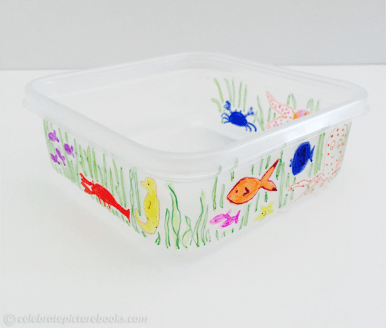
celebrate-picture-books-picture-book-review-lunch-container

Personalized Lunch Container


Take your lunch to school or work in style with this quick and easy craft! All you need is a plastic sandwich or food container, some permanent markers, and your creativity!

Picture Book Review

April 10 – National Siblings Day

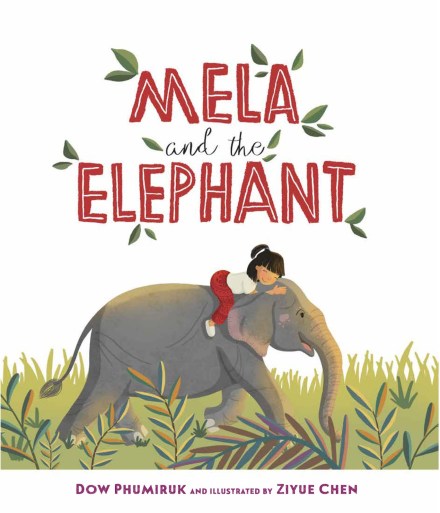
celebrate-picture-books-picture-book-review-mela-and-the-elephant-cover

About the Holiday

Today we celebrate our brothers and sisters! Whether you’ve had a lifetime with your siblings or are just getting started with a new little person to grow up with, today is for remembering and making memories to be cherished. To honor the day, spend some time together with your siblings or get in touch and have a bit of fun!

Mela and the Elephant

Written by Dow Phumiruk | Illustrated by Ziyue Chen


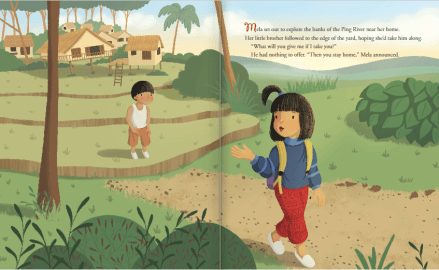
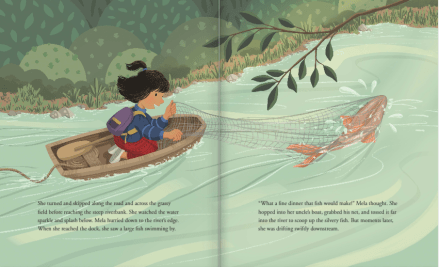
When Mela headed out to explore the banks of the Ping River, her little brother wanted to go too, but Mela would only take him if he had something to give her in return. When he said he had nothing, Mela told him, “‘Then you stay home.’” When she reached the river, she jumped into her uncle’s boat to try and catch the big fish that swam in the sparkly water. She tossed out her net and nabbed the fish in her net, but he swam on, carrying Mela downstream. Soon, Mela found herself deep in the jungle.

When “the boat caught against a tangle of tree roots, Mela stepped out onto a large rock.” She looked around and realized she was a long way from home.  A crocodile happened by and Mela asked him if he could tow her boat back home. “‘What will you give me for my help?’” the crocodile asked. Mela told him he could have her fish, and the crocodile agreed. But as soon as Mela gave him the fish, he grabbed it and swam away.

celebrate-picture-books-picture-book-review-mela-and-the-elephant-mela-leaving

Image copyright Ziyue Chen, 2018, text copyright Dow Phumiruk, 2018. Courtesy of Sleeping Bear Press.

Mela had just begun to walk in the direction of home when “a leopard slinked into sight.” Mela asked her if she knew how to get to the village. She did, but would only show Mela if she gave her something. Mela thought, then took off her sweater and gave it to the leopard, saying, “‘It will keep your cubs warm on cool nights.’” The leopard “snatched it up and leaped away.”

Mela continued on and was soon walking down a narrow path, where three monkeys swung from vines in the trees. Again Mela asked for help finding her way home. “‘What will you give us if we help you?’ one chattered. Mela held out her backpack.” It would be helpful for carrying fruit, she told them. As soon as the largest monkey grabbed the backpack, the three disappeared into the forest.

celebrate-picture-books-picture-book-review-mela-and-the-elephant-mela-fishing

Image copyright Ziyue Chen, 2018, text copyright Dow Phumiruk, 2018. Courtesy of Sleeping Bear Press.

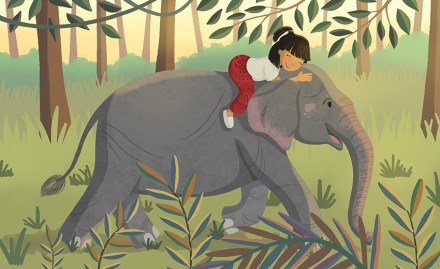
Mela began to cry. She had no idea how to get home, and night was coming. Just then “she heard the rustling and snapping of branches.” She looked up to see an elephant approaching. The elephant asked Mela if she were lost. When Mela said, yes, the elephant offered to give her a ride. Mela told him that she had nothing to give him. But the elephant said, “‘It would make my heart happy to help you. I don’t need anything else in return.’”

Then he allowed Mela to climb up his trunk and onto his back and they started off. When they reached the village, Mela thanked the elephant and he gave her a last hug with his trunk. The next day when Mela’s brother asked to accompany her to the riverbank, she remembered what the elephant had taught her and agreed to take him. And “from then on, she offered many kindnesses to others, asking nothing in return.”

celebrate-picture-books-picture-book-review-mela-and-the-elephant-riding-elephant

Image copyright Ziyue Chen, 2018. Courtesy of Sleeping Bear Press.

In her lovely story, Dow Phumiruk reminds children that the heartfelt rewards of kindness are more precious than material gain. Such inner happiness often radiates to others, creating strong bonds and long-lasting happiness. It’s interesting to note that Mela is actually inherently thoughtful, offering each potential rescuer an object that is useful to them. But this inner generosity is lost when she interacts with her brother and brushes off his friendship. Through her experiences in the jungle, however, she comes to empathize with her brother. Back at home, she embraces and includes him, and shares the lesson she’s learned with others as well.

As Mela wanders deeper and deeper into Ziyue Chen’s lush jungle of Thailand, readers will understand that while she may be lost, she is also finding her way on her path in life. The animals that approach her initially look friendly and helpful, but as soon as they have their payment, they turn their back on Mela and desert her. The elephant, on the other hand, has kindly eyes and a gentle manner. The final scene in which Mela takes her little brother by the hand as they begin an adventure together demonstrates her change of heart and growth along life’s road.

An Author’s Note includes information about the history, geography, and customs of Thailand, where there story is set, introducing readers to the diverse culture of the country.

Mela and the Elephant employs a mix of traditional storytelling with today’s focus on kindness, empathy, and generosity. The book would make an excellent addition to home and classroom libraries for story time and to prompt discussions about compassion and helpfulness.

Ages 4 – 8

Sleeping Bear Press, 2018 | ISBN 978-1-58536-998-0

Discover more about Dow Phumiruk, her books, and her art on her website

To learn more about Ziyue Chen, her books, and her art, visit her website.

Come along on the adventure with this Mela and the Elephant book trailer!

National Siblings Day Activity

celebrate-picture-books-picture-book-review-hand-print-elephants-craft

Elephant Handprint Craft


This easy craft is fun for siblings to do together and can make a nice decoration for a child’s room or a gift for mom, dad, or other family members.

Supplies

  • Craft paint in two colors of the children’s choice
  • Yellow craft paint
  • Black fin-tip marker
  • Crayons, markers, or colored pencils to make a background
  • Paper
  • Paint brush

Directions

  1. Paint one child’s hand and press it on the paper. The thumb is the truck and the fingers the legs.
  2. Paint the second child’s hand and press it on the paper near the other “elephant.” A couple of examples are: the elephants standing trunk to trunk or trunk to tail 
  3. After the paint has dried, draw on ears and an eye
  4. Add a sun with the yellow paint
  5. Add grass, trees, or other background features

Picture Book Review


Picture Book Review

March 10 – It’s National Women’s History Month

celebrate-picture-books-picture-book-review-maya-lin-artist-architect-of-light-and-lines-cover

 About the Holiday

This month we celebrate the accomplishments of women in the past who have broken barriers and forged paths for today’s women and who still inspire the leaders of tomorrow. To honor women this month, learn more about the influential woman in your own field or in areas you enjoy as hobbies and teach your children about the women who made incredible contributions to the world long ago and those who are changing the way we live today.

Maya Lin: Artist-Architect of Light and Lines

Written by Jeanne Walker Harvey | Illustrated by Dow Phumiruk


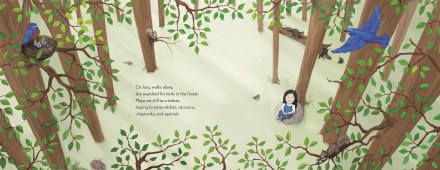
As a child, Maya Lin loved playing and interacting with nature near her home. She and her brother liked to run over what Maya had named “the Lizard’s Back”—a hill behind her house—and into the woods. Sometimes Maya went into the woods alone and “sat as still as a statue, hoping to tame rabbits, raccoons, chipmunks, and squirrels.” She liked to play chess with her brother and build towns from scraps of paper, boxes, books, and other things she found around the house.

celebrate-picture-books-picture-book-review-maya-lin-artist-architect-of-light-and-lines-in-forest

Image copyright Dow Phumiruk, 2017, text copyright Jeanne Walker Harvey, 2017. Courtesy of us.macmillan.com.

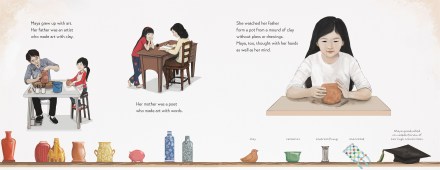
Maya’s “parents had fled China at a time when people were told what to be and how to think.” They did not want the same for their children and always encouraged Maya to be and think what she wanted. Maya grew up surrounded by art. Her father worked with clay, and her mother was a poet. Maya also liked to make things with her hands. The beautiful library where she went to college inspired Maya to become an architect.

To learn about different buildings, Maya traveled all over the world. When she was only a senior in college, “Maya entered a contest to design a memorial to honor soldiers who died during the Vietnam War.” The contest stated two rules: the memorial had to fit in with a park-like setting, and it had to include the 58,000 names of the soldiers who had died in the war. These rules resonated with Maya. She “believed that a name brings back all the memories of a person, more than a photo of a moment in time.”

celebrate-picture-books-picture-book-review-maya-lin-artist-architect-of-light-and-lines-as-young-girl

Image copyright Dow Phumiruk, 2017, text copyright Jeanne Walker Harvey, 2017. Courtesy of us.macmillan.com.

Maya visited the site where the memorial would be built. As she looked at the gently rolling hill, she envisioned a simple cut in the earth that would support a polished wall covered in names. Not only would the wall reflect those who died, but also those who came to visit and the surrounding nature. At school, Maya worked with mashed potatoes and then with clay to help her create the perfect monument. When she had finished her drawings and plans, she wrote an essay to accompany them. She wrote that her monument would be “a place to be experienced by walking down, then up past names that seemed to go on forever.”

celebrate-picture-books-picture-book-review-maya-lin-artist-architect-of-light-and-lines-with-parents

Image copyright Dow Phumiruk, 2017, text copyright Jeanne Walker Harvey, 2017. Courtesy of us.macmillan.com.

More than 1,400 artists and architects—many of them famous—entered the contest. The designs were hung in an airplane hangar anonymously for judging. Finally, the day came for the announcement of the winner. When the judges called out Maya Lin’s name and she came forward, they were surprised to find that she was so young. Maya was excited to have won, but then some people began to object to her design. Some said her “design looked like a bat, a boomerang, a black gash of shame.”

celebrate-picture-books-picture-book-review-maya-lin-artist-architect-of-light-and-lines-library

Image copyright Dow Phumiruk, 2017, text copyright Jeanne Walker Harvey, 2017. Courtesy of us.macmillan.com.

Maya was hurt by these comments, but she defended her design and, finally, it was approved. Maya worked with the architects and engineers who excavated the land and built the wall. As each granite panel was polished, engraved with the soldiers’ names, and set in place, Maya looked on. The memorial opened on Veterans Day in 1982. Thousands of people came to see it and to find the names of loved ones they had lost. As Maya approached the wall, “she searched for the name of the father of a friend. When she touched the name, she cried, just as she knew others would.” Every day since then visitors come to the wall to remember.

Maya Lin has gone on to design many more works of art and architecture that can be seen inside and outside. Each piece has a name and a particular vision. Maya wants people to interact with her art—to touch it; read, walk, or sit near it; or think about it. After each piece is finished, Maya thinks about her next work and how she can inspire the people who will see it.

celebrate-picture-books-picture-book-review-maya-lin-artist-architect-of-light-and-lines-Vietnam-War-Memorial

Image copyright Dow Phumiruk, 2017, text copyright Jeanne Walker Harvey, 2017. Courtesy of us.macmillan.com.

An Author’s Note about Maya Lin and the Vietnam War Memorial follows the text.

Jeanne Walker Harvey has written an inspiring biography of Maya Lin that reveals not only her creativity but the importance of creative freedom for children. Lin’s confidence that led her to enter the contest and then defend her winning design will encourage readers to pursue their dreams. Harvey’s lyrical storytelling reflects Maya Lin’s quiet, introspective nature, the influences that nurtured her creative spirit, and her dedication to inviting others to be part of her art.

Dow Phumiruk’s graceful, soft-hued illustrations allow children to follow Maya Lin as she grows from a girl discovering nature, constructing cardboard cities, and learning the arts from her parents to a young woman who draws inspiration from the world’s buildings and relies on her own sensitivity to guide her. Back-to-back pages of the landscape of Vietnam and the site of the memorial connect the two places for children’s better understanding. Phumiruk’s depictions of the Vietnam War Memorial also give children an excellent view of this moving monument. Her images of Lin’s other architectural work will entice young readers to learn more about her and to explore where each of these pieces can be found.

Ages 4 – 8

Henry Holt & Company Books for Young Readers, 2017 | ISBN 978-1250112491

Discover more about Jeanne Walker Harvey and her books on her website!

Learn more about Dow Phumiruk, her art, and her books on her website!

National Women’s History Month Activity

 celebrate-picture-books-picture-book-review-maya-lin-coloring-page

Maya Lin Coloring Page

Maya Lin’s accomplishments are inspirational for all children! Here’s a printable coloring page that you can personalize and hang in your room or locker to remind you that you can reach your goals too!

Maya Lin Coloring Page

Picture Book Review

February 26 – National Tell a Fairy Tale Day

celebrate-picture-books-picture-book-review-la-princesa-and-the-pea-cover

About the Holiday

Today, we remember that fairy tales often have their origin in the oral stories, myths, and legends of long ago. In addition to entertainment, their purpose was to teach a lesson, change behavior, or warn of dangers. Over the years magical elements and mystical creatures were added to the stories. The Brothers Grimm published their collection of stories in 1812 under the title Household Tales. The plots were darker and meant for more of an adult audience. Hans Christian Andersen’s work was first published in 1829. Through him, readers were introduced to The Ugly Duckling, The Little Mermaid, and today’s story. Over the years, fairy tales have evolved to include “fractured” versions—tales told by another character or with a funny or quirky twist. To celebrate today, reread some of your and your child’s favorite fairy tales—and discover some new ones!

La Princesa and the Pea

Written by Susan Middleton Elya | Illustrated by Juana Martinez-Neal


“There once was a prince who wanted a wife, / but not any niña would do in his life.” His madre demanded just the right sort of girl and said “No!” to all the princesses who wanted to catch the prince’s eye. But then along came a girl riding home to her castle who asked to stay “if it isn’t a hassle.” The girl winked at the prince and he was immediately smitten.

celebrate-picture-books-picture-book-review-la-princesa-and-the-pea-the-courtyard

Copyright Juana Martinez-Neal, 2017, courtesy of juanamartinezneal.com.

The prince invited her in, but his mother planned to test her to make sure she was “buena.” So “Mama crept away / to the royal jardín / and found a small pea / that was fit for a queen.” She went up to the guest room and called for twenty mattresses to be brought in. Then while she ate bon-bons, her workers carried the colchones in. The first mattress was soft, the second was small, the third was muy grande, and the fourth was un sueño—as comfy as a dream. Then came striped ones and dotted ones and ones that were fleece. There were red ones and blue ones and ones that were gris.

celebrate-picture-books-picture-book-review-la-princesa-and-the-pea-the-prince

Copyright Juana Martinez-Neal, 2017, courtesy of juanamartinezneal.com.

When the twenty mattresses were piled high on the bed, Mama showed the girl to her room. Seeing the soft bed, she said, “‘Thanks! I won’t even count sheep.’” But under the first mattress way down below sat the small pea. “Meanwhile el príncipe practiced ‘I do’s.’ / He knew that this maiden was the one he should choose.” But when he told his mama how much he liked the girl, she just said, “‘we’ll see.’”

In her room, “the girl stretched her brazos / and yawned with her boca. / But the bed felt so lumpy / like there was a roca.” That tiny pea—that little guisante—could that be the reason she just could not sleep? In the morning the maiden dragged herself down to breakfast, and when Mama asked how she’d slept, she answered, “‘Great…if you like hard and lumpy.’” But when she spied the prince, she cheered up and said, “‘it wasn’t that bad.’”

celebrate-picture-books-picture-book-review-la-princesa-and-the-pea-the-queen

Copyright Juana Martinez-Neal, 2017, courtesy of juanamartinezneal.com.

“‘¡Ay!’” Thought la reina. / How’d she detect it? / Is she a real princess? / I think I suspect it.” When the prince learned that the girl had passed the test, he gave her a golden anillo, and they married “that week in the royal castillo.” The wedding was huge and the girl’s dress most stylish. With “‘¡acepto!’” “‘¡acepto!’” they were quickly wed. And only the prince knows to this very day that he helped things along by adding “pitchforks and stones en la cama / to help his true love pass the test of Queen Momma.” The prince and the princess “had hijos galore. / One for each mattress and then had no more.”

celebrate-picture-books-picture-book-review-la-princesa-and-the-pea-the-kids

Copyright Juana Martinez-Neal, 2017, courtesy of juanamartinezneal.com.

Susan Middleton Elya’s Latin-inspired take on The Princess and the Pea story is fresh and funny and puts control of the prince’s future in his own hands. Young readers will embrace this twist that shows when they know what is right for them, they can make it happen. The use of Spanish words throughout the story, and especially to create clever rhymes, make the verses as joyful to read aloud as they are to hear.

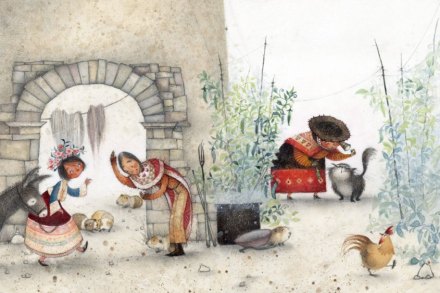
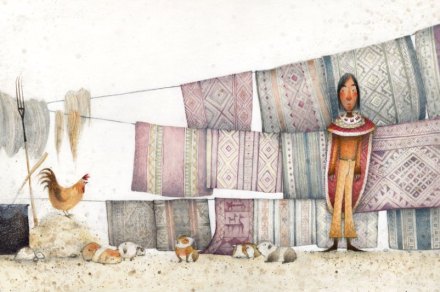
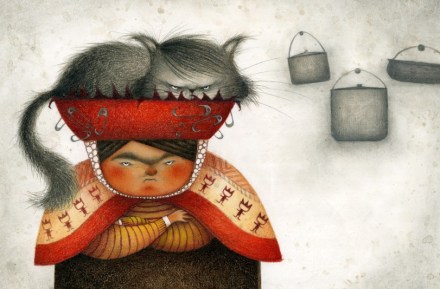
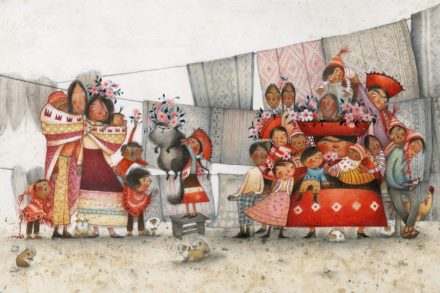
Juana Martinez-Neal’s warm colors and beautifully patterned clothing, inspired by Peruvian textiles, infuses this favorite story with a homey and family-centered, folk-tale feeling that sets it apart. Readers will be charmed by the llamas, guinea pigs, and even the grumpy cat that inhabit the castle and will want to linger over the softly colored illustrations to see every detail. The sweet looks between the prince and princess show their true love, and among their twenty children, readers may find la reina’s favorite(?) grandchild.

La Princesa and the Pea is a terrific addition to children’’s fairy tale book collection at home and in the classroom.

Ages 4 – 8

G.P. Putnam’s Sons Books for Young Readers, 2017 | ISBN 978-0399251566

Discover more about Susan Middleton Elya and her books on her website.

To learn more about Juana Martinez-Neal, her books, and her art and find lots of fun story-related activities visit her website.

National Tell a Fairy Tale Day Activity

celebrate-picture-books-picture-book-review-castle-coloring-page

Fairy Tale Coloring Pages


What’s a fairy tale without a castle and maybe a dragon or two? Have fun coloring these pages, then make up your own story!

Fairy Tale CastleHappy Dragon

Picture Book Review

February 25 – It’s Bake for Family Fun Month

celebrate-picture-books-picture-book-review-chow-mein-and-potstickers-cover

About the Holiday

During the month of February, family and friends are encouraged to get together and have fun baking. Making sweet treats and savory dishes that come out hot and delicious from the oven is a wonderful way to spend time together, try new recipes, and learn new skills. This month is also a great time to explore foods and cuisine from other countries!

Chow Mein and Potstickers

Written by Liselotte Schippers | Illustrated by Monique van den Hout


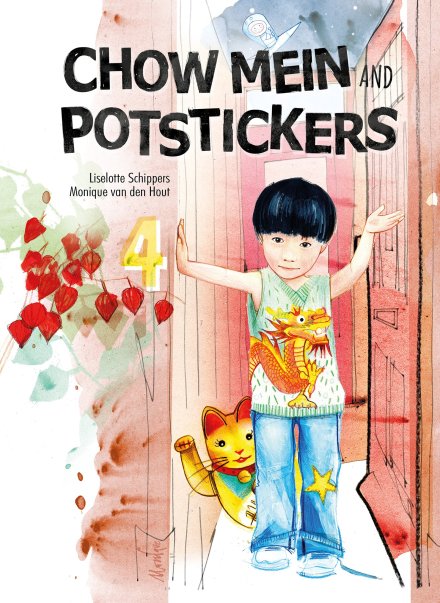
A little boy named Chan has just moved here from China and is hoping to make new friends. He tells a little about himself: “I moved to this country with my father, / my mother and my sister. / My mother is starting a new job here. / She’s an astronaut and someday she’ll go to the moon!” He reveals that his favorite food is potstickers and chow mein. He’s just about to go door-to-door to meet his neighbors. He wonders if kids here like to play and how “things work around here.”

Next door at Number 6, Chan meets Mila, who is from Bosnia. Chan thinks “she looks like a princess from a country far away.” Chan and Mila play soccer until they “get tired and hungry!” Then they eat Mila’s “favorite dish / Bosnian ćevapĉići—rolls of ground / meat.” At the end of the day, they say goodbye: “‘Zàijiàn!’” and “‘Doviđenja!’”

The next day Chan meets Rani, who was born in Indonesia. Even though Rani is younger, Chan says that “you can tell he is very wise. / Rani’s father is a famous musician. / He has to travel a lot, touring with his band. / His mother works at the hospital and helps people who are sick.” Rani shows Chan how to play marbles. Afterward, they enjoy Rani’s “favorite foods: satay and kroepoek. / That’s meat on a stick and shrimp crackers.” Later, they wave good-bye and say: “‘Zàijiàn!’” and “‘Sampai jumpa!’”

Across the street lives a little girl named Jamila, who is originally from Afghanistan. “‘Salaam!’” she greets Chan. Jamila plays the guitar, and the two sing and dance along. Chan says: “After a while we get tired and hungry. / Jamila and I eat Afghan qabuli—rice and lamb. / That brings us to the end of our day. / As we wave good-bye, we say: “‘Zàijiàn!’” and “‘Khodahafez!’”

Twins Kim and Coen live at Number 10. They are from Belgium. “Their father is a master chocolatier. That means he / makes fancy chocolates. When he is working, the house / smells wonderful. / Their mother sells the chocolates in a  / special shop. We get to try some. I’ve never tasted / anything so delicious!” After roller skating, they eat frietjes, which are like French fries served with mayonnaise. “‘Zàijiàn!’” and “‘Tot ziens!’”

In the tall yellow house next to the church on Chan’s street, Chan meets Basu, who came here from South Africa. His mother is a minister and his father is a fireman. Chan thinks that maybe he’d like to be a fireman too when he grows up. “Basu loves to paint and draw.” He and Chan “get busy with brushes, paints and pens.” When their “masterpiece is finished,” Chan says, “We have paint splatters on our clothes and in our hair!” All that creating has made them “tired and hungry.” They “eat South African bobotie… / a dish made with seasoned ground meat.” Before Chan goes home, the boys say:  “‘Zàijiàn!’” and “‘Totsiens!’”

Chan is excited to discover that his street is full of other children to play with. In other homes live Ania from Poland, Nuray from Turkey, Clifton from Suriname, Gracy from England, and Nino from Italy. On one special day, Chan invites all of his new friends to go to the playground with him, and Chan’s father brings chow mein and potstickers for everyone to enjoy. At the end of the day, the air rings with each child’s special way of saying “good-bye.”

Liselotte Schippers free verse poetry opens the door to a world of children for young readers. Each poem gives children the kind of information they want to know about kids from around the world. What do they like to do? What are their families like? What do they eat? Every poem includes the words “hello” and “good-bye” in the native language of the child as well as a favorite dish from each country. Little Chan makes a delightful and enthusiastic tour guide to his multicultural neighborhood, and shows young readers that even though people may come from different countries, their dreams, desires, games, and even jobs are the same. The country that Chan has moved to is never named, making “here” everywhere.

Monique van den Hout’s beautiful illustrations combine the ethereal with realistic portrayals of the happy, bright-eyed children that Chan meets in his neighborhood. Each poem is presented on a two-page spread in which Chan and his new friend are surrounded by colorful images of symbols from that child’s native country. Following each poem, a short dictionary defines and gives a pronunciation guide to the greetings and food introduced.

Chow Mein and Potstickers is an enticing introduction to the global community for children. Each poem could be used to spark more discovery about the countries presented and their children. The book’s inclusion of languages and foods makes it a perfect addition to school, classroom, and homeschool libraries for social studies units as well as a fun book for personal bookshelves.

Ages 4 and up

Clavis, 2017 | ISBN 978-1605373287

Discover more about Liselotte Schippers and her books on her website.

Learn more about Monique van den Hout, her books, and her art on her website.

Bake for Family Fun Month Activity

celebrate-pictureb-books-picture-book-review-Kids-Baking-Cake-in-Cooking-Show-Bakery-Coloring-Pages

Let’s Bake Together Coloring Page


It’s fun for friends to create new recipes or just cook up some favorite treats! Have fun with this printable Let’s Bake Together Coloring Page!

Picture Book Review

February 23 – National Tile Day

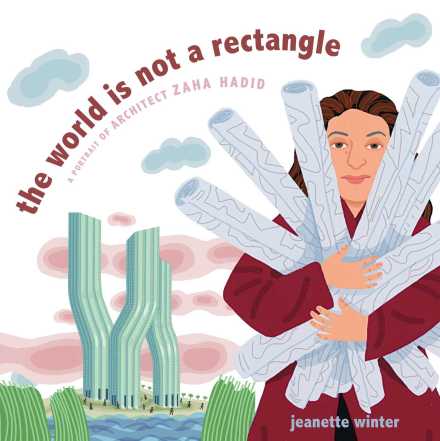
celebrate-picture-books-picture-book-review-the-world-is-not-a-rectangle-cover

About the Holiday

Today’s holiday was established just last year and celebrates that architectural accent that has given exteriors and interiors pizazz and individuality since ancient times. Made in nearly every color, pattern, and shape imaginable, tiles were once all handmade and available only to the wealthy few. Innovations during the Industrial Revolution allowed tile to be mass produced and, thus, affordable to many. Tile has become a favorite decoration in homes across the world—as any HGTV viewer knows!

The World Is Not a Rectangle: A Portrait of Architect Zaha Hadid

By Jeanette Winter


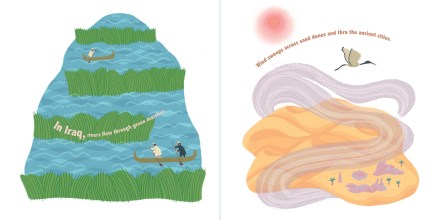
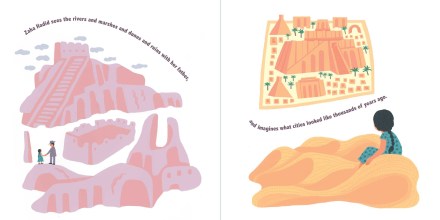
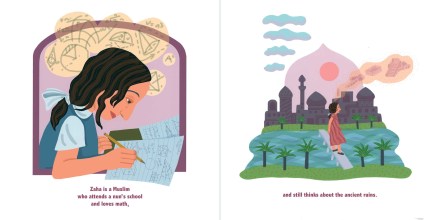
Growing up in Iraq, Zaha Hadid sees the way rivers brake up the marshland, watches when the wind sculpts sand dunes, and visits the ruins of ancient cities. At home in Baghdad, young Zaha studies the patterns of her Persian carpet, noticing “how the shapes and colors flow into each other, like the dunes and rivers and marshes” and dreaming of designing her own cities.
celebrate-picture-books-picture-book-review-the-world-is-not-a-rectangle-rivers

Copyright Jeanette Winter, 2017, courtesy of Beach Lane Books.

In her room, she arranges and rearranges the furniture, creates her own clothes, and comes up with ideas. When Zaha grows up, she moves to London to study to be an architect. After graduation, she opens an office in an old school building—Studio 9. Zaha is joined by some friends and they work tirelessly on their architectural drawings.

celebrate-picture-books-picture-book-review-the-world-is-not-a-rectangle-ruins

Copyright Jeanette Winter, 2017, courtesy of Beach Lane Books.

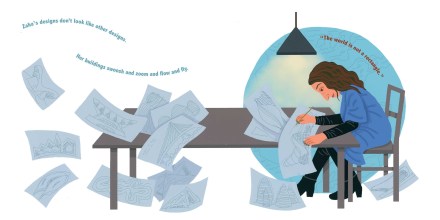
“Zaha’s designs don’t look like other designs. Her buildings swoosh and zoom and flow and fly. ‘The world is not a rectangle’” she says. But Zaha cannot find anyone to build her designs; everyone says they are impossible. Finally, one of Zaha’s designs is chosen from among all the others in a competition. When it is presented to the city’s committee, however, they reject it. Another competition is held, and Zaha’s design wins again. The city rejects it again. Zaha is as strong as her name Hadid, which means iron in Arabic, and she continues to design plan after plan.

celebrate-picture-books-picture-book-review-the-world-is-not-a-rectangle-school

Copyright Jeanette Winter, 2017, courtesy of Beach Lane Books.

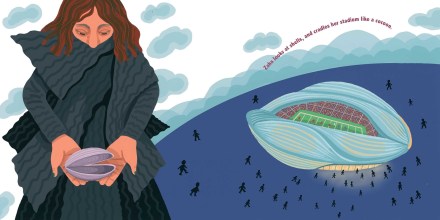
Then one by one her plans are accepted. She “remembers the grasses in the marshes swaying” and designs tall towers “dancing like grass.” In the desert, she creates a building that allows the wind to blow over and around and through it. The sports stadium she imagines has the beauty of a cocoon. Remembering the stones in a stream, Zaha “builds an opera house like the pebbles in the water. Inside the opera house, a singer is the pearl in the oyster shell.”

celebrate-picture-books-picture-book-review-the-world-is-not-a-rectangle-designs

Copyright Jeanette Winter, 2017, courtesy of Beach Lane Books.

The swirling stars in far-away galaxies inspire a complex of connected buildings, and the undulating waves become the model for a bridge that seems to move with the water. From looking at the Alps, Zaha fashions a museum built “inside a mountain peak with windows to see the sky and the valleys” and a ski jump that “reaches to the sky like the mountain.” From the “jungle and ancient wood temples,” Zaha draws inspiration for “a wooden building to remember a faraway war.”

celebrate-picture-books-picture-book-review-the-world-is-not-a-rectangle-stadium

Copyright Jeanette Winter, 2017, courtesy of Beach Lane Books.

With every building, Zaha gets busier and busier more than four hundred architects are working in that old school building, “designing, planning, engineering, and making models of Zaha’s visions.” But Zaha’s ideas don’t stop at buildings. She believes “you should do what you like,” so she designs doll houses, shoes, chairs, sculpture, and benches. No matter what she designs, Zaha’s early memories return. She thinks of “the beauty of the landscape—where sand, water, reeds, birds, buildings, and people all somehow flow together” and never loses her belief in the impossible.

Even though the light in Zaha’s office is now dark, “her architects keep their lights on—designing, planning, engineering, and making models of her visions, keeping her flame blazing bright.”

celebrate-picture-books-picture-book-review-the-world-is-not-a-rectangle-night

Copyright Jeanette Winter, 2017, courtesy of Beach Lane Books.

Following the text, readers can learn the name and location of each building, discover more information about Zaha Hadid’s life and awards, and read more of her own words about her work.

Jeanette Winter shines a light on an architect who will inspire children not only with her work but with her original ideas, self-confidence, and refusal to compromise on her beliefs. Winter combines straightforward passages of Zaha’s childhood and early professional struggles with lyrical phrasing that describes her influences in nature and her soaring buildings. Sprinkled throughout are Zaha’s own words that define her ideas and ideals.

In her dreamlike illustrations, Winter clearly depicts Zaha Hadid’s inspirations and the way in which she interpreted each natural motion, shape, or phenomenon in steel, glass, concrete, or wood. Winter’s pages swirl, shimmer, flow, and soar, and Zaha is always there, seeing, thinking, envisioning, and drawing.

An excellent biography of a strong and creative woman who has designed some of the world’s most beautiful and original buildings, The World Is Not a Rectangle: A Portrait of Architect Zaha Hadid would be a superb addition to classroom discussions and home story times.

Ages 5 – 10

Beach Lane Books, 2017 | ISBN 978-1481446693

National Tile Day Activity

celebrate-picture-books-picture-books-review-heart-mosaic-coloring-page

I (Heart) Tiles! Coloring Page


With colorful tiles you can make beautiful pictures. Put your imagination to work and color this I (Heart) Tiles! Coloring Page!

Picture Book Review