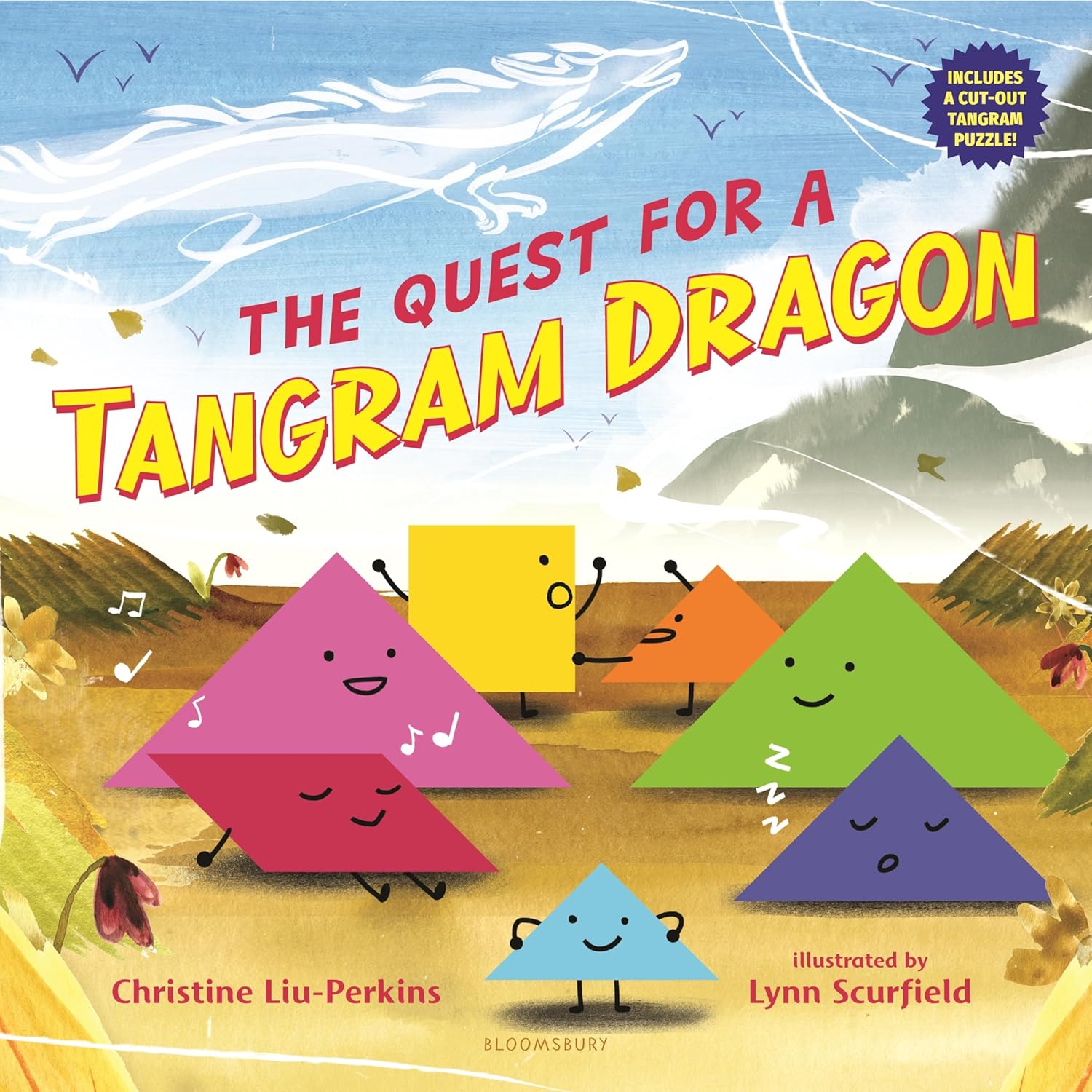
August 21 – It’s Family Fun Month

celebrate-picture-books-picture-book-review-the-quest-for-a tangram-dragon-cover

About the Holiday

As summer activities transition into going-back-to-school prep and starting a new year of learning, there’s still time to enjoy fun with the family. Whether you plan special events at home, take trips to local attractions, or take a faraway excursion, your shared experiences as a family will make lifelong memories!

Thanks to Bloomsbury Children’s Books for sharing a copy of The Quest for a Tangram Dragon with me for review consideration.

The Quest for a Tangram Dragon

Written by Christine Liu-Perkins | Illustrated by Lynn Scurfield

Little Triangle, tired of waiting for rain to quench the thirst of the brown grass and wilted leaves of the countryside, “decided to search for a good, kind dragon.” Along the way, it played around with all of the things it could make and do, but then it fell point over point down a hill and right into another small triangle. “Nǐ hǎo! Hello!” Little Triangle said in greeting. They talked like old friends, and Second Little Triangle agreed to join Little Triangle’s search for a dragon. They needed to cross a vast meadow, so they flipped and flopped and made three shapes: a bigger triangle, a square, and a parallelogram. None of these shapes would help them, though.  But when they “bumped heads, they turned into a butterfly” and soared into the sky. 
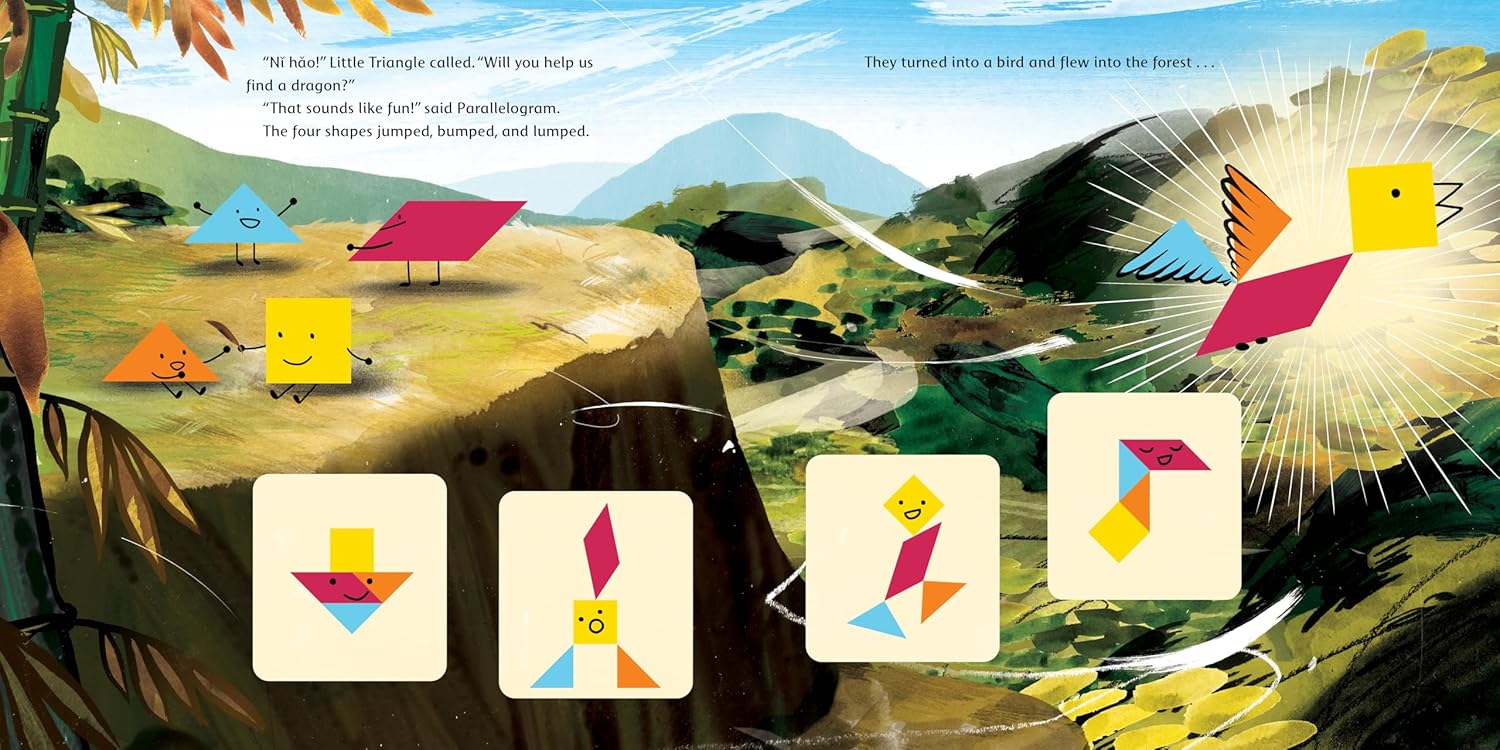
celebrate-picture-books-picture-book-review-the-quest-for-a tangram-dragon-bird

Illustration copyright Lynn Scurfield, 2024. Text copyright Christine Liu-Perkins, 2024. Courtesy of Bloomsbury Children’s Books.

They didn’t find a dragon, but they did see a square. Square was happy to help them on their quest, but how? The three new friends “switched, swapped, and swiveled. Soon they hit on just the right configuration and “turned into a bat.” They listened carefully, but instead of a dragon, they heard another shape singing and dancing and found Parallelogram. It didn’t take long for the four shapes to be off again on their adventure.
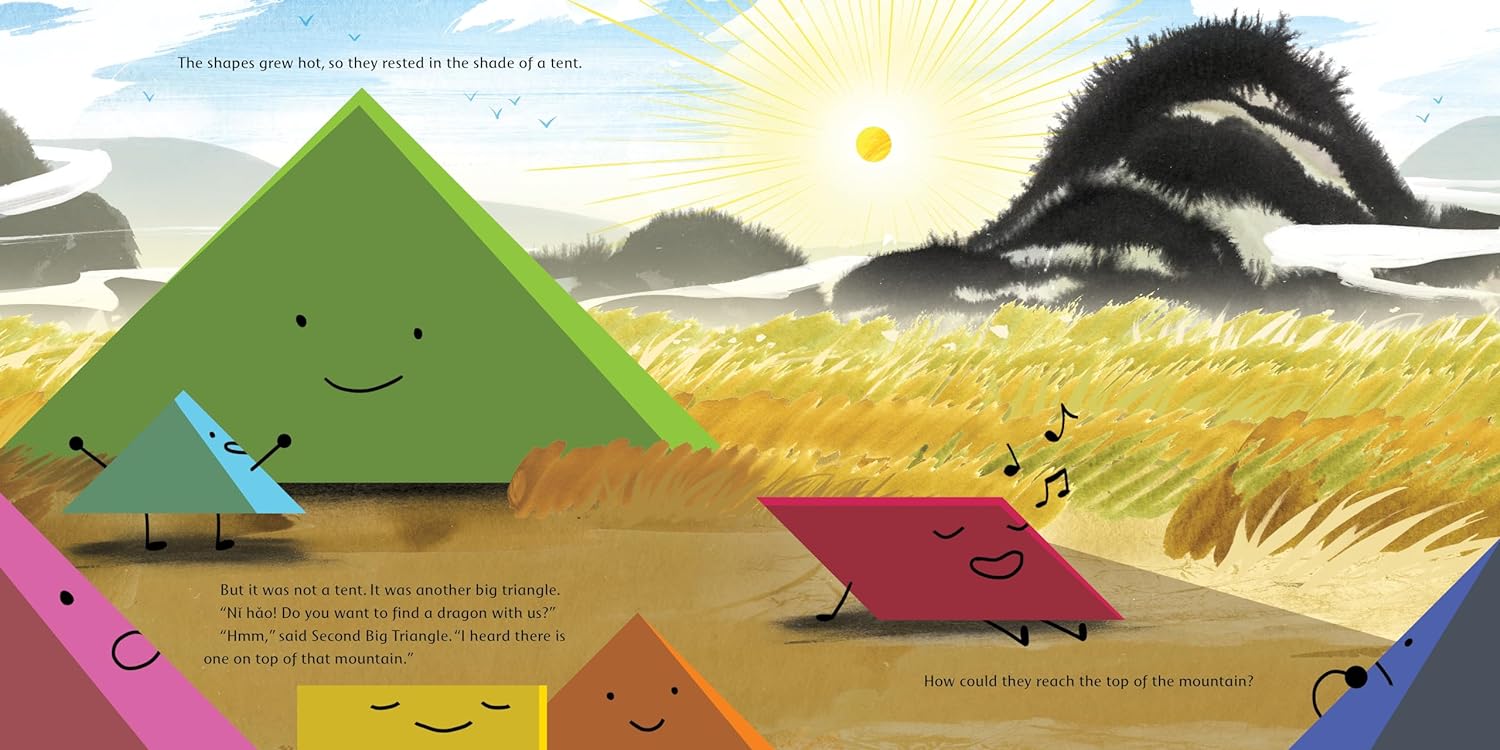
celebrate-picture-books-picture-book-review-the-quest-for-a tangram-dragon-tent

Illustration copyright Lynn Scurfield, 2024. Text copyright Christine Liu-Perkins, 2024. Courtesy of Bloomsbury Children’s Books.

While their search resulted in no dragon sightings, they did meet Medium Triangle, Big Triangle and Second Big Triangle. The group continued shape shifting and looked high and low, but they never spotted a dragon. At last, weary and dejected, the shapes were ready to give up their quest, but Little Triangle convinced them to try one more time.
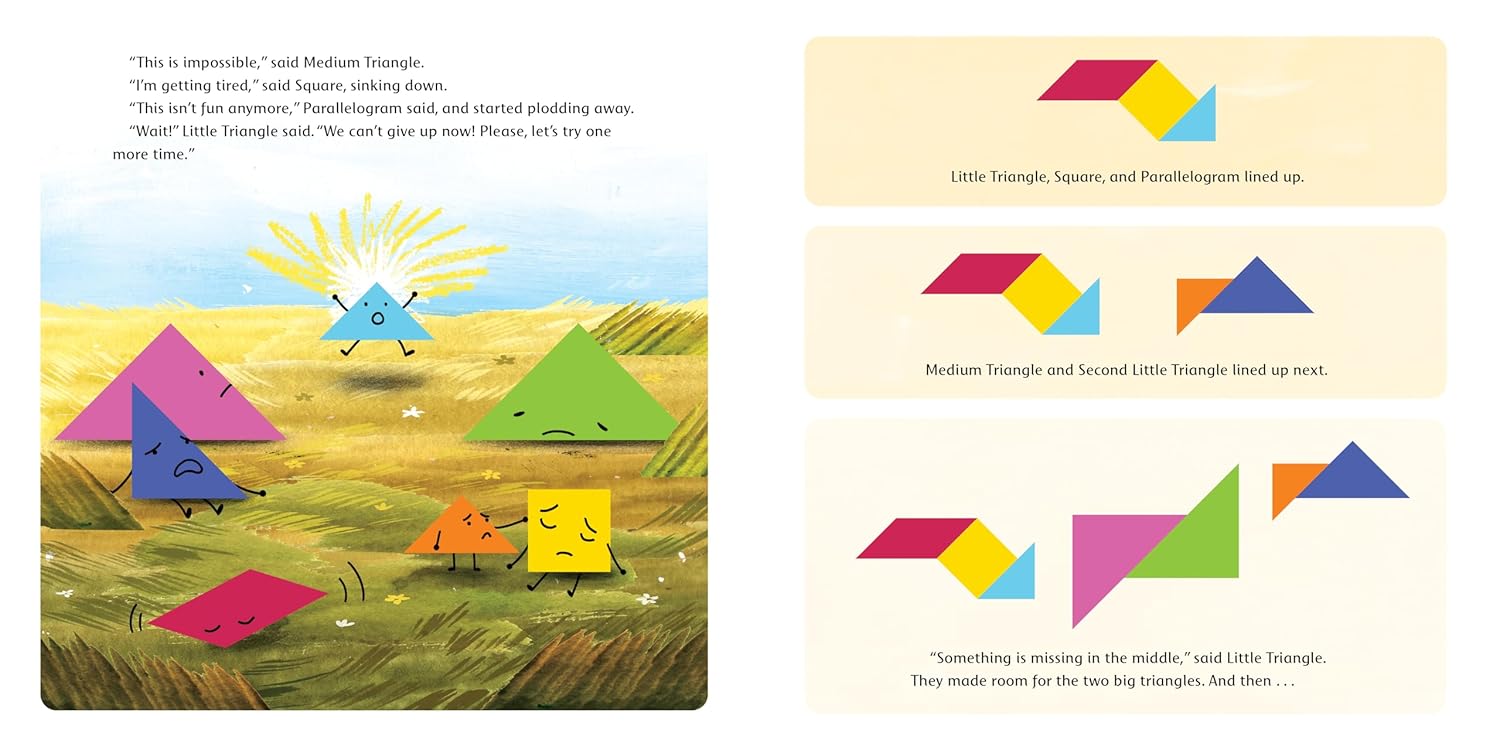
celebrate-picture-books-picture-book-review-the-quest-for-a tangram-dragon-getting-tired

Illustration copyright Lynn Scurfield, 2024. Text copyright Christine Liu-Perkins, 2024. Courtesy of Bloomsbury Children’s Books.

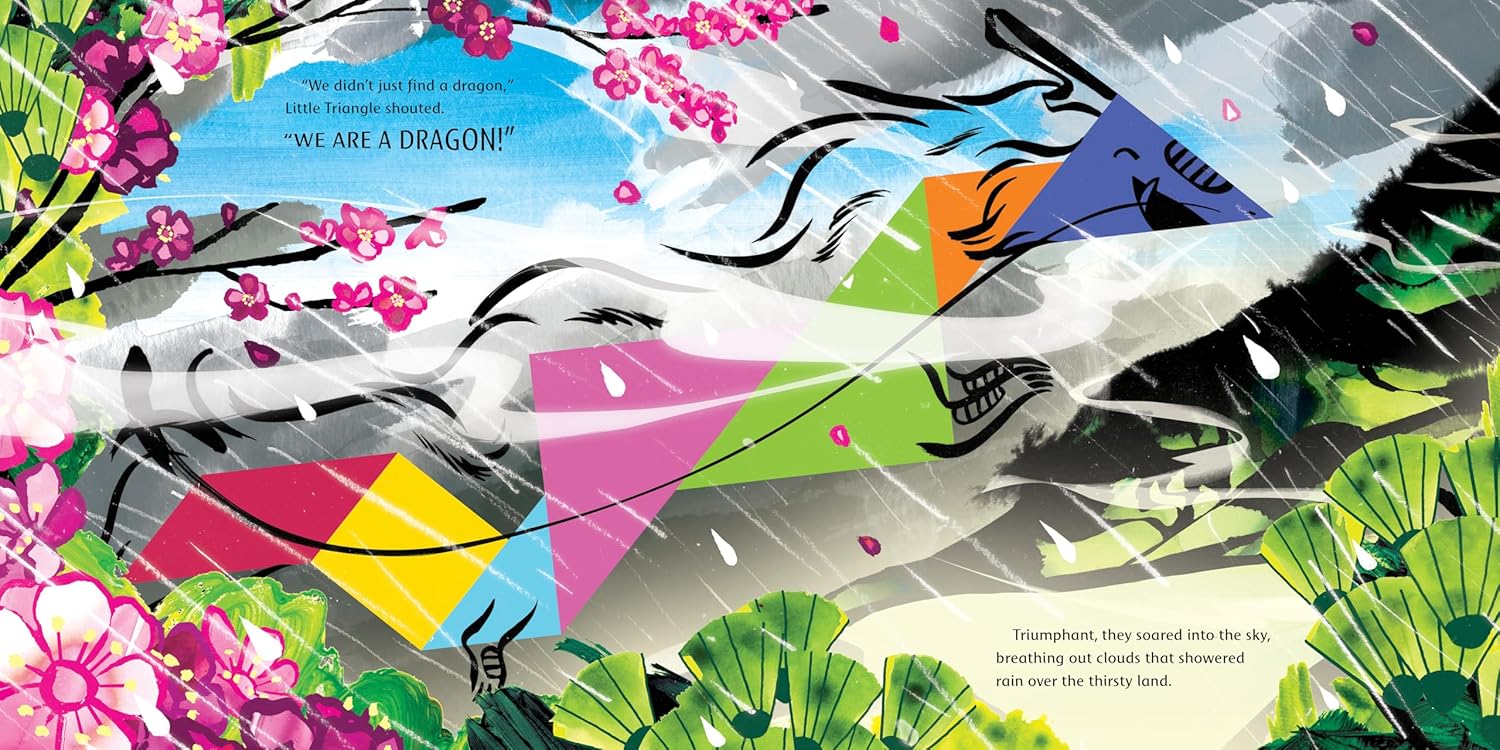
The shapes chose partners and lined up: Little Triangle, Square, and Parallelogram; Medium Triangle and Second Little Triangle; and Big Triangle and Second Big Triangle. Then they got in position and . . . discovered something amazing! They didn’t need to search for a dragon any longer—they were a dragon! “Triumphant, they soared into the sky, breathing out clouds that showered rain over the thirsty land.”

In an Author’s Note following the story, Christine Liu-Perkins explains how to use tans to create geographical configurations, noting that while traditionally all seven tans are used to make a tangram, with her book she wants to encourage young beginners to experiment with fewer tans while building skills. She also reveals the positive meanings of the animals created throughout her story in Chinese culture. She goes on to explain the history of tangrams as well as their value in teaching problem-solving skills, logical thinking, and a vast array of mathematical concepts.

A colorful set of the seven tans found in the story are included for readers to cut out from a flap on the book’s jacket.
celebrate-picture-books-picture-book-review-the-quest-for-a tangram-dragon-make-a-dragon

Illustration copyright Lynn Scurfield, 2024. Text copyright Christine Liu-Perkins, 2024. Courtesy of Bloomsbury Children’s Books.

Christine Liu-Perkins’ story will excite kids with an engaging and friendship-filled adventure while introducing them to the fun and creative power of tangrams. As the group grows with the addition of tans, Liu-Perkins uses consonance and rhyming to mirror the way tans can be flipped and swiveled to fit together to create different shapes. The mystery of which creatures or objects the friends will experiment with while seeking just the right one to extend their search will keep readers eagerly turning the pages.

Liu-Perkins layers her story with a series of obstacles the tans need to overcome in order to reach their goal. These include physical barriers, accidental mishaps, and even their own disappointment and exhaustion. As the tans work through these obstacles, kids see how cooperation, understanding, and communication build friendships and contribute to the success of any undertaking. Their final discovery of the dragon is a pleasure.

Set against lush natural backgrounds in Lynn Scurfield’s mixed-media illustrations, the colorful tans create a vivid focal point for kids to easily see what shapes they will make next. Simple lines and brushstrokes added to the tans convey emotion and flesh out distinguishing features of wings, ears, tails, and more for each animal created. The end papers and a two-page spread within the story provide plenty more tangram fun and inspiration.

The Quest for a Tangram Dragon offers simple, creative, and challenging fun that families can enjoy on a game night, relaxing afternoon, or even during a spontaneous break between chores or other activities. The book also makes a terrific addition to classrooms across grade levels to enhance math, problem solving, art, and social studies lessons. School and public libraries will also want to add The Quest for a Tangram Dragon to their collections. The book is especially suited for library interactive story times, combined with magnetic tangram tiles in play areas, and for circulating book and toy kits. For gift-giving occasions, you can’t go wrong coupling this book with a set of tangram tiles. 

Ages 5 – 8

Bloomsbury Children’s Books, 2024 | ISBN 978-1547608058

About the Author

Christine Liu-Perkins is a writer and researcher who specializes in Chinese history and culture. Her book At Home in Her Tomb: Lady Dai and the Ancient Chinese Treasures of Mawangdui unearths one of China’s top archaeological finds of the last century. She has a Ph.D. in educational psychology. Born in Boston and raised near Kansas City, Christine now lives in Colorado. Visit her at christineliuperkins.com.

About the Illustrator

Lynn Scurfield is a mixed media illustrator based just outside of Toronto, Canada, who has worked on a variety of projects in newspapers, magazines, comics, and children’s publishing. Her books include Friends Are Friends, Forever and Hold That Thought! Visit her at lynnscurfield.com.

Family Fun Month Activity
celebrate-picture-books-picture-book-review-dragon-pencil-case-front-eyes-down

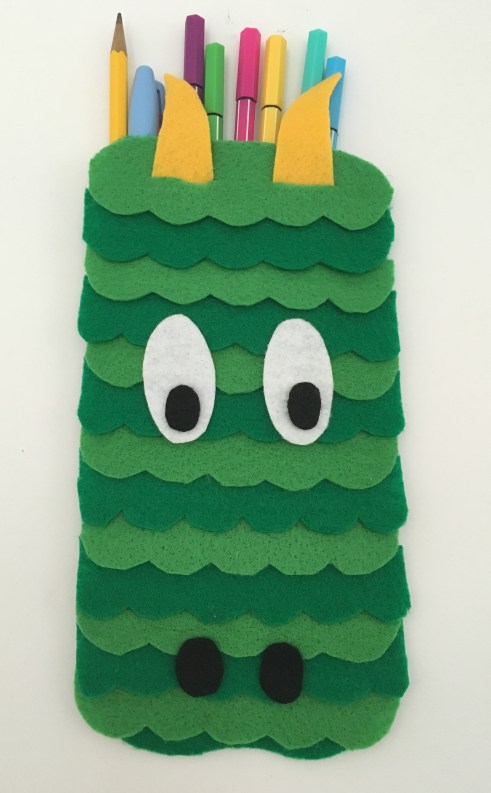
Dependable Dragon Pencil Case

You can always depend on a dragon to help out when needed! With this Dependable Dragon Pencil Case you’ll know just where your pencils, pens, markers, and other creative tools are when inspiration hits!

Supplies      

  • Printable Dragon Pencil Case Templates – Wings | Face
  • Sheets of felt, 8 ½-inch by 11-inch (foam & heavy stock paper could work too)
    • 2 Dark green (or color of your choice)
    • 1 Light green (or color of your choice)
    • 1 white
    • 1 black
    • 1 yellow (or color of your choice)
    • 1 purple (or color of your choice)
  • Fabric Glue
  • Scissors
  • Velcro (optional)
  • Green Thread and needle (if you would like to sew instead of glue your case)
  • Glitter glue (optional)

Directions

  1. Print the Dragon Templates
  2. Cut out alternating 7 rows of scales from the dark green felt and 7 rows of light green felt (One row of the template scales is longer so you can tile them as shown on double row of scales the template. You will trim them later.)
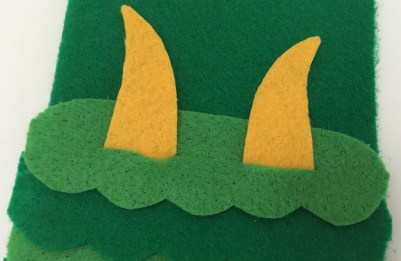
  3. To make the top of the head, cut a rounded top (instead of straight across—see picture).
  4. Cut the eyes from the white felt, pupils and nostrils from the black felt, horns from the yellow felt, and wings from the purple felt. Set aside.
celebrate-picture-books-picture-book-review-dragon-pencil-case-top-of-head

To make the head

  1. Fold one dark piece of felt in half lengthwise to make the pocket for your supplies
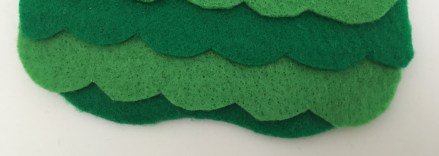
  2. Cut a wavy line along the bottom of the felt to make lips (see picture)
  3. Glue or sew the open side and bottom together, leaving the top open
celebrate-picture-books-picture-book-review-dragon-pencil-case-bottom-snout

To add the scales

  1. Starting at the bottom, lay one row of scales a little above the wavy bottom. Glue the top of the row to the folded pocket base.
  2. Overlap an alternating green row of scales on the first row, glue the top to the folded pocket base
  3. Continue alternating dark and light green scales until you reach 9 inches on the folded pocked base
  4. Use the rounded row of scales for the top of the head. See how to insert horns below before attaching the top of head.

To insert the horns

  1. On the rounded row of scales, mark where you want the horns to be
  2. Cut two small slits in the felt where the horns will go
  3. Insert the bottoms of the horns into the slits

To finish the head

  1. Glue the top of the head with horns to the folded pocket base
  2. Trim any longer rows of scales to meet the edges of the folded pocket base
  3. Add the eyes and nostrils to the face

To make a Velcro closure for the case

  1. Cut the base following the line of the rounded row of scales
  2. Glue or sew strips of Velcro along the inside edges

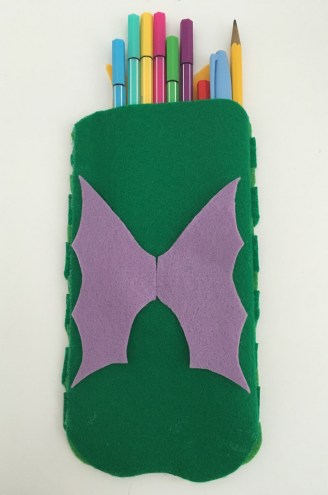
To attach the wings

  1. Turn the dragon case to the back
  2. Glue or sew the wings to the center of the back, attaching them at the center edge
  3. Outline or sprinkle the wings with glitter glue (optional)
celebrate-picture-books-picture-book-review-dragon-pencil-case-back


celebrate-picture-books-picture-book-review-the-quest-for-a tangram-dragon-cover

You can purchase The Quest for a Tangram Dragon at these booksellers

Amazon | Barnes & Noble | Bookshop (to support your local independent bookstore)

Picture Book Review

January 14 – World Logic Day

celebrate-picture-books-picture-book-review-lia-&-luís-who-has-more-cover

About the Holiday

World Logic Day, sponsored by UNESCO in association with the International Council for Philosophy and Human Sciences aims to raise awareness and appreciation of the intellectual history, significance, and practical uses of logic to the broad community of scientists as well as the public. Celebrations of the holiday center on promoting international cooperation, supporting the development and activities of logic within universities, research facilities, and schools, and enhancing the understanding of logic and its implications for science, technology, and innovation.

Lia & Luís: Who Has More? (Storytelling Math)

Written by Ana Crespo | Illustrated by Giovana Medeiros


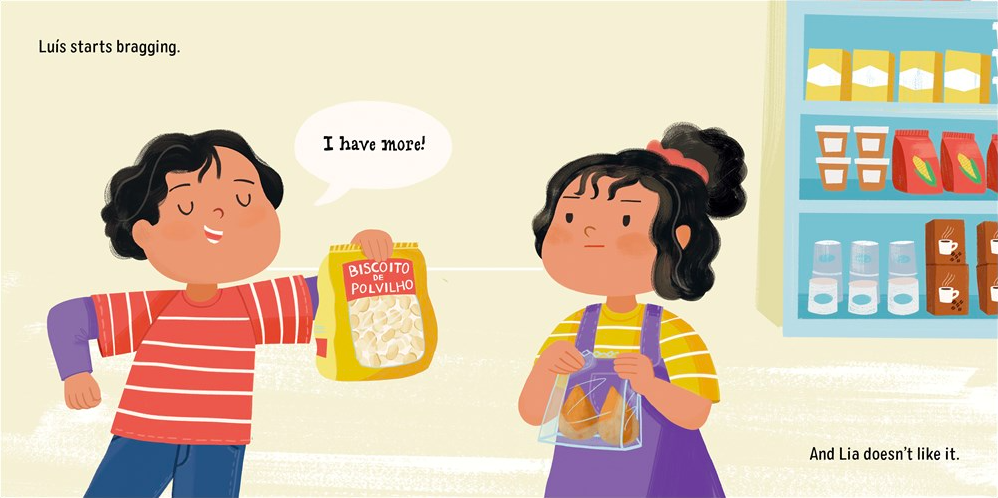
When Luís and his sister Lia were playing together, Luís worked quickly and bragged about the rickety tower he’d built. Lia didn’t really mind because she liked to take her time. Lia’s tower may have been shorter, but it stayed up longer. After playing, they ran “downstairs to their family’s store [to] pick their favorite Brazilian snacks.” Luís told his father, “I want biscoito de polvilho, Papai!” while Lia said, “Coxinhas de galinha, please!”

celebrate-picture-books-picture-book-review-lia-&-luís-who-has-more-bragging

Image copyright Giovana Medeiros, 2020, text copyright Ana Crespo, 2020. Courtesy of Charlesbridge.

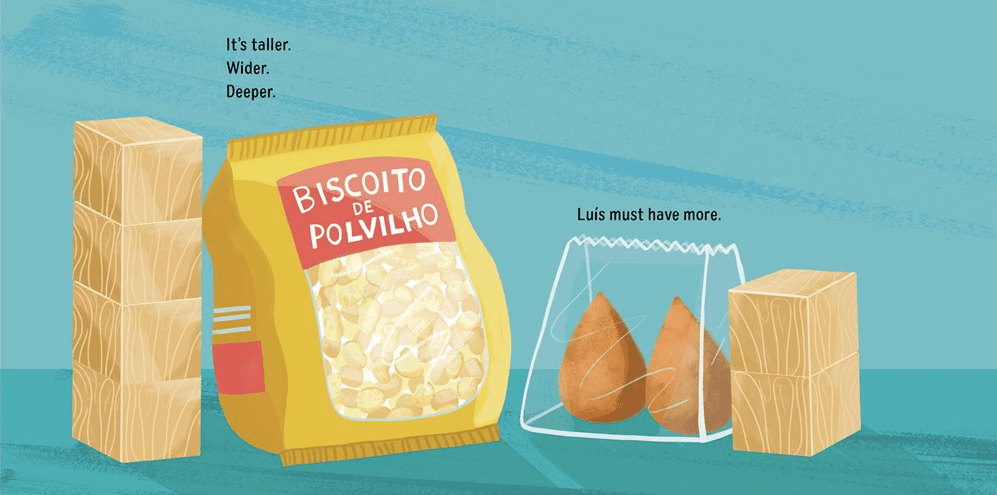
Papai handed Luís a bag of little nuggets and put two pear-shaped treats in a bag for Lia. Again, Luís began bragging, showing his sister that he had more than she did. This time Lia didn’t like it. But was Luís right? His bag was bigger than Lia’s. It was four blocks high and Lia’s bag was only two blocks high. Luís’s bag was also wider and deeper than Lia’s.

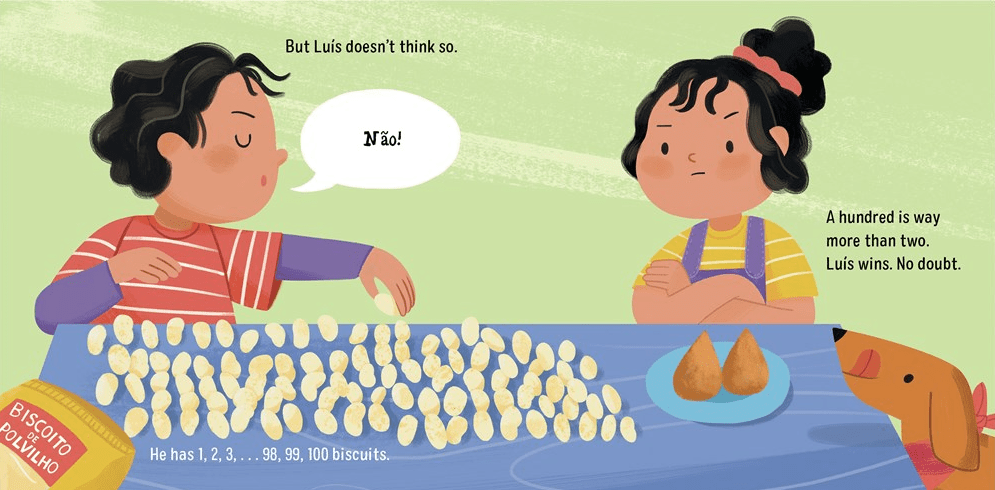
But Lia noticed something else. “Can’t you count?” she says then points out that she has two croquettes while her brother has only one bag. Could she be right about having more? Luís can’t leave this challenge unanswered, so he opens his bag and spills out the contents on the table. Lia looks at all of the tiny nuggets but is still unconvinced. She picks up a biscuit and a croquette. They are definitely different sizes and weights.

celebrate-picture-books-picture-book-review-lia-&-luís-who-has-more-biscuit-bag-taller

Image copyright Giovana Medeiros, 2020, text copyright Ana Crespo, 2020. Courtesy of Charlesbridge.

Luís begins to put a biscuit in his mouth, but Lia wants him to wait. “Para!” she tells him. Lia takes some time thinking about the problem. Finally, she has an idea. She gets the scale from the family store and puts her croquettes on one side and Luís’s biscuits on the other. The scale dips toward Lia; “she wins.” Lia doesn’t like seeing her brother so sad. She thinks again and has another idea. She breaks off a bit of a croquette and adds it to Luís’s biscuits. The scale balances! They eat up all their snacks. Will Papai give them mais?

Following the text readers will find a Glossary of Portuguese words used in the story and an Exploring the Math page, which describes the math concepts contained in the story as well as activities kids and adults can do to reinforce the math learning.

celebrate-picture-books-picture-book-review-lia-&-luís-who-has-more-one-hundred-biscuits

Image copyright Giovana Medeiros, 2020, text copyright Ana Crespo, 2020. Courtesy of Charlesbridge.

In her charming Storytelling Math book, Ana Crespo effectively uses siblings’ natural competitive spirit to explore concepts of comparing and measurement. These include size (and the comparatives taller, wider, deeper), quantity, and weight. As the story opens, Luís has built a taller tower than his sister, the image of which is later used to compare Lia’s snack to Luís’s. Crespo combines an engaged narrator plus dialogue sprinkled with Portuguese words that are organically defined to create a lesson in math that will keep readers turning the pages to see who actually does have more. As Lia and Luís try various methods to find an answer, kids can take time too to think about how they would solve the problem and discuss the idea of “more” and how they would define it. Lia and Luís may be competitive, but they’re also cooperative, making this a sweet sibling story as well.

Giovana Medeiros’s bright, crisp illustrations of these enthusiastic twins clearly depicts the math concepts discussed while also portraying the distinct personalities of Lia and Luís, inviting readers to root for one or the other or to just wait and see who wins. Medeiros includes lots of other opportunities to interact with math through counting the twins’ blocks, items on the shelves and in the display case of the family’s store, and the biscuits poured out on the table. Images of the balance scale allows kids to see how Lia’s croquettes weigh more and how adding a bit of one gives Luís the same amount by weight that Lia has. Speech bubbles and the characters’ actions help readers translate the Portuguese words themselves.

Sure to inspire kids to explore the cabinet, fridge, or classroom and engage with the math of comparing and measuring for themselves, Lia & Luís: Who Has More? would be a fun book to add to home, classroom, and public library collections to spark observations and experimentation that lead to deeper STEM learning.

Ages 3 – 6

Charlesbridge, 2020 | ISBN 978-1623541279 (Hardcover) | ISBN 978-1623541859 (Paperback)

Discover more about Ana Crespo and her books on her website.

To learn more about Giovana Medeiros, her books, and her art, visit her website.

World Logic Day Activity

Screen Shot 2021-01-13 at 4.21.02 PMcelebrate-picture-books-picture-book-review-lia-&-luís-who-has-more-activity-guide

Lia & Luís: Who Has More? Activity Kit


You can have fun experimenting with math using your toys, snacks, and other household items with the downloadable Activity Kit available on the Charlesbridge website!

celebrate-picture-books-picture-book-review-lia-&-luís-who-has-more-cover

You can find Lia & Luís: Who Has More? at these booksellers

Amazon | Barnes & Noble | Books-a-Million

To support your local independent bookseller, order from

Bookshop | IndieBound

Picture Book Review
March 8 – International Women’s Day

celebrate-picture-books-picture-book-review-hidden-figures-the-true-story-of-four-black-women-and-the-space-race-cover

About the Holiday

Today’s holiday is celebrated around the world and focuses on the social, economic, cultural, and political accomplishments of women. Spurred on by recent events and increased activism, this year’s theme is “Press for Progress: a Push for Gender Parity worldwide.” Rallies, performances, and discussions as well as special events and lessons in schools are just some of the ways that International Women’s Day is commemorated.

Hidden Figures: The True Story of Four Black Women and the Space Race

Written by Margot Lee Shetterly | Illustrated by Laura Freeman


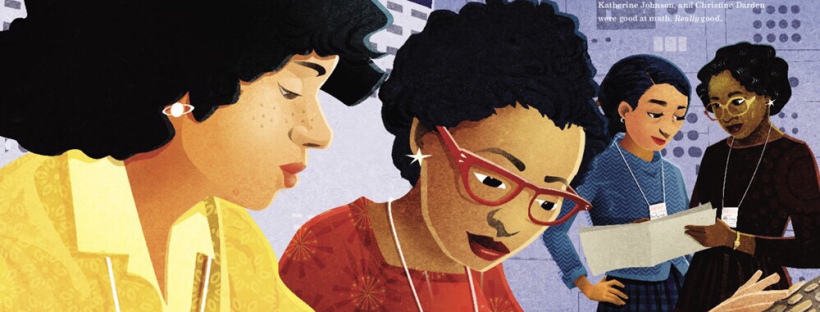
“Dorothy Vaughan, Mary Jackson, Katherine Johnson, and Christine Darden were good at math…really good.” The United States was involved in World War II, and Dorothy wanted to help the war effort by working for the National Advisory Committee for Aeronautics to make planes faster, stronger, and safer. Developing new airplanes required lots of tests at the Langley Laboratory in Virginia. Today, we use computers to do the kinds of math needed, “but in the 1940s computers were actual people like Dorothy, Mary, Katherine, and Christine.”

celebrate-picture-books-picture-book-review-hidden-figures-the-true-story-of-four-black-women-and-the-space-race-dorothy

Copyright Laura Freeman, 2018, courtesy of lfreemanart.com.

Even though Dorothy was a woman and an African-American in the segregated South, Dorothy did not think her dream of getting a job was impossible. After all, she was really good at math. She applied and was hired as a computer. At Langley, whites and blacks worked in different buildings and had separate facilities. After the United States won the war, Dorothy stayed on to create better aircraft.

Now America and Russia were in competition to build the best airplanes. This required more math, more tests, and more computers. Mary Jackson was hired at Langley to test model airplanes in wind tunnels. Mary had her sights set on becoming an engineer, but most of the engineers were men. To prepare, Mary needed to take advanced math classes, “but she was not allowed into the white high school where the classes were taught.” Mary didn’t take no for an answer. She got special permission to take classes, got good grades, and “became the first African-American female engineer at the laboratory.”

celebrate-picture-books-picture-book-review-hidden-figures-the-true-story-of-four-black-women-and-the-space-race-katherine

Copyright Laura Freeman, 2018, courtesy of HarperCollins.

In 1953 Katherine Jackson was hired for a team who tested airplanes while they were in the air. Her work was to analyze turbulence to make planes safer in dangerous gusts of wind. She wanted to go to her team’s meetings, but she was told by her boss again and again that it was impossible; women were not allowed to attend meetings. At last her persistence paid off, and she became the first woman to sign one of the group’s reports.

When machine computers were installed at Langley in the 1950s, they were faster than the human computers but made many mistakes. “Dorothy learned how to program the computers so they got the right answers and taught the other women in her group how to program too.”

In 1957 Russia launched a satellite into space, ramping up the competition with the United States. Now “the United States started building satellites to explore space too,” and the name of the agency was changed to the National Aeronautics and Space Agency or NASA. Then President John F, Kennedy set a goal of sending a man to the moon. First, however, there would need to be many experiments, new space craft, and tests to send astronauts into orbit. This meant more people who were good at math would be needed.

celebrate-picture-books-picture-book-review-hidden-figures-the-true-story-of-four-black-women-and-the-space-race-separate-offices

Copyright Laura Freeman, 2018, courtesy of lfreemanart.com.

When the first manned space flight was planned, Katherine calculated the trajectory that would take John Glenn into space and bring him home again. In 1967 Dorothy Darden came to work at Langley. She loved electronic computers and wanted to become an engineer. “Her first job was to help with NASA’s mission to the moon.”

When Neal Armstrong stepped onto the moon’s surface for the first time on July 20, 1969, he said it was a giant leap for mankind. “It was also a giant leap for Dorothy, Mary, Katherine, Christine, and all of the other computers and engineers who had worked at the lab over the years.” The moon landing was just the beginning. NASA engineers were already dreaming of trips to other planets and super-fast spacecraft. And although it would be hard and require a lot of numbers, “Dorothy, Mary, Katherine, Christine knew one thing: with hard work, perseverance, and a love of math, anything was possible.”

celebrate-picture-books-picture-book-review-hidden-figures-the-true-story-of-four-black-women-and-the-space-race-four-women

Copyright Laura Freeman, 2018, courtesy of HarperCollins.

Margot Lee Shetterly brings her compelling story Hidden Figures to children in this exceptional picture book that skillfully reveals the talents and dreams of Dorothy, Mary, Katherine, Christine as well as the work atmosphere and social injustices of the time period. While acknowledging the struggles and obstacles the four women faced, Shetterly keeps her focus on the incredible achievements of these brilliant women and the positive changes and opportunities for others they created. Brief-yet-detailed descriptions and explanations of math, science, and computer terms flow smoothly in the text, allowing all readers to understand and appreciate the women’s work.

As Dorothy, Mary, Katherine, Christine each begin their work at Langley as young women, Laura Freeman establishes their dreams and their particular field of expertise through richly colorful illustrations that highlight the schematics, tools, equipment, and models they used. In one particularly affecting spread, Dorothy, Mary, Katherine, and Christine go off to their offices on the left-hand side, and their white counterparts head out to theirs on the right-hand side while the blueprint of their building lies under their feet. Dorothy, Mary, Katherine, and Christine’s clothing is also mirrored in color by the women on the other side of the fold. Period dress and electronics show progression through the years, and kids may marvel at the size of early computers. The final image of Dorothy, Mary, Katherine, and Christine as older women is moving and inspirational.

Hidden Figures: The True Story of Four Black Women and the Space Race is an outstanding biography of four women who contributed their gifts for math as well as their self-confidence not only to science but to dreamers in their own and future generations. The book would be a stirring choice for classroom and home libraries.

Ages 4 – 8

HarperCollins, 2018 | ISBN 978-0062742469

Discover more about Margot Lee Shetterly and her books on her website.

To learn more about Laura Freeman, her books, and her art, visit her website.

International Women’s Day Activity

celebrate-picture-books-picture-book-review-women-in-stem-coloring-book

Women in STEM Coloring Book


Discover five women who broke barriers  and made important contributions to the science, technology, engineering, and math fields in this printable  Women in STEM Coloring Book created by the United States Department of Energy.


Picture Book Review
November 28 – It’s Picture Book Month

celebrate-picture-books-picture-book-review-my-first-book-of-patterns-cover

About the Holiday

Picture books are one of a child’s best gifts! As this month’s literary holiday draws to a close and the gift-giving season opens, consider giving books to the young children and even babies on your shopping list.  Head to your local bookstore to find plenty of exciting and inspiring titles for any child. Not quite sure what to get? Ask your bookseller for a recommendation!

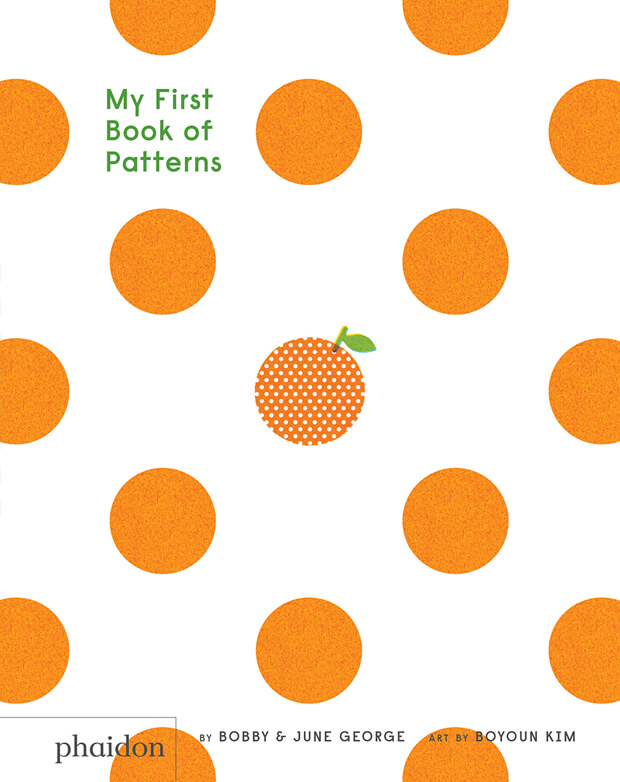
My First Book of Patterns

Written by Bobby and June George | Illustrated by Boyoun Kim


Patterns are part of learning from day one. As babies begin navigating and becoming alert to their world, they see, hear, and react to visual and linguistic patterns that inform and form their perceptions of their surroundings and their language. Sharing and making shapes and patterns with children also help them develop an early awareness and understanding of math concepts which translates into future success in school.

celebrate-picture-books-picture-book-review-my-first-book-of-patterns-diamond-and-line

Image copyright Boyoun Kim, 2017, text copyright Bobby and Jane George, 2017. Courtesy of Phaidon.

My First Book of Patterns introduces the youngest readers to nine types of shapes and patterns.. As the book progresses, the text follows its own pattern, allowing children to anticipate what words are coming and giving older listeners the opportunity to read along.

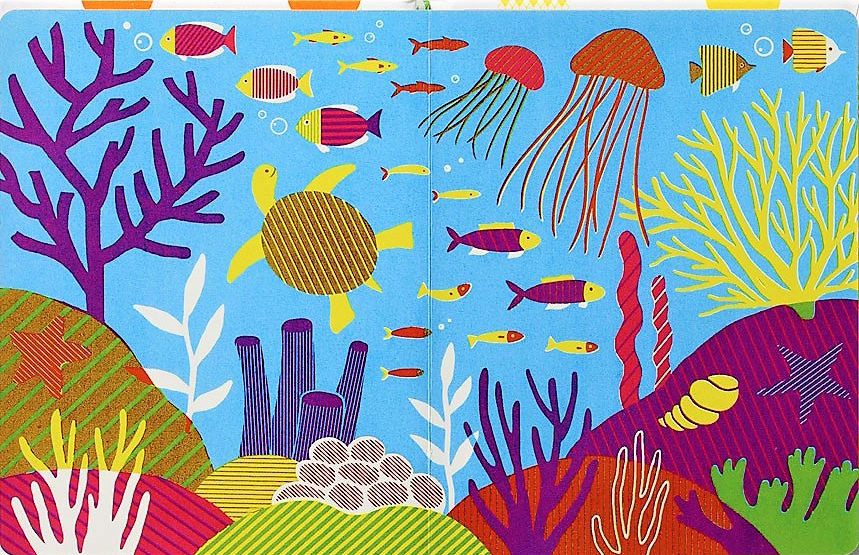
The eye-popping color and dynamic scenes will keep any child enthralled, whether you are sharing the book all at once or just dipping in for a page or two at a time. Speaking of which… let’s check it out! First up is that fundamental shape, the line! A single white line on a pink background is pretty neat, but “a lot of lines make… Stripes!” And stripes can be found all over the underwater landscape—on the turtle’s shell, marking the various rocks, decorating the jellyfish, and coloring the fish and coral.

celebrate-picture-books-picture-book-review-my-first-book-of-patterns-argyle

Image copyright Boyoun Kim, 2017, text copyright Bobby and June George, 2017. Courtesy of Phaidon.

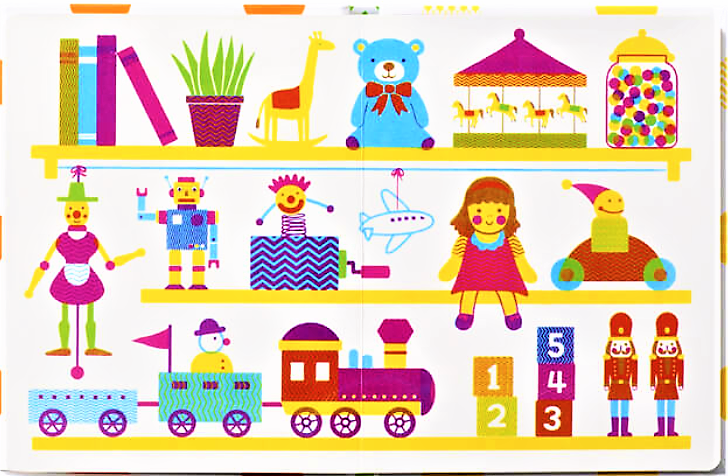
When that thin line is joined by a thick line and the pattern is repeated, they make plaid. And…Wow! A whole town made of plaid! Blue and purple plaid shirts; green, red, and yellow plaid skirts; plaid backpacks; plaid bags; plaid awnings; and even plaid buildings! This is one city that loooves plaid! Next, is a zig-zag. “A lot of zig-zags make…Chevron!” Look at all the toys decorated in chevron! Little cars, little trains, books, a jack-in-the-box, and blocks too! Hmmm…it seems there are also some lines in this toy shop. Do you think so, too?

celebrate-picture-books-picture-book-review-my-first-book-of-patterns-toys

Image copyright Boyoun Kim, 2017. Courtesy of Phaidon.

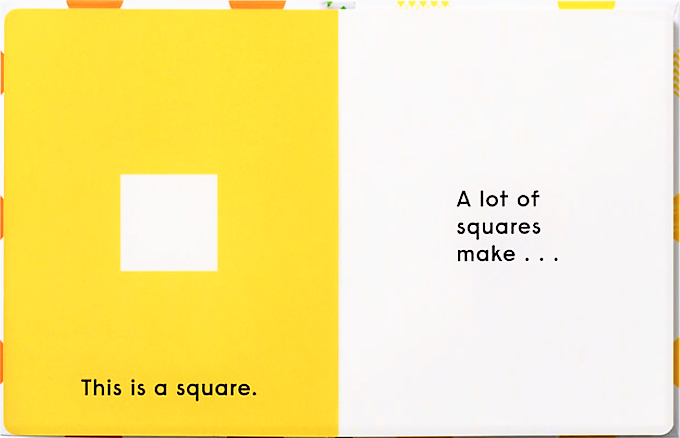
Ah, the square! “A lot of squares make…Checks!” Out on the ocean it’s a checkerboard extravaganza with sails, boats, and even the lighthouse all made out of checks. After the square comes the circle, and lots of circles are called polka dots. Polka dots make everything look cute—from placemats to bowls to vases to…fruit? You bet! Hey! Some of that fruit looks like an individual circle—pretty cool!

celebrate-picture-books-picture-book-review-my-first-book-of-patterns-ocean

Image copyright Boyoun Kim, 2017. Courtesy of Phaidon.

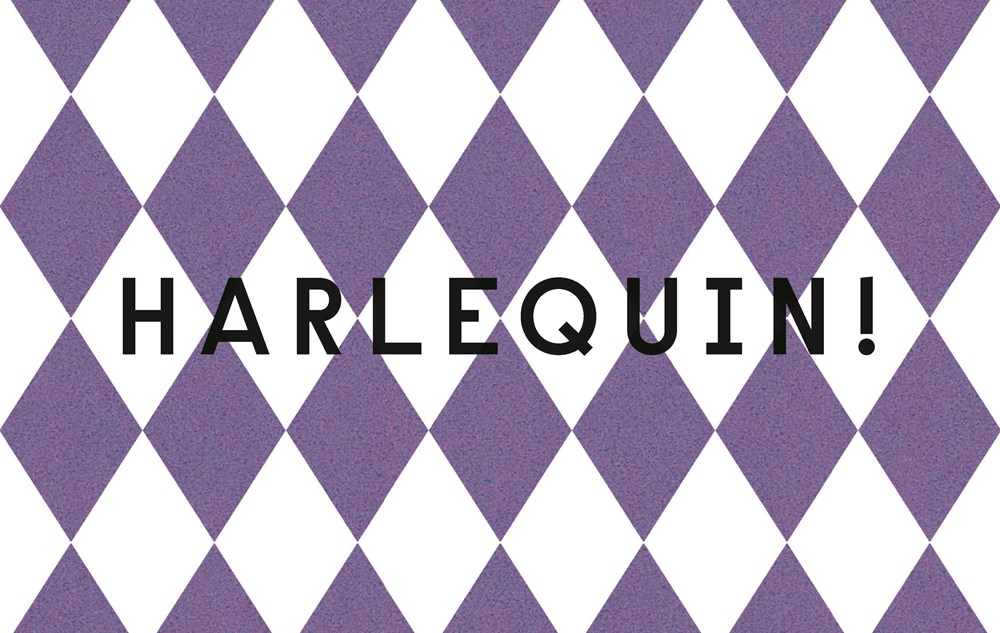
Now the shapes are getting a little more complex. Repeating diamond shapes make harlequin; patterns of diamonds and lines make argyle; connected hexagons form honeycomb; and topsy-turvy teardrops become paisley. And what do you get with a field of flowers? Floral, of course—which makes everything look like springtime!

Ready to go through them again? Open the gate-fold pages and find an ice-cream shop full of your favorite pattern flavor ready to enjoy again!

celebrate-picture-books-picture-book-review-my-first-book-of-patterns-square

Image copyright Boyoun Kim, 2017, text copyright Bobby and Jane George, 2017. Courtesy of Phaidon.

Bobby and June George, Montessori educators, present a book that is both straightforward and creative—inviting all children to interact with it in whatever way most resonates with them. Boyoun Kim’s stylistic illustrations add vitality and enthusiasm to each shape and pattern as the introductory pages allow children to see the basic shape or pattern and then give way to a two-page spread where the pattern can be found on a variety of objects.

celebrate-picture-books-picture-book-review-my-first-book-of-patterns-harlequin

Image copyright Boyoun Kim, 2017, text copyright Bobby and June George, 2017. Courtesy of Phaidon.

Like a scavenger hunt, these scenes also let little ones find the shapes, such as squares, circles, lines, rectangles, and triangles along the way or on repeated readings. There are also plenty of opportunities for adults to point out or allow their children to find other examples of patterns within the scenes.

My First Book of Patterns is a sturdy board book that makes it a great choice for babies and very young children and also for taking along on outdoor jaunts or for waiting times.

Ages 1 – 6

Phaidon, 2017 | ISBN 978-0714872490

To learn more about Bobby George and his work, visit his website.

Read more about June George and her Montessori school on the baan dek website.

Discover more about Boyoun Kim and view a gallery of her art work on her website.

Picture Book Month Activity

celebrate-picture-books-picture-book-review-book-worm-bookmark

Book Worm Bookmark


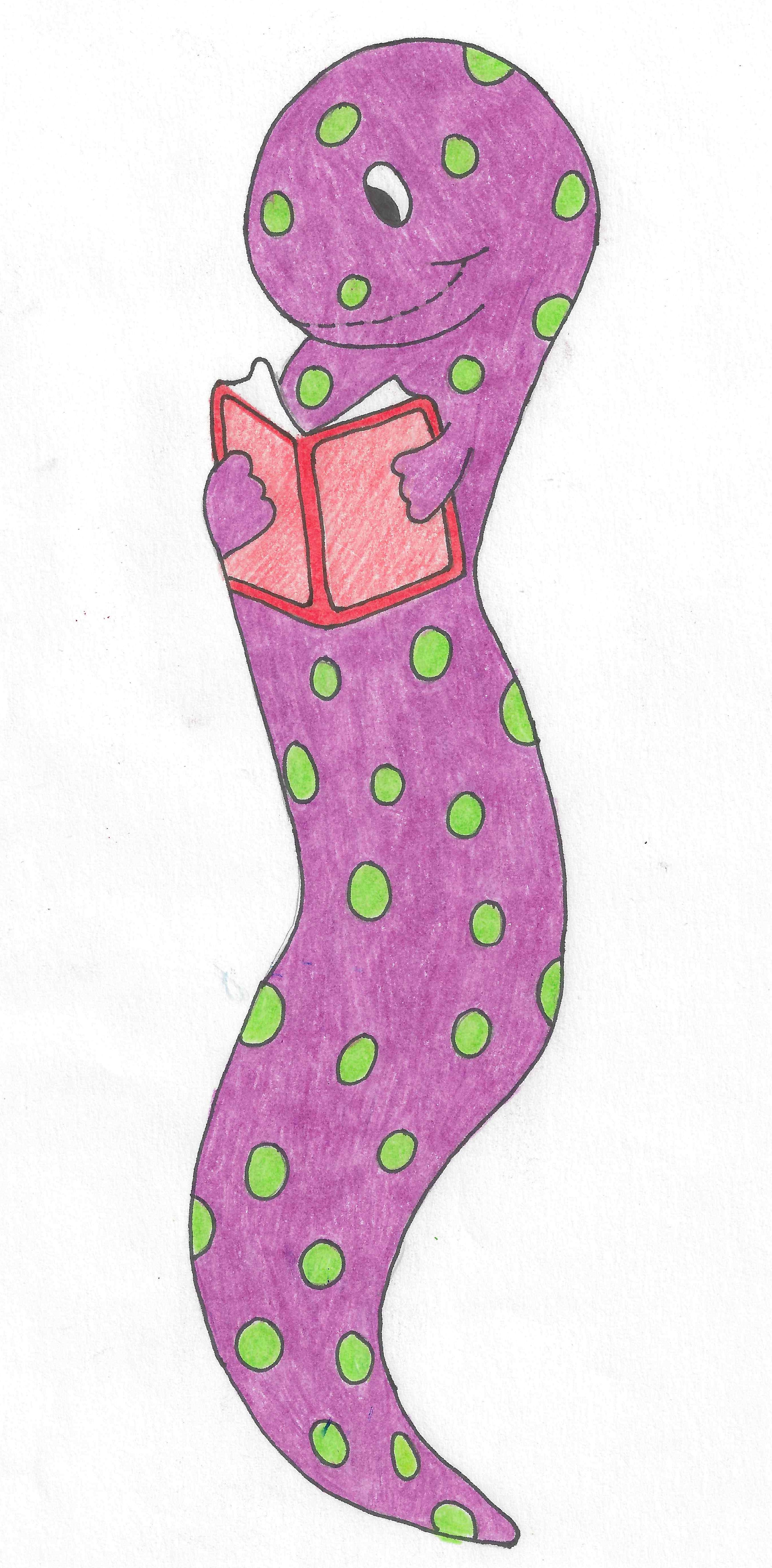
If you love books print and color this Book Worm Bookmark. This avid reader will help you keep your place in your favorite books!

Picture Book Review
November 11 – Origami Day

celebrate-picture-books-picture-book-review-more-igami-cover

About the Holiday

The art of paper folding known as Origami is enjoyed around the world and has it’s roots in paper craft traditions of Europe, China, and Japan. Once primarily used at ceremonies and special events, origami is now enjoyed by people of all ages around the globe. World Origami Days are held from October 24—which commemorates the birthday of Lillian Oppenheimer, the founder of the first American origami group and instrumental in the founding of the British Origami Society and Origami USA—to November 11, which is Origami Day in Japan. To celebrate today’s holiday create some origami figures of your own. Visit OrigamiUSA for more information and lots of templates to download and follow.

More-igami

Written by Dori Kleber | Illustrated by G. Brian Karas


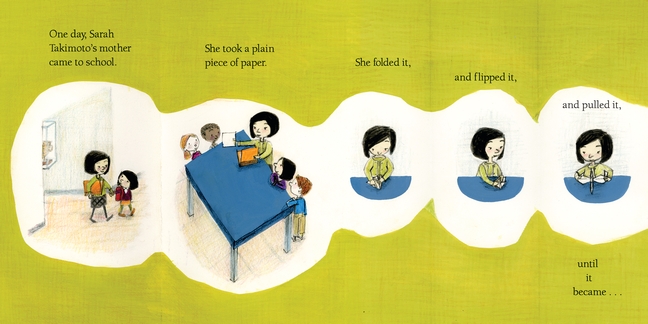
Joey was a little boy with a particular fascination. He was captivated by all things folded. At home he had a collection of “old road maps,” the bellows on an accordion made it his favorite instrument, and he even tucked himself into a foldaway bed at night. One day Joey witnessed the most amazing thing at school. Sarah Takimoto’s mother came to his class, and—right before the students’ eyes—folded, flipped, and pulled a plain white piece of paper “until it became…a crane.”

celebrate-picture-books-picture-book-review-more-igami-mrs-takimoto

Image copyright G. Brian Karas, text copyright Dori Kleber. Courtesy of Candlewick Press

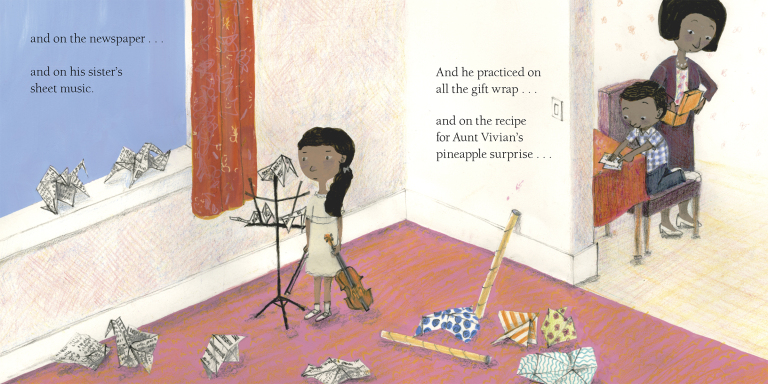
“Joey’s eyes popped. His jaw dropped. Mrs. Takimoto called it origami.” Joey was smitten. “‘I want to make origami,’” Joey told Sarah’s mother. “‘Will you teach me?’” Mrs. Takimoto  answered that while she could teach him the right folds, it would take practice and patience to become an origami master. Joey raced home that afternoon and began folding. When he ran out of notebook paper and construction paper, he used his homework…the newspaper…his sister’s sheet music…gift wrap… even “Aunt Vivian’s pineapple surprise” recipe card. But when he folded up all thirty-eight dollars in his mom’s purse, she put her foot down.

“Joey drooped.” His cranes were still coming out wrinkled and crooked, and he’d never be able to become an origami master without practicing. To soothe his disappointment, he headed next door to Muy Mexicana for some fajitas. Right away Mr. Lopez noticed Joey’s disgruntlement. When Joey explained that everyone was losing patience with him, Mr. Lopez said, “‘Many artists are misunderstood, amigo.’ Especially when they are just learning.’” Mr. Lopez went into the kitchen, and when he came out with the sizzling fajitas, he was delighted to see a napkin pyramid sitting on the table.

celebrate-picture-books-picture-book-review-more-igami-folding-sheet-music

Image copyright G. Brian Karas, text copyright Dori Kleber. Courtesy of Candlewick Press

Joey apologized, but Mr. Lopez thought it made the table look fancy. In fact, he liked it so much that he had Joey fold every napkin on every table. After that, Joey went to Muy Mexicana each day following school and folded the napkins into decorative shapes. One day he made fans, the next candlesticks, and the day after that, crowns. He patiently worked until each one was perfect.

Finally, he felt ready to attempt his original challenge. “He took a crisp napkin. He folded. He flipped. He pulled.” When he was finished, a perfect crane sat in front of him. Just then a girl with a paper fan walked in. Her eyes widened as they zeroed in on Joey’s crane. Joey offered to show her how to make it, but warned, “‘It takes practice—and lots of patience!’”

celebrate-picture-books-picture-book-review-more-igami-crane

Image copyright G. Brian Karas, text copyright Dori Kleber. Courtesy of Candlewick Press

Dori Kleber’s unique multicultural story of a little boy who finds the perfect creative outlet for his singular interest will captivate kids who are just beginning to try their own hands at favorite hobbies, schoolwork, or other pursuits. With humor and honest depictions of Joey’s frustration and persistence, Kleber shows readers that practice and patience really do pay off. As Joey meets another folding enthusiast, kids will see that there are always others with whom to share favorite pastimes.

Opening More-igami to the first page where Joey sits gazing lovingly at a taco with a folded napkin next to his plate, readers will know they are in for something special. As always, G. Brian Karas’s characters are enthusiastic, encouraging, and adorable. Readers will empathize with Joey as they watch him folding and folding, and giggle at the many, many practice cranes that litter his home, even perching atop his sister’s music stand and appearing in his mom’s purse.

Karas makes full creative use of the origami theme in his clever page designs and illustrations, beginning with the square shape of the book itself and the origami paper-styled endpapers. Vivid, solid-color background pages are divided diagonally, vertically, or horizontally with subtle changes in hue or nearly invisible lines. In depictions of Joey’s school, home, and favorite restaurant, diagonals, angles, and sharp edges predominate: tables and floors create triangles on the page; windows, walls, and doors divide pages into shapes associated with the steps of origami’s folded creations; and floor tiles, the sidewalk, and even Joey’s shirt portray grid lines. The color schemes of each page, inspired by the patterns and shades of origami paper, are dazzling and unite the varied aspects of this special book.

For any child undertaking a new activity or venture, More-igami is a charming and encouraging companion on the way to proficiency—one that would make a wonderful home library and classroom addition.

Ages 4 – 8

Candlewick Press, 2016 | ISBN 978-0763668198

To learn more about Dori Kleber and her writing, visit her website!

G. Brian Karas has a whole gallery of illustrations, books, information, and “what nots” on his website!

Origami Day Activity

celebrate-picture-books-picture-book-review-origami-penguin-template

Origami Pets


Origami is a fun hobby that can grow in complexity as you gain skill. Here are two templates to get you started! All you need is a square piece of paper and—if you’d like to decorate your piece—some markers or colored pencils.

Puppy Template | Penguin Template

Picture Book Review

August 14 – It’s Family Fun Month

celebrate-picture-books-picture-book-review-circle-triangle-elephant-cover

About the Holiday

Every month can be full of family fun, but in August we take time to celebrate the longer, more relaxed days during summer vacation that can lead to special times together. Little ones especially love having fun while exploring and learning about the world. This month look for those spontaneous or planned moments that make good memories!

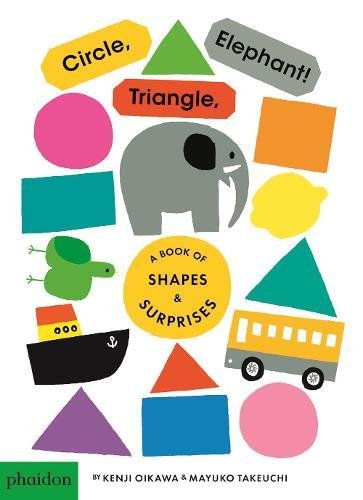
Circle, Triangle, Elephant! A Book of Shapes & Surprises

By Kenji Oikawa and Mayuko Takeuchi


This brightly colored concept book is sure to intrigue little learners and have them giggling while discovering and pointing out shapes, colors, and even doing some counting. On the first page a regular stack of shapes are presented: “triangle, circle, square.” A large blue square gives support to a smaller pink circle while a smaller red triangle creates a bit of a hat on top. The next page rearranges this order and replaces the square with a rectangle. The circle is still pink, but it’s larger and on top. Underneath is an orange rectangle, and balancing these two shapes on its tip is the triangle, now purple.

celebrate-picture-books-picture-book-review-circle-triangle-elephant-elephants

Copyright Kenji Oikawa and Mayuko Takeuchi, 2017, courtesy of Phaidon Press.

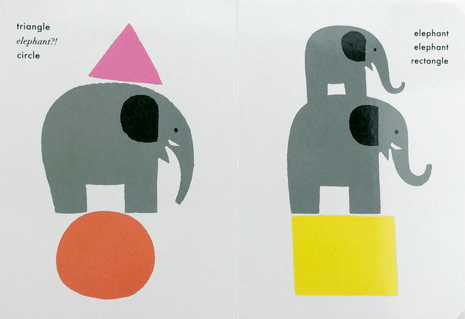
Turning the page, we find: “triangle, elephant?!, circle” Wait, what?! Oh my! This does shake things up a bit! How did that elephant get between a pink triangle and a red circle? And he’s brought his family! On the next page we find a small elephant standing on a larger elephant who’s standing on a yellow rectangle. I’m sure they’re just passing through and we’ll be back to regular shapes in a second.

celebrate-picture-books-picture-book-review-circle-triangle-elephant-boats

Copyright Kenji Oikawa and Mayuko Takeuchi, 2017, courtesy of Phaidon Press.

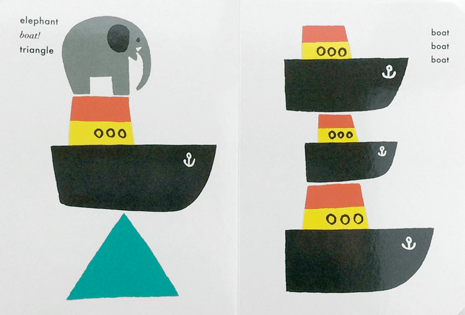
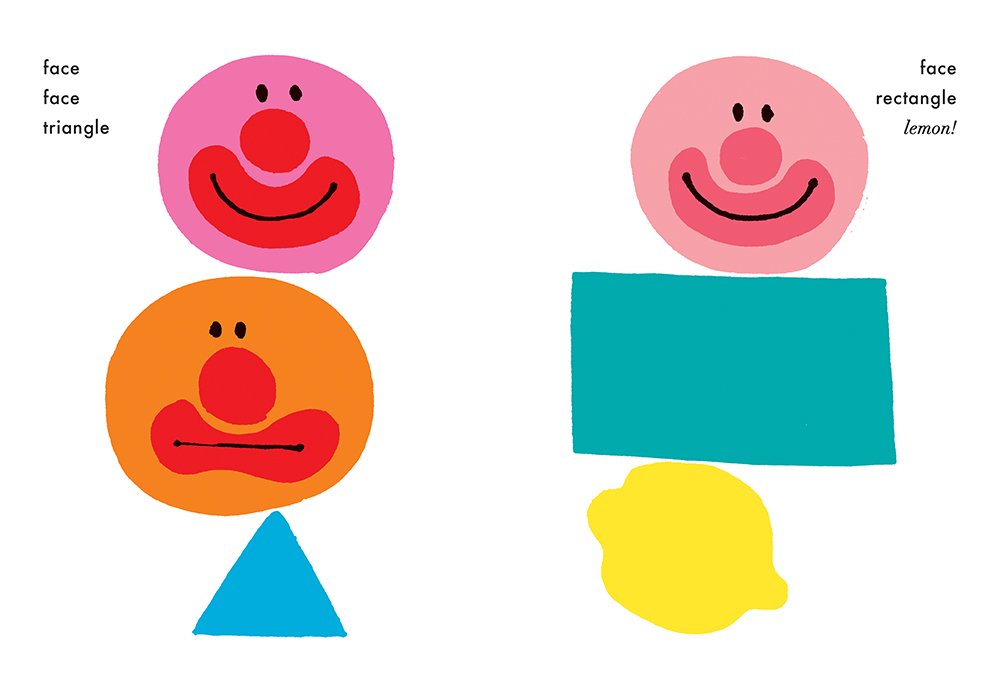
Maybe if we turn the page really fast… “elephant, boat!, triangle” Oh! I see, the little elephant is taking a boat ride home, but they have run aground on a teal triangle. Here come “boat, boat, boat” to help! Ah, good! The elephants are safely on their way now. One more boat to go and we’ll be back to… “triangle, face! square.” That’s no ordinary face—it’s cute and clownish. A bit like a jack-in-the-box, really, the way it’s resting on a blue rectangle and wearing a yellow triangle at a jaunty angle.

celebrate-picture-books-picture-book-review-circle-triangle-elephant-faces

Copyright Kenji Oikawa and Mayuko Takeuchi, 2017, courtesy of Phaidon Press.

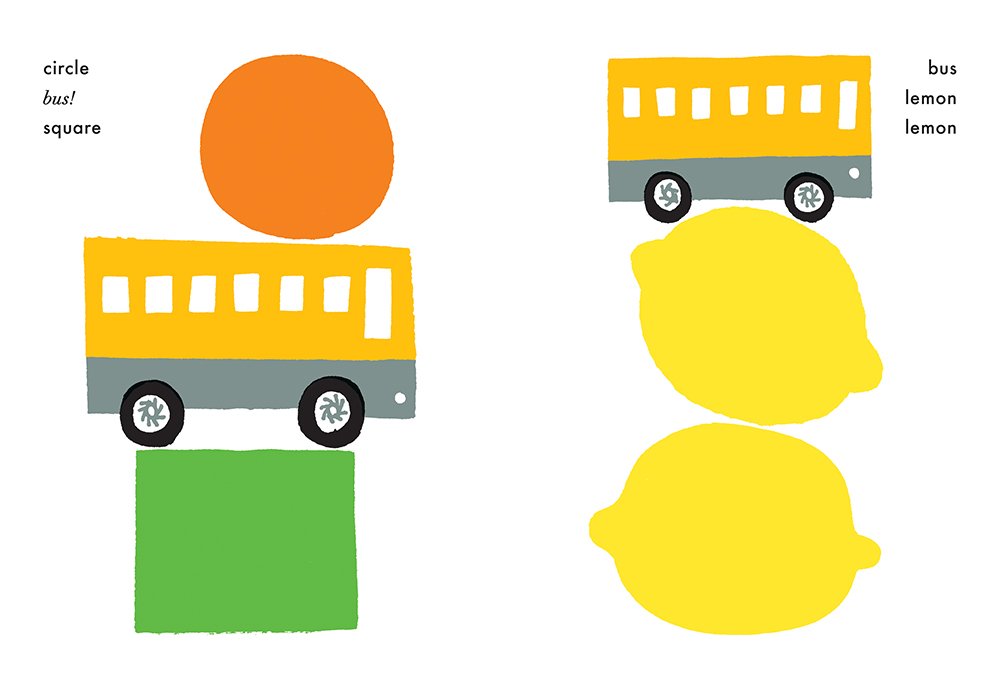
Okay, okay, on the next page there are… a couple more faces bouncing on a pointy triangle. I hope they’re not balloons! And on the facing page is our original face stacked with a very pretty green rectangle and a bright yellow lemon! Oh! The next page is nice. It makes a bit of a picture: the orange sun is shining above a bus that’s traveling on a green square carpet of grass. Uh-oh! The bus has gone a little off course. On the next page it’s driving on top of two big lemons. “bus, lemon, lemon.” Is that even possible?

celebrate-picture-books-picture-book-review-circle-triangle-elephant-bus-lemons

Copyright Kenji Oikawa and Mayuko Takeuchi, 2017, courtesy of Phaidon Press.

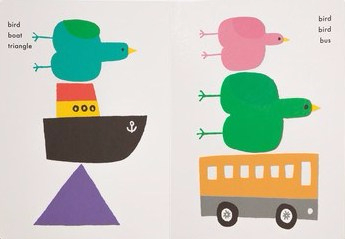
Hmmm… what’s this next one? “square, square, square.” Not quite as exciting, you think? Maybe, but look! The top square is yellow, the bottom square is red, and the middle square is…? Orange, right! Good job! Oh this is fun! All right, next we have “square, bird, rectangle” and after that “bird, boat, triangle.” On the facing page a small pink bird and a larger green bird are racing that bus. Go, “bird, bird, bus.”

You know what this book could use? A hat. And there it is! Just around the corner: “hat!, square, bus.” Haha! You’ll love the next page: “hat, hat, elephant.” That elephant looks so dapper wearing two hats. Let’s see what else we can find. Awww! Next there’s “square, triangle, fish!” And what a cutie—blue with little green dots! I guess it’s time to wind this fun down with “triangle, circle, square” and two elephants who would each like to say goodbye with their own very colorful triangles and circles.

celebrate-picture-books-picture-book-review-circle-triangle-elephant-birds

Copyright Kenji Oikawa and Mayuko Takeuchi, 2017, courtesy of Phaidon Press.

Kenji Oikawa and Mayuko Takeuchi have created a concept book that will get little ones excited about learning the names of shapes, colors, and various objects. An enthusiastic reading will have kids laughing and wanting to read along as adults talk with them about what they see on each page. Cleverly constructed, the book invites deeper thought about the shapes and colors presented. The shapes come in different sizes and can also be found within the boat, face, bus, birds, fish, and elephant. Children may discover—on their own or with a bit of help—that with a few adjustments parts of the lemons, elephant, fish, and hats contain or could be made into circles, triangles, squares, or rectangles.

The colors of the shapes and objects are vibrant and eye-catching. The primary colors are all here, but so are the secondary colors and other beautiful mixtures that could lead to an opportunity to get out paints and have fun while experimenting and learning about color.

Circle, Triangle Elephant! A Book of Shapes & Surprises is a wonderful first shapes and colors book for children. It would make a great gift for baby showers, new babies, or toddlers. The sturdy board book is perfect for tucking away in a diaper bag to bring out during waiting times or outdoor activities.

Ages 1 – 5

Phaidon Press, 2017 | ISBN 978-0714874111

Family Fun Month Activity

celebrate-picture-books-picture-book-review-food-color-craft

Water Color Fun

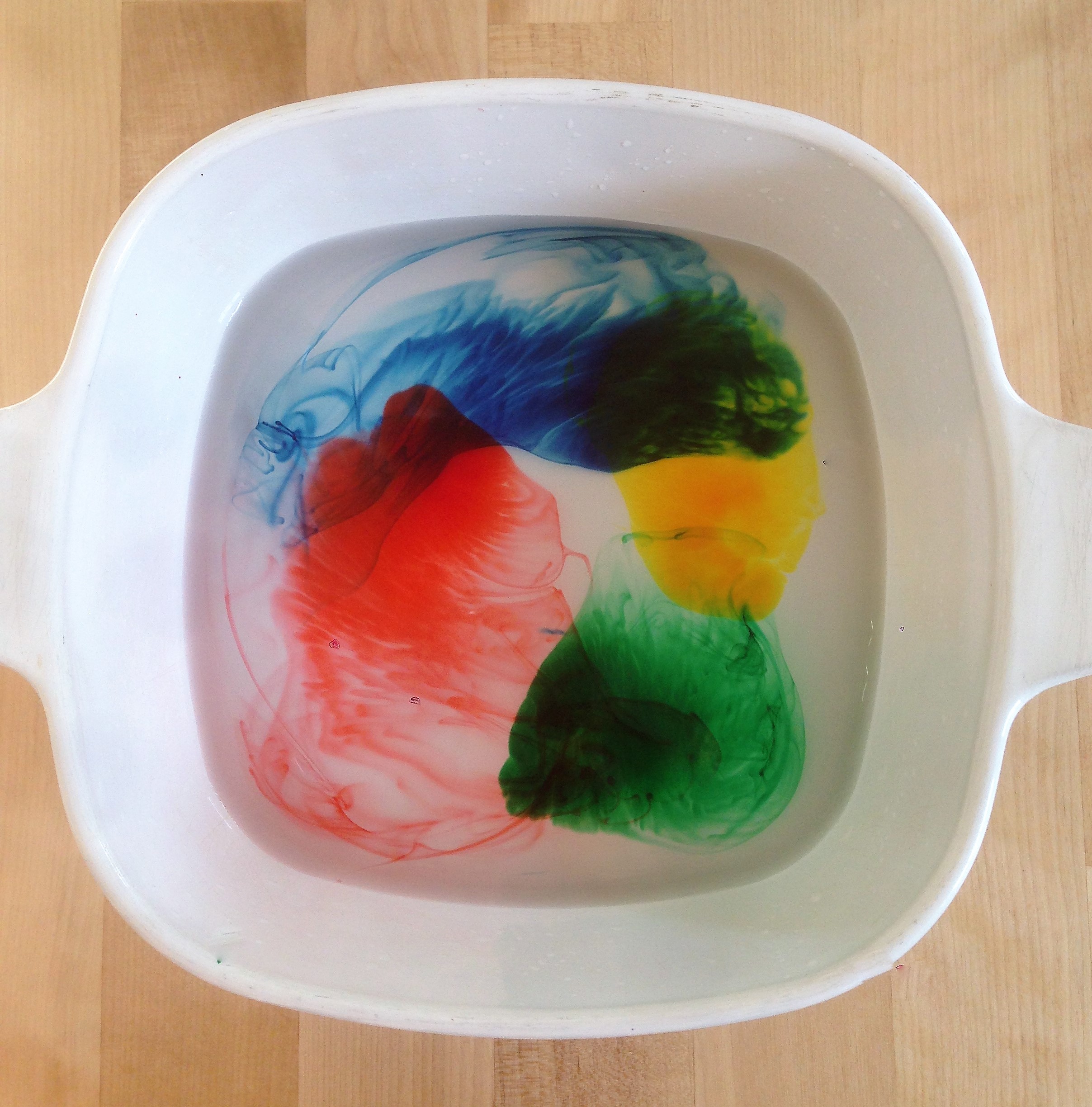
A splish-splashy way to let kids experiment with colors is to let them explore with a tub or sink full of water and some food coloring. As they drip individual colors into the water, the colors spread, mixing with each other to form new colors.

Supplies

  • A plastic tub, a sink, or a bathtub
  • Food color – one multi-color box
  • An apron or old clothes
  • A spoon or other utensil to mix colors

celebrate-picture-books-picture-book-review-food-color-craft-2

Directions

  1. If the child is young and playing at the sink while standing on a stool or chair, adult supervision is advised.
  2. Fill the tub or sink 1/3 to 1/2 way with cool water
  3. Allow child to choose a color from the box
  4. Let the child squeeze the bottle, dropping a bit of color into the water
  5. Let the child choose another color
  6. Before adding this color to the water, talk with your child about what they think will happen when the two colors mix together.
  7. Let the child drop the new color into the water a small distance from the first color
  8. Allow the colors to mix naturally or with a spoon.
  9. You can mix colors in different corners or sections of the tub or sink to see, for instance, what happens when yellow and red food color or blue and red food color mix. What happens if all the colors are mixed together?
  10. Discover your own questions to explore!

Picture Book Review

April 19 – It’s Mathematics Awareness Month

The Boy Who Loved Math: The Improbable Life of Paul Erdős by Deborah Heiligman and LeUyen Pham picture book review
About the Holiday

If you think numbers are numero uno then Math Awareness Month is for you! During April mathematicians, engineers, and all techie types are honored for their contributions to the advancements in science, medicine, computer technology, environmental concerns, and other areas. It’s also a great time to explore and experiment and discover all the benefits of being a numbers-oriented person. This year’s theme is “The Future of Prediction.” Activities will explore how math and statistics are the future of prediction, providing insight and driving innovation. 
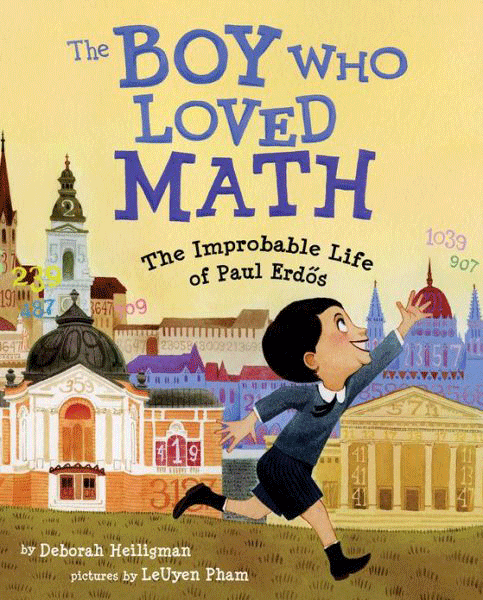
The Boy Who Loved Math: The Improbable Life of Paul Erdős

Written by Deborah Heiligman | Illustrated by LeUyen Pham


In Budapest, Hungary a boy is born who loves math. His name is Paul Erdős and he lives with his mother, who loves him “to infinity” just as Paul loves her. When she goes back to work as a math teacher, she leaves Paul with Fräulein, his nanny. Fräulein loves rules and tries to get Paul to sit still, eat all his lunch, take a nap—to obey. But Paul hates rules.

At three years of age he teaches himself to count the days until his mother will be home with him 100 percent of the time. Knowing the number makes Paul feel better as his head is constantly full of numbers and what they can do. One day when he is four years old, he meets a woman and asks her two questions—what year she was born and at what time. When the woman tells him, it only takes him a moment to reveal how many seconds she has been alive.

He continues to play with numbers, learning more and more about the various types. He decides he will be a mathematician when he grows up. When Paul is old enough to go to school, he once again encounters rules he can’t abide. His mother decides he will be schooled at home, and even though this means more time with Fräulein, Paul considers it the better option.

There’s just one thing – while Paul thinks about numbers, Fräulein and his mother do everything for him. At meals they cut his meat and butter his bread; they dress him, and tie his shoes. When he becomes a teenager, he goes to high school and meets other kids who love math. He and his friends spend all their time doing math and by the time Paul is 20 he is famous around the world for his math equations.

There’s just one problem – even as an adult, Paul is so focused on numbers and math that he still doesn’t know how to do basic things for himself. When he is 21 he’s invited to go to England to work. At his first dinner there he stares at his bread and he stares at his meat. What is he supposed to do? With a little experimentation, he figures it out, but he also figures out that he sees the world in a different way.

He doesn’t want a normal life with a family and a house and a regular job. He designs for himself a very unusual lifestyle. Everything he owns fits into two suitcases, and with a little money in his pocket he flies from city to city to do math. He knows so many mathematicians that wherever he goes they invite Paul to stay with them. These families take care of Paul just as his mother and Fräulein had! They do his laundry, cook his meals, and pay his bills.

But even so, everyone loves “Uncle Paul!” He brings people together and shares his knowledge. His work in mathematics has given the world better computers, better search engines, and better codes for our spies to use. He was so admired that even now people represent their relationship with Paul by giving it a number – the “Erdős number.” Paul was a unique person who counted numbers and people as his best friends and experienced the world in a way that added up to a very special life.

Reading Deborah Heiligman’s The Boy Who Loved Math is a liberating experience. Her biography reveals not just what Paul Erdős did, but the quirky genius he was. It also honors all the people around the world who embraced his personality, allowing Erdős to focus on the work he was born to do. Heiligman’s engaging patter, full of interesting anecdotes, humor, and personality, is storytelling at its best and provides an absorbing look at a very unique life.

LeUyen Pham’s illustrations perfectly complement the text, exposing Erdős’s chafing under rules, his delight in math, and his development from youth to old age. Each fascinating page cleverly represents the way Erdős saw the world as numbers, equations, and geometric shapes appear on buildings, domes, and even in the very air! The text too is infused with numerals and mathematical symbols (“Paul loved Mama to ∞, too!), making this a prime book for any math lover!

Ages 5 – 9

Roaring Brook Press, 2013 | ISBN 978-1596433076

Mathematics Awareness Month Activity

CPB - Math Mystery Phrase


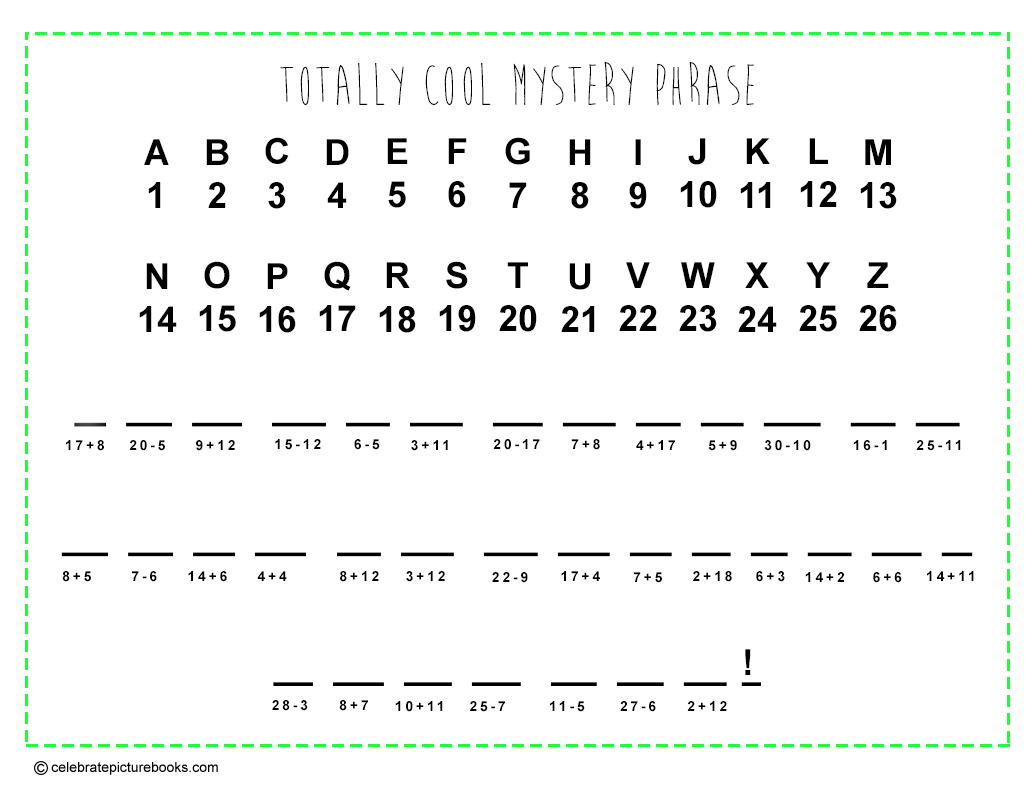
Totally Cool Mystery Phrase! Puzzle


What plus what equals an equation that can’t be beat? You and numbers, of course! Complete this Printable Totally Cool Mystery Phrase! puzzle to discover a coded sentence! Here’s the Solution!