February 7 – Girls and Women in Sports Day

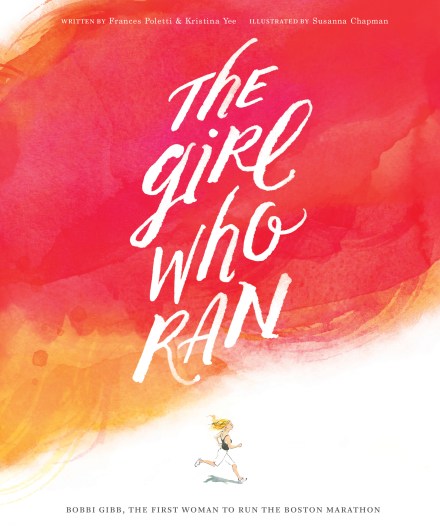
celebrate-picture-books-picture-book-review-the-girl-who-ran-cover

About the Holiday

Celebrating its 32nd anniversary, National Girls and Women in Sports Day honors all of the girls and women involved in sports at all levels and highlights their extraordinary achievements. It also raises awareness of the positive influence sports can have on those who participate. This year’s theme is “Play Fair, Play IX,” providing a reminder of Title IX, which “ensures that all students receive educational opportunities free from discrimination based on sex.” While programs have expanded for female athletes since the inception of Title IX, many schools still do not provide equal opportunities for girls to participate in the sport of their choice. To learn more about National Girls and Women in Sports Day, find resources, and perhaps get involved yourself, visit ngwsd.org.

The Girl Who Ran: Bobbi Gibb, the First Woman to Run the Boston Marathon

Written by Frances Poletti and Kristina Yee | Illustrated by Susanna Chapman


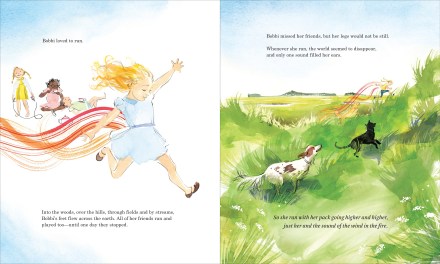
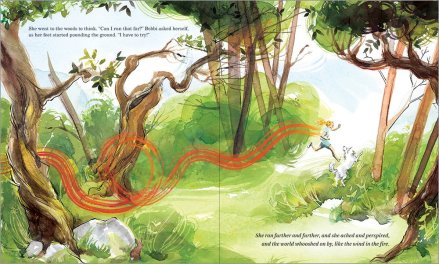
“Bobbi loved to run. Into the woods, over the hills, through fields and by streams, Bobbi’s feet flew across the earth.” When Bobbi was little, she and her friends ran and played together. But as they grew older, her friends found other pursuits while Bobbi still loved to run. She took to the fields with her dogs, “going higher and higher, / just her and the sound of the wind in the fire.”

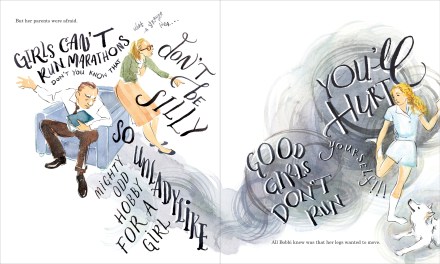
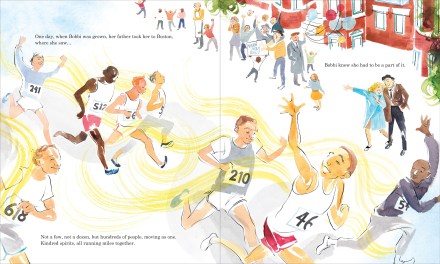
When Bobbi was grown, her father took her to watch the Boston Marathon. She loved the camaraderie of “hundreds of people moving as one. Kindred spirits, all running miles together.” Immediately, she wanted to participate too. When Bobbi told her parents that she wanted to run in the marathon, however, they thought her idea was strange. They told her she would hurt herself and that it was unladylike.

celebrate-picture-books-picture-book-review-the-girl-who-ran-young-bobbi

Image copyright Susanna Chapman, 2017, text copyright, Frances Poletti and Kristina Yee, 2017. Courtesy of Compendium.

But Bobbie wanted to run. She didn’t know if she could run that far but was determined to try. She trained in the woods, running “further and further, and she ached and perspired, / and the world whooshed on by, like the wind in the fire.” Because she knew her parents disapproved, Bobbi set out on her own across country to train. Every day she ran in a new place—“lush forests in Ohio and Indiana, vast plains in Nebraska and Kansas, majestic mountains in Wyoming and Montana.” She even ran with wild horses out west and up steep Rocky Mountain trails. At night she camped, “tired and happy.”

All of her training seemed for nothing, however, when Bobbi received a letter rejecting her application for the Boston Marathon. The letter said that women were incapable of running marathons, that it was against the rules for a woman to run, and that the rules had been written to protect women from injury. Bobbi was not deterred, however. She went back home and told her parents what she wanted to do. Her father thought she was crazy to attempt it.

celebrate-picture-books-picture-book-review-the-girl-who-ran-woods

Image copyright Susanna Chapman, 2017, text copyright, Frances Poletti and Kristina Yee, 2017. Courtesy of Compendium.

Bobbi knew that the only way she could run would be “to blend in with the men.” Dressed in men’s shorts and a baggy hooded sweatshirt to hide her hair and wearing men’s running shoes (running shoes were not made for women), Bobbi was ready to go. Her father refused to drive her to the race, though. He stormed out of the house, and drove away. Bobbi thought her dream was dashed until her mom came to her room, car keys in hand, and said, “‘Let’s go.”

Hiding in the bushes at the starting line, she sprang out and joined the pack of runners with the bang of the starting pistol. “So she ran with the pack, going higher and higher, / the world whooshing by, like the wind in the fire.” As she ran, she realized that the men around her had seen through her disguise. Bobbi was worried, but the men were supportive. “‘Hey! Are you running the whole way?’ one asked.” She told him she hoped to, but in that sweatshirt, she was getting hotter and hotter. She was afraid that if she took it off, she’d be thrown out of the race.

celebrate-picture-books-picture-book-review-the-girl-who-ran-parents-afraid

Image copyright Susanna Chapman, 2017, text copyright, Frances Poletti and Kristina Yee, 2017. Courtesy of Compendium.

The men around her said they wouldn’t let that happen, so Bobbi took off the sweatshirt. “Word spread quickly throughout the course. A girl was running! They couldn’t believe it!” All along the route, the crowd cheered and encouraged her. Hearing the roar motivated Bobbi to ignore the hard ground and her stiff shoes and face the last steep hill. “Closing her eyes, she imagined she was back in Montana running up the mountains, the soft earth under her feet.”

Her feet were blistered and she was parched with thirst, but she crossed the finish line—ahead of nearly half of the men. Photographers, reporters, and radio presenters swarmed around her to hear her history-making story. From that day on “hearts and minds were forever changed.”

celebrate-picture-books-picture-book-review-the-girl-who-ran-young-Boston-marathon-all-men

Image copyright Susanna Chapman, 2017, text copyright, Frances Poletti and Kristina Yee, 2017. Courtesy of Compendium.

The story of Bobbi Gibbs is one that every girl and boy should know, and Frances Poletti and Kristina Yee’s excellent biography will have readers awe-struck by how she changed the way the world viewed women and their capabilities. A pioneer for women’s rights in every way—from her traveling the country alone to rejecting the prevailing ideas to competing on her own terms—Bobbi Gibbs is an inspiration for achievers everywhere. Poletti and Yee’s conversational storytelling is both lyrical and honest, not stinting on the obstacles Bobbi had to overcome, including race officials, her own parents, and even the fact that running shoes weren’t made for women.

As the marathon approaches, readers will be enthralled by the building suspense. They’ll feel Bobbi’s determination, her disappointment, and her fear that she will be discovered and thrown out of the race, and will cheer along with the crowd at her victory.

celebrate-picture-books-picture-book-review-the-girl-who-ran-crowds

Image copyright Susanna Chapman, 2017, text copyright, Frances Poletti and Kristina Yee, 2017. Courtesy of Compendium.

Susanna Chapman’s gorgeous illustrations are infused with Bobbi’s boundless energy and spirit as she soars over grassy dunes with her dogs at her heels, zips through shady woods, and runs alongside wild horses in the shadow of the Rockies all the while trailing a red swish, representative of the fire within her. The turmoil surrounding Bobbi’s desire to run the Boston Marathon is depicted in words of rebuke, recrimination, and rejection printed in large, emphatic typefaces that swirl around her like a tornado.

The inclusion of the image of Bobbi’s mother with the car keys in hand on the morning of the race is a welcome reminder of the many unknown women of earlier generations who  contributed to the fight for women’s equality. A beautiful double gate-fold illustration of Bobbi crossing the finish line to cheering crowds and the waiting media puts the focus fully on Bobbi and the fire that spurred her on.

An Afterword tells more about Bobbi Gibb, and a timeline of seminal events in the Boston Marathon from 1896 to today, is a fascinating must-read.

The Girl Who Ran is an inspirational biography and revealing history from the not-so-distant past that offers encouragement and triumph. It would be a wonderful addition to home, school, and public libraries.

I received a copy of The Girl Who Ran from Compendium to check out. All opinions are my own.

Ages 8 – 12

Compendium, 2017 | ISBN 978-1943200474

Discover more about Kristina Yee, her books, and her films on her website

Learn more about Susanna Chapman, her books, and her art on her website

Girls and Women in Sports Day Activity

celebrate-picture-books-picture-book-review-pioneering-women-in-sports-puzzle

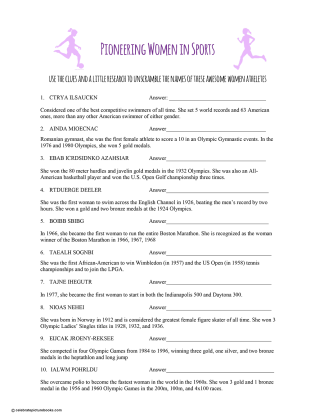
Pioneering Women in Sports Word Scramble Puzzle


In every sport there have been women who have overcome barriers, incredible odds, set records, and inspired others. Using the clues and a little research, can you unscramble the names of these twelve awesome athletes?

Pioneering Women in Sports Word ScramblePioneering Women in Sports Word Scramble Solution

Picture Book Review

February 2 – It’s National Women Inventors Month

celebrate-picture-books-picture-book-review-the-girl-who-thought-in-pictures-cover

About the Holiday

This month we celebrate all the women, past and present, who have changed the world for the better with their inventions and innovations! Every day, women are working in all industries researching and creating the next products, services, medicines, machinery, games, and some things we can’t even imagine yet that will revolutionize the way we live. Who are these women? They might be your friends, neighbors, sisters, daughters—or maybe even you! To celebrate this month, read up on amazing women inventors, and, if you have a big idea, work to get it noticed and on the market!

The Girl Who Thought in Pictures: The Story of Dr. Temple Grandin

Written by Julia Finley Mosca | Illustrated by Daniel Rieley


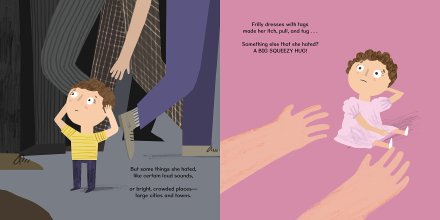
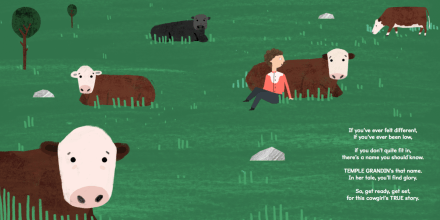
If you feel different and sometimes discouraged, the story of Temple Grandin may help you see that everyone has a talent and their own place in the world. Temple was born in Boston and “unique from the start, / an unusual girl, / she loved spinning in circles / and watching things twirl.” Loud sounds, big crowds, bright lights, and scratchy clothes disturbed her. And she did not like to get a “big squeezy hug.”

celebrate-picture-books-picture-book-review-the-girl-who-thought-in-pictures-too-loud

Image copyright Daniel Rieley, 2017, text copyright Julia Finley Mosca, 2017. Courtesy of The Innovation Press.

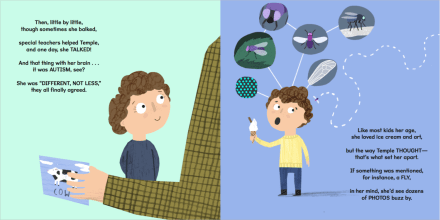
When she became overloaded with stress and frustration, Temple was known to “kick, holler, bang, shrieeeeek! Yet, still, by age three, not one word did she speak.” People told Temple’s parents that she’d never be normal and to send her away, but her mother would not hear of it. With a lot of work, special teachers helped Temple learn to talk. “And that thing with her brain… / it was AUTISM, see? / She was ‘different not less,’ / they all finally agreed.”

celebrate-picture-books-picture-book-review-the-girl-who-thought-in-pictures-doctor

Image copyright Daniel Rieley, 2017, text copyright Julia Finley Mosca, 2017. Courtesy of The Innovation Press.

While Temple was like her peers in many ways, she interacted with words differently. “If something was mentioned, / for instance, a fly, / in her mind, she’d see dozens / of PHOTOS buzz by.” Her different view point made it hard for her at school. The other kids chased her and teased her for the way that she acted and for “…saying things / over and over. / and over… / and over… / AND over.” When she had finally had enough, “she threw a book at a kid / and was kicked out of school!” No one understood Temple and Temple couldn’t understand them.

celebrate-picture-books-picture-book-review-the-girl-who-thought-in-pictures-fly

Image copyright Daniel Rieley, 2017, text copyright Julia Finley Mosca, 2017. Courtesy of The Innovation Press.

Her mother then sent her to visit her aunt, who lived on a ranch out west. Here, among the animals, Temple felt better. Her favorites were the cows, so silent and sweet. “At a NEW school that fall, / Temple found more support / said a teacher who taught her: / ‘You’ll never fall short.” That teacher was right, and at engineering and science she felt right at home.

Her first invention—made from memory—was “a machine / like she’d seen on some farms, / an INVENTION that hugged her / with boards, and not arms.” In this device she felt snug and calm, just like the cows. As she began to succeed, Temple came to see that her attention to detail was a benefit, and she began to feel special. Then she learned about farms where the cows were not treated kindly and resolved to change that.

celebrate-picture-books-picture-book-review-the-girl-who-thought-in-pictures-cows

Image copyright Daniel Rieley, 2017, text copyright Julia Finley Mosca, 2017. Courtesy of The Innovation Press.

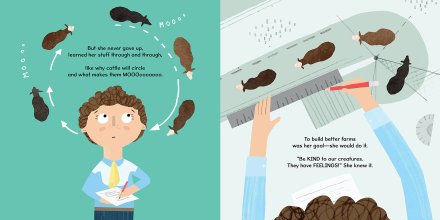
She went on to college and became an expert on farms, earning three degrees. Telling people about her ideas for farming improvements was sometimes scary because they ignored her and, well…weren’t very sweet. But she didn’t give up. She learned more about cattle, like why they circle and moo. “To build better farms / was her goal—she would do it. / ‘Be KIND to our creatures. / They have FEELINGS!’ She knew it.”

It took time, but people began to see that Temple was right, and farm after farm implemented her ideas. She won awards for this work and other ideas, a movie was made about her life, and she now travels the world telling her story and teaching: “‘Each person is special– / so UNIQUE are our minds. / This world needs YOUR ideas. / It takes brains of ALL kinds!”

celebrate-picture-books-picture-book-review-the-girl-who-thought-in-pictures-letter

Image copyright Daniel Rieley, 2017, text copyright Julia Finley Mosca, 2017. Courtesy of The Innovation Press.

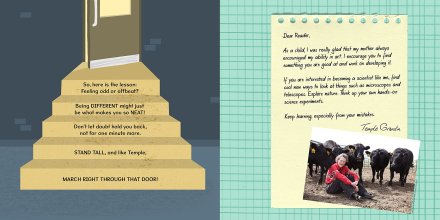
A letter from Temple Grandin to young readers, extensive information about Temple and tidbits from her interview with the author, a timeline of her life, and resources follow the text.

Julia Finley Mosca’s insightful biography of Temple Grandin offers inspiration and encouragement to children at those times when life seems difficult or if they feel misunderstood. Childhood can be filled with moments—both small and large, short or long—when comfort and reassurance are needed. Mosca’s rhyming verses make Temple’s story accessible to a wide age range of readers while providing an inclusive way to show how autism creates a different way of experiencing the world. Temple’s supportive teachers are role models for all educators. Temple Grandin’s fascinating life demonstrates that there is a niche for everyone and that through understanding, perseverance, and acceptance, all children can go far.

celebrate-picture-books-picture-book-review-the-girl-who-thought-in-pictures-cows-in-field

Image copyright Daniel Rieley, 2017, text copyright Julia Finley Mosca, 2017. Courtesy of The Innovation Press.

Daniel Rieley’s cartoon-style illustrations will resonate with readers as Temple takes in everything she sees with wide-open eyes and interprets it in her own way—even before she can speak. The separation between Temple and the other students at her first school is poignantly communicated in a two-page spread in which pointing hands and a lobbed ball of paper appear from the left-hand margin and Temple reads alone on the far side of the right-hand page. Temple’s ability to think in pictures is demonstrated throughout the book with inset images. Readers see some of the farming practices Temple wanted to change, her original drawings, and the resulting equipment now used on farms to improve the conditions of the animals raised there.

The Girl Who Thought in Pictures: The Story of Dr. Temple Grandin is a moving and motivational story for all children and is a must for school and public libraries.

Ages 5 – 10

The Innovation Press, 2017 | ISBN  978-1943147304

Discover more about Julia Finley Mosca and her Amazing Scientists series on the Amazing Scientists website.

Learn more about Daniel Rieley, his books, and his art on his website.

National Women Inventors Month Activity

celebrate-picture-books-picture-book-review-women-in-stem-coloring-book

Historical Women in STEM Coloring Book


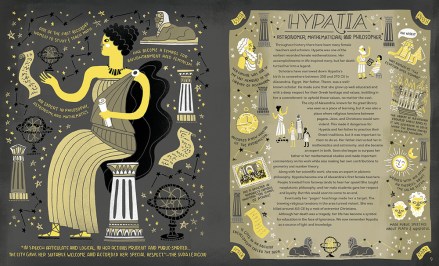
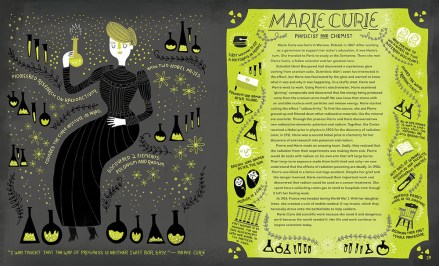
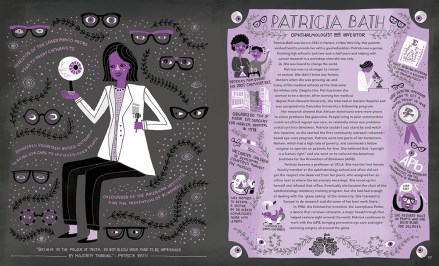
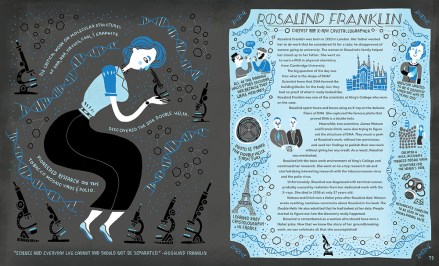
From civil engineering to chemistry and botany from radio waves to computer programming, the five women in this coloring book changed science and the world. Enjoy coloring the pages and learning about these amazing women in this printable: Historical Women in STEM Coloring Book

Picture Book Review

January 20 – National Disc Jockey Day

celebrate-picture-books-picture-book-review-when-the-beat-was-born-cover

About the Holiday

National Disc Jockey Day commemorates the death of Albert James Freed, or Moondog, who was an influential disc jockey in the 1950s and is credited with popularizing the term “rock-and-roll.” The idea of using recorded music instead of live performances over the airwaves was tested in 1909, when sixteen-year-old Ray Newby, a student of Charles “Doc” Herrold at Herrold College of Engineering and Wireless in San Fernando, California, became the first to play records on the radio. The idea took off and soon radio broadcasters across the country followed suit. The term Disc Jockey was the brainstorm of radio commentator Walter Winchell in 1934. The 1970s and 1980s saw the rise of Hip-Hop DJs who began using multiple turntables and turntables as instruments to change the music.

When the Beat Was Born: DJ Kool Herc & the Creation of Hip Hop

Written by Laban Carrick Hill | Illustrated by Theodore Taylor III


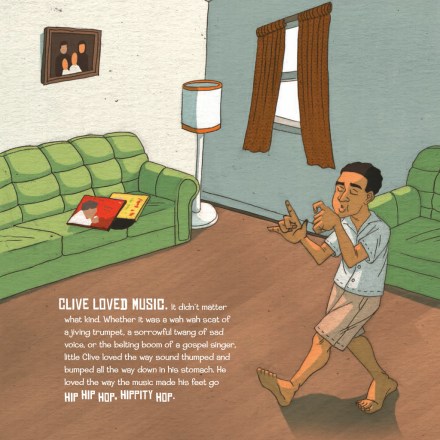
Even as a child “Clive loved music”—all kinds of music. He loved the way it made him feel inside and “the way it made his feet go hip hip hop, hippity hop.” Clive lived on Somerset Lane in Kingston, Jamaica. One of his neighbors was a DJ nicknamed “King George,” who threw the “biggest and baddest” house parties every Saturday night. Clive was too young for parties, but he liked to watch King George and his crew setting up. Clive had never seen so many records in one place.

celebrate-picture-books-picture-book-review-when-the-beat-was-born-clive-loved-music

Image copyright Theodore Tayler III, 2013, text copyright Laban Carrik Hill, 2013. Courtesy of Roaring Brook Press.

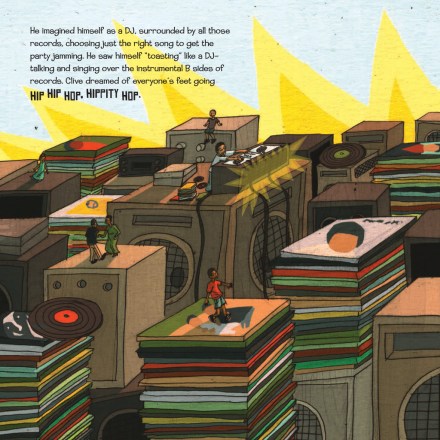
“Clive imagined himself as a DJ surrounded by all those records.” He longed to choose just the right one to get the party started. He pictured himself toasting—rapping over the instrumental B side of records and getting people’s feet going hip hip hop, hippity hop, like his did. When Clive was thirteen he moved to Brooklyn, New York with his mom. At first he wasn’t sure he liked his new neighborhood, but then he discovered sports—track, weightlifting, and especially basketball. Clive grew to be six feet, 5 inches tall.

celebrate-picture-books-picture-book-review-when-the-beat-was-born-stacks-of-records

Image copyright Theodore Tayler III, 2013, text copyright Laban Carrik Hill, 2013. Courtesy of Roaring Brook Press.

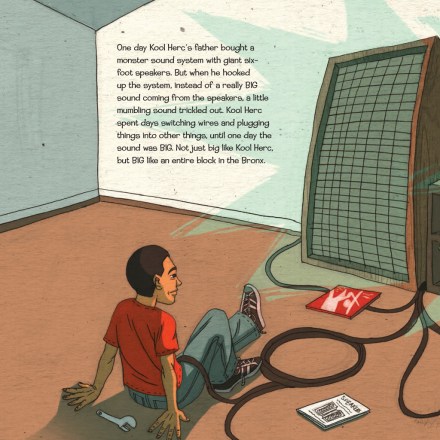
He took to calling “himself ‘cool as Clyde’ after his favorite basketball player, Walt Clyde Frazier.” But to the other kids, Clive was “Hercules.” Clive shortened it to Herc and added “‘Kool’ to make it just right. Kool Herc.” Because of his size, he was able to go to house parties with his mother and listen to the music. One day Kool Herc’s father bought a “giant sound system” with six-foot-tall speakers. But when it was turned on, the sound was puny. Kool Herc worked on it until the sound came blasting out.

celebrate-picture-books-picture-book-review-when-the-beat-was-born-sound-system

Image copyright Theodore Tayler III, 2013, text copyright Laban Carrik Hill, 2013. Courtesy of Roaring Brook Press.

Kool Herc and his younger sister Cindy were ready to put on a party. They rented a rec room in their housing project, posted invitations, and set up the huge sound system. The night of the party, “everybody who was anybody made their way to Sedgewick Avenue for Kool Herc’s hot dance party. That’s when Kool Herc became DJ Kool Herc.”

celebrate-picture-books-picture-book-review-when-the-beat-was-born-DJ-Kool-Herc

Image copyright Theodore Tayler III, 2013, text copyright Laban Carrik Hill, 2013. Courtesy of Roaring Brook Press.

DJ Kool Herc noticed that people danced harder during the instrumental breaks. Kool Herc set up another turntable and put the same record on this turntable too. This way, when one record ended its break, he could play it again on the other. He was able to stretch a ten-second break into 20 minutes or more. Remembering how DJs toasted in Jamaica, DJ Kool Herc began shouting out the names of his friends, compliments about the dancers, and rhymes over the beat.

celebrate-picture-books-picture-book-review-when-the-beat-was-born-dance-party

Image copyright Theodore Tayler III, 2013, text copyright Laban Carrik Hill, 2013. Courtesy of Roaring Brook Press.

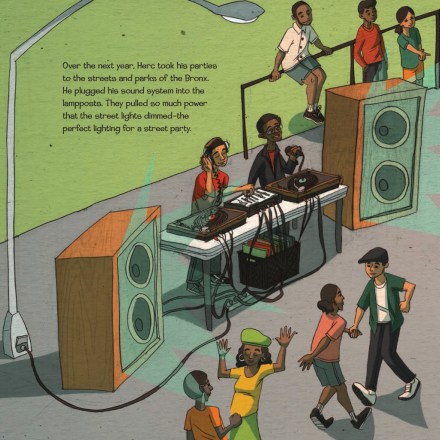
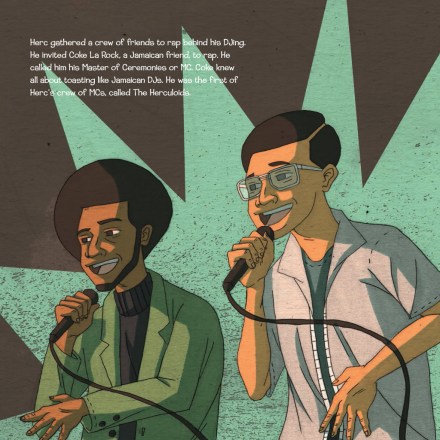
Over the next year, DJ Kool Herc moved his dance parties into the street. When he plugged the sound system into the street lamps, it pulled so much power, the lights dimmed. DJ Kool Herc’s music even turned some of the city’s gang members into the smoothest break dancers in the neighborhood. Kool Herc then invited friends to rap behind the DJ-ing. He called these friends the “Master of Ceremonies” or MCs.

Soon kids were coming from all over New York city to attend DJ Kool Herc’s “biggest, baddest dance parties.” Many “wanted to be DJs just like Kool Herc. Herc didn’t just rock the block. He put the hip hip hop, hippity hop into the world’s heartbeat.”

celebrate-picture-books-picture-book-review-when-the-beat-was-born-the-turtle

Image copyright Theodore Tayler III, 2013, text copyright Laban Carrik Hill, 2013. Courtesy of Roaring Brook Press.

Laben Carrick Hill’s modern biography of a Hip Hop pioneer invites young readers to discover the early years of and influences on the music they love today. Hill superbly structures his story so through the formative details of DJ Kool Herc’s life from childhood into adulthood, readers understand that they too can follow their hearts to achieve their dreams. When the Beat Was Born is inspirational in its depiction of an “ordinary kid” with ingenuity and self-confidence who changed the face of music by combining his multicultural experiences, being open to experimentation, including his friends, and sharing his vision. Straightforward storytelling is punctuated with verses of rap that make reading aloud fun and will engage listeners.

celebrate-picture-books-picture-book-review-when-the-beat-was-born-friends

Image copyright Theodore Tayler III, 2013, text copyright Laban Carrik Hill, 2013. Courtesy of Roaring Brook Press.

In his bold, vibrant illustrations, Theodore Tayler III lets kids in on the not-so-distant past that saw the rise of Hip Hop music, celebrity DJs, and new dance styles. Keeping the focus on DJ Kool Herc—just as Clive kept his eye on his future goals—Taylor reinforces the theme of the book. Scenes of kids lining up to attend DJ Kool Herc’s parties and dancing in the street give the book an inclusive feel. Images of skyscraper-tall stacks of records mirrors Kool Herc’s ambitions, and depictions of breakdancing moves will get kids wanting to try them for themselves.

When the Beat Was Born is a terrific biography for all children, whether they like music and dancing or quieter pursuits. In the classroom, the book would be a great addition to music, history, or biography units.

Ages 6 – 10

Roaring Brook Press, 2013 | ISBN 978-1596435407

Discover more about Laben Carrick Hill and his books on his website

To view a portfolio of artwork, book illustration, videos and more by Theodore Taylor III, visit his website.

National Disc Jockey Day Activity

celebrate-picture-books-picture-book-review-groovy-record-chalkboard-blackboard-craft

Groovy Record Chalkboard & Bulletin Board 


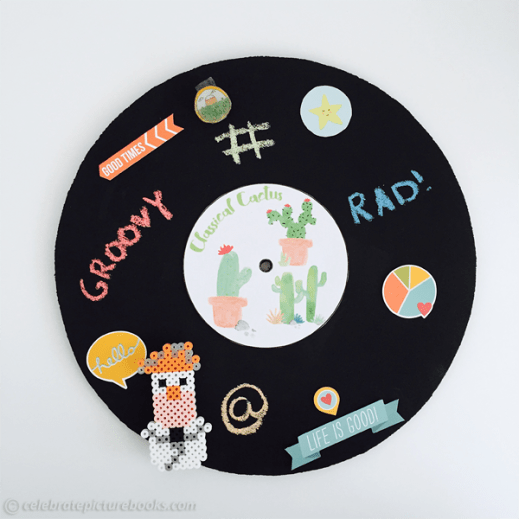
Do you play the piano or another instrument? Would you like to make a record some day? Why wait? In this fun craft you can create your own record bulletin board—and even create your own label art! While this record may not spin on turntables around the world, it will drop in a more important place—your very own room!

Supplies

  • Printable Record Label for you to design
  • Foam board, or a corkboard at least 12-inches x 12-inches square
  • Adhesive cork
  • A 12-inch round plate, record, or other round object to trace OR a compass
  • Chalkboard paint, black
  • X-acto knife
  • Paint brush or foam paint brush
  • Mounting squares

Directions

  1. Cut a section from the adhesive cork a little larger than 12 inches by 12 inches
  2. Affix the cork to the foam board
  3. Trace the 12-inch round object onto the cork/foam board OR use the compass to make a 12-inch circle
  4. With the x-acto knife, carefully cut out the circle (adult help needed for children)
  5. Cut out a ¼ -inch circle in the center of the record bulletin board
  6. Paint the cork, sides and inside the spindle hole with the black chalkboard paint. Let dry
  7. Print the label template and design your own record label
  8. When the paint is dry, glue your label to the center of the bulletin board
  9. Hang your bulletin board with the mounting squares
  10. Decorate!

Picture Book Review


January 9 – Poetry at Work Day

celebrate-picture-books-picture-book-review-a-river-of-words-cover

About the Holiday

Today’s holiday encourages people to consider their jobs, their office environment, their coworkers, and maybe even that snack in the desk drawer through the lens of poetry. You may find inspiration in today’s book about William Carlos Williams, who wrote many of his famous and well-loved poems while working as a physician. Whether you find poignancy or humor in your workplace, take a moment to jot down a few thoughts in free verse or rhyme and share your poem with your friends!  

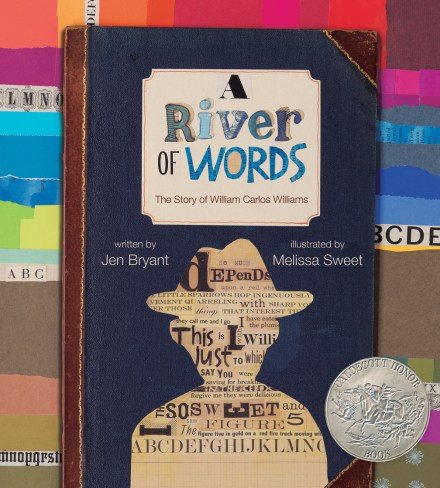
A River of Words: The Story of William Carlos Williams

Written by Jen Bryant | Illustrated by Melissa Sweet


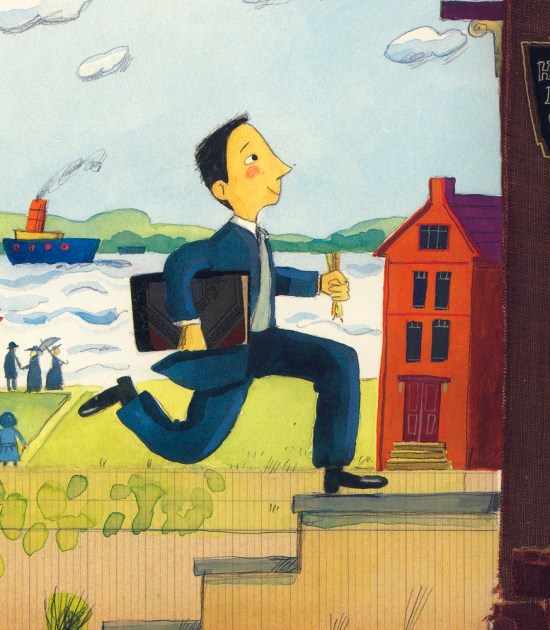
Willie Williams was just like the other boys in his neighborhood—well, almost. When the other boys went home after a day of playing, Willie took off for the woods and fields behind his house. “As he walked through the high grasses and along the soft dirt paths, Willie watched everything.” He liked to sit next to the Passaic River and listen to the rhythm of the water as it “went slipping and sliding over the smooth rocks, then poured in a torrent over the falls, then quieted again below.”

celebrate-picture-books-picture-book-review-a-river-of-words-high-school

Image copyright Melissa Sweet, 2008, courtesy of Eerdmans Books for Young Readers.

But as Willie grew older, he didn’t have time for these leisurely pursuits. In high school, he was on the track team, attended lots of classes, and had even more homework. His was a rushed and hurried life. Except for in English class. There, when his teacher read poetry, he was taken back to the flow of the river. Each line created pictures in Willie’s mind.

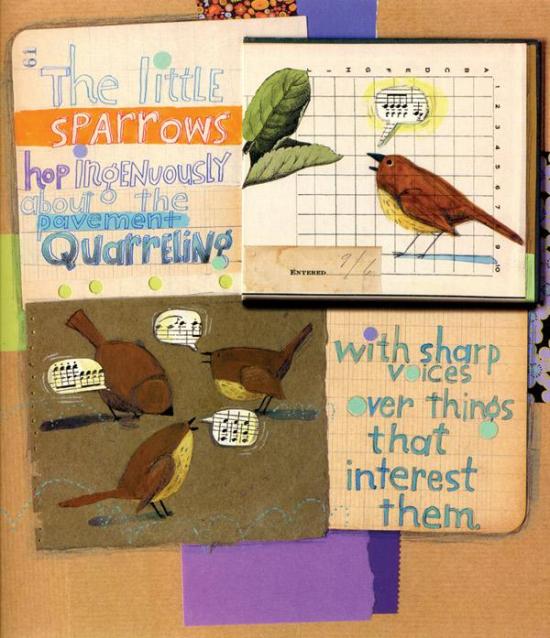
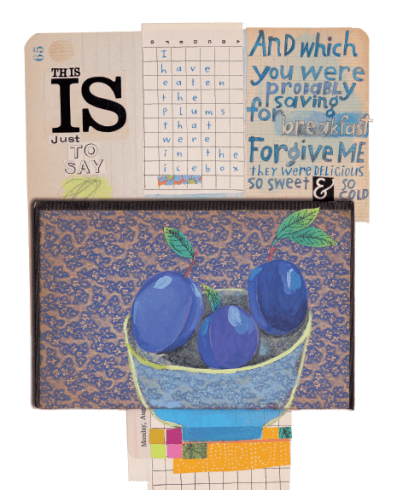
One night, Willie began writing his own poems. He copied the English poets he had learned about in school, using structured beats and rhyming endings. But soon these rules began to frustrate Willie; they didn’t give him the freedom to fully express his thoughts. He wanted to write about what he saw nearby, the things he was familiar with. Things, he said, like “plums, wheelbarrows, and weeds, / fire engines, children, and trees— / things I see when I walk down my street / or look out my window.”

celebrate-picture-books-picture-book-review-a-river-of-words-sparrows

Image copyright Melissa Sweet, 2008, courtesy of Eerdmans Books for Young Readers.

Willie began writing poems the way they came to him, with their own shape and sound. Writing this way made Willie feel free, and he filled notebook after notebook with poems. While Willie wished he could make a living as a poet, writing did not pay much, and he needed to be self-sufficient. Willie’s uncle had been a doctor, and Willie liked the idea of healing people. He wondered, though, if he could be a doctor and still write poetry.

When Willie graduated from high school, he went off to the university to study medicine. There he met the writers Ezra Pound and Hilda Doolittle and the artist Charles Demuth. Spending time with his new friends made his difficult studying easier. After college, Willie returned to his home town of Rutherford and opened his practice. He had so many patients that some people said he was “the busiest man in town.”

celebrate-picture-books-picture-book-review-a-river-of-words-attic-room

Image copyright Melissa Sweet, 2008, courtesy of Eerdmans Books for Young Readers.

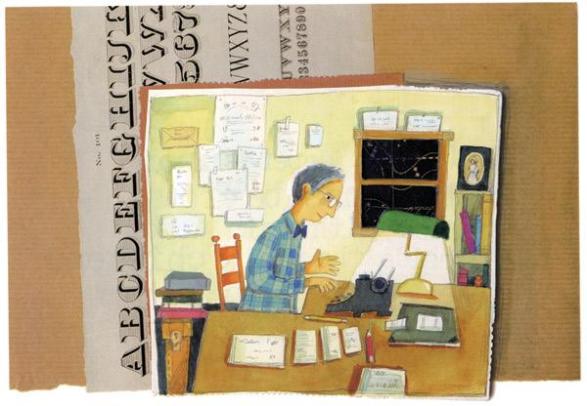
No matter how busy he was, however, he found time to write. Sometimes he jotted lines and ideas on his prescription pads. Then, after his long days at work, Willie climbed to his attic room where he studied the notes he’d made and wrote poems late into the night.

A Timeline, Author’s Note, and Illustrators Note about William Carlos Williams follow the text. The endpapers present a selection of Williams’ poetry.

A River of Words: The Story of William Carlos Williams is an inspirational book for children who have creative ideas of their own and would make an excellent addition to classroom and home libraries.

From the title through to the end of her lyrical biography, Jen Bryant captures the flow of William Carlos Williams’ creative and scientific life, which was as purposeful and free as the river that inspired him. Young readers and would-be writers will find much encouragement and insight in Bryant’s story, which reveals that talent and day-to-day life not only can co-exist but can enrich each other. By showing how Williams broke free from the structures of the poetry he copied, Bryant also motivates children to find their own voice.

celebrate-picture-books-picture-book-review-a-river-of-words-plums

Image copyright Melissa Sweet, 2008, courtesy of Eerdmans Books for Young Readers.

Melissa Sweet lends her distinctive collage style of illustration to this story, bringing to life the lines of and natural world reflected in Williams’ poetry. The busy-ness and business of Williams’ days are depicted in vibrant images of winding streets, classrooms, offices, and the outside world where he composed his uniquely revealing poems.

Ages 6 and up

Eerdmans Books for Young Readers, 2008 | ISBN 978-0802853028

Learn more about Jen Bryant and her books on her website!

Discover more about Melissa Sweet, her books, and her art on her website!

Poetry at Work Day Activity

celebrate-picture-books-picture-book-review-grow-a-poem-craft

Grow Your Own Poem


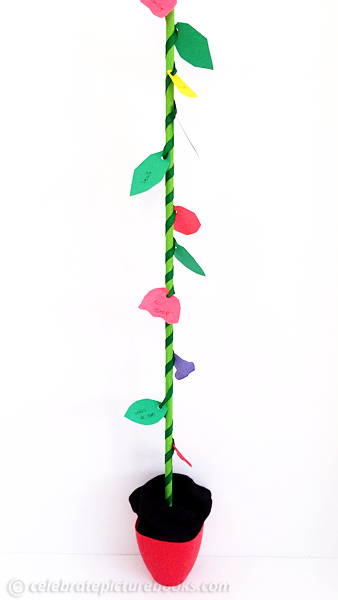
A poem often grows in your imagination like a beautiful plant—starting from the seed of an idea, breaking through your consciousness, and growing and blooming into full form. With this craft you can create a unique poem that is also a piece of art!

Supplies

  • Printable Leaves Template
  • Printable Flower Template
  • Wooden dowel, 36-inch-long, ½-inch diameter, available in craft or hardware stores
  • Green ribbon, 48 inches long
  • Green craft paint
  • Green paper for printing leaves (white paper if children would like to color the leaves)
  • Colored paper for printing flowers (white paper if children would like to color the flowers)
  • Flower pot or box
  • Oasis, clay, or dirt
  • Hole punch
  • Glue
  • Markers or pens for writing words
  • Crayons or colored pencils if children are to color leaves and flowers

Directions

  1. Paint the dowel green, let dry
  2. Print the leaves and flower templates
  3. Cut out the leaves and flowers
  4. Punch a hole in the bottom of the leaves or flowers
  5. Write words, phrases, or full sentences of your poem on the leaf and flower templates
  6. String the leaves and flowers onto the green ribbon (if you want the poem to read from top to bottom string the words onto the ribbon in order from first to last)
  7. Attach the ribbon to the bottom of the pole with glue or tape
  8. Wrap the ribbon around the pole, leaving spaces between the ribbon
  9. Move the leaves and flowers so they stick out from the pole or look the way you want them to.
  10. Put oasis or clay in the flower pot or box
  11. Stick your poem pole in the pot
  12. Display your poem!

celebrate-picture-books-picture-book-review-a-river-of-words-cover

You can find A River of Words at these booksellers

Amazon| Barnes & Noble | Books-a-Million | IndieBound

Picture Book Review
December 22 – It’s Human Rights Month

About the Holiday

During the month of December we honor the world’s citizens and the Universal Declaration of Human Rights (UDHR), an international document adopted by the General Assembly of the United Nations on December 10, 1948. The Universal Declaration describes basic rights and fundamental freedoms to which all people are entitled. Some of these include freedom from discrimination, the right to equality, and the right to be considered innocent until proven guilty. Outlined in thirty articles, the declaration is aimed at ensuring equality of rights for all. For a version of the articles for children, visit Compasito.

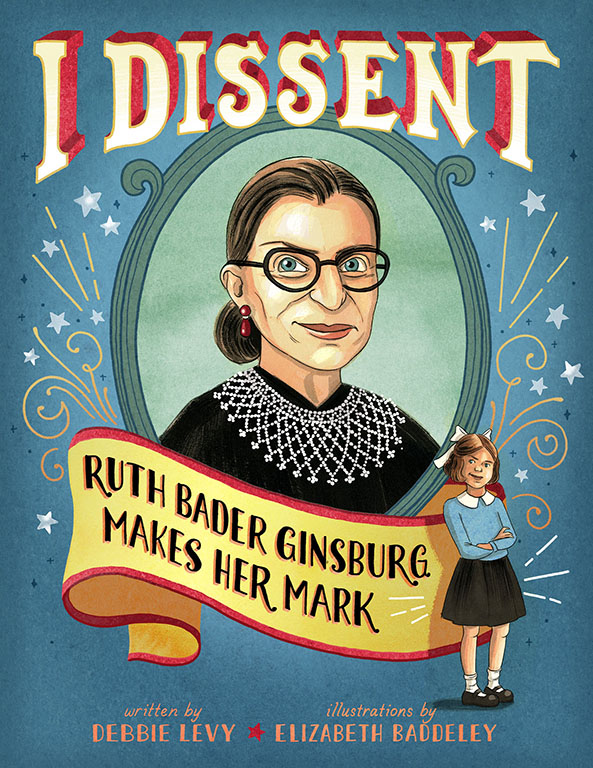
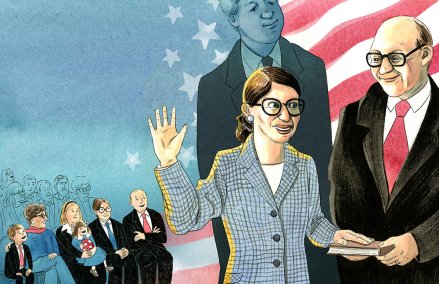
I Dissent: Ruth Bader Ginsburg Makes Her Mark

Written by Debbie Levy | Illustrated by Elizabeth Baddeley


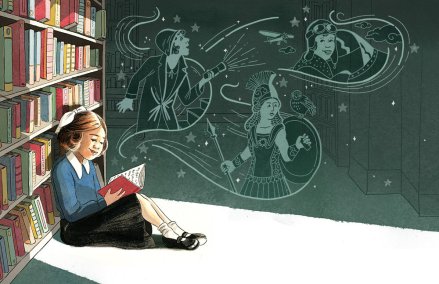
Ruth Bader grew up during the 1940s in Brooklyn, New York’s multicultural neighborhood. It was a time when boys were educated for jobs and bright futures while girls were expected to marry and raise children. Ruth’s mother, Celia Amster Bader, however, “thought girls should also have the chance to make their mark on the world.” She introduced Ruth to books in which she discovered women who used their strength, courage, and intelligence to do big things.

celebrate-picture-books-picture-book-review-i-dissent-in-the-library

Image copyright Elizabeth Baddeley, text copyright Debbie Levy. Courtesy of simonandschuster.com.

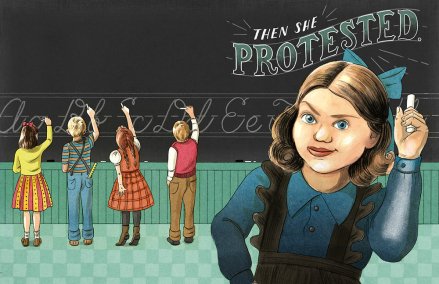
Ruth also saw and felt the sting of prejudice while growing up. Her family was Jewish, and at the time “hotels, restaurants, even entire neighborhoods” denied access to Jews, African Americans, Mexicans, and others. Ruth disagreed and never forgot. She was even discriminated against for being left-handed. In school she was instructed to write with her right hand, but her awkward penmanship earned a D. First, she cried; then she protested by only writing with her left hand—“it turned out she had quite nice handwriting!”

celebrate-picture-books-picture-book-review-i-dissent-in-the-left-handed

Image copyright Elizabeth Baddeley, text copyright Debbie Levy. Courtesy of simonandschuster.com.

During elementary school, Ruth was outstanding in some classes, such as history and English, and did not do so well in others, such as sewing and cooking. Music, especially opera, was another favorite subject—even though she did not have the voice to match her dreams. She excelled in high school and was even chosen as a graduation speaker. But Ruth had been hiding the fact that her mother was very ill. The day before graduation, her mother died. Ruth did not go to her graduation, but she did fulfill her mother’s wish and entered college.

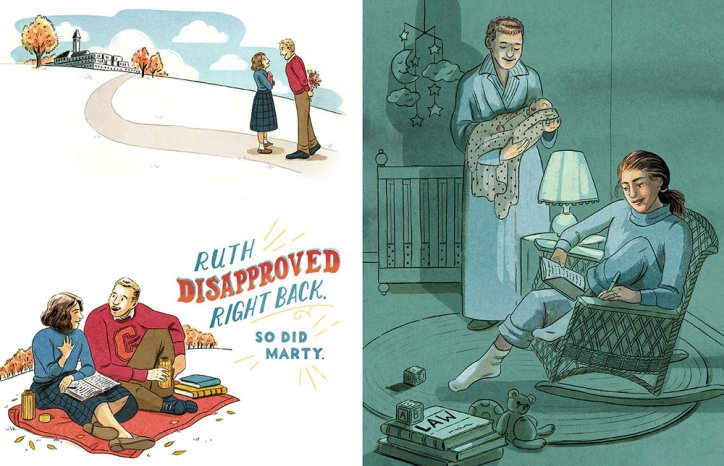
In college Ruth met Marty Ginsberg, and the two fell in love. They both decided to become lawyers to fight prejudice and unfairness in court. People thought this was a great idea for Marty, but disapproved of it for Ruth. “Ruth disapproved right back. So did Marty.” After college they got married, went to law school, and had a baby girl.

celebrate-picture-books-picture-book-review-i-dissent-college

Image copyright Elizabeth Baddeley, text copyright Debbie Levy. Courtesy of simonandschuster.com.

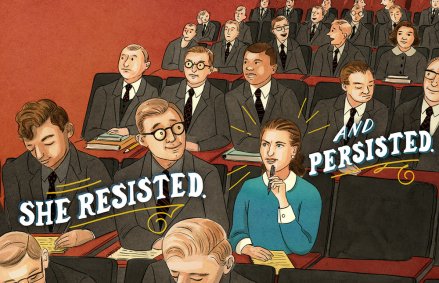
In law school Ruth was one of nine women in a class of 500. She worked hard and tied with another student as first in the class, but after graduation she couldn’t find a job. Employers objected because she was a woman, a mother, and Jewish. Finally, she found work with a judge. Her excellent work for him translated into jobs at one law school after another, and she became “one of the few female law professors in the whole country.”

All around her Ruth saw other women who were denied jobs or paid less than men. Women also had very little voice in courtrooms or in government. Rulings by the Supreme Court, the highest court in America, had helped maintain this inequality. The Court had stated that women were unfit for many jobs because of their “natural and proper timidity and delicacy.” Besides, the Supreme Court also said, “Woman has always been dependent upon man.”

celebrate-picture-books-picture-book-review-i-dissent-in-the-law-school

Image copyright Elizabeth Baddeley, text copyright Debbie Levy. Courtesy of simonandschuster.com.

“Ruth really, really disagreed with this!” So she began fighting in court for equal rights for women. But equal rights for women also meant equal rights for men: Ruth believed men should be able to stay home with children if they wanted to while women worked. “These were fresh ideas in the 1970s. Ruth did not win every case, but she won enough. With each victory, women and men and girls and boys enjoyed a little more equality.”

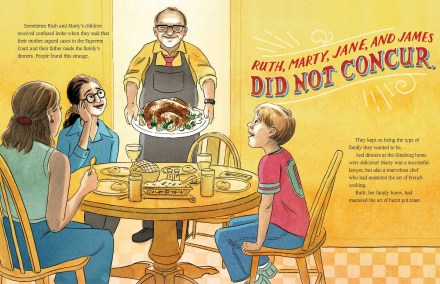
At home, Ruth’s own family agreed with her. Marty was a successful lawyer and also an accomplished chef who cooked the family’s meals. Ruth went on to become a well-known and well-respected lawyer. President Jimmy Carter asked her to be a judge in Washington DC. Then President Bill Clinton chose her to fill a vacancy on the Supreme Court. “Ruth agreed.

celebrate-picture-books-picture-book-review-i-dissent-family-life

Image copyright Elizabeth Baddeley, text copyright Debbie Levy. Courtesy of simonandschuster.com.

In 1993, Justice Ruth Bader Ginsburg became the first Jewish woman on the nation’s highest court.” When the nine justices decide a case, they listen to both sides and then vote. The winning side then writes an opinion explaining their ruling. When Justice Ginsburg votes with the winning side, she wears a special lace collar over her robe. When she does not agree with the ruling, she says, “I dissent” and writes an opinion explaining why. She has a special collar for dissenting too.

Some of her dissensions were influenced by her early experiences. She dissented when “the court wouldn’t help women or African Americans or immigrants who had been treated unfairly at work.” She dissented when the court did not protect voting rights for all citizens. She dissented when the court disagreed with schools that offered African Americans a better chance to go to college.” And once when she dissented, Congress and the president agreed with her and overturned the Supreme Court’s ruling.

celebrate-picture-books-picture-book-review-i-dissent-supreme-court

Image copyright Elizabeth Baddeley, text copyright Debbie Levy. Courtesy of simonandschuster.com.

Justice Ruth Bader Ginsburg is now the oldest member of the Supreme Court. Some people think she should retire, but she disagrees. She still has work to do. Over the years, she has “cleared a path for people to follow in her footsteps—girls in college, women in law school, and everyone who wants to be treated without prejudice….Step by step, she has made a difference…one disagreement after another.”

An extensive Author’s Note about Ruth Bader Ginsburg’s life, notes on Supreme Court Cases, and a selected bibliography follow the text.

Debbie Levy’s outstanding biography allows readers to journey with Ruth Bader Ginsburg as her experiences and beliefs lay the foundation for her life’s work. Well-chosen anecdotes from Ginsburg’s childhood make her accessible to kids and may even inspire them to look toward their own futures. Ginsburg’s trajectory from college student to lawyer to judge and finally to the Supreme Court is balanced and uplifting, emphasizing the positive impact of persistence and self-confidence.

Elizabeth Baddeley’s illustrations go hand-in-hand with Levy’s text to fully illuminate the life of Ruth Bader Ginsburg for children. Ginsburg’s intelligence, sense of humor, courage, and principles are evident as she matures from school girl to Supreme Court Justice. Dynamic typography highlights the theme of dissent and disagreement as a force for positive change. The color, expression, and spirit imbued in each page make I Dissent: Ruth Bader Ginsburg Makes Her Mark an exciting and eye-catching read for all children.

I Dissent: Ruth Bader Ginsburg Makes Her Mark is a superb and recommended book for girls and boys. The book’s focus on a woman who continues to make a difference will inspire children and even adult readers to speak up and act on their convictions.

Ages 5 – 9

Simon & Schuster Books for Young Readers, 2016

To learn more about Debbie Levy and her books for children and young adults, visit her website!

Discover a gallery of illustration by Elizabeth Baddeley on her website!

Universal Human Rights Month Activity

celebrate-picture-books-picture-book-review-human-rights-month-coloring-page-balloon

Soar Together Coloring Page


Making friends from around the world is a wonderful way to learn about human rights and make the world a better place. Grab your colored pencils or crayons and enjoy this printable Soar Together Coloring Page!

Picture Book Review
December 18 – Bake Cookies Day

celebrate-picture-books-picture-book-review-how-the-cookie-crumbled-cover

About the Holiday

Baking cookies is a wonderful to get the whole family together! Not only does everyone have fun, but it’s a great time to share traditional family recipes and tell kids the stories that go with them. By baking together children can also learn important skills that translate into future success in school and elsewhere. So, grab your recipes, ingredients, and utensils and bake up a few batches of scrumptious cookies!

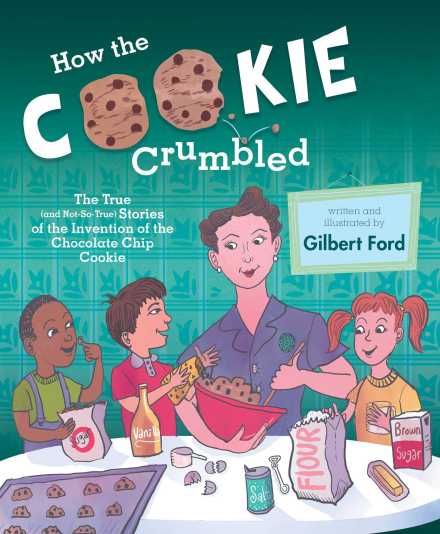
How the Cooke Crumbled: The True (and Not-So-True) Stories of the Invention of the Chocolate Chip Cookie

By Gilbert Ford


As you’re gobbling down delicious chocolate chip cookies, do you ever wonder who invented them or how they came to be such favorites? Well, the “who” part is easy: chocolate chip cookies were the brainchild of Ruth Wakefield. But the “how” is a bit more tricky. Here are the three popular stories surrounding this yummy treat—which do you think is right?

celebrate-picture-books-picture-book-review-how-the-cookie-crumbled-ruth

Copyright Gilbert Ford, 2017, courtesy of simonandschuster.com.

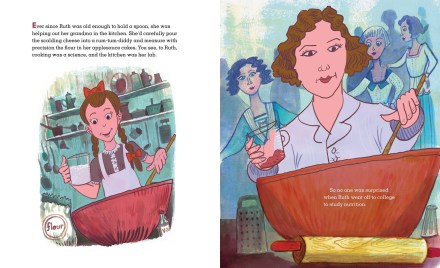
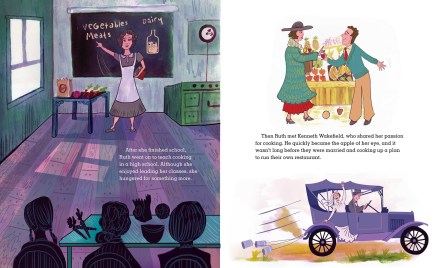
Ruth was a born baker. She loved helping her grandmother out in the kitchen as soon as she “was old enough to hold a spoon.” Ruth had a special feeling about cooking—to her “cooking was a science, and the kitchen was her lab.” When Ruth graduated from high school, she went to college to study nutrition. With her degree in hand, Ruth taught cooking in a high school. But while “she enjoyed leading her classes, she hungered for something more.”

celebrate-picture-books-picture-book-review-how-the-cookie-crumbled-teacher

Copyright Gilbert Ford, 2017, courtesy of simonandschuster.com.

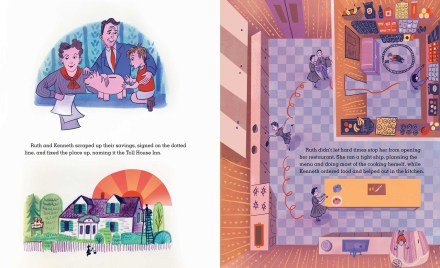
Ruth met and married Kenneth Wakefield, who also “shared her passion for cooking.” Together, they planned to open their own restaurant. Four years later, even though the economy was in depression and they had a young son, Ruth and Kenneth bought an old tollhouse in Whitman, Massachusetts. They fixed it up and named their restaurant the Toll House Inn.

celebrate-picture-books-picture-book-review-how-the-cookie-crumbled-inside-restaurant

Copyright Gilbert Ford, 2017, courtesy of simonandschuster.com.

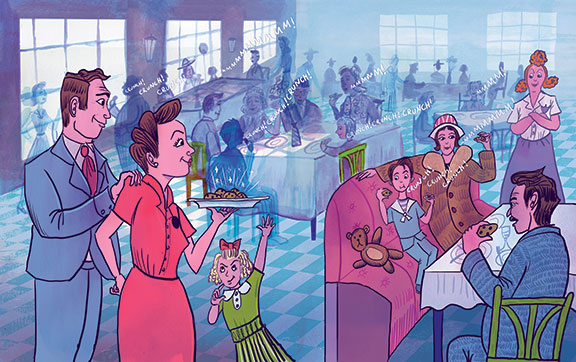
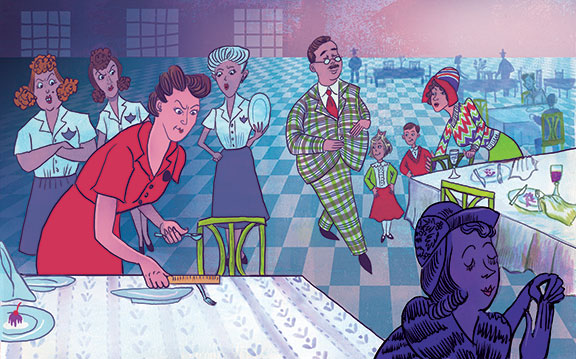
Ruth did “most of the cooking herself while Kenneth ordered food and helped out in the kitchen.” Ruth was very particular about how the Toll House Inn was run, even measuring “the distance between the fork and the plate for accuracy. Hungry diners began visiting the Toll House Inn, leaving satisfied and ready to return.

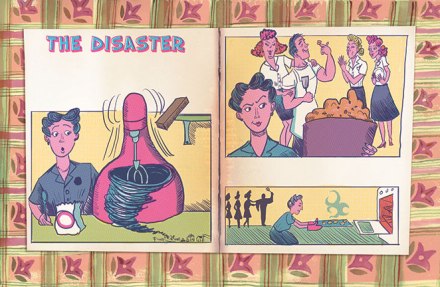
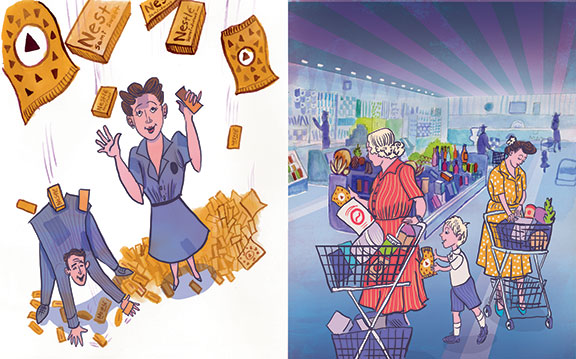
So how did chocolate chip cookies come to be? Here are the three popular theories: “The Disaster”—One story says that while Ruth was “whipping up a batch of Butter Drop Do cookies,” her mixer, spinning at top speed, “knocked a Nestlé chocolate bar off the shelf” and right into the dough. “What a disaster!” The grill man thought Ruth should bake them anyway, and when the cookies were done, Ruth “discovered pure heaven.”

celebrate-picture-books-picture-book-review-how-the-cookie-crumbled-the-disaster

Copyright Gilbert Ford, 2017, courtesy of simonandschuster.com.

“The Substitute”—Having forgotten to order baking chocolate, Ruth chopped up a Nestlé chocolate bar and added it to the dough, thinking that it would melt evenly in the oven. “But when she pulled the cookies from the oven, boy, was she wrong. ‘They’re ruined!’ she cried.” But some waitresses and kitchen workers tried them and found them to be delicious. When Ruth tried them herself, she agreed.

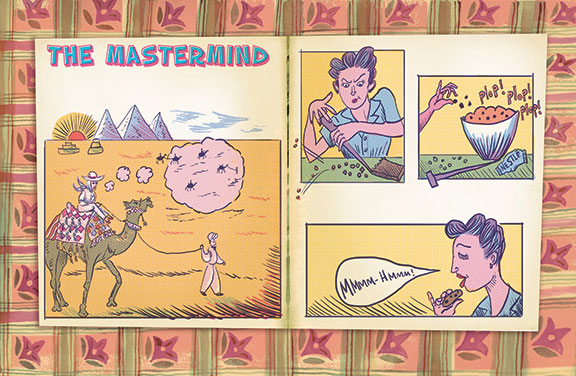
“The Mastermind”—Inspiration struck Ruth while returning from a trip to Egypt. Back in the kitchen, “she deliberately took an ice pick to that chocolate bar” and “dropped the chunks into the mix.” The baked cookies were “exactly how she imagined it. She “took a bite and savored the warm, gooey chocolate as it melted right in her mouth.”

celebrate-picture-books-picture-book-review-how-the-cookie-crumbled-the-mastermind

Copyright Gilbert Ford, 2017, courtesy of gilbertford.com.

“So, which version do you believe?”

The Disaster seems a little random, and the Substitute is “a little hard to swallow,” considering Ruth’s vast knowledge of cooking and ingredients. That leaves the Mastermind. Ruth was well-known for her ability to create delectable desserts and for searching out new recipes. It seems that “Ruth deserves some credit. She was one smart cookie!”

celebrate-picture-books-picture-book-review-how-the-cookie-crumbled-serving-cookies

Copyright Gilbert Ford, 2017, courtesy of gilbertford.com.

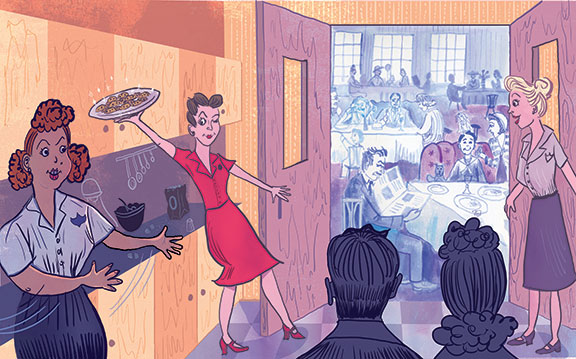
So with new cookies on the menu, Ruth began serving them to her customers. Everyone loved them and word spread about her “Toll House Chocolate Crunch Cookies.” People came from far away to try them. So many people, in fact, that Ruth had to expand her restaurant. You might think that Ruth kept her recipe a secret, but instead, she shared it with anyone who asked! She even let it be printed in the newspaper. Soon, people throughout Boston were baking Ruth’s cookies.

celebrate-picture-books-picture-book-review-how-the-cookie-crumbled-yummy

Copyright Gilbert Ford, 2017, courtesy of gilbertford.com.

When Ruth was interviewed on the Betty Crocker radio show, her recipe spread across the country. Seeing an unusual increase in sales of Nestle chocolate bars, the managers set out to find the cause. Soon they showed up at Ruth’s door begging for her recipe. “She gave it to them, and Nestlé began to produce chocolate chips designed specifically for Ruth’s cookies.” In payment, it’s said “she was awarded a lifetime supply of Nestlé chocolate!”

By the 1940s Ruth’s recipe appeared on every bag of Nestlé chocolate chips. From then on, Ruth’s cookies became a favorite of adults and kids alike!

An Author’s Note relating more about Ruth Wakefield and her famous cookies, as well as her classic recipe follow the text.

celebrate-picture-books-picture-book-review-how-the-cookie-crumbled-free-chocolate

Copyright Gilbert Ford, 2017, courtesy of gilbertford.com.

Gilbert Ford presents this sweet story with all the intrigue that has grown up around the invention of the chocolate chip cookie while giving Ruth Wakefield her proper due for her cleverness in the kitchen. Ford’s conversational style invites kids to participate in the story—a nice touch considering that the chocolate chip cookie is a perennial favorite with children. Relating the three separate theories gives readers an opportunity to think about the nature of invention. Including the facts about Ruth’s generosity with her recipe show readers that sharing ideas can be beneficial and could even prompt discussions about different ways to handle proprietary information.

celebrate-picture-books-picture-book-review-how-the-cookie-crumbled-table-setting

Copyright Gilbert Ford, 2017, courtesy of gilbertford.com.

In keeping with his light tone, Ford’s illustrations combine realistic and whimsical elements. The three theories are presented in more comic-book style, while the rest of the story portrays the historical time period, Ruth and Kenneth’s growing restaurant, and, of course, the star of the plate—the chocolate chip cookie.

For kids who love cooking and baking, history, and biographies as well as for its value in initiating discussion and even projects, How the Cookie Crumbled would be a welcome addition to home and classroom bookshelves.

Ages 4 – 8

Atheneum Books for Young Readers, 2017 | ISBN 978-1481450676

Discover more about Gilbert Ford, his books, and his art on his website.

Bake Cookies Day Activity

celebrate-picture-books-picture-book-review-cookies-coloring-page

Baking Together Coloring Page


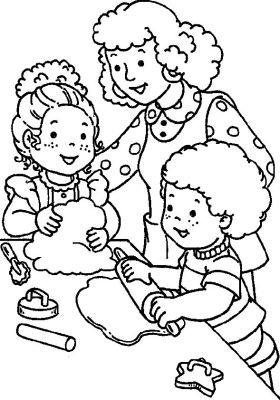
Baking together is a fun activity for kids and adults to do anytime! Before gathering all the ingredients and utensils, enjoy this printable Baking Together Coloring Page!

Picture Book Review
December 10 – Jane Addams Day

celebrate-picture-books-picture-book-the-house-that-jane-built-cover

About the Holiday

Today’s holiday was established in 2007 and commemorates the day in 1931 when Jane Addams became the first American woman to win the Nobel Peace Prize for her work to bring about social change, equality, and peace. Each year the Jane Addams Peace Association presents awards to outstanding children’s books that promote peace and justice. To learn more about Jane Addams and the Jane Addams Peace Association, visit janeaddamspeace.org.

The House that Jane Built: A Story about Jane Addams

Written by Tanya Lee Stone | Illustrated by Kathryn Brown


On a busy street stands a very special house where anyone is welcome and some find a home. In 1889 Jane Addams, a wealthy young woman, bought an elegant house in one of Chicago’s poorest neighborhoods. Why? At just six years old on a trip with her father, Jane “noticed that not everyone lived like her family did.” Right then she vowed that when she grew older, she would live in a poor community and “find a way to fix the world.”

celebrate-picture-books-picture-book-the-house-that-jane-built-trip-with-father

Image copyright Kathryn Brown, 2015, text copyright Tanya Lee Stone. Courtesy of us.macmillan.com.

Jane was brave and strong. Sometimes she and her stepbrother George would “sneak away at night to explore in nearby caves.” Jane was also smart and “read and read her father’s book collection,” which also served as the town library. Unlike most women at the time, Jane went to college. She attended Rockford Female Seminary and “graduated at the top of her class.”

celebrate-picture-books-picture-book-the-house-that-jane-built-exploring-with-George

Image copyright Kathryn Brown, 2015, text copyright Tanya Lee Stone. Courtesy of us.macmillan.com.

After graduation, she didn’t know what she wanted to do, and when her father died that same summer, “Jane felt lost.” Two years later some friends invited her to travel to Europe with them. Although they went to the opera, museums, and many beautiful places, it was an experience in London that stuck with her. There she saw many “people in ragged clothes with outstretched hands, begging a cart vendor to buy his rotten fruits and vegetables that hadn’t sold at the market.” 

celebrate-picture-books-picture-book-the-house-that-jane-built-London-settlement-house

Image copyright Kathryn Brown, 2015. Courtesy of us.macmillan.com.

When Jane returned home, the question of how she could help nagged at her. She returned to London to learn about Toynbee Hall, where poor and wealthy people lived together and learned from each other. Here, skills, such as cooking, were taught to provide people with the education to find jobs. Toynbee Hall was called a settlement house, because the rich people who worked there lived there as well.

celebrate-picture-books-picture-book-the-house-that-jane-built-Chicago-neighborhood

Image copyright Kathryn Brown, 2015, text copyright Tanya Lee Stone. Courtesy of us.macmillan.com.

Jane now knew what she wanted to do. In 1889 Chicago was a diverse city with a large immigrant population. Many didn’t speak English, which made it hard for them to find jobs. “Large families were crammed into ramshackle houses with no running water.” Garbage lay in the street, and tough kids ran wild with nothing else to do.

Jane found a large house in the middle of one of these areas that had once belonged to Charles J. Hull and upon his death had been given to his cousin, Helen Culver.  When Helen discovered what Jane wanted to do, she donated the house for free. Jane left the house unlocked, letting people know that they could come there whenever they needed. In time, people did find their way to Hull House when they were hungry or out of work. Jane also had her own way of dealing with unruly children or those who didn’t understand her generosity. Once when a man broke into Hull House twice because he had no job and no money, Jane gave him a job.

celebrate-picture-books-picture-book-the-house-that-jane-built-feeding-hungry

Image copyright Kathryn Brown, 2015, text copyright Tanya Lee Stone. Courtesy of us.macmillan.com.

Jane helped the neighborhood in other ways too. She built a public bath so that people could stay clean and avoid illness. She convinced “public officials to build more public baths.” Because children had nowhere to play, Jane convinced a neighbor to give her his unused lot near Hull House. She tore down the buildings and built Chicago’s first playground. For kids whose parents worked long hours, she started a morning kindergarten and after school clubs. She also began offering evening classes for children who worked during the day.

celebrate-picture-books-picture-book-the-house-that-jane-built-kindergarten

Image copyright Kathryn Brown, 2015. Courtesy of us.macmillan.com.

Jane had help with her endeavors. Her friend “Ellen Gates Starr was her partner from the start.” Many other people also helped. They moved into Hull House and “taught literature, art, English, math, science, and cooking.” Hull House continued to grow, and by 1907 Jane oversaw thirteen buildings, including “a gymnasium, coffee house, theater, music school, community kitchen, and an art gallery.”

By the early 1920’s more than 9,000 people visited Hull House every week. Jane’s work “changed a bad neighborhood into a great and strong community.” Today, you can still see Jane Addams’ commitment to others in the community centers that bring people together in nearly every city and town.

An Author’s Note with more information on Jane Addams follows the text.

celebrate-picture-books-picture-book-the-house-that-jane-built-playground

Image copyright Kathryn Brown, 2015, text copyright Tanya Lee Stone. Courtesy of us.macmillan.com.

Tanya Lee Stone brings the story of Jane Addams’ work in Chicago to children in a compelling biography that gives readers a fully developed portrait of this most amazing woman. Stone’s active and evocative language puts children in the Hull House neighborhood, allowing them to get a feeling for and understanding of the issues of the time. Stone’s excellent examples of how Jane Addams responded to a variety of problems facing her community and even Hull House itself, demonstrate how generosity, empathy, and kindness can make positive changes in people’s lives. Depictions of Jane’s early compassion and commitment give children a sense that they too can make a difference in areas that are important to them.

celebrate-picture-books-picture-book-the-house-that-jane-built-front-door

Image copyright Kathryn Brown, 2015. Courtesy of us.macmillan.com.

Kathryn Brown’s riveting illustrations capture Jane’s early moments of concern for others, bravery, and study that informed her adult life; times of decision and cooperation that led to the establishment of Hull House; scenes of poverty, upheaval, and need that touched Jane’s heart; and images of her successes in Chicago that inspired others around the country. Brown’s softly hued watercolors are beautifully infused with realistic period details and honest emotion that provide readers with a strong foundation for understanding and appreciating the life of Jane Addams.

The House that Jane Built: A Story about Jane Addams is an inspiring choice for children with a philanthropic heart and to open discussions on how one person can make a difference. The book would be a welcome addition to home and classroom libraries.

Ages 6 – 10

Henry Holt Books for Young Readers, 2015 | ISBN 978-0805090499

To learn more about Tanya Lee Stone and her books, visit her website.

You can view a gallery of illustration work by Kathryn Brown on her website

Jane Addams Day Activity

celebrate-picture-books-picture-book-jane-addams-coloring-page

Jane Addams Coloring Page Poster


Jane Addams is an inspiration to all! Print this Jane Addams Coloring Page and hang it in your room or locker to inspire you to make a difference and be a positive influence in your community!

Picture Book Review