March 5 – It’s National Women’s History Month

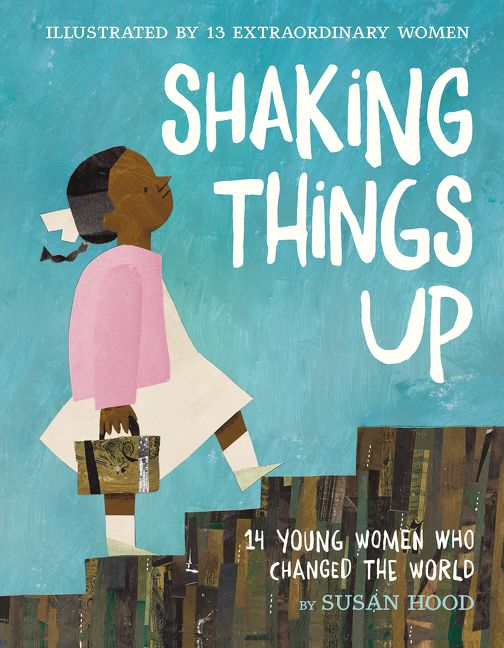
celebrate-picture-books-picture-book-review-shaking-things-up-cover

About the Holiday

National Woman’s History Month was established by the United States Congress in 1987 to recognize and celebrate the achievements of American women in the past and today. This year’s theme is “Nevertheless She Persisted: Honoring Women Who Fight All Forms of Discrimination against Women” which provides an opportunity to recognize the tireless efforts of women in all walks of life who fight against discrimination to be heard and to achieve their goals. There’s no better time than now to get involved to ensure that all women have equal rights and standing in all areas of their lives.

Shaking Things Up: 14 Young Women Who Changed the World

Written by Susan Hood 

Illustrated by Shadra Strickland, Hadley Hooper, Lisa Brown, Emily Winfield Martin, Sara Palacios, Erin K. Robinson, Sophie Blackall, Melissa Sweet, Oge Mora, Isabel Roxas, Julie Morstad, LeUyen Pham, and Selina Alko


This superb collection of biographies in verse highlights not only well-known pioneers but some delightfully fresh names and a few who are influencing the arts, science, and cause of human rights today. Each of the women profiled show the qualities of  bravery, persistence, intelligence, and ability over a vast spectrum of fields. Their success led the way for today’s women and will inspire tomorrow’s.

celebrate-picture-books-picture-book-review-shaking-things-up-Molly-Williams

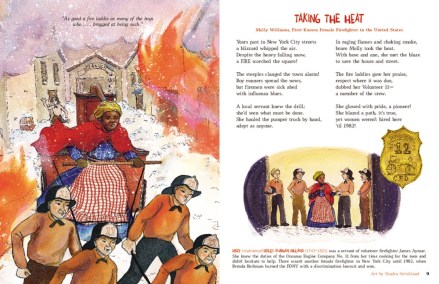
Image copyright Shadra Strickland, 2018, text copyright Susan Hood, 2018. Courtesy of HarperCollins.

Organized on a timeline from the early 1780s to 2014, Shaking Things Up begins with Taking the Heat and Molly Williams, who was the first known female firefighter in America. When the flu knocked out all the members of the Oceanus Fire Department and a fire raged, Molly, the servant of James Aymar, a volunteer fireman, “… knew the drill; / she’d seen what must be done. / she hauled the pumper truck by hand, / adept as anyone.” For her work she was named Volunteer 11 and made part of the crew. It took about two-hundred years before another woman—Brenda Berkman—was added to the New York Fire Department.

celebrate-picture-books-picture-book-review-shaking-things-up-Mary-Anning

Copyright Hadley Hooper, 2018, courtesy of HarperCollins.

Young paleontologists-in-the-making will be amazed by the story of Mary Anning, who, while searching the British coast for fossils to sell to support her family, uncovered the skeleton of an ichthyosaur in 1812. In Buried Treasure, children learn how she went on to discover “the first two complete plesiosaurs and a pterosaur, laying the foundation for Charles Darwin’s theory of evolution.”

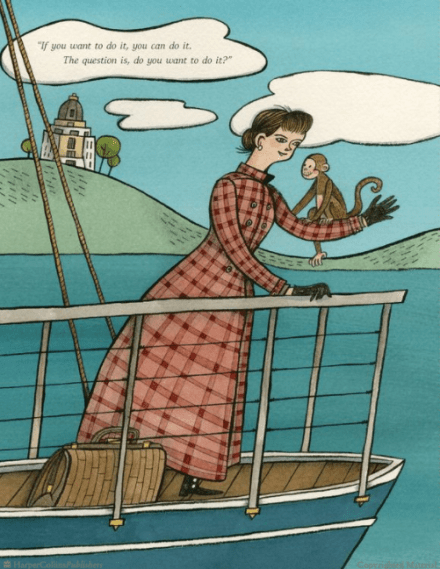
Children who love spies, news reporting, and uncovering the truth will want to know about Nellie Bly, who as an investigative journalist took on disguises to infiltrate institutions and write about “corruption and cruelty.” She was also widely admired for her around-the-world trip that beat Jules Verne’s “80 days” by eight days. As told in Woman of the World: “Bly hopped a ship and told her tale / of all she saw on Earth. / She wrote of camels, temples, jewels / with gutsy wit and mirth.” Nellie was only twenty-five when she undertook her travels in “a record-breaking race. / No soul on Earth had ever sped / the globe at such a pace!”

celebrate-picture-books-picture-book-review-shaking-things-up-Mary-Anning-poem

Image copyright Hadley Hooper, 2018, text copyright Susan Hood, 2018. Courtesy of HarperCollins.

If it weren’t for Annette Kellerman, women may never have made such a splash in swimming. Kellerman was a champion swimmer who began the sport to strengthen her legs after having rickets. Turning the Tide reveals that when she took to the water “without pantaloons—her swimsuit was deemed obscene!” After she was arrested she calmly stated, “who can swim fifty laps / wearing corsets and caps? / Her statement could not be contested,” and she went on to create the modern one-piece swimsuit, changing swimming for women forever.

In The Storyteller, a full alphabet of attributes describes Pura Belpré, a children’s librarian and the New York Public Library’s first Latina librarian. By offering—and often writing—Spanish books and creating programs for the Spanish-speaking community, Belpré revolutionized her library and touched many lives. 

celebrate-picture-books-picture-book-review-shaking-things-up-nellie-bly

Copyright Lisa Brown, 2018, courtesy of HarperCollins.

Children who reach for the stars will be transported by Lift-Off and the inspiration of Mae Jemison, the first female African-American astronaut. When young Mae gazes into the dark night sky, the “glittering stars, swirling galaxies / fill her, thrill her.” It doesn’t matter if she is afraid of the dark and afraid of heights, Mae looks and goes where she wants, where she needs to to learn and understand. And when she’s ready? “Ignition. / All systems are go. / Three / Two / One / Blast off!”

celebrate-picture-books-picture-book-review-shaking-things-up-secret-agents

Image copyright Sophie Blackall, 2018, text copyright Susan Hood, 2018. Courtesy of HarperCollins.

Break It Down reveals the way Angela Zhang attacks the questions she has about the way the world works, questions that lead her to answers and incredible achievements. From creating magic solutions with a Harry Potter potion kit at five years old to discovering answers to questions like why rainbows follow storms at seven years old to using a Stanford University lab at fifteen, Zhang has chipped away “at the ‘black boxes of life,’” including the “biggest black box of all– / a cure for cancer.” For Zhang science is “… both stone and chisel, / and I, your willing apprentice, / yearn to care away life’s mysteries / as a sculptor chisels marble / to find beauty inside.”

celebrate-picture-books-picture-book-review-shaking-things-up-Malala-Yousefzai

Image copyright Selina Alko, 2018, text copyright Susan Hood, 2018. Courtesy of HarperCollins.

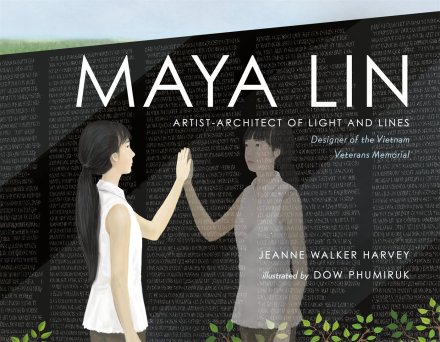
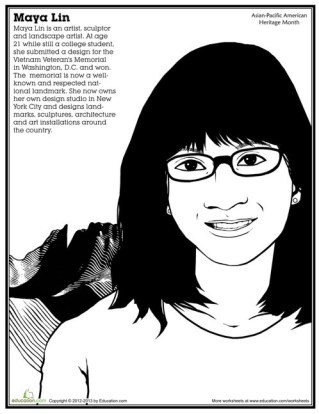
Also included are poems about artist Frida Kahlo, World War II secret agents Jacqueline and Eileen Nearne, anti-hunger activist Frances Moore Lappé, civil rights pioneer Ruby Bridges, architect Maya Lin, and Noble Peace Prize winner Malala Yousafzai.

An illustrated timeline precedes the text, and suggested resources for further study on each woman follows the text.

Susan Hood has created fourteen poems that are as unique as the woman they describe. Some rhyming and some free verse, the poems include facts, quotes, intriguing details and the rhythms, sounds, and dreams of these young women. A paragraph following each poem reveals more about the woman and her work. Readers will be awe-struck by the enticing stories that inform each lyrical biography and will long to learn more about the women and their lives.

The theme of individuality is carried through in the illustrations, which are each created by a different illustrator. Colorful, whimsical, and realistic, the illustrations let children see the faces of the women presented, surrounded by their work and set within their time period. Readers will want to linger over the images and discuss the details included. A quotation from each woman accompanies her illustration.

Shaking Things Up offers an inviting way to introduce children to these amazing women and is an excellent reminder that they too can dream of what could be and make it happen. A must for classroom and school libraries, the book would be an inspirational addition to home bookshelves as well.

Ages 4 – 10

HarperCollins, 2018 | ISBN 978-0062699459

Discover more about Susan Hood and her books on her website.

You can learn more about these illustrators on their websites:

Shadra Strickland | Hadley Hooper | Lisa Brown | Emily Winfield Martin | Sara Palacios | Erin K. Robinson | Sophie Blackall | Melissa Sweet | Oge Mora | Isabel Roxas | Julie Morstad | LeUyen Pham | Selina Alko

Check out the Shaking Things Up book trailer!

Women’s History Month Activity

celebrate-picture-books-picture-book-review-freda-kahlo-coloring-page

Amazing Women Coloring Pages


There are so many incredible women to learn about during this month. Today, enjoy these coloring pages of inspiring women.

Mary Anning | Mae Jemison | Freda Kahlo 

Picture Book Review

February 23 – National Tile Day

celebrate-picture-books-picture-book-review-the-world-is-not-a-rectangle-cover

About the Holiday

Today’s holiday was established just last year and celebrates that architectural accent that has given exteriors and interiors pizazz and individuality since ancient times. Made in nearly every color, pattern, and shape imaginable, tiles were once all handmade and available only to the wealthy few. Innovations during the Industrial Revolution allowed tile to be mass produced and, thus, affordable to many. Tile has become a favorite decoration in homes across the world—as any HGTV viewer knows!

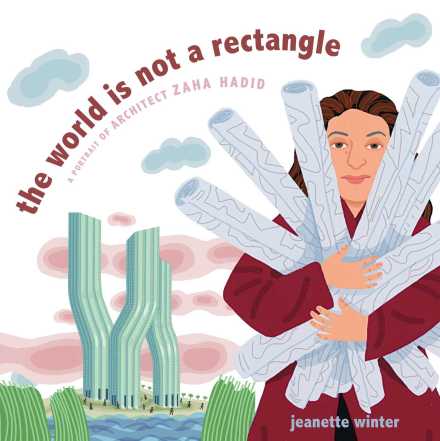
The World Is Not a Rectangle: A Portrait of Architect Zaha Hadid

By Jeanette Winter


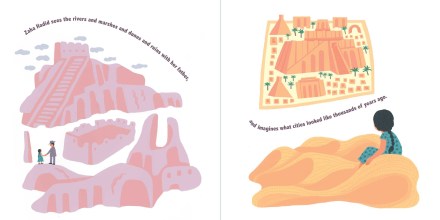
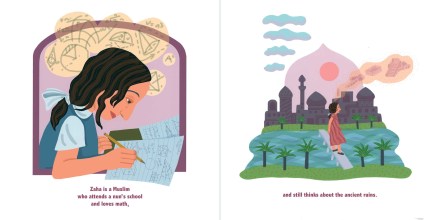
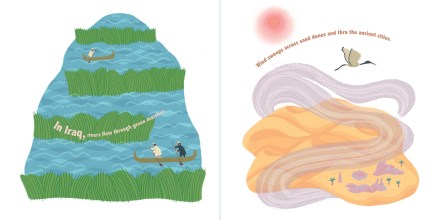
Growing up in Iraq, Zaha Hadid sees the way rivers brake up the marshland, watches when the wind sculpts sand dunes, and visits the ruins of ancient cities. At home in Baghdad, young Zaha studies the patterns of her Persian carpet, noticing “how the shapes and colors flow into each other, like the dunes and rivers and marshes” and dreaming of designing her own cities.

celebrate-picture-books-picture-book-review-the-world-is-not-a-rectangle-rivers

Copyright Jeanette Winter, 2017, courtesy of Beach Lane Books.

In her room, she arranges and rearranges the furniture, creates her own clothes, and comes up with ideas. When Zaha grows up, she moves to London to study to be an architect. After graduation, she opens an office in an old school building—Studio 9. Zaha is joined by some friends and they work tirelessly on their architectural drawings.

celebrate-picture-books-picture-book-review-the-world-is-not-a-rectangle-ruins

Copyright Jeanette Winter, 2017, courtesy of Beach Lane Books.

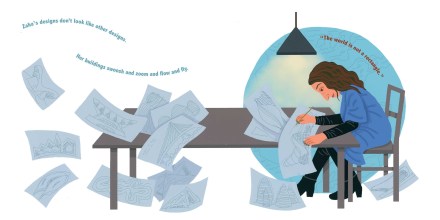
“Zaha’s designs don’t look like other designs. Her buildings swoosh and zoom and flow and fly. ‘The world is not a rectangle’” she says. But Zaha cannot find anyone to build her designs; everyone says they are impossible. Finally, one of Zaha’s designs is chosen from among all the others in a competition. When it is presented to the city’s committee, however, they reject it. Another competition is held, and Zaha’s design wins again. The city rejects it again. Zaha is as strong as her name Hadid, which means iron in Arabic, and she continues to design plan after plan.

celebrate-picture-books-picture-book-review-the-world-is-not-a-rectangle-school

Copyright Jeanette Winter, 2017, courtesy of Beach Lane Books.

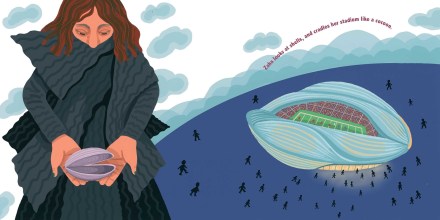
Then one by one her plans are accepted. She “remembers the grasses in the marshes swaying” and designs tall towers “dancing like grass.” In the desert, she creates a building that allows the wind to blow over and around and through it. The sports stadium she imagines has the beauty of a cocoon. Remembering the stones in a stream, Zaha “builds an opera house like the pebbles in the water. Inside the opera house, a singer is the pearl in the oyster shell.”

celebrate-picture-books-picture-book-review-the-world-is-not-a-rectangle-designs

Copyright Jeanette Winter, 2017, courtesy of Beach Lane Books.

The swirling stars in far-away galaxies inspire a complex of connected buildings, and the undulating waves become the model for a bridge that seems to move with the water. From looking at the Alps, Zaha fashions a museum built “inside a mountain peak with windows to see the sky and the valleys” and a ski jump that “reaches to the sky like the mountain.” From the “jungle and ancient wood temples,” Zaha draws inspiration for “a wooden building to remember a faraway war.”

celebrate-picture-books-picture-book-review-the-world-is-not-a-rectangle-stadium

Copyright Jeanette Winter, 2017, courtesy of Beach Lane Books.

With every building, Zaha gets busier and busier more than four hundred architects are working in that old school building, “designing, planning, engineering, and making models of Zaha’s visions.” But Zaha’s ideas don’t stop at buildings. She believes “you should do what you like,” so she designs doll houses, shoes, chairs, sculpture, and benches. No matter what she designs, Zaha’s early memories return. She thinks of “the beauty of the landscape—where sand, water, reeds, birds, buildings, and people all somehow flow together” and never loses her belief in the impossible.

Even though the light in Zaha’s office is now dark, “her architects keep their lights on—designing, planning, engineering, and making models of her visions, keeping her flame blazing bright.”

celebrate-picture-books-picture-book-review-the-world-is-not-a-rectangle-night

Copyright Jeanette Winter, 2017, courtesy of Beach Lane Books.

Following the text, readers can learn the name and location of each building, discover more information about Zaha Hadid’s life and awards, and read more of her own words about her work.

Jeanette Winter shines a light on an architect who will inspire children not only with her work but with her original ideas, self-confidence, and refusal to compromise on her beliefs. Winter combines straightforward passages of Zaha’s childhood and early professional struggles with lyrical phrasing that describes her influences in nature and her soaring buildings. Sprinkled throughout are Zaha’s own words that define her ideas and ideals.

In her dreamlike illustrations, Winter clearly depicts Zaha Hadid’s inspirations and the way in which she interpreted each natural motion, shape, or phenomenon in steel, glass, concrete, or wood. Winter’s pages swirl, shimmer, flow, and soar, and Zaha is always there, seeing, thinking, envisioning, and drawing.

An excellent biography of a strong and creative woman who has designed some of the world’s most beautiful and original buildings, The World Is Not a Rectangle: A Portrait of Architect Zaha Hadid would be a superb addition to classroom discussions and home story times.

Ages 5 – 10

Beach Lane Books, 2017 | ISBN 978-1481446693

National Tile Day Activity

celebrate-picture-books-picture-books-review-heart-mosaic-coloring-page

I (Heart) Tiles! Coloring Page


With colorful tiles you can make beautiful pictures. Put your imagination to work and color this I (Heart) Tiles! Coloring Page!

Picture Book Review
February 12 – Abraham Lincoln’s Birthday

celebrate-picture-books-picture-book-review-lincoln-tells-a-joke-cover

About the Holiday

Today we celebrate the birthday of Abraham Lincoln, who was born in 1809 in Hodgenville, Kentucky.  He rose from poverty to become a statesman, lawyer, and the 16th president of the United States, serving from 1861 until he was assassinated in 1865. He guided the country through the Civil War and on January 1, 1983 signed the Emancipation Proclamation, which ended slavery. By 1890, Lincoln’s birthday was recognized as a state holiday but never became a federal holiday. The celebration of Lincoln’s birthday was combined with George Washington’s in 1971 when President’s Day was instituted. Only a handful of states still recognize Lincoln’s birthday as a separate state holiday. 

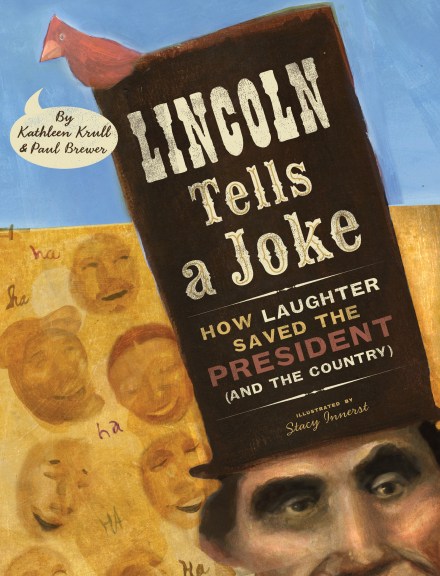
Lincoln Tells a Joke: How Laughter Saved the President (and the Country)

Written by Kathleen Krull and Paul Brewer | Illustrated by Stacy Innerst


Throughout his life things were grim for Abraham Lincoln, but he had a way of responding that made them better. He was born in 1809 in a log cabin that had a dirt floor, cornhusk mattresses, and cracks in the walls so thick that the snow blew in. All day long he did backbreaking work for his strict father, but in the evenings his father “told jokes and the family laughed together.” Of his father, Lincoln once said, “‘My father taught me how to work, but not to love it. I’d rather read, tell stories, crack jokes, talk, laugh.’”

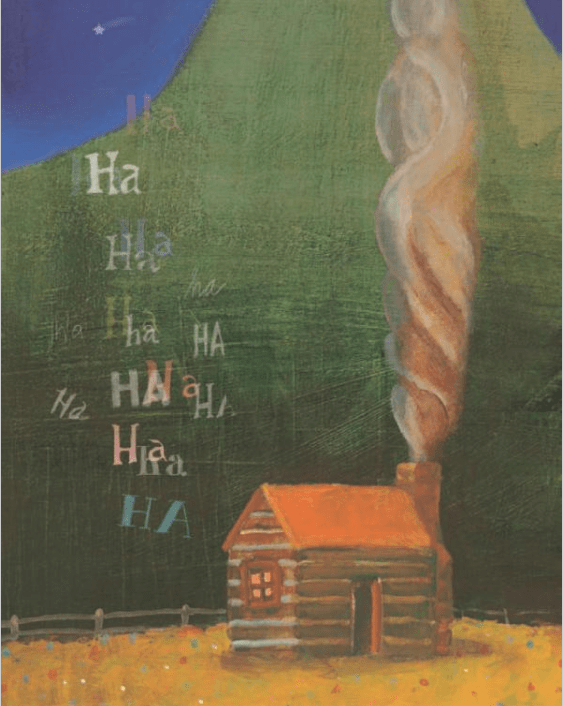
celebrate-picture-books-picture-book-review-lincoln-tells-a-joke-log-cabin

Image copyright Stacy Innerst, 2016, text copyright Kathleen Krull and Paul Brewer, 2016. Courtesy of HMH Books for Young People.

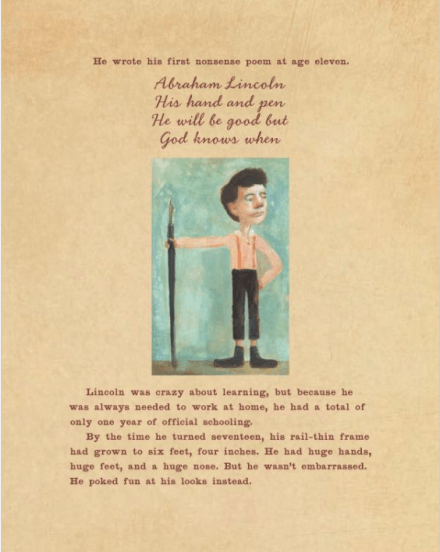
Even as a child, Lincoln loved to read and write. His mother died when Lincoln was only nine years old, but “words and humor seemed to ease the pain.” He liked to get together with friends and read aloud from joke books, and at the age of eleven, he wrote his first nonsense poem. Lincoln loved to learn, but because of all the work at home, he “had a total of only one year of official schooling.” Instead, he read everything he could.

celebrate-picture-books-picture-book-review-lincoln-tells-a-joke-with-pen

Image copyright Stacy Innerst, 2016, text copyright Kathleen Krull and Paul Brewer, 2016. Courtesy of HMH Books for Young People.

He grew up to be six feet, four inches tall, with huge feet and hands, and a big nose. His appearance was one of the things he joked about the most. When he was nineteen, Lincoln moved to New Salem, Illinois. He had such a reputation for humor that a local judge asked him to come to court to comment on cases. Here, Lincoln learned the importance of words and how they could be used by watching and listening to the lawyers. Despite all their learning, these men couldn’t fool Abe. He once commented of one lawyer: “‘That man can pack the most words into the least ideas of any man I know.’”

When he was twenty-three he served in the military, but he said the only battles he saw were with mosquitoes. After he was discharged that same year, he ran for the Illinois state legislature and lost. When he tried again two years later, he won and went on to serve for four terms, keeping the “‘House in a continuous roar of merriment.’”

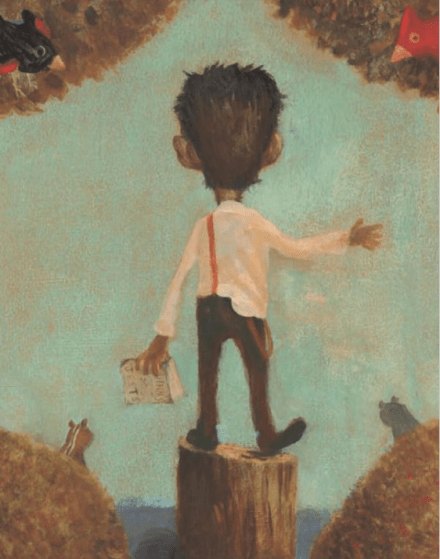
celebrate-picture-books-picture-book-review-lincoln-tells-a-joke-on-stump

Image copyright Stacy Innerst, 2016, text copyright Kathleen Krull and Paul Brewer, 2016. Courtesy of HMH Books for Young People.

As he got older his looks and sometimes depressive personality only seemed to get worse, but Lincoln kept joking and was a favorite of children. When he, himself, became a lawyer, he was brilliant at summing up hours of testimony in “one clever story that would get the jury on his side.” Then he met Mary Todd, who was “witty, bubbly, and very smart about politics.” He loved her and she loved him, but her family rejected him as not wealthy or high-society enough. Even their attitude, though, was fodder for Lincoln’s jests.

When Abe and Mary did marry, he joked about their sixteen-inch height difference, and when they had four boys, he kept them entertained with his humor. Lincoln even thought jokes should be taught in school because he believed they made kids smarter.

Lincoln continued to run for higher political offices, losing many races, but always maintaining his sense of humor. Along the way, he gained a reputation for honesty. He also had a talent for skewering even serious topics in a way that brought out the truth: “‘Whenever I hear anyone arguing for slavery, I feel a strong impulse to see it tried on him personally.’”

celebrate-picture-books-picture-book-review-lincoln-tells-a-joke-lincoln

Image copyright Stacy Innerst, 2016, text copyright Kathleen Krull and Paul Brewer, 2016. Courtesy of HMH Books for Young People.

When Lincoln was elected president, his White House rang with laughter. Guests were charmed, while reporters, those wanting inside knowledge, or people asking for favors were left chuckling but not any wiser. During the Civil War years, Lincoln alleviated the stress and kept a clear head by reading his favorite humor writers, encouraging his advisers to do the same.

Lincoln’s talent for words helped keep the country together even through its worst crisis.  “His gift for language—and how it can inspire people—is one reason he is considered one of our best presidents” even though during his presidency he was one of the most unpopular due to his politics. When he was shot at Ford’s Theater five days after the war ended, Lincoln was attending a comic play and may have been “laughing even in the final moments of his life.” Abraham Lincoln had an amazing life, fueled by his sense of humor that took him from a tiny log cabin to the White House and into American’s hearts.

celebrate-picture-books-picture-book-review-lincoln-tells-a-joke-lincoln-portrait

Image copyright Stacy Innerst, 2016, text copyright Kathleen Krull and Paul Brewer, 2016. Courtesy of HMH Books for Young People.

Kathleen Krull and Paul Brewer have written a terrific biography of Abraham Lincoln focusing on the personality trait that made him such a unique individual and uniquely qualified to shepherd America through its most difficult time. Lincoln’s sense of humor was charged with intelligence and true cleverness and showcased his love and understanding of words and language. Children, with their own well-developed senses of humor and affinity for a good joke, will be captivated by Krull and Brewer’s conversational tone that is sprinkled with the wit and wisdom Abraham Lincoln displayed from the time he, himself, was a child. Lincoln Tells a Joke reveals not only facts from Lincoln’s life but the all-important aspects of his character that allowed him to rise above his lack of formal education and leading-man looks to become one of the most admired men ever born. 

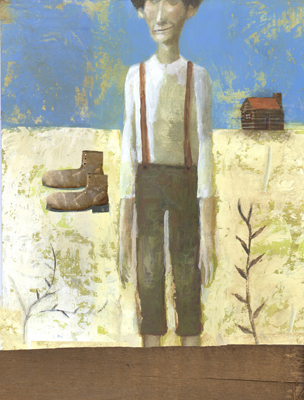
Stacy Innerst’s hip, folk-art-style paintings mirror Abraham Lincoln’s humor with unusual perspectives, quirky details, and plenty of peppered-in “ha, ha, ha’s” while highlighting his stature both as a sensitive, thoughtful man and as a politician. Lincoln’s elongated arms and legs stretch across the pages, children laughing at his jokes don’t even reach his knees, and the tall tower of papers in front of him on his desk completely hide him except for his arms. Innerst’s color pallet of muddy sepia tones, rusty reds, and deep aqua blues; flat landscapes, and political imagery give readers the feel and spirit of the 1800s Midwest and Washington DC. In a moving double-spread illustration, Innerst seats Lincoln at his desk as the handwritten words of the Gettysburg Address form the backdrop. As the story closes, Innerst re-imagines the Lincoln Memorial statue with  Lincoln laughing while reading his favorite book, Quinn’s Jests. It’s a fitting tribute to both Lincoln and the power of laughter.

Lincoln Tells a Joke is a fantastic biography for home libraries for children who like biographies, history, Abraham Lincoln, or a well-told story. The book would be an inspired choice for classroom, school, and public libraries.

Ages 6 – 10

HMH Books for Young Readers, 2016

Discover more about Kathleen Krull and her books on her website.

Learn more about Paul Brewer, his books and his art on his website.

To view a portfolio of books and artwork by Stacy Innerst, visit his website.

Abraham Lincoln’s Birthday Activity

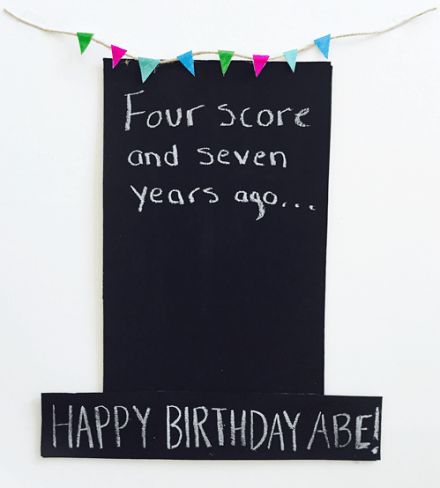
celebrate-picture-books-picture-book-review-abraham-lincoln's-stovepipe-hat-chalkboard

Abe Lincoln’s Stovepipe Hat Chalkboard


Abraham Lincoln was known for the black top hat he wore – and for his inspiring words In this activity you can learn how to make a top hat chalkboard to use for your own drawings or inspiring words!

Supplies

  • Cereal Box (I used a large sized cereal box), cardboard or poster board
  • Chalkboard Paint (black)
  • Paint brush
  • Hot Glue Gun or extra-strength glue
  • Removable mounting squares
  • Chalk

Directions

  1. If you are using cardboard or poster board: cut a rectangle at least 8 inches wide by 12 inches long for the hat and 12 inches long by 2 inches wide for the brim (but your top hat can be any size you’d like!)
  2. If you are using a Cereal Box: open the seams of the Cereal Box
  3. Cut the panels of the cereal box apart
  4. Take one face panel and one side panel
  5. With the chalkboard paint, paint both panels
  6. Let the panels dry
  7. Attach the side panel to the bottom of the face panel to create the shape of Lincoln’s top hat
  8. Hang Abe Lincoln’s Top Hat Chalkboard 

Picture Book Review

February 11 – National Inventors’ Day

celebrate-picture-books-picture-book-review-women-in-science-cover

About the Holiday

Today’s holiday recognizes the spirit of inventors—those women and men, girls and boys who look at life just a little bit differently and not only imagine the “what if?” but make it happen. Inventors come from all backgrounds and with all different kinds of experience. Today, we celebrate those pioneers of the past, present, and future! If you have a creative mind, today’s the day to tinker around with your idea. Inventions don’t always have to change the world. Have a better way of organizing your closets, a new game to play with your pet, or a new recipe to use the leftovers in the fridge? Go for it—and be proud of yourself!

Women in Science: 50 Fearless Pioneers Who Changed the World

By Rachel Ignotofsky

“Nothing says trouble like a woman in pants.” With this revealing attitude from the 1930s, Rachel Ignotofsky introduces her scintillating biographies of 50 intelligent, self-confident, persevering, and inspiring women working in engineering, math, medicine, psychology, geology, physics, astronomy, and more sciences from ancient history through today. The book begins with Hypatia who lived in Greece in the late 300s to early 400s CE and became an expert in astronomy, philosophy,and mathematics, making “contributions to geometry and number theory.” She became one of Alexandria’s first female teachers, “invented a new version of the hydrometer,” and can be found among the intellects in Raphael’s painting “The School of Athens.”

celebrate-picture-books-picture-book-review-women-in-science-hypatia

Image and text copyright Rachel Ignotofsky, courtesy of rachelignotofskydesign.com

Zipping ahead to 1647 readers find Maria Sibylla Merian, considered one of the “greatest scientific illustrators of all time.” Her specialty was entomology. By carefully documenting the lifespan of butterflies, she taught people about the science of metamorphosis, publishing a book on the subject filled with notes and illustrations in 1679. Later she scoured the rainforests of South America, gathering information on never-before-seen insects from that region. Her book, The Metamorphosis of the Insects of Suriname “was published in 1705 and became a hit all over Europe.” Maria was so famous, her picture appeared on German money and stamps.

celebrate-picture-books-picture-book-review-women-in-science-mary-anning

Image and text copyright Rachel Ignotofsky, courtesy of rachelignotofskydesign.com

Other women in the nature sciences include Mary Anning, who as a child discovered the first complete ichthyosaur skeleton and went on to become a paleontologist; Mary Agnes Chase, a botanist and expert on grasses; Marjorie Stoneman Douglas, who as a conservationist helped save the Florida Everglades; and Joan Beauchamp Procter, a zoologist specializing in reptiles who discovered the Peninsula Dragon Lizard in 1923; and more.

celebrate-picture-books-picture-book-review-women-in-science-marie-curie

Image and text copyright Rachel Ignotofsky, courtesy of rachelignotofskydesign.com

One of the earliest women astronomers and mathematicians was Wang Zhenyi, born in China in 1768. Creating her own eclipse model, she proved her advanced “theories about how the moon blocks our view of the sun—or the earth blocks the sun’s light from reaching the moon—during an eclipse.” She also measured the stars and explained the rotation of the solar system. At the age of 24 she published the 5-volume Simple Principles of Calculation. Zhenyi died at the age of 29, but in her short life she published many books on math and astronomy as well as books of poetry.

celebrate-picture-books-picture-book-review-women-in-science-patricia-bath

Image and text copyright Rachel Ignotofsky, courtesy of rachelignotofskydesign.com

Women in Science includes many other women who have looked to the stars and mathematics for their careers. Some of these are: Ada Lovelace, the first person to write a computer program; Emmy Noether, who helped Albert Einstein develop his theory relativity, created the field of abstract algebra, and “made new connections between energy and time, and angular momentum”; Cecilia Payne-Gaposchkin a quantum physicist in 1900s England who “discovered that the sun is made mostly of hydrogen and helium gas” and in 1956 became Harvard University’s first astronomy professor; Mae Jemison, who in 1992 became the first African-American woman in space and later started her own technology consulting firm as well as founding BioSentient Corporation, and a science camp for kids; plus many others.

celebrate-picture-books-picture-book-review-women-in-science-rosalind-franklin

Image and text copyright Rachel Ignotofsky, courtesy of rachelignotofskydesign.com

The book also features Engineers, such as Hertha Ayrton who improved electric lights by inventing “a new rod that made a clean and quiet bright light” and the Ayrton fan that blew away mustard gas during World War I; and Lillian Gilbreth, who used her theories of “organizational psychology” in inventing the foot pedal for garbage cans, shelving for refrigerators, and even the “work triangle” for kitchens “that determines the distance from the sink to the stove” and saves time. There are Geneticists such as Nettie Stevens who discovered the “X” and “Y” chromosomes, and Barbara McClintock—the pants wearer from the beginning of the post—and the first person “to make a complete genetic map of corn” and discover jumping genes, or “transposons.”

The field of Medicine has benefited from women such as Elizabeth Blackwell, the first woman doctor; Alice Ball, a chemist and the first African-American woman to graduate from the University of Hawaii, who helped cure leprosy with her chemical work; and Gerty Cori who discovered how our bodies covert glucose, helping us better understand diabetes. In 1947 she became the first American woman to win a Nobel Prize.

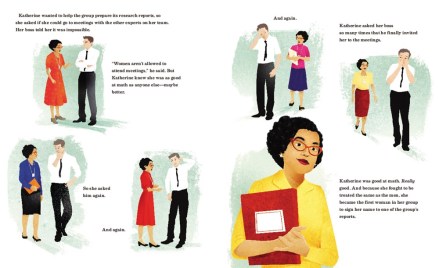
celebrate-picture-books-picture-book-review-women-in-science-katherine-johnson

Image and text copyright Rachel Ignotofsky, courtesy of rachelignotofskydesign.com

And this list only begins to scratch the surface of all the fascinating stories of women who overcame social, political, and personal obstacles to follow where their intelligence took them. Inspirational, entertaining, and undeniably eye-catching Rachel Ignotofsky’s Women in Science presents expertly written, one-page biographies that hit all the high (and sometimes unfortunate low) points in these scientist’s lives. The striking layout of both the text and illustrations keep readers riveted to the page, The left-hand side contains a representational drawing of the scientist surrounded by the subjects and materials of her work as well as trivia about her and a quotation. On the right-hand page, small illustrated facts frame the woman’s life story.

Interspersed between the biographies are pages offering a timeline of women’s milestones, depicting lab tools, and graphing statistics of women in STEM. The back matter is impressive, with two more pages presenting 15 more scientists, a four-page, illustrated glossary, resources including films, websites, and books, and an index. Rachel Ignotofsky concludes her book by saying, “Let us celebrate these trailblazers so we can inspire the next generation. Together, we can pick up where they left off and continue the search for knowledge. So go out and tackle new problems, find your answers and learn everything you can to make your own discoveries!”

Ages 7 and up

Ten Speed Press, 2016 | ISBN 978-160774976

To discover more books by Rachel Ignotofsky, visit her website!

National Inventors’ Day Activity

celebrate-picture-books-picture-book-review-scientists-word-search

What Kind of Scientist Would You Be? Word Search

Scientists like the women in today’s book make inventions for every area of life! In the future you might become a scientist and develop something new or different. If so, what kind of scientist would you like to be? Find the names of eighteen scientists in this printable puzzle! Then pick one and write why you would like to be that type of scientist!

What Kind of Scientist Would You Be? Puzzle What Kind of Scientist Would You Be? Puzzle Solution!  

Picture Book Review
February 7 – Girls and Women in Sports Day

celebrate-picture-books-picture-book-review-the-girl-who-ran-cover

About the Holiday

Celebrating its 32nd anniversary, National Girls and Women in Sports Day honors all of the girls and women involved in sports at all levels and highlights their extraordinary achievements. It also raises awareness of the positive influence sports can have on those who participate. This year’s theme is “Play Fair, Play IX,” providing a reminder of Title IX, which “ensures that all students receive educational opportunities free from discrimination based on sex.” While programs have expanded for female athletes since the inception of Title IX, many schools still do not provide equal opportunities for girls to participate in the sport of their choice. To learn more about National Girls and Women in Sports Day, find resources, and perhaps get involved yourself, visit ngwsd.org.

The Girl Who Ran: Bobbi Gibb, the First Woman to Run the Boston Marathon

Written by Frances Poletti and Kristina Yee | Illustrated by Susanna Chapman


“Bobbi loved to run. Into the woods, over the hills, through fields and by streams, Bobbi’s feet flew across the earth.” When Bobbi was little, she and her friends ran and played together. But as they grew older, her friends found other pursuits while Bobbi still loved to run. She took to the fields with her dogs, “going higher and higher, / just her and the sound of the wind in the fire.”

When Bobbi was grown, her father took her to watch the Boston Marathon. She loved the camaraderie of “hundreds of people moving as one. Kindred spirits, all running miles together.” Immediately, she wanted to participate too. When Bobbi told her parents that she wanted to run in the marathon, however, they thought her idea was strange. They told her she would hurt herself and that it was unladylike.

celebrate-picture-books-picture-book-review-the-girl-who-ran-young-bobbi

Image copyright Susanna Chapman, 2017, text copyright, Frances Poletti and Kristina Yee, 2017. Courtesy of Compendium.

But Bobbie wanted to run. She didn’t know if she could run that far but was determined to try. She trained in the woods, running “further and further, and she ached and perspired, / and the world whooshed on by, like the wind in the fire.” Because she knew her parents disapproved, Bobbi set out on her own across country to train. Every day she ran in a new place—“lush forests in Ohio and Indiana, vast plains in Nebraska and Kansas, majestic mountains in Wyoming and Montana.” She even ran with wild horses out west and up steep Rocky Mountain trails. At night she camped, “tired and happy.”

All of her training seemed for nothing, however, when Bobbi received a letter rejecting her application for the Boston Marathon. The letter said that women were incapable of running marathons, that it was against the rules for a woman to run, and that the rules had been written to protect women from injury. Bobbi was not deterred, however. She went back home and told her parents what she wanted to do. Her father thought she was crazy to attempt it.

celebrate-picture-books-picture-book-review-the-girl-who-ran-woods

Image copyright Susanna Chapman, 2017, text copyright, Frances Poletti and Kristina Yee, 2017. Courtesy of Compendium.

Bobbi knew that the only way she could run would be “to blend in with the men.” Dressed in men’s shorts and a baggy hooded sweatshirt to hide her hair and wearing men’s running shoes (running shoes were not made for women), Bobbi was ready to go. Her father refused to drive her to the race, though. He stormed out of the house, and drove away. Bobbi thought her dream was dashed until her mom came to her room, car keys in hand, and said, “‘Let’s go.”

Hiding in the bushes at the starting line, she sprang out and joined the pack of runners with the bang of the starting pistol. “So she ran with the pack, going higher and higher, / the world whooshing by, like the wind in the fire.” As she ran, she realized that the men around her had seen through her disguise. Bobbi was worried, but the men were supportive. “‘Hey! Are you running the whole way?’ one asked.” She told him she hoped to, but in that sweatshirt, she was getting hotter and hotter. She was afraid that if she took it off, she’d be thrown out of the race.

celebrate-picture-books-picture-book-review-the-girl-who-ran-parents-afraid

Image copyright Susanna Chapman, 2017, text copyright, Frances Poletti and Kristina Yee, 2017. Courtesy of Compendium.

The men around her said they wouldn’t let that happen, so Bobbi took off the sweatshirt. “Word spread quickly throughout the course. A girl was running! They couldn’t believe it!” All along the route, the crowd cheered and encouraged her. Hearing the roar motivated Bobbi to ignore the hard ground and her stiff shoes and face the last steep hill. “Closing her eyes, she imagined she was back in Montana running up the mountains, the soft earth under her feet.”

Her feet were blistered and she was parched with thirst, but she crossed the finish line—ahead of nearly half of the men. Photographers, reporters, and radio presenters swarmed around her to hear her history-making story. From that day on “hearts and minds were forever changed.”

celebrate-picture-books-picture-book-review-the-girl-who-ran-young-Boston-marathon-all-men

Image copyright Susanna Chapman, 2017, text copyright, Frances Poletti and Kristina Yee, 2017. Courtesy of Compendium.

The story of Bobbi Gibbs is one that every girl and boy should know, and Frances Poletti and Kristina Yee’s excellent biography will have readers awe-struck by how she changed the way the world viewed women and their capabilities. A pioneer for women’s rights in every way—from her traveling the country alone to rejecting the prevailing ideas to competing on her own terms—Bobbi Gibbs is an inspiration for achievers everywhere. Poletti and Yee’s conversational storytelling is both lyrical and honest, not stinting on the obstacles Bobbi had to overcome, including race officials, her own parents, and even the fact that running shoes weren’t made for women.

As the marathon approaches, readers will be enthralled by the building suspense. They’ll feel Bobbi’s determination, her disappointment, and her fear that she will be discovered and thrown out of the race, and will cheer along with the crowd at her victory.

celebrate-picture-books-picture-book-review-the-girl-who-ran-crowds

Image copyright Susanna Chapman, 2017, text copyright, Frances Poletti and Kristina Yee, 2017. Courtesy of Compendium.

Susanna Chapman’s gorgeous illustrations are infused with Bobbi’s boundless energy and spirit as she soars over grassy dunes with her dogs at her heels, zips through shady woods, and runs alongside wild horses in the shadow of the Rockies all the while trailing a red swish, representative of the fire within her. The turmoil surrounding Bobbi’s desire to run the Boston Marathon is depicted in words of rebuke, recrimination, and rejection printed in large, emphatic typefaces that swirl around her like a tornado.

The inclusion of the image of Bobbi’s mother with the car keys in hand on the morning of the race is a welcome reminder of the many unknown women of earlier generations who  contributed to the fight for women’s equality. A beautiful double gate-fold illustration of Bobbi crossing the finish line to cheering crowds and the waiting media puts the focus fully on Bobbi and the fire that spurred her on.

An Afterword tells more about Bobbi Gibb, and a timeline of seminal events in the Boston Marathon from 1896 to today, is a fascinating must-read.

The Girl Who Ran is an inspirational biography and revealing history from the not-so-distant past that offers encouragement and triumph. It would be a wonderful addition to home, school, and public libraries.

I received a copy of The Girl Who Ran from Compendium to check out. All opinions are my own.

Ages 8 – 12

Compendium, 2017 | ISBN 978-1943200474

Discover more about Kristina Yee, her books, and her films on her website

Learn more about Susanna Chapman, her books, and her art on her website

Girls and Women in Sports Day Activity

celebrate-picture-books-picture-book-review-pioneering-women-in-sports-puzzle

Pioneering Women in Sports Word Scramble Puzzle


In every sport there have been women who have overcome barriers, incredible odds, set records, and inspired others. Using the clues and a little research, can you unscramble the names of these twelve awesome athletes?

Pioneering Women in Sports Word ScramblePioneering Women in Sports Word Scramble Solution

Picture Book Review
February 2 – It’s National Women Inventors Month

celebrate-picture-books-picture-book-review-the-girl-who-thought-in-pictures-cover

About the Holiday

This month we celebrate all the women, past and present, who have changed the world for the better with their inventions and innovations! Every day, women are working in all industries researching and creating the next products, services, medicines, machinery, games, and some things we can’t even imagine yet that will revolutionize the way we live. Who are these women? They might be your friends, neighbors, sisters, daughters—or maybe even you! To celebrate this month, read up on amazing women inventors, and, if you have a big idea, work to get it noticed and on the market!

The Girl Who Thought in Pictures: The Story of Dr. Temple Grandin

Written by Julia Finley Mosca | Illustrated by Daniel Rieley


If you feel different and sometimes discouraged, the story of Temple Grandin may help you see that everyone has a talent and their own place in the world. Temple was born in Boston and “unique from the start, / an unusual girl, / she loved spinning in circles / and watching things twirl.” Loud sounds, big crowds, bright lights, and scratchy clothes disturbed her. And she did not like to get a “big squeezy hug.”

celebrate-picture-books-picture-book-review-the-girl-who-thought-in-pictures-too-loud

Image copyright Daniel Rieley, 2017, text copyright Julia Finley Mosca, 2017. Courtesy of The Innovation Press.

When she became overloaded with stress and frustration, Temple was known to “kick, holler, bang, shrieeeeek! Yet, still, by age three, not one word did she speak.” People told Temple’s parents that she’d never be normal and to send her away, but her mother would not hear of it. With a lot of work, special teachers helped Temple learn to talk. “And that thing with her brain… / it was AUTISM, see? / She was ‘different not less,’ / they all finally agreed.”

celebrate-picture-books-picture-book-review-the-girl-who-thought-in-pictures-doctor

Image copyright Daniel Rieley, 2017, text copyright Julia Finley Mosca, 2017. Courtesy of The Innovation Press.

While Temple was like her peers in many ways, she interacted with words differently. “If something was mentioned, / for instance, a fly, / in her mind, she’d see dozens / of PHOTOS buzz by.” Her different view point made it hard for her at school. The other kids chased her and teased her for the way that she acted and for “…saying things / over and over. / and over… / and over… / AND over.” When she had finally had enough, “she threw a book at a kid / and was kicked out of school!” No one understood Temple and Temple couldn’t understand them.

celebrate-picture-books-picture-book-review-the-girl-who-thought-in-pictures-fly

Image copyright Daniel Rieley, 2017, text copyright Julia Finley Mosca, 2017. Courtesy of The Innovation Press.

Her mother then sent her to visit her aunt, who lived on a ranch out west. Here, among the animals, Temple felt better. Her favorites were the cows, so silent and sweet. “At a NEW school that fall, / Temple found more support / said a teacher who taught her: / ‘You’ll never fall short.” That teacher was right, and at engineering and science she felt right at home.

Her first invention—made from memory—was “a machine / like she’d seen on some farms, / an INVENTION that hugged her / with boards, and not arms.” In this device she felt snug and calm, just like the cows. As she began to succeed, Temple came to see that her attention to detail was a benefit, and she began to feel special. Then she learned about farms where the cows were not treated kindly and resolved to change that.

celebrate-picture-books-picture-book-review-the-girl-who-thought-in-pictures-cows

Image copyright Daniel Rieley, 2017, text copyright Julia Finley Mosca, 2017. Courtesy of The Innovation Press.

She went on to college and became an expert on farms, earning three degrees. Telling people about her ideas for farming improvements was sometimes scary because they ignored her and, well…weren’t very sweet. But she didn’t give up. She learned more about cattle, like why they circle and moo. “To build better farms / was her goal—she would do it. / ‘Be KIND to our creatures. / They have FEELINGS!’ She knew it.”

It took time, but people began to see that Temple was right, and farm after farm implemented her ideas. She won awards for this work and other ideas, a movie was made about her life, and she now travels the world telling her story and teaching: “‘Each person is special– / so UNIQUE are our minds. / This world needs YOUR ideas. / It takes brains of ALL kinds!”

celebrate-picture-books-picture-book-review-the-girl-who-thought-in-pictures-letter

Image copyright Daniel Rieley, 2017, text copyright Julia Finley Mosca, 2017. Courtesy of The Innovation Press.

A letter from Temple Grandin to young readers, extensive information about Temple and tidbits from her interview with the author, a timeline of her life, and resources follow the text.

Julia Finley Mosca’s insightful biography of Temple Grandin offers inspiration and encouragement to children at those times when life seems difficult or if they feel misunderstood. Childhood can be filled with moments—both small and large, short or long—when comfort and reassurance are needed. Mosca’s rhyming verses make Temple’s story accessible to a wide age range of readers while providing an inclusive way to show how autism creates a different way of experiencing the world. Temple’s supportive teachers are role models for all educators. Temple Grandin’s fascinating life demonstrates that there is a niche for everyone and that through understanding, perseverance, and acceptance, all children can go far.

celebrate-picture-books-picture-book-review-the-girl-who-thought-in-pictures-cows-in-field

Image copyright Daniel Rieley, 2017, text copyright Julia Finley Mosca, 2017. Courtesy of The Innovation Press.

Daniel Rieley’s cartoon-style illustrations will resonate with readers as Temple takes in everything she sees with wide-open eyes and interprets it in her own way—even before she can speak. The separation between Temple and the other students at her first school is poignantly communicated in a two-page spread in which pointing hands and a lobbed ball of paper appear from the left-hand margin and Temple reads alone on the far side of the right-hand page. Temple’s ability to think in pictures is demonstrated throughout the book with inset images. Readers see some of the farming practices Temple wanted to change, her original drawings, and the resulting equipment now used on farms to improve the conditions of the animals raised there.

The Girl Who Thought in Pictures: The Story of Dr. Temple Grandin is a moving and motivational story for all children and is a must for school and public libraries.

Ages 5 – 10

The Innovation Press, 2017 | ISBN  978-1943147304

Discover more about Julia Finley Mosca and her Amazing Scientists series on the Amazing Scientists website.

Learn more about Daniel Rieley, his books, and his art on his website.

National Women Inventors Month Activity

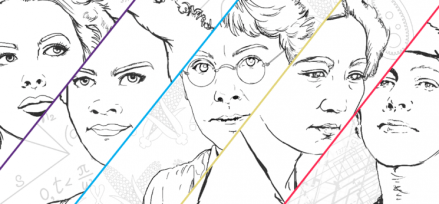
celebrate-picture-books-picture-book-review-women-in-stem-coloring-book

Historical Women in STEM Coloring Book


From civil engineering to chemistry and botany from radio waves to computer programming, the five women in this coloring book changed science and the world. Enjoy coloring the pages and learning about these amazing women in this printable: Historical Women in STEM Coloring Book

Picture Book Review

January 20 – National Disc Jockey Day

celebrate-picture-books-picture-book-review-when-the-beat-was-born-cover

About the Holiday

National Disc Jockey Day commemorates the death of Albert James Freed, or Moondog, who was an influential disc jockey in the 1950s and is credited with popularizing the term “rock-and-roll.” The idea of using recorded music instead of live performances over the airwaves was tested in 1909, when sixteen-year-old Ray Newby, a student of Charles “Doc” Herrold at Herrold College of Engineering and Wireless in San Fernando, California, became the first to play records on the radio. The idea took off and soon radio broadcasters across the country followed suit. The term Disc Jockey was the brainstorm of radio commentator Walter Winchell in 1934. The 1970s and 1980s saw the rise of Hip-Hop DJs who began using multiple turntables and turntables as instruments to change the music.

When the Beat Was Born: DJ Kool Herc & the Creation of Hip Hop

Written by Laban Carrick Hill | Illustrated by Theodore Taylor III


Even as a child “Clive loved music”—all kinds of music. He loved the way it made him feel inside and “the way it made his feet go hip hip hop, hippity hop.” Clive lived on Somerset Lane in Kingston, Jamaica. One of his neighbors was a DJ nicknamed “King George,” who threw the “biggest and baddest” house parties every Saturday night. Clive was too young for parties, but he liked to watch King George and his crew setting up. Clive had never seen so many records in one place.

celebrate-picture-books-picture-book-review-when-the-beat-was-born-clive-loved-music

Image copyright Theodore Tayler III, 2013, text copyright Laban Carrik Hill, 2013. Courtesy of Roaring Brook Press.

“Clive imagined himself as a DJ surrounded by all those records.” He longed to choose just the right one to get the party started. He pictured himself toasting—rapping over the instrumental B side of records and getting people’s feet going hip hip hop, hippity hop, like his did. When Clive was thirteen he moved to Brooklyn, New York with his mom. At first he wasn’t sure he liked his new neighborhood, but then he discovered sports—track, weightlifting, and especially basketball. Clive grew to be six feet, 5 inches tall.

celebrate-picture-books-picture-book-review-when-the-beat-was-born-stacks-of-records

Image copyright Theodore Tayler III, 2013, text copyright Laban Carrik Hill, 2013. Courtesy of Roaring Brook Press.

He took to calling “himself ‘cool as Clyde’ after his favorite basketball player, Walt Clyde Frazier.” But to the other kids, Clive was “Hercules.” Clive shortened it to Herc and added “‘Kool’ to make it just right. Kool Herc.” Because of his size, he was able to go to house parties with his mother and listen to the music. One day Kool Herc’s father bought a “giant sound system” with six-foot-tall speakers. But when it was turned on, the sound was puny. Kool Herc worked on it until the sound came blasting out.

celebrate-picture-books-picture-book-review-when-the-beat-was-born-sound-system

Image copyright Theodore Tayler III, 2013, text copyright Laban Carrik Hill, 2013. Courtesy of Roaring Brook Press.

Kool Herc and his younger sister Cindy were ready to put on a party. They rented a rec room in their housing project, posted invitations, and set up the huge sound system. The night of the party, “everybody who was anybody made their way to Sedgewick Avenue for Kool Herc’s hot dance party. That’s when Kool Herc became DJ Kool Herc.”

celebrate-picture-books-picture-book-review-when-the-beat-was-born-DJ-Kool-Herc

Image copyright Theodore Tayler III, 2013, text copyright Laban Carrik Hill, 2013. Courtesy of Roaring Brook Press.

DJ Kool Herc noticed that people danced harder during the instrumental breaks. Kool Herc set up another turntable and put the same record on this turntable too. This way, when one record ended its break, he could play it again on the other. He was able to stretch a ten-second break into 20 minutes or more. Remembering how DJs toasted in Jamaica, DJ Kool Herc began shouting out the names of his friends, compliments about the dancers, and rhymes over the beat.

celebrate-picture-books-picture-book-review-when-the-beat-was-born-dance-party

Image copyright Theodore Tayler III, 2013, text copyright Laban Carrik Hill, 2013. Courtesy of Roaring Brook Press.

Over the next year, DJ Kool Herc moved his dance parties into the street. When he plugged the sound system into the street lamps, it pulled so much power, the lights dimmed. DJ Kool Herc’s music even turned some of the city’s gang members into the smoothest break dancers in the neighborhood. Kool Herc then invited friends to rap behind the DJ-ing. He called these friends the “Master of Ceremonies” or MCs.

Soon kids were coming from all over New York city to attend DJ Kool Herc’s “biggest, baddest dance parties.” Many “wanted to be DJs just like Kool Herc. Herc didn’t just rock the block. He put the hip hip hop, hippity hop into the world’s heartbeat.”

celebrate-picture-books-picture-book-review-when-the-beat-was-born-the-turtle

Image copyright Theodore Tayler III, 2013, text copyright Laban Carrik Hill, 2013. Courtesy of Roaring Brook Press.

Laben Carrick Hill’s modern biography of a Hip Hop pioneer invites young readers to discover the early years of and influences on the music they love today. Hill superbly structures his story so through the formative details of DJ Kool Herc’s life from childhood into adulthood, readers understand that they too can follow their hearts to achieve their dreams. When the Beat Was Born is inspirational in its depiction of an “ordinary kid” with ingenuity and self-confidence who changed the face of music by combining his multicultural experiences, being open to experimentation, including his friends, and sharing his vision. Straightforward storytelling is punctuated with verses of rap that make reading aloud fun and will engage listeners.

celebrate-picture-books-picture-book-review-when-the-beat-was-born-friends

Image copyright Theodore Tayler III, 2013, text copyright Laban Carrik Hill, 2013. Courtesy of Roaring Brook Press.

In his bold, vibrant illustrations, Theodore Tayler III lets kids in on the not-so-distant past that saw the rise of Hip Hop music, celebrity DJs, and new dance styles. Keeping the focus on DJ Kool Herc—just as Clive kept his eye on his future goals—Taylor reinforces the theme of the book. Scenes of kids lining up to attend DJ Kool Herc’s parties and dancing in the street give the book an inclusive feel. Images of skyscraper-tall stacks of records mirrors Kool Herc’s ambitions, and depictions of breakdancing moves will get kids wanting to try them for themselves.

When the Beat Was Born is a terrific biography for all children, whether they like music and dancing or quieter pursuits. In the classroom, the book would be a great addition to music, history, or biography units.

Ages 6 – 10

Roaring Brook Press, 2013 | ISBN 978-1596435407

Discover more about Laben Carrick Hill and his books on his website

To view a portfolio of artwork, book illustration, videos and more by Theodore Taylor III, visit his website.
National Disc Jockey Day Activity

celebrate-picture-books-picture-book-review-groovy-record-chalkboard-blackboard-craft

Groovy Record Chalkboard & Bulletin Board 


Do you play the piano or another instrument? Would you like to make a record some day? Why wait? In this fun craft you can create your own record bulletin board—and even create your own label art! While this record may not spin on turntables around the world, it will drop in a more important place—your very own room!

Supplies

  • Printable Record Label for you to design
  • Foam board, or a corkboard at least 12-inches x 12-inches square
  • Adhesive cork
  • A 12-inch round plate, record, or other round object to trace OR a compass
  • Chalkboard paint, black
  • X-acto knife
  • Paint brush or foam paint brush
  • Mounting squares

Directions

  1. Cut a section from the adhesive cork a little larger than 12 inches by 12 inches
  2. Affix the cork to the foam board
  3. Trace the 12-inch round object onto the cork/foam board OR use the compass to make a 12-inch circle
  4. With the x-acto knife, carefully cut out the circle (adult help needed for children)
  5. Cut out a ¼ -inch circle in the center of the record bulletin board
  6. Paint the cork, sides and inside the spindle hole with the black chalkboard paint. Let dry
  7. Print the label template and design your own record label
  8. When the paint is dry, glue your label to the center of the bulletin board
  9. Hang your bulletin board with the mounting squares
  10. Decorate!

Picture Book Review