May 24 – National Brother’s Day

celebrate-picture-books-picture-book-review-i-am-a-big-brother-cover

About the Holiday

Today we honor the brothers in our lives who spend time with us, share our memories, lend a helping hand, and are best lifelong friends. To celebrate, spend time with your brother or brothers. If you don’t live close, give your brother a call and reminisce!

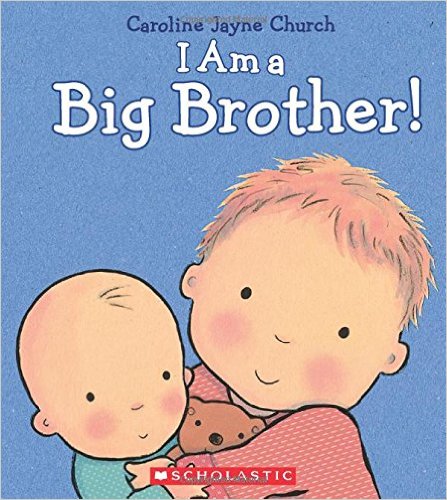
I Am a Big Brother!

By Caroline Jayne Church


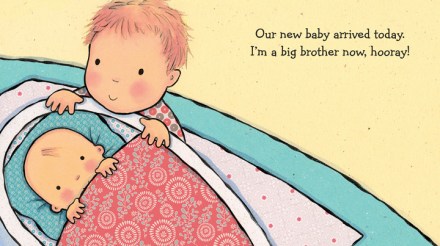
A little boy gazes at the new tiny bundle that’s come home today. He smiles at the sparkling eyes and itty-bitty fingers. “I’m a big brother now, hooray!” he says. He remembers when he was as small as the new baby, but now he’s big enough to help push the stroller and give the baby a bottle. And he can “always find what baby needs”–even a clean diaper when the old one is dirty.

celebrate-picture-books-picture-book-review-i-am-a-big-brother-new-baby

Copyright Caroline Jayne Church, courtesy of Cartwheel Books

His mom and dad tell him he’s so clever when he entertains the baby with his teddy bear and toys. He knows that he’s “the best big brother ever!” He cuddles with his new baby and gives tickles until the air is filled with giggles. When it’s bath time, the little boy holds the sponge and splashes in the bubbles.

He helps put the baby to bed for naptime and then plays quietly with his toys nearby, watching over his little charge. “But if baby wakes with cranky cries,” he says, “I softly sing sweet lullabies.” He’s looking forward to his baby getting bigger and a time when they can play together because he knows that he is “a big brother forever” and that he, the baby, Mommy, and Daddy are a family who love each other.

celebrate-picture-books-picture-book-review-i-am-a-big-brother-toys

Copyright Caroline Jayne Church, courtesy of Cartwheel Books

Caroline Jayne Church’s new big brother is a cutie full of joy and the excitement of responsibility when a baby joins the family. The bubbly and cozy rhymes and fun vocabulary will engage little ones as they make this life-changing transition. Young readers will see that they can help with the new baby and will be reassured that they are always an important and loved part of the family.

Church’s adorable brother and baby will charm little ones who already are or are about to become a brother. Their sweet expressions, cuddly toys, and comfy, colorful jammies will make any child smile.

Ages 1 – 4

Cartwheel Books, 2015

Discover more about Caroline Jayne Church, her books, and her artwork on her website!

National Brother’s Day Activity

celebrate-picture-books-picture-book-review-big-brother-certificate

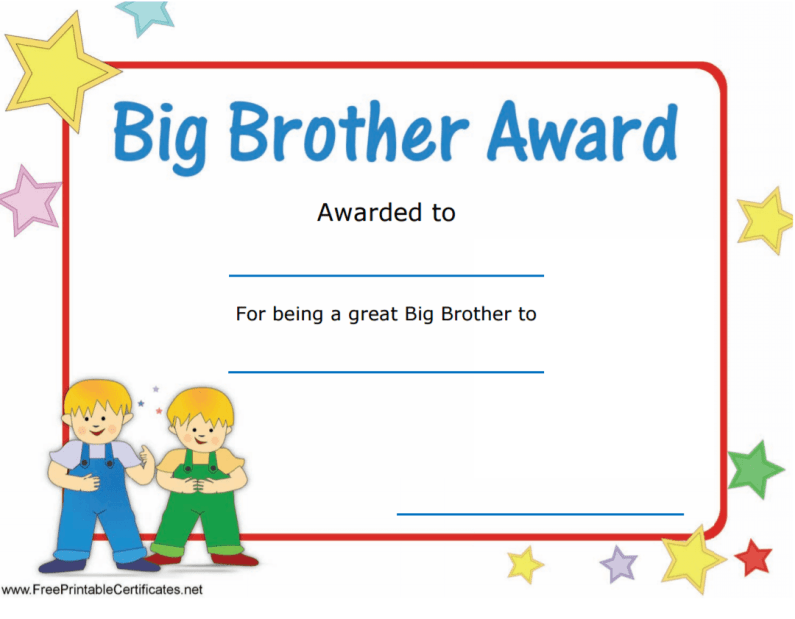
Best Big Brother Certificate


Being a great big brother is something to be celebrated! Here’s a printable Best Big Brother Certificate for the brothers in your life!

Picture Book Review

May 23 – It’s National Pet Month

celebrate-picture-books-picture-book-review-daisy-gets-lost-cover

About the Holiday

During the month of May we take time to be extra mindful of our pets. As the weather becomes hot, pet owners are encouraged to ensure that their pets have the proper care to keep them cool, hydrated, and healthy—and remember, never leave pets unattended in cars with the windows rolled up. Now that nice days are ahead of us, enjoy the opportunity to take dogs on long, leisurely walks or to the dog park and to spend extra time with indoor pets. If you are thinking of adopting a new pet, there are shelter animals that are looking for forever families.

Daisy Gets Lost

By Chris Raschka


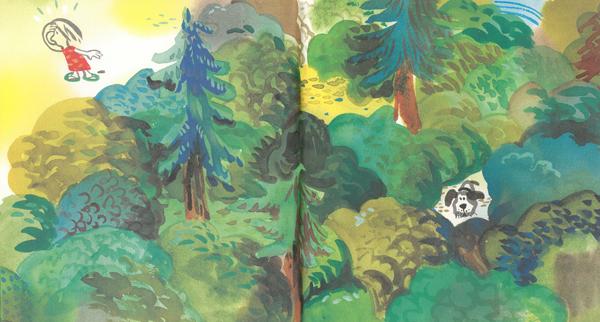
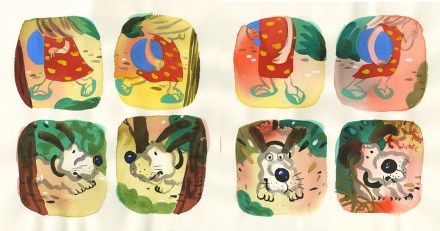
Daisy, a sweet, energetic puppy, is enjoying a game of fetch with her little girl. She’s chased her blue ball into the woods where she happens upon a bushy-tailed squirrel gathering acorns. The squirrel knows the jig is up and, tossing away the acorn, takes off running with Daisy close at its tiny heels. Deeper and deeper into the woods they go until the squirrel leaps onto a tree trunk and with some quick scrambling is gone.

celebrate-picture-books-picture-book-review-daisy-gets-lost-forest

Copyright Chris Raschka, courtesy of Scwhartz & Wade

Daisy stops at the base of the tree and peers into the high branches. What does she see? It suddenly occurs to her who she doesn’t see. Where is her little girl? At the same time, the little girl is wondering where Daisy went. “Daisy!” she cries; but Daisy, surrounded by trees, can’t hear her. The little girl begins to search for her pet. She finds the blue ball, but no puppy. “Daisy?” she asks. She picks up the ball and looks right, left, and all around.

Meanwhile, Daisy is trying to find her way out of the forest. She runs right, left, and all around then realizes she is lost. She hunkers down and lets out a plaintive “Aaawoooooooooooooooooooo.” The little girl hears Daisy’s distress signal and rushes toward her, calling “Daisy!” Daisy hears the little girl’s joyful exclamation and bounds forward. They meet in a sweet, tight hug. And while Daisy gives her little girl kisses and the girl holds her close, who does Daisy see spying on them from high in the tree?

celebrate-picture-books-picture-book-review-daisy-gets-lost-searching

Copyright Chris Raschka, courtesy of Scwhartz & Wade

In this nearly wordless sequel to A Ball for Daisy, Chris Raschka once again tells a tale of emotional heft that will resonate with young readers. With a few wavy lines and several expressive smudges, Raschka creates one of the most loveable puppies to ever run across the pages of a picture book. As Daisy, with her ball clasped between her teeth, and the squirrel, with its acorn grasped in its paws, stare each other down, kids will know that the game’s afoot.

But when Daisy and the little girl realize that Daisy is lost, readers will understand their worry and fear, not only for the characters, but on a personal level. Raschka’s bold lines and dense colors depict the impenetrable forest as well as the intensity of Daisy’s and the girl’s feelings. The endearing reunion of Daisy and her little girl will reassure children that their loved ones are never far away. The sly squirrel, reappearing at the end, adds a bit of humor and gives kids an opportunity to extend the story as they imagine Daisy’s next move.

For kids with pets or who love animals, those looking for reassurance, or anyone who enjoys a great story artfully told, A Ball for Daisy would be a wonderful addition to any child’s bookshelf.

Ages 3 – 7

Schwartz & Wade, 2013 | ISBN 978-0449817414

You’ll find a gallery of artwork by Chris Raschka on his tumblr!

National Pet Month Activity

celebrate-picture-books-picture-book-review-find-the-pet-maze

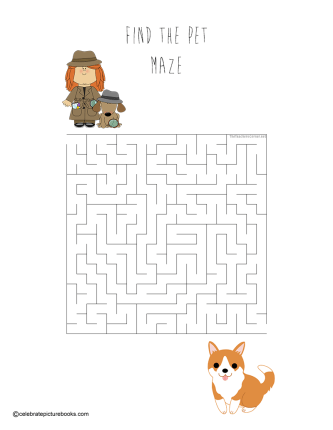
Find the Pet Maze


This detective and her sidekick are searching for a lost pet! Can you help them find a path through the maze to the lost corgi in this printable Find the Pet Maze? Here’s the Solution!

May 22 – National Buy a Musical Instrument Day

celebrate-picture-books-picture-book-review-a-violin-for-elva-cover

About the Holiday

Each year on May 22 we celebrate music and the personal relationship musicians have with their instruments. Some musical artists even consider their instrument such a friend or part of the family that they give them names. Whether you are just starting out on your journey with music or are a seasoned professional, today may be a good day to think about buying your first instrument or adding to your collection.

A Violin for Elva

Written by Mary Lyn Ray | Illustrated by Tricia Tusa


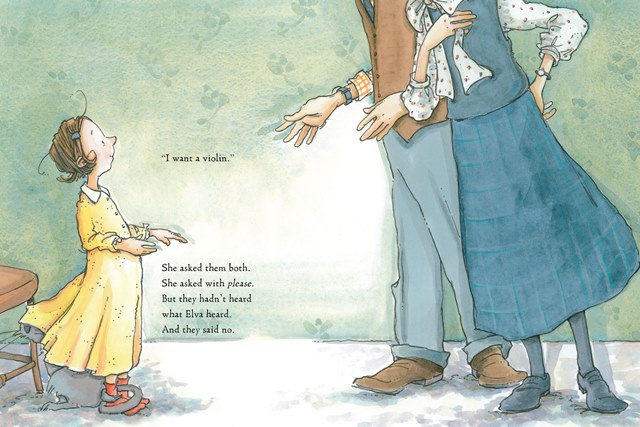
While out on a springtime jaunt, little Elva came upon a garden party. There were the sounds of voices and rustling clothes, but Elva heard none of this. Instead, her ears were trained on the music the violinist was playing. Later that night she told her mom and dad that she wanted a violin. She even said please, but they said no.

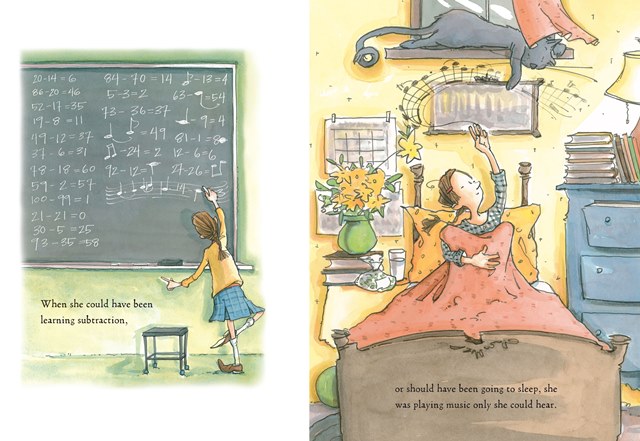
So Elva found violins elsewhere. She practiced with a tennis racquet and stick; she rehearsed with her toothbrush and tube of toothpaste. When she was called to the board in math class, she wrote more notes than numbers, and when she “should have been going to sleep, she was playing music only she could hear.” Years passed; she grew, made friends and pursued other activities. Soon she was an adult with a job, appointments, and meetings. “But if she saw a page tremulous with music, she remembered what she once had wanted.”

celebrate-picture-books-picture-book-review-a-violin-for-elva-asks-parents

Image copyright Tricia Tusa, text copyright Mary Lyn Ray. Courtesy of hmhco.com.

She told herself she was too busy to learn to play the violin now, but she began borrowing records from the library. When she listened to them, she felt as if she “had picked up her violin again” and was playing in an orchestra or performing a solo. At the end of the record, Elva filled the silence and empty feeling with all the other things she had to do.

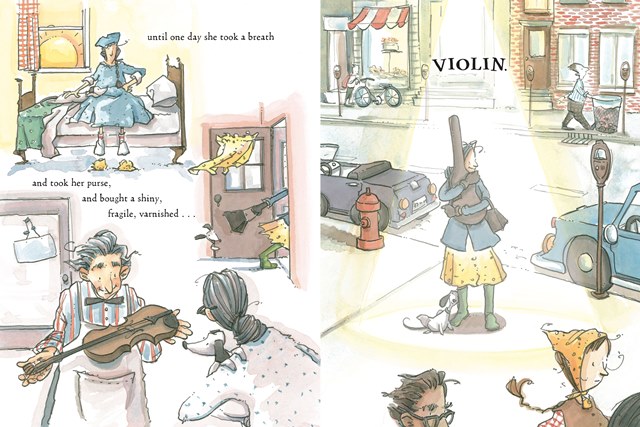
More years passed, and “Elva had many satisfactions and achievements,” but something was still missing. She told herself that she was too old now, “but more and more she kept imagining what might have been—” Then one day she took some money, went to the store, and bought “a shiny, fragile, varnished violin.”  She hugged it tightly on the way home and once there—without even taking off her coat—she removed it from its case, placed it under her chin, and “pushed the bow across a string.” The violin squeeeked and squeeeeeeeeeeked. But then “she drew the bow back toward her—and the string sang.”

celebrate-picture-books-picture-book-review-a-violin-for-elva-hears-music

Image copyright Tricia Tusa, text copyright Mary Lyn Ray. Courtesy of hmhco.com.

She tried other strings without success, but that one, clear note encouraged her. “‘I will improve,’ she said. But she didn’t” Playing the violin was difficult; she had to hold the bow just right, land on the correct notes, and figure out the fingering for sharps and flats. It was all so confusing that Elva put away her violin.

Then one day she read that “Madame Josephina was accepting beginning students.” Again, Elva took some money and signed up for lessons. Twice a week Elva went to Madame Josephina’s house, and on the days in between, she practiced. At the end of the year, there was a recital. Elva was nervous as she took the stage with the other students. But when she drew the bow across her violin’s strings, Elva realized she “was making music.” That night at home she played her piece again and again. “At last, Elva kissed her bow and went to bed, imagining all the tomorrows. And all the music there was to make.”

celebrate-picture-books-picture-book-review-a-violin-for-elva-buys-violin

Image copyright Tricia Tusa, text copyright Mary Lyn Ray. Courtesy of hmhco.com.

Mary Lyn Ray’s story of a little girl whose lifelong love of the violin is only satisfied in old age reveals to readers that while they may grow and change throughout the years, childhood passions often remain strong. While they may be rejected or forgotten for one reason or another, these interests sometimes indirectly guide career choices or reappear when the time is right for them to be fulfilled. Although it is a violin that captures Elva’s heart, Ray could have chosen from a long list of creative, daring, or professional pursuits that niggle at one’s brain to be acknowledged and expressed. A Violin for Elva offers encouragement and inspiration not only for those who feel that it’s too late to achieve their dreams but for those struggling to overcome the fear of trying.

Tricia Tusa’s watercolor and ink illustrations are as light and graceful as the music that captivates Elva. In lovely vignettes, a garden-party attendee wears an enormous flower hat, Elva’s pet cat swipes a paw at her imaginary music, Elva stops on her way to work to admire a street musician, and Elva hugs her dog close while having tea in sunny window. When Elva finally buys her own violin, all the hustle and bustle of her life stops for a moment and love fills the page as she hugs the instrument while her dog leans affectionately against her leg and both are bathed in a glorious spotlight. Seeing Elva on stage at her first recital surrounded by children half her size, readers will understand that true love never fades and is always attainable.

Ages 4 – 7 and up (adults will also appreciate the book’s message)

Houghton Mifflin Harcourt, 2015 | ISBN 978-0152254834

Discover more about Mary Lyn Ray and her books on her website!

You’ll find a gallery of art work by Tricia Tusa on her website!

National Buy a Musical Instrument Day Activity

celebrate-picture-books-picture-book-review-musical-instruments-word-search

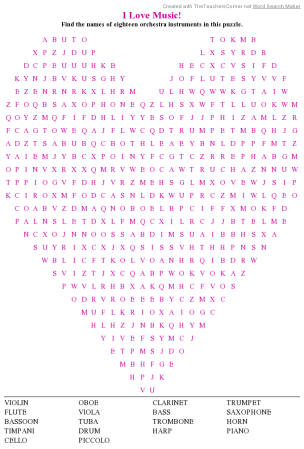
I Love Music! Word Search Puzzle


There’s an orchestra of instruments in this printable I Love Music! Word Search Puzzle. Can you find all eighteen different instruments? Here’s the Solution!

Picture Book Review

May 21 – “I Need A Patch for That” Day

celebrate-picture-books-picture-book-review-stitchin'-and-pullin'-a-gee's-bend-quilt-cover

About the Holiday

Celebrated annually on May 21, “I Need a Patch for That” Day gives a little love to patches of all kinds. Have you been out working in your garden patch? Fabulous! Did you just finish all the requirements for a scouting patch? Good job! Waiting on a fix for the latest software kerfuffle? Who isn’t? Are you a pirate keeping one eye ready for the dark? Argghh! Do you need to patch up a misunderstanding? Good luck! Or maybe you’re a quilter like the amazing women in today’s book who create a patch to remember each of life’s important, inspirational, and formative events. 

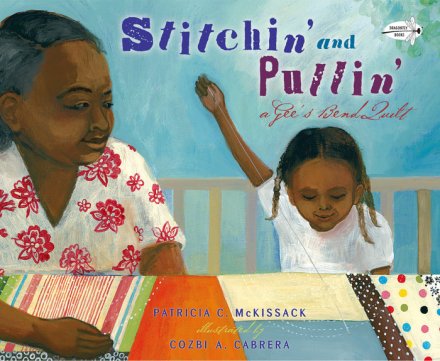
Stitchin’ and Pullin’: A Gee’s Bend Quilt

Written by Patricia C. McKissack | Illustrated by Cozbi A. Cabrera


In this story told through poems, a little girl begins telling readers about her life, starting with a recitation on Gee’s Bend Women: “Gee’s Bend women are / Mothers and Grandmothers / Wives / Sisters and Daughters / Widows.” They are every kind of woman you know, doing every type of work and activity. “Gee’s Bend women are / Talented and Creative / Capable / Makers of artful quilts / Unmatched. / Gee’s Bend women are / Relatives / Neighbors / Friends— / Same as me.”

In Who Would Have Thought, the girl muses on how perceptions change. “For as long as anyone can remember,” she says, the women of Gee’s Bend, Alabama have created quilts that were slept under, sat on, and wrapped around the sick or cold. But now those same quilts are “…hanging on museum walls, / their makers famous….”

When she was just a tot “Baby Girl” reveals in Beneath the Quilting Frame, she played under the quilting frame, listening to her “mama, grandma, and great-gran / as they sewed, talked, sang, and laughed / above my tented playground.” She remembers the “steady fingers  /[that] pieced together colorful scraps of familiar cloth / into something / more lovely / than anything they had been before” as her mother sang her a lullaby.
celebrate-picture-books-picture-book-review-stitchin'-and-pullin'-a-gee's-bend-quilt-puzzling-the-pieces

Image copyright Cozbi A. Cabrera, courtesy of Random House Books for Young Readers

In Something Else, “Baby Girl” is growing too big to play underneath the frame. Her legs are becoming longer and her mind is full of “recipes for eleven kinds of jelly…how to get rid of mold…and the words to a hundred hymns and gospel songs” while she waits for her turn at the frame. At last, her time does come, and in Where to Start?, the girl asks her mama how to begin. Her mother answers, “‘Look for the heart. / When you find the heart, / your work will leap to life… / strong, beautiful, and… / independent.’”

In Remembering, the girl thinks about how her mama has told her that “cloth has a memory.” As she chooses the cloth that will become her quilt she recounts the life and the history in each. 

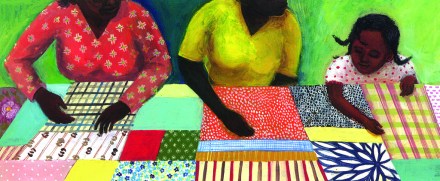
Nothing Wasted sees Grandma pulling apart a red-and-white gingham dress stitch by stitch. Suddenly, the girl knows that this cloth will become the patch that “will be the heart of my quilt.” In Puzzling the Pieces the girl and her grandma stand over the quilting frame fitting the squares together in the perfect way to tell the girl’s story. Her quilt comes together piece by piece to tell the history of Gee’s Bend in The River Island. The brown strips along three sides mirror the muddy waters surrounding her town. The fourth side is a green strip—“a symbol of the fields where my ancestors / worked cotton from can to can’t— / can see in the morning until / can’t see at night.” Lined up next to the green strip are six squares representing the small communities “where families with / the same name / are not kin by blood / but by plantation.”

Being Discovered is portrayed with “a large smoke-gray square”—the color of the Great Depression and the 15 minutes of fame Gee’s Bend garnered when discovered “by sociologists, historians, / educators, and journalists” who came and went, leaving Gee’s Bend “the way it had been / before being discovered.”
celebrate-picture-books-picture-book-review-stitchin'-and-pullin'-a-gee's-bend-quilt-understanding-comes-later

Image copyright Cozbi A. Cabrera, courtesy of Random House Books for Young Readers

In Colors, the girl’s grandma explains the meanings and feelings behind each colored cloth. “Blue cools. / Red is loud and hard to control, / like fire and a gossiping tongue.” Green, orange, yellow, white, pink, and all the others have their own personalities. “Grandma says, / ‘Colors show how you / feel deep down inside.’”

In Dr. King Brings Hope, the little girl adds “a spotless white patch for the hope Dr. Martin Luther King / brought to the Bend” and goes on to tell how her grandma saw Dr. King at Pleasant Grove Baptist Church and what it meant to her. By and By follows the girl as she adds “golden thank-yous, for James Reeb,” a “bright blue piece of velvet for Viola Liuzzo,” and a “big plaid people circle of white, black, brown, yellow, and red for Reverend Dr. King, all “killed for believing in justice.”

In the 1960s, The Sewing Bee tells, Gee’s Bend quilters were once again discovered. Joining the Bee provided buyers for the handmade quilts, but there were stipulations on the types of quilts that could be made and sold. The girl asks her grandma if she was part of the Bee, to which she replies, “‘more money. Less freedom. I chose to stay free.’”

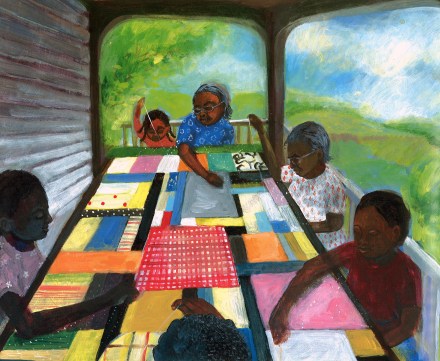
At last all of the patches are laid out and the time comes to stitch the girl’s quilt. Five women stand at the frame “all stitchin’ and pullin.’” They work “in a slow and steady rhythm” relaxing and enjoying being together until the quilt is finished. In Finished, the last stitch is sewn, and the thread bitten and knotted. The girl has hundreds of ideas for future quilts. “Quilts that are about me, / the place where I live, / and the people / who have been here for generations.”

Further poems unite the history of “Baby Girl,” her family, and neighbors, and an Author’s Note about quilting and the women of Gee’s Bend follow the text.

Patricia McKessack’s free verse poems capture the close relationships and camaraderie of the generations of women who join around the quilting frame to share and pass down their art and their heart. McKessack’s conversational verses, connected page after page like the patches of a quilt, reveal the complexity of this handmade art form in the way intimate talks between friends unveil a life. Readers learn not only about the little girl and her own thoughts, but the history and influence of her immediate family, world events, inspirational figures, and deeply held beliefs that make her who she is and ties her to the other Gee’s Bend women.

Cozbi A. Cabrera’s stunning acrylic paintings take readers inside the heart of the Gee’s Bend women, depicting the girl’s home, the table-sized quilting frame where the women collectively work, the plantations, the protests, and the changes that came but did not unravel the convictions, values, and love of the little girl’s family. Readers can almost hear the talking and singing of the Gee’s Bend women as they stitch their quilts, and the comforting, embracing environment is evident on every page. Cabrera’s portraits of the little girl, her mama, and her grandma are particularly moving. For What Changed, Cabrera depicts a yellow school bus appearing on the dirt road from the right hand corner of the page. In the  driver’s side mirror, a dot of a house is reflected, reminding readers that no matter how far these women are from home, Gee’s Bend is always with them.

Children—and adults—will find Stitchin’ and Pullin’: A Gee’s Bend Quilt inspirational and uplifting. This volume of poetry can be read at one sitting or delved into again and again, making it a wonderful choice for home libraries and a must for school and public libraries.

Ages 5 – 12

Dragonfly Books, Random House, 2016 (paperback edition) | ISBN 978-0399549502

View a gallery  of fashion designs, dolls, and other handmade art work by Cozbi A. Cabrera on her website!

“I Need a Patch for That” Day Activity
celebrate-picture-books-picture-book-review-stars-quilt-coloring-page

Design a Quilt Coloring Pages


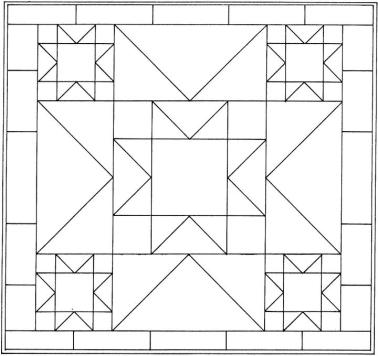
Quilts are so much more than pieces of material sewn together—they’re life stories! Here are two quilt coloring pages for you to design and color. What does each piece mean to you? As you color each section, write a sentence about an event or thought that is important to you.

Quilt Template 1 | Quilt Template 2

Picture Book Review

May 20 – Learn to Swim Day

celebrate-picture-books-picture-book-review-splatypus-coverAbout the Holiday

Established by Swimways in 2012, today’s holiday is dedicated to educating parents, caregivers, and children about water safety and the importance of learning to swim. With summer officially beginning this weekend, kids will be soon be cooling off at beaches, lakes, rivers, and pools. Knowing how to swim and learning to recognize dangers and water hazards are crucial skills for swimmers of all ages. To learn more about education programs and fun ways to celebrate Learn to Swim Day, visit the Swimways website!

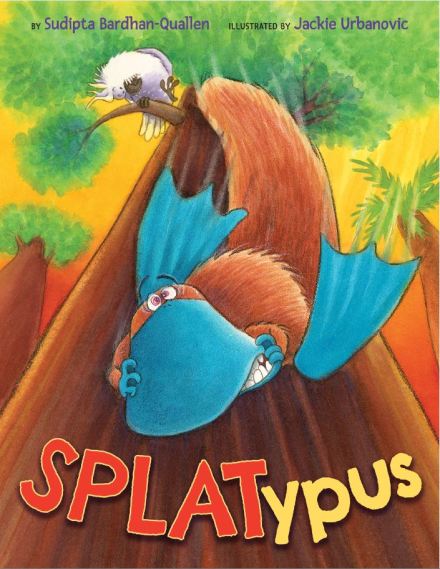
SPLATypus

Written by Sudipta Bardhan-Quallen | Illustrated by Jackie Urbanovic


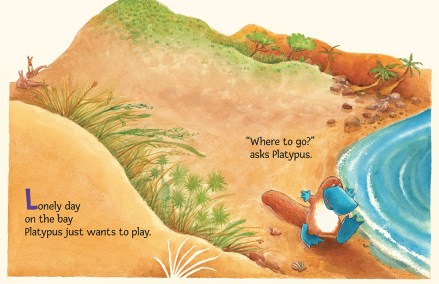
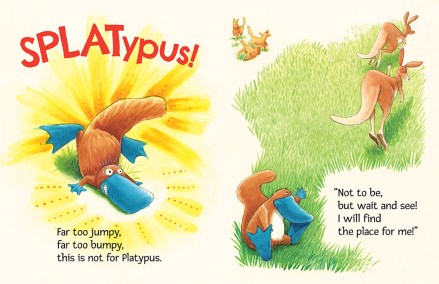
Platypus is feeling lonely as he walks along the shore looking for someone to play with. When a couple of kangaroos hop by, Platypus is happy to see them. “‘I’ll jump too!’” he shouts. He takes off on his blue, webbed feet “skipping, hopping, dipping, dropping.” But he loses control and falls flat on his bill—“Splatypus!” Platypus waves goodbye to the kangaroos, sure that he’ll soon find his place.

Next, two dingoes chase / and run with grace. / Platypus says, ‘I’ll go race!’” But where the dogs leap easily over a fallen log, Platypus struggles and strains to pull himself on top. Then—whoa!—he wobbles and teeters and tumbles and rolls—“Splatypus!” Although trying to be as agile as a dingo didn’t work out, Playpus isn’t giving up on finding where he belongs.

celebrate-picture-books-picture-book-review-splatypus-by-the-bay

Image copyright Jackie Urbanovic, text copyright Sudipta Bardhan-Quallen. Courtesy of Two Lions

Up in a tree, Platypus watches a group of possums playing in the branches. He scrambles to join them, but his hands and feet slip and slide on the smooth trunk and he lands bonk on his head. Suddenly, he sees “fruit bats fly / across the sky. / Platypus says, / ‘I’ll soar high!’” He runs up a cliff to launch himself into the air, but the rocky path trips him up. When he finally reaches the edge, he leaps, flapping his arms and legs. But instead of soaring he goes “Splatypus!”

Poor Platypus! “Nothing’s easy. / Tummy’s queasy. / So discouraged, / lost his courage.” He decides to give up on flying, climbing, and jumping. The day is almost over and still Platypus hasn’t found any friends. He goes to sleep in the shade of a palm tree. The next morning, still feeling dejected, Platypus worries that the day will be no fun. As he strolls near the edge of the bay, however, he spots some swans swimming by and then two “penguins cry / a soggy ‘Hi!’”

celebrate-picture-books-picture-book-review-splatypus-kangaroos

Image copyright Jackie Urbanovic, text copyright Sudipta Bardhan-Quallen. Courtesy of Two Lions

They look as if they are having so much fun that Platypus decides to try one more time to join in. He wades into the water and dives in. With a “ker-sploosh, ker-splash!” Platypus finds that he’s a natural! Now, “water wiggling, all are giggling.” As he floats and paddles with the penguins, swans, fish, and turtles, he “looks around, / at last he’s found / the perfect place for Splatypus.”

Little ones will giggle from beginning to end of this funny story that shows that sometimes you have to try a lot of different things before you find your perfect niche. Platypus’s can-do attitude and perseverance are great lessons for children beginning to navigate school, activities, and friendships. Sudipta Bardhan-Quallen’s rollicking rhythm and easy-to-repeat rhymes will have kids reading—and most likely moving—along with the story.

Jackie Urbanovic takes kids to the coast of Australia to meet kangaroos, dingoes, possums, fruit bats, and even a sea dragon in her sunny illustrations. Little Platypus, with his blue feet, hands, and bill, is adorable as he tries activity after activity with little success. When he finally finds some swimming buddies, kids will cheer to see the satisfied smile on his face.  The large type face will invite beginning readers to try reading for themselves—and persistent Platypus is a good role model along the journey.

Ages 3 – 7

Two Lions, 2017 | ISBN 978-1503939202

Discover more about Sudipta Bardhan-Quallen and her books as well as downloadable teacher’s guides on her website!

You’ll find books, a portfolio of art, coloring pages and more by Jackie Urbanovic on her website!

Learn to Swim Day Activity

celebrate-picture-books-picture-book-review-in-the-swim-maze

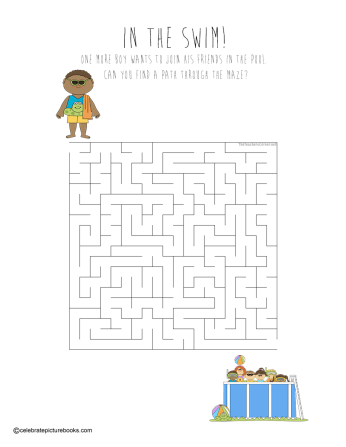
In the Swim! Maze


One little boy would like to join his friends in the pool. Can you help him by finding a path through this printable In the Swim maze? Here’s the Solution!

Picture Book Review

May 19 – National Pizza Party Day

celebrate-picture-books-picture-book-review-lorenzo-the-pizza-loving-lobster-cover

About the Holiday

Pizza, with a multitude of flavor combinations, is a perfect party food for any occasion! Today’s holiday gives you a great reason to invite your friends and family over, order your favorite kinds of pizza, and have some fun! 

Lorenzo the Pizza-Loving Lobster

By Claire Lordon


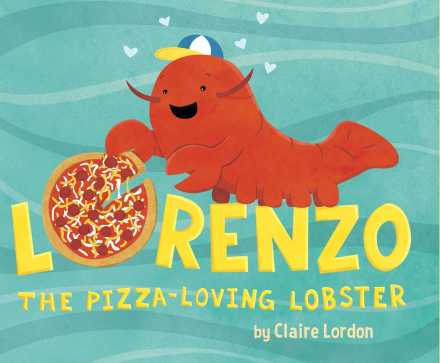
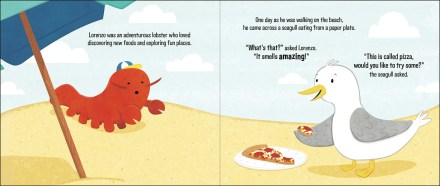
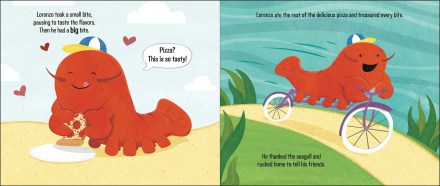
Lorenzo is one adventurous lobster! Not only does he like exploring new places, he loves getting his claws on new foods. One day while at the beach, Lorenzo meets a seagull who has found a tasty slice of pizza to nosh on. “‘What’s that?’” Lorenzo asks, “‘It smells amazing!’” The seagull tells him and invites him to try it. Lorenzo takes a nibble…and then a bigger bite. He loves this pizza thing so much that he eats it all up.

celebrate-picture-books-picture-book-review-lorenzo-the-pizza-loving-lobster-riding-introduced-to-pizza

Image and text copyright Claire Lordon, courtesy of simonandschuster.com

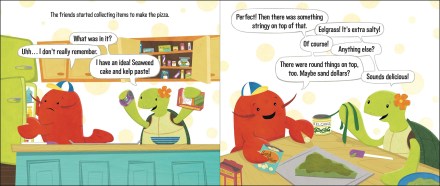
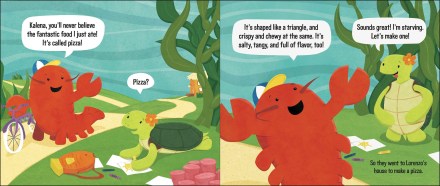
On his way home to tell his friends about his discovery, Lorenzo runs into Kalena, his turtle friend, and tells her all about the triangular food that is “‘crispy and chewy at the same time; salty, tangy, and full of flavor, too!’” Kalena is intrigued and suggests they try to make one themselves. At Lorenzo’s house they begin gathering the ingredients, but when Kalena asks what was in the pizza, Lorenzo can’t remember. Kalena looks in the cupboard and pulls out seaweed cake and kelp paste. “‘Perfect!’” agrees Lorenzo. For the “stringy” part, Kalena suggests eelgrass, which also has the benefit of being extra salty. And the “round things on top”? Sand dollars sound delicious!

celebrate-picture-books-picture-book-review-lorenzo-the-pizza-loving-lobster-bicycle

Image and text copyright Claire Lorden, courtesy of simonandschuster.com

So the pair bake up their green concoction, and when the timer rings they dig in only to find that it “‘isn’t quite right.’” Not one to give up, Kalena offers a new set of ingredients: “‘kelp dough, squid ink, algae, and coral rings.’” This pizza isn’t right either—in fact, Kalena says, “‘This tastes icky! And the algae is stuck in my teeth!’” Suddenly, Lorenzo has a brainstorm. He remembers that the pizza was made of “‘sponge patties, jellyfish jelly, seaweed noodles, and seashells.’”

Listening to that recipe, Kalena isn’t so sure, but they make it anyway. When this creation comes out of the oven, one small nip convinces Kalena that this one is “‘gross.’” Poor Lorenzo—he so badly wanted to make a delicious pizza with his friend. Kalena leaves Lorenzo’s house with the distinct impression that pizza is terrible. But as she heads up the beach toward home, she smells a delicious aroma. Coming closer she spies a “round food,” and buys one.

celebrate-picture-books-picture-book-review-lorenzo-the-pizza-loving-lobster-making-pizza

Image and text copyright Claire Lordon, courtesy of simonandschuster.com

With one bite, she’s smitten! This round food is “‘so chewy, and salty, and…wait a minute.’” It dawns on Kalena that this might be the very pizza Lorenzo was talking about. There’s just one thing—why is it a circle? Even though Kalena wants to devour the whole thing, she thinks about how sad Lorenzo was and hurries back to his house with the steaming box. Sure enough, Lorenzo is moping about the afternoon’s debacle.

“‘Hey Lorenzo, look what I found!’” Kalena calls. “‘Holy anchovy!’” Lorenzo exclaims when he tastes it, “‘This is exactly like the pizza I had earlier, but this time it’s big and round!’” They are excited to dig into their treat, but they carefully study the pizza’s ingredients before eating it all up. One pizza just isn’t enough, so Lorenzo and Kalena make another…and another…and another—and share them with all their friends at a huge pizza party.

celebrate-picture-books-picture-book-review-lorenzo-the-pizza-loving-lobster-telling-kalena

Image and text copyright Claire Lordon, courtesy of simonandschuster.com

Who knew pizza and the ocean had so much in common—the same salty tang, the same appealing aromas, the same recognizable shapes? Claire Lordon, that’s who! In her funny culinary adventure, Lordon captures the enthusiasm children have to share and replicate a new discovery  but also presents the moments of disappointment when reality and memory don’t match. Kids will “ewww…ohhh…yuck…and yuck it up at the alternative pizza ingredients Lorenzo and Kalena combine in their attempts at a “normal” pizza. These two friends are sweetly supportive of each other through kelp paste and pepperoni and know how to share life’s ups and downs.

Lordon’s adorable sea creatures populate vibrant underwater and beach environments that will be as familiar to kids as their own homes and playgrounds, but with an oceanic twist. Images of the alternate ingredients are clever adaptations of the elements of a normal pizza as Lorenzo remembers the shapes but not the names of the fixings.

Lorenzo, the Pizza-Loving Lobster is a delicious ingredient to add to any child’s bookshelf, and kids will no doubt want to build their own pizzas just like Lorenzo—a crustacean who really knows his crust!

Ages 3 – 8

little bee books, 2016 | ISBN 978-1499802283

Learn more about Claire Lordon and her work on her website!

Cheese Pizza Day Activity

CPB - Pizza Day Toppings

Create Your Pizza Game


Play this fun game to build your pizza ingredient by ingredient before the others! For 2 – 8 players.

Supplies

Directions

Object of the Game: to fill a pizza slice with 5 delicious ingredients

  1. Print a Pizza Crust Game Board and Ingredients Cards
  2. Each player picks a slice on the board to fill
  3. Roll the dice to choose who goes first. Play
  4. The first player rolls the dice and places an ingredient on their slice according to the numbers below
  5. Play passes to the right
  6. The player who fills their slice with all 5 ingredients first, wins

Alternative for older kids: Print a game board for each player. The first player to complete the whole pizza is the winner

Each number on the playing die corresponds to one ingredient or other instruction, as noted below:

1: add sauce (red x)

2: add cheese

3: add green peppers (green squares)

4: add garlic (white half moons)

5: add pepperoni

6: remove one ingredient and pass the playing die to the next player

Picture Book Review

May 18 – International Museum Day

CPB - How the Dinosaur Got to the Museum II

About the Holiday

Created in 1946, the International Council of Museums established International Museum Day in 1977 to institute an annual event highlighting museums as “important means of cultural exchange, enrichment of cultures and development of mutual understanding, cooperation, and peace among peoples.” The day also aims to unify “the creative aspirations and efforts of museums and draw the attention of the world public to their activity.” Each year a theme is chosen to spotlight a relevant issue. This year’s theme is “Museums and contested histories: saying the unspeakable in museums.” Museums around the world will take the opportunity to show how they “display and depict traumatic memories to encourage visitors to think beyond their own individual experiences” and promote peace and reconciliation for the future. To learn more visit the International Council of Museums website!

To celebrate today’s holiday show your support for museums by visiting and/or donating to your favorite museum!

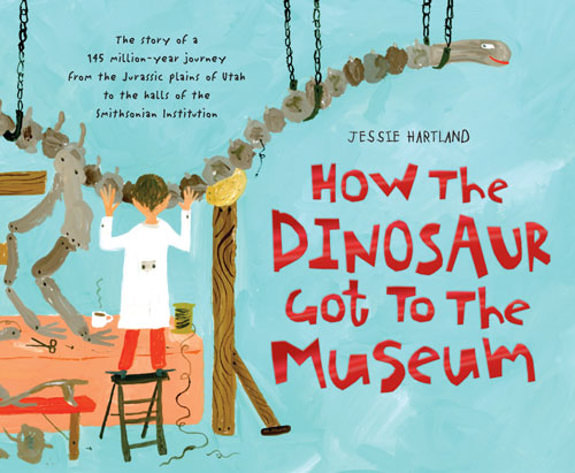
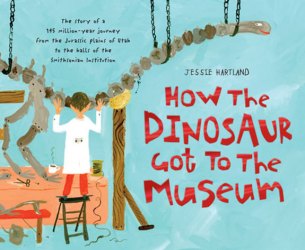
How the Dinosaur Got to the Museum

By Jessie Hartland


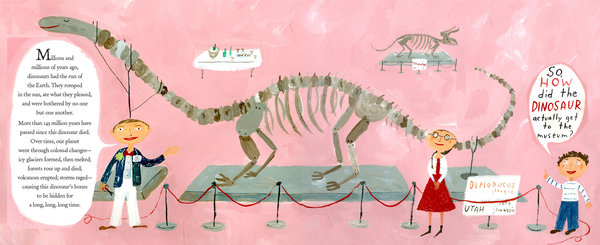
“So…” asks a little boy visiting the Smithsonian Museum of Natural History, “how did the dinosaur get to the museum?” Thus begins the tale—not of the dinosaur’s life, but of its journey from life to the museum exhibit hall.

celebrate-picture-books-picture-book-review-how-the-dinosaur-got-to-the-museum-talking-about-dinosaur

Image and text copyright Jesse Harland, 2011, courtesy of Blue Apple Books.

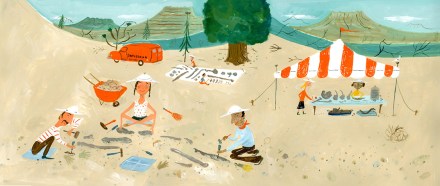
One hundred and forty-five million years ago, the dinosaur roamed the plains of what is now Utah. Overcome by weather and evolutionary events, the dino is buried. It is only much, much later that this prehistoric creature is once again exposed. A Dinosaur Hunter finds one large bone and believes it to be from a Diplodocus Longus. He calls in the Paleontologist who confirms it. A team of Excavators arrives and unearths the rest of the skeleton.

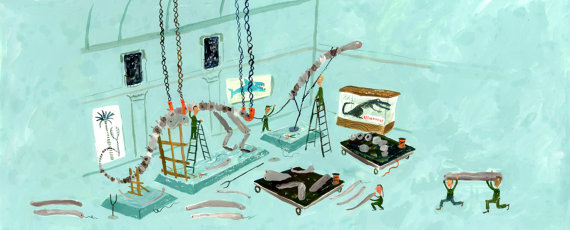
The Movers pack the skeleton that was found by the Dinosaur Hunter, confirmed by the Paleontologist, and dug up by the Excavators. They load it onto a train that transports it to the Smithsonian Museum of Natural History. Here, the bones are cleaned and preserved by the Preparators, who discover that the head and neck are missing!

celebrate-picture-books-picture-book-review-how-the-dinosaur-got-to-the-museum-digging

Image copyright Jesse Harland, 2011, courtesy of Blue Apple Books.

The Curator locates a plaster cast of a Diplodocus head at another museum, and work continues until the whole Diplodocus is assembled. That night while making his rounds in the dark, the Night Watchman trips over the skeleton’s tail and breaks it! In come the Welders to fix it. Finally, the Riggers can lift the dinosaur into the display.

The Exhibits Team creates an educational background for Diplodocus. Then with a final dusting, the Cleaners make the Diplodocus presentable. At long last, the Director invites the public into the museum. He gives a speech and makes a toast then opens the doors to the magnificent exhibit.

celebrate-picture-books-picture-book-review-how-the-dinosaur-got-to-the-museum-exhibit

Image copyright Jesse Harland, 2011, courtesy of Blue Apple Books.

Jessie Hartland’s highly entertaining and educational text will keep kids riveted to the process of creating a museum exhibit even as they giggle at the mishaps. As each page and step in the process build on each other, readers will enjoy reciting along. Hartland’s bold, colorful, folk-style illustrations allow kids to see the lengthy and meticulous journey the dinosaur skeleton makes from burial spot to museum exhibit. Along the way, they view the desert landscape where the skeleton was found, view the tools used to excavate and preserve it, get a tour of the back rooms where the dinosaur bones are reassembled, and are given a front-row look at the finished display. 

For children interested in dinosaurs, museums, history, and a fun story, How the Dinosaur Got to the Museum is a great take-along book for museum trips and a wonderful addition to a young armchair traveler’s library

Ages 5 – 9

Blue Apple Books, New Jersey, 2011 | ISBN 978-1609050900

Learn more about Jesse Hartland, her books, and her artwork on her website!

International Museum Day Activity

CPB - Cookie Jar Museum (2)

Create a Museum Exhibit


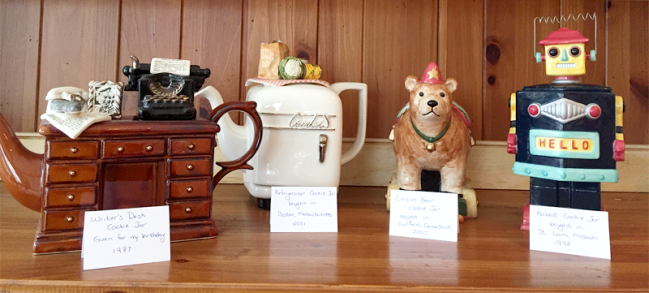
Every item has a story. Maybe there’s a funny anecdote behind that knick-knack on your shelf. Perhaps your favorite serving dish holds sentimental value. How about your child’s best-loved toy or a drawing or craft they’ve made? A fun and educational way for kids to learn family stories and interact with their own history is to create a museum exhibit of objects in your home.

For teachers this can be a fun classroom activity that incorporates writing, art, and speaking as well as categorizing skills. Students can use objects in the classroom or bring items from home to set up museum exhibits. This activity can be done as a whole-class project or by smaller groups, who then present their exhibit to the rest of the class.

Supplies

  • A number of household or classroom items
  • Paper or index cards
  • Markers
  • A table, shelf, or other area for display

Directions

  1. To get started help children gather a number of items from around the house to be the subjects of their exhibit. An exhibit can have a theme, such as Grandma’s China or Travel Souvenirs, or it can contain random items of your child’s choice, such as toys, plants, tools, even the furniture they see and use every day.
  2. Using the paper or cards and markers, children can create labels for their exhibit items. Older children will be able to write the labels themselves; younger children may need adult help.
  3. Spend a little time relating the story behind each object: where it came from, how long you’ve had it, when and how it was used in the past, and include any funny or touching memories attached to the item. Or let your child’s imagination run free, and let them create histories for the objects.
  4. When the labels are finished, arrange the items on a table, shelf, or in a room, and let your child lead family members or classmates on a tour. You can even share the exhibit with family and friends on social media.
  5. If extended family members live in your area, this is a wonderful way for your child to interact with them and learn about their heritage.

CPB - How the Dinosaur Got to the Museum II

You can find How the Dinosaur Got to the Museum at these booksellers

Amazon | Barnes & Noble | IndieBound