October 11 – Ada Lovelace Day

celebrate-picture-books-picture-book-review-ada-byron-lovelace-and-the-thinking-machine-cover

About the Holiday

Today we remember the woman who is regarded as “the first computer programmer.” A mathematician, inventor, and scientific pioneer, Ada Lovelace wrote and was the first to publish an algorithm to generate Bernoulli numbers. Her notes published in Taylor’s Scientific Memoirs in 1842 inspired Alan Turing to design the first modern computers 100 years later. Today’s holiday celebrates all women in the science, technology, mathematics, and engineering fields. To learn more about Ada Lovelace Day visit findingada.com.

Ada Byron Lovelace and the Thinking Machine

Written by Laurie Wallmark | Illustrated by April Chu


Ada was the daughter of two very distinguished—and distinct—parents. Her mother loved geometry and was known as “‘The Princess of Parallelograms.’” Her father was a world-renowned poet, “beloved for his Romanic poems.” When Ada was still a baby, however, her mother left Lord Byron and his “scandalous behavior” behind, and “Ada never saw her father again.”
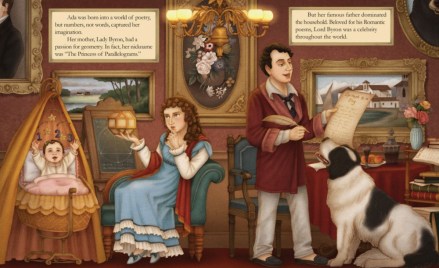
celebrate-picture-books-picture-book-review-ada-byron-lovelace-and-the-thinking-machine-ada's-parents

Image copyright April Chu, text copyright Laurie Wallmark. Courtesy of crestonbooks.com

As was common in Ada’s time she was often left on her own while her mother traveled. Ada filled the hours and days writing, sketching, and inventing in her journal. When she was still a little girl, she built a set of wings for a flying machine she had imagined. To discover if her wings could actually fly, “Ada needed to compute the wings’ power. She broke the problem into steps—surface area and weight, wind speed and angles.” She had to multiply and divide again and again, and while she loved calculating numbers, Ada wondered if there wasn’t an easier way to find the answers.

As she sat at her desk one day a storm blew up, sending the curtains around her open window flapping. They reminded Ada of sails and she suddenly realized that sails were like wings. She grabbed her toy sailboat and headed out to a nearby pond to test her theories. She launched her boat over and over, and “each time she adjusted the sails and studied the effect on the little boat’s speed. A storm of numbers and calculations whirled in her mind and spilled onto her pages.” She stayed by the pond until dark, and “returned home muddy, dripping wet, and triumphant.” Her nanny was not pleased. She didn’t agree with Ada’s mother, instead believing that girls “should not waste their time with math and science and experiments and other such nonsense.”
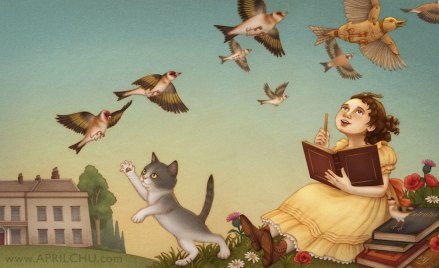
celebrate-picture-books-picture-book-review-ada-byron-lovelace-and-the-thinking-machine-imagining-a-flying-machine

Image copyright April Chu, courtesy of aprilchu.com

Overnight, Ada developed a high fever, and the doctor diagnosed measles. Ada’s mother was sent for. She hurried home and spent the days and nights at Ada’s bedside reading to her. Ada’s “fever finally broke, but the measles left her paralyzed and blind. To keep Ada’s mind sharp, Mama quizzed her on math problems,” asking her harder and harder questions. The numbers kept her company, and in her imagination Ada used her flying machine to travel to London.

While Ada regained her sight in a few weeks, it was three years before she could walk again. During this time Ada’s mother hired tutors to teach her higher and higher level math. One of her tutors was Mary Fairfax Somerville, a famous scientist and mathematician. Somerville invited Ada and her mother to a gathering of other influential scientists, mathematicians, and inventors. There Ada met Charles Babbage. Babbage, a mathematician and inventor, was impressed by 17-year-old Ada’s knowledge and understanding and invited her to visit his laboratory.
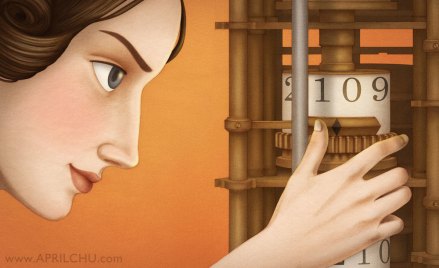
celebrate-picture-books-picture-book-review-ada-byron-lovelace-and-the-thinking-machine-difference-engine

Image copyright April Chu, courtesy of aprilchu.com

Ada brought her journal and shared with Charles Babbage her own work. He didn’t treat Ada as a child but as a fellow scientist and engineer. Babbage showed Ada a mechanical calculator he had designed. With the turn of a handle cylinders of numbers on the three columns of his Difference Engine spun toward the answer to a math problem Ada posed: what is 15 x 12? The machine gave the right answer: 180!

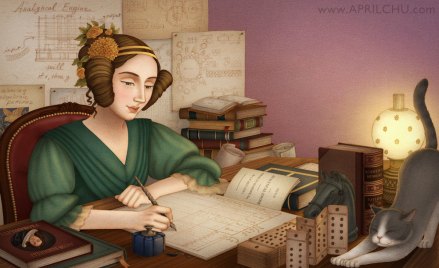
Babbage also had an idea for a mechanical computer—and Analytical Engine—that “would solve harder problems by working through them step by step.” It was an amazing concept, but Babbage hadn’t built it yet. He gave Ada his notebooks and she studied Babbage’s descriptions of how the machine might work. She realized that the Analytical Engine could work if numbers told it how.
celebrate-picture-books-picture-book-review-ada-byron-lovelace-and-the-thinking-machine-calculating

Image copyright April Chu, courtesy of aprilchu.com

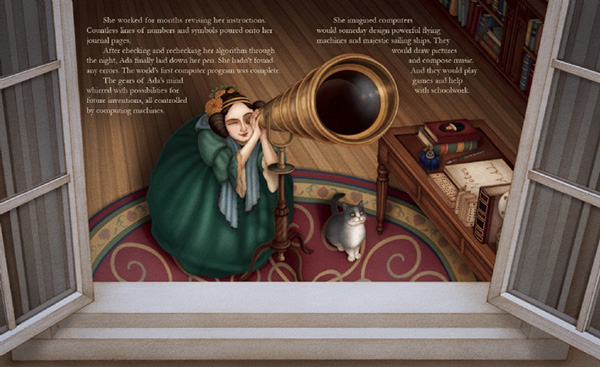
Over several months Ada created an algorithm—a set of mathematical instructions. Her journal was filled with lines and lines of numbers and symbols. At last she checked her work for errors and found none. Ada had developed the world’s first computer program! With her creative imagination she could see that someday computers would “design powerful flying machines and majestic sailing ships. They would draw pictures and compose music. And they would play games and help with schoolwork.”

Unfortunately, Charles Babbage never finished building his Analytical Machine, and Ada never saw her program in action. But future generations remembered her and her contributions to computer programming. There is even a computer program named for her. We can imagine that the little girl who wanted to fly would be very pleased to know that Ada helps guide modern flying machines.

An extensive Author’s Note, a timeline of Ada’s life as well as a partial bibliography and resources follow the text.
celebrate-picture-books-picture-book-review-ada-byron-lovelace-and-the-thinking-machine-looking-at-stars

Image copyright April Chu, text copyright Laurie Wallmark. Courtesy of crestonbooks.com

Laurie Wallmark’s compelling biography of Ada Lovelace is perfectly aimed at her young audience, highlighting Ada’s childhood dreams, obstacles, and events that led her to become an influential mathematician and inventor. Wallmark’s fast-paced text, which beautifully merges lyrical and technical language to tell Ada’s story, is uplifting in its revelation that from even a young age, Ada was respected and acknowledged for her intelligence and mathematical gifts. Illuminating Ada’s predictions for future uses of the computer forms a bridge between her foresight and the experience of today’s children, bringing history alive for readers.

Gorgeous, detailed illustrations set Ada Byron Lovelace and the Thinking Machine firmly in its 19th-century time period. Lush greens, reds, and golds welcome readers into Ada’s home, where her wooden and paper wings lay among blueprints for other inventions as Ada sits at her desk jotting notes in her journal. A mural in her home cleverly depicts Ada’s imaginings while she recovered from the measles, and the gathering that Ada and her mother attend is a stimulating portrait of the scientists and new inventions of the day. Kids will be amazed to see one of the first “calculators” as built by Charles Babbage. Included on the pages are images of an early loom and punch cards that influenced the development of our computers. It is fitting that the last page shows how far we have come—and how forward thinking Ada was—with an illustration of Space technology in action.

Ada Byron Lovelace and the Thinking Machine is an important biography that should be included in every public and school library. For children interested in history, biographies, and the science and math fields, Laurie Wallmark’s and April Chu’s book would make a beautiful gift and addition to home bookshelves as well.

Ages 5 – 10

Creston Books, LLC, 2015 | ISBN 978-1939547200

Discover more about Laurie Wallmark and download curriculum and activity guides on her website!

View a portfolio of artwork and learn more about April Chu’s books on her website

This is one book trailer that really computes!

Ada Lovelace Day Activity

celebrate-picture-books-picture-book-review-computer-coloring-page

Love Your Computer! Coloring Page


What would we do without our computers? Here’s a fun printable Love Your Computer! coloring page for you to enjoy!

Picture Book Review

October 10 – World Porridge Day

About the Holiday

Today’s holiday celebrates the history and origins of porridge, a food enjoyed around the world and Scotland’s national dish. Since 1996 the Scottish Highland Village of Carrbridge has hosted the World Porridge Making Championship, where culinary types from around the globe compete for the Golden Spurtle trophy and the honor of being named “World Porridge Making Champion.” In 2009 the championship event joined with Mary’s Meals, a charity based in Argyll Scotland that provides nutritional aid to children in developing countries. To celebrate today, why not mix up a batch of warm, delicious porridge. However you make it, a bowlful is just right!

Goldilocks and Just One Bear

By Leigh Hodgkinson


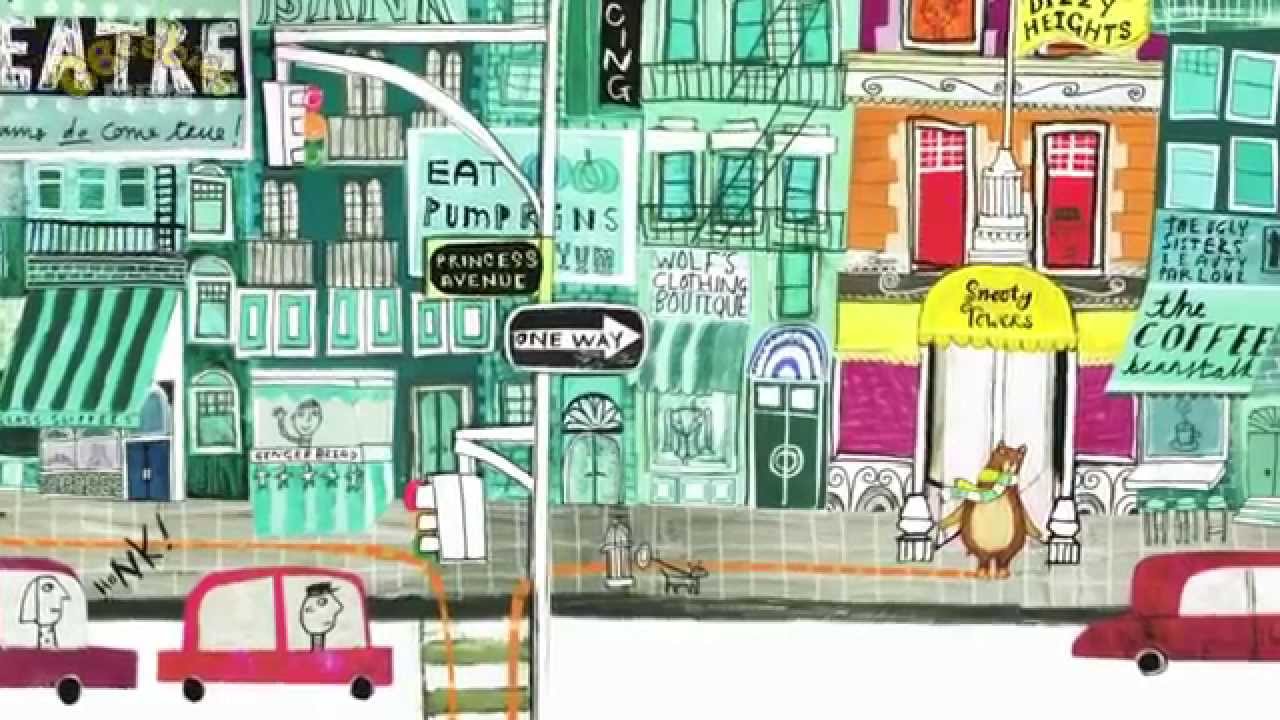
“Once upon a time there was this bear. One minute, he was strolling in the woods, all happy-go-lucky….The next minute, he didn’t have a crumb-of-a-clue where he was.” Somehow he, along with his tightly gripped spoon, had found his way to the big city. The bear didn’t like it: the lights were too bright, the streets were too noisy, and the bear’s legs had become too wobbly. He looked around at the “Wolf’s Clothing Boutique,” the “Three Little Piggies’ Bank, the “Gingerbread” stand, the “Glass Slippers” shoe store, and “The Ugly Sisters’ Beauty Parlor and decided to get away from it all. He took the elevator to the top floor of Snooty Towers, where he found a quiet place for a rest.

celebrate-picture-books-picture-book-review-goldilocks-and-just-one-bear-in-the-city

Image and text copyright 2012 Leigh Hodgkinson, courtesy of nosycrow.com

After “all that whooshy traveling,” the bear found that he was a mite hungry—hungry for porridge. He grabbed the first bowl he saw. “THIS porridge is too soggy,” he decided, slurping the water from the fish bowl. On the floor he found another bowl. “THIS porridge is too crunchy,” he said, spooning up a few cat nibbles. Next he tried the contents of a plate. “THIS porridge is a bit on the DRY side, but it’s better than nothing,” reasoned the bear.

celebrate-picture-books-picture-book-review-goldilocks-and-just-one-bear-porridge

Image and text copyright 2012 Leigh Hodgkinson, courtesy of nosycrow.com

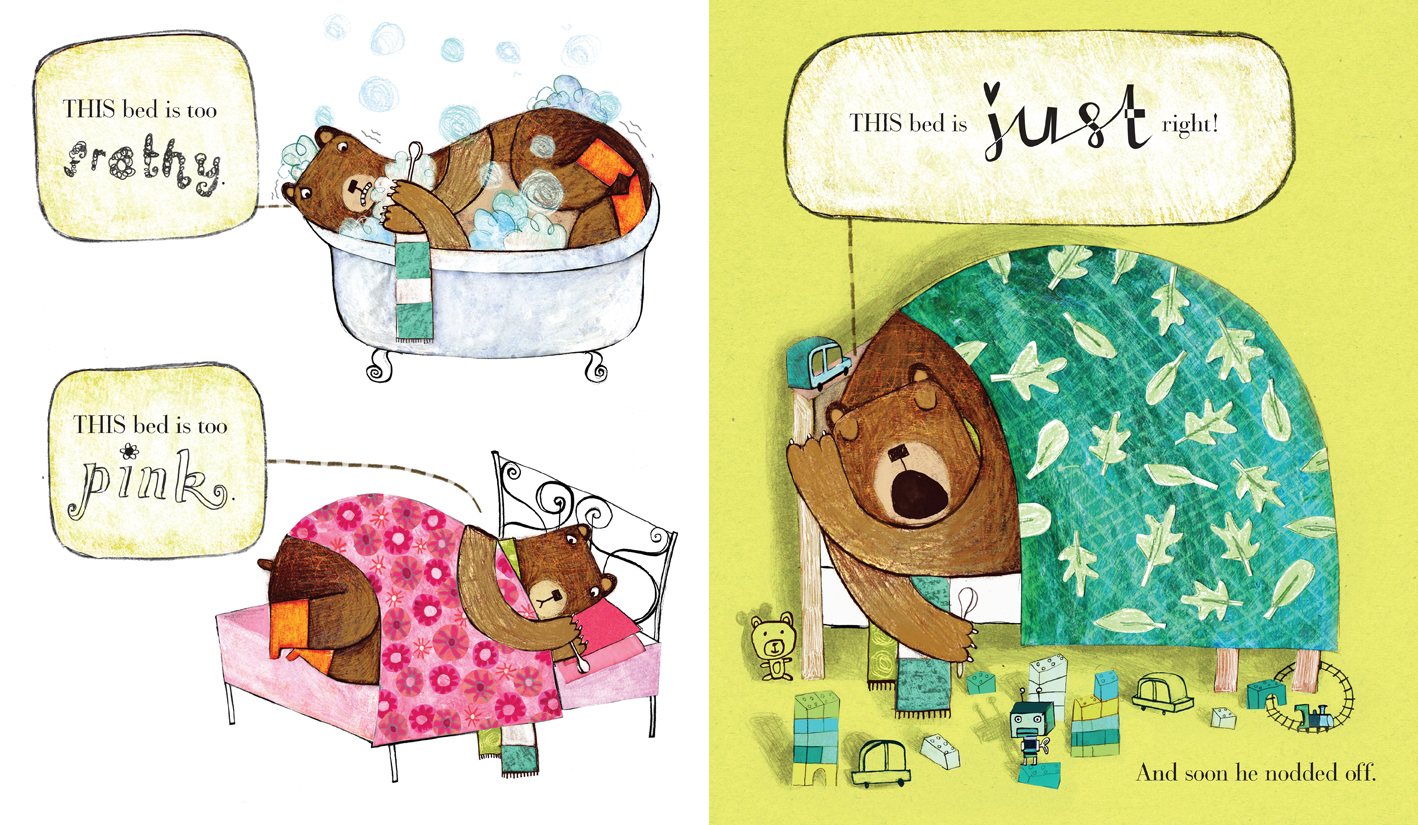
Nice and full, the bear went in search of a place to rest. He sat on something too “ouchy,” something too “noisy,” and something that exploded in a million Styrofoam beads but was “just right.” The short respite was nice, but not enough for such a tired bear. He sought out a place to take a proper nap. The bathtub was “too frothy”; the fancy bed was “too pink”; but the bed with the leaf-print comforter was “just right.”

While he slept the bear dreamed of his cozy house in the woods until he was unceremoniously wakened by a very, very loud “‘SOMEBODY has been eating from my fishbowl!’”; a very loud “‘Somebody has been eating my dear little Pumpkin’s kitty nibbles!’”; and a not-as-loud, but just-as-disturbing “‘And somebody has been eating my toast. And they’ve eaten it all up!’”

celebrate-picture-books-picture-book-review-goldilocks-and-just-one-bear-chair

Image and text copyright 2012 Leigh Hodgkinson, courtesy of nosycrow.com

The bear hid under the covers as the “daddy person” discovered his squished cactus, the “mommy person” comforted the cat, and the “little person” joyfully tossed Styrofoam peanuts in the air. It was only a matter of time before the daddy person laid eyes on the splashed about tub, the mommy person found her messy bed, and the little person pointed out the bear sleeping in her bed right that minute.

The bear took a look at the mommy person and thought she looked “slightly familiar.” At the same time the mommy person thought that three strikes in one house rang a bell. “‘Baby Bear?’” the mommy said. “‘Goldilocks?’” the bear gasped. Really, the reunion had been too long in coming! Goldilocks cooked up a big batch of porridge and the bear gobbled it down, because…well…you know! While the bear was glad to see that Goldilocks was “living so happily ever after,” he was just as glad to return home to the woods.

celebrate-picture-books-picture-book-review-goldilocks-and-just-one-bear-bed

Image and text copyright 2012 Leigh Hodgkinson, courtesy of nosycrow.com

Leigh Hodgkinson’s tale of Little Bear all grown up is a hilarious turn-about-is-fair-play take on the original Goldilocks story. The bear, out of his depth in the big city, makes a sweet and sympathetic character even as kids laugh at his misguided experiments in Goldilocks’ penthouse apartment. Hodgkinson’s story is full of wonderful, expressive language set off in animated type that enhances the look of the stylish pages.

Hodgkinson’s vibrant and airy mixed-media illustrations are visually stimulating—alive with the glitz and glamour of the city—and underscore the woodsy bear’s apprehension in his new surroundings. The signs and billboards along the busy thoroughfare allow Hodgkinson to include nods towards other favorite fairy tales, and the prints hanging on the wall of the Snooty Towers apartment hint at the identification of its owner.

Goldilocks and Just One Bear is a fun and funny fractured fairy tale, and one that kids will ask to have read over and over.

Ages 3 – 8

Nosy Crow Books, 2012 | ISBN 978-0763661724 (hardcover) | ISBN 978-1536234855 (paperback)

Discover more about Leigh Hodgkinson and her books on her website Wonky Button!

World Porridge Day Activity

bear-maze

It’s Just Right! Maze

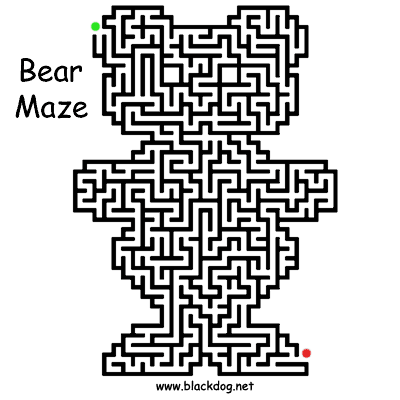
Sometimes a bear—or a person—will go to any lengths for a bowl of porridge. Can you find your way through this printable bear-shaped It’s Just Right Maze?

You can purchase Goldilocks and Just One Bear at these booksellers

Amazon | Barnes & Noble | Bookshop (to support your local independent bookstore)

Picture Book Review

October 9 – Curious Events Day

celebrate-picture-books-picture-book-review-bug-in-a-vacuum-cover

About the Holiday

Today is set aside to ponder the mysteries of life—kind of like all the X-Files rolled up into one day! It’s fun and fascinating to explore the unknown, to wonder if mythical creatures really exist, or to allow yourself (if even for just a moment) to accept strange phenomenon as true. And then there are just those weird things that happen that make you think “why me?” or “why not me?” and give you a new perspective on life. Today, be conscious of the unexplained—you know you want to believe!

Bug in a Vacuum

By Mélanie Watt


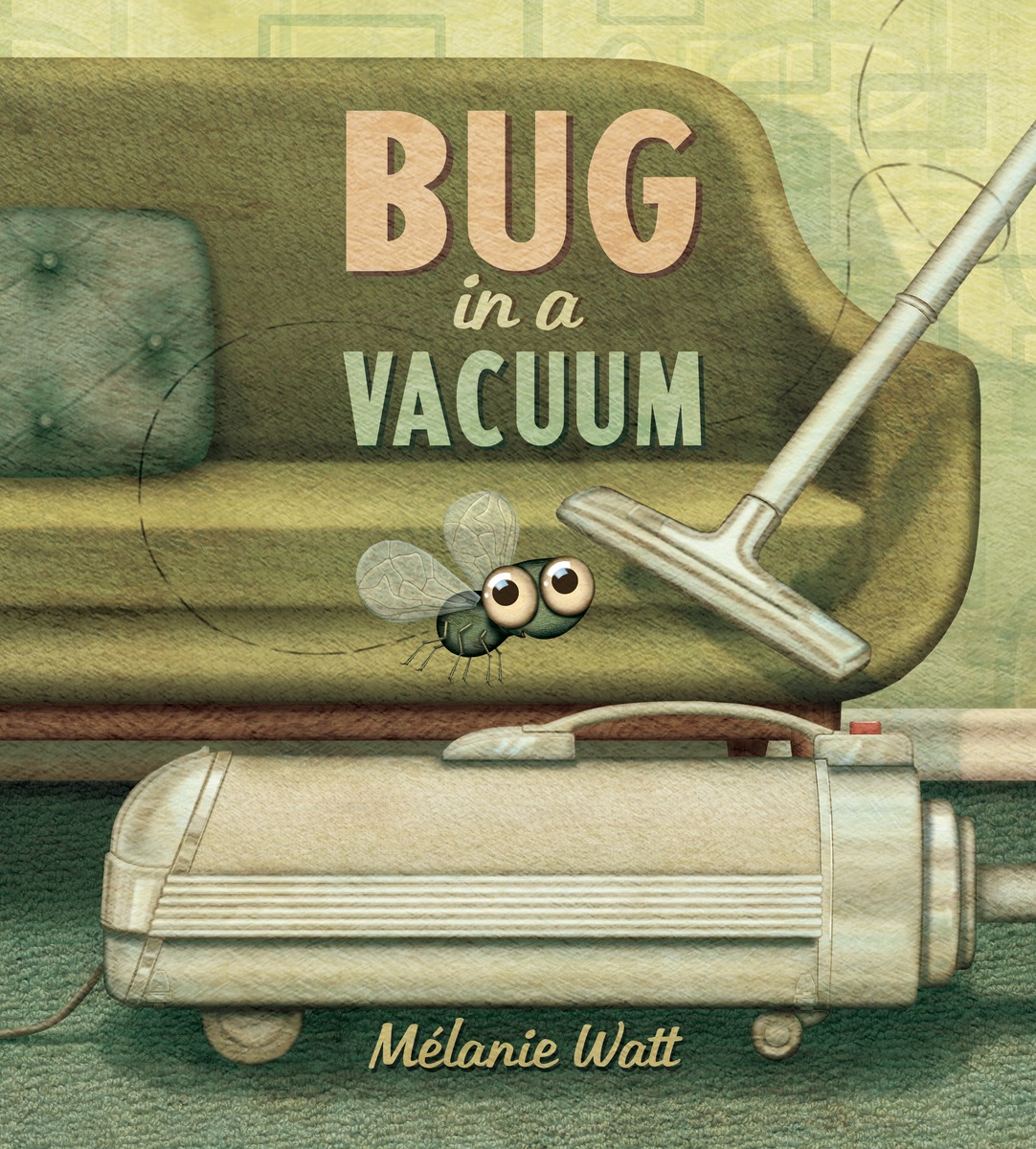
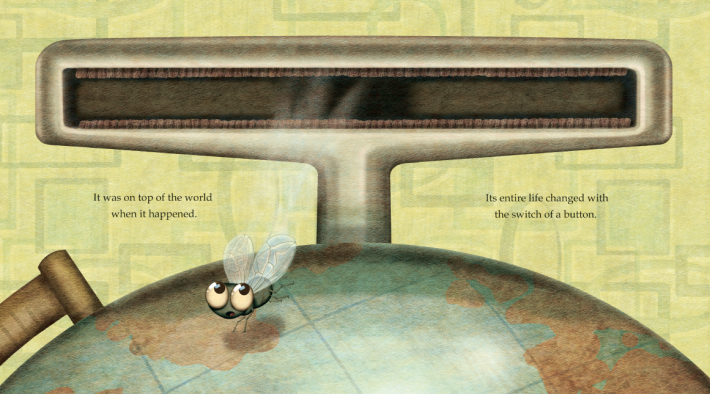
A bug enjoying a lazy afternoon takes advantage of an open door and flies into a house. It’s cleaning day and the bug buzzes through the bathroom, through the kitchen (taking a quick hop and skip over the cooling apple pie), across a bedroom, and stops on top of the household globe. Meanwhile someone is vacuuming, unaware of or unconcerned with what lays in the powerful machine’s path.

celebrate-picture-books-picture-book-review-bug-in-a-vacuum-on-top-of-the-world

Image and text copyright Mélanie Watt. Courtesy of Tundra Books, penguinrandomhouse.ca.

The bug is “on top of the world when it happened. Its entire life changed with the switch of a button.” Suddenly it is sucked past the little bristles and into the dusty interior of the canister. Finding itself here amid the forgotten debris, the bug goes through many stages as it ponders its plight. Stage one is Denial. Surrounded by fluffy fuzz the bug thinks to itself, “This is amazing! Doesn’t get much cozier than this…” But then the quiet and dark makes the bug suspicious. Maybe it’s a surprise party! Or perhaps it’s a dream! The bug pinches itself to wake up, but all that does is hurt.

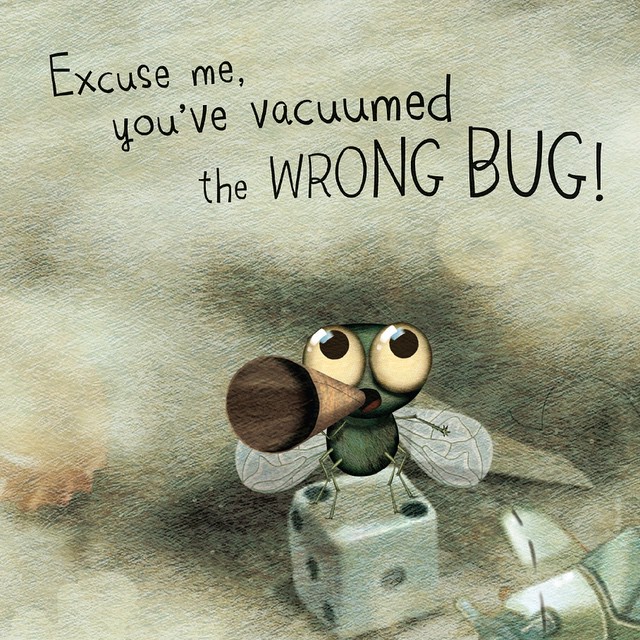
Stage 2 follows—Bargaining. The bug calls out “Excuse me, you’ve vacuumed the wrong bug!” It even offers a different day to be so inconvenienced: “Can I be vacuumed next Monday instead? Tonight’s bowling night with the dung beetles!” Finally, it promises to turn over a new wing and writes a contract of sorts: “Dear vacuum, IF you set me free, I promise to avoid my favorite hangouts: windowsills, picnics, porta-potties. A new Bug.” When there’s no response to this plea, the bug moves on to…

celebrate-picture-books-picture-book-review-bug-in-a-vacuum-bargaining

Image and text copyright Mélanie Watt. Courtesy of Tundra Books, penguinrandomhouse.ca.

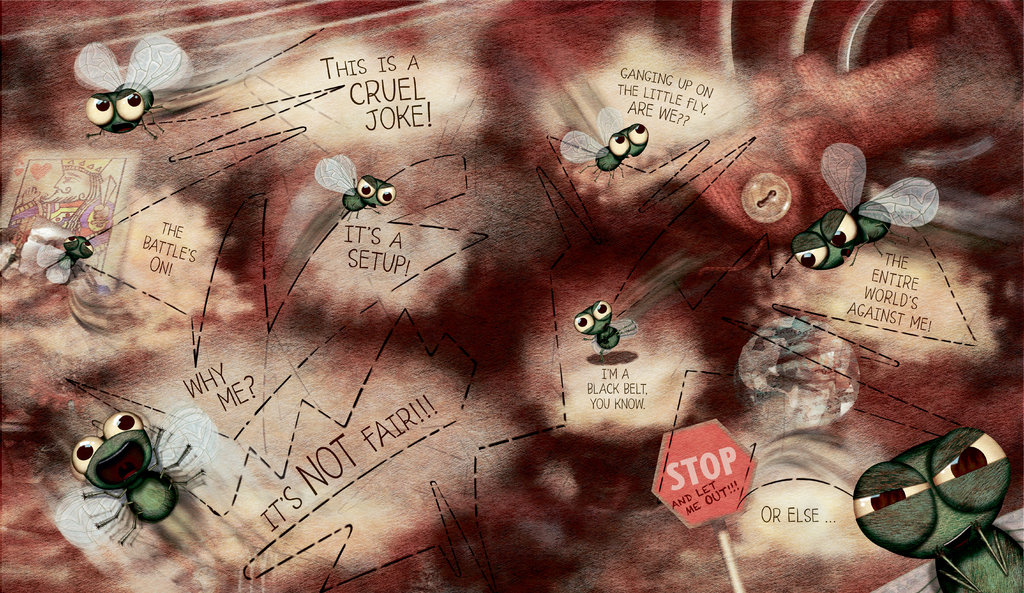
Stage 3—Anger. The bug throws a fit: “I WANT OUT NOW!!! NO MORE MR. NICE FLY!!! It threatens, becomes paranoid, demands attention, and turns the dust bunnies into its own personal army. The sounds from inside the canister are frightening—but no one’s there to hear them.

Stage 4 strikes heavy with—Despair. When the dust, scraps of paper, broken pencil, tack, paperclip, playing card, broken Q-tips, and other waste settles, the bug takes stock. “My life’s a mess” it realizes. “How will I ever pick up the pieces?” it wonders. It decides: “I’m at the end of my rope. My dreams are crushed. The odds are against me.” The poor bug goes on: “I’ll never see the sky again. I’ll never be extraordinary. I have no future.” At last, though, the bug is ready for…

Stage 5—Acceptance. The bug surrenders itself to its fate and learns to “appreciate what I have.” It goes so far as to say, “I don’t wish to change a thing. Everything will be okay.”

celebrate-picture-books-picture-book-review-bug-in-a-vacuum-anger

Image and text copyright Mélanie Watt. Courtesy of Tundra Books, penguinrandomhouse.ca.

It is at this point that the bug feels itself on the move, gliding across the carpet, waiting at the curb, and traveling away at top speed as the vacuum cleaner sits atop the Bull Dog Waste Service truck. The trip takes it up a hill to the city dump where the vacuum is unceremoniously dropped on a pile and the hose is dislodged. When the machine comes to a rest, the bug sees the most magnificent sight—a way out. The bug flies into the streaming sunlight and on to another adventure.

A sub-plot involving the family’s wiener dog who has lost his beloved stuffed toy to the overzealous vacuum adds suspense to the story, and his thoughts about retrieving his toy inject more comical elements and mirror the bug’s contemplations.

celebrate-picture-books-picture-book-review-bug-in-a-vacuum-sad-dog

Image and text copyright Mélanie Watt. Courtesy of Tundra Books, penguinrandomhouse.ca.

Mélanie Watt, with tongue firmly in cheek, takes readers on an emotional roller coaster as an unsuspecting but very lucky bug finds itself engaged in the five stages of grief after it is sucked into a vacuum cleaner. Watt’s text and full-bleed, vintage-style illustrations go hand-in-hand (or wing-in-wing) to tell the bug’s and dog’s stories.

Each stage of the bug’s turmoil is introduced with an image of a product named for the psychological phase and labeled with humorous puns and platitudes. The dated décor, colors, and objects make Bug in a Vacuum visually stunning, and the bug hero is a cutie who readers will empathize with and cheer for. Eagle-eyed readers will also love finding all the items slurped up into the cleaning machine lying on the floor of each page. The first page defining Bug as “an insect” and “an unexpected glitch” and Vacuum as “a cleaning machine” and “a void left by a loss” hints at the fun and thoughtfulness to come.

Bug in a Vacuum would make a great gift and addition to home bookshelves—a welcome pick-me-up for those days when things don’t always go so well.

Ages 4 – 9

Tundra Books, 2015 | ISBN 978-1770496453

You can learn about the many, many books by Mélanie Watt on her website!

To find a fun Bug in a Vacuum activity guide by Tundra Books/Penguin Random House of Canada, click here!

Get sucked in to this Bug in a Vacuum book trailer!

Curious Events Day Activity

celebrate-picture-books-picture-book-review-hidden-word-coloring-page

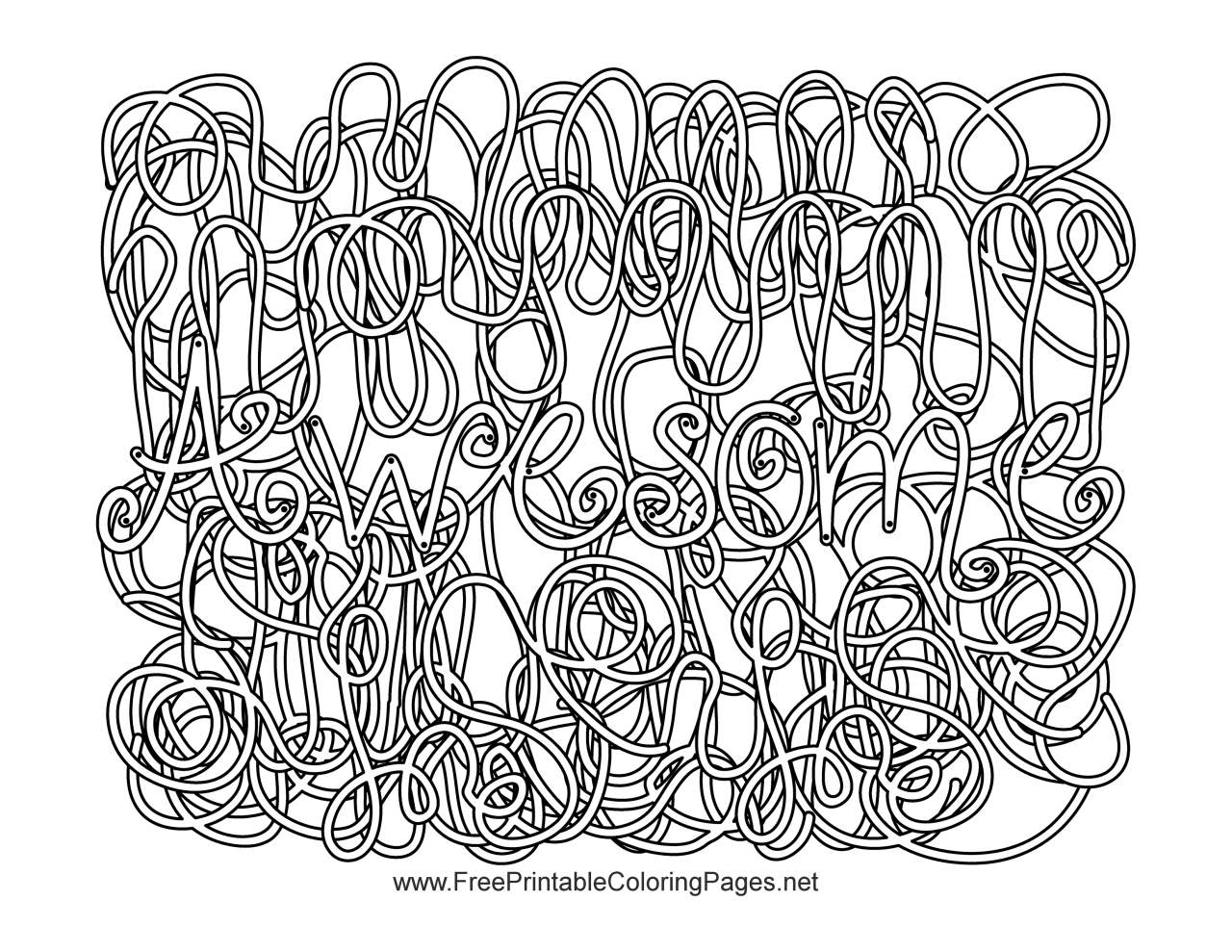
Hidden Word Coloring Page


Curious events are often steeped in mystery. The real meaning or cause of a phenomenon can be hidden from view, but that just makes it more fun! Curious about what this printable Hidden Word Puzzle says? Color it and find out!

Picture Book Review

October 8 – World Octopus Day

celebrate-picture-books-picture-book-review-also-an-octopus-cover

About the Holiday

With fossils dating back 300 million years, the octopus is one of the world’s oldest and most fascinating creatures. It’s also one of the smartest as more than 500 million neurons fire information through an octopus’s brain and arms, allowing them to learn from experience and solve problems. Octopuses are versatile and are found in all the world’s oceans. While most prefer warmer waters and living along the ocean floor, some species swim in shallower, cooler waters. Octopuses have an excellent sense of touch and sense of vision—some even see in color. They fool predators by hiding or camouflaging themselves but can defend themselves by shooting an inky substance at their pursuers. To celebrate today’s holiday, plan a visit to an aquarium or other sea life center!

Also an Octopus

Written by Maggie Tokuda-Hall | Illustrated by Benji Davies


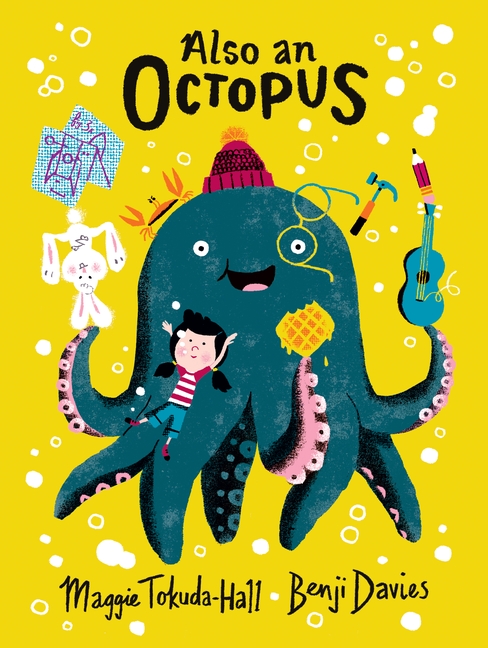
“Every story starts with nothing.” But as you think about your story, you imagine a character. This character can be anyone or anything—maybe a little girl, or a bunny, or an octopus. Maybe even an octopus that plays the ukulele. Yes! Now, by itself that seems kind of boring, so the octopus has to want something like a sandwich or a friend. Hey! Didn’t you think of a little girl? Maybe she could be the friend. But wait! How about if the octopus wants a “totally awesome shining purple spaceship capable of intergalactic travel?”

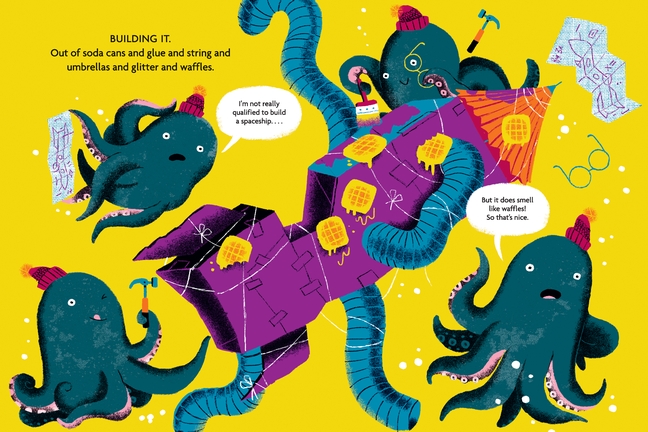
Now there’s a story! It’s not? Oh…too short? Too ehh? What if the octopus builds the rocket ship from stuff around the house? Easy-peasy! Oh dear, it doesn’t work. It can’t even get off the ground. Maybe that bunny from your earlier imagination can help. I’m sure that rabbit is great at building rockets—carroty ones anyway. Not exactly what the octopus had in mind though, huh? What’s an octopus to do beside feel “heartbroken”…beside feel “despondent?”

celebrate-picture-books-picture-book-review-also-an-octopus-homemade-rocket-ship

Image copyright Benji Davies, text copyright Maggie Takuda-Hall. Courtesy of candlewick.com

Maybe the octopus’s sorrows can be drowned in music. A few strums on the ukulele might be soothing. Not a bad idea! Doing this changes things completely! “People come to listen to the ukulele-playing octopus.” What a turn of events! Some of the people are rocket scientists who can help construct a spaceship and who “also play the saxophone, tambourine, trumpet, and lute!” Now this is getting interesting! “So what happens next?” Well, that is up to you!

But you say “I’ve got nothing”? That’s all you need—“because every story starts with the same thing: just a little bit of nothing.”

In Also an Octopus Maggie Tokuda-Hall encourages budding writers and other creative kids to trust their imaginations and let the ideas fly. With humor Tokuda-Hall demonstrates how characters, needs or wants, setting, plot, conflict, and resolution come together to make a whole story. Readers will see how one randomly chosen element can spark an entire work of art—one that is unique to its creator. Tokuda-Hall’s Octopus is a sweet, appealing character who just wants a spaceship (and a story) to take them wherever their heart desires.

Benji Davies’s adorable Octopus, sporting a red knit cap, immediately forms a bond with readers with sweet smiles, a determined work ethic, and a sad, dejected ukulele performance on a lonely curb. Davies’ vibrant purple, yellow, and orange palette highlights the gray octopus, making this would-be astronaut the star of each page. The rocket scientists who come to listen to, jam with, and help Octopus are a welcome diverse group of adults, and the final spreads show kids that with any object or idea, the sky’s the limit.

Ages 3 – 8

Candlewick Press, 2016 | ISBN 978-0763670849

Learn more about Maggie Tokuda-Hall and her work on her website!

You’ll discover a colorful world of illustration and kids books on Benji Davies’ website!

World Octopus Day Activity

celebrate-picture-books-picture-book-review-sock-octopus-craft

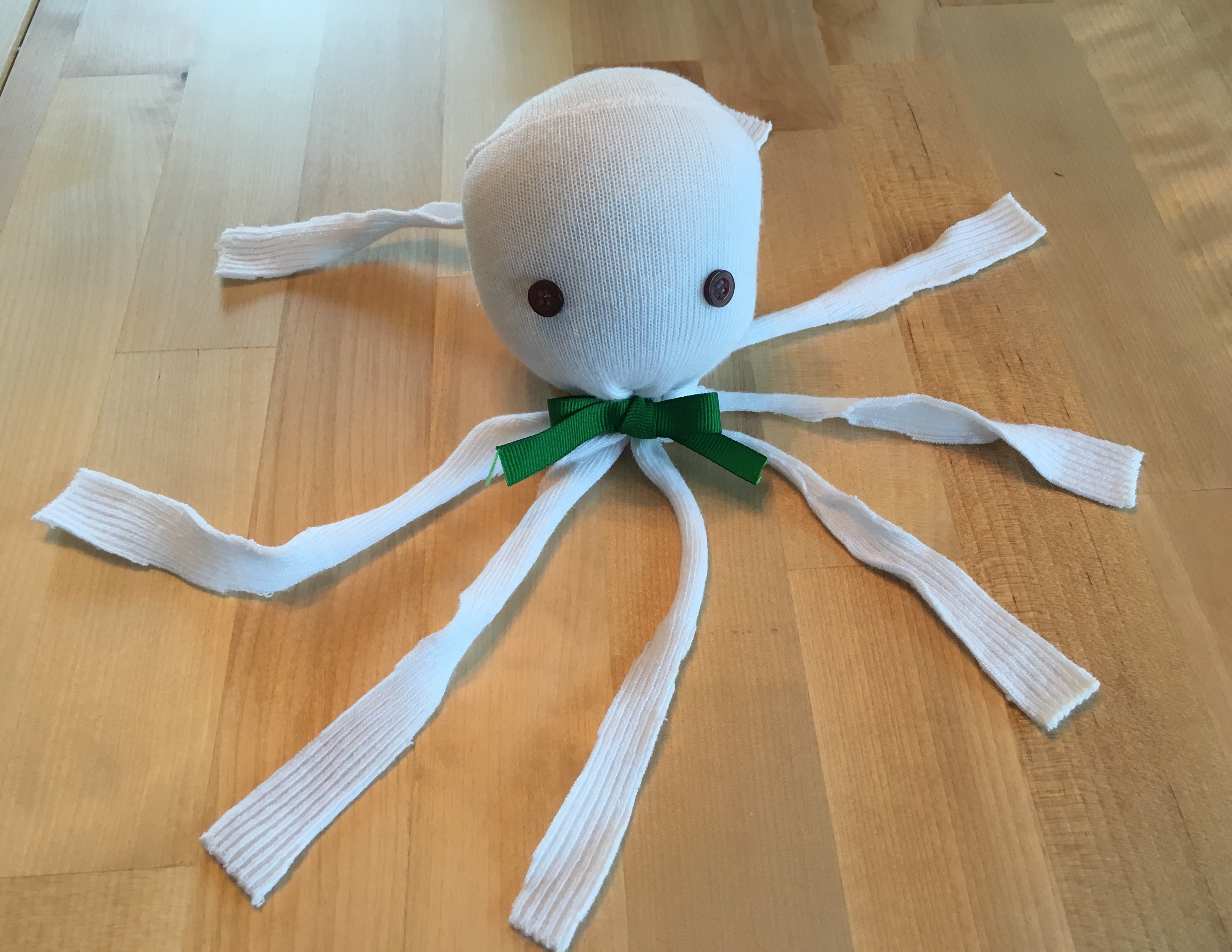
Cute Sock Octopus Craft


Who wouldn’t like to have a cute octopus for a pet? With this fast and easy craft you can make your own little cephalopod to hang out on your bed, your shelves, or on your desk!

Supplies

  • Child’s medium or large size sock, white or colored
  • Polyfiber fill, available at craft and sewing stores
  • Ribbon
  • 2 Small buttons
  • Scissors
  • Hot glue or strong glue

Directions

  1. Fill the toe of the sock with a handful of polyfiber fill
  2. Tie the ribbon tightly around the sock underneath the fiber fill to separate the head from the legs
  3. Tie the ribbon into a bow tie
  4. With the scissor cut up both sides of the sock almost to the ribbon
  5. Cut these two sections in half almost to the ribbon
  6. Cut the four sections in half almost to the ribbon
  7. Glue the eyes to the lower part of the head
  8. To display, set the octopus down and arrange the legs in a circle around the head

celebrate-picture-books-picture-book-review-also-an-octopus-cover

You can find Also an Octopus at these booksellers

Amazon | Barnes & Noble | Books-a-Million | IndieBound

Picture Book Review

October 7 – Random Acts of Poetry Day

When Green Becomes Tomatoes by Julie Fogliano and Julie Morstad

About the Holiday

Today is the day to unleash your inner poet – without thinking twice about it. What are the words in your heart or in your imagination? Write them down! You don’t have to be Shakespeare for your words, lines, thoughts, jottings – your poems – to have meaning and value. Then share them with family, friends, or even strangers. To celebrate today’s holiday you can also attend a poetry reading or enjoy a volume of verse – like today’s book!

When Green Becomes Tomatoes: Poems for All Seasons

Written by Julie Fogliano | Illustrated by Julie Morstad


Sometimes you wish for just the right words to express a moment in time, a skip of the heart, or a glimpse of color that truly captures the elation, sadness, or awe you feel. Those words live on every page of When Green Becomes Tomatoes: Poems for All Seasons. Each month of the year is represented by three to five dated poems that expose a nugget of inspiration or a spark of recognition about the natural world and our place in it.

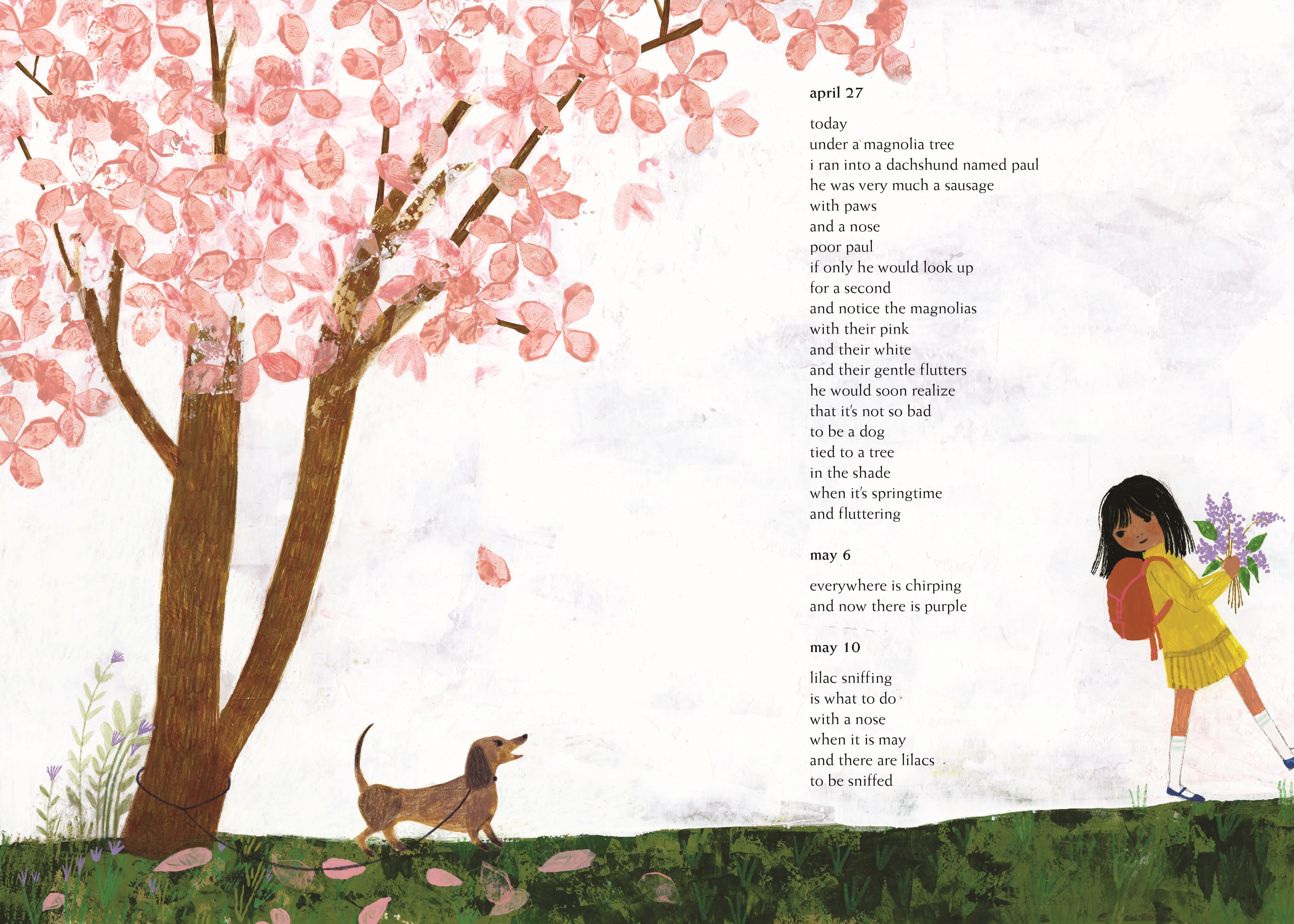
Spring begins its reawakening in the poem dated march 20, on which “from a snow covered tree / one bird singing / each tweet poking / a tiny hole / through the edge of winter / and landing carefully / balancing gently / on the tip of spring.”

celebrate-picture-books-picture-book-review-when-green-becomes-tomatoes-spring

Image copyright Julie Morstad, text copyright Julie Fogliano. Courtesy of us.mcmillan.com

Spring is slow in shaking off its winter coat, however, and march 22 finds “just like a tiny, blue hello / a crocus / blooming in the snow” Even though the days continue to dawn chilly and rainy, early flowers long to see the sun. On march 26: “shivering and huddled close / the forever rushing daffodils / wished they had waited.”

With the onset of April and no reprieve from the weather, everyone it seems is tired of the persistence of winter, which sticks around like a party guest who doesn’t know when to go home. On april 3 “today / the sky was too busy sulking to rain / and the sun was exhausted from trying / and everyone / it seemed / had decided / to wear their sadness / on the outside / and even the birds / and all their singing / sounded brokenhearted / inside of all that gray.”

celebrate-picture-books-picture-book-review-when-green-becomes-tomatoes-summer

Image copyright Julie Morstad, text copyright Julie Fogliano. Courtesy of us.mcmillan.com

At last summer comes and on june 15 “you can taste the sunshine / and the buzzing / and the breeze / while eating berries off the bush / on berry hands / and berry knees.” The warm days also bring swimming holes and fireflies, and by july 10 “when green becomes tomatoes / there will be sky / and sun / and possibly a cloud or two…” and summer bursts with all the wonder that makes it such a yearned for season. 

Then as summer wanes and the nights grow dark, september 10 makes you look into that deep vast space and think “a star is someone else’s sun / more flicker glow than blinding / a speck of light too far for bright / and too small to make a morning”

celebrate-picture-books-picture-book-review-when-green-becomes-tomatoes-fall

Image copyright Julie Morstad, text copyright Julie Fogliano. Courtesy of us.mcmillan.com

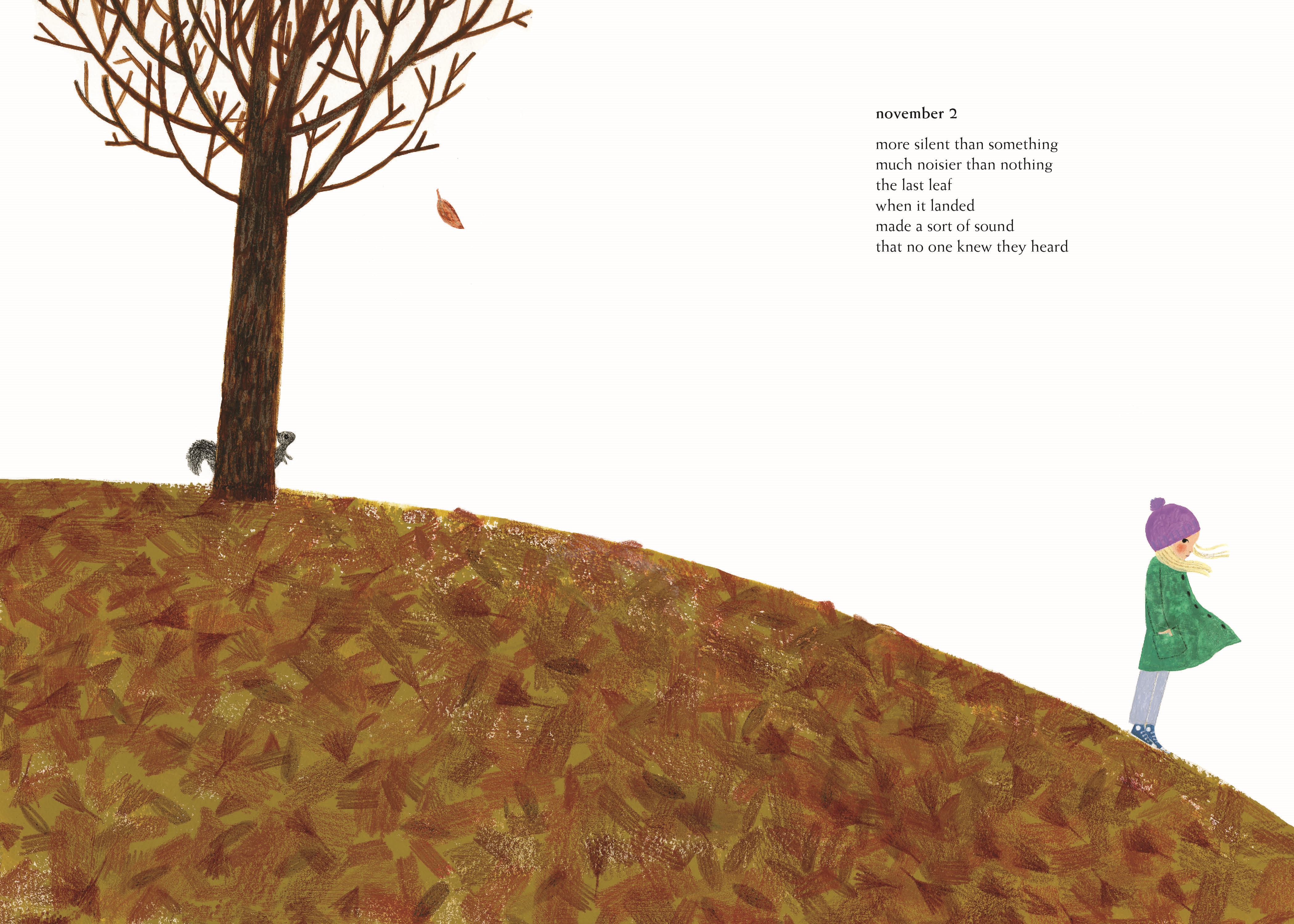
A nip in the air means Fall has come around again. It’s time for sweaters and pumpkins, and for the trees to rest. If you listen carefully, you may hear on november 2 “more silent than something / much noisier than nothing / the last leaf / when it landed / made a sort of sound / that no one knew they heard.”

Then on december 21 “as if one day, the mountain decides / to put on its white furry hat / and call it winter” the season has changed, bringing with it crackling, cozy fires and snow, snow, snow. But this too offers its own enchantment on december 29: “and i woke / to a morning / that was quiet / and white / the first snow / (just like magic) came / on tiptoes / overnight.”

celebrate-picture-books-picture-book-review-when-green-becomes-tomatoes-winter

Image copyright Julie Morstad, text copyright Julie Fogliano. Courtesy of us.mcmillan.com

When Green Becomes Tomatoes begins and ends with a poem dated the same day—March 20, the vernal equinox—giving this book a cyclical form that echoes the passing of time. Julie Fogliano’s delicate and gentle poems are a perfect tonic for the busy, non-stop days the year becomes. Instead of letting the surprising, profound, or beautiful moments pass us by Fogliano gives readers a reason and a way to stop and fully enjoy them.  

In Julie Morstad’s gorgeous watercolors of nature and the changing seasons, readers can almost feel the warm sunshine that feeds the vivid spring and summer blooms, the icy breeze that loosens the last leaf of autumn, and the fluffy blanket winter tucks around the earth. The multiethnic children in Morstad’s paintings are thoughtful, charming, and enchanted with the world around them, actively experiencing the marvels of each changing day. 

When Green Becomes Tomatoes contains such lovely verses that readers will want to revisit them over and over – the way the seasons recur and we are always glad to welcome each one back. This volume of poetry would make a wonderful gift and a terrific addition to anyone’s bookshelf.

Ages 6 and up (adults will enjoy these poems too)

Roaring Brook Press, 2016 | ISBN 978-1596438521

You can connect with Julie Fogliano on Facebook!

You’ll find a gallery of picture books, prints, and other illustrations on Julie Morstad‘s website!

Random Acts of Poetry Day Activity

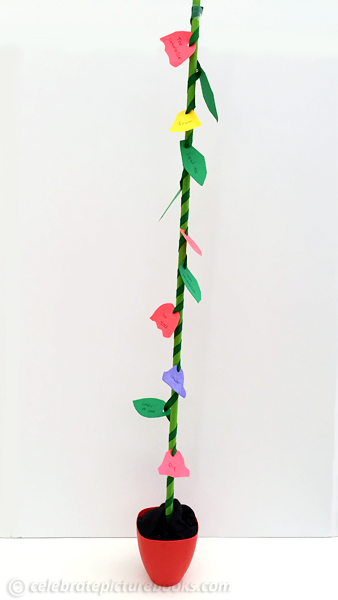
CPB - Plant Poem


Grow a Poem Craft


A poem often grows in your imagination like a beautiful plant—starting from the seed of an idea, breaking through your consciousness, and growing and blooming into full form. With this craft you can create a unique poem that is also an art piece!

Supplies

  • Printable Leaves Template, available here and on the blog post
  • Printable Flower Template, available here and on the blog post
  • Wooden dowel, ½-inch diameter, available in craft or hardware stores
  • Green ribbon
  • Green craft paint
  • Green paper if leaves will be preprinted
  • Colored paper if flowers will be preprinted
  • Flower pot or box
  • Oasis, clay, or dirt
  • Hole punch
  • Glue
  • Markers or pens for writing words
  • Crayons or colored pencils if children are to color leaves and flowers

Directions

  1. Paint the dowel green, let dry
  2. Print the leaves and flower templates
  3. Cut out the leaves and flowers
  4. Punch a hole in the bottom of the leaves or flowers
  5. Write words, phrases, or full sentences of your poem on the leaves and flowers (you can also write the poem after you have strung the leaves and flowers)
  6. String the leaves and flowers onto the green ribbon (if you want the poem to read from top to bottom string the words onto the ribbon in order from first to last)
  7. Attach the ribbon to the bottom of the pole with glue or tape
  8. Wrap the ribbon around the pole, leaving spaces between the ribbon
  9. Gently arrange the leaves and flowers so they stick out from the pole or look the way you want them to.
  10. Put oasis or clay in the flower pot or box
  11. Stick your poem pole in the pot
  12. Display your poem!

Picture Book Review
October 6 – It’s National Pizza Month

celebrate-picture-books-picture-book-review-secret-pizza-party-cover

About the Holiday

Pizza is one of those foods that just puts a smile on your face. It’s associated with parties, good times with friends, and relaxing weekends. It’s also one of the few foods that is so varied that you can have it made your way with your own favorite ingredients – while your table mates can too. The mix of ingredients also makes pizza a great metaphor for life or a microcosm of society. However you look at pizza, this month indulge in all your favs!

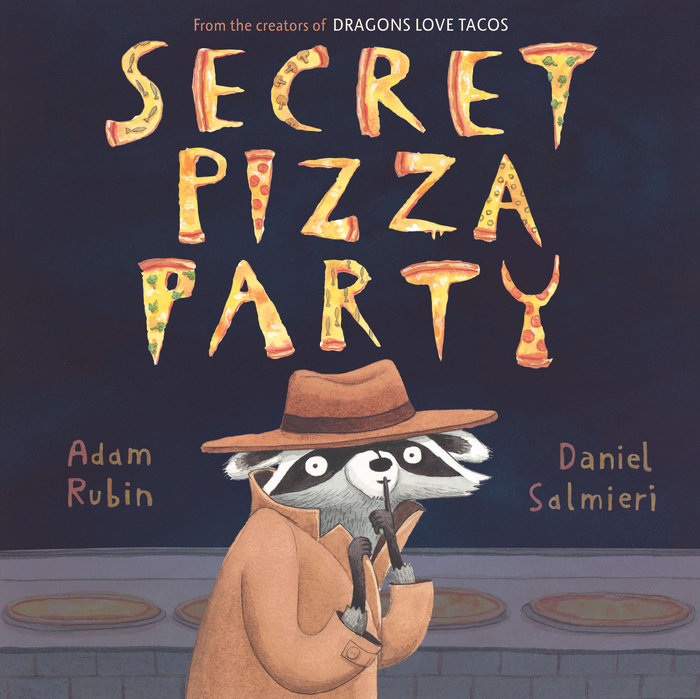
Secret Pizza Party

Written by Adam Rubin | Illustrated by Daniel Salmieri


Raccoon, plastered against the Pizza Shop window, drools over cheesy slices others are eating inside. He so wants a piece and would even be happy with the leftovers in the back alley trash. But when he tries to paw one out of the can, he gets swept away with a broom. Maybe  if he knew how to ask politely things would be different.

Raccoon loves pizza so much that he thinks it should hang in art museums and that people should eat it in the bathtub. “Of course the best part about pizza is the gooey cheesiness, salty pepperoni-ness, sweet tomato-ness, and crispity, crunchity crust. Yum!” Maybe a pizza party will cheer Raccoon up – a secret pizza party. Why should it be secret? Because secret is special— like an intricate secret handshake only you and one other person know, or a secret stair case that leads…who knows where, but somewhere amazing!

celebrate-picture-books-picture-book-review-secret-pizza-party-good-pizza-party-for-raccoon

Image copyright Daniel Salmieri, text copyright Adam Rubin, courtesy of Penguin Random House

Besides, you know what a regular raccoon pizza party would be like—there would be brooms and horrified faces and panicked shouts of “Get that raccoon off the table!!!” But here’s how a secret pizza party would sound: “Get that raccoon another slice of pizza, he’s the guest of honor.”

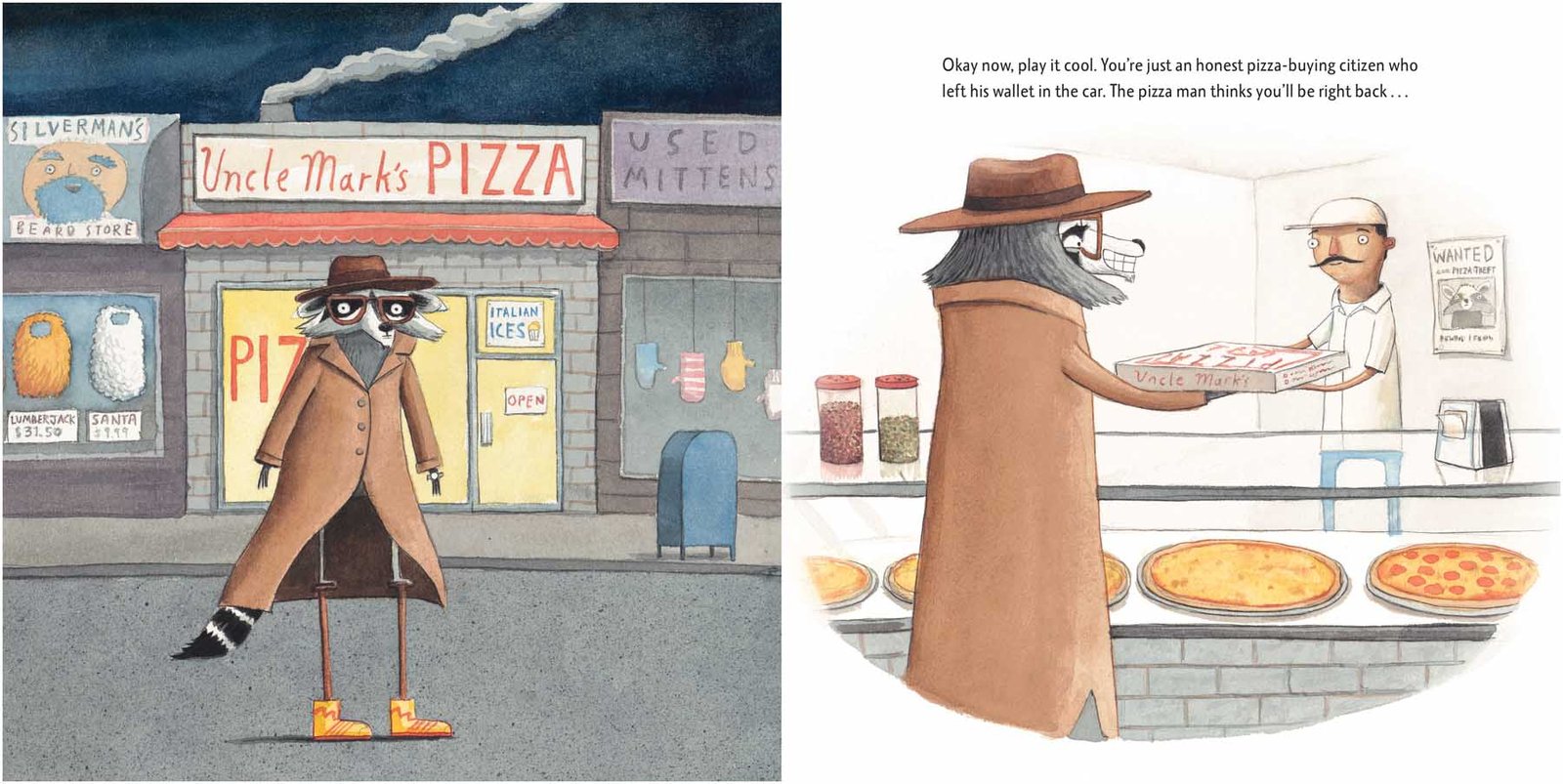
So the first order of business for this secret pizza party is…ordering! Before the call is placed, though, you’ve got to think: if you call and order the pizza, you’ll have to give your address. And if you give your address, the pizza guy will know where you live. And if the pizza guy knows where you live he “might recognize you from the posters and chase you off with a broom.” So what are you to do? A disguise will do the trick. “Okay now, play it cool. You’re just an honest pizza-buying citizen who left his wallet in the car,” and as soon as the pizza is in your hands you make a run for it back to your tree.

celebrate-picture-books-picture-book-review-secret-pizza-party-disguised-at-pizza-shop

Image copyright Daniel Salmieri, text copyright Adam Rubin, courtesy of Penguin Random House

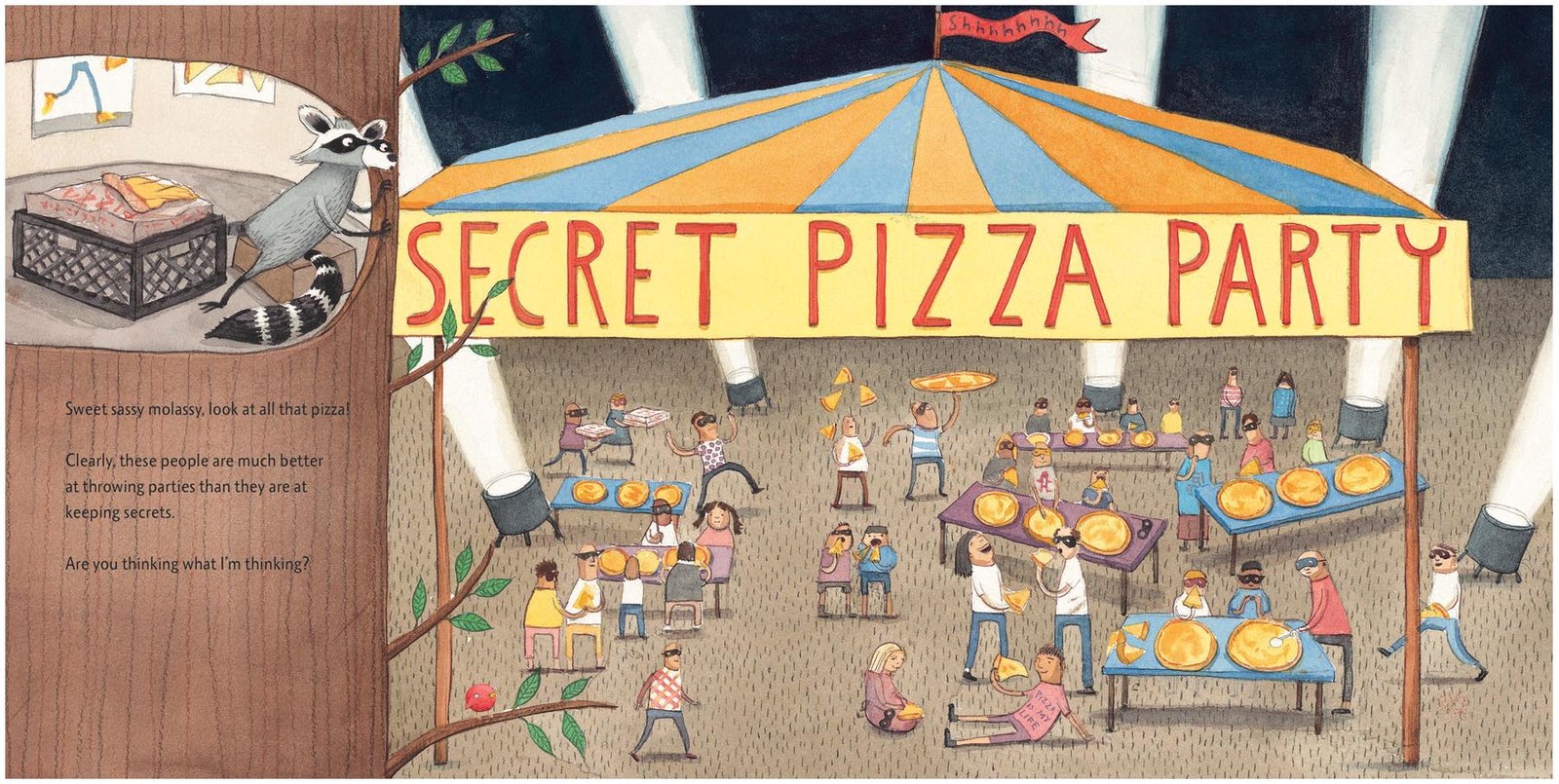
Ok, phew, great job! Now you can enjoy…but not too loud or with too much light. You don’t want anyone to see. Wait a minute! What’s that right outside your home? Another secret pizza party where everyone is wearing masks?

Perfect! Ok, you’ve infiltrated the party…you’re reaching for a slice of pizza…and no one suspects a thing. NO! NO! NO! You’re rolling in the pizza on top of the table!! You blew your cover. Grab as many pieces as you can and run because here they come with the brooms…!

celebrate-picture-books-picture-book-review-secret-pizza-party-party-outside-raccoon's-tree

Image copyright Daniel Salmieri, text copyright Adam Rubin, courtesy of Penguin Random House

Adam Rubin’s madcap read-a-loud about a pizza-obsessed raccoon and his quest for a broom-free night of pizza indulging will have kids laughing from Raccoon’s first wistful look to his final triumphant dash. Rubin’s conspiratorial tone makes readers active participants in Raccoon’s covert operation to secure a pizza without a sweeping disaster, ramping up their level of involvement and enjoyment. The text—from the secret handshakes to the broom-bots to words such as “bonk,” “booyah,” “crispity crunchity,” and “happy screams”—is silly, kid-friendliness at its best and is as enticing as the aroma of hot-out-of-the-oven pizza.

Daniel Salmieri’s noodle-armed, broom-wielding humans and animated, fanatical raccoon amplify the humor that infuses every scene in Rubin’s tale. A slice of pizza hanging between two masterpieces in a museum or being devoured in a bubble bath, an intertwining handshake, a ridiculous disguise, and two types of raccoon-sniffing broom-bots are just a few of the images that make Secret Pizza Party a kid’s dream come true. In addition there are plenty of sly details, such as a pizza-shaped lampshade, projectile brooms, and Raccoon’s fairy-tale imagination. My favorite laugh-out-loud moment shows Raccoon blending into the secret pizza party outside his tree house by simply holding up a twig to his natural “mask.”

Full of pizza, playfulness, and a persevering raccoon, Secret Pizza Party is a book that kids will want to hear again and again.

Ages 3 – 9

Dial Books for Young Readers, 2013 | ISBN 978-0803739475

Find out more about books by Adam Rubin on his website!

Daniel Salmieri has a gallery of his work and books on his website for you to see!

 Pizza Month Activity

celebrate-picture-books-picture-book-review-pizza-toppings-word-search

What’s Your Favorite Topping? Word Search


Pizza is so delicious, but everyone has their favorite kind. Find the names of 18 different ingredients in this printable What’s Your Favorite Topping? Word Search Puzzle. Here’s the Solution!


October 5 – World Teachers Day

celebrate-picture-books-picture-book-review-little-red-writing-cover

About the Holiday

Teachers are amazing! They dedicate their lives to connecting students to the wider world and opening doors to opportunities for a bright future. Today’s holiday celebrates all the work, thought, and planning that teachers put into every day’s lessons as well as the care and concern they have for every one of their students. Wherever you are, thank your teacher or teachers for everything they do to help you write your own story and ultimately your own ticket—like the sharp heroine of today’s book!

Little Red Writing

Written by Joan Holub | Illustrated by Melissa Sweet

One day in pencil school Ms. 2, the teacher, tells her class that they are going to write a story. Her students are excited, and each one has an idea of what to write. The birthday pencil, wearing a bright pink cone-shaped hat, yells “‘Yippee! I want to write a happy story!’” The state pencil, sporting a map of Pencilvania on its eraser end, wants to tell a nonfiction tale about its state, and the basketball pencil with a small replica basketball topper imagines writing a sports story.

celebrate-picture-books-picture-book-review-little-red-writing-classroom

Image copyright Melissa Sweet, text copyright Joan Holub, courtesy of chroniclebooks.com

Little Red, looking sharp in her shiny scarlet coat of paint chooses to “write a story about bravery because red is the color of courage. But what would a brave pencil do?” she wonders. She decides to go in search of unusual characters that will give her a chance to fight evil and save the day. Ms. 2 gives “Little Red a basket of 15 red words to use in case she ran into trouble” and reminds her that “it’s ok to wander a little, but stick to your basic story path so you don’t get lost.”

Little Red takes her basket full of nouns and sets off. In her notebook she begins to describe her journey. “As she walked along…” she writes and then stops. “Walking is boring,” she decides. To discover some action she heads for the gym, where other pencils are twisting, throwing, catching, swinging, and jumping. Little Red bounces and boogies and cartwheels “right off the page into a deep, dark, descriptive forest.”

celebrate-picture-books-picture-book-review-little-red-writing-descriptive-forest

Image copyright Melissa Sweet, text copyright Joan Holub, courtesy of chroniclebooks.com

The adjectives lay thick on the gnarled, flowery, shadowy path. The towering trees smell piney and their verdant, russet leaves hide squirrelly creatures. The forest is beautiful, but suddenly Little Red feels “bogged down, hindered, lost!” Remembering her basket, she reaches in and pulls out scissors. They help her “cut through all this description and stick to the story path.” Back on the straight and narrower, Little Red encounters a bottle of “conjunction glue” with just the right kinds of words to help her. She gives the bottle a squeeze, but now finds that her sentences go on and on without saying anything important. All seems lost until “Suddenly” arrives.

“Suddenly,” she hears a throaty roar that begins to chase her. Little Red runs without stopping, throwing out any word she can grab from her basket until she can escape to the next page. Here, however, she discovers a “long, tangly tail” and decides to investigate. The tail winds all along the school corridors, passing the cafeteria, the music room, the art room, and the auditorium. It even meanders by the math room and the after school clubs room into the principal’s office.

celebrate-picture-books-picture-book-review-little-red-writing-wolf-3000-chases-little-red

Image copyright Melissa Sweet, text copyright Joan Holub, courtesy of chroniclebooks.com

Little Red knocks on the door. Inside, Principal Granny, her long tail tangled behind her, roars her greetings. Little Red is suspicious, but she continues to explain the growly voice she heard. In fact, she says, “It sounded kind of like yours.” “The betterrr to be hearrrd on the school interrrcom,” the principal states. Little Red also reports the tangly tail, to which the principal answers, “the betterrr to get charrrged up for my school duties when my batteries are rrrunning low. All at once Red notices the principal’s big sharp teeth. “The betterrr to chomp little pencils like you and grrrind them up!”

With that Little Red realizes that this isn’t Principal Granny but the “Wolf 3000: the grumpiest, growliest, grindingest pencil sharpener ever made!” The Wolf 3000 begins to chase Little Red around the office, and just when there seems no hope, in walks Mr. Woodcutter, the janitor—who immediately faints. There is only one thing left to do. Little Red grabs her last word and hurls it at the Wolf 3000. “KABLOOEY” goes the dynamite, reducing the Wolf 3000 to a pile of parts.

Principal Granny emerges from the rubble shortened but okay and declares Little Red a hero. Little Red rushes back to her classroom in time to hear the other pencils’ stories and to share her own brave adventure.

celebrate-picture-books-picture-book-review-little-red-writing-dynamite

Image copyright Melissa Sweet, text copyright Joan Holub, courtesy of chroniclebooks.com

Joan Holub’s delightfully clever tribute to writing draws on the Little Red Riding Hood story to get kids excited about using the various parts of speech that make writing so fun and reading so enjoyable. The metaphorical “story path” that Little Red traverses brings her into contact with characters that provide immediate understanding of the concepts. When Little Red squeezes the bottle of conjunction glue, out squirt the words so, but, and, although, yet, and or, which are incorporated into the illustrations on the page. Readers’ familiarity with the original fairy tale increases suspense in this fractured version. The Wolf 3000 electric pencil sharpener makes a perfect nemesis, and the fainting janitor leaves Little Red to sharpen her wits and defeat the beast. Dynamite—at least the word itself—truly is mightier than the sword.

Holub’s nimble talent with puns and wordplay elevates Little Red Writing from simply a book about the subject of grammar and writing to a captivating story kids will love to hear again and again.

Grammar has never looked as enticing as in Melissa Sweet’s vivacious illustrations of adorable Little Red on the story path to prove her bravery. Sweet’s pages, combining pencil drawings, watercolor, and collage, burst with animated typography, scraps of vivid red nouns, and expressive characters in a detailed and fully realized pencil school. Little Red’s final battle with the Wolf 3000 gives full range to Sweet’s rousing visual humor in a highly satisfying climax to the story.

For kids who love reading, writing, and a really good story, Little Red Writing would be a welcome addition to their bookshelves. Teachers will find the story enhances any unit on writing, grammar, and literature.

Ages 5 – 9

Chronicle Books, 2013 | ISBN 978-1452152097

You will find children’s books for all ages as well as fun videos, activities, and teachers’ resources on Joan Holub‘s website!

Discover books, things to make, and lots of fun on Melissa Sweet‘s website!

World Teachers Day Activity

CPB - Pencil Maze

Pencil It In Maze

Writing a story is like completing a maze – you must stay on the right path from the beginning to the end to write a satisfying tale. Find your way through intricacies of this printable Pencil It In Maze

Picture Book Review