June 3 – It’s National Rose Month

celebrate-picture-books-picture-book-review-rose's-garden-cover

About the Holiday

Pop quiz! Do you know what the national flower is? If you took a clue from today’s holiday and said the rose, you’re right! The first National Rose Month was observed in 1959, but the rose was not named the national flower until 1986. Five states—Georgia, Iowa, New York, North Dakota, and Oklahoma—claim the rose as their state flower, although four of the more than 150 species are represented among them. To celebrate this month, visit a local botanical garden to enjoy the beautiful blossoms and aroma or add a rose bush to your landscaping. And of course, a gift of roses is always appreciated.

Rose’s Garden

By Peter H. Reynolds


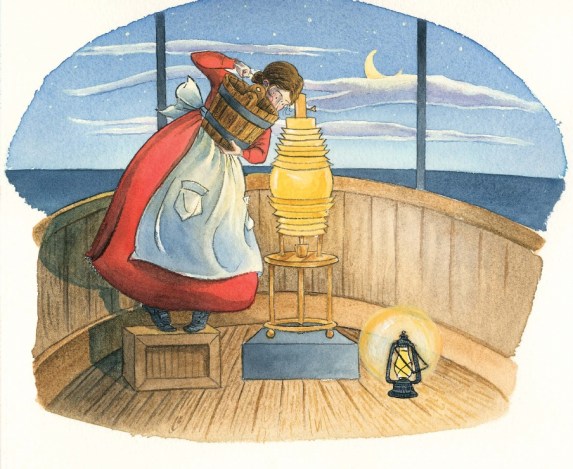
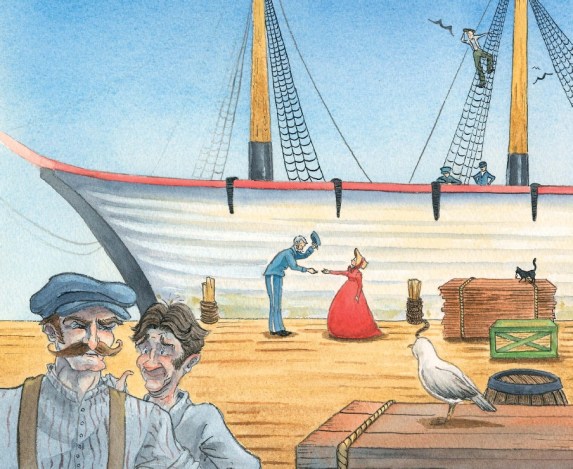
Rose was no ordinary adventurer. “She explored the world in her fantastic teapot,” and took home seeds from each place as souvenirs. When the teapot was overflowing with seeds, Rose knew it was time to plant her garden. Floating along in her teapot, Rose noticed a city on the horizon. When she got close the harbormaster told her about a lovely spot upriver, but Rose wanted to explore the city first.

celebrate-picture-books-picture-book-review-rose's-garden-gathering-seeds

Copyright Peter H. Reynolds, 2009, courtesy of Candlewick.

Rose wandered through the city and, in the midst of the busiest part, “she spotted a dusty, forgotten stretch of earth. Hmmm, Rose pondered. This little patch needs some color.” Rose cleaned it up and raked the soil, thinking of how wonderful this little spot could be. When she went back to her teapot to get her seeds, however, she discovered that a flock of birds had eaten them all.

te-picture-books-picture-book-review-rose's-garden-sailing

Copyright Peter H. Reynolds, 2009, courtesy of Candlewick.

There were only a few seeds remaining in the bottom of the teapot. Rose placed them in her pocket, returned to her patch, and planted them. She watched over them and waited…and waited. “But nothing seemed to happen.” The soil was either too wet or too dry. Then cold weather came too soon. Rose “waited through the snowy winter.”

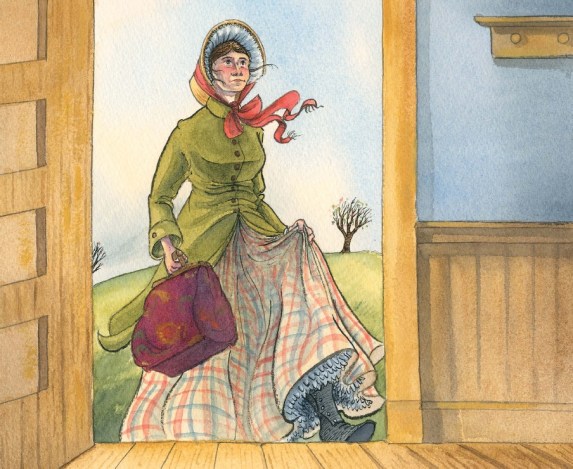
When spring came, Rose was still there waiting. “Word spread of Rose’s faith in her garden.” One day, a girl stopped by with a gift for Rose. “It was a paper flower” that she had made for Rose’s garden. The next day, a boy came by with a paper flower he had made. Rose happily accepted it. “‘This well be in good company when my own flowers bloom!’” she told him.

celebrate-picture-books-picture-book-review-rose's-garden-gathering-city

Copyright Peter H. Reynolds, 2009, courtesy of Candlewick.

Every day, it seemed, children came with paper flowers they’d made for Rose’s garden. Each one told Rose a story about how they had come to live in the city, journeying “from all over the world, like seeds carried on a breeze.” Soon, Rose’s garden was filled edge to edge with colorful paper flowers. As Rose “waded among them, she heard a sound. A buzzing.” In front of her a bee landed on a flower—but this was no paper flower. Then Rose gazed across her garden and noticed real flowers all around her.

Rose’s “faith had gathered a garden—and the stories of a city.” Rose realized that this little patch was home. Her amazing teapot now sits in the middle, and everyone is invited to enjoy the quiet, colorful garden.

celebrate-picture-books-picture-book-review-rose's-garden-teapot

Copyright Peter H. Reynolds, 2009, courtesy of Candlewick.

With his well-known touch for turning the commonplace into magic, Peter Reynolds takes a teapot, seeds, and a forgotten city lot and creates a metaphorical microcosm of a more-perfect inclusive world. What could more welcoming than a cup of tea or more universal than a seed? As child after child offers Rose a flower of their own making and their stories, Reynolds reveals the openness of children to transform their world with hope, belief, and action. The blending of the paper flowers and the real ones (and perhaps they are the same?) show that roots develop in all sorts of ways and that we should not just find a home, but nurture one as well.

celebrate-picture-books-picture-book-review-rose's-garden-anchored

As Rose sails the world alone in her teapot, Reynolds washes the world with a soft mottled brown, suggesting that Rose lives in a perpetual autumn in which seeds are plentiful but the colors of spring and summer are past. It’s only when her teapot is full that Rose decides to plant her garden. As often happens with stored-up, unused potential, the seeds are lost to more mundane purposes when the seabirds eat them, leaving only a trace to fulfill Rose’s dreams. The strength of those dreams—and the help available to make them reality—however, is beautifully depicted as one bright flower and then another and another is planted, soon multiplying into a vibrant field of color.

Rose’s Garden makes a touching read aloud for story times about inclusiveness, belief in oneself and one’s convictions, hope, and the meaning of home. Pair it with a packet of wildflowers for a thought-provoking book extension.

Ages 5 and up

Candlewick, 2009 | ISBN 978-0763646417

Discover more about Peter H. Reynolds, his books, and his art on his website.

National Rose Month Activity

CPB - Paper Flowers

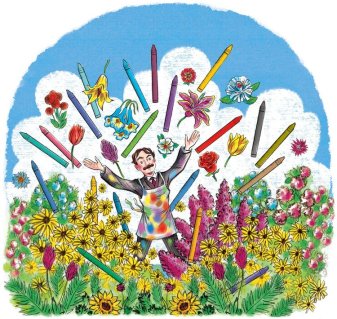
Paper Flower Bouquet


Just like the children in Rose’s Garden, your kids can make these paper flowers that will brighten anyone’s day. With all of the beautiful colors of tissue paper, they can create a whole bouquet or garden of flowers to share with friends or family. 

Supplies

  • Tissue paper in many colors
  • Green paper
  • Green wire for stems
  • Scissors
  • Tape or glue
  • Pliers

CPB - Paper Flowers II

Directions

To make the stem

  1. Bend a 1 ½ -inch loop in the top of the wire
  2. Squeeze the wire together so it will fit tightly over the tissue paper

To make a flower

  1. Cut 6 or more 7-inch squares from tissue paper, mixing colors (you can make various sizes of flowers by making the squares larger or smaller and adding more squares)
  2. Gather all the squares together and fold them together accordion-style in 1-inch folds
  3. Slide the folded tissue paper under the wire loop, and tighten the wire
  4. Gently fan the tissue paper out on each side
  5. Beginning on one side, gently pull each sheet of tissue paper up toward the center
  6. Repeat step 5 on the other side

To make leaves

  1. Cut leaves from green paper, leaving a stem to wrap around the wire flower stem
  2. Fold the leaf stem around the wire and tape or glue

celebrate-picture-books-picture-book-review-rose's-garden-cover

You can find Rose’s Garden at these booksellers

Amazon | Barnes & Noble | Blue Bunny BooksBooks-a-Million | IndieBound

Picture Book Review
May 31 – Web Designer Day

celebrate-picture-books-picture-book-review-how-to-code-a-sandcastle-cover

About the Holiday

With Memorial Day just past, it’s officially summer. Soon kids will be getting out of school and enjoying the beach and/or camp. A favorite summer past time is computer camp, which is a perfect mashup of fun and learning. Today’s holiday celebrates all of the inventive web designers who create clear, workable, and enjoyable sites where we can shop, get the latest news, watch videos, play games, and so much more. Our computers, phones, and tablets are so interwoven with our daily routine that we can’t even imagine life without them anymore. All that designing and coding takes specialized knowledge, education, and skill. If you know a web designer, thank them for their hard work—and if you know a child (or perhaps even yourself) who would like a career in coding or web design, get them started with a class or two—and today’s book!

How to Code a Sandcastle

Written by Josh Funk | Illustrated by Sara Palacios


It’s the last day of Pearl’s summer vacation, and she’s hit the beach with her parents. Her goal is to build a sandcastle. It’s not like she hasn’t tried on other beach days, but there was always something that destroyed it. There was the frisbee that landed on top of it, then a surfer glided right into it, and another girl’s dog, Ada Puglace, thought it needed a moat. But today, Pearl brought her robot, Pascal, to build her sandcastle.

celebrate-picture-books-picture-book-review-how-to-code-a-sandcastle-ruined-sandcastles

Image copyright Sara Palacios, 2018, text copyright Josh Funk, 2018. Courtesy of Viking Books for Young Readers.

As Pearl explains, “He’ll do whatever I tell him—as long as I tell him in code. It’s not a secret code—it’s special instructions that computers understand.” Pearl points out the perfect spot on the beach for her sandcastle and tells Pascal to build it. But Pascal doesn’t move. Pearl realizes that she must break down the one big request into smaller problems for Pascal to solve. Easy-Peasy, Pearl thinks.

The first problem Pearl gives Pascal is: “find a place to build.” First Pascal travels out to sea, but Pearl tells him they must build on land. So Pascal rolls out into the parking lot. Hmmm…that’s not right either. Pearl decides she must be “very specific with my instructions.” When she tells Pascal to “find a flat spot on sand that isn’t too close to the water,” he marks an X on a perfect sandy spot. Great!

celebrate-picture-books-picture-book-review-how-to-code-a-sandcastle-small-problem-1

Image copyright Sara Palacios, 2018, text copyright Josh Funk, 2018. Courtesy of Viking Books for Young Readers.

The second problem Pearl gives Pascal is to “gather up sand.” She’s learned to be very particular in her instructions, so she gives her robot a three-step process: “Fill the pail with sand, dump the sand on our spot, pat the sand down.” This works just right, so Pearl continues telling Pascal the directions, until she grows tired of speaking.

There must be a better way, Pearl thinks. How about a loop? Pearl directs Pascal to “loop through this sequence,” and just like that Pascal is off and rolling and Pearl gets to relax. A while later, Pearl discovers that Pascal had built a pyramid-high pile of sand, so Pearl tells him to stop. Next, they will “shape and decorate the castle.” Pearl comes back with pretty seashells to add to the castle, while Pascal brings back the lifeguard—in his chair. Pearl orders Pascal to bring back something smaller. When he comes back with a crab, she tells him it must be something that doesn’t move, and when he shows up with a baby’s pacifier, Pearl knows she must do a better job of explaining.

celebrate-picture-books-picture-book-review-how-to-code-a-sandcastle-small-problem-3

Image copyright Sara Palacios, 2018, text copyright Josh Funk, 2018. Courtesy of Viking Books for Young Readers.

She decides to give him “if—then—else” instructions. With these detailed directions, Pascal returns with a shell and some seaweed. Finally, it’s time to shape the castle. They use their buckets and hands to build a beautiful castle that even has a turret. The shells, rocks, and seaweed are the perfect finishing touches. With the castle finally finished, Pearl runs off to get her toys.

But when she gets back, Pearl discovers that the rising tide has washed their sandcastle out to sea. And to make matters worse, Ada Puglace is back to add another moat. Hmmm… a moat? Pearl thinks. That’s what she needed the first time. Pearl really wants to rebuild, but it took her half a day to make the first one. Then she realizes that the code is already written. All she has to do is use it again. In no time a new sandcastle stands gleaming on the beach.

There’s just one more problem to solve. Quickly, Pearl gives Pascal a new looped sequence to dig the moat. Now it’s time to play—or “code an entire kingdom!”

celebrate-picture-books-picture-book-review-how-to-code-a-sandcastle-finished-castle

Image copyright Sara Palacios, 2018, text copyright Josh Funk, 2018. Courtesy of Viking Books for Young Readers.

A Foreward written by Reshma Saujani, the founder of Girls Who Code, introduces readers to this organization that is “working to close the gender gap in technology” and get girls of all ages excited about coding and future opportunities in science and technology. 

Pearl and Pascal’s Guide to Coding with brief discussions of Code, Sequence, Loops, and If-Then-Else follows the text.

With his infectious enthusiasm and talent to reach kids in new and innovative ways, Josh Funk, a computer programmer by day and super writer by night, is a perfect guide to the joys of coding for young learners. Taking kids out to the beach for a bit of sandcastle building—an endeavor that is often fraught with dangers—is a terrific way to show the procedures and power of coding. Pearl’s initial missteps in programming Pascal provide laugh-out-loud moments while also demonstrating that computer programs work with precise instructions. Her inexperience but quick learning will give readers confidence in their own abilities to code and where to look for problems if their program does not run as smoothly as they’d like. When high tide washes Pearl and Pascal’s sandcastle out to sea, readers may groan in empathy, but the opportunity to do it all again—only bigger and better—will make them cheer.

celebrate-picture-books-picture-book-review-how-to-code-a-sandcastle-last-day

Image copyright Sara Palacios, 2018, text copyright Josh Funk, 2018. Courtesy of Viking Books for Young Readers.

Sara Palacios’s golden beach is a wide-open and inviting platform to introduce the world of computer programming to young readers. Sunny and enthusiastic, Pearl, in her heart-shaped sunglasses, is persistent and smart in figuring out just how to make Pascal do what she wants. Pascal is a round, rolling cutie, perpetually happy to perform its duties. Series of panels and speech bubbles depict each instruction Pearl gives Pascal, clearly showing readers how coding and a computer’s response to its instructions work. Sequence loops are cleverly portrayed with typeface that creates a circle around Pearl’s floating ring and later around the trench that will surround the castle and become the moat. The final image of Pearl and Pascal celebrating their successful day together is powerful encouragement that a new day of girls and women in technology and science is on the horizon.

Coding a Sandcastle is a motivating combination of lighthearted fun and accessible education that will encourage girls—and boys—to get involved with computer coding just for their own enjoyment or as a future profession. It’s a must for school media and computer class libraries, and with this book on home bookshelves, kids won’t want to just play on the computer—they’ll be asking to program too.

Ages 4 – 8

Viking Books for Young Readers, 2018 | ISBN 978-0425291986

Discover more about Josh Funk and his books and find lots of fun activities to do too on his website.

To learn more about Sara Palacios, her books, and her art, visit her website.

Web Designer Day Activity

celebrate-picture-books-picture-book-review-bringing-the-outside-in-painted-pails-craft

Personalized Painted Pail


A trip to the beach or park isn’t complete without a pail to collect shells, seaweed, sea glass, pebbles, sticks, nuts, or other things in. But why should all the cool stuff be on the inside? With this craft you can decorate your pail to show your unique personality!

Supplies

  • Plastic or metal pail
  • Craft paint in various colors
  • Crystal Clear Acrylic Coating, for multi-surface use
  • Paint brush

Directions

  1. Paint designs on the pail
  2. When paint is dry spray with acrylic coating to set paint
  3. Let dry

celebrate-picture-books-picture-book-review-how-to-code-a-sandcastle-cover

You can find How to Code a Sandcastle at these booksellers

Amazon | Barnes & Noble | Books-a-Million | IndieBound

Picture Book Review
May 30 – National Water a Flower Day

celebrate-picture-books-picture-book-review-the-curious-garden-cover

About the Holiday

If the showers of April have dried up where you are and the May flowers are getting a bit thirsty, today’s holiday makes the perfect reminder to fill the watering can or turn on the sprinkler and give them a drink. Colorful flowers are some of the joys of summer and provide food for birds and insects all season long. If you haven’t begun your garden yet, it’s not too late! Grab a packet of seeds or visit your local nursery and see what a wonderful, wild patch you can grow!

The Curious Garden

By Peter Brown


“There once was a city without gardens or trees or greenery of any kind.” People didn’t notice because they spent most of their time inside—working, going to school, or at home. “As you can imagine, it was a very dreary place.” There was one boy, though, who loved being outside. One rainy day Liam discovered a stairway leading to a bridge that held unused railway tracks. Of course, he was curious, and when he reached the top he discovered a scrawny patch of wildflowers. They needed water; they needed a gardener.

celebrate-picture-books-picture-book-review-the-curious-garden-railway-tracks

Copyright Peter Brown, 2009, courtesy of Little, Brown Books for Young Readers.

Liam wasn’t officially a gardener, “but he knew that he could help.” After a few false starts and a mis-snip here and there, the plants began to look better. After several weeks, “Liam began to feel like a real gardener, and the plants began to feel like a real garden.” Now that the garden was healthy, it began to be curious about what lay up and down the railway track. The weeds and mosses crept down the tracks while the “more delicate plants” plucked up their courage and followed. During the next few months, Liam and the garden explored all the nooks and crannies of the railway bridge. Liam looked out over his city with a new perspective.

When winter came, the garden lay under a blanket of snow and Liam stayed below, sledding and preparing for spring. With warmer weather, Liam gathered his new shovel, hoe, pruners, and watering can in his red wheelbarrow and went back to the railway. “Winter had taken a toll on the garden.” The grass and moss were brown, the flowers were just brittle twigs, and the little tree was dull and unkept. But Liam watered, snipped, and even sang to the plants, and soon they “awoke from their winter sleep.”

celebrate-picture-books-picture-book-review-the-curious-garden-garden-spreads

Copyright Peter Brown, 2009, courtesy of Little, Brown Books for Young Readers.

Now the garden was even more curious about the rest of the city, and the brave weeds and mosses led the way. “They popped up farther and farther from the railway and were closely followed by the more delicate plants.” They explored “old, forgotten things,” wiggled their way into sidewalk cracks, and even poked their heads out of broken basement windows. When some plants planted themselves where they didn’t belong, Liam moved them. He also began leaving them in surprising spots around town.

This led to an even more surprising thing: new gardeners also popped up all over the city. Now there were rooftop gardens, backyard gardens, and even gardens that climbed walls. Plants created soft carpets for stairs, huge lily pad boats, an animal parade, and high-rise tree houses for neighbors to share. “Many years later, the entire city had blossomed.” But Liam still loved his patch on the railway line the best.

An Author’s Note following the text reveals the true-life inspiration for the story.

celebrate-picture-books-picture-book-review-the-curious-garden-years-later

Copyright Peter Brown, 2009, courtesy of Little, Brown Books for Young Readers.

Peter Brown’s classic story about a little boy who brings new life to a city that has shut itself off from the natural world, reminds readers of the importance of the environment and getting outside to enjoy it and participate in its survival and growth. But Brown’s story is about so much more too. As Liam’s garden begins to branch out, readers see how one person can be instrumental in spreading ideas, happiness, good news, kindness, in fact any number of life-changing events. In the title and the description of the garden, Brown taps into a dual nature of “curious.” What may seem odd or new or even forgotten sparks interest and exploration and new, often better, perspectives that can bring people together.

Brown opens the story with a two-page, aerial-view spread of the drab city dotted in only two places with a bit of color and giving readers a bit of foreshadowing of the transformation to come. The scrubby patch of greenery next to the rotted tracks includes a tiny tree, cleverly imbued with personality. As the garden spreads, kids will love hunting for the itty-bitty birds, bees, and beetles that appear among the colorful flowers. Kids will “ooh” and “ahh” over the pages that show how and where the garden has spread (a parking lot reclamation is a bright spot) and its influence on new gardeners. The final spread completes the promise held in the first and is a true showstopper.

Ages 4 – 9

Little, Brown Books for Young Readers, 2009 | ISBN 978-0316015479

To learn more about Peter Brown, his books, and his art, visit his website.

National Water a Flower Day Activity

celebrate-picture-books-picture-book-spoon-flowers

Spoon Flowers Craft


Plastic spoons aren’t just for enjoying yummy treats, they make cute flowers too! With this easy and quick craft, you can give everyone you love a bouquet!

Supplies

  • Colorful plastic spoons
  • Heavy stock paper or construction paper in various colors, including green for leaves
  • Multi-surface glue or hot glue gun

Directions

  1. Cut petals from the heavy stock paper or construction paper
  2. Glue the petals to the bowl of the spoon
  3. Cut leaves from the green paper (optional)
  4. Glue leaves to the handle of the spoon (optional)

celebrate-picture-books-picture-book-review-the-curious-garden-cover

You can find The Curious Garden at these booksellers

Amazon | Barnes & Noble | Books-a-Million

To support your local independent bookstore, order from

Bookshop | IndieBound

Picture Book Review
 

May 29 – It’s National Inventor’s Month

celebrate-picture-books-picture-book-review-just-like-rube-goldberg-cover

About the Holiday

Established in 1998 by the United Inventors Association of the USA, the Academy of Applied Science, and Inventors’ Digest magazine, this month-long holiday celebrates the imagination and talent of individuals who dare to think differently and create new products, services, and ways of doing things that make a positive contribution to the world. To join in, enjoy your favorite new inventions, and if you harbor dreams of being an inventor—on a large or small scale—look for opportunities to share your ideas.

Just Like Rube Goldberg: The Incredible True Story of the Man Behind the Machines

Written by Sarah Aronson | Illustrated by Robert Neubecker


Famous inventors usually get that way by creating something new—something that people can’t live without, right? Well, it kind of was and wasn’t this way for Rube Goldberg—as you’ll see. Even as a very young boy, Rube Goldberg loved to draw. As a four-year-old he traced the cartoons in the newspaper and when he got older, he took art lessons. His dream was to be a cartoonist for a major newspaper.

celebrate-picture-books-picture-book-review-just-like-rube-goldberg-water-department

Image copyright Robert Neubecker, 2019, text Sarah Aronson, 2019. Courtesy of Beach Lane Books.

Rube’s family was not so supportive, though. His father—who had moved to America from Germany so that his family could have a better life—believed his son would end up as a beggar if he pursued his art. So, Rube went to college and became an engineer for the Department of Water and Sewers in San Francisco—for six months. He gave up his good-paying job for a job as an errand boy at the San Francisco Chronicle at eight dollars a week. In between cleaning, emptying trash cans, and filing photographs, “Rube drew. And drew. And drew.”

Rube submitted his cartoons to the editor and most of the time they were rejected. When the editor “said yes, Rube sometimes got paid, but other times he just got out of the office tasks he didn’t like to do.” A year went by, and finally Rube was hired by the San Francisco Bulletin sports department, where he drew cartoons and wrote a column too. Then in 1906, the great earthquake hit San Francisco. Homes were lost, as were jobs. In the broken city, people couldn’t focus on their future or even feel hopeful. Rube “did the only thing he could do: He drew comics to cheer people up.”

celebrate-picture-books-picture-book-review-just-like-rube-goldberg-errand-boy

Image copyright Robert Neubecker, 2019, text Sarah Aronson, 2019. Courtesy of Beach Lane Books.

Rube also decided to move to New York—the place he considered the “‘front row,’ the cartoon capital of the country.” For twelve days he showed his art to newspaper after newspaper and was finally hired by the New York Evening Mail as a cartoonist. “Right off the bat, Rube became a celebrity. People couldn’t wait to see what he had to say about all kinds of things.” He drew comics about sports, politics, and “the silliness of everyday life,” but the comics people loved the best were drawn by his alter ego, Professor Lucifer Gorgonzola Butts. The professor was known for his intricately complex inventions that made even the simplest action a “surreal and ridiculous” multi-step wonder that often defied physics.

celebrate-picture-books-picture-book-review-just-like-rube-goldberg-newsroom

Image copyright Robert Neubecker, 2019, text Sarah Aronson, 2019. Courtesy of Beach Lane Books.

He invented a machine that employed a carrot-eating goat, a ghost, an egg-laying chicken, an archer, a target with a mechanical hand, an upright-shooting canon, and dough that cooked in the smoke of the cannon as a cannonball shot through the middle of it. Turning off the light, might just require the pull of a cord, but in Professor Butts’ world, it also required a banana-laden fishing pole, a monkey bouncing on a balloon, a fan that turned a bicycle wheel, a jack-in-the-box, a bucket, a bowling ball, and seesaw. Perhaps one of the silliest was a contraption for cutting your own hair.

Of course, these gizmos weren’t designed to really work—only to make people “look closer. And question logic. And tickle the imagination.” At a time when new discoveries were being made all around, Rube Goldberg’s cartoons “challenged people to use the most amazing machine in the universe: the brain!” Do you have aspirations, thoughts, and dreams that seem out of the mainstream and wonder if this same kind of success is still possible? The answer is: “You bet it is.” So “figure out what you want” then work hard and “have a great time getting there…. Just like Rube Goldberg!”

celebrate-picture-books-picture-book-review-just-like-rube-goldberg-doughnuts

Image copyright Robert Neubecker, 2019, text Sarah Aronson, 2019. Courtesy of Beach Lane Books.

The book’s endpapers depict eight of Rube Goldberg’s original invention cartoons, and an Author’s Note following the text reveals more about Goldberg’s amazing life as a cartoonist, artist, and political observer. The awards he won and the children’s game inspired by his contraptions are also mentioned.

For Rube Goldberg fans, young inventors and artists, and anyone with a dream, Sarah Aronson’s story of this beloved cartoonist’s life is a fast-paced trip into the past and the fine tradition of lampoonery. Goldberg’s one-of-a-kind imagination and unstoppable confidence in his dream are on full display as he quits a lucrative job for the uncertainty of an artist’s life. His success and long career is a tribute not only to Goldberg himself, but to all the employers and consumers who recognize innovation and embrace it.

celebrate-picture-books-picture-book-review-just-like-rube-goldberg-brain

Image copyright Robert Neubecker, 2019, text Sarah Aronson, 2019. Courtesy of Beach Lane Books.

Robert Neubecker’s stylized and entertaining illustrations take inspiration from and honor Rube Goldberg while also transporting readers to the early 1900s. Kids will particularly enjoy the clever design that takes text through underground maze of the San Francisco Department of Water and Sewers and the busy newsroom—complete with carrier pigeon—where Goldberg found a home as a cartoonist. In two-page spreads, three of Goldberg’s cartoons are rendered in color, giving readers plenty to linger over and giggle at, and the final images are sure to spark a new appreciation for the imagination and its power.

Sure to create new fans of Rube Goldberg’s work, Just Like Rube Goldberg would be an exciting addition to home, school, and public libraries for all of those unique thinkers out there.

Ages 3 – 8

Beach Lane Books, 2019 | ISBN 978-1481476683

Discover more about Sarah Aronson and her books on her website.

To learn more about Robert Neubecker, his books, and his art on his website.

National Inventor’s Month Activity

CPB - Inventor's Tool Kit II (2)

Inventor’s Tool Kit


Every idea begins as a jumble of seemingly unrelated parts. Gathering whatever types of material inspires you and keeping it in a box ready to go when inspiration hits is a great way to support innovation and spark experimentation.

Supplies

  • Small parts organizer with drawers or compartments, available at hardware stores and craft stores
  • A variety of parts or craft materials that can be combined, built with, or built on
  • Some hardware ideas—pulleys, wheels, small to medium pieces of wood, wire, nuts, bolts, screws, hooks, knobs, hinges, recyclable materials
  • Some craft ideas—clay, beads, wooden pieces, sticks, paints, pipe cleaners, string, spools, buttons, glitter, scraps of material, recyclable materials

Directions

  1. Fill the organizer with the materials of your choice
  2. Let your imagination go to work! Build something cool, crazy, silly, useful—Amazing!

celebrate-picture-books-picture-book-review-just-like-rube-goldberg-cover

You can find Just Like Rube Goldberg at these booksellers

Amazon | Barnes & Noble | Books-a-Million | IndieBound

Picture Book Review

May 28 – National Bike Month

celebrate-picture-books-picture-book-review-bikes-for-sale-cover

About the Holiday

Established in 1956 and sponsored by the League of American Bicyclists, National Bike Month celebrates all the fun and benefits of cycling. Communities around the country celebrate with special events, tours, and safety lessons. The month also hosts Bike to School and Bike to Work days to encourage people to leave their cars at home, get fresh air and exercise, and have fun at the same time. Enjoy the rest of this month and the whole summer biking with your family and friends!

Bikes for Sale

Written by Carter Higgins | Illustrated by Zachariah OHora


“They were new once. And then they weren’t.” The yellow bike with the lemonade stand attached to the front belonged to Maurice. He rode through town to the grocery store, into the 3rd Street park where he picked lemons, and out to a spot mid-way between the grocery store and the park snack bar. Everywhere he went, he found customers for his twenty-five-cent cups of “squeezy drops of sunshine”—cup included. After a while, Maurice moved on to another spot even though there were still people who wanted his thirst-quenching lemonade.

celebrate-picture-books-picture-book-review-bikes-for-sale-Maurice

Image copyright Zachariah OHora, 2019, text copyright Carter Higgins, 2019. Courtesy of Chronicle Books.

The red bike with the basket on the back that was perfect for collecting sticks belonged to Lotta. “She rode it to the woods, through the ditch on 5th street that had the best mud, and to the fort.” Wherever she rode, Lotta was always on the lookout for more sticks. She built up her fort with sticks and gave some away. She thought sticks were “the best thing to collect.” After a while, she would ride on even though there were still people who wanted a stick.

celebrate-picture-books-picture-book-review-bikes-for-sale-Lotta

Image copyright Zachariah OHora, 2019, text copyright Carter Higgins, 2019. Courtesy of Chronicle Books.

They rode all over—sometimes leaving sticks and lemon peels in their wake—until for Maurice “…what looked like a small stick was really a smashup,” leaving him without his lemonade bicycle, and for Lotta “…what looked like some petals was really some peels,” leading to a catastrophic crash. They both took up walking—which left the lemonade buyers and the stick collectors out of luck.

“Meanwhile…. To someone new, the rust sparkled. The deflated tires still held hope. Sid could read the stories the bikes had to tell. Then one day, Maurice happened by a corner store with a sign that read: Bikes For Sale: Abandoned & Discarded, Found & Restored. Come See Sid. At the same time, Lotta read the sign on the other side of the corner. “And then they went to see Sid.”

celebrate-picture-books-picture-book-review-bikes-for-sale-Sid's-shop

Image copyright Zachariah OHora, 2019, text copyright Carter Higgins, 2019. Courtesy of Chronicle Books.

Now “Lotta rode her bike to the woods,” into the 3rd Street park, and “through the ditch on 5th Street…” and “Maurice rode his bike to the grocery store,” the 3rd Street park, and into the woods on their new bicycle for two. “They had new adventures,” and even the lemons and sticks took on a new sheen. And Maurice and Lotta each discovered a new friend. “And that’s how friendships begin. They are new once. And then, they aren’t.”

celebrate-picture-books-picture-book-review-bikes-for-sale-tandem

Image copyright Zachariah OHora, 2019, text copyright Carter Higgins, 2019. Courtesy of Chronicle Books.

In her overlapping story about Maurice and Lotta and their beloved bikes, Carter Higgins creates a layered celebration of what makes life—and particularly childhood—so rich. In her sparse, lyrical prose, Higgins explores the ideas of freedom, independence, self-assurance, loss, renewal, and friendship. Lotta and Maurice are industrious and joyful as they ply their trades around town and then zip off to discover new environs. When they both lose their bikes, they don’t complain or give up but wait for a new opportunity—and are open to it when it comes. Once solo contractors, Maurice and Lotta embrace their tandem lifestyle, which makes even their lemons and sticks shine brighter and gives them a permanence they didn’t have before.

celebrate-picture-books-picture-book-review-bikes-for-sale-Maurice

Zachariah OHora’s wide-eyed Maurice and smiley Lotta happily tool around on their bikes, gathering supplies and handing out their wares around town and in a park centered around a lake complete with swan boats. OHora’s colorful palette is as fresh as a sunny summer day and invites kids along for the ride through the city, into the ditch, past the dog walker, the construction workers, and the recipients of Lotta’s sticks who find fun and creative ways to use them. An aerial view of Lotta and Maurice as they pass each other on the path that will, literally and metaphorically, deprive them of their bikes and unite them in the end is a clever touch that will have children guessing what comes next. The final two-page spread of the finished fort—which now serves as Lotta and Maurice’s new lemonade and stick stand—paired with Carter Higgins’ touching truism about friendship makes a moving ending that will tug at readers’ hearts.

An emotional charmer, Bikes for Sale is a can’t-miss addition to home, classroom, and public library collections.

Ages 5 – 7

Chronicle Books, 2019 | ISBN 978-1452159324

Discover more about Carter Higgins and her books on her website.

To learn more about Zachariah OHora, his books, and his art, visit his website.

National Bike Month Activity

celebrate-picture-books-picture-book-review-bike-coloring-page

Come Bike with Me! Coloring Page


Here’s a bike! Draw yourself riding it and where you go. Will it be to the park, through town, or somewhere else? Print this page and have some fun!

Come Bike with Me! Coloring Page

celebrate-picture-books-picture-book-review-bikes-for-sale-cover

You can find Bikes for Sale at these booksellers

Amazon | Barnes & Noble | Books-a-Million | IndieBound

Picture Book Review


May 24 – National Escargot Day

celebrate-picture-books-picture-book-review-escargot-cover

About the Holiday

If you’re a fan of French cuisine—and who isn’t?—today is a day to celebrate! Escargot, or an edible snail, is a dish that has been enjoyed since at least Roman times. In fact, the oldest known cookbook, which dates from the first century B.C. to the second century A.D., contains a recipe for snails. To commemorate the day, you could head out to your favorite French restaurant or enjoy the sweet culinary caper in today’s book!

Escargot

Written by Dashka Slater | Illustrated by Sydney Hanson


Escargot is a beautiful French snail. Of course, he says, you can see that for yourself. But, he wonders, what part of him do you think is the most beautiful part? His shell, his neck, or his antennae? Escargot will give you time to think about it, but he acknowledges that it is a very tough choice. “That is because all of Escargot is magnifique!” And if you want to kiss him, that’s ok too.

celebrate-picture-books-picture-book-review-escargot-bonjour

Image copyright Sydney Hanson, 2017, text copyright Dashka Slater, 2017. Courtesy of us.macmillan.com.

Escargot is on a mission to reach the beautiful salad “with a few croutons and a light vinaigrette” at the end of the picnic table (and the book). You are lucky enough to be invited along. As you accompany Escargot, he asks you a question. It seems simple enough: “What is your favorite animal?” Perhaps you’ve already started considering all the possibilities. But wait. Escargot has a sad story for you. A story, he says, that is “so sad I might cry.” He asks you to stroke his shell as he reveals “the very sad thing: Nobody ever says their favorite animal is the snail.”

Could it be they think Escargot is too slimy? He counters that the trails he leaves are not slime, but “shimmery stuff.” Could it be that snails are too shy? Escargot demonstrates the fierce face he uses to scare away “a lion or a wild boar or a carrot that sneaks into my salad.” And just then he comes upon such a carrot and asks you to make a fierce face and roar at it too. Yikes! You’ve scared Escargot into his shell. Escargot knows that you want him to come out again. All you have to do is ask him…and offer him a kiss. Don’t forget now, and he will “kiss you back: Mwah!” Now is the snail your favorite animal?

celebrate-picture-books-picture-book-review-escargot-beautiful

Image copyright Sydney Hanson, 2017, text copyright Dashka Slater, 2017. Courtesy of us.macmillan.com.

Don’t say that snails are too slow to be your favorite animal. Escargot just likes to relax “before enjoying salad with a few croutons and a light vinaigrette” like any French snail. He “could run faster than the cheetah” if he wanted.

Don’t believe it? Escargot will race you to the salad—and whoever wins will be your favorite animal. Escargot takes off like the wind. Just a minute—he needs a rest, and if you could just blow on him to cool him off…. Now he’s ready “for the final sprint.” Ah ha! Escargot’s antenna is the first to touch the salad bowl. Wait…you’re there too? Escargot is generous and willing to share the victory with you. Now it’s time to celebrate by eating the salad “with a few croutons and a light vinaigrette.” Escargot climbs atop a crouton and surveys the greenery.

celebrate-picture-books-picture-book-review-escargot-wins-race

Image copyright Sydney Hanson, 2017, text copyright Dashka Slater, 2017. Courtesy of us.macmillan.com.

Gasp! Among the croutons and the light vinaigrette lurk carrots! Escargot makes his fierce face, but the carrot does not run. Then Escargot remembers you; perhaps you would like to try the carrot. In fact, Escargot will try it with you. Just an itty-bitty nibble. Oh dear! The carrot turned out to be delicious, and Escargot forgot to leave you any. Now you’ll never choose him as your favorite animal.

“But that is okay. C’est la vie.”  In fact, Escargot thinks YOU are beautiful and magnifique. You are his favorite animal and he happily gives you a kiss. “Mwah!

celebrate-picture-books-picture-book-review-escargot-carrot

Image copyright Sydney Hanson, 2017, text copyright Dashka Slater, 2017. Courtesy of us.macmillan.com.

Dashka Slater’s instant classic features the sly stylings of a cunning French snail who wants nothing more than a lot of love and a little salad. Escargot’s wily ways include a pinch of boasting, a stir of the heartstrings, a dash of hyperbole, and a whole cupful of charm. Adults with little ones in their life will recognize all of them, and young readers will certainly identify with this sweet snail. Slater even sprinkles French phrases throughout the story to set just the right tone. Escargot’s gentle humor and wide-eyed entreaties to play along by pushing him, commenting on his most beautiful feature, stroking his shell, making a fierce face, kissing him, racing him, cooling him off, and trying a carrot will enchant kids and have them eagerly participating in reading. Escargot’s turn-about and Mwah! kiss at the end will also be familiar to adults as it presents the perfect ending for a perfectly beautiful story time.

celebrate-picture-books-picture-book-review-escargot-mirror

Escargot certainly has one thing right: he is beautiful. Sydney Hanson’s adorable French snail with his striped T, red neckerchief, teeny-tiny beret, and needle-thin antennae will steal readers’ hearts and will, of course, become their favorite animal. Escargot’s picnic-table race track, rendered in fresh, soft hues, is appropriately laden with French delicacies that serve as well-conceived and clever props for highlighting this one-of-a-kind snail. Hanson captures the big, innocent eyes, winsome looks, and generous kisses that little ones often use to beguiling effect to make Escargot absolutely oh là là magnifique

A perfect pairing of story and art, Escargot is a charmer for any story time, and would be a fun take-along for picnics and other outings. The book would be a smile-inducing, feel-good addition to home, classroom, and library collections.

Ages 4 – 8

Farrar, Straus and Giroux, 2017 | ISBN 978-0374302818

Discover more about Dashka Slater and her books on her website.

To view a portfolio of work by Sydney Hanson, visit her tumblr.

National Escargot Day Activity

celebrate-picture-books-picture-book-review-snail-coloring-page

Happy Snail Coloring Page


This little snail will slither right into your heart! Have fun decorating this printable Happy Snail Coloring Page! You may even want to add a dash of glitter!

celebrate-picture-books-picture-book-review-escargot-cover

You can find Escargot at these booksellers

Amazon | Barnes & Noble | Books-a-Million | IndieBound

Picture Book Review
May 23 – It’s Mystery Month

celebrate-picture-books-picture-book-review-betty's-burgled-bakery-cover

About the Holiday

The month of May is dedicated to mysteries! Established ten years ago by Booklist, part of the American Library Association, Mystery Month highlights all things mysterious and offers webinars, articles, awards, recommendations and more! Mysteries, with their unusual situations, puzzling clues, suspect suspects, and plenty of unexplained phenomena, are great for getting kids—even reluctant readers—to fall in love with books. With so many classic and new mysteries to investigate, this month’s celebration may just last all summer! And if you like your mysteries funny, you’ll love today’s book!

Betty’s Burgled Bakery: An Alliterative Adventure

By Travis Nichols


“Ahoy!” Antoine hails the caller to the control center when the red alert button lights up. He listens carefully as Betty the Panda describes the crime. “A bread bandit burgled by bakery before breakfast!” It seemed her “counters and cupboards were completely cleared of carrot cake, cornbread, and crackers. This is a considerable crummy crime,” she sums up with aptly punny indignation.

celebrate-picture-books-picture-book-review-betty's-burgled-bakery-call-in

Copyright Travis Nichols, 2017, courtesy of Chronicle Books.

Antoine is immediately on the case, calling in his detectives from their various pursuits to “dutifully deal with [the] distressing dilemma.” When they arrive at Betty’s Bakery, she shows them the empty shelves and is assured that they will “find the fully fed, fiendish foe.” The detectives fan out across the store and are surprised that anyone could have broken in without tripping the powerful security system.

Josie believes the “key to catching this kitchen crook” is in examining what they left behind—namely the “kale crumpets” and a cash register full of money. The gumshoes have been so hard at work trying to crack the case that Quentin has gone to the market next door and brought back snacks to sustain them. Everyone digs in, except Betty who’s “in need of nary a nibble.” When Morgan the chicken is finished with his snack, he inquires whether perhaps Betty didn’t hear something since she lives right above the bakery. But Betty, it seems, is a deep sleeper and heard nothing.  

celebrate-picture-books-picture-book-review-betty's-burgled-bakery-Gumshoe-Zoo-control-board

Copyright Travis Nichols, 2017, courtesy of Chronicle Books.

Antoine looks around and has a quick question for Quentin about how long he thinks it would take to “acquire this quantity of baked goods.” Josie notices that the racks are so high that “no runt could ransack this room.” Meanwhile, Steve the monkey has discovered a clue. He thinks they could track the tooth marks in a tasty tart.

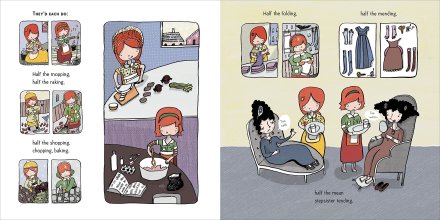
Steve is just about to match the distinctive notch in the half-eaten cookie to one sharp tooth in a snoozing Betty’s lower jaw when…swipe!…Betty grabs the cookie and gobbles it up. The detectives look on in astonishment. “Sleepwalking?” suggests Mike the bull. “Sleep eating,” corrects Josie. Just then Betty wakes up to see all the detectives staring at her, ready to solve the case.

Copyright Travis Nichols, 2017, courtesy of Chronicle Books.

Copyright Travis Nichols, 2017, courtesy of Chronicle Books.

“You yearn for sleep, yes?” asks Steve. Sharon, the duck reminds Betty that she last ate yesterday, yet she wanted no snack, and Quentin reveals, “you ate your yield of yummies yourself.” Betty’s surprised… astounded… asleep! But the Gumshoe Zoo has a bit of celebrating to do since they “zipped this zany, zigzagging zinger with zeal! The press celebrates them too with an article in the 1000% True News. But what’s this on Page 2? A valuable painting has been stolen! It seems there’s a new case for the Gumshoe Zoo to solve!

Notes about alliteration and some very hungry animals follow the text.

celebrate-picture-books-picture-book-review-betty's-burgled-bakery-g-words

Copyright Travis Nichols, 2017, courtesy of Chronicle Books.

Travis Nichols’ witty alliterative alphabetic mystery will have little ones giggling at the zany language and big words that trip off the Gumshoe Zoo detectives’ tongues, while adults will laugh along and shake their head in appreciation of the clever construction of the story. Detective-story tropes, including the round-up of detectives caught in the middle of chores or play, a clueless member of the team, and the locked-room mystery, add to the fun. The panel illustrations set a quick pace for the investigation and clearly show the objects or ideas being alliteratively alluded to to boost younger readers’ understanding.

Betty’s Burgled Bakery will be a favorite of little linguists-in-the-making as well as for mystery lovers. It’s a book that will be asked for again and again. It makes a fun and unique addition to home bookshelves and a terrific English or writing lesson lead-in for classrooms.

Ages 4 – 8

Chronicle Books, 2017 | ISBN 978-1452131832

Learn more about Travis Nichols, his books, and his art on his website

Mystery Month Activity

celebrate-picture-books-picture-book-review-bake-up-some-fun-word-search

Bake up Some Fun! Word Search Puzzle


Before this pan goes into the oven, can you find the eighteen baking-related words in this printable word search puzzle?

Bake up Some Fun! Word Search PuzzleBake up Some Fun! Word Search Solution

celebrate-picture-books-picture-book-review-betty's-burgled-bakery-cover

Betty’s Burgled Bakery can be found at these booksellers

Amazon | Barnes & Noble | Books-a-Million | IndieBound

Picture Book Review