September 18 – World Bamboo Day COVER REVEAL: The Boy Who Grew a Forest: The True Story of Jadav Payeng

BoyWhoGrewAForest-Crys

About the Holiday

World Bamboo Day was established in 2009 by the Thai Royal Forest Department during the 8th World Bamboo Congress held in Bangkok in order to raise awareness of bamboo around the world. The day is dedicated to educating people about this natural resource, to protect it and the environment, to ensure it sustainability, to promote new cultivation of bamboo for new industries in regions around the world, and to promote traditional uses for community economic development. This year’s theme is “Sustainability = Environment + Society + Economy. To learn more about World Bamboo Day and what you can do to help, visit the World Bamboo Organization’s website.

The Boy Who Grew a Forest: The True Story of Jadav Payeng 

Written by Sophia Gholz | Illustrated by Kayla Harren


On Majuli Island in northeastern India, located in the Brahmaputra River, there is a mighty forest. The Molai Forest covers over 1,300 acres and contains thousands of different species of plants and trees. It is also home to many kinds of wildlife, including some endangered animals.

But the Molai Forest was not always there.

In 1979 young Jadav Payeng witnessed the devastating effects on Majuli Island from rising floodwaters, eroding land and killing wildlife. With an idea for saving his beloved island, Jadav began planting bamboo seedlings, which over time literally built a forest and an ecosystem from the ground up. In this true story, young readers will see that the mightiest of results really do begin with a small seed of an idea. 

When a book is this inspiring, you just can’t wait to see it! But before we get to the book’s stunning cover, let’s meet the author and illustrator who are bringing this incredible story to kids. 

Meet Sophia Gholz

sophia_gholz

Sophia Gholz is a children’s author, tree-hugger, music lover, magic seeker, and avid reader. Sophia grew up in the swamps of Florida, went to art school in Southern California, met her husband in Manhattan, and now enjoys life by the beach with her family. As a child, Sophia spent most of her time at the farm riding horses, causing mischief with her brothers, or exploring the globe with her parents. The latter often included tents and large forests. For more, find Sophia online at: www.sophiagholz.com

Hi, Kathy! Thank you for having me. I’m thrilled to be here and am so excited to reveal the cover of The Boy Who Grew a Forest!

What inspired you to write The Boy Who Grew a Forest?

I first learned about Jadav Payeng when I watched a short documentary film about him a few years ago. The instant the film began, I was completely fascinated with Jadav’s journey. Here is one single person who managed to plant an entire forest all by himself—what a feat! But more than that, Jadav’s mission wasn’t for fame or fortune—he had a vision and a passion to help the environment around him, and he worked tirelessly to do so.

To put it simply: I was in awe. I immediately began searching for interviews and updates on Jadav and the more I read, the more I knew I had to share this amazing story with others.

How did growing up in Florida influence your interest in environmental issues?

My youth in Florida was filled with forests. My father was a prominent forest ecologist and conservationist who, at the beginning of his career, worked with the University of Florida’s Forestry Department. My mother has two degrees: one in horticulture and one in science education and worked as both a science writer and freelance journalist. Our house was always filled with scientists from around the world, and we were constantly exposed to tales of the environment and faraway places. So, I was raised from day one with a deep love and appreciation for the environment (especially trees) and an interest in searching for wonderful stories to share.

I think what really struck me most about Jadav’s story was that his mission was one that everyone I knew while growing up fought for as well.

Can you tell me about your journey to publication with this book?

I wrote the initial manuscript a few years ago, and then set it aside for a while. This was one of those stories that was incredibly close to my heart and I feared I wouldn’t be able to capture it the right way. But I couldn’t stop thinking about it. About a year later, the Florida Society of Children’s Book Writers and Illustrators (SCBWI) put out a call for submissions to their annual Rising Kite Contest and, on a whim, I decided to submit The Boy Who Grew a Forest. You can imagine my surprise when my manuscript was awarded a Rising Kite in the nonfiction category! Winning that award was a turning point for me. I realized then that I couldn’t give up. My only hope was that this story would inspire others, like it did me.  

When I read Sarah Rockett’s response to my manuscript, I knew she and the team at Sleeping Bear Press shared my passion for this story. And I was thrilled when they brought Kayla on board—her artistic style is beautiful and fitting. Working with them both has been a dream!

I’ve also had the chance to talk with the director of Jadav’s short film and am happy to know he’s excited for this book as well.

How exciting was it for you to see the final cover for The Boy Who Grew a Forest?

This is my debut picture book, and the first time I’ve witnessed one of my stories brought to life. From viewing initial sketches to full-color layouts, the entire experience has been beyond anything that I could have imagined.

On top of that, this book is particularly personal for me, so it’s been quite emotional. I definitely cried the first time I saw the cover. Not only is my name on a book—a real book!—but also Kayla’s illustrations are breathtaking. I think she’s done a phenomenal job of portraying Jadav and capturing the spirit of this story. 

What can environmentally conscious children do to help protect nature?

There are so many ways we can all make positive changes on a daily basis. Simple things, like recycling and not using straws or plastic bags in order to lessen the amount of plastic in the world are great places to start. On a grander scale, reforestation efforts are vital to our future and the preservation of our planet. And, like Jadav has shown us, reforestation begins with planting. Children can start with seeds or seedlings for yard plants, house plants, gardens, or just spreading native seeds in the wild. Every little bit helps. We actually have a seed planting activity included in the book and will also share downloadable activities that kids can do in the classroom or at home.

What do you hope children will take away from The Boy Who Grew a Forest?

At its heart, this book is about a person who had a dream and refused to give up. I hope that after reading this, children are inspired to care for our planet. But most of all, I want children to know how important they are. Nothing is impossible, and it only takes one person to make a difference.

Meet Kayla Harren

Kayla Harren Headshot

Kayla Harren studied illustration at the School of Visual Arts in New York City. She is the author and illustrator of  Mary Had a Little Lizard, as well as the illustrator of Hannah’s Tall Order: An A to Z Sandwich and many other books and projects. She lives in St. Paul, Minnesota.

To learn more about Kayla, visit http://www.kaylaharren.com/


What intrigued you the most about this project?

Jadav and his amazing love of nature.  His dedication to helping wildlife is truly inspiring.  I get overwhelmed thinking about all the problems I can’t solve on my own, but then here is a person who takes action and saves an entire island by himself.  It is an amazing story and a good reminder that making a difference really can start with just one person.

What kind of research did you do for creating the illustrations for The Boy Who Grew a Forest?

I watched the documentary Forest Man and knew instantly that I wanted to illustrate Jadav’s story.  I watched many more interview videos of Jadav, read articles about his accomplishments, and read through Sophia’s bibliography for the book.  I looked through images of Majuli, read about the flooding of the Brahmaputra River, and researched the various wildlife species in Jadav’s forest.

Can you describe the process in creating and choosing this gorgeous cover image?

I have Sleeping Bear Press designer Jennifer Bacheller to thank for the cover design.  She played a big role in deciding the layout and I just filled in the spaces with plants and animals.  I am a sucker for sunsets and warm light. Jadav’s story felt magical to me, so I wanted to hint at his extraordinary spirit with an orange glow around him and his forest.

The illustrations in your books, such as your recent Hannah’s Tall Order: An A to Z Sandwich, are so beautifully and richly detailed. What methods did you use to create the lush natural landscape in this book?

Aw thanks! I love adding details.  One of my teachers in art school said that you can focus on any square inch of a great painting and it will be interesting. I try to keep that in mind when I am illustrating, I don’t want any part of the image to be wasted.

For this book I spent a lot of time in the sketch stage. I started studying a bunch of images of the forest, of Jadav, of each animal, of color palettes and lighting. I looked at reference photos to create rough sketches, but once I finished sketching I stopped looking at the references so I wouldn’t get too attached or copy the photos. 

I drew on my computer so I could move elements around to get just the right composition. Once I was happy with a layout, I drew the lines with a pencil brush on my tablet.  Then I began coloring layer by layer in Photoshop. I started with flat color, then added textures, then a layer of shadows, and finally details.

What inspired you to become an illustrator for children’s books and publications?

I don’t remember a defining moment when I decided to pursue picture book illustration. I think I always knew that if I was going to try making art my career, it had to be in children’s books. I have always loved books and fondly remember being read to as a child.  I would fervently study the illustrations of each book as my mom read aloud. I learned to read pictures before I could read the words. Picture books are where my obsession with books began. My goal is to create illustrations that draw a child in and get them excited about learning to read the story the pictures are telling.

What is the most rewarding thing about being a children’s illustrator?

Definitely knowing that I play a role in helping children read and learn. I love when children notice small details I include in my illustrations that the parents pass right over. It is exciting to see children be observant and curious and inquisitive.

Thanks so much Sophia and Kayla! You’ve both put so much of yourselves and heart into The Boy Who Grew a Forest: The True Story of Jadav Payeng. I can’t wait to read the book when it comes out in March, and I’m sure readers are excited for it too!

To learn more about The Boy Who Grew a Forest: The True Story of Jadav Payeng, visit Sleeping Bear Press.

And now I’m thrilled to reveal…

celebrate-picture-books-picture-book-review-the-true-story-of-jadav-payeng-the-boy-who-grew-a-forest-cover

The Boy Who Grew a Forest, will be released in March, 2019 from Sleeping Bear Press. The book is available for preorder at these booksellers

Amazon | Barnes & Noble | Books-a-Million | IndieBound

Picture Book Review

September 10 – It’s New York Fashion Week

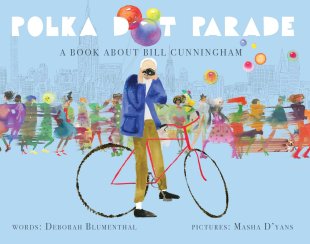
celebrate-picture-books-picture-book-review-polka-dot-parade-cover

About the Holiday

A full month of attention to new fashions worldwide begins this week in New York with the 2019 Spring/Summer fashion collections shown to buyers, the press, and the public. Created in 1943 as Press Week, the New York show aimed at diverting attention away from the Paris event during World War II, when “fashion industry insiders were unable to travel to Paris,” and hoped to highlight American designers, whose innovations had largely been ignored. Showcasing the world’s most highly skilled and creative designers, famous models, and plenty of eye-catching styles, Fashion Week is a favorite event for celebrities and fashion lovers alike. As the show in New York winds down on September 14 , eyes will turn to London from September 14 to 18, Milan from September 19 to 25, and, finally, Paris from September 25 to October 3.

little bee books sent me a copy of Polka Dot Parade: A Book about Bill Cunningham to check out. All opinions are my own. I’m also excited to be partnering with little bee in a giveaway of the book. See details below.

Polka Dot Parade: A Book about Bill Cunningham

Written by Deborah Blumenthal | Illustrated by Masha D’yans


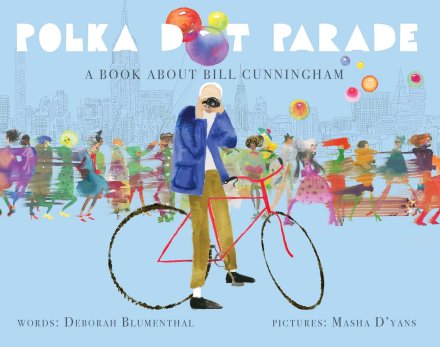
As Bill Cunningham bicycled through New York City in his trademark blue jacket, tan pants, and black shoes with his ever-present camera, he was forever searching for beauty. And he found it wherever he went. He saw “‘sheer poetry’ in the drape of an evening dress” and “delight in the swoosh of a knife-pleated skirt.” He clicked away as Hermès bags, plaids, stripes, polka dots, and even fanny packs and “fancy-pants dog clothes” paraded by. And the people wearing all of this? “‘I don’t really see people, I see clothes,’ Bill said.”

celebrate-picture-books-picture-book-review-polka-dot-parade-sheer-poetry

Image copyright Masha D’yans, 2018, text copyright Deborah Blumenthal, 2018. Courtesy of simonandschuster.com.

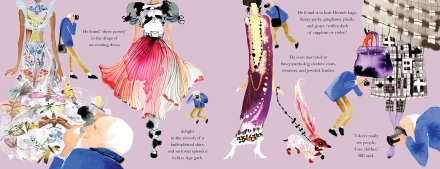
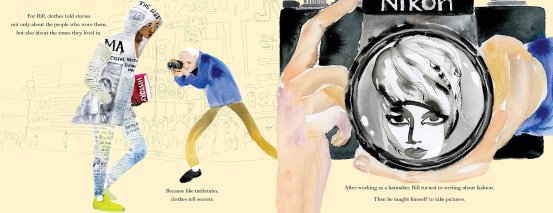
For Bill, all of these colorful clothes and creative styles told stories about the people who wore them—people daring enough to be creative whether they were rich or poor. “People who looked like leopards in their leopard prints, cool cats in their hats, dudes in dots and spots.” The New York Times newspaper published Bill’s photographs, letting the world see these stories too.

Before Bill taught himself the art of photography, he worked as a hat maker and then as a fashion writer. He believed that an individual’s sense of fashion was a kind of freedom. Bill found subjects to photograph at “posh parties,” Paris Fashion Week, and even on the streets of New York. His favorite New York corner was Fifth Avenue and Fifty-Seventh Street. He blended in to the hustle and bustle to snap pictures of passersby in all weather and seasons.

celebrate-picture-books-picture-book-review-polka-dot-parade-style

Image copyright Masha D’yans, 2018, text copyright Deborah Blumenthal, 2018. Courtesy of simonandschuster.com.

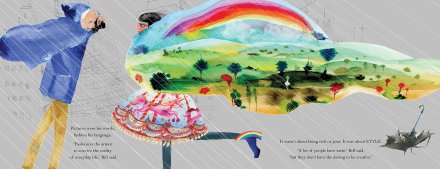
The people he photographed and those he worked for all loved Bill and his singular vision. In 2008, he was awarded the French Legion of Honor, and Bergdorf Goodman department store celebrated his work with a “lavish display in their Fifth Avenue window.” But Bill shunned the spotlight, preferring that others be recognized. When Bill died in 2016 at the age of 87, the fashion world mourned. But his life and his work live on in his “glorious pictures of clothes and the power they lend us…as we dress each day for the runway called life.”

An Authors Note giving more details about Bill Cunningham’s life follows the text,

celebrate-picture-books-picture-book-review-polka-dot-parade-freedom

Image copyright Masha D’yans, 2018, text copyright Deborah Blumenthal, 2018. Courtesy of simonandschuster.com.

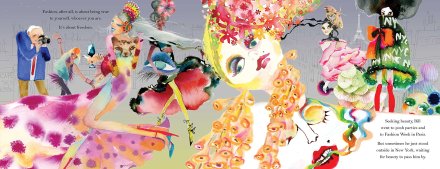
With lyrical storytelling and staccato phrasing like the beat of a camera’s shutter, Deborah Blumenthal frames Bill Cunningham’s life in snapshots of the color, patterns, people, and philosophy that fueled his talent and his passion. Cunningham’s appreciation for the unique, quirky, and original is celebrated throughout and will inspire young readers to embrace their own identity and display it in their own, particular way.

celebrate-picture-books-picture-book-review-polka-dot-parade-camera

Image copyright Masha D’yans, 2018, text copyright Deborah Blumenthal, 2018. Courtesy of simonandschuster.com.

Visually stunning, Masha D’yans’ vibrant watercolor and mixed-media illustrations float across the pages with the beauty and flow of the runway as well as the hustle, bustle, and stories of the street. Just as in real life, Cunningham fades into the background, but his camera is always focused on the fashion and what it tells him. Images of Cunningham’s photographs scattered across the newspaper page, strings of negatives hanging like party streamers in his darkroom, and the gray treasure boxes in his stark apartment, provide readers with a deeper understanding of his work and world.

For children fascinated by fashion or who follow their own muse—or want to, Polka Dot Parade is an inspirational book to add to any home or classroom library.

Ages 4 – 8

little bee books, 2018 | ISBN 978-1499806649

Discover more about Deborah Blumenthal and her books on her website.

To learn more about Masah D’yans, her books, and her art, visit her website.

Polka Dot Parade: A Book about Bill Cunningham Giveaway

I’m excited to partner with little bee books in this giveaway of:

  • One (1) copy of Polka Dot Parade: A Book about Bill Cunningham written by Deborah Blumenthal | illustrated by Masha D’yans

To be entered to win, just Follow me on Twitter @CelebratePicBks and Retweet a giveaway tweet during this week, September 10 – September 16. Already a follower? Thanks! Just retweet for a chance to win.

A winner will be chosen on September 17.

Giveaway open to US addresses only. | Prizing provided by little bee books.

New York Fashion Week Activity

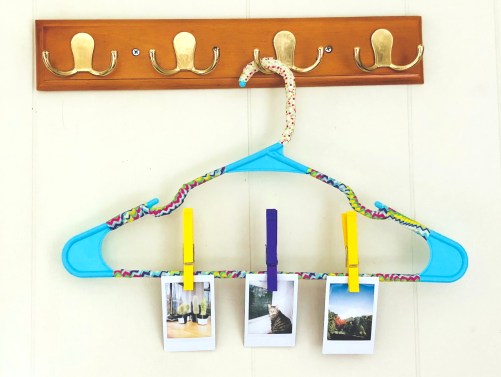
celebrate-picture-books-picture-book-review-hanger-photo-hanger-craft

Decorative Hanger Photo Hanger


A colorful plastic hanger, some washi tape, a few clothespins, and your own photos or pictures can make a one-of-a-kind way to display your art and personality!

Supplies

  • Plastic Hanger
  • Washi tape – 2 patterns (optional)
  • 3 to 4 clothespins
  • Craft paint
  • Paint brush
  • Photos or pictures

Directions

  1. Wrap the washi tape around the hanger. If using two patterns of tape, wrap the hook and neck of the hanger with one pattern and the body of the hanger in the other
  2. Paint the three or four clothes pins with one or more colors, let dry.
  3. Clip the clothespins to the hanger
  4. Insert photos into the clothespins

celebrate-picture-books-picture-book-review-polka-dot-parade-cover

You can find Polka Dot Parade at these booksellers

Amazon | Barnes & Noble | Books-a-Million | IndieBound

Picture Book Review
September 4 – National Wildlife Day – Guest Post by Author Marsha Diane Arnold

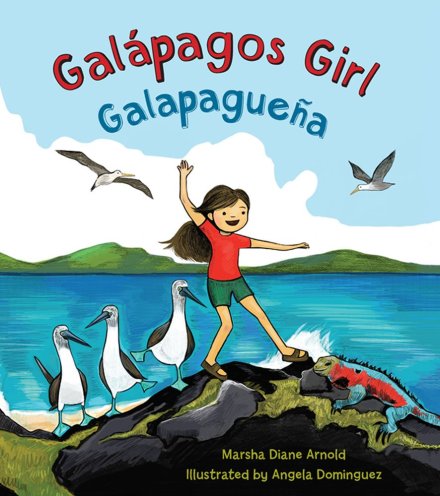
celebrate-picture-books-picture-book-review-galapagos-girl-cover

About the Holiday

National Wildlife Day was established in 2005 by author and pet lifestyle expert Colleen Paige in memory of conservationist Steve Irwin. The day promotes awareness of the importance of conservation of animals, habitats, and the environment worldwide and offers education on the number of endangered and threatened species across the globe. To honor today’s holiday, visit a local zoo, aquarium, or other nature preserve and take some time to learn about what you can do to help protect the environment.

Lee & Low Books sent me a copy of Galápagos Girl/ Galápagueña to check out. All opinions are my own. 

Welcome Marsha Diane Arnold

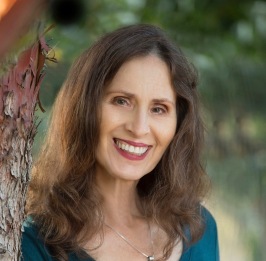
celebrate-picture-books-picture-book-review-marsha-diane-arnold

I’m thrilled to have award-winning picture book author Marsha Diane Arnold as a guest blogger today revealing a bit of the backstory of Galápagos Girl / Galápagueña. Her past titles include the Smithsonian Notable Book The Pumpkin Runner and Lost. Found., which received three starred reviews. With more than one million books sold, Marsha’s stories have been called “whimsical,” “wacky,” “heartwarming,” and “uplifting” by captivated young readers. Marsha was inspired to write this story after traveling to the Galápagos Islands, where she met Valentina Cruz and had the opportunity to swim with sea lions and dolphins. She lives with her family in Alva, Florida.

Thank you, Kathryn, for having me visit your site on National Wildlife Day. It’s a perfect day to celebrate my newest book, Galápagos Girl / Galápagueña, along with conservation of wild places and animals!

As a child, would you have enjoyed swimming with sea lions? Feeding plums to giant tortoises by hand? Having warblers fly through your house? That was the life of Valentina Cruz. Galápagos Girl is based on her idyllic life on remote Floreana island in the Galápagos Islands, a volcanic archipelago west of Ecuador.

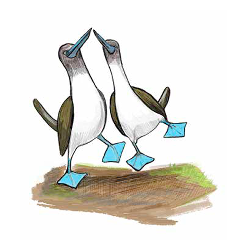
celebrate-picture-books-picture-book-review-galapagos-girl-blue-footed-booby

celebrate-picture-books-picture-book-review-galapagos-girl-marine-iguana

My photos of actual blue-footed booby and Galápagos marine iguana.

Valentina grew up surrounded by nature, but perhaps more accurately, she grew up in nature. I think when a child grows up seeing wild wonders every day, they grow up respecting and protecting nature and wildlife. Valentina and her siblings certainly did. She grew up to be a biologist and naturalist guide. One brother, Eliecer Cruz, was director of the Galápagos National Park and, later, director of the Galápagos branch of the World Wildlife Fund. Another brother, Felipe, worked on many projects with the Charles Darwin Research Station, including studying the challenges that face the Galápagos petrel. Her sister, Marilyn, is director of Galápagos Biosecurity Agency, which helps control and prevent invasive species in the islands.

In some ways, Valentina’s childhood was similar to mine. She was surrounded by a loving family—her parents and eleven brothers and sisters. I only had one brother, but along with my parents, cousins, aunts, and uncles, we gathered on many Sunday afternoons at my grandmother’s house. Valentina and I both delighted in nature, though hers was a more exotic nature—the distant Galápagos Islands, where Charles Darwin discovered those famous finches and came up with his theory of natural selection. Mine was a small farm on the Kansas plains—I didn’t see the ocean until I was an adult. Valentina had Galápagos tortoises as pets and swam with sea lions. (Of course, keeping tortoises as pets is not allowed today.) I played with my neighbor’s pet raccoon (also, not allowed today) and listened to the meadowlark’s song from the roof of my house.

Valentina loves nature, home, and family, but has the soul of an adventurer. I’m much the same. When I grew up I yearned to see as much of the world as possible. When my long-time traveling buddy, Jean Gallagher, asked me to travel with her to the Galápagos, one of my long-time dreams came true.

celebrate-picture-books-picture-book-review-galapagos-girl-blue-marsha-and-friends

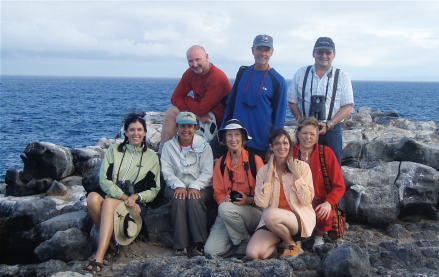
The Galápagos Gang – fellow travelers to a far-off land. Jean is 3rd to right in front. I am 4th.

It was on that 2007 trip that I met Valentina, one of our naturalist guides. With her, we visited Floreana and saw the home where she grew up. I was enamored. I thought how wonderful a book about the islands and their unique wildlife, woven together with Valentina’s childhood, would be. Yet it wasn’t until April 2009 that I emailed Valentina and told her of my dream to write a picture book based on her life. Over months and years, Valentina generously shared her stories with me.

celebrate-picture-books-picture-book-review-galapagos-girl-valentina-showing-lay-of-land

Valentina showing us the lay of the land.

Valentina got her sense of adventure and love of nature from her father, Eliecer Cruz Cevallos, who first arrived in the Galápagos in 1939. He was one of only 100 people living in the Galápagos at that time!

Eliecer returned to Ecuador and married Valentina’s mother, Emma Bedon. She made him promise they would never live in the Galápagos. Who can blame her? They’d have almost no human neighbors! But in 1944, she changed her mind. Emma sailed to Floreana with Eliecer to build a life together. Valentina told me that even living in the wild, her mother taught her children “to keep all the rules of a city so we do not grow up wild.”

celebrate-picture-books-picture-book-review-galapagos-girl-valentina-and-father

Valentina and her father on Floreana

celebrate-picture-books-picture-book-review-galapagos-girl-valentina-mother-and-sister

Valentina, her mother, and her sister

Two Galápagos tortoises were a big part of Valentina’s childhood, so I had to include them in Galápagos Girl. Floreana tortoise had long been extinct (or so it was thought).  So when Eliecer moved to Floreana, his friend gave him young tortoises from other islands. Eventually, the family released the tortoises to roam free. One of the most exciting things that happened to Valentina as a child was seeing the tortoises return to their farm that first year after their release. The main reason was the tasty plums dropping from the trees. Every year after that, when the plums ripened, the family waited for the tortoises to return. They always did!

celebrate-picture-books-picture-book-review-galapagos-girl-isabella-eating-plum

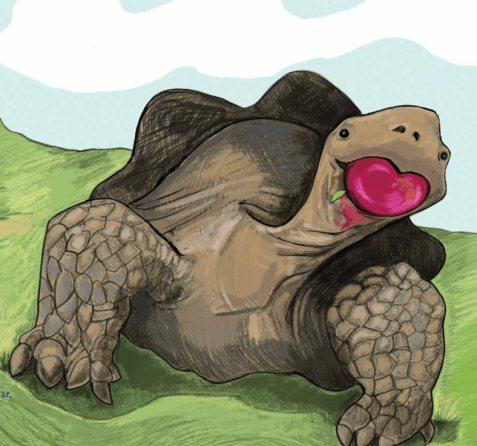
An illustration of one of the family’s tortoises eating a plum treat by Angela Dominguez

The tortoise story changed several times during the writing of my book due to Valentina’s remembering more over time, checking facts with her family, and a discovery near Wolf Volcano on Isabela, another Galápagos Island. What’s in my book isn’t exactly the way things were, but it’s close to the real story. As Valentina wisely shared: “Each of us remember things in different ways. Our memory is like pictures of what impresses us in that specific moment, so everything can be true and everything can be fiction.”

celebrate-picture-books-picture-book-review-galapagos-girl-galapagos-tortoise

One of eleven species of Galápagos tortoise

Regarding the exciting discovery on Wolf Volcano, scientists recently found tortoises there that carry some of the Floreana tortoise genes! There is a project now to bring these tortoises back to Floreana. Wouldn’t it be wonderful to have partial Floreana tortoises wandering freely, restoring the ecology of Floreana?

You may ask, “How did Floreana tortoises get on Isabela Island?” That’s one more fascinating question about the Galápagos. If I visit your school, you can ask me and I’ll share more.

Thanks so much, Marsha, for sharing the fascinating story behind Galápagos Girl / Galápagueña!

You can connect with Marsha Diane Arnold on

Earth’s Voices | Facebook

National Wildlife Day Review

Galápagos Girl / Galapagueña

Written by Marsha Diane Arnold | Illustrated by Angela Dominguez | Translated by Adriana Dominguez


On the day when baby Valentina joined Mamá, Papá, and eleven brothers and sisters, even the sea lions, blue-footed boobies, and iguanas seemed to welcome her to the “island formed by fire.” Valentina loved growing up on the Galápagos Island of Floreana. She explored the lava rocks, where Sally Lightfoot crabs scuttled back and forth. She swam with dolphins and manta rays, and even played with penguins.

celebrate-picture-books-picture-book-review-Galápagos-Girl-crabscelebrate-picture-books-picture-book-review-Galápagos-Girl-crabs

Image copyright Angela Dominguez, 2018, text copyright Marsha Diane Arnold, 2018. Courtesy of Lee & Low Books.

“Valentina watched pink flamingoes wading near mangroves. Blue butterflies fluttering on the breeze. Red-and-green iguanas sneezing salt like tiny geysers.” The crashing waves, albatross, and finches created a symphony as Valentina stopped to rest on a grassy cliff overlooking the ocean. The lava lizards, blue-footed boobies, and twirling sea lions provided young Valentina with a variety of dance partners.

celebrate-picture-books-picture-book-review-Galápagos-Girl-iguana

Image copyright Angela Dominguez, 2018, text copyright Marsha Diane Arnold, 2018. Courtesy of Lee & Low Books.

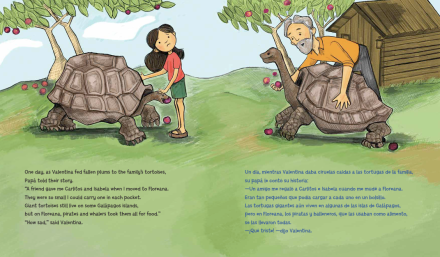
At home, Valentina’s family shared their home with two giant tortoises—Carlitos and Isabella. One day Papá told Valentina their story as they fed the tortoises plums that had fallen from their backyard trees. Papá had gotten Carlitos and Isabella from a friend when he first moved to Floreana. Although it was nearly impossible to imagine now that the tortoises were grown, at the time they were so small that they fit into Papá’s pockets.

celebrate-picture-books-picture-book-review-Galápagos-Girl-tortoises

Image copyright Angela Dominguez, 2018, text copyright Marsha Diane Arnold, 2018. Courtesy of Lee & Low Books.

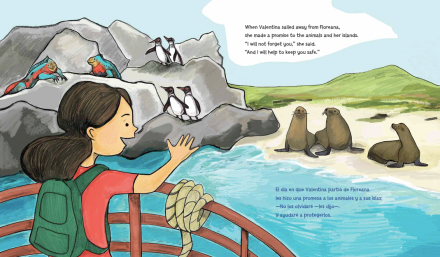
There was also a sad note to Papá’s story. He said that while giant tortoises still lived on other Galápagos islands, pirates and whalers had wiped out the population on Floreana. Papá went on to tell Valentina that many Galápagos animals were in danger. They were “threatened by other animals that don’t belong here. Threatened by people who don’t understand how to care for our islands.” Valentina promised that she would always protect them.

When she was older, Valentina left the island to go to school. She didn’t want to leave her beautiful home, but Mamá told her that she was “ready to learn about the world beyond.” And Papá reminded her that “like our islands, you have a heart full of fire.” On school vacations, Valentina always came back to study the wildlife on the Galápagos islands. She had not forgotten her promise to keep them safe.

celebrate-picture-books-picture-book-review-Galápagos-Girl-going-to-school

Image copyright Angela Dominguez, 2018, text copyright Marsha Diane Arnold, 2018. Courtesy of Lee & Low Books.

After she graduated with a degree in biology, Valentina returned to the islands as a nature guide to teach visitors about the beauty and uniqueness of the Galápagos. Some visitors were even lucky enough to meet Carlitos and Isabella when the plums dropped from the trees and the two old tortoises returned from exploring Floreana to eat them. Because of Valentina’s commitment to the Galápagos, her visitors also made a promise to always remember and protect them.

Extensive backmatter includes an Author’s Note about Valentina Cruz, the tortoises Carlitos and Isabella, and the history of tortoises on Floreana. There is also information on the Galápagos as well as fun facts about all of the animals in the story. A bibliography of sources invites readers to learn more.

Each two-page spread presents the text in English and translated into Spanish by Adriana Dominguez.

celebrate-picture-books-picture-book-review-Galápagos-Girl-guiding-visitors

Image copyright Angela Dominguez, 2018, text copyright Marsha Diane Arnold, 2018. Courtesy of Lee & Low Books.

Marsha Diane Arnold’s lyrical and buoyant passages sing with the carefree joy Valentina felt as a girl exploring her beloved Galápagos and which brought her back home as a biologist to protect them. After seeing Valentina playing and swimming with the native animals and feeding Carlitos and Isabella, readers will also feel Valentina’s sadness at the dangers they face and want to make a positive difference to the environment and the world around them. Arnold’s dialogue-rich storytelling highlights the personal nature of the subject and will draw children into Valentina’s world.celebrate-picture-books-picture-book-review-Galápagos-Girl-blue-footed-booby

Saturated with glorious color, each of Angela Dominguez’s illustrations is a celebration of the splendor of the Galápagos. Playful sea lions, high-stepping blue-footed boobies, scampering crabs, and even a sneezing iguana will captivate young readers and inspire them to learn more about these creatures and the islands. Images of Valentina camping out to study the animals during school breaks will excite environmentally conscious kids, and pictures of Carlitos and Isabella happily munching on plums will generate smiles and “awwws.”

Galápagos Girl / Galapagueña will excite kids to learn more not only about the Galápagos region but about their own local environment, and the call to action will spark an enthusiasm for protecting the earth’s animals. The book would make an inspiring addition to home bookshelves and an excellent way to begin classroom discussions on environmental issues and science lessons. The engaging Spanish translation will delight Spanish-speaking and bilingual families.

Ages 4 – 8

Lee & Low Books, 2018 | ISBN 978-0892394135

Discover more about Marsha Diane Arnold and her books on her website.

To learn more about Angela Dominguez, her books, and her art, visit her website.

National Wildlife Day Activity

celebrate-picture-books-picture-book-review-animals-of-the-galapagos-match-up-puzzle

Animals of the Galápagos Match Up Puzzle


There are so many fascinating animals that live in the Galápagos! Can you match the picture of each animal to its description in this printable Animals of the Galápagos Match Up Puzzle? You can find and download the activity sheet from the Lee & Low Books website:

Animals of the Galápagos Match Up Puzzle

celebrate-picture-books-picture-book-review-galapagos-girl-cover

You can find Galápagos Girl / Galapagueña at these booksellers

Amazon | Barnes & Noble | Books-a-Million | IndieBound

Picture Book Review


August 30 – Frankenstein Day

celebrate-picture-books-picture-book-review-mary-who-wrote-frankenstein-cover

About the Holiday

Today’s holiday celebrates the birth of Mary Wollstonecraft Shelley, who in 1818 at the age of 18, penned one of the most influential books of all time. Considered the first modern science fiction novel, Frankenstein; or, The Modern Prometheus incorporates elements of horror, psychology, love, abandonment, and acceptance. These themes and Shelley’s enthralling storytelling created a book that is always current. During this 200th anniversary year of the publishing of classic novel, discover (or rediscover) the spellbinding thrill of reading Frankenstein.

Mary Who Wrote Frankenstein

Written by Linda Bailey | Illustrated by Júlia Sardà


Mary was a dreamer. She liked to spend time alone, thinking and imagining “things that never were.” Mary called these daydreams “‘castles in the air.’” Mary loved to write stories too, but her daydreams were even more thrilling. When Mary wanted to read and dream, she went to the graveyard and sat next to her mother’s grave. Mary’s mother had died when Mary was only 11 days old.

While Mary loved her father, she didn’t like the way he punished her. Mary didn’t like his new wife, either. Mary’s father is friends with many famous people, and he invites them to visit. One night “a writer named Samuel Taylor Coleridge recites a strange, eerie poem—The Rhyme of the Ancient Mariner. Mary loves such poems.” Even though she was supposed to be in bed, she hid and listened, shivering “with fear at the spine-tingling tale of a ship full of ghosts.” Forever after, Mary remembered that night and that poem.

celebrate-picture-books-picture-book-review-mary-who-wrote-frankenstein-town

Image copyright Júlia Sardà, 2018, text copyright Linda Bailey, 2018. Courtesy of Tundra Books.

By the time Mary was fourteen, she was unhappy at home and causing trouble. One night, when she was sixteen, she and her stepsister, Claire, ran away with a “brilliant, young poet” named Percy Bysshe Shelley. They traveled through Europe, one day finding themselves outside a “ruined castle. It’s called Castle Frankenstein. Such an interesting name! Does it stick in Mary’s mind?”

Eighteen months later, the three traveled to Switzerland, where they became friends with Lord Byron—the most famous poet in the world. One night as torrential storms crashed around Lord Byron’s house, he read ghost stories from Fantasmagoriana. After reading, Byron challenged his friends, who also included a doctor named John Polidori, to write a ghost story. Eighteen-year-old Mary, Percy Bysshe Shelley, and John Polidori accepted the challenge. But Mary could not think of a good story idea.

celebrate-picture-books-picture-book-review-mary-who-wrote-frankenstein-friends

Image copyright Júlia Sardà, 2018, text copyright Linda Bailey, 2018. Courtesy of Tundra Books.

Soon, Shelley and Polidori gave up on their ghost stories, but their talk of new scientific experiments excited Mary. “Electricity can make the muscles of a dead frog twitch. Could it bring a dead creature to life? The idea is both thrilling and frightening.” The idea captured Mary, but instead of a frog, she imagined “a hideous monster, made of dead body parts, stretched out—and coming to life!” Mary suddenly realized she had the idea for her ghost story.

It took nine months for Mary to finish her story. When it was published, some people thought it had been written by Percy Bysshe Shelley—they didn’t “believe young Mary could have done it! How could a girl like her come up with such a story?” But she was a writer, assembling bits and pieces, ideas, and scientific changes in her imagination until they turned into the book Frankenstein. In the two-hundred years since the novel was first published, the story has become a classic. It has sparked movies, inspired other writers, and become a favorite all around the world.

An extensive Author’s Note about Mary Shelley, her life, and inspiration as well as Linda Bailey’s thoughts on the story behind Frankenstein follows the text. A full-page portrait of Mary Wollstonecraft Shelley and a list of sources rounds out the informative backmatter.

celebrate-picture-books-picture-book-review-mary-who-wrote-frankenstein-graveyard

Image copyright Júlia Sardà, 2018, text copyright Linda Bailey, 2018. Courtesy of Tundra Books.

With atmospheric and riveting details, Linda Bailey captures the life of Mary Wollstonecraft Shelley and the influences on her imagination that resulted in Frankenstein. Bailey’s use of the present tense is inspired as it reflects the continued currency of the novel while encouraging today’s readers to embrace their “castles in the air.” Facts about Mary’s travels, new scientific discoveries, and favorite books sprinkled throughout the story inform readers on how the imagination combines experiences to create art.

One look at Júlia Sardà’s spellbinding cover tells readers that they are in for an extraordinary reading experience. Muted tones of red, green, gold, blue, and plum cloaked in black create a thrilling backdrop to Bailey’s story. Ghostly winged creatures fly over Lord Byron’s home on a stormy night, smoky monsters emerge from Fantasmagoriana, a frog sits up in its coffin, and the spectre of the monster leans over Mary and sleeps at her feet as she writes her novel. At once spine-tingling and cozy, Júlia Sardà’s illustrations will draw children into this superb story of a ghost story.

Mary Who Wrote Frankenstein is sure to spark the imagination of children who love literature, art, and writing. The book would be a thrilling addition to classroom libraries for literature and writing classes as well as an inspiring favorite on home bookshelves.

Ages 5 – 8

Tundra Books, 2018 | ISBN 978-1770495593

Discover more about Linda Bailey and her books on her website.

To learn more about Júlia Sardà, her books, and her art, visit her website.

Frankenstein Day Activity

celebrate-picture-books-picture-book-review-frankenstein-puzzle

Monstrously Good Puzzle


See if you’re a Frankenstein scholar by filling in this printable puzzle full of words and phrases about the novel!

Monstrously Good Puzzle | Monstrously Good Puzzle Word ListMonstrously Good Puzzle Solution

celebrate-picture-books-picture-book-review-mary-who-wrote-frankenstein-cover

You can find Mary Who Wrote Frankenstein at these booksellers

Amazon | Barnes & Noble | Books-a-Million | IndieBound

Picture Book Review


August 22 – It’s American Artist Appreciation Month

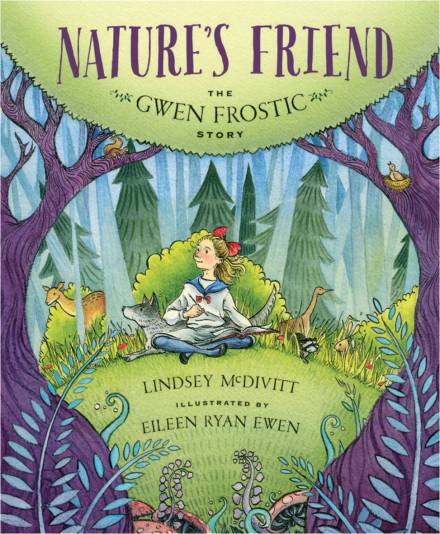
celebrate-picture-books-picture-book-review-nature's-friend-the-gwen-frostic-story-cover

About the Holiday

From the earliest days of the exploration and settlement of America, artists have been creating works that reveal the beauty, complexity, and meaning of this country and her people. Over the years American artists have developed innovative styles and delved into universal subjects in new ways. This month we celebrate these artists of the past and present who, through their work, make us see the world in fresh ways.

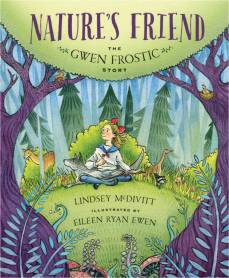
Nature’s Friend: The Gwen Frostic Story

Written by Lindsey McDivitt | Illustrated by Eileen Ryan Ewen


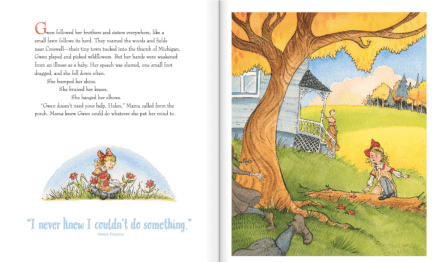
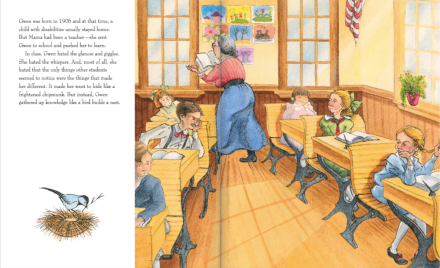
“Gwen followed her brothers and sisters everywhere, like a small fawn follows its herd.” Even though an illness in babyhood had left her hands and one foot weak and her speech slurred, Gwen grew up confident that she could do anything. Born in 1906, Gwen, as a child with disabilities, would normally have stayed home instead of attending school. But her mother had been a teacher, so she sent her to school and “pushed her to learn.”

celebrate-picture-books-picture-book-review-nature's-friend-the-gwen-frostic-story-young-gwen

Image copyright Eileen Ryan Ewen, 2018, text copyright Lindsey McDivitt, 2018. Courtesy of Sleeping Bear Press.

The other kids giggled and whispered behind her back, and while she wanted to hide, she instead “gathered up knowledge like a bird builds a nest.” Her teachers thought she would never be able to write. To strengthen her hands, her mother encouraged her to draw, keeping a drawer full of supplies within reach. As Gwen sketched, her grip grew firmer.”

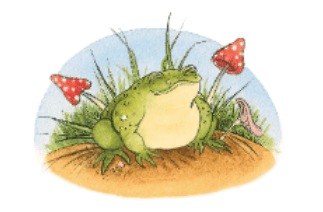
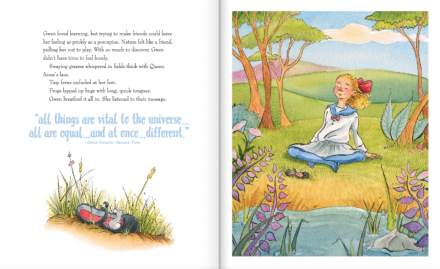
While making friends was difficult, Gwen found companionship in nature. She loved to spend time outdoors watching the unfurling ferns and frogs that “lapped up bugs with long, quick tongues.” From nature, Gwen learned, “‘all things are vital to the universe…all are equal…and at one…different.’”

celebrate-picture-books-picture-book-review-nature's-friend-the-gwen-frostic-story-school

Image copyright Eileen Ryan Ewen, 2018, text copyright Lindsey McDivitt, 2018. Courtesy of Sleeping Bear Press.

A move to Detroit when she was twelve introduced Gwen to the buildings and people of a big city. In high school, Gwen, now stronger, took mechanical drawing and shop class. Later, in art school, Gwen was introduced to linoleum, in which she carved intricate images for printmaking. Gwen’s dream was to be an artist, but she also knew she needed to earn money to pay expenses.

She started a business making objects from hammered metal. Word of her art spread quickly. It was bought by leading Detroit families, and Gwen was invited to exhibit her art at the 1939 World’s Fair in New York. When World War II broke out, Gwen went to work building bombers. She even designed tools for building the planes. Contributing to the war effort was important, but Gwen still “longed to create art.” She bought a printing press and opened “Presscraft Papers stationery company.”

celebrate-picture-books-picture-book-review-nature's-friend-the-gwen-frostic-story-gwen-in-nature

Image copyright Eileen Ryan Ewen, 2018, text copyright Lindsey McDivitt, 2018. Courtesy of Sleeping Bear Press.

Gwen began to miss the nature she loved so much, so she packed up and moved back to Michigan. There, “she walked deep into the wetlands” and began carving linoleum blocks, recreating nature as she saw it. “She wanted others to see nature as she did, to recognize the value of plants, trees, and animals.” She made prints from her linoleum blocks and created greeting cards on her press. Her beautiful artwork reminded people of nature’s bounty at a time when the environment was threatened with pollution. People came from all over to her shop in the Michigan woods to buy her art that spoke to them: “‘Love this earth, / Love it’s waters… / Care enough to keep it clear.’”

An Author’s Note reveals more about Gwen Frostic’s life and provides a sketching craft for readers.

celebrate-picture-books-picture-book-review-nature's-friend-the-gwen-frostic-story-drawing

Image copyright Eileen Ryan Ewen, 2018, text copyright Lindsey McDivitt, 2018. Courtesy of Sleeping Bear Press.

Lindsey McDivitt’s superb biography of Gwen Frostic—an artist, inspiration, and pioneer for career women and the disabled—introduces children to a woman who, through persistence and confidence, lived life on her own terms. McDivitt’s lyrical prose infuses the story with the poetry of nature that Gwen internalized and translated into the art that people continue to admire and seek out. McDivitt’s thorough storytelling and excellent pacing allow for a full understanding of Gwen Frostic’s achievements. Young readers will be fascinated by the life work of this talented and determined artist.

Screen Shot 2018-08-21 at 6.54.39 PM

Eileen Ryan Ewen captures Gwen Frostic’s strength of character, can-do attitude, and love of nature in her stunning artwork. Full-page illustrations follow Gwen from her beloved Michigan woodlands to Detroit to art school and through her life as an artist and business woman. Images of Gwen carving a linoleum block, sketching designs for new tools as she sits next to a fighter plane and the woman installing rivets, working an old printing press, and greeting visitors at her shop broaden readers’ understanding of the times and Gwen’s work.

An exceptional picture book that provides encouragement and inspiration, Nature’s Friend: The Gwen Frostic Story is a must for classroom libraries and would make a positive impact on young readers as part of their home library.

Ages 6 – 10

Sleeping Bear Press, 2018 | ISBN 978-1585364053

Discover more about Lindsey McDivitt and her books on her website.

To learn more about Eileen Ryan Ewen, her art, and her books, visit her website.

American Artist Appreciation Month

celebrate-picture-books-picture-book-review-nature-coloring-page

Nature Coloring Pages


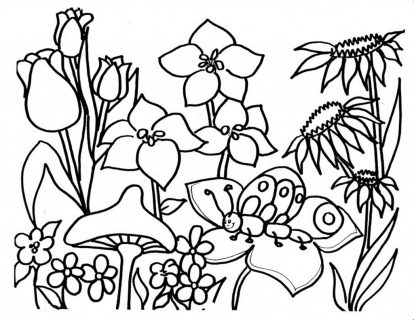
If you love nature like Gwen Frostic did, you’ll enjoy these printable Nature Coloring Pages.

Meadow Coloring PageOcean Coloring Page

celebrate-picture-books-picture-book-review-nature's-friend-the-gwen-frostic-story-cover

You can find Nature’s Friend: The Gwen Frostic Story at these booksellers

Amazon | Barnes & Noble | Books-a-Million | IndieBound

Picture Book Review
 

August 4 – National Chocolate Chip Cookie Day

celebrate-picture-books-picture-book-review-how-the-cookie-crumbled-cover

About the Holiday

Is there anything better than biting into a warm, ooey-gooey chocolate chip cookie? Today’s holiday celebrates this favorite treat and the history behind it. Enjoy the day by  baking a batch with your kids. Not only is it a wonderful way for families to spend time together, but kids can learn family stories, the fun of helping out in the kitchen, and even math skills. So, grab your recipes, ingredients, and utensils and bake up a batches of scrumptious cookies!

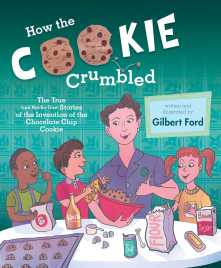
How the Cooke Crumbled: The True (and Not-So-True) Stories of the Invention of the Chocolate Chip Cookie

By Gilbert Ford


As you’re gobbling down delicious chocolate chip cookies, do you ever wonder who invented them or how they came to be such favorites? Well, the “who” part is easy: chocolate chip cookies were the brainchild of Ruth Wakefield. But the “how” is a bit more tricky. Here are the three popular stories surrounding this yummy treat—which do you think is right?

celebrate-picture-books-picture-book-review-how-the-cookie-crumbled-ruth

Copyright Gilbert Ford, 2017, courtesy of simonandschuster.com.

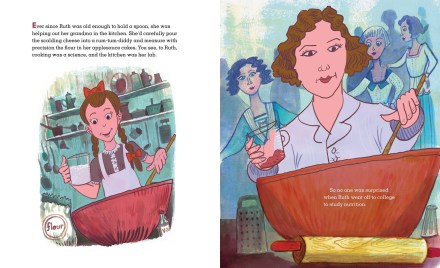
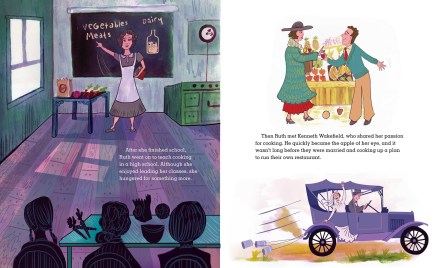
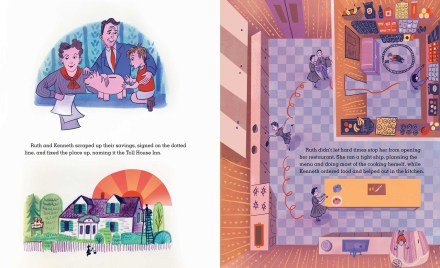
Ruth was a born baker. She loved helping her grandmother out in the kitchen as soon as she “was old enough to hold a spoon.” Ruth had a special feeling about cooking—to her “cooking was a science, and the kitchen was her lab.” When Ruth graduated from high school, she went to college to study nutrition. With her degree in hand, Ruth taught cooking in a high school. But while “she enjoyed leading her classes, she hungered for something more.”

celebrate-picture-books-picture-book-review-how-the-cookie-crumbled-teacher

Copyright Gilbert Ford, 2017, courtesy of simonandschuster.com.

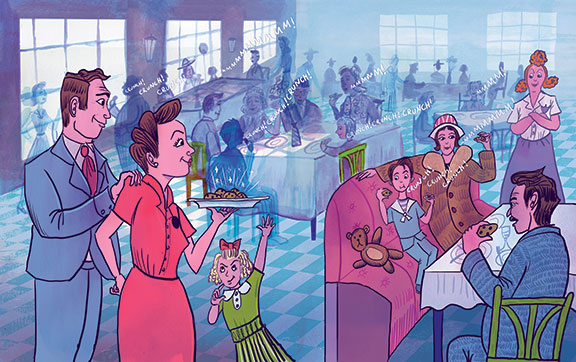
Ruth met and married Kenneth Wakefield, who also “shared her passion for cooking.” Together, they planned to open their own restaurant. Four years later, even though the economy was in depression and they had a young son, Ruth and Kenneth bought an old tollhouse in Whitman, Massachusetts. They fixed it up and named their restaurant the Toll House Inn.

celebrate-picture-books-picture-book-review-how-the-cookie-crumbled-inside-restaurant

Copyright Gilbert Ford, 2017, courtesy of simonandschuster.com.

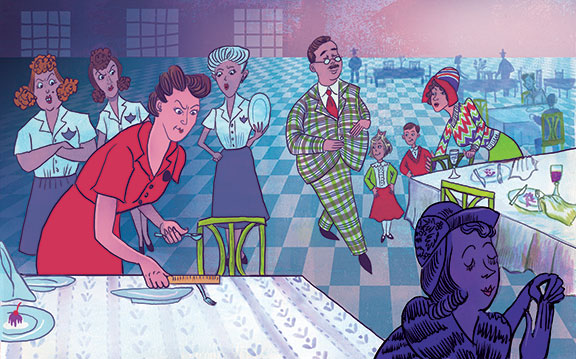
Ruth did “most of the cooking herself while Kenneth ordered food and helped out in the kitchen.” Ruth was very particular about how the Toll House Inn was run, even measuring “the distance between the fork and the plate for accuracy. Hungry diners began visiting the Toll House Inn, leaving satisfied and ready to return.

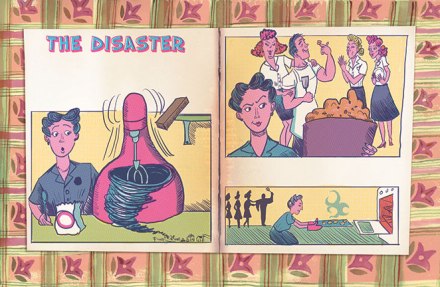
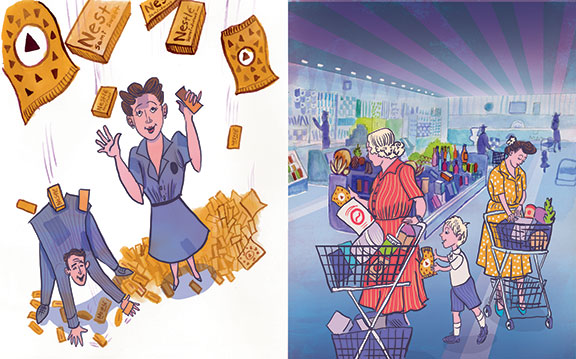
So how did chocolate chip cookies come to be? Here are the three popular theories: “The Disaster”—One story says that while Ruth was “whipping up a batch of Butter Drop Do cookies,” her mixer, spinning at top speed, “knocked a Nestlé chocolate bar off the shelf” and right into the dough. “What a disaster!” The grill man thought Ruth should bake them anyway, and when the cookies were done, Ruth “discovered pure heaven.”

celebrate-picture-books-picture-book-review-how-the-cookie-crumbled-the-disaster

Copyright Gilbert Ford, 2017, courtesy of simonandschuster.com.

“The Substitute”—Having forgotten to order baking chocolate, Ruth chopped up a Nestlé chocolate bar and added it to the dough, thinking that it would melt evenly in the oven. “But when she pulled the cookies from the oven, boy, was she wrong. ‘They’re ruined!’ she cried.” But some waitresses and kitchen workers tried them and found them to be delicious. When Ruth tried them herself, she agreed.

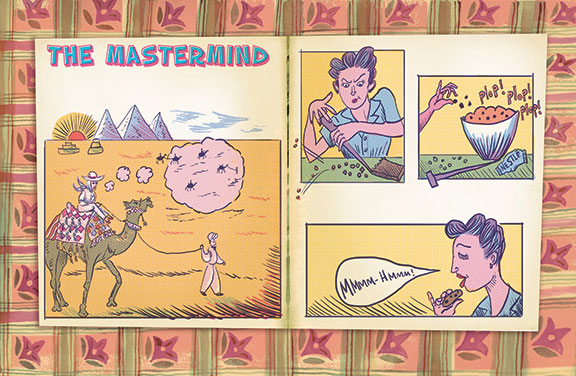
“The Mastermind”—Inspiration struck Ruth while returning from a trip to Egypt. Back in the kitchen, “she deliberately took an ice pick to that chocolate bar” and “dropped the chunks into the mix.” The baked cookies were “exactly how she imagined it. She “took a bite and savored the warm, gooey chocolate as it melted right in her mouth.”

celebrate-picture-books-picture-book-review-how-the-cookie-crumbled-the-mastermind

Copyright Gilbert Ford, 2017, courtesy of gilbertford.com.

“So, which version do you believe?”

The Disaster seems a little random, and the Substitute is “a little hard to swallow,” considering Ruth’s vast knowledge of cooking and ingredients. That leaves the Mastermind. Ruth was well-known for her ability to create delectable desserts and for searching out new recipes. It seems that “Ruth deserves some credit. She was one smart cookie!”

celebrate-picture-books-picture-book-review-how-the-cookie-crumbled-serving-cookies

Copyright Gilbert Ford, 2017, courtesy of gilbertford.com.

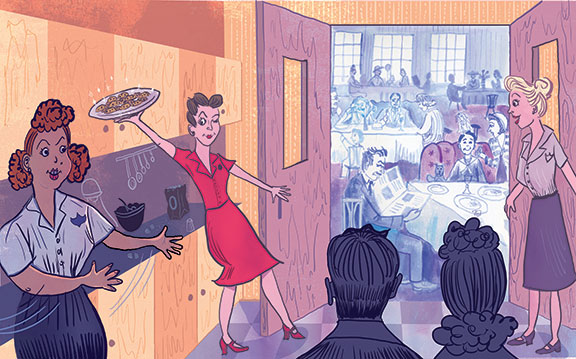
So with new cookies on the menu, Ruth began serving them to her customers. Everyone loved them and word spread about her “Toll House Chocolate Crunch Cookies.” People came from far away to try them. So many people, in fact, that Ruth had to expand her restaurant. You might think that Ruth kept her recipe a secret, but instead, she shared it with anyone who asked! She even let it be printed in the newspaper. Soon, people throughout Boston were baking Ruth’s cookies.

celebrate-picture-books-picture-book-review-how-the-cookie-crumbled-yummy

Copyright Gilbert Ford, 2017, courtesy of gilbertford.com.

When Ruth was interviewed on the Betty Crocker radio show, her recipe spread across the country. Seeing an unusual increase in sales of Nestle chocolate bars, the managers set out to find the cause. Soon they showed up at Ruth’s door begging for her recipe. “She gave it to them, and Nestlé began to produce chocolate chips designed specifically for Ruth’s cookies.” In payment, it’s said “she was awarded a lifetime supply of Nestlé chocolate!”

By the 1940s Ruth’s recipe appeared on every bag of Nestlé chocolate chips. From then on, Ruth’s cookies became a favorite of adults and kids alike!

An Author’s Note relating more about Ruth Wakefield and her famous cookies, as well as her classic recipe follow the text.

celebrate-picture-books-picture-book-review-how-the-cookie-crumbled-free-chocolate

Copyright Gilbert Ford, 2017, courtesy of gilbertford.com.

Gilbert Ford presents this sweet story with all the intrigue that has grown up around the invention of the chocolate chip cookie while giving Ruth Wakefield her proper due for her cleverness in the kitchen. Ford’s conversational style invites kids to participate in the story—a nice touch considering that the chocolate chip cookie is a perennial favorite with children. Relating the three separate theories gives readers an opportunity to think about the nature of invention. Including the facts about Ruth’s generosity with her recipe show readers that sharing ideas can be beneficial and could even prompt discussions about different ways to handle proprietary information.

celebrate-picture-books-picture-book-review-how-the-cookie-crumbled-table-setting

Copyright Gilbert Ford, 2017, courtesy of gilbertford.com.

In keeping with his light tone, Ford’s illustrations combine realistic and whimsical elements. The three theories are presented in more comic-book style, while the rest of the story portrays the historical time period, Ruth and Kenneth’s growing restaurant, and, of course, the star of the plate—the chocolate chip cookie.

For kids who love cooking and baking, history, and biographies as well as for its value in initiating discussion and even projects, How the Cookie Crumbled would be a welcome addition to home and classroom bookshelves.

Ages 4 – 8

Atheneum Books for Young Readers, 2017 | ISBN 978-1481450676

Discover more about Gilbert Ford, his books, and his art on his website.

National Chocolate Chip Cookie Day Activity

celebrate-picture-books-picture-book-review-catch-the-cookie-maze

Catch the Cookie! Maze


Sometimes you just need a cookie! Help the little girl find her way to her favorite cookies with this printable Catch the Cookie! Maze and Solution.

celebrate-picture-books-picture-book-review-how-the-cookie-crumbled-cover

You can find How The Cookie Crumbled at these booksellers

Amazon | Barnes & Noble | Books-a-Million | IndieBound

Picture Book Review
July 20 – National Moon Day

celebrate-picture-books-picture-book-review-margaret-and-the-moon-cover

About the Holiday

Today’s holiday celebrates July 20, 1969, the day when astronauts first walked on the moon. Six hours after landing on the moon with his fellow astronauts, Neil Armstrong climbed down the ladder and stepped onto the moon’s surface. Watched by millions of people on TV, this monumental human achievement ushered in the technical advancements we enjoy today. To celebrate, why not share that historic moment with your child and read up on the people who helped make that mission possible—like the subject of today’s book!

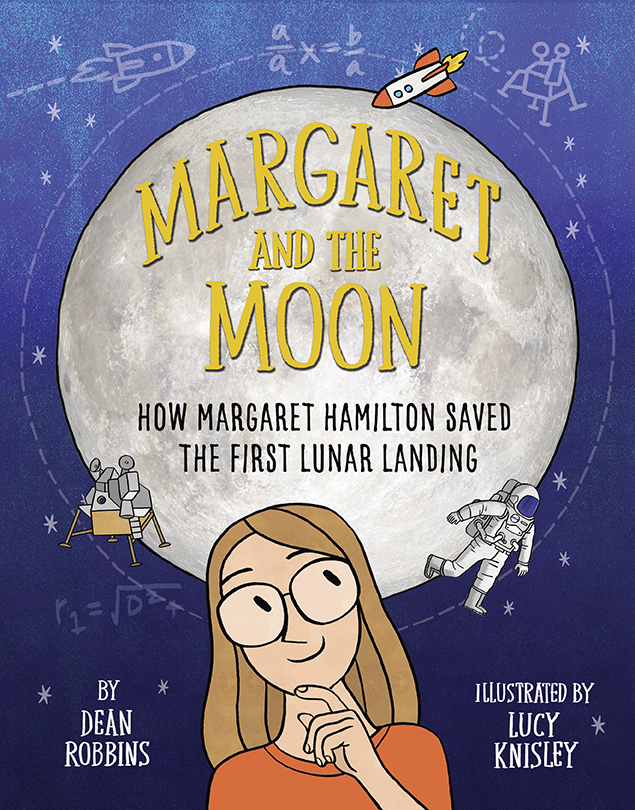
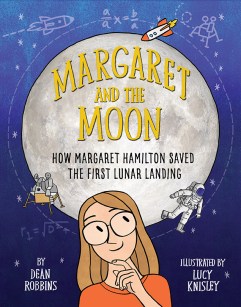
Margaret and the Moon: How Margaret Hamilton Saved the First Lunar Landing

Written by Dean Robbins | Illustrated by Lucy Knisley


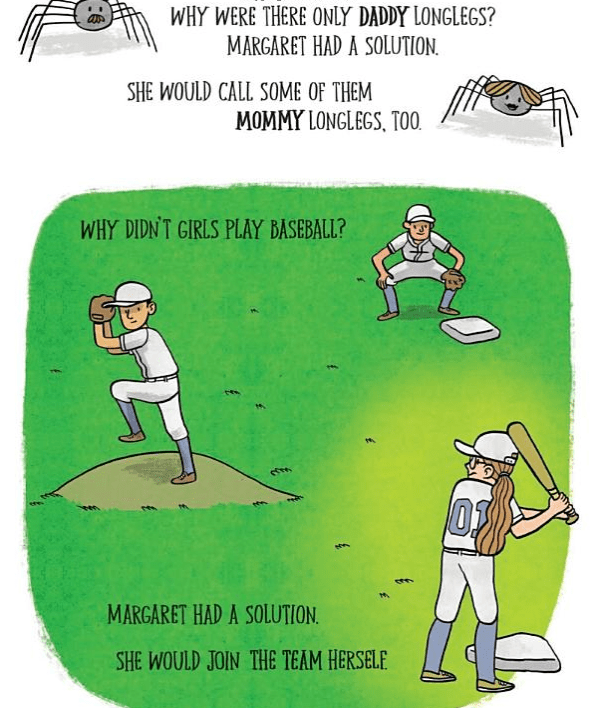
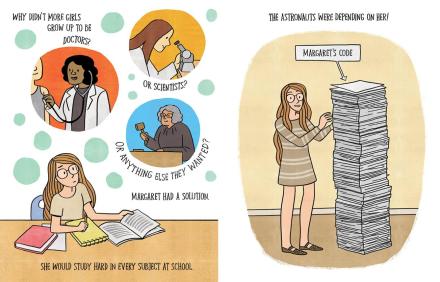
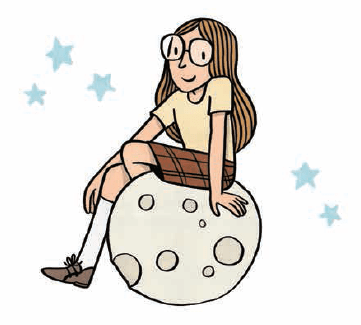
“Margaret Hamilton loved to solve problems.” When she looked around, she saw many things that made her wonder “why?” Instead of going with the status quo, though, she came up with her own answers. Some things she questioned were why girls didn’t play baseball and why there were so few women doctors, scientists, judges and other professionals. So Margaret joined the baseball team and studied “hard in every subject at school—reading, music, art, and especially mathematics.”
celebrate-picture-books-picture-book-review-margaret-and-the-moon-baseball

Image copyright Lucy Knisley, 2017, text copyright Dean Robbins, 2017. Courtesy of Knopf Books for Young Readers.

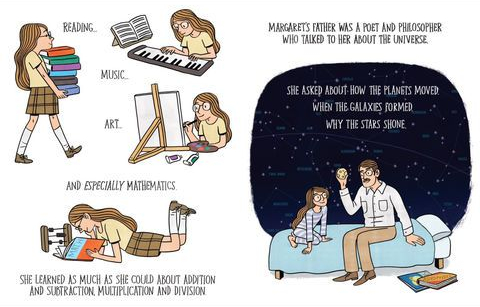
From her father who was a poet and philosopher, Margaret learned about the universe. She wanted to know “how the planets moved, when the galaxies formed, and why the stars shone.” She loved to gaze “at the night sky in wonder.” She especially wanted to know more about the moon—how far away is it? How many miles is its orbit around the Earth? What is its diameter?
In school, Margaret found it fun to solve “harder and harder math problems” in algebra, geometry, and calculus. “And then she discovered computers!” She realized that she could use computers to solve so many of her questions about the universe. She began writing code and called herself a software engineer. After starting with simple mathematical problems, Margaret moved on to writing code that “could track airplanes through the clouds,” predict the weather, and perform functions they never had before.

celebrate-picture-books-picture-book-review-margaret-and-the-moon-father

Image copyright Lucy Knisley, 2017, text copyright Dean Robbins, 2017. Courtesy of Knopf Books for Young Readers.

In 1964 she joined the team at NASA that was working on sending astronauts to the moon. In writing her code, “Margaret thought of everything that could happen on a trip to the moon.” What if the spacecraft went off course or lost power? What if one of the astronauts made a mistake? Margaret wrote code that could solve all of these problems and more. Soon Margaret was leading a team of her own as “Director of Software Programming for NASA’s Project Apollo.”

She was instrumental in helping Apollo 8 orbit the moon, Apollo 9 hook up with another ship in space, and Apollo 10 come “within nine miles of the moon’s surface.” When NASA was ready to land people on the moon, Margaret wrote the code. She thought of every problem that could arise and included a solution. The printout of her code stood taller than she was.

celebrate-picture-books-picture-book-review-margaret-and-the-moon-studied-hard

Image copyright Lucy Knisley, 2017, text copyright Dean Robbins, 2017. Courtesy of Knopf Books for Young Readers.

On the day of Apollo 11’s launch, Margaret was in the control room while the world watched on television. It took four days for the spacecraft to reach the moon. Finally, the lunar module, Eagle, separated and was ready to make the landing. But just as it was about to descend, an astronaut flipped a switch that sent the Eagle’s computer into overload.

Had Margaret “prepared for this problem? Of course! Margaret’s code made the computer ignore the extra tasks and focus on the landing.” Slowly the Eagle approached the surface of the moon and touched down. “The Eagle has landed!” Neil Armstrong announced to an amazed audience. In NASA’s control room, everyone cheered. “Margaret was a hero!”

An Author’s Note with more information about and photographs of Margaret Hamilton follow the text.

celebrate-picture-books-picture-book-review-margaret-and-the-moon-star-gazing

Image copyright Lucy Knisley, 2017, text copyright Dean Robbins, 2017. Courtesy of Knopf Books for Young Readers.

With excellent examples from Margaret Hamilton’s childhood and adult life, Dean Robbins presents an accessible and compelling biography that reveals, from the beginning, Margaret’s curiosity, confidence, and convictions. Robbin’s focus on Margaret’s hard work, her excitement at discovering computers, and her leadership at NASA creates a narrative that is inspirational for all children. His emphasis on positive, affirming events in Margaret’s life is welcome, allowing girls and boys to realize that through dedication and self-assurance, they can achieve their goals just as Margaret—a superb role model—did.

celebrate-picture-books-picture-book-review-margaret-and-the-moon-margaret

Lucy Knisley’s bright, supportive illustrations, full of thought bubbles of Margaret’s ideas and wonderings, give readers the kinds of details that will spark their imaginations and help them understand and appreciate Margaret Hamilton’s many gifts and expertise. Images of mathematical problems give way to lines of code, helping children see the connection between what they’re learning at school and future careers. Kids interested in space exploration will be enthralled with the illustrations of the NASA control room and lunar launches.

For kids interested in computer science and other sciences, biographies, and history, Margaret and the Moon is an excellent addition to home as well as classroom and school libraries.

Ages 4 – 8

Knopf Books for Young Readers, 2017 | ISBN 978-0399551857

Discover more about Dean Robbins and his books on his website.

To learn more about Lucy Knisley, her artwork, books, and comic, visit her website.

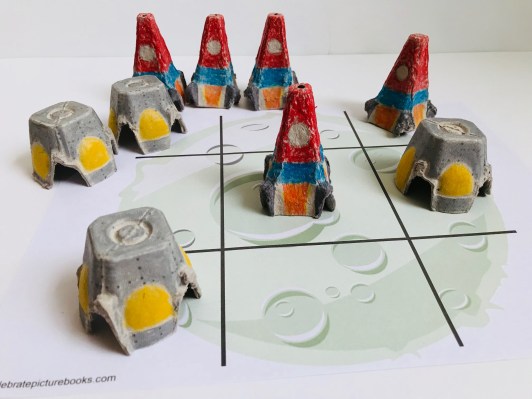
You can launch your own Tic-Tac-Toe Game with this set you make yourself! With just a couple of egg cartons, some crayons, and a printable game board, you’ll be off to the moon for some fun! Opposing players can be designated by rockets and capsules. Each player will need 5 playing pieces. 

National Moon Day Activity

celebrate-picture-books-picture-book-review-rocket-to-the-moon-tic-tac-toe-game

Out-of-this-World Tic-Tac-Toe Game

SUPPLIES

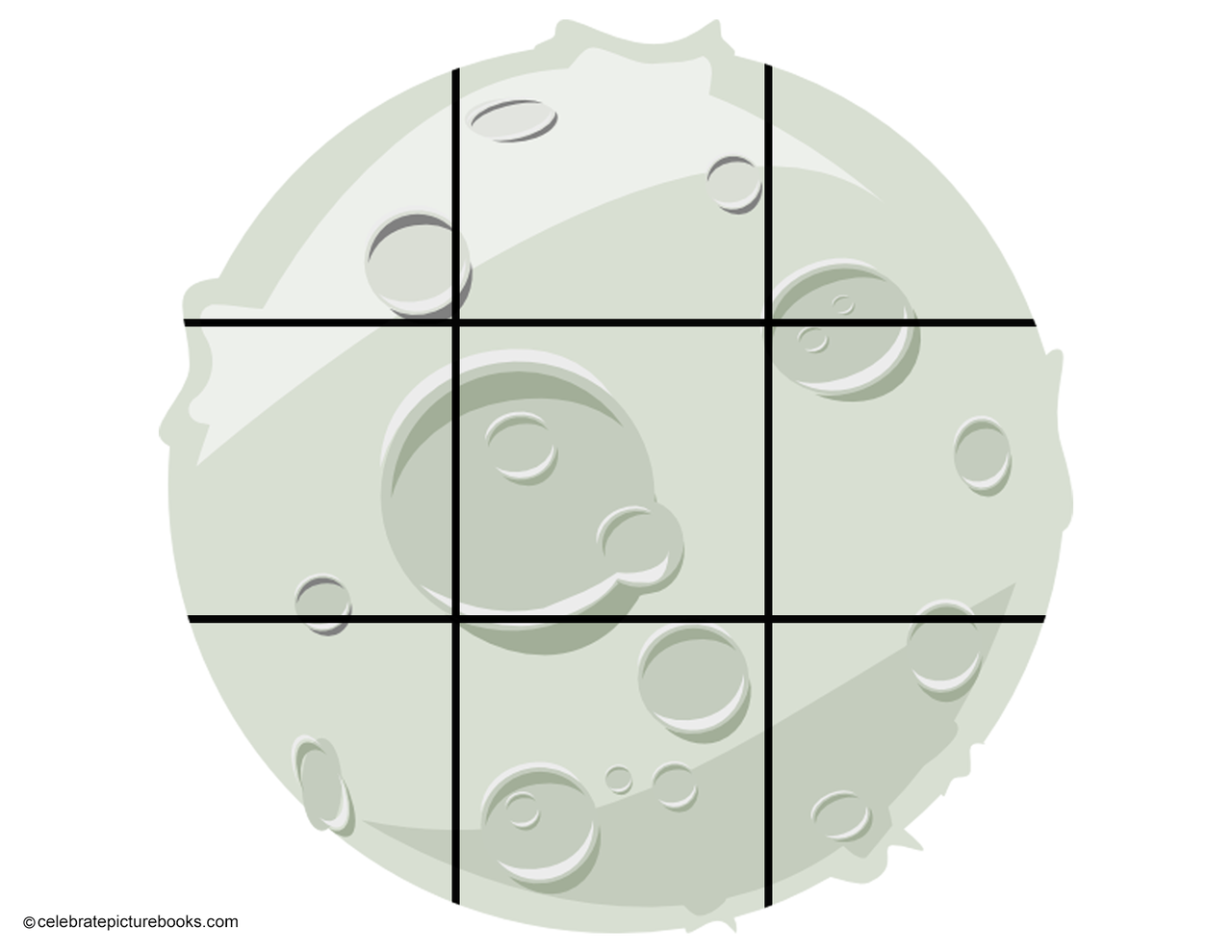
  • Printable Moon Tic-Tac-Toe Game Board
  • 2 cardboard egg cartons
  • Heavy stock paper or regular printer paper
  • Crayons
  • Black or gray fine-tip marker

DIRECTIONS

To Make the Rockets

  1. Cut the tall center cones from the egg carton
  2. Trim the bottoms of each form so they stand steadily, leaving the arched corners intact
  3. Pencil in a circular window on one side near the top of the cone
  4. Color the rocket body any colors you like, going around the window and stopping where the arched corners begin
  5. With the marker color the arched corners of the form to make legs
  6. On the cardboard between the legs, color flames for blast off

To Make the Capsule

  1. Cut the egg cups from an egg carton
  2. Color the sides silver, leaving the curved section uncolored. (If your egg cup has no pre-pressed curve on the sides of the cup, draw one on each side.)
  3. Color the curved section yellow to make windows
  4. With the marker, dot “rivets” across the capsule

Print the Moon Game Board and play!

celebrate-picture-books-picture-book-review-margaret-and-the-moon-cover

You can find Margaret and the Moon: How Margaret Hamilton Saved the First Lunar Landing at these booksellers

Amazon | Barnes & Noble | Books-a-Million | IndieBound

Picture Book Review