July 24 – National Cousins Day

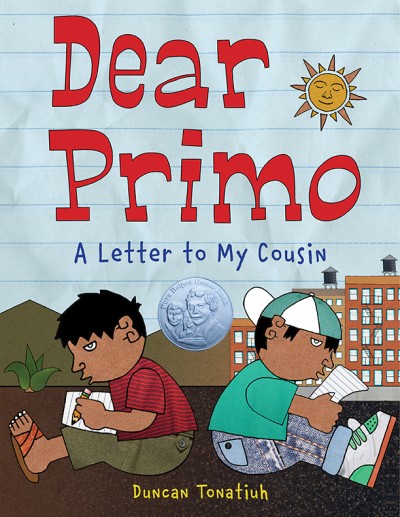
celebrate-picture-books-picture-book-review-dear-primo-a-letter-to-my-cousin-cover

About the Holiday

Today we celebrate cousins—those family members who are close in age and in our hearts. Often getting together with family means getting to play with cousins who can become best friends. As we grow up and move on to other cities for school or jobs, it’s easy to lose touch. If you live far away from family, take the opportunity today to text, email, or call a special cousin and catch up. If you live close, why not plan a get together with your cousins or for your kids and their cousins?

Dear Primo: A Letter to My Cousin

By Duncan Tonatiuh


Charlie runs through the house shouting with excitement. He’s gotten a letter from his cousin Carlitos who lives in Mexico. They’ve never met, but Charlie would like to. In his letter Carlitos tells Charlie that he lives on a farm where they grow maize. He has a burro, pollos, and a gallo that crows and crows. Charlie sits right down and writes a letter in return.
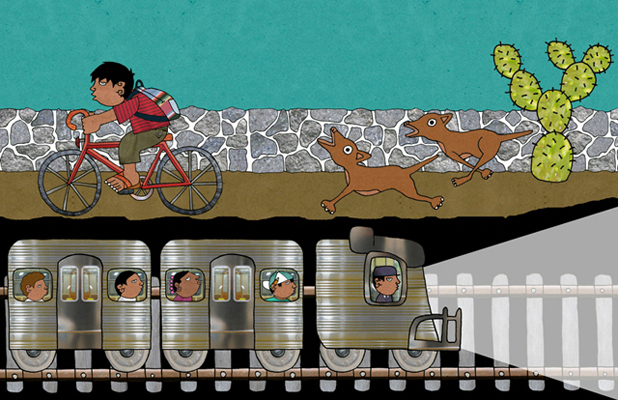
celebrate-picture-books-picture-book-review-dear-primo-a-letter-to-my-cousin-biking

Copyright Duncan Tonatiuh, 2010. Courtesy of duncantonatiuh.com.

He tells Carlitos that he lives in a city. From his window he can see a bridge and skyscrapers. He writes: “Skyscrapers are buildings so tall they tickle the clouds. At night all the lights from the city look like stars from the sky.” To get to school, Carlitos says, he rides his bicicleta. Perros bark and run after him as he passes. Charlie goes to school on the subway that is like a “long metal snake” underground.

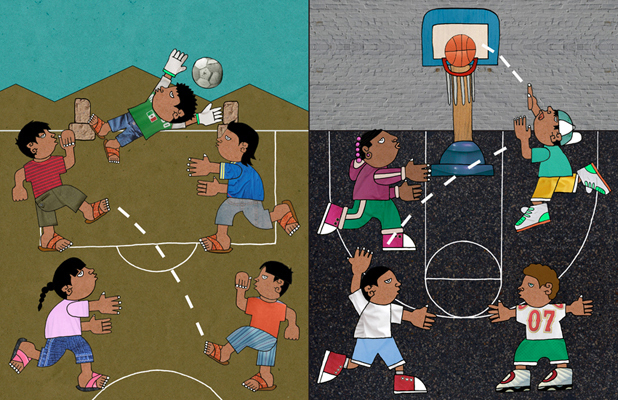
At recess Carlitos and his friends play fútbol. Charlie would call it soccer. Carlitos likes when another player passes him the ball and he kicks it into the net for a gol. Charlie likes scoring too. He plays basketball with his friends during recess. When he gets the ball he dunks it through the net for two points.
celebrate-picture-books-picture-book-review-dear-primo-a-letter-to-my-cousin-recess

Copyright Duncan Tonatiuh, 2010. Courtesy of duncantonatiuh.com.

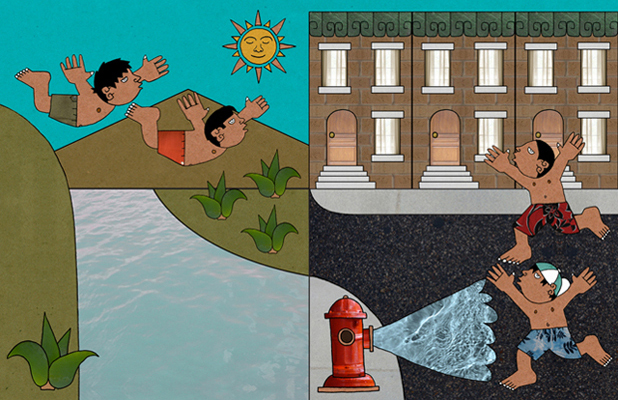
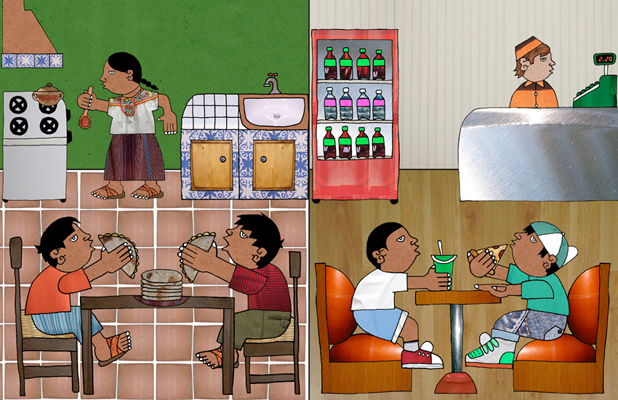
After school Carlitos helps his mama cook cheese quesadillas. Charlie grabs a slice of pizza on his way home from school. When Carlitos finishes his homework, he goes outside to play. He likes to shoot canicas and watch them roll, and he’s good at spinning the trompo. But his favorite thing to do is fly his papalote and watch its tail flutter as it soars into the sky. In the afternoon, Charlie says, he plays with his friends outside on the stoop. They jump rope and play hopscotch then they go inside to play video games. Sometimes it gets so hot that Carlitos and his friends go down to the río to go swimming. Charlie and his friends cool off in the spray of the fire hydrant when the firefighters open it for them.
celebrate-picture-books-picture-book-review-dear-primo-a-letter-to-my-cousin-cooling-off

Copyright Duncan Tonatiuh, 2010. Courtesy of duncantonatiuh.com.

Carlitos spends the weekends at the mercado selling the maize and prickly fruit, tunas, that his family grows on their farm. They also buy food they will need for the next week from other vendors. Weekends are market days for Charlie, too. He goes to the grocery store with his mom and checks off the items on their list as they put them in the cart.

Sometimes there are fiestas in town, Carlitos tells Charlie. The parties last for two or three days. “At night there are cohetas that light up the sky and mariachis who play and play.” Charlie replies that there are special celebrations in his city too where he watches parades with marching bands and people in costumes. Carlitos wishes Charlie could see the churros, cowboys who ride their caballos and twirl their reatas. Charlie thinks Carlitos would be amazed at the break-dancers in his neighborhood who can flip and spin on their heads.
celebrate-picture-books-picture-book-review-dear-primo-a-letter-to-my-cousin-snack

Copyright Duncan Tonatiuh, 2010. Courtesy of duncantonatiuh.com.

In Mexico, Carlitos writes, there are so many traditions. On Dia de los Muertes families honor those who have passed away, and in December there are parties called Posados with piñatas full of sweets and fruit. Charlie writes that in America we have traditions too. Two of his favorites are Thanksgiving, when he gets to eat turkey, and Halloween, when he dresses up in a costume and goes trick-or-treating for candy.

He’d like to write more, Charlie says, but his mom is calling for him to brush his teeth and get ready for bed. It seems Carlitos ended his letter on the same note. And as each boy pulls up the covers, they have the same idea: “My primo should come visit me!”

celebrate-picture-books-picture-book-review-dear-primo-a-letter-to-my-cousin-same-idea

Copyright Duncan Tonatiuh, 2010. Courtesy of duncantonatiuh.com.

Duncan Tonatiuh’s charming tribute to family and cultural similarities told through two letters written by cousins engages young readers on many levels. Filled with Spanish vocabulary, Carlitos’s letter introduces children to Spanish words for familiar things as well as to new ideas. Spanish-speaking readers find the same experience through Charlie’s letter to Carlitos. By juxtaposing similar daily and special events on each page or two-page spread, Tonatiuh emphasizes the fact that people are the same wherever they live.

Tonatiuh’s now well-known folk-art illustrations let kids travel to sites in Mexico and America as they get to know Charlie and Carlitos. Striking and vividly detailed images on each page invite kids to compare the lives of the two cousins and point out the similarities and differences.

Dear Primo: A Letter to My Cousin is an engaging multicultural book for home and school libraries. The book is a perfect way to introduce Spanish words and Mexican culture to kids learning about their world.

Ages 5 – 8

Harry N. Abrams, 2010 | ISBN 978-0810938724

Discover more about Duncan Tonatiuh, his books, and his artwork on his website!

National Cousins Day Activity
celebrate-picture-books-picture-book-review-cousins-connect-maze

Cousins Connect! Maze


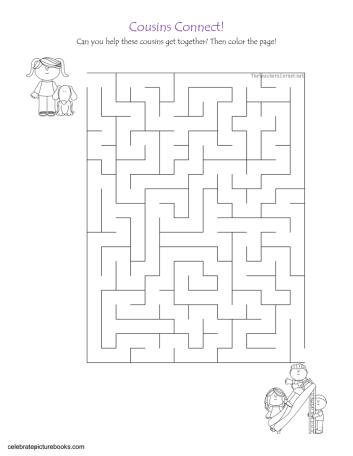
Can you help the cousins get together to play in this printable Cousins Connect! Maze? Then you can color the page! Here’s the Solution!

Picture Book Review

July 21 – It’s National Culinary Arts Month

celebrate-picture-books-picture-book-review-chow-mein-and-potstickers-cover

About the Holiday

During the month of July we honor those professional chefs who provide us with tantalizing dishes at our favorite restaurants. In addition to cooking old favorites, chefs also stay up on trends and create new recipes to make life deliciously fresh and surprising. To celebrate, visit your local restaurants and try something new! If you like to cook at home, gather some different ingredients and see what you can create! This month is also a great time to explore foods and cuisine from other countries!

Chow Mein and Potstickers

Written by Liselotte Schippers | Illustrated by Monique van den Hout


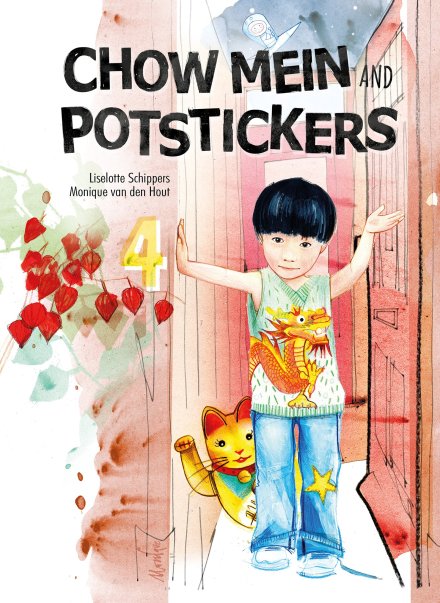
A little boy named Chan has just moved here from China and is hoping to make new friends. He tells a little about himself: “I moved to this country with my father, / my mother and my sister. / My mother is starting a new job here. / She’s an astronaut and someday she’ll go to the moon!” He reveals that his favorite food is potstickers and chow mein. He’s just about to go door-to-door to meet his neighbors. He wonders if kids here like to play and how “things work around here.”

Next door at Number 6, Chan meets Mila, who is from Bosnia. Chan thinks “she looks like a princess from a country far away.” Chan and Mila play soccer until they “get tired and hungry!” Then they eat Mila’s “favorite dish / Bosnian ćevapĉići—rolls of ground / meat.” At the end of the day, they say goodbye: “‘Zàijiàn!’” and “‘Doviđenja!’”

The next day Chan meets Rani, who was born in Indonesia. Even though Rani is younger, Chan says that “you can tell he is very wise. / Rani’s father is a famous musician. / He has to travel a lot, touring with his band. / His mother works at the hospital and helps people who are sick.” Rani shows Chan how to play marbles. Afterward, they enjoy Rani’s “favorite foods: satay and kroepoek. / That’s meat on a stick and shrimp crackers.” Later, they wave good-bye and say: “‘Zàijiàn!’” and “‘Sampai jumpa!’”

Across the street lives a little girl named Jamila, who is originally from Afghanistan. “‘Salaam!’” she greets Chan. Jamila plays the guitar, and the two sing and dance along. Chan says: “After a while we get tired and hungry. / Jamila and I eat Afghan qabuli—rice and lamb. / That brings us to the end of our day. / As we wave good-bye, we say: “‘Zàijiàn!’” and “‘Khodahafez!’”

Twins Kim and Coen live at Number 10. They are from Belgium. “Their father is a master chocolatier. That means he / makes fancy chocolates. When he is working, the house / smells wonderful. / Their mother sells the chocolates in a  / special shop. We get to try some. I’ve never tasted / anything so delicious!” After roller skating, they eat frietjes, which are like French fries served with mayonnaise. “‘Zàijiàn!’” and “‘Tot ziens!’”

In the tall yellow house next to the church on Chan’s street, Chan meets Basu, who came here from South Africa. His mother is a minister and his father is a fireman. Chan thinks that maybe he’d like to be a fireman too when he grows up. “Basu loves to paint and draw.” He and Chan “get busy with brushes, paints and pens.” When their “masterpiece is finished,” Chan says, “We have paint splatters on our clothes and in our hair!” All that creating has made them “tired and hungry.” They “eat South African bobotie… / a dish made with seasoned ground meat.” Before Chan goes home, the boys say:  “‘Zàijiàn!’” and “‘Totsiens!’”

Chan is excited to discover that his street is full of other children to play with. In other homes live Ania from Poland, Nuray from Turkey, Clifton from Suriname, Gracy from England, and Nino from Italy. On one special day, Chan invites all of his new friends to go to the playground with him, and Chan’s father brings chow mein and potstickers for everyone to enjoy. At the end of the day, the air rings with each child’s special way of saying “good-bye.”

Liselotte Schippers free verse poetry opens the door to a world of children for young readers. Each poem gives children the kind of information they want to know about kids from around the world. What do they like to do? What are their families like? What do they eat? Every poem includes the words “hello” and “good-bye” in the native language of the child as well as a favorite dish from each country. Little Chan makes a delightful and enthusiastic tour guide to his multicultural neighborhood, and shows young readers that even though people may come from different countries, their dreams, desires, games, and even jobs are the same. The country that Chan has moved to is never named, making “here” everywhere.

Monique van den Hout’s beautiful illustrations combine the ethereal with realistic portrayals of the happy, bright-eyed children that Chan meets in his neighborhood. Each poem is presented on a two-page spread in which Chan and his new friend are surrounded by colorful images of symbols from that child’s native country. Following each poem, a short dictionary defines and gives a pronunciation guide to the greetings and food introduced.

Chow Mein and Potstickers is an enticing introduction to the global community for children. Each poem could be used to spark more discovery about the countries presented and their children. The book’s inclusion of languages and foods makes it a perfect addition to school, classroom, and homeschool libraries for social studies units as well as a fun book for personal bookshelves.

Ages 4 and up

Clavis, 2017 | ISBN 978-1605373287

National Culinary Arts Month Activity

celebrate-pictureb-books-picture-book-review-Kids-Baking-Cake-in-Cooking-Show-Bakery-Coloring-Pages

Let’s Bake Together Coloring Page


It’s fun for friends to create new recipes or just cook up some favorite treats! Have fun with this printable Let’s Bake Together Coloring Page!

Picture Book Review
June 21 – Make Music Day

celebrate-picture-books-picture-book-review-ada's-violin-cover

About the Holiday

Make Music Day first rang out in 1982 in France as the Fête de la Musique. Celebrated by young and old, professional musicians and amateurs, the day invites all to make and share their music. People in more than 750 cities and towns in over 120 countries participate in this creative holiday.

Ada’s Violin: The Story of the Recycled Orchestra of Paraguay

Written by Susan Hood | Illustrated by Sally Wern Comport


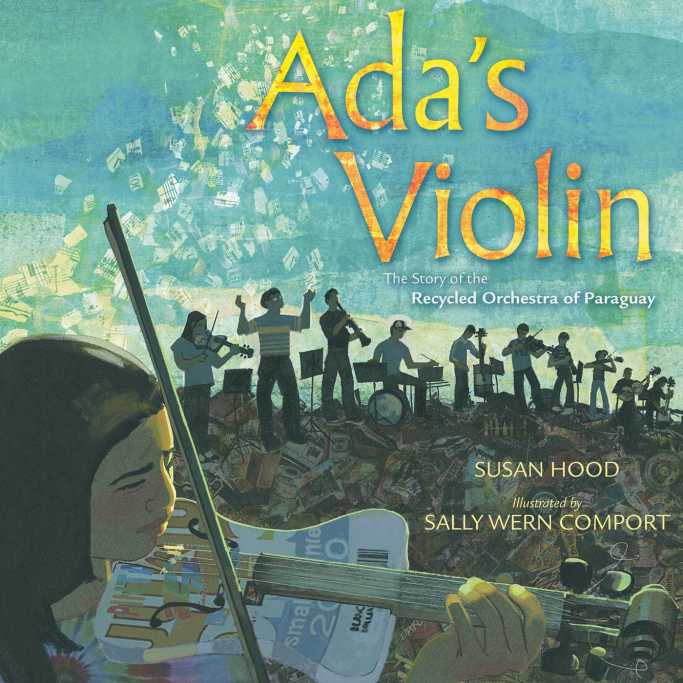
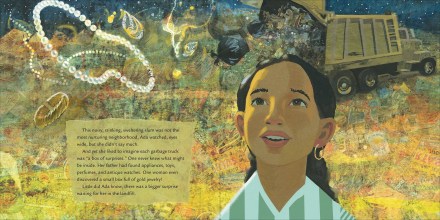
Ada Ríos is growing up in Cateura, a town built of trash as the main garbage dump for the capital city of Paraguay. Every morning the refuse trucks rumble into town to deposit their loads—1,500 tons of trash every day. The citizens of Cateura—gancheros or recyclers—go to work sifting through the mounds and tearing into bags looking for anything valuable enough to recycle or sell. Cardboard is worth 5 cents a pound, plastic 10 cents a pound.

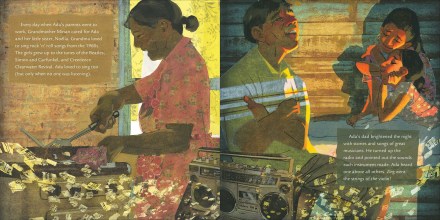
Ada knows the landfill can hold surprises—“Her father, a ganchero, had found appliances, toys, perfumes, and antique watches.”—but she can never imagine what it holds for her. When Ada and her sister were little, their grandmother watched them while their parents worked. They loved to listen to music, to sing, and to learn stories of musicians and the sounds of different instruments. Ada fell in love with the violin.

celebrate-picture-books-picture-book-review-ada's-violin-making-singing

Image copyright Sally Wern Comport, text copyright Susan Hood. Courtesy of simonandschuster.com

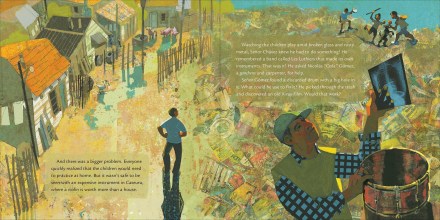
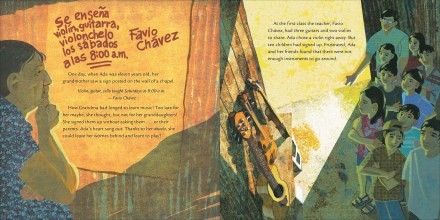
As the girls grow older and go to school, they venture farther into town, but there is little to fill their time. Many kids join gangs or get into fights. When Ada is 11 her grandmother signs her and her sister up for music lessons being offered by a new man in town named Favio Chávez. “Ada’s heart sang out” when she hears the news. On the first day ten children show up to play the five instruments available. But a bigger problem looms: the three guitars and two violins cannot be taken home for practicing as they are magnets for thieves. In Cateura a violin is worth more than a house.

But Favio Chávez has an idea. With help from Nicolás Gómez, a ganchero and carpenter, they pull bits and pieces from the landfill. An old broken drum and an X-ray film become a workable drum, water pipes become flutes, packing crates become guitars and violins, and oil drums become cellos. “Ada chose a violin made from an old paint can, an aluminum baking tray, a fork, and pieces of wooden crates. Worthless to thieves, it was invaluable to her. It was a violin of her very own.”

celebrate-picture-books-picture-book-review-ada's-violin-making-instruments

Image copyright Sally Wern Comport, text copyright Susan Hood. Courtesy of simonandschuster.com

The children practice tirelessly outside in 100-degree heat until the initial “screeches, twangs, and tweets hit all the right notes. Their class became ‘a small island’ where Chávez taught them to respect themselves and one another.” They become known as The Recycled Orchestra. Music now fills the air, adding a soundtrack of beauty to the grueling work. The orchestra is soon invited to play concerts in Cateura and the capital city of Asunción. When word spreads of their talent, the children receive offers to play from other cities and even other countries.

When Ada is 16 The Recycled Orchestra is invited to tour with a world-famous rock band. As Ada takes the stage in front of 35,000 people in Bogotá, Colombia, she is afraid, but the audience cheers for them and sings along as they play. On that night the children discover a new life. “Buried in the trash was music. And buried in themselves was something to be proud of.”

celebrate-picture-books-picture-book-review-ada's-violin-lessons

Image copyright Sally Wern Comport, text copyright Susan Hood. Courtesy of simonandschuster.com

An extensive author’s note plus a photograph of The Recycled Orchestra, lists of websites, videos and sources follow the text.

Ada’s Violin is also available in a Spanish edition—El violín de Ada: La Historia de la Orquesta de Instrumentos Reciclados del Paraguay.

Susan Hood has brought to light an incredible story of perseverance, hope, and the ability of music and other arts to provide opportunities and self-confidence that change lives. Told with unstinting honesty and sensitivity, Hood’s biography of Ada Ríos, Favio Chávez, and The Recycled Orchestra will inspire all who read it. The well-paced text offers revealing details on every page and flows with a lyrical quality that enhances the effect of the story and its impact. From the first sentence to the last, both children and adults will be riveted to The Recycled Orchestra.

celebrate-picture-books-picture-book-review-ada's-violin-hope

Image copyright Sally Wern Comport, text copyright Susan Hood. Courtesy of simonandschuster.com

Sally Wern Comport’s paintings beautifully capture the human spirit that shines through and drives people to astonishing achievements even in the most adverse conditions. With intricately created collages of rich hues, Comport depicts the town of Cateura and the mountains of trash the citizens work and play on. Warm lighting illuminates faces full of dreams and love. Readers will linger over depictions of the instruments workshop and cheer along with the concert audience as the children receive recognition. The full-bleed, two-page spreads echo the expanded world music gave to the children in the orchestra and the adults who heard them as music score confetti flutters throughout.

Both school classrooms and home libraries will benefit from the stirring message of Ada’s Violin.

Ages 4 and up

Simon & Schuster Books for Young Readers, 2016 | ISBN 978-1481430951 (English edition); 978-1481466578 (Spanish edition)

Discover more about Susan Hood and her books, plus fun activities for kids and information for teachers and parents on her website!

View a gallery of Sally Wern Comport’s artwork on her website!

Make Music Day Activity

celebrate-picture-books-picture-book-review-homemade-musical-instrument


Make Your Own Musical Instrument


Inspiration for sound can come from almost any object! Look around your house or classroom and discover the music in boxes, cans, blocks of wood, plastic egg cartons or deli containers, and more. Add string or wire for plucking, sticks for drumming, or beans for shaking. With a little glue, tape, or hardware and some creativity, you’ll be making your own rhythms in no time!

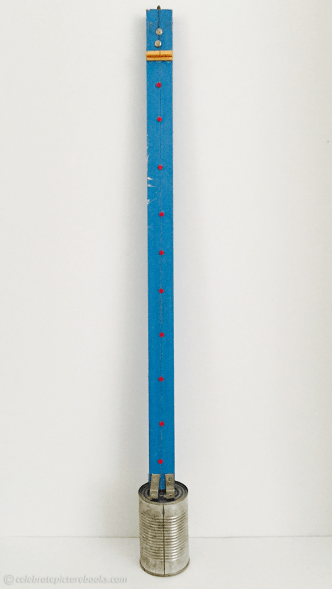
Supplies for the stringed instrument shown in the picture above

  • Tin can
  • Two small L brackets
  • Piece of wooden molding, 2 1/2 feet by 1 1/2 inches by 3/4 inches
  • Five small strips of wood to raise the wire off the neck of the instrument. I used long wooden fireplace matches cut into 1 1/2″ sections 
  • Thin wire
  • Small circular hook screw or regular screw
  • Two tacks
  • A nail, screw, or piece of wood that will fit horizontally in the mouth of the can
  • a small nail to make a hole in the can
  • Hammer
  • Strong Glue
  • Paint
  • Foam decorative dots

Directions

  1. Paint the wood and let dry
  2. Paint the small strips of wood and let dry
  3. Decorate the can with paint, sticker, duct tape, or paper
  4. With the hammer and small nail, make a hole in the center of the bottom of the can
  5. Wrap one end of the wire around the nail and glue so it is firmly in place
  6. Feed the other end of the wire through the hole in the bottom of the can
  7. Screw or glue two L brackets to one end of the wood molding so that the bottom of the L is flush with the bottom of the wood molding and there is space between the brackets. This makes the neck of the instrument
  8. Screw the circular or regular screw into the top, center of the wooden molding
  9. When the wooden match strips are dry, glue three match strips side-by-side 3 inches from the top of the molding. Glue two more match strips, one on top of the other on the center strip.
  10. When the L brackets are dry, glue them (and the neck of the instrument) to the can, making sure the brackets are on either side of the hole in the can. Make sure the wire is out of the hole. 
  11. When the brackets are firmly attached to the can, pull the wire to the top of the neck. Settle it in the center of the small pieces of wood, so that the wire is not touching the neck.
  12. Wrap the wire around the screw at the top of the molding until it is firmly in place and the wire is taut. 
  13. Secure the wire to the neck with the tacks
  14. Mark the “frets” with the foam dots

Picture Book Review


June 15 – Smile Power Day

celebrate-picture-books-picture-book-review-welcome-barroux-cover

About the Holiday

We smile at people all day long, don’t we? I mean there’s 🙂  😀  🙂  😉  and so many more! But how about the real kind? Giving a warm smile to a friend, a stranger, or—especially—someone who looks as if they need one, makes everyone feel better! Today, be happy and welcome all with a smile!

Welcome

By Barroux


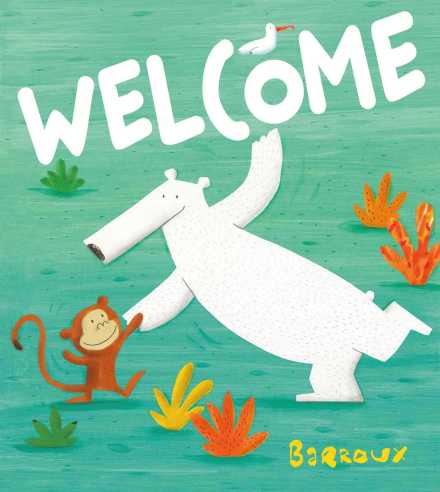
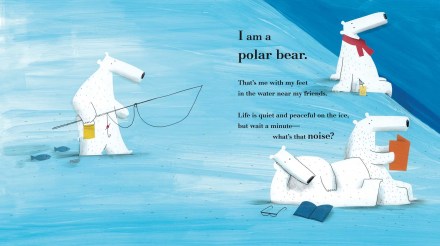
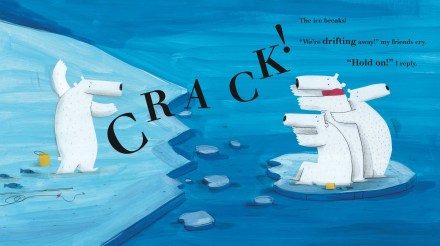
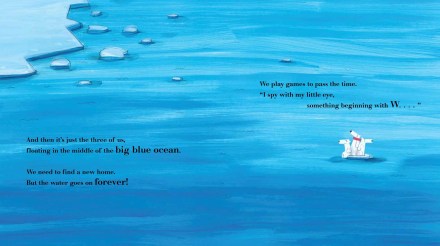
A polar bear is sitting on the edge of an ice floe enjoying some relaxing time with his friends when he hears an ominous noise. “CRACK! The ice breaks! ‘We’re drifting away!’” his friends cry. In no time at all the three polar bears are adrift in the middle of the sea in need of a new home. They float and float, but “the water goes on forever!” To pass the time the friends play games: “‘I spy with my little eye, something beginning with W…’”

celebrate-picture-books-picture-book-review-welcome-barroux-polar-bears-relaxing

Copyright Barroux, courtesy of little bee books and simonandschuster.com

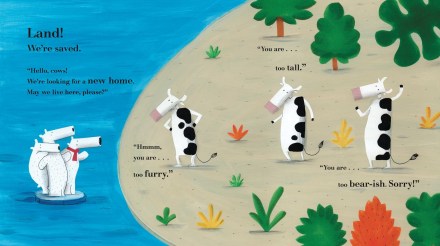
Perhaps days go by. The bears ride out a storm with dark skies and huge waves that threaten to sink them. It’s scary and the trio wants “to find a new home right now!” At last, their ice floe—smaller now—approaches a sandy shore. “Land! We’re saved,” cheer the polar bears. They ask the cows on the beach if they can live there, but the cows take exception. The bears are “too furry…too tall…and too bear-ish.” And with a “Sorry!” the cows turn the weary travelers away.

celebrate-picture-books-picture-book-review-welcome-barroux-ice-breaks-away

Copyright Barroux, courtesy of little bee books and simonandschuster.com

Once again on their own, the bears have no choice but to let the current steer them. With standing room for only one on their icy raft, they near another beach where a single panda relaxes on pillows in the midst of expansive land. “Yes! This could be our new home,” the polar bears shout. The panda ponders the situation for only a moment before stating, “‘…you are too many. Look around, there’s just not enough room! You can’t live here.’”

celebrate-picture-books-picture-book-review-welcome-barroux-polar-bears-meet-cows

Copyright Barroux, courtesy of little bee books and simonandschuster.com

As the polar bears continue on their journey, their “little ice boat has almost melted,” and they are running out of time. They bob next to a tall sea wall. “‘Help us!’” they plead. Behind the wall two giraffes lounge on the beach, too lazy to investigate the noise they hear. The ice floe has melted to a thin disk. The bears are hanging on and about to give up hope when they find an empty island. They jump to shore just in the nick of time and begin enjoying their new home.

celebrate-picture-books-picture-book-review-welcome-barroux-polar-bears-adrift

Copyright Barroux, courtesy of little bee books and simonandschuster.com

It’s not long before a dinghy floats into view with three monkeys on board. “‘Excuse me, we’re looking for a new home. Can you help us please?’” they ask. The polar bears stop their game of badminton and step forward. “‘Hmmm,’” they think. “‘You are…

Welcome!’”

With vibrant blue, full-bleed pages as wide open as the sea itself and three endearing long-nosed polar bears, Barroux has crafted a poignant tale with depth and far-reaching applications for readers of all ages. Inspired by the Syrian refugee crisis, Welcome stands on its own as an uplifting story of friendship and inclusiveness, but also offers an excellent means for beginning a discussion on the world events that children see and have questions about. Employing a bear’s first person point of view and incorporating a child-centric perspective on travel—from the humor of the I Spy game to the perseverance of the bears—Barroux sets just the right tone for his audience.

With sparse text and repetition of the bears’ simple request, the subject matter is handled with sensitivity, not fright, which allows children to understand that the theme of the story is relevant on many levels. Whether the “traveler” comes from near or far, is a classmate, teammate or neighbor, or is even the reader or someone else feeling adrift in a certain situation, children will see that all deserve welcome.

Ages 4 – 8

little bee books, 2016 | ISBN 978-1499804447

You can view a gallery of illustration work for children, adults, and more by Barroux on his website!

Smile Power Day Activity

celebrate-picture-books-picture-book-review-give-me-your-hand-puzzle

Give Me Your Hand! Puzzle


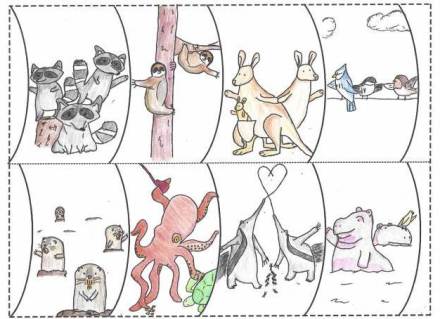
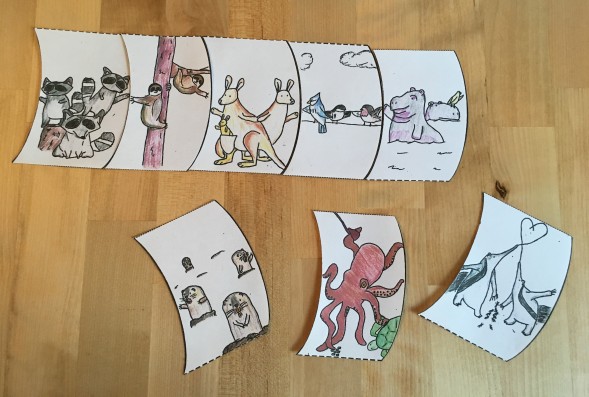
In this printable Give Me Your Hand! Puzzle, everyone is welcomed with a handshake. Offering friendship to all, the interchangeable pieces can be mixed and matched as the animals become buddies with one another.

Supplies

celebrate-picture-books-picture-book-review-UN-day-puzzle

Directions

  1. Print the puzzle: to make the puzzle sturdier: Print on heavy stock paper or glue the page to poster board
  2. Color the pictures with colored pencils or crayons
  3. Cut the pieces apart
  4. Switch the pieces around to make many alternate pictures

celebrate-picture-books-picture-book-review-UN-day-puzzle

Picture Book Review
May 21 – “I Need A Patch for That” Day

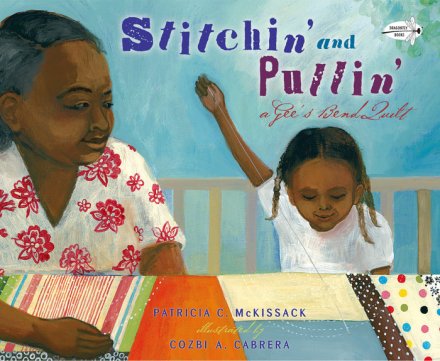
celebrate-picture-books-picture-book-review-stitchin'-and-pullin'-a-gee's-bend-quilt-cover

About the Holiday

Celebrated annually on May 21, “I Need a Patch for That” Day gives a little love to patches of all kinds. Have you been out working in your garden patch? Fabulous! Did you just finish all the requirements for a scouting patch? Good job! Waiting on a fix for the latest software kerfuffle? Who isn’t? Are you a pirate keeping one eye ready for the dark? Argghh! Do you need to patch up a misunderstanding? Good luck! Or maybe you’re a quilter like the amazing women in today’s book who create a patch to remember each of life’s important, inspirational, and formative events. 

Stitchin’ and Pullin’: A Gee’s Bend Quilt

Written by Patricia C. McKissack | Illustrated by Cozbi A. Cabrera


In this story told through poems, a little girl begins telling readers about her life, starting with a recitation on Gee’s Bend Women: “Gee’s Bend women are / Mothers and Grandmothers / Wives / Sisters and Daughters / Widows.” They are every kind of woman you know, doing every type of work and activity. “Gee’s Bend women are / Talented and Creative / Capable / Makers of artful quilts / Unmatched. / Gee’s Bend women are / Relatives / Neighbors / Friends— / Same as me.”

In Who Would Have Thought, the girl muses on how perceptions change. “For as long as anyone can remember,” she says, the women of Gee’s Bend, Alabama have created quilts that were slept under, sat on, and wrapped around the sick or cold. But now those same quilts are “…hanging on museum walls, / their makers famous….”

When she was just a tot “Baby Girl” reveals in Beneath the Quilting Frame, she played under the quilting frame, listening to her “mama, grandma, and great-gran / as they sewed, talked, sang, and laughed / above my tented playground.” She remembers the “steady fingers  /[that] pieced together colorful scraps of familiar cloth / into something / more lovely / than anything they had been before” as her mother sang her a lullaby.

celebrate-picture-books-picture-book-review-stitchin'-and-pullin'-a-gee's-bend-quilt-puzzling-the-pieces

Image copyright Cozbi A. Cabrera, courtesy of Random House Books for Young Readers

In Something Else, “Baby Girl” is growing too big to play underneath the frame. Her legs are becoming longer and her mind is full of “recipes for eleven kinds of jelly…how to get rid of mold…and the words to a hundred hymns and gospel songs” while she waits for her turn at the frame. At last, her time does come, and in Where to Start?, the girl asks her mama how to begin. Her mother answers, “‘Look for the heart. / When you find the heart, / your work will leap to life… / strong, beautiful, and… / independent.’”

In Remembering, the girl thinks about how her mama has told her that “cloth has a memory.” As she chooses the cloth that will become her quilt she recounts the life and the history in each. 

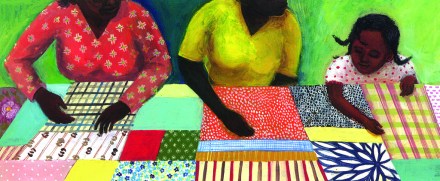
Nothing Wasted sees Grandma pulling apart a red-and-white gingham dress stitch by stitch. Suddenly, the girl knows that this cloth will become the patch that “will be the heart of my quilt.” In Puzzling the Pieces the girl and her grandma stand over the quilting frame fitting the squares together in the perfect way to tell the girl’s story. Her quilt comes together piece by piece to tell the history of Gee’s Bend in The River Island. The brown strips along three sides mirror the muddy waters surrounding her town. The fourth side is a green strip—“a symbol of the fields where my ancestors / worked cotton from can to can’t— / can see in the morning until / can’t see at night.” Lined up next to the green strip are six squares representing the small communities “where families with / the same name / are not kin by blood / but by plantation.”

Being Discovered is portrayed with “a large smoke-gray square”—the color of the Great Depression and the 15 minutes of fame Gee’s Bend garnered when discovered “by sociologists, historians, / educators, and journalists” who came and went, leaving Gee’s Bend “the way it had been / before being discovered.”

celebrate-picture-books-picture-book-review-stitchin'-and-pullin'-a-gee's-bend-quilt-understanding-comes-later

Image copyright Cozbi A. Cabrera, courtesy of Random House Books for Young Readers

In Colors, the girl’s grandma explains the meanings and feelings behind each colored cloth. “Blue cools. / Red is loud and hard to control, / like fire and a gossiping tongue.” Green, orange, yellow, white, pink, and all the others have their own personalities. “Grandma says, / ‘Colors show how you / feel deep down inside.’”

In Dr. King Brings Hope, the little girl adds “a spotless white patch for the hope Dr. Martin Luther King / brought to the Bend” and goes on to tell how her grandma saw Dr. King at Pleasant Grove Baptist Church and what it meant to her. By and By follows the girl as she adds “golden thank-yous, for James Reeb,” a “bright blue piece of velvet for Viola Liuzzo,” and a “big plaid people circle of white, black, brown, yellow, and red for Reverend Dr. King, all “killed for believing in justice.”

In the 1960s, The Sewing Bee tells, Gee’s Bend quilters were once again discovered. Joining the Bee provided buyers for the handmade quilts, but there were stipulations on the types of quilts that could be made and sold. The girl asks her grandma if she was part of the Bee, to which she replies, “‘more money. Less freedom. I chose to stay free.’”

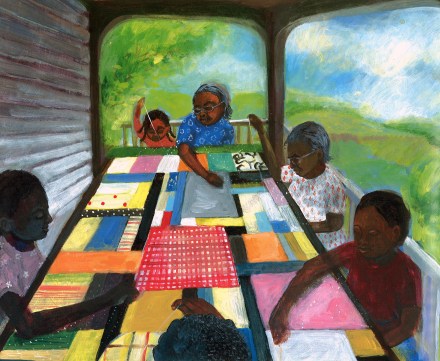
At last all of the patches are laid out and the time comes to stitch the girl’s quilt. Five women stand at the frame “all stitchin’ and pullin.’” They work “in a slow and steady rhythm” relaxing and enjoying being together until the quilt is finished. In Finished, the last stitch is sewn, and the thread bitten and knotted. The girl has hundreds of ideas for future quilts. “Quilts that are about me, / the place where I live, / and the people / who have been here for generations.”

Further poems unite the history of “Baby Girl,” her family, and neighbors, and an Author’s Note about quilting and the women of Gee’s Bend follow the text.

Patricia McKessack’s free verse poems capture the close relationships and camaraderie of the generations of women who join around the quilting frame to share and pass down their art and their heart. McKessack’s conversational verses, connected page after page like the patches of a quilt, reveal the complexity of this handmade art form in the way intimate talks between friends unveil a life. Readers learn not only about the little girl and her own thoughts, but the history and influence of her immediate family, world events, inspirational figures, and deeply held beliefs that make her who she is and ties her to the other Gee’s Bend women.

Cozbi A. Cabrera’s stunning acrylic paintings take readers inside the heart of the Gee’s Bend women, depicting the girl’s home, the table-sized quilting frame where the women collectively work, the plantations, the protests, and the changes that came but did not unravel the convictions, values, and love of the little girl’s family. Readers can almost hear the talking and singing of the Gee’s Bend women as they stitch their quilts, and the comforting, embracing environment is evident on every page. Cabrera’s portraits of the little girl, her mama, and her grandma are particularly moving. For What Changed, Cabrera depicts a yellow school bus appearing on the dirt road from the right hand corner of the page. In the  driver’s side mirror, a dot of a house is reflected, reminding readers that no matter how far these women are from home, Gee’s Bend is always with them.

Children—and adults—will find Stitchin’ and Pullin’: A Gee’s Bend Quilt inspirational and uplifting. This volume of poetry can be read at one sitting or delved into again and again, making it a wonderful choice for home libraries and a must for school and public libraries.

Ages 5 – 12

Dragonfly Books, Random House, 2016 (paperback edition) | ISBN 978-0399549502

View a gallery  of fashion designs, dolls, and other handmade art work by Cozbi A. Cabrera on her website!

“I Need a Patch for That” Day Activity

celebrate-picture-books-picture-book-review-stars-quilt-coloring-page

Design a Quilt Coloring Pages


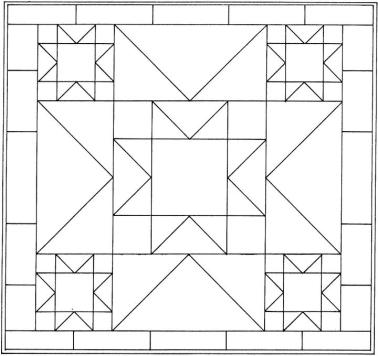
Quilts are so much more than pieces of material sewn together—they’re life stories! Here are two quilt coloring pages for you to design and color. What does each piece mean to you? As you color each section, write a sentence about an event or thought that is important to you.

Quilt Template 1 | Quilt Template 2

Picture Book Review
April 21 – It’s Celebrate Diversity Month

celebrate-picture-books-picture-book-review-the-ugly-dumpling-cover

About the Holiday

The month of April is set aside for people to recognize and appreciate the varied cultures and beliefs around the world. Instead of finding division and differences, we should celebrate the beauty and wonder of our multifaceted planet. This month offers a great opportunity to discover ways to incorporate acceptance and inclusiveness throughout your life.

The Ugly Dumpling

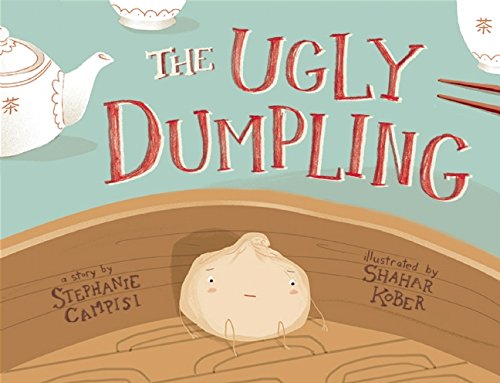
Written by Stephani Campisi | Illustrated by Shahar Kober


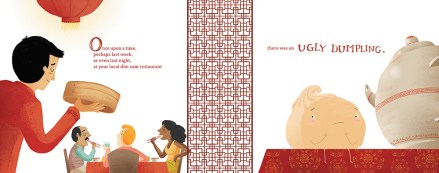
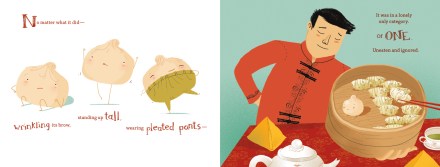
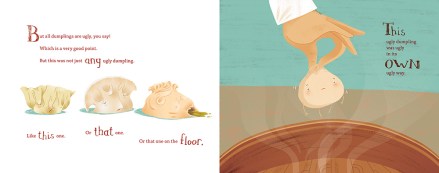
“Once upon a time, perhaps last week, or even last night, at your local dim sum restaurant…there was an ugly dumpling.” Sure, you might think all dumplings are ugly, but we’re talking about one particular ugly dumpling. It tried all sorts of tricks to make itself more attractive, but it still remained lonely and uneaten. It sat dejected until a cockroach traversing the kitchen caught sight of it and immediately fell in love.

celebrate-picture-books-picture-book-review-the-ugly-dumpling-interior-art-dim-sum-restaurant

Image copyright Shahar Kober, text copyright Stephani Campisi. Courtesy of Mighty Media Press.

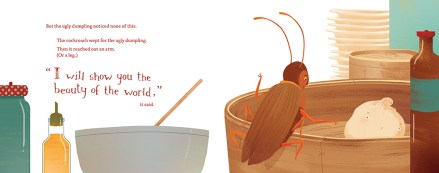
The cockroach “reached out an arm. (Or a leg)” toward the dumpling and offered to show it the beauty of the world. Together they traveled to cities near and far, experiencing them through culinary lenses—stacked-plate skyscrapers, piled-dishes skylines, and chopstick bridges that took them over flour mountains and folded-napkin peaks. Then, in a certain restaurant, the dumpling saw something astonishing! Not only one, but two, three, four, and more dumplings just like itself!

celebrate-picture-books-picture-book-review-the-ugly-dumpling-trying-to-fit-in

Image copyright Shahar Kober, text copyright Stephani Campisi. Courtesy of Mighty Media Press.

Suddenly the ugly dumpling realized that it was not a dumpling at all, but a “steamed bun—a golden-hearted, smooth-skinned steamed bun, exactly like all the other steamed buns in the world.” The ugly dumpling puffed with meaning, importance, and…yeast! The restaurant patrons and staff and even the other steamed buns took notice. The cockroach by the ugly dumpling’s side cheered to see its friend receiving so much attention.

celebrate-picture-books-picture-book-review-the-ugly-dumpling-roach

Image copyright Shahar Kober, text copyright Stephani Campisi. Courtesy of Mighty Media Press.

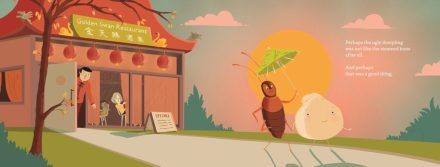
The people’s wide eyes and astonished expressions were not for the dumpling, however. Instead, they registered horror at the insect in their midst. The ugly dumpling was familiar with that look and did “something quite beautiful. It reached out an arm. (Or a leg.) And it led the cockroach out into the world, The beautiful, beautiful world.” And in that moment the ugly dumpling realized that it “was not like all the other steamed buns after all” and that “perhaps that was a good thing.”

celebrate-picture-books-picture-book-review-the-ugly-dumpling-leaving-together

Image copyright Shahar Kober, text copyright Stephani Campisi. Courtesy of Mighty Media Press.

Stephani Campisi’s The Ugly Dumpling is a fresh and delectable dish-up of the classic Ugly Duckling story for a new audience. Stuffed with charm and off-beat humor, this tale of friendship and diversity embraces all who feel at odds with their environment—with or without the recognition of why. Its sweet and insightful ending emphasizes the idea that finding your niche does not always mean fitting in with a certain crowd, and that having the courage to strike out on your own path leads to beautiful relationships and personal happiness.

celebrate-picture-books-picture-book-review-the-ugly-dumpling-different-dumplings

Image copyright Shahar Kober, text copyright Stephani Campisi. Courtesy of Mighty Media Press.

Shahar Kober’s dumpling is anything but “ugly.” His adorable puffed dough, lonely and ignored for not adhering to the mold, will melt readers’ hearts as he tries anything and everything—including green pleated pants—to fit in. Kobar’s stylish drawings are the perfect underscore to Stephani Campisi’s quick, dry wit—as in his rendition of three uglier-than-the-next dumplings—and if cockroaches were really as cute as Kober’s, we’d all set out a different kind of Roach Motel. A clever bit of typography transforms steam coming from a wok into the word HISS, and the restaurant scenes will make readers hungry for their favorite Asian eatery.

As readers turn to the last pages and watch the steamed bun and the cockroach leave the restaurant hand in hand (foot in foot?) under the shade of a paper umbrella, they will want to turn back to the beginning and start over again. The Ugly Dumpling is a must read and a wonderful addition to children’s bookshelves.

Ages 2 – 9

Mighty Media, 2016 | ISBN 978-1938063671

Get to know more about Stephanie Campisi and her work on her website!

To view a gallery of art by Shahar Kober for books, magazines, animation, and more, visit his website!

Check out the Mighty Media Press website for more about The Ugly Dumpling and a-dough-able coloring pages!

Take a look at the trailer for The Ugly Dumpling!

Celebrate Diversity Month Activity

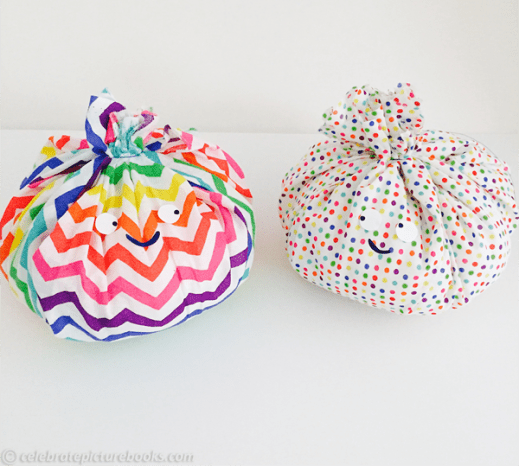
celebrate-picture-books-picture-book-review-dumpling plush craft

Embrace Your Inner Dumpling Plush


We are all beautiful “dumplings” in one way or another! With this easy craft you can create a huggable friend and show others what you’re made of!

Supplies

  • Square piece of cloth in any fabric and color. Size of plush depends on size of cloth (the plushes shown are made from 18”-square cotton fabric)
  • Poly fill (the plushes shown use about 1 1/8 ounces of fill)
  • White cloth for eyes and mouth
  • Twine or string
  • Fabric glue

Directions

  1. Cut the corners from the square cloth to make a circular piece of cloth
  2. Fill the middle with poly fill
  3. Pull the edges of the cloth up and around the fill
  4. Tie the top closed with the twine or string
  5. To make the face, cut small circles and a mouth from the white cloth
  6. Smooth out a section of the dumpling body
  7. Glue the face to the body with fabric glue

Picture Book Review
April 18 – World Heritage Day

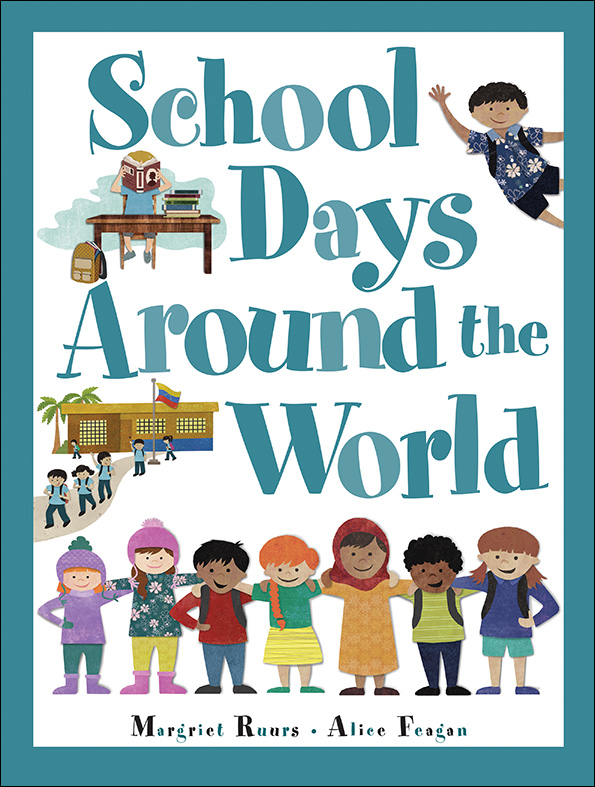
celebrate-picture-books-picture-book-review-school-days-around-the-world-cover

About the Holiday

Today’s holiday was established in 1982 by the International Council of Monuments and Sites to celebrate the joint history and heritage of the human race. World Heritage Day invites us to honor all of the world’s cultures and promotes awareness of important cultural monuments and sites in order to preserve these valuable historical places. Nearly 10,000 members from more than 150 countries, including architects, engineers, artists, geologists, civil engineers, and architects, work tirelessly to protect the world’s cultural achievements.

School Days Around the World

Written by Margriet Ruurs | Illustrated by Alice Feagan


Every day millions of children around the world go to school, but schools can vary from place to place. Some classes are held in large buildings with libraries, science labs, and computer rooms while others gather in small buildings or even outside. “Schools around the world may be very different, but children everywhere like to have friends and learn new things.” In School Days Around the World, readers meet children from thirteen countries to learn what their educational day is like.

First, children meet Tamatoa, who attends school on Rarotonga, one of the Cook Islands in the South Pacific. Tamatoa arrives to school on a scooter just as the “thang-Thong-thang! of the wooden slit drum calls students inside. Tamatoa’s teacher is wearing flowers in her hair as she does every day. She teaches the children their Ura language, and in the afternoon they dance the hupa, the island’s traditional dance. In Singapore Raphael goes to an international school where the students speak many languages. Raphael knows Dutch, English, and Spanish. His best friend Aamon speaks Hindi, Chinese, and English. Raphael likes to read and write stories on the computer. Sometimes they “have a craft fair to raise money to help children in other parts of the world.”

celebrate-picture-books-picture-book-review-schools-around-the-world-map

Image copyright Margriet Ruurs, text copyright Alice Feagan. Courtesy of alicefeagan.com

Marta walks to her school in Azezo, Ethiopi, even though she is blind. Her friend Ayana holds her hand tightly to help “her around potholes and cow patties.” There are so many students that there are two different sessions. Marta goes in the morning with 500 other children. There are 70 students in her class. They learn Amharic and about Ethiopia. At noon Ayana and Marta “hurry home to help feed the ox and cow and to fetch water from the village well.”

Camilla is from Germany. Her older brother Johannes lives at a boarding school during the school year. He shares his room in an old stone house with three boys. Everyone eats together and cleans up afterward—just like in a family. In class he learns “about nature and science. They also learn how to sail.” Camilla can’t wait until it’s her turn to go to school.

If you visited Annika at school in Copenhagan, Denmark, you would probably spend most of the day outside. Some days the students take a bus to their forest school. There the “run and climb on an old boat.” They “play on swings and with a ball.” Outside they also listen to birds and learn about plants and insects and other parts of nature. While Annika enjoys spending cold days outside, Ana’s days are usually warm. She lives in San Luis, Honduras and walks an hour from her home in the hills to her new school. Inside, two teachers show the children how to read and write. Sometimes, Ana says, “a nurse visits our school. She teaches us how to brush our teeth and stay healthy.” One day a van delivers backpacks full of school supplies, books, and even running shoes.

In Alberta Canada, Shanika goes to a First Nations school where she learns her traditional Cree language along with math and language arts. After lunch, they hear stories, and elders teach them “powwow dances, drumming and how to raise a teepee. They also hold feasts where there are prayers, and the whole community shares tea, soup, bannock loaded with beans and cheese, and berries.

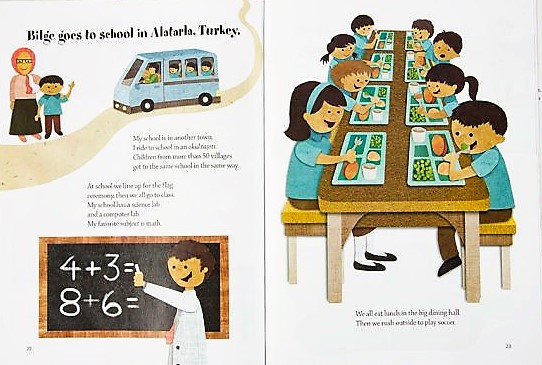
celebrate-picture-books-picture-book-review-school-days-around-the-world-turkey

Image copyright Margriet Ruurs, text copyright Alice Feagan. Courtesy of alicefeagan.com

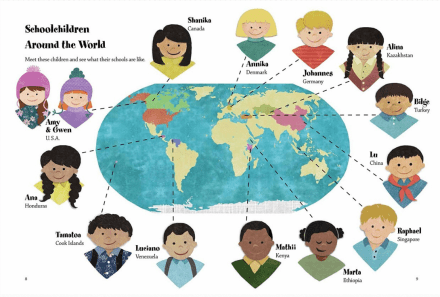
You can also spend school days with Lu in China, Alina in Kazakhstan, Mathii in Kenya, Bilge in Turkey, Luciano in Venezuela, and Amy and Gwen in Alaska, USA.

 In her short, engaging stories based on the lives of real families, Margriet Ruurs takes readers globe-trotting with new friends to show readers a typical school day in cities big and small. The details of each child’s experience—both familiar and unique—help readers learn more about their peers, promoting greater empathy and understanding now and for a better future.

Alice Feagan’s cut paper collages are full of joy and personality as kids dance, play, read, and study together. While the students’ clothing, lunches, and school buildings may differ from country to country, readers will see that the enthusiasm to learn is universal. A world map at the beginning of the book points out where each featured child lives.

A discussion following the text gives teachers, homeschoolers, and individuals tips on using the book to expand on the stories told. A glossary provides definitions and a pronunciation key for the native words found throughout the book. School Days Around the World offers a wonderful opportunity to jumpstart lessons on world customs and geography.

Ages  3 – 8

Kids Can Press, 2015 | ISBN 978-1771380478

Discover more about Margriet Ruurs and her books as well as activities for teachers and readers on her website!

You’ll find more about Alice Feagan and a portfolio of her illustration work on her website!

World Heritage Day Activity

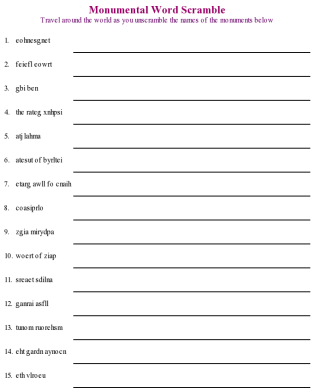
Monumental Word Scramble

Monumental Word Scramble


You’ll travel the world as you unscramble the names of 15 world monuments in this printable Monumental Word Scramble Puzzle.

Picture Book Review