While today’s holiday was established in 1996 by Mission Media and its owner Wayne Hepburn because of Hepburn’s love for elephants, the day has garnered official recognition and deserves wide acknowledgement. These gentile, giant animals need our protection from environmental and human dangers. To celebrate today’s holiday visit a zoo or animal preserve, watch a documentary on elephants, or consider donating to their cause.
Strictly No Elephants
Written by Lisa Mantchev | Illustrated by Taeeun Yoo
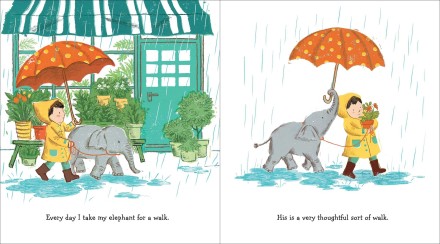
A little boy, his adorable pet elephant by his side, kneels on his bed and gazes out the window at the brownstones across the street. There he sees other kids with their—more conventional—pets: a bird, a cat, a fish, and dogs. “The trouble with having a tiny elephant for a pet is that you never quite fit in,” the boy reveals. Every day the boy takes his elephant for a walk, but even in this common pet-owner activity, the boy and the elephant show their special relationship. The elephant is thoughtful—protecting the boy with an umbrella on rainy days—and the boy is considerate—carrying his elephant over cracks in the sidewalk that frighten it. Why? Because “that’s what friends do: lift each other over the cracks.”
Image copyright Taeeun Yoo, courtesy of simonandschuster.com
On this particular day the boy winds a red scarf around his elephant’s neck and joins the parade of kids on their way to Number 17 where the Pet Club meets. The elephant is reluctant, but the boy is reassuring, even carrying his pet on his back the last few feet. “‘It’ll be fine,’” he says. But when they reach the apartment, there’s a sign on the door that reads “Strictly No Elephants.” There’s even a picture of a crossed out elephant on the sign.
The elephant understands all too well and leads the boy back onto the sidewalk, now ignoring the cracks. “‘That’s what friends do: brave the scary things for you,’” the boy says. The day has suddenly become rainy, and they are caught on the sidewalk without an umbrella. Taking shelter under an awning, the two find a little girl holding her pet skunk. “‘Did you try to go to the Pet Club meeting too?’” she asks. “‘Yes,’” the boy says, “‘But they don’t allow elephants.’”
Image copyright Taeeun Yoo, courtesy of simonandschuster.com
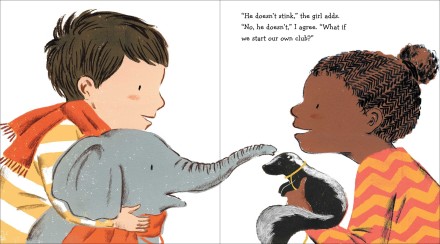
While the sign may not explicitly forbid skunks, the little girl says that the other members didn’t want to play with her and her skunk either. Wisely, the boy tells her “‘They don’t know any better.’” The elephant reaches out its trunk toward the skunk with the girl’s reassurance that he doesn’t stink. The two new friends decide to start their own pet club and head down the sidewalk to find a venue. The boy makes sure that his elephant follows because friends “‘never leave anyone behind.’”
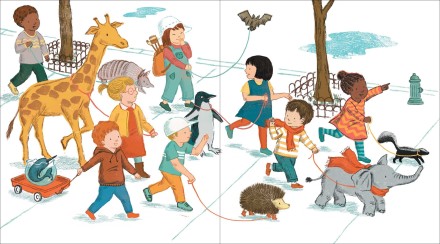
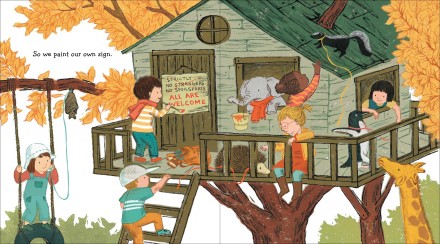
On the way the boy, girl, elephant, and skunk encounter a whole crowd of kids with unusual pets—a tiny giraffe, a mini narwhal, an armadillo, a bat, a hedgehog, and a penguin. They come to a park, complete with tree house, that is perfect for their club. The kids and pets eagerly adopt their new play space—swinging on the tire swing, waddling around the balcony, exploring the roof, playing tag, reading, and more. The boy quickly does the most important thing of all: he paints a new sign for the clubhouse door. “Strictly No Strangers, No Spoilsports ALL ARE WELCOME” it reads. And if you need directions to the club, the boy’s tiny elephant will give them to you “‘because that’s what friends do.’”
Image copyright Taeeun Yoo, courtesy of simonandschuster.com
Lisa Mantchev has written a story addressing the types of isolation and rejection that kids (and adults) can face sometimes because of a single perceived difference in an uplifting and productive way. With gentle honesty and thoughtfulness, Mantchev invites kids—on both sides of this “elephant in the room” issue to consider their actions, attitudes, and responses to others. As Mantchev reveals, more inclusiveness leads to more understanding and better relationships. Her lyrical language and sweet reminders of “what friends do” elevate this tribute to camaraderie and companionship and make it a story kids will want to hear again and again.
Image copyright Taeeun Yoo, courtesy of simonandschuster.com
Taeeun Yoo’s adorable illustrations of the boy, his tiny pet elephant, and the other animal-and-owner pairs are irresistible. Any reader would want pets as cute and adaptable as these, which may lead to questions about why and how they could be excluded from the club. As the boy and his elephant are turned away from the Pet Club door, the day turns dark and stormy. The two-page spread is rendered in somber shades, except for the little boy with his yellow-striped shirt and red scarf, the elephant sporting a matching red scarf, and the soon-to-be-met African-American girl who wears a red and yellow-striped dress, emphasizing the connections between these two children. The final pages in which the new friends meet and play together are joyful, inviting all readers to “join the club.”
Strictly No Elephants gives readers so much to see, think about, and discuss. The book is a must for school and classroom libraries and would be a very welcome addition to children’s home bookshelves.
Ages 4 – 8
Simon & Schuster, 2015 | ISBN 978-1481416474
Discover Lisa Mantchev’s books for children, young adults, and adults on her website.
See a gallery of books by Taeeun Yoo on her website!
Elephant Appreciation Day Activity
Image copyright Celebrate Picture Books, 2016
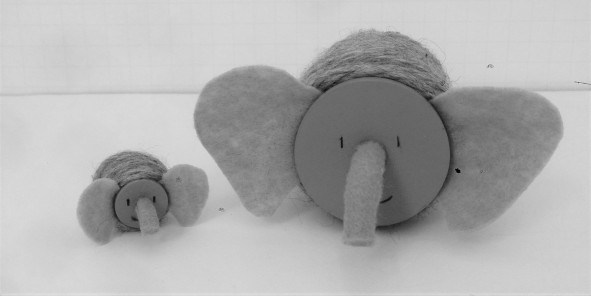
Spool Elephant
Who wouldn’t like a tiny elephant for a pet?! With this easy craft you can make your own little pal to keep you company.
In 1965 an international gathering in Hawaii established World Gratitude Day as a time for people everywhere to formally appreciate and give thanks for all the wonderful things in the world. In 1966 the attendees celebrated World Gratitude Day on this date in their individual countries, beginning a tradition that has grown over time. The benefits of positive thinking have become well documented. The founders of Gratitude Day also recognized that by taking a day to celebrate the amazing parts of our lives we might become happier, more content people.
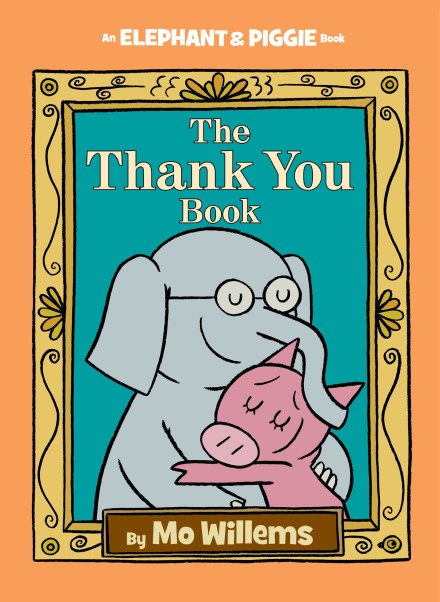
The Thank You Book: An Elephant & Piggie Book
By Mo Willems
Piggie and Gerald are relaxing together when Piggie thinks “I am one lucky pig. I have a lot to be thankful for….” Then it dawns on her that she “had better get thanking!” With resolve she vows to thank every important person in her life. Gerald doesn’t believe Piggie will be able to do this and is sure she will forget someone—even someone important. But piggie is determined, emphasizing, “I. Will. Thank. EVERYONE” and she trots off on her “Thank-o-rama” while Gerald stands by in awe.
First Piggie encounters her squirrel friends and thanks them for their great ideas, next Piggie gives Snake a big hug for playing ball with her. The Pigeon is thanked for “never giving up,” and Piggie even apologizes for The Pigeon’s never being in their books, although the sly Pigeon knows better. Piggie whistles and dances away to continue her mission, while Gerald reiterates that she will forget someone.
Image copyright Mo Willems, courtesy of Disney-Hyperion
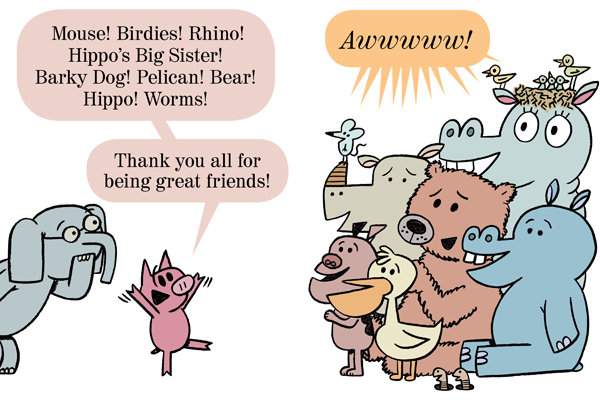
Piggie comes upon Mouse, Birdies, Rhino, Hippo’s Big Sister, Barky Dog, Pelican, Bear, Hippo and Worms, and thanks them all for “being great friends.” Doing a cartwheel, Piggie says, “See that, Gerald? I am a thanking machine!” But Gerald is miffed because Piggie has forgotten someone important, and he gives Piggie a big smile. Piggie seems to get the hint and promises that her next thank you will be a big one. And it is! Piggie yells up at Whale, “Thanks, Whale! You are nice!”
Ice Cream Penguin receives gratitude for the ice cream, and Doctor Cat is thanked for “being a great doctor” while Gerald tags along behind. Piggie meets Brian Bat and thanks him for sharing drawing time. By now Gerald is getting a bit steamed, and tries to attract Piggie’s attention quietly and then with a shout—“PIGGIE!”—that sends Piggie reeling. “You are forgetting someone,” Gerald reminds her, looking her straight in the eye. “Someone VERY important.”
Finally Piggie understands. She gazes at Gerald wide-eyed and says, “Now I know who you are talking about.” Gerald smiles, but his happiness is short-lived as Piggie thanks the flies for cooking with her. Gerald can’t take it anymore. Waving his arms he shouts, “NOT THE FLIES, PIGGIE! But Piggie gives it right back—waving arms and all: “I CANNOT THINK OF ANYONE ELSE I HAVE FORGOTTEN TO THANK, GERALD!”
Image copyright Mo Willems, courtesy of Disney-Hyperion
Gerald displays an “it’s obvious” pose and finally Piggie does understand. She is shocked and contrite. “Thank you, Thank you, Thank you, Elephant Gerald!” Piggie gushes, holding Gerald’s hands. With a hug Piggie continues, “You are the best friend a pig could ever have!” Gerald accepts Piggie’s thanks, but reveals that he did not think Piggie had forgotten him. Piggie is so confused! She explodes: “WHO DID I FORGET TO THANK!?!”
“Our reader.” Gerald says “You forgot to thank our reader.” Poor Piggie is so embarrassed. “You are right!” she says. Piggie looks straight out from the page and with sincerity says, “Thank you for being our reader!” Gerald joins her to say, “We could not be ‘us’ without you,” and Piggie agrees: “You are the best!” The two friends congratulate each other on their thanking and return to relaxing together. “Yep,” Piggie thinks once more. “I am one lucky pig.”
With this 25th Elephant and Piggie Book, Mo Willems brings his award-winning early-reader series to an end in an emotional tribute to all of the duo’s friends and their readers. In The Thank You Book Gerald and Piggie’s special relationship, born of humor, conflict, misunderstandings—and ultimately understanding, is on full display. The evocative illustrations reveal Gerald’s growing discontent and consternation while the dialogue, displayed in speech bubbles and with varying type sizes, expresses the changing dynamics of the story.
While regular readers of the Elephant and Piggie books will be sad to say goodbye to new stories, Willems has left them with many wonderful memories and adventures to return to again and again. New readers will be—like Piggie—very lucky to discover these two friends and develop their own relationship with this unique pair.
Ages 3 – 7
Disney-Hyperion, 2016 | ISBN 978-1423178286
Find books, games, activities, and lots more on Mo Willem‘s website and play along with Pigeon and the gang on Pigeon Presents!
Do you want to know what’s up next for Gerald and Piggie? Head over to Mom’s Radius: life. love. books. and find out! You’ll also discover a whole bookcase-worth of books you’ll want to read!
World Thank You Day Activity
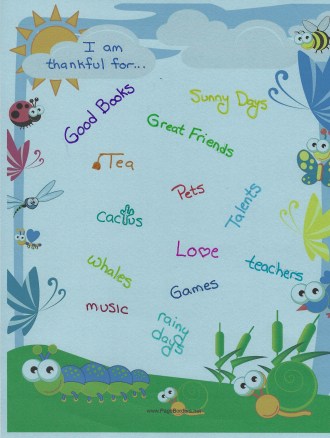
What Are You Thankful For? Poster
Write all of the amazing things in your life that make you happy on this colorful, printable What Are You Thankful For? Template! Then display it in your room or locker to make you smile or remind you to thank everyone who is important to you!
Shiver me timbers! Avast, ye mateys! Today it be arrgh-uably the best day of the year for all us swashbuckling swabbies that sail the ocean blue a-lookin’ for treasure! Talk Like a Pirate Day, ironically got started in the walled confines of a racquetball court, where a group of guys were doing…well what a group of guys do to encourage each other—toss around pirate phrases. They decided the idea was too good to keep on the court, so they designated September 19th as Talk Like a Pirate Day. They then alerted Dave Barry, comedic writer extraordinaire, who spread word of this day far and wide. Now it’s a favorite of young and old alike. So get out there and do some plunderin’ ye scalliwags!
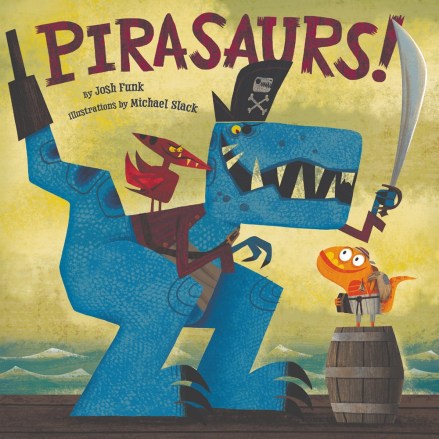
Pirasaurs!
Written by Josh Funk | Illustrated by Michael Slack
There’s a new brigand sailing the bounding main with a crew more rag-tag and wild than any seen before. They roar their chanteys as they set the rigging with their “spiky tails” and play watery pranks on the newbie recruit Who are they? They’ll be happy to tell you themselves—“We’re Pirasaurs! We’re Pirasaurs! We rule the open seas! / We’ll cannon-blast you to the past! We do just what we please!”
All this commotion can be a bit intimidating to the newest matey who knows just what he’s up against: “With lots to learn, I’ve got to earn the crew’s respect and trust. / I’ll rise in rank or walk the plank…I hope I can adjust!” At the point of Captain Rex’s “fabled sword” this little guy—who has yet to cut his sharp teeth—swabs the deck, scrubbing and brushing so fast he ends up in the plesiosaur-infested deep.
Brontobeard steers the ship over the briny waves while “with handy hook, Triceracook / prepares Jurassic feasts!” which leads them all to “…slurp and belch and burp / with buccaneering beasts!” Of course these pirasaurs are after more than fun times—they want treasure! Velocimate navigates by using the stars while our seapuppy reveals that he uses his “smarts to map the charts. / But still we’re led astray!”
Image copyright Michael Slace, courtesy of slackart.com
Land ho! The pirasaurs come ashore on a distant island. Can treasure be nearby? The crew fans out looking for the X, but no matter how hard they search, they can’t find it. “The crew begins to search within / The frayed and tattered map, / a shadow looms, the water fumes / revealing—It’s a trap!” It seems the pirasaurs had a spy onboard, and now that they’ve found the right spot, he’s alerted his true mates.
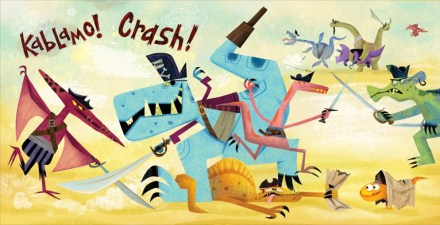
They come brandishing swords, sizzling cannon balls, knives, oars, and sneering looks. But Captain Rex’s troop is ready for them. While “a mighty clash erupts upon the sand,” the littlest buccaneer notices a very interesting development. Clutched in the claws of a saur enemy, he sees a fragment of a map. “Ahoy! Avast!” He shouts above the fray. “We’ve got to stop these duels! / Let’s share the scraps of each our maps / To find the gold and jewels!” The pirasaurs stop fighting and they carefully connect the two shards of paper. Lo and behold! The X is clearly visible! Together the two pirasaur crews uncover the treasure—and what a treasure it is! Not only are there gems, and gold, and silver—the chests contain the nugget of friendship! Now the pirasaurs want readers to join up and join in! “Through battles, brawls and fireballs, / Plus prehistoric roars, / The salty deep is ours to keep— / Come join the Pirasaurs!”
Like rolling waves on the high seas, Josh Funk takes readers on a boisterous journey full of twists, turns, and tricks with the rowdiest group of pirates ever to set sail! Funk’s rhymes flow as fast and smooth as a sloop on a fair-weather day. The new recruit is understandably intimidated by the Jurassic giants, but while these pirates may be dinosaurs, they are modern in their thinking. When the little guy suggests they share, they’re all for it, leading to the best discovery of all—friendship!
Michael Slack signed up all the faves—brontosaurs, triceratops, stegosaurus, spinosaurus, velociraptor, pterodactyl, of course T-rex, and some dinos that haven’t even been discovered yet—in this cross-epoch epic! And these aren’t the scurvy dogs you’re used to from science class. They’ve got eye patches, peg legs, hooks, earrings, and some pretty rad hats and jaggedy shorts. And oh, yes, did I mention they’re super colorful? Purple, orange, green, blue, mauve…. Readers can almost smell the sea air in Slack’s detailed, full-bleed pages of rowdy pirasaurs, tangled rigging, gross cooking, brave swashbuckling, and, ultimately, found treasure.
Pirasaurs! is definitely treasure for your bookshelves, as kids will want to read it again and again. Savvy?
Ages 3 – 9
Scholastic, 2016 | ISBN 978-0545750493
Josh Funk’s website has information on his books, fun activities for kids, book trailers, and much more!
You know Michael Slack’s awesome books! Find them as well as a gallery of illustrations and more on his website!
Ahoy, me Hearties! You be watchin’ this Pirasaurs! book trailer!
Talk Like a Pirate Day Activity
Original artwork copyright Conor Carroll and Celebrate Picture Books, 2016
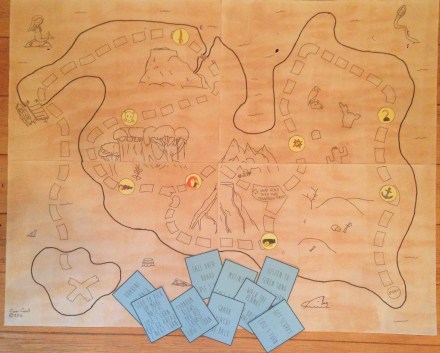
Avast! Board Game
Ahoy, Mateys! Avast! Somewhere on the island is buried treasure! Test your skills against rotten food, stormy seas, and even the Kraken (don’t worry, there are good days too!) as you traverse the forbidding landscape in search of jewels and gold!
Original artwork copyright Conor Carroll and Celebrate Picture Books, 2016
Directions
Print the Avast! Board Game pages on white paper or parchment-colored paper or on card stock.
To make regular white paper appear old – as in the picture – paint with a tea wash before taping together. (See directions for tea wash below)
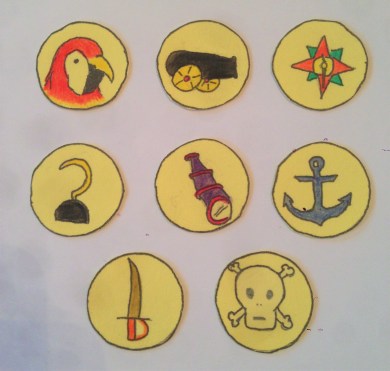
Cut out the Avast! Pirate Loot Tokens
Cut out the Avast! Game Cards
Tape together the 4 pieces of the map. Option: map pages printed on regular paper can be glued to a piece of poster board to make the game board more sturdy.
To use a tea bag to make the map look old:
Steep a black tea tea bag in 1/4 cup boiling water for 3 minutes
Squeeze the tea bag dry over the cup and discard
With the paint brush, paint the 4 pages of the map with the tea before taping them together
Let dry or dry with a hair drier set on Low.
To Play the Game
Each player chooses a Pirate Loot Token as their playing piece to move along the board
Shuffle and stack the Game Cards
Choose which player will go first
Players choose the top card from the pile and follow the directions to move spaces on the game board.
After moving, players should put their game card in a discard pile
If game cards run out before the end, flip over the discard pile and use the cards again
The first player to arrive at the X on the map finds the treasure and is the winner!
Q & A with Author Josh Funk
Today Josh Funk, author of Pirasaurs!, Dear Dragon, and Lady Pancake & Sir French Toast drops by to talk about his work, his influences, upcoming books, and a very special ironing board!
What were some of the books you enjoyed most as a child?
Hmm. I hate starting this interview off negatively, but I find this question a bit problematic as it’s in the past tense. In many (most?) ways I’m still very much a child. Hee hee (wink).
I had a lot of the standard favorite picture books: Corduroy, Sylvester and the Magic Pebble, Caps for Sale, The Lorax, Lyle, Lyle, Crocodile.
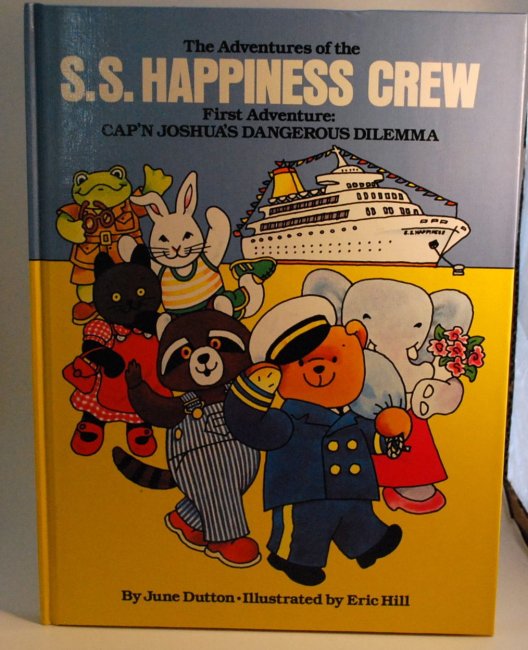
But one of my more underrated favorites is The Adventures of the S.S. Happiness Crew: The First Adventure: Cap’n Joshua’s Dangerous Dilemma. The illustrations probably look familiar as it’s Eric Hill of the Spot series. My Aunt Betty gave me this book on the day my younger brother was born (I was three). I think it was the first book that I encountered where I shared a name with a character—which I certainly found thrilling as a three year old.
Your rhymes are so inspired—have you always wanted to be a writer? How did you come to be a picture book author?
Actually, I wouldn’t say I’ve always wanted to be a writer. When I was a child, maybe 3rd grade, I wrote a rhyming poem about Larry Bird and another about Roger Clemens (I grew up a Celtics and Red Sox fan in the Boston suburbs). My parents were pretty impressed with the poems (and still have copies of them), but I didn’t really do too much writing after that as a child.
Until late high school and college when I learned how to play guitar. I wrote a bunch of songs, but I was always more of the clever & quirky type of songwriter, not the smooth and poetic type. It might have something to do with being a huge fan of They Might Be Giants for most of my life. When I had kids, any time I broke out the guitar, the kids just saw it as a toy, and I’d be halfway through a song before they started telling me, ‘My Turn!’
But around the same time, I was reading a lot of great picture books to my kids, and that’s when I decided to try writing my own. Some of my favorites included Iggy Peck, Architect, The Curious Garden, The Gardener, and Vunce Upon a Time. I was inspired, and it turns out that my rhyming songwriting skills actually paid off when it came to writing rhyming picture books.
I was quickly introduced to The Society of Children’s Book Writers and Illustrators (SCBWI) and went to the annual New England spring conference in 2012 – and I learned a ton. At the same spring conference in 2013, I met Heather Kelly who had just founded The Writer’s Loft in another Boston suburb and immediately jumped on board. Both SCBWI and The Writers’ Loft have been extremely influential in my writing life, both in regards to the craft and the business. Fast forward to 2016, and I co-coordinated this past spring’s New England SCBWI conference (along with Heather Kelly) and I’m a member of the board of The Writers’ Loft.
And I can still use the guitar a little bit. I recorded the music for both the Lady Pancake & Sir French Toast book trailer and the Pirasaurs! book trailer.
Your books are so varied. What sparks an idea for a book in general, or what was the spark for any of your books in particular?
I often think about what I’d like to see illustrated. I can’t draw particularly well, but I sure thought it would be fun to see what a Pirate-Dinosaur looked like, so I wrote Pirasaurs! I thought it might cool to see a boy and a dragon as pen pals, so I wrote Dear Dragon. I was entertained by the idea of breakfast foods causing catastrophic culinary chaos in the fridge. So I wrote Lady Pancake & Sir French Toast.
I think the varied styles are mostly due to the fact that each of the books is published by a different publisher and illustrated by a different illustrator. But I couldn’t be happier with the look of all three.
Your books contain such rollicking rhymes—can you describe your writing process?
Well it took some time to discover and then implement the following tidbit, but the most important thing about a rhyming picture book is not the rhyme … or the rhythm. Most important is a good story. So figuring out the story has to come first.
I’ll spend some time getting to know the characters, their goals, conflicts, and making sure I’ve got a satisfying ending in mind. Once I’m through the brainstorming process, I’ll usually hammer out a first draft over the course of a few days to a week. Then I’ll revise. I share the manuscript with critique partners and groups over the next few days/weeks/months. If it ever gets to the point where I think it’s good enough, I’ll send it to my agent.
I’ve refined my process over the last five years, and my first drafts are better now than they were then. I know better which ideas to pursue and which aren’t as marketable. I’ve made lots of valuable mistakes along the way. But I still have lots to learn. I can always improve my process.
What is the best part of writing picture books?
Probably when a parent says to me that they’ve read a book I wrote 5 times because their child kept requesting it over and over again. And that the parent was happy to oblige.
Can you describe your work space a little?
I mostly write (like I am now, answering these questions) on my laptop while laying in bed. Sometimes there’s music or a movie on in the background (often it’s Scott Pilgrim vs the World). Sometimes I wake up in the middle of the night and have an idea or a line or a scene that I just can’t get out of my head, so I write it on my phone … again, while in bed.
So, as far as work space, I guess it’s mostly a digital one. I do most of my writing in google docs in a chrome browser, often with thesaurus.com open in one tab and possibly rhymezone.com open in another.
My office mates are authors Jess Keating, Tara Lazar, and Anna Staniszewski who I ‘speak’ with in google chat, while I converse with my editors and agent via email.
What is the favorite object in your work space and why?
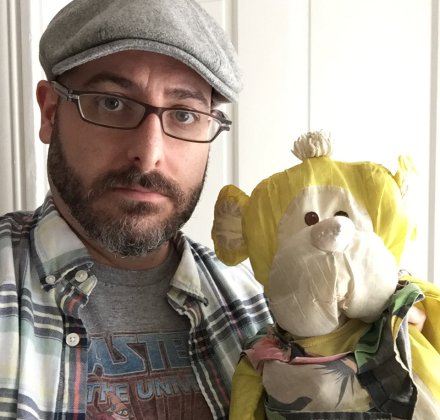
Probably my puffalump, Monkey Dude, who you can see in my head shot above
You have two more books scheduled for release in 2017: a sequel to Lady Pancake & Sir French Toast and It’s Not Jack and the Beanstalk. Can you give readers a sneak peek? Are there any other books on the horizon?
In LP&SFT: The Case of the Stinky Stench, there’s something foul in the fridge and Inspector Croissant (Sir French Toast’s nephew) asks our main characters to help him find the source of a terrible odor. They search everywhere from Onion Ring Cave to Corn Chowder Lake, confident that the culprit is right under their noses… but I won’t spoil any more of it for you – you’ll just have to wait until next spring. Brendan Kearney is back as the illustrator and I kinda think it might be better than the first one.
It’s Not Jack and the Beanstalk is my first story not written in rhyme. It was supposed to be the tale of Jack … and the beanstalk, but really … it’s not. All the narrator wants to do is tell the traditional tale properly. But Jack just won’t do what he’s supposed to! Jack constantly questions why he should sell his cow (Bessie’s my best friend) or climb the beanstalk (but it’s soooo tall) or enter the castle (there’s probably a giant in there). This one is illustrated by Edwardian Taylor – and he’s so talented! Follow him on Instagram to see his greatness!
And yes, there are certainly more books on the horizon. But … I can’t talk about them yet. Stay tuned.
I can’t properly call my blog holiday themed without asking you a few related questions, so…
What is your favorite holiday?
Halloween. Can’t beat candy corn and costumes.
Do you have an anecdote from any holiday you’d like to share?
A few years back I needed to wrap some holiday presents in private. So I went to the basement bathroom and stacked them up on an old ironing board. Over the next few days, the kids noticed the wrapped gifts and asked why they were in there, so I jokingly said that I was storing them on the ‘Winter Solstice Ironing Board.’
And now, every year around the holidays, we put all the family’s presents on that same ironing board during the holiday season … but we now keep the ‘Winter Solstice Ironing Board’ in the living room. Luckily, I haven’t needed to iron anything in the month of December since then.
Has a holiday ever influenced your work?
Nothing I can report on yet … but hopefully I’ll have news on that soon!
Well, Josh, I can’t wait to find out—and I’m sure readers can’t either! Thanks so much for sharing more about your work and influences! I wish you all the best with Pirasaurs! and all of your other books!
Josh Funk writes silly stories and somehow tricks people into publishing them as picture books – such as the Award-Winning LADY PANCAKE & SIR FRENCH TOAST (Sterling), PIRASAURS! (Scholastic), DEAR DRAGON (Viking/Penguin), LP&SFT: THE CASE OF THE STINKY STENCH (Sterling, 2017), IT’S NOT JACK AND THE BEANSTALK (Two Lions, 2017), and more.
Josh is a board member of The Writers’ Loft in Sherborn, MA and the co-coordinator of the 2016 and 2017 New England Regional SCBWI Conferences.
Josh grew up in New England and studied Computer Science in school. Today, he still lives in New England and when not writing Java code or Python scripts, he drinks Java coffee and writes picture book manuscripts.
Josh is terrible at writing bios, so please help fill in the blanks. Josh enjoys _______ during ________ and has always loved __________. He has played ____________ since age __ and his biggest fear in life is being eaten by a __________.
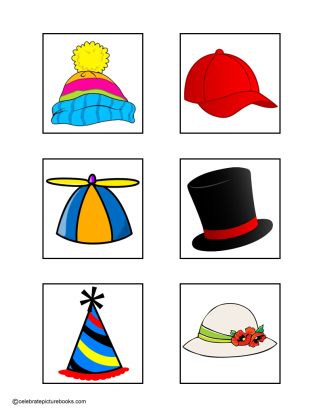
Hats are great for cold days, days when you want to dress up or express a certain fashion statement, or to cover up a bad do or bedhead. Today’s holiday may spur you to learn how to knit a hat or inspire you to invite your friends to a crazy hat-designing party! Make a Hat Day also shares the spotlight with Felt Hat Day, which exhorts people to rediscover an old and cherished fashion accessory.
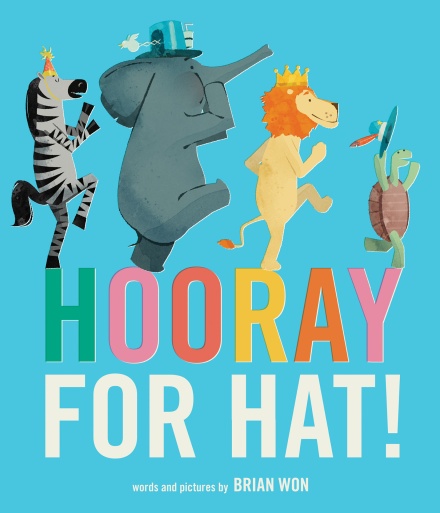
Hooray for Hat!
By Brian Won
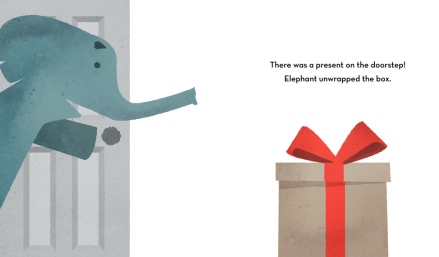
Elephant wakes up on the wrong side of the bed. He’s hardly had a chance to fully shake off sleep when the doorbell rings. He clomps down the stairs yelling, “‘Go away! I’m grumpy!’” But there’s no one at the door. Instead Elephant finds a prettily wrapped present on his doorstep. Unwrapping it Elephant finds the grandest hat he’s ever seen. It has everything – A pompom, a star, a feather, a mortar board with a tassel, a crown, a coo-coo clock bird, and even a cup holder! Elephant puts it on. How can he be grumpy with such a hat on his head? He can’t! “‘Hooray for Hat!’” he cheers and goes off to show Zebra.
Image copyright Brian Won, courtesy of brianwon.com
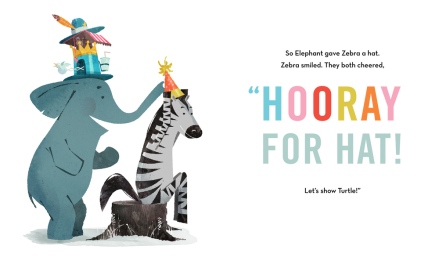
Elephant finds Zebra sitting alone on a tree stump. She doesn’t even turn around when her friend approaches. “‘Go away! I’m grumpy!’” she states. Elephant removes the top hat from his own new chapeau—a party hat with the pompom—and gently places it on Zebra’s head. Zebra can’t help but smile. “‘Hooray for Hat!’” they both cheer and head out for Turtle’s house.
Image copyright Brian Won, courtesy of brianwon.com
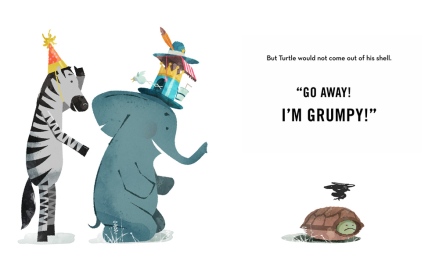
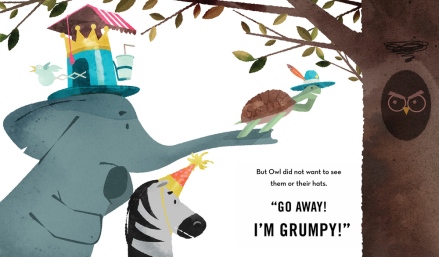
Oh, but Turtle is so grumpy that they won’t even come out of their shell. Elephant lifts down the cowboy hat with the star and feather from his own towering hat and gives it to his pal. Out pops Turtle who proudly joins the parade. “‘Hooray for Hat!’” they all cheer and march off to show Owl. “But Owl did not want to see them or their hats. “‘Go Away! I’m grumpy!’” she hoots from her tree trunk hole.
Image copyright Brian Won, courtesy of brianwon.com
But Elephant is as wise as Owl, and thinks the striped mortar board is just the thing to change her mood. “‘Hoo-Hoo-Hooray for Hat!’” Owl says, leading the way to find Lion. But Lion’s frowning face peers out at them from his den, and he shoos the group away with the familiar “‘Go Away! I’m Grumpy!’” Down comes the golden crown from Elephant’s hat and while Lion loves it, he’s more concerned with their friend Giraffe who isn’t feeling well. “‘What can we do?’” Lion asks the group.
They all know exactly what to do. They pack up the very special hat and take it to Giraffe, who is standing with her head hidden in a treetop. “Do Not Disturb” reads the sign hanging on the trunk. But as soon as Giraffe dons that hat, a toothy smile breaks out, and the six best buddies cheer, “‘Hooray for Friends!’”
Image copyright Brian Won, courtesy of brianwon.com
Brian Won’s joyful celebration of the power of surprise, friendship, and a great hat is a day brightener for anyone, whether they wake up grumpy or feeling fine. His adorable animal friends don’t mind a little grumpiness—they’ve experienced it themselves—but only want to make each other happier. The repeated phrasing throughout the story invites kids to read along, and the absence of pronouns offers open interpretation and inclusiveness. The confetti-colored hats will make kids smile and the tribute to friendship will have them cheering along with this fun picture book.
A cheer-ful book, Hooray for Hat! would make a happy addition to children’s libraries for those days when they need a little more encouragement or inspiration. Kids will want to get together with Elephant, Zebra, Turtle, Owl, Lion, and Giraffe again and again and will no doubt love to create a magnificent hat of their own!
Ages 3 – 7
Houghton Mifflin Harcourt Publishers, 2014 | ISBN 978-0544159037
Today is a perfect day to get together with people you love, trust, and respect—and even some who challenge your thinking—to discuss matters large and small. Not only might you gain a different perspective on your pals, but you all may come up with the next Great Idea!
The King and the Magician
Written by Jorge Bucay | Illustrated by Gusti
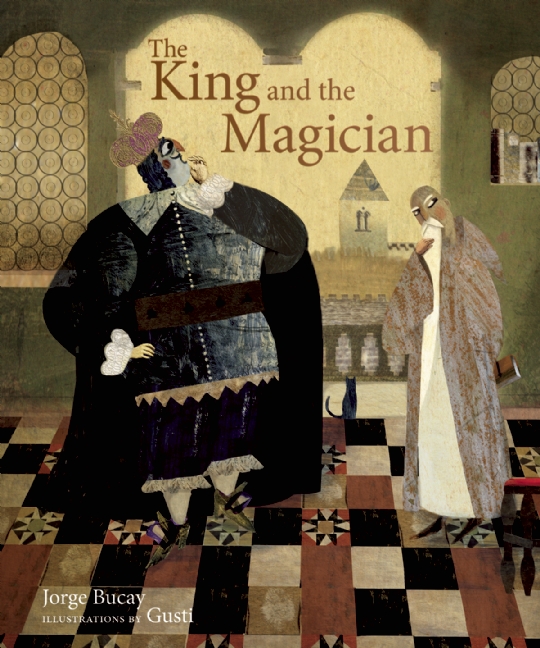
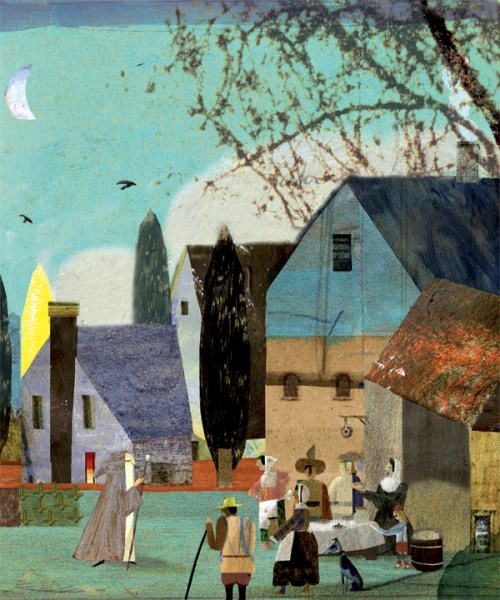
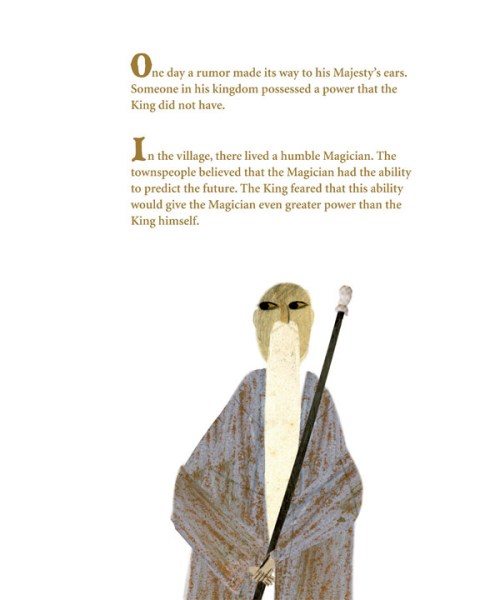
In a faraway land there once lived a King who was very powerful. Not only did he love power, he commanded that everyone in his kingdom obey and admire him. Tremblingly, his subjects reassure him every day that he is the most powerful man in the kingdom. One day, however, the King hears a rumor that down in the village lives a Magician who can predict the future. The King fears that this man will become more powerful than he, and he sends his spies to learn more. The spies return and reveal that not only can the Magician tell the future, he is loved and admired by everyone.
Image copyright Gusti, courtesy of Abbeville Press
The King becomes terribly jealous and plots to do away with his most hated enemy. He devises a plot to trick the Magician. He will host a party, and at the end he will ask the Magician if he can truly predict the future. If the Magician says “No,” he will be exposed as a fraud, and the king will kill him. If the Magician answers “Yes,” the King will ask him to predict the date of the Magician’s death and would then kill him. The King is pleased with his scheme because either way, he will be rid of his rival.
Image copyright Gusti, courtesy of Abbeville Press
On the night of the party, the King summons the Magician and asks him the fatal question. The Magician is more than just a seer or a sorcerer—he is wise. He looks at the King and states, “the Magician of this kingdom will die the exact same day as his King.”
Now the King is in a terrible quandary. He does not want to risk the possibility that this old man’s prediction is true. He must now protect the Magician in order to save his own life. He quickly concocts a ruse and asks the Magician to stay the night in the castle, saying he wants to consult with him about some royal matters. In fact, he just wants to keep an eye on him.
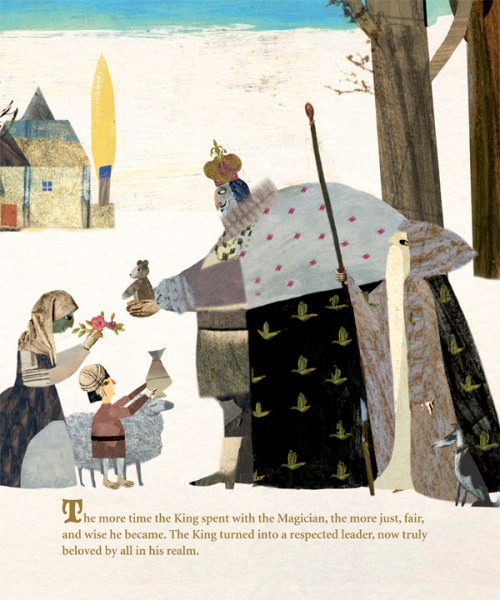
The Magician agrees. The next morning the King goes to the Magician and asks his advice on some kingly decisions. The Magician offers good suggestions, and the king accepts them. As the months go by, the King continues to rely on the Magician for guidance, and slowly the King learns to be fair and wise. He becomes the respected and admired ruler he always wanted to be.
The King realizes that not only is the Magician a trusted advisor, he is a loyal and beloved friend. One day, wracked with guilt over his one-time plot to kill the Magician, the King reveals the story. The Magician listens to the King’s secret, and shares one of his own.
On the night of the party, the Magician says, I saw you reach for the hilt of your sword when you questioned me, and I knew your intentions. He then divulges that he made up the prediction of their shared death date to teach the King a lesson—one the King has learned. He says, “It is our lives that have become entwined, not our deaths.”
For many more years the King and the Magician live as friends and confidants. The kingdom grows stronger and the King kinder and more loved by his people. One day the Magician dies. The King is sad, and realizes he is no longer afraid of his own death. The King has learned the Magician’s lesson well, and even though his advisor is gone, he continues to make wise and beneficial decisions.
Image copyright Gusti, text copyright Jorge Gusti, courtesy of Abbeville Press
Ten years later the King writes a letter to his son and heir. In his letter, the King cautions his son that at sometime in his life he may come across someone or something that “will arouse fear and jealousy in your soul.” He will want to destroy this person or thing to alleviate his fear, his father tells him. Instead, says his father, “open your heart or your home” because “what you thought was your most feared enemy, is really your most powerful friend.”
Jorge Bucay has written a classic tale of wisdom verses power wrapped around a clever trick. The story, full of intrigue and twists, initiates the kind of thought that leads to true enlightenment. The straightforward storytelling, beautifully paced over a lifetime of growth and change, builds suspense while lyrical descriptions create a beautiful flow that depicts both the quandary of the King and the kindness of the Magician.
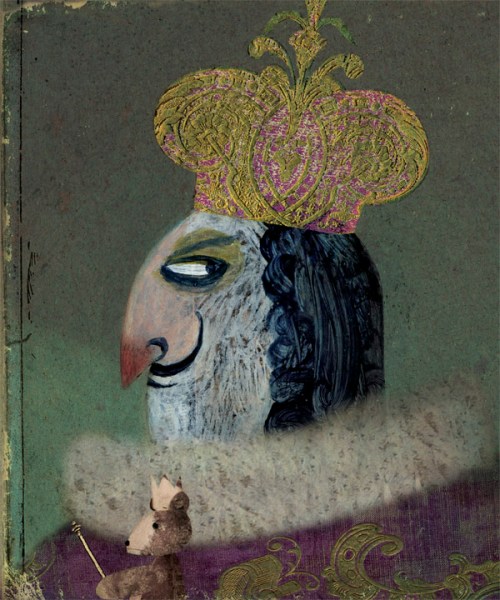
Gusti’s lavish illustrations, reminiscent of hieroglyphics and Medieval tapestries, are rendered in dark, rich brown, rust, black, olive and blue hues that gorgeously depict the splendor of the King and his castle, but also signal the somber weight in his soul. The regal tone even extends to the gilded text. The King is drawn as an imposing figure, towering over everyone else in his kingdom, but his feet and hands are tiny, lending him a bit of a comical yet vulnerable air. The King’s eyes narrow with cunning as he plots his evil deed but widen in doubt and dispair as the Magician works his special brand of magic.
This lovely book—in both message and art—would be a wonderful addition to any child’s or fable-lover’s library.
Ages 4 – 8
Abbeville Kids, 2014 | ISBN 978-0789212047
While I take some personal days over the next couple of weeks, I am re-blogging some earlier posts with updated interior art, activities, and links, when available.
Swap Ideas Day Activity
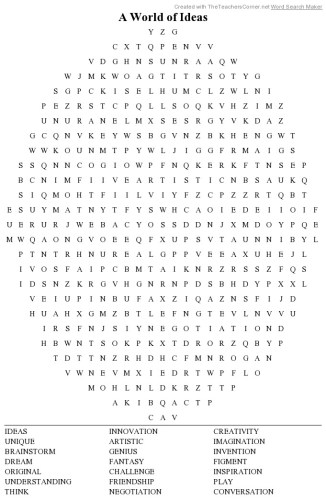
A World of Ideas Word Search
Creative ideas are a little like magic – sometimes seeming to come out of thin air – and can make the world a better place! Find the 21 words in this printable A World of Ideas Word Search about what swapping ideas can conjure up! Here’s the Solution!
Once considered the food of Italy’s poorer classes who could not afford the prices of meat, cheese pizza has risen in stature to become a favorite of all. While perfect all on its own, cheese pizza is also a delicious beginning to any combination of ingredients—well, maybe not all, as the characters in today’s book discover!
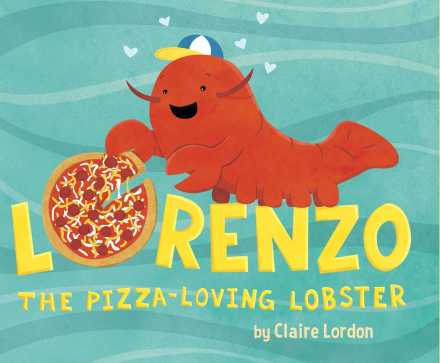
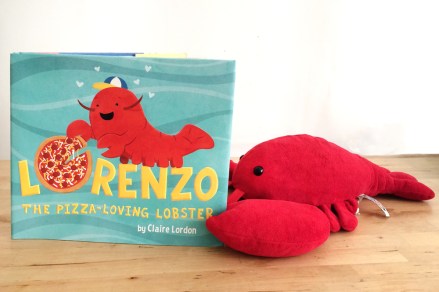
Lorenzo the Pizza-Loving Lobster
By Claire Lordon
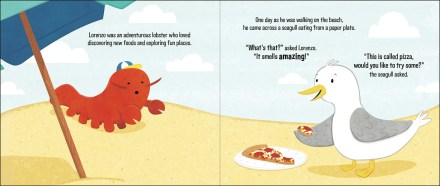
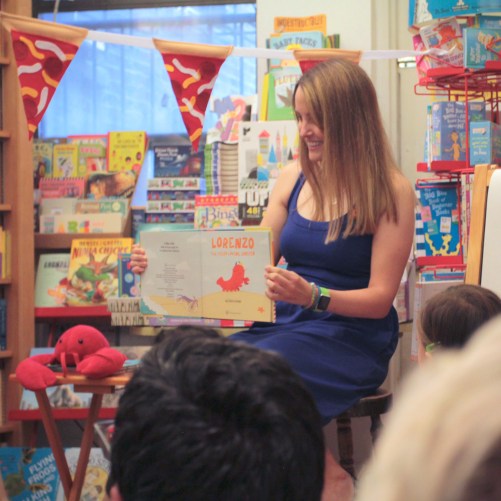
Lorenzo is one adventurous lobster! Not only does he like exploring new places, he loves getting his claws on new foods. One day while at the beach, Lorenzo meets a seagull who has found a tasty slice of pizza to nosh on. “‘What’s that?’” Lorenzo asks, “‘It smells amazing!’” The seagull tells him and invites him to try it. Lorenzo takes a nibble…and then a bigger bite. He loves this pizza thing so much that he eats it all up.
Image copyright Claire Lordon, courtesy of simonandschuster.com
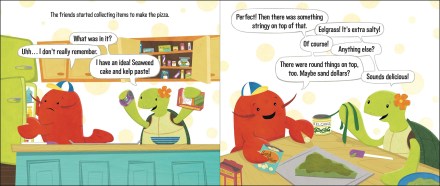
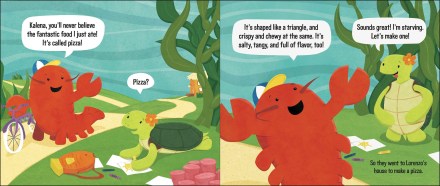
On his way home to tell his friends about his discovery, Lorenzo runs into Kalena, his turtle friend, and tells her all about the triangular food that is “‘crispy and chewy at the same time; salty, tangy, and full of flavor, too!’” Kalena is intrigued and suggests they try to make one themselves. At Lorenzo’s house they begin gathering the ingredients, but when Kalena asks what was in the pizza Lorenzo can’t remember. Kalena looks in the cupboard and pulls out seaweed cake and kelp paste. “‘Perfect!’” agrees Lorenzo. For the “stringy” part, Kalena suggests eelgrass, which also has the benefit of being extra salty. And the “round things on top”? Sand dollars sound delicious!
So the pair bake up their green concoction, and when the timer rings they dig in only to find that it “‘isn’t quite right.’” Not one to give up, Kalena offers a new set of ingredients: “‘kelp dough, squid ink, algae, and coral rings.’” This pizza isn’t right either—in fact, Kalena says, “‘This tastes icky! And the algae is stuck in my teeth!’” Suddenly, Lorenzo has a brainstorm. He remembers that the pizza was made of “‘sponge patties, jellyfish jelly, seaweed noodles, and seashells.’”
Image copyright Claire Lordon, courtesy of simonandschuster.com
Listening to that recipe, Kalena isn’t so sure, but they make it anyway. When this creation comes out of the oven, one small nip convinces Kalena that this one is “‘gross.’” Poor Lorenzo—he so badly wanted to make a delicious pizza with his friend. Kalena leaves Lorenzo’s house with the distinct impression that pizza is terrible. But as she heads up the beach toward home, she smells a delicious aroma. Coming closer she spies a “round food,” and buys one.
With one bite, she’s smitten! This round food is “‘so chewy, and salty, and…wait a minute.’” It dawns on Kalena that this might be the very pizza Lorenzo was talking about. There’s just one thing—why is it a circle? Even though Kalena wants to devour the whole thing, she thinks about how sad Lorenzo was and hurries back to his house with the steaming box. Sure enough, Lorenzo is moping about the afternoon’s debacle.
“‘Hey Lorenzo, look what I found!’” Kalena calls. “‘Holy anchovy!’” Lorenzo exclaims when he tastes it, “‘This is exactly like the pizza I had earlier, but this time it’s big and round!’” They are so excited to dig into their treat, but they carefully study the pizza’s ingredients before eating it all up. One pizza just isn’t enough, so Lorenzo and Kalena make another…and another…and another—and share them with all their friends at a huge pizza party.
Image copyright Claire Lordon, courtesy of simonandschuster.com
Who knew pizza and the ocean had so much in common—the same salty tang, the same appealing aromas, the same recognizable shapes? Claire Lordon, that’s who! In her funny culinary adventure, Lordon captures the enthusiasm children have to share and replicate a new discovery but also presents the moments of disappointment when reality and memory don’t match. Kids will “ewww…ohhh…yuck…and yuck it up at the alternative pizza ingredients Lorenzo and Kalena combine in their attempts at a “normal” pizza. These two friends are sweetly supportive of each other through kelp paste and pepperoni and know how to share life’s ups and downs.
Lordon’s adorable sea creatures populate very vivid underwater and beach environments that will be as vibrantly familiar to kids as their own homes and playgrounds with an oceanic twist. Images of the alternate ingredients are clever adaptations of the elements of a normal pizza as Lorenzo remembers the shapes but not the names of the fixings.
Lorenzo, the Pizza-Loving Lobster is a delicious ingredient to add to any child’s bookshelf, and kids will no doubt want to build their own pizzas just like Lorenzo—a crustacean who really knows his crust!
Ages 3 – 8
little bee books, 2016 | ISBN 978-1499802283
Learn more about Claire Lordon and her work on her website!
Cheese Pizza Day Activity
Create Your Pizza Game
Play this fun game to build your pizza ingredient by ingredient before the others! For 2 – 8 players.
Today I’m thrilled to feature a fun interview with the delightful Claire Lordon in which she discusses her influences, her work, and one special “Rhodie” who turned out to be a very lucky lobster!
What were some of the books you enjoyed most as a child and why?
I had many favorite books growing up! One of my favorites was The Biggest Pumpkin Ever by Steven Kroll. I think I liked this book so much because it had a competition in it and it was also about Halloween (two things I love!). I also enjoyed The Little Mouse, the Red Ripe Strawberry, and the Big Hungry Bear;Corduroy;Tops and Bottoms;Madeline;Curious George; Clifford the Big Red Dog; the Dr. Seuss books; and SO many more.
Lorenzo the Pizza-Loving Lobster is your debut picture book. What influenced you to write it?
Many people have asked me how I got my inspiration for this unique idea – a pizza-loving lobster! The answer is a bit silly and has a story behind it.
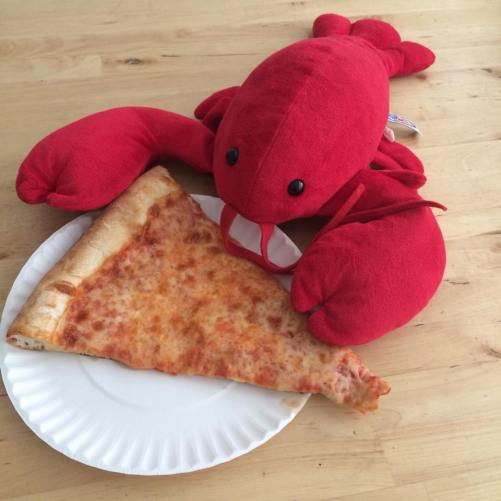
It started when I was back in college and my boyfriend and I were at a gift shop that sells Rhode Island merchandise (we went to school in Rhode Island). My boyfriend noticed a cute lobster stuffed animal and said how much he liked it because it reminded him of a pet crawfish he had growing up.
When his birthday came around I decided to give him the stuffed animal lobster that he had admired months earlier. We chose the name “Rhodie” for the lobster stuffed animal because his backstory is that he is from Rhode Island. Somehow, one day when we were eating pizza we decided that Rhodie was Italian and loved pizza. It became a joke and I thought how ridiculous it was that a lobster loved pizza!
I thought this would make a great character in a children’s book. After many revisions and many sketches later Lorenzo, the Pizza-Loving Lobster is now an actual book!
What have you found to be the best part of writing and illustrating a picture book?
The best part, at least recently, has been having others contact me about my book. It could be a simple tweet showing it on the shelves in California or an e-mail saying how much a grandchild loves ‘Lorenzo’. It makes me so happy to know that others love my work too!
Your slogan is “Made with a Smile.” Can you talk about your philosophy and what influences your illustration work?
I strive to create art that makes me, and others, happy. My hope is that my art brings the viewer joy and even make them laugh. The influences for my work include traveling, being in nature, and reading many children’s books. I like to have my work be bold and fun.
Can you describe your work space a little?
My studio space is in my apartment in Brooklyn. It consists of a computer, a Cintiq monitor, and a desk for drawing and painting. I also have a giant printer and a scanner.
Do you have any other books on the horizon?
At the moment I am ‘shopping’ around a book about a penguin named Bento who is apprehensive about school picture day. I also have two more manuscripts that I’m storyboarding.
Since Celebrate Picture Books is a holiday-themed blog, I can’t let you get away without asking you a few holiday-related questions.
What is your favorite holiday?
My favorite holiday by far is Halloween. I love that it’s during the fall, with all the changing colors of leaves. My favorite parts are dressing up as a fun character as well as decorating and carving pumpkins. I also like to celebrate small holidays that I discover, such as grilled cheese sandwich day!
Do you have an anecdote from any holiday you’d like to share?
Growing up I never had a store-bought Halloween costume. I would design my own costume and my mom and I would go to the fabric store to see how we could create the design. Then my mom would work her magic and sew a unique costume for me. I’ve been a candy corn, a Beanie Baby, a fairy, and more!
Has a holiday ever influenced your work?
One of my new manuscripts I’m storyboarding now is about Christmas. My family always had a great collection of Christmas books when I was growing up, and I hope this one can make it into the collection someday!
Thanks, Claire! I wish you all the best with Lorenzo, the Pizza-Loving Lobster and your future books!
You can find Lorenzo, the Pizza-Loving Lobster at:
Children of kindergarten age are looking forward to starting school like “the big kids,” and teachers all over the country are preparing to welcome their new students on the first day. All the desks or tables have the same supplies laid out, the same chairs pushed in, and the same promise of learning. Are all the kids the same? Yes…and no. Yes: They are all about the same age, wonder what the future holds, and want to make friends. No: they all come with different personalities, different histories, and different talents and abilities. And it is these differences that give each child their unique perspective on the world and will determine their unique contribution to it. Today celebrate each child’s distinct skills and gifts.
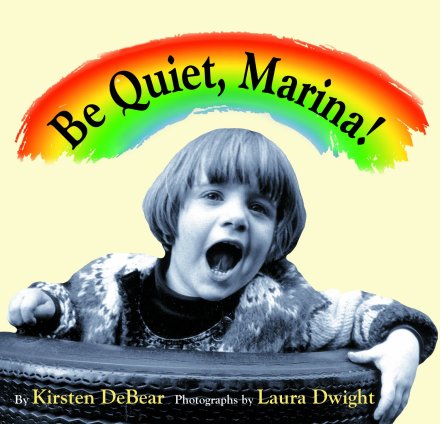
Be Quiet, Marina!
Written by Kirsten DeBear | Illustrated by Laura Dwight
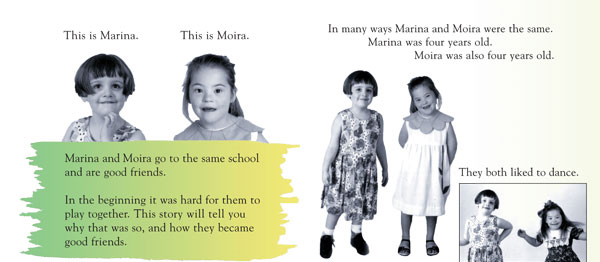
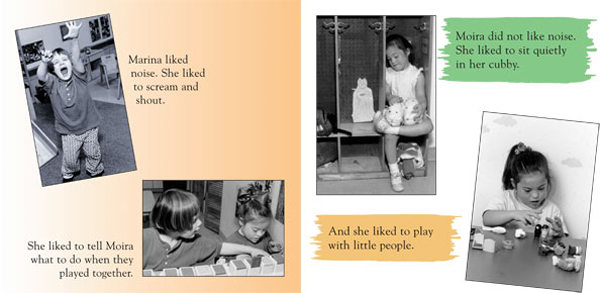
Marina and Moira are four years old and in the same class at school. Marina was born with cerebral palsy; Moira has Down’s Syndrome. They like many of the same things. Both girls like to dance, play ball, dress up, and play with dolls. But when it comes to noises or rushing around, Marina and Moira are different. Marina likes loud noises. She often screams and shouts, and when she and Moira play together, Marina likes to tell Moira what to do.
Photography by Laura Dwight, courtesy of starbrightbooks.org
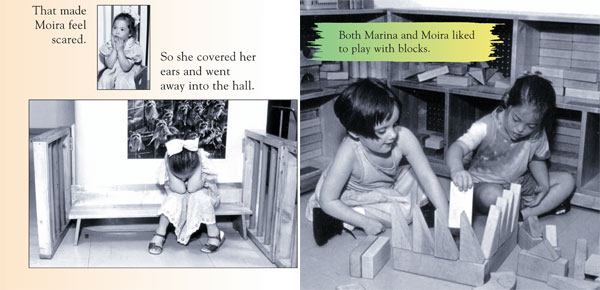
Moira, on the other hand, likes to sit quietly, and she can often be found taking a break in her cubby. She also likes to play alone with the little people figures. While both girls like to take walks outside, Moira stays with the teachers and the other students while Marina runs ahead. One of Moira and Marina’s favorite activities is when the teachers swing the kids in a big blanket. Then each student has to wait their turn. Moira can wait patiently, but for Marina waiting is hard; she gets angry and screams or cries. When Moira hears Marina scream, she feels scared. She covers her ears and leaves the room.
While Moira and Marina like to build towers and castles with blocks together, they have different feelings about cleaning up afterward. Marina doesn’t want to help and shows it by yelling. Moira runs from the room with her hands over her ears. “One day on the playground Moira was on the see-saw. Marina wanted to get on too, but she couldn’t…So she started to scream. She screamed so loudly that Moira covered her ears and walked away. Now Marina could get on the see-saw, but it was no fun alone.”
Photography by Laura Dwight, courtesy of starbrightbooks.org
Another day Marina started to get upset while the girls were playing with the telephone. This time Moira didn’t run away. Instead she looked at Marina and said, “Please don’t scream!” Marina listened. She became quiet and the two continued to play together. Later in the week when Marina asked Moira to play, Moira told her she would, but only if Marina didn’t scream. Marina said, “Okay, I won’t.”
The two girls came to an understanding. Instead of being afraid of Marina, Moira now knows she is trying to be friends, and Marina realizes that if she wants Moira to play with her, she can’t scream. And they both know that if they need help they can ask their teachers. Now Marina and Moira are best friends, which means they can have fun playing dolls and building with blocks, dancing and dressing up and even going up and down on the see-saw. And when Marina screams, “‘It’s fun!’” Moira makes a little noise herself and shouts “Be Quiet, Marina!”
Photography by Laura Dwight, courtesy of starbrightbooks.org
With simple, straightforward language, Kirsten DeBear reveals the story of how two little girls with what might be considered opposing personalities overcame their differences to become friends. While drawn to each other, these differently abled girls had trouble playing together. Through perseverance and communication, however, they came to understand each other. DeBear brings honesty and humor to this true story that applies to all children who need to accommodate other’s preferences while staying true to themselves when playing or working in a group. The happy resolution shows that there is room for all in our friendships and our hearts.
Laura Dwight’s black and white photos take a storyteller’s approach to chronicling the evolving friendship between Marina and Moira as they participated in schoolroom activities. The smiling girls are shown dancing, dressing in fancy hats, playing with dolls and a ball, building with blocks, and doing other fun things together. The photographs also depict moments of friction between the girls when Maura becomes upset and screams and Moira covers her ears and runs away. At the end of the book Dwight’s lens captures the experiences that led to better understanding between the two girls and their strengthening friendship.
Readers may recognize themselves as a “Maura” who likes loud noise and exploring on her own ahead of the group, or a “Moira” who prefers quiet and staying close to the group. Through the story of these two very smart little girls, all kids may learn to understand and appreciate themselves and alternate viewpoints.
Ages 4 – 7
Star Bright Books, 2014 | ISBN 978-1595726650
Visit Star Bright Books for a vast array of inclusive titles for children that embrace diverse ethnicities and abilities, promote literacy, and are widely available in 24 languages.
View a gallery of photography work by Laura Dwight on her website!
Get Ready for Kindergarten Month Activity
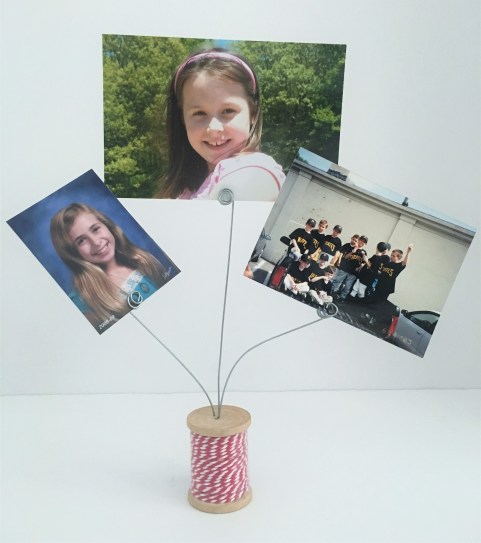
Threads of Friendship Photograph Holder
In the same way that thread holds clothes, blankets, and other material goods together, friendship holds people together. Make this easy Threads of Friendship Photograph Holder to keep pictures of your friends close by!
Supplies
Wooden Spool of twine, available at craft stores and some discount retailers
Thin-gauge wire, no heavier than 18 gauge
Small gauge nail
Hammer
Needle-nose pliers
Pencil
Photographs
Directions
To make the photograph holders:
Holding one end of a wire with the needle-nose pliers, wrap it around the pencil four or five times
Remove the wire from the pencil
Squeeze the coils of wire together with the needle-nose pliers
Cut the wires to different lengths so the pictures stand at various heights
To make the stand:
Make two or three holes in the center of the wooden spool of twine with the nail and hammer, holes should be about ½-inch deep to steady wire.
Place the coiled wires in the holes
Put photos in the coils
Note:
Even young children can help hammer the nail, place the wire in the holes, and choose photographs. Adults should coil the wire, cut the wire, and help with hammering.













 celebratepicturebooks.com