January 1 – Commitment Day and Interview with Author/Illustrator Lindsay Ward

celebrate-picture-books-picture-book-review-don't-forget-dexter-cover

About the Holiday

The beginning of the year is a perfect time to think about your relationships and let all of the special people in your life know how much they mean to you. It’s easy to let time go by without telling friends, coworkers, and family members that they are important to you and that you appreciate everything they do for you and with you. Little ones are  committed not only to family and friends but—often with the same fervor—to their favorite toys as well. And vice versa? Perhaps—as today’s book shows!

Don’t Forget Dexter!

By Lindsay Ward


In an empty pediatrician’s waiting room, a little dinosaur calls out “Hello? Is anyone there?” Then he sees you! Yes, you, and he needs your help. It seems Dexter (that’s the dino’s name) has lost his best friend, Jack. Jack was just there a minute ago coloring with Dexter, but now he’s gone. Dexter’s been waiting “a really long time. Like forever.” He thinks that “maybe you’ve seen him?” Oh, right! You don’t know what Jack looks like! Dexter draws a quick picture of a kid with curly hair, stick arms, stick legs, and a smile. Have you seen Jack?

celebrate-picture-books-picture-book-review-don't-forget-dexter-drawing

Copyright Lindsay Ward, 2018, courtesy of Two Lions Publishing.

Maybe you and Dexter need a little more help. Suddenly, Dexter has an idea of who to ask. “Excuse me. Hello? Mr. Fish? Have you seen my best friend, Jack?” Or maybe the lady behind the window knows where Jack is. But she’s on the phone and doesn’t even seem to hear or see Dexter. Wait! Dexter knows what to do—he’ll sing his and Jack’s favorite song! “Dexter Dino, stomp through the swamp. Dexter Dino, Chomp, Chomp, Chomp!”

No Jack? Dexter sings louder, but still no Jack. Poor Dexter! He just doesn’t understand. Could it be…”Oh no! What if he left me here ON PURPOSE?” Dexter thinks, as his eyes with tears. But then denial kicks in. That can’t be…after all Dexter says, “I’m Dexter T. Rexter. The toughest, strongest, coolest dinosaur there has ever been. EVER!” And he’s pretty much right! He’s got a swishy tail, chompy teeth, pretty sharp claws, and feet that “make this really cool sound.”
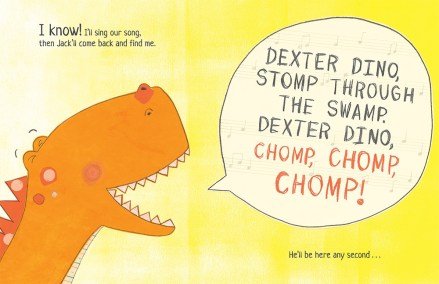
celebrate-picture-books-picture-book-review-don't-forget-dexter-song

Copyright Lindsay Ward, 2018, courtesy of Two Lions Publishing.

But oh, dear…did you really just suggest the unthinkable? That maybe Jack “likes something more? Like another toy?” You know what kinds of great toys are out there—all sorts of cars, trucks, trains, and planes that have fancy moving parts, blinking lights, and swell sounds. “Wait, what did you say? You think dinosaurs ARE awesome?” Just that thought has given Dexter more oomph and confidence. So much, in fact, that he’s going to escape from this waiting room through the window and find Jack.

Dexter builds a pile of books to reach the supply closet handle, grabs some sturdy bandages to make a climbing rope, and—under the watchful gaze of the swimmy “unhelpful spectator,” swings into action and…into the fish tank! Oh no! As Dexter sinks to the bottom, he sees all of his favorite moments sinking with him. “No more playtime. No more bath time. No more bedtime snuggles. No more Jack.” Dexter’s tears mix with the aquarium water.

But what’s this? What is that sound? “DEXTEEERRR!” Dexter recognizes that voice. It’s Jack! See? “And you were so worried.”  But Dexter knew all along he’d never be forgotten. And now as Jack pushes him around the waiting room in a cool sports car, he and Jack even have a new song to sing!

celebrate-picture-books-picture-book-review-don't-forget-dexter-dexter-t-rexter

Copyright Lindsay Ward, 2018, courtesy of Two Lions Publishing.

What child can resist the roar of a dinosaur who needs help? The opportunity to be bigger, braver, and fiercer, than T-rex is irresistible, and in Lindsay Ward’s hilarious direct-address friendship story, it’s irresistible fun. As Dexter takes readers along on his roller coaster of emotions, asking readers for help and reassurance, kids will empathize with this lost toy who’s feeling small and alone. There will be plenty of giggles when Dexter draws his stick-figure portrait, rappels into the fish tank, and melts into a puddle of dinosaur tears. A spirited reading (and singing) will bring the story fully to life.

Ward’s bright, bold illustrations set Dexter center stage as his emotions play out on his very sweet face. From page to page, Dexter’s expressive eyes register uncertainty, hope, worry, bravado, angst, bravery, despair, and finally joy. Orange Dexter is a cutie with his scattered polka dots and kindergarten-style, writing-paper belly. Kids will recognize the doctor’s office with its universal fish tank; the “better” toys Dexter compares himself to are appropriately menacing; and Dexter’s memories of fun times spent with Jack show readers just how strong the bond between these two friends is. As Jack, wearing a Dexter t-shirt and also with tears in his eyes, searches for Dexter, readers will see that the love between toy and child goes both ways. Children will cheer when Jack reunites with Dexter with a huge hug.

Don’t Forget Dexter! is a funny and heartfelt choice for dinosaur lovers and for introducing discussions of various emotions and the nature of love for home, classroom, and public libraries.

Ages 3 – 7

Two Lions, 2018 |ISBN  978-1542047272

Two Lions sent me this book to check out. All opinions are my own.

Discover more about Lindsay Ward, her books, and her art on her website.

Commitment Day Activity
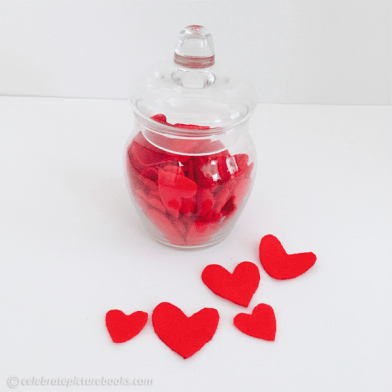
celebrate-picture-books-picture-book-review-heart-jar-craft

I Love You Jar


You can show the people you love how much they mean to you by giving them your heart! Make this I Love You Jar so you always have a little love on hand to share!

Supplies

  • A decorative clear glass jar, mason jar, or other kind of jar
  • Red felt (or other desired color or colors)
  • Heart stencils or cookie cutter (optional)
  • Scissors

Directions

  1. Cut 10 to 20 heart shapes from the red felt 
  2. Place the hearts in the jar for safe keeping
  3. When you want to tell someone that they are special to you, give them a heart!

Meet Lindsay Ward

celebrate-picture-books-picture-book-review-don't-forget-dexter-lindsay-ward-headshot

Today I’m excited to talk with Lindsay Ward about the text that inspired Dexter, the best part of meeting with students, and what makes Ohio home.

What inspired you to write Don’t Forget Dexter!?

My husband and I were pregnant with our first child and my husband was required to get a T-DAP booster shot prior to our son’s birth. He went to get the shot and while he was waiting to be seen he texted me a photo with of a toy dinosaur lying underneath a chair with the line “well, they left me here.” I laughed out loud when I read the text and immediately sat down to write Dexter’s story. To this day it’s still the fastest idea-to-story moments I’ve ever had. I ended up writing the first draft within an hour and the rest is history.
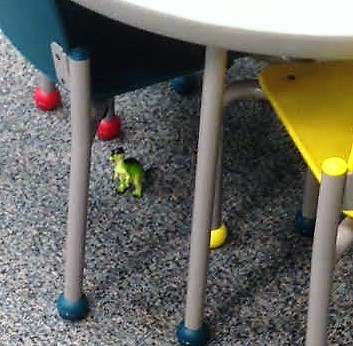
celebrate-picture-books-picture-book-review-dino-photo-lindsay-ward

When did you know you wanted to write books for children? Has becoming a mom changed the way you work or the themes of your work? If so, in what way?

I always knew I wanted to be an artist of some kind, but I never thought about writing. That actually happened by accident years later once I was already published as an illustrator. When I was 15 I got my first job working in a children’s book store. After meeting authors and illustrators who would come do signings at Hicklebee’s (where I worked), I realized I wanted to illustrate children’s books. I loved the idea of working from a narrative. After I graduated high school I went on to study illustration in college and began trying to get published.

My books have always been connected in some way or another to personal experiences. Now that I have two boys, I definitely get inspired by them. I’m also a lot more critical of books as a mom than I was before. Prior to having kids, I would really only care about the quality of the art when I purchased a book for my home library. Now I expect a book to have the full package— great writing and illustrations. Seeing first hand which books my kids respond to has been really interesting too.

When you’re working on a project, does the story come first or the art?

With the exception of Dont Forget Dexter! and Henry Finds His Word, the story has always come first. Those two titles are the only books where I had a character in my head before the story was written. Generally, I come up with a concept first and then I consider all the directions I can take the story in before I settle on one. Writing is a very instinctual experience for me, I trust my gut to tell me when I’m heading in the right direction.

You hold many readings and events at schools, libraries, and book festivals. Do you have an anecdote from any event you’d like to share?

I love meeting with students and visiting schools and libraries. It’s one of my favorite parts of my job. So often I’m in my own head working on an idea, so when I get the chance to meet my readers, it’s such a wonderful experience. I don’t necessarily have a particular anecdote, but I have experienced more than once going into a school where the students have never met an author or illustrator before. I love being able to show them that they can do something creative with their lives and nothing is impossible. I think that’s a very important lesson for kids to learn. I was lucky enough to have a mom that always supported my dreams, and I can’t imagine what it would have been like to pursue this career if she hadn’t been so supportive.

What’s the best part of writing and illustrating children’s books?

I think that moment where you know you’ve tapped into something great creatively and the idea begins to really come together— that’s a wonderful feeling. I love getting to meet my readers too, that’s the best!

Your book Please Bring Balloons, a mystical story about a little girl who rides a carousel polar bear into a magical arctic dreamscape, has been made into a play and had a recent run at the New York Children’s Theater. Can you talk a bit about that and how it came to be?

I didn’t really have much to do with the process of Please Bring Balloons becoming a play. My agent called one day to let me know they were interested in adapting my book and next thing I know it was a production in New York. I remember my husband brought home a dozen roses for me the day we found out—it was incredibly sweet, saying “this is what they give actors on stage.” Months later, my husband and I had the opportunity to go to New York and see the play—which is one of the best moments of my career as a children’s book author/illustrator. I was so proud of what I had created, and so impressed with the writer, director, and actors who put it all together. Seeing my story come to life was an amazing experience that I’ll never forget.

Can you describe your studio a little? What’s your favorite thing in it? Why?

Currently, my studio is in a small bedroom in my house. It’s very cozy and has a beautiful view of the woods and river behind my house. I’m very type-A so I like to keep it organized, the only time it’s usually messy is if I’m working in cut paper on a book—then it looks like a bomb has gone off.  My favorite thing in it is my blue scissors that I’ve used on every book I’ve ever published. I’m a bit superstitious about them.

You grew up in California, lived in New York and Boston, and now live Ohio. What would you say are the three biggest differences in the West Coast, East Coast, and Midwest?

I get this question a lot, mostly from Clevelanders, who are fascinated by the fact that I grew up in California but choose to live in Ohio (sometimes I don’t think they realize how good they have it here). For me, the West Coast is laid back and goes with the flow, the East Coast is always moving, and the Midwest feels like home. I think the reason I fell in love with Cleveland is because the odds are always against it, a lot of people make fun of it or look down on it, but it’s got a lot of heart. Midwesterners are warm and passionate people. I’ve had the opportunity to live in many places and they’ve all given me wonderful experiences and shaped me into who I am today.

What’s up next for you?

I just wrapped up the sequel to Dont Forget Dexter!, titled Its Show-and-Tell, Dexter!, which will come out July 17th, 2018. I’ll be working on a new picture book about the relationship of colors, as told by the color Gray, titled This Book Is Gray, with Two Lions starting in January. And I’m thrilled to be starting a new original board book series, I Go, with HarperCollins next year.

What is your favorite holiday?

Hands down, Thanksgiving! Cooking for my family on a day filled with turkey, pie, and football…it doesn’t get better than that!

Thanks, Lindsay! It’s been fun getting to know more about you and your work! I wish you all the best with Don’t Forget Dexter! and all of your books!

celebrate-picture-books-picture-book-review-don't-forget-dexter-cover

You can find Don’t Forget Dexter! at these booksellers:

Amazon | Barnes & Noble | Books-a-Million | IndieBound

You can connect with Lindsay Ward on:

Her Website | Facebook | InstagramTwitter

Picture Book Review
December 28 – Christmas Bird Count

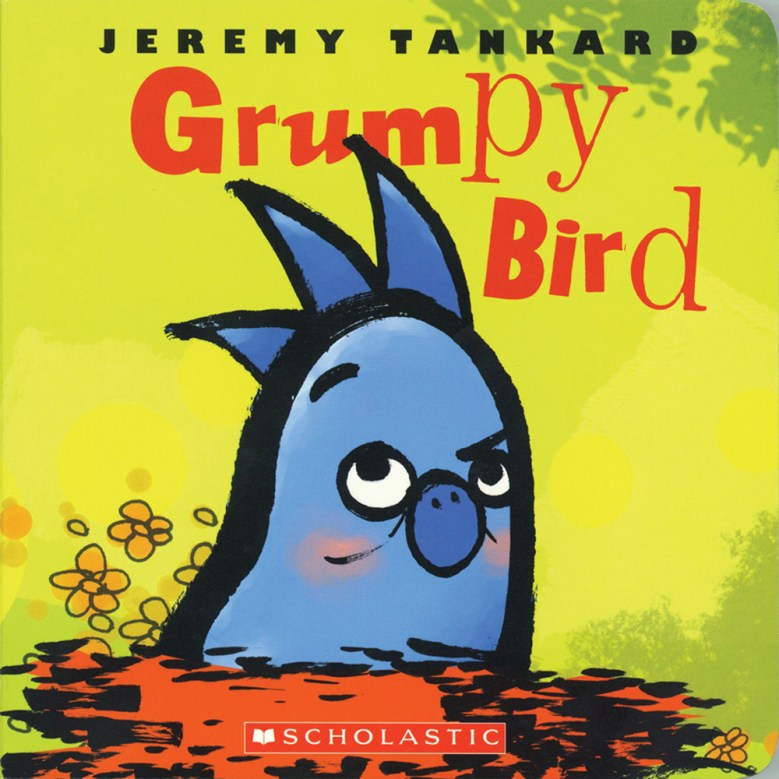
celebrate-picture-books-picture-book-review-grumpy-bird-cover

About the Holiday

Concerned with declining bird populations, ornithologist Frank M. Chapman suggested a new holiday tradition—a Christmas Bird Census that would count birds instead of hunting them. The first census took place on December 25, 1900. On that day, twenty-seven birders, centered mostly in northeastern North America, counted 90 species of birds. The tradition has grown tremendously from those humble beginnings. Today, tens of thousands of volunteers throughout the Americas brave all types of weather to conduct the count, which helps conservationists and scientific organizations create strategies for protecting the health and habitats of bird populations. The Christmas Bird Count is now held from December 14 through January 5. To learn more or to get involved yourself, visit the Audubon website. 

Grumpy Bird

By Jeremy Tankard


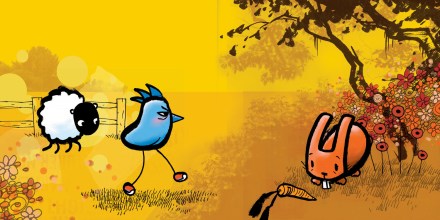
Bird woke up on the wrong side of the nest. “He was too grumpy to eat” and “too grumpy to play.” In fact, he was so grumpy he couldn’t even lift himself into the air. “‘Looks like I’m walking today,’ Bird said.” His steps took him past Sheep who was grazing in a field. When Sheep found out that Bird was walking, she offered to come along.

celebrate-picture-books-picture-book-review-grumpy-bird-waking-up

Copyright Jeremy Tankard, 2007, courtesy of jeremytankard.com.

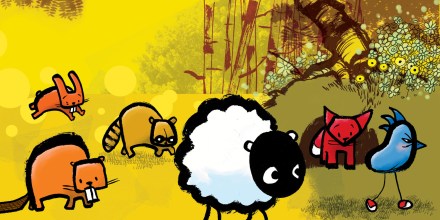
The two soon came to where Rabbit was nibbling grass. Rabbit was curious about what Bird was doing. “‘I’m walking,’ said Bird. ‘It’s no fun.’” Even this less-than-enthusiastic response enticed Rabbit, though, and he joined in. Raccoon was just scampering down a tree truck when he spied the little parade. He called out to Bird to see what was going on. “‘I’m walking,’ snapped Bird, ‘What does it look like?’” Well, Raccoon said, “‘It looks like fun,’” and he joined the group.

celebrate-picture-books-picture-book-review-grumpy-bird-rabbit

Copyright Jeremy Tankard, 2007, courtesy of jeremytankard.com.

Next, they came upon Beaver gathering sticks. His inquiry into Bird’s actions was met with a bit of pique: “‘Let me give you a hint,’ said Bird. ‘You do it by putting one foot in front of the other.’” Beaver caught on right away, and since he loved walking, he came too. When the animals passed Fox and the usual question was asked, Bird lost his temper. “‘WHY DOES EVERYONE KEEP ASKING ME WHAT I’M DOING?’ Bird shouted. ‘I’m walking, okay?’” That sounded okay to Fox, so she bounded along too.

“Bird walked,” and so did the other animals. When Bird stopped, the animals stopped. And when “Bird stood on one leg,” so did everyone else. Bird tried jumping, and the other animals jumped too. Bird began to have a change of heart. He thought this game was pretty fun. It was so fun, in fact, that “Bird forgot all about being grumpy” and invited his friends to “fly back to [his] nest for a snack. And they did.’”

celebrate-picture-books-picture-book-review-grumpy-bird-fox

Copyright Jeremy Tankard, 2007, courtesy of jeremytankard.com.

Jeremy Tankard’s adorable Bird who has the grouchies will keep kids giggling and laughing as his crankiness grows. The repeated phrasing allows enthusiastic listeners to join in, and a dramatic reading will enhance the humor. The animals’ good-natured responses to Bird’s grumpiness reminds kids that everyone has bad days, and that a little bit of silliness goes a long way toward making friends smile again. The fanciful ending, stated so simply, provides a bit of magic that suggests anything is possible—especially among good friends.

celebrate-picture-books-picture-book-review-grumpy-bird-single

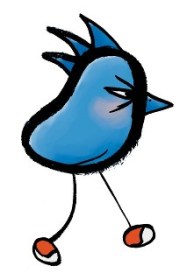
Tankard’s illustrations are as multi-layered as his story, with sophisticated backgrounds that swirl with vibrant color, texture, bubbles, and sketched-in details. Silhouetted woods, sun-drenched fields, and riots of flowers give shape to Bird’s walking path while also highlighting the thickly outlined characters. As the appropriately blue Bird marches along on spindly legs, kids will be amused by his narrowed eyes and furrowed brow. Even his beak seems clenched. When he finally takes note of his fellow walking companions, his eyes turn questioning then attentive and finally cheerful.

Grumpy Bird would be a much-asked-for addition to any child’s bookshelf, especially on those days when a little more encouragement is needed.

Ages 3 and up

Scholastic Press, 2016 | ISBN 978-0545871822 (Board Book edition); 978-0439851473 (Hardcover edition, 2007)

Discover a portfolio of books and art by Jeremy Tankard on his website

Christmas Bird Count Activity

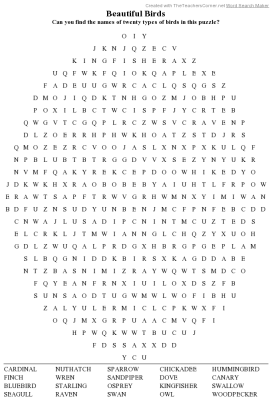
celebrate-picture-books-picture-book-review-beautiful-birds-word-search

Beautiful Birds Word Search Puzzle


It’s fun to watch for different kinds of birds when you take a walk or in your own backyard. Can you find the names of twenty types of birds in this printable Beautiful Birds Word Search Puzzle? Here’s the Solution!

Picture Book Review

December 21 – National Flashlight Day

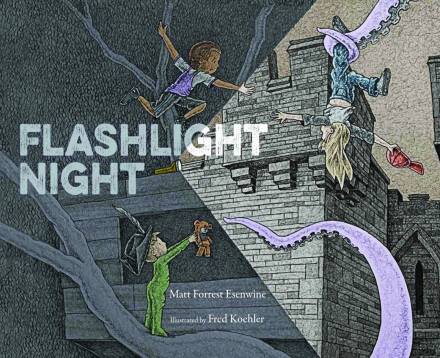
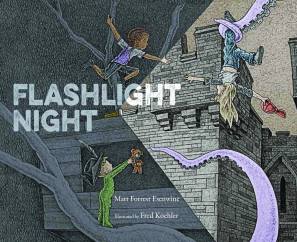
celebrate-picture-books-picture-book-review-flashlight-night-cover-2

About the Holiday

In a clever bit of cause and effect, the founders of Flashlight Day chose the Winter Solstice to put a bit more…light, shall we say?…on today’s honored object. As the first day of winter is the shortest of the year, people may find that a flashlight comes in handy during that extra bit of darkness. If you’re wondering about the history of the flashlight, it all goes back to the invention of the dry-cell battery in 1887. These portable power sources inspired new products, such as the flashlight or torch (as it’s called outside of North America), which was invented in 1899. So indispensable is the flashlight, that it is even incorporated into our phones! To celebrate today’s holiday, why not turn off the lights tonight and tell stories, play games, or go exploring illuminated only by your flashlight!

Flashlight Night

Written by Matt Forrest Esenwine | Illustrated by Fred Koehler

Three brave explorers—a boy, a girl, and a little brother—set out from their tree house at night armed only with their flashlight. In the golden beam, the picket fence turns dilapidated and overgrown as it weaves in and out among the gnarled trunks of a dense forest. The children follow “past old post and rail / along a long-forgotten trail / into woods no others dare, / for fear of what is waiting there.” Soon, they find a crawlspace under the deck of their house and venture in. They can hear the sound of rushing water and the yowl of a big cat. Before joining his friend and her little brother, the boy shines his flashlight around the yard, illuminating a wild waterfall and a tiger on the prowl where a tabby had dozed just minutes ago.

celebrate-picture-books-picture-book-review-flashlight-night-woods

Image copyright Fred Koehler, 2017, text copyright Matt Forrest Esenwine, 2017. Courtesy of mattforrest.com.

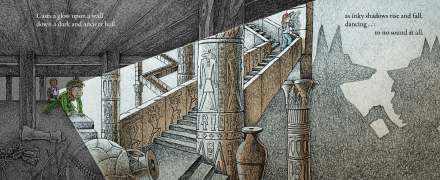
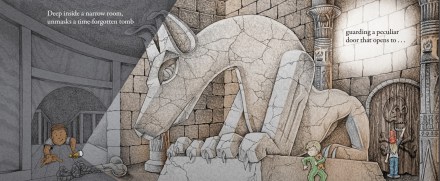
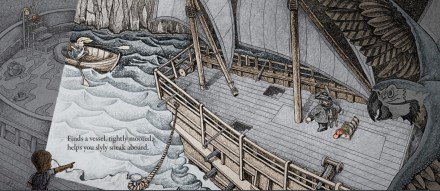
The three friends crawl deep into the dusty crevices of the tunnel, where the flashlight shows them bones and lost treasures of ancient Egypt “as inky shadows rise and fall, / dancing… / to no sound at all.” They come to “a peculiar door that opens to… / a foreign shore.” From the pool stairs they step into a rubber boat and sail across the sea to the pirate ship dead ahead in the circle of light. A parrot swoops low and a kraken reaches its writhing tentacles from the roiling waves just as the treasure chest is found.

celebrate-picture-books-picture-book-review-flashlight-night-egypt

Image copyright Fred Koehler, 2017, text copyright Matt Forrest Esenwine, 2017. Courtesy of mattforrest.com.

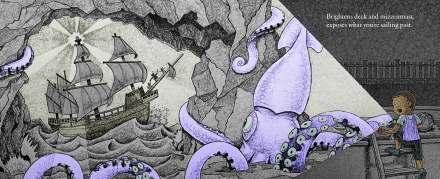
With the ship engulfed and sinking, the stream of light from the “shows a stealthy way to flee—….” The three kids run across the sandy beach and around the umbrella palm then scramble up a steep slope. But the angry pirate, brandishing his sword, is looking for his treasure; the kraken has scaled the wall and nabbed the girl; and the tiger approaches with a hungry look in its eyes.

celebrate-picture-books-picture-book-review-flashlight-night-kraken

Image copyright Fred Koehler, 2017, text copyright Matt Forrest Esenwine, 2017. Courtesy of mattforrest.com.

Quickly, the older boy swings himself onto the ramparts of an old stone castle and reaches for the outstretched hand of his friend as she dangles upside down in the kraken’s arm. Her brother distracts the beast with his teddy bear, which transforms into a mighty grizzly that scares off the tiger, the pirate, and the astonished kraken. The littlest explorer is hailed as a hero as he is lifted through the window to safety.

celebrate-picture-books-picture-book-review-flashlight-night-pool

Image copyright Fred Koehler, 2017, text copyright Matt Forrest Esenwine, 2017. Courtesy of mattforrest.com.

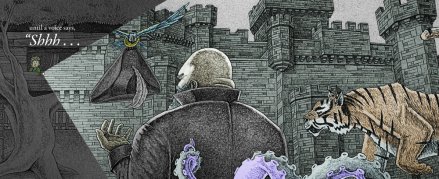
Happily back in the tree house, the three snuggle under a blanket, reading 20,000 Leagues under the Sea while flanked by stacks of the classics, including Around the World in 80 Days, Treasure Island, and Mysteries of Egypt. And even though “weary eyes fight off the sleep, / adventure lingers, stirs about— / “until a voice says, ‘Shhh…lights out.’”

celebrate-picture-books-picture-book-review-flashlight-night-shhh

Image copyright Fred Koehler, 2017, text copyright Matt Forrest Esenwine, 2017. Courtesy of mattforrest.com.

Flashlight Night is that perfect combination of text and illustrations that creates a reading experience that immerses a reader in an alternate world. Matt Forrest Esenwine’s rhyming story entrances with an atmosphere of mystery and intrigue created with language that sets the imagination racing—inky shadows, time-forgotten tomb, slyly sneak, and craggy mountainside is just the beginning.

celebrate-picture-books-picture-book-review-flashlight-reading-fun-forgotten-tomb

Image copyright Fred Koehler, 2017, text copyright Matt Forrest Esenwine, 2017. Courtesy of mattforrest.com.

Accompanying this beguiling narration are Fred Koehler’s masterful, dual-duty illustrations. Outside of the flashlight’s beam, charcoal-colored images depict the reality of the children’s yard and treehouse. Inside the beam, the children’s imaginary game is fully illuminated. At the sharp edges between the two, reality and imagination blend together as seamlessly as children traverses both worlds. Under the deck, a forgotten baseball meshes with the rounded body of Egyptian pottery, the wall of the deck morphs into a rocky cliff, the stern of the rubber raft gives way to a wooden dinghy, and the top of the treehouse stretches to become the ledge on a castle.

The classic stories the children read in their tree house inform the friends’ nighttime jaunt and come to life in Koehler’s engrossing illustrations that are themselves scavenger hunts for small details, foreshadowing clues, bits of humor, and literary allusions.

Flashlight Night is a beautiful tribute to adventure classics. It is a fantastic book to cuddle up with for cozy bedtime reading (flashlight highly recommended), to take along for campfire storytelling, or to spark imaginary play. Flashlight Night would be a great gift and welcome addition to any child’s home bookshelf or classroom library.

Ages 4 – 8

Boyds Mill’s Press, 2017 | ISBN 978-1629794938

Discover more about Matt Forrest Esenwine and his books on his website.

To learn more about Fred Koehler, his books, and his art, visit his website.

National Flashlight Day Activity

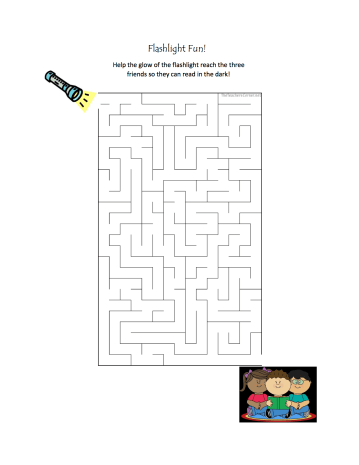
celebrate-picture-books-picture-book-review-flashlight-reading-maze

Flashlight Fun Maze

Three friends want to do a little nighttime reading. Can you help the glow of the flashlight reach them so they can enjoy their favorite book in this printable Flashlight Fun Maze? Here’s the Solution.

celebrate-picture-books-picture-book-review-flashlight-night-cover-2

You can find Flashlight Night at these booksellers

Amazon | Barnes & Noble | Books-a-Million | IndieBound

YouPicture Book Review

December 20 – It’s Tomato and Winter Squash Month

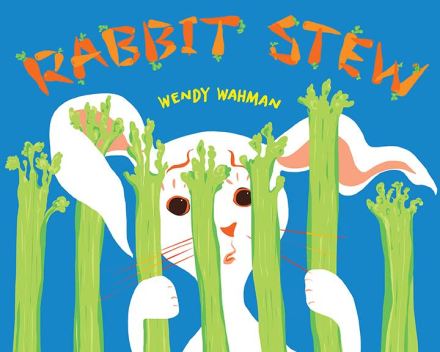
celebrate-picture-books-picture-book-review-rabbit-stew-cover

About the Holiday

The cold months of the year call for warm, hearty meals, and what better way to satisfy the desire for comfort food than to incorporate some of the most flavorful vegetables around? Tomatoes are a staple in many dishes, while the many varieties of winter squash (including acorn, butternut, spaghetti, kabocha, and delicate) are versatile and can add new taste sensations to any dinner. So as the temperature dips, scout out these vegetables and savor their rich flavors!

Rabbit Stew

By Wendy Wahman


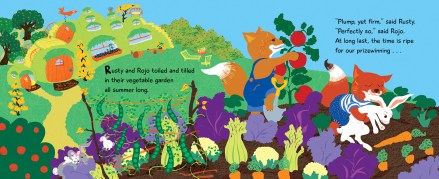
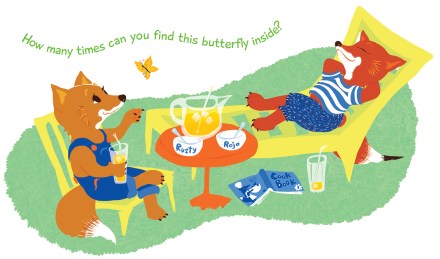
“Rusty and Rojo toiled and tilled in their vegetable garden all summer long.” But now the crops have ripened, and the two foxes are ready to enjoy the bounty of their hard work—so are their neighbors, the Rabbits. As Mommy Rabbit and the bunnies nibble away in a corner of the garden, Rusty gently squeezes the tomatoes and finds them “plump, yet firm.” “Perfectly so,” Rojo agrees as he lifts Daddy Rabbit from the carrot patch. “At last,” Rusty and Rojo exclaim, “the time is ripe for our prizewinning Rabbit Stew!”

celebrate-picture-books-picture-book-review-rabbit-stew-picking-veggies

Image copyright Wendy Wahman, 2017. Courtesy of wendywahman.com.

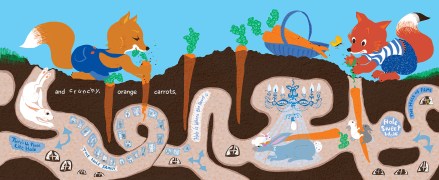
While Rojo picks “lean, green runner beans,” the Rabbits look on worriedly. Daddy tries to hide, but Rusty spies him in the wheelbarrow full of purple kale. Then, when the family dives back into their cozy “hole sweet hole,” they find that their convenient carrot snacks are being abruptly snatched away—only to be added to the pot of “splendid Rabbit Stew.”

celebrate-picture-books-picture-book-review-rabbit-stew-in-the-burrow

Image copyright Wendy Wahman, 2017. Courtesy of wendywahman.com.

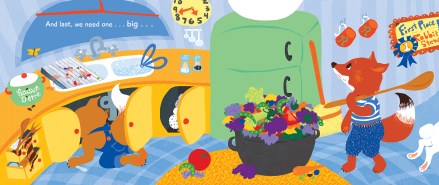
Next come raisins and celery “and roly-poly blueberries.” But what about those white and gray bits of fluff? Will they end up in the foxes’ buckets too? Of course “juicy red tomatoes, fresh sprigs of parsley, and sweet yellow peppers” are also musts for the foxes’ “finest-ever Rabbit Stew.” With the pot overflowing with colorful veggies, only one more thing is needed—“one…big…round…white…bowl…for our favorite Rabbit, Stew—and his family too!”

celebrate-picture-books-picture-book-review-rabbit-stew-kitchen

Image copyright Wendy Wahman, 2017. Courtesy of wendywahman.com.

With her fertile imagination and a clever play on words, Wendy Wahman offers up a delightful story that will have readers guessing until the very end. Along with the mystery and the yummy descriptions of each ingredient, Wahman presents a counting game for readers. As Rusty and Rojo pick their vegetables, children can count the ten runner beans on the trellis, nine purple kale leaves in the wheelbarrow, eight carrots from the burrow, and all of the other ingredients on down to one. But do Rusty and Rojo need one big white rabbit or something else? Kids will love the twist at the end and cheer to see Daddy Stew, Mommy Strudel, and their little bunnies—Dumpling, Biscuit, and Ragu—dining on the special meal grown and created just for them.

Everyone’s garden should look as deliciously vibrant as Wahman’s riotous patch of vegetables! The vivid colors jump off the page while providing texture and nuance to the illustrations. They also give kids another concept to learn and talk about. Little details, such as the tiny caterpillar and the yellow butterfly that follow the bunnies from page to page, as well as the fancy burrow lined with photos of friends and family will enchant readers. 

celebrate-picture-books-picture-book-review-wendy-wahman-interview-Fox-Lemonade

Image copyright Wendy Wahman, 2017, courtesy o f Wendy Wahman.

Welcome themes of friendship, diversity, and inclusiveness can also be found within the illustrations and the story.

Rabbit Stew is a bright, humorously sly story that would be a wonderful addition to any child’s library. The book also makes a perfect companion for trips to the farmers market, on picnics, or to spur interest in home gardening. The attention to the details of what rabbits can safely eat, as well as the number and color concepts provided in the illustrations, makes Rabbit Stew a great choice for school story times and spring lessons.

Ages 3 – 7

Boyds Mills Press, 2017 | ISBN 978-1629795836

You can download a fun Rabbit Stew Activity Sheets from Boyds Mills Press!

Discover more about Wendy Wahman, her art, and her books on her website!

You’ll dig this Rabbit Stew book trailer!

National Garden Month Activity

celebrate-picture-books-picture-book-review-garden-board-game

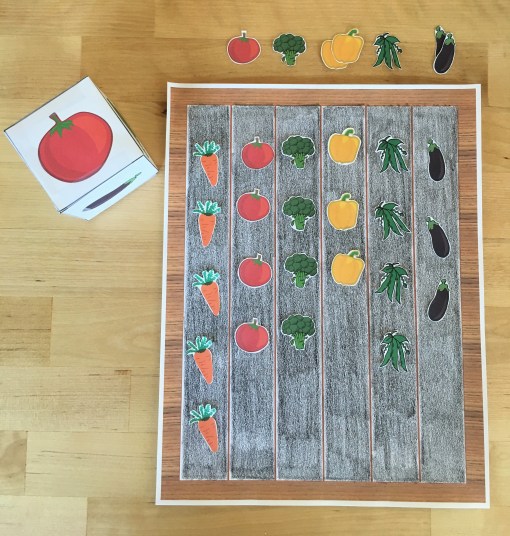
Grow a Vegetable Garden Board Game, copyright Celebrate Picture Books, 2017

Grow a Vegetable Garden Board Game


With this fun game you and your family and friends can grow gardens inside! Roll the dice to see whose garden will fully ripen first!

Supplies

Directions

Object: The object of the game is for each player to fill their garden rows with vegetables. Depending on the ages of the players, the required winning number of rows to fill and the number of vegetables to “plant” in each row can be adjusted.

  1. Print one Game Board for each player
  2. Print one set of Playing Cards for each player (for sturdier playing items, print on card stock)
  3. Print one Vegetable Playing Die and assemble it (for a sturdier die, print on card stock)
  4. Cut the vegetables into their individual playing cards
  5. Color the “dirt” on the Garden Plot with the crayon (optional)
  6. Choose a player to go first
  7. The player rolls the die and then “plants” the facing vegetable in a row on the game board
  8. Play moves to the person on the right
  9. Players continue rolling the die and “planting” vegetables until each of the number of determined rows have been filled with the determined number of vegetables.
  10. The first person to “grow” all of their veggies wins!

Meet Author/Illustrator Wendy Wahman

celebrate-picture-books-picture-book-review-Wendy-Wahman-head-shot

Today, I’m really happy to be chatting with Wendy Wahman about her art, her books, her inspirations, and a really sweet school visit she had recently.

Your bio mentions that you worked for the Seattle Post-Intelligencer until 2009. Can you describe your work there?

I worked in the art department doing maps, graphics, info-graphics and illustrations for every section of the newspaper. Ninety percent of the work was on deadline, so I learned to think and draw fast.

Our poor beloved P-I. It was 146 years old when Hearst closed it down. About 150 of us went down with the ship. Best job I ever had. I miss the variety and culture and importance — and honesty — of journalism. I miss my P-I family, very much.

How did you get started illustrating and writing books for children?

I was really just snooping around for illustration work. I had an idea for a book on dog body language I wanted to do, but imagined ‘a real writer’ should write it. I sent out some of the dog body-language art samples and heard back from four major publishers. Laura Godwin at Henry Holt called me, and was so passionate about dogs and kids—and my art. She asked to see a dummy. What dummy, right? I had no dummy, just an idea and some art samples. I took two weeks off from the P-I and put together a dummy. Laura helped me tremendously, as did my brilliant writer husband, Joe Wahman.    

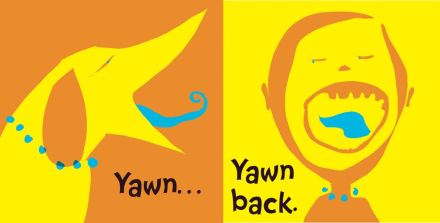
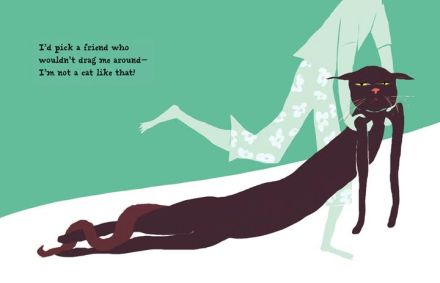
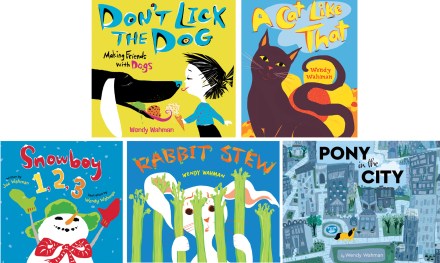
Don’t Lick the Dog is a how-to primer on being safe with dogs. We followed with the companion book, A Cat Like That. We never did do my dog body-language book. It’s sitting here patient as can be. “Good dog, book.”

celebrate-picture-books-picture-book-review-interview-with-wendy-wahman-yawn-back

Image copyright Wendy Wahman, Don’t Lick the Dog. Courtesy of Wendy Wahman.


celebrate-picture-books-picture-book-review-interview-with-wendy-wahman-cat-like-that

Image copyright Wendy Wahman, A Cat Like That. Courtesy of Wendy Wahman.

Your art is so varied—from humorous to infographics to striking, serious editorial work. You also work with crisp, clean lines and beautiful textures. Can you talk about your process and inspirations?

Thank you so much, Kathy. Well. I sit and think and read a lot. Mostly I just look and try to distract myself from thinking too hard. I like to thumb through my Thesaurus. When I’m stuck, I try to remember to move away. This can be physically—exercise or a walk; mentally—read or look through books; or emotionally—play with my dogs or call somebody. I say, try, because too often I sit rooted, thinking, thinking. Better to get up and move.

What was the inspiration for Rabbit Stew?

I feed my dogs a homemade stew of meat & veggies. Long ago, I was stirring up an enormous batch of dog food, when “rabbit stew” fluttered to mind. Rabbit Stew is also a counting book, counting down veggies from ten to one. It’s also a color book. It was a challenge to find ingredients safe for rabbits, in different colors and not give it away. Like, rabbits love dandelions and they’re very good for them, but I only know a couple of people who would knowingly toss dandelions into the pot. No potatoes; they are toxic to bunnies, and cabbage isn’t good for them either. 

celebrate-picture-books-picture-book-review-rabbit-stew-fan

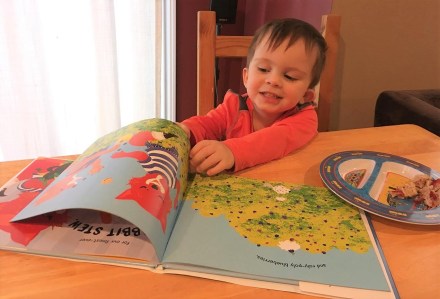
A happy fan enjoys reading “Rabbit Stew” with lunch! Photo courtesy of Wendy Wahman.

You give presentations at schools and libraries. Do you have an anecdote you’d like to share?

I did a school visit recently in southern California and got to take my mom to a presentation for 4th graders. I introduced her to the students, and they gave her a loud round of applause! Even more tender, when I was signing books (and the other stuff kids want signed), they asked if my mother would also give them an autograph. Is that the sweetest or what? Children can be so inspiring, healing, and wise. 

celebrate-picture-books-picture-book-review-interview-with-wendy-wahman-wendy-talking-to-a-class

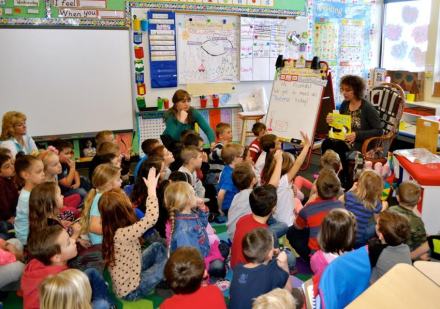
Wendy reads “Don’t Lick the Dog” to enthusiastic kindergarteners in Kennewick, WA. Photograph courtesy of Wendy Wahman

You also teach bookmaking to kids. That sounds fun and fascinating! Can you tell me a little bit about these classes?

I’m so glad you asked about these little books, Kathy. I love making them and sharing the process. Anyone can make one. I’ve taught them to kindergarteners through seniors. I call them “Insight Books,” because what comes out can be surprising, revealing, and often cathartic. Random lines inspire images and ideas. Some people write, others write and draw. Sometimes we collage. Even if you do nothing at all put look, the lines may stimulate ideas. These book are fun to make with a partner too. 

What’s up next for you?

I’m very excited about my next book, Pony in the City (Sterling Publishers). Kevan Atteberry’s book, Swamp Gas, releases the same day, Sept. 9th, and we’re talking about having a co- launch party.

celebrate-picture-books-picture-book-review-interview-with-wendy-wahman-pony-in-the-city-proofs

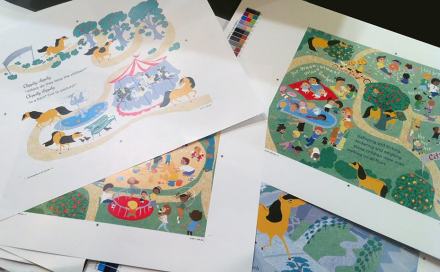
Image copyright Wendy Wahman. Proofs of “Pony in the City” (Sterling, releasing Sept. 9 this year) courtesy of Wendy Wahman.

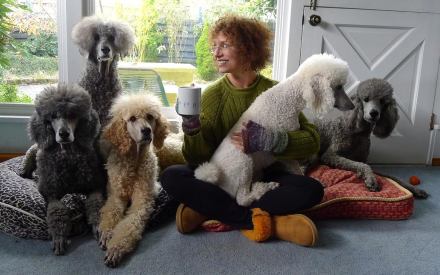
I’m working on Nanny Paws (Two Lions), a book inspired by my little white poodle, LaRoo, and the children next door. Here’s a picture of LaRoo and my other dog Jody with my friend Vikki Kaufman‘s poodles. Vikki is a breeder of beautiful silver and blue standard poodles. Vikki took the picture, can you tell?  Her dogs are staring straight at her. Poor LaRoo. She is a shy girl and just wants to get away from the masses.

celebrate-picture-books-picture-book-review-interview-with-wendy-wahman-poodles

Wendy with LeRoo and Jody and Vikki’s TinTin, Nickel and Eureka.

I’m also working on a dummy for a beautiful story written by Joe, “One Bird” (www.joewahman.com). I’m doing the art for both Nanny Paws and Joe’s story in a new/old style for me: pencil and watercolor.

celebrate-picture-books-picture-book-review-interview-with-wendy-wahman-one-bird

Image from “One Bird,” written by Joe Wahman, illustrated by Wendy Wahman. Courtesy of Wendy Wahman

Do you have a favorite holiday?

Thanksgiving.

Do you have an anecdote from a holiday you would like to share

If you come over for Thanksgiving, prepare yourself for a vegetarian feast. We don’t eat animals here — but we do make them big, round, splendid bowls of stew.

Thanks so much, Wendy! It’s been a lot of fun! I wish you all the best with all of your books!

celebrate-picture-books-picture-book-review-wendy-wahman-interview-all-covers

You can find Wendy’s books at these booksellers:

Amazon | Barnes & Noble | IndieBound | Boyds Mills Press

You can connect with Wendy on:

BēhanceFacebook | LinkedIn | PinterestTwitter

Visit Wendy’s shops:

Cafe Press: http://www.cafepress.com/profile/109591016

RedBubble:  http://www.redbubble.com/people/wendywahman/portfolio

Zazzle: http://www.zazzle.com/wendoodles/products

Wendoodles coloring book: http://www.amazon.ca/Wendoodles-Wendy-E-Wahman/dp/1517403456

Picture Book Review

December 15 – It’s Universal Human Rights Month

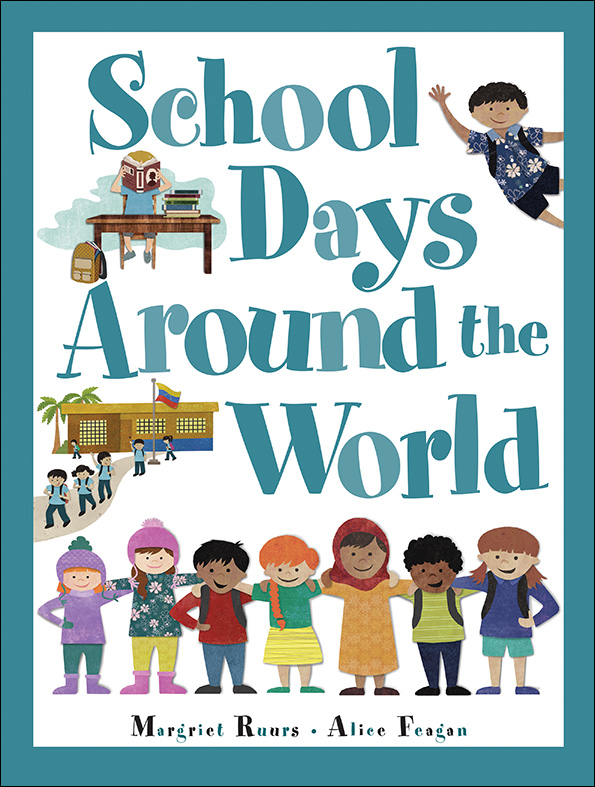
celebrate-picture-books-picture-book-review-school-days-around-the-world-cover

About the Holiday

December is Human Rights Month, an observance established by the United Nations in order to raise awareness of, promote, and protect the equality of the world’s citizens. Following World War II the United Nations General Assembly put forth thirty articles covering rights of education, freedom, health, and more. These articles serve to protect people in times of war and peace to help ensure that all people around the world are allowed to live in freedom and safety. It takes vigilance, compassion, dedication, and determination, but achieving the goal of equal human rights is a responsibility we all share.

School Days Around the World

Written by Margriet Ruurs | Illustrated by Alice Feagan


Every day millions of children around the world go to school, but schools can vary from place to place. Some classes are held in large buildings with libraries, science labs, and computer rooms while others gather in small buildings or even outside. “Schools around the world may be very different, but children everywhere like to have friends and learn new things.” In School Days Around the World, readers meet children from thirteen countries to learn what their educational day is like.

celebrate-picture-books-picture-book-review-school-days-around-the-world-violin.jpg

Image copyright Alice Feagan, 2015, text copyright Margriet Ruurs, 2015. Courtesy of Kids Can Press.

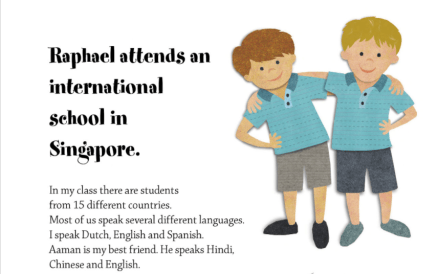
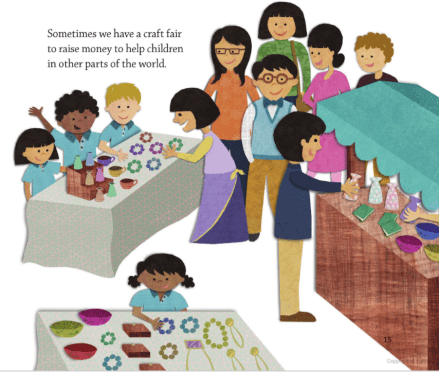
First, children meet Tamatoa, who attends school on Rarotonga, one of the Cook Islands in the South Pacific. Tamatoa arrives to school on a scooter just as the “thang-Thong-thang! of the wooden slit drum calls students inside. Tamatoa’s teacher is wearing flowers in her hair as she does every day. She teaches the children their Ura language, and in the afternoon they dance the hupa, the island’s traditional dance. In Singapore Raphael goes to an international school where the students speak many languages. Raphael knows Dutch, English, and Spanish. His best friend Aamon speaks Hindi, Chinese, and English. Raphael likes to read and write stories on the computer. Sometimes they “have a craft fair to raise money to help children in other parts of the world.”

celebrate-picture-books-picture-book-review-school-days-around-the-world-international-school

Image copyright Alice Feagan, 2015, text copyright Margriet Ruurs, 2015. Courtesy of Kids Can Press.

Marta walks to her school in Azezo, Ethiopi, even though she is blind. Her friend Ayana holds her hand tightly to help “her around potholes and cow patties.” There are so many students that there are two different sessions. Marta goes in the morning with 500 other children. There are 70 students in her class. They learn Amharic and about Ethiopia. At noon Ayana and Marta “hurry home to help feed the ox and cow and to fetch water from the village well.”

celebrate-picture-books-picture-book-review-school-days-around-the-world-china

Image copyright Alice Feagan, 2015, text copyright Margriet Ruurs, 2015. Courtesy of Kids Can Press.

Camilla is from Germany. Her older brother Johannes lives at a boarding school during the school year. He shares his room in an old stone house with three boys. Everyone eats together and cleans up afterward—just like in a family. In class he learns “about nature and science. They also learn how to sail.” Camilla can’t wait until it’s her turn to go to school.

If you visited Annika at school in Copenhagan, Denmark, you would probably spend most of the day outside. Some days the students take a bus to their forest school. There the “run and climb on an old boat.” They “play on swings and with a ball.” Outside they also listen to birds and learn about plants and insects and other parts of nature.

celebrate-picture-books-picture-book-review-school-days-around-the-world-craft-fair

Image copyright Alice Feagan, 2015, text copyright Margriet Ruurs, 2015. Courtesy of Kids Can Press.

While Annika enjoys spending cold days outside, Ana’s days are usually warm. She lives in San Luis, Honduras and walks an hour from her home in the hills to her new school. Inside, two teachers show the children how to read and write. Sometimes, Ana says, “a nurse visits our school. She teaches us how to brush our teeth and stay healthy.” One day a van delivers backpacks full of school supplies, books, and even running shoes.

In Alberta Canada, Shanika goes to a First Nations school where she learns her traditional Cree language along with math and language arts. After lunch, they hear stories, and elders teach them “powwow dances, drumming and how to raise a teepee. They also hold feasts where there are prayers, and the whole community shares tea, soup, bannock loaded with beans and cheese, and berries.

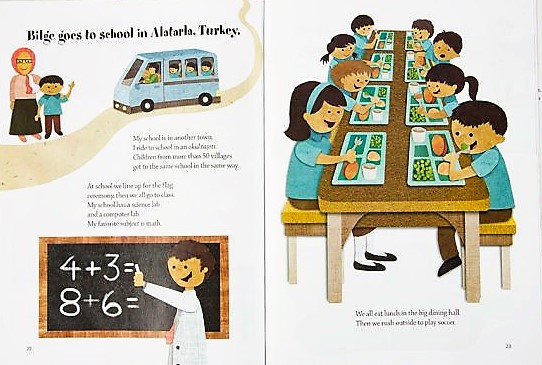
celebrate-picture-books-picture-book-review-school-days-around-the-world-turkey

You can also spend school days with Lu in China, Alina in Kazakhstan, Mathii in Kenya, Bilge in Turkey, Luciano in Venezuela, and Amy and Gwen in Alaska, USA.

 In her short, engaging stories based on the lives of real families, Margriet Ruurs takes readers globe-trotting with new friends to show readers a typical school day in cities big and small. The details of each child’s experience—both familiar and unique—help readers learn more about their peers, promoting greater empathy and understanding now and for a better future.

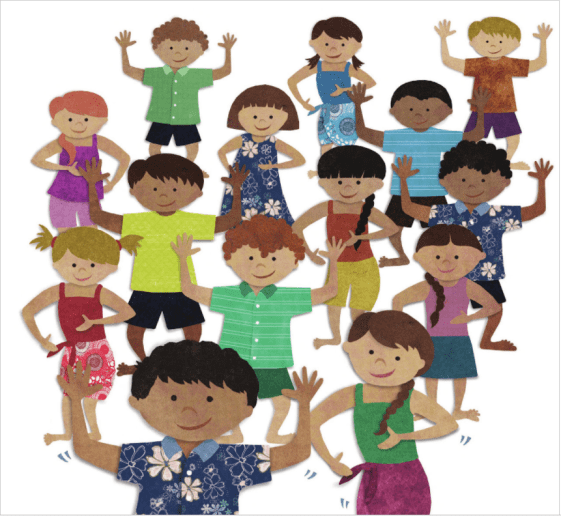
celebrate-picture-books-picture-book-review-school-days-around-the-world-dancing

Image copyright Alice Feagan, 2015, text copyright Margriet Ruurs, 2015. Courtesy of Kids Can Press.

Alice Feagan’s cut paper collages are full of joy and personality as kids dance, play, read, and study together. While the students’ clothing, lunches, and school buildings may differ from country to country, readers will see that the enthusiasm to learn is universal. A world map at the beginning of the book points out where each featured child lives.

A discussion following the text gives teachers, homeschoolers, and individuals tips on using the book to expand on the stories told. A glossary provides definitions and a pronunciation key for the native words found throughout the book. School Days Around the World offers a wonderful opportunity to jumpstart lessons on world customs and geography.

Ages  3 – 8

Kids Can Press, 2015 | ISBN 978-1771380478

Discover more about Margriet Ruurs and her books as well as activities for teachers and readers on her website!

You’ll find more about Alice Feagan and a portfolio of her illustration work on her website!

Universal Human Rights Month Activity

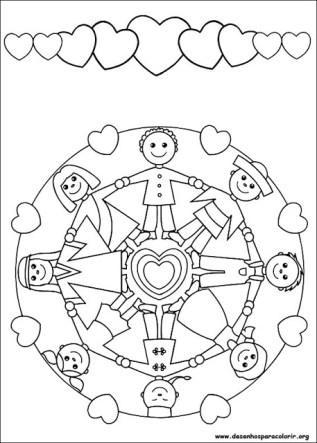
celebrate-picture-books-picture-book-review-human-rights-month-coloring-page

Friends Around the World Coloring Page


Having friends from all over the world is fun! Grab your colored pencils or crayons and enjoy this printable Friends Around the World Coloring Page!

Picture Book Review

December 13 – National Day of the Horse

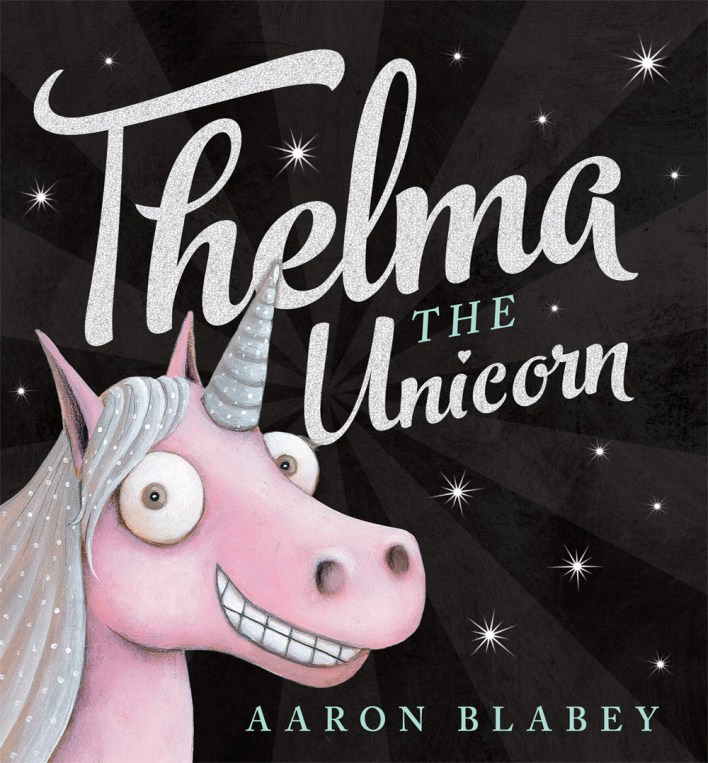
celebrate-picture-books-picture-book-review-thelma-the-unicorn-cover

About the Holiday

Today’s holiday encourages people to commemorate the importance of the horse to the history, culture, and economy of the United States. The domesticated horse that we know today was first introduced by Spanish Explorers. As the country grew, horses became indispensable for transportation, farm and ranch work, and communications. The more than nine million horses that now reside in America depend on people for adequate food, water, shelter, and protection. On this holiday, consider donating to a horse rescue shelter near you.

Thelma the Unicorn

By Aaron Blabey


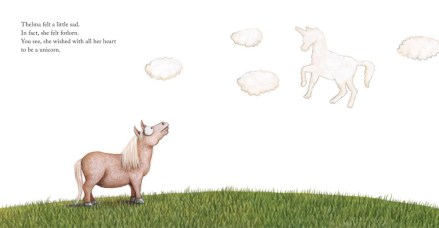
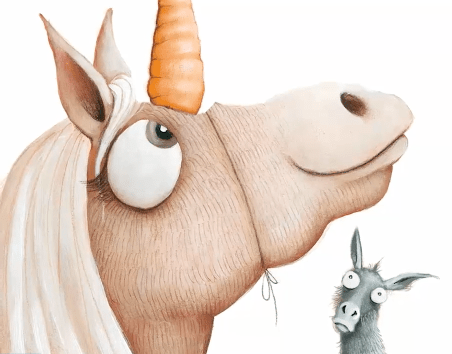
“Thelma felt a little sad. / In fact, she felt forlorn. / You see, she wished with all her heart / to be a unicorn.” Thelma was a little pony—brown and short and overlooked. Her best friend Otis told her, “‘You’re perfect as you are,’” but when Thelma compared herself to the sleek white mare on the farm, she said, “‘I’m not.’” Suddenly, she saw a carrot left over from dinner and had an idea.

celebrate-picture-books-picture-book-review-thelma-the-unicorn-wishing

Copyright Aaron Babey, 2017, courtesy of Scholastic Press.

She tied the carrot to her nose and told Otis, “‘I’ll say that I’m a unicorn! / It might just work… / who knows?’” At this very moment a truck driver passing by caught sight of this spectacle and careened off the side of the road. “As Thelma watched the swerving truck, / it very nearly hit her. / Would you believe that truck was filled / with nice pink paint and glitter?”

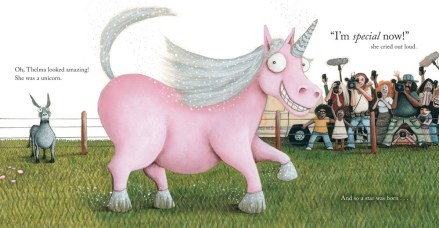
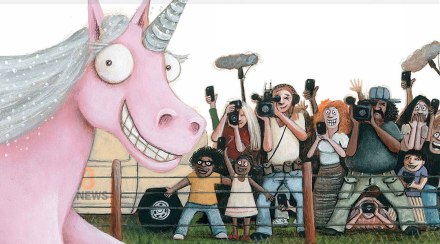
In the blink of an eye Thelma was doused in sparkles and had become what she always dreamed of. She was a unicorn and “special now!” Crowds lined up at the farm gate to see the pink unicorn. The media descended with their cameras and video recorders, and Thelma quickly became a world-wide phenomenon. Everywhere she went fans screamed her name, took pictures, waved signs, and wanted to be near her. She even got her hoofprint on the Walk of Fame.

celebrate-picture-books-picture-book-review-thelma-the-unicorn-becomes-unicorn

Copyright Aaron Babey, 2017, courtesy of Scholastic Press.

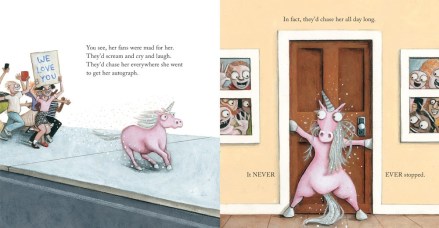
Thelma sailed to foreign ports on a ship named The Fairy Princess, attended by stewards who fulfilled her every wish. “But soon she found that so much fame / was kind of tricky, too….” Her fans mobbed her with crushing zeal, chased after her wherever she went, screamed, cried, laughed, and pointed whenever they saw her, and hounded her day and night for her autograph. “It NEVER EVER stopped.”

When Thelma asked “the screaming crowd” not to chase her anymore, they said “‘We’ll chase you all we want….We’re fans, so it’s allowed.’” Then there were there were the people who “were not her fans at all. / No, some were really mean. / And some just did the meanest things / she’d really ever seen.” Some threw eggs while she roller skated for charity and others held up signs reading “I don’t like unicorns” where she was sure to see them.

celebrate-picture-books-picture-book-review-thelma-the-unicorn-adoring-crowds

Copyright Aaron Babey, 2017, courtesy of Scholastic Press.

Back in her fancy hotel room, all alone and bedraggled, soaked in egg, and with her “horn” losing its luster, Thelma looked at a photo of Otis. “…she felt quite sad, / this famous little pony. / She said, ‘I thought that I’d feel great… / but all I feel is lonely.’” She decided to make a change. She washed off all the pink paint and sparkles and “ditched her magic horn.”

She left and “walked right past the crowd. / They didn’t even notice / She thought how nice that it would be…to see her lovely Otis.” As Thelma stood underneath a tree with Otis, “he asked about her trip.” “‘Oh, it was fun,’” she answered him, “‘But I’d rather be just me.’”

celebrate-picture-books-picture-book-review-thelma-the-unicorn-being-chased

Copyright Aaron Babey, 2017, courtesy of Scholastic Press.

Aaron Blabey’s cautionary tale of a pony who is granted her wish to be “more” than she is, deftly reveals the pitfalls of abandoning your true nature for what appears to be the perks of celebrity with a splash of humor and some no-nonsense honesty. Through Blabey’s smoothly flowing rhymes, readers see that being special is not based on a sparkly appearance that pleases false friends. Instead, each person is remarkable for their unique personalities and talents that true friends will appreciate.

Today’s social media-savvy children will recognize Blabey’s screaming crowds and overzealous fans and will come to understand, with Thelma, that being “in the pink” can be short-lived and glitter soon fades.

celebrate-picture-books-picture-book-review-thelma-the-unicorn-carrot-horn

Copyright Aaron Babey, 2017, courtesy of Scholastic Press.

Blabey’s distinctive illustrations portray Thelma’s transformation from “regular pony” to celebrity unicorn and back again with flair and all the bling that goes along with superstardom. The crowds are giddy, awed, obsessive, and adoring until the backlash starts, which Blabey portrays with candid examples. His final spreads in which Thelma goes unrecognized by her fans and is then lovingly welcomed back by Otis beautifully sum up the theme of the story.

Thelma the Unicorn provides readers and adults a wonderful opportunity to discuss the allure of changing oneself in order to fit in as well as the social media atmosphere that can be so influential in a child’s life. Blabey’s light touch coupled with his honesty makes Thelma the Unicorn a great choice for  home and classroom libraries.

Ages  3 – 7

Scholastic Press, 2017 | ISBN 978-1338158427

Scholastic Press sent me a free copy of Thelma the Unicorn to check out. All opinions are my own.

Discover more about Aaron Blabey, his books, and his art on his website

National Day of the Horse Activity

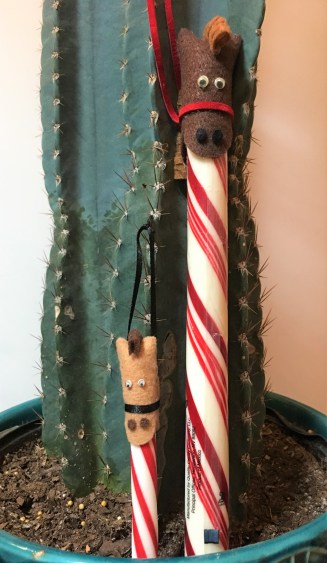
celebrate-picture-books-picture-book-review-horse-candy-stick-cover

Whoa! Candy Stick Cover


There’s no neigh-saying that this isn’t a cute way to give your favorite candy stick a bit of flair!  With a bit of felt and a few other supplies you can make this horse craft. Alternately, this craft can be used with a cardboard tube or wooden dowel.

Supplies

  • Large or small candy stick, cardboard tube or wooden dowel
  • Felt in whatever color you’d like for your horse
  • Felt in a another color for the mane
  • Black felt for the nostrils
  • Thin ribbon or leather lacing
  • Small googly eyes
  • Fabric glue or hot glue gun
  • Scissors
  • Tweezers

Directions

  1. Cut a piece of felt wide enough to wrap around the stick overlapping a little to glue together. It should be long enough to cover about 1 ½ inches of a small candy stick, about 2 ½ inches of a large candy stick, or about 3 to 4 inches of a cardboard tube or wooden dowel.
  2. Wrap the felt around the stick overlapping the edge about ¼ inch and leaving about ½ inch above the top of the stick.
  3. Glue the felt together along the overlapping edge to make a tube that fits the stick tightly

To make the ears

  1. Push down on the center of the back side of the felt that rises above the top of the stick
  2. Apply a drop of glue
  3. Push the center of the front edge of the felt into the glue
  4. The ears will stick up on the sides of the head

To make the horse’s nose and mouth

  1. Remove the felt head from the stick
  2. Pinch the end together
  3. Starting about ½ inch from the bottom, round the corners of the felt tube with the scissors

To make the nostrils

  1. Cut small circles from the black felt
  2. Glue them to the bottom of the horse’s nose
  3. Glue the googly eyes on the horse’s face

To make the mane

  1. Cut a strip of felt as long as the face by 1 inch wide for a large candy stick; about ¾ inch wide for a small candy stick
  2. Fold the felt in half lengthwise
  3. Glue the edges of the felt together, leaving the top unglued
  4. Snip fringe along the length of the felt
  5. Cut a small curve in the bottom of one end of the length of felt so it will fit over the top of the horse’s head
  6. Glue the rest of the length of felt down the back of the horse’s head

To add the reins

  1. Cut a length of narrow ribbon or leather lacing about 6 inches long
  2. Glue the center of the ribbon or lacing to the horse’s face above the nostrils at the level of the trimmed mouth around to the mane
  3. Tie the ends of the ribbon or lacing together

Picture Book Review

December 11 – It’s Write a Friend Month

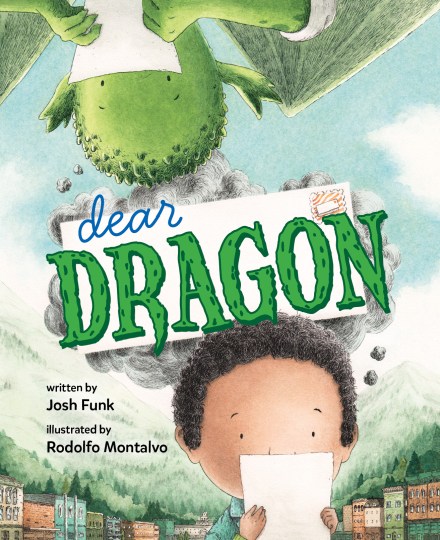
celebrate-picture-books-picture-book-review-dear-dragon-cover

About the Holiday

During the month of December people like to reach out to friends near and far and share the events of the past year. Write a Friend Month commemorates such communication and encourages writers to pick up a pen and paper and send a “real letter” full of intriguing details that inspire a response. Finding a letter or card in the mailbox still makes people smile. So, why not take a little time this month to write a letter to your friends?

Dear Dragon: A Pen Pal Tale

Written by Josh Funk | Illustrated by Rodolfo Montalvo


In a bit of cross-curriculum creativity, the teachers in two distinct school districts have combined the annual poetry units and pen pal projects. Not only do the kids get to make new friends, they must write their letters in rhyme. George Slair has been matched up with Blaise Dragomir. What George doesn’t know—but readers do—is that Blaise is a dragon; and what Blaise doesn’t know—but readers do—is that George is a boy.

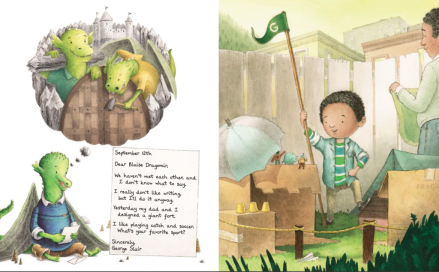
In his first missive, George begins boldly and honestly: “Dear Blaise Dragomir, / We haven’t met each other, and I don’t know what to say. / I really don’t like writing, but I’ll do it anyway. / Yesterday my dad and I designed a giant fort. / I like playing catch and soccer. What’s your favorite sport? / Sincerely, George Slair”
celebrate-picture-books-picture-book-review-dear-dragon-castle

Image copyright Rodolfo Montalvo, 2016, text copyright Josh Funk, 2016. Courtesy of Viking Books for Young People.

As Blaise reads the letter he interprets George’s cardboard box, blanket, and umbrella fort as a medieval stone fortress with an iron gate and whittled-to-a-point log fencing. Blaise writes back: “Dear George Slair, / I also don’t like writing, but I’ll try it, I suppose. / A fort is like a castle, right? I love attacking those. / My favorite sport is skydiving. I jump near Falcor Peak. / Tomorrow is my birthday, but my party is next week. / Sincerely, Blaise Dragomir”

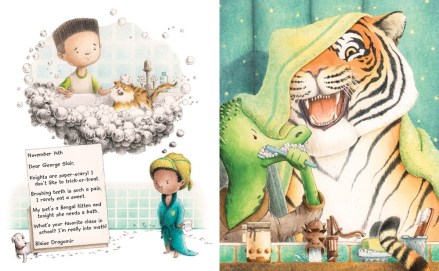
In his next letter, dated October 31, more earth-bound George tells Blaise that parachuting is awesome, that his dog destroyed his fort, and that he is trick-or-treating as a knight—a revelation to which Blaise has a visceral response. But what is scary to one pal is tame to the other. On November 14th Blaise relates: “Knights are super scary! I don’t like trick-or-treat. / Brushing teeth is such a pain, I rarely eat a sweet. / My pet’s a Bengal Kitten and tonight she needs a bath. / What’s your favorite class in school? I’m really into math!”

celebrate-picture-books-picture-book-review-dear-dragon-washing-kitten

Image copyright Rodolfo Montalvo, 2016, text copyright Josh Funk, 2016. Courtesy of Viking Books for Young People.

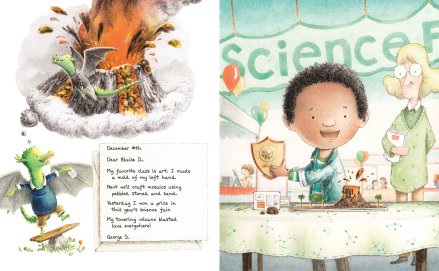
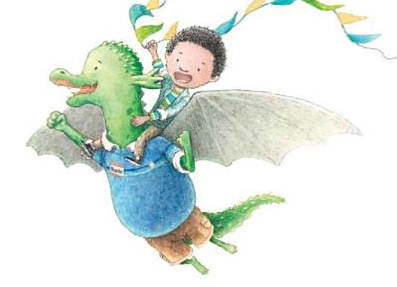
Reading December’s letter Blaise learns that George likes art and imagines George’s table-top volcano science project as a roaring, lava-spewing mountain. In January George is impressed to learn that Blaise’s father is a fire-breather. He conjures up images of a dad in a fancy, caped costume creating fire out of nothing while the truth is a lot more explosive. February brings word that there is a pen pal picnic planned for June, and in March Blaise tells George about a special outing with his dad: “Soon he’s gonna take me flying, once it’s really spring. / It’s such a rush to ride the air that flows from wing to wing.”

celebrate-picture-books-picture-book-review-dear-dragon-volcano

Image copyright Rodolfo Montalvo, 2016, text copyright Josh Funk, 2016. Courtesy of Viking Books for Young People.

Springtime also sees the two becoming better friends. The formal “Sincerely, George” or “Sincerely, Blaise” sign-off of the first letters has evolved into “Your friend”  as George expresses his wonder at Blaise’s parents: “Hi, Blaise! / Skydiving and flying? Wow, your parents rock! / I’m lucky if my father lets me bike around the block.” Then it appears that this project has been a success in all areas as George asks, “Once the school year’s over and this project is complete, / should we continue writing? ‘Cause it could be kind of neat….”

Blaise is all in. In his May letter, he writes, “Hey, George! / I’m psyched about the picnic and I can’t wait to attend. / Who’d have thought this pen pal thing would make me a new friend? / Writing more sounds awesome. I was gonna ask you, too! / I’ve never liked to write as much as when I write to you.”

celebrate-picture-books-picture-book-review-dear-dragon-sky-diving

Image copyright Rodolfo Montalvo, 2016, text copyright Josh Funk, 2016. Courtesy of Viking Books for Young People.

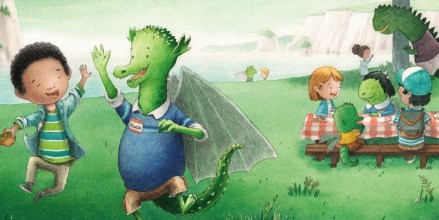
With a growing sense of anticipation, readers know that with a turn of the page June will come, and that June brings the long-awaited picnic. How will George and Blaise react when they see each other? As the kids approach the Pen Pal Picnic spot, their mouths hang open and their eyes grow wide. One even has his hands to his face. And as the dragons peek out from behind the trees, their mouths hang open and their eyes grow wide. One even has her hand to her face.

“‘Blaise?’” George ventures, as a slice of tomato drops from his hamburger. “‘George?’” Blaise presumes, although he wrings his tail. “‘My pen pal is a dragon?’”… “‘My pen pal is a human?’”

These two-page spreads say it all—or do they? Well, not quite…

Huge grins burst out as George and Blaise exchange high fives (and fours). The other kid- and-dragon pals are having a blast too! And the teachers? “‘Our plan was a success, my friend, or so it would appear!’ / ‘The Poetry and Pen Pal Project! Once again next year?’”

celebrate-picture-books-picture-book-review-dear-dragon-picnic

Image copyright Rodolfo Montalvo, 2016. Courtesy of Viking Books for Young People.

With his usual aplomb, Josh Funk charms with rhyme and reason in this clever tribute to friendship, diversity, and writing (on paper!). The letters between the two pen pals are endearingly kid-like, full of the subjects that are important in a child’s life, including pets, school, hobbies, and parents, which can be brilliantly open to interpretation—or misinterpretation. Blaise Dagomir and George Slair’s names are similarly inspired, and may introduce kids to the ancient legends of Saint George and the Dragon and the poem by Alfred Noyes, St George and the Dragon. Kids will enjoy seeing how George and Blaise’s friendship grows over the school year, evidenced in the openings and closings of their letters. The letters are a joy to read aloud as the rhymes swoop and flow as easily as Blaise soars through the air.

celebrate-picture-books-picture-book-review-dear-dragon-flying

Following the alternating sequence of the letters, Rodolfo Montalvo depicts each pen pal’s perception of the message along with the reality in his illustrations that are—as George exclaims—“as awesome as it gets.” Both characters are sweet and earnest, and while surprised by what they think the other’s life is like, happily supportive. The full-bleed pages and vibrant colors dazzle with excitement and humor and ingenious details. Kids will love the juxtaposition of George’s idea of Blaise’s Bengal “kitten” and the reality of a nearly full-grown tiger. The two views of fire-breathing will also bring a laugh, and readers will enjoy picking out features of the two homes. The final spreads build suspense as to how George and Blaise will react to each other, and the resolution is a delight.

One striking aspect of both the text and the illustrations is the similarity between the two pen pals. While their activities and experiences may be on different scales, they are comparable and understandable to each child. Likewise, everywhere in the paintings, Montalvo uses complementary colors to unite George and Blaise. This cohesiveness beautifully represents the theme of inclusiveness.

The fun dual-meaning rhymes and endearing illustrations make Dear Dragon: A Pen Pal Tale a must for kids’ (and dragon’s) bookshelves.

Ages 4 – 9

Viking Books for Young Readers, 2016 | ISBN 978-0451472304

From more books to activities for kids, there’s so much to see and do on Josh Funk’s website!

Discover the world of Rodolfo Montalvo’s books and artwork on his website!

Dear Reader, check out this blazing hot Dear Dragon book trailer!

Write a Friend Month Activity

celebrate-picture-books-picture-book-review-dragon-pencil-case-front-eyes-down

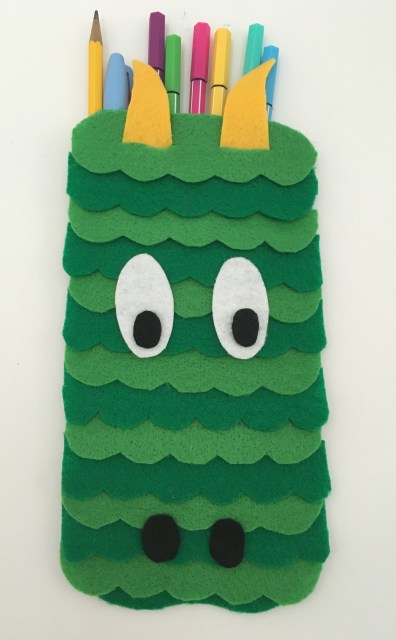
Dependable Dragon Pencil Case


U-knight-ing all your pens, pencils, and other supplies in this Dependable Dragon Pencil Case will fire up your imagination! Have a blast making this fun craft!

Supplies      

  • Printable Dragon Pencil Case Template – Wings | Face
  • Sheets of felt, 8 ½-inch by 11-inch
  • 2 Dark green
  • 1 Light green
  • 1 white
  • 1 black
  • 1 yellow
  • 1 purple
  • Fabric Glue
  • Glitter glue or Fabric paint (optional)
  • Scissors
  • Velcro
  • Green Thread (optional if you would like to sew instead of glue your case)
  • Needle (optional, needed if sewing)

Directions

  1. Print the Dragon Templates
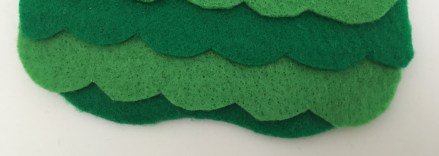
  2. Cut out alternating rows of scales from the dark and light green felt (7 each). For one row, cut a rounded top (instead of straight across) to make the top of the head (see picture). (One row of scales is longer so you can tile them. You will trim them later: see the double row of scales on the template for how the scales should look)
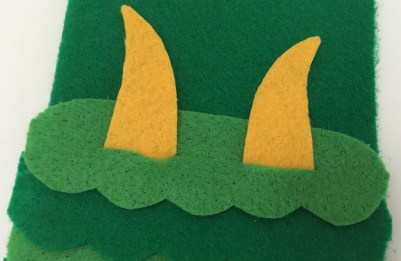
  3. Cut the eyes from the white felt, pupils and nostrils from the black felt, horns from the yellow felt, and wings from the purple felt. Set aside.

celebrate-picture-books-picture-book-review-dragon-pencil-case-top-of-head

To make the head

  1. Fold one dark piece of felt in half lengthwise
  2. Cut a wavy line along the bottom of the felt to make lips (see picture)
  3. Glue a ½-inch-wide strip along open side and along bottom (or you can sew it)

celebrate-picture-books-picture-book-review-dragon-pencil-case-bottom-snout

To add the scales

  1. Starting at the bottom, lay on row of scales a little above the wavy bottom. Glue the top to the base.
  2. Overlap an alternating green row of scales on the first row, glue the top
  3. Continue alternating dark and light green scales until you reach 9 inches
  4. Use the rounded row of scales for the top of the head (see how to insert horns before attaching top of head)

To insert the horns

  1. On the rounded row of scales, mark where you want the horns to be
  2. Cut two small slices in the felt where the horns will go
  3. Insert the bottoms of the horns into the slits

To finish the head

  1. Glue the top of the head to the base
  2. Trim any longer rows of scales to meet the edges of the base
  3. Add the eyes and nostrils to the face

To make the closure for the case

  1. Cut the base following the line of the rounded row of scales
  2. Glue or sew strips of Velcro along the inside edges

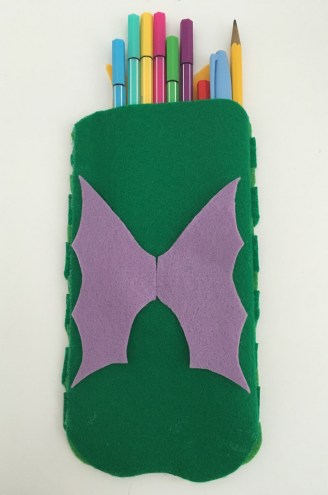
To attach the wings

  1. Turn the dragon case to the back
  2. Glue or sew the wings to the center of the back, attaching them at the center edge
  3. Outline the wings in glitter glue (optional)

celebrate-picture-books-picture-book-review-dragon-pencil-case-back

Picture Book Review