April 13 – National Make Lunch Count Day

celebrate-picture-books-picture-book-review-the-sandwich-swap-cover

About the Holiday

Today’s holiday was established to encourage American workers to get away from their desk and eat lunch out with friends and coworkers. Taking a break from the office and spending lunchtime having a little fun or over a stimulating conversation can rejuvenate you for the rest of the day. Many people have also embraced the holiday as a way to remind themselves and others to eat healthy and make what they make (or order) nutritious and beneficial. To celebrate, make lunch an adventure today. You might even decide to try something new—like the little girls in today’s book!

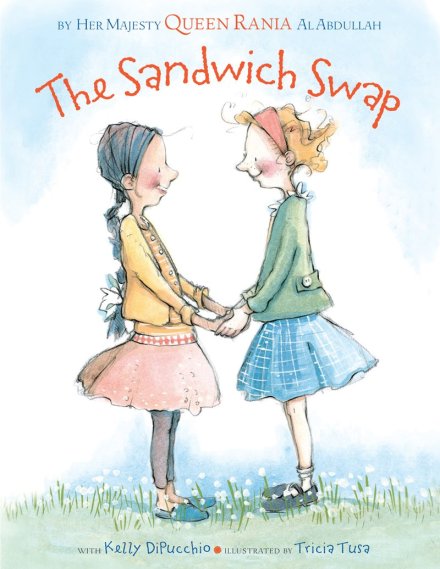
The Sandwich Swap

Written by Queen Rania Al Abdullah of Jordan and Kelly DiPucchio | Illustrated by Tricia Tusa 


Salma and Lily were best friends. At school they did everything together in the classroom and on the playground. They also ate lunch together every day. They loved all the same things—until it came to what was packed in their lunchboxes. Lily always had a peanut butter and jelly sandwich, and Salma always had a hummus and pita sandwich.

While Lily never said so, she thought Salma’s sandwich looked yucky, and Salma kept quiet about her opinion that Lily’s sandwich seemed gross. But one day, Lily did say what she’d been thinking. Salma couldn’t believe her ears. She frowned and “looked down at the thin, soft bread. She thought of her beautiful smiling mother as she carefully cut Salma’s sandwich into two neat halves that morning.” First she felt hurt; then she felt mad.

celebrate-picture-books-picture-book-review-the-sandwich-swap-argument

Image copyright Tricia Tusa, 2010, text copyright Queen Rania Al Abdullah of Jordan and Kelly DiPucchio. Courtesy of Disney-Hyperion.

Salma let Lily know just how gross and icky-smelling she thought Lily’s sandwich was. “Lily looked surprised. She sniffed the thick, squishy bread, and she thought of her dad in his silly apron whistling” as he cut her sandwich into triangles. After that the two girls did not play or draw together. And the next day, they ate at separate tables. The story of Salma and Lily’s argument had spread, and the other kids chose sides. In the cafeteria, they lobbed insults, calling each other “jelly heads” and “chick pea brains.”

Pretty soon there were shouts of “you’re weird” and “you dress dumb.” It wasn’t long before someone yelled “Food Fight!” and peanut butter, hummus, and all types of sandwiches flew through the air. “They stuck to the walls. They stuck to the ceiling. They stuck to the lunch lady.” Before anyone knew it, pudding cups and applesauce and carrot sticks were soaring through the air.

Lily and Salma gazed at each other across the mess and “felt ashamed by what they saw.” After they helped clean it all up and were sent to the principal’s office, they felt even worse. The next day, Lily and Salma once again sat across from each other during lunch. At last Lily said, “‘Would you like to try a bite of my peanut butter and jelly?” Salma said that she would and offered Lily a nibble of her hummus sandwich. Lily agreed.

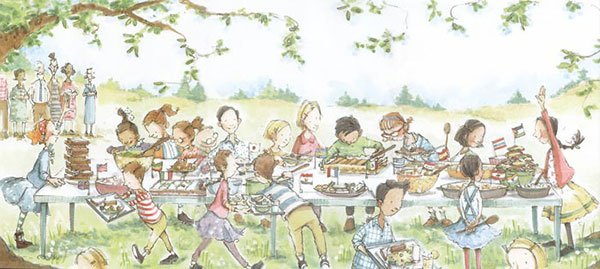
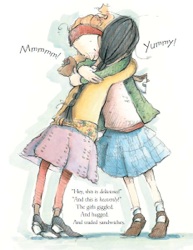
On the count of three, Lily and Salma tried each other’s sandwiches. “Yummy! Mmmmm!” they both said, and then they traded sandwiches. After lunch they met with the principal again to tell her an idea they’d had. And on a sunny day, the school held a picnic where everyone shared their favorite lunch from their native country.

celebrate-picture-books-picture-book-review-the-sandwich-swap-picnic

Image copyright Tricia Tusa, 2010, text copyright Queen Rania Al Abdullah of Jordan and Kelly DiPucchio. Courtesy of Disney-Hyperion.

The school lunchroom with its unique dynamics is a perfect setting for Queen Rania Al Abdullah and Kelly DiPuccio’s story that highlights the kinds of prejudice children can encounter whether for food choices or other differences. The inclusion of Salma’s and Lily’s thoughts about their parents is a poignant reminder of how profound and complex children’s emotions are. The humor and honesty in the girls’ relationship, thoughts, and argument as well as the food fight will resonate with readers. Salma’s and Lily’s decision to renew their friendship and try each other’s lunches and to share their revelation with their classmates leads to the kind of growth we all want for our kids.

celebrate-picture-books-picture-book-review-the-sandwich-swap-hug

Tricia Tusa’s delicate and soft-hued mixed-media illustrations portray the joys of being best friends as Lily and Salma draw, swing, jump rope, and eat lunch together in beautiful two-page spreads. When their true feelings about each other’s sandwiches comes out, the girls are clearly reflective and then hurt and angry as they scowl nose to nose. The food fight is a double-spread free-for-all that will make kids laugh as the lunch lady seems to take the brunt of the flying food. The final gate-fold scene of the multicultural picnic is heartwarming.

The Sandwich Swap is a terrific read at home and in the classroom, especially near the beginning of the school year. The book is also a wonderful prelude to a classroom or school-wide multicultural day or food fair.

Ages 3 – 7

Disney-Hyperion, 2010 | ISBN 978-1423124849

Learn more about Queen Rania Al Abdulla of Jordan and her global advocacy on her website.

Discover more about Kelly DiPucchio and her books on her website.

Get to know Tricia Tusa and view a portfolio of her books and art on her website.

Make Lunch Count Day

celebrate-picture-books-picture-book-review-lunch-container

Personalized Lunch Container


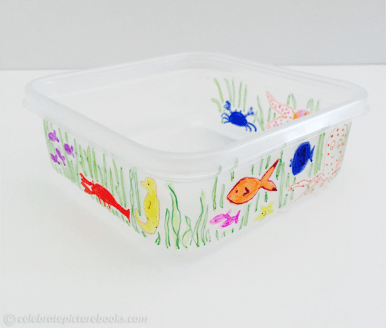
Take your lunch to school or work in style with this quick and easy craft! All you need is a plastic sandwich or food container, some permanent markers, and your creativity!

Picture Book Review

April 12 – Walk on Your Wild Side Day

celebrate-picture-books-picture-book-review-the-catawampus-cat-cover

About the Holiday

Today’s holiday was established to encourage people to have courage and do that thing inside them that might be a little different or way out there, but actually defines them. Without people who have explored those other possibilities, the world would be missing out on some amazing art, inventions, innovations, music, and, of course, books! To celebrate, unleash your inner you or go a little wild. Who knows? It might become a regular thing that makes you happy!

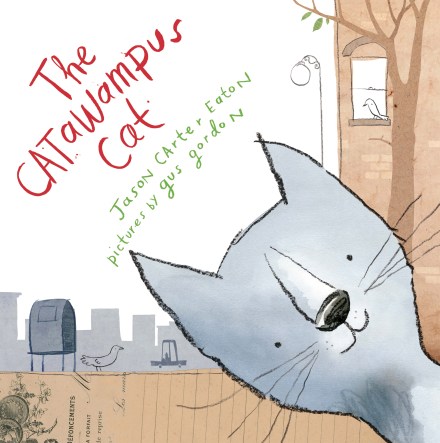
The Catawampus Cat

Written by Jason Carter Eaton | Illustrated by Gus Gordon


On a regular Tuesday morning, the catawampus cat came into town “slightly askew.” Everyone was busy, so no one saw him until Mr. Grouse, the grocer, noticed his unusual walk and “tried to straighten him out.” His wife Lydia, who for twenty years had been chilly to her husband, asked what was wrong with the cat, and they both tilted their heads to study him. There, under the vegetable stand, they saw Lydia’s wedding ring lost twenty years before, and suddenly Mr. Grouse noticed that Lydia looked just as she did when they first met. “They kissed and on walked the catawampus cat, still askew…”

celebrate-picture-books-picture-book-review-the-catawampus-cat-house

Image copyright Gus Gordon, 2017, text copyright Jason Carter Eaton, 2017. Courtesy of Crown Books for Young People.

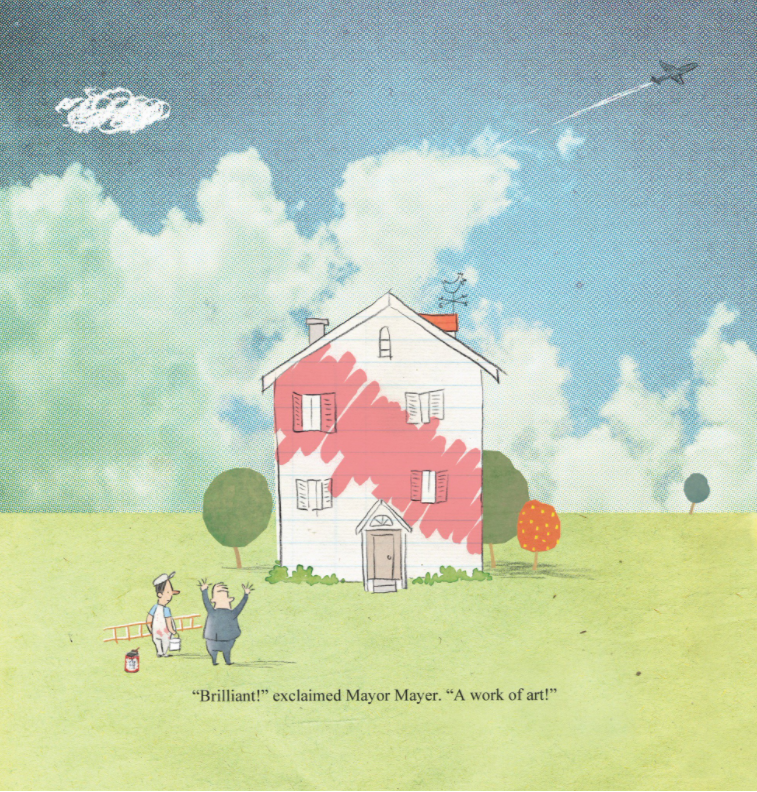
The bored barber, “Bob Long, who was giving a woman a long bob,” saw the catawampus cat from his window and was so startled he snipped, and clipped the woman’s bangs at an angle. She loved it, and the catawampus cat continued on. He passed Tom who was painting the Mayor’s house in the usual way until he tilted his head to get a better look and scribbled a diagonal stripe down the front of the house. “‘Brilliant!’ Exclaimed Mayor Meyer. ‘A work of art!’”

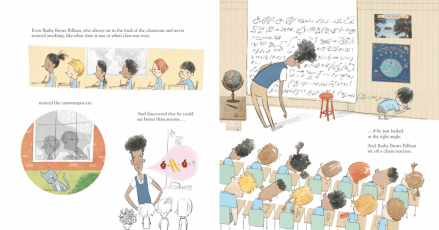
The town daredevil made a world record after spotting the cat. The town librarian had a life-changing revelation after seeing the cat. And little Bushy Brows Billiam, suddenly understood his lesson better by looking at things a bit differently.

celebrate-picture-books-picture-book-review-the-catawampus-cat-library-full

Image copyright Gus Gordon, 2017, text copyright Jason Carter Eaton, 2017. Courtesy of Crown Books for Young People.

All through town, people began tilting their head and even walking at a slant. Architects began building homes, apartments, and stores that leaned, and car makers designed “off-kilter” vehicles. The effect on the town and the people was amazing. They found favorite possessions they thought lost forever, “and rediscovered old friends they thought they’d never know again.” The first Tuesday of the year was designated “Catawampus Cat Day.” Confetti was flung at an angle, a band played off-key, and the crowd was entirely catawampus.

“‘Well? What do you think of it?’” Mayer Meyer excitedly asked the catawampus cat. “‘We’re all different now, just like you.’” The catawampus cat gazed at him thoughtfully, then stretched, “straightened himself out…and walked out of town, once again uniquely catawampus.”

celebrate-picture-books-picture-book-review-the-catawampus-cat-school

Image copyright Gus Gordon, 2017, text copyright Jason Carter Eaton, 2017. Courtesy of Crown Books for Young People.

In his delightfully inventive story, Jason Carter Eaton rejoices in all those people (and cats) who walk their own way through life. He encourages young readers to embrace their uniqueness, telling them it’s a good thing to view the world with a different perspective. Even as the catawampus cat inspires the townspeople, Eaton strikes a humorous cautionary note about the nature of fads. He also happily reminds readers that the truly innovative will always find a way to be different.

Gus Gordon’s adorably confident cat sets off his chain reaction of “uniqueness” in detailed mixed-media illustrations that provide lots of opportunities for kids to discover new (and old—sometimes even antique) perspectives as they watch the catawampus cat walk through this diverse town in his own particular way. Surprising and funny details drawn in along the way will also have readers lingering and giggling over each page. Cat lovers will recognize some endearing cat-titudes in the catawampus cat that make feline friends so loveable. The endpapers provide a map of the catawampus cat’s route through this very lucky town.

Smile- and laugh-inducing from cover to cover, The Catawampus Cat would be a favorite and often-asked-for choice for home and classroom libraries.

Ages 4 – 8

Crown Books for Young Readers, 2017 | ISBN 978-0553509717

To learn more about Gus Gordon, his books, and his art, visit his website.

Walk on Your Wild Side Day Activity

celebrate-picture-books-picture-book-review-wooden-bead-cat-craft

A Little Ball of Kitten Love


This sweet little kitten is easy to make and can keep you company on your desk or shelf! Since every kitten is different, you can make yours to look just the way you want. Here’s how I made mine:

Supplies

  • Wooden ball with a flat bottom, available in craft stores and in different sizes
  • Craft paint in any color kitten you’d like (I used red and yellow and mixed it to make a mottled orange)
  • Craft paint in pink or white for the inner ear
  • Scrap of fleece for the ears. Fleece is easily shaped to the rounded ball and when painted is stiff enough to stand up on its own.
  • Thin, colored wire in several colors for the tail (string or twine, wrapped wire, fleece, stiff paper, and other materials could also be used)
  • Paint brush
  • Permanent marker for making the face
  • Hot glue gun or strong glue

Directions

  1. Paint the wooden ball and let dry
  2. Paint the scrap of fleece to match the wooden ball, let dry
  3. Cut out small triangular shapes for the ears. Round the bottom of the ears slightly so they fit the shape of the ball
  4. If making a tail from several colors of thin wire, twist them together, leaving one end untwisted
  5. With the glue gun or strong glue attach the ears to the top of the head
  6. With the glue gun attach the tail to the back of the wooden ball in the center near the base
  7. With the marker, draw eyes, nose, and mouth for the face and semicircles near the bottom for the paws

April 10 – National Siblings Day

celebrate-picture-books-picture-book-review-mela-and-the-elephant-cover

About the Holiday

Today we celebrate our brothers and sisters! Whether you’ve had a lifetime with your siblings or are just getting started with a new little person to grow up with, today is for remembering and making memories to be cherished. To honor the day, spend some time together with your siblings or get in touch and have a bit of fun!

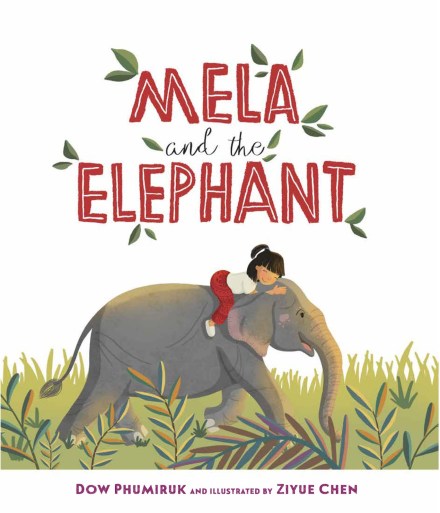
Mela and the Elephant

Written by Dow Phumiruk | Illustrated by Ziyue Chen


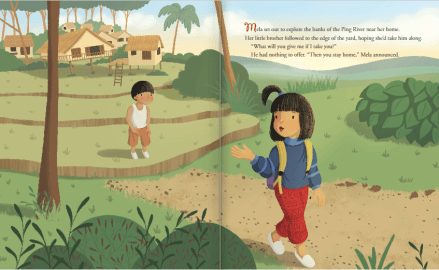
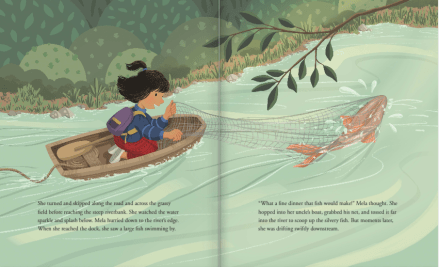
When Mela headed out to explore the banks of the Ping River, her little brother wanted to go too, but Mela would only take him if he had something to give her in return. When he said he had nothing, Mela told him, “‘Then you stay home.’” When she reached the river, she jumped into her uncle’s boat to try and catch the big fish that swam in the sparkly water. She tossed out her net and nabbed the fish in her net, but he swam on, carrying Mela downstream. Soon, Mela found herself deep in the jungle.

When “the boat caught against a tangle of tree roots, Mela stepped out onto a large rock.” She looked around and realized she was a long way from home.  A crocodile happened by and Mela asked him if he could tow her boat back home. “‘What will you give me for my help?’” the crocodile asked. Mela told him he could have her fish, and the crocodile agreed. But as soon as Mela gave him the fish, he grabbed it and swam away.

celebrate-picture-books-picture-book-review-mela-and-the-elephant-mela-leaving

Image copyright Ziyue Chen, 2018, text copyright Dow Phumiruk, 2018. Courtesy of Sleeping Bear Press.

Mela had just begun to walk in the direction of home when “a leopard slinked into sight.” Mela asked her if she knew how to get to the village. She did, but would only show Mela if she gave her something. Mela thought, then took off her sweater and gave it to the leopard, saying, “‘It will keep your cubs warm on cool nights.’” The leopard “snatched it up and leaped away.”

Mela continued on and was soon walking down a narrow path, where three monkeys swung from vines in the trees. Again Mela asked for help finding her way home. “‘What will you give us if we help you?’ one chattered. Mela held out her backpack.” It would be helpful for carrying fruit, she told them. As soon as the largest monkey grabbed the backpack, the three disappeared into the forest.

celebrate-picture-books-picture-book-review-mela-and-the-elephant-mela-fishing

Image copyright Ziyue Chen, 2018, text copyright Dow Phumiruk, 2018. Courtesy of Sleeping Bear Press.

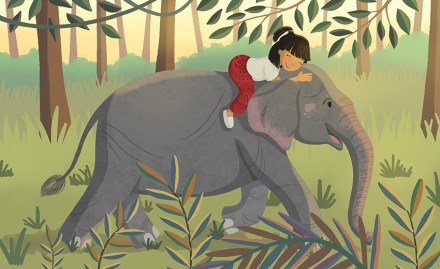
Mela began to cry. She had no idea how to get home, and night was coming. Just then “she heard the rustling and snapping of branches.” She looked up to see an elephant approaching. The elephant asked Mela if she were lost. When Mela said, yes, the elephant offered to give her a ride. Mela told him that she had nothing to give him. But the elephant said, “‘It would make my heart happy to help you. I don’t need anything else in return.’”

Then he allowed Mela to climb up his trunk and onto his back and they started off. When they reached the village, Mela thanked the elephant and he gave her a last hug with his trunk. The next day when Mela’s brother asked to accompany her to the riverbank, she remembered what the elephant had taught her and agreed to take him. And “from then on, she offered many kindnesses to others, asking nothing in return.”

celebrate-picture-books-picture-book-review-mela-and-the-elephant-riding-elephant

Image copyright Ziyue Chen, 2018. Courtesy of Sleeping Bear Press.

In her lovely story, Dow Phumiruk reminds children that the heartfelt rewards of kindness are more precious than material gain. Such inner happiness often radiates to others, creating strong bonds and long-lasting happiness. It’s interesting to note that Mela is actually inherently thoughtful, offering each potential rescuer an object that is useful to them. But this inner generosity is lost when she interacts with her brother and brushes off his friendship. Through her experiences in the jungle, however, she comes to empathize with her brother. Back at home, she embraces and includes him, and shares the lesson she’s learned with others as well.

As Mela wanders deeper and deeper into Ziyue Chen’s lush jungle of Thailand, readers will understand that while she may be lost, she is also finding her way on her path in life. The animals that approach her initially look friendly and helpful, but as soon as they have their payment, they turn their back on Mela and desert her. The elephant, on the other hand, has kindly eyes and a gentle manner. The final scene in which Mela takes her little brother by the hand as they begin an adventure together demonstrates her change of heart and growth along life’s road.

An Author’s Note includes information about the history, geography, and customs of Thailand, where there story is set, introducing readers to the diverse culture of the country.

Mela and the Elephant employs a mix of traditional storytelling with today’s focus on kindness, empathy, and generosity. The book would make an excellent addition to home and classroom libraries for story time and to prompt discussions about compassion and helpfulness.

Ages 4 – 8

Sleeping Bear Press, 2018 | ISBN 978-1-58536-998-0

Discover more about Dow Phumiruk, her books, and her art on her website

To learn more about Ziyue Chen, her books, and her art, visit her website.

Come along on the adventure with this Mela and the Elephant book trailer!

National Siblings Day Activity

celebrate-picture-books-picture-book-review-hand-print-elephants-craft

Elephant Handprint Craft


This easy craft is fun for siblings to do together and can make a nice decoration for a child’s room or a gift for mom, dad, or other family members.

Supplies

  • Craft paint in two colors of the children’s choice
  • Yellow craft paint
  • Black fin-tip marker
  • Crayons, markers, or colored pencils to make a background
  • Paper
  • Paint brush

Directions

  1. Paint one child’s hand and press it on the paper. The thumb is the truck and the fingers the legs.
  2. Paint the second child’s hand and press it on the paper near the other “elephant.” A couple of examples are: the elephants standing trunk to trunk or trunk to tail 
  3. After the paint has dried, draw on ears and an eye
  4. Add a sun with the yellow paint
  5. Add grass, trees, or other background features

Picture Book Review


Picture Book Review

March 24 – It’s National Umbrella Month

celebrate-picture-books-picture-book-review-the-big-umbrella-cover

About the Holiday

The rainy season is coming—do you know where your umbrella is? March, with its unpredictable weather has been designated National Umbrella Month to commemorate those useful objects that keep us dry in the rain and shaded from the sun’s rays. Invented in China over 4,000 years ago, the umbrella underwent many changes before becoming the pocket-sized helper it is today. To celebrate this month, check on the condition of your umbrella or treat yourself to a new one!

The Big Umbrella

By Amy June Bates | Cowritten with Juniper Bates


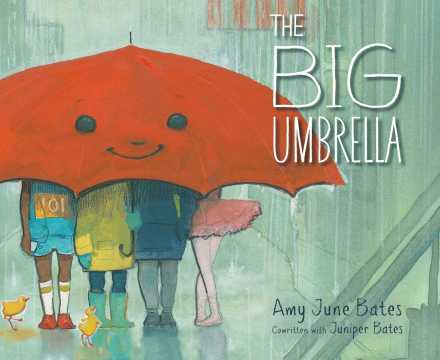
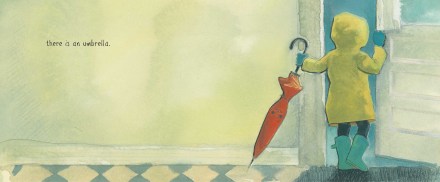
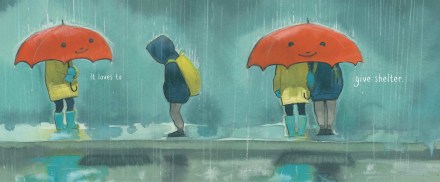
A red umbrella sits at the front door, waiting…. “It is a big, friendly umbrella.” No matter if raindrops or sunshine or even autumn leaves are falling, the umbrella is ready to go to work. “It likes to spread its arms wide” and offer shelter to whomever needs it.

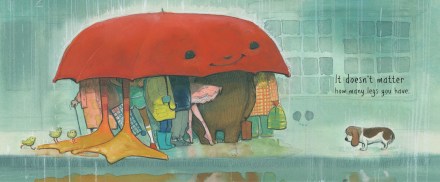
Under the umbrella there’s room for four—and more. The umbrella welcomes anyone, no matter what you look like or what you’re wearing or “how many legs you have.” And if it seems crowded, don’t worry—there’s always room for more. So come on under! You’ll be amazed at what you find!

celebrate-picture-books-picture-book-review-the-big-umbrella-picking-up-umbrella

Image copyright Amy June Bates, 2018, text copyright Amy June and Juniper Bates, 2018. Courtesy of simonandschuster.com.

In Amy June and Juniper Bates’ sparing text, there’s a world of freedom and welcome. Amy June’s gorgeous watercolors of a rain-soaked day complete the story as a walk down a city street creates a microcosm of life under the umbrella.

The sweet, red umbrella smiles at every one who comes by  looking for shelter, always stretching to accommodate another. When a ballerina and a runner need protection from the pelting rain, they easily join two already under the umbrella with room to spare. The very tall webbed creature the four meet next doesn’t even fit on the page, but it does fit nicely under the umbrella. And the cute hairy guy who’s carrying a briefcase and is as tall as the bus stop sign? Sure! There’s plenty of room!

celebrate-picture-books-picture-book-review-the-big-umbrella-two

Image copyright Amy June Bates, 2018, text copyright Amy June and Juniper Bates, 2018. Courtesy of simonandschuster.com.

As the group continues on its way, readers can see the legs of young and old, cowboys and roller skaters, dogs and chicks all walking together and protected by the ever widening umbrella. Children will like to predict what will happen when the umbrella passes a crowded crosswalk. In a double-page spread the sun begins to peek out from behind the clouds just in time for this diverse group to enjoy an afternoon at the park—all shaded by the red umbrella.

When readers turn from the mottled blue and green rainy-day pages where the faces of the fellow travelers are hidden onto Bates’ final light and bright two-page park scene, they can’t help but smile and feel their heart lift even more. As the individuals are revealed, the sense of inclusion is heartening and affirming. The park, dotted with daisies, bustles with kids and adults of all ethnicities, abilities, and personalities playing, talking, biking, painting, and gathering together.

celebrate-picture-books-picture-book-review-the-big-umbrella-a-group

Image copyright Amy June Bates, 2018, text copyright Amy June and Juniper Bates, 2018. Courtesy of simonandschuster.com.

The Big Umbrella is an uplifting and inspiring story that children of all ages will respond to. The book would be an excellent choice for classroom libraries to open discussions of inclusion and a sweet addition to home bookshelves for rainy day or sunny day story times.

Ages 4 – 8

Simon & Schuster/Paula Wiseman Books, 2018 | ISBN 978-1534406582

To learn more about Amy June Bates and see portfolios of her art and books, visit her website.

National Umbrella Day Activity

celebrate-picture-books-picture-book-review-umbrella-match-up-puzzle

Find the Matching Umbrellas


These umbrellas and raincoats were mixed up in the wind! Can you find the matching pairs? Look carefully! How will you match them up?

Rainy Day Mix Up Umbrellas Matching Puzzle

Picture Book Review

February 23 – National Tile Day

celebrate-picture-books-picture-book-review-the-world-is-not-a-rectangle-cover

About the Holiday

Today’s holiday was established just last year and celebrates that architectural accent that has given exteriors and interiors pizazz and individuality since ancient times. Made in nearly every color, pattern, and shape imaginable, tiles were once all handmade and available only to the wealthy few. Innovations during the Industrial Revolution allowed tile to be mass produced and, thus, affordable to many. Tile has become a favorite decoration in homes across the world—as any HGTV viewer knows!

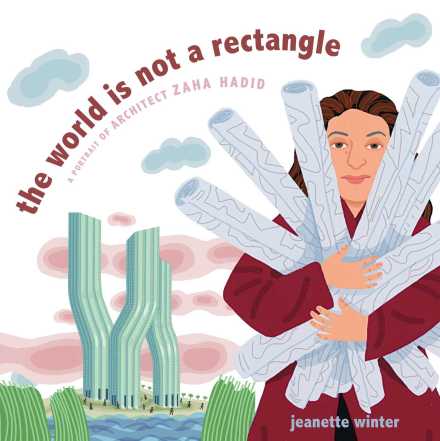
The World Is Not a Rectangle: A Portrait of Architect Zaha Hadid

By Jeanette Winter


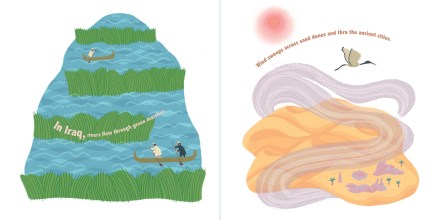
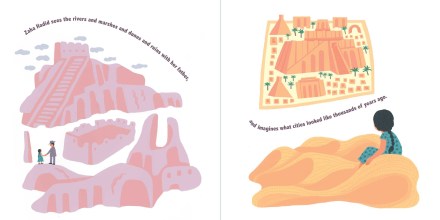
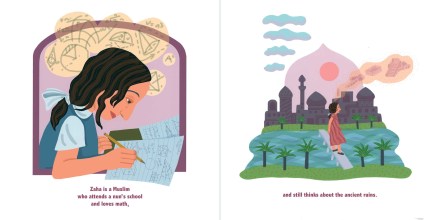
Growing up in Iraq, Zaha Hadid sees the way rivers brake up the marshland, watches when the wind sculpts sand dunes, and visits the ruins of ancient cities. At home in Baghdad, young Zaha studies the patterns of her Persian carpet, noticing “how the shapes and colors flow into each other, like the dunes and rivers and marshes” and dreaming of designing her own cities.

celebrate-picture-books-picture-book-review-the-world-is-not-a-rectangle-rivers

Copyright Jeanette Winter, 2017, courtesy of Beach Lane Books.

In her room, she arranges and rearranges the furniture, creates her own clothes, and comes up with ideas. When Zaha grows up, she moves to London to study to be an architect. After graduation, she opens an office in an old school building—Studio 9. Zaha is joined by some friends and they work tirelessly on their architectural drawings.

celebrate-picture-books-picture-book-review-the-world-is-not-a-rectangle-ruins

Copyright Jeanette Winter, 2017, courtesy of Beach Lane Books.

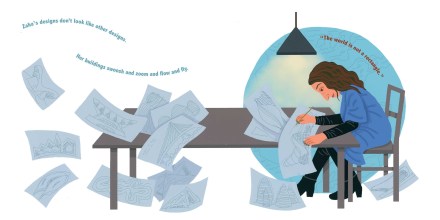
“Zaha’s designs don’t look like other designs. Her buildings swoosh and zoom and flow and fly. ‘The world is not a rectangle’” she says. But Zaha cannot find anyone to build her designs; everyone says they are impossible. Finally, one of Zaha’s designs is chosen from among all the others in a competition. When it is presented to the city’s committee, however, they reject it. Another competition is held, and Zaha’s design wins again. The city rejects it again. Zaha is as strong as her name Hadid, which means iron in Arabic, and she continues to design plan after plan.

celebrate-picture-books-picture-book-review-the-world-is-not-a-rectangle-school

Copyright Jeanette Winter, 2017, courtesy of Beach Lane Books.

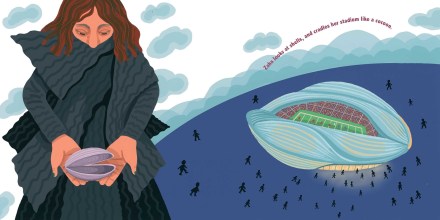
Then one by one her plans are accepted. She “remembers the grasses in the marshes swaying” and designs tall towers “dancing like grass.” In the desert, she creates a building that allows the wind to blow over and around and through it. The sports stadium she imagines has the beauty of a cocoon. Remembering the stones in a stream, Zaha “builds an opera house like the pebbles in the water. Inside the opera house, a singer is the pearl in the oyster shell.”

celebrate-picture-books-picture-book-review-the-world-is-not-a-rectangle-designs

Copyright Jeanette Winter, 2017, courtesy of Beach Lane Books.

The swirling stars in far-away galaxies inspire a complex of connected buildings, and the undulating waves become the model for a bridge that seems to move with the water. From looking at the Alps, Zaha fashions a museum built “inside a mountain peak with windows to see the sky and the valleys” and a ski jump that “reaches to the sky like the mountain.” From the “jungle and ancient wood temples,” Zaha draws inspiration for “a wooden building to remember a faraway war.”

celebrate-picture-books-picture-book-review-the-world-is-not-a-rectangle-stadium

Copyright Jeanette Winter, 2017, courtesy of Beach Lane Books.

With every building, Zaha gets busier and busier more than four hundred architects are working in that old school building, “designing, planning, engineering, and making models of Zaha’s visions.” But Zaha’s ideas don’t stop at buildings. She believes “you should do what you like,” so she designs doll houses, shoes, chairs, sculpture, and benches. No matter what she designs, Zaha’s early memories return. She thinks of “the beauty of the landscape—where sand, water, reeds, birds, buildings, and people all somehow flow together” and never loses her belief in the impossible.

Even though the light in Zaha’s office is now dark, “her architects keep their lights on—designing, planning, engineering, and making models of her visions, keeping her flame blazing bright.”

celebrate-picture-books-picture-book-review-the-world-is-not-a-rectangle-night

Copyright Jeanette Winter, 2017, courtesy of Beach Lane Books.

Following the text, readers can learn the name and location of each building, discover more information about Zaha Hadid’s life and awards, and read more of her own words about her work.

Jeanette Winter shines a light on an architect who will inspire children not only with her work but with her original ideas, self-confidence, and refusal to compromise on her beliefs. Winter combines straightforward passages of Zaha’s childhood and early professional struggles with lyrical phrasing that describes her influences in nature and her soaring buildings. Sprinkled throughout are Zaha’s own words that define her ideas and ideals.

In her dreamlike illustrations, Winter clearly depicts Zaha Hadid’s inspirations and the way in which she interpreted each natural motion, shape, or phenomenon in steel, glass, concrete, or wood. Winter’s pages swirl, shimmer, flow, and soar, and Zaha is always there, seeing, thinking, envisioning, and drawing.

An excellent biography of a strong and creative woman who has designed some of the world’s most beautiful and original buildings, The World Is Not a Rectangle: A Portrait of Architect Zaha Hadid would be a superb addition to classroom discussions and home story times.

Ages 5 – 10

Beach Lane Books, 2017 | ISBN 978-1481446693

National Tile Day Activity

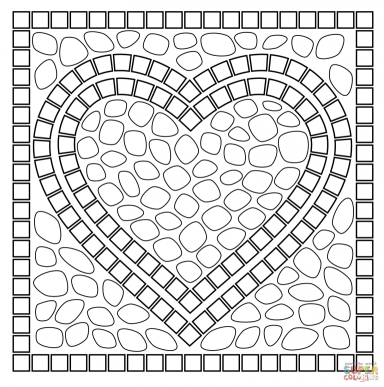
celebrate-picture-books-picture-books-review-heart-mosaic-coloring-page

I (Heart) Tiles! Coloring Page


With colorful tiles you can make beautiful pictures. Put your imagination to work and color this I (Heart) Tiles! Coloring Page!

Picture Book Review

February 13 – Get a Different Name Day

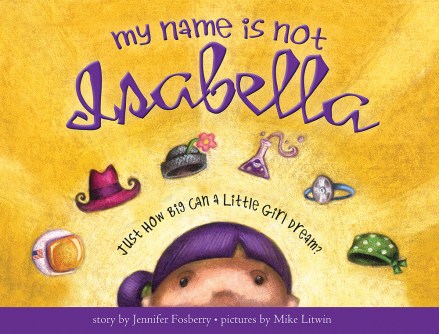
celebrate-picture-books-picture-book-review-my-name-is-not-isabella-cover

About the Holiday

It can be fun to try out new names or special nicknames in forming your identity. For those who are not so fond of their birth name, choosing a new name offers comfort, control, and happiness. Actors, writers, and other creative types sometimes change their name to something that is more memorable, easier to say, is flashier, or has more cred. To celebrate today’s holiday, try on a few different names. If you were going to change yours, what would you pick?

My Name Is Not Isabella: Just How Big Can a Little Girl Dream?

Written by Jennifer Fosberry | Illustrated by Mike Litwin


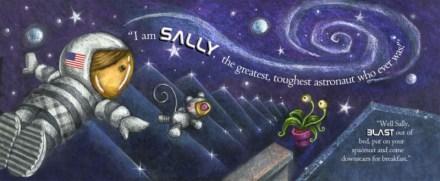
Mom opens her daughter’s bedroom door with a cheery “‘Good morning, Isabella. It’s time to get up and out of bed.’” But the little girl yawns and stretches and most emphatically states, “‘My name is not Isabella!’” Mom plays along, wondering who has then been sleeping here. “‘My name is Sally,’” Isabelle states, “‘The greatest, toughest astronaut there ever was!’” Having Sally Ride in the house is fine with Mom, as long as she puts on her space suit and comes down for breakfast.

celebrate-picture-books-picture-book-review-my-name-is-not-isabella-sally-ride

Image copyright Mike Litwin, 2010, text copyright Jennifer Fosberry, 2010. Courtesy of Sourcebook Jabberwocky.

When the little girl comes to the table, it seems she is no longer Sally. Hmmm… her mother says. She doesn’t know who will eat the delicious waffles she has made. Annie, the greatest, fastest sharpshooter, grabs the syrup and aims for her target.

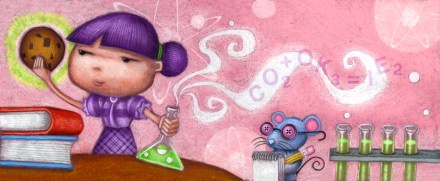
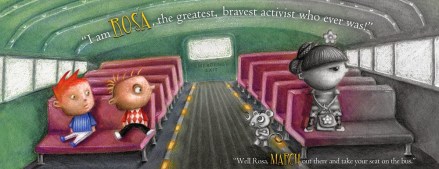
Soon it’s time for school, but when the bus arrives, Annie is nowhere to be found. In her place is “‘Rosa, the greatest, bravest activist that ever was.’ ‘Well, Rosa’” her mother says, “‘March over there and take your seat on the bus.’” School ends, but the bus doesn’t drop off Rosa. Instead, the freshly made chocolate chip cookies will be enjoyed by “‘Marie, the greatest, smartest scientist who ever was.’”

celebrate-picture-books-picture-book-review-my-name-is-not-isabella-rosa-parks

Image copyright Mike Litwin, 2010, text copyright Jennifer Fosberry, 2010. Courtesy of Sourcebook Jabberwocky.

Her mom is happy to see Marie and offers to get the cookies while Marie discovers the answers to her homework. Well, the cookies must fill Marie up, because when dinner rolls around, Elizabeth Blackwell shows up to set the table. At bath time, Elizabeth doesn’t feel like soaking in the relaxing bubbles, so she sends “‘Mommy, the greatest, sweetest mother who ever was,’” instead.

celebrate-picture-books-picture-book-review-my-name-is-not-isabella-marie-curie

Image copyright Mike Litwin, 2010. Courtesy of Sourcebook Jabberwocky.

With pajamas on and teeth brushed the “little girl climbed into bed, [and] the mother says, “‘Good night, Mommy.’” But Mommy is standing near the starlit window, so who is sleeping in the little girl’s bed? “‘Isabella, the sweetest, kindest, smartest, bravest, fastest, toughest, greatest girl that ever was.’” And as she sleeps, she “dreamed about who she would be tomorrow.”

celebrate-picture-books-picture-book-review-my-name-is-not-isabella-annie-oakley

Image copyright Mike Litwin, 2010. Courtesy of Sourcebook Jabberwocky.

In Jennifer Fosberry’s inspiring story, it’s not that the little girl doesn’t want to be Isabella, it’s that she wants to be the best Isabella she can be. In thinking about her role in the world, she’s chosen to emulate five of the most amazing women the world has ever known—and that’s just on day one. Fosberry’s ending, with its view toward tomorrow, allows children to consider all of the influential women throughout history and working today as role models. Her inclusion of “Mommy” as one of Isabella’s heroines is a welcome tribute to the job of motherhood. After all, it’s clear from the way Isabella’s mother supports her daughter’s alter egos without a “Sally who? or a “Rosa who?” that she has taught Isabella about these “greatest” women. It’s just one lesson this mother—and all mothers—teach their children.

celebrate-picture-books-picture-book-review-my-name-is-not-isabella-isabella (2)

Mike Litwin will enchant readers with his colorful illustrations of Isabella and her transformations. Whimsical details and even the way Isabella’s stuffed toy mouse changes into a real companion for Sally, Rosa, Annie, Marie, and Elizabeth mirrors the power of imagination and education in the formation of a child’s identity and the discovery of their particular talents. Isabella is adorable with her purple hair—just another proof of her individuality—and inspirational in her can-do attitude

Short biographies and portraits of Sally Ride, Rosa Parks, Annie Oakley, Marie Curie, and Elizabeth Blackwell follow the text.

A book that will charm as well as educate, My Name is Not Isabella is a classic that makes a great introduction to the women mentioned in the story and can spur further discovery for younger readers. It would be a welcome addition to home and classroom bookshelves.

Ages 4 – 8

Sourcebooks Jabberwocky, 2010 | ISBN 978-1402243950

Discover more about Jennifer Fosberry and her books on her website.

Learn more about Mike Litwin, his books, and his art on his website.

Get a Different Name Day Activity

celebrate-picture-books-picture-book-review-initial-bookend

First and Last Initials Bookends


You can show your pride in your name (or play with changing it) with this easy craft that will keep all your books tidy on their shelf! This makes a great gift too!

Supplies

  • Sturdy wooden letter blocks in the child’s first and last initials. Or, if the child would like to try on a new name or nickname, the first letter of their new name.
  • Chalkboard or acrylic paint
  • Colored chalk
  • Paint brush


Directions

  1. Paint the letters, let dry
  2. With the chalk write words that describe you or names of your heroines and/or heroes
  3. Display your bookends

Picture Book Review

January 23 – National Handwriting Day & Multicultural Children’s Book Day Review

celebrate-picture-books-picture-book-review-dear-dragon-cover

About the Holiday

Established in 1977, National Handwriting Day commemorates the act of putting thoughts to paper with a pen or pencil. In this age of computer writing programs, email, and texting, the art and joy of penmanship is waning. Handwriting, though, is unique to each individual and should be celebrated and encouraged! One of the best ways for kids to develop handwriting skills is by writing letters to friends and family. Finding a pen pal either close to home or from another country is another fantastic way to make new friends that can bring joy, broaden horizons, build empathy and respect for others, and promote a lifetime love of learning about our world—just as today’s book that celebrates the ideals of Multicultural Children’s Book Day shows!

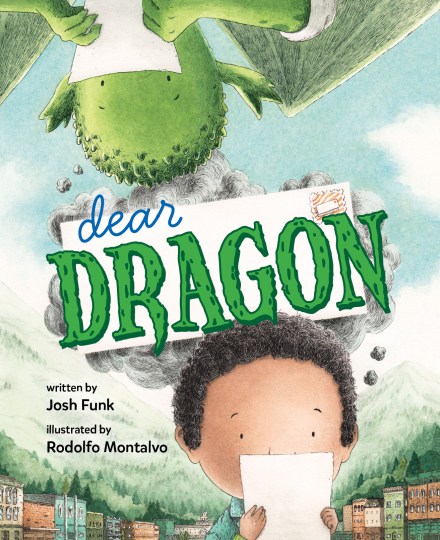
Dear Dragon: A Pen Pal Tale

Written by Josh Funk | Illustrated by Rodolfo Montalvo


Teachers know that when their students get to know other kids from nearby or far away, they gain an understanding of different traditions and cultures and develop the kinds of caring, empathy, and kindness that make the world a better place for all. Add in some poetry and the fun of sending—and receiving—letters, and you’ve got…Dear Dragon: A Pen Pale Tale—a clever tribute to creative communication and friendship.

As the story opens, George and his classmates are learning about their new project. Elsewhere, Dragomir and his classmates are getting the details on their new project. And what is this new assignment? This year in each classroom the poetry and pen pal projects are being combined, so all correspondence must be written in rhyme.
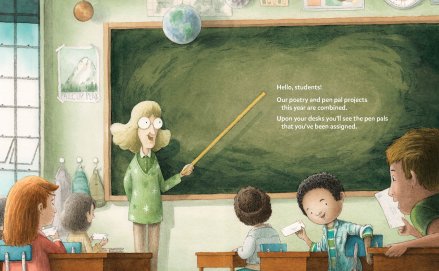
celebrate-picture-books-picture-book-review-dear-dragon-teacher

Image copyright Montalvo Rodalfo, 2016, text copyright Josh Funk, 2016. Courtesy of Viking Books for Young Readers.

On each student’s desk is an envelope with the name of the pen pal they’ve been given. George Slair opens his envelope to discover that he’s been matched with Blaise Dragomir, and Blaise pulls George’s name from his envelope. What George doesn’t know—but readers do—is that Blaise is a dragon; and what Blaise doesn’t know—but readers do—is that George is a boy.

In his first letter, George begins with honesty and a bit about himself: “Dear Blaise Dragomir, / We haven’t met each other, and I don’t know what to say. / I really don’t like writing, but I’ll do it anyway. / Yesterday my dad and I designed a giant fort. / I like playing catch and soccer. What’s your favorite sport? / Sincerely, George Slair.”

celebrate-picture-books-picture-book-review-dear-dragon-castle

Image copyright Montalvo Rodalfo, 2016, text copyright Josh Funk, 2016. Courtesy of Viking Books for Young Readers.


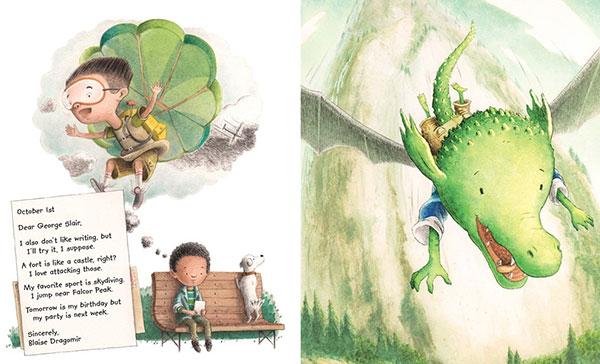
As Blaise reads the letter he pictures George’s fort as a medieval stone fortress with an iron gate and whittled-to-a-point log fencing instead of the cardboard box, blanket, and umbrella that it actually was. Blaise writes back: “Dear George Slair, / I also don’t like writing, but I’ll try it, I suppose. / A fort is like a castle, right? I love attacking those. / My favorite sport is skydiving. I jump near Falcor Peak. / Tomorrow is my birthday, but my party is next week. / Sincerely, Blaise Dragomir.”

In his next letter, dated October 31, more earth-bound George tells Blaise that parachuting is awesome, that his dog destroyed his fort, and that he is trick-or-treating as a knight—a revelation to which Blaise has a visceral response. But what is scary to one pal is tame to the other. On November 14th Blaise relates: “Knights are super scary! I don’t like trick-or-treat. / Brushing teeth is such a pain, I rarely eat a sweet. / My pet’s a Bengal Kitten and tonight she needs a bath. / What’s your favorite class in school? I’m really into math!”

celebrate-picture-books-picture-book-review-dear-dragon-washing-kitten

Image copyright Montalvo Rodalfo, 2016, text copyright Josh Funk, 2016. Courtesy of Viking Books for Young Readers.

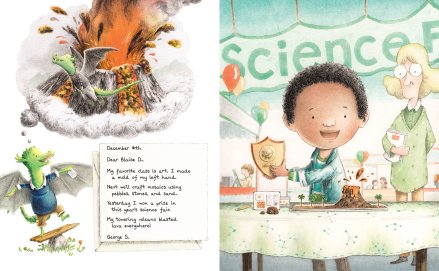
Reading December’s letter, Blaise learns that George likes art and imagines the table-top volcano science project George writes about as a roaring, lava-spewing mountain. In January George is impressed to learn that Blaise’s father is a fire-breather. He conjures up images of a dad in a fancy, caped costume creating fire out of nothing, but the truth is a lot more explosive. February brings word that George’s mom and dad are teachers and that a pen-pal picnic is planned for June.

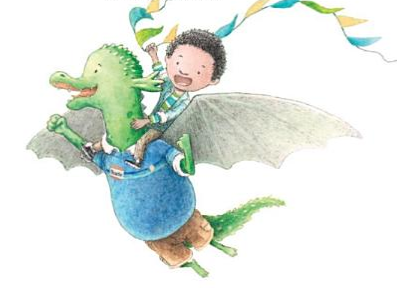
When Blaise writes back in March, he reveals that his dad’s into learning too: “…every night we read a book / or pick a game to play.” Then he tells George about a special outing he’s looking forward to with his dad: “Soon he’s gonna take me flying, once it’s really spring. / It’s such a rush to ride the air that flows from wing to wing.”
celebrate-picture-books-picture-book-review-dear-dragon-volcano

Image copyright Montalvo Rodalfo, 2016, text copyright Josh Funk, 2016. Courtesy of Viking Books for Young Readers.

On April 11th George expresses his wonder at Blaise’s parents: “Hi, Blaise! / Skydiving and flying? Wow, your parents rock! / I’m lucky if my father lets me bike around the block.” Then George asks a question that shows this project’s worth: “Once the school year’s over and this project is complete, / should we continue writing? ‘Cause it could be kind of neat….” Signing off, George abandons the formal “Sincerely, George” for “Your friend.” 

Blaise is all in for continuing this friendship. In his May letter, he writes, “Hey, George! / I’m psyched about the picnic and I can’t wait to attend. / Who’d have thought this pen pal thing would make me a new friend? / Writing more sounds awesome. I was gonna ask you, too! / I’ve never liked to write as much as when I write to you.”
celebrate-picture-books-picture-book-review-dear-dragon-sky-diving

Image copyright Montalvo Rodalfo, 2016, text copyright Josh Funk, 2016. Courtesy of Viking Books for Young Readers.

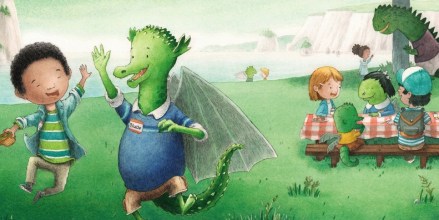
With a growing sense of anticipation, readers know that with a turn of the page June will come, and that June brings the long-awaited picnic. How will George and Blaise react when they see each other? As the children approach the Pen Pal Picnic spot and see the friends they’ve been writing to all year, their mouths hang open and their eyes grow wide. And as the dragons peek out from behind the trees to see the friends they’ve been writing to all year, their mouths hang open and their eyes grow wide.

“‘Blaise?’” a surprised George ventures, as a slice of tomato drops from his hamburger. “‘George?’” an astonished Blaise guesses, while nervously holding his tail. “‘My pen pal is a dragon?’” says George. “‘My pen pal is a human?’” echoes Blaise.

For a moment the celebration stops, but with the turn of the page, huge grins burst out on both George and Blaise as they exchange high fives (and fours). The other kid-and-dragon pals are having a blast too! And what do the teachers have to say? “‘Our plan was a success, my friend, or so it would appear!’ / ‘The Poetry and Pen Pal Project! Once again next year?’”
celebrate-picture-books-picture-book-review-dear-dragon-picnic

Image copyright Montalvo Rodalfo, 2016, text copyright Josh Funk, 2016. Courtesy of Viking Books for Young Readers.

In his inventive story that celebrates friendship, diversity, and the joy of discovering different viewpoints, Josh Funk shows the power of writing and communication to unite people of all backgrounds. Through the alternating letters from George and Blaise, Funk deftly demonstrates that many experiences are universal—like pets, school, hobbies, and parents—while others are just waiting to be shared.  Blaise Dagomir and George Slair’s names are inspired, and may introduce kids to the ancient legends of Saint George and the Dragon and the poem St George and the Dragon by Alfred Noyes. This shout out to this well-known poem of the past further highlights the importance of reading all types of literature for both children and adults in connecting us as global citizens.
celebrate-picture-books-picture-book-review-dear-dragon-flying

Following the alternating sequence of the letters, Rodolfo Montalvo depicts each pen pal’s perception of the message—along with the reality—in his illustrations that are, as George exclaims, “as awesome as it gets.” There is a special delight in seeing how sweet, earnest, and happily supportive of each other’s lifestyle Blaise and George are as they react to every letter. The full-bleed pages and vibrant colors dazzle with excitement, humor, and ingenious details. The final spreads build suspense as to how George and Blaise will react to each other, and the resolution is cheerfully satisfying.

One striking aspect of both the text and the illustrations is the similarity between the two pen pals. While their activities and experiences may be on different scales, they are comparable and understandable to each child. Likewise, in each painting Montalvo uses complementary colors to unite George and Blaise. This cohesiveness in both words and pictures beautifully represents the theme of inclusiveness.

Dear Dragon: A Pen Pal Tale is a fantastic read-aloud with multiple applications for fun and discussion at home and during classroom and library story times.

Ages 4 – 8

Viking Books for Young Readers, 2016 | ISBN 978-0451472304

Discover more about Josh Funk and his books and find plenty of fun activities to enjoy on his website.

Learn more about Rodolfo Montalvo and his artwork on his website

National Handwriting Day Activity
celebrate-picture-books-picture-book-review-dear-dragon-mcbd-word-search


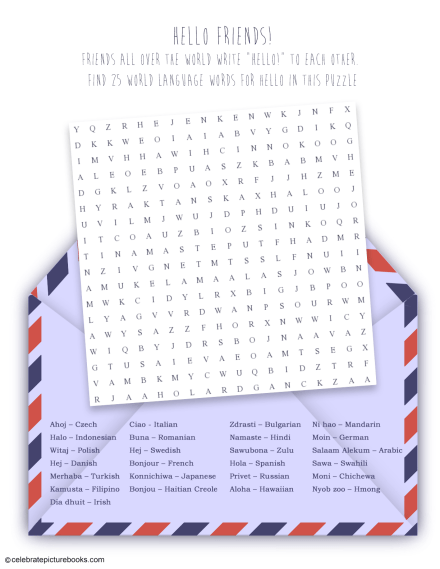
Hello, Friends! Word Search Puzzle


Friends say and write “hello” to each other all over the world. You can learn how to say “hello” in twenty-five languages as you look for them in this printable Hello, Friends Word Search Puzzle!

Hello, Friends! Word Search Puzzle | Hello, Friends! Word Search Solution

celebrate-picture-books-multicultural-children's-book-day-logo-2018

About Multicultural Children’s Book Day

Multicultural Children’s Book Day 2017 (1/27/18) is in its 5th year and was founded by Valarie Budayr from Jump Into A Book and Mia Wenjen from PragmaticMom. Our mission is to raise awareness of the ongoing need to include kids’ books that celebrate diversity in home and school bookshelves while also working diligently to get more of these types of books into the hands of young readers, parents and educators. 

MCBD 2018 is honored to have some amazing Sponsors on board. View our 2018 MCBD Medallion Sponsors here: http://multiculturalchildrensbookday.com/2106-sponsors/mcbd2018-medallion-level-sponsors/

We’d like to also give a shout-out to MCBD’s impressive CoHost Team who not only hosts the book review link-up on celebration day, but who also works tirelessly to spread the word of this event. View our CoHosts: http://multiculturalchildrensbookday.com/about/co-hosts/
TWITTER PARTY Sponsored by Scholastic Book Clubs: MCBD’s super-popular (and crazy-fun) annual Twitter Party will be held 1/27/18 at 9:00pm.

Join the conversation and win one of 12 5-book bundles and one Grand Prize Book Bundle (12 books) that will be given away at the party! http://multiculturalchildrensbookday.com/twitter-party-great-conversations-fun-prizes-chance-readyourworld-1-27-18/

Free Multicultural Books for Teachers: http://bit.ly/1kGZrta

Free Empathy Classroom Kit for Homeschoolers, Organizations, Librarians and Educators: http://multiculturalchildrensbookday.com/teacher-classroom-empathy-kit/

Social Media

Don’t forget to connect with us on social media! Be sure and look for and use our official hashtag #ReadYourWorld.

Picture Book Review