January 13 – Make Your Dream Come True Day

celebrate-picture-books-picture-book-review-happy-dreamer-cover

About the Holiday

Children are asked about their hopes and dreams as soon as they enter school. In kindergarten kids draw about them, and as they grow older, they write about them and begin working to make those dreams a reality. Adults also have goals they want to achieve at work, at home, or just for themselves. Today’s holiday encourages people to define their dream, make a plan, and take the road toward fulfilling it. That spark of inspiration can burn brightly and long and guide you to the future you always wanted!

Happy Dreamer

By Peter H. Reynolds


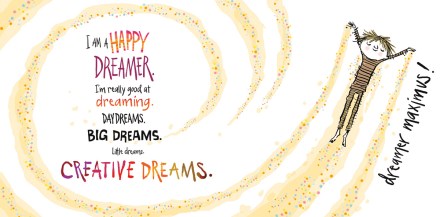
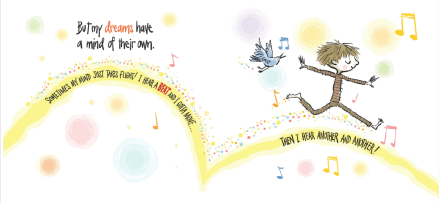
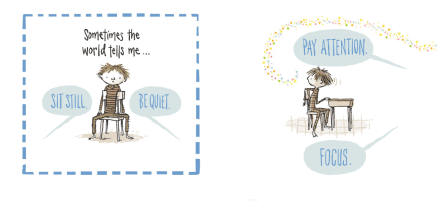
A child floats on a golden, sparkling swirl of their own creation. “I am a happy dreamer,” they say. “I’m really good at dreaming. Daydreams, big dreams, little dreams, creative dreams.” In fact, this child is a “dreamer maximus!” There are times when they’re told to ignore that voice inside…to “sit still” and pay attention. But the music inside is persistent and persuasive, inviting the child to move, to play along and let it out.

celebrate-picture-books-picture-book-review-happy-dreamer-dreamer-maximus

Copyright Peter H. Reynolds, 2017, courtesy of Orchard Books.

Sometimes dreams require quiet. Then the child says, “I make time to stay still and hear myself think—to let go and see what takes shape.” Can you see it too? There are dreams so big, the child reveals, that sometimes “I’m a shout-at-the-top-of-my-lungs dreamer (even if I’m just a loud-inside-my-head dreamer!)”

celebrate-picture-books-picture-book-review-happy-dreamer-musical-beat

Copyright Peter H. Reynolds, 2017, courtesy of Orchard Books.

There are times when dreams come in colors that paint a surprising path, and sometimes there are so many dreams firing at once that they cause “creative chaos.” When you ask make me clean up, the child says, I will, but “cleaning up hides my treasures” and “there is less of ME to show.” When that happens, the child explains, “…I feel alone. BOXED IN.” But there is always an escape, a way to recover the “happy dreams.”

celebrate-picture-books-picture-book-review-happy-dreamer-focus

Copyright Peter H. Reynolds, 2017, courtesy of Orchard Books.

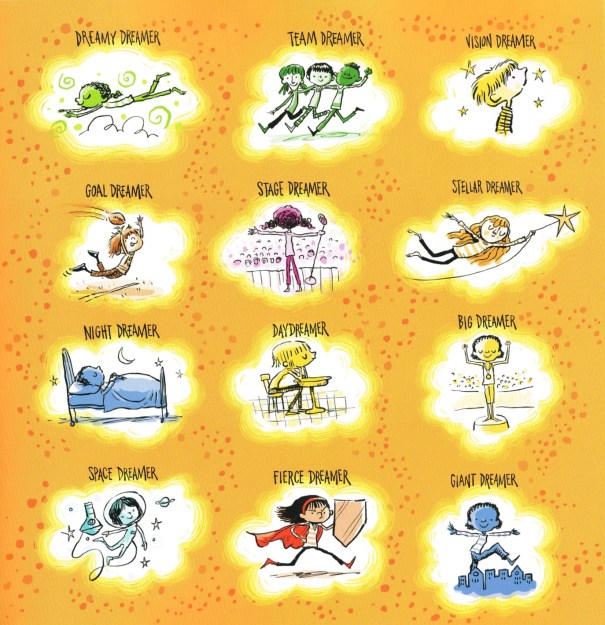
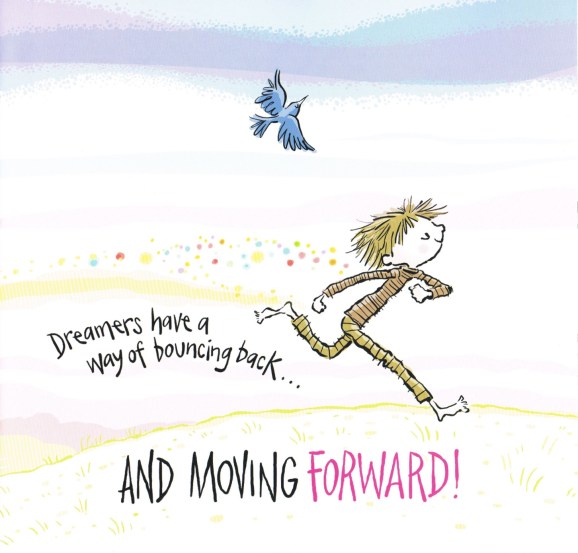
You know what? the child says, “I’m really good at being me. A dreamer—surprising, caring, funny, gentle, smart.” Falling or failing don’t hurt because dreamers always bounce back and keep going. Do you know what kind of dreamer you are? There are so many kinds! What makes you happy? Exploring, working hard, being with family or friends, being alone? Maybe laughing, acting, being wild, being strong. Are you civic-minded, peaceful, thoughtful?

What’s “the best way to be a happy dreamer? Just be YOU.”

celebrate-picture-books-picture-book-review-happy-dreamer-all-kinds-of-dreamers

Copyright Peter H. Reynolds, 2017, courtesy of Orchard Books.

Peter H. Reynolds is always inspirational, finding just the right words to include all readers while speaking directly and intimately to each reader individually. In Happy Dreamer, Reynolds taps into the ways ideas and talents come knocking, whispering, or shouting to be heard and set free. His lyrical language is engaging for even the youngest readers and meaningful for adults as well—on both a personal level and for those who are parents, caregivers, or teachers.

celebrate-picture-books-picture-book-review-happy-dreamer-bouncing-back

Copyright Peter H. Reynolds, 2017, courtesy of Orchard Books.

From the first image in which the child floats on the glowing swirl of dreams, readers will follow the child as they play music, discover shapes in the clouds, swing to lofty heights, shout to the world, paint a rainbow path, create fireworks and treasures, and break free from the restraints of the world that sometimes tamp down dreams. A double gate-fold filled with dreamers will delight readers as they search for just the type of dreamer they are. Written in the first-person and with gender neutral clothing and hairstyle, Happy Dreamer is a universal story.

Empowering, encouraging, and accepting, Happy Dreamer is a superb choice for home and classroom libraries.

Ages 4 – 8 and up

Orchard Books, an imprint of Scholastic, 2017 | ISBN 978-0545865012

Discover more about Peter Reynolds, his books, and his art on his website.

Make Your Dream Come True Day Activity

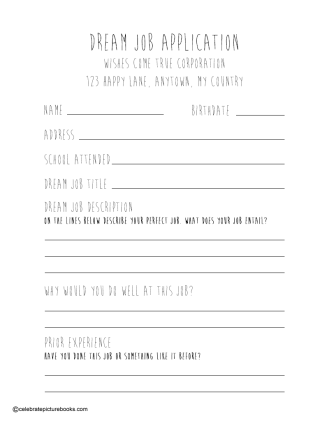
celebrate-picture-books-picture-book-review-dream-job-application-activity

Dream Job Application


Imagine you are applying for your dream job. What would it be? Why are you the right candidate? Have fun with this printable Dream Job Application and start on the road to your happy future!

Picture Book Review

January 2 – Motivation and Inspiration Day & Multicultural Children’s Book Day Review

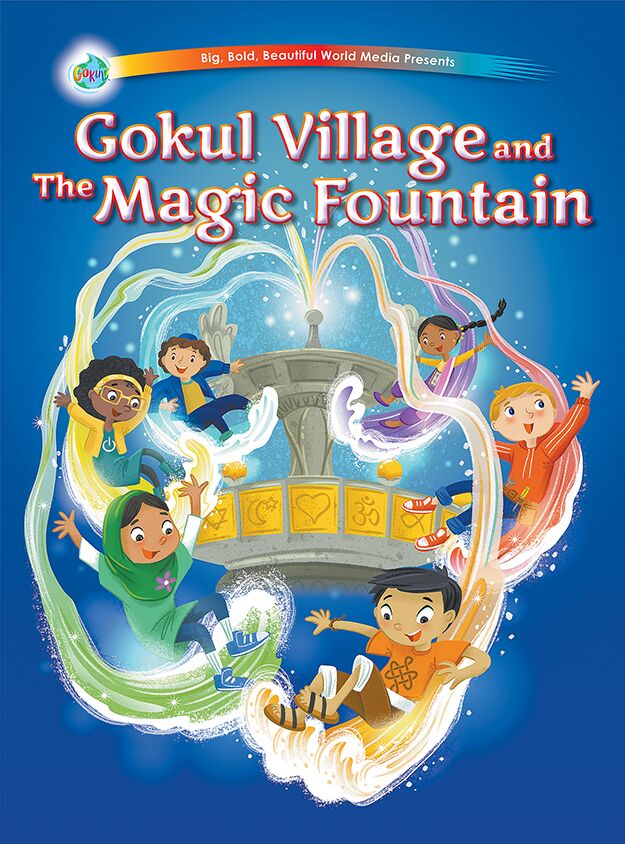
celebrate-picture-books-picture-book-review-gokul-village-and-the -magic-fountain-cover

About the Holiday

The beginning of a new year is often filled with optimism and excitement. We feel motivated and inspired to try new things, make positive changes, and accomplish goals—not only for ourselves but for the world around us. Finding new and diverse books is a fantastic way to get started.

To honor today’s holiday, I’m posting a review for Multicultural Children’s Book Day, an annual event that takes place every January and, this year, culminates on January 27 with a huge online celebration. Throughout the month bloggers, reviewers, and individuals post reviews of children’s books that offer multicultural themes, characters, and stories that inspire young readers and introduce them to peers, situations, and ideas around the world. To learn more about Multicultural Children’s Day and follow the fun, visit their website and see the information below.

Gokul Village and the Magic Fountain

Written by Jeni Chapman and Bal Das | Illustrated by Charlene Chua


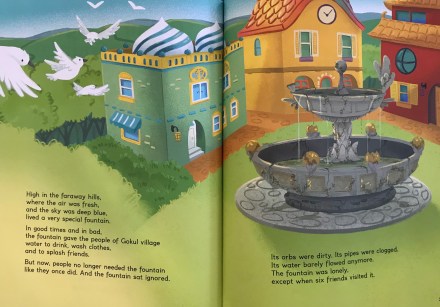
In a faraway land with fresh air and blue skies, Gokul Village was built around “a very special fountain.” The fountain had always provided the people of Gokul Village with “water to drink, wash clothes, and to splash friends.” But now the fountain had fallen into disrepair. The six orbs that circled the pool were dirty and broken, and the pipes were clogged so water could not flow anymore. “The fountain was lonely, except when six friends visited it.”

celebrate-picture-books-picture-book-review-gokul-village-and-the -magic-fountain-gokul

Image copyright Charlene Chua, 2017, text copyright Jeni Chapman and Bal Das, 2017. Courtesy of gokulworld.com.

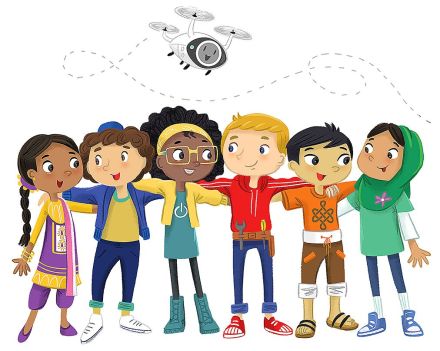
The friends met at the fountain on the way to school and gathered there in the afternoons. Zoya was an artist and loved to paint pictures of “how beautiful the fountain could be.” Christopher loved to build and had “plans to fix the fountain one day.” Riya was inspired by the music of the dripping water when she played her flute, and Dalai rode his bike faster and faster as he circled the fountain. Jacob would bring his own homemade treats, and Noelle experimented with the drone iDEA that she had designed.

celebrate-picture-books-picture-book-review-gokul-village-and-the -magic-fountain-children

Image copyright Charlene Chua, 2017, text copyright Jeni Chapman and Bal Das, 2017. Courtesy of gokulworld.com.

When the friends played together they imagined that the fountain connected to all the world’s waterways and could take them on adventures. They joined hands and skipped around the fountain singing, “‘Waters of the world, connect us this day. Waters of the world, take us away.’” New Year’s Day was approaching, and the children were looking forward to the big village party. Soon, they would be helping to decorate the square. But one day, Dalai brought bad news. The mayor had canceled the party because the fountain—the centerpiece of the celebration—could not be fixed in time.

The friends were disappointed, but then Christopher had an idea. If they all worked together, he thought, they could fix the fountain in time. They were all in! Riya gave each person a job to do. Noelle was to research the history of the fountain. She and Zoya were to find new orbs to replace the old ones. Christopher was going to fix the pipes. Dalai could restore the broken decorative stonework, and Jacob would keep them all working hard with his snacks.

celebrate-picture-books-picture-book-review-gokul-village-and-the-magic-fountain-fixed-fountain

Image copyright Charlene Chua, 2017, text copyright Jeni Chapman and Bal Das, 2017. Courtesy of gokulworld.com.

The next step was to convince the mayor that they could do it. Dalai, who loved talking with people, met with the mayor and got her approval. “If they could clean up the fountain, the celebration wouldn’t be canceled.” The kids went to work and in two days, the fountain was beautiful and the water flowed again. When the mayor came to look, she declared the New Year’s festival was “back on.”

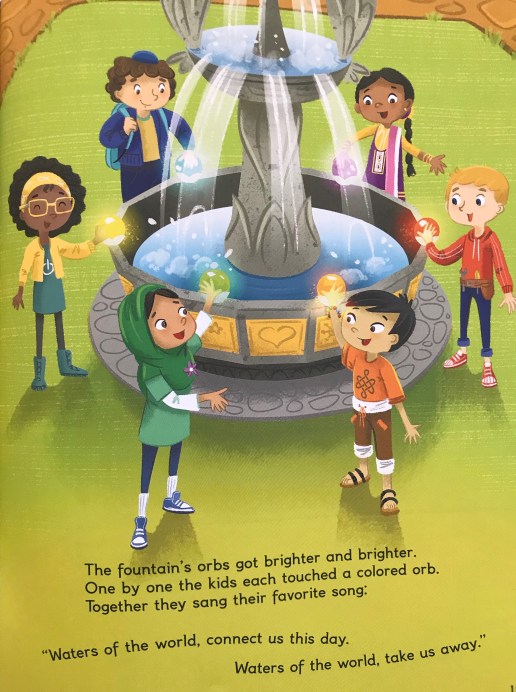
Suddenly, “the fountain glowed with extra shimmer,” and the water glistened. The orbs shone and granted each child “an extraordinary gift. Notes from Riya’s flute transformed into singing birds.” Zoya could paint pictures in the air. “The beads of Dalai’s bracelet glowed with light.” Jacob’s backpack suddenly filled with all types of cooking ingredients and utensils. Christopher’s tools grew, and iDEA gained the ability to speak.

celebrate-picture-books-picture-book-review-gokul-village-and-the -magic-fountain-song

Image copyright Charlene Chua, 2017, text copyright Jeni Chapman and Bal Das, 2017. Courtesy of gokulworld.com.

iDEA told Noelle to look in the heart of the fountain for its hidden words. There, the kids found an invitation: “The world is big, are you bold? / With my help you’ll soon know. / Say the words. Watch me glow / 1, 2, 3…and off you go!” Then each orb shone with a different color. The children each placed a hand on an orb and sang their song. All at once, they found themselves floating to places they’d always wanted to see. They “saw the jostling, jolly New York City crowd” and watched the ball drop in Times Square to celebrate “the arrival of the New Year.” They joined the Chinese New Year parade and “watched millions of people clap and sway together, hoping for happiness and good fortune for all.” Then they found themselves in the midst of the “dazzling glow of the Diwali festival in India, signifying the power of light over darkness.”

celebrate-picture-books-picture-book-review-gokul-village-and-the -magic-fountain-back-from-travels

Image copyright Charlene Chua, 2017, text copyright Jeni Chapman and Bal Das, 2017. Courtesy of gokulworld.com.

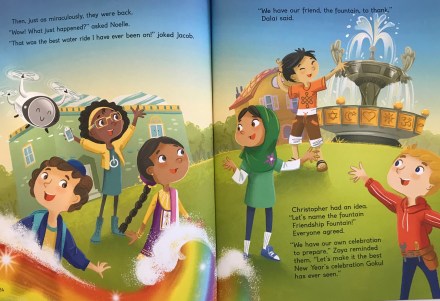
Just as quickly as they had left, the children were back at the fountain. To commemorate their magical adventure, the children decided to name the fountain “‘Friendship Fountain.’” But they had no time to waste! They made decorations inspired by all the celebrations they had seen and hung them in the town square. The next day, Gokul Village’s New Year’s celebration was the best ever.

The six friends were eager to have another adventure. Since Dalai had set the adventure in motion the first time, he whispered, “‘Friendship Fountain awake, Friendship Fountain activate.’” With that, Dalai’s bracelet glowed. Each child touched one of the fountain’s orbs and sang their song. As their voices soared into the sky, they felt themselves being lifted up too. “Where in the world would they go this time?”

celebrate-picture-books-picture-book-review-gokul-village-and-the -magic-fountain-bracelet-glowing

Image copyright Charlene Chua, 2017, text copyright Jeni Chapman and Bal Das, 2017. Courtesy of gokulworld.com.

There is much to entice young readers in Jeni Chapman and Bal Das’s enriching story of six friends who have their sights set on their connections to each other and the world and the positive things they can accomplish. As the diverse group of children is introduced along with their unique talent, readers will recognize their various personalities and be eager to learn more about them. The children’s enthusiasm is infectious as they team up to fix the fountain and are rewarded with magical gifts and a special power to travel the world. Organically incorporating ideas of inclusiveness, cooperation, compromise, volunteering, and teamwork through realistic dialogue, this story is upbeat and affirmative and one that readers will respond to.

celebrate-picture-books-picture-book-review-gokul-village-and-the -magic-fountain-all-kids

Copyright Charlene Chua, 2017, courtesy of gokulworld.com.

Upon opening the book to the first page, children are welcomed into the heart of Gokul Village where homes, each representing a different style of world architecture, circle the fountain. The effect is immediately inviting while introducing the story’s theme of unity. Each of Charlene Chua’s vibrant illustrations is infused with a joyful harmony as the children of diverse ethnicities pursue their individual talents while embracing each other as friends.

For today’s children, the Friendship Fountain—decorated with symbols of love, direction, and world religions—is a fitting metaphor for the global community, and the friends are excellent role models. The children of Gokul have inherited a monument that they love, that can provide for their needs, and that gives them a place to come together. The children want to improve it for all the townspeople, and without hesitation, they go about fixing it. Images of the festivals the children visit are full of light and cheer, and the decorated square shows that there is room for all traditions.

celebrate-picture-books-picture-book-review-gokul-village-and-the -magic-fountain-orbs

Image copyright Charlene Chua, 2017, text copyright Jeni Chapman and Bal Das, 2017. Courtesy of gokulworld.com.

Gokul Village and the Magic Fountain is the first in a planned series of books and other entertainment, including digital shorts, an animated series, and interactive games that prepare “children ages 4 -7 for success by fostering exploration, understanding and celebration of cultural diversity.” The book would be a welcome and relatable addition to home and classroom libraries to foster discussions, learning, and creative projects.

Ages 4 – 7

Big, Bold, Beautiful World Media, 2017 | ISBN 978-0692917381

Discover a portfolio of illustration work by Charlene Chua on her website.

You can find Gokul Village and the Magic Fountain at:

Gokul World | Amazon | Barnes & Noble | Books-a-Million | IndieBound

Motivation and Inspiration Day Activities

celebrate-picture-books-picture-book-review-friendship-bracelet-craft

World Friendship Bracelet


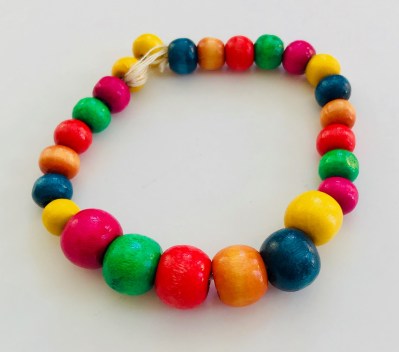
Like Dalai in the story, you can make and wear a special bracelet with colorful beads that represent your friends, your dreams, or various places in the world that you would like to visit.

Supplies

  • Wooden or plastic beads in six colors. For the center beads, get one of each color in a medium size. For the rest of the bracelet, get beads in a smaller size. (Dalai’s bracelet has red, purple, blue, yellow, green, and orange beads.)
  • Elastic, embroidery thread, or string
  • Scissors
  • Sewing needle with a large eye

Directions

  1. Measure your wrist and cut a length of elastic, embroidery thread, or string, leaving it long enough to tie on the first and last beads (and make a loop clasp if using thread or string).
  2. Thread the needle with the elastic, embroidery thread, or string.
  3. Thread the first bead onto the elastic, thread, or string, leaving about a half-inch at the end.
  4. Pull end of thread over bead and tie a knot with the end and the length of string.
  5. Approximate the center of your bracelet and thread several small beads in a color pattern onto the elastic, thread, or string.
  6. Thread the medium beads onto the bracelet in the same color pattern.
  7. Follow with more small beads to finish the bracelet.
  8. Tie the last bead onto the elastic, thread, or string.
  9. To make a loop clasp on the end if using embroidery thread or string, loop the thread or string.

celebrate-picture-books-picture-book-review-a-world-of-friends-word-search-puzzle

A World of Friends Word Search Puzzle


There are friends all over the world waiting to meet you! Learn the word for “Friend” in twenty-one languages and find them all in this printable A World of Friends Word Search Puzzle!

A World of Friends Word Search Puzzle | Word Search Puzzle Solution

celebrate-picture-books-multicultural-children's-book-day-logo-2018

About Multicultural Children’s Book Day

Multicultural Children’s Book Day 2017 (1/27/18) is in its 5th year and was founded by Valarie Budayr from Jump Into A Book and Mia Wenjen from PragmaticMom. Our mission is to raise awareness of the ongoing need to include kids’ books that celebrate diversity in home and school bookshelves while also working diligently to get more of these types of books into the hands of young readers, parents and educators. 

MCBD 2018 is honored to have some amazing Sponsors on board. View our 2018 MCBD Medallion Sponsors here: http://multiculturalchildrensbookday.com/2106-sponsors/mcbd2018-medallion-level-sponsors/

We’d like to also give a shout-out to MCBD’s impressive CoHost Team who not only hosts the book review link-up on celebration day, but who also works tirelessly to spread the word of this event. View our CoHosts: http://multiculturalchildrensbookday.com/about/co-hosts/

TWITTER PARTY Sponsored by Scholastic Book Clubs: MCBD’s super-popular (and crazy-fun) annual Twitter Party will be held 1/27/18 at 9:00pm.

Join the conversation and win one of 12 5-book bundles and one Grand Prize Book Bundle (12 books) that will be given away at the party! http://multiculturalchildrensbookday.com/twitter-party-great-conversations-fun-prizes-chance-readyourworld-1-27-18/

Free Multicultural Books for Teachers: http://bit.ly/1kGZrta

Free Empathy Classroom Kit for Homeschoolers, Organizations, Librarians and Educators: http://multiculturalchildrensbookday.com/teacher-classroom-empathy-kit/


Social Media

Don’t forget to connect with us on social media! Be sure and look for and use our official hashtag #ReadYourWorld.

Picture Book Review

December 11 – It’s Write a Friend Month

celebrate-picture-books-picture-book-review-dear-dragon-cover

About the Holiday

During the month of December people like to reach out to friends near and far and share the events of the past year. Write a Friend Month commemorates such communication and encourages writers to pick up a pen and paper and send a “real letter” full of intriguing details that inspire a response. Finding a letter or card in the mailbox still makes people smile. So, why not take a little time this month to write a letter to your friends?

Dear Dragon: A Pen Pal Tale

Written by Josh Funk | Illustrated by Rodolfo Montalvo


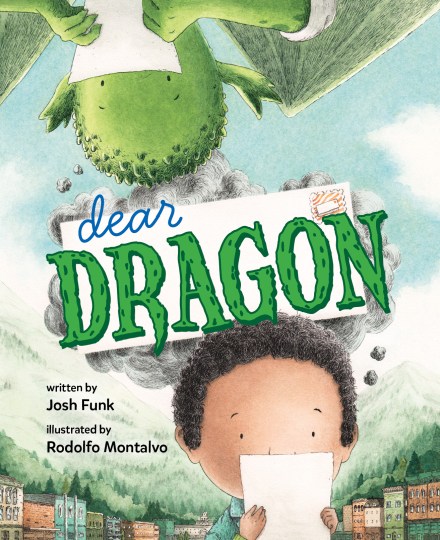
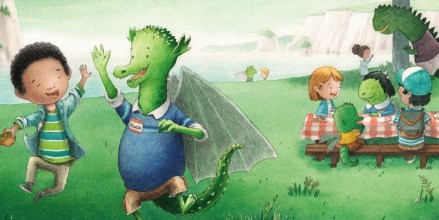
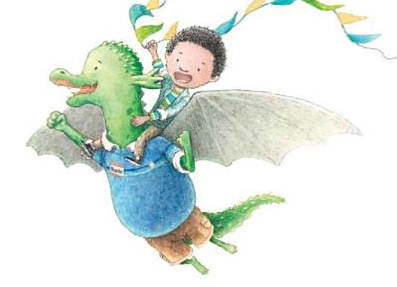
In a bit of cross-curriculum creativity, the teachers in two distinct school districts have combined the annual poetry units and pen pal projects. Not only do the kids get to make new friends, they must write their letters in rhyme. George Slair has been matched up with Blaise Dragomir. What George doesn’t know—but readers do—is that Blaise is a dragon; and what Blaise doesn’t know—but readers do—is that George is a boy.

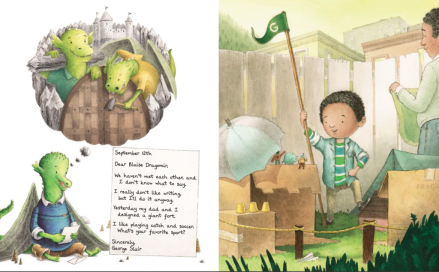
In his first missive, George begins boldly and honestly: “Dear Blaise Dragomir, / We haven’t met each other, and I don’t know what to say. / I really don’t like writing, but I’ll do it anyway. / Yesterday my dad and I designed a giant fort. / I like playing catch and soccer. What’s your favorite sport? / Sincerely, George Slair”

celebrate-picture-books-picture-book-review-dear-dragon-castle

Image copyright Rodolfo Montalvo, 2016, text copyright Josh Funk, 2016. Courtesy of Viking Books for Young People.

As Blaise reads the letter he interprets George’s cardboard box, blanket, and umbrella fort as a medieval stone fortress with an iron gate and whittled-to-a-point log fencing. Blaise writes back: “Dear George Slair, / I also don’t like writing, but I’ll try it, I suppose. / A fort is like a castle, right? I love attacking those. / My favorite sport is skydiving. I jump near Falcor Peak. / Tomorrow is my birthday, but my party is next week. / Sincerely, Blaise Dragomir”

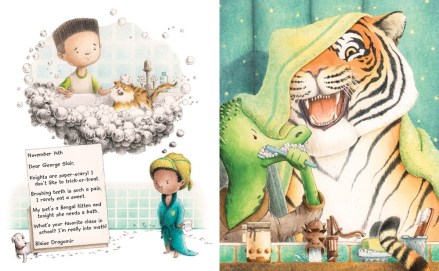
In his next letter, dated October 31, more earth-bound George tells Blaise that parachuting is awesome, that his dog destroyed his fort, and that he is trick-or-treating as a knight—a revelation to which Blaise has a visceral response. But what is scary to one pal is tame to the other. On November 14th Blaise relates: “Knights are super scary! I don’t like trick-or-treat. / Brushing teeth is such a pain, I rarely eat a sweet. / My pet’s a Bengal Kitten and tonight she needs a bath. / What’s your favorite class in school? I’m really into math!”

celebrate-picture-books-picture-book-review-dear-dragon-washing-kitten

Image copyright Rodolfo Montalvo, 2016, text copyright Josh Funk, 2016. Courtesy of Viking Books for Young People.

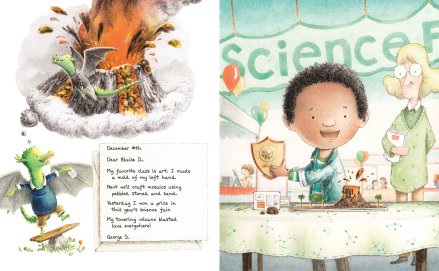
Reading December’s letter Blaise learns that George likes art and imagines George’s table-top volcano science project as a roaring, lava-spewing mountain. In January George is impressed to learn that Blaise’s father is a fire-breather. He conjures up images of a dad in a fancy, caped costume creating fire out of nothing while the truth is a lot more explosive. February brings word that there is a pen pal picnic planned for June, and in March Blaise tells George about a special outing with his dad: “Soon he’s gonna take me flying, once it’s really spring. / It’s such a rush to ride the air that flows from wing to wing.”

celebrate-picture-books-picture-book-review-dear-dragon-volcano

Image copyright Rodolfo Montalvo, 2016, text copyright Josh Funk, 2016. Courtesy of Viking Books for Young People.

Springtime also sees the two becoming better friends. The formal “Sincerely, George” or “Sincerely, Blaise” sign-off of the first letters has evolved into “Your friend”  as George expresses his wonder at Blaise’s parents: “Hi, Blaise! / Skydiving and flying? Wow, your parents rock! / I’m lucky if my father lets me bike around the block.” Then it appears that this project has been a success in all areas as George asks, “Once the school year’s over and this project is complete, / should we continue writing? ‘Cause it could be kind of neat….”

Blaise is all in. In his May letter, he writes, “Hey, George! / I’m psyched about the picnic and I can’t wait to attend. / Who’d have thought this pen pal thing would make me a new friend? / Writing more sounds awesome. I was gonna ask you, too! / I’ve never liked to write as much as when I write to you.”

celebrate-picture-books-picture-book-review-dear-dragon-sky-diving

Image copyright Rodolfo Montalvo, 2016, text copyright Josh Funk, 2016. Courtesy of Viking Books for Young People.

With a growing sense of anticipation, readers know that with a turn of the page June will come, and that June brings the long-awaited picnic. How will George and Blaise react when they see each other? As the kids approach the Pen Pal Picnic spot, their mouths hang open and their eyes grow wide. One even has his hands to his face. And as the dragons peek out from behind the trees, their mouths hang open and their eyes grow wide. One even has her hand to her face.

“‘Blaise?’” George ventures, as a slice of tomato drops from his hamburger. “‘George?’” Blaise presumes, although he wrings his tail. “‘My pen pal is a dragon?’”… “‘My pen pal is a human?’”

These two-page spreads say it all—or do they? Well, not quite…

Huge grins burst out as George and Blaise exchange high fives (and fours). The other kid- and-dragon pals are having a blast too! And the teachers? “‘Our plan was a success, my friend, or so it would appear!’ / ‘The Poetry and Pen Pal Project! Once again next year?’”

celebrate-picture-books-picture-book-review-dear-dragon-picnic

Image copyright Rodolfo Montalvo, 2016. Courtesy of Viking Books for Young People.

With his usual aplomb, Josh Funk charms with rhyme and reason in this clever tribute to friendship, diversity, and writing (on paper!). The letters between the two pen pals are endearingly kid-like, full of the subjects that are important in a child’s life, including pets, school, hobbies, and parents, which can be brilliantly open to interpretation—or misinterpretation. Blaise Dagomir and George Slair’s names are similarly inspired, and may introduce kids to the ancient legends of Saint George and the Dragon and the poem by Alfred Noyes, St George and the Dragon. Kids will enjoy seeing how George and Blaise’s friendship grows over the school year, evidenced in the openings and closings of their letters. The letters are a joy to read aloud as the rhymes swoop and flow as easily as Blaise soars through the air.

celebrate-picture-books-picture-book-review-dear-dragon-flying

Following the alternating sequence of the letters, Rodolfo Montalvo depicts each pen pal’s perception of the message along with the reality in his illustrations that are—as George exclaims—“as awesome as it gets.” Both characters are sweet and earnest, and while surprised by what they think the other’s life is like, happily supportive. The full-bleed pages and vibrant colors dazzle with excitement and humor and ingenious details. Kids will love the juxtaposition of George’s idea of Blaise’s Bengal “kitten” and the reality of a nearly full-grown tiger. The two views of fire-breathing will also bring a laugh, and readers will enjoy picking out features of the two homes. The final spreads build suspense as to how George and Blaise will react to each other, and the resolution is a delight.

One striking aspect of both the text and the illustrations is the similarity between the two pen pals. While their activities and experiences may be on different scales, they are comparable and understandable to each child. Likewise, everywhere in the paintings, Montalvo uses complementary colors to unite George and Blaise. This cohesiveness beautifully represents the theme of inclusiveness.

The fun dual-meaning rhymes and endearing illustrations make Dear Dragon: A Pen Pal Tale a must for kids’ (and dragon’s) bookshelves.

Ages 4 – 9

Viking Books for Young Readers, 2016 | ISBN 978-0451472304

From more books to activities for kids, there’s so much to see and do on Josh Funk’s website!

Discover the world of Rodolfo Montalvo’s books and artwork on his website!

Dear Reader, check out this blazing hot Dear Dragon book trailer!

Write a Friend Month Activity

celebrate-picture-books-picture-book-review-dragon-pencil-case-front-eyes-down

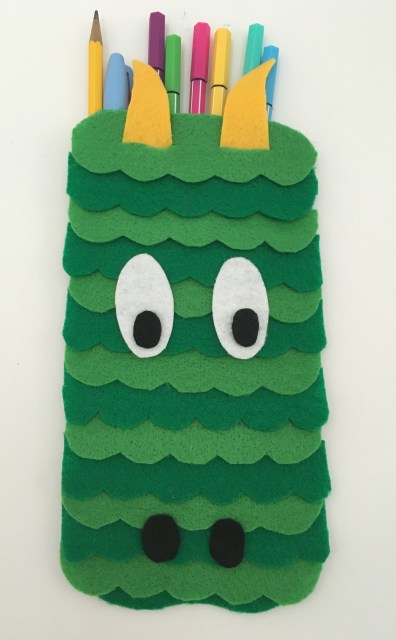
Dependable Dragon Pencil Case


U-knight-ing all your pens, pencils, and other supplies in this Dependable Dragon Pencil Case will fire up your imagination! Have a blast making this fun craft!

Supplies      

  • Printable Dragon Pencil Case Template – Wings | Face
  • Sheets of felt, 8 ½-inch by 11-inch
  • 2 Dark green
  • 1 Light green
  • 1 white
  • 1 black
  • 1 yellow
  • 1 purple
  • Fabric Glue
  • Glitter glue or Fabric paint (optional)
  • Scissors
  • Velcro
  • Green Thread (optional if you would like to sew instead of glue your case)
  • Needle (optional, needed if sewing)

Directions

  1. Print the Dragon Templates
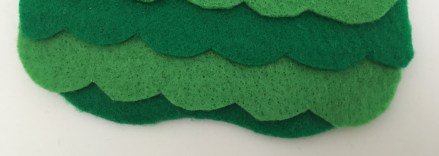
  2. Cut out alternating rows of scales from the dark and light green felt (7 each). For one row, cut a rounded top (instead of straight across) to make the top of the head (see picture). (One row of scales is longer so you can tile them. You will trim them later: see the double row of scales on the template for how the scales should look)
  3. Cut the eyes from the white felt, pupils and nostrils from the black felt, horns from the yellow felt, and wings from the purple felt. Set aside.

celebrate-picture-books-picture-book-review-dragon-pencil-case-top-of-head

To make the head

  1. Fold one dark piece of felt in half lengthwise
  2. Cut a wavy line along the bottom of the felt to make lips (see picture)
  3. Glue a ½-inch-wide strip along open side and along bottom (or you can sew it)

celebrate-picture-books-picture-book-review-dragon-pencil-case-bottom-snout

To add the scales

  1. Starting at the bottom, lay on row of scales a little above the wavy bottom. Glue the top to the base.
  2. Overlap an alternating green row of scales on the first row, glue the top
  3. Continue alternating dark and light green scales until you reach 9 inches
  4. Use the rounded row of scales for the top of the head (see how to insert horns before attaching top of head)

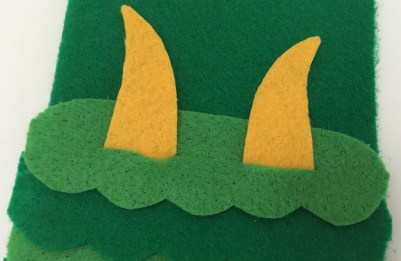
To insert the horns

  1. On the rounded row of scales, mark where you want the horns to be
  2. Cut two small slices in the felt where the horns will go
  3. Insert the bottoms of the horns into the slits

To finish the head

  1. Glue the top of the head to the base
  2. Trim any longer rows of scales to meet the edges of the base
  3. Add the eyes and nostrils to the face

To make the closure for the case

  1. Cut the base following the line of the rounded row of scales
  2. Glue or sew strips of Velcro along the inside edges

To attach the wings

  1. Turn the dragon case to the back
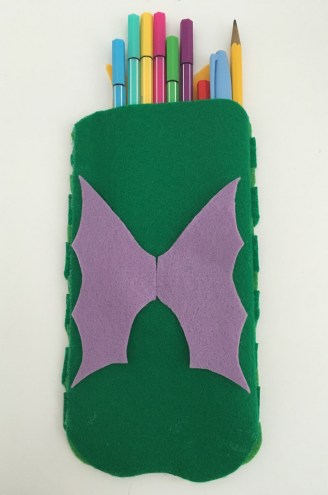
  2. Glue or sew the wings to the center of the back, attaching them at the center edge
  3. Outline the wings in glitter glue (optional)

celebrate-picture-books-picture-book-review-dragon-pencil-case-back

Picture Book Review

November 13 – World Kindness Day

celebrate-picture-books-picture-book-review-most-people-cover

About the Holiday

Instituted in 1998 by a coalition of nations, World Kindness Day is an international celebration that encourages people around the world to be mindful of others through mutual respect, inclusion, empathy, and gratitude. To celebrate, people are asked to perform acts of kindness—big or small. A simple “hi,” a smile, or an offer of help or support goes a long way in making the world a kinder and better place to live in. But don’t limit your care and concern to just one day. Promoters of the holiday hope that kindness becomes infectious, inspiring good relationships every day of the year.

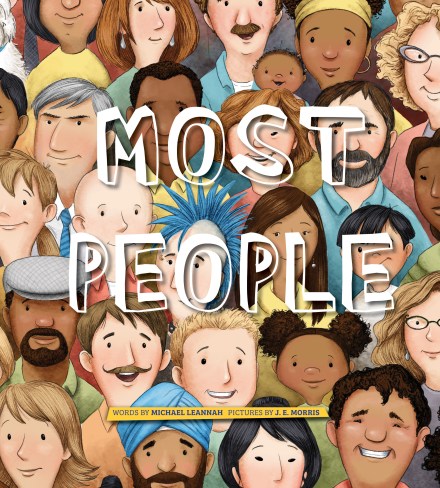
Most People

Written by Michael Leannah | Illustrated by Jennifer E. Morris


The world is full of people, and if you look around and really look, you’ll notice something amazing: most people are the same! Do you like to smile? Do you like to laugh? Yeah, me too. So do most people! In fact, “most people love to see other people smile and laugh too.” But how about when someone’s sad? Well, “most people want to help when they see someone crying” or when someone is in trouble. “Most people want to make other people—even strangers—feel good. Most people are very good people.”

Sure there are some people who do bad things, but the good people far outnumber the bad people. And bad people can change if they allow the “seed of goodness inside them…to sprout.” Actually, people are a lot like a garden. They love the Earth, and they love being warmed by the sun. Sometimes people “feel like a sour grape in a bunch of sweet grapes.” But you can help make them feel better just by being nice.

celebrate-picture-books-picture-book-review-most-people-biker

Image copyright Jennifer E. Morris, 2017, text copyright Michael Leannah, 2017. Courtesy of Tilbury House Publishing.

When you walk around your neighborhood or play at the park or go to the store, you see people doing the same things. They run and dance and hug their dogs; they read and sing and talk. When people like what someone is doing or wearing or saying, they compliment them. And it’s pretty hard to find someone who doesn’t “smile when they see a baby.”

Most people even like to hear the same words. I bet you know what those are. Right! “Most people glow when they hear or say ‘I love you.’” So when you’re out and about, it’s good to remember that you’re really among “very good people.”

celebrate-picture-books-picture-book-review-most-people-mountain

Copyright Jennifer E. Morris, 2017, courtesy of Tilbury House Publishing.

In today’s world with so many media and social media outlets, bad news often overshadows good news. It can be easy to begin thinking the worst—of things, places, and people. Michael Leannah and Jennifer E. Morris provide a reality check with their book that encourages children and adults to look around and make up their own minds about what they see. In his straightforward text, Leannah gives children easy-to-identify examples of emotions and behavior that they have themselves and can see in other people. He understands that shared experiences and feelings go beyond different clothing, hairstyles, or language to unite us.

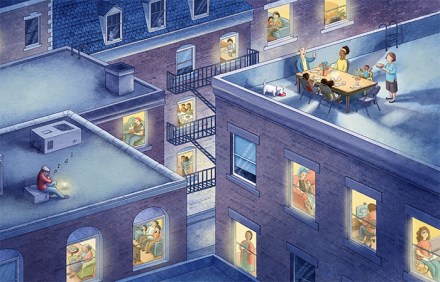
This is where Jennifer E. Morris’s detailed and cheerful illustrations of a diverse community come in. Each spread offers a glimpse into a home or neighborhood to see what people are up to. The first pages invite readers into an apartment, where a mom, a little girl, and her baby brother are having breakfast. Out the big picture window, the sun is just creeping over the rooftops of other nearby apartment buildings. On the windowsill a mitten-shaped cactus seems to wave at the world.

celebrate-picture-books-picture-book-review-most-people-rooftop

Copyright Jennifer E. Morris, 2017, courtesy of jemorris.com.

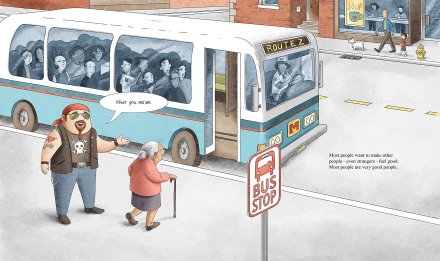
The next spread shows a little boy laughing with his grandpa and grandma. The third spread takes these two families out into the neighborhood and reveals that the little girl and boy are friends. This is a busy community where many different people are engaged in various examples of kindness and inclusion. As the story progresses, children follow these characters as they go about their day. In this way, readers may have preconceived notions challenged—that biker with the tattoos? He’s really just a softy who watches out for an elderly woman—and they’ll see plenty of thoughtfulness in deeds that make a difference.

In the evening, it’s time to go back home to the boy’s apartment, where the décor includes a stone sculpture of a face that reminds readers of our common human history, Finally, up on the rooftop, the two friends’ families eat dinner together, while in the illuminated windows of the apartments below, the neighbors are seen enjoying their night.

Most People is an inspiring choice to start a discussion on diversity, empathy, and kindness as well as on analyzing what we hear and see in and on the news. The positive perspective is welcome and provides young readers with comfort and examples of how people in general and they specifically can make a difference with even simple heartfelt gestures. Most People is an excellent book for home, classroom, and library bookshelves.

Ages 5 – 8

Tilbury House Publishers, 2017 | ISBN 978-0884485544

Learn more about Michael Leannah and his books on his website.

You’ll find a gallery of illustration art by Jennifer E. Morris as well as activity pages on her website.

World Kindness Day Activity

celebrate-picture-books-picture-book-review-smile-cards

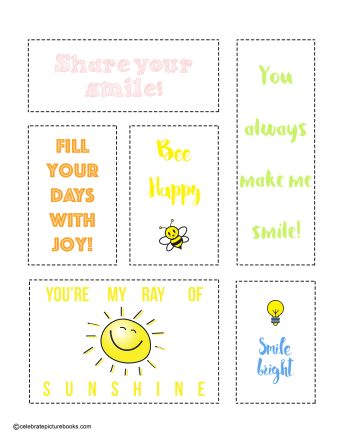
Share a Smile! Cards


Being kind to someone is as easy as sharing a smile. With these printable Share a Smile! Cards, you can give someone a smile that they can carry with them all day long!

Picture Book Review

November 1 – National Author’s Day & Interview with Author Linda Booth Sweeney

celebrate-picture-books-picture-book-review-when-the-snow-falls-cover

About the Holiday

There may be no better month to celebrate Author’s Day than in November. Not only is it Picture Book Month, but thousands of people set aside their usual routine to take part in NaNoWriMo or National Novel Writing Month, when writers try to complete at least a first draft of a novel in one month. To kick off all of this literary love today, we remember and honor American authors past and present. The holiday was instituted in 1928 by Nellie Verne Burt McPherson, president of the Bement, Illinois Women’s Club. An avid reader, she established Author’s Day to thank writer Irving Bacheller who sent her an autographed story in response to her fan letter. The day was officially recognized in 1949 by the United States Department of Commerce. McPherson’s granddaughter, Sue Cole, has promoted the holiday since her Nellie’s death in 1968 and encourages people to spend a bit of the day writing a note of appreciation to their favorite author.

When the Snow Falls

Written by Linda Booth Sweeney | Illustrated by Jana Christy


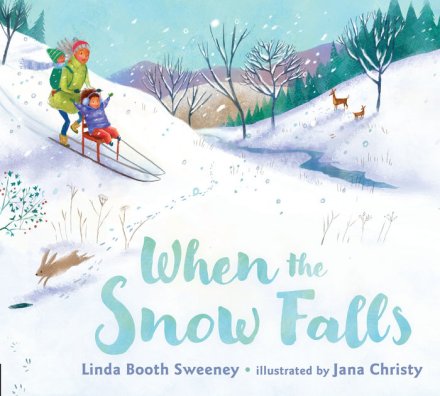
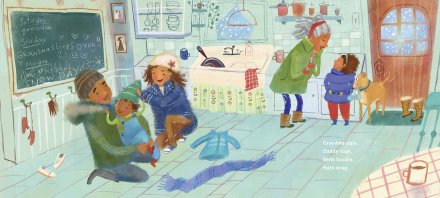
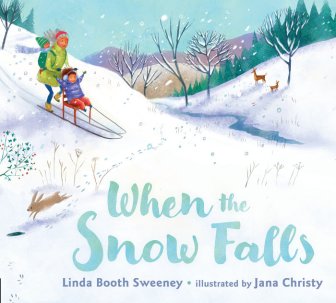
A little curly-haired girl and her younger brother wake up from a sleepover with Grandma to a magical sight. As they gaze out the big picture window in the little girl’s room, they’re dazzled to see “When the snow falls…Frost paints. / Skies gray. / Windows sparkle/ Snow? Yay!” There’s no school today, so Mommy and Daddy and Grandma bundle up and get the kids ready to head outdoors to take care of the farm animals.
celebrate-picture-books-picture-book-review-when-the-snow-falls-kitchen

Image copyright Jana Christy, 2017, text copyright Linda Booth Sweeney, 2017. Courtesy of G. P. Putnam’s Sons for Young Readers.

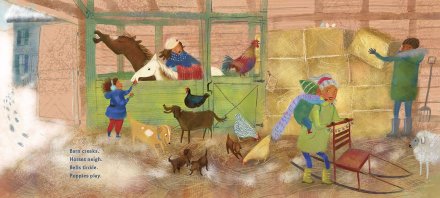
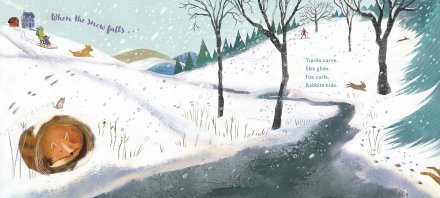
Soft flakes flutter down, piling into deep drifts and providing a little extra after-breakfast treat as “Boot sink. / Lashes flick. / Tongues tickle. / We lick.” In the barn the horses, puppies, and chickens are just as excited about the snowy day. Riding an old chair sled, Grandma and her grandchildren glide down the hill, following tracks left by lively rabbits and now-dozing foxes.

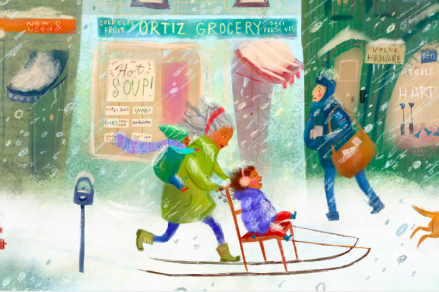
Deep in the forest the three take in the beauty: “Woods hush. / Fields glisten. / Wren sings. / We listen.” On the other side of the woods, people continue their daily routine but at a slower pace as “plows push” and “mountains grow.” Grandma and the kids slide into town, where people are hard at work keeping up with the storm: “Wheels crunch. / Shovels scoop. / Ice cracks! / Awnings droop.”
celebrate-picture-books-picture-book-review-when-the-snow-falls-barn

Image copyright Jana Christy, 2017, text copyright Linda Booth Sweeney, 2017. Courtesy of G. P. Putnam’s Sons for Young Readers.

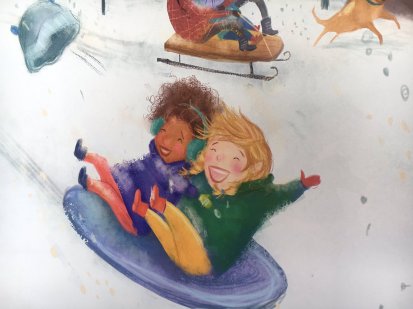
The trio has reached Grandma and Grandpa’s house. They all grab shovels and help clear the walk. Now it’s Grandpa’s turn to have some fun. He takes his granddaughter by the hand, seats her little brother on a sled, and walk to the park. There, kids are making snowmen, building snow forts, and zipping down hills on their snow saucers. At the bottom of the hill everyone plops into the fluff and make snow angels.

It’s been an exhilarating, adventurous day, but twilight is on the horizon and now “toes tingle. / Lips quiver. / Cheeks glow. / We shiver.” As grandma calls from her front porch, the little girl and Grandpa, carrying his grandson, race toward home amid the swirling snowflakes. Inside, the light, warmth, and cozy comforts of warm soup, popcorn, and a crackling fire await. Later, the two kids enjoy quiet time with Grandma and Grandpa when “Cocoa warms. / Mittens puddle. / Day dawdles. / We cuddle.”
celebrate-picture-books-picture-book-review-when-the-snow-falls-fox

Image copyright Jana Christy, 2017, text copyright Linda Booth Sweeney, 2017. Courtesy of G. P. Putnam’s Sons for Young Readers.

With her brilliantly expressive staccato sentences—each only two words long—Linda Booth Sweeney evokes the sights, sounds, and joy of a care-free, snowy day. Each four-line, rhyming verse abounds with melodic verbs that spark readers’ imaginations and concrete nouns that in many places form delightful alliterative pairs that softly trip off the tongue. Readers will love the story line that takes them from a rustic farmhouse to Grandma and Grandpa’s cozy home through woods, over hills, past the highway, and into downtown all with the help of an old-style sled. Several verses full of snow day fun play out like a long afternoon spent with friends, leading naturally into the slower pace and loving comfort of the night spent with Grandma and Grandpa.
celebrate-picture-books-picture-book-review-when-the-snow-falls-sledding-with-grandma

Image copyright Jana Christy, 2017, text copyright Linda Booth Sweeney, 2017. Courtesy of G. P. Putnam’s Sons for Young Readers.

In glorious two-page spreads, the wind-swept snow swirls, spatters, and blankets the world in downy white fluff. Jana Christy takes children into the family’s large farmhouse kitchen where a blackboard announces Grandma’s Sunday sleepover as well as Monday’s snow day in place of the crossed-out piano lesson. The family steps out into the sparkling countryside where purple mountains form a backdrop for the barn and sheep pen. As Grandma and the kids start their journey, the forest, a quiet enclave of teal and greens, welcomes them. By the time they reach town, cars are stuck in snowdrifts, snow shovels scrape against the sidewalk, and kids are heading to the park.
celebrate-picture-books-picture-book-review-when-the-snow-falls-sledding

Image copyright Jana Christy, 2017. Courtesy of G. P. Putnam’s Sons for Young Readers.

The thrill of playing in the snow is palpable as saucers zoom down hills, hats fly off, and hair blows in the wind. The final spreads of Grandma and Grandpa’s tidy home glow with love and laughter as the kids pull off their snow gear, their dog shakes off the snow, and they settle on the couch for cocoa and cuddles. The busy townspeople, happy playmates, and close-knit mixed-race family make When the Snow Falls a cheerful celebration of diversity.

When the Snow Falls is a joyous book to add to winter collections and would be often asked for during home, classroom, and library story times.

Ages 3 – 7

G. P. Putnam’s Sons Books for Young Readers, 2017 | ISBN 978-0399547201

Discover more about Linda Booth Sweeney, her books and her systems work, visit her website.

To learn more about Jana Christy, her art, and her books, visit her website.

National Author’s Day Activity
celebrate-picture-books-picture-book-review-sock-snowman-craft

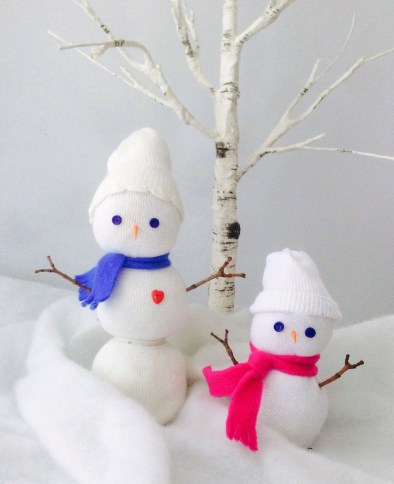
Snow Buddies

Even when there’s no snow, you can make yourself a snow buddy with this fun and easy craft!

Supplies

  • White dress ankle socks
  • Polyester Fiber Fill
  • Tiny buttons
  • Fleece or ribbon, enough for a little scarf
  • Toothpicks
  • Twigs
  • Orange craft paint
  • Cardboard
  • White rubber bands, one or two depending on the size of the snowman
  • Fabric or craft glue
  • Small hair band (optional)

Directions

To Make the Snowman

  1. Cut a circle from the cardboard about 2 inches in diameter for the base
  2. Place the cardboard circle in the bottom of the sock
  3. Fill the sock with fiber fill about ¾ full or to where the ribbed ankle cuff begins. Pack tightly while making a sausage shape. You can make your snowman different shapes with the amount of fill you use.
  4. Stretch out the cuff of the sock and tie it off near the top of the fill either with a loop knot or with the hairband.
  5. Fold the cuff down around the top of the filled sock to make the hat.
  6. Wrap a rubber band around the middle of the sock to make a two-snowball snowman. For a three-snowball snowman, use two rubber bands. Adjust the rubber bands to make the “snowballs” different sizes.

To Make the Scarf

  1. Cut a strip of fleece or ribbon 8 to 10 inches long by ½ inch wide
  2. Tie the fleece or ribbon around the neck of the snowman
  3. To Make the Nose
  4. Dip one end of the toothpick into orange paint, let dry
  5. Cut the toothpick in half
  6. Stick the toothpick into the head or top portion of the snowman

To Make the Arms

  1. Insert small twigs into each side of the body of the snowman
  2. You can also use wire or cardboard to make the arms
  3. Attach two mini-buttons to the face for eyes with the fabric or craft glue
  4. Display your Snow Buddy

Interview with Linda Booth Sweeney
celebrate-picture-books-picture-book-review-linda-booth-sweeney

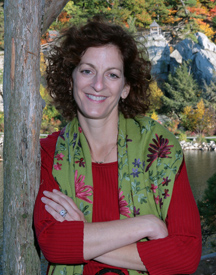
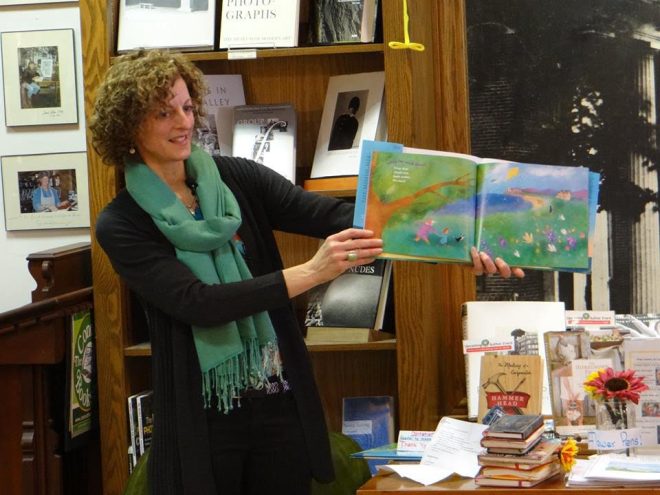
As the weather turns cooler, I’m happy to talk with Linda Booth Sweeney about the event that inspired her first book for children, a favorite wintertime activity, and how we can learn to see and benefit from systems.

How did you get started writing for children?

It seems like I’ve always been writing though it has taken me a long time to call myself a writer. During our last move, I discovered an old cardboard box from my parents’ attic.  After moving it literally for years, I finally opened it this summer. Inside there must have been 15 diaries and journals. When I looked at the dates, I realized that I started writing in those when I was about twelve and I really haven’t stopped. 
celebrate-picture-books-picture-book-review-when-the-wind-blows

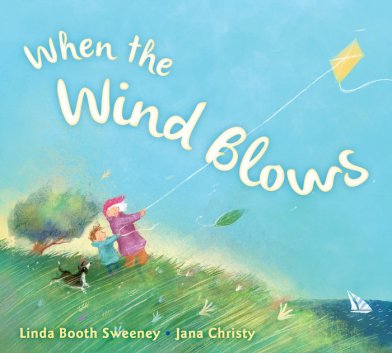
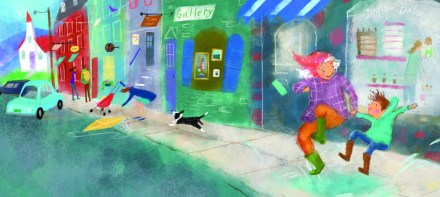
I actually remember the exact day I began writing for children! Jack, my oldest son (now 19), was three. I was pushing him around Cambridge in one of those $20 pop-up strollers. We were a good fifteen minutes from home when a gale force wind blew in. The little canopy on this stroller snapped off and I remember feeling like the stroller lifted up off the ground. This was before cell phones so there was no calling for a ride. I put my head down and ran for home. Well, Jack loved that, and the wind blowing! He was bouncing up and down, pointing to everything he saw: signs rattling, balls rolling, hats flying.
celebrate-picture-books-picture-book-review-when-the-wind-blows-city

Image copyright Jana Christy, 2017, text copyright Linda Booth Sweeney, 2017. Courtesy of G. P. Putnam’s Sons for Young Readers.

During his nap that afternoon, I flopped down at my desk, grateful we made it home in one piece. Jack’s excitement was contagious and his words were swimming around my head so I wrote them down. That was the beginning of my first children’s book, When the Wind Blows.

Using short, two-word phrases, your picture books are so evocative of actions outdoors and indoors as well as internal emotions. Can you describe your writing process?

I was mimicking the voice of a three-year old so the two words. Balls roll. Object and action. Noun and verb. It just made sense. In my other books like the one I’m working on now about the sculptor of the Lincoln Memorial, I am writing for older readers (ages 7-12). My sentences are longer. The book is inspired by big themes like being true to oneself, equality, social justice, and love for country so I find myself writing punchy sentences in the scenes and more lyrically the bridges, or the transitions, between scenes.

Do you remember your favorite picture book when you were a child?

As a little kid, I always loved Dr. Seuss books. My imagination was going full tilt as a kid. Dr. Seuss made me feel like the other worlds I created were not just okay but to be celebrated! As a nine-year-old, I devoured Encyclopedia Brown and anything by James Herriot.

Your first book for children, When the Wind Blows, takes readers on a jaunt through town on a blustery day. When the Snow Falls is a joyful romp through a winter day. What is it about weather that inspires you and your writing?

It’s the immediacy that weather brings. When the rain is pouring down or the snow is falling, that grabs my attention. Of course my attention is also on how to keep my fingers warm or my feet dry. But I can’t think of much else. I love that. I have to be in the moment. My favorite poet, Mary Oliver, captures this idea well in her “Instructions for living a life:
Pay attention.
Be astonished.
Tell about it.”

If you’re outside stomping in puddles or making snow angels, who needs to be on a phone? There’s a lot of research coming out that equates nature to a “vitamin” we all need. Richard Louv, the author of Last Child in the Woods: Saving Our Children from Nature-Deficit Disorder, says it well: “Just as children need good nutrition and adequate sleep, they may very well need contact with nature.” 
celebrate-picture-books-picture-book-review-linda-booth-sweeney

You mentioned in one of your blog posts that When the Snow Falls first took shape during “found time” during the winter of 2015 with its four nearly back-to-back snow storms. Do you have any advice for recognizing and taking advantage of found time not only for writers, but for anyone?

I think the biggest opportunity to enjoy found time comes when we’re willing to put down technology. Sure the photos we can take on our iPhone may be lovely but what if sometimes we are just there, fully present, open and even willing to be a little bored.  Maybe then we can be dazzled by the red Cardinal that lands on the white snowman or the hush that creeps in when no can one drive.

What is your favorite wintertime activity?

I love looking for snow art and especially love seeing it through the eyes of little ones. I’m always amazed by the “art” that forms during snow storms – polka-dotted fields, top hats on fence caps, intricate patterns on round porch tables, delicate animal tracks that look like instructions for some kind of dance move. 

And then of course there is cross country skiing with my family and my crazy friends.

Your other work involves Systems Thinking. Can you describe systems thinking and talk about your systems thinking work with children and schools?

Sure. Like a spider’s web, what happens on one part of the web affects every other part. The same is true of living systems. A pond, our family, our school, a city, the climate—these are all systems. They have two or more parts that interact over time. What’s really interesting is that these different kinds of systems share some similarities, and they can act in surprisingly similar ways. (You can learn more about my systems work here).

How does considering systems thinking and living systems benefit children and their education?

Systems thinking, or “Thinking about systems,” means paying attention to the interrelationships and patterns that surround us. My experience, and that of systems educators around the globe, shows that children are naturally attuned to this. They can read If You Give a Mouse a Cookie by Laura Numeroff and then recognize that same closed loop of cause and effect in their everyday lives.  

A few years back I wrote When a Butterfly Sneezes:  A Guide for Helping Kids Explore Connections in our World as a resource for anyone who wants to help children think about interconnections in our world. Each chapter focuses on a favorite children’s picture book—like If You Give a Mouse a Cookie and The Sneetches by Dr. Seuss—and shows how to use the story to engage children in systems thinking. I just finished updating that book and the new version should be up and ready by next week!

To answer your question about how systems thinking benefits children, learning about systems, and about living systems in particular, can help children to make better decisions and avoid unintended consequences. It can also help them to develop a more compassionate and sustainable sensibility about what is beautiful and what is essential.

I always come back to the Joseph Campbell quote—“People who don’t have a concept of the whole, can do very unfortunate things.…”—and flip it: People—and especially children—who have a concept of the whole can do very fortunate things. If we encourage young people to look for the “whole” and not just focus on the parts, they will be geared toward seeing connections and will not see things in isolation. So much in our culture forces us into compartments. But just as we teach kids not to be victims of advertising, we can teach them to see beyond the obvious, to see the systems all around us.  

What’s up next for you? 

My next children’s book is a richly illustrated biography about Daniel Chester French, the sculptor of the Lincoln Memorial.  I am thrilled to be working with Shawn Fields a representational artist on this book.  The working title of the book is Monument Man, and that subject is very much a part of our public conversation at this point in our history. 

Thanks, Linda! Your books inspire us to look closure and pay attention to the moment, and I wish you all the best with them!
celebrate-picture-books-picture-book-review-when-the-snow-falls-cover

You can connect with Linda Booth Sweeney on:

Her Website | Twitter | Facebook | Linked in

You can find When the Snow Falls with these booksellers:

Amazon | Barnes & Noble | Books-a-Million | IndieBound | Penguin Random House

Picture Book Review

October 19 – Evaluate Your Life Day

celebrate-picture-books-picture-book-review-Bruces-Big-Move-Cover

About the Holiday

Today’s holiday was established to encourage people to take stock of their lives and decide if they are on their chosen path. With so much going on, days, weeks, months—even years—can fly by, and before you know it, you’re somewhere you don’t want to be. Stopping along the way once in a while to reevaluate all the parts of your life—education, job, home, finances, and social connections—can help you see where improvements can be made so you can accomplish your goals. Sometimes, though, making changes reveals that you were on the right track all along—as today’s book shows.

Disney-Hyperion sent me a copy of Bruce’s Big Move to check out, and is partnering with me for a giveaway! All opinions are my own.

Bruce’s Big Move

By Ryan T. Higgins


Oh no! Is that a For Sale sign outside Bruce’s home? You know, the hillside abode with the yard littered with toys, games, and an old hat? What’s going on? Well, let’s turn the page and find out!

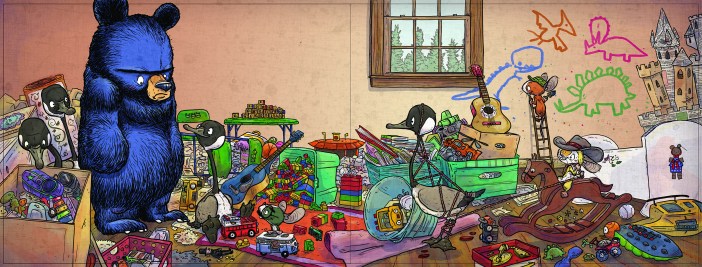
If you don’t know already, “Bruce was a bear who lived with four geese because he was their mother (just go with it and check out Mother Bruce). He also shared space with three mice “because they would not leave” (maybe, but weren’t they kind of invited? For the answer to that you’ll want to check into Hotel Bruce). Mice, it seems make themselves very much at home—in every square inch of every room. You wouldn’t believe the mess! (Or what a generous Mom Bruce is!). 

celebrate-picture-books-picture-book-review-Bruces-Big-Move-messy-house
Copyright Ryan T. Higgins, 2017, courtesy of Disney-Hyperion.

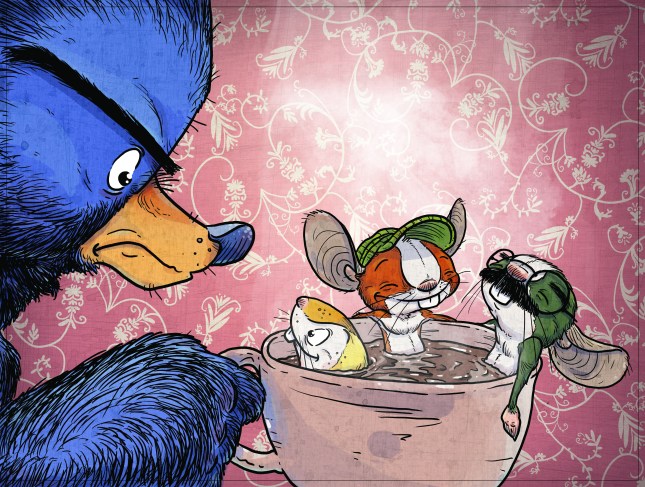
As you might imagine “Bruce’s house was crowded, chaotic, and loud,” and it all made Bruce very grumpy. Bruce thought and pondered over how he could get rid of those mice. He tried plan after plan, but none of them were successful. Those crafty mice just turned everything on it’s head. For instance, when Bruce told them to get “Out,” they appreciated his concern that they “get some fresh air.”

celebrate-picture-books-picture-book-review-Bruces-Big-Move-tea-cup

Copyright Ryan T. Higgins, 2017, courtesy of Disney-Hyperion.

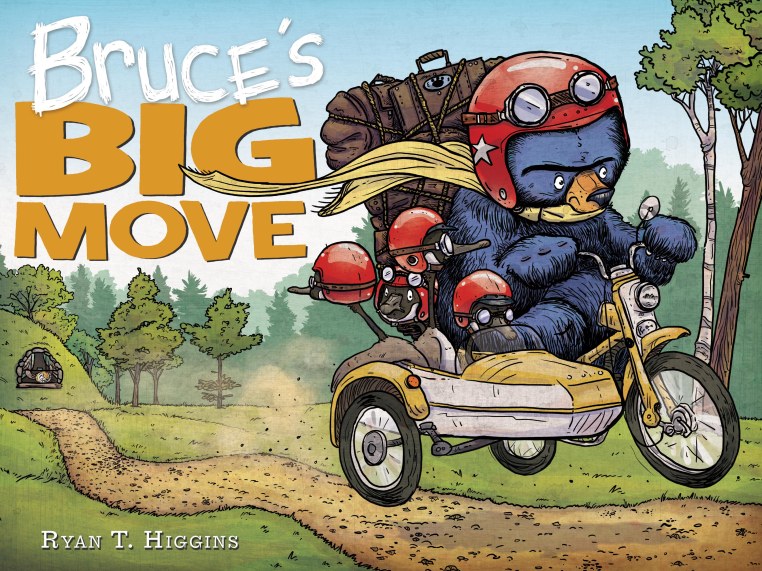
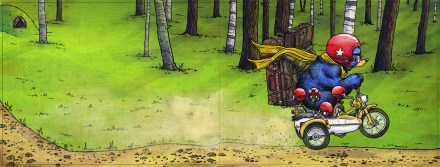
There was only one thing to do. Bruce packed up his belongings, settled his four kids in the sidecar, and moved away. “Finding a new house for a mother bear and his four geese can be difficult.” The tree-top nest was too shaky, the submerged shipwreck was too wet, and the new construction by turtle builders was too behind schedule. Eventually, Bruce found the perfect home on the edge of a lake and surrounded by meadows. It even came with plenty of friendly neighbors (well, no house is perfect-perfect).

celebrate-picture-books-picture-book-review-Bruces-Big-Move-moving-away

Copyright Ryan T. Higgins, 2017, courtesy of Disney-Hyperion.

The greatest thing about this house, though? No mice! Bruce felt so happy, he smiled. Yeah, really…didn’t you see it? The geese, though, were not so happy. They stood around with sad eyes and dejected postures. “Bruce tried cheering them up . . . .” He flew a kite, took them to the beach, and took them to art class. Even Bruce’s biggest smile . . . um . . . grimace?. . . no, smile—definitely a smile . . . could distract his kids from missing the mice.

But then “the moving van arrived” with some very familiar-looking movers. In fact, these little guys were ready to move in! So, the geese were happy, and the mice were happy. But Bruce? Not so much. The housewarming party was a fantastic success. All the woodland animals came, and “Bruce’s house was once again crowded, chaotic, and loud.” And even though “Bruce didn’t like it one bit,” he had to admit “it felt like home.”

celebrate-picture-books-picture-book-review-Bruces-Big-Move-moving-in

Copyright Ryan T. Higgins, 2017, courtesy of Disney-Hyperion.

Ryan T. Higgins’ is the perfect dad/mom/writer/drawer for the curmudgeonly charming Bruce, nudging his creation into a new and hilarious situation in this third installment of his beloved Bruce books. As Bruce tries to gain one moment of peace, kids will giggle and laugh out loud at the antics of the pesky mice who cannonball into Bruce’s bubble bath, soak in his cup of tea, and turn his house into a shambles of stuff. When Bruce finally packs up and moves out, readers can’t really begrudge Bruce his quiet time, but they’ll cheer to see those wily mice back on the scene.

celebrate-picture-books-picture-book-review-Bruces-Big-Move-new-house

Copyright Ryan T. Higgins, 2017, courtesy of Disney-Hyperion.

With his flair for gleeful chaos and flawlessly expressive faces. Higgin’s creates a family atmosphere any reader can relate to. Bruce may look grumpy, but as he gazes into the sweet, innocent eyes of his geese and takes full measure of those high-spirited mice, astute readers know that behind that frown lies a soft heart. Kids will love watching Bruce and the geese ride his old-fashioned motorcycle, meeting a new cast of characters, and basking in Bruce’s pearly-white smile. When the story and art come full circle in the tender ending, readers will be happy to have Bruce in their neighborhood.

Bruce’s Big Move is an enchanting and funny story on its own and a very worthy addition to the series. Whether you’re already a Bruce fan or just becoming one, the book is a fantastic addition to home, classroom, and public libraries.

Ages 3 – 8

Disney-Hyperion, 2017 | ISBN 978-1368003544

Get movin’ and watch this Bruce’s Big Move book trailer!

Connect with Disney-Hyperion:

Visit Books.Disney.com

Follow Disney-Hyperion on Twitter, Facebook, and Instagram

#BrucesBigMove #FollowBruce

About the Author

celebrate-picture-books-picture-book-review-Ryan-T-Higgins

Ryan T. Higgins (ryanthiggins.com) is an author and illustrator who likes the outdoors and cheese sandwiches. He is NOT a grumpy old black bear, but he DOES like making books about one—starting with the best-selling Mother Bruce, which received the E. B. White Read-Aloud Award and the Ezra Jack Keats New Illustrator Honor. He lives in Maine with his wife and kids… and too many pets.

Evaluate Your Life Day Activity

celebrate-picture-books-picture-book-review-suitcase-craft

Put Your Life Together Pack


Sometimes life feels a little like a jigsaw puzzle—there are so many pieces that have to fit together! With this handy travel bag, you can keep track of all the things you’d like to do and see how they work together to help you achieve your goals.

Supplies

  • 12-inch x 18-inch foam sheet in brown or your favorite color (or use a manila folder)
  • Stiff decorative scrapbook or single-color paper
  • Stickers (optional)
  • Cardboard jigsaw puzzle, available at craft stores
  • Foam or craft glue
  • Markers or pen

Directions

To Make the Travel Bag

  1. Fold the foam sheet in half
  2. Glue along each edge, leave the top open

To Make the Handles

  1. Cut two 1-inch x 10-inch strips from the scrapbook or other paper
  2. Three inches from the right end of the each strip, make a triangular fold
  3. Three inches from the left end of each strip, make a triangular fold
  4. Glue one handle on each side at the top of the bag
  5. Decorate the bag with the stickers (optional)

To Make the Puzzle

  1. On each puzzle piece write
  • Things that are important to you
  • Things you’d like to do better
  • Things you’d like to try for the first time
  • Things that may be hard to do
  • Things you need to do every day
  • Your hopes and dreams

     2. Take the puzzle apart

     3. As you accomplish the goal on the pieces fit them together

     4. Soon you’ll see your life coming together just the way you want it to

Keep your puzzle pieces in your travel bag


Picture Book Review
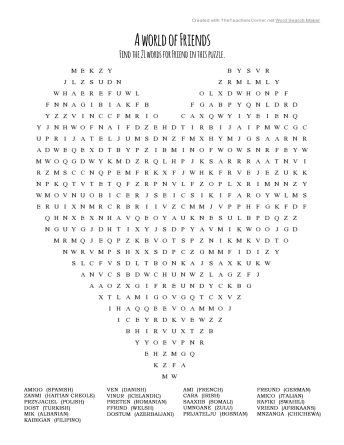
October 17 – National Pasta Day

celebrate-picture-books-picture-book-review-the-great-pasta-escape-cover

About the Holiday

Today’s holiday celebrates one of the world’s favorite foods. With over 600 different shapes and sizes, pasta offers a wealth of recipe choices, from fancy to plain to that can’t-live-without Mac n’ Cheese. Pasta—the Italian word for dough—has been part of people’s diets since ancient times and was introduced to America by Thomas Jefferson in 1789, when he brought the first pasta machine and a supply of macaroni back home from a trip to France. There’s only one way to enjoy this special culinary event—so get the pot boiling or head out to your fav Italian restaurant and eat up!

The Great Pasta Escape

Written by Miranda Paul | Illustrated by Javier Joaquin


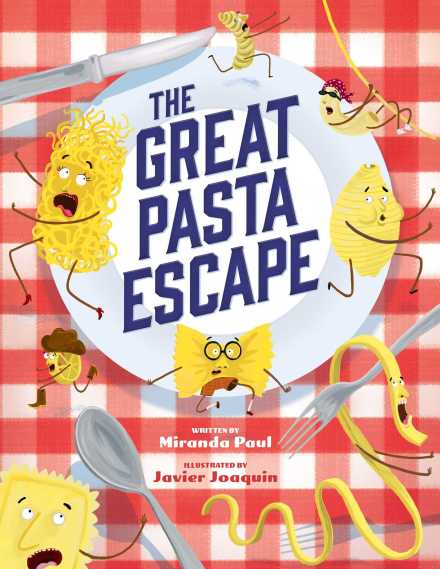
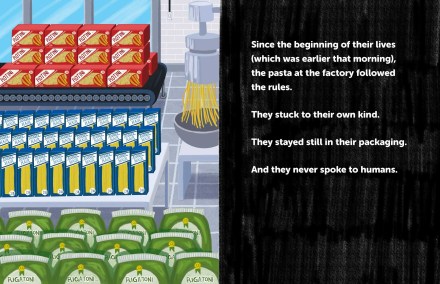
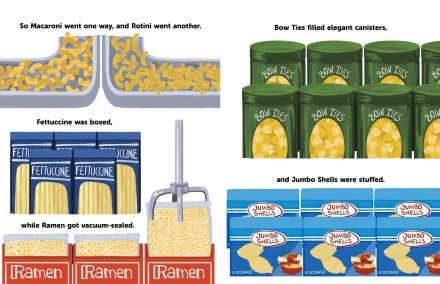
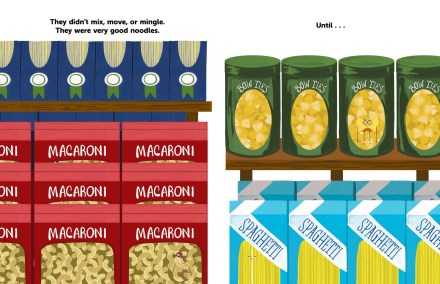
The pasta was fresh. Oh! I don’t mean that way—I’m just sayin’ they were new to the world. They? Well, yeah—you’ll see. The pasta was…recently made at the factory, and they knew their place. Each type “stuck to their own kind” in their own boxes, and they never talked to one another or the people who worked the machines or the lines. “They didn’t mix, move, or mingle. They were very good noodles.”

celebrate-picture-books-picture-book-review-the-great-pasta-escape-beginning

Image copyright Javier Joaquin, 2017, text copyright Miranda Paul, 2017. Courtesy of simonandschuster.com.

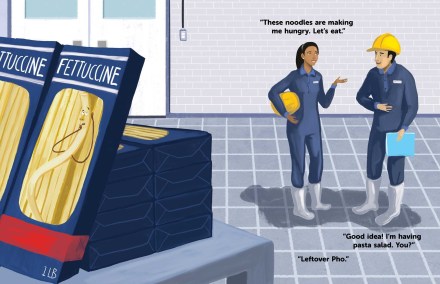
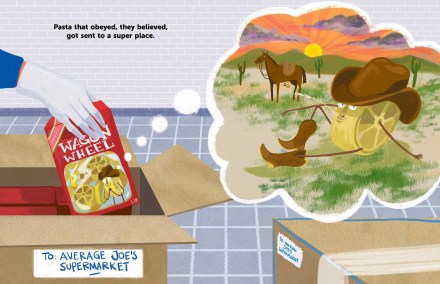
They went from shelf to shipping carton thinking of the super places they would end up. For instance, the wagon wheel imagined a home on the range with some cool boots, a ten-gallon hat, and a horse. But one day a piece of fettuccine overheard two workers talking about lunch. One was going to have pasta salad and one had brought leftover Pho.

celebrate-picture-books-picture-book-review-the-great-pasta-escape-factory-workers

Image copyright Javier Joaquin, 2017, text copyright Miranda Paul, 2017. Courtesy of simonandschuster.com.

Fettucine immediately called a meeting and expressed his fears (“Aaaaah! They’re going to EAT us!”), but the rest of the pasta thought this scenario was ridiculous. “‘Why would the humans make us, only to get rid of us?’” reasoned Bow Tie. Raman was getting tied up in knots, while Mac was trying to cool things down.

The Rotini gang believed Fettucine, though, and pointed everyone’s gaze in the direction of the directions on their boxes. All the pasta were aghast. Fettucine began crying, “‘Just cover me in Alfredo sauce now.’” While Ramen snarked, “‘You mean Afraid-o sauce.” Bow Tie tried the civilized approach to calm the situation, and chill Mac brought a more laid-back vibe to the scene.

celebrate-picture-books-picture-book-review-the-great-pasta-escape-western-scene

Image copyright Javier Joaquin, 2017, text copyright Miranda Paul, 2017. Courtesy of simonandschuster.com.

They needed a plan, though. Fettucine suggested hiding; Bow Tie voted for a peaceful sit-in; and Ramen wanted a more forceful opposition. But Mac reminded them to meditate on that “super place we’ve been hearing and dreaming about.’” Rotini was all for action, though, and in a moment had drawn up a schematic that might work if they sacrificed the Ravioli. This idea did not sit well with the Ravioli or the Tortellini. Emotions began to boil over, and a fight broke out on the factory floor.

celebrate-picture-books-picture-book-review-the-great-pasta-escape-different-types-of-pasta

Image copyright Javier Joaquin, 2017, text copyright Miranda Paul, 2017. Courtesy of simonandschuster.com.

All seemed lost until…an angel appeared with an ingenious proposal. Everyone stopped wrestling to watch the presentation she’d “cooked up.” It looked good. Spaghetti wrote some signs, and the rest of the pasta hung them in plain sight. The sign on the door announced that the factory was closed. The pasta machines were all “out of order,” and the cartons were all labeled to be shipped to “Super Awesome Island, Paradise.” Then the fettucine, the bow ties, the ramen, the spaghetti, the rotini, the ravioli, and all the rest went back to their own boxes and waited…until they found themselves “on vacation in a very super place.”

celebrate-picture-books-picture-book-review-the-great-pasta-escape-on-shelves

Image copyright Javier Joaquin, 2017, text copyright Miranda Paul, 2017. Courtesy of simonandschuster.com.

Miranda Paul dishes up a funny, dough-lightful story that will keep readers laughing while they noodle on the ideas of teamwork and friendship. Paul sprinkles plenty of puns throughout the pages while also stirring in more subtle humor based on each type of pasta’s shape or use in common recipes. The elbow macaroni is hip and calm befitting its use in Chili Mac, the bow tie is formal and mannerly, and it should come as no surprise that the rotini, with his spiral body, should come up with the most convoluted plan. When Angel Hair appears and unites the pasta in a successful bid to replace one “super” place with another, readers will see that by mixing it up and working together they can accomplish super things.

In his bold, colorful illustrations, Javier Joaquin provides each type of pasta with a distinct and expressive personality that readers will respond to. As the boxes of pasta sit on the factory shelf, waiting to be loaded into cartons, observant kids will see the heroes of the story hanging out in their respective packages. The vibrant dreams of each pasta stand in stark contrast to the sterile factory environment, spurring readers to cheer when their clever plan to escape comes true.

Ages 4 – 8

little bee books, 2017 | ISBN 978-1499804805

Discover more about Miranda Paul and her books on her website.

View a portfolio of illustration and graphic design work by Javier Joaquin on his website.

National Pasta Day Activity

celebrate-picture-books-picture-book-review-noodle-puzzle

Noodle On This! Puzzle


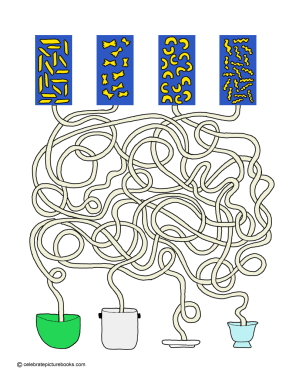
Four pasta dishes are on the stove. Can you find which type of pasta goes to each container in this printable Noodle On This! Puzzle?

Picture Book Review