May 30 – It’s Get Caught Reading Month

celebrate-picture-books-picture-book-review-albie-newton-cover

About the Holiday

Get Caught Reading Month was established in 1999 by the Association of American Publishers to encourage people of all ages to read more. Authors, illustrators, celebrities, athletes, and others participate by sharing pictures of themselves reading an old favorite or new book on social media. Schools, libraries, bookstores, and community venues hold special programs throughout the month. For more information and to find resources, visit the Get Caught Reading website.

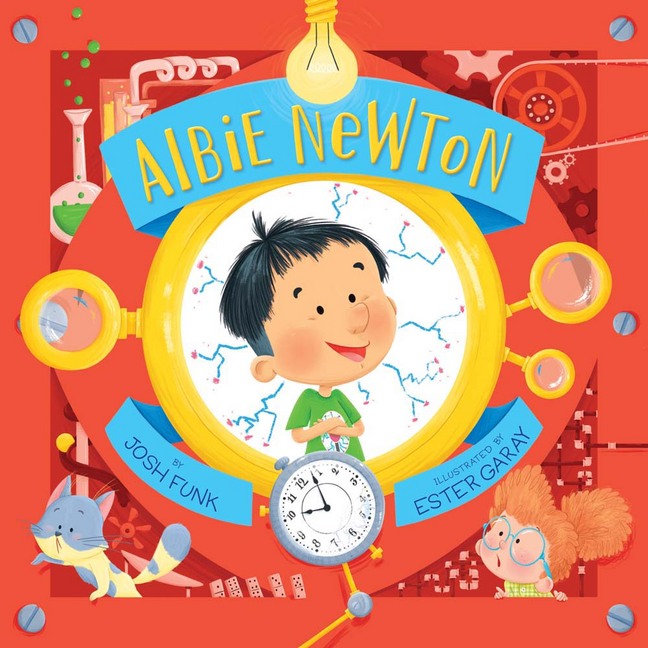
Albie Newton

Written by Josh Funk | Illustrated by Ester Garay


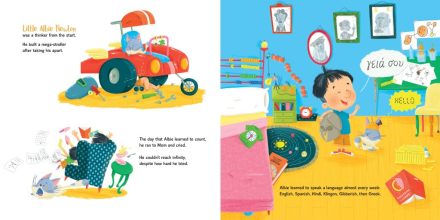
Albie Newton was something of a prodigy. As a tyke, he retrofitted his stroller into a racecar, tried counting to infinity, and “learned to speak a language almost every week: / English, Spanish, Hindi, Klingon, Gibberish, then Greek.” When he moves to a new town and a new school, his classmates are excited to meet him. Albie is also revved up to start making friends, and he has a plan he thinks the other kids will love.

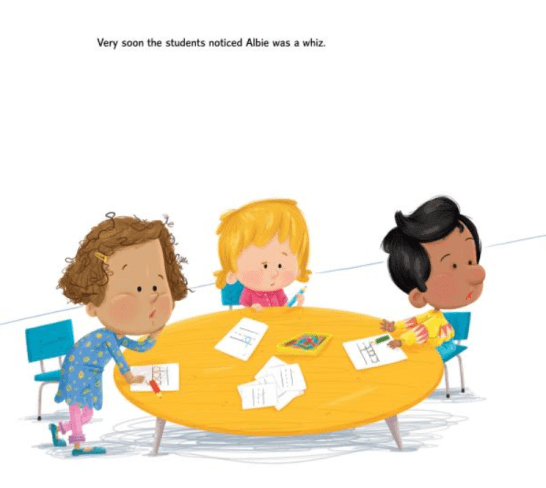
But as they all settle in to work, “the students noticed Albie was a whiz. / Albie wrote a sonnet while they took a spelling quiz.” During art class, the kids were likewise astounded (and a little dismayed) when, while they scribbled, drew swirls, and made handprints, Albie painted like Van Gogh. When free time rolled around, and some kids played dress up, Albie “sifted through the trash,” to build a science lab, leaving a mess for Arjun to clean up.

celebrate-picture-books-picture-book-review-albie-newton-toddler

Image copyright Ester Garay, 2018, text copyright Josh Funk, 2018. Courtesy of Sterling Children’s Books.

Then things began to disappear. “Hamilton the hamster tried to run but had no wheel. / Albie needed extra sprockets made of stainless steel.” While Sona and Shirley created paper masks, the glue went missing, and Albie “didn’t even ask.” The wings from Dave’s propeller plane were suddenly broken off, and reading time became impossible when “booming pandemonium descended on the school.” Albie, though, intent on his invention, didn’t notice the trouble he was causing or the crowd of angry kids rushing to complain.

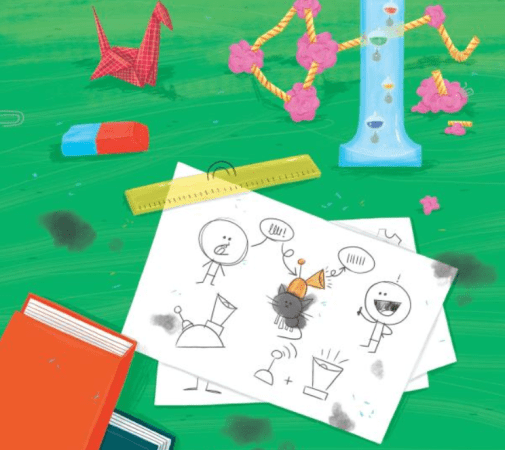
Before they could reach Albie, though, Shirley stopped them, saying “‘maybe Albie didn’t know. Let’s look at what he made.’ Curious, the children headed straight to where he played.” When they say all the inventions Albie had made, they stopped and stared. Albie had made the class a gift—a spaceship, and with the push of a button, an amazing time machine!

celebrate-picture-books-picture-book-review-albie-newton-spelling

Image copyright Ester Garay, 2018, text copyright Josh Funk, 2018. Courtesy of Sterling Children’s Books.

With his inimitable style, Josh Funk creates a rambunctious tale of invention and creativity, but one that also has a deeper message about the way some kids see the world and communicate with peers and others. In the first pages, readers are introduced to the precocious Albie, who from birth has demonstrated a talent for learning and doing. When he enters a new school, however, his single focus doesn’t translate into the kinds of social interactions his classmates are used to. Albie gathers materials for his present unaware of the mayhem he’s causing, just as the other kids are unaware of Albie’s real goal. Only Shirley is sensitive to the idea that Albie may not be causing havoc on purpose but for a purpose. Her calming defense of Albie allows the other kids to see Albie in a new light and appreciate his gift—and his gifts.

While Funk’s rhyming verses are focusing on Albie and his actions, Ester Garay’s bright illustrations depict the other kids’ reactions to his talents and also his disruptions. A first hint at how Albie fits in with his new class comes as the kids welcome him with cheer and smiles. Instead of facing them to accept the welcome, Albie is faced away from them, happily imagining the gift he will make for them.

celebrate-picture-books-picture-book-review-albie-newton-drawings
Image copyright Ester Garay, 2018, text copyright Josh Funk, 2018. Courtesy of Sterling Children’s Books.

Throughout the day, Shirley follows Albie, and as she watches and wonders, her facial expressions demonstrate dismay at some of Albie’s antics but also a growing understanding and acceptance. Garay captures the close camaraderie of a preschool or kindergarten classroom, and her close-up view of Albie toiling away on his invention will have readers eager to see the result. The reveal of Albie’s spaceship time machine and the final spread of the kids frolicking on a distant planet with the likes of Freda Kahlo, William Shakespeare, Amelia Earhart, and a helpful dino, are sure to produce some oohs and ahhhs.

Albie Newton is a doubly impactful story that would be a welcome addition to home and, most especially, classroom bookshelves. It can be read as a boisterous story of innovation for lively story times, but it also provides adults and children an opportunity to discuss the ideas of social interaction and various personalities. Most children know someone like Albie who as naturally quiet, on the spectrum, or singularly focused on one area or another, communicates and socializes differently than others. Reading Albie Newton can help kids better understand different behaviors and, like Shirley, become more sensitive to all their classmates and friends.

Ages 5 – 9

Sterling Children’s Books, 2018 | ISBN 978-1454922582

Discover more about Josh Funk and his books as well as find fun activities and lots of resources on his website.

To learn more about Ester Garay, her books, and her art, visit her website.

Check out the Albie Newton book trailer!

Get Caught Reading Month Activity

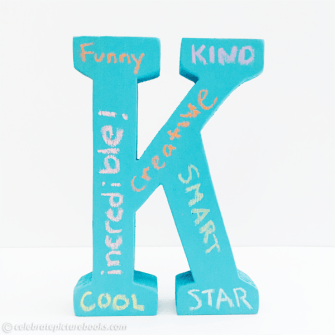
celebrate-picture-books-picture-book-review-initial-bookend

Initial Bookends


You can keep your books neat and tidy on the shelf with this easy-to-make bookend that displays your talents and personality!

Supplies

  • Wooden letter block in the child’s first initial or both initials
  • Chalkboard paint
  • Chalk
  • Paint brush

Directions

  1. Paint the wooden letter with the chalkboard paint, let dry
  2. With the chalk, write words that your think best describe you on the letter
  3. Display your letter on your bookshelf!

May 28 – Memorial Day

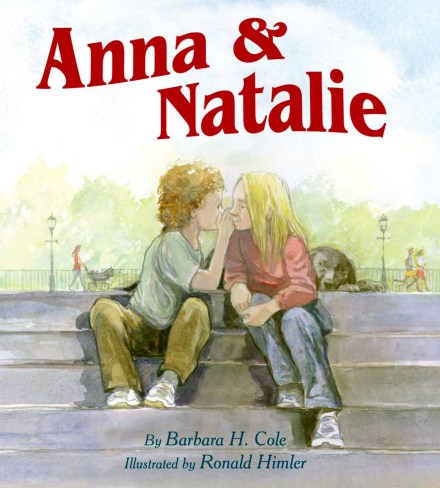
celebrate-picture-books-picture-book-review-anna-and-natalie-cover

eBook

About the Holiday

Memorial Day is observed each year on the last Monday of May to honor all members of the military who lost their lives in the service of their country, especially in battle. Begun after the Civil War, the holiday expanded after World War II to remember those who died in all American wars. Memorial Day was made a national holiday by an act of Congress in 1971. 

Anna & Natalie

Written by Barbara H. Cole | Illustrated by Ronald Himler


Every year Mrs. Randall’s third-grade class attends the Wreath-laying ceremony at the Tomb of the Unknown Soldier at Arlington National Cemetery. What’s more every year four students are chosen from her class to carry the wreath. This year everyone wonders who those lucky four will be. Students who want to be in the running to be selected, Mrs. Randall, says, must write a letter telling her why they should be chosen. Hearing that Freddie and Tommy drop out immediately, while Nancy says her letter will be the best.

Anna dreams of being chosen too, but experience tells her she will not. She’s never chosen for the basketball or softball team, the cheerleading squad, or the lines of Red Rover. “Sure, someone always chose her for the spelling team, but the others—the fun ones—never.” But this time seems different. All day—even though Mrs. Randall’s eagle eyes catch it—Anna daydreams and makes plans. When the bus drops her and her sister off, they hurry home to start work.

celebrate-picture-books-picture-book-review-anna-and-natalie-school-bus

Image copyright Ronald Himler, text copyright Barbara H. Cole. Courtesy of Star Bright Books

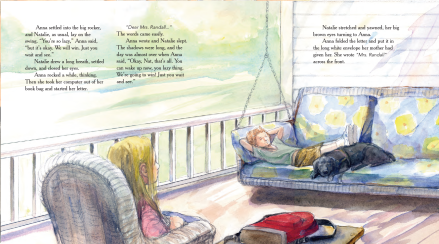
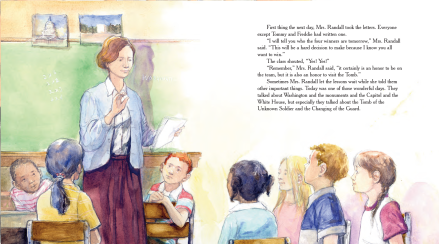
There Anna makes a secret call to her grandpa and then she and Natalie go to the front porch, and while Nat naps on the swing Anna pulls out her computer and begins writing her letter to Mrs. Randall. The next day Mrs. Randall collects the letters with the promise to choose the team by tomorrow and a reminder for those who will not be picked: “‘Remember,’” she says, “‘it certainly is an honor to be on the team, but it is also an honor to visit the Tomb.’” Then “they talked about Washington and the monuments and the Capitol and the White House, but especially they talked about the Tomb of the Unknown Soldier and the Changing of the Guard.”

celebrate-picture-books-picture-book-review-anna-and-natalie-on-the-porch

Image copyright Ronald Himler, text copyright Barbara H. Cole. Courtesy of Star Bright Books

At school the next day, Mrs. Randall says that while she received four excellent letters, one stood out. She begins to read it to the class: “‘I want to be on the team, not for myself, but for many others who have not been honored or remembered….They worked long and hard and saved many lives….And sometimes they were heroes bigger than the strongest men around. Sometimes they carried medicine and food to dangerous places to save the wounded soldiers. My own great-great-grandfather was in this special service and saved lives. I would like to be on the team to say thank you to those forgotten heroes of World War II. Yours truly…’ Mrs. Randall’s voice cracked and choked, and then she read, ‘From Natalie (with help from Anna)’”

The class starts whooping and cheering, but Mrs. Randall interrupts their celebration to read one more line: “P.S.—Would you please let Anna walk with me so I will not be alone and she won’t be either?” The class begins chanting “Yeah, Anna! Yeah, Anna!,” and Anna can’t believe that her dream of being on the team has come true. When Anna gets home from school and tells her family, they proudly make plans to travel with their “two girls” to the ceremony.

celebrate-picture-books-picture-book-review-anna-and-natalie-anna-and-natalie

Image copyright Ronald Himler, text copyright Barbara H. Cole. Courtesy of Star Bright Books

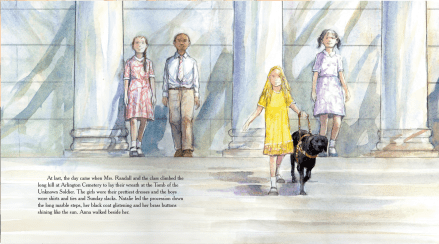
Finally, the day of the Wreath-Laying Ceremony arrives. The students are dressed in their best clothes, and as the four team members prepare to accept the wreath, “Natalie led the procession down the long marble steps, her black coat glistening and her brass buttons shining like the sun. Anna walked beside her.” As the soldier hands the children the wreath fashioned from “dogwood flowers, magnolias, and decorative red birds,” he loudly announces, “The students of Willow Run School and Natalie, a seeing-eye dog, will lay this wreath to honor the men who served in World War II and the dogs who helped them. ATTENTION!”

celebrate-picture-books-picture-book-review-anna-and-natalie-tomb-of-the-unknowns

Image copyright Ronald Himler, text copyright Barbara H. Cole. Courtesy of Star Bright Books

The clear notes of Taps rang across Arlington National Cemetery as Anna and the three other children lay the wreath in front of the Tomb of the Unknown Soldier. Afterward, Anna’s grandfather and parents took pictures of Anna and Natalie to remember “this shining moment of Anna, and of Natalie, who saw the world that Anna could not see.”

An Author’s Note revealing the use of dogs during wartime—from ancient history to today—follows the text.

Barbara H. Cole’s story of Anna and Natalie is compelling in many ways. First, it presents a look at what Veterans Day means to children from their point of view. Second, the story honors not only the brave soldiers who protect our country but also the canine corps which has served our military from our country’s earliest history. Third, in Anna, Cole has created a character who is part of a military family through her great-great-grandfather and also has a personal connection to service dogs through Natalie, her seeing-eye dog. The portrayal of Anna as a child with a disability is honest and inclusive, and while the fact of Anna’s blindness is contained in a surprise ending, this serves to present Anna as just another student in the class—a girl who is an excellent writer, enthusiastic about her dreams to be part of the team, and a good friend.

celebrate-picture-books-picture-book-review-anna-and-natalie-classroom

Image copyright Ronald Himler, text copyright Barbara H. Cole. Courtesy of Star Bright Books

Cole’s straight narration of a school day and a special assignment—complete with asides from students—as well as Anna’s family life creates an environment that will be familiar to readers and carries the story in a natural arc.

Ronald Himler’s realistic illustrations of Anna’s Willow Run School, her home, and Arlington Cemetery beautifully represent this moving story. His pages are full of diverse, real kids, smiling, laughing, getting off the school bus, enjoying a family dinner, and solemnly performing their job at the Tomb of the Unknown Soldier. A hint to Natalie’s true identity is subtly inserted into various scenes, making the final reveal a satisfying moment.

Anna & Natalie is a wonderful choice for all kids observing Veterans Day, Memorial Day, and other patriotic holidays.

Ages 5 – 10

Star Bright Books, 2010 | ISBN 978-1595722119

To learn more about Anna & Natalie and download a Curriculum Guide, visit Star Bright Books!

To view a gallery of artwork and picturebook illustration by Ronald Himler, visit his website!

Memorial Day Activity

celebrate-picture-books-picture-book-review-memorial-day-trivia-page 

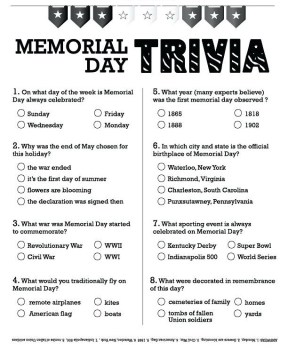
Memorial Day Trivia Page


Learn a little more about Memorial Day with this printable Memorial Day Trivia Page!

Picture Book Review
April 29 – International Dance Day

celebrate-picture-books-picture-book-review-feel-the-beat-cover

About the Holiday

International Dance Day was founded in 1982 by the Dance Committee of the International Theater Institute. This date was chosen to commemorate the birthday of Jean-Georges Noverre, who was born in 1727 and is credited with creating modern ballet. Today’s holiday encourages people to celebrate dance and “revel in the universality of this art form.” There are so many styles of dance to watch and participate in. Today, enjoy a performance or find a venue where you can kick up your heals in your favorite kind of dance!

Feel the Beat: Dance Poems that Zing from Salsa to Swing

Written by Marilyn Singer | Illustrated by Kristi Valiant


The rhythms of dance and the cadence of poetry create a natural pairing as these seventeen poems that celebrate the moves, music, and thrill of dances from around the world demonstrate with toe-tapping joy.

In Cha-Cha a boy attending his Uncle Nate’s birthday party learns the cha-cha from his grandma. At first he says “I don’t / know these moves. / My fee / feel like hooves.” But then “something clicks! / Okay, it’s old school. / I say, / cha-cha’s cool!”

celebrate-picture-books-picture-book-review-feel-the-beat-hip-hop

Image copyright Kristi Valiant, 2017, courtesy of kristivaliant.com

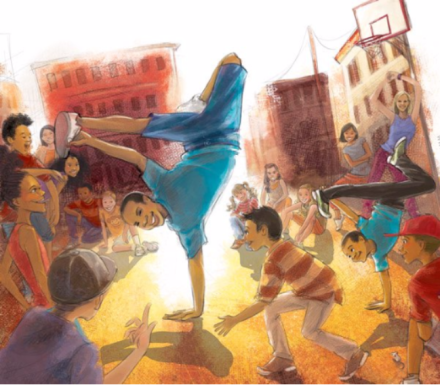
While the kids at school brag about their parents’ jobs, one boy has them beat in Hip-Hop: “No fumbling, no bumbling, / my pops is tops at tumbling. / He’s elastic, so fantastic. / Papa’s so gymnastic!” But while Dad “will swipe and windmill” and “slide on his knees, / do lots of flares and coin-drops” and “boomerang and freeze,” the boy adds “…wait / until you see my mom!”

Is it meringue or Merengue? Maybe a bit of both…because doing it right means “Moving sideways, / turning wrists, / while we do / our pretzel twists. / We sway our hips, we shift our legs, like we’re whipping / lots of eggs.”

celebrate-picture-books-picture-book-review-feel-the-beat-swing-dance

Image copyright Kristi Valiant, 2017, text courtesy of Marilyn Singer. Courtesy of kristivaliant.com

It’s fun to let go when learning the Salsa. All you need is to “Feel the beat / in your feet, / in your heart. / Then you start.” So “Don’t be shy. / Come on try. / In this class, / show some sass.” If only shopping could be so entertaining…. But, wait! Maybe Conga is the solution. “We’re at the MALL. / I’m very BORED. / I hate the STORES, / I hate the HORDE…. / ‘Just one more SHOP’ / turns into FOUR. / I’m gonna SCREAM, / I’m gonna ROAR.” Then music starts and a line grows long—“Uh uh uh, KICK! / You cannot WHINE / when you are ON / a conga LINE! / Uh uh uh, KICK! / A flash mob BALL! / Keep shopping, MOM! / I love the MALL!”

celebrate-picture-books-picture-book-review-feel-the-beat-hora

Image copyright Kristi Valiant, 2017, courtesy of kristivaliant.com

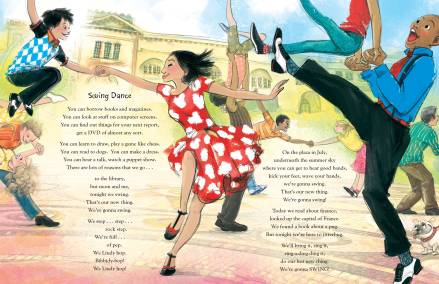
The library may be a quiet, staid place most of the time, but Swing Dance takes over one special library. “On the plaza in July, / underneath the summer sky / where you can get to hear good bands, / kick your feet, wave your hands, / we’re gonna swing. / That’s our new thing / We’re gonna swing!” A boy and his mom have joined lots of other dancers having fun on the square— “We step…step… / rock step. / we’re full… / of pep. / We Lindy hop. / Bibbidy-bop! / We Lindy hop!”

And for those kids who look at the Square Dance unit in PE with trepidation, this girl feels the same: “Got a partner, lost my shoe. / Allemande left? I haven’t a clue….Did that caller give a cue? / Don’t promenade me. Shoo, boy, shoo!…Bow to Francisco, bow to Sue. / One more swing. It’s over! Whew! / I tried real hard, but alas, it’s true. / I’m flunking out of square dance!”

celebrate-picture-books-picture-book-review-feel-the-beat-wedding

Image copyright Kristi Valiant, 2017, courtesy of kristivaliant.com

Other poems introduce the Foxtrot, Hora, Samba, Two-Step, Argentine Tango, Waltz, Bhangra, and Polka. Notes about each dance, giving a description, a bit of history, and basic rhythms and steps, follow the text. A CD of dance music is also included.

Marilyn Singer begins her exuberant celebration of dances from around the world with a pair of the reverso poems for which she is well known: All Over the World, Dancing is Joy and Joy is Dancing All Over the World. With this start, Singer invites readers to put on their dancing shoes and enter ballrooms, classrooms, and outdoor spaces filled with music. From birthdays to bar mitzvahs to weddings to spontaneous parties, Singer imbues each experience with the beats, steps, and sometimes missteps of dance with expressive vocabulary and humorous asides. Reading the poems aloud offers its own special treat as the meter of each poem reflects the rhythm of the dance described.

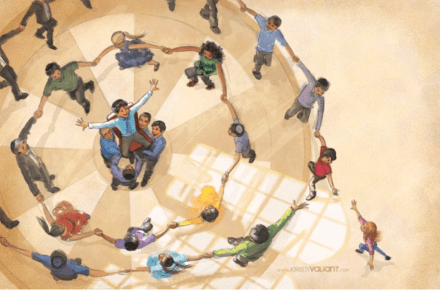
Kristi Valiant’s vibrant two-page spreads put kids in the center of the action where individuals, couples, and groups enjoy groovin’ to the music in their own style. Dancers swirl, stomp, hop, twirl, sway, dip, and kick up their heels on sunny days and under glowing nighttime light. So join in—no experience or partner necessary!

For kids who love music and dance and for those who love poetry of all kinds, Feel the Beat; Dance Poems that Zing from Salsa to Swing is a fun addition to home libraries—and may spark an interest in learning how to perform these dances.

Ages 5 – 9

Dial Books for Young Readers, 2017 | ISBN 978-0803740211

Discover more about Marilyn Singer and her books on her website!

View a portfolio of artwork by Kristi Valiant on her website!

International Dance Day Activity

celebrate-picture-books-picture-book-review-dance-word-search

Toe-Tapping Word Search Puzzle


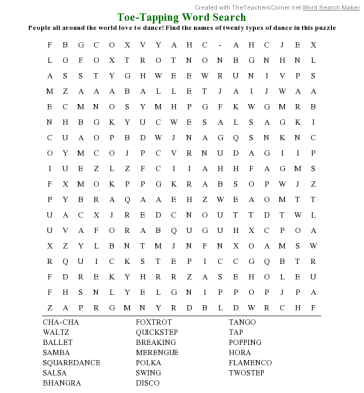
People all around the world love to dance! Can you find the names of twenty types of dances in this printable Toe-Tapping Word Search Puzzle? Here’s the Solution!

Picture Book Review


April 23 – National Take a Chance Day

celebrate-picture-books-picture-book-review-what-do-you-do-with-a-chance-cover

About the Holiday

Sometimes it takes a special nudge to get us to leave our comfort zone and try something new—even if it’s something we’ve been wanting to do for a long time. Today’s holiday provides that push by encouraging people to let go of the fears and doubts that hold them back. Whether you prefer to try new things a little at a time or decide to dive right in, you’ll feel happier and more excited by life if you reach for that gold ring when it comes around.

What Do You Do with a Chance?

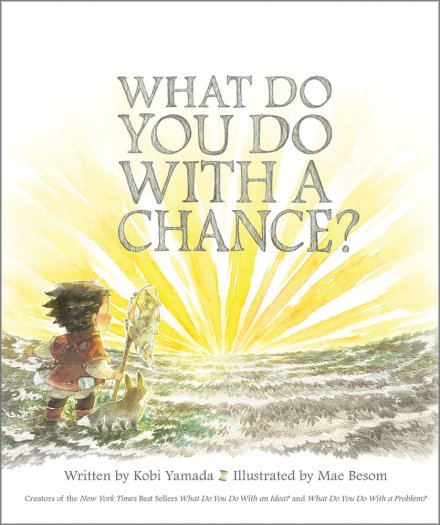
Written by Kobi Yamada | Illustrated by Mae Besom


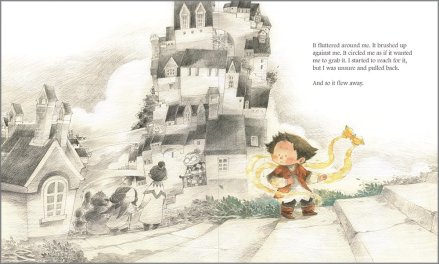
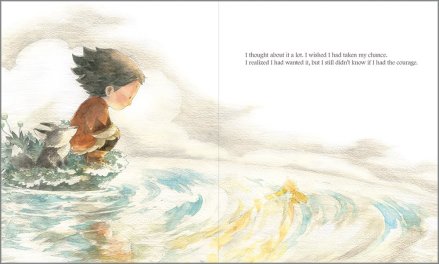
One day, a child says, they got a chance. The chance seemed to know them, but the child wasn’t sure why it was there or what to do with it. The chance was persistent, but unsure, the child “pulled back. And so it flew away.” Later the child thought about that chance and realized they “had wanted it,” but even now they didn’t know if they had the courage to take one.

celebrate-picture-books-picture-book-review-what-do-you-do-with-a-chance-first-chance

Image copyright Mae Besom, 2017, text copyright Kobi Yamada, 2017. Courtesy of Compendium.

The next time a chance came by, the child tried to grab it, but they “missed and fell.” They felt embarrassed, and “it seemed like everyone was looking at [them].” That was a feeling they never wanted again. Now whenever they saw a chance, “[they] ignored it.” They let so many pass them by that chances stopped coming. Then the child worried that they would never get another one.

celebrate-picture-books-picture-book-review-what-do-you-do-with-a-chance-pulls-away

Image copyright Mae Besom, 2017, text copyright Kobi Yamada, 2017. Courtesy of Compendium.

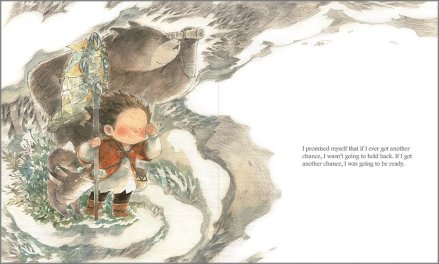
Although the child acted as if they didn’t care, they really did. They just didn’t know if they “would ever be brave enough” to take a chance. But then the child had a new idea and thought that maybe being brave “for a little while at the right time” was what it too. The child decided that the next time a chance came around, they were going to grab it. The child even went out to search for it, and then on a regular day, a glow appeared in the distance. Could this be it?

celebrate-picture-books-picture-book-review-what-do-you-do-with-a-chance-searches-for-new-chance

Image copyright Mae Besom, 2017, text copyright Kobi Yamada, 2017. Courtesy of Compendium.

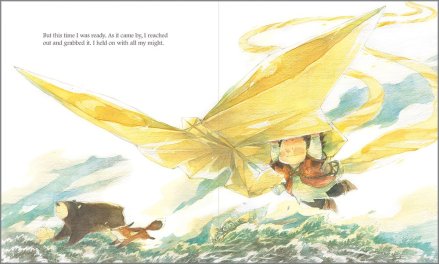
The child was ready. Racing toward the light, they didn’t feel afraid; instead, they were excited. As the child got near, they saw that it was an enormous chance. As soon as they could reach it, they climbed aboard and soared wherever it took them. Now the child understands that when they ignore chances, they miss out on all the wonderful things they wants to learn and do and be.

celebrate-picture-books-picture-book-review-what-do-you-do-with-a-chance-soars

Image copyright Mae Besom, 2017, text copyright Kobi Yamada, 2017. Courtesy of Compendium.

Whether the reader is a natural risk taker or on the more hesitant side, a child or an adult, Kobi Yamada offers encouragement and inspiration for those times when doubt or fear interferes with taking an opportunities when they come along. Kobi’s use of a first person narrator provides a level of comfort as the focus isn’t on the reader, but on feelings shared with a kindred spirit.

Quiet children or those with anxiety will see that there are others for whom leaving their comfort zone is difficult. Kobi’s concrete language echoes the inner monologue of questioning, hope, embarrassment, and regret that can hinder people from trying something new or big. He also presents gentle, solid advice and reveals that small voice of determination and courage that does lie within most hearts. When the child finally grabs onto the greatest chance, readers will also feel emboldened and will be ready to soar too.

celebrate-picture-books-picture-book-review-what-do-you-do-with-a-chance-at-reflecting-pond

Image copyright Mae Besom, 2017, text copyright Kobi Yamada, 2017. Courtesy of Compendium.

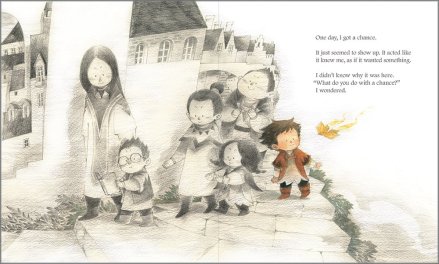
Mae Besom brilliantly depicts the child’s contrasting feelings to be free, spontaneous, and courageous on one hand and secure and protected on the other through her use of space and color. The mystical, medieval-type town the child lives in is crowded, with homes wall-to-wall and stacked one on top of the other. The friends or family the boy follows walk together tightly grouped, and these are all rendered in charcoal, white and dusty yellow. In contrast, the chances—origami butterflies with long tails—are golden yellow and fly away from the town, touching down on the child’s reflecting pool, over fields, and into the vast sky.

The child’s clothes are earthy brown, and the grass underfoot always green. As the child embraces bravery, animal companions also gain color, and as they all race toward the huge chance, they appear closer to the reader, filling the page. At last as the child soars on the wings of the chance, the town appears in the distance but is now also a place of color, light, and opportunity.

Without gender pronouns and a child with neutral clothing and hairstyle, What Do You Do with a Chance? is universal for all children.

The final book in the series, which includes What Do You Do with an Idea? and What Do You Do with a Problem?, What Do You Do with a Chance? is a must-own for home and classroom libraries to inspire discussions about overcoming fear, taking chances, and being yourself. The book will be an often-read addition to any bookshelf.

Ages 5 – 10 and up

Compendium, 2017 | ISBN 978-1943200733

National Take a Chance Day Activity

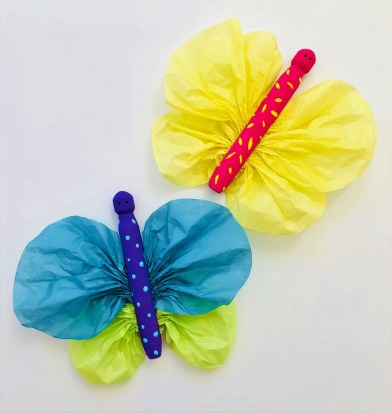
celebrate-picture-books-picture-book-review-butterfly-craft-vivid-filter-2

Colorful Clothespin Butterfly Craft


Butterflies are a lot like chances. They don’t start right off fully formed, but go through different stages, waiting times, and some amazing changes on their metamorphosis from caterpillar to butterfly. Chances also take time, practice, and spreading your wings to be fulfilled.

With this easy Colorful Clothespin Butterfly Craft, you can make your own butterfly that will always remind you to take a chance when it flies your way.

Supplies

  • Wooden pin clothespin
  • Tissue paper in a choice of colors
  • Craft paint in a choice of colors
  • Black craft paint
  • Paintbrush
  • Toothpick
  • Scissors
  • Fishing line, thread, or string for hanging (optional)
  • Adhesive magnet for hanging (optional)

Directions

To Make the Body

  1. Paint the clothespin, let dry
  2. When dry add accent dots or lines and eyes. I used a toothpick with the point cut off to make the dots on the purple butterfly. I used the pointy end of a toothpick to make the eyes and the lines on the pink butterfly.

To Make the Wings

  1. For the top wings, cut a 6 ½ -inch circle from tissue paper
  2. For the bottom wings, cut a 5 ¼ – inch circle from tissue paper
  3. With the head of the clothespin facing down, insert the larger circle into the split in the clothespin so that half of the circle shows on either side.
  4. Gently pull the circle down tightly into the split, pulling it as far in as possible—about half way
  5. Next insert the smaller circle into the split and repeat the above step.
  6. Gently fan out the wings if necessary

If hanging the butterfly, attach fishing line, threat, or string

If making a magnet, attach the adhesive magnet to the back of the butterfly.

Picture Book Review
April 18 – It’s Celebrate Diversity Month

celebrate-picture-books-picture-book-review-W-is-for-welcome-cover

About the Holiday

Established in 2004, Celebrate Diversity Month encourages people to learn more about the world’s cultures and religions. Learning more about our global family and celebrating our differences and our similarities can lead to better relationships between people, more inclusion, and a happier future for the world’s children.

W is for Welcome: A Celebration of America’s Diversity

Written by Brad Herzog | Illustrated by nationally acclaimed artists


A journey around America impresses with its natural grandeur of rocky shores, majestic mountains, quilts of fertile fields, and wide-open prairies. More inspiring than these, however, is our diverse population that lends a wealth of knowledge, traditions, language, celebrations, food, music, and experiences to our country, making it a vibrant place to live and work.

celebrate-picture-books-picture-book-review-W-is-for-welcome-Bering-Strait

Image copyright Michael Glenn Monroe, 2018, text copyright Brad Herzog. Courtesy of Sleeping Bear Press.

Brad Herzog has collected twenty-six words to describe the United States and has used them to create lyrical verses and a full compendium of information about the immigrants and their experiences that have molded America from her earliest days and continue to do so today. Starting off, A is for America—that “dreamer’s destination,” and readers learn a bit about the millions of people who have come to our shores.

At C for Culture and D for Diversity, children learn about food, clothing, musical instruments, and even sports that have come to be favorites and were brought here or invented by people from other countries as well as “‘the most diverse square mile’” in America. Because of our country’s innovative spirit, “K is for Knowledge. “From all over the globe, / in a quest to know much more, / brilliant thinkers come here / and continue to explore.” Want to know more? Just check out Y for how immigrants continue to advance our knowledge.

celebrate-picture-books-picture-book-review-W-is-for-welcome-cultures

Image copyright Laura Knorr, 2018, text copyright Brad Herzog. Courtesy of Sleeping Bear Press.

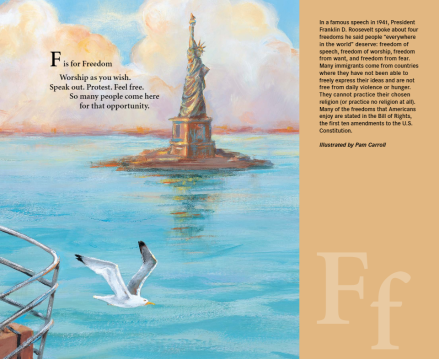
When immigrants want to make the United States their new home, they learn about N, Naturalization, and O, the Oath they take. And P is for the Poem by Emma Lazarus that has “come to define America’s long tradition of welcoming immigrants”: “A ‘world-wide welcome’ states, / ‘Give me your tired, your poor.’ / And then it adds, ‘I lift my lamp / beside the golden door!’”

All those who have taken comfort from that poem make up the narrative of our land, which is why V is for Voices: “Each immigrant has a tale to tell / about how and why they came / to live in the United States. / No two stories are the same.”
Along the way from A to Z young readers learn more about the people, ideas, and places that define America in verses and fascinating information that expands on the history and future of the United States in letter-perfect fashion.

celebrate-picture-books-picture-book-review-W-is-for-welcome-Ellis-Island

Image copyright Pam Carroll, 2018, text copyright Brad Herzog. Courtesy of Sleeping Bear Press.

Brad Herzog has created a compelling look at immigration, its history, and all the ways America has benefited from her philosophy of welcome. His fascinating informative passages and inspiring verses enlighten readers about past and present contributions by immigrants and also educate children about the law and processes involved in adopting America as a new home.

Thirteen illustrators lend their talents to interpreting Herzog’s verses with images full of color and vitality that are as diverse as America itself. Beautiful scenery from around the country reminds readers of the beauty of this vast land. It is the happy, hopeful, and expressive faces of those who have come and continue to journey here looking for a better life that most inspire and reveal that we are all neighbors.

W is for Welcome is an excellent book to use for leading discussions about American history and immigration at home or in the classroom.

Ages 6 – 9

Sleeping Bear Press, 2018 | ISBN 978-1585364022

Discover more about Brad Herzog and his books on his website.

You can learn about these illustrators of W is for Welcome on their websites:

Doug BowlesMaureen K. BrookfieldPat CarrollDavid C. Gardner | Barbara Gibson  | Renée GraefSusan GuyVictor JuhaszLaura KnorrMichael Glenn MonroeGijsbert van Frankenhuyzen | Ross B. Young 

Celebrate Diversity Month Activity 

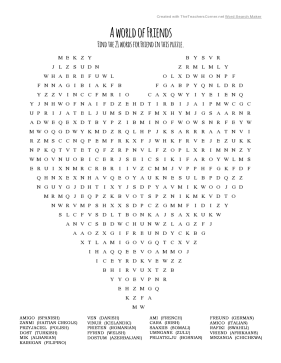
friendwordsearch

A World of Friends! Word Search


There are people all over the world just waiting to be friends! Learn how to say “friend” in twenty-one languages with this printable word search.

A World of Friends! Word Search Puzzle | A World of Friends! Word Search Solution

Picture Book Review

April 13 – National Make Lunch Count Day

celebrate-picture-books-picture-book-review-the-sandwich-swap-cover

About the Holiday

Today’s holiday was established to encourage American workers to get away from their desk and eat lunch out with friends and coworkers. Taking a break from the office and spending lunchtime having a little fun or over a stimulating conversation can rejuvenate you for the rest of the day. Many people have also embraced the holiday as a way to remind themselves and others to eat healthy and make what they make (or order) nutritious and beneficial. To celebrate, make lunch an adventure today. You might even decide to try something new—like the little girls in today’s book!

The Sandwich Swap

Written by Queen Rania Al Abdullah of Jordan and Kelly DiPucchio | Illustrated by Tricia Tusa 


Salma and Lily were best friends. At school they did everything together in the classroom and on the playground. They also ate lunch together every day. They loved all the same things—until it came to what was packed in their lunchboxes. Lily always had a peanut butter and jelly sandwich, and Salma always had a hummus and pita sandwich.

While Lily never said so, she thought Salma’s sandwich looked yucky, and Salma kept quiet about her opinion that Lily’s sandwich seemed gross. But one day, Lily did say what she’d been thinking. Salma couldn’t believe her ears. She frowned and “looked down at the thin, soft bread. She thought of her beautiful smiling mother as she carefully cut Salma’s sandwich into two neat halves that morning.” First she felt hurt; then she felt mad.

celebrate-picture-books-picture-book-review-the-sandwich-swap-argument

Image copyright Tricia Tusa, 2010, text copyright Queen Rania Al Abdullah of Jordan and Kelly DiPucchio. Courtesy of Disney-Hyperion.

Salma let Lily know just how gross and icky-smelling she thought Lily’s sandwich was. “Lily looked surprised. She sniffed the thick, squishy bread, and she thought of her dad in his silly apron whistling” as he cut her sandwich into triangles. After that the two girls did not play or draw together. And the next day, they ate at separate tables. The story of Salma and Lily’s argument had spread, and the other kids chose sides. In the cafeteria, they lobbed insults, calling each other “jelly heads” and “chick pea brains.”

Pretty soon there were shouts of “you’re weird” and “you dress dumb.” It wasn’t long before someone yelled “Food Fight!” and peanut butter, hummus, and all types of sandwiches flew through the air. “They stuck to the walls. They stuck to the ceiling. They stuck to the lunch lady.” Before anyone knew it, pudding cups and applesauce and carrot sticks were soaring through the air.

Lily and Salma gazed at each other across the mess and “felt ashamed by what they saw.” After they helped clean it all up and were sent to the principal’s office, they felt even worse. The next day, Lily and Salma once again sat across from each other during lunch. At last Lily said, “‘Would you like to try a bite of my peanut butter and jelly?” Salma said that she would and offered Lily a nibble of her hummus sandwich. Lily agreed.

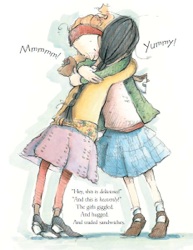
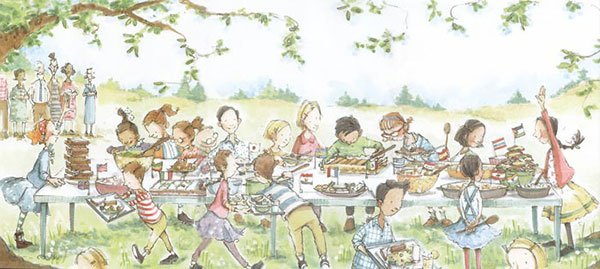
On the count of three, Lily and Salma tried each other’s sandwiches. “Yummy! Mmmmm!” they both said, and then they traded sandwiches. After lunch they met with the principal again to tell her an idea they’d had. And on a sunny day, the school held a picnic where everyone shared their favorite lunch from their native country.

celebrate-picture-books-picture-book-review-the-sandwich-swap-picnic

Image copyright Tricia Tusa, 2010, text copyright Queen Rania Al Abdullah of Jordan and Kelly DiPucchio. Courtesy of Disney-Hyperion.

The school lunchroom with its unique dynamics is a perfect setting for Queen Rania Al Abdullah and Kelly DiPuccio’s story that highlights the kinds of prejudice children can encounter whether for food choices or other differences. The inclusion of Salma’s and Lily’s thoughts about their parents is a poignant reminder of how profound and complex children’s emotions are. The humor and honesty in the girls’ relationship, thoughts, and argument as well as the food fight will resonate with readers. Salma’s and Lily’s decision to renew their friendship and try each other’s lunches and to share their revelation with their classmates leads to the kind of growth we all want for our kids.

celebrate-picture-books-picture-book-review-the-sandwich-swap-hug

Tricia Tusa’s delicate and soft-hued mixed-media illustrations portray the joys of being best friends as Lily and Salma draw, swing, jump rope, and eat lunch together in beautiful two-page spreads. When their true feelings about each other’s sandwiches comes out, the girls are clearly reflective and then hurt and angry as they scowl nose to nose. The food fight is a double-spread free-for-all that will make kids laugh as the lunch lady seems to take the brunt of the flying food. The final gate-fold scene of the multicultural picnic is heartwarming.

The Sandwich Swap is a terrific read at home and in the classroom, especially near the beginning of the school year. The book is also a wonderful prelude to a classroom or school-wide multicultural day or food fair.

Ages 3 – 7

Disney-Hyperion, 2010 | ISBN 978-1423124849

Learn more about Queen Rania Al Abdulla of Jordan and her global advocacy on her website.

Discover more about Kelly DiPucchio and her books on her website.

Get to know Tricia Tusa and view a portfolio of her books and art on her website.

Make Lunch Count Day

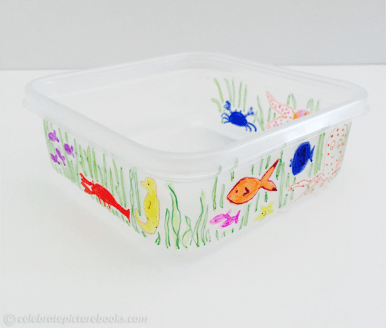
celebrate-picture-books-picture-book-review-lunch-container

Personalized Lunch Container


Take your lunch to school or work in style with this quick and easy craft! All you need is a plastic sandwich or food container, some permanent markers, and your creativity!

Picture Book Review

April 12 – Walk on Your Wild Side Day

celebrate-picture-books-picture-book-review-the-catawampus-cat-cover

About the Holiday

Today’s holiday was established to encourage people to have courage and do that thing inside them that might be a little different or way out there, but actually defines them. Without people who have explored those other possibilities, the world would be missing out on some amazing art, inventions, innovations, music, and, of course, books! To celebrate, unleash your inner you or go a little wild. Who knows? It might become a regular thing that makes you happy!

The Catawampus Cat

Written by Jason Carter Eaton | Illustrated by Gus Gordon


On a regular Tuesday morning, the catawampus cat came into town “slightly askew.” Everyone was busy, so no one saw him until Mr. Grouse, the grocer, noticed his unusual walk and “tried to straighten him out.” His wife Lydia, who for twenty years had been chilly to her husband, asked what was wrong with the cat, and they both tilted their heads to study him. There, under the vegetable stand, they saw Lydia’s wedding ring lost twenty years before, and suddenly Mr. Grouse noticed that Lydia looked just as she did when they first met. “They kissed and on walked the catawampus cat, still askew…”

celebrate-picture-books-picture-book-review-the-catawampus-cat-house

Image copyright Gus Gordon, 2017, text copyright Jason Carter Eaton, 2017. Courtesy of Crown Books for Young People.

The bored barber, “Bob Long, who was giving a woman a long bob,” saw the catawampus cat from his window and was so startled he snipped, and clipped the woman’s bangs at an angle. She loved it, and the catawampus cat continued on. He passed Tom who was painting the Mayor’s house in the usual way until he tilted his head to get a better look and scribbled a diagonal stripe down the front of the house. “‘Brilliant!’ Exclaimed Mayor Meyer. ‘A work of art!’”

The town daredevil made a world record after spotting the cat. The town librarian had a life-changing revelation after seeing the cat. And little Bushy Brows Billiam, suddenly understood his lesson better by looking at things a bit differently.

celebrate-picture-books-picture-book-review-the-catawampus-cat-library-full

Image copyright Gus Gordon, 2017, text copyright Jason Carter Eaton, 2017. Courtesy of Crown Books for Young People.

All through town, people began tilting their head and even walking at a slant. Architects began building homes, apartments, and stores that leaned, and car makers designed “off-kilter” vehicles. The effect on the town and the people was amazing. They found favorite possessions they thought lost forever, “and rediscovered old friends they thought they’d never know again.” The first Tuesday of the year was designated “Catawampus Cat Day.” Confetti was flung at an angle, a band played off-key, and the crowd was entirely catawampus.

“‘Well? What do you think of it?’” Mayer Meyer excitedly asked the catawampus cat. “‘We’re all different now, just like you.’” The catawampus cat gazed at him thoughtfully, then stretched, “straightened himself out…and walked out of town, once again uniquely catawampus.”

celebrate-picture-books-picture-book-review-the-catawampus-cat-school

Image copyright Gus Gordon, 2017, text copyright Jason Carter Eaton, 2017. Courtesy of Crown Books for Young People.

In his delightfully inventive story, Jason Carter Eaton rejoices in all those people (and cats) who walk their own way through life. He encourages young readers to embrace their uniqueness, telling them it’s a good thing to view the world with a different perspective. Even as the catawampus cat inspires the townspeople, Eaton strikes a humorous cautionary note about the nature of fads. He also happily reminds readers that the truly innovative will always find a way to be different.

Gus Gordon’s adorably confident cat sets off his chain reaction of “uniqueness” in detailed mixed-media illustrations that provide lots of opportunities for kids to discover new (and old—sometimes even antique) perspectives as they watch the catawampus cat walk through this diverse town in his own particular way. Surprising and funny details drawn in along the way will also have readers lingering and giggling over each page. Cat lovers will recognize some endearing cat-titudes in the catawampus cat that make feline friends so loveable. The endpapers provide a map of the catawampus cat’s route through this very lucky town.

Smile- and laugh-inducing from cover to cover, The Catawampus Cat would be a favorite and often-asked-for choice for home and classroom libraries.

Ages 4 – 8

Crown Books for Young Readers, 2017 | ISBN 978-0553509717

To learn more about Gus Gordon, his books, and his art, visit his website.

Walk on Your Wild Side Day Activity

celebrate-picture-books-picture-book-review-wooden-bead-cat-craft

A Little Ball of Kitten Love


This sweet little kitten is easy to make and can keep you company on your desk or shelf! Since every kitten is different, you can make yours to look just the way you want. Here’s how I made mine:

Supplies

  • Wooden ball with a flat bottom, available in craft stores and in different sizes
  • Craft paint in any color kitten you’d like (I used red and yellow and mixed it to make a mottled orange)
  • Craft paint in pink or white for the inner ear
  • Scrap of fleece for the ears. Fleece is easily shaped to the rounded ball and when painted is stiff enough to stand up on its own.
  • Thin, colored wire in several colors for the tail (string or twine, wrapped wire, fleece, stiff paper, and other materials could also be used)
  • Paint brush
  • Permanent marker for making the face
  • Hot glue gun or strong glue

Directions

  1. Paint the wooden ball and let dry
  2. Paint the scrap of fleece to match the wooden ball, let dry
  3. Cut out small triangular shapes for the ears. Round the bottom of the ears slightly so they fit the shape of the ball
  4. If making a tail from several colors of thin wire, twist them together, leaving one end untwisted
  5. With the glue gun or strong glue attach the ears to the top of the head
  6. With the glue gun attach the tail to the back of the wooden ball in the center near the base
  7. With the marker, draw eyes, nose, and mouth for the face and semicircles near the bottom for the paws